Regions/ The Cotswolds/

Chipping Campden

A Cotswold wool town of honey-coloured stone, and the home, since 1902, of the last working workshop of the Arts and Crafts movement.

1627Market Hall built
1902Guild of Handicraft arrived
4Generations of Harts
103Photographs in the archive

AR-0014

A beta site · In partnership with

Chipping Campden History Society

Chipping Campden is the archive’s first deep-partnership town - the beta for how The England Archive documents a place in full and then replicates it across the country. We are building this record together with the Chipping Campden History Society, whose decades of local research stand behind it.

Visit the History Society →
Town
Chipping Campden
County
Gloucestershire
Region
The Cotswolds
Market Hall
Built 1627, Grade I listed
Guild of Handicraft
Arrived 1902, the Old Silk Mill
Cotswold Way
Northern trailhead
OS grid ref
SP 151 391

Chipping Campden is one of the most complete medieval wool towns in England, a single curving High Street of honey-coloured oolitic limestone that has been added to but never broken since the fourteenth century. Its wealth came from the Cotswold wool trade, and the names of the merchants who made that wealth - chief among them William Greville - are written into its great Perpendicular church and its terraced frontages.

It is also, and this is the rarer thing, the place where the Arts and Crafts movement put down its deepest roots. In 1902 C. R. Ashbee moved his Guild of Handicraft out of the East End of London and into the Old Silk Mill on Sheep Street - some hundred and fifty men, women and children, a whole social experiment, transplanted to a quiet Cotswold town. The Guild itself did not last the decade. But its last working workshop never closed: Hart Gold & Silversmiths is still on the first floor of the Silk Mill, still raising silver by hand, four generations on.

This is the archive's first full town hub - the record of a place where the buildings, the trade that built them, and the living craft that still works inside them can all be documented at once. It is the template for the town hubs that will follow.
History

Ten thousand years of occupation

12th - 16th century

The wool town

Campden grew rich on Cotswold wool. By the fourteenth century it was one of the most important wool markets in England, its merchants trading fleeces across the Channel to Flanders and Italy. The greatest of them, William Greville (died 1401), is remembered in St James' Church as "the flower of the wool merchants of all England". Their money built the church, the High Street houses, and the pattern of the town that survives almost intact today.

Chipping Campden High Street seen from beside stone steps, past the railed Cotswold-stone war memorial fountain to a long terrace of gabled limestone houses under a flat grey sky.
IM-0472

1612 - 1629

Sir Baptist Hicks and the Market Hall

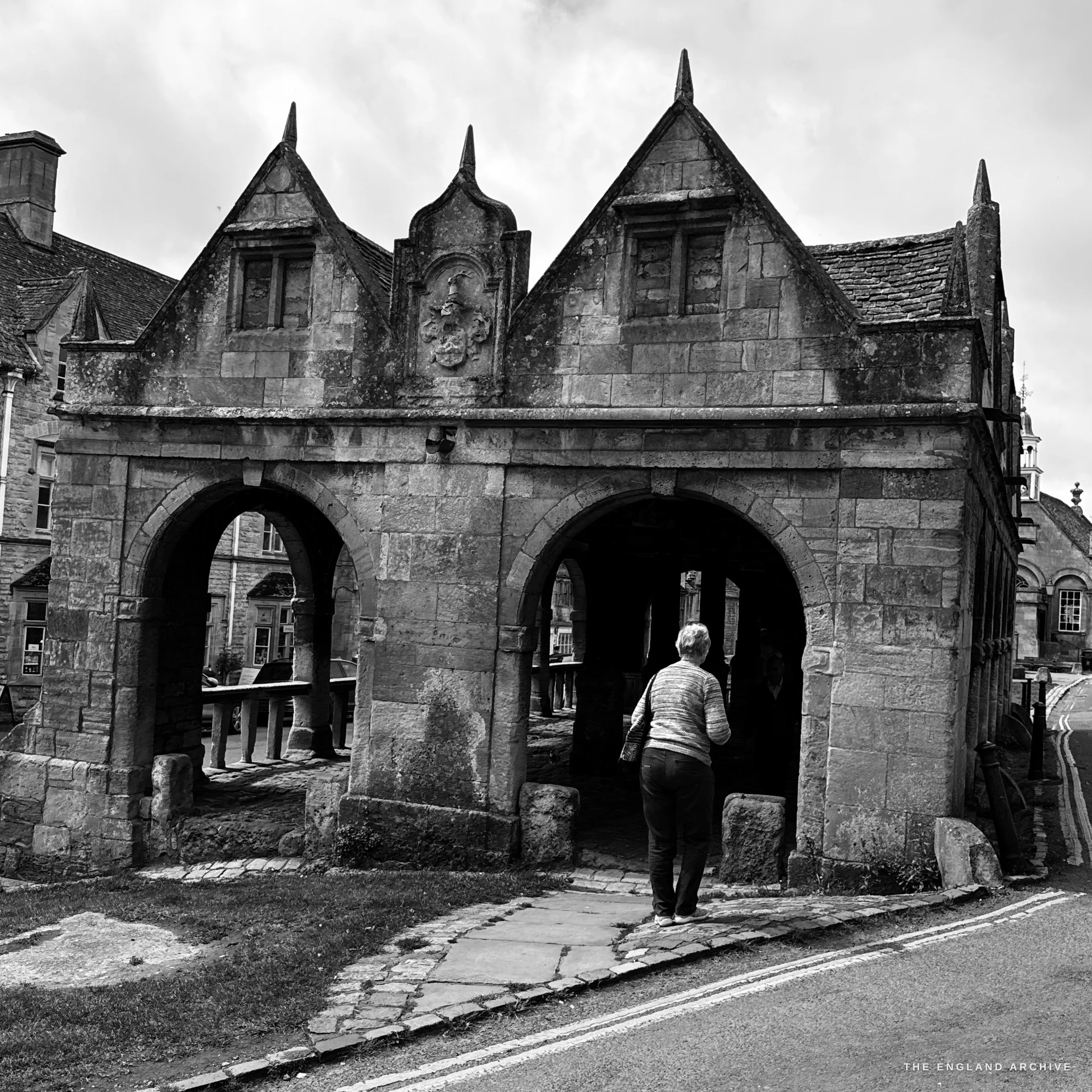
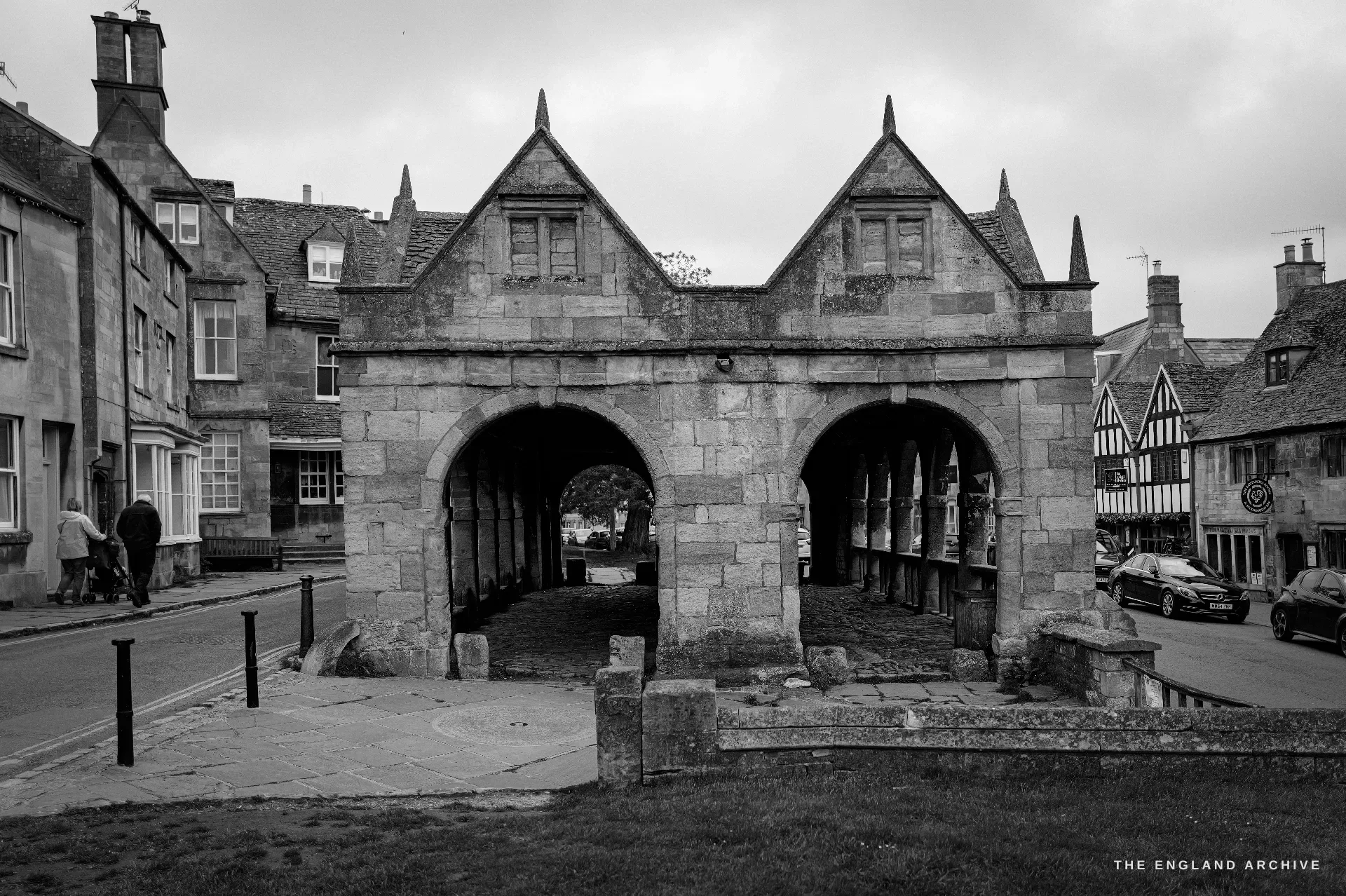
In the early seventeenth century the mercer and financier Sir Baptist Hicks, later Viscount Campden, gave the town two of its defining buildings: the Church Street almshouses (1612) and, in 1627, the open-arched Market Hall that still stands in the middle of the High Street, built so that the town's cheese, butter and poultry sellers could trade out of the rain. The Market Hall is Grade I listed and now in the care of the National Trust.

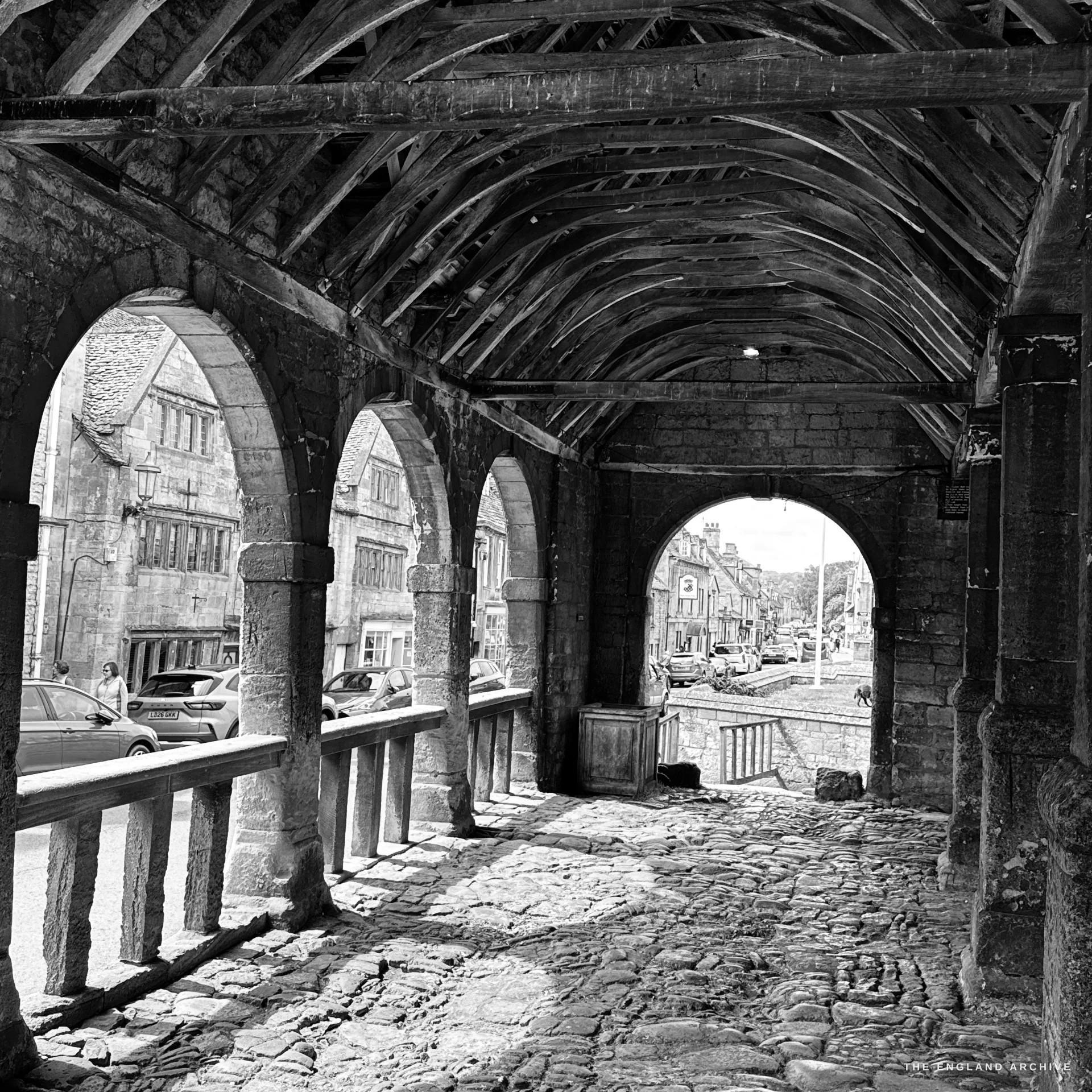
Looking down the worn flagstone aisle of the Market Hall arcade under its timber roof, the stone arches framing the bright street beyond.
IM-0480

1902 - 1908

Ashbee and the Guild of Handicraft

In 1902 the architect and social reformer C. R. Ashbee moved his Guild of Handicraft from Essex House in the East End of London to the Old Silk Mill on Sheep Street - a Ruskin-and-Morris experiment in fellowship and hand-craft, transplanted whole to the Cotswolds. The Guild taught silversmithing, jewellery, enamelling, woodwork and printing. It went into liquidation in 1908, undercut by machine goods, but several guildsmen stayed on in Campden and kept working, and the town has been a centre of craft ever since.

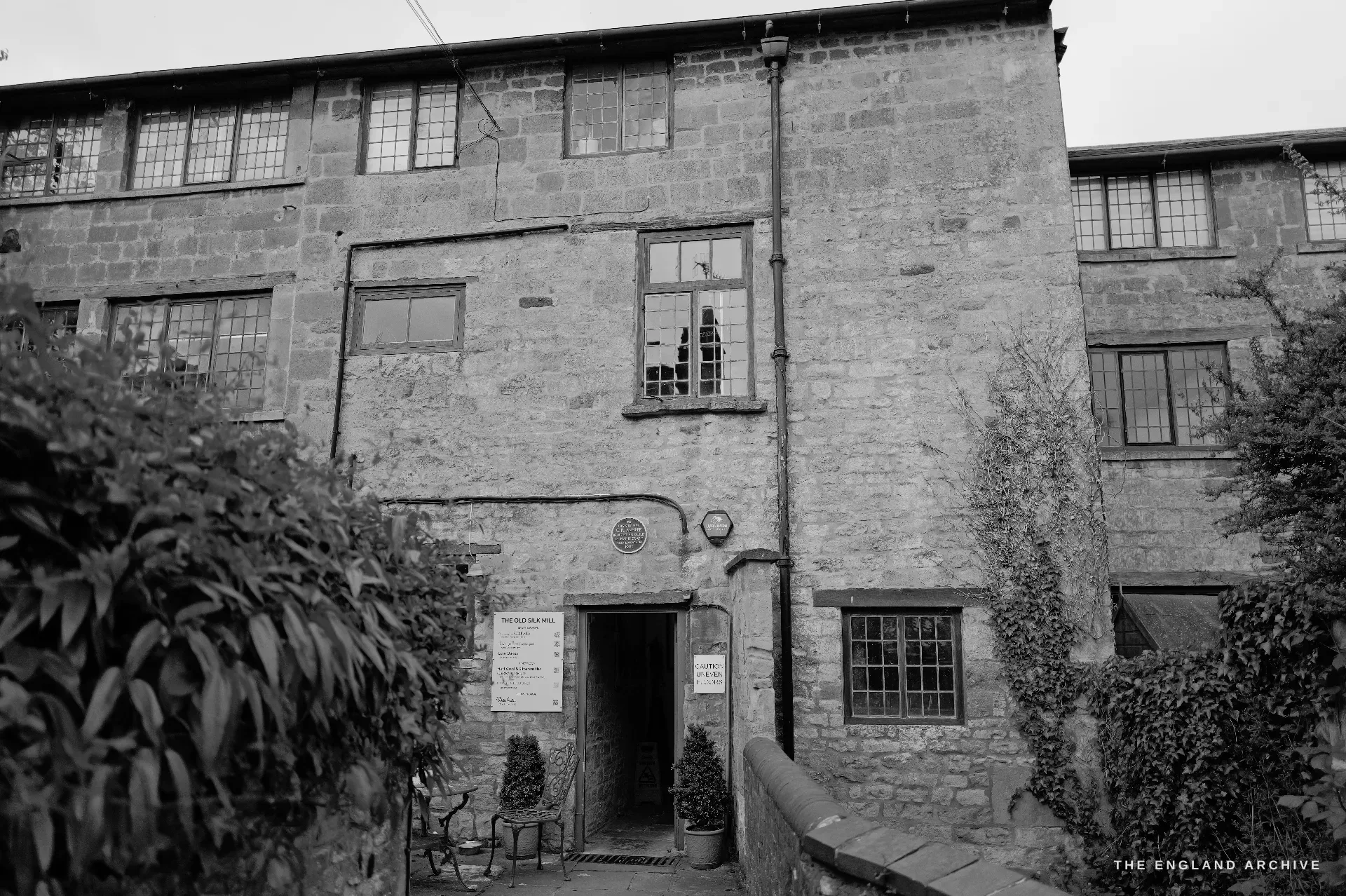
The exterior of the Guild of Handicraft building, the long Arts-and-Crafts stone mill on Sheep Street, its rows of leaded industrial windows and an arched doorway, a single figure at an upper window.
IM-0533

1924 - today

Preservation and the Campden Trust

The etcher F. L. Griggs, who settled in Campden in 1904, fought to protect the town from unsympathetic change - buying Dover's Hill in 1926 to save it from development and helping found the Campden Trust in 1929 to preserve the character of the place. That instinct for preservation is why Campden reads today as a continuous historic fabric rather than a museum reconstruction. Court Barn Museum now tells the story of the town's craft and design.

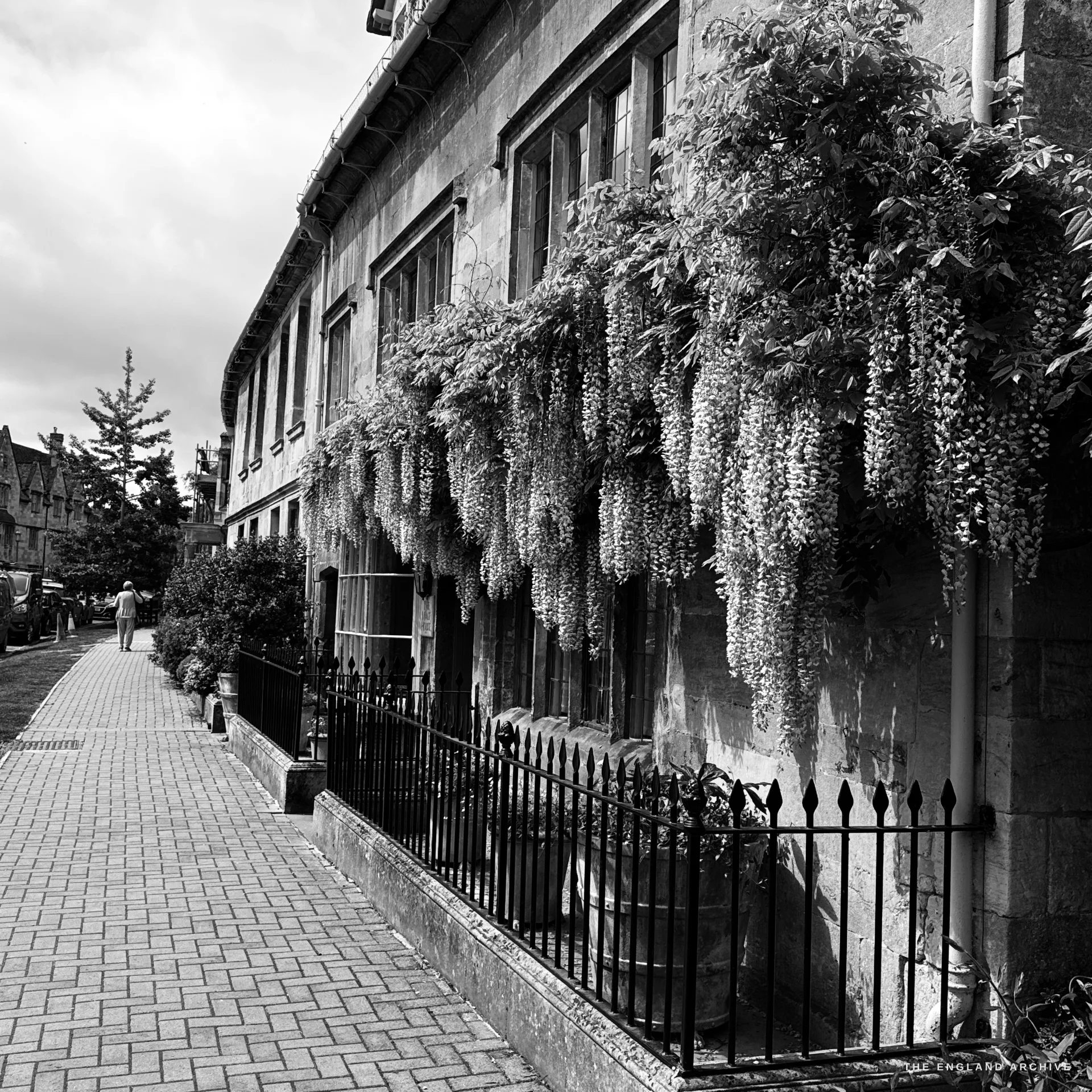
A quiet sloping back-street of terraced Cotswold-stone houses with sash bay windows, the road curving away past the edge of the Market Hall arcade.
IM-0485

The places

Notable buildings and landscape

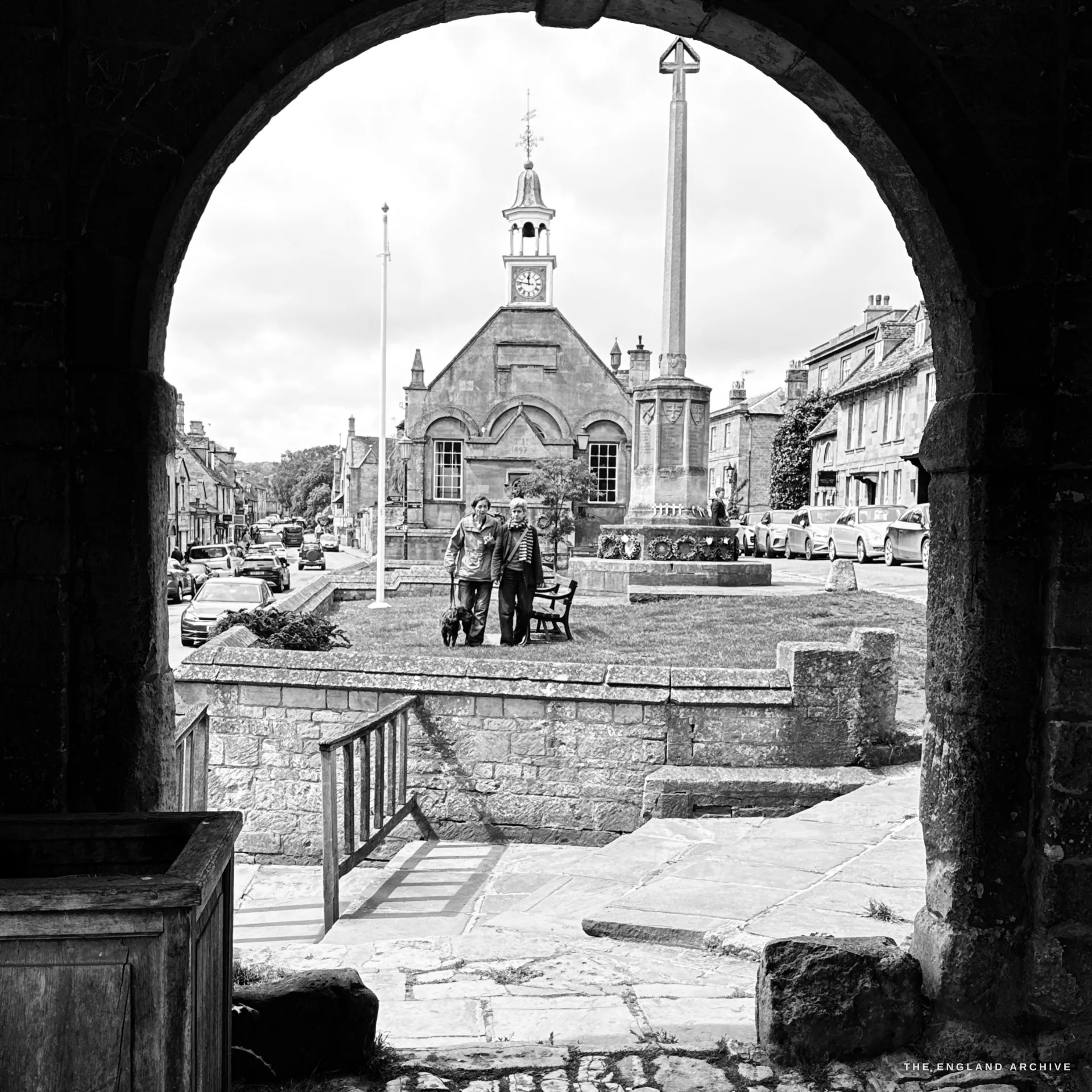
Inside the Market Hall, looking along its cobbled bay under the medieval timber wagon roof, arches opening to the street and a bright arch ahead framing the town beyond.
IM-0549

Jacobean market house, 1627

The Market Hall

1627 · Grade I listed

Sir Baptist Hicks built the open-arched Market Hall in 1627 for the sellers of butter, cheese, poultry and the like, its twin gabled bays standing in the middle of the High Street on a worn cobble-and-flagstone floor under a fine timber roof. It is Grade I listed and cared for by the National Trust, and is the single most photographed building in the town.
The exterior of the Guild of Handicraft building, the long Arts-and-Crafts stone mill on Sheep Street, its rows of leaded industrial windows and an arched doorway, a single figure at an upper window.
IM-0533

Home of the Guild of Handicraft since 1902

The Old Silk Mill

The long stone mill on Sheep Street to which C. R. Ashbee brought the Guild of Handicraft from London in 1902 - a fact recorded on a round plaque by the door. The Guild dissolved in 1908, but the building has been a craft workshop ever since. On its first floor, Hart Gold & Silversmiths still raises silver by hand, the last continuously working workshop of the Guild; the ground and upper floors hold a coffee house, a gallery, and other makers.

Perpendicular wool church, 15th century

St James' Church

Campden’s great Perpendicular “wool church”, largely rebuilt in the fifteenth century on the profits of the wool trade. It holds the memorial brass of William Greville, called “the flower of the wool merchants of all England”, and the monuments of Sir Baptist Hicks and his family. It is the tallest thing in the town and the clearest measure of how much money wool once made here.
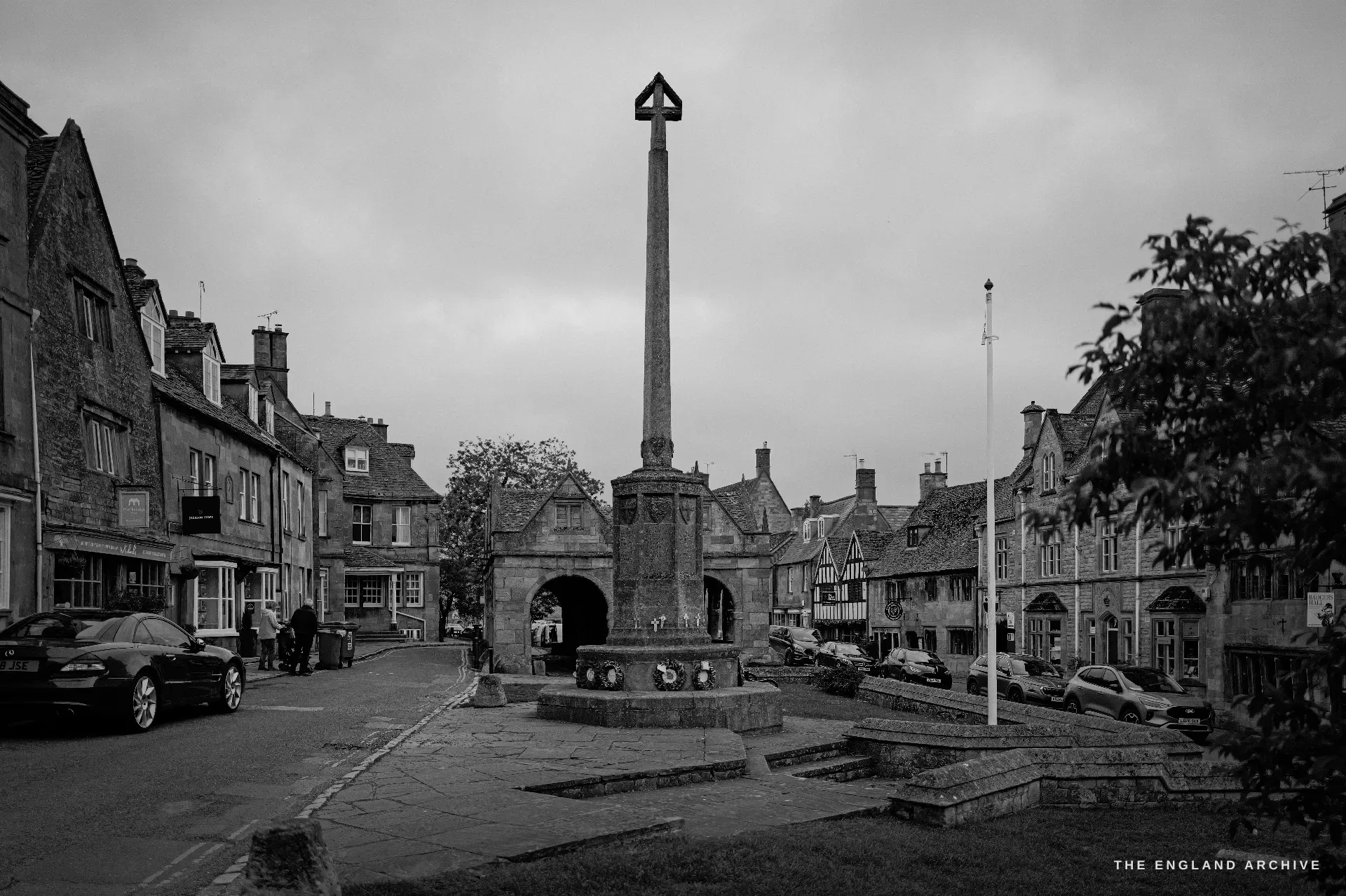
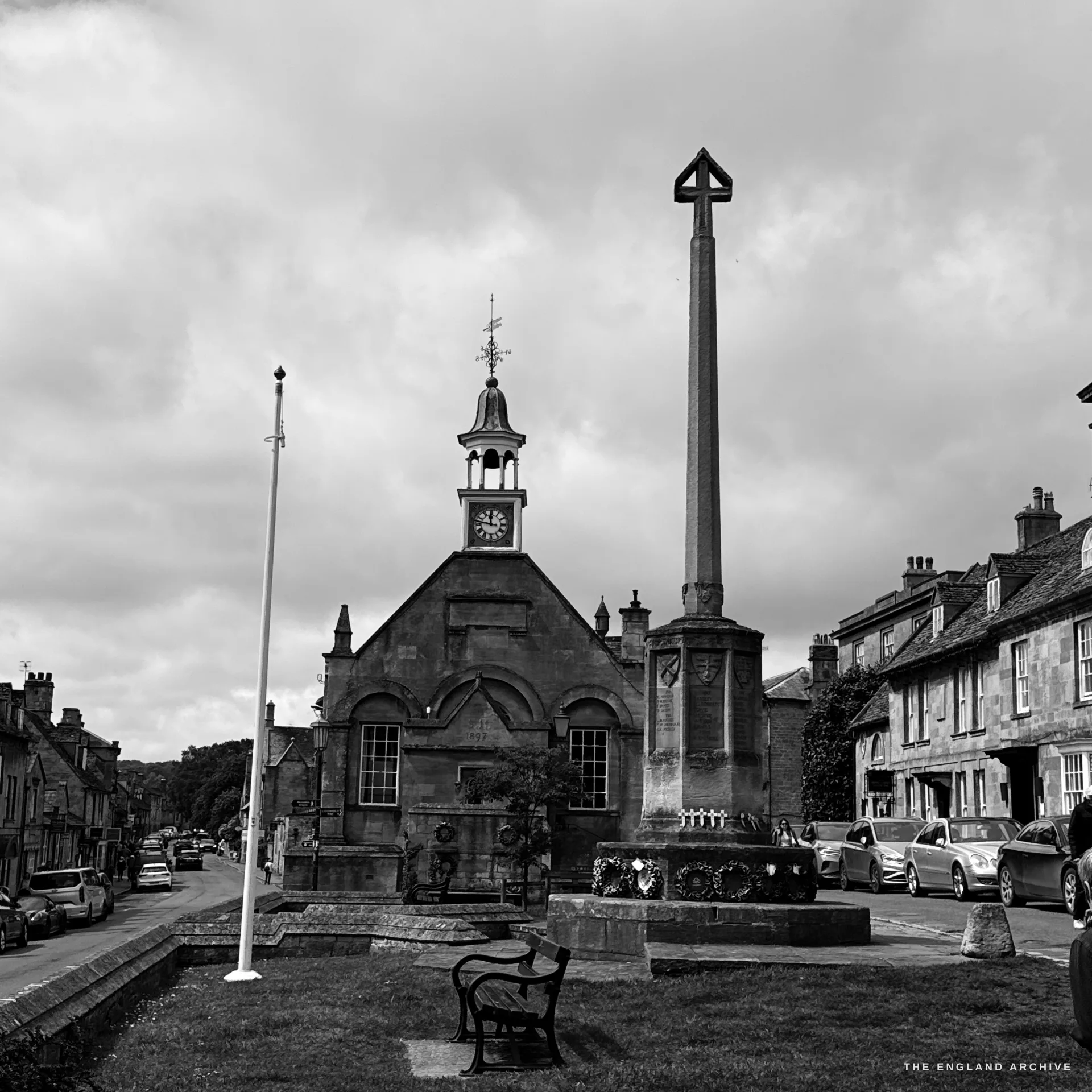
The medieval High Cross stands on its stepped octagonal base in the middle of the street, framed by parked cars and the gabled stone frontages of the High Street.
IM-0475

Medieval market cross

The High Cross

The stepped market cross stands in the middle of the High Street, the old centre of the market town and a fixed point in every long view down the street.
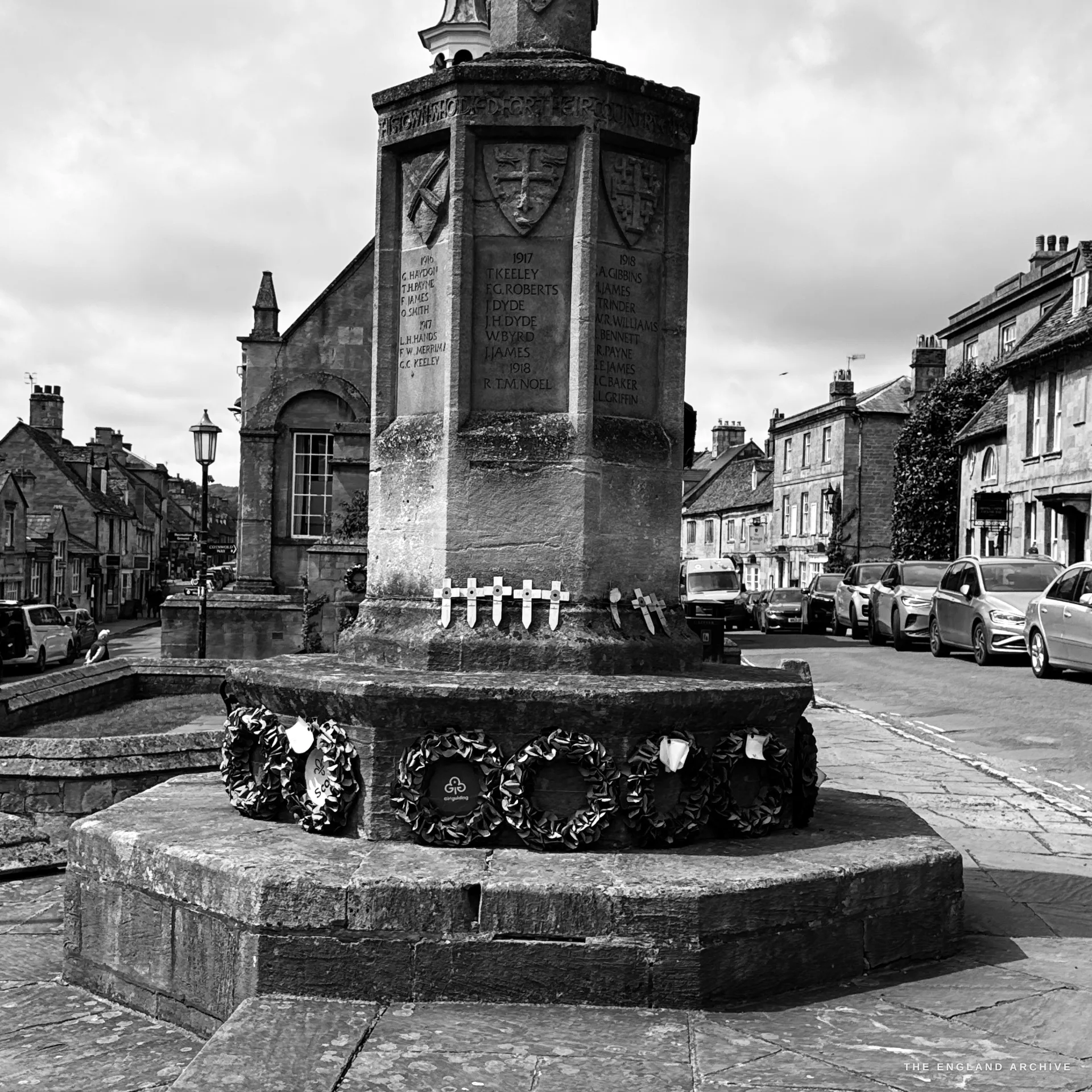
A close study of the octagonal war memorial base, its inscribed name panels and carved heraldic shields above, a row of small white remembrance crosses and laid poppy wreaths around the foot.
IM-0554

First World War memorial cross

The War Memorial

The tall memorial cross stands on the green beside the Market Hall, its octagonal base carved with heraldic shields above panels of the names of the Campden men who did not return from the First World War. Remembrance crosses and poppy wreaths are laid at its foot each November.

Almshouses, 1612

The Hicks Almshouses

Sir Baptist Hicks built the row of almshouses on Church Street in 1612, an I-shaped terrace of Cotswold stone on a raised pavement leading up to St James’ Church, still in use as homes four centuries later.

Natural amphitheatre; the Cotswold Olimpick Games

Dover's Hill and the Cotswold Olimpicks

On the escarpment above the town, Dover’s Hill has hosted Robert Dover’s Cotswold Olimpick Games since 1612 - shin-kicking, wrestling, tug of war and the Championship of the Hill, held on the Friday after Spring Bank Holiday and among the longest-running sporting events in England. The etcher F. L. Griggs bought the hill in 1926 to save it from development and later passed it to the National Trust.

The people

Biographies

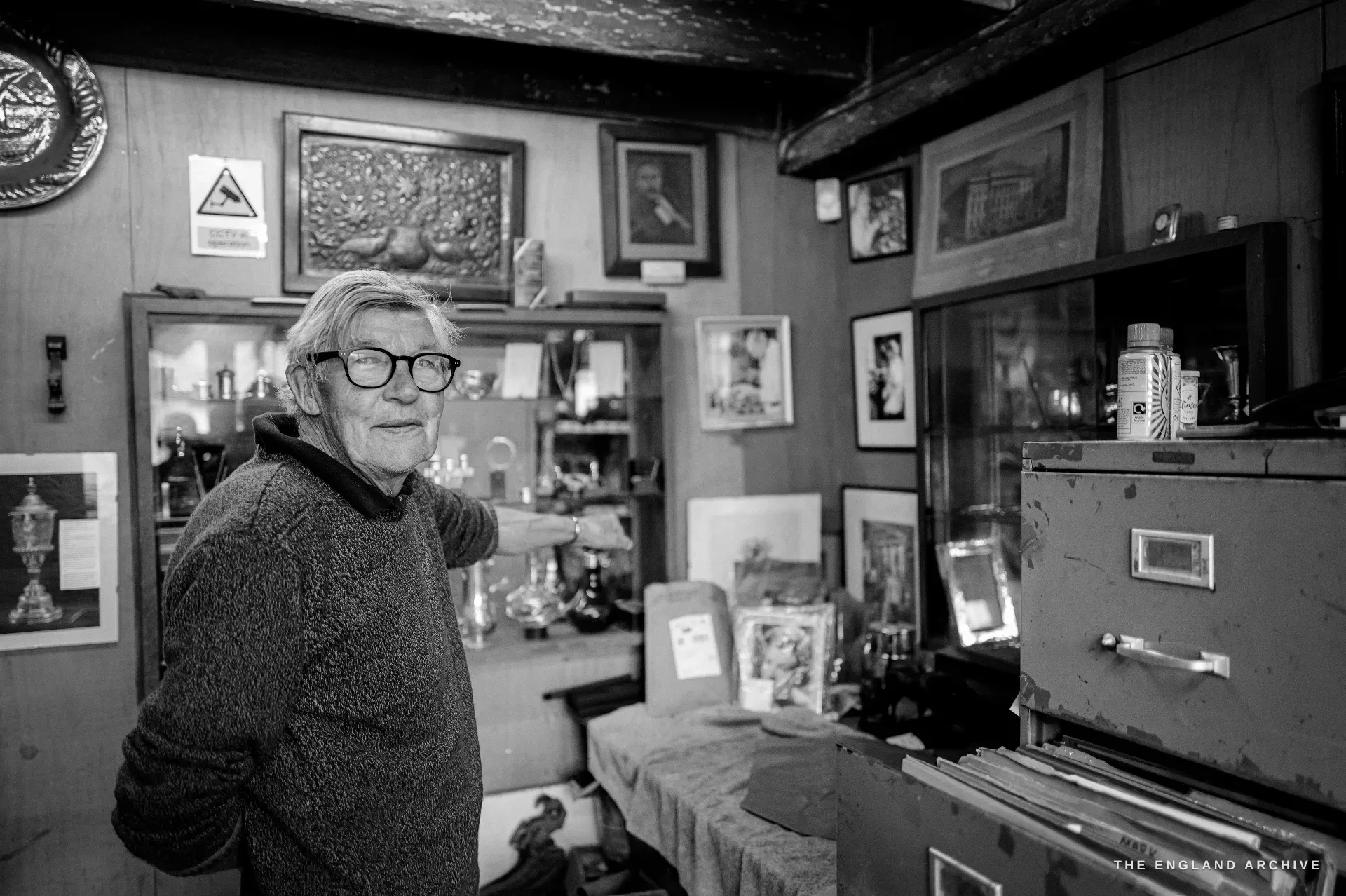
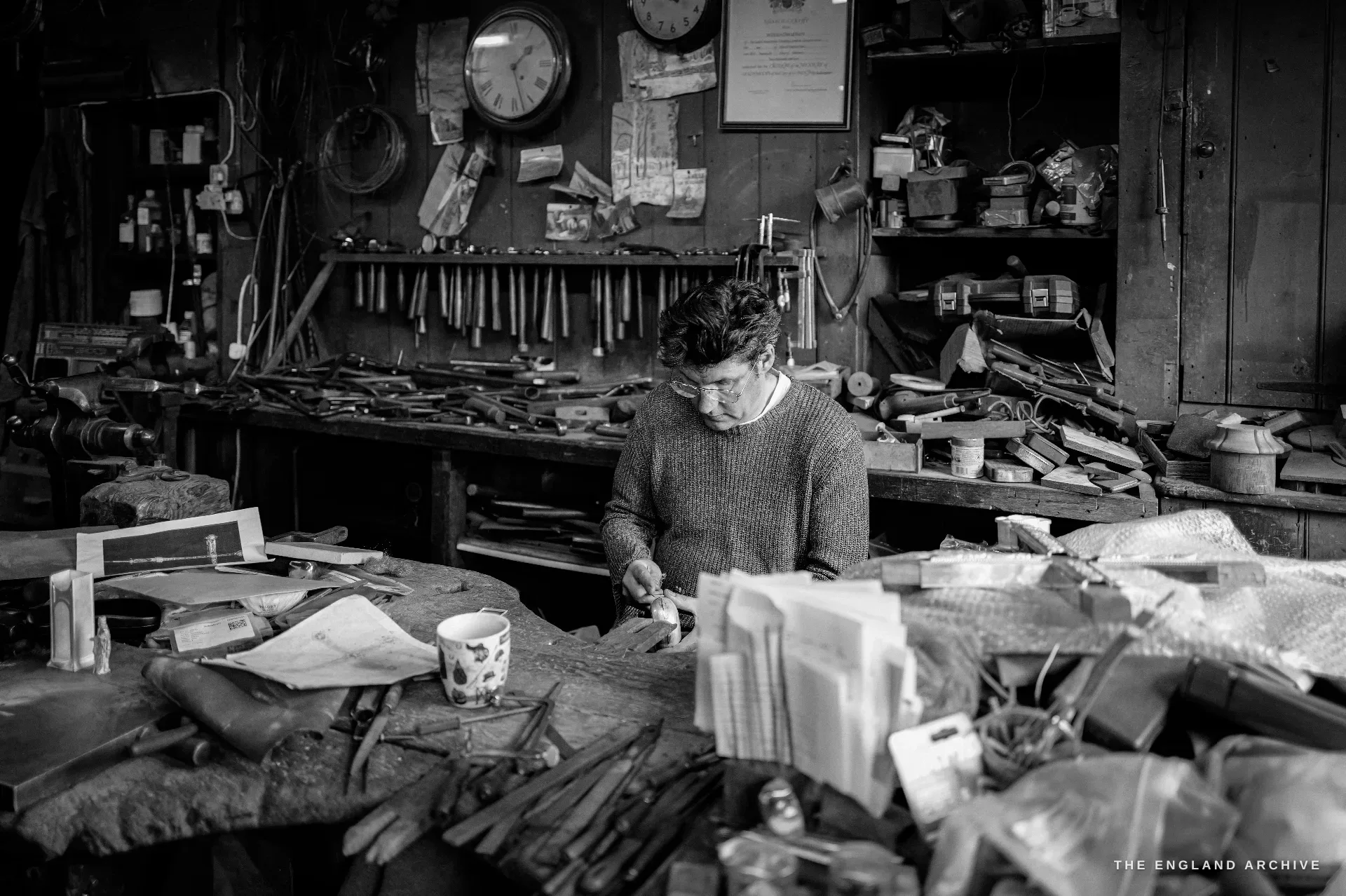
David Hart

Silversmith, third generation, Hart Gold & Silversmiths

Grandson of George Hart of the Guild of Handicraft, brought into the workshop by his father Henry in 1956. Documented by the archive in May 2026, at eighty-seven, seventy years at the bench.

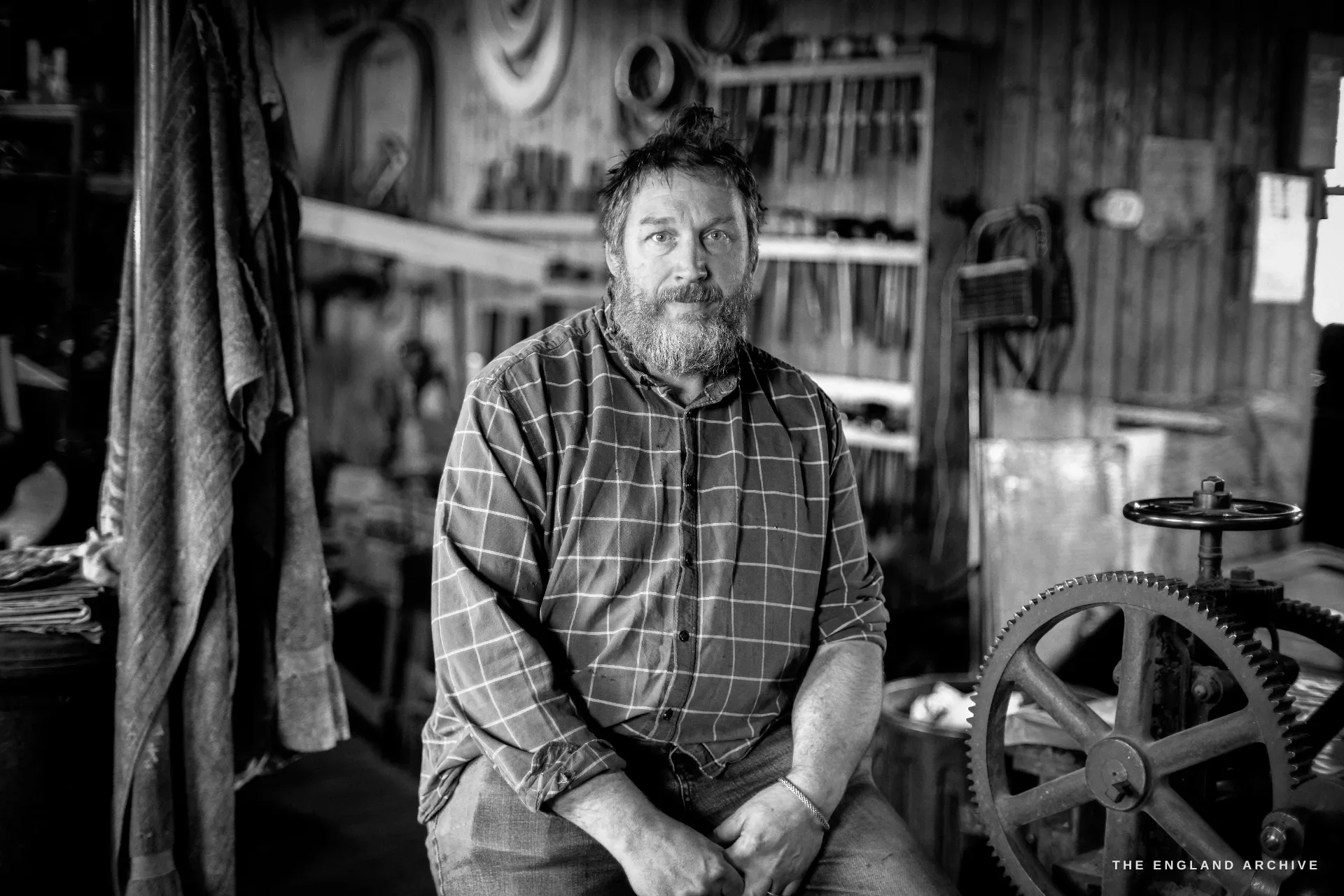
William Hart

Silversmith, fourth generation, Hart Gold & Silversmiths

Son of David Hart and great-grandson of George Hart. Came to the bench from computer science and joined the workshop in 1990; he now carries it forward.

George Hart

Silversmith, founder of the Hart workshop 1882 - 1973

One of the silversmiths Ashbee brought to Campden with the Guild of Handicraft in 1902. When the Guild was wound up in 1908 he stayed and kept working in the Silk Mill, founding the line of Hart silversmiths that still works there today.

C. R. Ashbee

Architect, designer, founder of the Guild of Handicraft 1863 - 1942

Arts and Crafts architect and social reformer who founded the Guild and School of Handicraft in London in 1888 and moved it to Chipping Campden in 1902.

Sir Baptist Hicks

Mercer and benefactor; built the Market Hall died 1629

Wealthy London mercer and financier, later Viscount Campden, who gave the town its almshouses (1612) and its Market Hall (1627).

F. L. Griggs

Etcher; founder of the Campden Trust 1876 - 1938

Master etcher who settled in Campden in 1904, bought Dover’s Hill in 1926 to save it, and helped found the Campden Trust in 1929 to protect the town’s character.

Local institutions

Societies, councils and trusts

Court Barn Museum

Museum of craft and design

Tells the story of Campden’s craft and design heritage, from Ashbee’s Guild of Handicraft to the makers working in the town today.

Web
courtbarn.org.uk

The Guild of Handicraft Trust

Charity preserving the Guild’s legacy

Holds the archive of Ashbee’s Guild of Handicraft and works to keep its history and its craft tradition alive in Campden.

The Campden Trust

Preservation charity, founded 1929 · founded 1929

Founded by F. L. Griggs and others to protect the character and historic fabric of the town; the reason Campden survives so intact.

The Hart Silversmiths Trust

Charity securing the workshop’s future

Works to secure the future of Hart’s and its building as a piece of living national craft history.

Web
www.hartsilversmithstrust.org.uk

Local businesses

Pubs, cafes and shops

The archive is not a commercial directory. These are the businesses that form the working village - listed so visitors can find them, and so the record is complete.

Cafes

  • Campden Coffee Company

    Coffee house on the ground floor of the Old Silk Mill.

Shops

  • Robert Welch

    The studio shop of the designer Robert Welch, who worked in the Silk Mill from the 1950s; cutlery, homeware and design still run from Campden by his family.

Galleries

  • Hart Gold & Silversmiths

    The working silver and goldsmith’s workshop on the first floor of the Old Silk Mill - the last working remnant of the Guild of Handicraft. Visitors welcome.

  • The Gallery at the Guild

    Gallery in the Old Silk Mill showing the work of contemporary makers.

Visit

How to get there

Location

High Street, Chipping Campden, Gloucestershire, GL55 6AT

OS grid reference SP 151 391

Getting there

By car
Off the A44 near Broadway; about 12 miles from Stratford-upon-Avon.
By train
Moreton-in-Marsh (about 7 miles) is the nearest station, then bus or taxi.
By bus
Local services connect Campden with Moreton-in-Marsh, Broadway and Stratford.

Parking

Public car parks off the High Street and on Back Ends; on-street parking is limited.

Walking routes

  • The Cotswold Way · Campden is the northern trailhead of the 102-mile Cotswold Way National Trail, which begins at the Market Hall and runs south to Bath.
  • The Heart of England Way · A long-distance path linking the Cotswolds with Cannock Chase, passing through the town.
  • Monarch's Way · The 615-mile route tracing Charles II’s escape after the Battle of Worcester passes close by.

When to visit

Weekday mornings are quietest. The Cotswold Olimpicks and Scuttlebrook Wake fall on the Friday and Saturday after the Spring Bank Holiday.

Map

Chipping Campden on a map

Map data © OpenStreetMap contributors, under the Open Database Licence.

Further reading

Books, broadcasts, and primary sources

Share

Share this page

Subscribe to updates for Chipping Campden (RSS)

Cite this page

AR-0014 · https://englandarchive.org/regions/the-cotswolds/chipping-campden

Suggested citation:

The England Archive. (June 2026). Chipping Campden [AR-0014]. https://englandarchive.org/id/AR-0014

The archive ID above is a permanent handle. /id/AR-0014 resolves to this page and will continue to do so if the URL ever changes. If you are citing one of the photographs on this page, each carries its own IM-NNNN - hover any thumbnail in the gallery above to see it.

From Chipping Campden

Subjects Documented

David Hart, Silversmith Makers
Documentary Archive May 2026

David Hart, Silversmith

Third-generation silversmith at Hart Gold & Silversmiths in the Old Silk Mill, Chipping Campden - the last working workshop of Ashbee's Guild of Handicraft. Grandson of George Hart, who came to Campden with the Guild in 1902; brought into the workshop by his father Henry in 1956. Eighty-seven at the time of the visit, and seventy years at the bench this July, still raising silver by hand.

William Hart, Silversmith Makers
Documentary Archive May 2026

William Hart, Silversmith

Fourth-generation silversmith at Hart Gold & Silversmiths in the Old Silk Mill, Chipping Campden. Son of David Hart, great-grandson of George Hart of the Guild of Handicraft. Came to the bench from computer science, joining the workshop in 1990, the year his grandfather Henry died, and now carries the workshop forward.

Derek Elliott, Silversmith Makers
Documentary Archive May 2026

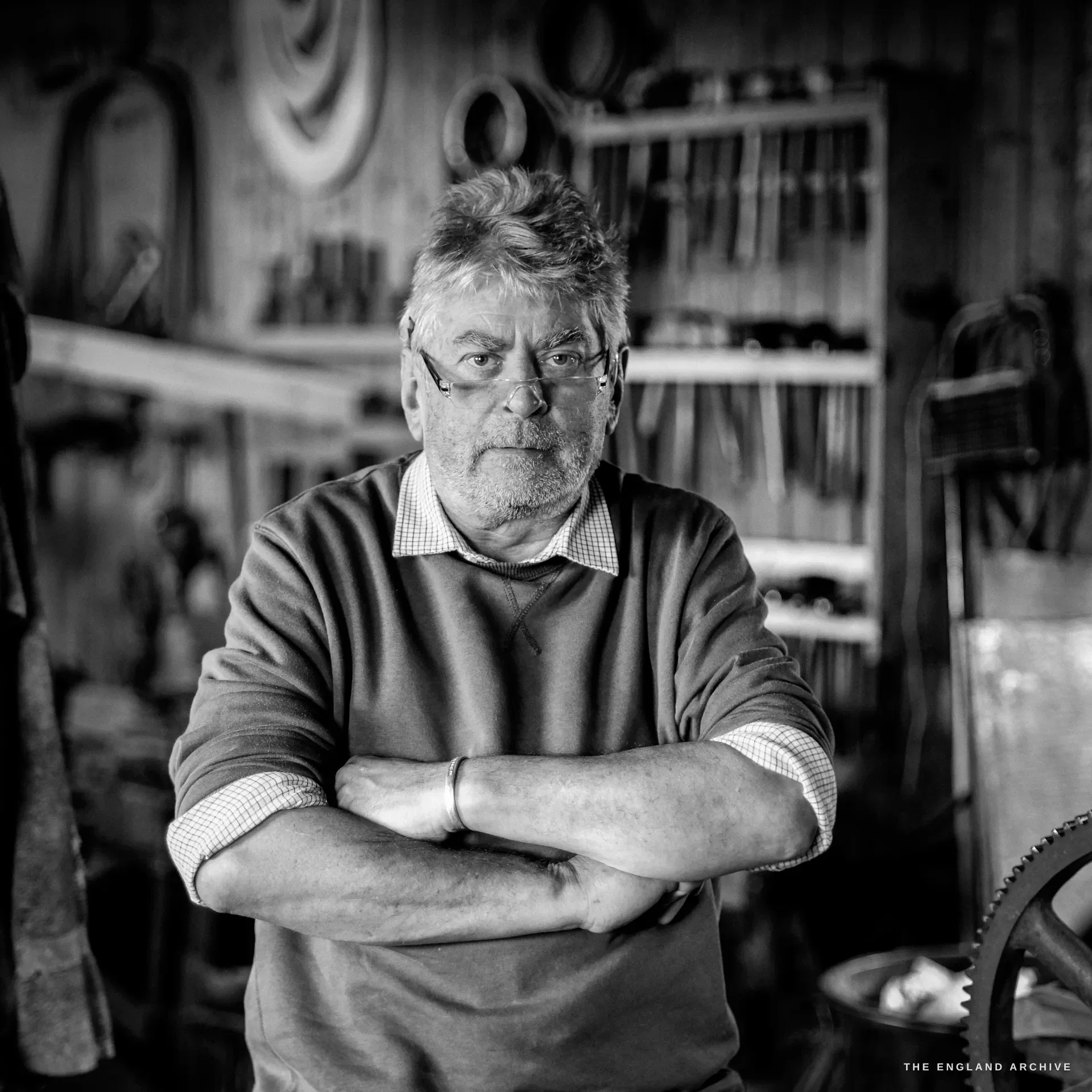
Derek Elliott, Silversmith

Silversmith at Hart Gold & Silversmiths in the Old Silk Mill, Chipping Campden - the only one of the workshop's silversmiths not a Hart by blood. Recruited from Chipping Campden School in 1982 while sitting his A-levels, aged eighteen, and apprenticed to David Hart, taught by David and his father Henry. Forty-four years at the bench.

Julian Hart, Silversmith Makers
Documentary Archive May 2026

Julian Hart, Silversmith

Silversmith at Hart Gold & Silversmiths in the Old Silk Mill, Chipping Campden. David Hart's nephew and William's cousin, son of David's brother Basil. He joined the workshop in 1994, aged eighteen, after two years of motor-vehicle engineering at college - asked in to help with a busy order book while he looked for a job, and at the bench ever since.

Documentary Archive Coming Soon

The Olimpick Games Master

The Cotswold Olimpick Games have been held above Chipping Campden since 1612. Shin-kicking, tug-of-war, championship of the hill. One person keeps it going.

Journal

Visits to Chipping Campden

A Morning at Hart Silversmiths · 21 May 2026
A working morning in the Old Silk Mill with David Hart, eighty-seven and seventy years at the bench, and his son William, fourth generation - the last working workshop of Ashbee's Guild of Handicraft. JN-0017

People at Chipping Campden

Categories Represented

Further in the archive