Makers
Derek Elliott
Silversmith, Forty-Four Years at the Bench
Hart Gold & Silversmiths, Chipping Campden
Silversmith, Forty-Four Years at the Bench
Hart Gold & Silversmiths, Chipping Campden
Forty-four years at the same bench, and the one man in the room who is not a Hart.
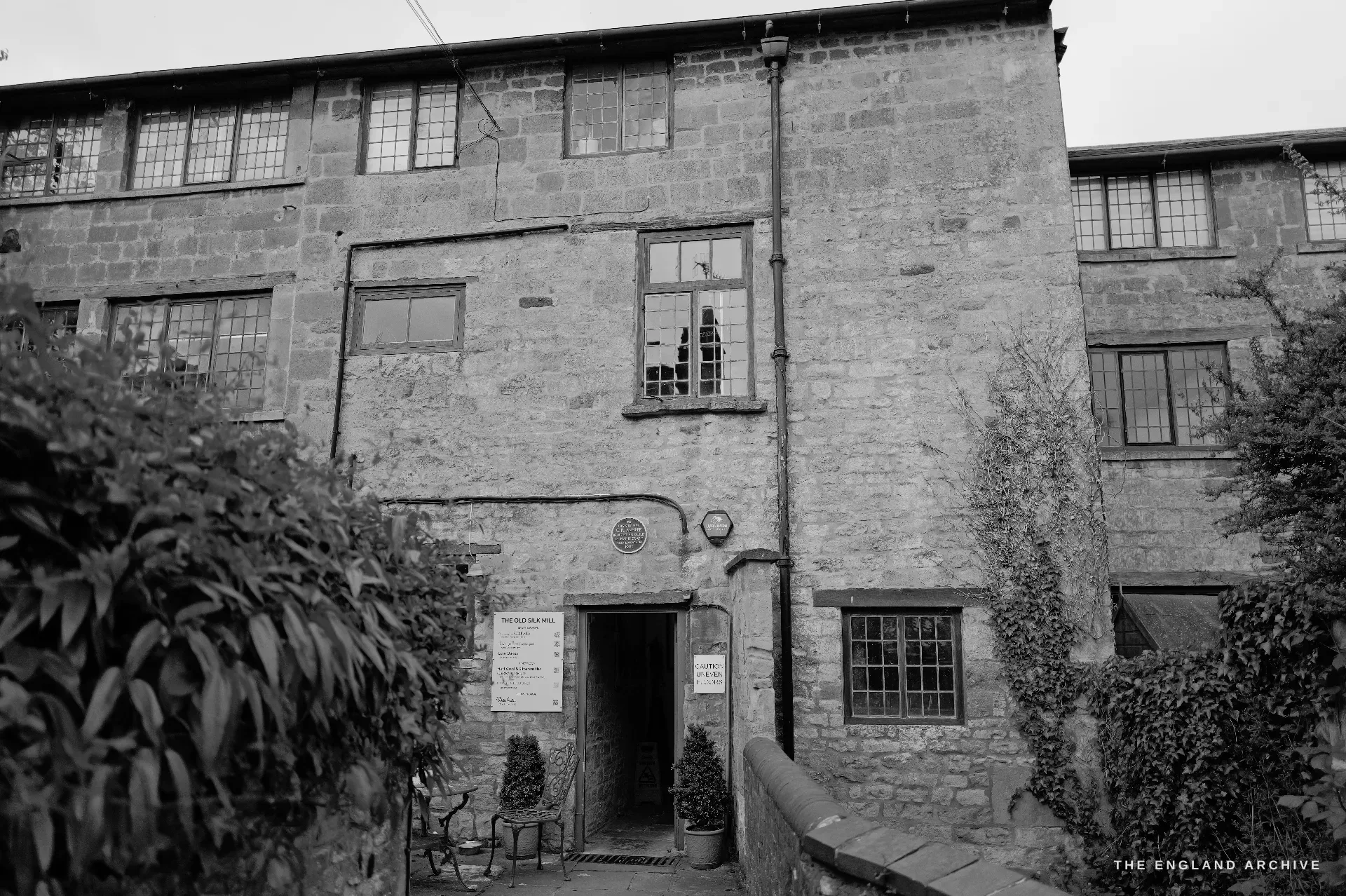
Derek Elliott is the one silversmith at Hart's who is not a Hart. He came to the workshop in 1982, eighteen years old and still sitting his A-levels at Chipping Campden School, a few hundred yards up the hill from the Old Silk Mill. He was taken on straight out of the sixth form into a room that had already been raising silver by hand, in the same spot, for eighty years. Forty-four years later he is still at the bench.
It is an unusual way into a craft like this, which more often passes down a family or not at all. Derek arrived the way an apprentice once would have: young, local, recruited from the school down the road into the workshop on the strength of being suited to it. The difference is that he stayed for a working lifetime, and the workshop he stayed in happened to be the last continuously working remnant of Chipping Campden's Guild of Handicraft.
He was apprenticed to David Hart, and taught by David and by David's father Henry, who was still working in the room when Derek arrived and would be until 1990. That is a rare line to have learned along. Derek took the trade directly from the second and third generations of the Hart workshop - the same hand-raising David had learned from Henry, and Henry from George Hart, the guildsman who never left the building. The method reached him at one remove from Ashbee's Guild itself.
He carries that method without carrying the name. After forty-four years, the distinction barely registers at the bench, but it matters to the story of how a craft actually survives. A workshop does not continue on blood alone; it continues because the skill keeps being held by someone, taught, used, handed on. For the better part of half a century, a large share of that holding has been Derek Elliott's.
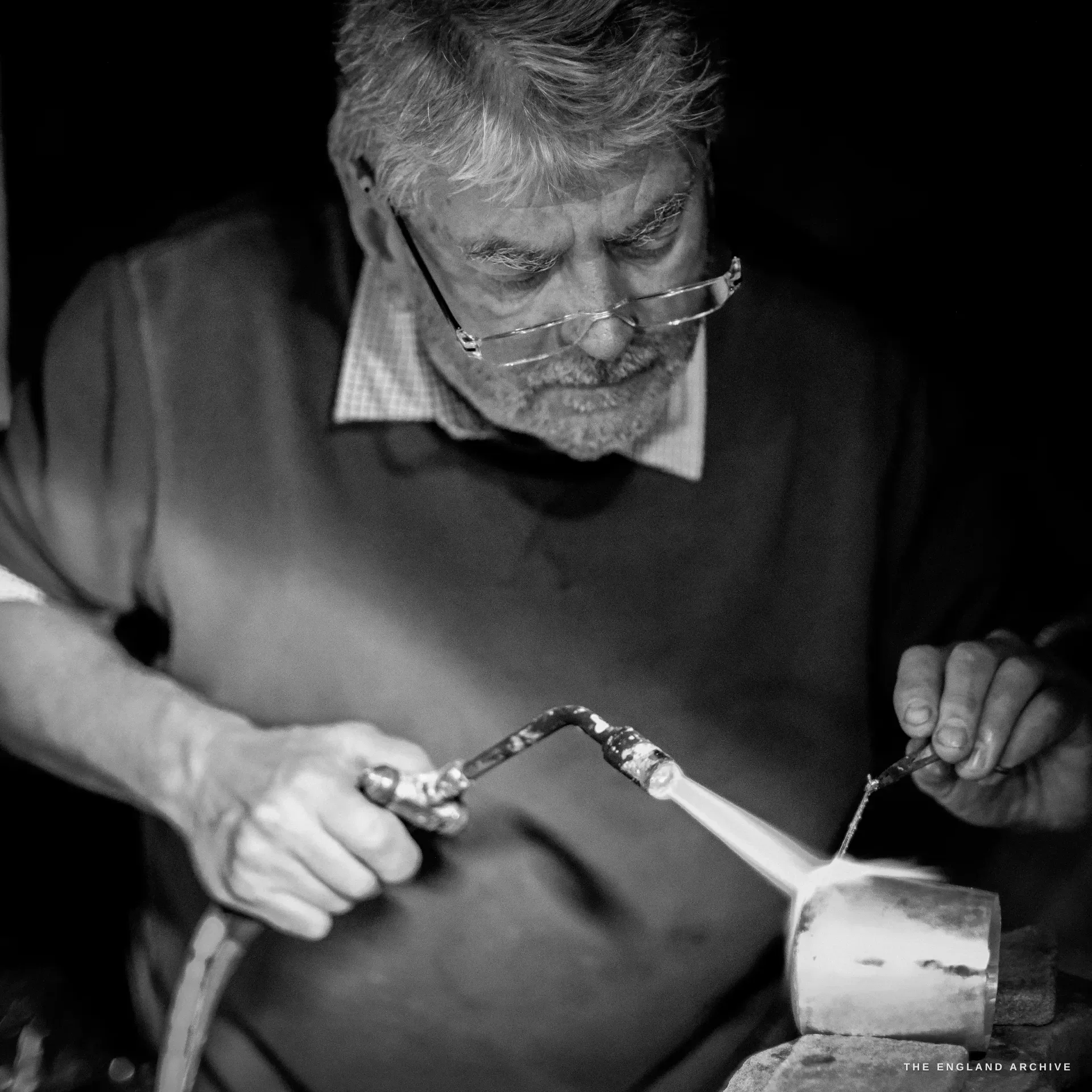
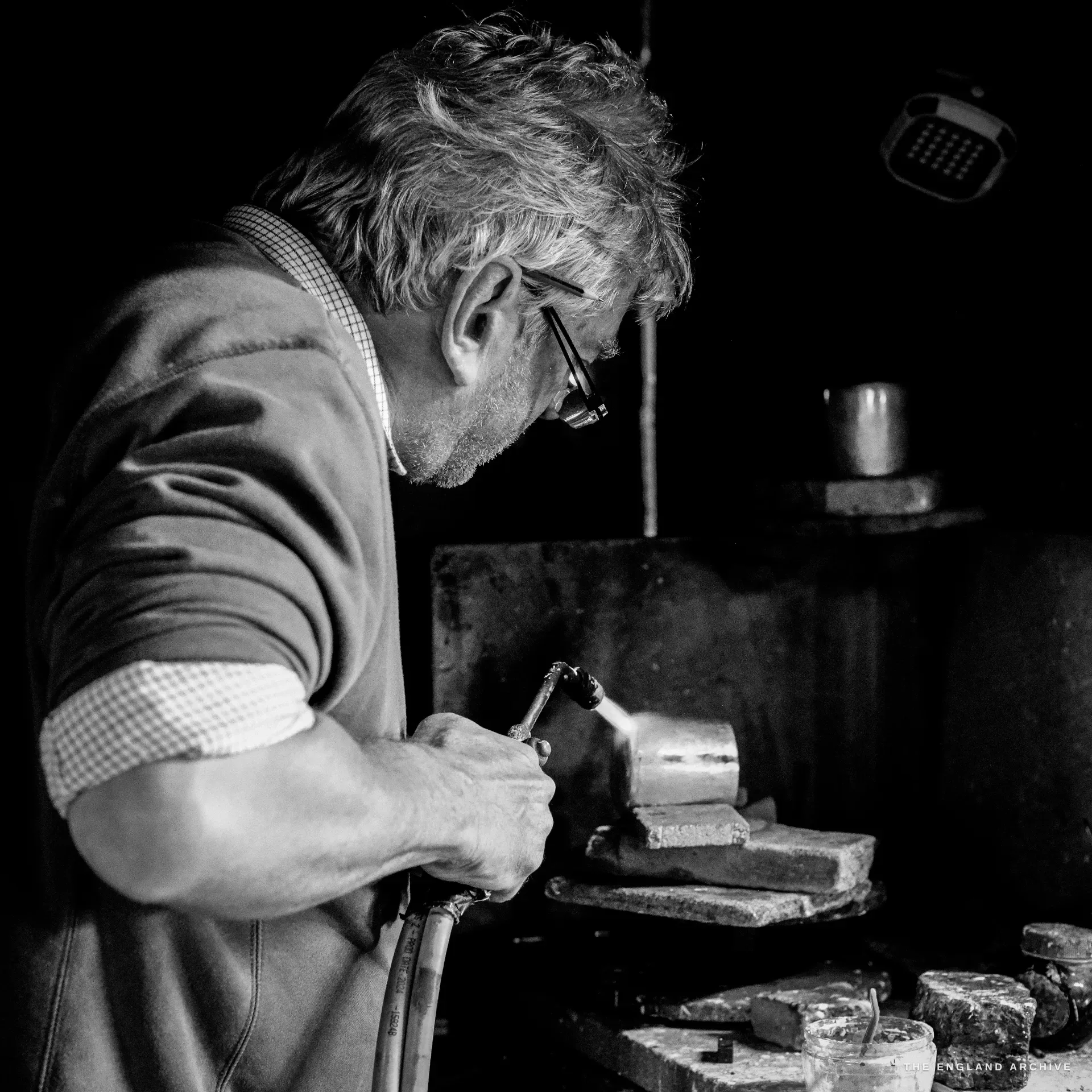
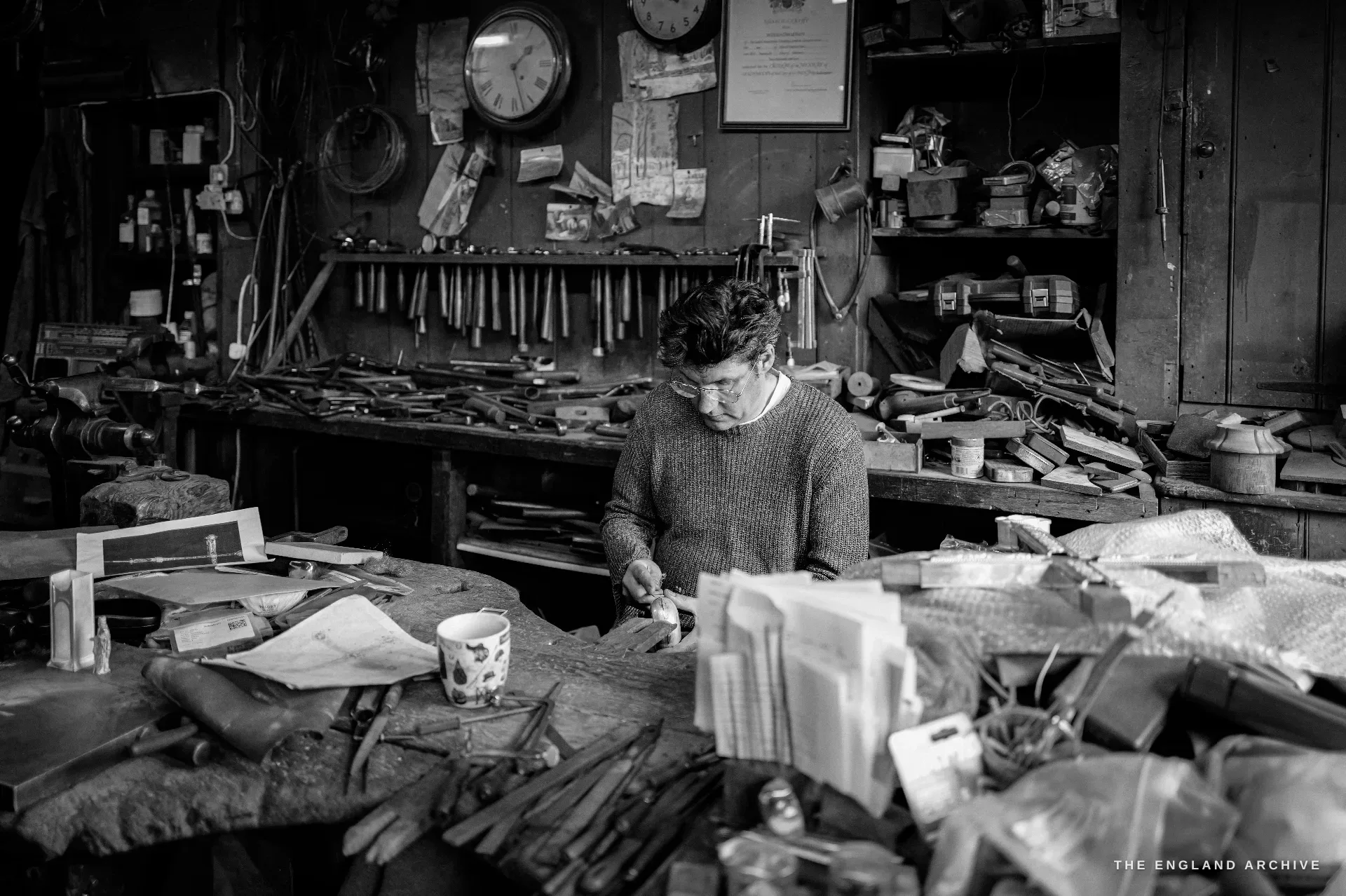
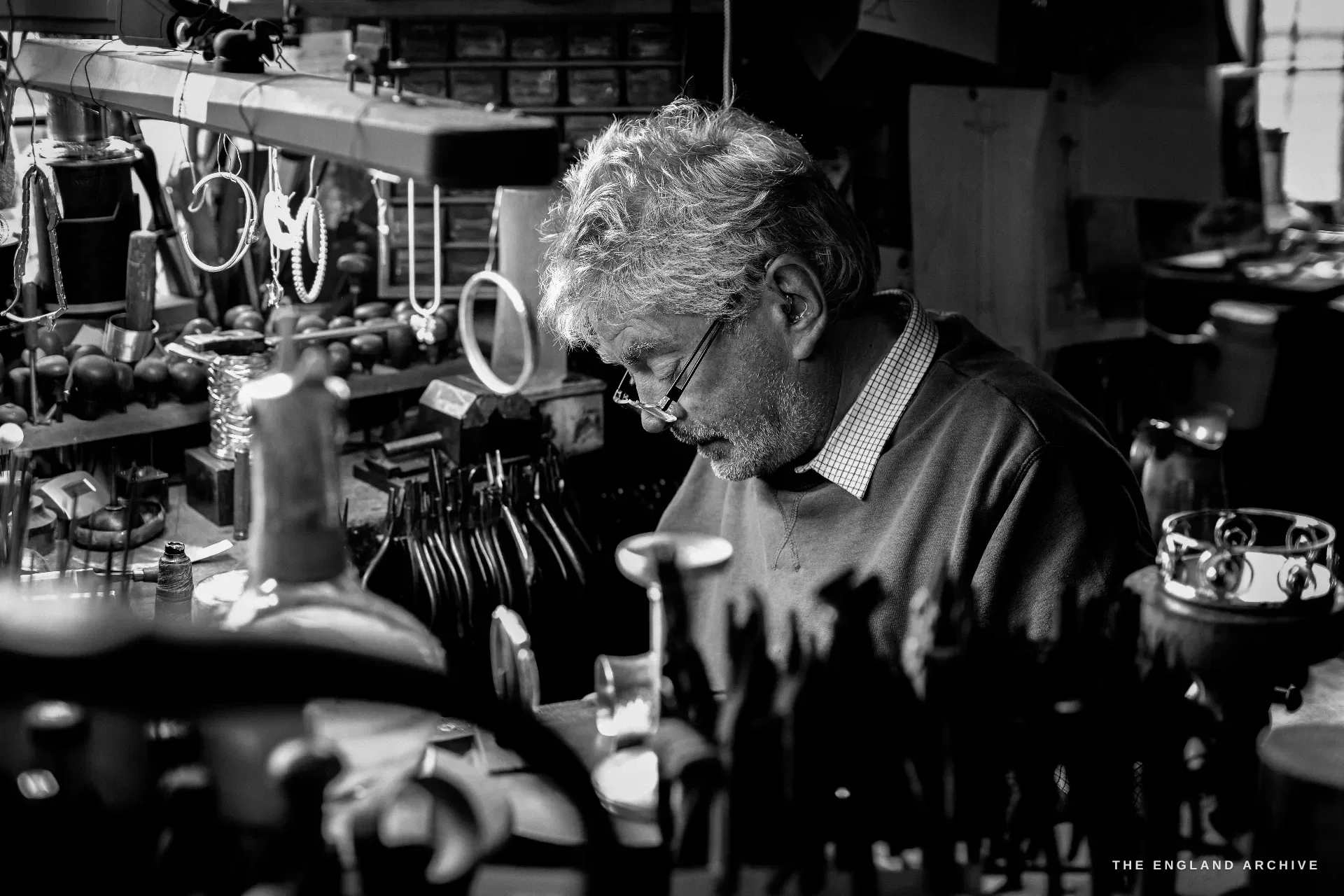
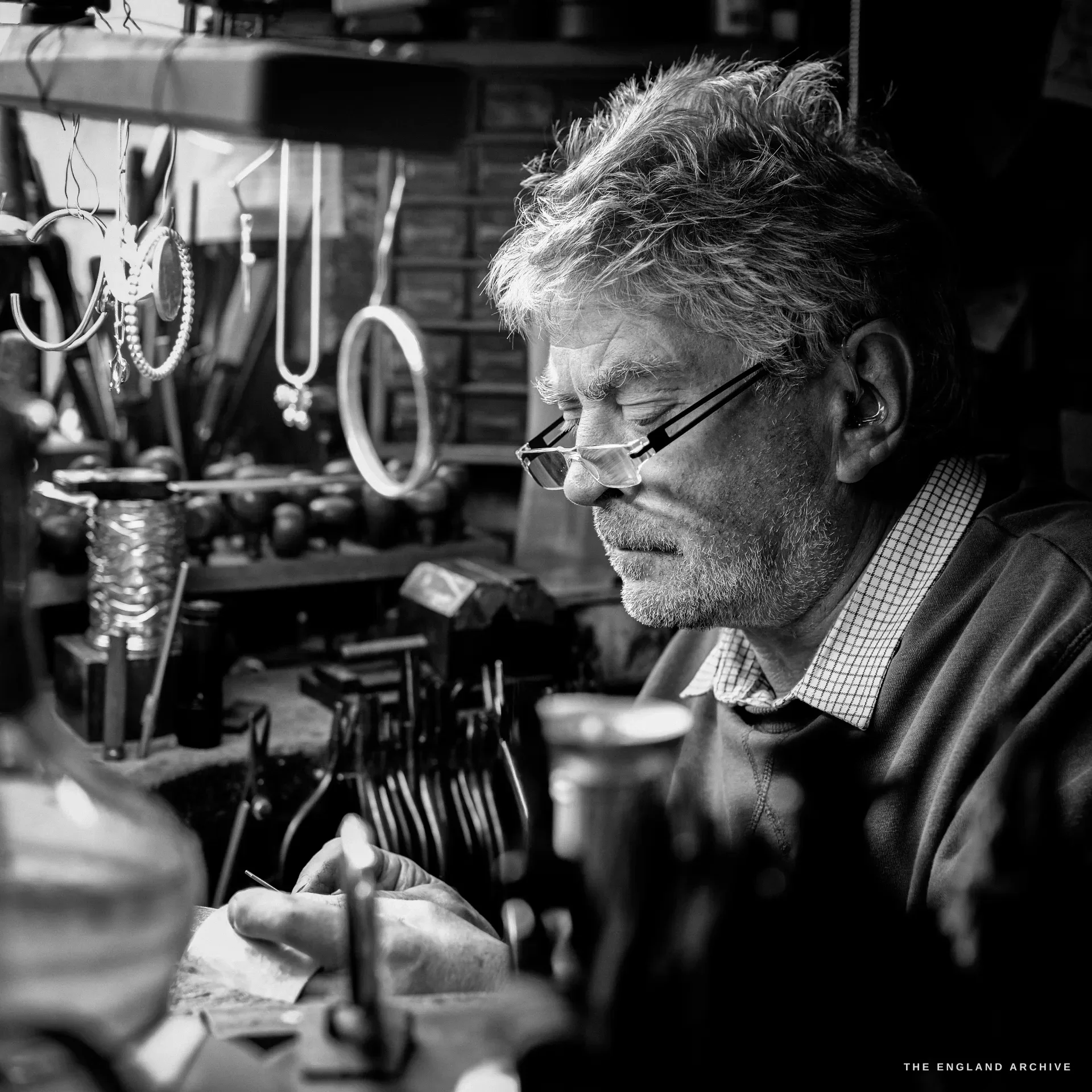
He works the silver the way the room has always worked it: a blank annealed in the flame of a gas torch, raised on the stake under the hammer, planished smooth, the slow argument between metal and hand. The photographs are of a craftsman in the middle of doing it - bent over the bench amid a dense foreground of finished and half-finished pieces, the blowtorch played over a workpiece held in tongs, a small tool worked against the stake. Heads down, the room running at its own steady pace.
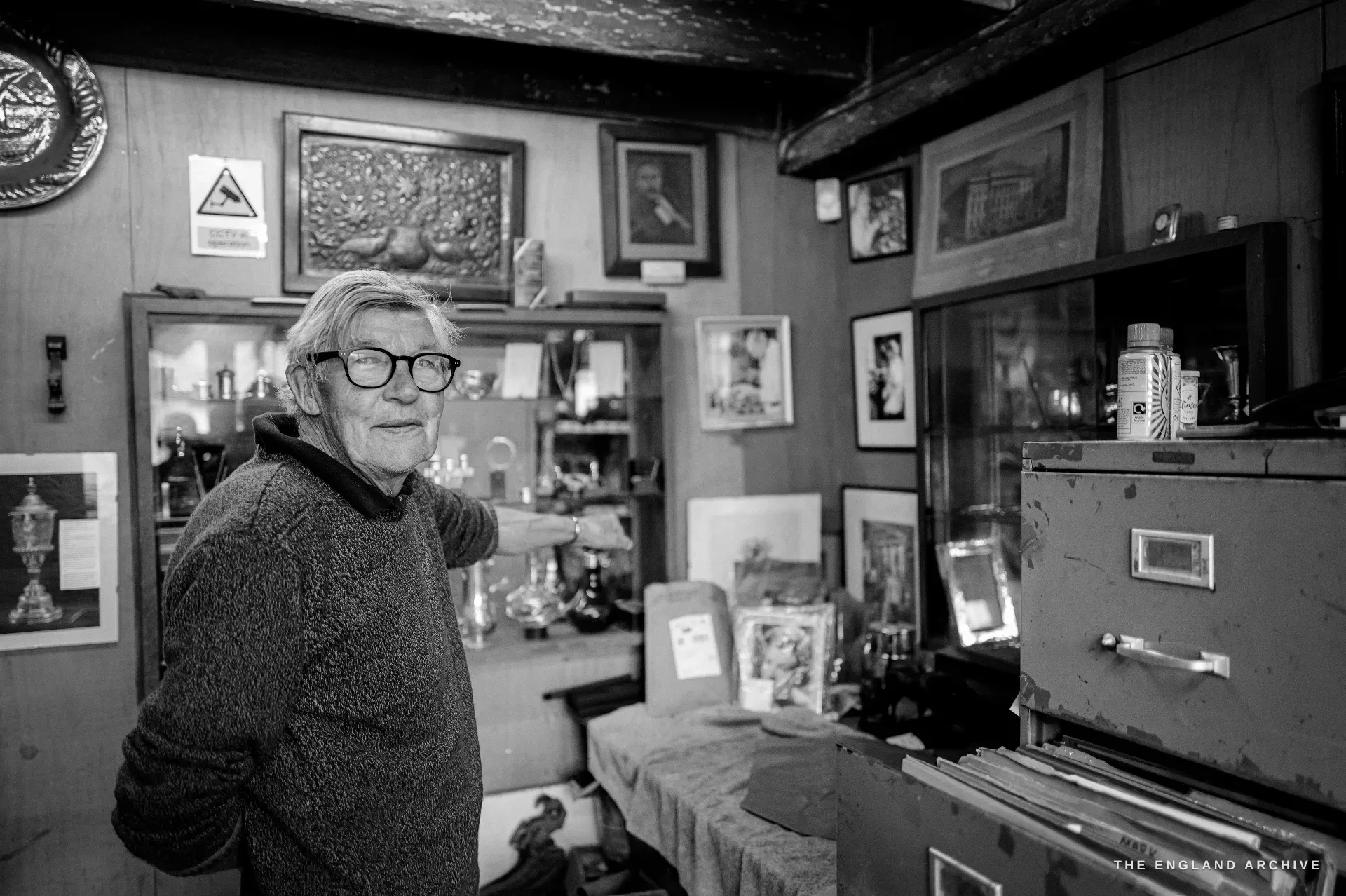
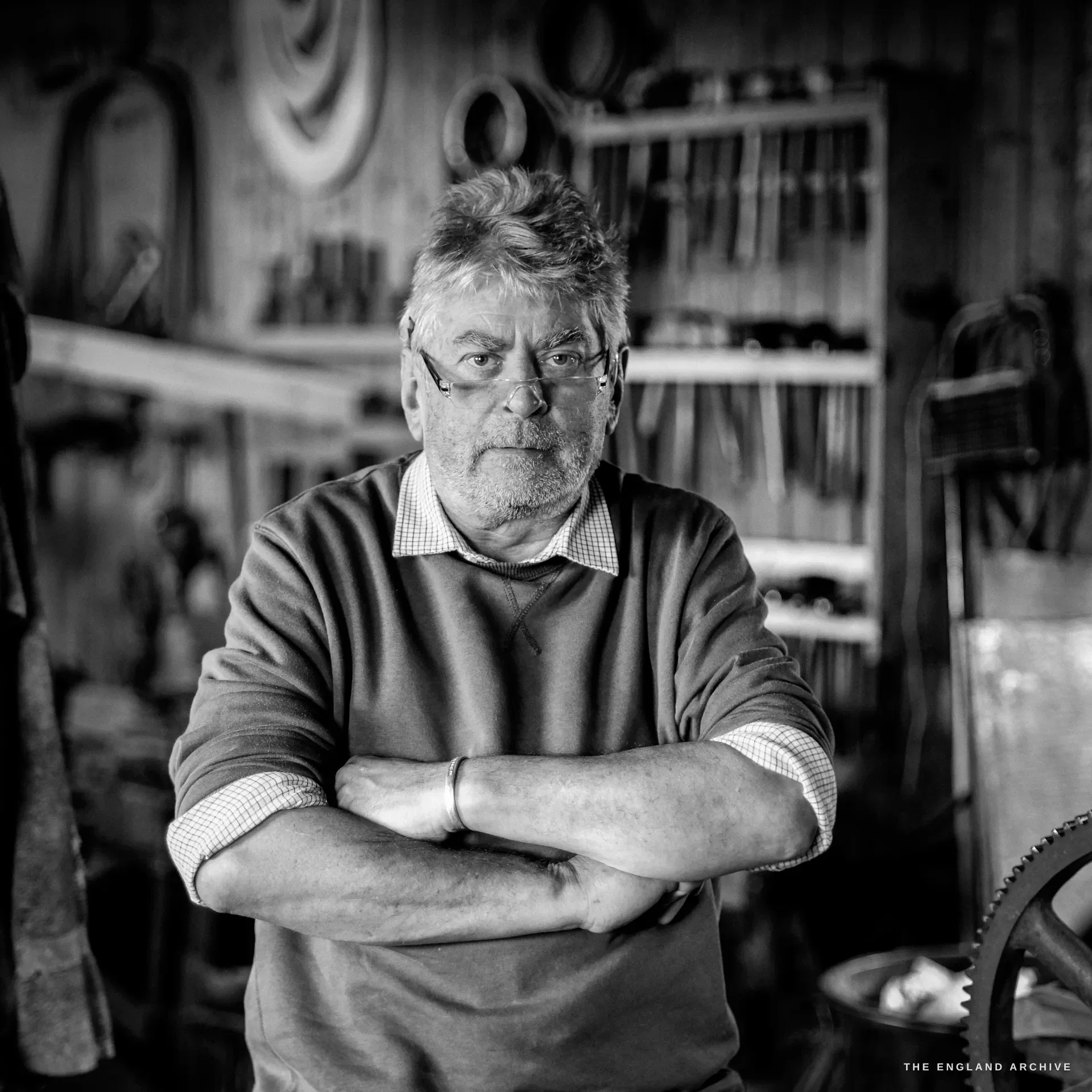
Derek is not a man who performs for a camera. He stood for one frame in front of the tool wall, arms folded, grey-haired and bespectacled, and looked back at the lens without arranging himself. Forty-four years in one room is written in how easily he occupies it - not a visitor to the craft but part of its furniture, in the best sense the workshop could mean it.
This is the archive's first record of Derek Elliott, made on a working morning in May 2026 alongside the record of the Harts he learned from and works beside. His route into the trade - recruited from the school up the road, taught by Henry and David, kept at it for forty-four years - is the part of the Hart story that is easy to miss if you come looking only for the family line. It is, just as much, how the workshop has survived. The archive expects to return to it.