Private Custodians, Collectors, and the Rescue of What Would Otherwise Be Lost
They are not institutions. They are individuals who have spent decades gathering, rescuing, and preserving the fragments of England that nobody else thought to keep. When their collections disperse, the connections between the objects - the knowledge of what they mean and why they matter - go with them.
Read the full post →
They are not institutions. They are individuals who have spent decades gathering, rescuing, and preserving the fragments of England that nobody else thought to keep. When their collections disperse, the connections between the objects go with them.
When a Gatherer dies, the collection enters a period of acute vulnerability. The family must clear the house. The auction house takes the silver. The parish magazines go to landfill. The knowledge of what connected the objects is already gone.
The difference between a collection and an accumulation is knowledge. A Gatherer's collection is not a set of objects but a set of relationships between objects, held together by one person's understanding of what they mean.
People who watched entire industries close and saved what they could. Sheffield cutlery, Nottingham lace, the printing trades. The last generation who witnessed the destruction and chose to resist it by keeping what they could carry.
Glass plate negatives, lantern slides, nitrate film, paper ephemera. The most fragile records of English life are preserved by private individuals who retrieve them from house clearances and demolitions before they are destroyed.
Some Gatherers do not just keep the objects. They keep them working. In garages, sheds, and converted outbuildings across England, complete workshops are maintained in operational condition by people who believe that a tool not used is a tool already lost.
There is no register of England’s private heritage collections. No inventory of what is held, no assessment of what is at risk, no system for identifying collections before they are dispersed. This resource maps the problem.
The heritage sector was built to preserve what institutions collect. It was not built to preserve what private individuals rescue. The gap between these two systems is where England’s local heritage is lost.
Every village has one person who knows. Which family lived in which house, what the high street looked like before the bypass, where the mill stood, when the school closed. They are the parish keeper, and they are usually the last.
The England Archive sits inside an English documentary photography tradition that runs from Benjamin Stone in 1897 through Walker Evans, Simon Roberts and Homer Sykes into the present. An essay on the lineage, the editorial inheritance, and where this archive intends to diverge from it.
A private custodian of the Little Mesters' trade heritage. Cutlery, tools, pattern books, tang stamps, and photographs from workshops that closed one by one as the economics of handmade cutlery became untenable.
Someone who specifically rescues Victorian and Edwardian glass plate negatives and lantern slides from house clearances. Every box saved is a hundred years of someone's careful documentation of a single parish, preserved from landfill.
A retired printer maintaining a complete working hot-metal typesetting workshop. Not a museum piece but a functional facility where type is still set by hand and the knowledge of letterpress composition is still practiced.
The local historian whose house is the archive of a specific parish. Photographs, documents, oral histories, maps, and the connective knowledge that makes sense of all of it. Known by name at the county record office.
Someone preserving and maintaining agricultural machinery from the pre-mechanisation era. Not just the machine but its provenance, its working history, and the engineering logic behind design choices made a century ago.
A specialist in printed ephemera - handbills, broadsheets, trade cards, tickets, playbills. The paper trail of ordinary English life, kept by someone who understood that the unglamorous record is the one most likely to be destroyed.
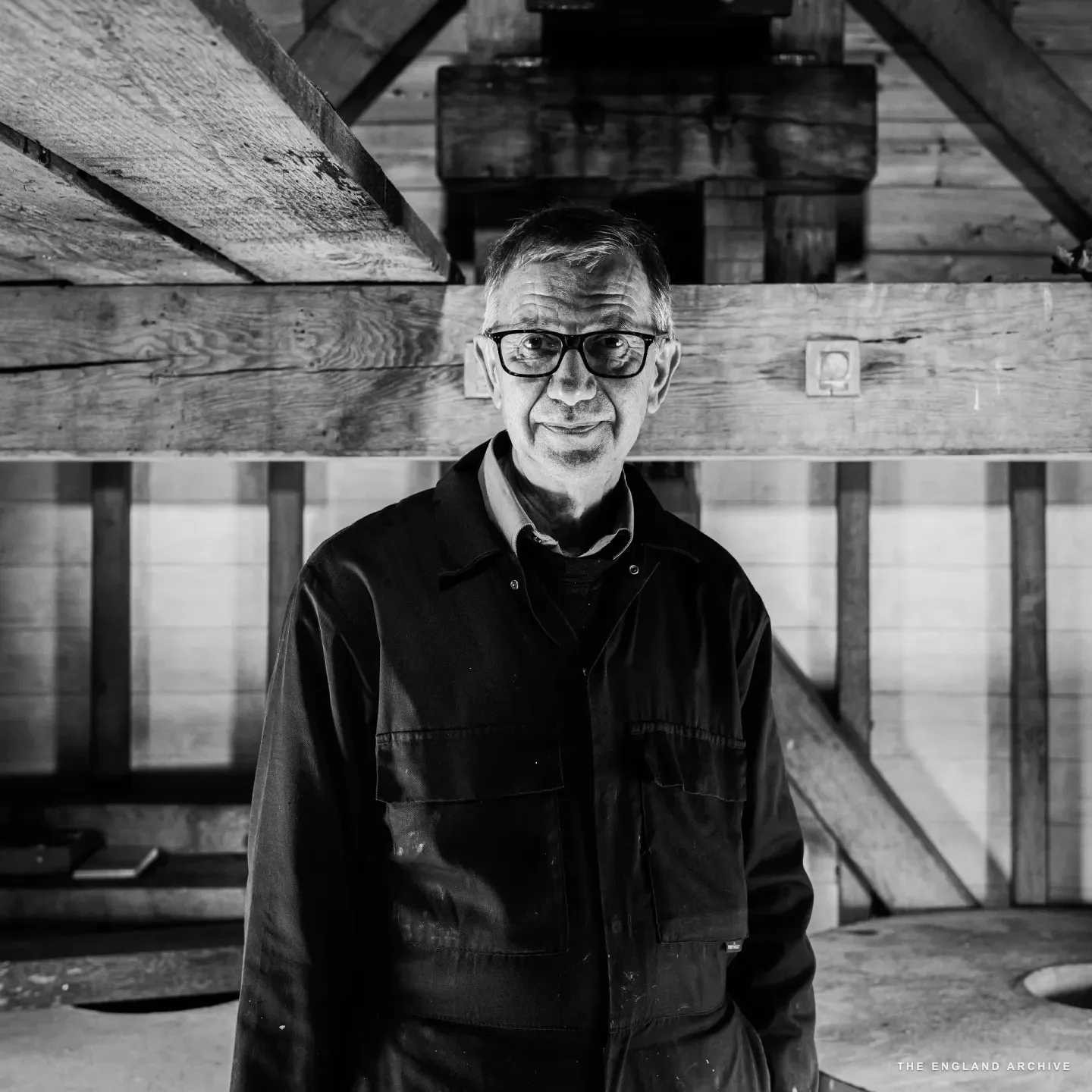
Gatherers A retired millwright in South Walsham who built a fully working post mill from scratch on his own land, alongside two houses, multiple workshops, and barns full of restored vintage tractors, wagons, and steam engines. The first encounter that prompted the creation of the Gatherers category.
“The collection is not the objects. The collection is the knowledge of what connects them. That is what lives in one person and dies when the boxes are split up and sold.”