The Documentary Lineage
Stone, Evans, Roberts, Sykes - and what this archive inherits from them
A documentary photographer working in England today inherits a tradition. Not a rule book. Not a sanctioned style. A sequence of working examples laid down by people who decided, at separate moments in the past hundred and twenty-eight years, that the country’s ordinary life was worth a serious photographic record. Each of them began under different technical constraints. Each made a body of work that survived past their own working life. The tradition they form is unbroken, sparsely populated, and easily missed. The England Archive is the latest entry in it.
This essay names the lineage, sets out what the project inherits from each link in it, and is honest about the places where this archive intends to depart from its predecessors. It is not an attempt to claim equivalence with the work of Benjamin Stone, Walker Evans, Simon Roberts, or Homer Sykes. It is a statement of where the project locates itself, and a record - useful to a future reader - of what was being read on the desk while it was being made.
Benjamin Stone, 1897
Sir John Benjamin Stone (1838-1914) was a Birmingham businessman, Conservative MP for East Birmingham, and the most determined photographic recorder of English life in the late Victorian and early Edwardian period. In 1897 he founded the National Photographic Record Association (NPRA) with the explicit purpose of making a permanent photographic record of British monuments, customs, and traditions before they disappeared. He served as its first president. The NPRA was active until 1910; Stone’s personal collection eventually amounted to some 22,000 photographs, the bulk of which survive in the Birmingham Library’s Stone Collection.
What Stone did, and the reason he is the first link in this lineage, was to make the editorial decision that ordinary English ceremonial life - rush-bearing processions, well dressings, royal Maundy services, mayors’ ceremonies, harvest customs, the Tichborne Dole - was worth photographing as a coherent body of work. He did not romanticise. He did not stage. The photographs are mostly straightforward, frontal, descriptive: a long view of a parade, a square portrait of a custom-bearer in their costume, a record shot of the implements being used. He was working with large-format glass plates and natural light, which forced a certain plainness on the work. The plainness is part of why it has aged well.
Stone’s commitments were the founding commitments of the English documentary tradition: that custom and ceremony are worth recording; that the recording should be photographic and not pictorial; that the record should be made before the custom changes; and that the record should be deposited where it can be found by future researchers. Every element of the present archive’s editorial frame can be traced back to him.
Walker Evans, 1941
Walker Evans (1903-1975) is the American end of the lineage, but his work shaped what English documentary photography became. The two relevant titles are American Photographs (1938), the catalogue of his solo Museum of Modern Art exhibition; and Let Us Now Praise Famous Men (1941), his collaboration with the writer James Agee that documented three tenant-farmer families in rural Alabama. The 1941 book is the one cited on the homepage of this archive, and it is the book that mattered most to the post-war English documentary photographers who carried the tradition forward.
What Evans did - the inheritance the English photographers absorbed - was to formalise documentary photography as an authorial discipline rather than a journalistic accident. Evans’s working method was austere. He used an 8x10 view camera. He worked slowly. He composed deliberately. He framed his subjects head-on, without rhetoric, refusing both the heroic uplift that some of his Farm Security Administration colleagues used and the picturesque simplification that the editorial market would have preferred. The result was a record that has aged into the canonical visual document of Depression-era American rural life because it stayed truthful to what was in front of the camera.
The lesson Evans gave to a younger English generation - John Davies, Chris Killip, Martin Parr’s early black-and-white Hebden Bridge work - was that documentary photography could carry a serious authorial voice without abandoning its descriptive obligation. The voice was in the editing. The discipline was in the framing. The record was in the deposit. Every English photographer working seriously in this register since the 1970s has read Evans, has had Evans on the desk while editing, and has had to decide whether to follow his austerity or to break with it.
This archive sits, at present, on the austere side of that line.
Simon Roberts, 2009
Simon Roberts (born 1974) is the working English documentary photographer whose 2009 book We English is the immediate predecessor of this archive’s ambition. We English documents the leisure activities of contemporary English communities at scale - village fetes, seaside Sundays, county shows, hill-walking groups, racecourses, public commemorations - photographed across two years from a motorhome that Roberts drove around the country with his family. The pictures are large-format, made on a Linhof Technikardan, mostly from raised vantage points. The published book runs to 56 plates with a co-authored essay by Stephen Daniels.
What Roberts did, and what makes We English the contemporary anchor of this lineage, was to update the documentary form for a country that had stopped resembling the country Stone had photographed. Roberts’s English are not Victorian custom-bearers. They are people in fleeces and high-vis vests, in a Lincolnshire field on a Saturday afternoon, watching a steam-engine rally that may or may not still exist in twenty years. The atmosphere is observational rather than nostalgic. The subjects are not heroes; they are people. The photographic register is large-format, slow, and deliberate, but the atmosphere is contemporary. Roberts proved that the documentary tradition could absorb the subject matter of the present without lapsing into either pastoral or critique.
He has continued the work. The Election Project (2010) followed a UK general election. Pierdom (2013) catalogued the surviving English seaside piers. The POST studio he co-founded in Hove with Nina Emett in 2025 - which is where part of this archive’s analogue education has been happening, written up in Learning the Darkroom (JN-0015) - extends the working tradition into a teaching and community space. The lineage is operating at full strength in the present.
Homer Sykes, 1971-
Homer Sykes is the photographer who turned the project of recording English customs into a working life. His first book Once a Year: Some Traditional British Customs was published in 1977 after six years of fieldwork visiting customs across England between 1971 and 1976. The book documented the Hocktide festival at Hungerford, the Hooden Horse of Kent, the Padstow Obby Oss, the Burry Man at South Queensferry, the Whittlesey Straw Bear, the Olney Pancake Race, the Marshfield Mummers, the Bottle Kicking and Hare Pie Scrambling at Hallaton, and dozens more - many of which were, even at the time, balanced on a small number of carriers and at risk of dropping out of the calendar.
Sykes returned to the subject across the following five decades. Hunting with Hounds (1985), Mysterious Britain (1993), the long arc of his work on the same customs in their evolving forms across half a century. His revisits matter because they make a longitudinal record possible: the Padstow Obby Oss in 1971 photographed by Sykes, then in 1989 photographed by Sykes, then in 2019 photographed by Sykes, gives a working baseline that no single photographic visit could provide. The English customs that have survived from his first book to his most recent are, to a large extent, the customs that were named in Once a Year. The customs that are gone are the ones that needed his attention twenty years before they got it.
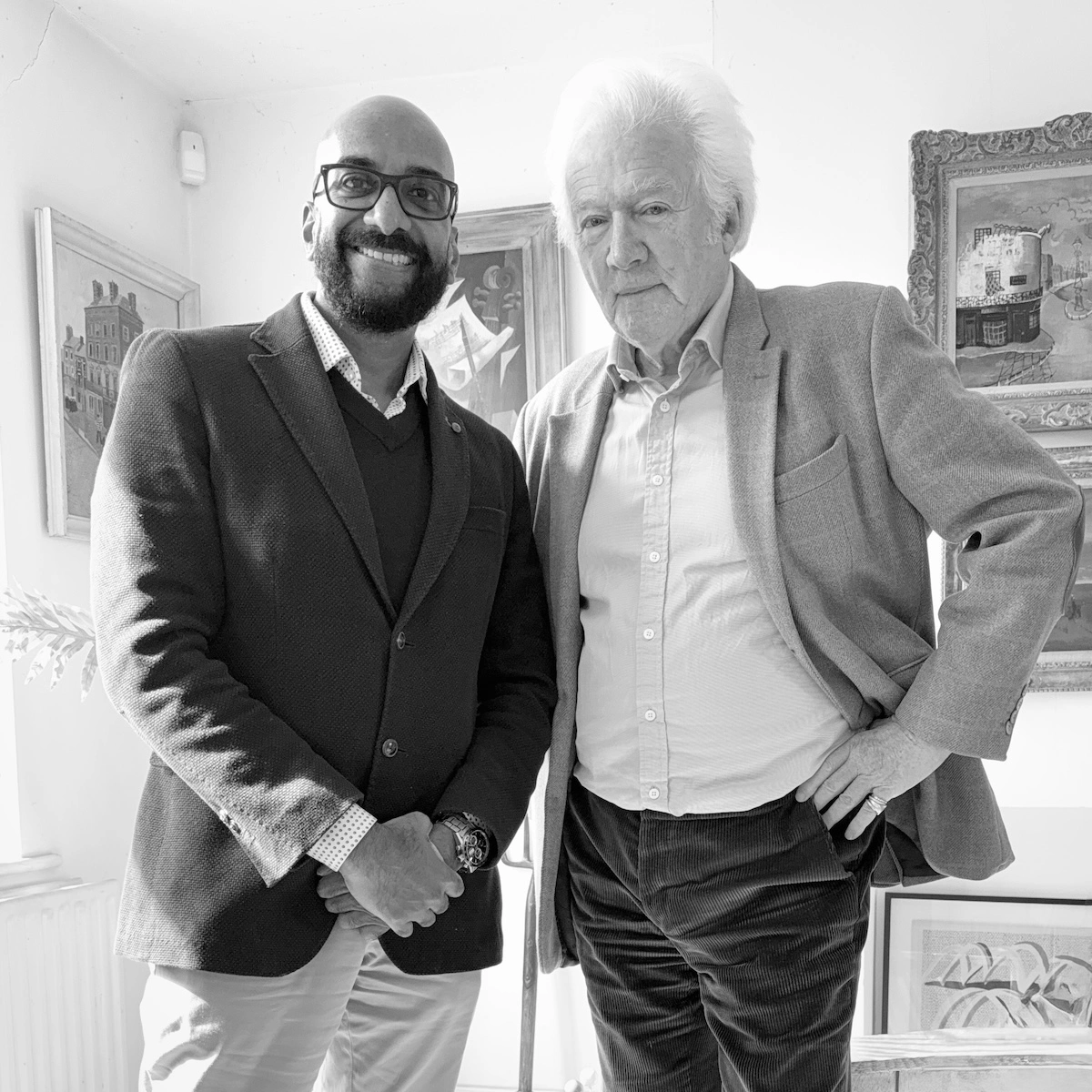
Sykes is also the living link between the late twentieth-century English documentary generation and this archive. He has agreed to write the foreword to this archive’s first book. He wrote the kind of foreword that locates a piece of work in a tradition rather than congratulating it on its existence. The mentorship that runs from him into this project is the most direct inheritance of any of the four named photographers in this lineage.
What this archive inherits
From this lineage, the archive takes five things, in declining order of explicitness.
Stone’s editorial decision. The choice that ordinary English ceremonial and craft life is worth photographing as a coherent body of work, made deliberately and seriously. Without this decision, the rest of the project does not exist.
Evans’s austerity. The discipline of the head-on frame, the refusal of heroic uplift, the trust that the descriptive obligation will carry the meaning if the framing is honest. The archive’s default photographic register - monochrome, large-format-influenced, deliberate composition - sits in this part of the inheritance.
Roberts’s contemporary frame. The recognition that documentary work in the present must look like the present. Fleece jackets and high-vis are part of England now. The archive does not retreat into a pastoral register the country has stopped resembling.
Sykes’s longitudinal seriousness. The discipline of returning - photographing the same custom, the same craftsperson, the same place across enough years that the record becomes longitudinal rather than singular. The archive’s ten-year horizon is built on this principle. It is the most demanding part of the inheritance and the one that requires the most institutional patience.
The deposit obligation. Stone deposited his collection in Birmingham. Evans’s archive went to MoMA and the Library of Congress. Sykes’s work is held in multiple national collections. The pattern is consistent across the lineage: the photographer’s job is not done when the picture is made; it is done when the work is in a place where it can be read in a hundred years. The archive’s active partnership conversation with the Museum of English Rural Life - documented in the Caroline Gould and Ollie Douglas source profiles - is in this part of the inheritance.
Where it diverges
The lineage is the starting point, not the constraint. The archive intends to depart from its predecessors in three specific ways, and a future reader is owed honesty about each.
The first divergence is scope. Stone, Roberts, and Sykes all photographed customs and ceremonies as their primary subject. Evans photographed people and the architecture they inhabited. This archive does both, and adds the working craftspeople, the institutional keepers, the rememberers of place, the stewards of land, and the gatherers who rescue what would otherwise be lost. Six categories of people, organised as a structural taxonomy. This is broader than any of the predecessor projects, and the broadening is deliberate. The argument is that the customs Stone photographed cannot be understood without the people who carry them; the people who carry them cannot be understood without the places they belong to; the places cannot be understood without the institutions that hold them; the institutions cannot be understood without the working trades that sustain them. The archive treats all six as a single subject, photographed from six different angles. That is new.
The second divergence is publication form. The lineage publishes books. The archive publishes a website first and a book later. The website is the working surface; the book is the curated subset. This sequence inverts the convention. It is the right inversion for the present moment - the website carries citation grammar, deep linking, and the kind of cross-referenced metadata that a book cannot - but it is a real departure. A future reader should know that the archive’s primary form is the page they are reading, and that the book the project will publish in 2028 is the second-order artefact of a body of work whose canonical form is digital.
The third divergence is citation. Stone’s photographs were filed in albums by date and place. Evans’s prints went to MoMA without permanent identifiers attached. Roberts’s work is referenced by book and plate number. Sykes’s photographs are referenced by book, year, or session. None of the predecessor archives has a stable citation grammar for the individual photograph that survives migration between systems. This archive does. Every photograph carries a permanent IM-NNNN that resolves to its canonical page; every page in the project carries a stable archive ID. The grammar is documented at How the Archive is Organised. It is a deliberate divergence from the lineage’s tendency to leave citation as a downstream institutional responsibility, and it is a bet that machine-readable archival citation will matter more in the next century than it did in the last one.
None of these divergences is a critique of the predecessors. The lineage operated under different constraints and made the right decisions for its moment. The archive is making different decisions for a different moment, on the foundation those four photographers laid. The work is different because the country, the technology, and the editorial possibilities are different. The seriousness is the same.
That is what is meant, in the homepage copy, by the documentary lineage of Benjamin Stone (1897), Walker Evans (1941), and Simon Roberts (2009) - with Homer Sykes named separately as the living mentor. The archive is the latest entry. There will be others after it. Naming the predecessors here is, in part, an obligation to the photographers who will follow this archive in their turn, who will read this page, and who will need to know what was on the desk while it was being made.
