01
Founders
Permanent role
The originating Members of Vernacular Archive CIC. Mash Bonigala and Bhavani Bonigala. A permanent foundational role rather than a public title.
The England Archive is a project of Vernacular Archive CIC, a Community Interest Company registered in England and Wales. This page sets out who runs the archive, how the organisation is structured, how the work is funded, and the editorial principles the project holds itself to.

Mash Bonigala - The England Archive
I have spent thirty years building companies. Several scaled. A few made a real dent in the startup and funding world. What that kind of work teaches you, more than anything, is how to see what makes something genuinely itself - what gives it meaning, what it risks losing if it stops paying attention.
I spent those years fixing failing brands. You learn to spot the thing that is irreplaceable in a business, the thing that dies if the founders lose the thread. After long enough, you start seeing it everywhere.
That is what I see in England. I arrived here as an outsider, and there is something about arriving from elsewhere that makes you notice things people who grew up here have learned not to see. The village that still has its blacksmith. The pub that has had the same landlord for thirty-seven years. The woman who leads the wassailing every January because, if she didn’t, nobody would.
I am not a sentimentalist. I do not think the past was better. But I know what it looks like when something with genuine, irreplaceable identity is quietly disappearing. I have watched it happen to companies. The England Archive is my attempt to be in the room before the door closes.
I shoot on a Leica Q3, a Fujifilm X-S20, and a Bronica SQ medium format film camera. The Bronica defines the visual language - square format, the formal weight of the Hasselblad and Rolleiflex tradition. Calm, unhurried, and built for permanence. Which is exactly what this project is about.
“I am not making a photographic archive. I am making an argument. The argument is: these people and these places and these practices are worth more than the attention they currently receive, and I am going to prove that by giving them the most serious attention I am capable of giving anything.”
- Mash Bonigala
Bhavani Bonigala - The England Archive
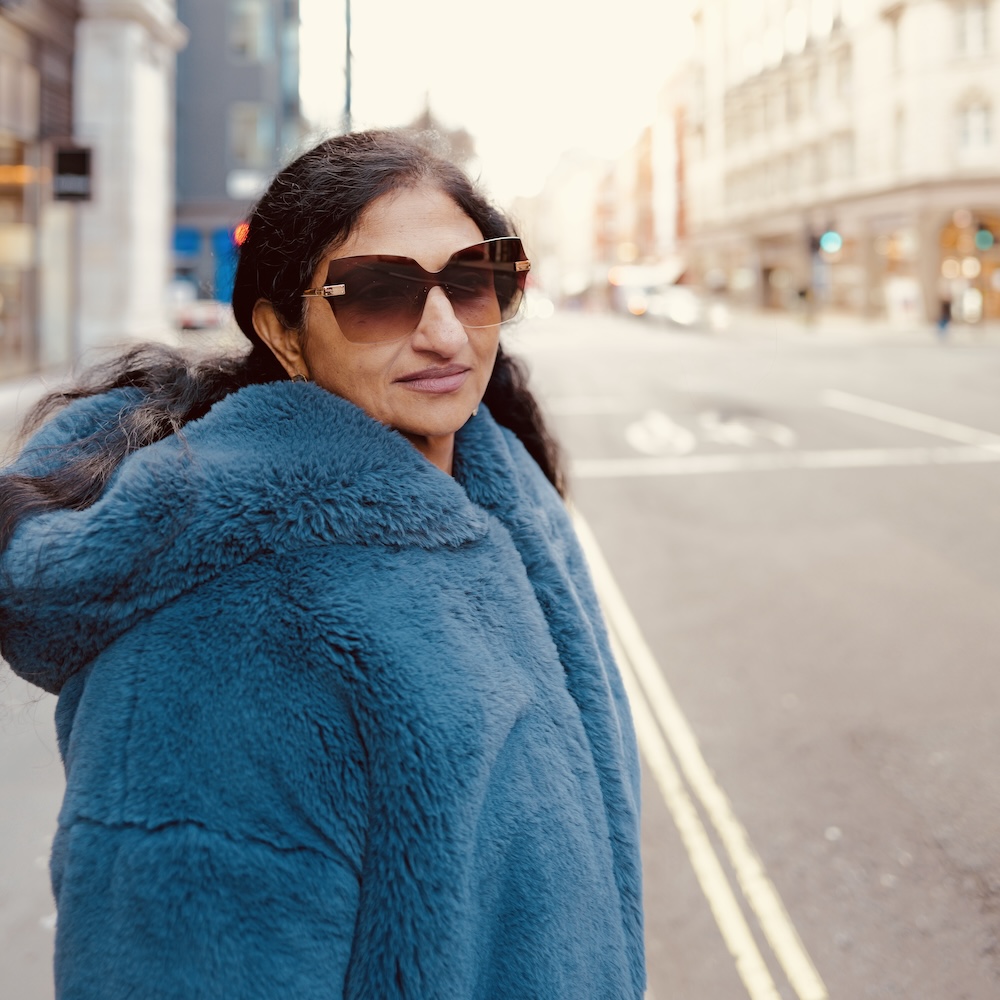
The archive has a Field Producer, and the project runs differently because of it. She handles the planning, the logistics, and the on-the-ground detail that would otherwise eat the shooting day. She finds the right approach to a location before we arrive. She films what happens around the frame - the process, the place, the small moments that don’t make the final edit but tell the story of how the archive actually works. She keeps the project grounded when it risks disappearing into its own ambition.
The England Archive is a project of Vernacular Archive CIC, a Community Interest Company registered in England and Wales, company number 17185371. The registered office is at 124 City Road, London EC1V 2NX.
A Community Interest Company is a UK legal form for non-charitable social enterprises - a structure designed for organisations whose purpose is to serve a community rather than to return profit to shareholders. The form is recognised, regulated by the CIC Regulator at Companies House, and required to publish an annual community-interest report demonstrating how the organisation has served its stated purpose.
We chose this structure deliberately. The archive is a long-horizon documentary project; the people whose knowledge it records are aging out of their work; the institutions that might have funded this kind of work in earlier decades are stretched thin. A CIC sits in the right place between a private company and a charity: it can trade, accept commercial sponsorship, sell prints and books, and operate with the speed of a small company - while the asset lock guarantees the surplus is reinvested in the work, not extracted by individuals.
Every CIC is governed by a statutory asset lock. In plain terms: the assets of Vernacular Archive CIC - including any income from partnerships, donations, prints, books, licensing, or grants - cannot be distributed to directors or shareholders. They can only be used to further the company’s community purpose, or transferred to another asset-locked body (another CIC or a charity) on dissolution.
For partners and funders the practical effect is straightforward: money put into this archive stays in the archive. For readers, it means the editorial line is not under shareholder pressure to maximise short-term return. The archive can take a long view because it is structurally required to.
The archive runs on five layers. Each does different institutional work; the structure is what gives the project the standing to make permanent museum deposits, publish at the calibre it aims for, and outlast the founder.
01
Permanent role
The originating Members of Vernacular Archive CIC. Mash Bonigala and Bhavani Bonigala. A permanent foundational role rather than a public title.
02
Forthcoming · fully constituted by end of 2027
The legal governance body of the CIC, registered at Companies House, with fiduciary duty under the Companies Act. Small (four to six Directors). Includes the founders, one or two senior practitioners who carry external weight, and one or two specialists in governance and the sector the archive works in. To be announced.
03
Forming · ten to twelve names across 2026 to 2028
Honorific recognition for people materially important to the archive’s first chapter. Includes the first Regional Leads, senior advisors who shaped the project early on, and specific subjects whose contribution went beyond being documented. Optional CIC Membership for those who want institutional standing alongside the recognition. The first cohort will be named as the founding window closes.
04
Forming · ten to fifteen names by end of 2027
A named group of editorial and cultural advisors with no legal duty. The cultural credibility layer. Homer Sykes is the first named advisor, writing the foreword to Book One. Simon Roberts is in the process of being formalised. Further names will be added one or two at a time as the project earns the relationships. The full roster lives on the partners page.
05
Open, growing · five Regional Leads by end of 2027, scaling to eight by 2029
The photographers who make the work. The open public ladder at /contribute moves contributors from Field Associate through Master based on published work in the archive, with a tiered share of print sales rising at each tier. Alongside the public ladder, a small invitation-only Regional Lead role gives one photographer per region principal documentary responsibility for their patch plus curatorial weight.
The layers do different work and exist for different reasons. The Founders carry the project’s editorial line. The Board carries legal and fiduciary responsibility. The Founding Members anchor the institutional memory of the first chapter. The Editorial Advisory Board carries cultural credibility. The Contributors make the work. None of the five is more important than the others; the structure is sound only when all five are present.
The archive runs on three streams of income, each of them feeding back into the same place: more visits, better equipment, longer regional coverage, and the deposit of the work into permanent institutions when the time comes.
Because of the asset lock, every pound that comes into the archive stays in the archive. The independence this buys is the point.
These are not aspirations. They are the working rules every entry on the site is checked against before it is published.
The first thing the archive asks anyone to read - what the project is, why it exists, and which entries on the site best introduce the voice.
ContactFive ways to reach the archive - including a postal address for Vernacular Archive CIC and direct lines for partnership, licensing, and press.
ResourceThe XX-NNNN archive ID system, the type prefixes, the registry, and the rules that keep every entry findable in a hundred years.
PracticeA living record of how the archive is actually made - the editorial decisions, camera choices, pace, voice, and working contracts with subjects. Updated as the practice grows.