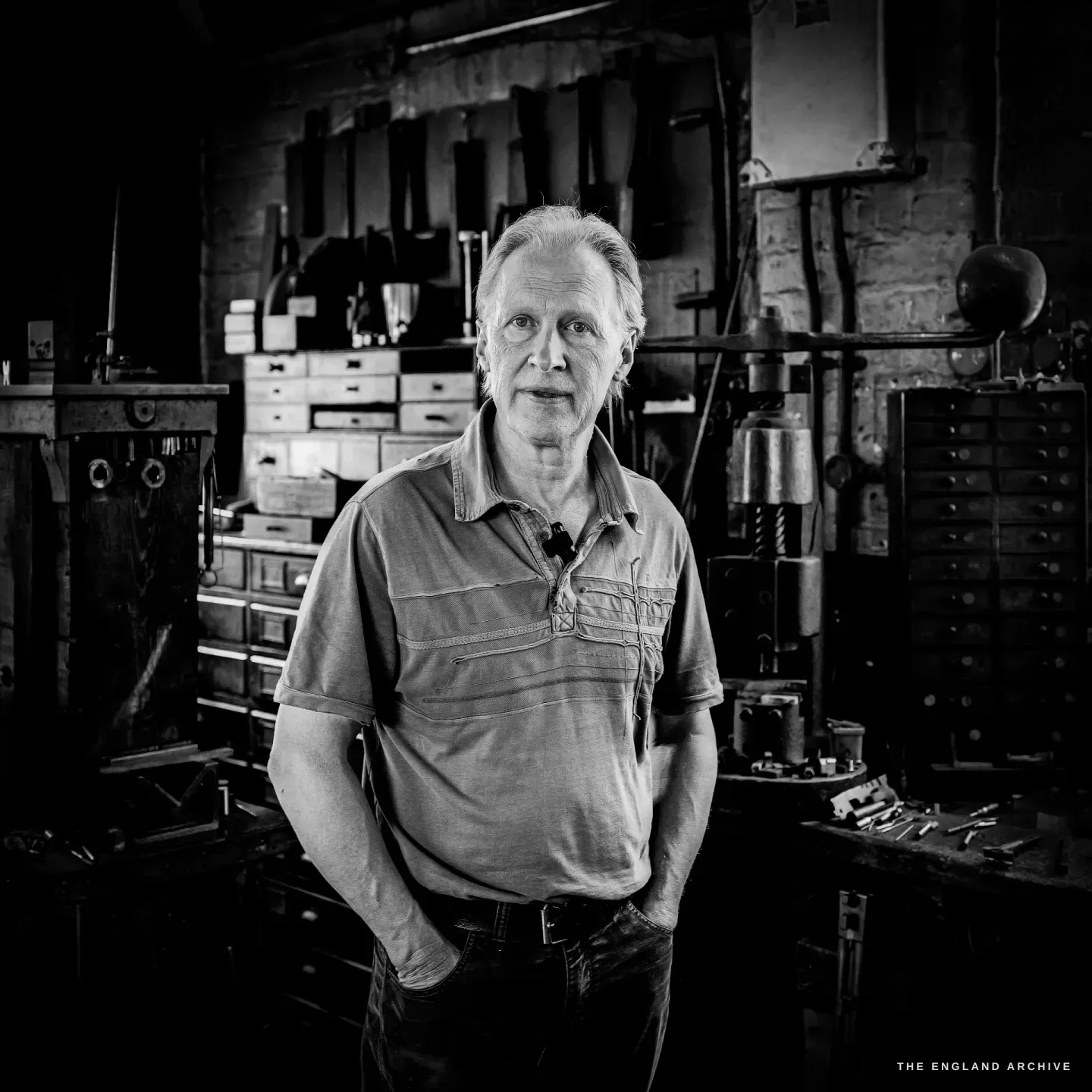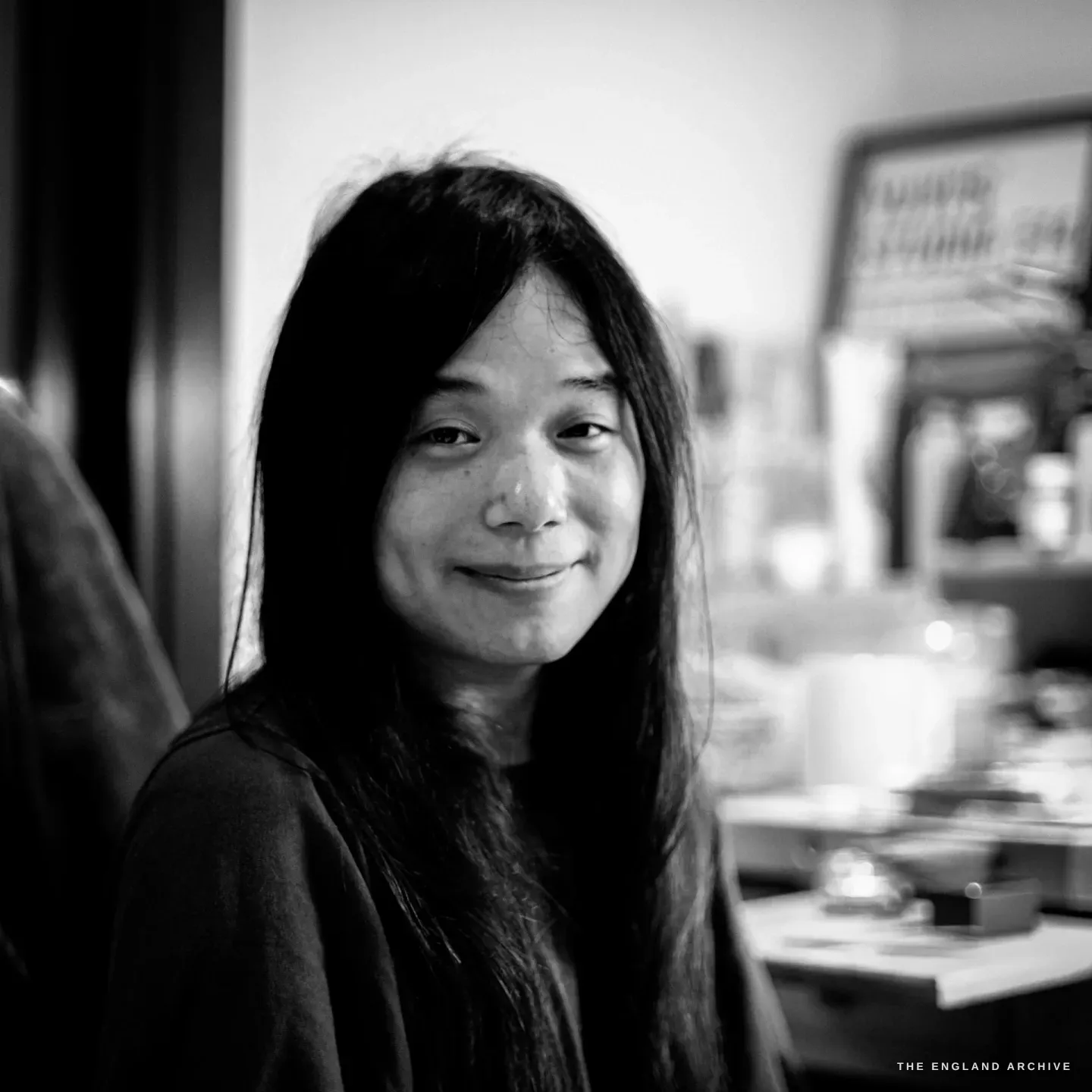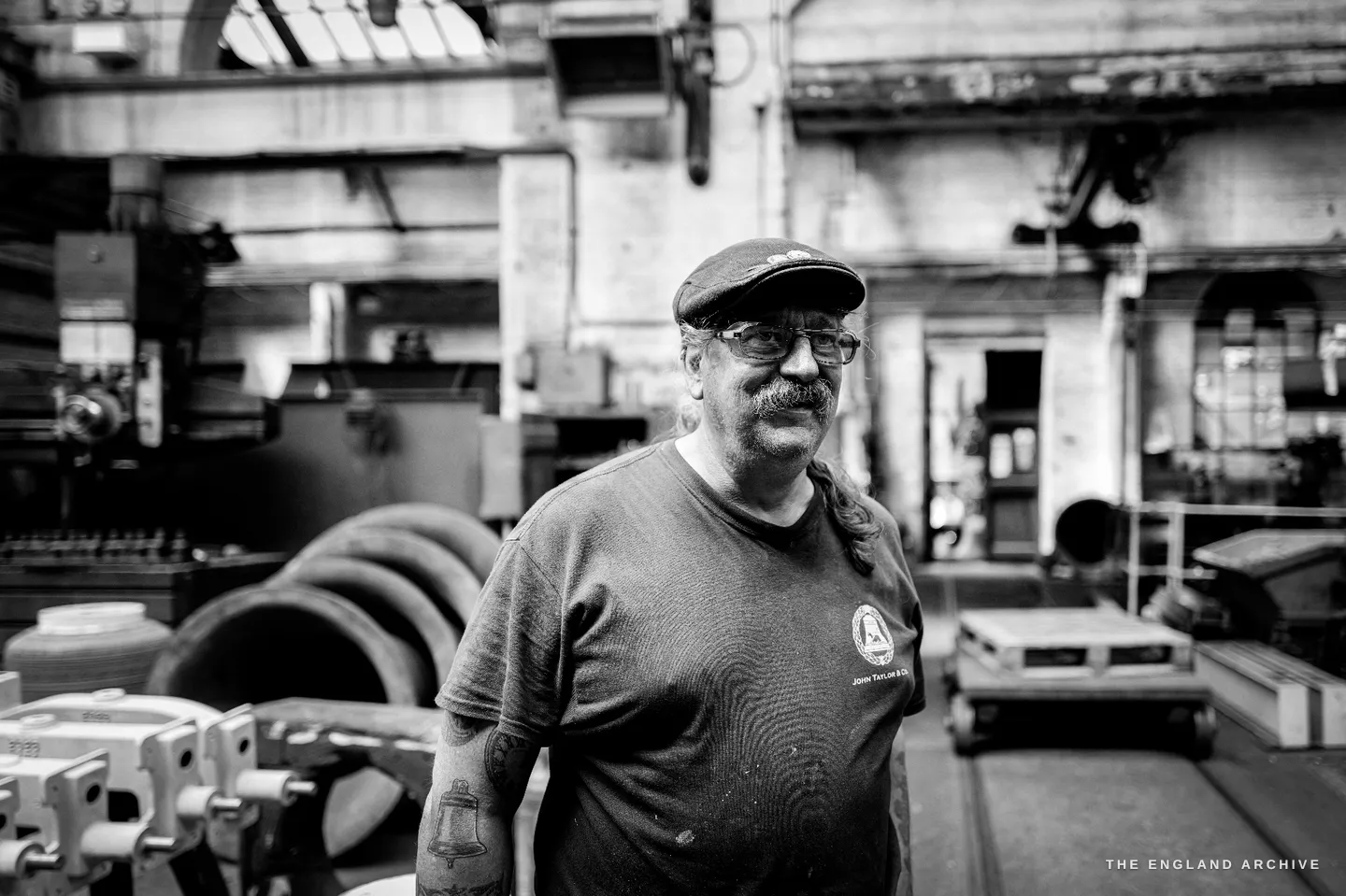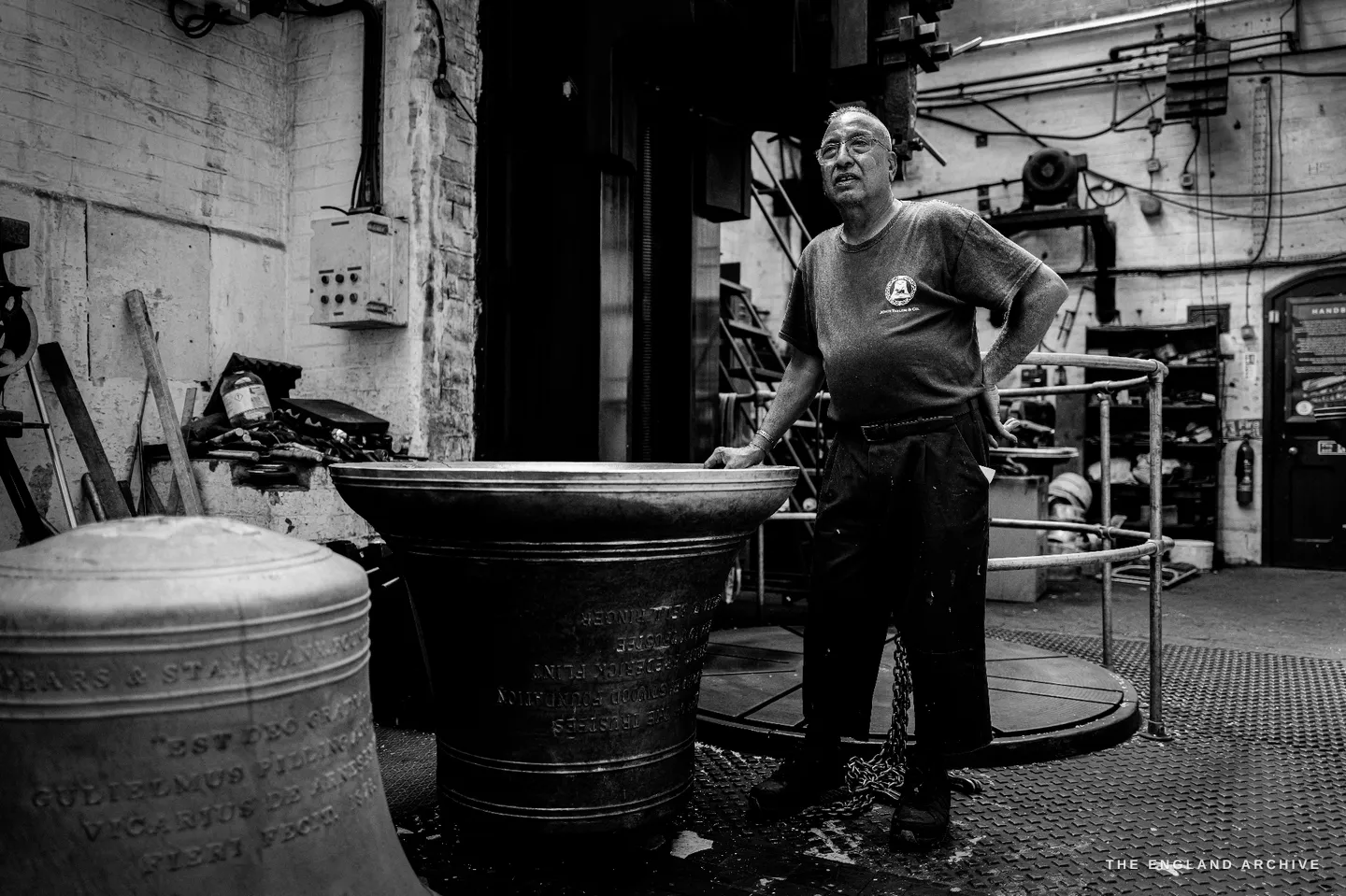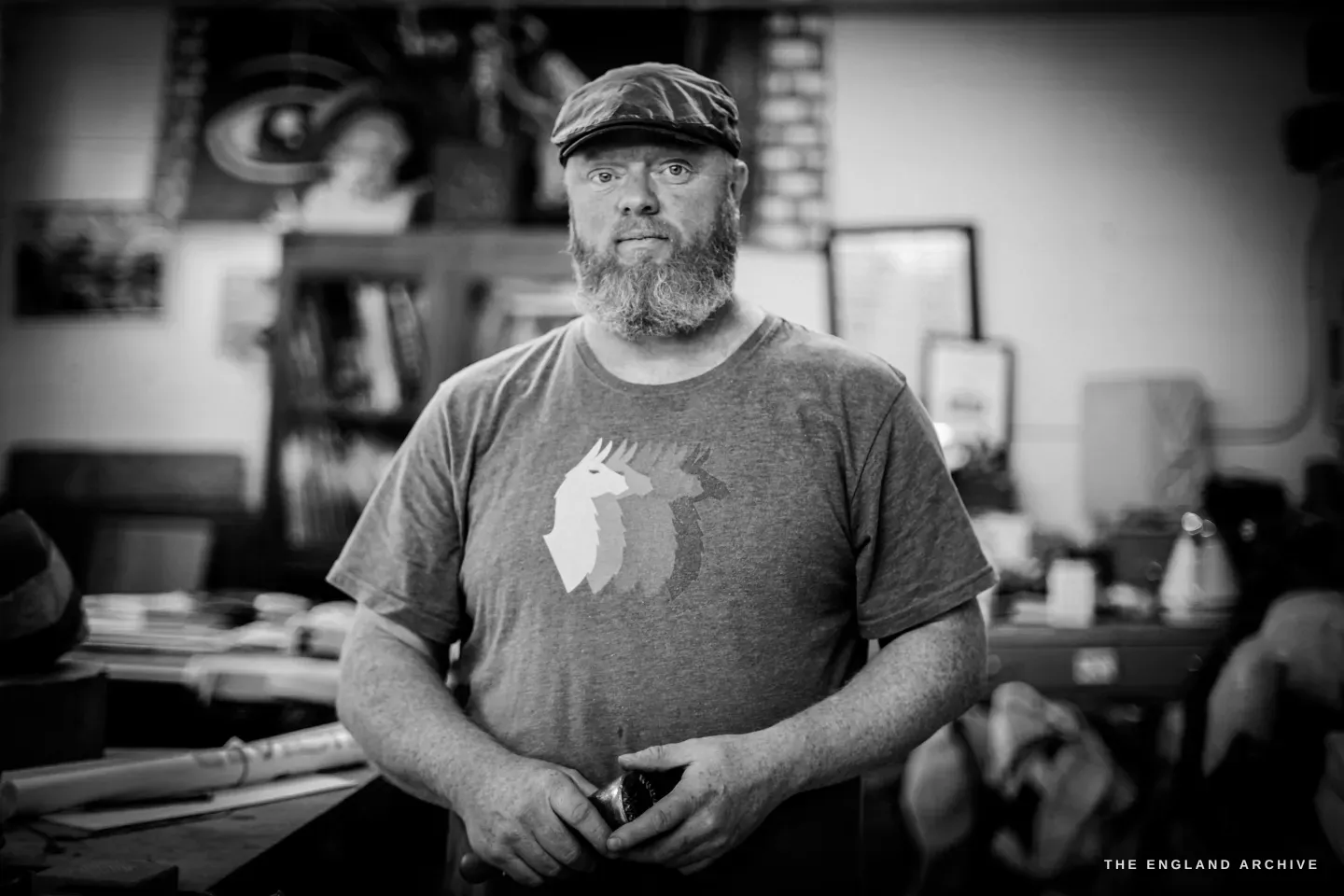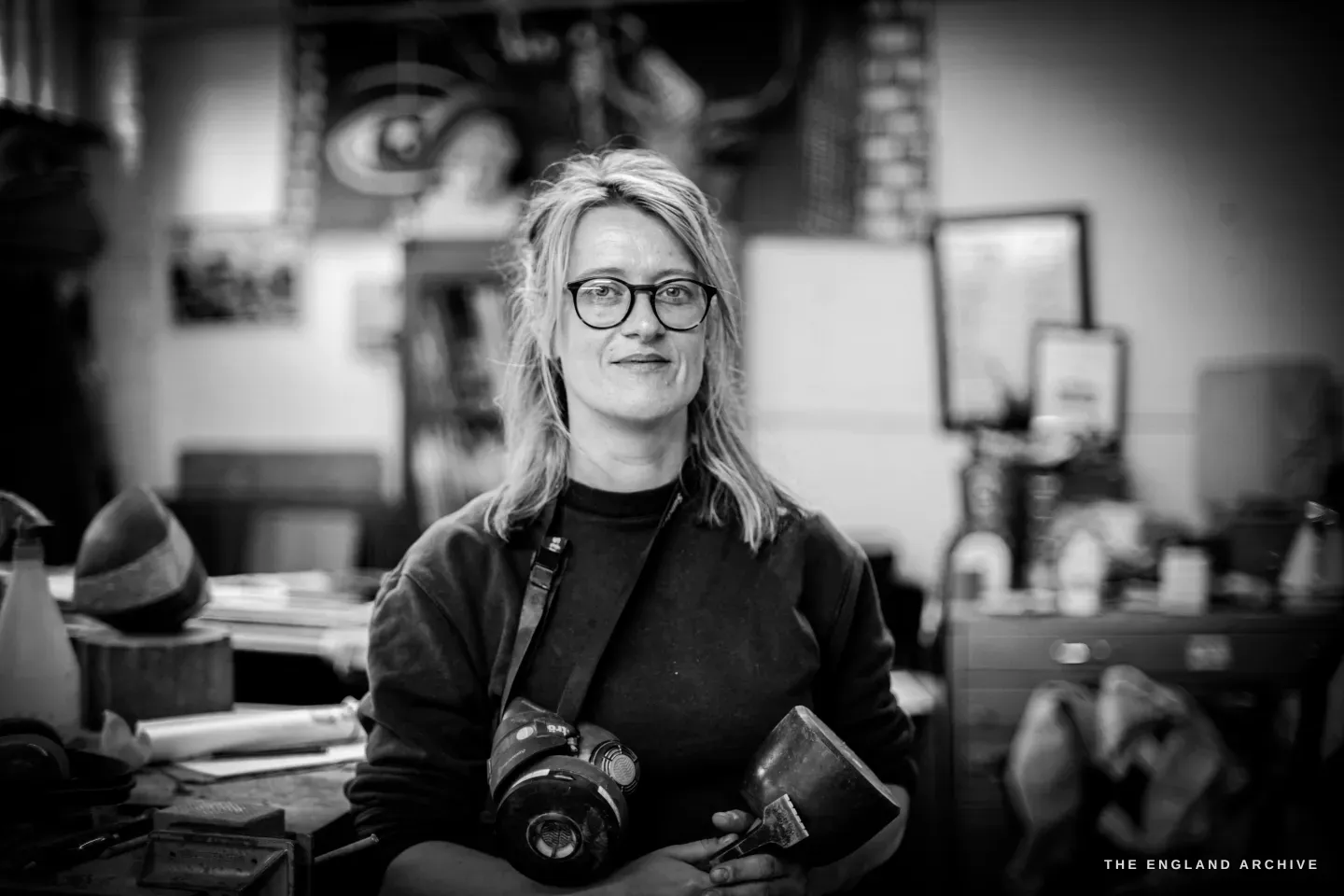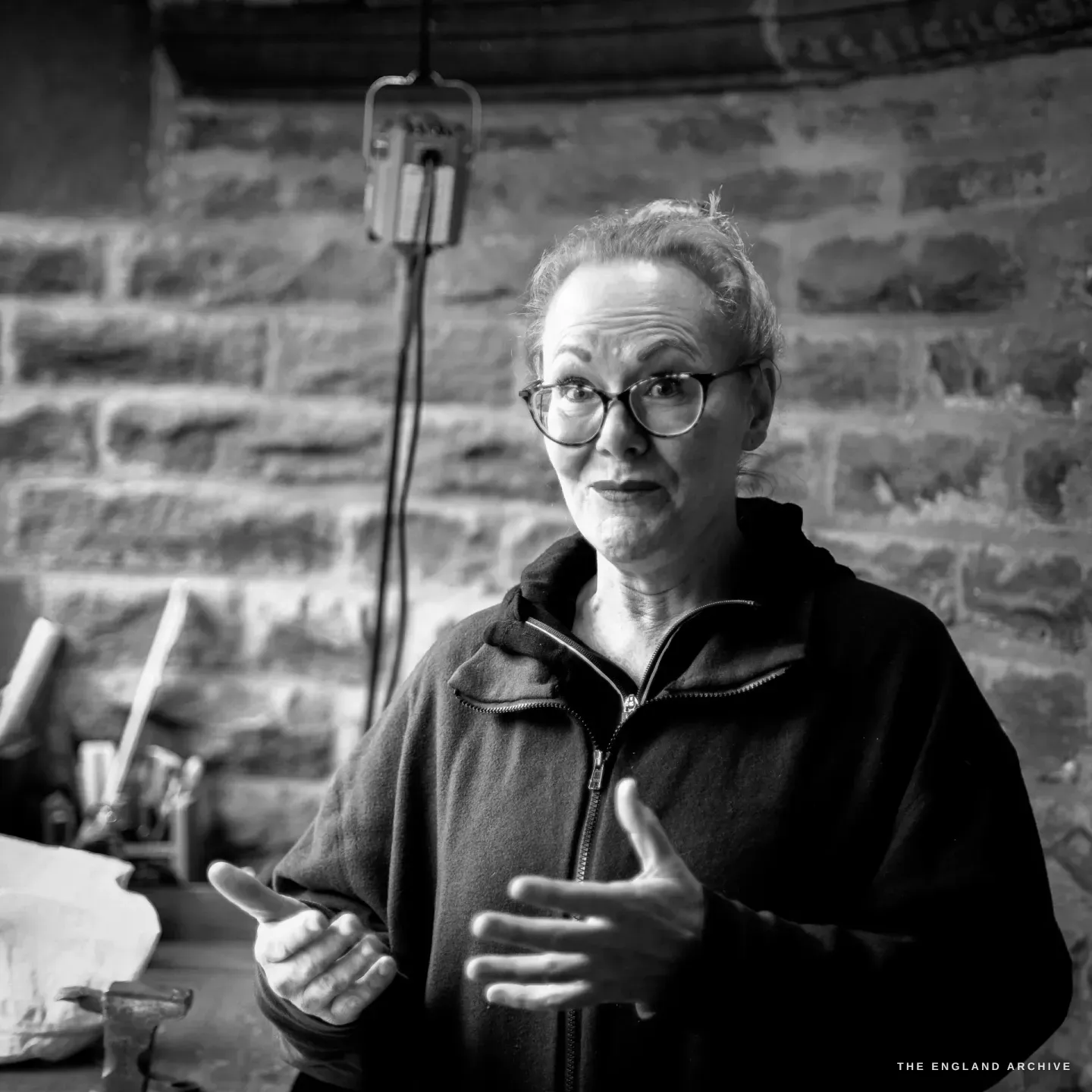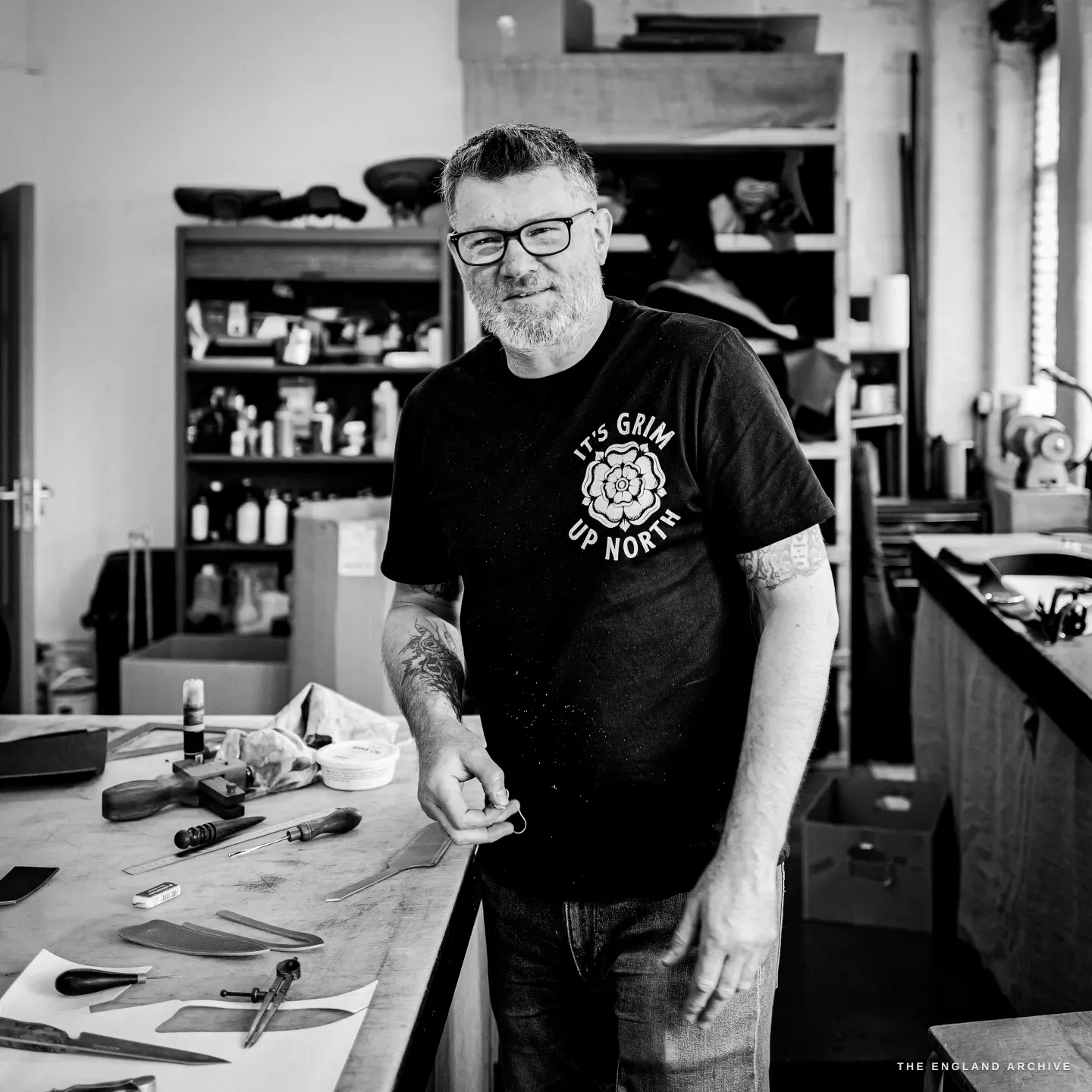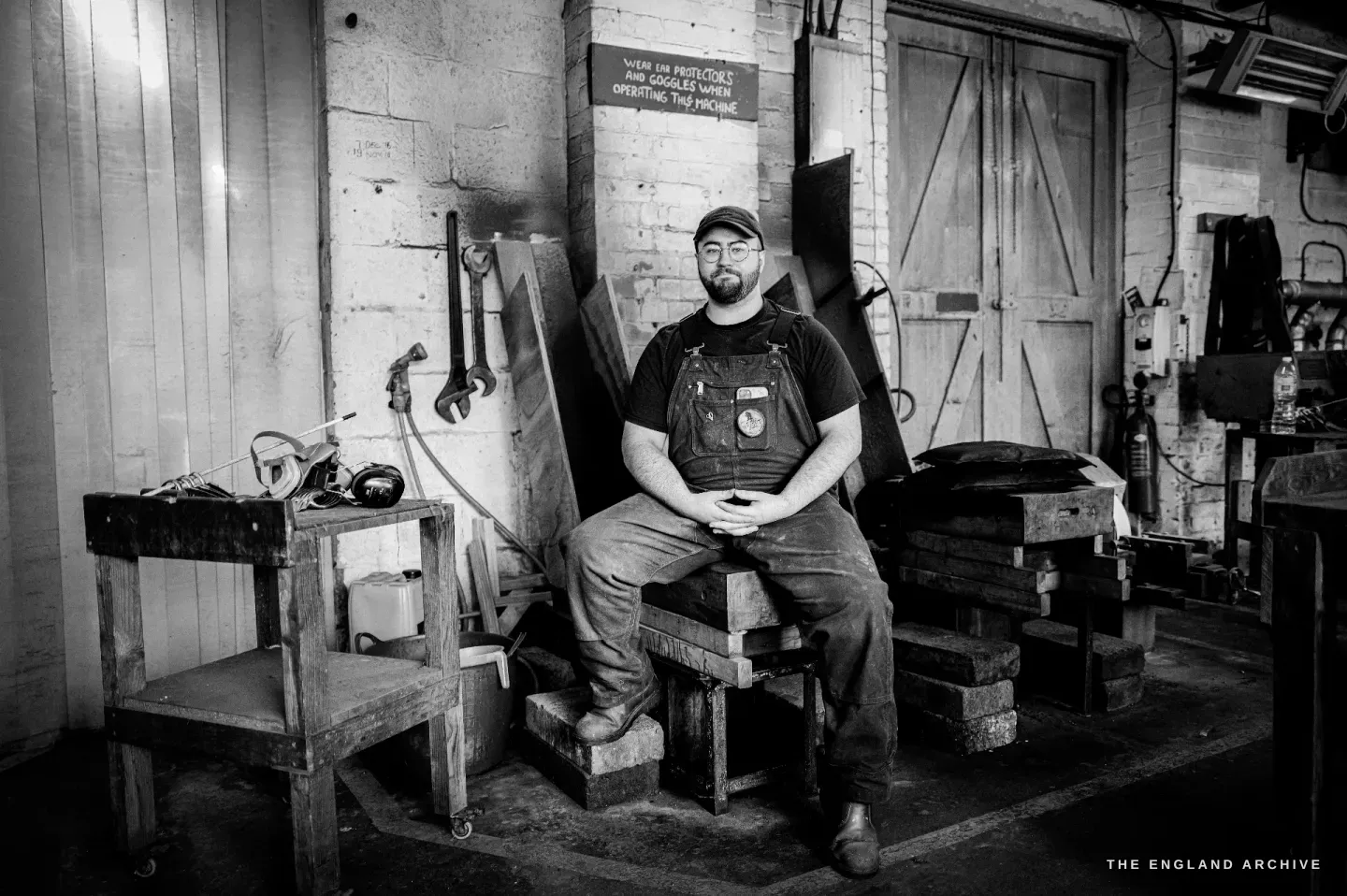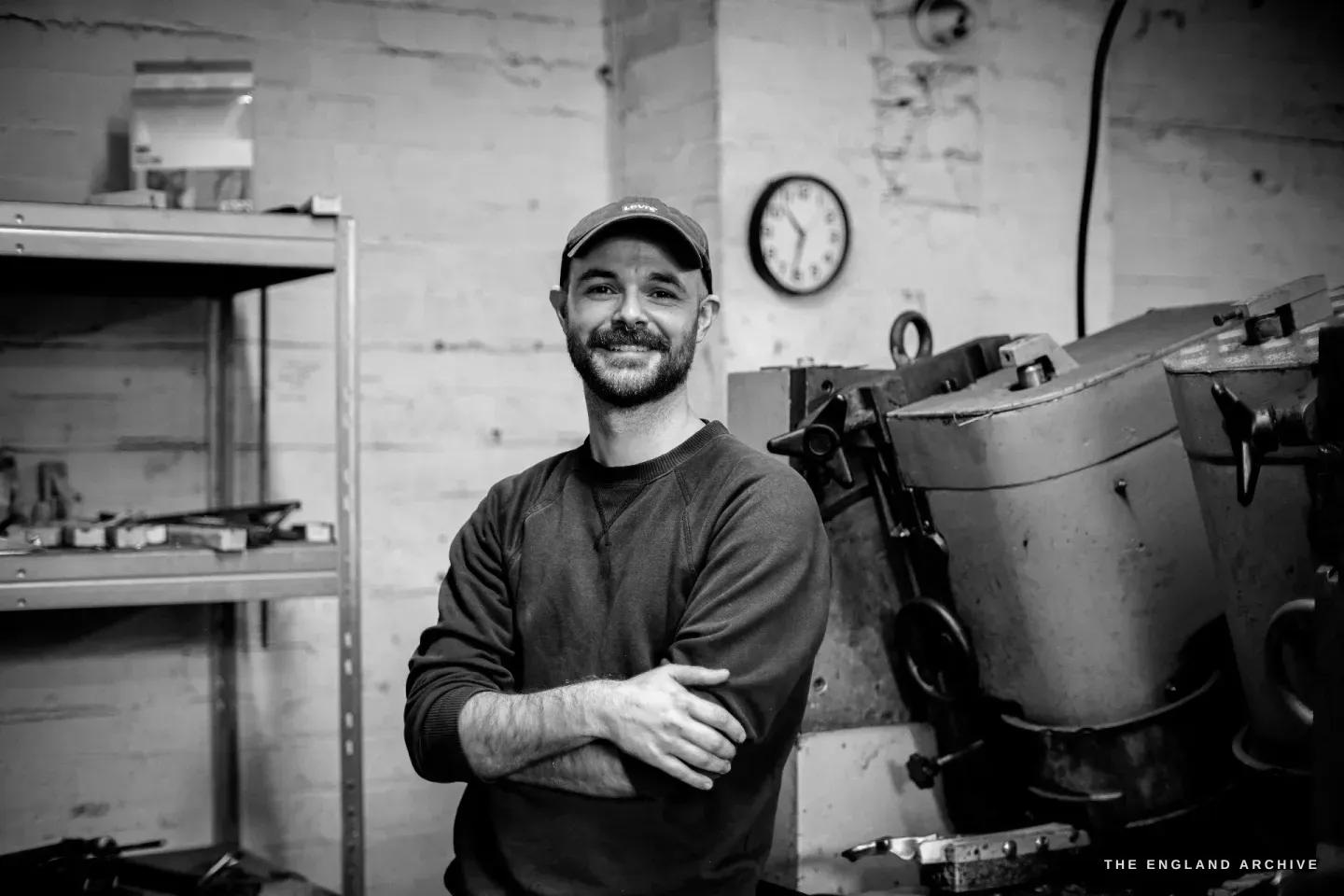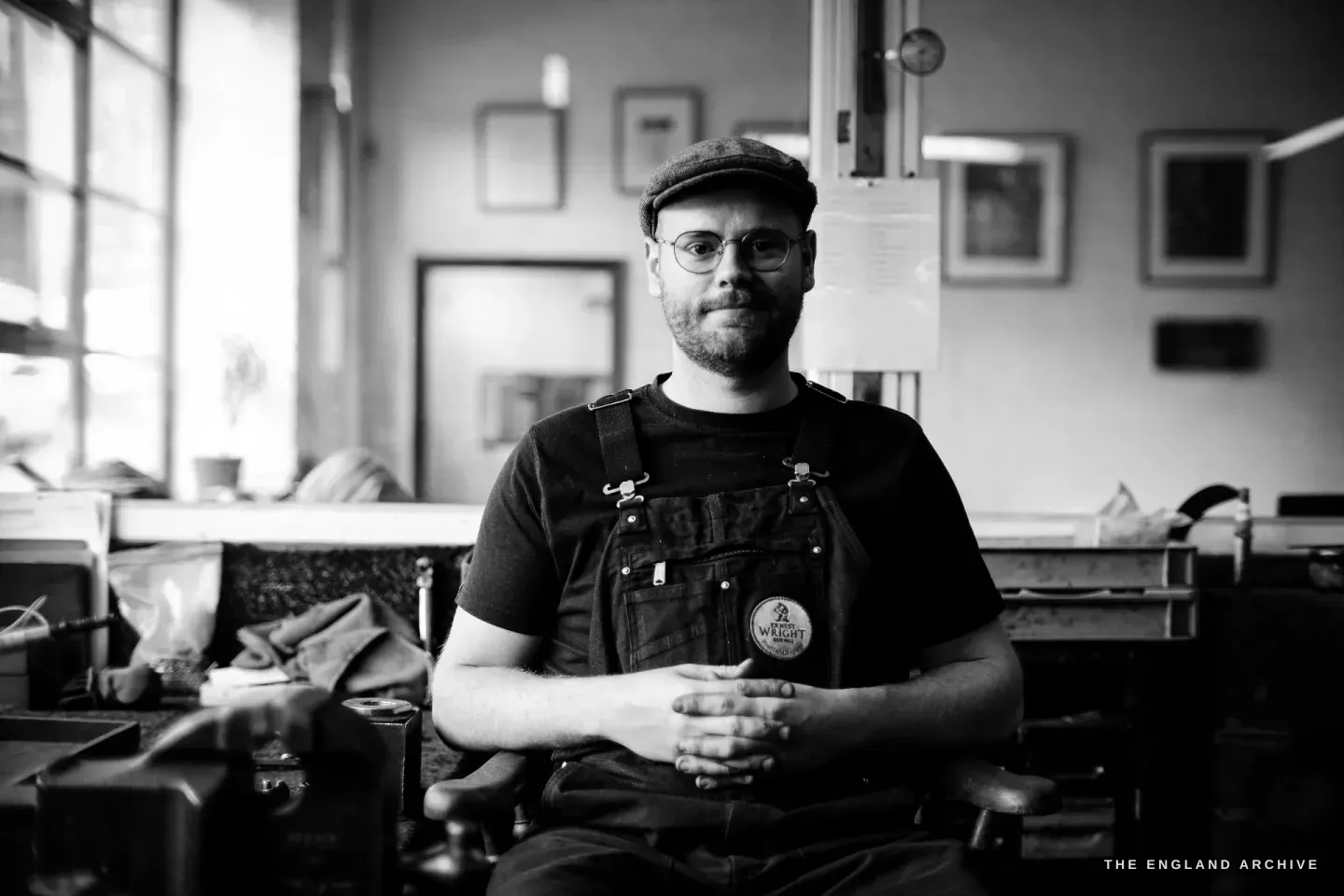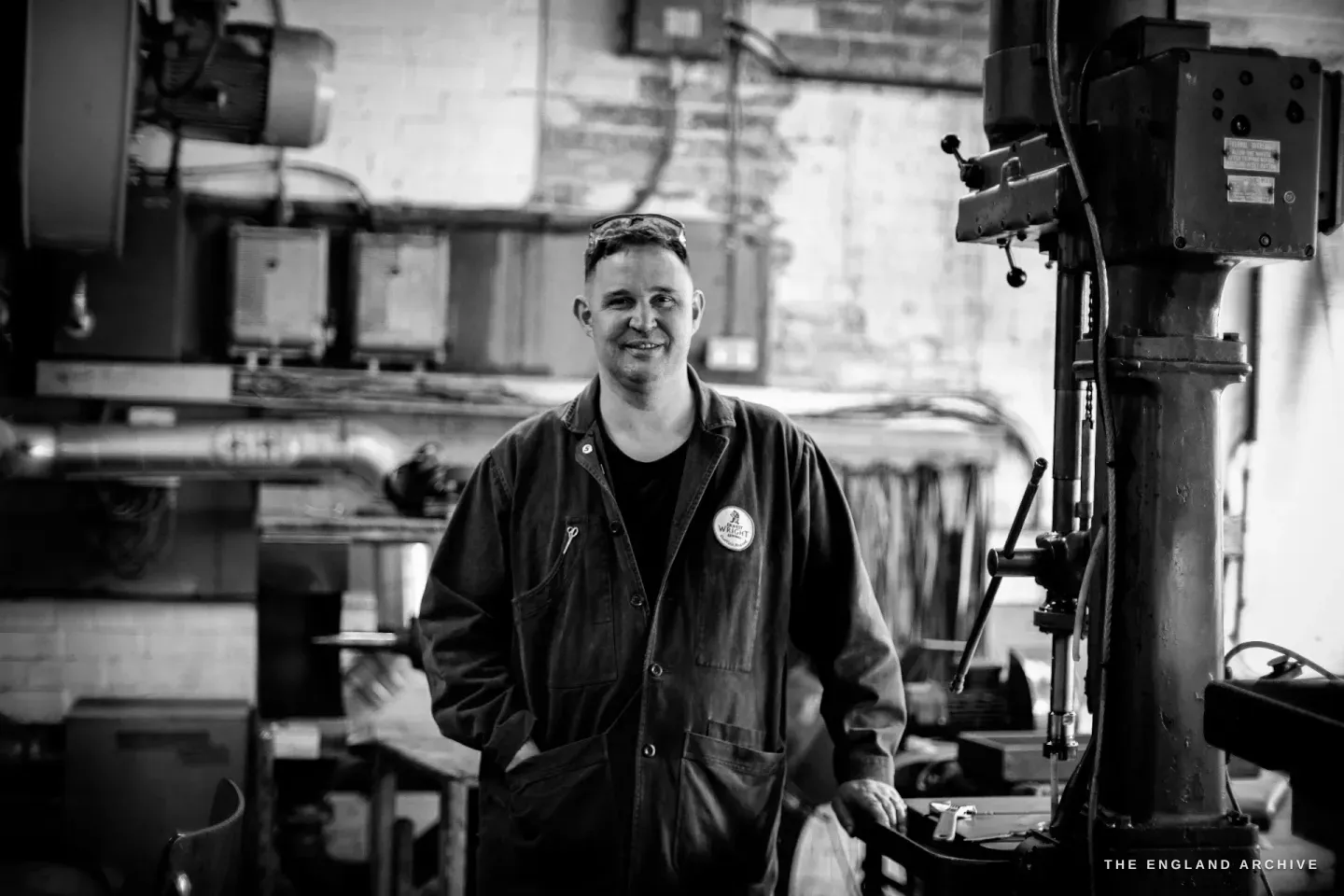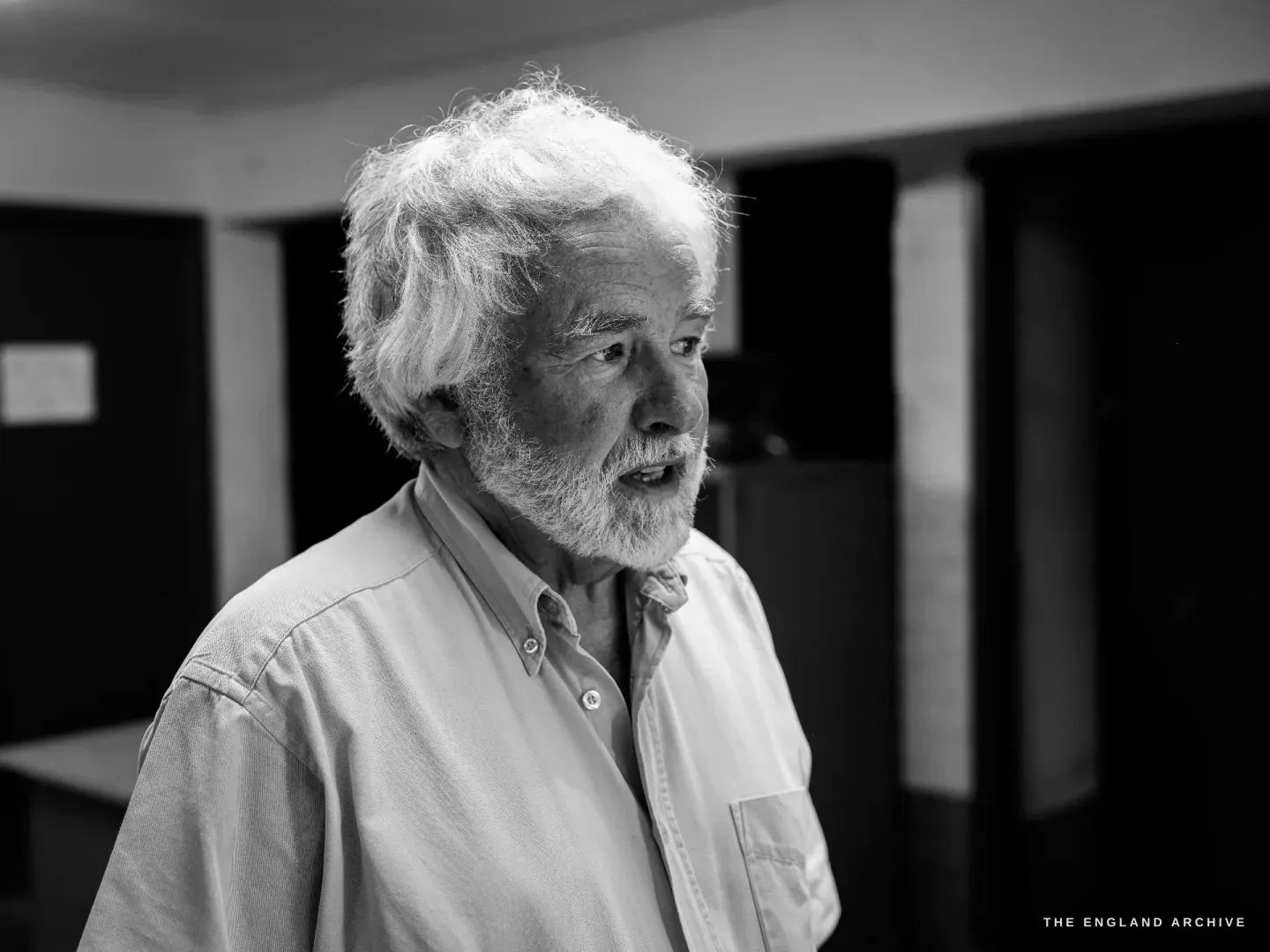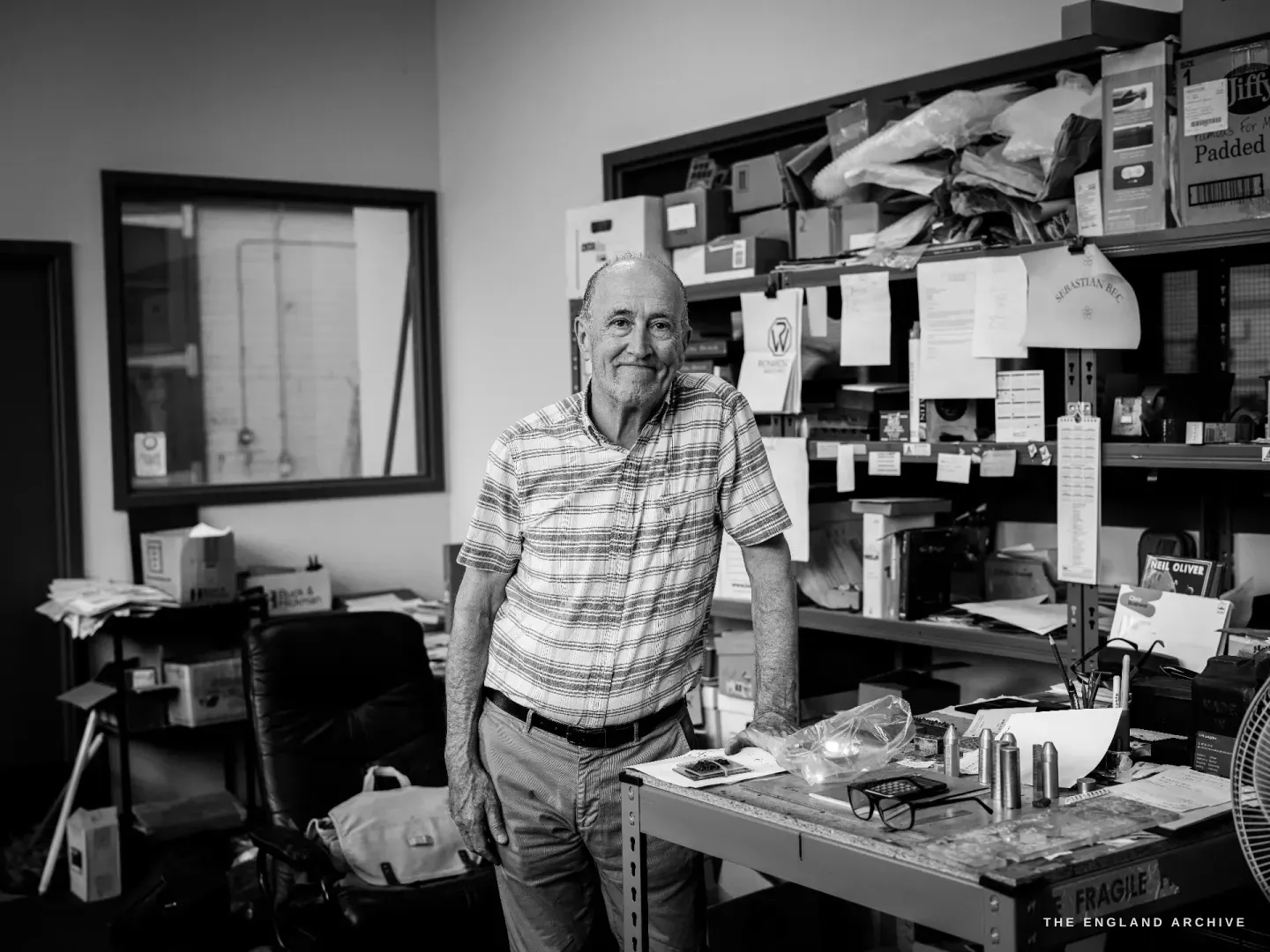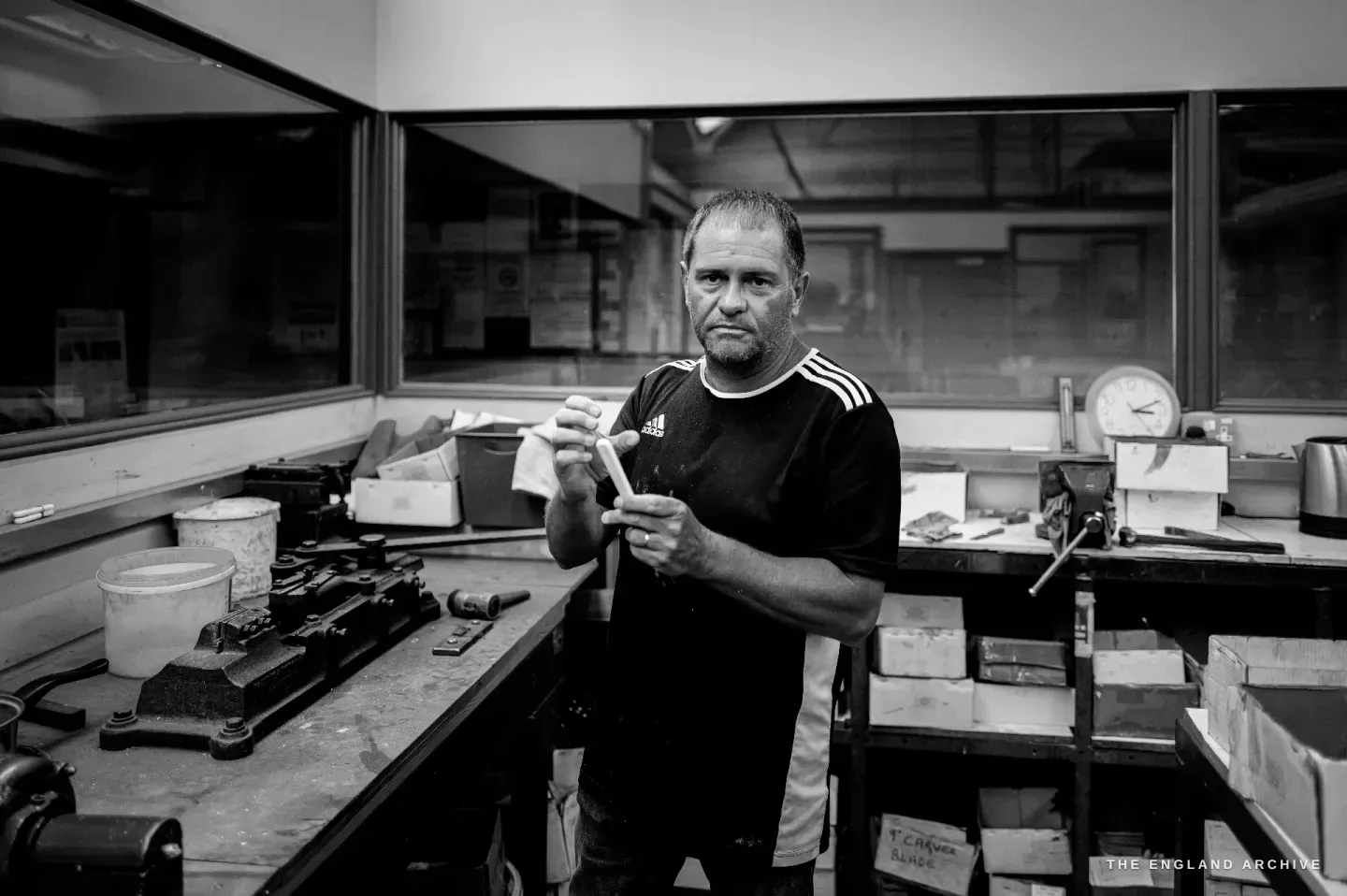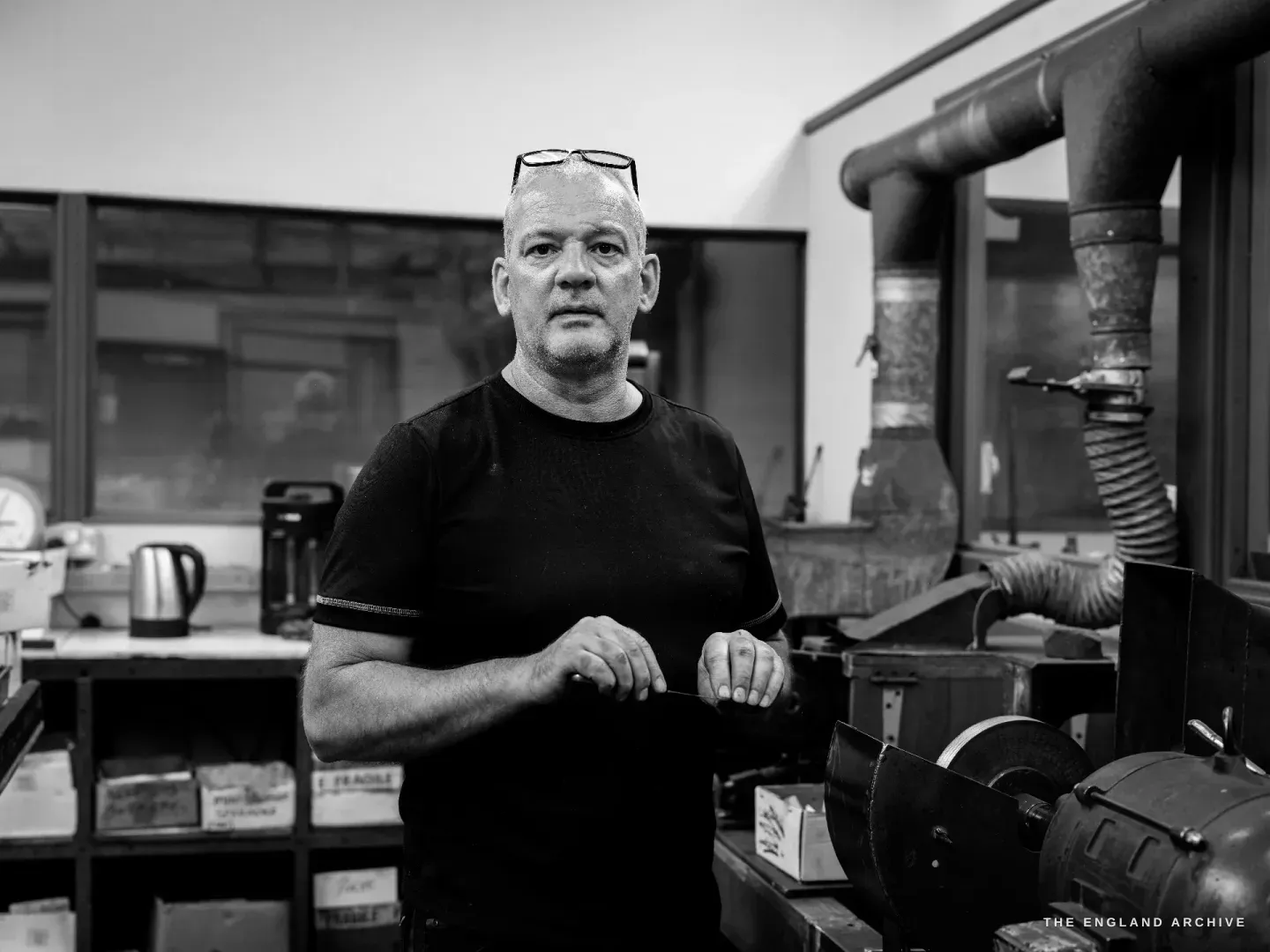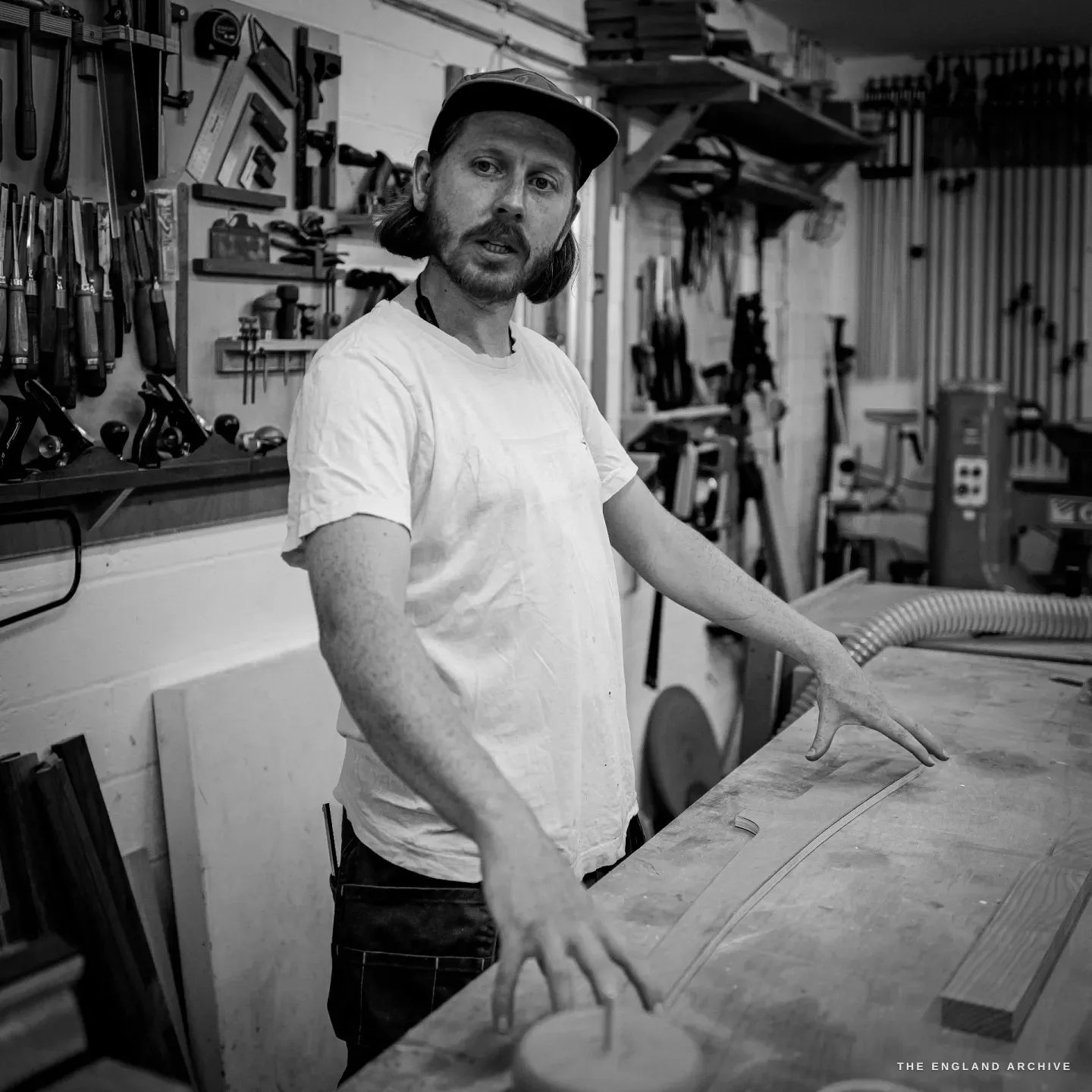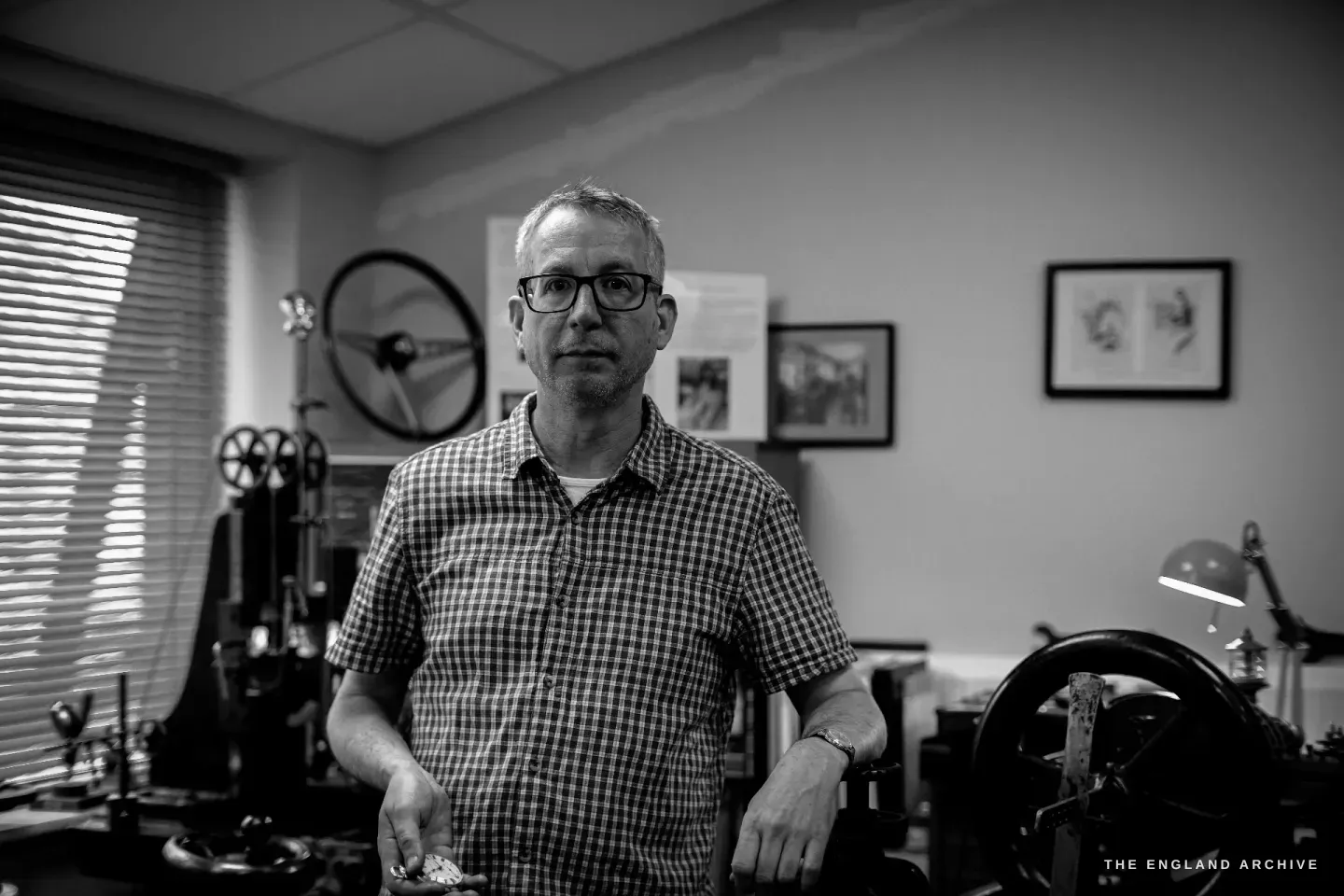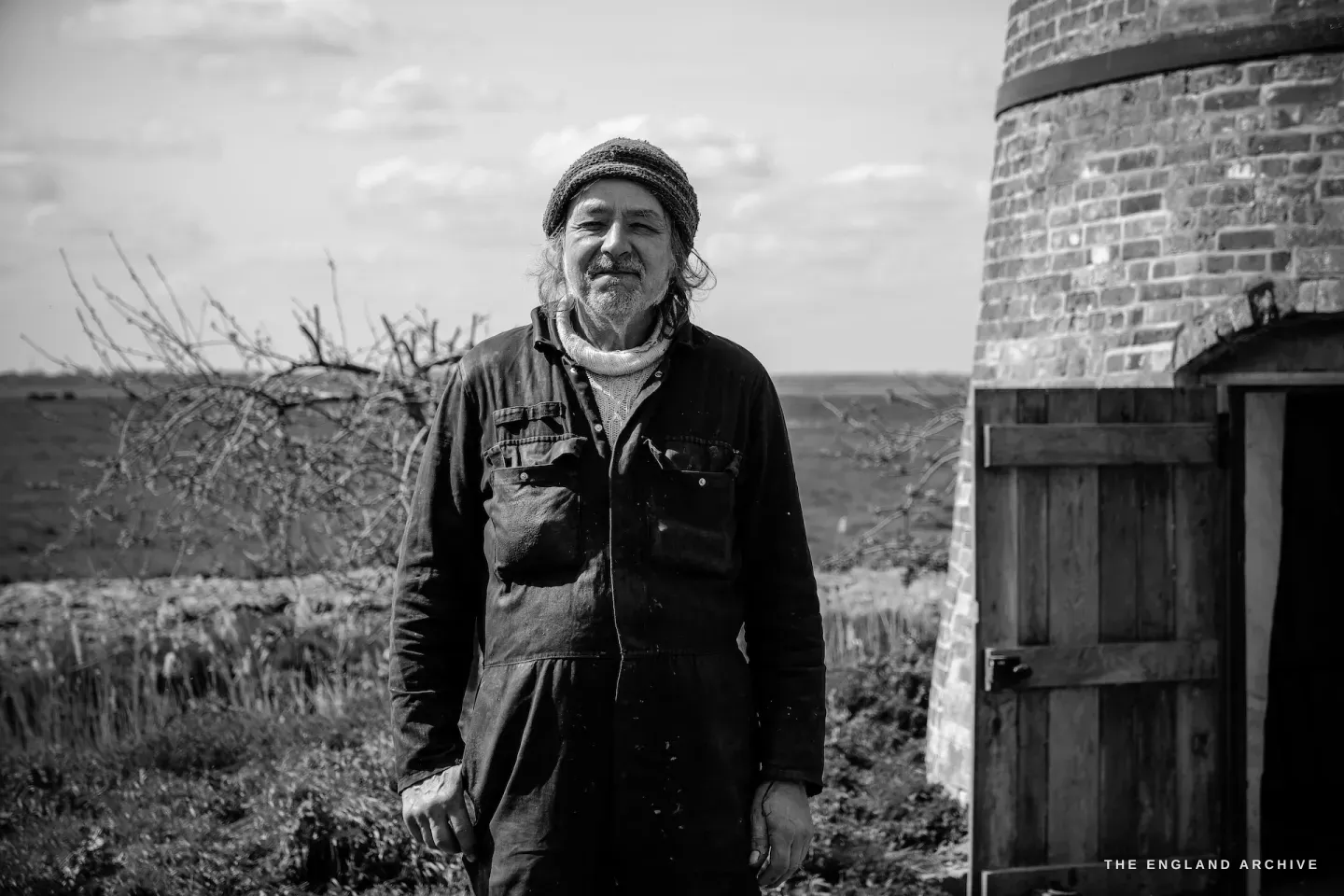
Paul Kemp
Millwright
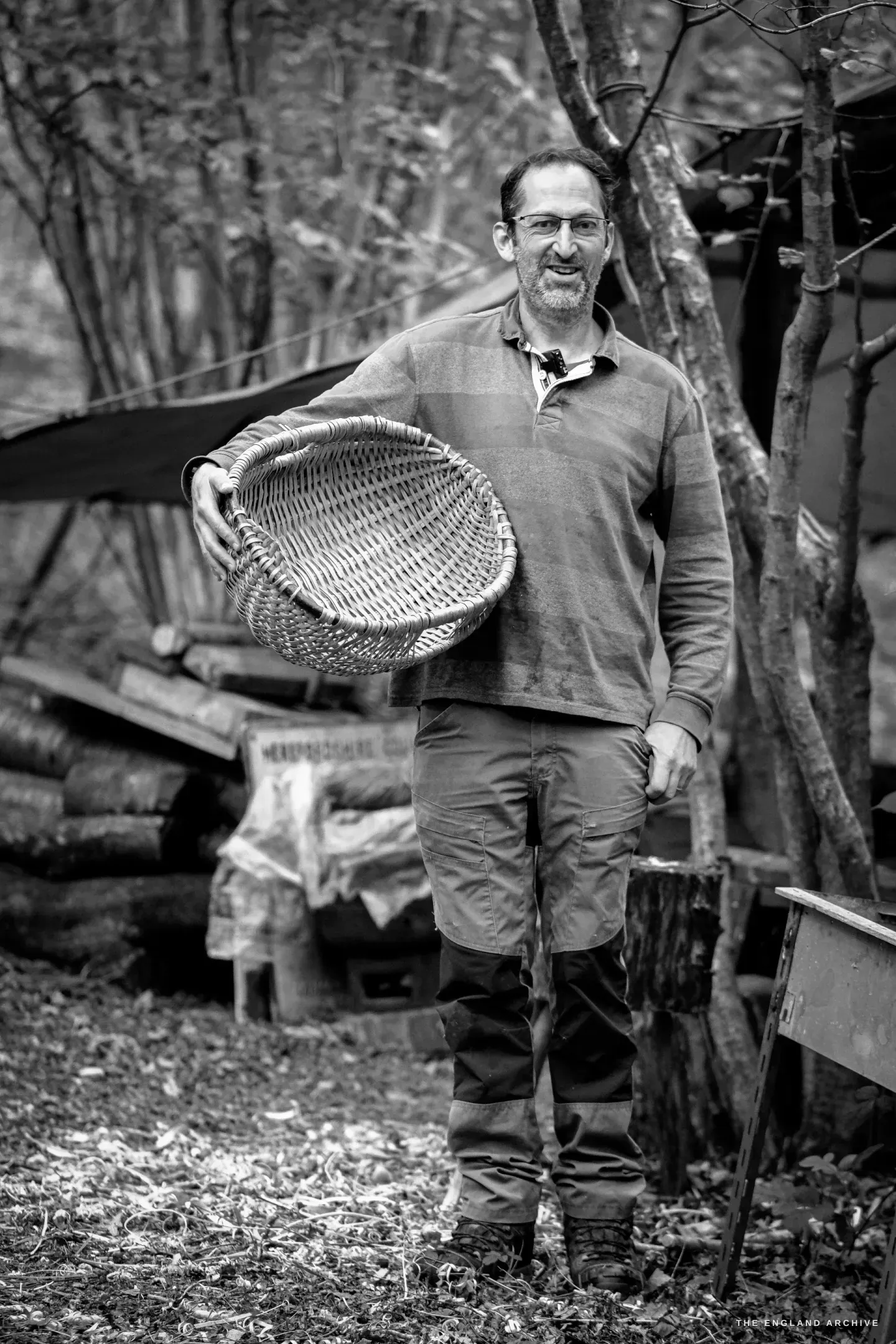
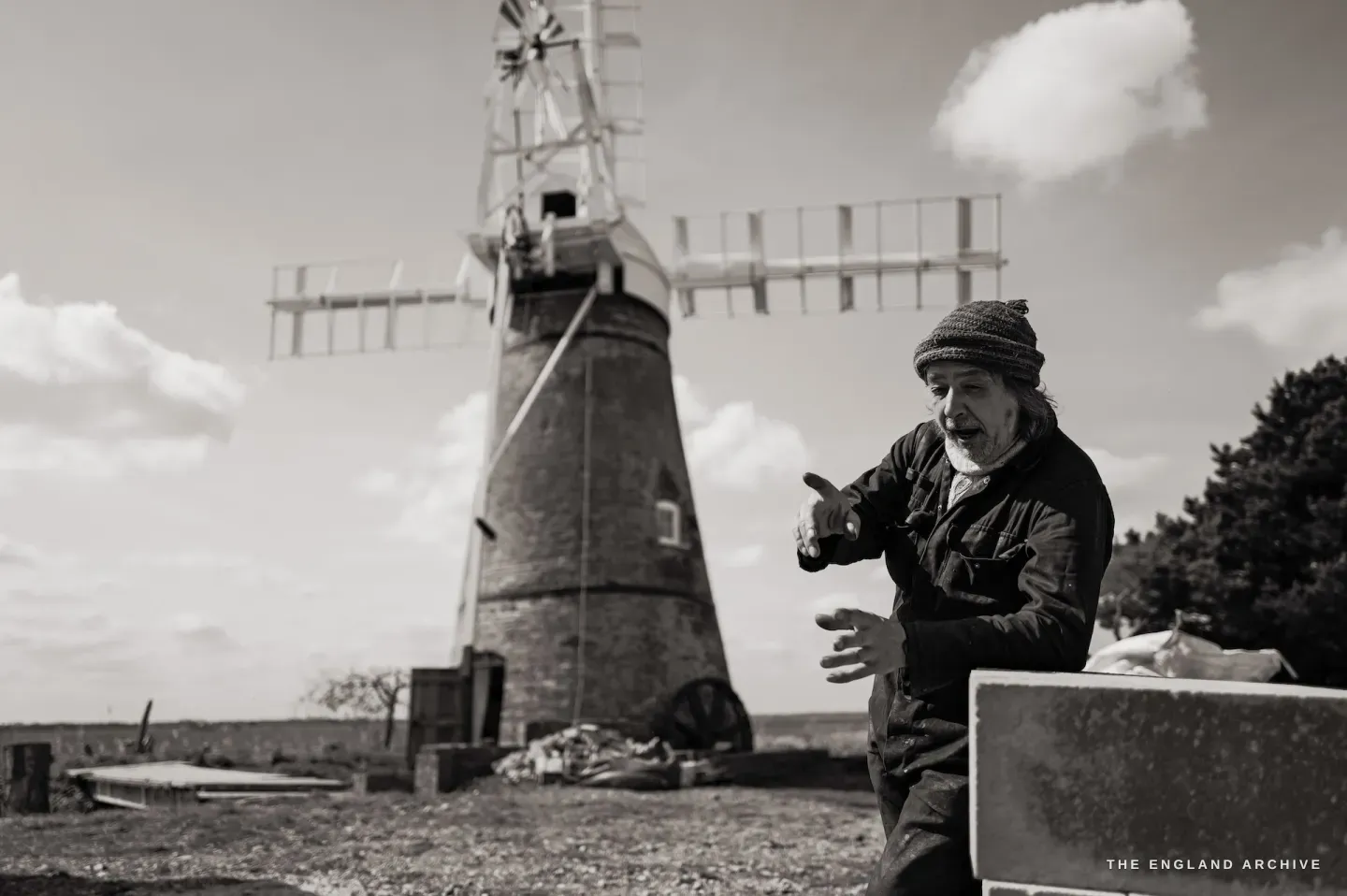
A working millwright who has maintained and restored historic windmills across Norfolk and Suffolk for decades. The mill at Toft Monks works because Paul Kemp exists. That is not a small thing.
The makers documented in the archive so far. Each is a full documentary record - photographs, field notes, the trade in their own words.
Millwright
A working millwright who has maintained and restored historic windmills across Norfolk and Suffolk for decades. The mill at Toft Monks works because Paul Kemp exists. That is not a small thing.
Lettercutter
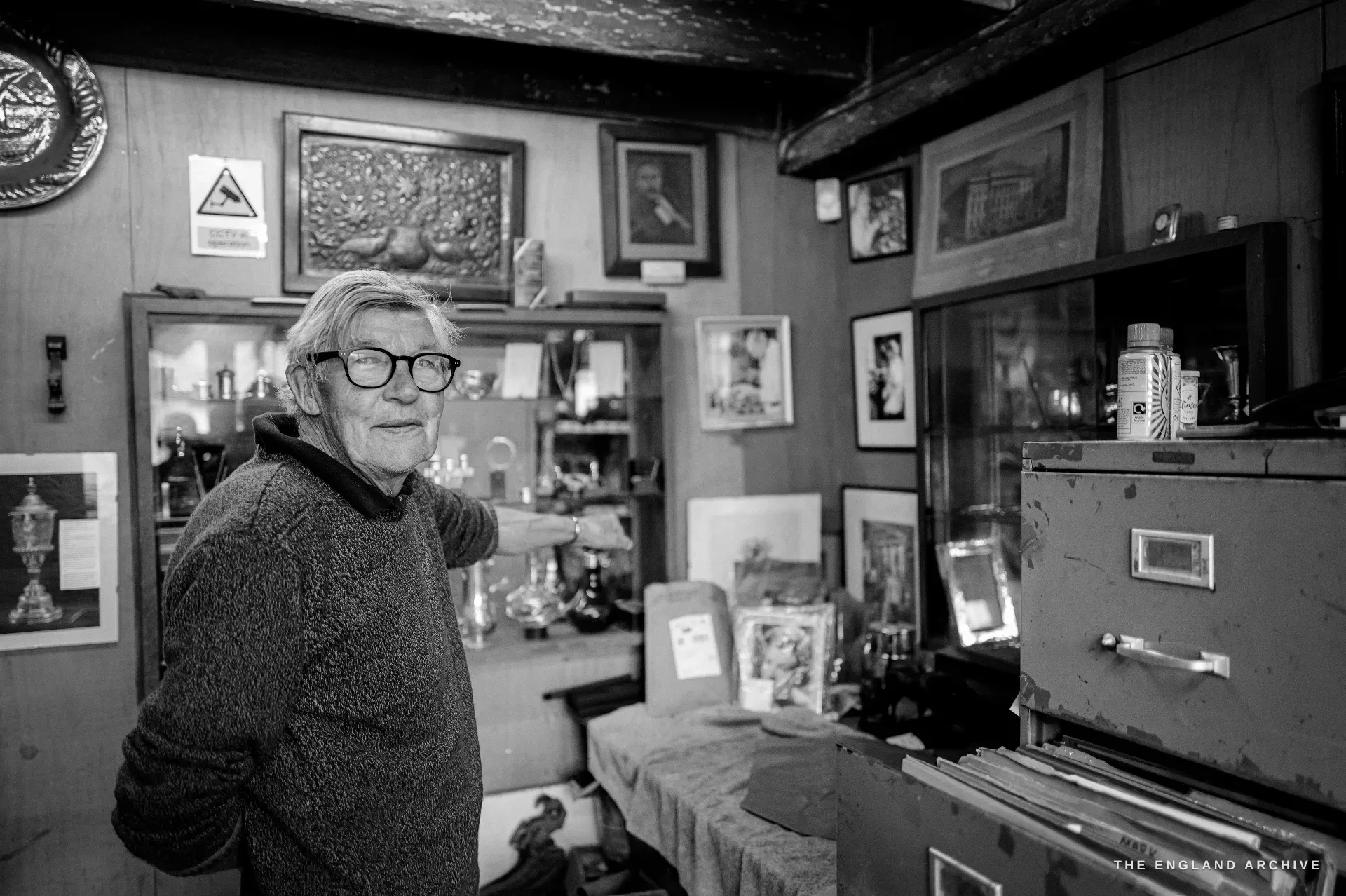
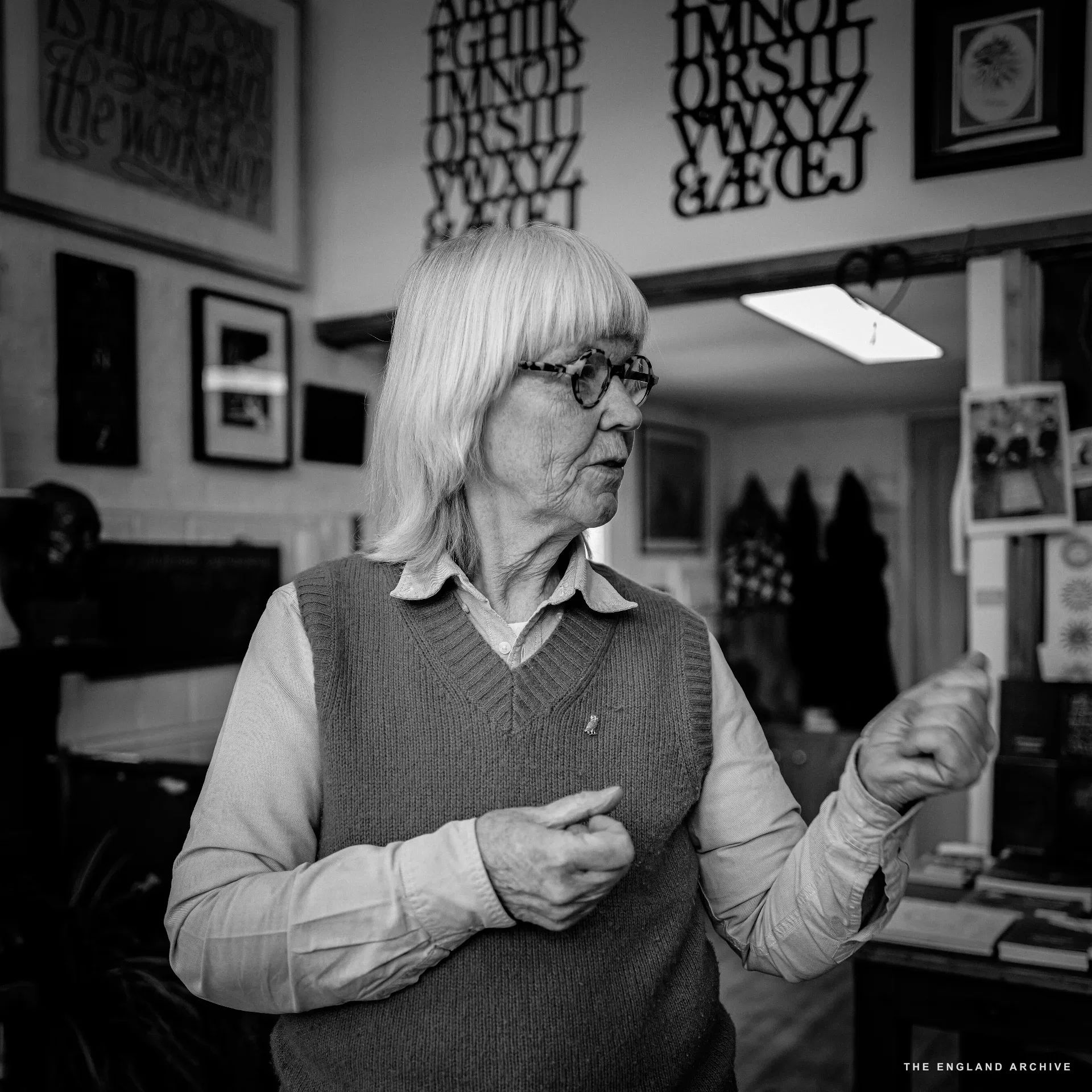
Matriarch of the Cardozo Kindersley Workshop, Cambridge. Widow of David Kindersley. A typographer and stone letter-cutter in her own right who has run the workshop for thirty years and still comes in every day.
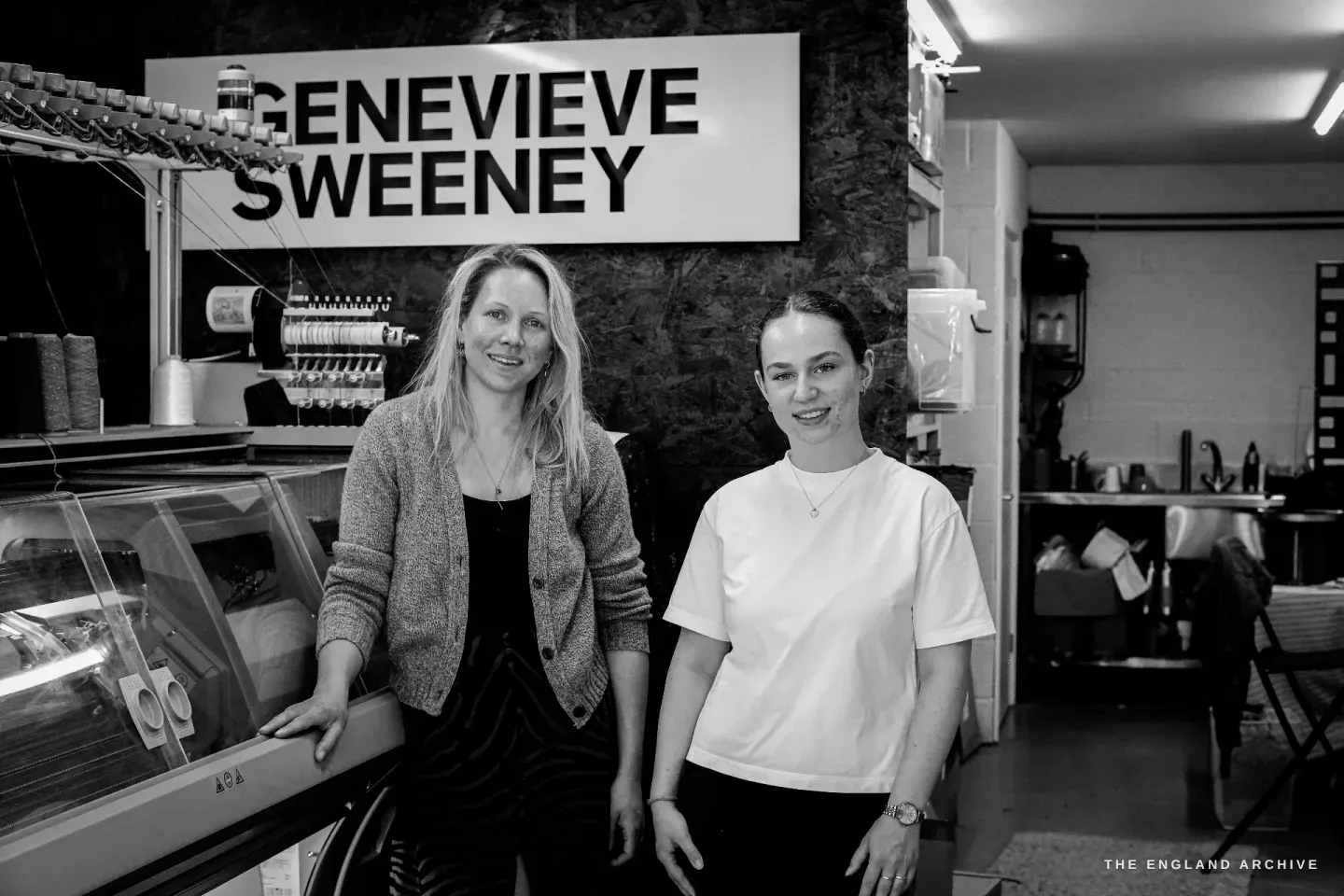
Lettercutter
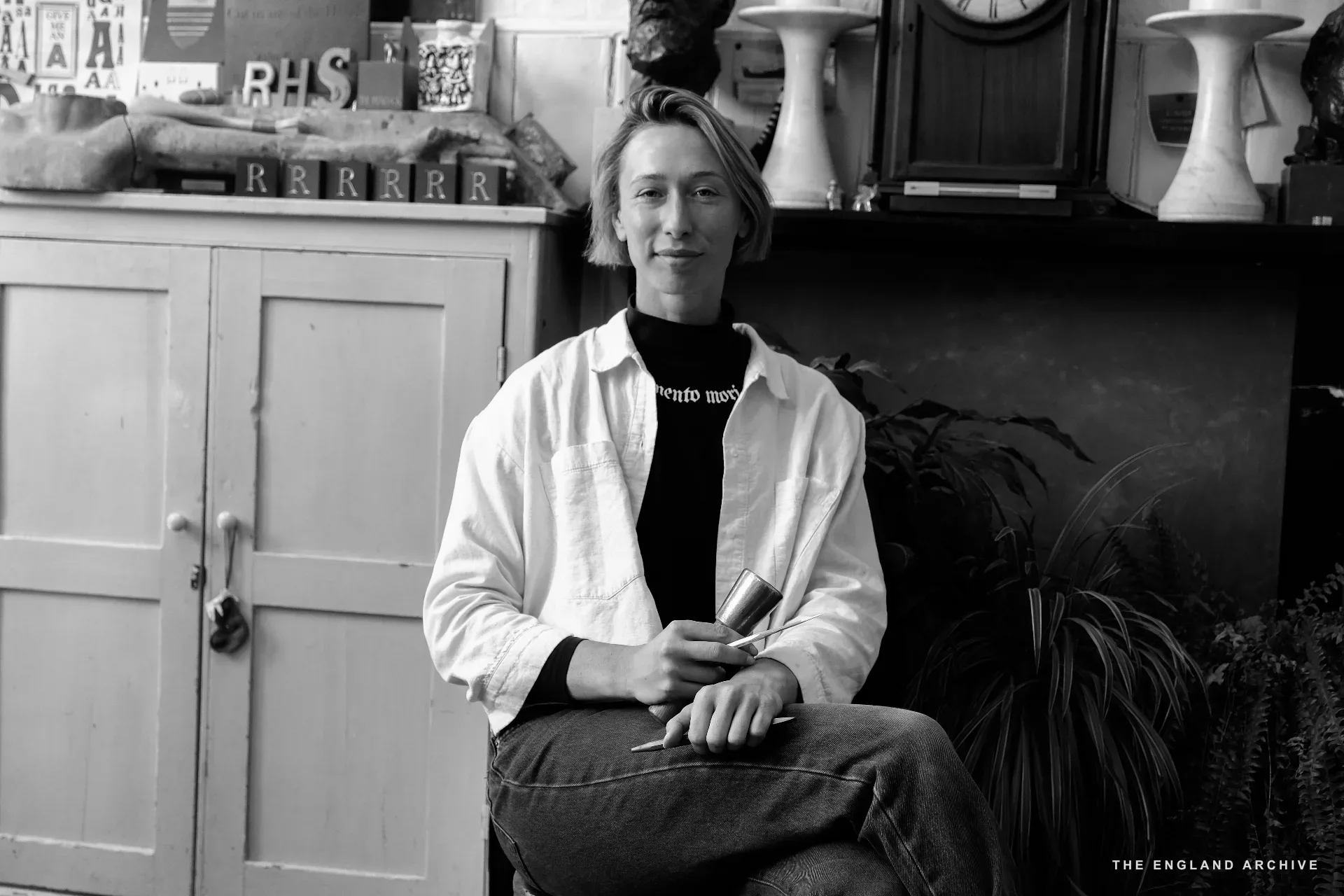
Working head of the Cardozo Kindersley Workshop, Cambridge. She has taken over the running of the workshop from her mother-in-law Lida and now teaches apprentices, directs commissions, and keeps the 700-year-old craft of English stone lettering alive for a new generation.
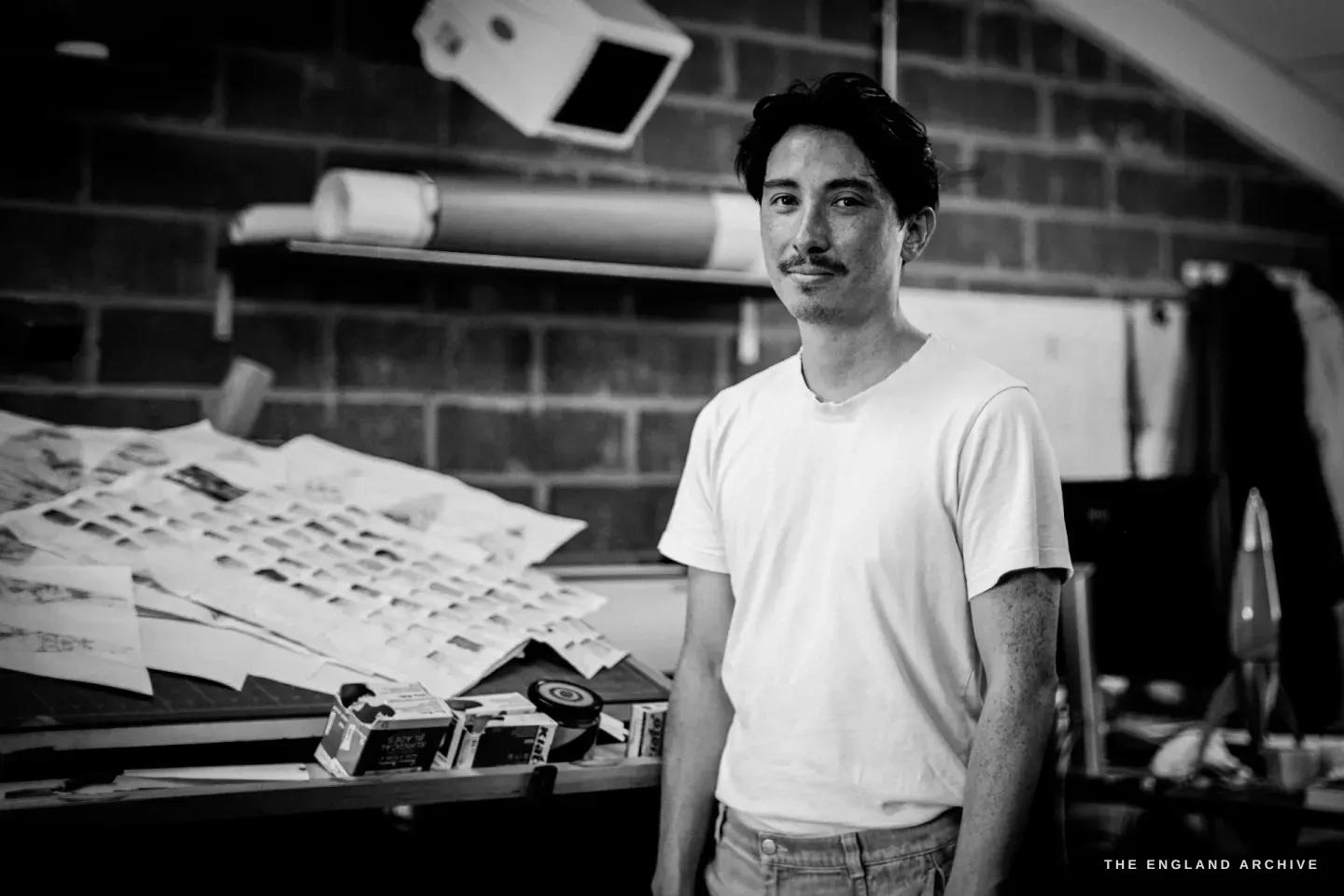
Designer & Lettercutter
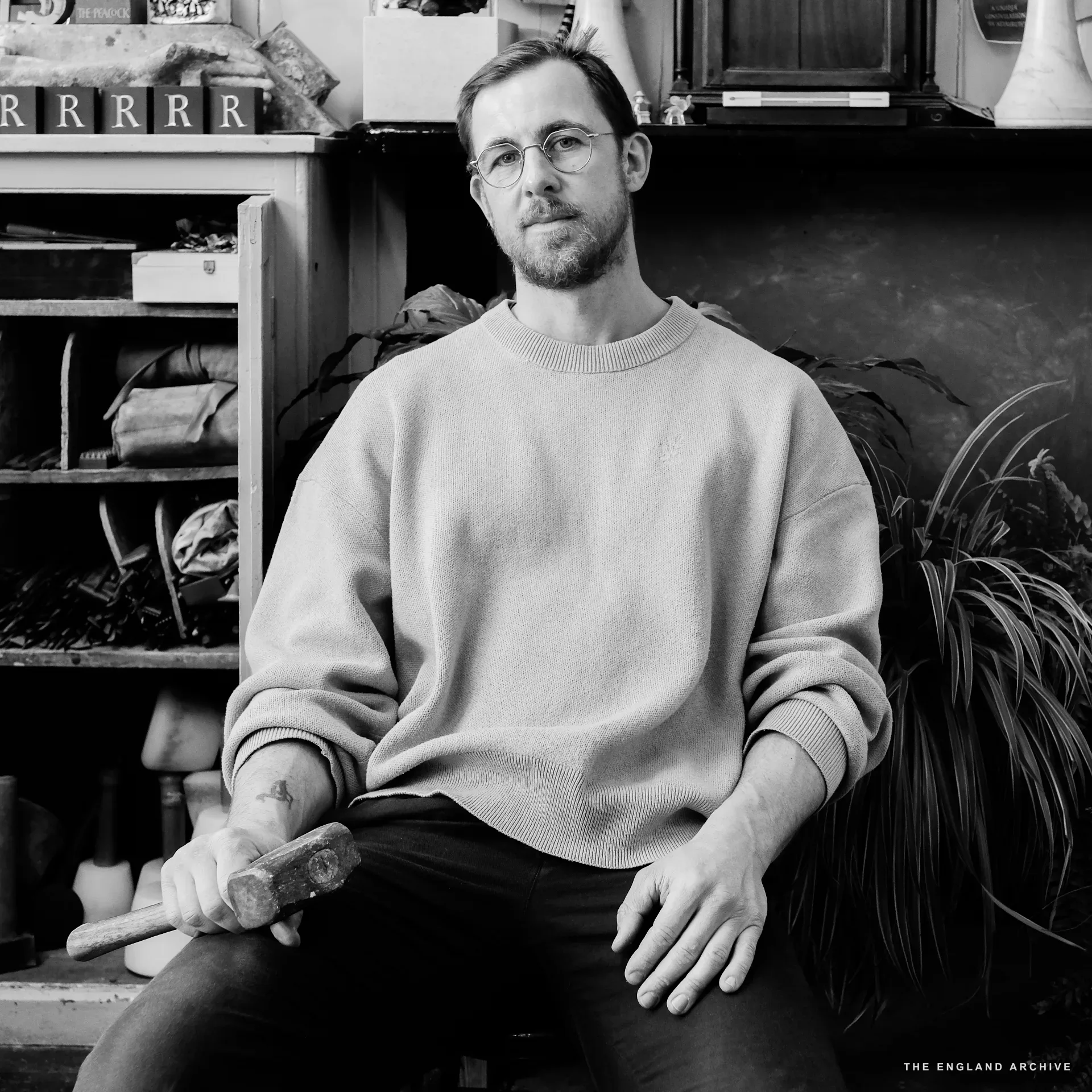
Designer at the Cardozo Kindersley Workshop, Cambridge. Younger son of David and Lida Kindersley, husband of Roxanne. The design hand of the workshop - most pieces begin as a sheet of paper and a pencil at his bench.
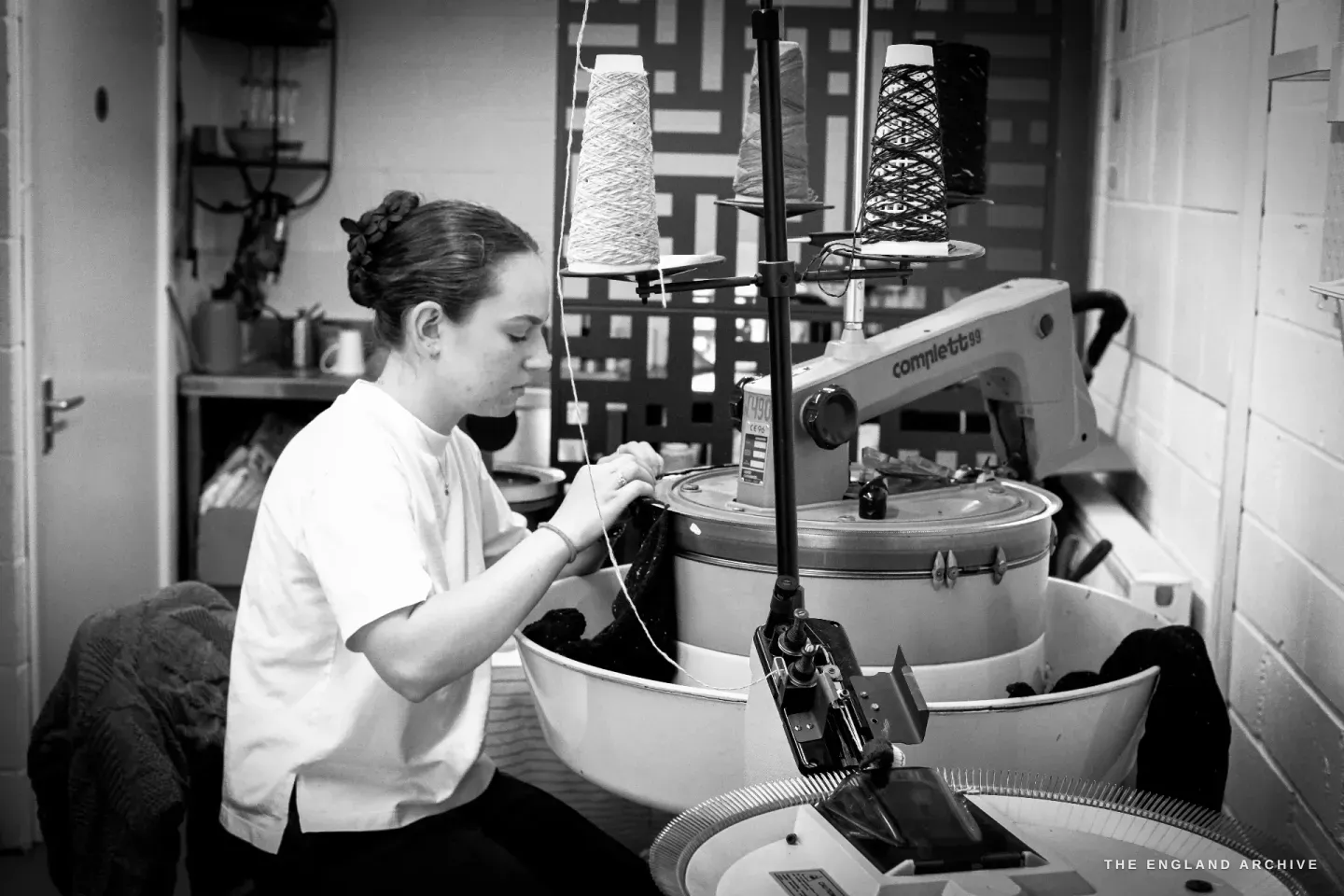
Lettercutter
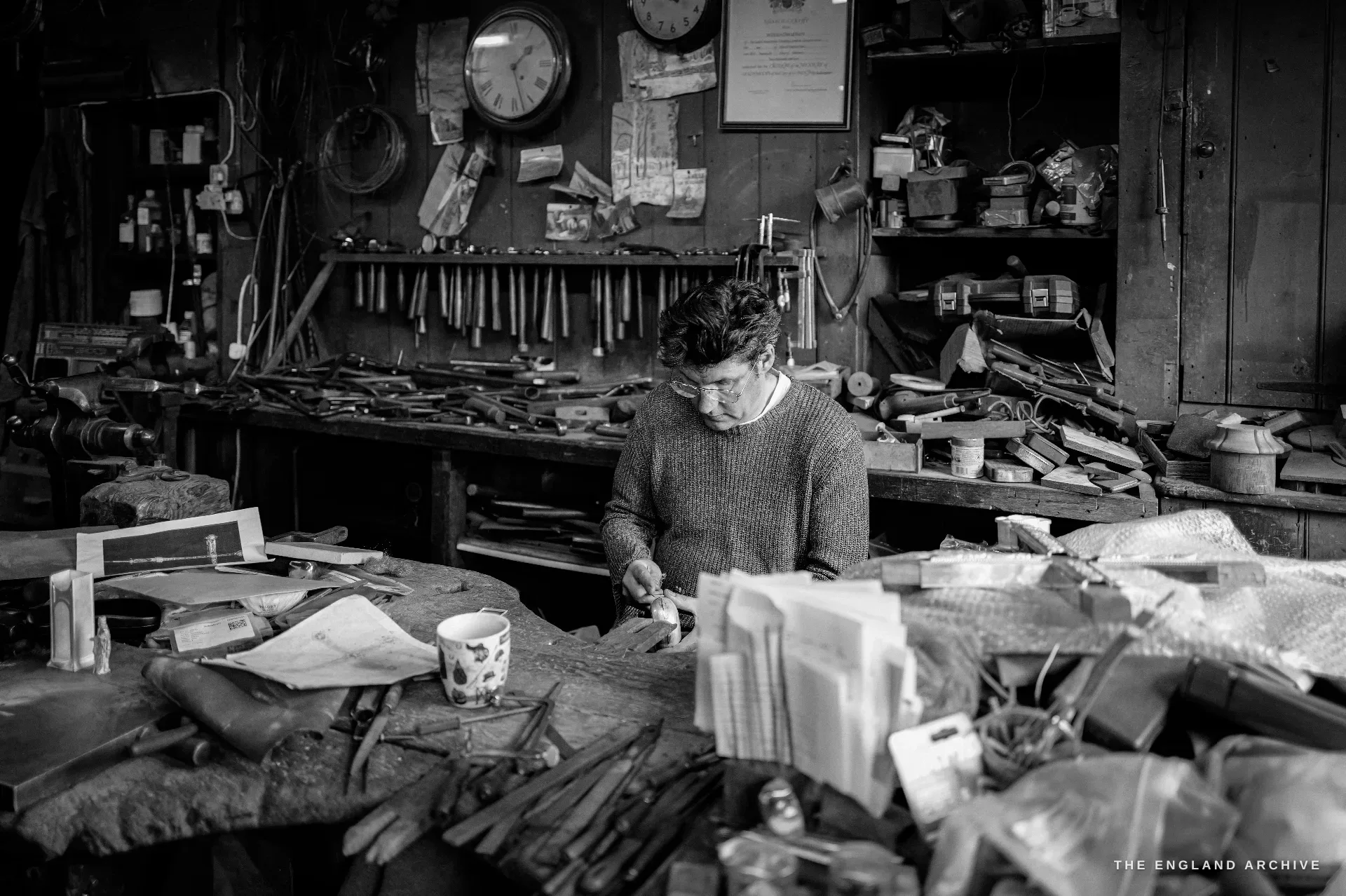
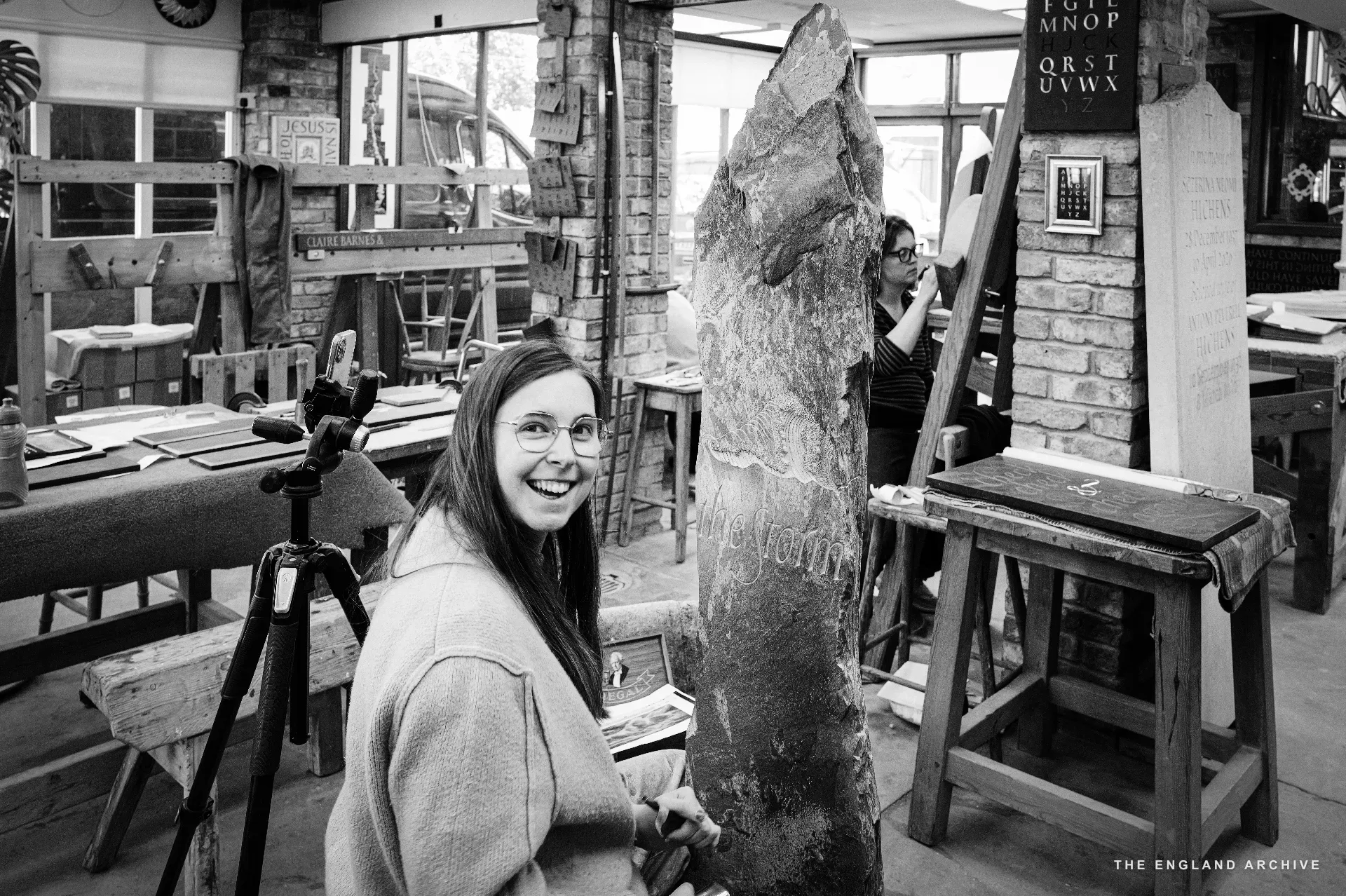
Lettercutter at the Cardozo Kindersley Workshop, Cambridge. Eight years at the bench. Roxanne Kindersley's longest-running apprentice and the cutter on the Storm and the Calm After the Storm memorial pillar.
Boat Builder
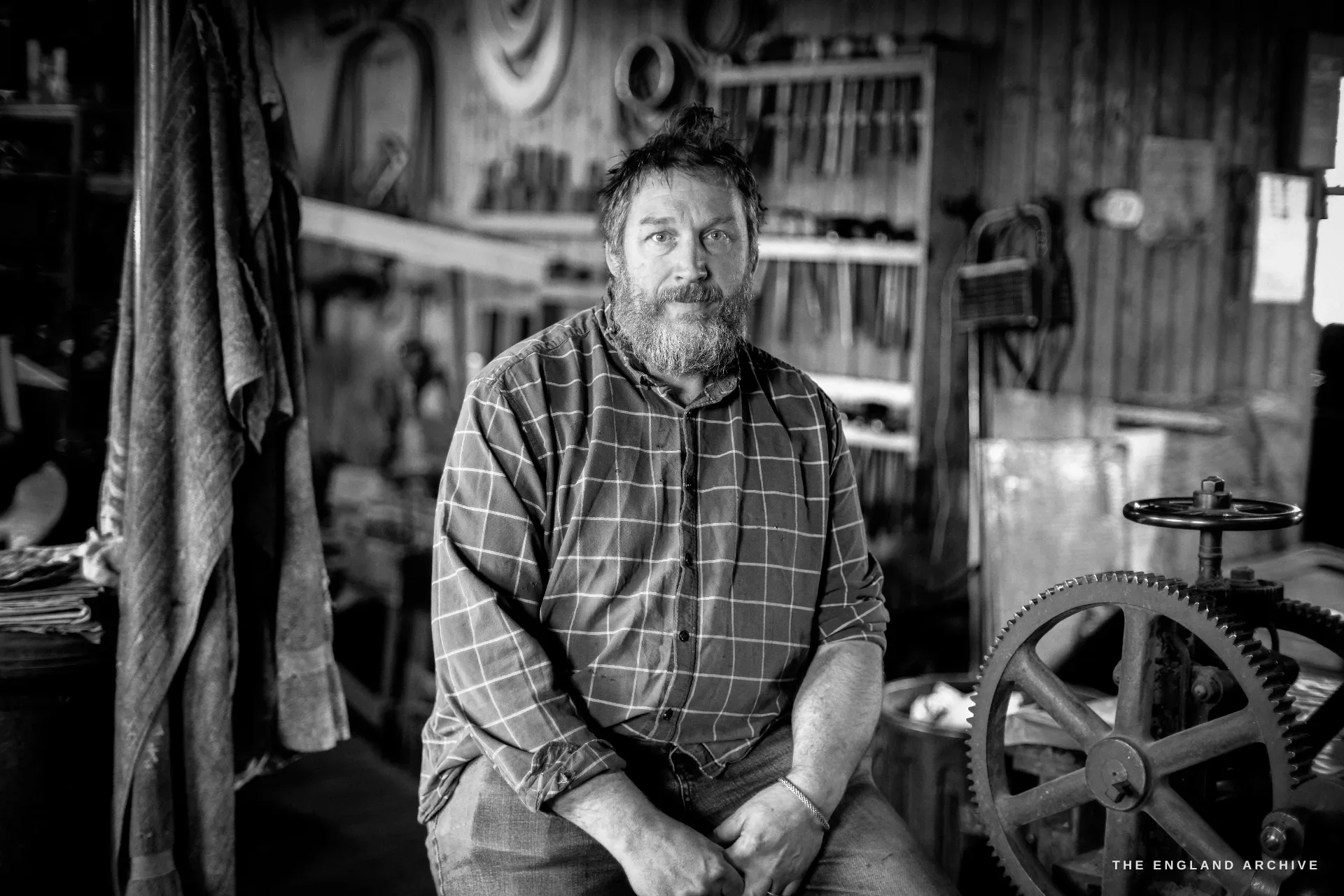
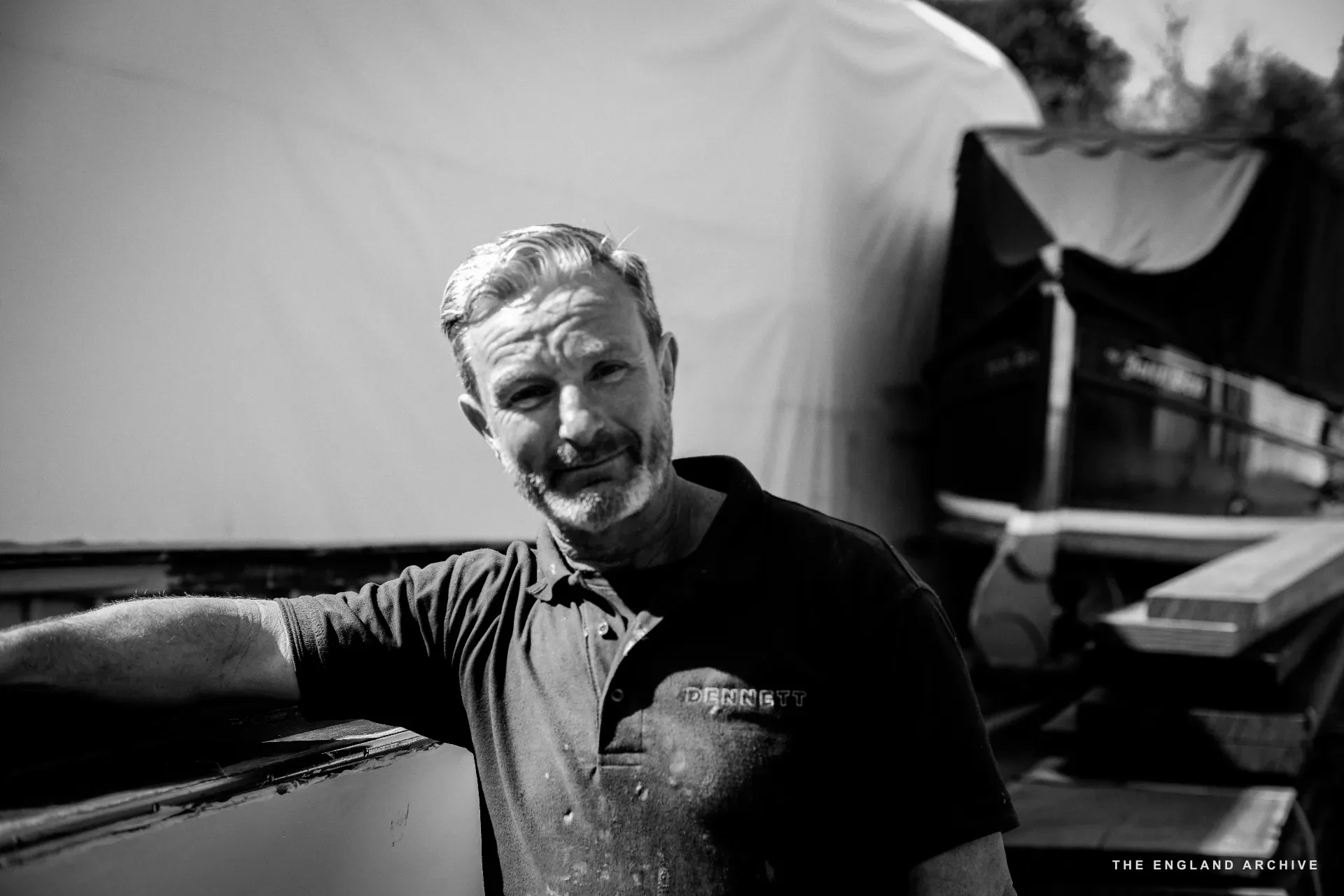
Working principal of Dennett Boat Builders, Laleham, Chertsey. Son of Michael Dennett, who taught him the trade from age two. Joined the yard as a partner in 1988 and has worked there ever since. Specialises in the restoration of historic Thames pleasure craft.
Boat Builder
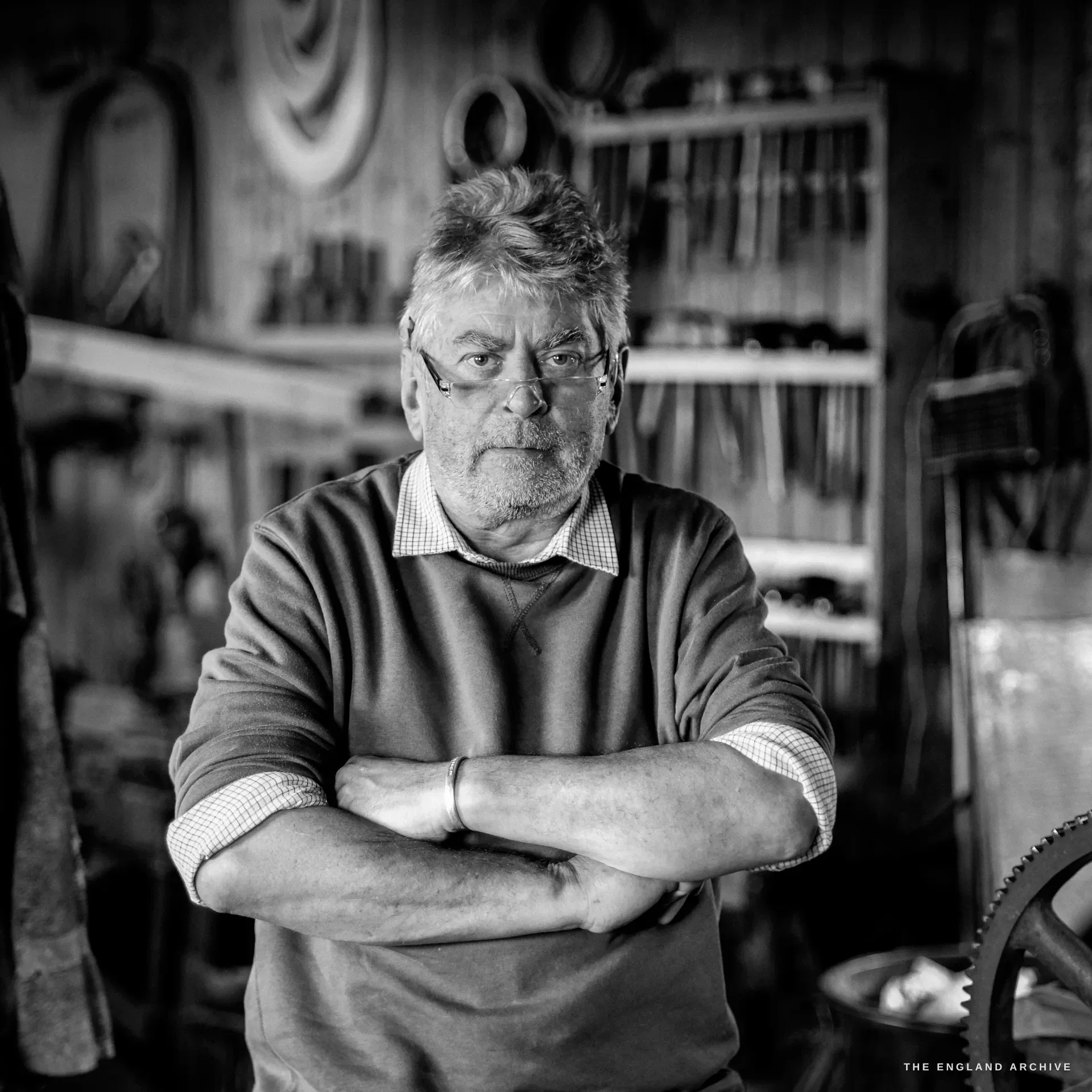
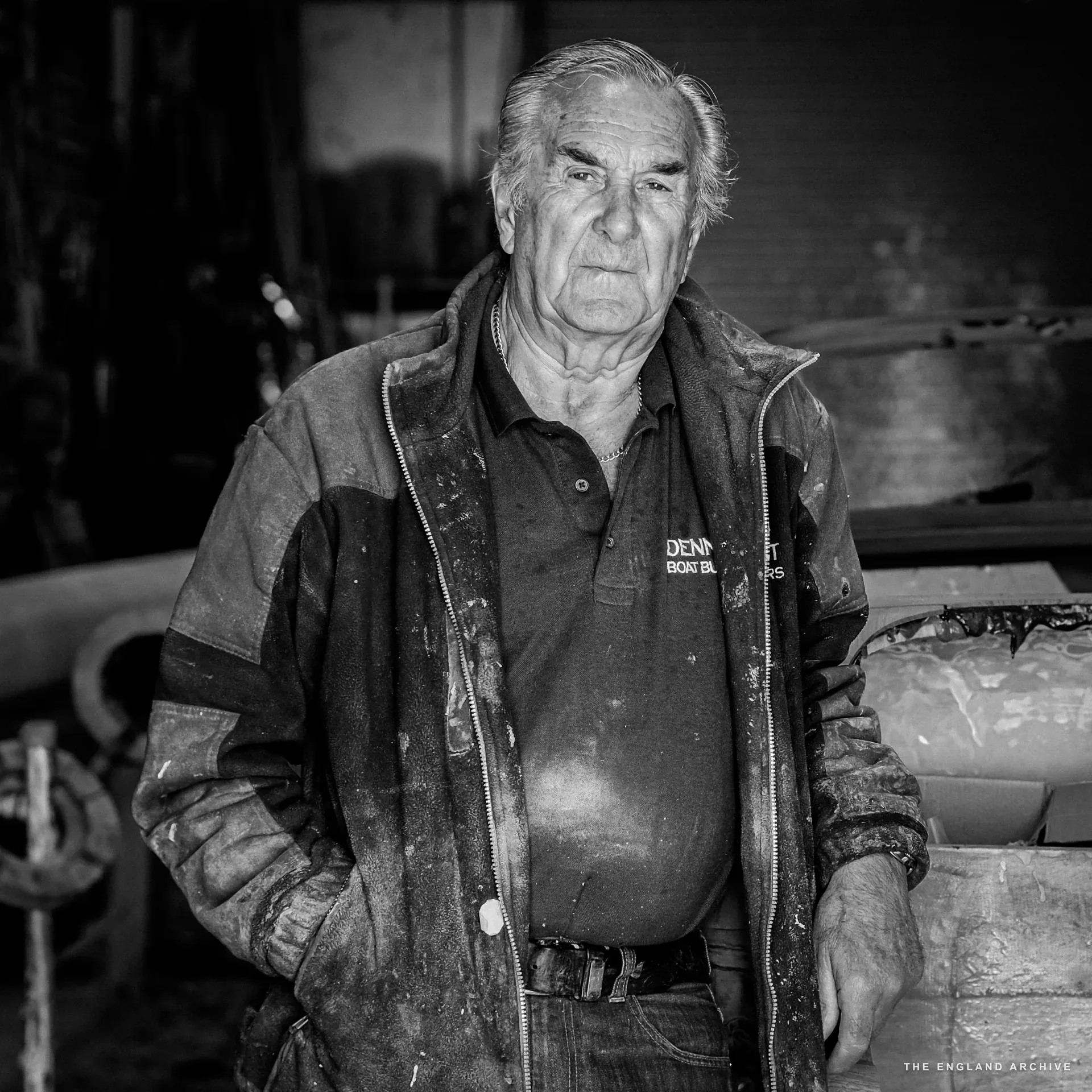
Founder of Dennett Boat Builders, Laleham. Trained at three Surrey Thames yards in the 1960s: Horace Clarke's Boatyard in Sunbury from age 15; Walton Yacht; and George Wilsons Yard in Sunbury, where he completed his apprenticeship. Self-employed from 22. Opened the Laleham yard with his son Stephen in 1988.
Names, Numbers, and the Knowledge That Cannot Be Copied
A deep exploration of the people whose knowledge cannot be written down, cannot be filmed, cannot be archived in any conventional sense - because it lives in their hands, and when they stop, it stops.
Read the full post →
A tradition older than England itself. The men who still build and fish from coracles on the rivers of Wales and the border counties - and the question of what happens when they stop.
The definitive list of endangered heritage crafts in the UK - the making traditions most at risk of disappearing within a generation.
Makers A working millwright who has maintained and restored historic windmills across Norfolk and Suffolk for decades. The mill at Toft Monks works because Paul Kemp exists. That is not a small thing.
Makers Matriarch of the Cardozo Kindersley Workshop, Cambridge. Widow of David Kindersley. A typographer and stone letter-cutter in her own right who has run the workshop for thirty years and still comes in every day.
Makers Working head of the Cardozo Kindersley Workshop, Cambridge. She has taken over the running of the workshop from her mother-in-law Lida and now teaches apprentices, directs commissions, and keeps the 700-year-old craft of English stone lettering alive for a new generation.
Makers Designer at the Cardozo Kindersley Workshop, Cambridge. Younger son of David and Lida Kindersley, husband of Roxanne. The design hand of the workshop - most pieces begin as a sheet of paper and a pencil at his bench.
Makers Apprentice Lettercutter at the Cardozo Kindersley Workshop, Cambridge. Eight years at the bench. Roxanne Kindersley's longest-running apprentice and the cutter on the Storm and the Calm After the Storm memorial pillar.
Makers Working principal of Dennett Boat Builders, Laleham, Chertsey. Son of Michael Dennett, who taught him the trade from age two. Joined the yard as a partner in 1988 and has worked there ever since. Specialises in the restoration of historic Thames pleasure craft.
Makers Founder of Dennett Boat Builders, Laleham. Trained at three Surrey Thames yards in the 1960s: Horace Clarke's Boatyard in Sunbury from age 15; Walton Yacht; and George Wilsons Yard in Sunbury, where he completed his apprenticeship. Self-employed from 22. Opened the Laleham yard with his son Stephen in 1988.
The Sussex trugg - a garden basket woven from sweet chestnut and willow. One man still makes them by hand on the Suffolk coast.
The wherrymen of the Norfolk Broads - the cargo sailors who kept the waterways alive, and the handful who still maintain the last trading wherries.
The Thames punt - a flat-bottomed boat that has been part of the river for centuries. One workshop in Henley still builds them by hand.
The Cotswold walls are built without mortar - stone on stone, shaped by hand, standing for centuries. The wallers who build and repair them carry knowledge that cannot be written down.
The perry pear trees of Herefordshire take a generation to fruit. The families who tend them are custodians of a patience that modern agriculture has abandoned.
The hedges of the Welsh Marches are living structures - laid by hand, maintained across generations. The hedge layers carry a craft that shaped the English landscape.
The Somerset Levels were built on willow. The weavers who still work the withies are maintaining a craft and a landscape simultaneously.
The cider families of Taunton Vale have pressed apples for generations. Now a daughter carries the tradition forward - with the same trees, the same press, the same knowledge.
A thousand miles of drystone wall cross the Yorkshire Dales - limestone on limestone, without mortar. The wallers who maintain them carry knowledge in their hands.
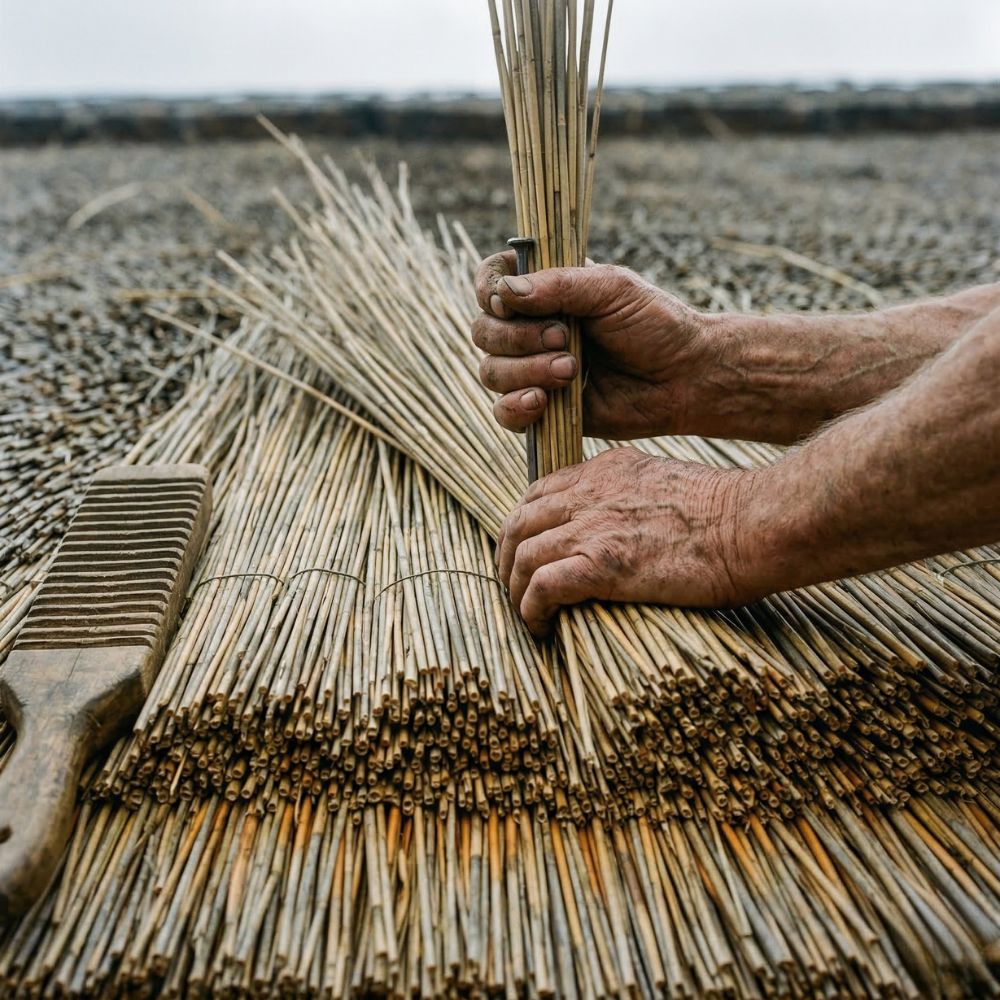
The thatchers of the Cotswolds - the craft of covering a roof with reed and straw, a skill that takes a decade to learn and a lifetime to master.
A plain-language guide to exposure, metering, and the Zone System for both film and digital photographers - from the basics of light to placing zones in the field.
The Cotswolds are defined by oolitic limestone - one material that creates dry stone walls, stone slate roofs, and ashlar buildings. The few remaining quarrymen, stone slate roofers, and masons speak a language the stone dictates.
English stone letter-cutting from the Trajan tradition through Eric Gill and David Kindersley to the Cardozo Kindersley Workshop in Cambridge. The craft, its history, its living lineage, and the state of the discipline in 2026.
The Thames pleasure-craft tradition from the Edwardian slipper launch through the mid-century Surrey yards to the restoration workshops carrying the trade forward today. The Dennett yard at Laleham as the living lineage.
“The knowledge is embodied, not written down. You cannot learn it from a book. You learn it from doing it ten thousand times, with someone standing next to you who has done it ten thousand times before you.”