Makers Apprentice
Emily
Lettercutter
The Cardozo Kindersley Workshop, Cambridge
Lettercutter
The Cardozo Kindersley Workshop, Cambridge
You treat them as one piece, because they are. The tempo of the lettering has to hold them together so they read as part of a single thought.
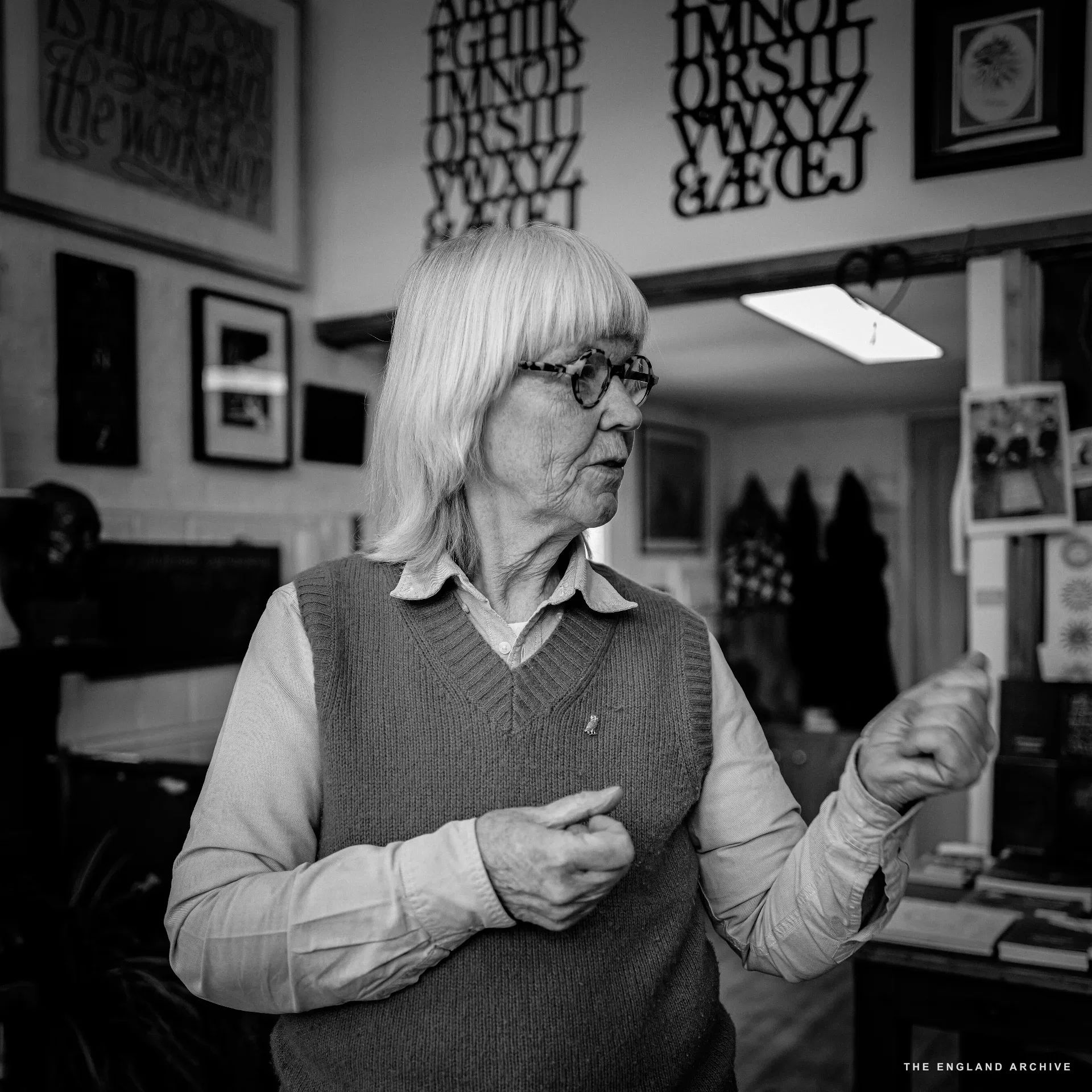
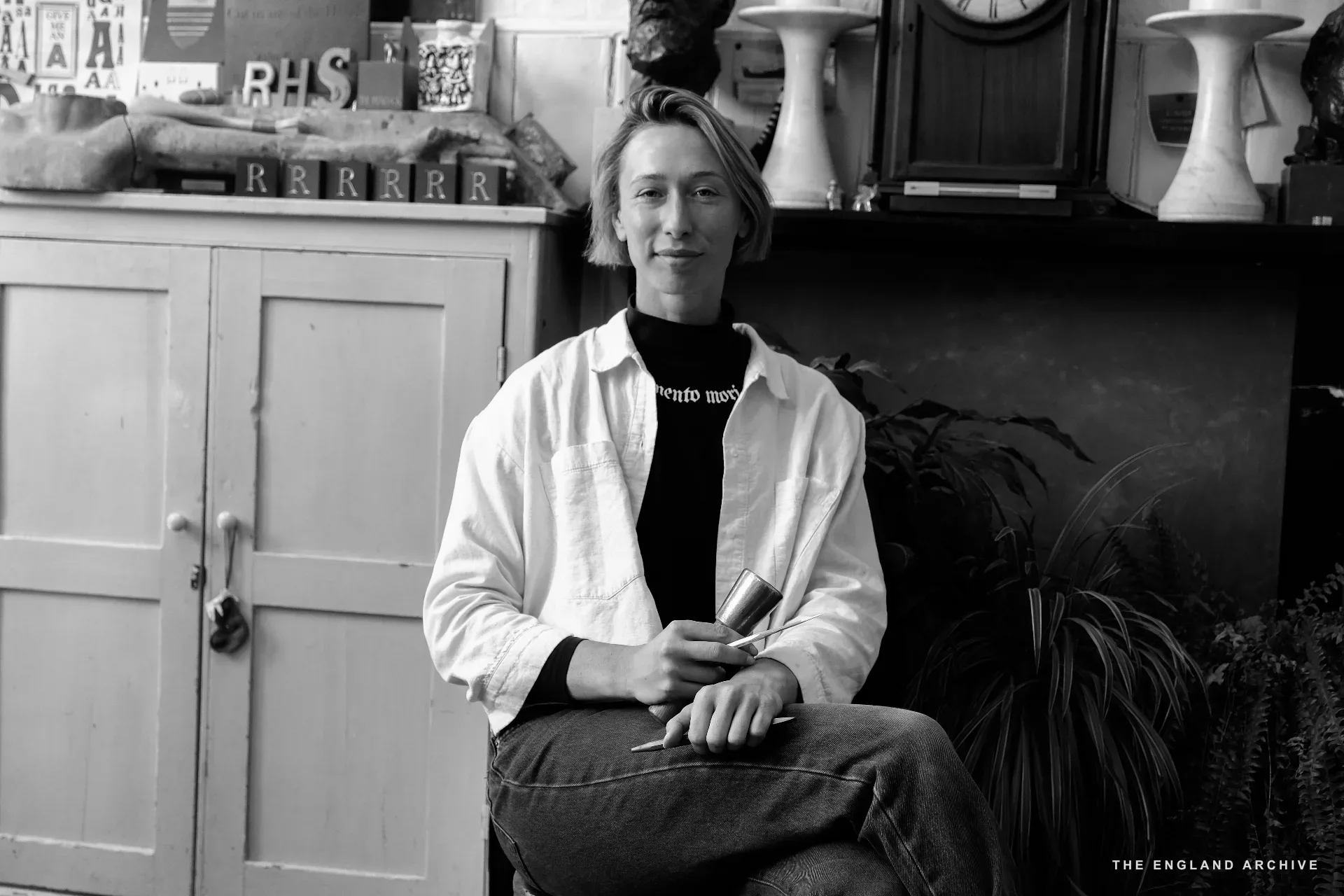
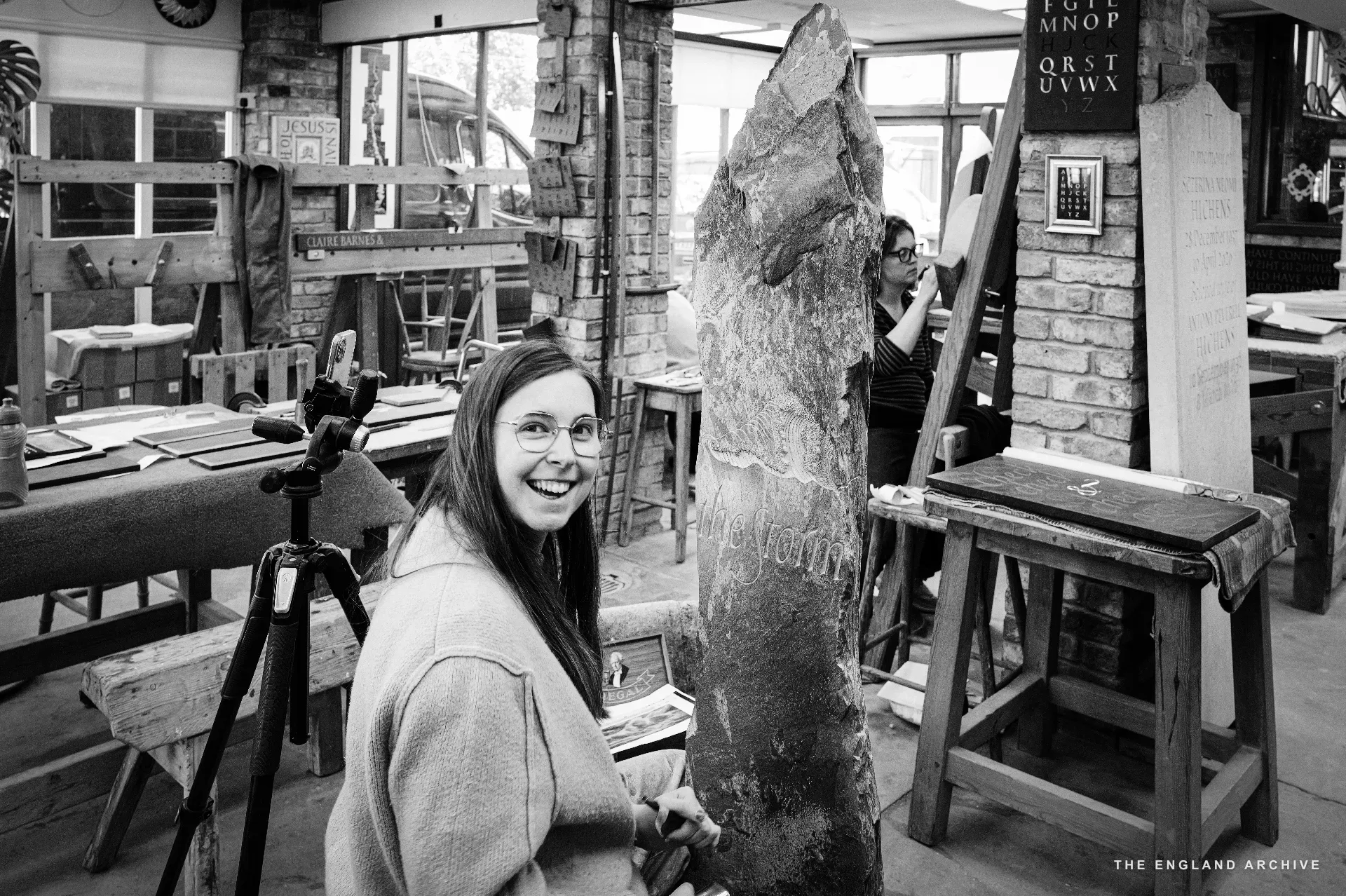
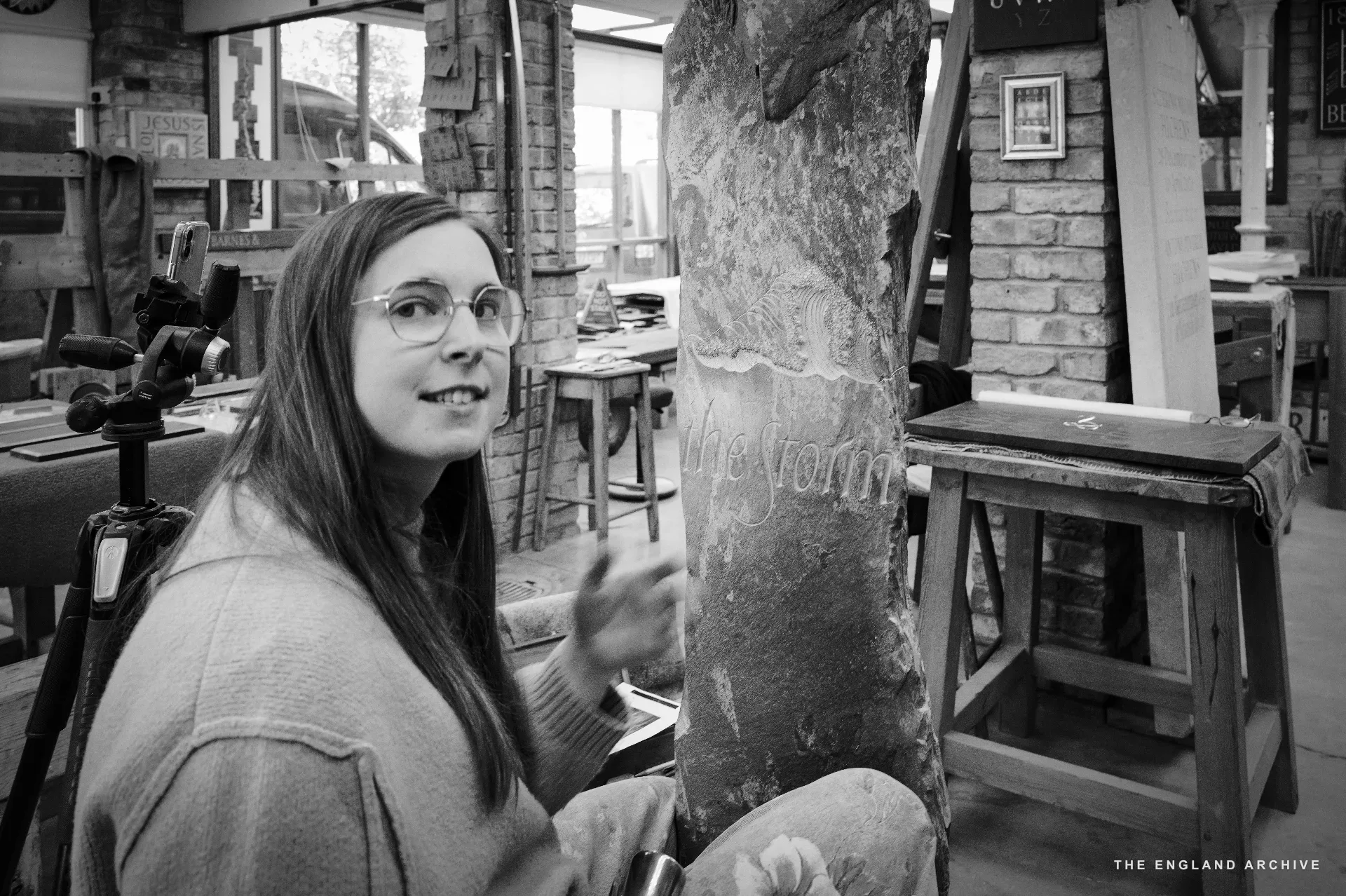
Emily is the working letterer at the Cardozo Kindersley Workshop. She has been at the workshop for eight years, which makes her - after Lida and Roxanne themselves - the most experienced cutter in the room. The Storm and the Calm After the Storm memorial pillar that anchors the journal entry of our visit is hers; the chisel on the wave detail is hers; the half-second of laughter when she looked up from the stone is hers.
Her training was inside the workshop, alongside Lida and Roxanne. She is the contemporary illustration of how the Cardozo Kindersley line continues. The apprentice who walked in off the street the morning we visited will, if everything goes the way it has gone for Emily, still be at the workshop in 2034 - cutting the commissions Roxanne has approved, working at the bench Emily was working at on this particular Wednesday in April.
The bench Emily was working at sits in the back room of the workshop, against the brick wall, with a vertical wooden easel for tall pieces and a horizontal trestle for flat work. The light comes from the high windows on the workshop’s back wall and from a skylight above. The Cardozo Kindersley working bench has not materially changed in the sixty years since David first set the workshop up. The tools at hand - chisels in a leather roll, a wooden mallet, the dummy, pencils sharpened in the workshop’s own way, the soft brush for clearing the cut - are the tools English letter-cutters have used for as long as English letters have been cut.
The piece on Emily’s easel on the morning we visited was a tall slate pillar, carved in two faces. One face read The Storm. The other, The Calm After The Storm. The commission was for someone who had been through an illness and had come out the other side, and who wanted the pillar for their home. The two faces were related but tonally opposite: the storm was rougher, faster cuts, with a wave detail breaking across the top of the lettering; the calm was open, generous, with a small sailing boat carved among the words and a single line traced beneath the boat to suggest still water.
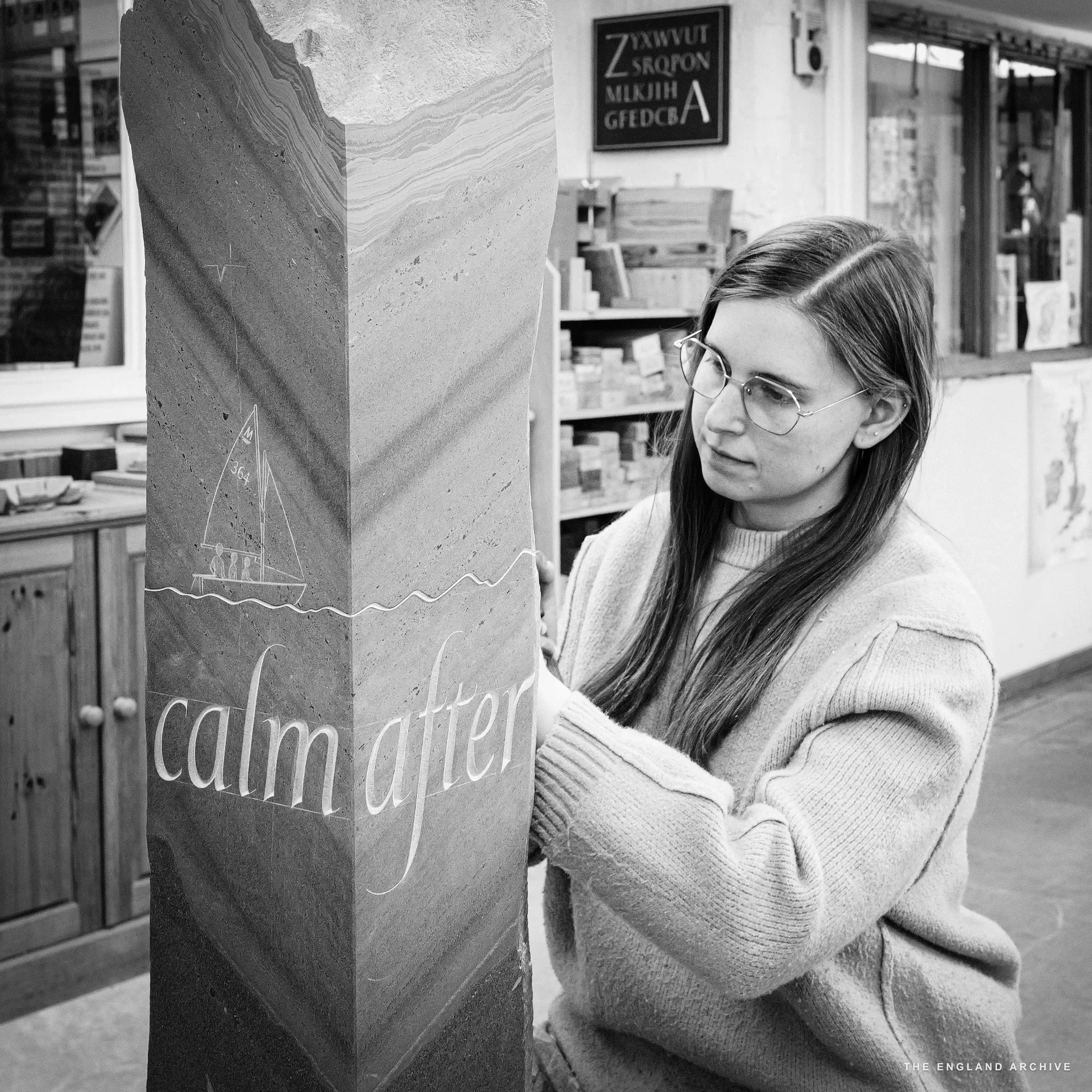
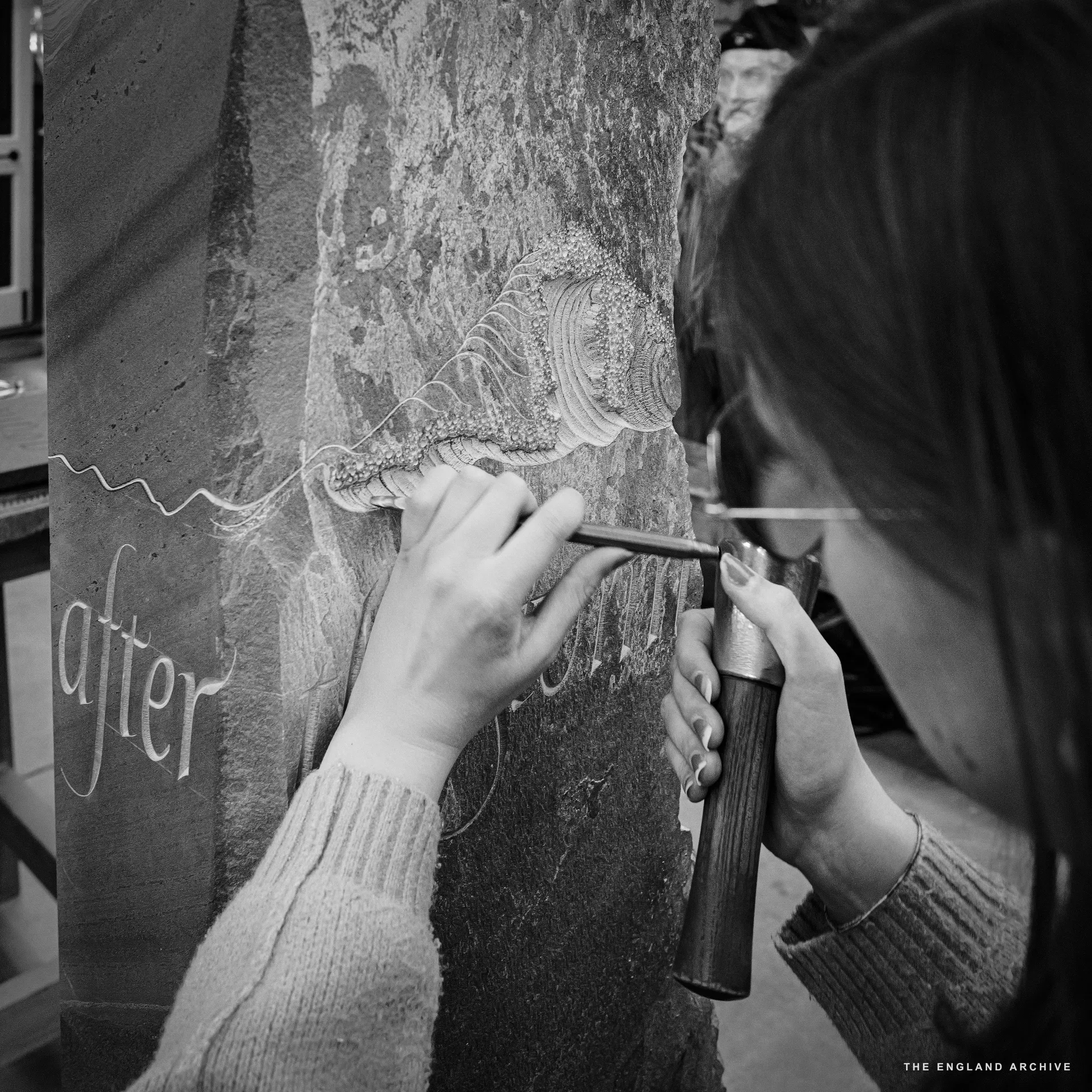
I asked Emily what it was like to carve two such different tones on the same object. She said you treat them as one piece, because they are. You understand that what one side means depends on what the other side means. The tempo of the lettering has to hold them together so they read as part of a single thought - not two thoughts on opposite faces.
That is a sentence with the weight of eight years of cutting behind it. The workshop teaches at the level of letterforms; it teaches at the level of stone; and it teaches, eventually, at the level of pieces - how a finished object reads as a whole. Emily is at that third level. She is the person Roxanne sets the apprentices alongside, and she is the person Roxanne steps back to when there is something on a piece that needs the letterer’s ear rather than the head’s.
The chisel is held lightly. The dummy - the small wooden mallet - is held lightly. The cut comes from a controlled tap, not from a strike. The hand watches the stone, then the chisel, then the stone again. The eye is close to the work but never directly above it; the cutter wants to see the slope of the cut, not just the line. A frame of Emily’s hands at the wave on the storm side is the closest the archive gets to the actual mechanics of English letter-cutting.
What you see in a working letterer’s hand is patience. There is no hurry. The cut is going to take as long as it takes, and the stone will tell you when. The mistakes you can recover from with a careful hand are the mistakes the workshop has trained you to recognise; the ones you cannot are the ones the apprenticeship has taught you not to make in the first place. Emily has cut enough stone now that the recognition is automatic. The training is the thing that frees the hand.
Emily is the third generation in a Cardozo Kindersley line that runs from David through Lida and Roxanne. She is also one of the people who will, when the moment comes, train the next generation. Roxanne does the apprenticeship intake; Emily, as the most experienced of the working letterers under Roxanne, is among the people the new apprentice spends most of their time alongside. The pencil that the new apprentice was given to sharpen on the morning of our visit was sharpened the way Emily sharpens hers - because Emily is a generation closer to the apprentice than Roxanne or Lida is, and the apprentice will copy her as much as anyone.
That is how a working craft transmits. Not just from the matriarch to the head, but laterally - from the eight-year cutter to the first-year apprentice, in the way you sit at the bench, the way you hold the chisel, the way you respond when a piece goes wrong. The workshop is a place where the practical knowledge of the trade is constantly being passed sideways as well as down.
This is the archive’s single-visit record of Emily. The Bronica portraits from the morning of 22 April 2026 will be added when the roll returns from the lab. The longer treatment of the craft Emily is part of - the history of English stone letter-cutting from the Trajan tradition through Eric Gill and David Kindersley to the present - lives in the companion craft essay. This subject page is deliberately narrower: Emily as the working letterer in 2026, the longest-running apprentice the workshop has at this moment, the hand on the wave detail of a memorial that will sit in someone’s home for a hundred years.