Makers
Vincent Kindersley
Designer & Lettercutter
The Cardozo Kindersley Workshop, Cambridge
Designer & Lettercutter
The Cardozo Kindersley Workshop, Cambridge
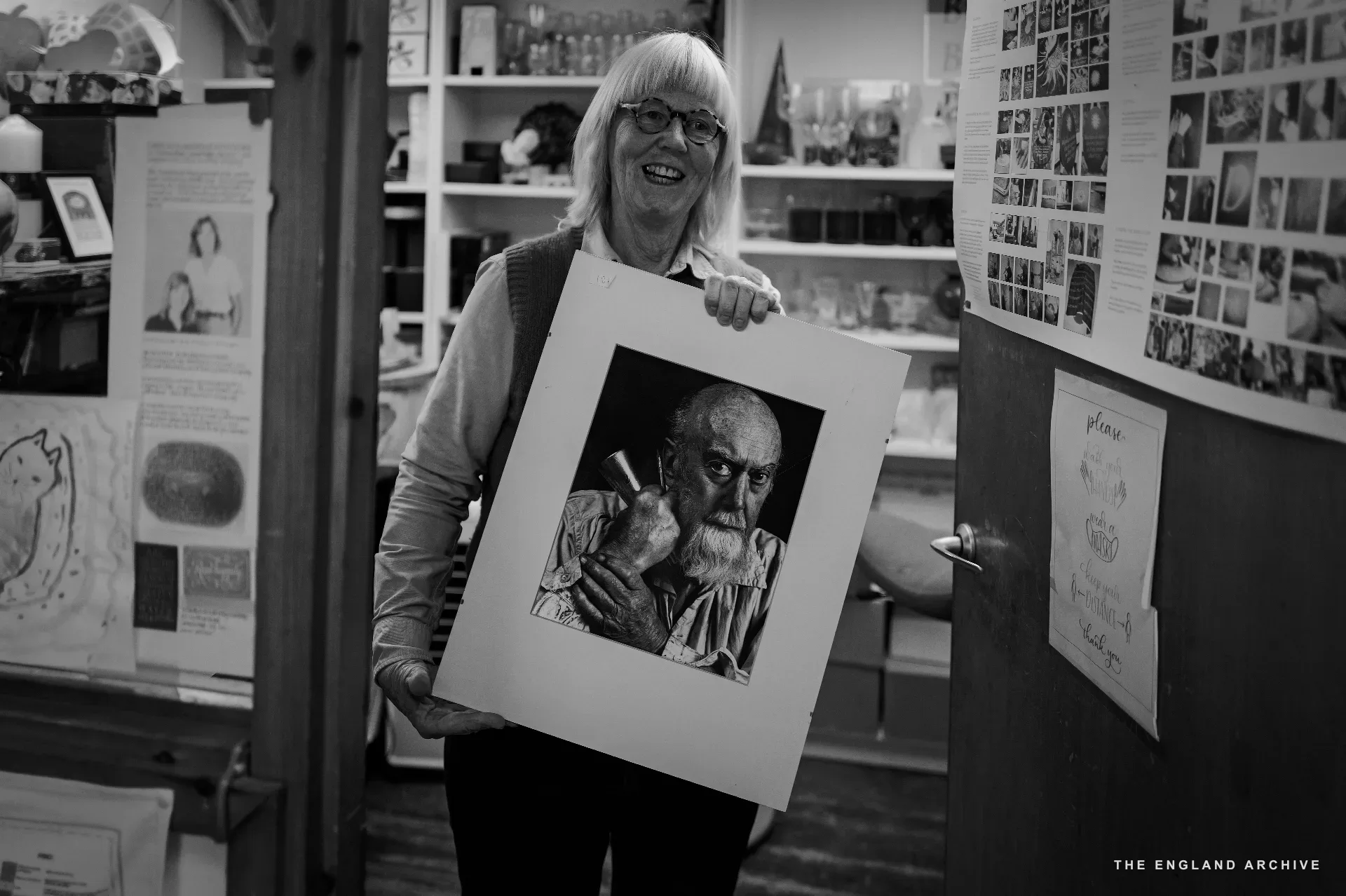
Vincent opened the door. Beard, calm manner, the kind of unguarded warmth that does not feel performed because it isn’t.
Vincent opened the door. He had heard us knock and was already working at the bench when we arrived; he came through, let us in, said Harriet would be with us in a minute, and went back to what he had been doing. Beard, glasses, the kind of unguarded warmth that does not feel performed because it isn’t. Within ten minutes he had sat down at the front-room table and we were talking about what The England Archive is and what it isn’t.
That is Vincent’s register. He listens with the careful attention of someone who has spent a working life inside a craft and has learned, over time, that the courtesy you owe to a visitor is the courtesy of letting them explain themselves before you decide who they are. He asked whether we were photographers; I explained that we were not, quite, and went on into what the archive does. He listened and waited.
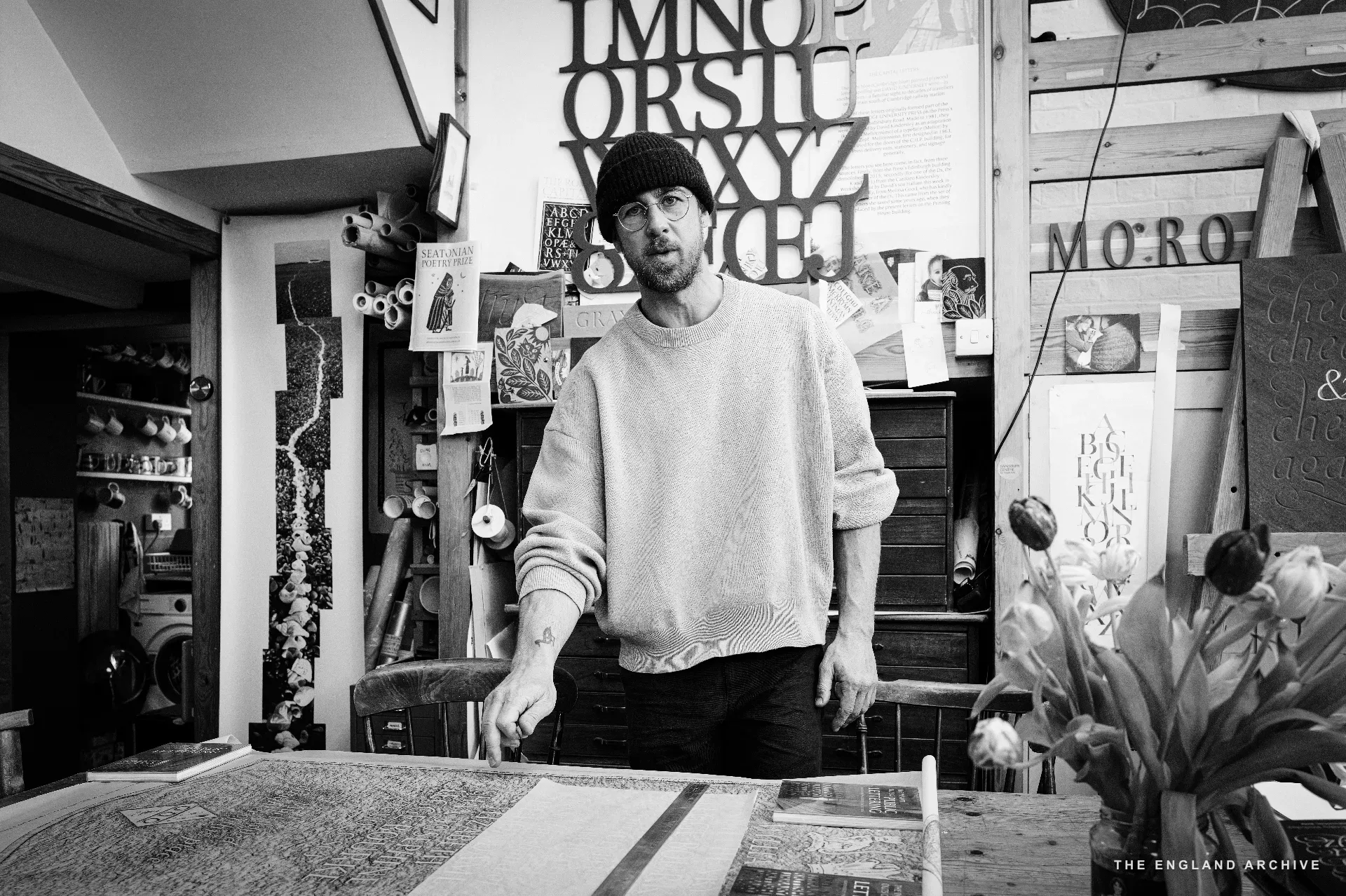
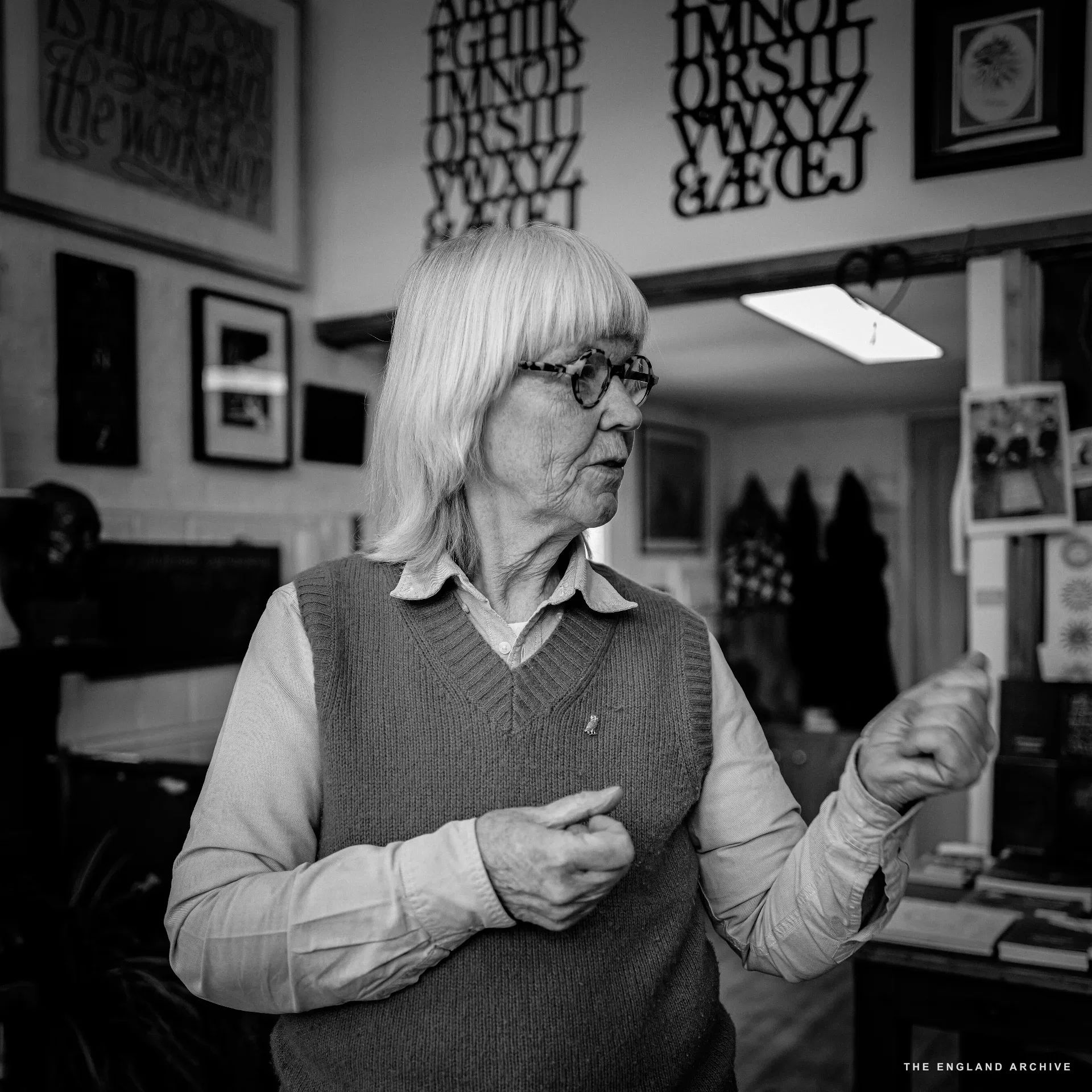
Lida and Roxanne are the public hands of the workshop - Lida the matriarch, Roxanne the working head. Vincent is the design hand. Most pieces the workshop carves begin as a sheet of paper and a pencil at his bench: setting-out, proportion, spacing between letters, the breath that holds a phrase together, the architecture of an inscription that has to read as a single composition rather than as a sequence of glyphs. The cutting comes after the design is right.
That is one of the things that makes the workshop’s register what it is. Many letter-cutting practices are oriented around the cut itself; the Cardozo Kindersley register is oriented around the design - around what David Kindersley called “the architecture of the alphabet” - and it is Vincent who carries that ear into the present. The cutters all design too; the apprentices learn it from the first day; but Vincent is the person whose pencil-on-paper work most often initiates a major commission.
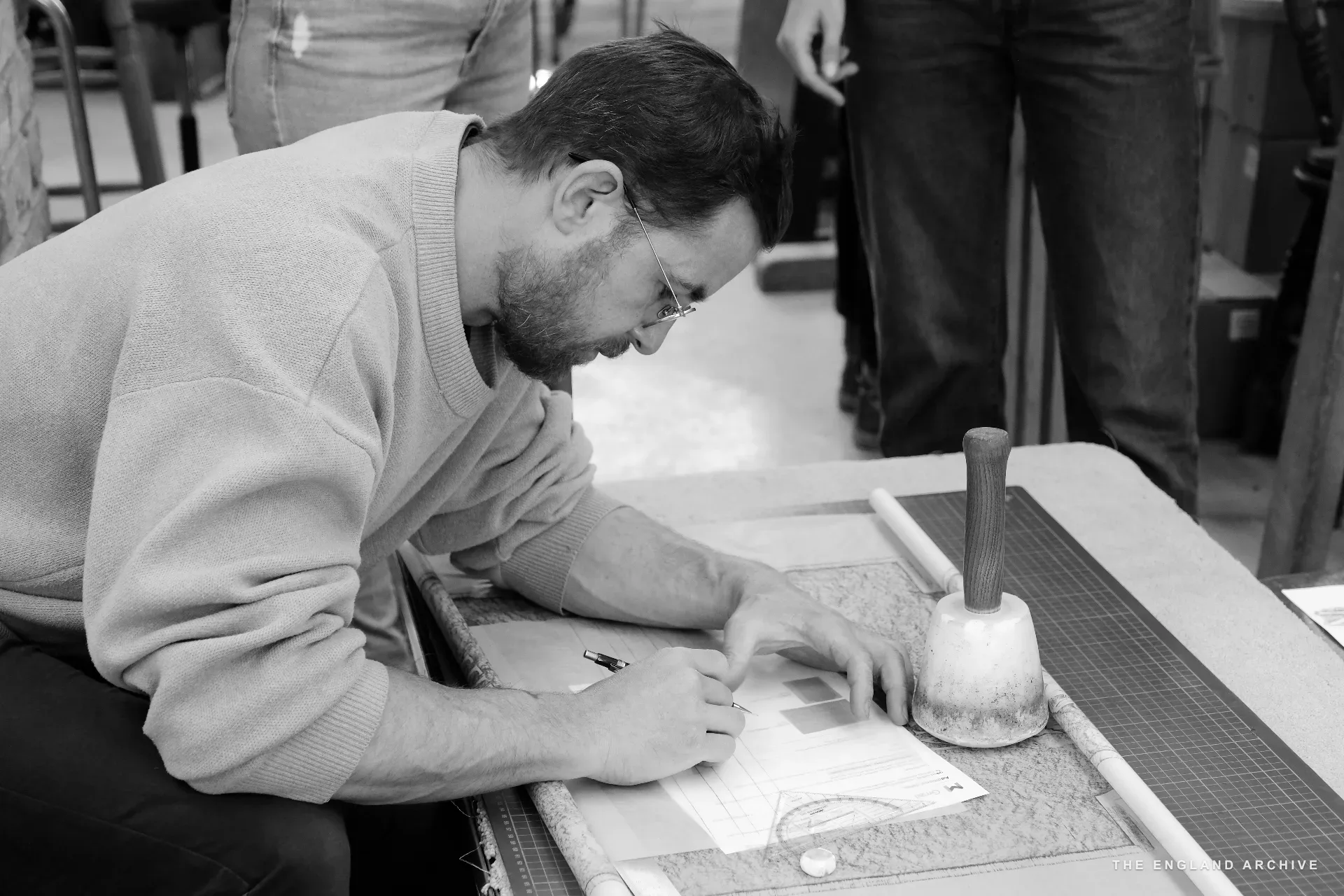
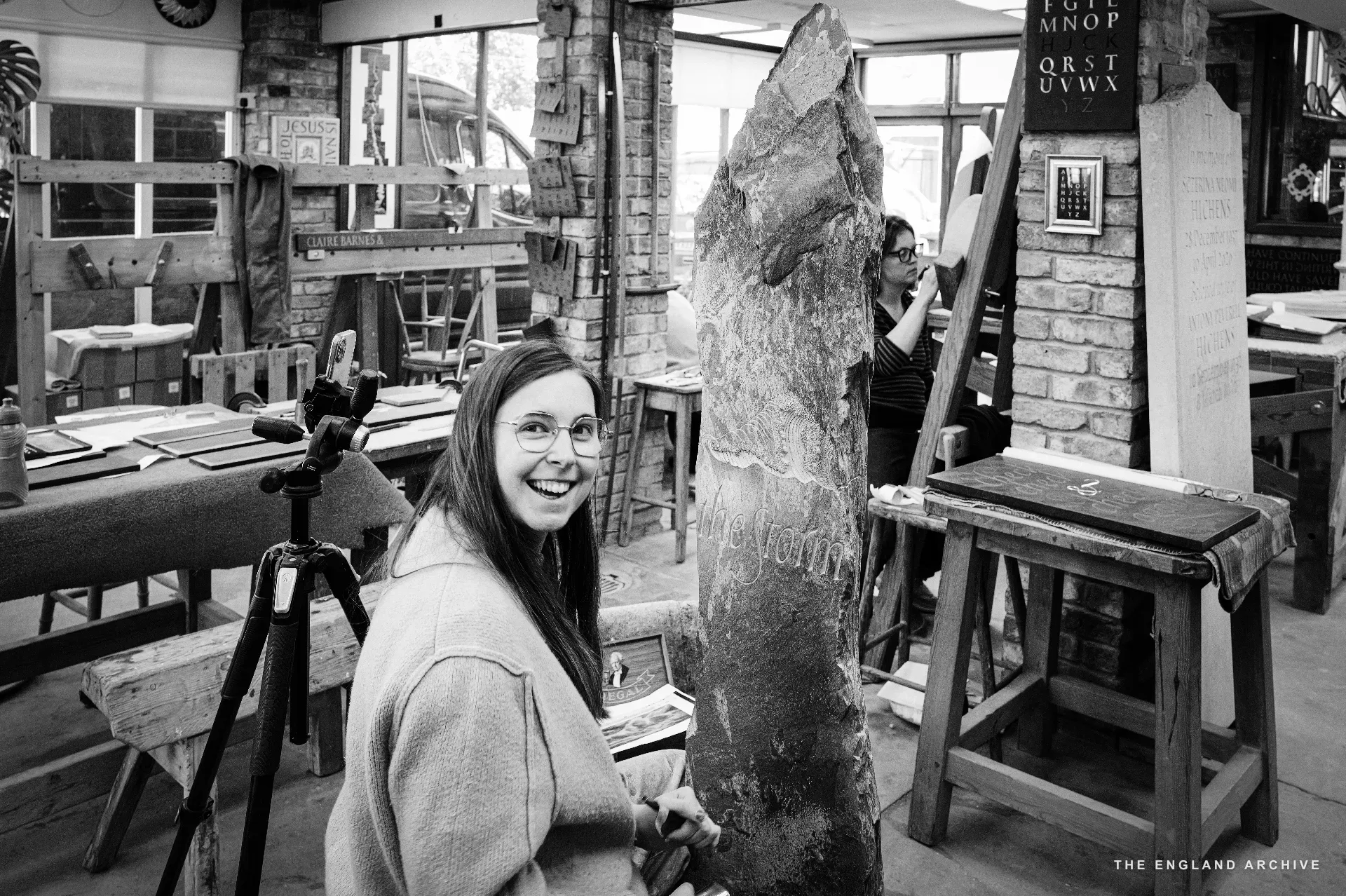
Across the workshop from Emily’s pillar, Vincent was at his bench with a flat slate panel laid out in front of him, marking the setting-out lines for a new commission with a pencil. Stone, paper, hand, lead. The pairing has not changed in centuries. The pencil sharpens to a fine point of graphite extending past the wood, in the way the workshop sharpens its pencils, so the line on the stone reads as fine as a calligraphy stroke. He worked alone and quickly. We watched and did not interrupt.
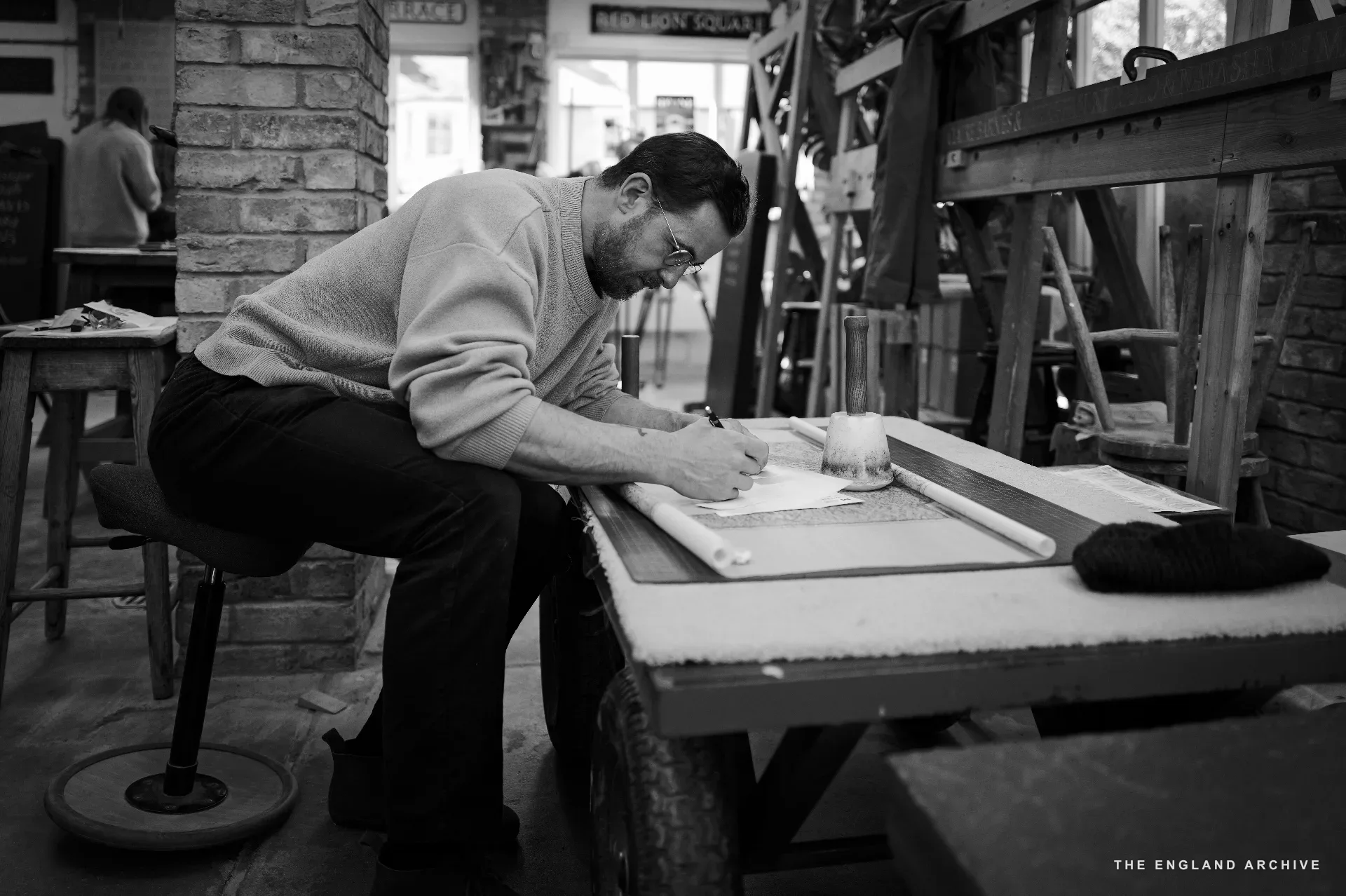
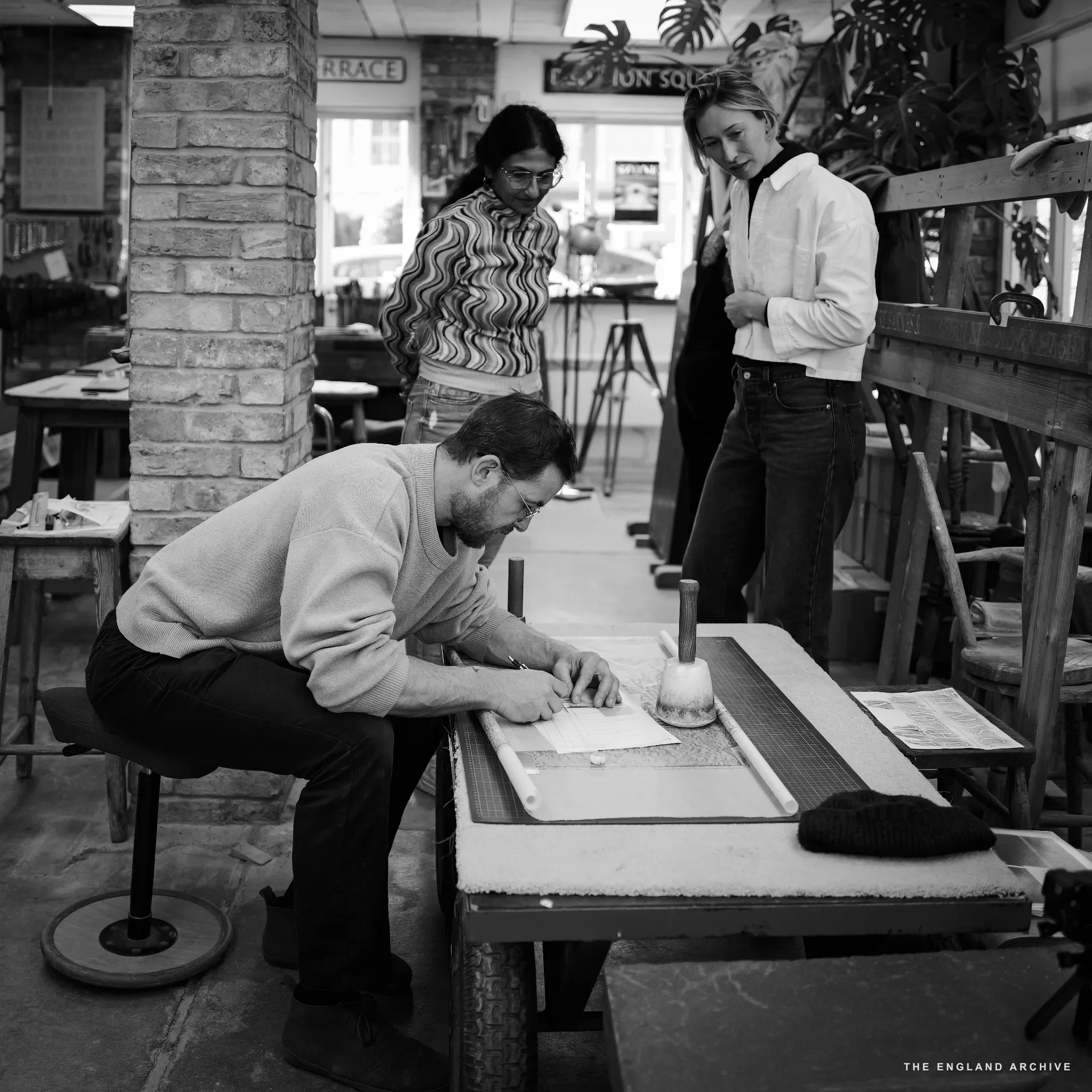
The dummy and the chisel sit on the bench within reach; the mallet is to one side; a brush is hanging from a pegboard. The setting-out is in pencil. When the lettering is approved by the client, the cut starts. There is a kind of stillness at the bench when a designer is working - a quietness inside the workshop that the rest of the team respects without needing to mark it. We sat for a minute and watched the line emerge.
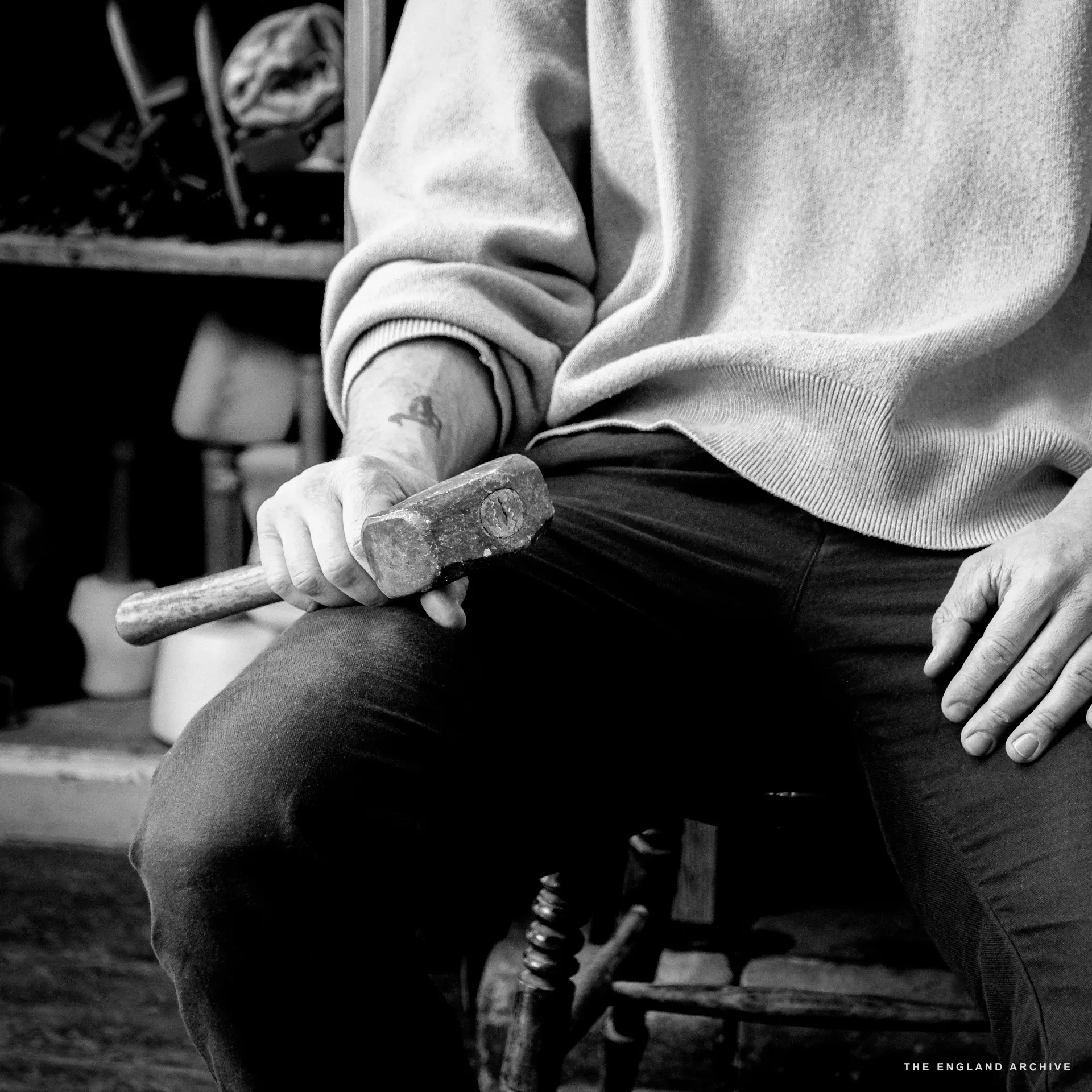
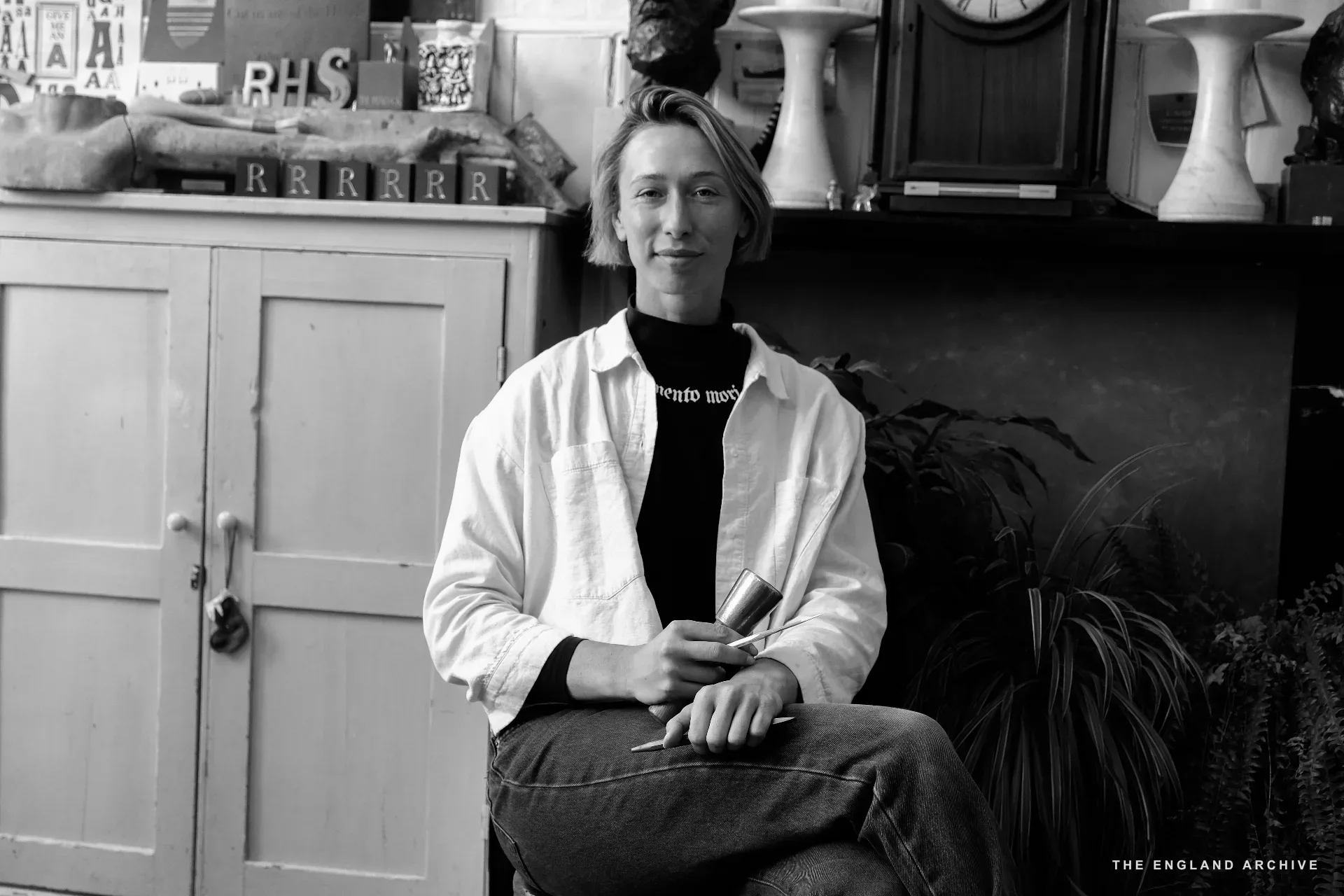
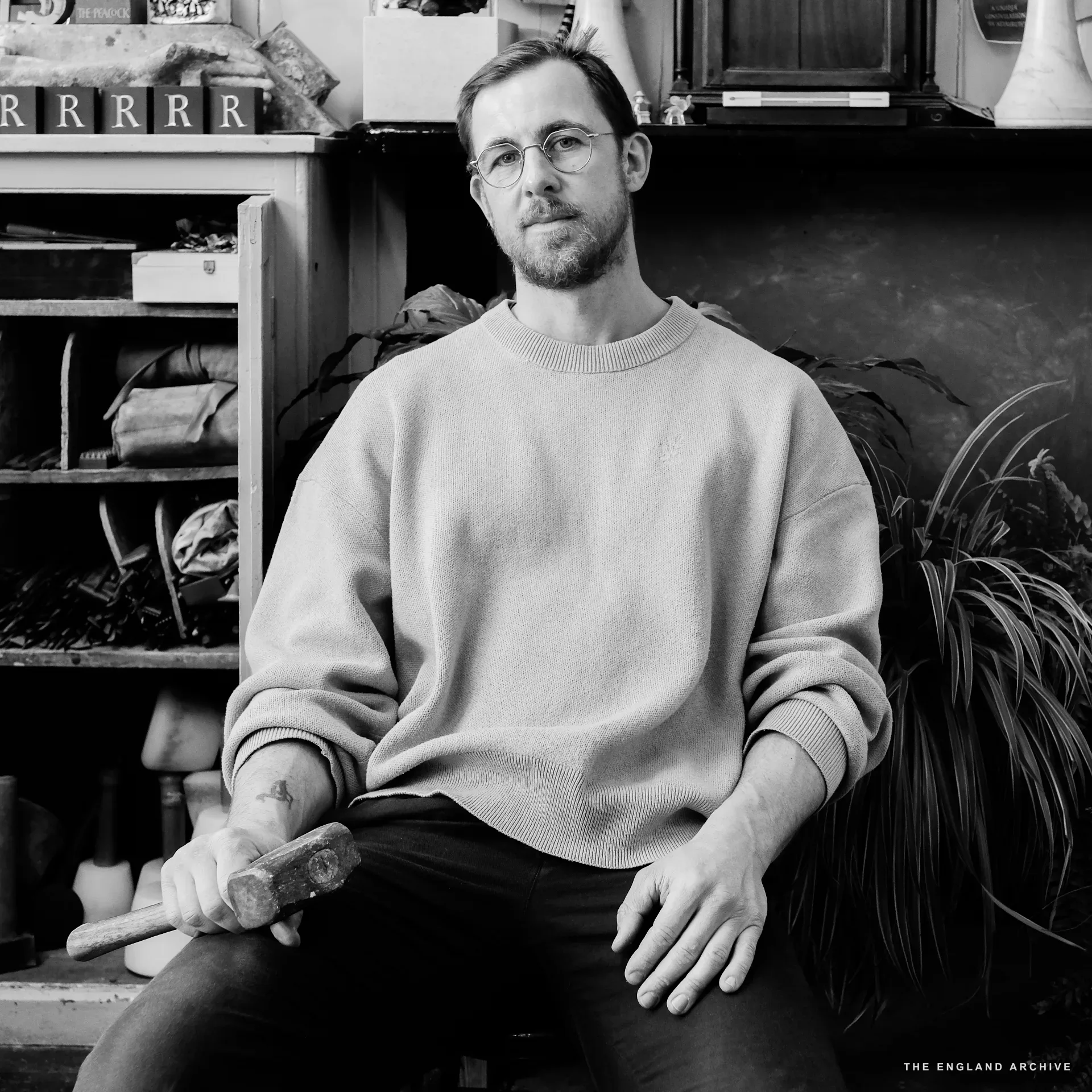
Vincent sat for the Bronica when his turn came. He held the workshop’s stone-cutting hammer in his right hand, looked straight at the camera for the first frame and aside for the second, and let the camera have the time it needed. He is easy to photograph in the way people are who have lived their lives around an object that takes its time to make - they understand that recording is also a form of work, and that the work has its own pace.
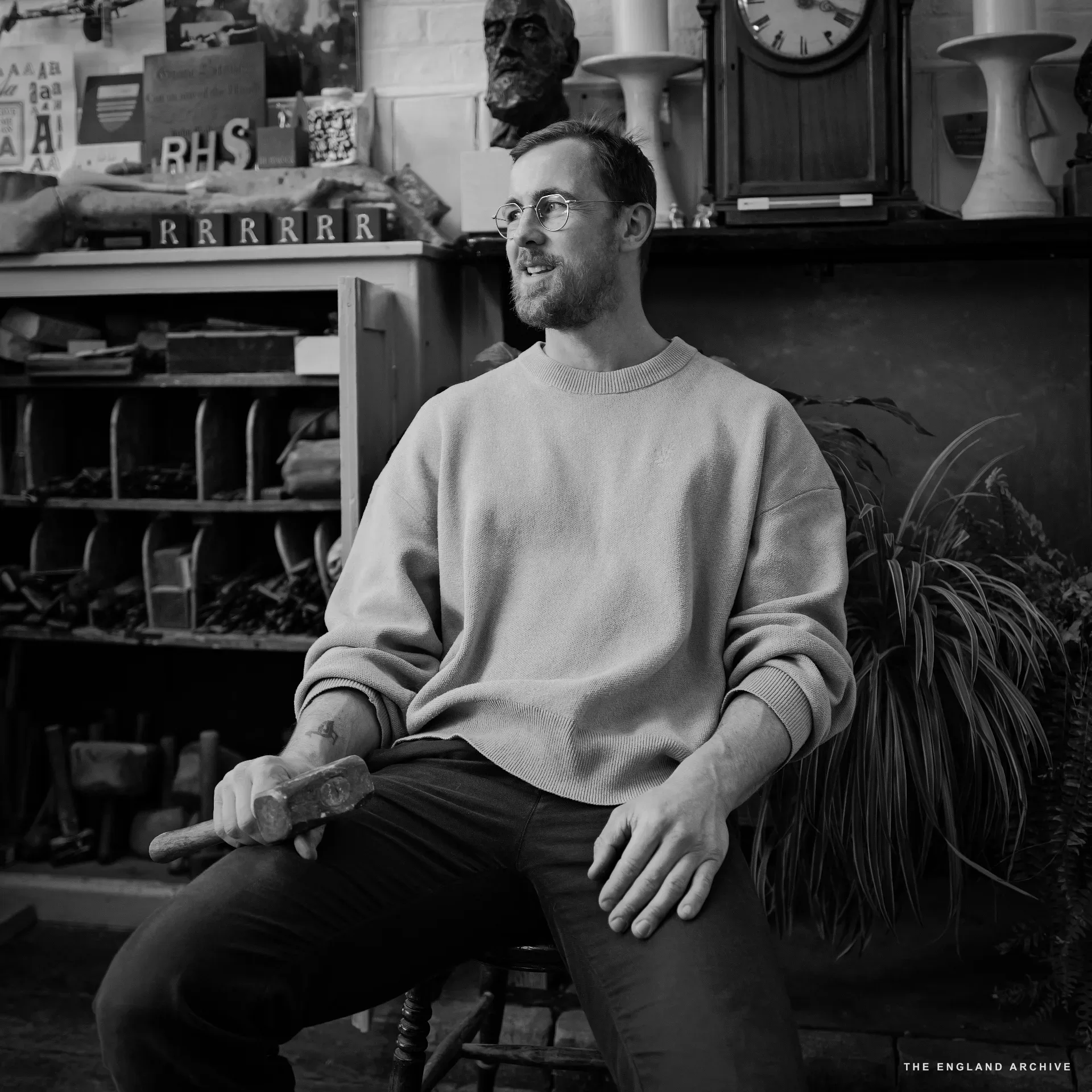
This is the archive’s single-visit record of Vincent Kindersley. The longer treatment of the craft Vincent works inside - the history of English stone letter-cutting from the Trajan tradition through Eric Gill and David Kindersley to the present - lives in the companion craft essay. This subject page is deliberately narrower: Vincent as the design hand of the workshop in 2026, the man who opened the door on the morning of our visit, the line that runs from his father David to him by way of Lida and is now being passed on to Roxanne and to Emily and to the apprentice who walked in off the street.