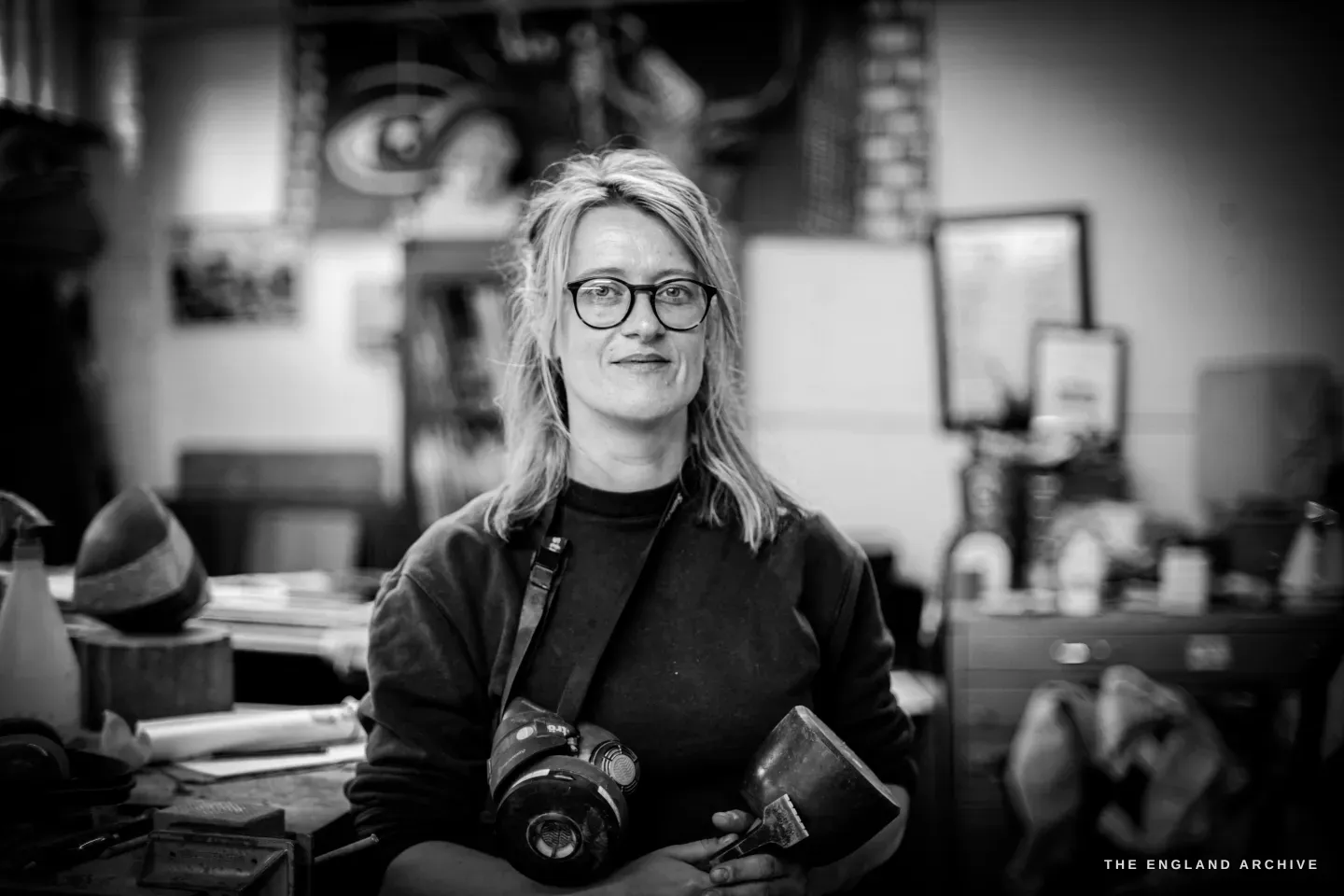
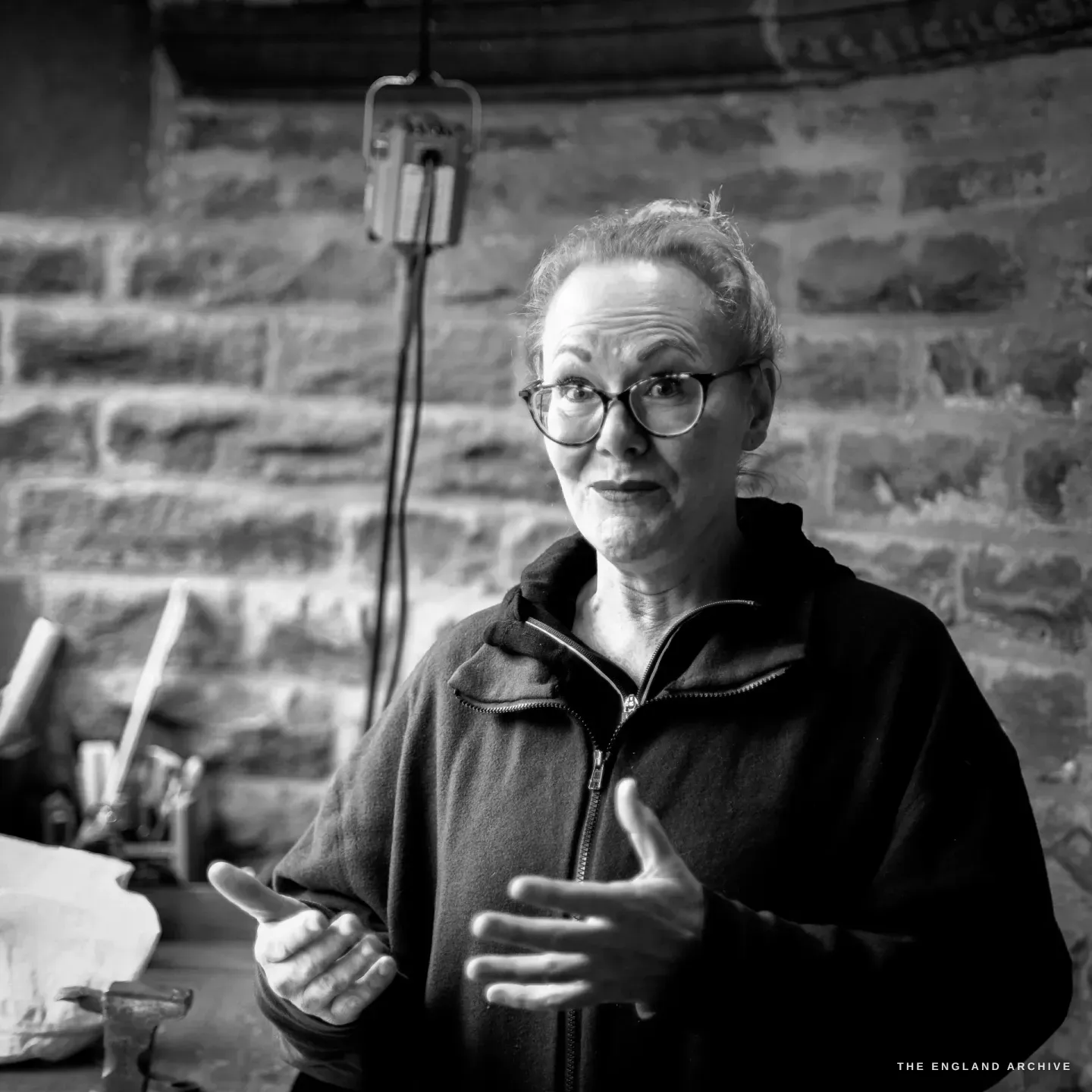
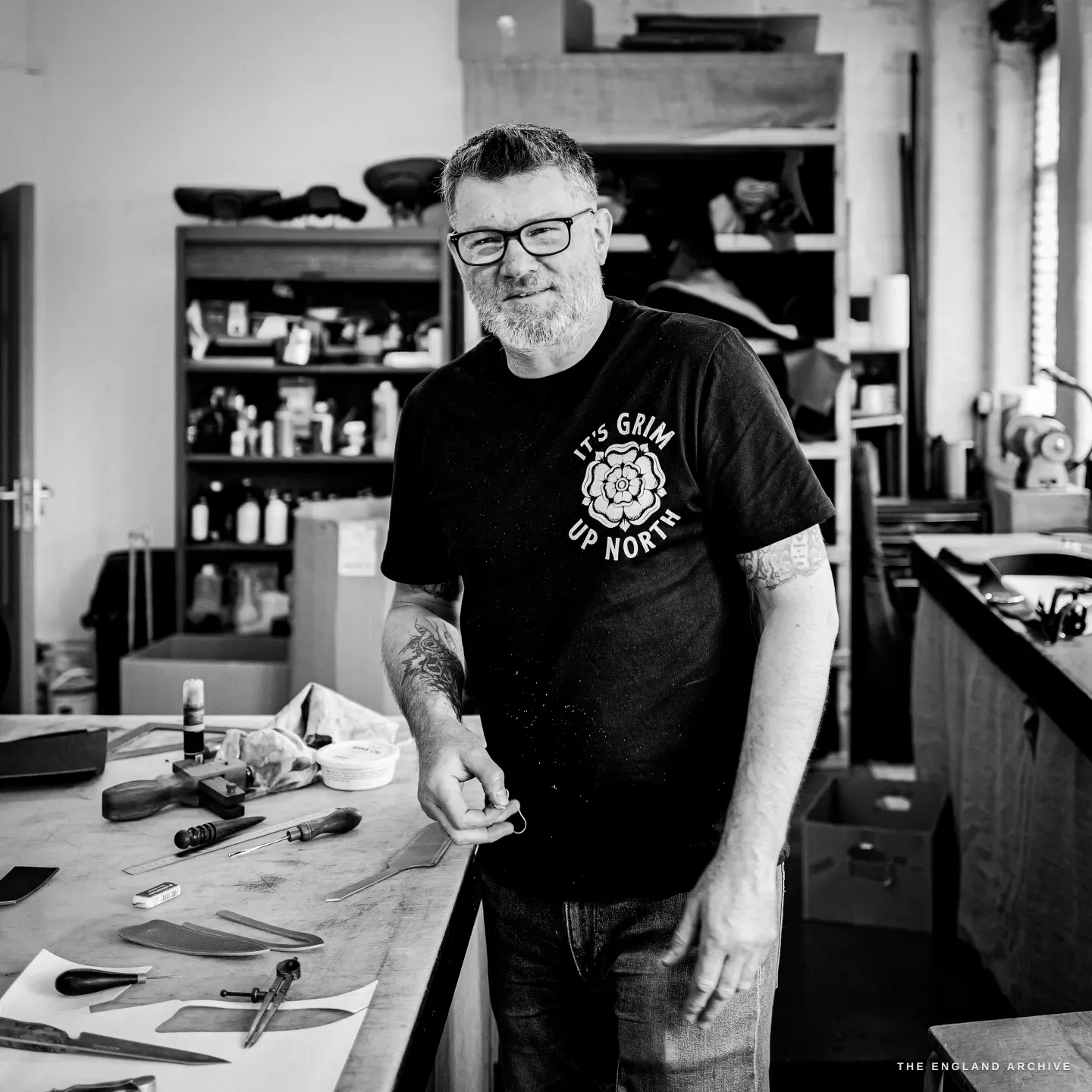
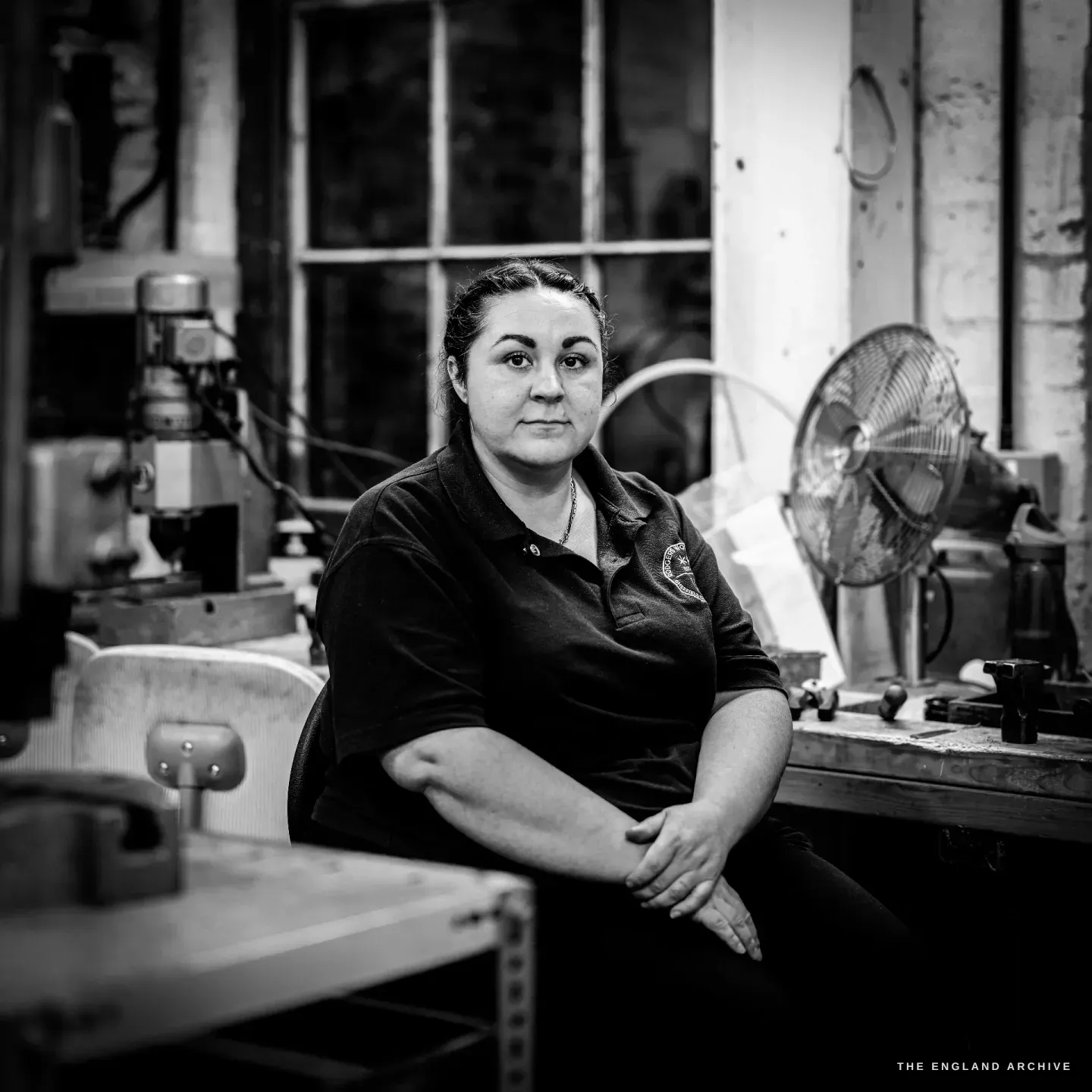
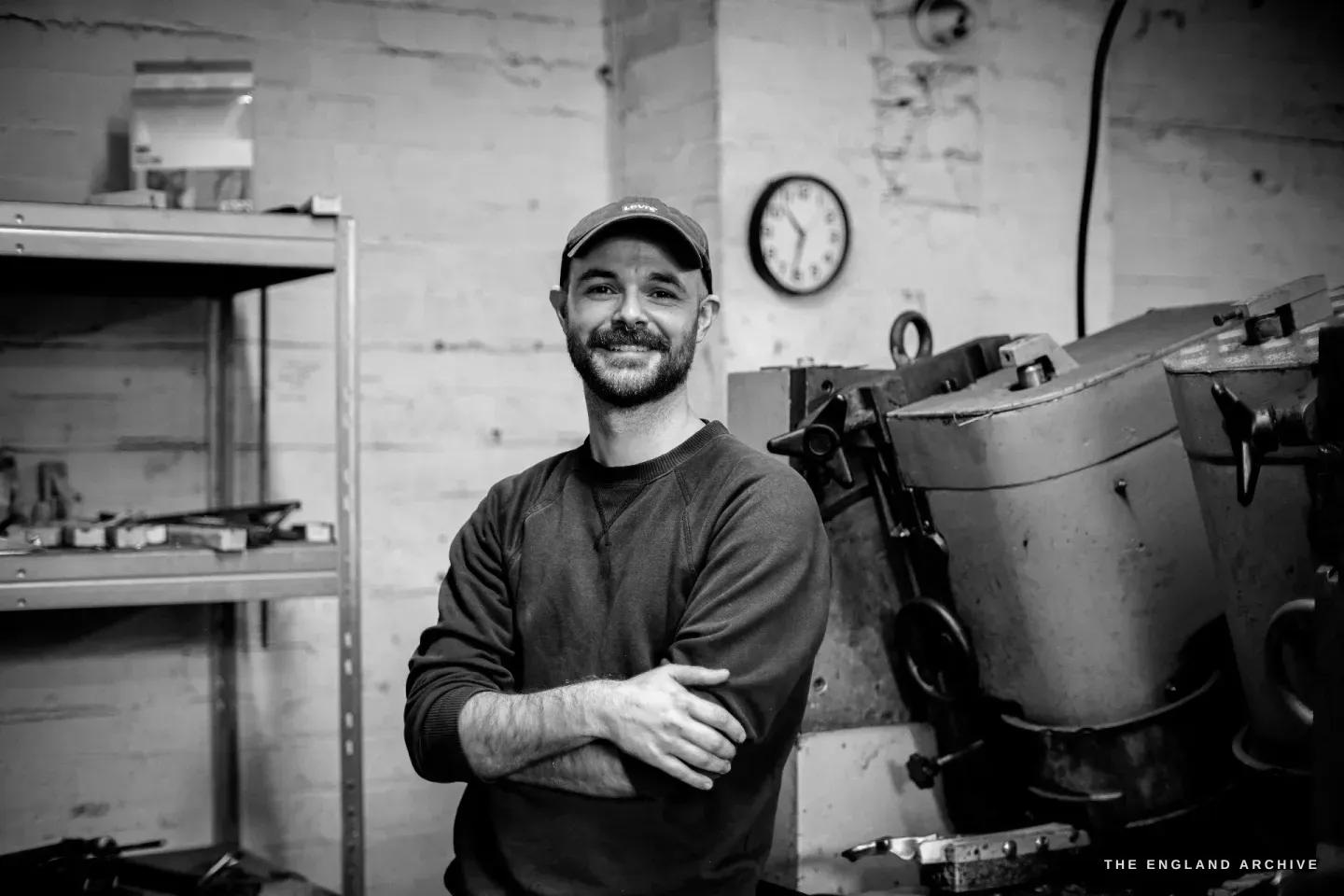
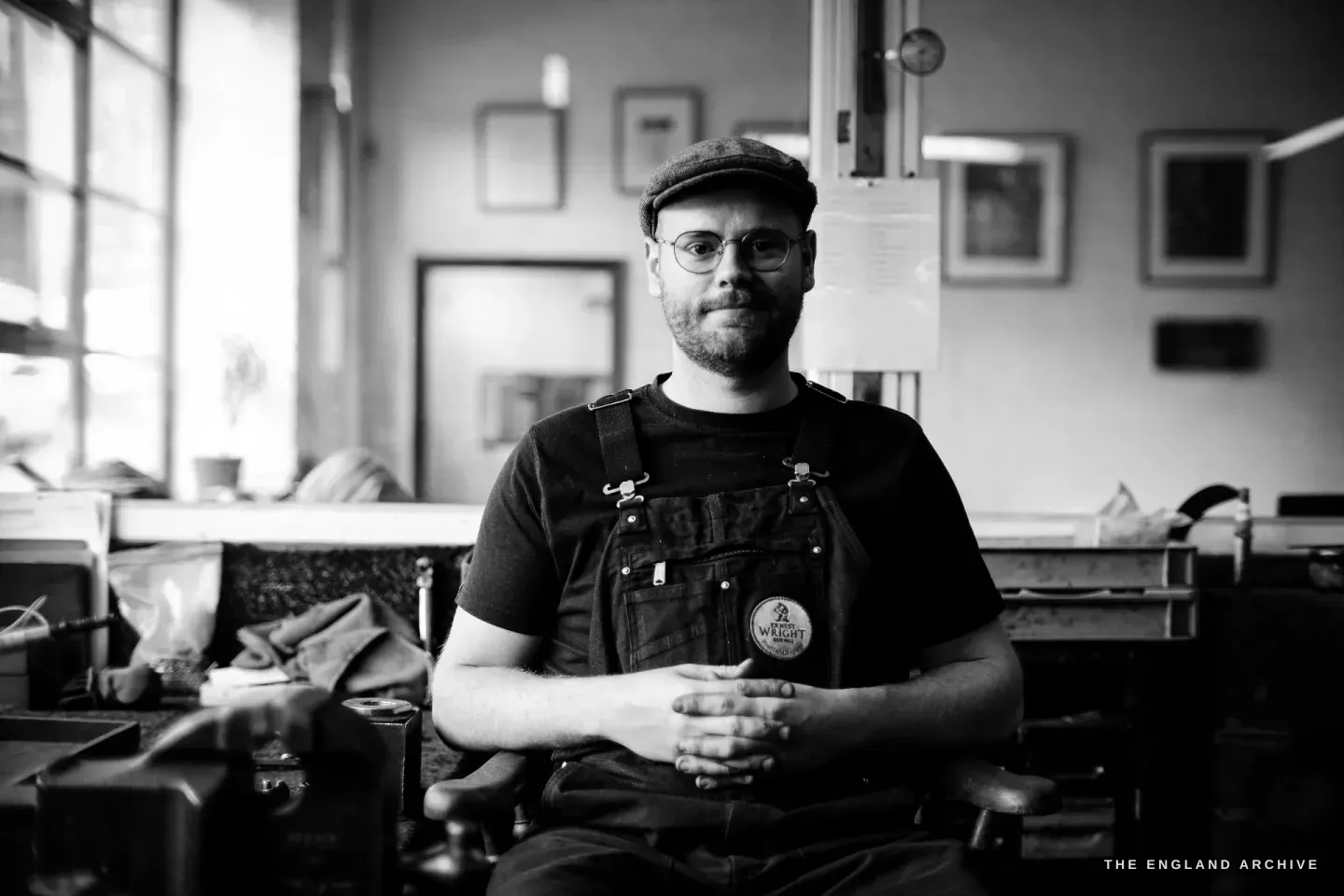
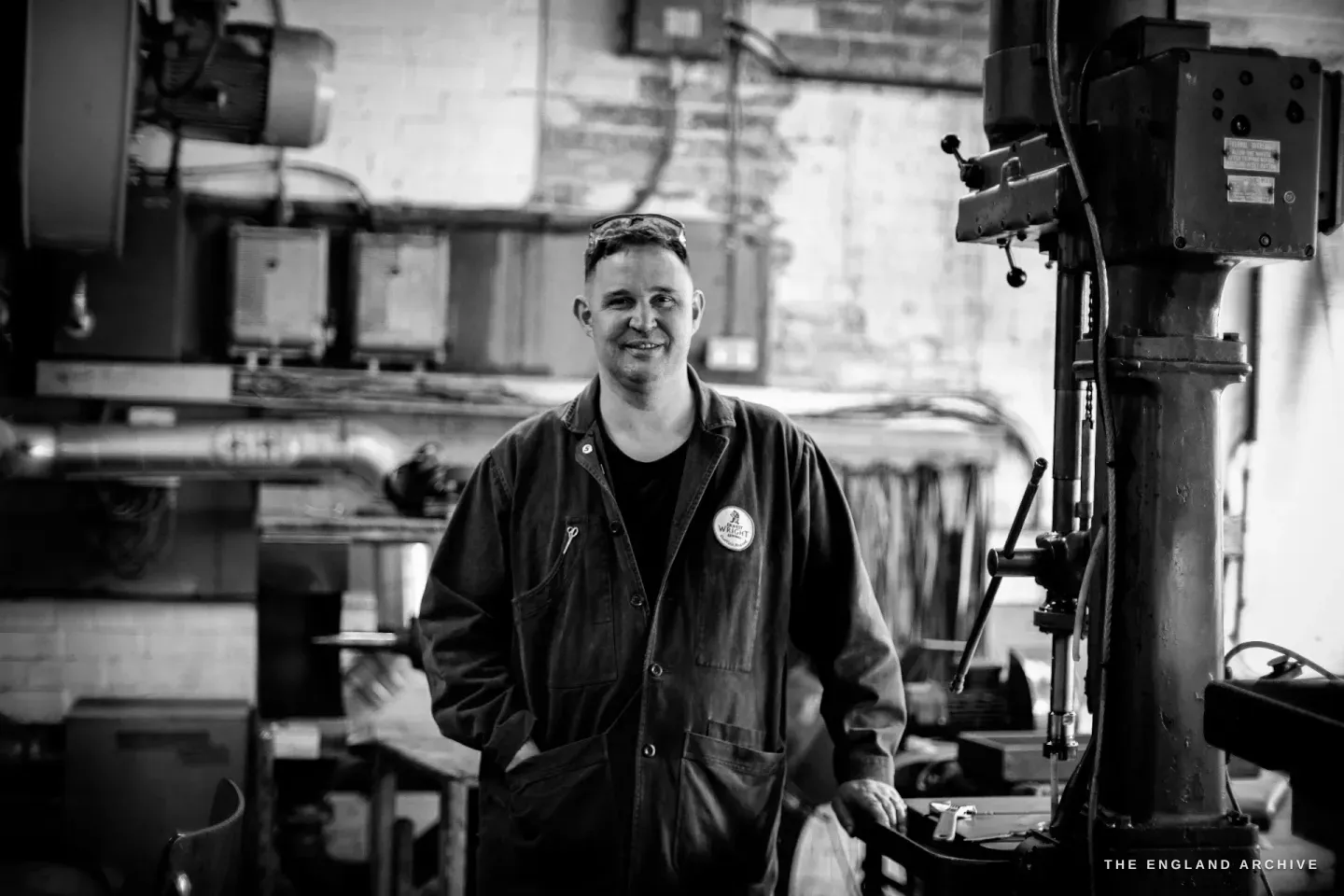
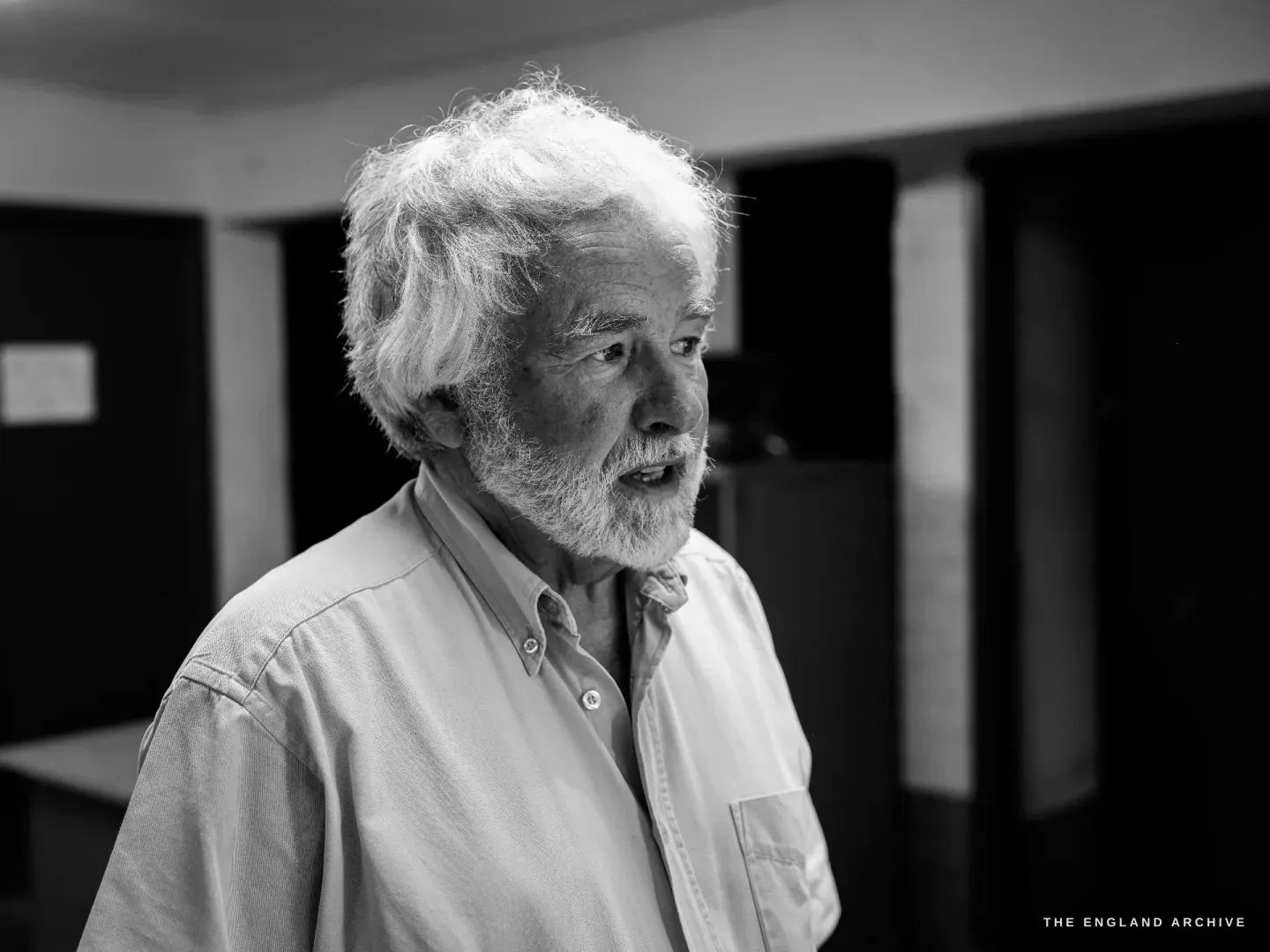
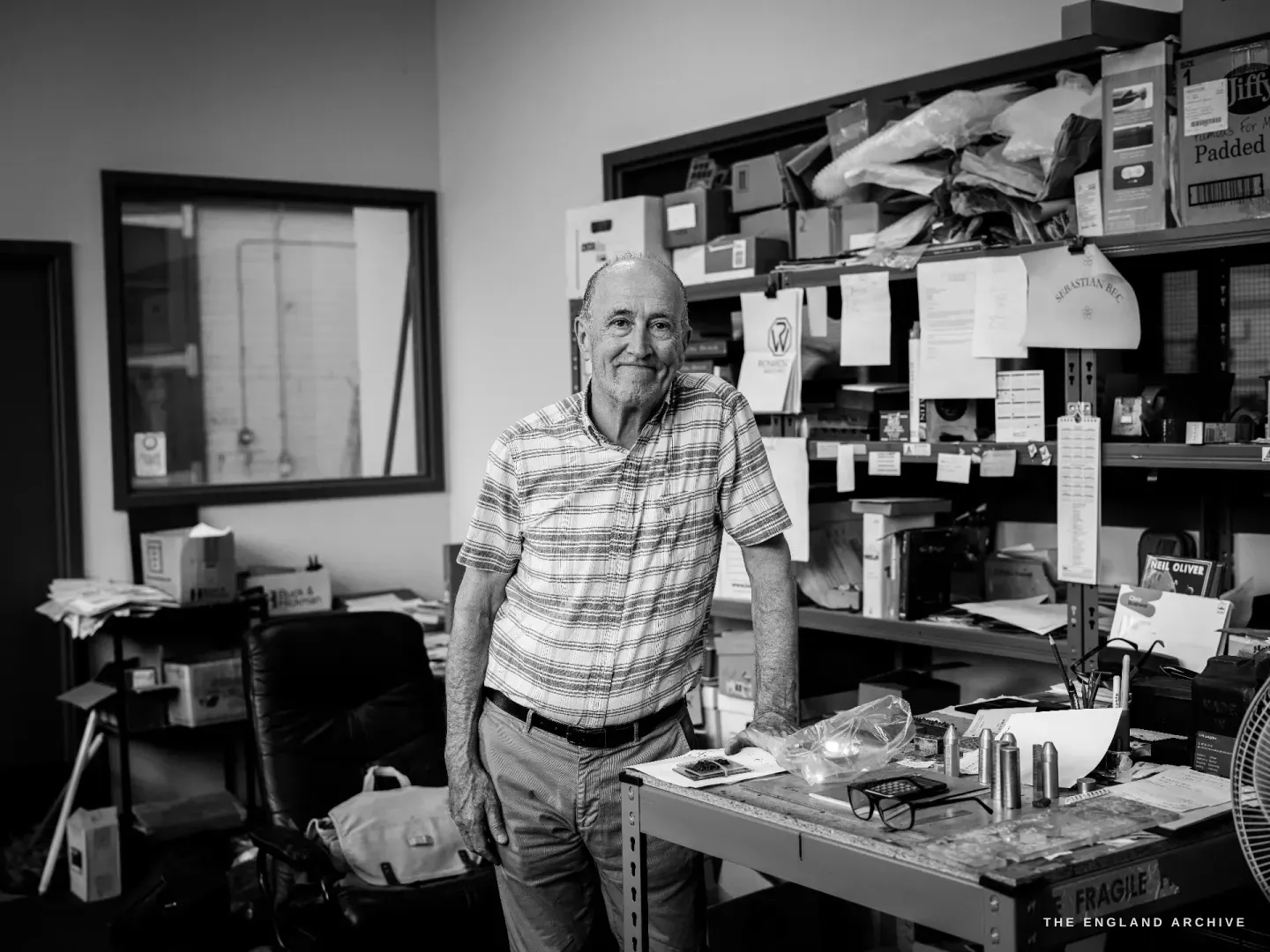
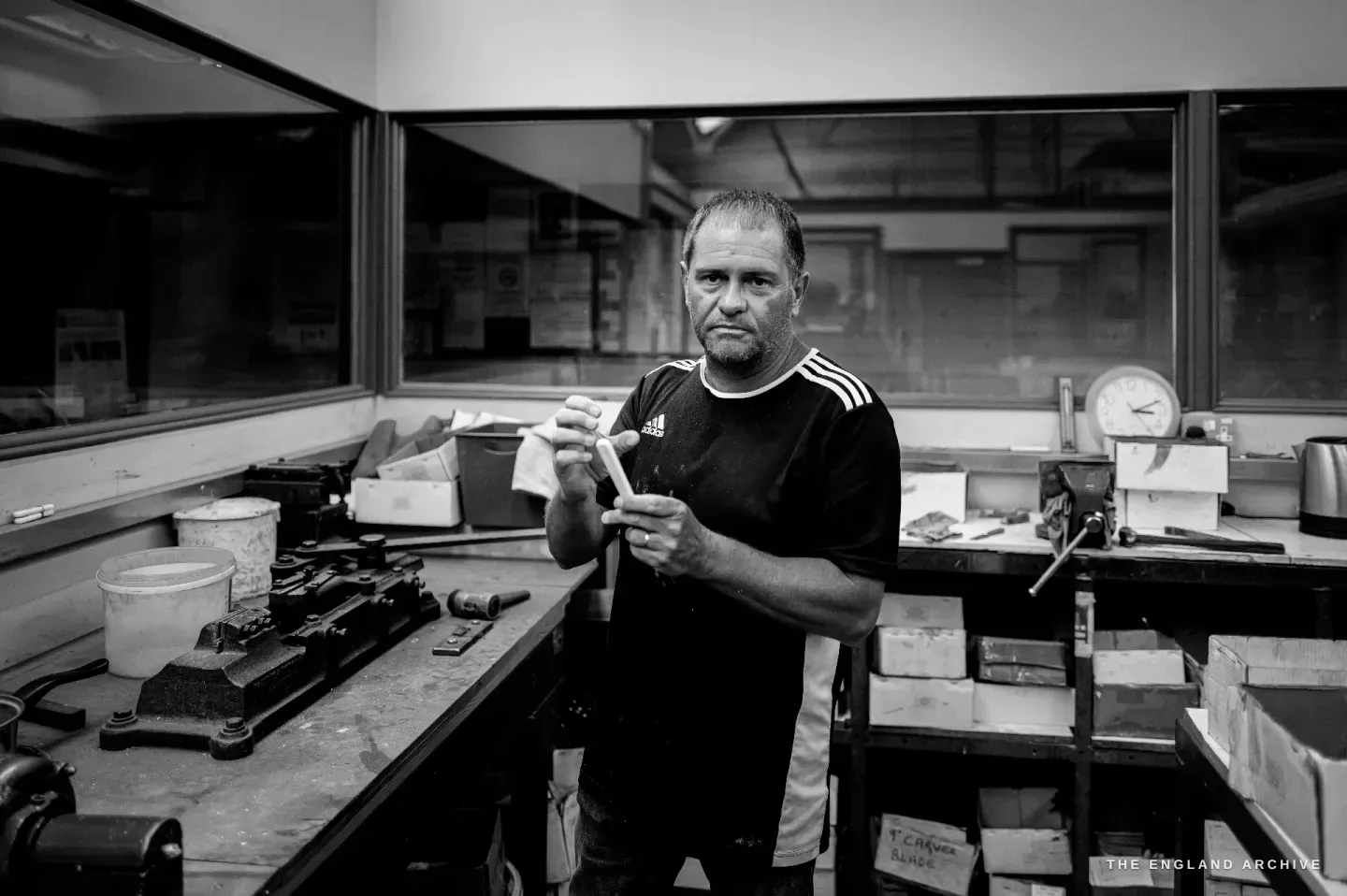
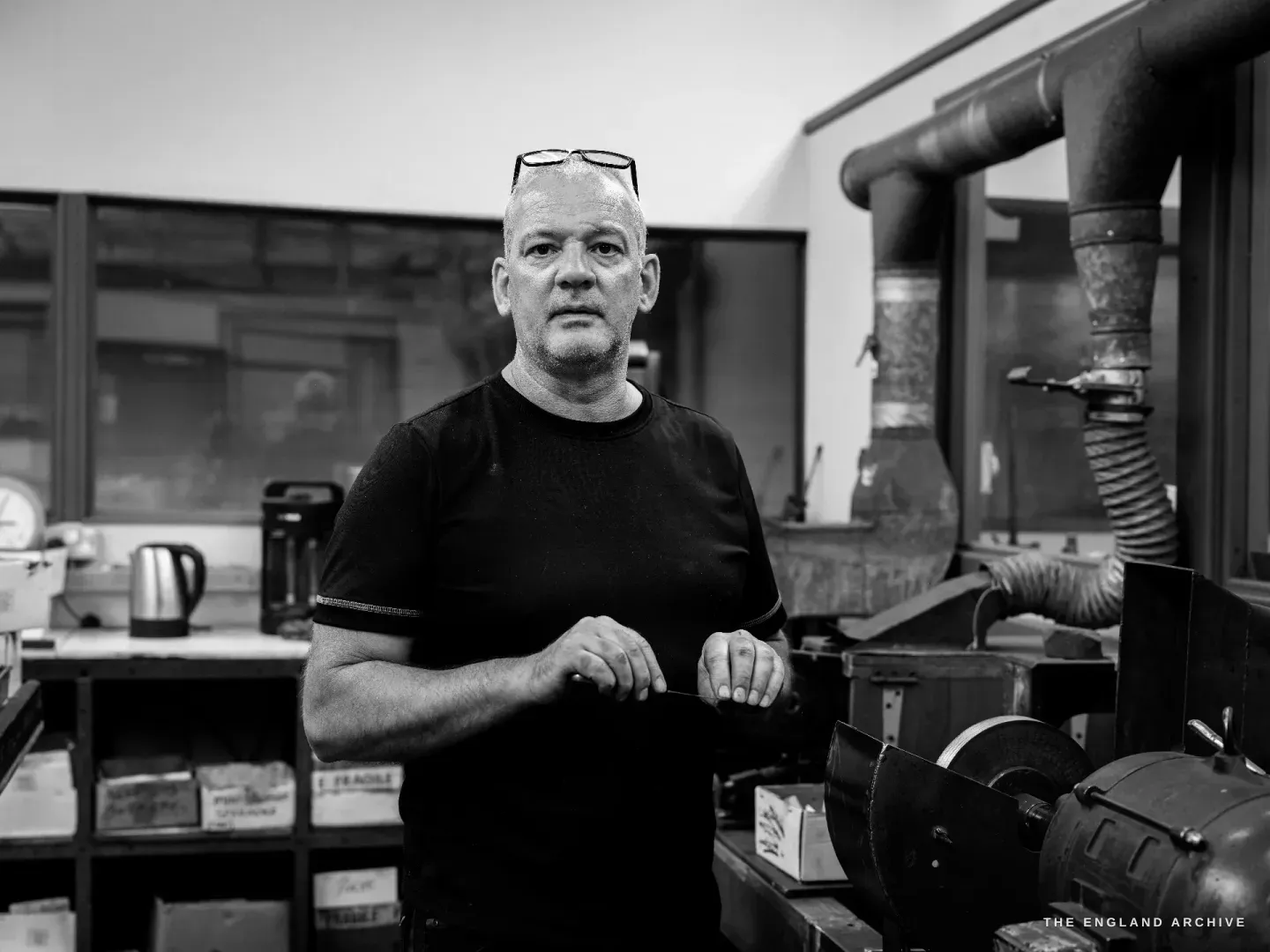
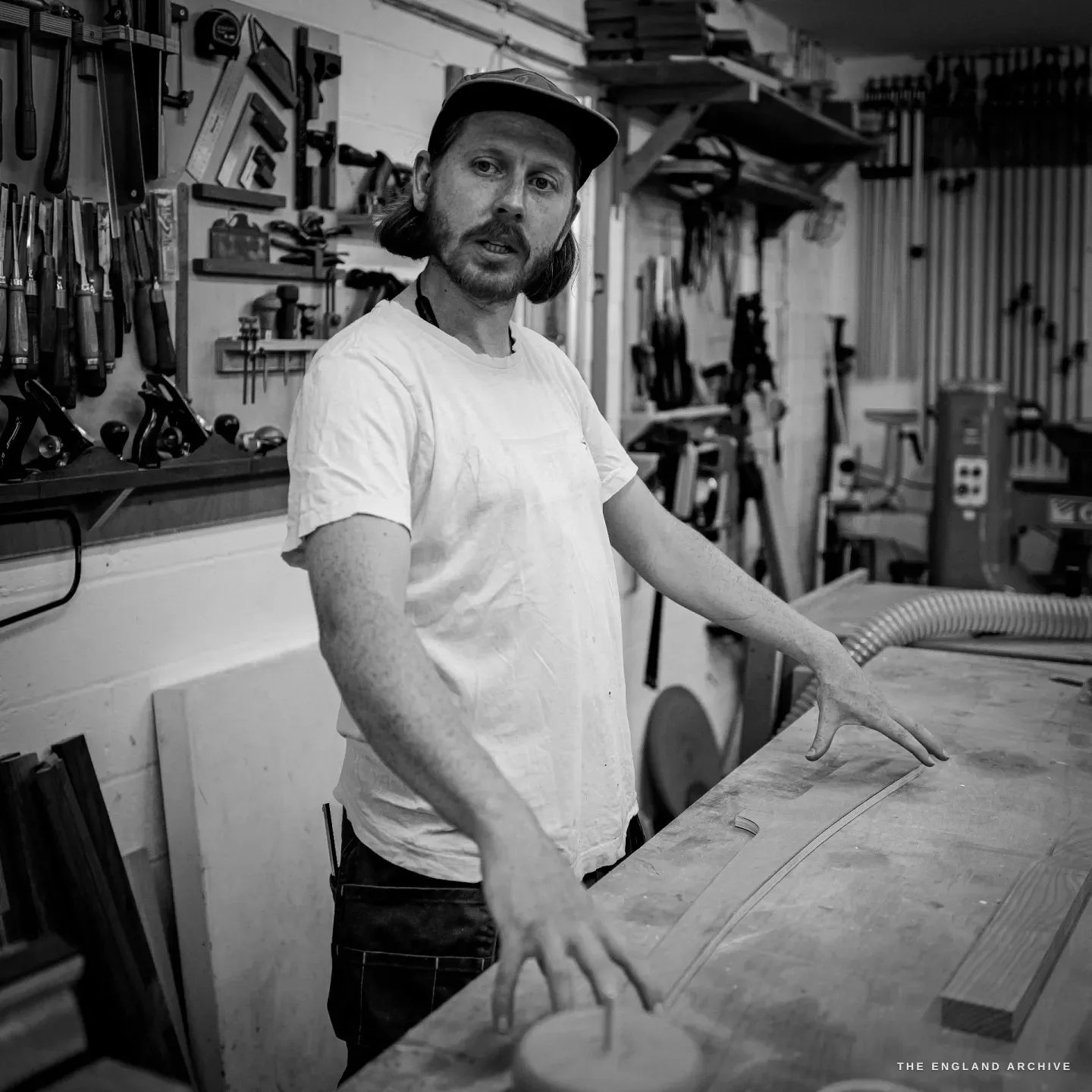
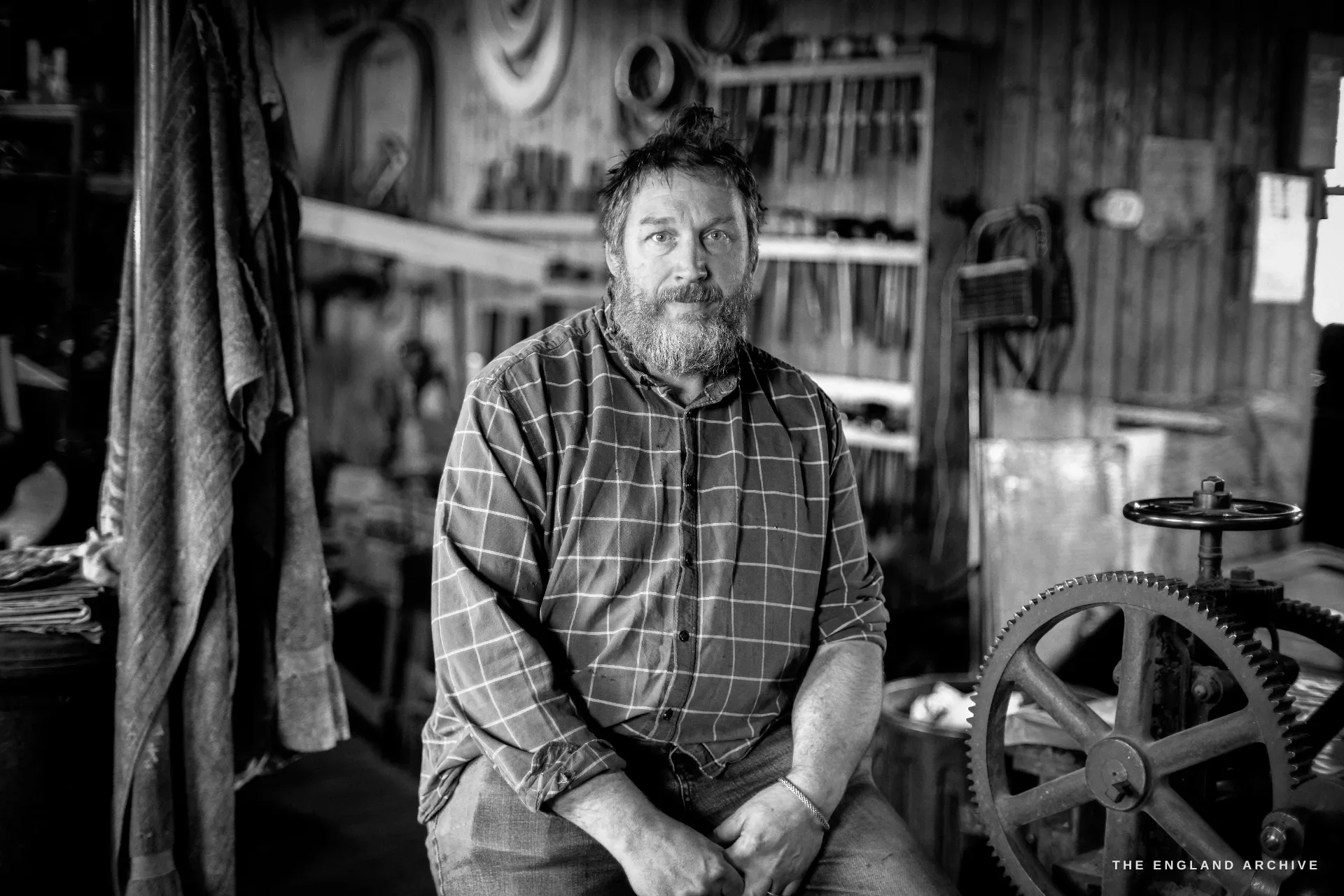
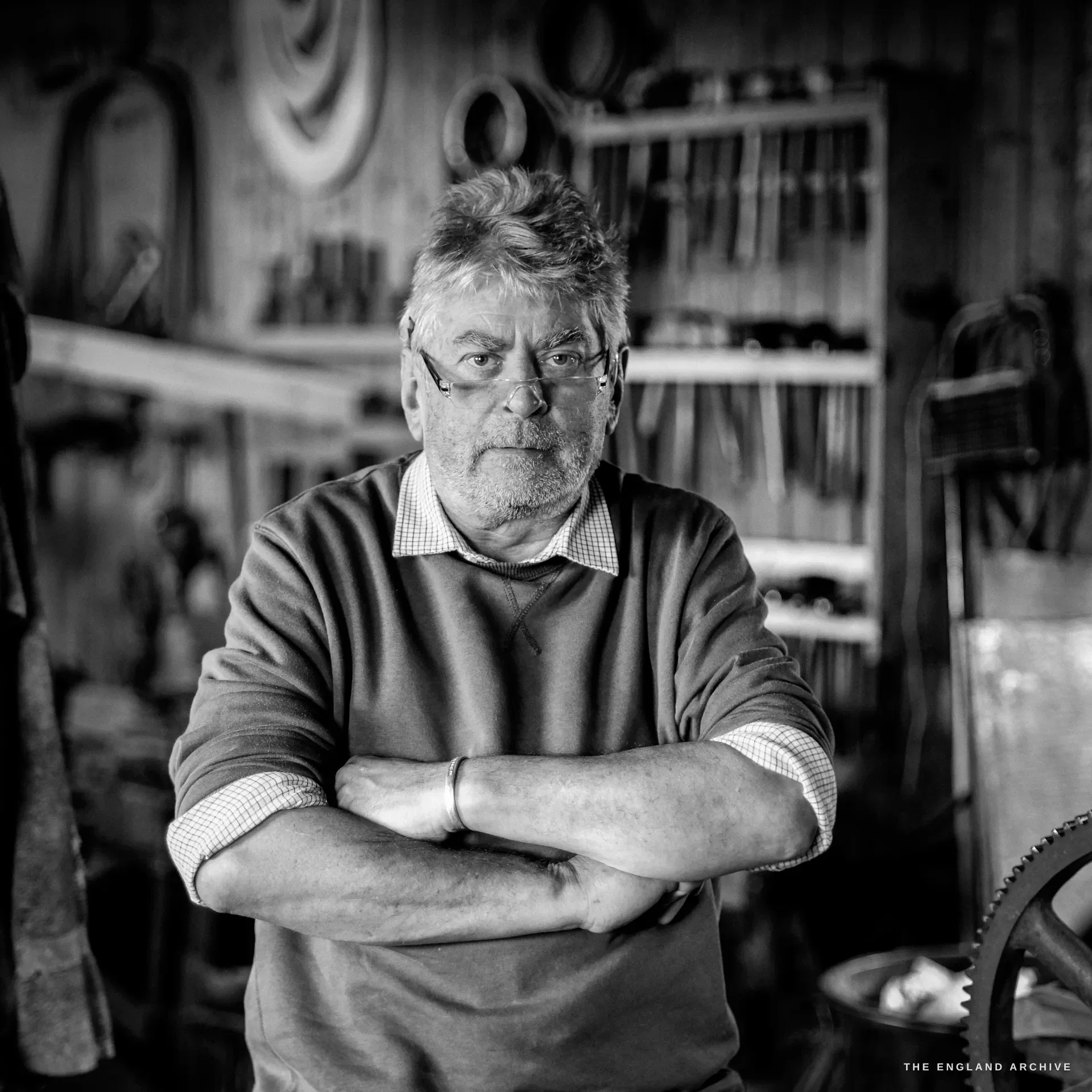
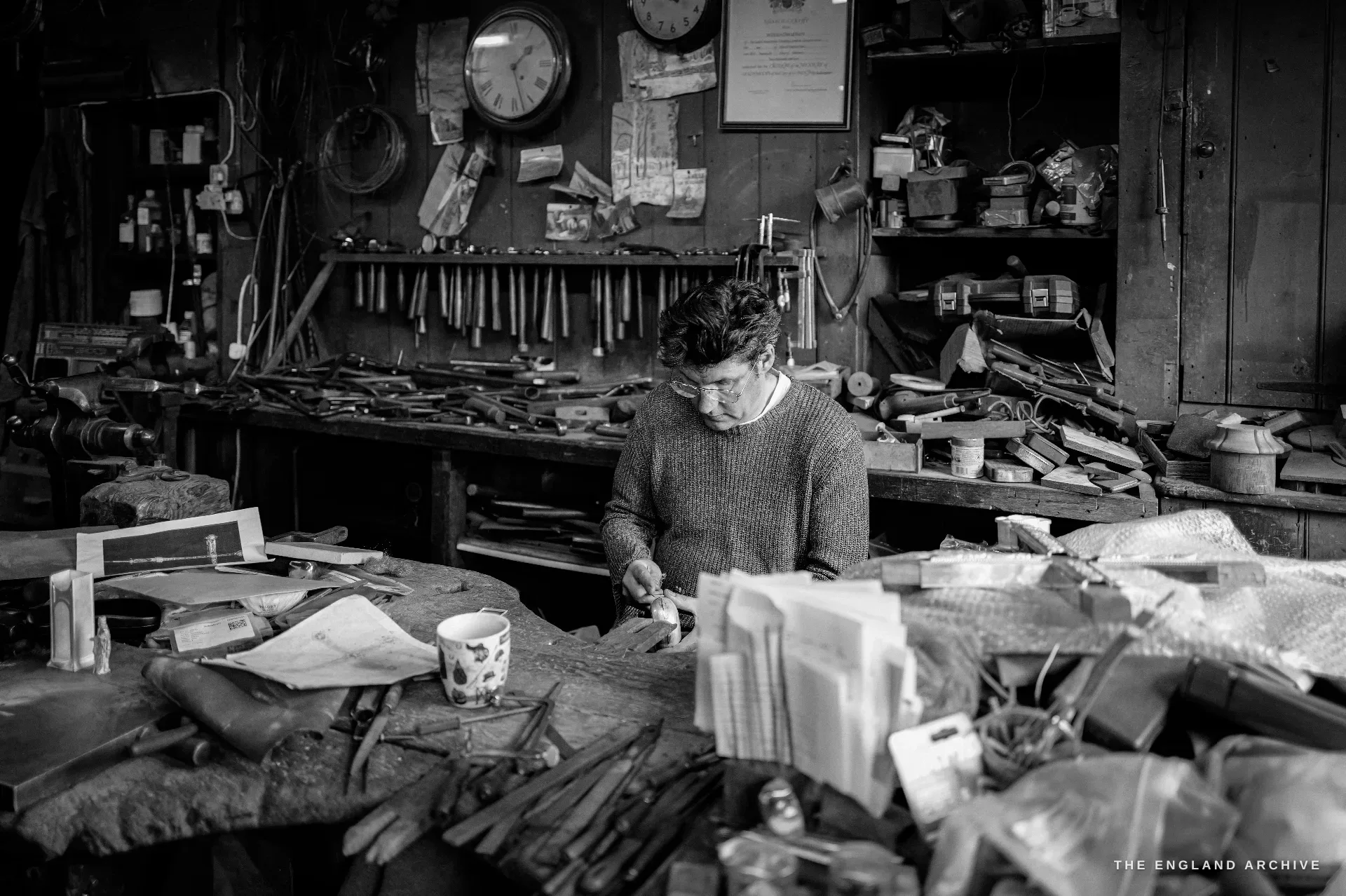
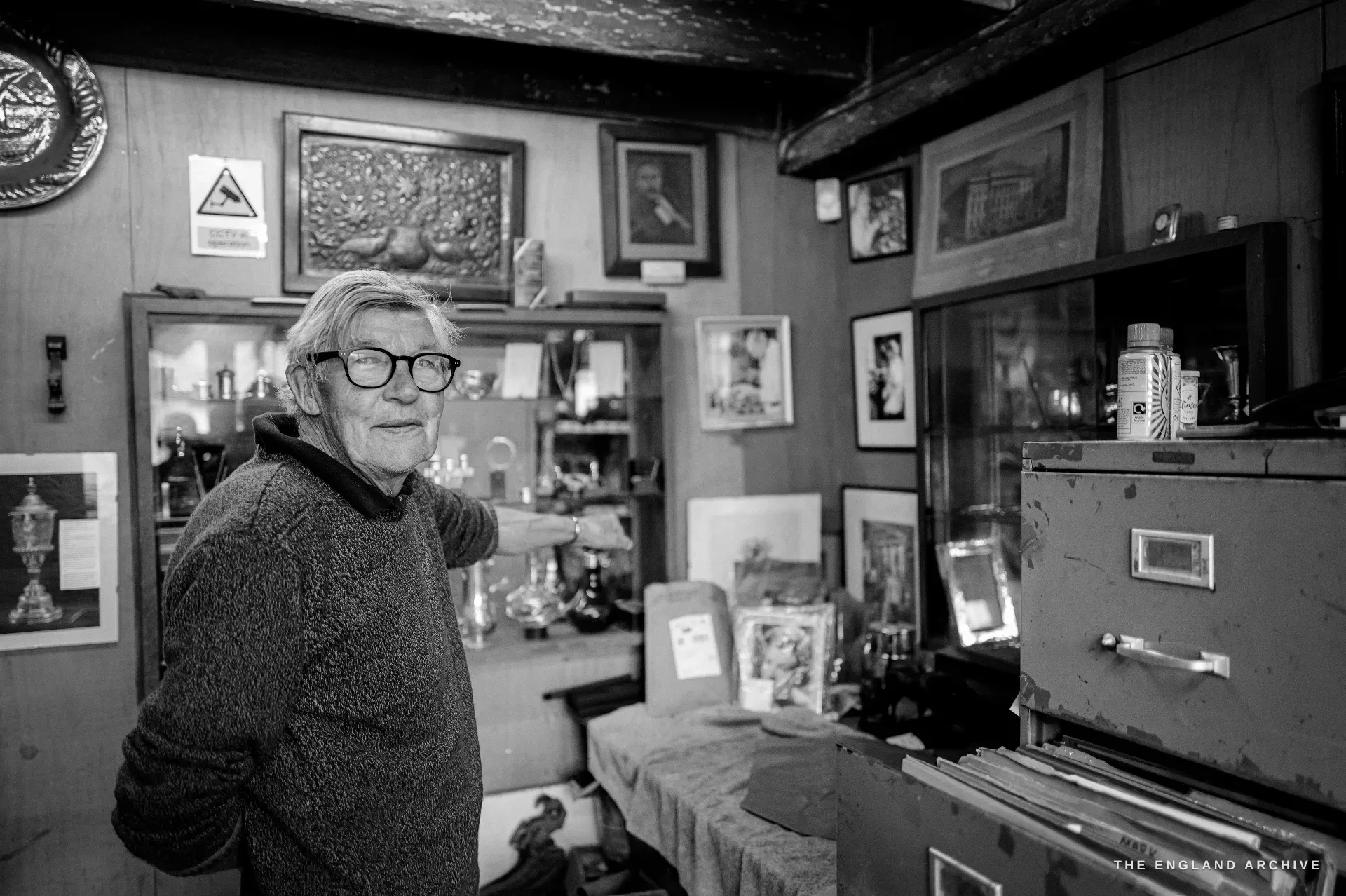
The people the archive has fully documented so far. Each
entry is a permanent record - long-form prose, a
photographic gallery, an archive ID that resolves forever.
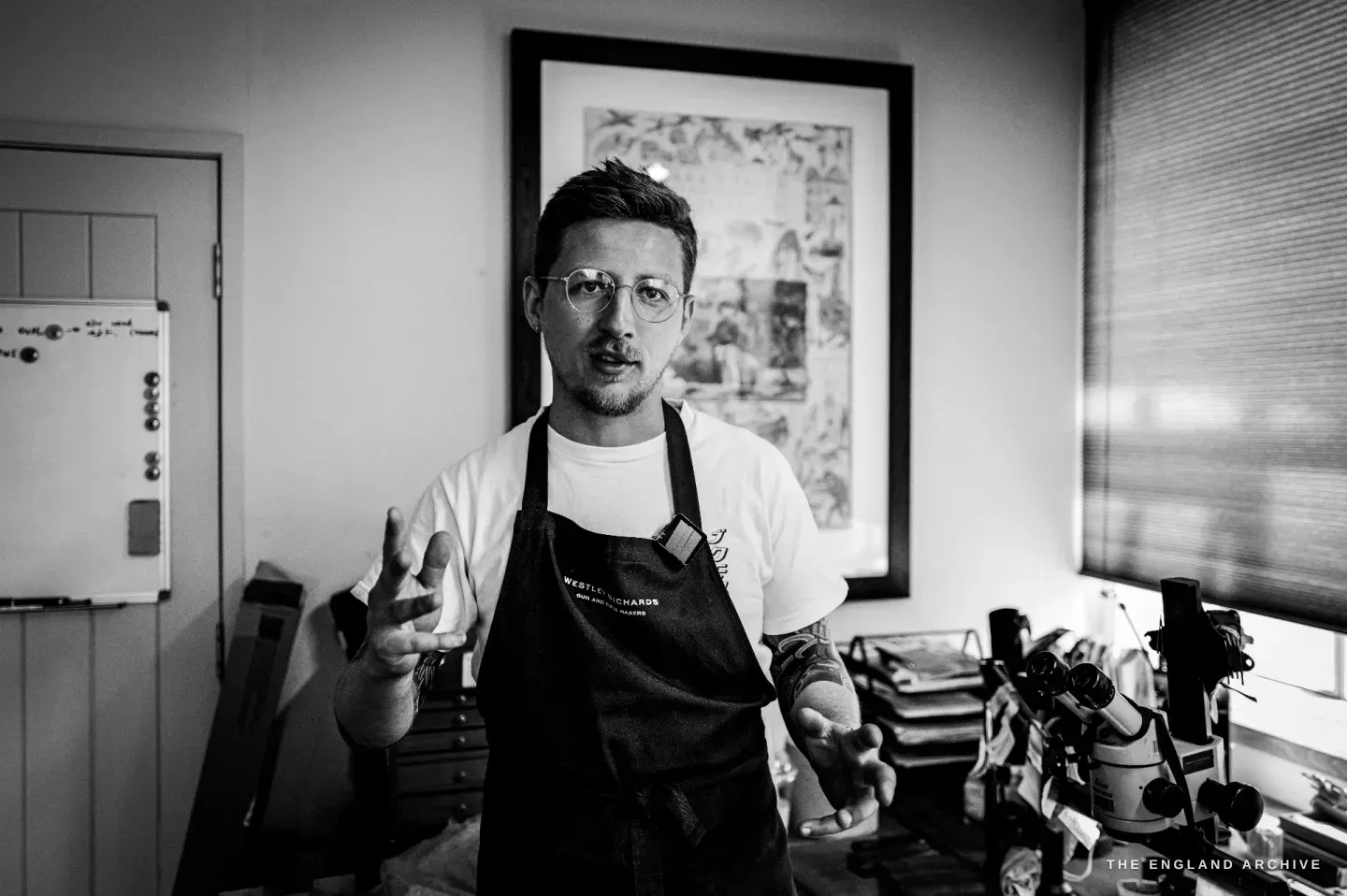
Léo Lambert is the master engraver at Westley Richards in Birmingham. He came from a village outside Liège, trained in engraving at the Léon Mignon School there, and wrote to the firm from Belgium; he arrived expecting to apprentice under a master and was told he was the one. He taught himself the lettering he had skipped, designed the firm's own lettering styles, and now runs its in-house engraving studio - the cutting, the gold inlay and the design work behind the finished best guns.
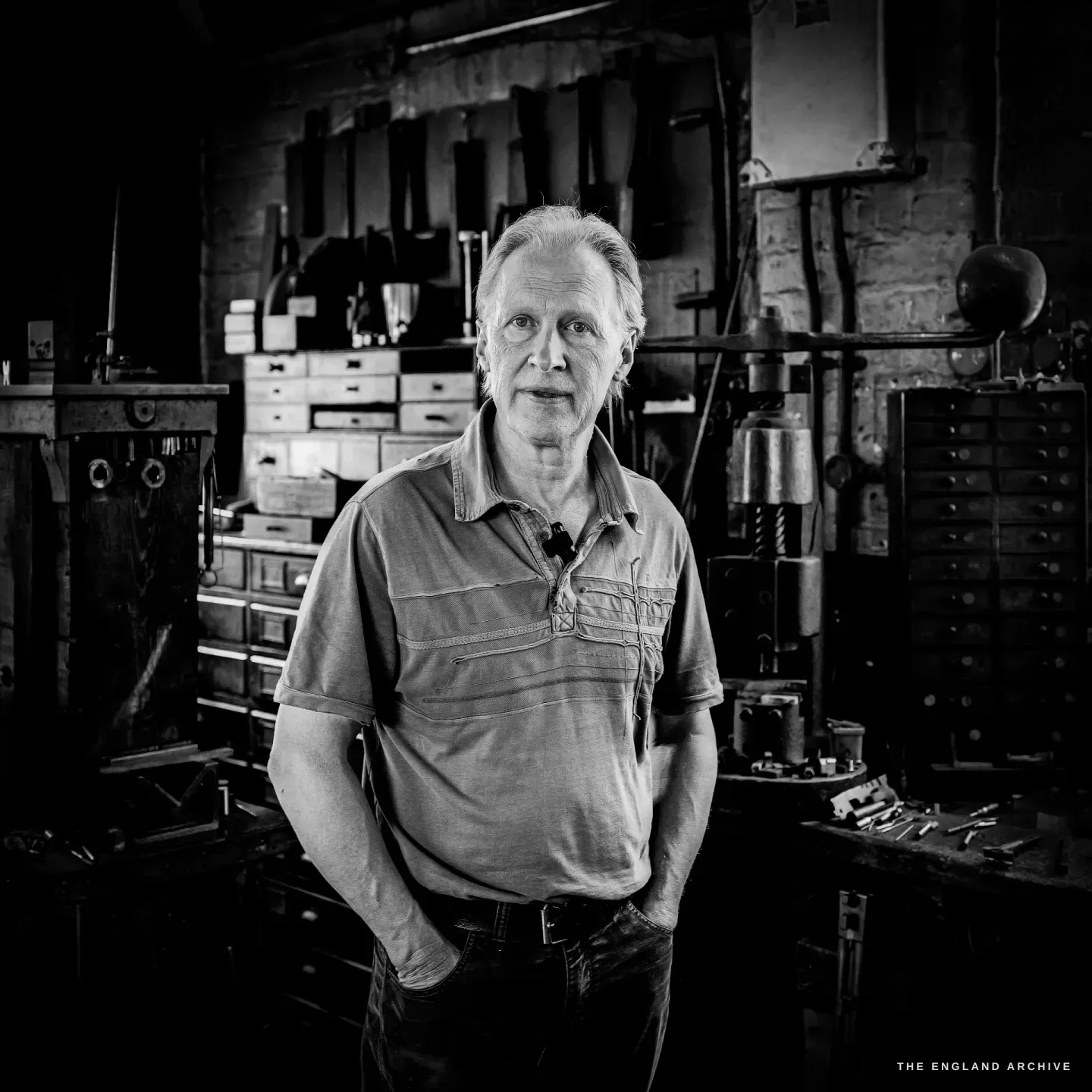
Haydn Hill is a Birmingham gunmaker who works by hand and on old machines in the traditional setting-up trade of action filing - the hand-fitting of a gun's action so that barrels, body and lockwork close as one piece. He works at the Jesse Hill workshop in Stirchley, named for the forebear whose name is still on the wall, in a family that has filed gun actions in Birmingham for generations, and is one of very few still doing the work this way.
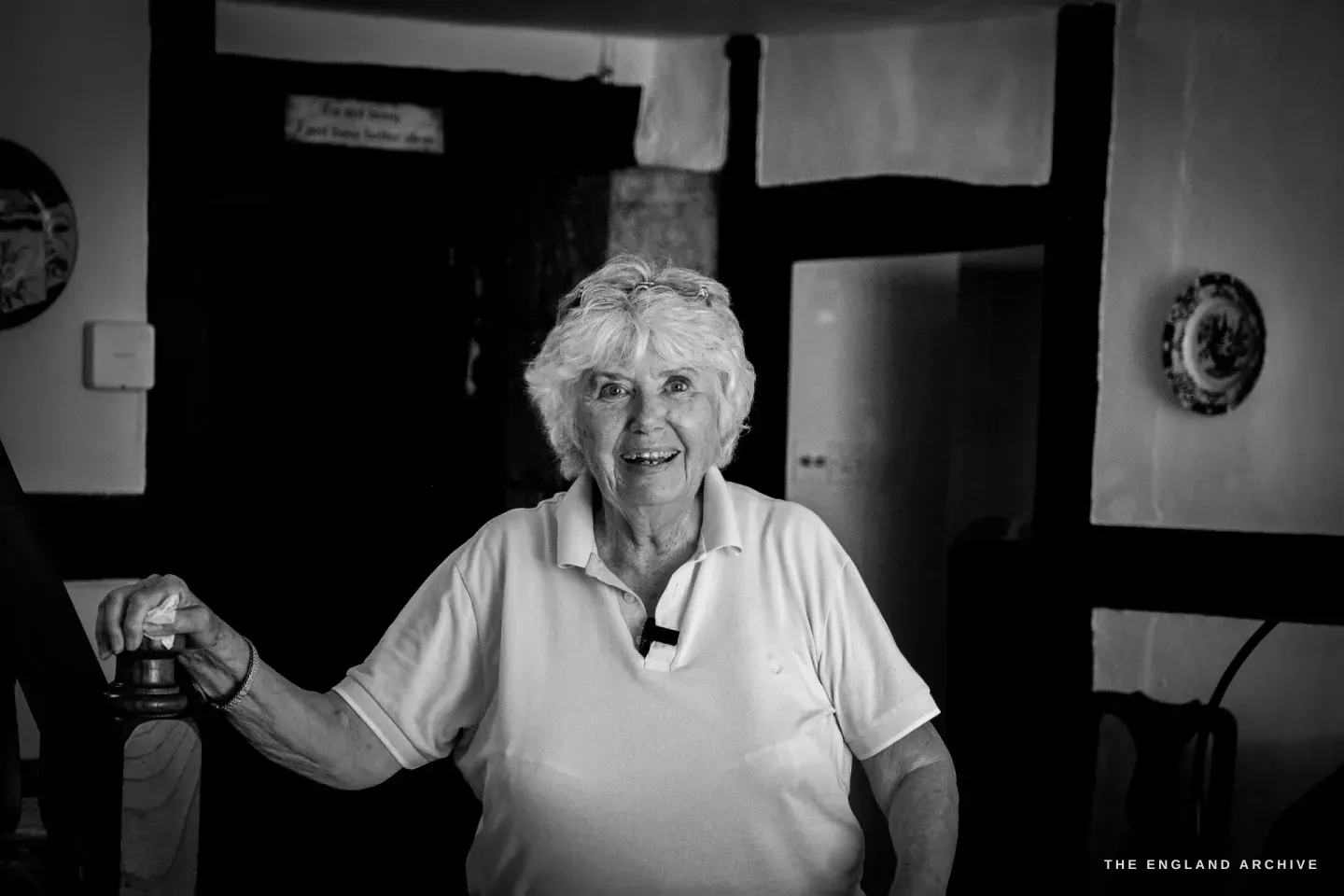
Carol Jackson is a steward of Chipping Campden. On a June morning in 2026 she took the archive through eight centuries of the town's history at her own kitchen table, then walked it round every landmark on one of the hottest days of the year. The first employee at Miss Selfridge in a former London life, she came to Campden as an incomer thirty-eight years ago and made herself one of the keepers of its story. Her own account, in her own voice, follows.
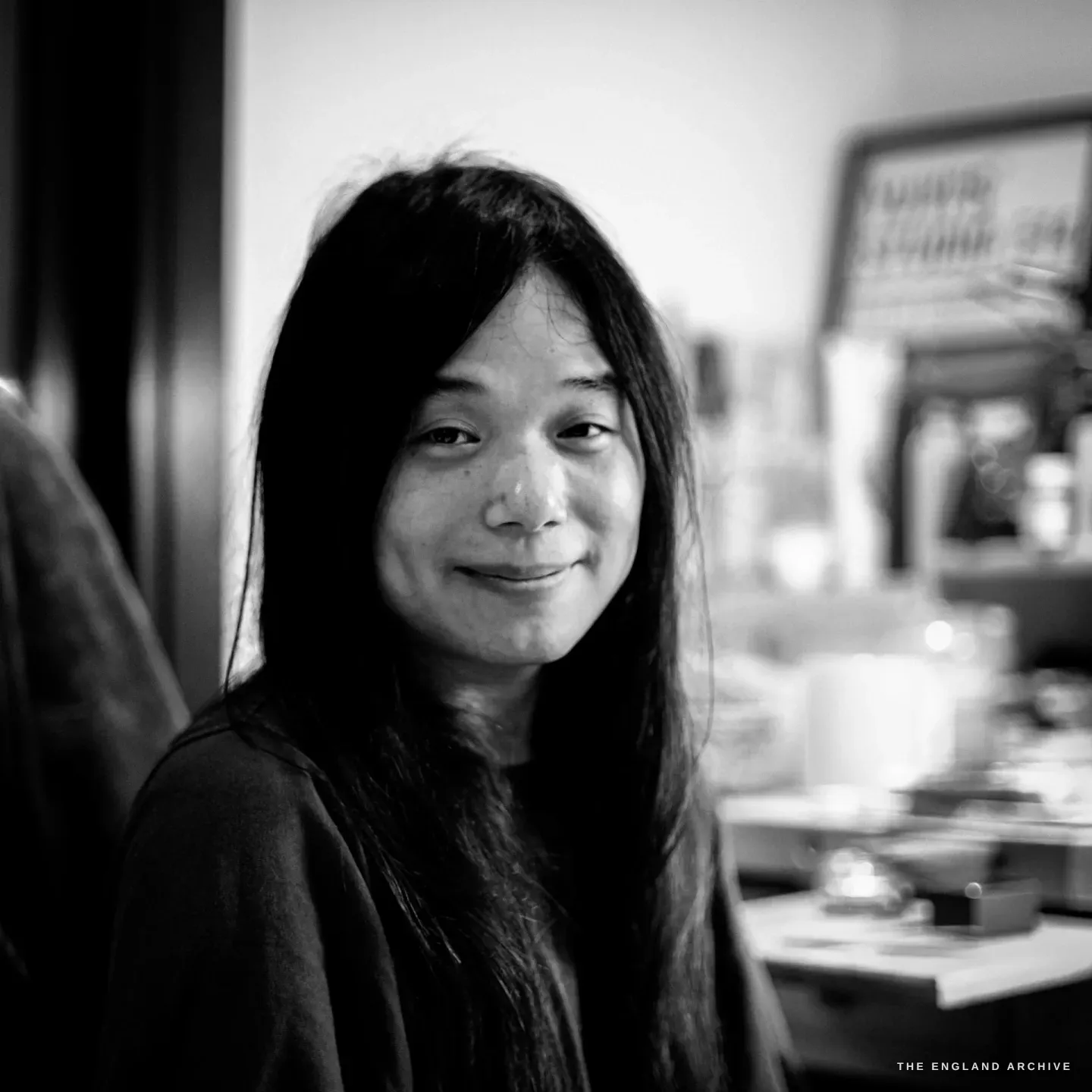
Yuyi Cheng makes contemporary jewellery in London in Chinese filigree inlay (hua si xiang qian) - a distinct tradition from Western filigree, in which the kingfisher-feather technique dian cui is one branch - alongside mother-of-pearl inlay (luodian). Trained as a metalworker in Taiwan and a jeweller in London, she gives endangered imperial Chinese methods a modern subject: the blue that looks like enamel is ethically sourced feather, laid by hand the way the empresses’ jewellers did it.
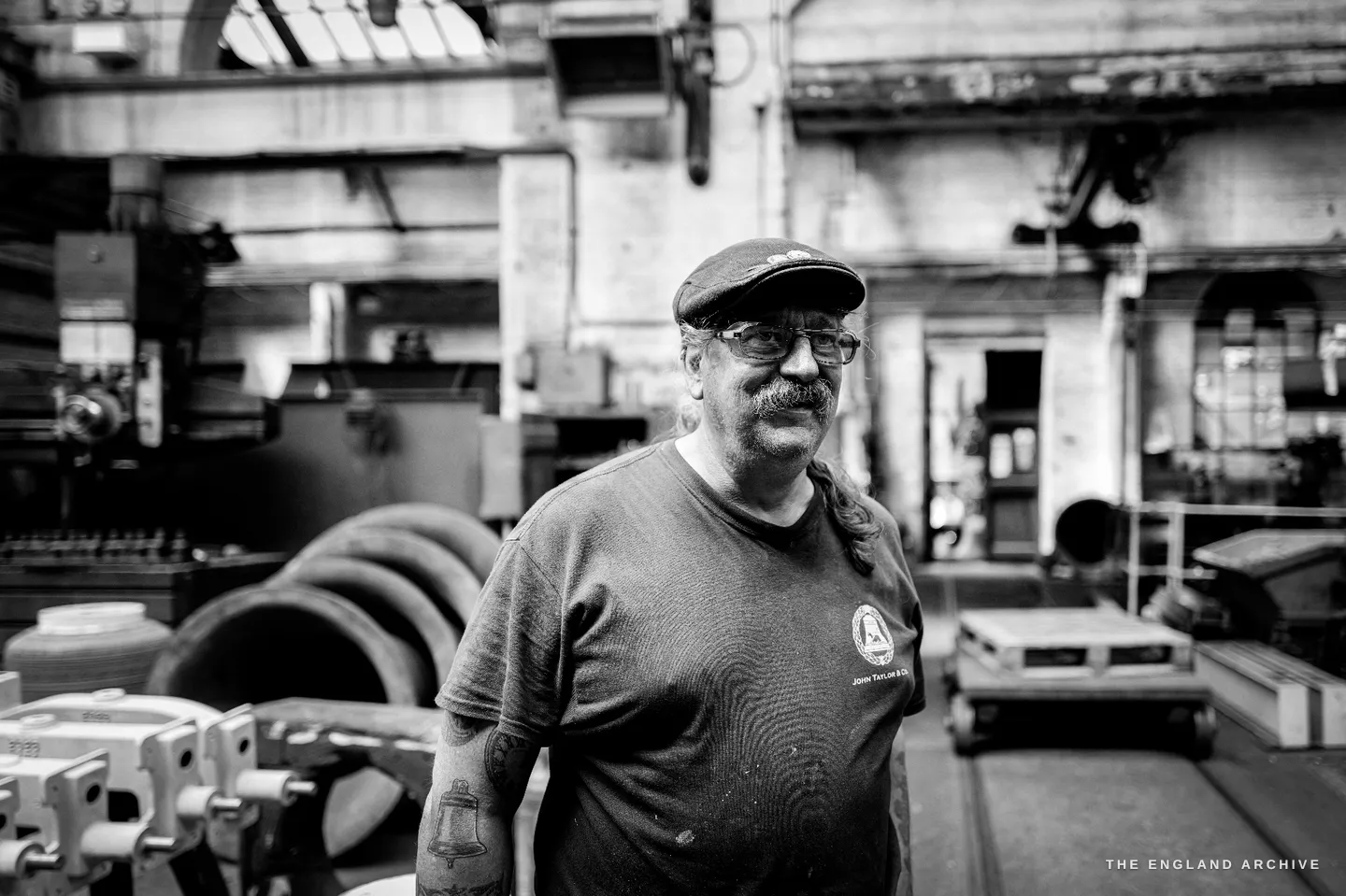
Bill Bowes is the foreman at John Taylor & Co in Loughborough, the last major bell foundry in Britain. Forty-one years with the firm, twenty-seven of them in the foundry, and the man who makes the iron that holds and swings a bell - the headstocks, the wheels, the fittings drilled and pinned to the thousandth. If Giridhar gives a bell its voice, Bill gives it the means to ring. Bell founding is on the Heritage Crafts Red List.
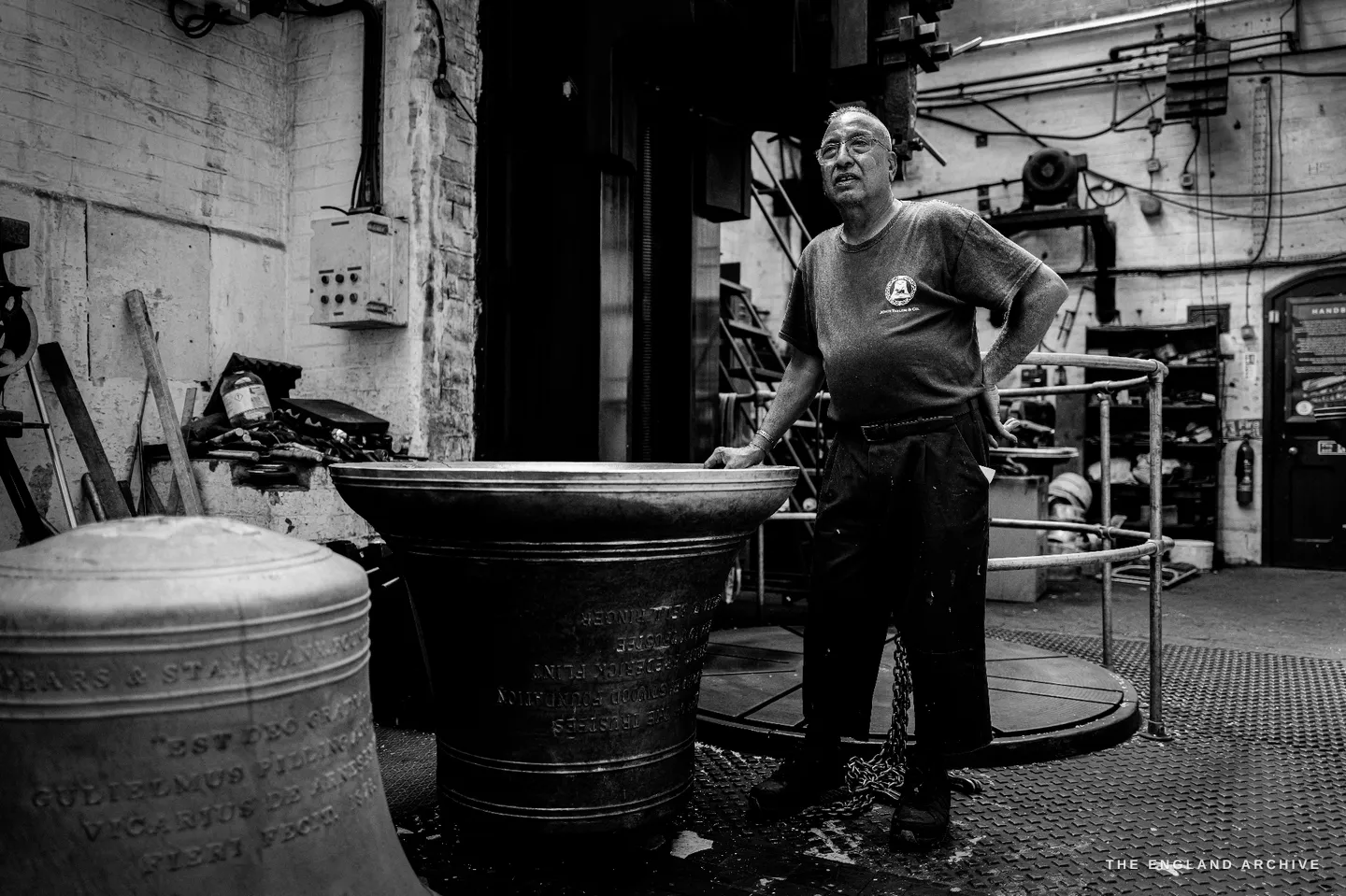
Giridhar Vadukar is the chief tuner at John Taylor & Co in Loughborough, the last major bell foundry in Britain, and one of only three bell tuners left in the country. Forty-seven years in the trade, thirty of them here, tuning each bell’s five notes by shaving metal from the inside - by ear as much as by eye. Bell founding is on the Heritage Crafts Red List.
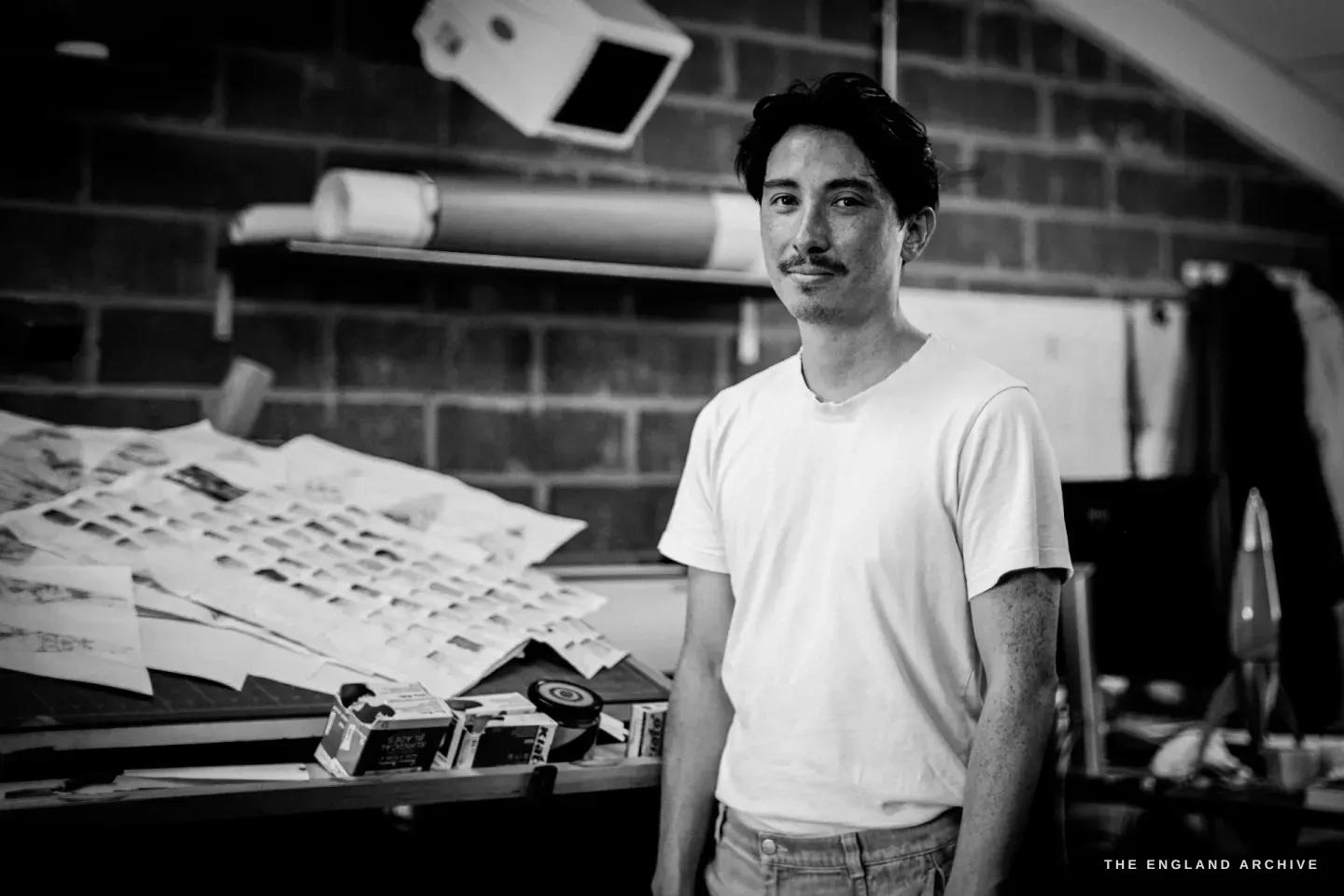
Steve Roche cuts letters and carves stone at Stag Works in Sheffield, the studio he runs and shares with the sculptor Lily Marsh. He came to the trade after a single month in 2008 cost him his job and a broken leg, retrained on a craft bursary, and now works on public lettering and stone commissions across the city.
Lily Marsh carves stone in a shared studio at Stag Works in Sheffield - a sculptor who came to the trade after a psychology degree and a spell working in a prison, and who works alongside the letter cutter and stonemason Steve in the room they share.
Grace Horne hand-makes scissors in a former Victorian public toilet in Sheffield - a cutler, corsetiere and PhD who learned the trade at Ernest Wright and works without the old industrial machines. Scissor making is on the Heritage Crafts Red List.
Kevin Wilebore hand-makes leather bags, belts and sheaths - and the pouches for Ernest Wright's scissors - at Portland Works in Sheffield, the birthplace of stainless steel.
Kylie Cocker hand-makes pocket and pen knives as a mester at Joseph Rodgers, in the workshop inside Kelham Island Museum, Sheffield. Folding knife making is on the Heritage Crafts Red List.
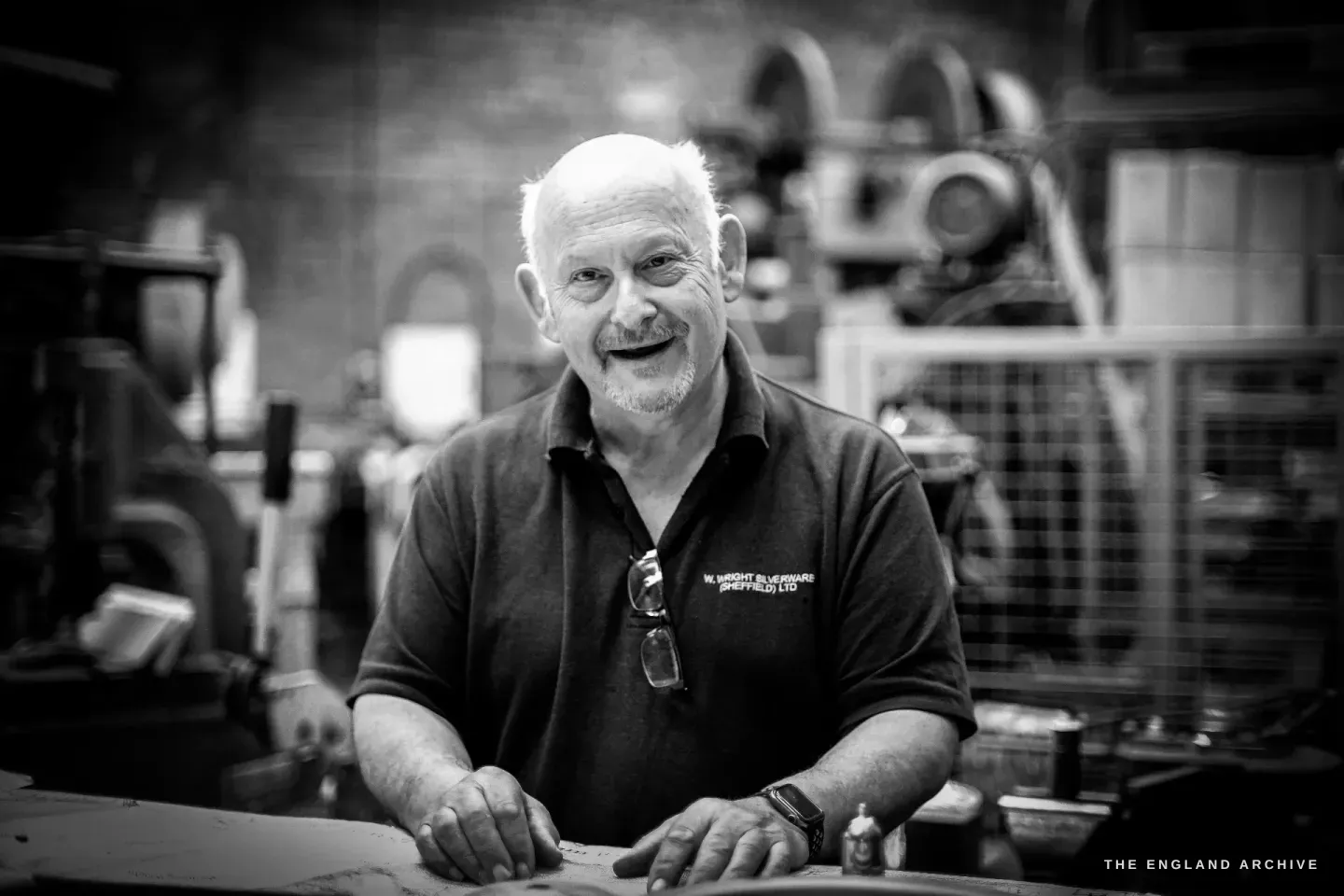
Stephen Wright runs William Wright in Sheffield, the cutlery and silverware firm named after his late father. He has spent his life in the trade and can work every stage of it himself - blanking and pressing the flatware, forming and finishing the holloware, plating and polishing the silver to its final shine. The firm has made forks, spoons, teapots, trays and cruets for the table for close to a century. Sheffield cutlery and silversmithing are on the Heritage Crafts Red List.
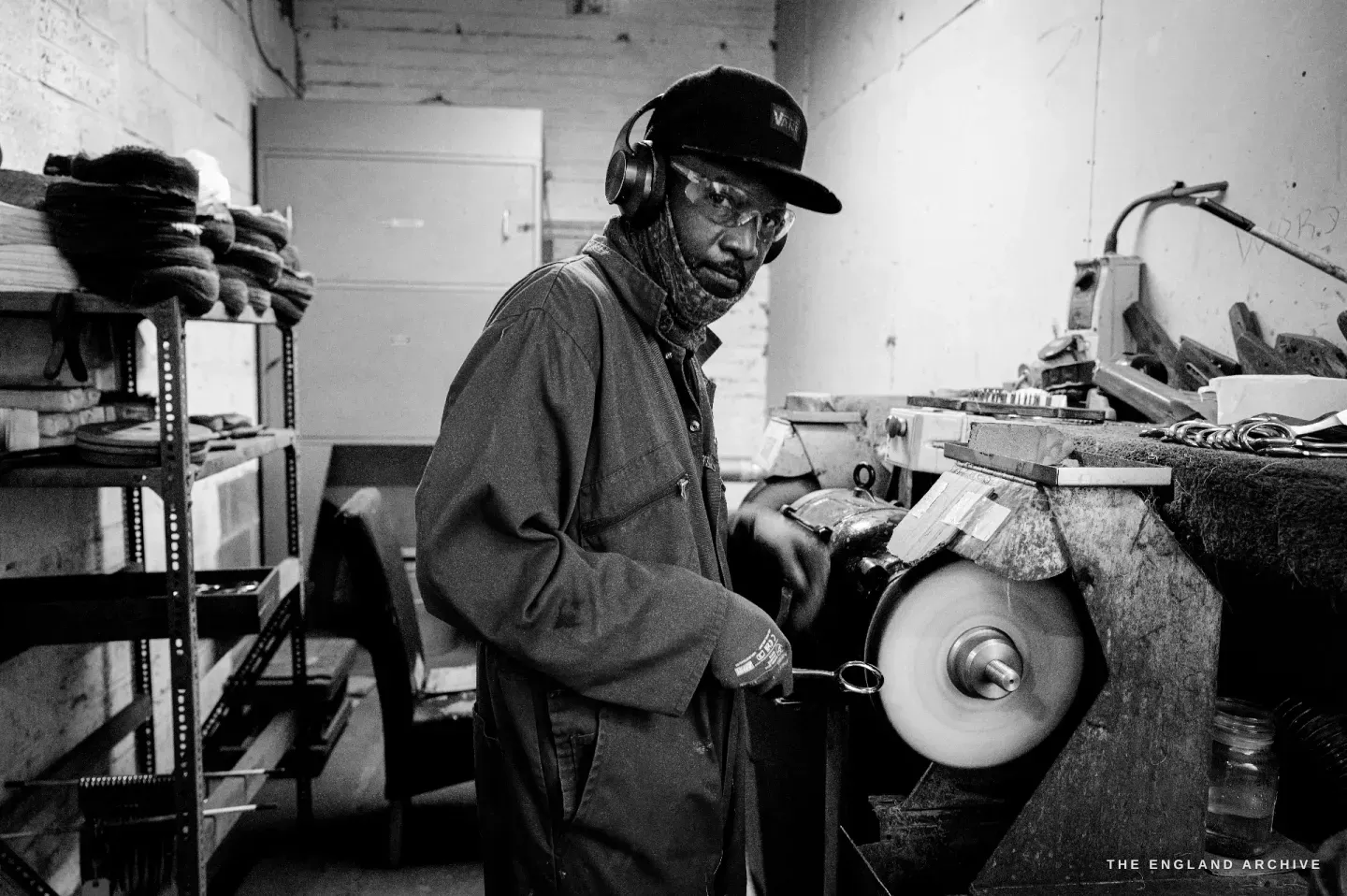
The polisher at Ernest Wright, the Sheffield scissor makers founded in 1902, with thirteen years on the wheel. Sabino works the polishing machine - buffing mops on a spinning spindle that take a finished pair of scissors to its bright final shine. It is dusty, exacting work, the last skilled hand a pair passes through before the maker's mark. Scissor making is on the Heritage Crafts Red List.
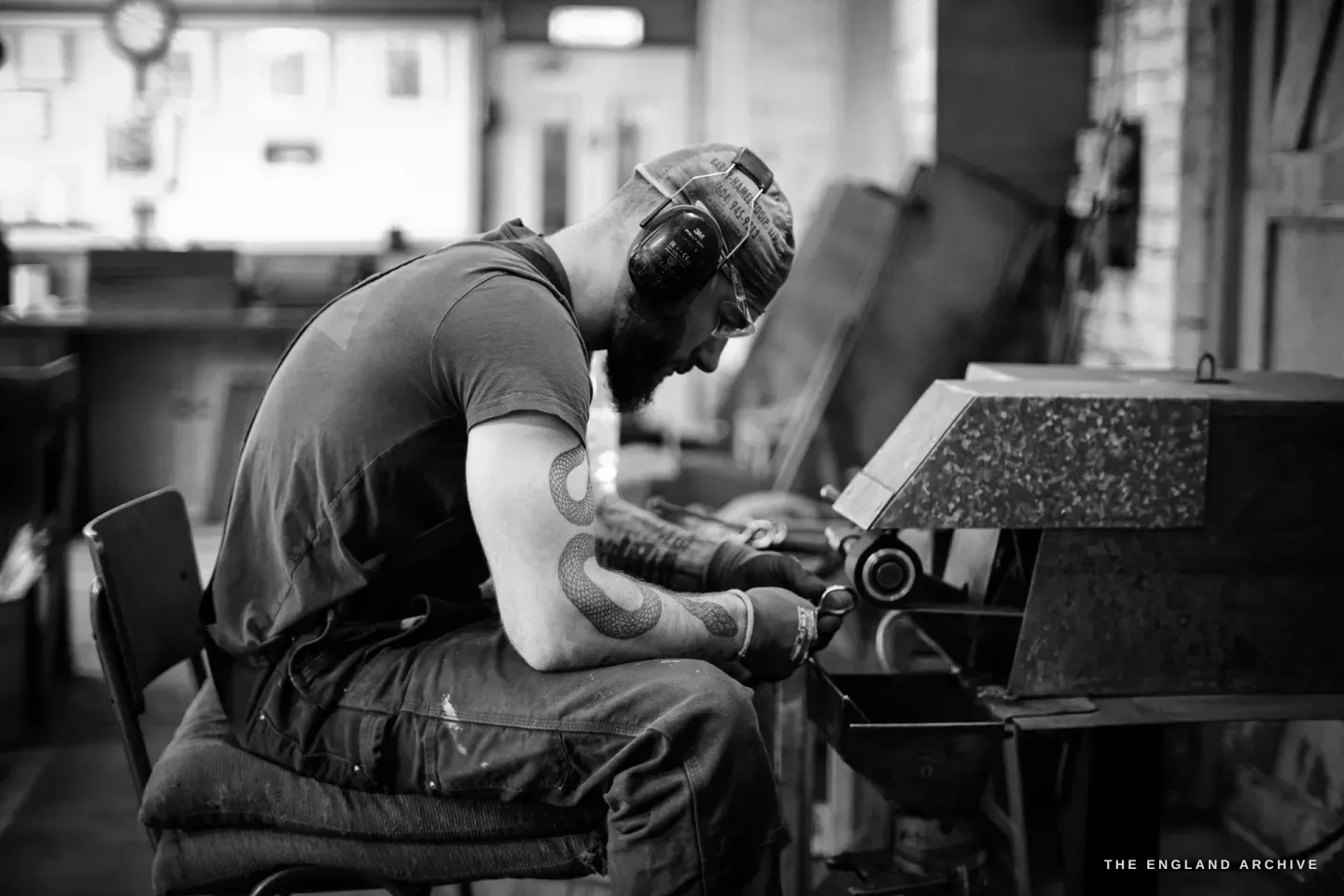
A scissor maker at Ernest Wright, the Sheffield scissor makers founded in 1902, about six years into the trade. His station is the grinding and finishing machines - the wheel and the abrasive belt that bring a forged blade up to its edge - and the work is the same exacting, spark-and-steel routine the firm has run for over a century. Scissor making is on the Heritage Crafts Red List.
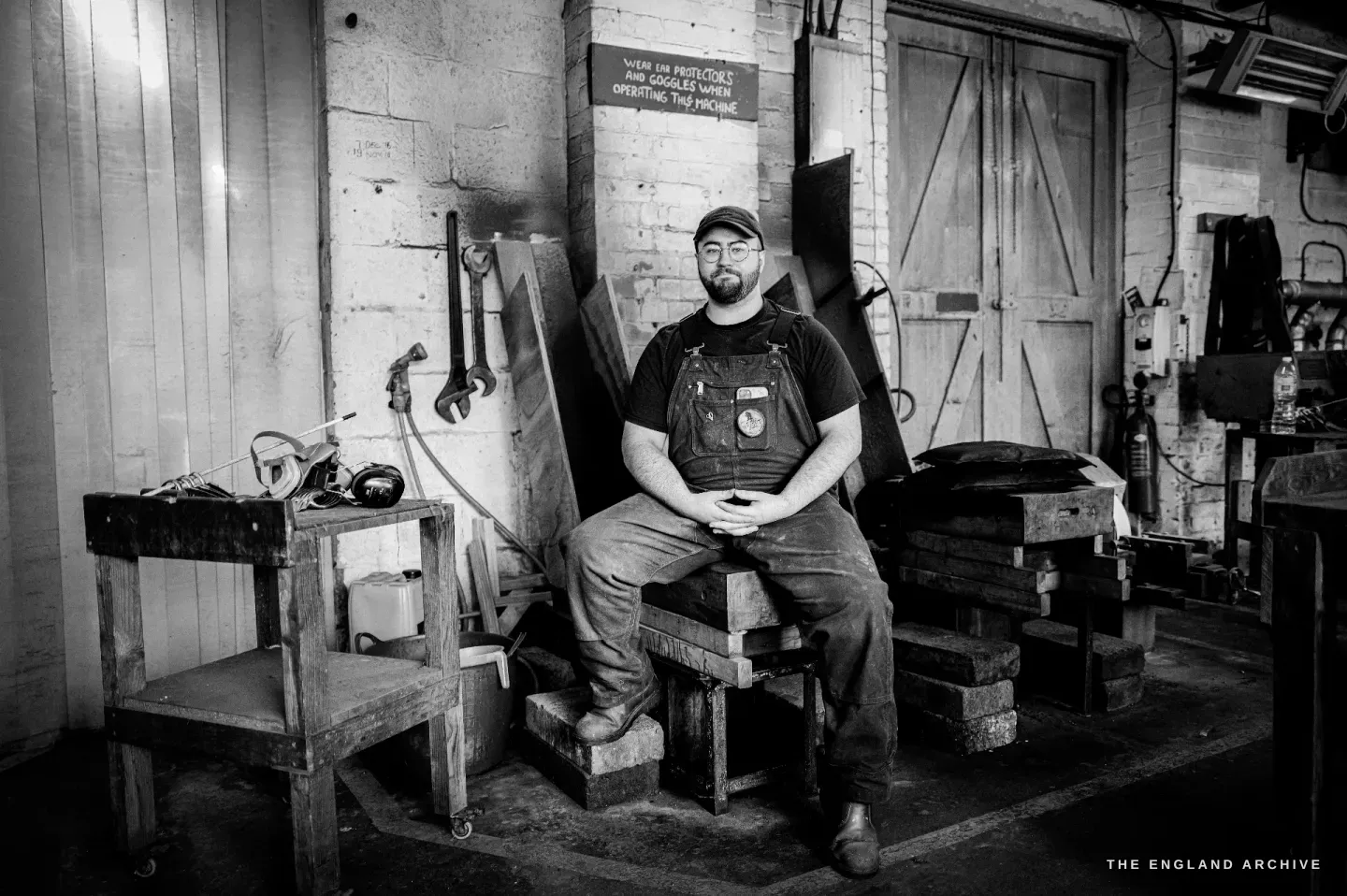
One of the newer makers at Ernest Wright, the Sheffield scissor makers founded in 1902, and the workshop's grinder - about eighteen months in. His station is the grinding wheel, where a forged blade is taken down to its hollow and its edge, the spark-throwing stage that turns a rough forging into a blade that will cut. Scissor making is on the Heritage Crafts Red List.
Production manager and a putter at Ernest Wright, the Sheffield scissor makers founded in 1902. Trained by two of the country's last master-putters, Jonathan is also the workshop's public voice - the one who gives the talks and interviews about a craft Heritage Crafts classes as critically endangered. About seven years at the bench.
A putter-togetherer at Ernest Wright, the Sheffield scissor makers founded in 1902 - and the first trainee of the firm's current era to qualify fully as a putter, the five-year-apprenticed craftsman who marries the two blades of a pair of scissors so they cut. About ten years at the workshop, he does the defining job of the trade: hammering the curve onto each blade and setting the two together by hand and eye until the pair rides true.
The senior maker at Ernest Wright, the Sheffield scissor makers founded in 1902. A putter-togetherer trained under Eric Stones and Cliff Denton, Neil now runs the floor and has trained the rest of the makers in the workshop. He took the archive through the whole craft - the grinding of the blade's hollow and twist, the hardening, the rumbling, and the marriage of the two blades, where the gap between them is the secret of a clean cut.
The man who built Chimo. A Yorkshire-born Merchant Navy officer who came home to take over his family's Sheffield silverware business, in 1989 he gathered a set of independent cutlery, silver and pewter trades under one roof at the White Rose Works and kept their historic names alive. Appointed MBE in 2018 for services to exports and investment in Sheffield, Master of the Worshipful Company of Pewterers in 2020, and chair of the Work-wise Foundation - he is one of the last custodians of a Sheffield trade running short of the next generation.
A die engraver at Chimo Sheffield Manufacturing who has cut steel dies for forty-five years - the only trade he has ever worked. A customer's artwork is worked up into a master pattern, traced on a pantograph die-sinking machine that cuts it into steel at size, and hand-finished; the finished die is the master tool that stamps a crest, a monogram or a mark into the cutlery and silverware the rest of the works makes. Hand engraving sits on the Heritage Crafts Red List.
A cutler at Chimo Sheffield Manufacturing for fifteen years, running the knife-finishing section - drilling and heat-setting the tang into the handle, then grinding, edging and polishing the finished knife. He came to the trade from dye printing and other work, apprenticed for four months, and stayed. He now leads apprenticeships at Chimo, and the larger part of that job, he says, is keeping a young person interested in a repetitive craft long enough to be good at it.
A master cutler of more than forty years in the trade, at Chimo Sheffield Manufacturing. The son of a Sheffield cutlery man, he resisted the factory as a young man and then spent a working life in it - taking a knife from a blank through stamping, grinding, serrating, hafting, sharpening and polishing, and now passing the whole sequence on to the next pair of hands.
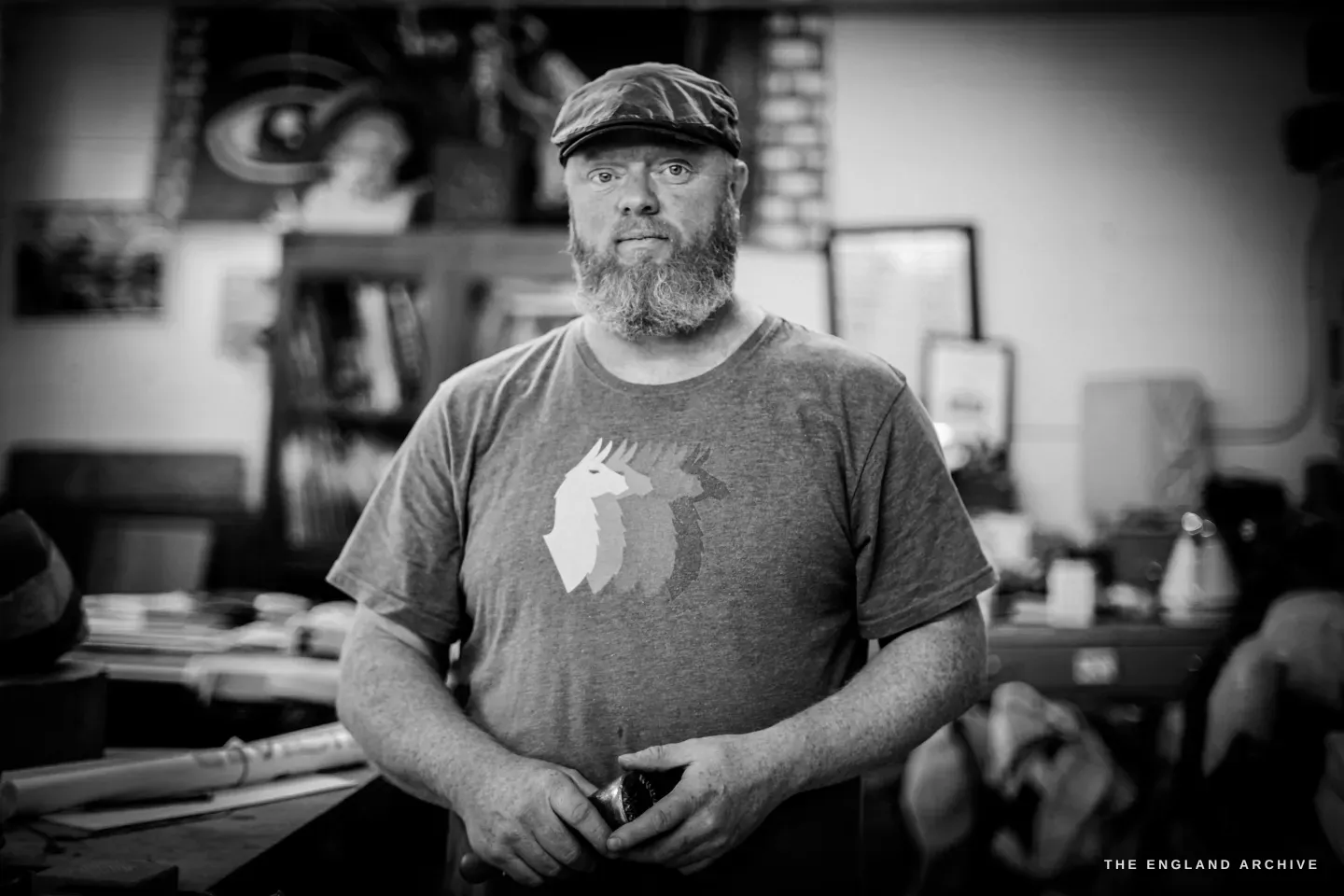
A woodturner and furniture maker at Grandeys Place near Much Hadham, who came to wood from illustration and printmaking. He trained turning globe stands at Bellerby & Co and produced furniture for the London studio Wilkinson & Rivera before building his own practice - turned bowls and centrepieces, furniture in a Scandinavian and Japanese register, and the bespoke wooden stands that hold Jonathan Wright's globes on the floor above.
A maker of bespoke handmade globes - terrestrial and celestial - and a restorer of antique ones, working at Grandeys Place near Much Hadham. He learned the craft over the better part of a decade leading globe production at Bellerby & Co before founding his own studio, took a QEST scholarship and an MA in conservation, and is a Fellow of the Royal Geographical Society and a trustee of QEST. Globe-making by hand is a rare and endangered craft with no formal training route.
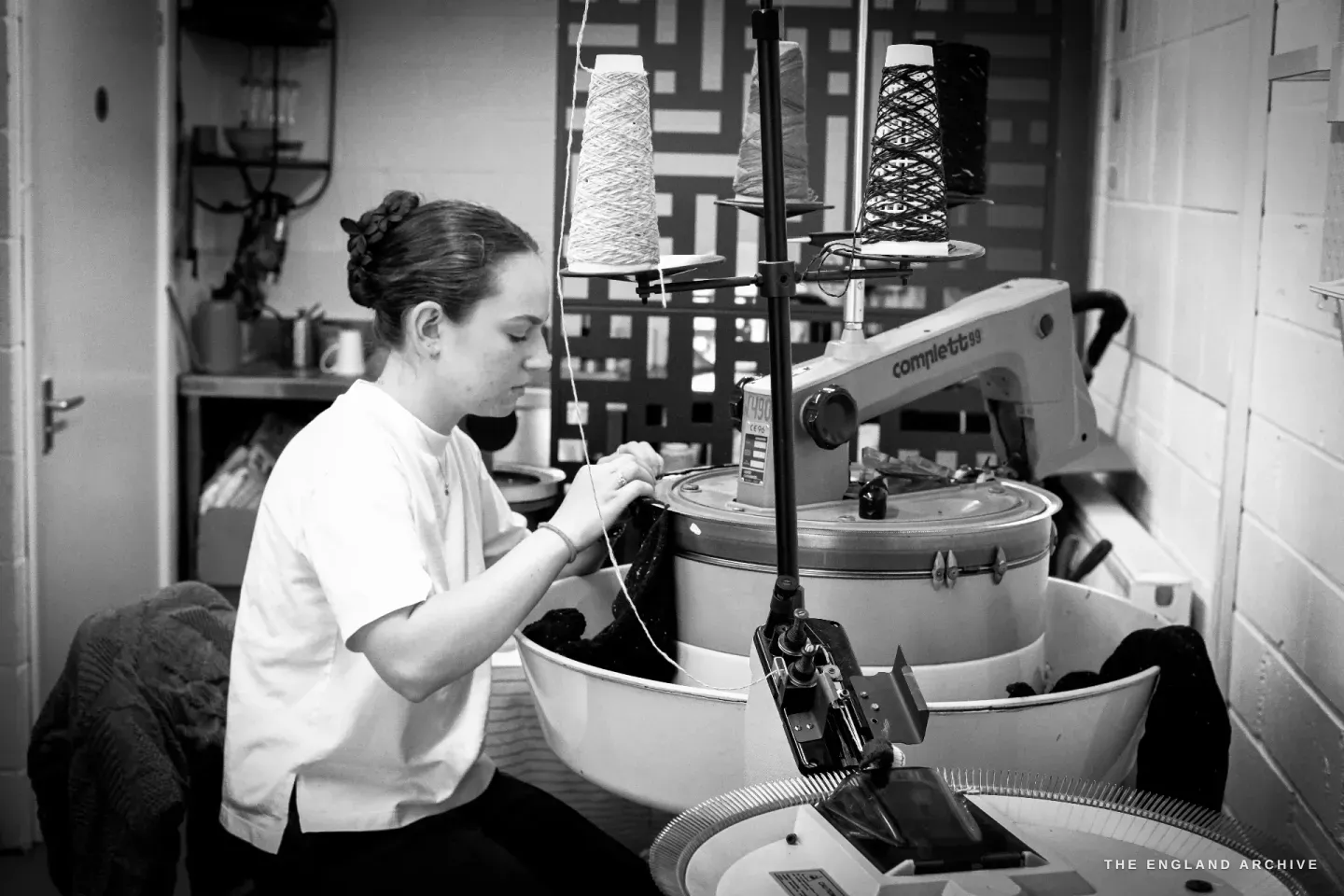
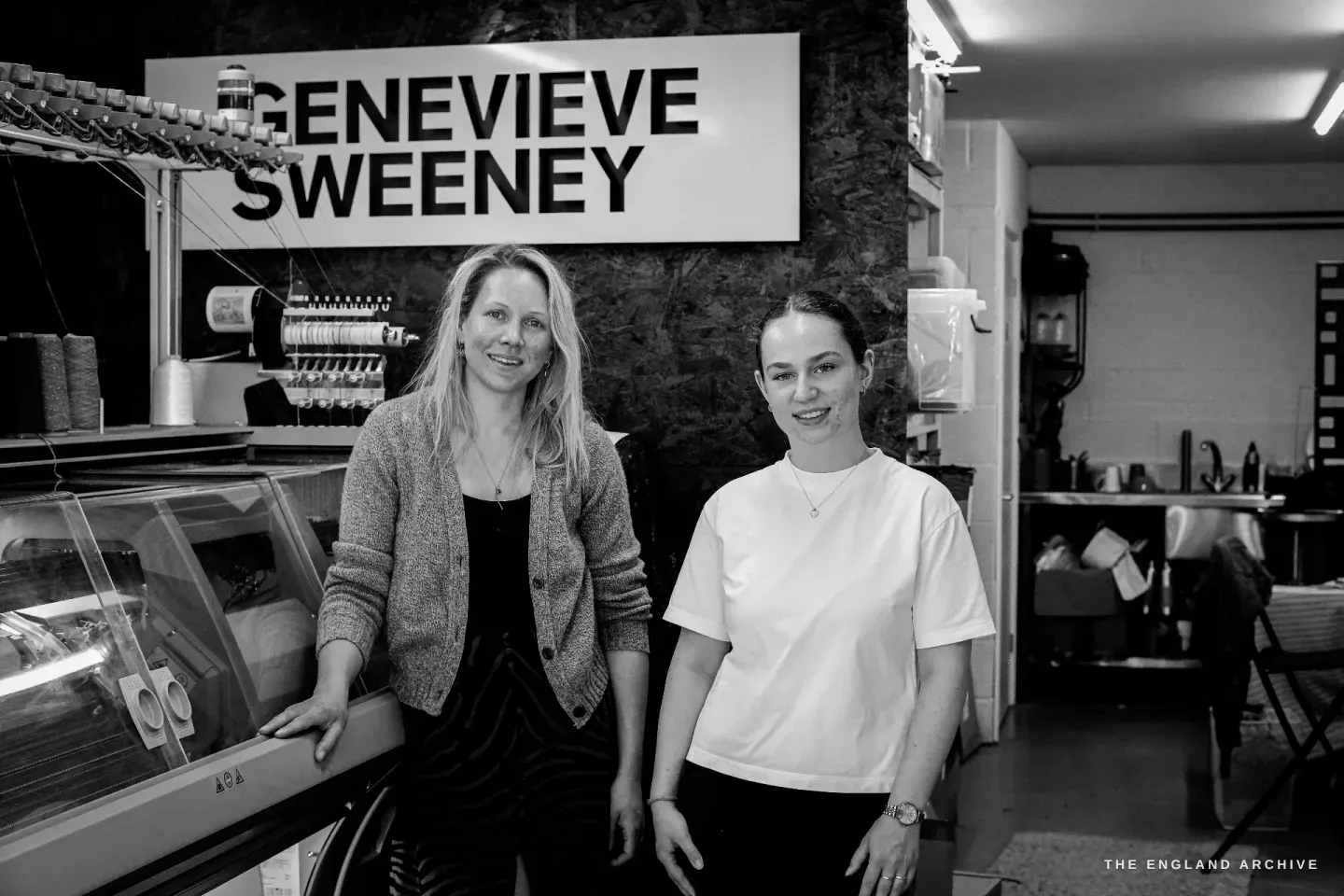
Genevieve Sweeney's first apprentice, learning British knitwear from the cone up at Grandeys Place near Much Hadham. A film graduate who knitted with her grandmother as a child, she came through a four-month course and took to the machines and the linking bench fast - the next pair of hands in a craft the country is trying not to lose.
Knitwear designer and maker at Grandeys Place near Much Hadham, Hertfordshire. Trained in fashion knitwear at Nottingham Trent and shaped by years developing knit for Rag & Bone, Hugo Boss and Burberry, she built her own British label in 2015 to keep the country's knitwear skills alive - naturally dyed merino and lambswool, socks from a family-run Derbyshire mill, and a growing in-house studio where she has taken on her first apprentice, Poppy.
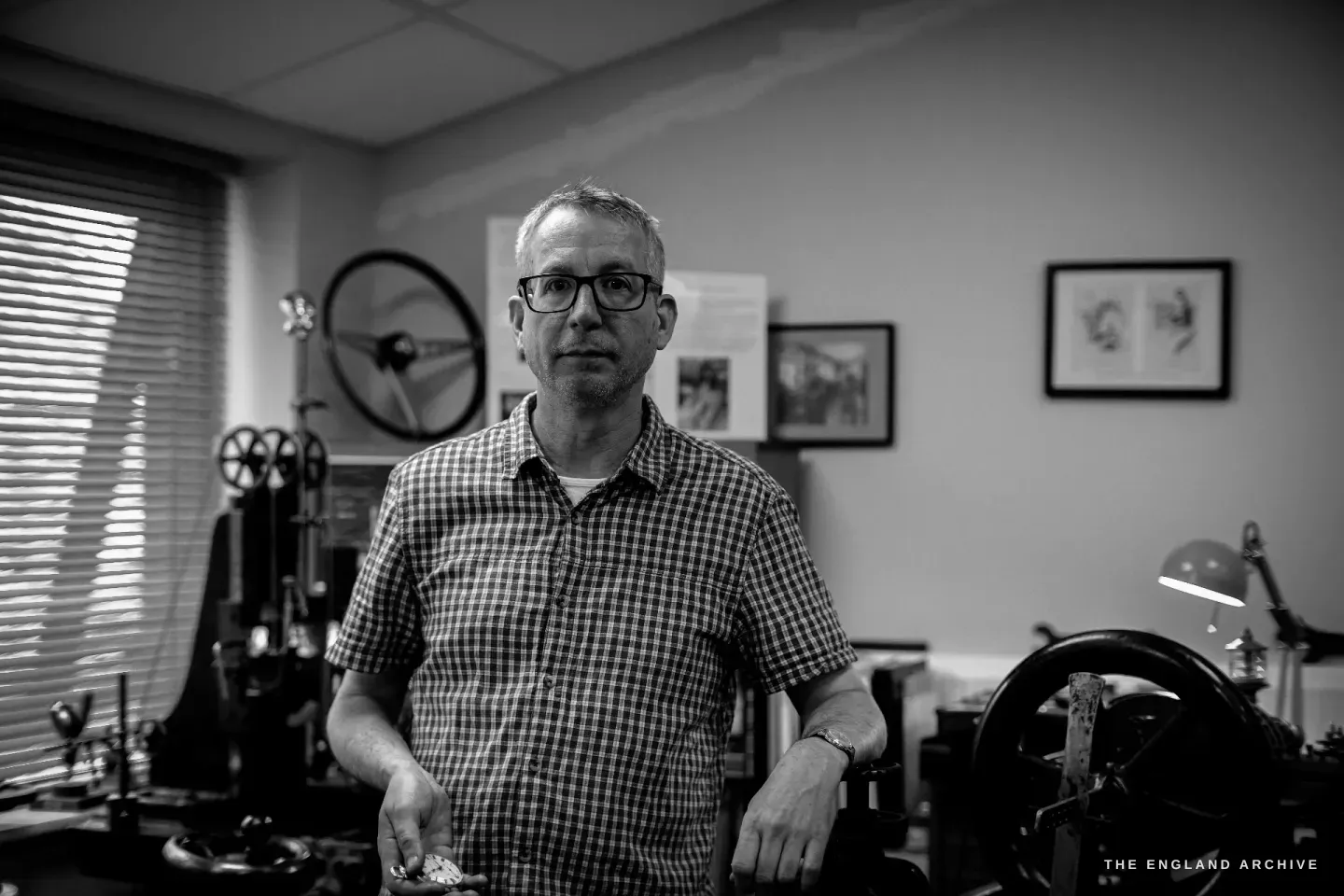
Watchmaker, case maker and engine turner at Grandeys Place near Much Hadham, Hertfordshire - an engineer who came to horology with no formal apprenticeship (informal training under an accomplished watchmaker, then tools and methods of his own), and is now one of a tiny handful of people in England making and engine-turning watch cases by hand. A QEST scholar who engine-turned the solid-gold mount of King Charles III's Royal Family Order for the Crown Jeweller. The archive's first horological subject.
Silversmith at Hart Gold & Silversmiths in the Old Silk Mill, Chipping Campden. David Hart's nephew and William's cousin, son of David's brother Basil. He joined the workshop in 1994, aged eighteen, after two years of motor-vehicle engineering at college - asked in to help with a busy order book while he looked for a job, and at the bench ever since.
Silversmith at Hart Gold & Silversmiths in the Old Silk Mill, Chipping Campden - the only one of the workshop's silversmiths not a Hart by blood. Recruited from Chipping Campden School in 1982 while sitting his A-levels, aged eighteen, and apprenticed to David Hart, taught by David and his father Henry. Forty-four years at the bench.
Fourth-generation silversmith at Hart Gold & Silversmiths in the Old Silk Mill, Chipping Campden. Son of David Hart, great-grandson of George Hart of the Guild of Handicraft. Came to the bench from computer science, joining the workshop in 1990, the year his grandfather Henry died, and now carries the workshop forward.
Third-generation silversmith at Hart Gold & Silversmiths in the Old Silk Mill, Chipping Campden - the last working workshop of Ashbee's Guild of Handicraft. Grandson of George Hart, who came to Campden with the Guild in 1902; brought into the workshop by his father Henry in 1956. Eighty-seven at the time of the visit, and seventy years at the bench this July, still raising silver by hand.
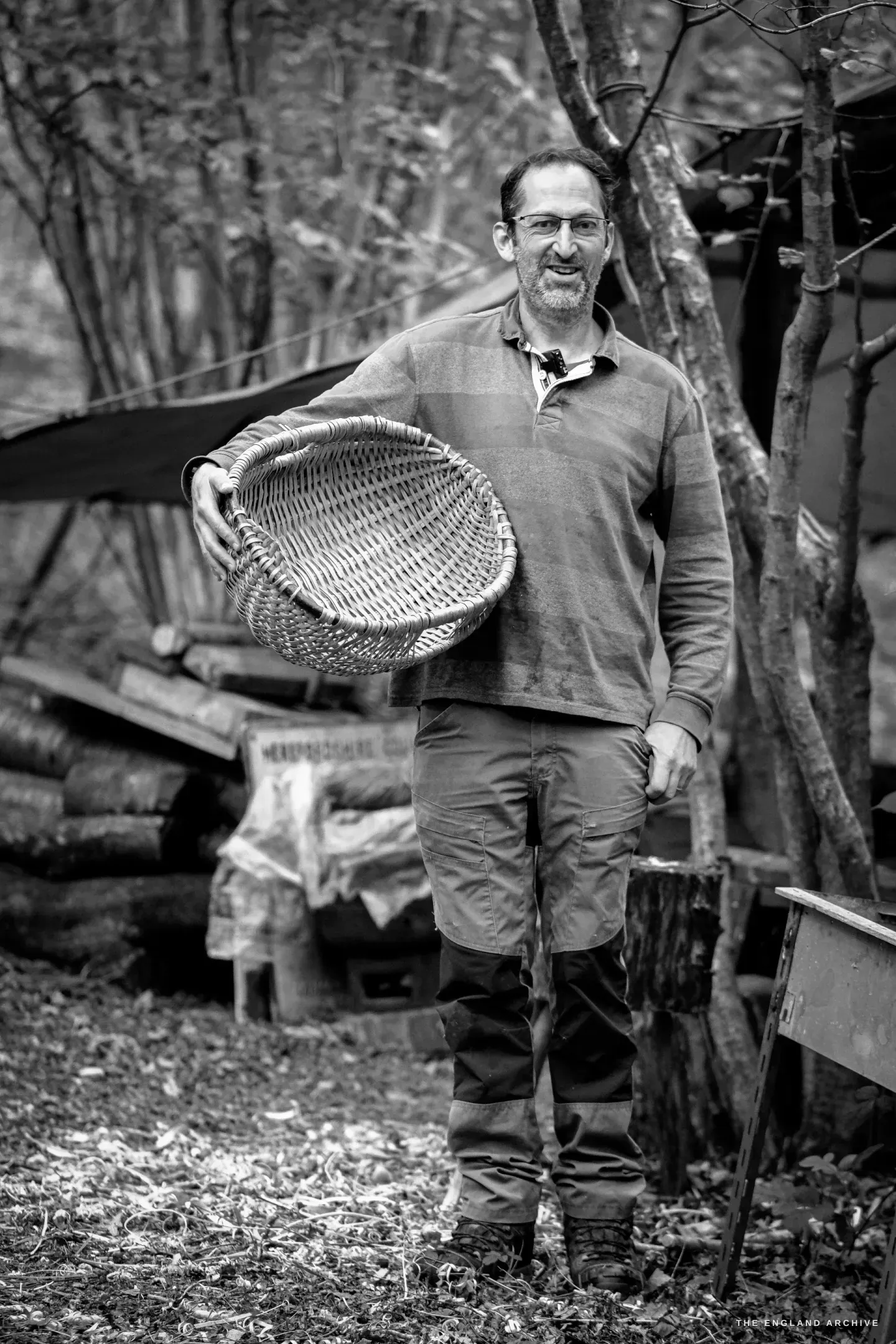
A working hazel basket maker in Turnham Green Wood, the Herefordshire coppice he established in 2011. One of a handful of working practitioners in the country making the traditional split-hazel Whisket of the Welsh Marches - a craft on the Heritage Crafts Red List of endangered crafts. Reads the stems before cutting (the knobs, the deer marks, the years), cleaves and shaves them into splints, weaves them into round-bottomed baskets that have been made in the same shape since the form was first made. Teaches the craft at venues across the country.
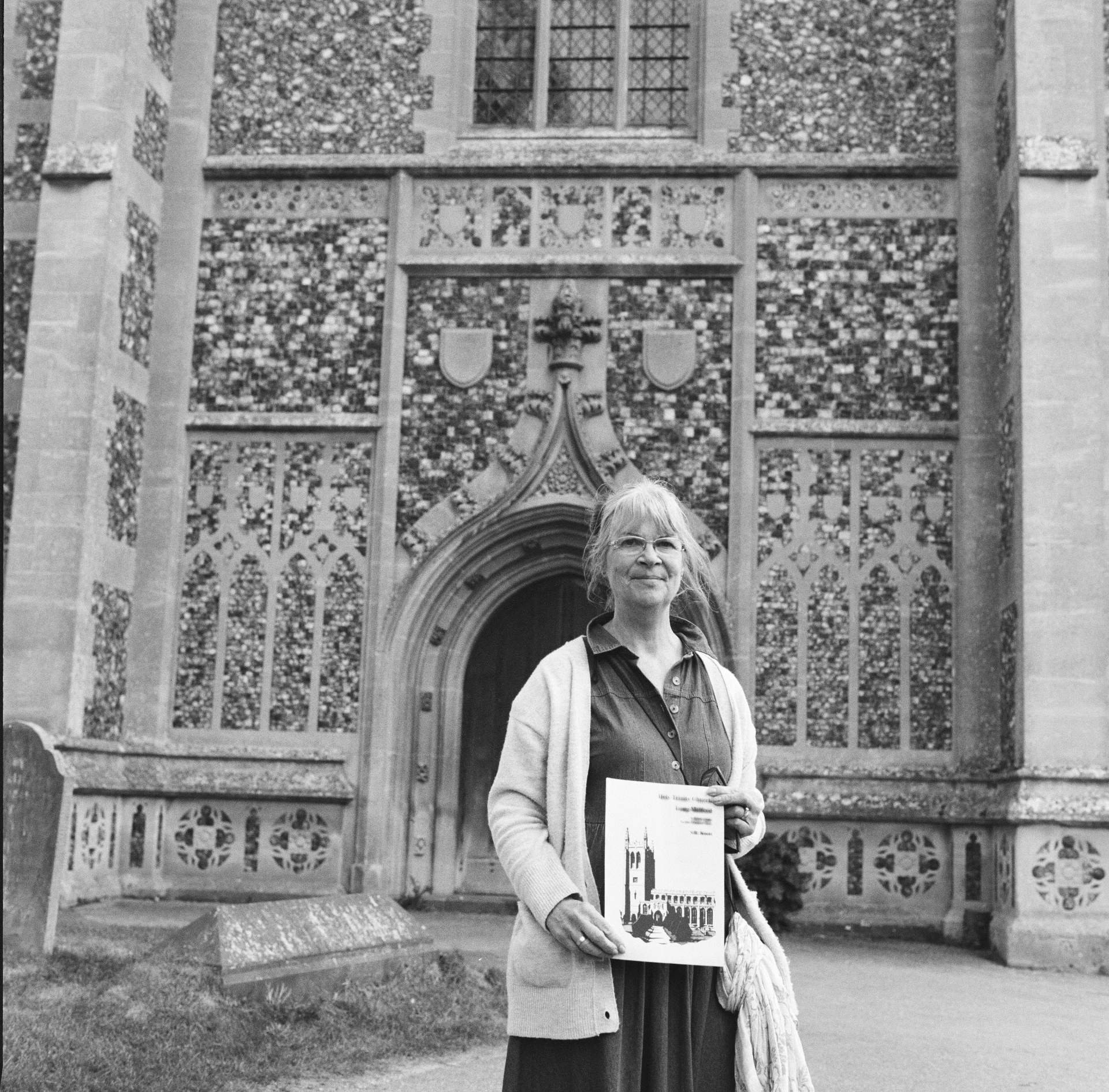
Historian and committee member of the Long Melford Historical and Archaeological Society. Keeper of the public record of the village - its dates, its buildings, its documents, and the order of events that made Long Melford what it is.
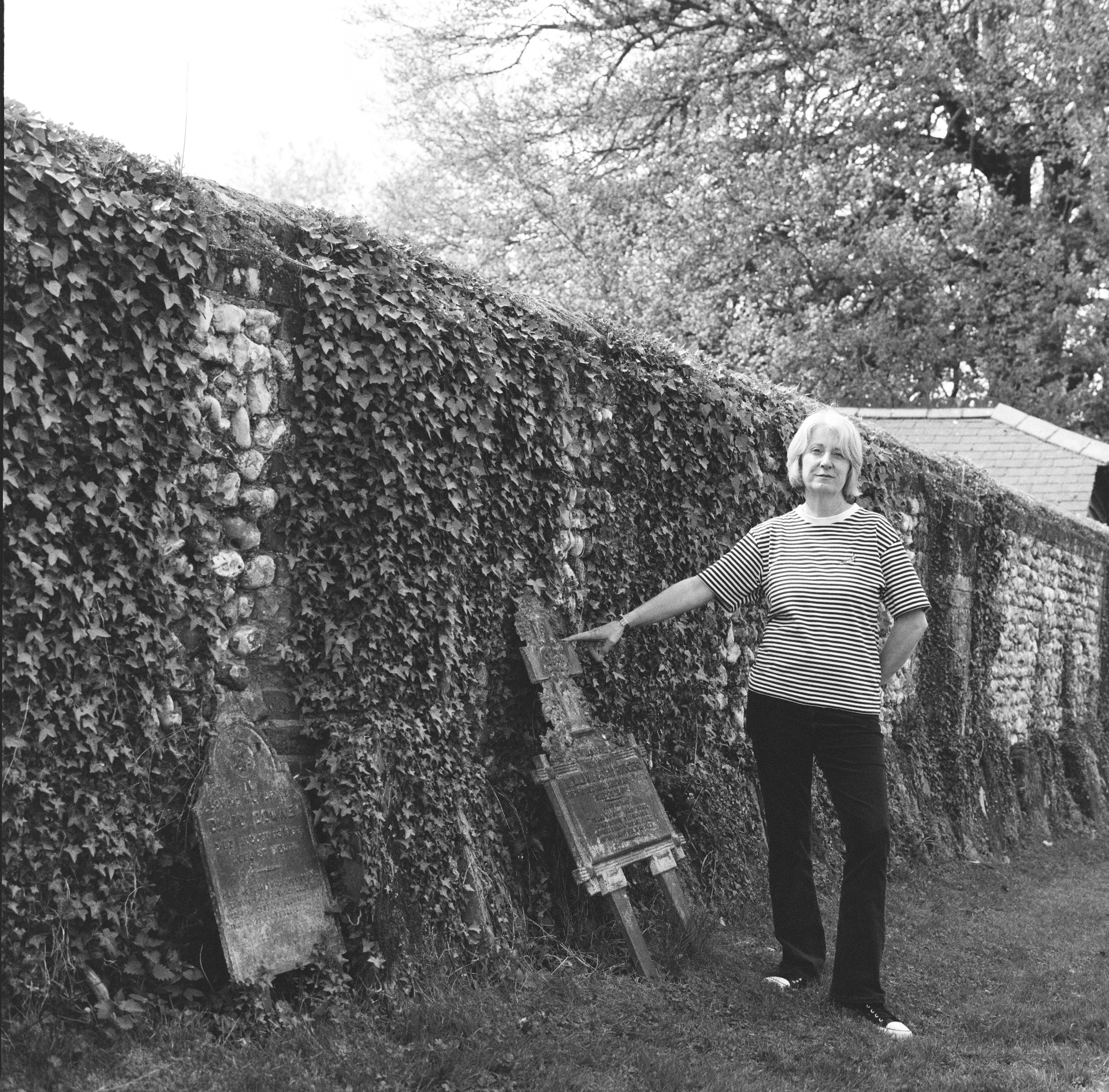
Lifelong resident of Long Melford and carrier of the lived texture of the village. Daughter of a founding member of the Long Melford Historical and Archaeological Society, she holds the grain of the place - what used to be where, who lived in which house, which trees stood on the Green before Dutch elm disease took them.
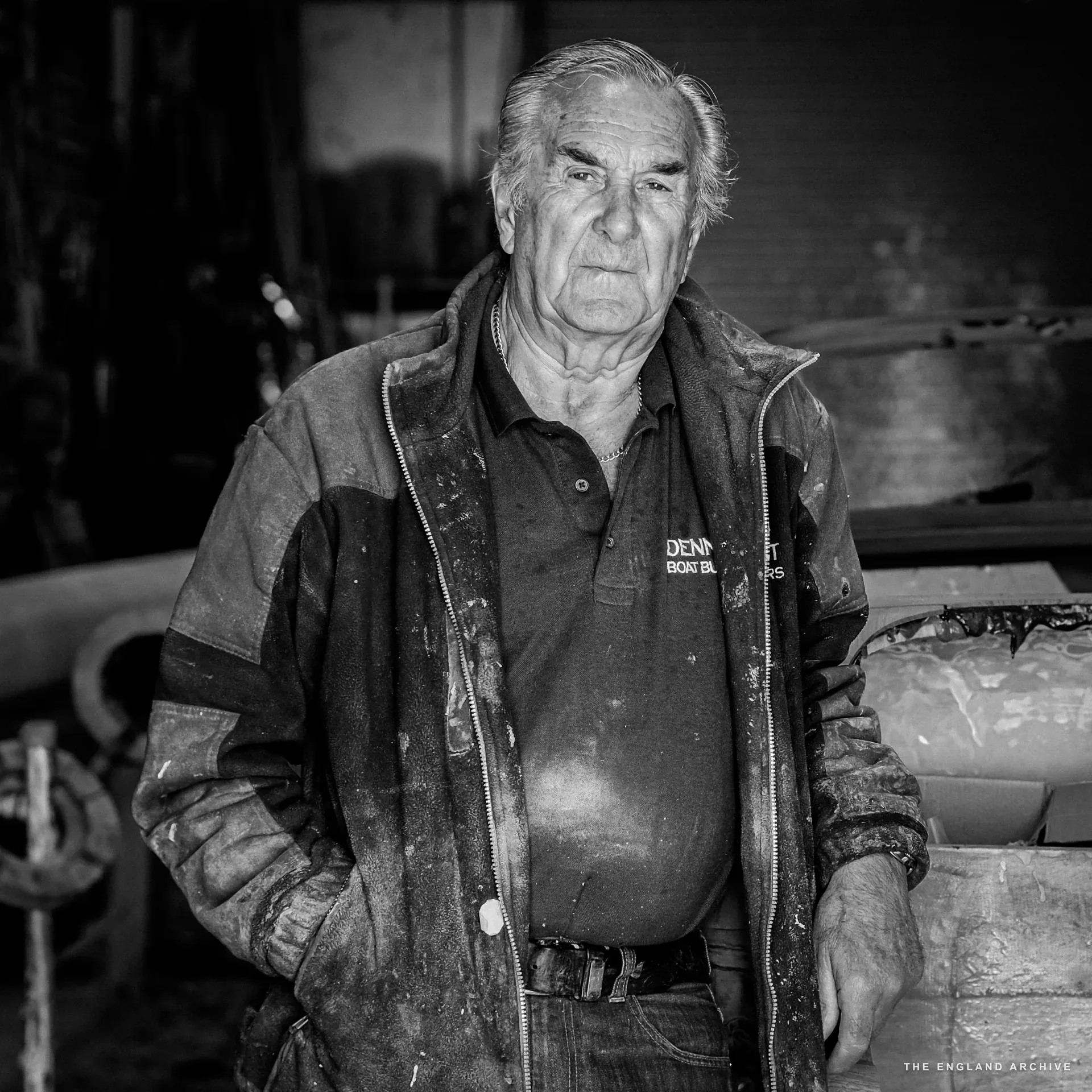
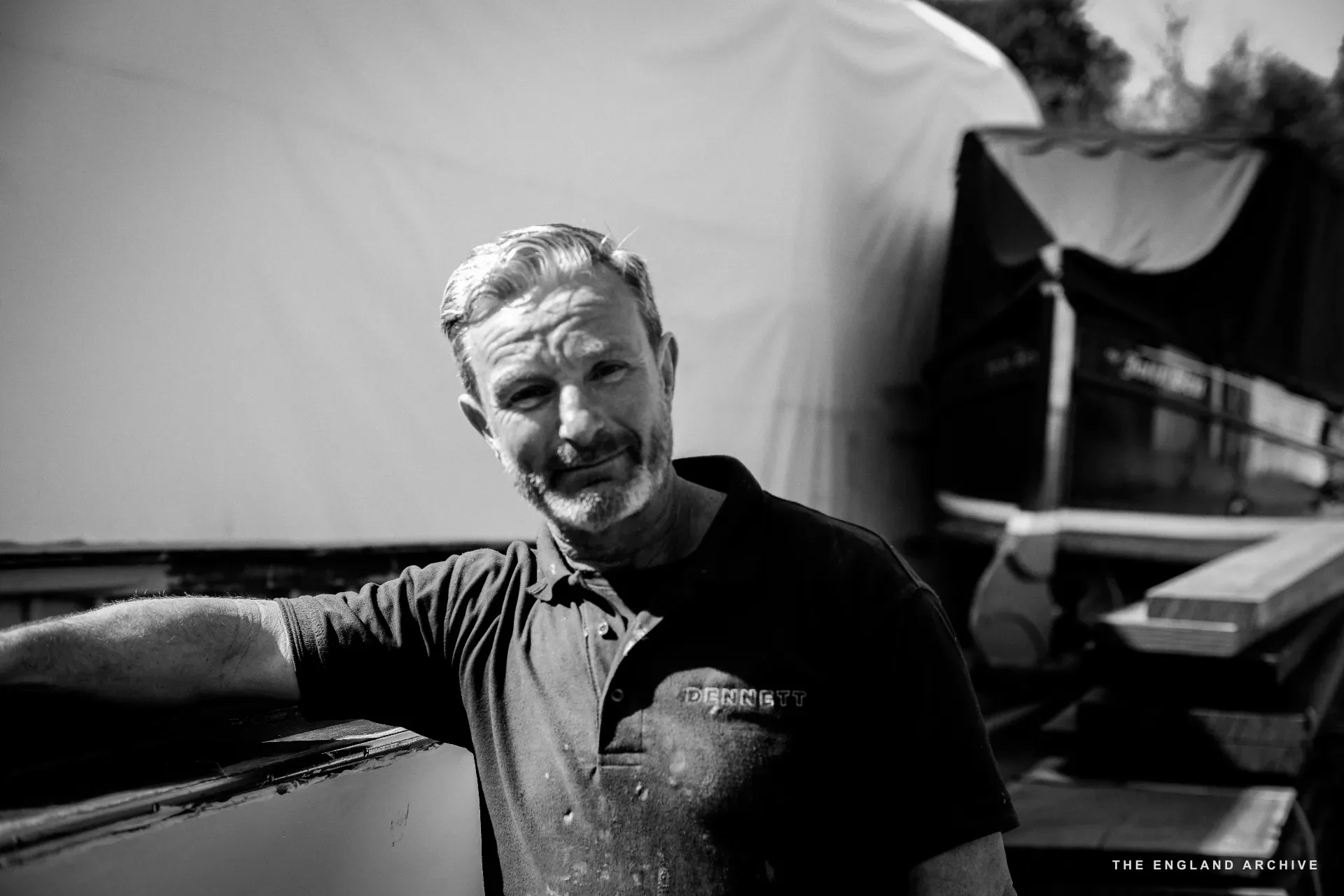
Founder of Dennett Boat Builders, Laleham. Trained at three Surrey Thames yards in the 1960s: Horace Clarke's Boatyard in Sunbury from age 15; Walton Yacht; and George Wilsons Yard in Sunbury, where he completed his apprenticeship. Self-employed from 22. Opened the Laleham yard with his son Stephen in 1988.
Working principal of Dennett Boat Builders, Laleham, Chertsey. Son of Michael Dennett, who taught him the trade from age two. Joined the yard as a partner in 1988 and has worked there ever since. Specialises in the restoration of historic Thames pleasure craft.
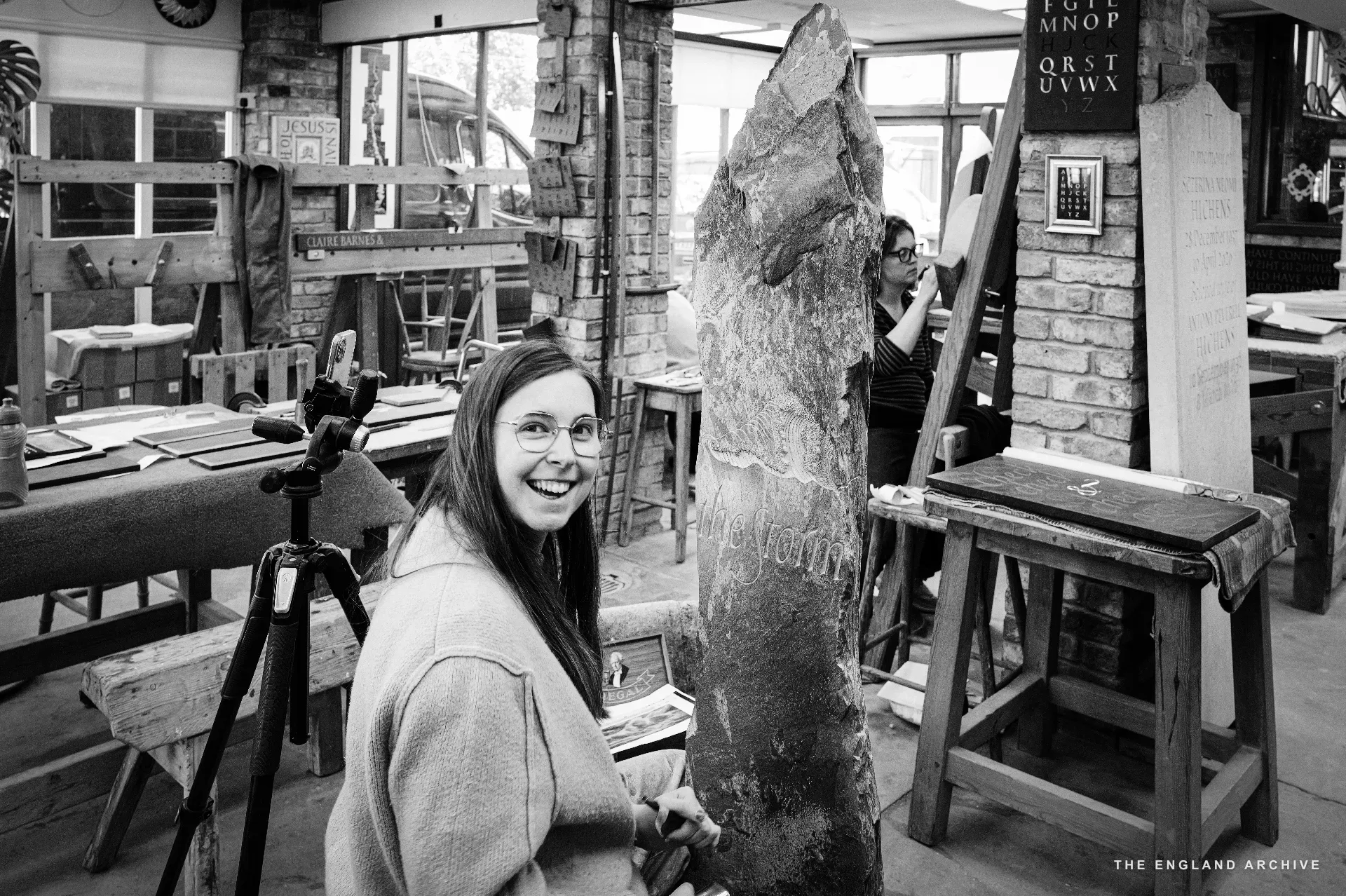
Lettercutter at the Cardozo Kindersley Workshop, Cambridge. Eight years at the bench. Roxanne Kindersley's longest-running apprentice and the cutter on the Storm and the Calm After the Storm memorial pillar.
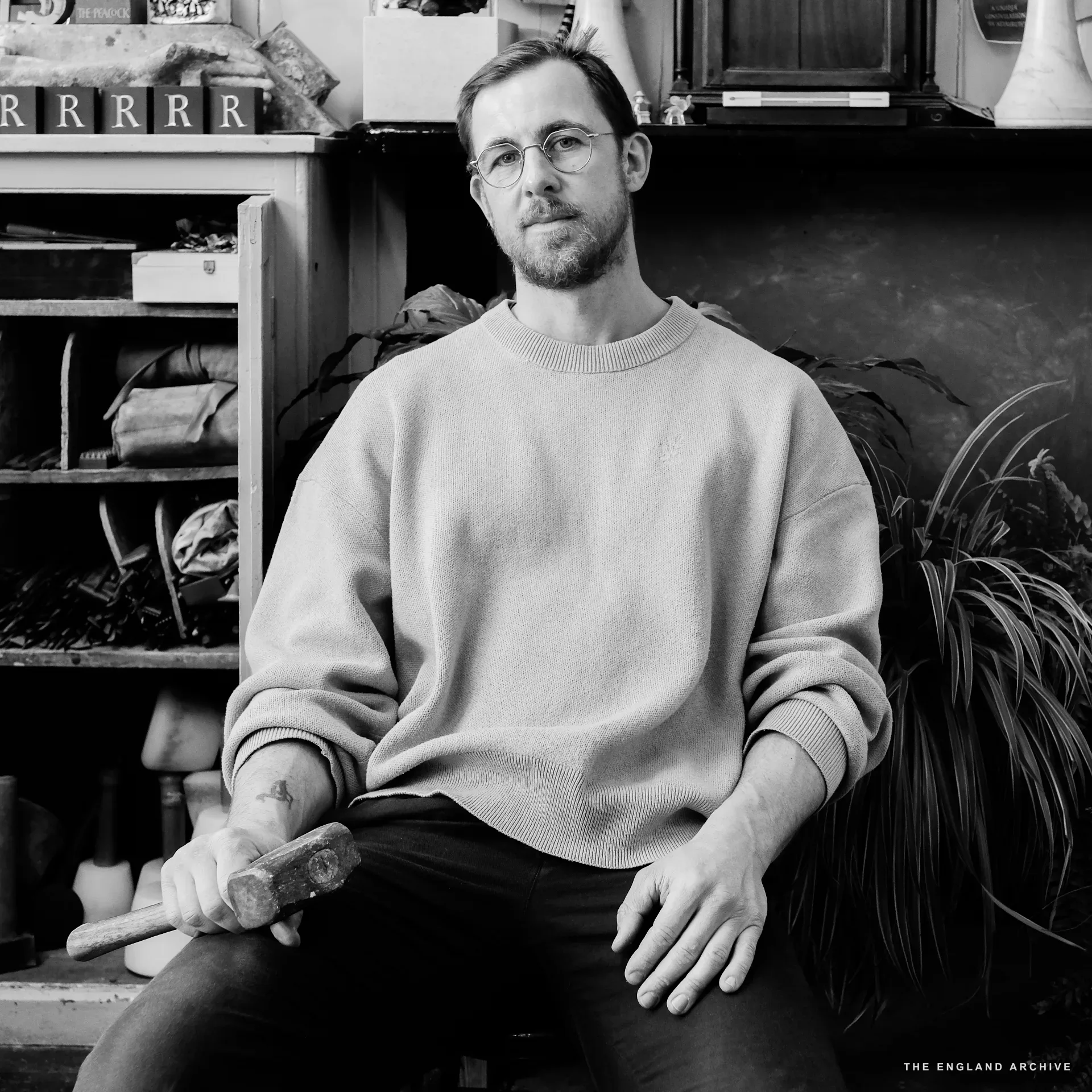
Designer at the Cardozo Kindersley Workshop, Cambridge. Younger son of David and Lida Kindersley, husband of Roxanne. The design hand of the workshop - most pieces begin as a sheet of paper and a pencil at his bench.
Working head of the Cardozo Kindersley Workshop, Cambridge. She has taken over the running of the workshop from her mother-in-law Lida and now teaches apprentices, directs commissions, and keeps the 700-year-old craft of English stone lettering alive for a new generation.
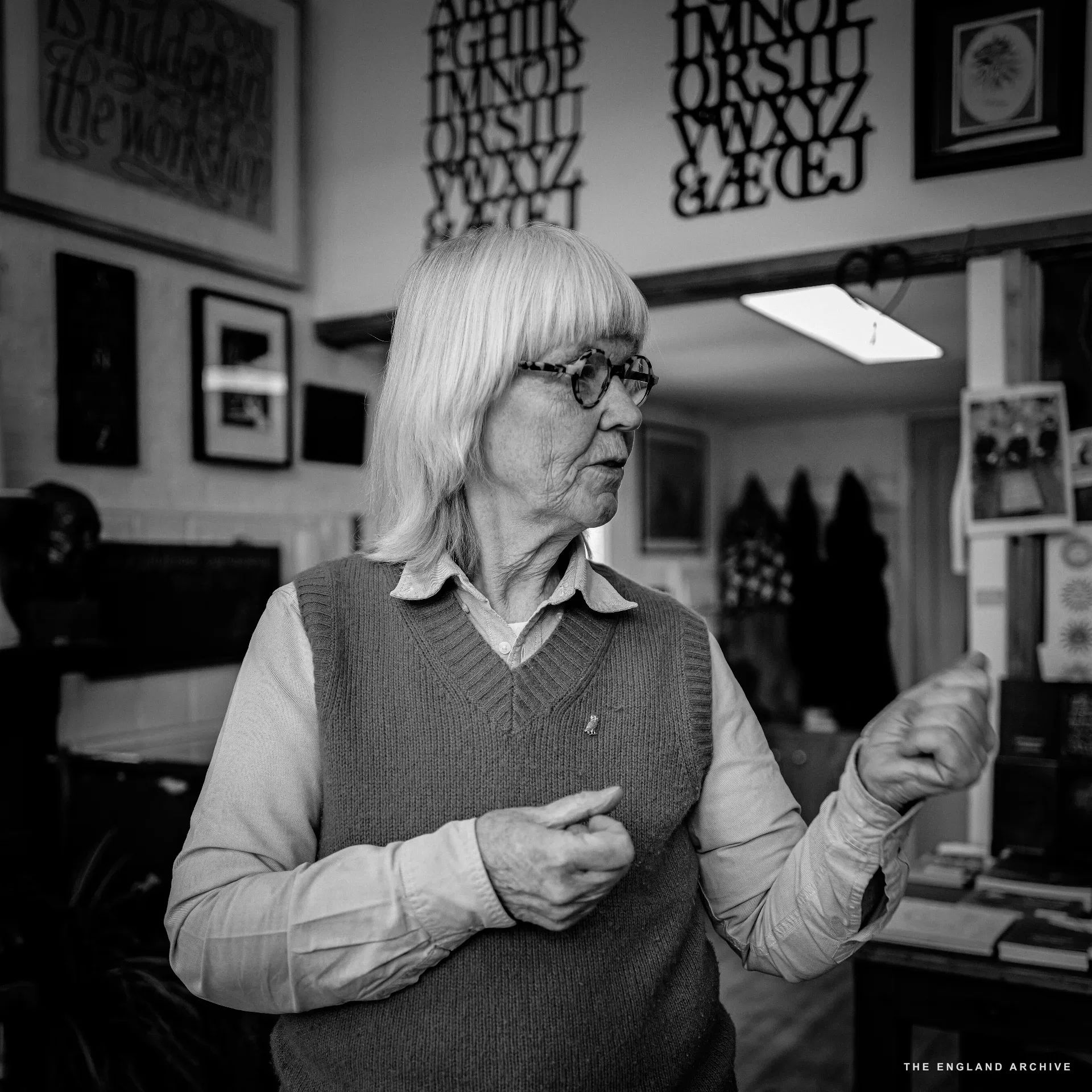
Matriarch of the Cardozo Kindersley Workshop, Cambridge. Widow of David Kindersley. A typographer and stone letter-cutter in her own right who has run the workshop for thirty years and still comes in every day.
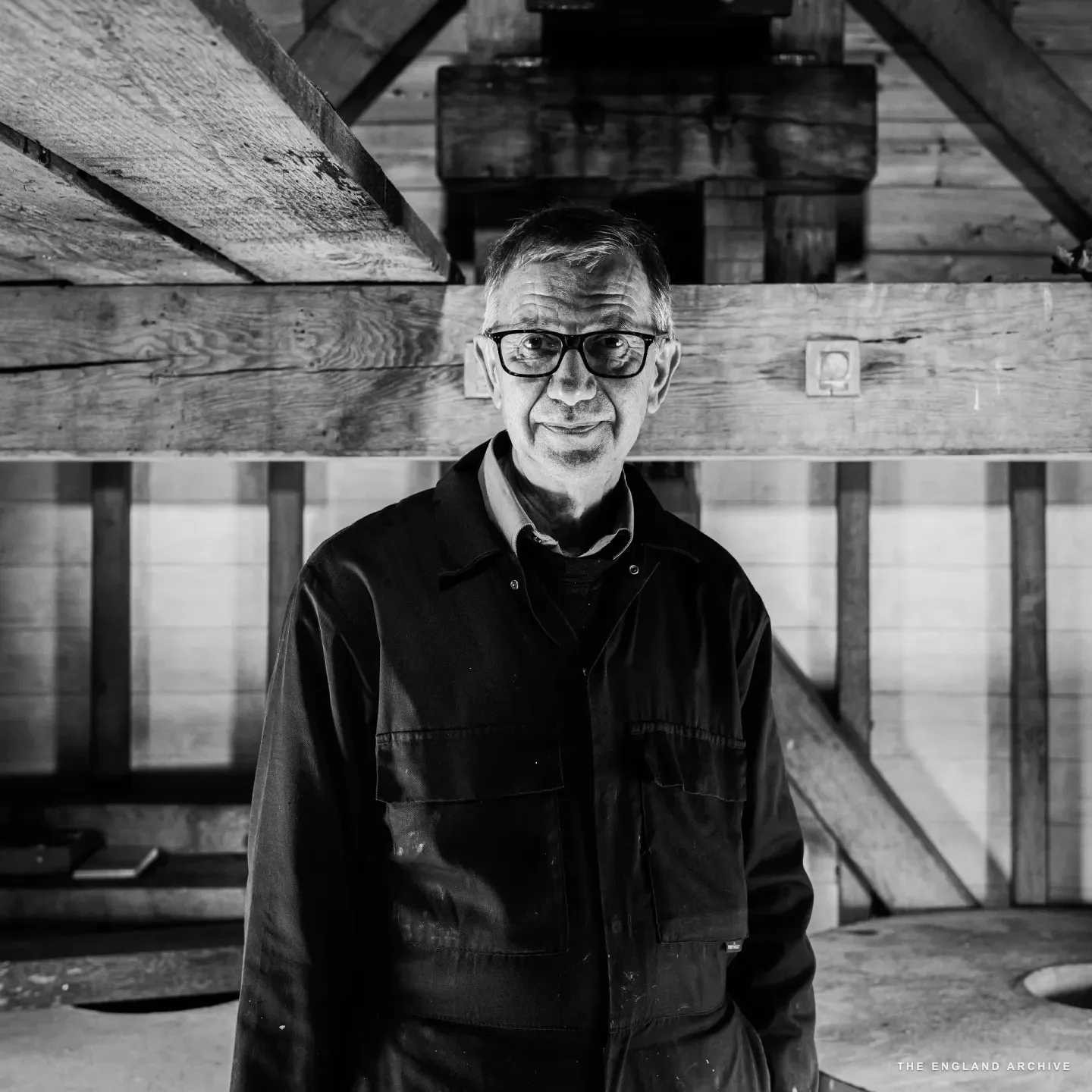
A working millwright who has maintained and restored historic windmills across Norfolk and Suffolk for decades. The mill at Toft Monks works because Paul Kemp exists. That is not a small thing.
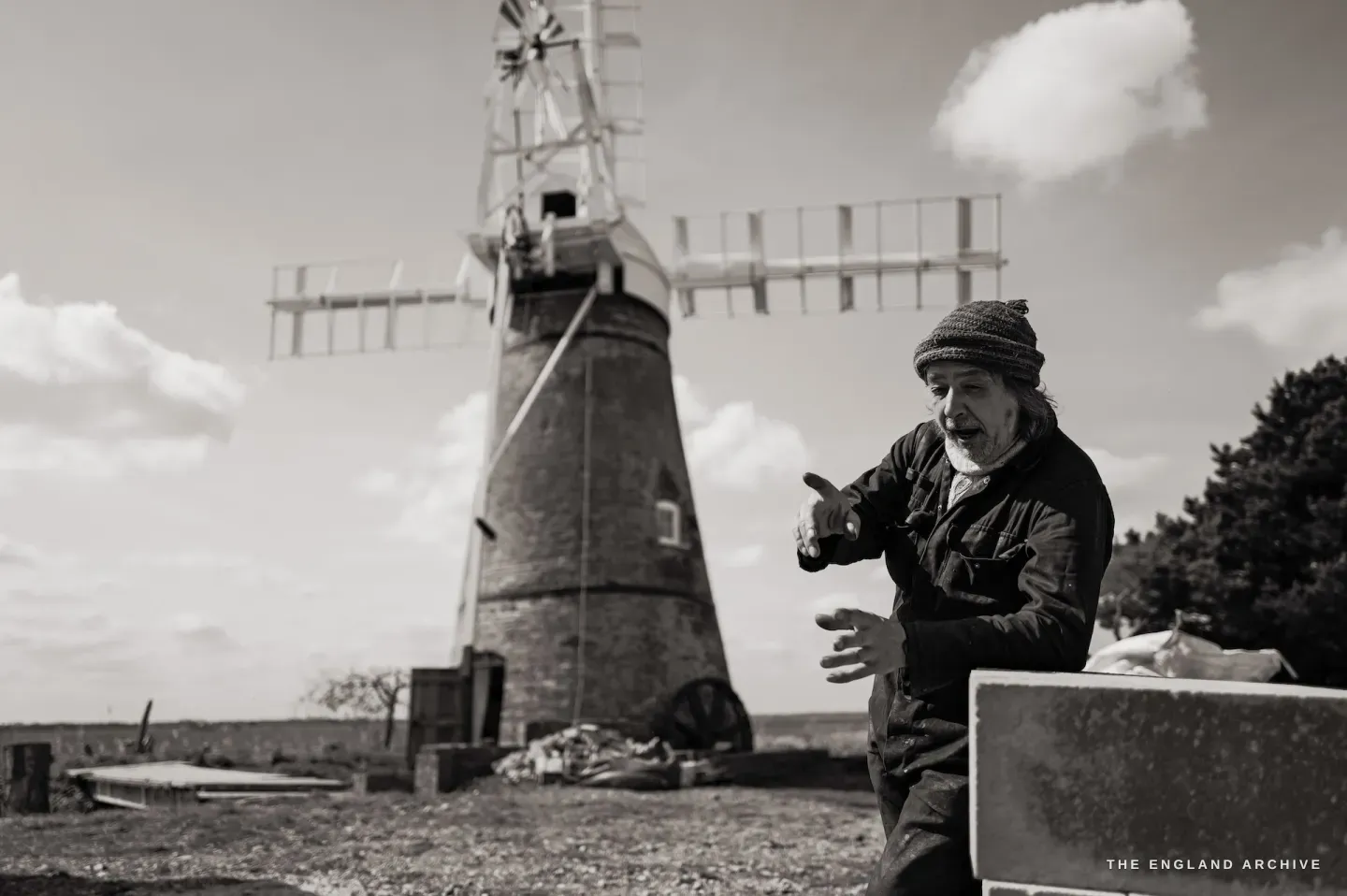
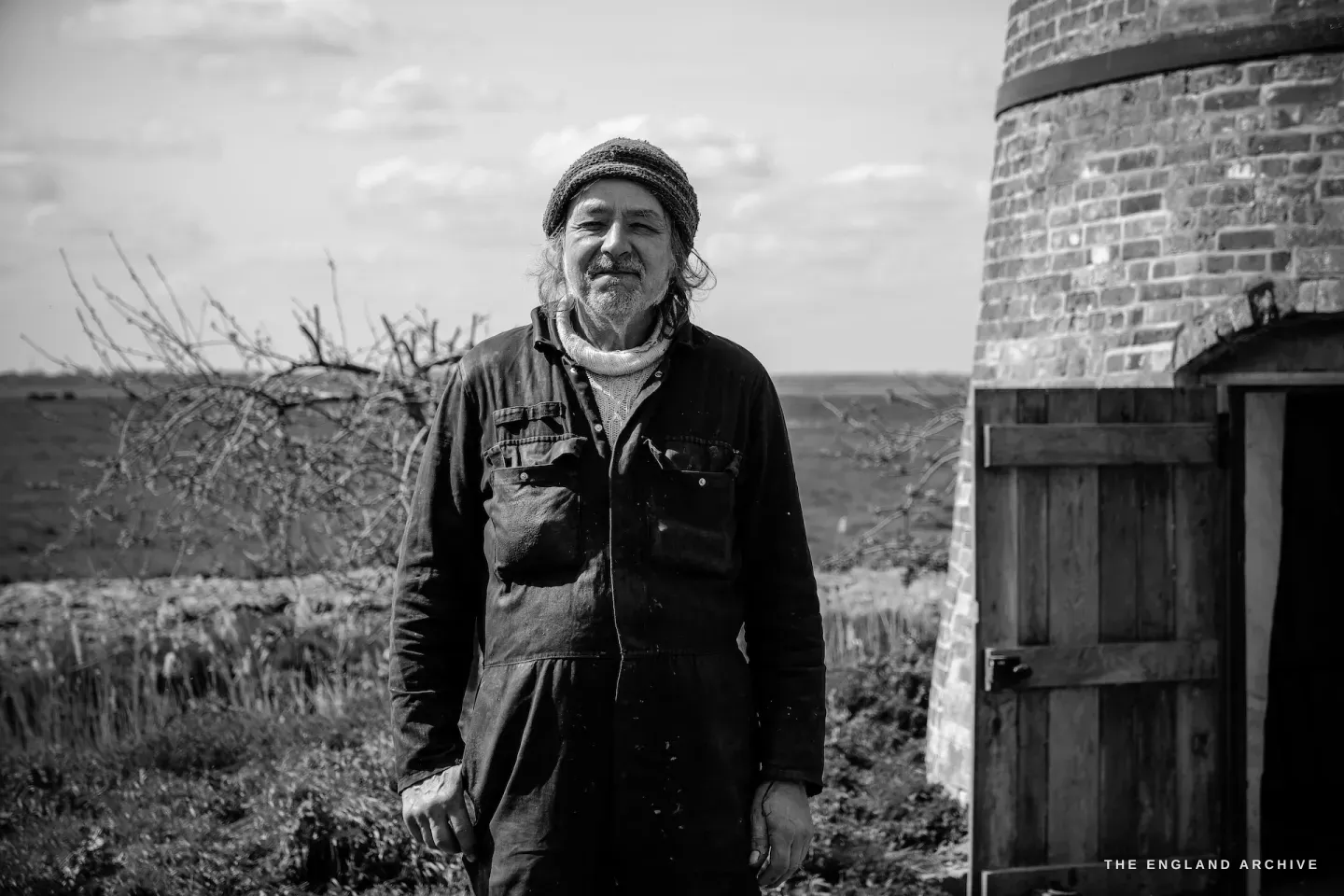
A retired millwright in South Walsham who built a fully working post mill from scratch on his own land, alongside two houses, multiple workshops, and barns full of restored vintage tractors, wagons, and steam engines. The first encounter that prompted the creation of the Gatherers category.
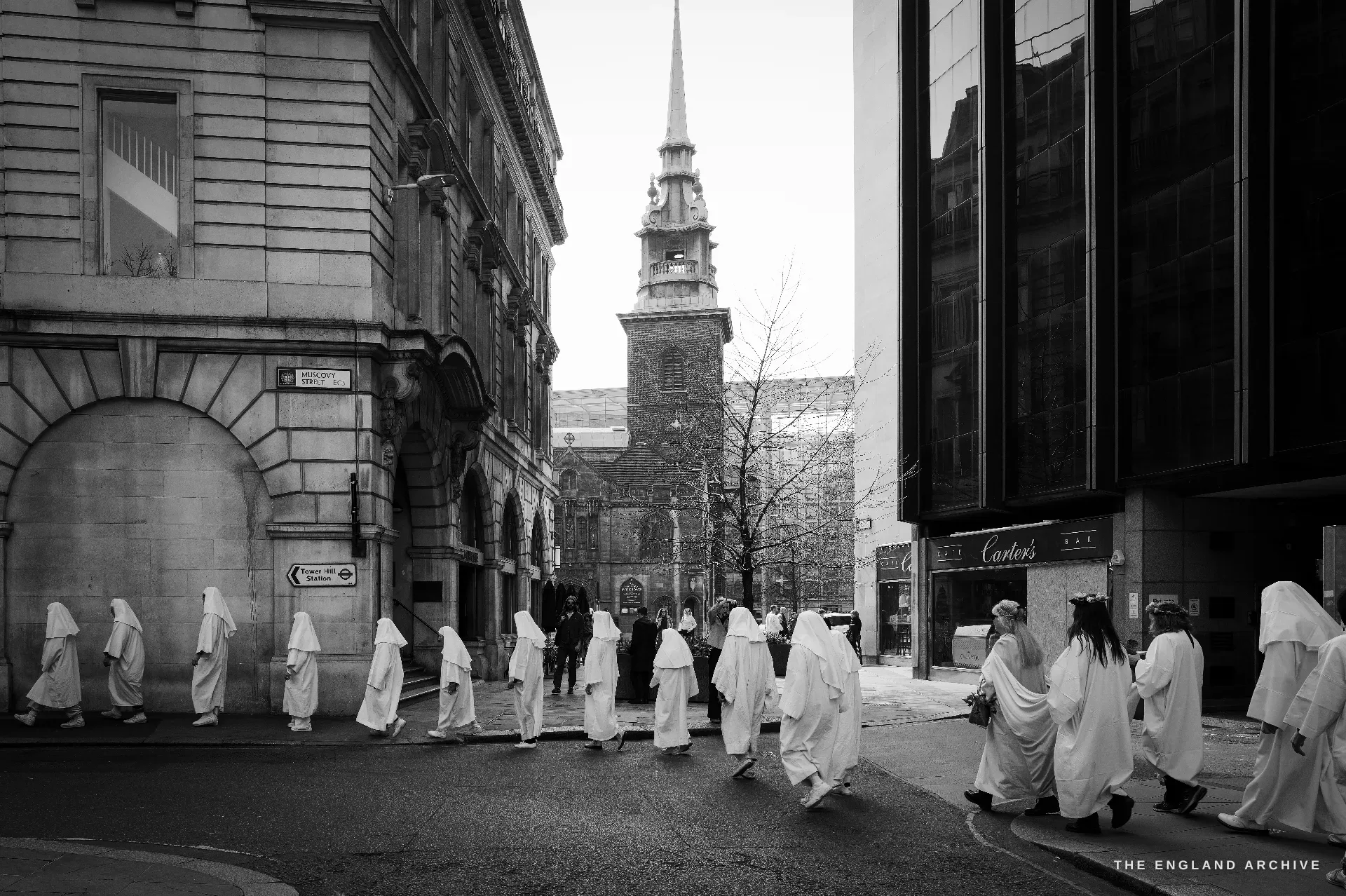
The Druid Order processes in silence through the City of London to Tower Hill, forms a circle, scatters seeds, and marks the turning of the year - as they have done since 1956.
Follow the Archive
Field dispatches and project updates. Published when there is something worth saying.
The pipeline
What’s coming next
The crafts and traditions the archive intends to document next, anchored against the Heritage Crafts Red List.
15 of 30 areas have material on them so far. The
names below are sized by how much archive lives at each place.
A name in bold type has work behind it; a quiet name is a place
still to visit.
England is not disappearing in fire or flood. It disappears person by person, quietly, on a Tuesday, when nobody is watching.
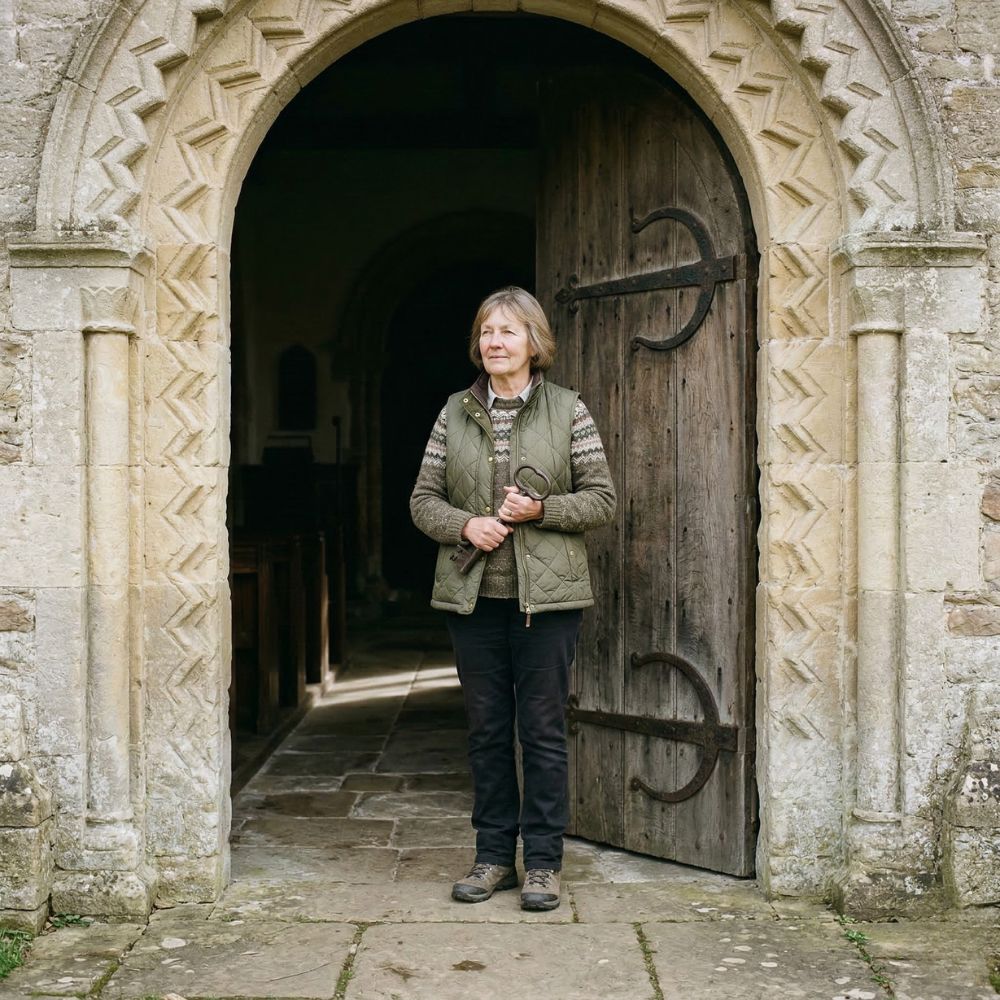
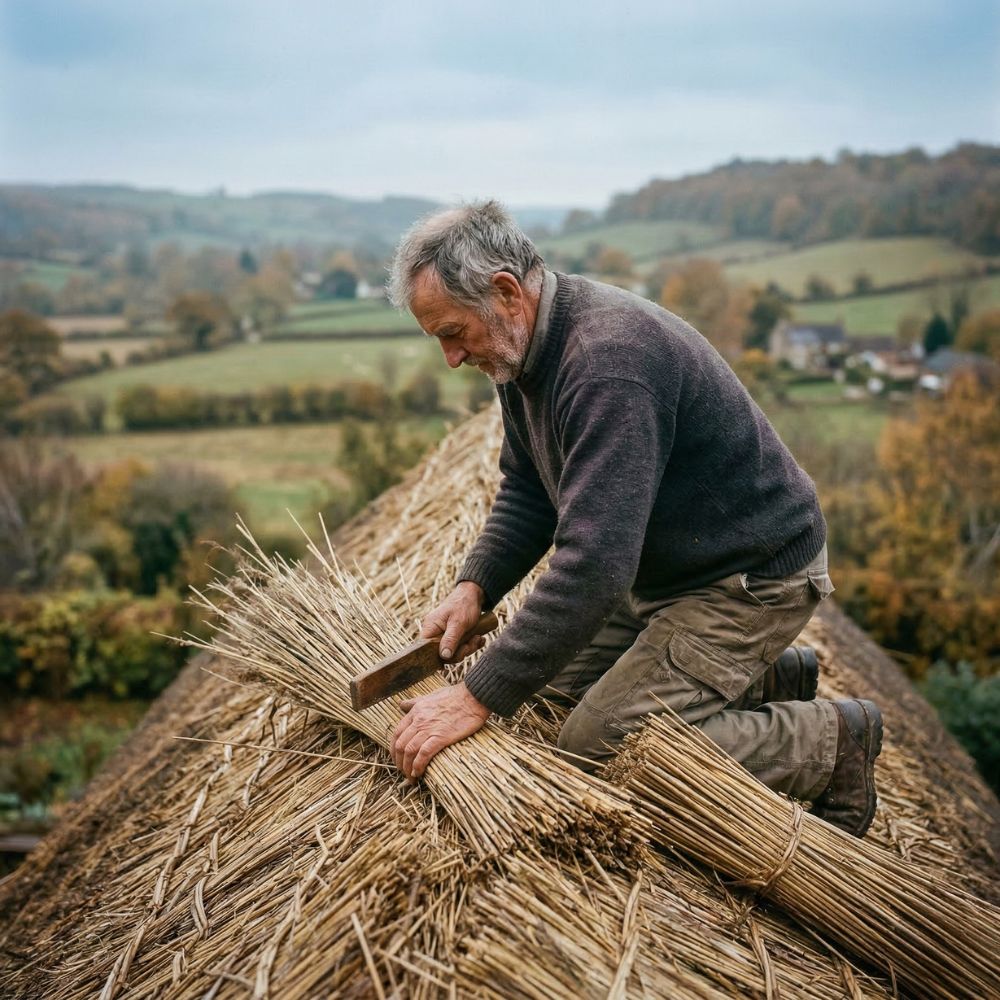
The thatcher retires and nobody replaces him. The churchwarden who has held the same keys for forty years finally hands them on. The hedgelayer who learned from his father - who learned from his father - quietly stops taking apprentices.
The England Archive is a documentary record of the traditions, customs, villages, landscapes, and living knowledge that make England what it is - and the people whose skill and commitment are keeping them alive. The craft, the place, and the person who sustains it are inseparable. When one disappears, the others follow.
We are documenting what is here - the events, the skills, the places, the people - before the last generation to carry them is gone. That window is not as wide as people assume.
The project begins, as most things do, with an outsider looking in. Someone who arrived in England and was genuinely astonished by what was still here - and increasingly alarmed by how quietly it was leaving.
The England Archive draws on the documentary lineage of Benjamin Stone (1897), Walker Evans (1941), and Simon Roberts (2009) - but asks a fundamentally different question. Not what does England look like, but who is keeping it alive, and who comes next.
Every subject belongs to one of six categories, each a different relationship between a person and England's living heritage. Priority is set by urgency - how much time remains before the knowledge is gone.
<10Remaining practitioners of several Red List crafts
Crafts including swill basket weaving and fan vaulting have fewer than ten practitioners left in England. The Heritage Crafts Association tracks them individually because the numbers are that small.
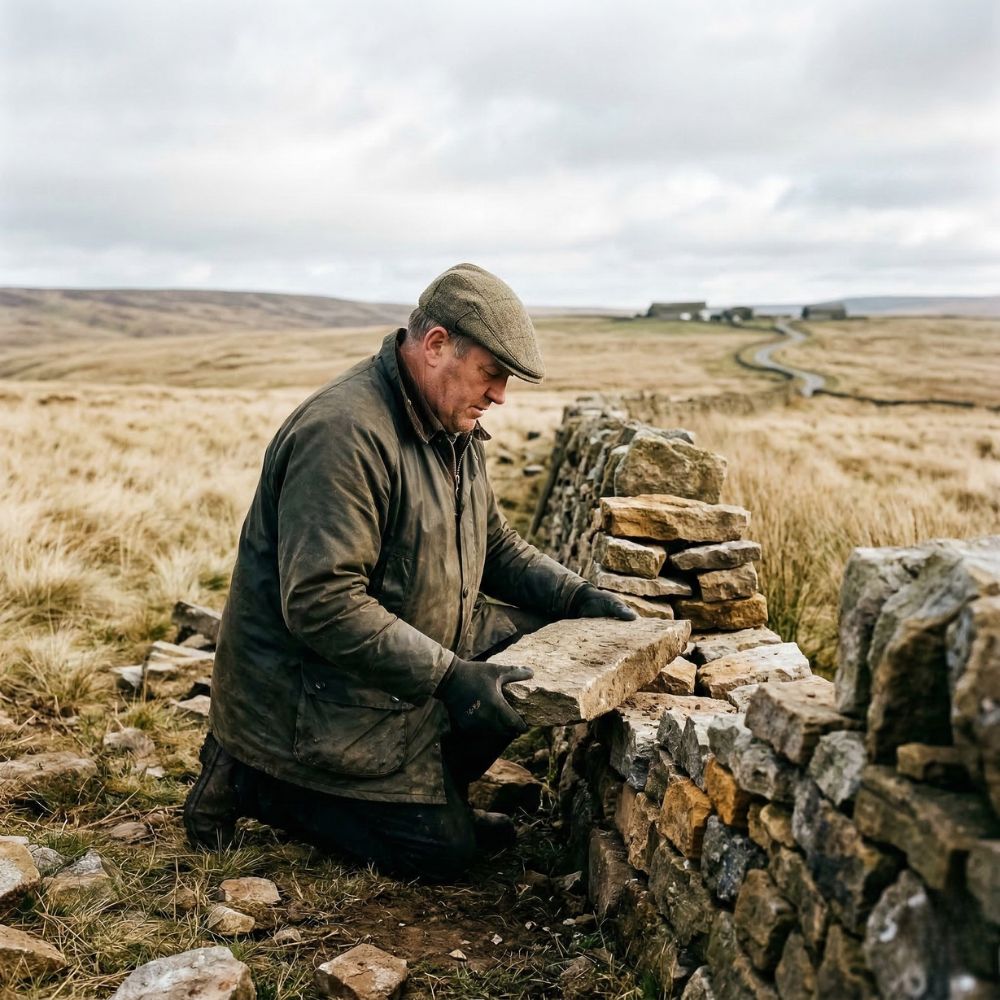
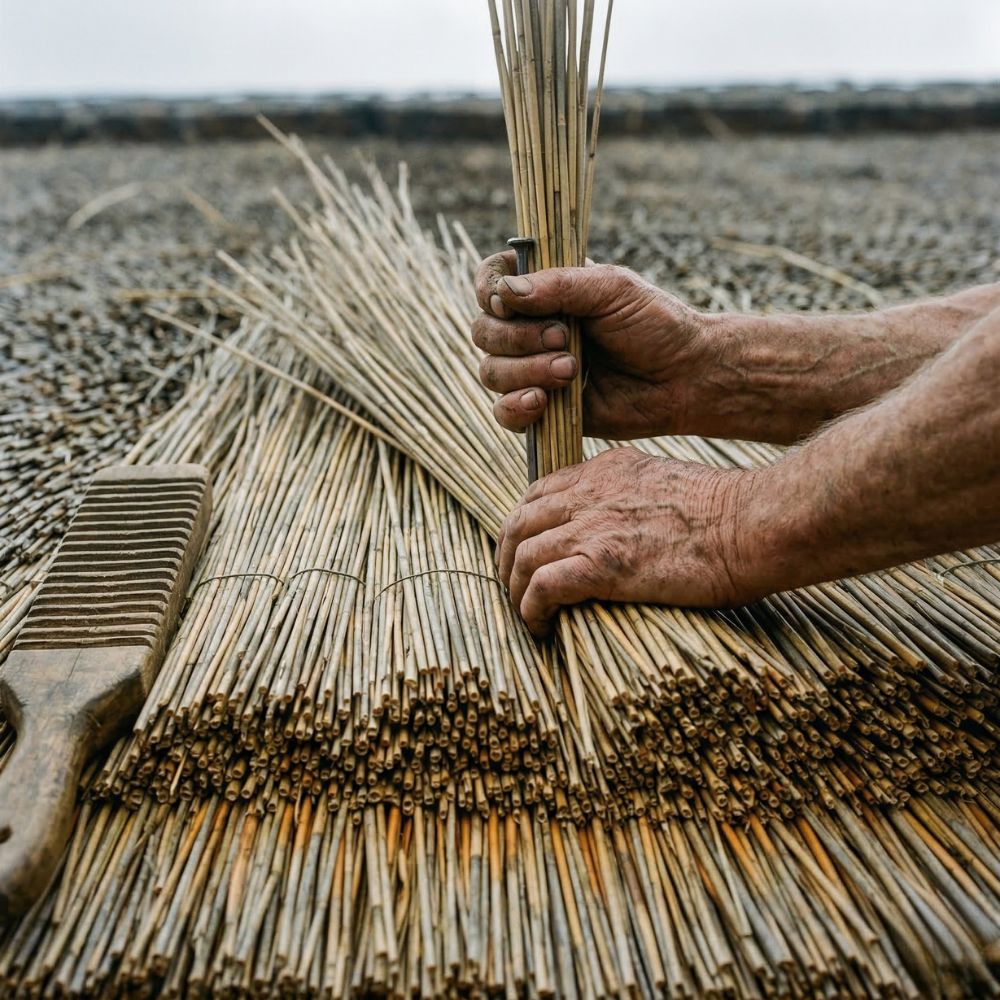
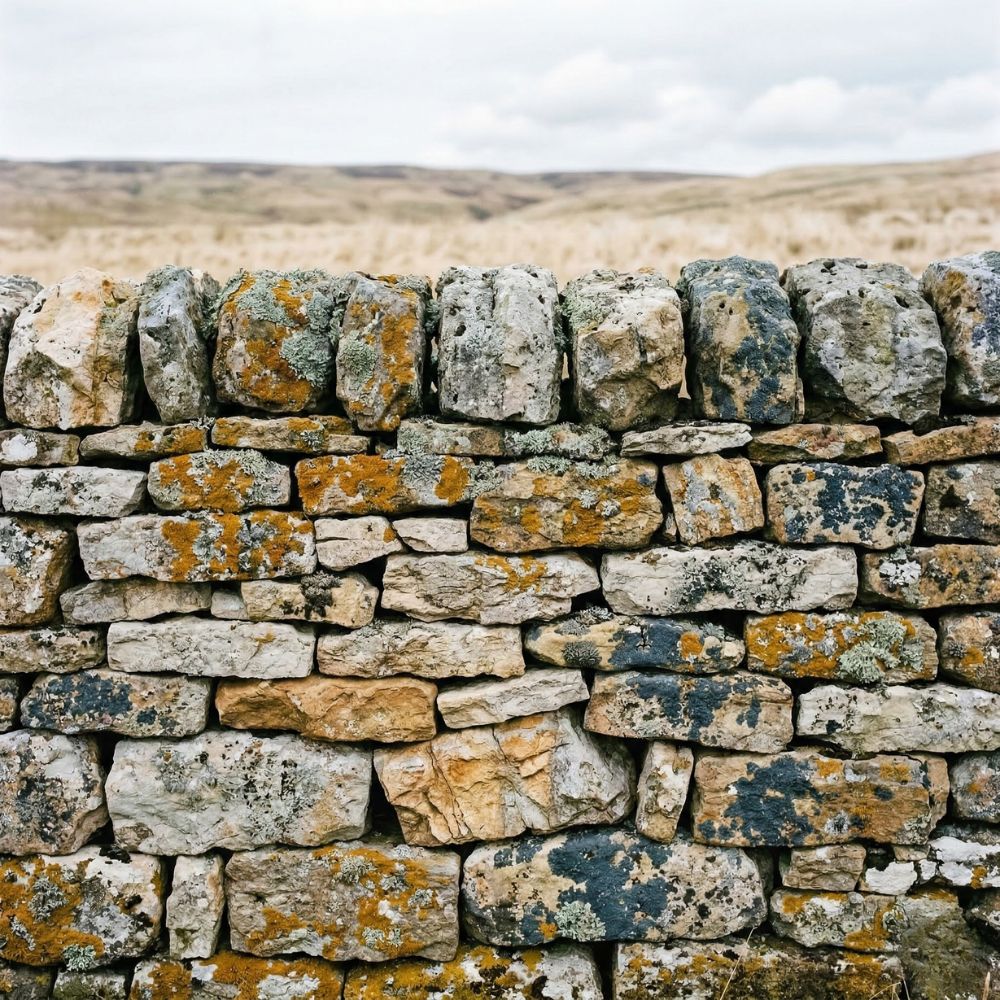
The 2025 Heritage Crafts Red List records 72 crafts as critically endangered. Skills like thatching, dry stone walling, and swill basket weaving have critically few practitioners left.
5Crafts classified extinct
The same 2025 edition classifies five crafts as extinct, lost within the past generation. Once the last practitioner dies, the knowledge is gone - not archived, simply gone.
10yrWindow remaining
Demographic modelling suggests a ten-year window to document the generation that still carries these traditions first-hand. After that, we are documenting memory, not practice.
Year One Targets
What we intend to deliver
The England Archive launched in 2026 with a three-year plan. These are the Year One goals.
8Regions to document
6Subject categories
100+Subjects to identify
50+Subjects to photograph
1:1Print delivered per subject
3yrTotal project timeline
Organisations & Supporters
Organisations & Partners
A documentary archive lives or dies by the relationships it builds with the institutions that hold the country’s memory. Below is the public register of supporters and active partners; the full record - including creative advisors, mentors, and representation - lives on the partners page.
The archive’s curated record runs through How it’s Made - photographed by the archive, edited, and held to the editorial bar. The Bench is the lighter, contributor-led register: working craftspeople, apprentices, students, and schoolteachers documenting their own process and submitting it under their own name and copyright.
Same archive, different register. The letters page to the essay. If you make something with your hands and want it on the record, the door is open.
Founded the NPA with the same conviction: that the traditions of England were disappearing and needed systematic documentation before they were gone.
Walker Evans
Let Us Now Praise Famous Men, 1941
Demonstrated that the people who hold a culture together are more important to document than the landscape. The faces carry the history.
Bernd & Hilla Becher
Typological Studies, 1959-2007
Proved the power of systematic serial documentation: photographing the same subject type across many locationss what a single image never could.
Simon Roberts
We English, 2009
The most recent precedent: a long-form survey of English life with the rigour the subject demands. The England Archive asks the next question.
Archive
Get Involved
We are building across eight regions
If you know someone whose knowledge should be on record - a craftsperson, a keeper, a carrier of tradition - we want to hear from you. If you work in heritage, folklore, conservation, or publishing, even better.