Makers
Michael Dennett
Boat Builder, Founder
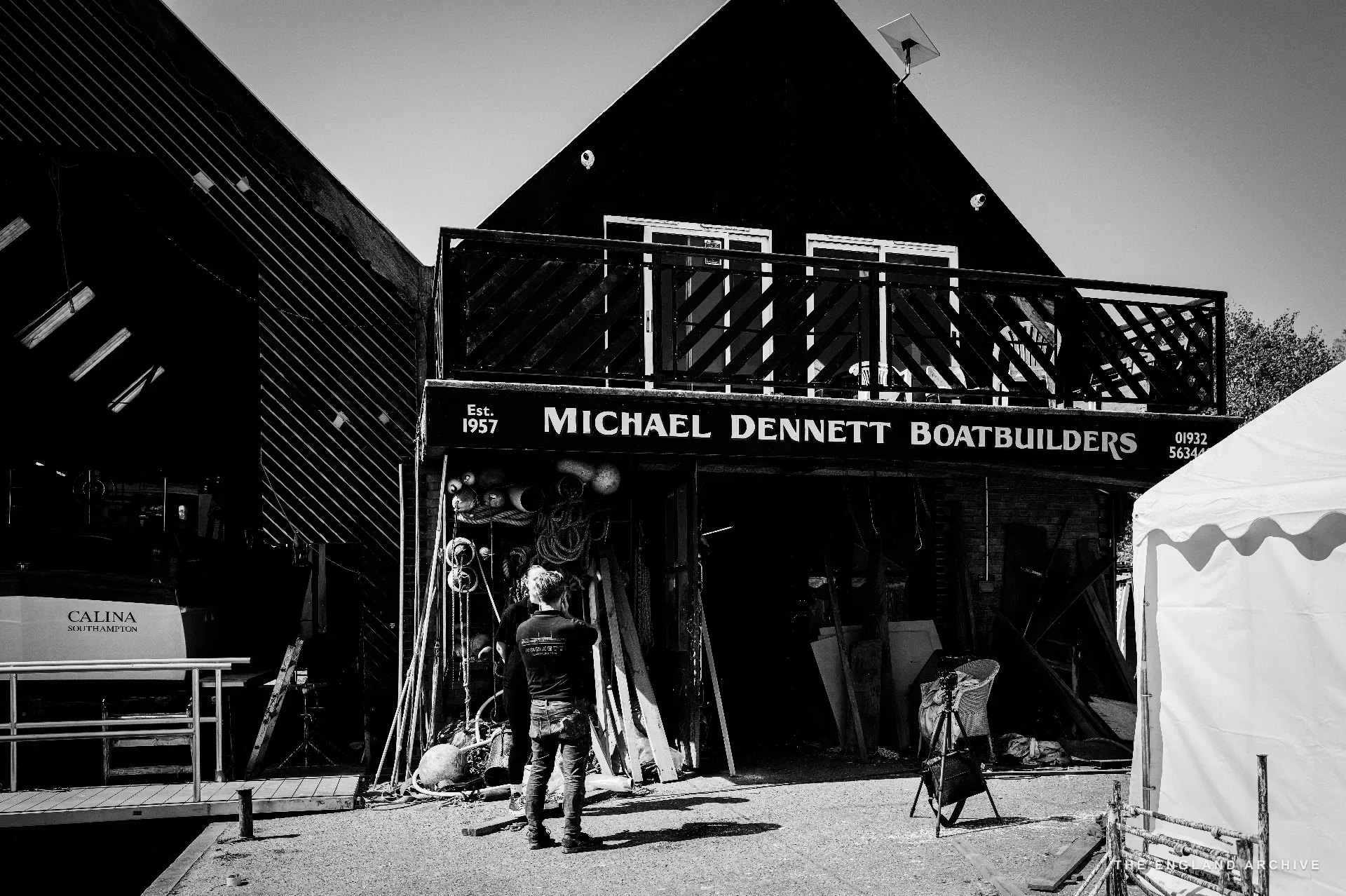
Dennett Boat Builders, Laleham, Chertsey
Boat Builder, Founder
Dennett Boat Builders, Laleham, Chertsey
When they come in here, the work is what fits them the best. They enjoy it. They can focus on it. They are really good at it.
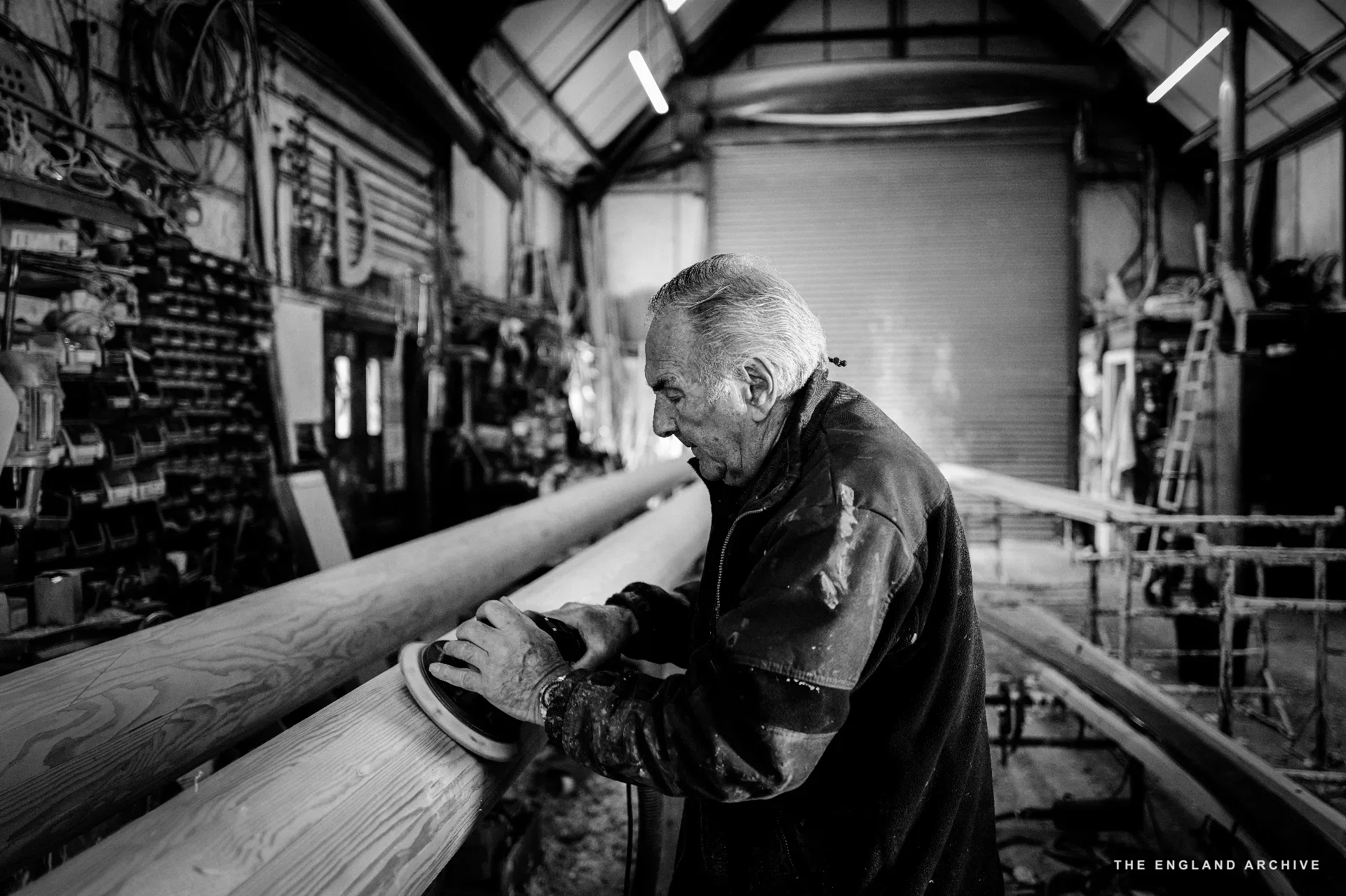
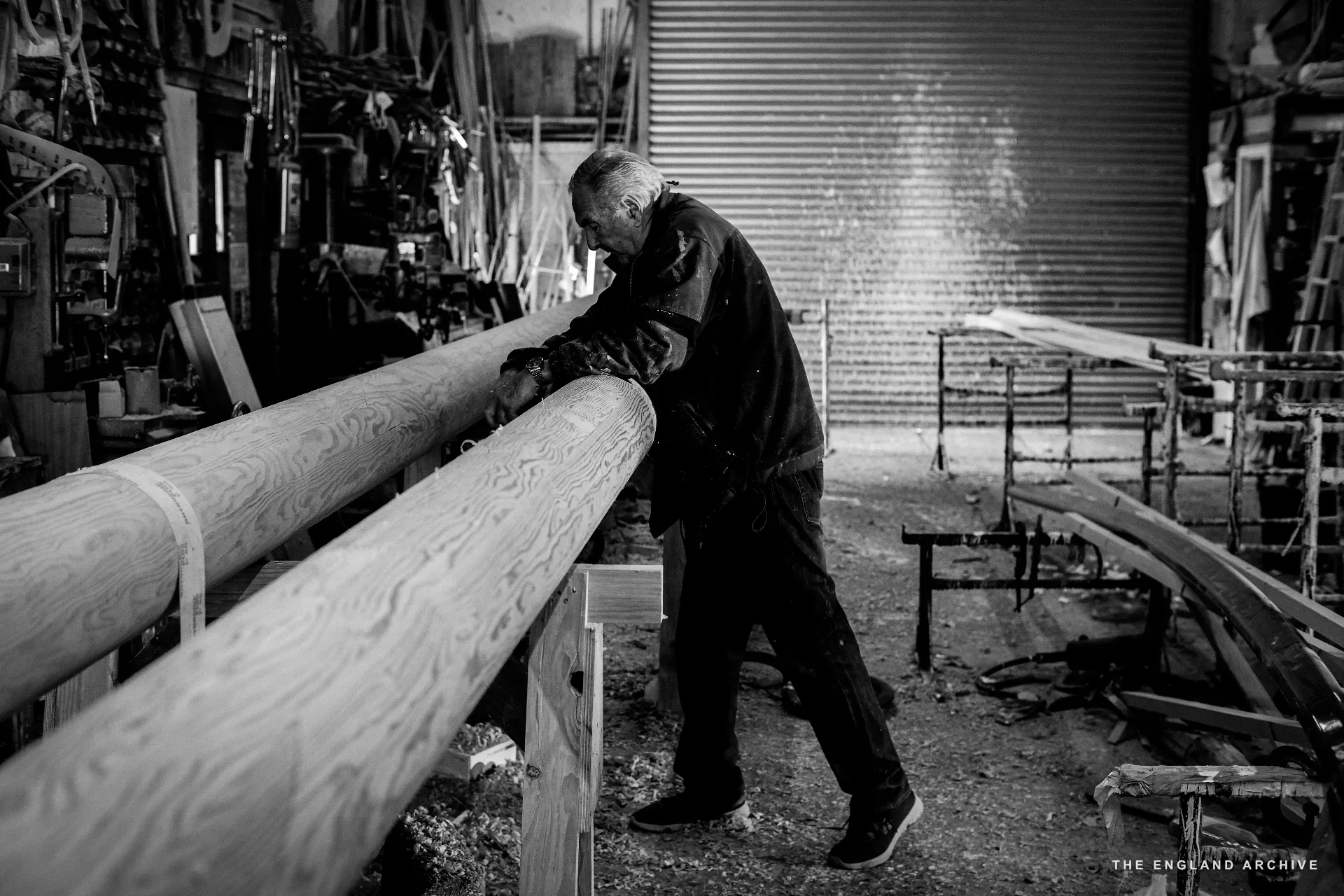
Stephen’s tour of the yard ended at the big workshop at the back. He pushed open a door and said, that’s Michael. I walked in. At the far end of a space that looked to have accumulated forty years of tools across its benches, an eighty-three-year-old man was bent over a pair of long wooden masts on stands, running a hand sander along the length of them. He looked up, put the sander down, and came over.
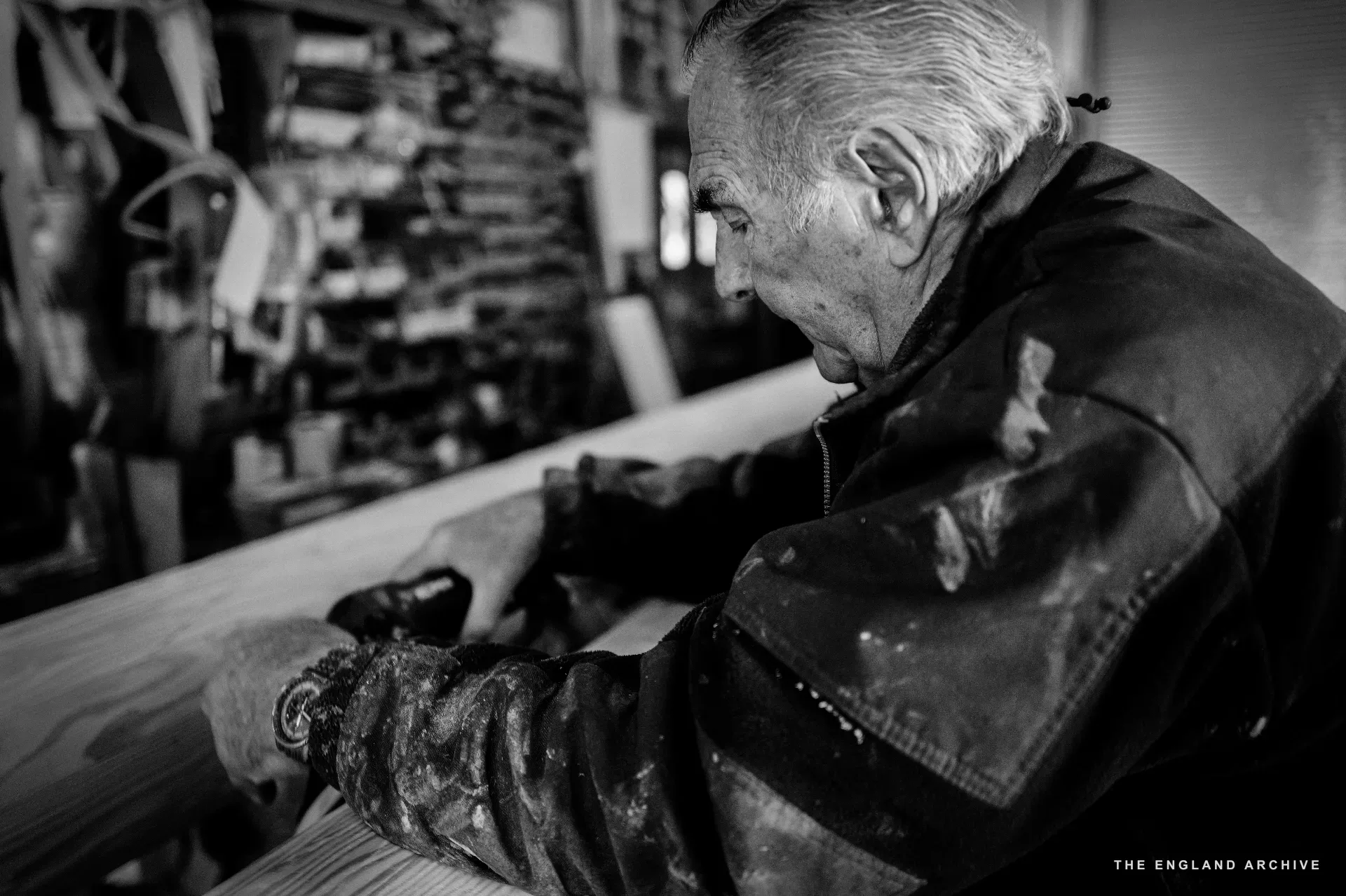
At eighty-three, Michael is still at the bench every day. Most founders of small family yards his age are home by lunchtime; he will not have it any other way, and Stephen does not try to talk him out of it. Standing still, he carries the frailty of his years. It vanishes the moment he picks the sander back up. There is real strength in him then - in the arms, in the posture, in the way he bears down on the wood and reads the grain through the tool - and the masts come out smooth under his hand. Watching that, ‘frail’ is plainly the wrong word.
Michael’s story runs in the order the decisions came, the names of the yards that trained him intact. He started at fifteen at Horace Clarke’s Boatyard in Sunbury, as a general assistant. He apprenticed through Walton Yacht, then finished his apprenticeship at George Wilsons Yard in Sunbury. By twenty-two he was self-employed, working at first out of the back of a van, taking whatever weekend restoration came his way, then renting a shed as the work grew. In 1988 he opened the yard at Laleham with Stephen, who had been following him around workshops for most of his life by then. Dennett Boat Builders has been at Laleham ever since.
That sequence of yards - Horace Clarke, Walton Yacht, George Wilsons - is now part of the archive’s record of mid-century Surrey Thames boat-building. None of those yards survive in their original form. The skills they taught Michael survive in him, in the shape of what he has built and restored over the sixty-four years since he first walked into Sunbury at fifteen, and in the practice he has now passed on to Stephen and is in the process of passing on to Stephen’s sons.
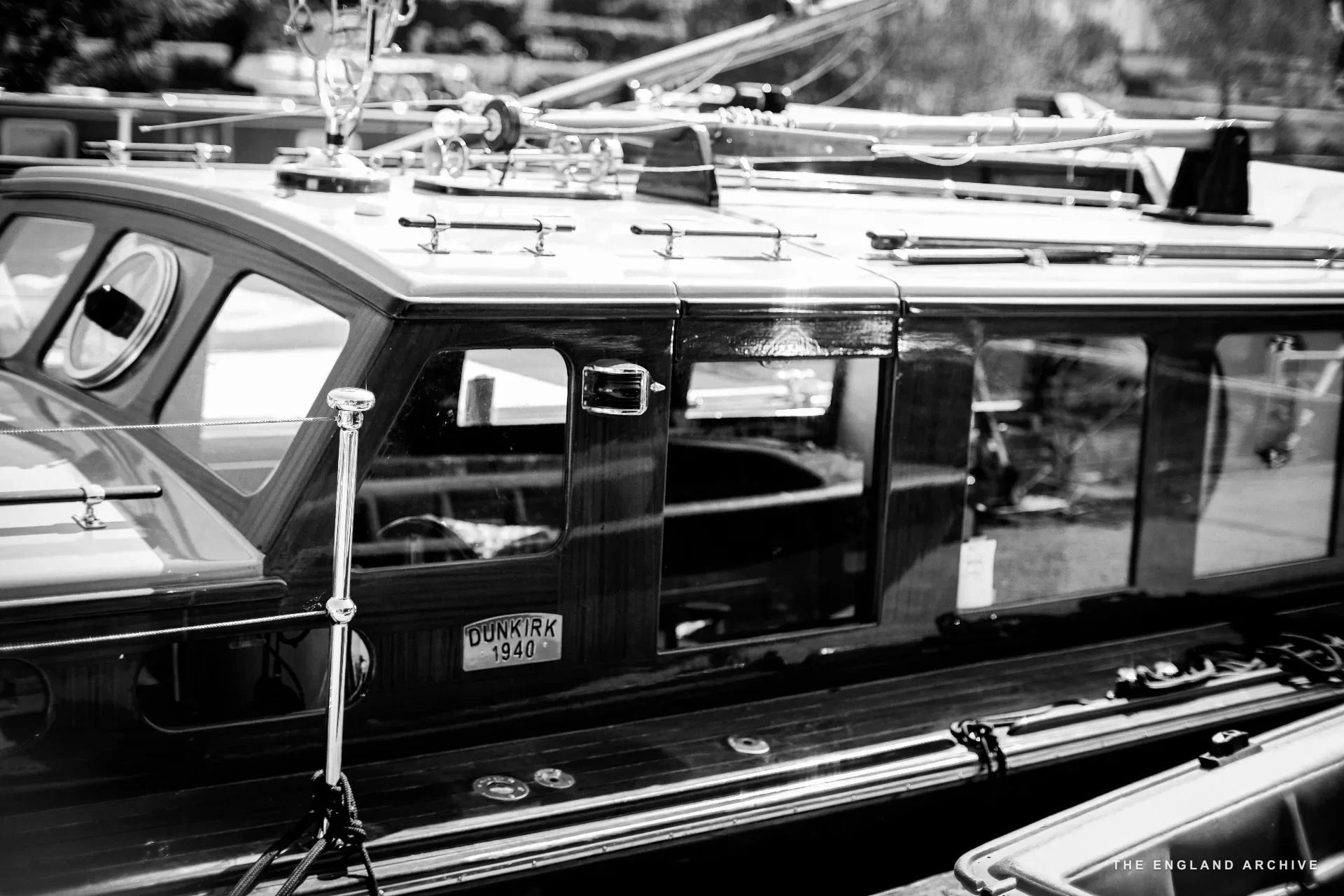
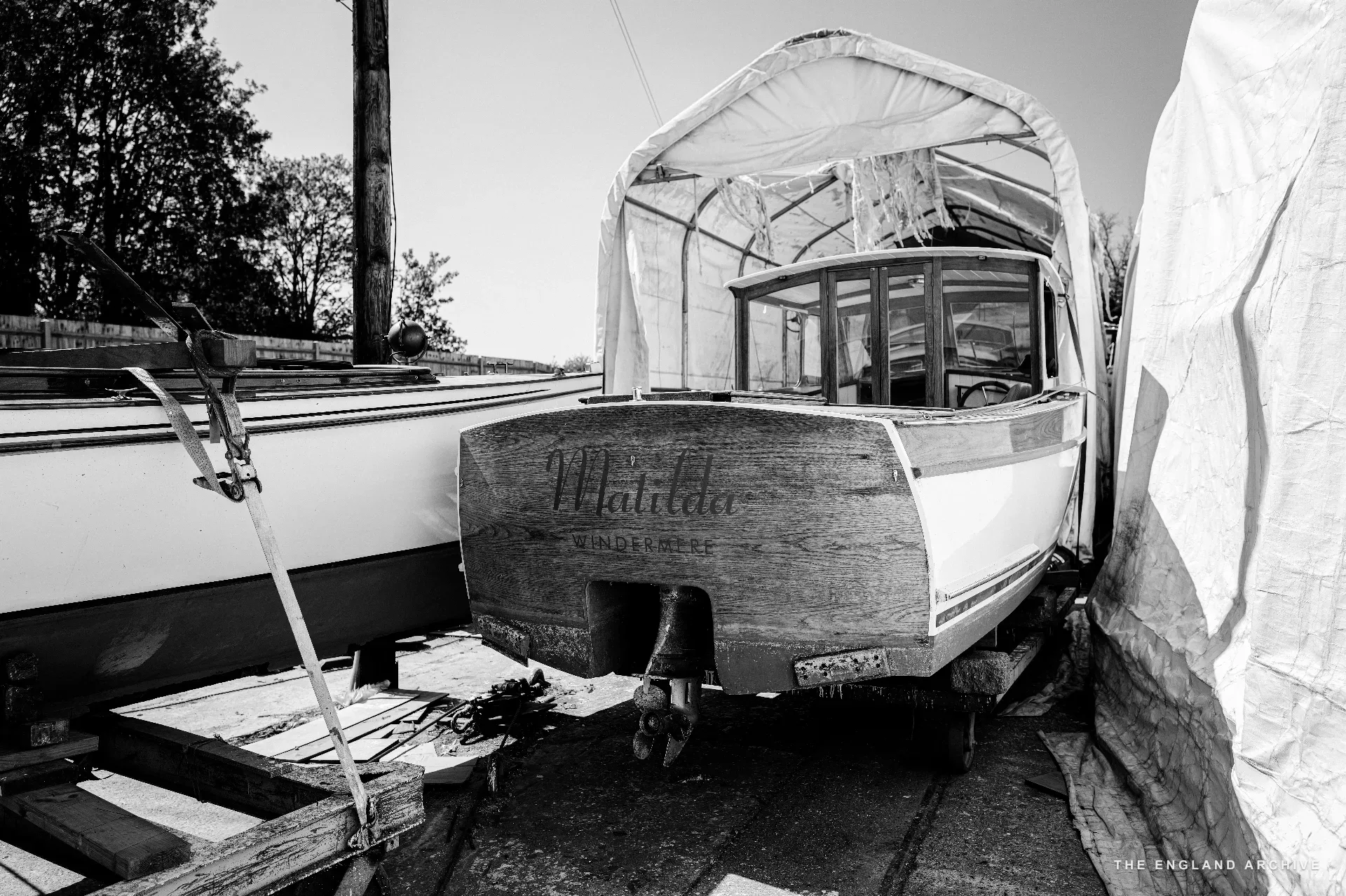
Michael has personally restored the majority of the Little Ships of Dunkirk that have come through any English yard. His own claim - said plainly, between sander passes - was a majority. The Association of Dunkirk Little Ships maintains the canonical register and the archive will verify the precise figure on a return visit. What is not in dispute is the yard’s standing in the Thames restoration community: when a Little Ship needs rebuilding, Dennett is the yard the owners come to. There was one in the yard on the morning of the visit, parked in plain sight under a tarpaulin, looking from outside like any other tired wooden hull awaiting its turn.
The Little Ships are the civilian Thames pleasure craft that crossed the English Channel in May and June 1940 to help evacuate more than 300,000 Allied troops from the beaches of Dunkirk. Many were small motor launches; many were lost; the survivors are a registered heritage set with their own association. Their continued existence in working condition is principally a question of whether the small handful of yards that know how to keep them going can be kept going themselves. Dennett is the most active of those yards, and Michael is the craftsman who has done the work.
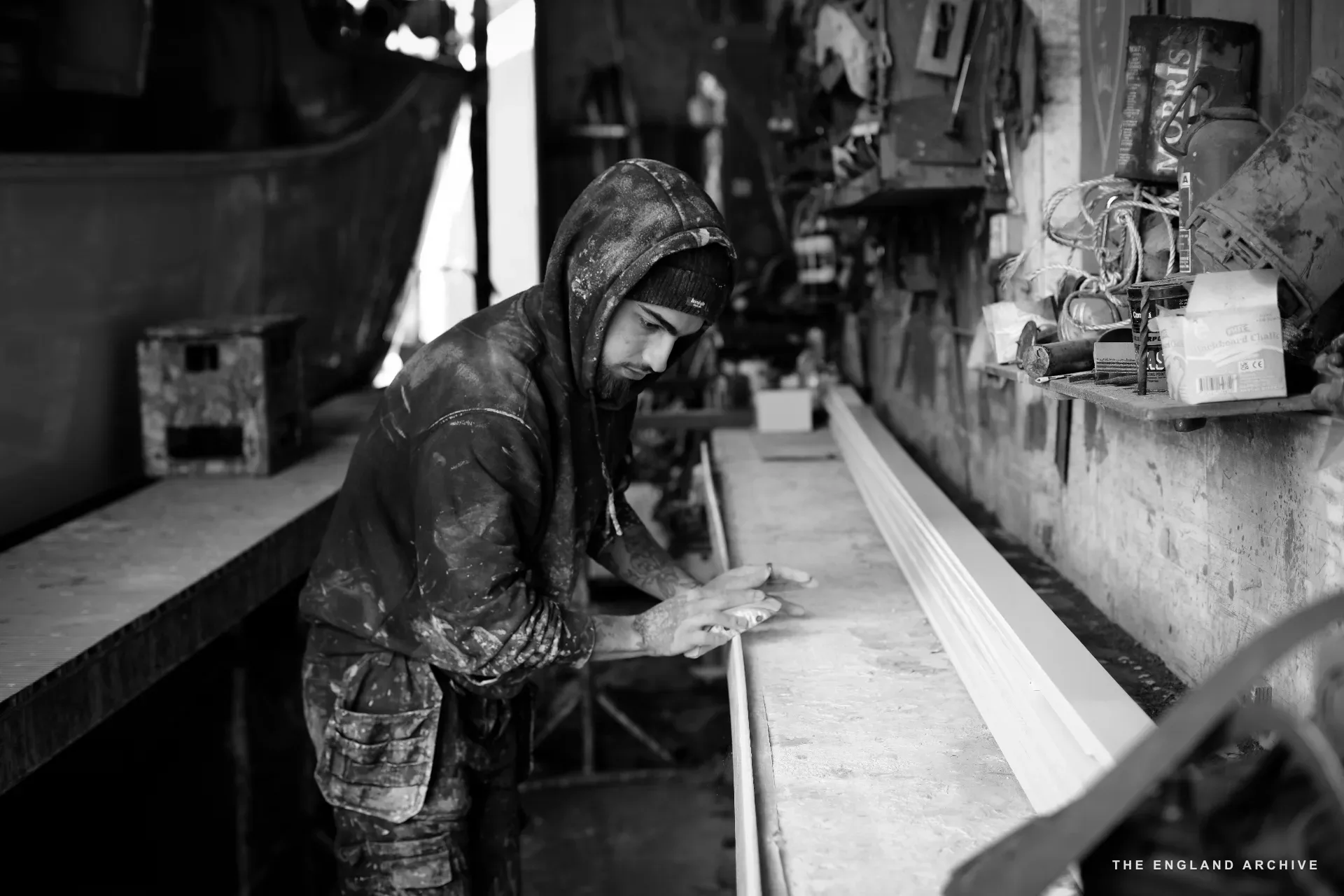
Michael has always taken apprentices, and he has a particular eye for young people the standard school system fails - the ADHD and dyslexic learners who cannot settle in a classroom and turn out to be exactly the kind of people a workshop needs. In his telling, the work is simply what fits them best: they enjoy it, they can focus on it, they are good at it. Some stay on as full-time craftsmen at the yard; others leave to start their own small businesses. Either way, as he puts it, the craft continues.
This is not a managed programme with paperwork and a council scheme. It is the older form of apprenticeship: a young person walks in, the yard takes them, the work teaches them, and over years they either become craftsmen or they don’t, and the ones who do leave with a trade in their hands. Michael has been running this practice for most of his working life. He does not advertise it. He does not make speeches about it. He has simply done it, year after year, and a real percentage of the yard’s working capacity in any given decade is the cumulative product of that practice.
“A lot of them stay on and become full-time craftsmen at the yard. Others go off and start their own little businesses. In either case, the craft continues.”
Stephen, his own son, was the earliest and most obvious apprentice - effectively from the age of two, on Michael’s own account, in a workshop the boy could remember being in before he could remember anything else. The apprenticeship that produced Stephen is the same form of apprenticeship Michael now runs with the young people who walk into the yard.
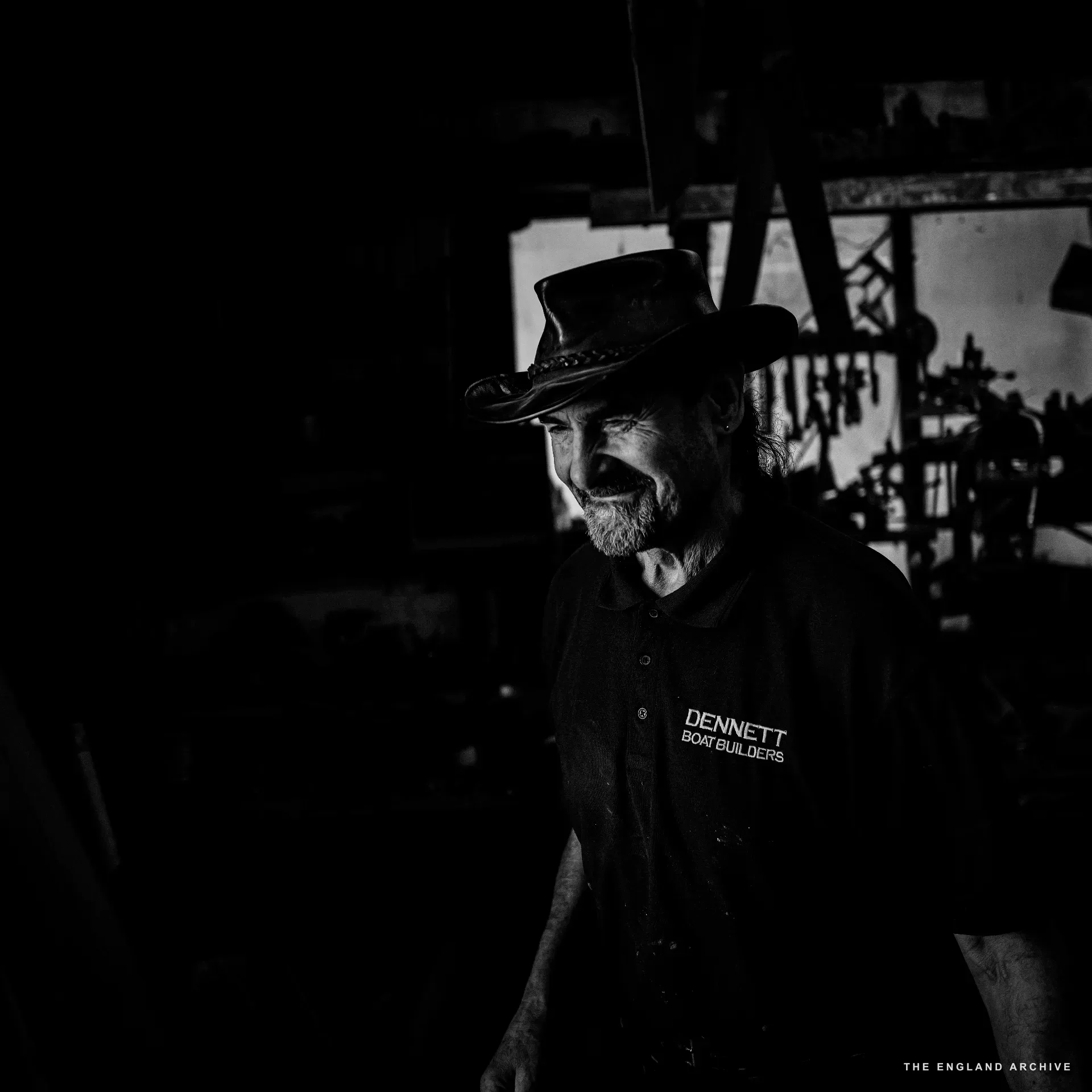
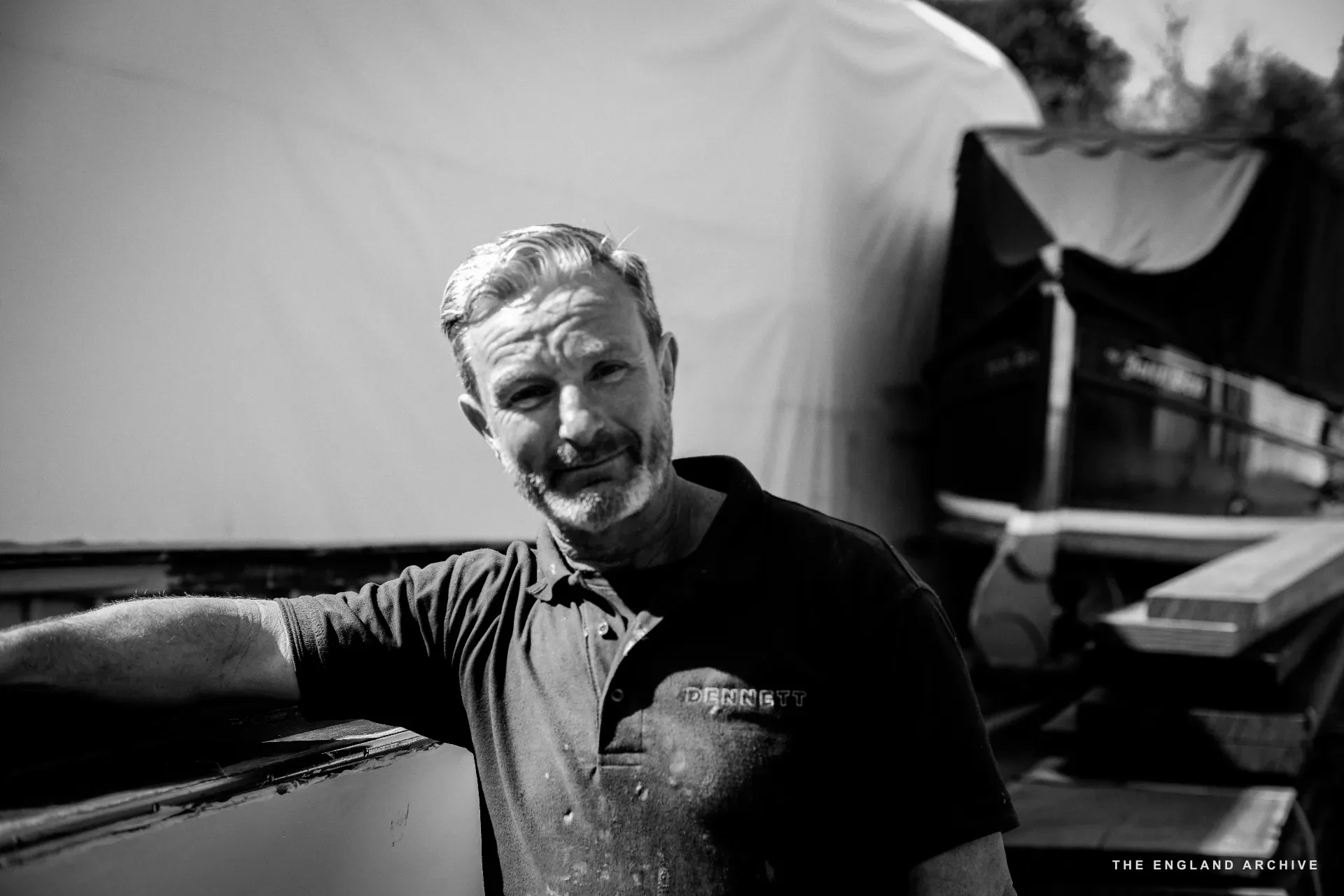
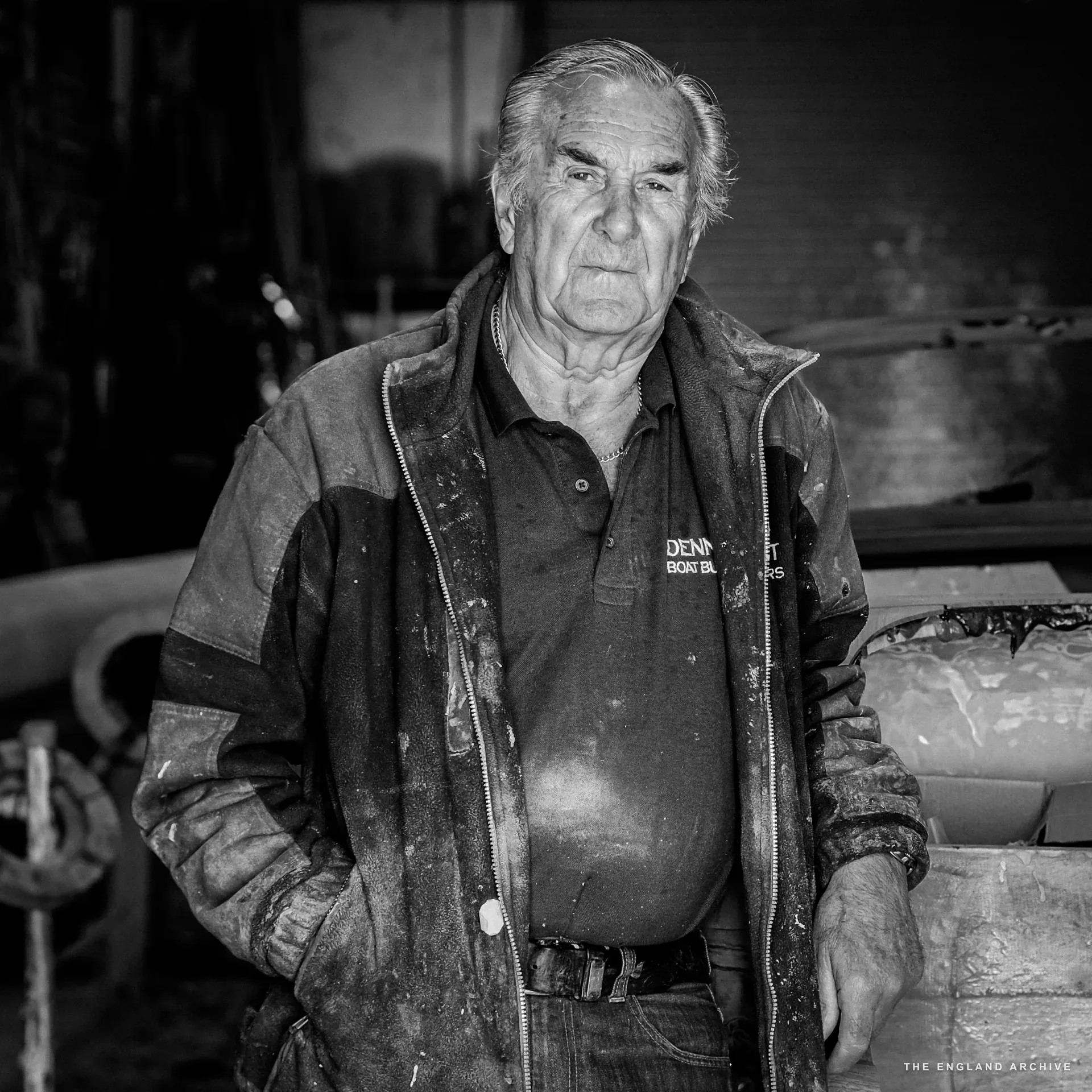
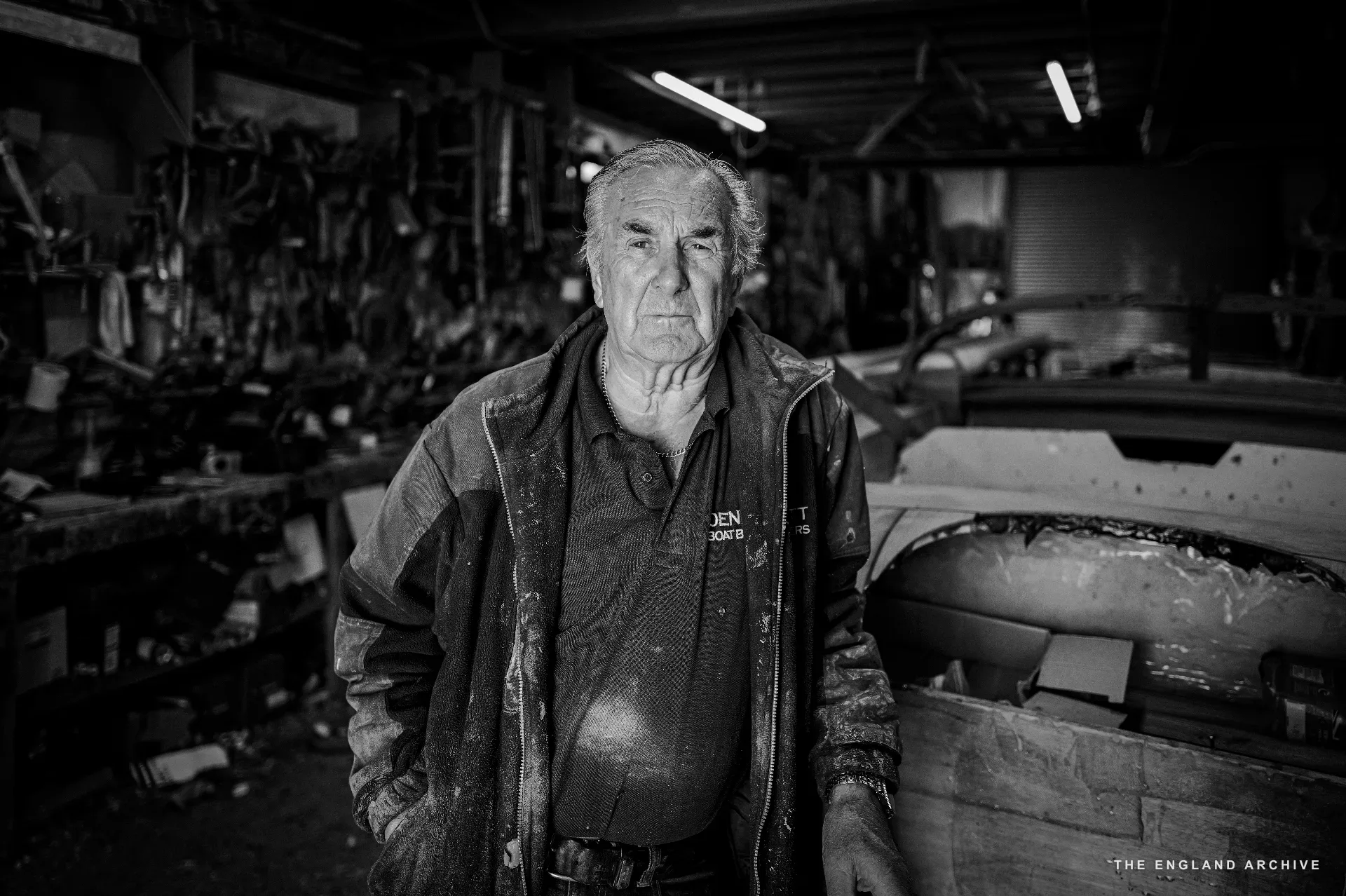
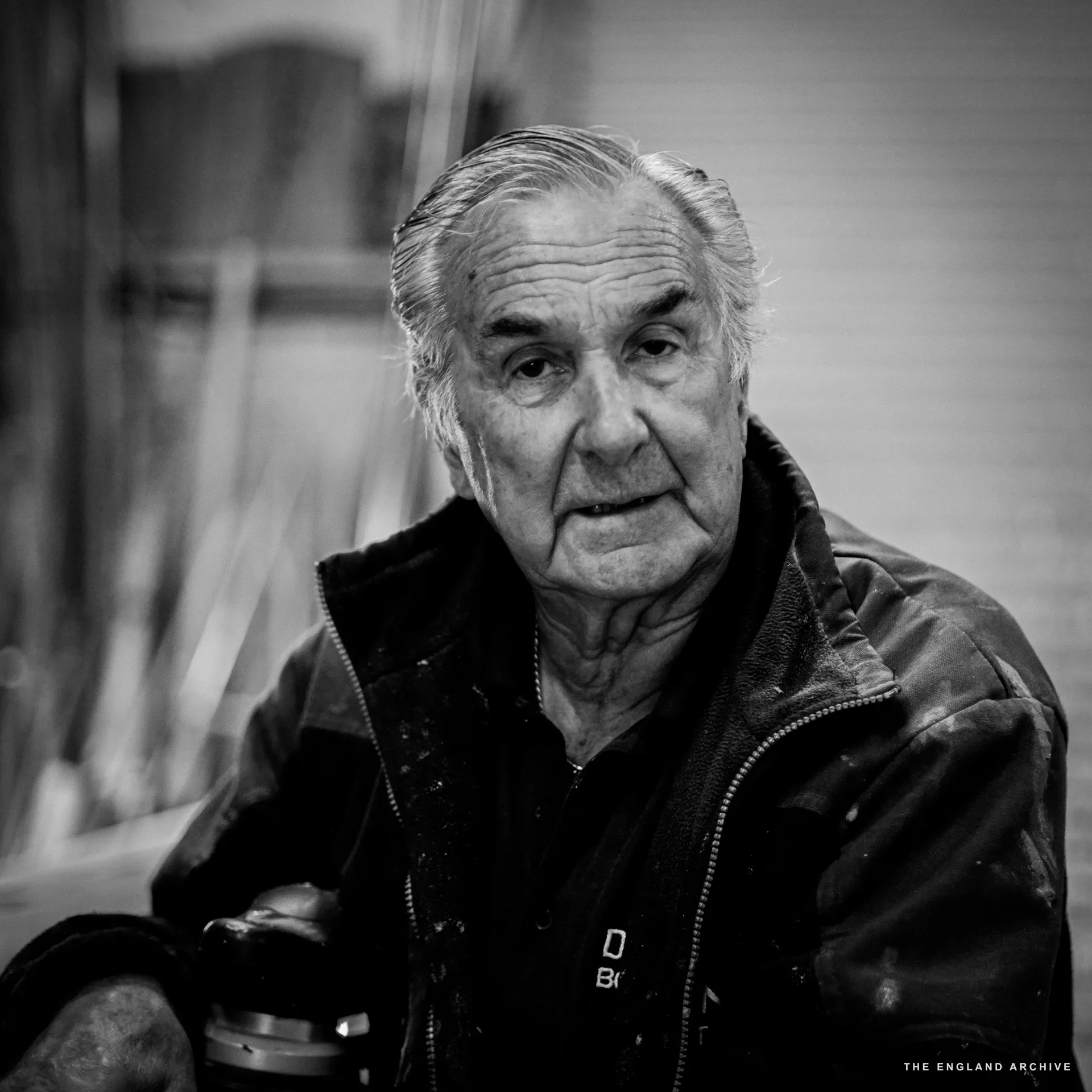
For the portrait, Michael needed no coaxing. He is easy in front of a camera in the way of someone who has been photographed at his own bench for decades: he does not perform, he simply stands where he stands and lets the lens look at him. The frames were made on the Bronica, on film, a few feet from the masts he had been sanding when I walked in.
Stephen came back into the workshop after a few minutes - he had ten minutes before Lucy was due to arrive to film social media content. I asked him to stand next to his father. We made the joint portrait there: father and son in the same frame, in the same workshop, at the same benches they have worked side by side at since 1988 and, in Stephen’s case, effectively since childhood. Whatever comes back from the lab on that roll is, for the archive, the defining image of the Dennett yard in 2026.
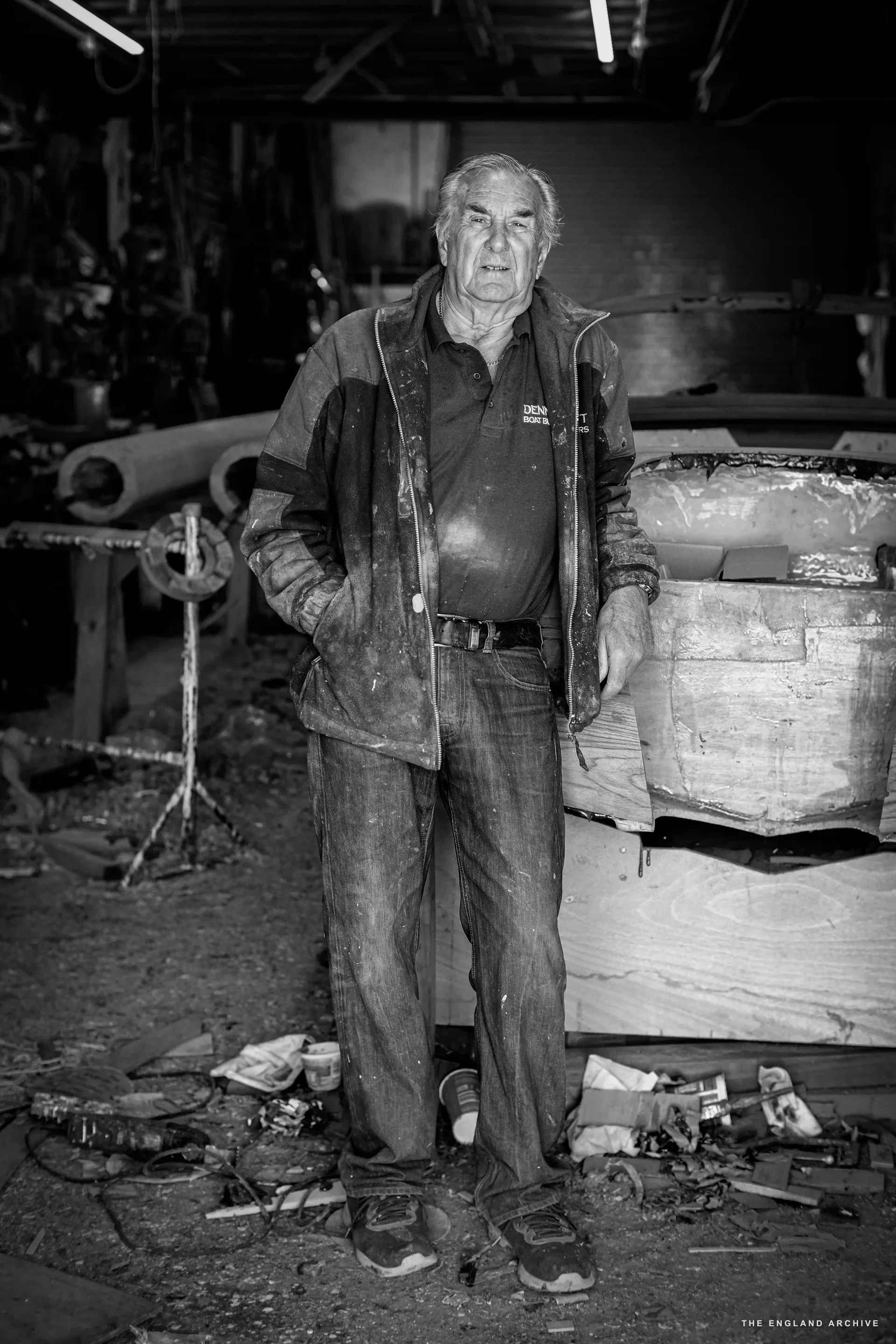
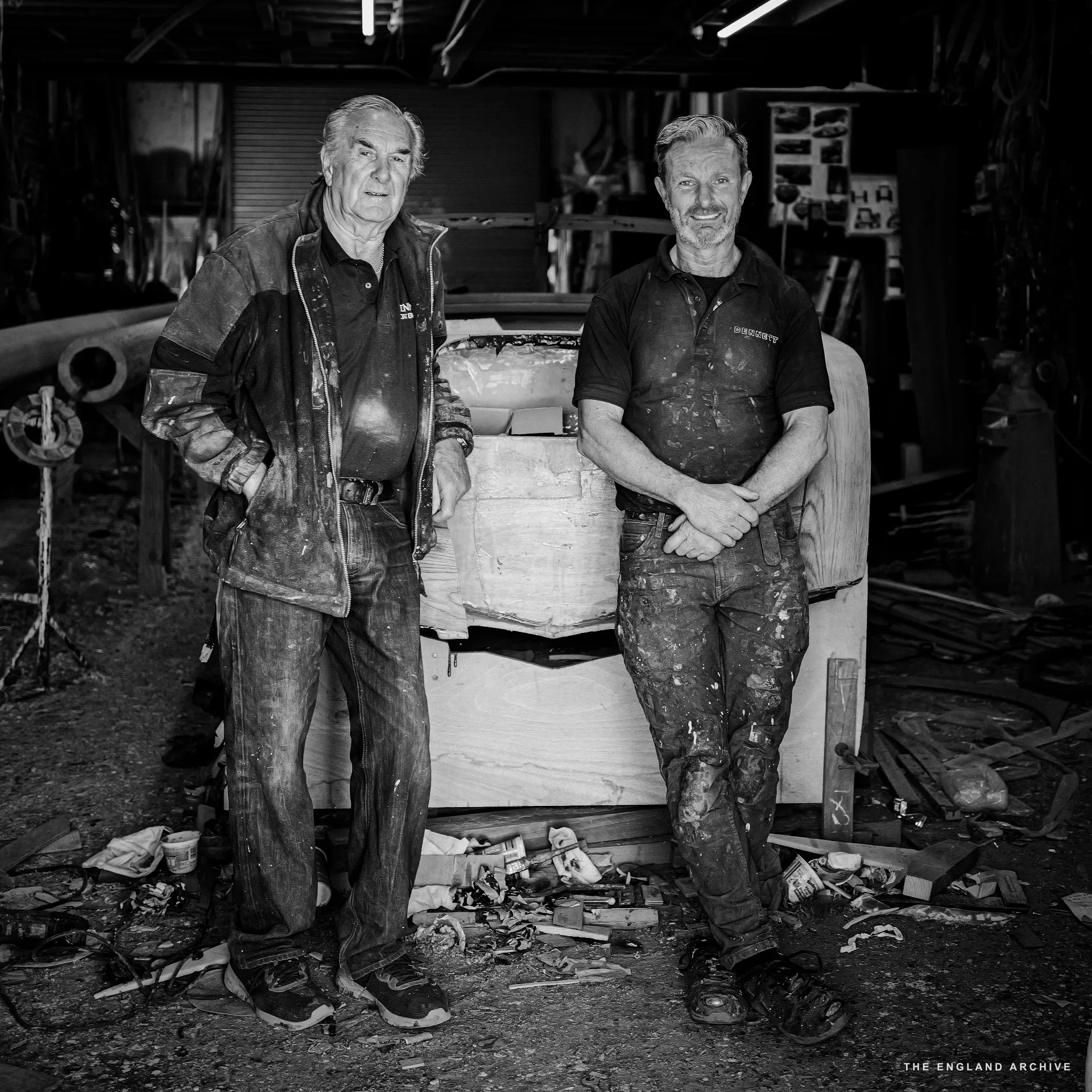
This is the archive’s single-visit record of Michael Dennett, made on a working morning at his yard in April 2026, when he was eighty-three and still hand-sanding masts. The line of yards he came through, the practice of apprenticeship he runs, the Little Ships he has restored, and the family chain that runs from his teachers in Sunbury in the late 1950s to his grandsons (Stephen’s sons, two of whom are about to start their own apprenticeships at Laleham) are all surfaces on which the archive will continue to make a record. Michael’s name, alongside Stephen’s, is one the archive expects to come back to.