Makers
Stephen Dennett
Boat Builder
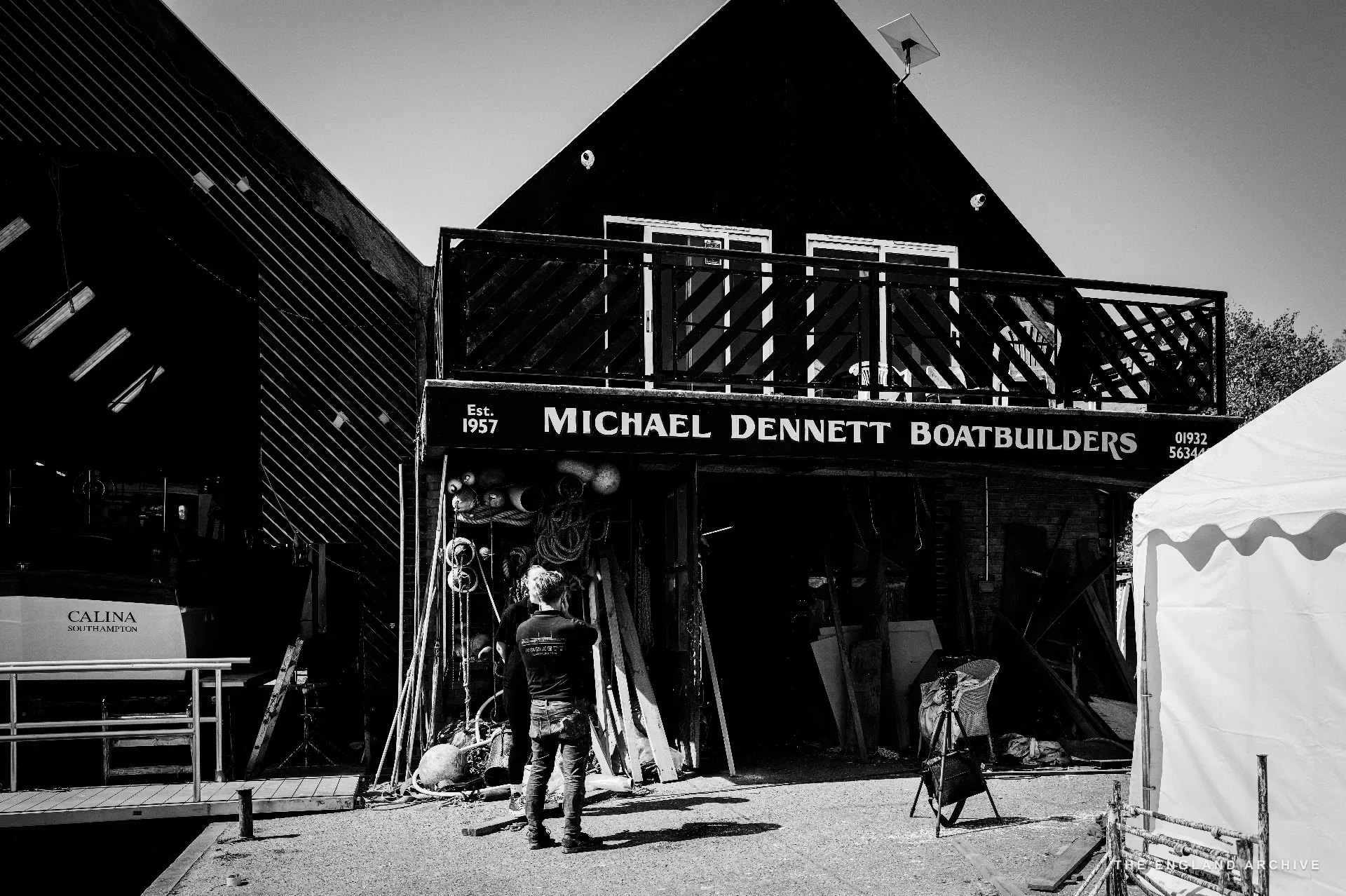
Dennett Boat Builders, Laleham, Chertsey
Boat Builder
Dennett Boat Builders, Laleham, Chertsey
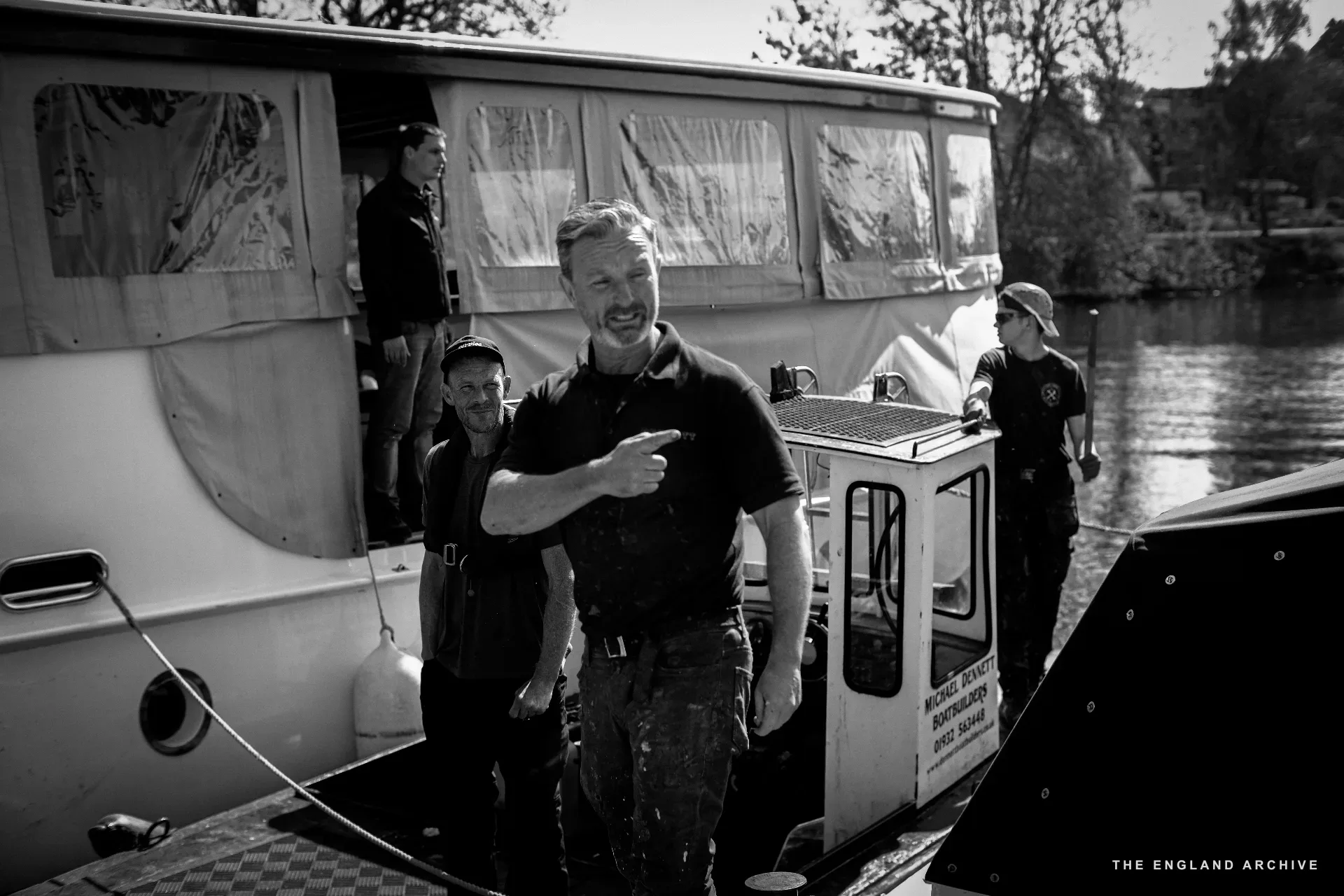
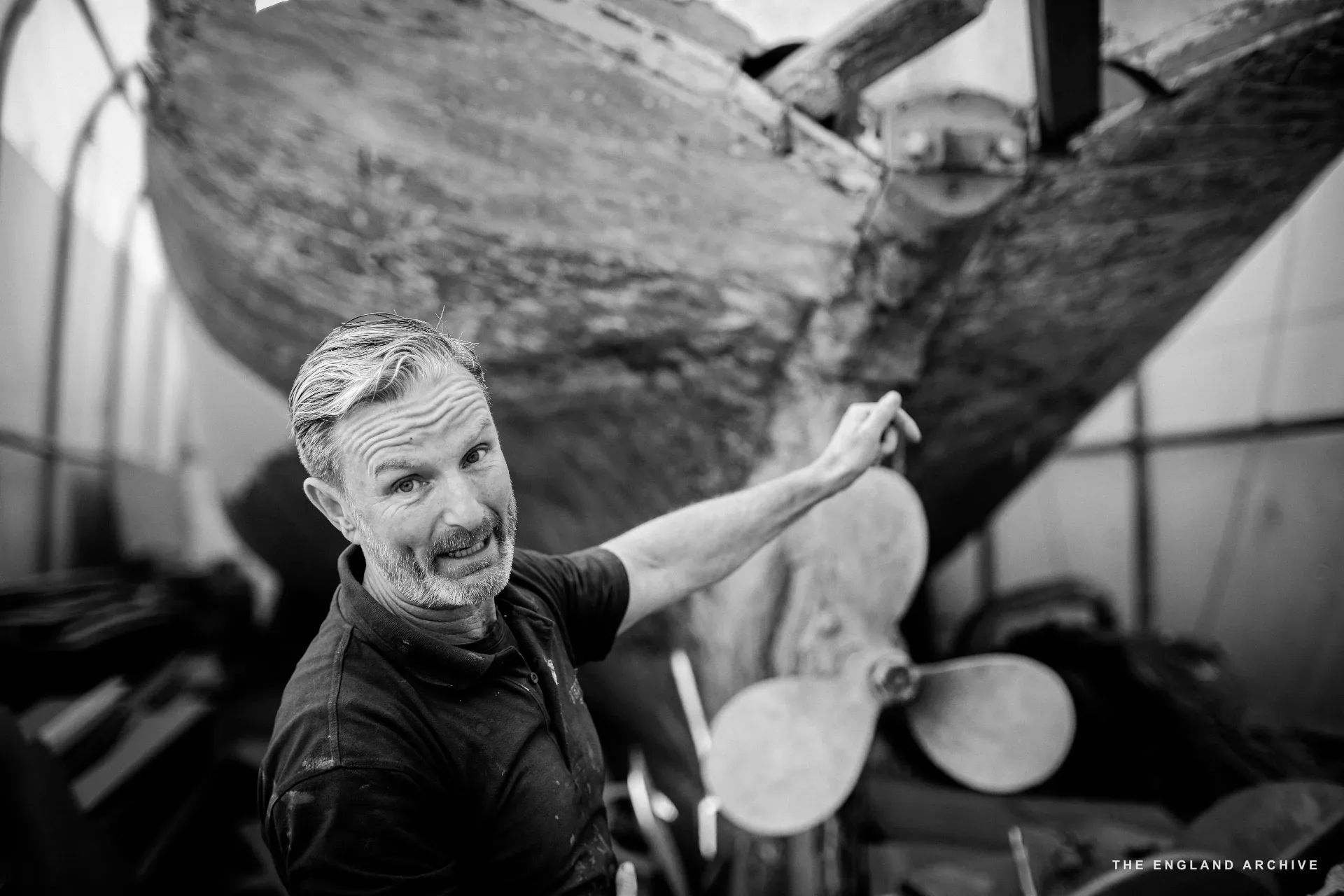
He pointed at a boat behind us and started telling me what it was. Then he said follow me, and led me to another boat, and told me what that one was, and then to another boat, and another.
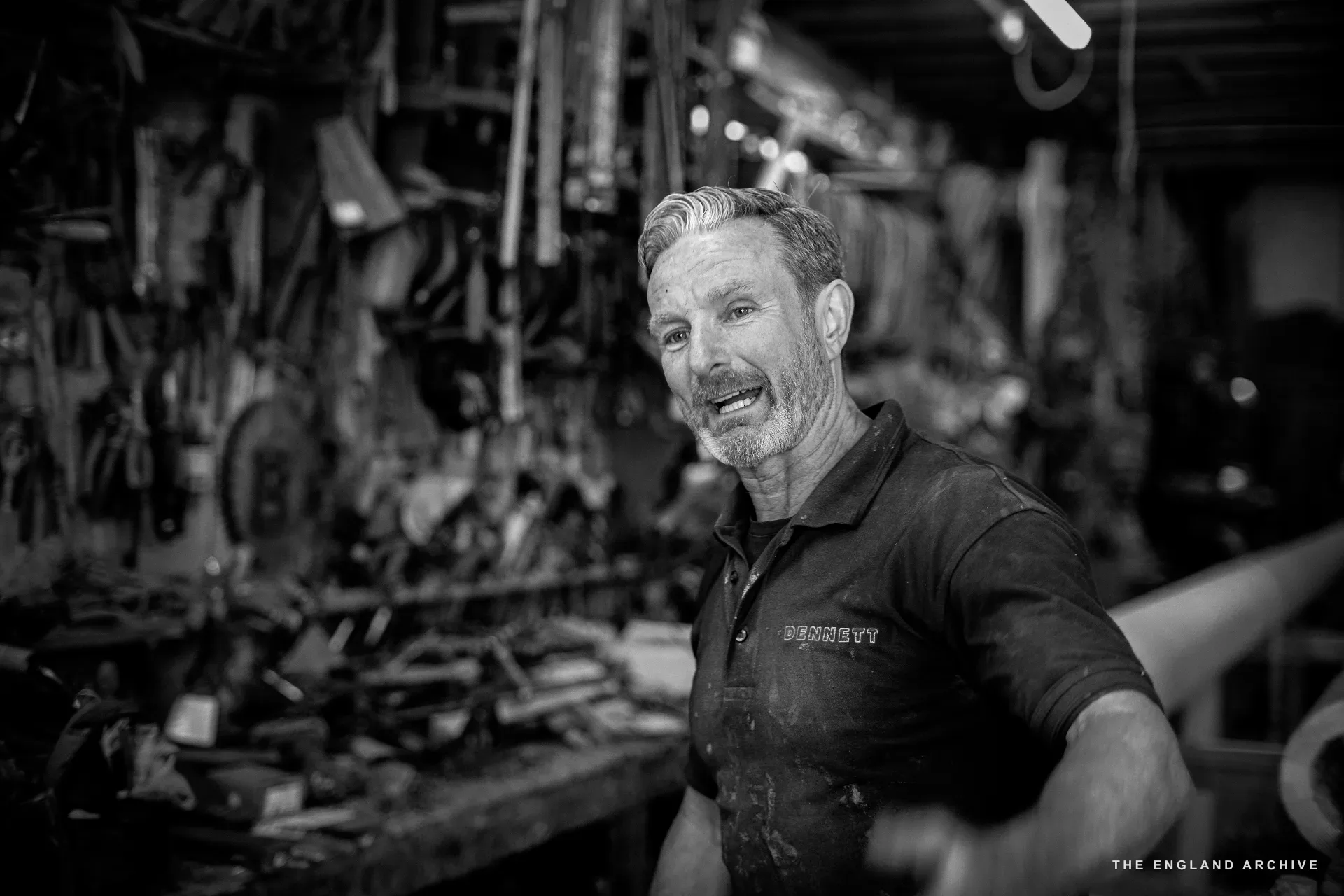
The first fifteen minutes at Dennett teach you something about Stephen. Before he knows what you have come for, before you have introduced the project, before you have even taken the camera out of the car, he is pointing at a boat and telling you what she is. He walks you to the next boat. He tells you what she is. He walks to the next. Each vessel comes with a complete thumbnail - who built her, when, who owns her now, the problem Stephen is solving on her this month, the date she is due back on the water. He does not stop to ask a question. He is narrating the yard.
This is how Stephen works. Hands moving, attention moving, feet moving, commissions arriving, timber deliveries coming through the gate, apprentices and craftsmen working around him, social-media videos being filmed in a parallel stream, a dog somewhere, the radio audible over the sound of a planer. The yard is alive. That aliveness is Stephen’s doing. He runs it at the tempo of a working commercial restoration business in its fourth decade, with the father of the family still at the bench, with the next generation visibly gathering at the door, with a handful of restoration clients expecting their boats back on time.
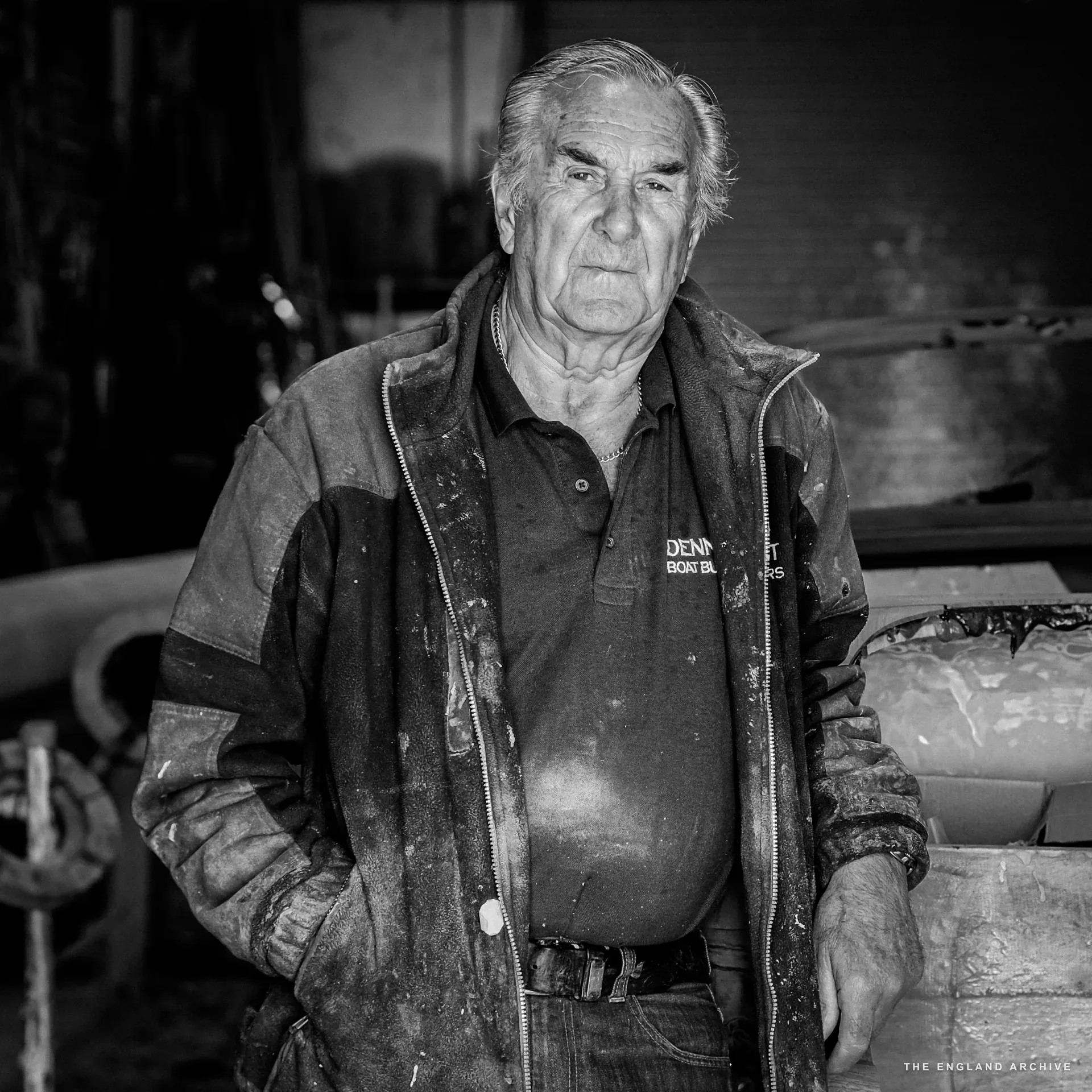
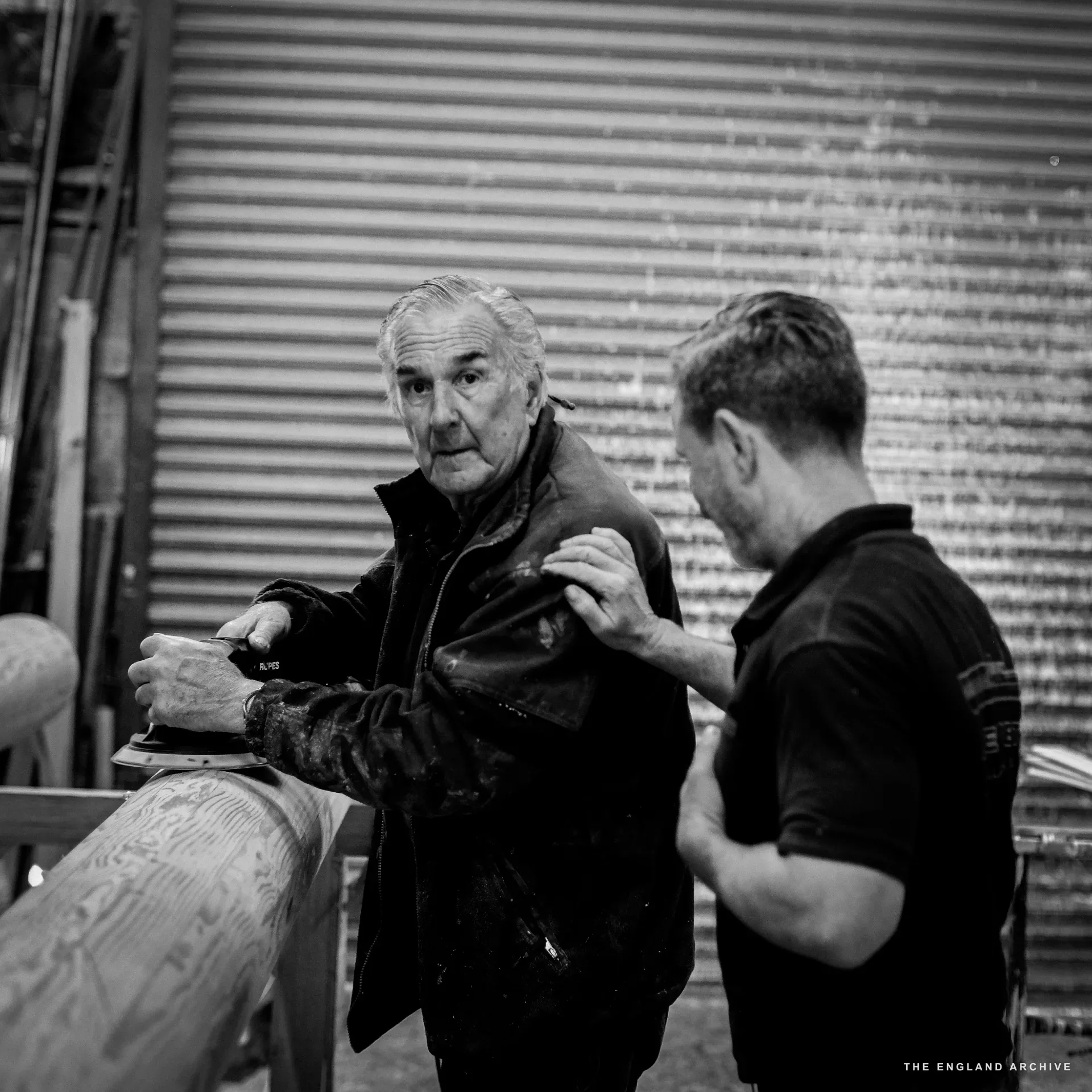
Michael Dennett became self-employed at twenty-two, in the years after finishing his apprenticeship at George Wilsons Yard in Sunbury. He worked at first out of the back of a van, then out of a rented shed, then out of a yard of his own. By the time Stephen was born, Michael had been running a restoration business for some years, and the shed was the family’s working space. Stephen did what a small boy whose father is at the bench every day does: he followed his father around the workshop. Michael told us, plainly, that Stephen was effectively an apprentice from the age of two. It is not a figure of speech. It is the kind of apprenticeship that does not exist in a curriculum - the kind that begins so early the child cannot remember a time before the smell of sawdust and varnish and the sound of a plane on wood.
“He was almost like an apprentice from the age of two.”
The line above is Michael’s, said quietly, sitting on a bench with a pair of part-sanded masts behind him. It is the archive’s clearest surviving account of how Stephen came into the trade. There was no moment of decision; there was no formal training; there was no year zero. There was a father, a workshop, and a boy who was in it every day until the work became his own.
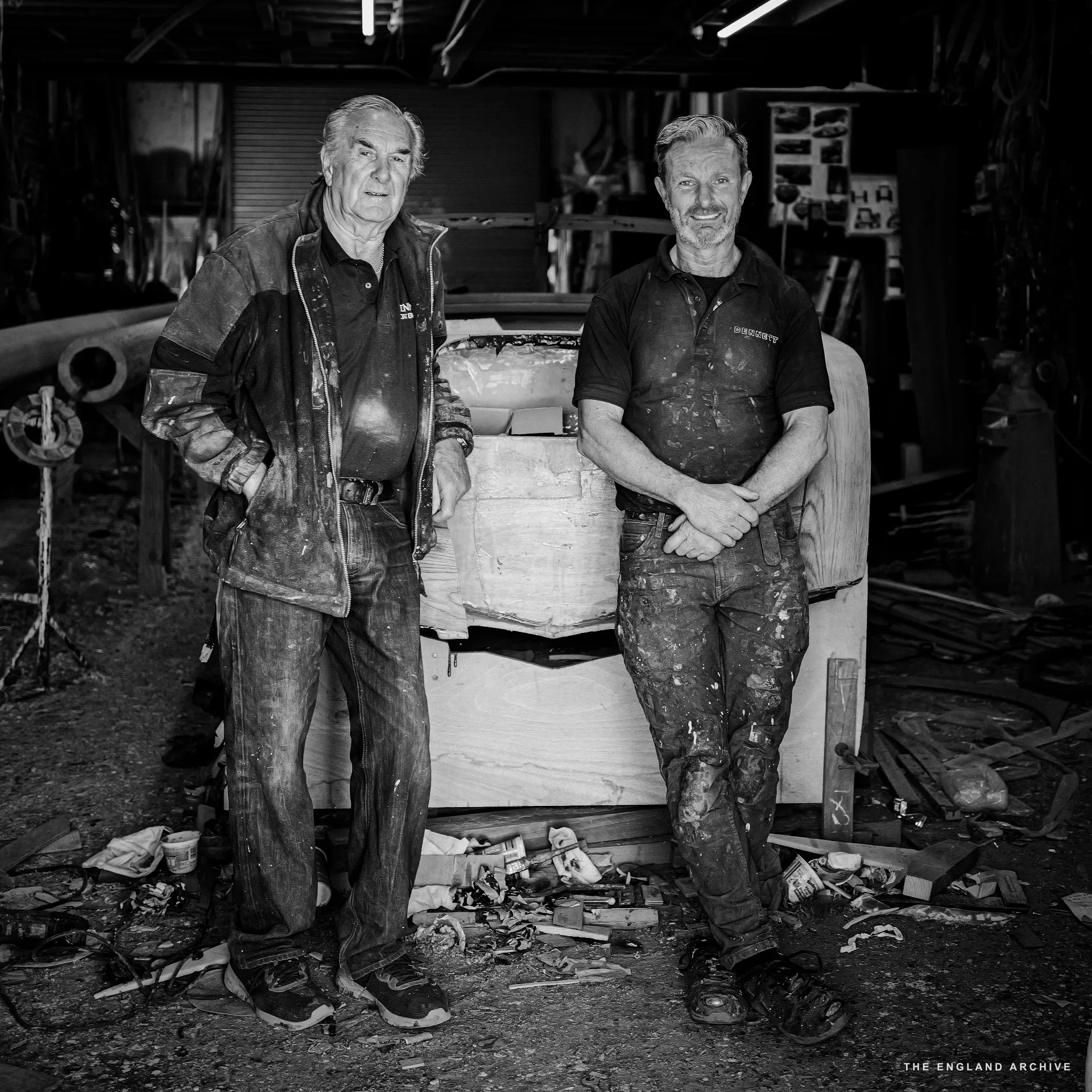
In 1988, with the yard at Laleham newly opened, Michael brought Stephen in as a partner. Stephen has been there ever since. Thirty-eight years of continuous work in one yard, on one stretch of the Thames, on boats that pass through for restoration and return to the river. The line of transmission that produced him is the line he now sits at the centre of.
Stephen’s trade, at its simplest, is the restoration of wooden Thames pleasure craft - slipper launches, saloon launches, gentleman’s river boats, steam-era small motor yachts, the historic small vessels of the Upper Thames. He also builds new boats when the commission calls for it. Both lines of work run continuously at Dennett, and most weeks involve some of each. The yard has particular authority on the restoration of the Little Ships of Dunkirk - the civilian Thames pleasure craft requisitioned in May and June 1940 to help evacuate Allied troops from the beaches of Dunkirk - and Michael has, by his own account, restored the majority of the surviving Little Ships that have come through any English yard. Stephen works on them alongside him, and will increasingly be the yard’s principal hand on that fleet as Michael steps back.
He does not describe his craft in theoretical terms. He describes it in specifics. He points at a hull and tells you what has gone wrong, what he is about to do, and how long it will take him. He says a particular timber has to come from a particular supplier. He says a particular client prefers a particular finish. He says the boat over in the corner is waiting on a fitting that has to be machined. He treats each commission as an independent engineering problem with an owner attached to it, and he carries the whole state of the yard in his head at once.
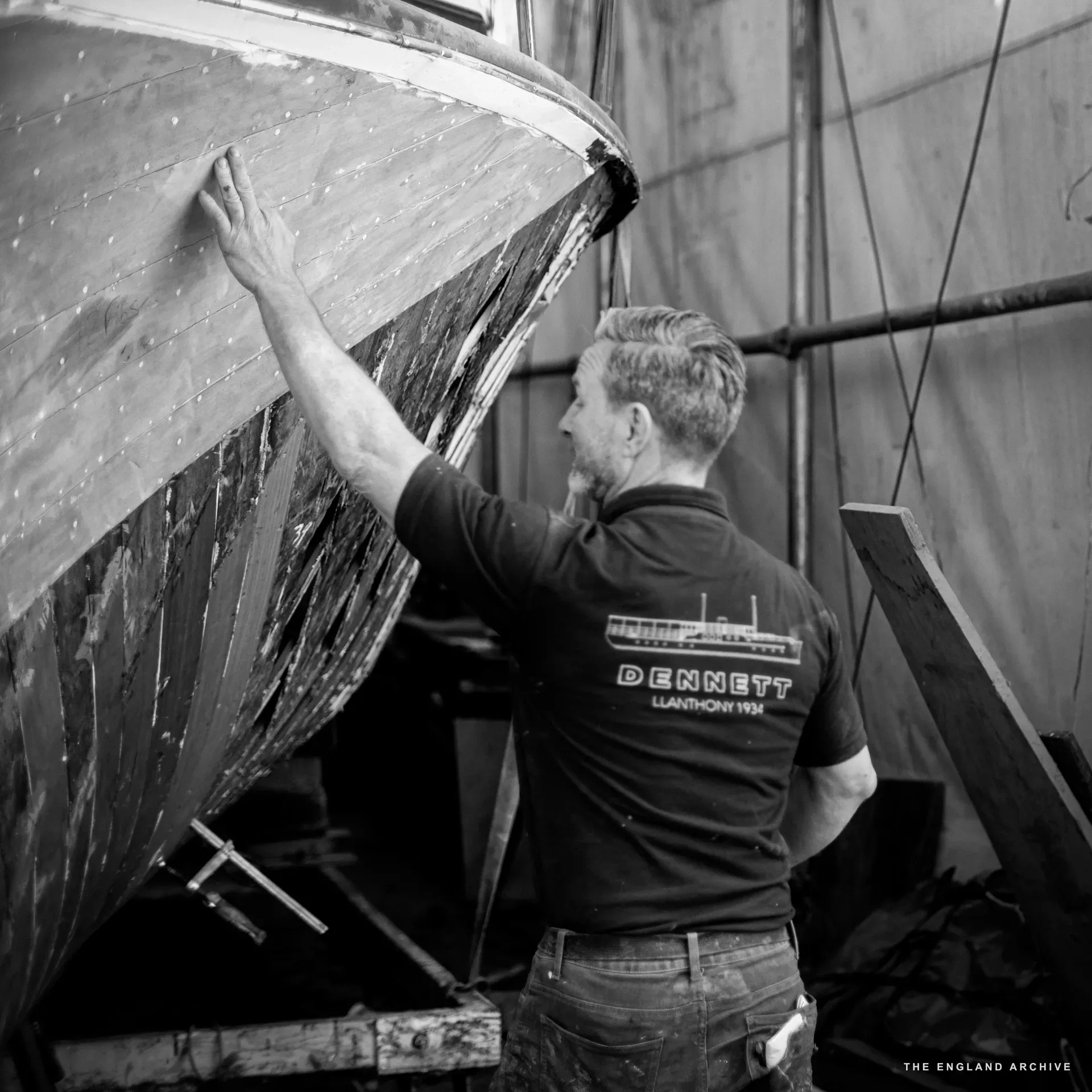
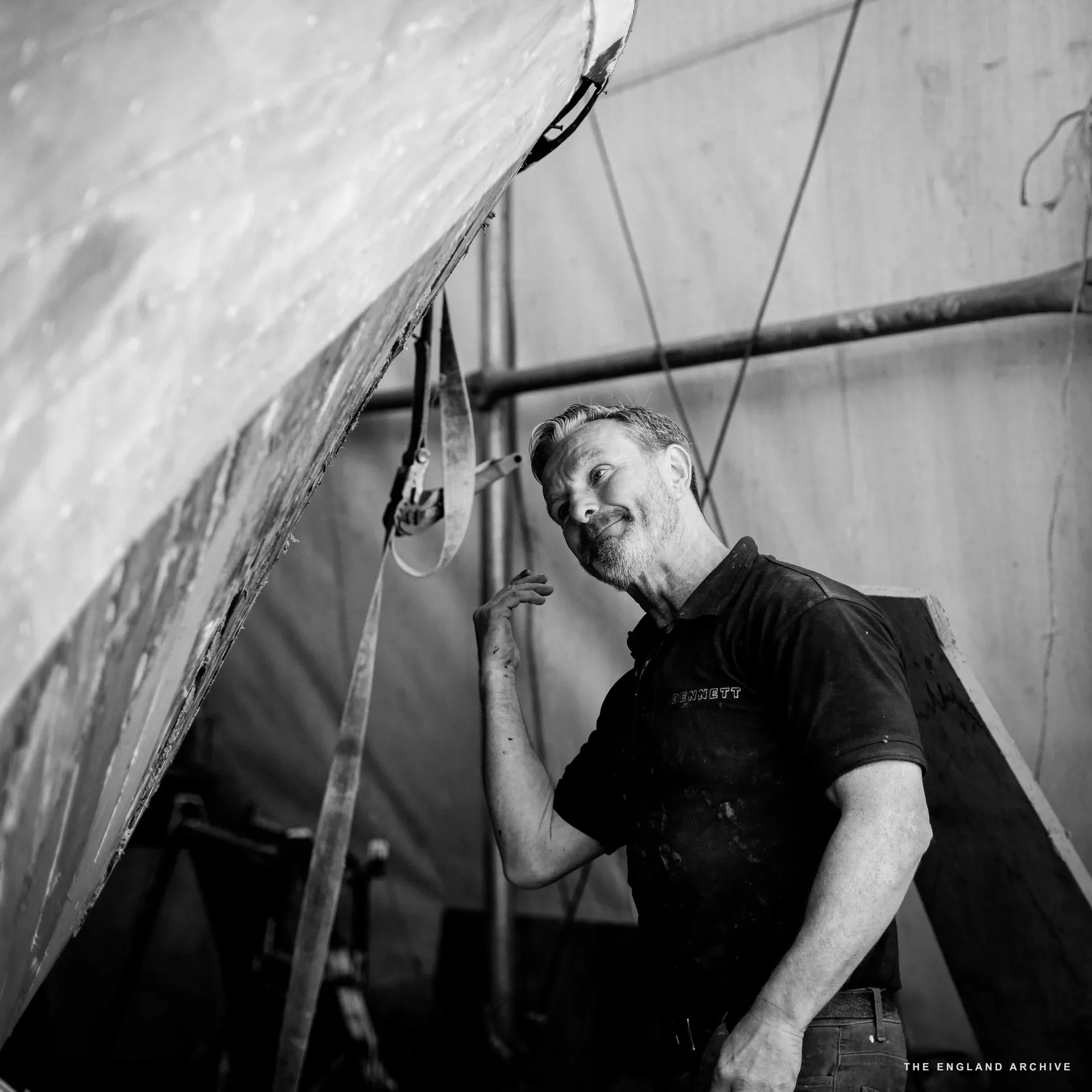
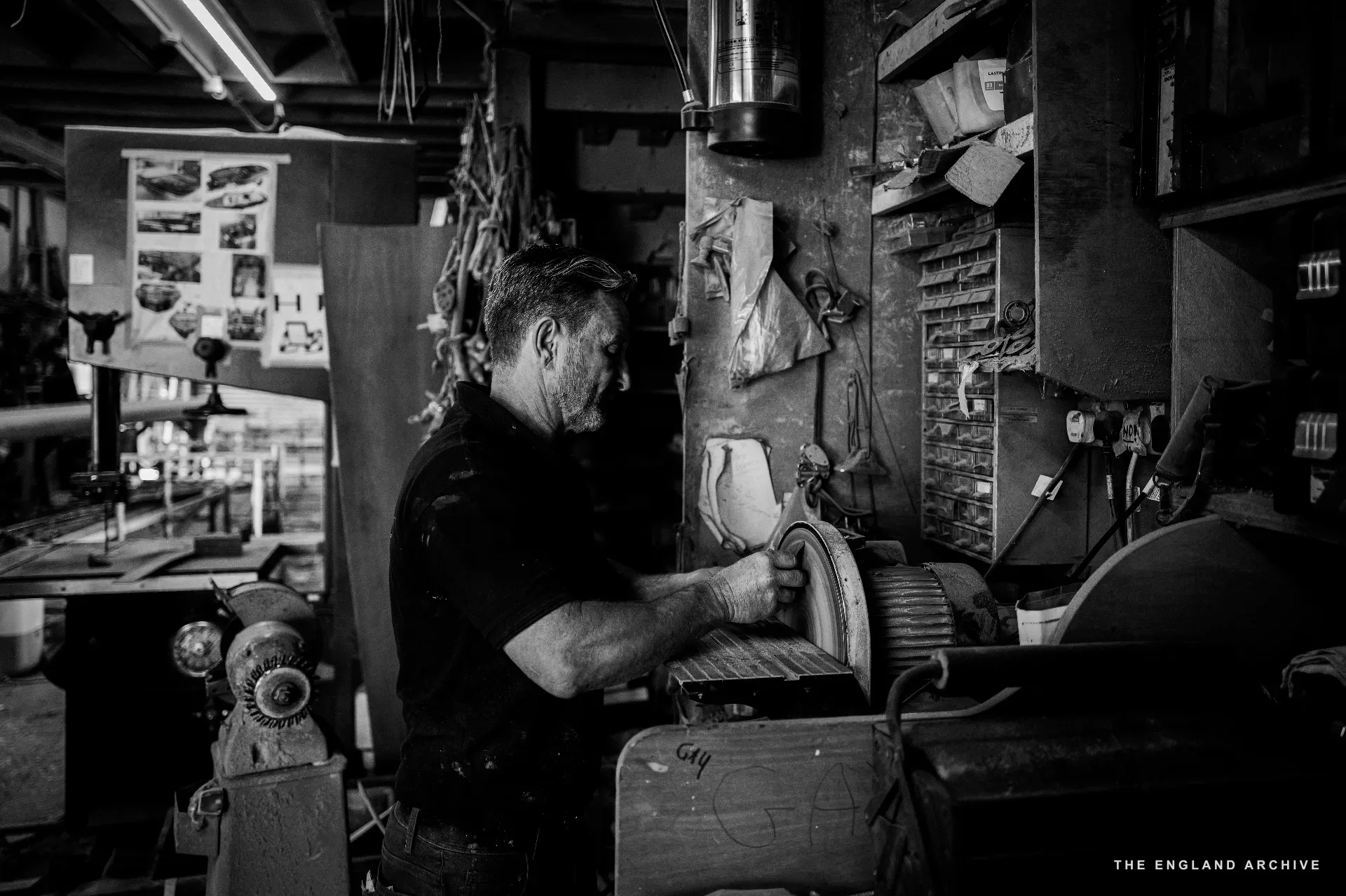
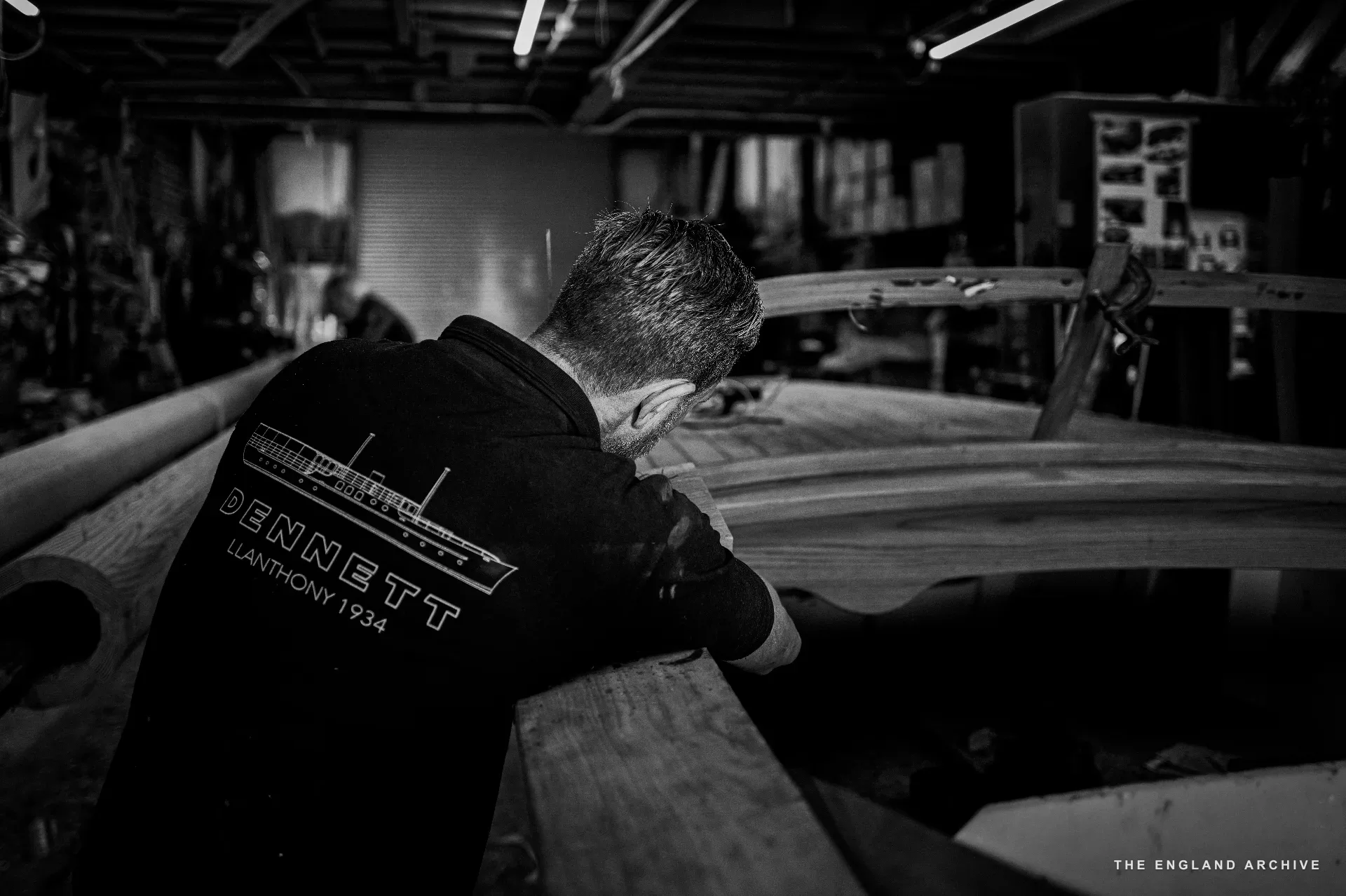
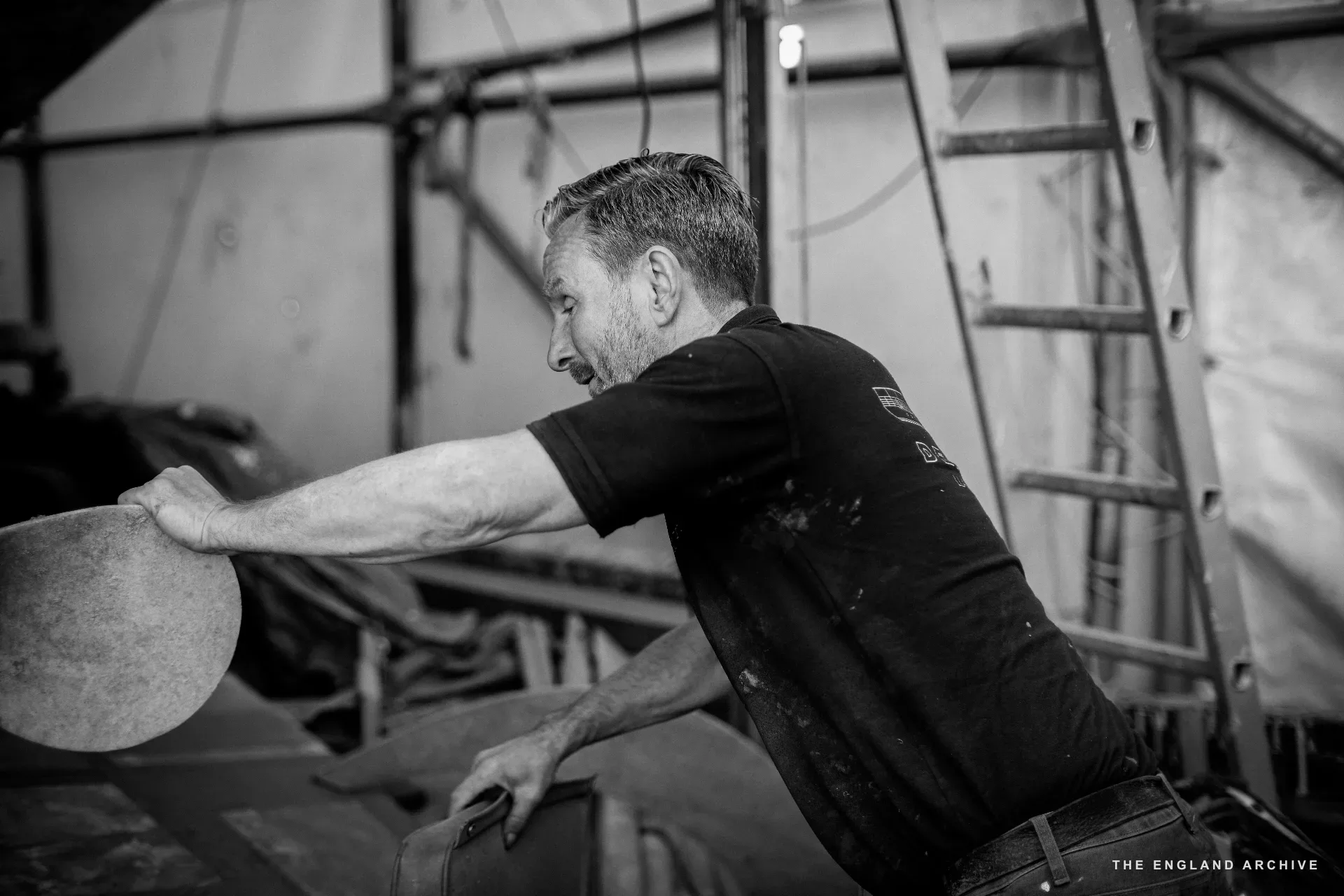
On the morning of the visit, Stephen was working on what he described as the lightest boat the yard has ever built. It is a very small tender, commissioned for an owner whose larger vessel is being sailed to Corfu. The design requirement is exact: the tender has to be light enough to live at the top of the larger boat’s mast while the boat is at sea, and it has to be stiff and durable enough to be lowered at anchor, rowed or motored to a Greek shoreline, and returned to the mast without complaint. Every gram of weight matters. Stephen had the shell on trestles and was planing it to a skin that looked, from outside, perilously thin and, from the feel of it as I walked past, precisely controlled.
He did not stop to explain while he was working. He planed, set, checked, moved on. The rhythm was quick, attentive, and entirely unperformed. If you asked him a question he answered briefly, without looking up. The photographs from the morning are not posed photographs of a craftsman with his work. They are photographs of a craftsman at his work.
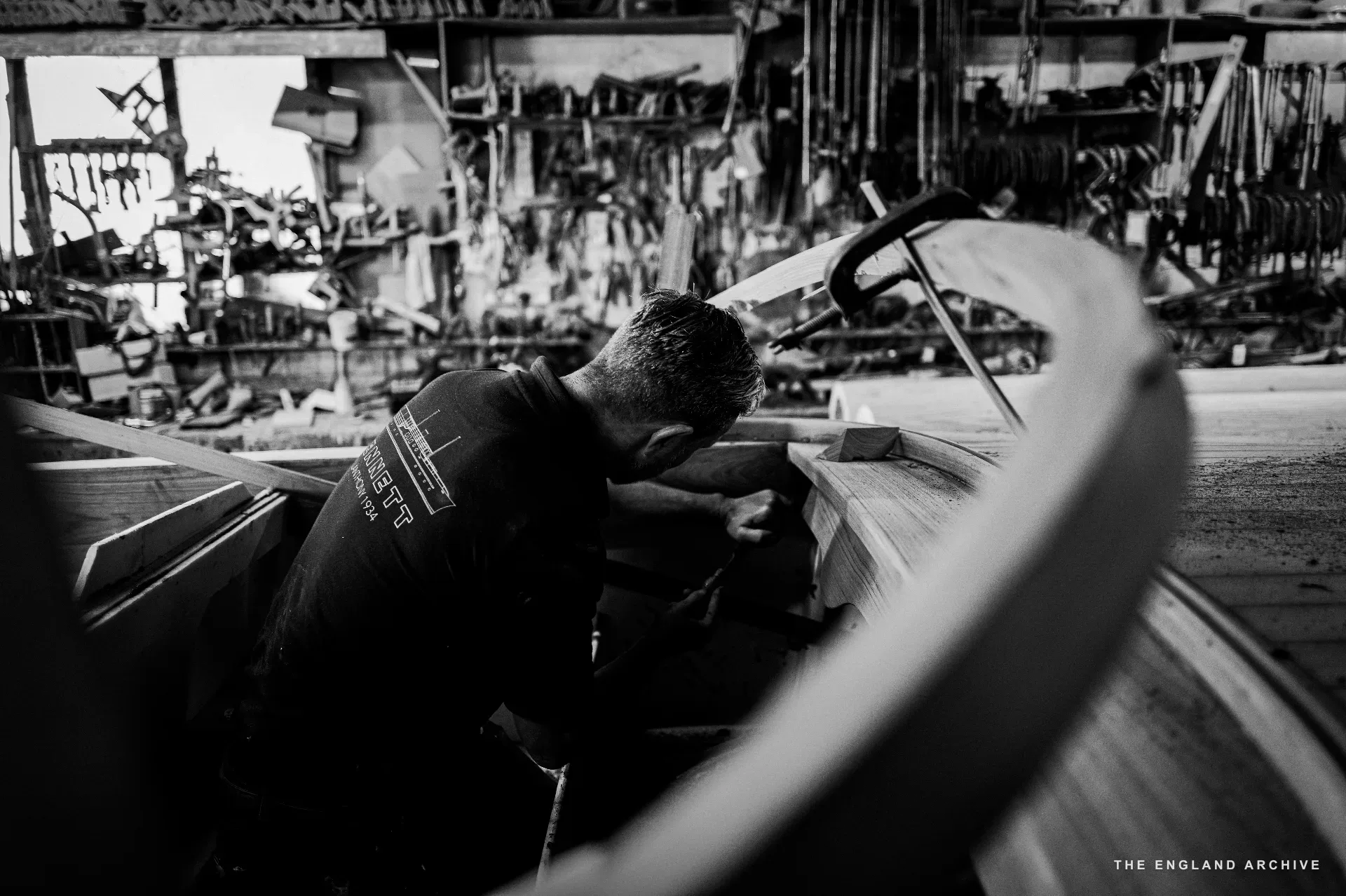
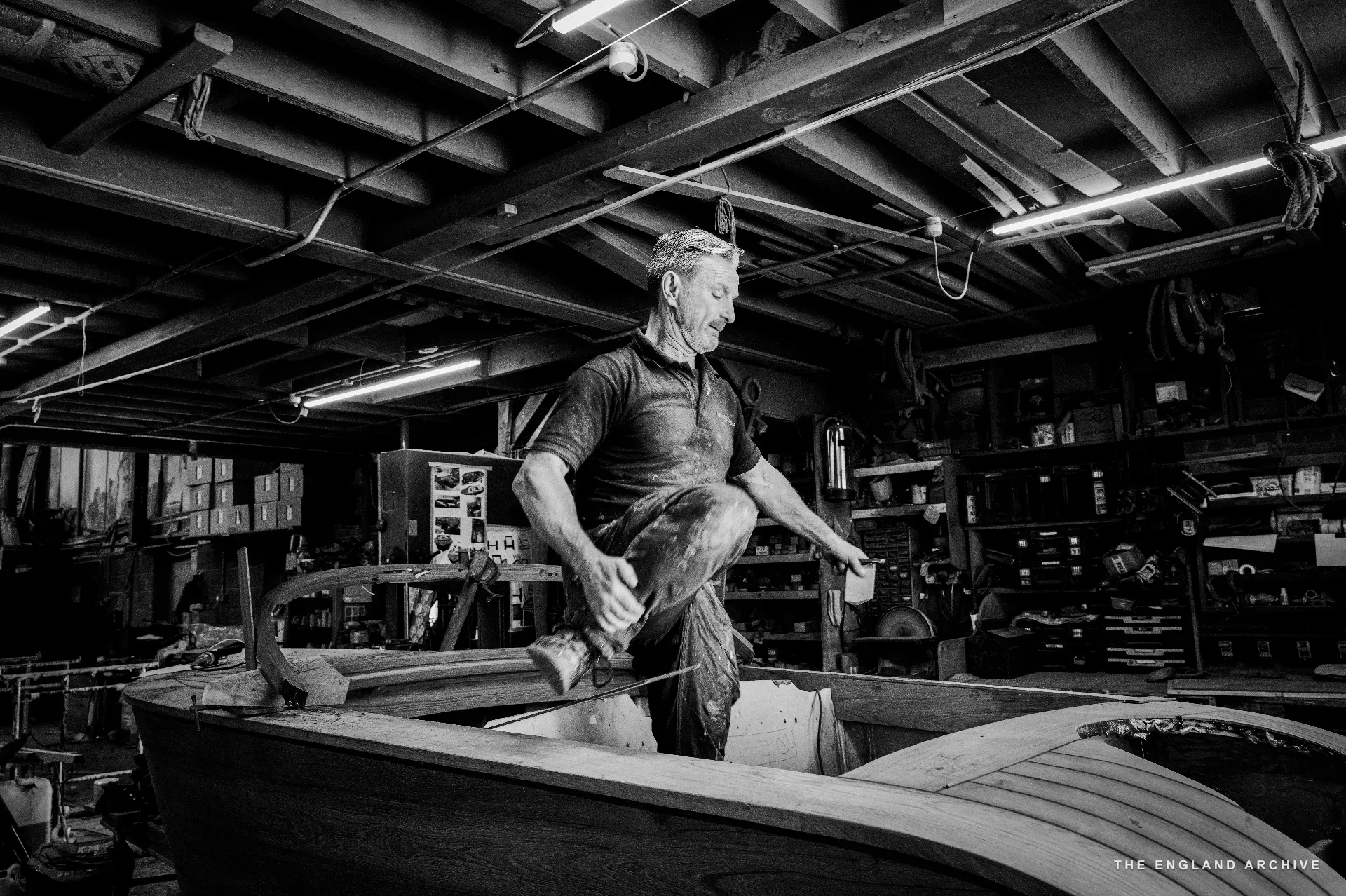
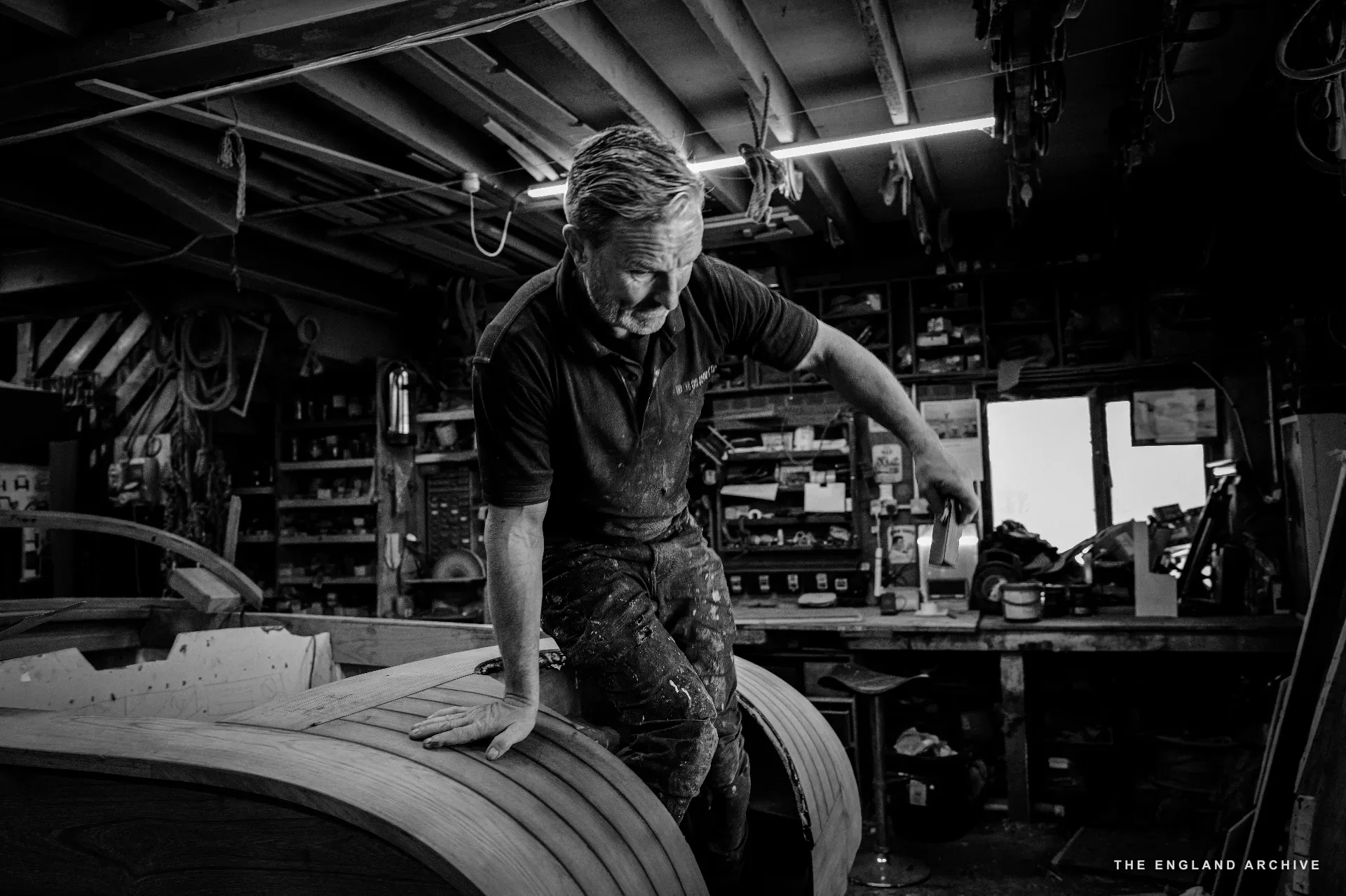
Stephen has three sons. Two of them, he told me during the morning, are already interested in coming into the yard as apprentices. They are, in his own phrase, old enough now that the start is likely to come very soon. That sentence is what turns Dennett from a two-generation family firm into a three-generation apprenticeship chain visibly forming. Michael taught Stephen. Stephen is about to begin teaching at least two of his own sons.
If the pattern Michael ran with Stephen - the slow, continuous, domestic-scale apprenticeship that begins before school age and continues without pause into adulthood - repeats, the yard will be four generations deep by the time Michael’s grandsons are running it, counting back from Michael’s own teachers in the 1960s Surrey yards.
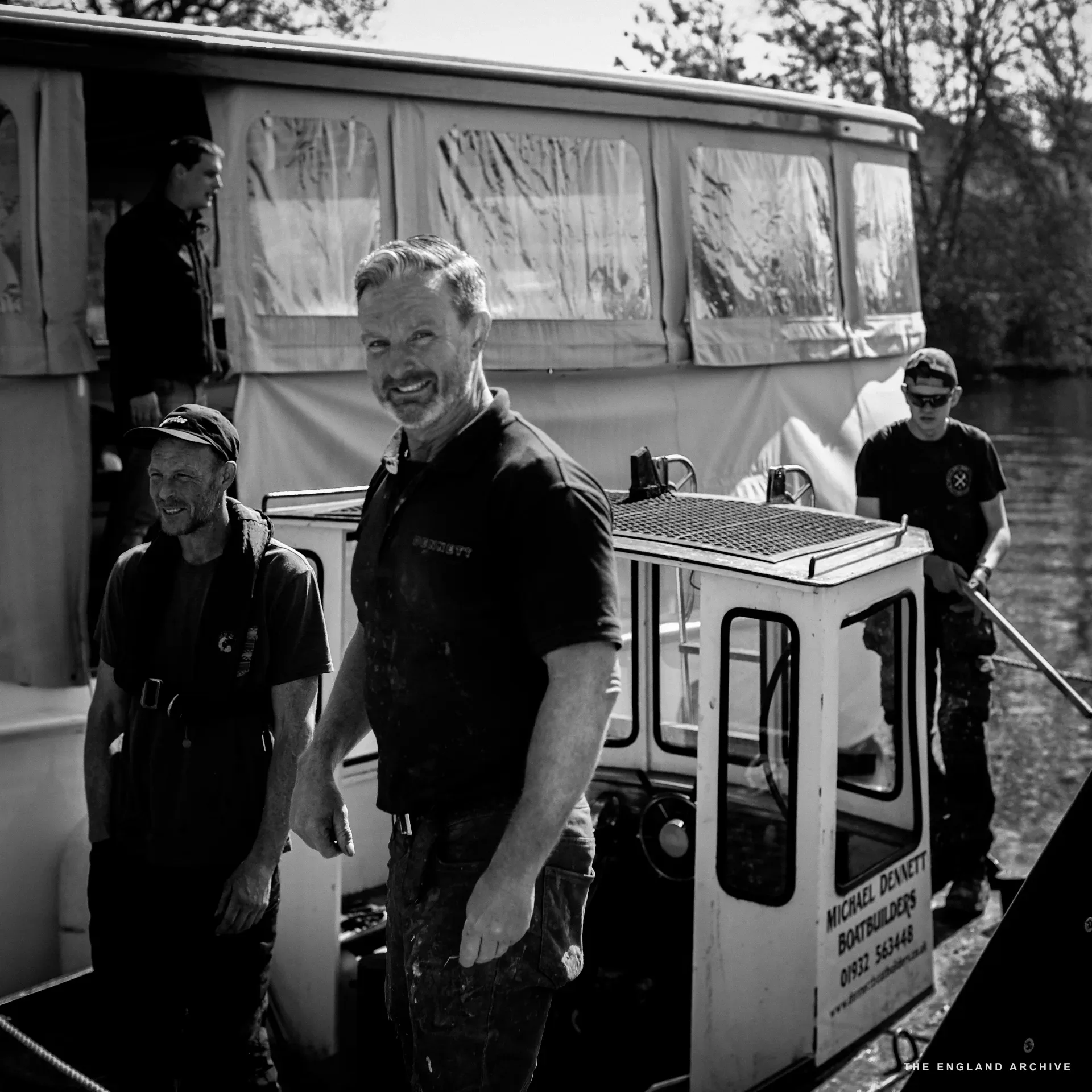
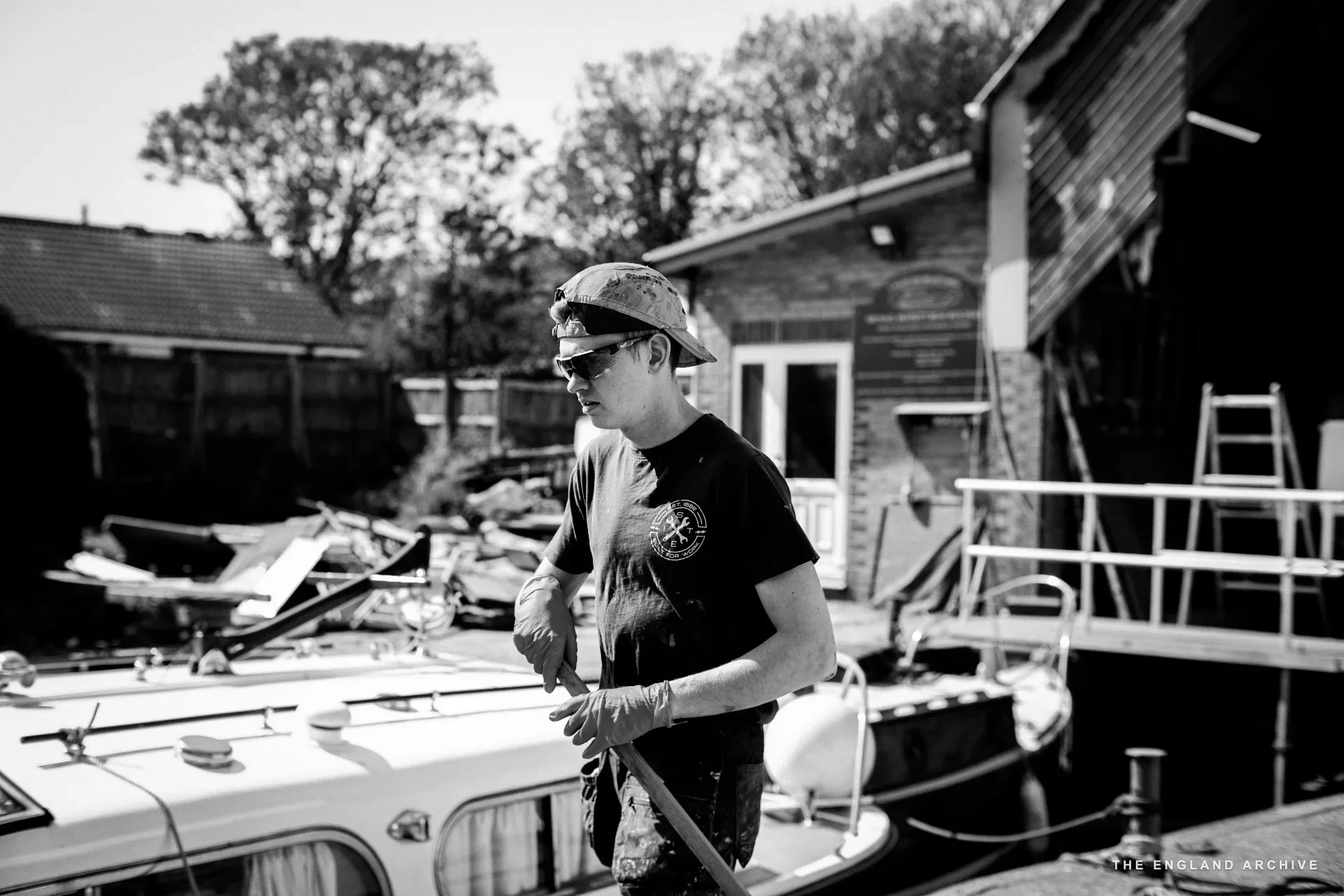
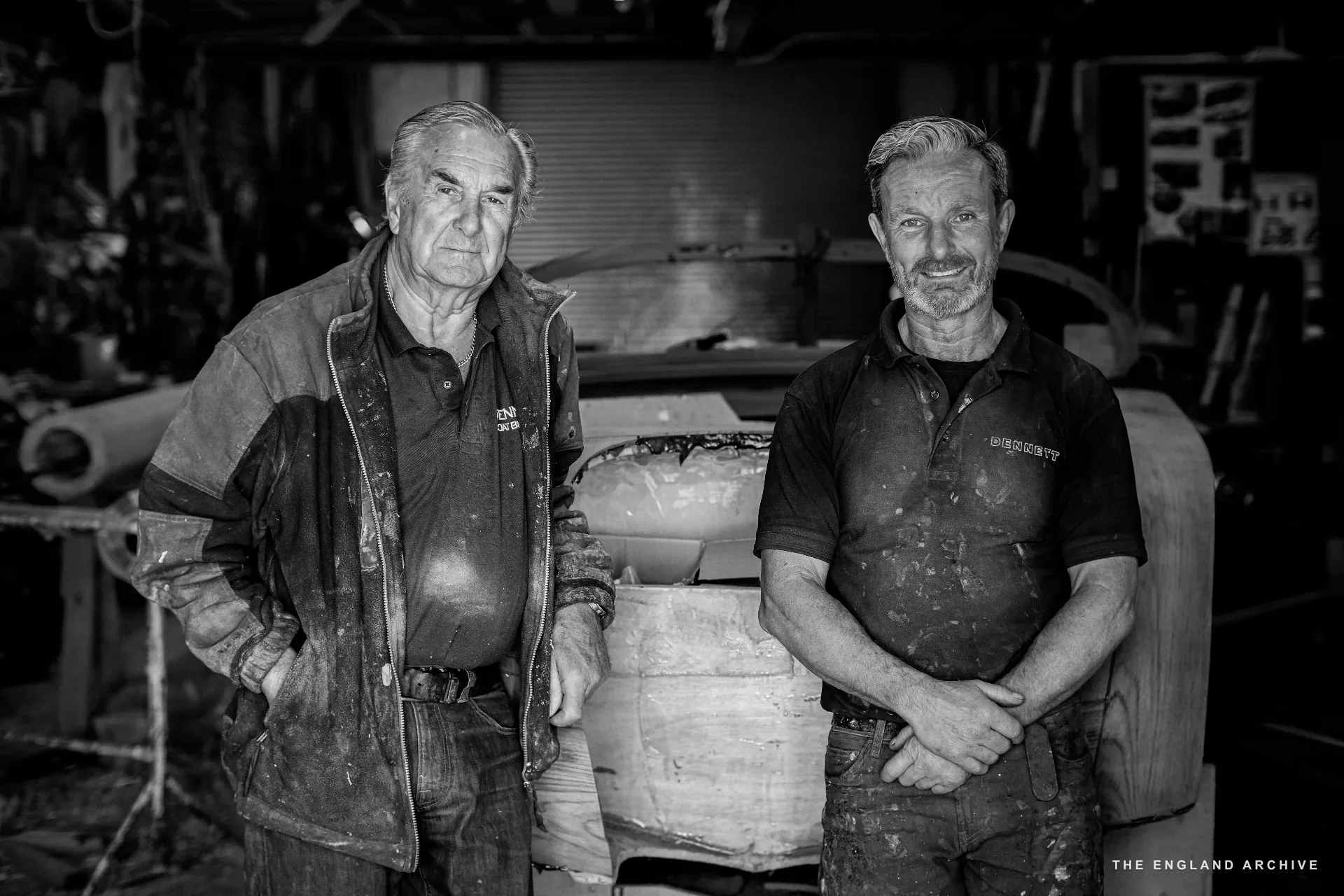
The archive has documented Dennett Boat Builders across a single working morning, 23 April 2026. Because Dennett is a working yard and not a workshop of contemplative tempo, the archive’s record of Stephen will never be complete in a single visit. He is documented here as he was on the morning: restoring the Little Ships, building the Corfu tender, narrating the yard, directing the day’s work, standing briefly for a portrait beside his father, and about to induct the next generation of the family into the trade. The archive will return to Dennett on a longer cycle to document the arrival of Stephen’s sons and the first years of their apprenticeship.