A Morning at Dennett Boat Builders
Thames Valley · Chertsey · Makers
The sign was hidden by a tree. I drove past it, went up a dead-end, turned around, and came back. By the time I pulled into the yard, Michael Dennett was already outside helping a delivery, eighty-three years old and in the middle of a working day. He waved me in. Stephen came out to meet me. When I apologised for missing the turn, he said, straight-faced, that the hidden sign was intentional - he didn't want visitors. It was a joke, but the joke told me something about the yard before I had taken a single photograph.
The Cardozo Kindersley Workshop in Cambridge, which I had documented the previous day, was a workshop that set aside four hours for the visit, poured green tea, and sat with us. Dennett Boat Builders, at Laleham on the Upper Thames in Chertsey, is not that kind of workshop. It is a yard mid-restoration at any given moment, with timber deliveries arriving, sanders running, men under hulls, hands on planes. The documentation had to catch the yard at its own pace, not the other way around. This journal is the record of how the morning went.
The arrival
Dennett Boat Builders occupies a yard at Laleham, on a stretch of the Upper Thames a day's boat trip from London and up-river toward Henley. From the road it is easy to miss. The first thing I did on the morning of 23 April 2026 was miss it. A tree has grown to cover the sign; I drove past, realised I had overshot, and tried the next side road, which turned out to be a dead-end. By the time I reversed, came back, and spotted the gate, Michael Dennett was out in front helping to unload a delivery. He saw the car, waved me in, and I pulled into the yard.
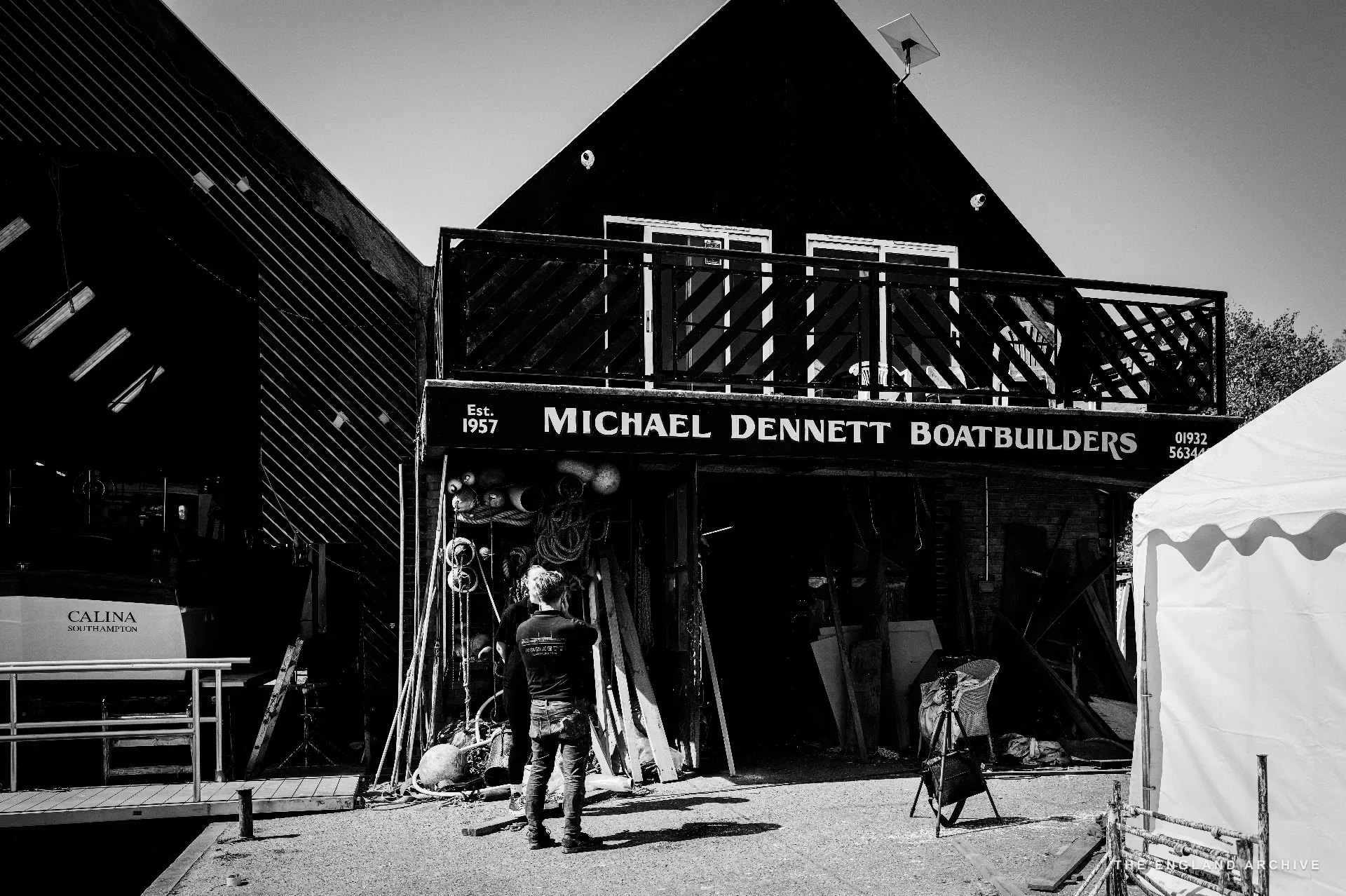
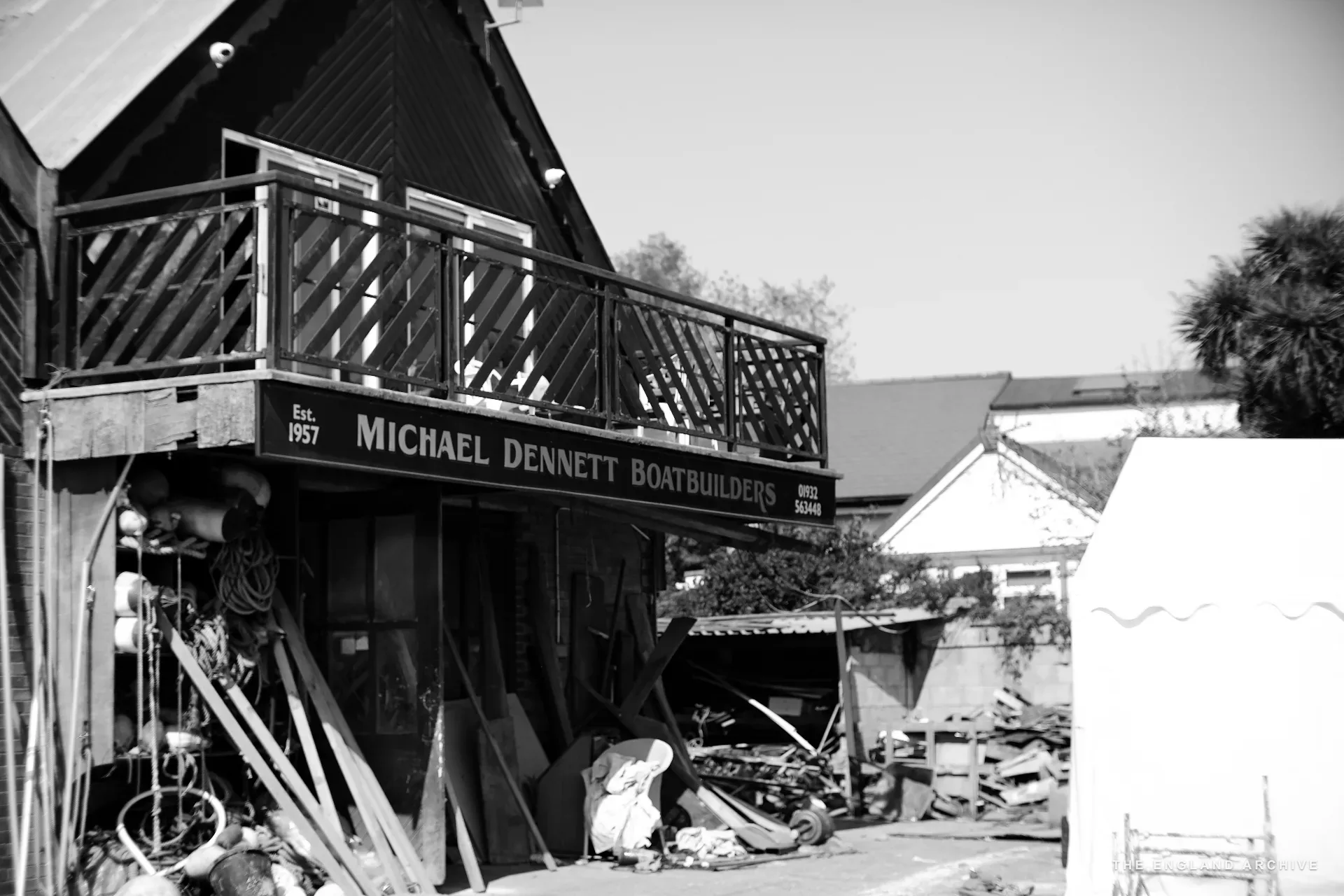
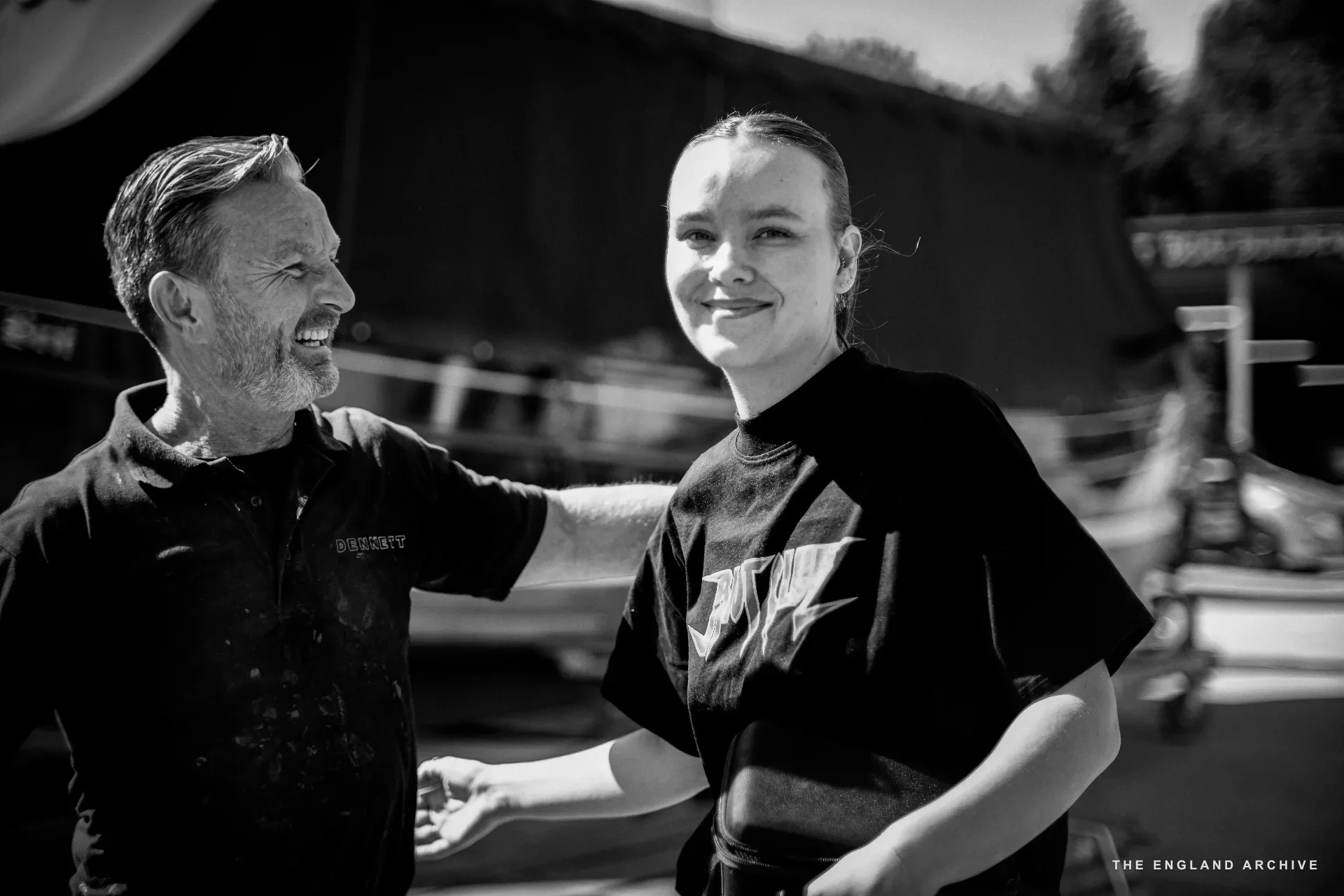
Stephen came over. We shook hands. I apologised for missing the turn. He grinned and said it was deliberate - the tree, the hidden sign, the off-road location - because he did not want visitors. It was a joke; there is no actual effort made to hide the yard, and their website lists the address cleanly. But the joke was the first thing he said, and it is the kind of joke that tells you the yard is busy, that the work is the point, and that strangers walking in are an interruption that will be accommodated but not arranged around. I registered the tone and put my bag down.
Stephen's tour
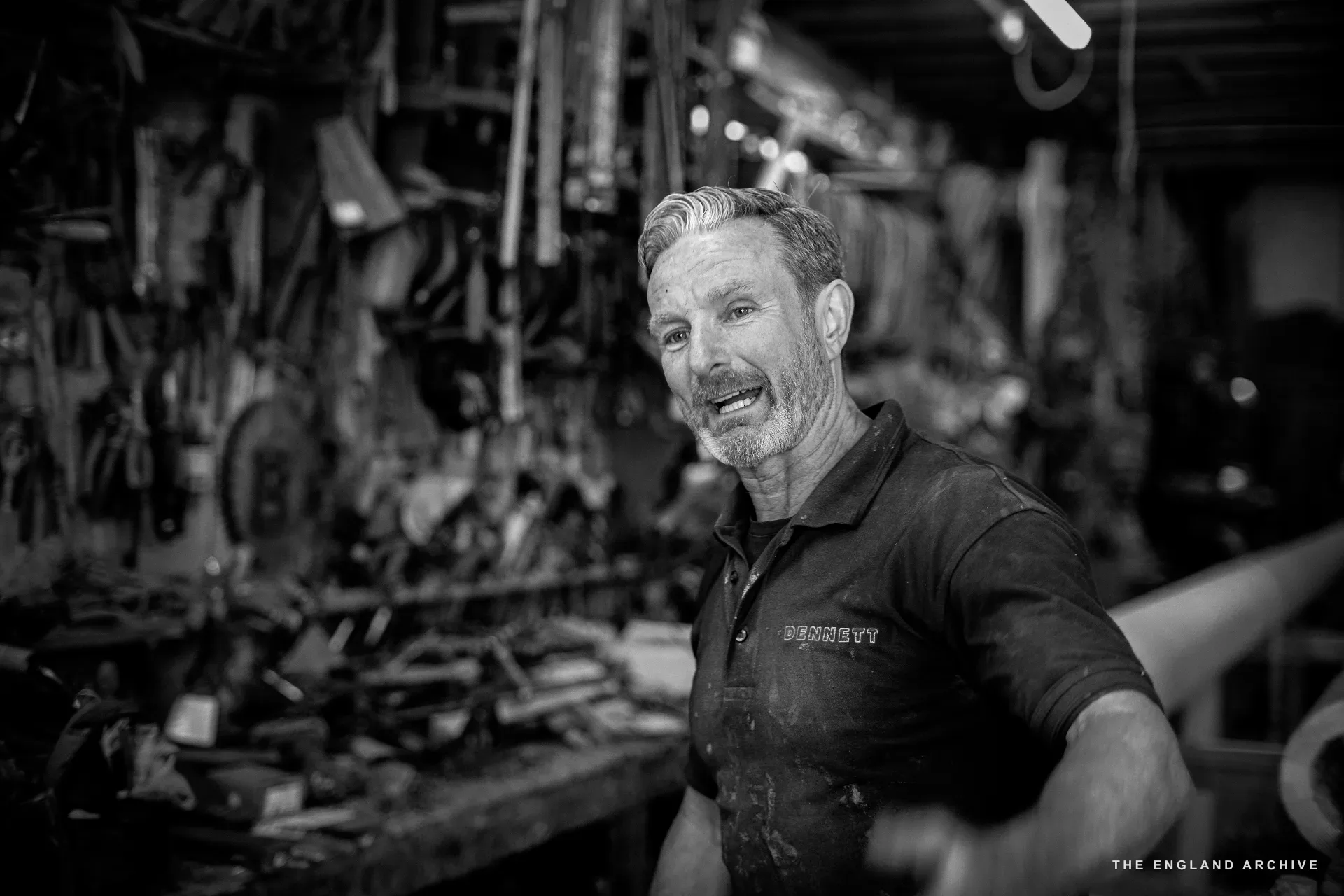
Before I had introduced the project, before I had explained what the archive was, before I had even taken the camera out of the bag, Stephen pointed at a boat behind us and started telling me what it was. Then he said follow me, and led me to another boat, and told me what that one was, and then to another boat, and another. This went on for perhaps ten minutes and covered most of the front of the yard. Each vessel had a provenance, an owner, a current stage of repair or disrepair, a specific problem Stephen was solving. He was not answering questions; he was telling. I realised fairly quickly that at Dennett, you do not interview Stephen. Stephen tells you.
That is a documentary gift, not a problem. There are practitioners you have to draw out. Stephen is not one of them. He walked and narrated the yard at a pace I struggled to match, and I stopped interrupting him and let him run. Every boat he pointed at came with a complete thumbnail biography - who built her, when, who owns her now, what she has been through, what Dennett is doing to her. I was not going to photograph any of this, because I still did not have my camera, but I was absorbing a map of the yard that I would not have assembled any other way.
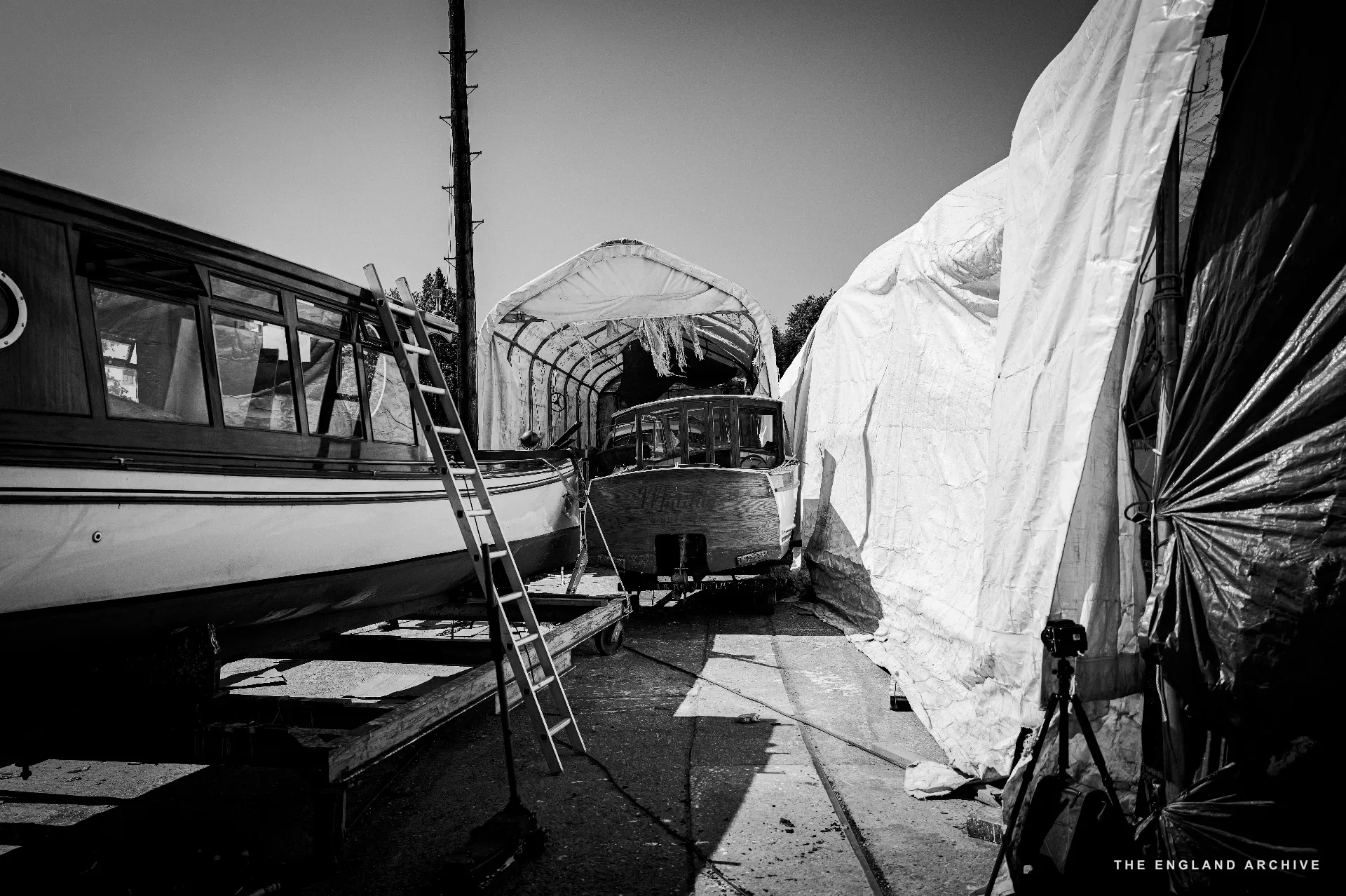
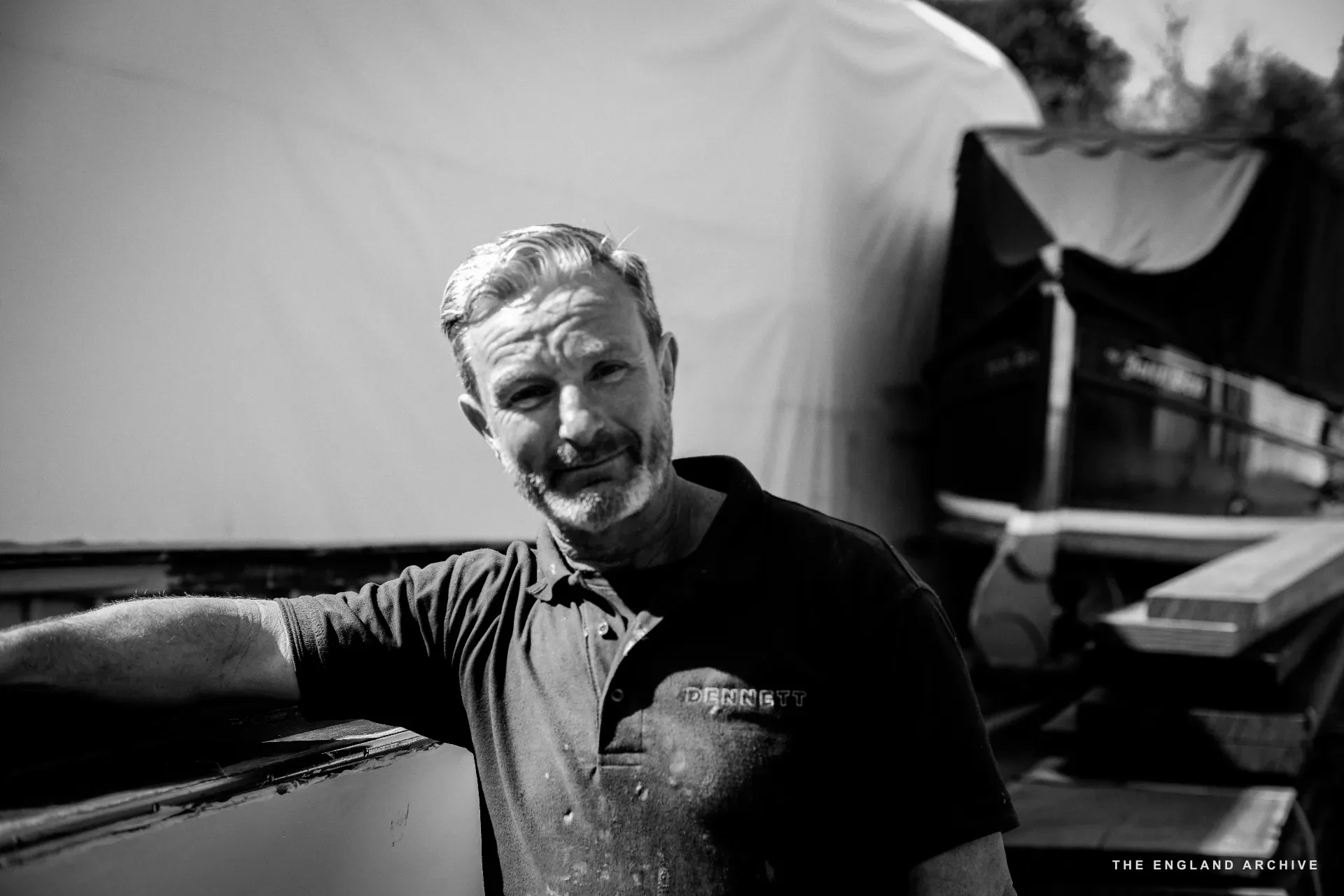
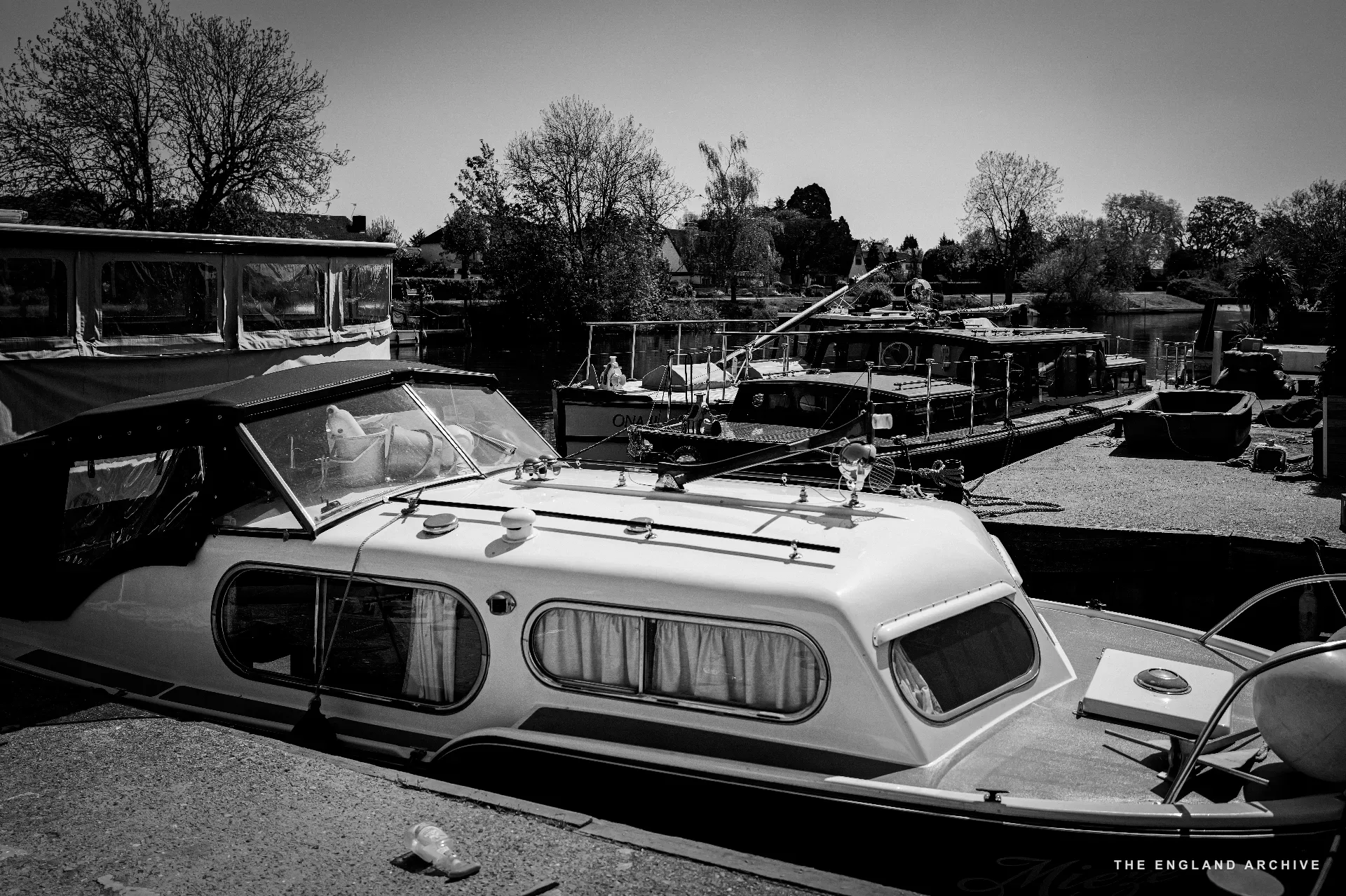
Ten minutes in, we were almost at the back of the yard, heading toward the section that held boats in the water. I said, Stephen, can I get my camera. He said, how long is that going to take? I said, it's in the car. He said, all right, but quickly, because Lucy is coming to film social media content and I have promised her an hour, and I have a lot of other work today, and as you can see there is a lot happening, and time is money.
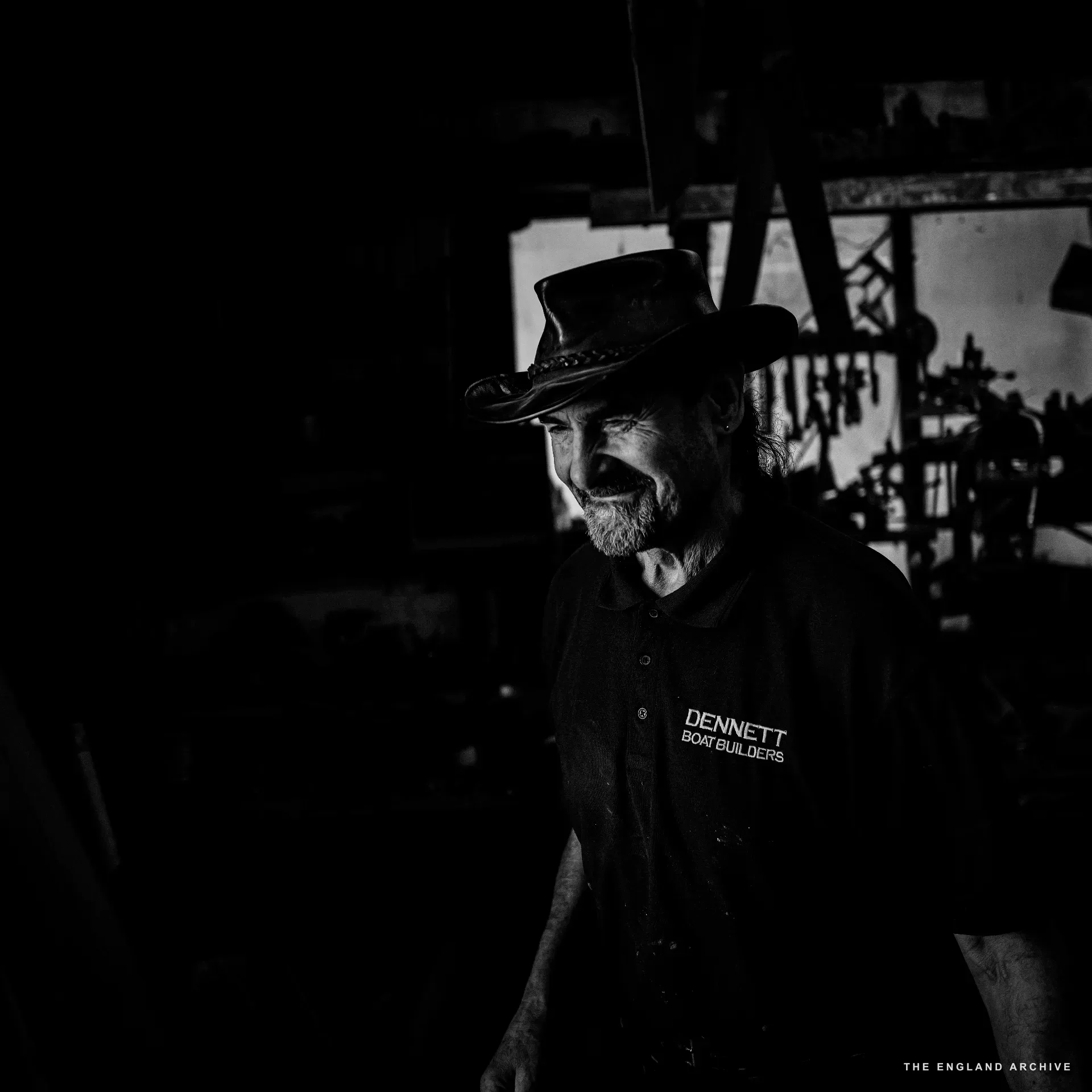
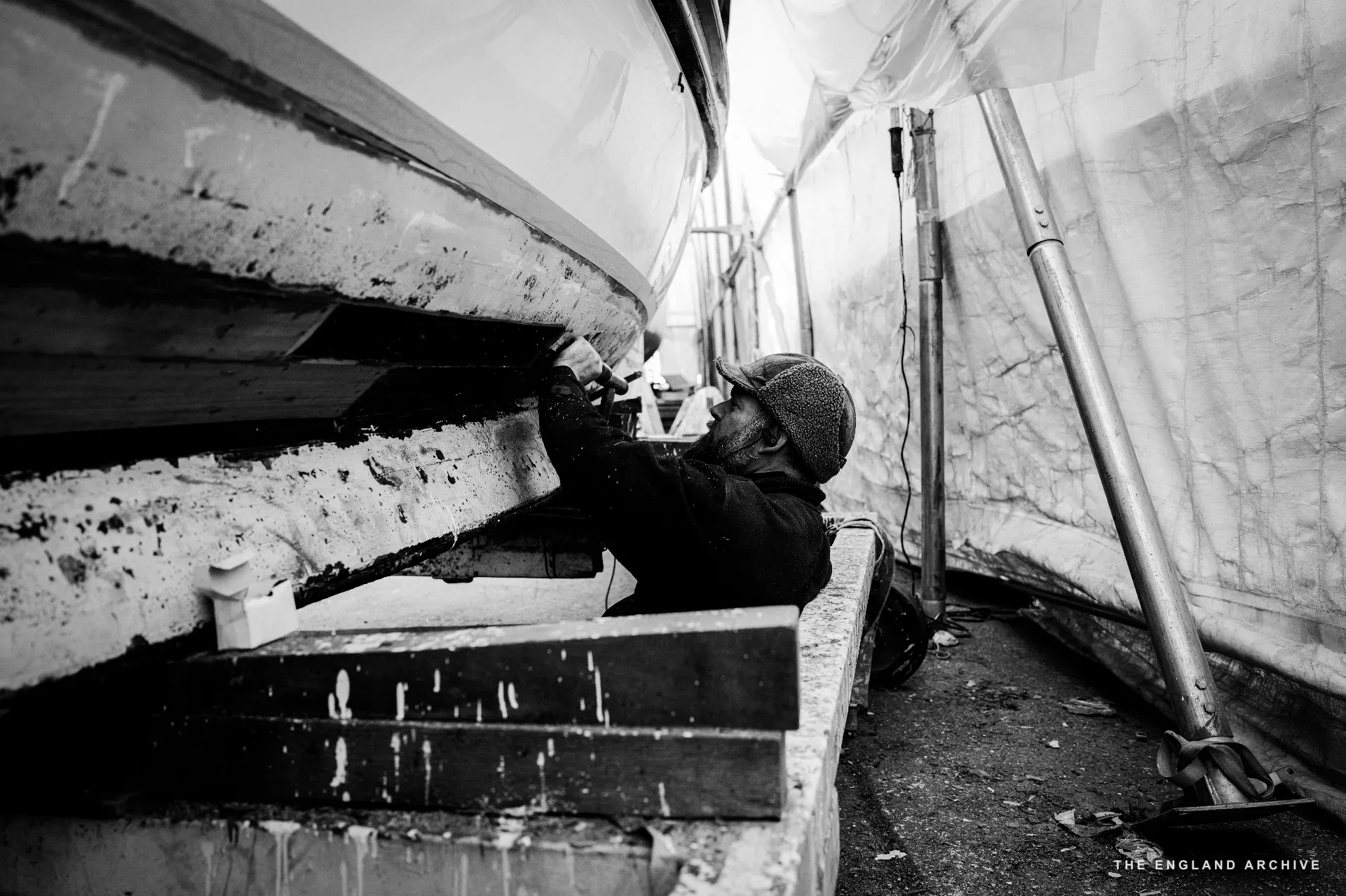
He was right about all of it. Around us, the yard was in flight. A timber delivery had arrived at the gate; someone was carrying planks past us; someone else was under a hull; another figure in a cowboy hat was moving between benches. I went and got the camera. I came back. Stephen did not miss a beat - he continued exactly where he had left off, onto the next boat.
The Dunkirk boat
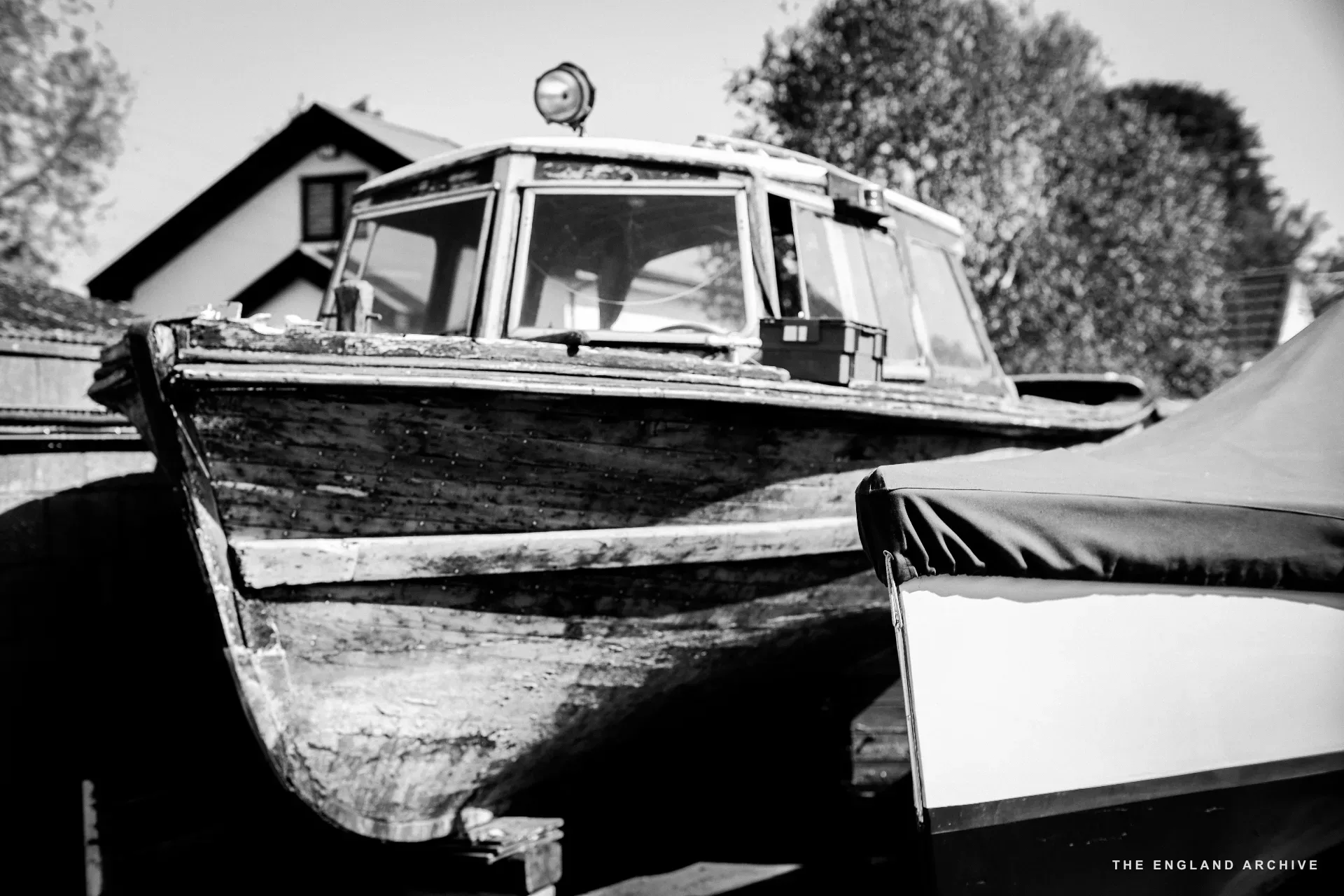
At one point during the tour Stephen stopped at a hull lying in the yard. Unremarkable-looking from the outside. Paint tired, timbers showing their age. I would have walked past it, and on the way in I had. Stephen said, that one was at Dunkirk. She is one of the Little Ships. And then he said, she was also in the film - the Christopher Nolan one. The father-and-son boat in the middle of the Nolan Dunkirk.
I had walked past a Little Ship of Dunkirk without realising what I was looking at. I would like to claim this as a failure of my observation but it is the opposite of that - it is a property of the yard. Boats that are at the yard for restoration are at the yard in their working state, not their ceremonial state. The Little Ship is here for its surgery, and its surgery does not require it to look photogenic. When Stephen told me what she was, the boat did not change; my reading of it did.
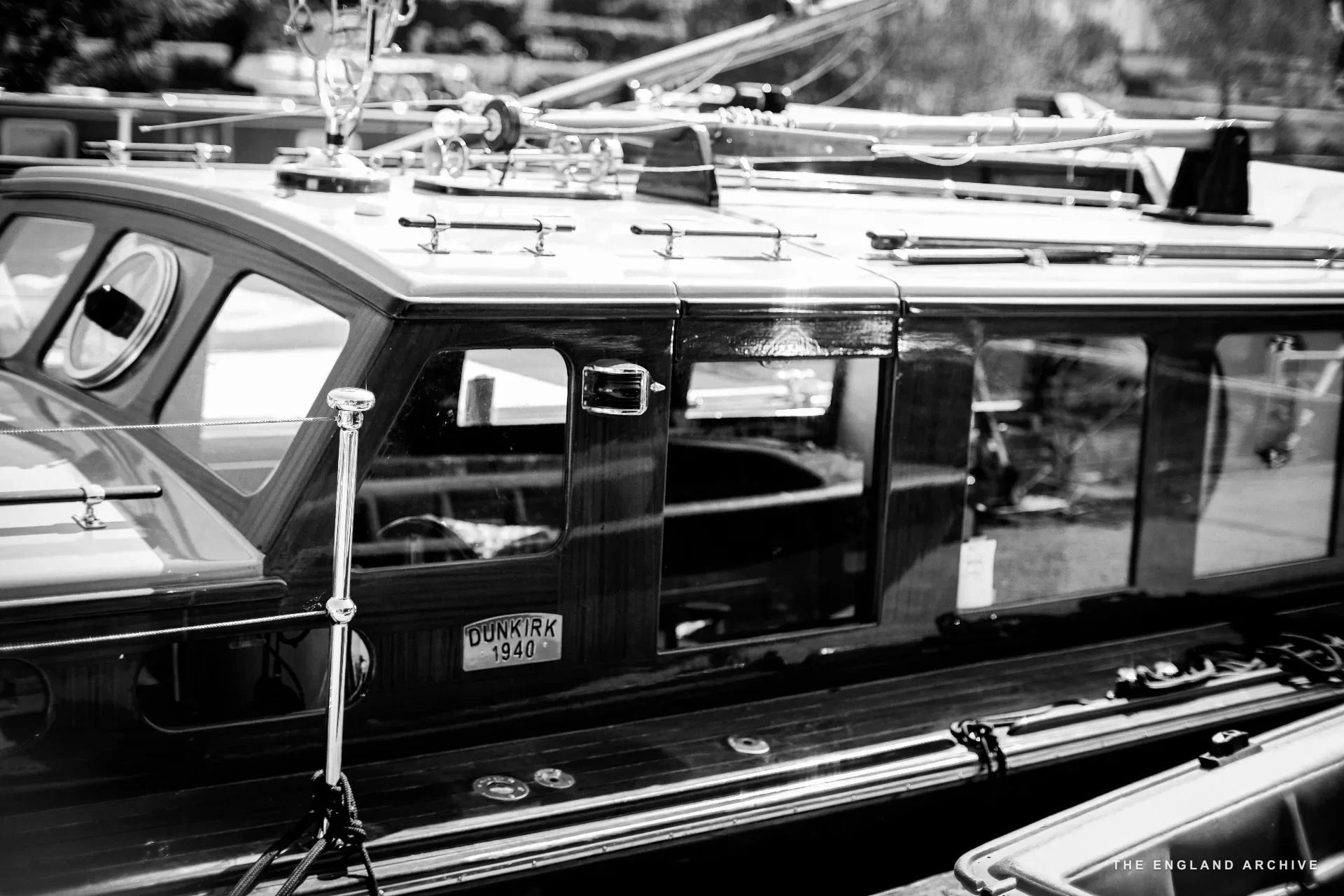
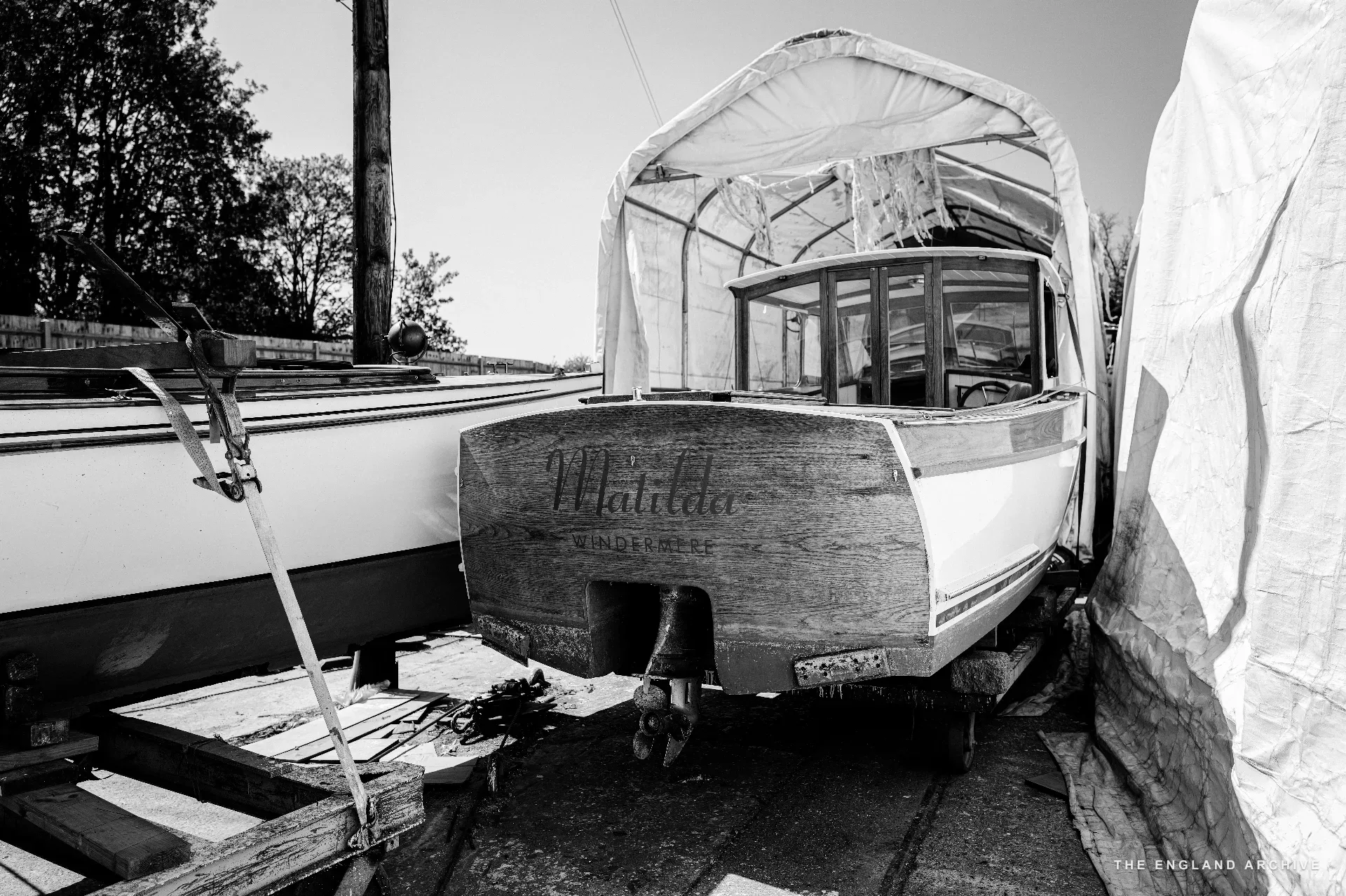
The Little Ships of Dunkirk are the civilian vessels that crossed the English Channel in May and June 1940 to help evacuate more than 300,000 Allied troops from the Dunkirk beaches. Many of them were Thames pleasure craft - slipper launches, saloon launches, small motor yachts - requisitioned for the operation. Several hundred went; many were lost; the survivors are a registered heritage set. A handful are still in active restoration, and one of them was in this yard, under a tarpaulin, being brought back by the same hand that had restored hundreds of boats before her.
Michael Dennett, I would learn an hour later, has personally restored a majority of the Little Ships that have come through the yard over his career. A majority. I have not been able to verify the exact number, but Michael said it plainly, and the yard's reputation across the Thames restoration community supports it. If that figure holds up, Dennett has done more for the physical continuity of the Dunkirk fleet than almost any other single yard in England.
A technical decision, mid-tour
One detail of the methodology belongs in the record, because it is the kind of thing the archive's craft essay should honestly document. I had brought, among other lenses, a manual-focus prime for the morning. At Kindersley the day before, with its quieter register, the manual lens had been exactly right - contemplative, considered, each frame planned. At Dennett, twenty minutes in, it was wrong. Stephen does not stop moving. Hands, boats, attention, footprint, he is in constant motion, and a manual lens asked me to keep refocusing in pursuit of a subject who was not pausing for me. The documentation was going to suffer.
I interrupted Stephen again - he was mid-sentence about another boat - and said, hang on. I'll be back. I went to the car, swapped the manual lens for the Leica Q3's autofocus, and came back.
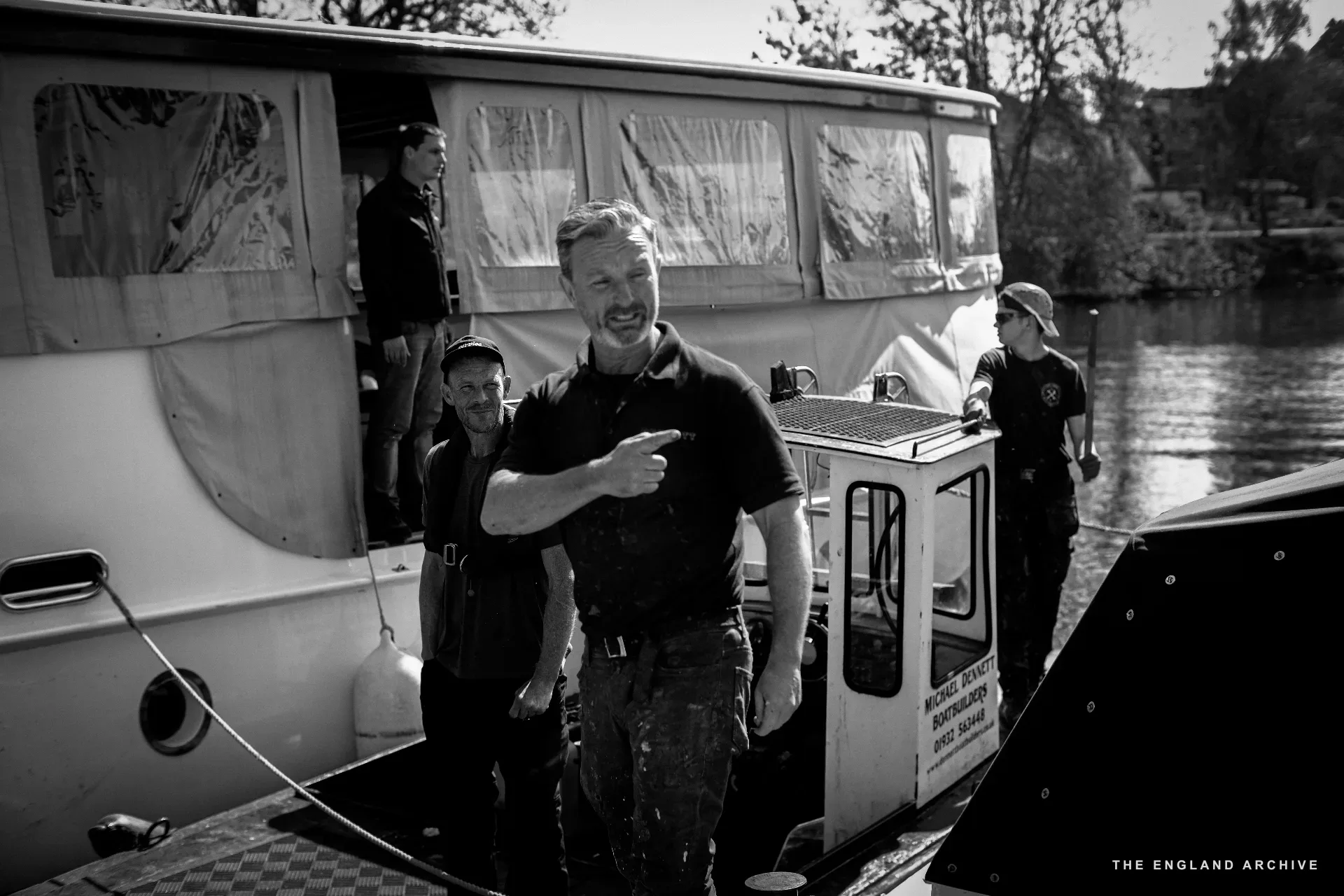
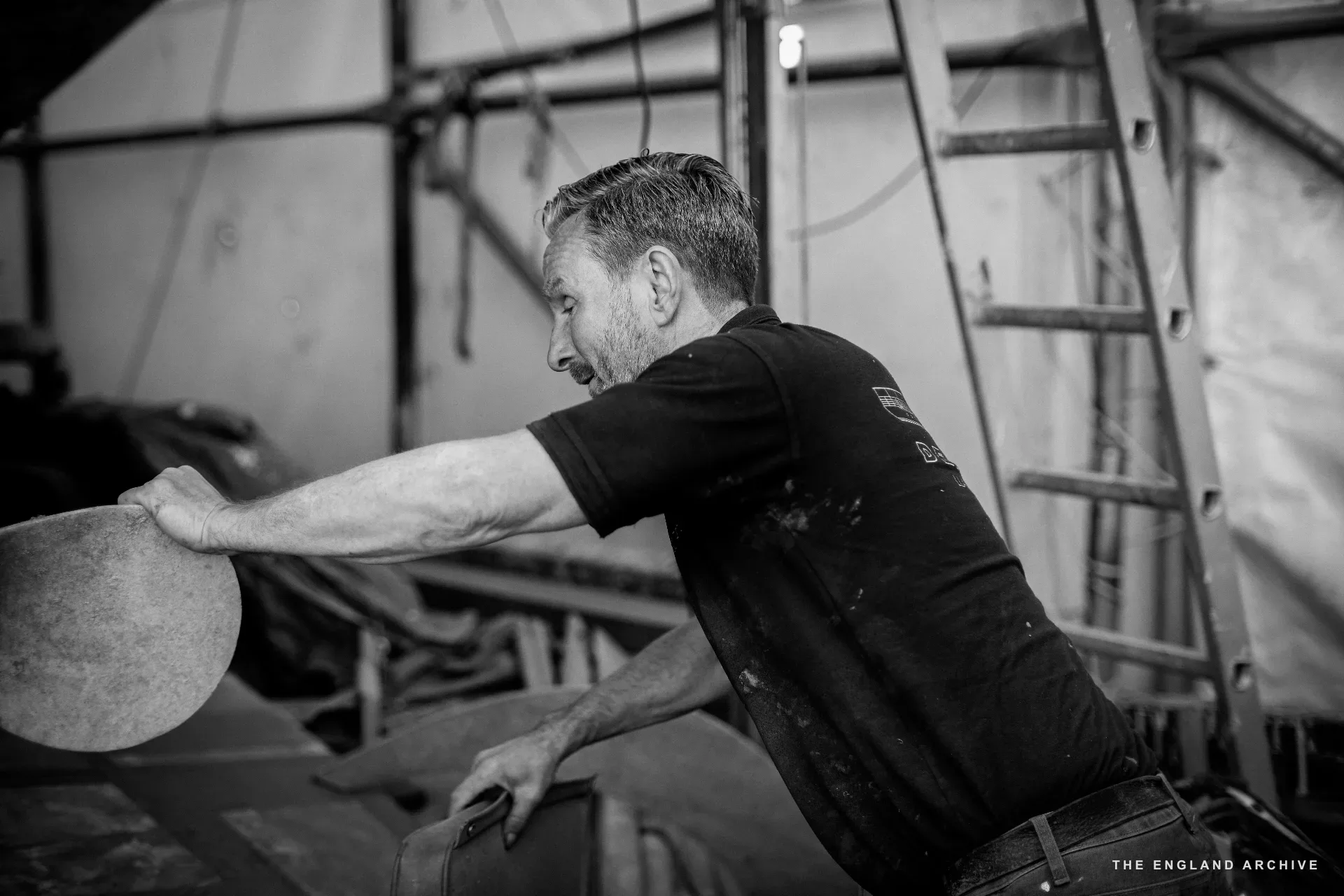
The rest of the morning's moving work went on that camera. I kept the Bronica for the portrait session later. The lesson, which I am still learning, is that the camera must serve the visit, not the other way around. Stephen's yard was not going to slow down to accommodate a photographic choice I had made in the car that morning. Adapting in real time is part of the work.
Michael at the masts
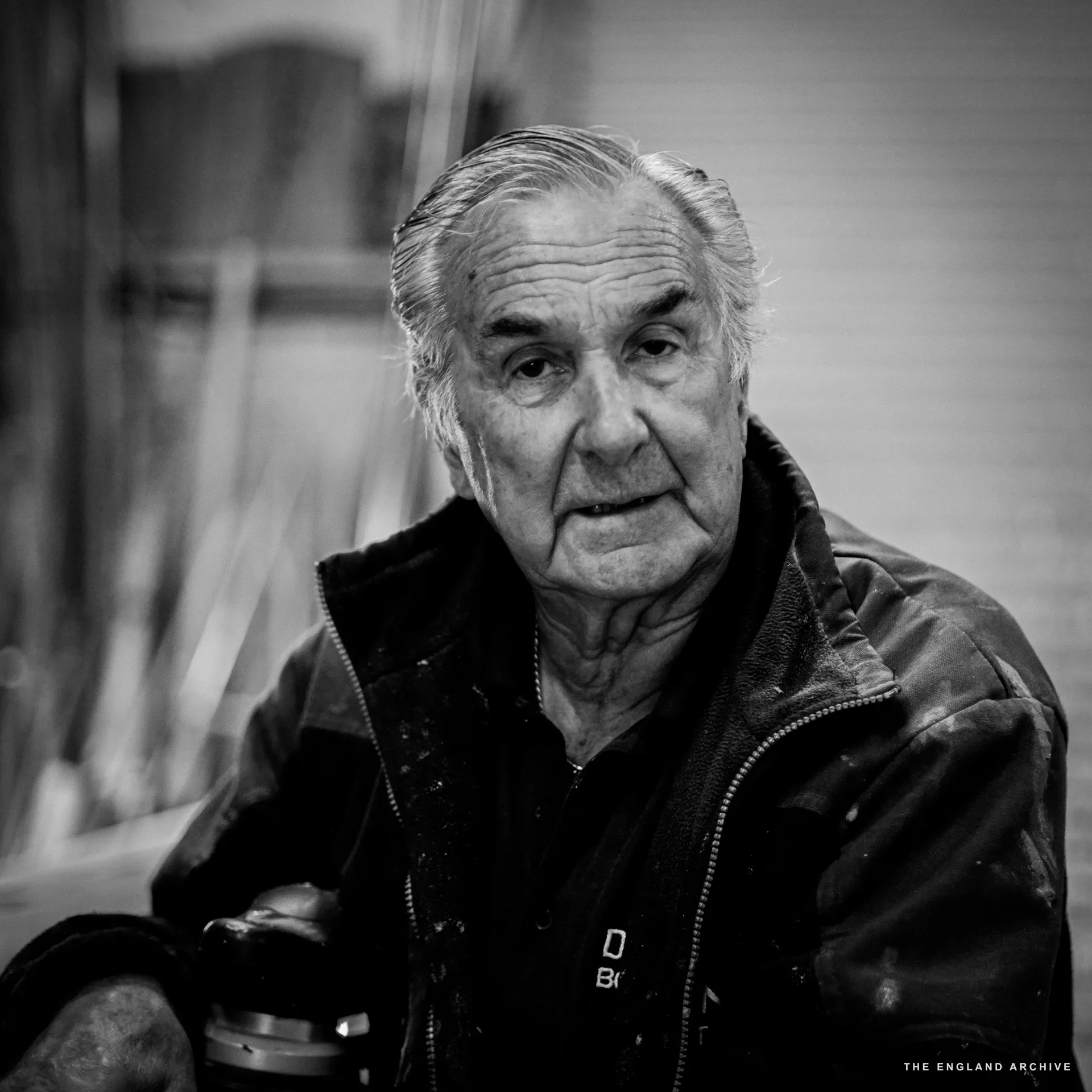
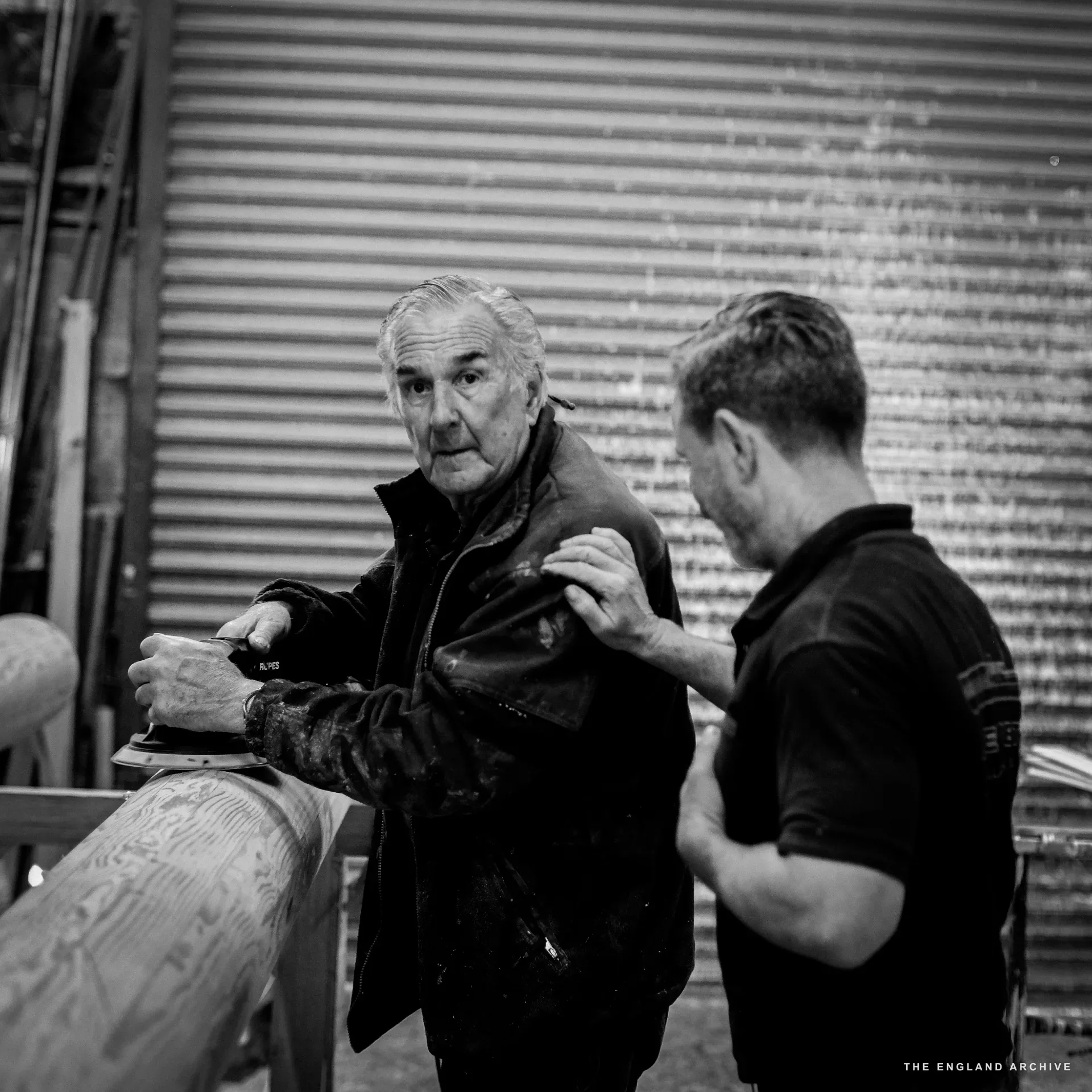
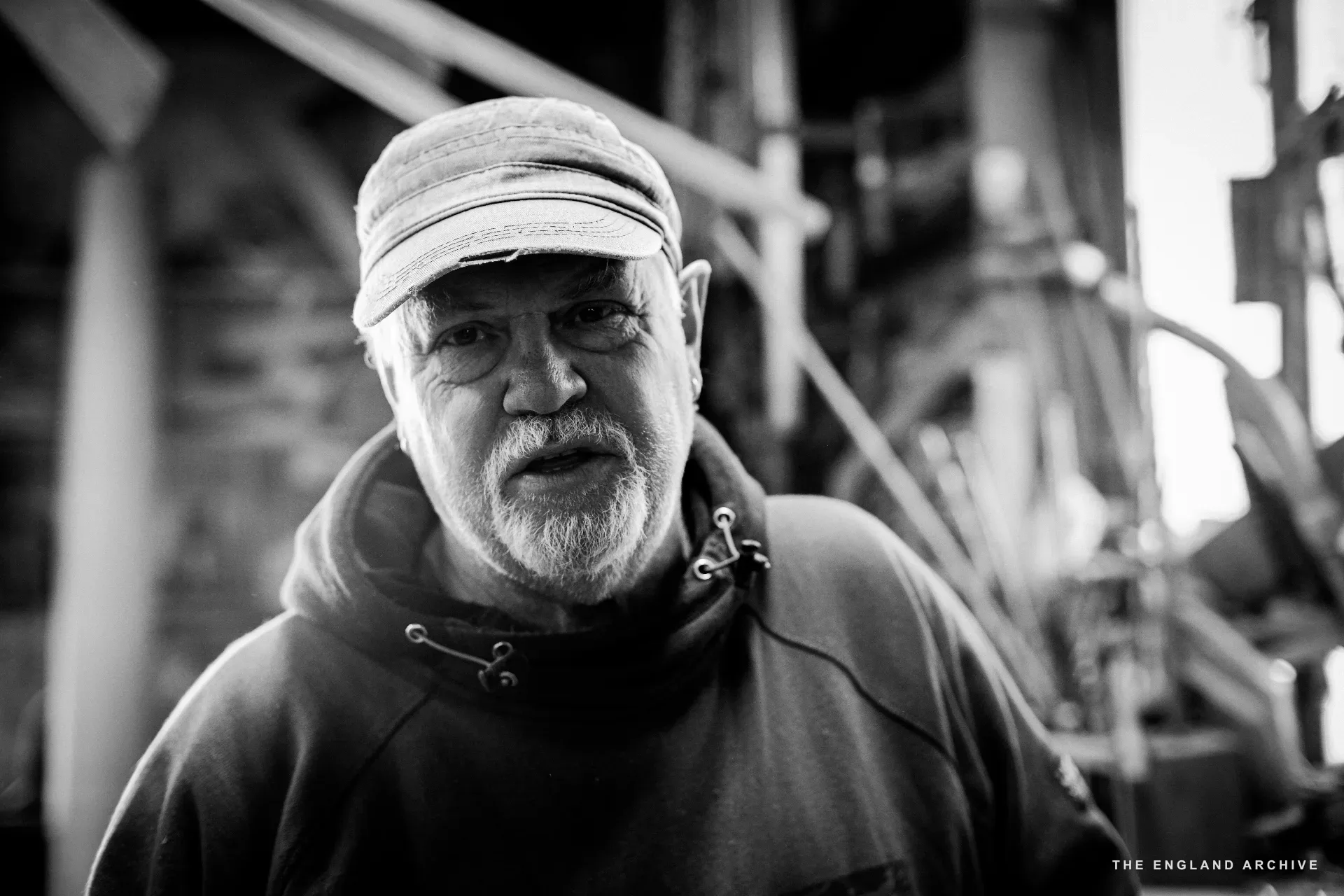
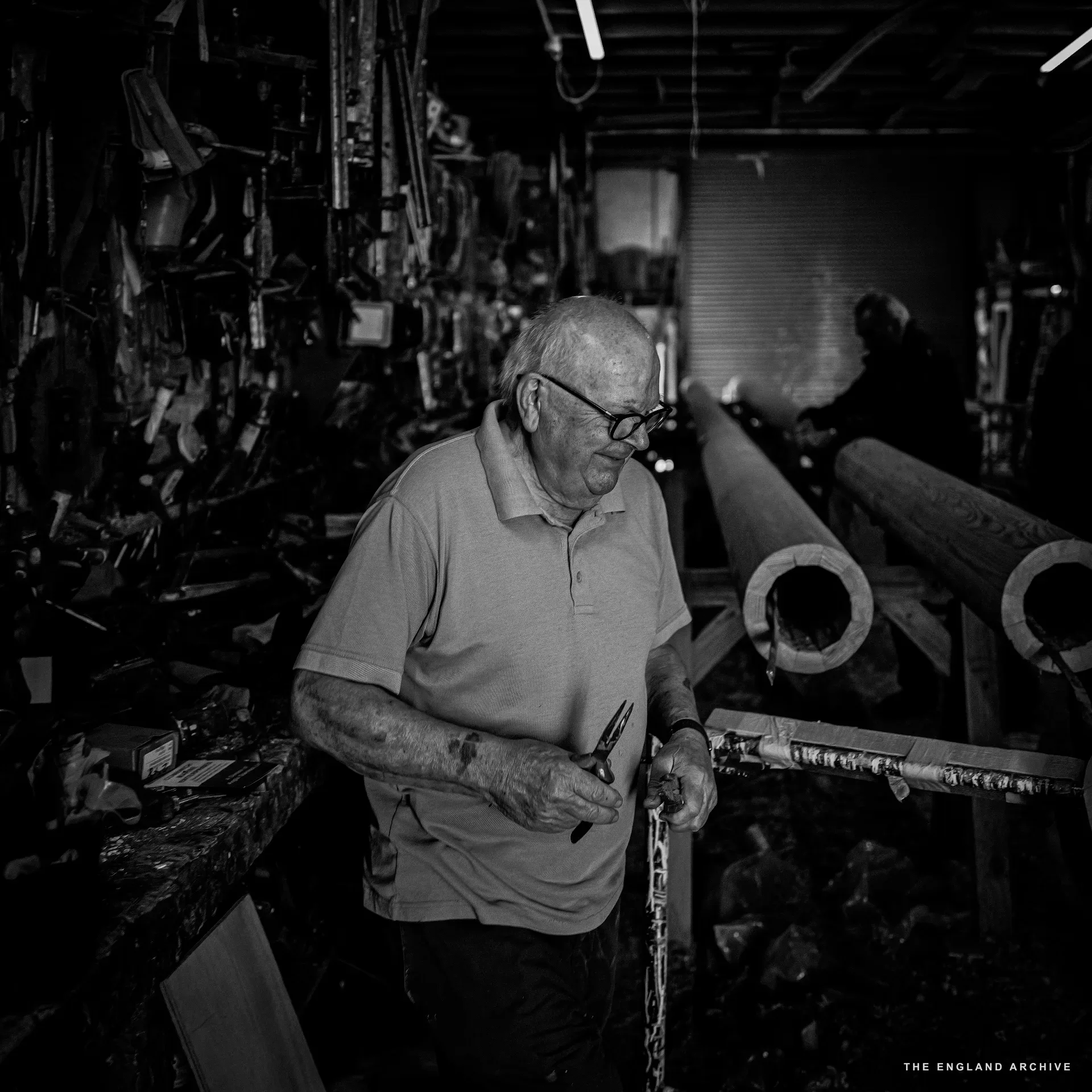
Stephen's tour ended at the big workshop at the back of the yard. He pushed open a door and said, that's Michael. I walked in. At the far end of a space that looked to have accumulated forty years of tools across its benches, an eighty-three-year-old man was bent over a pair of long wooden masts on stands, running a hand sander along the length of them. He looked up, put the sander down, and came over.
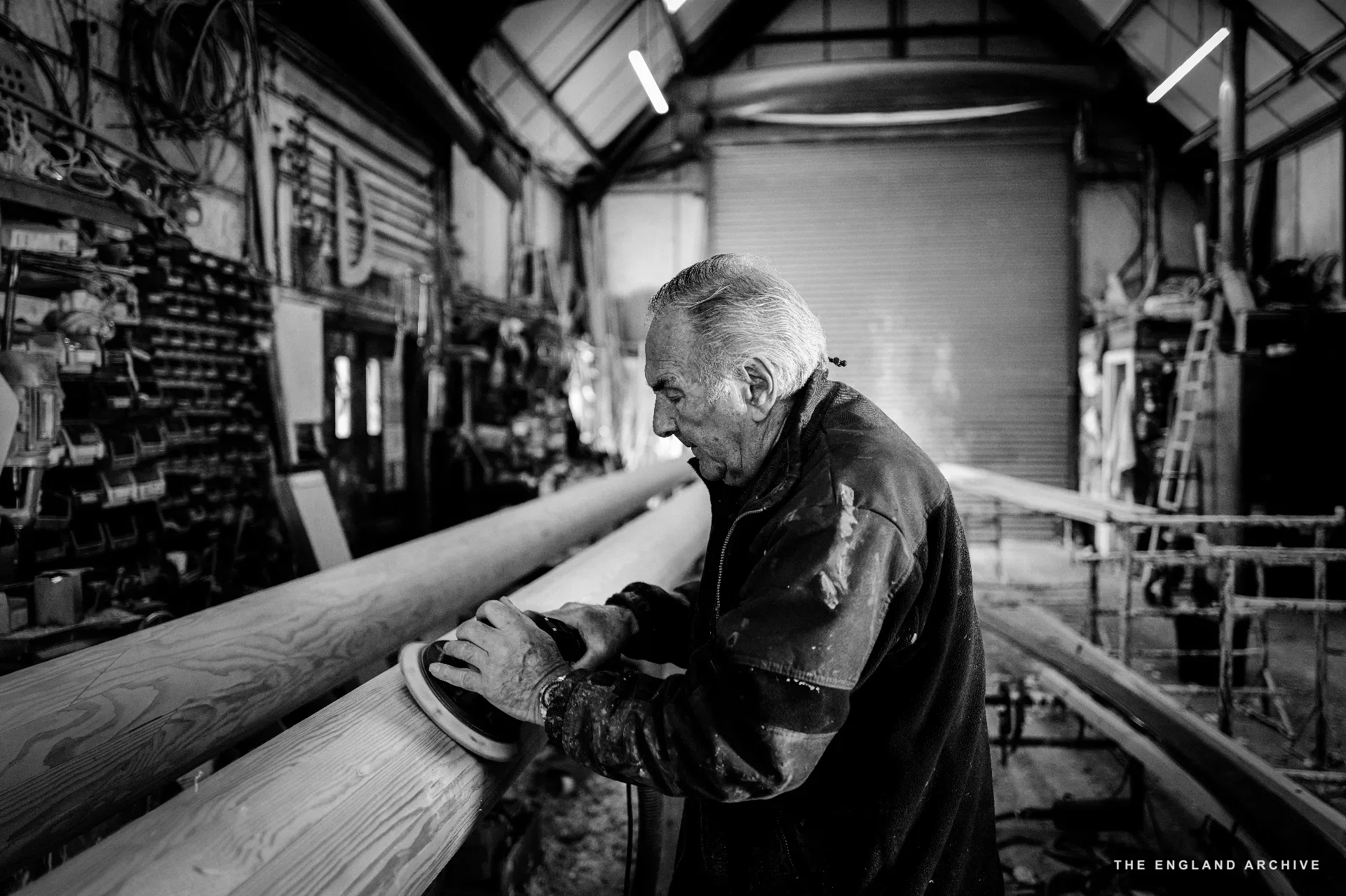
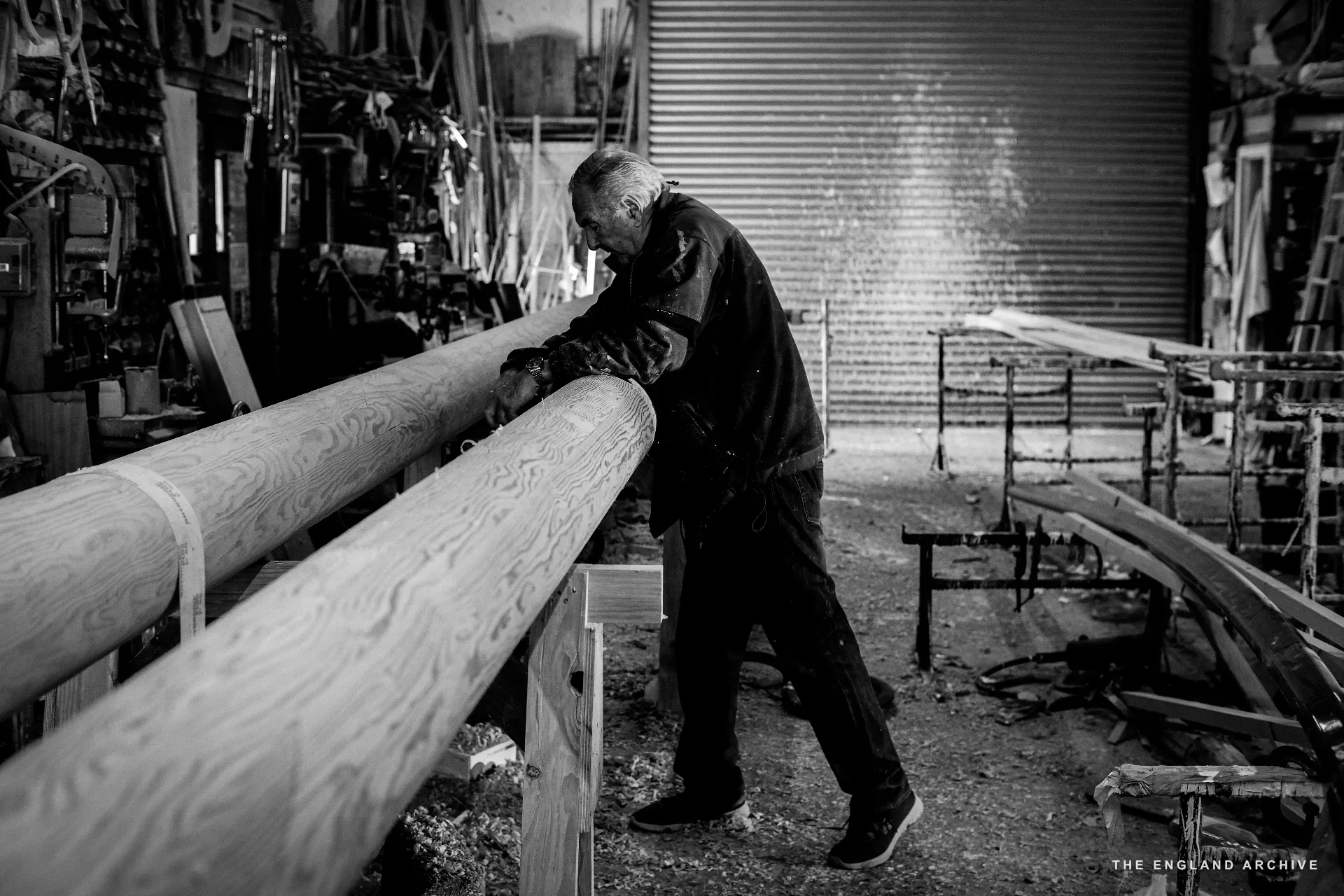
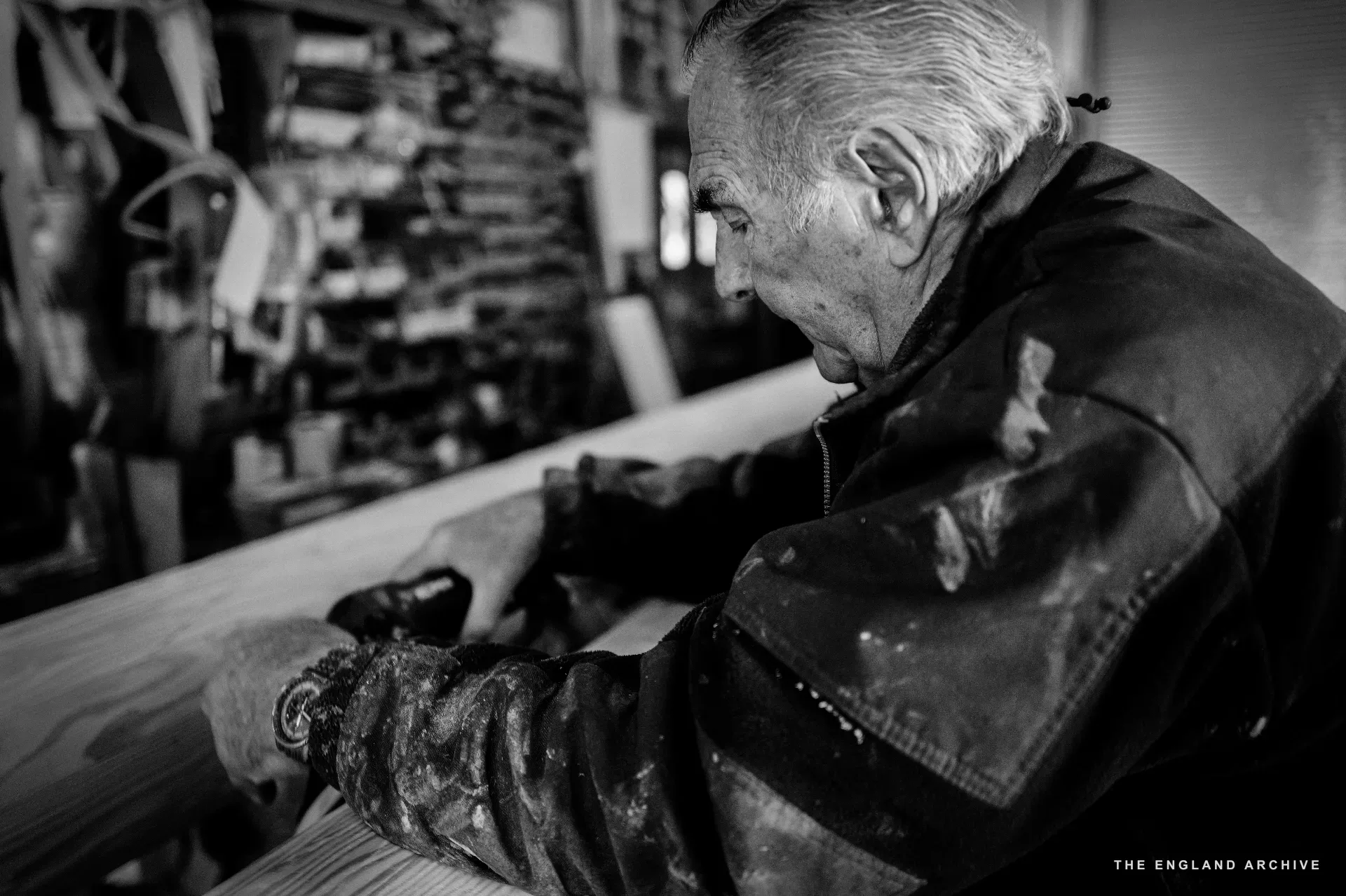
I had not expected Michael to still be at the bench. Most founders of small family yards, at eighty-three, are at home by lunchtime. Michael comes in every day. Stephen had told me, in passing, that his father would not have it any other way. Standing talking to him, I could see why. He looked frail in the way that people of his age look when they are standing still and you are assessing them. When he picked the sander back up a little later and showed me what he had been doing, the frailty was gone. There was tremendous strength in him - in his arms, in his posture, in the way he bore down on the wood and read the grain through the sander. The masts were coming out smooth under his hand. He was a master craftsman at work, and the word "frail" was the wrong word entirely.
Stephen, having delivered me, took the cue and slipped quietly back into the yard. He had Lucy coming; he had his own work waiting. I stayed with Michael. The next hour was the conversation the archive exists for.
The hour with Michael
Michael Dennett told me his story the way people who have lived a long time in a trade tell it - without performance, in the order that the decisions came, with the names of the yards that trained him intact and the years as precise as memory allows. He started at fifteen at Horace Clarke's Boatyard in Sunbury, as a general assistant. He apprenticed through Walton Yacht, then completed his apprenticeship at George Wilsons Yard in Sunbury. By twenty-two he was self-employed, initially working out of the back of a van, taking whatever weekend restoration work came his way. He rented a shed as the work grew. In 1988 he opened the yard at Laleham with Stephen, who had been following him around workshops for most of his life by then. Dennett Boat Builders has been at Laleham ever since.
He has restored hundreds of boats over his career. The majority of the Little Ships of Dunkirk that have come through for restoration, he said, have come through his yard. I am going to verify that specific claim against the Association of Dunkirk Little Ships' records, but Michael stated it plainly and the yard's reputation in the Thames restoration world supports it. The boat outside, under the tarpaulin, is one of that set.
We talked for a long time about apprenticeships. I told him what the archive's core mission had recently become - a commitment to championing apprenticeship as the mechanism that keeps heritage crafts alive. He listened carefully, and then he said something I had not expected.
This is the archive's core mission being lived, in a working yard in Chertsey, on a Wednesday morning. The Apprenticeship Pillar, which TEA had formalised the day before the visit, argues that heritage crafts survive through transmission from one person's hand to another's. Michael has been running an apprenticeship practice for most of his working life that is broader than the family-transmission model - he has been taking in the young people the formal education system has failed, and the craft has been receiving them, and they have been finding in the work the focus and fit their earlier training had not given them.
I do not think there are many yards in England running an apprenticeship practice that sophisticated without making noise about it. Michael Dennett is not making noise about it. He is just doing it, eighty-three years old, on a Wednesday morning, between passes of the hand sander.
We also talked about Stephen. Michael confirmed the phrase from the website: Stephen was, effectively, an apprentice from the age of two. Michael put it more or less that way himself. It was not a training programme, it was a childhood at the benches. Stephen is now running the yard; Michael is at the masts. The pattern of transmission that produced Stephen is the same pattern Michael is now running with the apprentices he takes in.
The portraits
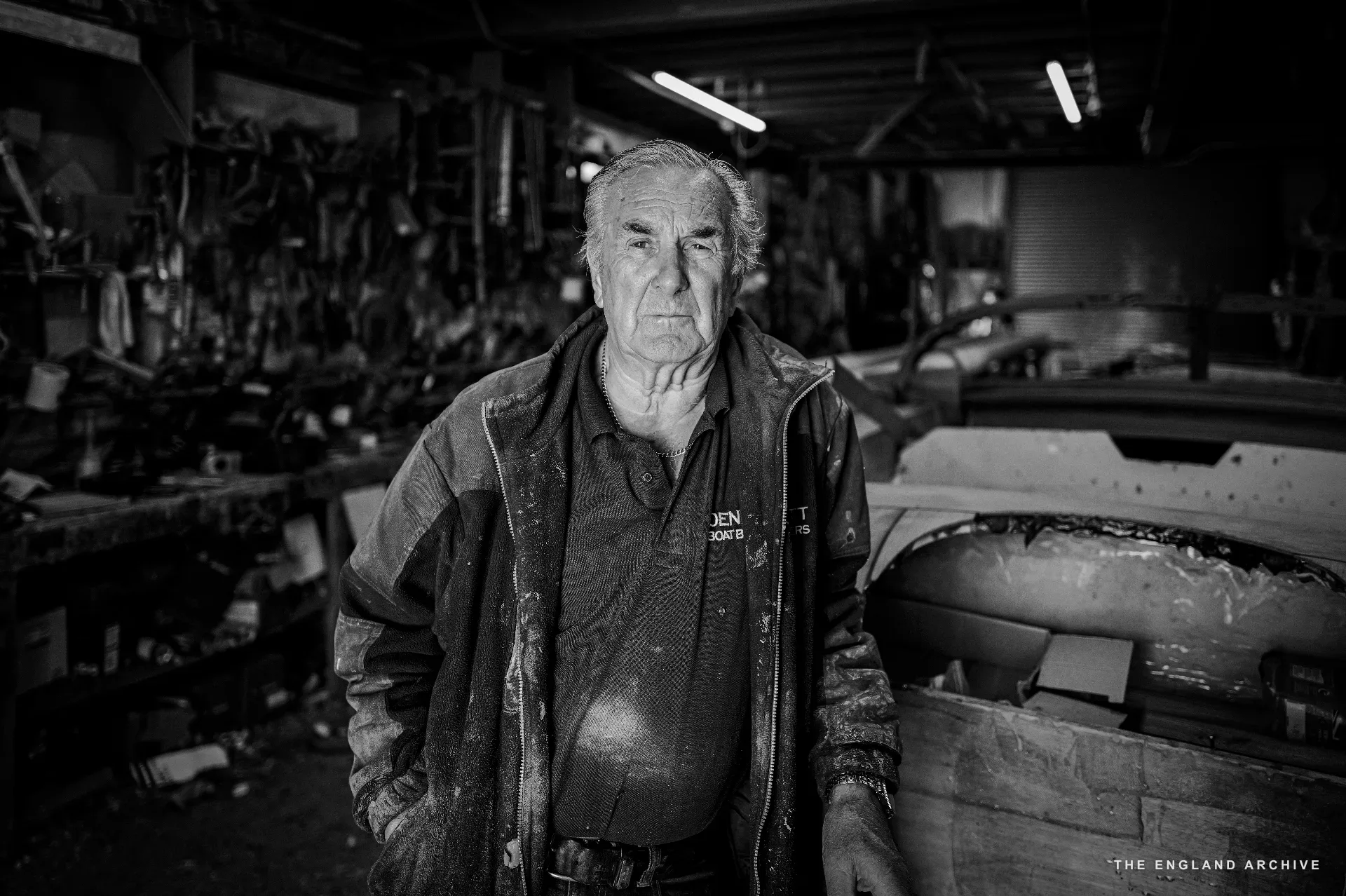
After the conversation I asked Michael if I could take some portraits. He nodded, and stepped into the light. I set up the Bronica on its tripod, metered, and took a couple of frames of him where he was. Then I asked him to move to a spot beside one of the cutting machines, which caught the light differently, and took a couple more. Michael went with every adjustment without comment. He was easy in front of the camera in the way that people who have been photographed in their own workshop for a long time are easy. He did not perform for the camera. He stood where he stood and let it look at him.
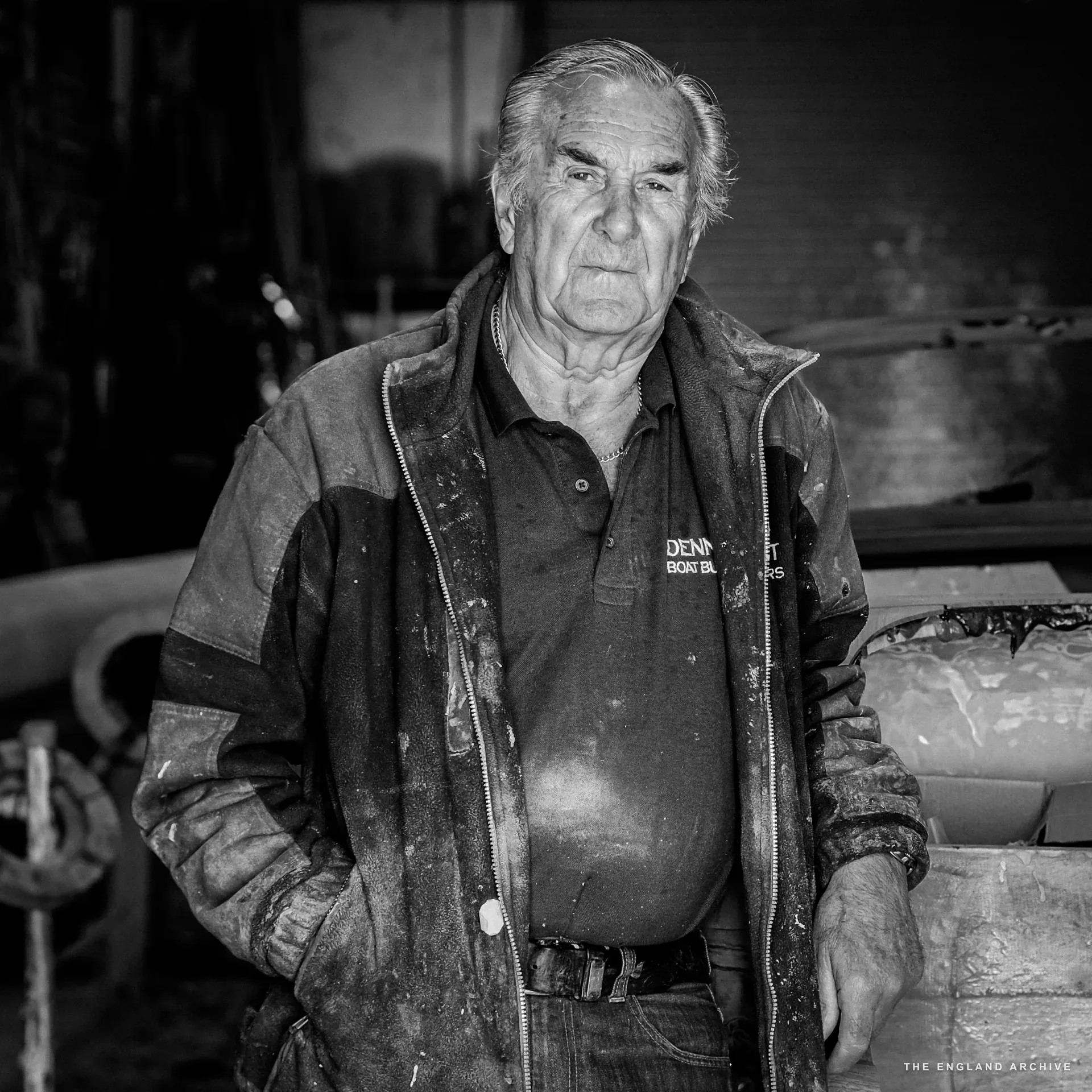
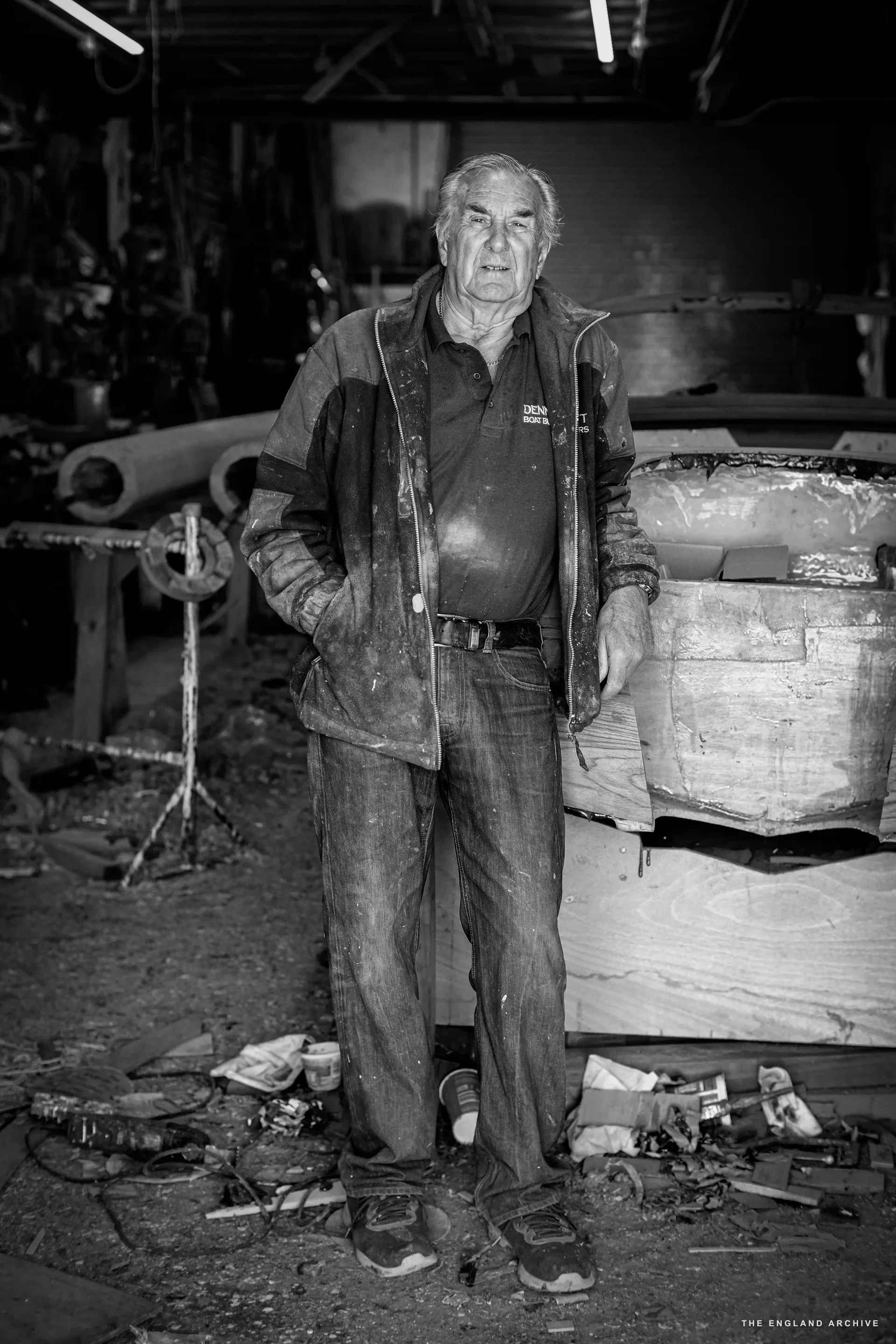
While I was working with Michael, Stephen came back in. He had ten minutes; Lucy had not yet arrived. I asked him to stand next to his father, and we made the joint portrait - father and son in the same frame, in the same workshop, at the same benches they have worked side by side at since 1988 and, in Stephen's case, effectively since childhood. I shot the joint portrait on the Leica Q3 and the Fujifilm X-S20 for working frames, and then a couple of Bronica negatives to carry the record. Whatever comes out of that roll is, for the archive, the defining image of the Dennett yard in 2026.
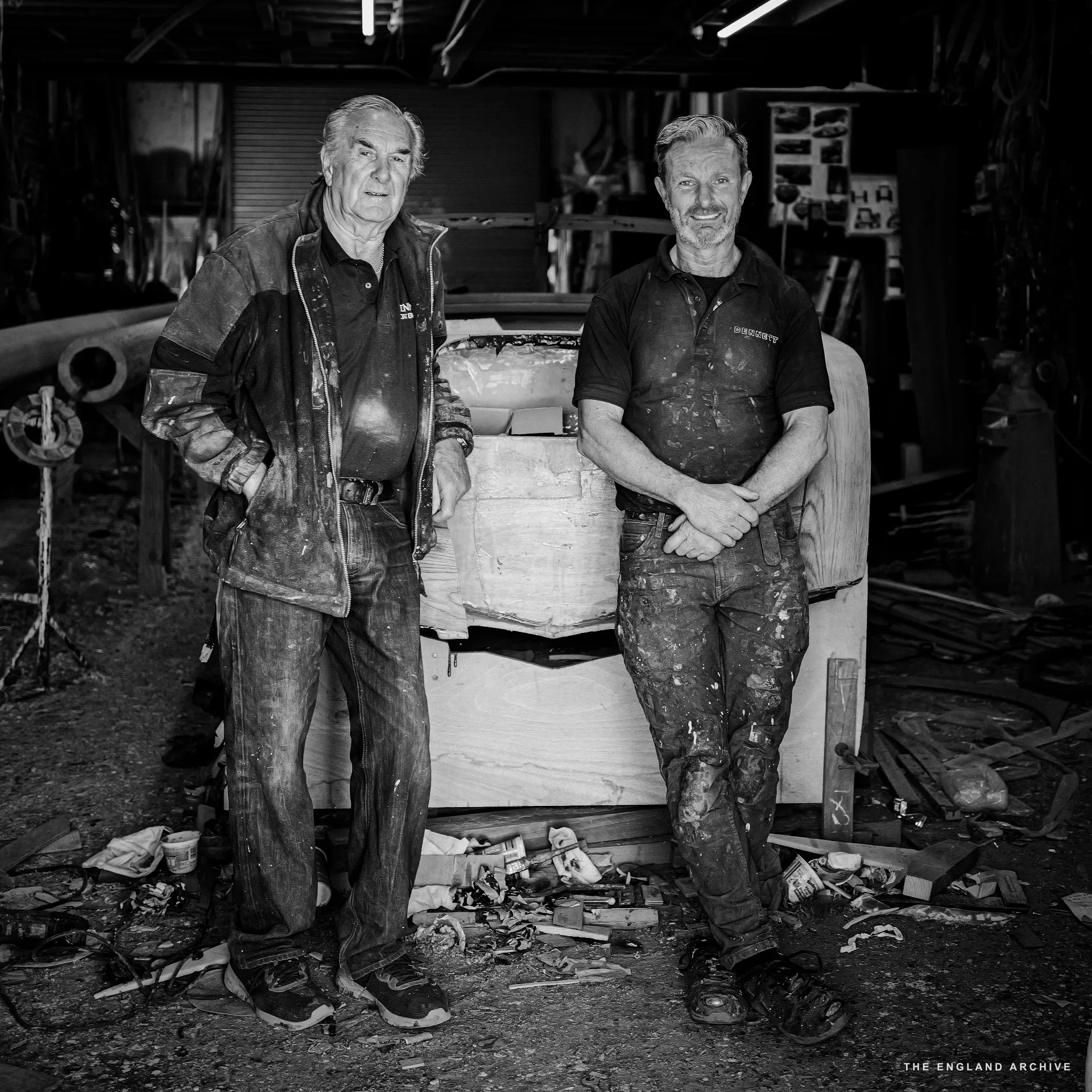
Stephen and the Corfu tender
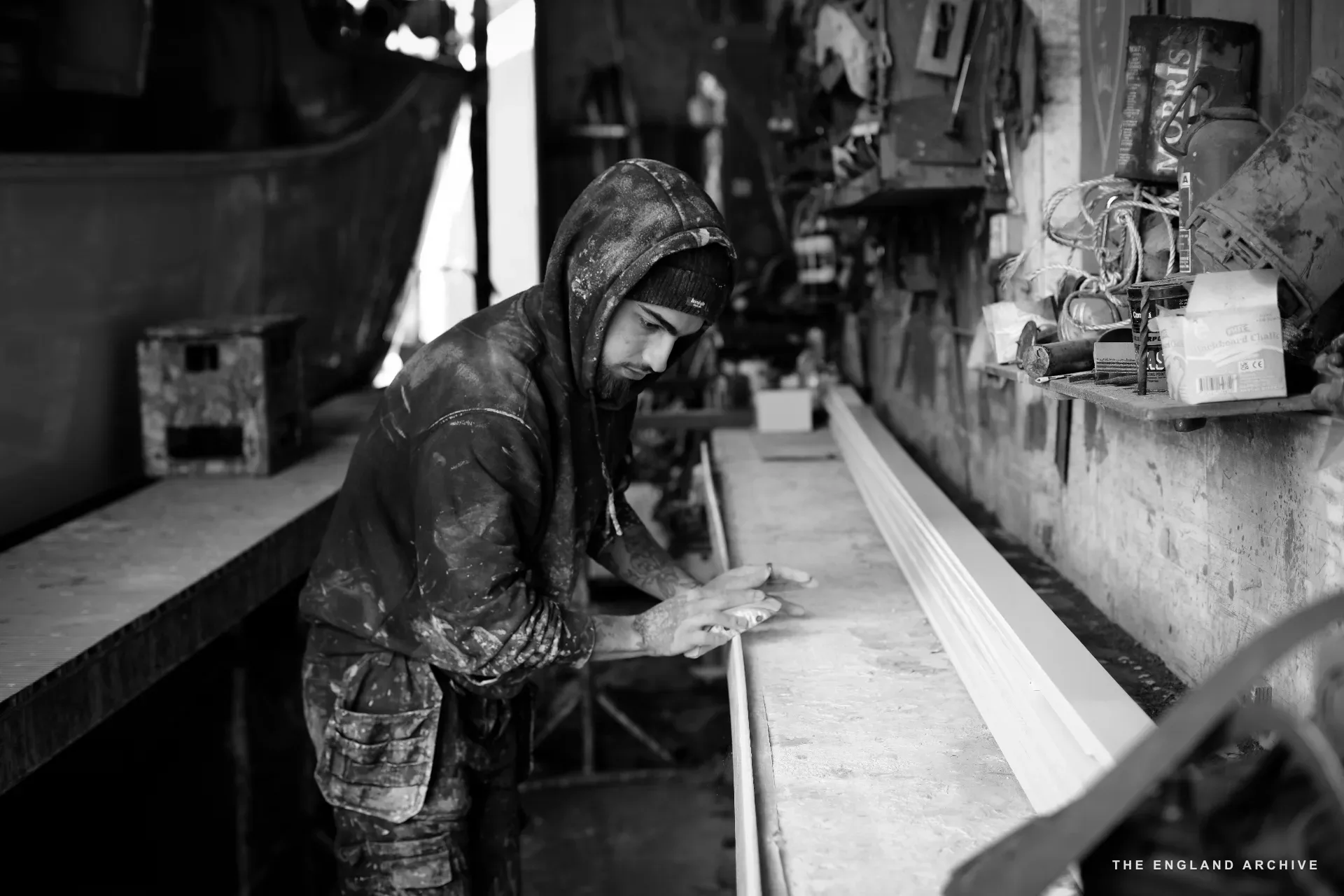
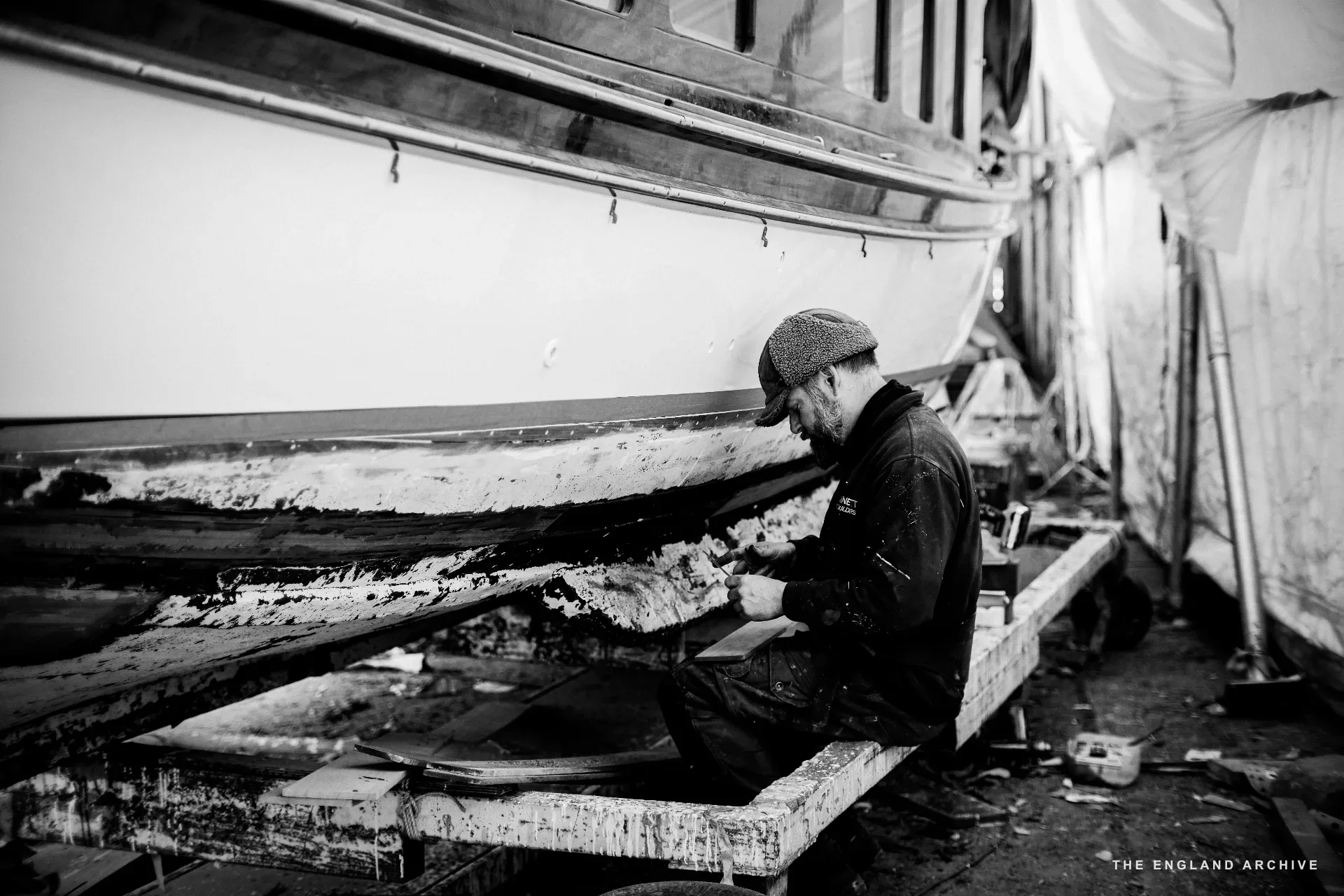
After the portrait, Stephen went back to his bench to continue the specific work he had been interrupted from. He was making what he described as the lightest boat the yard has ever built: a very small tender designed to sit on top of the mast of a larger vessel, en route to Corfu, where the owner would use it to get from anchorage to shore. The commission was that precise. A boat that had to be light enough to live at the top of a mast, durable enough to be lowered and used, and honest enough to carry a working boat's owner to a Greek shoreline without complaint.
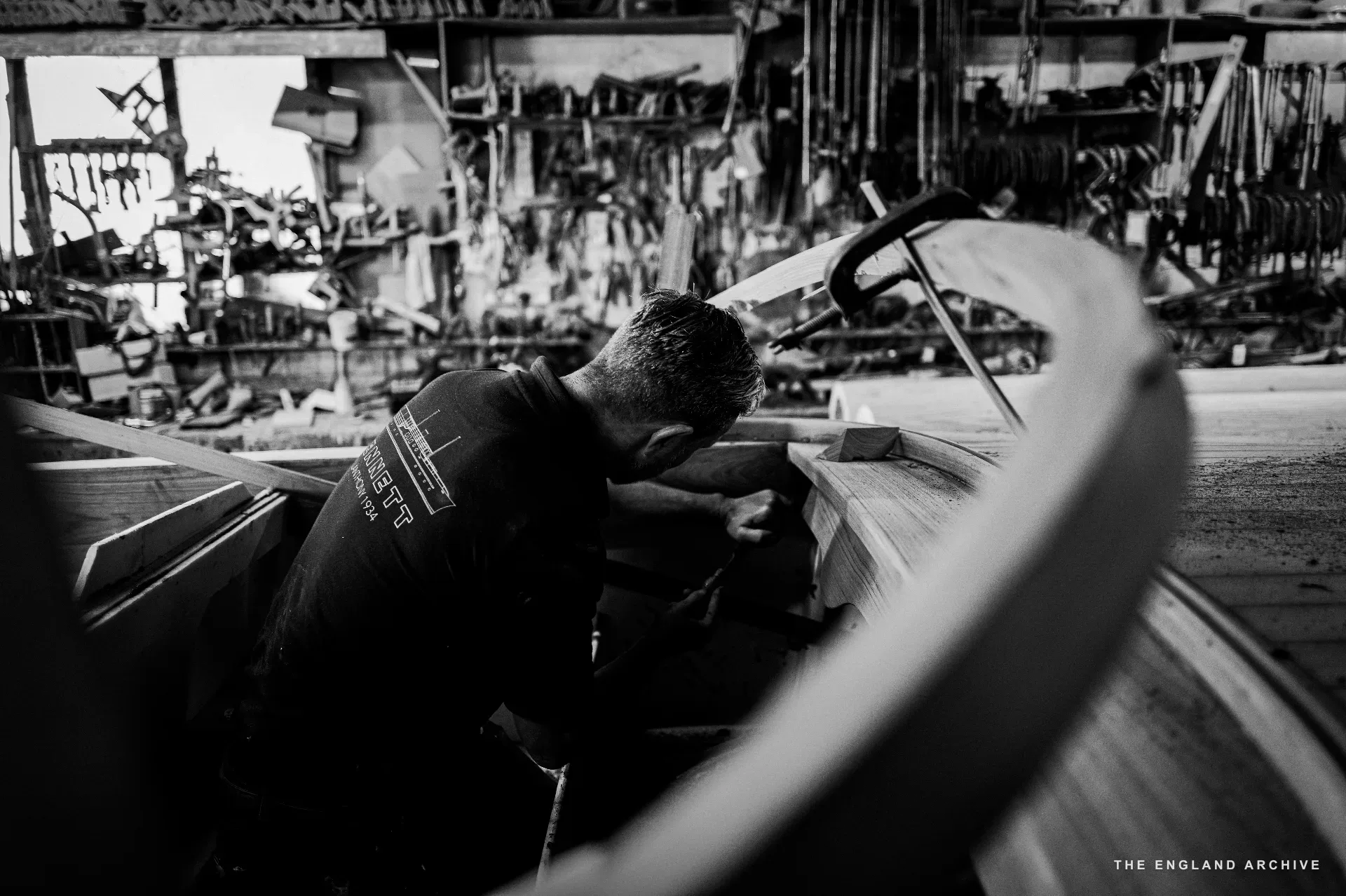
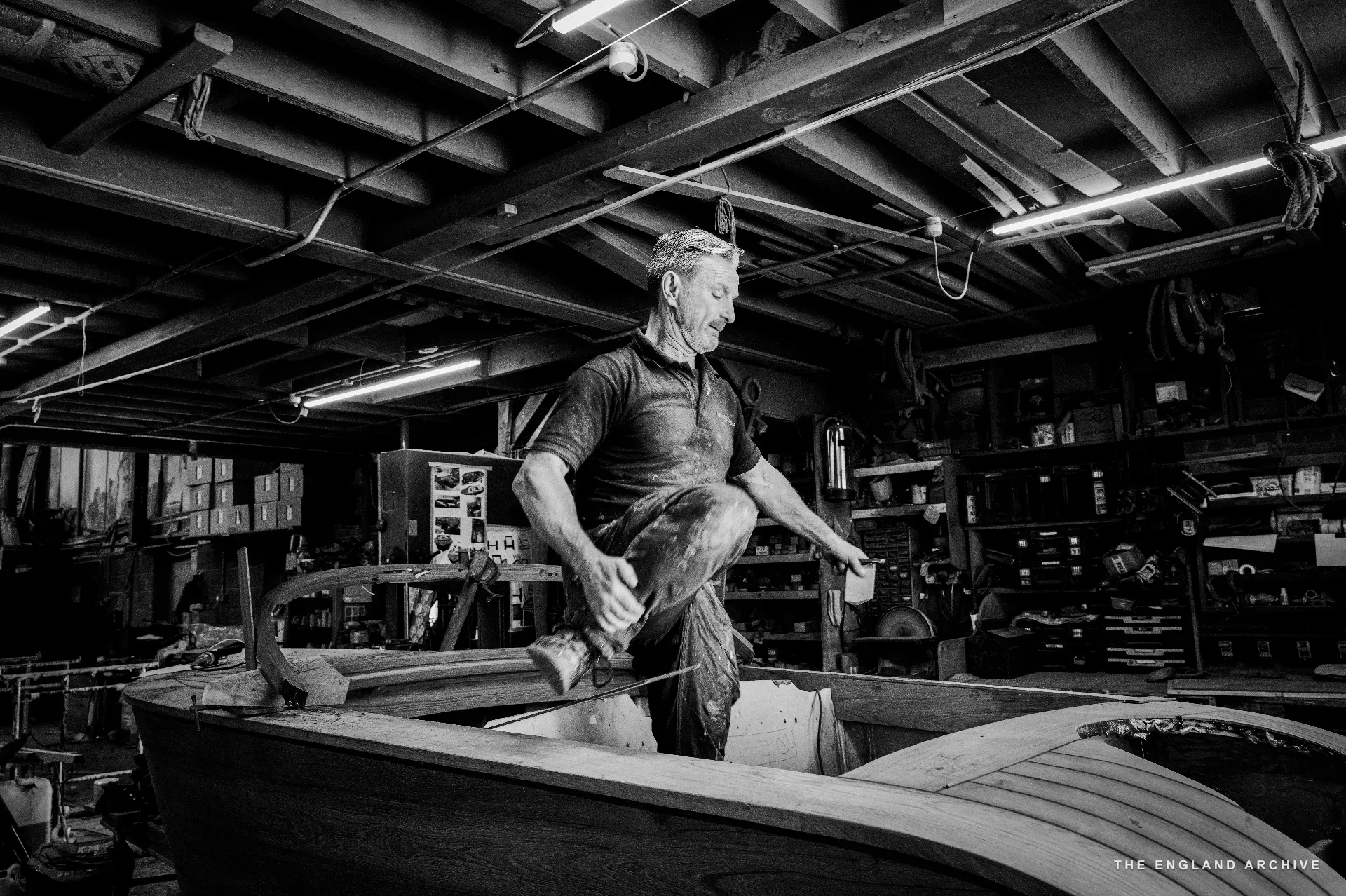
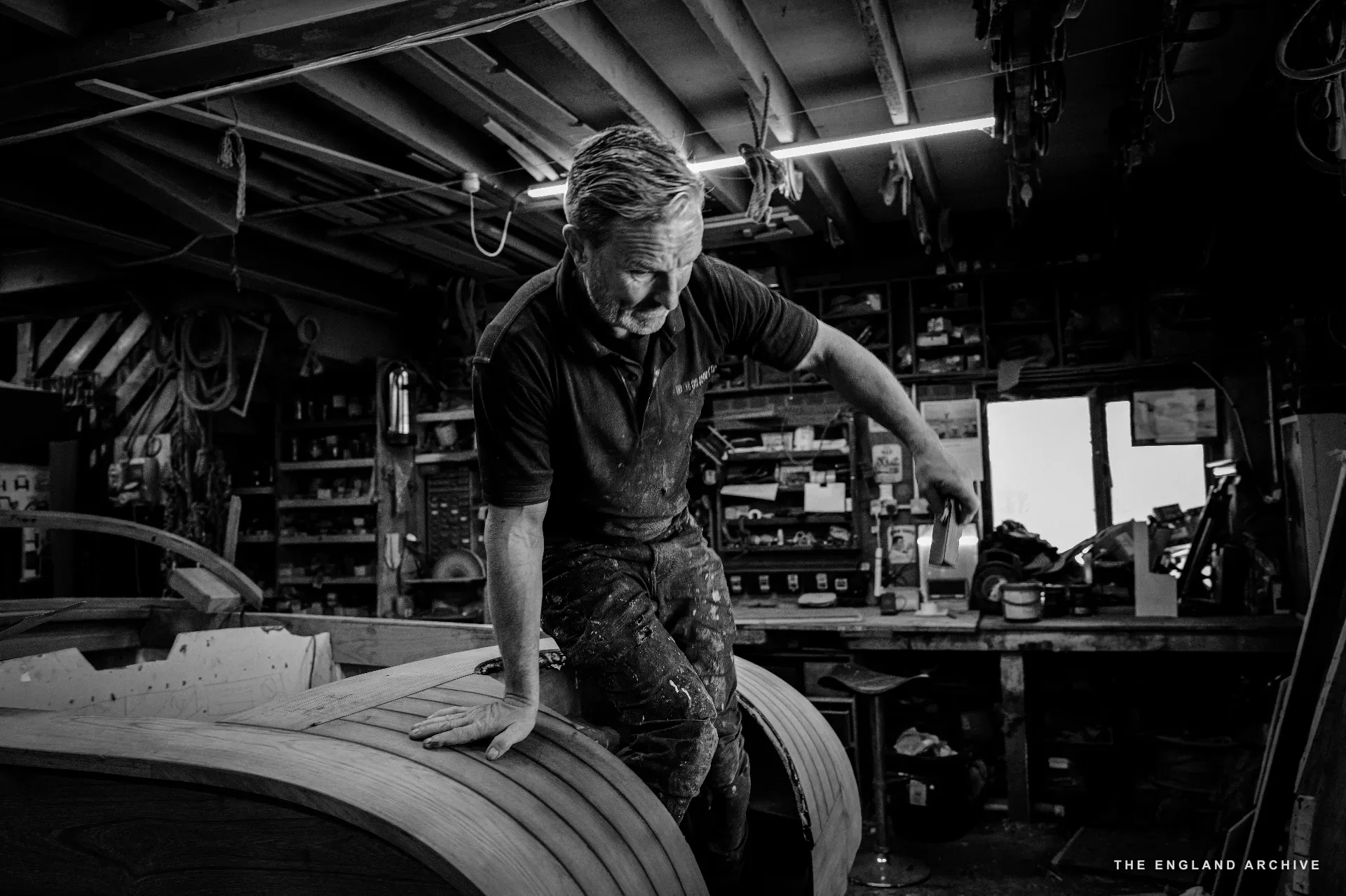
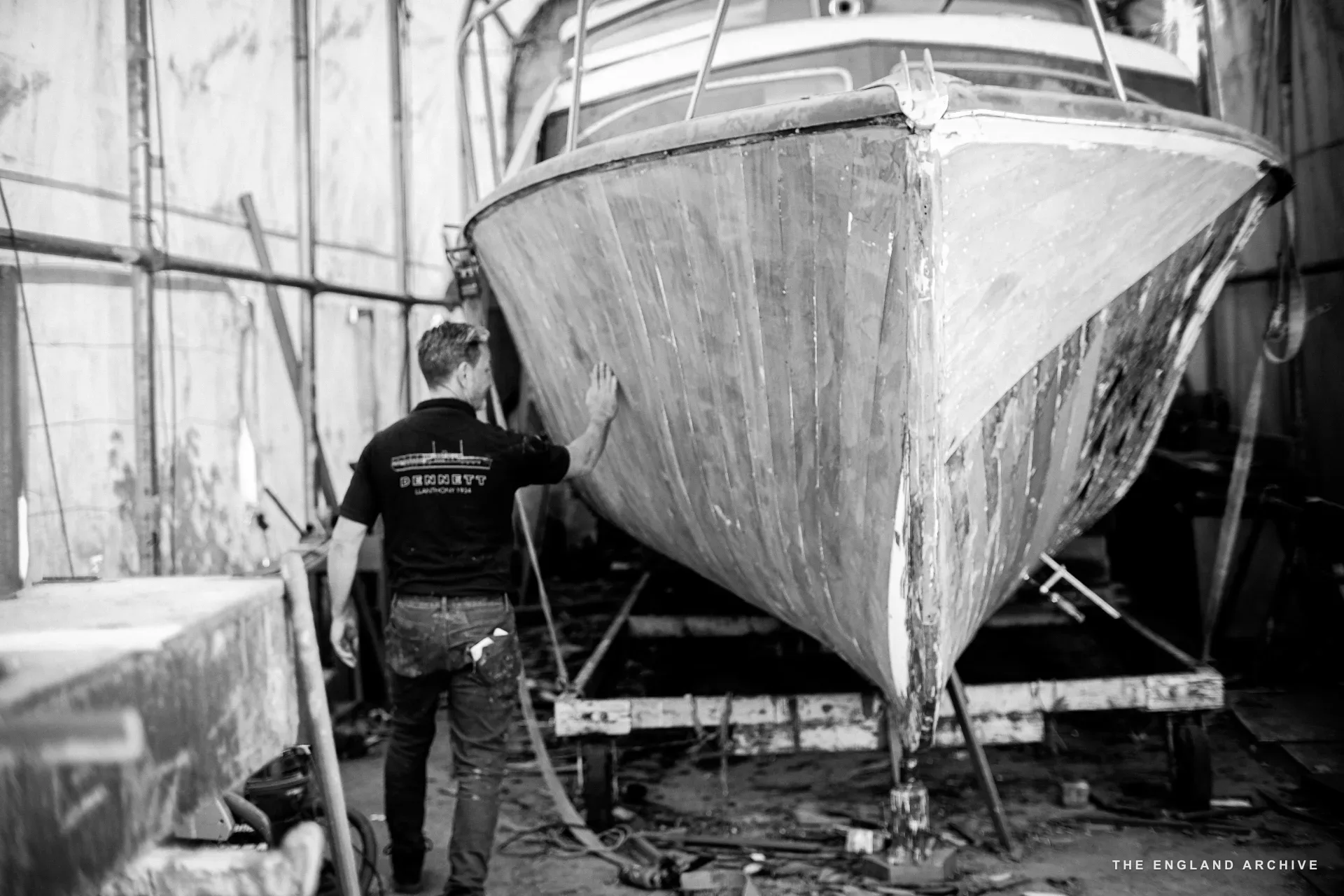
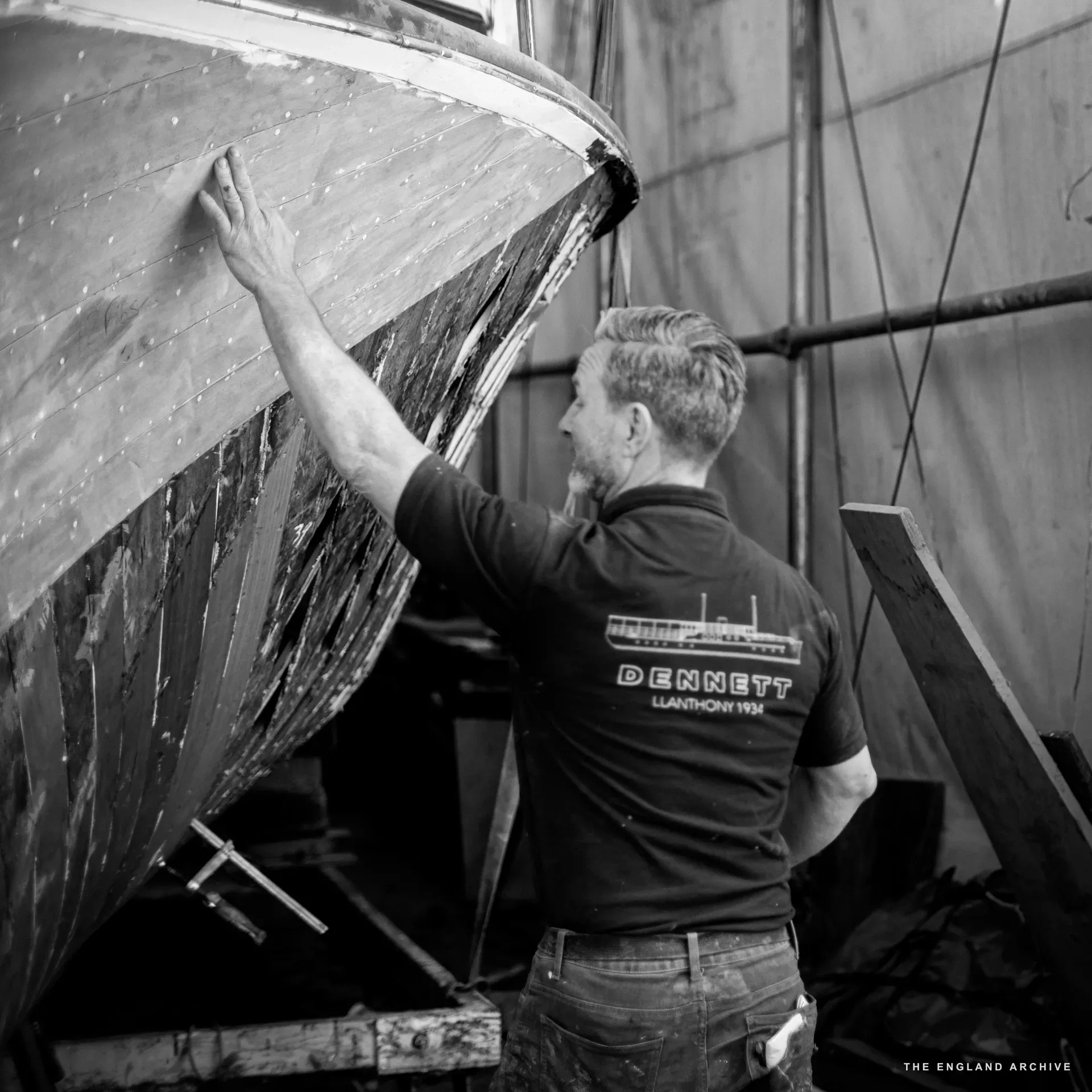
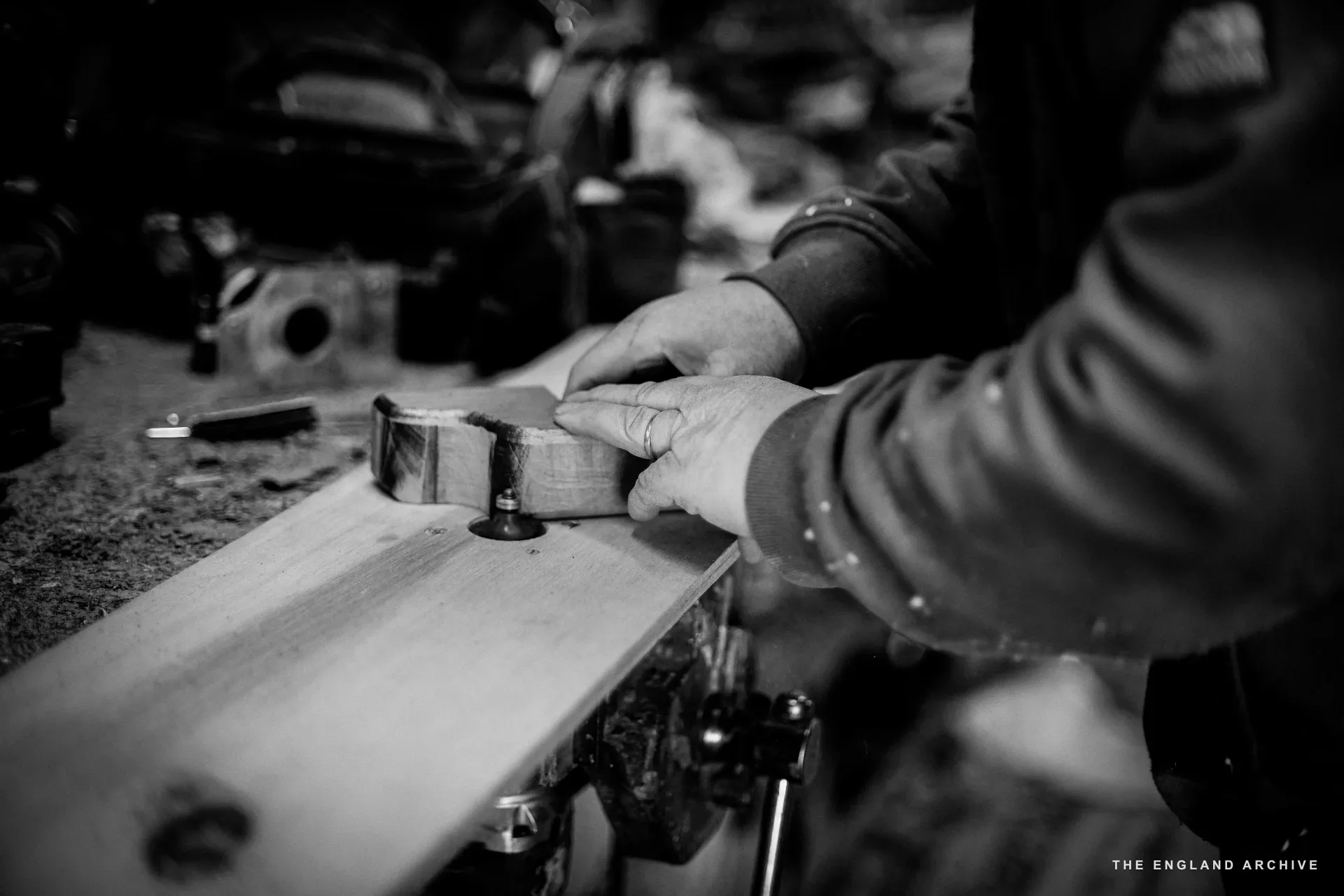
I asked if I could follow him. He said yes and went straight back into the work. I kept a polite distance and photographed. He planed, fit, checked, and moved on. The rhythm was quick and attentive, with very little of the slowness that the Kindersley workshop had carried the day before. Different craft, different tempo; a letter-cutter reads the stone for minutes before a single chisel strike, whereas a boat-builder making a featherweight tender is running the whole day against a commission date, and the hand is moving because the boat has to be ready.
He did not stop to explain while he was working, and I did not expect him to. The photographs are of him working, the way a good documentary photograph of a working person should be. They are not posed; they are evidence.
The workshop
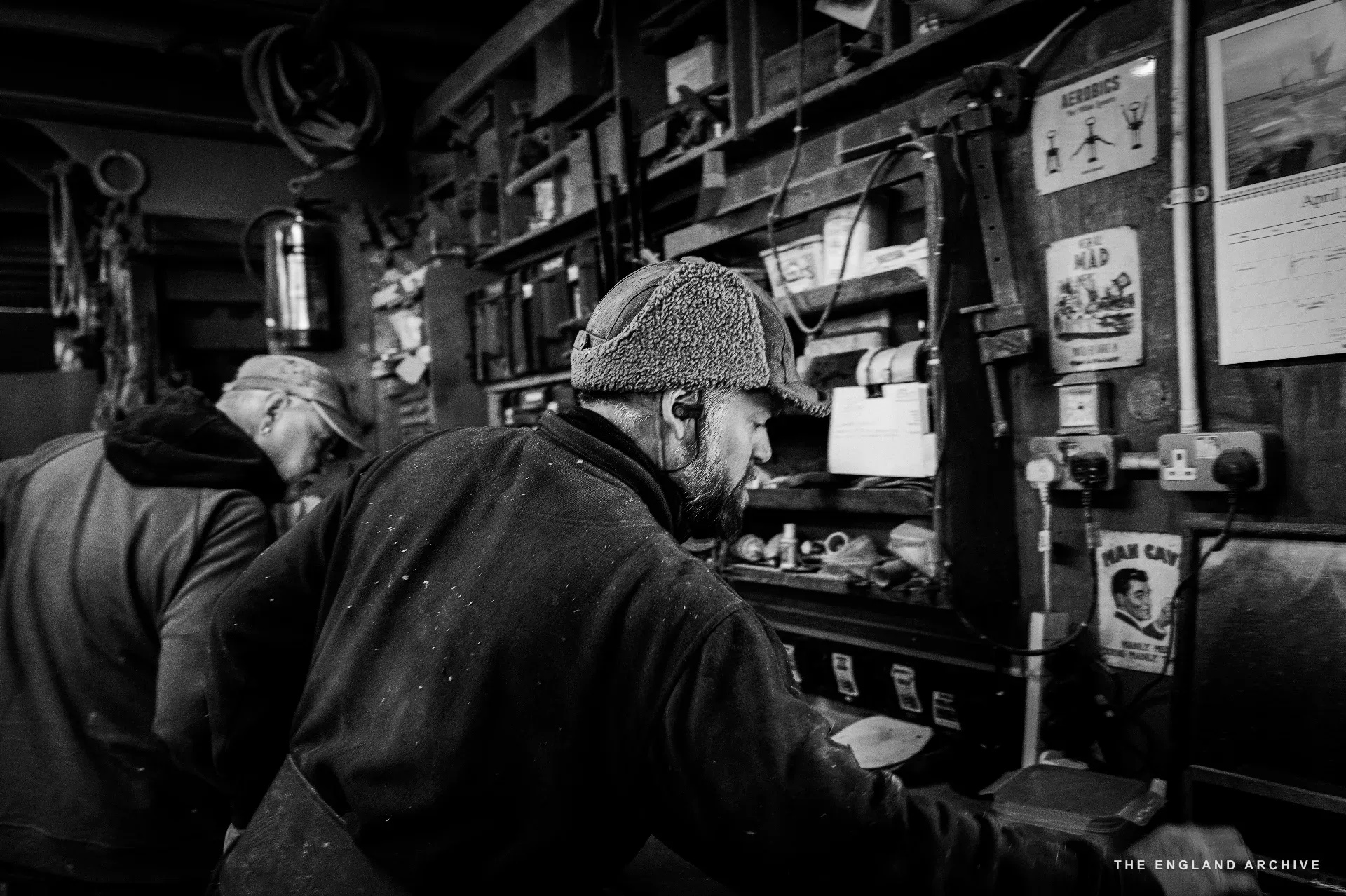
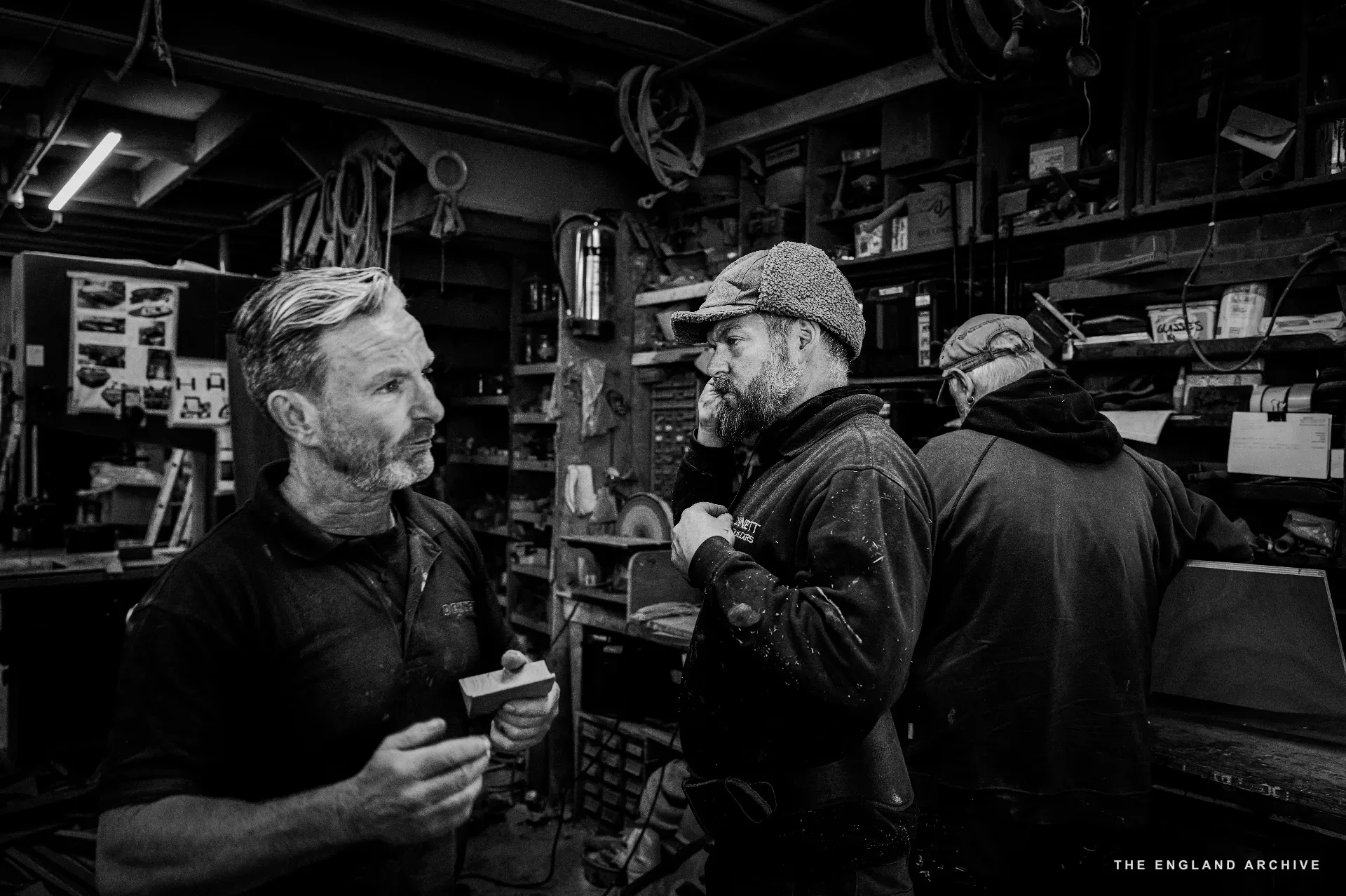
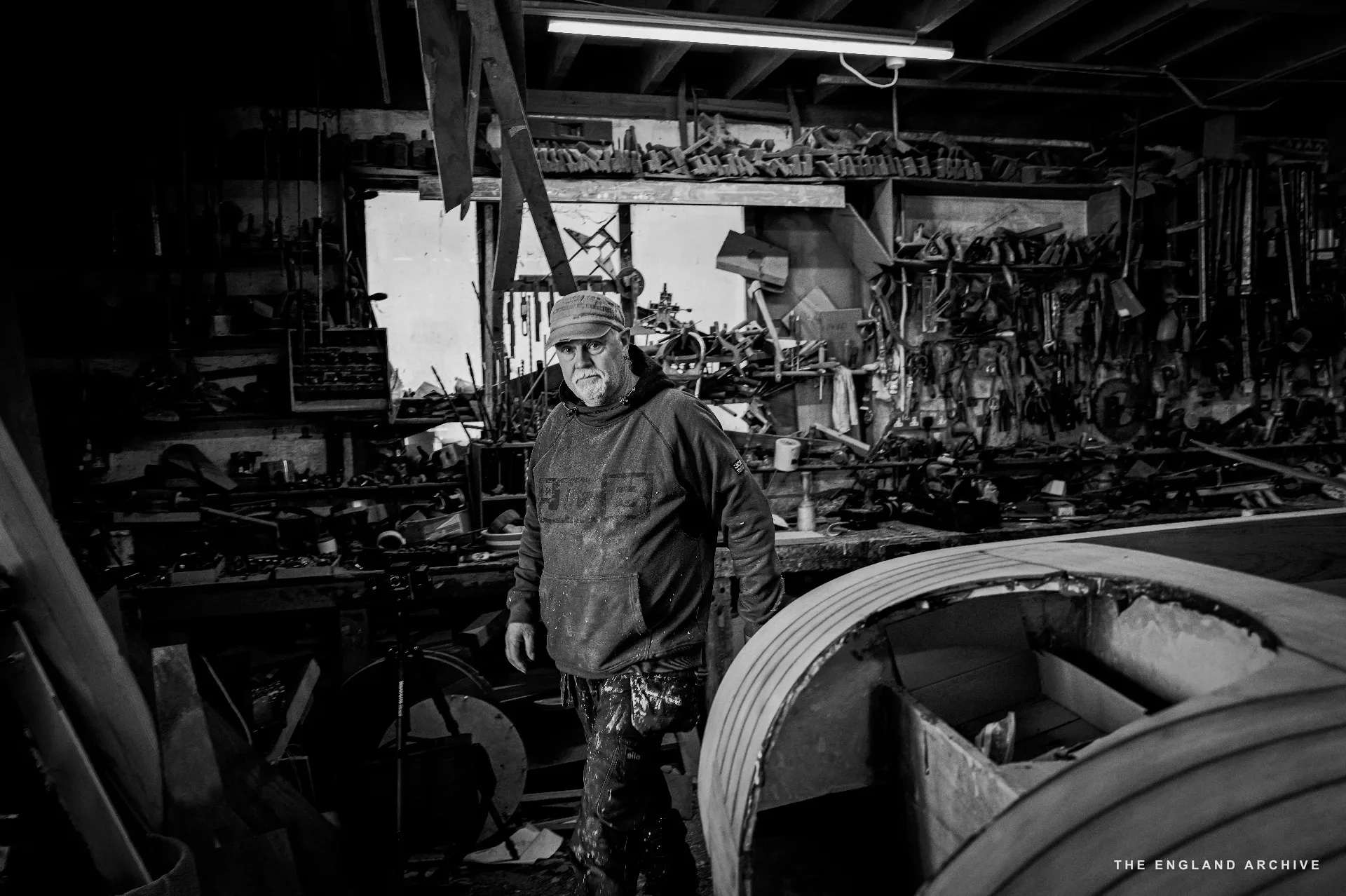
I spent the rest of the morning photographing the workshop itself. Forty years of accumulation. Rows of tools ranked along the walls. Workbenches with their own distinct geological layers of use. Planers, saws, clamps, drills, mallets, adzes, spokeshaves, chisels of every size. The cutting machines. The steam box. The small brass-and-bronze fittings sorted in trays on a side shelf. The workshop is a character in the story of this yard and the character is specific to Dennett in a way a new yard could never replicate. You can only get a workshop to look like this by working in it for four decades.
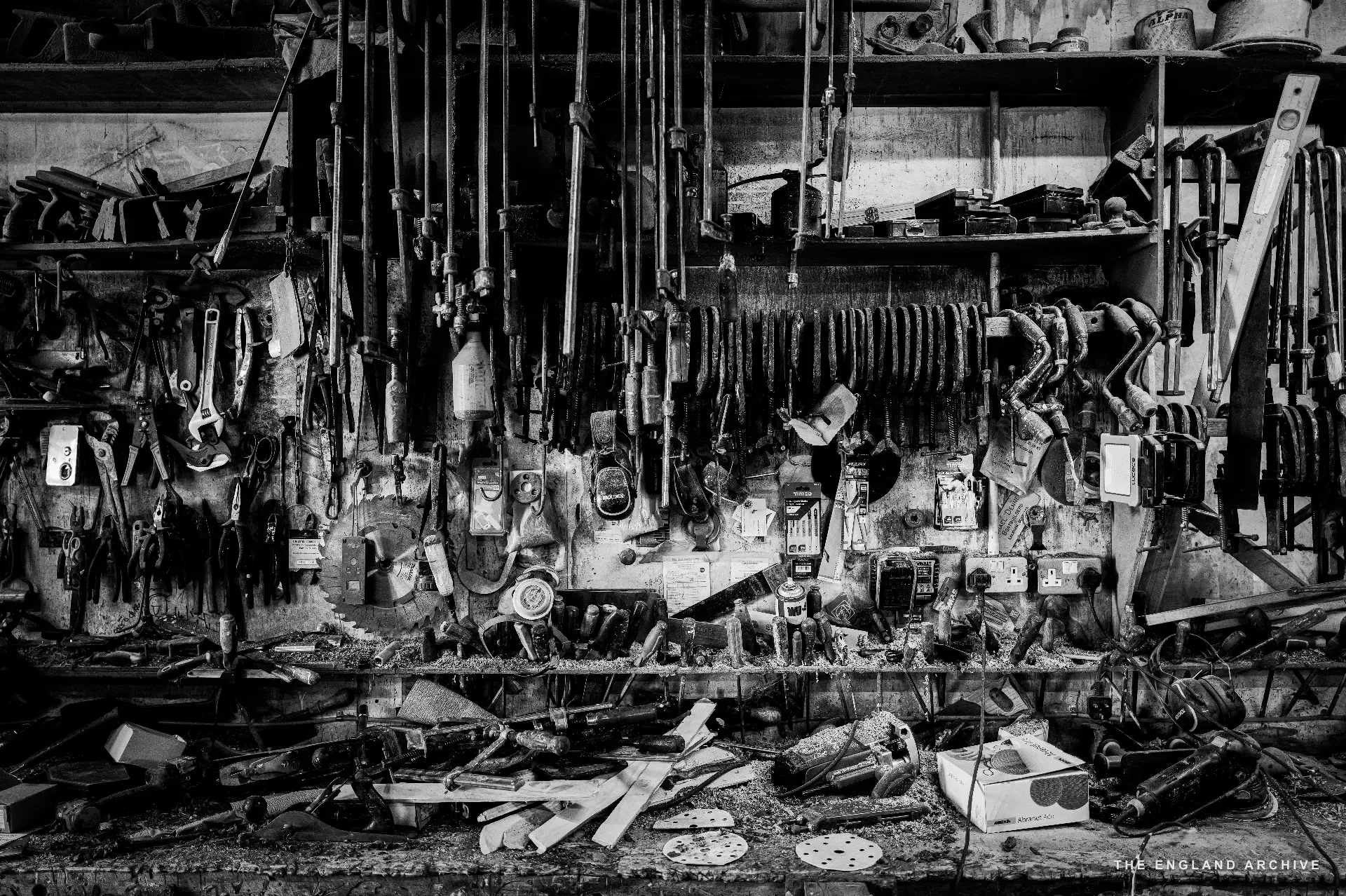
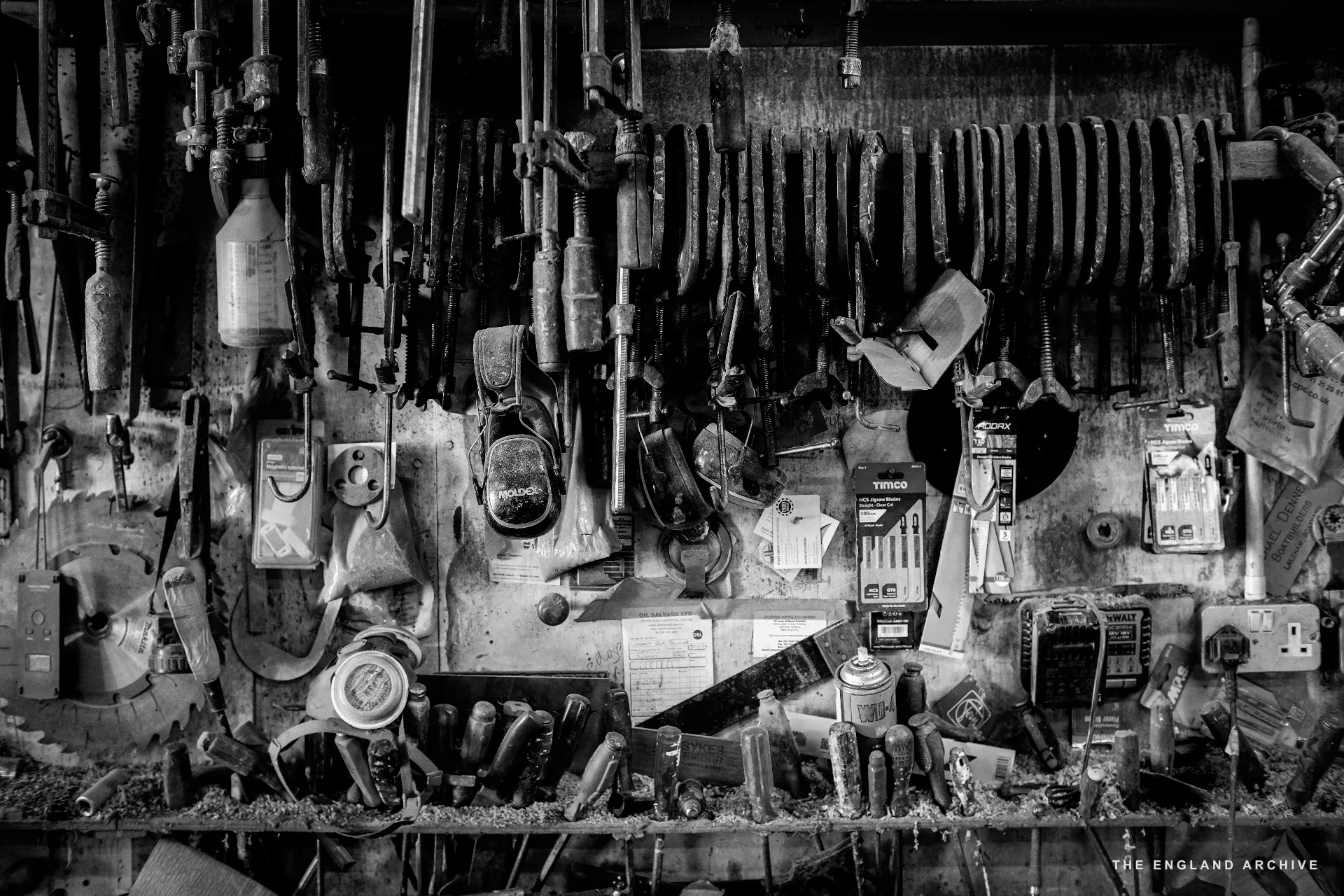
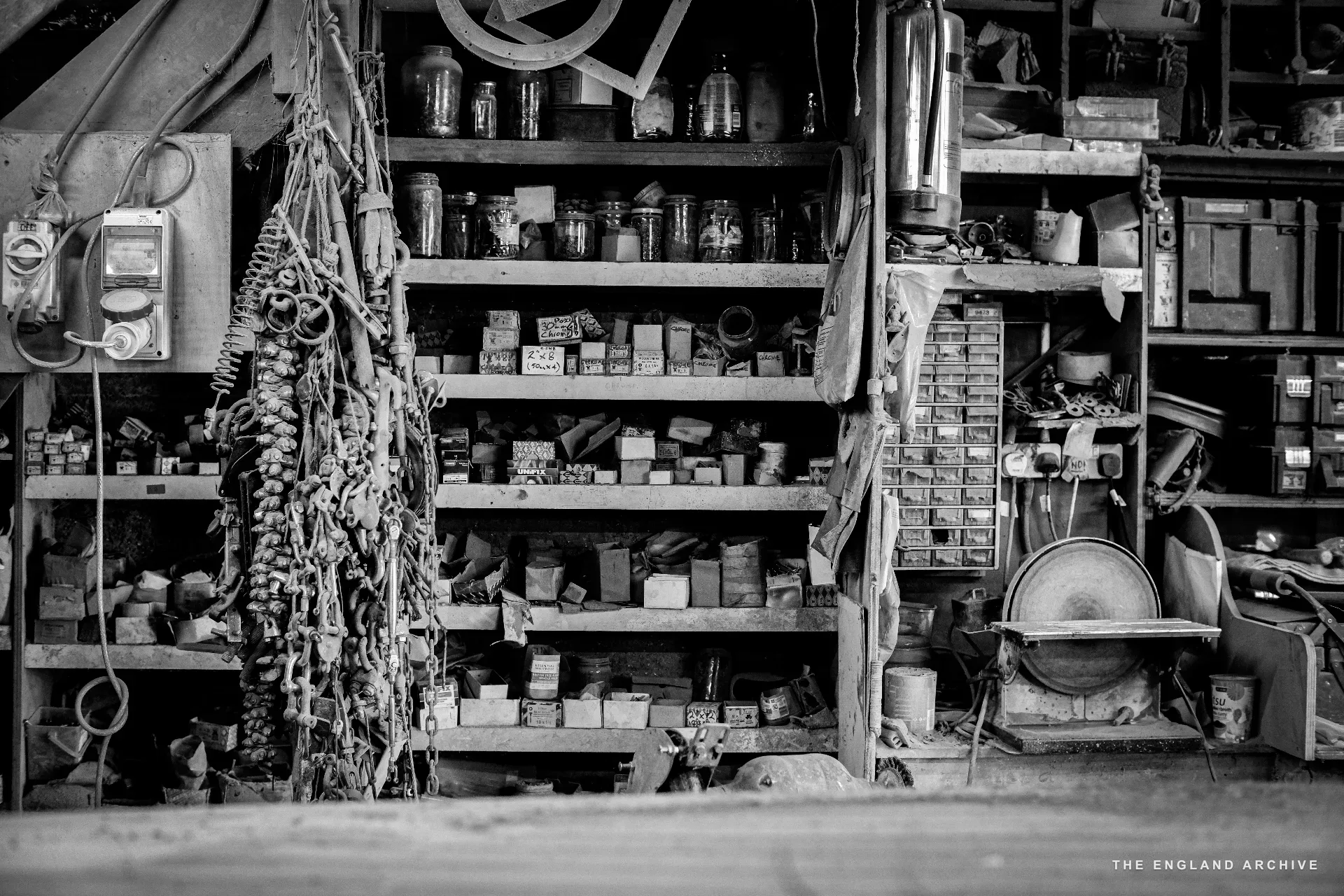
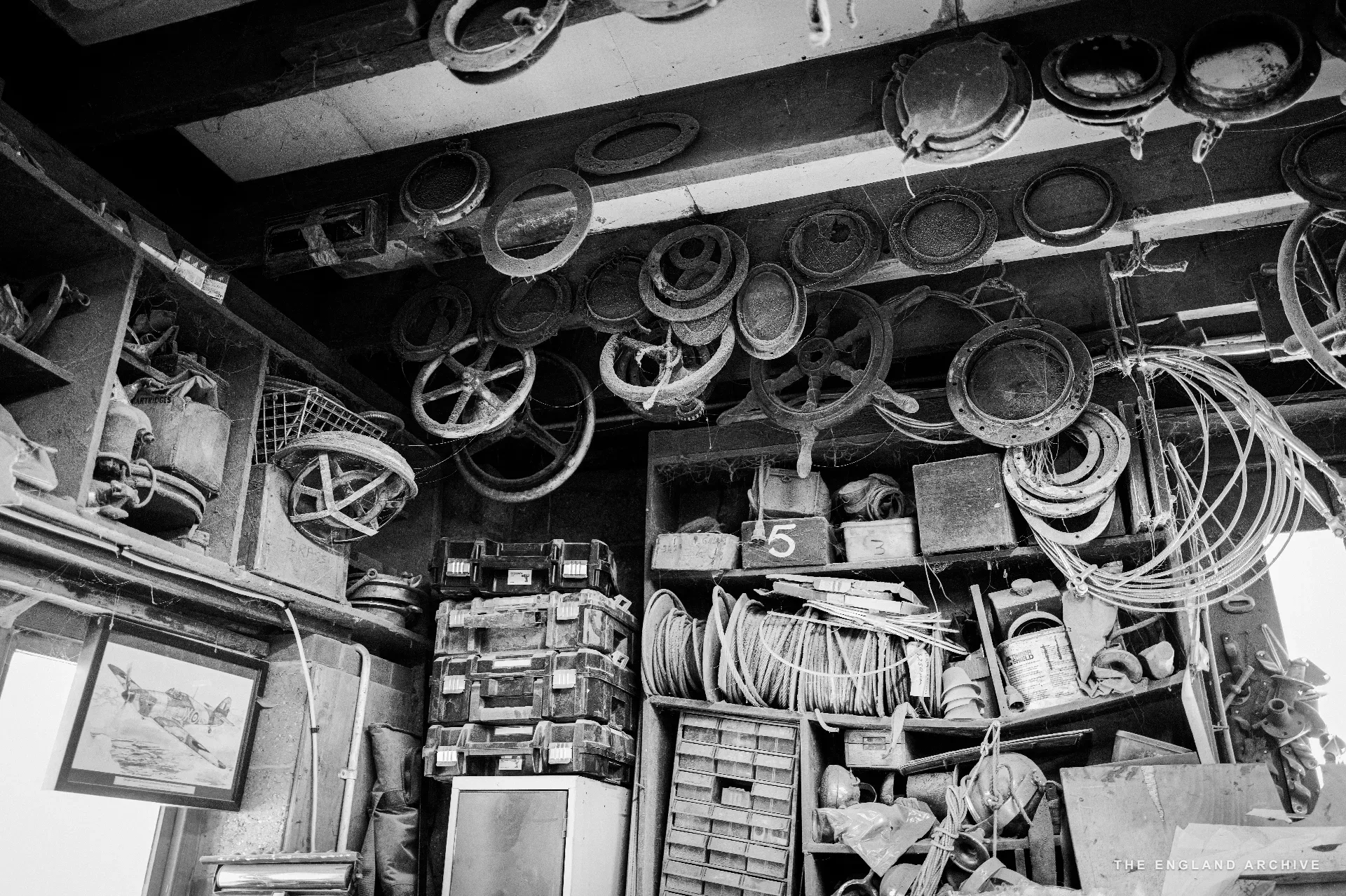
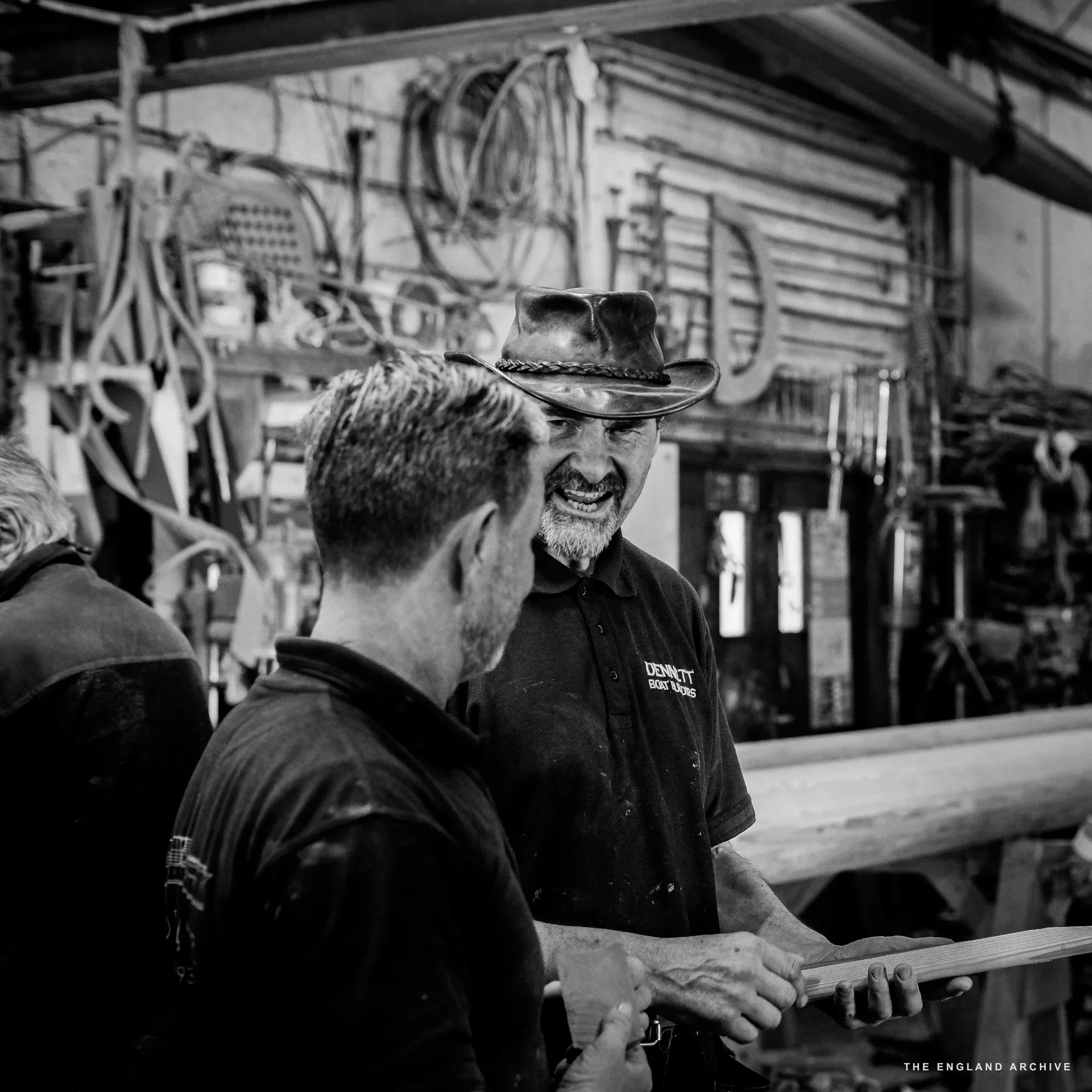
Two other craftsmen were working in the yard during my visit. One was under a hull, doing something I could not see from above. Another was walking between stations in a cowboy hat. Their names I did not get - the visit moved too fast, and the introductions Stephen had made at speed did not stay in memory. They will be named properly in the yard record, the next time we are in touch. They matter; they are the rest of the team that makes Dennett a working yard rather than a workshop run by two men.
The three sons
Stephen has three sons. Two of them are already interested in becoming apprentices at the yard. They are, he told me, old enough now that the apprenticeship is likely to begin soon.
That sentence changes what the Dennett yard is. Until Stephen said it, the archive was documenting a two-generation family firm with an unclear succession. After he said it, the archive was documenting a three-generation apprenticeship chain visibly forming. A yard that has been continuous since 1988 is a yard that has survived. A yard where two of the next-generation children are already visible at the door, about to start, is something else entirely. It is a line that has not broken and that the next link is locking into place in real time.
This is the Apprenticeship Pillar's working proof. The archive formalised the pillar as its core mission on the same week this visit happened, not knowing in advance what Dennett would turn out to be. Dennett turned out to be the clearest single illustration in the archive's first year of what the pillar argues for: a family line that depends on the transmission, an apprenticeship practice that extends beyond the family, an eighty-three-year-old founder still doing the work, a son running the yard, two grandsons about to begin. The full four-generation span, if the pattern holds, runs from Michael's own teachers in the 1960s (Horace Clarke, Walton Yacht, George Wilsons) to Stephen's sons in the late 2020s.
Mash Bonigala visited Dennett Boat Builders on Thursday 23 April 2026 as part of Year 1 of The England Archive, a three-year documentary photography project recording the people keeping England’s heritage crafts, traditions, landscapes and buildings alive.
Dennett Boat Builders is at Laleham, near Chertsey, on the Upper Thames. The yard takes restoration commissions and, in the right circumstances, apprentices. If you have a connection to an English heritage craft that you think the archive should document, we would love to hear from you.