Makers
Roxanne Kindersley
Lettercutter
The Cardozo Kindersley Workshop, Cambridge
Lettercutter
The Cardozo Kindersley Workshop, Cambridge
Stone carving and lettering is nothing but sharpening a pencil.
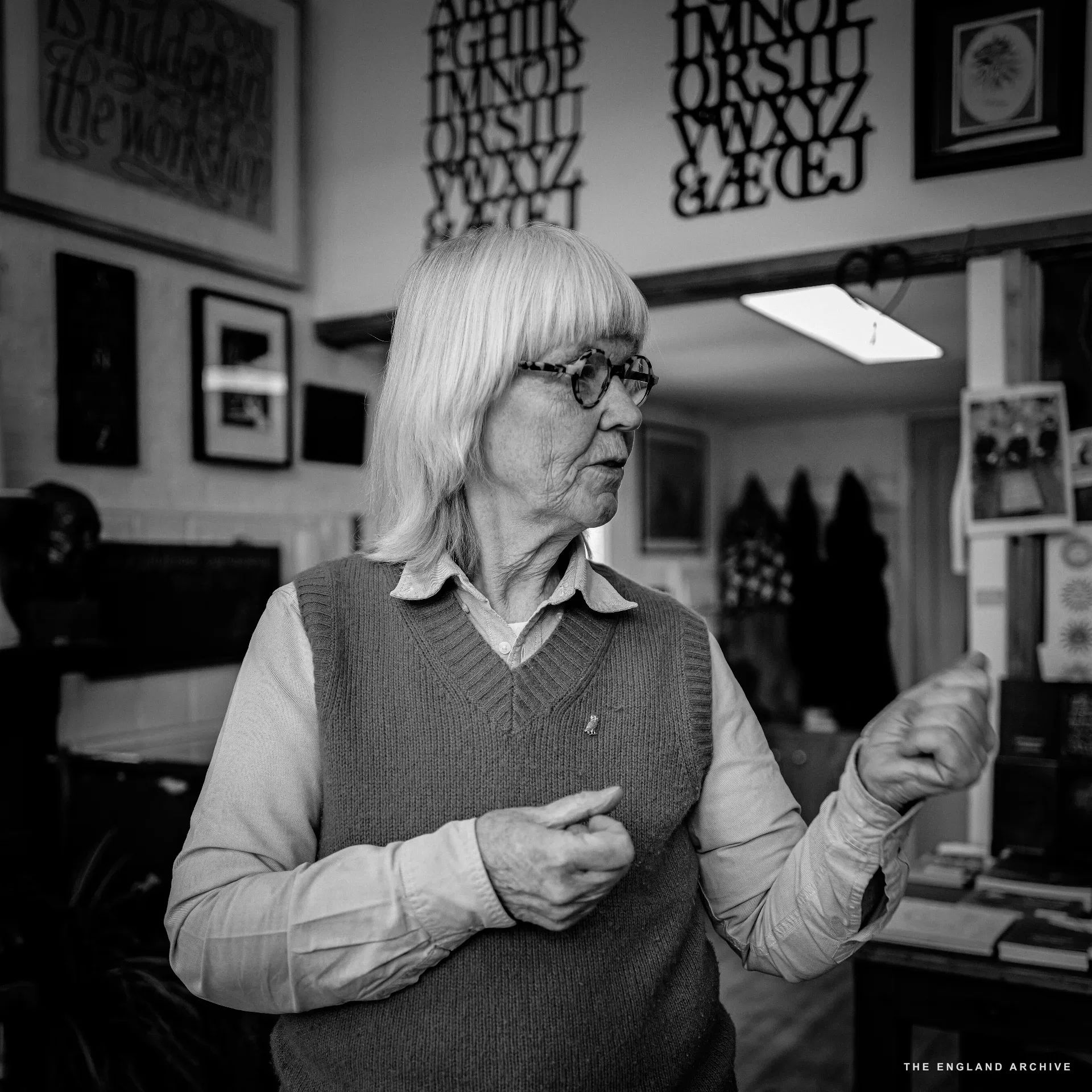
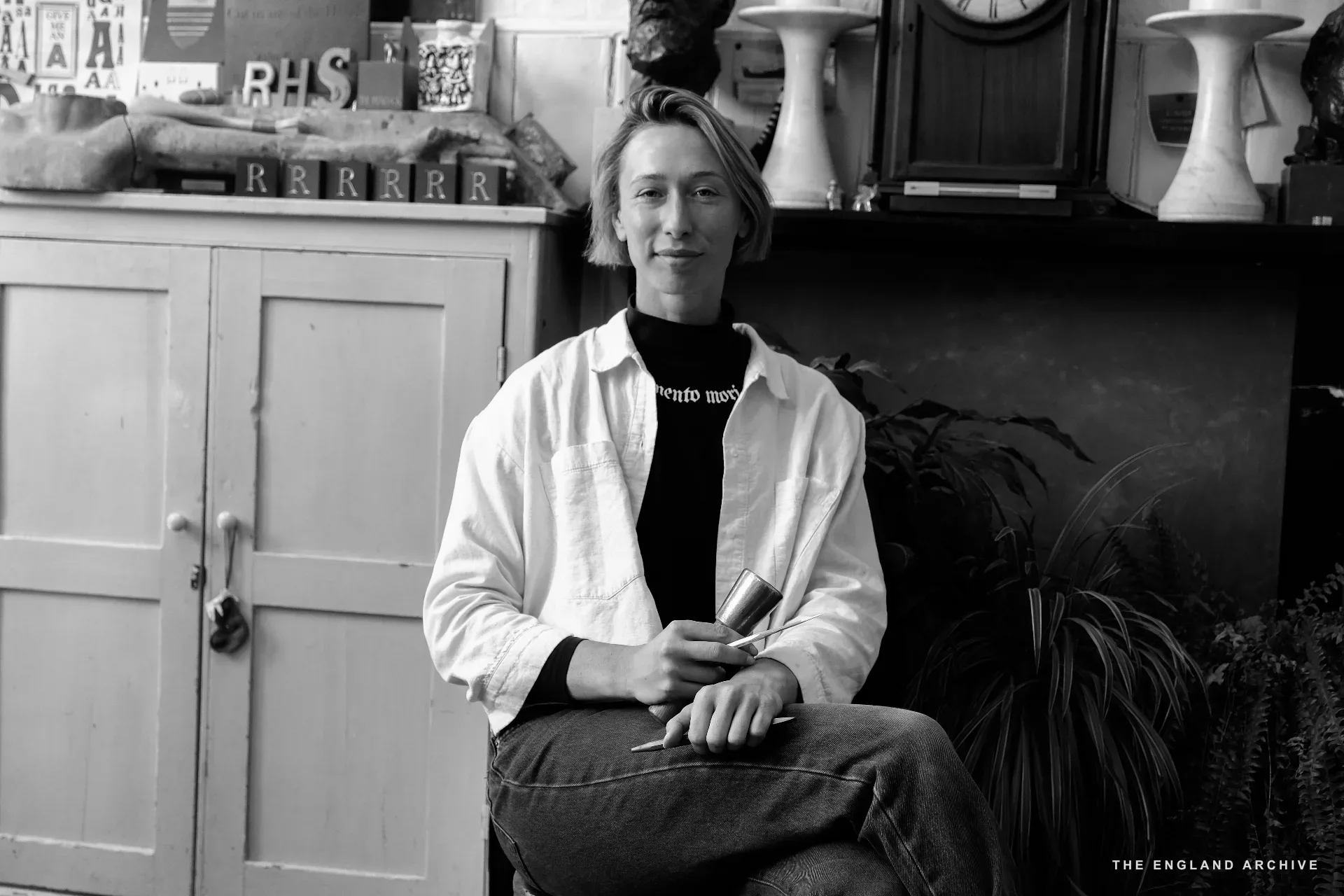
The running of the Cardozo Kindersley Workshop has been moving, over recent years, into Roxanne Kindersley’s hands. She is the person who now takes on the apprentices, directs the commissions, decides the tempo of the benches, and teaches the first lesson of the English stone-lettering craft, which is how to sharpen a pencil.
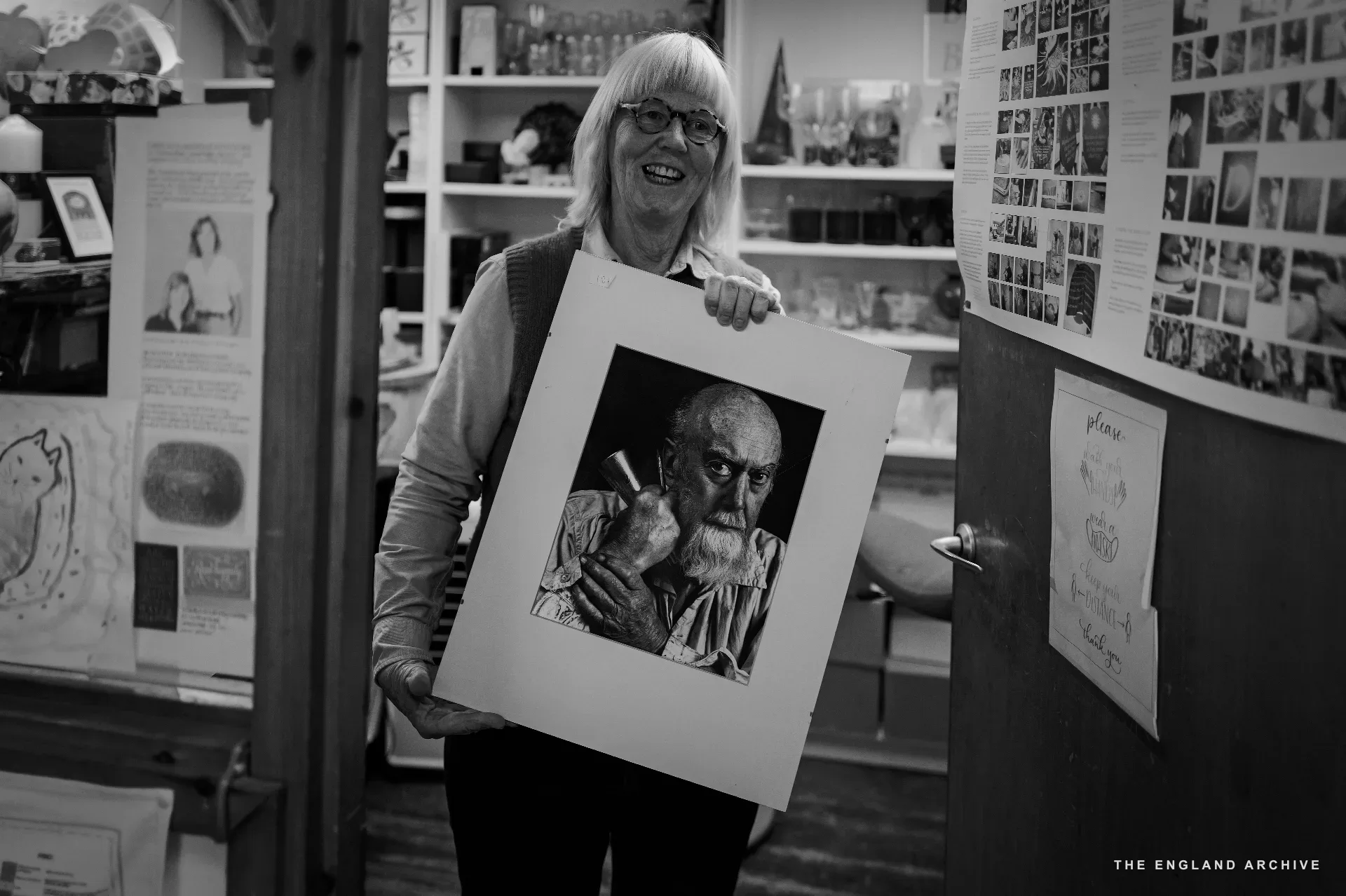
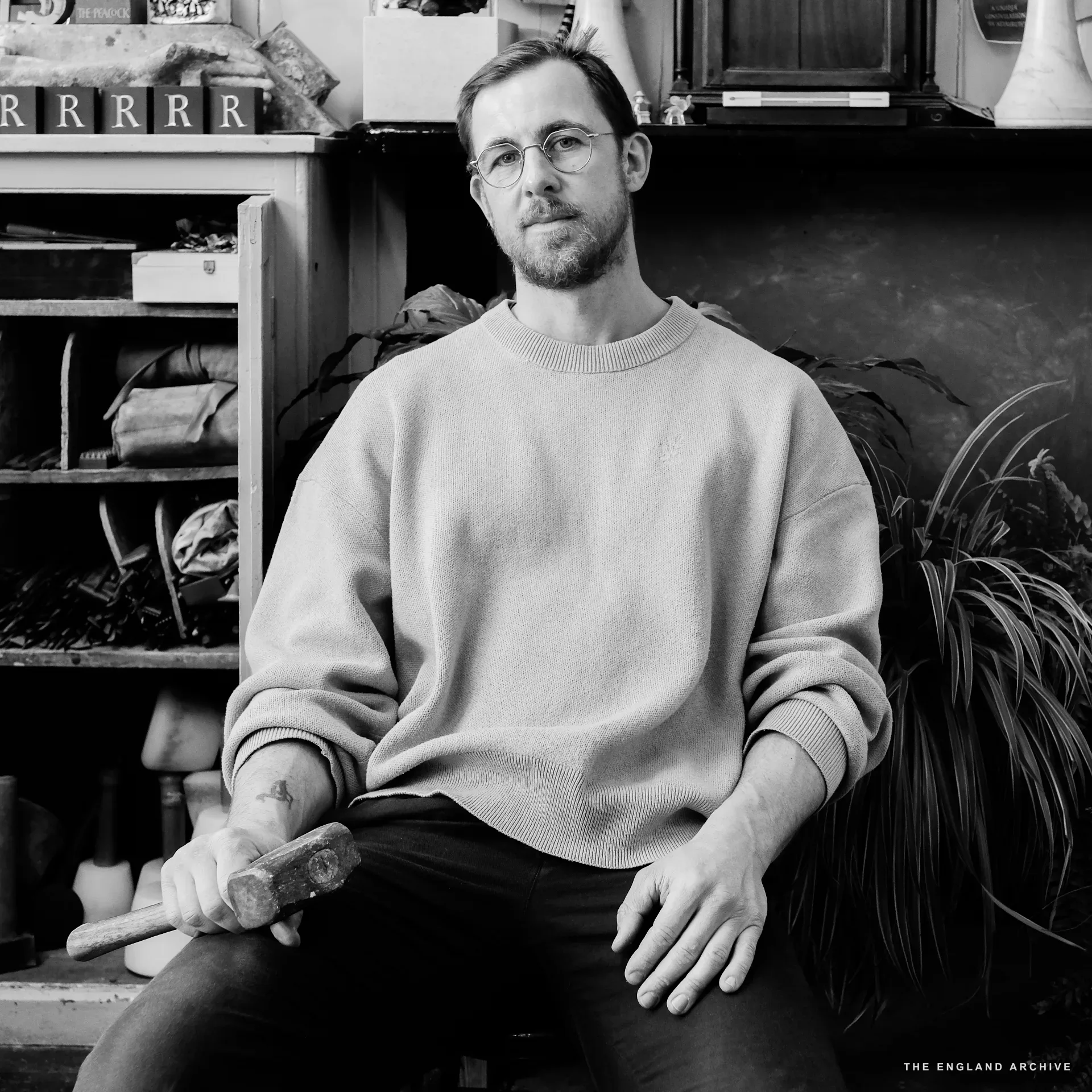
Roxanne is Lida’s daughter-in-law - Vincent Kindersley’s wife - and, as of recent years, the working head of the workshop. The position has come to her from Lida the way these things come in a working craft: by presence, by competence, by having been in the workshop long enough that the running of it was already happening around her before anyone formally called it handover. On the morning we visited, the pass from matriarch to head was visibly in progress and visibly working.
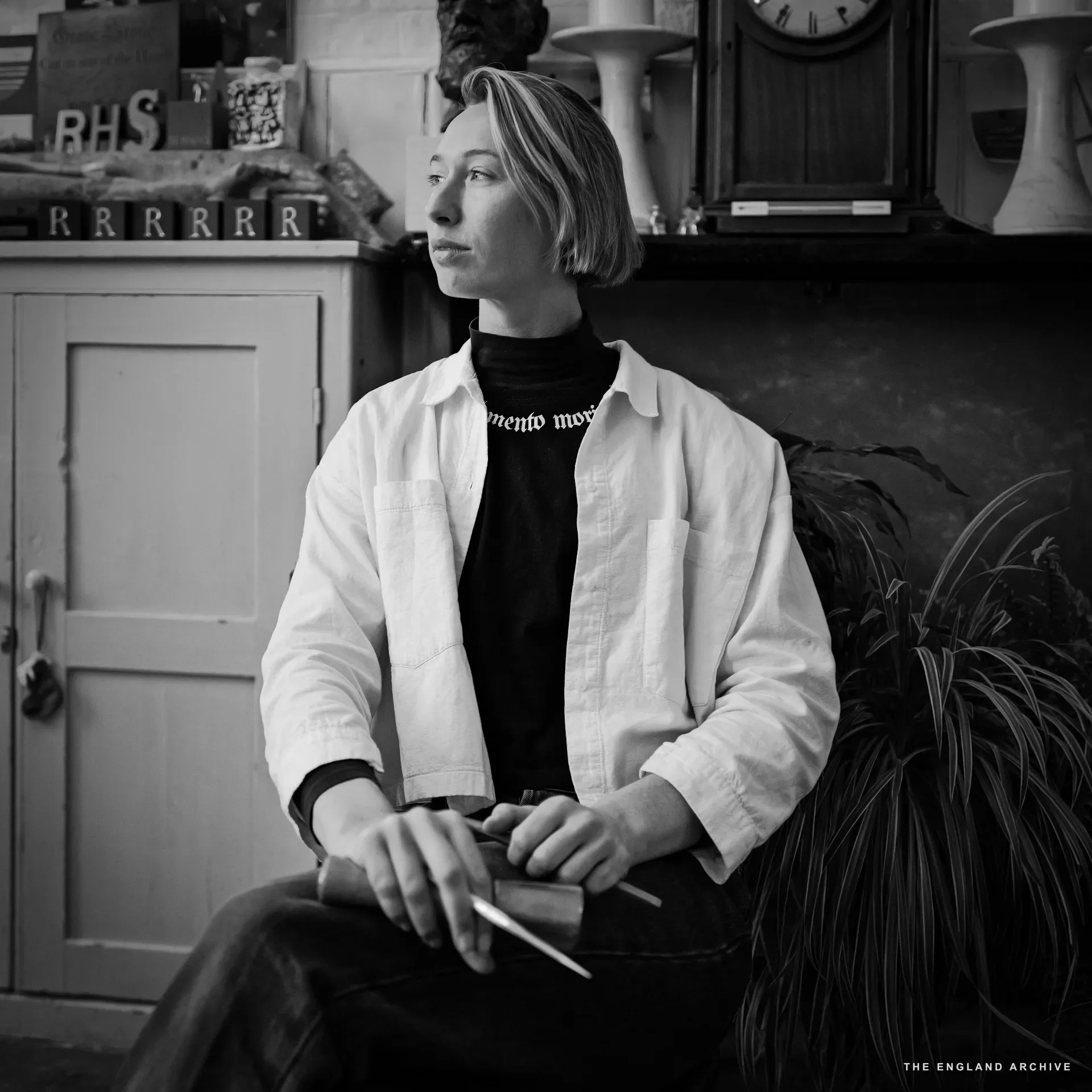
The story of the Cardozo Kindersley Workshop is a story in three generations. David Kindersley founded it in the 1940s. Lida joined him in the 1970s, carried it on after his death in 1995, and has been the matriarch of it for thirty years. Roxanne is the third generation - not by blood, but by practice, which in a craft is the generation that matters. She learned the work inside the workshop, alongside Lida, and she is now the person who the apprentices address by name when they have questions about the day’s commission.
There is a particular thing that happens when a workshop of this scale makes a generational pass and it goes well: the workshop gets quieter at the level of drama and louder at the level of work. Nobody is fighting about what the workshop is going to be. Nobody is left out of the decisions. The matriarch still has her seat at the big table; the new head runs the day; the sons of the house do the work they have always done; the new apprentice gets a pencil. The pass, when it works, does not require announcement.
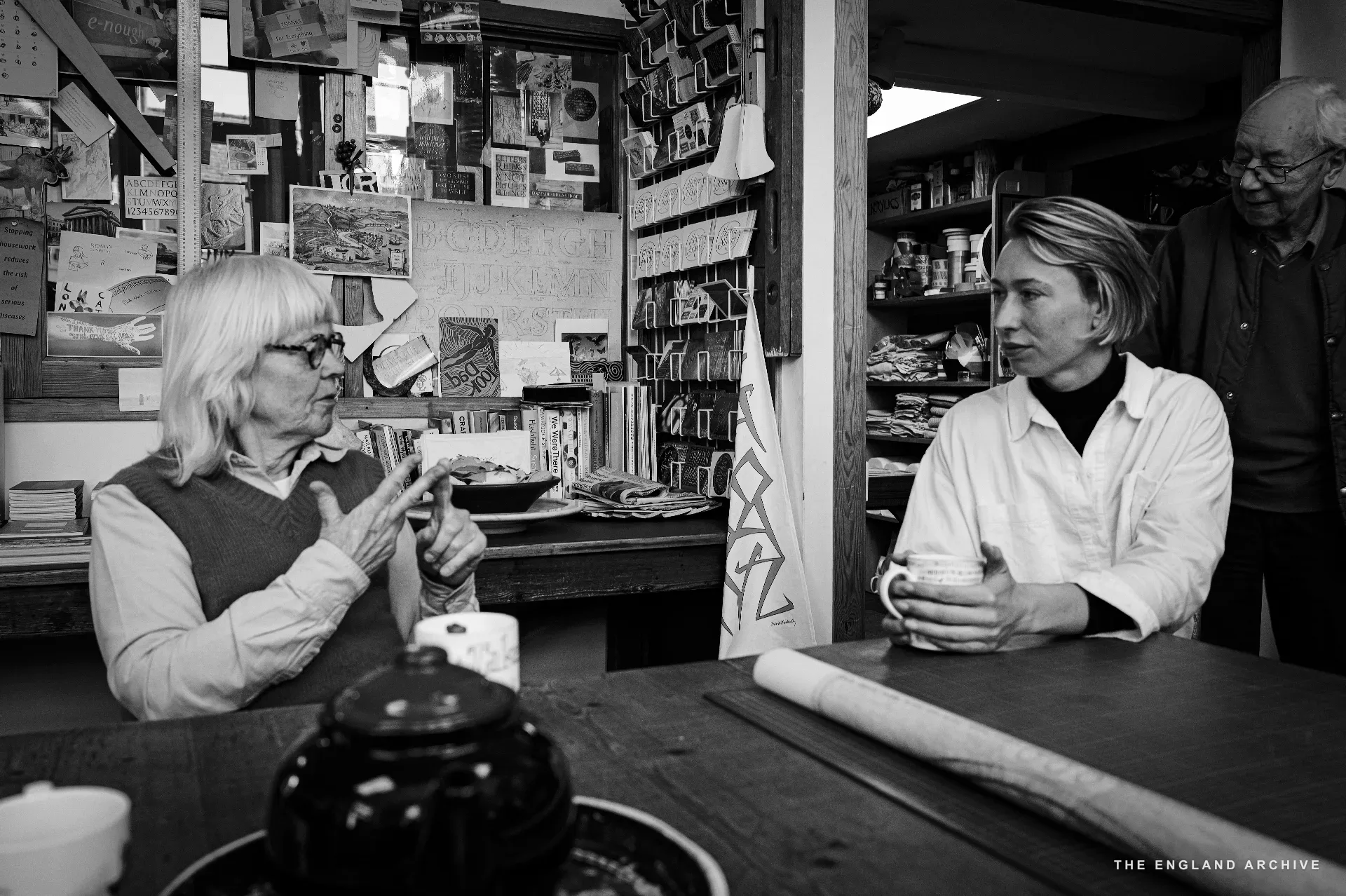
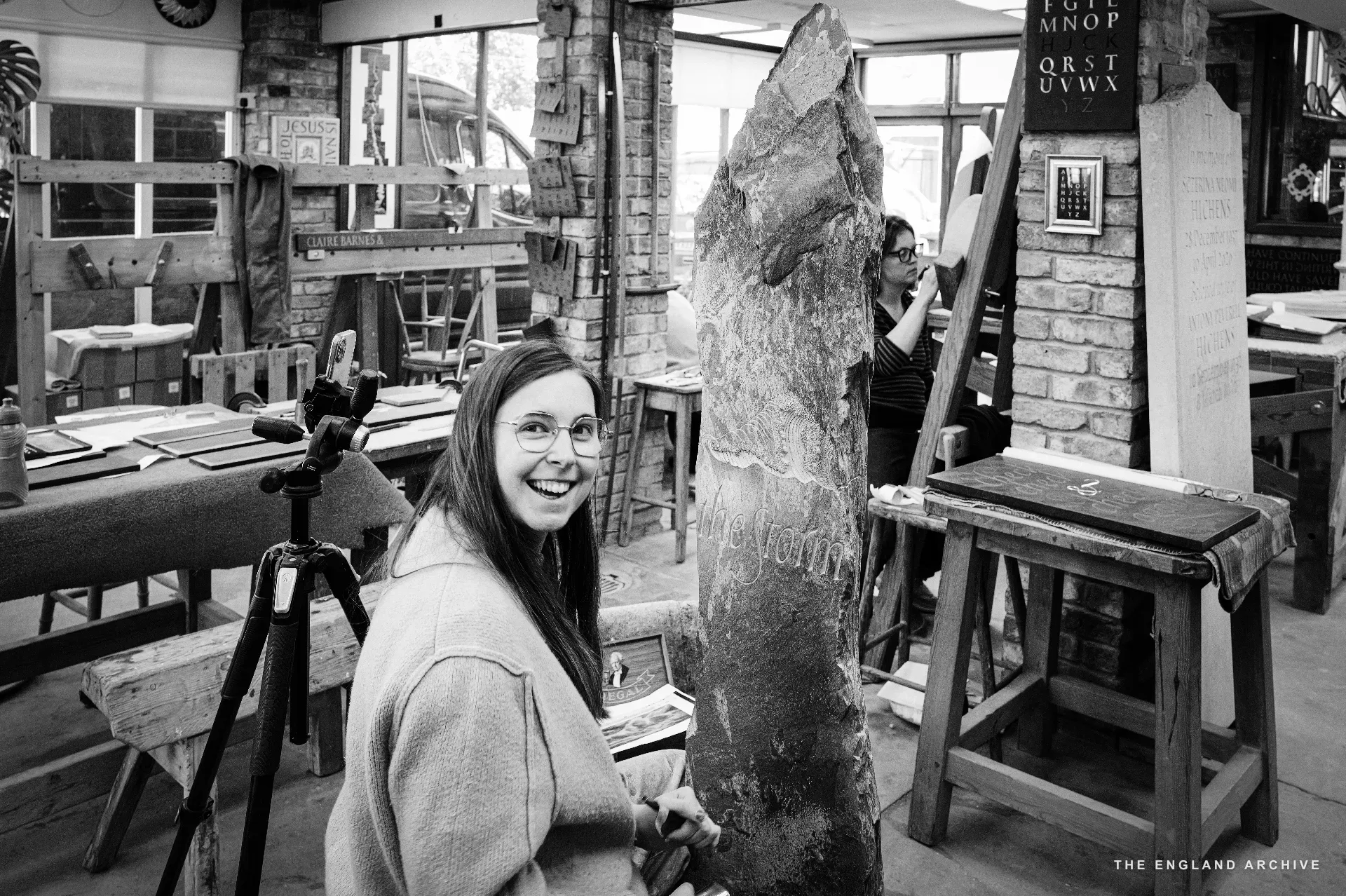
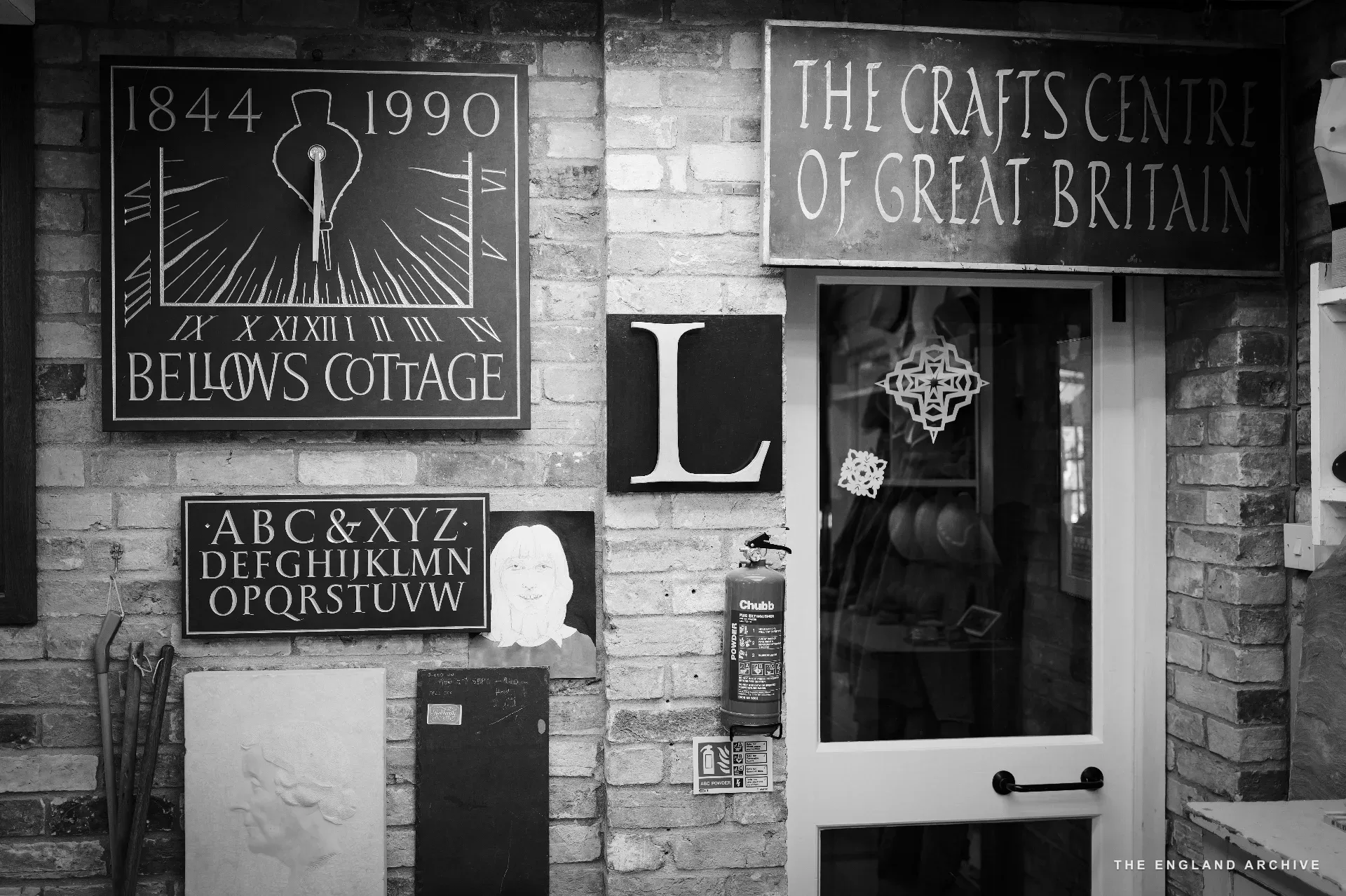
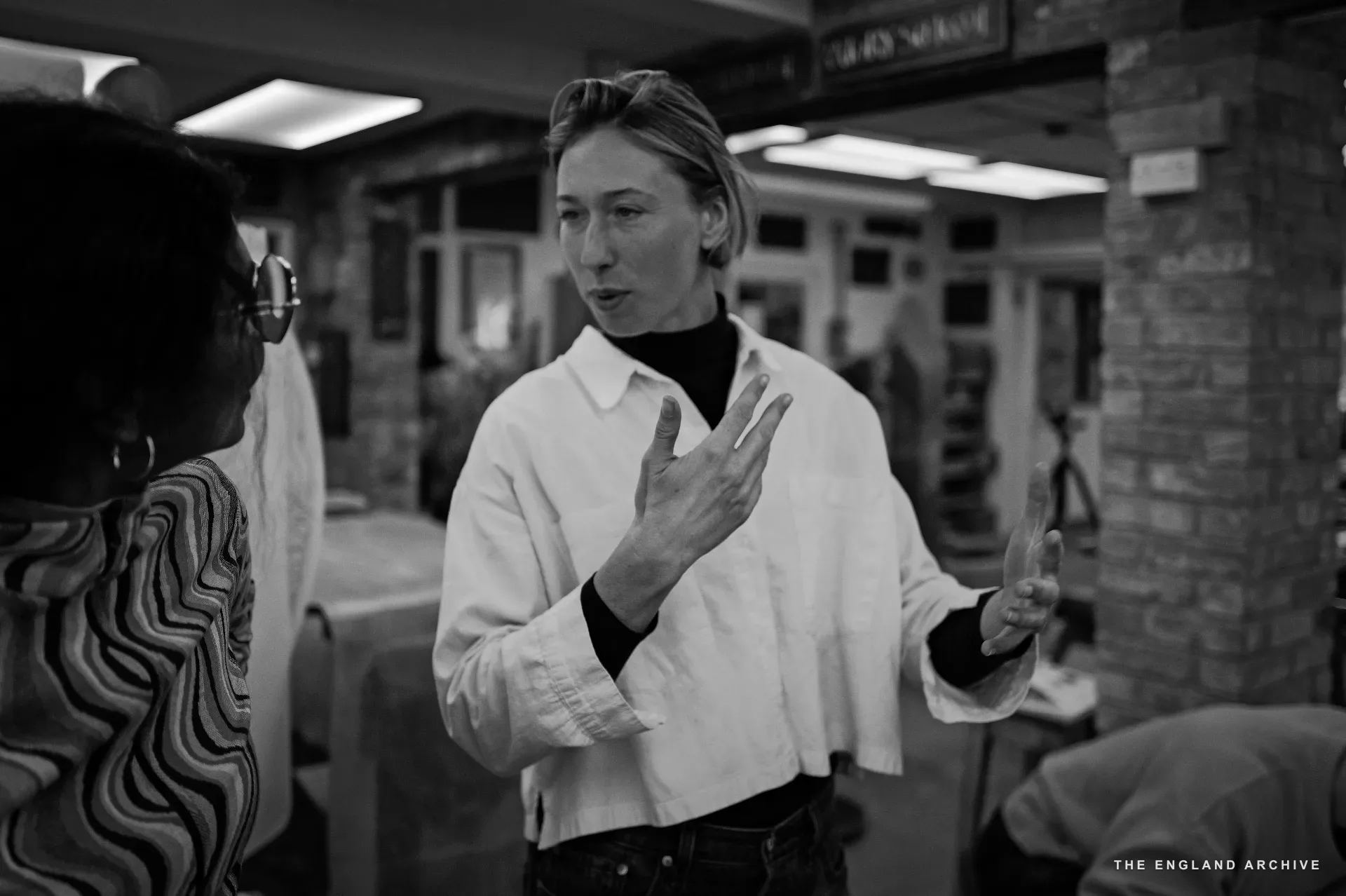
After the hour at the big table, Roxanne got up and said, let me take you through. We went out of the front room and into the main workshop space. Benches. Stone in racks. Natural light. Samples of lettering on every wall. She walked us through the bench where Emily was working on a pillar - The Storm on one side, The Calm After The Storm on the other, a commission for someone who had come through an illness - and explained the process. The design on paper. The transfer to stone. The setting-out in pencil. The tapping of the chisel. The tempo. The way a piece is held together not by any single letter but by the breath between the letters.
Emily, who has been at the workshop for eight years, was at her bench working on the pillar. She is the letterer Roxanne taught and is now the most experienced cutter in the workshop after Lida and Roxanne themselves. Roxanne walked us through the design and the process; then she stepped back and let Emily talk. That is what a good working head of a workshop looks like. She is not the person doing every piece of work. She is the person who makes every piece of work possible.
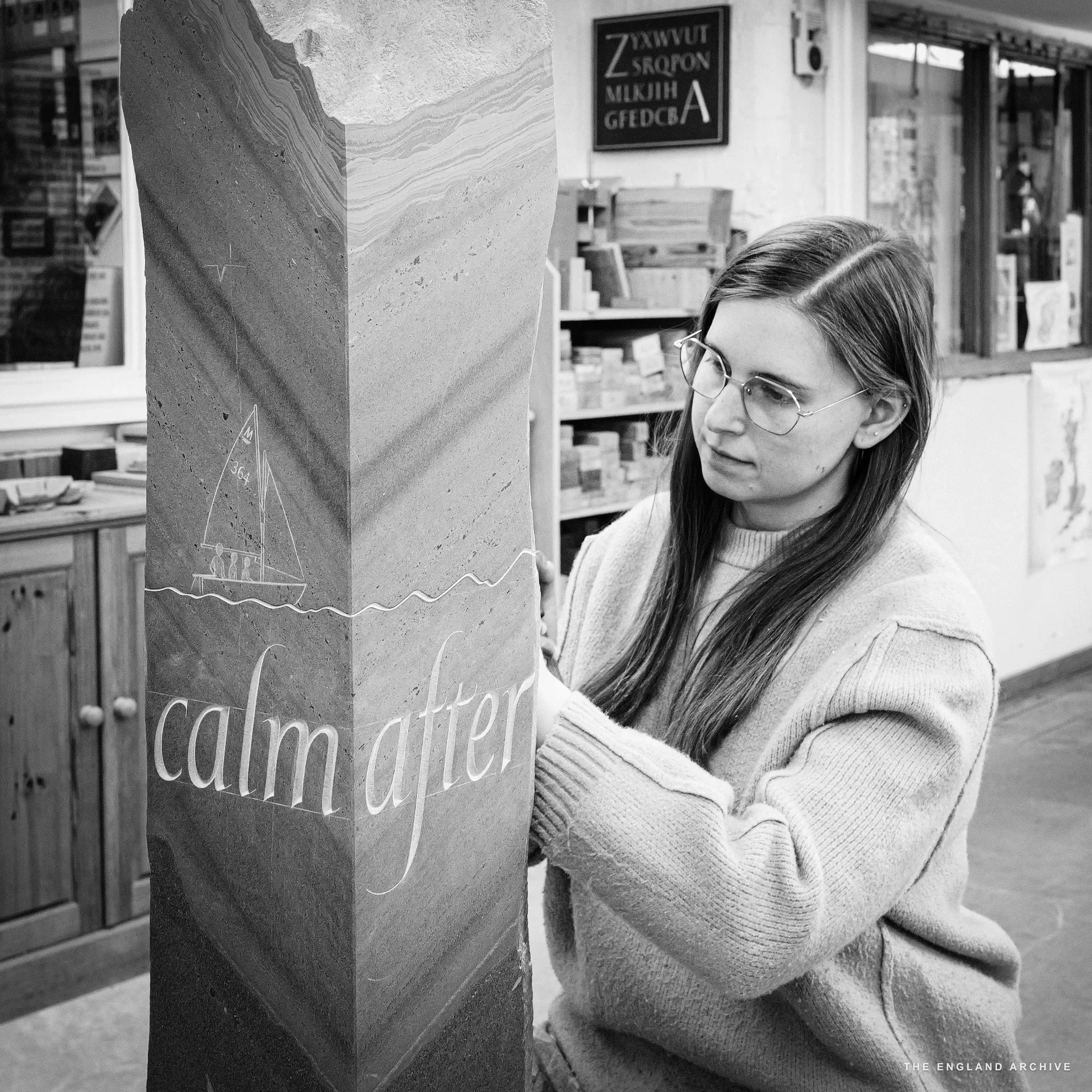
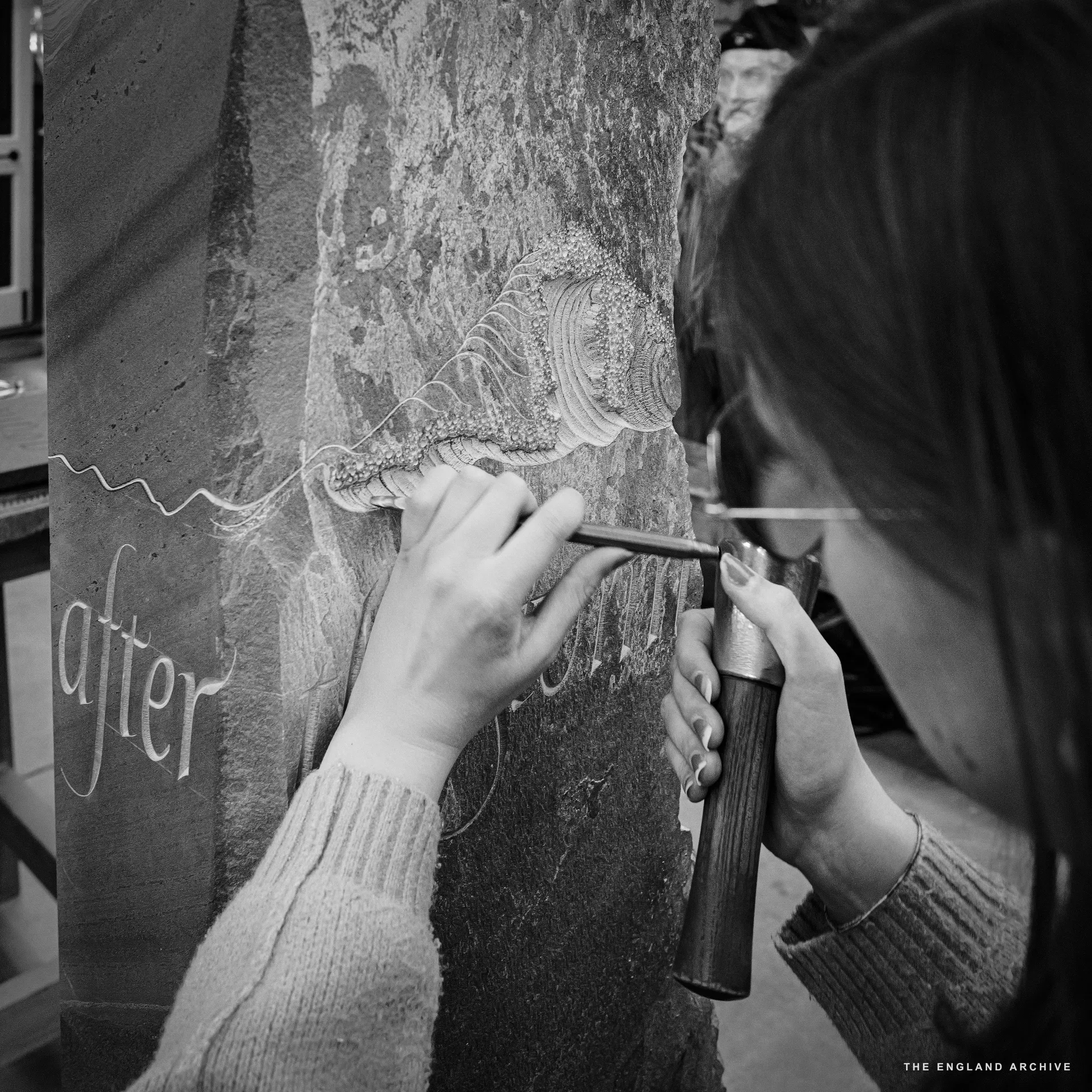
Emily talked about what it feels like to work on a two-sided commemorative object - The Storm on one face, The Calm After The Storm on the other, a commission for someone who had come through an illness - how you hold the two tones as a single piece, what you do when you make a mistake. Roxanne stood to one side while Emily explained and then stepped back in when a clarification was needed.
The full account of the pencil is in the journal entry of the visit. For the subject page, it is enough to say: when a new apprentice arrives at the Cardozo Kindersley Workshop, Roxanne is the person who sets them at a bench and gives them a pencil and asks them to sharpen it. The apprentice who walked in off the street on the morning we visited was given that exact instruction. A sharp blade. A length of soft wood around a length of soft graphite. The first day of a multi-year apprenticeship that will eventually put a chisel in the same hand.
I have turned that pencil over in my head more than almost anything else I saw that month. It trains the thing the craft actually requires - patience, control, an attention to resistance - through the one medium that forgives mistakes at the lowest cost. Pencils break; pencils get re-sharpened; stone does not. The apprentice who can sharpen the pencil the workshop’s way is ready for the chisel; the one who cannot, is not. It is the gentlest and the most ruthless entrance exam I have come across in any of these trades, and Roxanne administers it with a pencil and a quiet word.
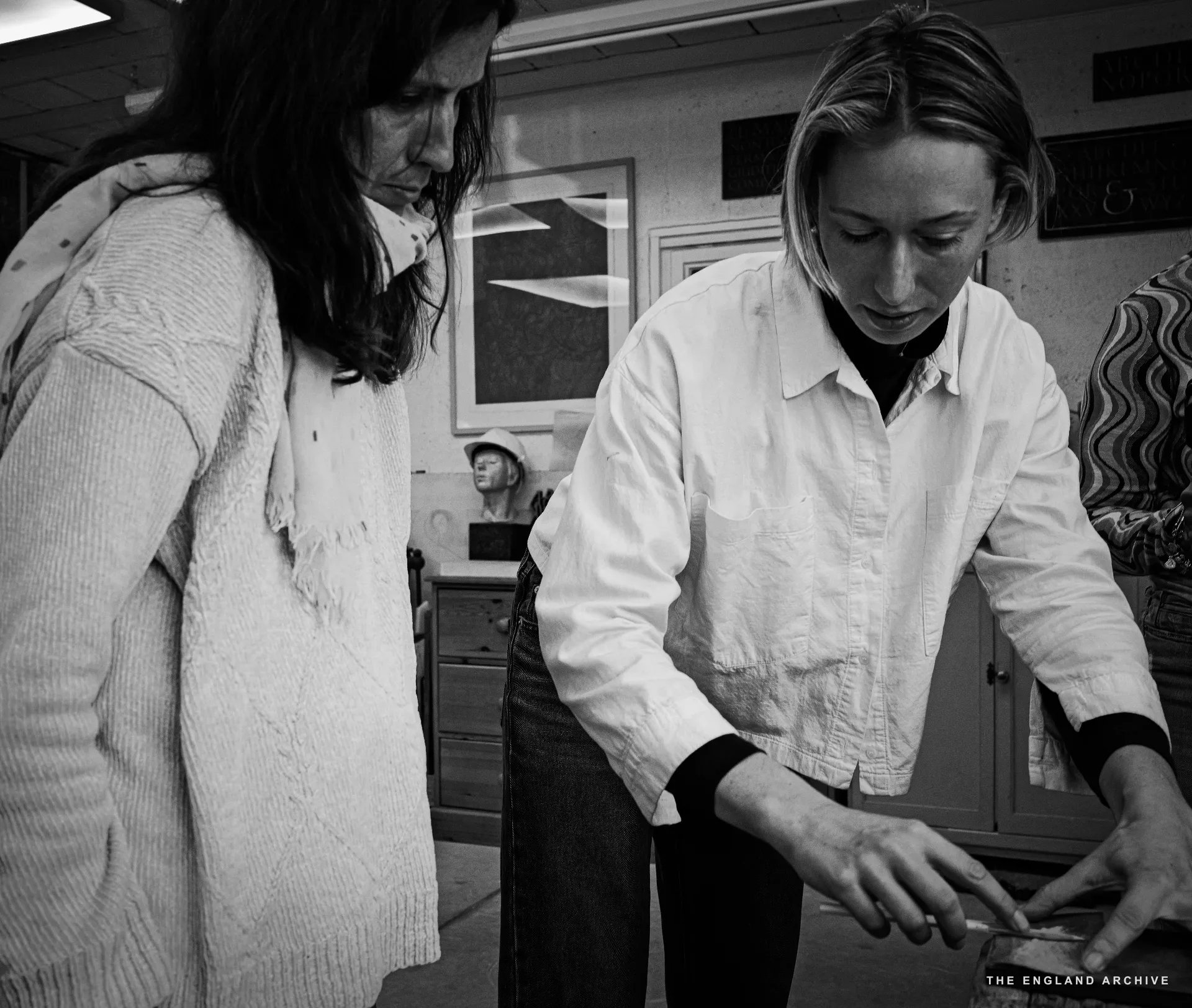
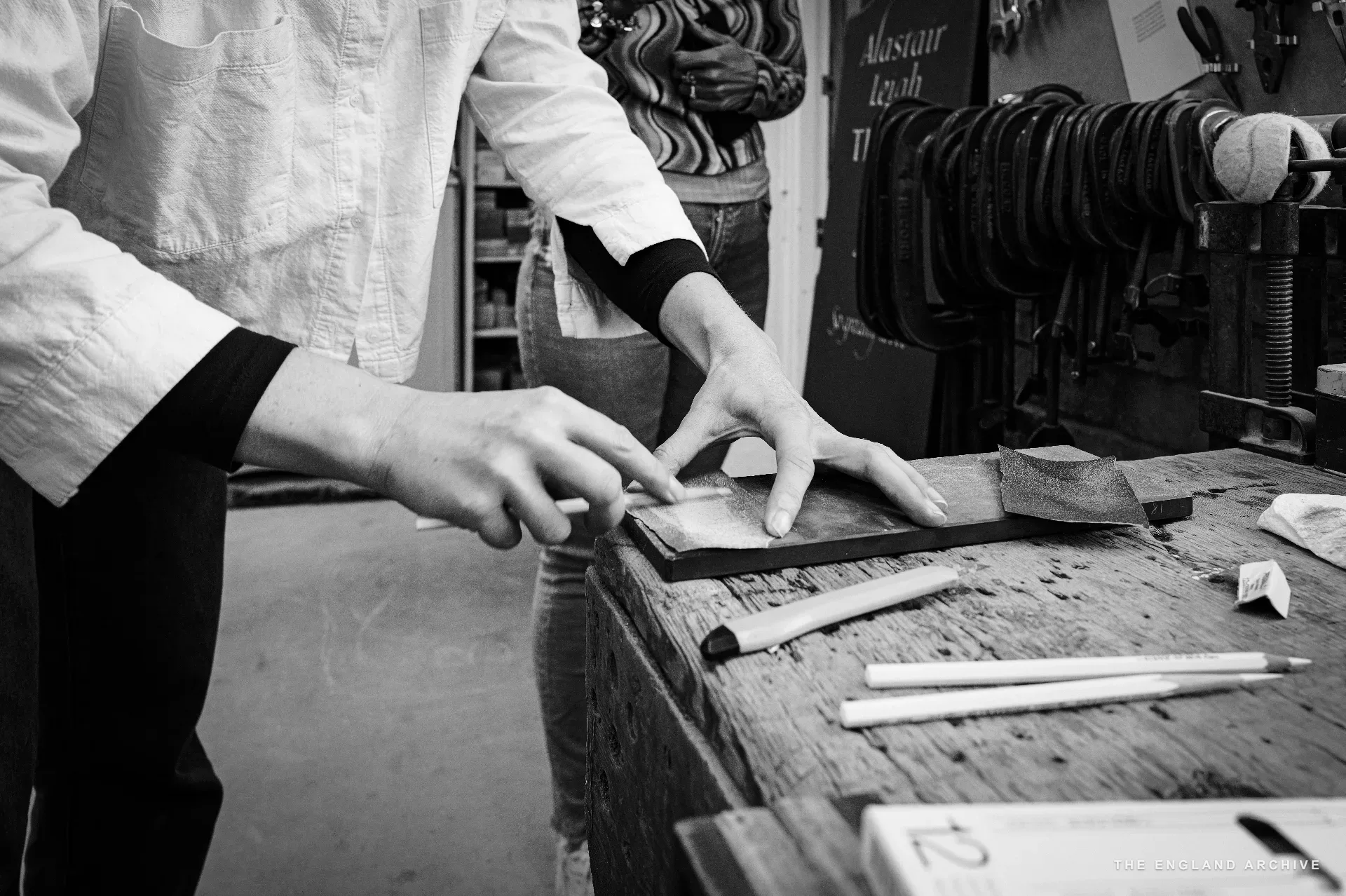
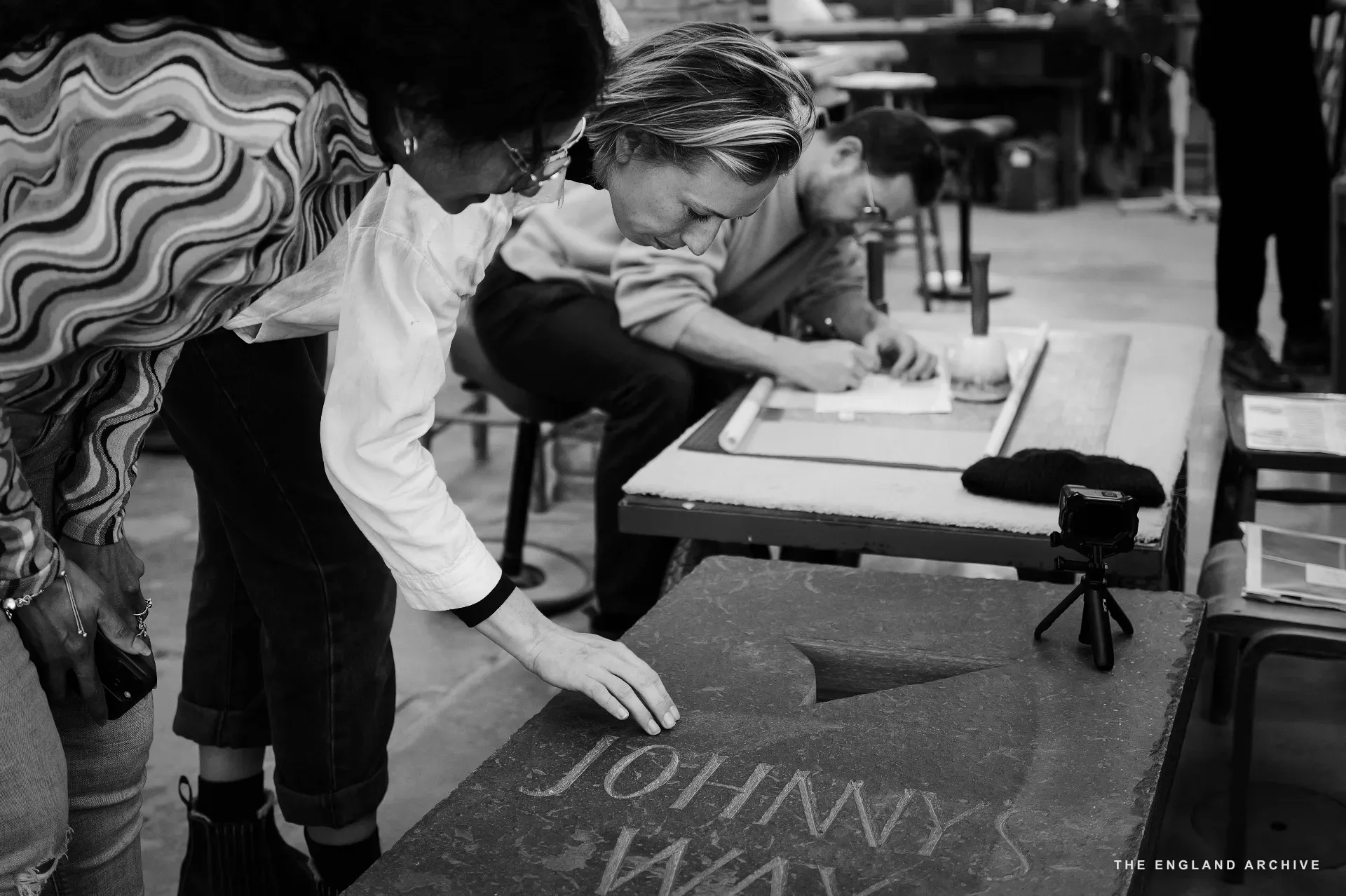
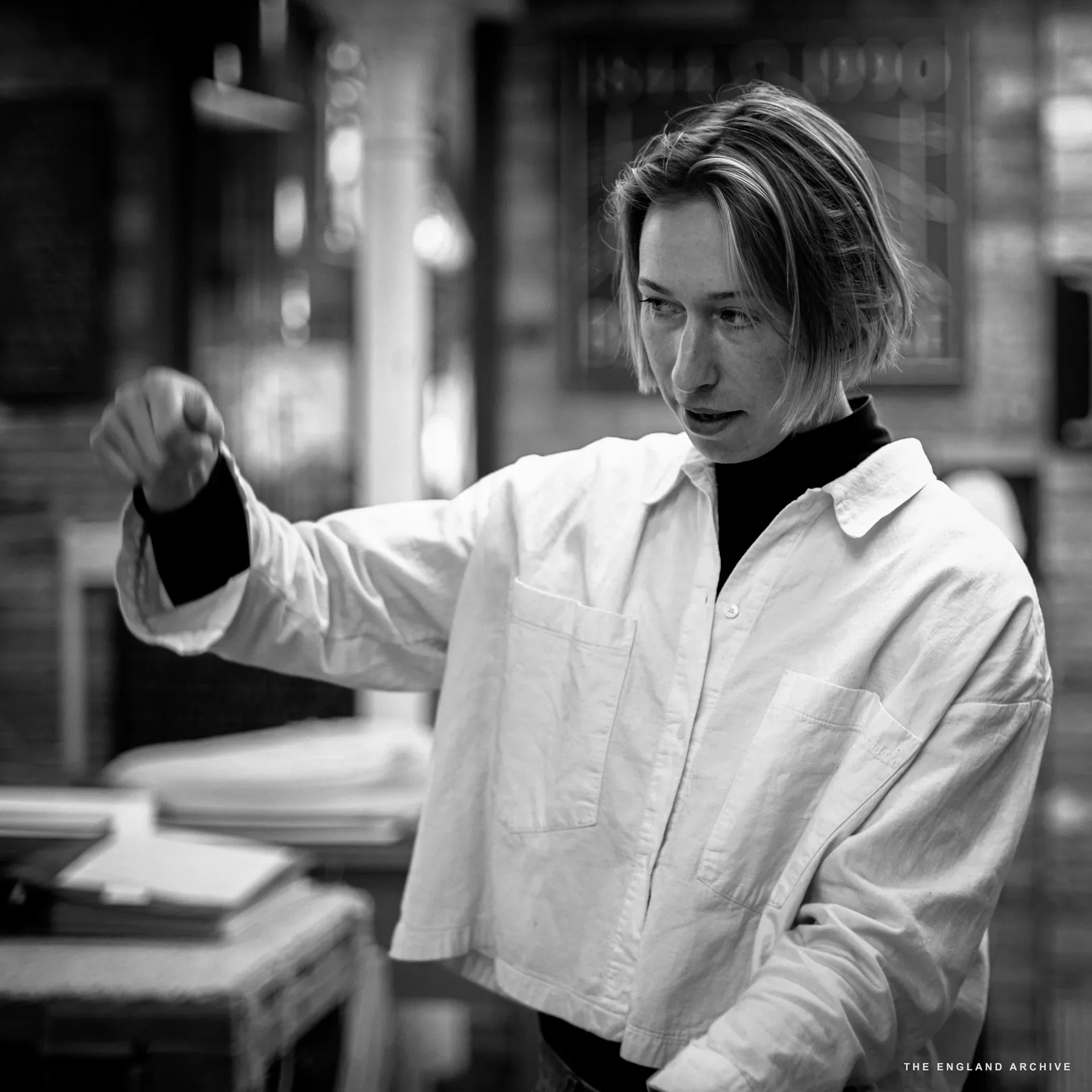
Running a working letter-cutting workshop in 2026 is not a small operation, and watching Roxanne do it, I came to think the word "letter-cutter" undersells her. The commissions arrive by letter, email and word of mouth - memorial slabs, foundation stones, parish war memorials, dedicatory pieces for colleges, lettering for public artworks - and every piece is sited, proportioned and composed for its final place. Her work is partly the cutting, partly the direction of the team that does the cutting, partly the teaching of apprentices whose training runs to years, and partly the running of a small English business with all the quiet administration that entails. It is exactly what this archive means by practice: making, teaching, running, and carrying the line forward.
I will admit she is harder to photograph than a maker alone at a bench. Roxanne is sometimes at a bench; more often she is teaching, or in conversation with a client, or moving between benches checking the day’s work. The record of her will have to accumulate across visits to hold all of that. This page is the first instalment.
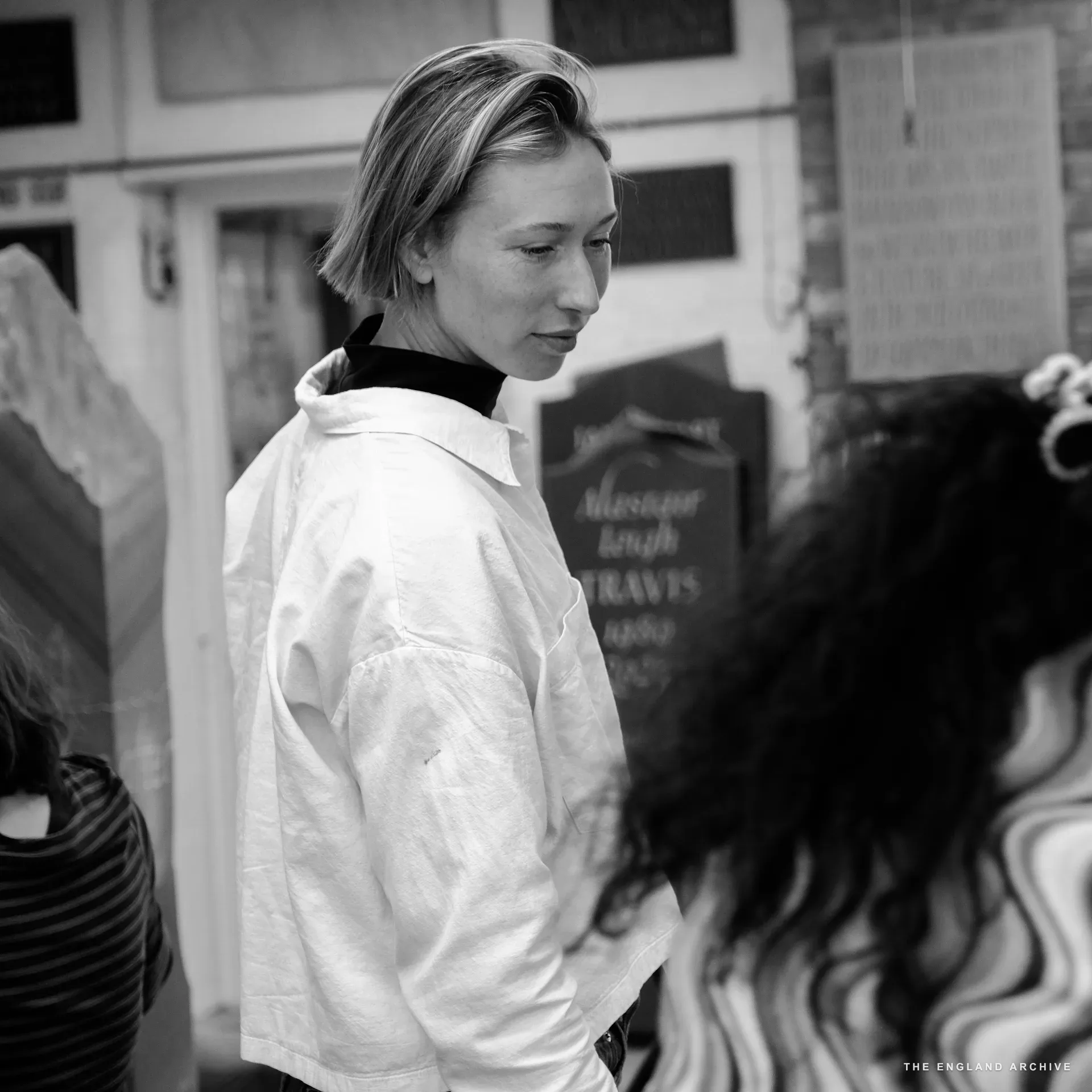
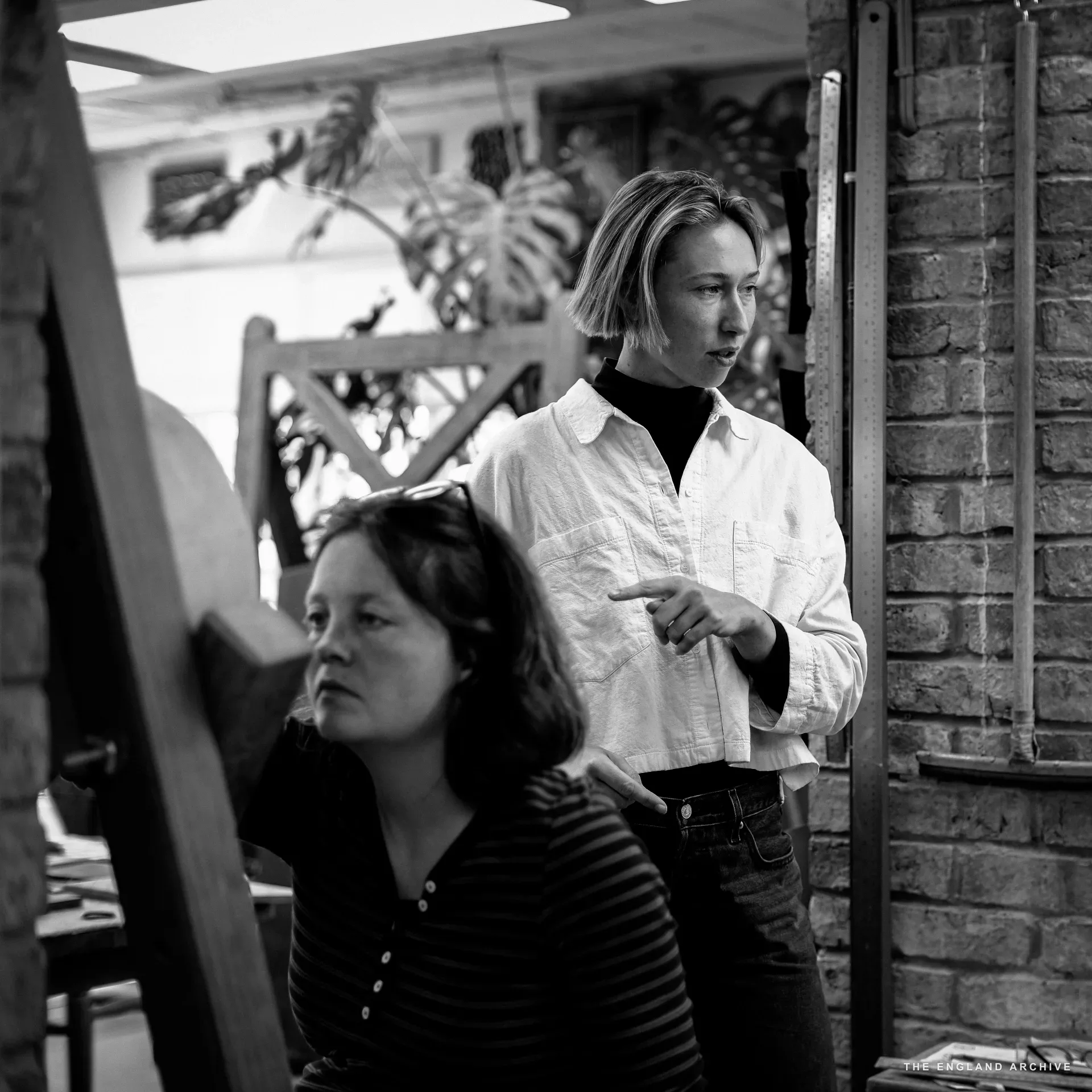
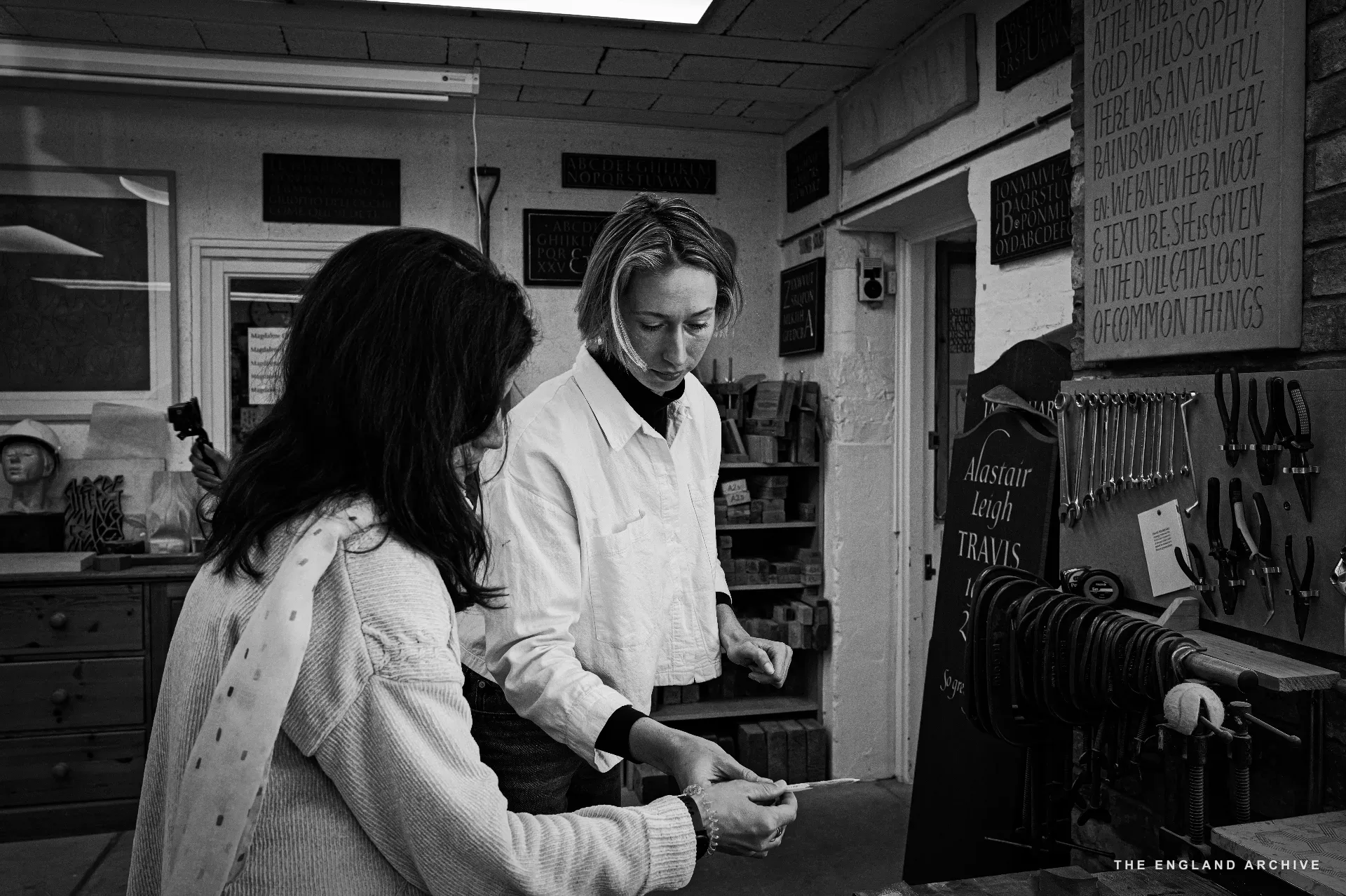
The archive has documented the Cardozo Kindersley Workshop across a single four-hour visit. The longer treatment of the craft Roxanne is now responsible for carrying forward - its history, its twentieth-century revival under Eric Gill, David Kindersley’s working line, and the current state of English stone letter-cutting as a living discipline - lives in the companion craft essay. This subject page is deliberately narrower: Roxanne as observed in the workshop on a single morning in April 2026, as head of the house, as teacher, as the person to whom the apprentices are being given.