Makers
Lida Kindersley
Lettercutter
The Cardozo Kindersley Workshop, Cambridge
Lettercutter
The Cardozo Kindersley Workshop, Cambridge
She walked into the front room and asked, “Have we met before?” I said no. She said, “but you know me.” I said, of course, everyone knows you. She said, “but I don’t know you.”
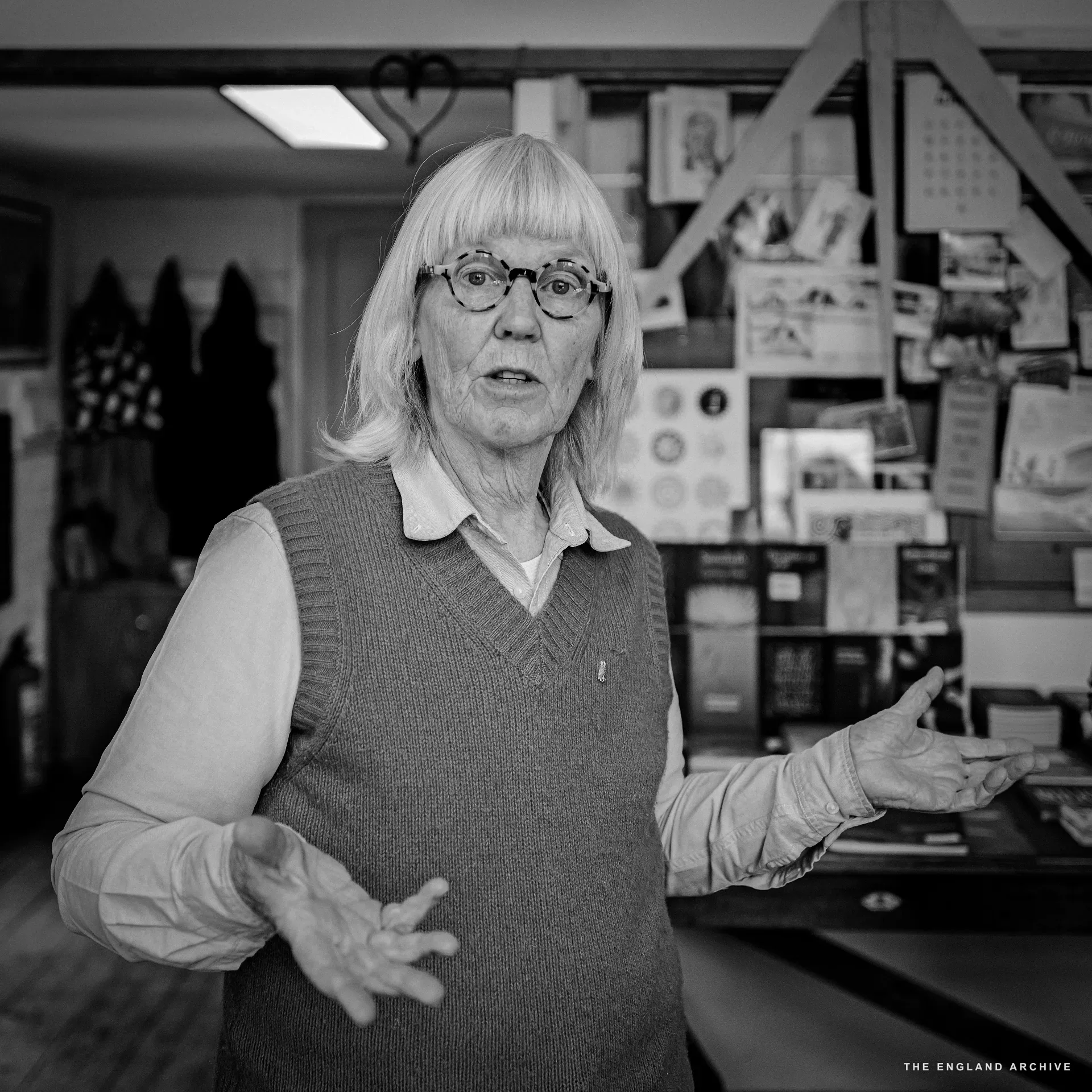
Lida Lopes Cardozo Kindersley came into the room where we were waiting and said: “do we know each other?” I said no. She said: “but you know me.” I said yes, because everyone knows her. She said: “but I don’t know everyone.” That was how the morning started.
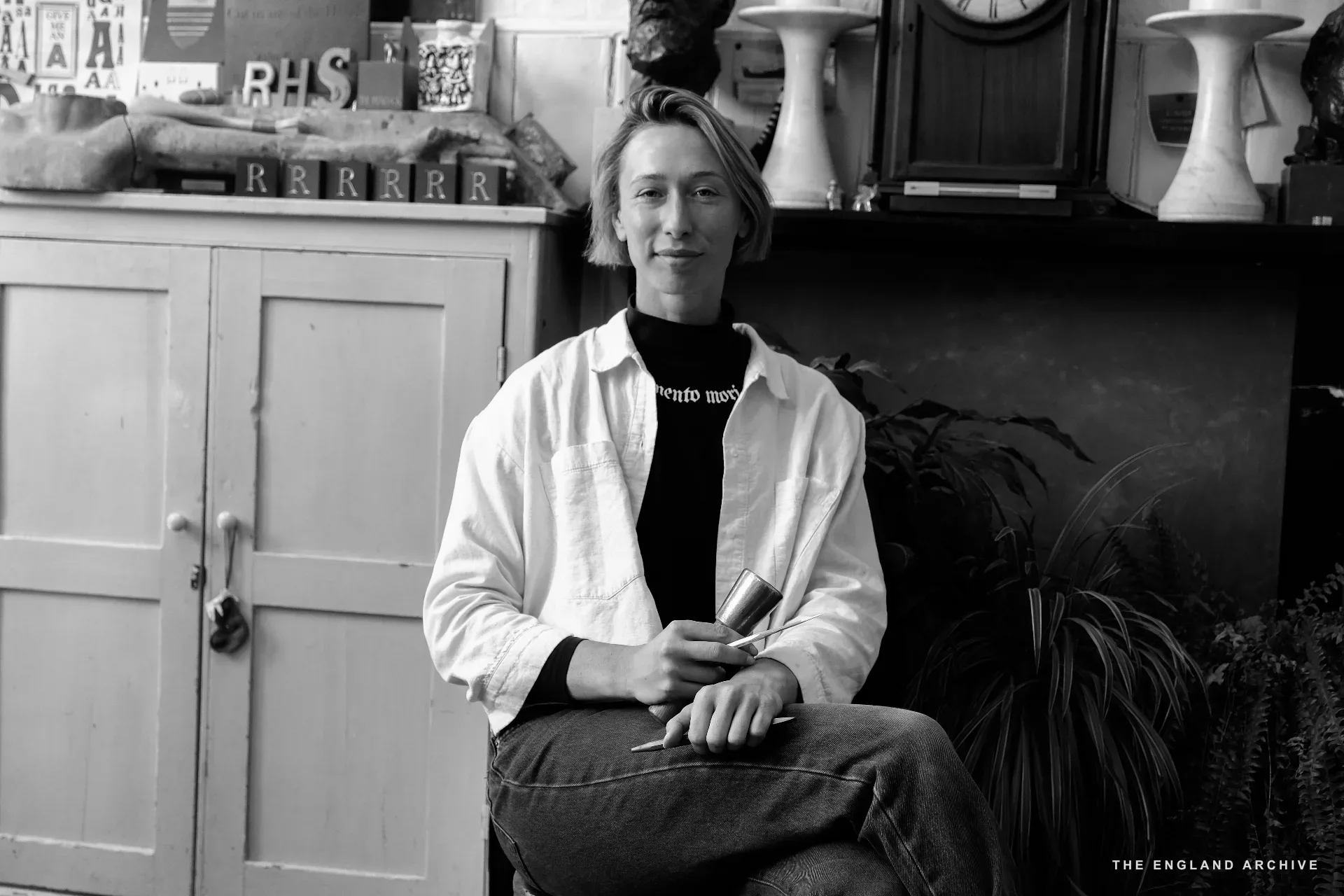
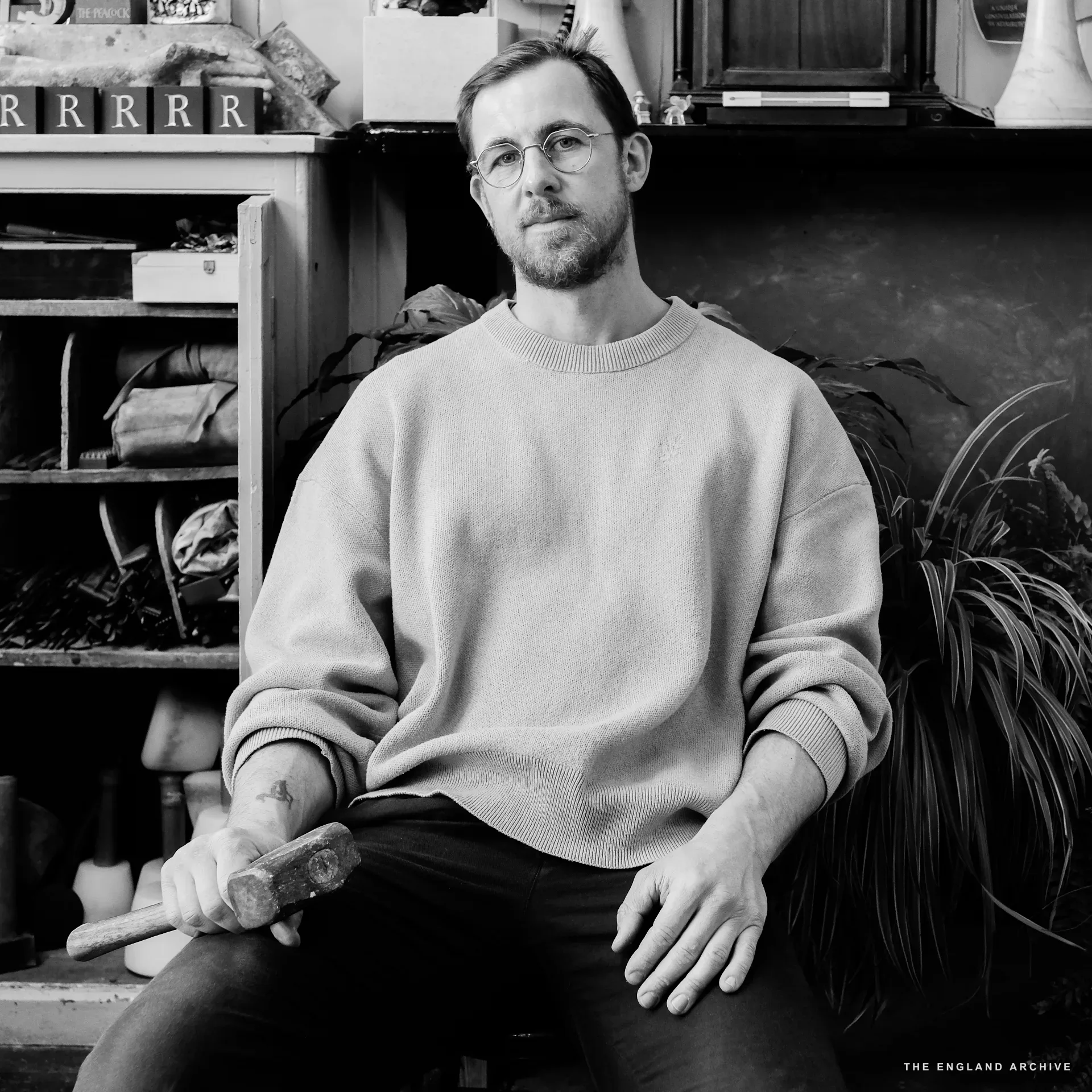
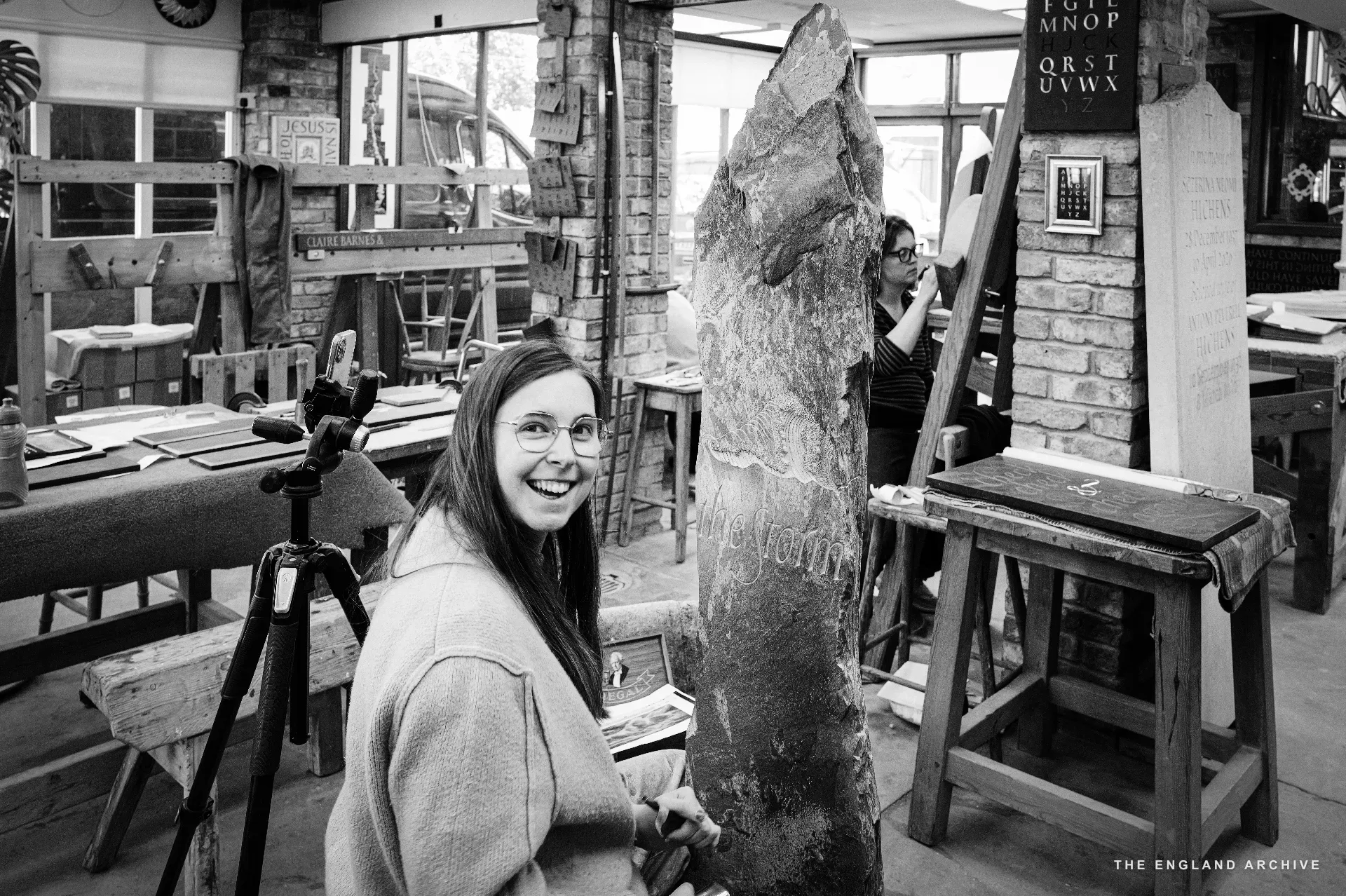
The Cardozo Kindersley Workshop sits on a residential street in Cambridge and has been cutting letters into English stone since David Kindersley set up in the 1940s. David died in 1995. Lida has been there the whole time, first as his partner in the work, then as his widow and the person who kept the workshop going, and now - increasingly, by her own careful design - as the matriarch of a workshop being passed into the hands of her daughter-in-law Roxanne. All three generations were in the building on the morning we visited. That is not a small thing in an English craft in 2026. In most of the trades the archive documents, there is no one to hand over to.
Lida came from the Netherlands. She studied typography and calligraphy in Amsterdam in the 1970s and came to Cambridge, where David Kindersley’s workshop was already a centre of English letter-cutting. She joined the workshop, worked alongside David, became his partner in the work and in life, and when David died she carried the workshop on. That is the shortest version of a thirty-year story that includes books, commissions, apprentices, the Queen’s warrants, and the slow transmission of a craft whose line could easily have ended in 1995 and didn’t.
She is a typographer in her own right. Her published work on letterforms - the books she has written and co-written, the lettering she has designed for colleges, churches, memorials, public buildings across the country - would, in another life, have been enough by itself. That she has also kept a working workshop running for three decades is the second life, and the one most visible from the street.
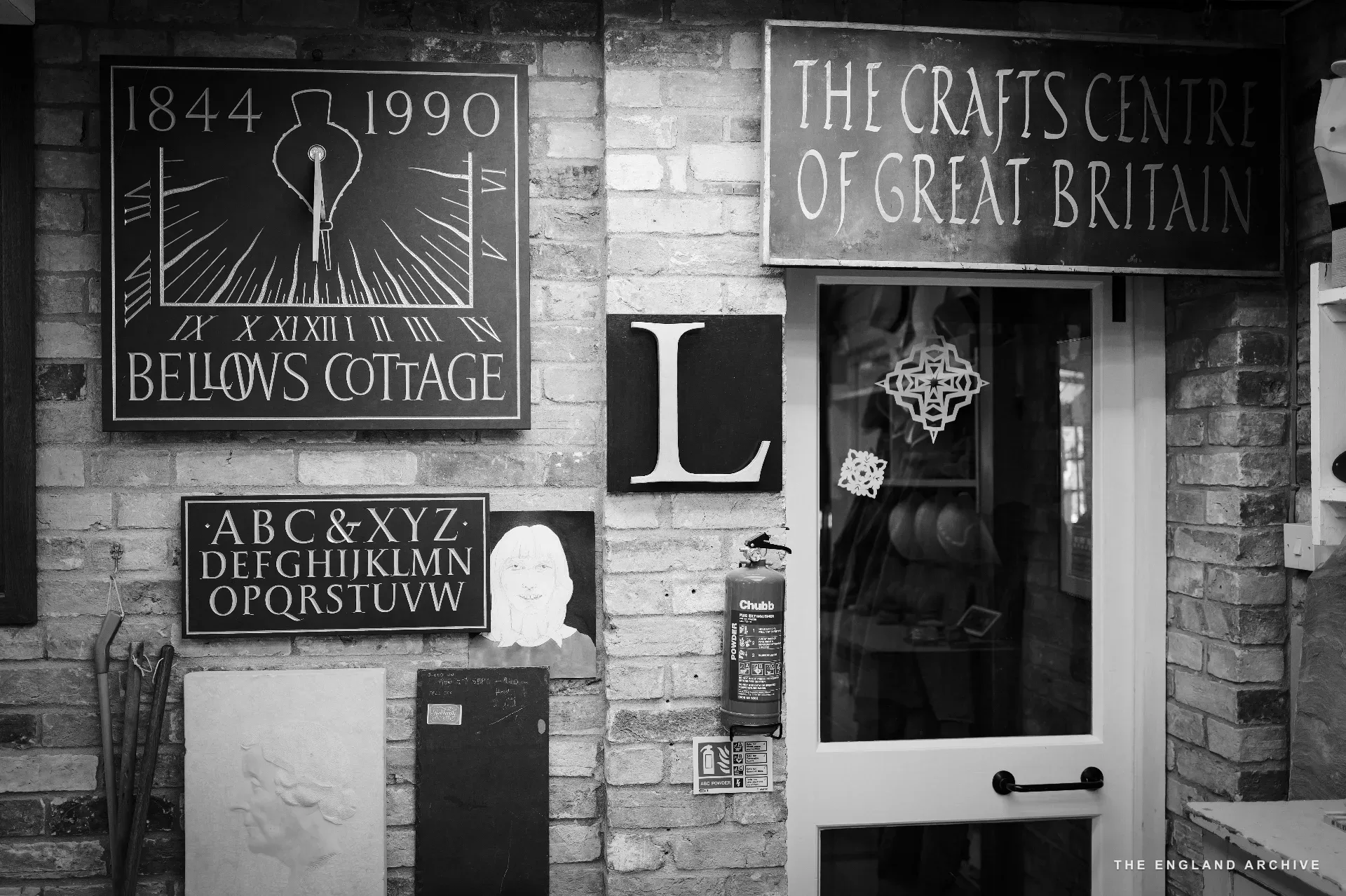
The workshop’s commissions sit in places you can visit. War memorials in parish churchyards. Foundation stones in colleges. Memorial slabs in cathedrals. The lettering on public buildings whose names you have walked past. The work is English in the sense that English stone lettering is English: restrained, proportioned, rooted in a tradition that runs from Trajan’s column to Eric Gill to David Kindersley to the bench Lida has sat at on the mornings we did not visit, and at every other morning over thirty years.
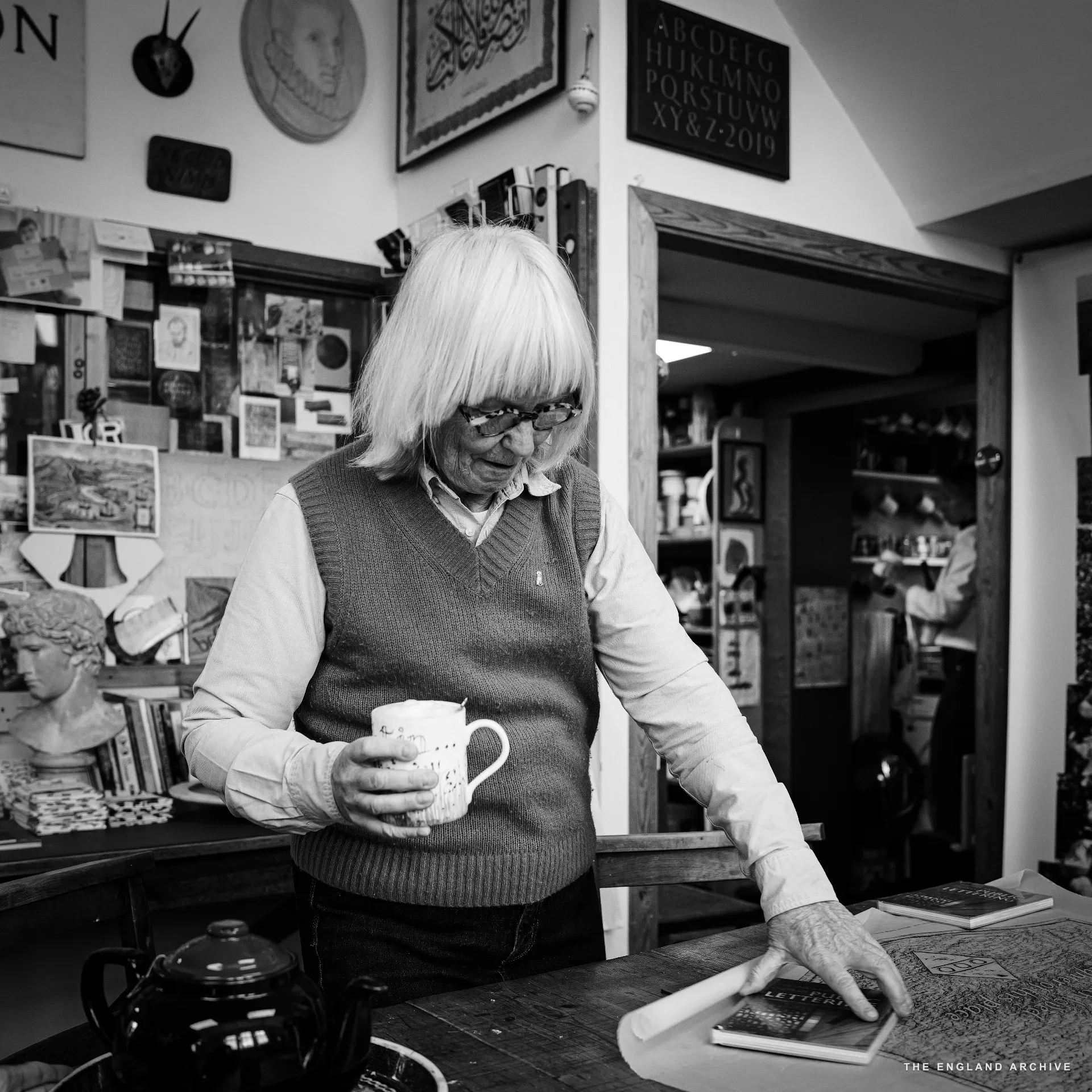
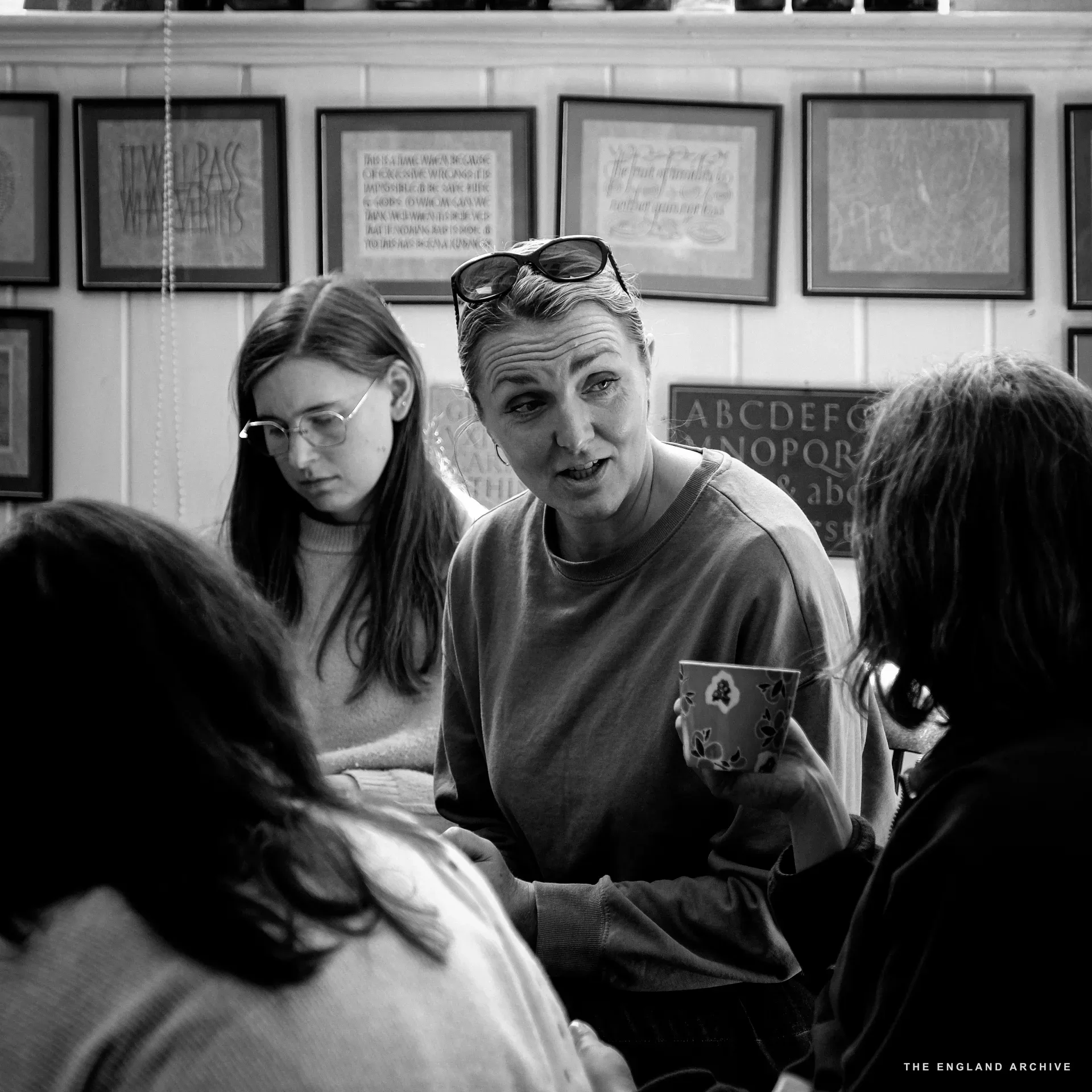
“We are privileged to be part of this archive. What you are doing is a good thing.”
She said that to us near the end of the morning, and it is the line from the whole visit I will not forget. It was said plainly, without performance, in a quiet voice, and it was meant. The archive is new; the workshop is not. A person who has spent thirty years running an English stone-lettering workshop is under no obligation to take a three-year-old documentary project seriously. She did anyway. That is partly who Lida is, and partly a sign that the archive is doing something that matters to the people whose work the archive exists to record.
Lida is in the workshop every day. She is not, by her own cheerful admission, running it any more. That job has been moving, over recent years, into Roxanne’s hands - the commissions, the wage decisions, the apprentice intake, the daily management of the building and its people. Lida comes in because she has been coming in for fifty years and because the work is what her life is made of. The pass from matriarch to working head is one of the most interesting things a craft documentary can observe, because it is the pass that decides whether the workshop continues or ends. Here it is happening in real time, and by every visible sign it is happening well.
The work itself is still the thing. She still cuts letters. She still advises on the pieces on the benches when her advice is asked for. She still takes tea with anyone who is in the front room, and explains - to visitors, apprentices, students, random people who come in off the street - what the workshop is doing and why. The apprenticeship that starts at the bench with a pencil (see the journal entry) is only half the apprenticeship. The other half is sitting at the big table while Lida talks, and absorbing the things that cannot be written down.
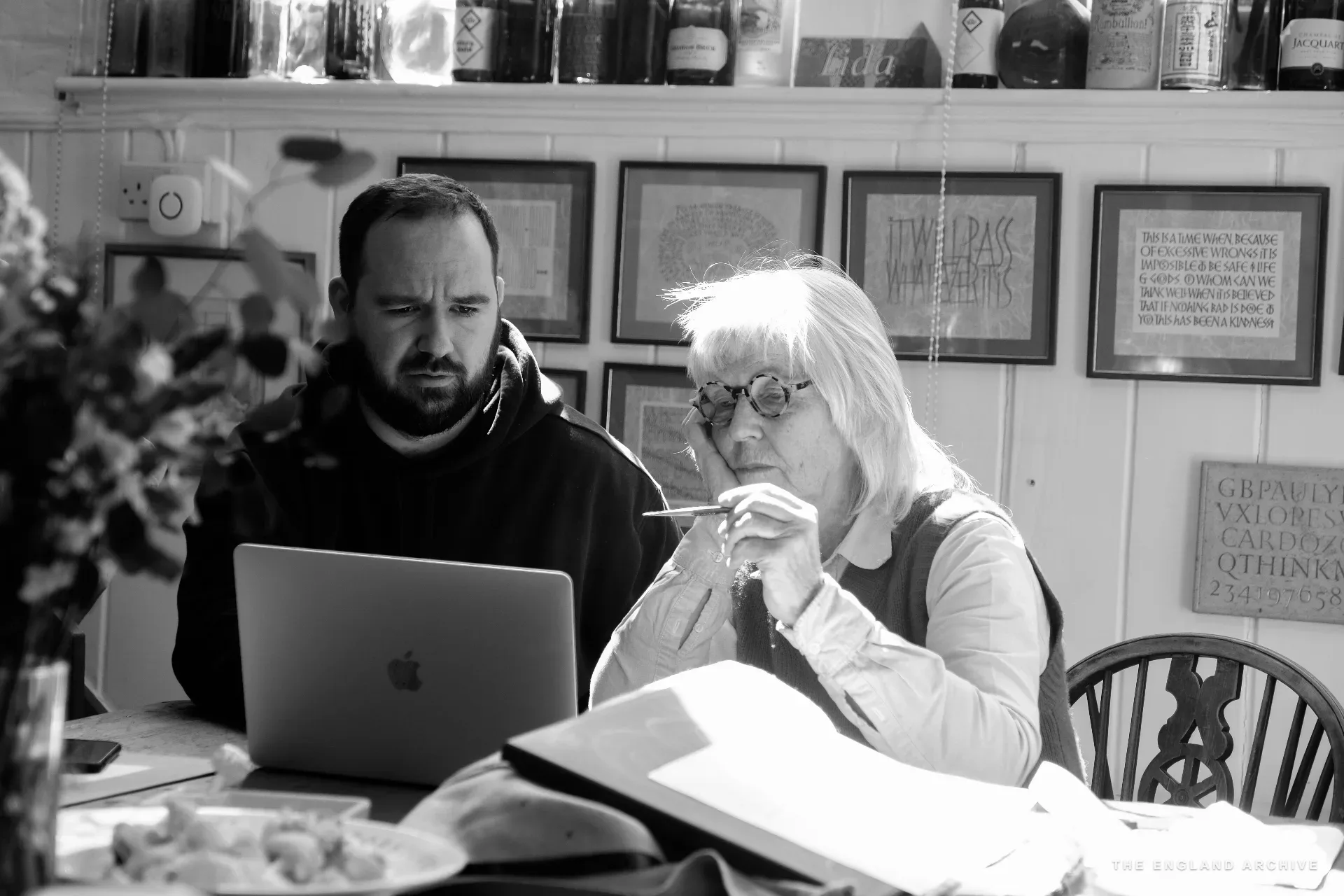
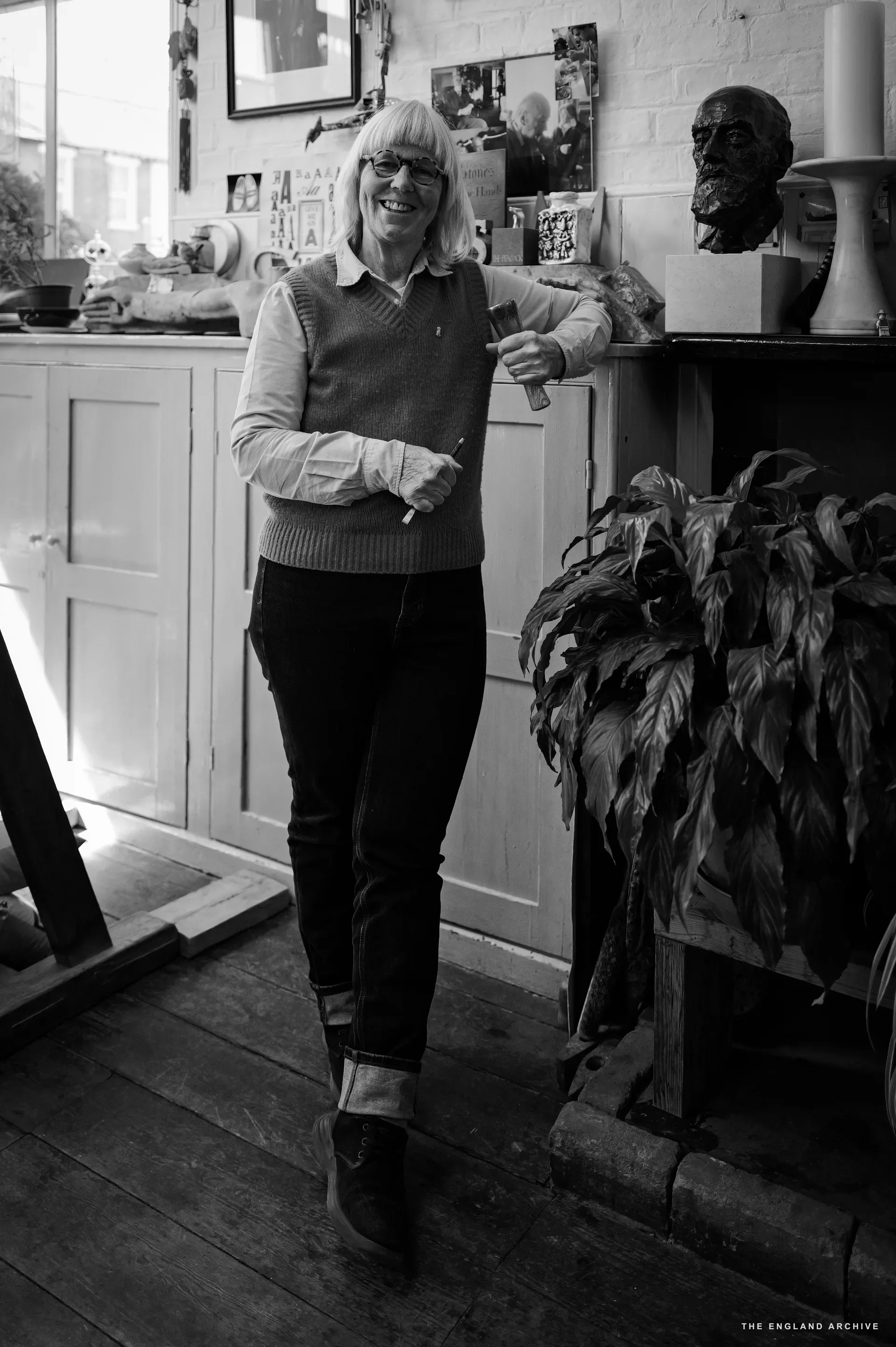
The Bronica was set up in the workshop after the morning’s tour, the SQ-A on its tripod by the kitchen counter. Lida stood for the seated portrait first, then leant against the counter for the second. She was easy in front of the camera, the way someone is who has been photographed inside her own work for fifty years. Behind her on the dresser sat the bronze portrait head of David, sculpted in his lifetime - so the frame gathered both Kindersleys into one shot without needing to make a thing of it.
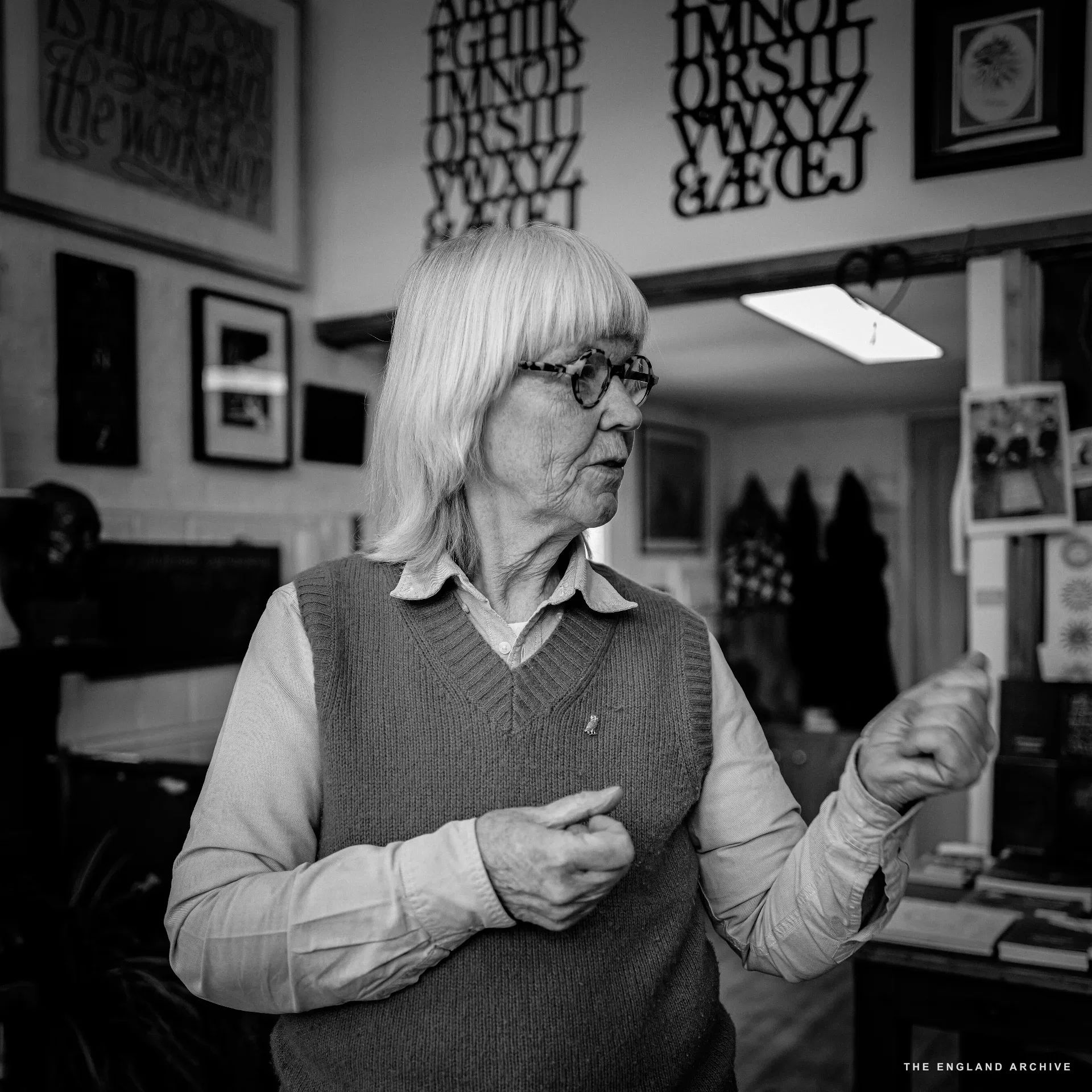
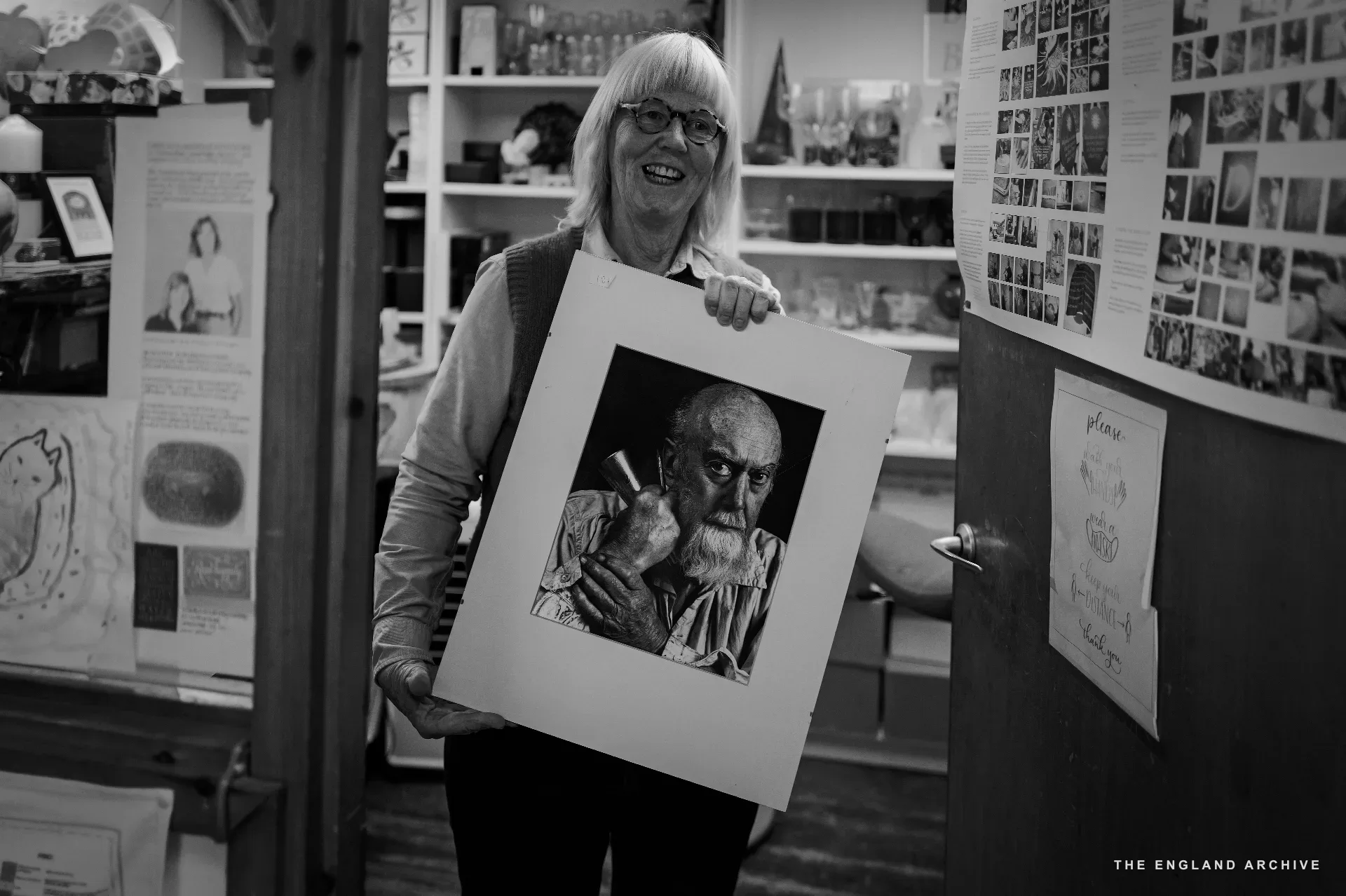
Then she lifted a large framed black-and-white photograph of David - bearded, his stone-cutting hammer in his hand - and held it for the camera. The frame within the frame: Lida in the present, David at the bench thirty or forty years ago, and the workshop they have shared on either side of his death.
She talked about him with a tender directness. About the work first - the precision of his cuts, his ear for proportion, the way he could read a stone before he marked it. And then about his thinking. David, she said, drew from Sufism: a tradition that holds that the discipline of a craft is itself a path, that mastery is not separable from a way of being in the world, that the long patient repetitions at the bench are also a practice of attention. That was the philosophy he brought to the workshop and that the workshop has carried since. You can hear it in the way Lida teaches and Roxanne teaches and the apprentice begins, generations later, with a knife and a pencil. The pencil is the practice. The practice is the path.
This is the archive’s single-visit record of Lida Kindersley - one morning, one set of frames, and the prose that surrounds them. The Kindersley workshop has been documented in one extended visit; everything the archive will carry about Lida rests on that morning, on the research that surrounds it, and on the historical work that places her inside the longer line of English letter-cutting. The long-form treatment of the craft itself, David Kindersley’s legacy, and the twentieth-century tradition Lida inherited and carried forward lives in the companion craft essay.