Makers
William Hart
Silversmith, Fourth Generation
Hart Gold & Silversmiths, Chipping Campden
Silversmith, Fourth Generation
Hart Gold & Silversmiths, Chipping Campden
The fourth generation. He came to the silver from computer science, and stayed.
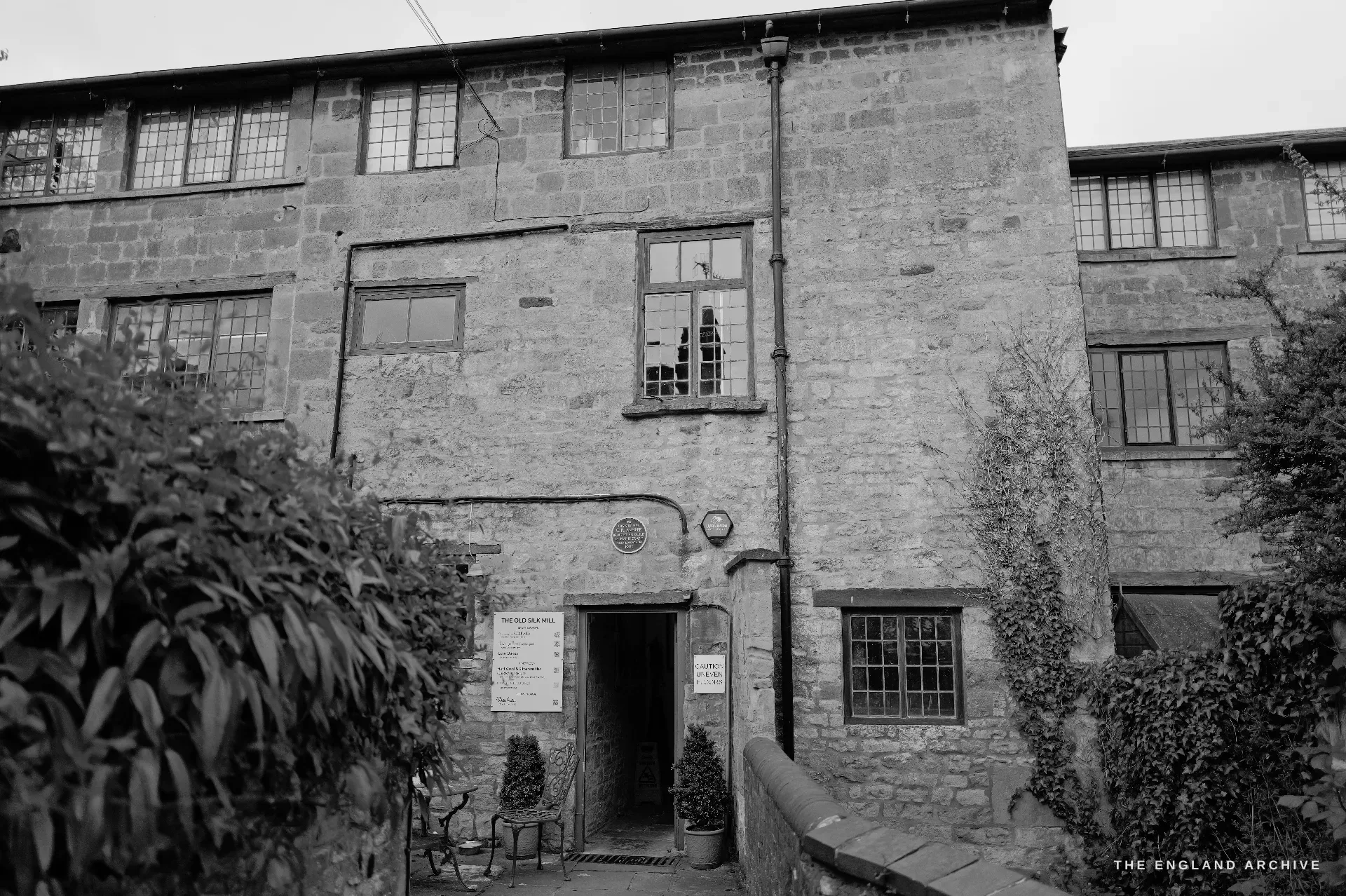
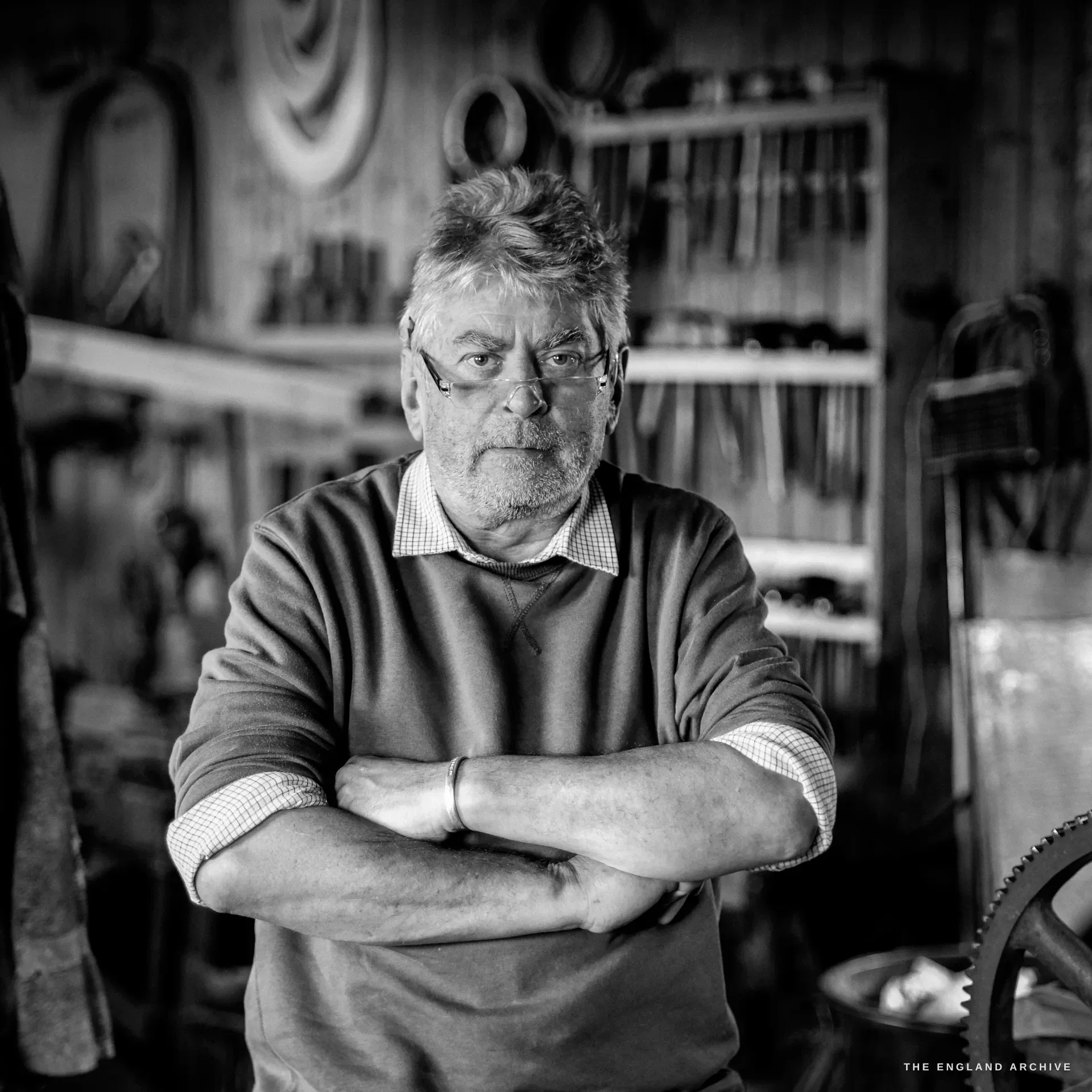
William Hart is the fourth generation of Harts in the Old Silk Mill. He was the one who came out to the door, shook my hand, and brought me in to meet his father; he is the one who runs the workshop forward while David holds the long line of it. He joined the workshop in 1990 - the year his grandfather Henry, David’s father, died, which is the kind of timing that in a family like this one barely counts as coincidence.
The line behind him is George Hart, who came to Campden with Ashbee’s Guild of Handicraft in 1902; then Henry; then David, his father; then William. Four generations in one room, one trade, one building. He grew up around the bench the way the others did, with the difference that when his turn came he had already gone another way first.
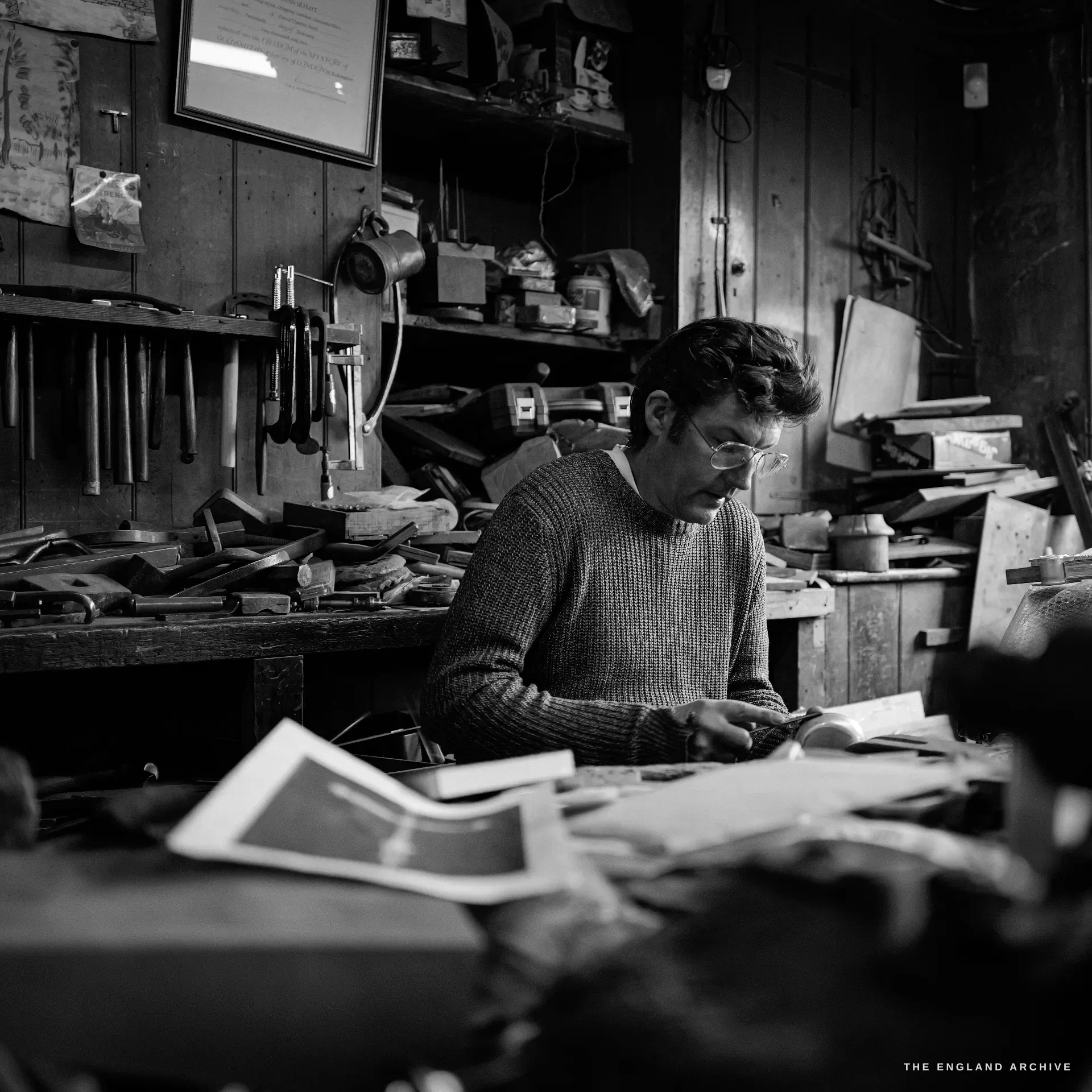
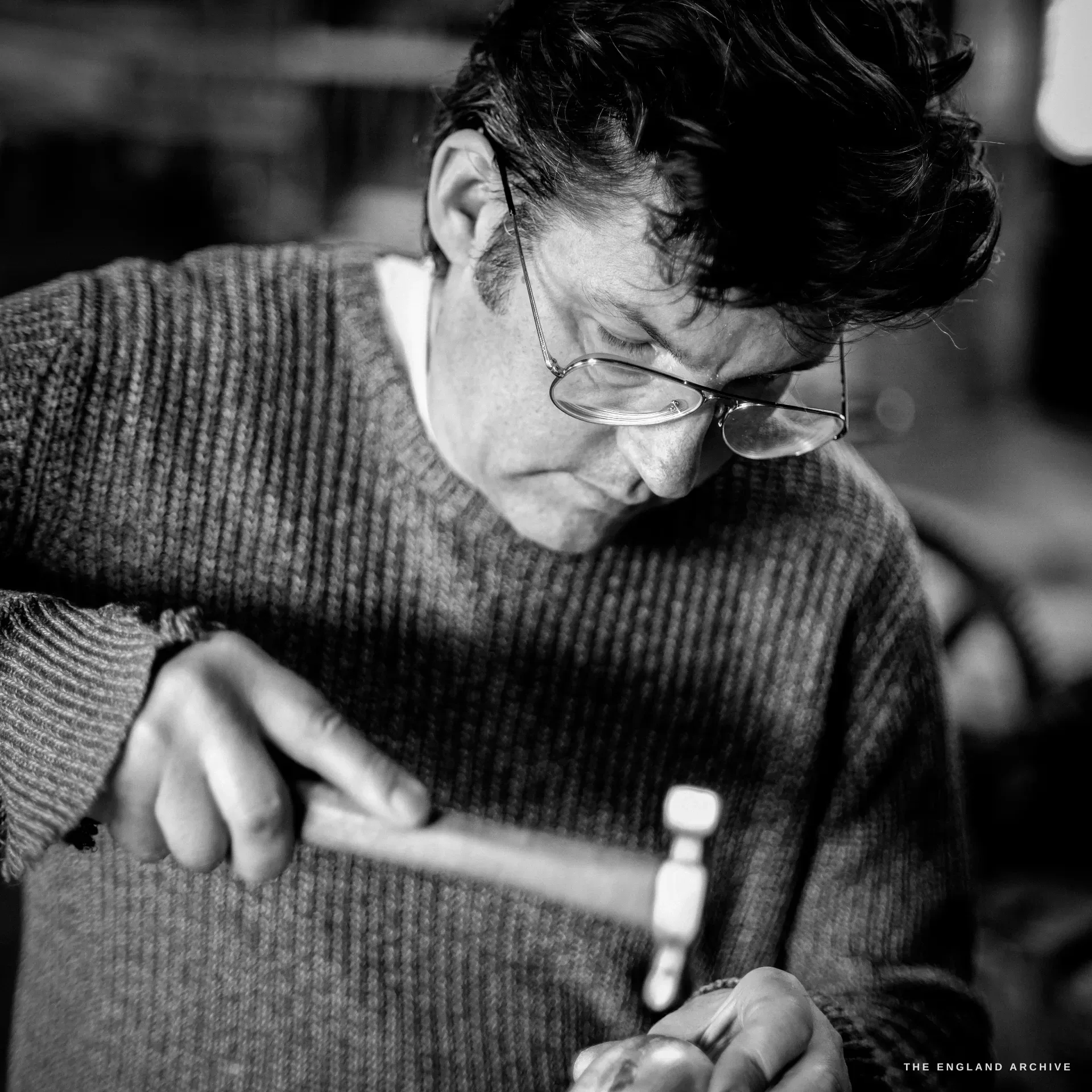
William came to the silver from computer science - the modern, sensible, well-lit career - and turned back toward the workshop. That detail matters more than it first appears. A craft like this does not survive by inertia. In each generation someone has to choose the hard hand-work over the easier option that the age is offering, and choose it knowing exactly what is being given up. George chose it when the Guild collapsed around him. David chose it in 1956. William chose it in 1990, with a qualification in his pocket that could have taken him anywhere.
That repeated decision is the real inheritance - not the building, not the tools, not even the name on the door, but the willingness in each generation to keep doing the slow work by hand. The silver is the evidence of the choice. Watching William at the spindle, sleeves pushed up, working a small bowl by hand in a room his great-grandfather worked in, you are watching a decision being honoured rather than a job being done.
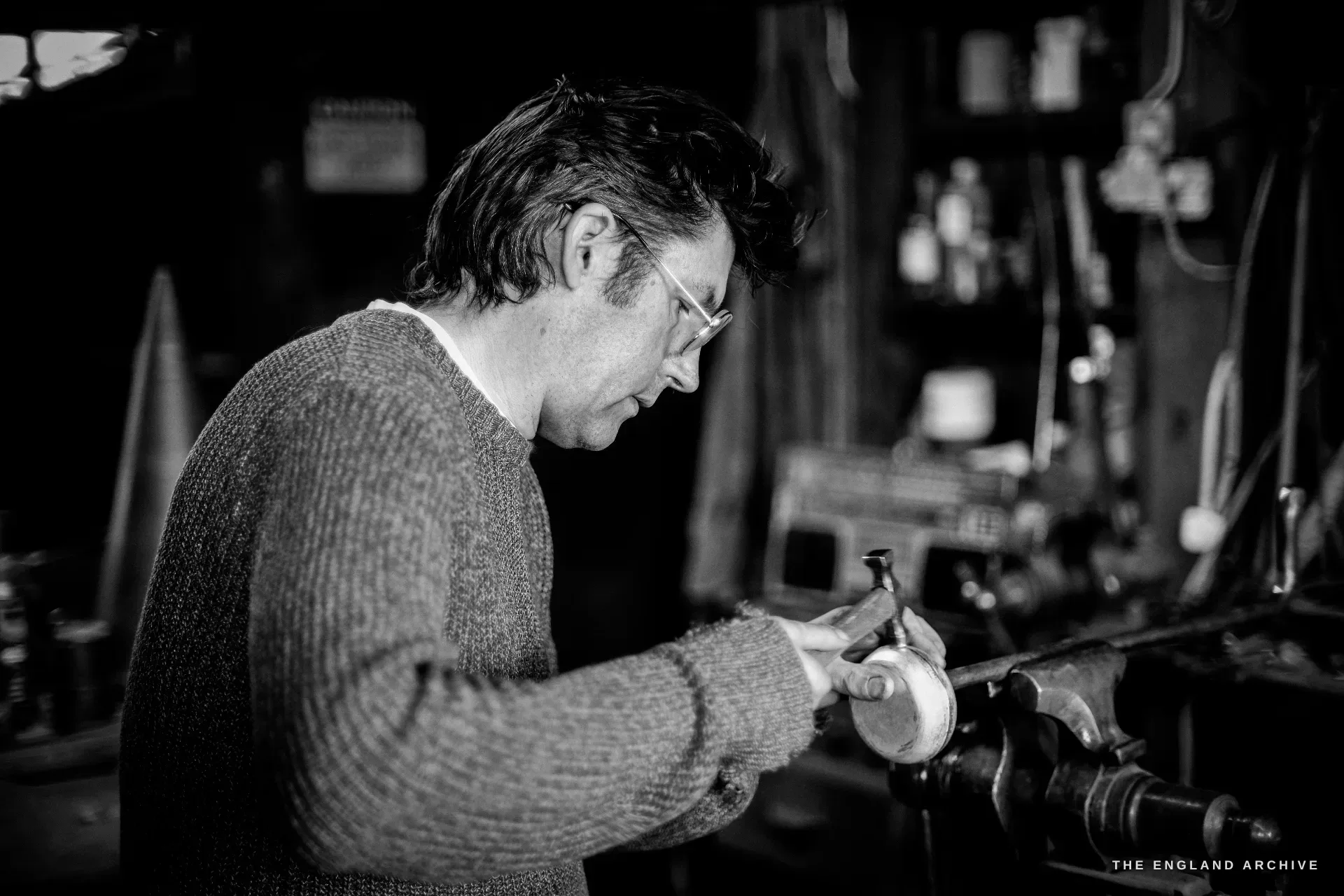
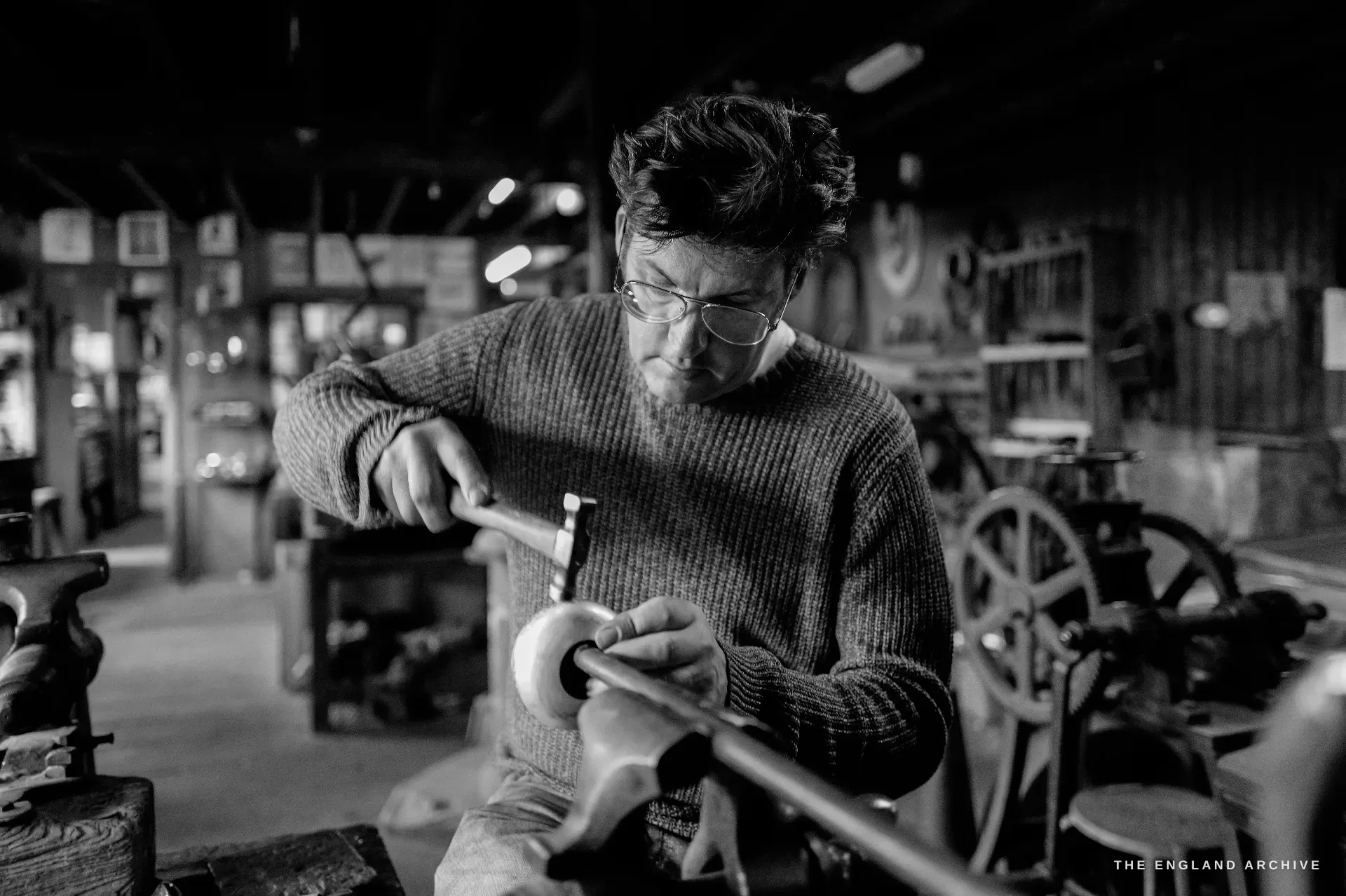
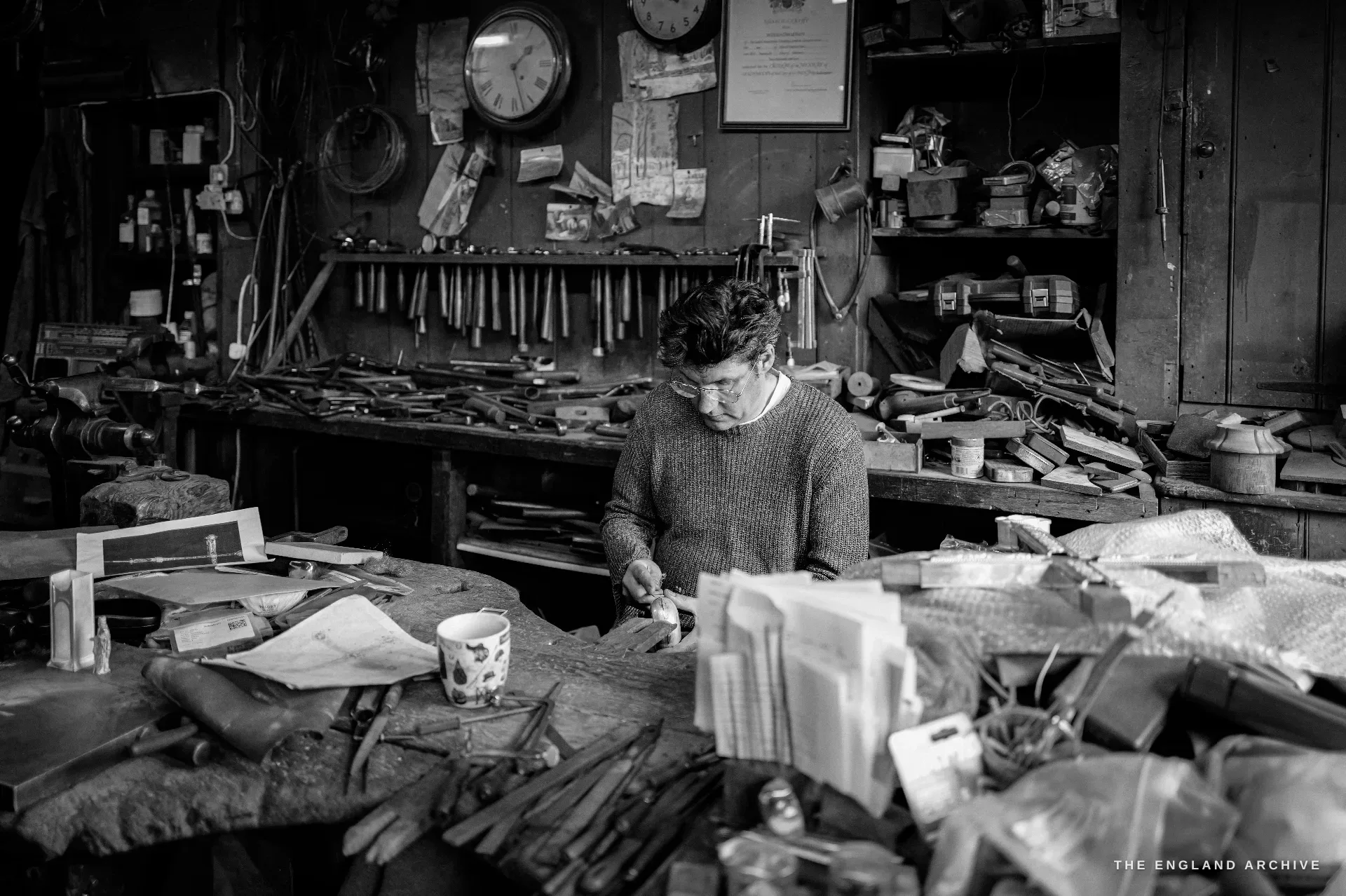
He works at the traditional jeweller’s bench, with its leather catch-skin slung beneath the peg to save the filings and the falling work, and at the polishing spindle, and across the same drawings and patterns the workshop has always used. The photographs are of him working, not posing - holding a piece up to the light to read it, turning it, taking it back to the wheel. The hands are quick and certain in the way that only comes from decades, which by now he has.
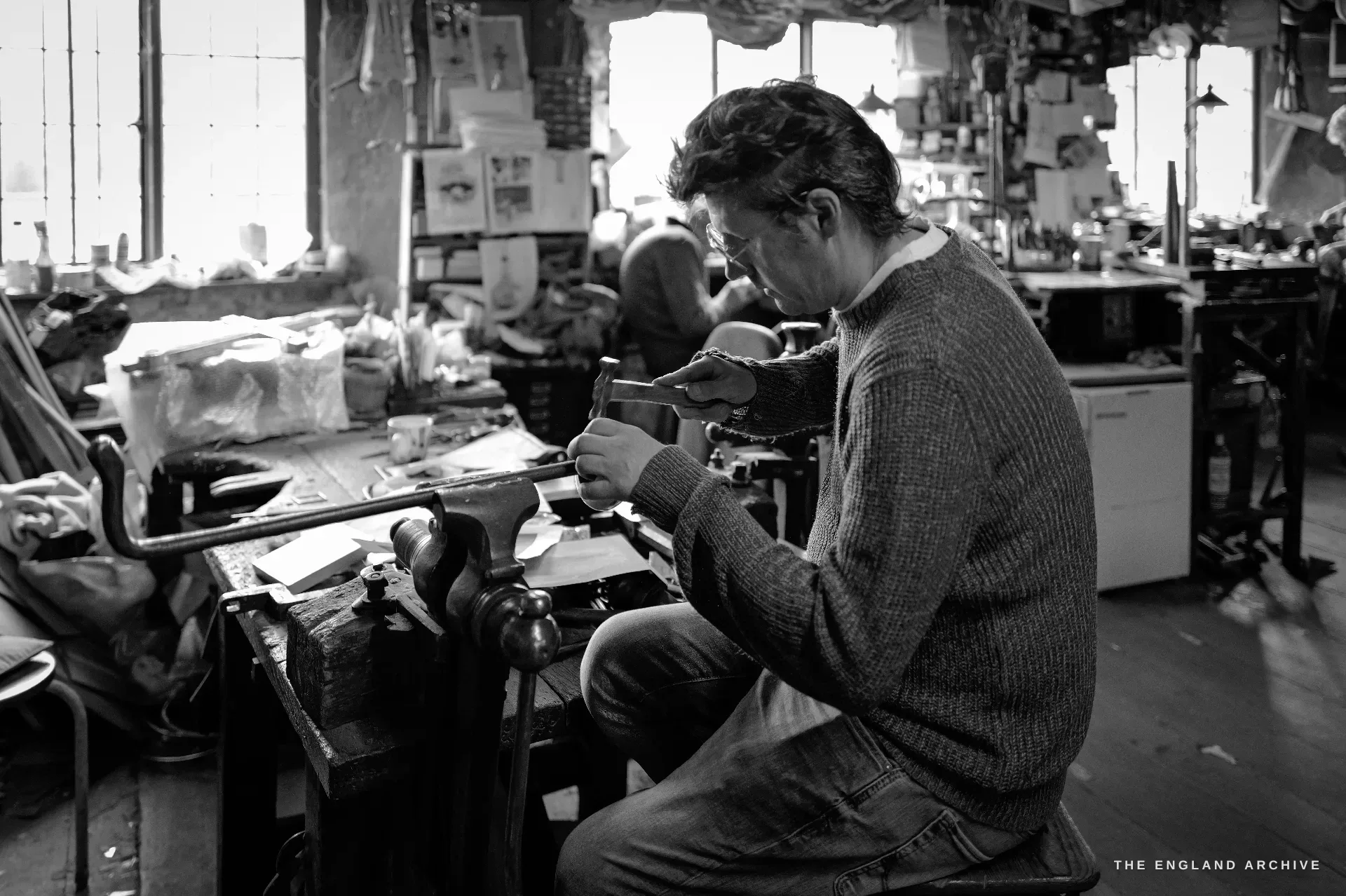
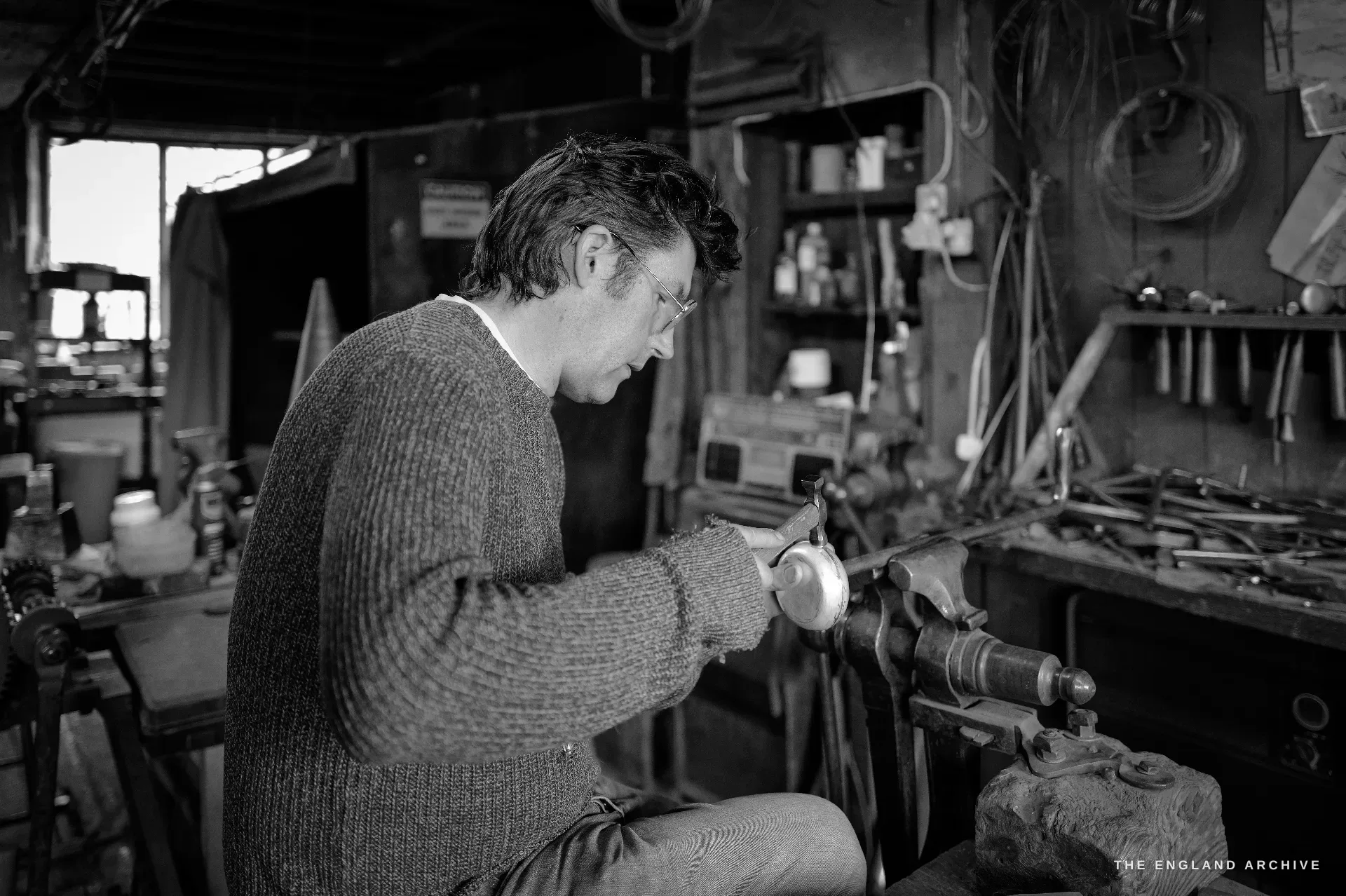
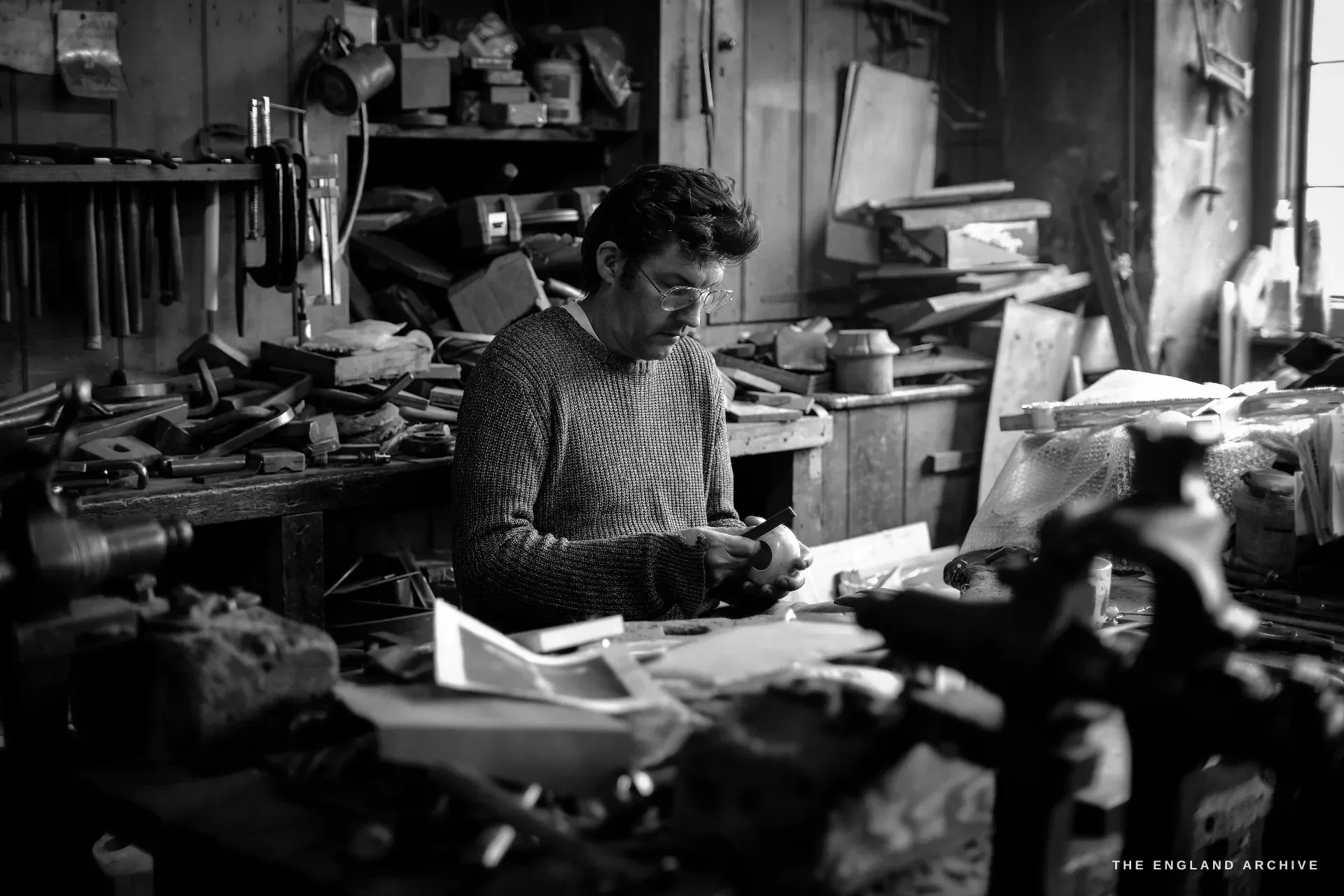
Between them, father and son hold the two halves of what a workshop like this needs: the long memory and the forward motion. David carries seventy years of how it has always been done; William carries the work of keeping it going - the commissions, the team, the building, the future of a workshop that is also a piece of national craft history. A trust now exists to help secure that future, which is a recognition that Hart’s is not only a business but a thing worth keeping.
The archive met William at the point in the line where the responsibility is visibly shifting from one generation to the next, in real time, in the same room it has always shifted in. That is the moment worth recording: not a museum, but a living workshop with the next link already locked into place.
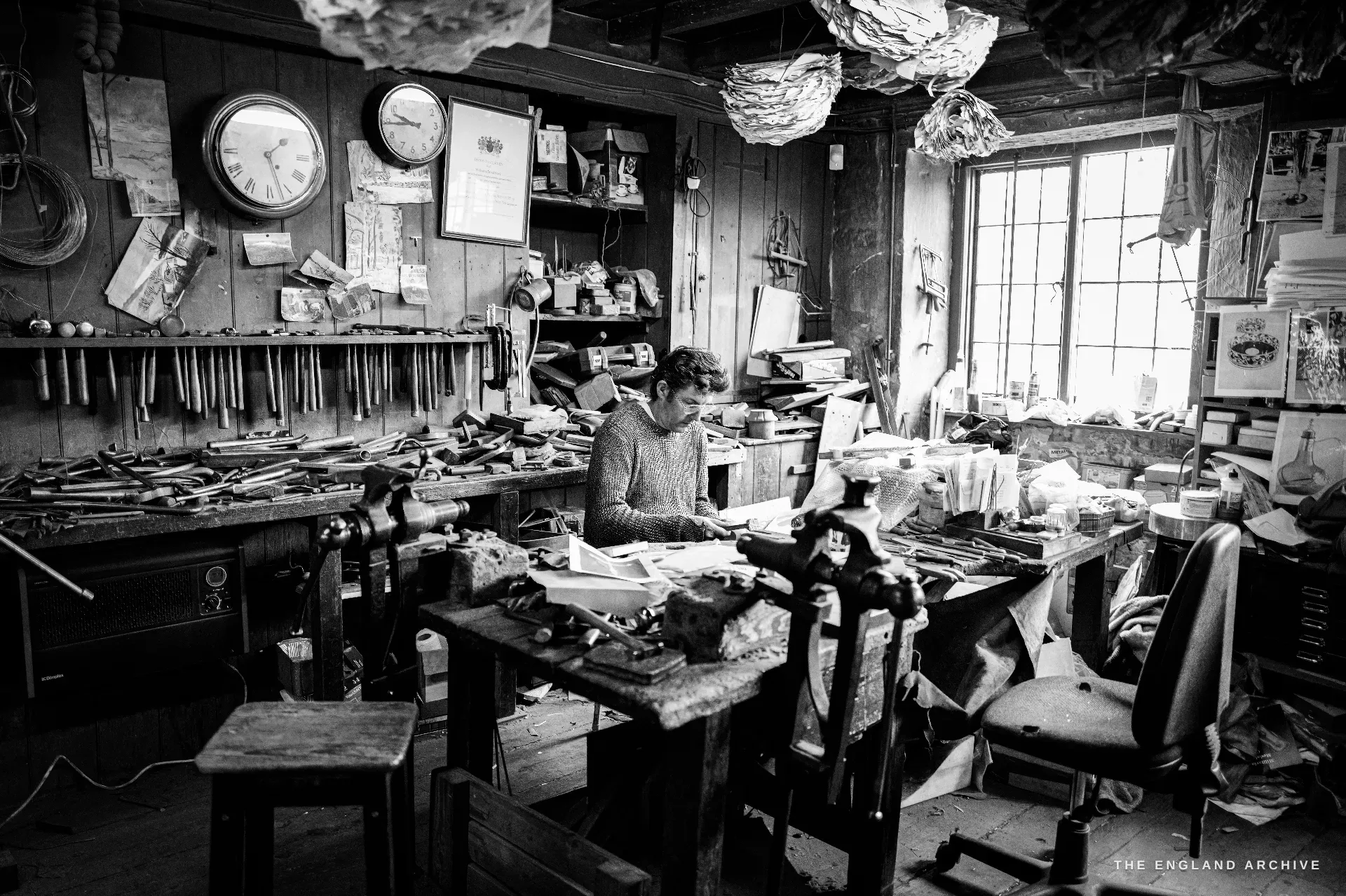
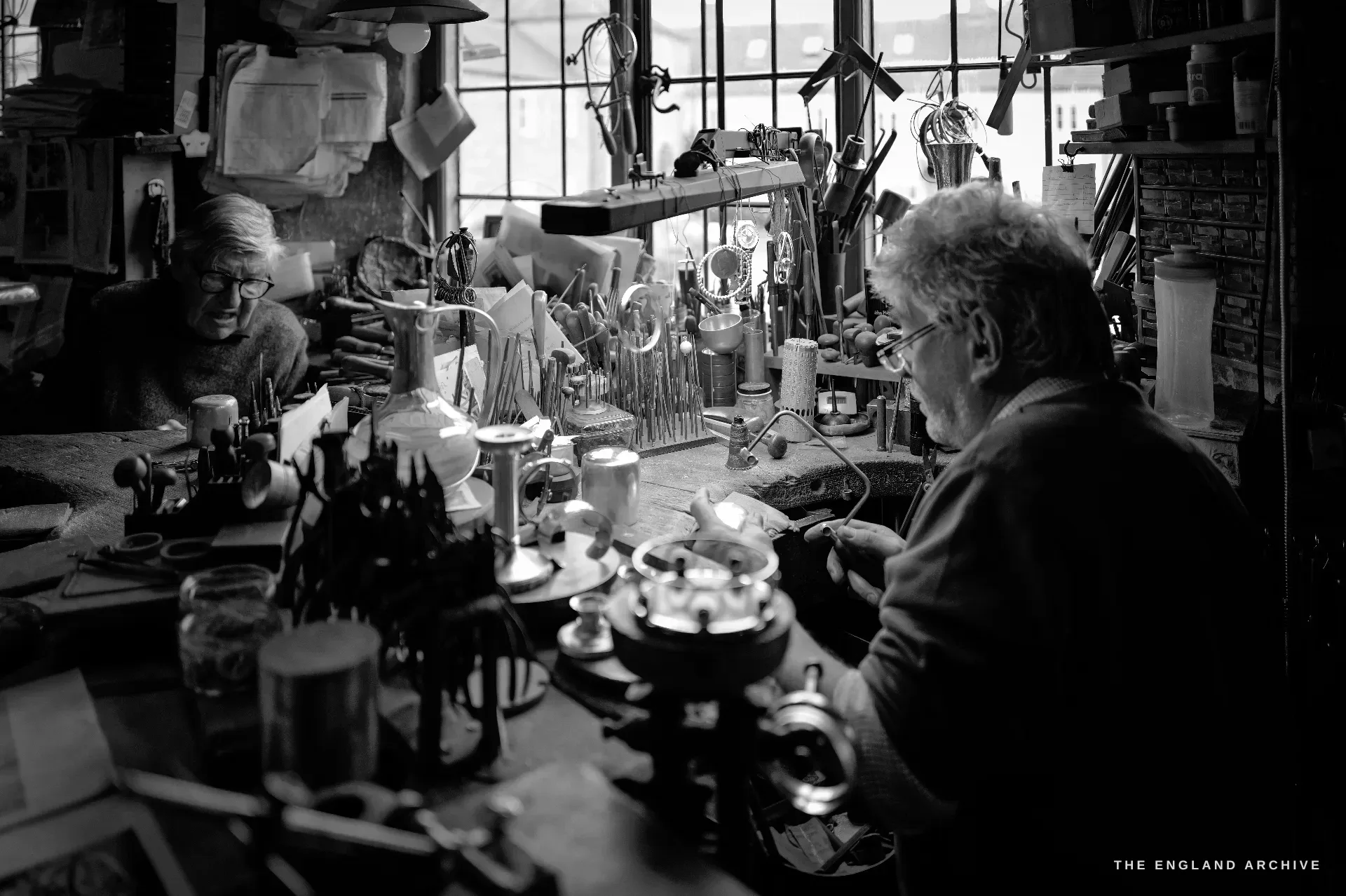
This is the archive’s first record of William Hart, made on a working morning in May 2026 alongside the record of his father David. The choice he made in 1990, the work he does now, and the future of the last working workshop of the Guild of Handicraft are all surfaces the archive will return to. William’s name, alongside David’s, is one the archive expects to come back to.