Regions/ South Yorkshire/

Sheffield

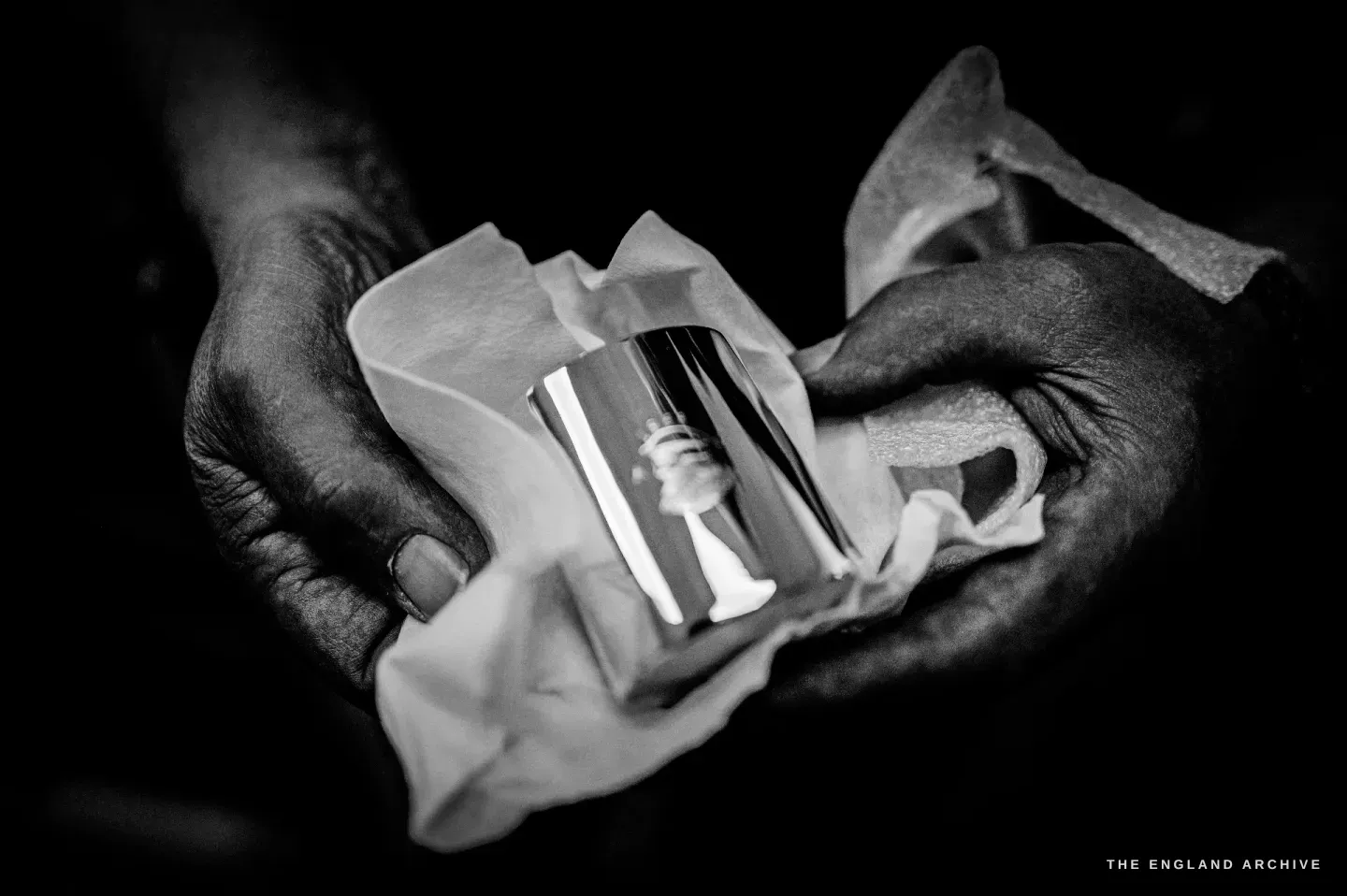
No English city is so completely the product of one thing it makes. Sheffield is steel - and the knives, scissors, blades and silver cut from it by hand, by people who are still here.

1624Cutlers' Company chartered
1913Stainless steel invented
16Subjects in the archive
5Firms documented

AR-0030

County
South Yorkshire
Old district
Hallamshire
Trade body
Company of Cutlers in Hallamshire (1624)
First named
A “Sheffield thwitel”, Chaucer, c.1387
Stainless steel
First cast 1913 (Harry Brearley)
Subjects documented
Sixteen, across five firms
OS grid ref
SK 354 873

Sheffield has made cutlery for at least seven hundred years. The trade grew up in the old district of Hallamshire, where four fast rivers - the Don, Sheaf, Porter and Rivelin - dropping off the Pennines gave the water power to drive grinding wheels, and the surrounding hills gave the ironstone, the millstone grit for the wheels, and the coal and charcoal for the forges. By the time Chaucer wrote, around 1387, a Sheffield knife was a thing worth naming: his miller in The Reeve’s Tale carries “a Sheffeld thwitel” in his hose. In 1624 an Act of Parliament gave the trade its governing body, the Company of Cutlers in Hallamshire, which still meets, still grants the marks struck into Sheffield steel, and still holds the Cutlers’ Feast.

What set Sheffield apart was not just volume but invention. Benjamin Huntsman’s crucible process in the 1740s gave the world its first reliable cast steel; Henry Bessemer built his converter works here in the 1850s; and in 1913 Harry Brearley, looking for a rust-resistant gun-barrel steel, cast the first stainless steel and changed the cutlery of the world. For a century the city ran on it - the Little Mesters in their workshops, the great melting shops in the East End, the buffer girls who polished the finished blades.

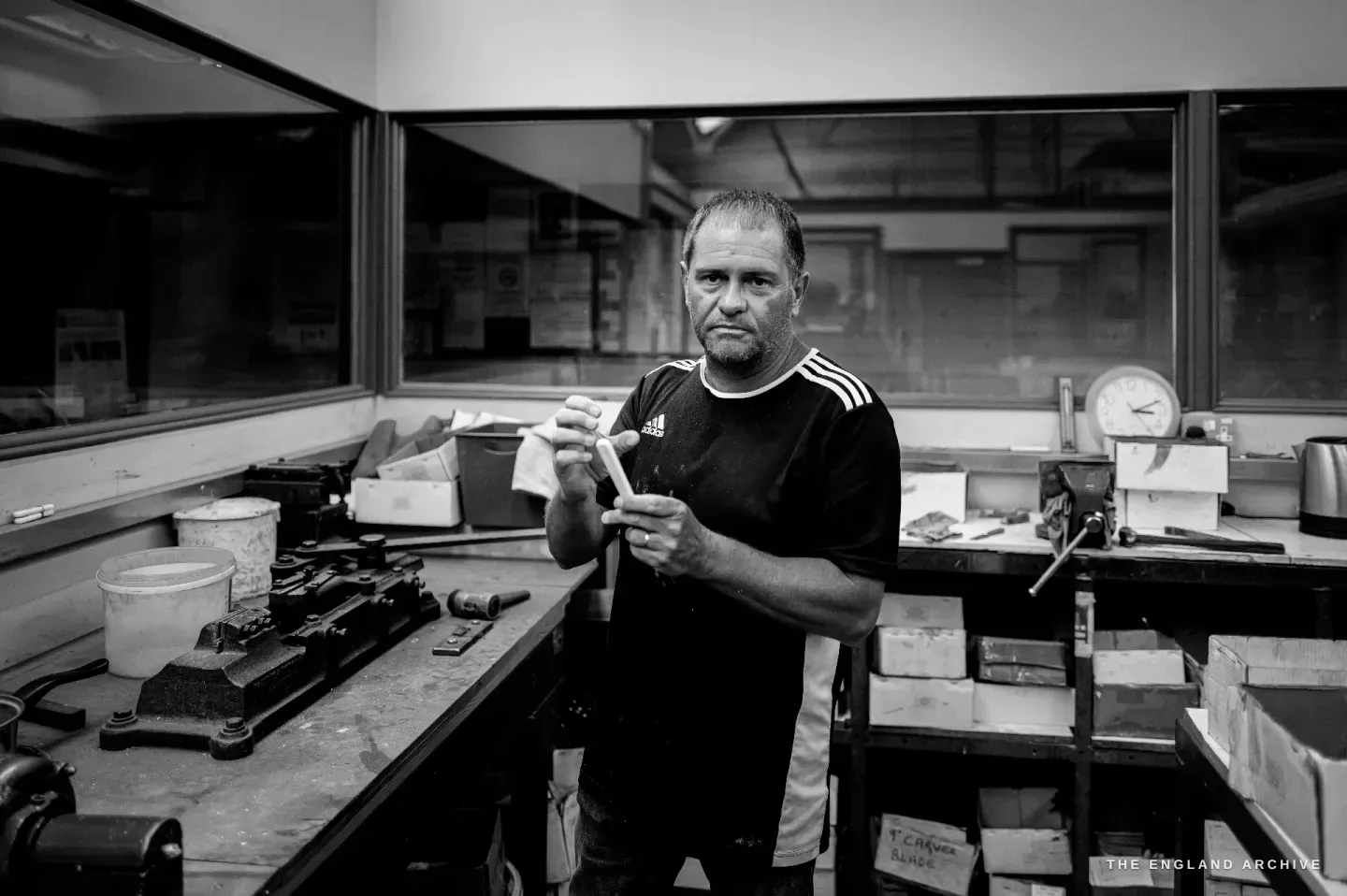
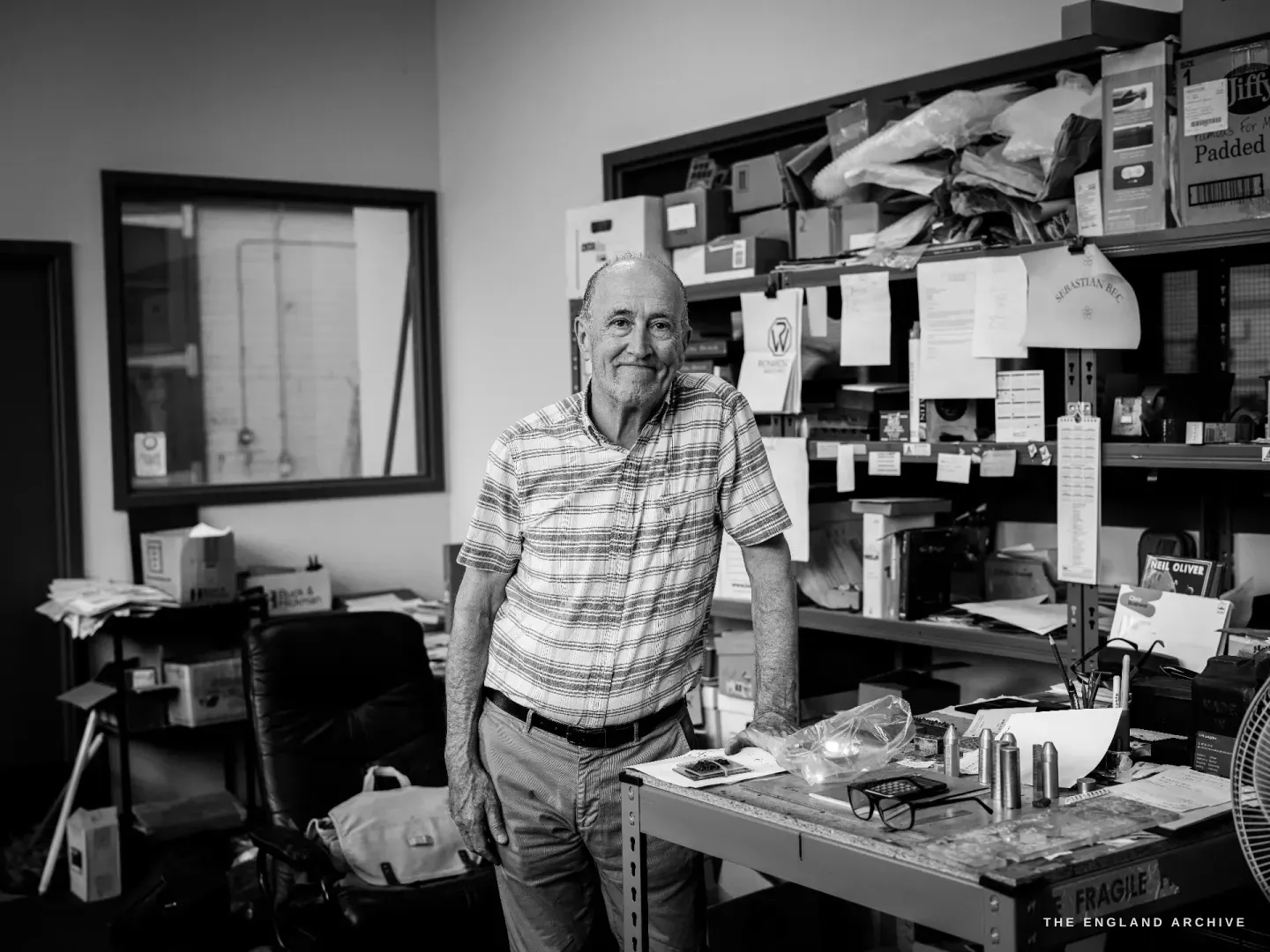
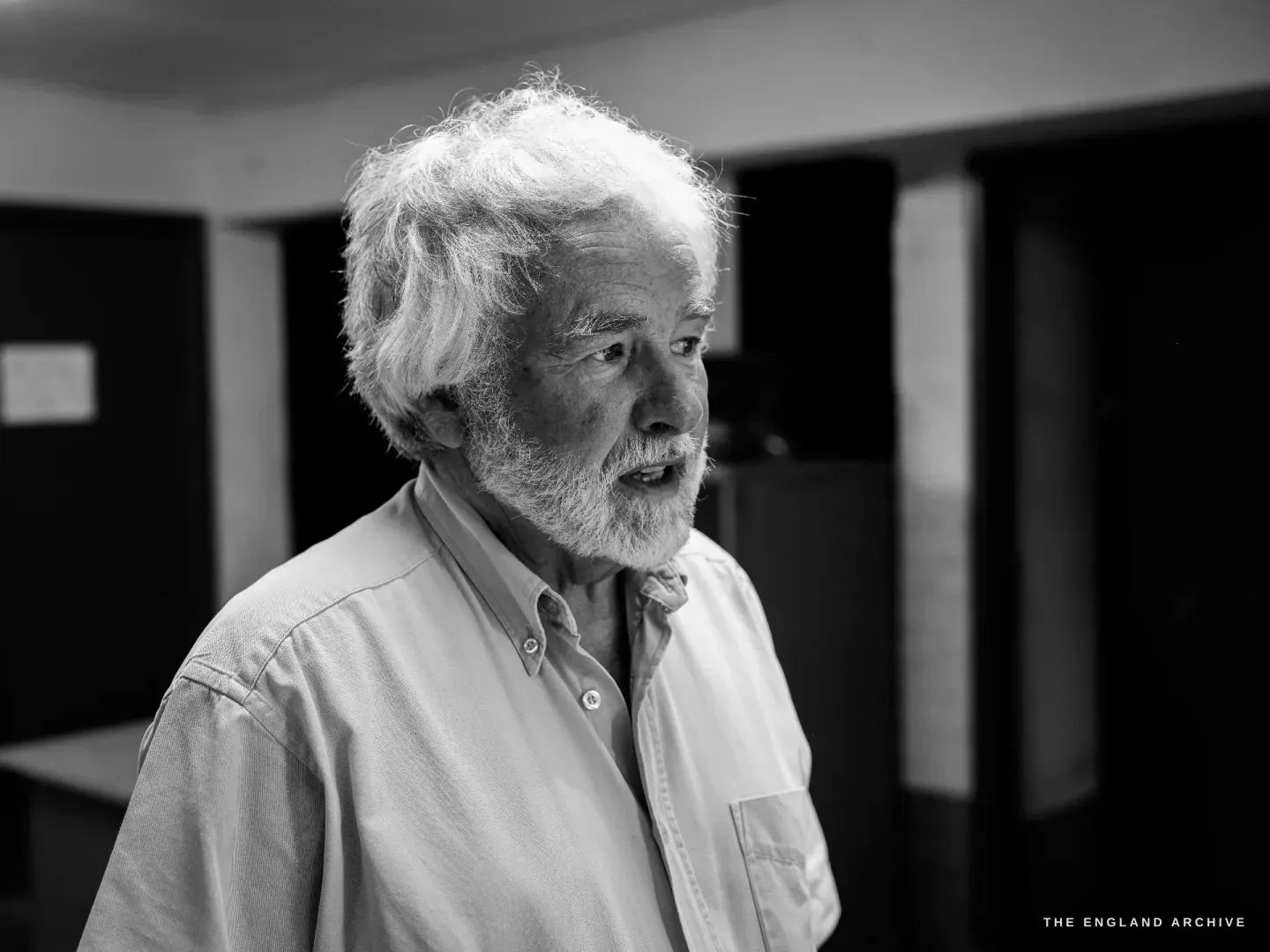
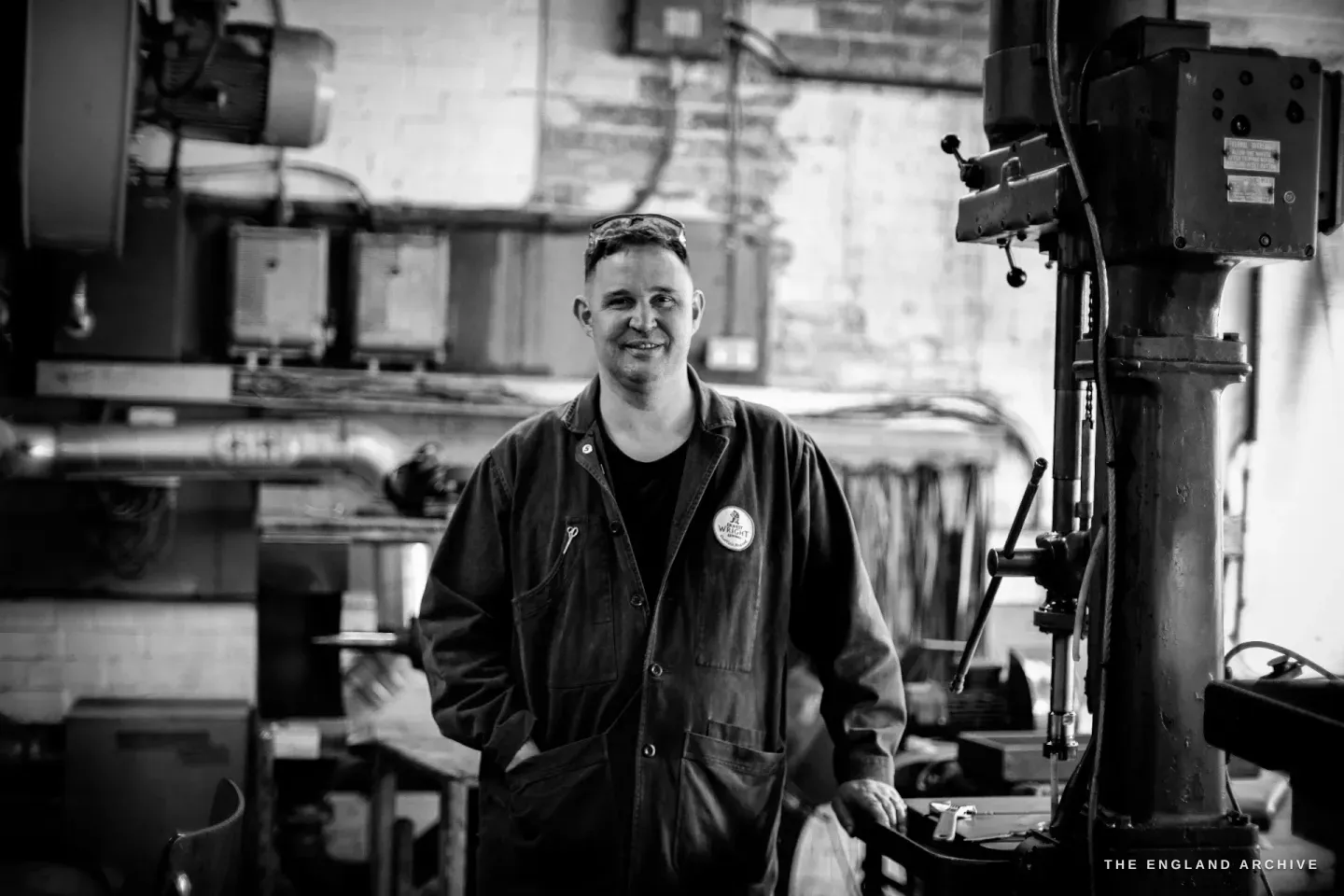
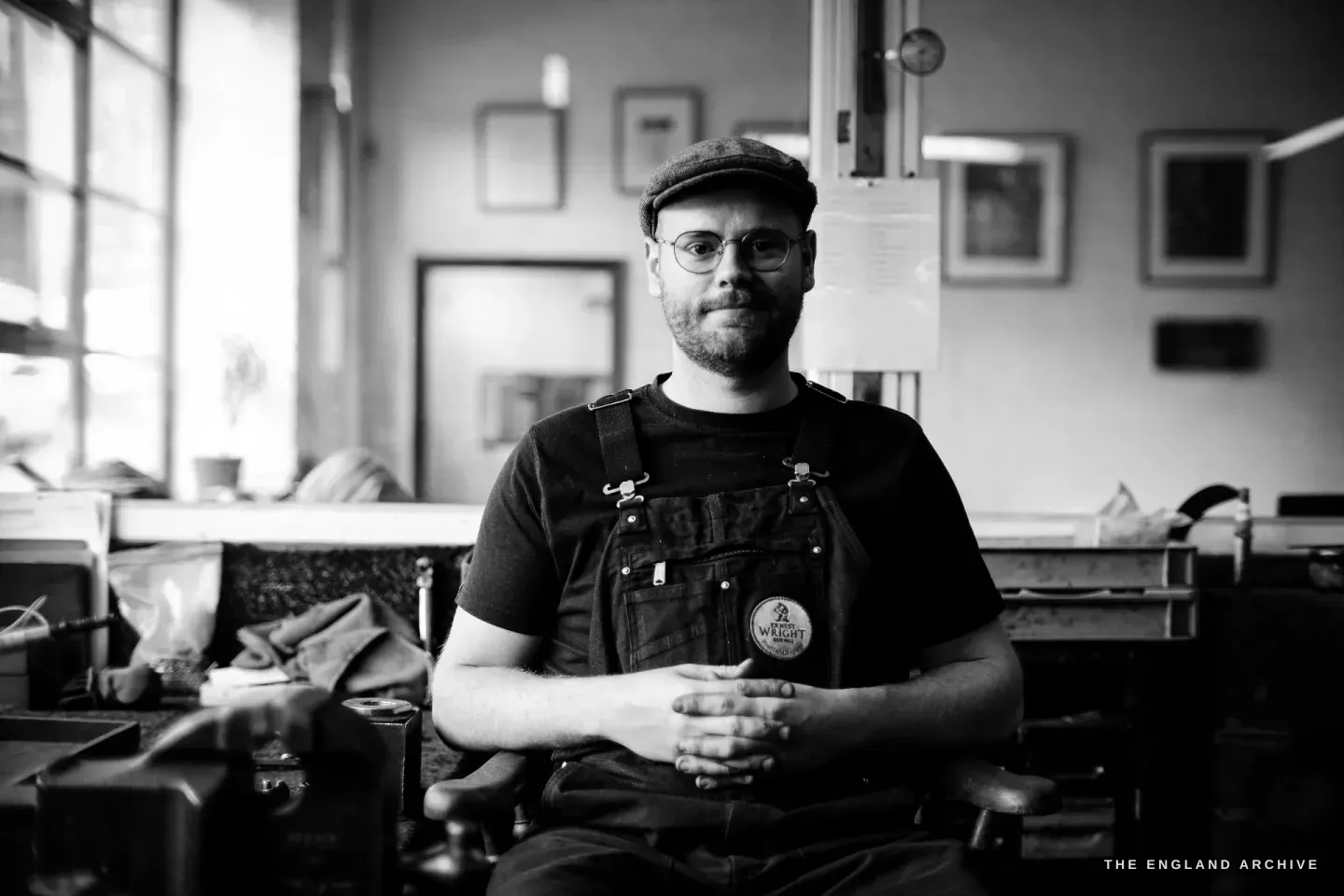
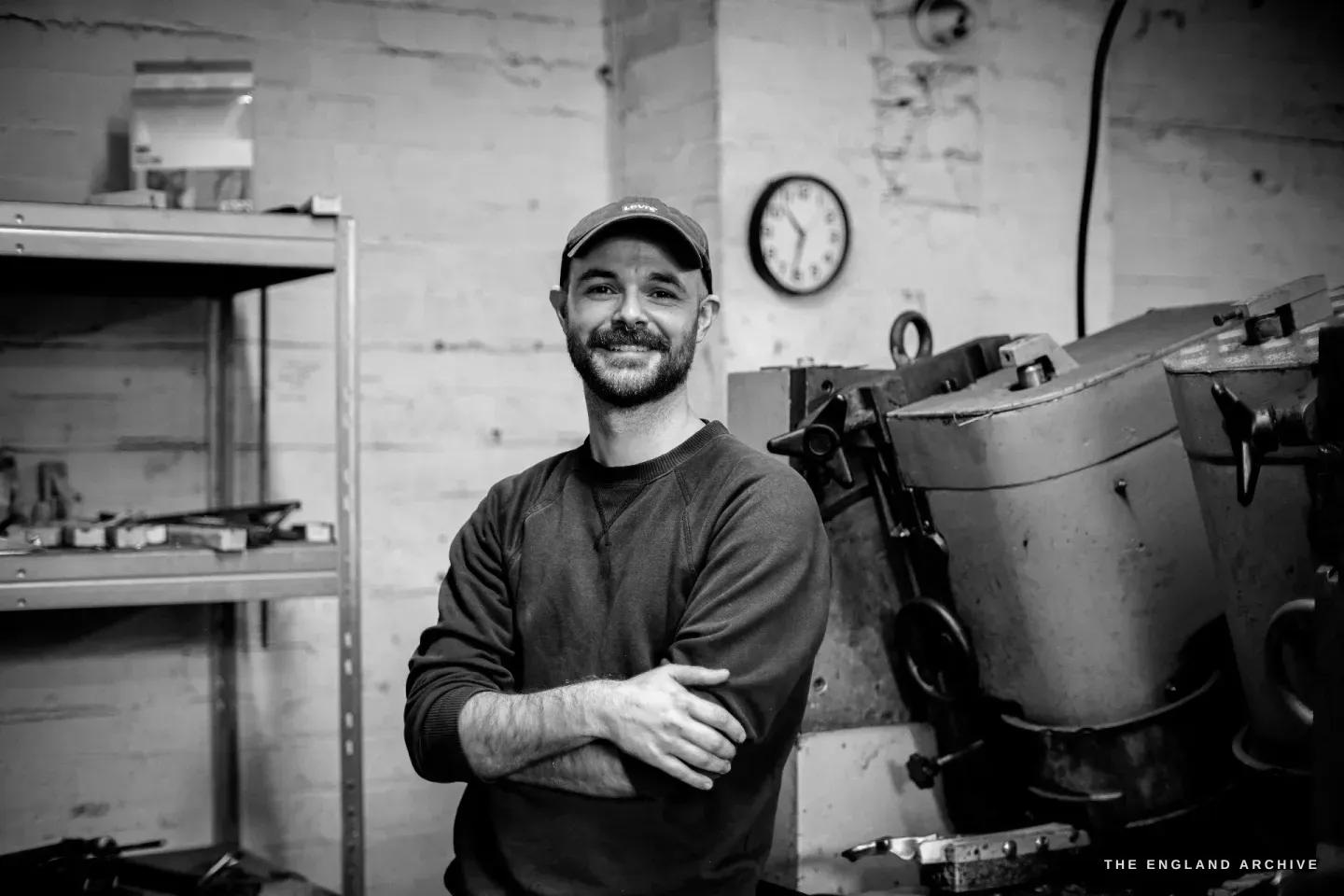
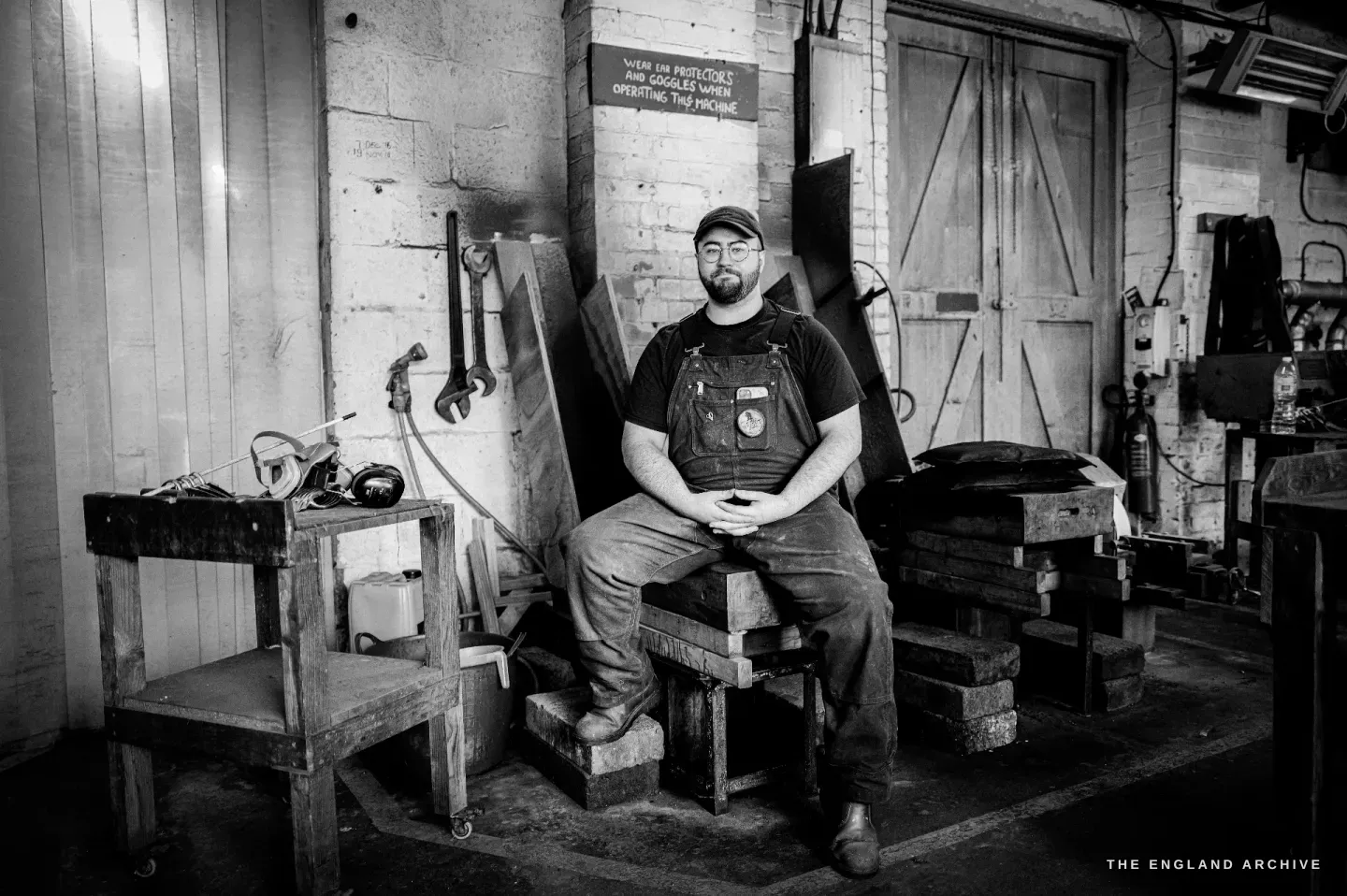
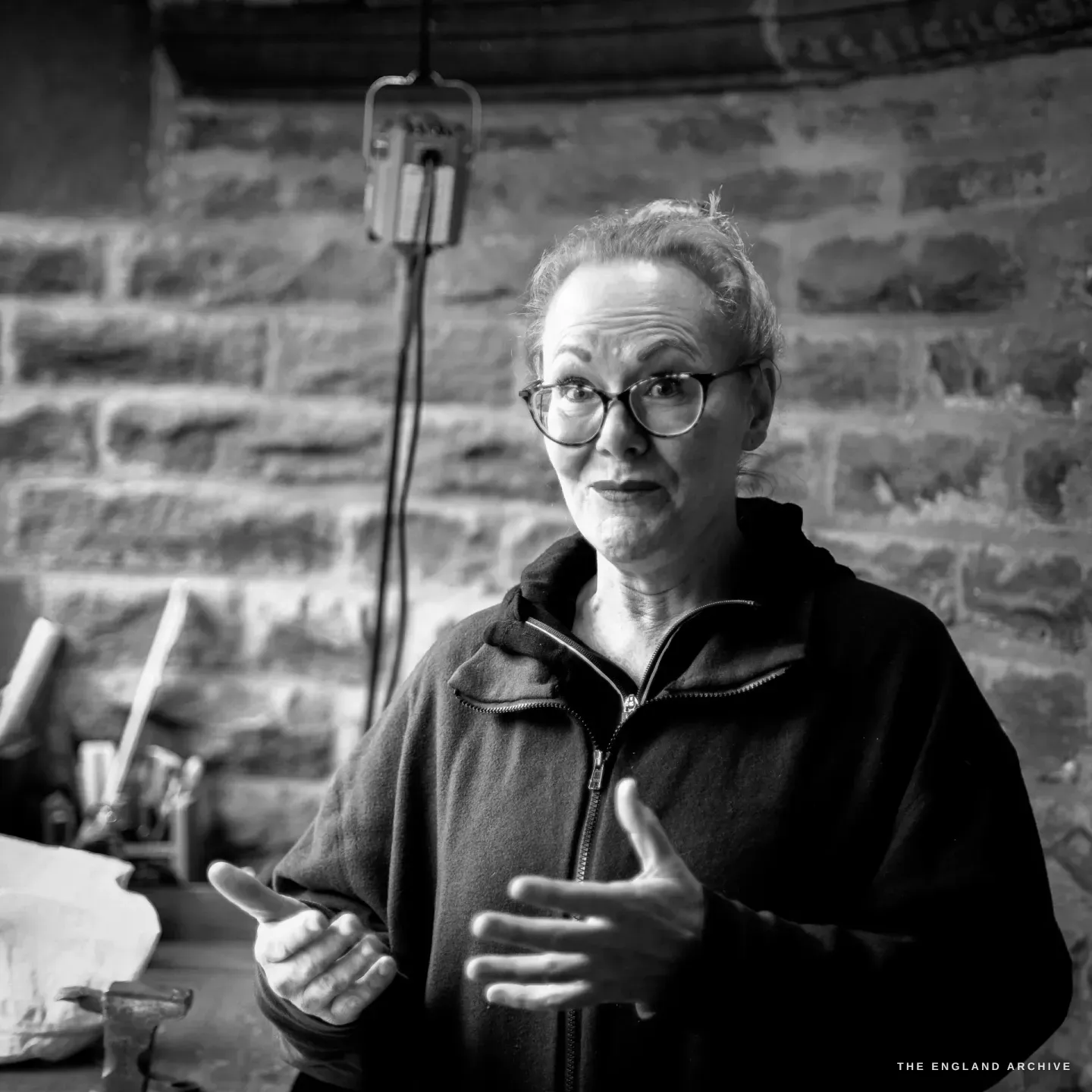
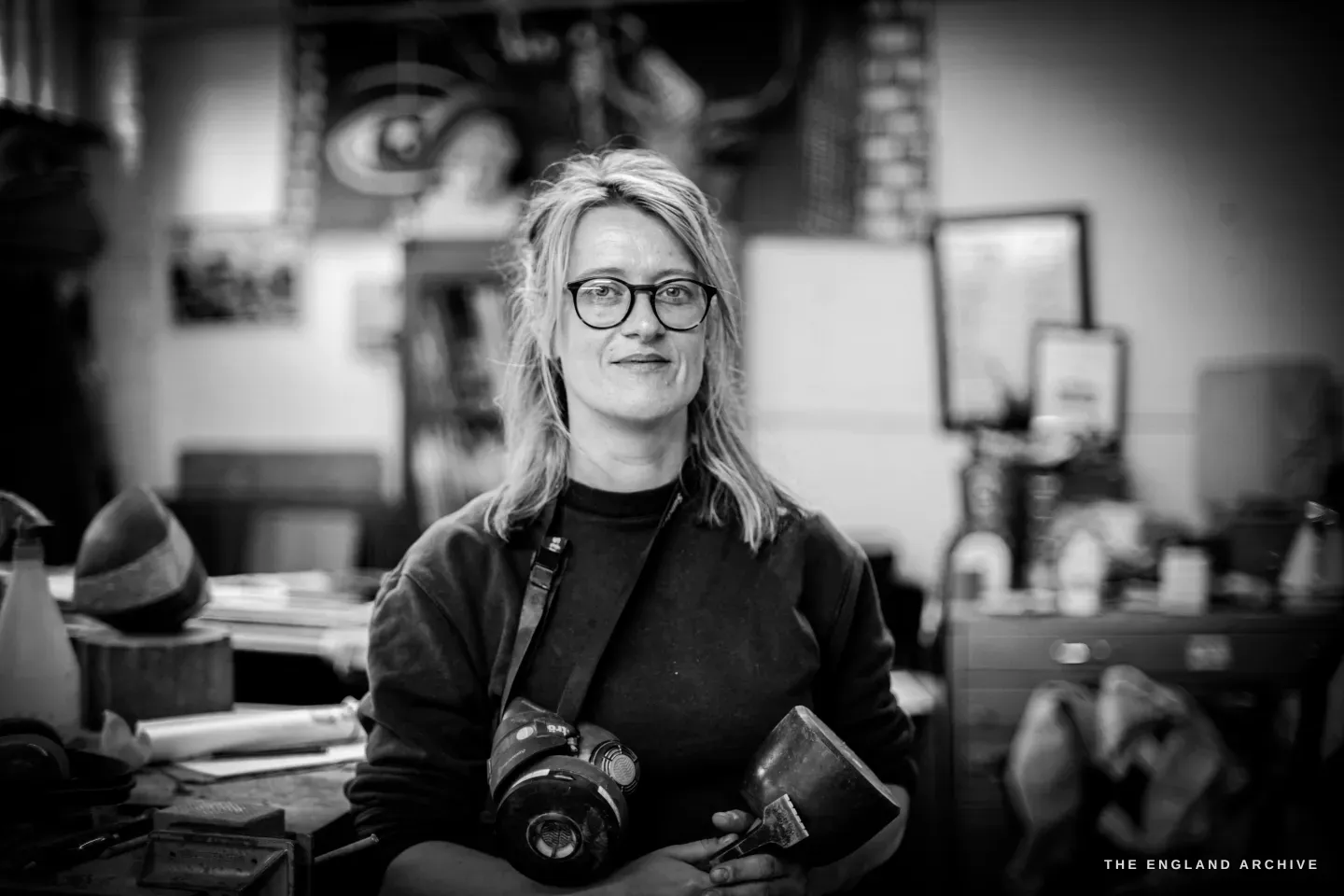
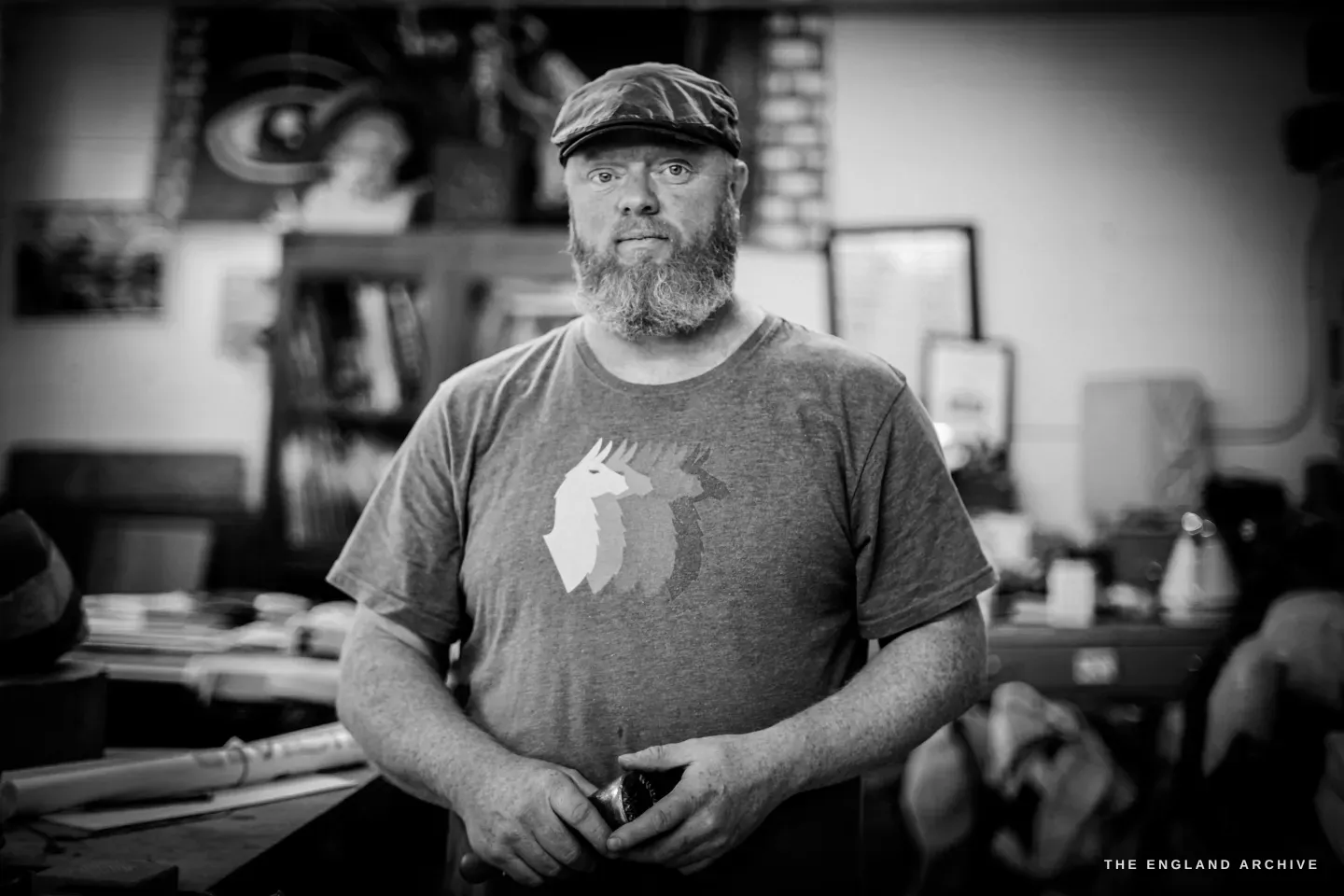
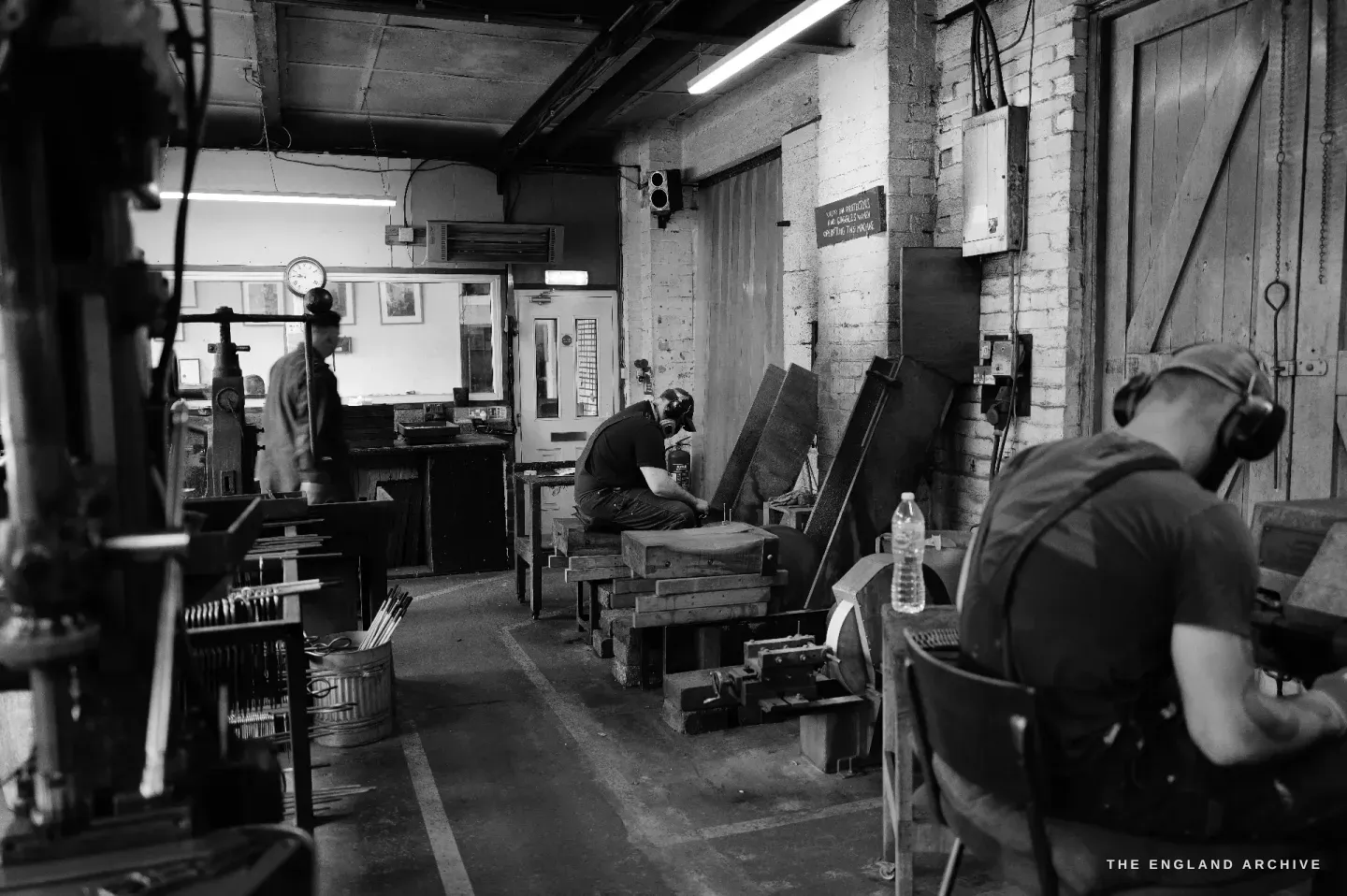
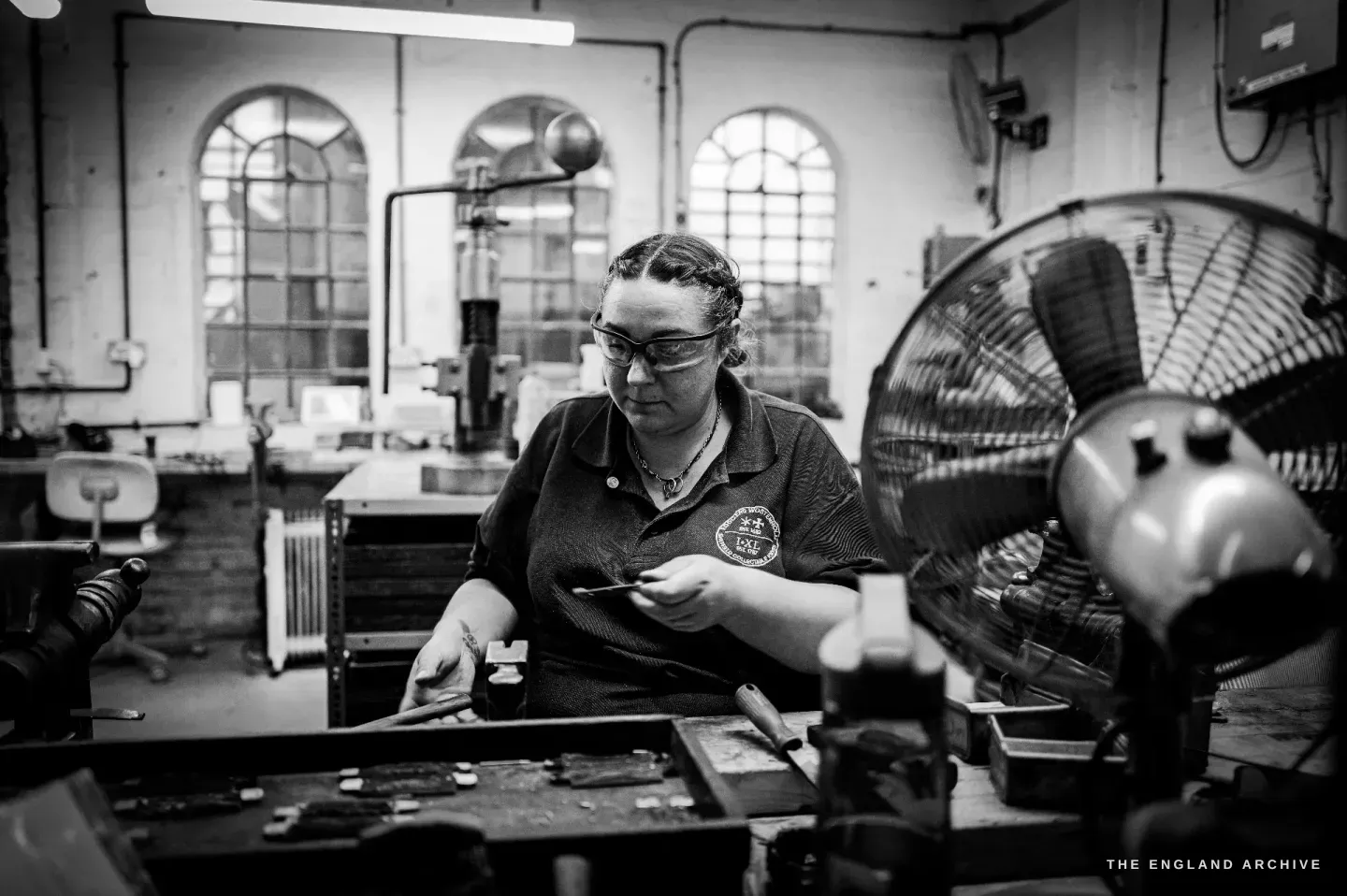
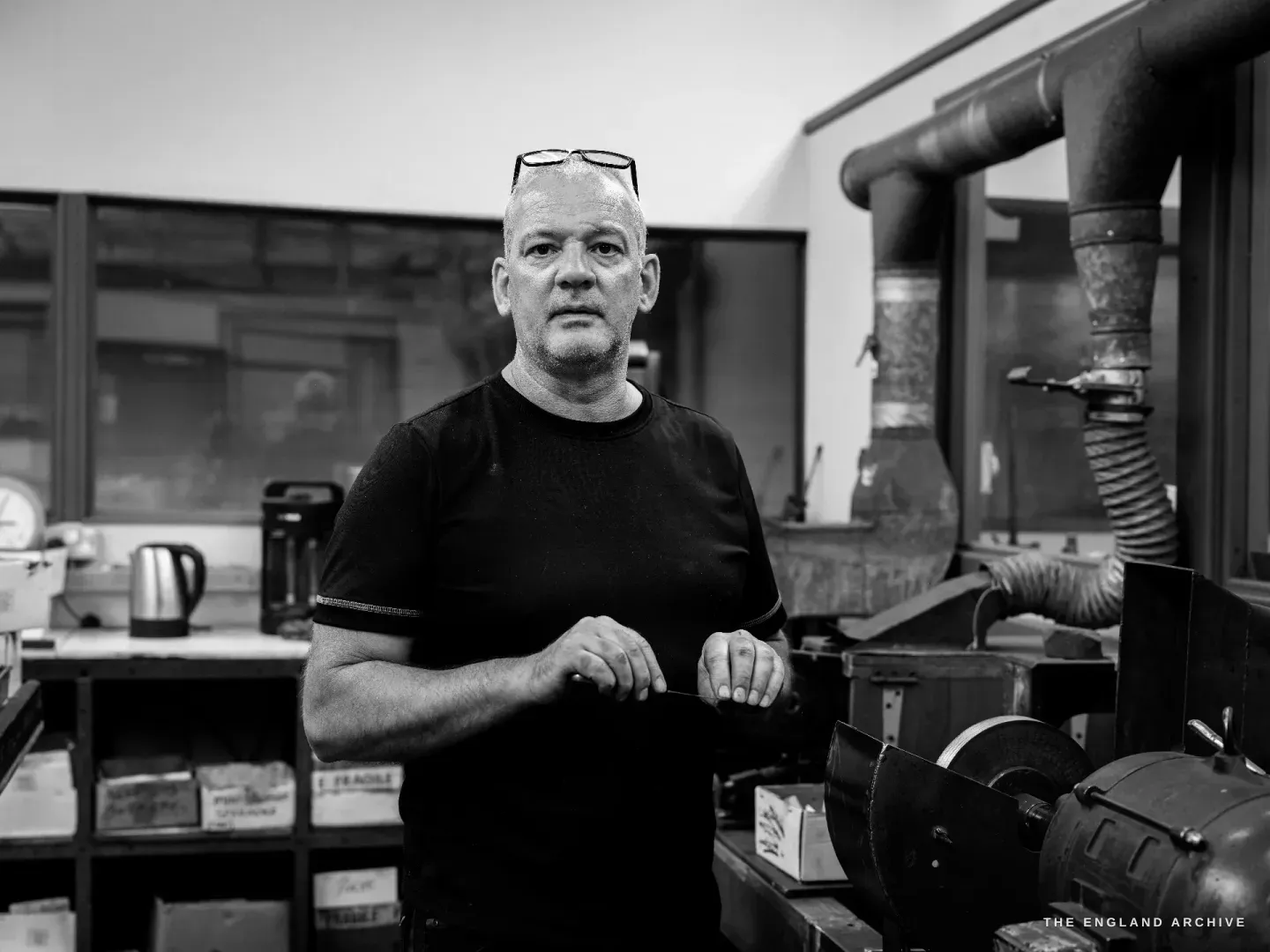
Most of that is gone. The mass trade collapsed in the late twentieth century, and many of the hand crafts that made Sheffield famous now sit on the Heritage Crafts Red List of endangered crafts. But not all of it. In a scatter of workshops across the city - Kelham Island, Portland Works, Broad Lane, a converted Victorian toilet on a back street - people are still making knives, scissors, silver and edge tools by hand. This is the archive’s record of them: sixteen makers, five firms, one city that still cuts.
History

Ten thousand years of occupation

c.1300 - 1624

Hallamshire and the Cutlers

The cutlers of Hallamshire worked where the rivers fell fast enough to turn a wheel. By the fourteenth century the trade was organised enough to be regulated, and a Sheffield knife was already a byword for a good blade - Chaucer’s “Sheffeld thwitel” of around 1387 is the first time the city’s cutlery appears in English literature. In 1624 the trade was incorporated by Act of Parliament as the Company of Cutlers in Hallamshire, with the power to grant and police the marks that makers struck into their steel - the beginning of “Made in Sheffield” as a guarantee.

1740s - 1850s

The age of steel

Sheffield did not just shape steel; it learned to make better steel than anyone. Around 1742 Benjamin Huntsman, working at Handsworth, perfected the crucible process that produced the first consistent cast steel, hard and uniform enough for the finest blades and springs. A century later Henry Bessemer brought his converter to the city in the 1850s, making bulk steel cheap for the first time. The East End filled with melting shops and rolling mills, and the population multiplied. Sheffield became, simply, Steel City.

19th - 20th century

The Little Mesters

Underneath the great works, the hand trade ran on the Little Mesters - self-employed master craftsmen who rented space, power and a corner of a bench, and made by hand. A pocket knife might pass through a dozen pairs of specialist hands: forger, grinder, hardener-and-temperer, cutler who put it together, buffer who finished it. The system was efficient and brutal, and it produced craftsmen of extraordinary, narrow brilliance. The last of the old Little Mesters, the pocket-knife maker Stan Shaw, worked into his nineties and died in 2021.

1913

The metal that would not rust

In 1913, looking for a steel that would resist erosion in gun barrels, the metallurgist Harry Brearley added chromium and found that his test pieces would not rust - would not even stain. He had made stainless steel. It was first forged into knives and forks at Portland Works, and within a generation it had remade the cutlery of the entire world. The city that had always made blades now made the metal that every other blade would be made from.

1970s - now

Collapse, Red List, and the living trade

The mass cutlery trade collapsed under foreign competition through the later twentieth century, and with it most of the hand skills. Many of the crafts that built Sheffield - scissor making, folding-knife making, hand forging - now sit on the Heritage Crafts Red List as endangered or critically endangered. But the thread did not break. Firms like Ernest Wright and Joseph Rodgers survived or were revived; new workshops opened at Kelham Island and Portland Works; and a generation of makers chose, against the economics, to learn the old hand processes. They are who this hub is about.

The places

Notable buildings and landscape

Industrial museum · working knife shops

Kelham Island Museum

On a man-made island in the River Don, Kelham Island keeps Sheffield’s industrial memory - including the colossal River Don Engine, the most powerful working steam engine in Europe. It also houses working knife shops: Joseph Rodgers makes pocket knives here by hand, a few yards from the firm’s own Year Knife, which has had a blade added every year since 1822. Kylie Cocker works the bench here.

The birthplace of stainless steel

Portland Works

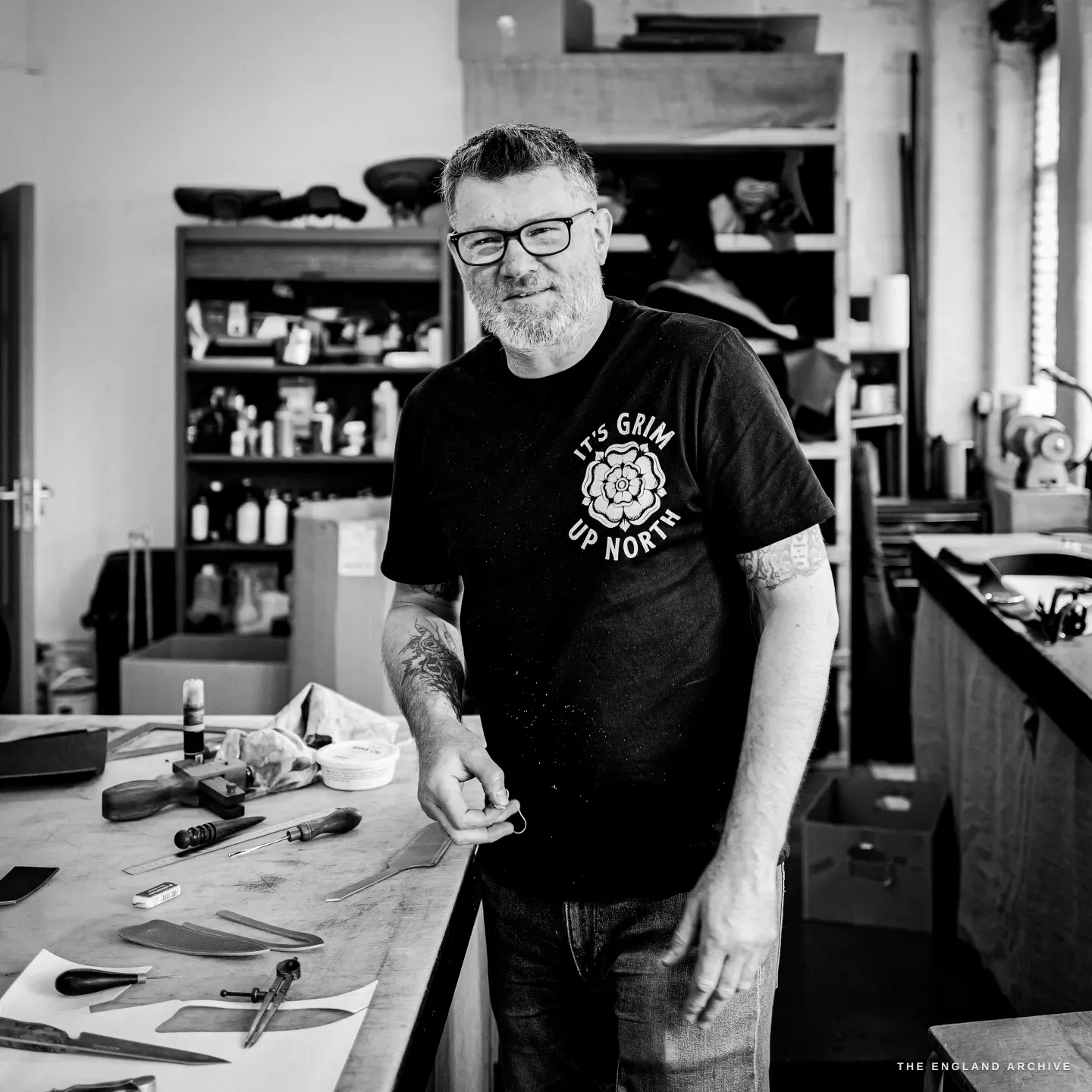
Built in 1877 as one of the first purpose-built integrated cutlery works, Portland Works is where, in 1913-14, Harry Brearley’s new stainless steel was first forged into cutlery. Threatened with conversion to flats, it was bought for the city in 2013 by five hundred shareholders, and still rents low-cost space to the little mesters - among them the leatherworker Kevin Wilebore, who makes the pouches for Ernest Wright’s scissors.

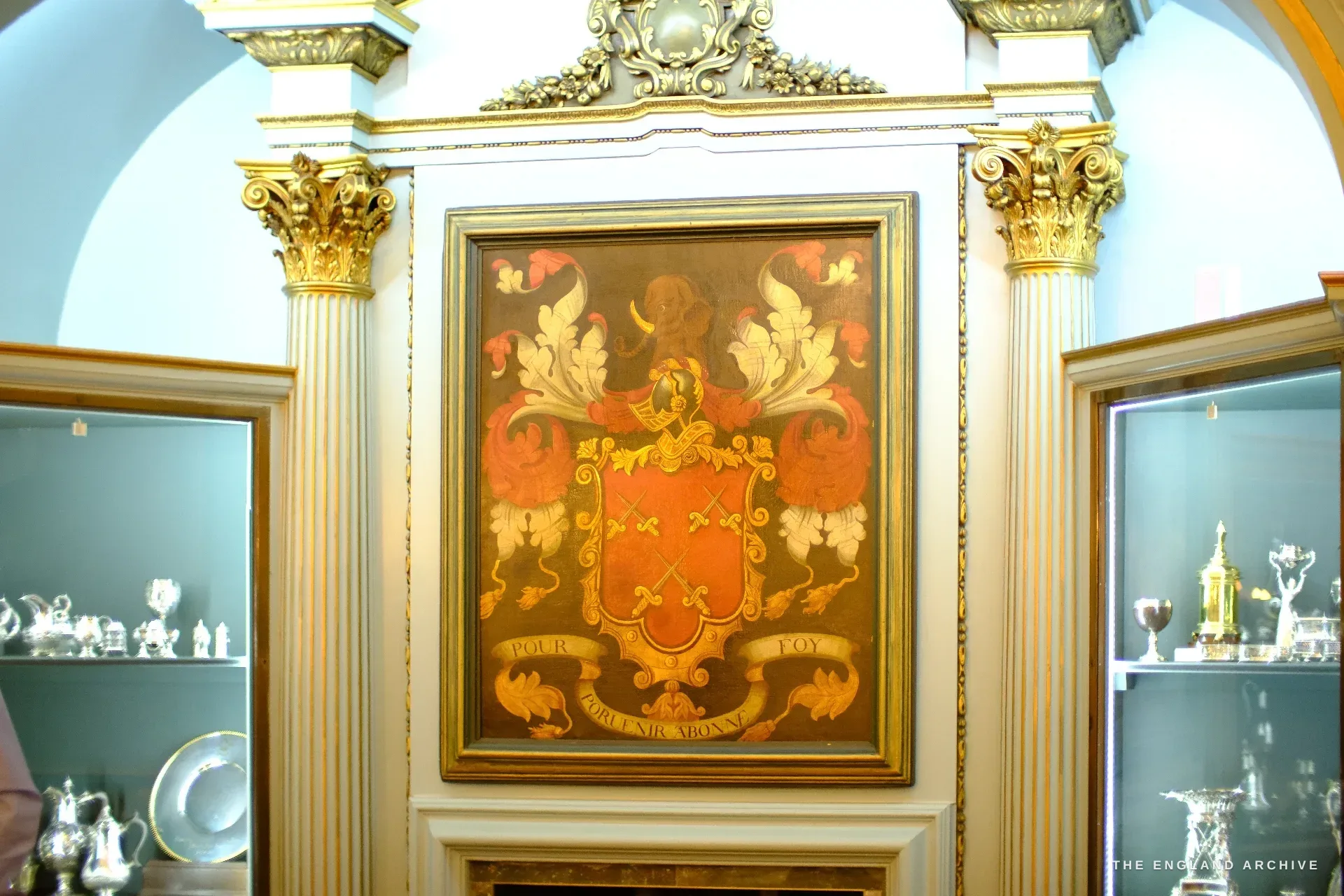
Home of the Company of Cutlers in Hallamshire

Cutlers’ Hall

The Cutlers’ Hall on Church Street, facing the cathedral, is the third hall on the site and the home of the Company of Cutlers in Hallamshire, the trade’s governing body since 1624. It holds the Company’s collection of silver and the annual Cutlers’ Feast. A dedicated record of a private tour of the Hall is forthcoming as its own essay.

The last hand-scissor workshop in the city centre

Broad Lane · Ernest Wright

Ernest Wright has made scissors by hand on and around Broad Lane since 1902 - at one time one of a hundred scissor shops in the city, now effectively the last in the centre. It is where Grace Horne learned the craft, and where Neil Wilson and the present bench still put scissors together blade by blade. The full account is in the essay A Morning at Ernest Wright.

The people

Biographies

Harry Brearley

Metallurgist; inventor of stainless steel 1871 - 1948

A Sheffield-born metallurgist who cast the first stainless steel in 1913. It was first forged into cutlery at Portland Works.

Benjamin Huntsman

Inventor of the crucible steel process 1704 - 1776

Perfected, around 1742, the crucible process that gave the world its first consistent cast steel - the basis of Sheffield’s edge-tool supremacy.

Stan Shaw MBE

The last of the old Little Mesters 1926 - 2021

A celebrated hand pocket-knife maker who worked into his nineties. Grace Horne came to Sheffield hoping to apprentice with him.

Local institutions

Societies, councils and trusts

The Company of Cutlers in Hallamshire

Trade guild · founded 1624

The governing body of the Sheffield metal trades, which grants the marks struck into the city’s steel and holds the Cutlers’ Feast.

Web
www.cutlers-hallamshire.org.uk

Made in Sheffield

Mark of origin

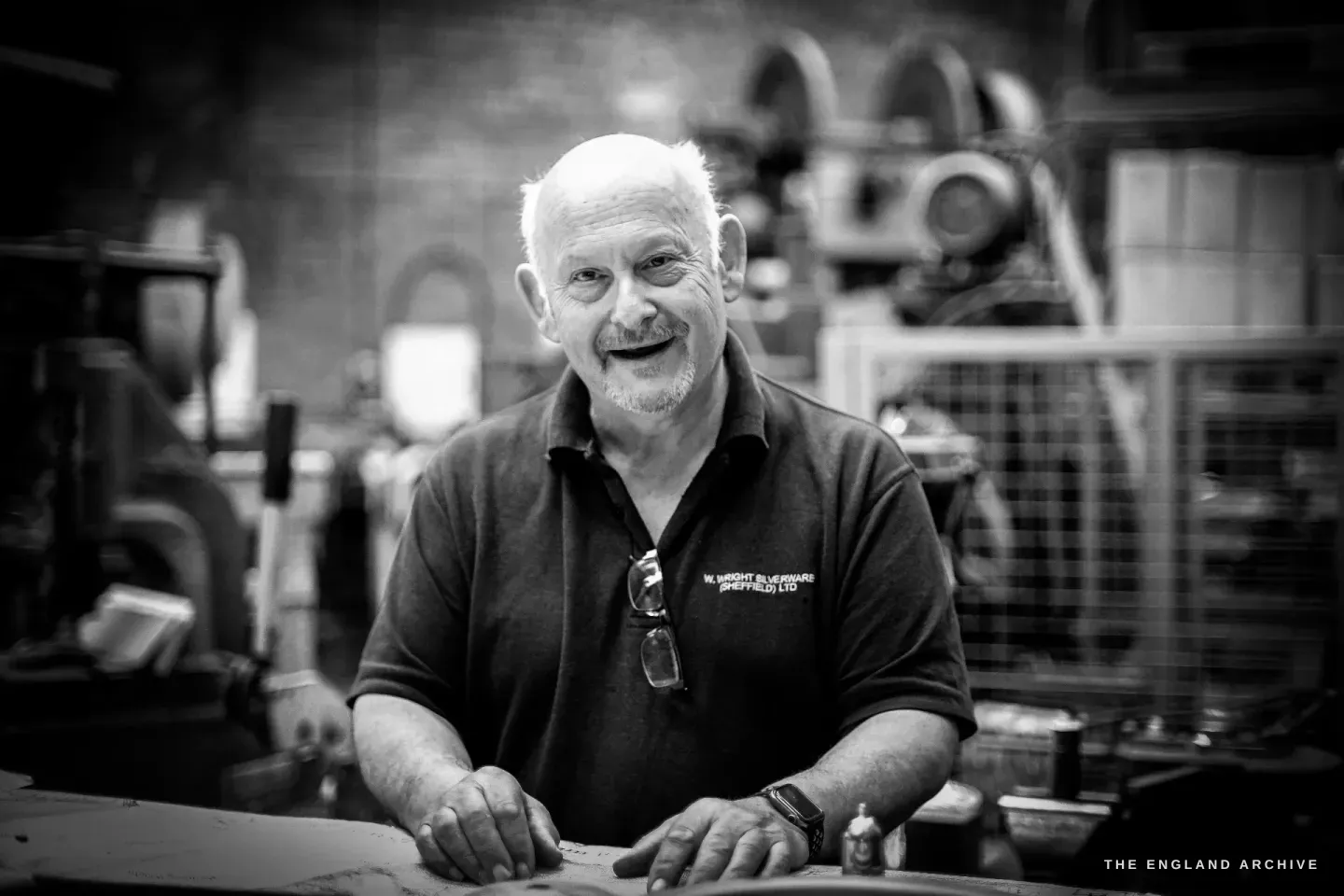
The collective mark, administered by the Cutlers’ Company, that guarantees a product was genuinely made in the city. Joseph Rodgers / Rodgers Wostenholm and W. Wright Silverware both hold it.

Web
www.madeinsheffield.org

Sheffield Museums Trust

Museums · archives

Runs Kelham Island and the wider city collections, including the historic scissor collection Grace Horne has been documenting.

Web
www.sheffieldmuseums.org.uk

Heritage Crafts

Endangered-crafts charity

Maintains the Red List of Endangered Crafts. Several of the trades documented here - scissor making, folding-knife making, hand engraving - are on it.

Web
heritagecrafts.org.uk
From Sheffield

Subjects Documented

Phil Benton, Cutler Makers
Documentary Archive June 2026

Phil Benton, Cutler

A master cutler of more than forty years in the trade, at Chimo Sheffield Manufacturing. The son of a Sheffield cutlery man, he resisted the factory as a young man and then spent a working life in it - taking a knife from a blank through stamping, grinding, serrating, hafting, sharpening and polishing, and now passing the whole sequence on to the next pair of hands.

Paul Weatherstone, Cutler Makers
Documentary Archive June 2026

Paul Weatherstone, Cutler

A cutler at Chimo Sheffield Manufacturing for fifteen years, running the knife-finishing section - drilling and heat-setting the tang into the handle, then grinding, edging and polishing the finished knife. He came to the trade from dye printing and other work, apprenticed for four months, and stayed. He now leads apprenticeships at Chimo, and the larger part of that job, he says, is keeping a young person interested in a repetitive craft long enough to be good at it.

Chris Shaw, Die Engraver Makers
Documentary Archive June 2026

Chris Shaw, Die Engraver

A die engraver at Chimo Sheffield Manufacturing who has cut steel dies for forty-five years - the only trade he has ever worked. A customer's artwork is worked up into a master pattern, traced on a pantograph die-sinking machine that cuts it into steel at size, and hand-finished; the finished die is the master tool that stamps a crest, a monogram or a mark into the cutlery and silverware the rest of the works makes. Hand engraving sits on the Heritage Crafts Red List.

Chris Hudson MBE, Founder of Chimo Makers
Documentary Archive June 2026

Chris Hudson MBE, Founder of Chimo

The man who built Chimo. A Yorkshire-born Merchant Navy officer who came home to take over his family's Sheffield silverware business, in 1989 he gathered a set of independent cutlery, silver and pewter trades under one roof at the White Rose Works and kept their historic names alive. Appointed MBE in 2018 for services to exports and investment in Sheffield, Master of the Worshipful Company of Pewterers in 2020, and chair of the Work-wise Foundation - he is one of the last custodians of a Sheffield trade running short of the next generation.

Neil Wilson, Scissor Maker Makers
Documentary Archive June 2026

Neil Wilson, Scissor Maker

The senior maker at Ernest Wright, the Sheffield scissor makers founded in 1902. A putter-togetherer trained under Eric Stones and Cliff Denton, Neil now runs the floor and has trained the rest of the makers in the workshop. He took the archive through the whole craft - the grinding of the blade's hollow and twist, the hardening, the rumbling, and the marriage of the two blades, where the gap between them is the secret of a clean cut.

Sam Aston-Clark, Putter-Togetherer Makers
Documentary Archive June 2026

Sam Aston-Clark, Putter-Togetherer

A putter-togetherer at Ernest Wright, the Sheffield scissor makers founded in 1902 - and the first trainee of the firm's current era to qualify fully as a putter, the five-year-apprenticed craftsman who marries the two blades of a pair of scissors so they cut. About ten years at the workshop, he does the defining job of the trade: hammering the curve onto each blade and setting the two together by hand and eye until the pair rides true.

Jonathan Reid, Scissor Maker Makers
Documentary Archive June 2026

Jonathan Reid, Scissor Maker

Production manager and a putter at Ernest Wright, the Sheffield scissor makers founded in 1902. Trained by two of the country's last master-putters, Jonathan is also the workshop's public voice - the one who gives the talks and interviews about a craft Heritage Crafts classes as critically endangered. About seven years at the bench.

Evan James, Scissor Grinder Makers Apprentice
Documentary Archive June 2026

Evan James, Scissor Grinder

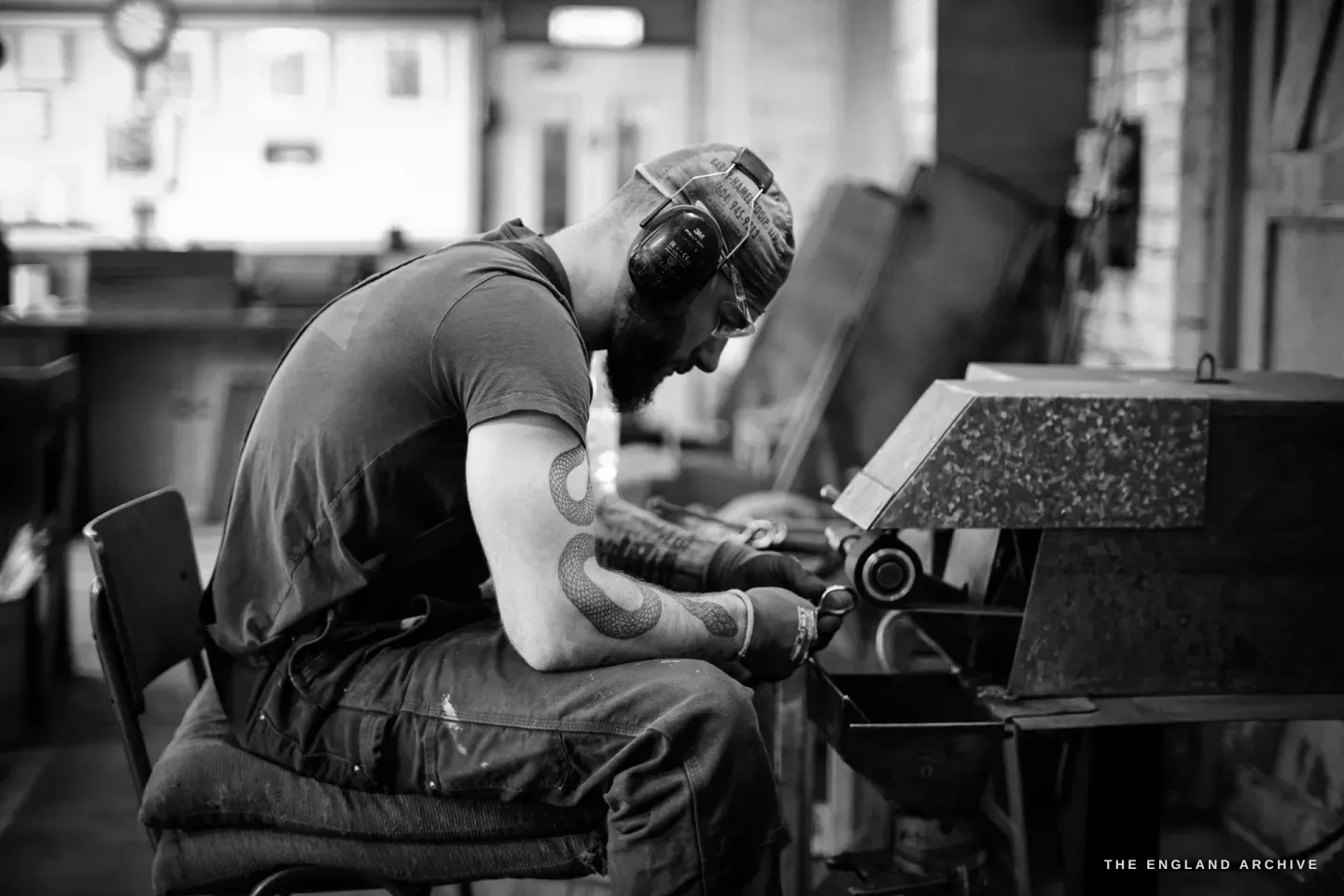
One of the newer makers at Ernest Wright, the Sheffield scissor makers founded in 1902, and the workshop's grinder - about eighteen months in. His station is the grinding wheel, where a forged blade is taken down to its hollow and its edge, the spark-throwing stage that turns a rough forging into a blade that will cut. Scissor making is on the Heritage Crafts Red List.

James Morton, Scissor Maker Makers
Documentary Archive June 2026

James Morton, Scissor Maker

A scissor maker at Ernest Wright, the Sheffield scissor makers founded in 1902, about six years into the trade. His station is the grinding and finishing machines - the wheel and the abrasive belt that bring a forged blade up to its edge - and the work is the same exacting, spark-and-steel routine the firm has run for over a century. Scissor making is on the Heritage Crafts Red List.

Sabino Henda, Scissor Polisher Makers
Documentary Archive June 2026

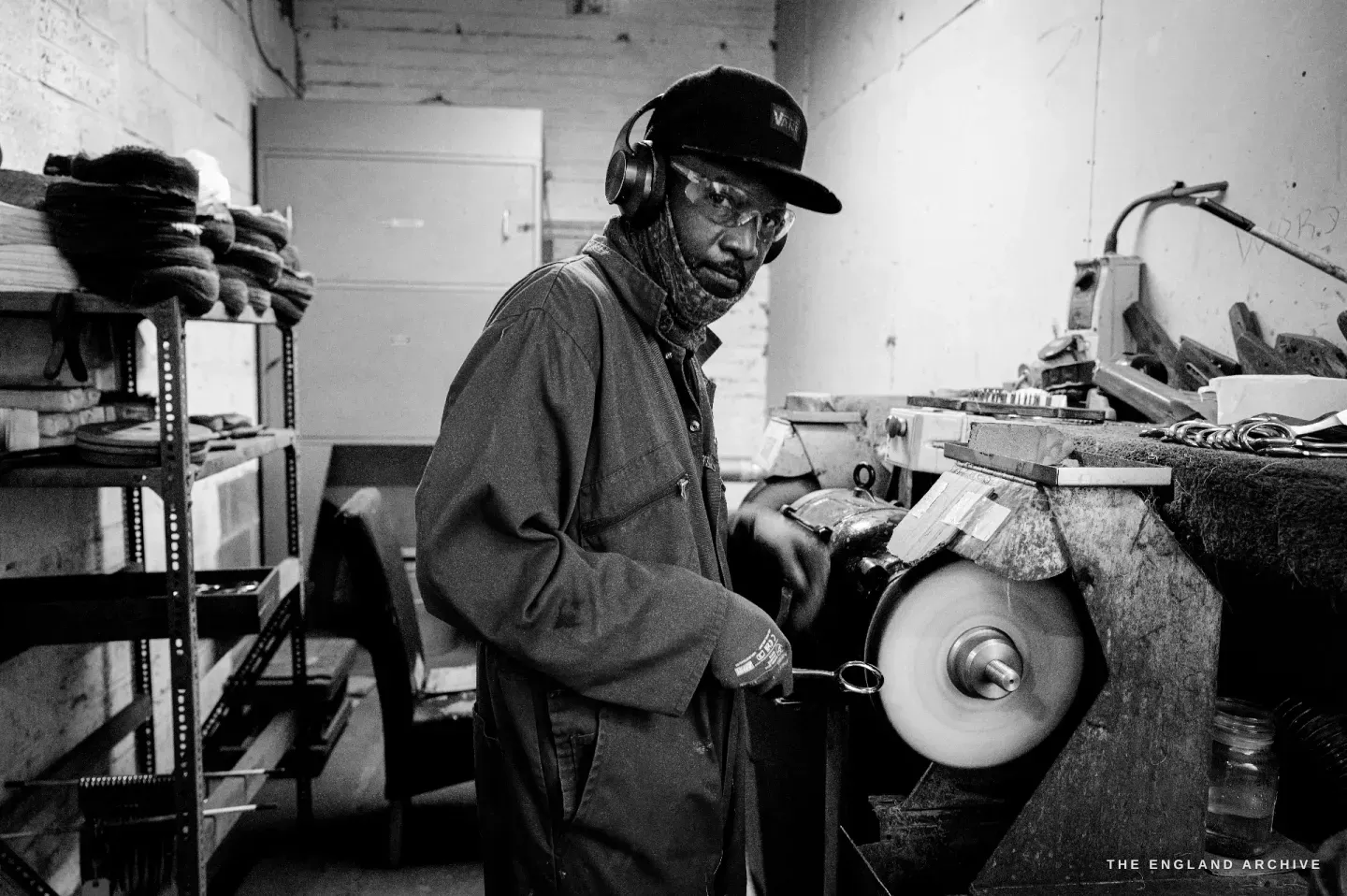
Sabino Henda, Scissor Polisher

The polisher at Ernest Wright, the Sheffield scissor makers founded in 1902, with thirteen years on the wheel. Sabino works the polishing machine - buffing mops on a spinning spindle that take a finished pair of scissors to its bright final shine. It is dusty, exacting work, the last skilled hand a pair passes through before the maker's mark. Scissor making is on the Heritage Crafts Red List.

Kylie Cocker, Pocket-Knife Maker Makers
Documentary Archive June 2026

Kylie Cocker, Pocket-Knife Maker

Kylie Cocker hand-makes pocket and pen knives as a mester at Joseph Rodgers, in the workshop inside Kelham Island Museum, Sheffield. Folding knife making is on the Heritage Crafts Red List.

Kevin Wilebore, Leatherworker Makers
Documentary Archive June 2026

Kevin Wilebore, Leatherworker

Kevin Wilebore hand-makes leather bags, belts and sheaths - and the pouches for Ernest Wright's scissors - at Portland Works in Sheffield, the birthplace of stainless steel.

Grace Horne, Scissor Maker Makers
Documentary Archive June 2026

Grace Horne, Scissor Maker

Grace Horne hand-makes scissors in a former Victorian public toilet in Sheffield - a cutler, corsetiere and PhD who learned the trade at Ernest Wright and works without the old industrial machines. Scissor making is on the Heritage Crafts Red List.

Lily Marsh, Stone Sculptor Makers
Documentary Archive June 2026

Lily Marsh, Stone Sculptor

Lily Marsh carves stone in a shared studio at Stag Works in Sheffield - a sculptor who came to the trade after a psychology degree and a spell working in a prison, and who works alongside the letter cutter and stonemason Steve in the room they share.

Steve Roche, Letter Cutter and Stonemason Makers
Documentary Archive June 2026

Steve Roche, Letter Cutter and Stonemason

Steve Roche cuts letters and carves stone at Stag Works in Sheffield, the studio he runs and shares with the sculptor Lily Marsh. He came to the trade after a single month in 2008 cost him his job and a broken leg, retrained on a craft bursary, and now works on public lettering and stone commissions across the city.

A Morning at Ernest Wright Makers
Essay June 2026

A Morning at Ernest Wright

Ernest Wright has made scissors by hand in Sheffield since 1902 - the last hand-scissor workshop in the centre of a city that once had a hundred. Founded by five generations of one family, brought to the edge of extinction, and rescued in 2018 by two men who would not let it die, it is now one of England's most quietly iconic workshops. A morning inside, from the red door on Broad Lane to the putter who marries the blades.

Essays

Inside the Sheffield Trade

A Morning at Ernest Wright · June 2026
The last hand-scissor workshop in the centre of the city that once had a hundred - five Wright generations, the viral film, the 2018 collapse, and the rescue. ES-0057

A Morning at William Wright · June 2026
An unmarked Sheffield works whose silver dresses the Ritz, the Peninsula hotels and the Michelin dining rooms - and reaches the Palace. ES-0058

Map

Sheffield on a map

Map data © OpenStreetMap contributors, under the Open Database Licence.

Further reading

Books, broadcasts, and primary sources

Share

Share this page

Subscribe to updates for Sheffield (RSS)

Cite this page

AR-0030 · https://englandarchive.org/regions/south-yorkshire/sheffield

Suggested citation:

The England Archive. (June 2026). Sheffield [AR-0030]. https://englandarchive.org/id/AR-0030

The archive ID above is a permanent handle. /id/AR-0030 resolves to this page and will continue to do so if the URL ever changes. If you are citing one of the photographs on this page, each carries its own IM-NNNN - hover any thumbnail in the gallery above to see it.

People at Sheffield

Categories Represented

Further in the archive