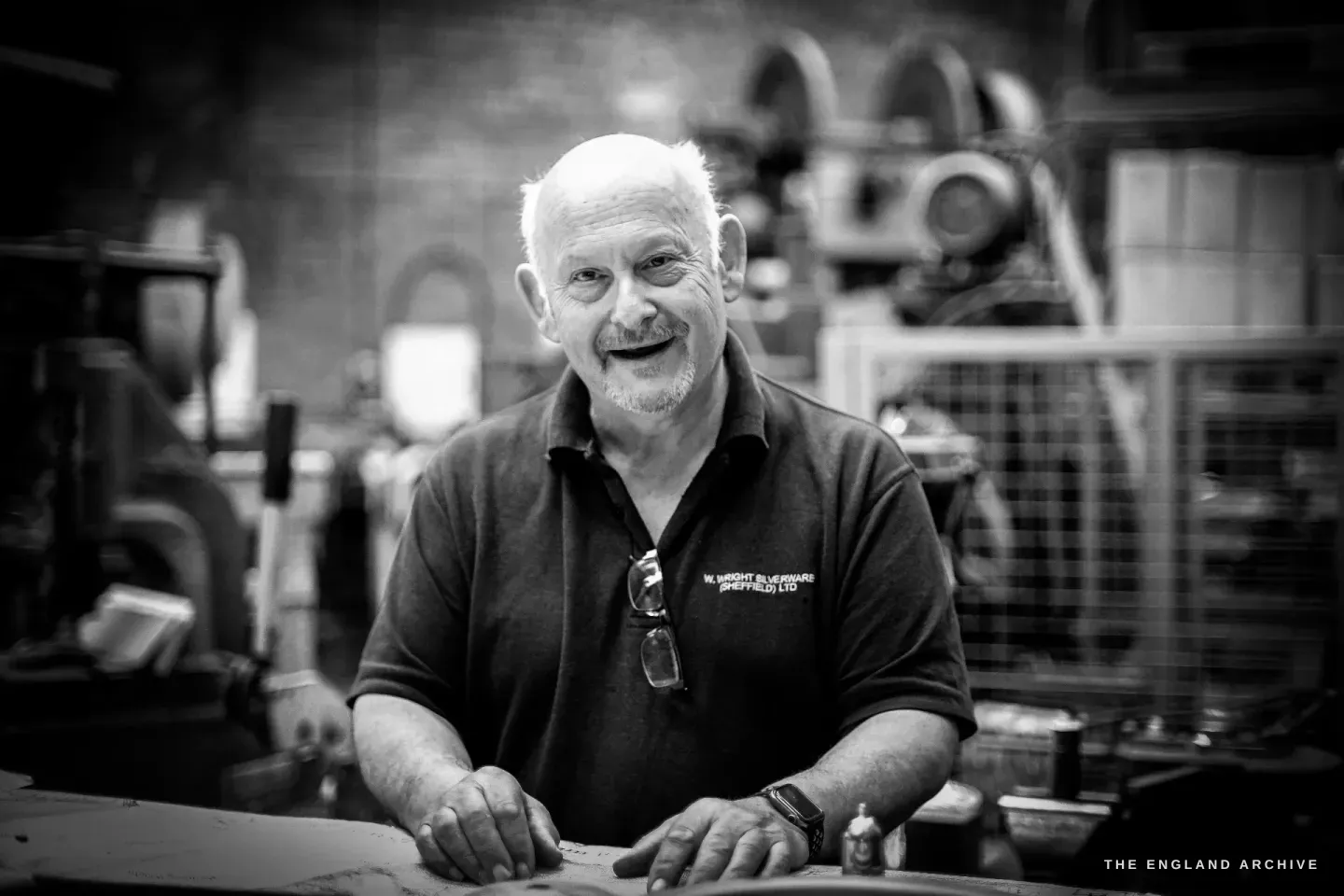
From the road you would not give it a second look. No sign worth the name, no showroom window, nothing to say that the table you last ate off at the Ritz may have been made behind this plain door on a Sheffield back street. The first thing its owner did, once he had shaken my hand and spelled his name for me - Stephen, with a p-h - was tell me the trade is living through a famine and a feast at the same time.
Famine and feast
The famine is the one every Sheffield maker will tell you about. The people who hold these skills are ageing, and they are retiring faster than anyone is being trained to replace them. Knowledge that took a lifetime to build is walking out of the trade and not coming back. The feast is harder to credit, until Stephen starts naming his customers. William Wright dresses the tables of the Peninsula hotels and the Ritz. It supplies Michelin dining rooms - Sketch among them - and a good many of the addresses where dinner costs more than the cutlery. Through the resellers who carry royal warrants, its work has in all likelihood reached the Palace. A firm you could walk past without seeing makes the silver for rooms most of us will never be asked into.
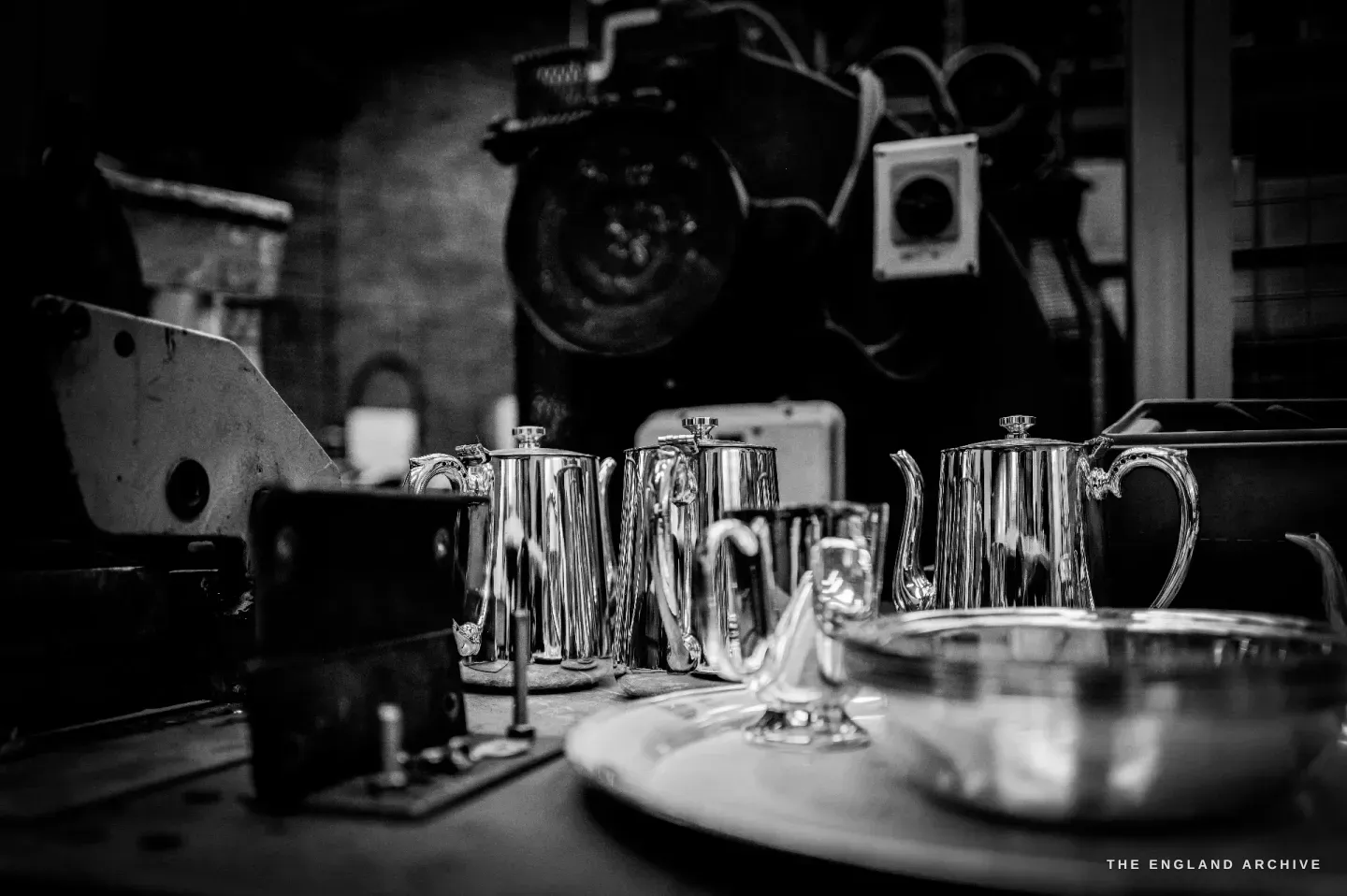
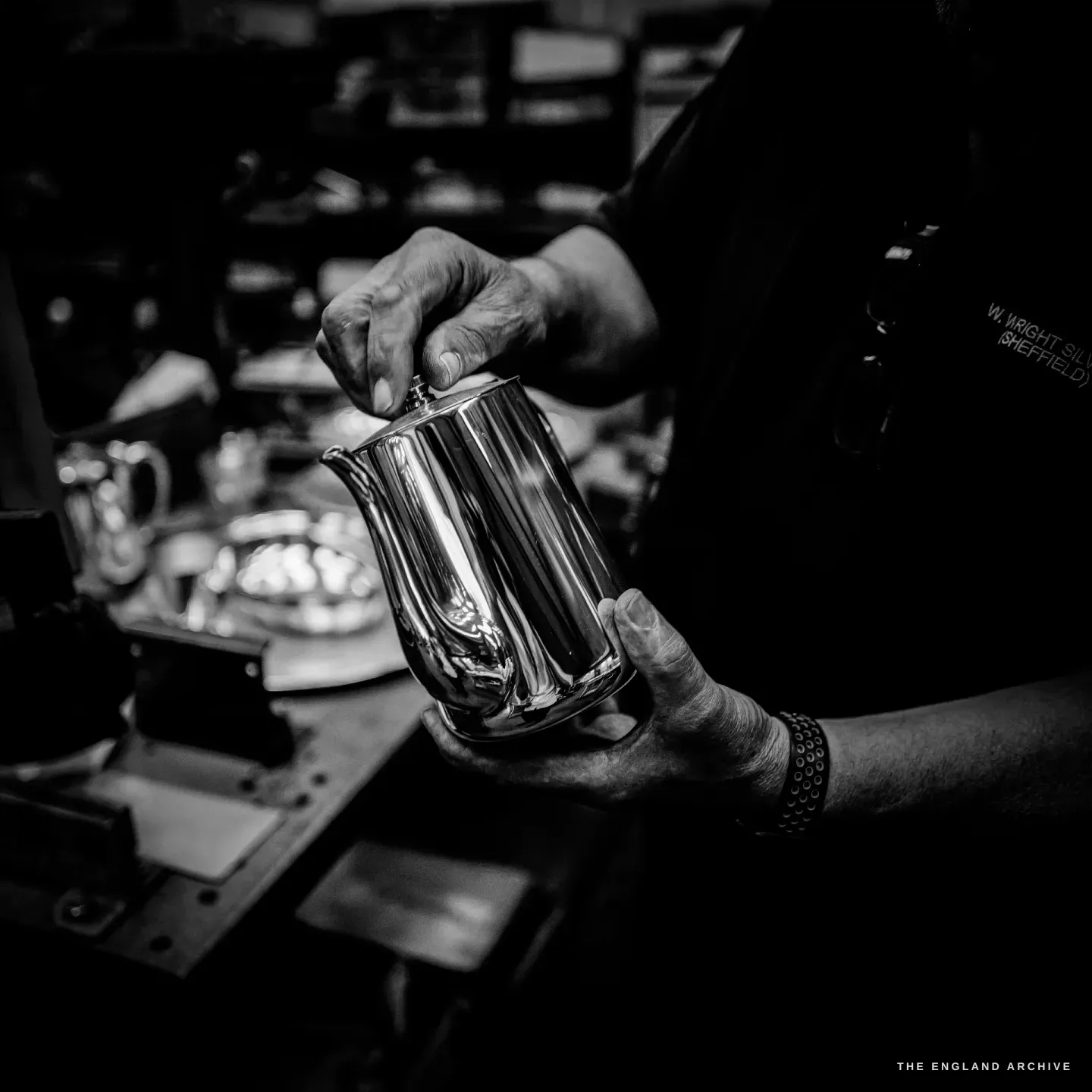
That contradiction is the whole of the place, and you can see it on a single bench: a row of mirror-finished teapots throwing back the light, set against the black iron of the presses that made them. The grandeur comes out of the grime. Nothing here is precious until the last hour of its making.
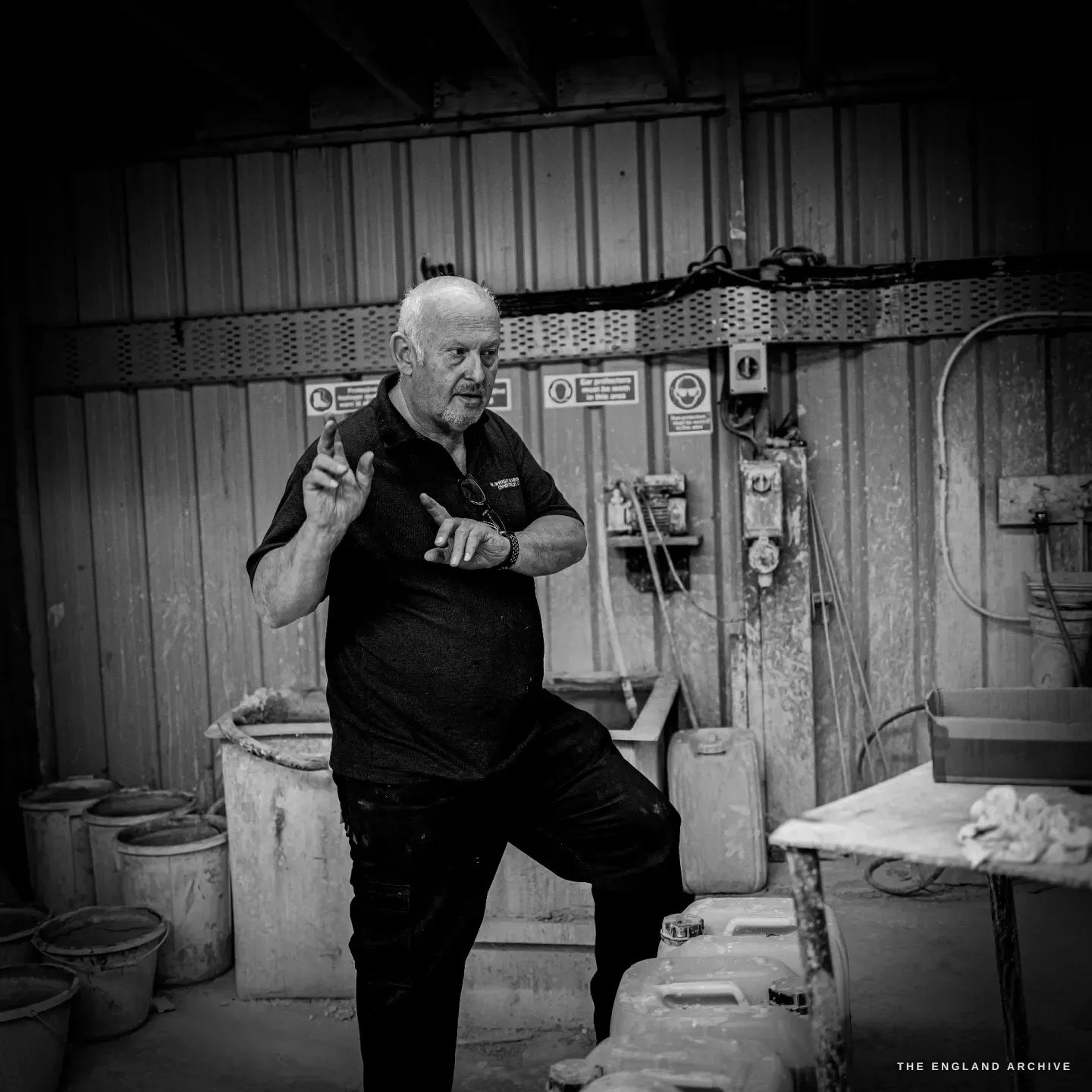
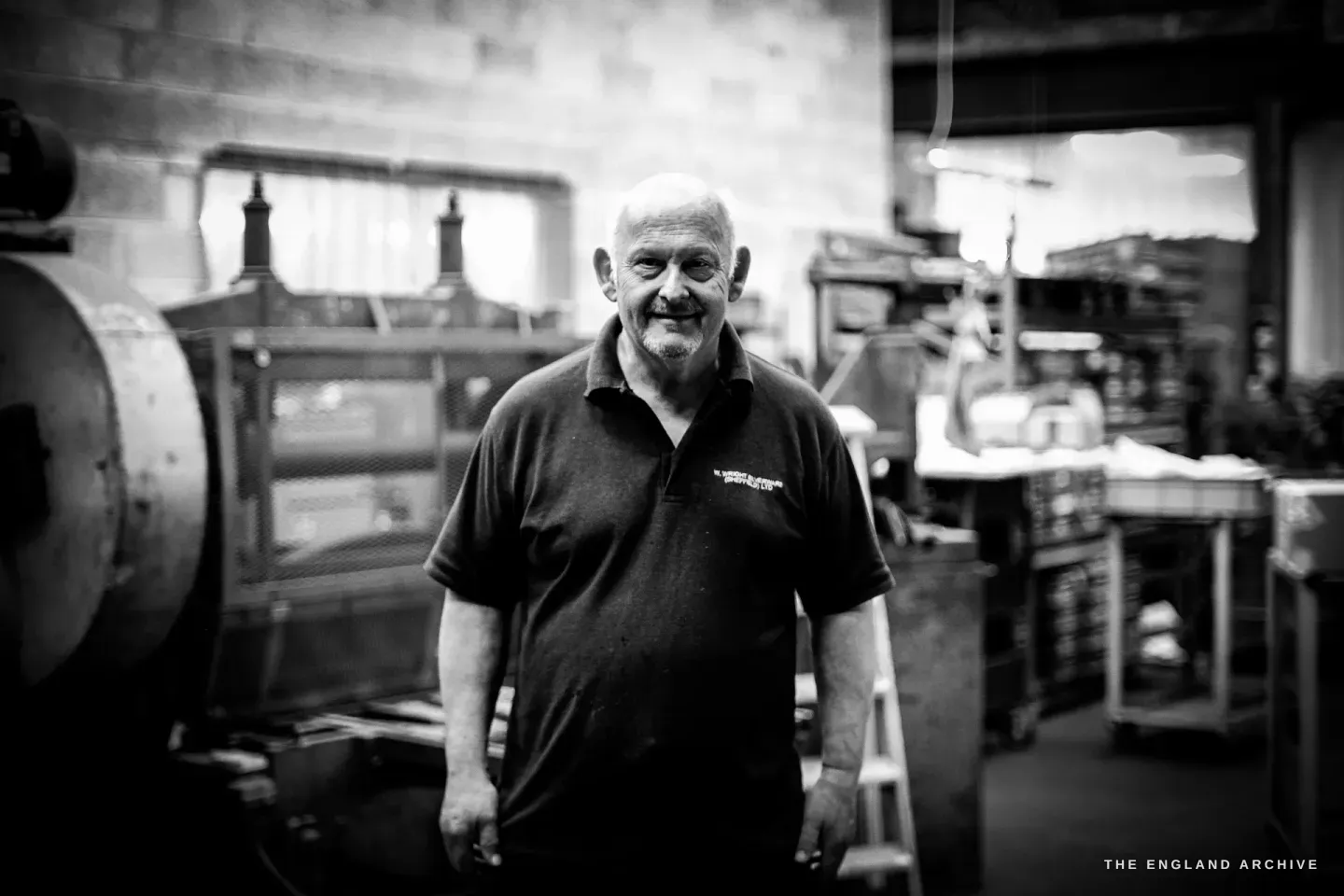
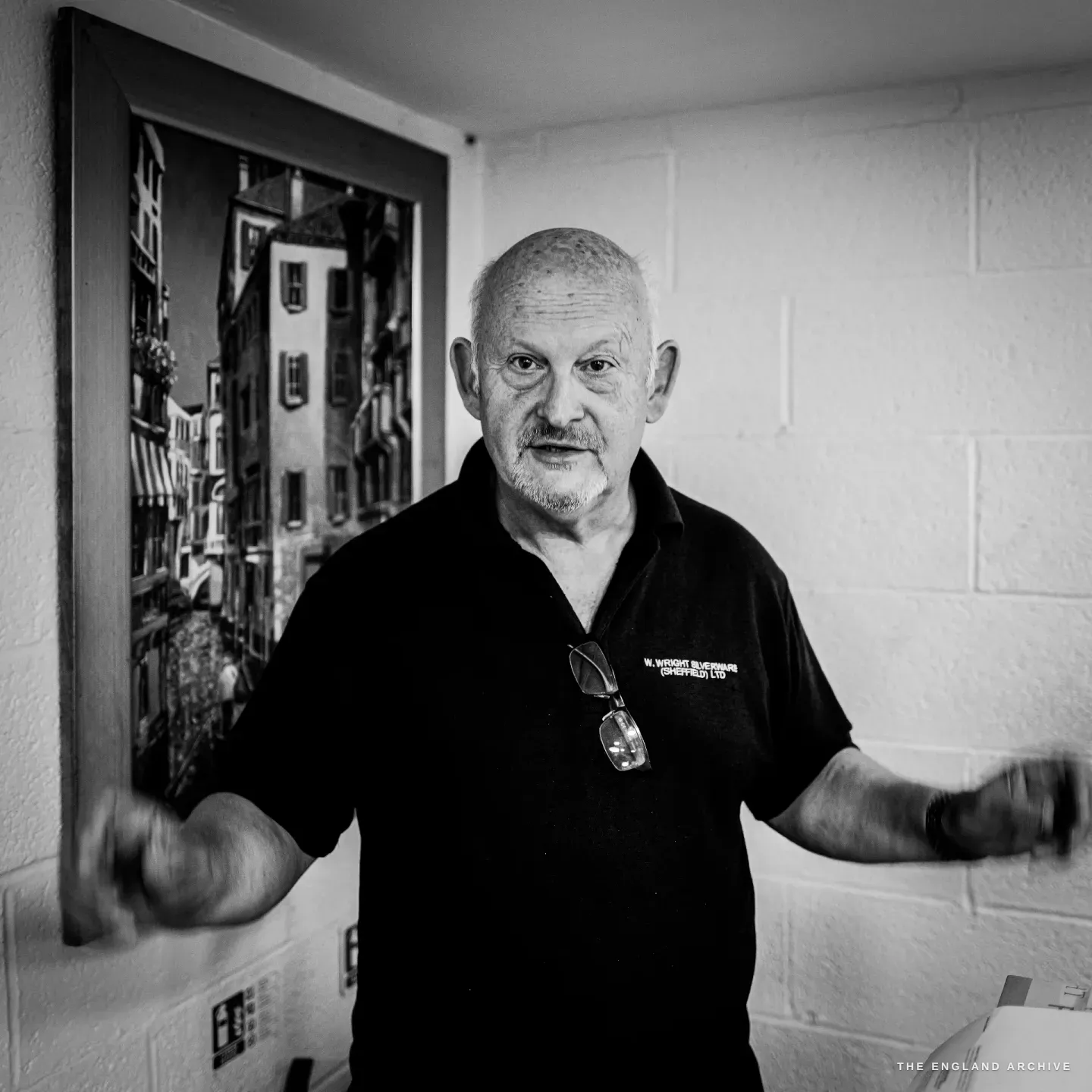
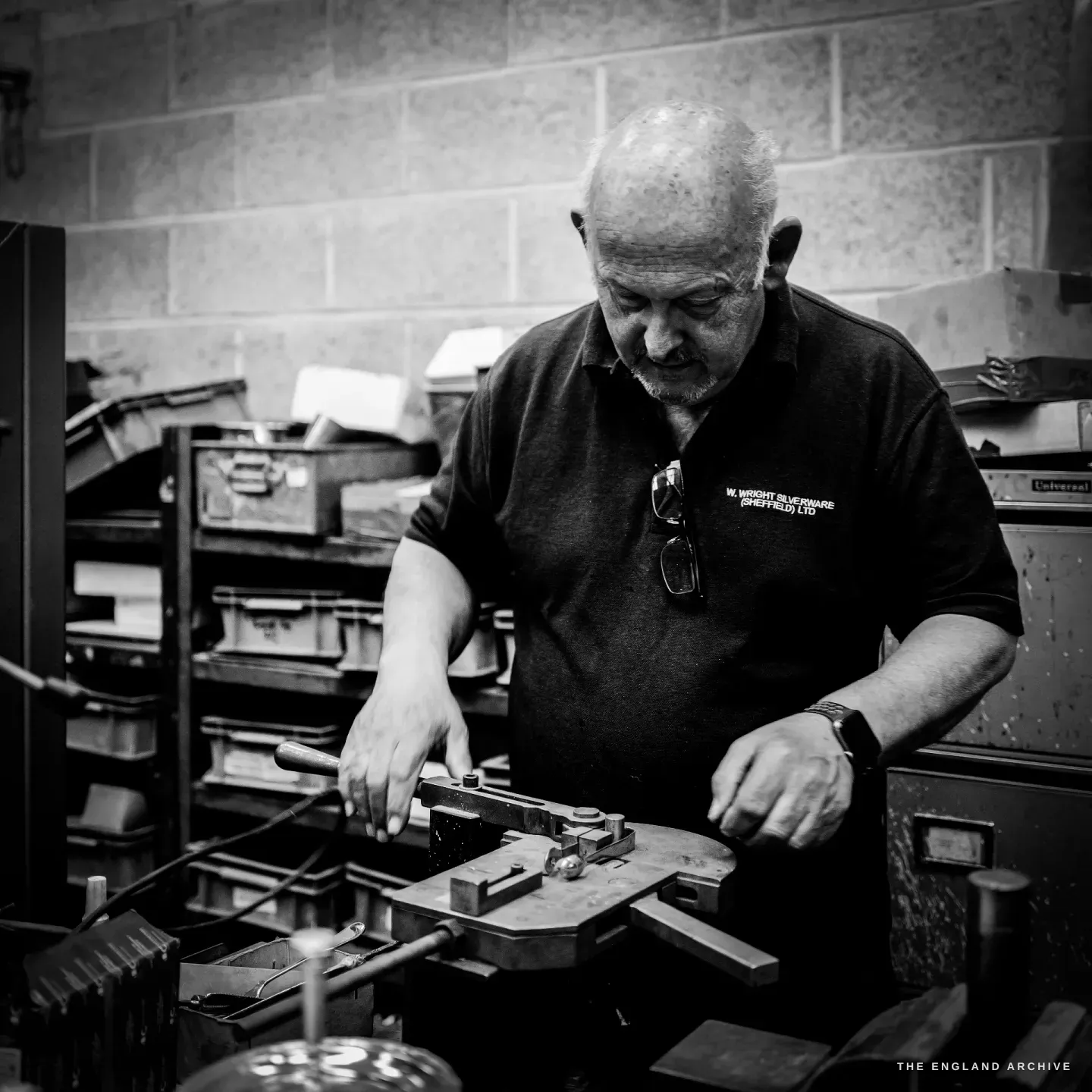
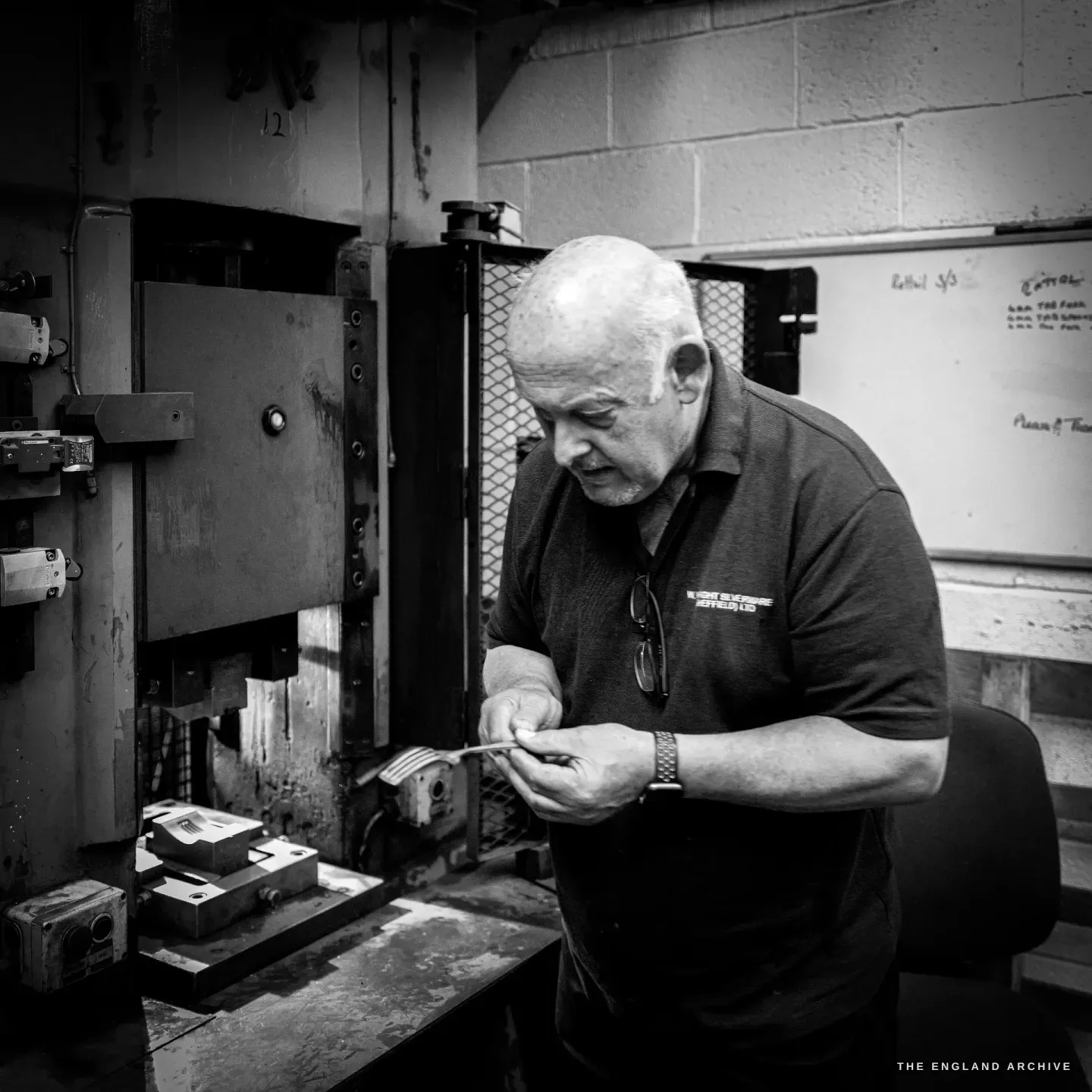
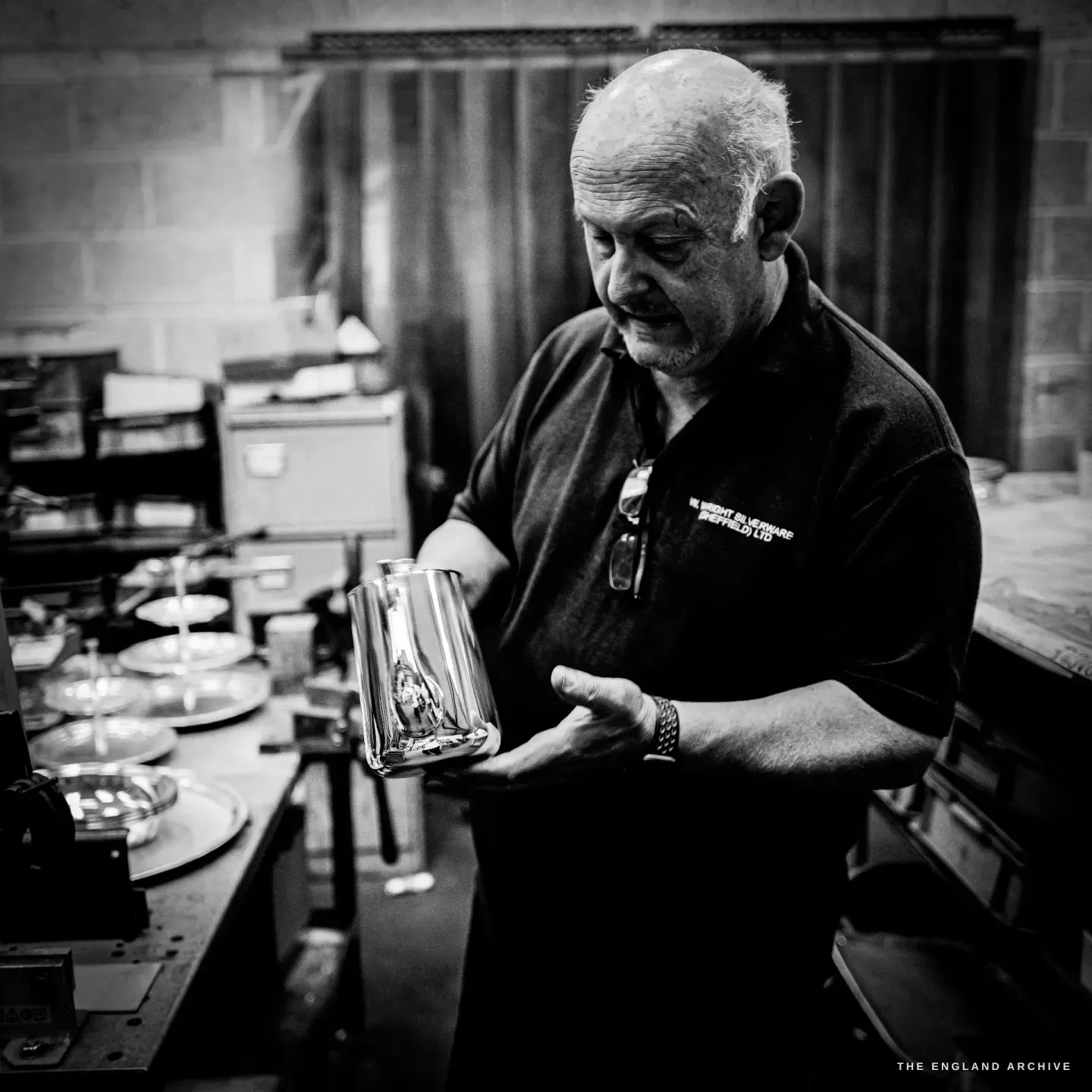
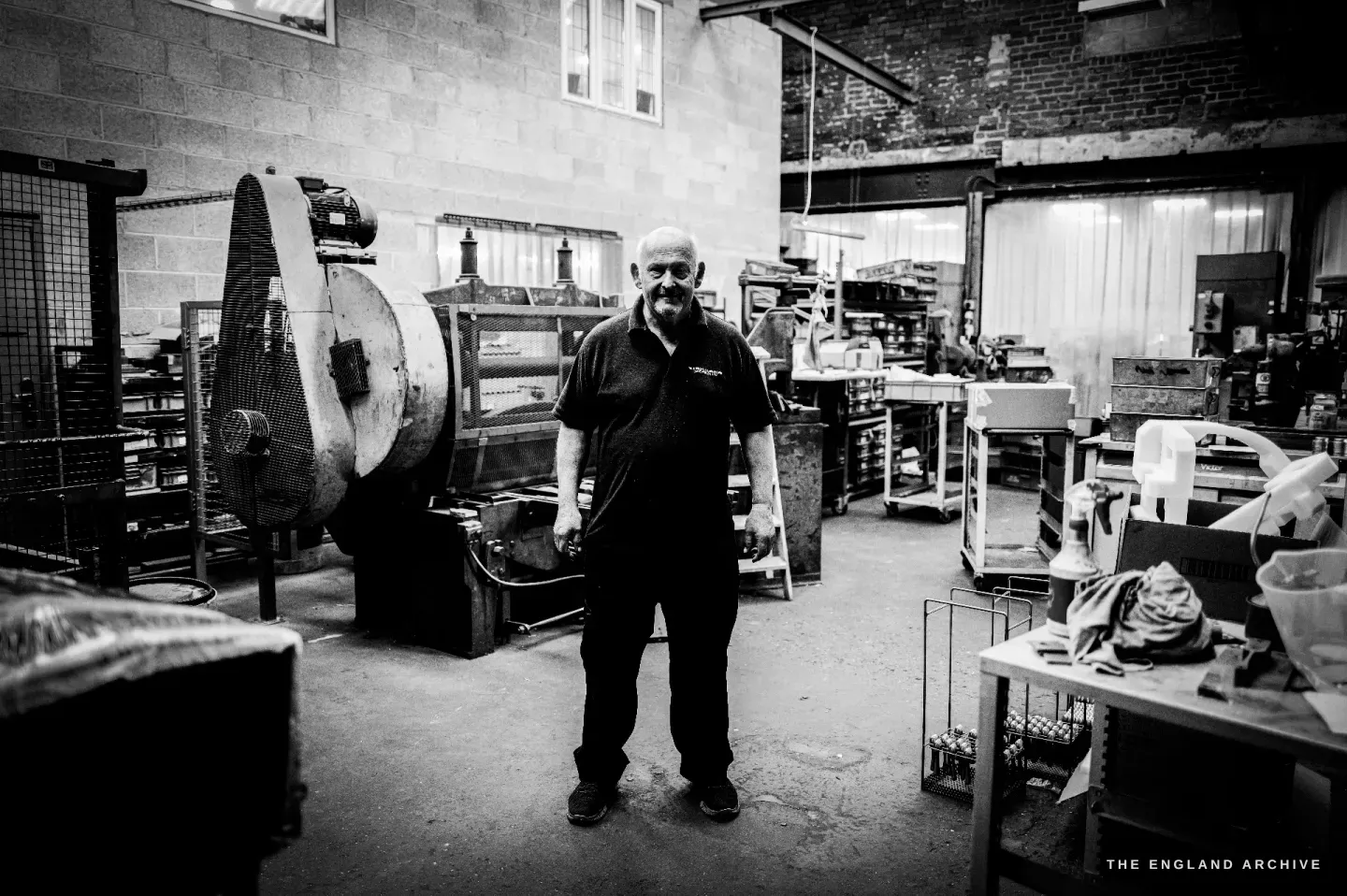
And then there is Stephen, who does not so much show you the works as conduct it. He is in his mid-sixties, built like a man who has lifted things all his life, and he moves through the building at a pace that left me, camera in hand, permanently half a step behind. He talks as fast as he walks, doubling back to show you one more thing, and the affection in it - for the machines, for the people, for the whole improbable enterprise - is the first thing you notice and the thing that stays.
The man who can do every job
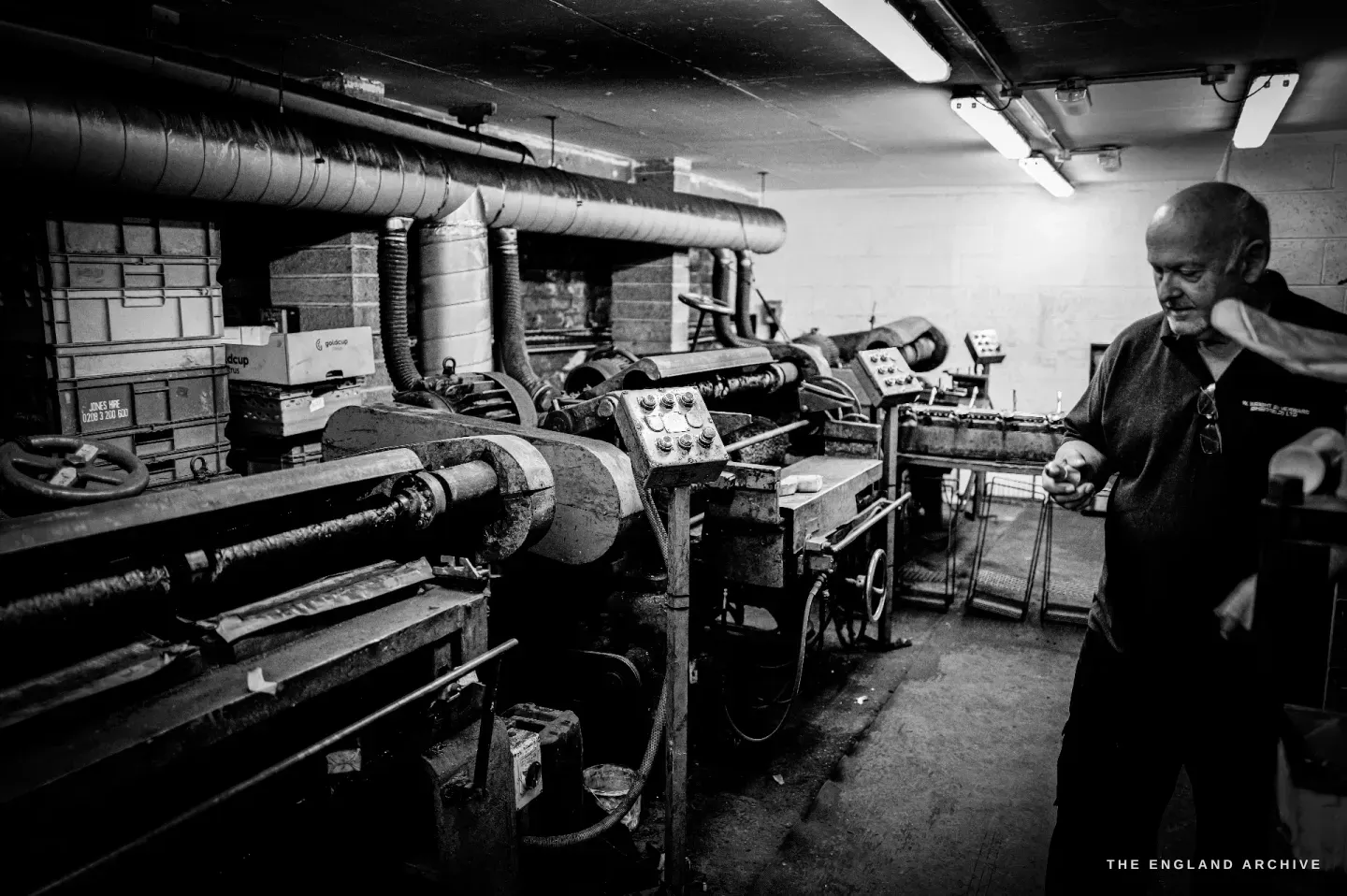
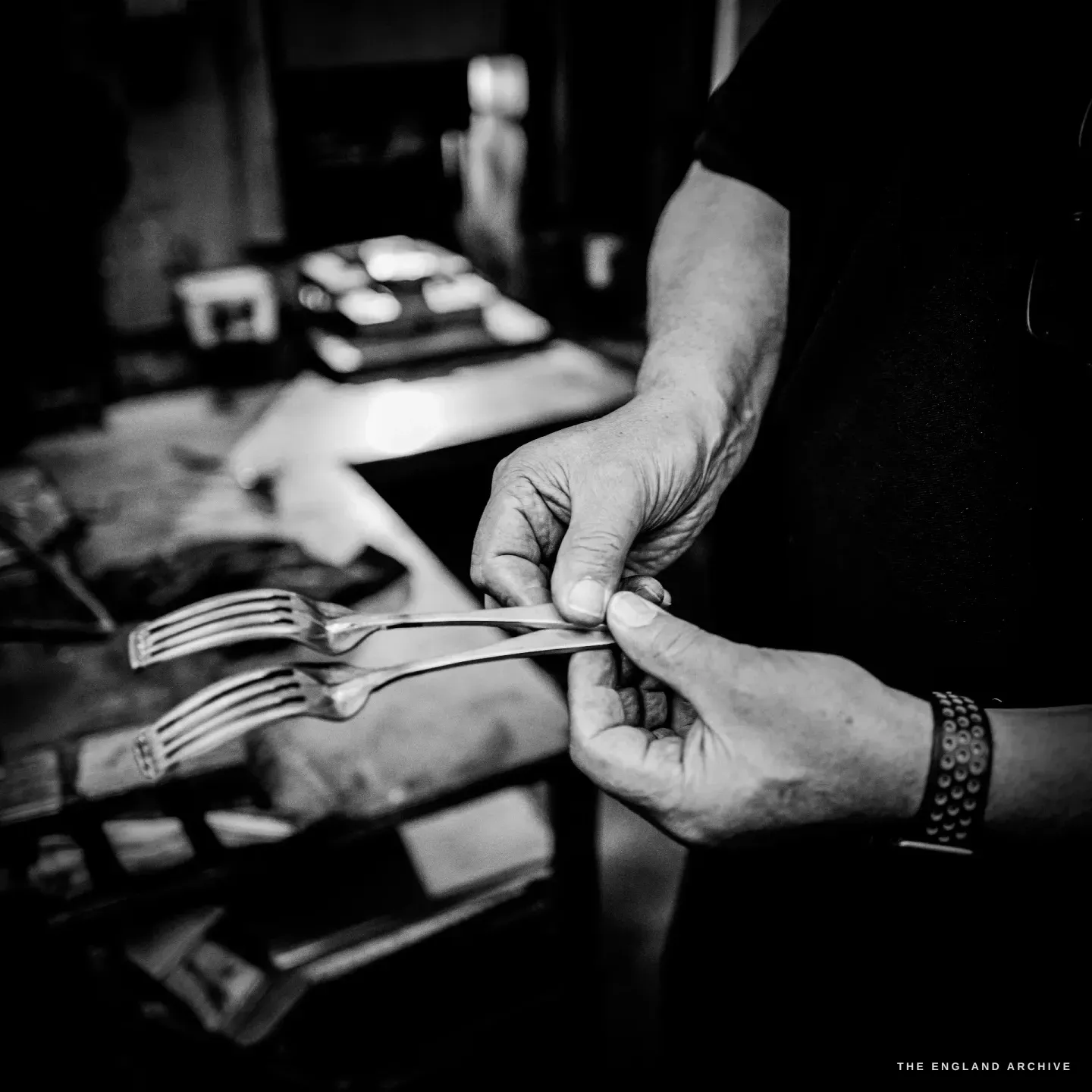
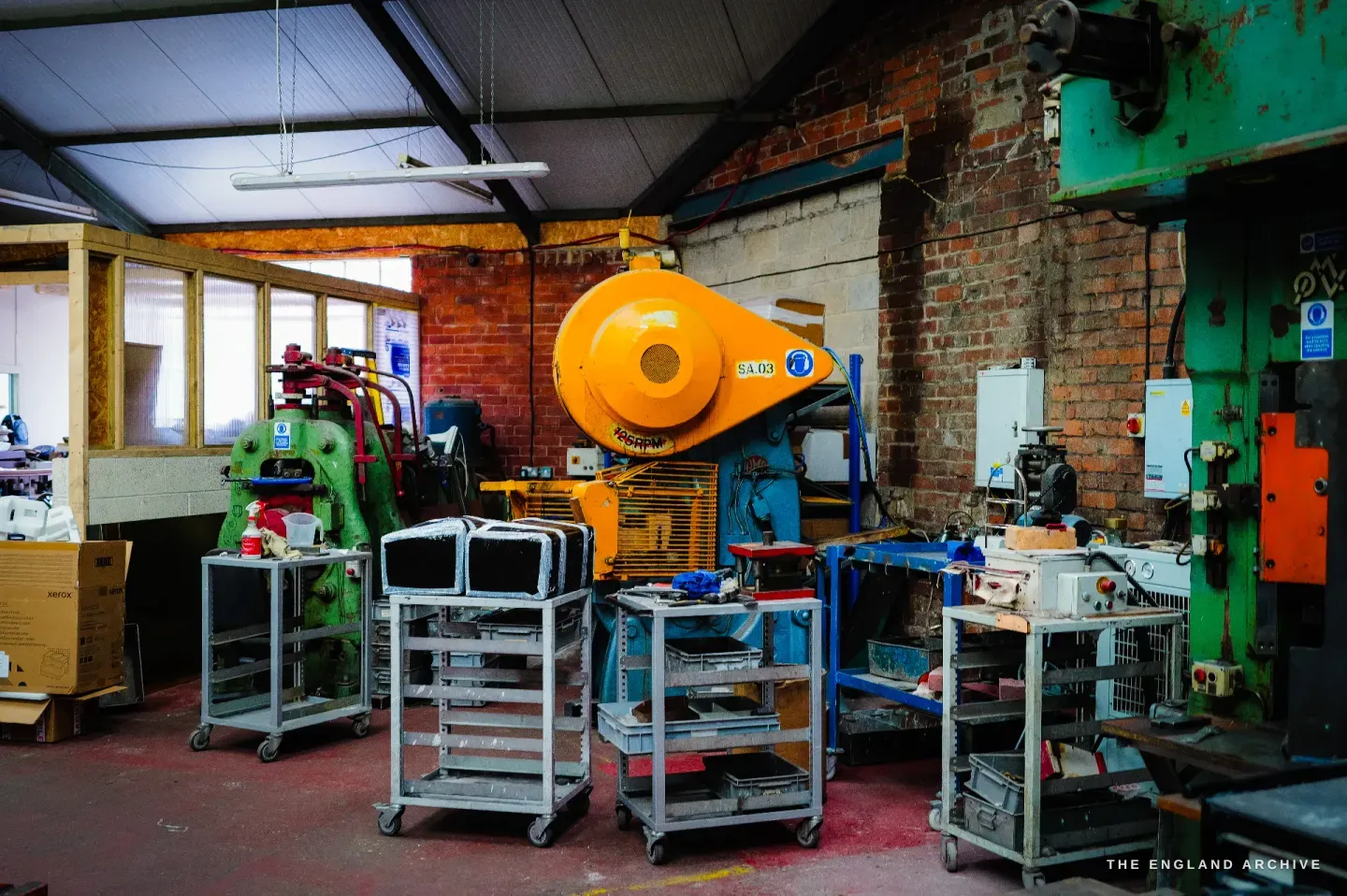
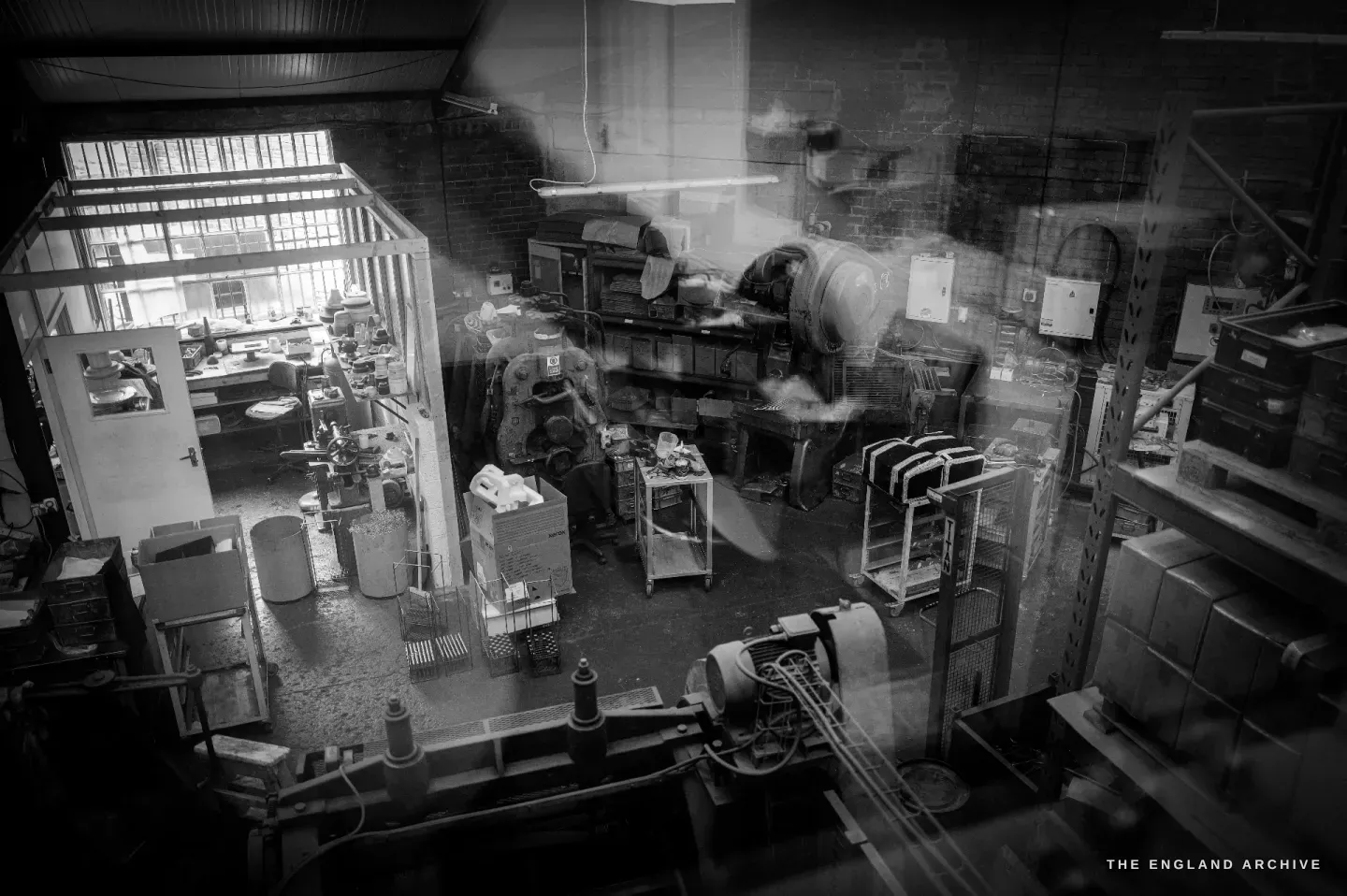
The works is one long floor, benches and machines down both sides, the gangways between them worn pale by decades of feet. There is no front of house. What the building is for is making, and the rarest thing in it is the man walking me round, because Stephen can do every job on that floor himself. In a Sheffield firm the trade has always been carved up between specialists - one hand presses, another rolls, another plates, another polishes, another builds the holloware - and most people spend a working life becoming very good at one of those things. Stephen came up through all of them. Over a morning he moved from the rolling mill to the press to the plating room to the polishing spindle without once looking like a visitor at any of them.
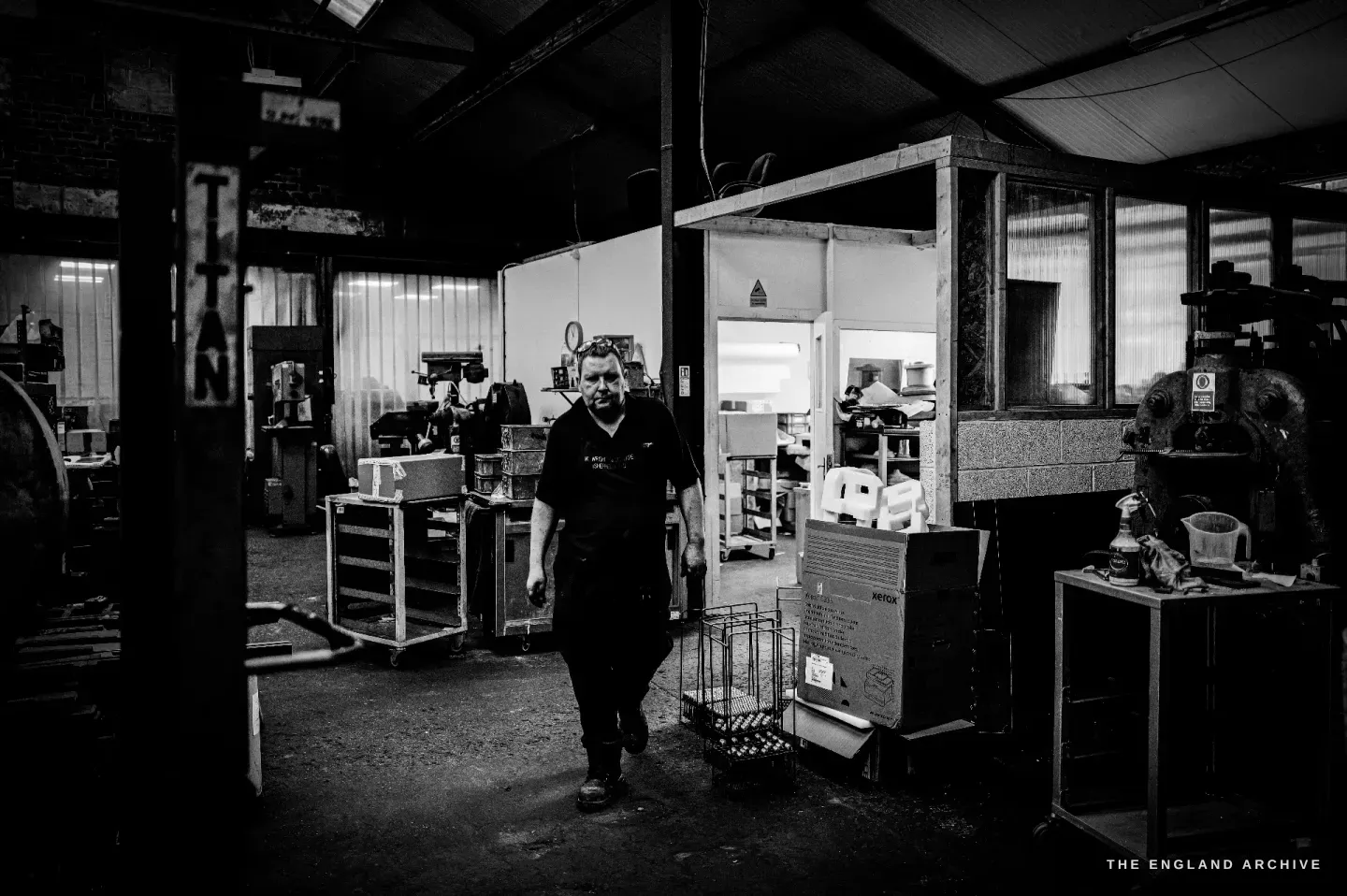
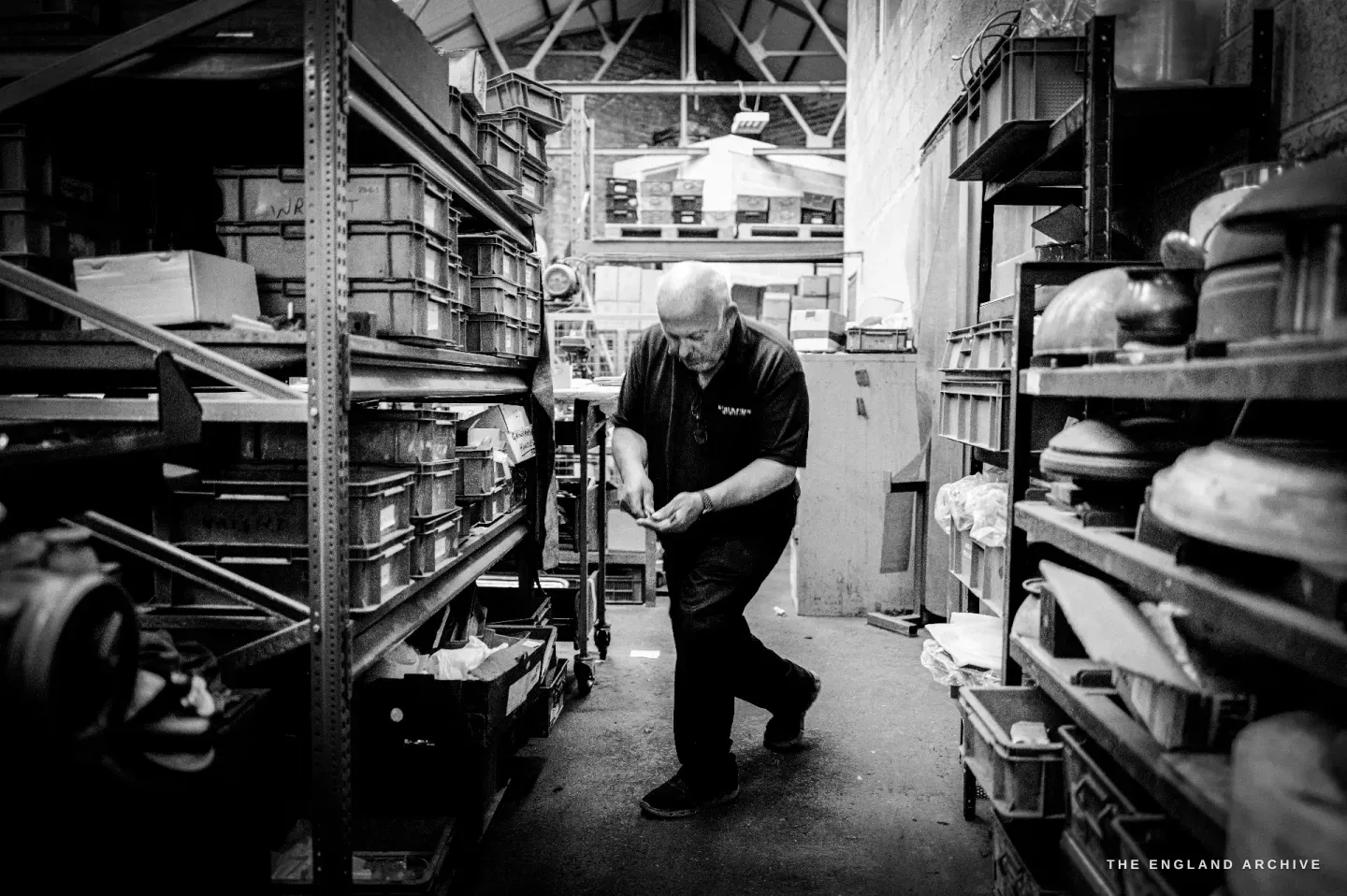
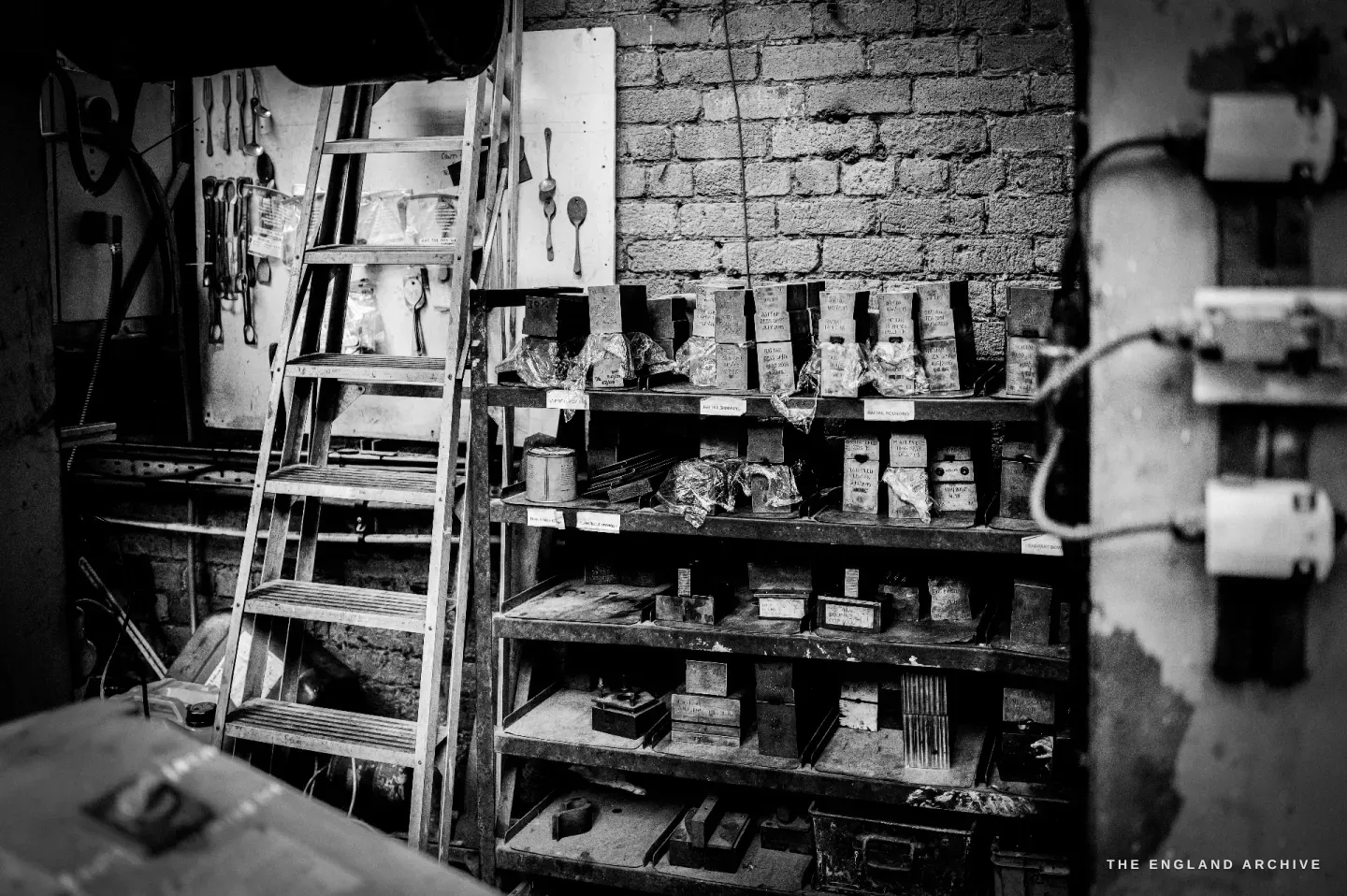
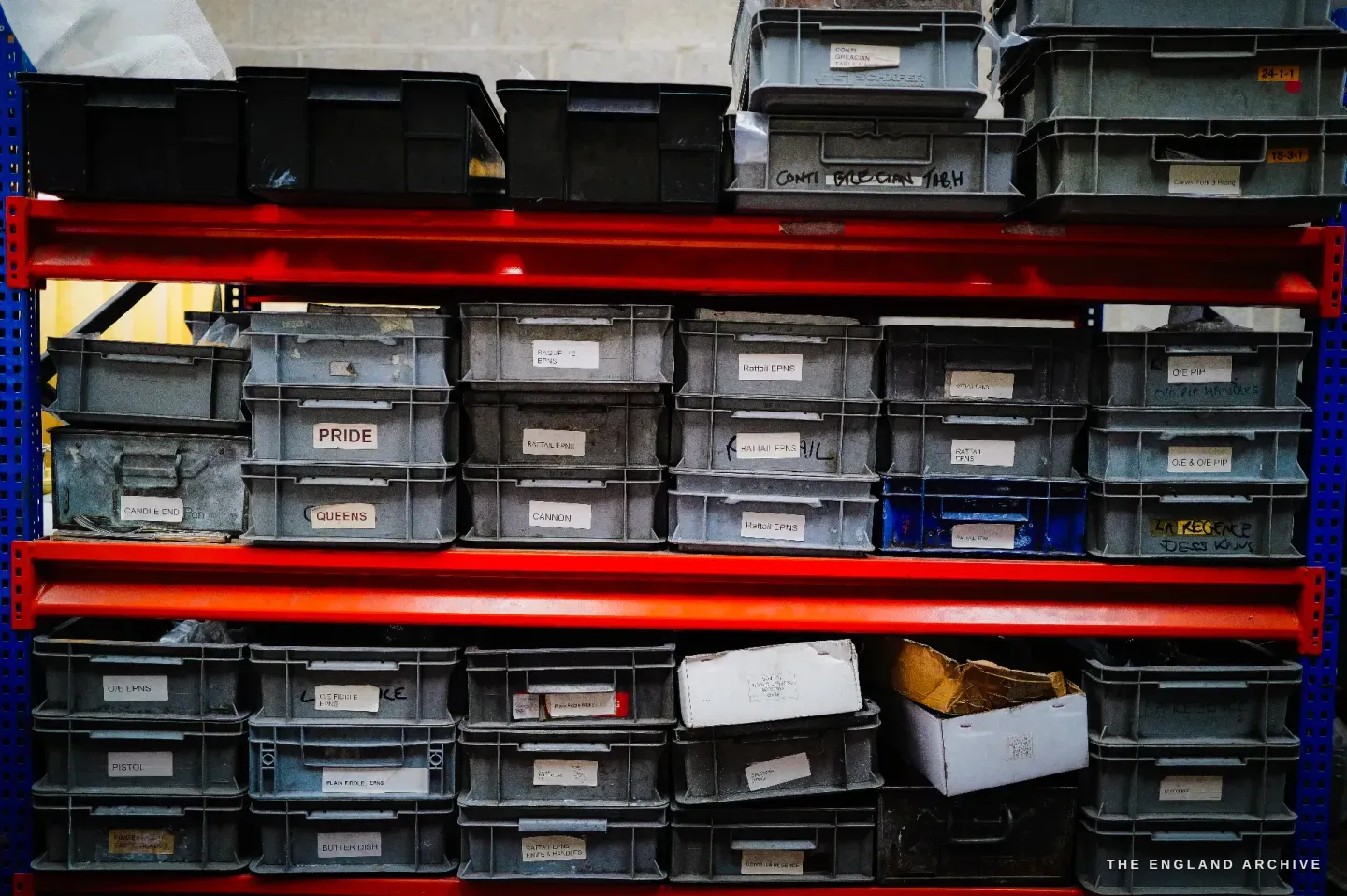
It is a deep place, too, in the plainest sense. The racks run back further than you expect, stacked with parts bins, tools, and the steel forms and dies of patterns going back decades, all kept because they are all still used. A firm like this is partly a working memory. The tooling for a teapot made forty years ago waits on a shelf because the order to make it again could land tomorrow, and when it does there must be a die for it. Stephen walks those aisles the way you walk your own house in the dark.
From sheet to blade
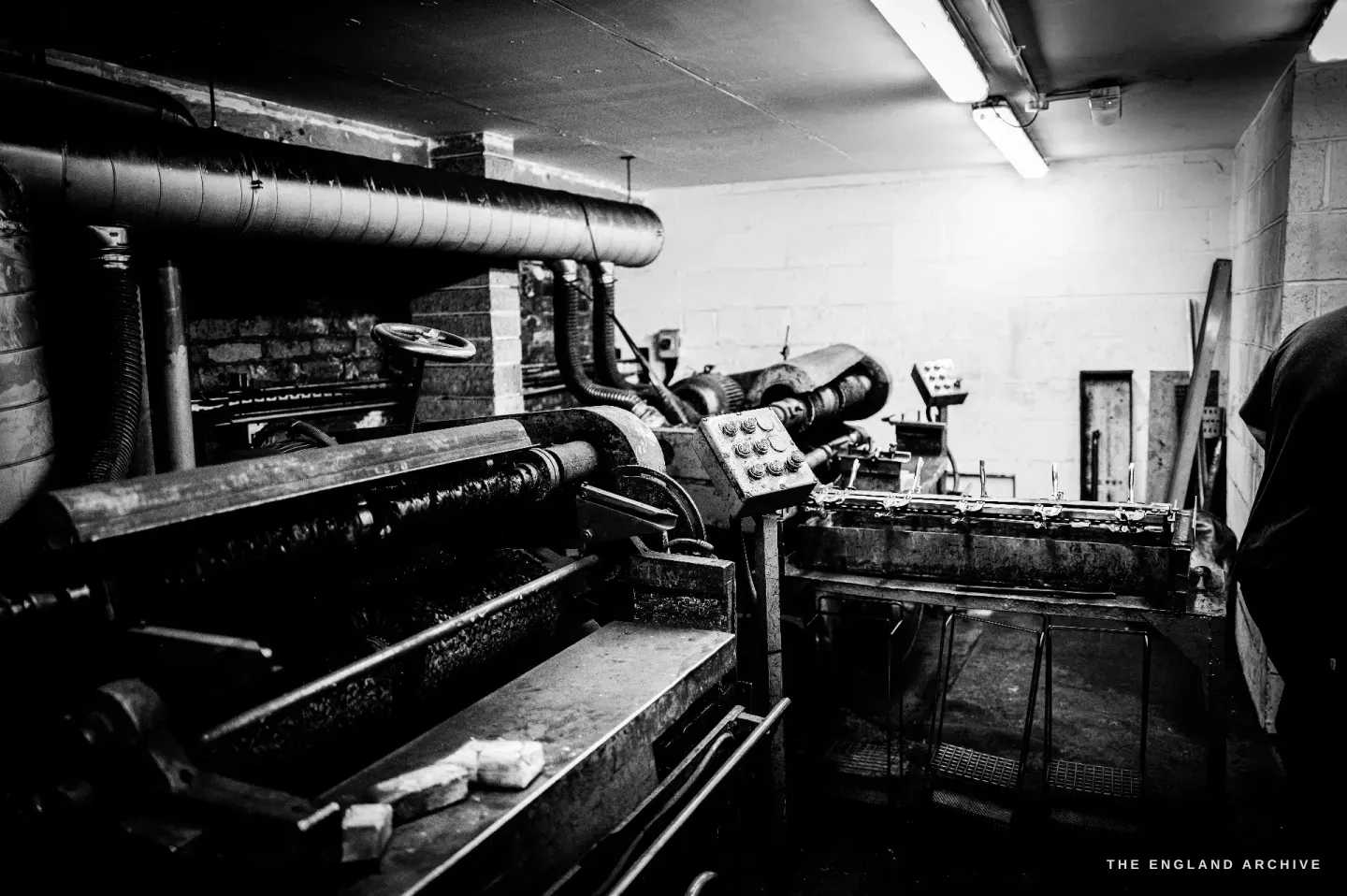
A piece of cutlery starts as flat metal, and the first job is to get the metal to the right thickness. That is the work of the rolling mills: heavy steel rollers that take sheet or strip and squeeze it down to gauge, pass after pass, the gap between them set by hand. Stephen feeds the stock through and reads the thickness off the feel of it as much as the gauge - a fraction too thick and the press will labour, a fraction too thin and the piece is spoiled.
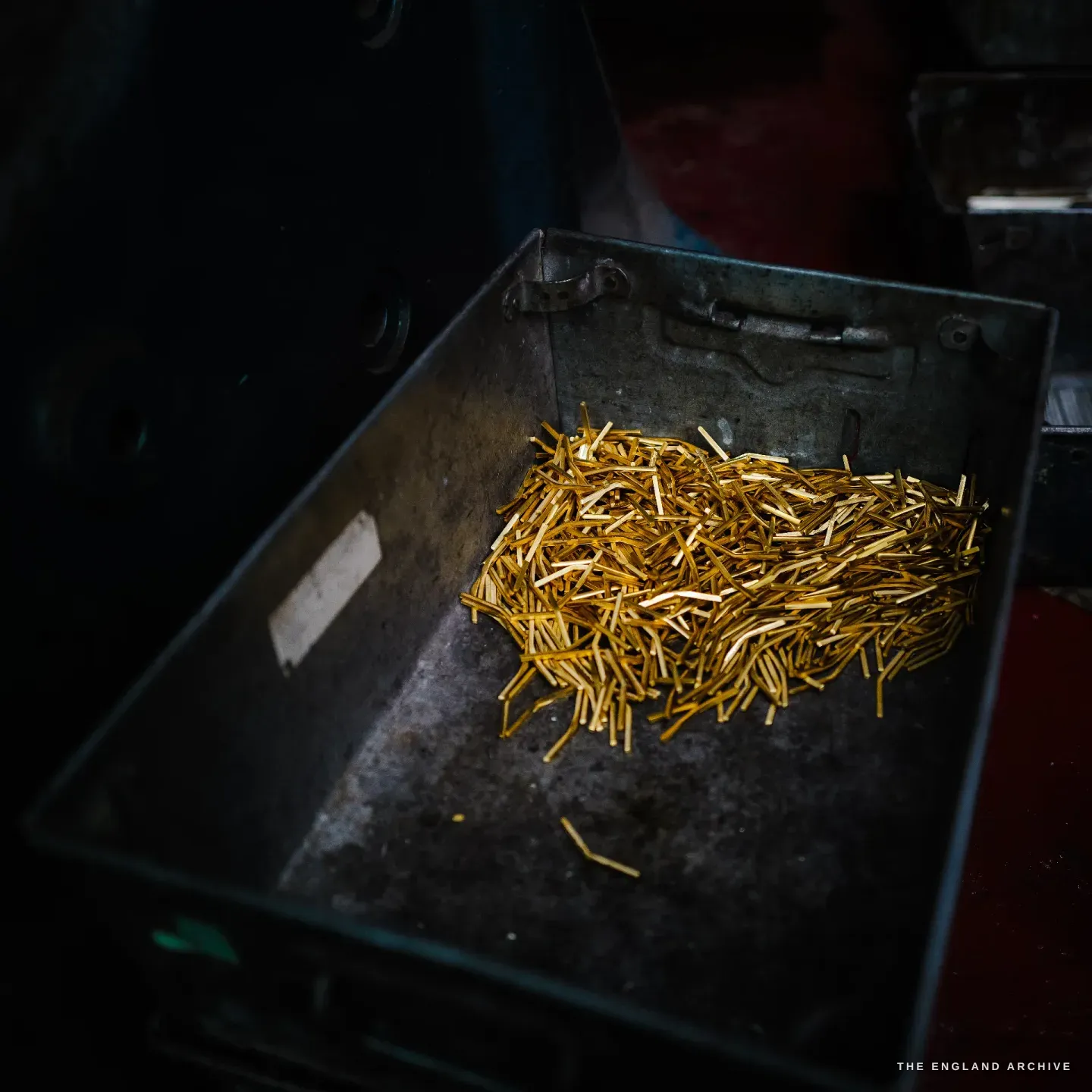
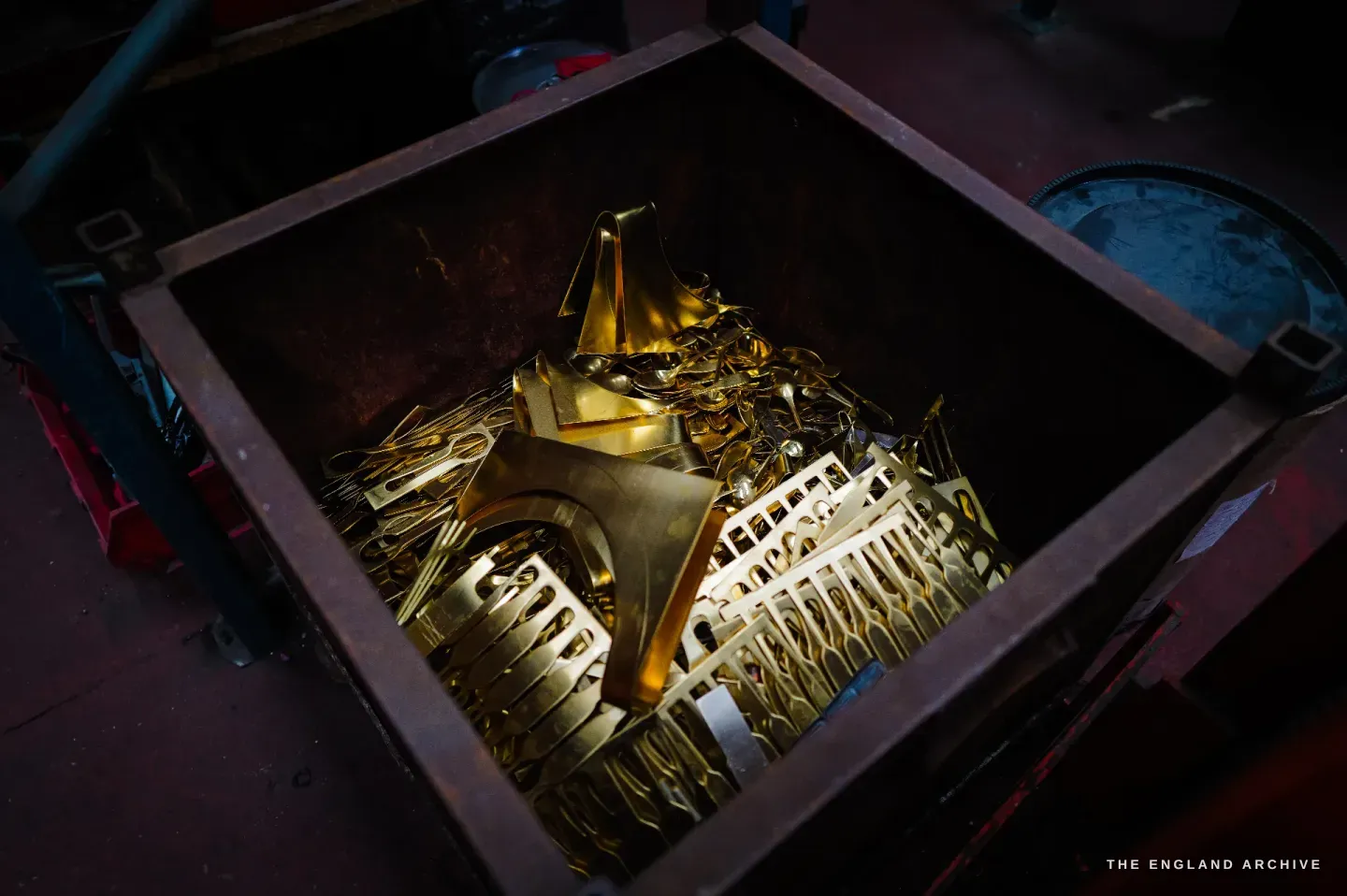
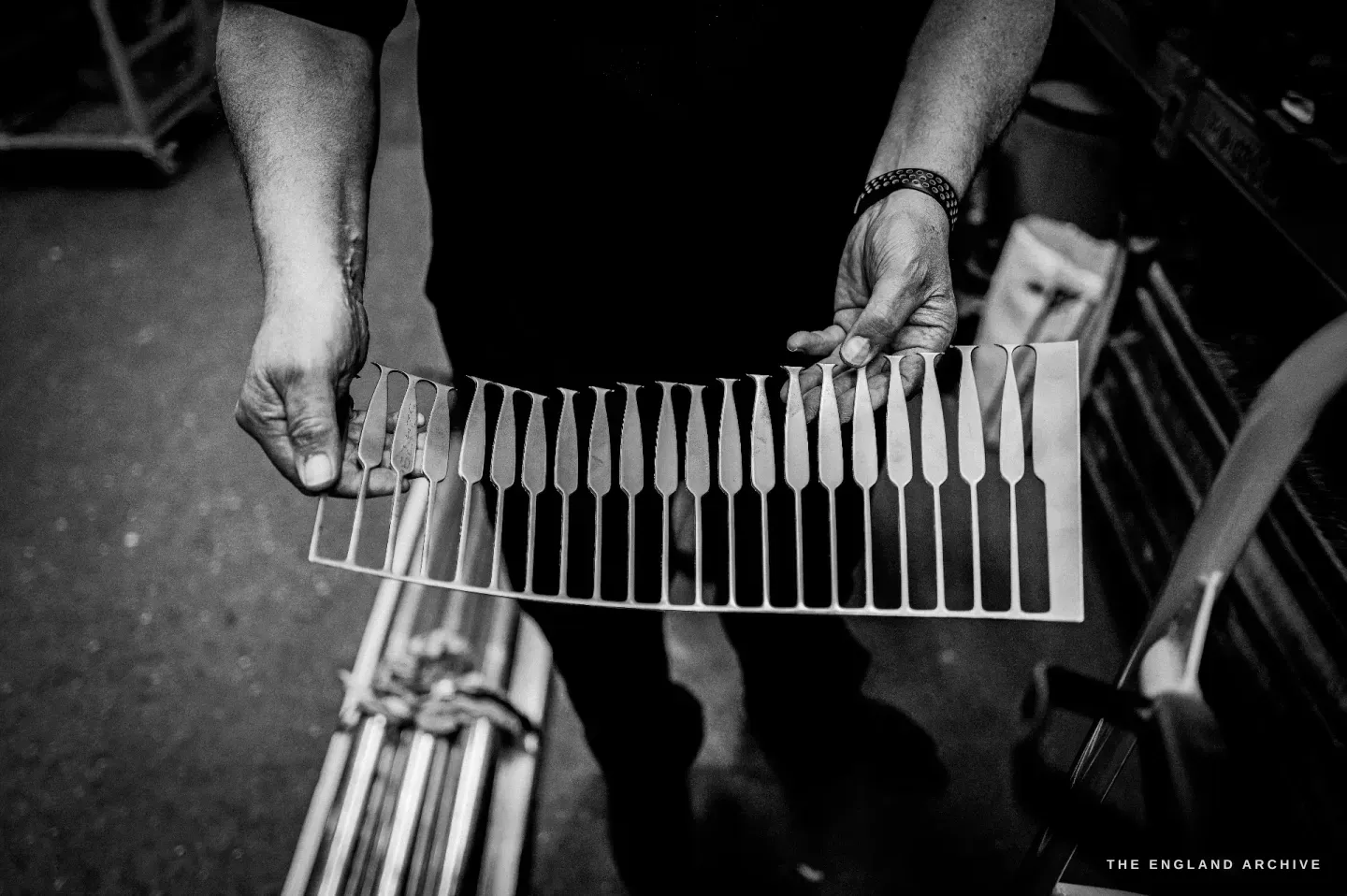
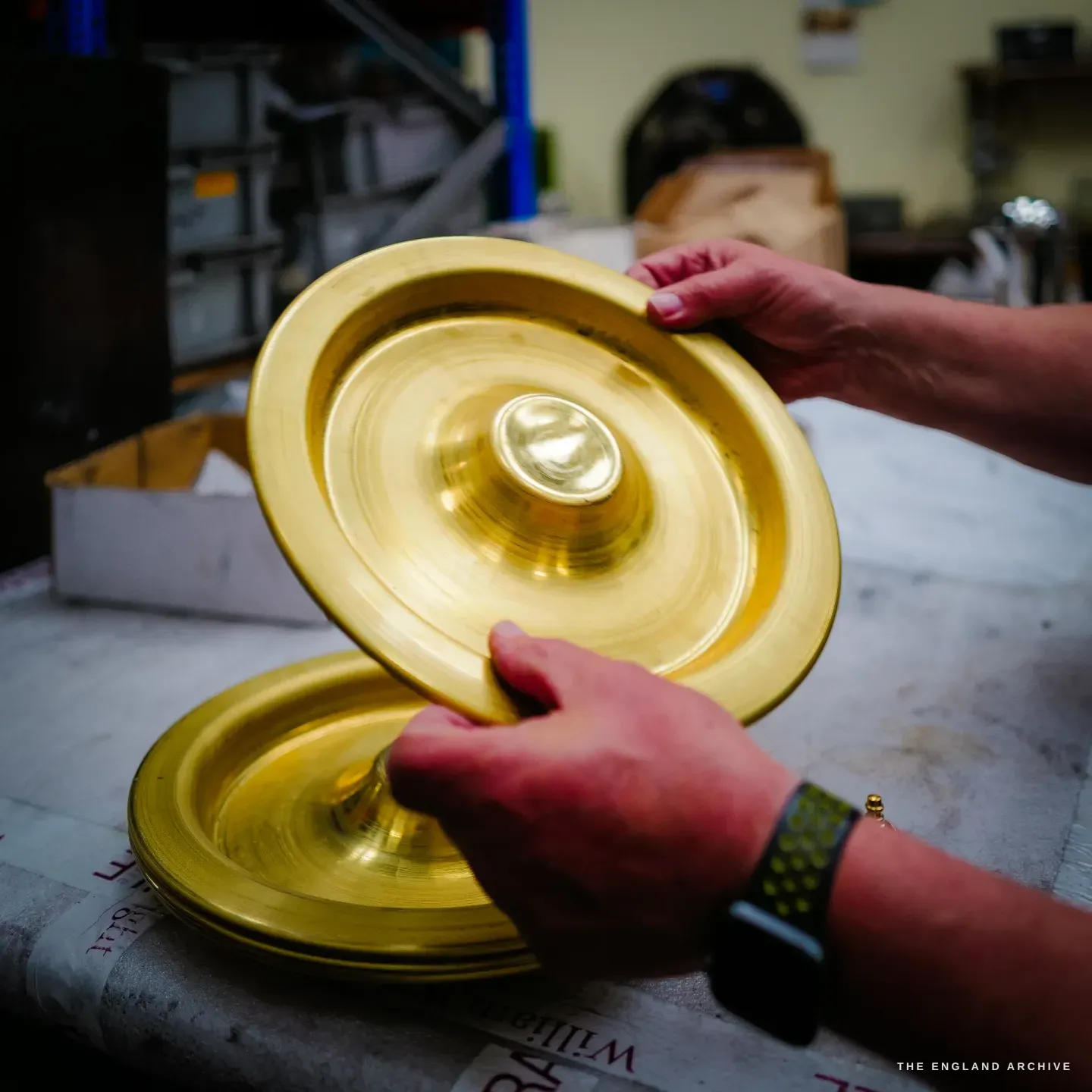
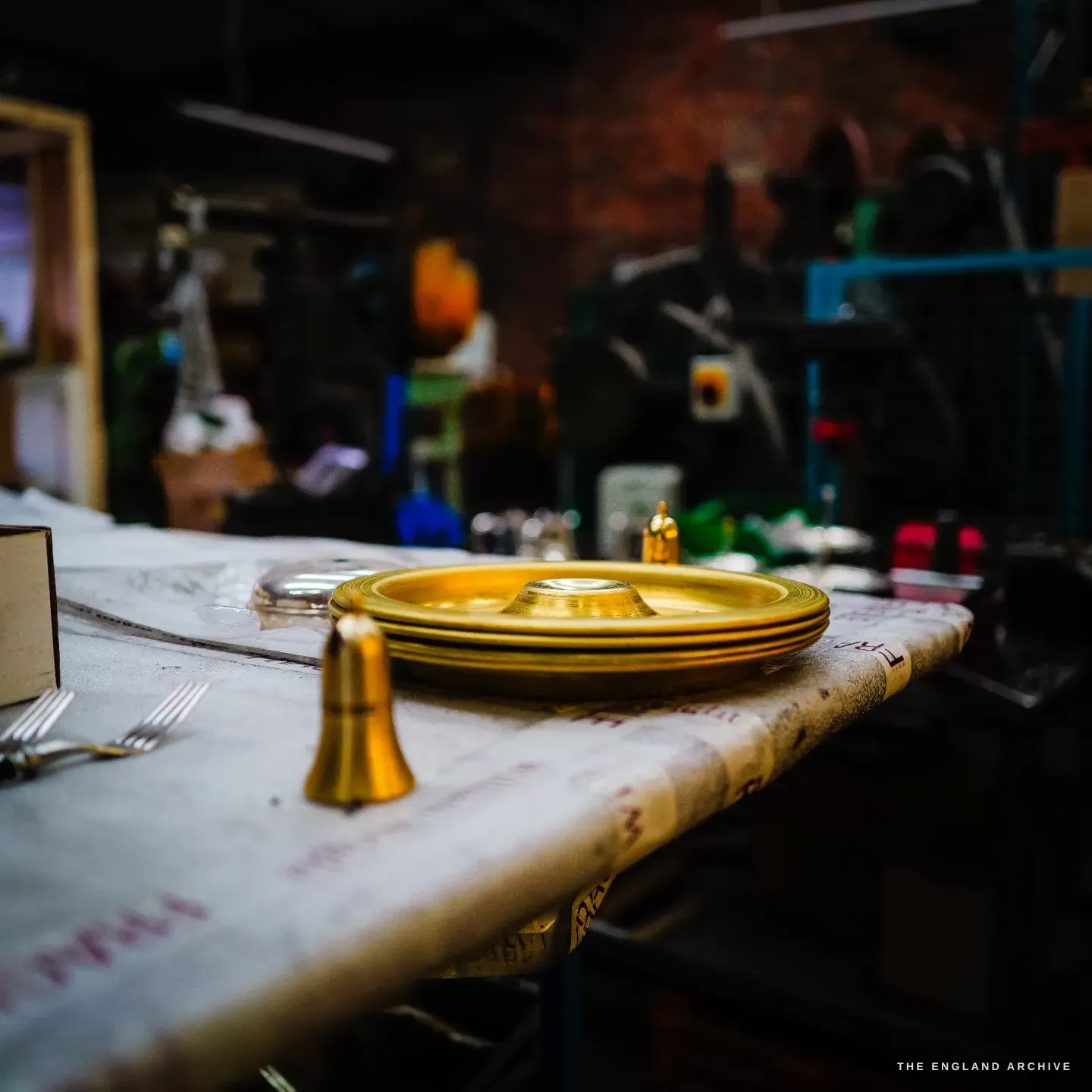
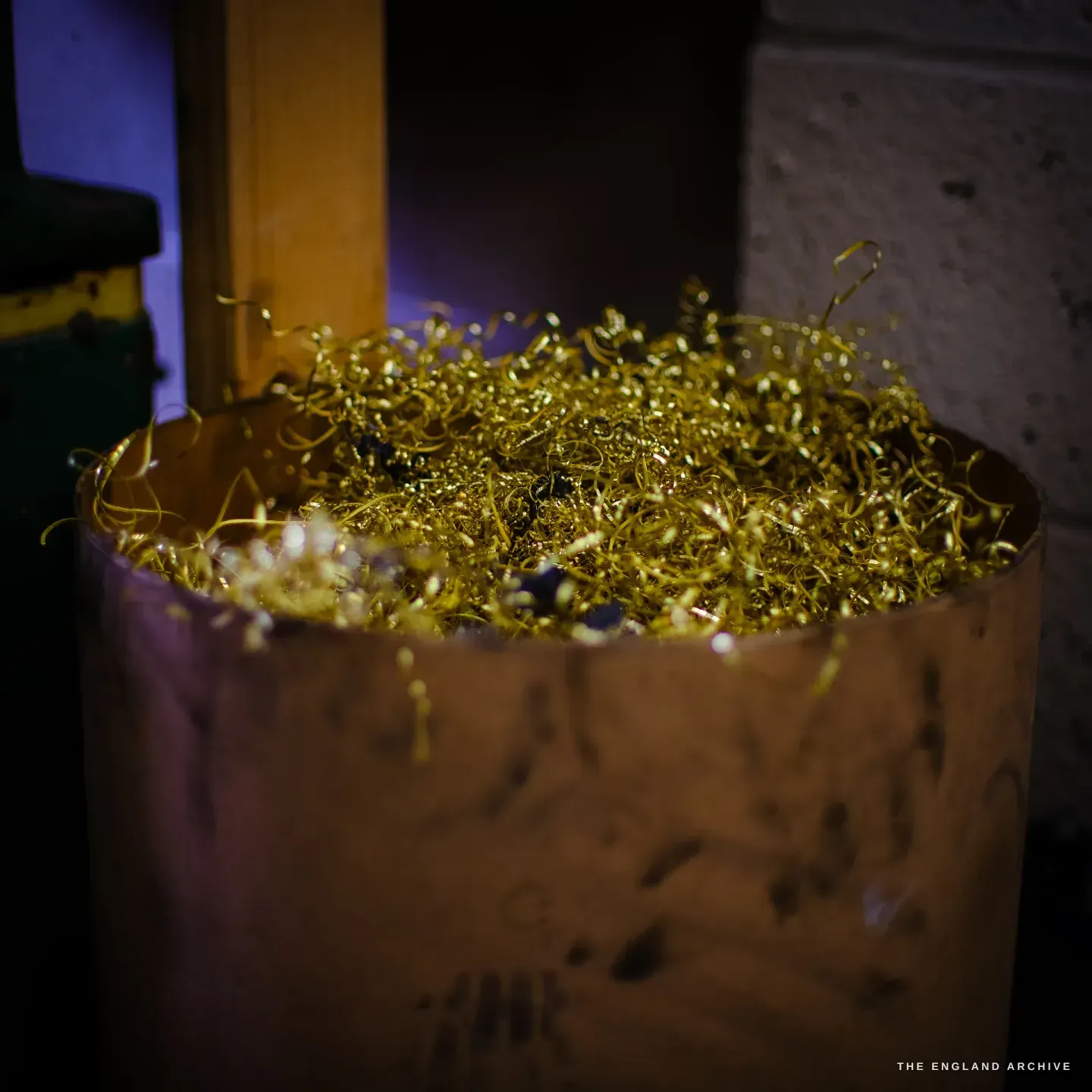
Here is the first surprise of the morning, and it is a question of colour. You walk in expecting silver and you are met, everywhere, by gold. Most of what the firm makes begins life not in silver but in brass, and the brass is everywhere in its raw state - stacked in crates as blanks, spilling as bright offcuts, heaped as the lattice skeleton left when the shapes are punched out of the sheet. It will be silver by the end. For now it glows in the dark of the works like something buried.
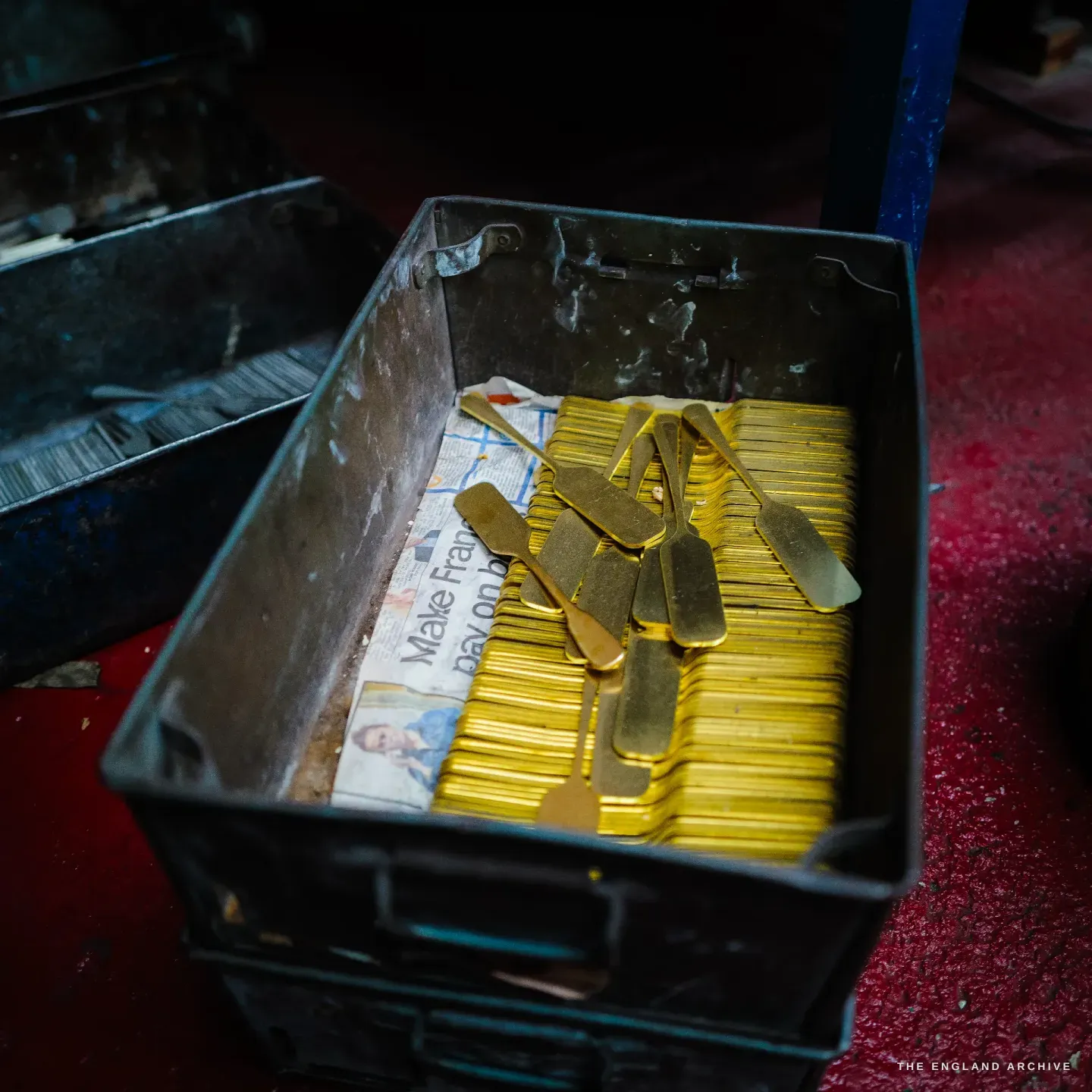
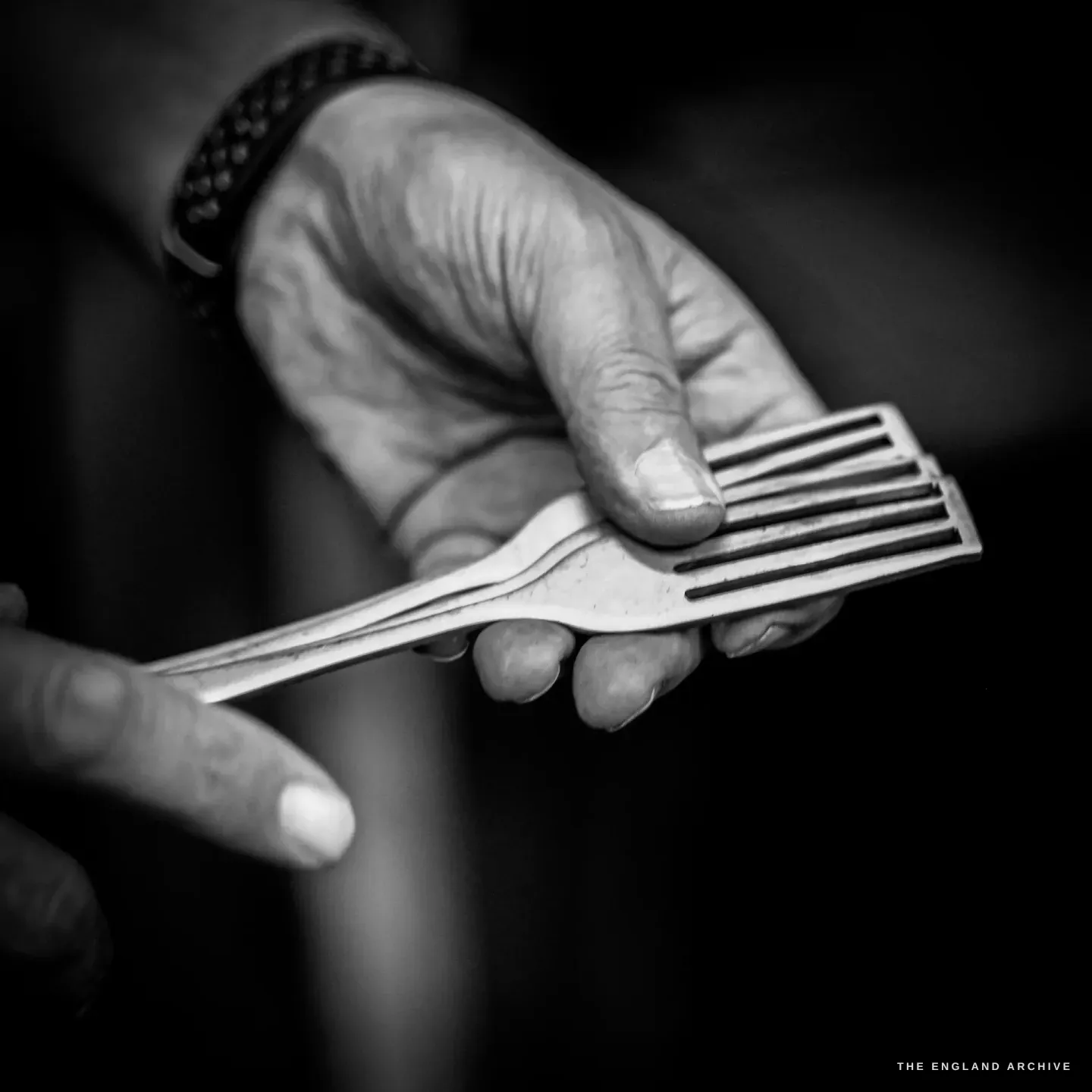
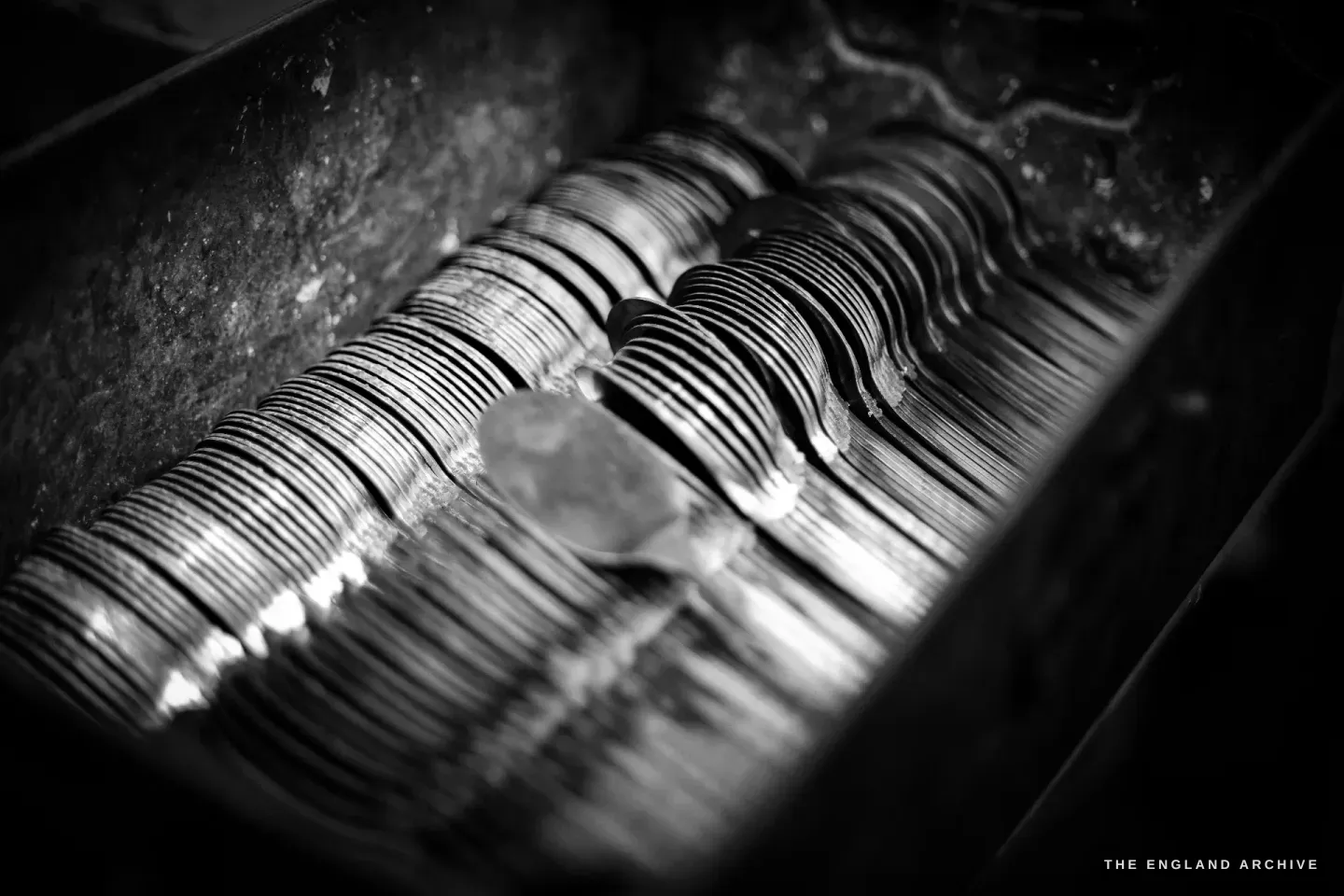
From the rolled metal the blanks are stamped - the rough outline of a spoon or a fork cut out of the strip, several at a time, still joined to the parent sheet like figures cut from a single piece of paper. They come off by the binful, racked on edge in steel trays, long before any of them looks like something you would lift to your mouth.
The presses
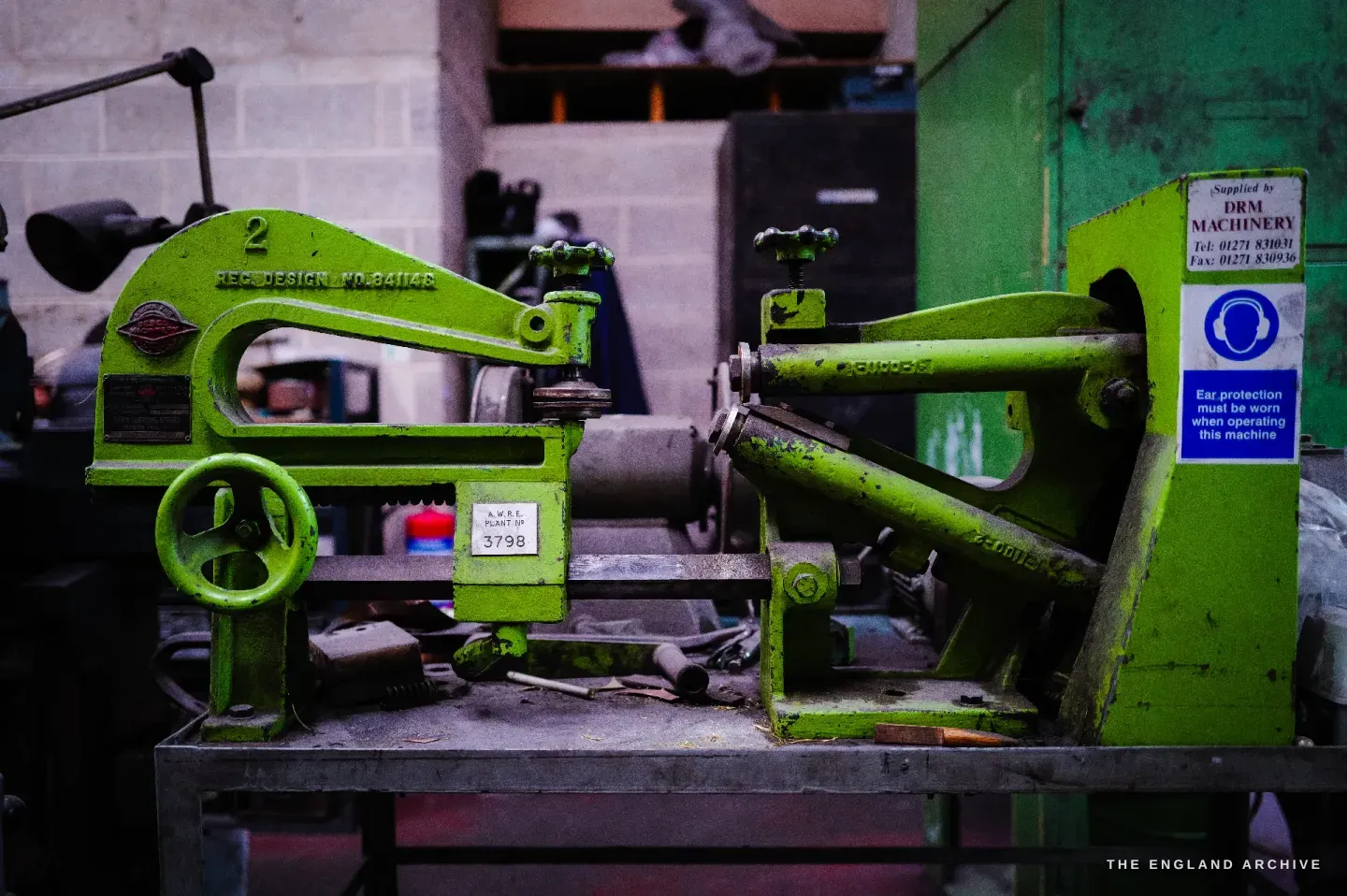
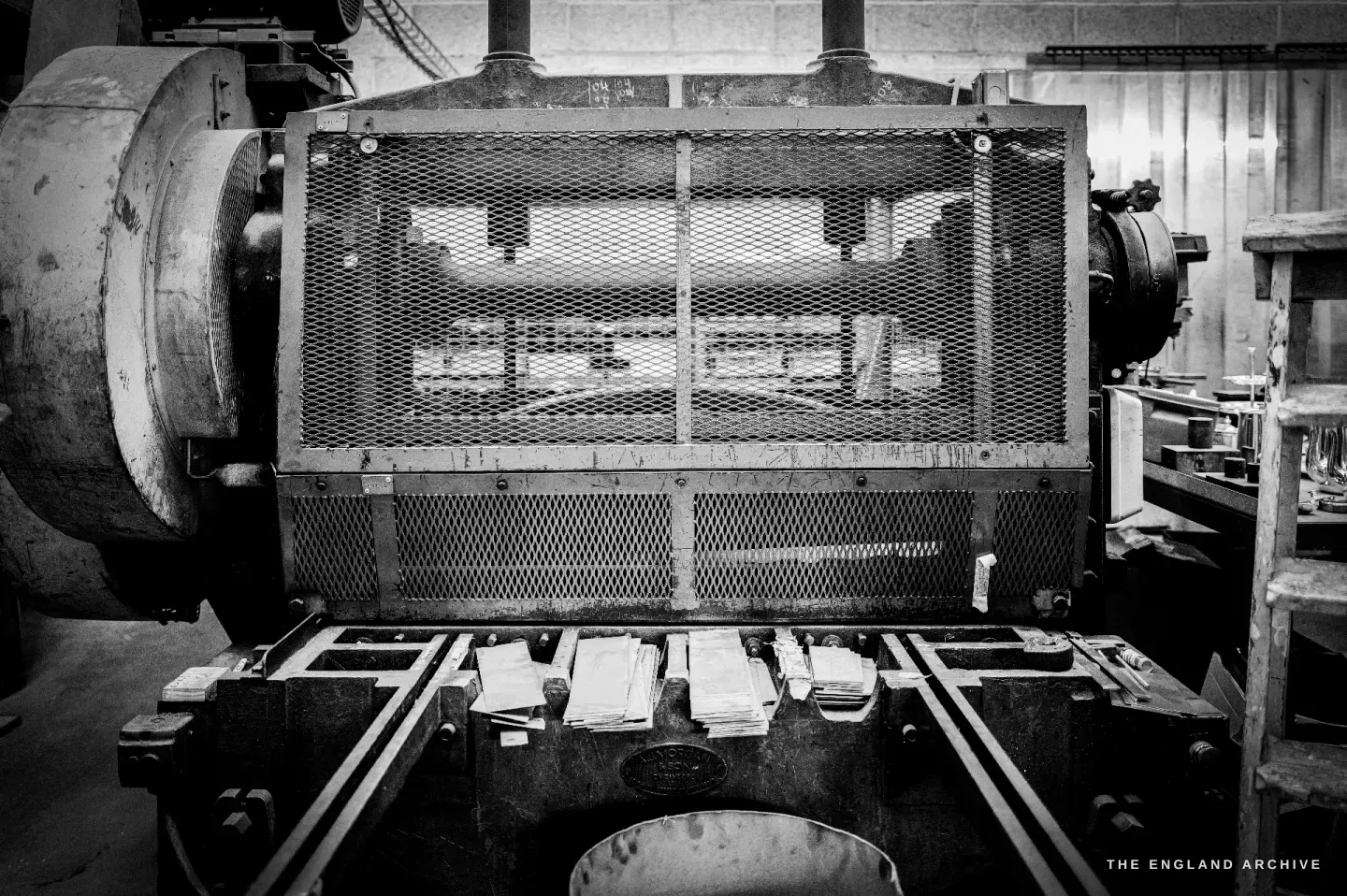
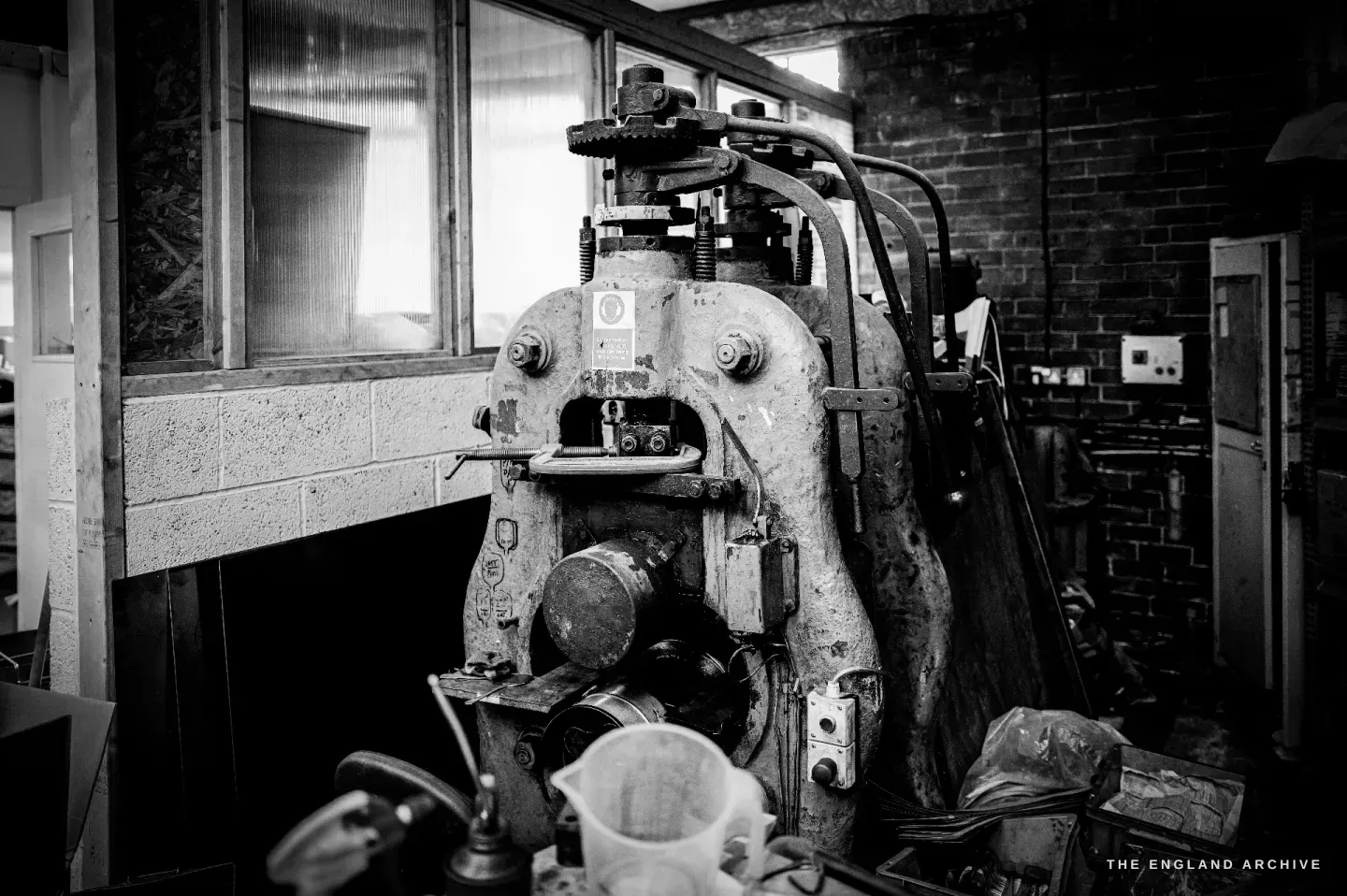
Then the blank goes under the presses, and this is the heaviest end of the trade. The drop-stamps and fly presses line the floor, each a few hundredweight of cast iron, painted over the years in the colours a works paints things when nobody is watching - orange, a deep green, a red gone to rust at the edges. They look like sculpture and they hit like a hammer the size of a car.
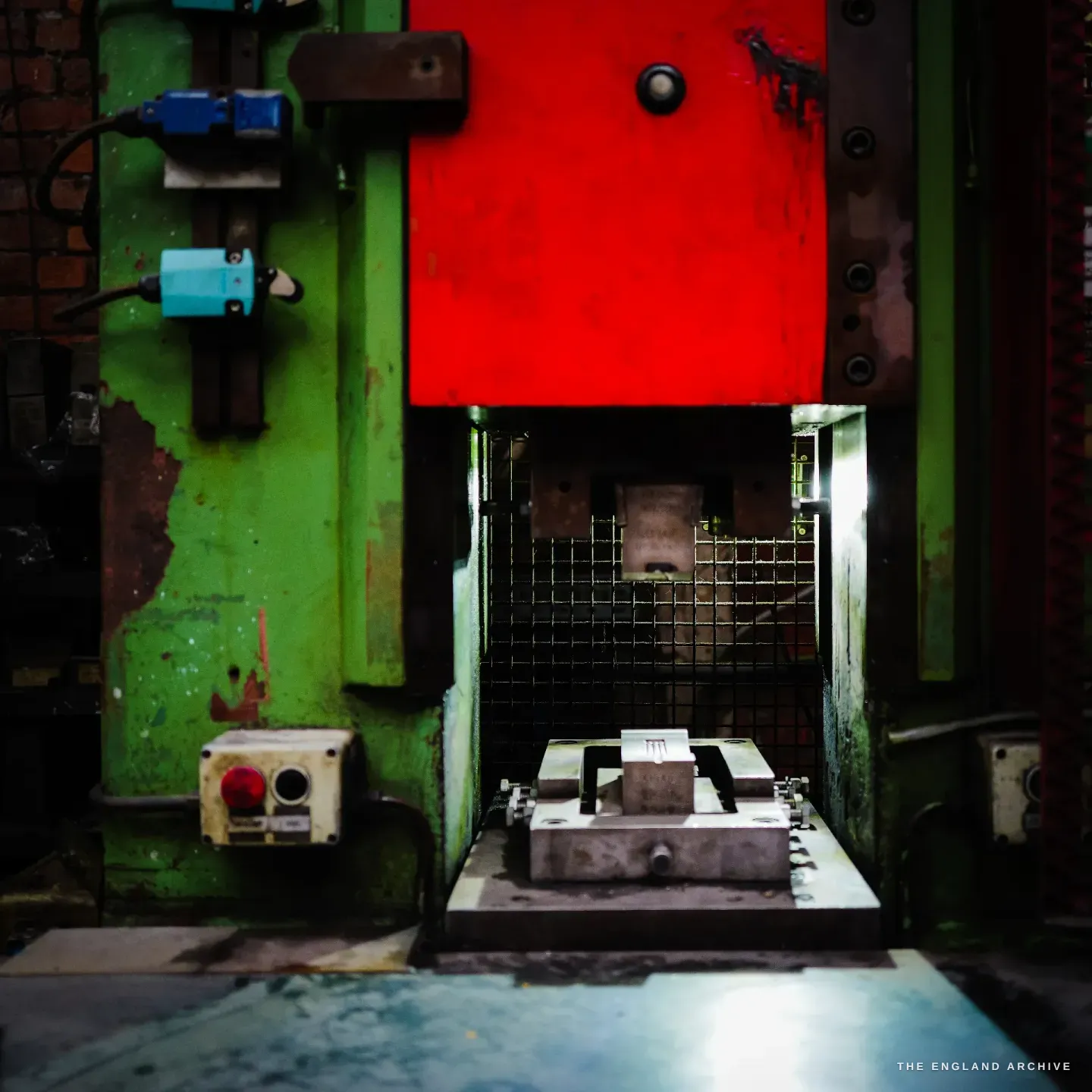
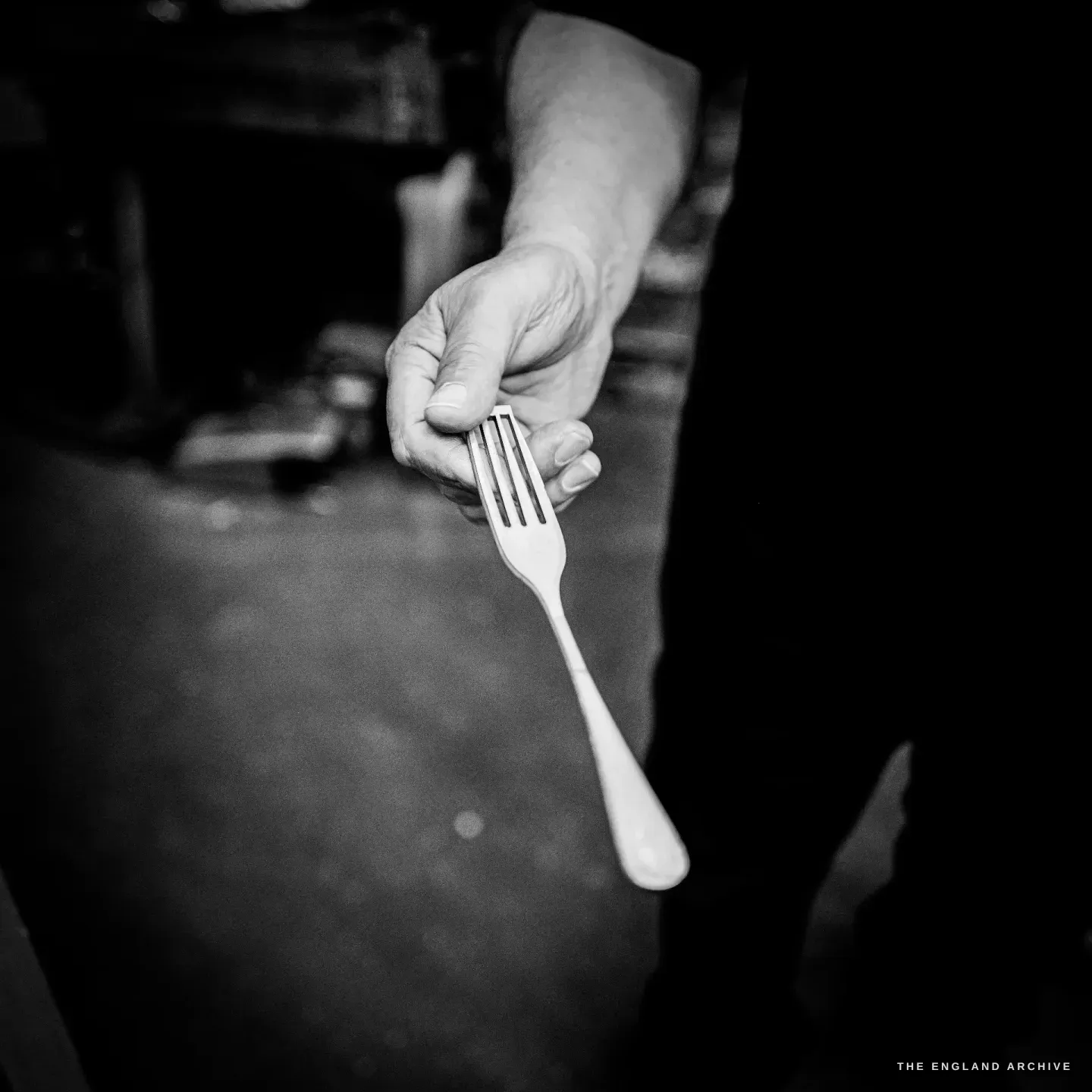
The press does nothing on its own. The work is done by the die: a block of hardened steel with a single pattern cut into its face in reverse, so that when the press comes down the pattern is struck into the handle and the bowl is dished or the tines are formed in one blow. The dies are racked by the hundred along the walls, one for every pattern the firm has ever made, and they are the firm's true capital - the reason an order placed today for a service designed two generations ago can still be filled. Choosing the right one, Stephen says, is half the job. The other half is reading the blank by eye when it comes out, and knowing in your hands whether it is right.
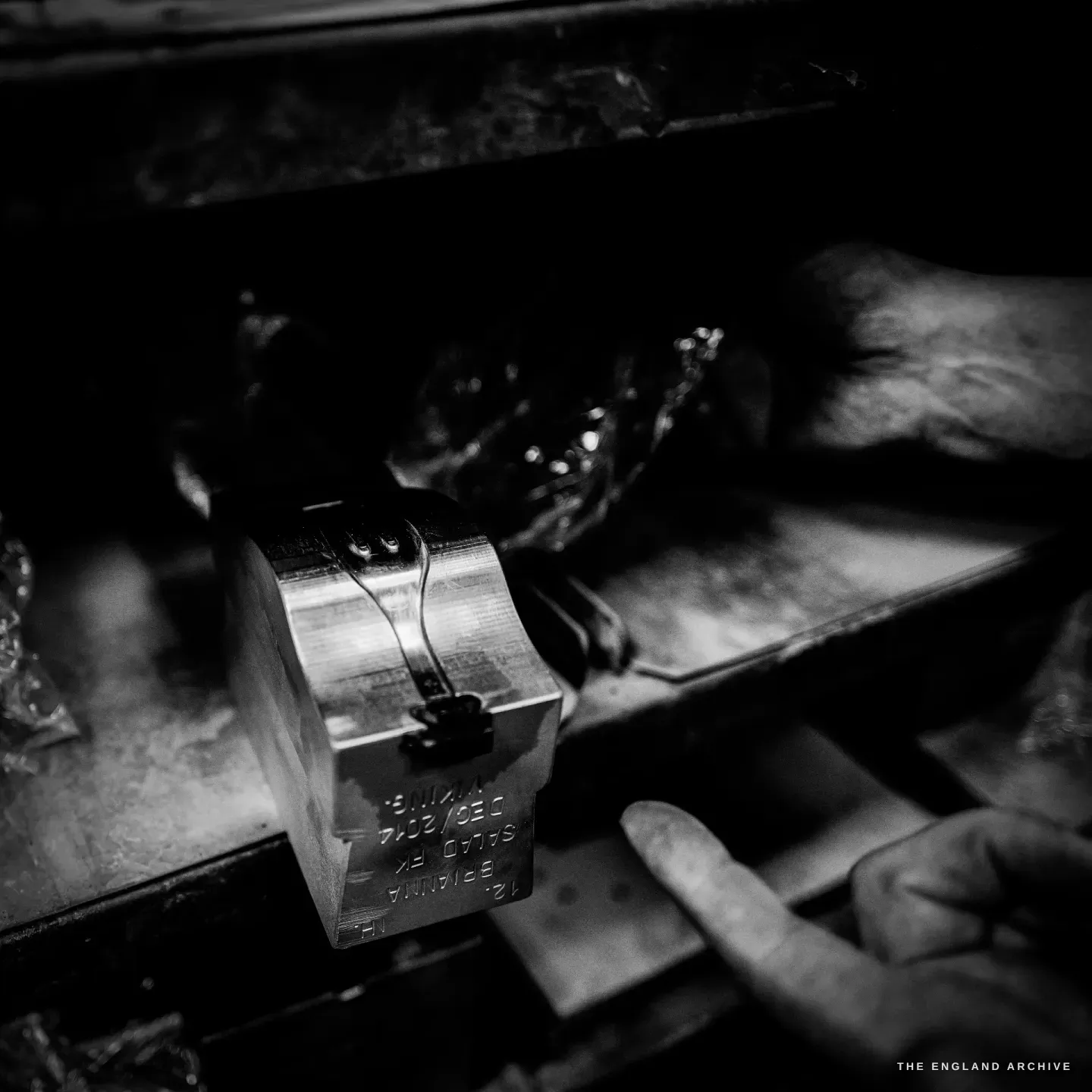
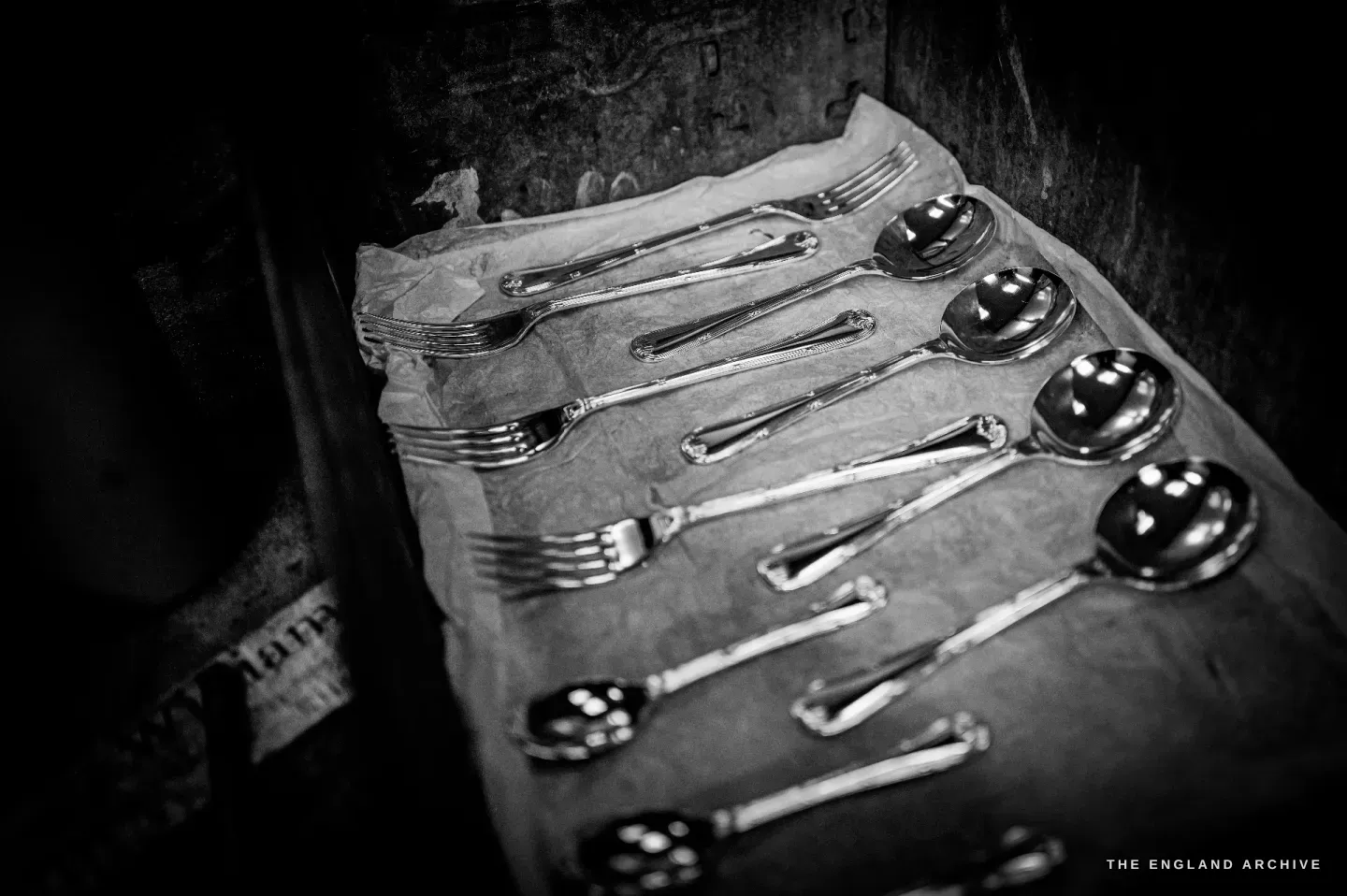
The patterns have names, and they sit in labelled trays like a library: Pride, Queens, and the rest of the old Sheffield flatware lines, each a particular set of curves in the handle that a customer will know and ask for by name. A hotel that has bought one pattern for fifty years can keep buying it, fork by replaced fork, because the tray and the die are both still here.
Colour comes up
The holloware - the teapots, jugs, trays and stands, the vessels rather than the flatware - is built rather than stamped. A body is formed, and then it is dressed: a cast spout, a cast foot, a scrolled handle, each made separately and soldered into place. There are bins of cast handles waiting their bodies, ornate little castings that will disappear into the finished piece as if they had grown there.
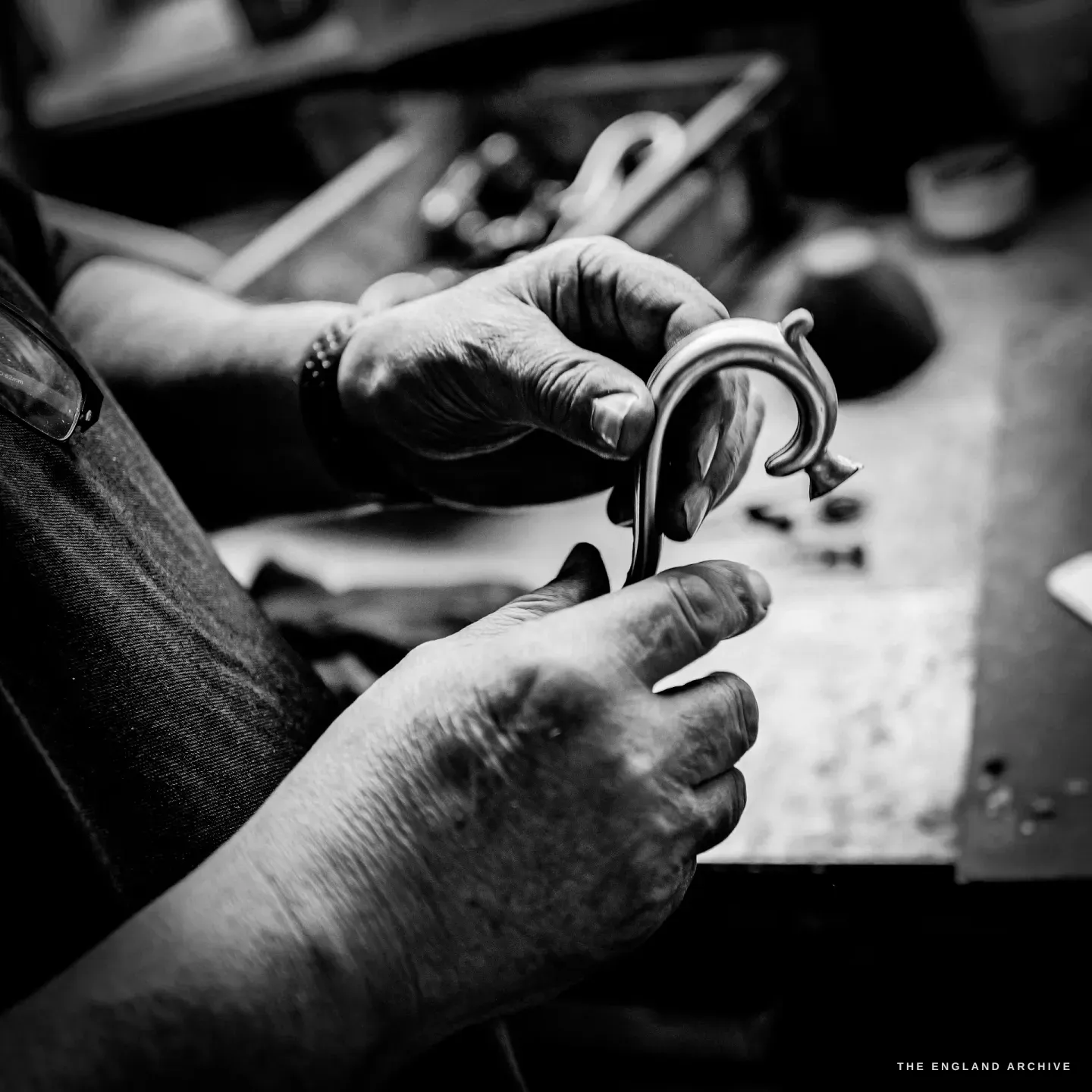
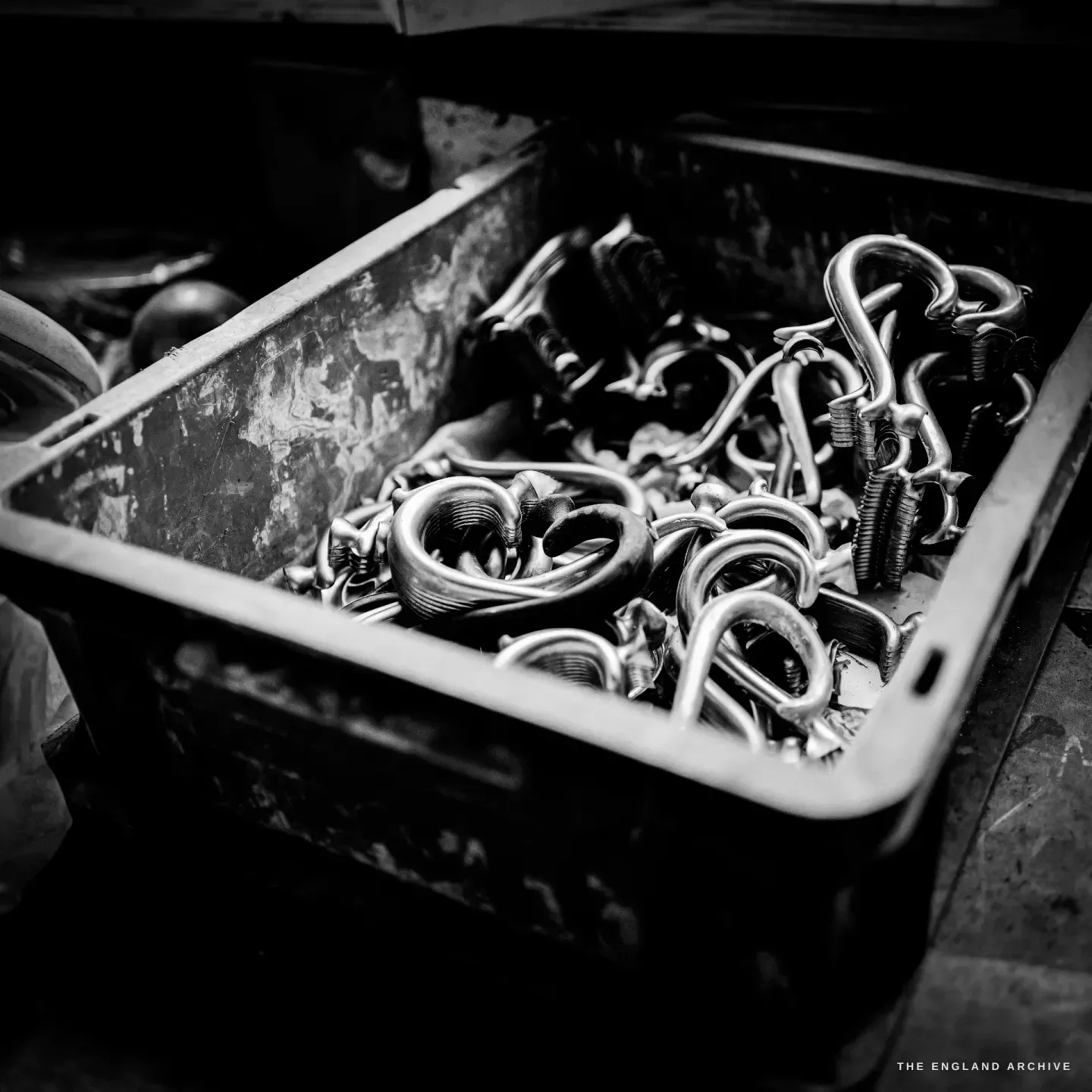
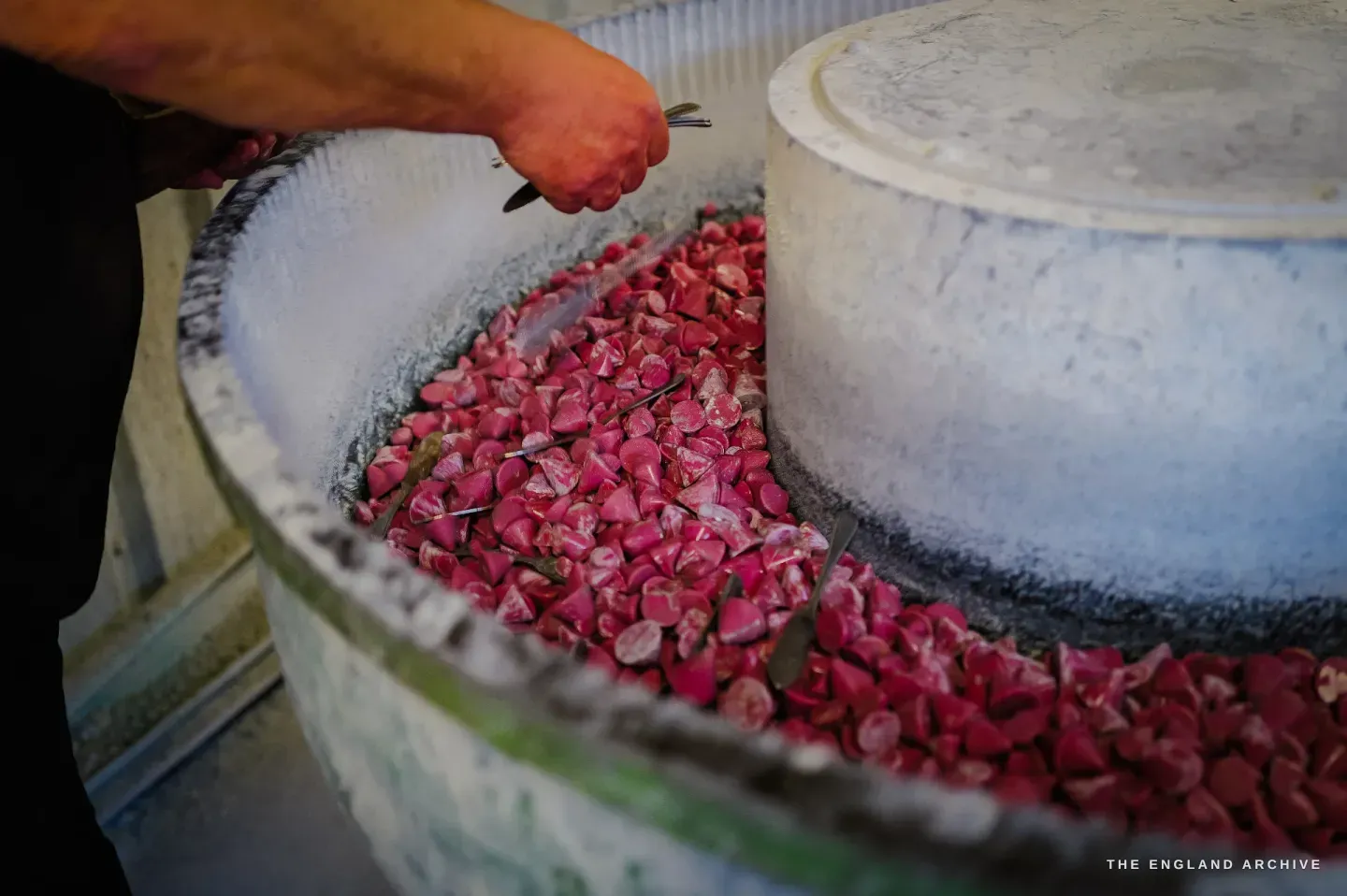
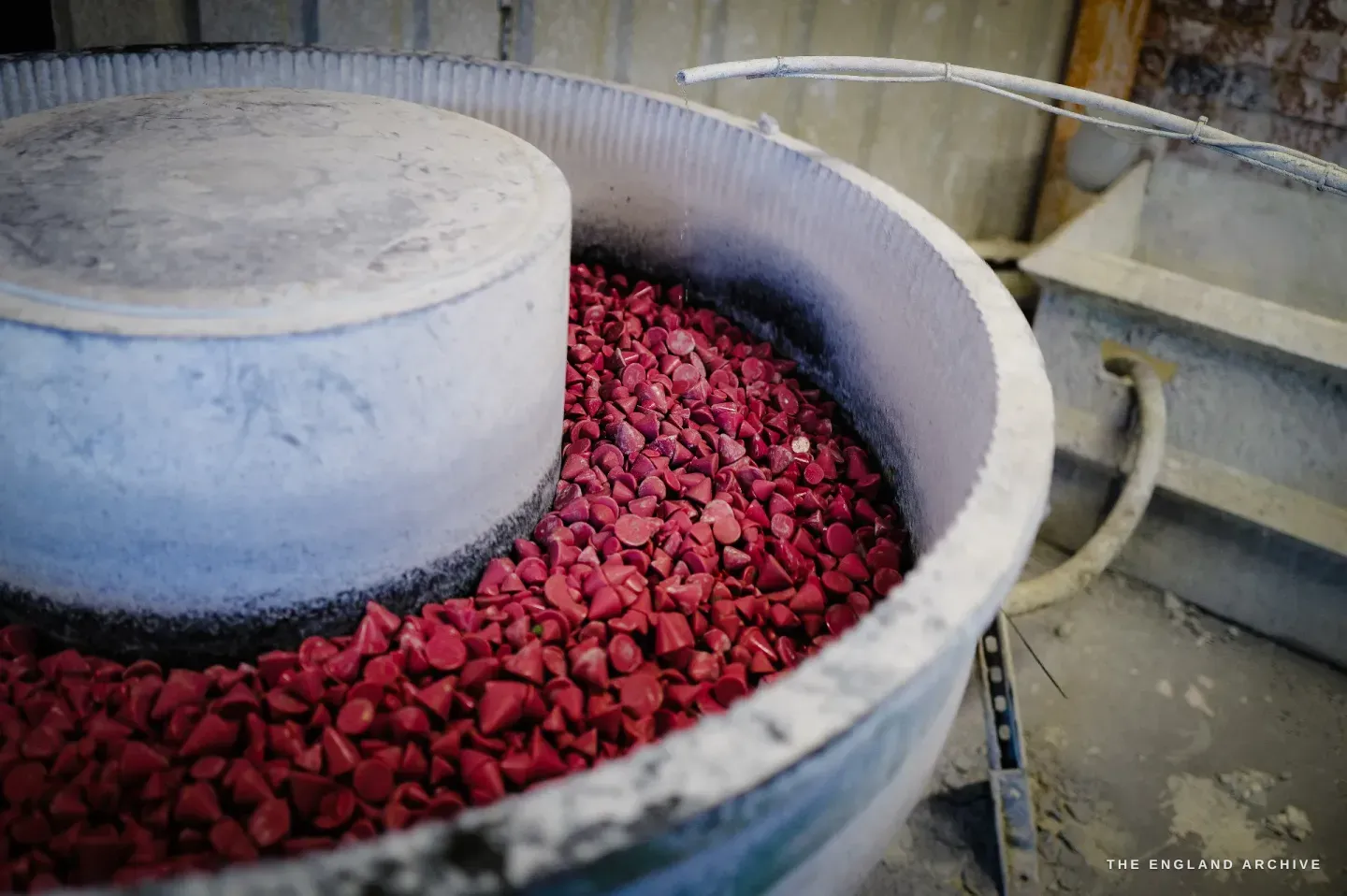
Then everything - flatware and holloware alike - goes to be finished, and the works delivers its second surprise of colour. To take the burrs and the tool marks off, the parts are tumbled for hours in a vibratory barrel filled with ceramic media, and the media is a violent, beautiful magenta, a colour you would expect in a sweet shop and never in a Sheffield works. The forks ride in it like something being cooked. It is the slow, mechanical descendant of a job once done by hand with grit and water, and it is the brightest thing in the building.
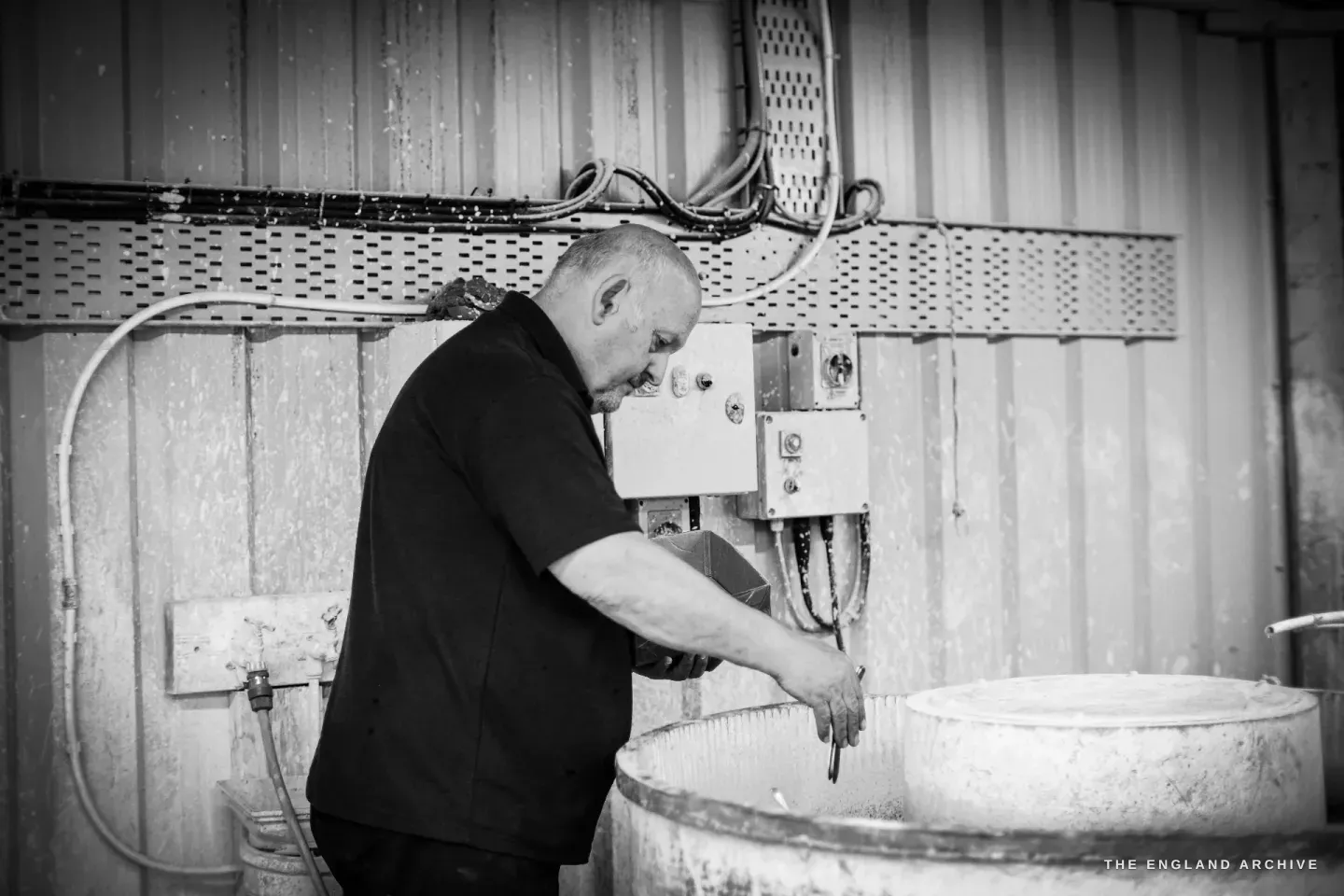
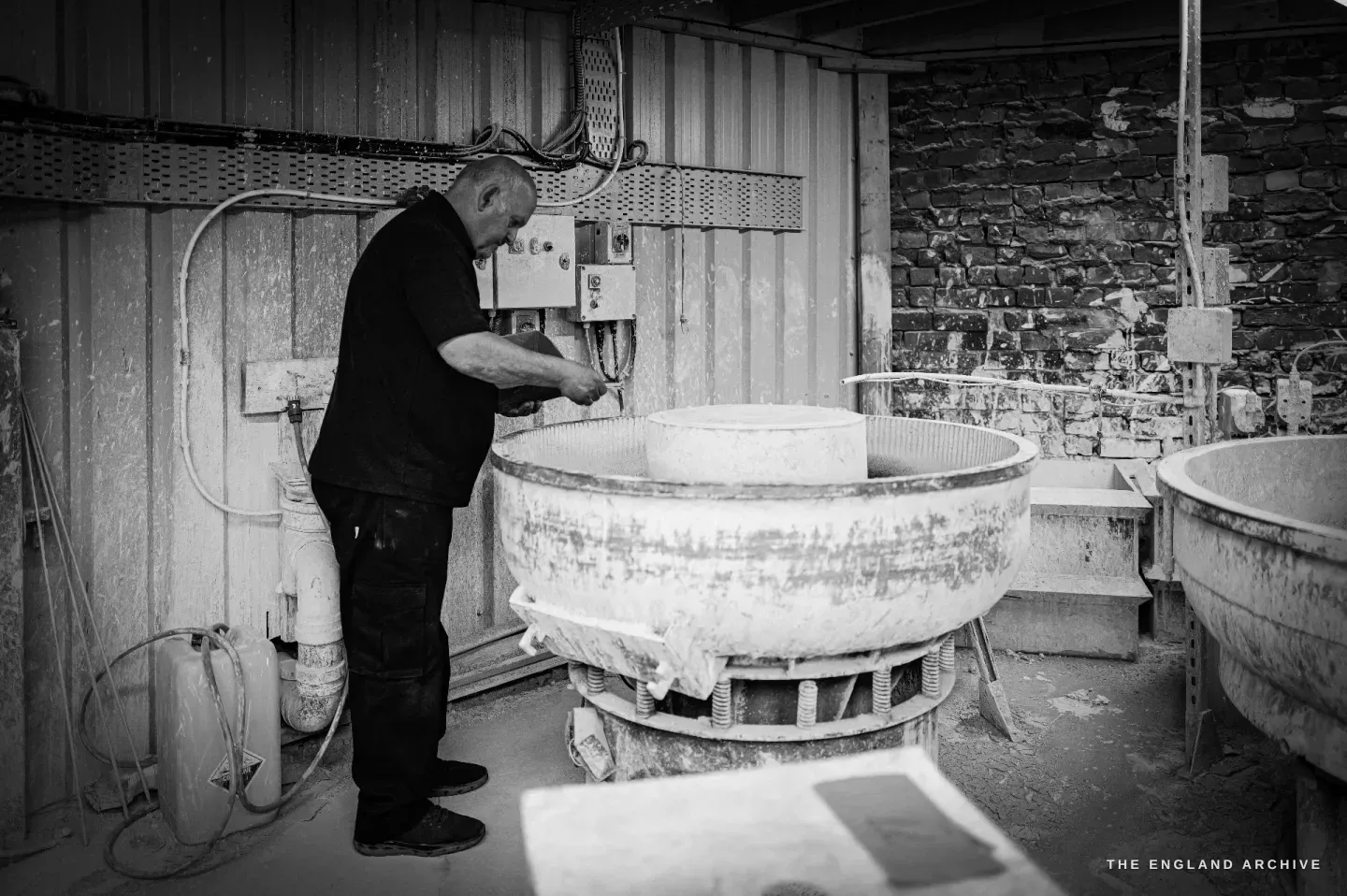
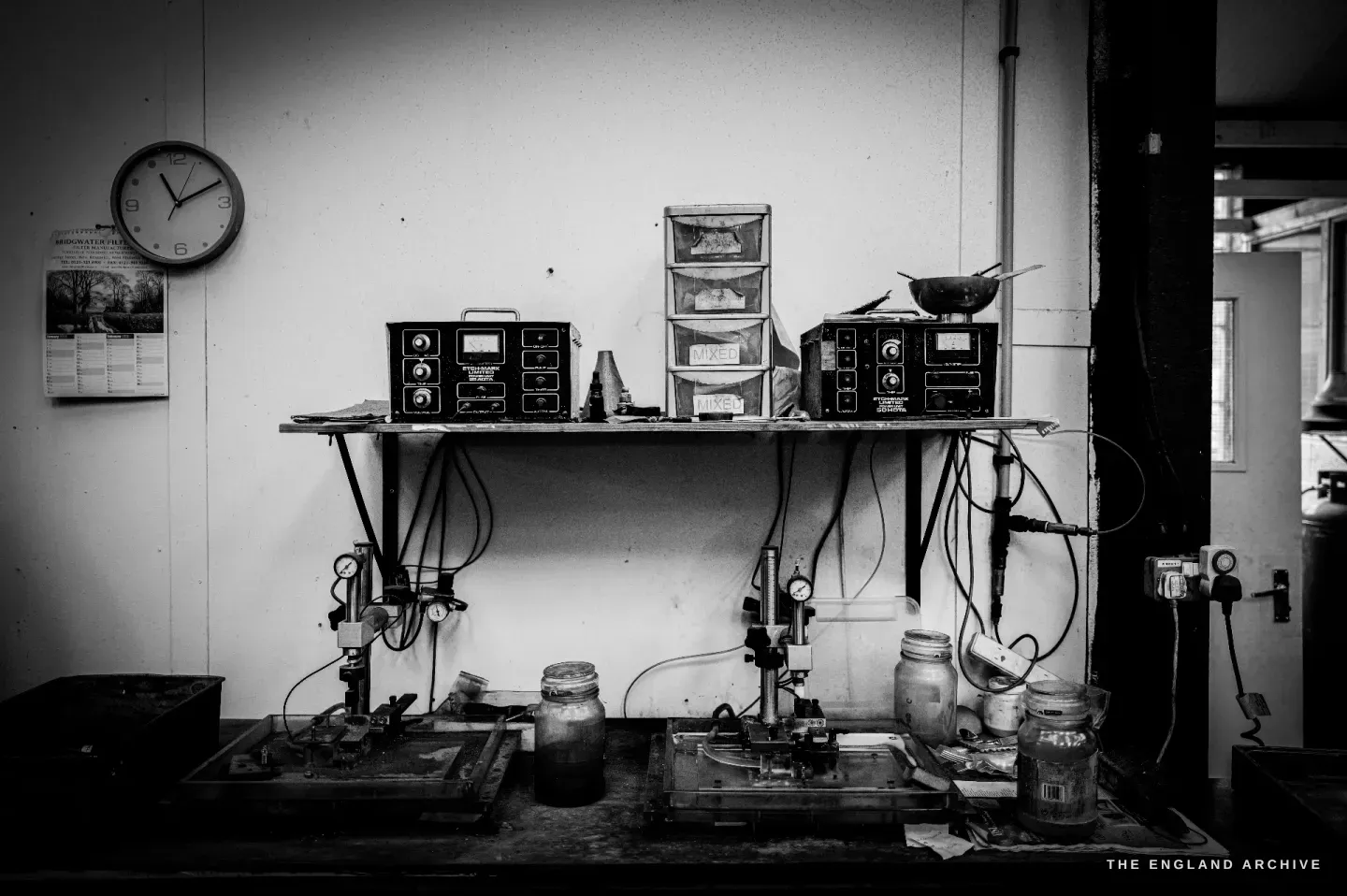
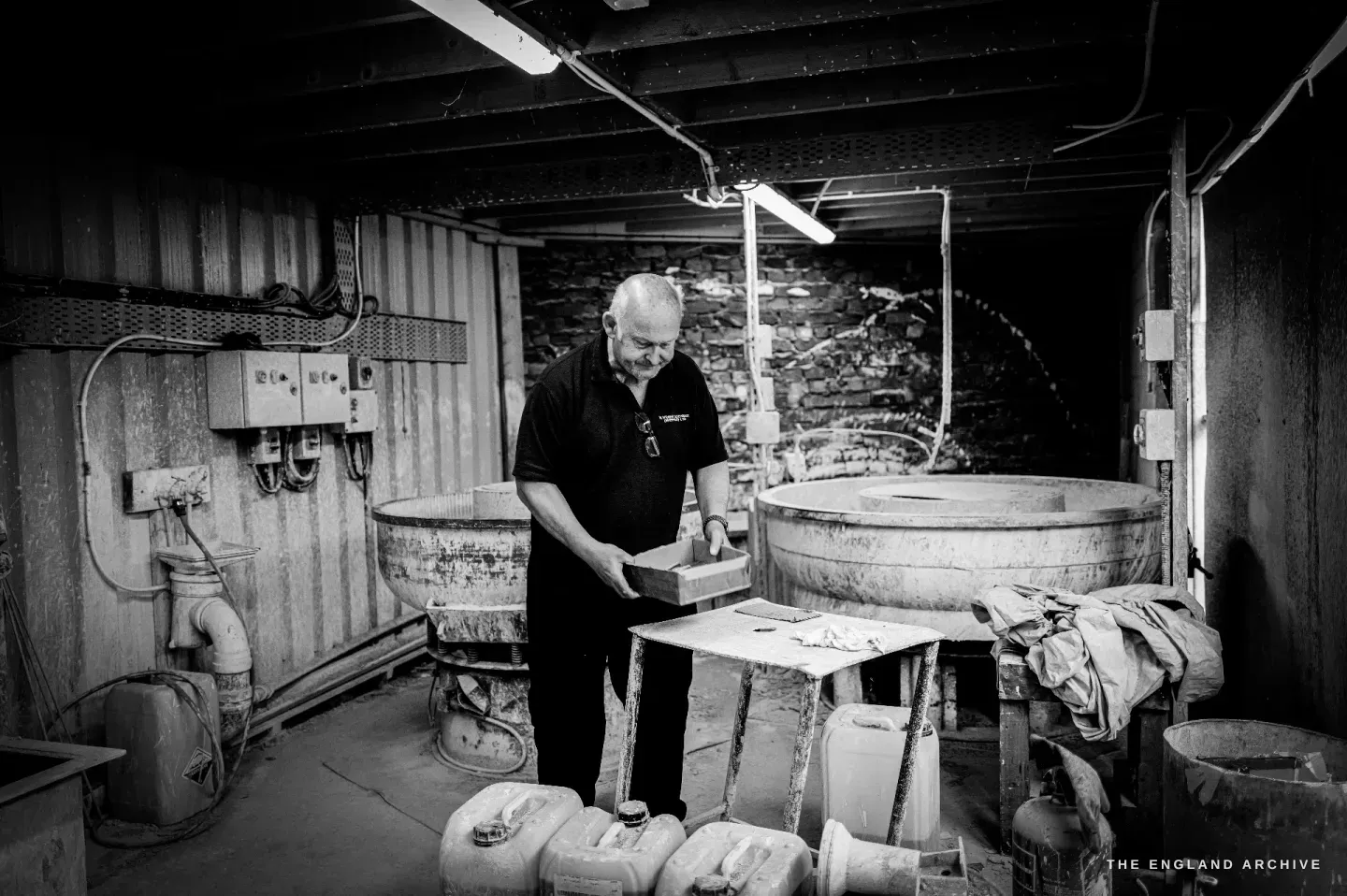
After the barrel comes the plating, in the wet end of the works - a low room of tubs and tanks and chemicals in jerry cans, where the brass that has carried the shape all this way is finally given its skin of silver. The pieces are jigged onto wire racks and lowered in; what comes out is no longer gold but white metal, ready for the last hand.
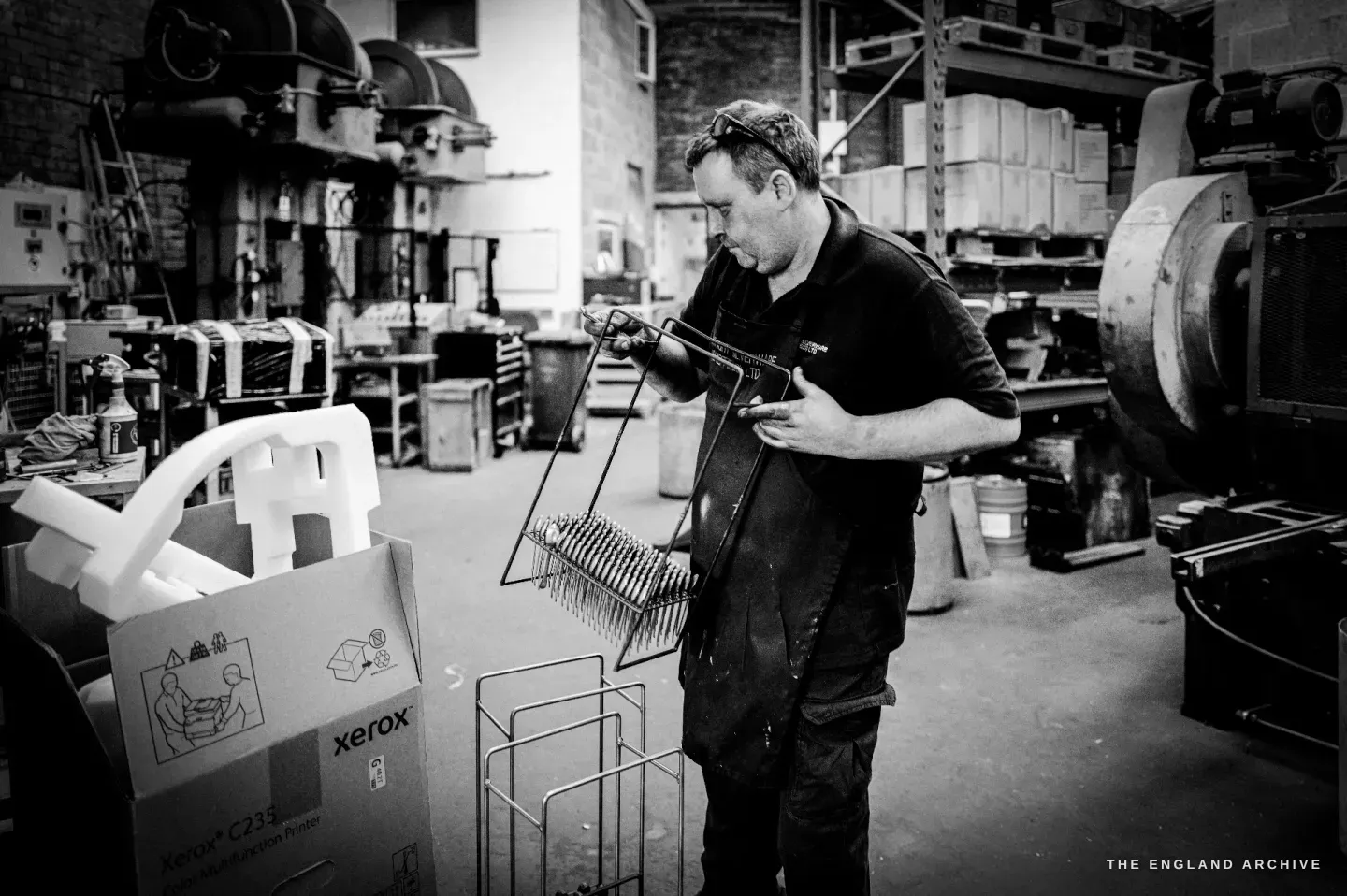
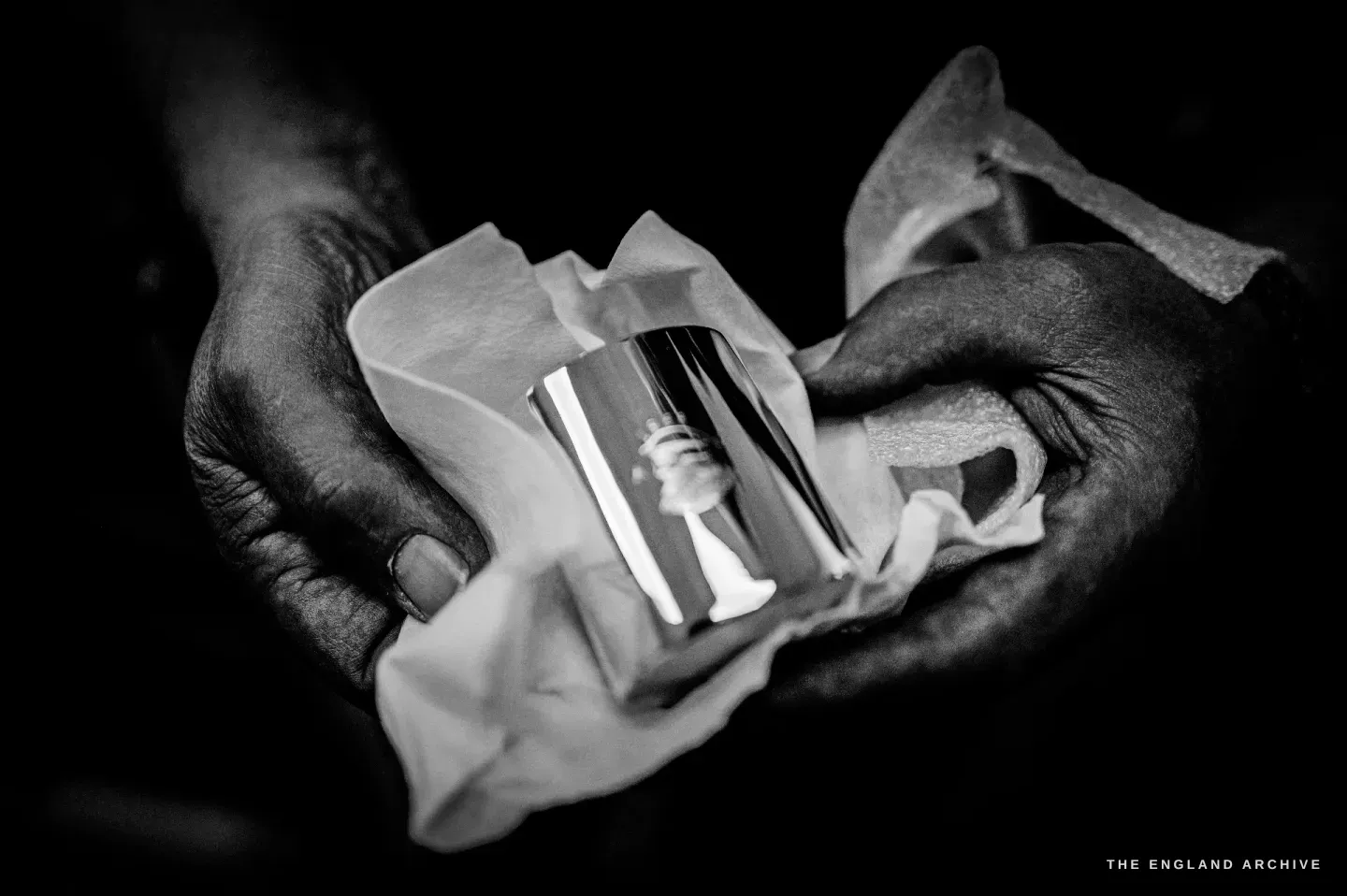
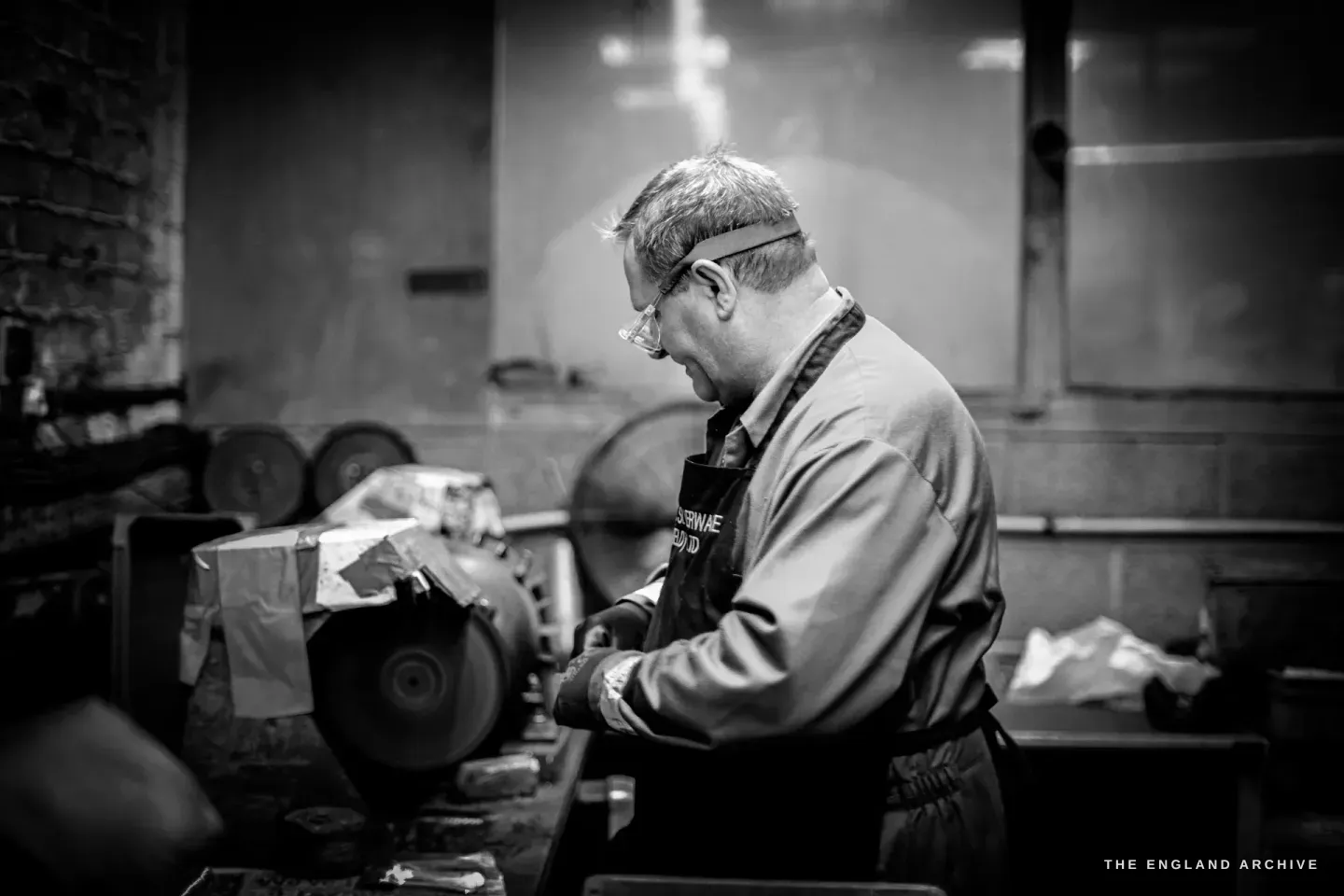
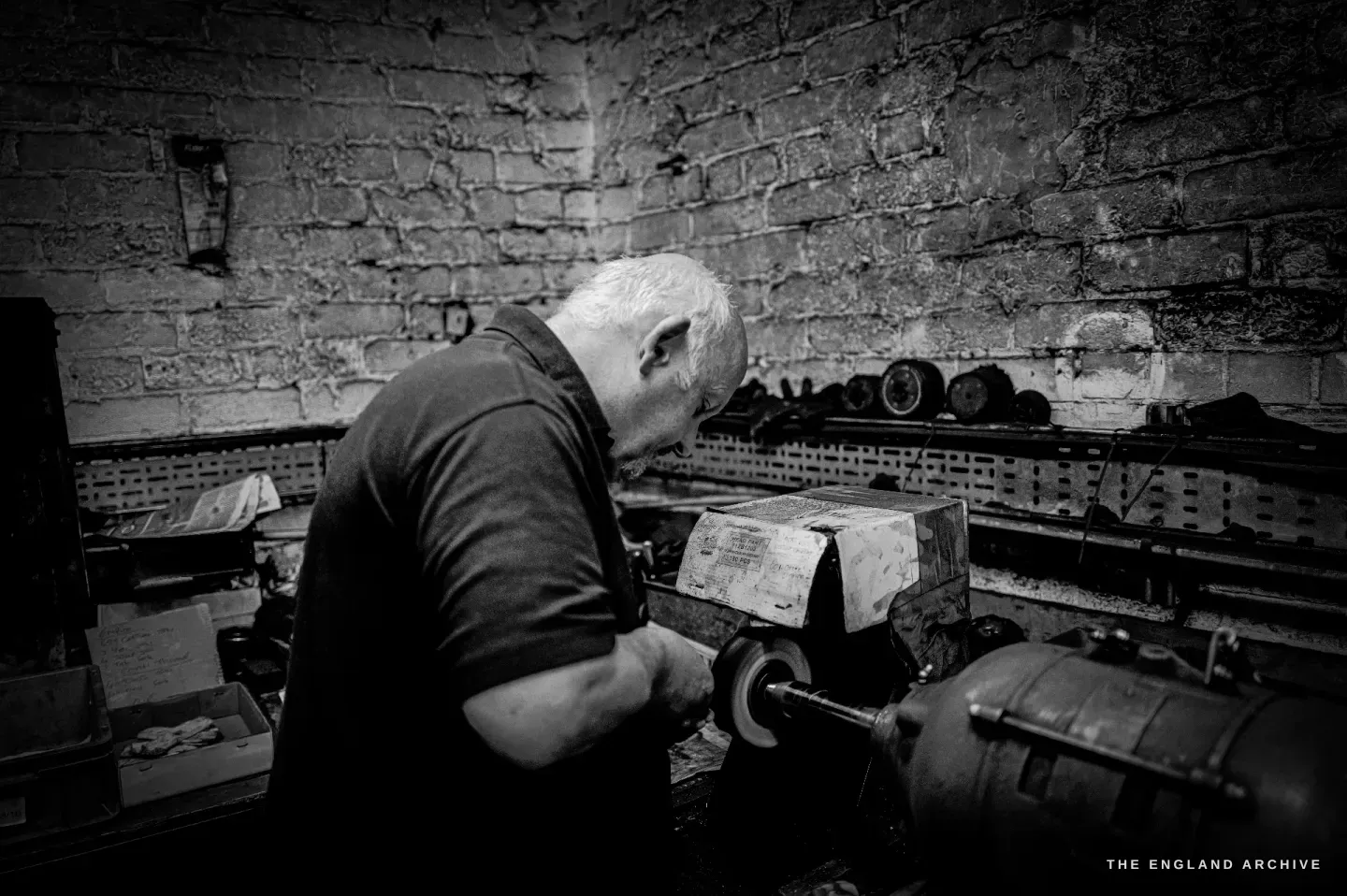
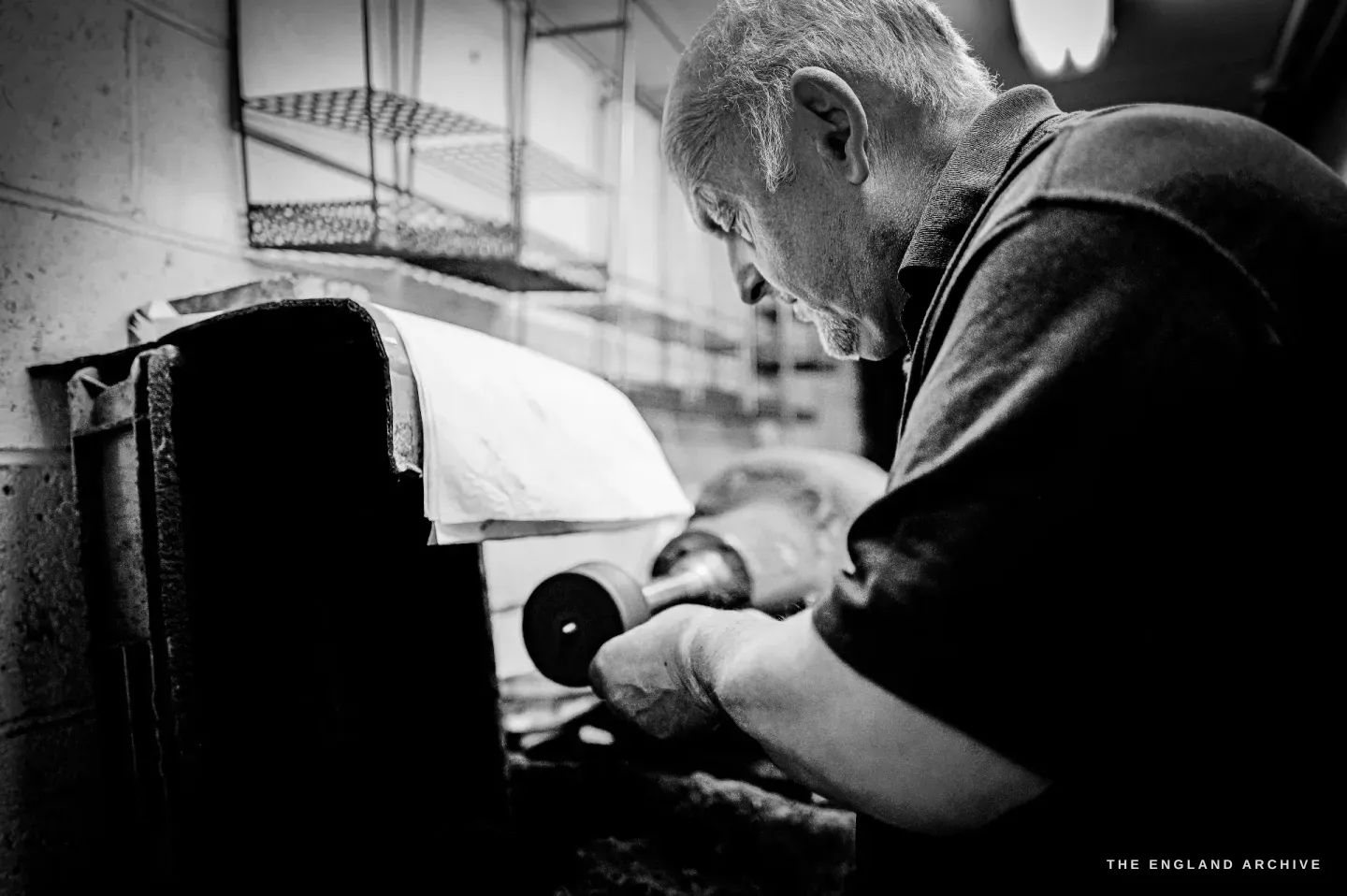
That last hand is the polishing. Held to a spinning mop, a plated piece comes up from a dull grey to the deep, even brightness you see across a dressed table - the surface so clean it stops being a surface and becomes a pour of light. It is dusty, exacting, lung-tiring work, done by Stephen and by the people he relies on for it, and it is the moment the thing finally looks like what it has cost.
The silver
So the gold becomes silver, and even the leavings are precious. The dishes wait in raw brass a single bench away from the plating tank; the swarf curls off the lathes in bright ribbons and is swept up and kept, because brass is too dear to throw away. Nothing in the building is wasted, which is its own kind of answer to a trade that cannot afford to waste anything, least of all its people.
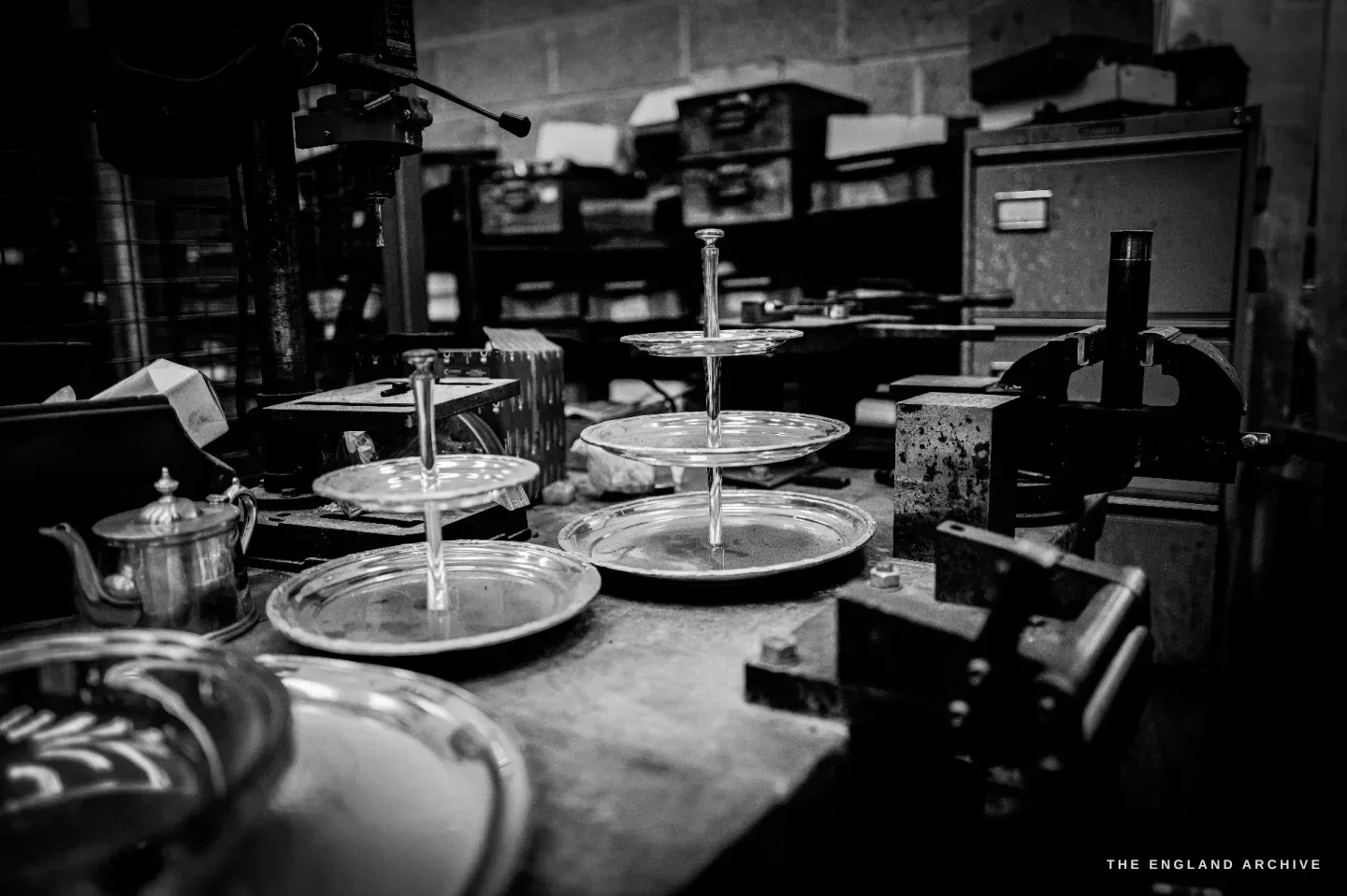
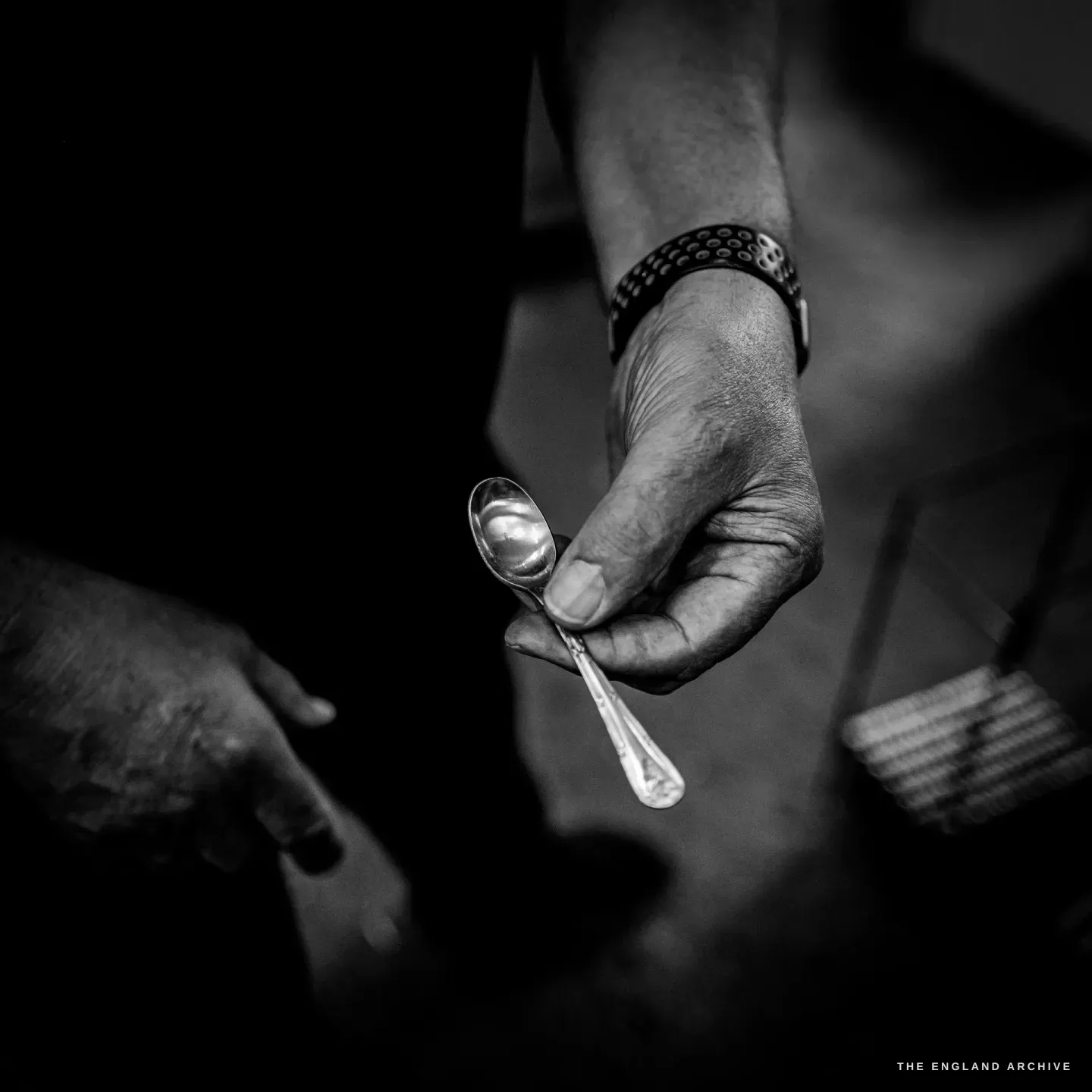
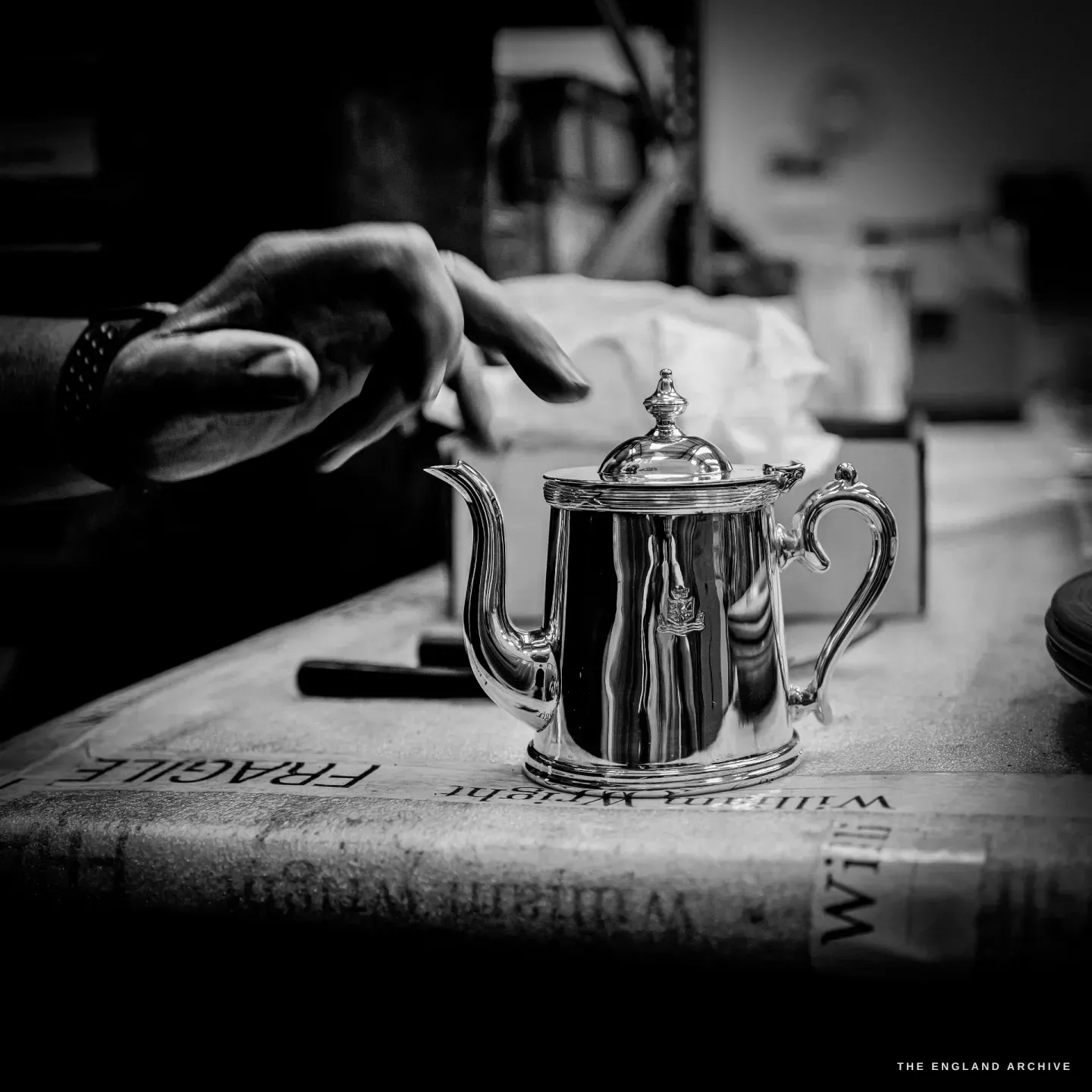
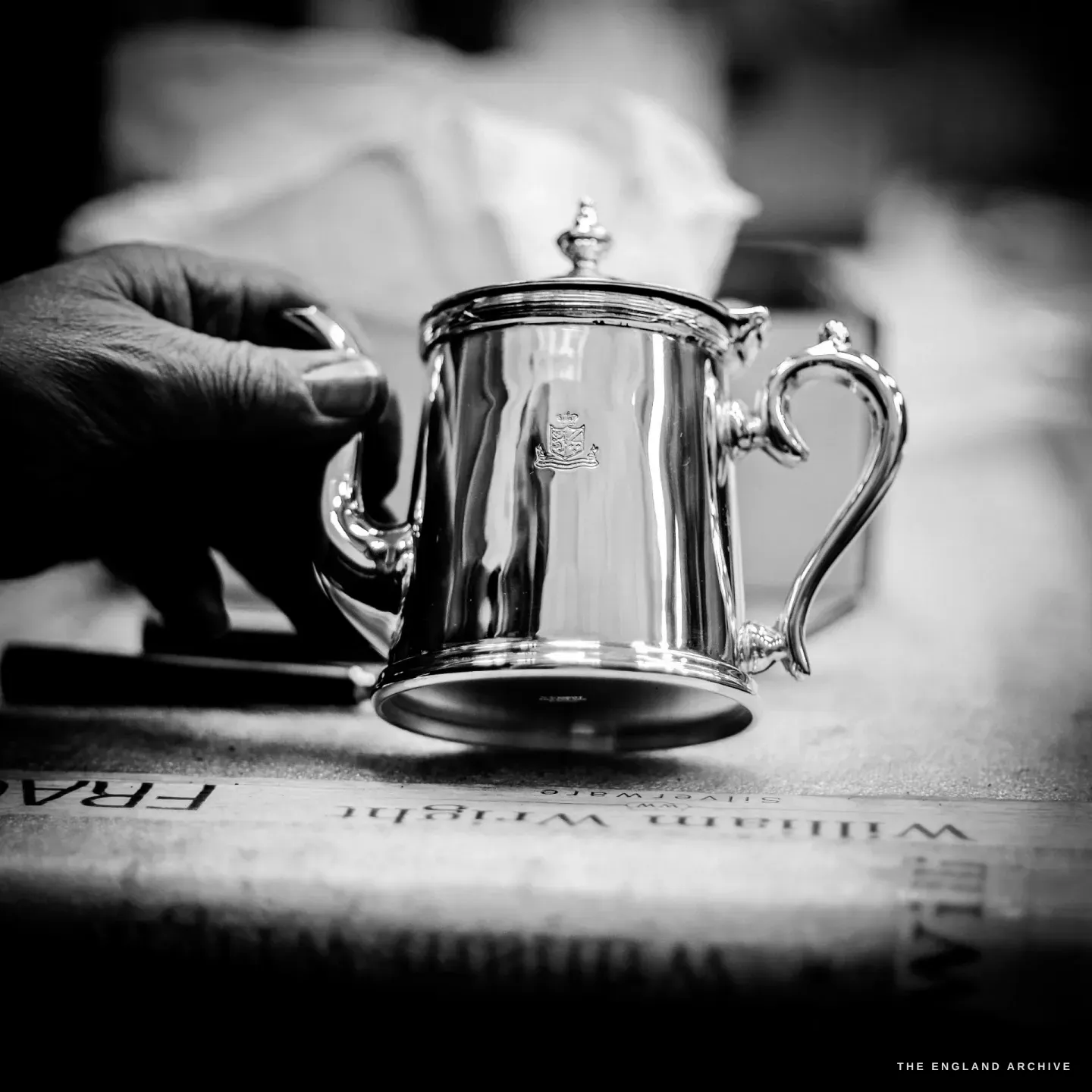
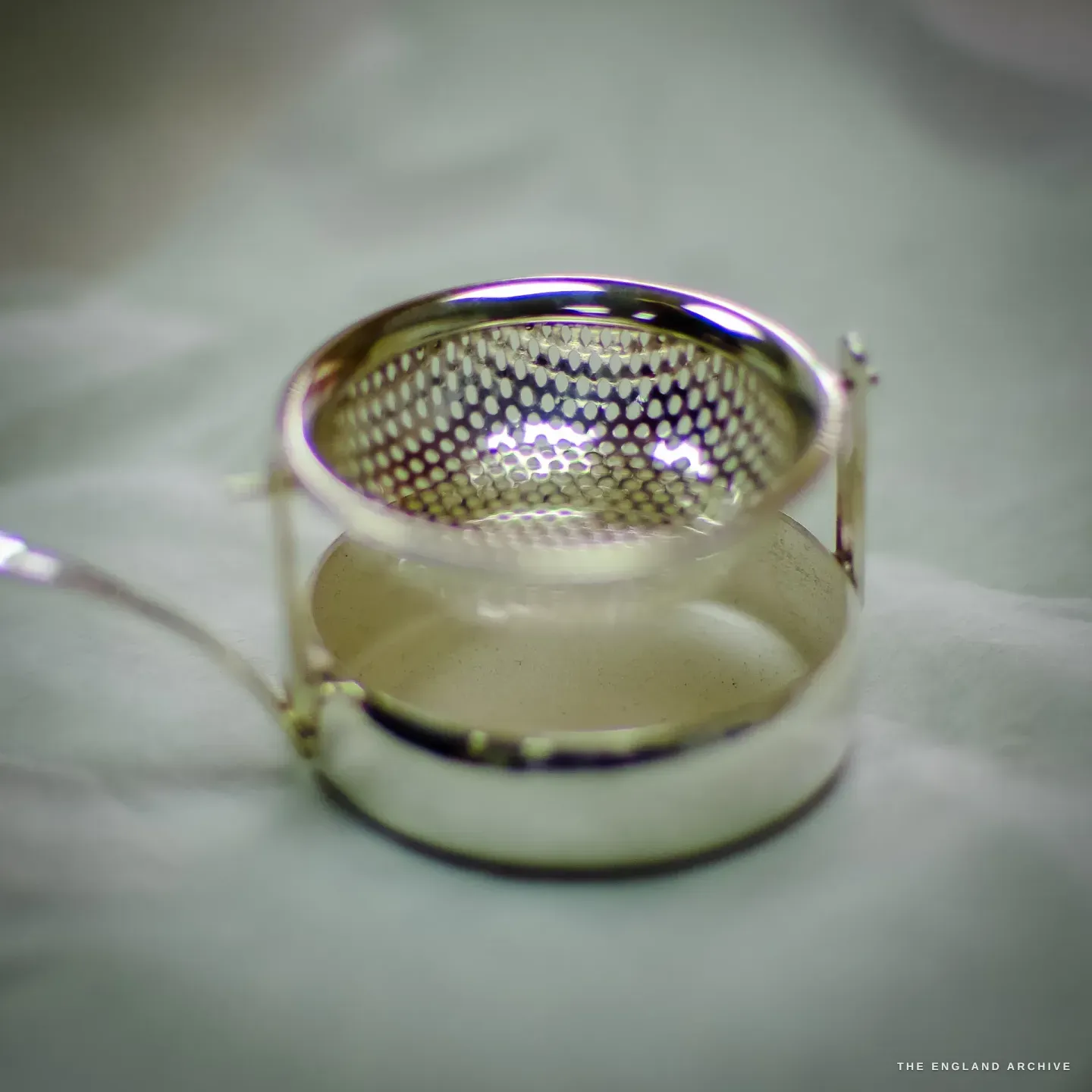
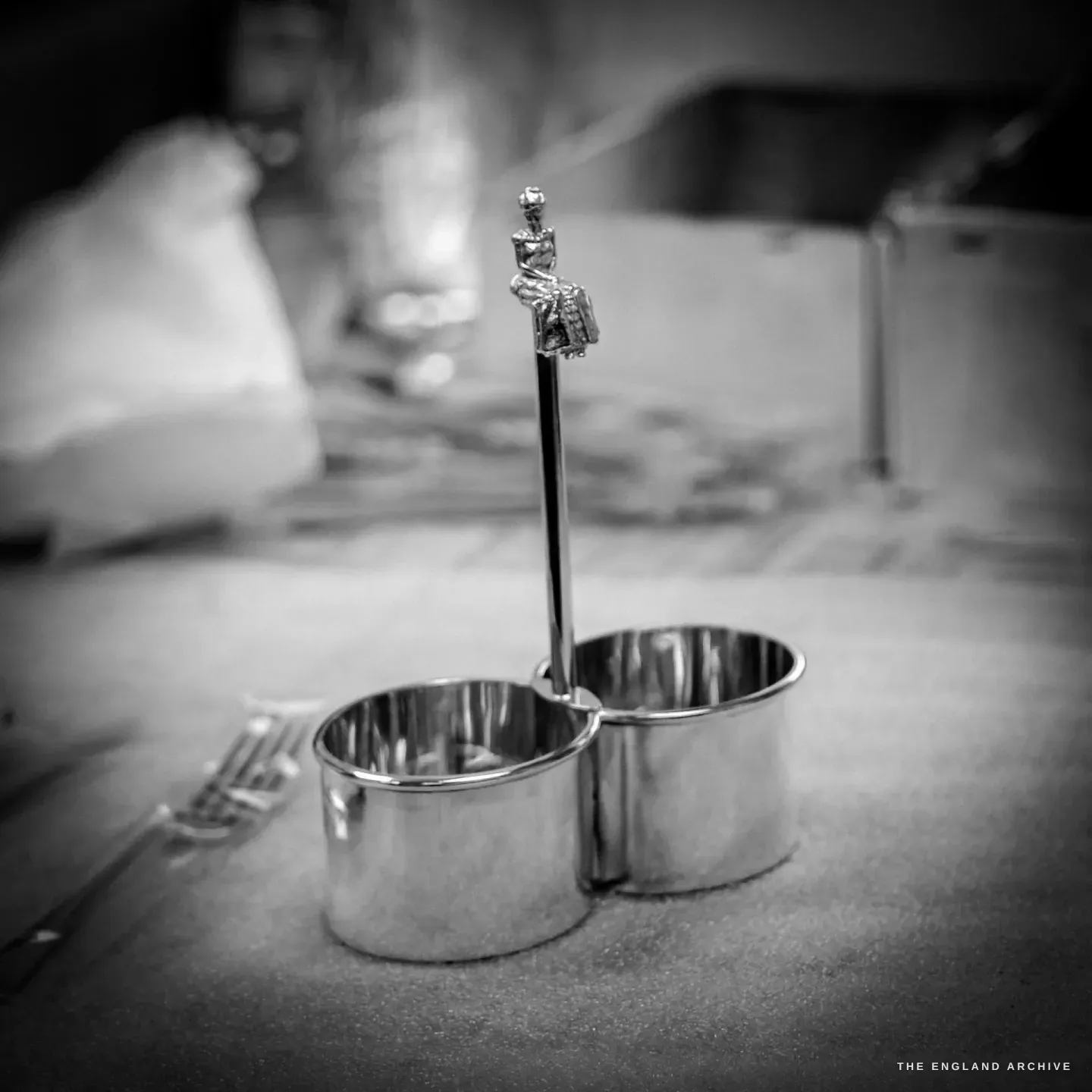
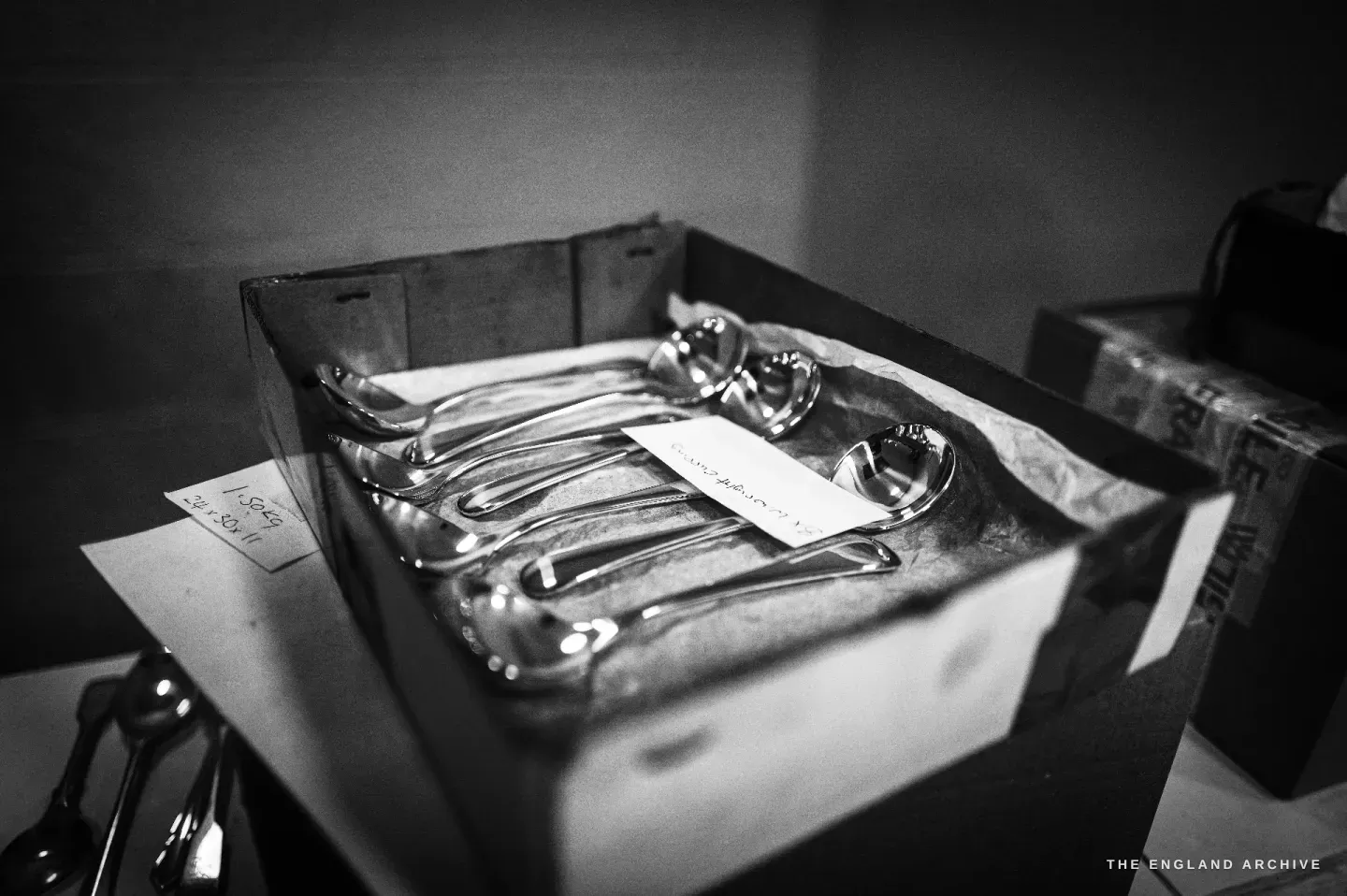
What it all becomes is a table. Flatware in two great families - forks and spoons in every size, the pattern crisp in the handle - and holloware to stand among it: teapots and coffee pots, milk jugs, trays, casters, tea strainers, and the tiered stands that carry an afternoon tea. This is where the client list stops being abstract. The afternoon-tea racks Stephen showed me, the ivy leaf worked into the top, are made for the Ivy. Bespoke pieces go to the Peninsula. The trays and pots travel out to the Ritz and the Michelin rooms and the dining rooms of people who will never think about where they came from, which is exactly as it should be: the work is meant to disappear into the occasion.
What makes a hero
Beatrice, Stephen's grandmother, named the firm for her son, William Wright. She was one of the women who kept Sheffield's trade alive while the men were away at war, and the firm was hers to run. Stephen talks about his father with a warmth that does not fade across a morning. William was born in 1916 and went to the war, and he served in Burma and a good many other places, and did - by every account - a great deal. His children grew up barely knowing any of it. He almost never spoke of the war to them, and Stephen, telling me this, plainly thinks that was the right way to raise a family, and I found I agreed with him.
There is one detail Stephen told me that I have not been able to put down since. When William died, his widow gave away his medals, every one, without a second thought. Not from carelessness - from conviction. The medals, the way they both saw it, were not the achievement. The achievement was the family: the children raised, the stable home kept, the firm handed on. Those were the things, they believed, that make a hero, and beside them a drawer of ribbons was not worth keeping. It is a hard, clear, unsentimental idea about what a life is for, and you can feel it running underneath the whole place - a works built not on glory but on turning up, doing the job well, and leaving something that still works for the next person.
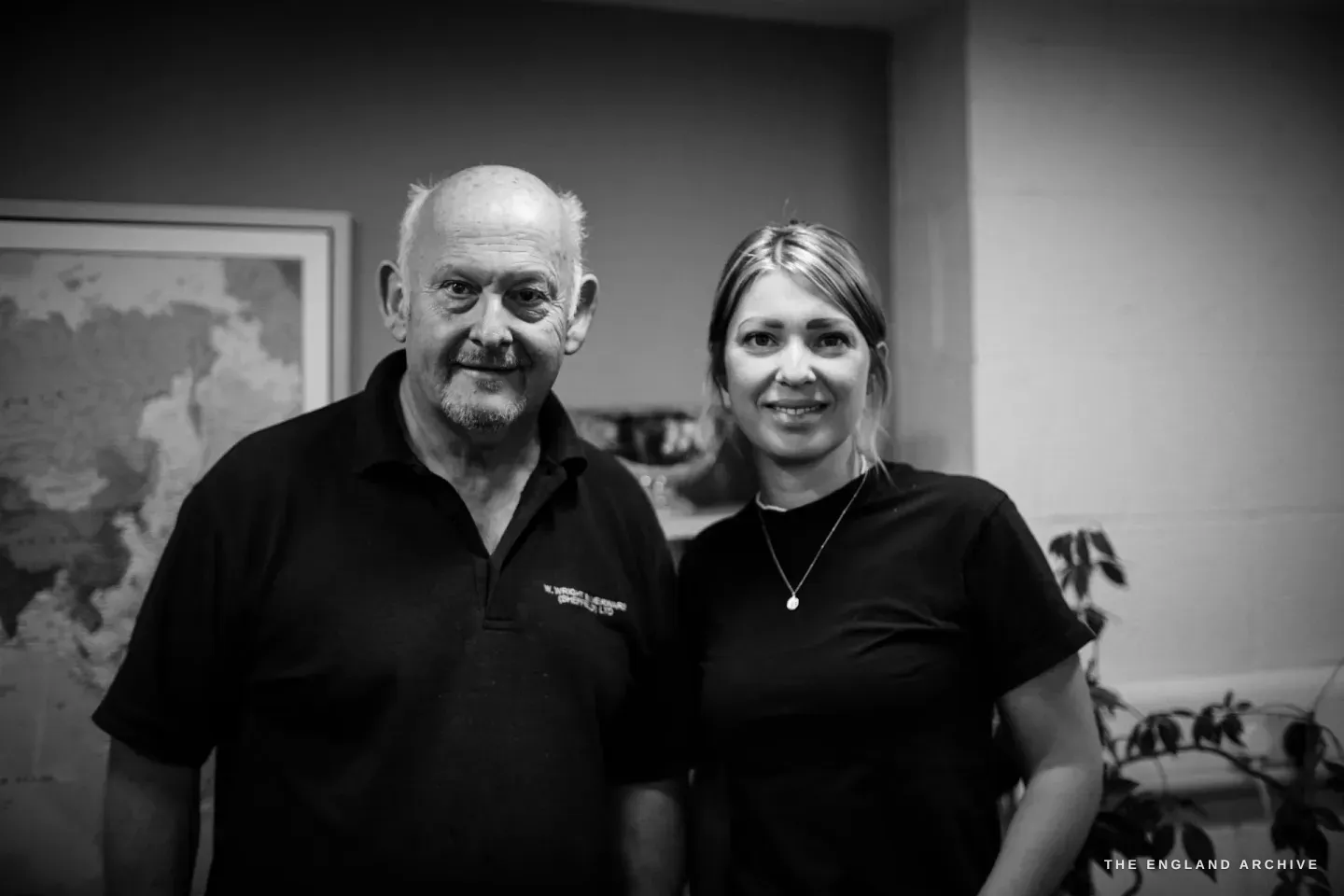
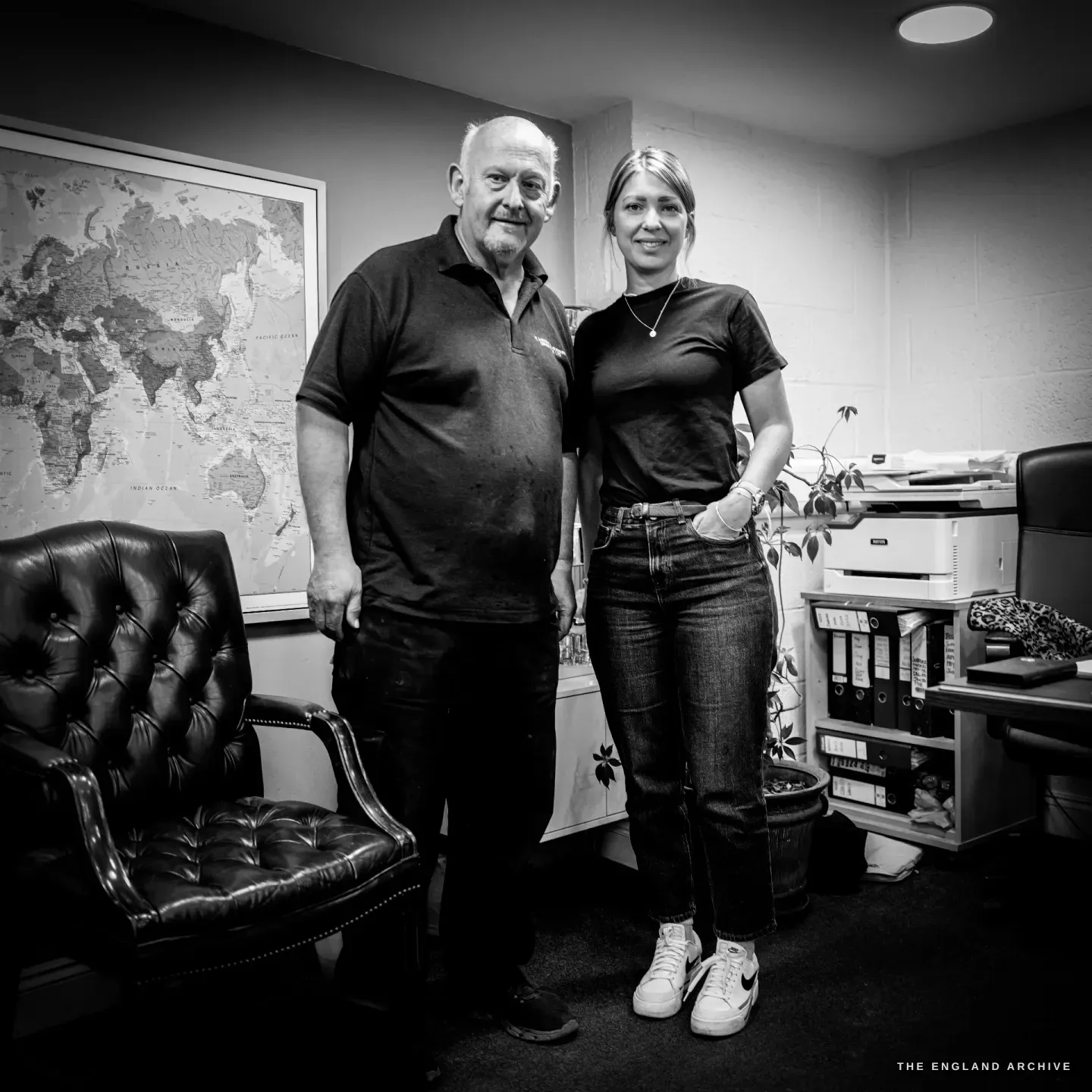
That next person is already here. Stephen's daughter, Samantha, works in the business, in the office at the front, under a framed map of a world the firm's silver travels further into than most of its neighbours ever will. A family firm in the past tense is a museum. This one is still in the present.
This can be taught
Which brings the morning back to the famine. The order book is full and the skill is thinning, and those two facts cannot both hold forever. Stephen knows it better than anyone, and he is not fatalistic about it. The thing he kept returning to is that none of this is magic. It is hard, learnable craft, and it can be passed on. He showed me a video on his phone of one of his retired makers taking a trophy with a deep dent in it and, over a few patient minutes, beating the metal back until the dent was simply gone, the piece as good as the day it was made. This, Stephen said, can be taught. If there are people willing to learn, it can be handed down, the way it was handed to him.
Sheffield cutlery and silversmithing are both on the Heritage Crafts Red List, which is the formal way of saying what Stephen says plainly: that the number of people who can do this to this standard is now small enough to lose. What stands against that, on the evidence of one morning, is a works that is busy, warm, fully employed dressing some of the best tables in the world, and run by a man who can do every job in it and would teach all of them tomorrow to anyone who walked in wanting to learn. The famine is real. So is the feast. The whole question is whether the next pair of hands arrives in time, and this is one of the few places left with everything ready to teach them.
Sources and notes
The morning itself - the works, the run through the making from the rolling mills and presses to the plating room and the polishing spindle, the client names, the brass-to-silver of it, and the account of William Wright and his medals - is first-hand documentation from the archive's visit to William Wright in Sheffield in June 2026, and from Stephen Wright in conversation on the floor. The named customers (the Ritz, the Peninsula hotels, Sketch and other Michelin dining rooms, the afternoon-tea pieces for the Ivy, and the royal-warrant resellers through whom the firm's work reaches the Palace) are as Stephen gave them.
The firm's history is from its own published account and the public record: Beatrice Wright, who started the firm and named it for her son, William Wright (born 1916), who served in Burma in the Second World War and came home into the Sheffield cutlery trade; William's death in 1987; and the firm's continuation under his youngest son, Stephen, as a Made in Sheffield maker of cutlery and silverware for the hospitality trade. Stephen's own profile is held on its subject page (MK-0030). Sheffield cutlery and silversmithing are on the Heritage Crafts Red List of Endangered Crafts.