Cutlers' Hall
A Private Tour of the Company of Cutlers in Hallamshire

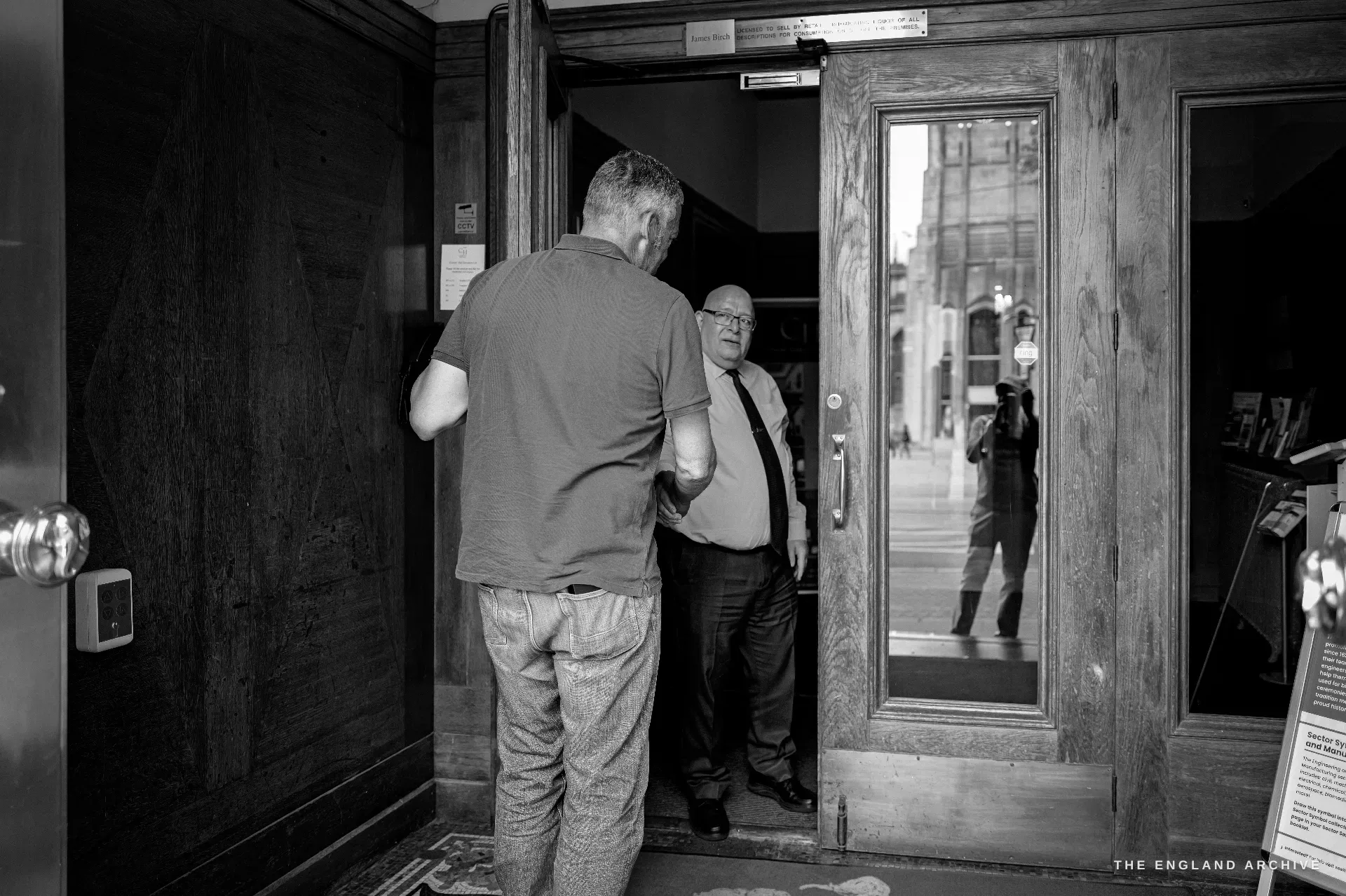
I came to Sheffield to photograph the knife trade, and Paul Jacobs of the scissor-makers Ernest Wright said there was one place I ought to see before I left: the Hall on Church Street where the trade governs itself. He arranged it. So on a June morning in 2026 I climbed the steps of Cutlers' Hall, opposite the cathedral, and was let in through the oak doors by a man in a suit, and spent a couple of hours being shown round the home of the oldest institution in Sheffield still doing the job it was set up to do.
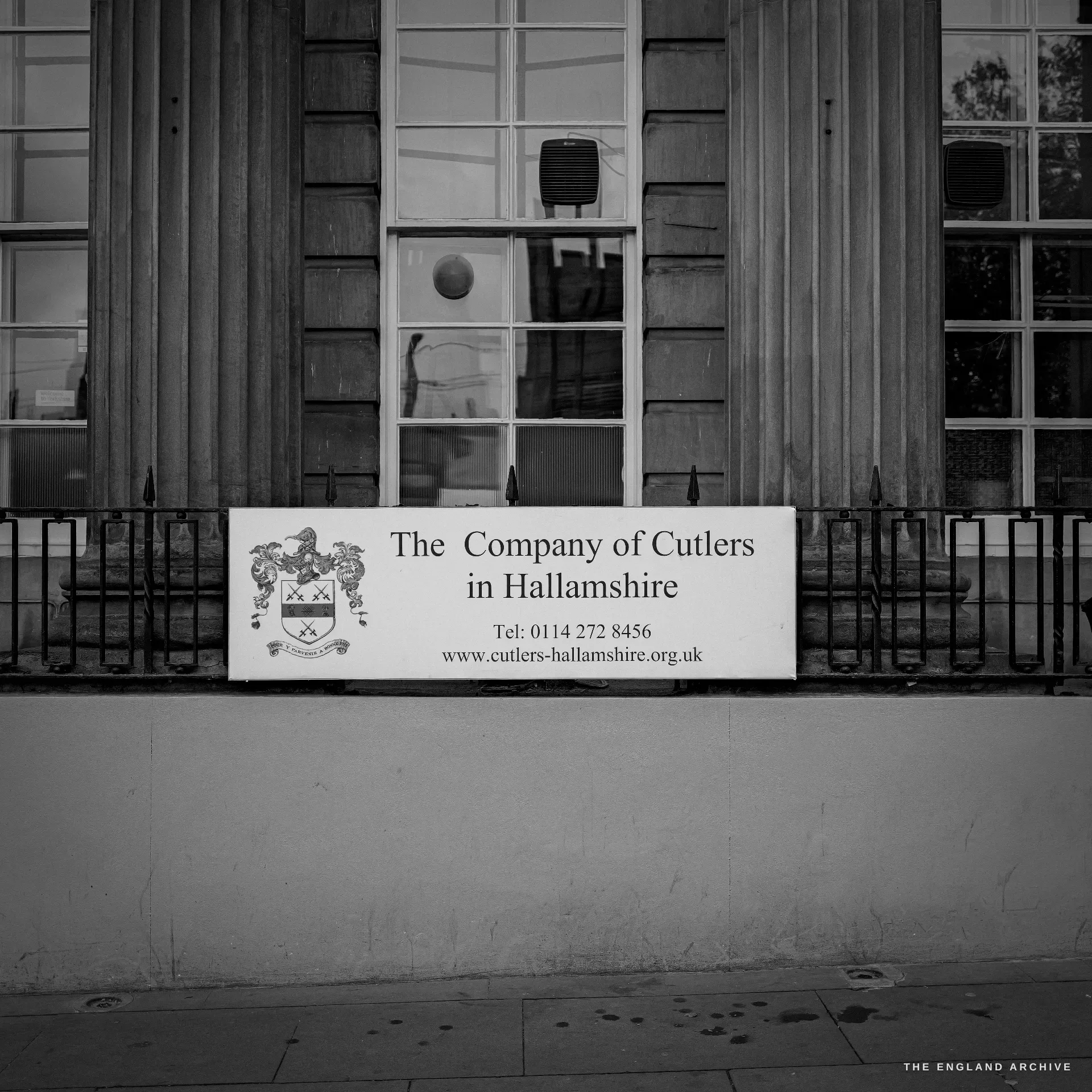
It does not announce itself as anything unusual - a classical stone front among the shops and offices of the city centre, columns, a portico, a brass sign on the railings. But the sign is the thing. The Company of Cutlers in Hallamshire. Hallamshire is the old name for the district around Sheffield, and the Company is the body that has represented and regulated the makers of knives, blades, scissors and edge tools here since 1624. Four hundred years, and still meeting in the building it built for the purpose.
The Company of Cutlers in Hallamshire
An Act of Parliament created the Company in 1624, at a time when Sheffield already had two centuries of cutlery-making behind it. Chaucer names a Sheffield knife in the fourteenth century. By the early seventeenth the trade was large enough, and jealous enough of its reputation, to want a body that could enforce standards, register the marks that makers struck on their blades, and settle the disputes between them. That is what the Company was for: it governed who could call himself a cutler, granted the trade marks, and kept the quality of the Sheffield name. It still grants marks today, and its remit has widened over four centuries from cutlery to the whole spread of the city's metal trades - the silversmiths, the toolmakers, the steelmakers.
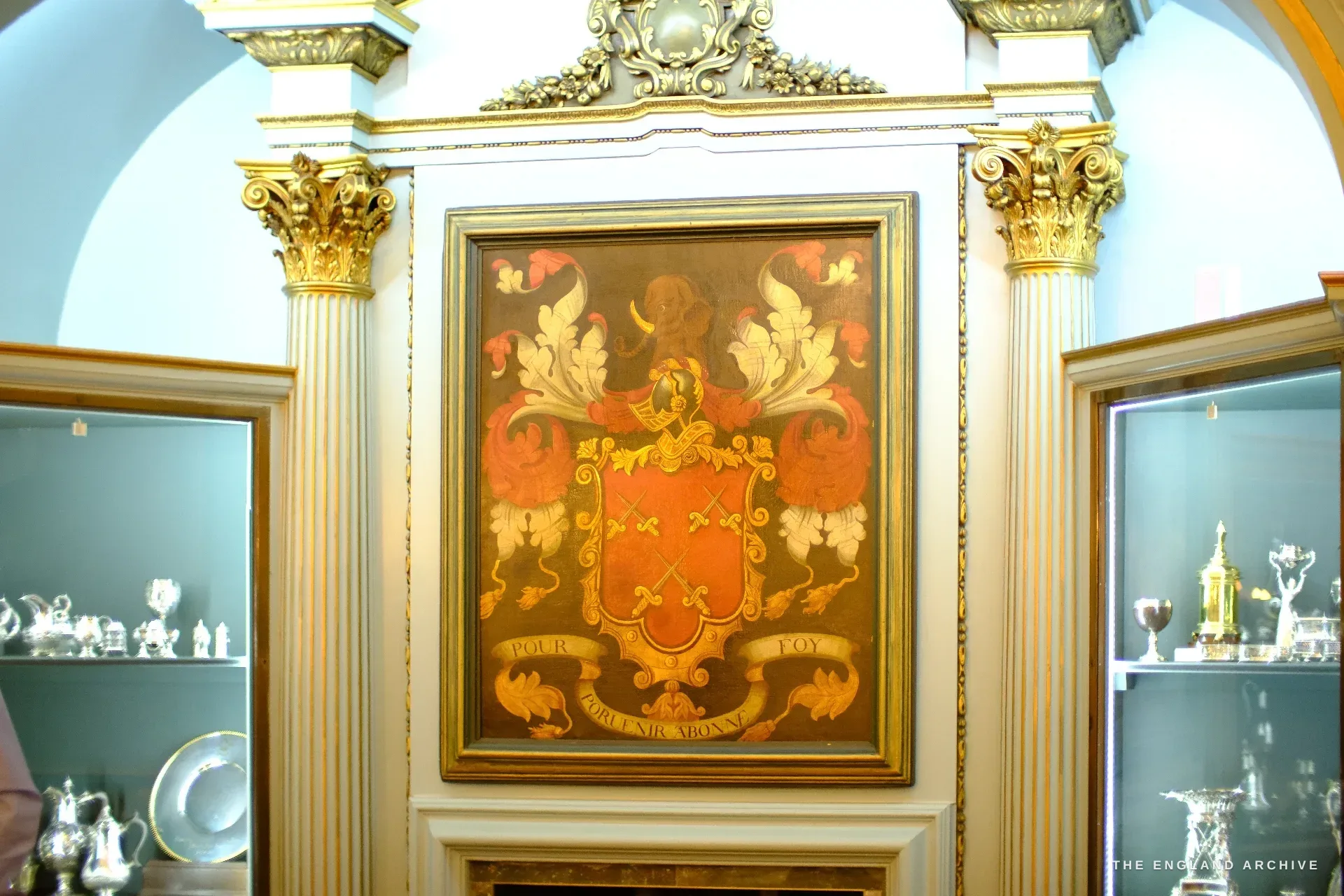
The head of the Company is the Master Cutler, elected for a single year, and the office is old enough and grand enough that the Master Cutler of Hallamshire is still one of the more senior civic figures in the north. Everywhere you look in the Hall the same shield repeats - crossed arrows over a sheaf, and beneath it the motto in old French, Pour y parvenir à bonne foy: to succeed by honest dealing. It is painted, carved, cast, engraved and woven into the place, because it is the whole argument the Company was founded to make - that the Sheffield name meant honest work, and was worth protecting.
Room by room
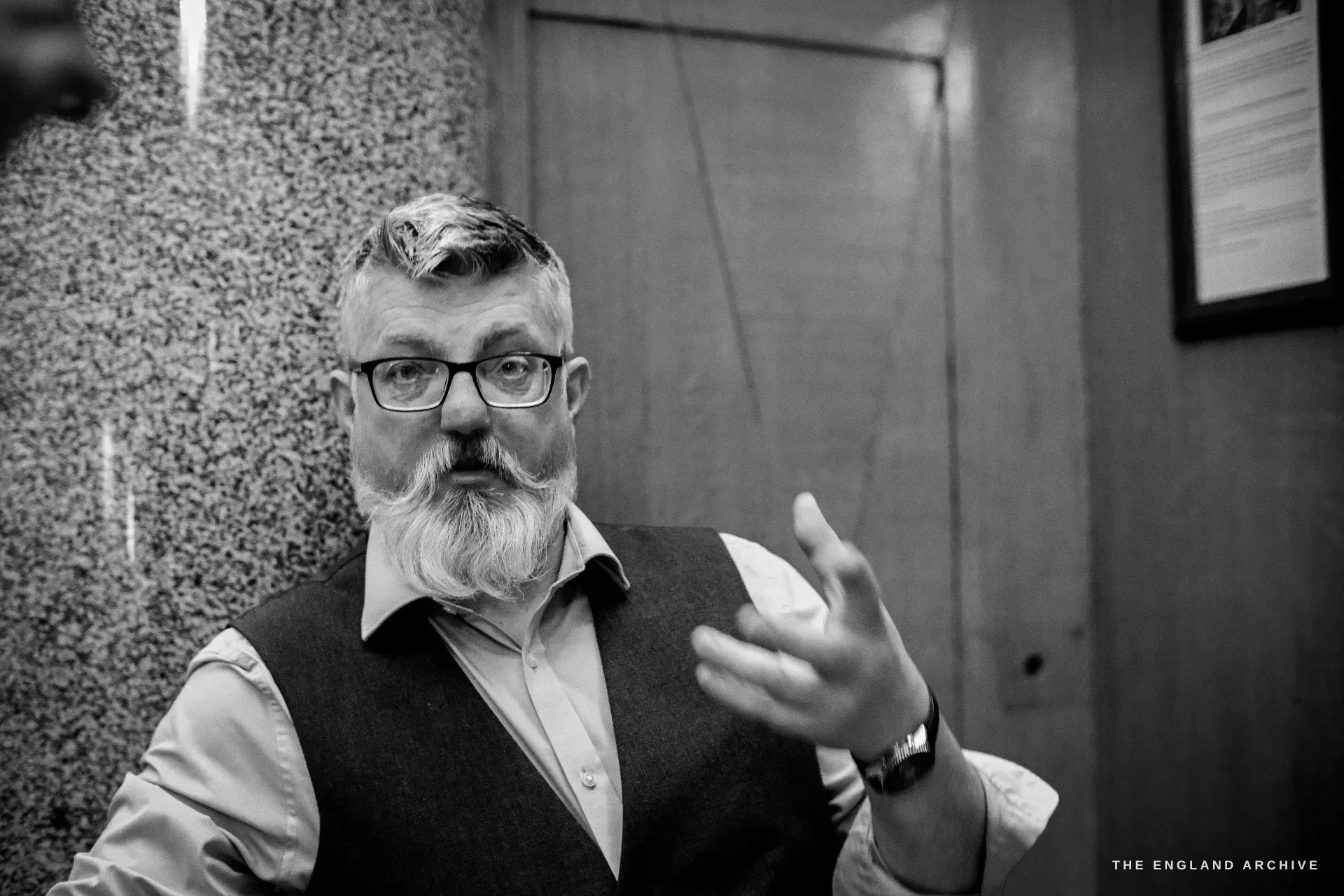
The present Hall is the third the Company has built on this spot, put up in the 1830s and added to since, and it is built to receive a great many people at once and feed them well. An officer of the Company walked me through it, room opening into room, and talked the whole way - which arms belonged to which Master, which piece of silver came from which year, what happened at which dinner. He knew the building the way you know a house you have spent your life in.
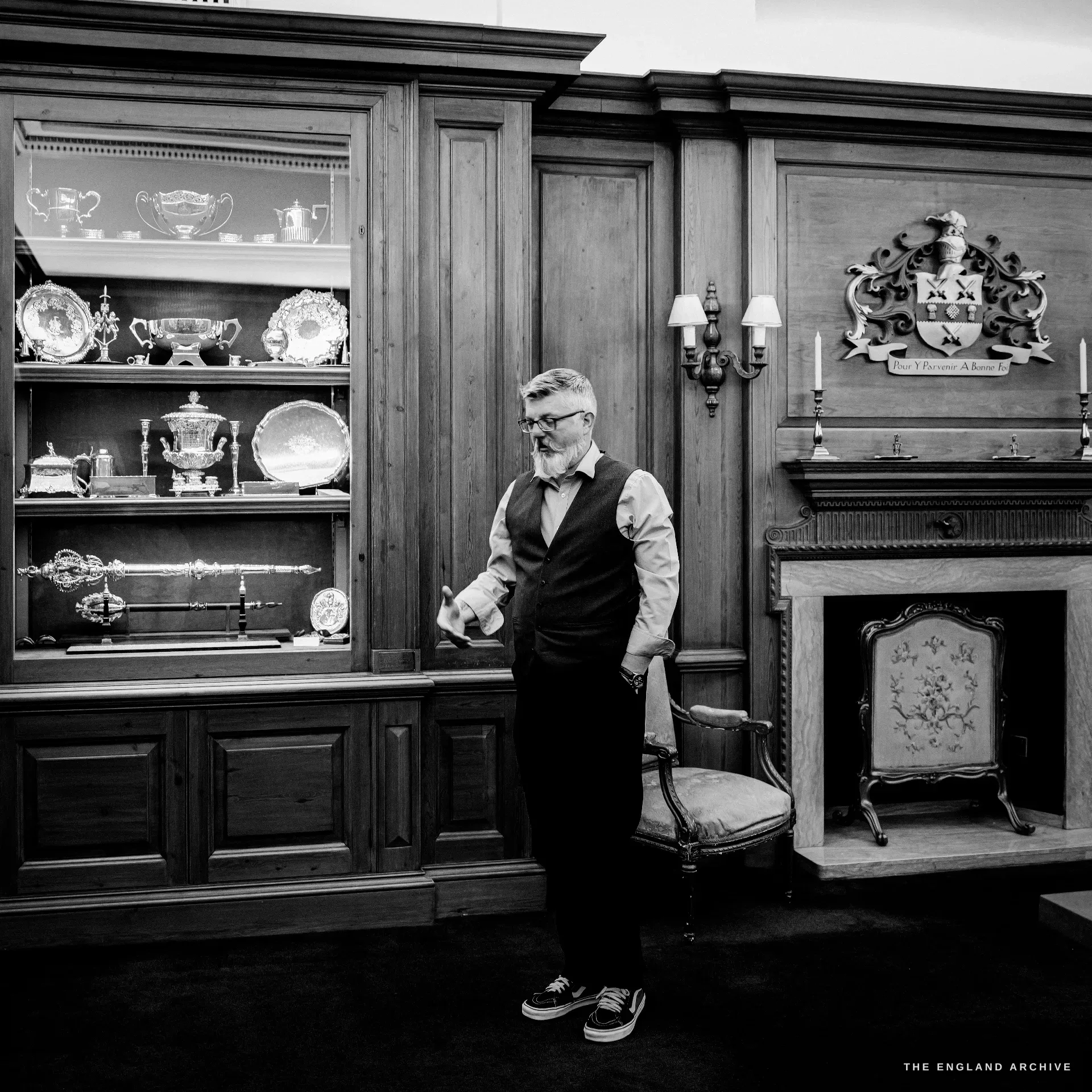
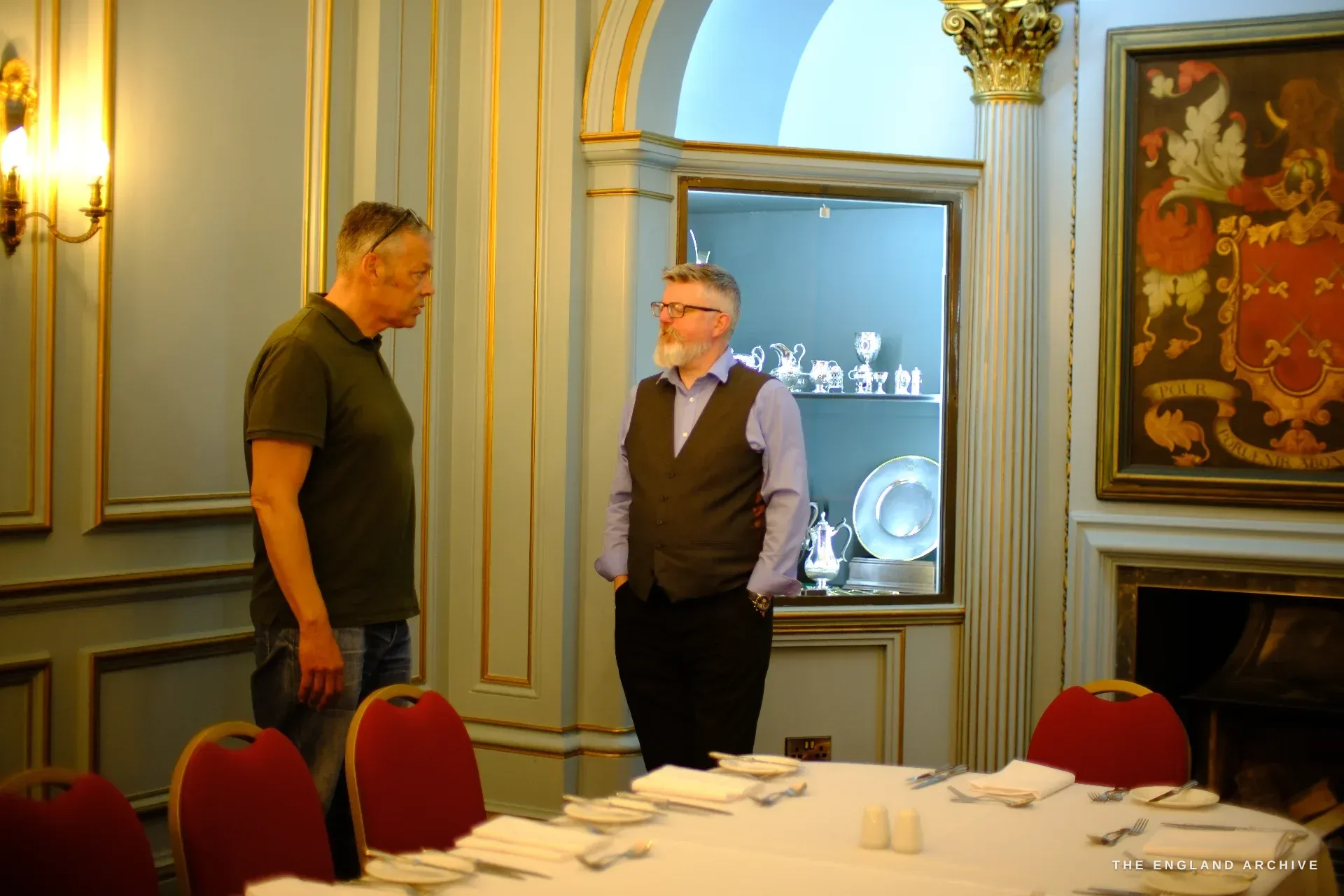
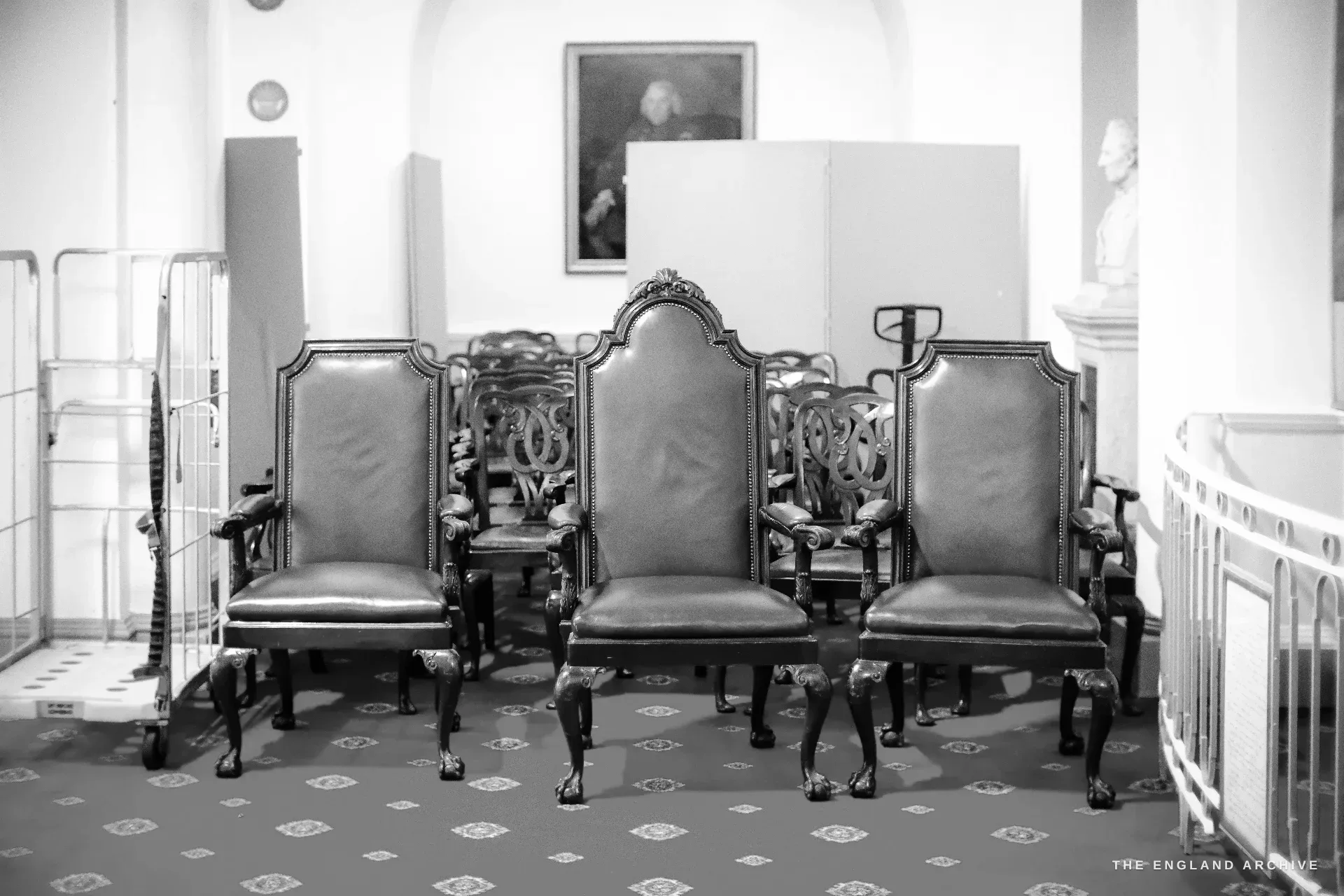
The reason the Hall is this large is the Cutlers' Feast, the Company's annual banquet, one of the oldest and biggest of its kind in the country. Hundreds sit down to it, and the rooms are scaled for the occasion: long banqueting rooms, a great staircase to move a crowd, silver enough to lay the tables and more to display. On the day I visited, one of the rooms was laid up for a dinner, blue and gold, the Company's arms on the wall above the silver, and it gave the measure of the place better than any amount of explaining - this is a working hall, not a museum, and the four hundred years are still in daily use.
The silver
The Company's silver is the record of its history in metal. Much of it was given by past Masters or presented to mark an occasion, each piece hallmarked, dated and engraved, so the collection reads as a roll-call of the trade going back generations. There are the ceremonial pieces you would expect - the mace, the badges, a ceremonial sword - and there are the odder, more local things that tell you this is Sheffield and nowhere else.
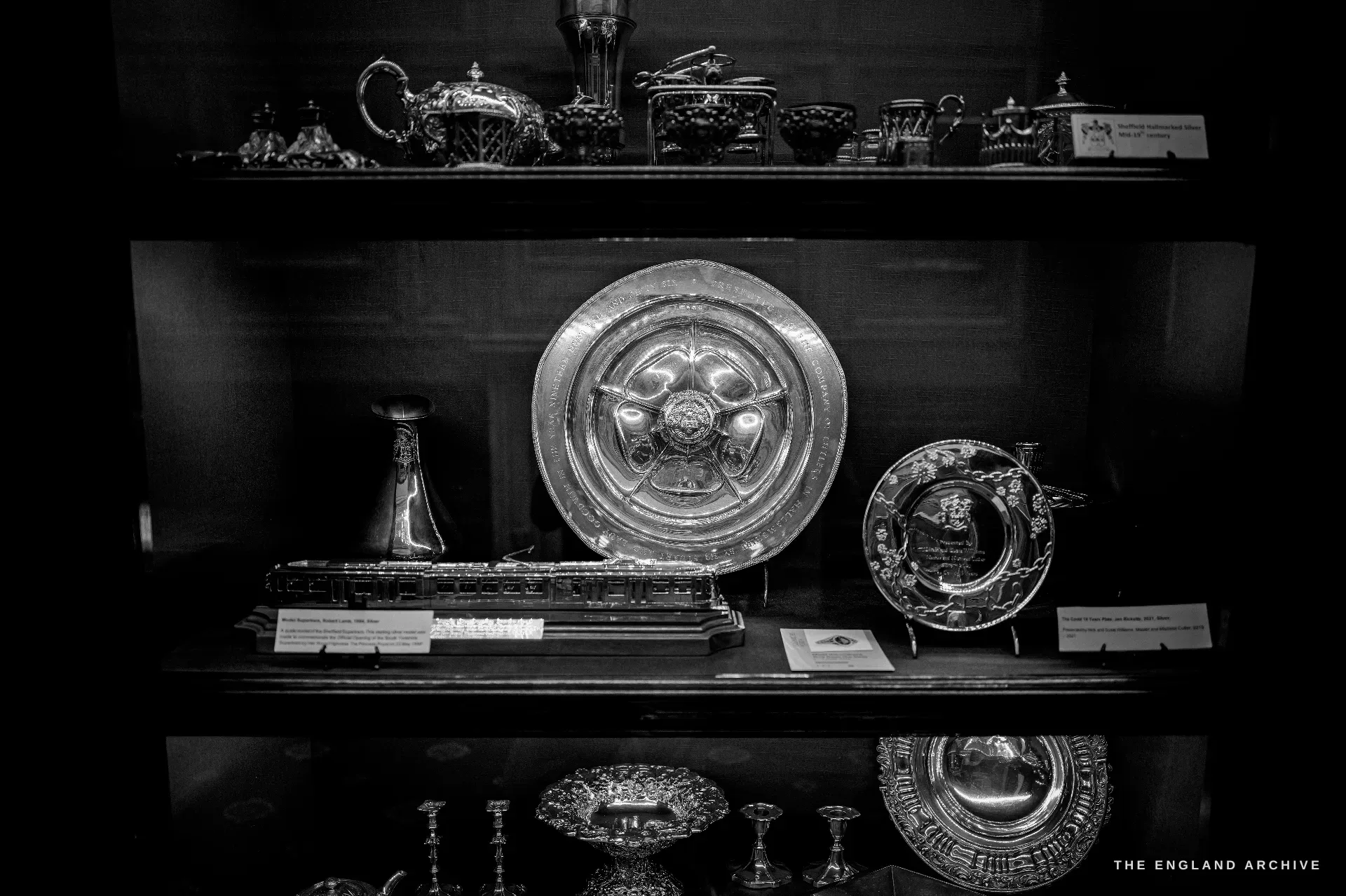
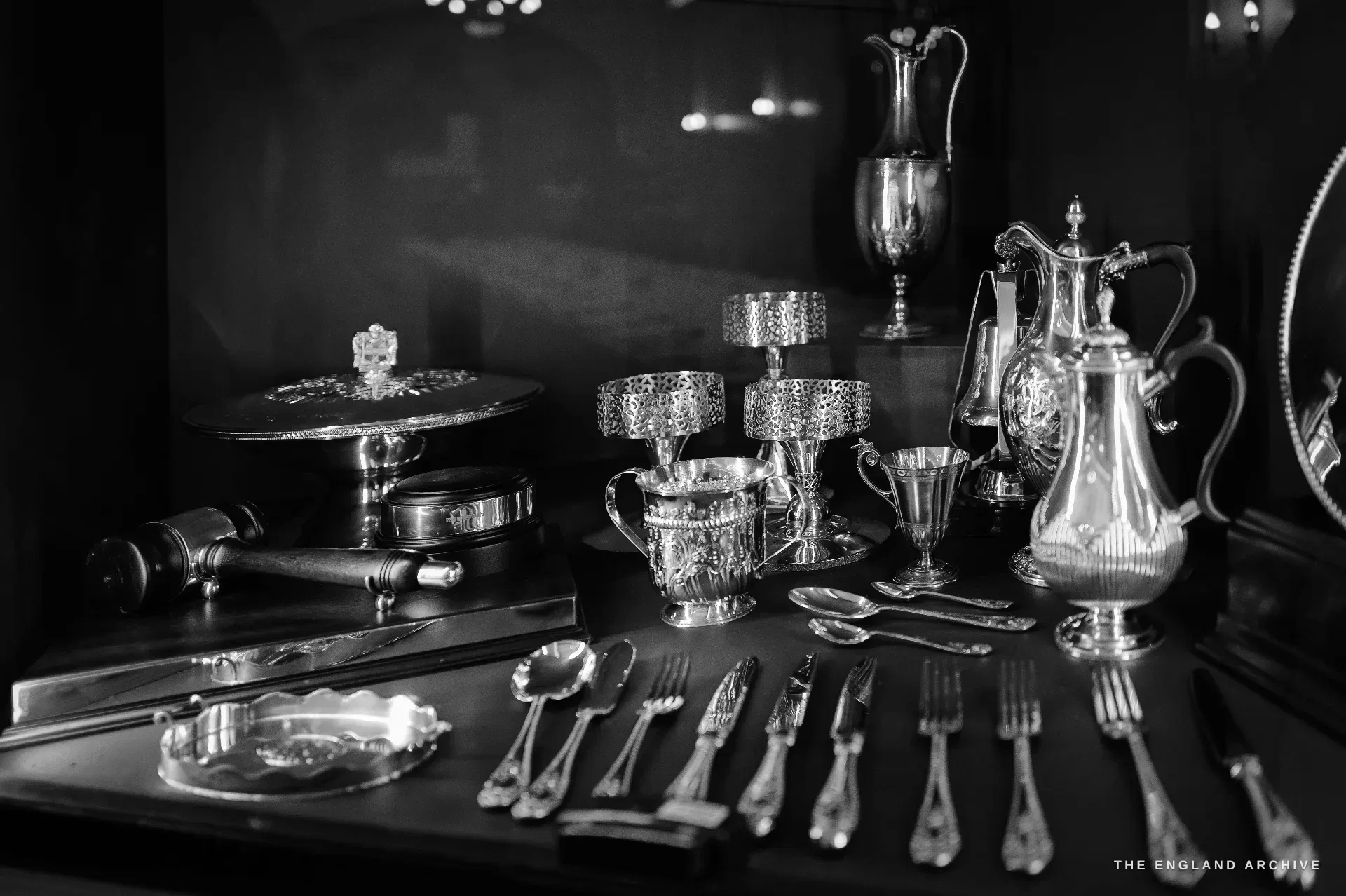
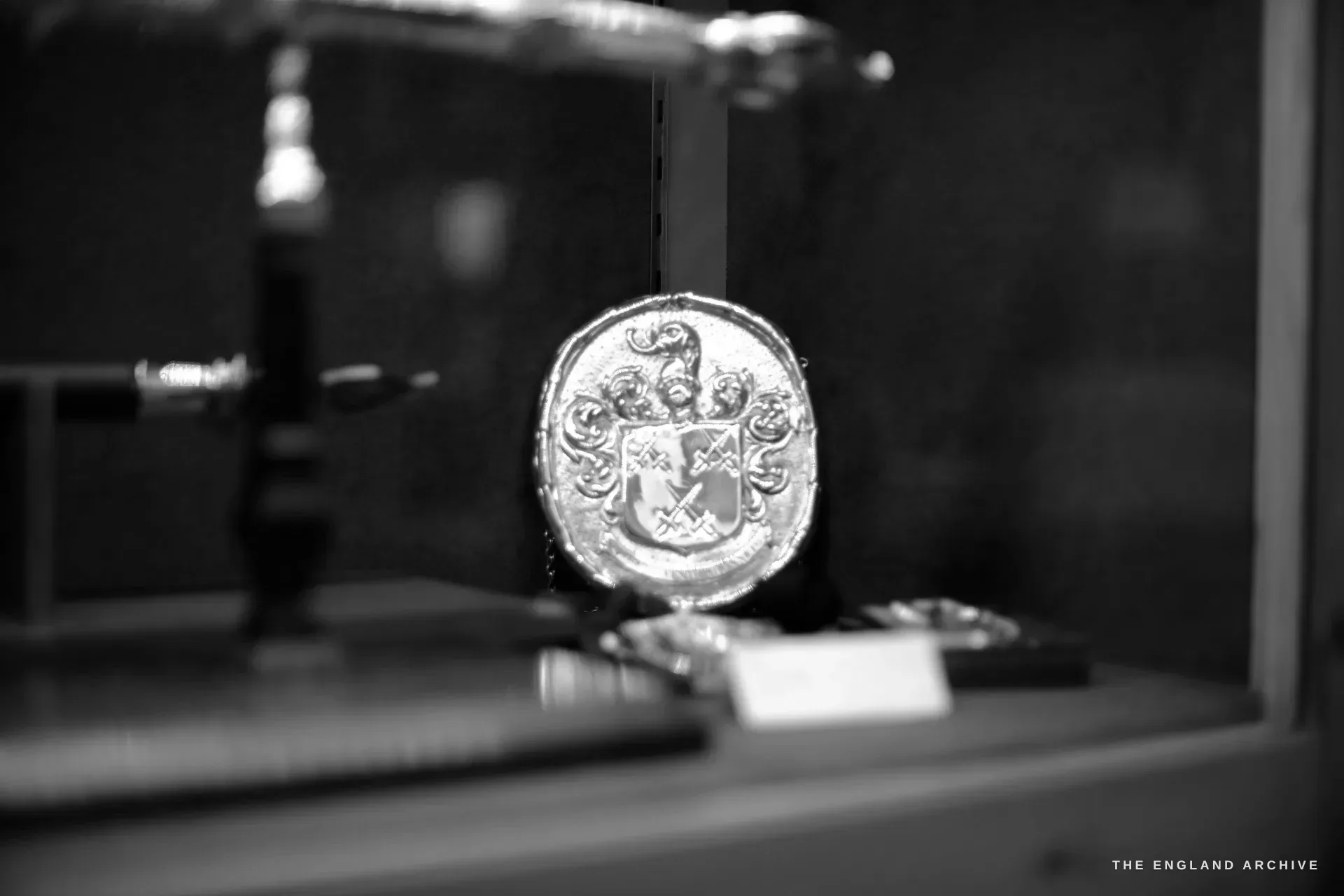
My favourite was a small silver model of a Supertram, the city's tram, sitting among the presentation salvers and the two-handled cups - a modern Sheffield thing rendered in the old Sheffield way, in silver, and given to the Company like everything else. It is a collection with a sense of humour as well as a sense of its own weight, and all of it is the work of the trades the Company exists to represent.
The Master Cutler
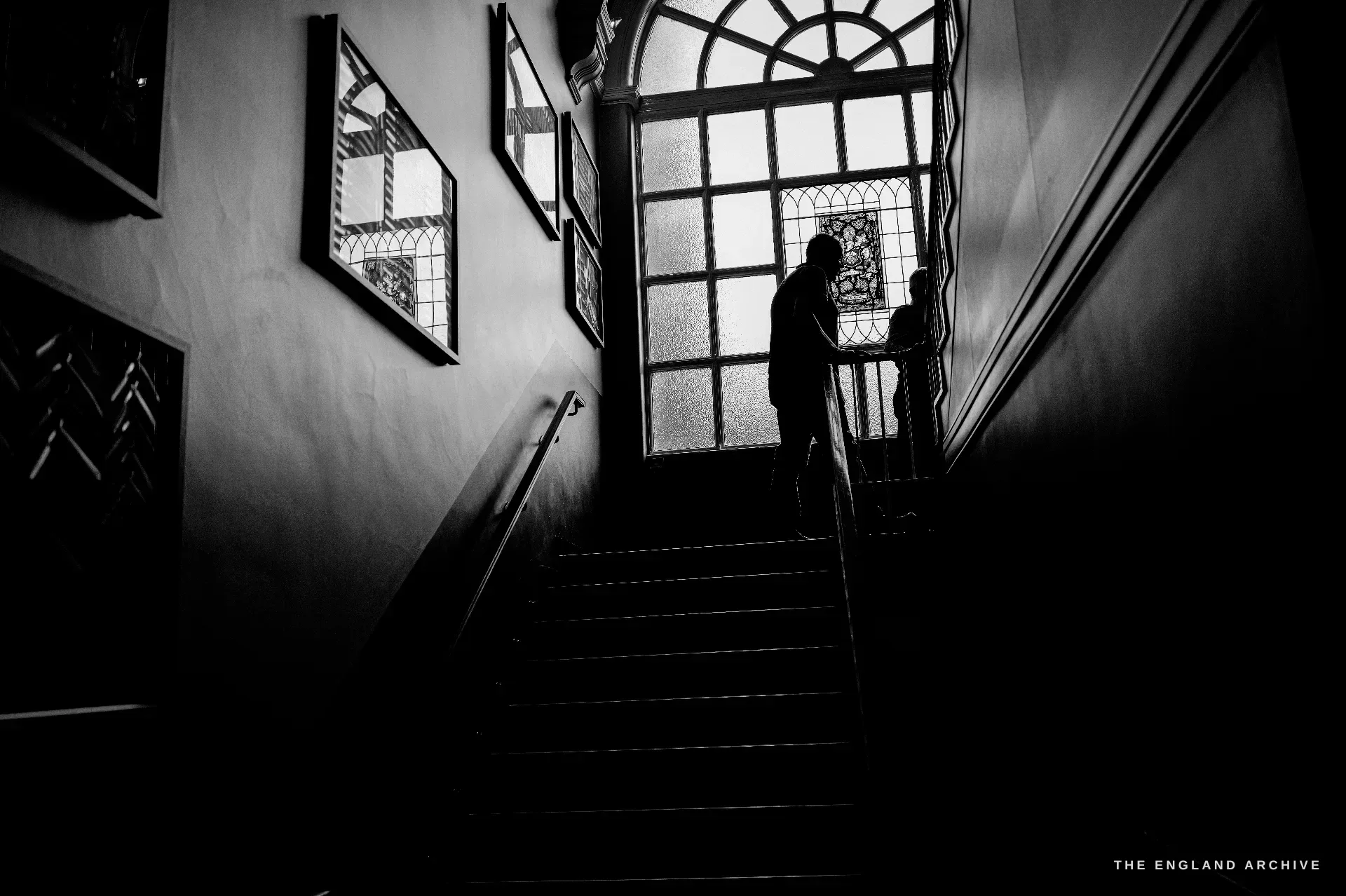
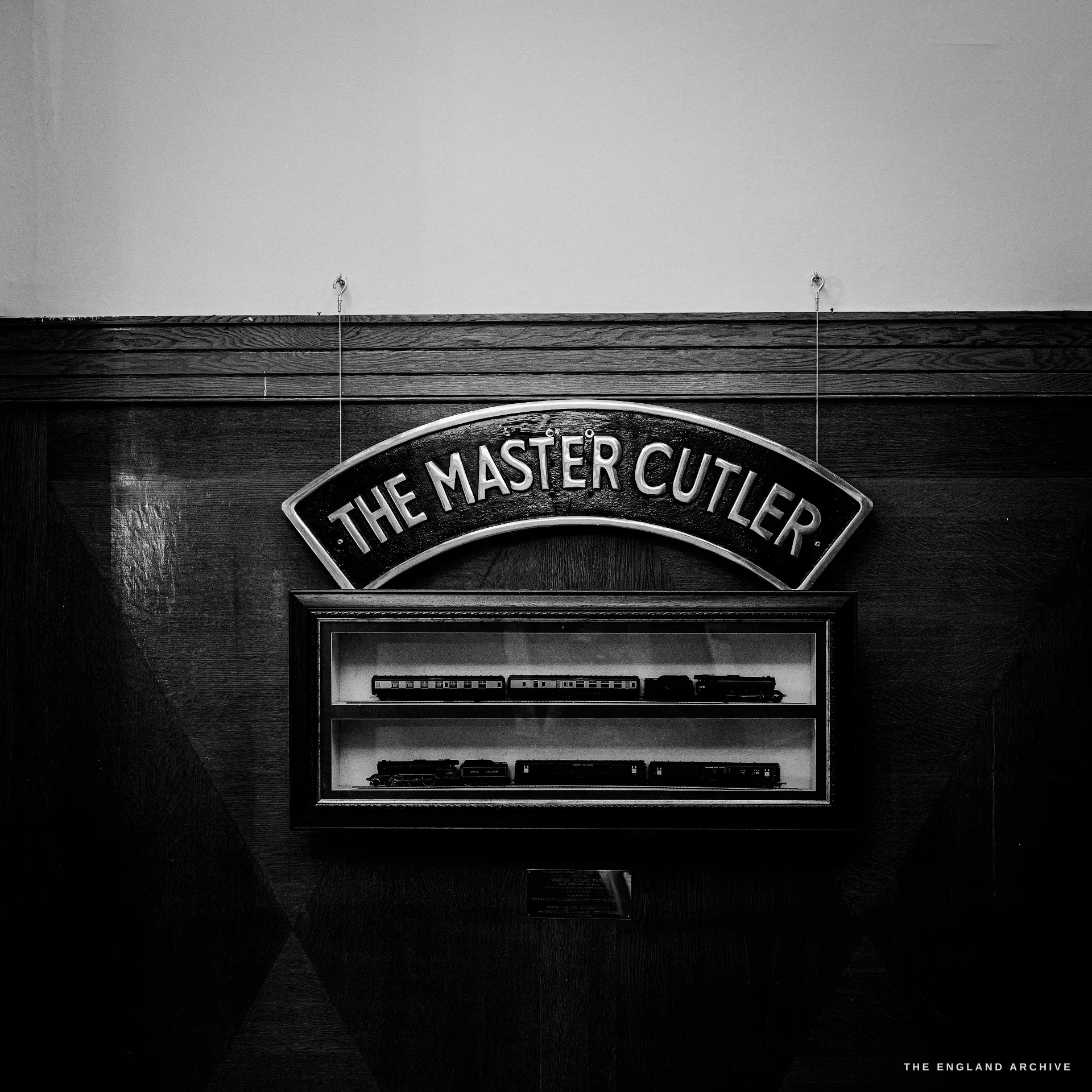
The great stair carries you up towards a tall window of leaded and stained glass, and near the top of the building I found the thing that pulled the whole visit together for me. Mounted on the panelling, above a case of model locomotives, is a cast railway nameplate: THE MASTER CUTLER. For most of the twentieth century that was the name of an express train that ran between Sheffield and London, put on so the city's manufacturers could do a day's business in the capital and be home for dinner. The Company's senior officer, the fast train, the pride of a manufacturing city in its own product - all of it folded into two words on a strip of iron.

The makers in the Hall
I went back to the Hall on another day, for a different reason. A Goldsmiths' exhibition of contemporary jewellery and silver was being held in the rooms I had toured, and Emma Purgreen showed me round it and introduced me to the makers who had work on the tables. It was the right building for it. The Company was founded to represent the people who work metal by hand in this city, and here, four centuries on, were people still doing exactly that, showing their work under the same painted arms.
One of the makers Emma introduced me to was the jeweller Yuyi Cheng, who works in Chinese filigree inlay - hua si xiang qian - twisting fine silver and gold wire into forms so light they seem to be drawn in the air. That meeting became a subject page of its own. It is worth saying plainly how the archive works, because this is a good example of it: a scissor-maker sent me to a hall, the hall led to an exhibition, and the exhibition led to a maker whose craft I would never otherwise have found. One introduction opens onto the next. The Company of Cutlers has been that kind of place - where the trades of a city meet - for four hundred years, and it still is.
Sources
- The England Archive’s own documentation of Cutlers’ Hall, Sheffield, June 2026 - a private tour arranged by Paul Jacobs of Ernest Wright, and a later visit to a Goldsmiths’ exhibition held in the Hall.
- The Company of Cutlers in Hallamshire - the Company’s own history for the 1624 Act of Parliament, the office of Master Cutler, the Cutlers’ Feast, and the motto Pour y parvenir à bonne foy, told on the tour and read on the Hall’s interpretation.
- The maker met at the exhibition has her own page in the archive: Yuyi Cheng (MK-0038).