A brooch on a stand in Sheffield stopped me dead. The blue looked like enamel. It was feathers - laid by hand, the way it was done for the empresses of China. Yuyi Cheng makes ancient techniques into modern jewellery, and there are very few people doing it.
NameYuyi Cheng
TradeJeweller & Silversmith
TechniquesChinese filigree inlay (hua si xiang qian), especially its dian cui feather branch; Western filigree; mother-of-pearl inlay (luodian)
RegionLondon
CategoryMakers - people whose knowledge lives in their hands and cannot exist anywhere else
SessionJune 2026
StatusWorking practitioner · trained in Taiwan, London and at Bishopsland, England
Archive IDMK-0038
The Stand That Stopped Me
I met Yuyi Cheng at an exhibition in Cutlers’ Hall, Sheffield. The hall was full of jewellers, stand after stand of good work, and I was browsing my way along when one stand stopped me in my tracks. The pieces looked different - beautiful, ornate, unlike anything else in the room. I went over and said the enamel was stunning, that deep blue with the gold around it. She smiled and said, guess what, that’s not enamel - that’s feathers. That single sentence is the reason this page exists.
IM-1188
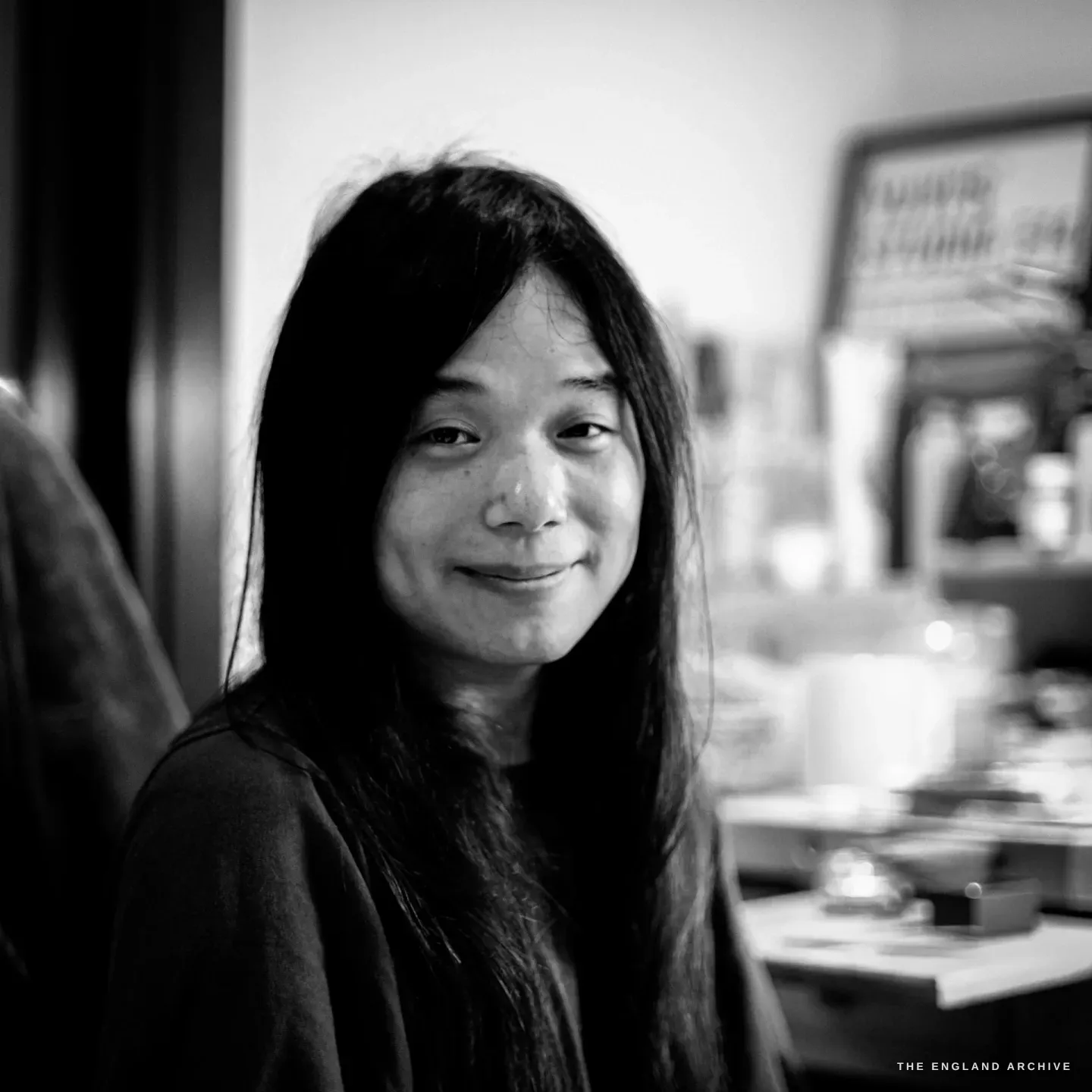
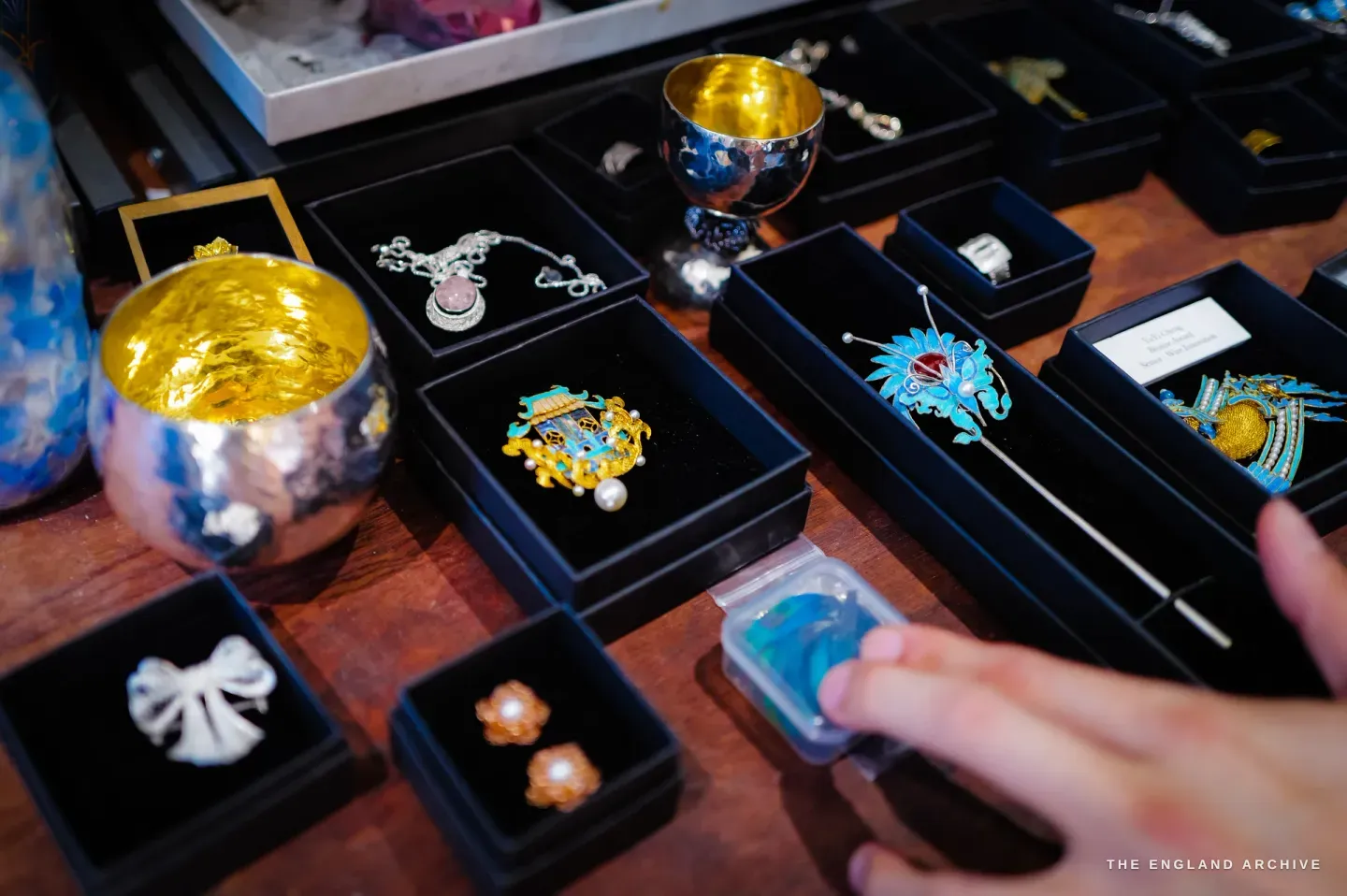
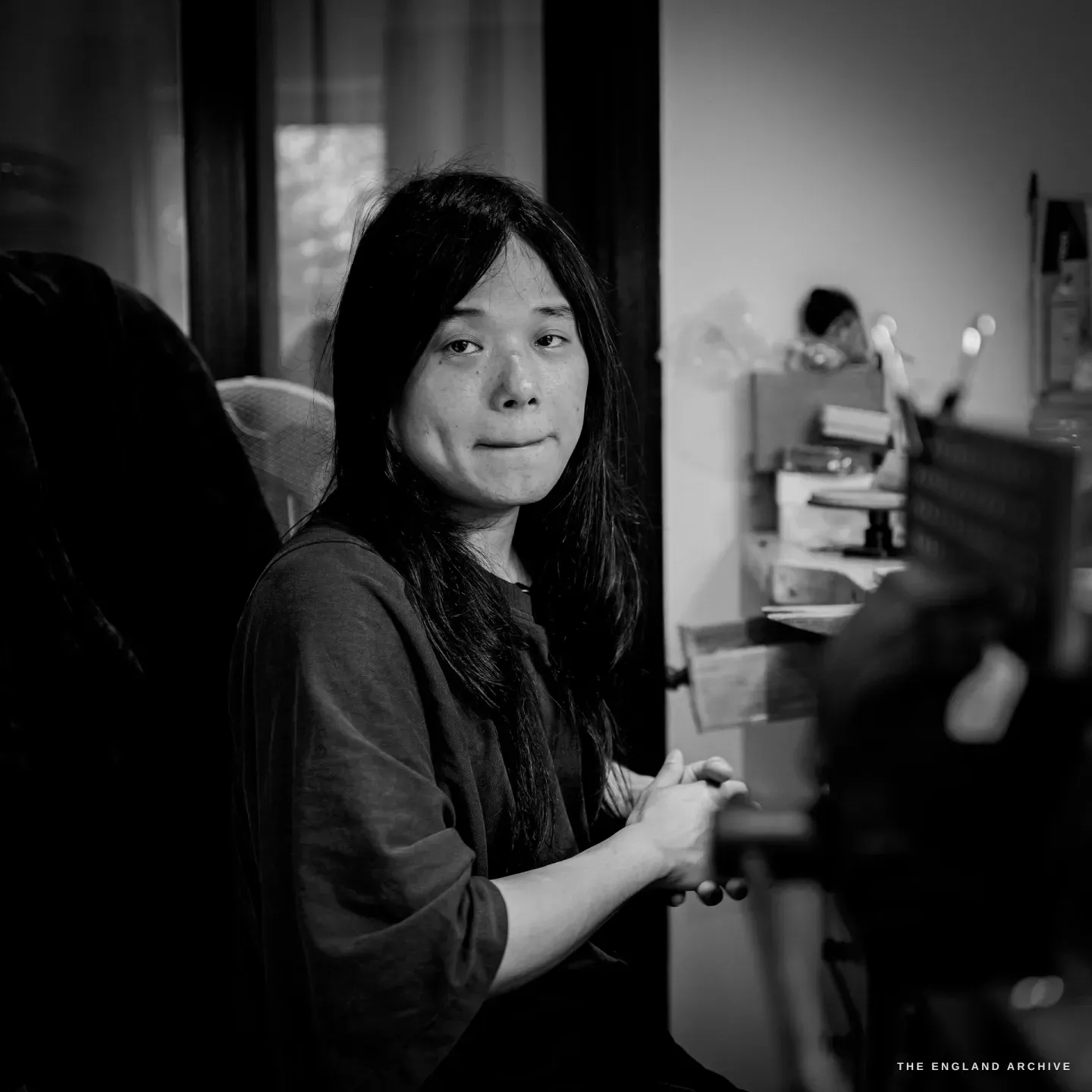
She works in London, so we found a date and I drove down to her house, which has a studio at the back. It was the hottest day of the English year; she had a cold drink waiting and a table of her work laid out for me to look at. Warm, funny, completely unguarded - and quietly doing something almost nobody else in the country does.
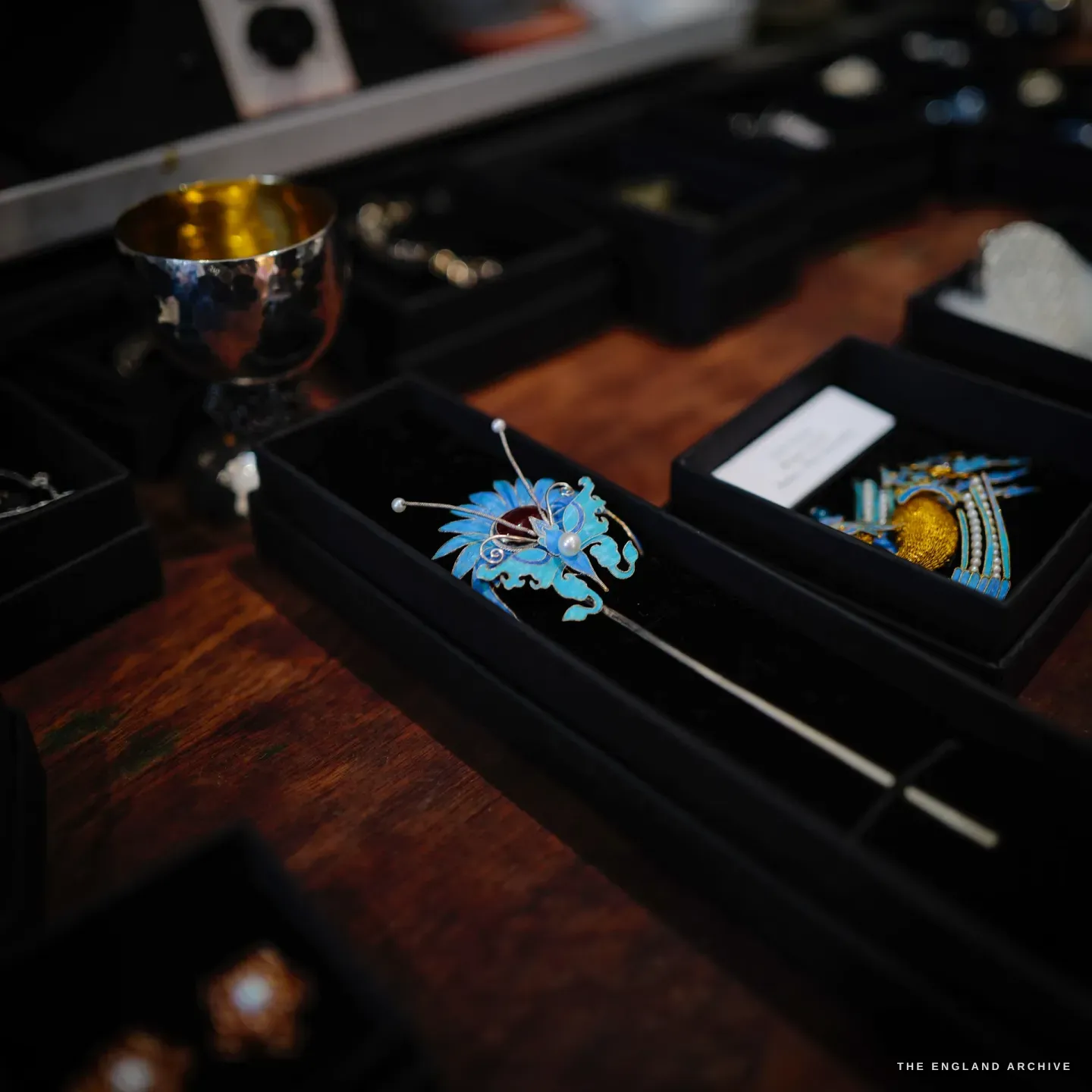
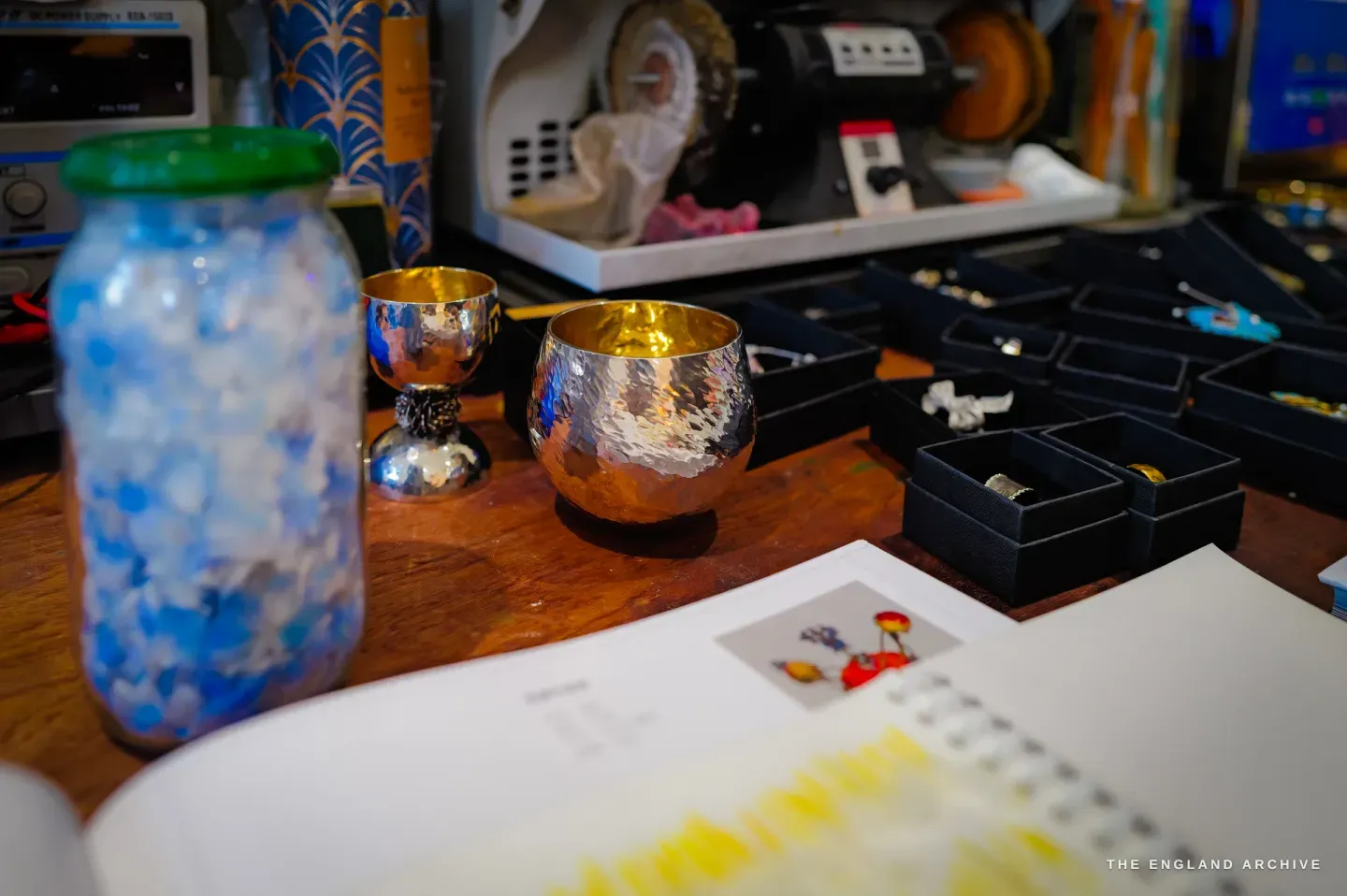
Her work laid out for me to see. Filigree, feathers, pearls and mother-of-pearl - and, in the little box, the loose blue feathers that do the thing that stopped me at her stand. IM-1168
What Looks Like Enamel
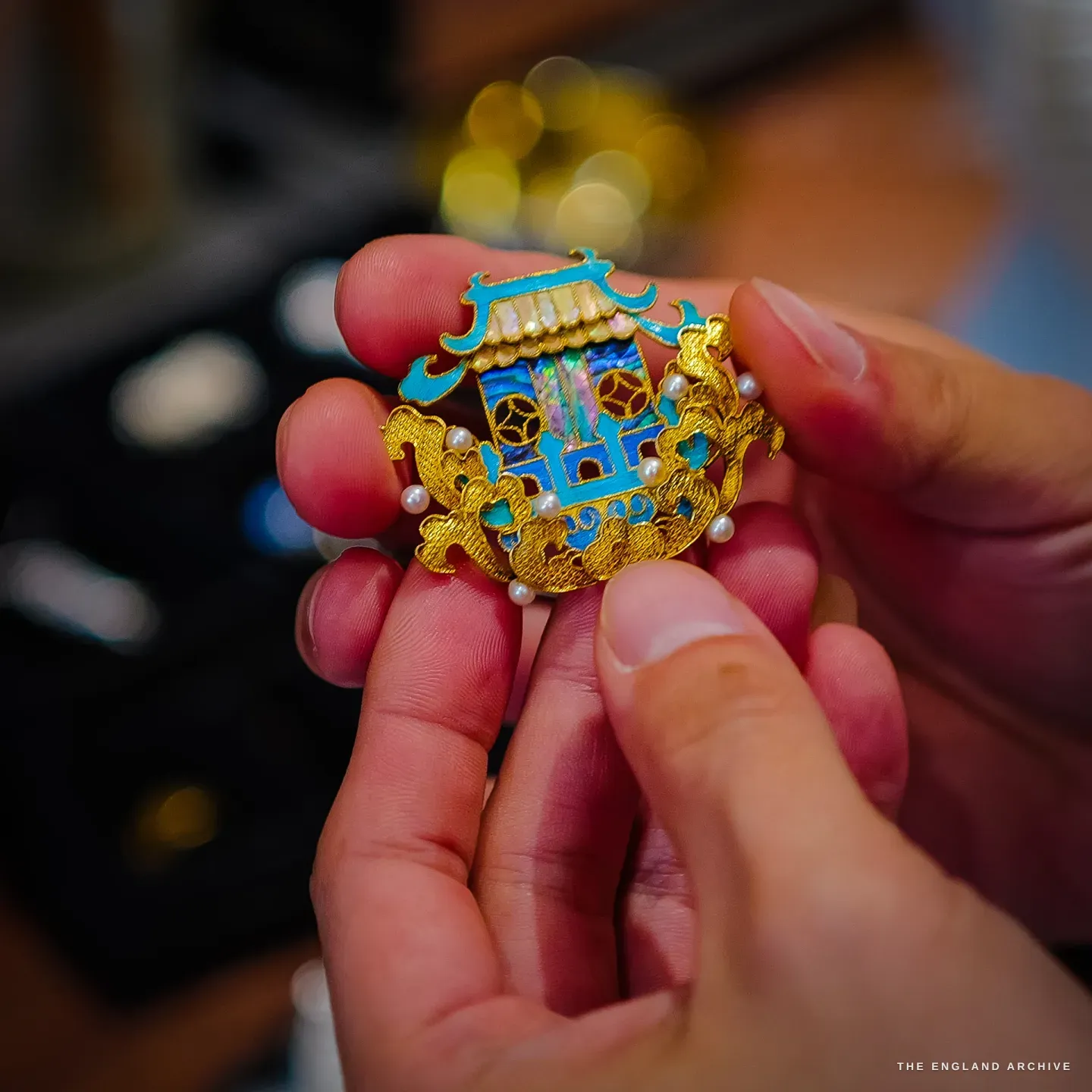
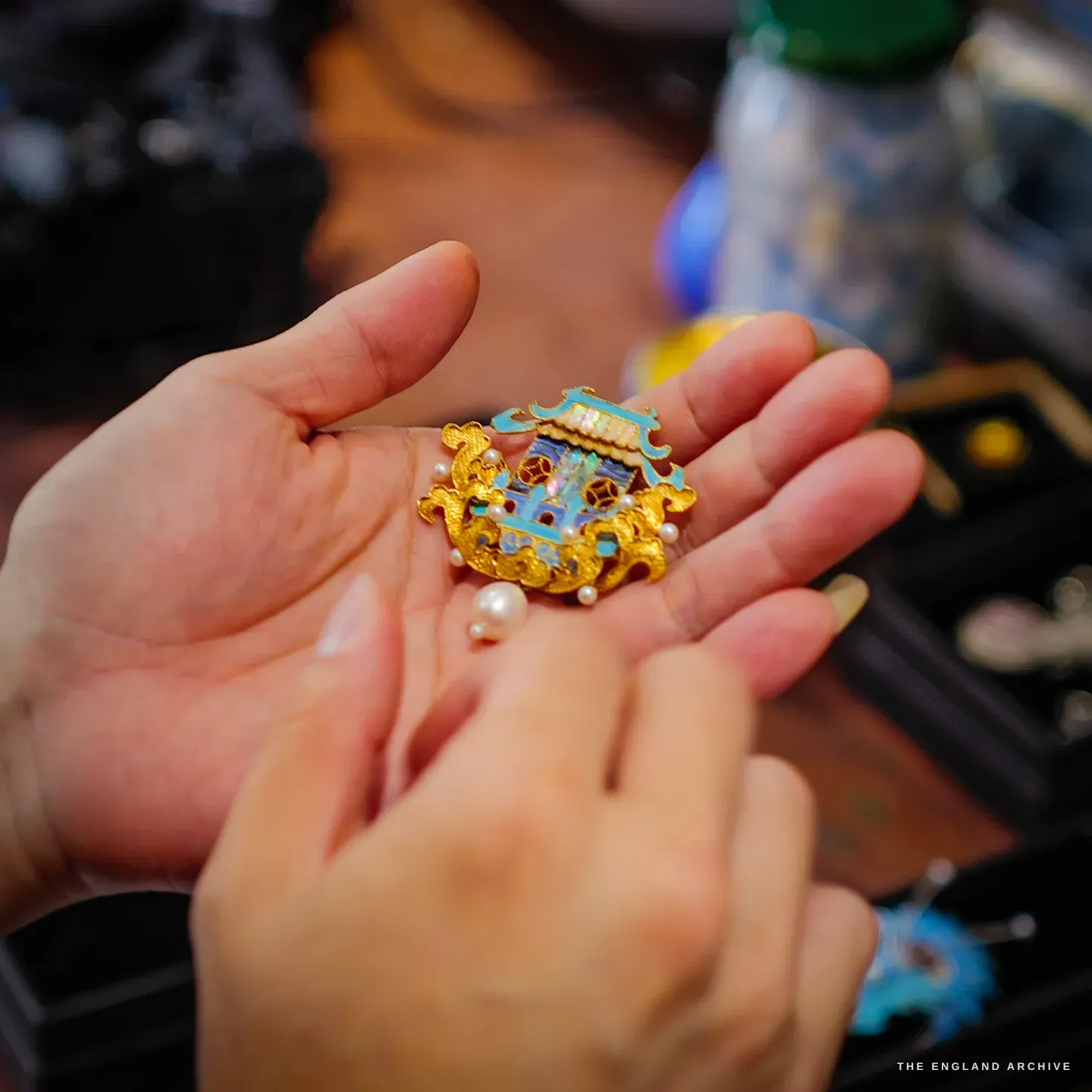
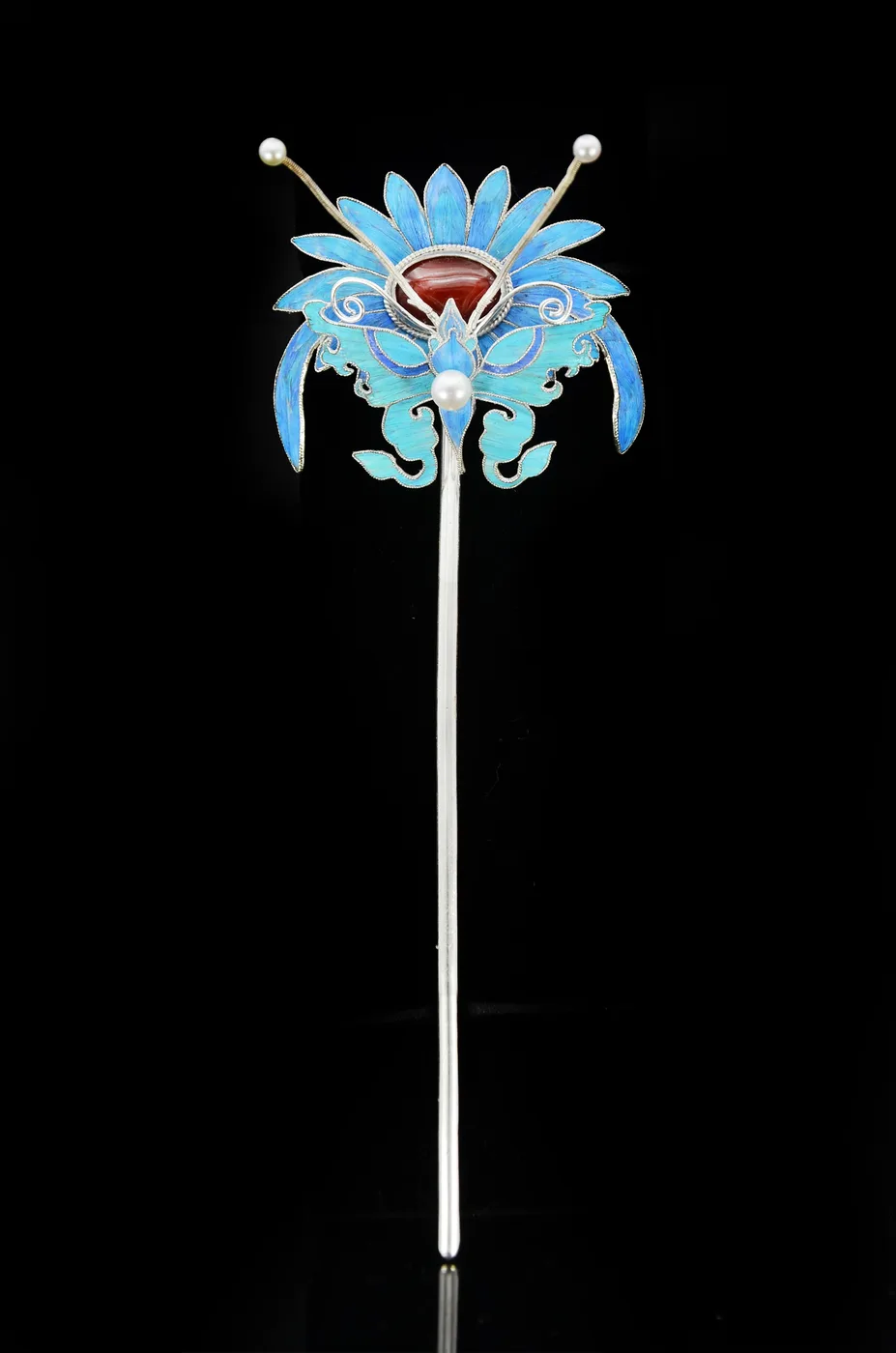
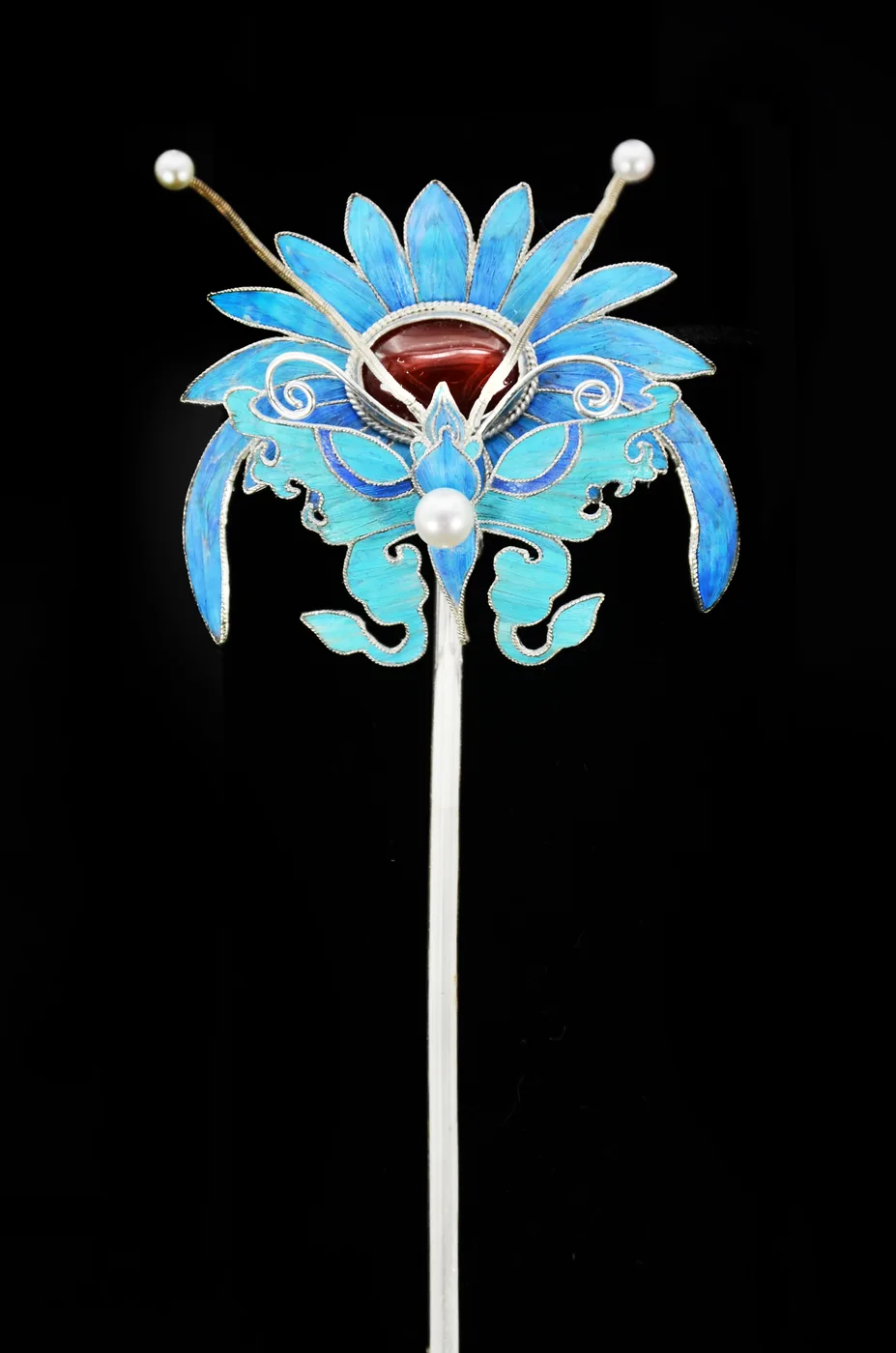
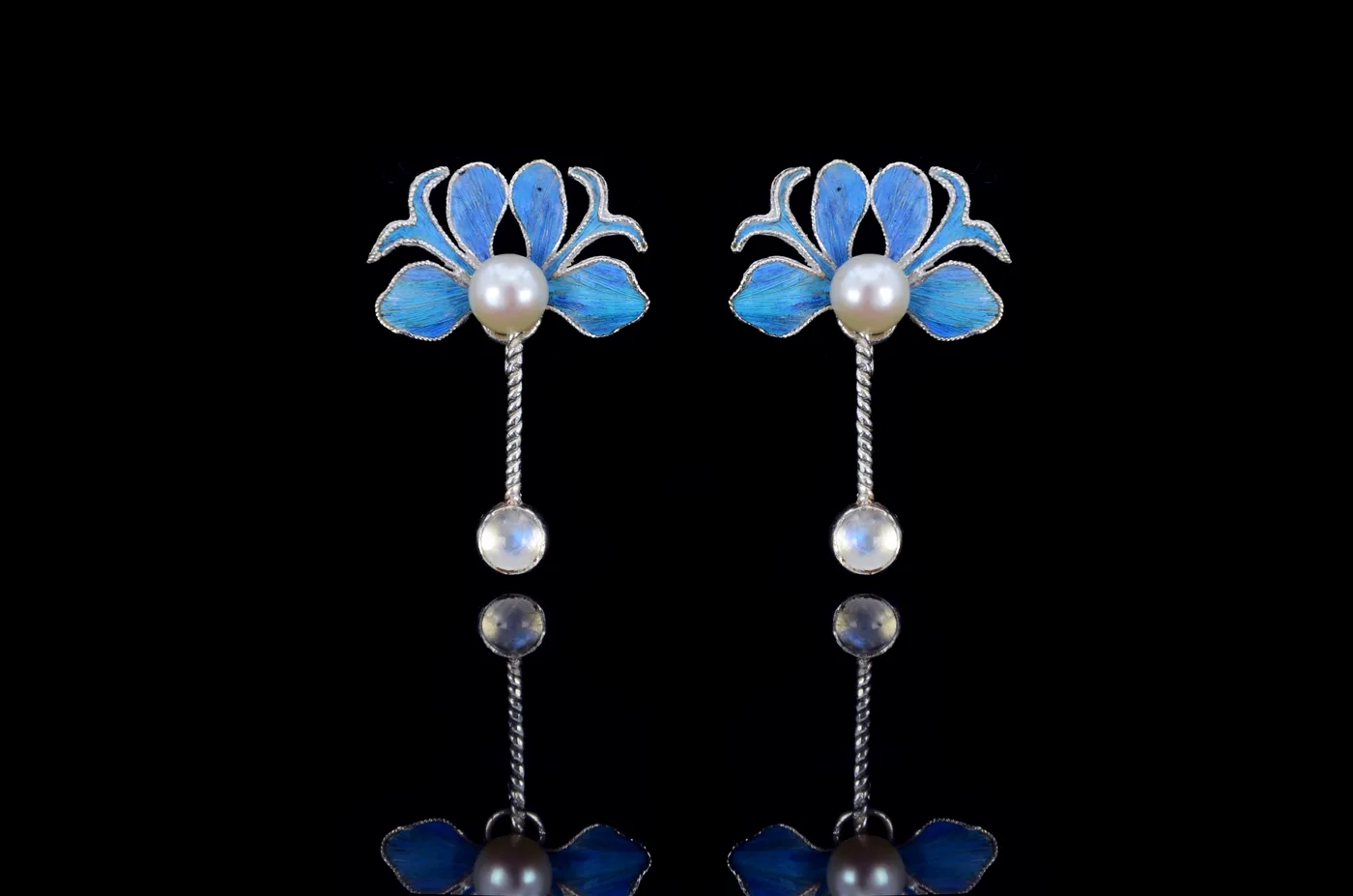
The technique is called dian cui - literally “dotting with kingfisher” - and it is ancient. Tiny sections of iridescent feather are cut to shape and laid by hand into cells of fine metalwork, giving a blue so even and so deep that the eye reads it as enamel. For centuries it was jewellery only the imperial court could afford, the blue taken from the kingfisher. The kingfisher is now protected, so Yuyi uses feathers naturally moulted by parrots instead - the look of the old work, without its cost to the bird.
IM-1169 I told her the enamel was beautiful. She said, guess what, that’s not enamel - that’s feathers. That was the moment I knew I had to document her. IM-1170
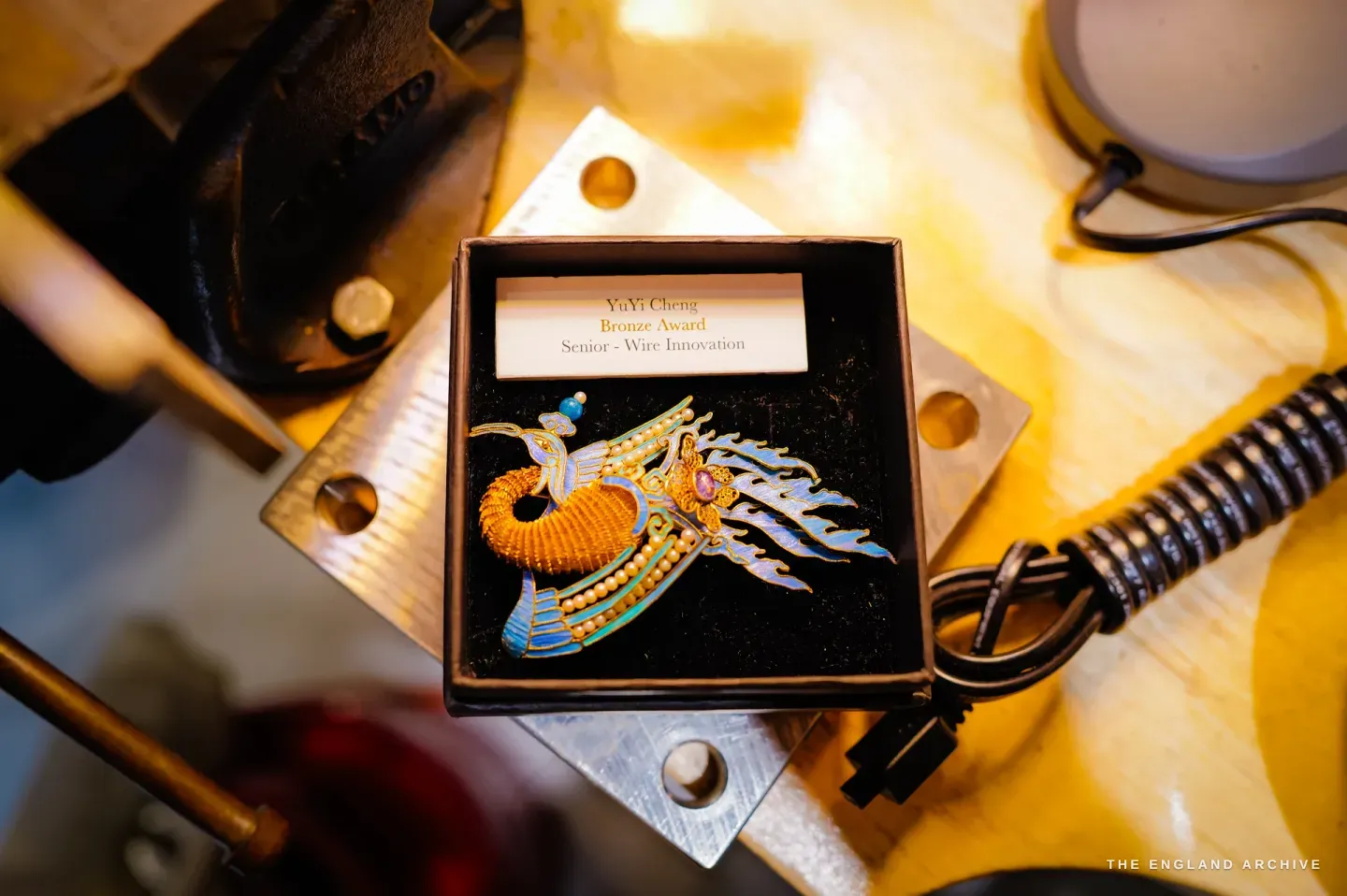
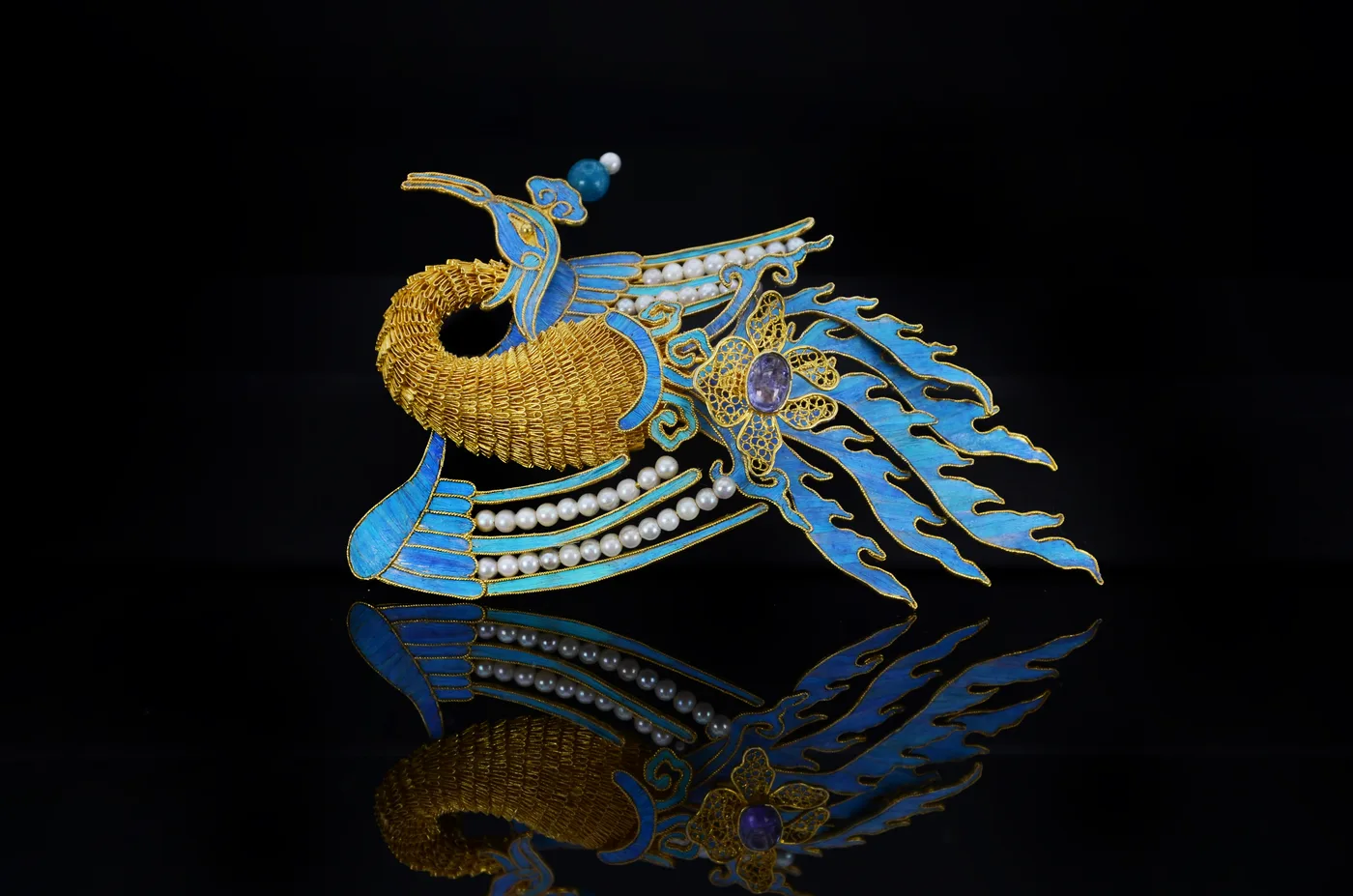
Her Soaring Phoenix brooch won a Bronze Award at the Goldsmiths’ Craft & Design competition, and it carries the whole tradition in one piece. The phoenix was the emblem of the empress; the body is filigree and feather; surviving pieces of this kind sit in museums now, the British Museum among them. Yuyi has made it wearable again, and made it new.
A Soaring Phoenix - her Bronze Award piece at the Goldsmiths’ Craft & Design competition. In old China the phoenix stood for the empress, and this feather-inlay work, dian cui, was once jewellery only royalty could afford. IM-1171
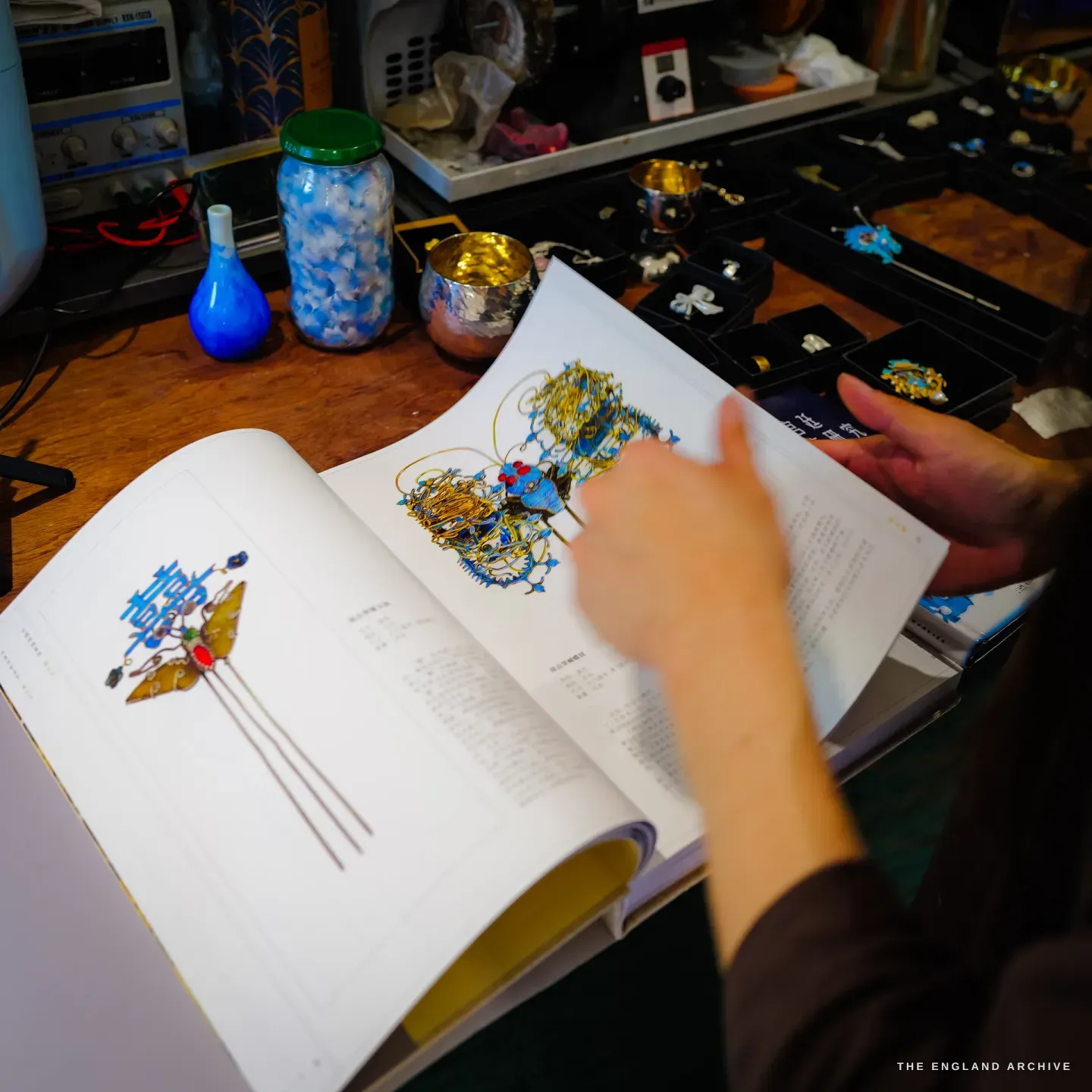
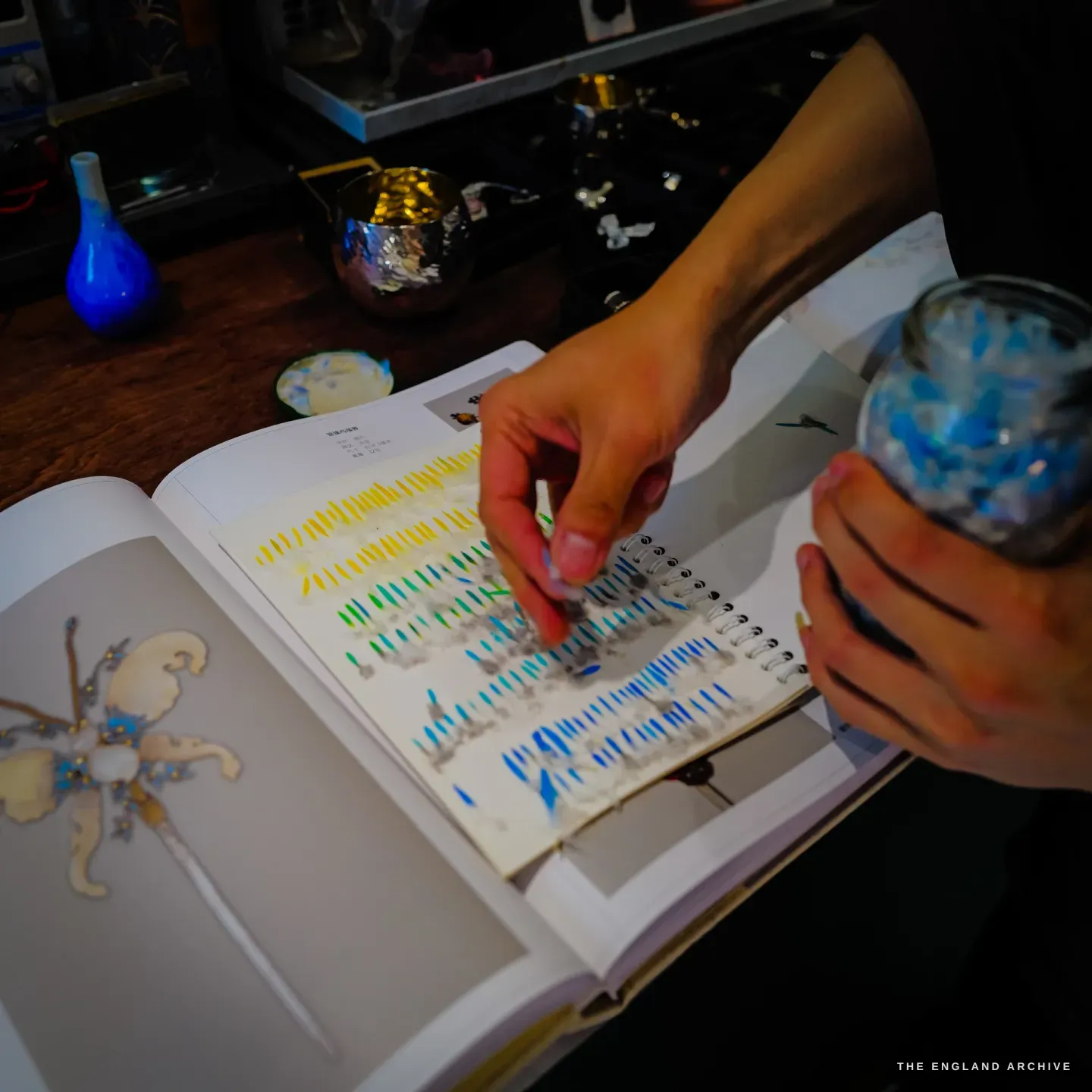
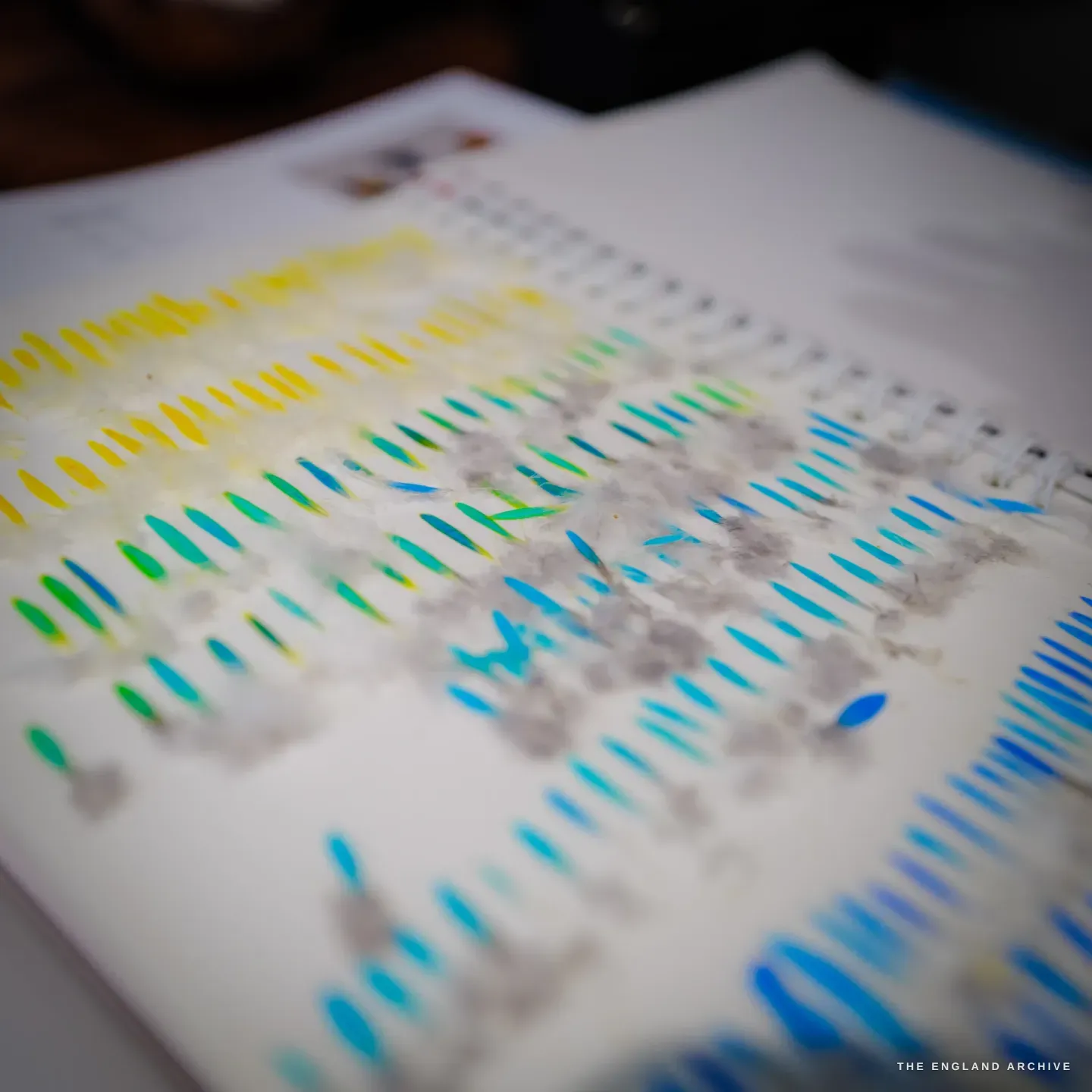
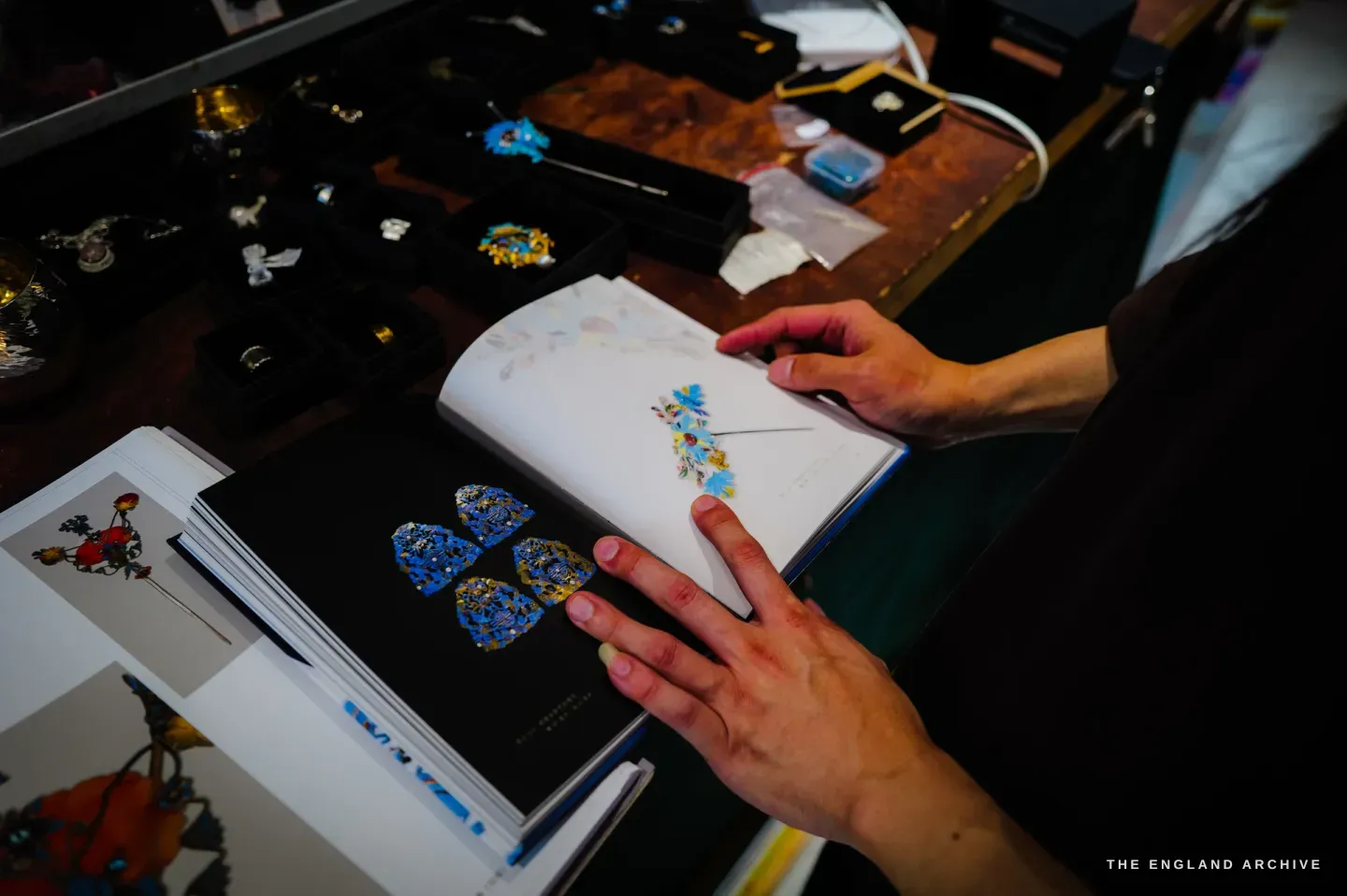
She showed me the books she works from - antique headdresses and ornaments, page after page of imperial blue - and the album where she grades and stores the feathers, cut and sorted by colour from yellow through to that signature blue.
IM-1172 The tradition she works from, and the feathers she works with - graded by colour and cut to shape. Historically the blue came from the kingfisher; she uses naturally moulted parrot feather instead. IM-1173
Each tiny section is cut and laid by hand into the silver cells, the way the empresses’ jewellers did it. IM-1174IM-1175
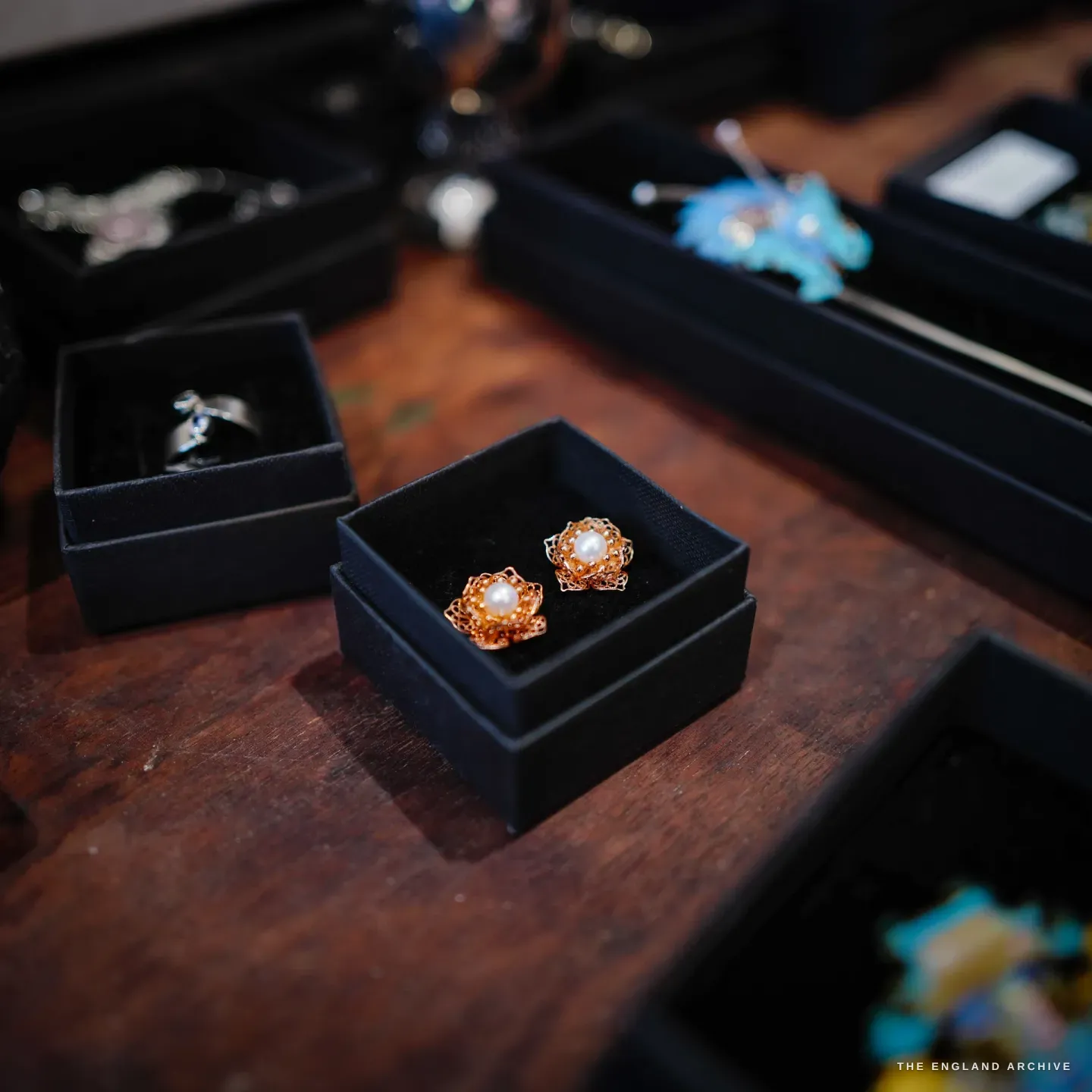
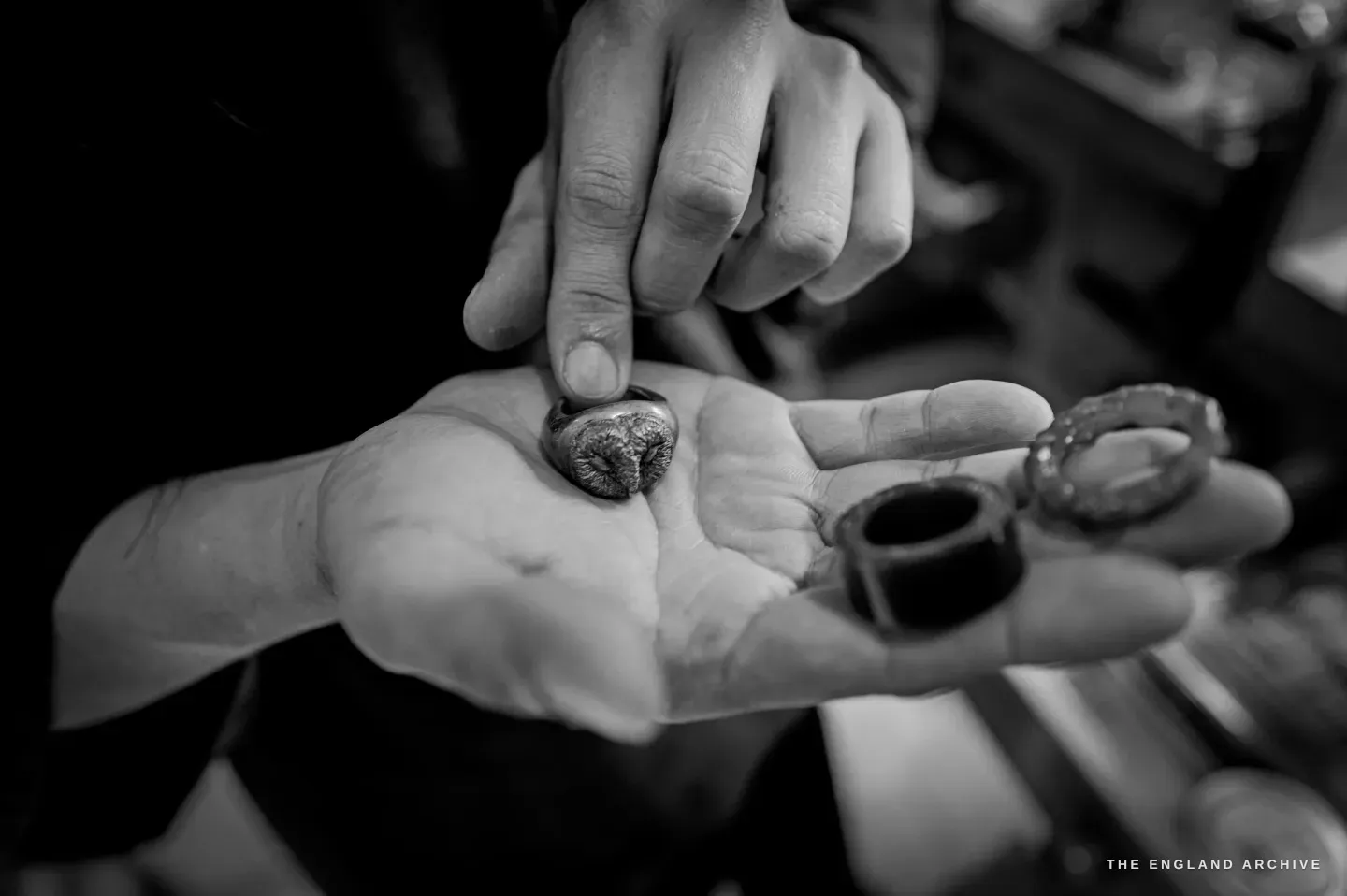
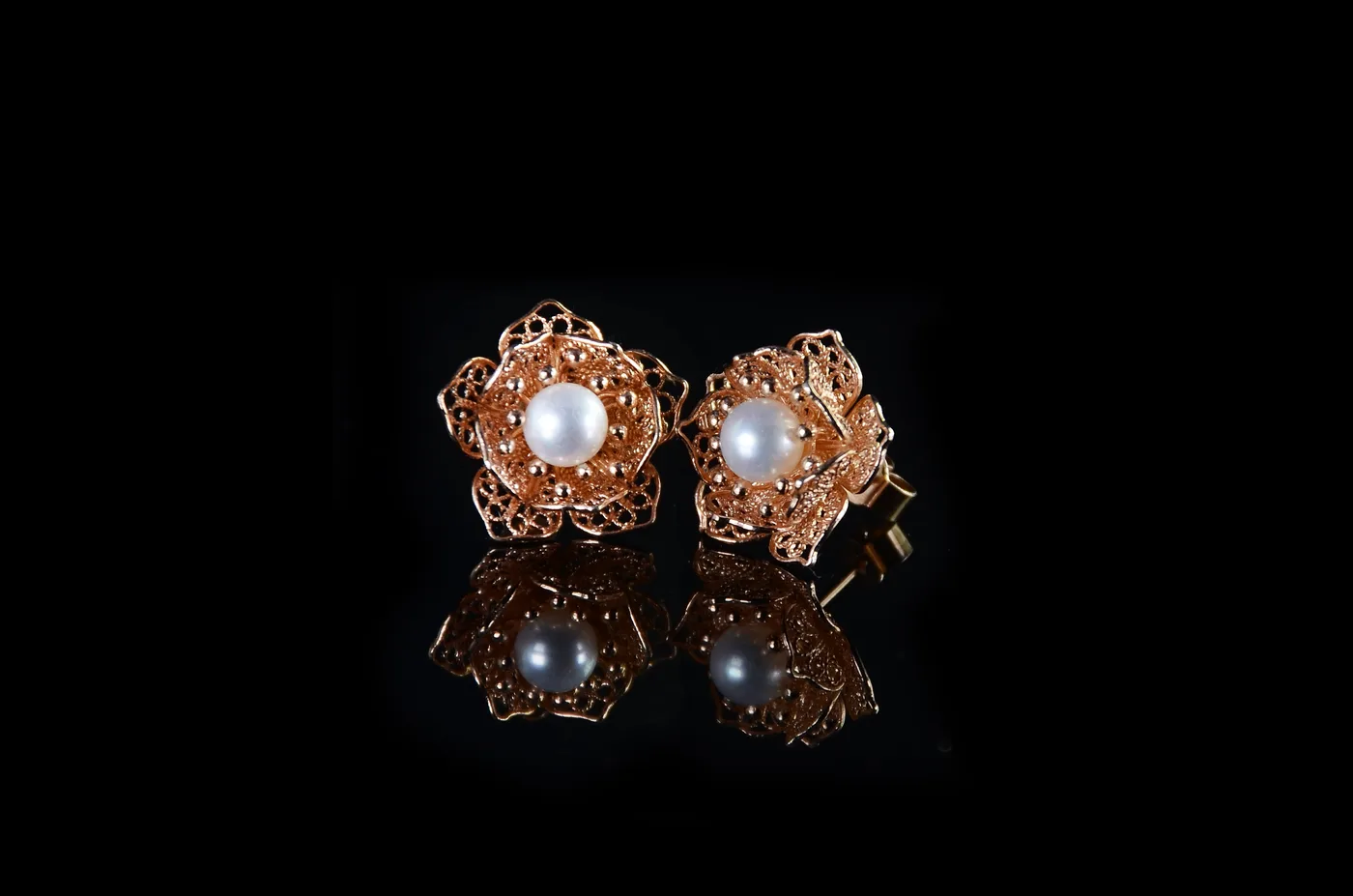
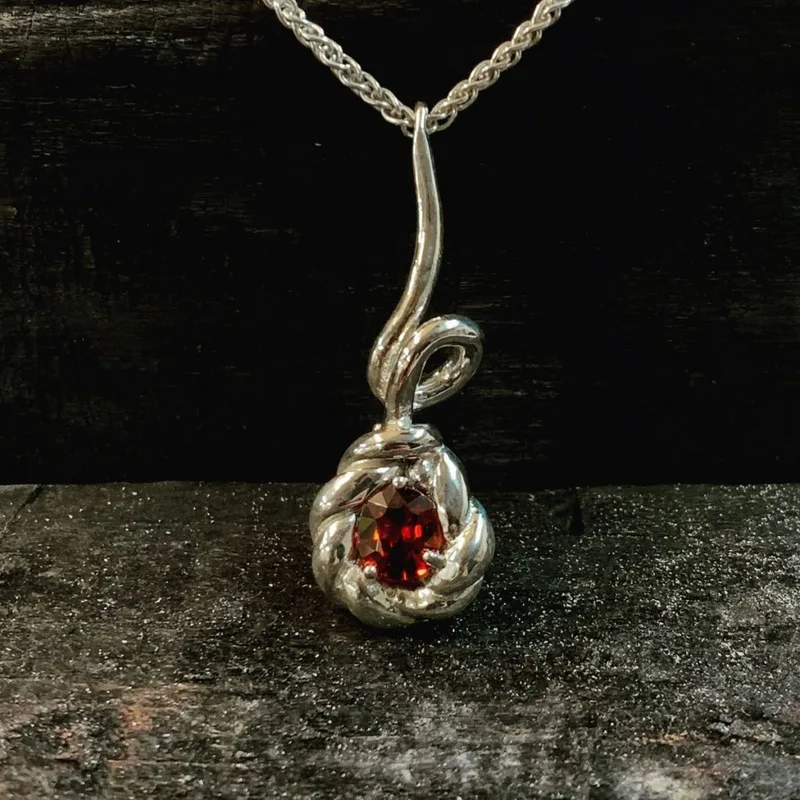
Across the table were the results: rose-gold filigree studs, a feather hairpin, the little silver cups, a mother-of-pearl bow. Every piece is the same idea worked a different way - an old imperial method turned to something you could wear to work.
IM-1176 A scatter of her pieces, each one a different marriage of the old techniques and a modern eye. IM-1177
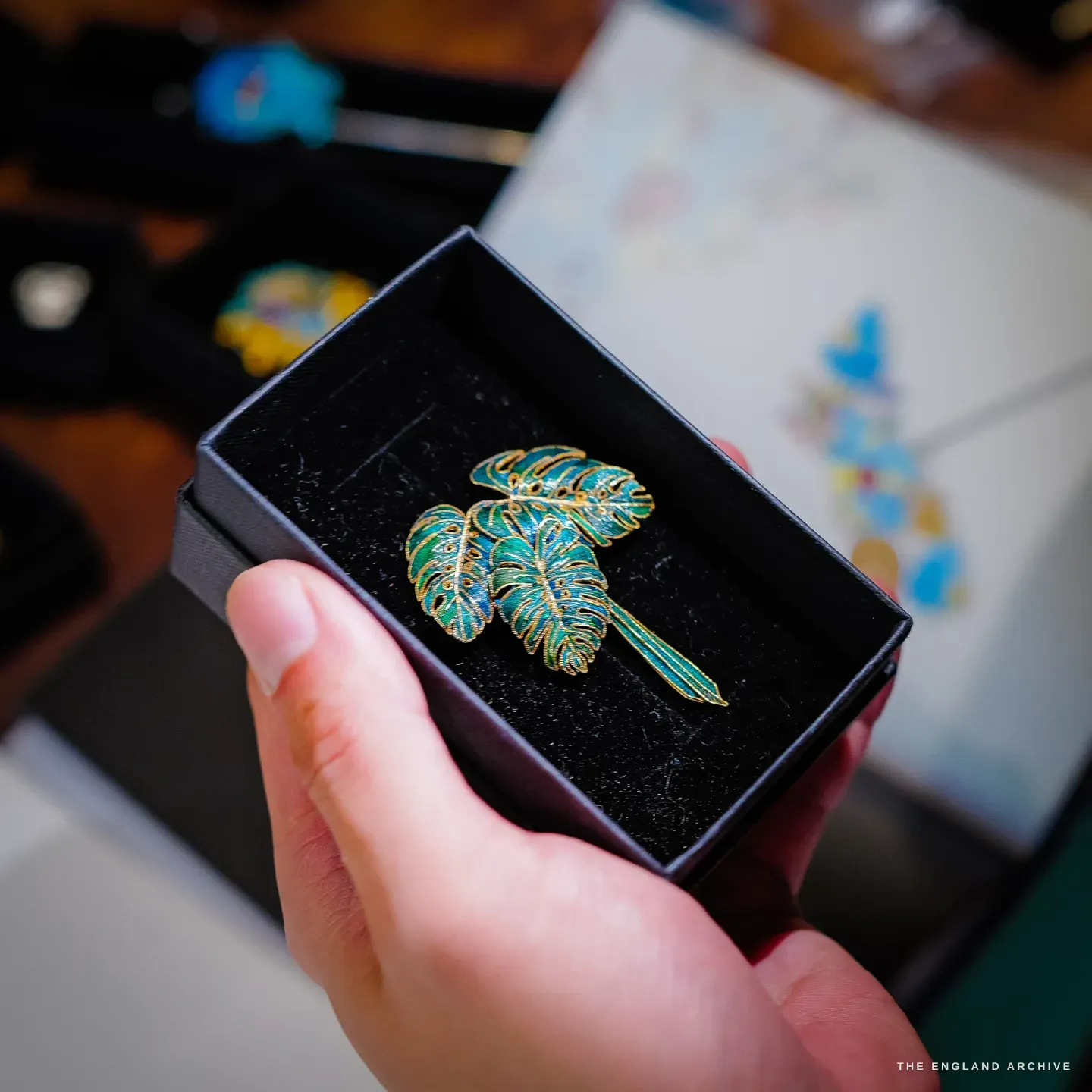
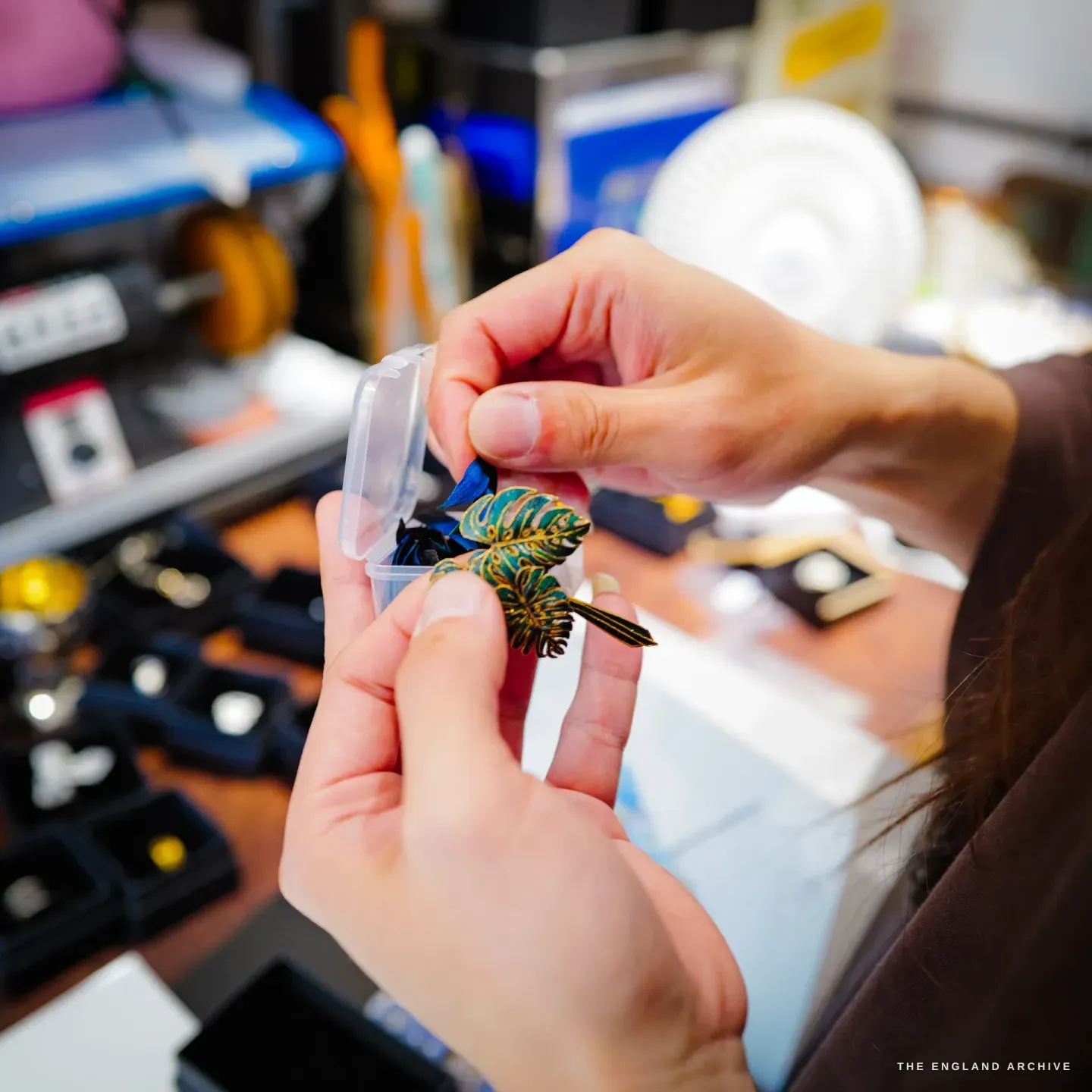
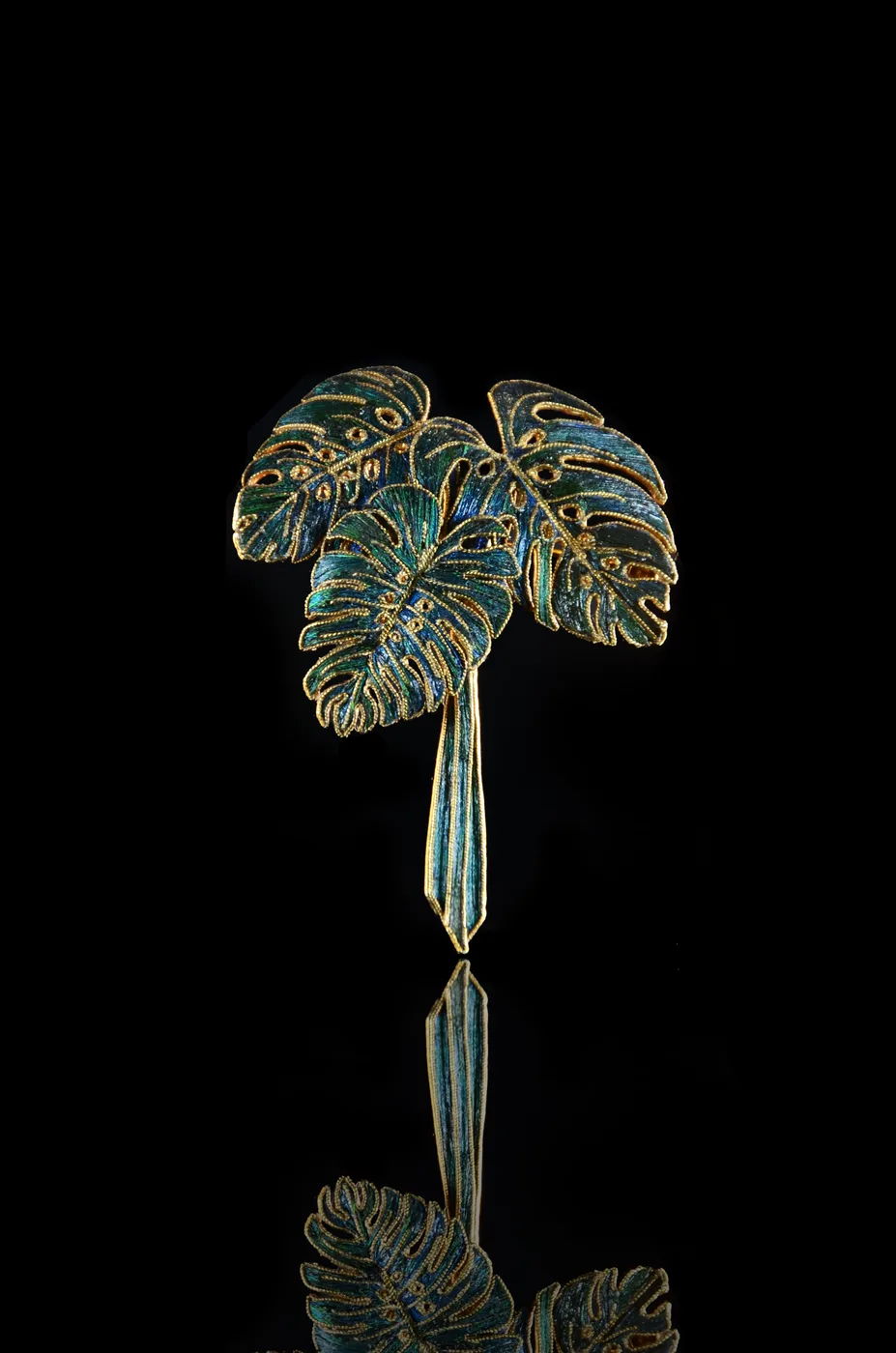
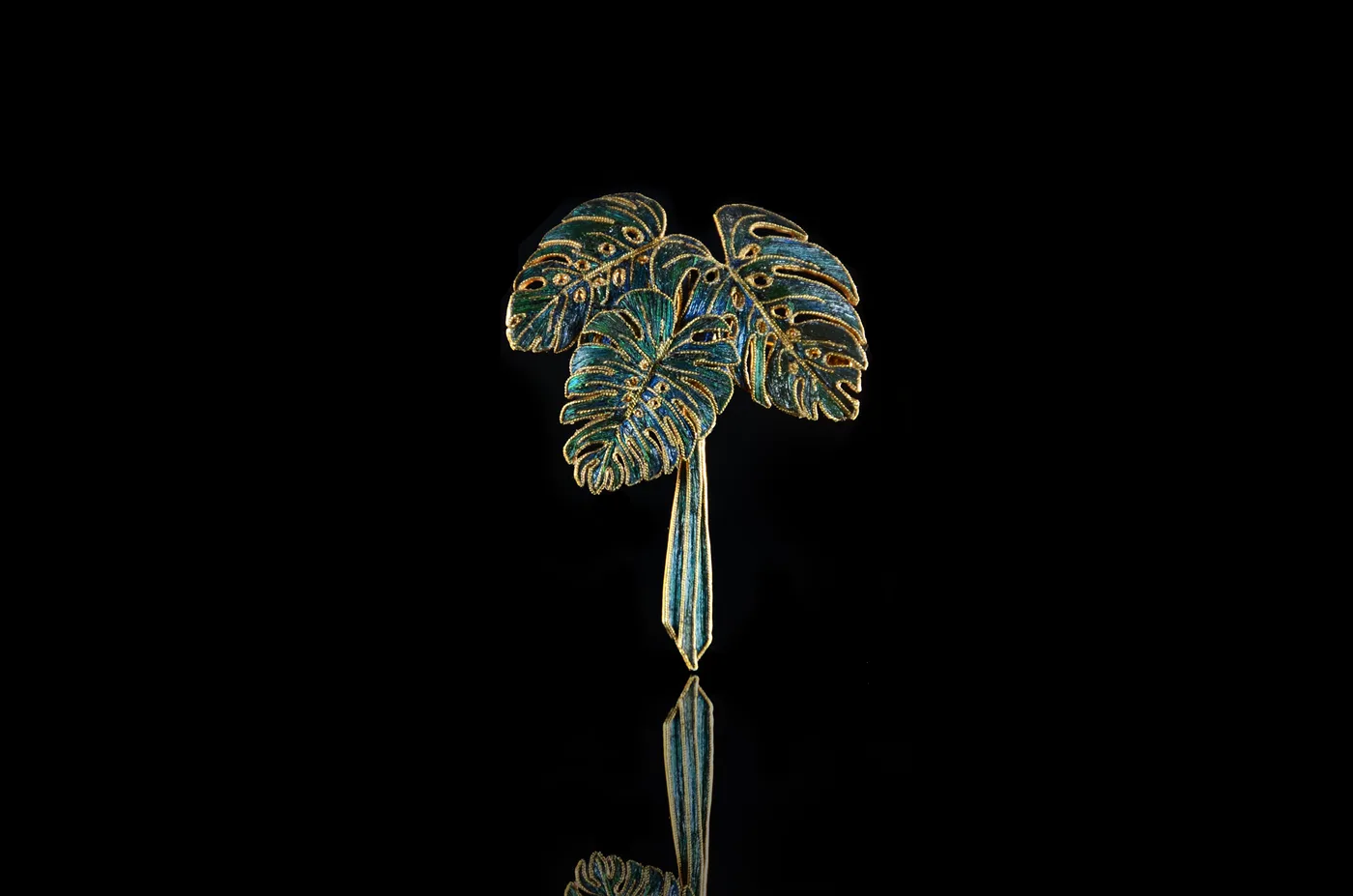
IM-1178 A monstera leaf in green feather and gold - the same imperial technique pointed at a houseplant. That is the whole idea: ancient method, modern subject. IM-1179
Wire Drawn Fine as Thread
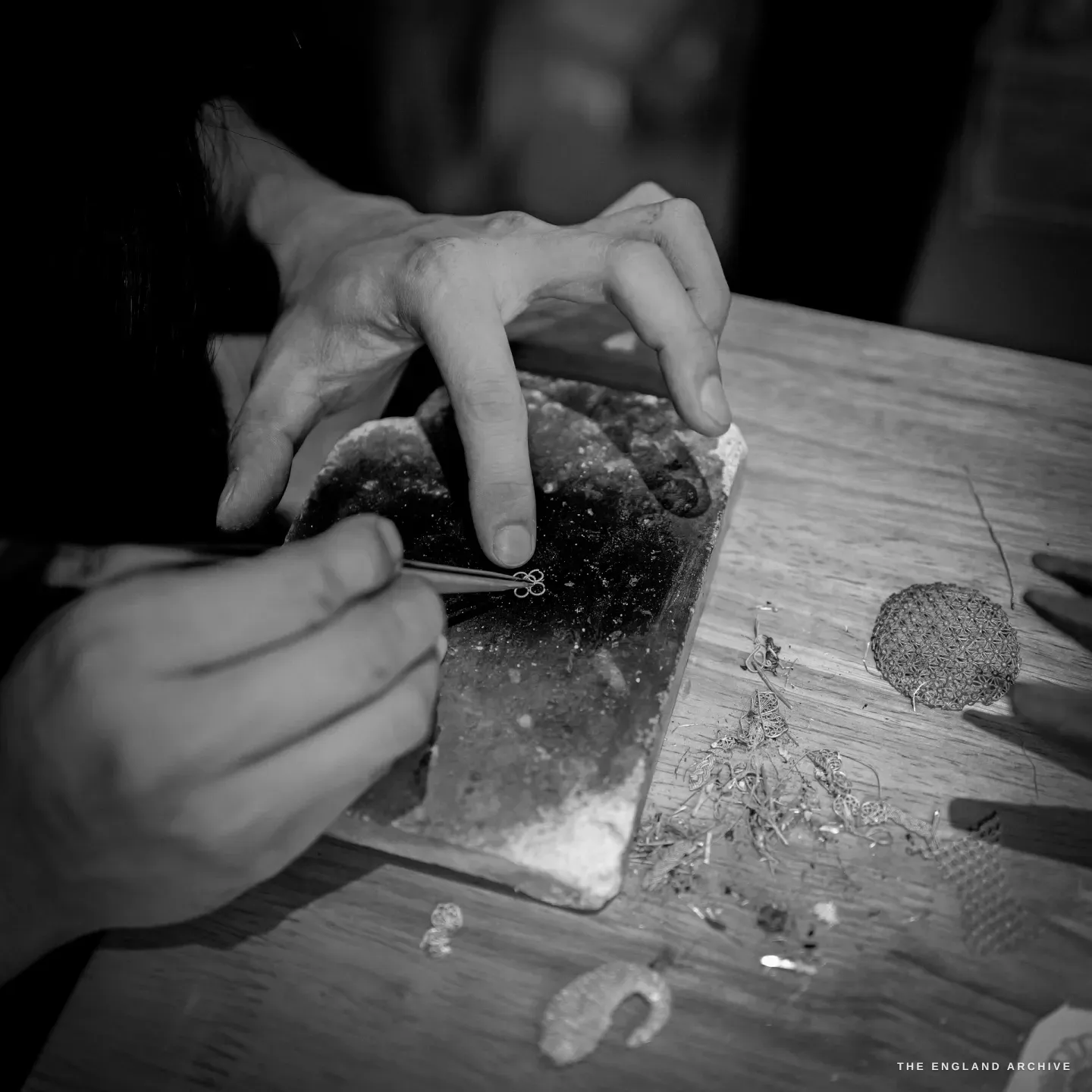
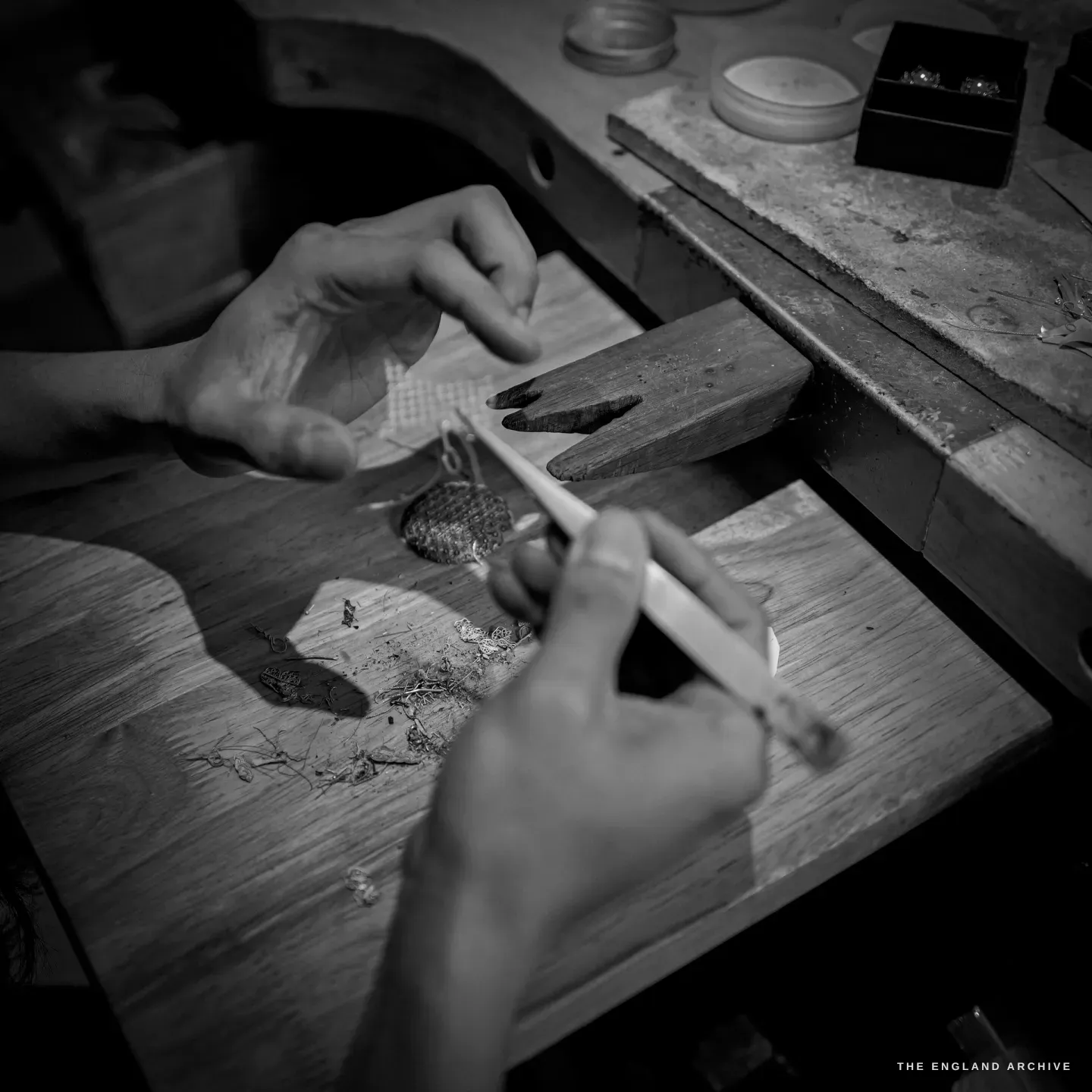
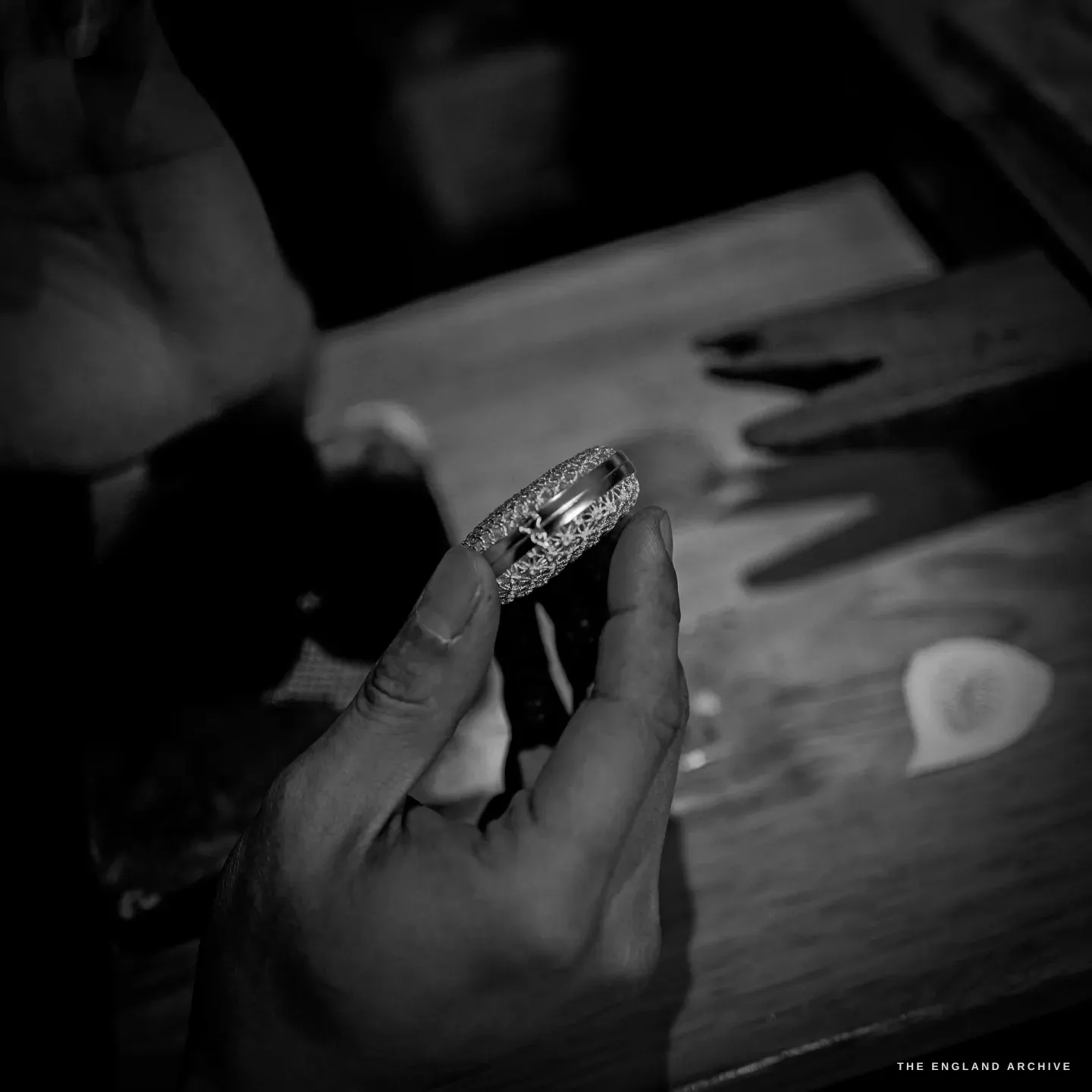
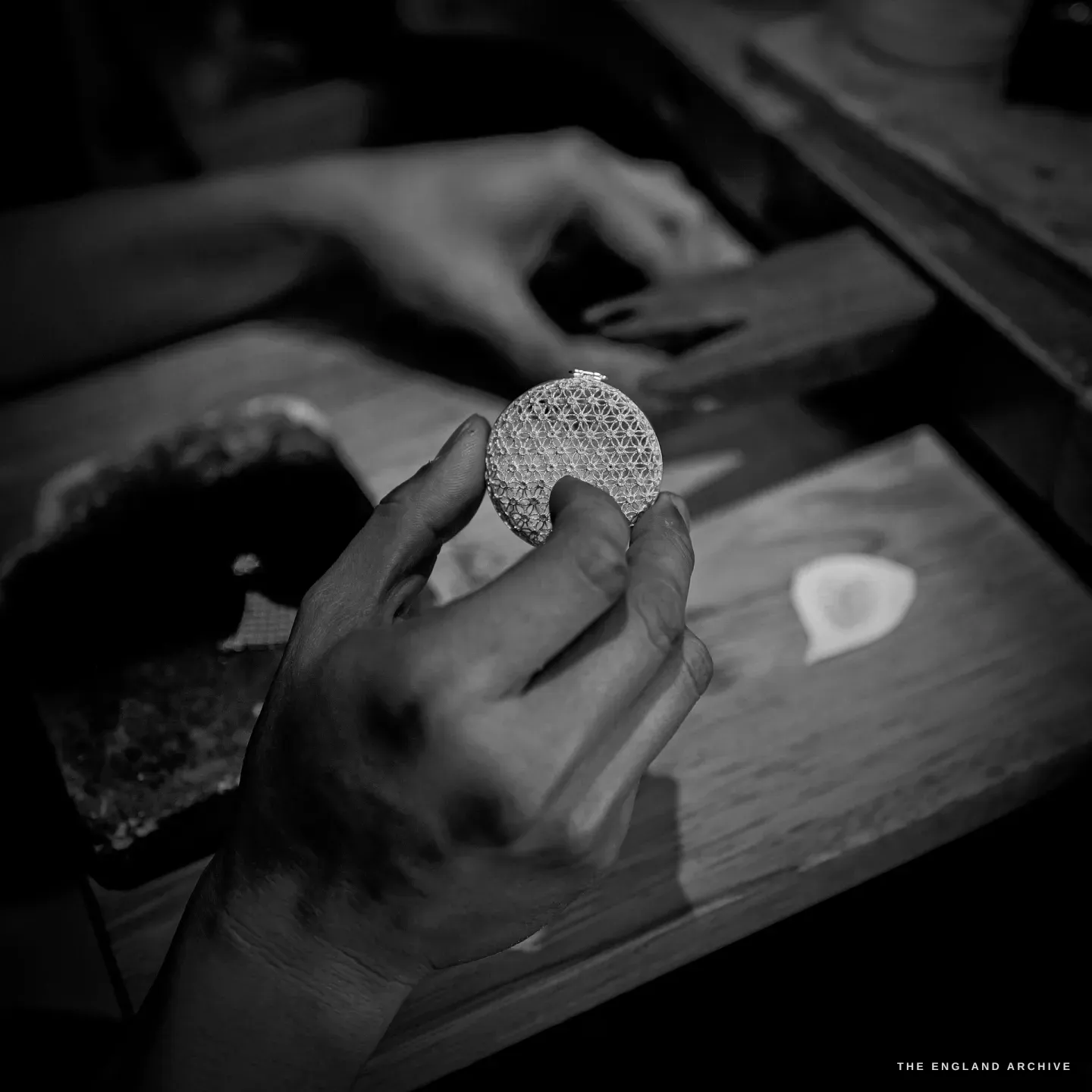
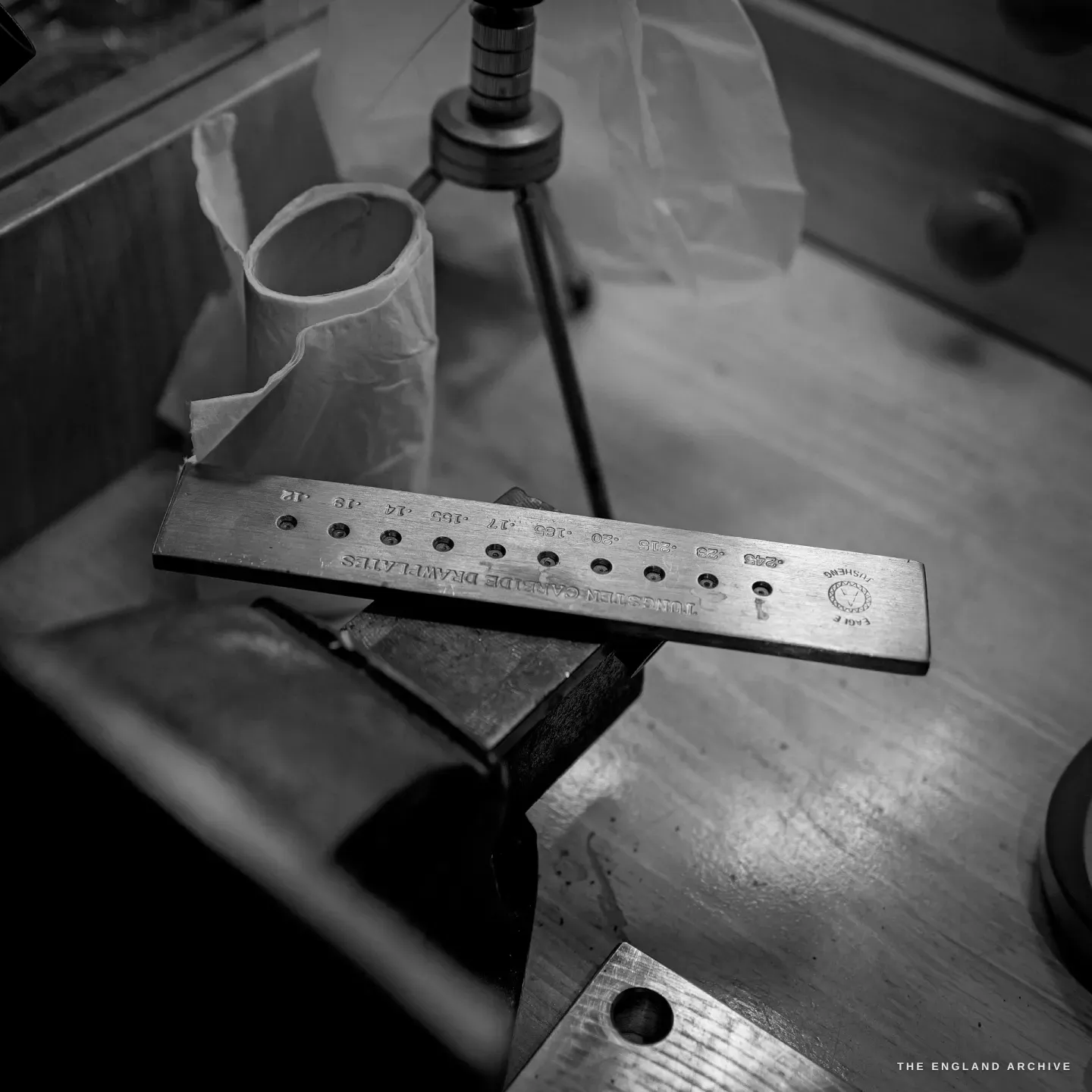
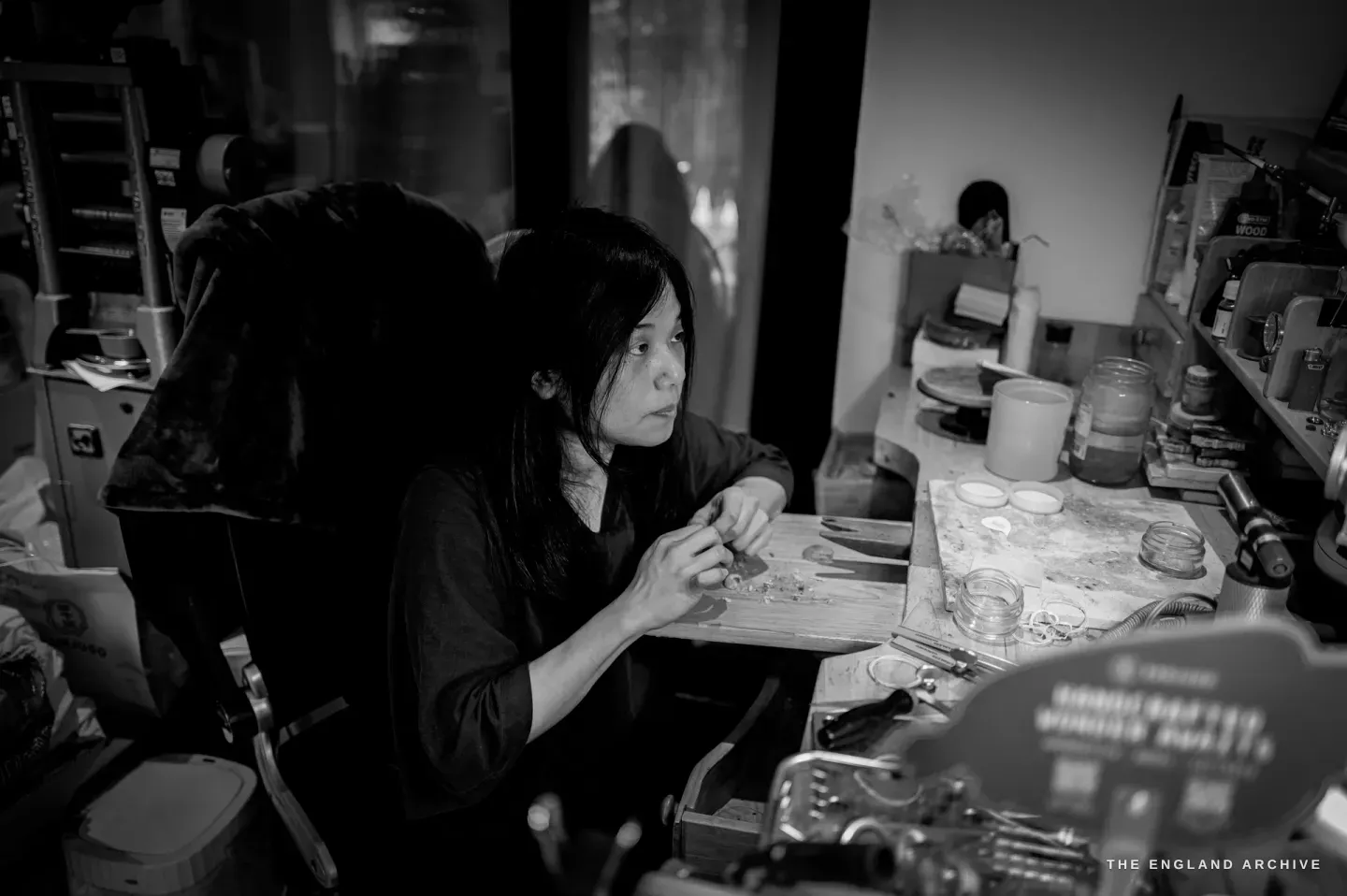
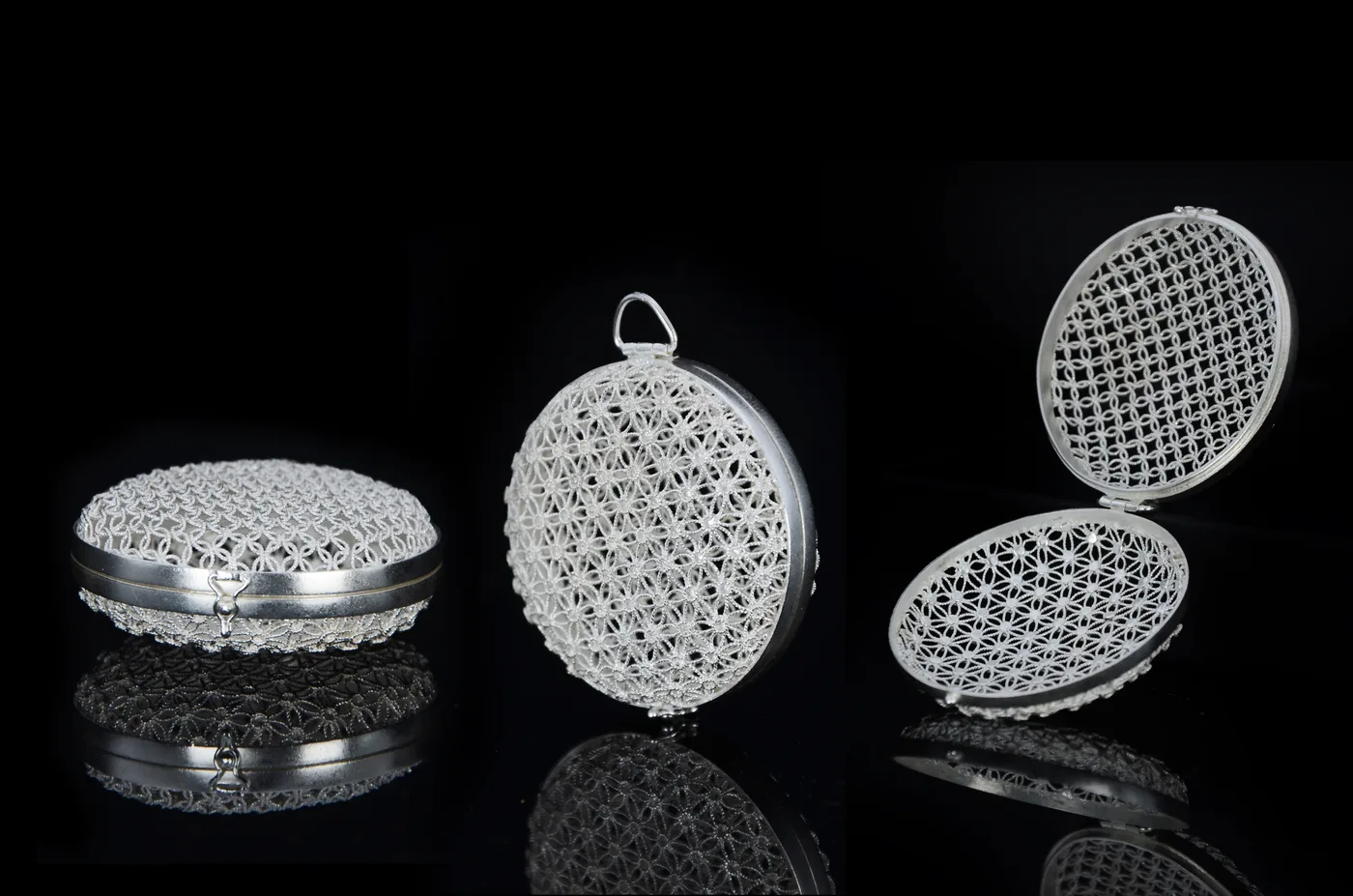
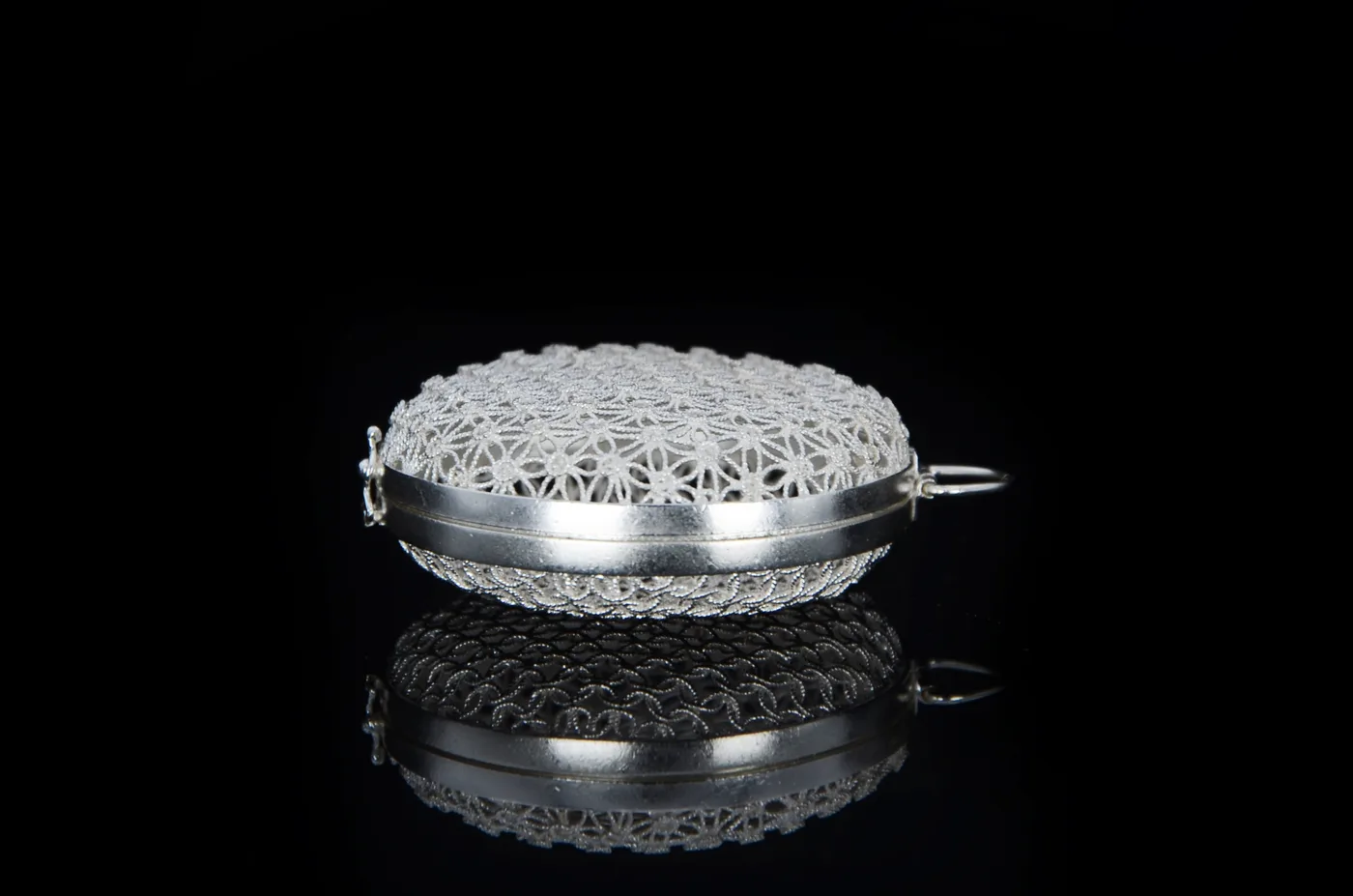
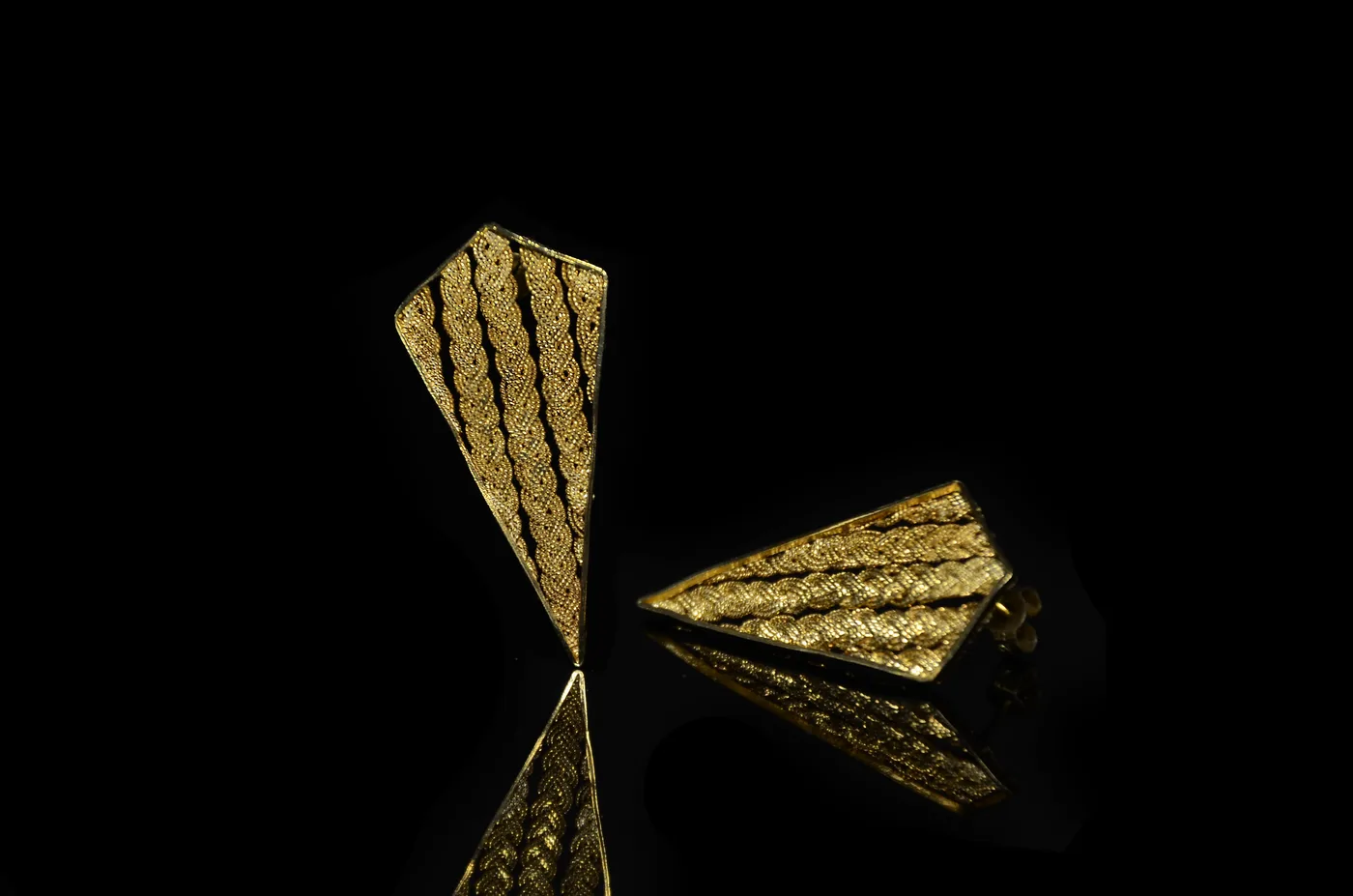
Under all of it is the wirework itself: filigree - hua si, in Chinese - the openwork frame the feather and the stone are set into. A length of silver is drawn through a steel plate, hole by smaller hole, until it is as fine as thread. Then it is coiled, twisted, laid into a pattern and soldered, join by tiny join, into open lacework that somehow holds its shape. A single small piece can be hundreds of separate solderings. I watched her build a domed openwork sphere out of wire and could not, even up close, see where one scroll ended and the next began.
IM-1180 Filigree is silver wire drawn fine as thread, coiled, laid and soldered into place, scroll by scroll. A single small piece can be hundreds of separate joins. IM-1181
Held up to the light, the finished wirework reads like lace - and it is silver, rigid, and made one filament at a time.
IM-1182 Held to the light, the wirework reads like lace. It is metal, and it is rigid, and it took a steady hand and a great deal of time. IM-1183
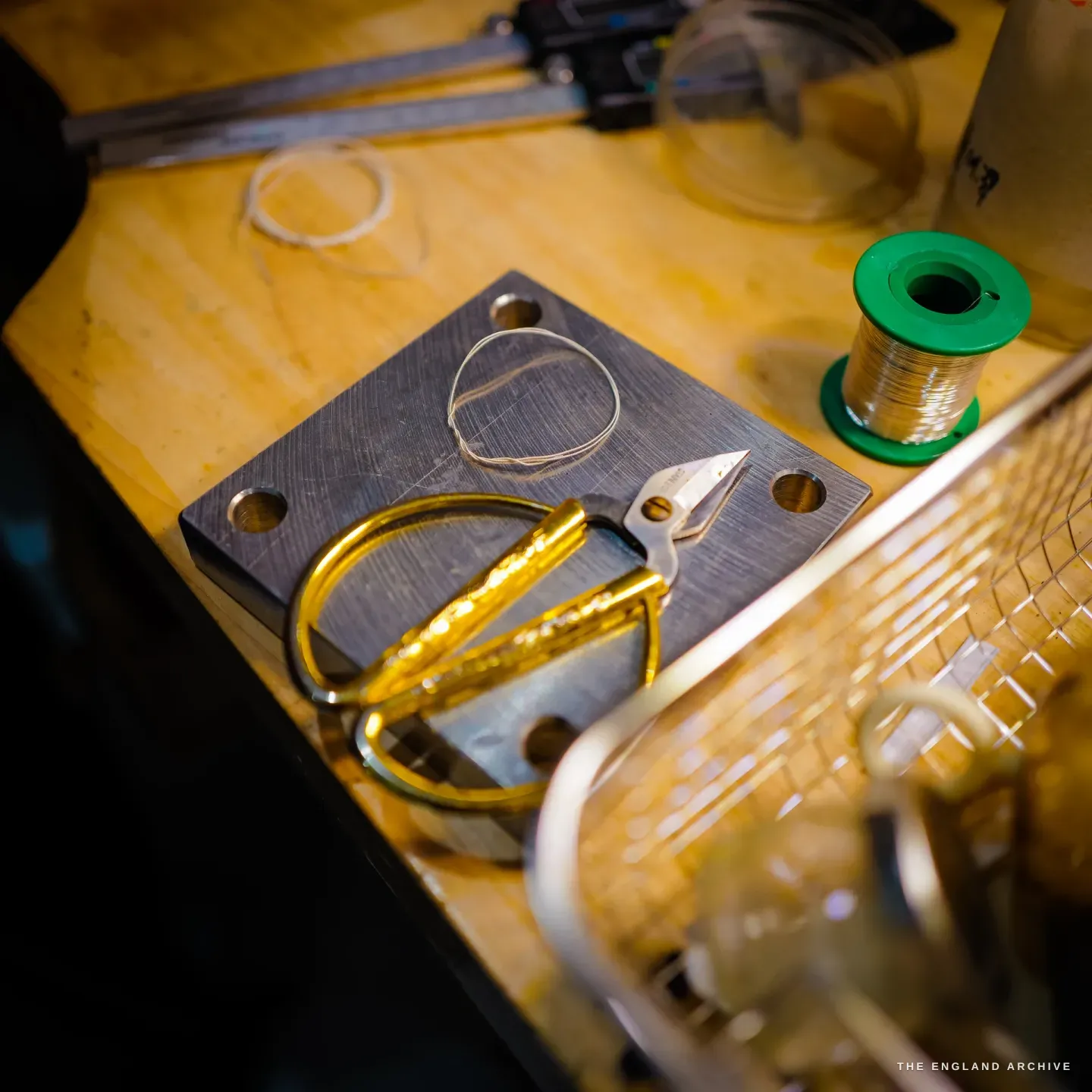
IM-1184 The drawplate that makes the wire: silver is pulled through these holes, each smaller than the last, until it is fine enough to work. IM-1185
Taiwan to London
I asked her how she had come to it, and recorded the answer. She grew up in Taiwan and trained there first as a fine artist, taking a fine-art degree in metalwork at Tunghai University. She came to London for the BA (Hons) Fashion Jewellery course at London College of Fashion, where she took her degree, and somewhere in it the jewellery became the part she could not stop thinking about. She also trained as a floral artist, with McQueen Flowers in London - which is why, she says, so much of her work comes back to leaves and blossom and fabric textures. That was the turn she described: she put some money together, bought a few tools, and began.
IM-1186
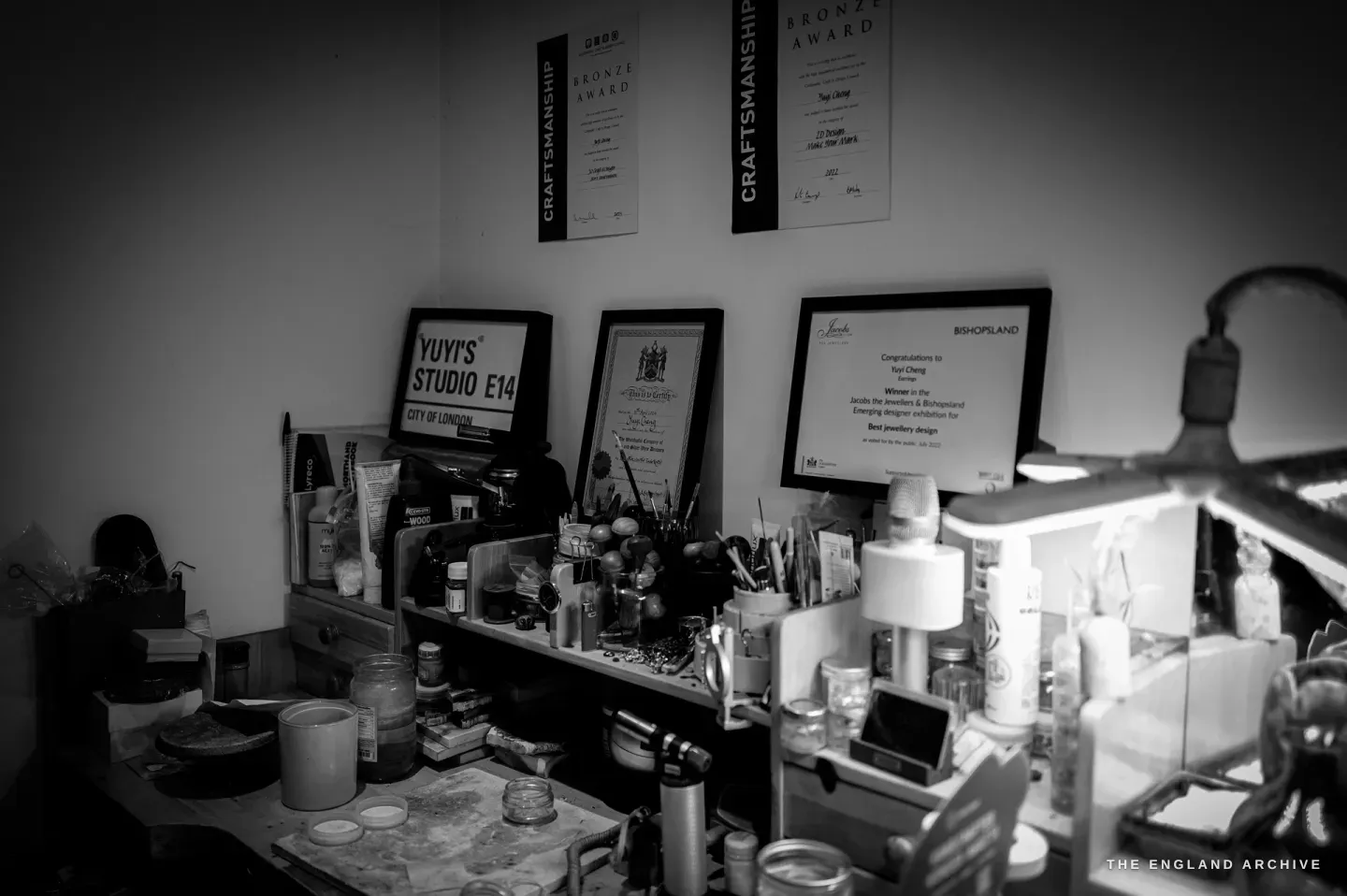
It escalated quickly. She trained at Bishopsland, the silversmithing trust, and the awards started coming - two Goldsmiths’ Craft & Design Bronze awards, and the Jacobs emerging-designer prize in 2022, won on public vote. One of those Goldsmiths’ wins, the Phoenix, did more than sit on the wall: the Worshipful Company of Gold and Silver Wyre Drawers, a centuries-old London livery company, sponsors that competition, and the piece first brought her to their attention. In April 2026 they admitted her a Freeman of the Company, and with it a Freeman of the City of London - two certificates among the framed awards above her bench, a quiet record of where the work has carried her.
The wall keeps the score: two Goldsmiths’ Craft & Design Bronze awards, the Jacobs emerging-designer prize she won by public vote in 2022, and Bishopsland, where she trained. IM-1187
From there, she said, came commissions and a steady run of online sales, her pieces going out to buyers across the world and a good many to America. For the last few years this is what she has done, and what I had come to see: ancient techniques, modern jewellery, made by hand in a London back room.
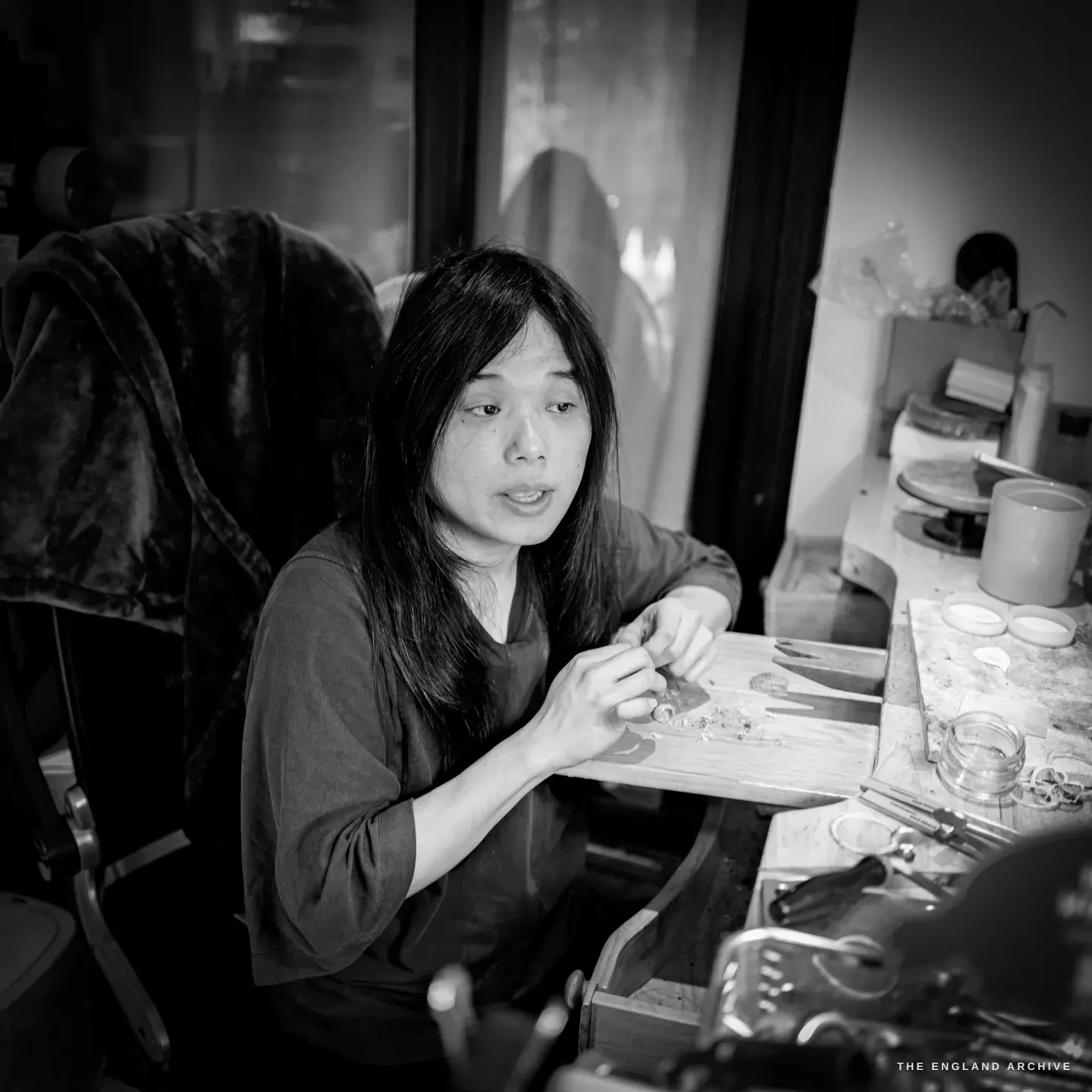
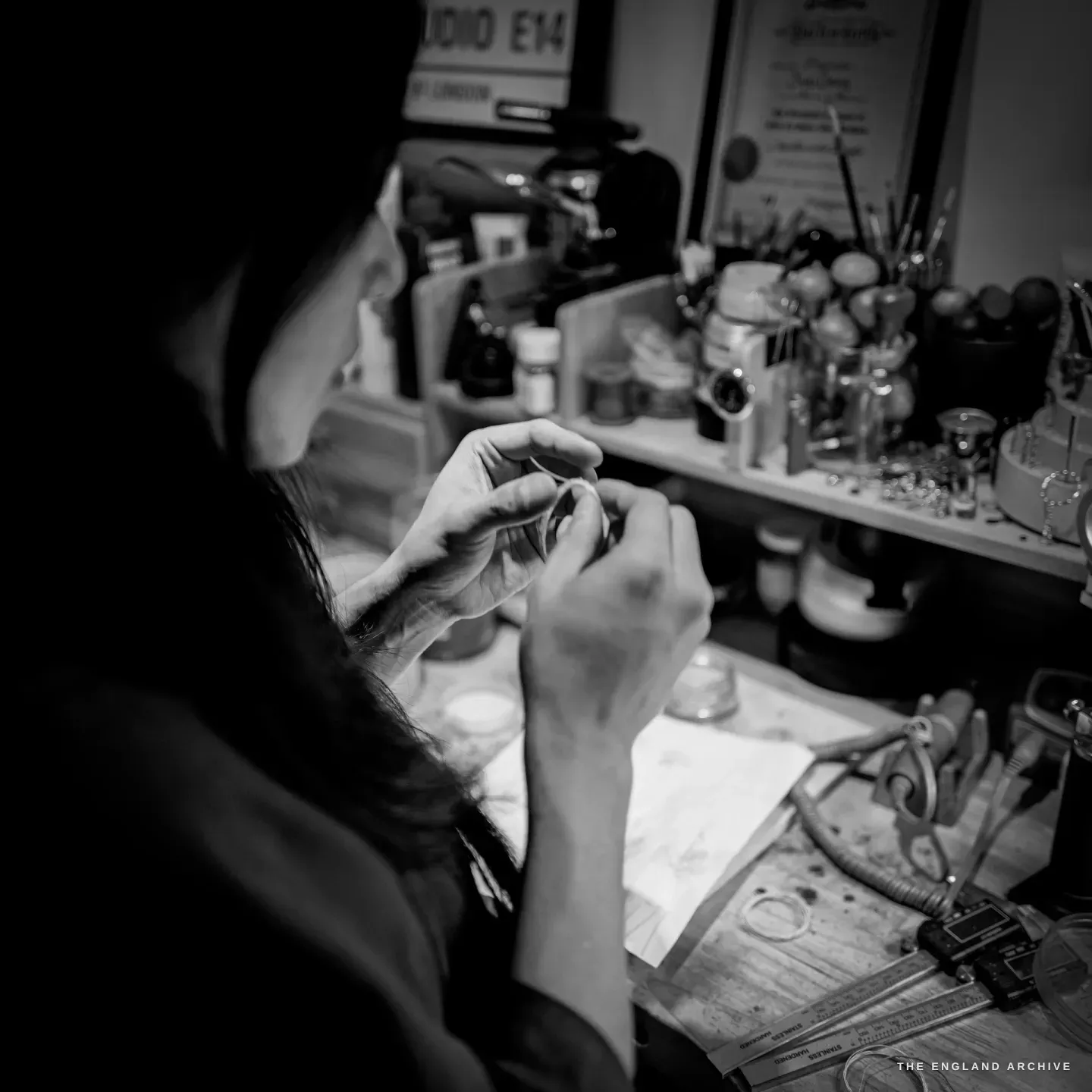
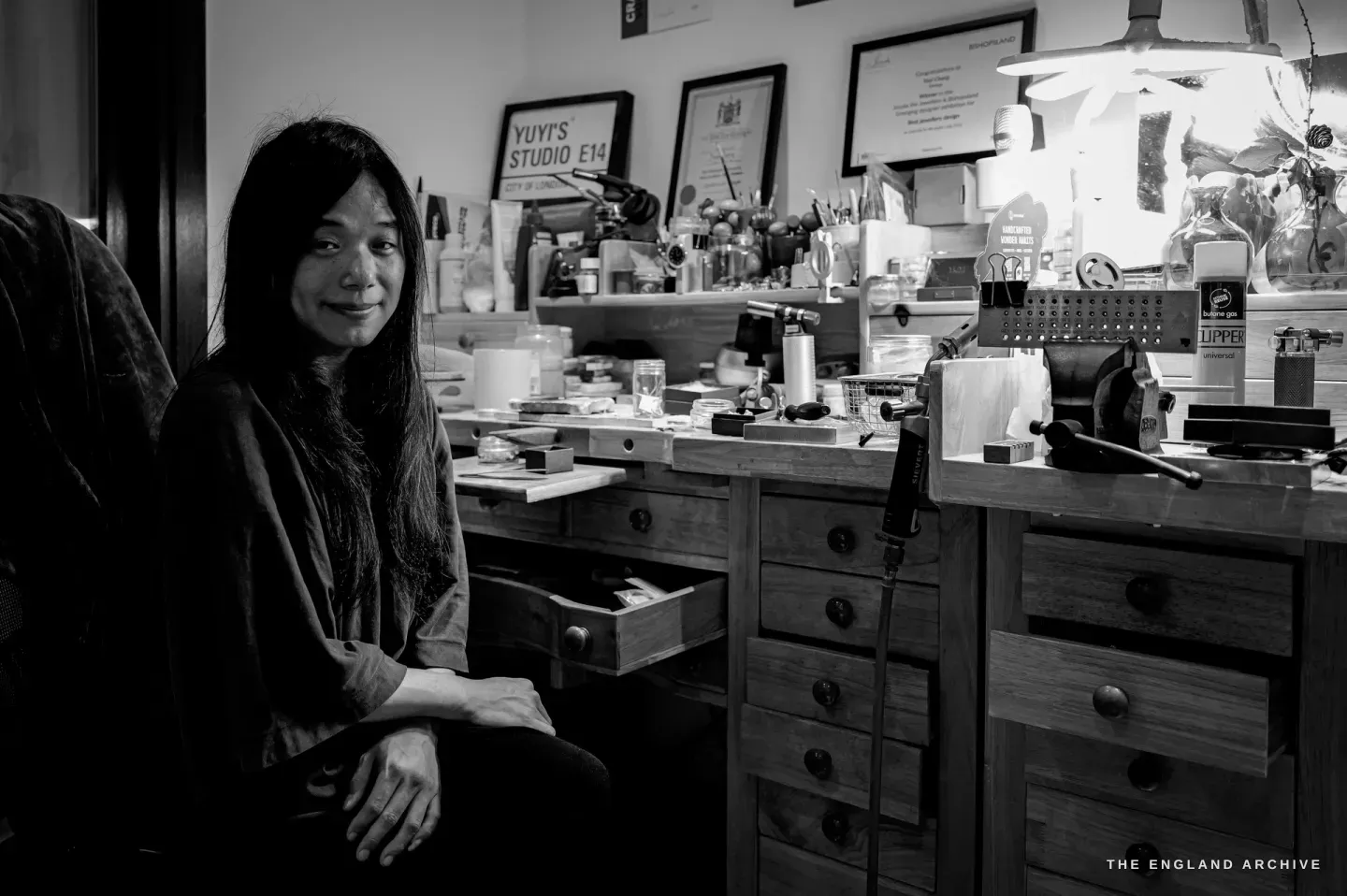
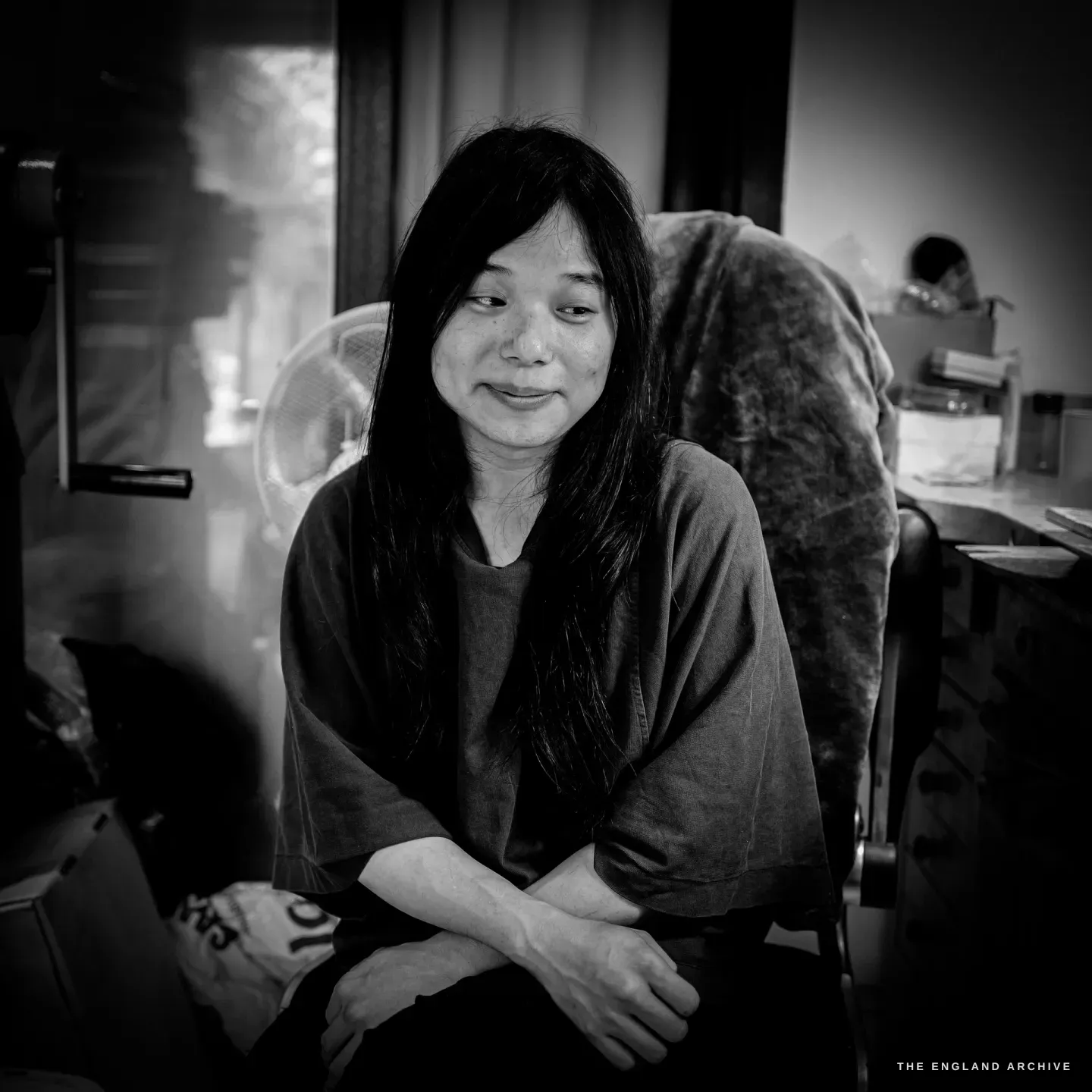
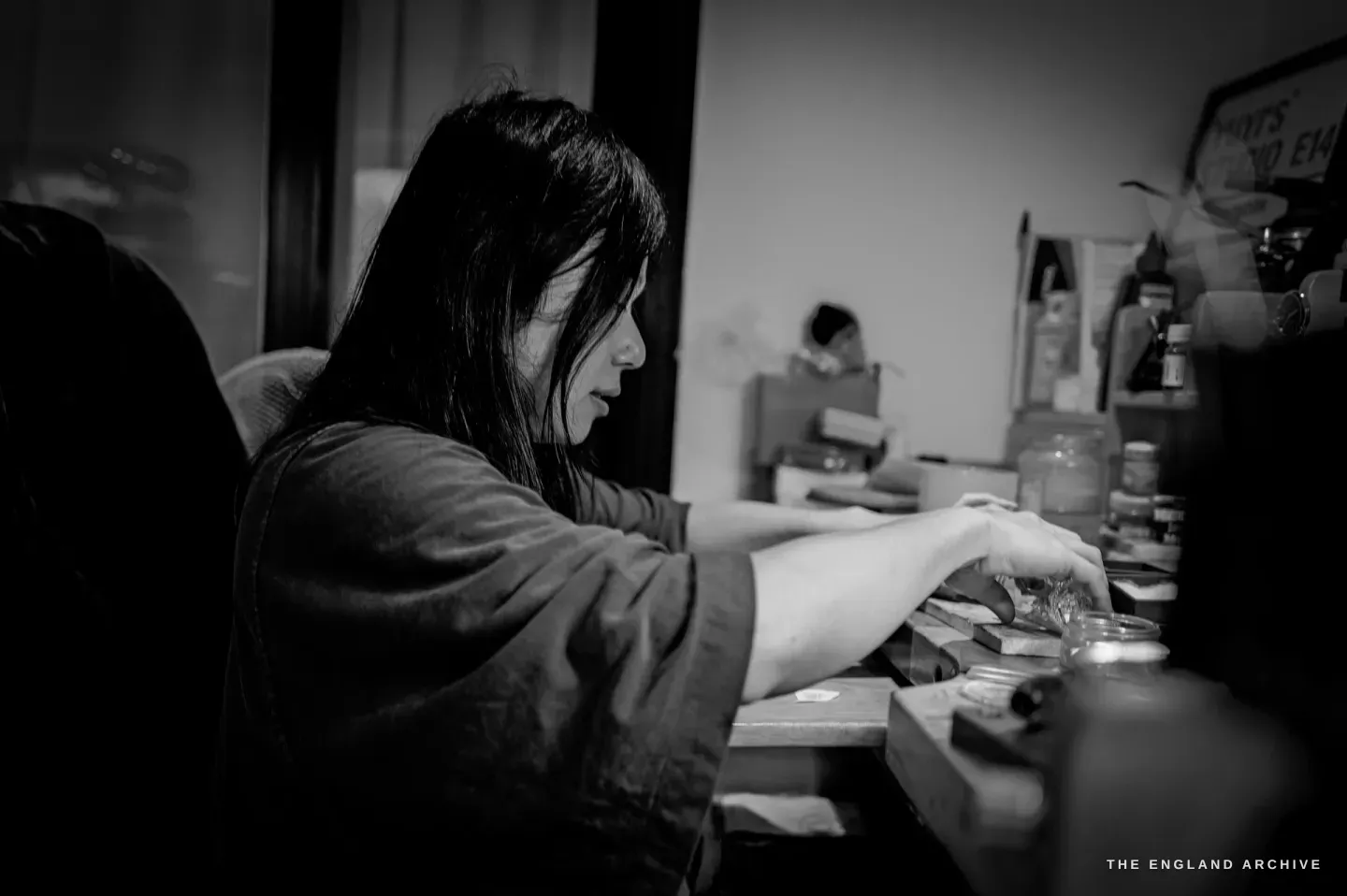
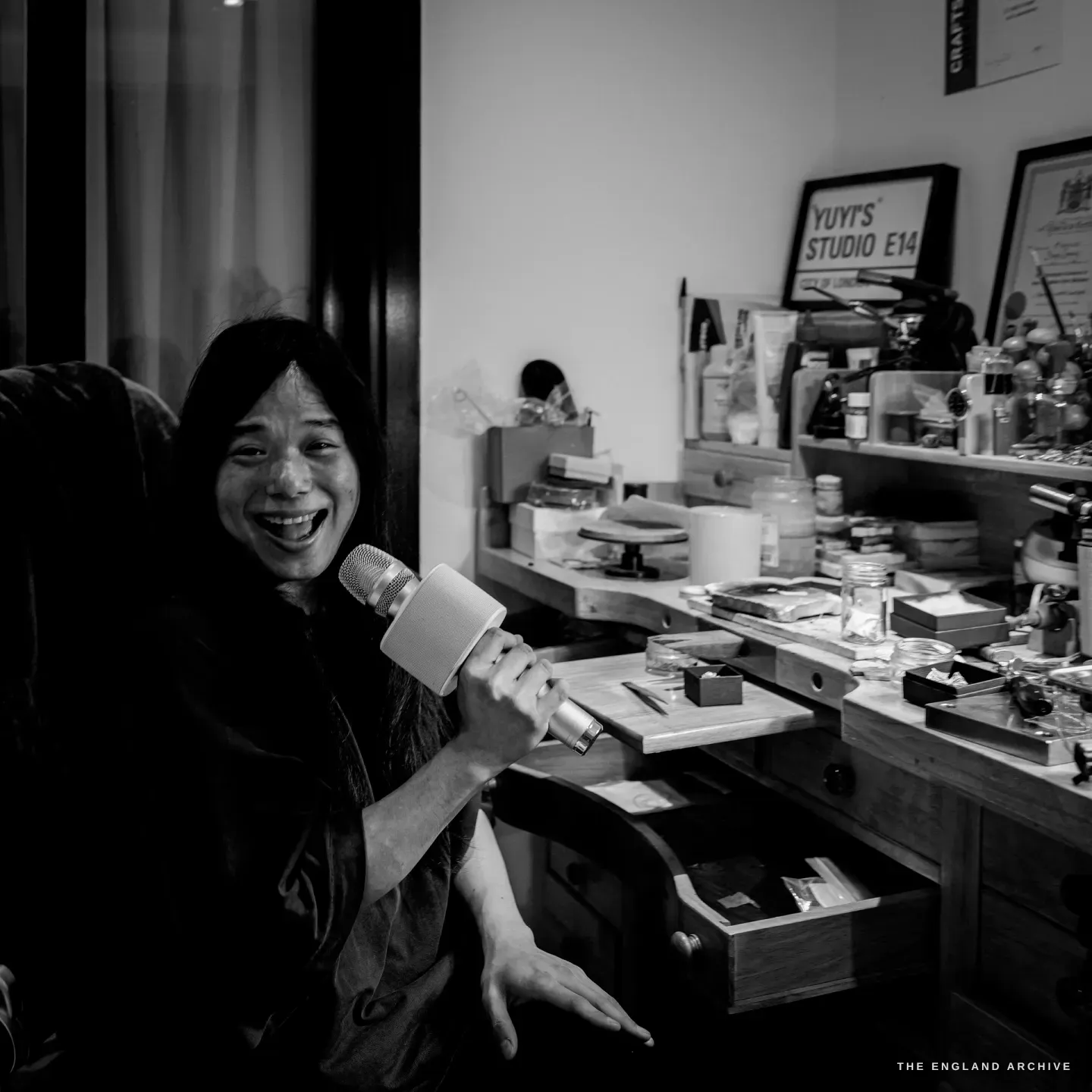
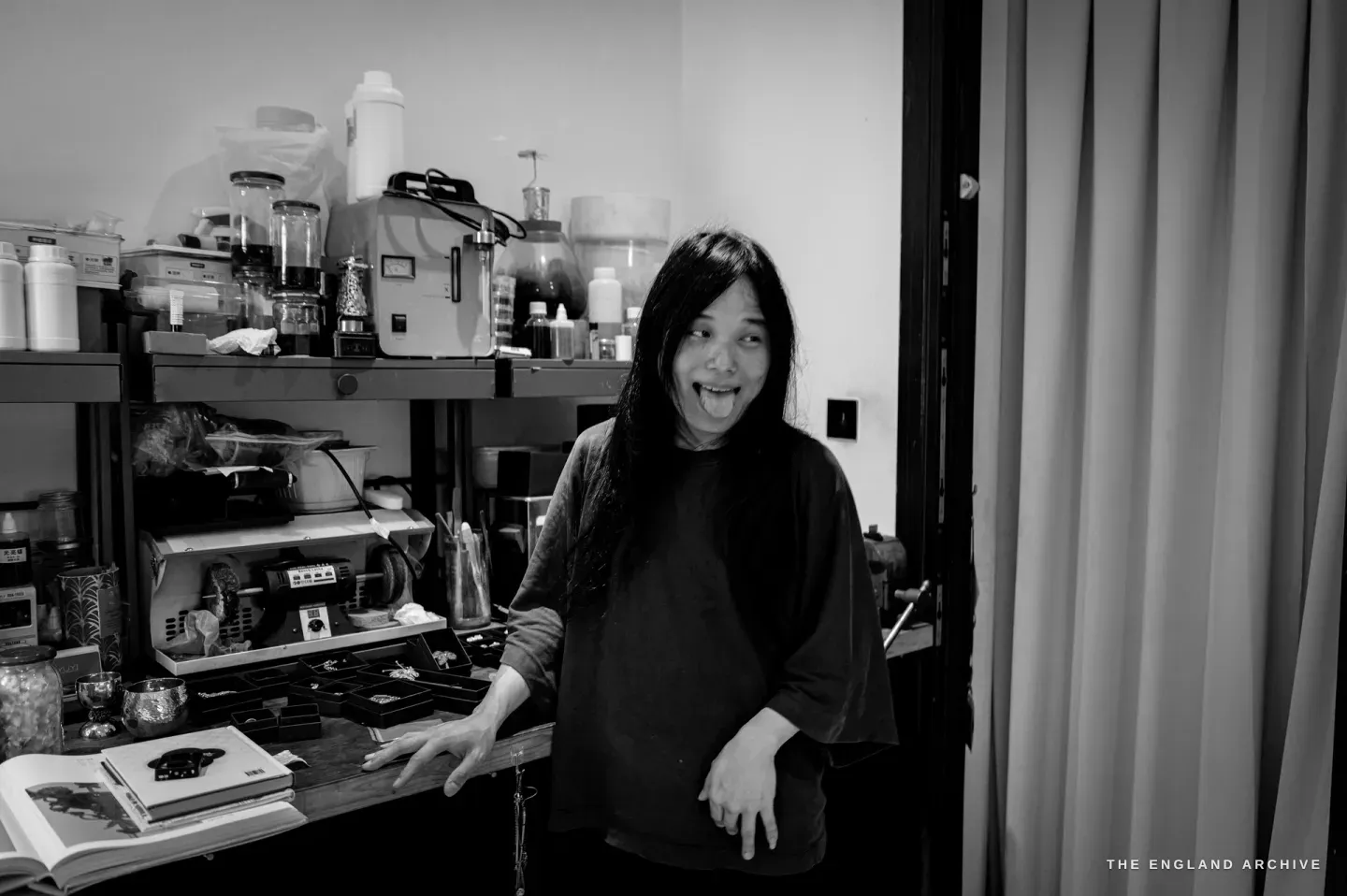
Yuyi Cheng at her bench in London. The sign on the wall reads Yuyi’s Studio, E14 - a workshop at the back of the house, and one of very few places in the country where these techniques are still worked. IM-1166 She trained first as a metalworker in Taiwan, came to London for a fashion degree, and found that the jewellery module was the part that would not let her go. IM-1189IM-1190
The Studio at the Back
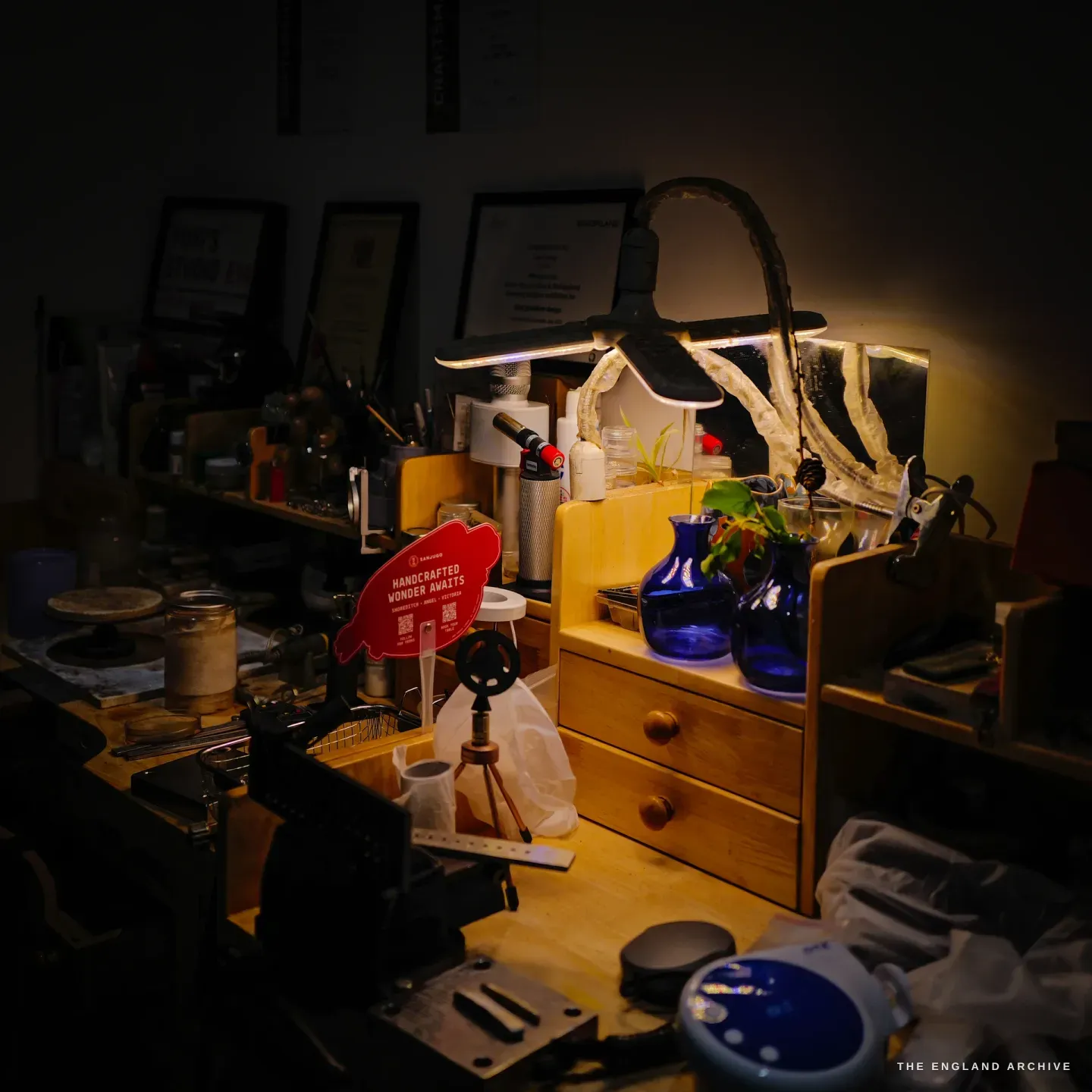
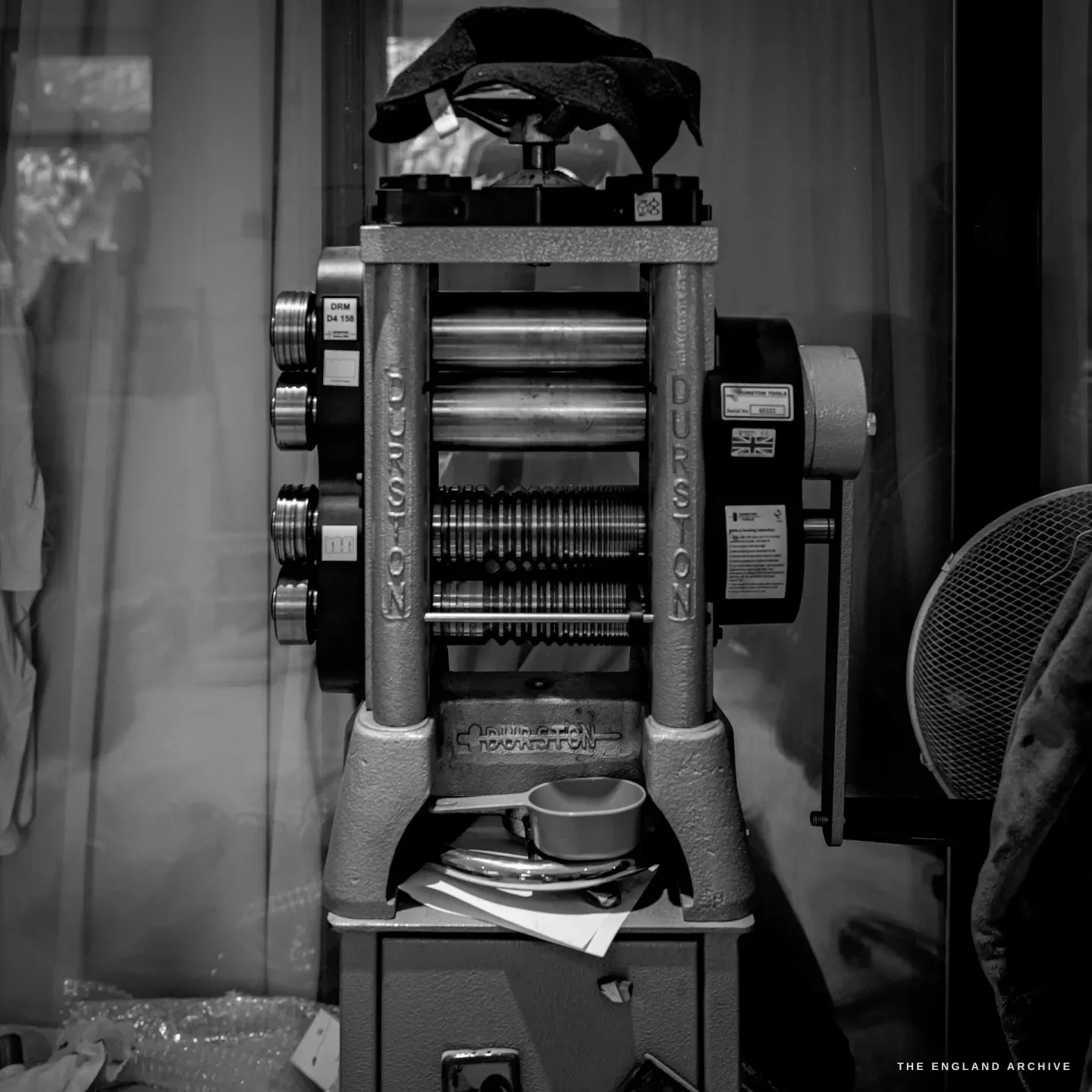
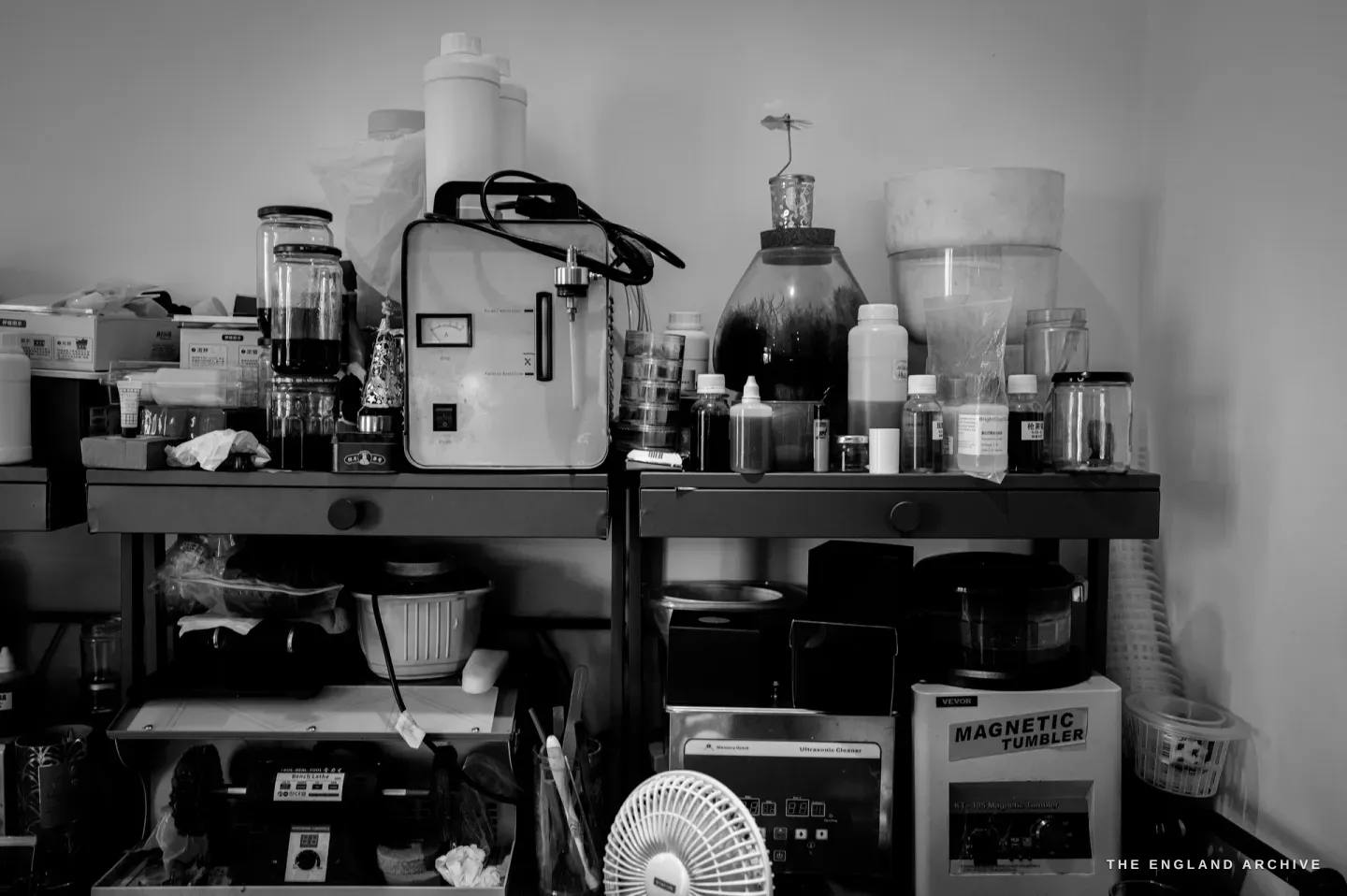
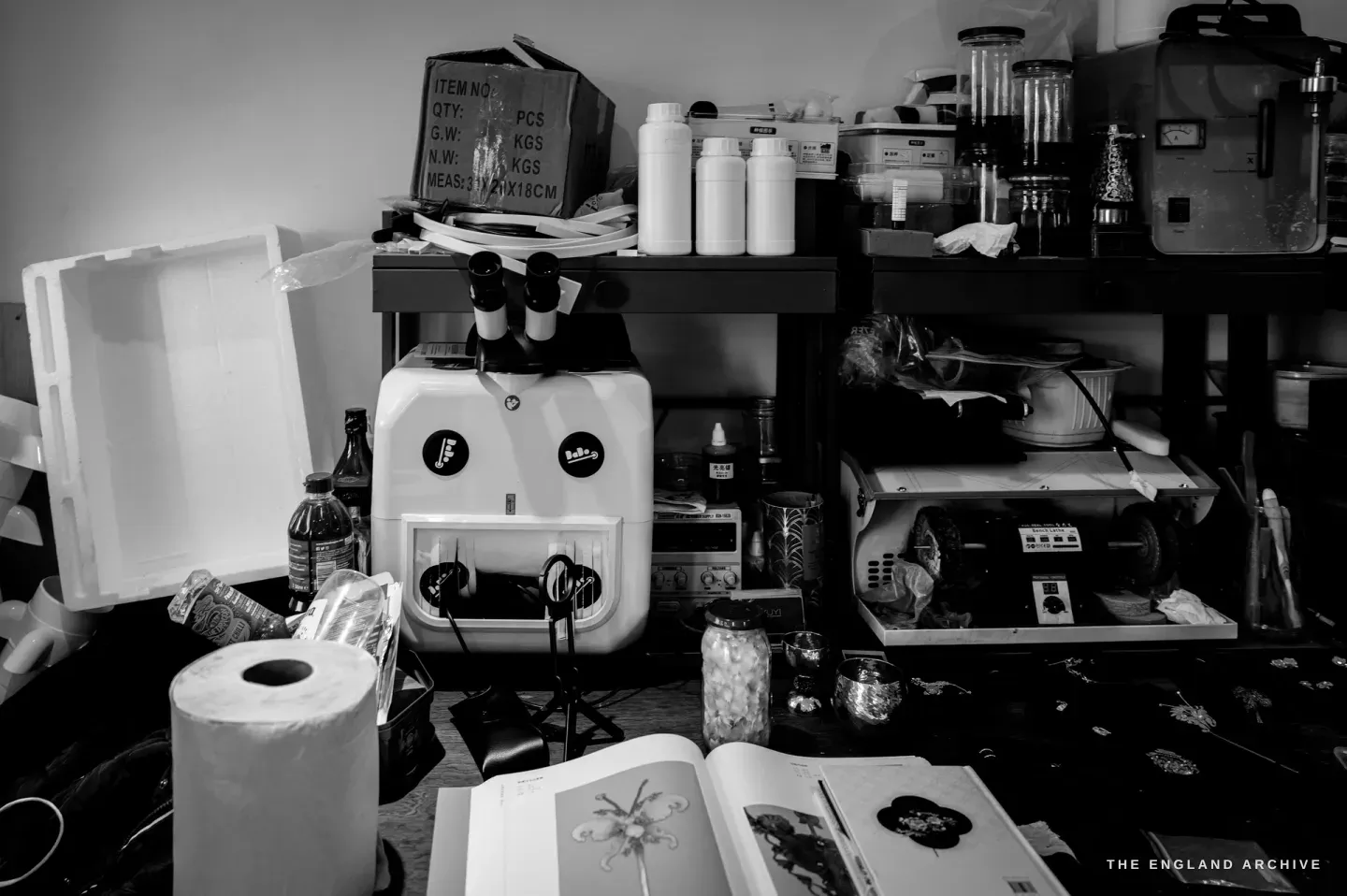
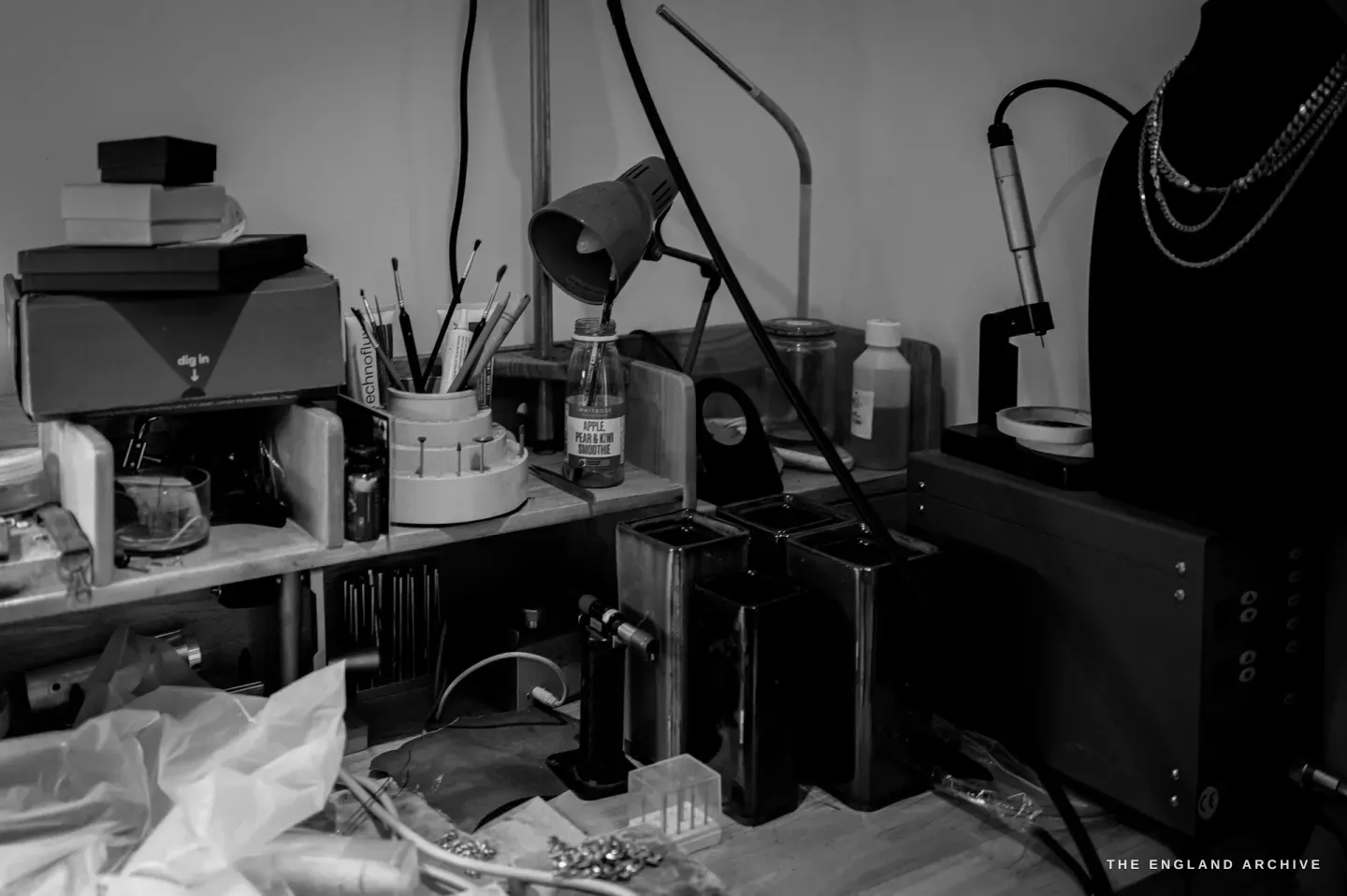
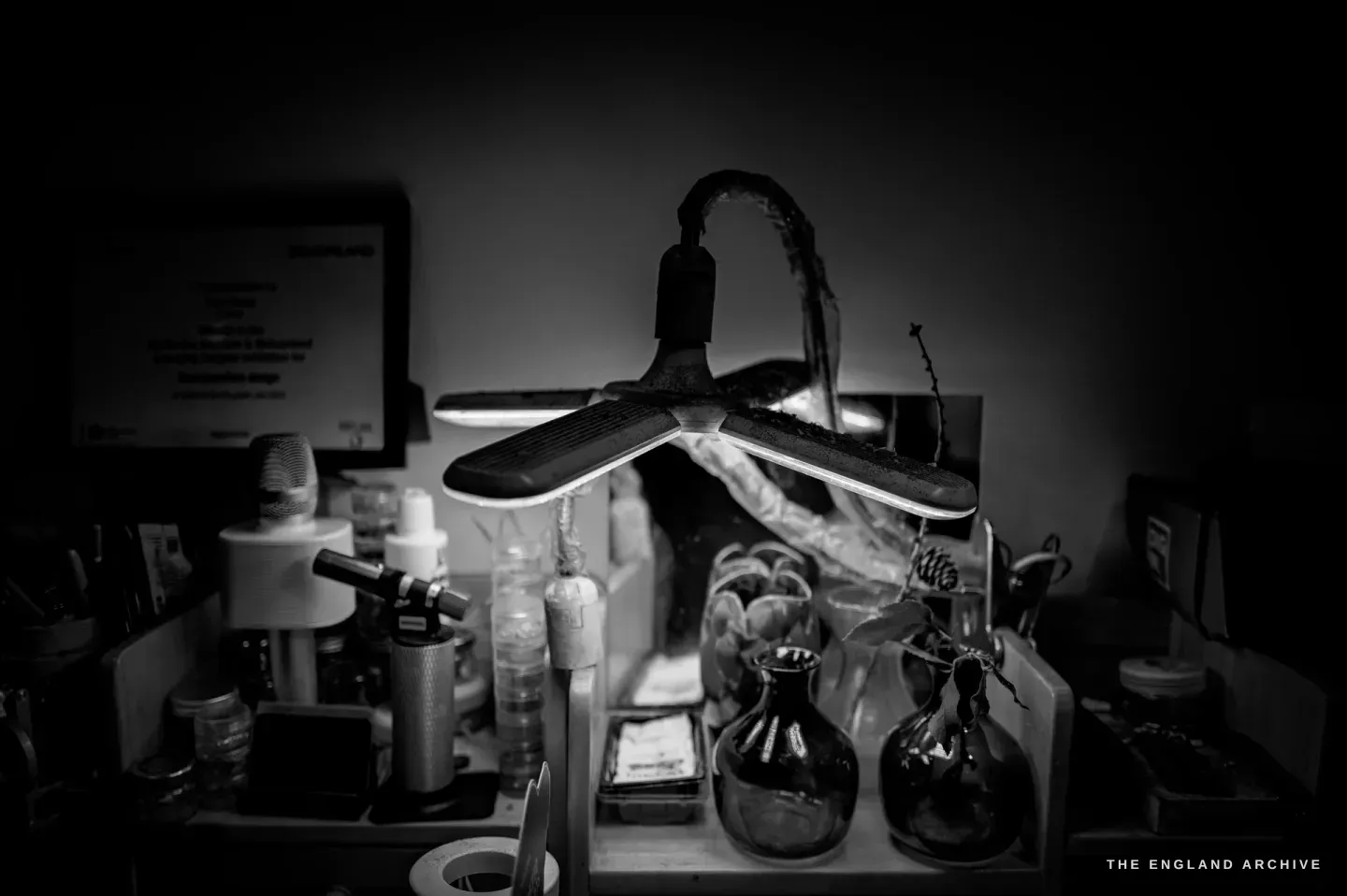
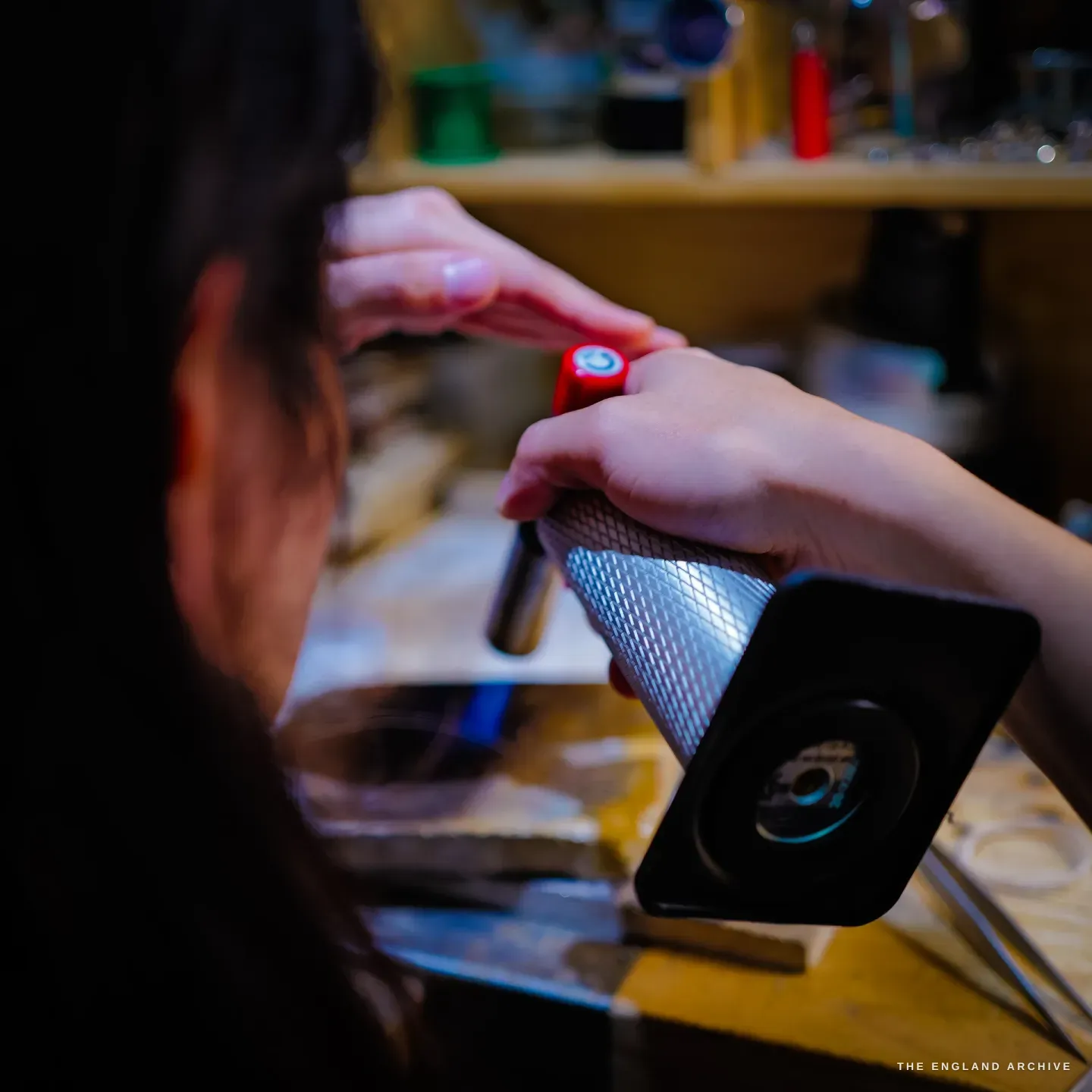
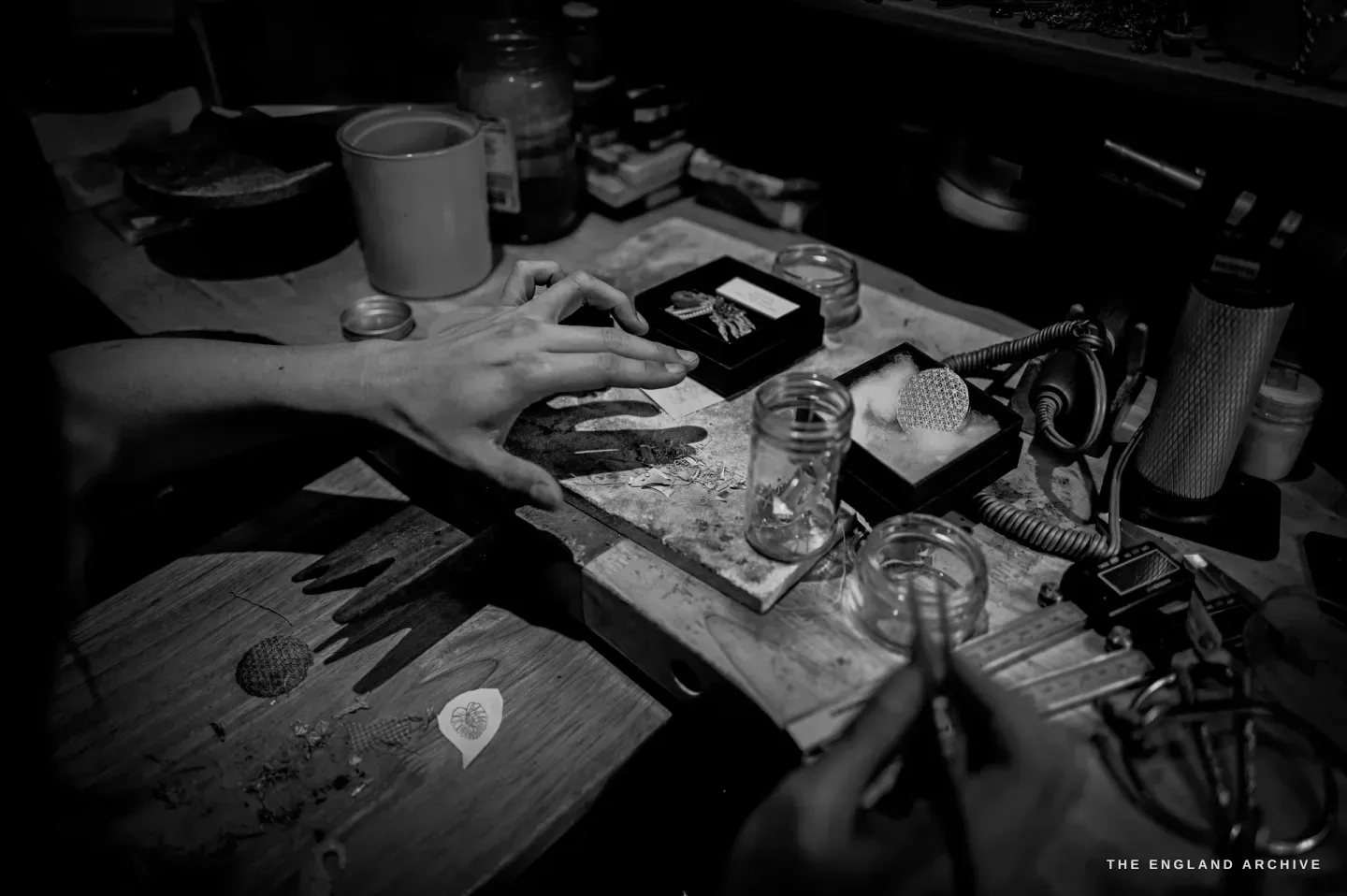
The studio is exactly what a working jeweller’s room should be. Benches and drawers down one side, equipment and chemicals down the other: a hand-cranked rolling mill by the window, a torch, a laser spot welder she uses for repairs and general jewellery work, a plating unit, an ultrasonic cleaner, a wall of jars - and the daylight lamp she works under, with a reference book of the old work open somewhere nearby.
IM-1192 The studio is a working room: a hand-cranked rolling mill, a torch, a wall of jars and chemicals, and the daylight lamp she works under. IM-1193
IM-1194 A laser spot welder for repairs and general jewellery work, a bench lathe, and always a reference book of the old work open somewhere near to hand. The filigree itself is made entirely by hand. IM-1195IM-1196IM-1197 The tools of the wirework - snips, calipers, the drawplate, and silver wire by the coil and the spool. IM-1198
By Hand
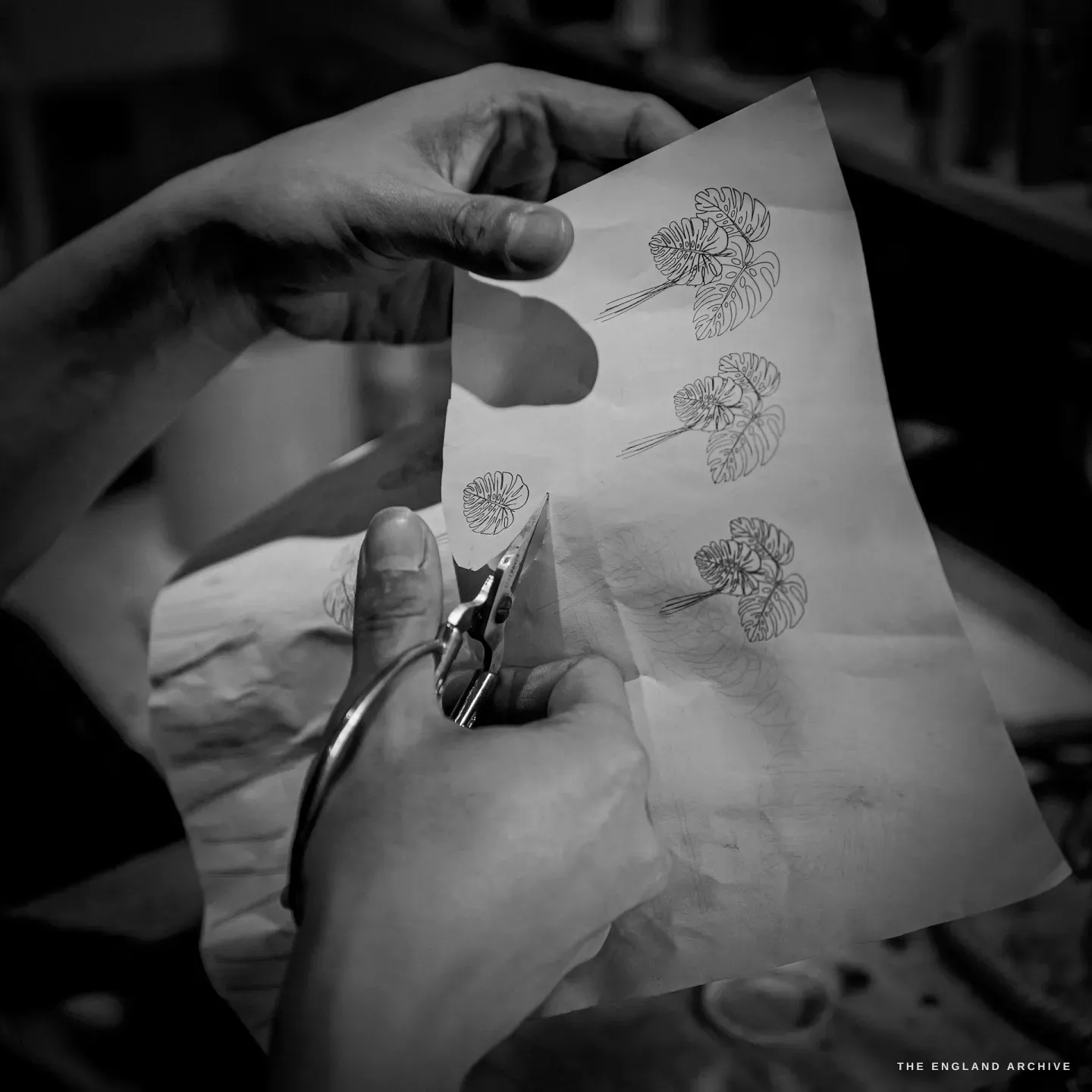
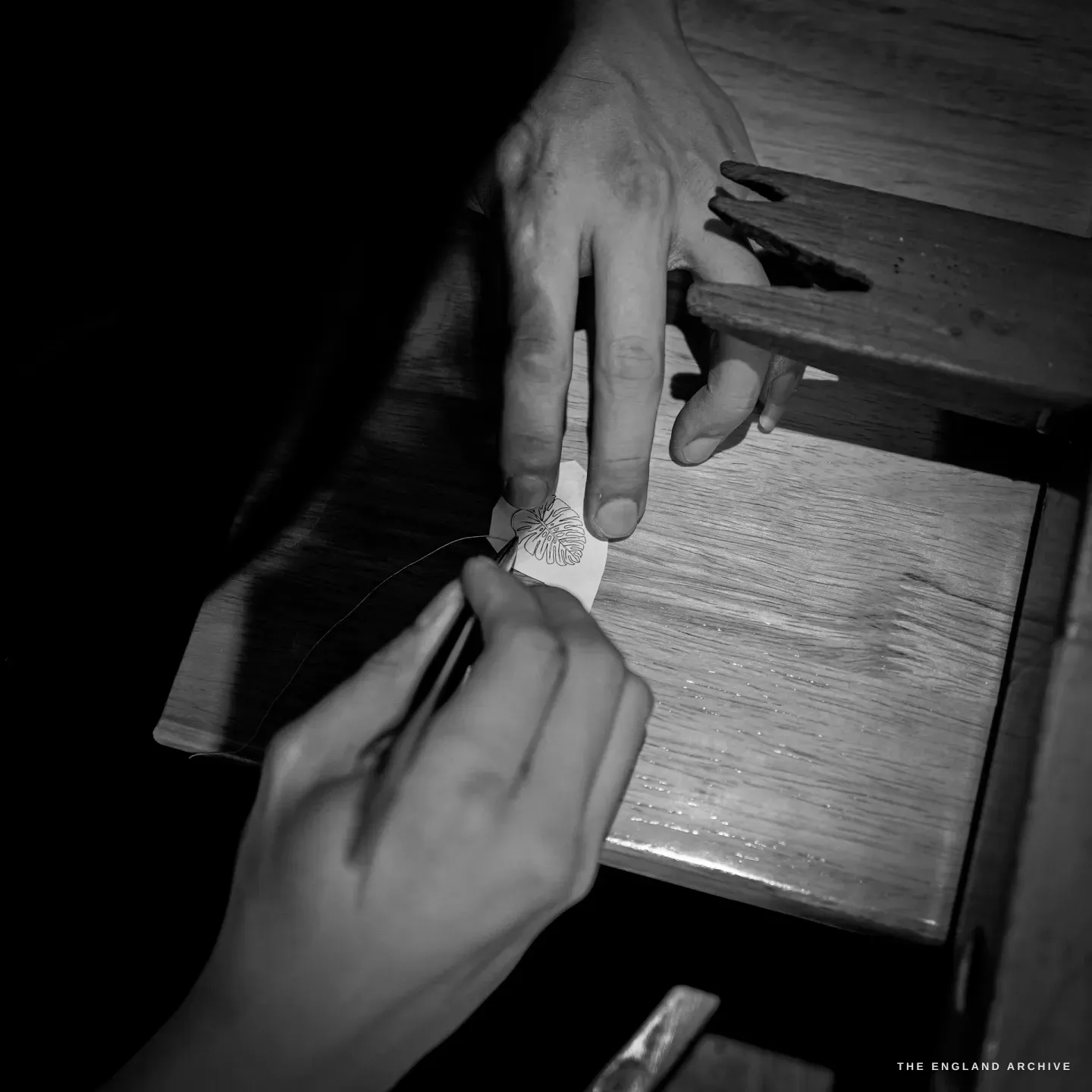
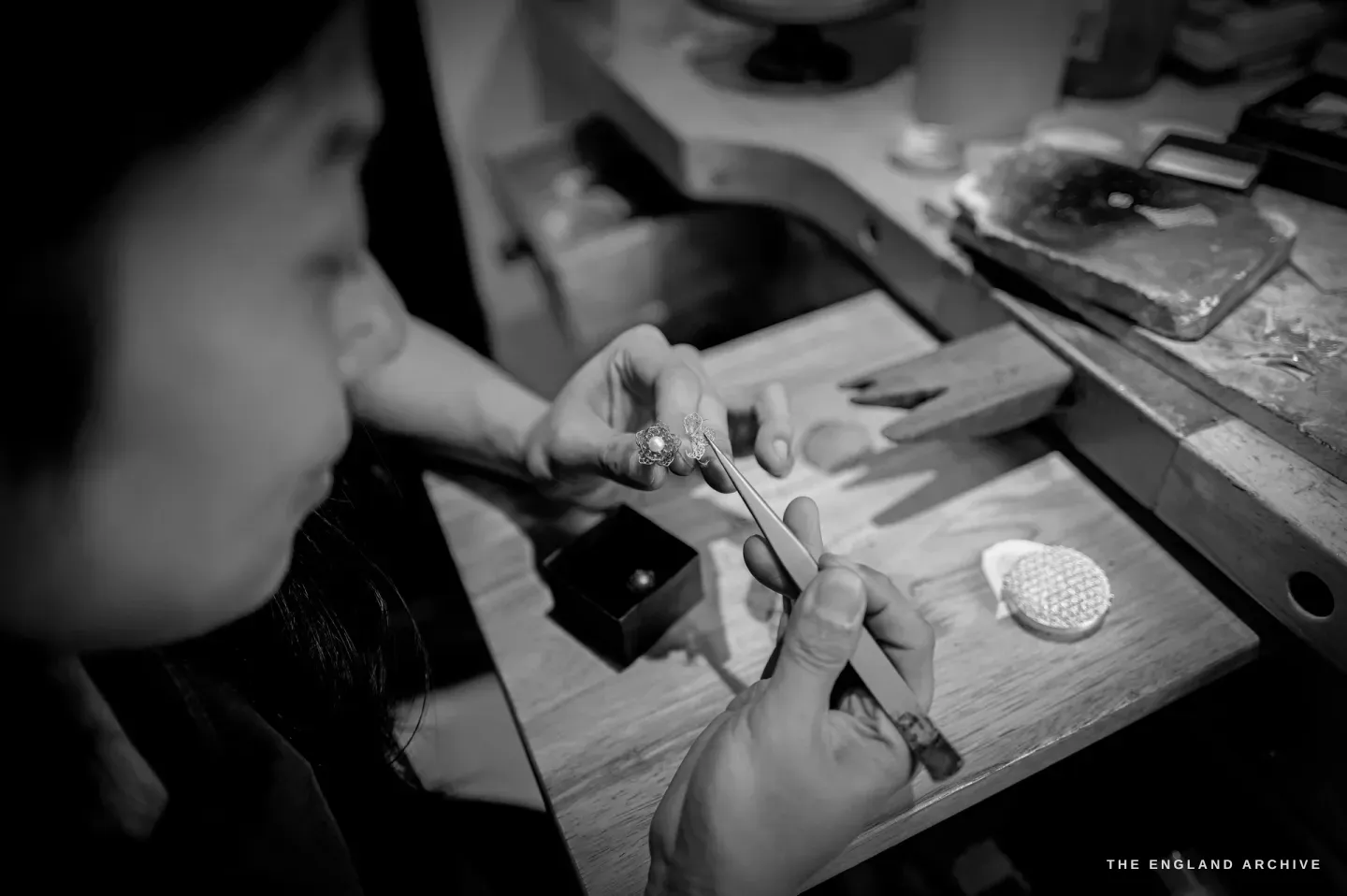
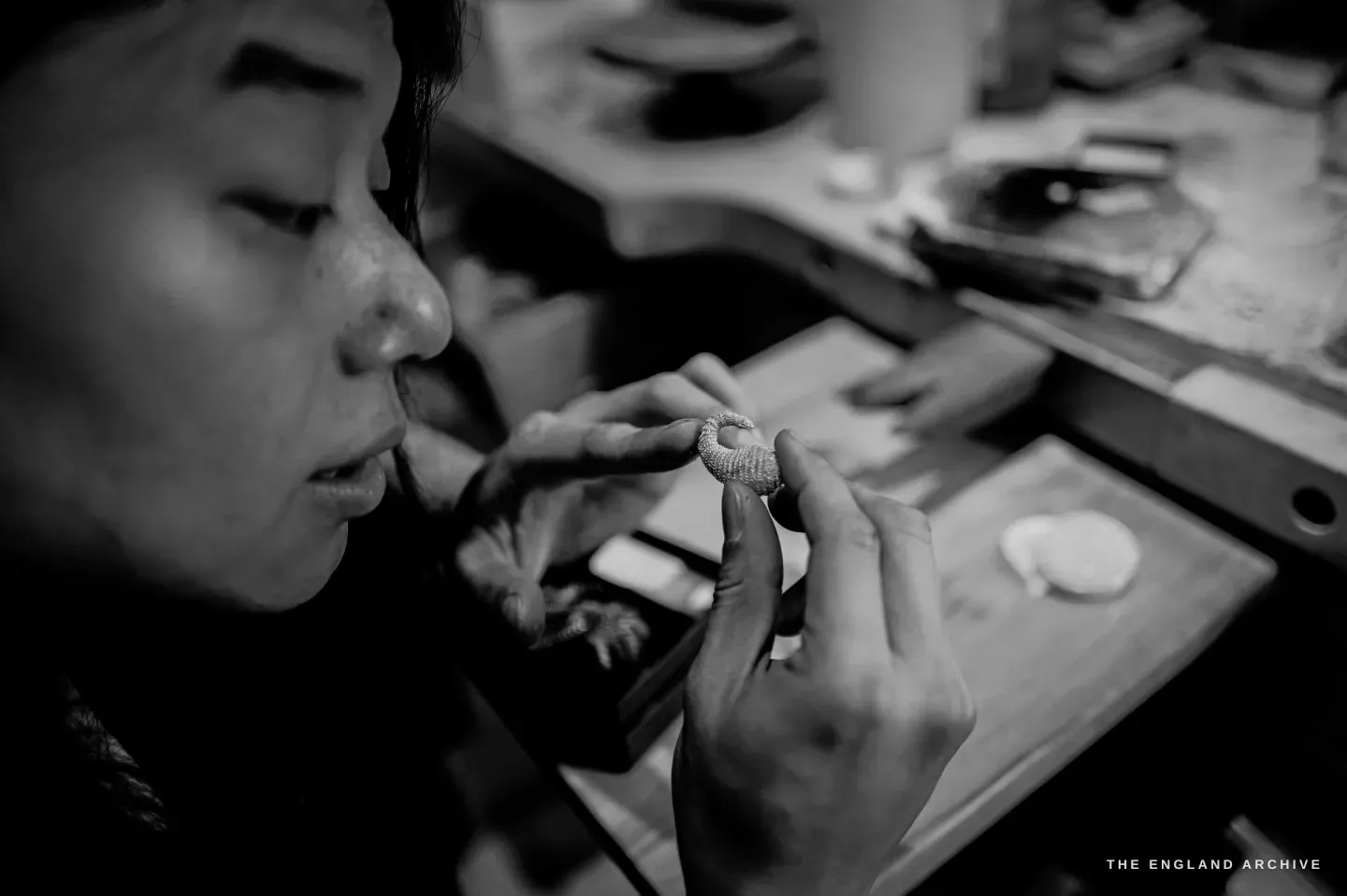
Every piece starts on paper. She draws the shape - a monstera leaf, here - cuts the template, then builds it up in wire before any feather goes near it. Then the slow work: filing, fitting, setting, soldering. She is plain about this when I ask: the filigree is made entirely by hand, every wire positioned and joined by eye, with no microscope and no machine to help. Just the daylight lamp, a steady hand, and the patience to finish it.
IM-1199 Every piece starts on paper. She draws and cuts the shape, then builds it in wire - here, the monstera leaf before it becomes feather and gold. IM-1200
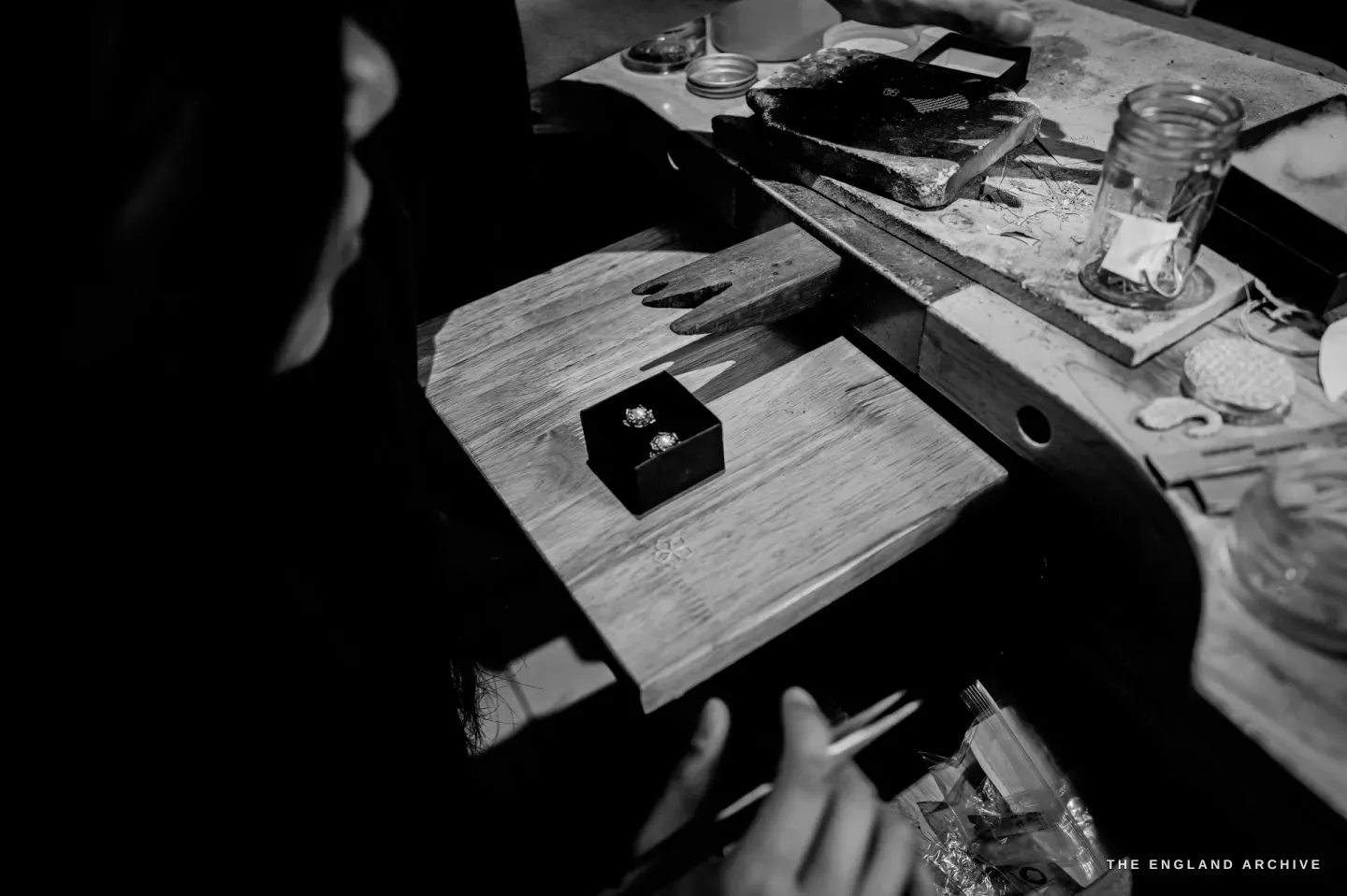
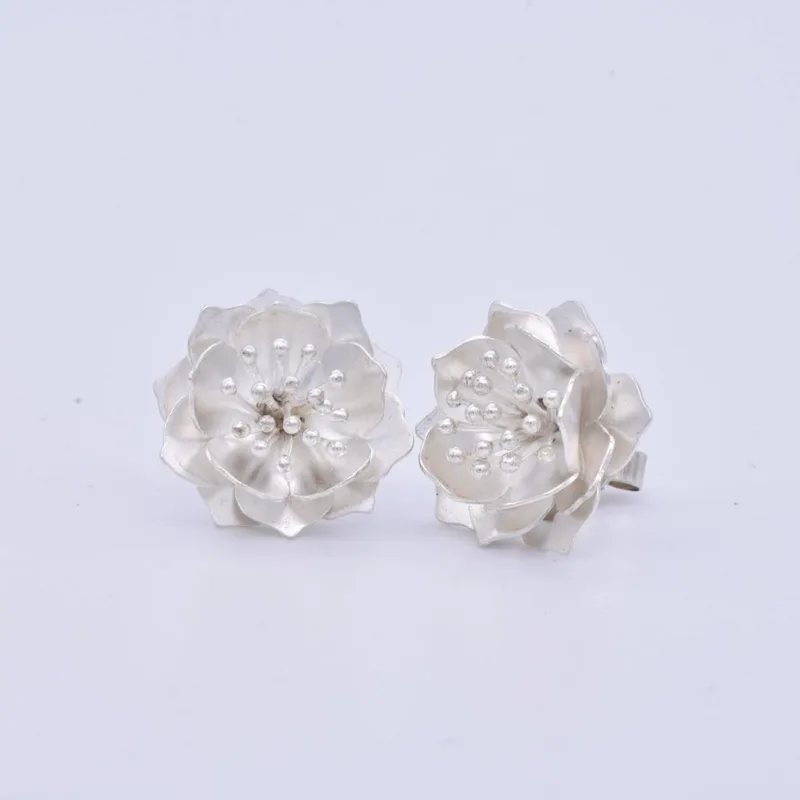
IM-1201IM-1202IM-1203IM-1204 A pair of filigree flower earrings, no bigger than a thumbnail, held in the tweezers that built them. IM-1205IM-1206 Reading a finished ring in the light. After six years she still checks every piece by eye, up close, the way she was taught. IM-1207IM-1208
From Yuyi's Studio
Her own photographs
Everything above is the archive’s record of a morning in the studio. What follows is hers. These are Yuyi’s own photographs of her finished pieces - the work as she presents it to the world, shared for this page. The phoenix and the pavilion, the filigree fish and the feather leaves, the peach-blossom and peony earrings: a fuller view of a practice the archive could only sample in a single visit.
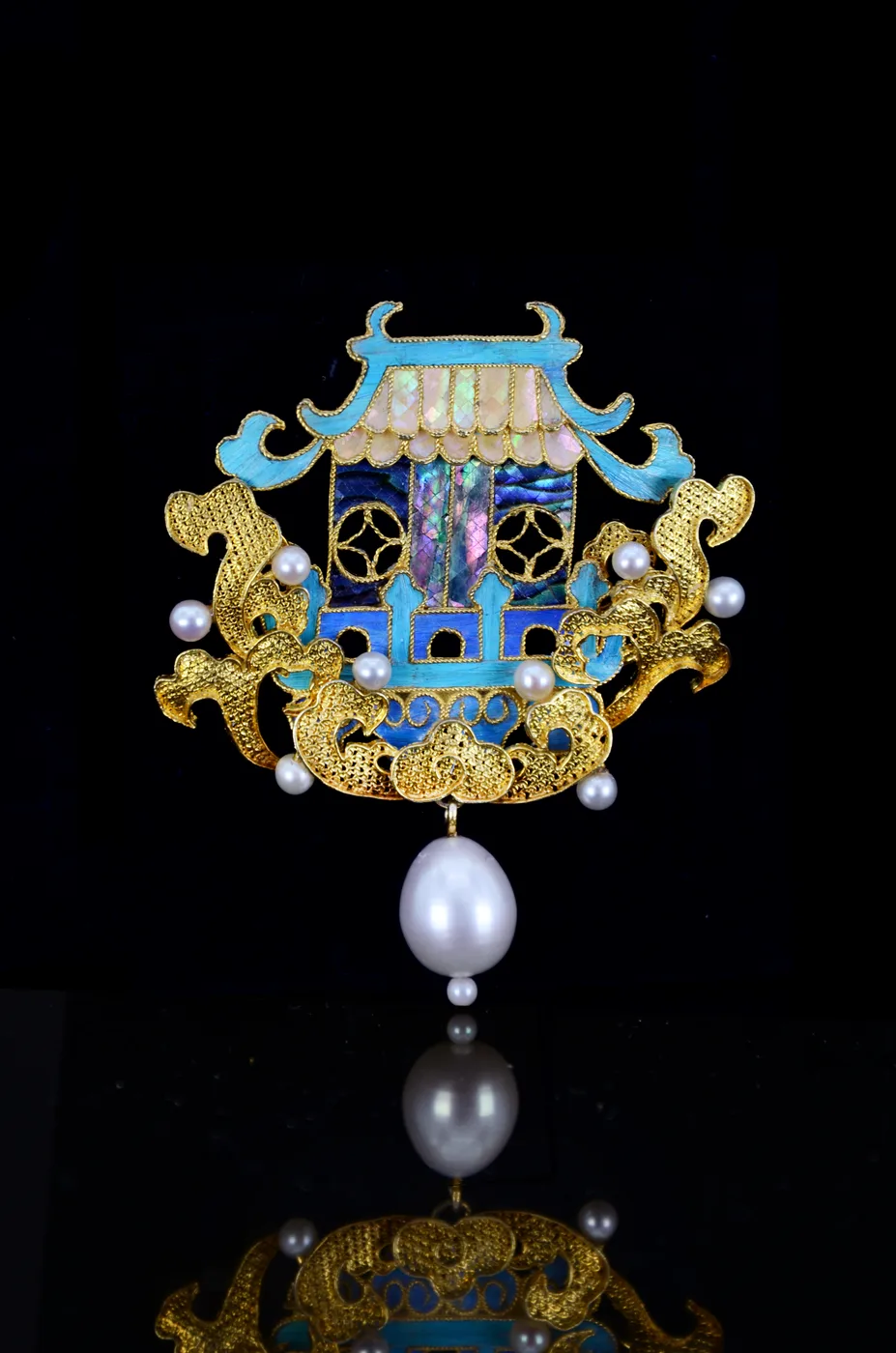
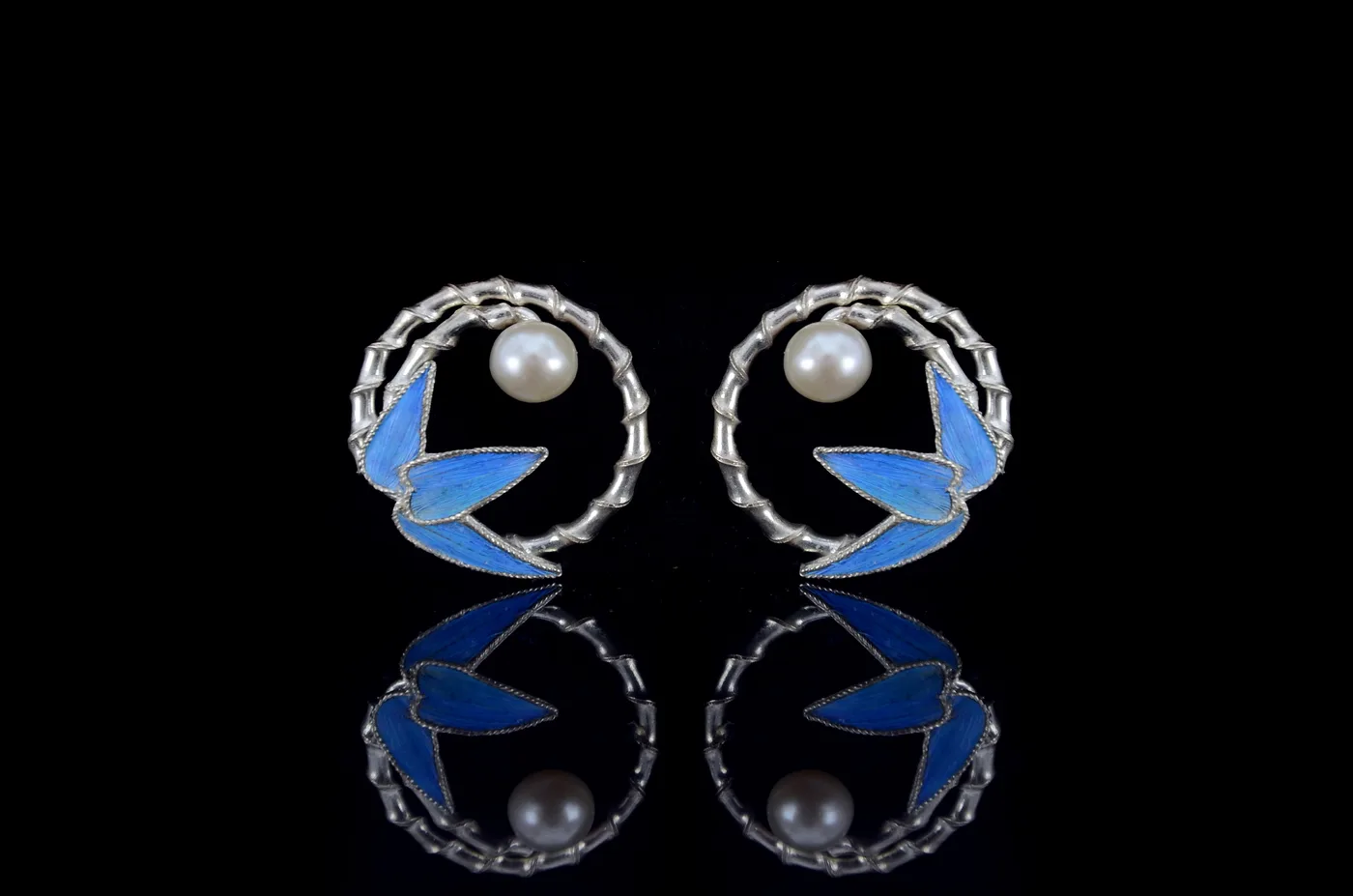
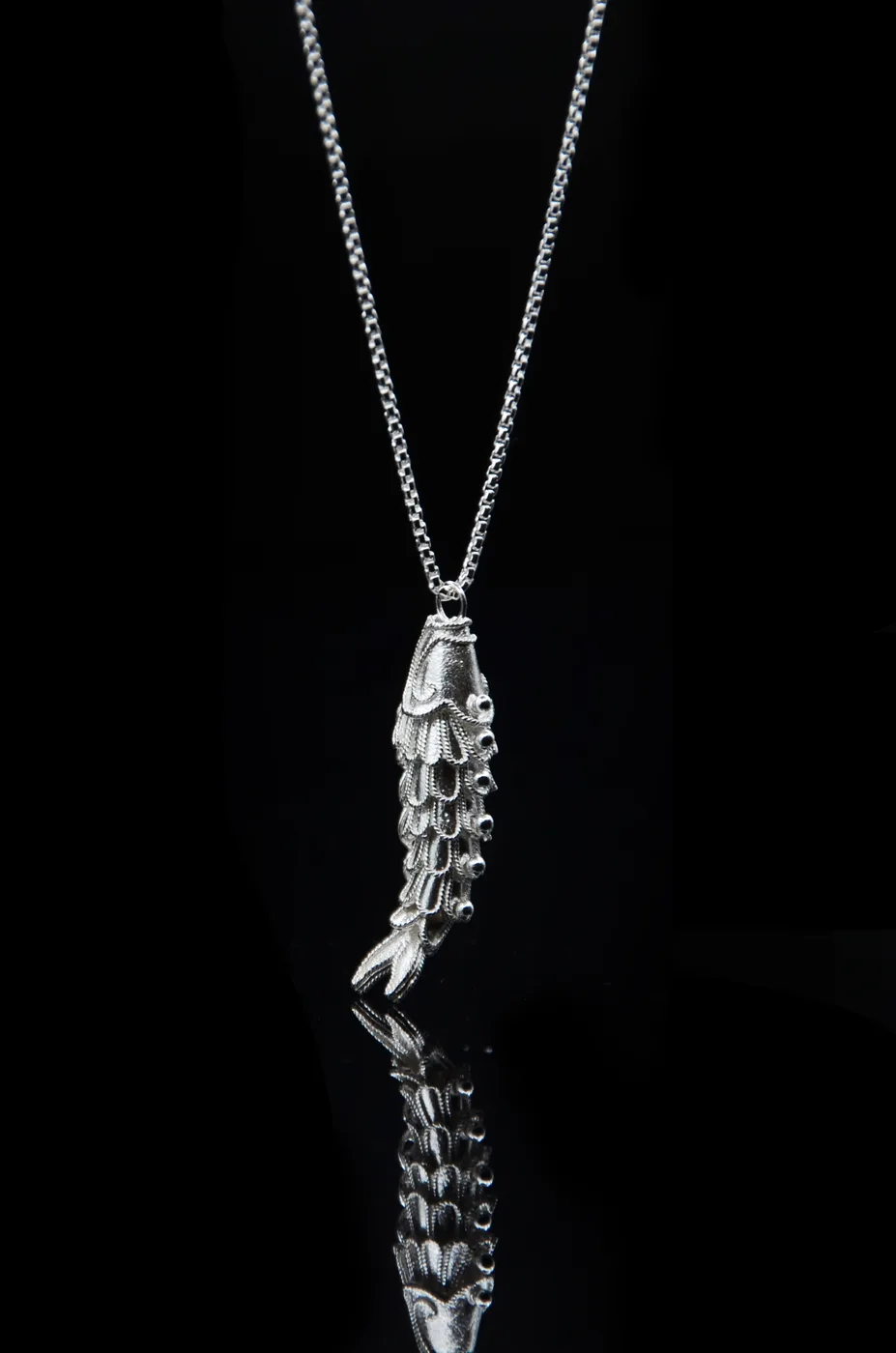
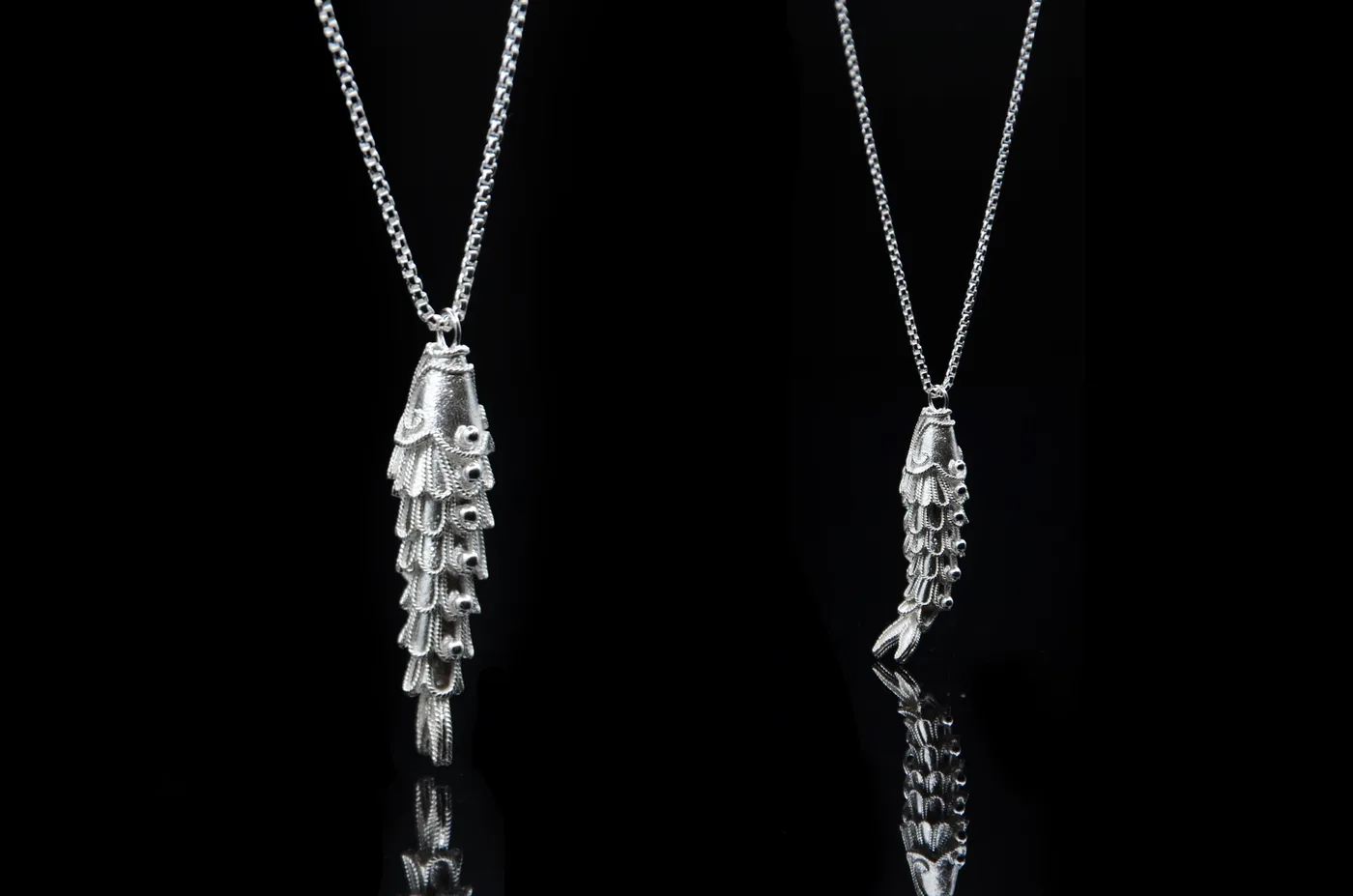
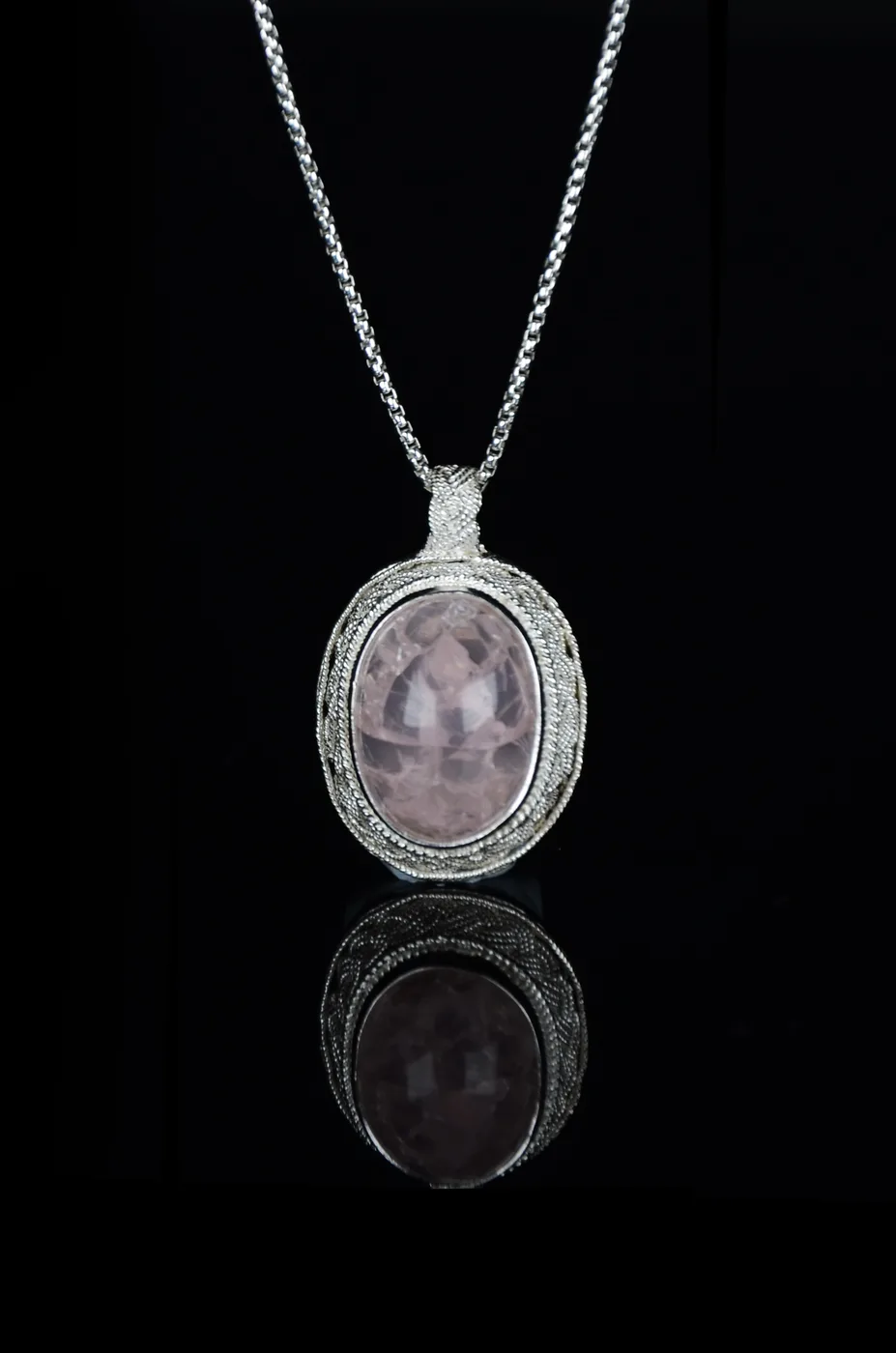
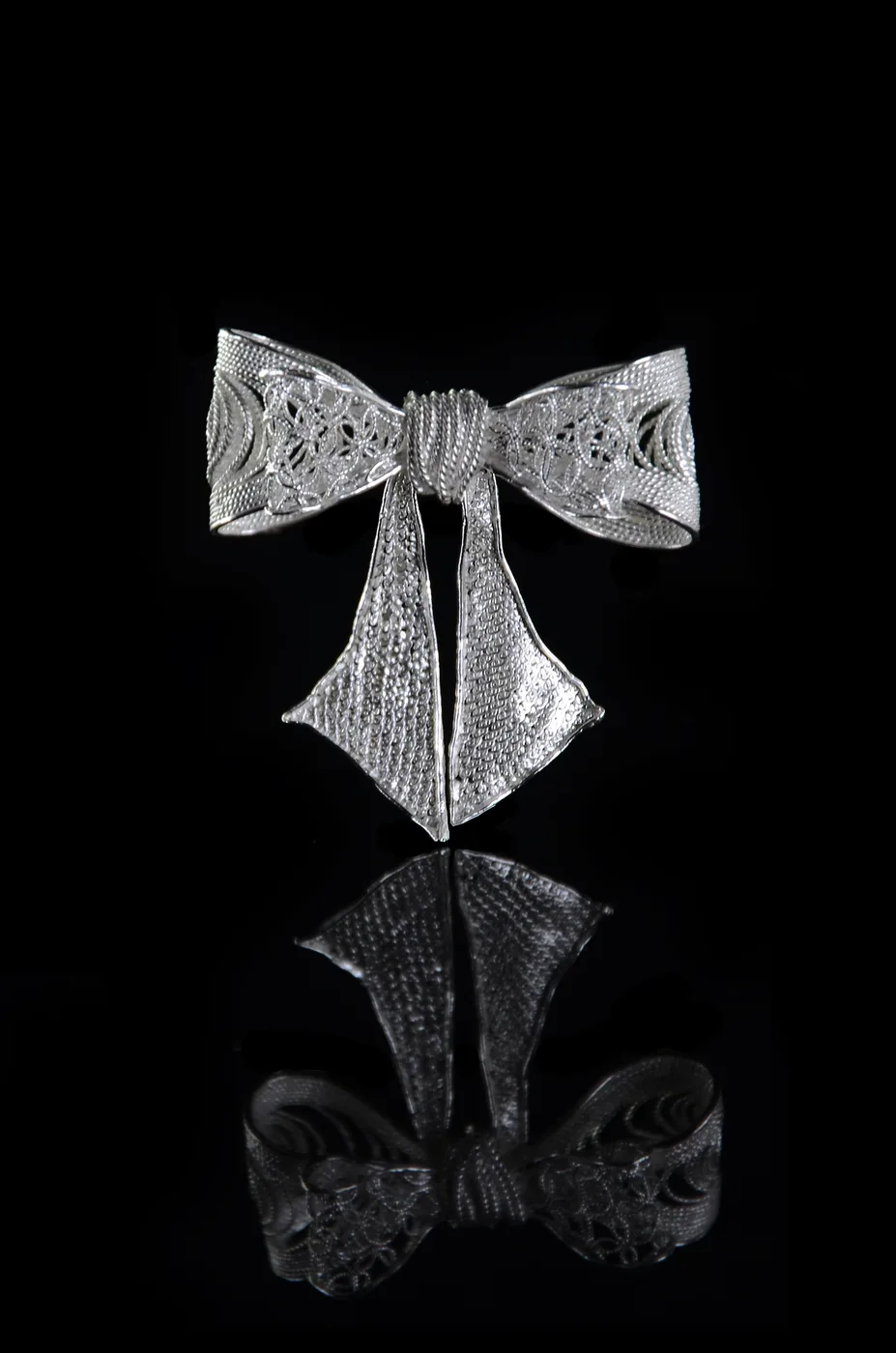
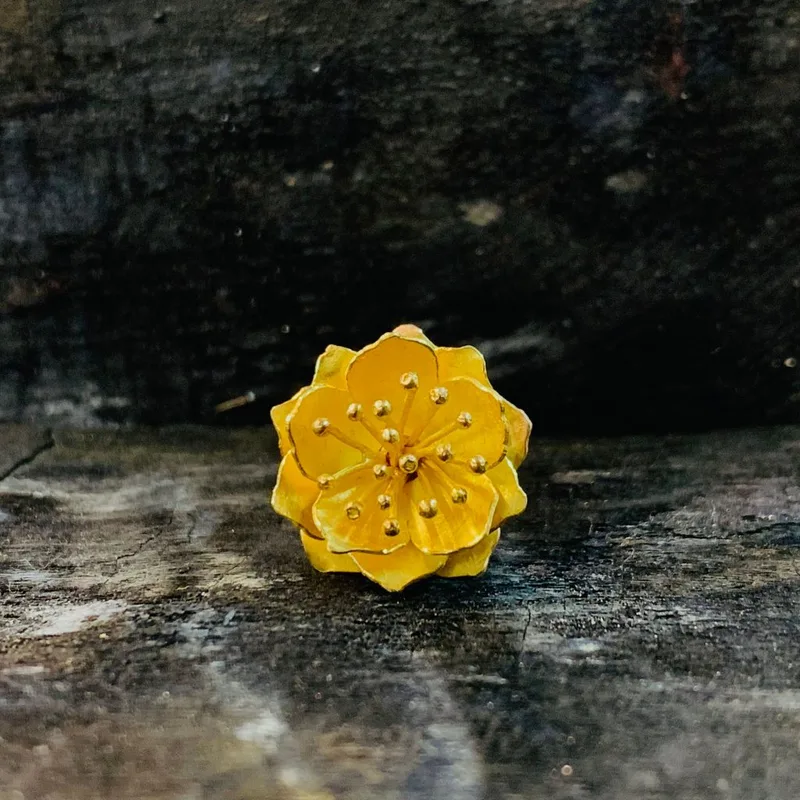
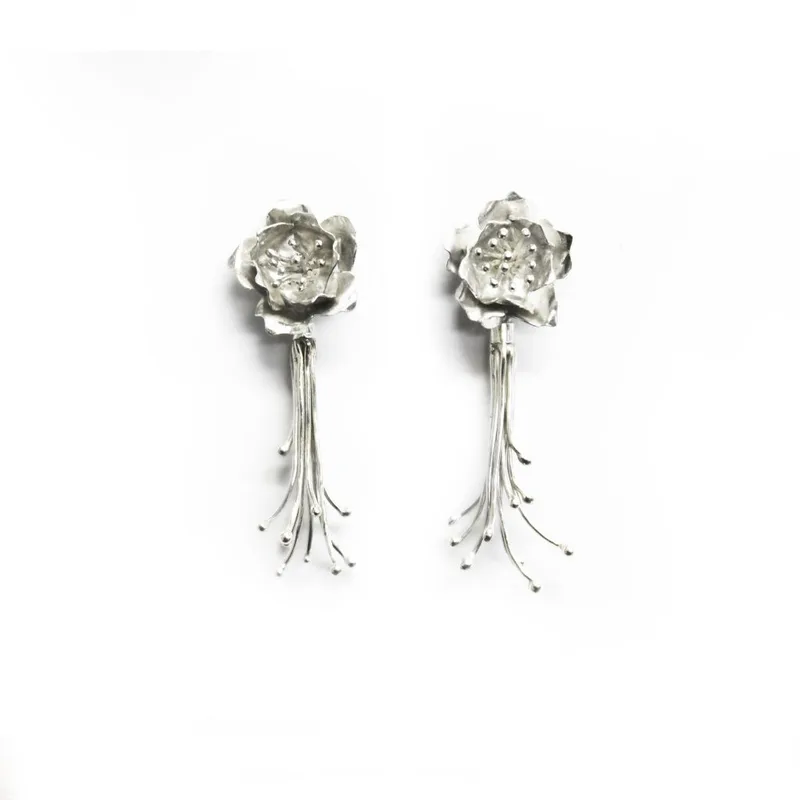
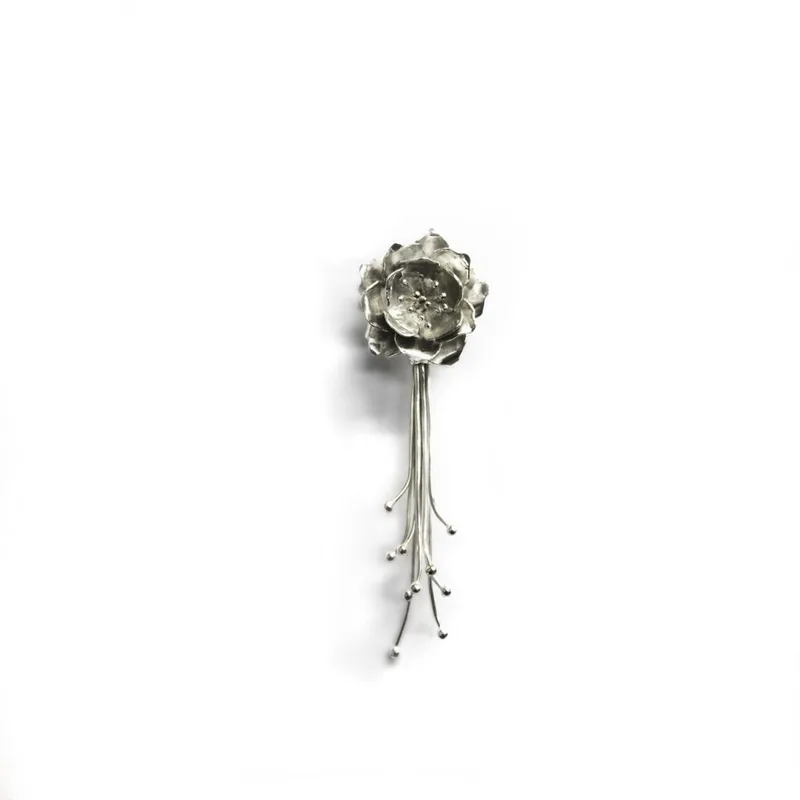
A Soaring Phoenix BroochOriental Palace on the Sea BroochFiligree Silver BoxFiligree Silver Box, detailChrysanthemum and Butterfly HairpinChrysanthemum and Butterfly Hairpin, detailSilhouette of Peony EarringsBamboo EarringsPeach Blossom Pearl EarringsFiligree Waving EarringsFiligree Articulated FishFiligree Articulated Fish, detailMonstera Leaf BroochMonstera Leaf Brooch, detailFiligree Waving PendantFiligree Bow
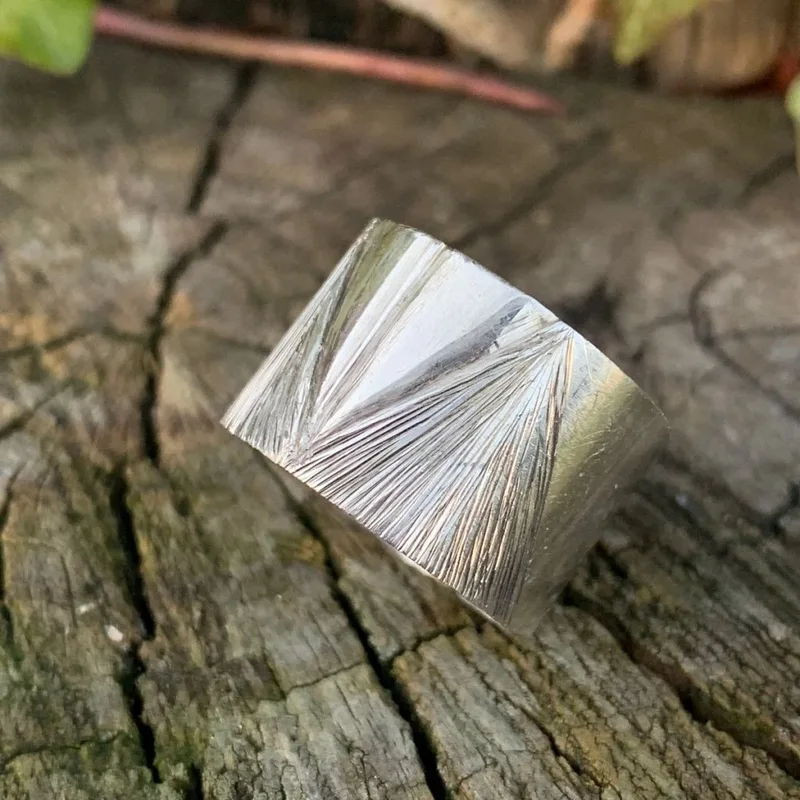
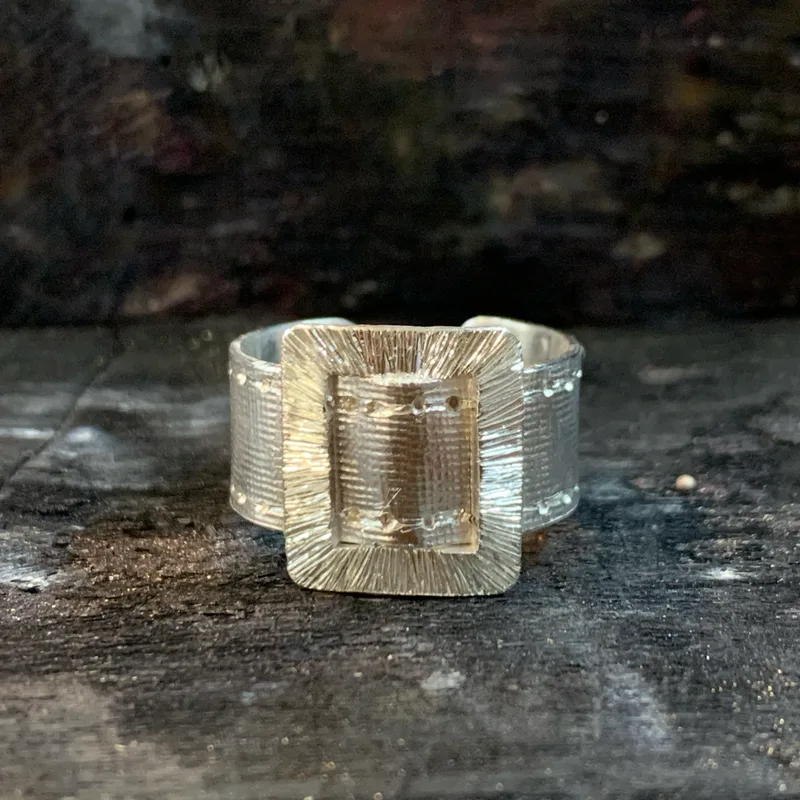
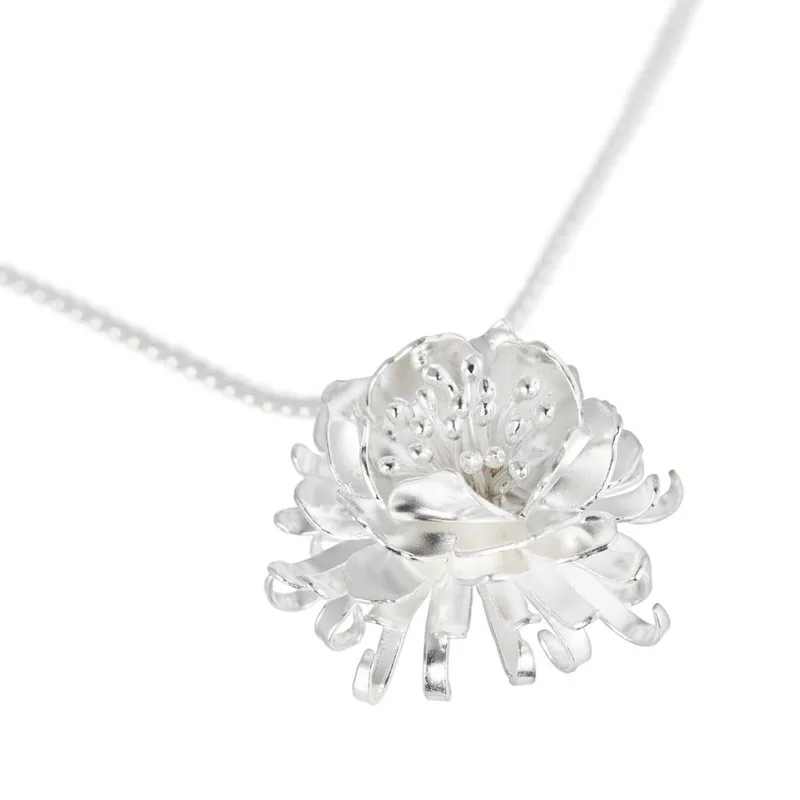
Most of the pieces above are one-off or exhibition work, and her filigree is generally made to order rather than kept in stock. A selection of what Yuyi has for sale is below.
A selection of Yuyi’s pieces currently for sale, each handmade in silver and gold. The archive takes no cut - every link goes straight to her own shop.
I recorded our whole conversation - and laughed through most of it; she is wonderful company. But underneath the warmth is something the archive exists to find: a person carrying techniques that were nearly lost, refusing to let them stay in a museum case. Dian cui and hua si are endangered crafts. Yuyi learned them, brought them to London, and turned them toward leaves and blossom and birds that a modern hand would want to wear.
What the archive holds now is one hot morning, one set of frames, and the account of a maker who is keeping an ancient art alive by making it new. When she stops, that knowledge does not simply pass on by itself - so it is worth writing down that, right now, in a back room in London, it is being practised, and beautifully.
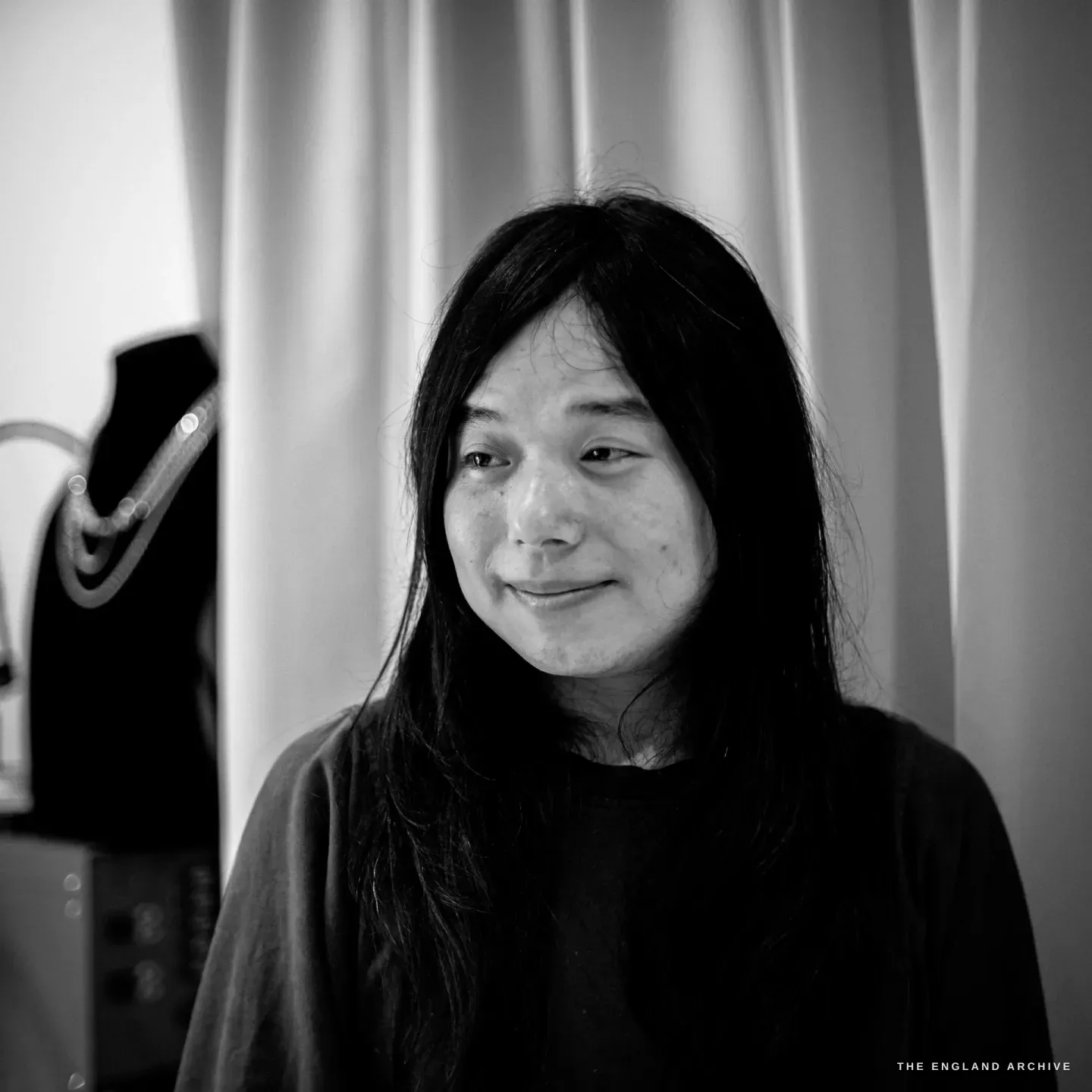
Recording the interview - and laughing through most of it. A serious craft, kept by someone who is a great deal of fun to spend a morning with. IM-1210 Warm, smiling, entirely without side - she had a drink waiting for me on what turned out to be the hottest day of the English year. IM-1167