Makers
Jonathan Reid
Scissor Maker · Ernest Wright
Sheffield, South Yorkshire
Scissor Maker · Ernest Wright
Sheffield, South Yorkshire
He spent his first career in front of a screen. Now he grinds steel, and the machine he loves is the one that puts the angle on the blade.
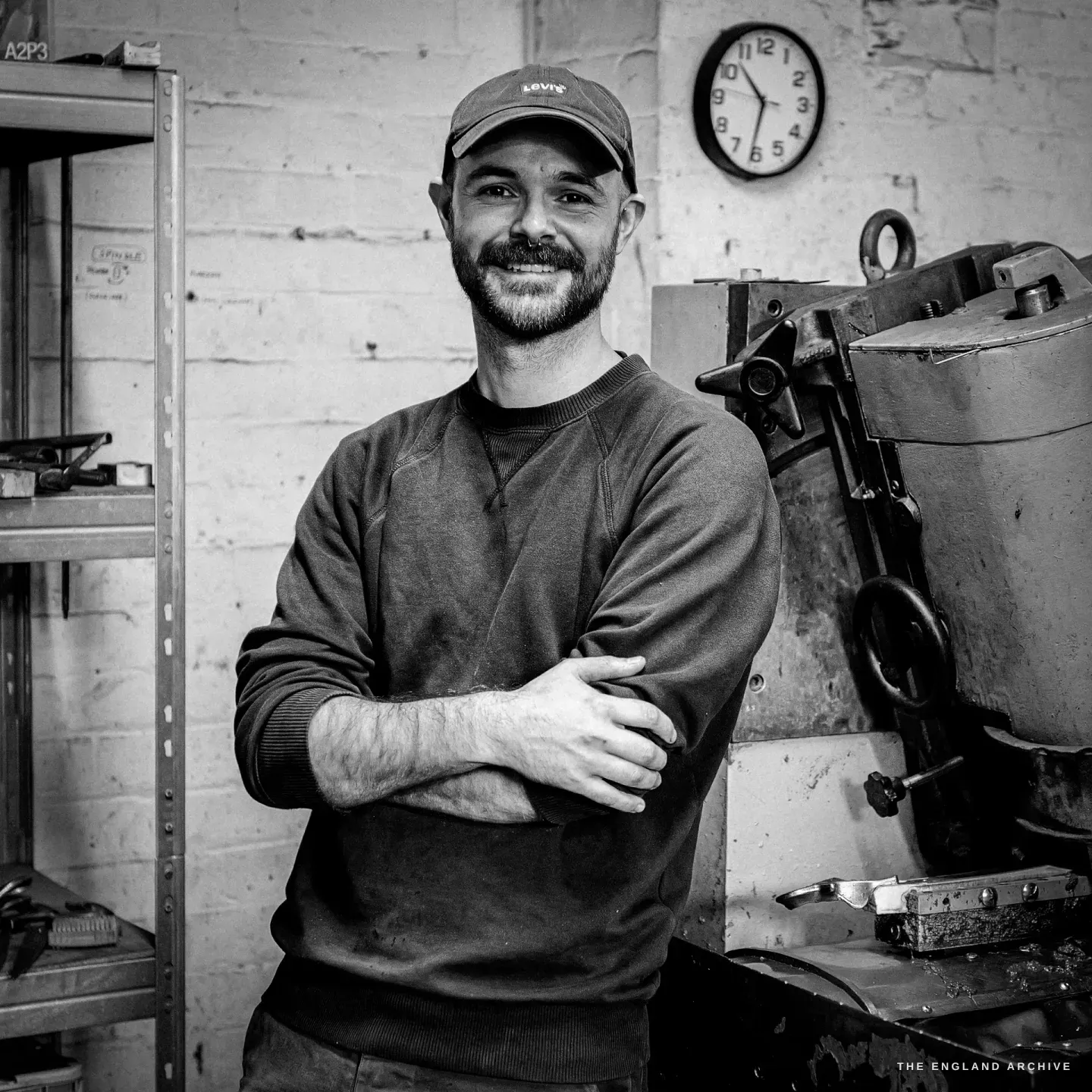
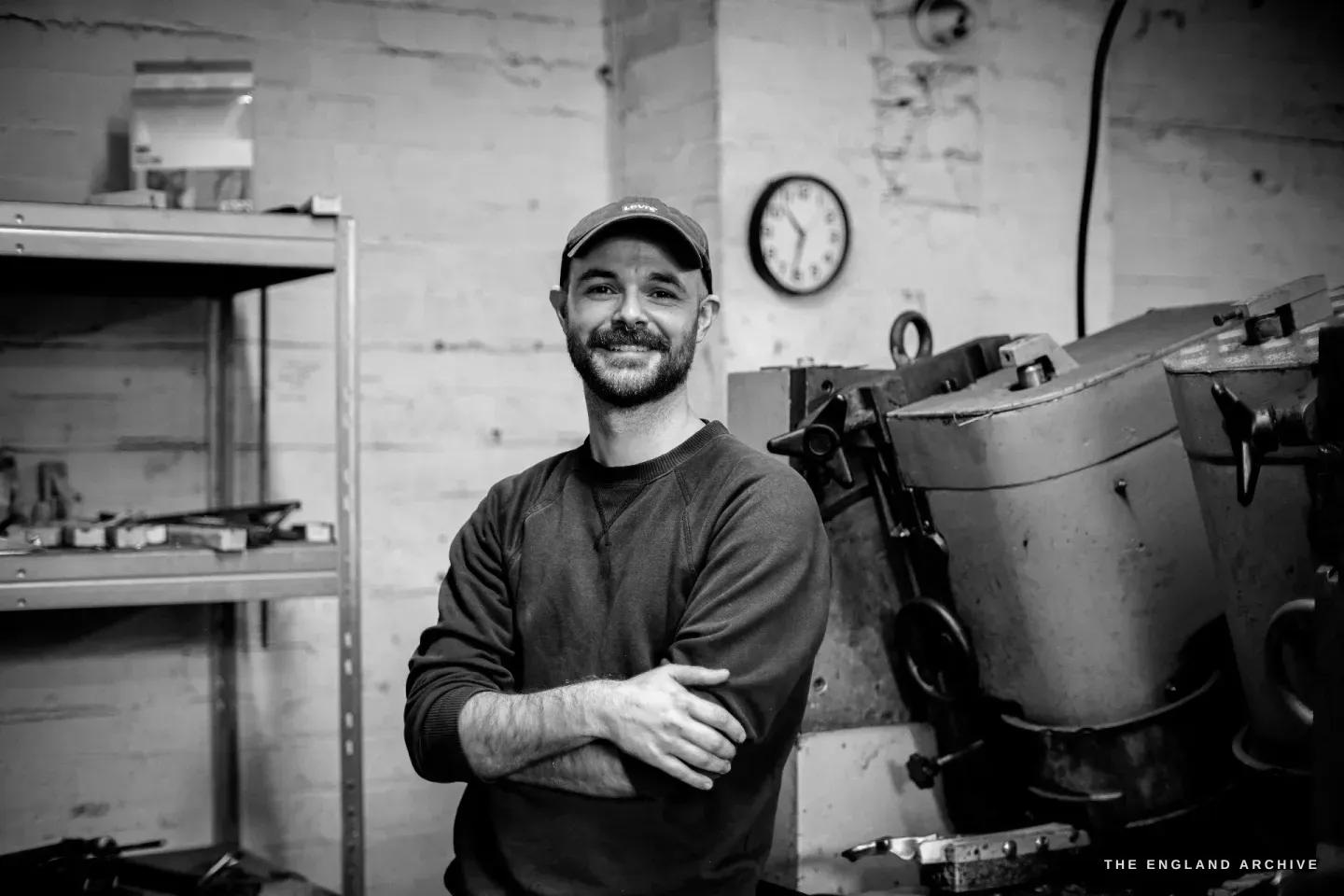
Of all the makers I met at Ernest Wright, Jonathan Reid has the road in I keep turning over. He did not grow up grinding steel. He came to the firm from web development and graphic design - a first career spent in front of a screen - and somewhere along the way swapped the screen for a workshop founded in 1902. About seven years on, he is a putter, trained at the bench by two of the last master-putters in the country. Putting is the close work at the end of the line: taking the two finished blades and fitting them so they pass each other cleanly and cut the whole length of the stroke. It is the step that decides whether a pair of scissors snips or chews. I find it quietly hopeful that the person doing it used to build websites.
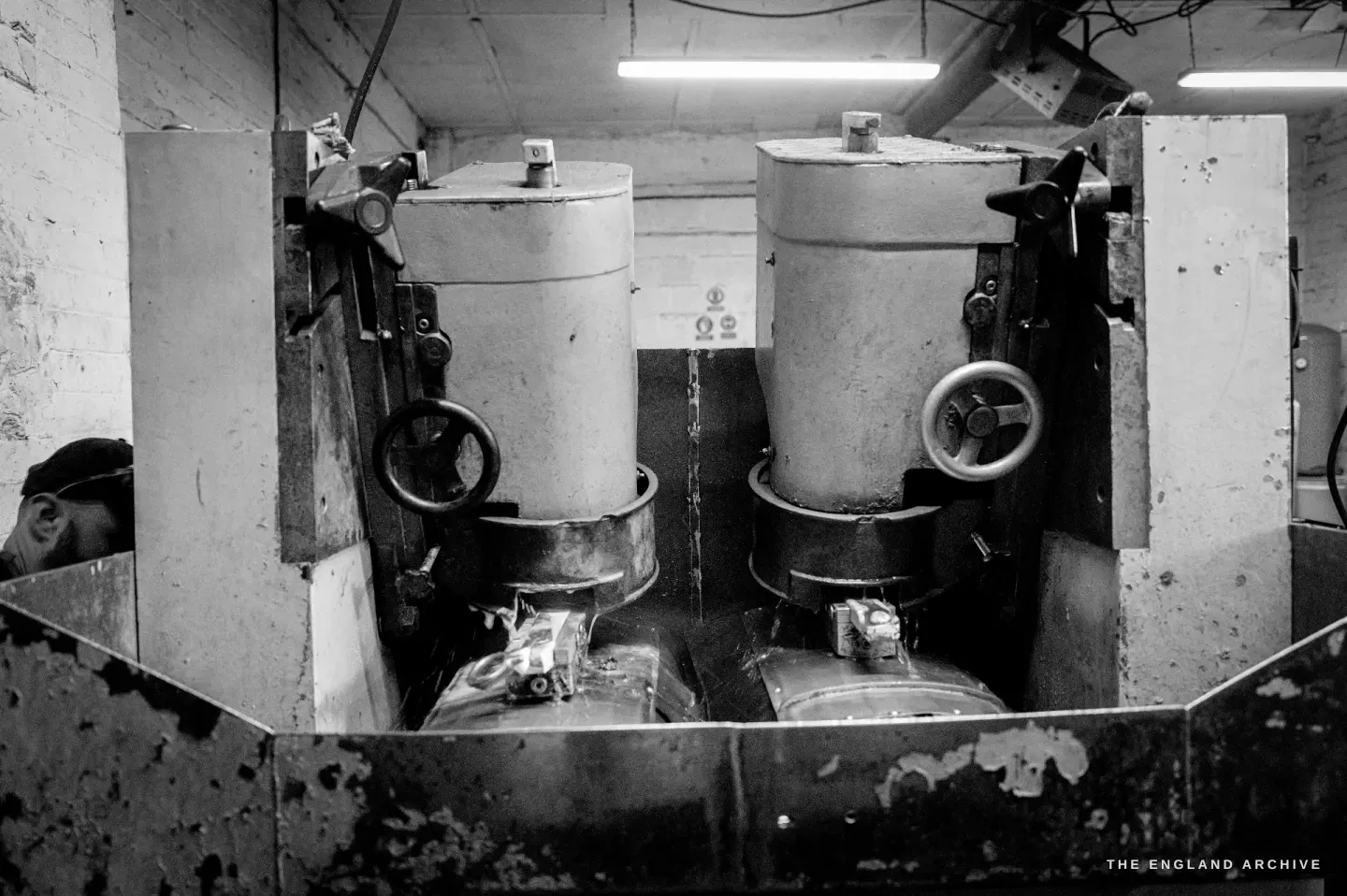
Ask Jonathan what he would save from the floor and he does not hesitate: the grinder. It grinds the angle into the blade, and the angle is the whole trick of a scissor. A blade is not flat. It is ground so the steel tapers from the thick back down to the edge, with a slight hollow on the inner face, so that when the two halves close they meet at a single travelling point and not along their length - hold a finished pair to the light and you can see the thread of daylight between the blades that makes it work. Get the angle wrong and the scissors crush the cloth; get it right and they shear it clean, blade after blade after blade, the big cast-iron hand wheels setting the gradient each time. I liked that a man who came from screens had fallen, of everything in the building, for the most analogue object in it - a lump of old iron with two hand wheels.
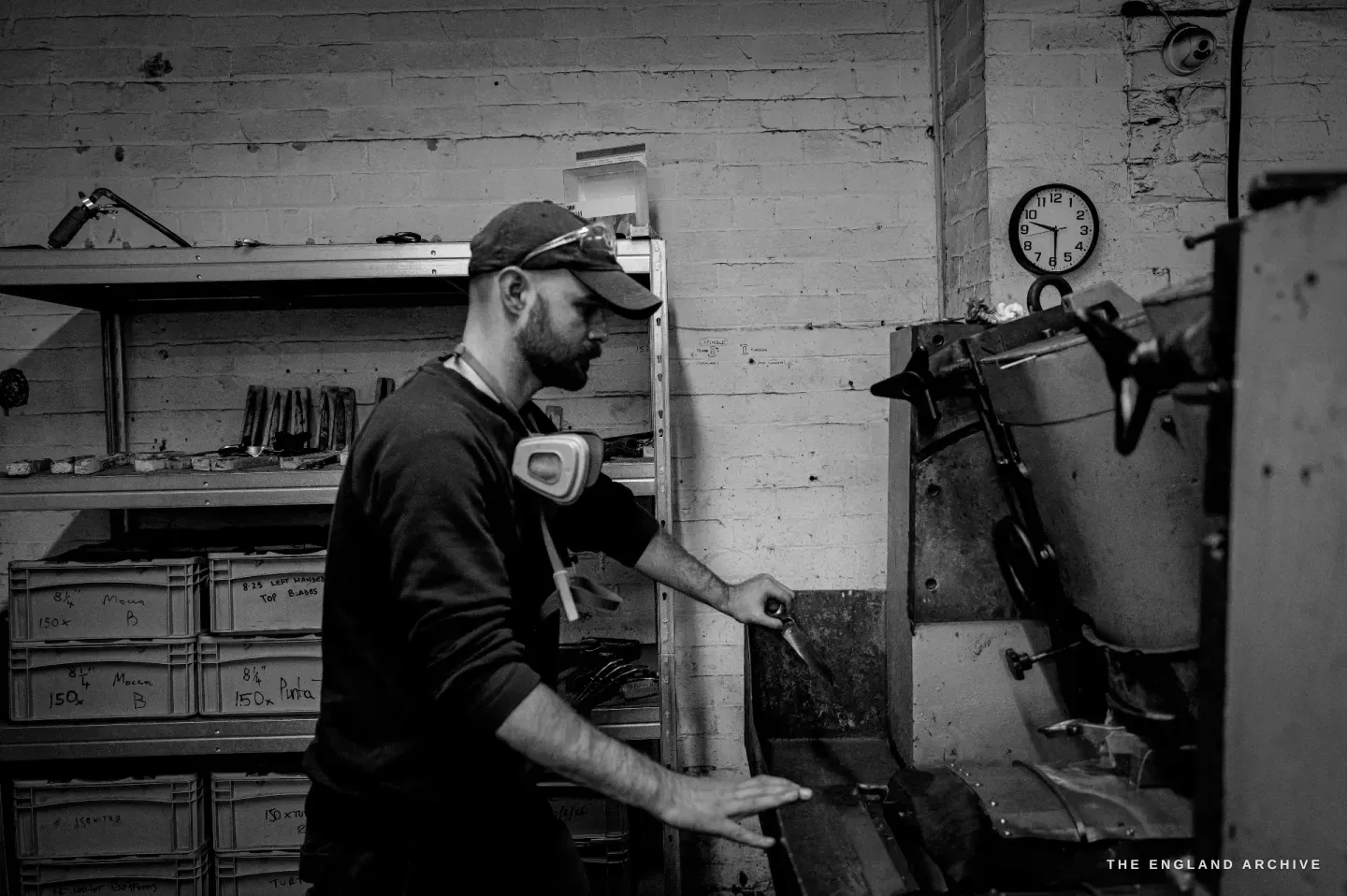
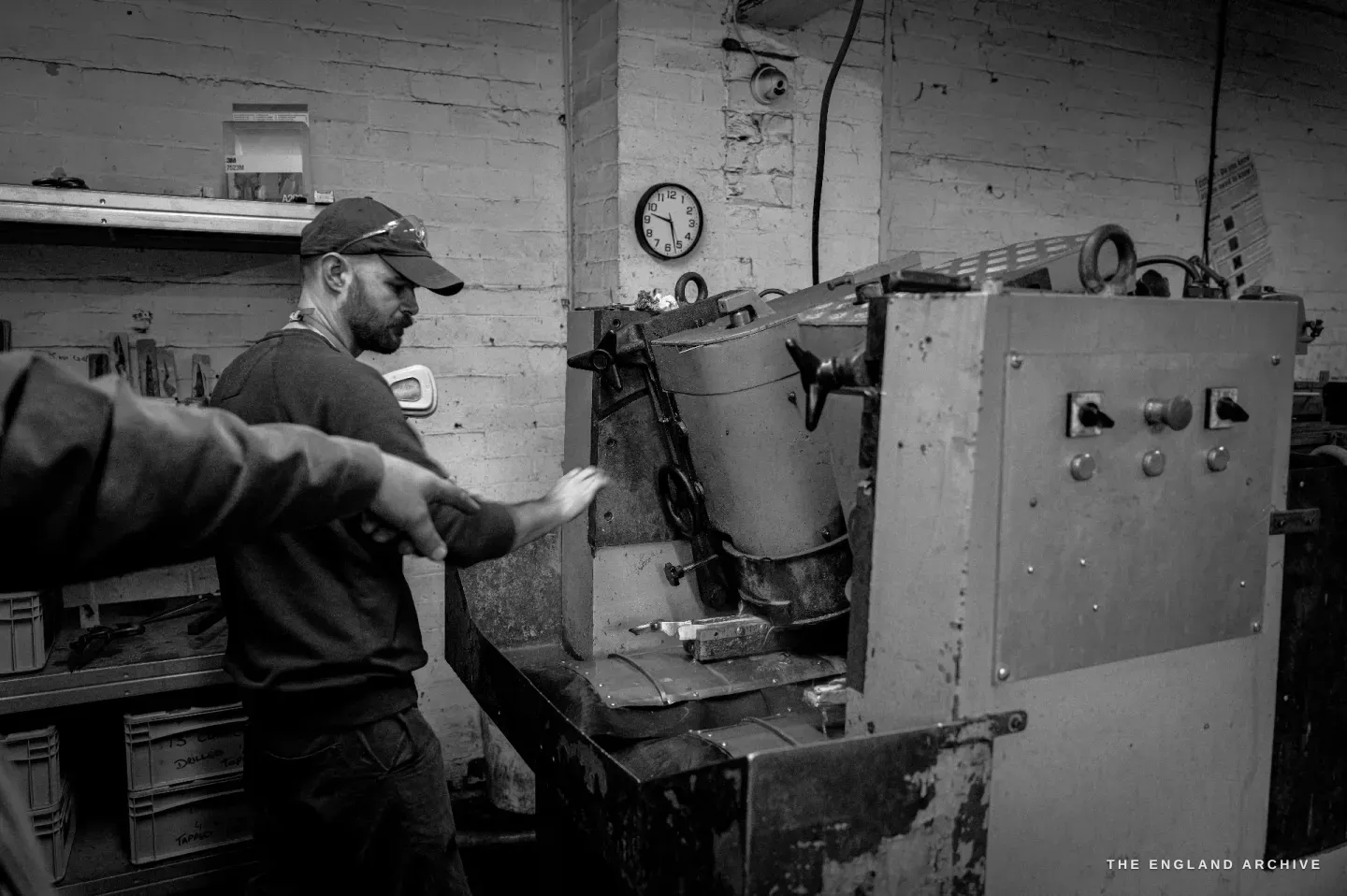
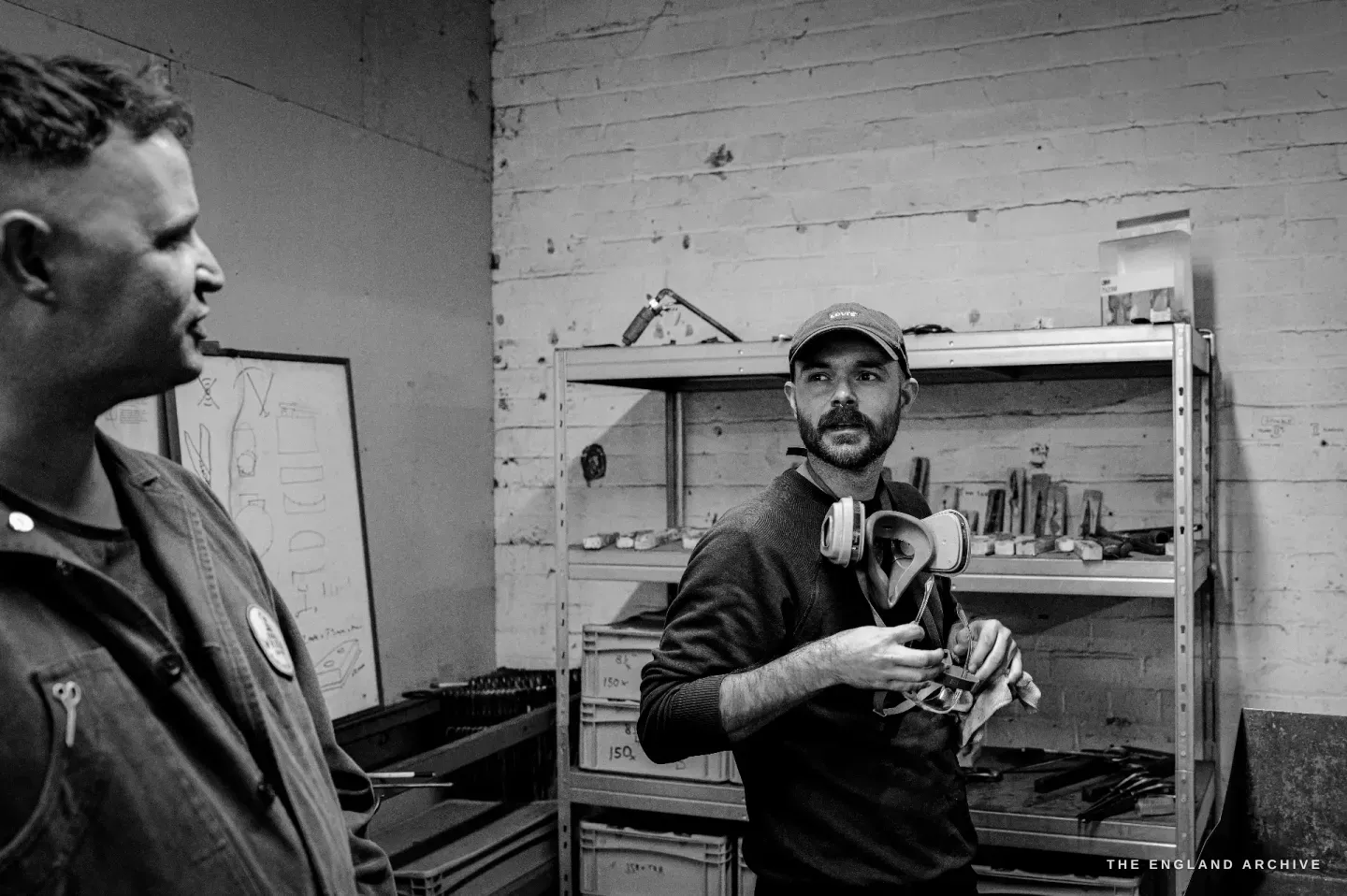
Scissor making is not a quiet trade, and you feel that the moment you are on the floor with them. The machines run loud enough that Jonathan keeps ear defenders round his neck and a respirator within reach, ready to pull up, and the work is physical - feeding parts, working the wheels, moving between the grinder and the glazing station where the ground blades are brought to a shine. I watched him shift between the two with the unfussy economy of someone who has stopped having to think about it. When the workshop needs a photograph posted or a message answered, that still sometimes falls to him - the old trade earning its keep - but he is quick to say it is a thing he does now and then, not the job. The job is at the bench, and you can hear in how he says it which of his two careers he means to keep.
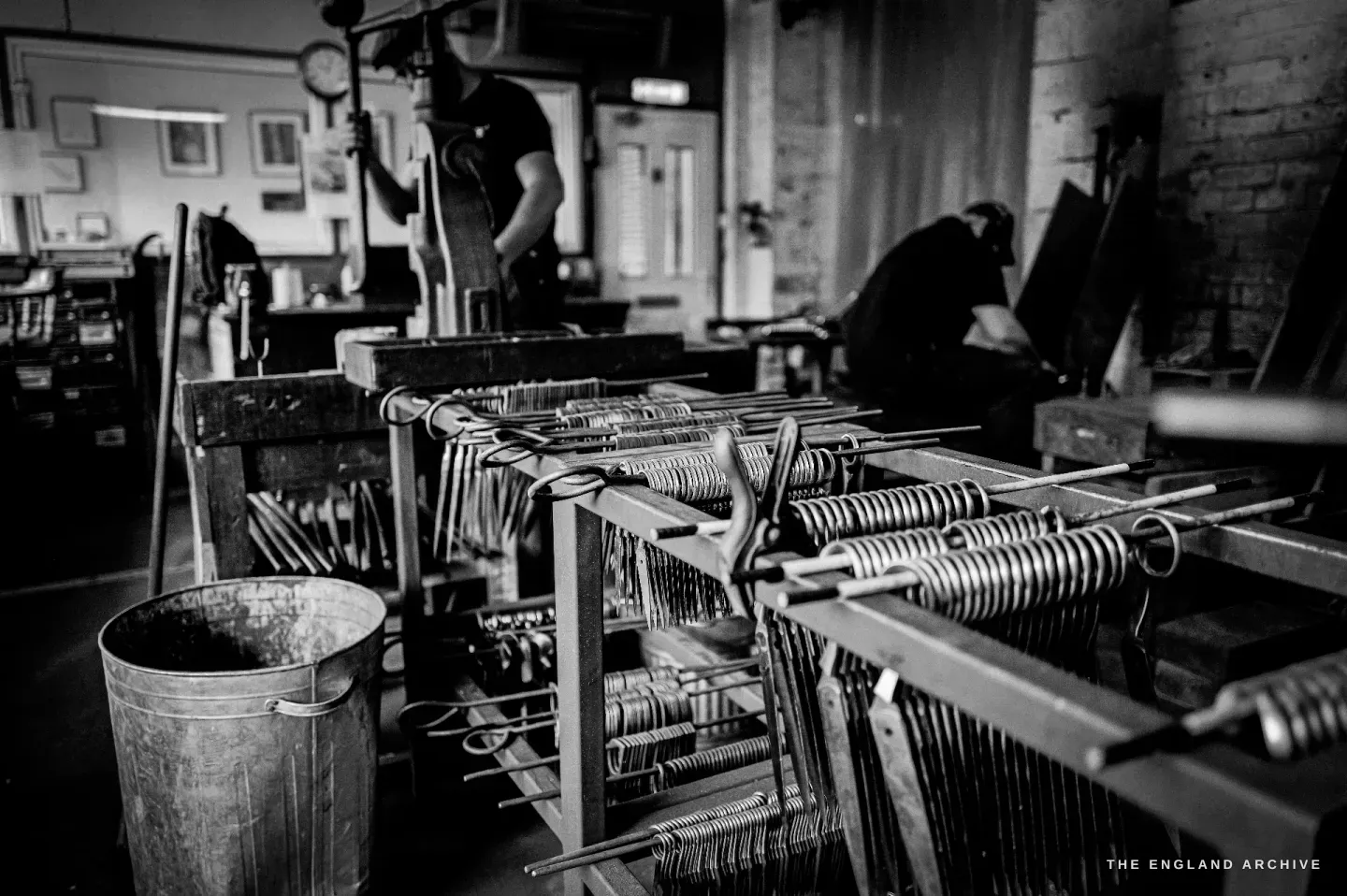
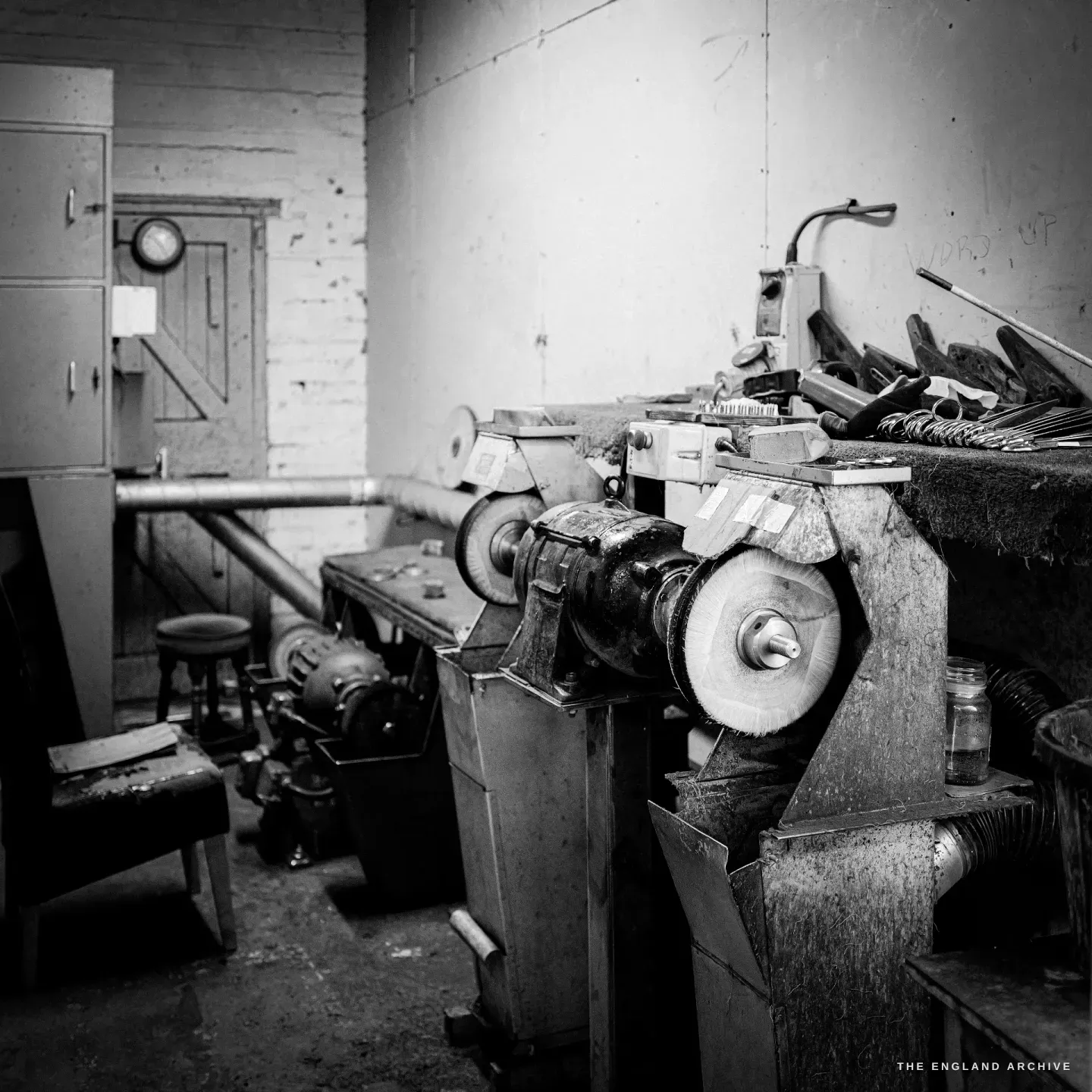
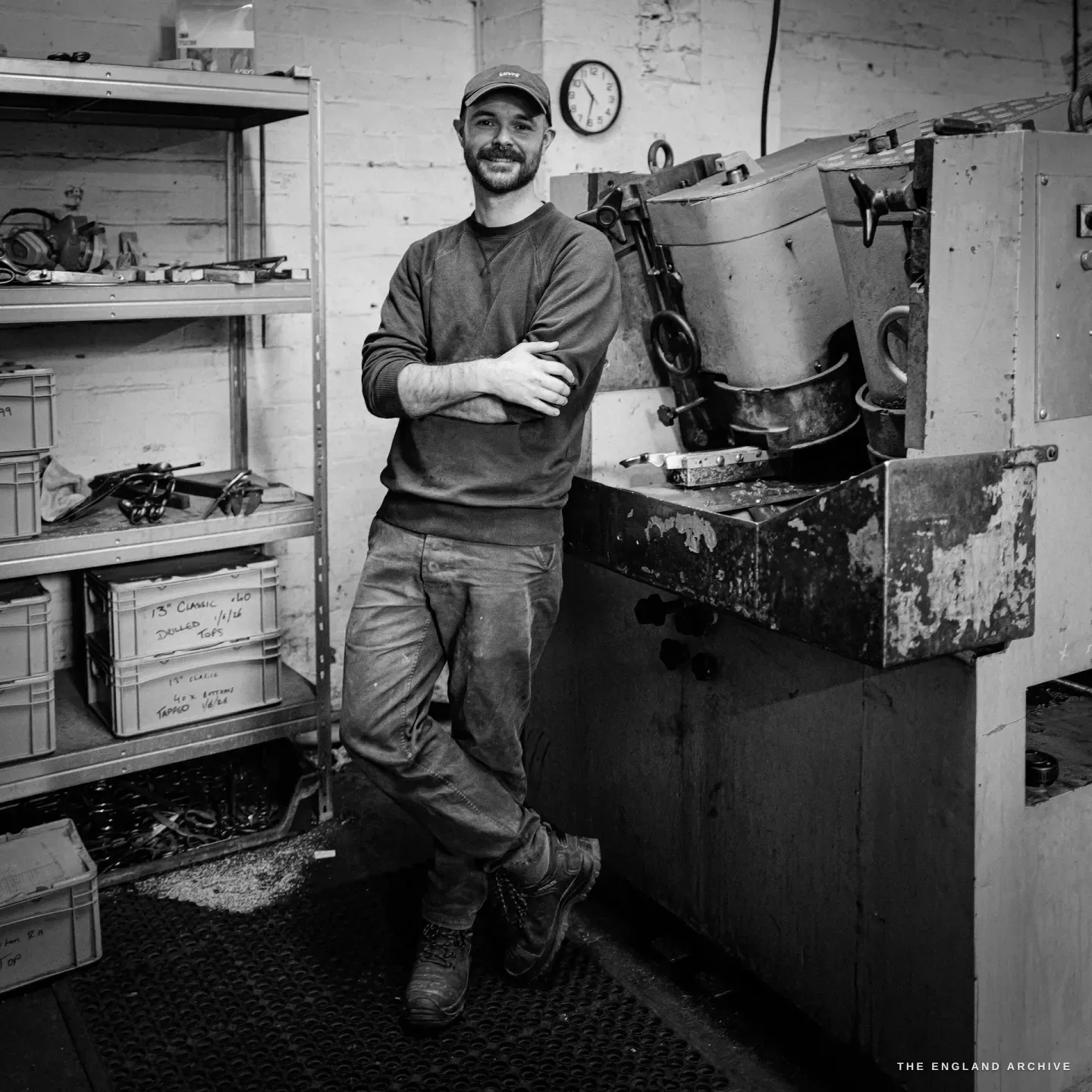
This is the archive’s record of Jonathan Reid, made at Ernest Wright in Sheffield in June 2026: a putter about seven years into the trade, who came to it from web development and graphic design and stayed for the steel. Scissor making is on the Heritage Crafts Red List. The hands that learn it now are the ones that carry it forward.