Makers
Lily Marsh
Stone Sculptor
Stag Works, Sheffield
Stone Sculptor
Stag Works, Sheffield
I came to Sheffield to photograph one maker and walked out having met two - a sculptor and the letter cutter whose room she shares, both of whom arrived at stone the long way round.
I had come up to Sheffield to meet Lily Marsh, and before that to meet Timothy, from the British Artist Blacksmiths Association, who had said he would see me at Lily’s and hang around while I worked. So I walked into Stag Works - the old run of workshops where Lily carves - and found three people standing by an open doorway, plainly makers, and started scanning the place for where her studio might be. It was right in front of me. The painted sign over the arch reads Stone, Letter and Sculpture Studio. Timothy was the one who said, “Mash,” and waved me over while I was still looking past it.
We had a few laughs about that, which is the best way any of these mornings can begin.
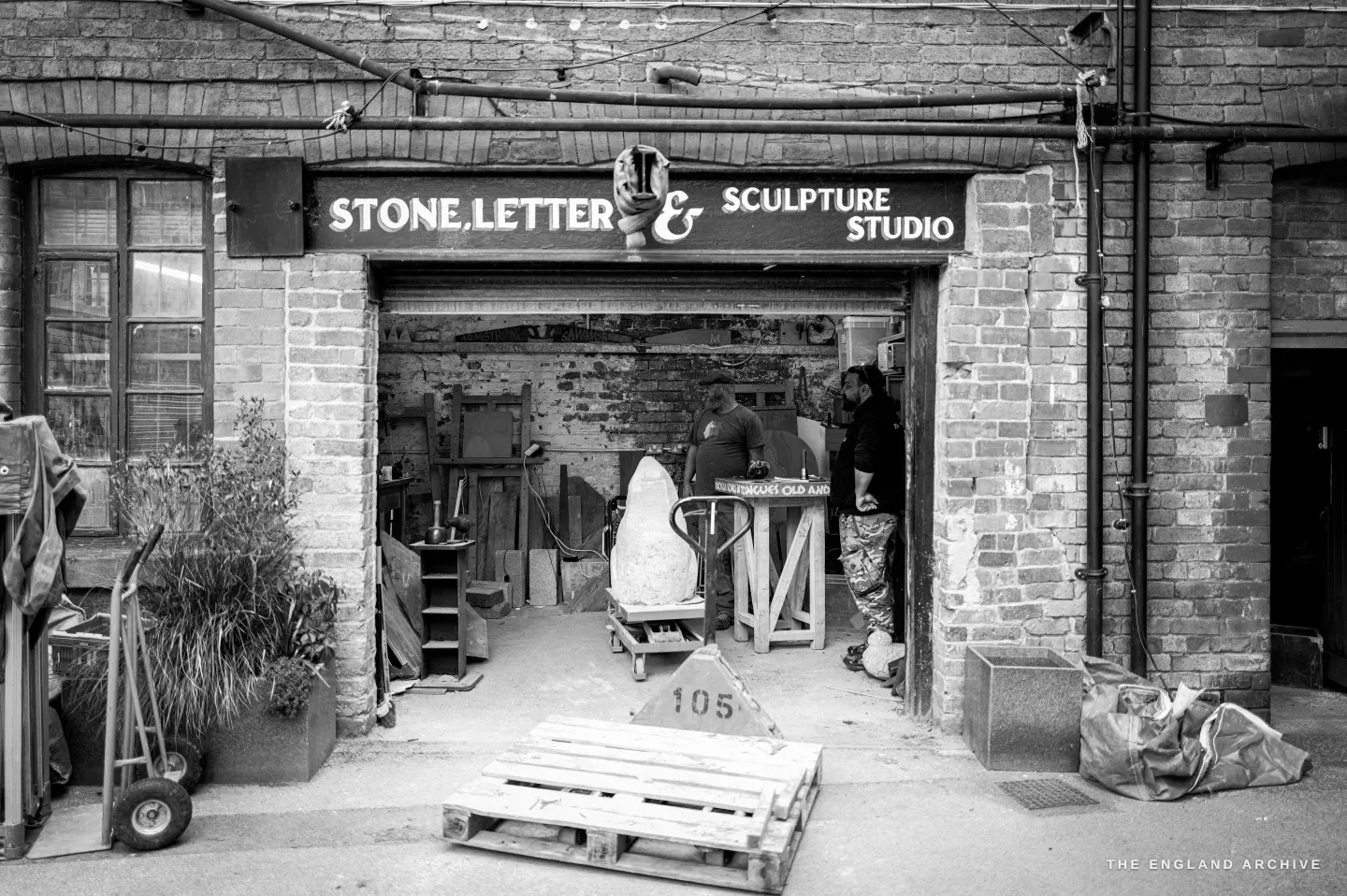
Then I went into my monologue - the one I give at the start of every session, about what The England Archive is and how I came to be standing in their workshop with two cameras and a notebook. They listened to it intently, all three, which does not always happen. Timothy and I laid out a plan for a session of his own, with him and his boys at the forge, and a few others he said he would introduce me to. Then he had to go. Nice to have met him; the blacksmiths will keep.
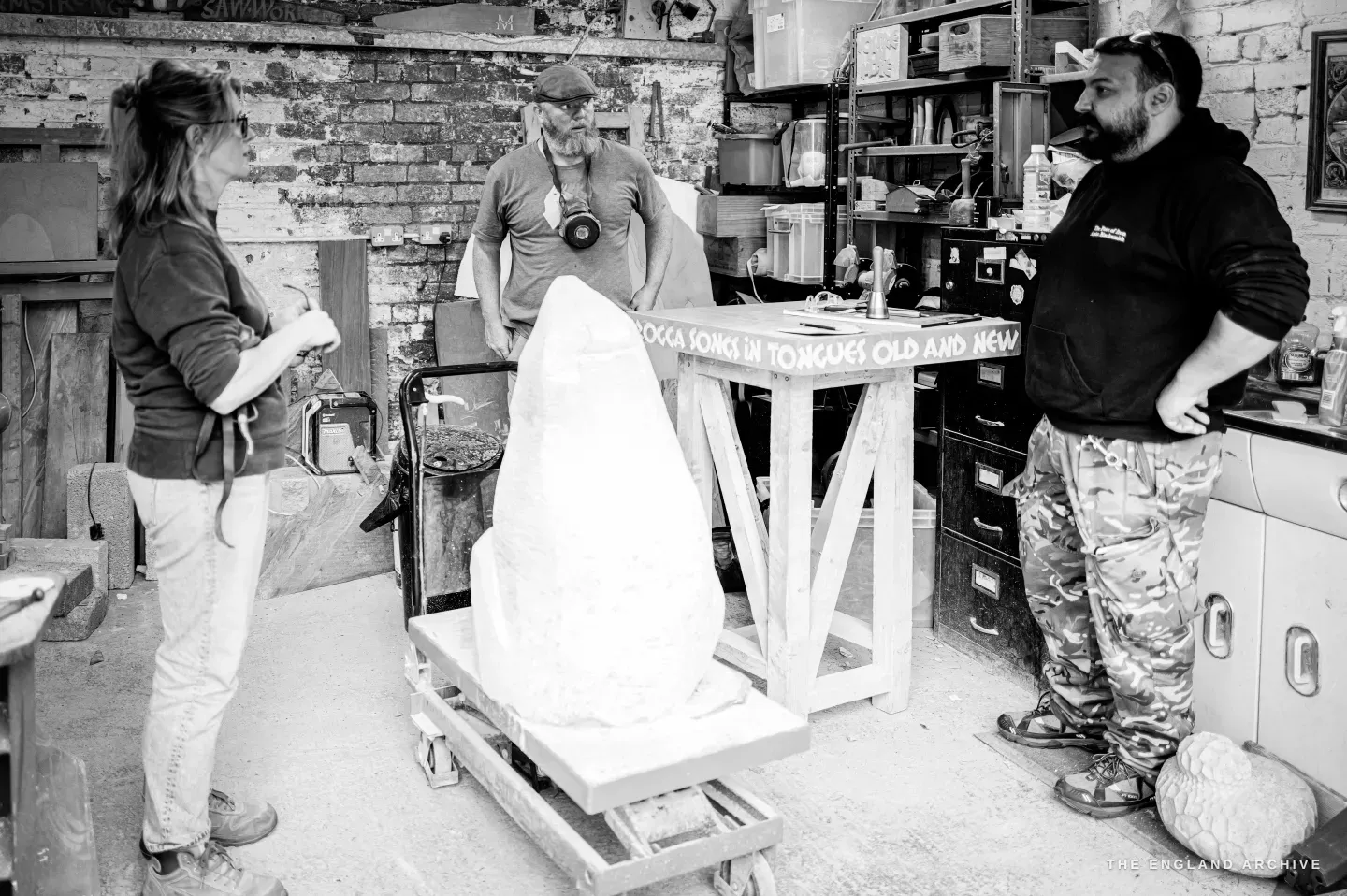
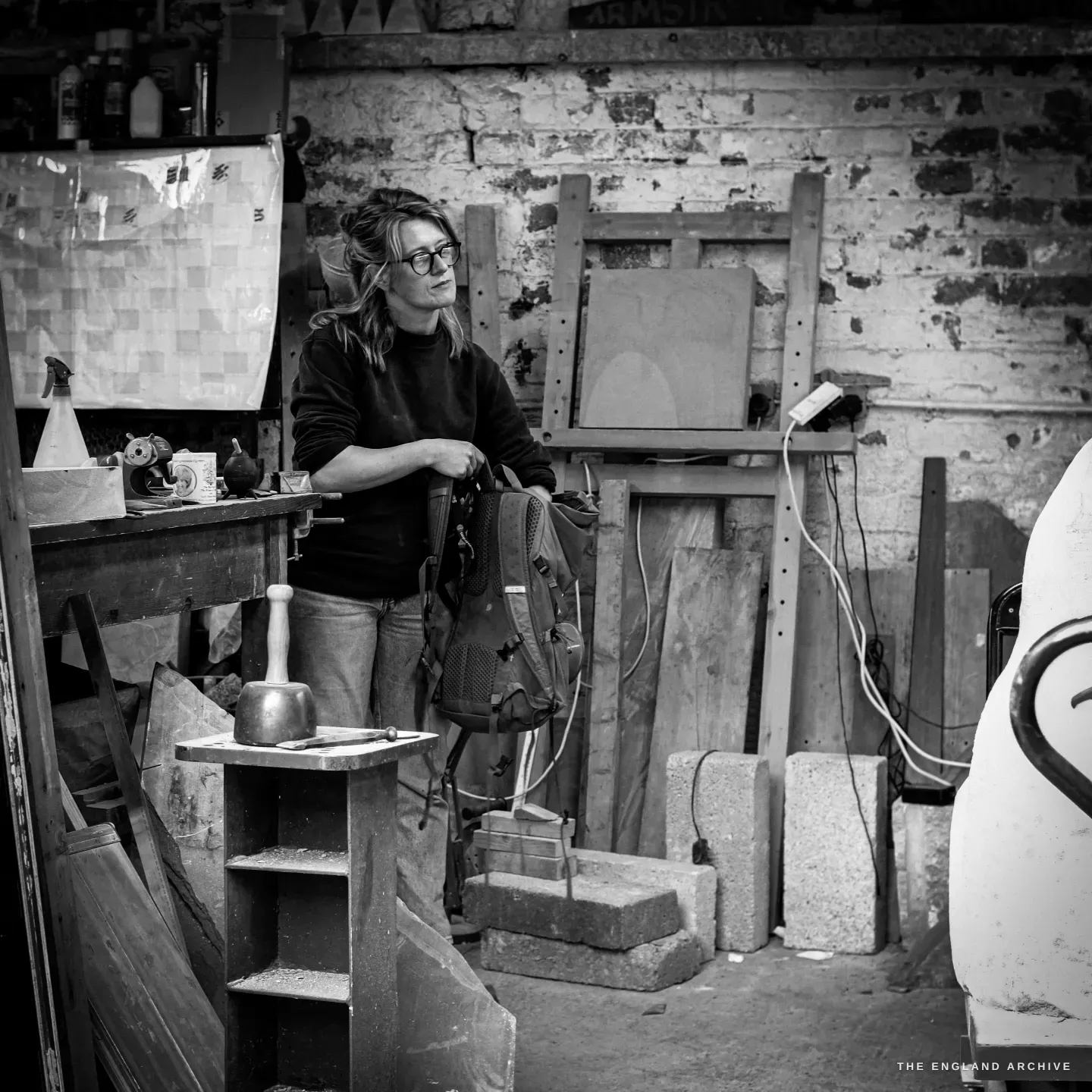
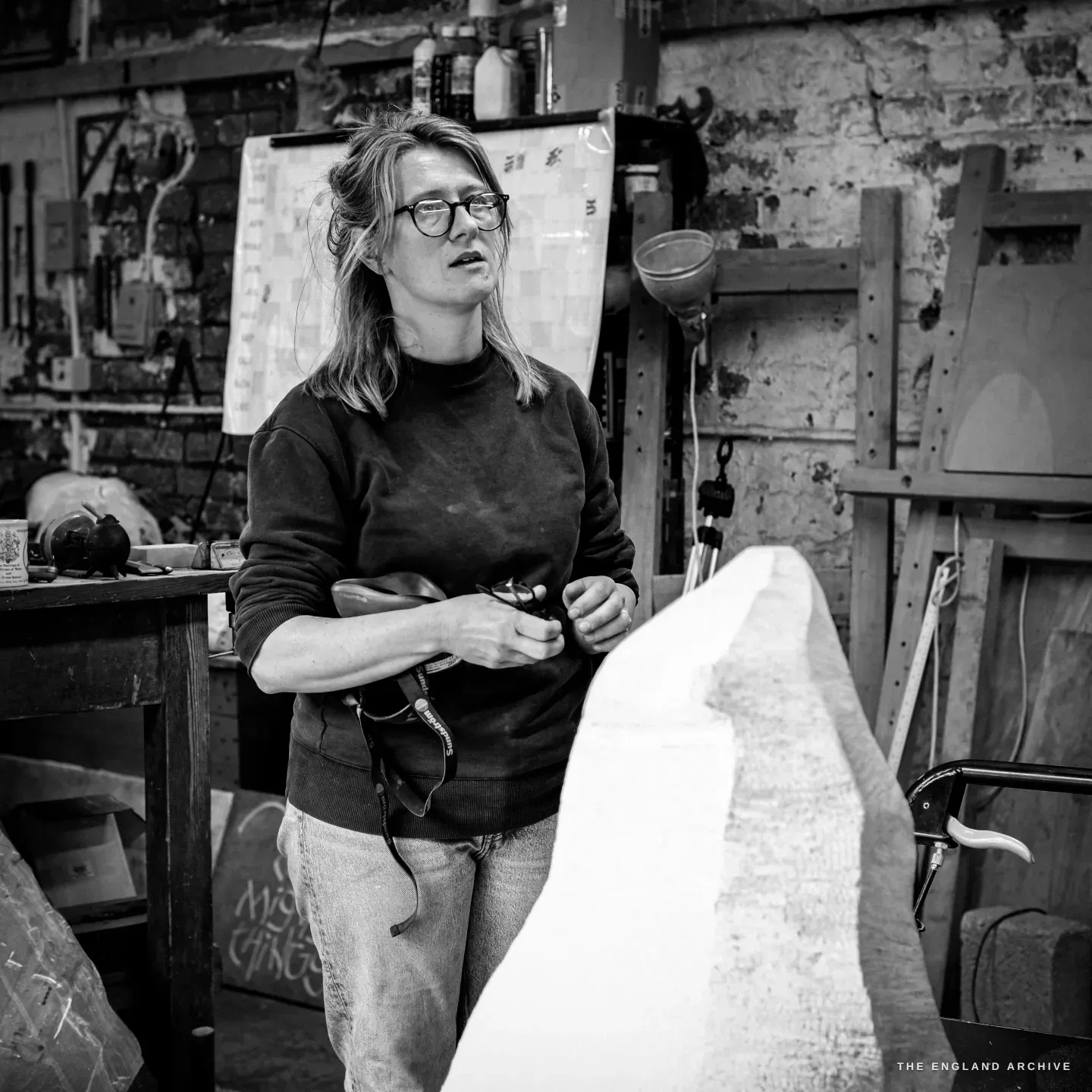
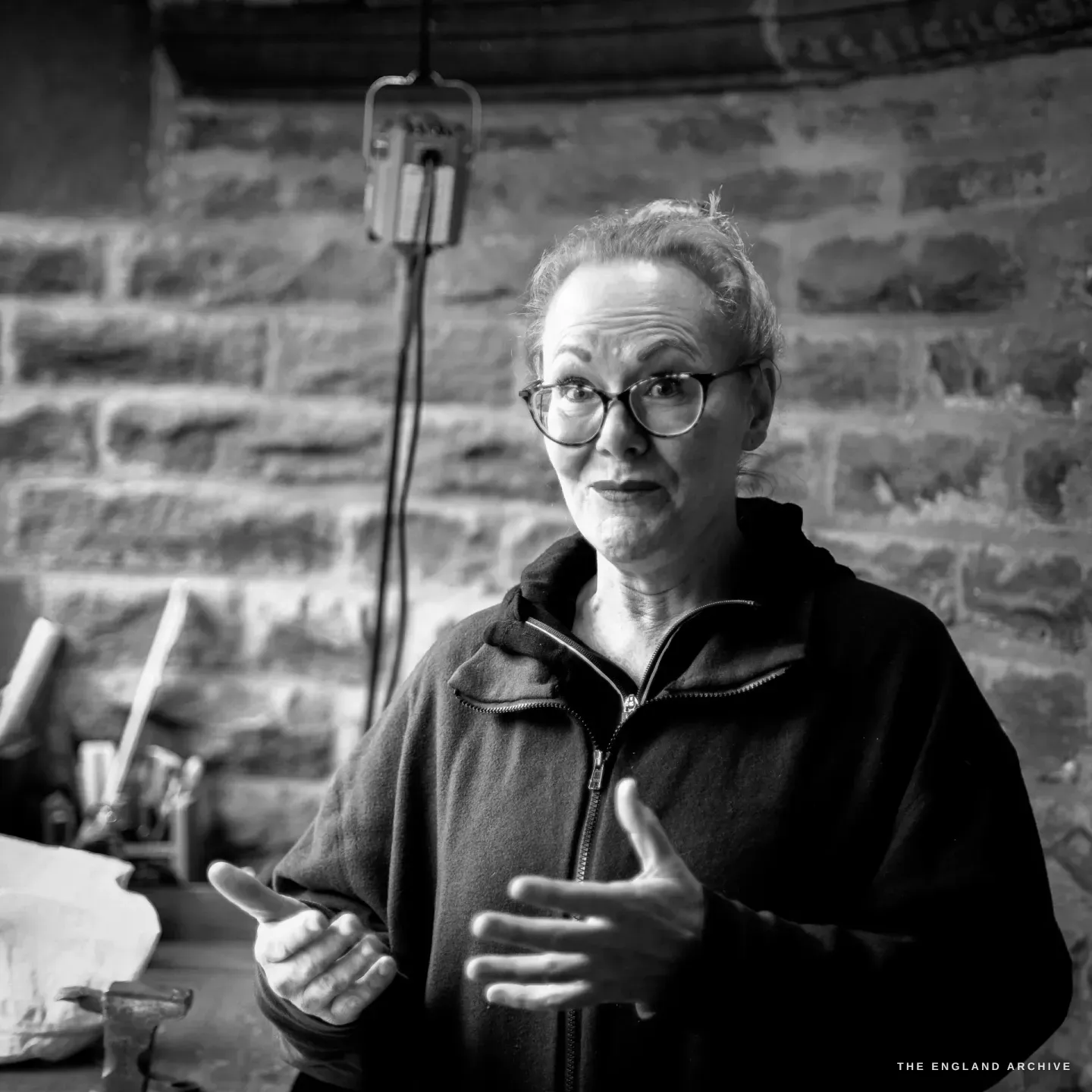
With Timothy gone, I turned to Lily, and the morning settled into the thing I had come for. She is easy company - quick, warm, and as it turned out one of two people I would be photographing rather than one. But that comes later. First she talked, and I listened, and I learned that the woman carving a six-foot block of stone in a Sheffield workshop had come to it from a long way off.
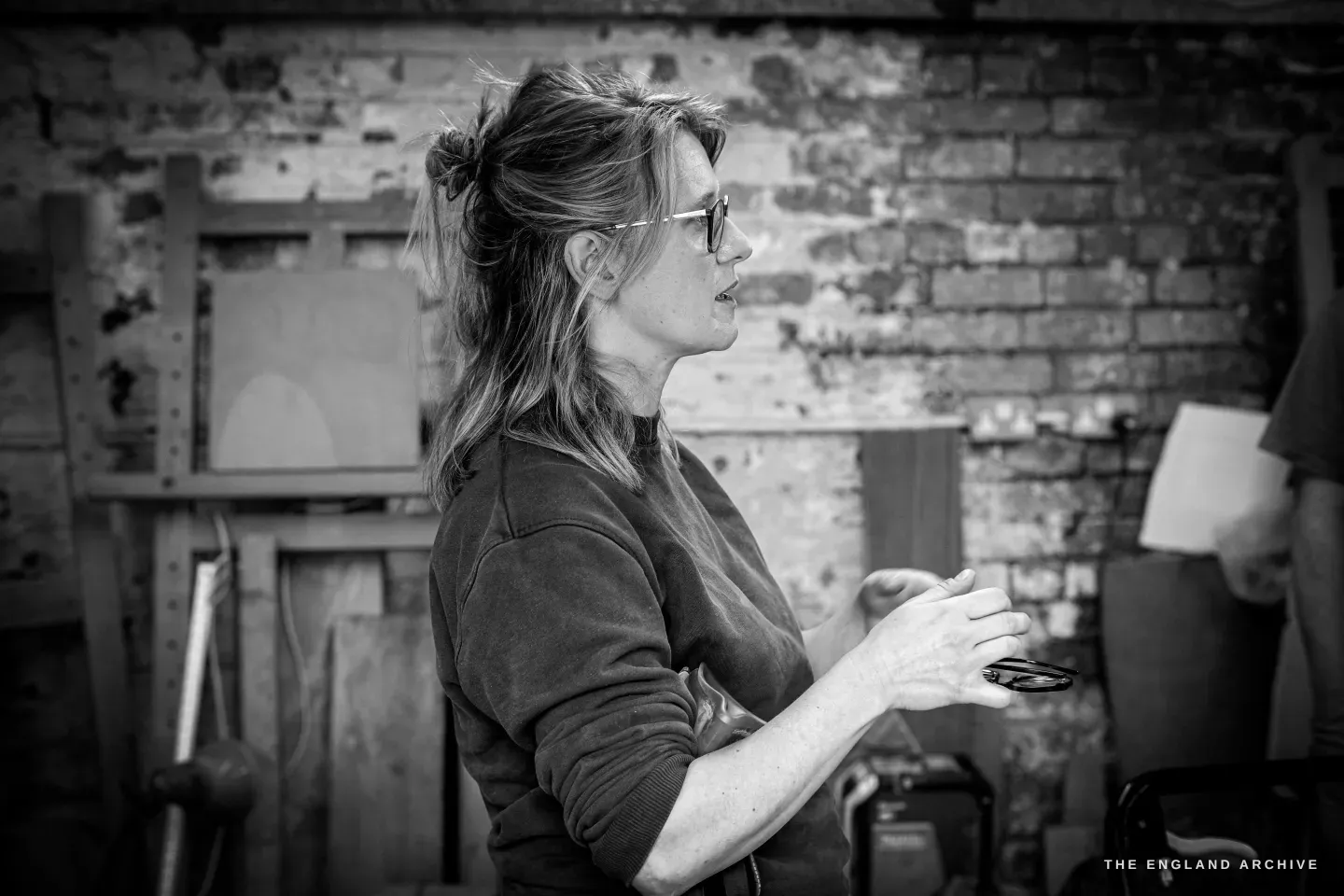
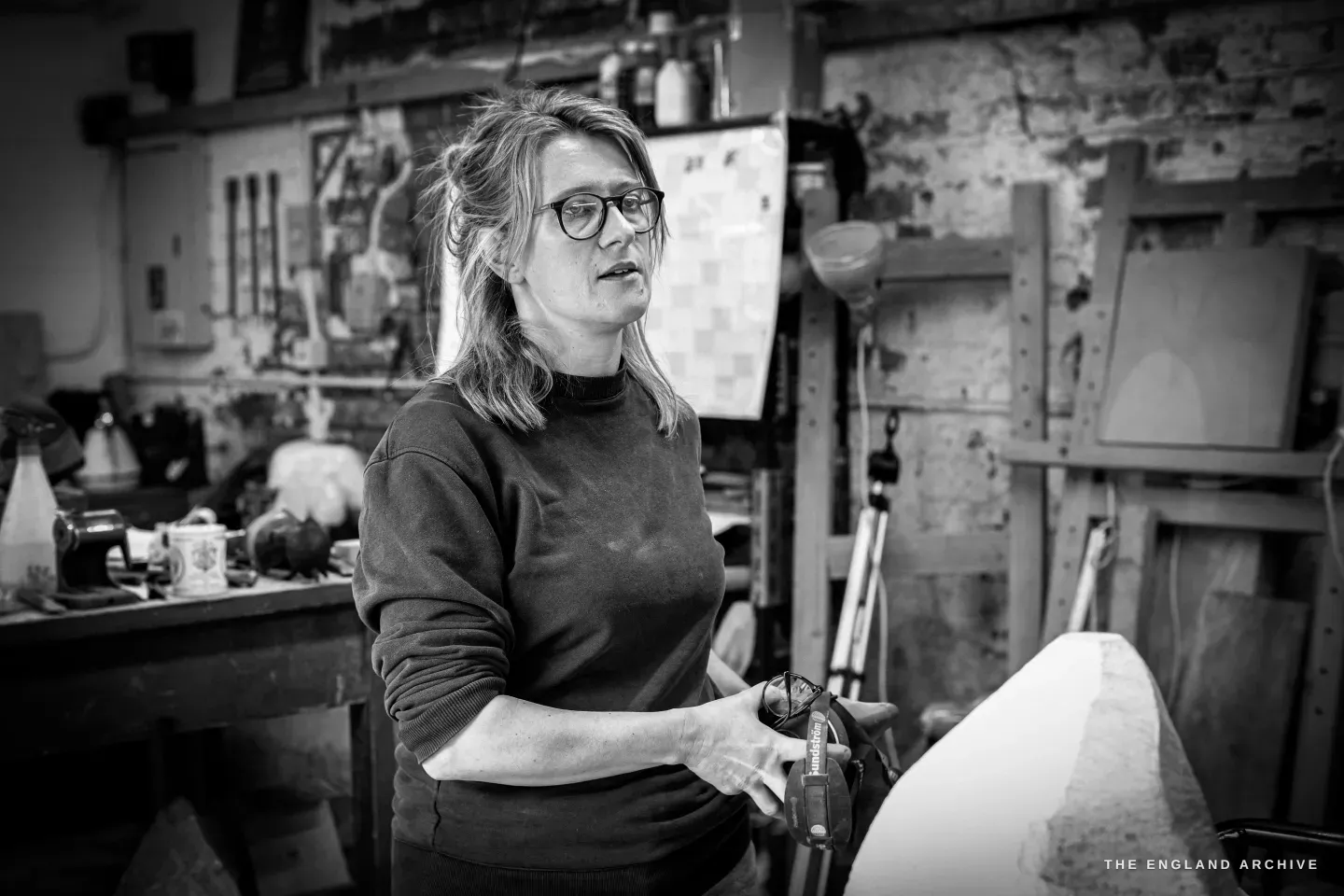
Lily read psychology at college, and afterwards went to work in a prison. It did not last, and she is candid about why: it was not the life she wanted, and the thing she had always actually been was creative - the one drawing, the one painting, the one who needed to make something with her hands. So she did a two-year diploma in stone carving and started, in 2013, doing the thing she had been circling all along. The diploma brought a few early commissions. The commissions brought her here.
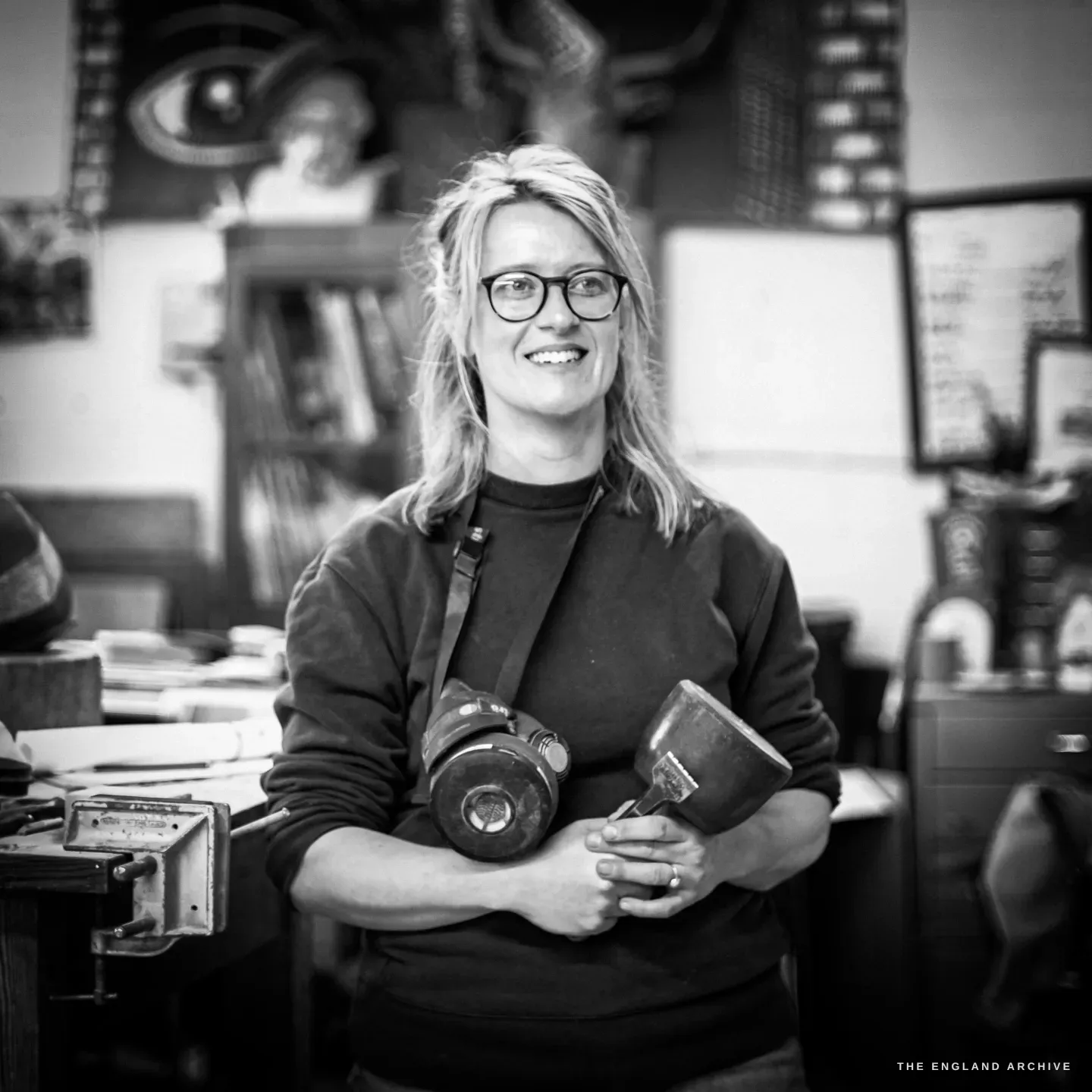
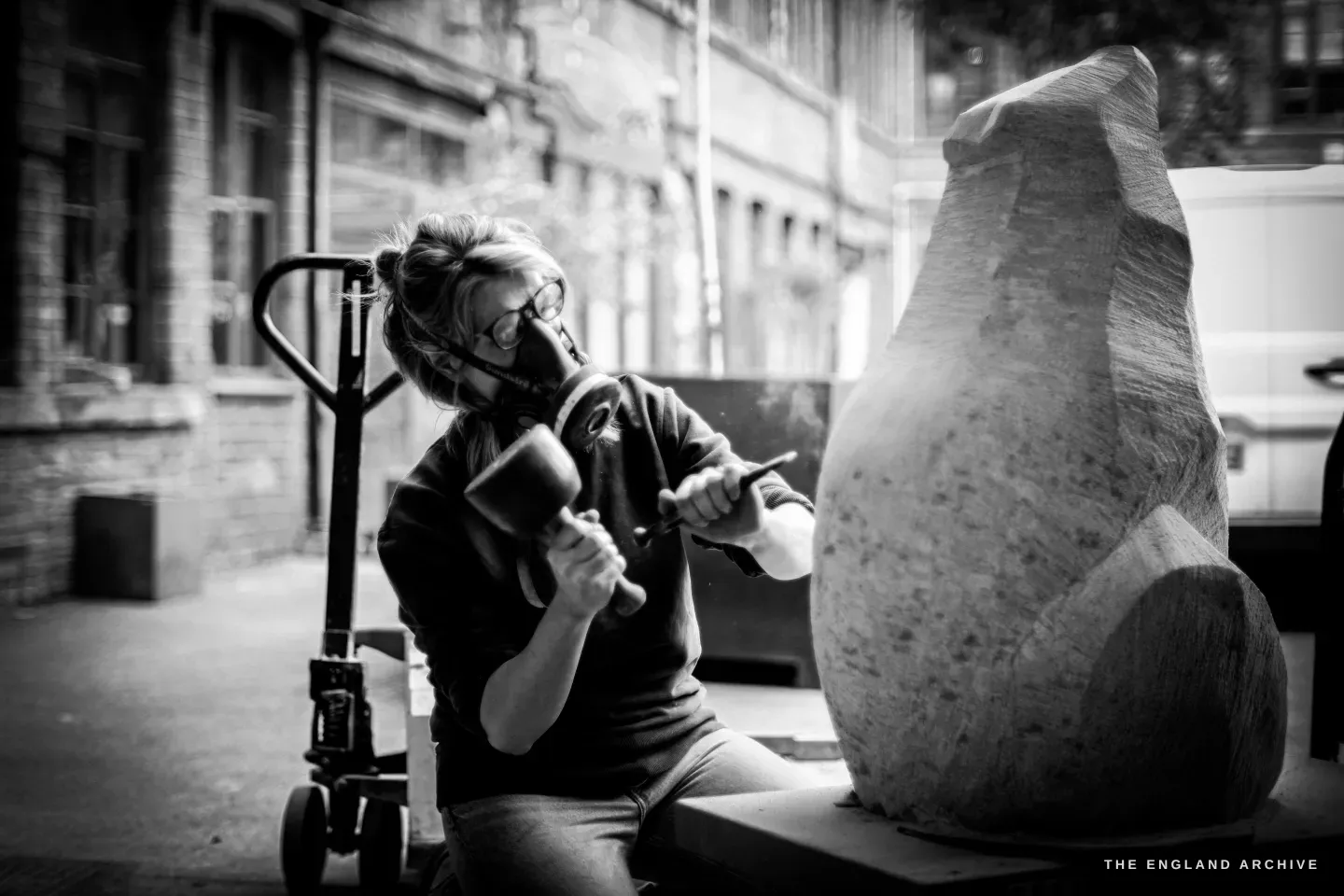
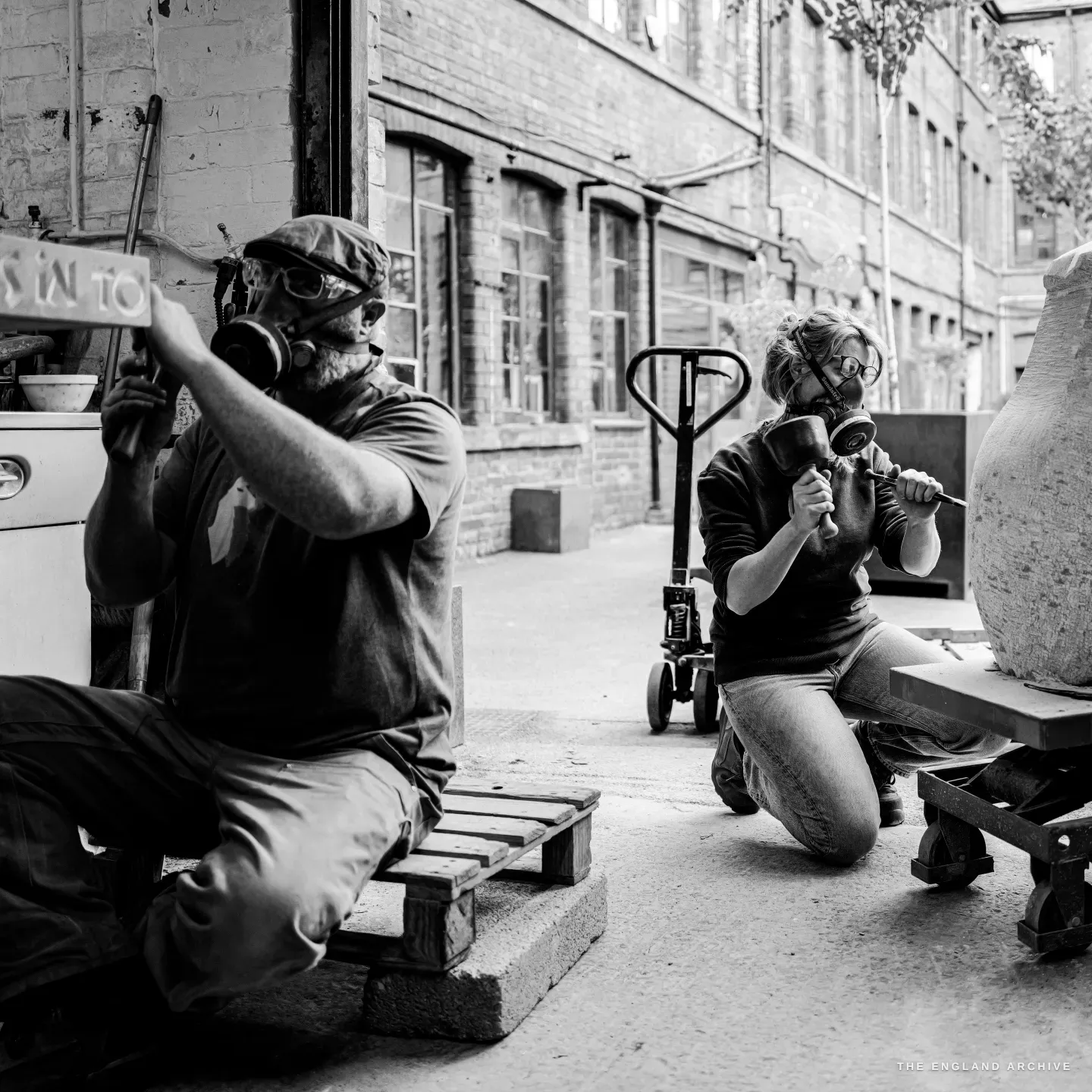
You can see all of that in the way she works. She picks up a dummy mallet - the round, soft-faced wooden one stone carvers swing - and a chisel, and leans in.
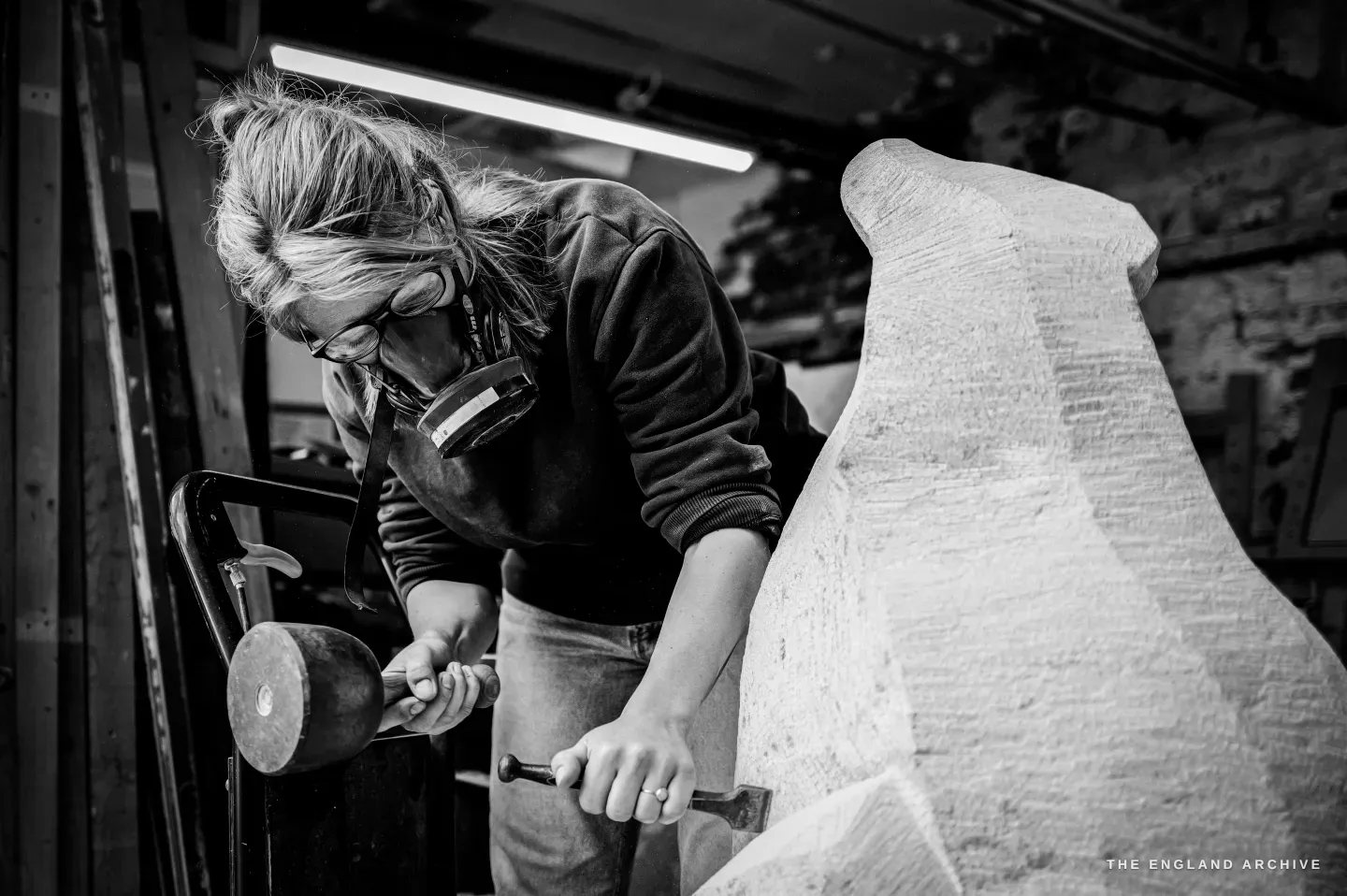
The block she was on stood taller than her waist, a leaning, tapering form that she was bringing up out of the stone a few grams at a time. The mallet does not so much hit as nudge - a steady, patient tapping, the chisel walked across the surface, the waste falling away as pale grit onto the floor. She wore a respirator over her mouth the whole time she cut, and pushed it down to her chin the moment she stopped to talk, which was often.
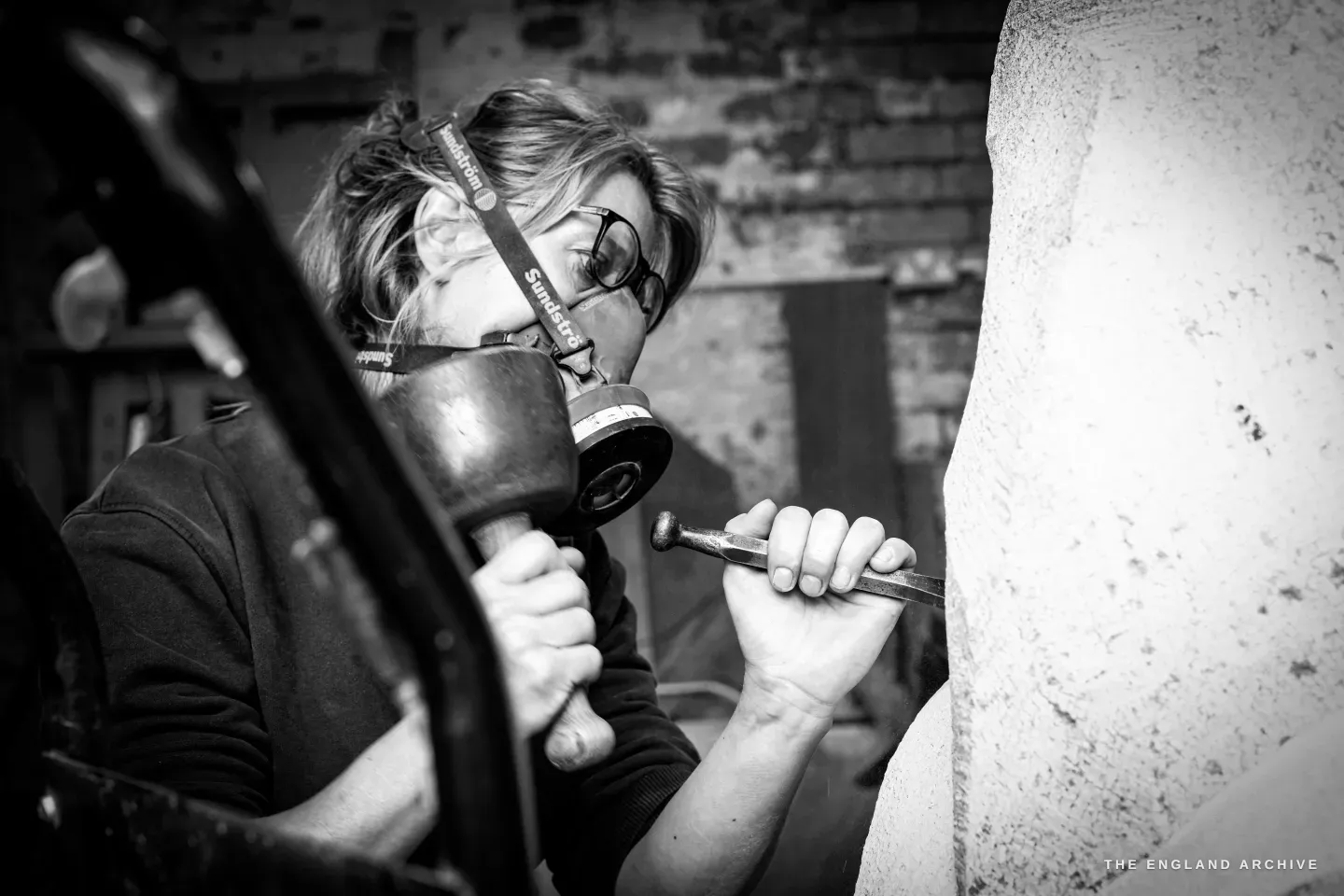
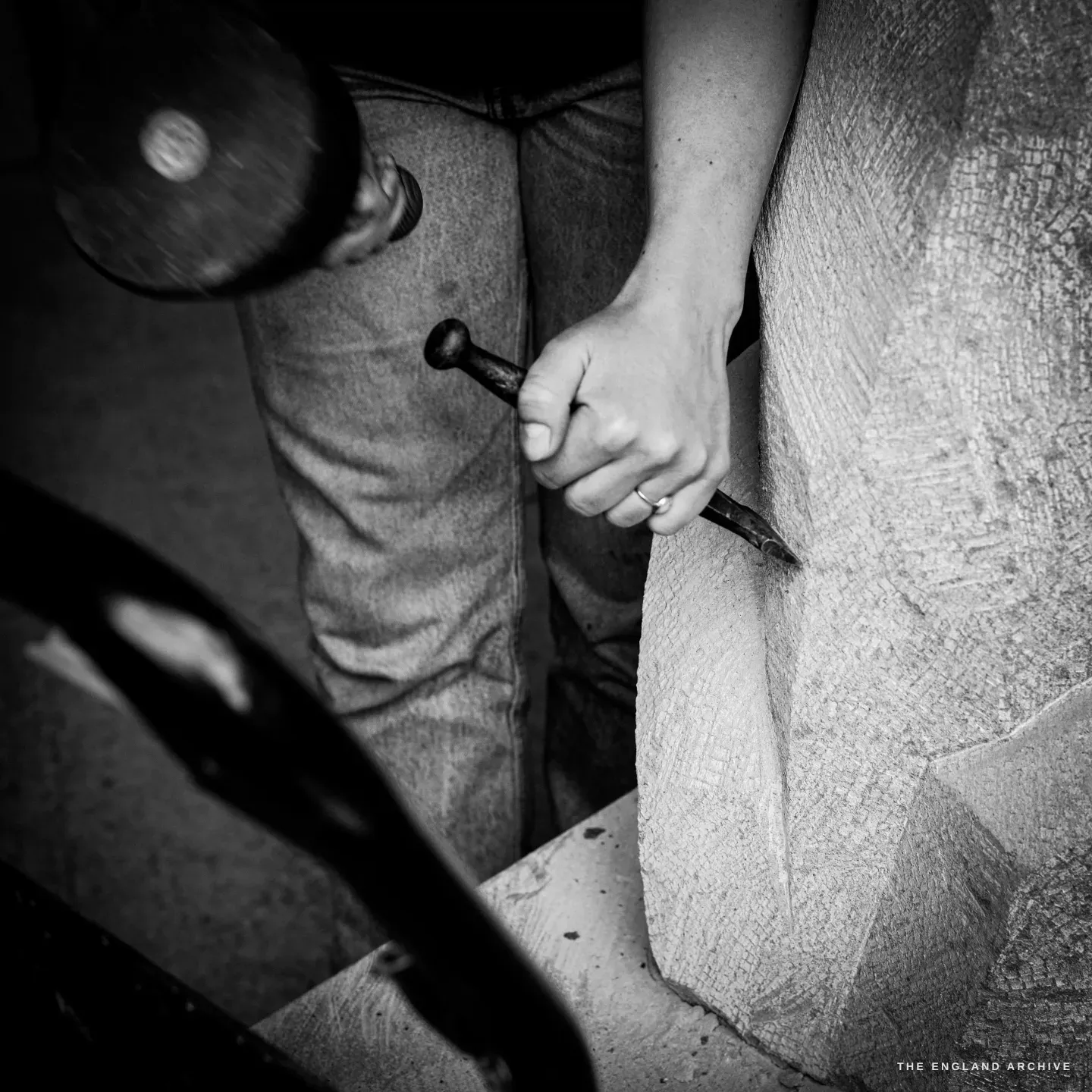
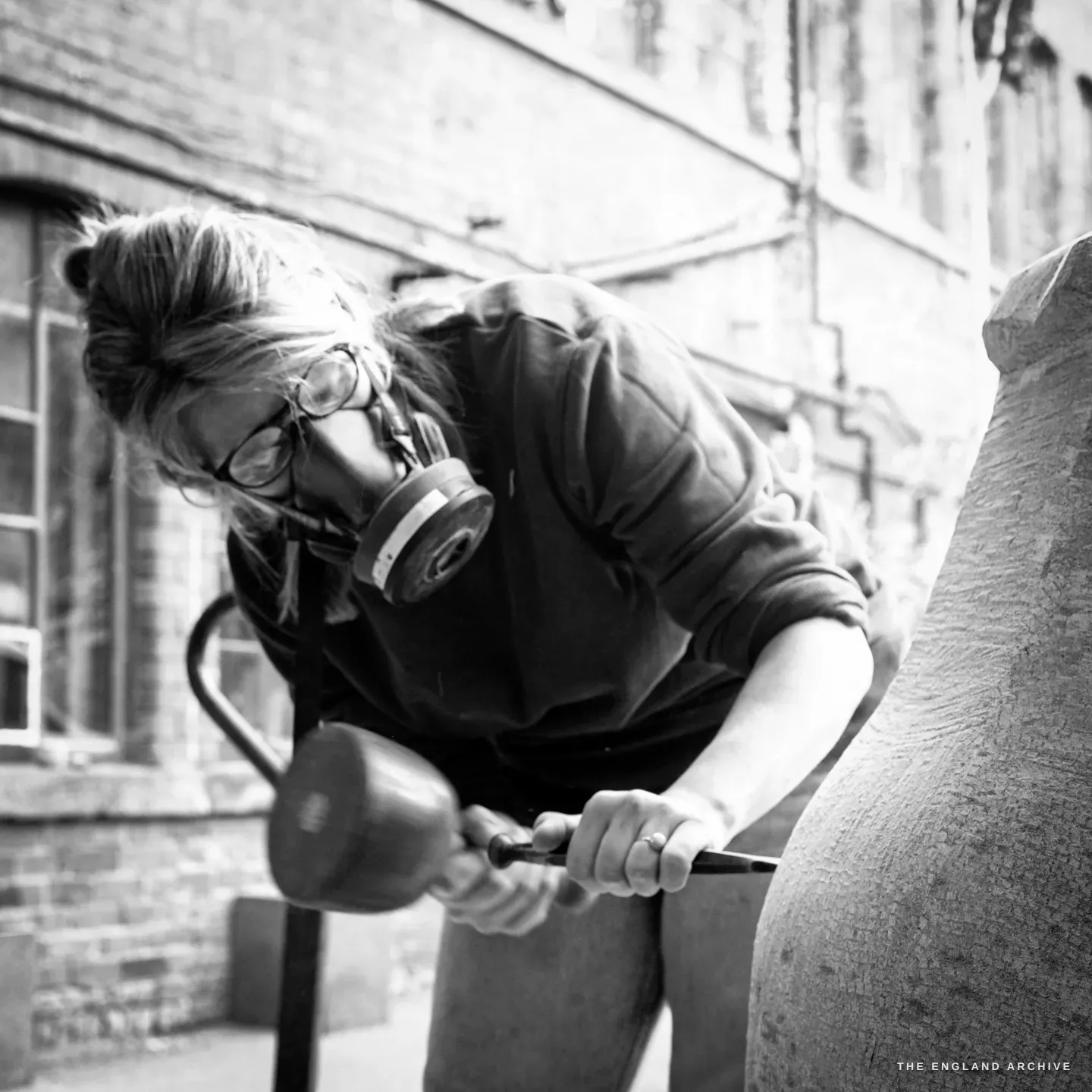
I got in close on the hands, because the hands are where the whole craft lives. There is no machine here doing the deciding. Every blow has a target the eye has chosen, and the carver reads the stone the way the basket maker reads a hazel rod - the grain, the soft spots, the place a careless tap would shear off more than she meant. When the dust got thick she carried the work out into the yard, where the air moves and the light is honest, and knelt down beside it on the cobbles of Stag Works.
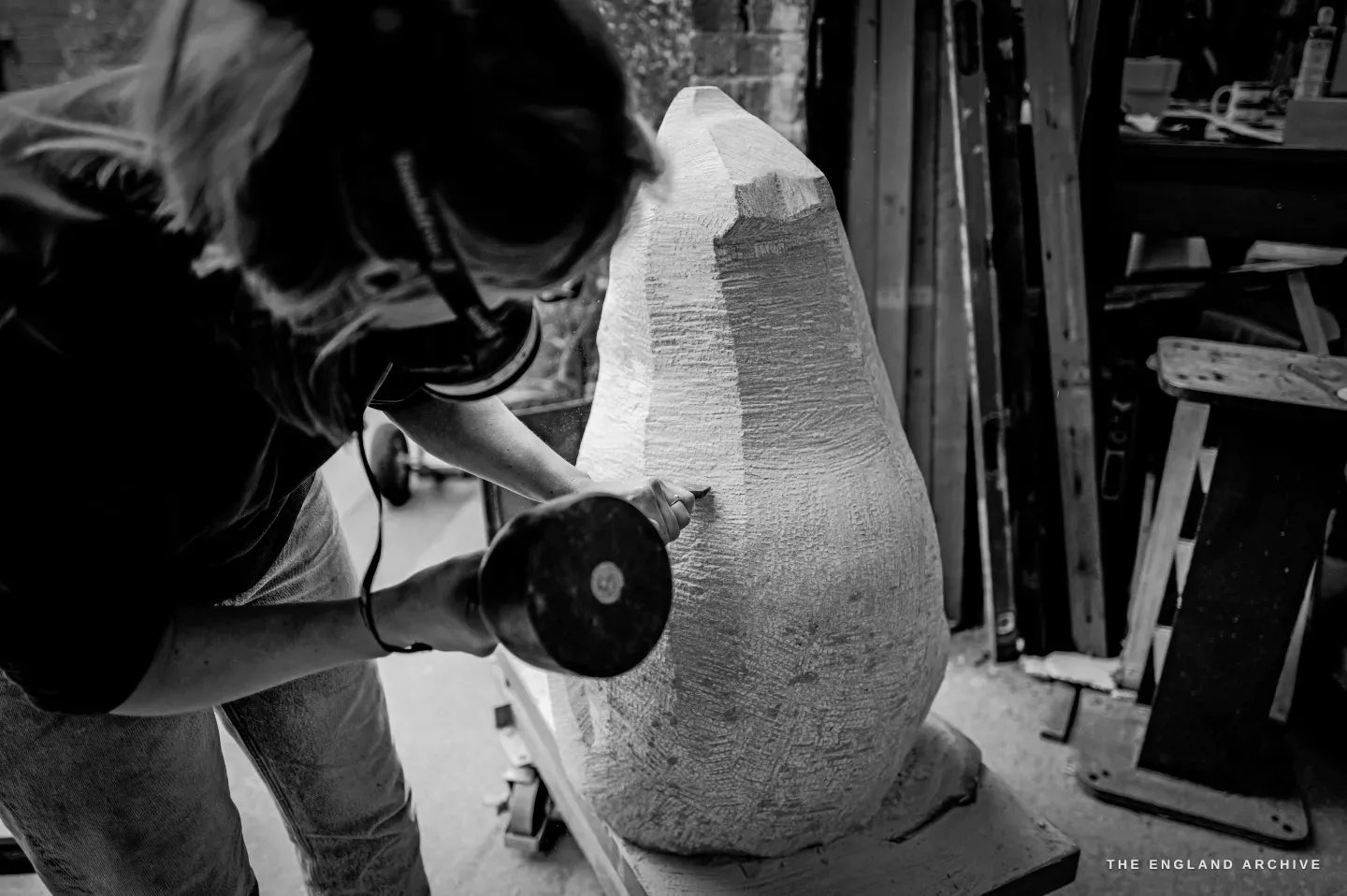
Looking down over her shoulder you could see the two languages of the surface side by side: a band of rough tooled texture where the chisel had been walking, and beside it a smooth dressed facet, polished flat, catching the light. That contrast is the sculpture, really - the decision about where the stone stays raw and where it is brought up to a finish. It is the part she loves, the creative outlet she said she had been missing through the psychology and the prison and all the years before she let herself do this.
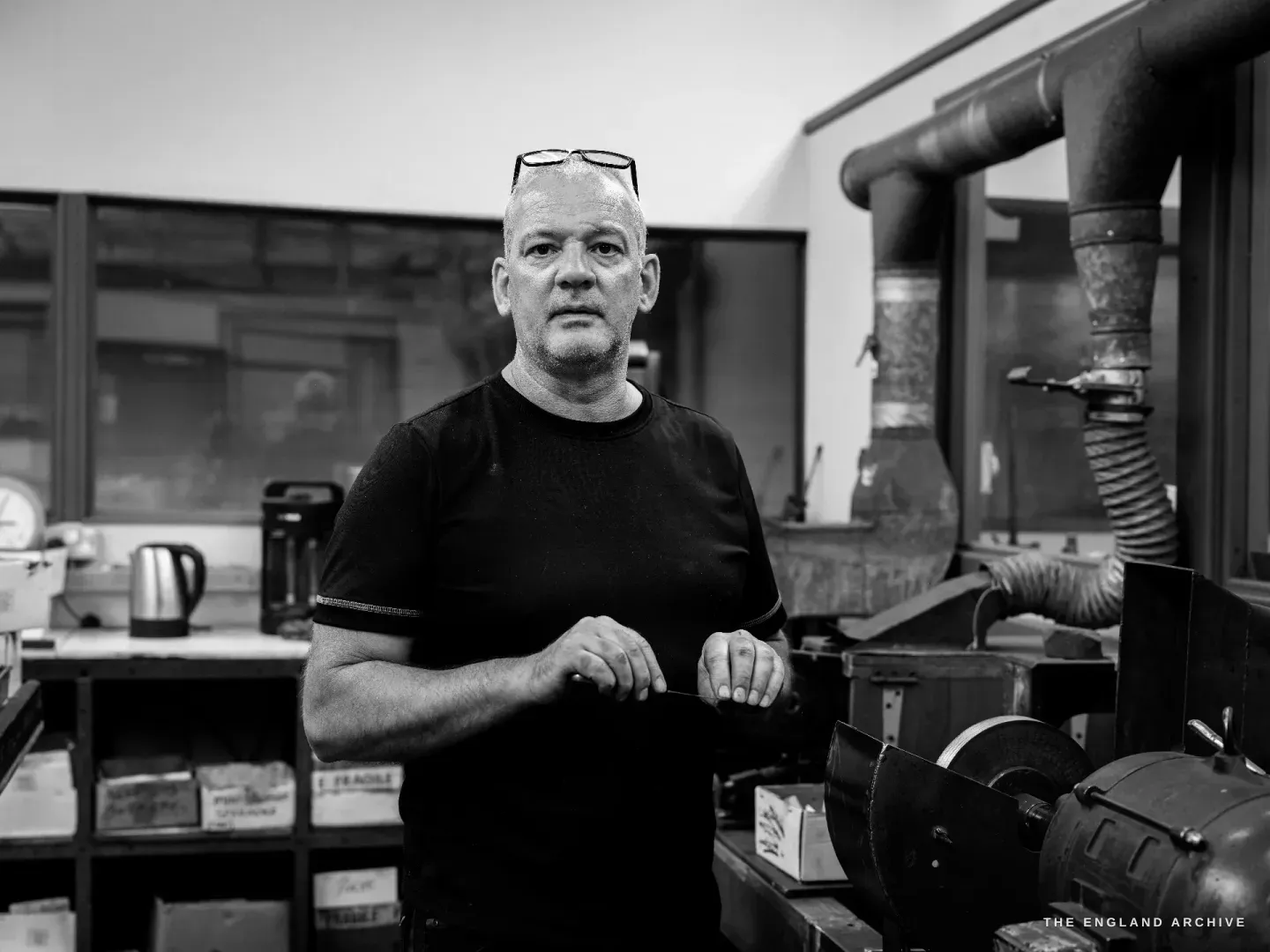
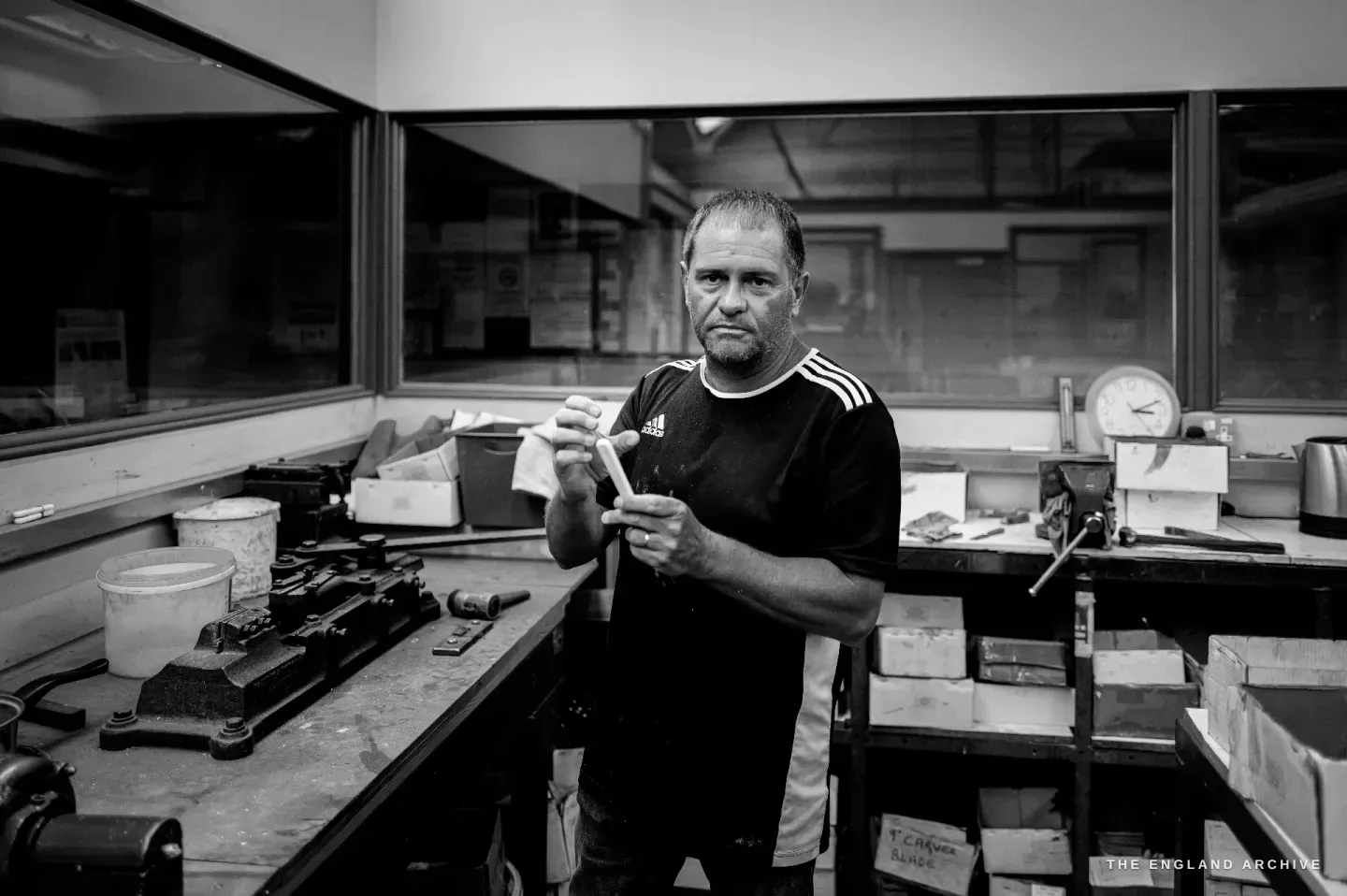
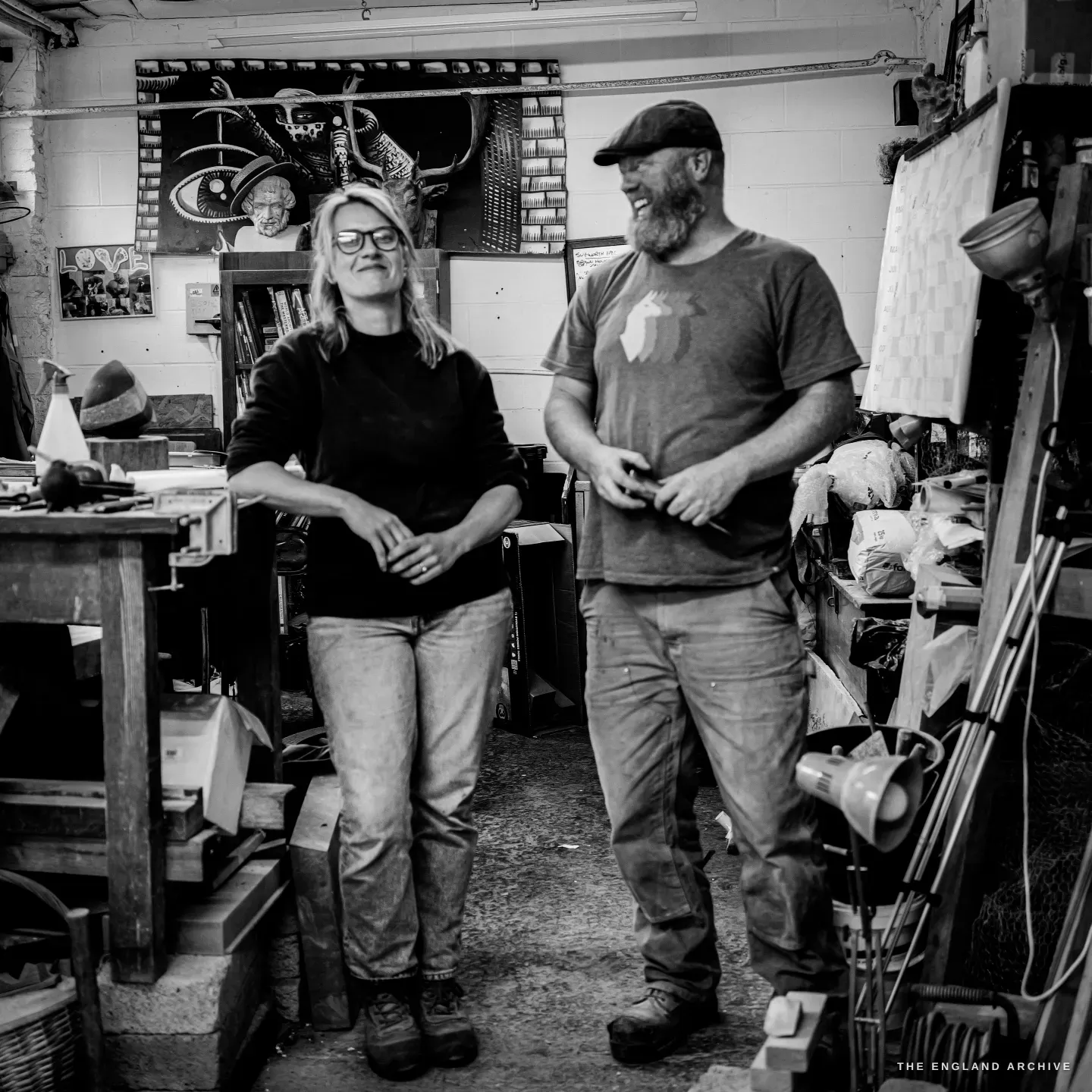
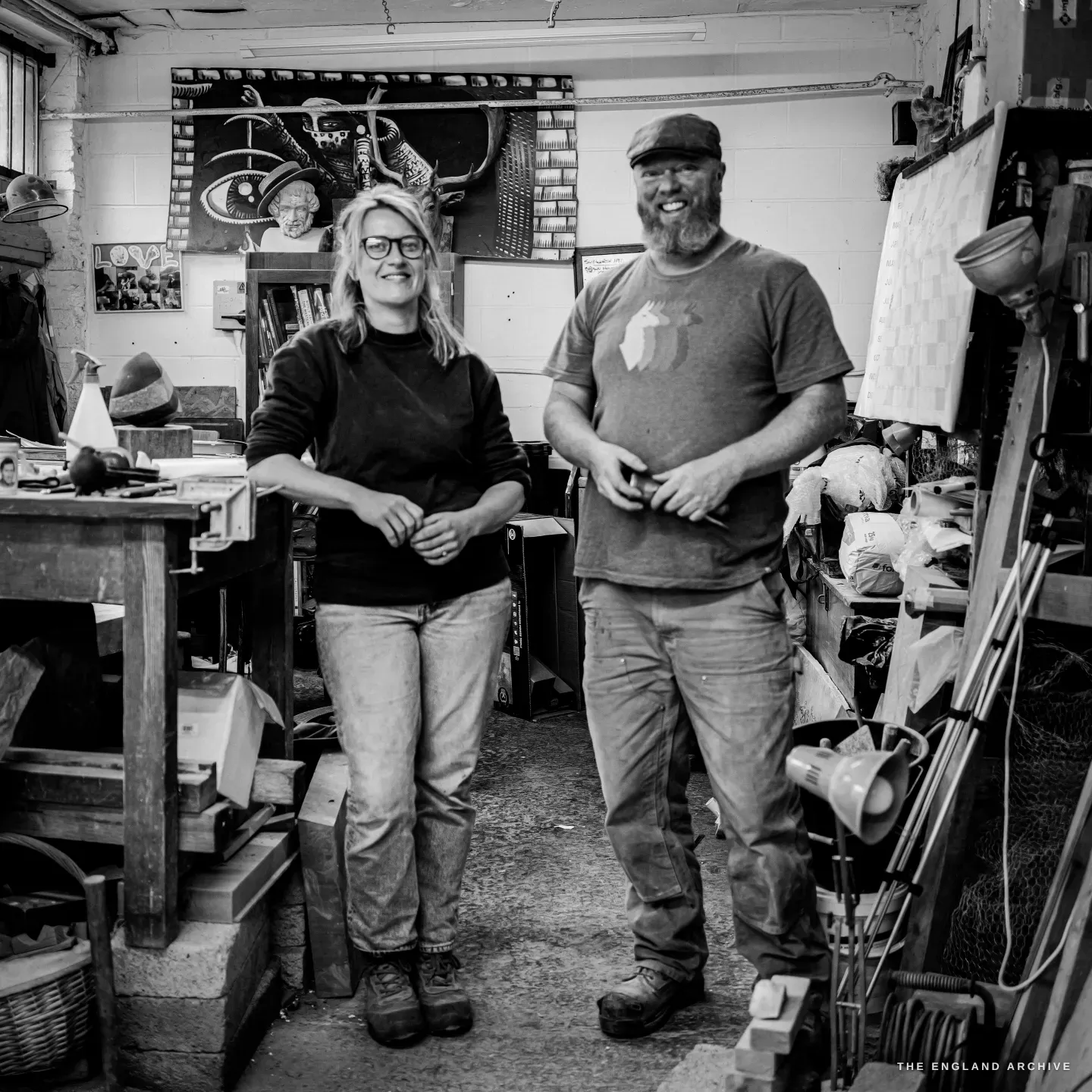
I had planned for one maker. The room had two. The other was Steve - a letter cutter and stonemason, and Lily’s collaborator - and he turned a portrait of a sculptor into the record of a partnership. He came to stone the long way round too, and his turn was sharper than hers. In 2008, in the same month, he lost his job and broke his leg. Laid up and recovering, with nothing to do but think about what came next, he started looking at the trades.
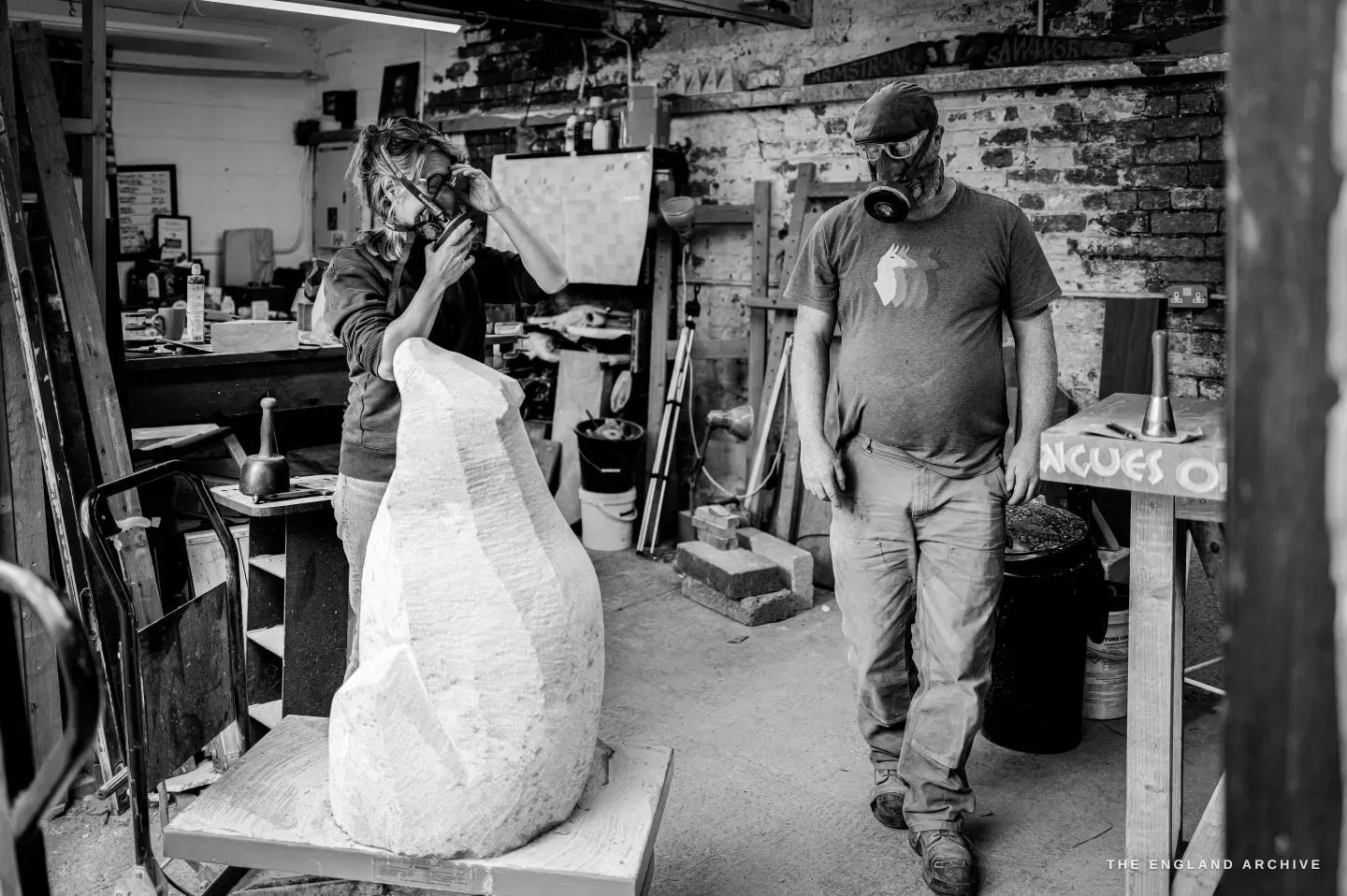
He took courses in stonemasonry and letter cutting, won a place through a trust that funds people into the lettering and masonry trades, and did the training meaning only to try it. He liked it too much to stop. That was 2009, and he has been at it ever since - now working on council-driven projects, public artworks and lettering cut in stone for the city. The hand-painted carved sign propped on his bench, all songs in tongues, old and new, is the kind of thing the work turns into.
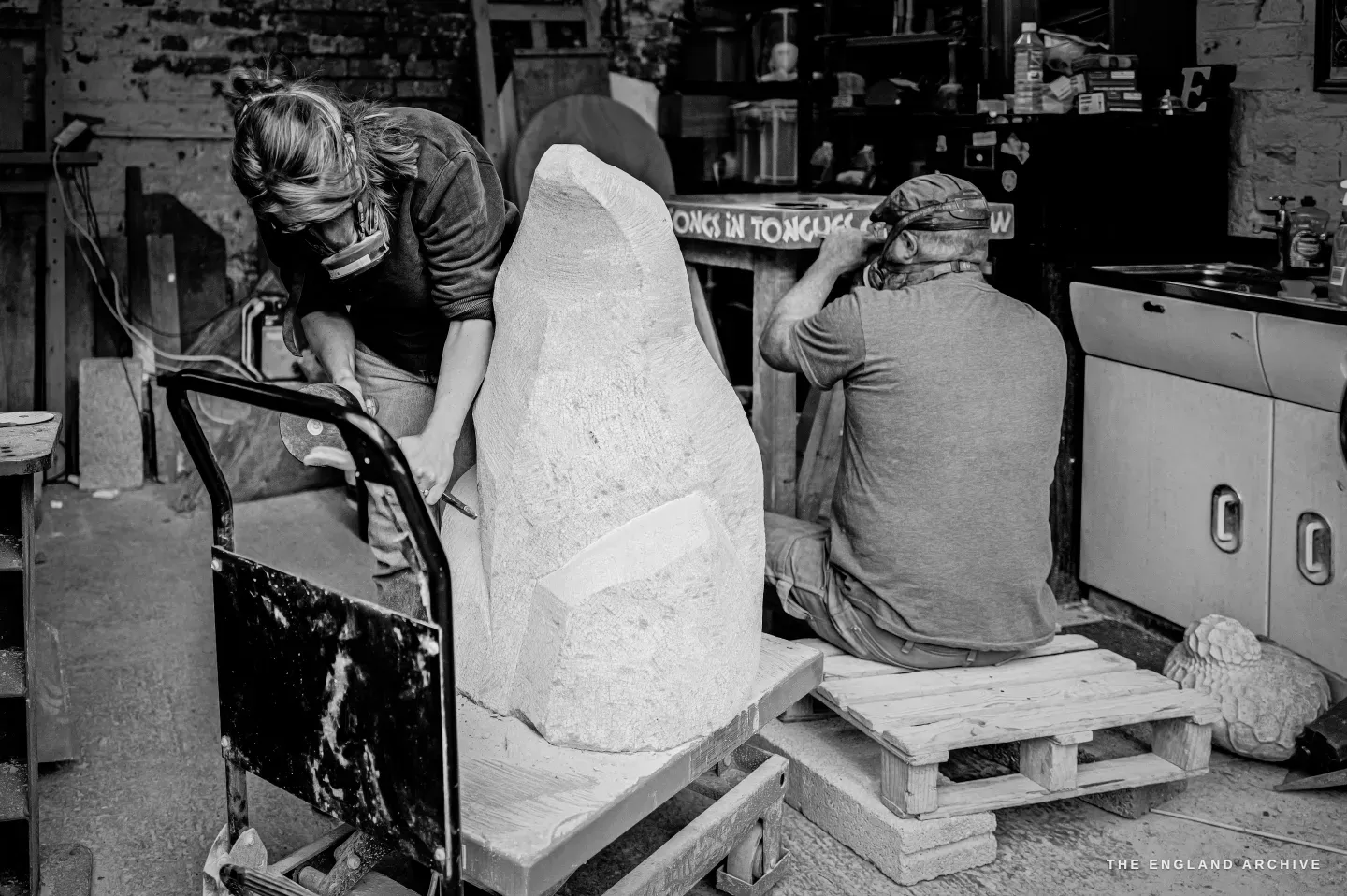
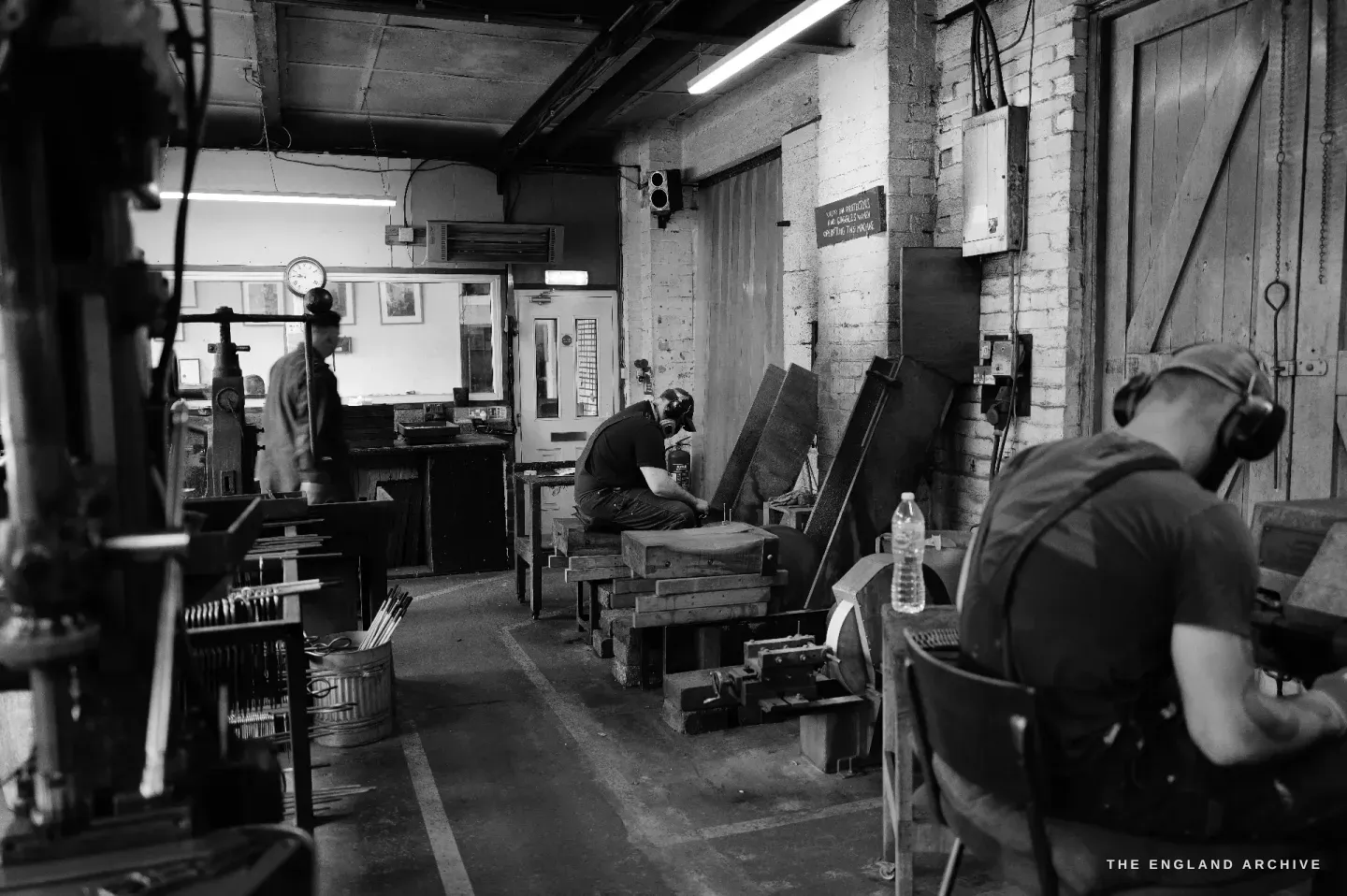
The room is his, originally. He had a workshop on the other side of Sheffield before this one, and when Lily took on a project that needed real space, the two of them came together and he invited her to share. It is a decent size - not big, but enough for the two of them - and it suits the way they work. Sometimes it is the same commission: Steve cuts the lettering, Lily makes the sculpture, and the piece leaves as one thing made by two pairs of hands. Sometimes they are simply two people getting on with their own work in companionable earshot of each other.
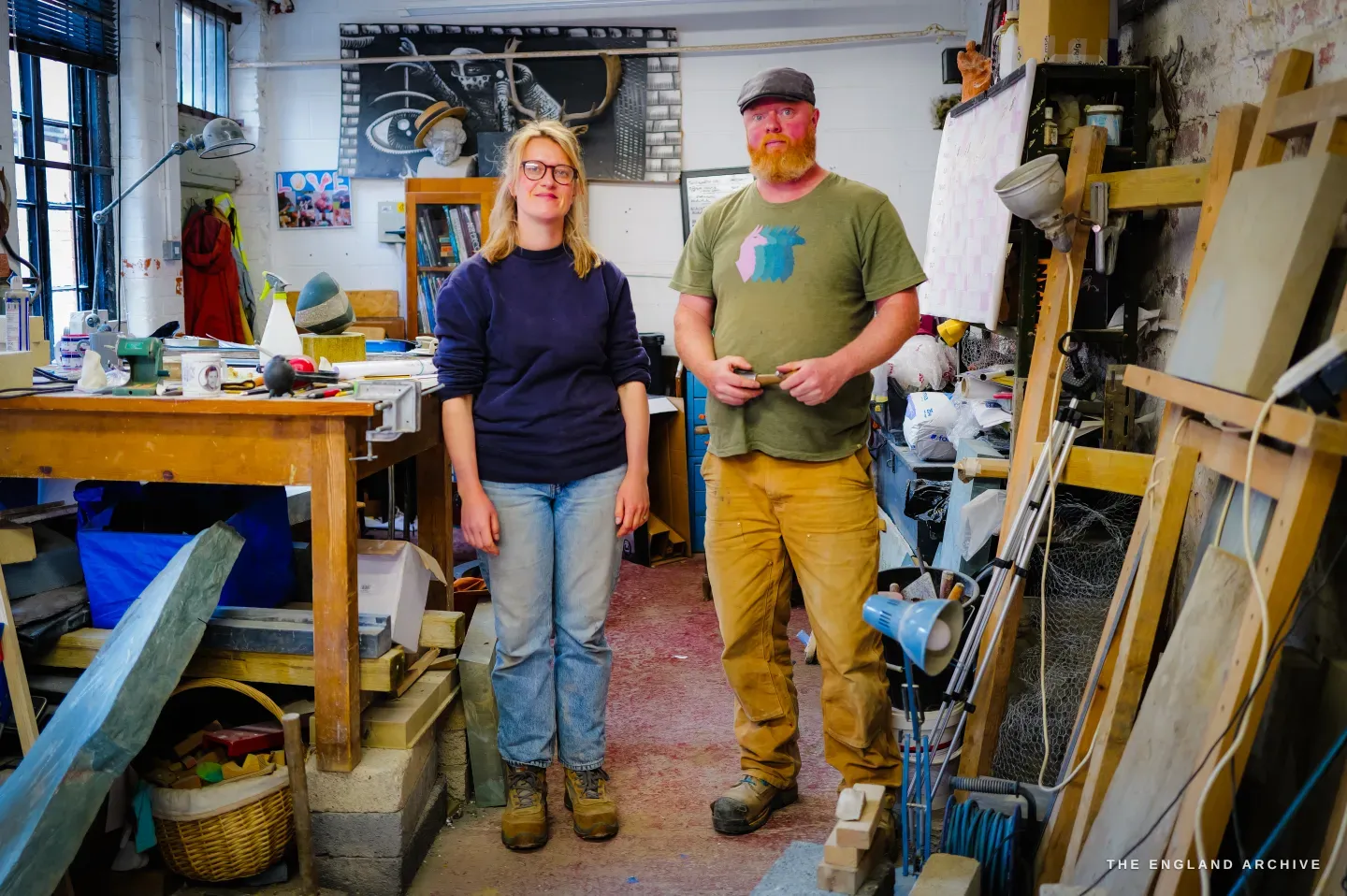
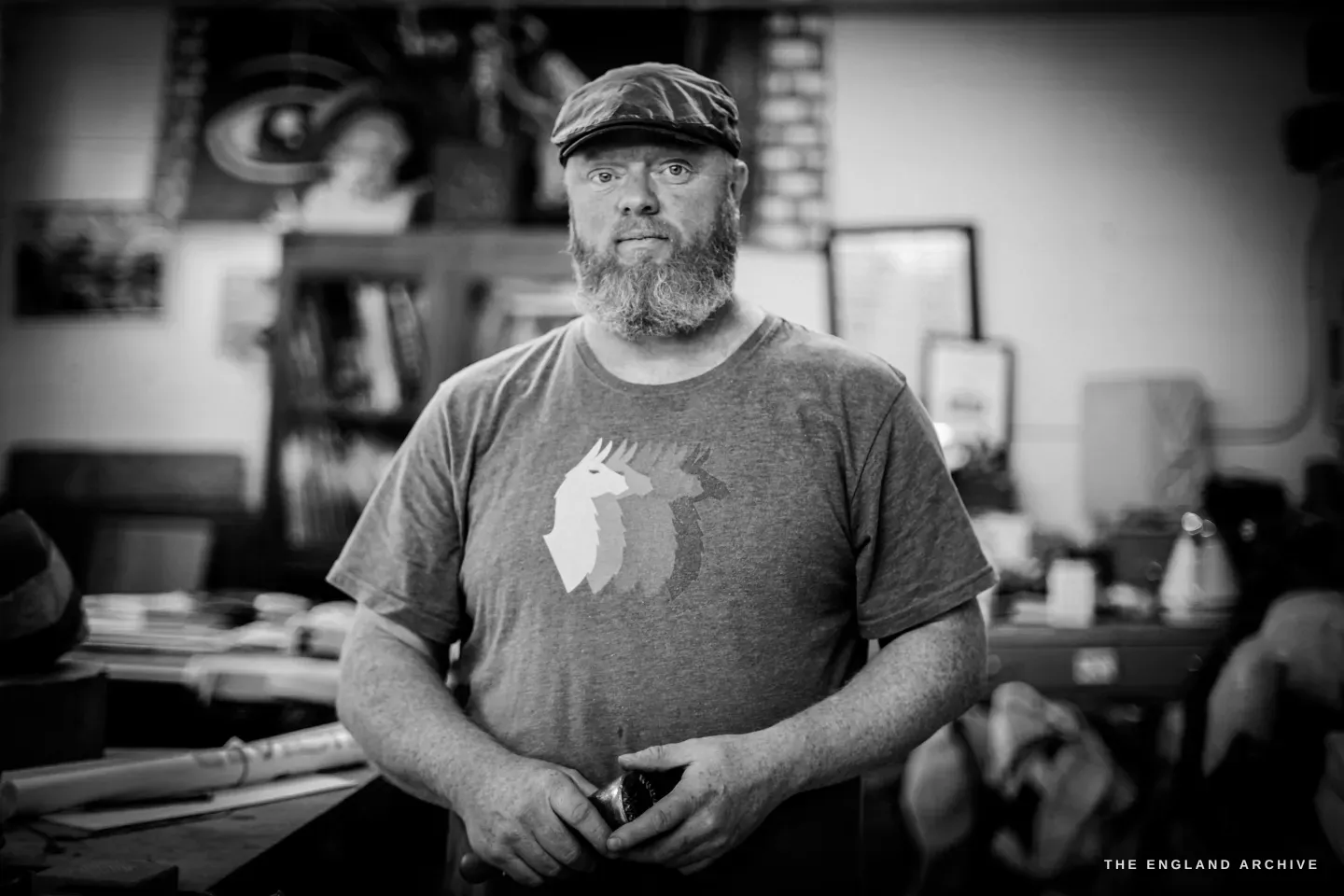
Steve has a beard you could photograph all day, and the easy warmth of a man entirely content with what he does. He is the sort you would happily count as a friend by the end of a morning, and so is Lily. I did not press either of them much about home or family - that was not what the day was for - but you do not need to, to see that the second act each of them found in stone is the one that fits. Both of them love the work. It shows in everything.
Out in the yard, near the end, I got the frame that holds the whole day: Steve at his stone cutting letters, Lily at hers carving form, a few feet apart in the same light. Two people who each arrived at this trade by accident, or near enough - a broken leg and a lost job for him, a prison job that did not fit for her - working the same material in the same room, and glad of it.
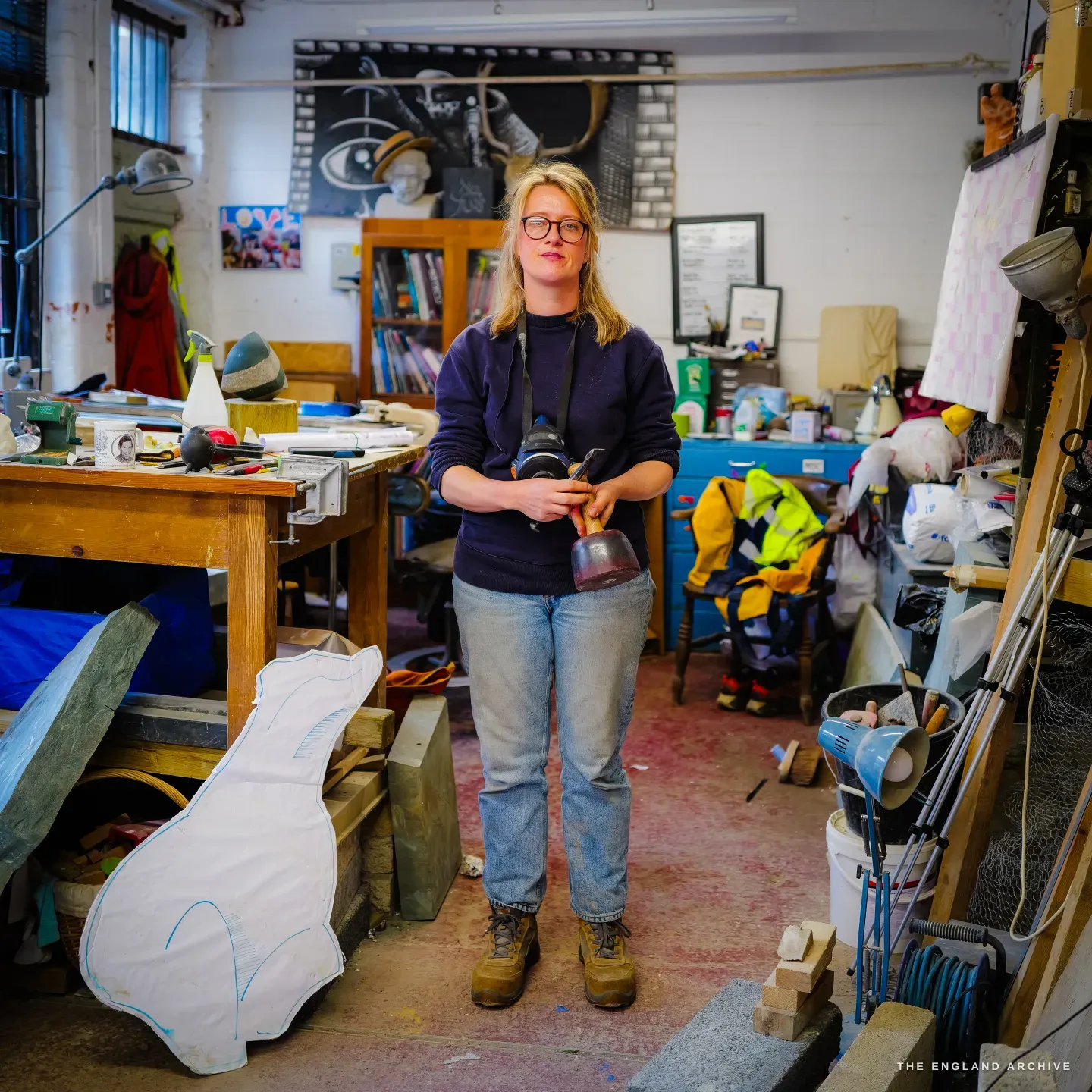
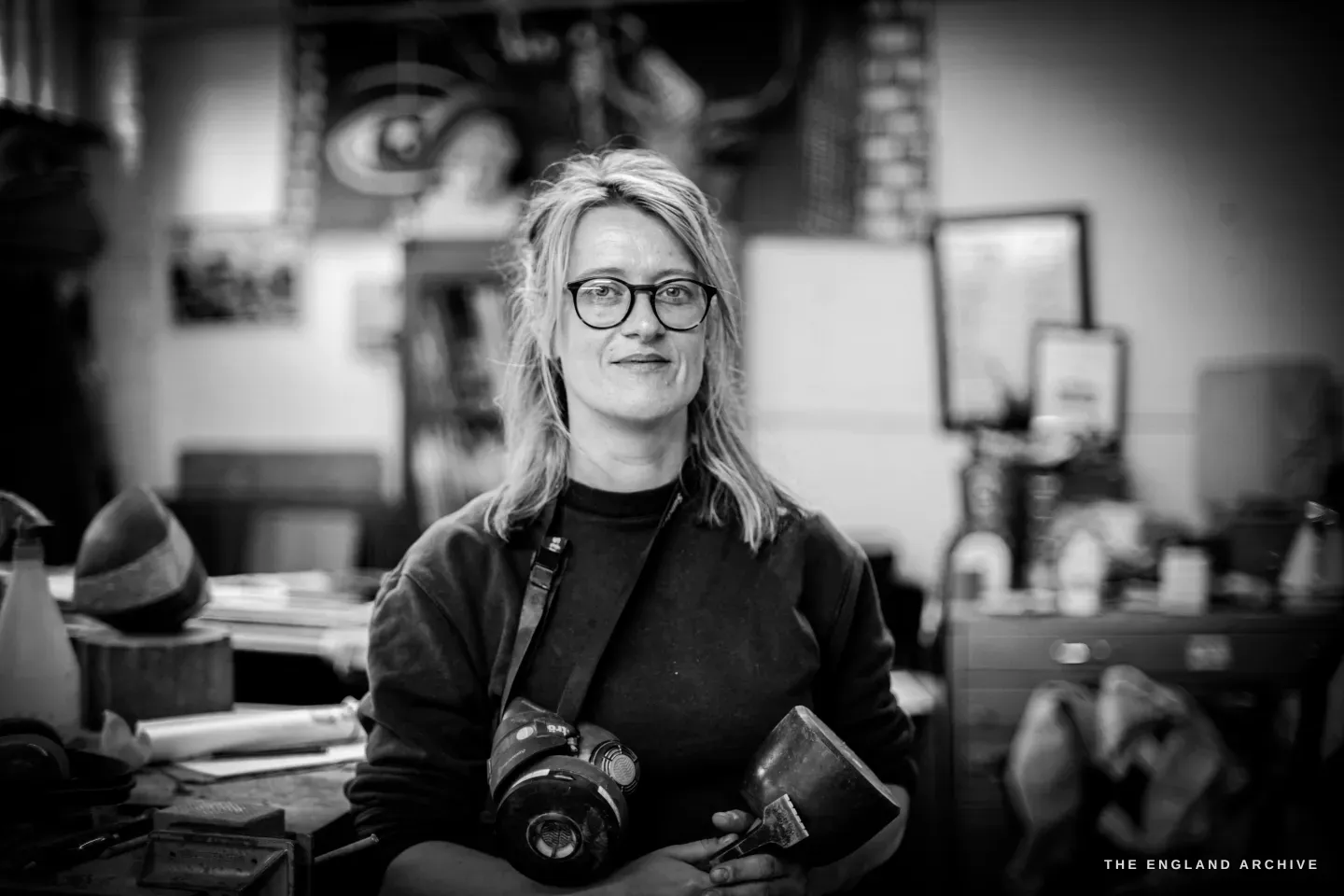
I asked Lily to stand for a proper portrait before I packed the cameras away, mallet in hand, the respirator round her neck where it lives between cuts. She is an easier subject than most, because she does not perform for the lens; she just is, the way she is at the stone. I had come to Sheffield to photograph one maker and met two. That is the kind of mistake worth making.