Makers
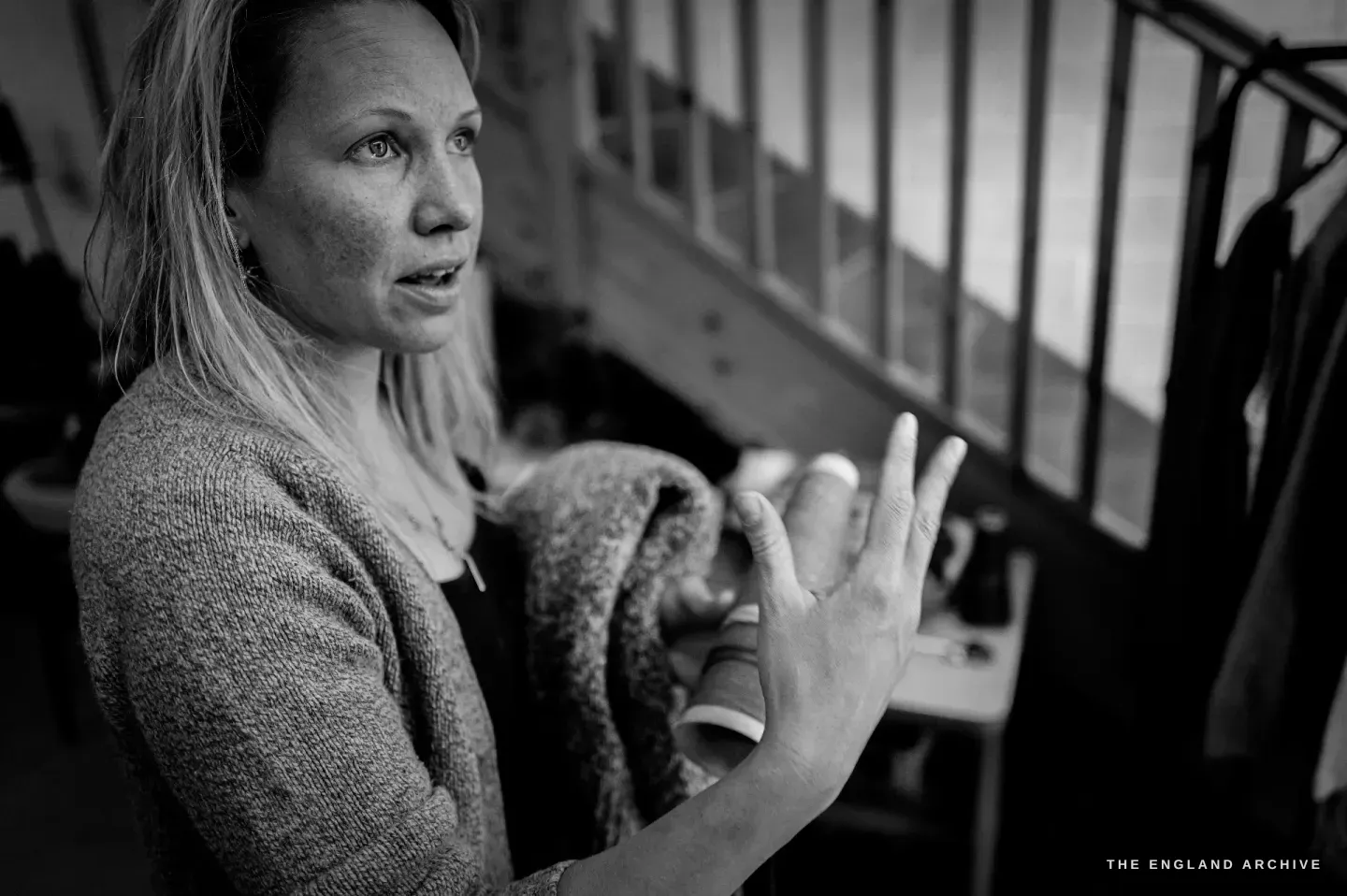
Genevieve Sweeney
Knitwear Designer & Maker
Grandeys Place, Much Hadham, Hertfordshire
Knitwear Designer & Maker
Grandeys Place, Much Hadham, Hertfordshire
A knitwear designer who went looking for Britain’s vanishing mills - and decided to keep them going.
Genevieve Sweeney makes knitwear the British way, on purpose. She learned the trade properly - a degree in fashion knitwear at Nottingham Trent - then spent years developing knit for other people’s labels across New York, Switzerland and London, names like Rag & Bone, Hugo Boss and Burberry. She could have stayed in that world. Instead she came home with a worry she could not shake.
The worry was that British knitwear was quietly disappearing - the spinners, the mills, the people who actually know how to turn a cone of yarn into a jumper - and that if no one did anything, the skills would simply be gone. So in 2015 she started her own label to prove the work could still be done here, and done beautifully. It took the better part of two years: tracking down the few factories and mills willing to make her first collection, buying and restoring old knitting machines, learning the supply chain from the fibre up.
She has been knitting since she was a child, and it shows in the way she talks: fast, warm, delighted, never far from a cone of yarn she wants to put in your hands. Within a year of launching, Fortnum & Mason were stocking her; Drapers named her one of thirty designers under thirty to watch. But the thing she keeps coming back to is not the shop windows. It is the makers, the materials, and keeping the whole thing on this island.
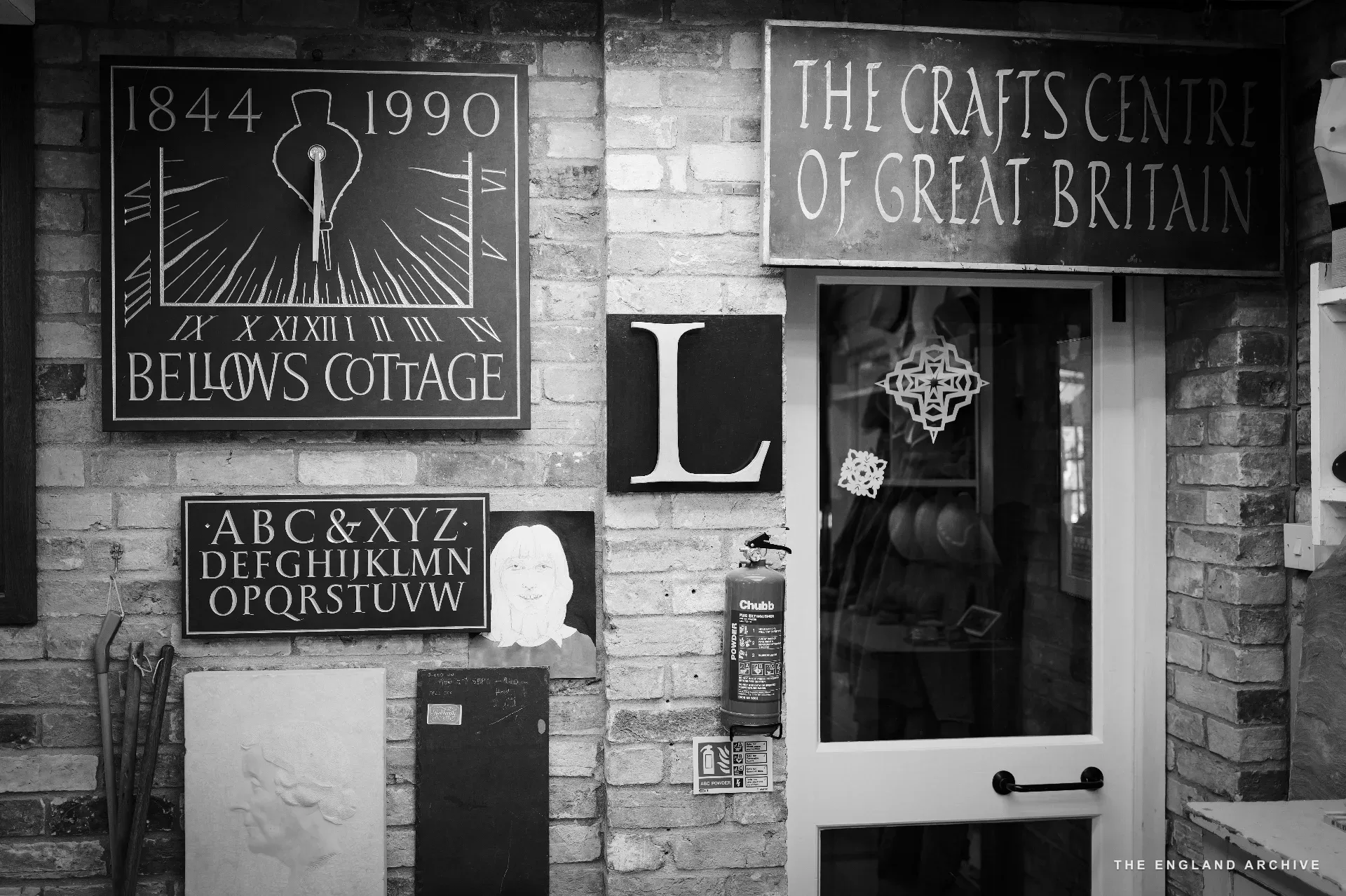
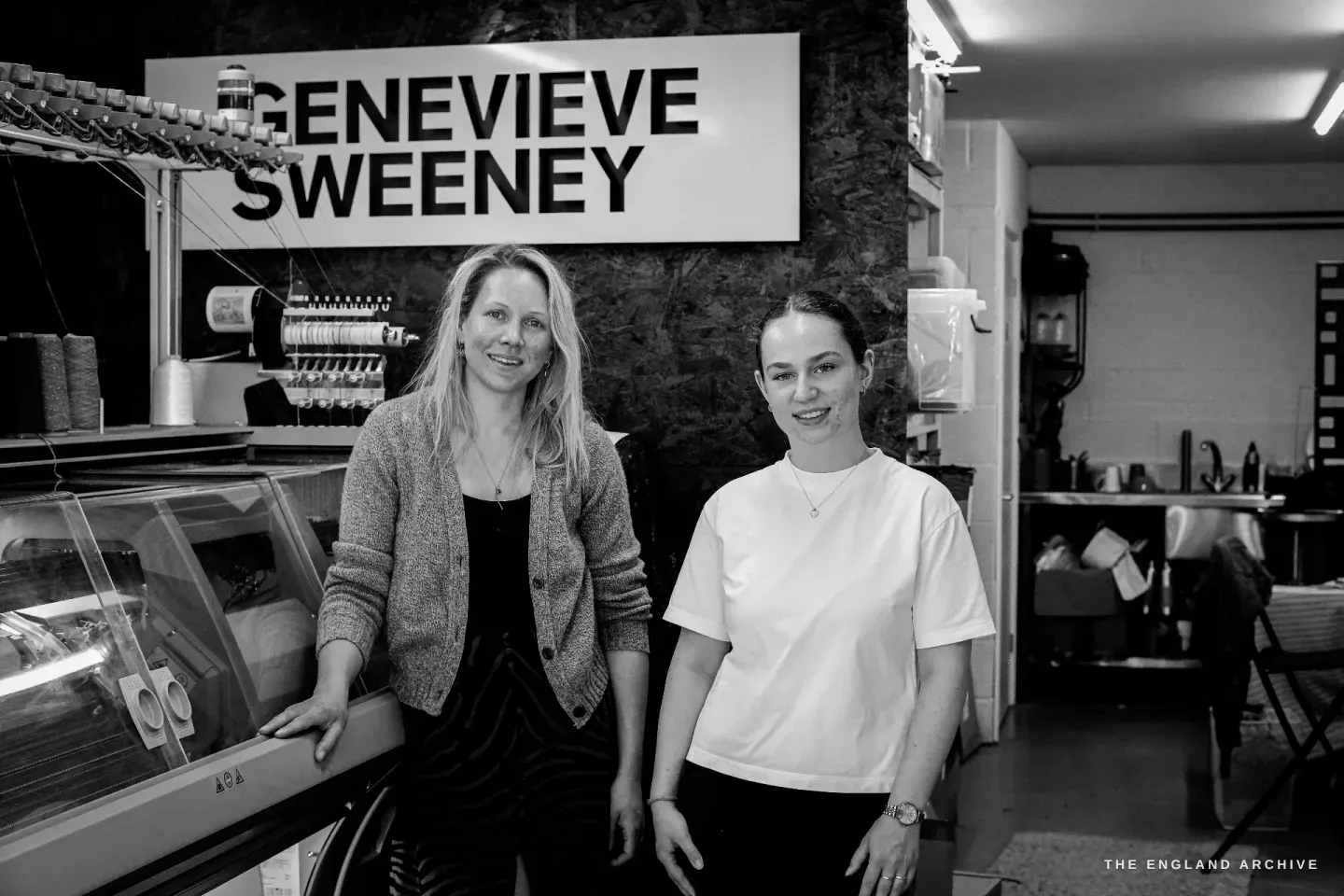
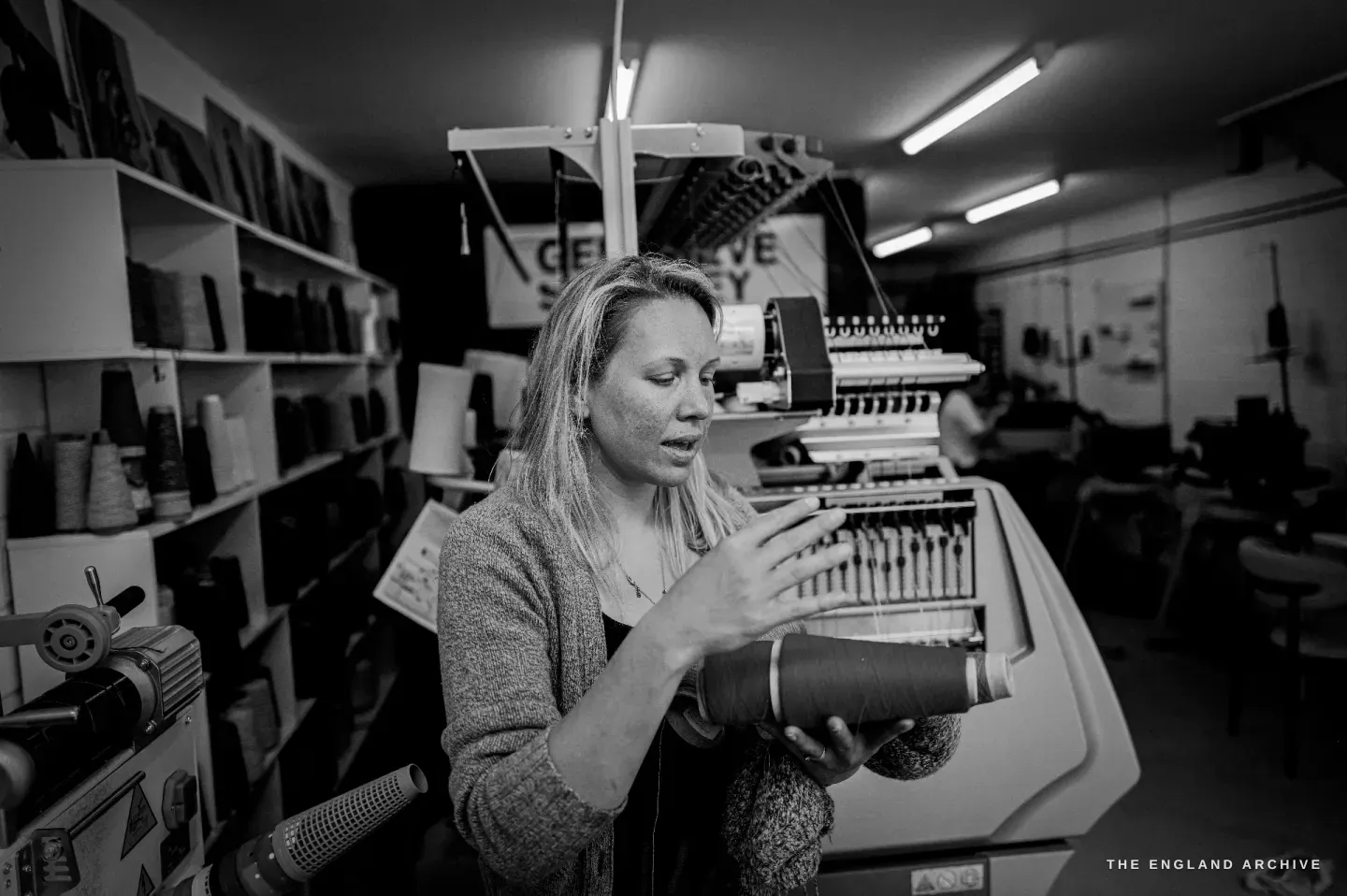
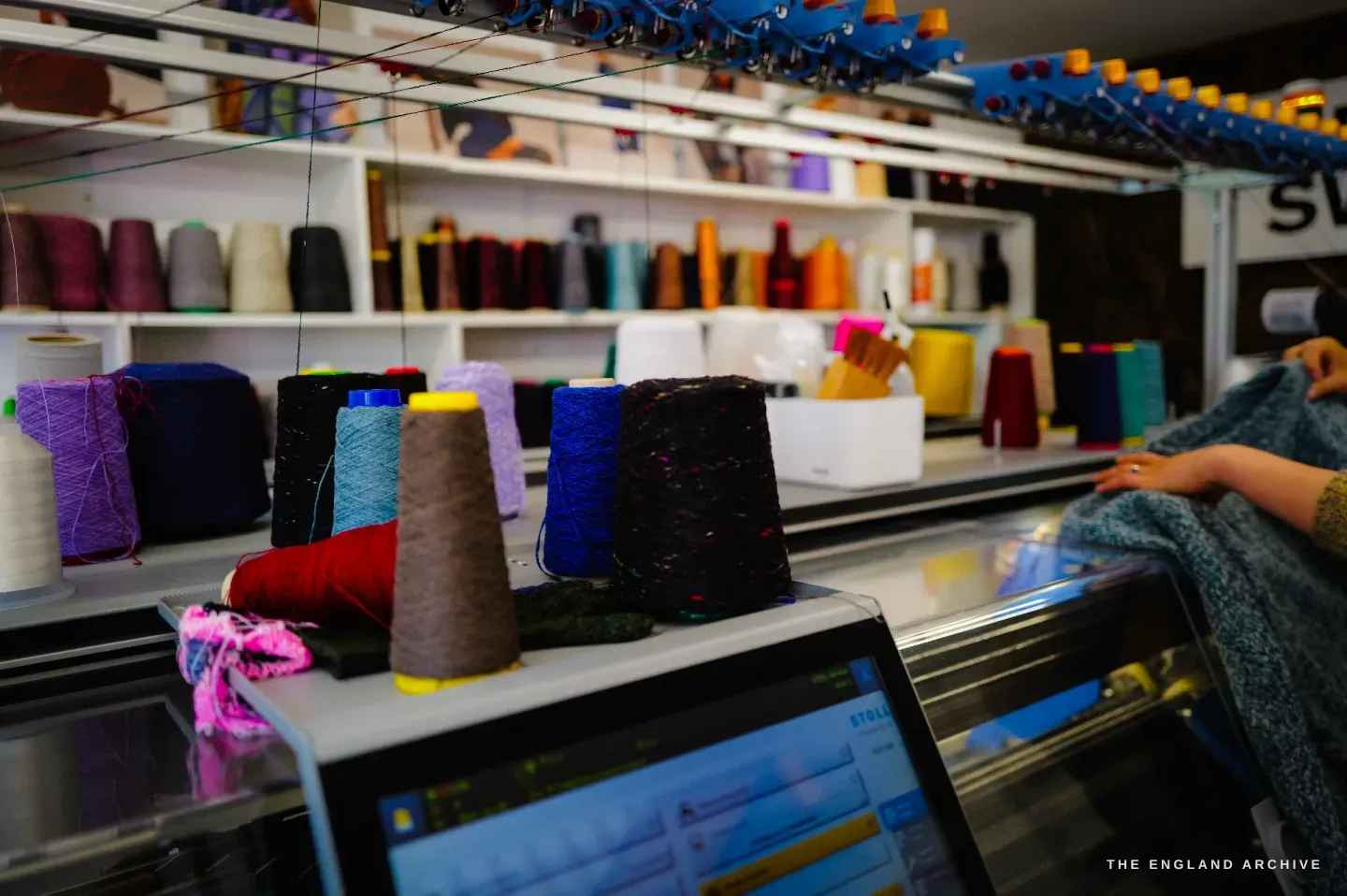
Her studio is at Grandeys Place, a heritage and craft centre in the Hertfordshire countryside near Much Hadham. Push through the door and it reads instantly as a working room: shelves of storage boxes, a wall of knitted swatches on pegs, racks of yarn cones in every colour, and her own name - GENEVIEVE SWEENEY - on a board above the machines. A geometric knitted sample is pinned to the wall like a flag.
The centre of the room is a large computerised flat-knitting machine, the kind that usually lives in a factory. Buying it was a deliberate bet. For years she sent her designs out to be made and waited weeks to see them; now she can knit a sample, look at it, change a stitch or a colour, and knit it again the same afternoon. The feedback is immediate, and you can hear how much that matters to her. Around a third of her garments are now made on site; the rest are still made by the UK factories and mills she spent years finding - knitters in Scotland, Oxfordshire and London, socks at a small family-run mill in Derbyshire, buttons turned in the Cotswolds.
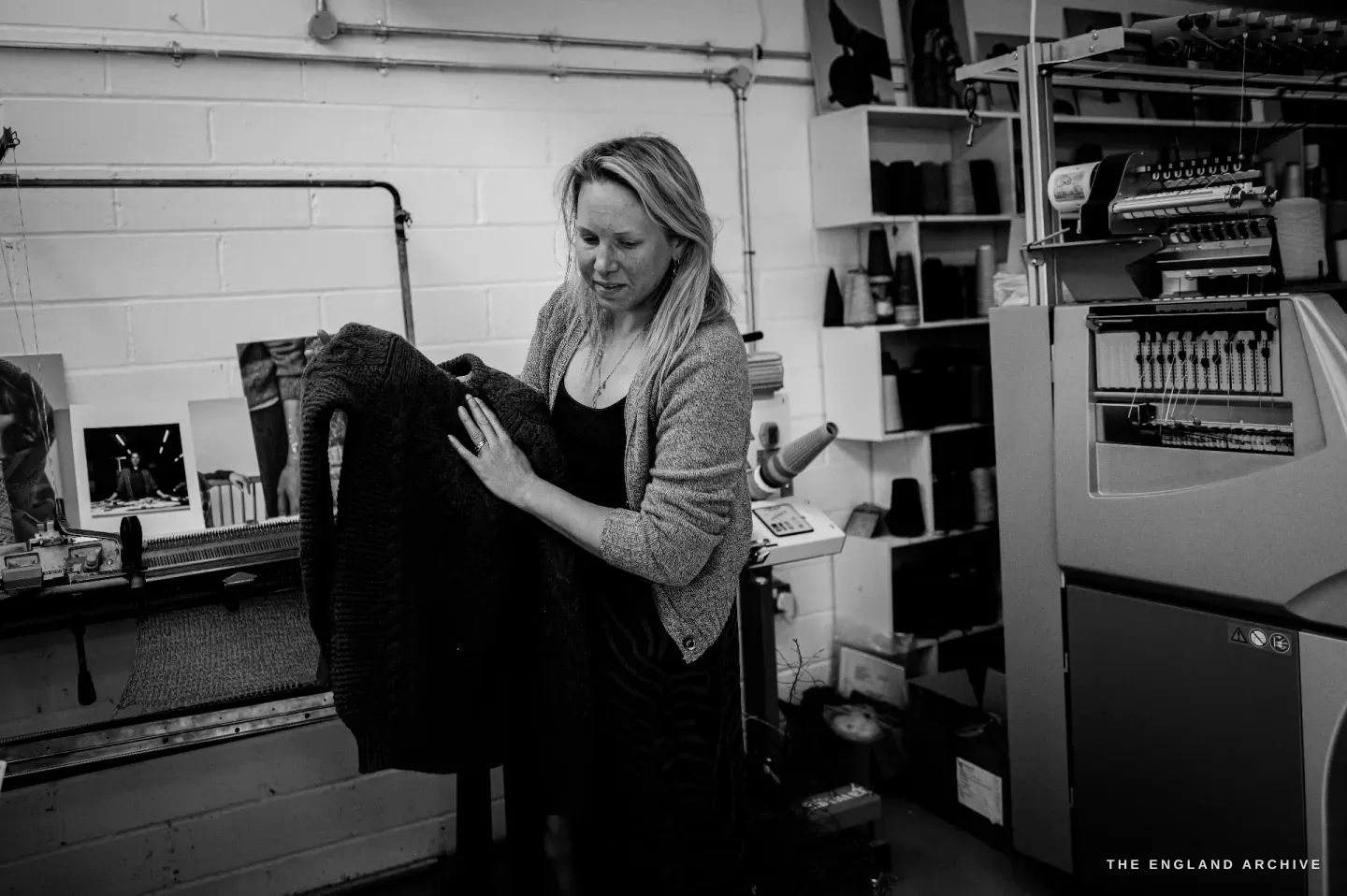
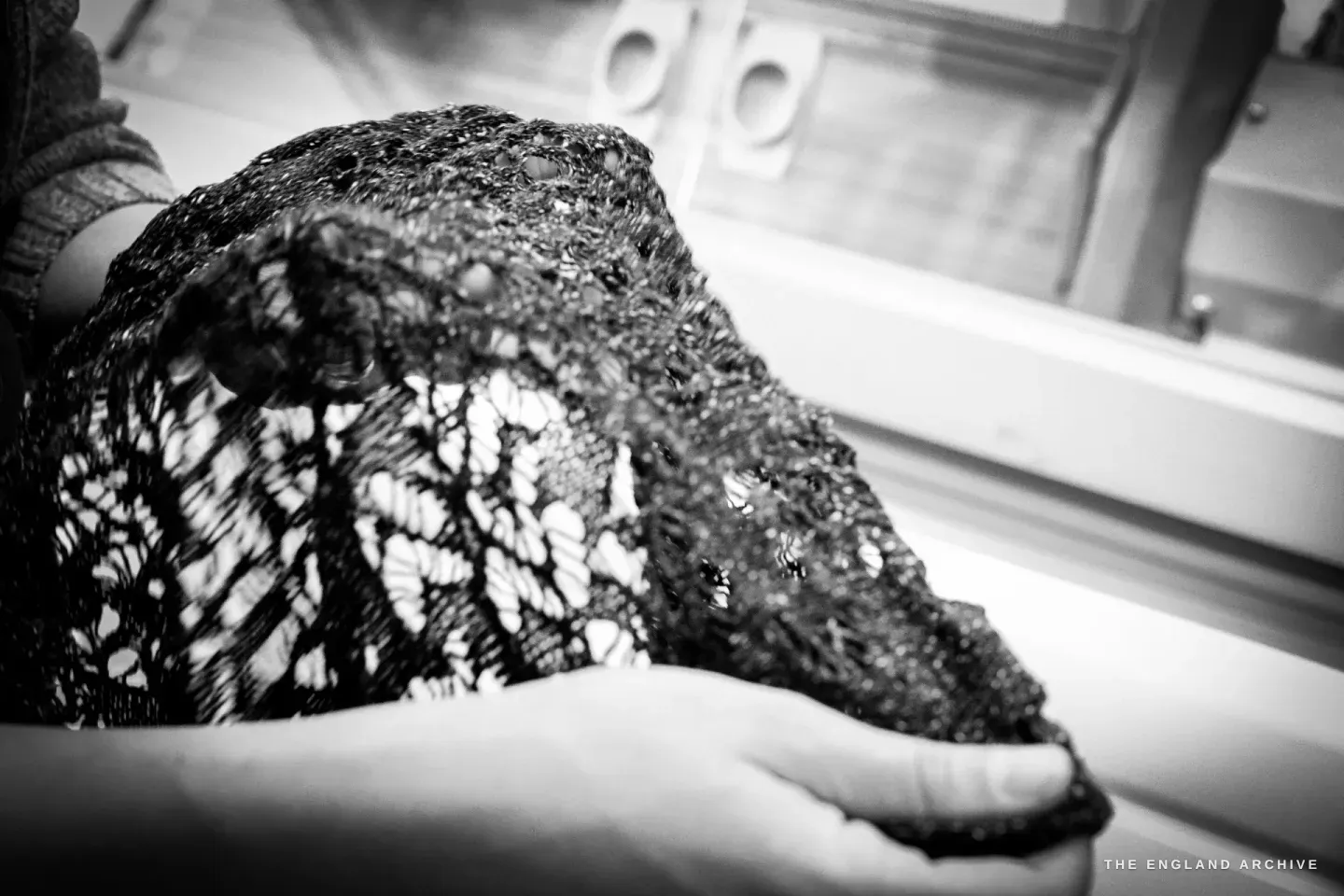
She handles the finished pieces like they matter, because they do - holding a jumper up to the light, turning it, reading the face of the knit for the one dropped stitch a machine can leave. The structure is the pattern: hold an openwork panel to the light and the design is the holes themselves, the order in which the loops were made and missed.
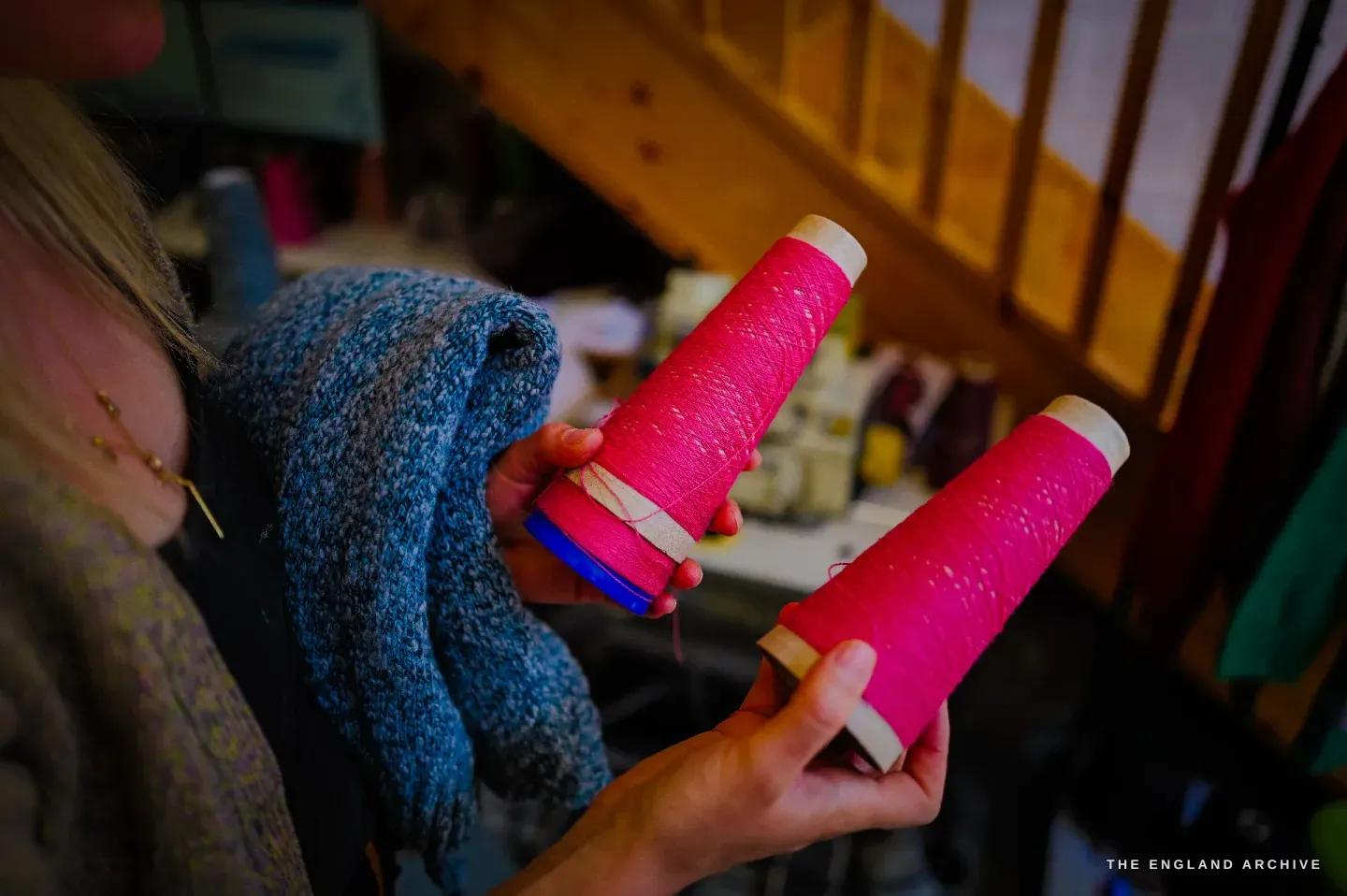
Ask Genevieve about colour and you will not get a short answer. Her knitwear is built on it - deep reds, lilac, forest green, a hot pink she could not wait to show me. A lot of it is naturally dyed merino: the colour comes not from chemicals but from plants - madder, logwood and the like - made up for her by a family of dyers in Italy, a father and son, she told me, who mix their colours from natural ingredients. The yarn arrives carrying its colour all the way to the final stitch.
The rest is British-spun wool, mostly from Yorkshire and Scottish mills - lambswool with the shades blended so they shift in the light. She picks colours for feeling as much as fashion, the tones of an English garden or the Lake District hills. In a trade that mostly runs on black, grey and navy, her cones look like a paintbox, and the finished knitwear is unmistakable on a rail.
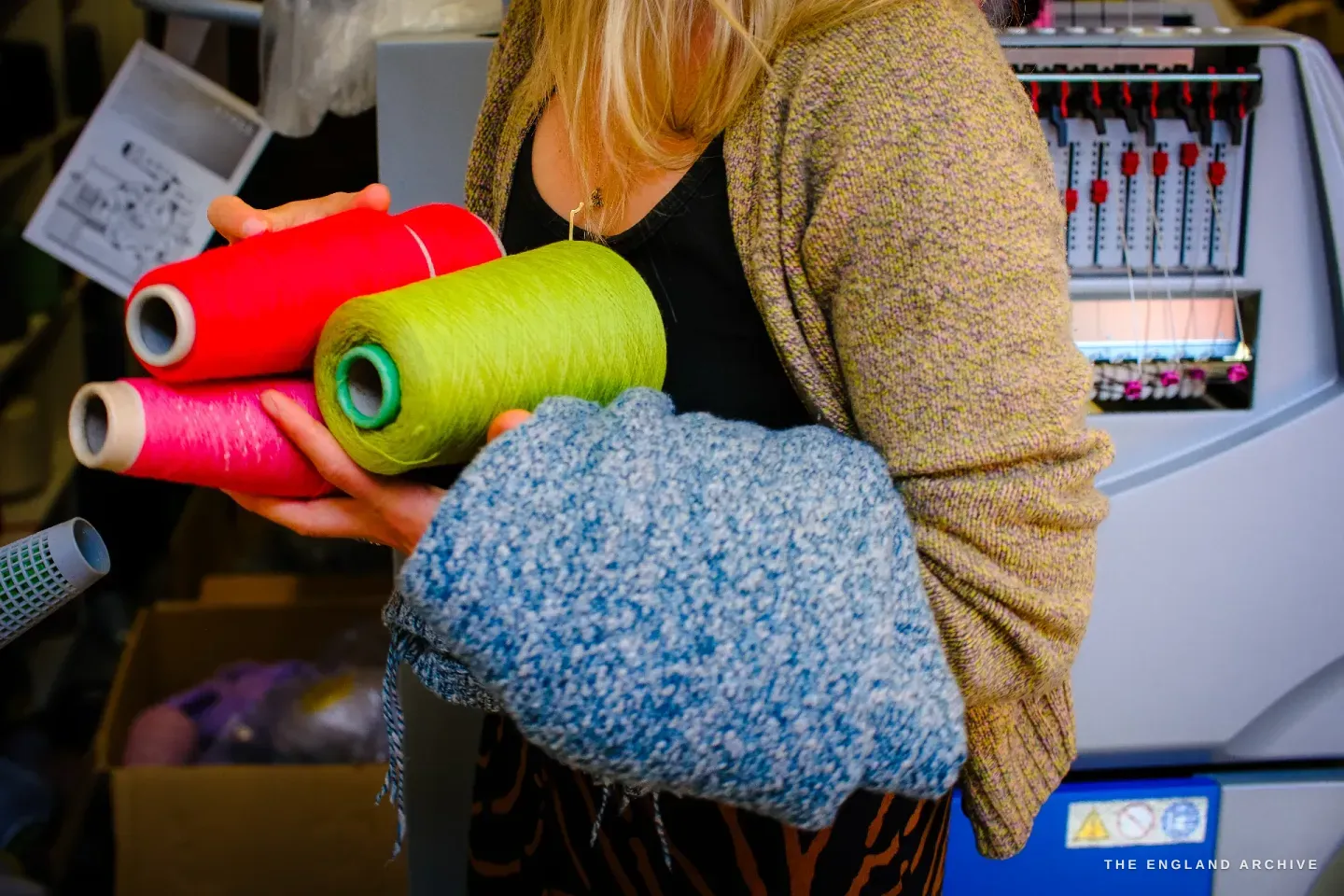
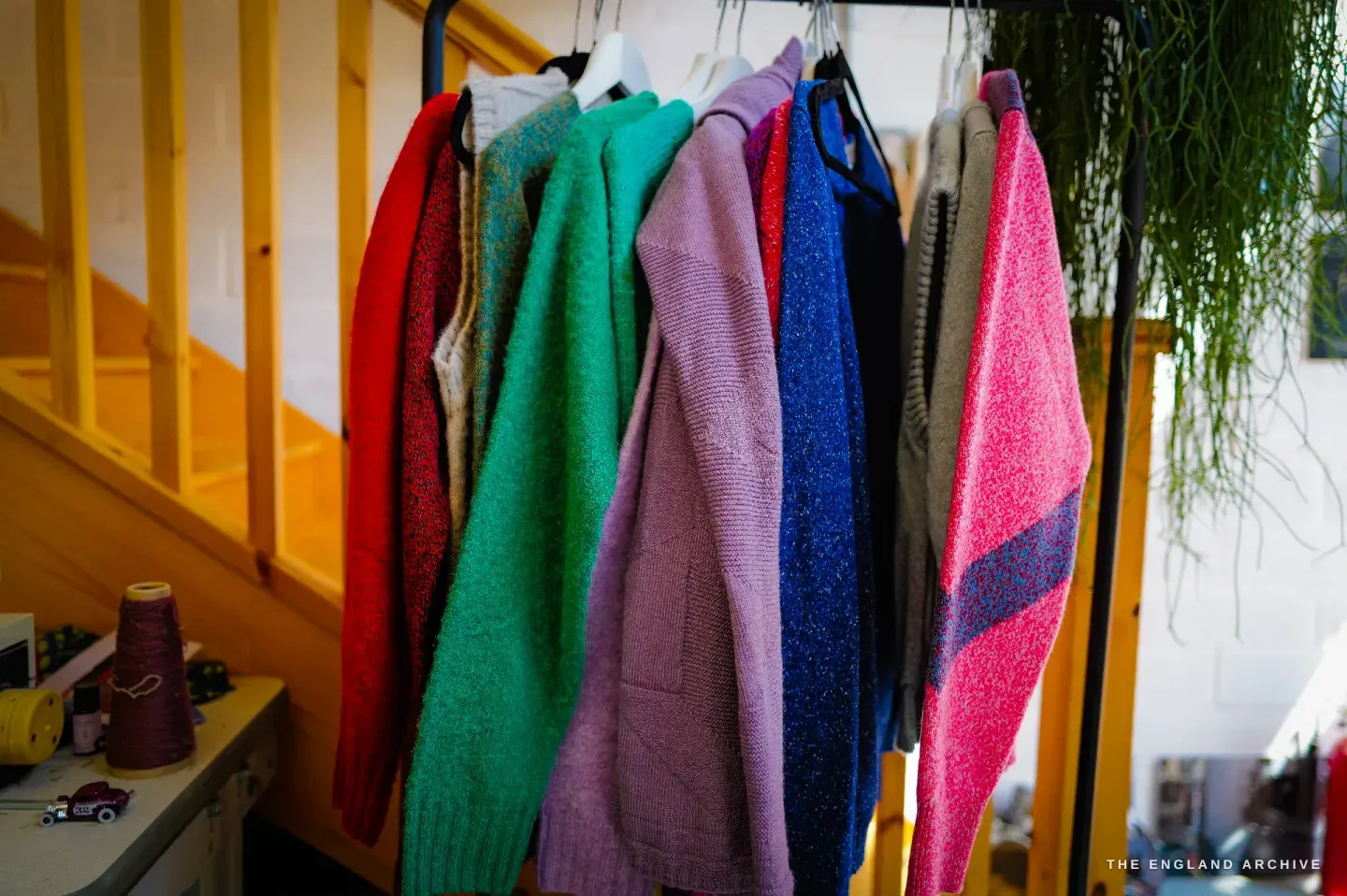
What comes off all this is a whole wardrobe of knitwear: jumpers and cardigans, scarves from fine triangles to big blanket wraps, and the socks she is quietly known for - sold by the pair and by subscription, knitted in argyle, stripe and marl. Everything is designed to be worn for years rather than a season, which is the part she means when she talks about doing it properly.
Laid out on the table at the front of the studio, or hung on a rail against the yellow stair, the range makes her case better than any sales line could. Good wool, real colour, made by people she can name, in places she can drive to.
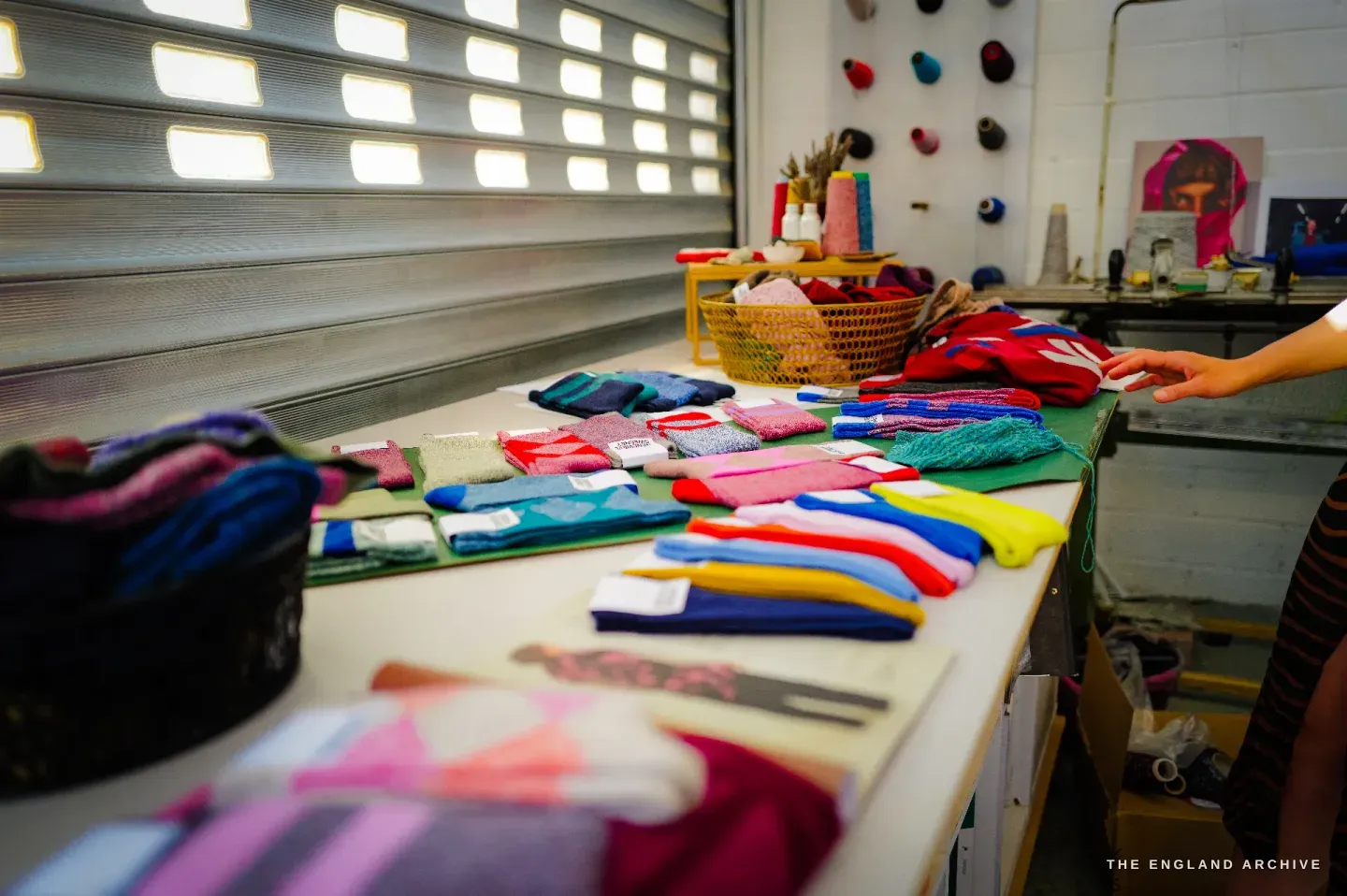
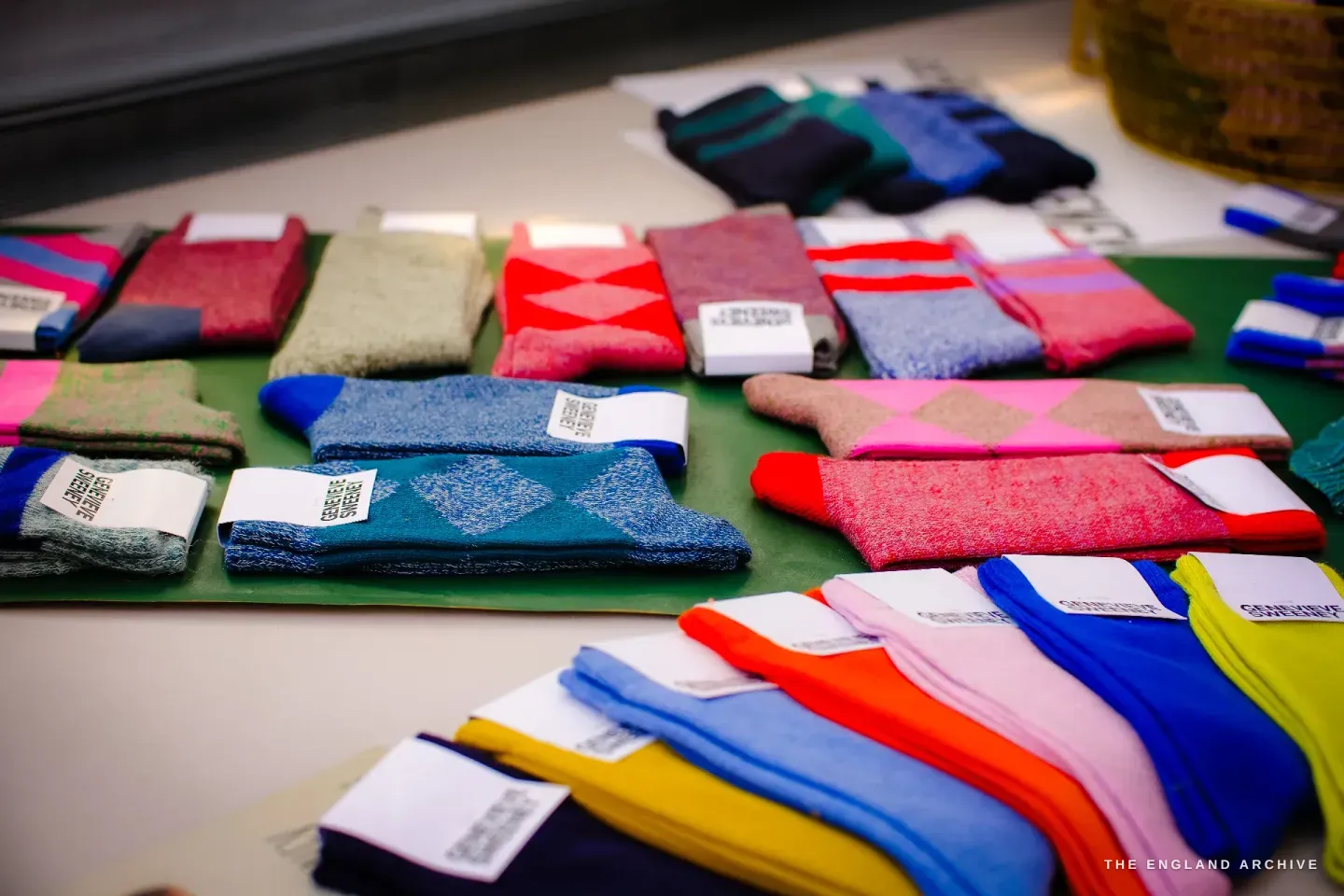
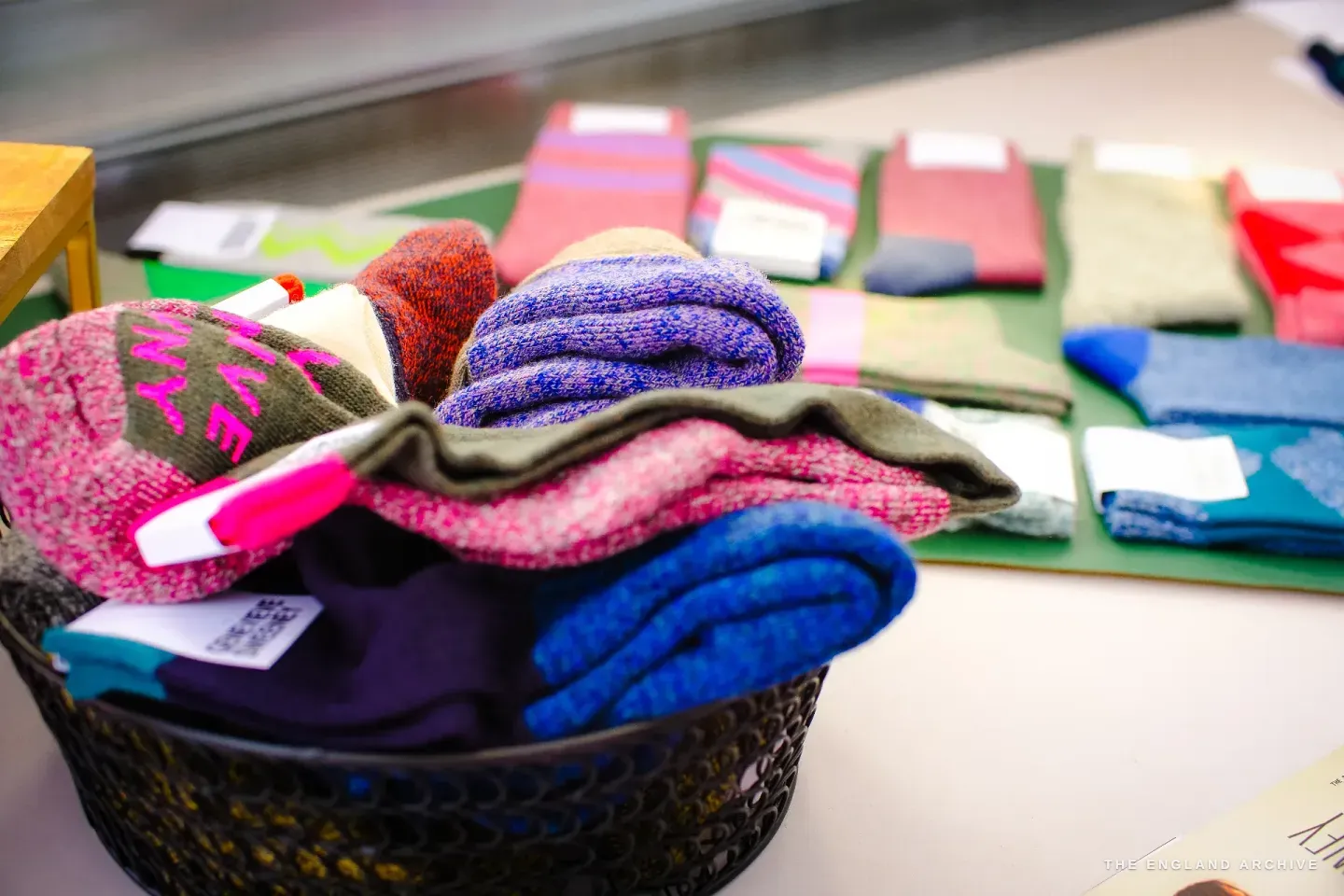
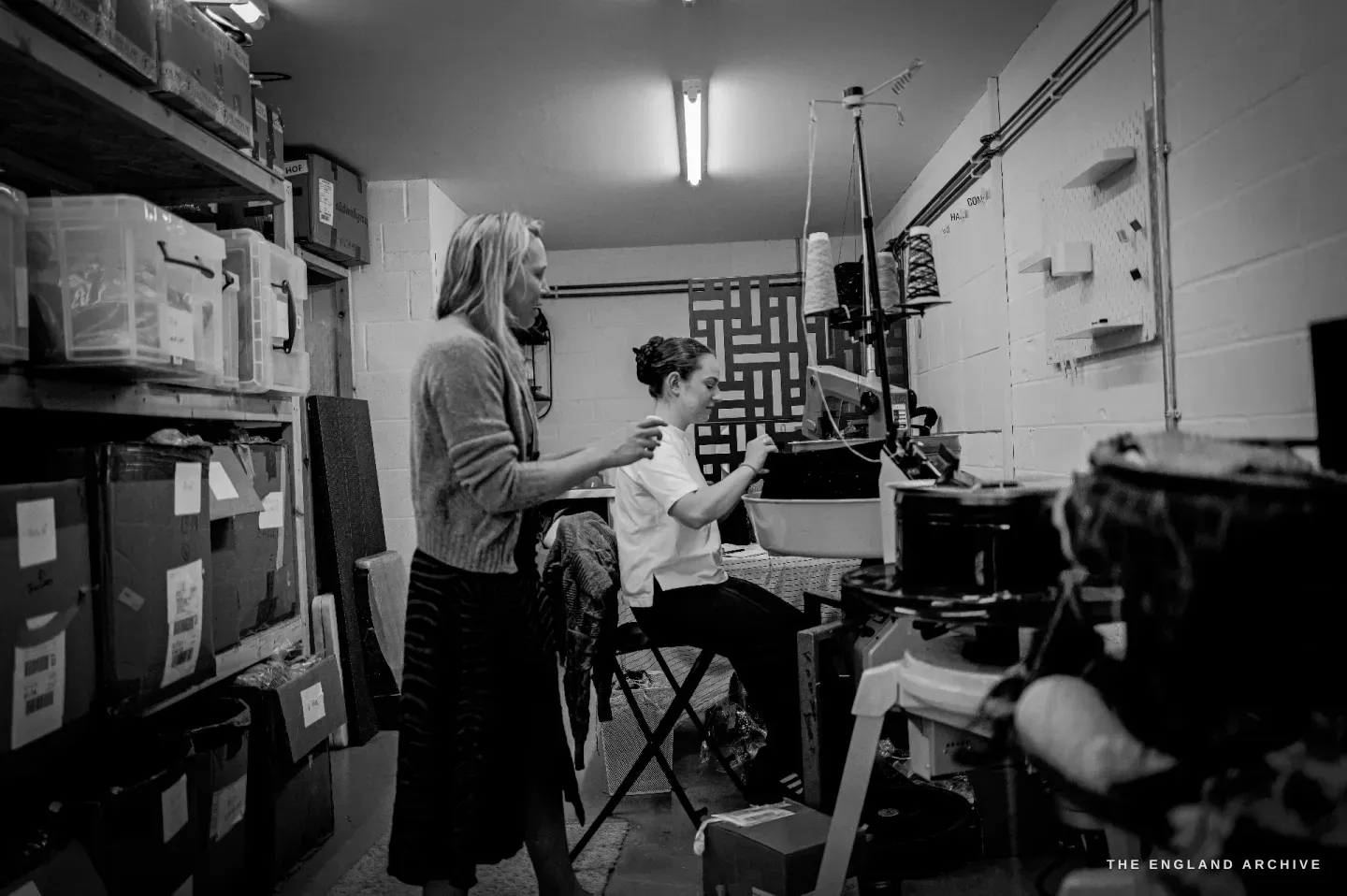
The best part of the morning was Poppy. Poppy is Genevieve’s first apprentice - young, dedicated, and properly good. She came through a four-month course and joined the studio, and Genevieve says she picked the craft up remarkably fast. You can see why she is pleased. (Poppy has a profile of her own in the archive.)
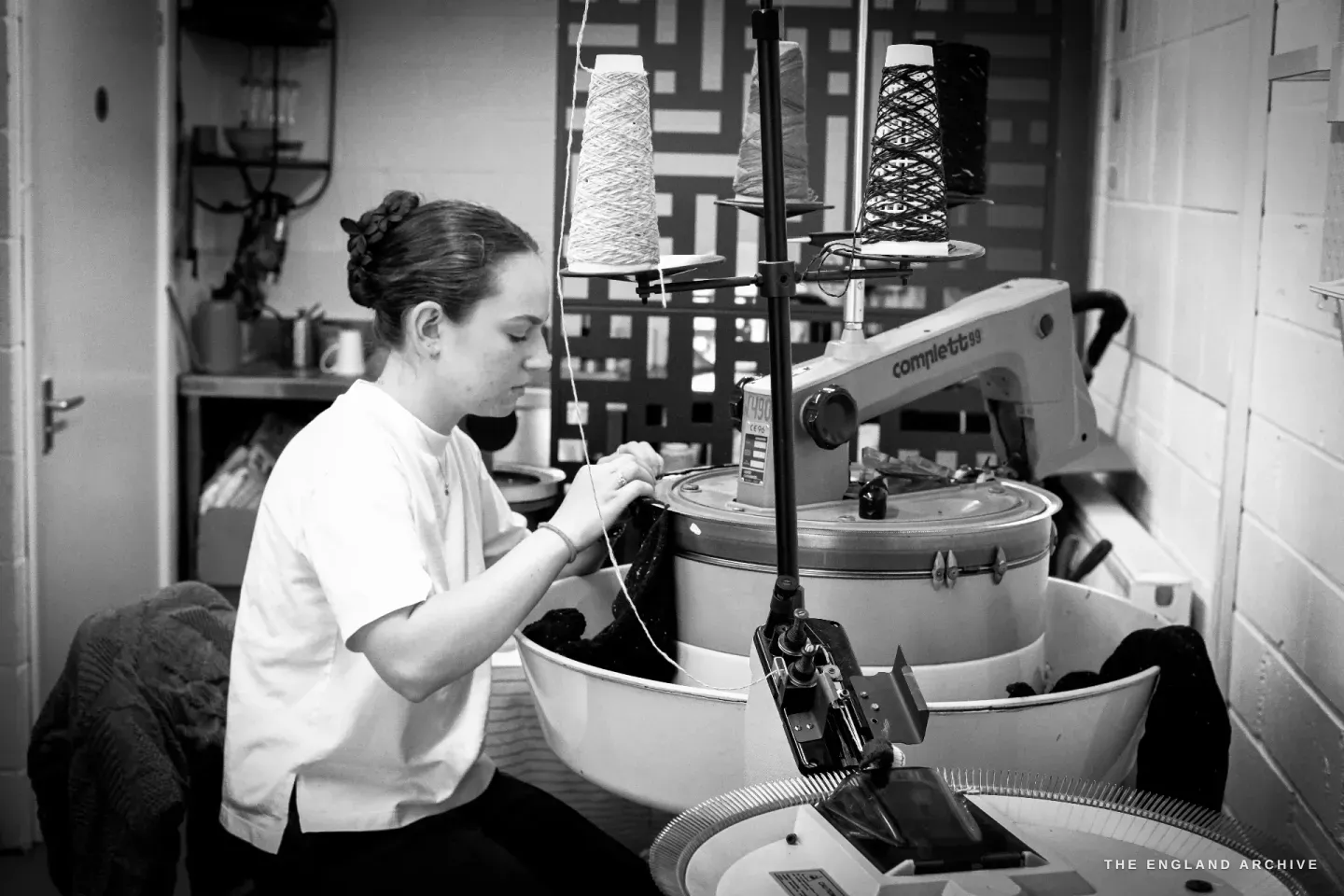
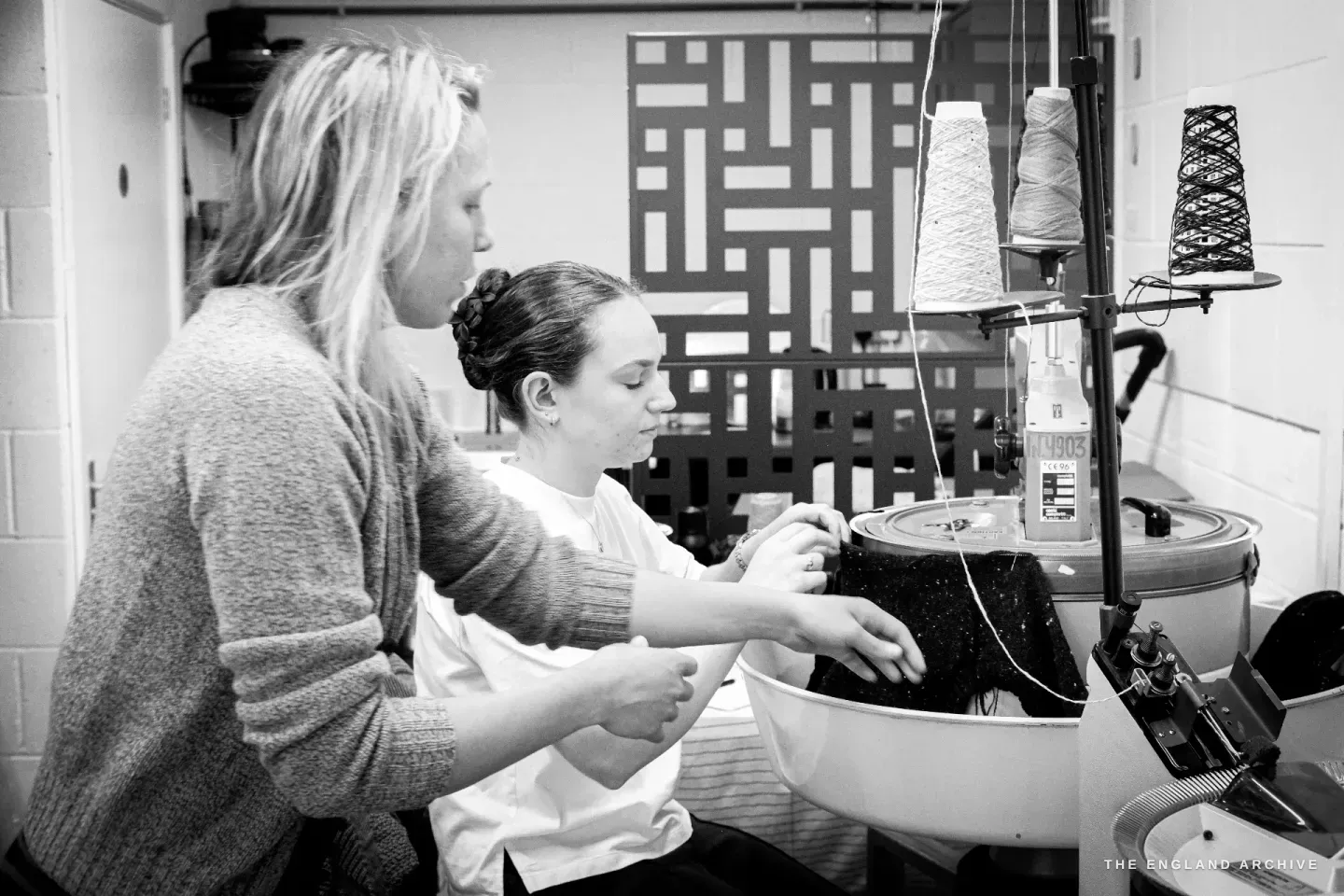
While I worked my way round the room, Poppy stayed at her machine, focused on the knitting, completely in it. Genevieve is teaching her everything - the machines, the linking that joins one knitted panel to the next, the whole business of turning yarn into a finished garment. This is the part that matters most to the archive: the skill passing to the next pair of hands, in real time, in an English workshop, with someone beside her who has done it ten thousand times.
This is the archive’s record of Genevieve Sweeney, made in her studio at Grandeys Place in May 2026: the designer who trained for the industry and then set out to save a piece of it, the colours and the naturally dyed yarn, the machine she bought to bring the making home, and the apprentice learning at her side. British knitwear is exactly the kind of skill that thins out quietly, one closed mill at a time. She is one of the people refusing to let it.