Makers Apprentice
Poppy Ruane
Knitwear Apprentice
Grandeys Place, Much Hadham, Hertfordshire
Knitwear Apprentice
Grandeys Place, Much Hadham, Hertfordshire
The next pair of hands - an apprentice learning British knitwear from the cone up.
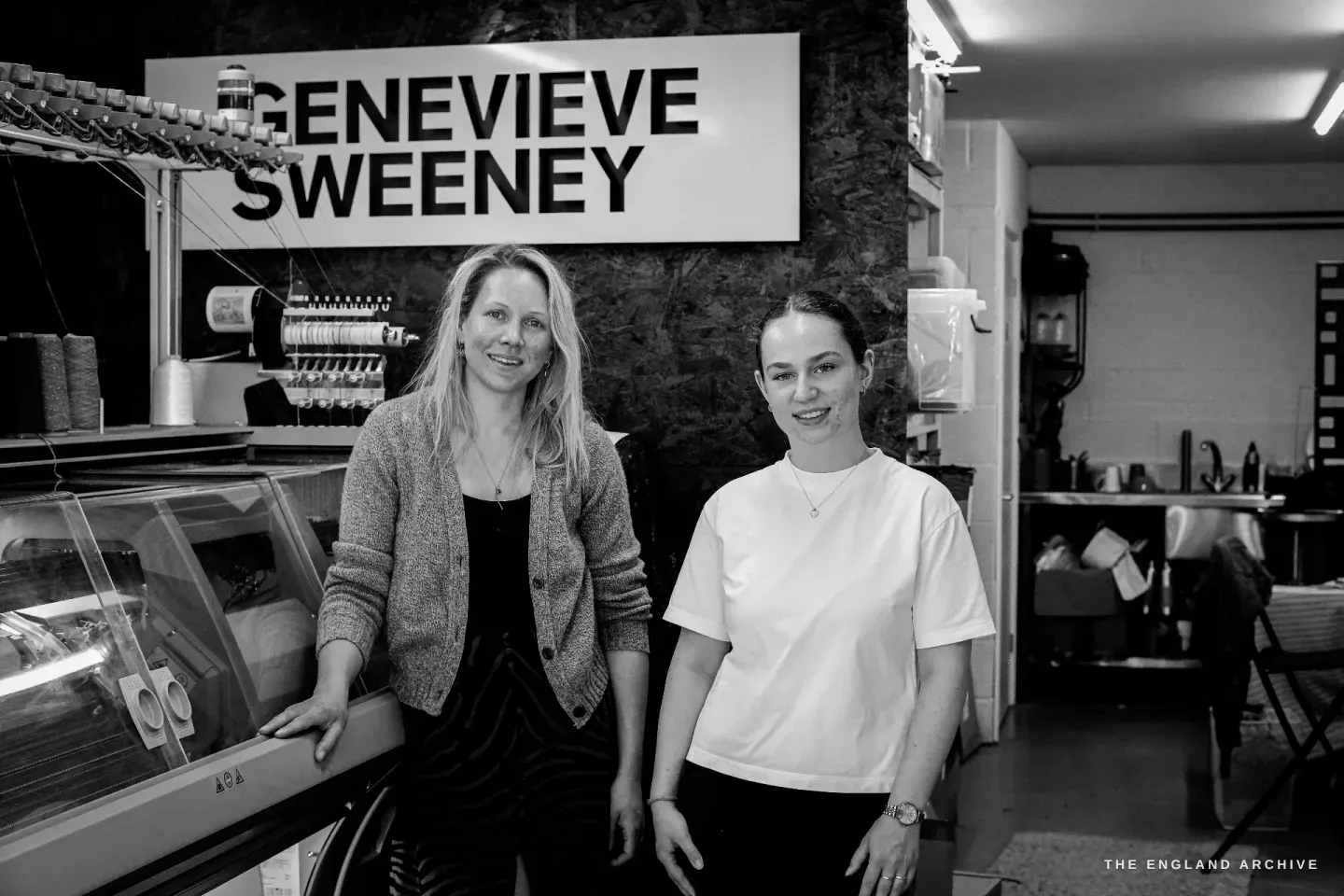
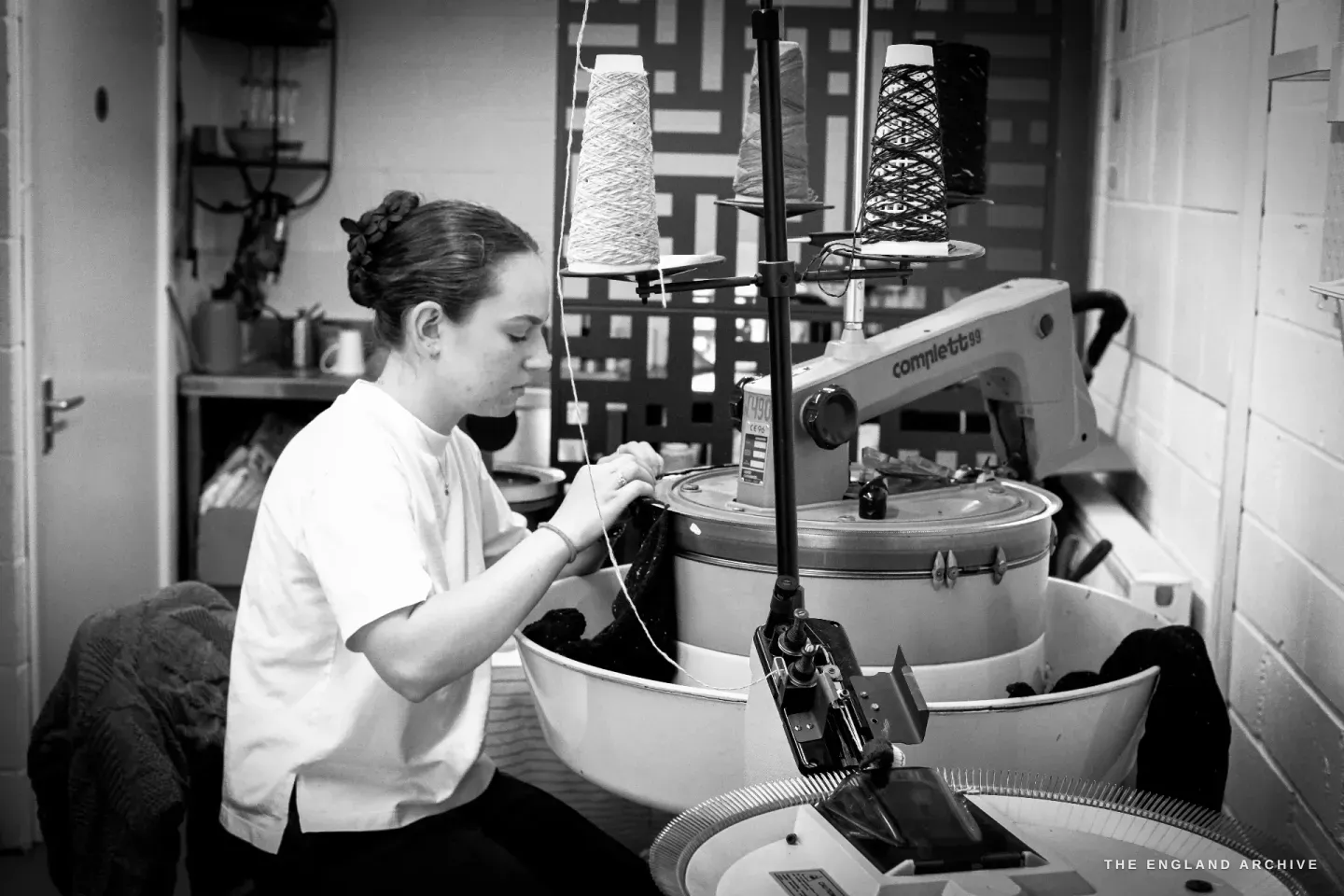
Of everyone in the room at Grandeys Place that morning, Poppy Ruane was the one I kept coming back to. She is Genevieve Sweeney’s first apprentice, and while the talk went on around her - and there was plenty of it - she stayed head down at a knitting machine, completely absorbed, the quiet engine of the place.
Her route to that bench says something about the moment we are in, and I warmed to her for it. A film graduate, she went looking for work made with the hands rather than a screen - something, as she put it to the local paper, that a machine could not simply take over. She had knitted with her grandmother as a child; when she heard, through her dad and then through Instagram, that a British knitwear label near home in Bishop’s Stortford was taking on an apprentice, she applied.
She came through a four-month course and joined the studio, and Genevieve says she picked the craft up remarkably fast - the kind of apprentice a maker hopes for and rarely has to advertise twice for. Watching her hands move over the machine, I had no trouble believing it.
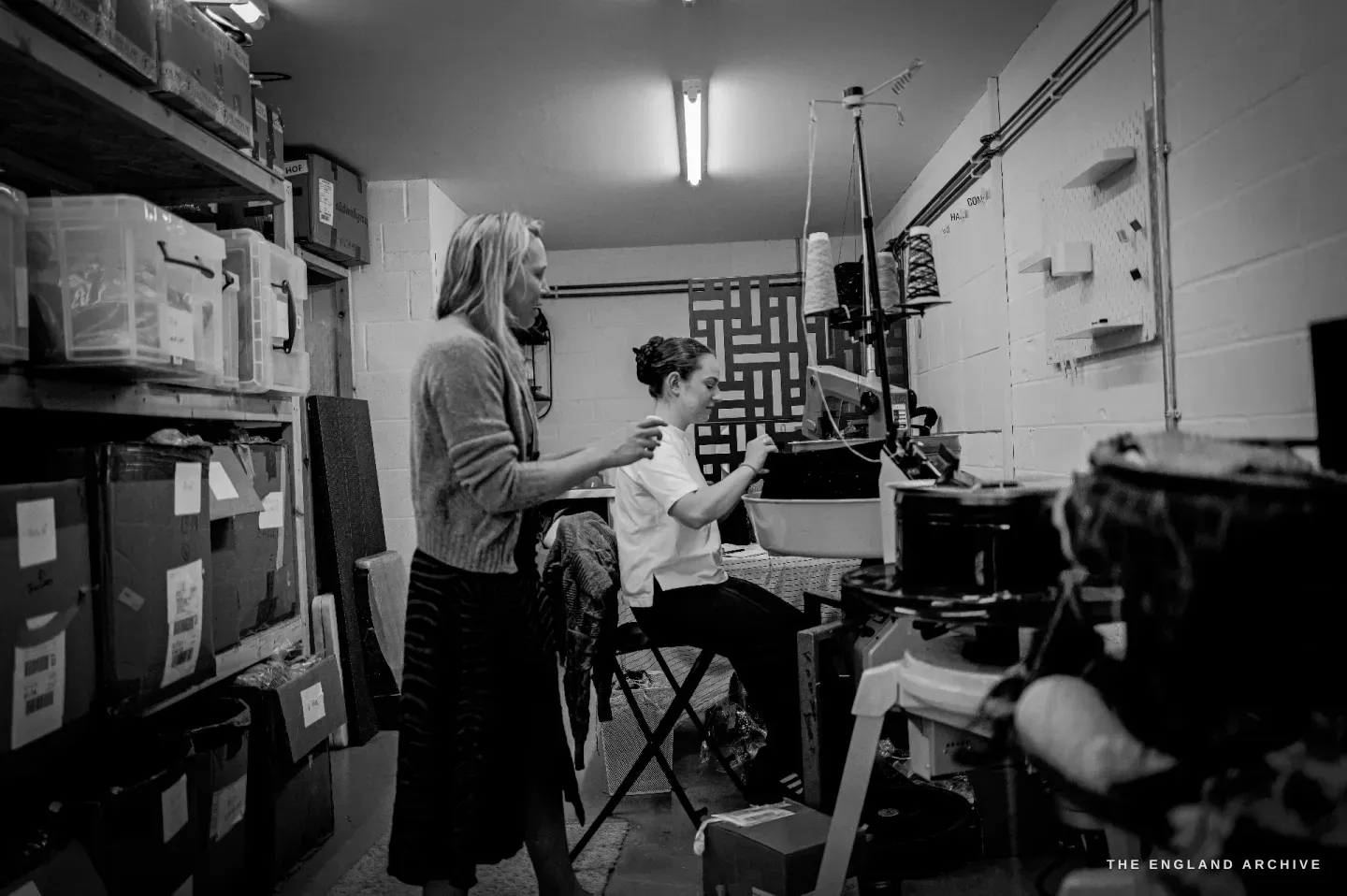
What she is learning, I was glad to see, is the whole trade and not one corner of it. Genevieve teaches in-house: the flat and circular knitting machines, the linking that joins one knitted panel to the next, and the judgement of tension and finish that decides whether a garment is any good, with accredited courses in London on top of the bench work. It is the old shape of an apprenticeship - learn every part by doing it, beside someone who has done it ten thousand times - fitted to a modern studio.
And it matters more than almost anything else I saw that month that this is happening at all. The skills Poppy is taking on are exactly the ones that vanish when a mill closes and nobody is trained to replace the people who retire. Genevieve built her in-house studio partly to make the room for it - production and training back under one roof - and standing in it, you realise that an apprentice at a machine is not a small domestic scene. It is the single mechanism by which a craft does not die.
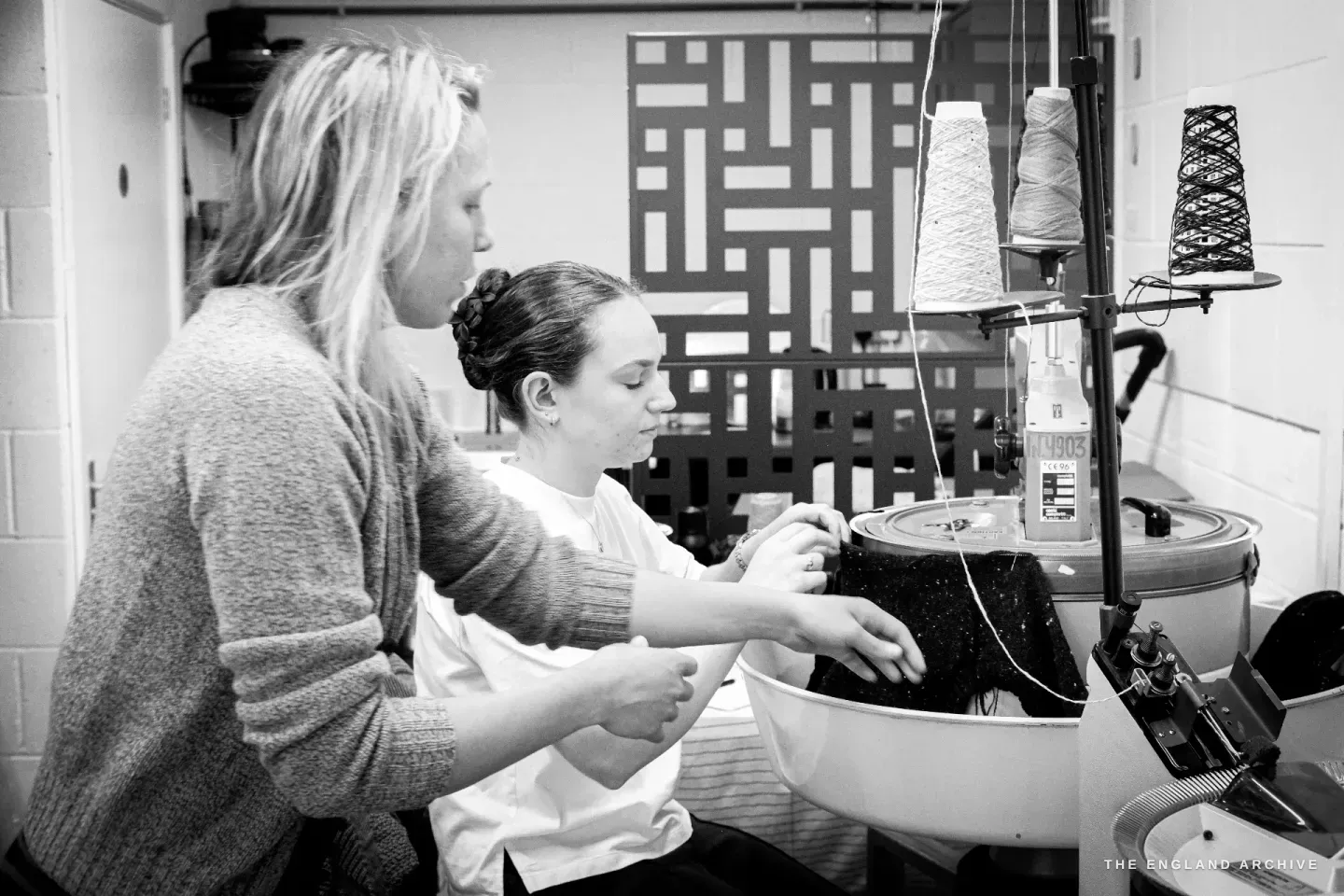
This is the archive’s first record of Poppy Ruane, made at Grandeys Place in May 2026, at the very start of her time in the craft. I hope we get to follow her, because recording the beginning gives us something to measure the rest against. The skill is moving to the next pair of hands - and that, in the end, is the whole reason I keep the record at all.