A Morning at Grandeys Place
Hertfordshire · Much Hadham · Five makers under one roof
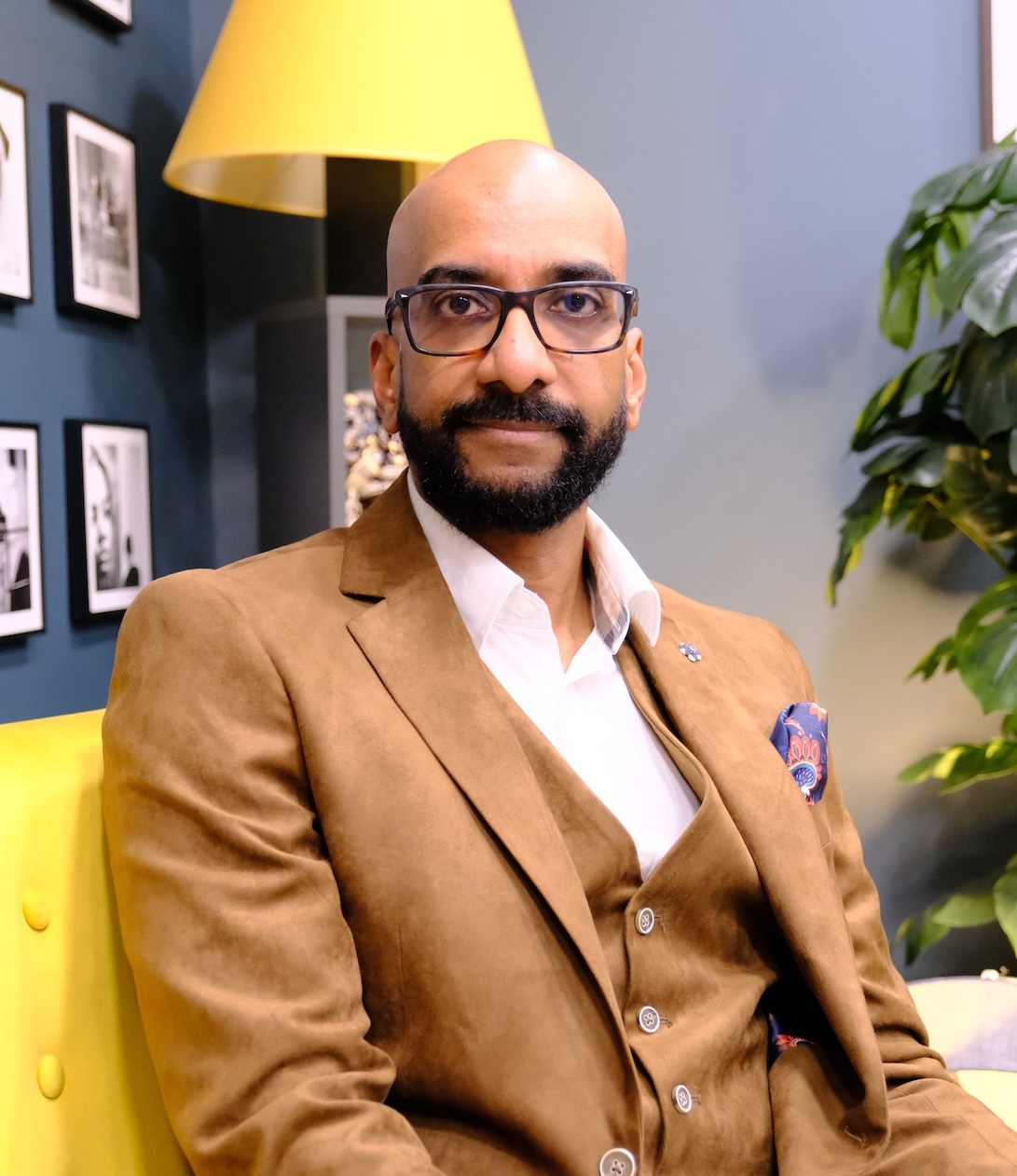
I drove out to Grandeys Place, a heritage and craft centre in the Hertfordshire countryside near Much Hadham, to photograph one maker and came away having met five. Seth Kennedy had set the visit up; he met me at the door, and over the morning he walked me round the building and introduced me to the people working in it. It turned out to be one of the best mornings the archive has had - a whole building of makers, each at a different craft, several of them quietly depending on one another.
The room that stopped
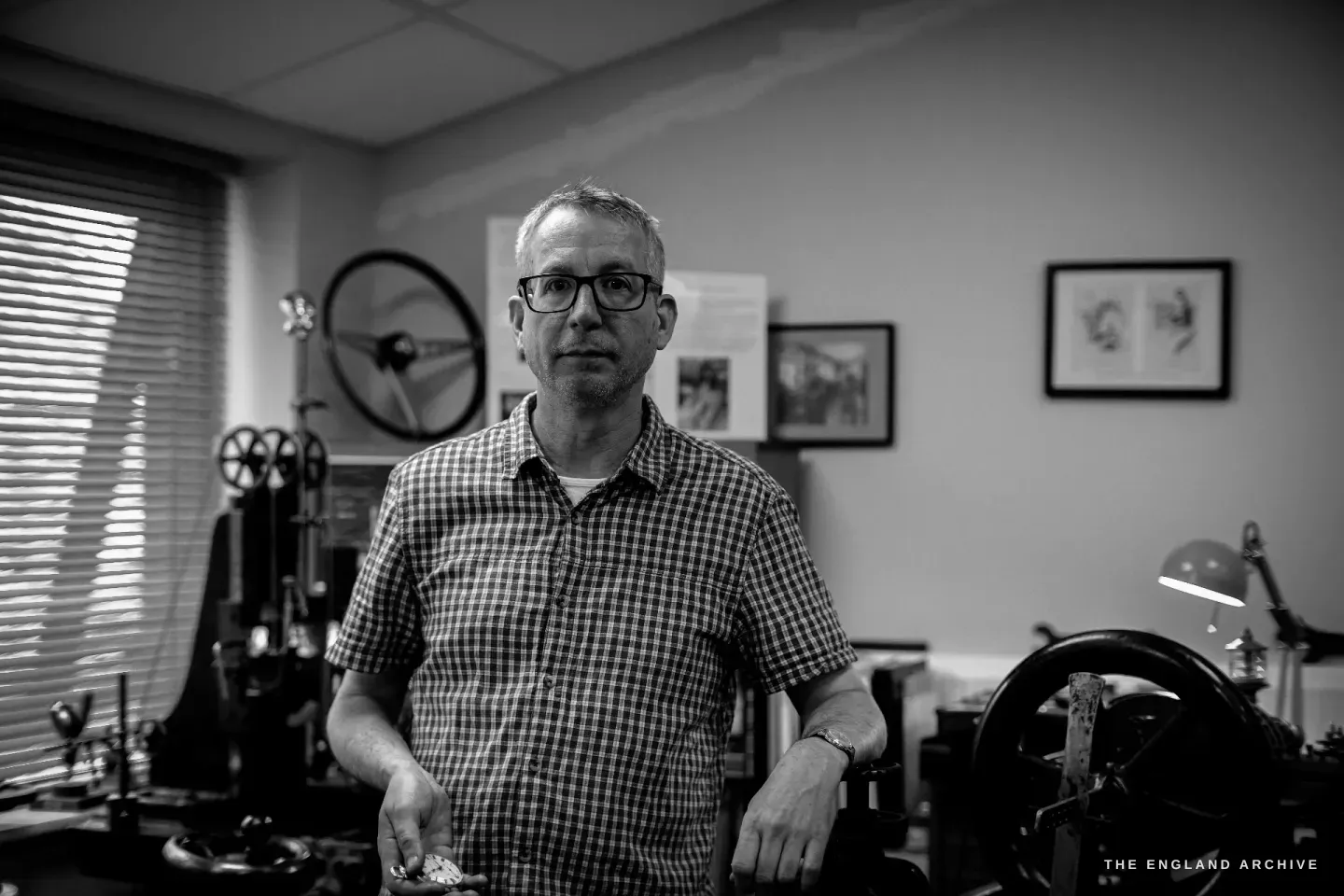
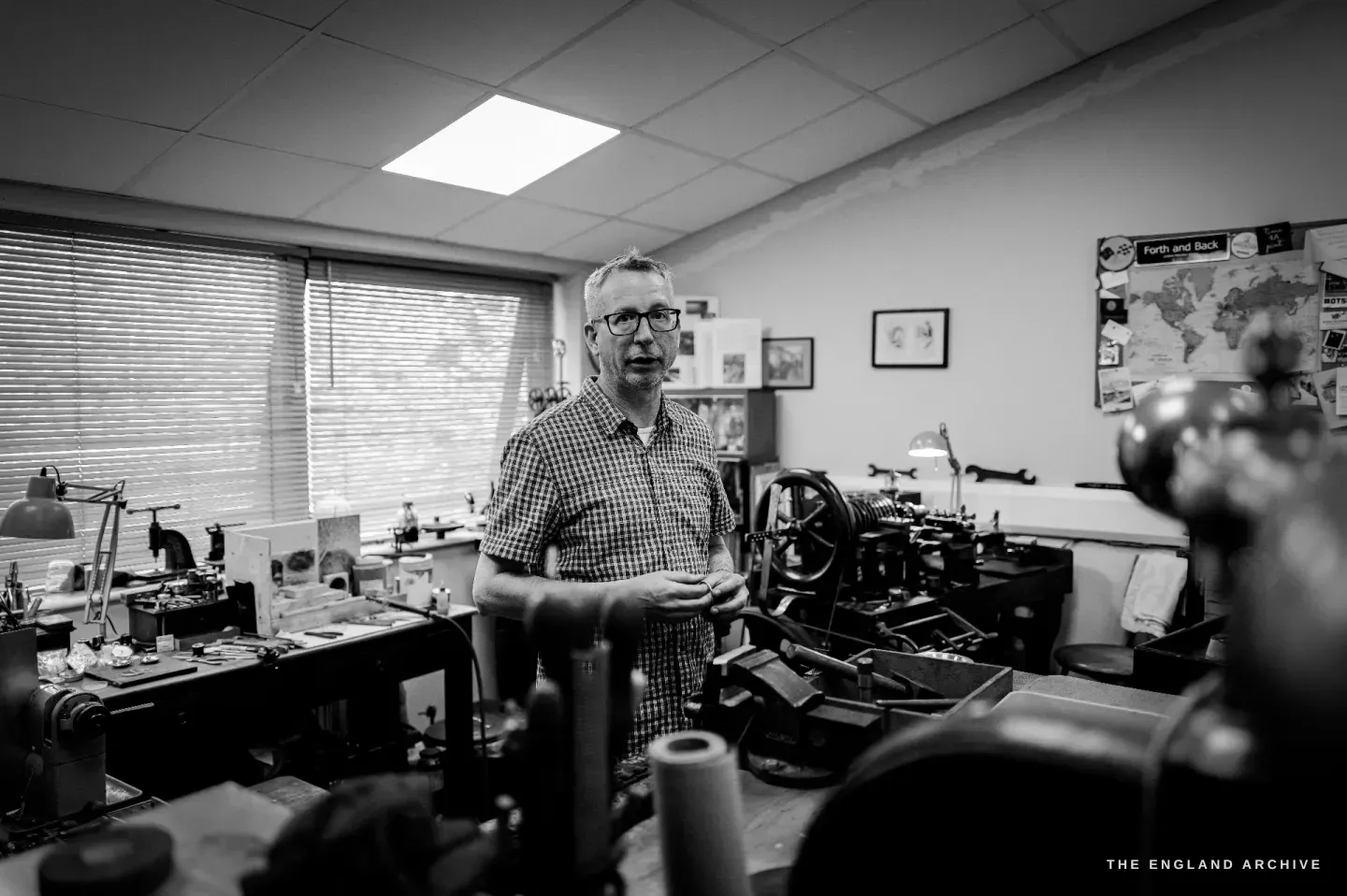
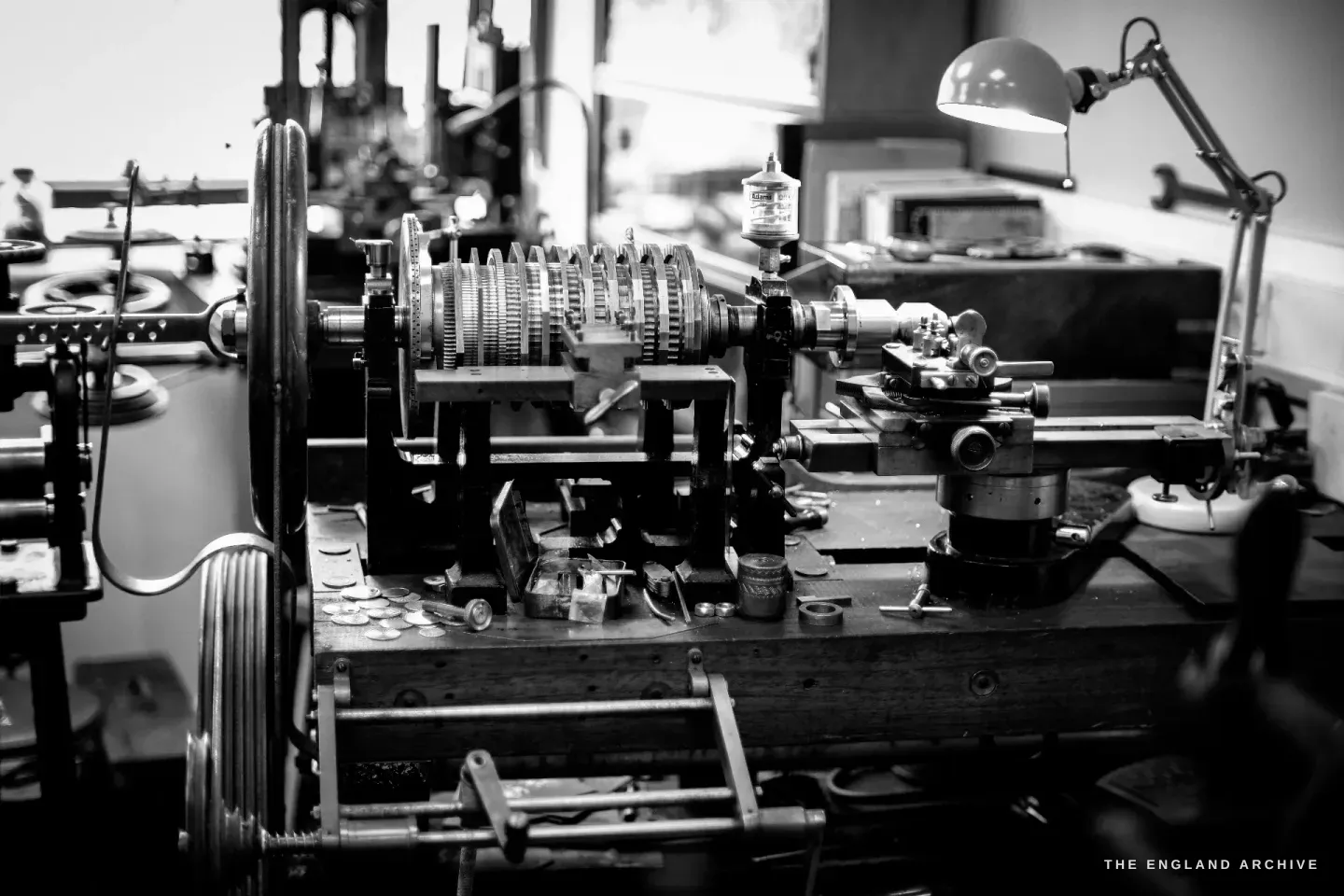
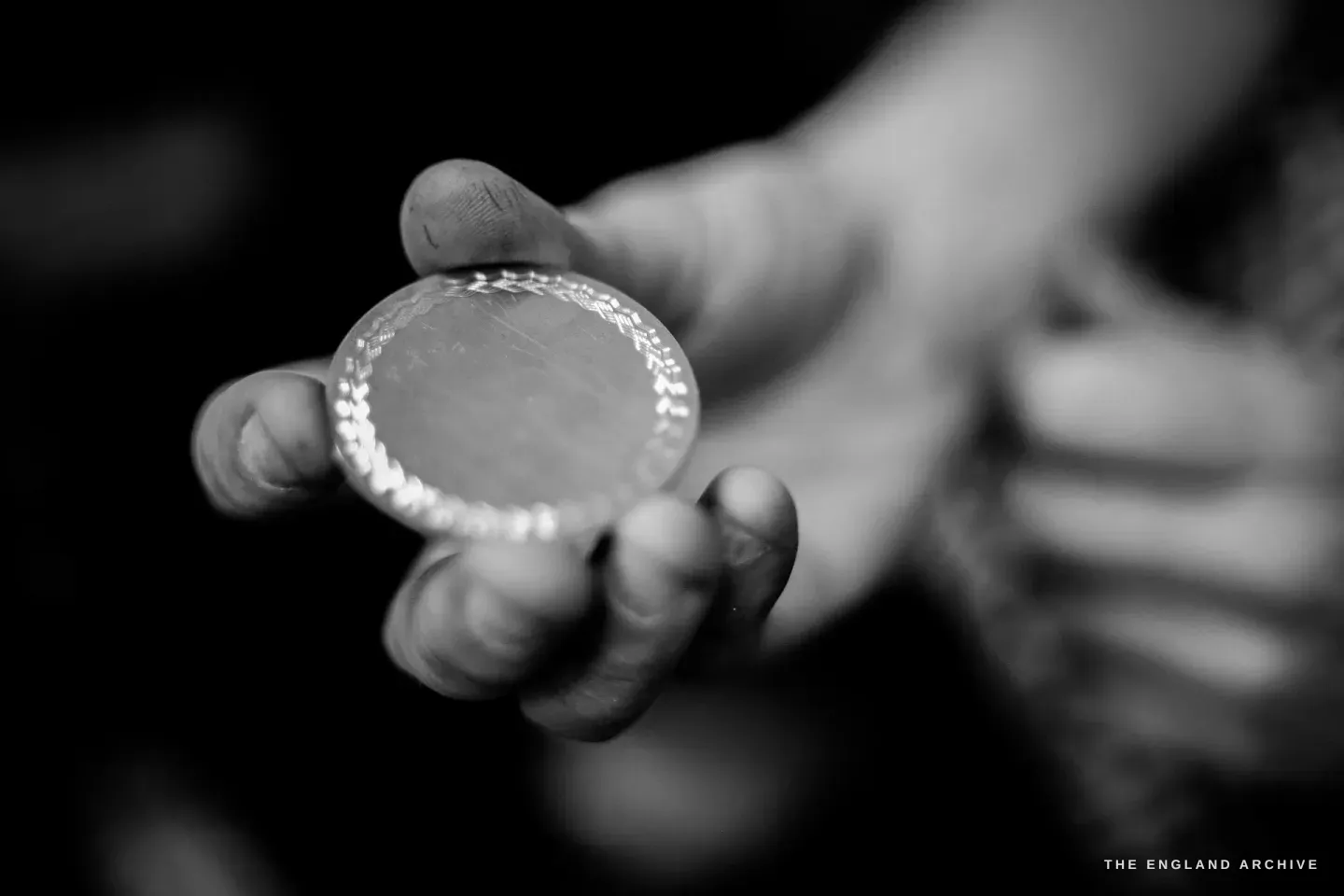
Seth’s own workshop is up a flight of ordinary stairs and through one unremarkable door, behind which the room has stopped somewhere around 1930: cast-iron watchmaking and turning machines on wooden benches, anglepoise lamps, a glazed bookcase, a world map titled Forth and Back. He is a watchmaker, case maker and engine turner - an engineer who taught himself the craft from old books - and the two machines that anchor the room, the rose engine and the straight-line engine, draw the guilloche patterns almost no one in England still cuts by hand. He set a disc spinning, took a single bright line, and when he handed it to me the light moved across it like water. His full record is on his profile; this was the room the morning started in.
Downstairs, and full of colour
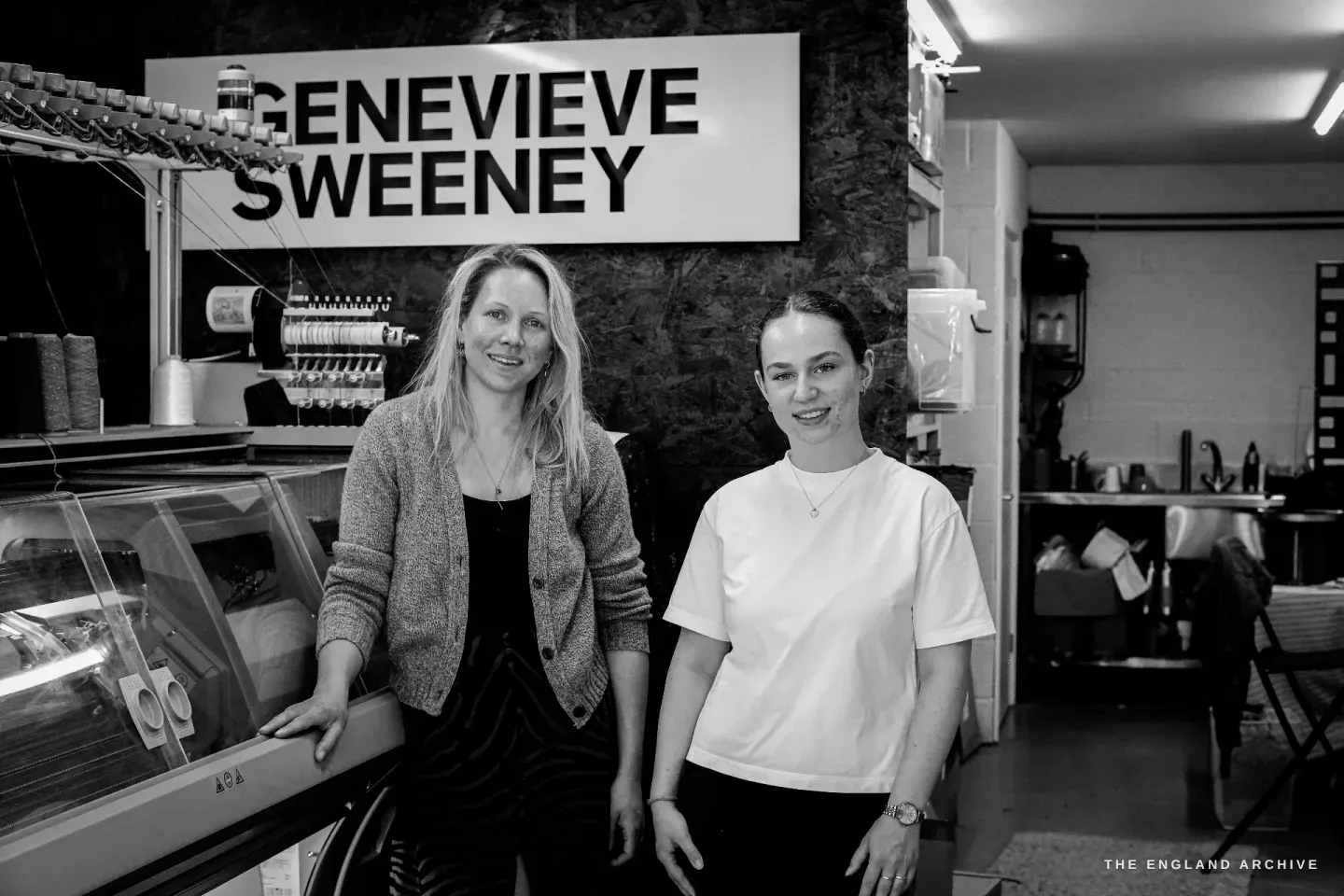
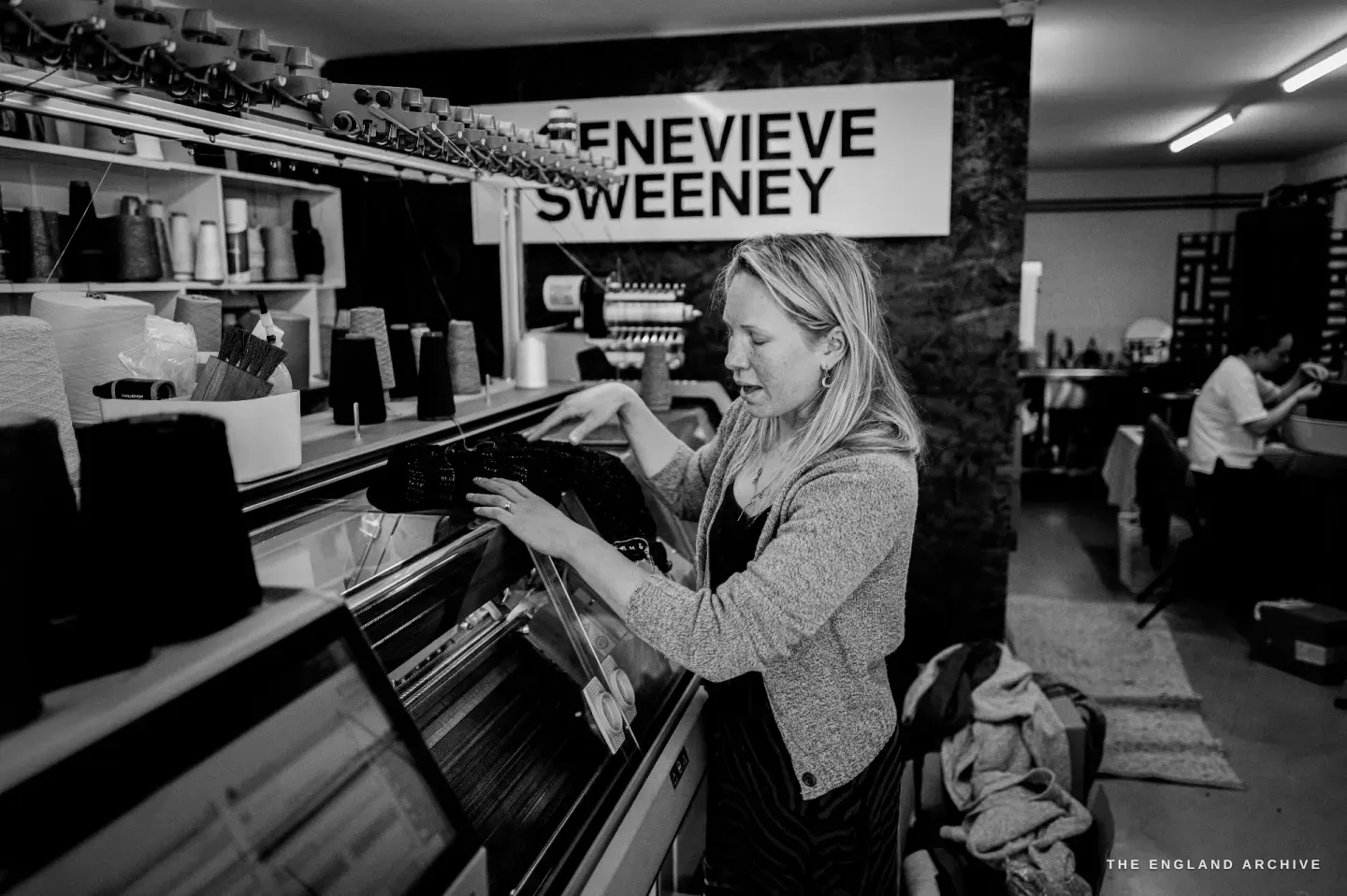
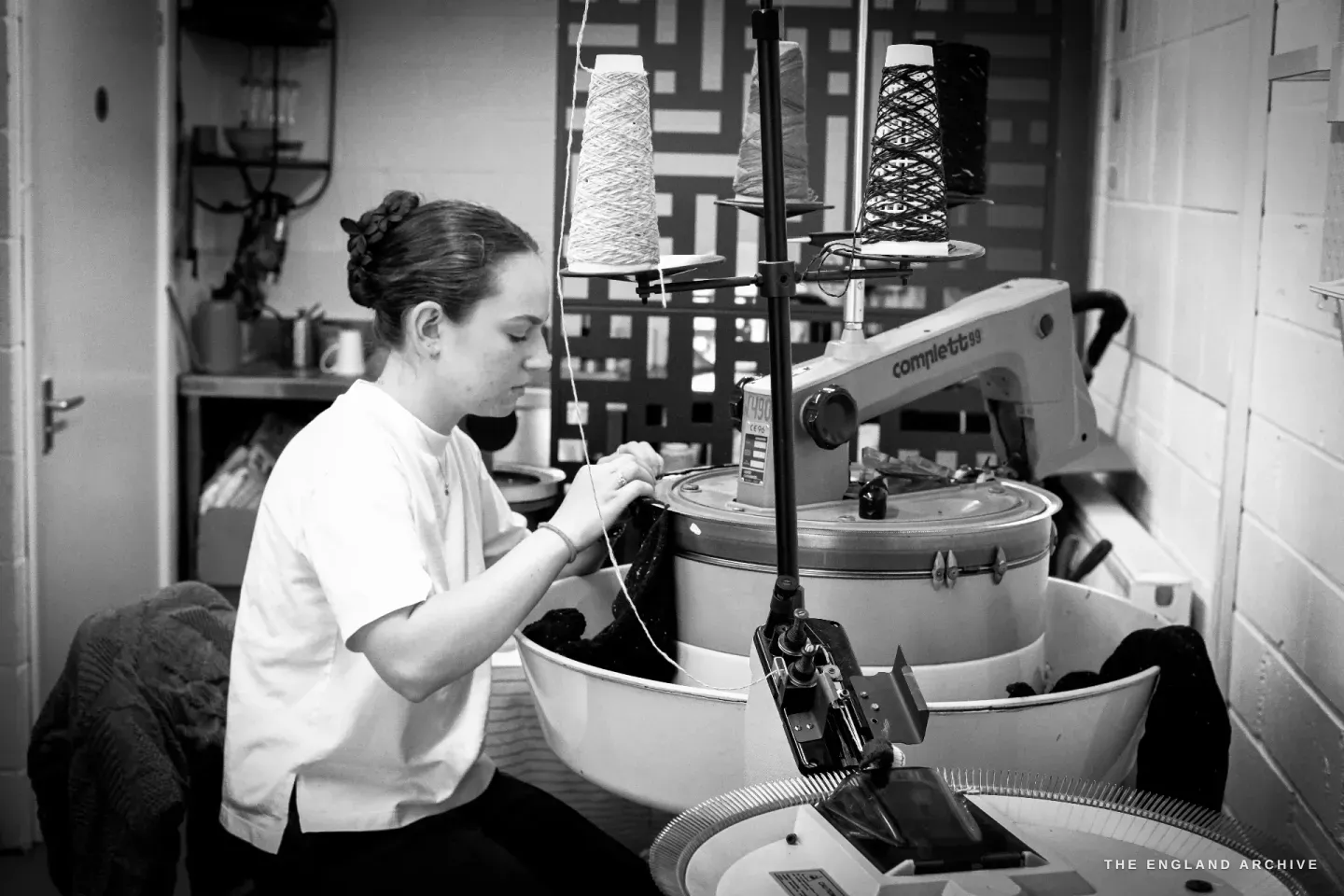
Then Seth took me down to meet Genevieve Sweeney, who makes British knitwear in a studio loud with colour - walls of dyed yarn, a big computerised knitting machine she bought to bring the making in-house, and naturally dyed merino whose colours come from plants. She talks about the work the way other people talk about people they love. Working quietly at a machine in the corner was her apprentice, Poppy Ruane - a film graduate who came to the craft through a four-month course and took to it fast. A master and the next pair of hands, in one room. That is the archive’s whole mission in miniature.
The world, made by hand
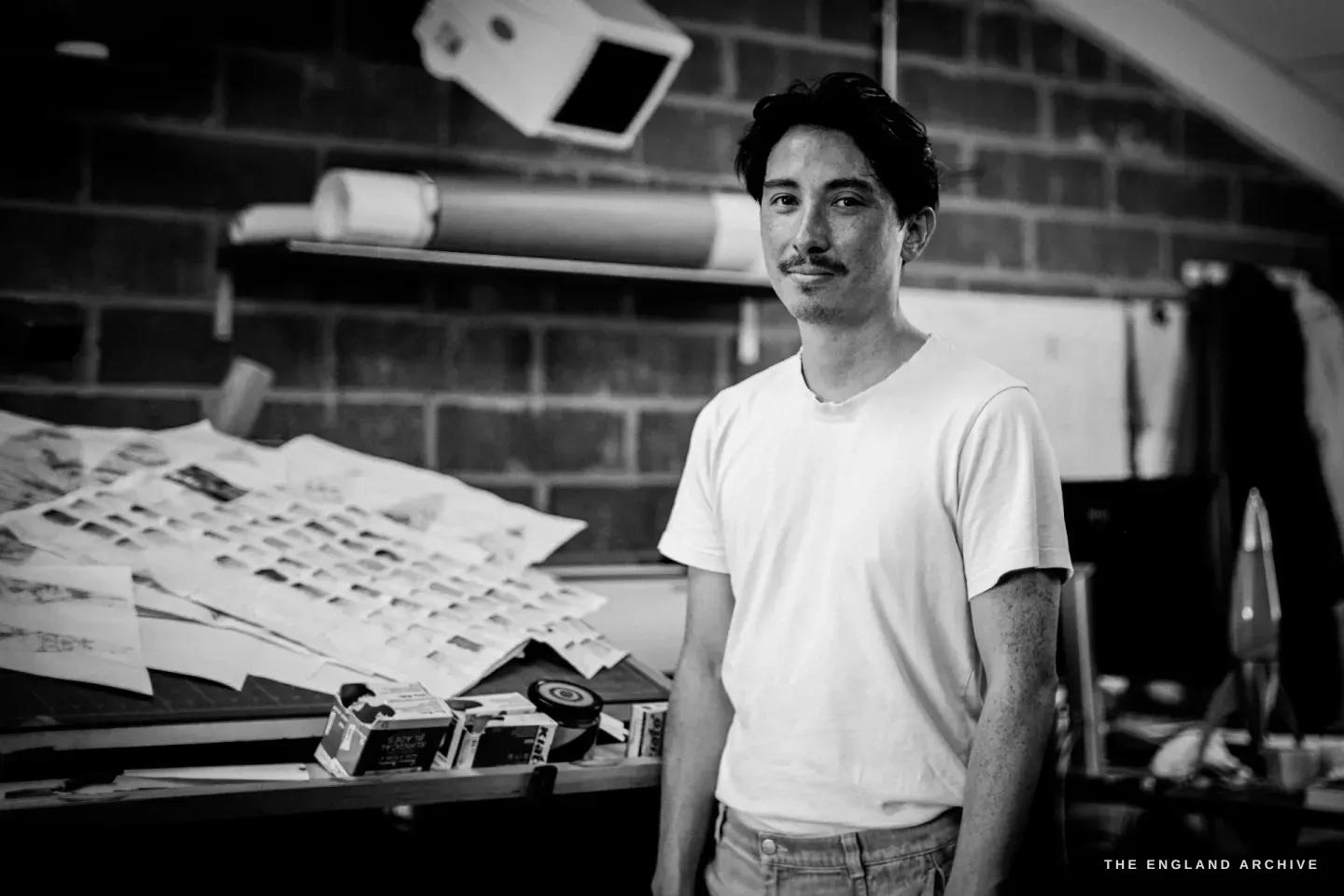
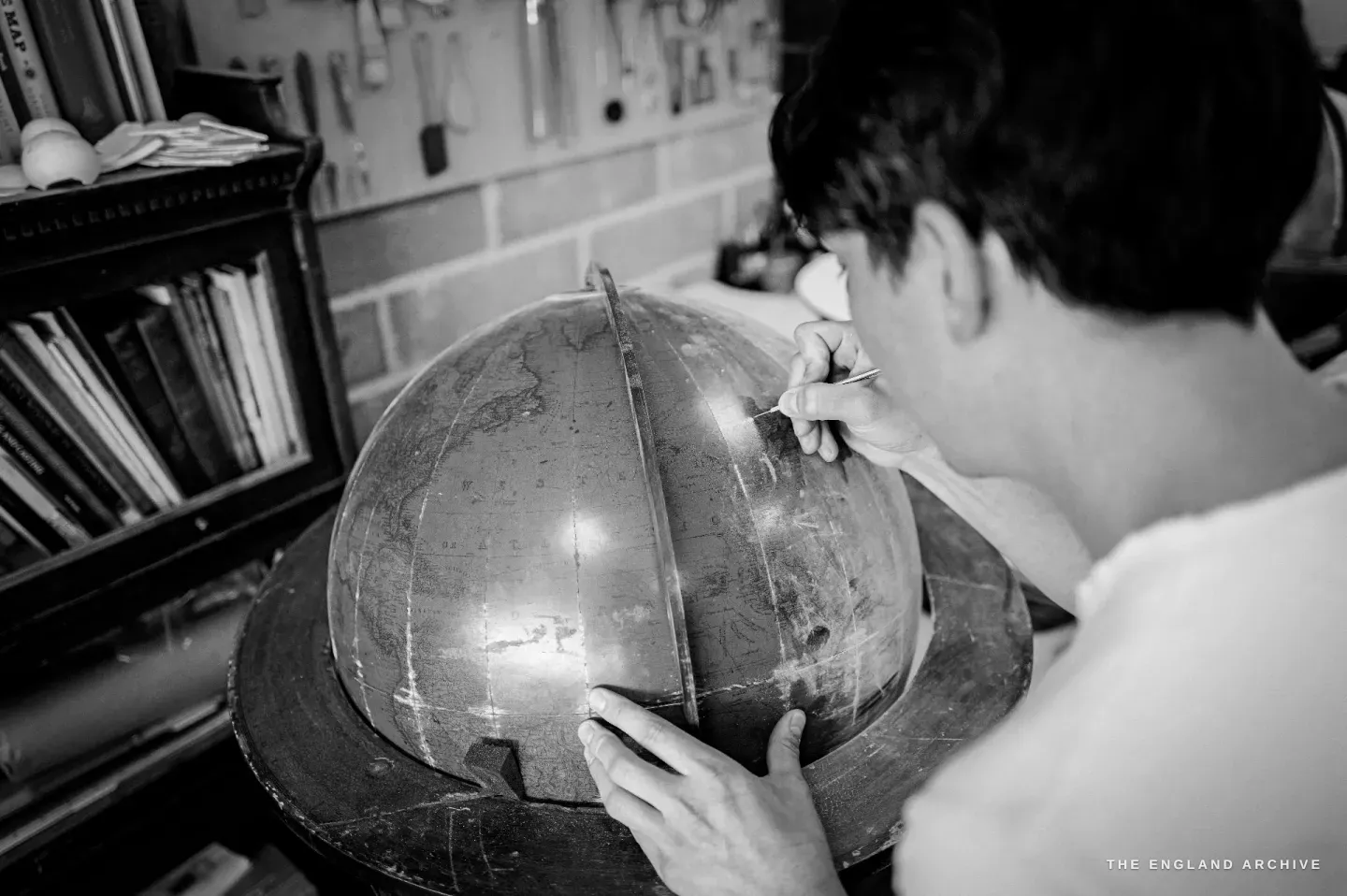
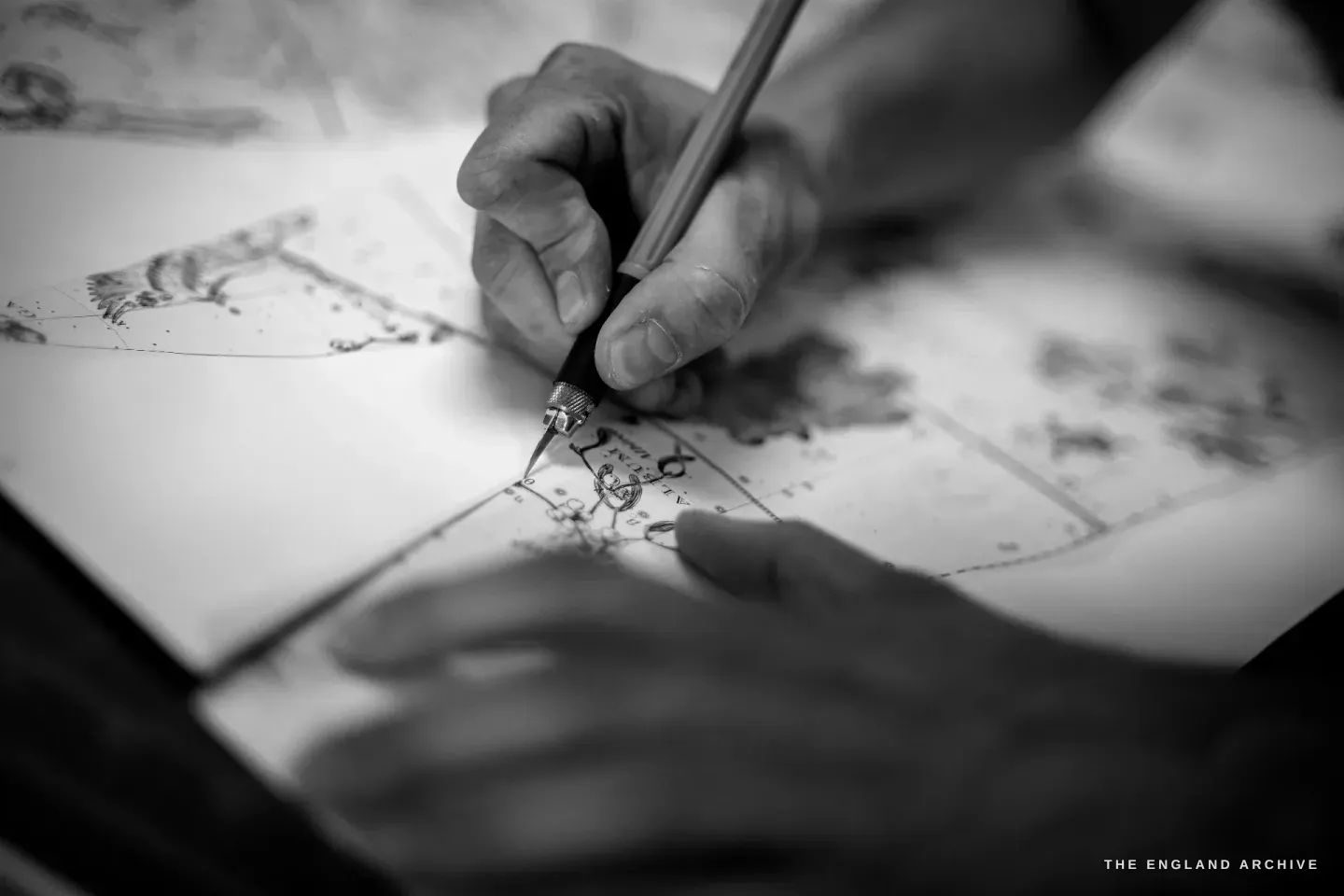
On the top floor, Jonathan Wright makes globes by hand - terrestrial and celestial, new ones and restorations - one of very few people in the country who still do. He showed me the gores, the tapering printed map segments that are cut and smoothed onto a sphere until the world comes out round, and the pen-drawn animals he turns into bespoke constellations. He led globe production at Bellerby & Co for the better part of a decade before setting up on his own; he is a Fellow of the Royal Geographical Society and a trustee of QEST.
And the stands to hold it
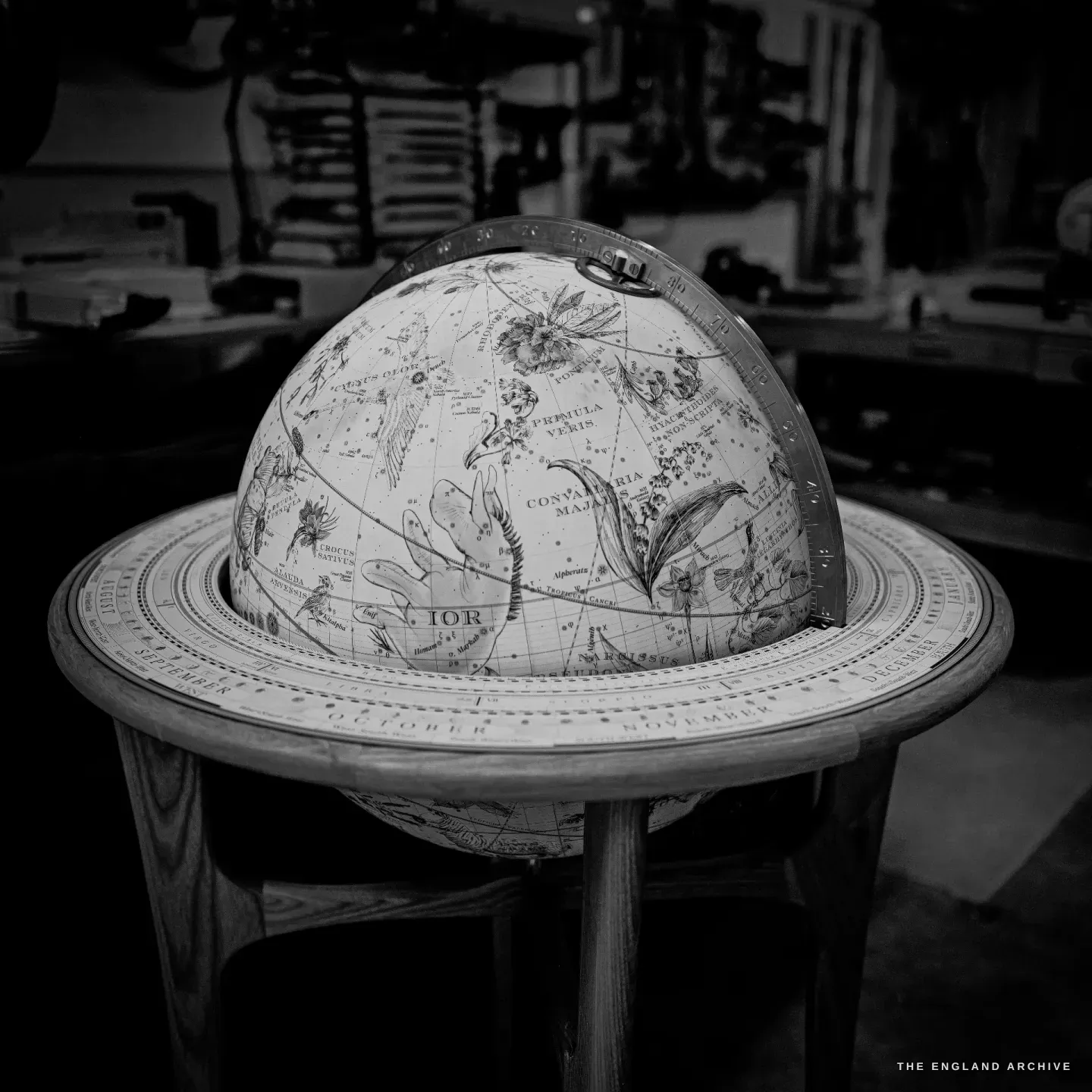
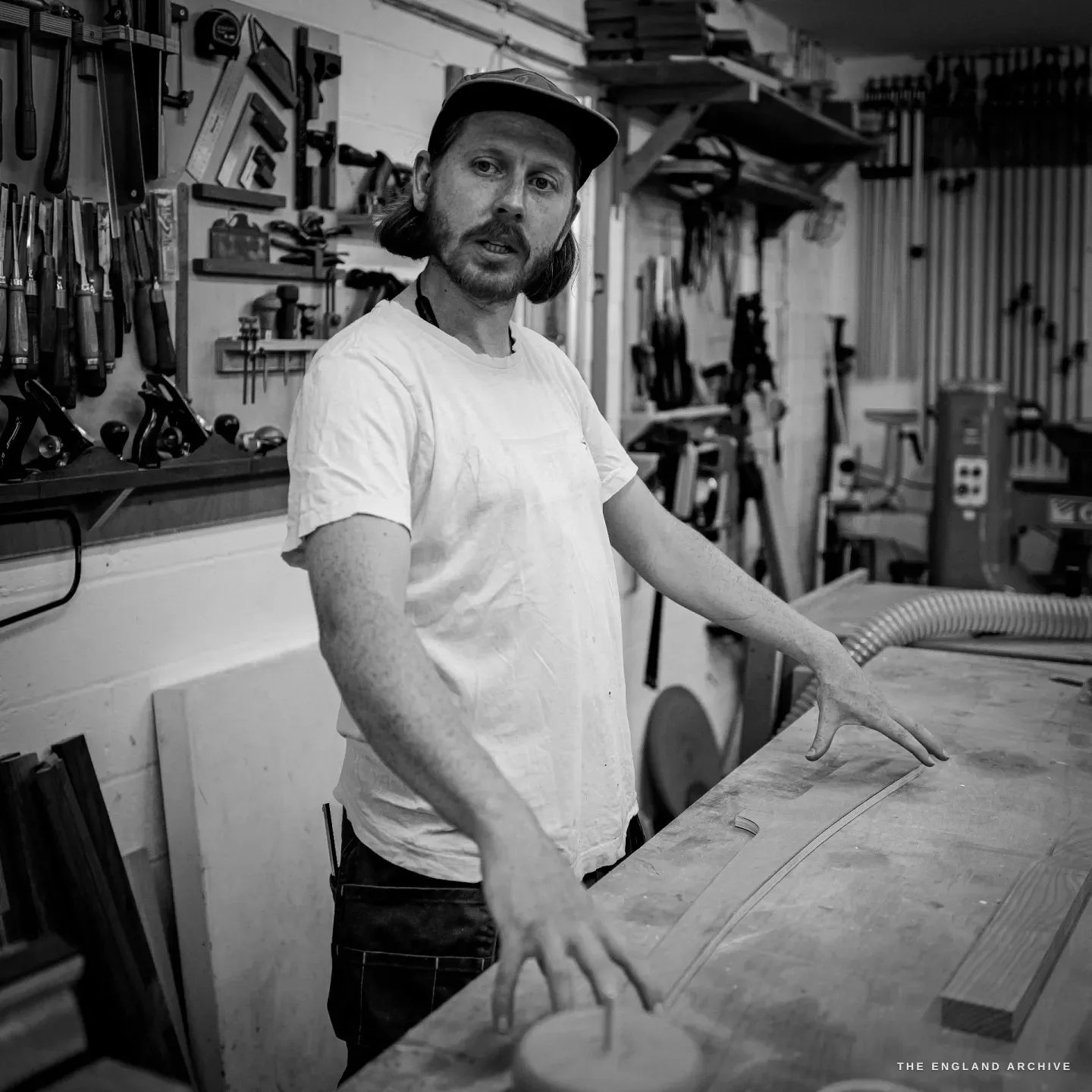
On the floor below Jonathan is Louis Craig Carpenter, a woodturner and furniture maker who makes the bespoke stands the globes sit in - the turned legs, the broad calendar ring, the cradle the sphere turns in - and restores the antique ones. He came to wood from printmaking, and trained at the same Bellerby workshop Jonathan did, so the partnership is really two makers from the same shop reuniting under one roof. The globe is made upstairs and cradled downstairs and meets in the middle as one finished thing.
A building of makers
What stayed with me was the building itself. A watchmaker, a knitwear designer and her apprentice, a globemaker and the woodturner who makes his stands - different crafts, one roof, and real dependence running between them. This is how the archive hopes crafts survive: not alone, but in company, sending each other work and keeping each other going. Five records came out of one morning at Grandeys Place, and each now has a profile of its own - Seth Kennedy, Genevieve Sweeney, Poppy Ruane, Jonathan Wright and Louis Craig Carpenter.