Makers
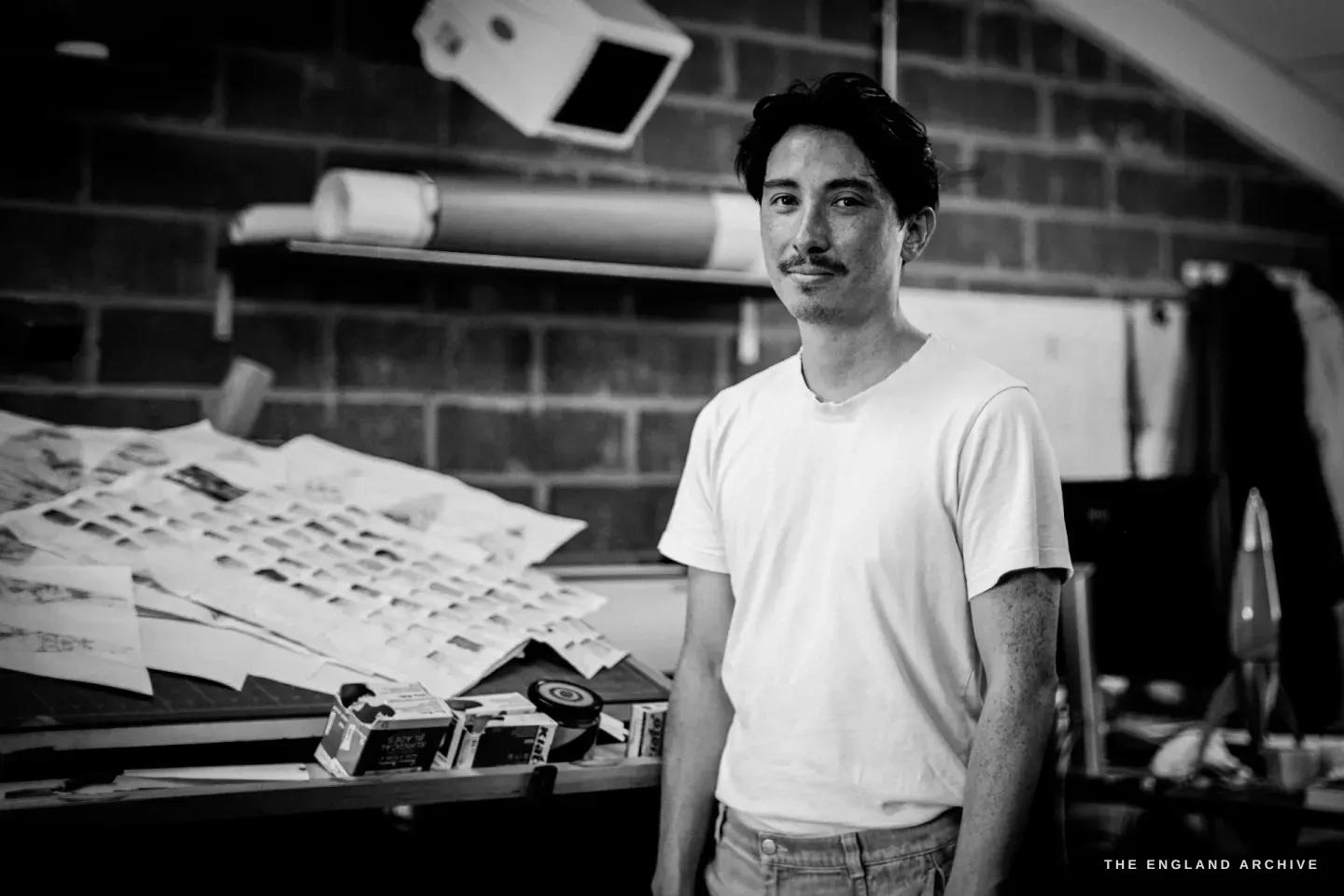
Jonathan Wright
Globemaker, Conservator & Restorer
Grandeys Place, Much Hadham, Hertfordshire
Globemaker, Conservator & Restorer
Grandeys Place, Much Hadham, Hertfordshire
One of very few people in the country still making a globe the way it has always been made - by hand, a paper map wrapped onto a sphere.
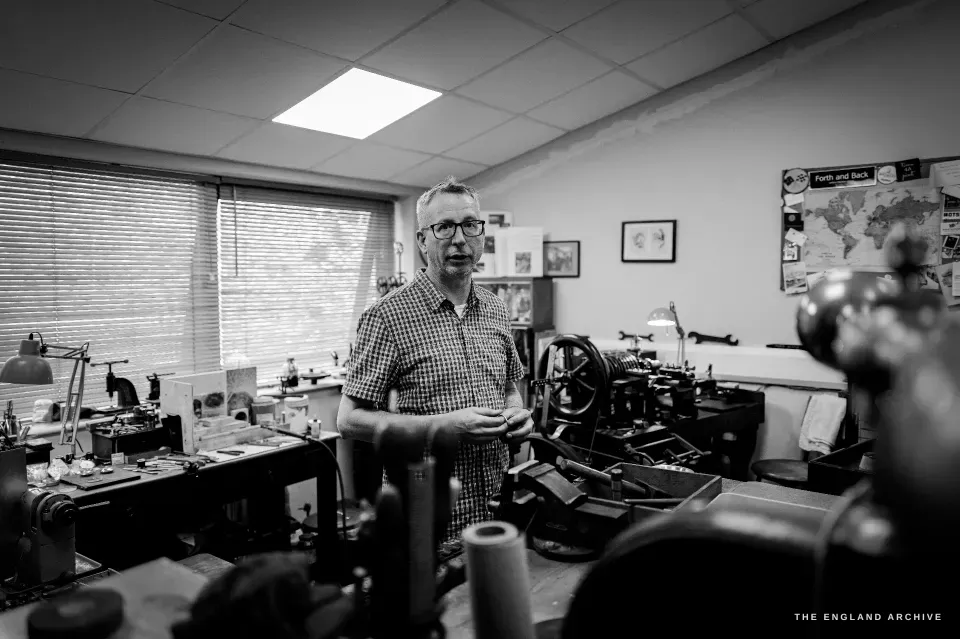
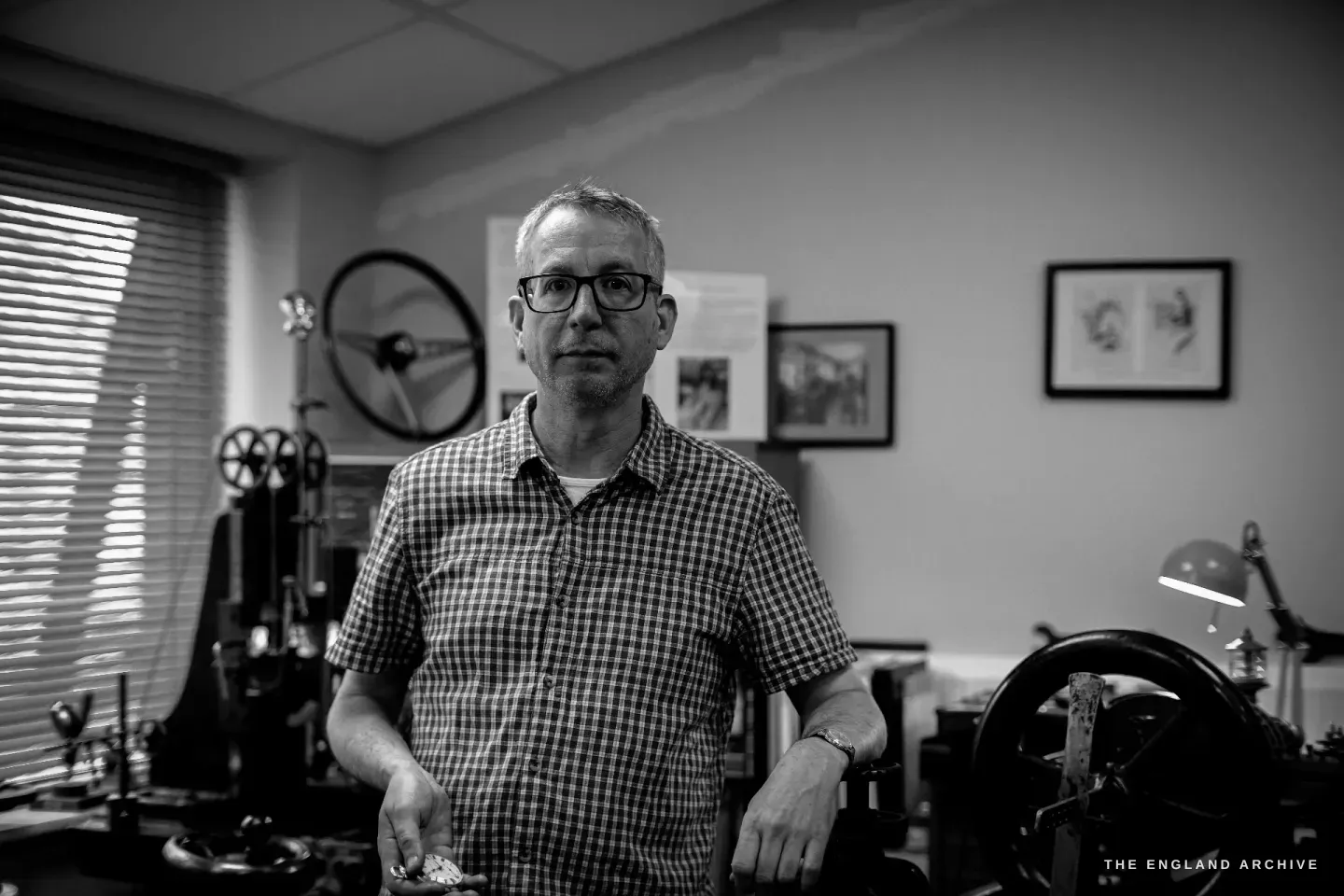
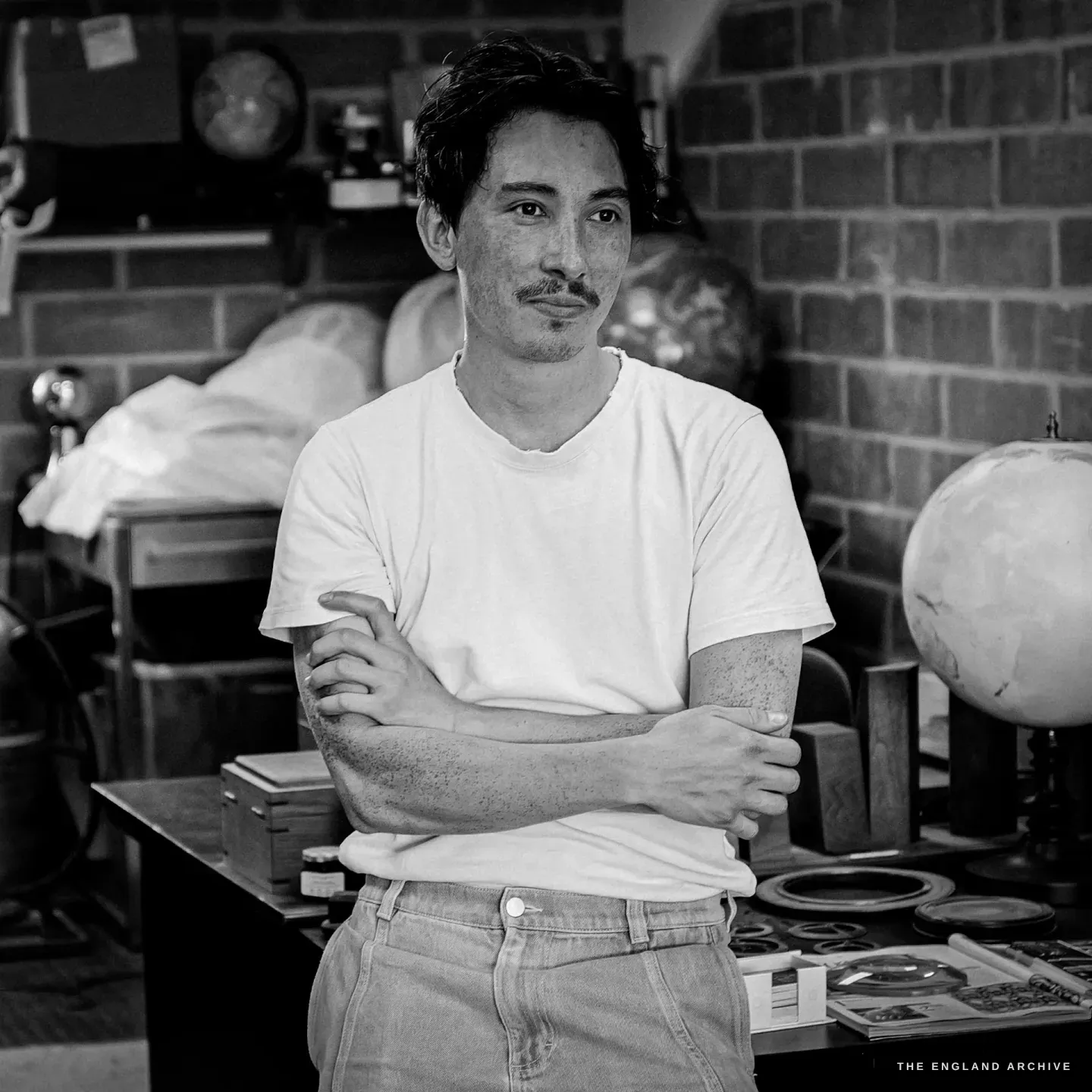
Jonathan Wright makes globes by hand - terrestrial and celestial, new commissions and old ones brought back to life. It is one of the rarest crafts in the country. There is no college course for it and no formal route in; the few people who do it learned it at a bench from someone already doing it.
He came to it that way himself. After a first-class engineering degree he spent the better part of a decade at Bellerby & Co, the London globemakers, where he led the production side and trained a new intake of makers and cartographers. Then he set up on his own as J. Wright Globemaker. Along the way he took an MA in conservation at the City & Guilds of London Art School, funded by a Queen Elizabeth Scholarship Trust award - which is why his work now runs on two tracks at once: making globes, and conserving them to museum standard. He is a Fellow of the Royal Geographical Society, and he now sits on the QEST board as a trustee, helping fund the next generation of makers the way he was funded.
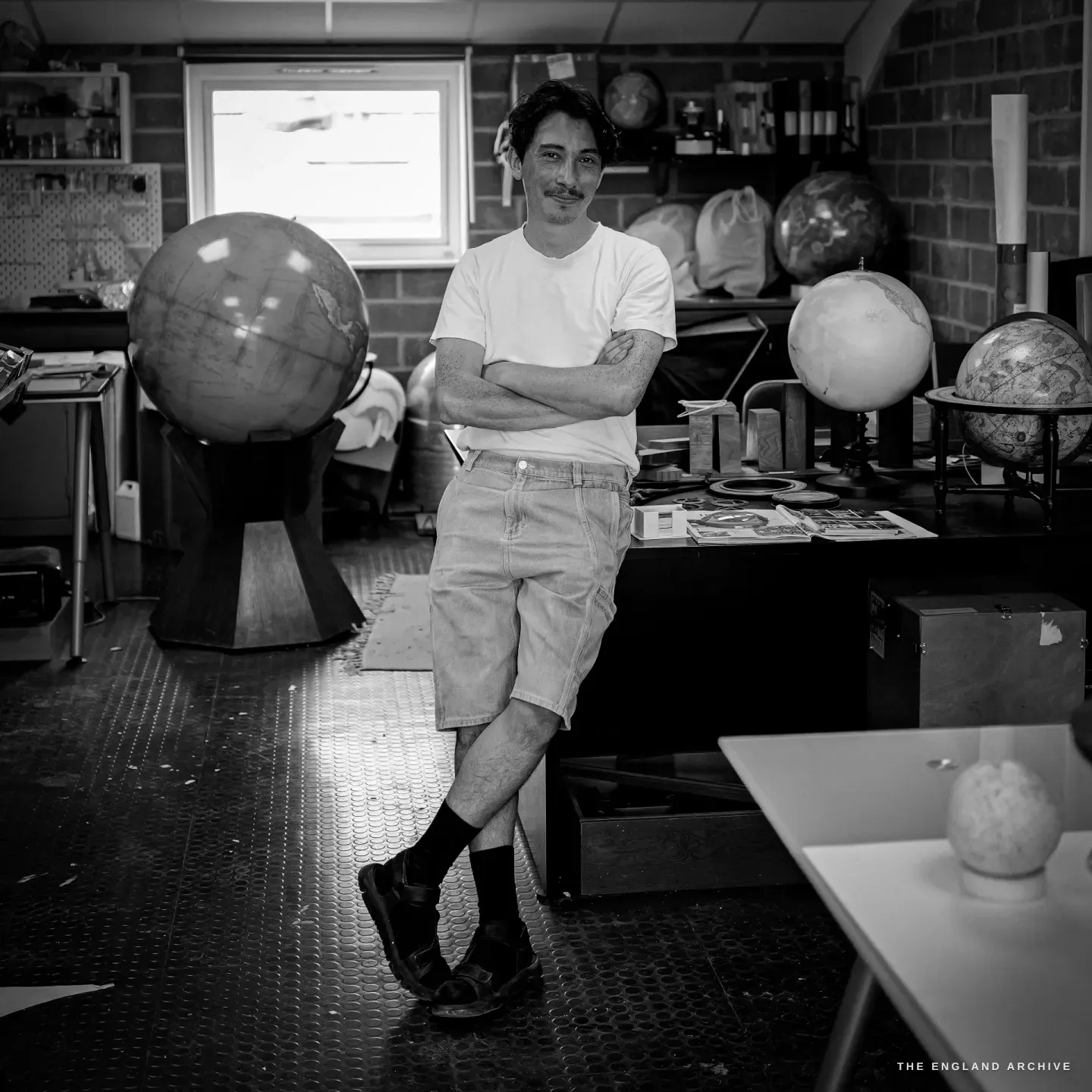
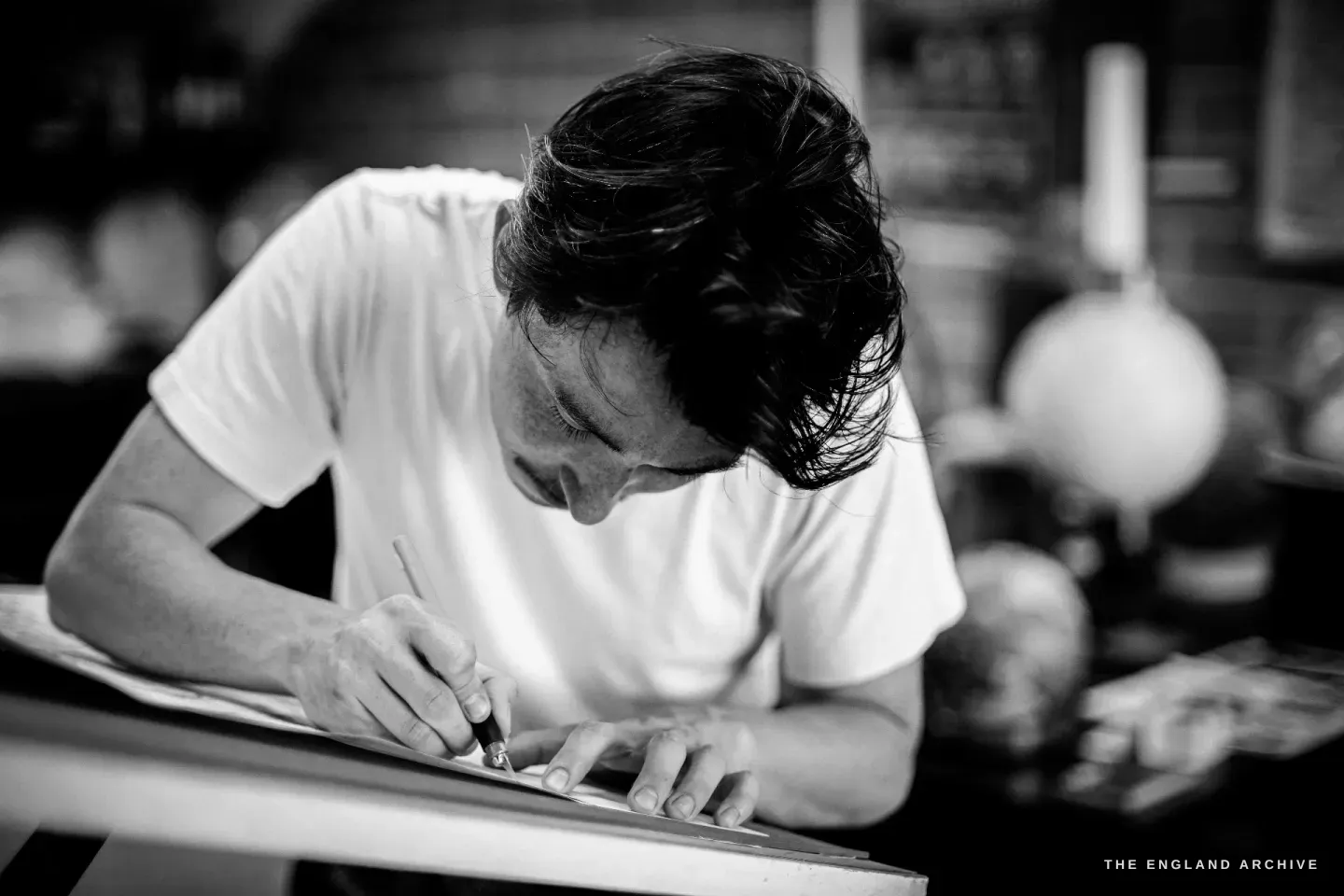
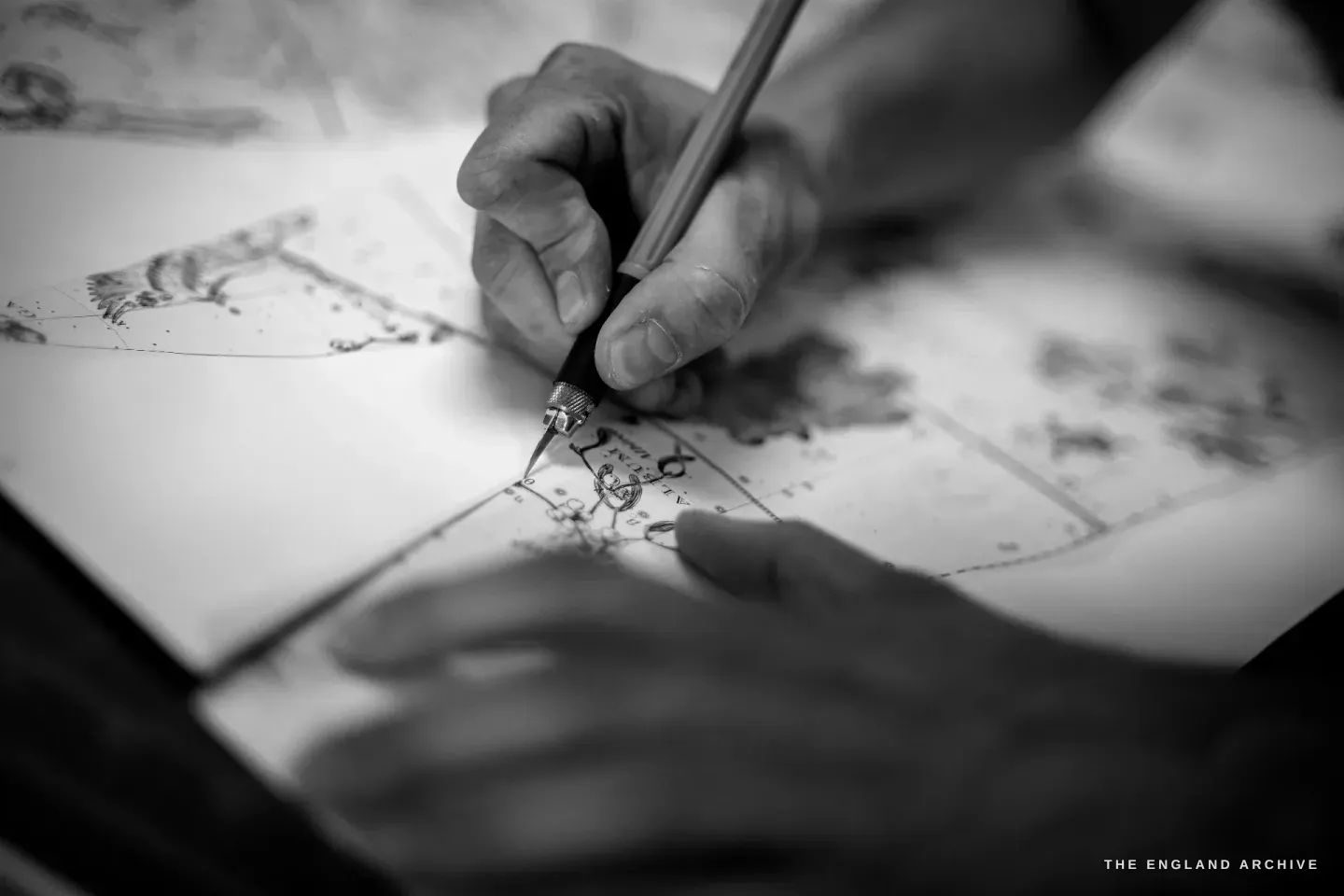
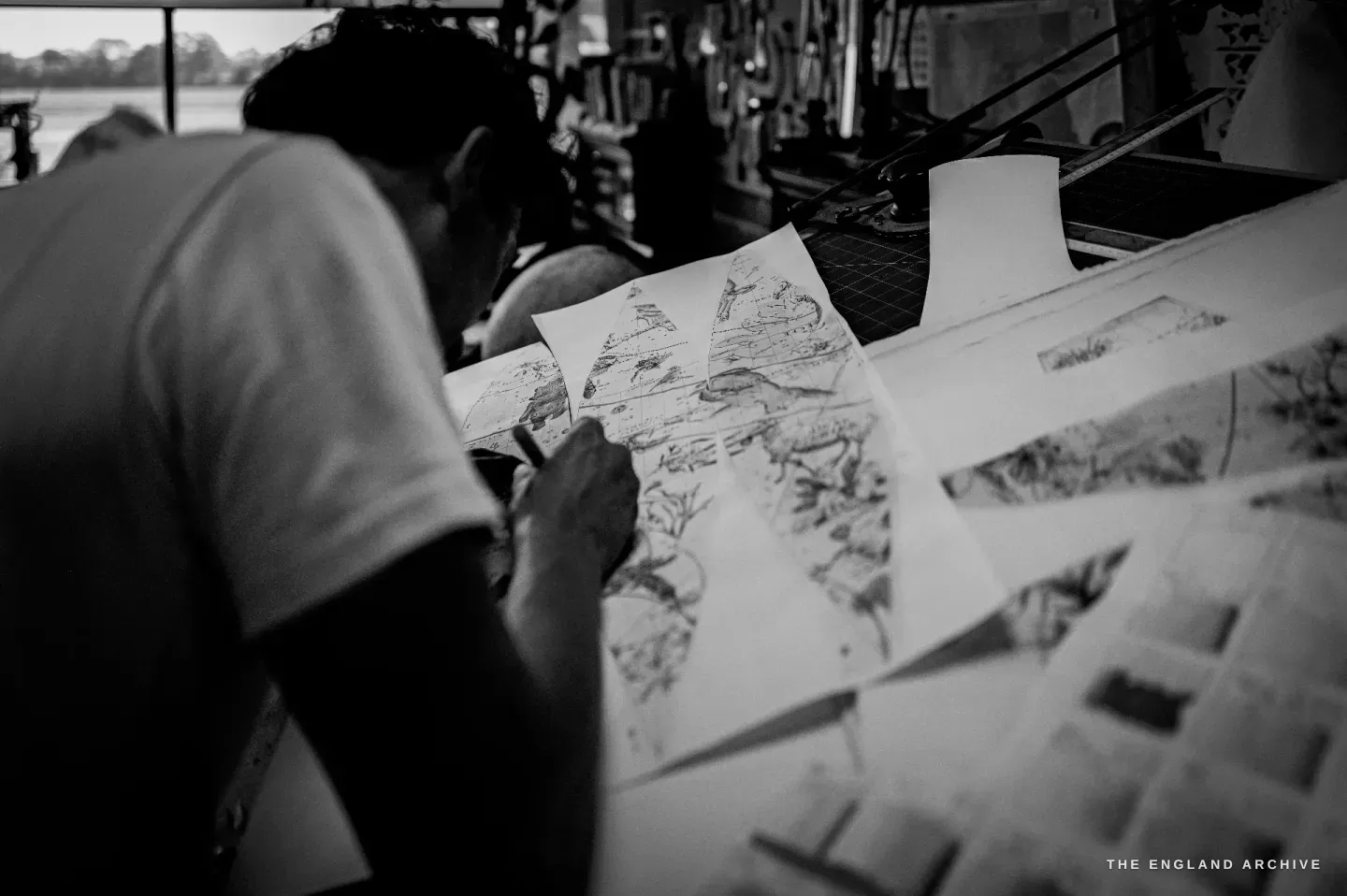
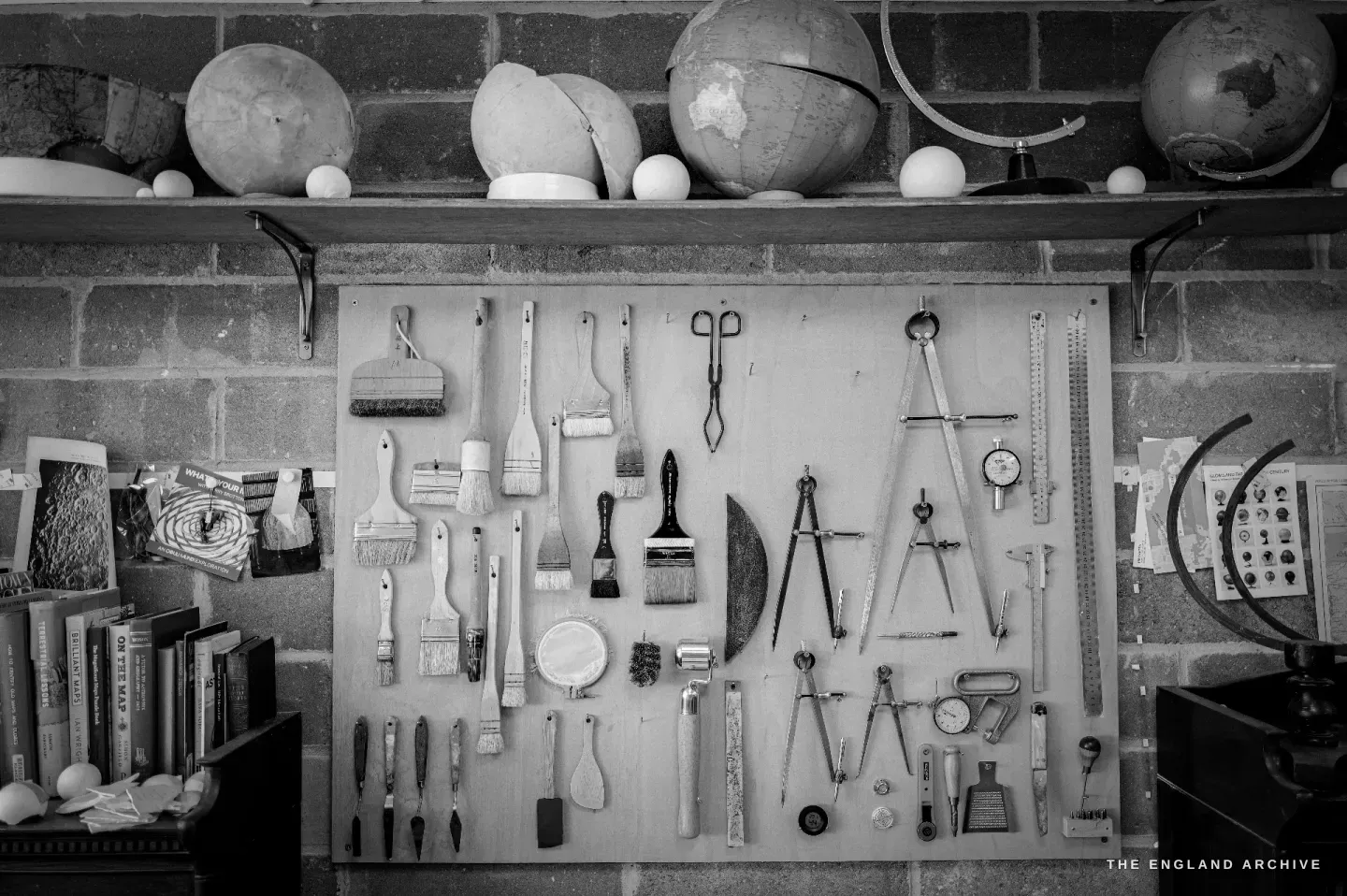
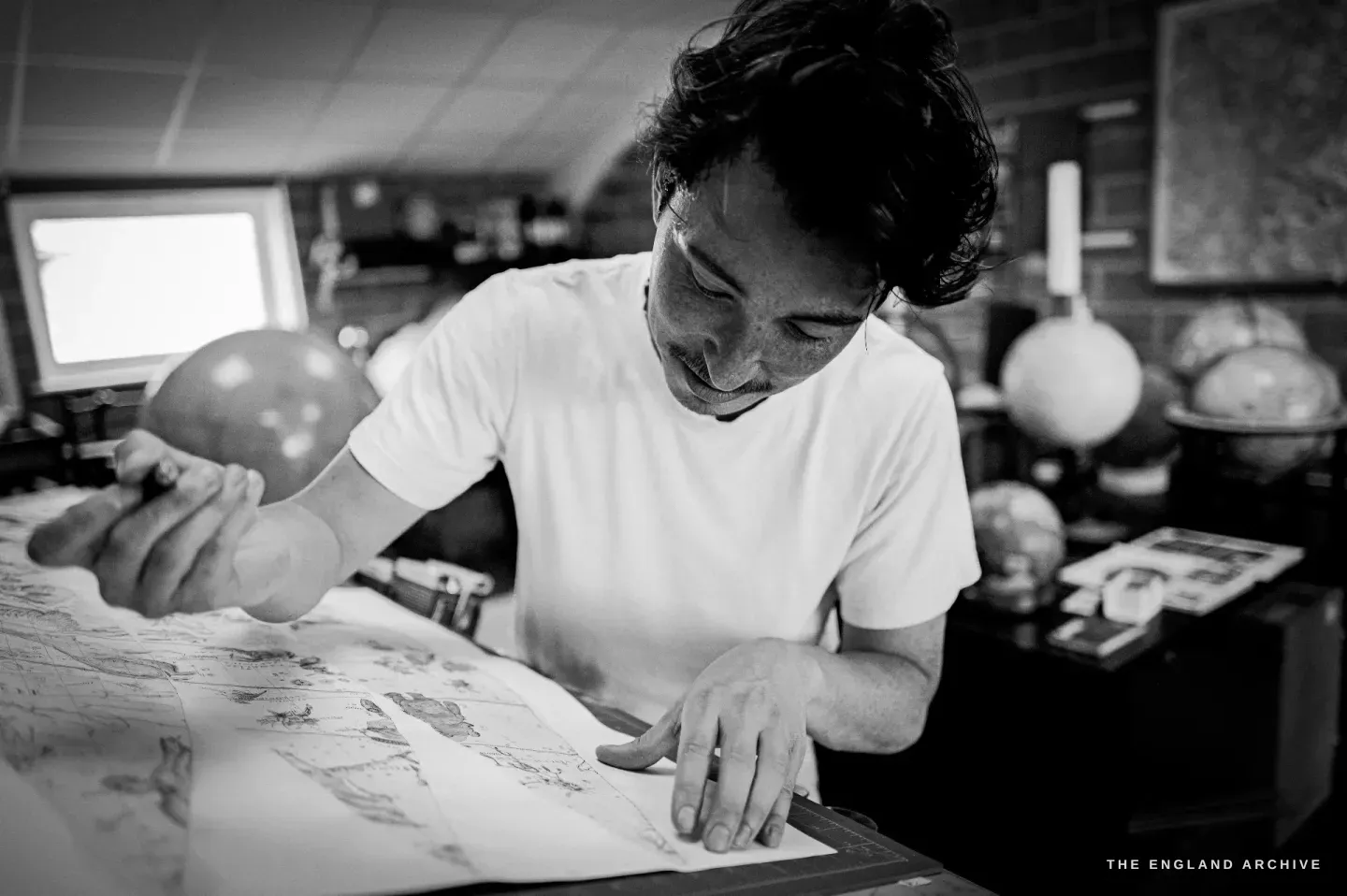
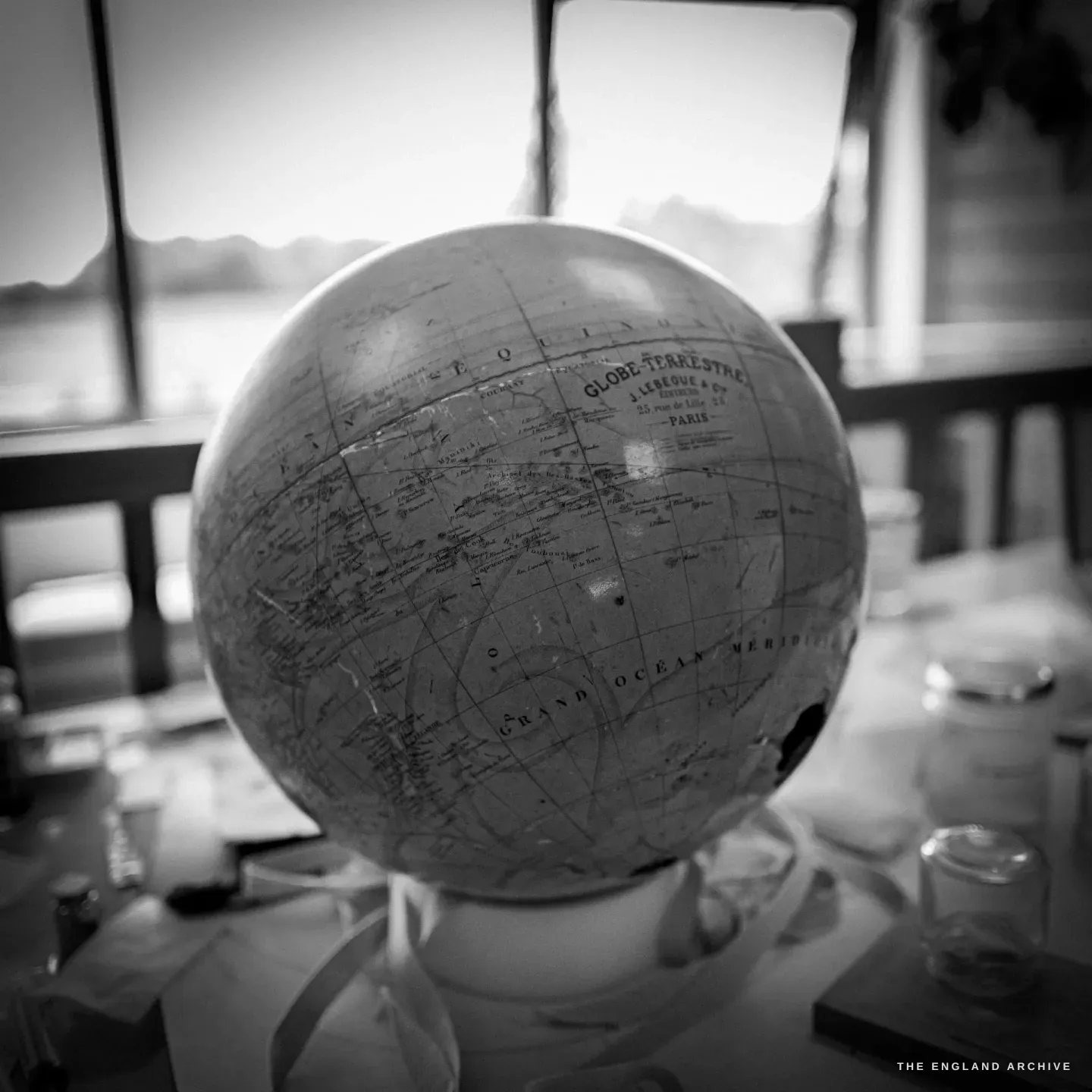
A globe begins as a flat problem. The map has to be printed in gores - long, tapering segments, narrow at the poles and wide at the equator - shaped so that when they are wetted and smoothed onto a sphere the edges meet and the world comes out round. Jonathan draws and refines the cartography, prints the gores, then cuts each one by hand and lays it onto the sphere, easing out the creases as he goes. There is no margin for error: a gore is cut to a line, and the line is followed exactly.
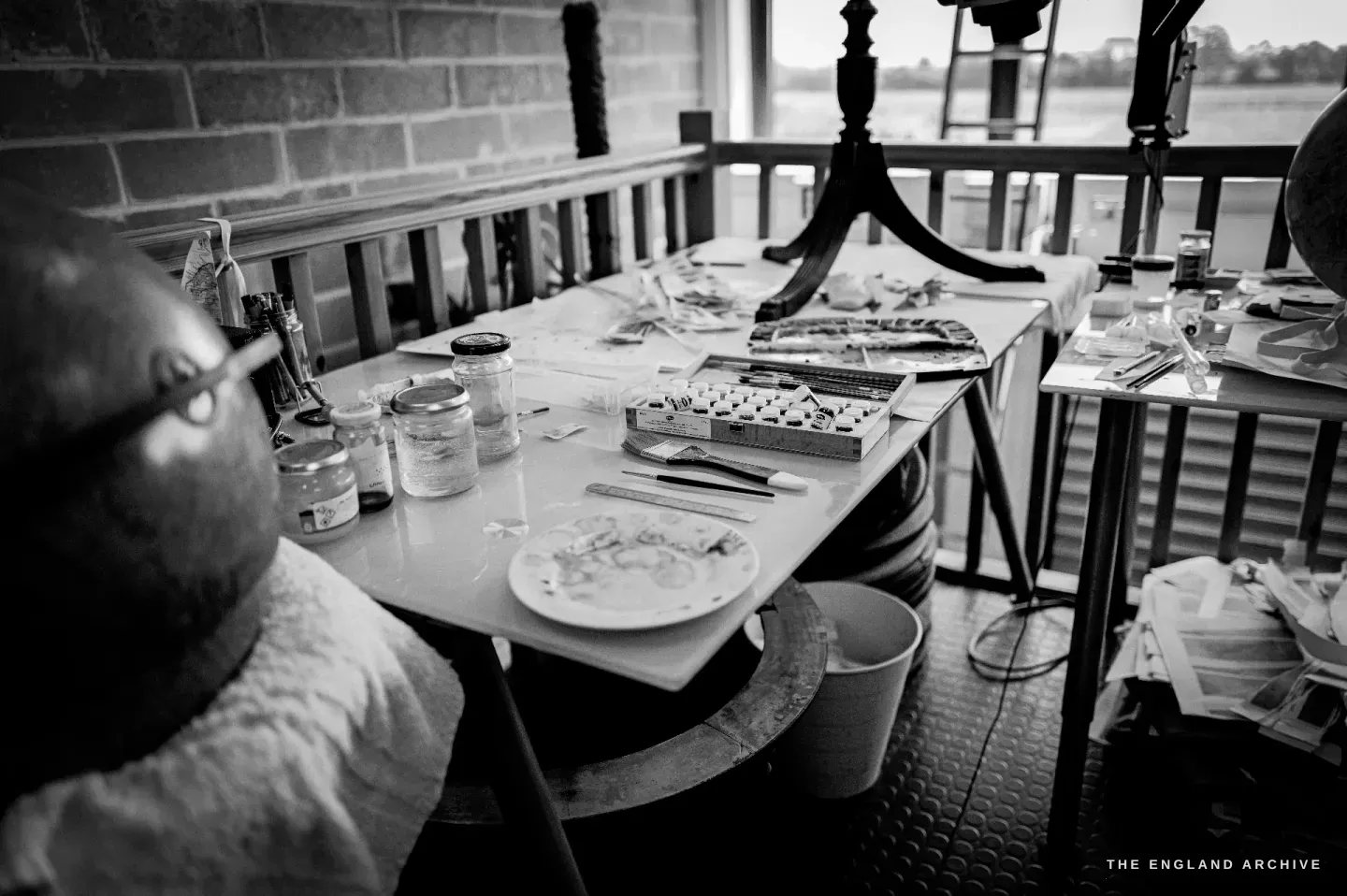
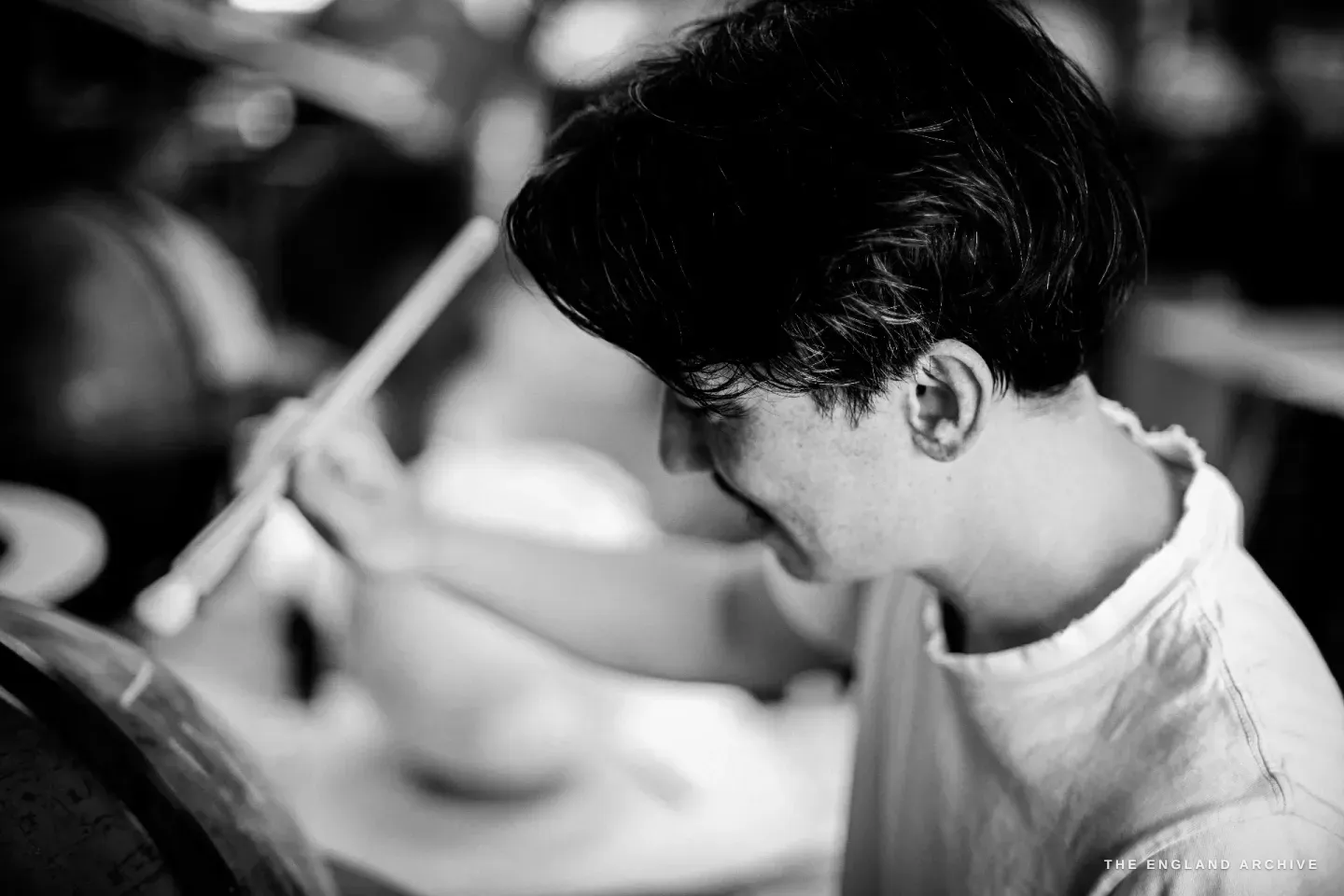
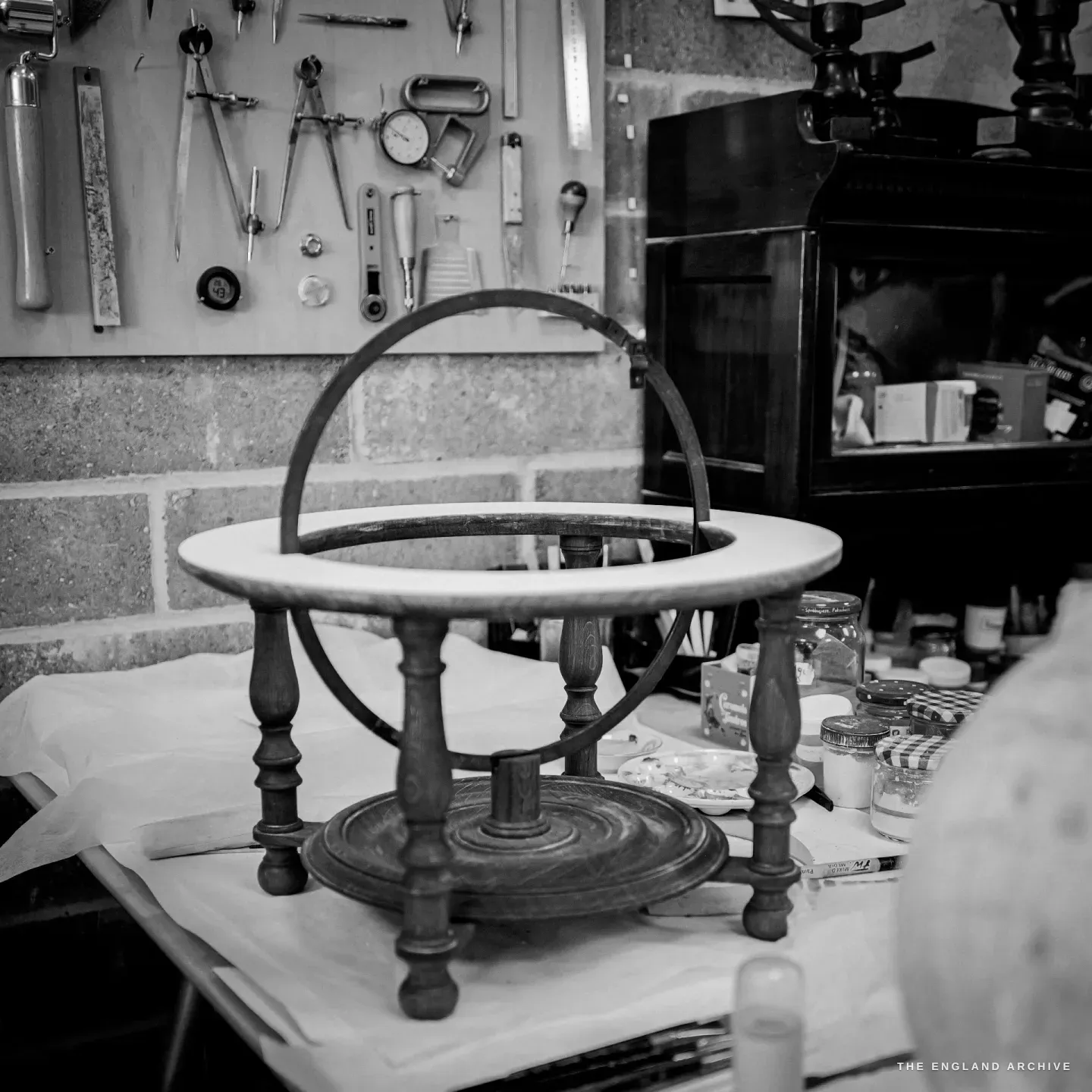
Much of the map is then coloured by hand. Gores are often printed in black and then tinted with a fine brush and watercolour, layer on layer, so the seas and the borders come up the way they did on a globe two centuries ago. The sphere is set onto a turned base, ringed by a hand-finished brass meridian, and trued until it spins clean. It is slow, exacting work that sits somewhere between cartography, printmaking and cabinetwork.
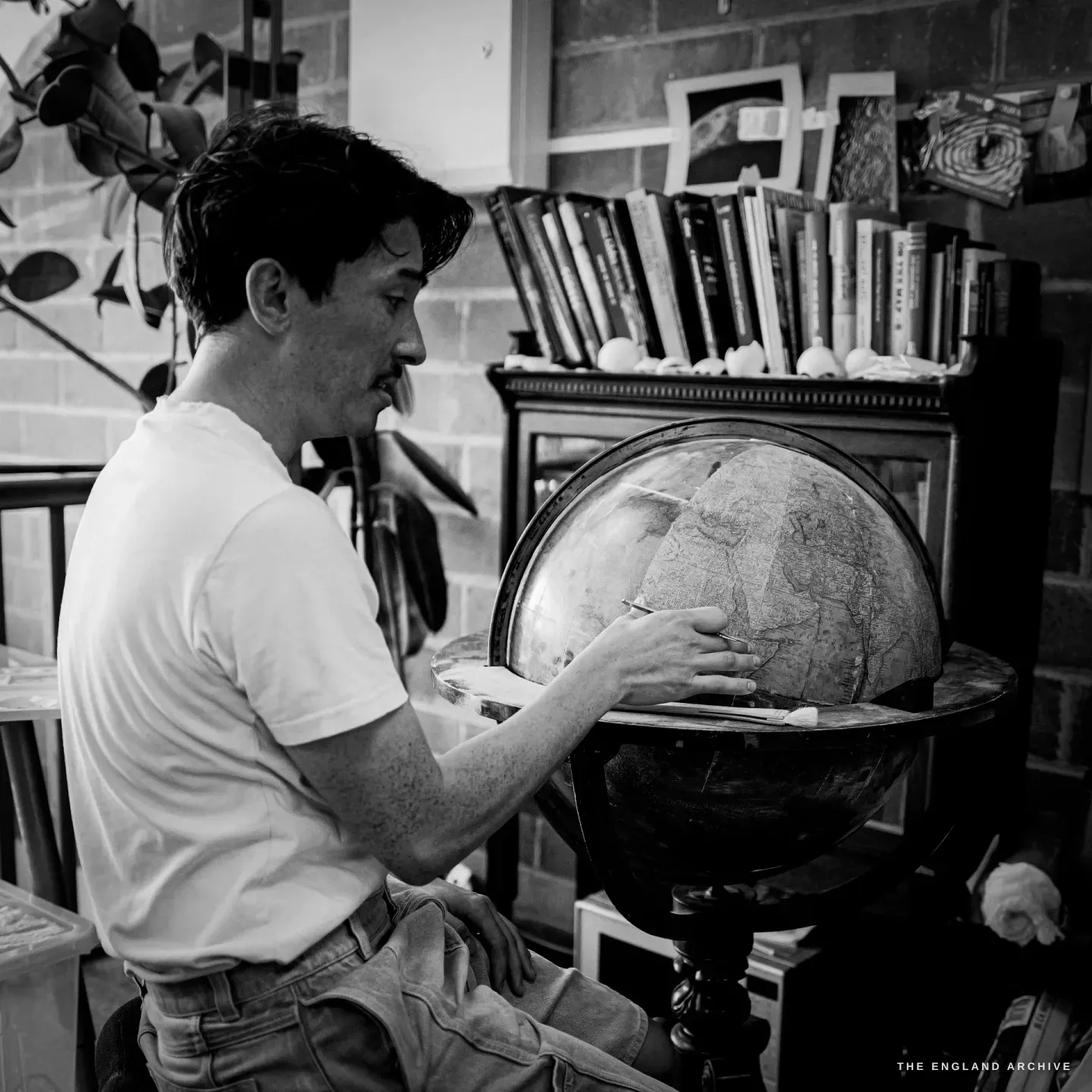
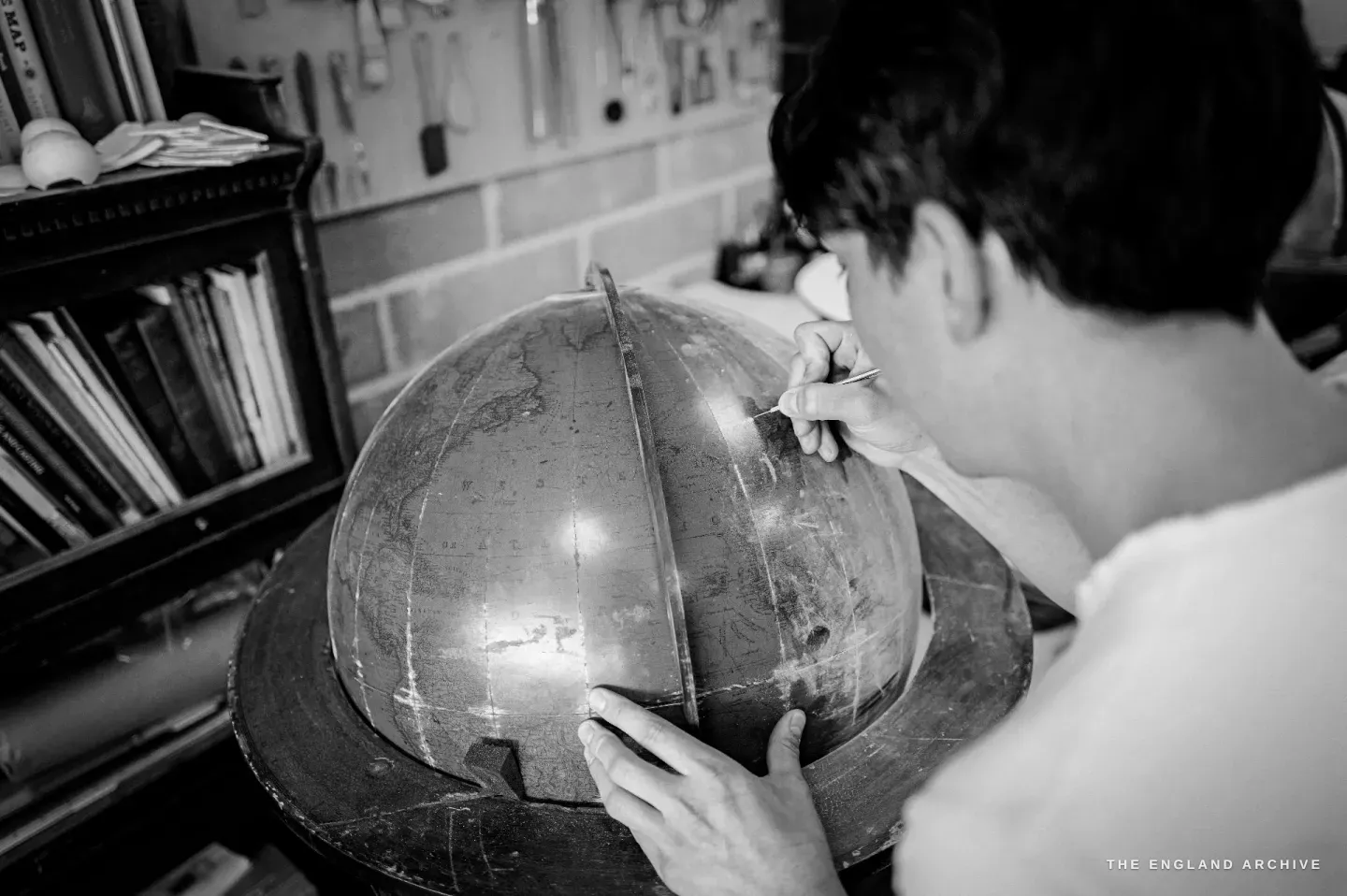
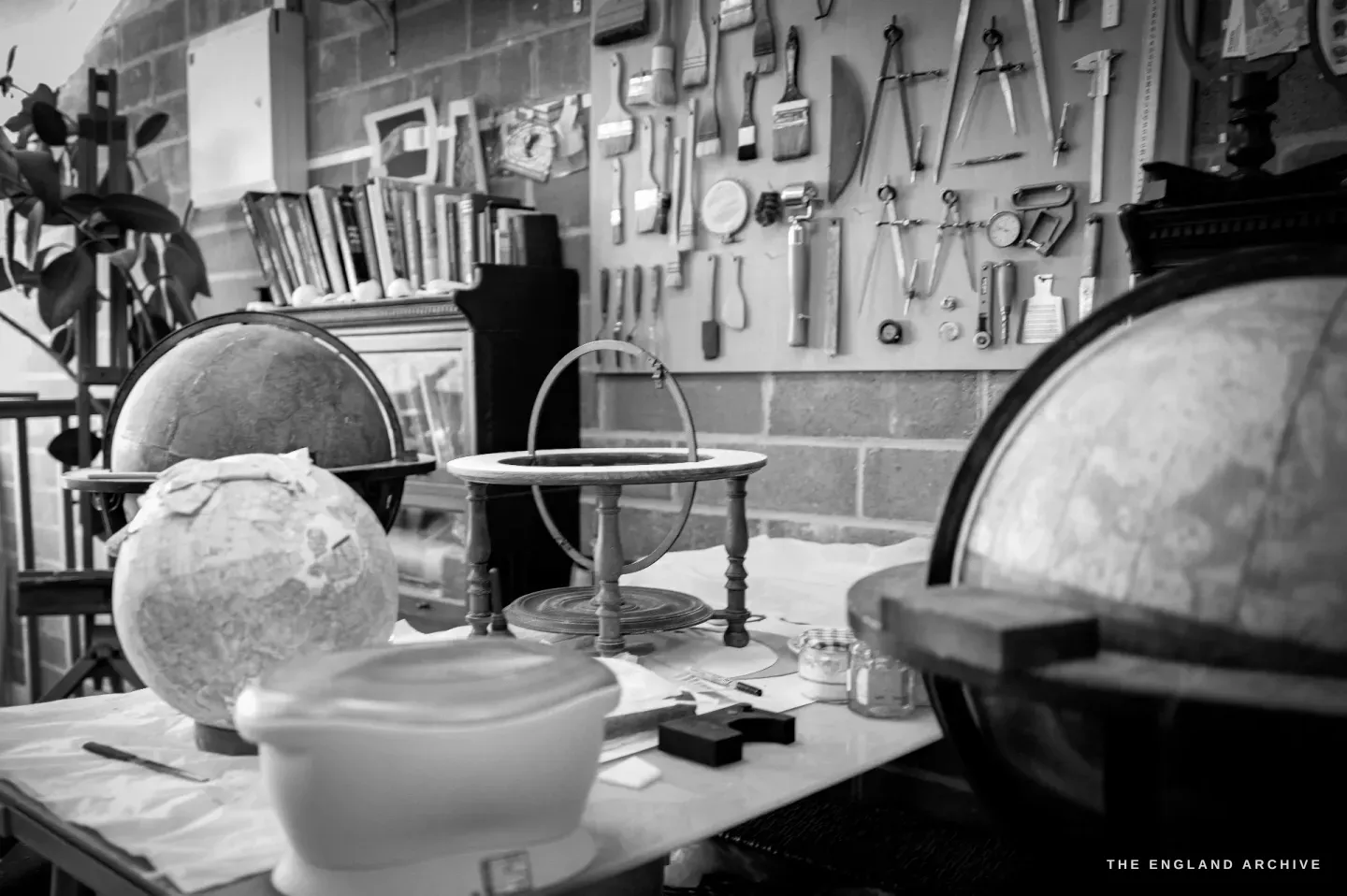
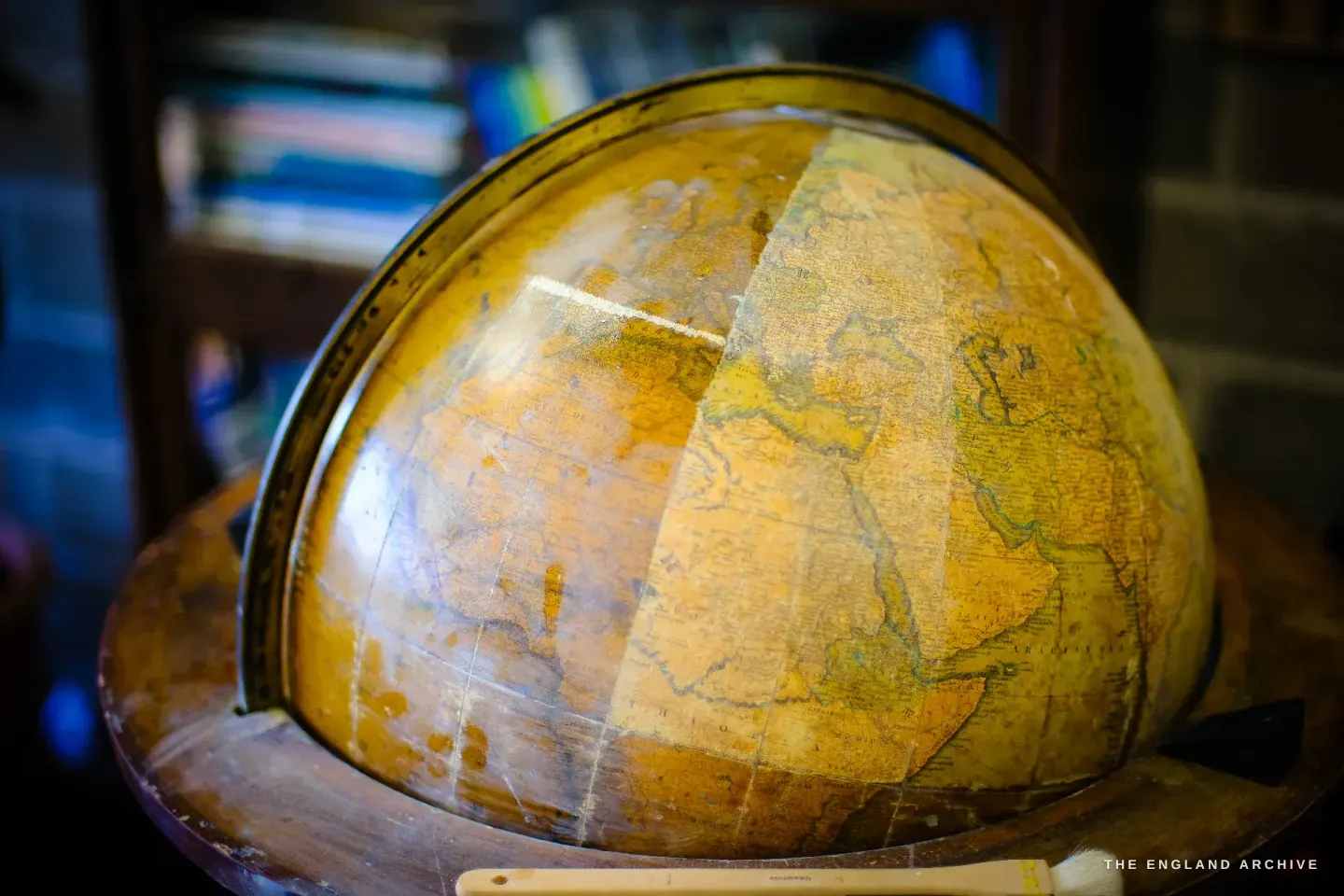
The conservation training is what lets him take in antique globes - sun-darkened, cracked, their varnish gone amber and brittle - and bring them back without falsifying them. The aim is not to make an old globe look new; it is to stabilise it, clean what can be cleaned, and make good only what is lost, so the object keeps its age and its history. On one globe on the bench you can read the work as a line: a cleaned segment bright and legible beside the years it has not yet reached.
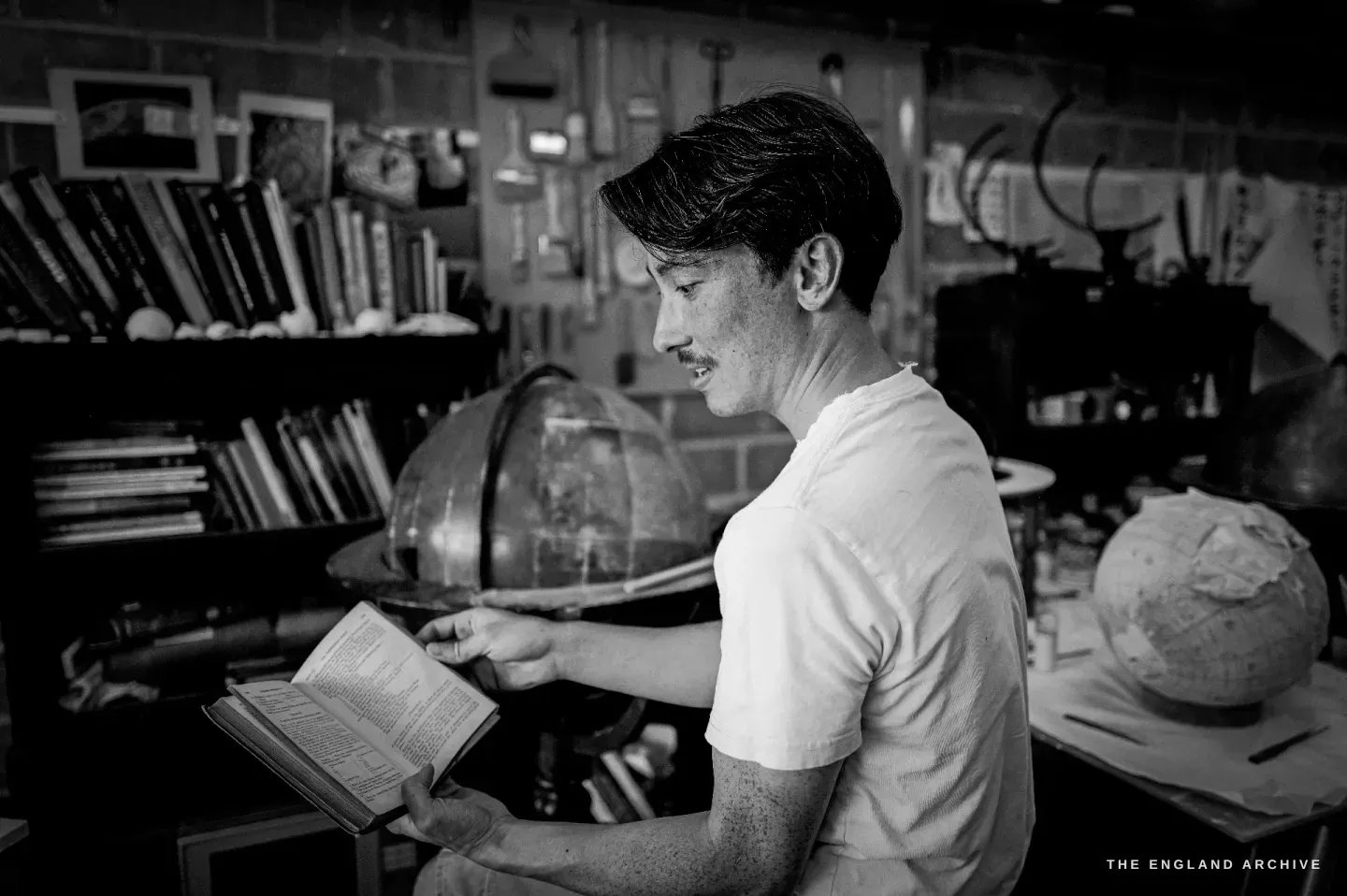
He goes further than most: he researches the secretive varnish recipes of the European globemakers of the seventeenth to twentieth centuries, and is building a reference database of globes from private collections and the National Maritime Museum at Greenwich. It is the kind of underpinning scholarship a craft needs if it is going to be carried forward rather than merely remembered.
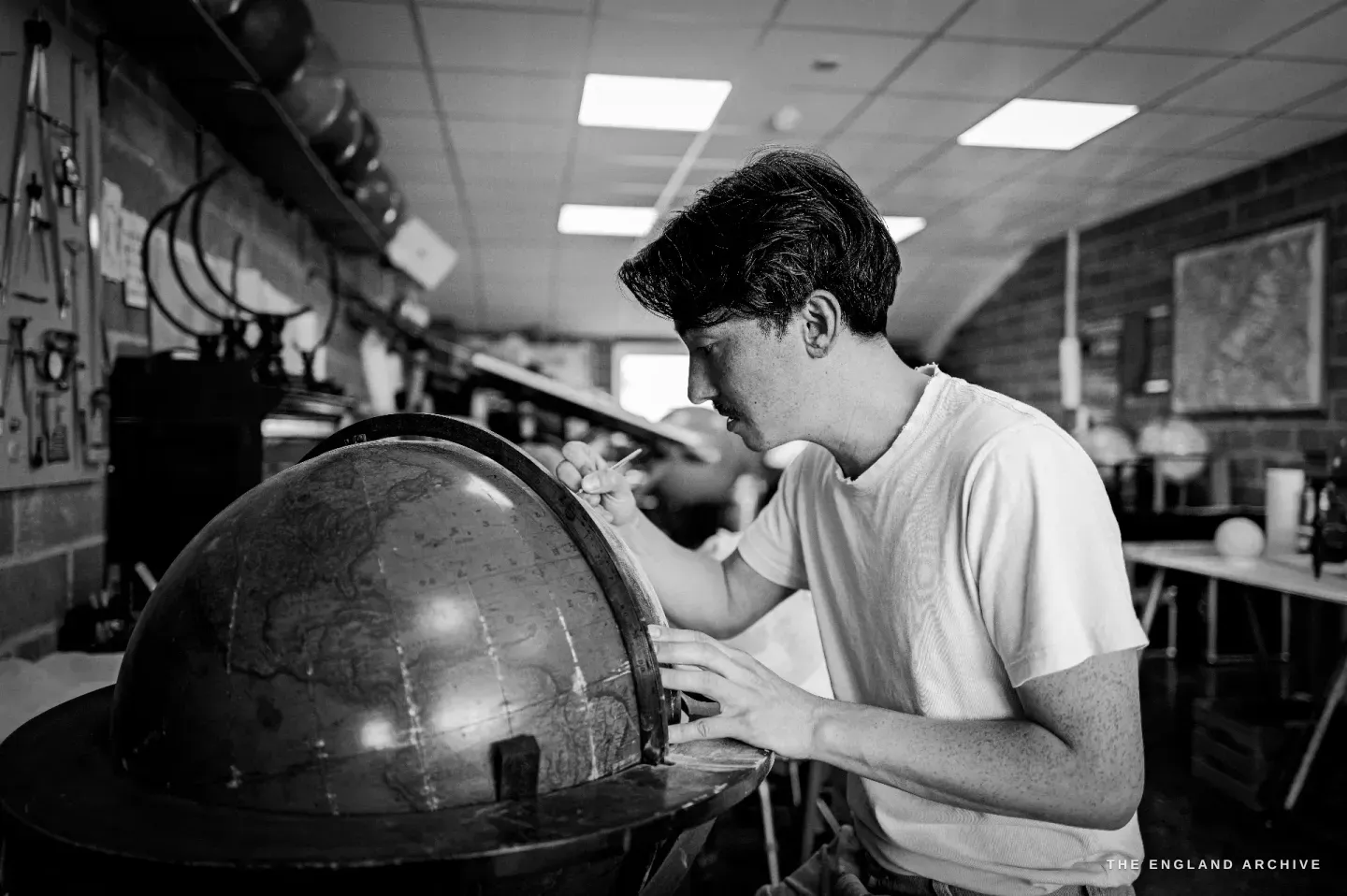
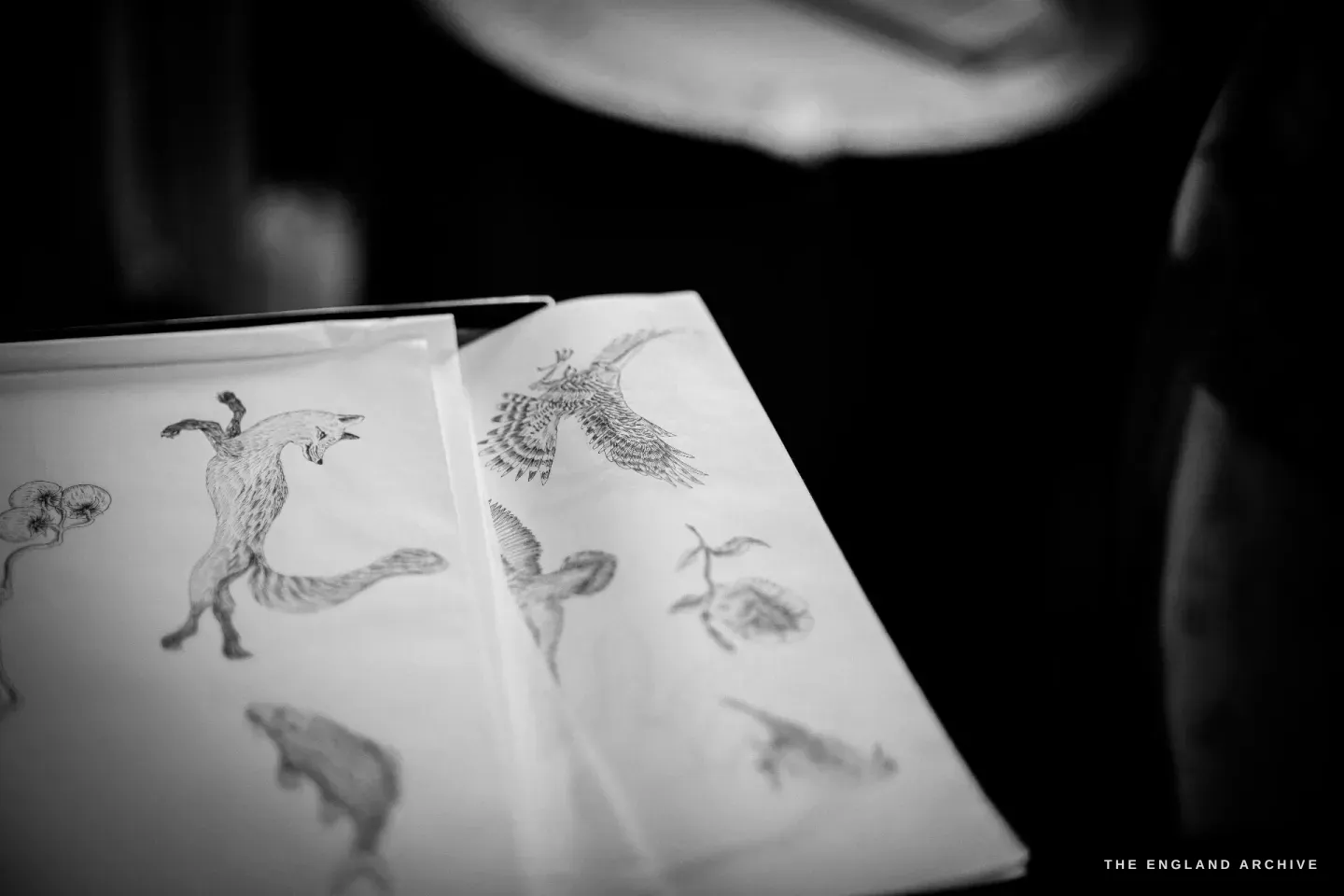
The new work is where the craft turns personal. A bespoke globe is mapped to its owner - the places that matter to them, in the colours they want, sometimes with the cartography of a chosen century. The celestial globes go further still: the night sky reworked into new constellations drawn from a person’s own story. That is why his bench is covered in pen drawings of animals and figures - a fox, a bird in flight - the raw material of a sky made to order.
The clearest example is the celestial globe he made for Penhaligon’s, the perfume house. He mapped over five thousand stars across the eighty-eight constellations, then reworked them into new patterns - including a constellation dedicated to the founder, William Penhaligon, and a hot-air balloon hidden in the stars for anyone who looks closely enough. Every figure hand-drawn, every gore hand-tinted. It is cartography as portraiture.
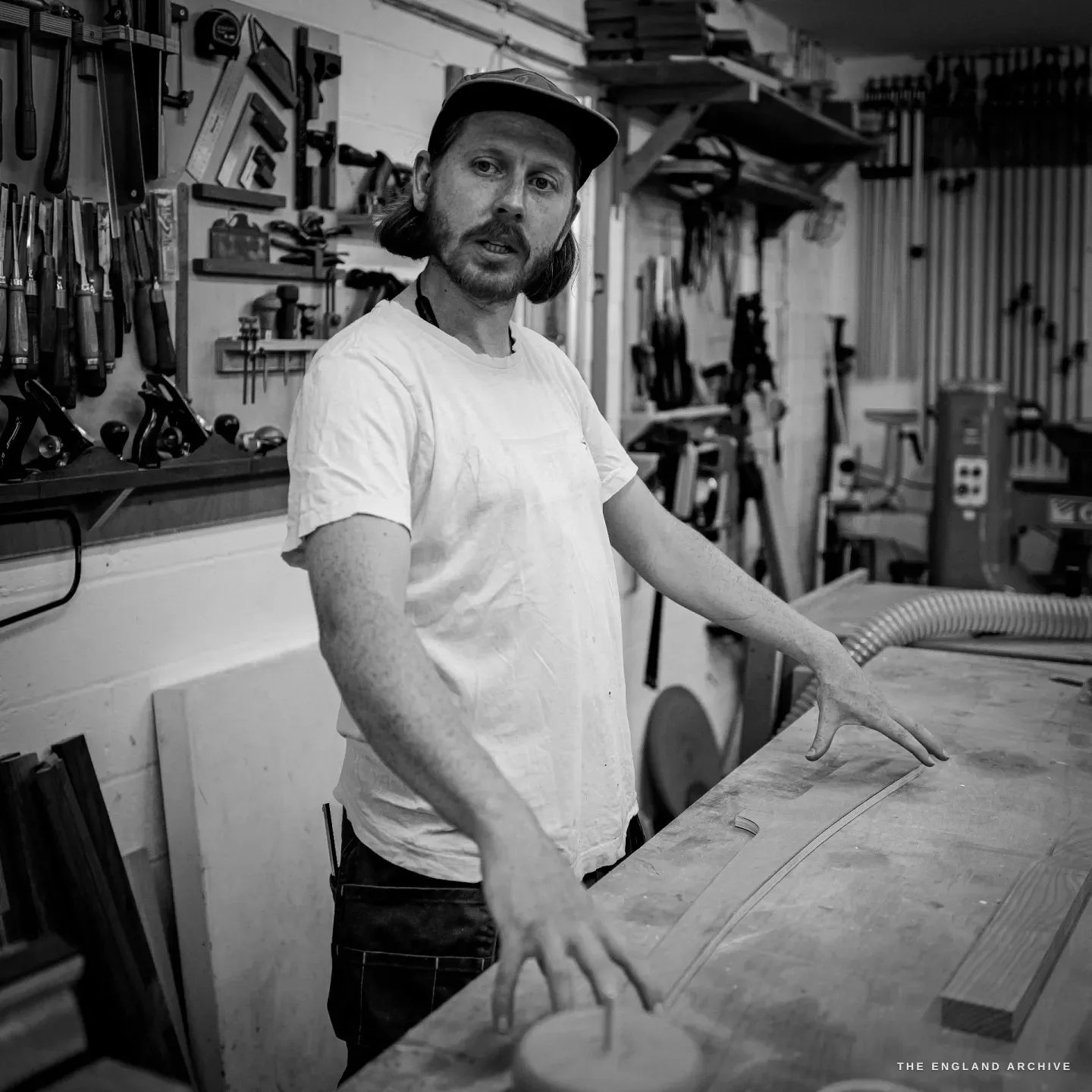
A globe is only half an object without the thing that holds it. Jonathan works the top floor of the workshop; on the floor below is the woodturner and furniture maker Louis Craig Carpenter, who makes the bespoke wooden stands his globes sit in, and helps restore the stands of the antique ones. Jonathan invited him into the space, and the arrangement has the neatness of a good joint: the sphere is made upstairs, the cradle downstairs, and the two meet as one finished piece.
It is not a coincidence that it works. Both men trained at Bellerby & Co - Jonathan leading globe production, Louis turning the stands - so the partnership at Grandeys Place is really two makers from the same workshop reuniting under one roof, each doing the half they do best. The archive is glad to record it, because this is how crafts ought to survive: not alone, but in the company of the other trades they depend on. Louis has a profile of his own in the archive.
This is the archive’s record of Jonathan Wright, made in his workshop at Grandeys Place in May 2026: the route in through engineering and Bellerby, the gores and the hand-colouring, the conservation of old globes and the scholarship behind it, the bespoke skies, and the partnership with the maker downstairs. Globe-making by hand has no formal training route and very few practitioners; that he is also building the conservation knowledge to carry it forward is exactly the kind of work this archive exists to record.