Makers
Giridhar Vadukar
Bell Tuner
John Taylor & Co, Loughborough
Bell Tuner
John Taylor & Co, Loughborough
Giridhar Vadukar has spent forty-seven years giving bells their voice, and he is one of only three people left in the country who can. When he stops, that knowledge has nowhere yet to go.
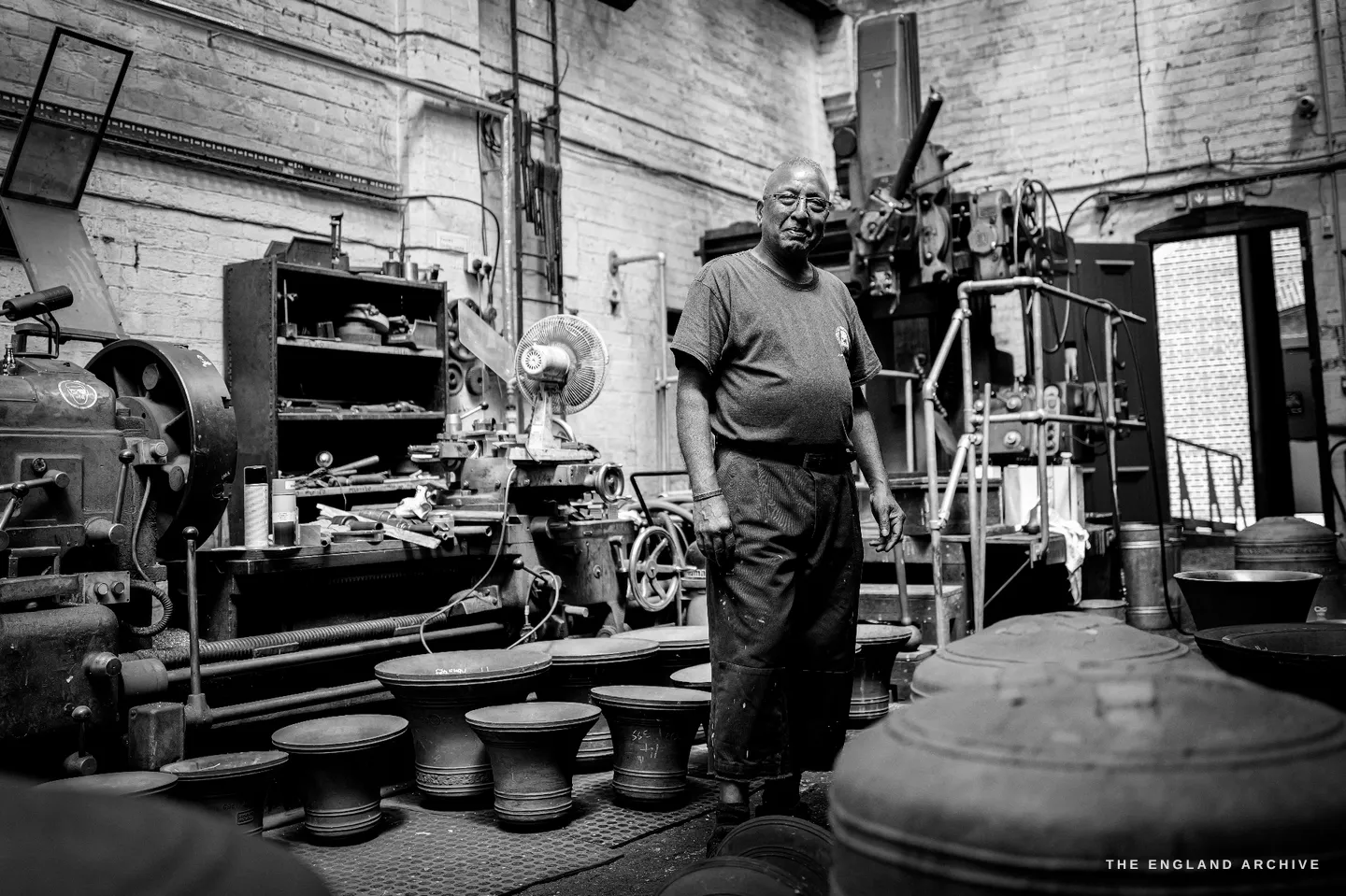
When the museum tour was over, Thomas Preston walked me across the floor and said there was someone I had to meet. That someone was Giridhar Vadukar, the foundry’s chief tuner - and, it turned out, one of only three bell tuners left in the whole of the country. He was waiting in the tuning shop, surrounded on every side by the bells he gives their voice to, and within a minute of meeting him I knew this was the conversation the whole day had been building toward.
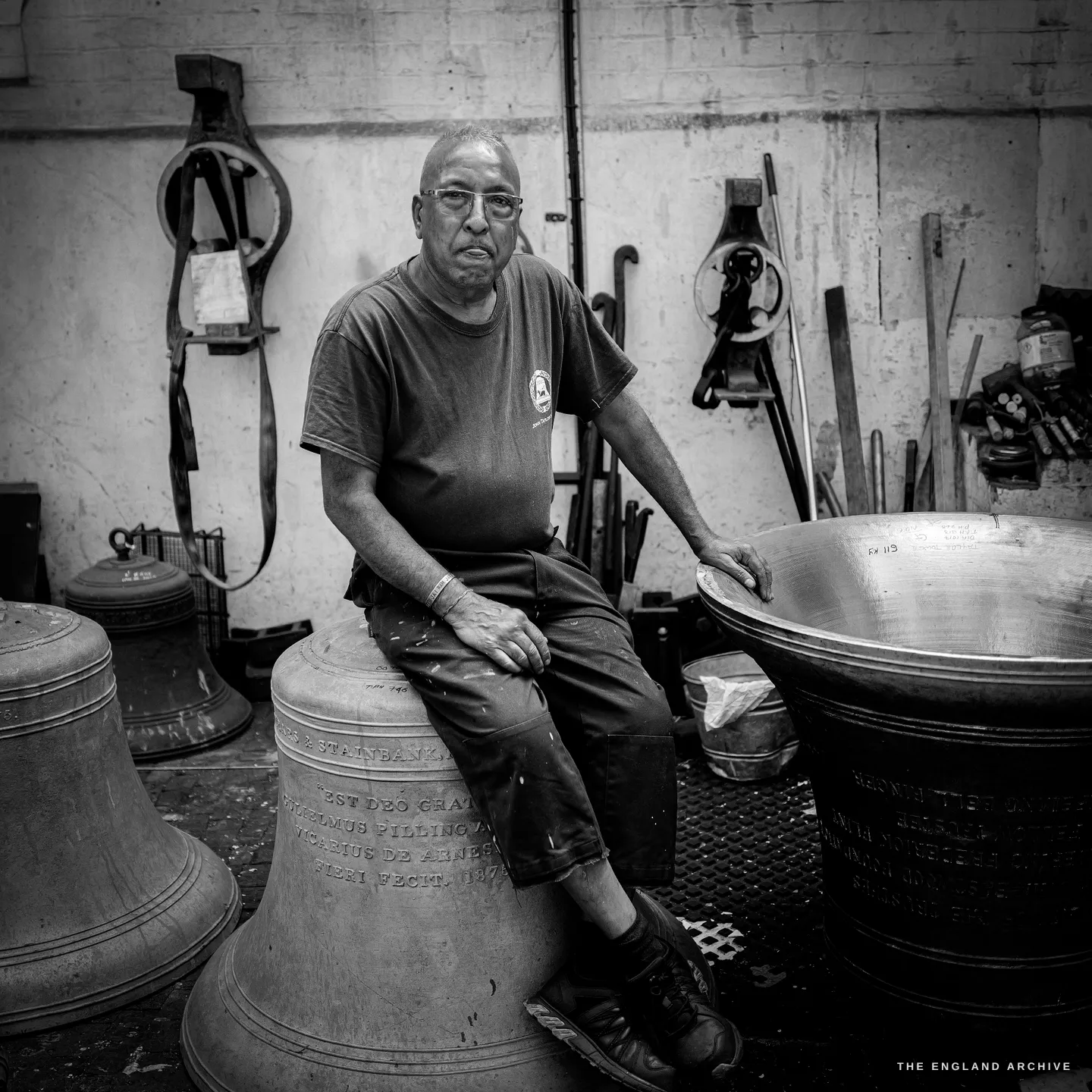
He has been doing this for forty-seven years, thirty of them here at Taylor’s, and he wears it lightly. There is no grandeur to him, no sense of a man performing his own importance - just the quiet certainty of someone who has done a hard thing for a very long time and knows exactly how good he is at it. He sat me down and started, without any prompting, to explain the work, because that is the part he loves.
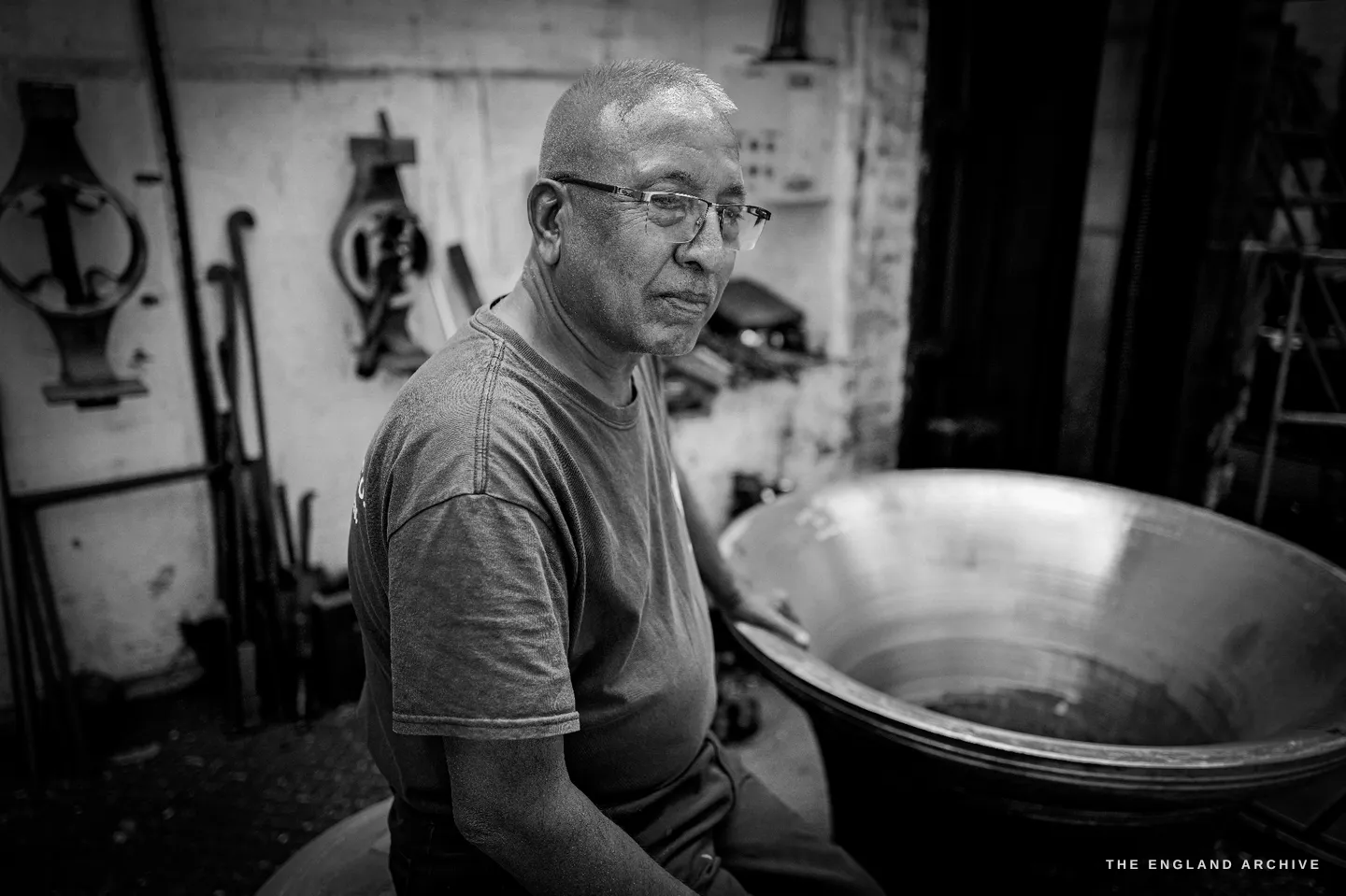
A bell is not one note. It is five at once - a chord built into a single piece of bronze - and the whole art of tuning is bringing those five into agreement so that the ear hears one true, clean sound instead of a clash. A bell comes off the casting floor dull and very nearly right, and Giridhar’s job is to make it exactly right by taking metal away from the inside, a little at a time, until each of the five notes falls where it should.
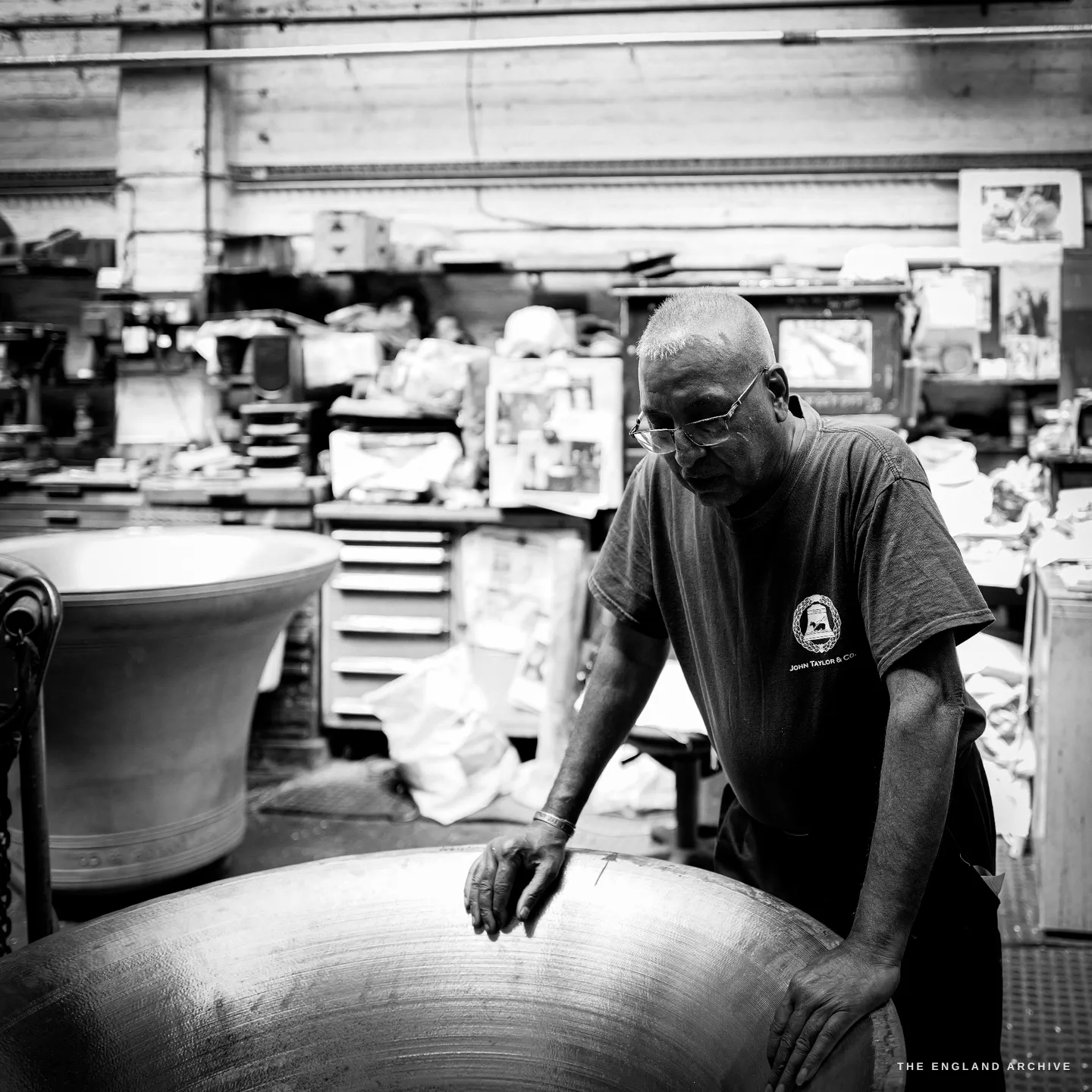
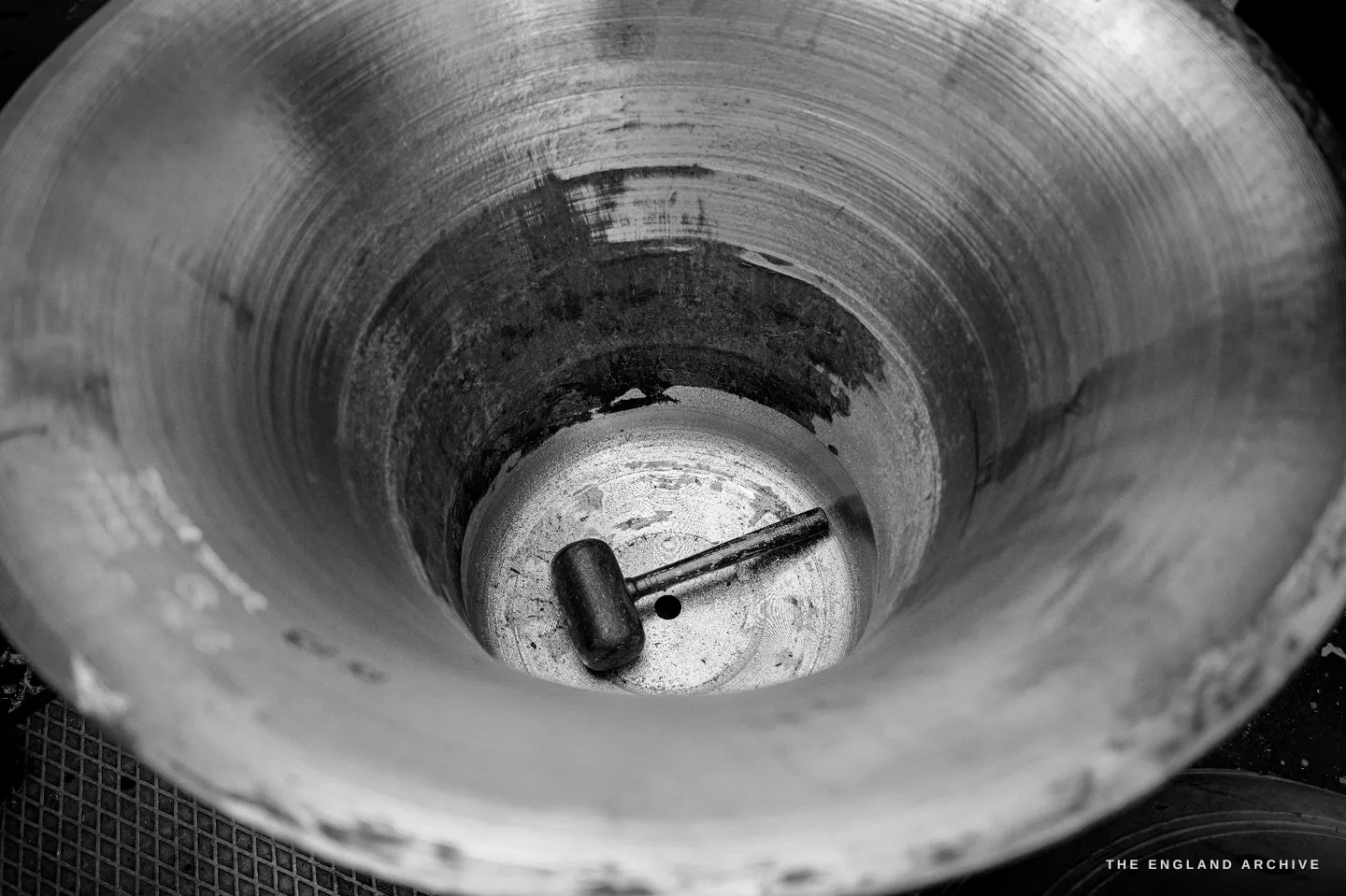
The bell goes mouth-up on the tuning machine and a cutting tool reaches down inside it, shaving the bronze in fine passes while the bell turns. After each cut he listens. He told me he can hear which of the five notes is out and by how much, and where on the wall of the bell to take the metal off to bring it home. It is part science and part something closer to musicianship, and it is utterly unforgiving: once the metal is gone, it is gone, and a bell cut too far is scrap. Taylor’s have tuned this way - the five-tone, true-harmonic method - since they perfected it in 1896, and the principle has not changed since. (I set the whole process out, from mould to tuning machine, in the monograph The Craft of Bell Founding.)

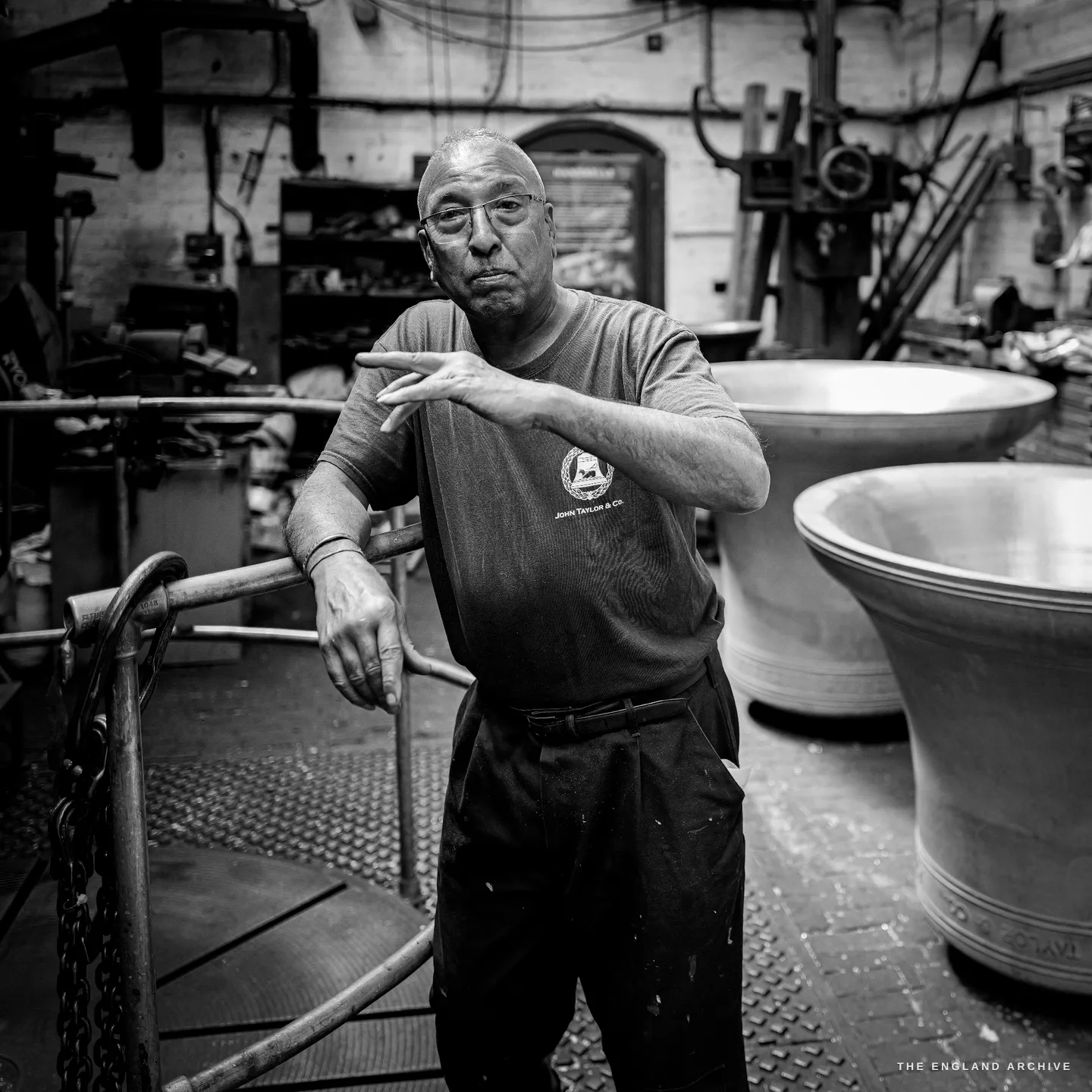
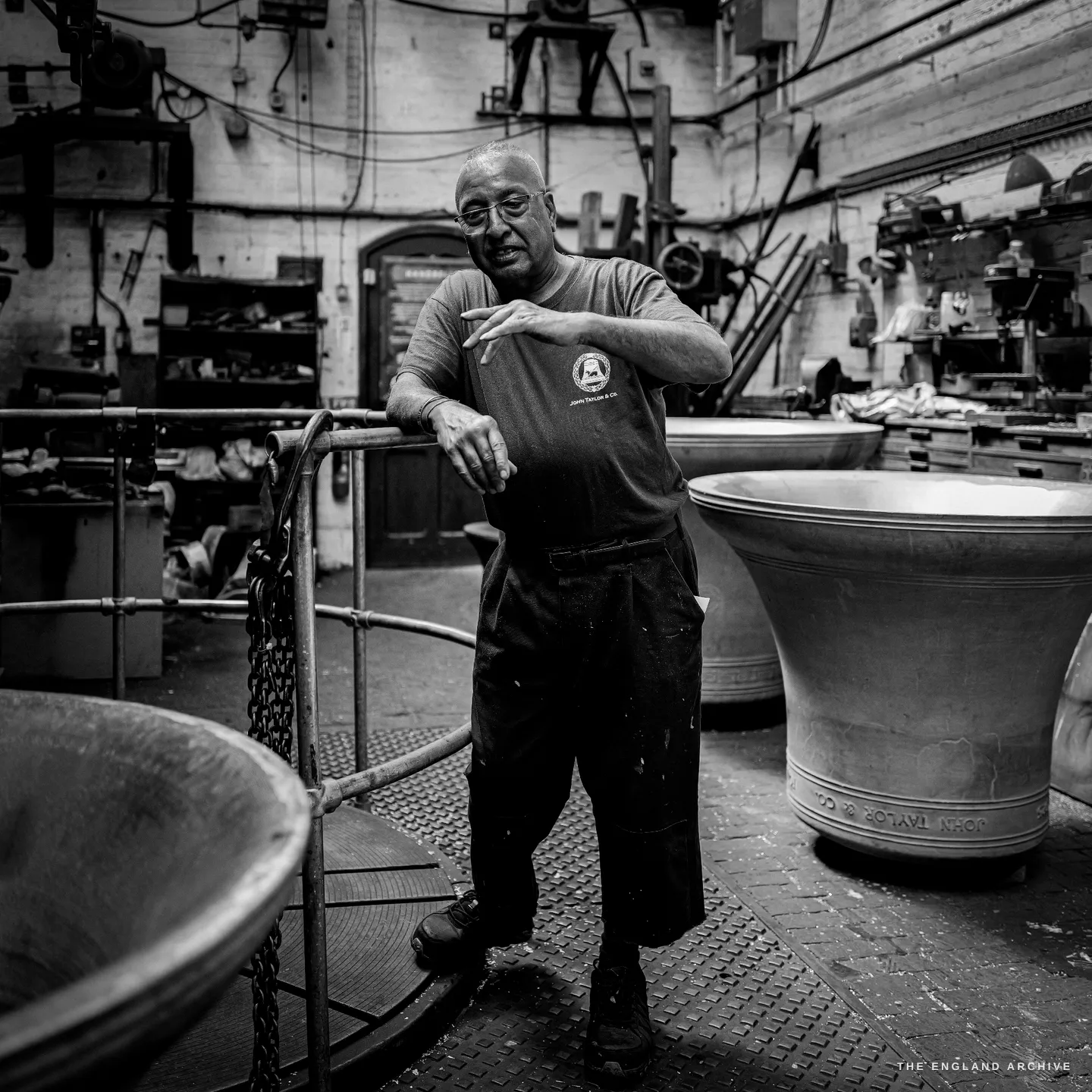
Giridhar’s road to this shop was a long one. His forefathers came from Gujarat, in India, and his own working life has carried him a good deal further. He worked in England, spent a stretch in Libya, put in years at a heavy-engineering firm - the kind of place with overhead crane rails running the length of the walls - and was then invited in by Taylor’s to learn the bells. He has been here thirty years, and his family is now scattered across the world: grown children, one of them married, a life spread wide from a corner of a Loughborough foundry.
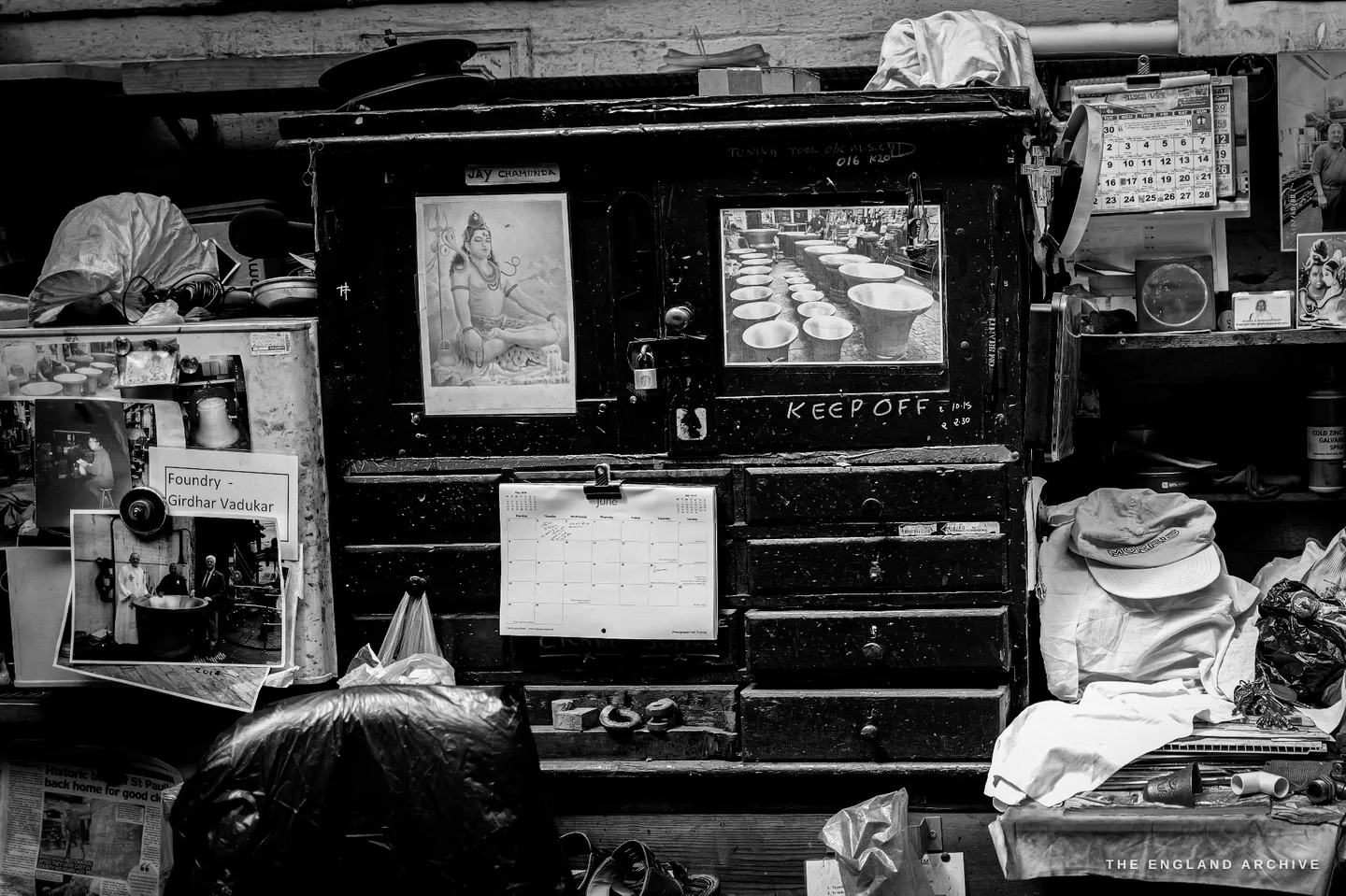
That corner is worth looking at. His name is taped to the cabinet above his bench, and beside the photographs of finished bells he has pinned a small print of the gods from home. The bells of the English church and the deities of Gujarat keeping company on one shelf - thirty years of a life, in a square foot of foundry wall.
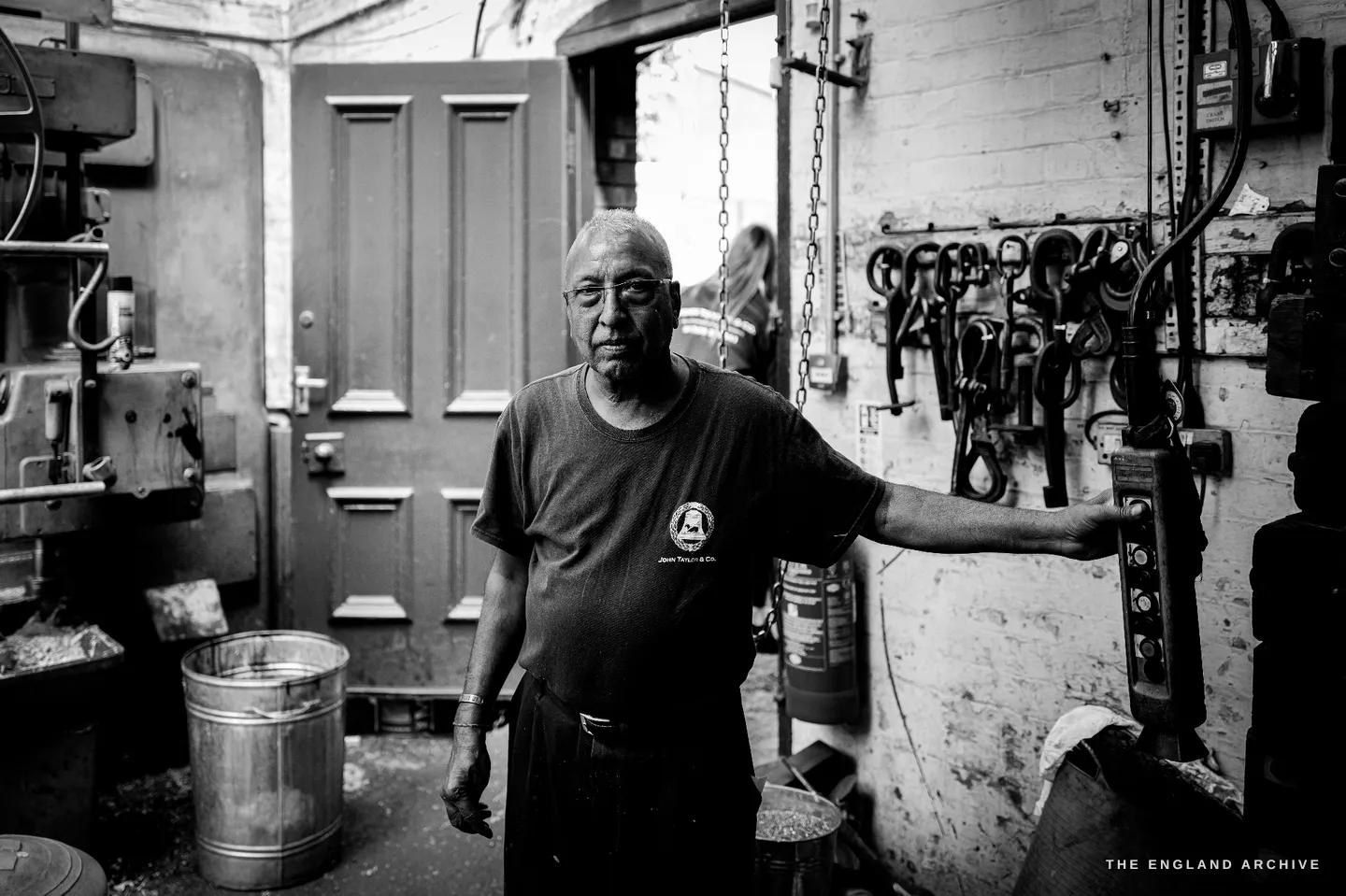
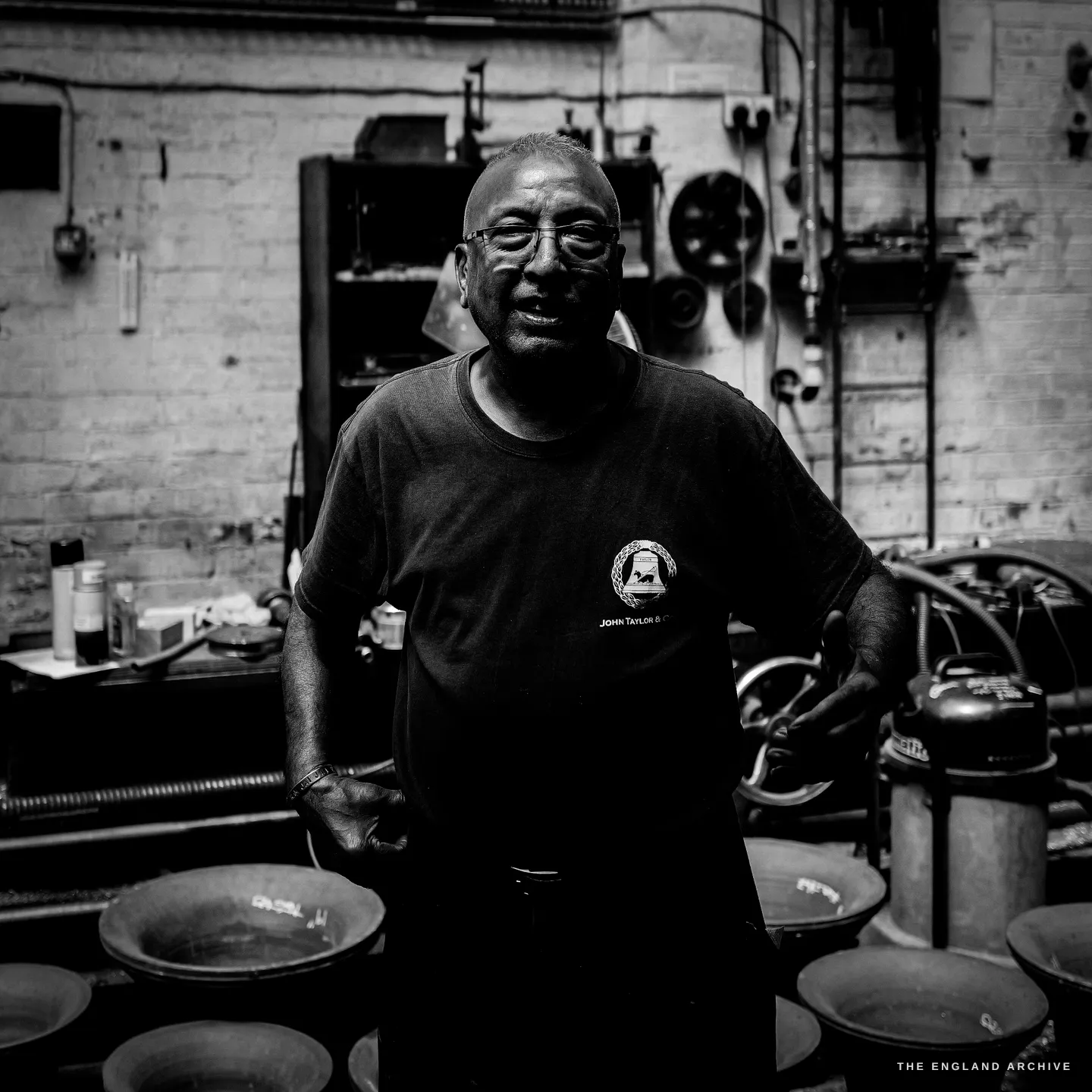
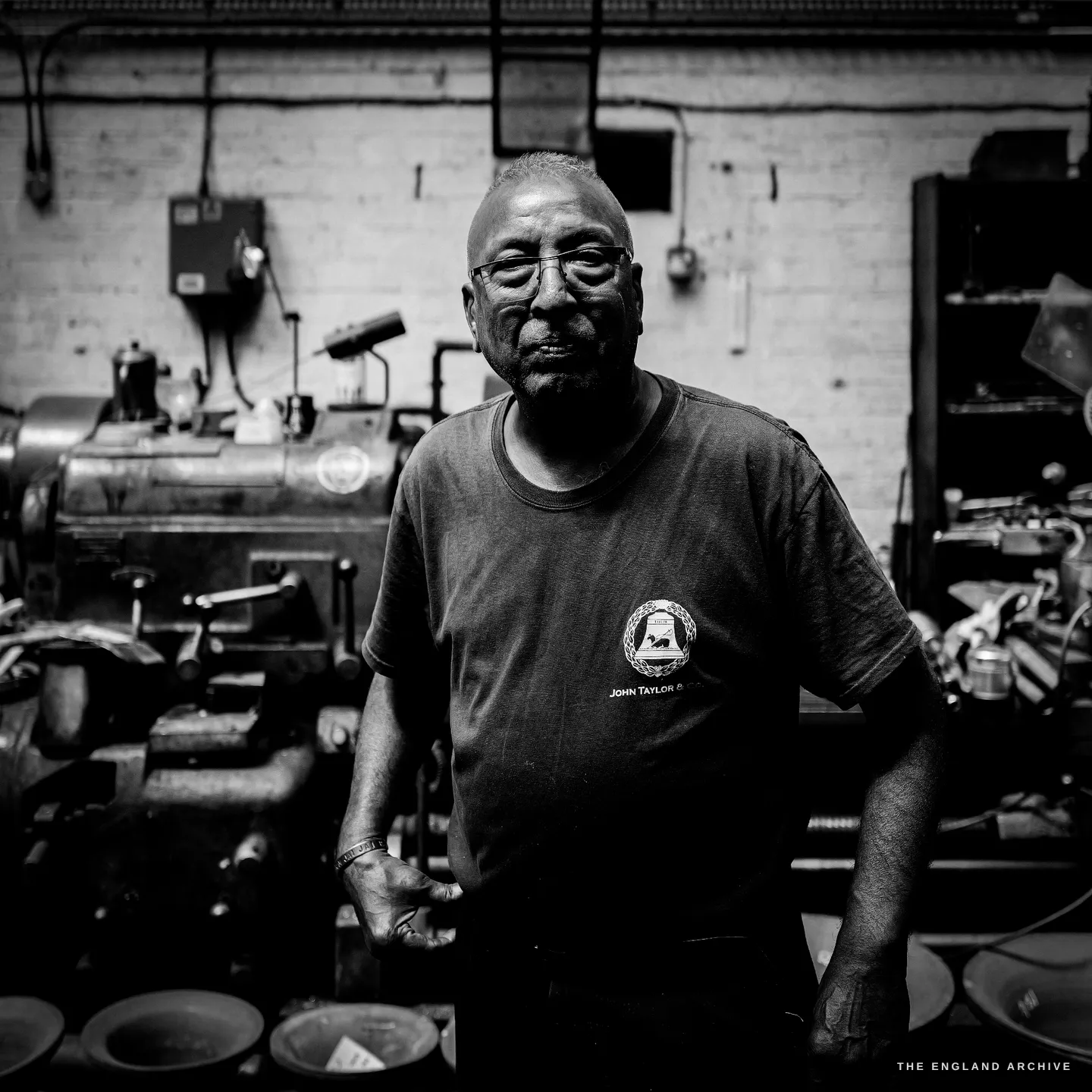
So I asked him the question that this whole archive exists to ask. You have been here forty-seven years. What happens when you stop? Who comes after you?
Thomas joined us, and the two of them talked it through, and the answer was honest and not comfortable. There is no apprentice. Finding one is genuinely hard - the skill is so specialised, and takes so long to learn, that you are asking a young person to give years to a craft that exists, at a professional level, in perhaps three pairs of hands in the country. And if it does not work out, there is little call for a trained bell tuner anywhere else. It is a narrow door to walk through, and few do. Bell founding sits on the Heritage Crafts Red List as critically endangered, and Giridhar is exactly the reason why.
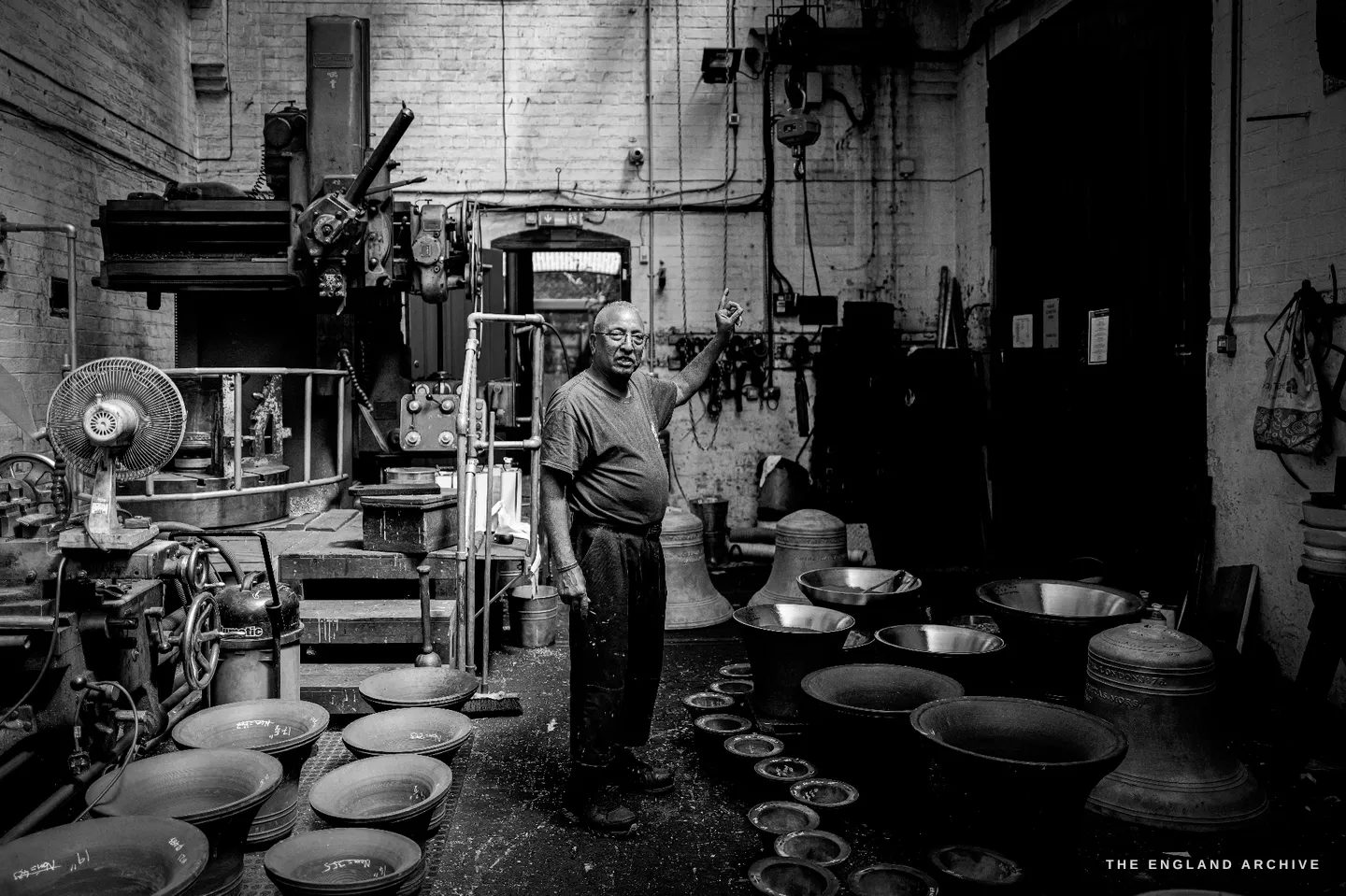
This is the succession problem in its starkest form. It is not that the craft is being badly transmitted; it is that it is barely being transmitted at all. Giridhar can hear five notes in a single bell and bring them to agreement by hand. That ability lives in him, built over forty-seven years, and right now it has nowhere to go. Documenting him does not solve that. But it does at least mean the work, and the man, are on the record while the work is still being done.
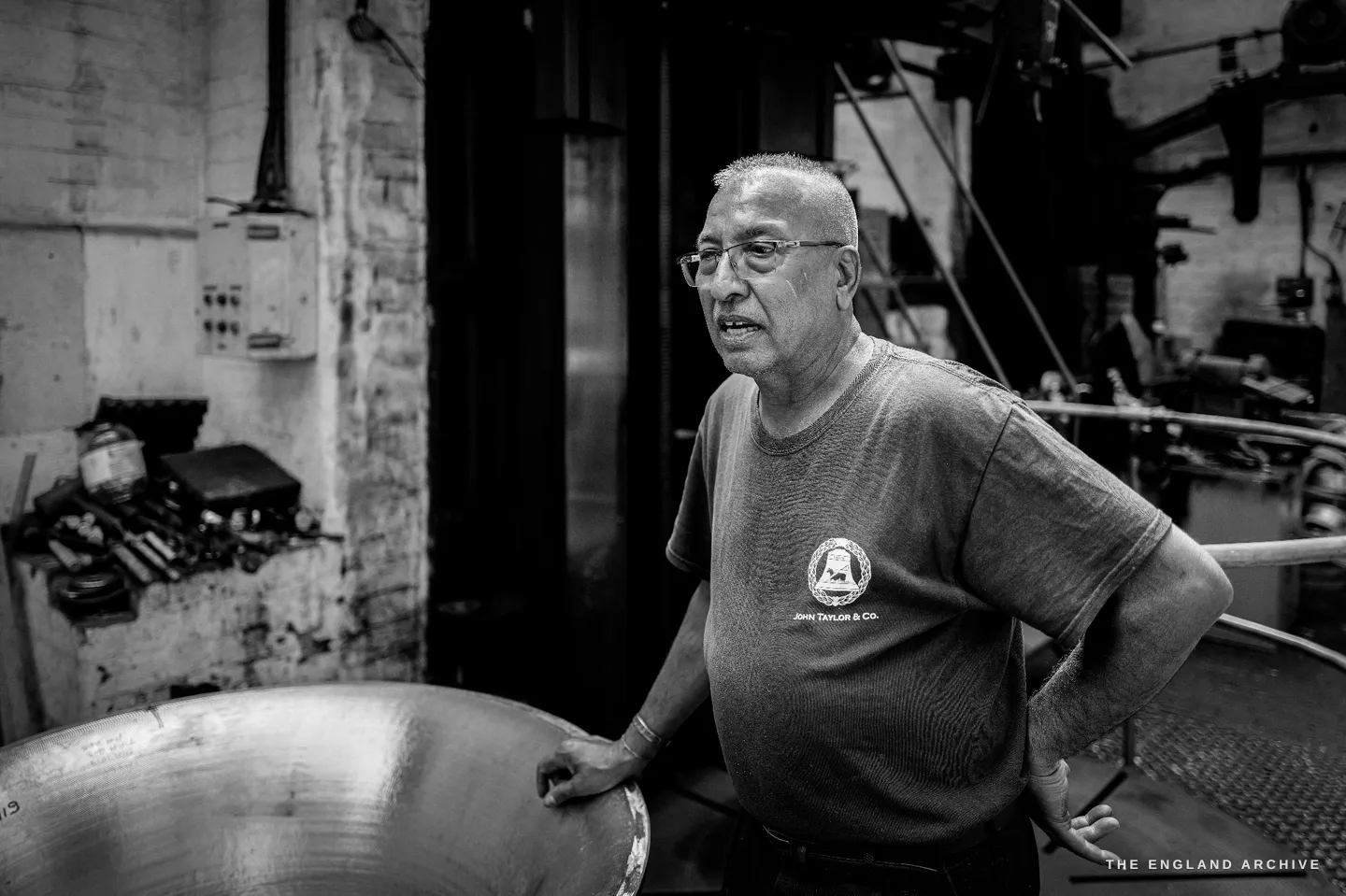
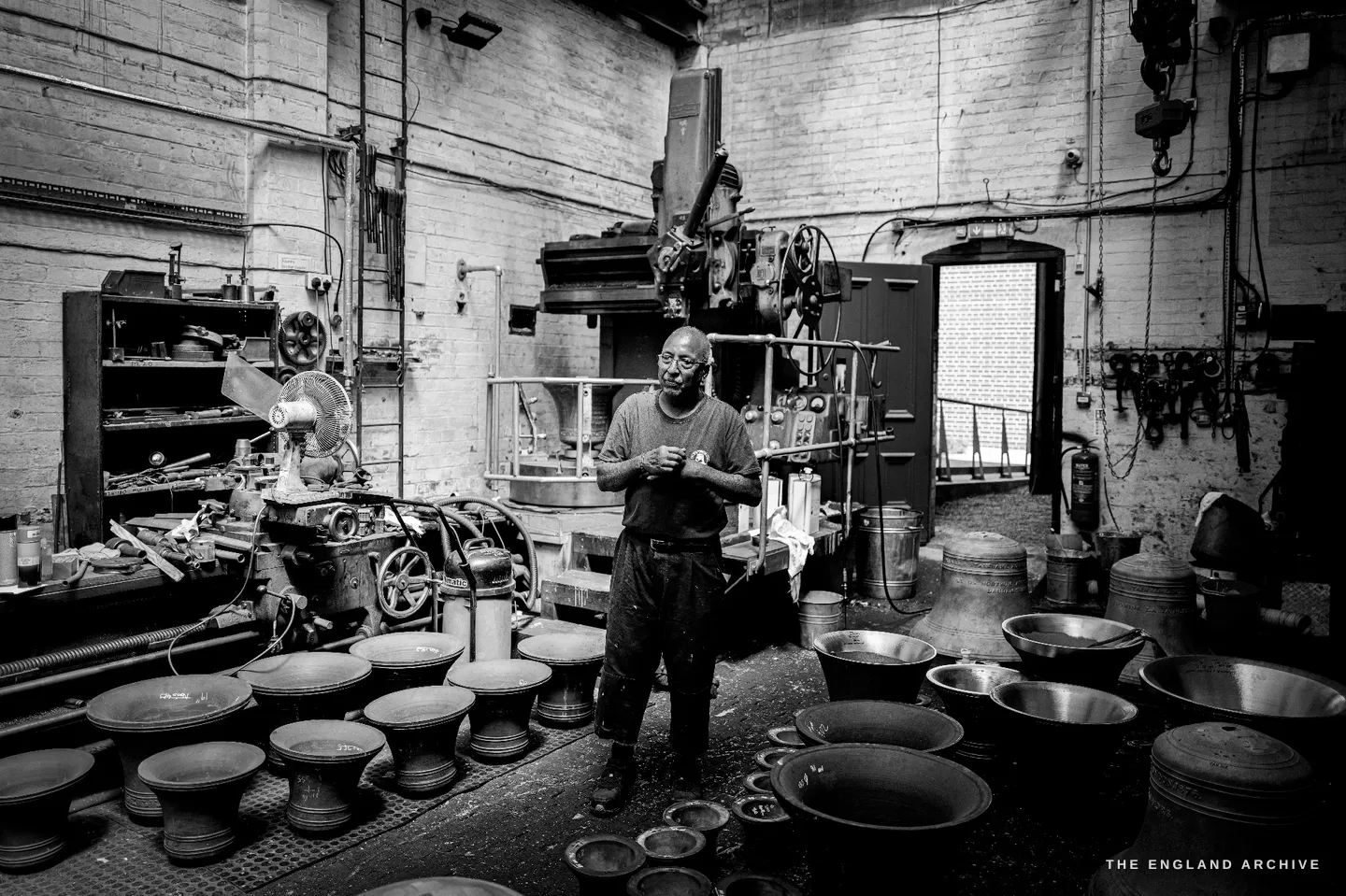
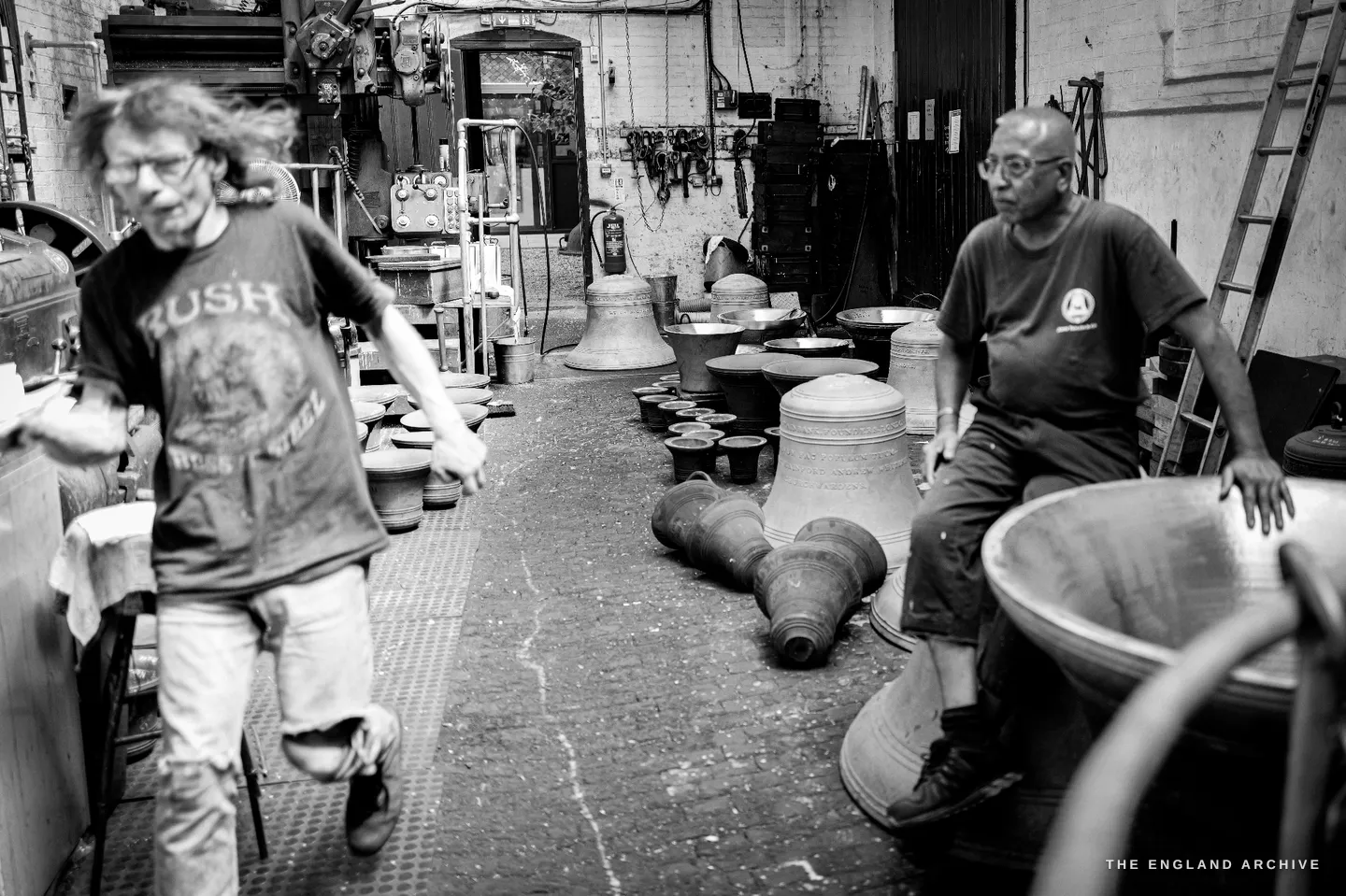
I could have stayed all day. Giridhar is warm and funny and entirely without side, and the foundry around him hums with the same character - a colleague went past in a Rush t-shirt while we talked, and later I would meet the foreman, Bill Bowes, with Iron Maiden on his radio. It is a serious place doing serious work, and a thoroughly happy one.
What the archive holds now is one visit, one set of frames, and this account of a craft that comes down to one man and his ear. When the bells of a church ring true somewhere in England, the odds are good that Giridhar Vadukar is the reason. That is worth writing down.
Giridhar was one stop on a long morning at John Taylor & Co. The whole visit to the working floor is in A Morning at Taylor’s, and the history and exhibits are in Inside the Bellfoundry Museum. Next door to the tuning shop, the foreman Bill Bowes makes the iron that holds and swings the bells Giridhar gives their voice. For the craft set out whole - moulding, casting and tuning - read The Craft of Bell Founding, or the shorter glossary entry on bell founding.