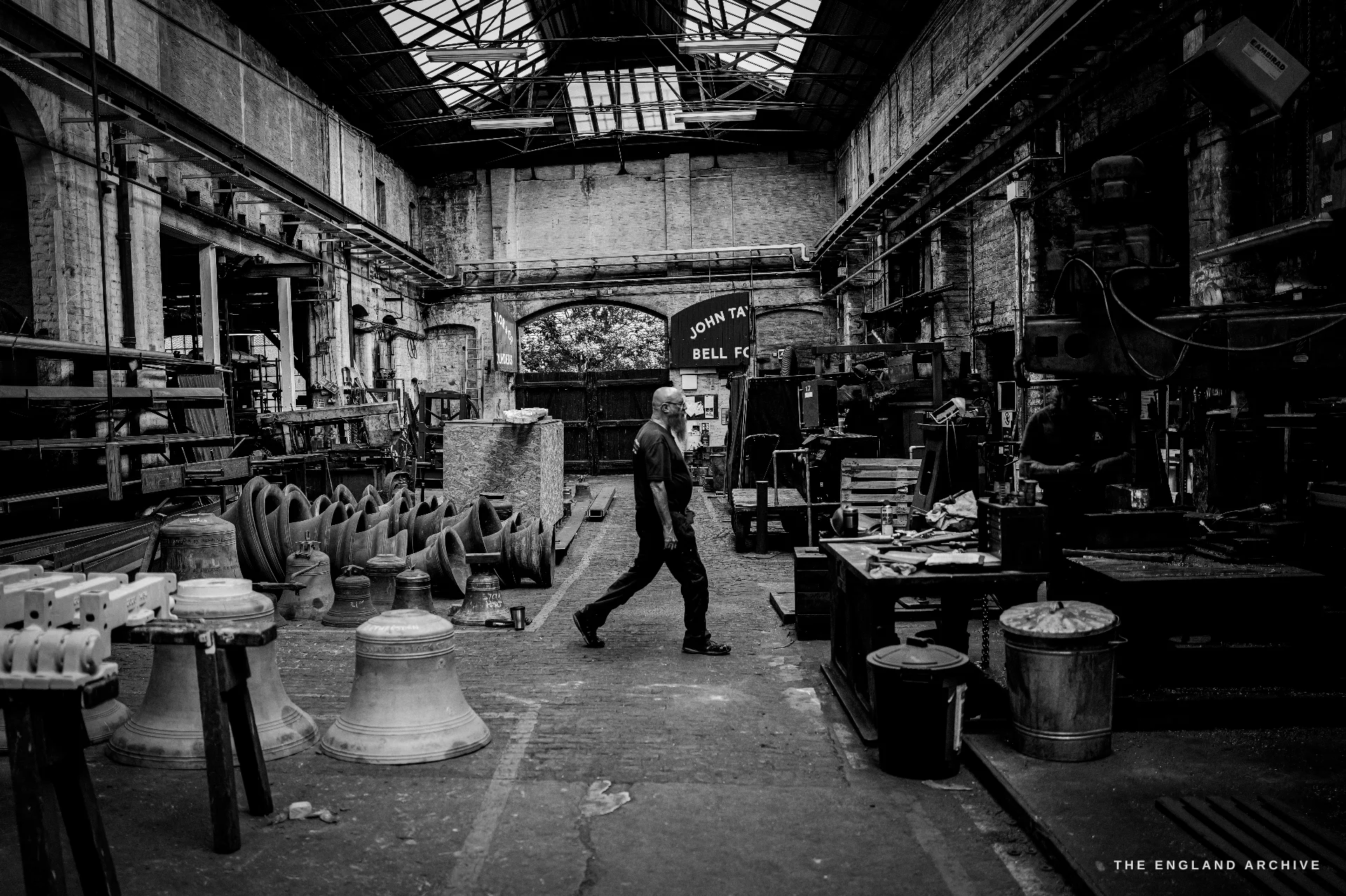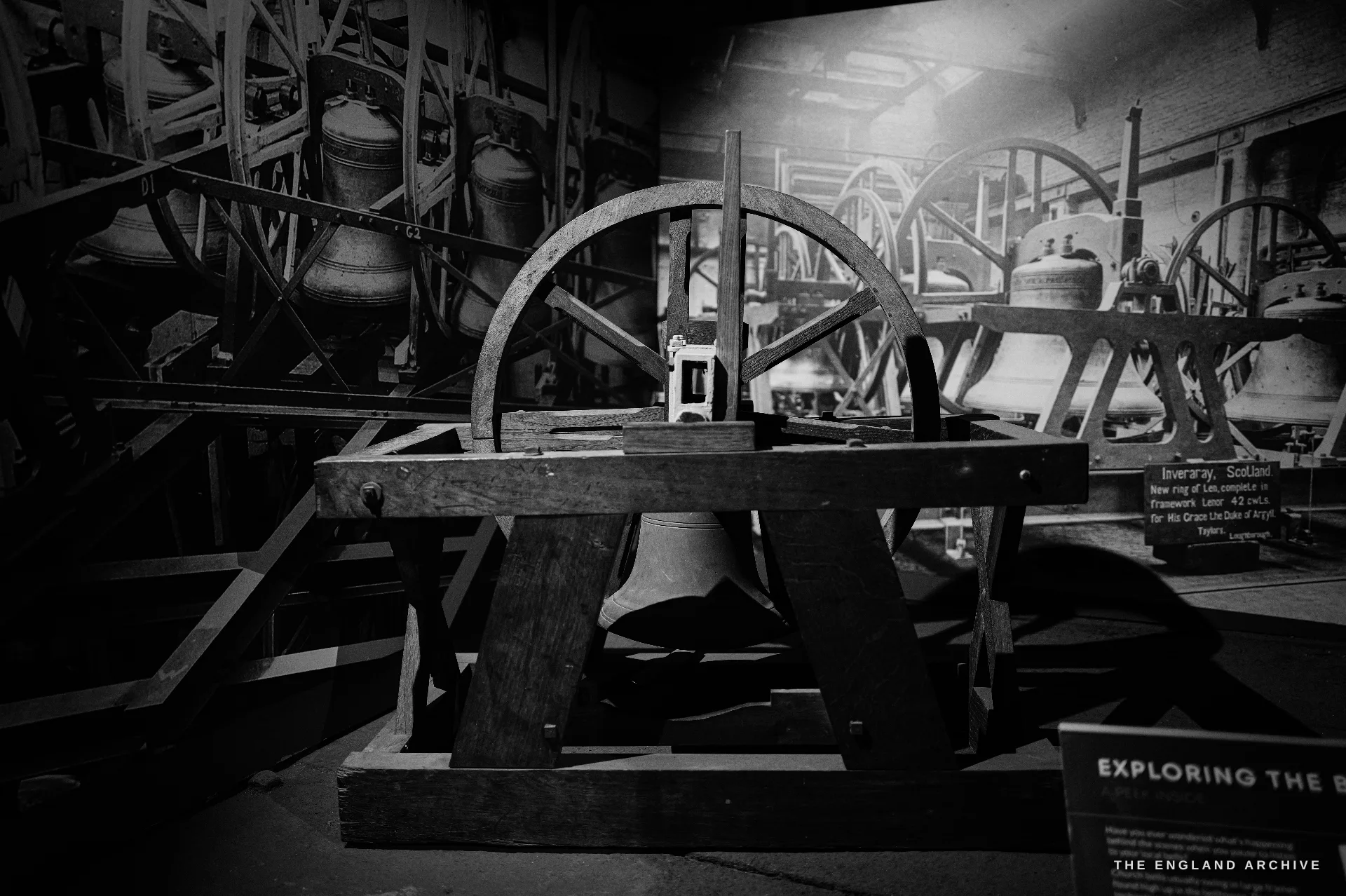

Most working factories do not have a museum attached, because most working factories are not nine hundred years deep. John Taylor & Co in Loughborough belongs to a line of bell-founding that has been unbroken since the middle of the fourteenth century, and the Loughborough Bellfoundry Trust has turned part of the old works into a museum that tells that story. On a June morning in 2026, Thomas Preston let me into it before it opened, and then I went round again on the public tour. This is what is in there, and the history it holds.
In through the arch
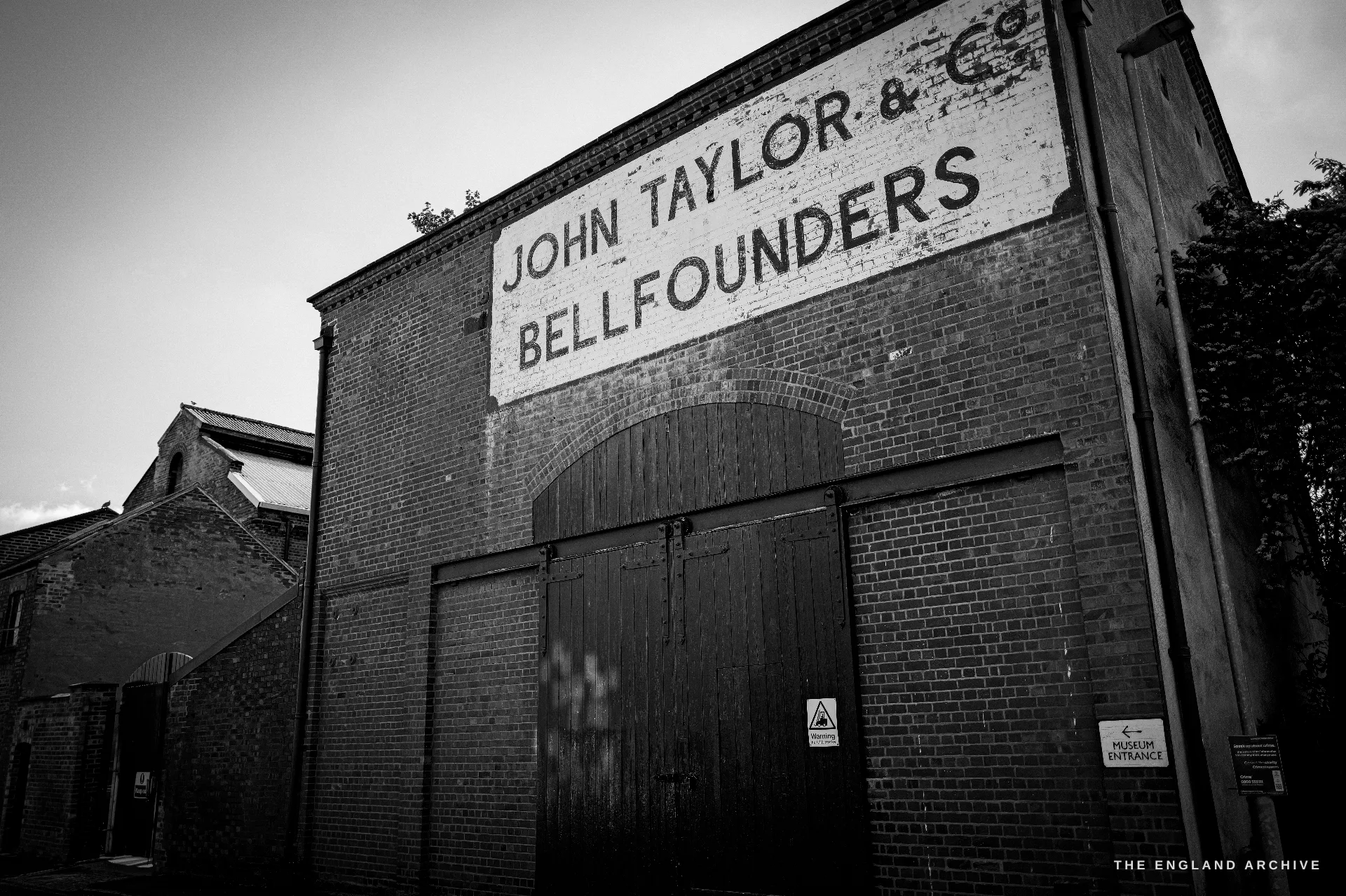
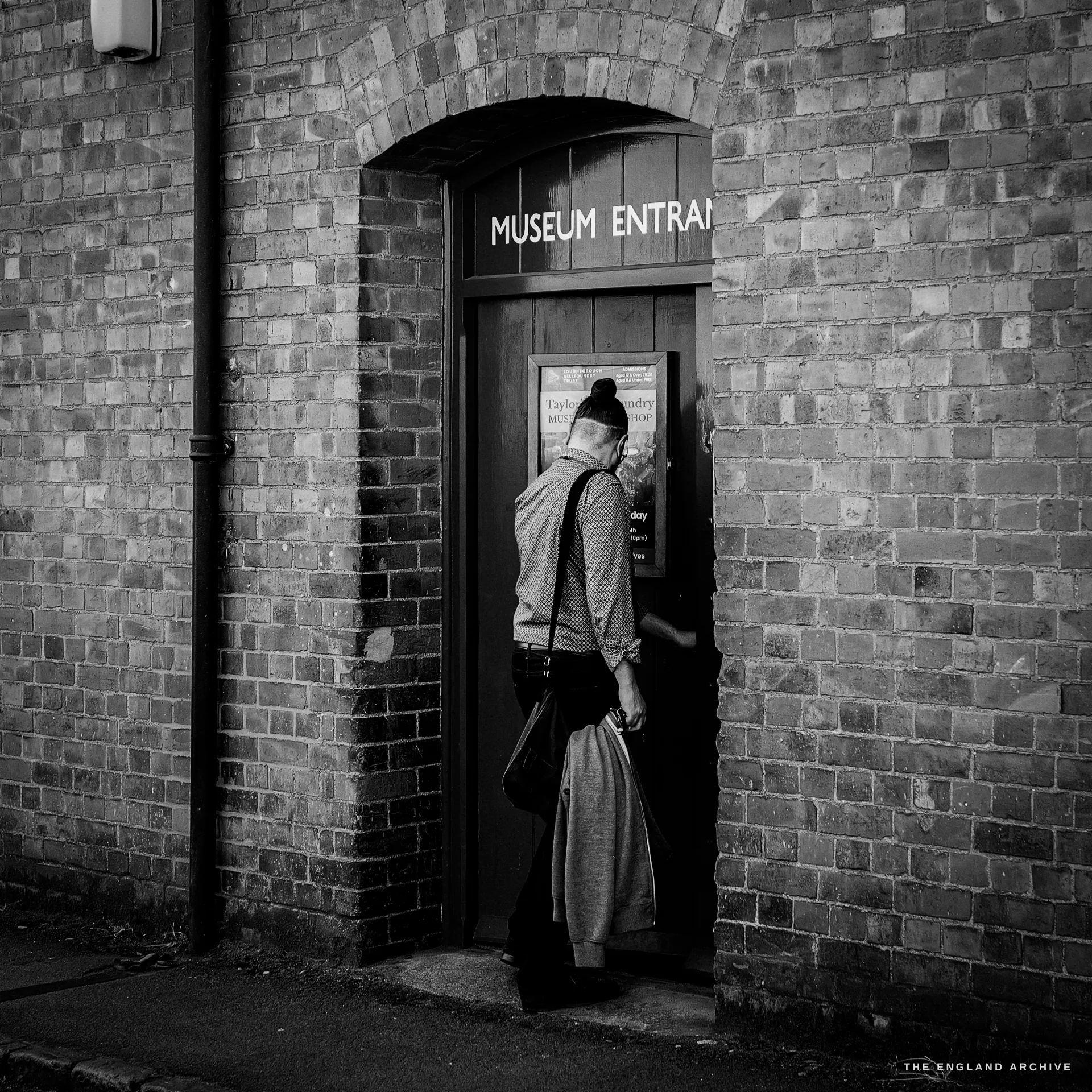
The museum has its own entrance off the works, in under an arched brick doorway with a hand-painted sign hung on a bracket. I had already stood across Freehold Street taking in the building - the painted BELLFOUNDERS lettering on the gable, the bell tower, the four chimneys over the foundry annexe - and the museum carries the same old-world weight inside. (The arrival, the sit-down with Thomas, and the factory floor are told in the companion entry, A Morning at Taylor’s.)

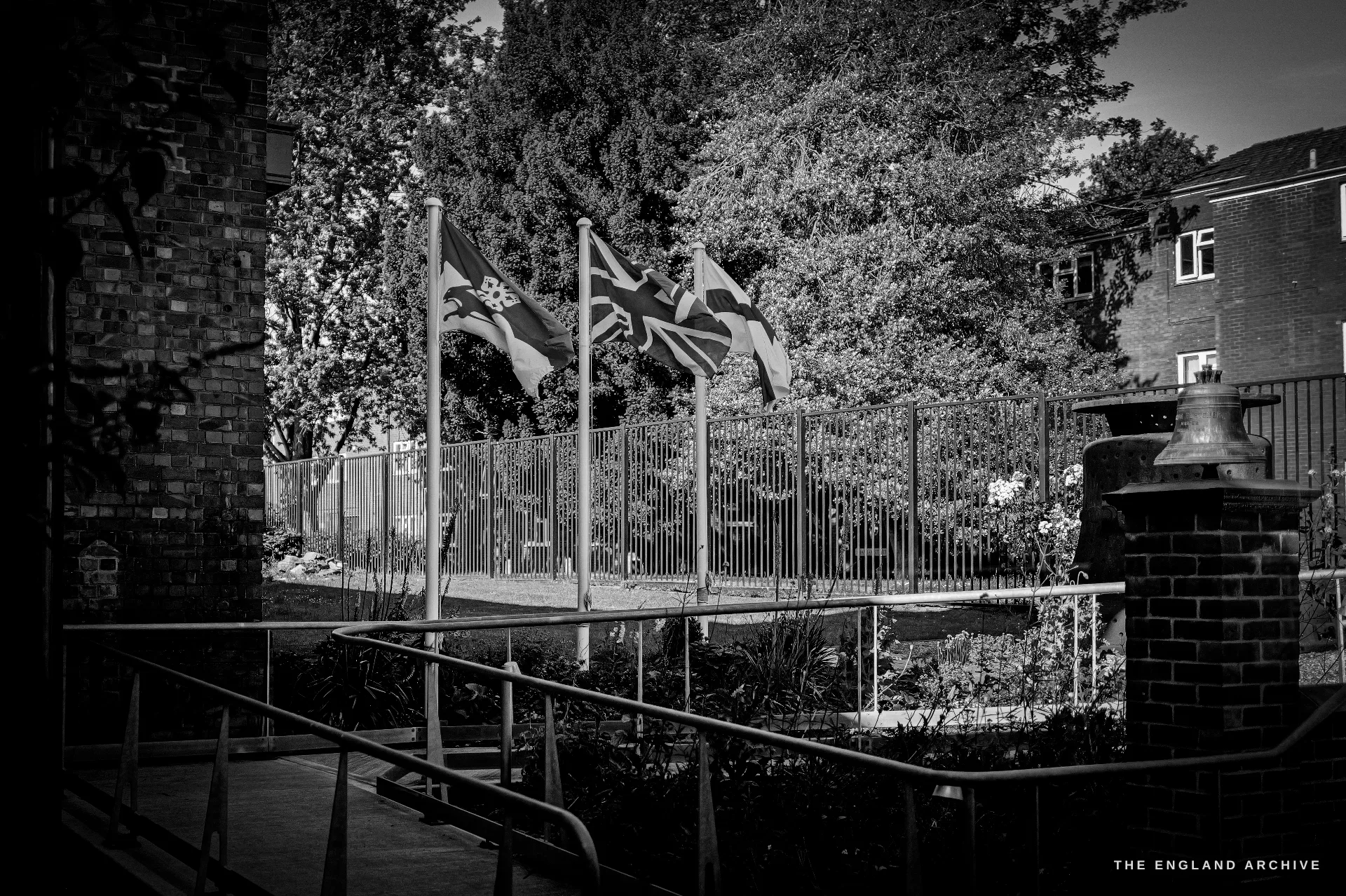
Thomas had given me the run of the exhibits before the doors opened, which is a photographer's dream - empty rooms, full access, and time. In the courtyard outside, flags fly over the old works, and bells too good to melt down stand on brick plinths as exhibits in their own right, retired from ringing and kept for looking at.
Nine hundred years of one craft
The tour begins, as Gary the guide put it, long before there was a Taylor in it. English bell-founding runs in an unbroken line from the middle of the fourteenth century, when a founder named Johannes de Stafford - who was also, at one point, mayor of Leicester - was casting bells within ten miles of where they are still cast today. When founding in that part of the country fell quiet in the seventeenth century, the craft was carried on by Thomas Eayre of Kettering and his brother Joseph, who so admired the bells of Hugh Watts of Leicester that they modelled their own work on his. Through Eayre, and through Edward Arnold of St Neots, the distinctive sound was kept alive.
The Taylor name enters in 1784. Robert Taylor, who had begun an apprenticeship with Arnold in 1775, took over the St Neots foundry that year. His son John Taylor established the firm in Loughborough in 1839, and in 1859 it moved to the Freehold Street site it has occupied ever since. So the bricks I had been standing in front of are themselves more than a century and a half old, and the craft inside them is six centuries older than that.
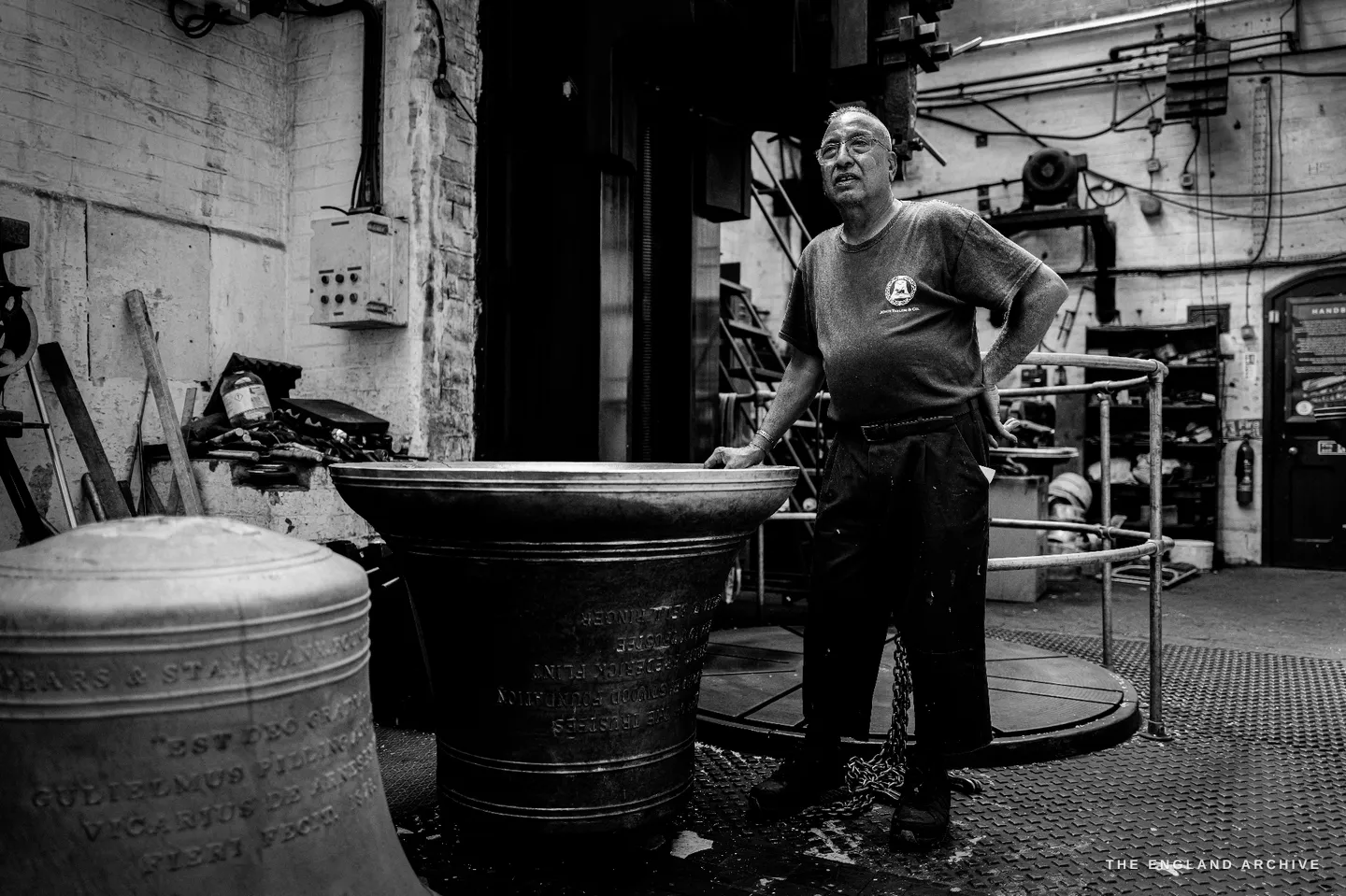
Two moments from the firm's history stop you. In 1881 Taylor's cast Great Paul for St Paul's Cathedral in London - at over seventeen tons, the largest bell ever cast in Britain. And in 1896, after years of experiment and the acoustic papers of Canon Arthur Simpson, the foundry perfected the five-tone, true-harmonic method of tuning a bell, hanging the first true-harmonic peal at Norton, near Sheffield, that same year. That method - bringing the five partial tones of a single bell into true musical relation - is still how Taylor's tune today, and it is what their chief tuner Giridhar Vadukar was doing in the tuning shop while I was there.
The recent history is harder. The firm merged with the bellhangers Eayre & Smith in 2005, went into administration in September 2009, and was bought out and refinanced by a consortium. In 2016 the Loughborough Bellfoundry Trust was formed to save the historic buildings, which were Grade II* listed and on the Heritage at Risk register; with the Heritage Fund, Historic England, the Town Deal and a long roll of charitable trusts behind it, the Trust has restored the fabric and built the museum I was standing in. Today John Taylor & Co is the largest working bell foundry in the world, and - since the Whitechapel foundry in London cast its last tower bells in 2017 - the last major one in Britain.
What is in the cases
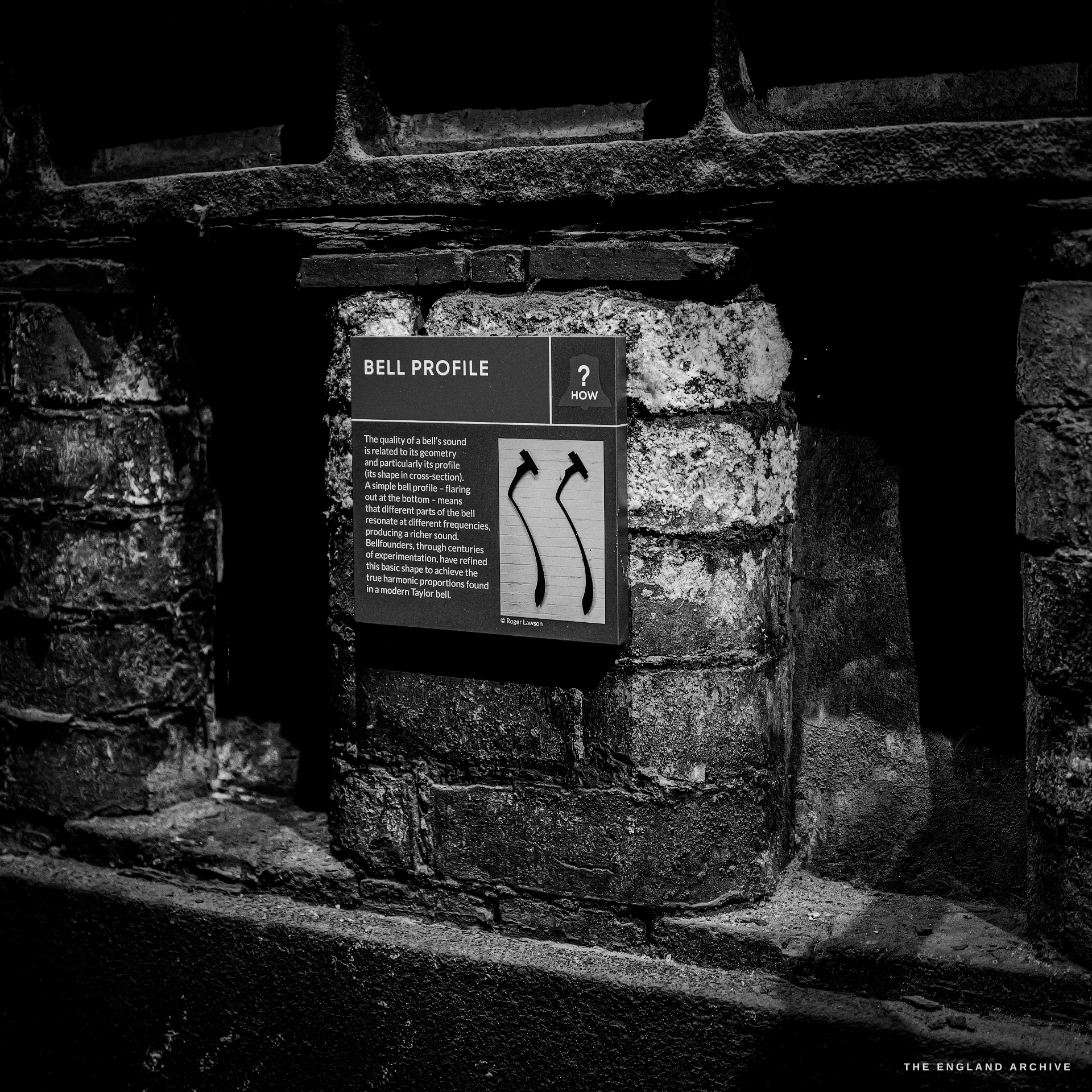
The museum is laid out to explain how a bell is actually made, and the first surprise - the one the whole place keeps returning to - is that a bell is not one note. A panel on a brick pier shows the bell profile, the exact curve from crown to soundbow that decides the pitch; another shows how the five partial tones relate. You come out understanding that the shape is the sound, and that the shape is drawn by hand.
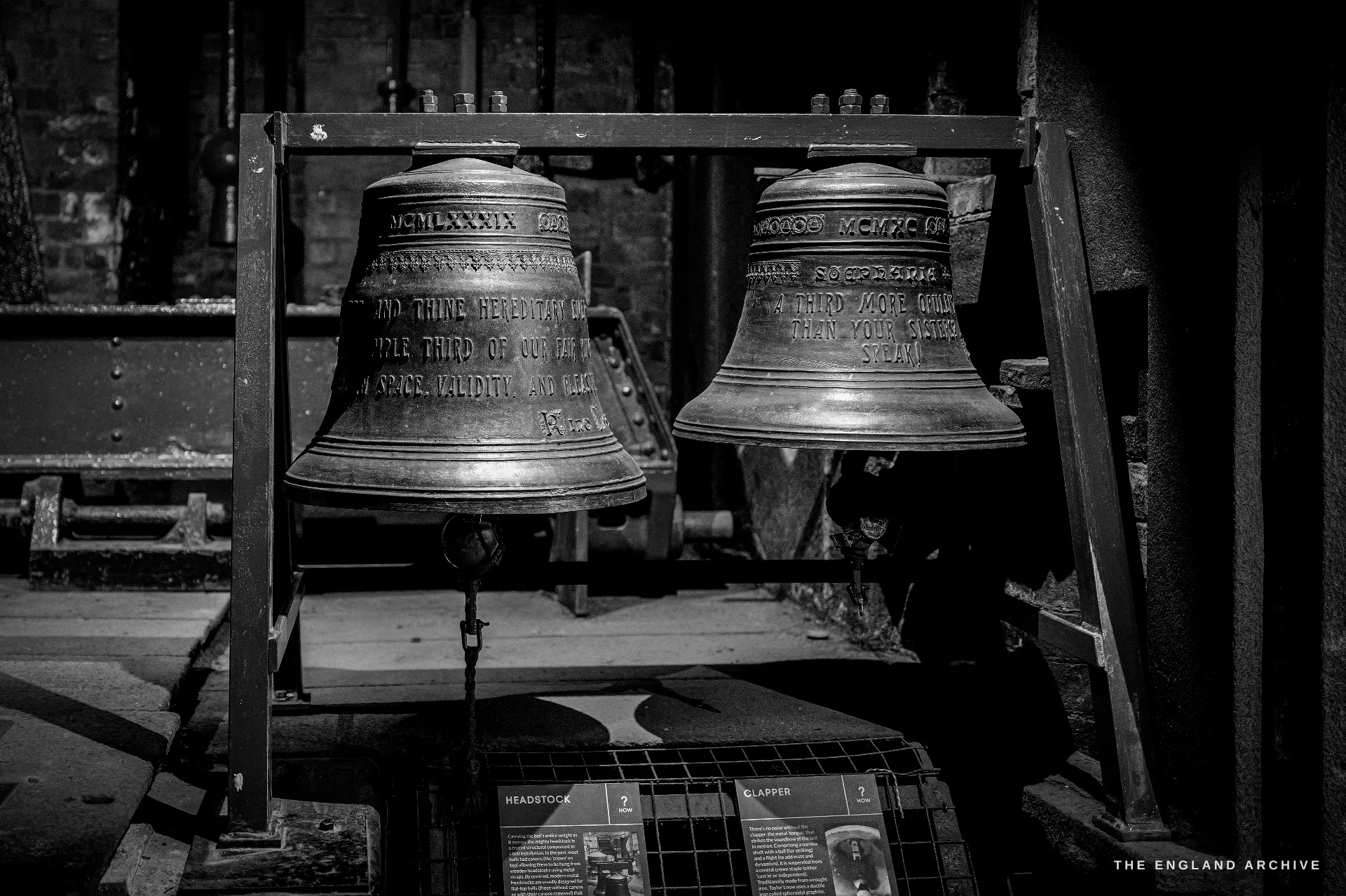
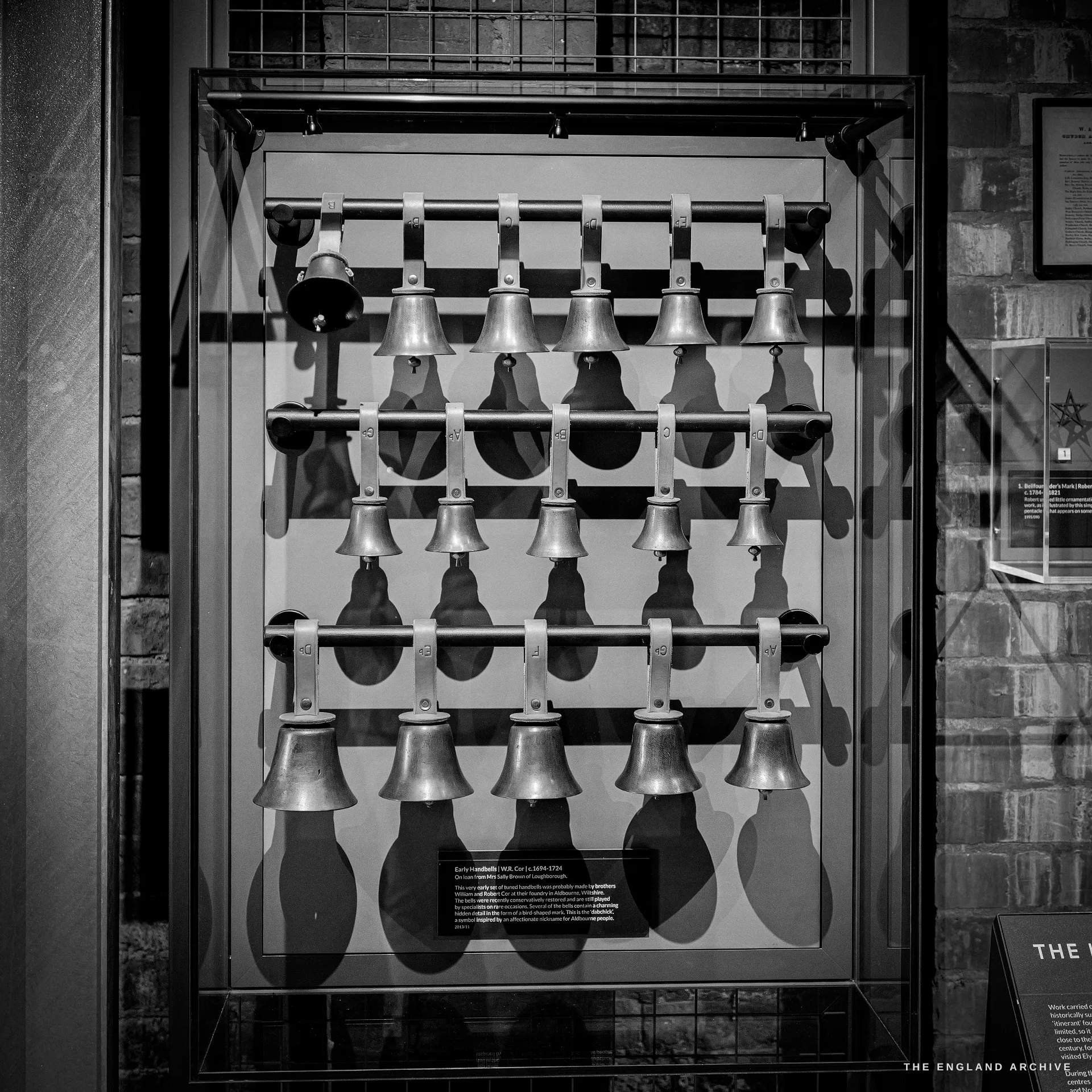
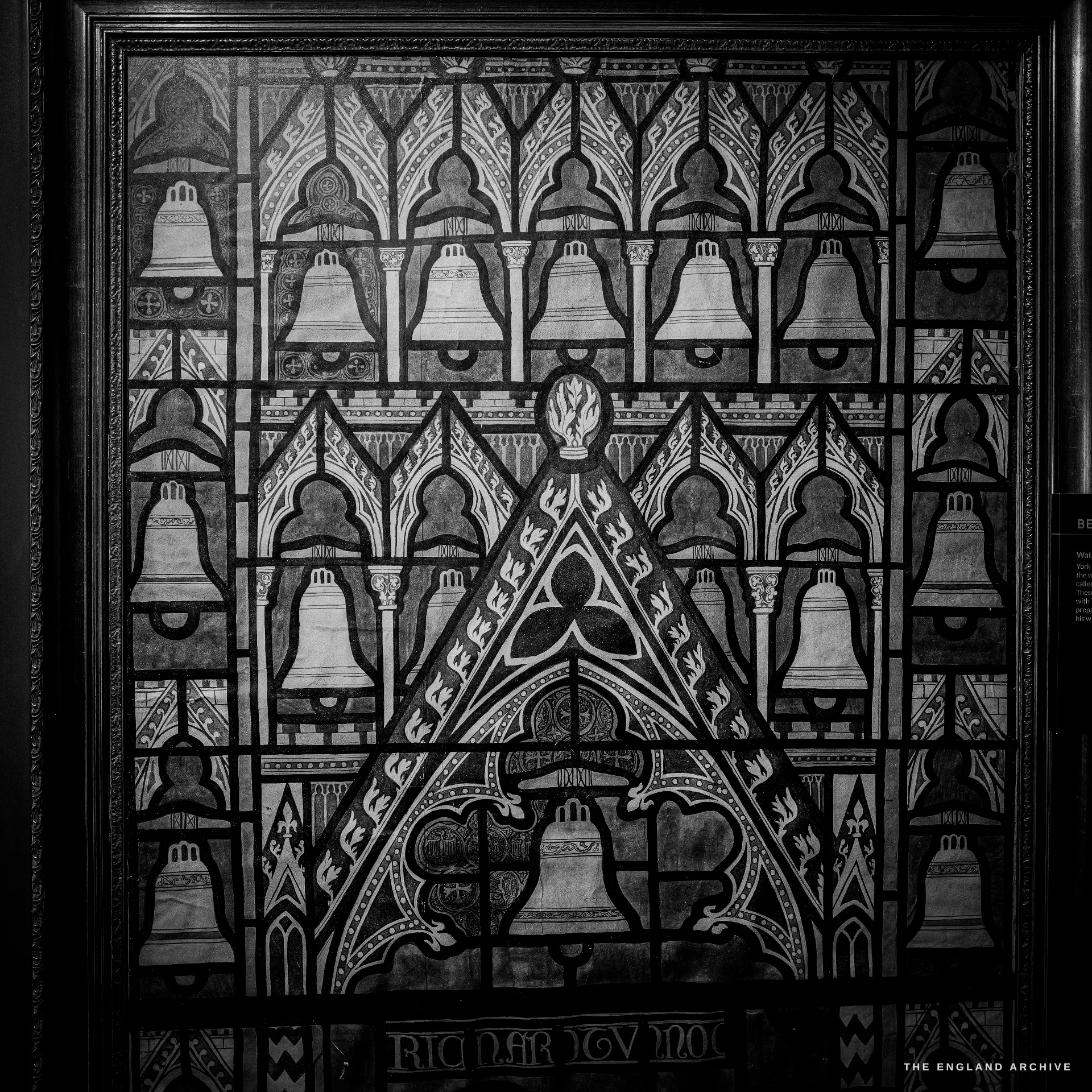
Then there are the bells themselves, hung as exhibits with their casting dates still legible round the shoulder, and the handbells - graduated sets on rails, each strap stamped with its note, a whole scale you could pick up and play. There is even a panel of stained glass made of bells. In a place this single-minded, even the windows are about bells.
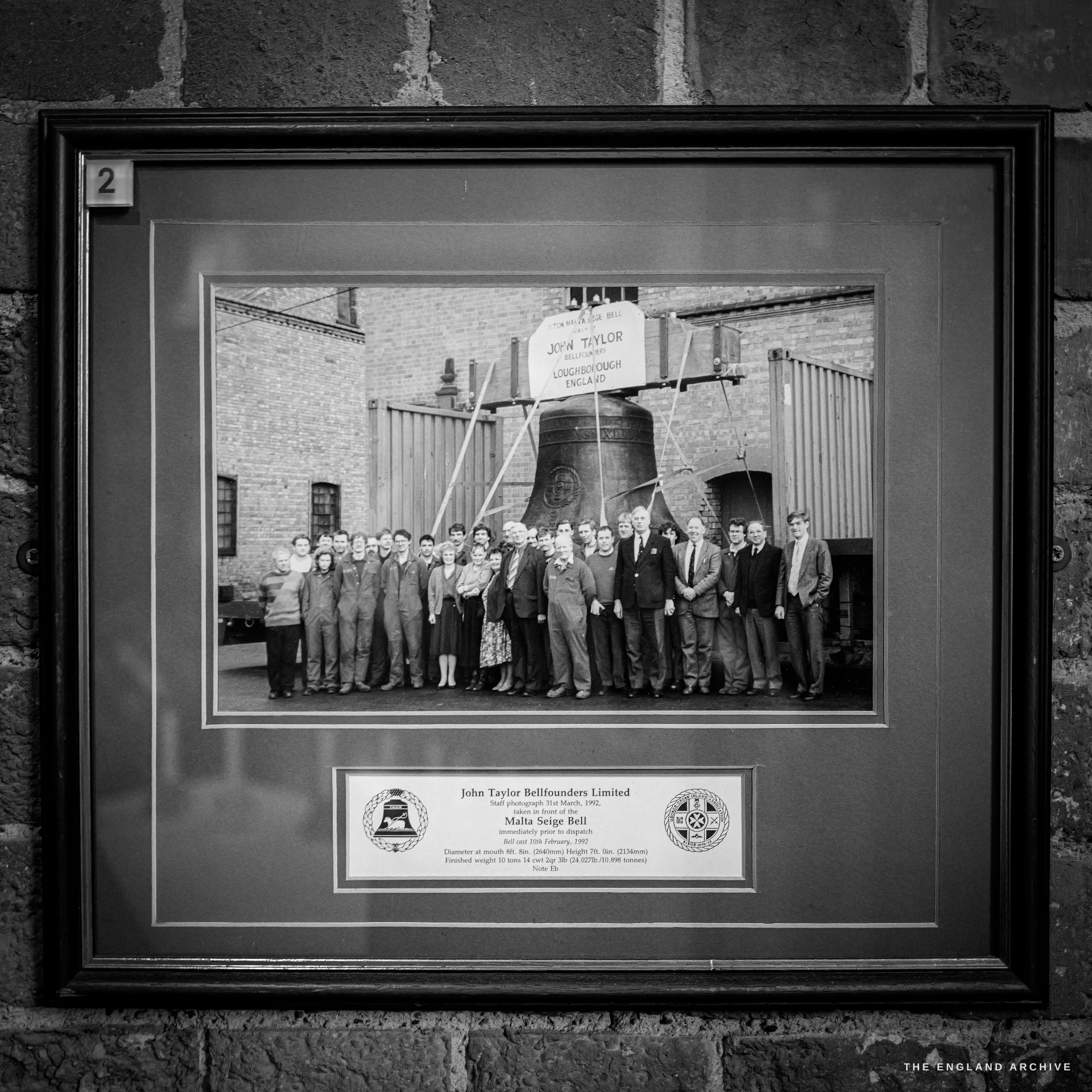
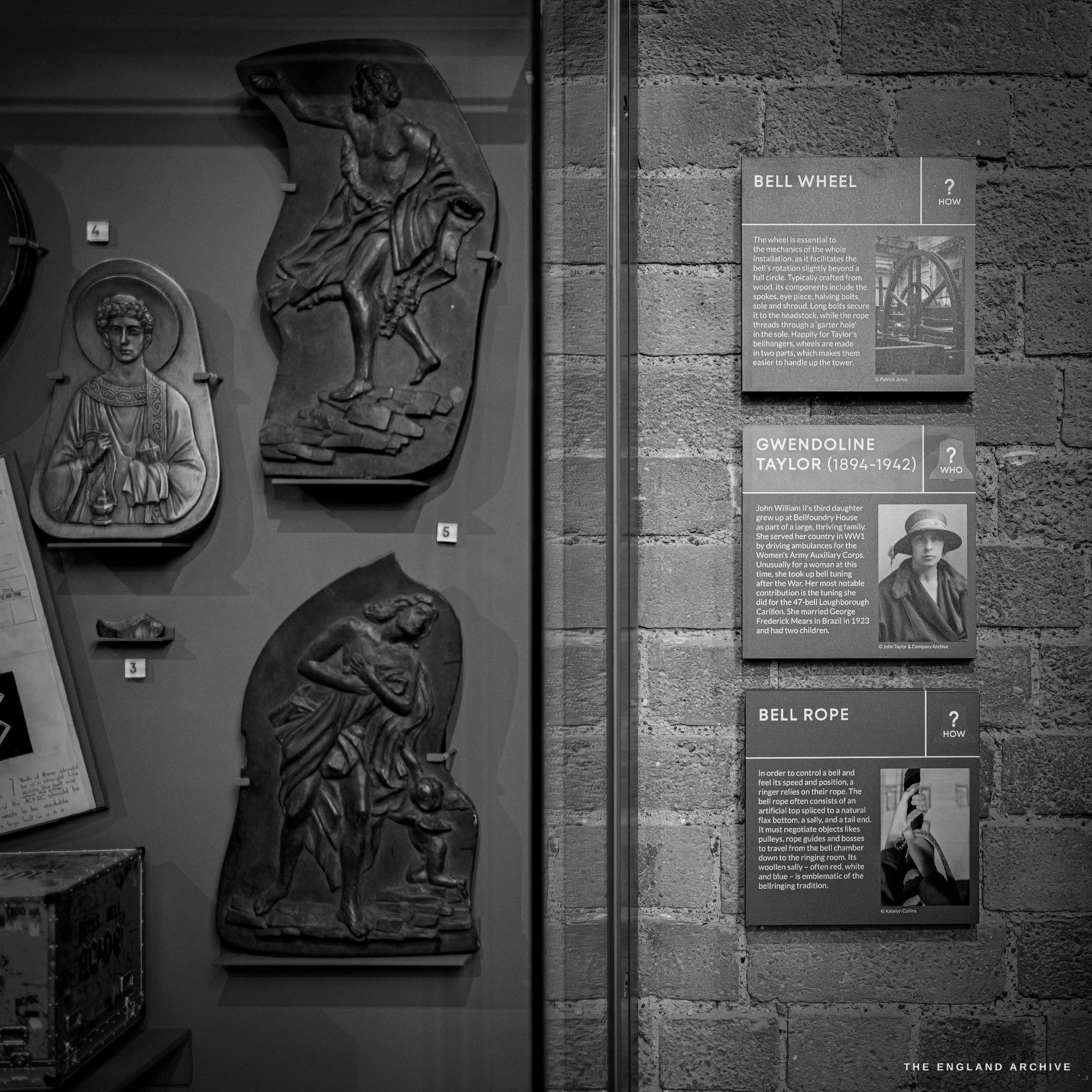
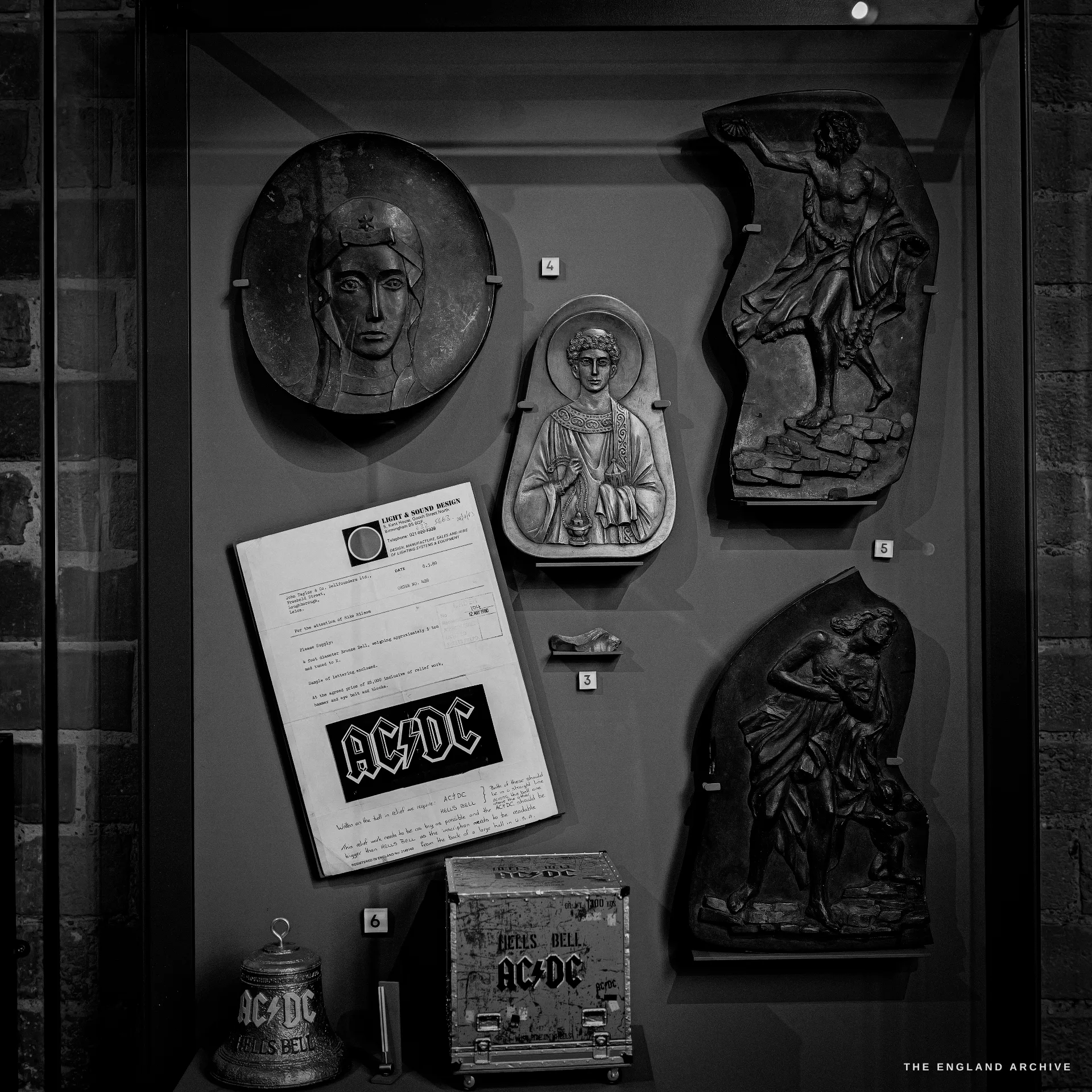
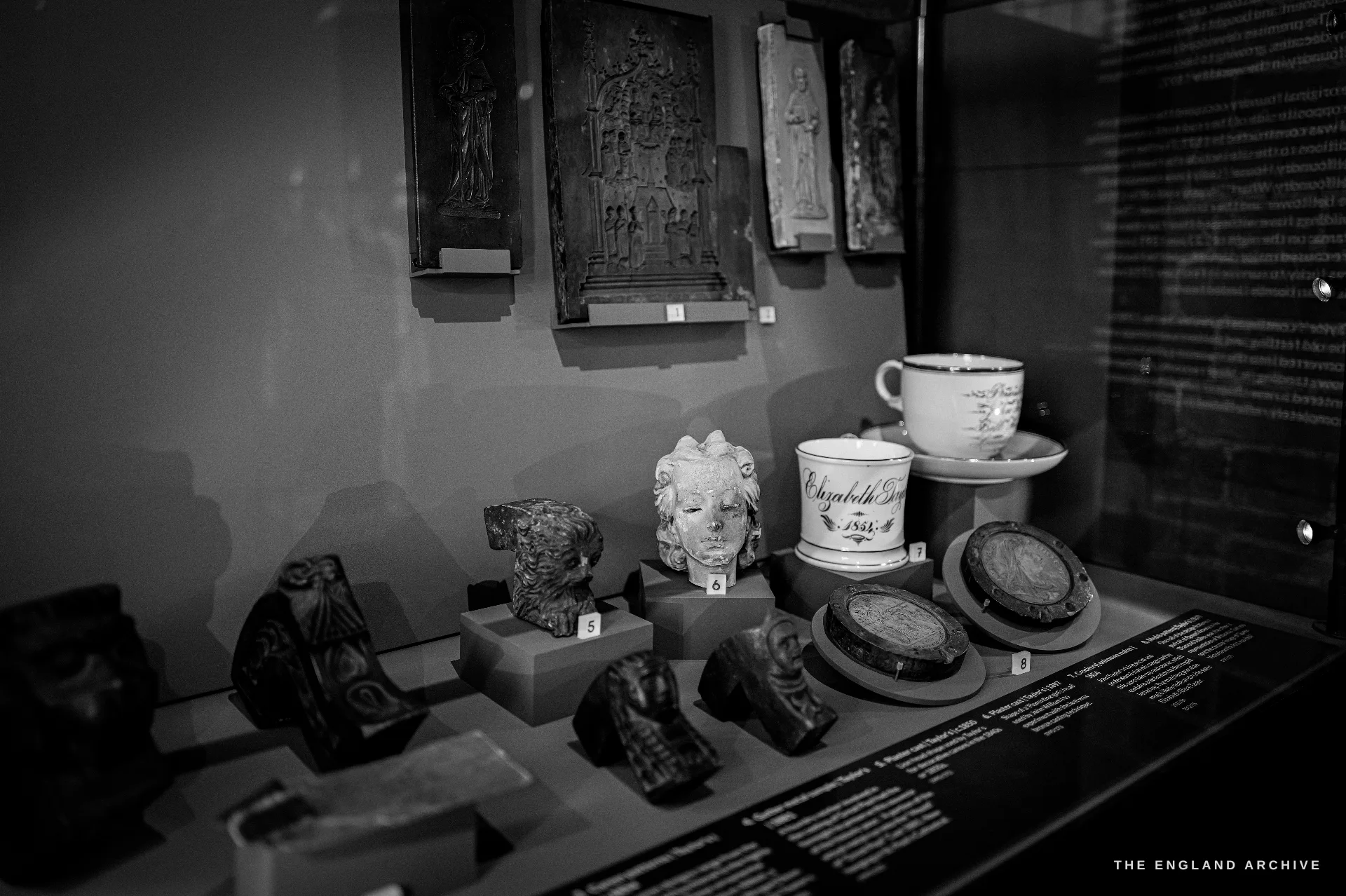
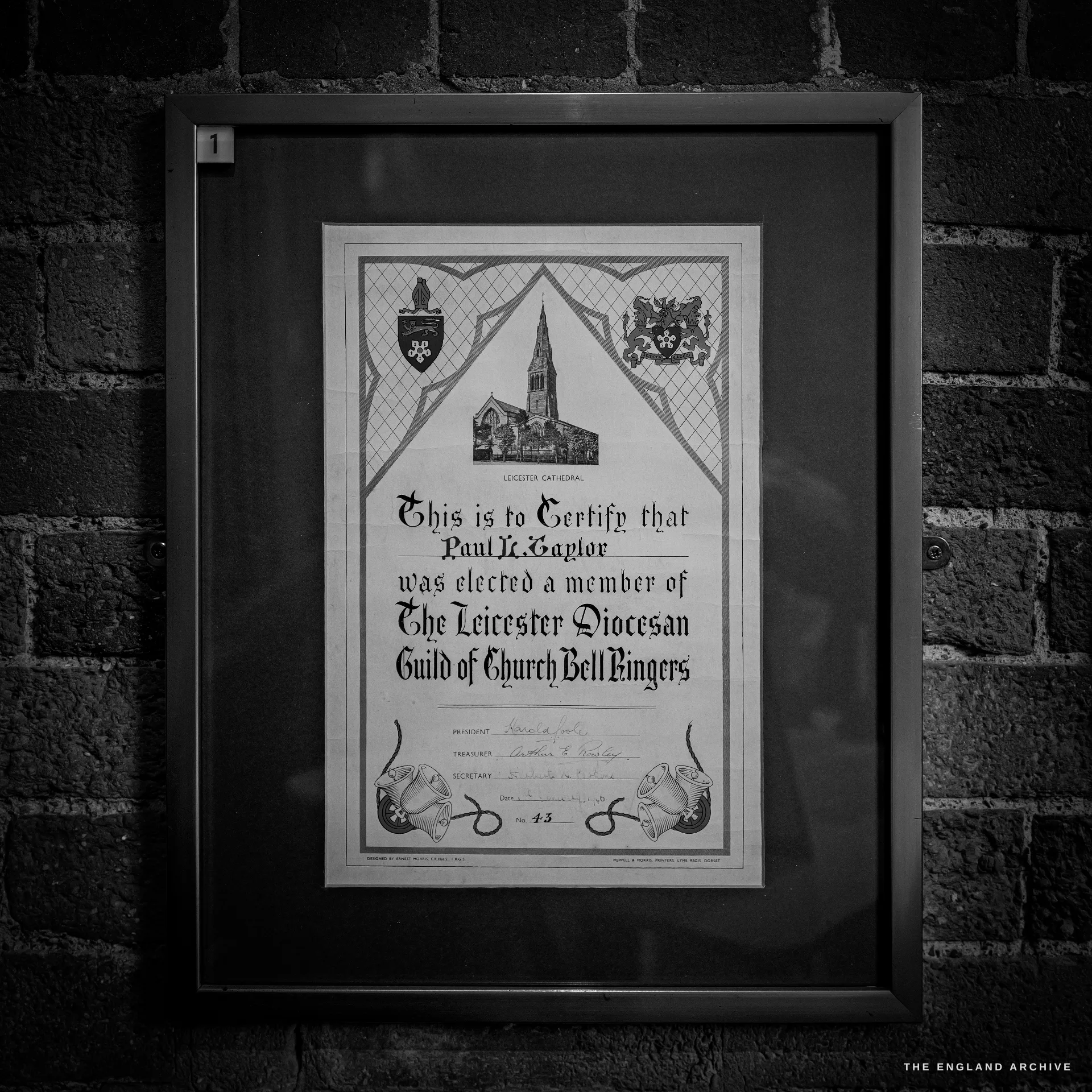
The cases hold the human side too. Cast reliefs of saints and angels, the patterns reused across generations of bells. Framed portraits of Taylor family members, some in military uniform, some - like Gwendoline Taylor - given their own panel. A workforce photograph posed in front of one of the giants. A ringers' guild certificate, illuminated like a medieval charter. And, my favourite juxtaposition in the building, a case of saints' reliefs sitting next to AC/DC's Hells Bells - because Taylor's cast the bell for that record, and they are rightly proud of it.
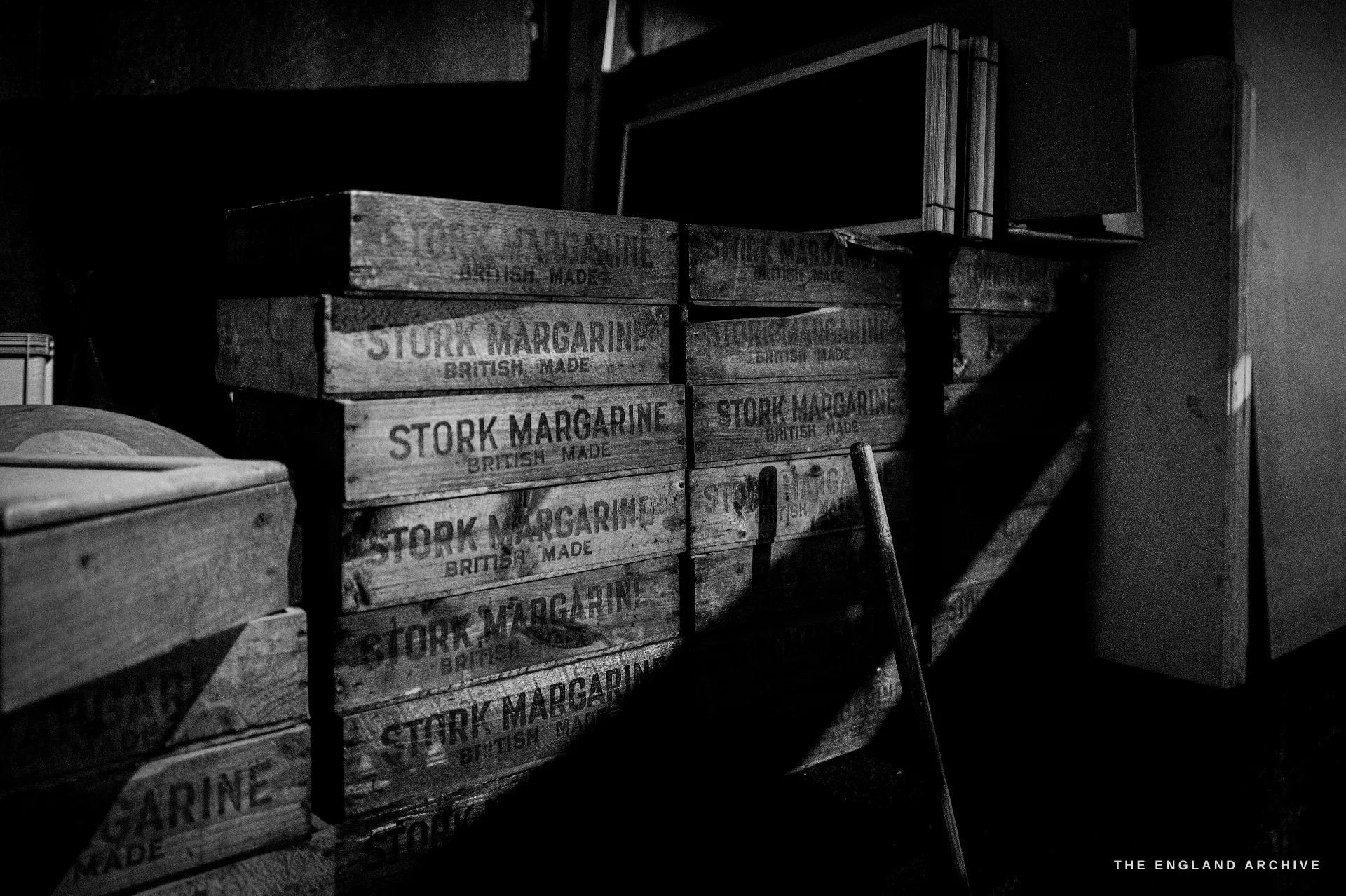
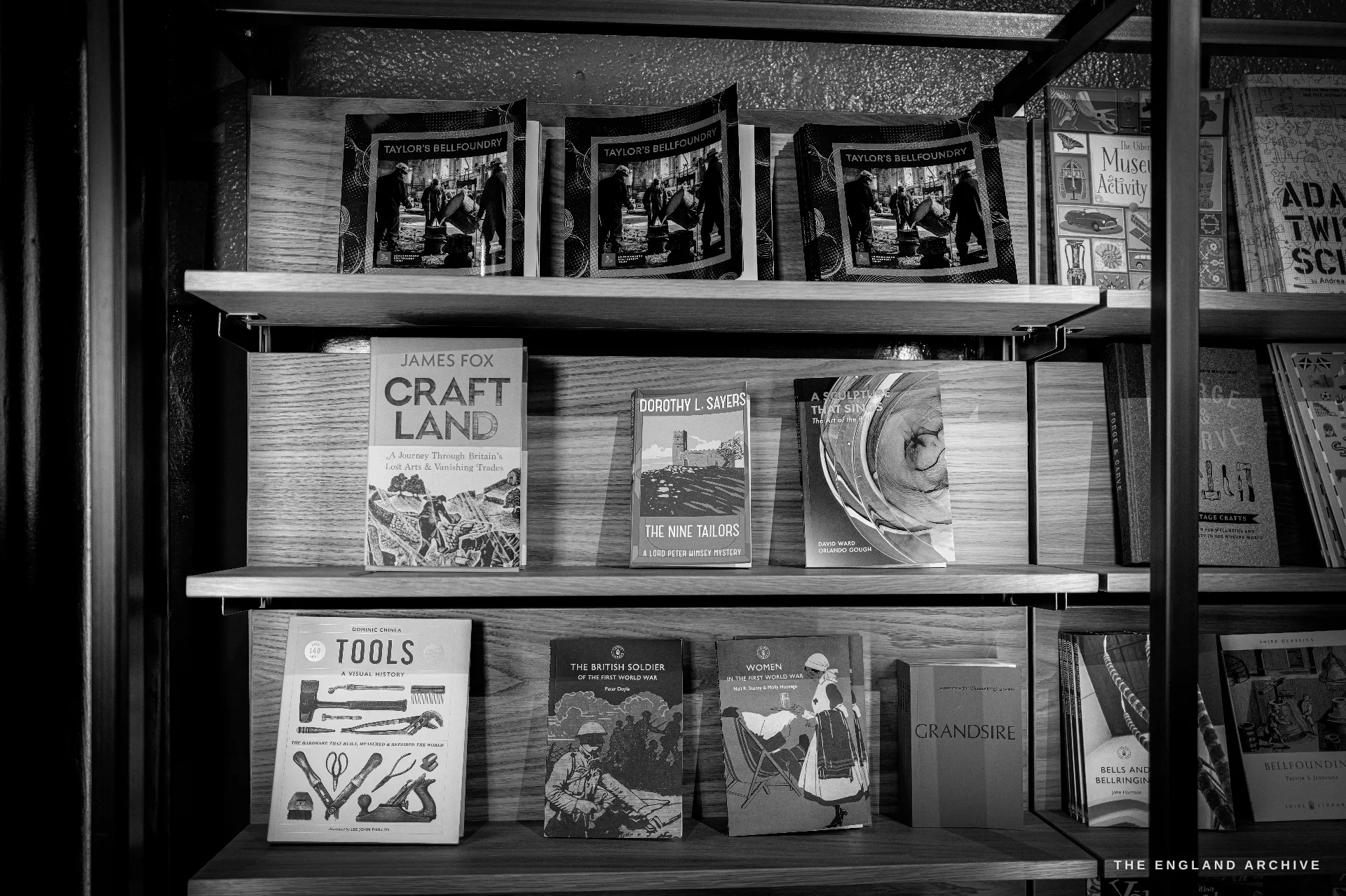
Even the storage tells you something. Old Stork Margarine packing crates, stencilled and stacked, still earning their keep as shelving; nothing here gets thrown away if it can still hold something. And a shop with Dorothy L. Sayers' bell-ringing mystery The Nine Tailors on the shelf beside the foundry's own history. The bells run right through the building, into the books and the crates and the glass.
The tour, with Gary
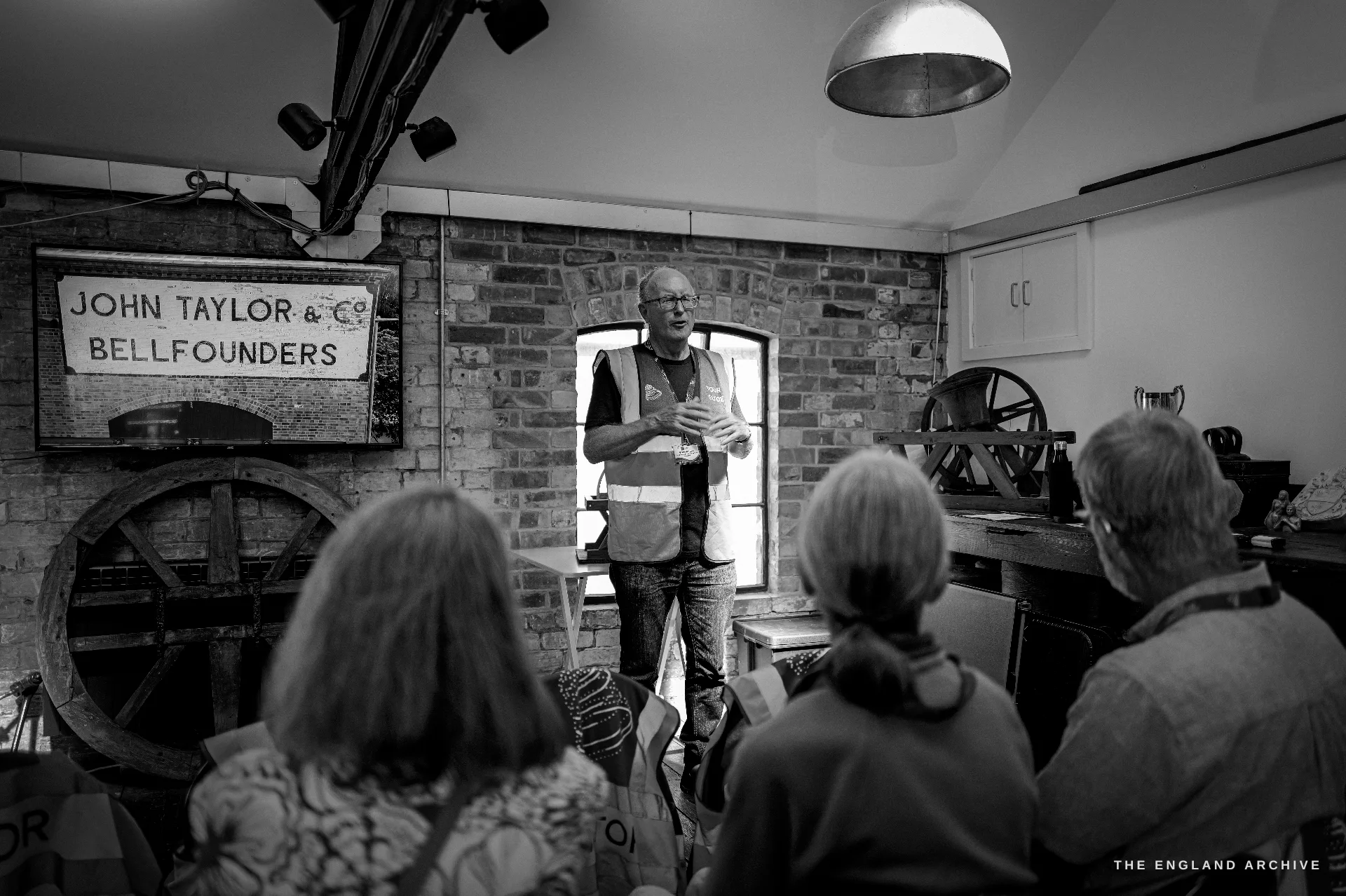
When the museum opened, I joined the public tour, and it made the whole place come alive. Our guide, Gary, started us off with a short film on the history of the foundry and then walked us round, and it became clear very quickly that he is a bell-ringer himself. He did not recite the museum; he loved it. He told us how the bells are made, what the wooden stays do, how a bell rests mouth-upward between strokes - and then, with real feeling, how the stay on one of their own bells had recently broken, and how they were going about fixing it.
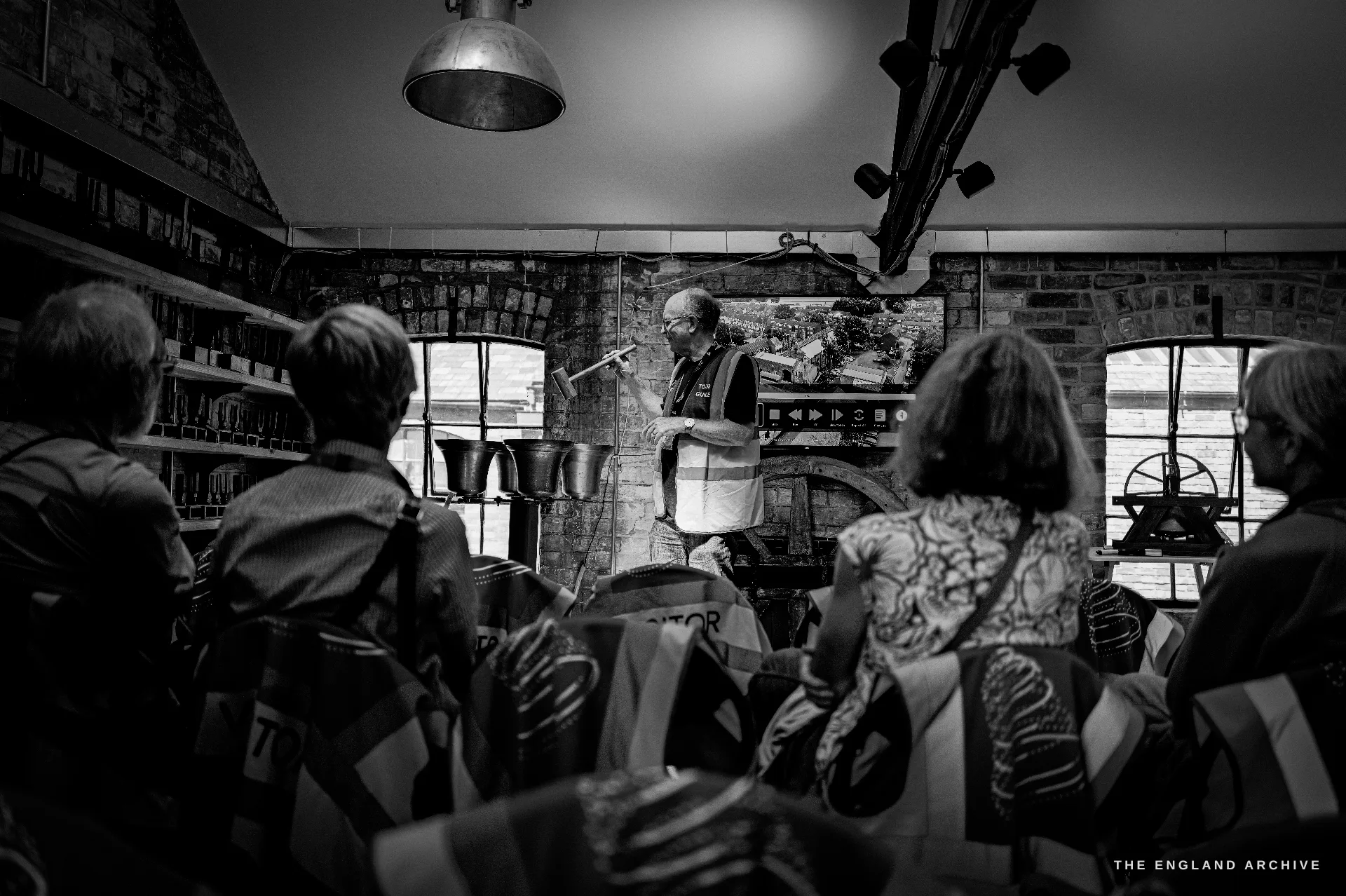
That is the thing a museum attached to a working foundry can do that no other museum can: the exhibits are not relics. The craft on the panels is the craft being practised through the wall, by people whose own tower bell needs a new stay. A handful of visitors had come in for the tour, and Gary gave them the same passion he would have given a full house. I tagged along at the back, taking pictures, glad to be there.
I could have stayed in there all day. A museum is only as good as the thing it is about, and this one is about a craft that is both extraordinary and, on the Heritage Crafts Red List, critically endangered. It does the honest thing: it shows you how a bell is made, it shows you the family and the workforce who made them, and then it sends you through the wall to watch it still being done.
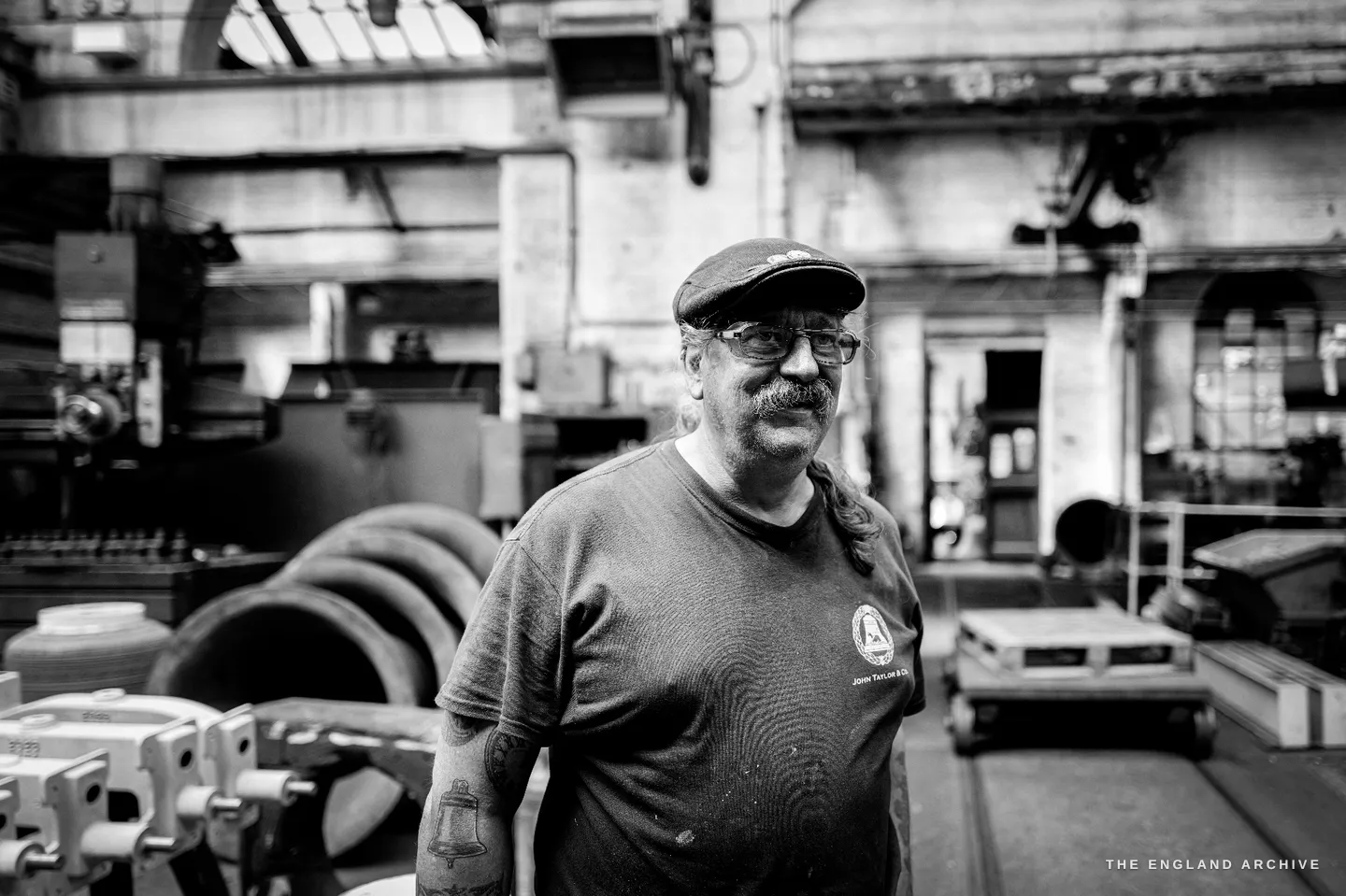
The working floor is the companion entry, A Morning at Taylor’s, where I met the chief tuner Giridhar Vadukar and the foreman Bill Bowes. The craft itself, set out in full, is the monograph The Craft of Bell Founding; the short reference version is the glossary entry on bell founding.
Mash Bonigala visited the John Taylor Bellfoundry Museum in Loughborough in June 2026 as part of Year 1 of The England Archive, a three-year documentary photography project recording the people keeping England’s heritage crafts, traditions, landscapes and buildings alive.