The Craft of Bell Founding
How a Bell Is Made, and Who Still Makes Them

Almost every English town is within earshot of a bell. They mark the hour, call to church, ring for a wedding and toll for a funeral, and most people never think about where they came from. They came from a foundry - a place of moulds and furnaces and molten bronze - and there is now only one major bell foundry left in Britain. I spent a June morning in 2026 inside it, at John Taylor & Co in Loughborough, and this is the archive's account of the craft it keeps alive: what bell founding actually is, where it comes from, who still does it, and how close it is to being lost.
The first thing to understand, because it reorganises everything else, is that a bell is not one note. It is five notes sounding at once - a chord built into a single casting of bronze - and the whole art of the craft is bringing those five into agreement so the ear hears one true, clean sound. That fact is the reason bell founding is difficult, the reason it takes a lifetime to master, and the reason it is now held, at the level of mastery, in a very small number of hands.
This essay sits alongside two journal entries from the same visit - A Morning at Taylor’s, on the working floor, and Inside the Bellfoundry Museum, on the history - and two subject pages, the chief tuner Giridhar Vadukar and the foreman Bill Bowes. Here I want to set the craft out whole.
I. What bell founding is
Bell founding is the casting and tuning of bells from bronze. The metal is the simple part to name: bell metal is a high-tin bronze, roughly four parts copper to one part tin, chosen not for strength but for the way it rings. Everything difficult happens on either side of the pour - in the moulding that gives the bell its exact shape, and in the tuning that gives it its voice. A full foundry is really three crafts under one roof: moulding, casting and tuning, with a fourth, the iron fitting and hanging, close behind.
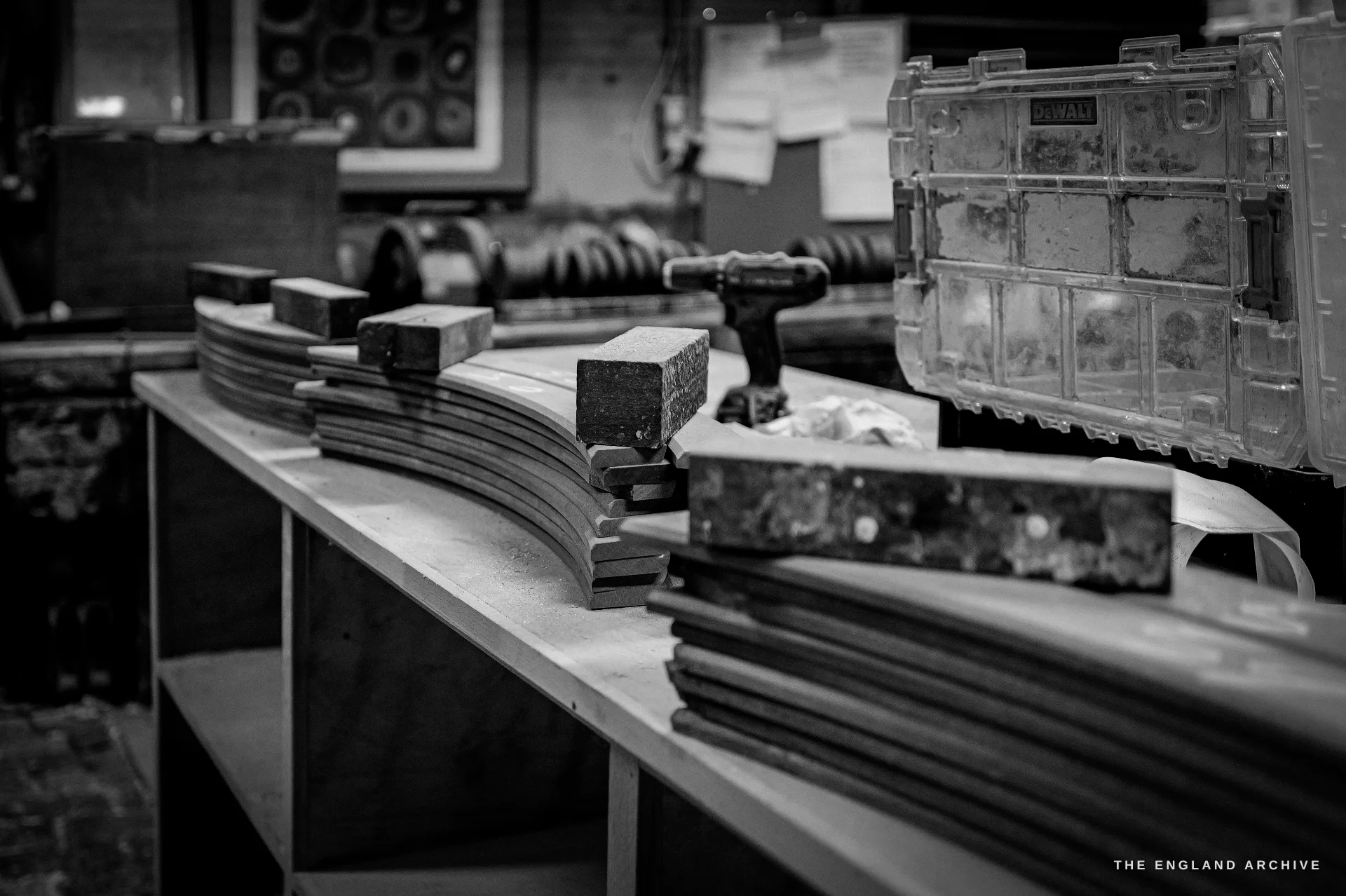
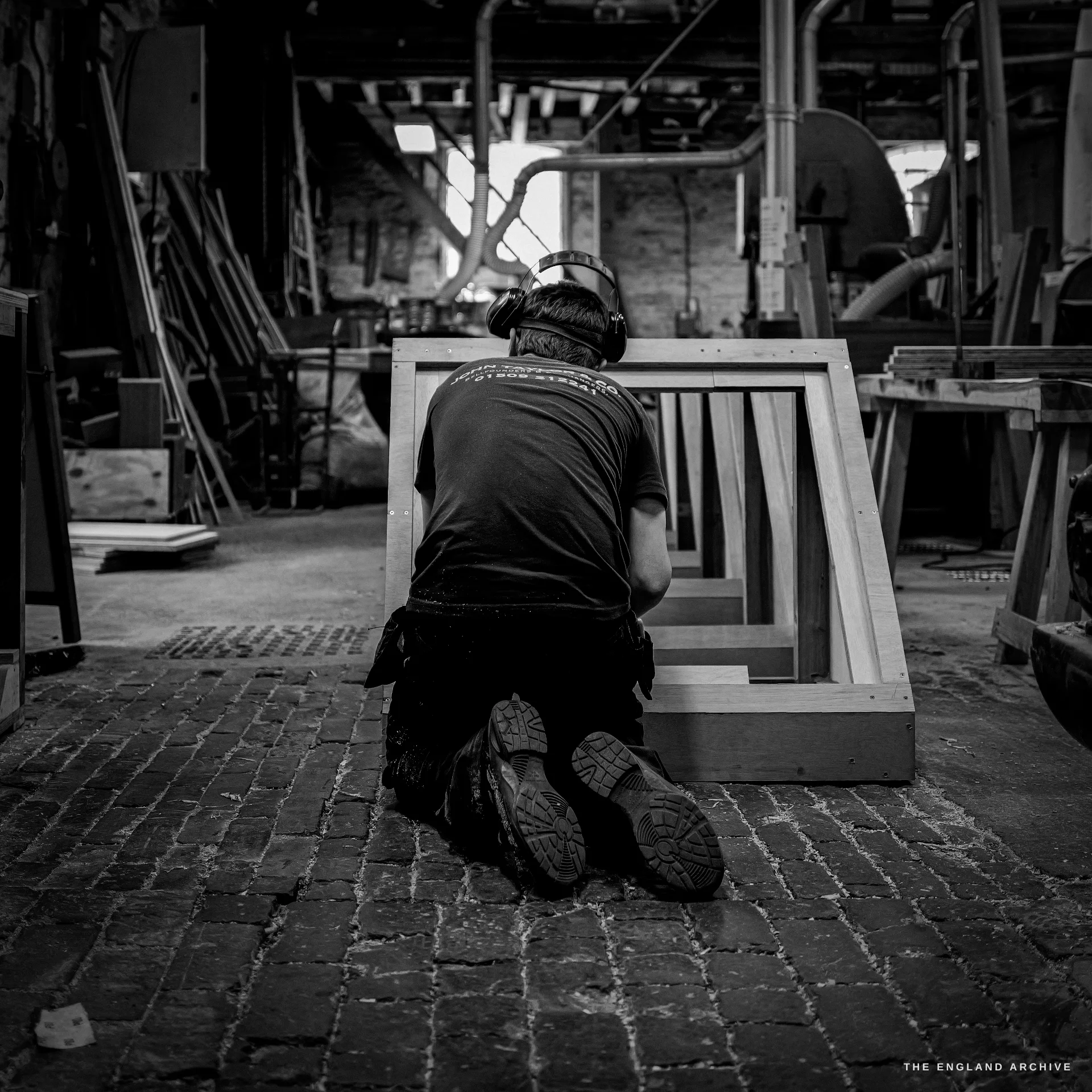
It begins with the mould, and with the single most important fact in the trade: the shape of a bell decides its sound. The precise profile - the curve from the crown at the top, down the waist, to the thick soundbow at the rim where the clapper strikes - determines the pitch and the quality of every note the bell will make. That profile is built up by hand in a two-part mould: an inner core that forms the inside of the bell, and an outer cope that forms the outside. The gap between them, swept to shape with curved wooden templates called strickle boards, is the bell.
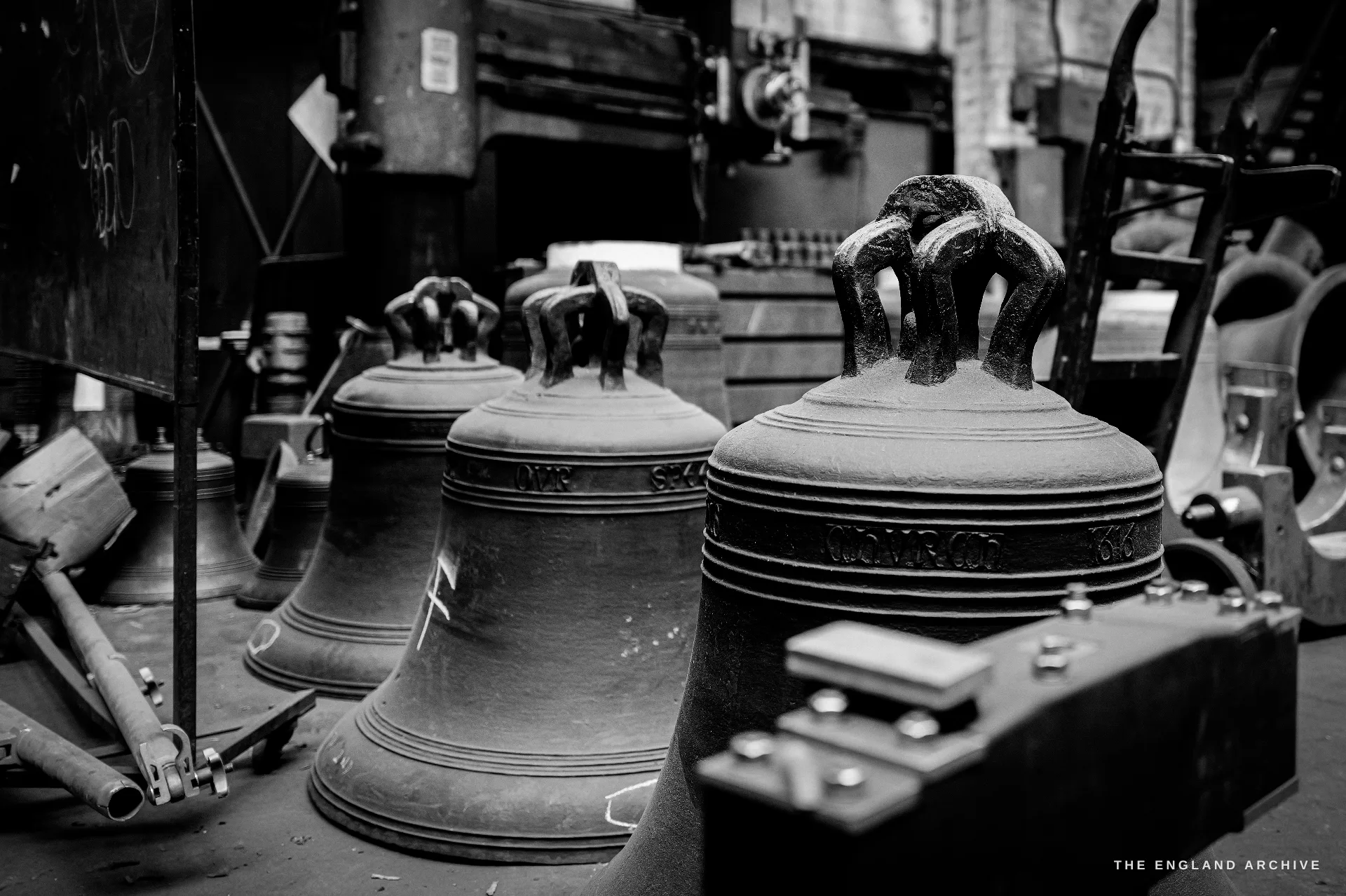
Then the casting. Bell metal is melted to well over a thousand degrees and poured into the mould in a single continuous stream, filling the bell-shaped void between cope and core. A large bell is left to cool slowly - days, for the biggest - and then the mould is broken to release it. That is a one-time operation: the mould is destroyed to free the bell. What comes out is rough, dull, and musically wrong - close to the intended note, but not on it.
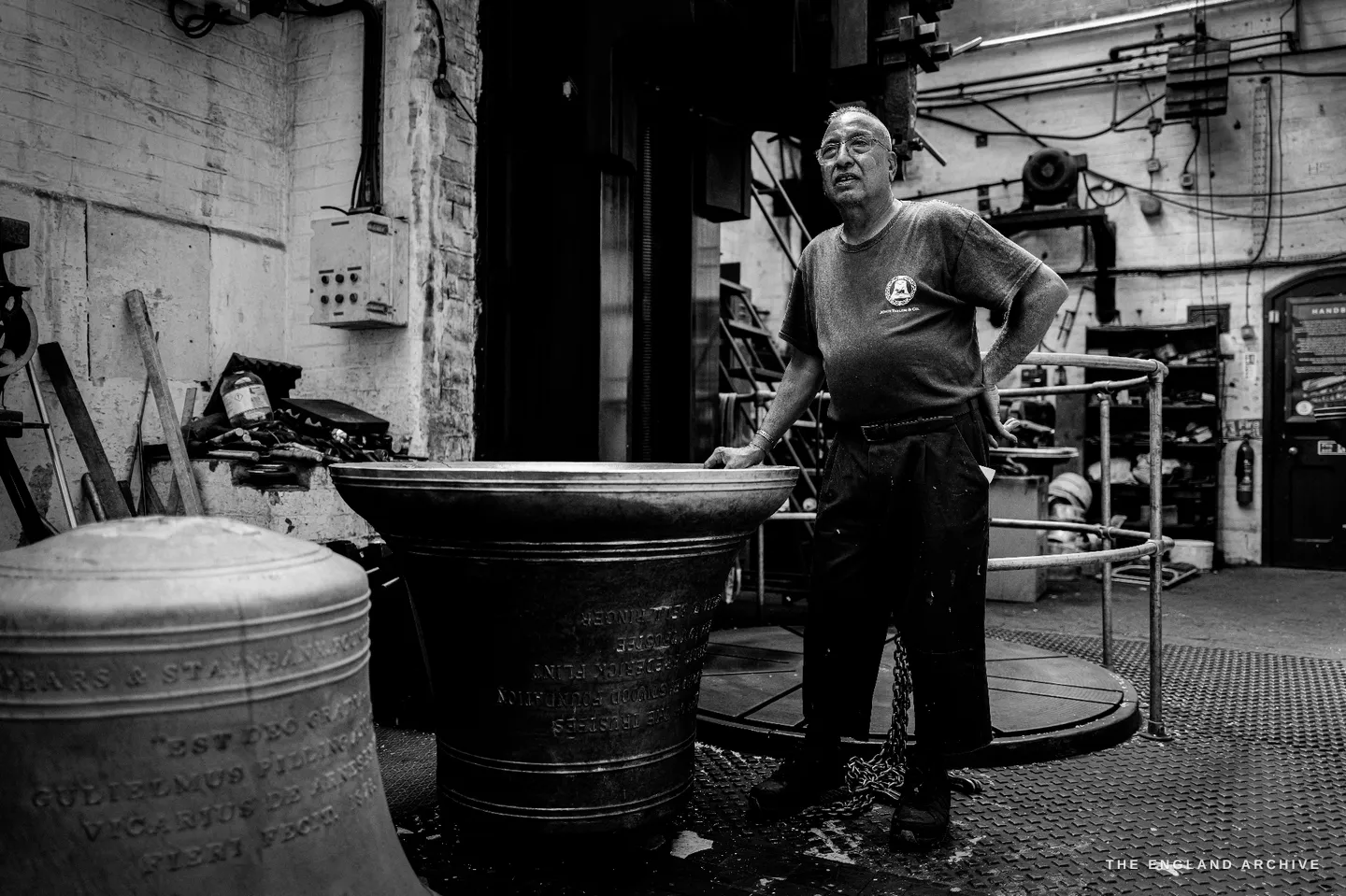
Last comes the tuning, and I watched it done - it is the part that looks like magic until someone shows you the method. The bell is set mouth-upward on a vertical tuning machine and turned while a cutting tool reaches down inside and shaves bronze from the wall in fine passes. Here is where the five notes matter: the hum, the prime, the tierce, the quint and the nominal each live at a different point on the wall of the bell, so the tuner removes metal from a particular place to bring a particular note home. It is judged by ear as much as by gauge, and it is utterly unforgiving - once the metal is gone it cannot go back, and a bell cut too far is scrap. This is the five-tone, true-harmonic method, and Taylor's perfected it in 1896.
And then the bell must be hung, which Bill Bowes walked me through on the floor. A tower bell does not merely sound; it swings full circle, which takes an iron headstock bolted across its crown, gudgeons to pivot on, and a great wheel for the rope to run round. That ironwork is a craft of its own, exacting to the thousandth of an inch, because - as Bill put it to me - a bell hung a fraction out of true will fight its ringer for a century.
II. The English tradition
English bell founding runs in a line that has not broken since the middle of the fourteenth century. The earliest founder in this particular thread is Johannes de Stafford, who was casting bells around 1350 within ten miles of where they are still cast today, and who was also, at one time, mayor of Leicester. When founding in that region fell quiet in the seventeenth century, the craft was carried on by Thomas Eayre of Kettering and his brother Joseph, who so admired the bells of Hugh Watts of Leicester that they studied and modelled their own work on his, preserving his sound and method. Through the Eayres, and through Edward Arnold of St Neots, the line stayed continuous.
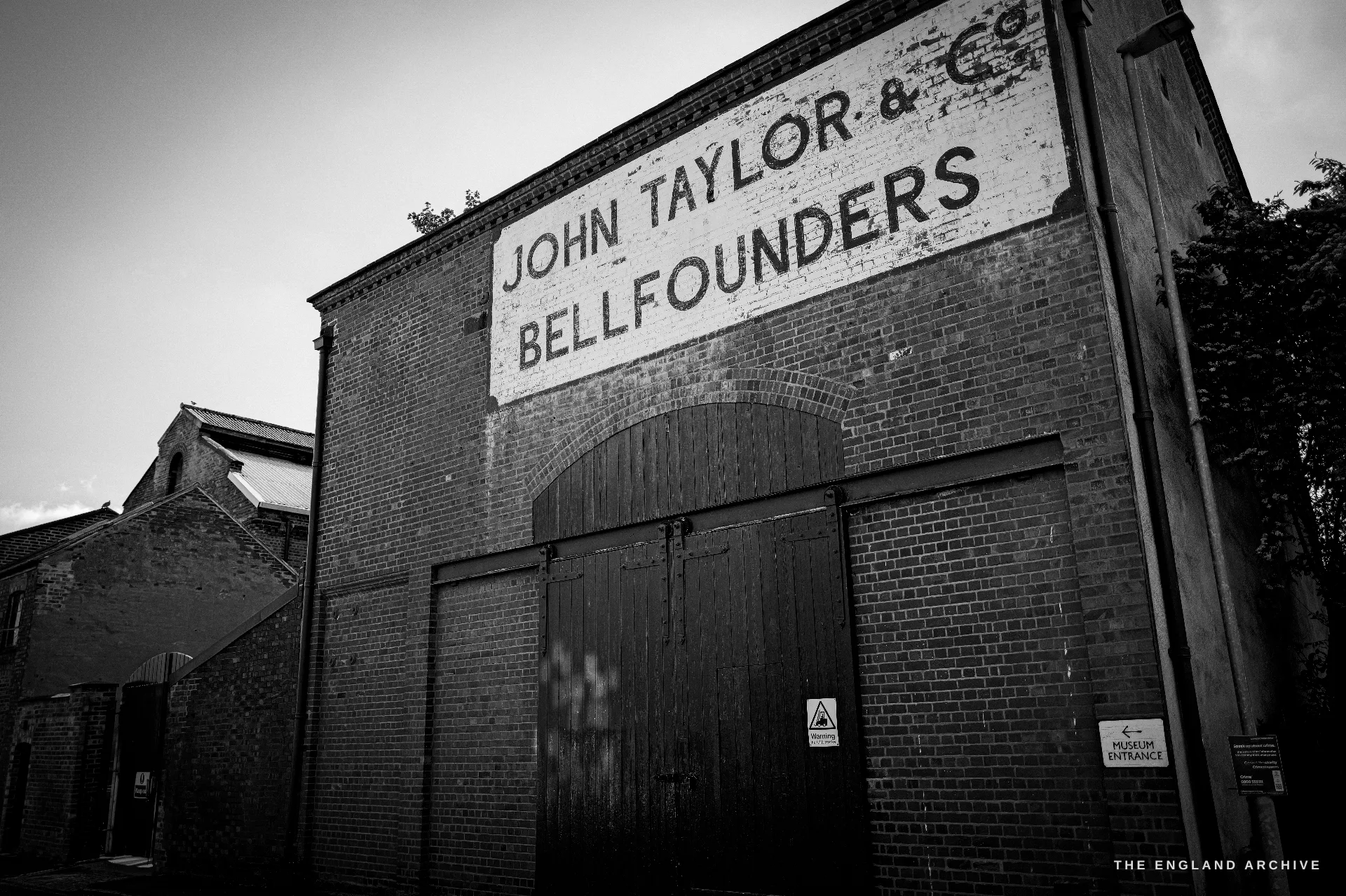
The Taylor name joins it in 1784. Robert Taylor, who had apprenticed with Arnold from 1775, took over the St Neots foundry that year. His son John Taylor established the firm in Loughborough in 1839, and in 1859 it settled on the Freehold Street site it still occupies. The continuity matters: this is not a revival or a reconstruction. It is the same craft, handed hand to hand, in roughly the same place, for six hundred years.
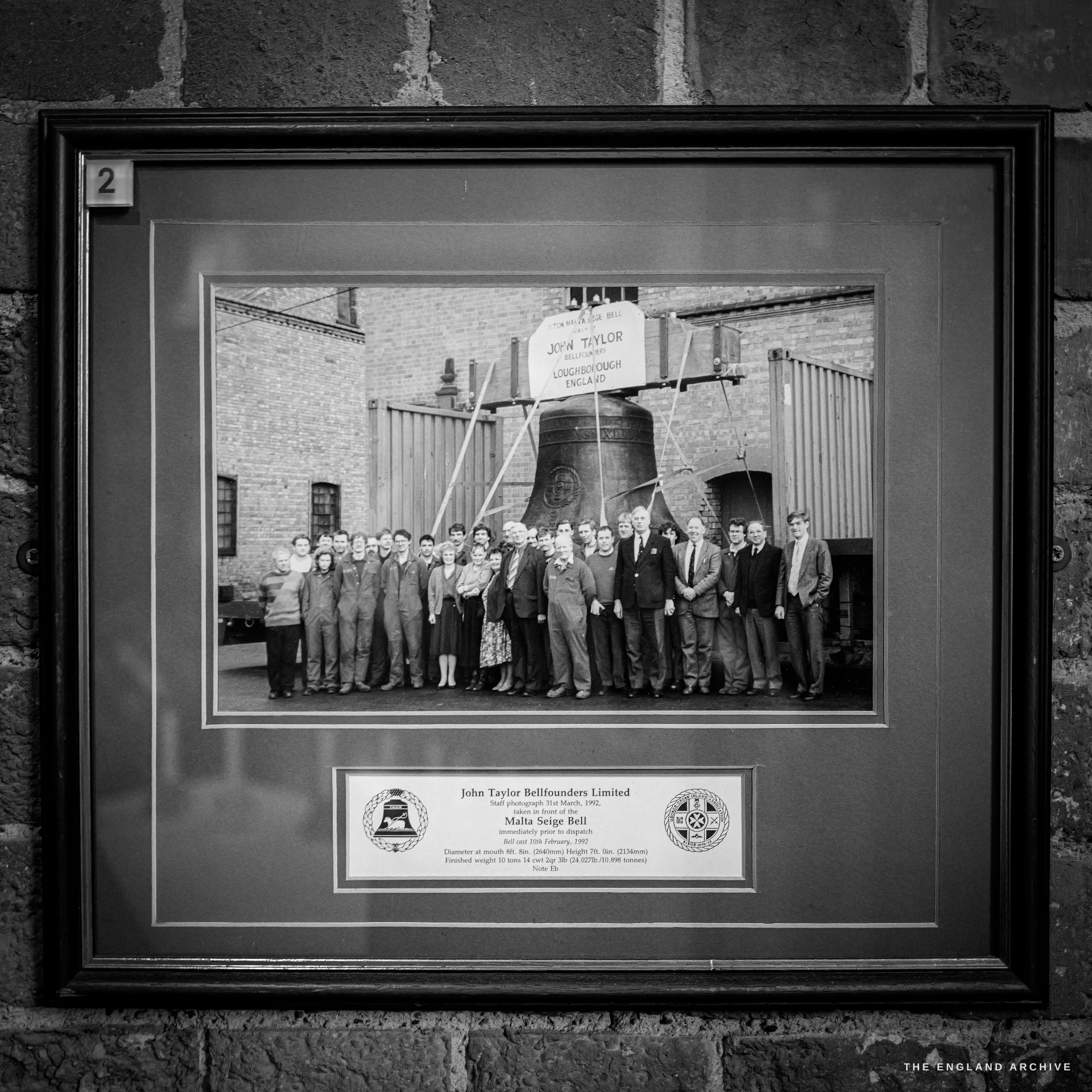
Two achievements anchor the firm's reputation. In 1881 Taylor's cast Great Paul for St Paul's Cathedral in London - at over seventeen tons, the largest bell ever cast in Britain. And in 1896, after years of experiment and the acoustic papers of Canon Arthur Simpson, the foundry perfected true-harmonic, five-tone tuning and hung the first true-harmonic peal of bells at Norton, near Sheffield. Simpson had argued that the five lowest partials of a bell should stand in simple musical relation; Taylor's solved the practical problem of actually achieving it. That method is still in daily use in the tuning shop, and watching it done is what made this whole visit.
The wider trade was once spread across the country - most large towns had a foundry within living memory of one. The twentieth century thinned it drastically. Demand for church bells fell, the cost of maintaining huge listed foundry buildings rose, and one historic name after another closed. Taylor's itself merged with the bellhangers Eayre & Smith in 2005, went into administration in 2009, and was bought out and refinanced. In 2016 the Loughborough Bellfoundry Trust was formed to save the Grade II*-listed buildings, which were on the Heritage at Risk register, and to build the museum that now tells the story.
III. The living craft at Loughborough
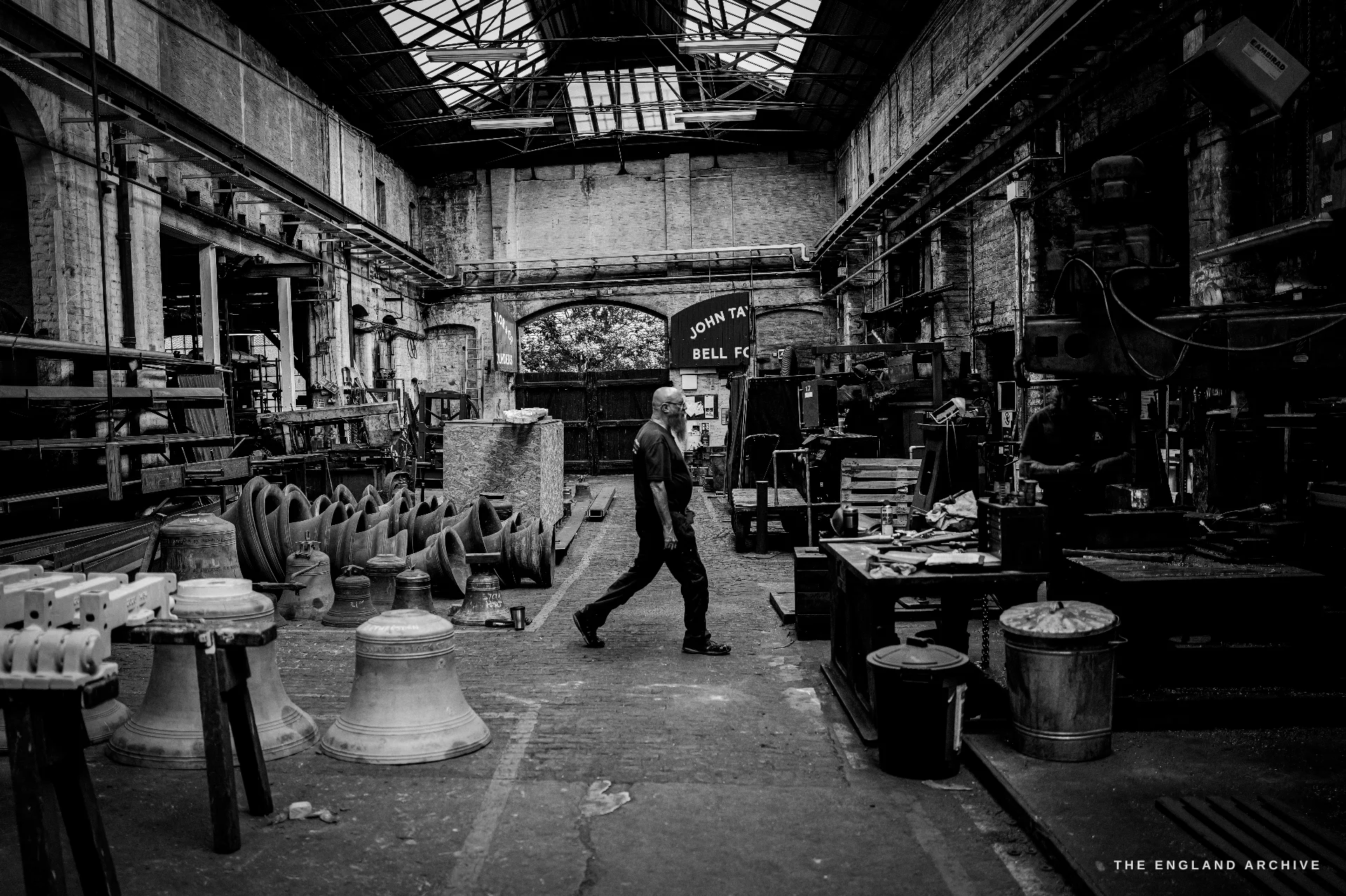
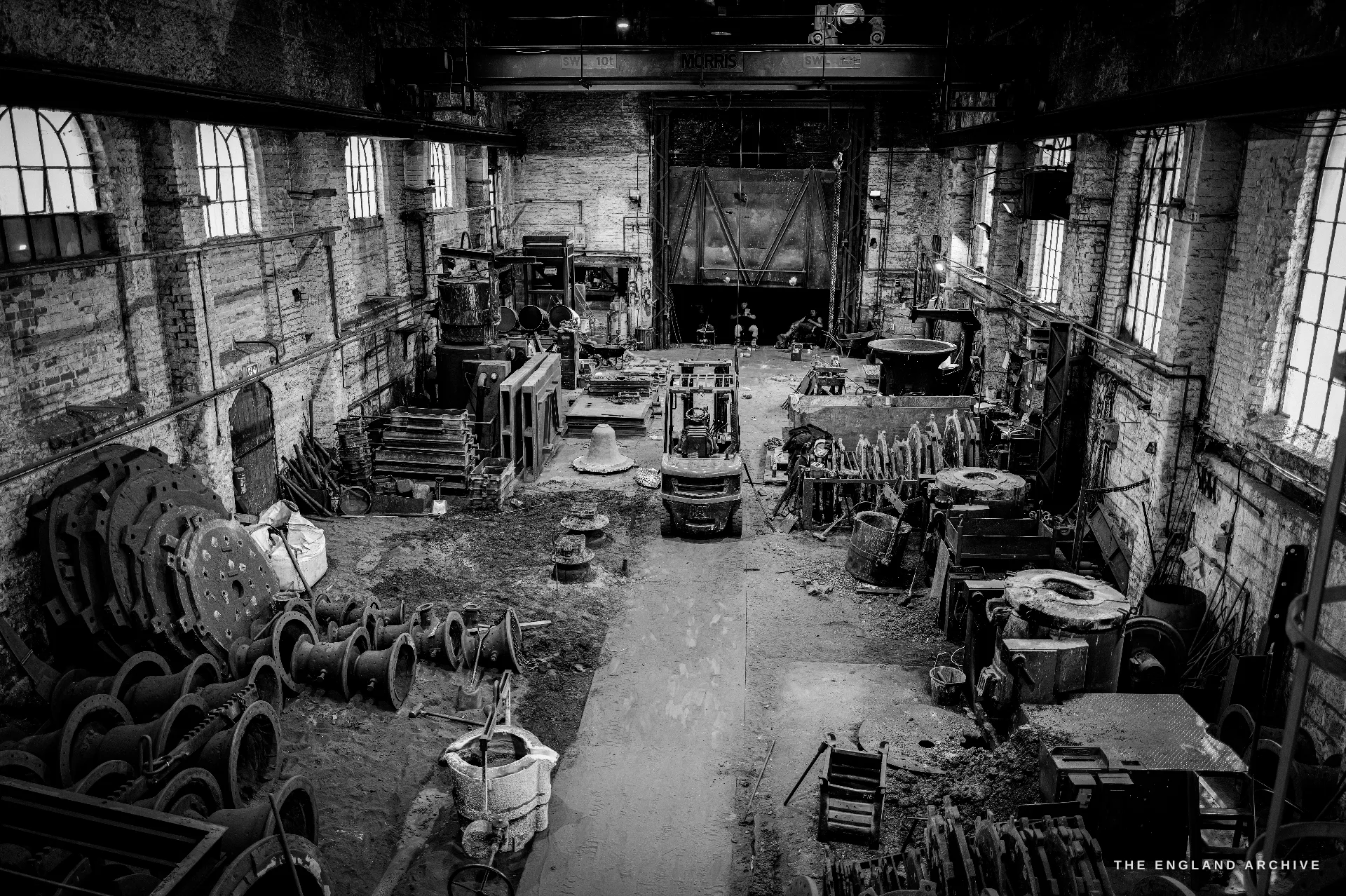
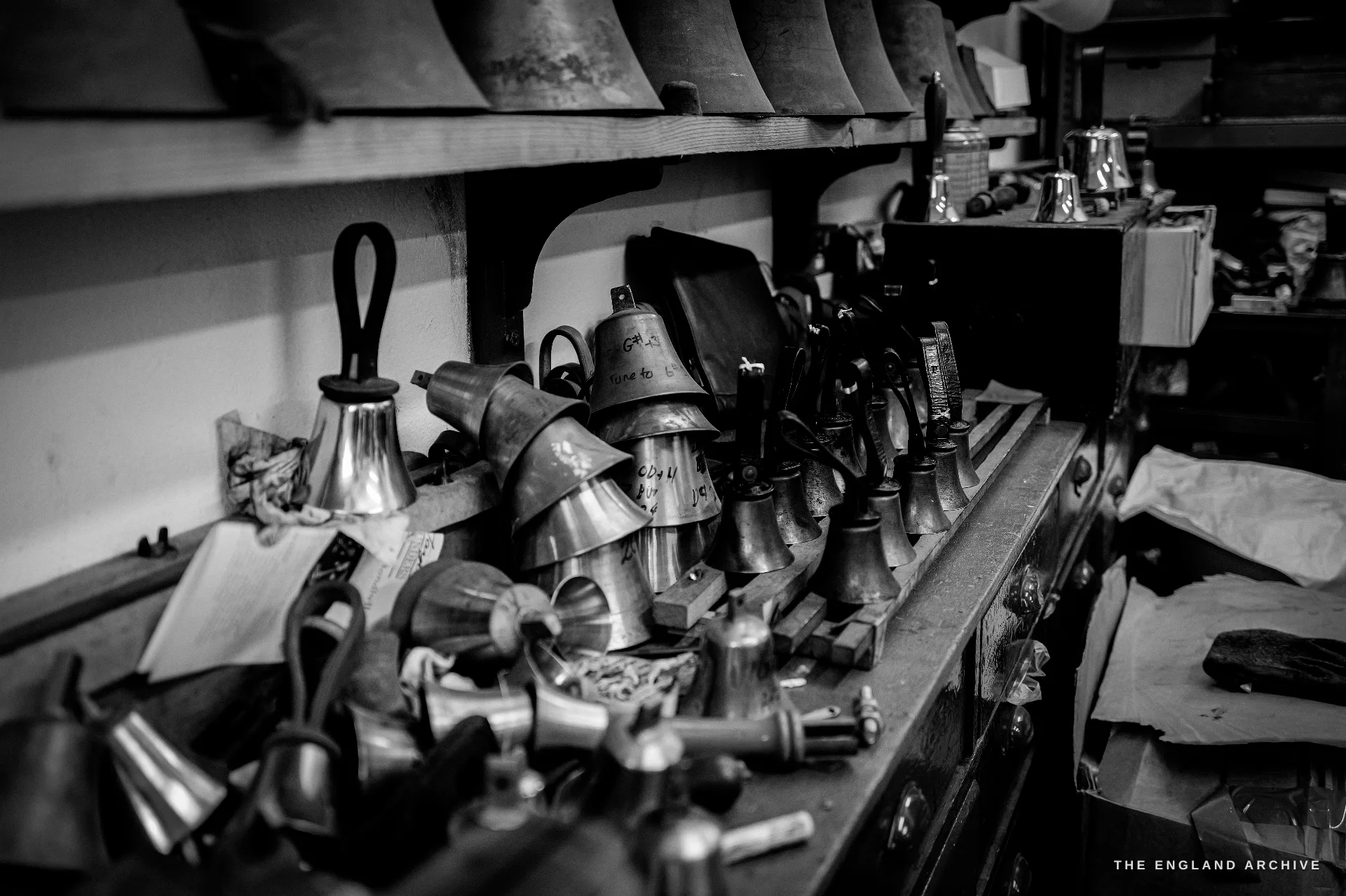
Today John Taylor & Co is the largest working bell foundry in the world and the last major one in Britain. To walk its floor is to see the whole craft, intact, in one building - the moulding shop with its strickle boards and pattern store, the casting hall under its arched roof, the tuning shop, the handbell workshop, and the forge where the iron fittings are made. The kit is largely old and English and still earning its place; one radial drill carries an Archdale maker's plate and has plainly been turning for generations.
But a craft is people, not plant, and this is where the archive's account turns from how to who. The tuning at Taylor's is done by Giridhar Vadukar, the chief tuner, who has spent forty-seven years bringing bells into true and is one of only three bell tuners left in the entire country. He can hear which of the five notes is out, and by how much, and where on the wall of the bell to take the metal off to bring it home. Watching him work, and listening to him explain it, was the single most important hour of the visit, and his is the conversation this archive exists to record.
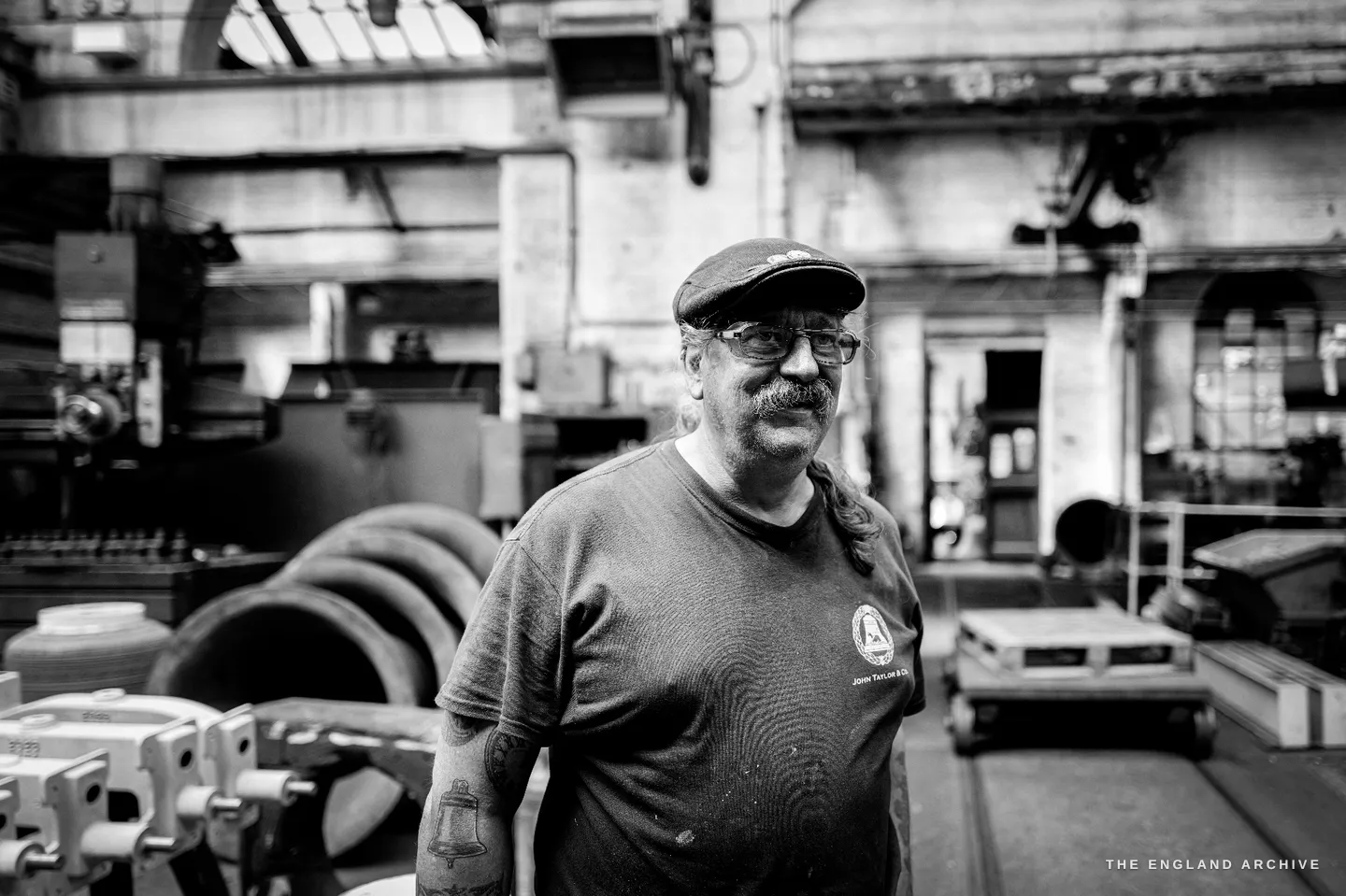
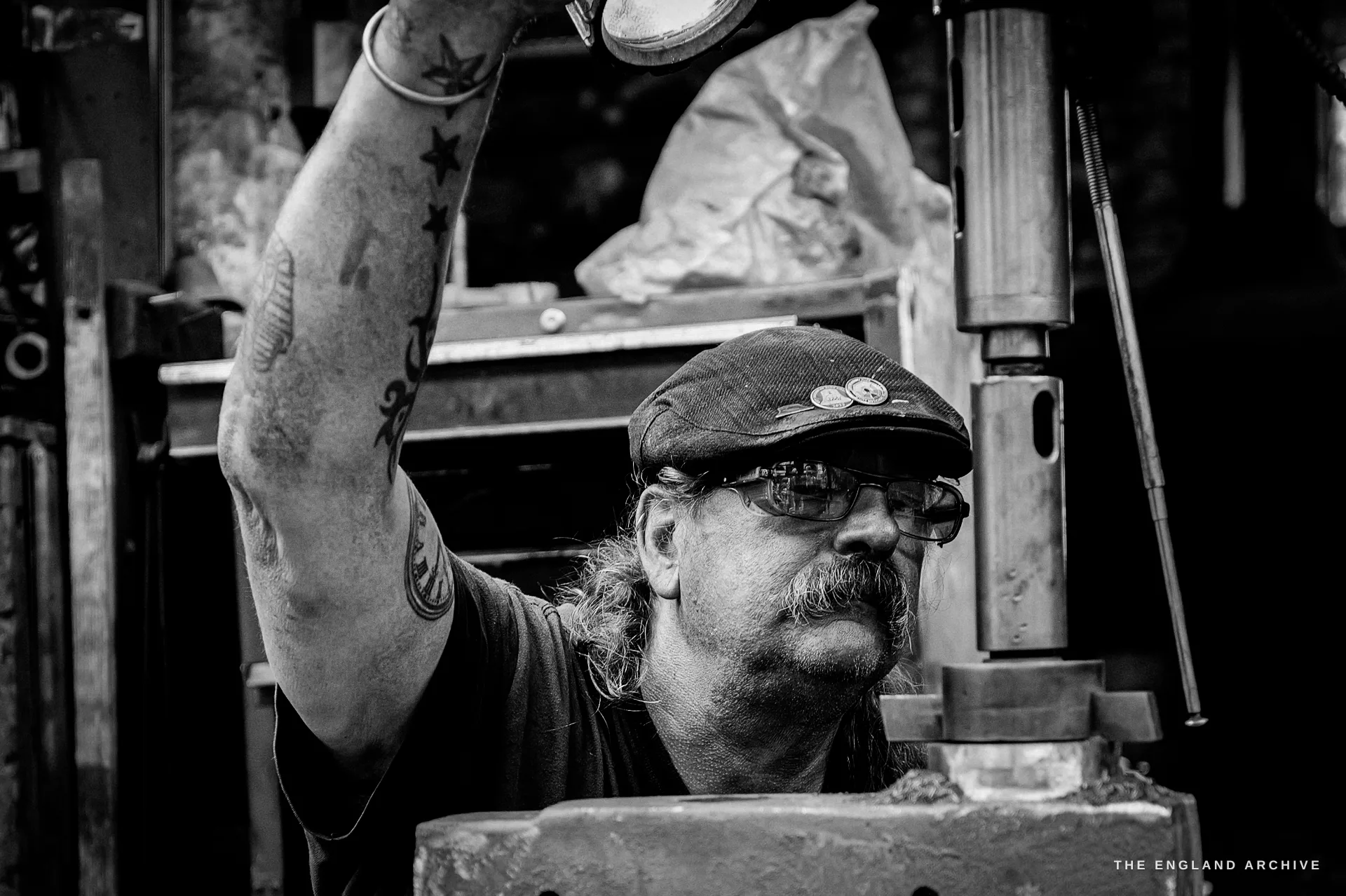
The iron - the headstocks, the wheels, the fittings that let a bell swing and ring - is the domain of the foreman, Bill Bowes, forty-one years with the firm. If Giridhar gives a bell its voice, Bill gives it the means to use it. Between the two of them sits most of what it takes to put a working bell in an English tower, and around them a floor of people - moulders, casters, handbell makers - who plainly love both the work and each other's company, with punk and metal coming off the radios all day.
IV. The state of it in 2026
Heritage Crafts classes bell founding as critically endangered - its most serious category short of extinct - and the craft was added to the Red List of Endangered Crafts after the Whitechapel Bell Foundry in London, which had cast bells since 1570, stopped casting tower bells in 2017. That left Taylor's as the last major bell foundry in the country, with a small number of smaller operations and the casting of handbells continuing elsewhere. A trade that once had a foundry in most large towns now comes down, at scale, to one.
The danger is not that the work is done badly. It is that it is barely being passed on. Each of the skills - moulding, tuning, fitting - takes years to learn, and the market for them is small enough that taking on and training an apprentice is a real risk for both sides. I put the succession question to Giridhar and to Thomas Preston, the production manager, plainly: who comes after? The honest answer was that there is no apprentice tuner, and that finding one is genuinely hard, because you are asking a young person to give years to a craft that exists, at a professional level, in perhaps three pairs of hands in the country, with little call for the skill anywhere else if it does not work out.
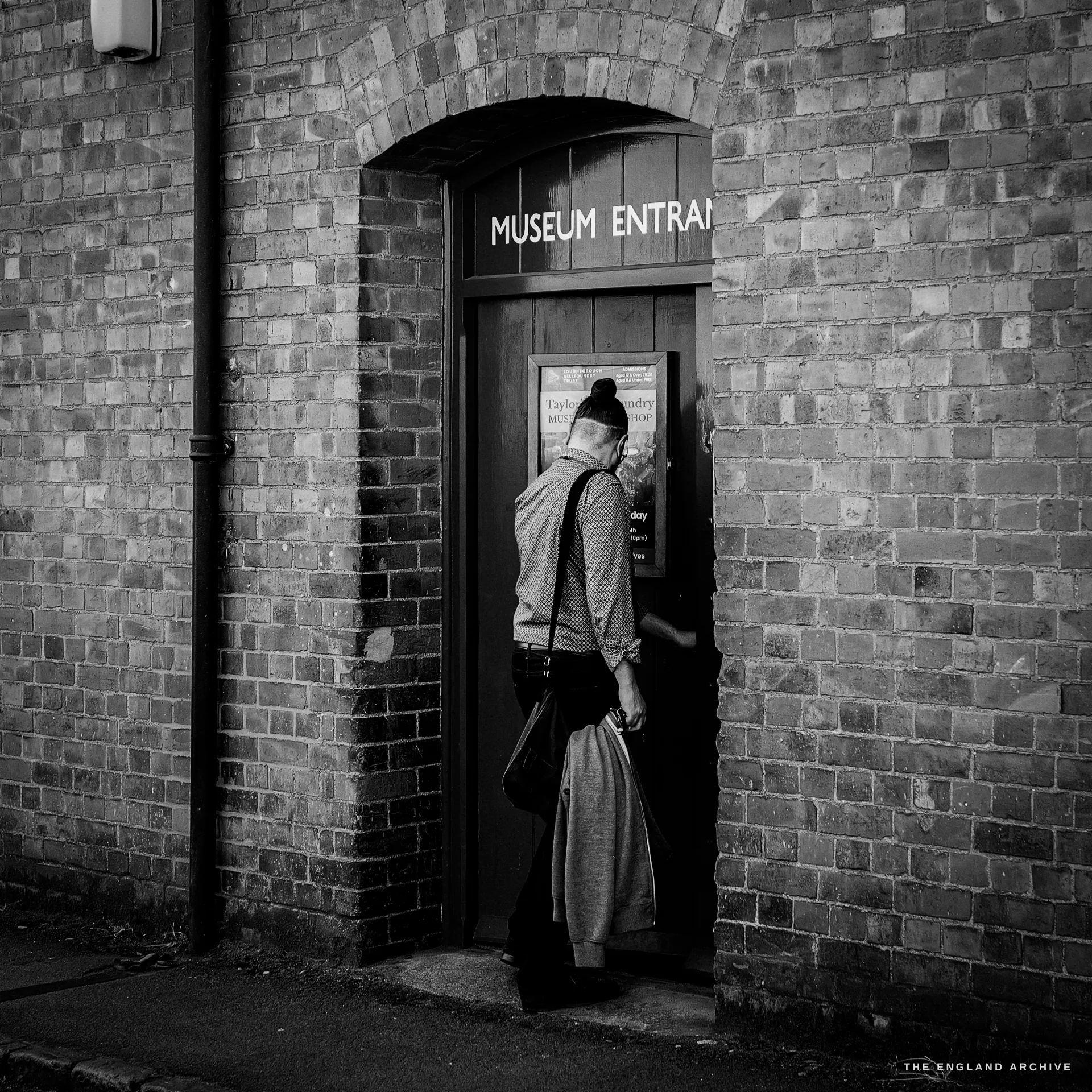
This is the succession problem in its starkest form, and documenting it does not solve it. But there is something the archive can do, which is to put the work, and the people, on the record while the work is still being done - so that the knowledge is at least witnessed, named and dated, and so that anyone who wants to find the craft can find it. The buildings have been saved; the foundry is working; the museum is open. What is needed now is people willing to learn. If that is you, the archive's Learn a Craft directory points toward the bodies that teach and support heritage crafts, and the related entries on bell founding and change ringing set out where this craft sits among its neighbours.
Sources
- The England Archive’s own documentation of John Taylor & Co, June 2026: A Morning at Taylor’s (JN-0020), Inside the Bellfoundry Museum (JN-0021), Giridhar Vadukar (MK-0036) and Bill Bowes (MK-0037).
- Heritage Crafts, “Bell founding”, Red List of Endangered Crafts - for the craft’s critically endangered status and the effect of the 2017 Whitechapel closure.
- John Taylor & Co and the Loughborough Bellfoundry Trust - the firm’s own history (the de Stafford line, the 1784 Taylor takeover, the 1839 move to Loughborough, the 1859 site, Great Paul in 1881) and the museum’s interpretation panels, read on site.
- On true-harmonic tuning: Canon Arthur B. Simpson’s papers of 1895-96 and the foundry’s perfection of the five-tone method in 1896, with the first true-harmonic peal at Norton, near Sheffield.