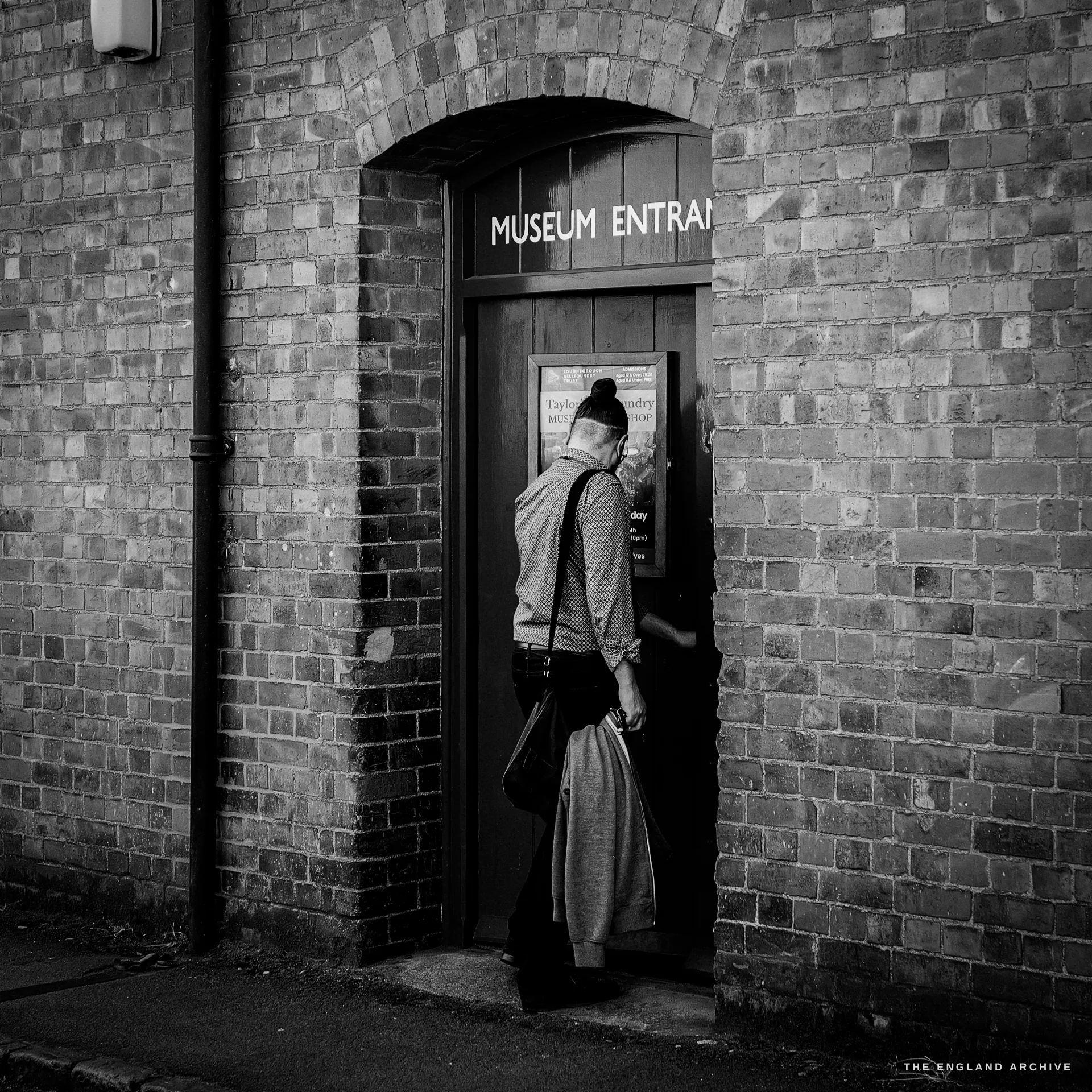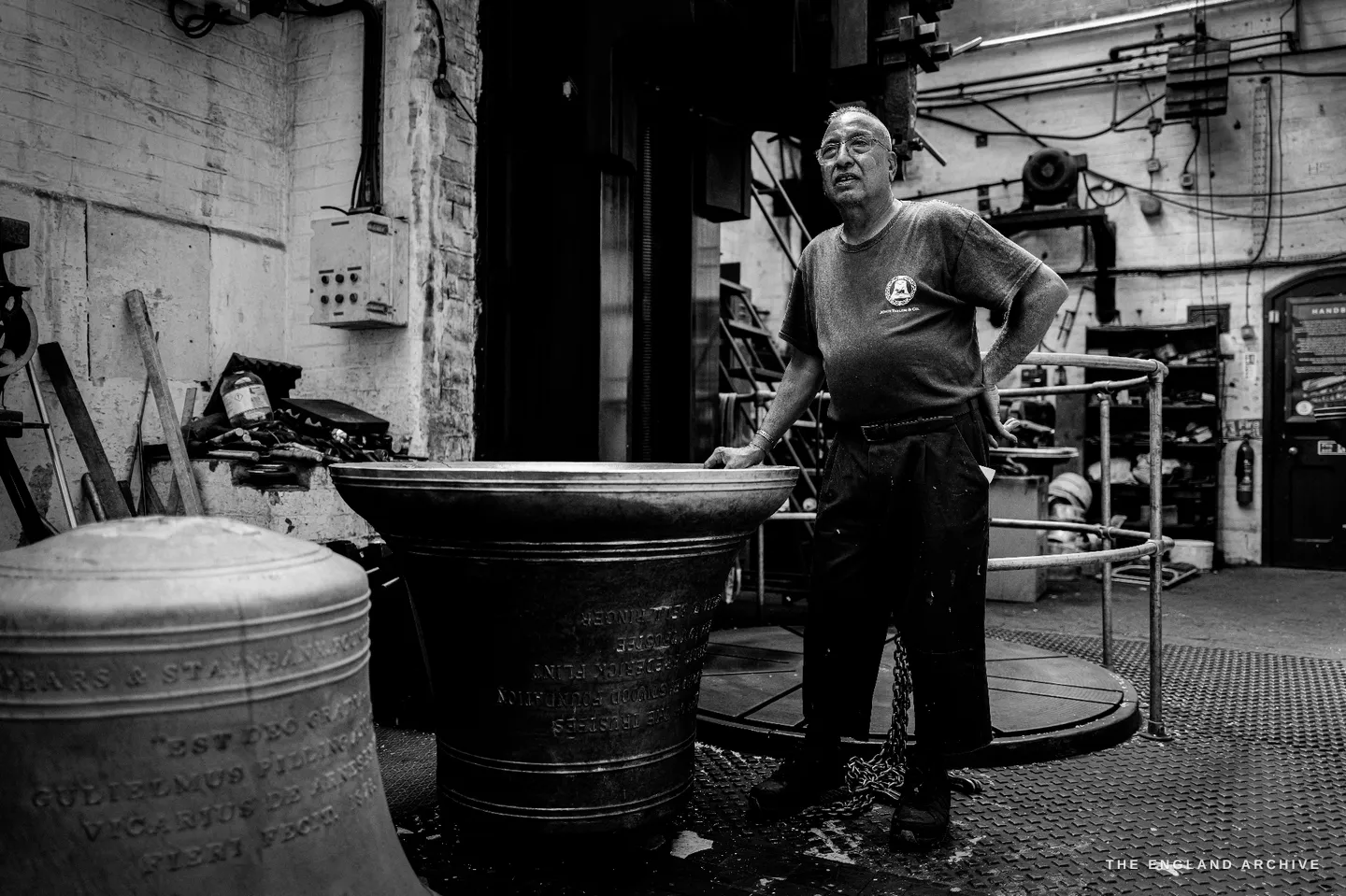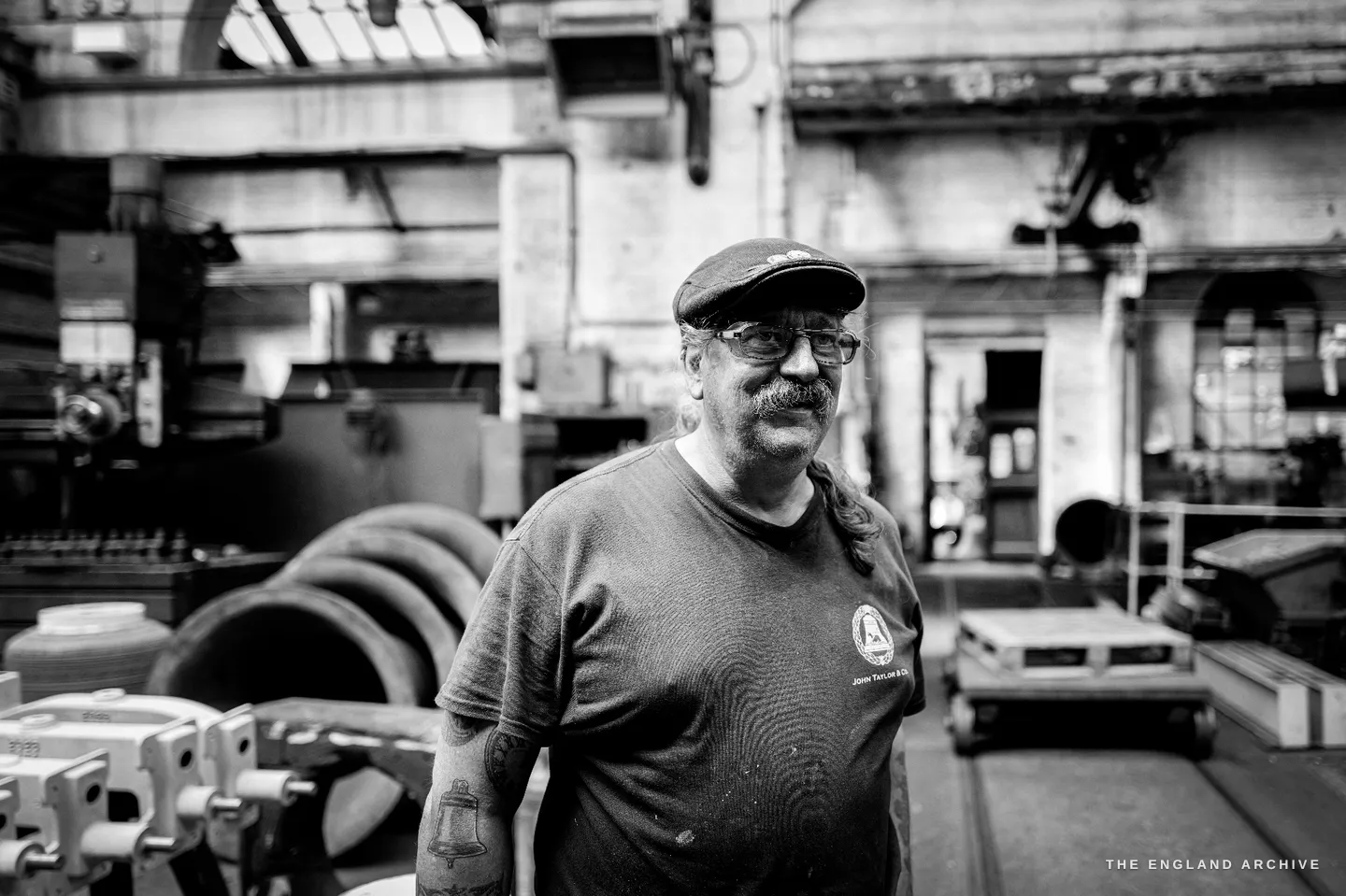
I have wanted to photograph a bell foundry for as long as I have been doing this, and there is really only one to photograph. John Taylor & Co in Loughborough is the last major bell foundry in Britain and the largest working bell foundry in the world, and on a June morning in 2026 they gave me the run of the place. The casting floor, the pattern shop, the handbell workshop, the tuning shop, the museum - and the people, which in the end is what an archive is for. It was one of the best days I have had on this project.
Standing in front of it
I stood across Freehold Street for a while before I went in, just looking at the building. There is an old-world weight to it - you can almost watch it being built, brick by brick. A short length of newer annexe runs off to one side, and beyond it, on the right, sits the foundry proper, with four tall chimneys rising over the roof where the bells are actually cast. The firm's name is painted straight onto the gable in letters you can read from the far pavement: JOHN TAYLOR & Co, BELLFOUNDERS.
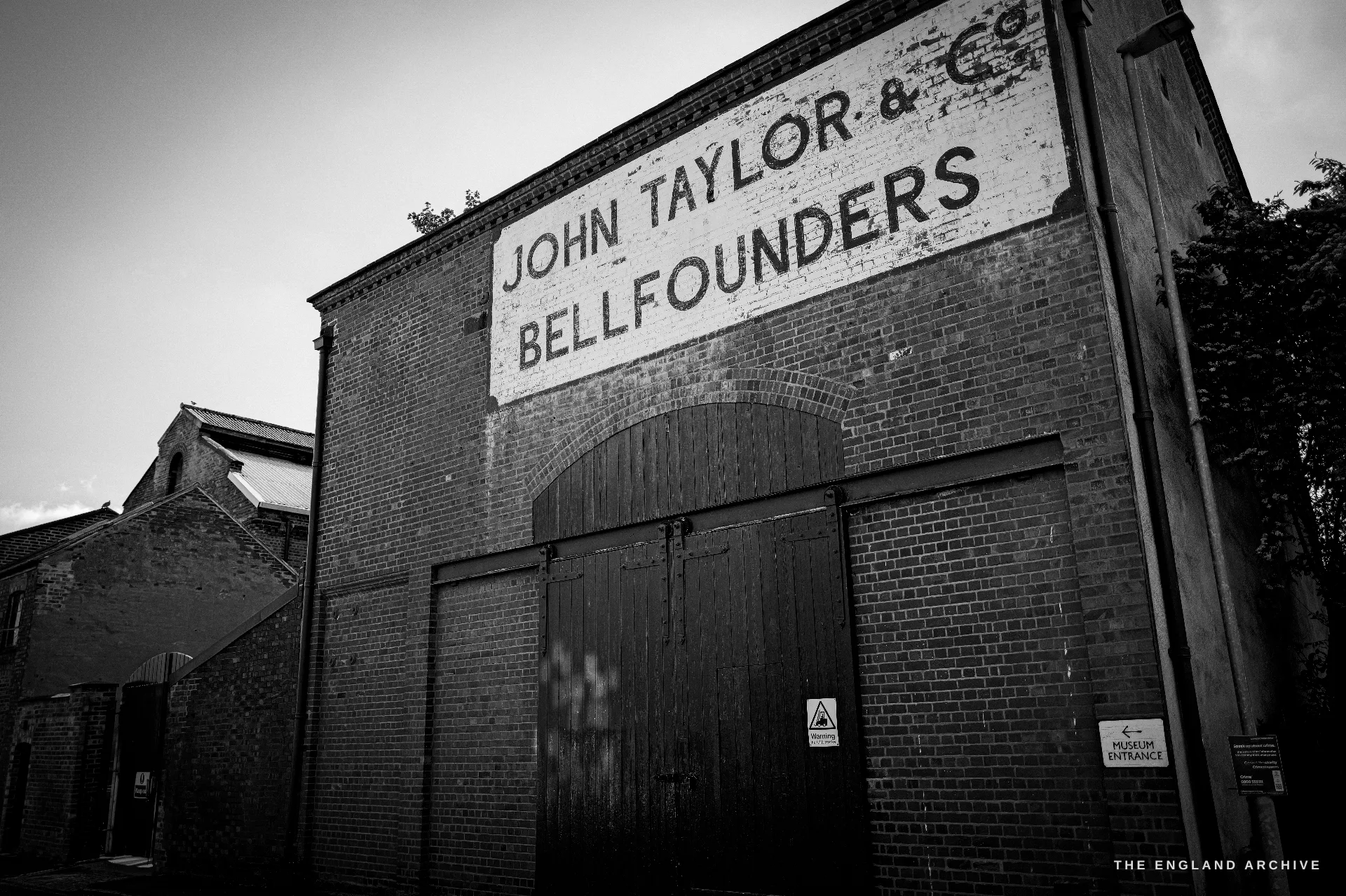
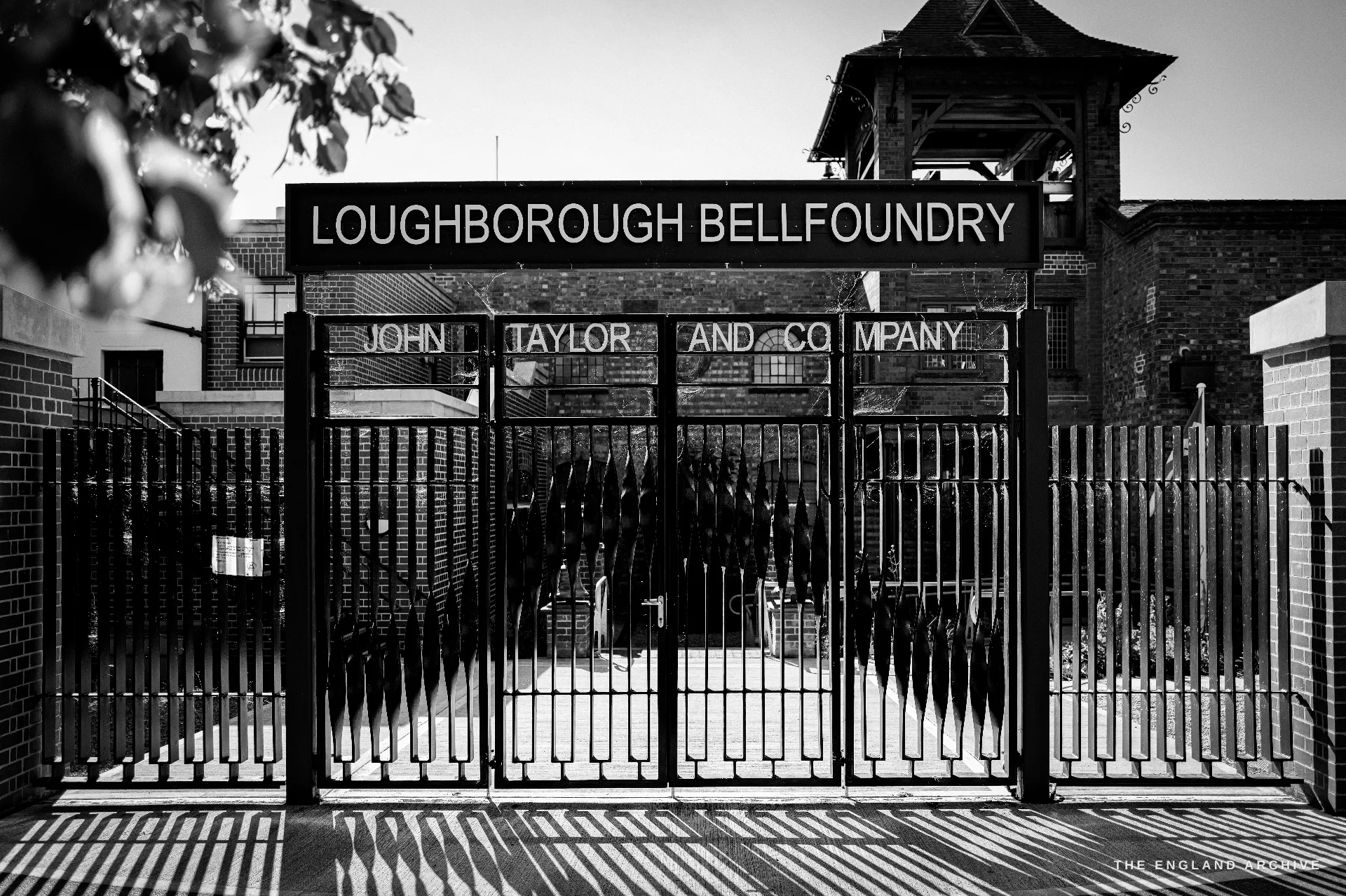
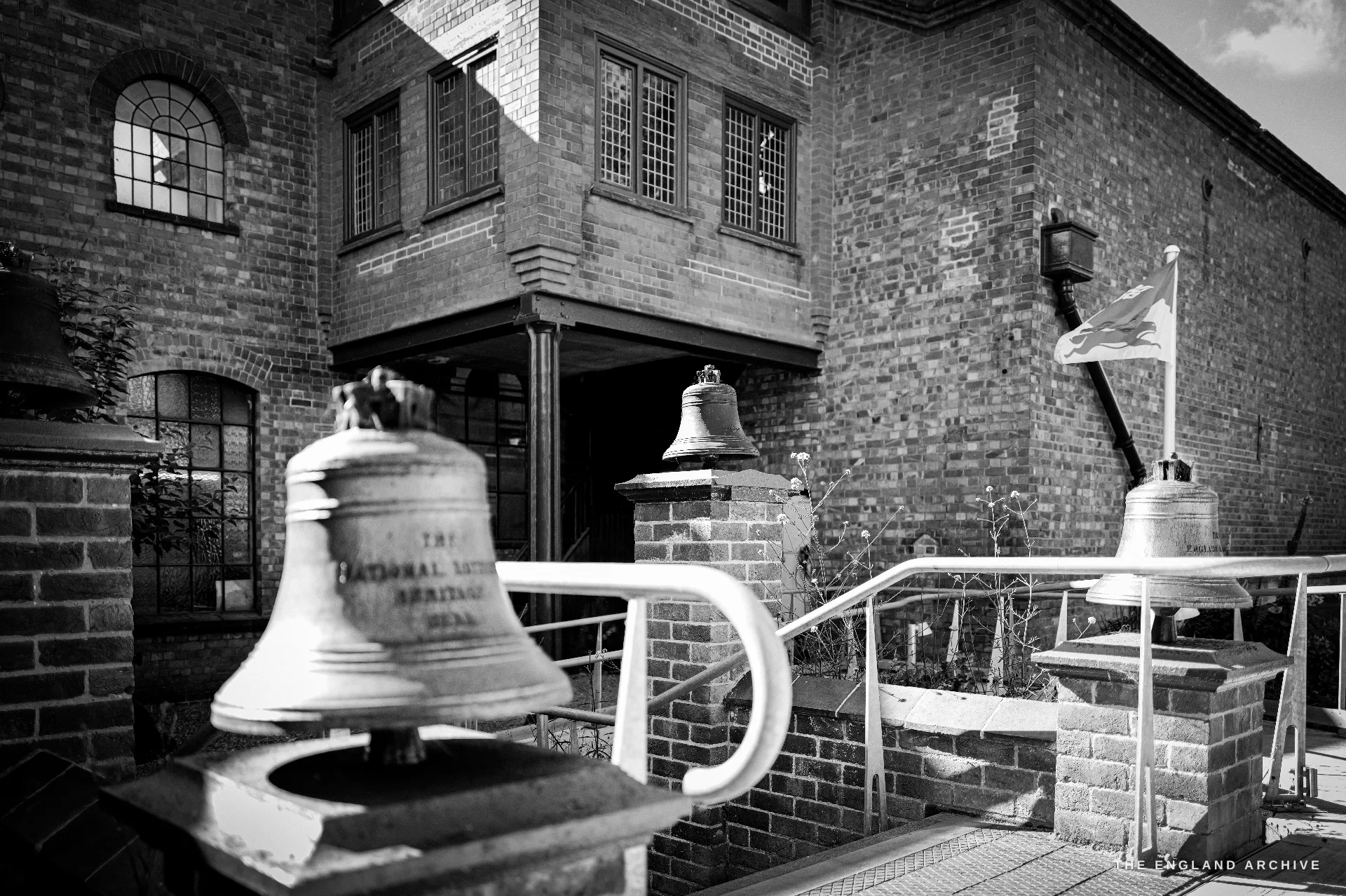
The foundry has stood on this site since 1859, and the line of bell-founding it belongs to is older still - unbroken since the middle of the fourteenth century, when a founder called Johannes de Stafford was casting bells within ten miles of here. The Taylor family came into the trade in 1784 and set up in Loughborough in 1839. The buildings around me were Grade II* listed and, not long ago, on the Heritage at Risk register; it has taken a charitable trust and a long list of funders to pull them back from the edge.
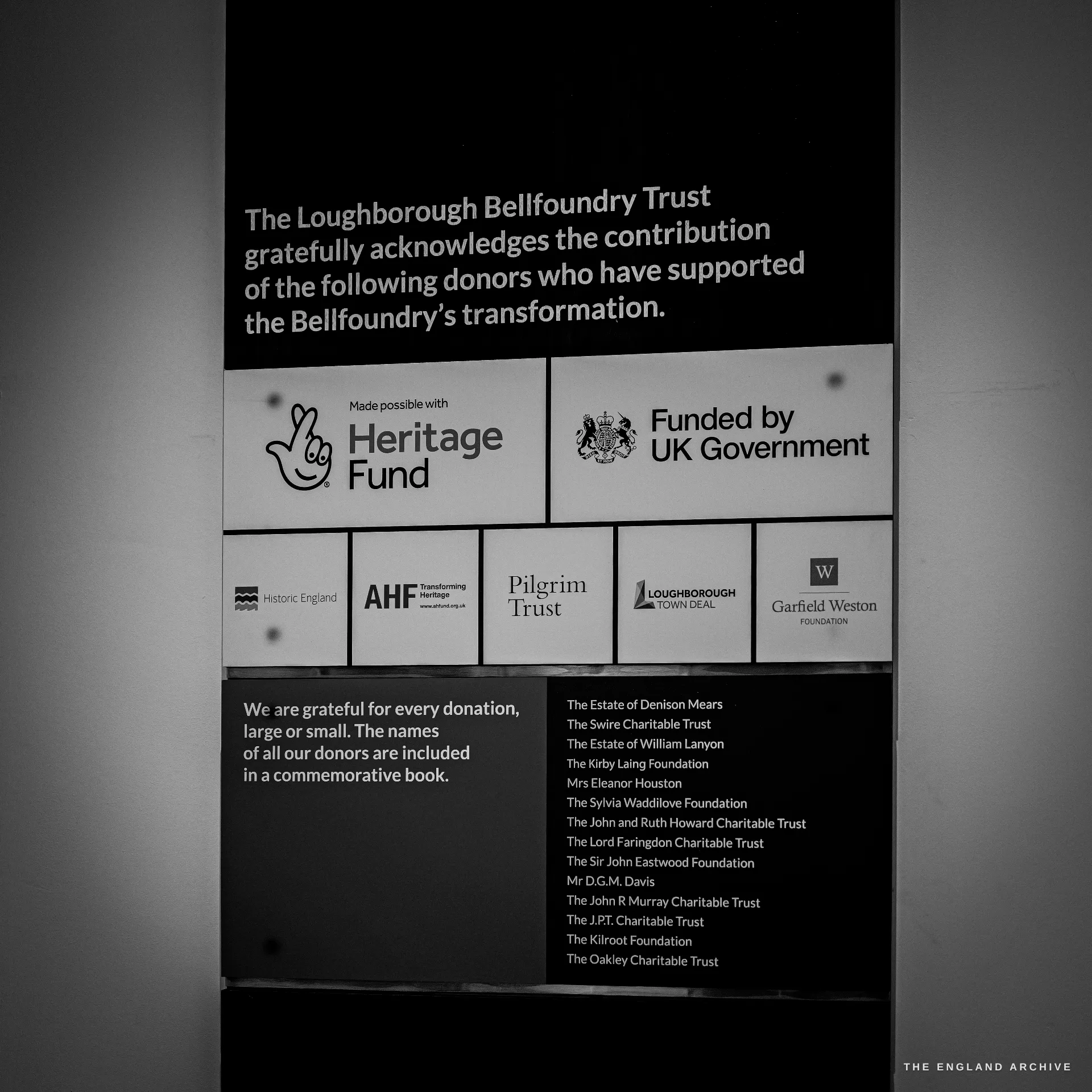
All of that was in my head as I crossed the road. None of it prepares you for the inside.
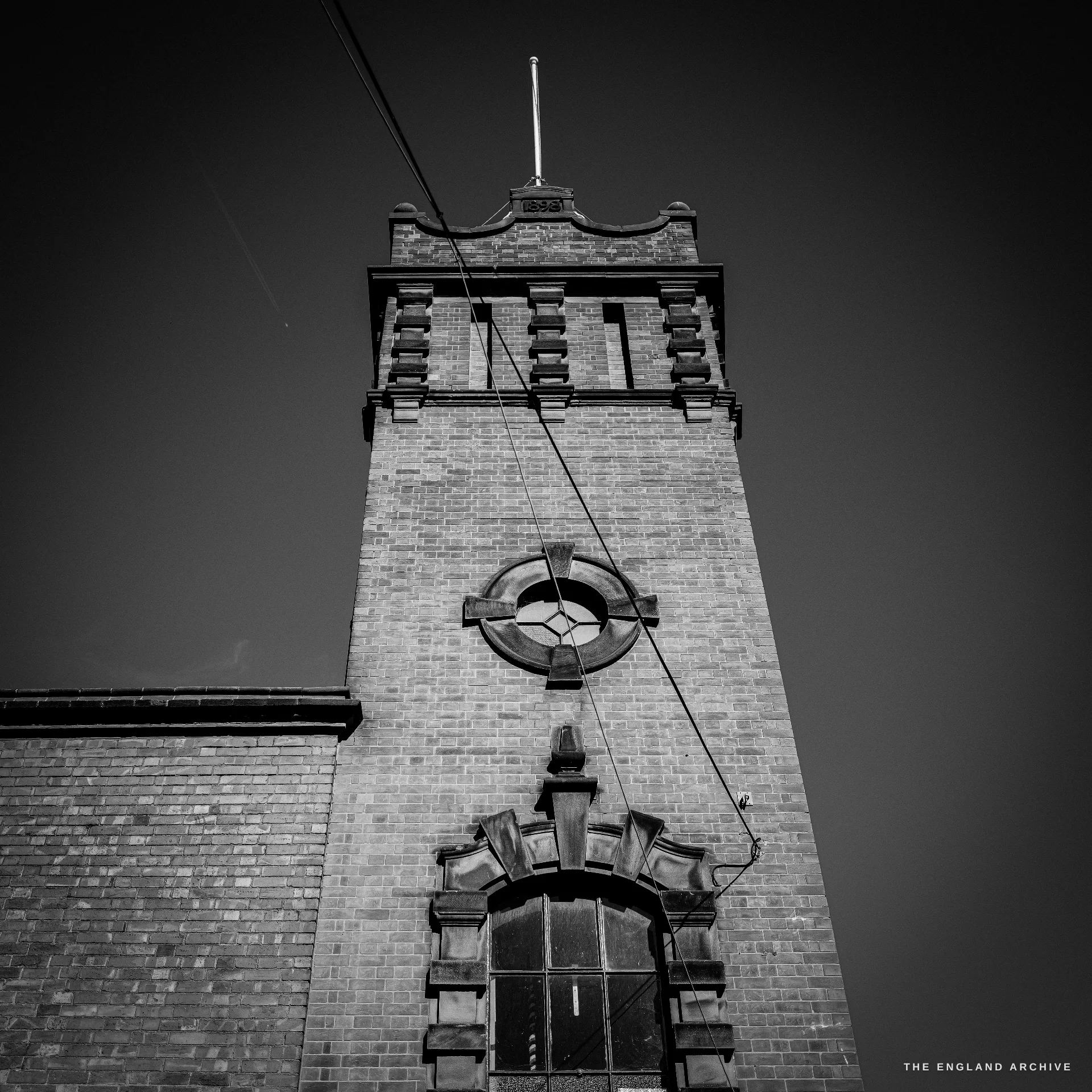
Reception, and a sit-down
Leanne met me at reception. I asked for Taryn Page, who I had been writing to for weeks, and a moment later Thomas Preston appeared - the production manager, the man who actually runs the floor. Thomas took me upstairs, sat me down, and let me explain what the England Archive is and why I had driven to Loughborough to point a camera at his workplace. He listened, he understood it straight away, and from that moment the whole day opened up. I met Taryn upstairs too; she was setting up the tour area for the day's visitors.
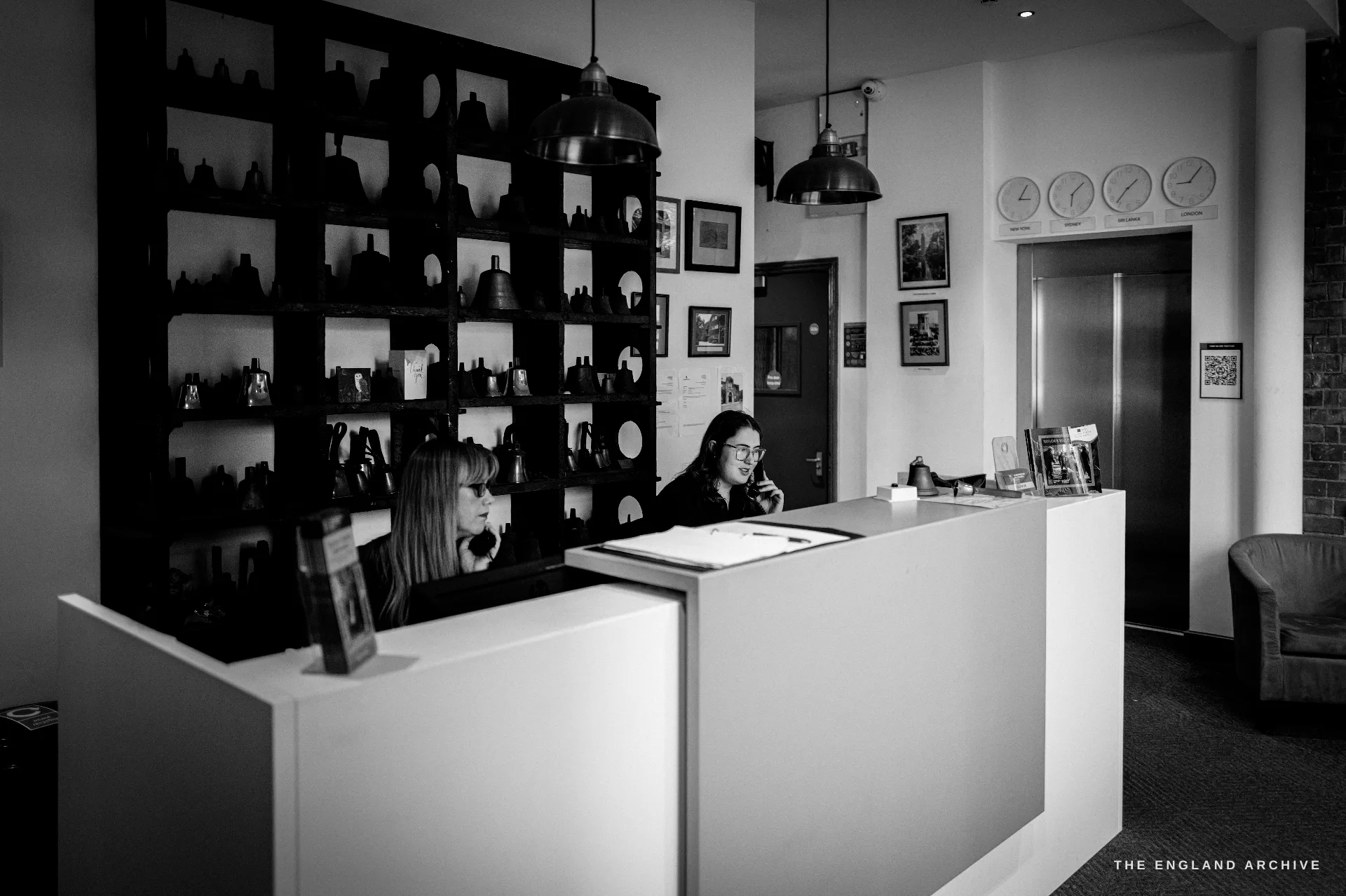
One thing I want on the record, because it is rare: Thomas gave me proper access. Not a roped-off, mind-the-exhibits walk-round, but the real floor, the working bays, the people mid-task. It felt like a proper shoot, the kind you get only when the person showing you round trusts both you and the work. The front of the house, Leanne and Thomas, set the tone for everything that followed.
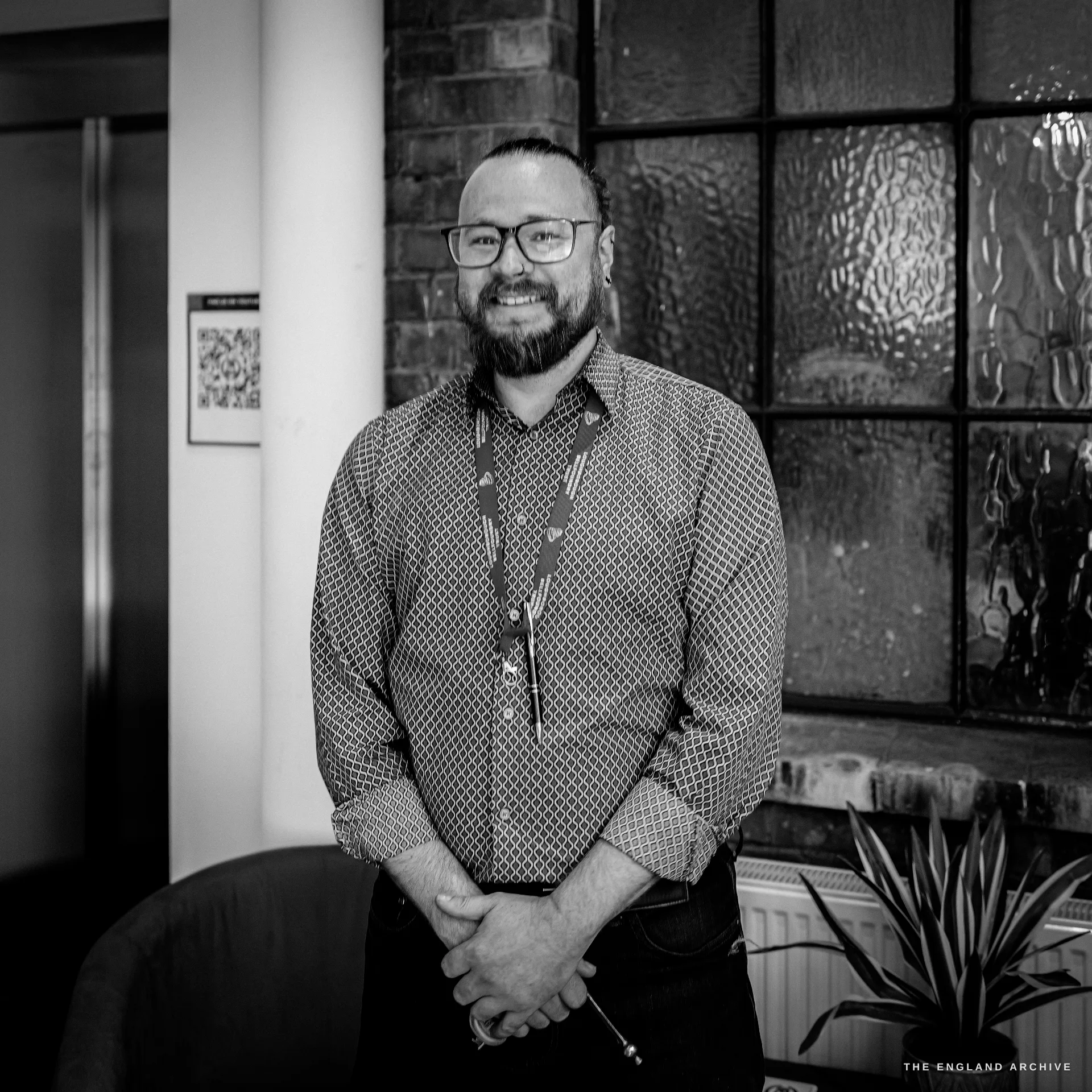
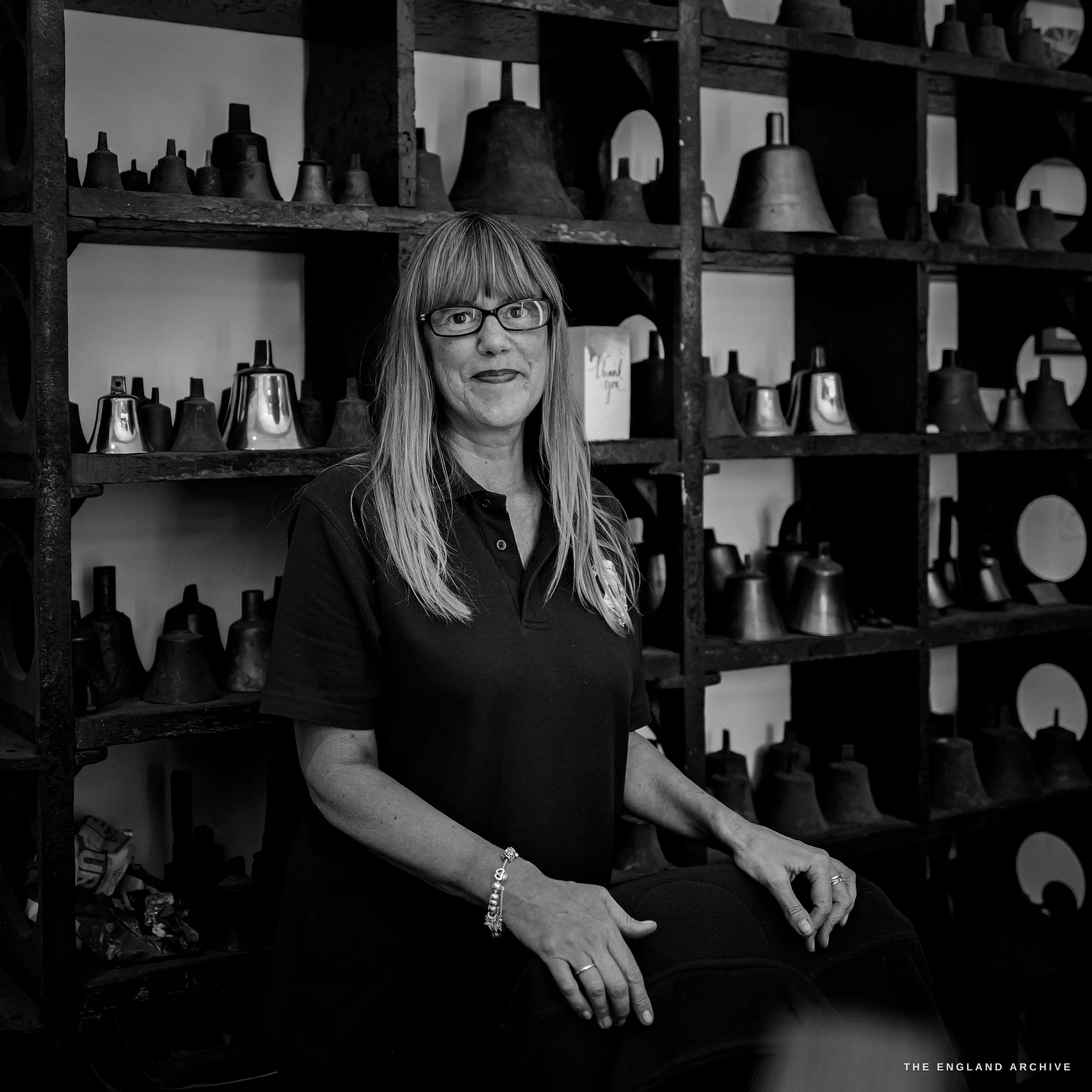
The museum, before the floor
Before the factory, there was the museum. Thomas walked me into it before it had even opened for the day and gave me free run of the exhibits, and then I joined the public tour with Gary, a guide who turns out to be a bell-ringer himself and talks about the work like a man who loves it. I have given the museum its own account - Inside the Bellfoundry Museum - because it deserves more than a paragraph here. This entry is about what happened after the tour, when Thomas took me through onto the working floor.
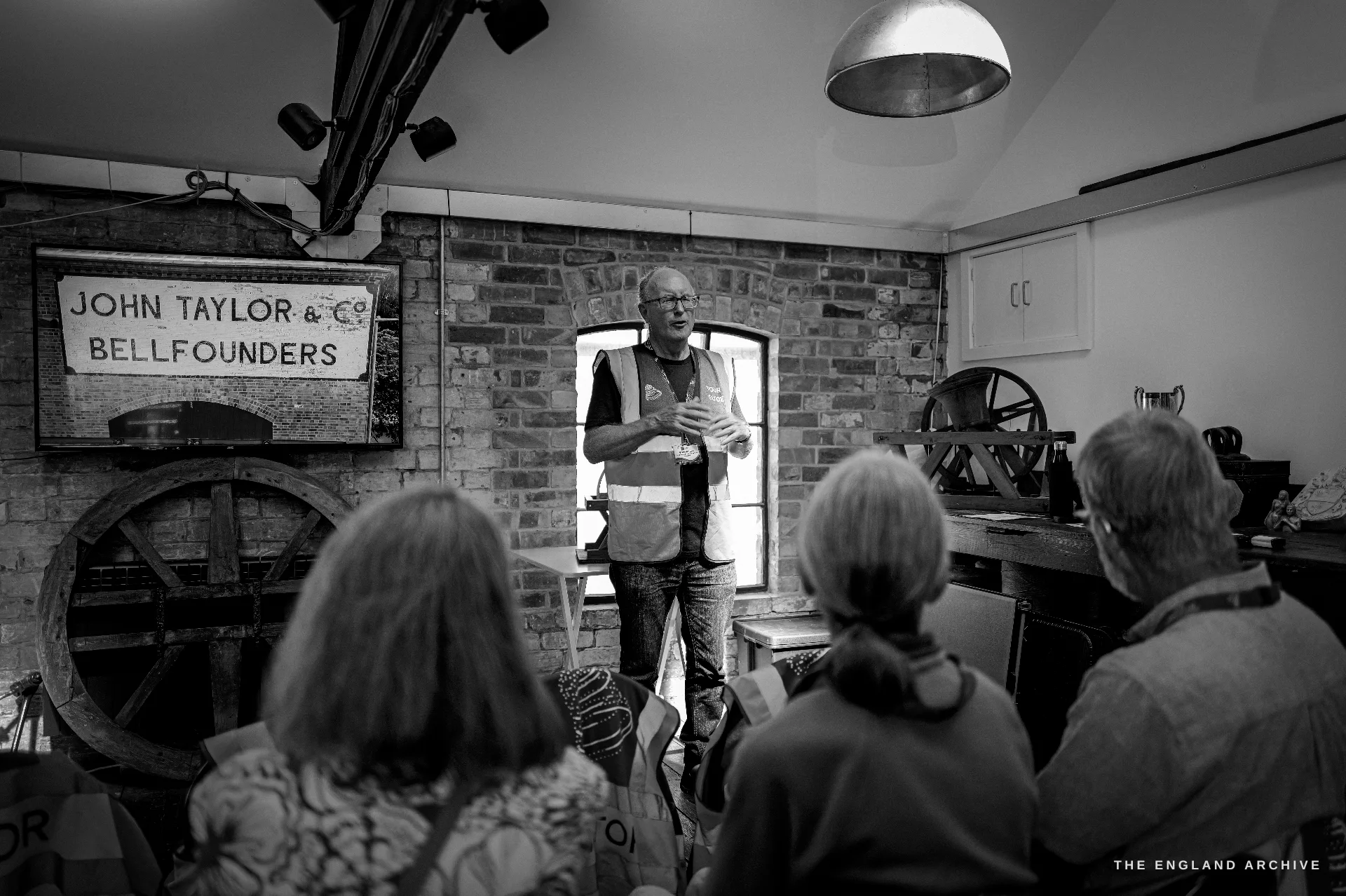
The casting hall
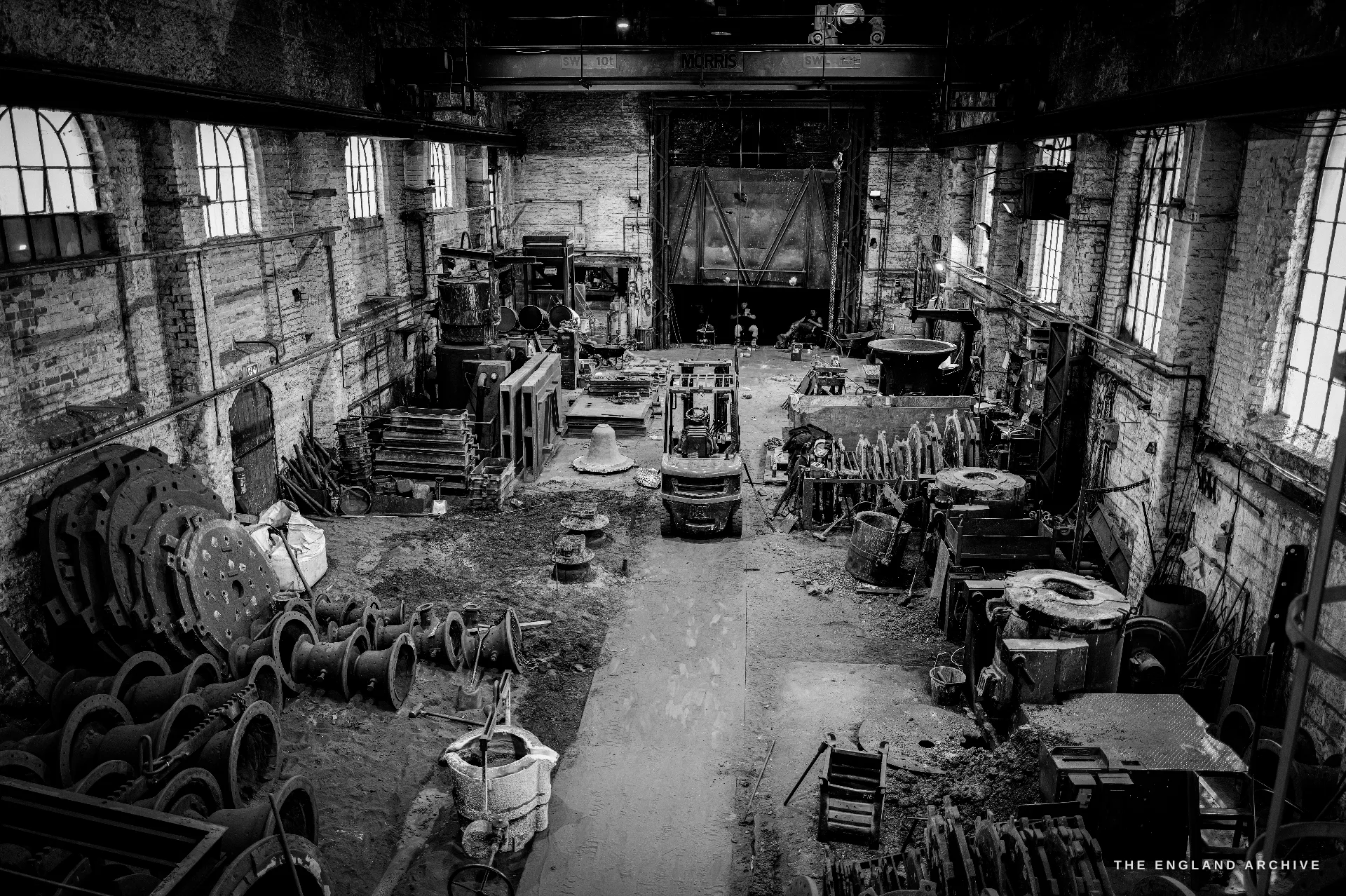
The casting hall stops you the moment you walk in. It is a tall, arched space with light coming down through the roof, and the floor is given over to the work of turning bronze into bells - moulds, ladles, a sand pit, an overhead gantry crane to move the weights involved, and the painted name of the firm fading on the far wall. Bells are made here the way they have been for centuries: a mould built in two halves, molten bell metal poured in a single go, and days of cooling before the bell is broken out.
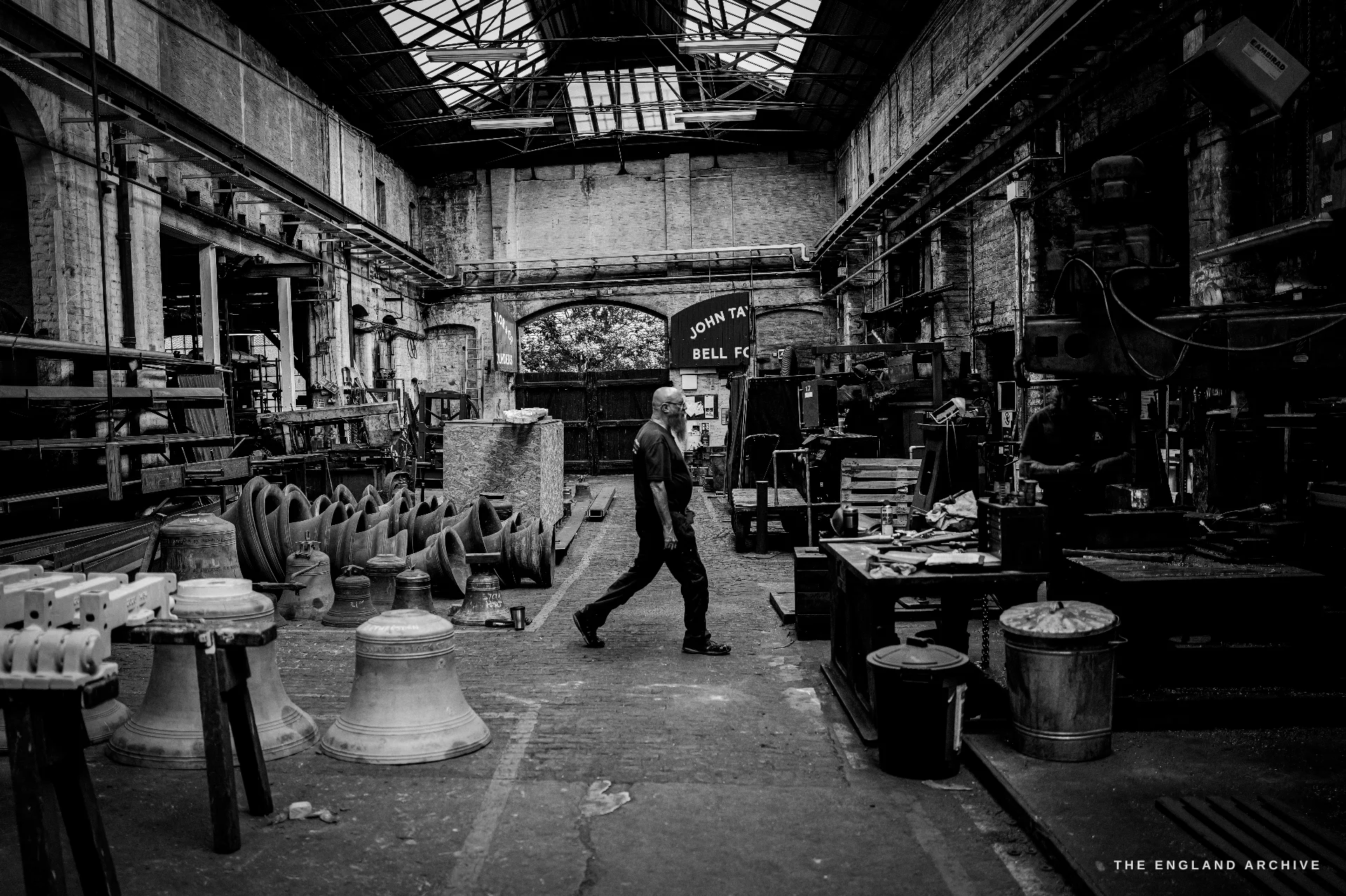
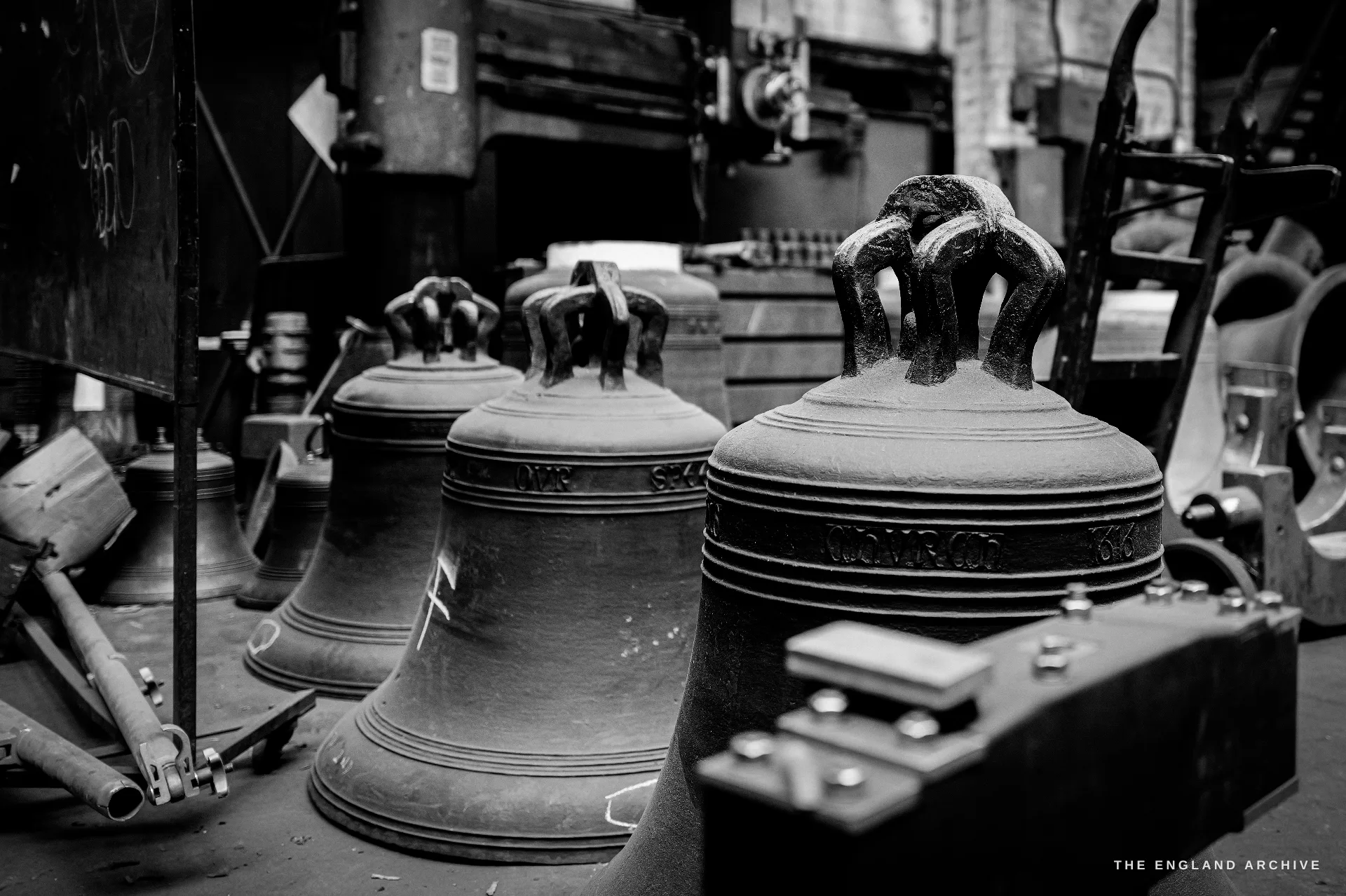
Along one side stood three bells fresh off the casting floor, their inscriptions already cast into the bronze around the shoulder. They looked finished to me. They were not - a newly cast bell is dull and only very nearly the right note, and it falls to the tuner to make it exactly right. But standing among them, with the crown loops still rough and the metal still dark, you understand the scale of what this place makes. These are not ornaments. They are instruments that will hang in a tower and be heard across a town for two hundred years.
How a bell gets its shape
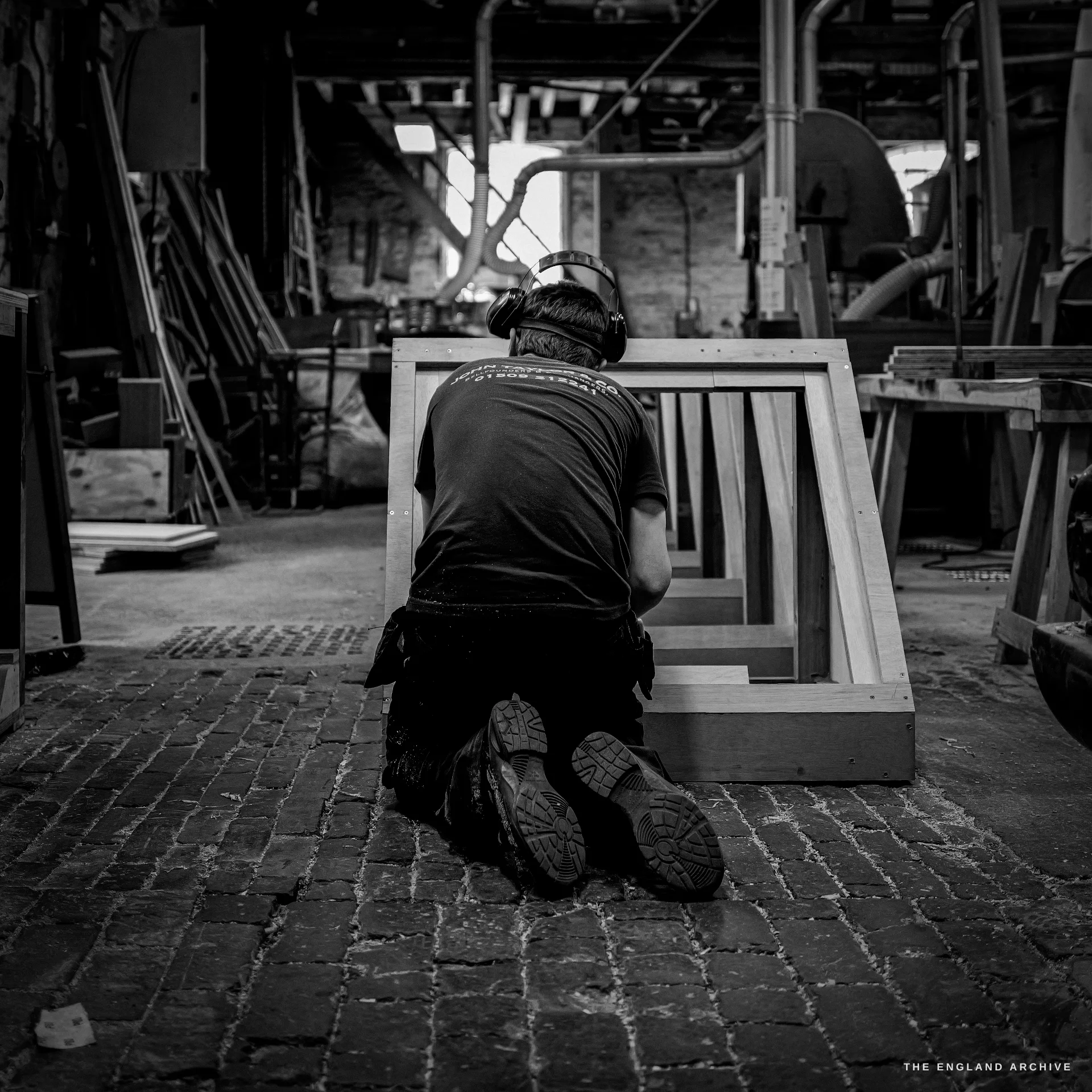
What I had not understood, before this morning, is how much of a bell happens before the metal. The note of a bell is decided by its profile - the precise curve from crown to soundbow - and that profile is built by hand, in wood and sand, in the pattern shop. Curved templates called strickle boards sweep the exact shape into the mould; men kneel on the brick floor assembling the mould frames; the whole geometry of the sound is set here, in the quiet, long before anything is poured.
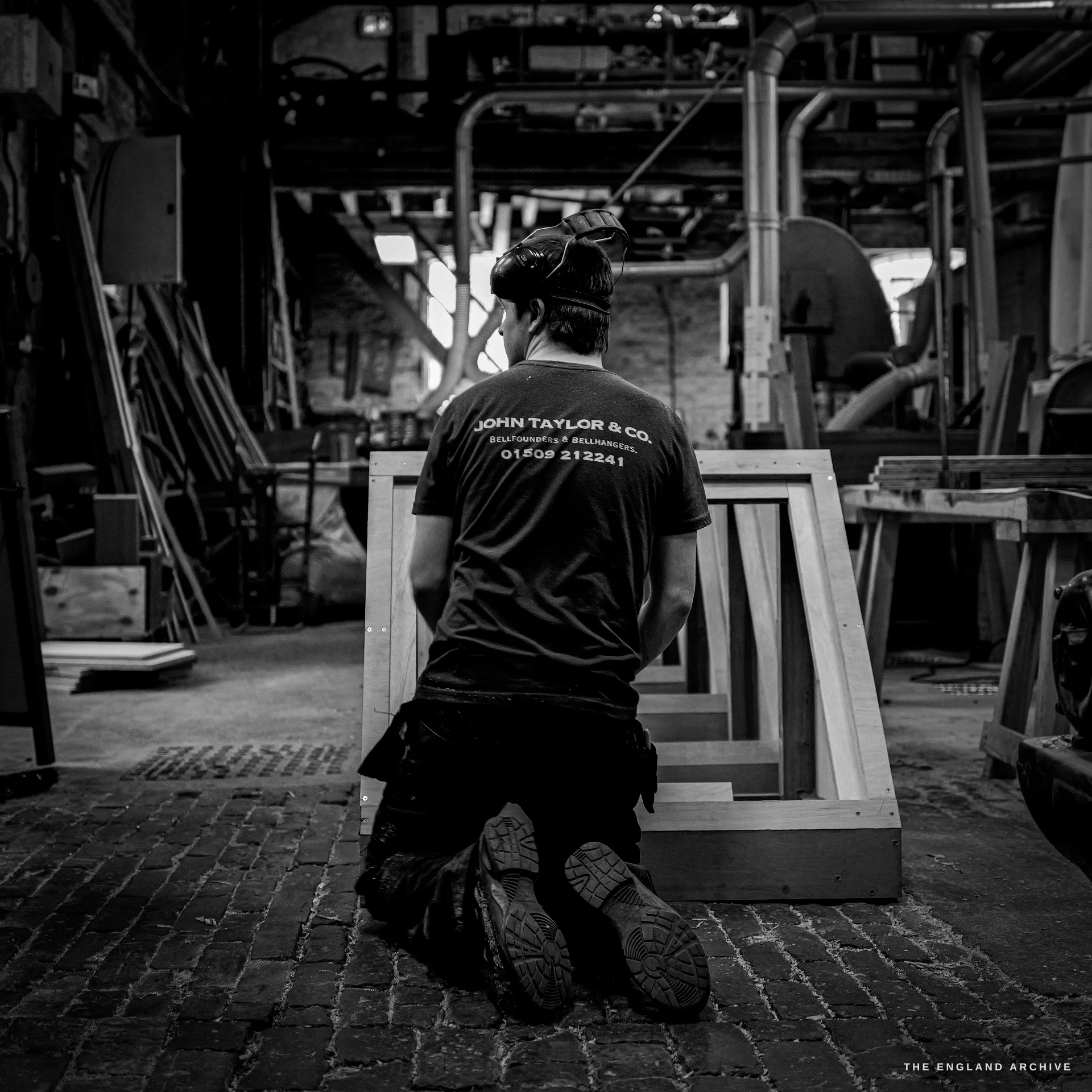
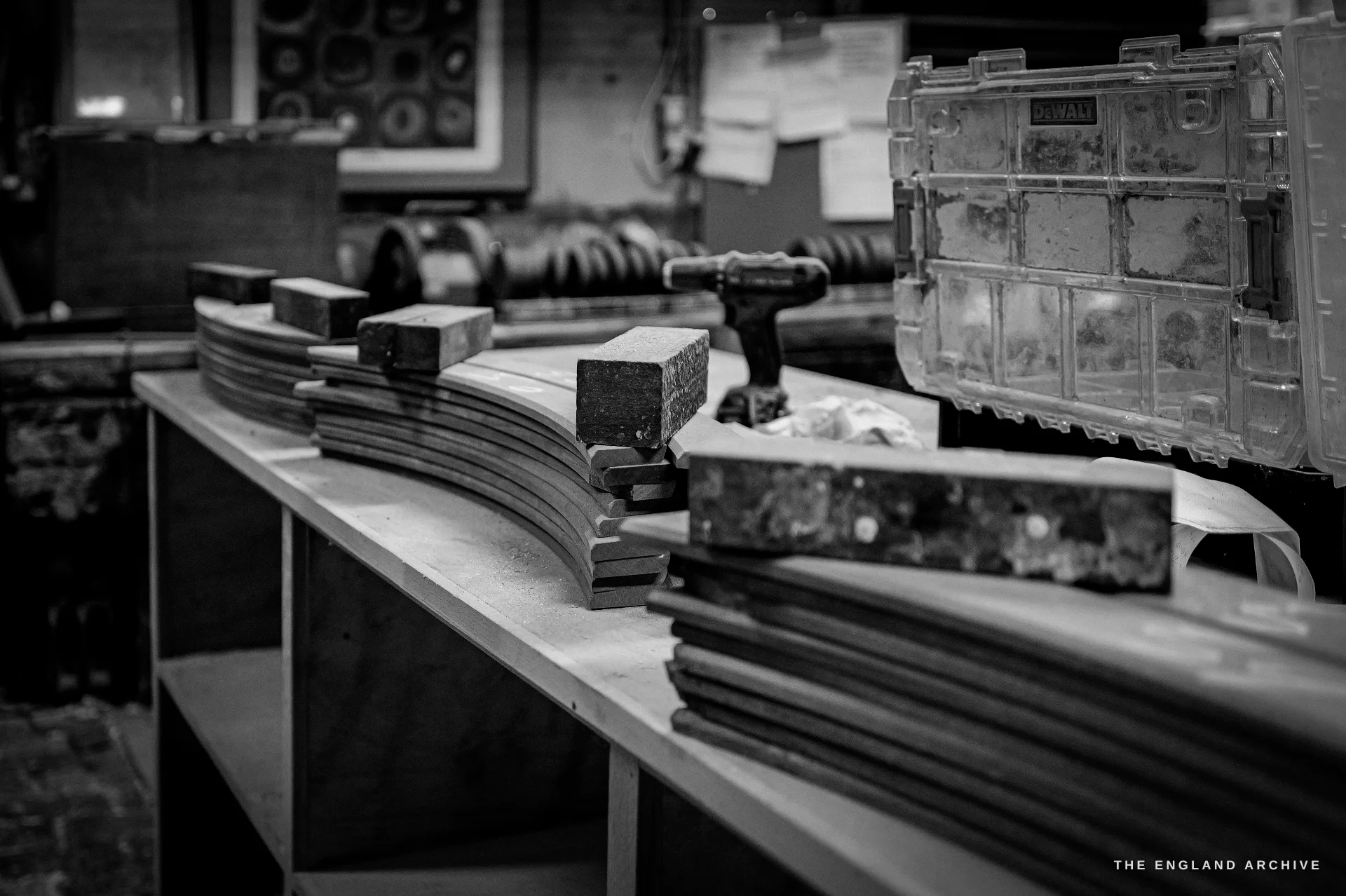
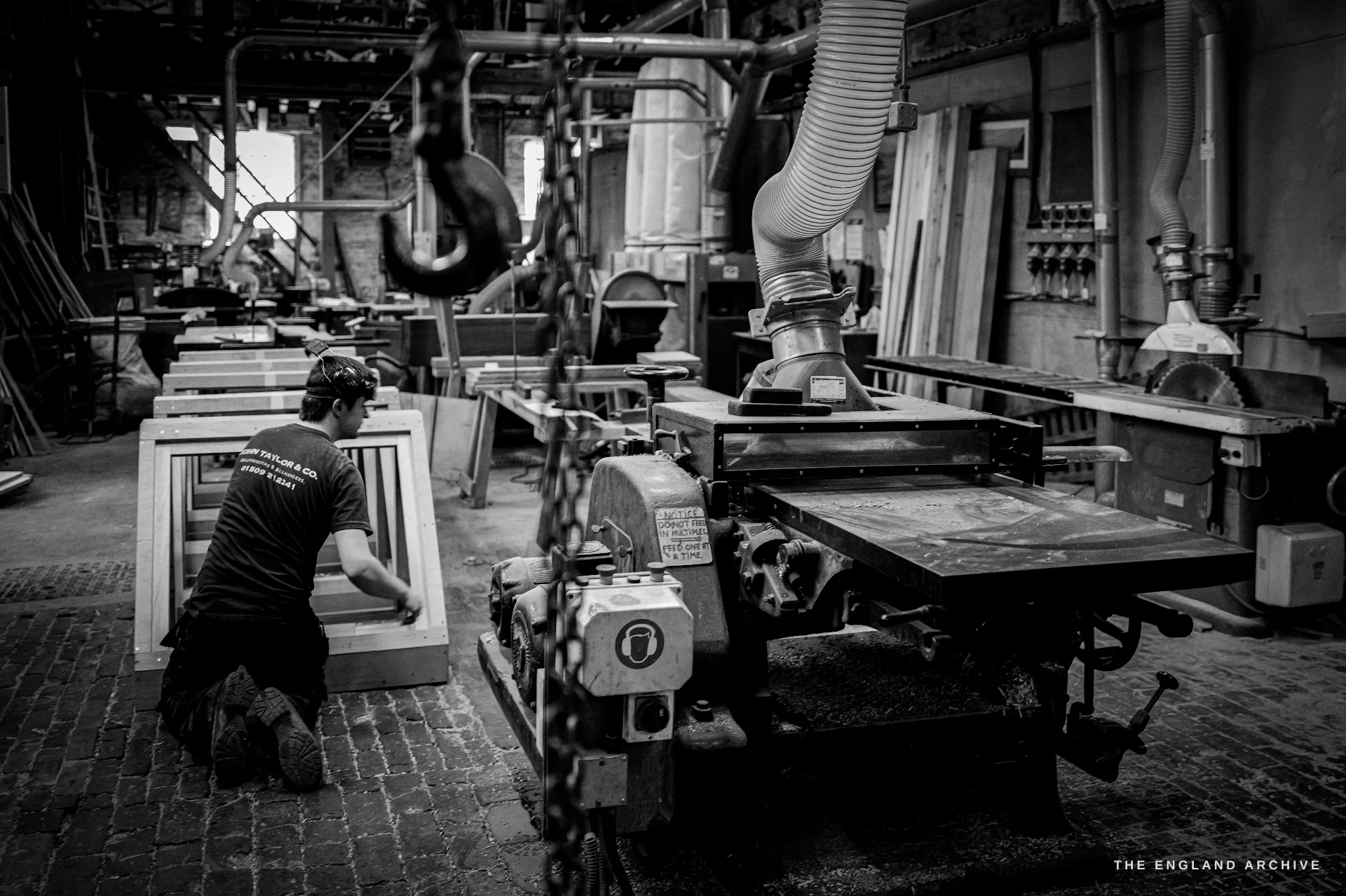
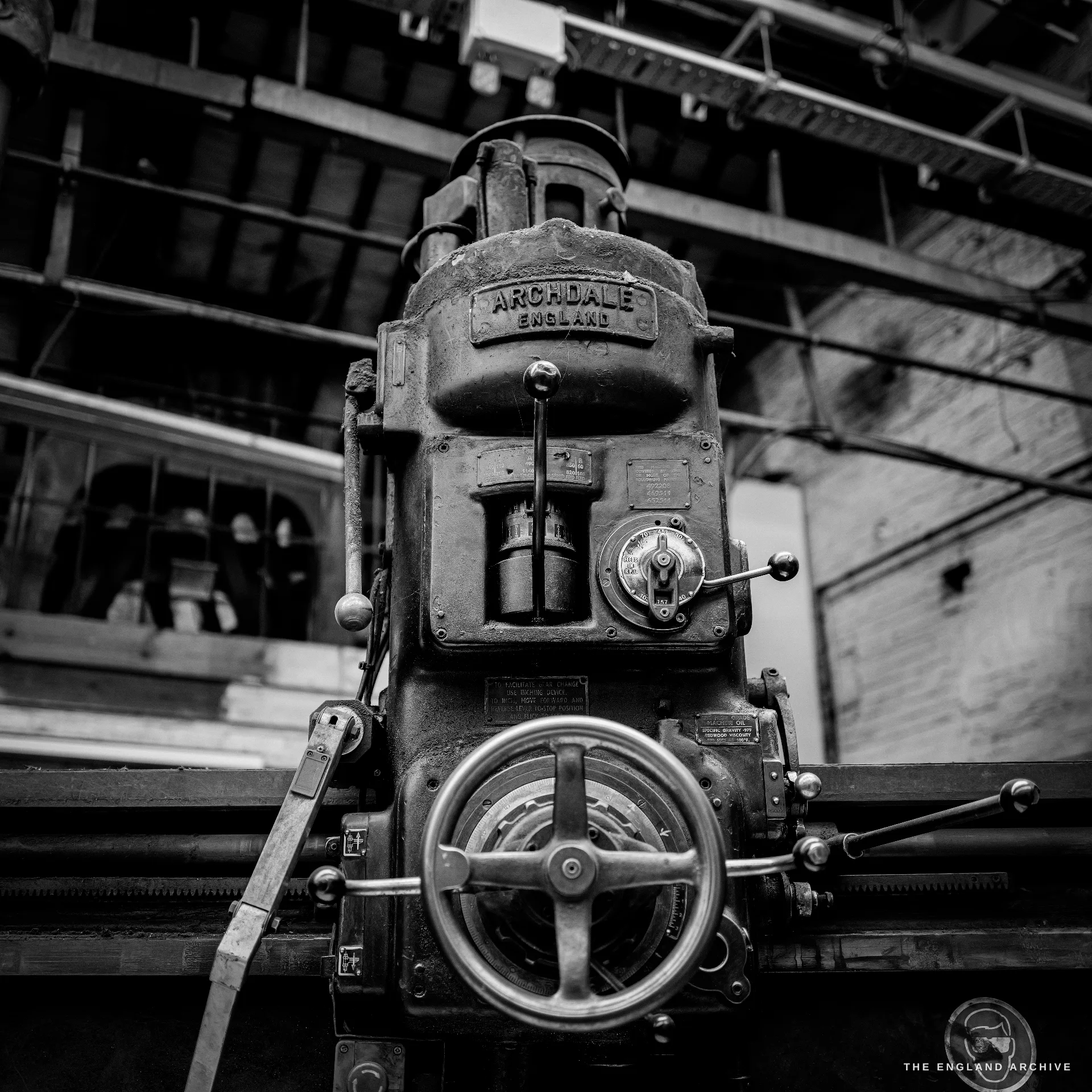
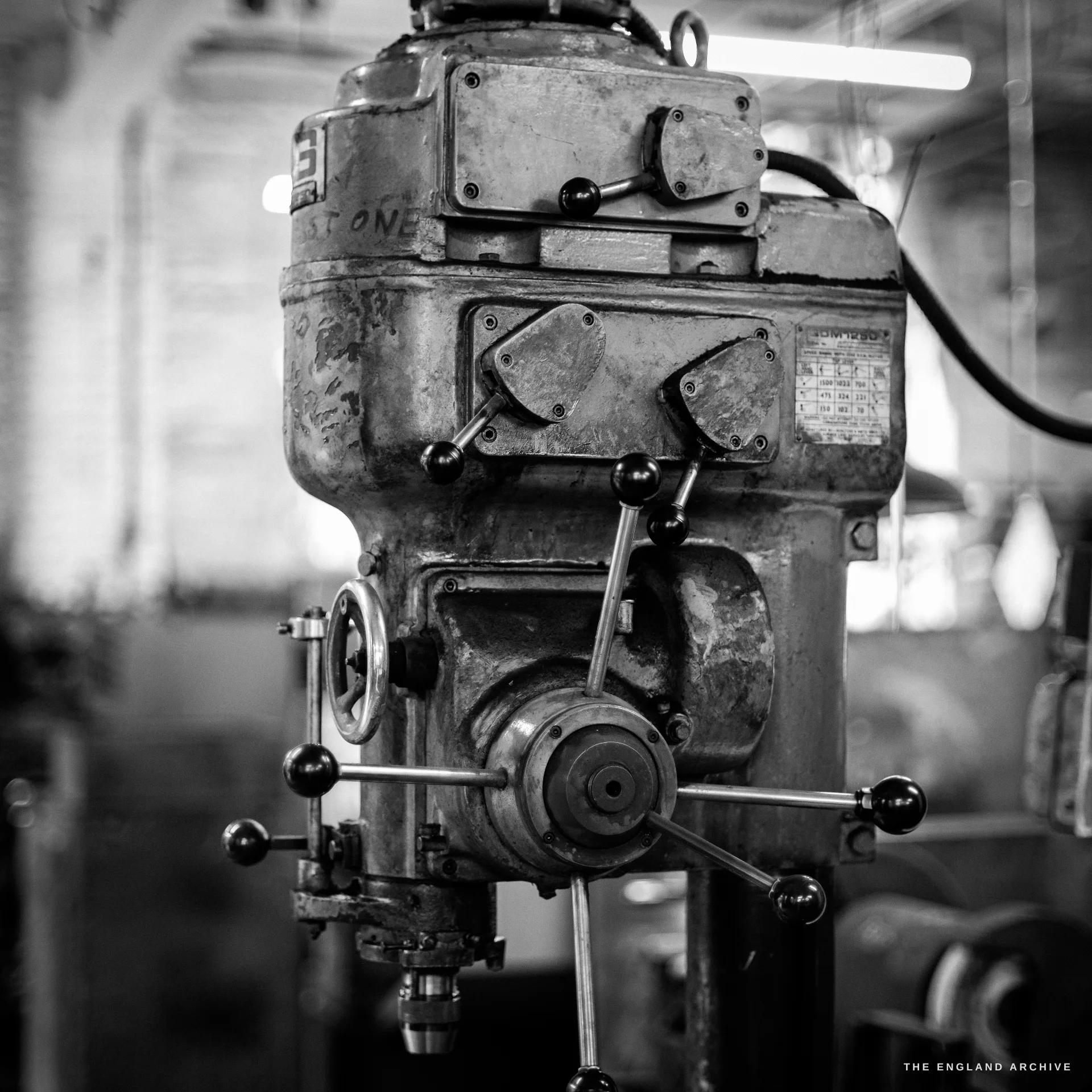
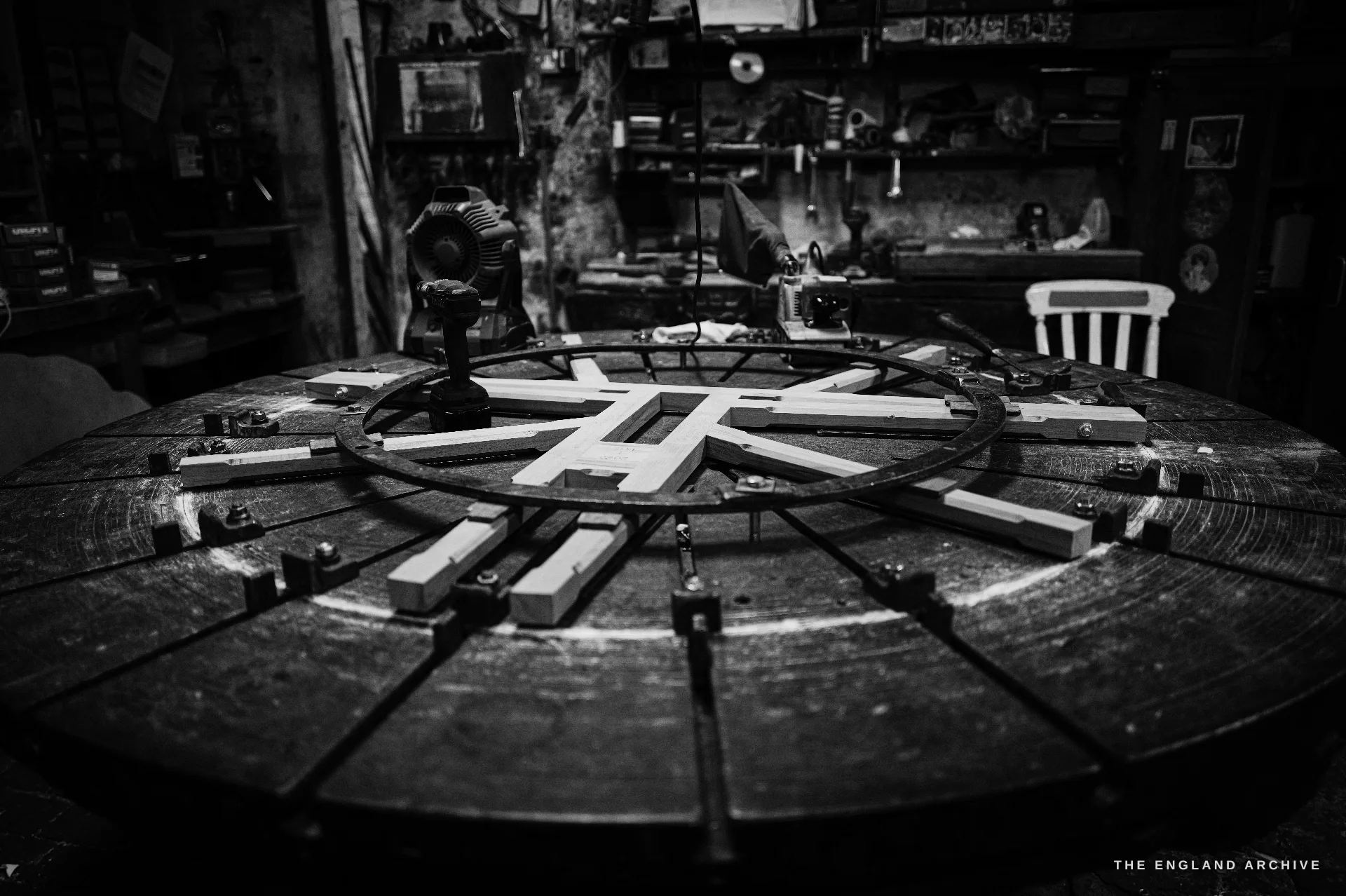
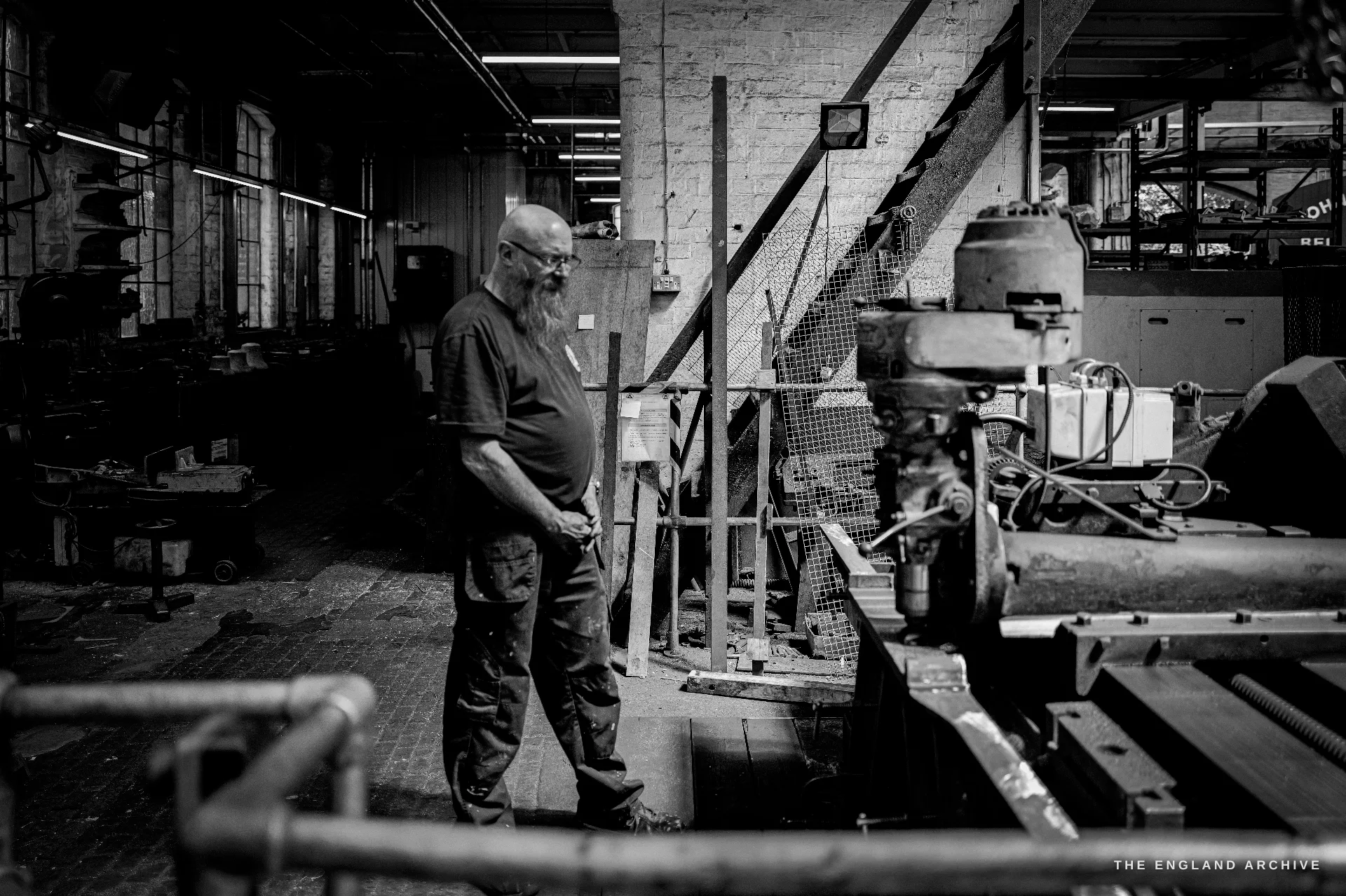
The pattern store is a thing of beauty in its own right - shelves of wooden pattern blocks, banks of drawers, a great circular moulding turntable, and the machinery to work it all. Much of the kit is old and English and still earning its place; one radial drill carries an Archdale maker's plate and has clearly been turning here for generations.
The wheels and the handbells
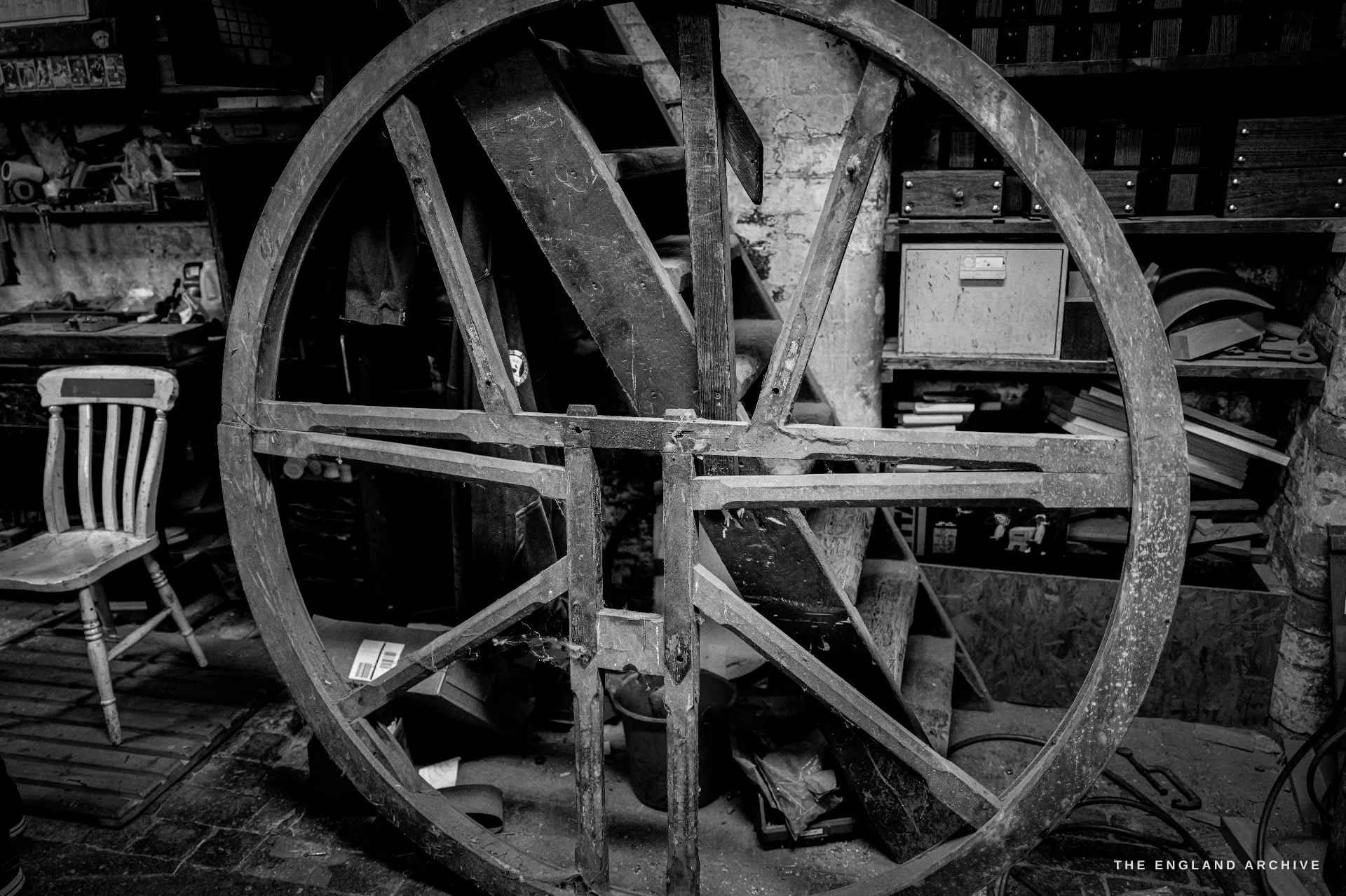
A tower bell does not just hang; it swings full circle, and that takes a great spoked wheel for the rope to run round, and a headstock of iron to carry it. Taylor's make those too, and the workshop is dotted with bell wheels - one leaning in a corner by an old chair, a stack of them propped against a brick wall under the roof timbers, waiting to be fitted.
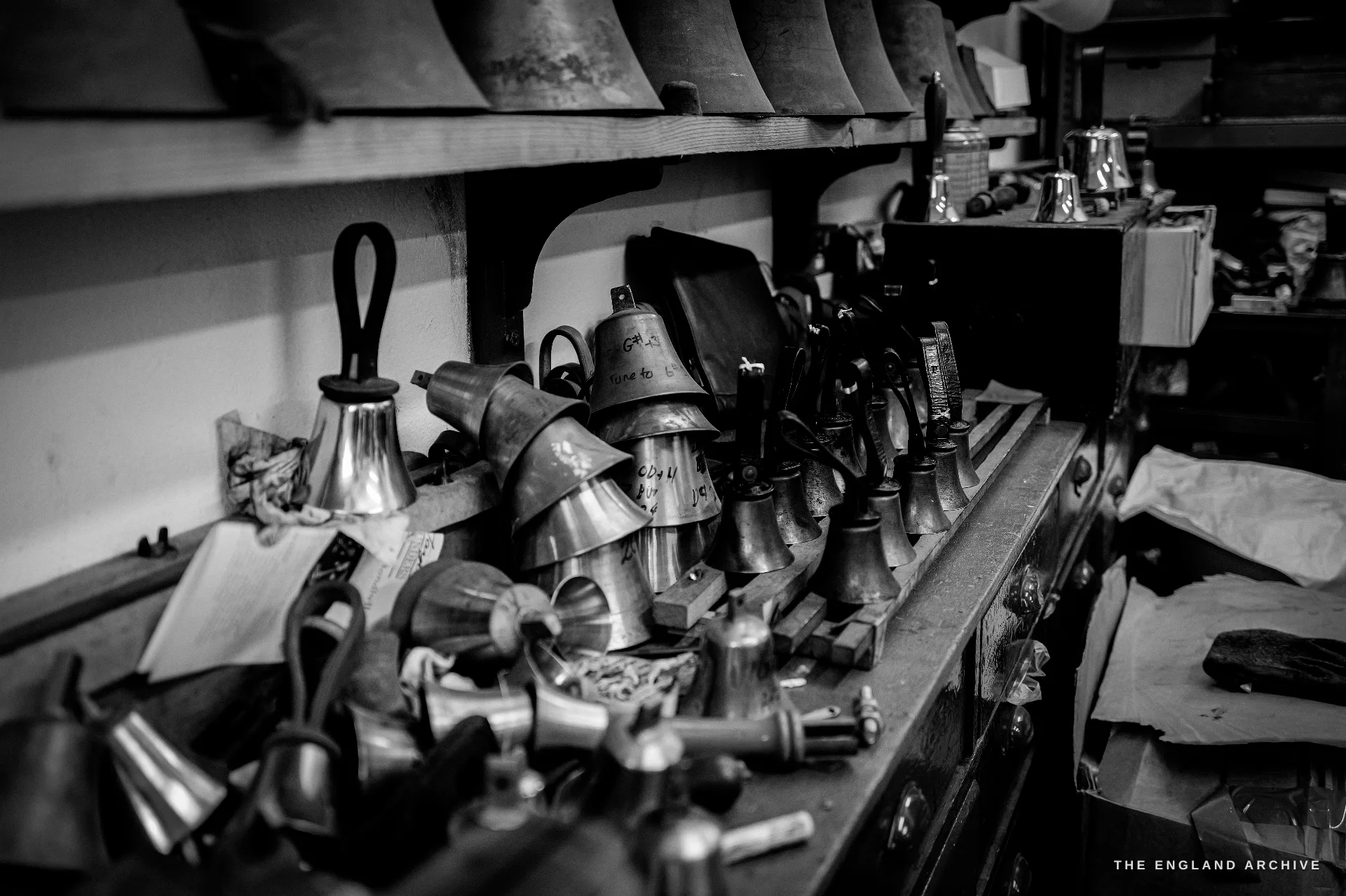
And then, at the other end of the scale entirely, the handbell shop. The same firm that casts the giants casts the little hand bells too, and their workshop is a happy clutter of small bronze bells in every finish, hand tools, and shelves of graduated castings ranked by size. Big bells and small, tower and hand, all under the one roof.
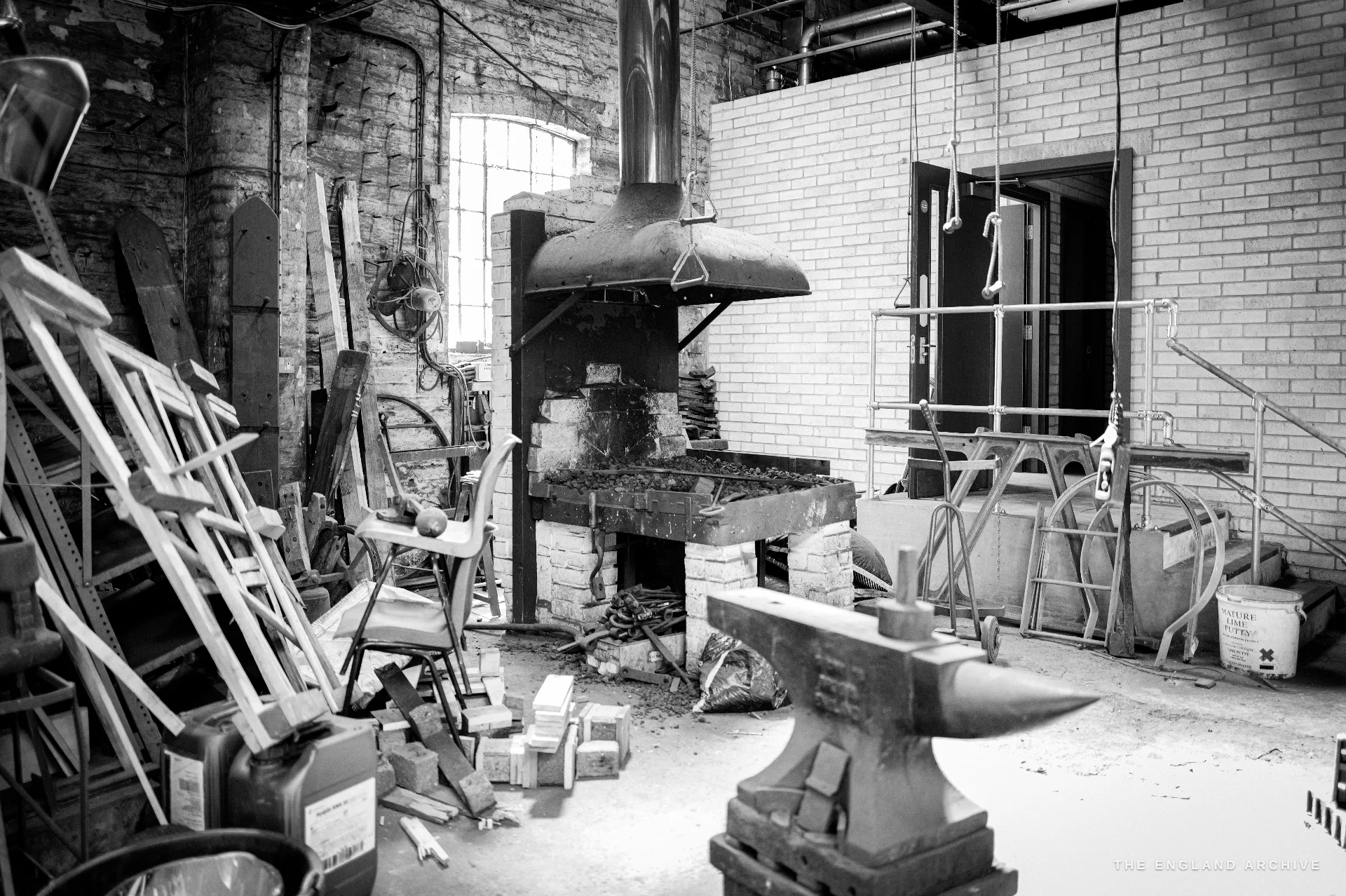
The people
After the floor, Thomas introduced me to the two people this visit will be remembered for. First, Giridhar Vadukar, the foundry's chief tuner - and one of only three bell tuners left in the whole country. A bell, it turns out, is not one note but five sounding at once, and Giridhar brings those five into agreement by shaving metal from the inside of the bell, by ear as much as by eye. He has been doing it for forty-seven years. His is one of the most important conversations the archive has had, and it has its own page.
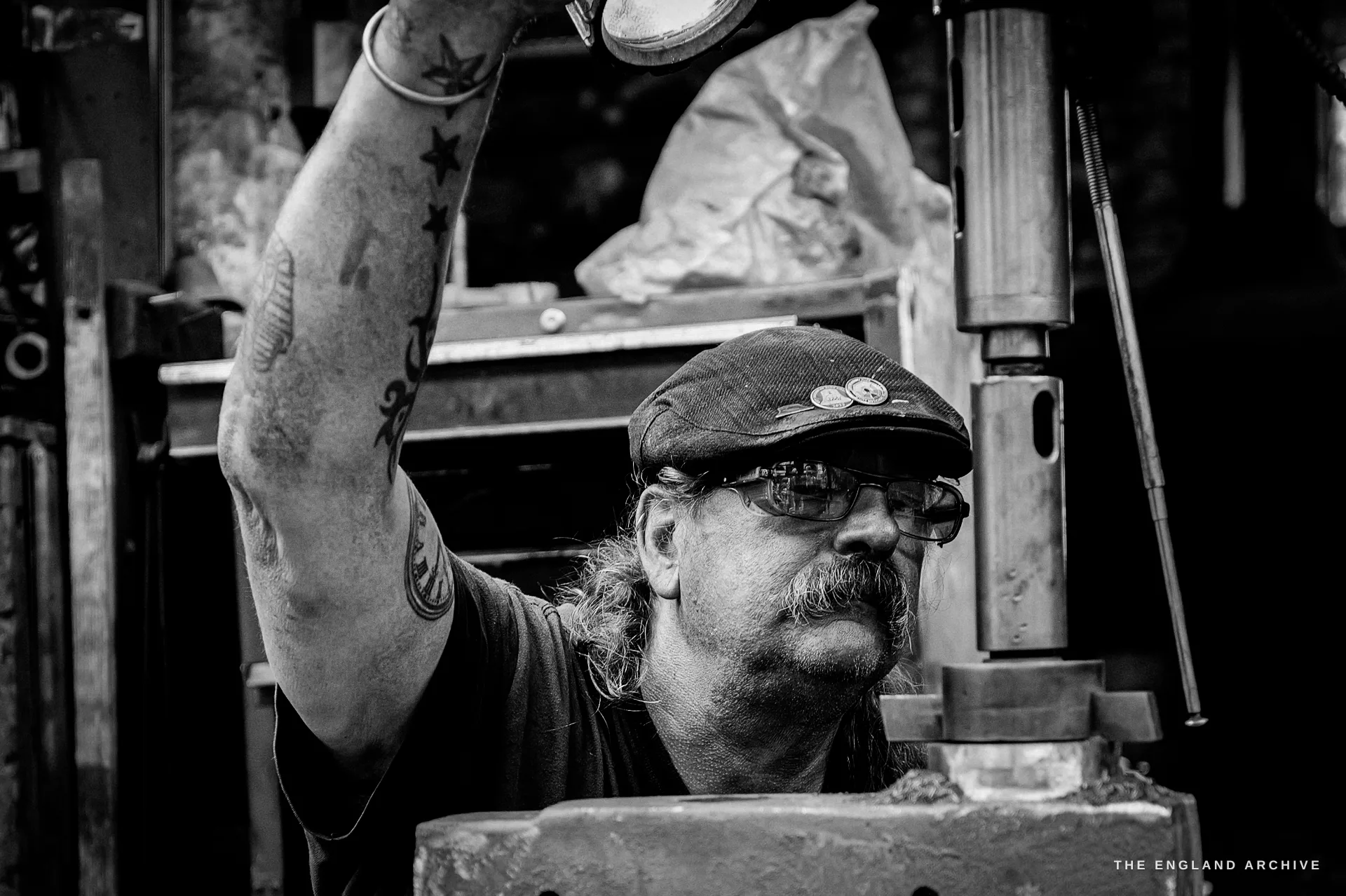
Then Bill Bowes, the foreman, who I had been quietly photographing all through the tour because he was the most striking-looking man in the building - flat cap, badges, glasses, Iron Maiden coming off his radio. Bill has been here forty-one years and makes the iron that holds and swings the bells. If Giridhar gives a bell its voice, Bill gives it the means to ring. He too has his own page, and he earned it.
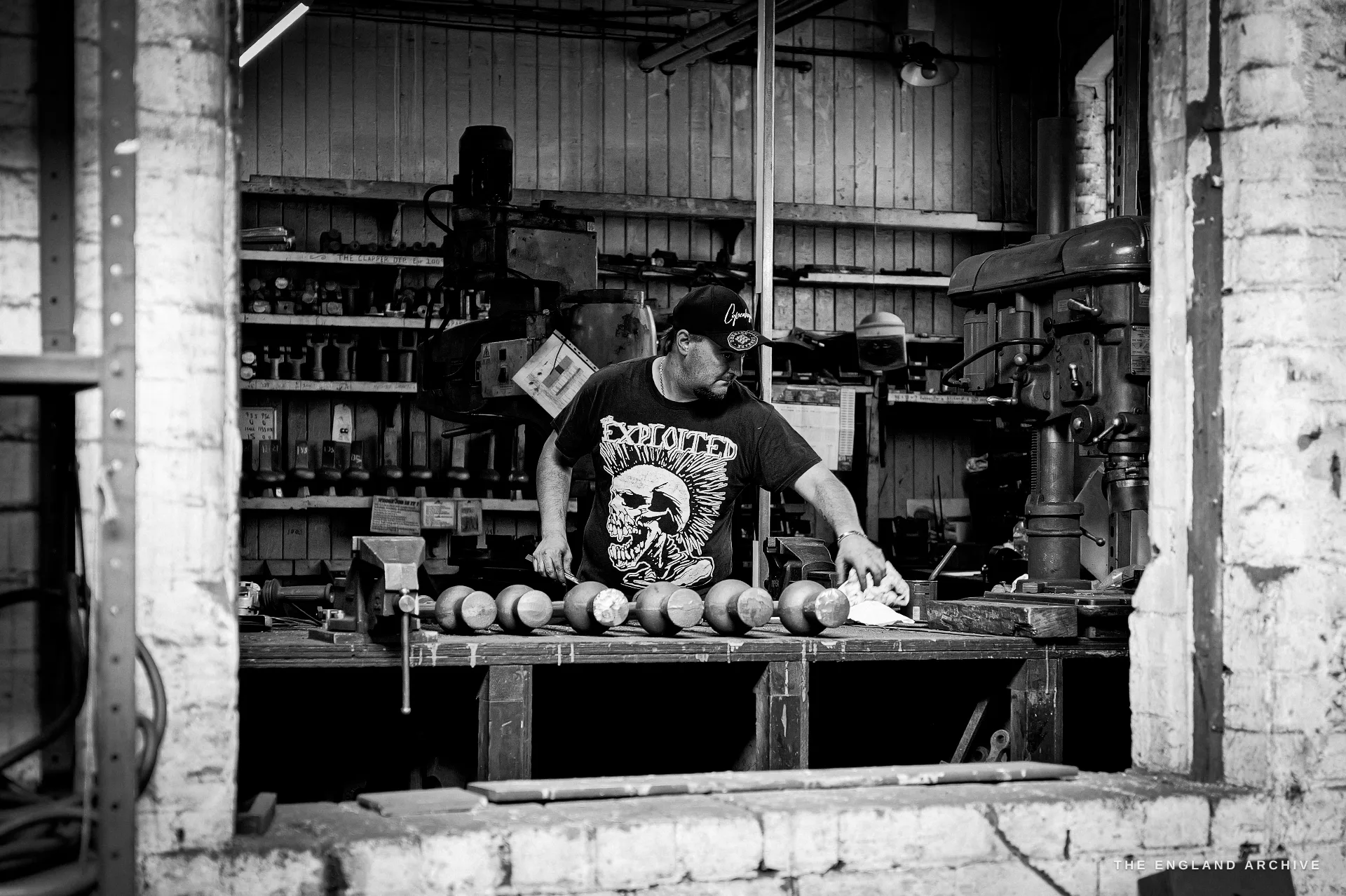
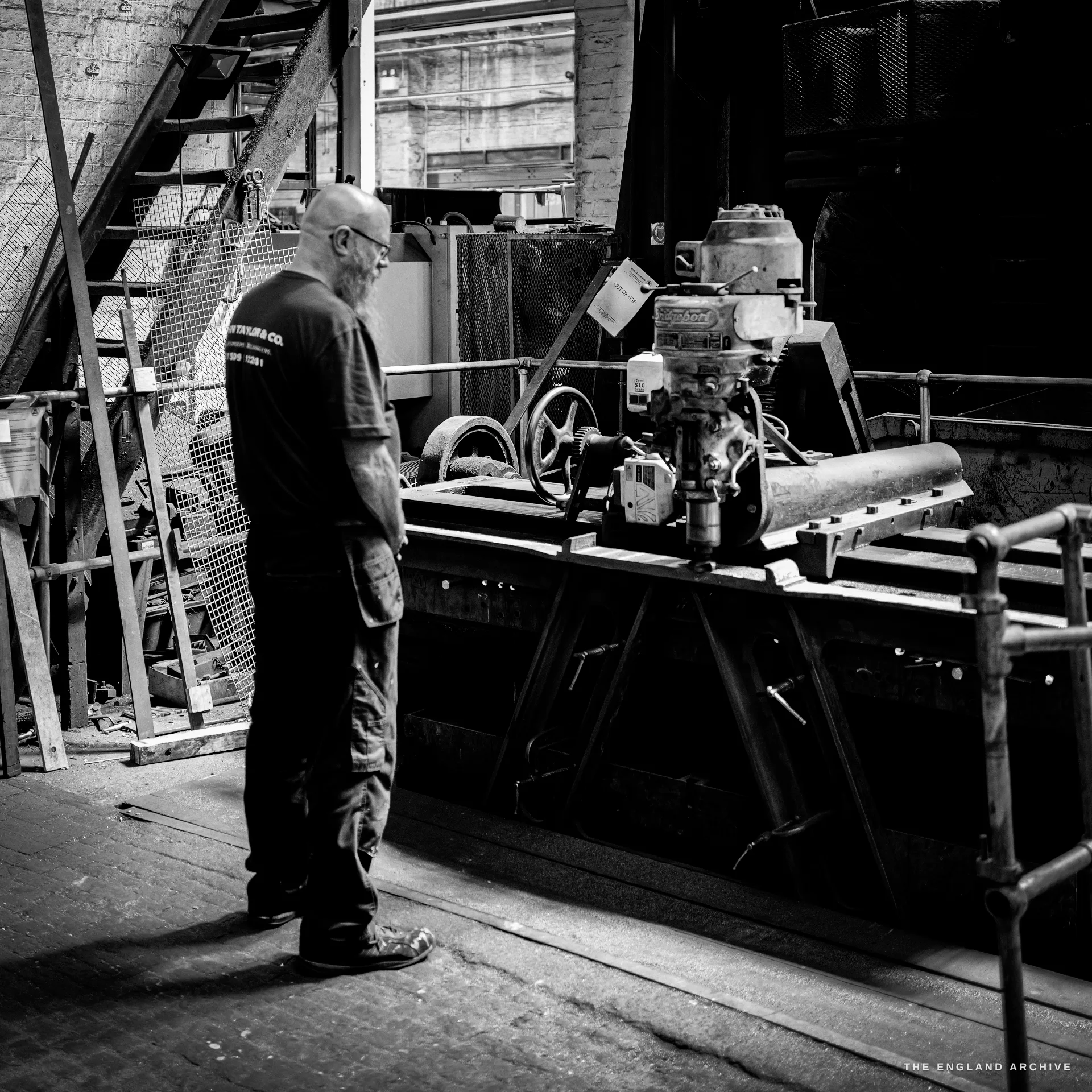
The thing that stayed with me about the floor, beyond the skill, was how happy a place it is. Punk, metal and rock came off radios in every bay; people swapped jokes across the machines; nobody seemed to be watching the clock. It is serious work - some of the most exacting engineering I have photographed - done by people who plainly love both the work and each other's company.
I left Loughborough thinking about how thin the thread is. This is the last major bell foundry in Britain; the Whitechapel foundry in London cast its last tower bells in 2017. The work is on the Heritage Crafts Red List as critically endangered, not because it is done badly but because it is barely being passed on. Documenting a morning here does not change that. But it does put the place, the work, and the people on the record while the work is still being done, and that is the job.
The fuller account of the craft itself - how a bell is moulded, cast and tuned, and who is keeping it alive - is in the monograph The Craft of Bell Founding, with a shorter reference in the glossary entry on bell founding. The two people who made the day are documented in full: the chief tuner Giridhar Vadukar and the foreman Bill Bowes.
Mash Bonigala visited John Taylor & Co in Loughborough in June 2026 as part of Year 1 of The England Archive, a three-year documentary photography project recording the people keeping England’s heritage crafts, traditions, landscapes and buildings alive.