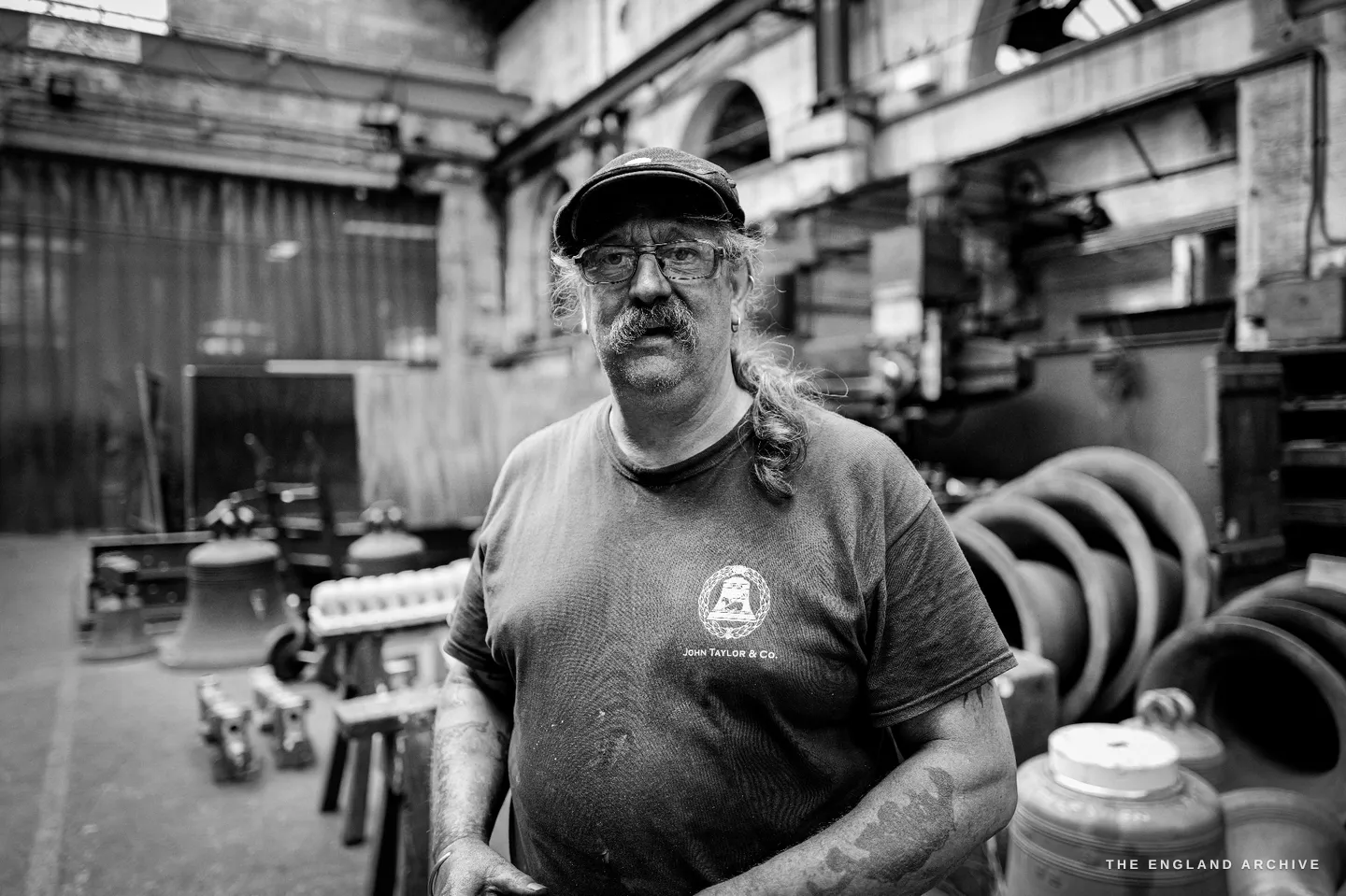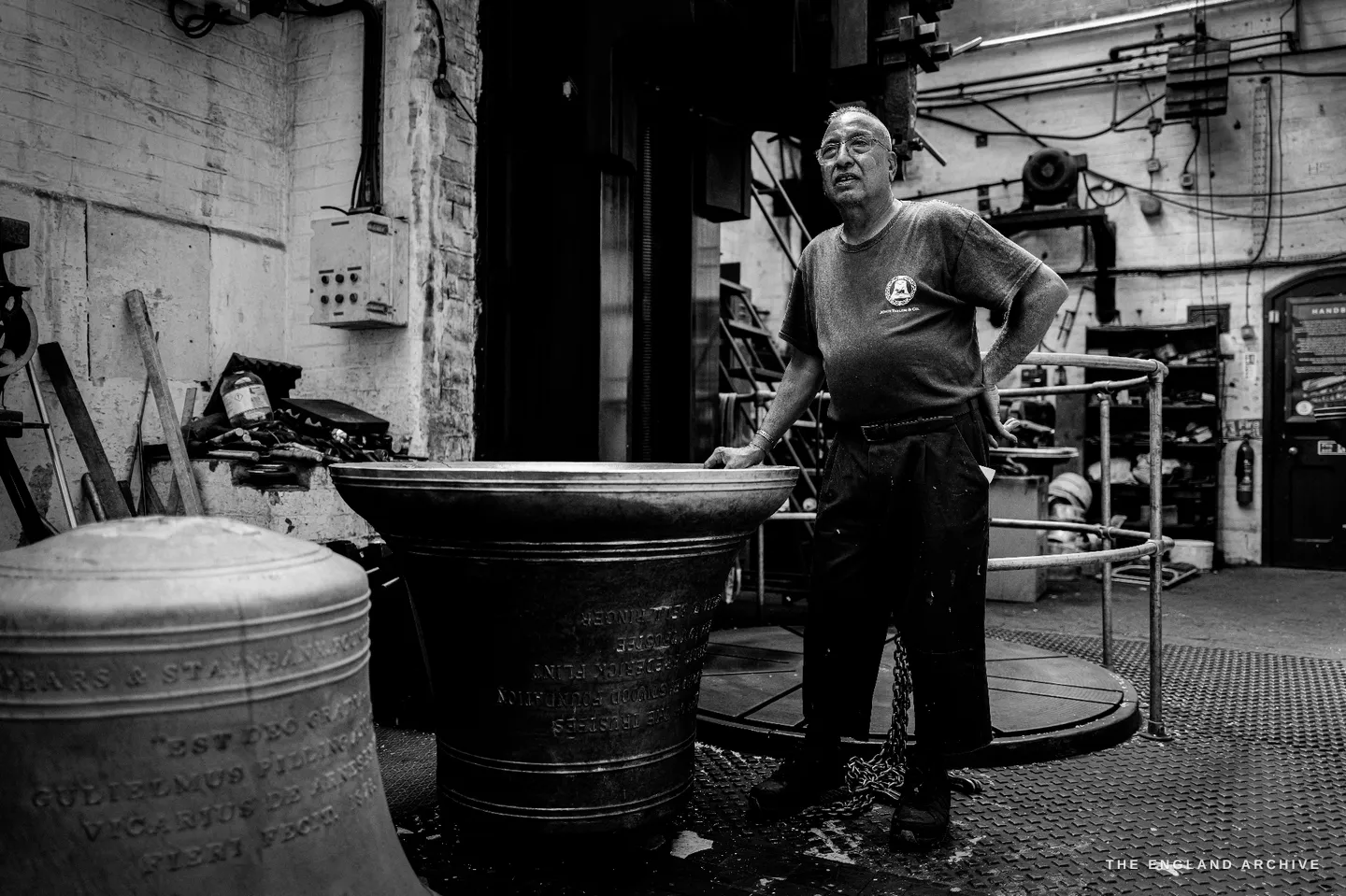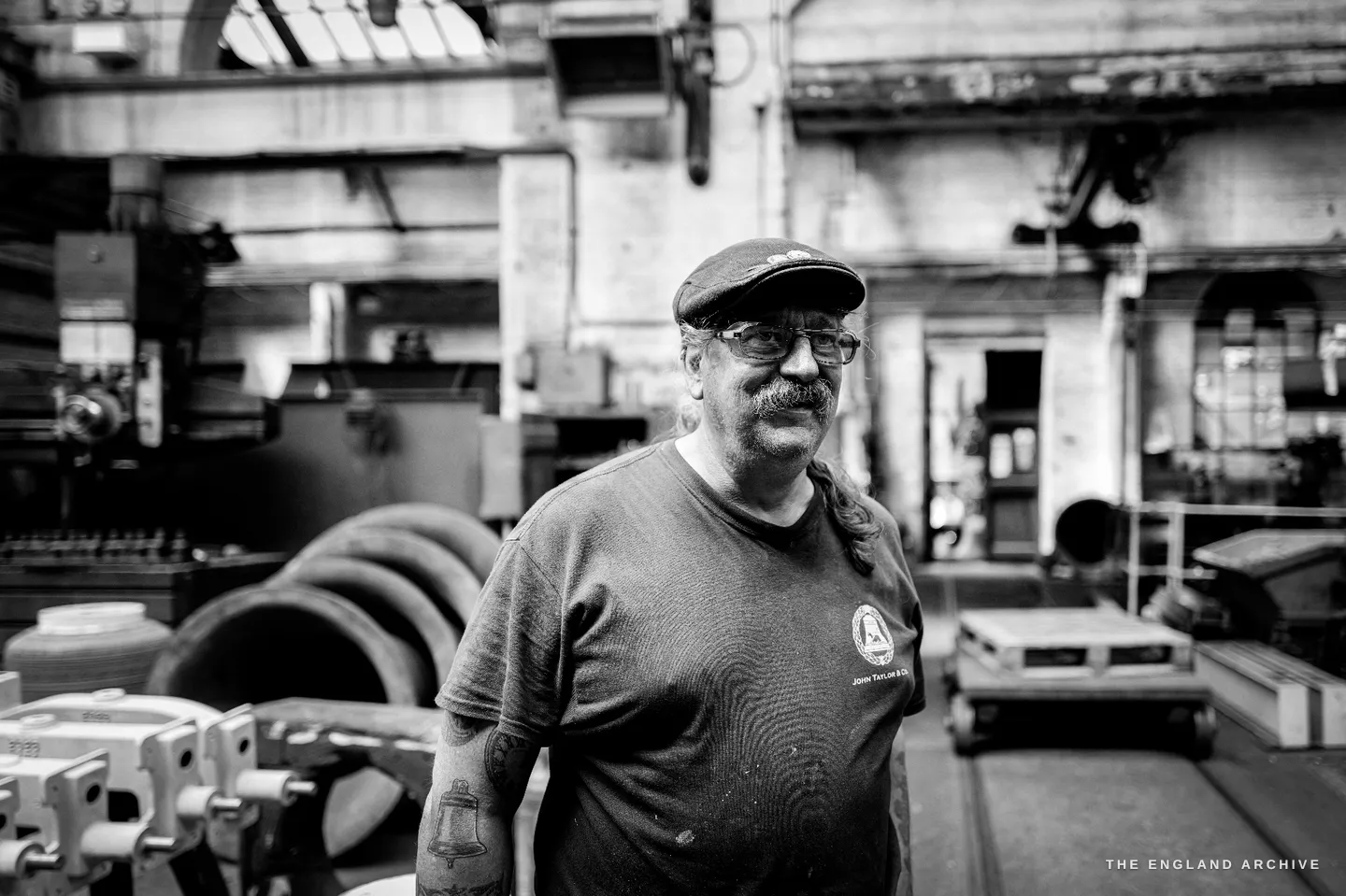
Bill Bowes standing among the bells at John Taylor & Co, Loughborough, half-smiling at the camera in his badged flat cap.
Makers

Bill Bowes

Foreman · Bell Fittings

John Taylor & Co, Loughborough

Documentary Archive · June 2026

If Giridhar gives a bell its voice, Bill Bowes gives it the means to ring. Forty-one years of headstocks, wheels and fittings - and the best heavy-metal origin story I have heard in a foundry.

Name Bill Bowes
Trade Foreman · Bell Fittings
Region East Midlands
Location John Taylor & Co, Loughborough, Leicestershire
Category Makers - people whose knowledge lives in their hands and cannot exist anywhere else
Session June 2026
Status Working practitioner · 41 years at Taylor’s, 27 in the foundry
Archive ID MK-0037

The Most Striking Man in the Factory

I had been photographing him for an hour before I ever spoke to him. He was there on the tour - bent over a great machine, drilling something, a flat cap with a couple of badges pinned to it and Iron Maiden coming off a radio somewhere near his elbow. I kept drifting back to him through the morning, lens up, because he was simply the most striking-looking man in the building. When the tour finished and Thomas Preston pointed me toward him properly, I found out his name was Bill Bowes, and that he was the foreman.
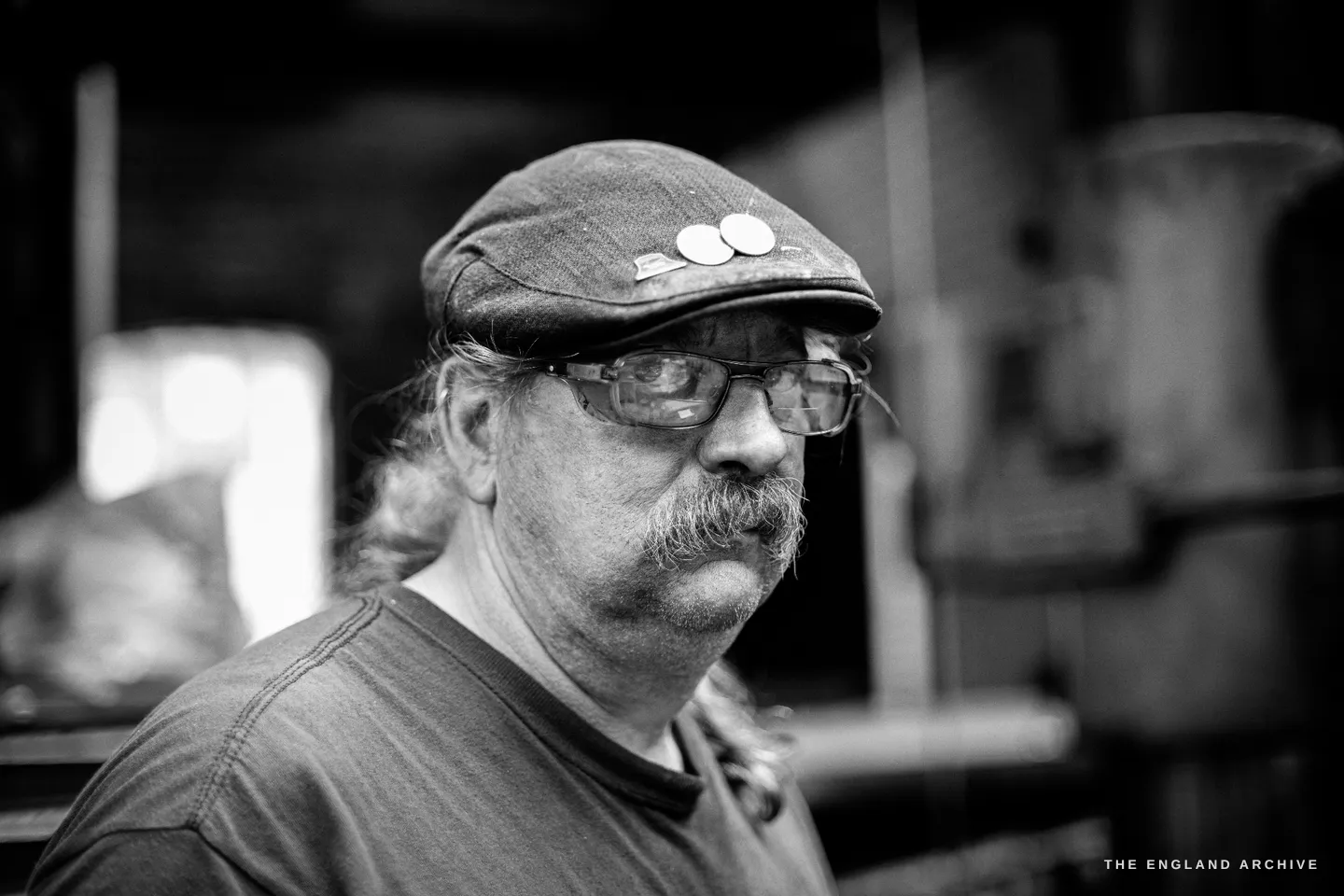
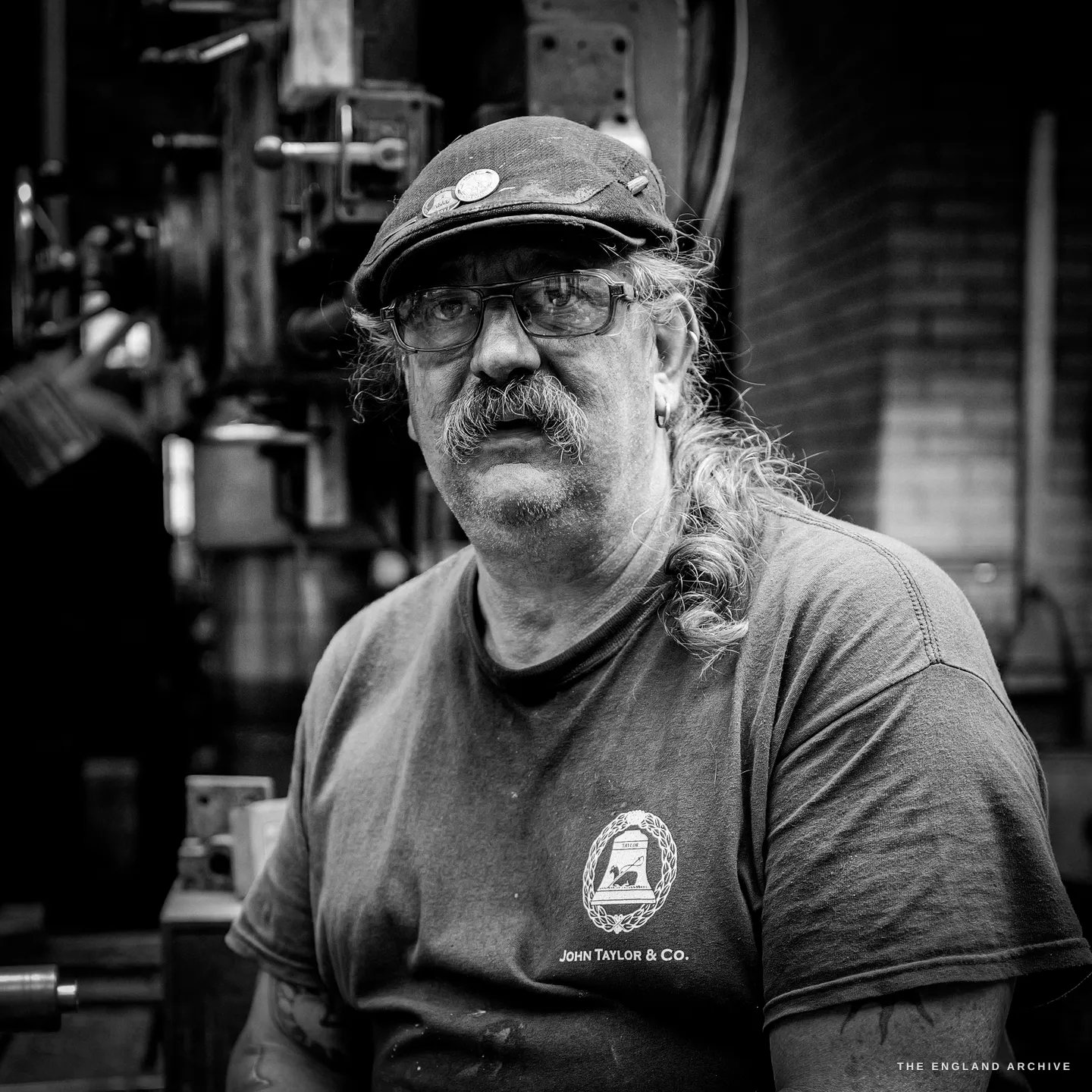
Close portrait of Bill Bowes in three-quarter profile, a flat cap with two enamel badges pinned to it, wire-framed glasses, a heavy grey moustache, the foundry dark behind him.
The cap with the badges, the glasses, the moustache. The most striking-looking man in the building, and he knows it not at all. IM-1076

He has been at Taylor’s forty-one years - twenty-seven of them down in the foundry, the rest out on the factory floor - and there is very little to do with the iron of a bell that he has not, at some point, done himself. He met me with his hand already out and a grin already going, took one look at the camera, and asked me what on earth I wanted with a place like this. So I told him, and he decided on the spot that he approved, and from then on he could not show me enough.
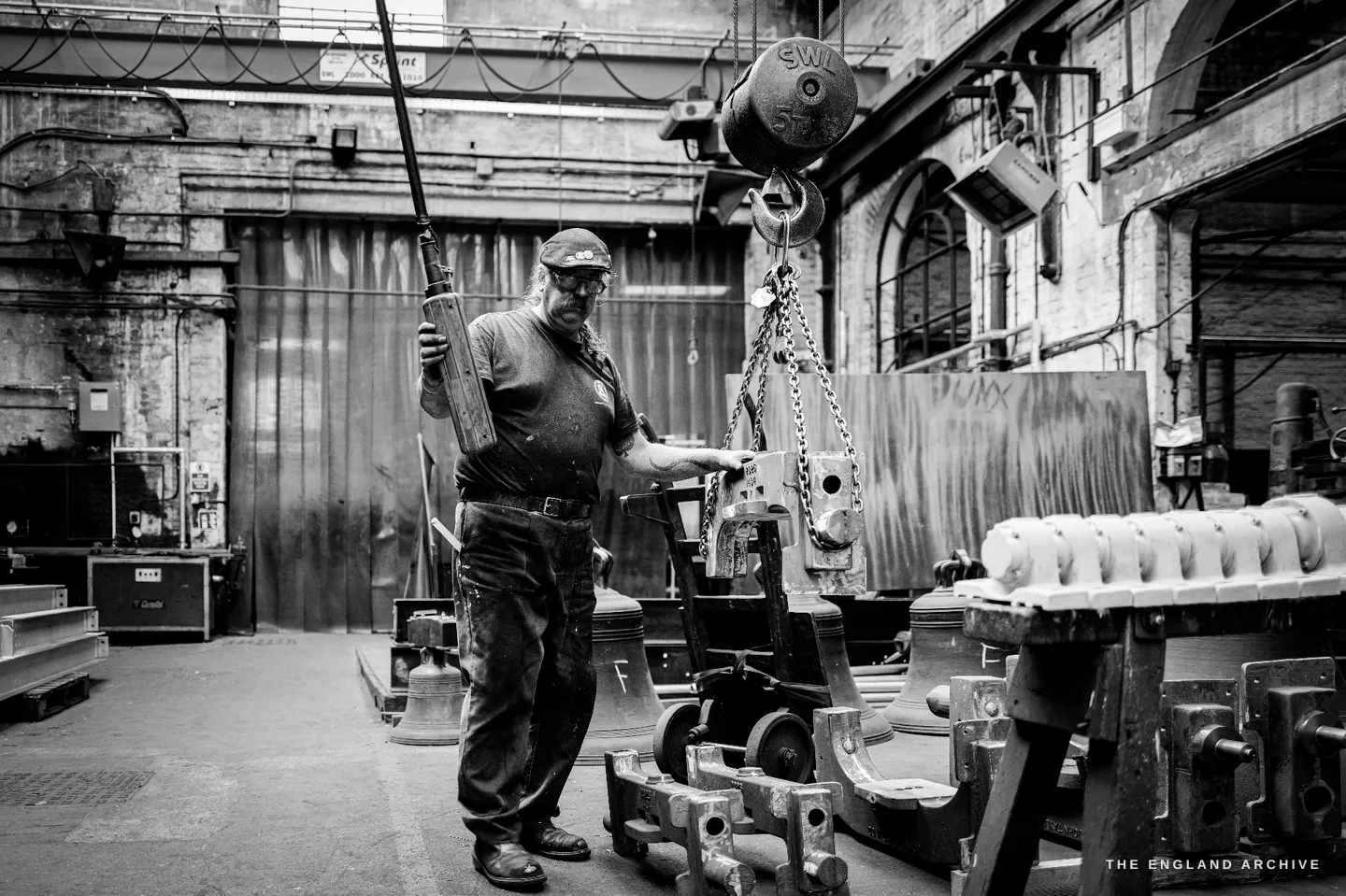
Wide view of Bill standing among ranked bell castings and headstocks in the tall foundry hall, a long steel bar resting on his shoulder, a load gauge hanging on a chain to his right.
Out on the floor where I first saw him, a steel bar over one shoulder, the load gauge swinging on its chain. This is his whole country. IM-1077

The Iron That Holds the Bell

Here is the thing I had not understood until Bill walked me through it. A bell does not just hang there. To ring properly - to swing full circle the way English bells do - it needs a whole apparatus of iron and timber: the headstock that bolts across its crown, the gudgeons and bearings it pivots on, the wheel the rope runs round. Cast the bell and tune it, and you are only part of the way there. Somebody still has to build it the means to move. That somebody is Bill.
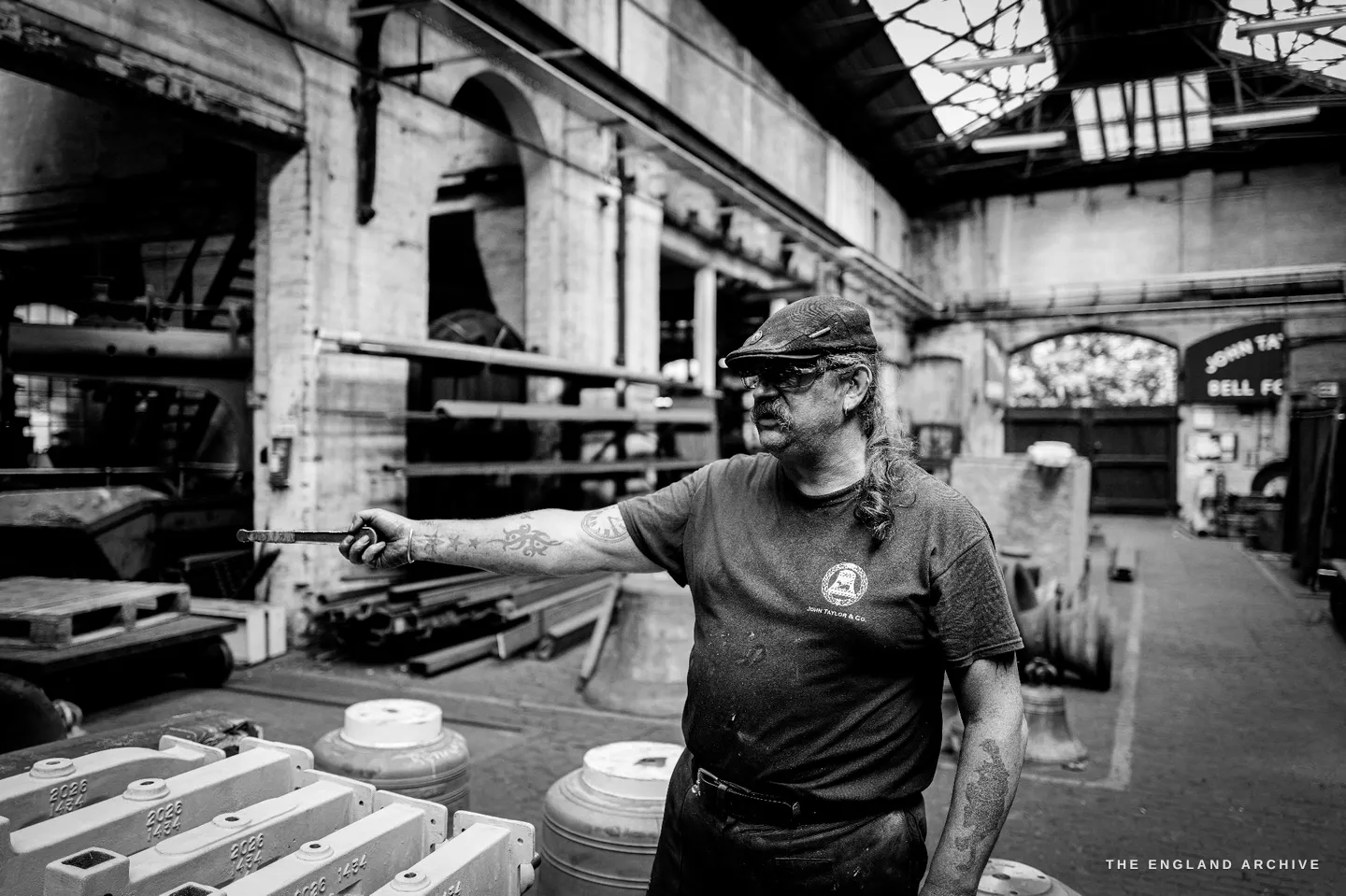
Bill pointing across a row of white cast headstocks with a thin steel rod, the words BELL FOUNDRY visible on an arched sign in the far end of the hall behind him.
He pointed me down the line of headstocks - the iron crowns that bolt to the top of every bell - and started naming parts faster than I could write them. IM-1078

He took me down a line of headstocks laid out on trestles and started naming parts faster than I could write them. What stayed with me was how exacting it all is. Every hole is drilled to the thousandth of an inch, every pin sized to its seat, because a bell that hangs a fraction out of true will fight the ringer for the rest of its life. This is engineering of the most unforgiving kind, dressed up as something that looks, from the visitor’s gallery, like a man with a drill.
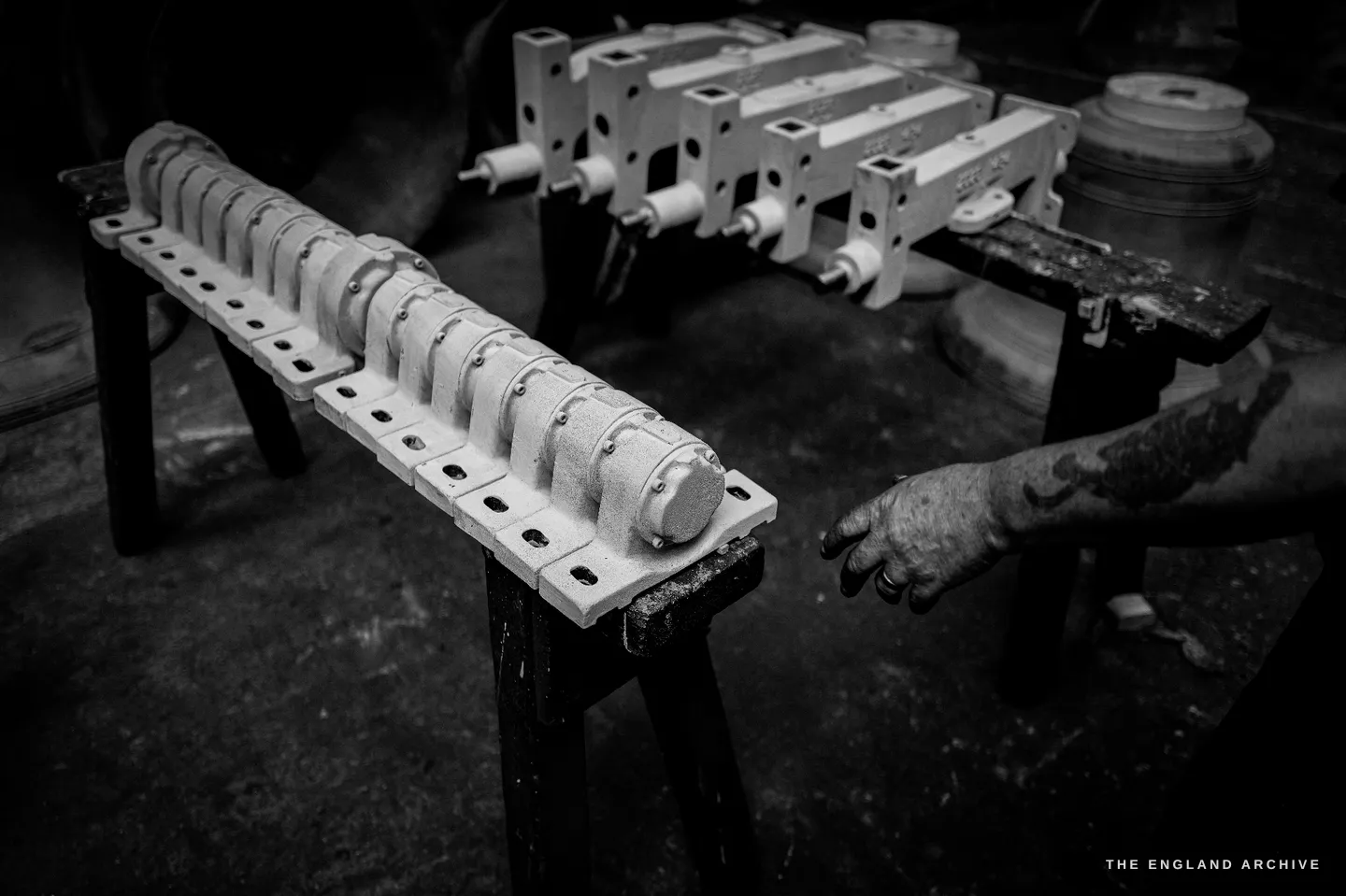
Two sets of pale cast-iron headstock components laid out on trestles, drilled with rows of holes and fitted with white bearing ends, Bill’s tattooed hand reaching in from the right.
The fittings, laid out and waiting. Every hole drilled to the thousandth, every pin true - get one wrong and the bell will never hang square. IM-1079
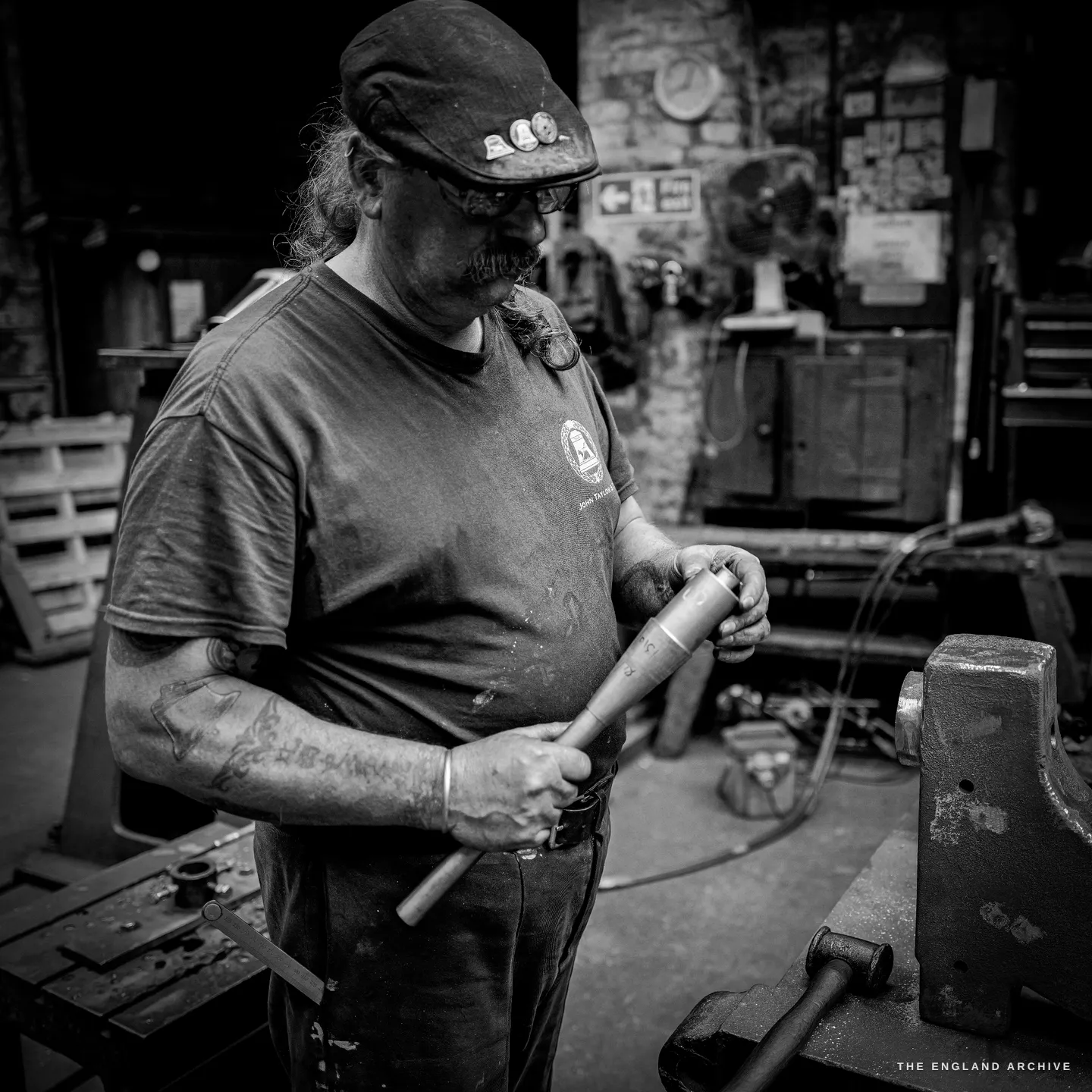
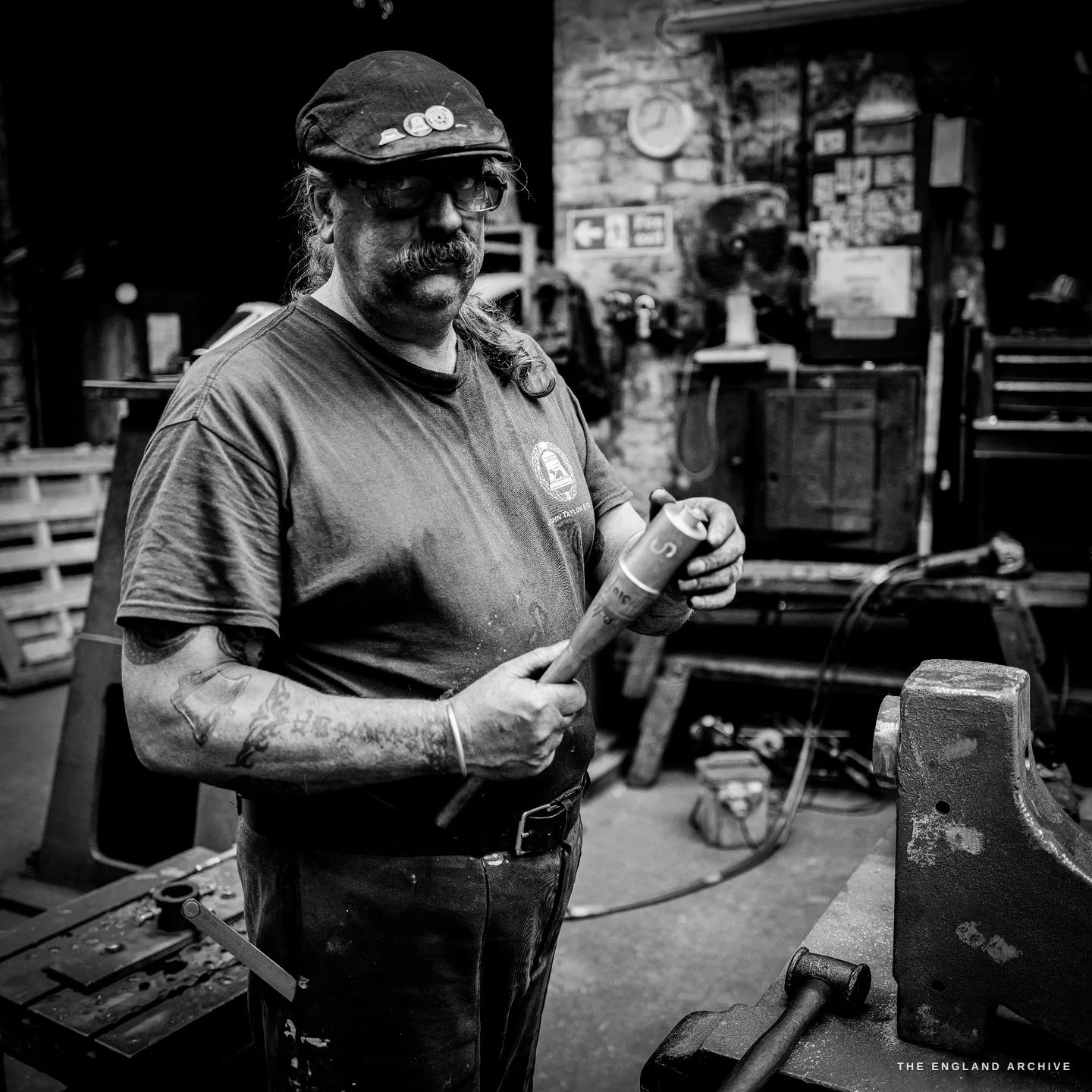
Bill standing at his bench holding a turned metal fitting on a wooden handle, examining it, a brick wall hung with clippings and a fan behind him.
IM-1080
Bill looking down at the fitting in both hands, working it over the bench, the vice and a hammer in the foreground.
Turning a fitting over in his hands at the bench, reading it the way Giridhar reads a bell - by feel as much as by eye. IM-1081

At the bench he turns a fitting over in his hands and reads it - the same way, it struck me, that Giridhar reads a bell next door. Different sense, same instinct: forty years of doing a thing until the knowledge lives below the level of thought. He could tell by the weight and the feel of a casting whether it was right, long before any gauge confirmed it.
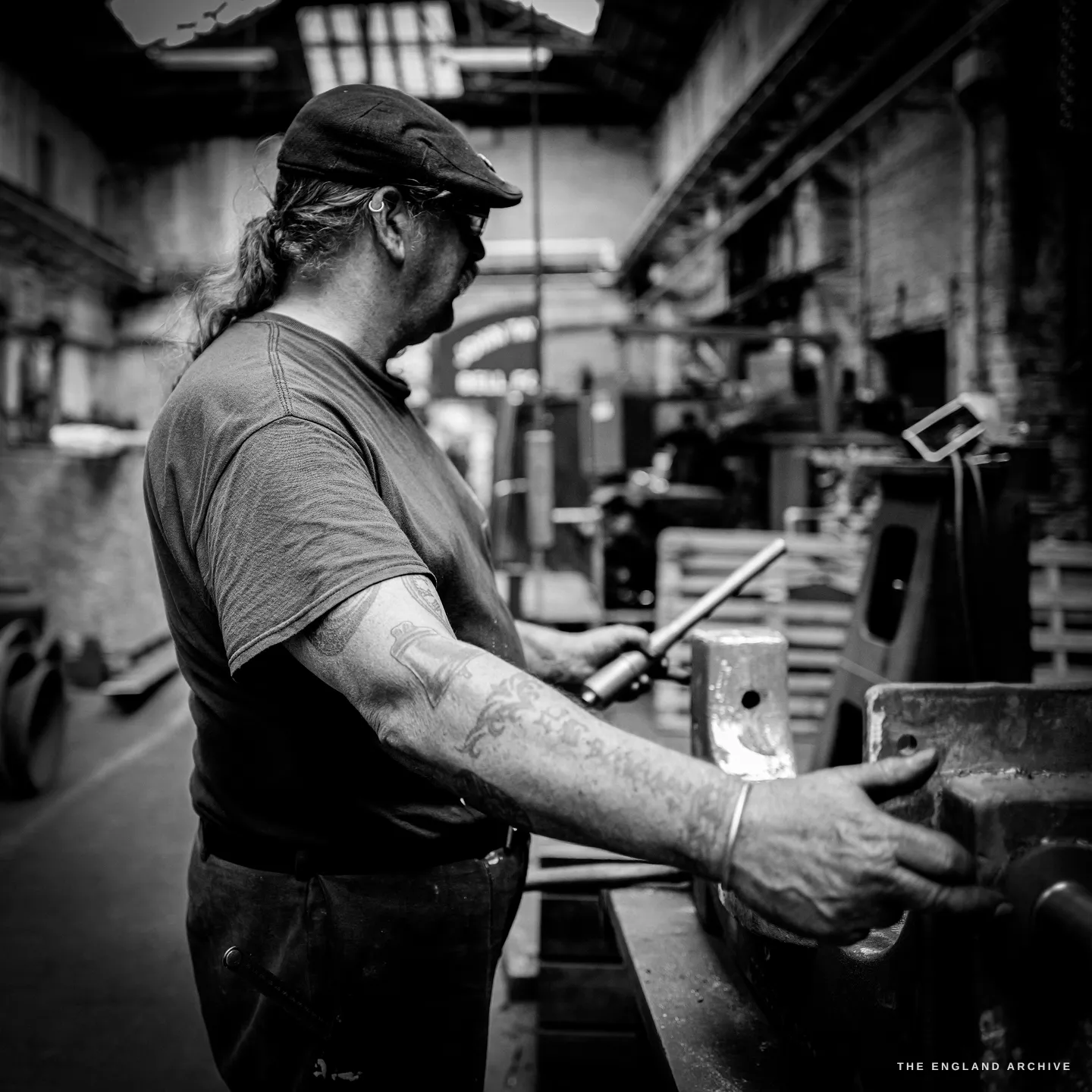
Bill in profile at the vice, both hands on a steel bar laid across a heavy casting, tattooed forearms, the depth of the foundry behind him.
At the vice. Forty-one years in, and his hands still go to the work before his eyes do. IM-1082
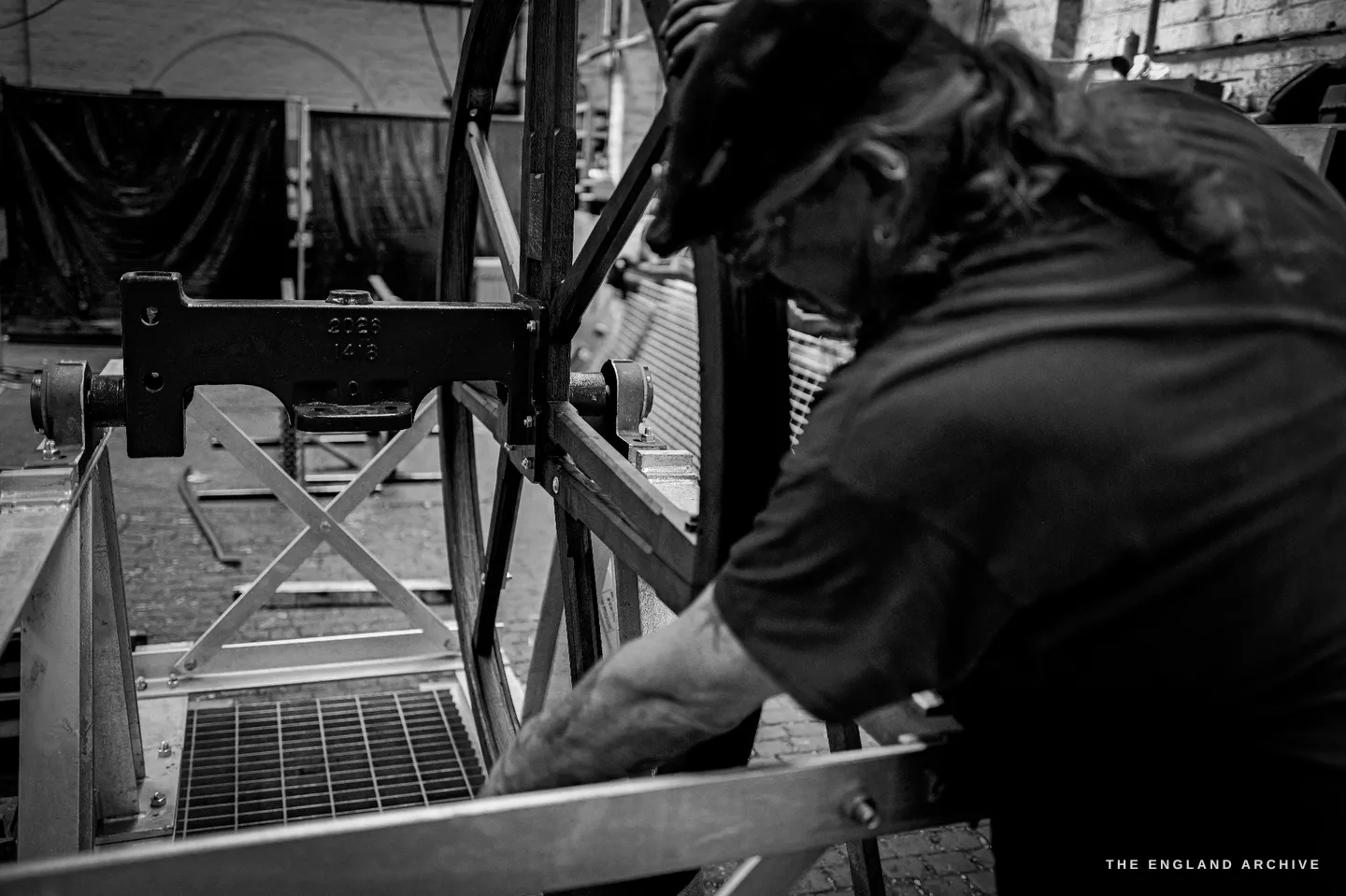
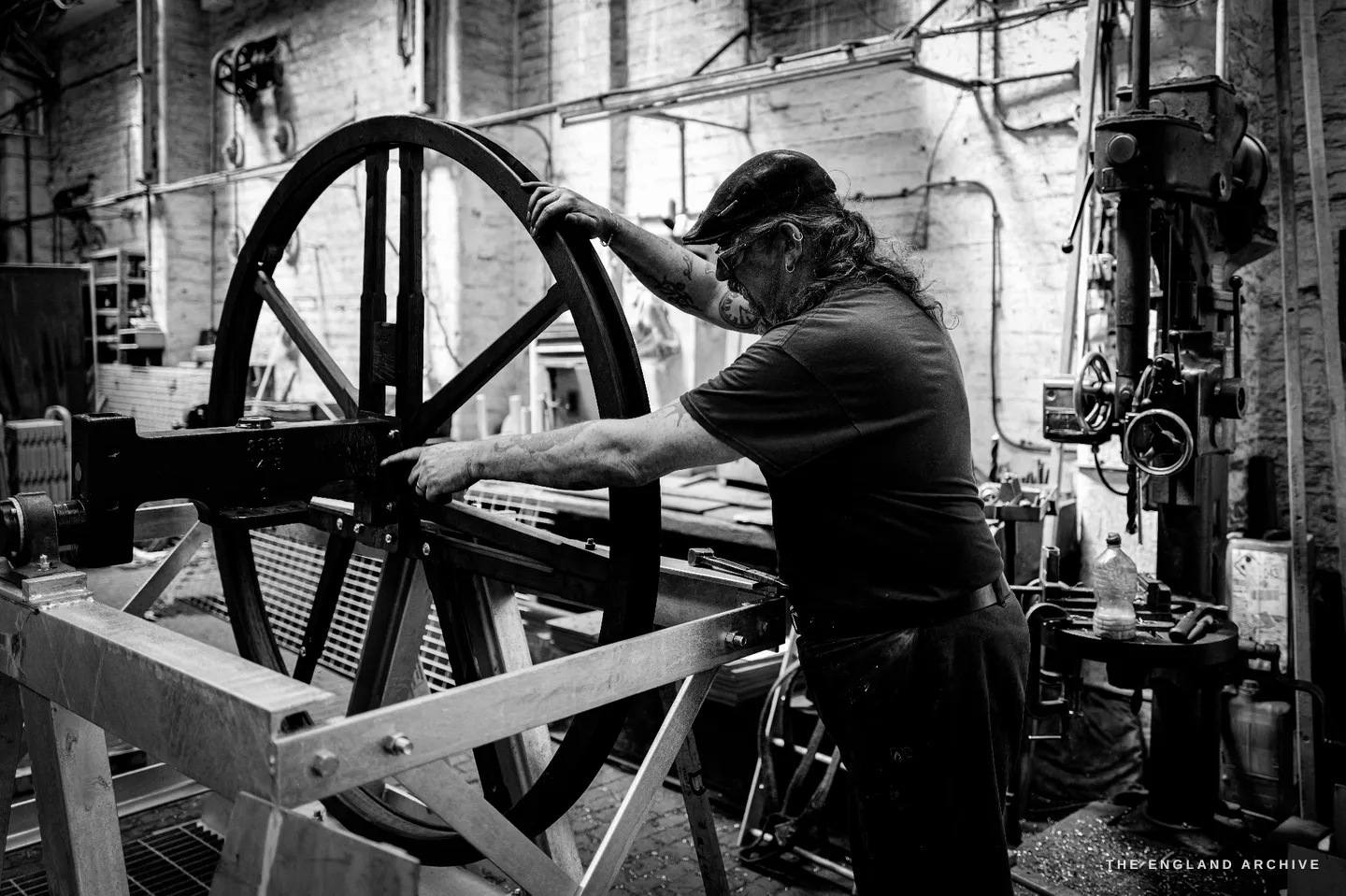
Bill leaning over a large spoked wheel laid flat on a frame, one hand on its rim and the other reaching into the centre, a pillar drill behind him.
A bell wheel on the frame. The rope runs round this, and the wheel turns the bell full circle - Bill builds and trues them as well as the iron. IM-1083

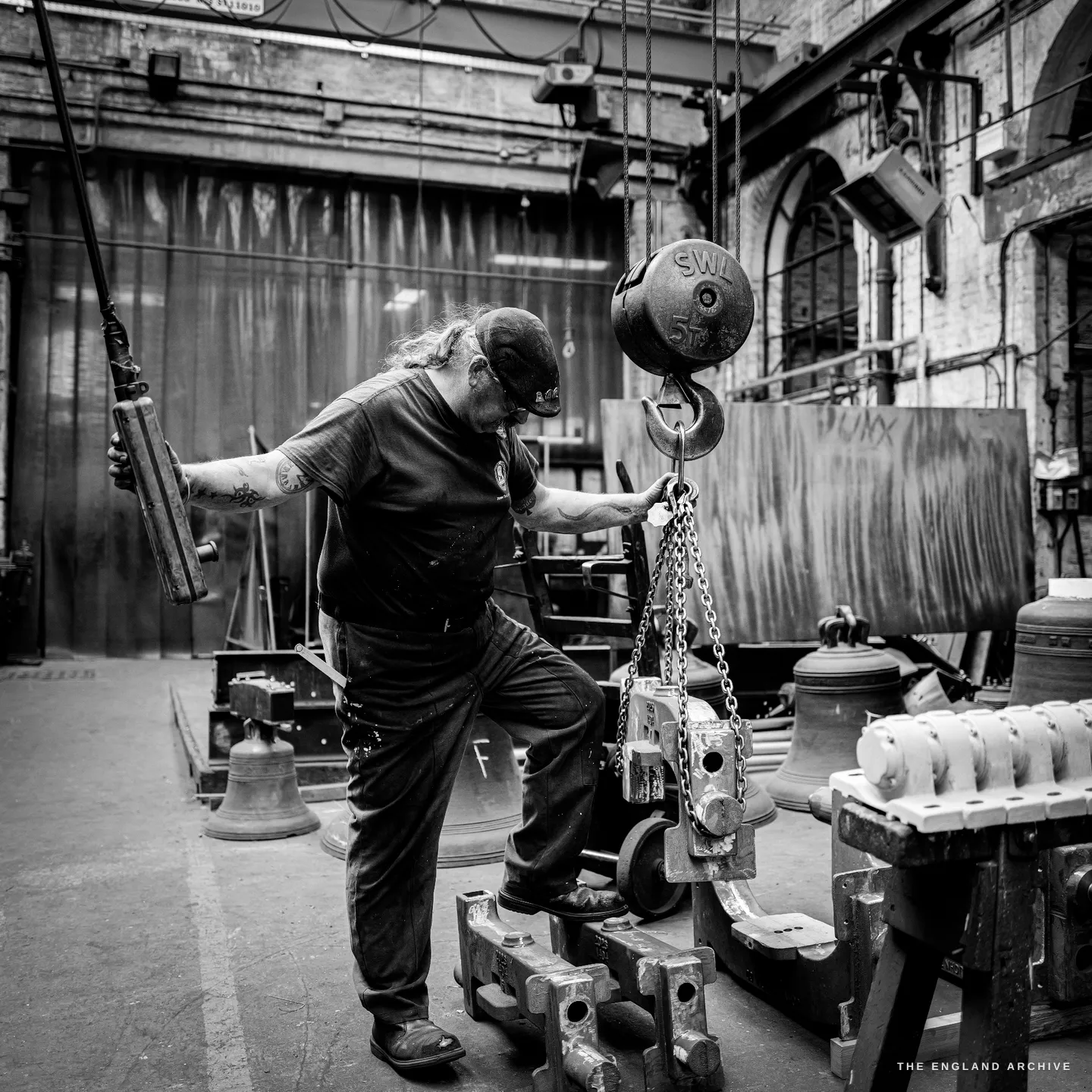
Then there are the wheels. Each bell turns on a great spoked wheel, and Bill builds and trues them too - and slings the whole assembly on the hoist when it is time to move it. He set one boot on a pallet truck, took the weight on a chain, and glanced at the load gauge almost as an afterthought. The gauge tells him what he is allowed to lift. Forty years tell him how. Nothing heavy in that building moves without Bill having a hand, or at least an eye, on it.
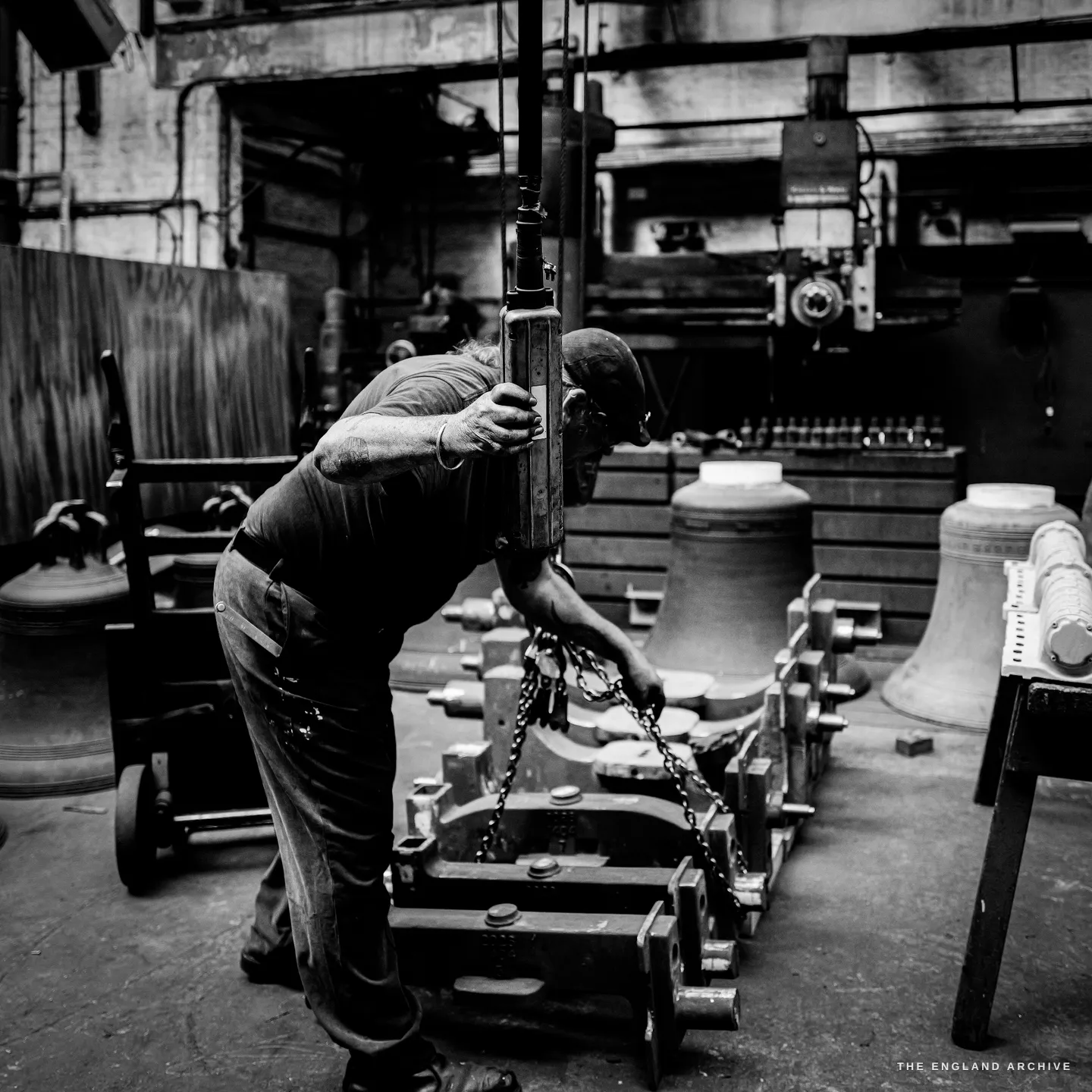
Bill bent over a long steel headstock frame, both hands hauling on a chain hoist that runs up to a beam, bells ranged on the floor around him.
IM-1084
Bill with one boot up on a pallet truck, steadying a chain hoist whose load gauge reads its safe working limit, a cast frame slung beneath it.
Slinging a frame on the hoist - the gauge tells him what he can lift, but forty years tell him how. Nothing here moves without him saying so. IM-1085
Over Bill’s shoulder as he works on the spoked wheel, a cast number plate reading a foundry job number bolted to the frame in front of him.
Every job carries its number, cast and bolted on, so a bell that comes home in eighty years can be matched to its own fittings. They build for a long memory here. IM-1086

Forty-One Years

Forty-one years in one place is a kind of marriage, and Bill wears it the way long-married people do - easily, without ceremony, sitting down among the finished bells as if they were the furniture of his own front room. Twenty-seven years in the foundry first, casting; then out onto the floor for the fittings and the hanging. He has watched the firm change around him and stayed exactly where he is most useful.
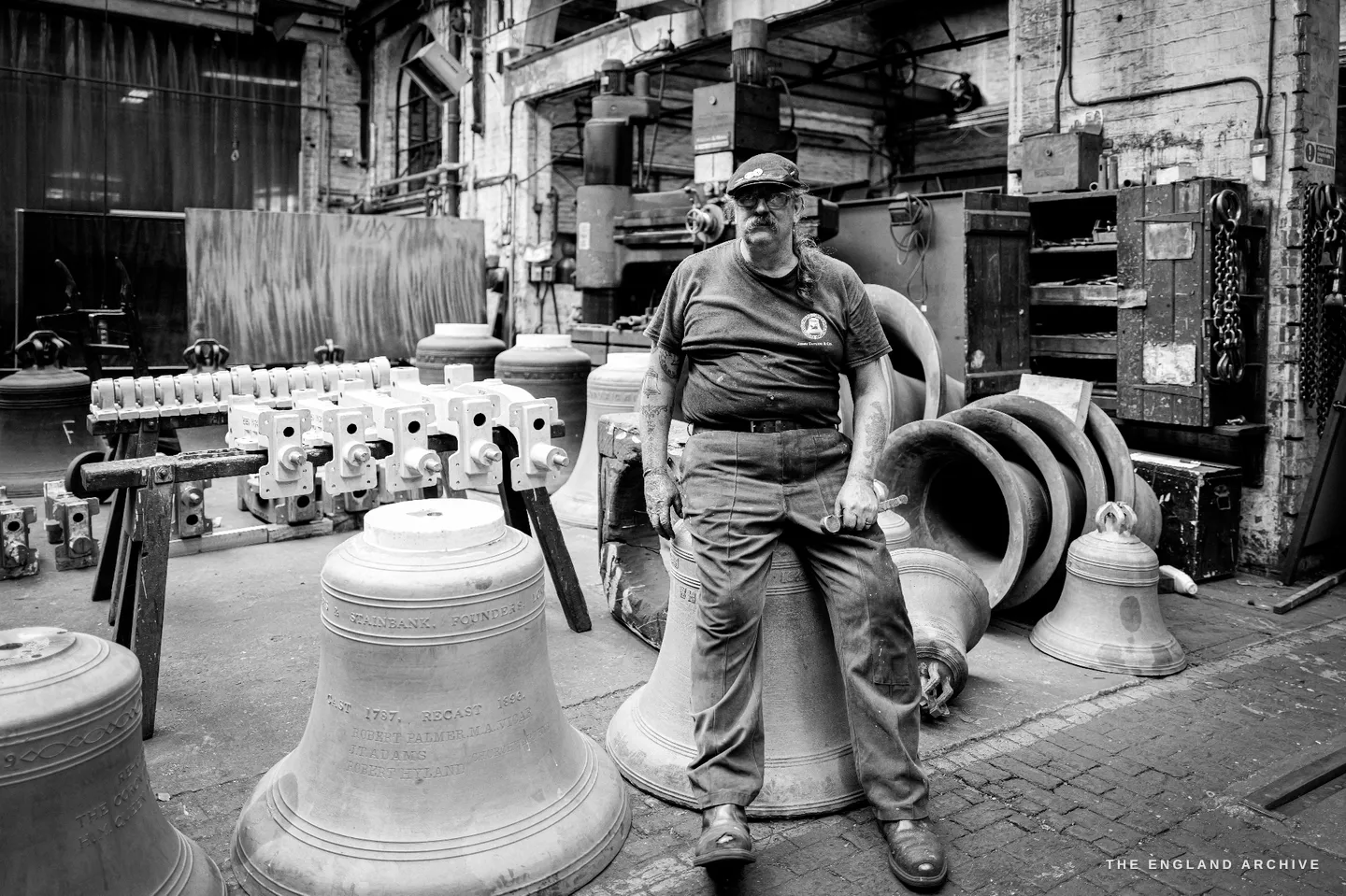
Bill seated on the edge of a large inscribed bell, surrounded on all sides by finished bells of every size, ranks of headstocks behind him in the cluttered yard.
Sat among the finished bells as if they were furniture. Twenty-seven years in the foundry, the rest on the floor - forty-one in all, and every one of them spent here. IM-1087
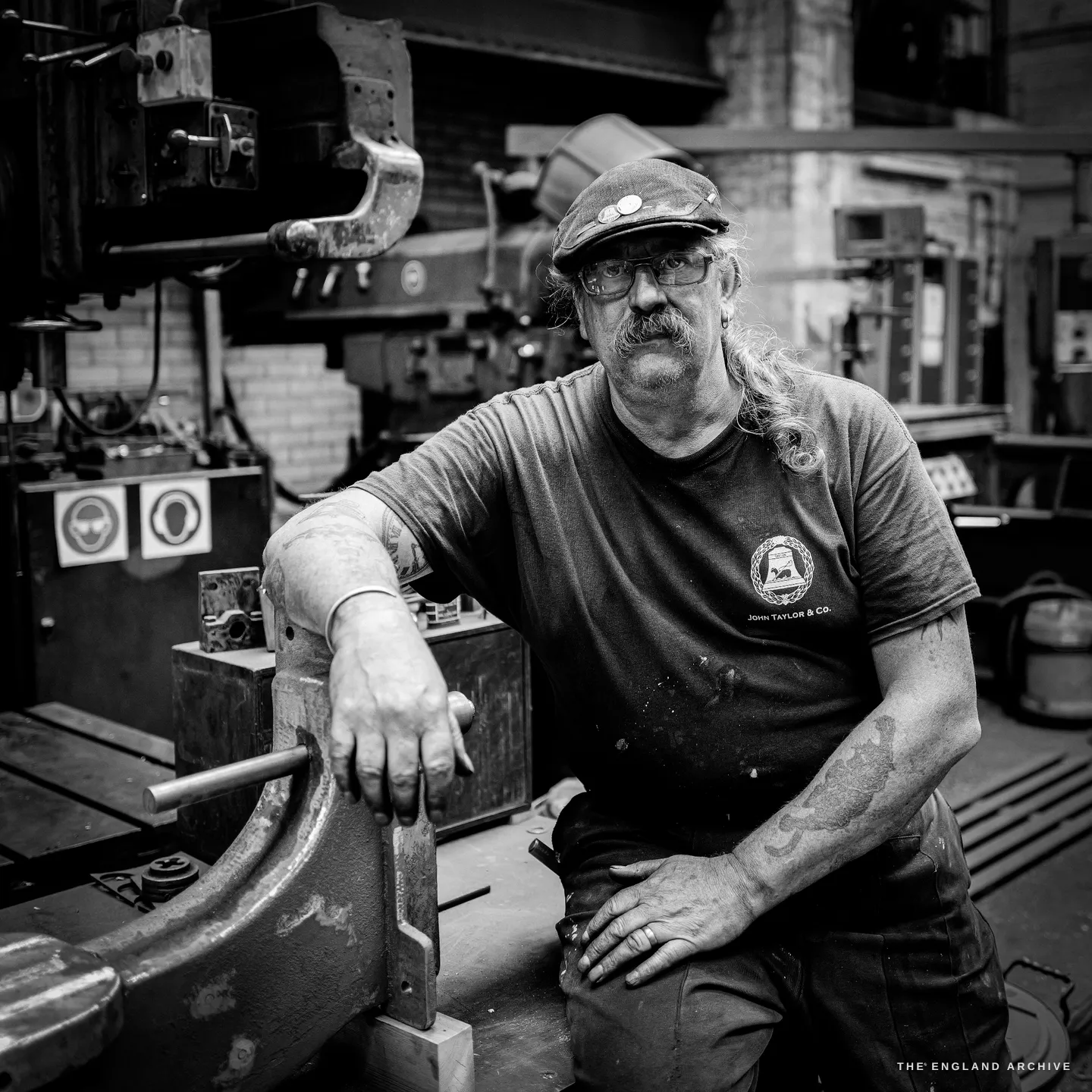
Bill seated and leaning one forearm on a heavy machine, looking straight at the camera, the John Taylor & Co bell mark on his t-shirt, a steel rod in his hand.
The look that says ask me anything. He has done every job to do with the iron of a bell, and he was glad to be asked about all of it. IM-1088

I asked him, the way I ask everyone, who comes after. He has two sons, and the news there is better than it usually is on these pages: both of them went into engineering, the mechanical turn of mind handed straight down the family. They are not at Taylor’s, and bell-hanging is its own narrow specialism that no general engineer simply walks into. But the cast of mind that makes a man good at this - the patience, the feel for metal, the appetite for getting a tolerance exactly right - that, at least, did not stop with him.
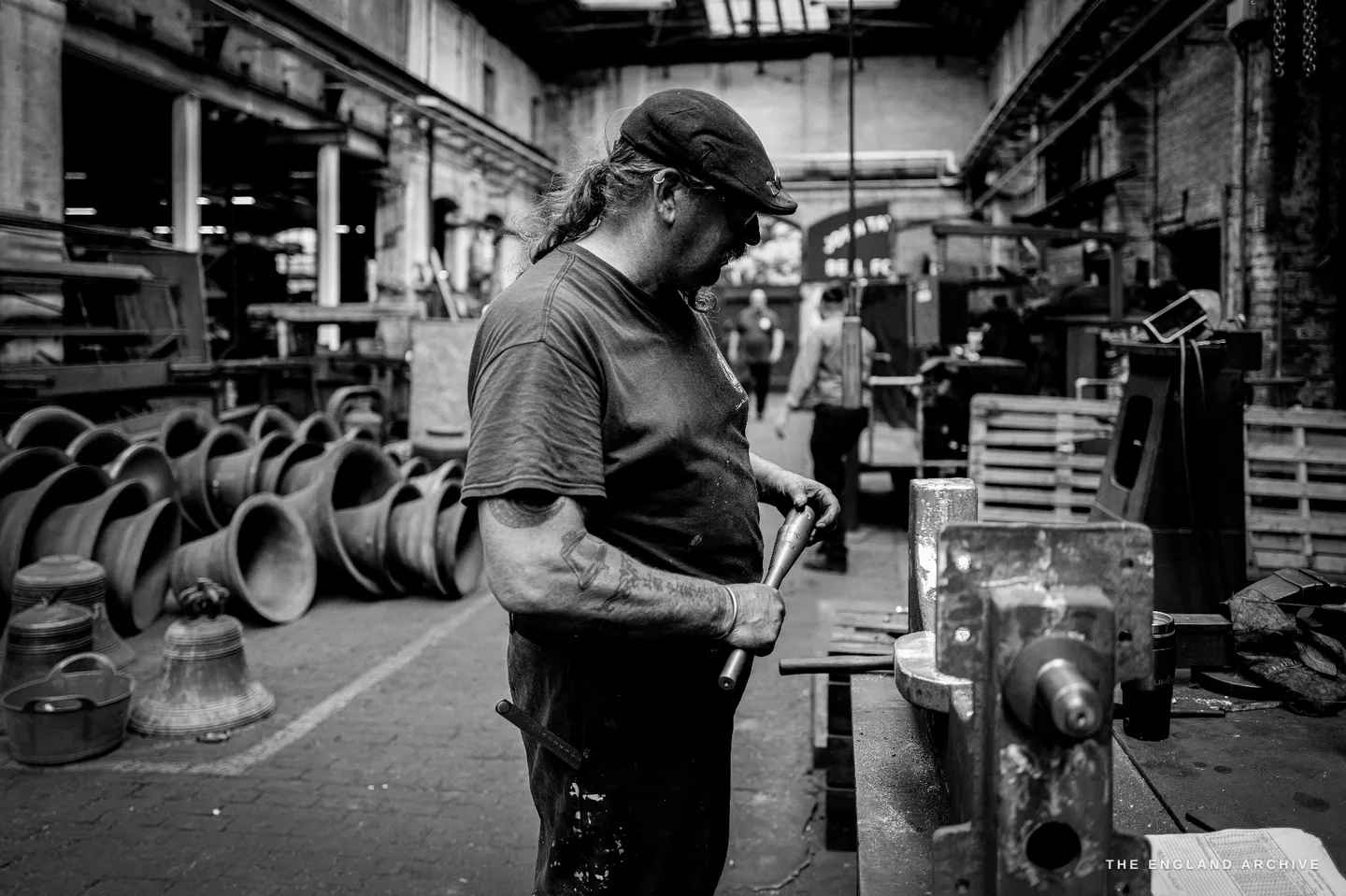
Bill working at a bench in profile, holding a steel bar to a fitting, rows of newly cast bells lining the floor behind him in the foundry hall.
Back at the bench with the cast bells lined up behind him, waiting on their fittings. The voice is Giridhar’s job; the means to ring is Bill’s. IM-1089
Bill seated against a tall industrial machine and a high concrete wall, looking upward and away, the scale of the foundry rising above him.
IM-1090
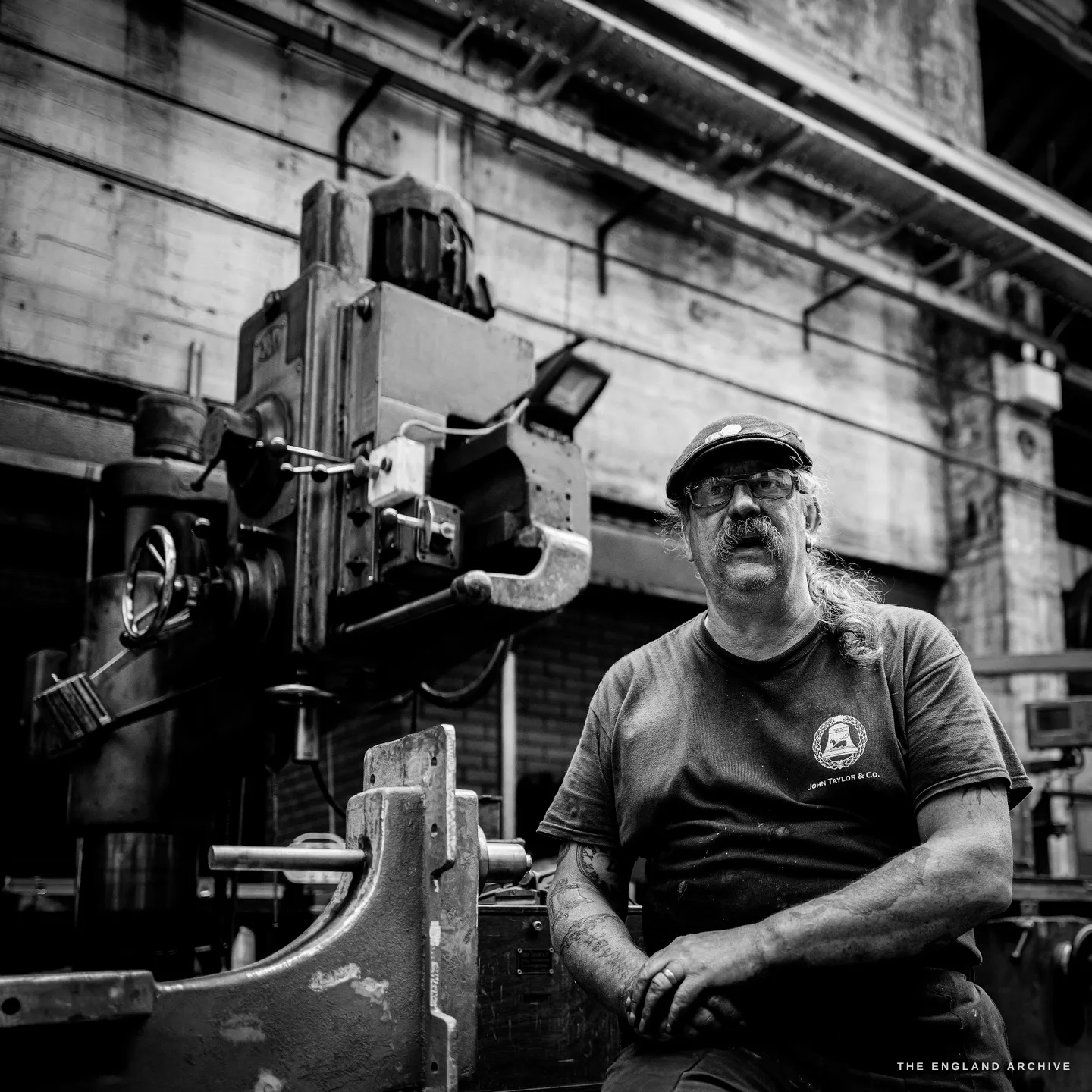
Tight portrait of Bill, the John Taylor & Co bell mark and lettering clear on his t-shirt, the badged cap and glasses lit against the dark machinery behind.
The John Taylor mark on his chest, worn plain. Both his sons went into engineering - the mechanical turn of mind runs straight down the family. IM-1091
Bill standing square to the camera in the foundry hall, bells and headstocks ranged on either side of him, the great arched roof lantern above.
Standing in the middle of it all. You could put him anywhere in this building and he would know what every machine was for. IM-1092

Run to the Hills

The radio had been on the whole time, and the whole time it was heavy metal. So I asked. And Bill told me the story like it was the best one he had, which it might well be.
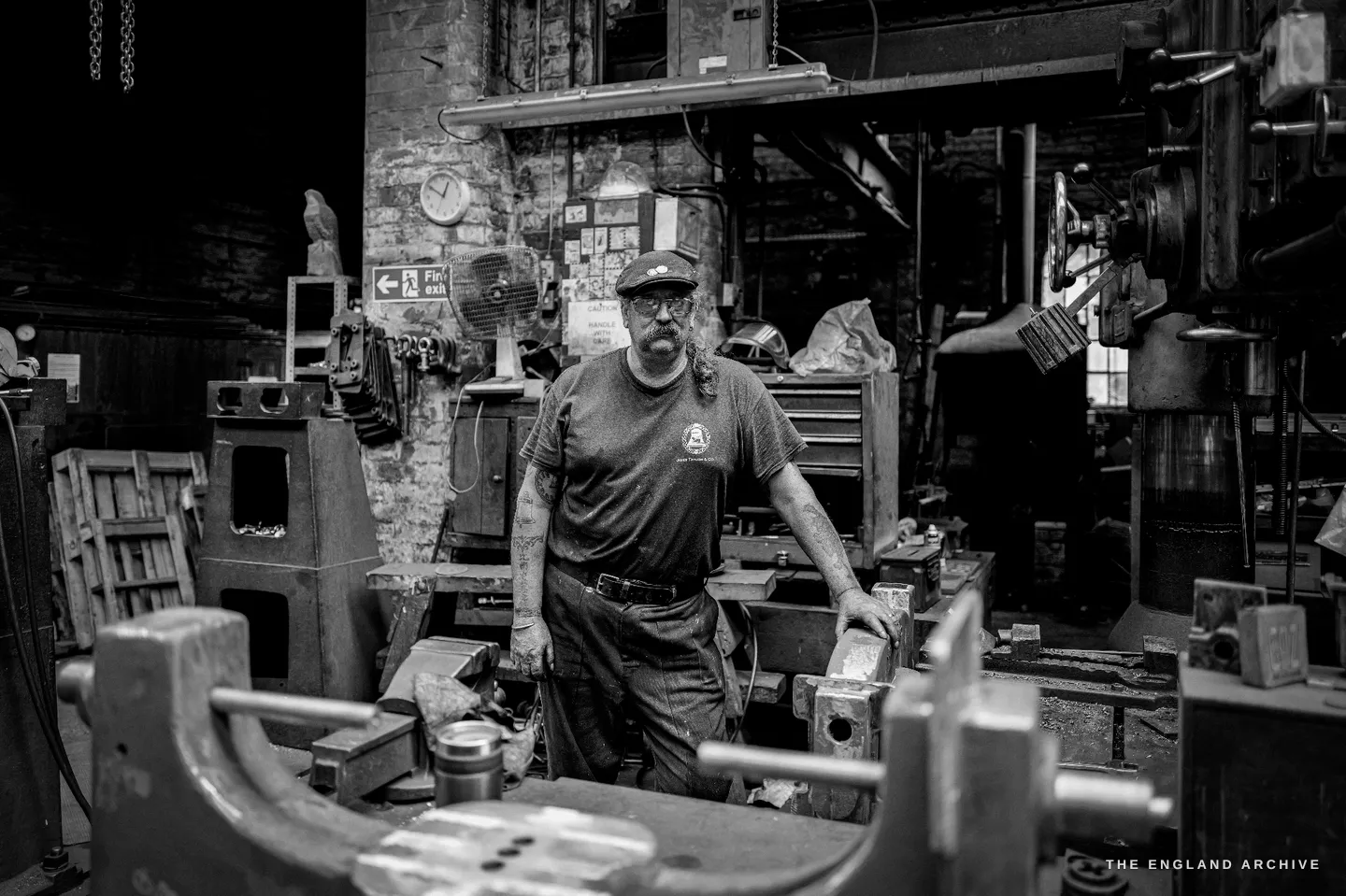
Bill standing at his workbench beside a brick pillar pinned with clippings and an old electric fan, a heavy vice clamped in the foreground.
His corner of the works - the bench, the vice, the clippings on the brick, and the radio that is never off heavy metal. IM-1093

He grew up in a house of classical music. His mum and dad loved it, and modern music was simply not allowed - not in the house, not on the radio, not at all. Then, as a young lad, he heard Iron Maiden’s ‘Run to the Hills’ for the first time, and that, he said, was that. His mind was blown clean open. From that day to this one he has listened to almost nothing but heavy metal - Maiden, Metallica, AC/DC - and there is a particular joy in standing in the last great bell foundry in Britain, surrounded by the most traditional objects England makes, listening to the foreman’s radio thrash away in the corner.
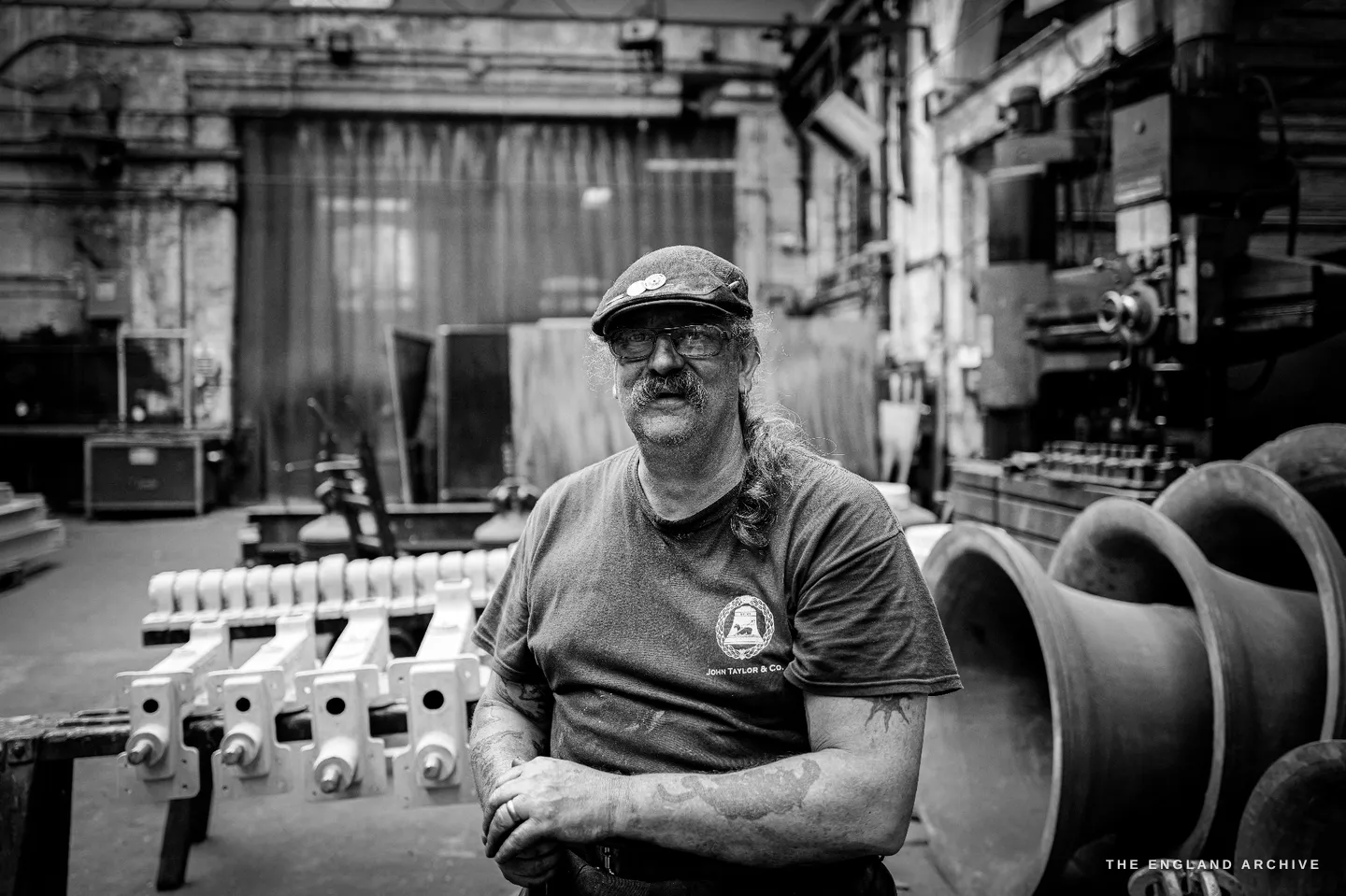
Bill seated in the open foundry hall with white headstocks ranked to his left and a large bell to his right, looking calmly toward the camera.
He told it like the best story he had. Classical-music house, modern music banned, until the day he heard Iron Maiden’s ‘Run to the Hills’ and that was that - heavy metal only, ever since. IM-1094

We had a good few laughs in his corner of the works. He was as keen to know what I was doing with the archive as I was to know what he was doing with the iron, and we kept trading questions. It is a serious place doing serious work - but it is a thoroughly happy one, and Bill is a large part of why.
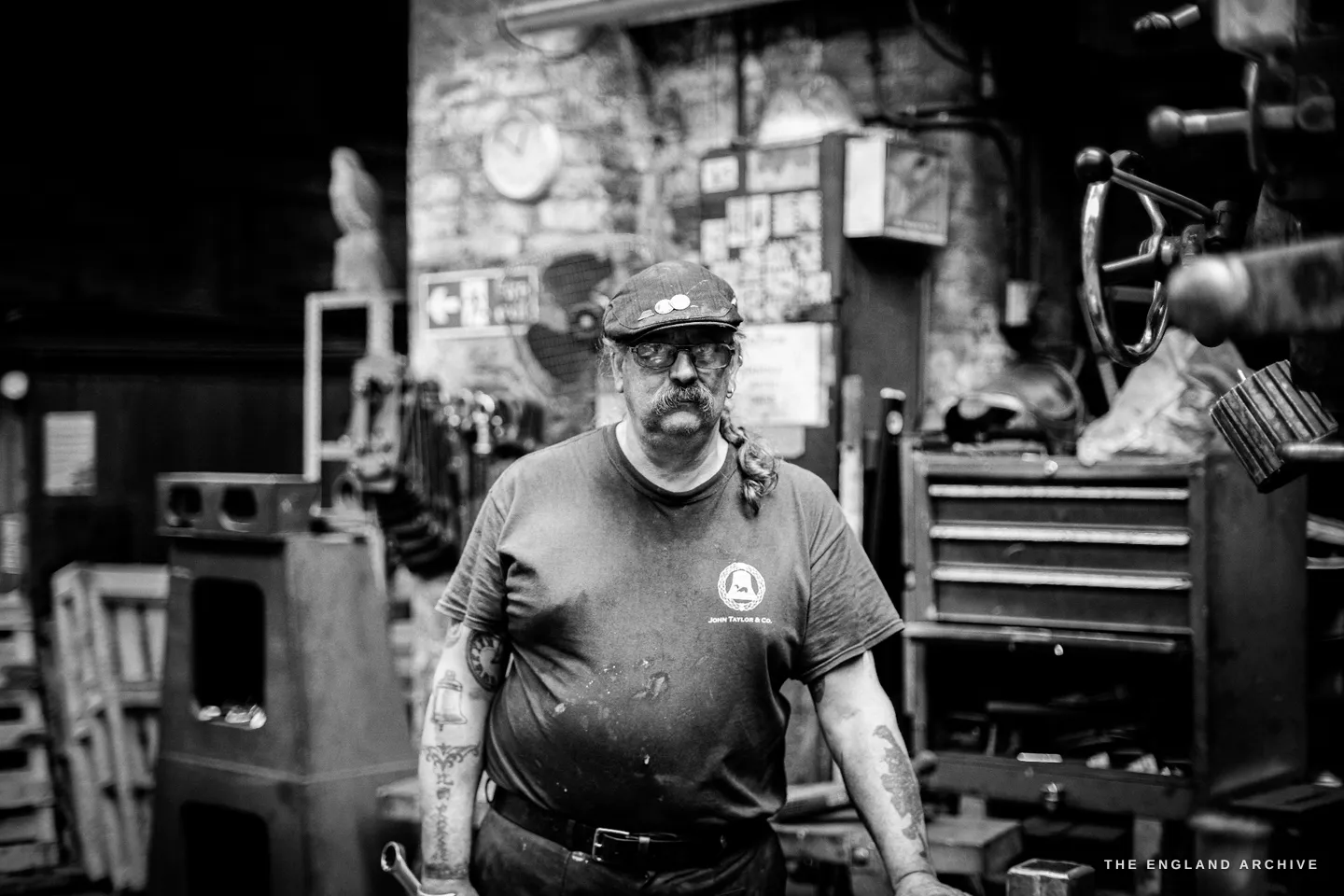
Bill standing in his brick-walled workshop, a steering-wheel-shaped machine handle to his right, a clock and pinned papers on the wall, a tool chest beside him.
A man entirely at home. We had a good few laughs in this corner, and he was as keen to hear about the archive as I was to hear about the bells. IM-1095

The Record

Next door, Giridhar can hear five notes in a single bell and bring them to agreement by ear. In here, Bill can build that same bell the iron that lets it swing true for a hundred years. Between the two of them sits most of what it takes to put a working bell in an English tower, and both bodies of knowledge live, right now, in a small number of ageing hands - which is why bell founding is on the Heritage Crafts Red List as critically endangered.
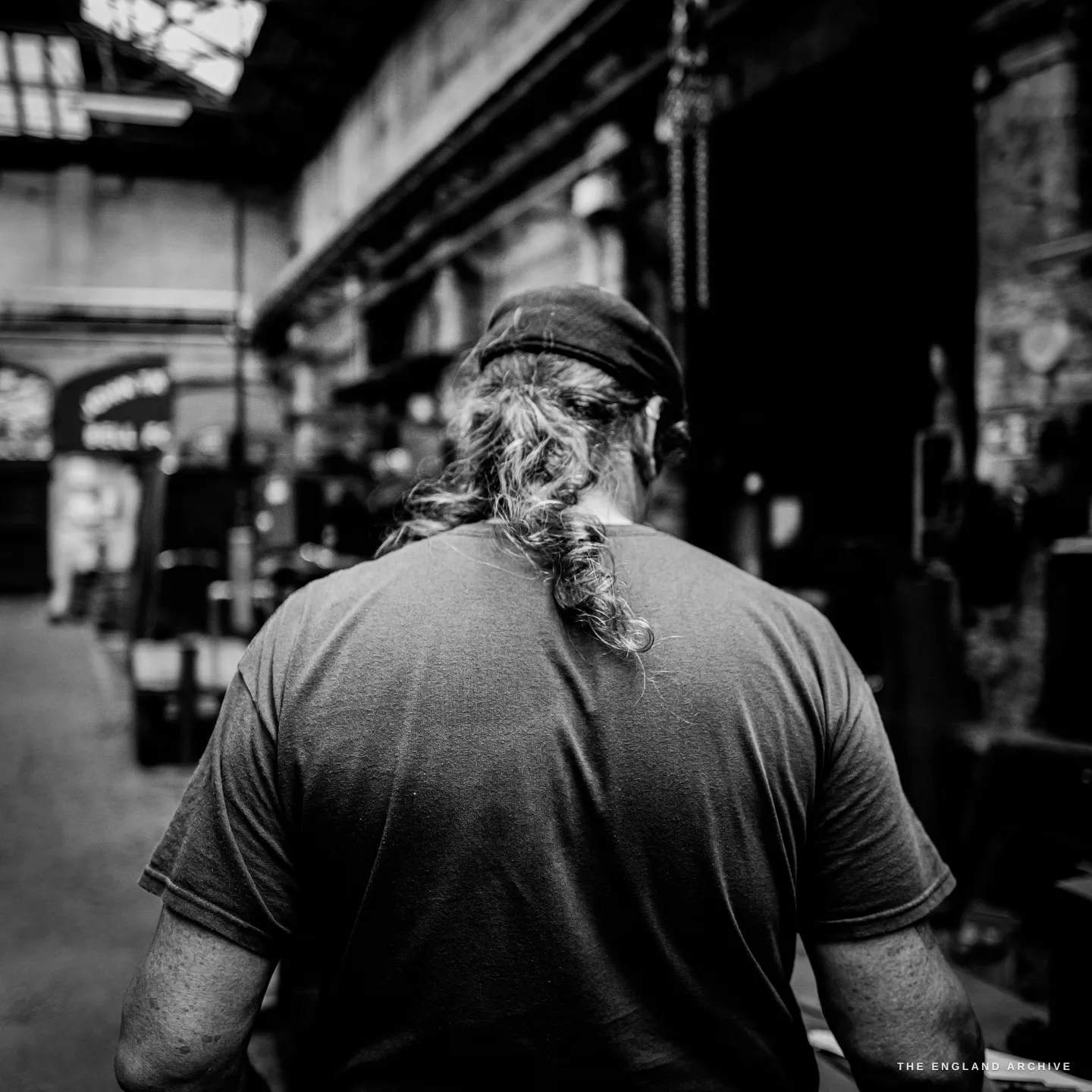
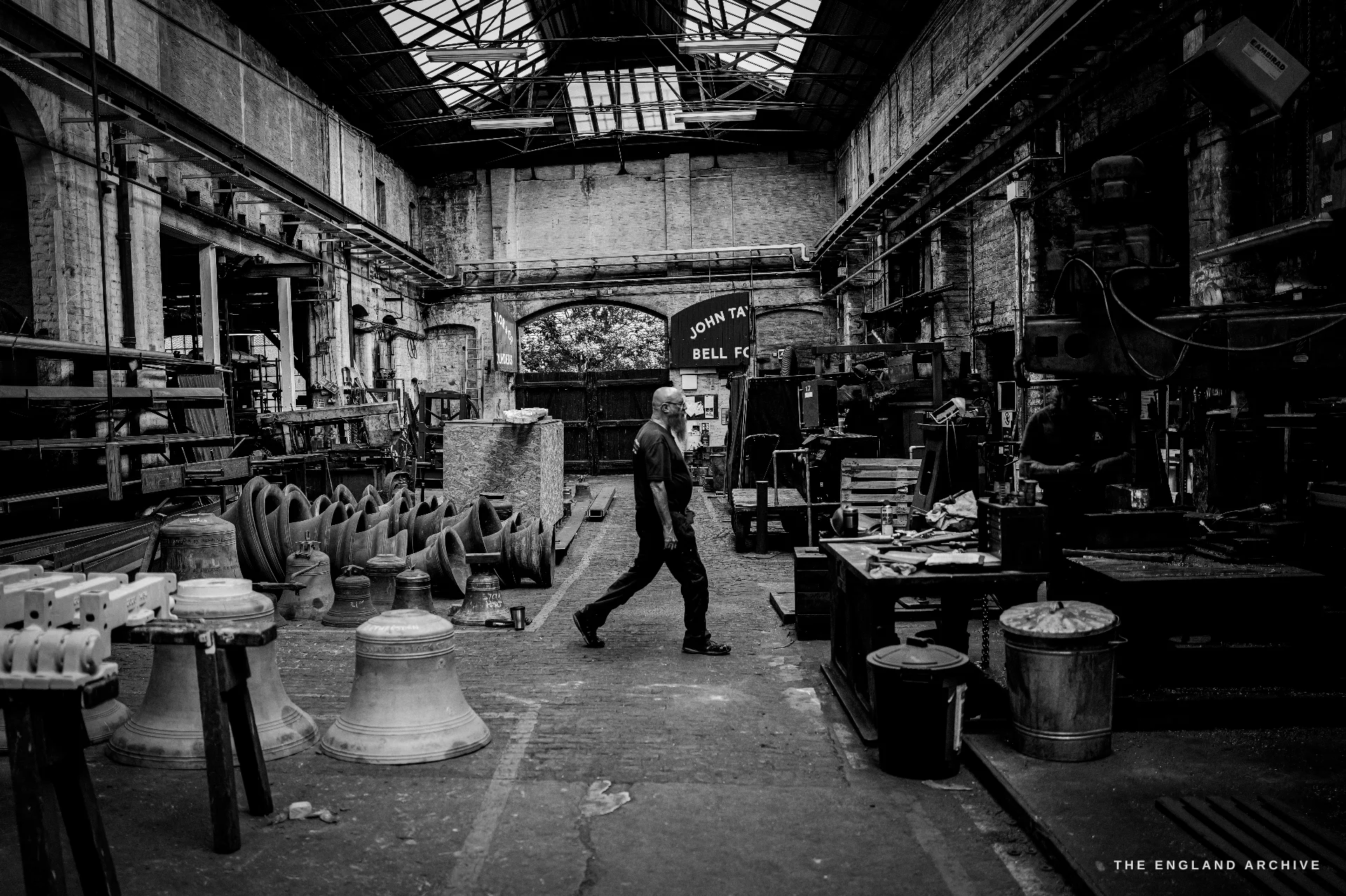
Bill seen from behind, his long grey ponytail down his back over a grey t-shirt, walking away down the foundry aisle into shadow.
He turned and walked back to the bench, and I let him go. There was a bell somewhere that needed its iron. IM-1096

When we were done he turned and walked back to the bench - there was a bell somewhere that needed its fittings - and I watched him go down the length of that great glazed hall, under the roof that has stood over this work for generations. What the archive holds now is one visit, one set of frames, and the foreman who makes the iron sing. Forty-one years of it have passed through his hands. The least I can do is write it down while the hands are still at it.
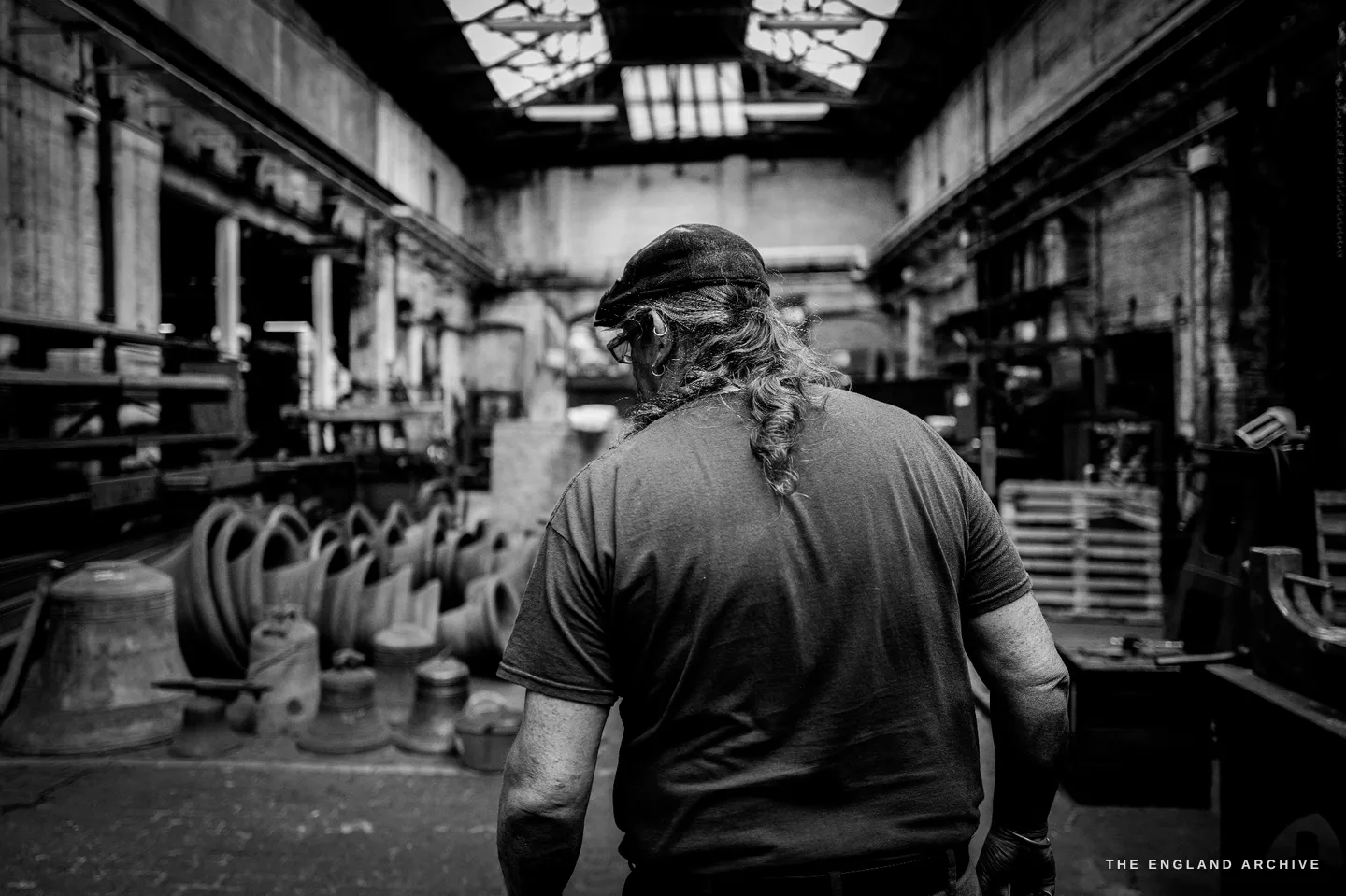
Bill walking away from the camera into the depth of the foundry hall, bells on the floor to his left, the great glazed roof lantern throwing light down the length of the building.
Off into the hall under that great roof. Forty-one years, and the fittings of who knows how many thousand bells have passed through his hands. IM-1097

More from the foundry

Bill was one of two people who made this visit. The other is the chief tuner Giridhar Vadukar, who gives a bell its voice once Bill has given it the means to ring. The whole morning on the working floor is in A Morning at Taylor’s, and the foundry’s history and exhibits are in Inside the Bellfoundry Museum. For how a bell is made from start to finish, read The Craft of Bell Founding or the glossary entry on bell founding.
Further in the archive