Chapter 3 of 6 · 1600 - 1660
Hicks, the Market Hall and the Civil War
A London mercer pours a fortune into the town, builds the hall that became its emblem, and sees his great house burned in the Civil War.
HS-0003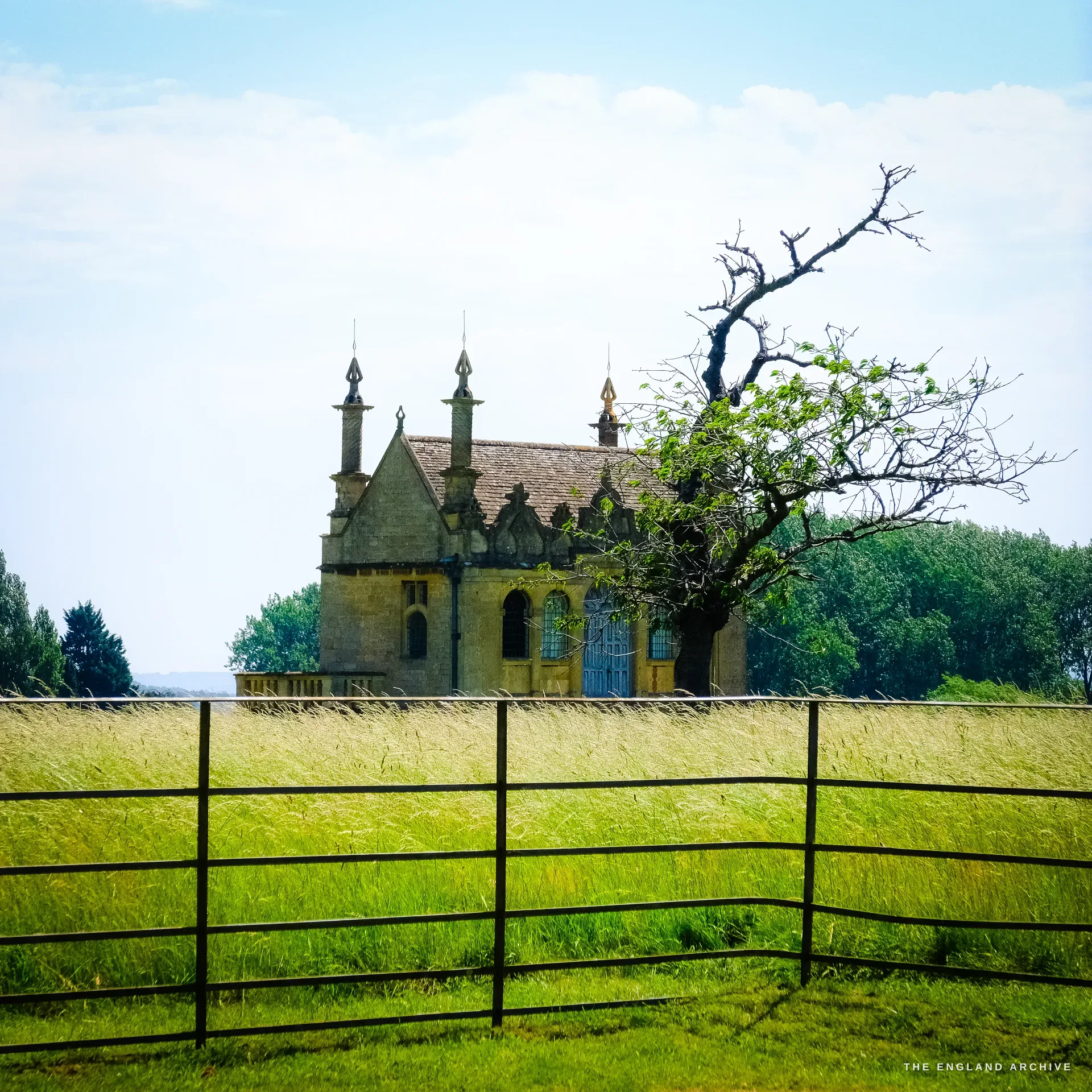
The building most photographed in Chipping Campden, the open-arched stone hall that stands in the middle of the High Street, was the gift of one man: Sir Baptist Hicks, later Viscount Campden. Hicks was a hugely wealthy London mercer and moneylender who attached himself, and his fortune, to the town. In 1627 he built the Market Hall for the sale of local produce - cheese, butter, poultry - and nearly four centuries later it is still the emblem of Campden, now in the care of the National Trust.
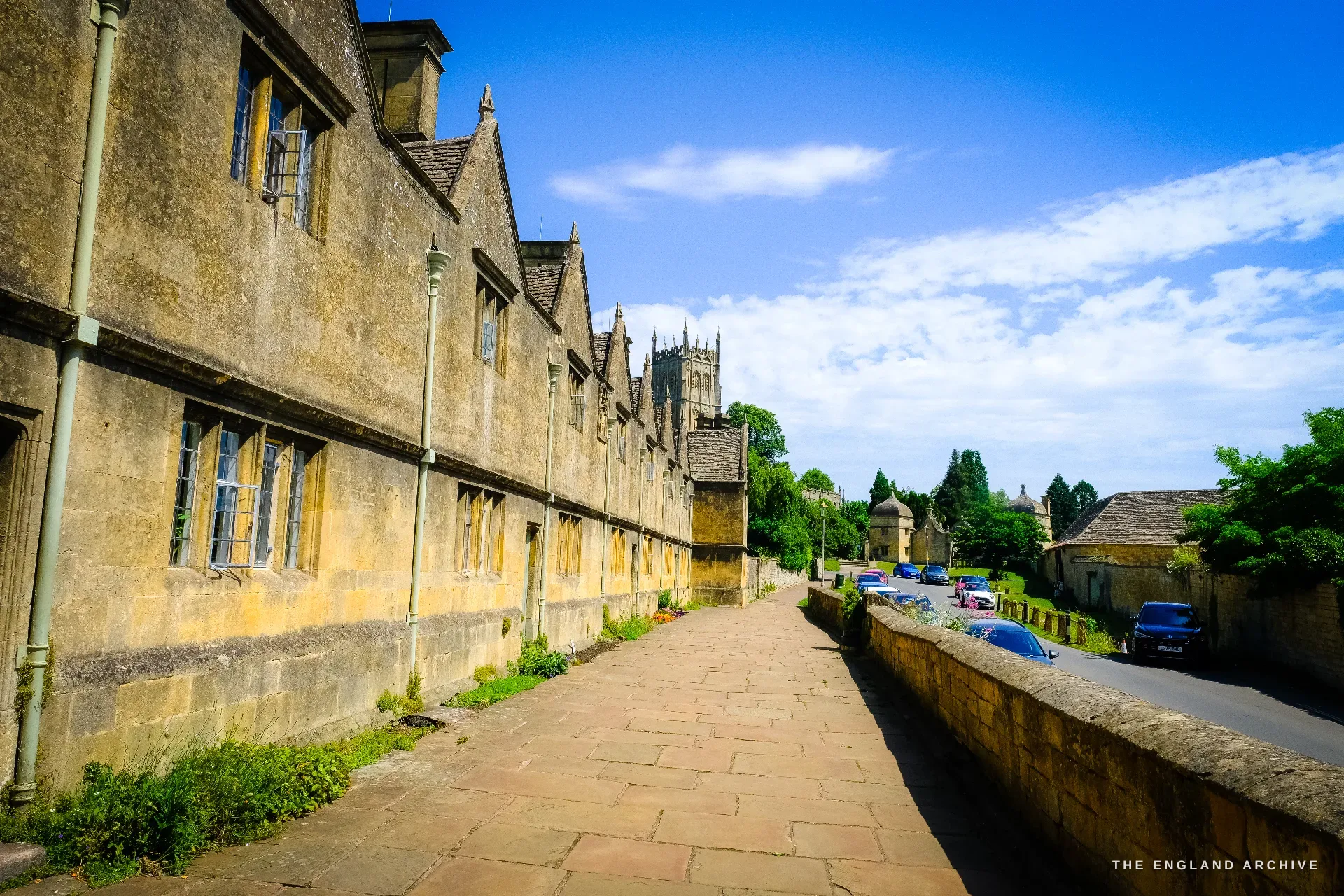
It was not his only mark. In 1612 he built and endowed the almshouses on Church Street, a terrace of dwellings for the poor that still serves its purpose. And in the same years he built himself a great mansion, Campden House, beside the church - one of the finest houses of its day in the county, raised at enormous cost with formal gardens, a water garden, and a pair of ornate banqueting houses.
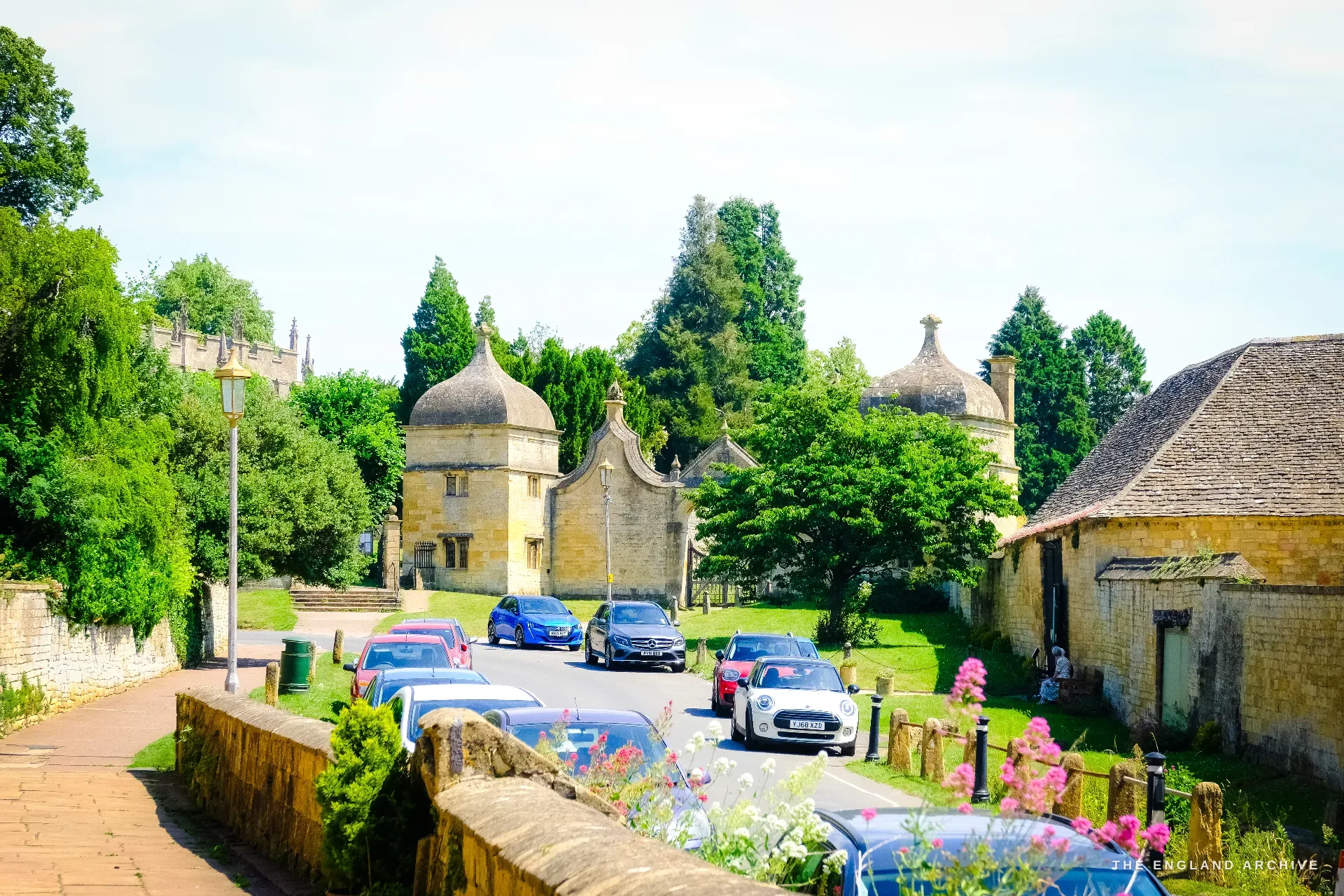
The mansion did not survive the Civil War. Campden House was held as a Royalist garrison under Colonel Henry Bard, and in May 1645, as the garrison was withdrawn westward to join the King's army before Worcester, it was deliberately burned - on the orders of Prince Rupert, it is recorded, so that the Parliamentarians could not take and hold it. Only the gateway, the two banqueting houses and fragments of the gardens remain.
The same decades gave the town a tradition it still keeps. Around 1612 a local lawyer, Robert Dover, founded a public games on the hill above the town - the Cotswold Olimpick Games, "Dover's Meeting", held with the blessing of James I. Shin-kicking, running, dancing and feasting on what is now Dover's Hill: the games ran for centuries, were suppressed and revived more than once, and continue to this day.
Key dates
- c.1612Robert Dover's Cotswold Olimpick Games begin on Dover's Hill
- 1612Baptist Hicks builds the Church Street almshouses
- 1627Hicks builds the Market Hall
- 1645Campden House burned on Prince Rupert's order as the Royalist garrison withdrew
Compiled with the Chipping Campden History Society and from the published record. Corrections welcome - this is a living reference.