
I drove up from London to Chatham to photograph a rope works, and the first thing the day did was take the century away from me. You come in through the gates of the Historic Dockyard and the present just quietly lets go. There is no other way to say it: the place is a time machine, and I was going to spend the whole morning travelling in it. The Ropery, and the two ropemakers I had come to meet, have their own pages. This one is about the yard I walked through to reach them.
Back in time, through the gate
The Chatham Historic Dockyard is eighty-odd acres of what was once a four-hundred-acre Royal Dockyard, and almost nothing in it tells you the year. I drove slowly because I kept wanting to stop: brick storehouses the length of a street, a mast pond, cannons set out on the cobbles, and then, rising over the rooftops, the great hipped roofs of the Covered Slips, like a row of upturned ships themselves. These are the sheds they built over the slipways so a man-of-war could be built out of the weather. One of them is open at the end now, and one stands wrapped head to foot in scaffolding, being held together for the next hundred years.
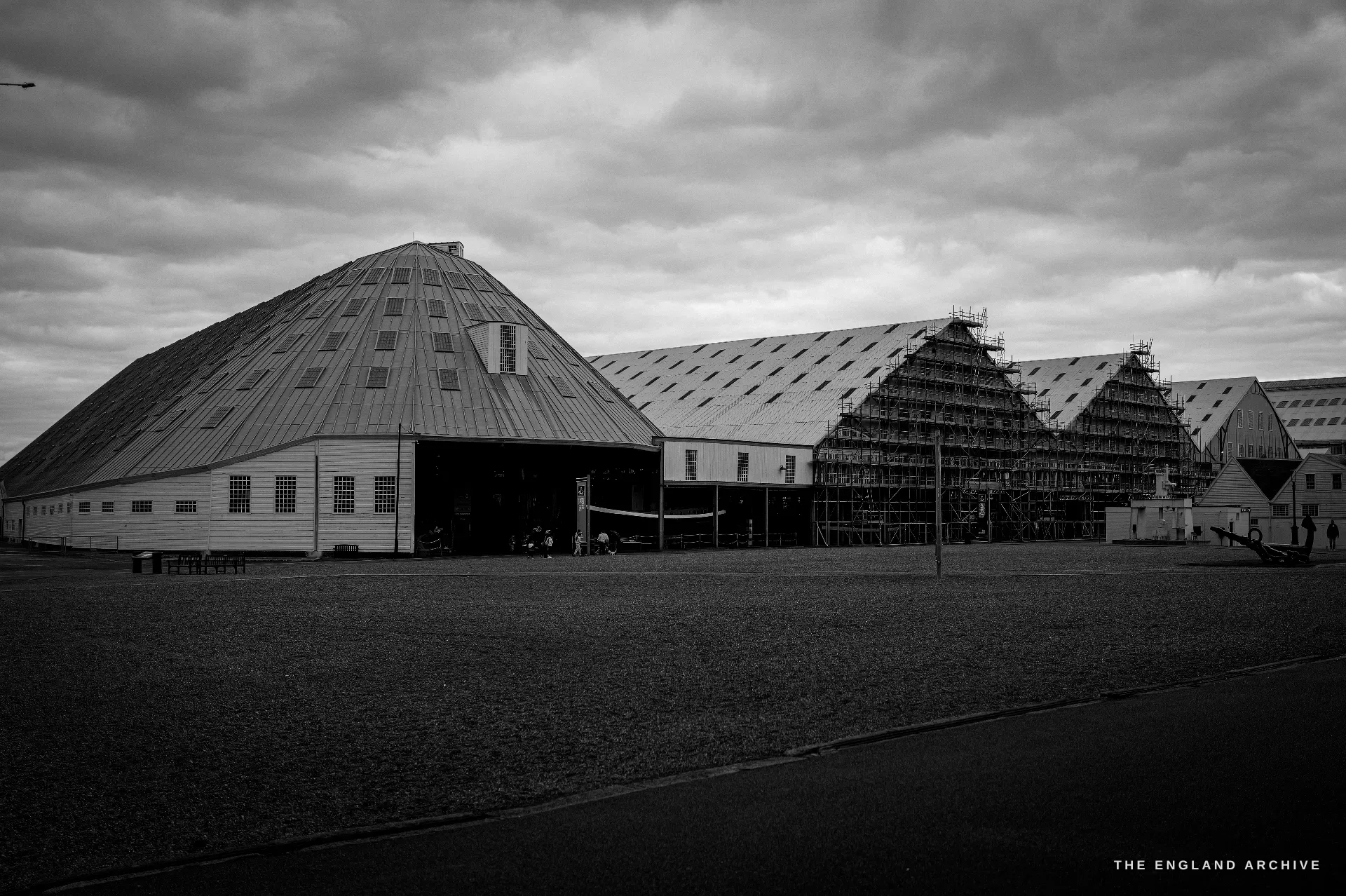
The yard that built the Navy
Ships have been built and fitted on the Medway here since Tudor times - the Navy was using the river in Henry VIII's day, and a proper yard was laid out at Chatham by about 1570. For the next three centuries this was one of the places England built its fleet. HMS Victory, Nelson's flagship at Trafalgar, was built here and launched in 1765. The yard grew through the age of sail and into the age of iron and steam, learned to build submarines in the twentieth century, and then, on the last day of March 1984, the Royal Navy closed it after more than four hundred years. What would have been demolition became preservation instead: a charitable trust took on the oldest heart of the yard and keeps it now as a working museum, which is the only reason I could drive into it at all.
You feel all of that before you know any of it. The scale is naval - everything built to move and hold the weight of a warship - and the quiet on a weekday morning only makes it louder.
Three ships, three ages
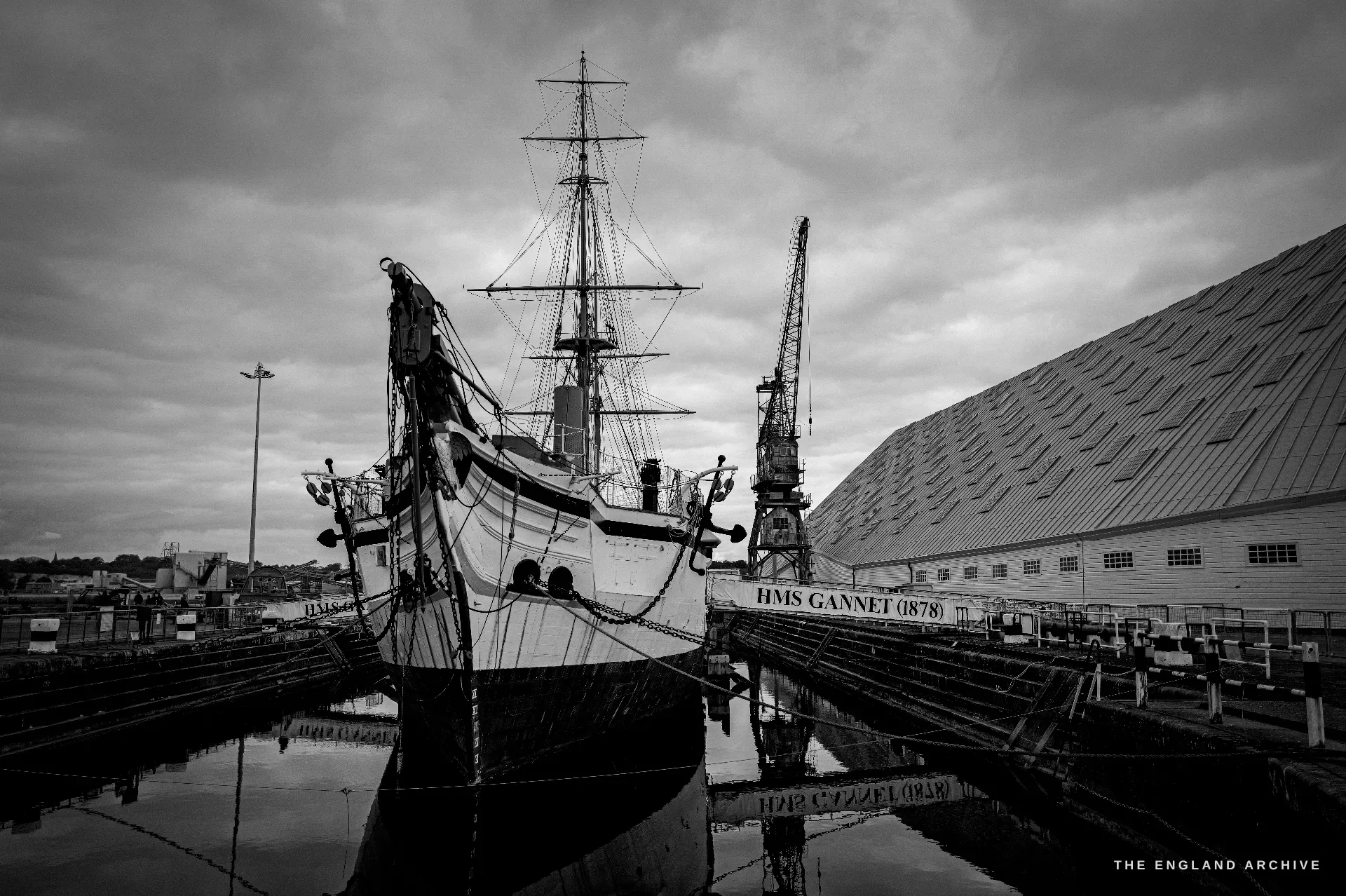
The dry docks hold the yard's argument for itself, which is that it built real ships for a very long time. The one that stopped me was HMS Gannet, a sail-and-steam sloop of 1878, kept bolt upright in a stone dry dock with her three masts bare against the sky. Her name and her year are painted straight onto the dock edge, so there is no mystery about what you are looking at. She is a hundred and fifty years old and she looks ready to be rigged.
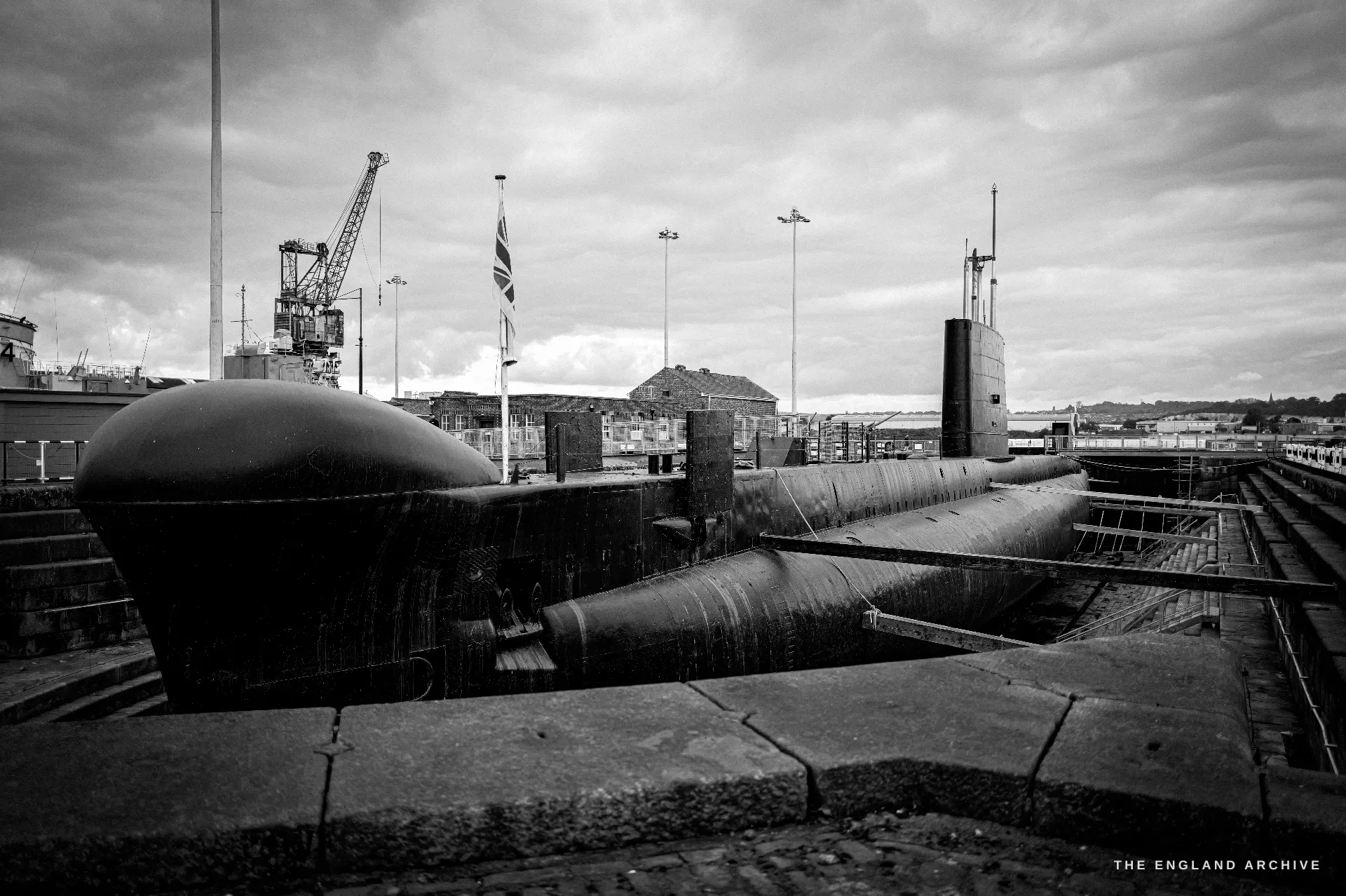
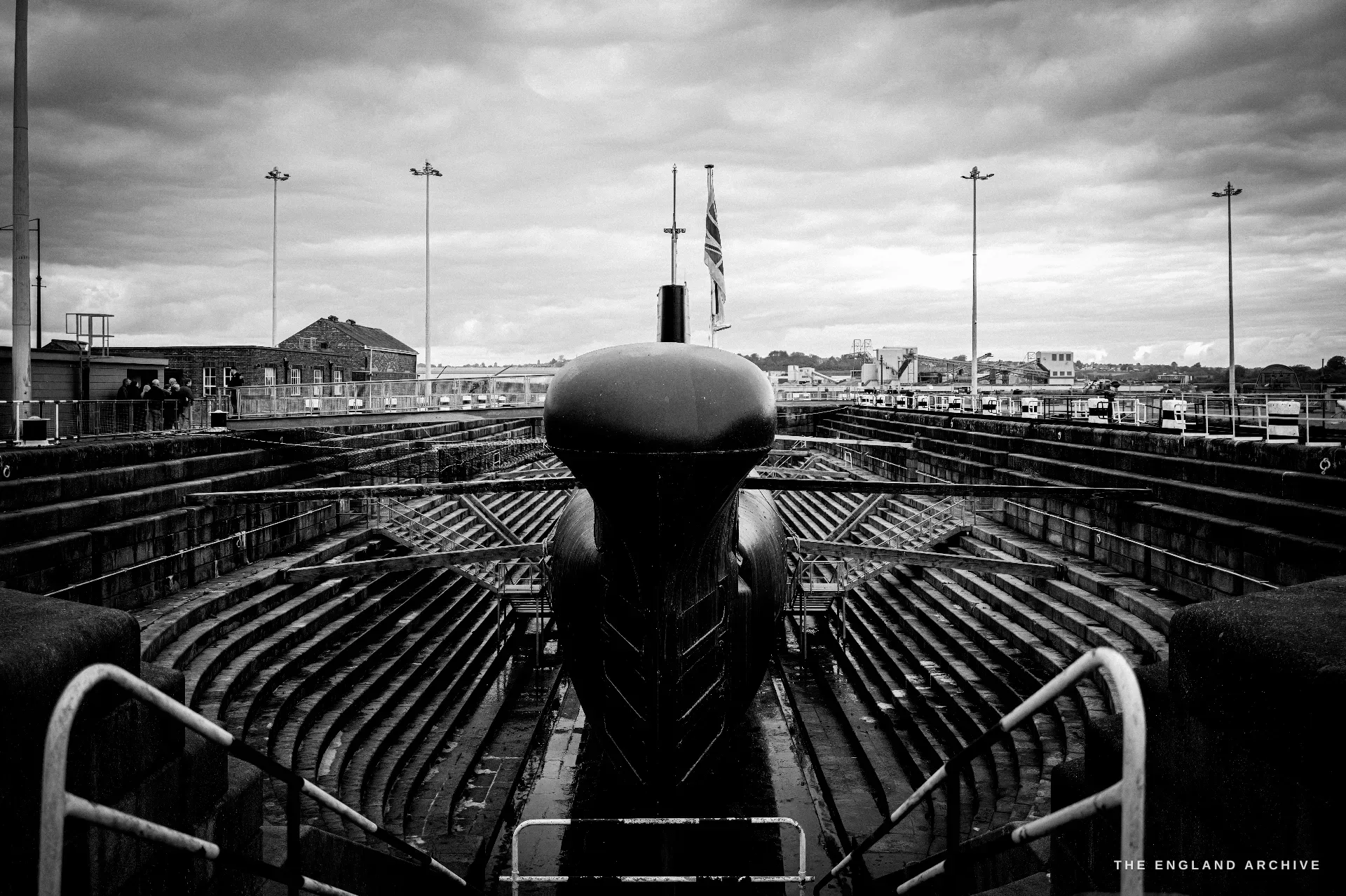
A few docks along, the century jumps. Chatham learned to build submarines at the end of its life, and the last warship the yard ever built - the submarine Ocelot, launched here in 1962 - is kept in the yard that made her, low and black and whale-smooth beside the Victorian stonework. Standing between a wooden warship and a cold-war submarine, both built within a few hundred yards of each other, is the whole time-travel feeling of the place in one spot.
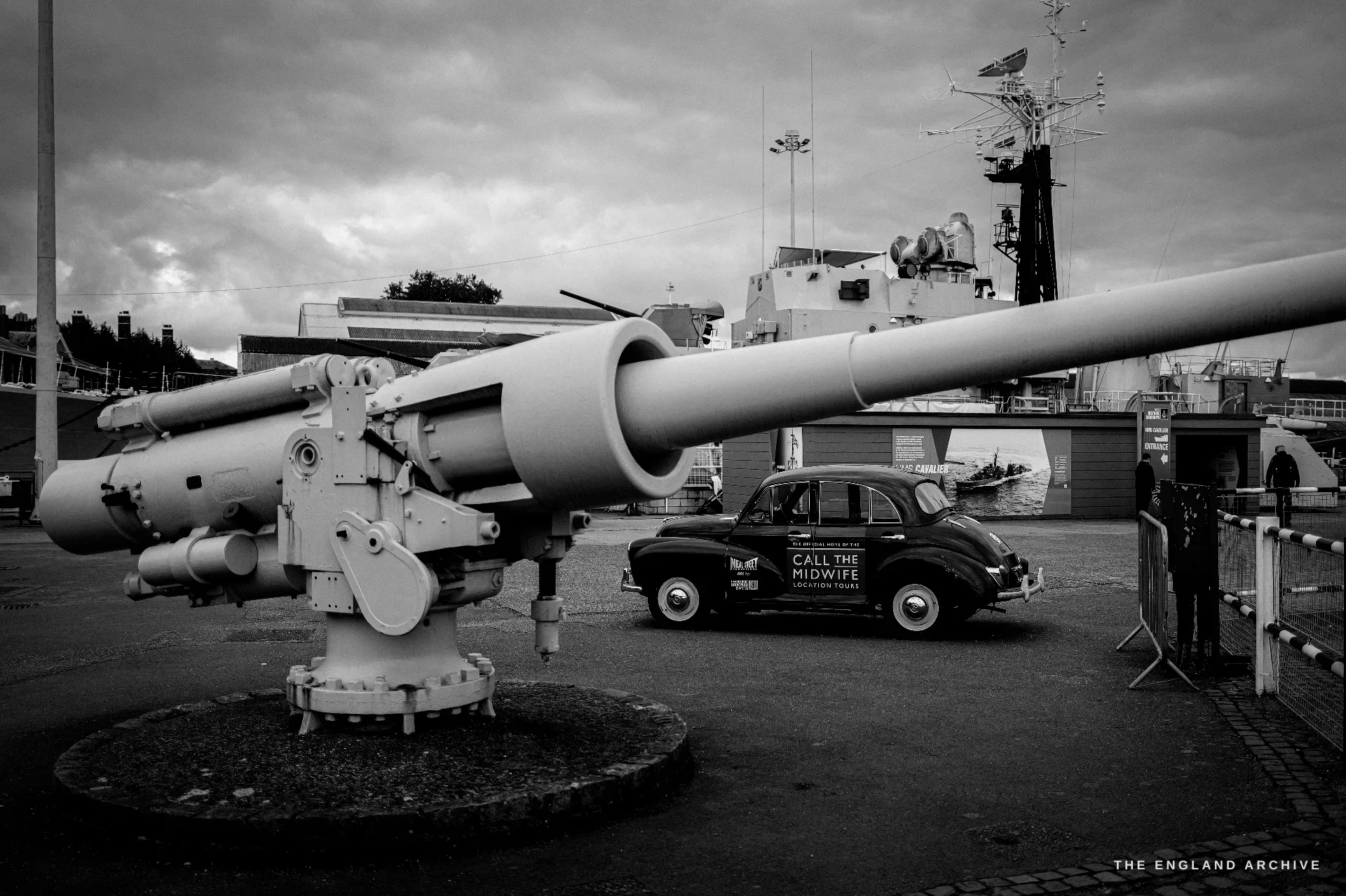
And then the twentieth-century Navy proper: HMS Cavalier, the last British destroyer of the Second World War still afloat, grey and bristling in her dock. On the apron in front of her sat a naval gun and, parked improbably beside it, a vintage car lettered for the Call the Midwife location tours - because the yard pays its way as one of the most-filmed places in the country as well as a museum. The two things sitting side by side, a deck gun and a television prop, felt exactly right for a dockyard that now makes its living out of its own past.
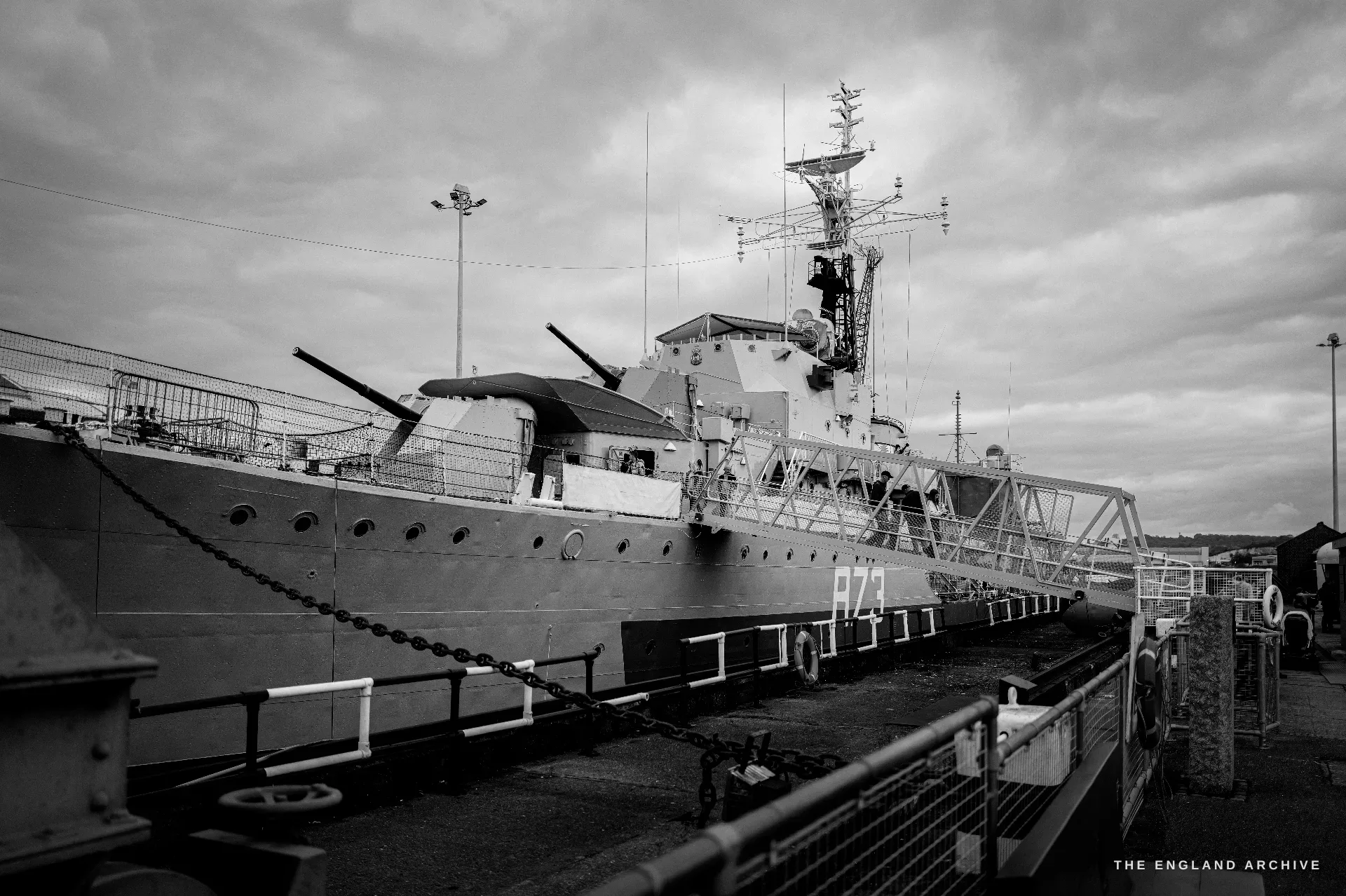
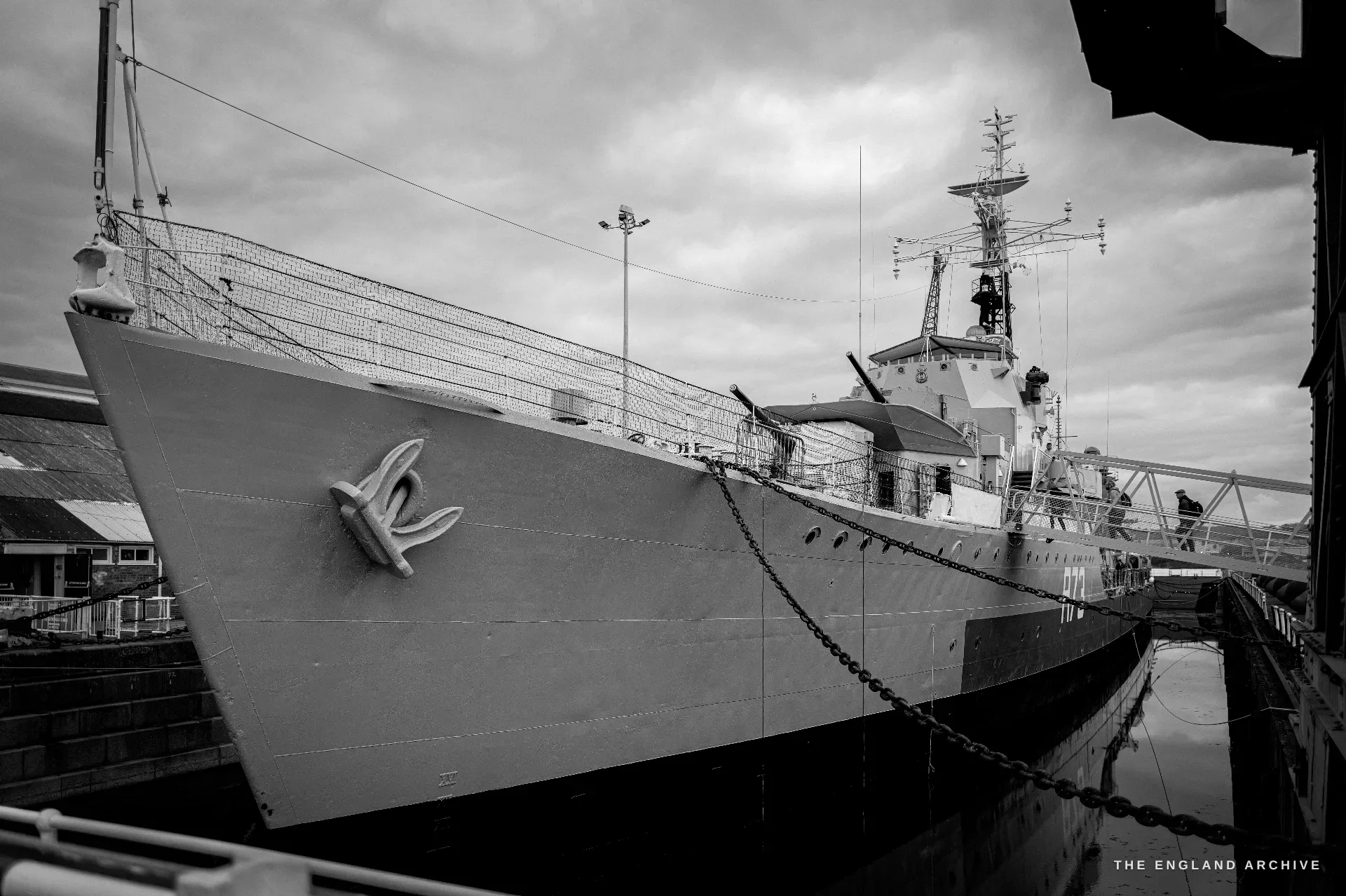
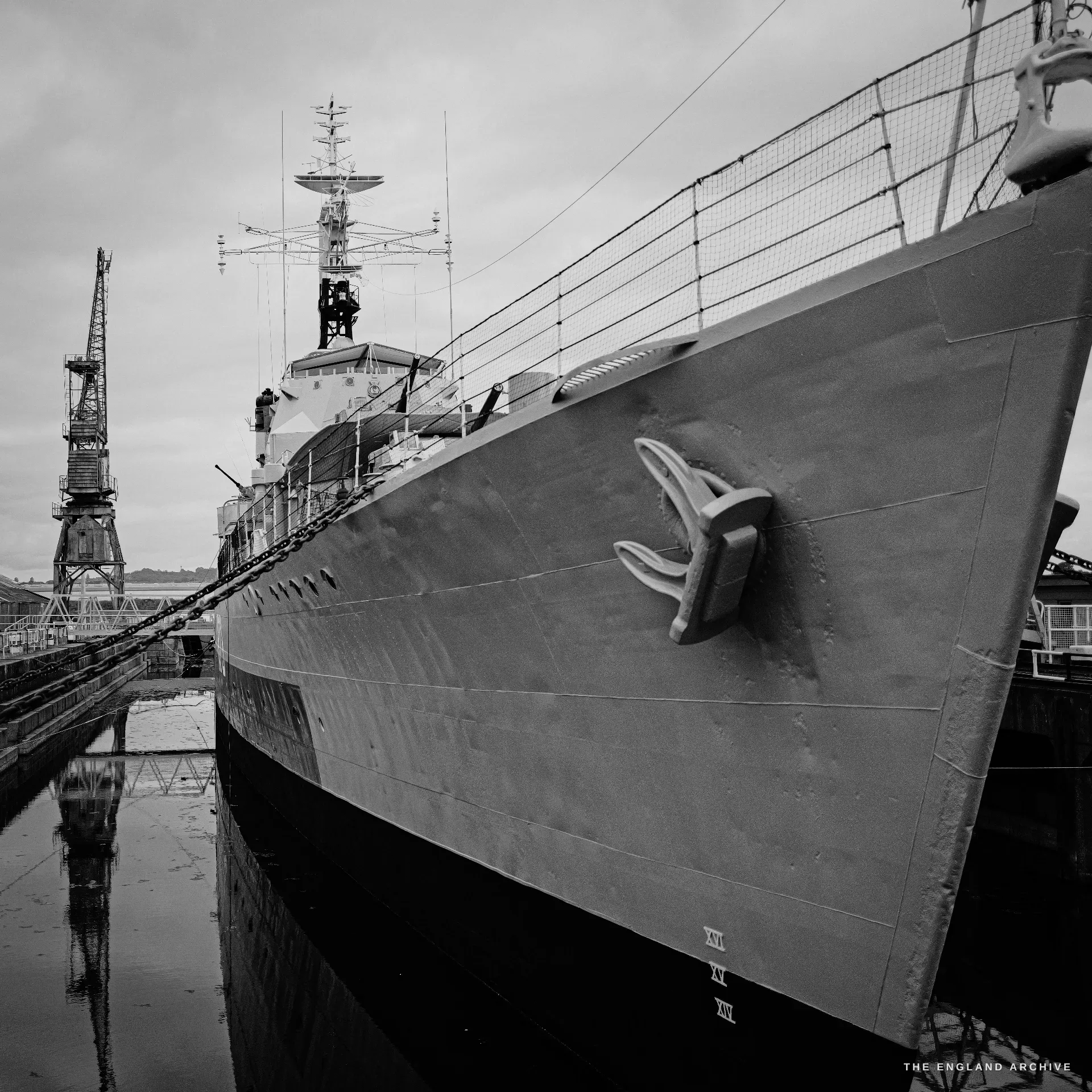
I kept going in close, because up close is where a warship stops being a shape and becomes a weight. The housed anchor and the chain running down to the dock floor; the draft marks climbing the stem in worn Roman numerals, telling the men who loaded her exactly how deep she sat. These are the details that do not photograph from the tour path, and the reason it is worth walking a dry dock slowly.
Cranes, clocks and maker's plates
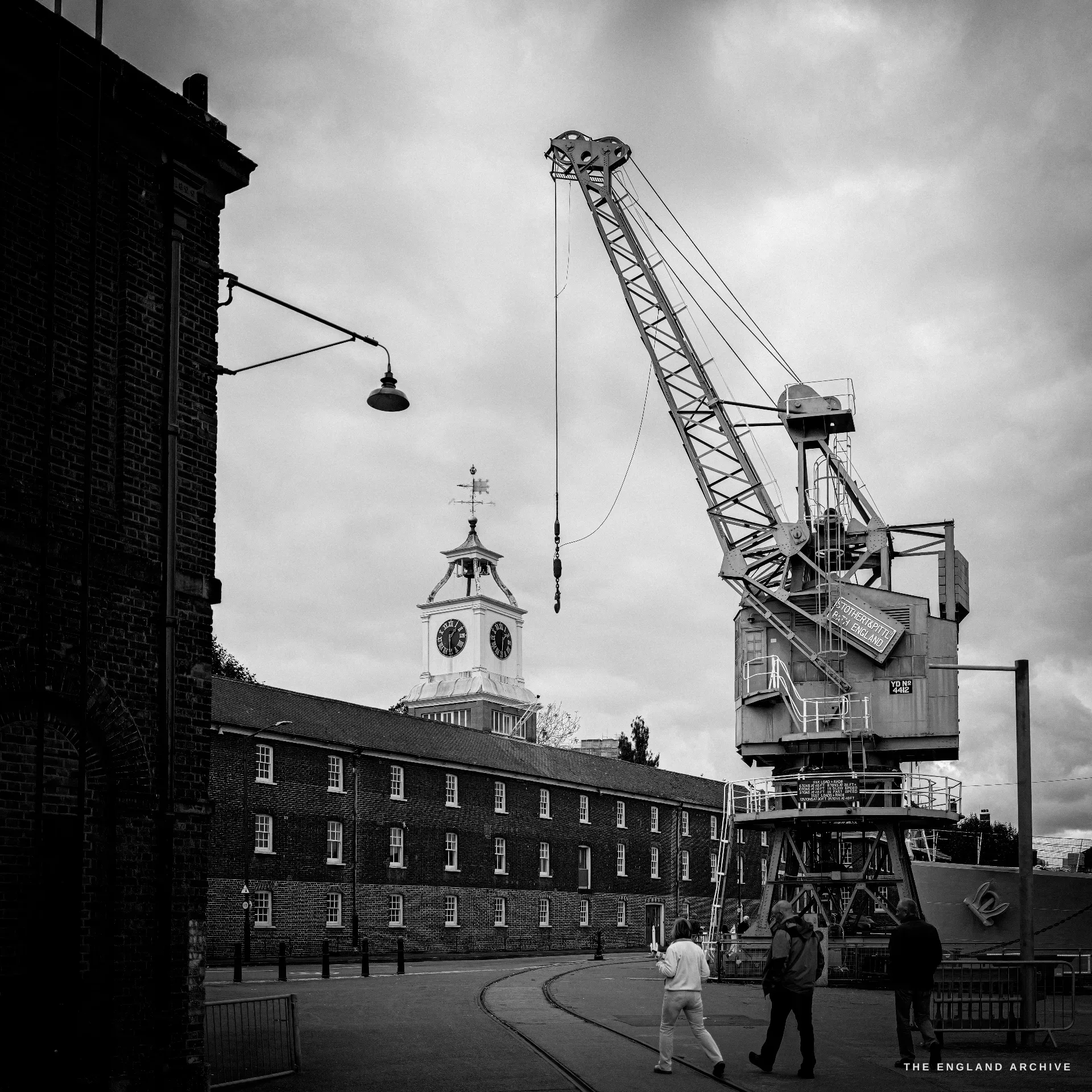
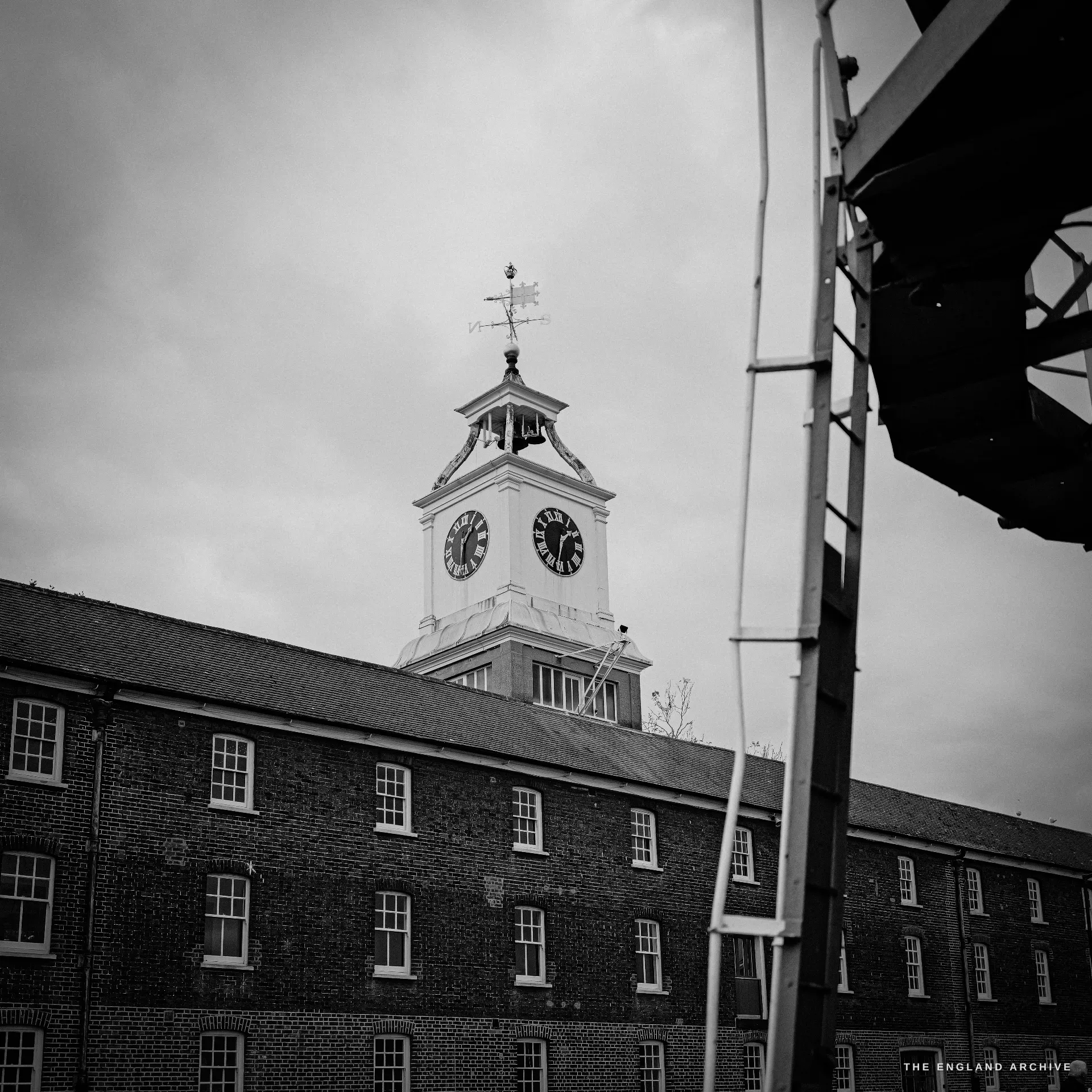
Away from the ships, the yard is a museum of its own machinery. A tall dockside crane stands over the rail-set roadway, and when I looked closely it still wore its maker's plate: Stothert & Pitt of Bath, with a yard number stamped below it. A Somerset engineering firm that built cranes for a Kent dockyard, named in cast iron more than a century on - the kind of small, true detail the archive exists to keep. Behind it, a storehouse carries a white timber clock tower with a bell and a weathervane lettered to the compass, the sort of thing a yard put up so every man in it kept the same time.
I could have spent the day in the dry docks and never reached what I had come for. But the reason I had driven to Chatham was not a ship. It was rope - the thing that rigged every one of these vessels, the quarter-mile Ropery that still makes it by hand, and the two men who showed me how. That is the next page: A Morning at the Ropery, with the master ropemaker David Cheer and his apprentice Rob Lane-Shaw. The dockyard is where you arrive. The Ropery is where the work is still being done.
The whole yard sits on the archive's record as the Chatham Historic Dockyard area, in Kent.
Mash Bonigala visited the Historic Dockyard at Chatham in autumn 2026 as part of Year 1 of The England Archive, a three-year documentary photography project recording the people keeping England’s heritage crafts, traditions, landscapes and buildings alive.