Makers
Rob Lane-Shaw
Ropemaker, Apprentice
The Ropery, Chatham Historic Dockyard, Kent
Ropemaker, Apprentice
The Ropery, Chatham Historic Dockyard, Kent
Three years into the trade, he can both make the rope and explain it - the apprentice who is also the guide, learning the craft young enough to carry it on.
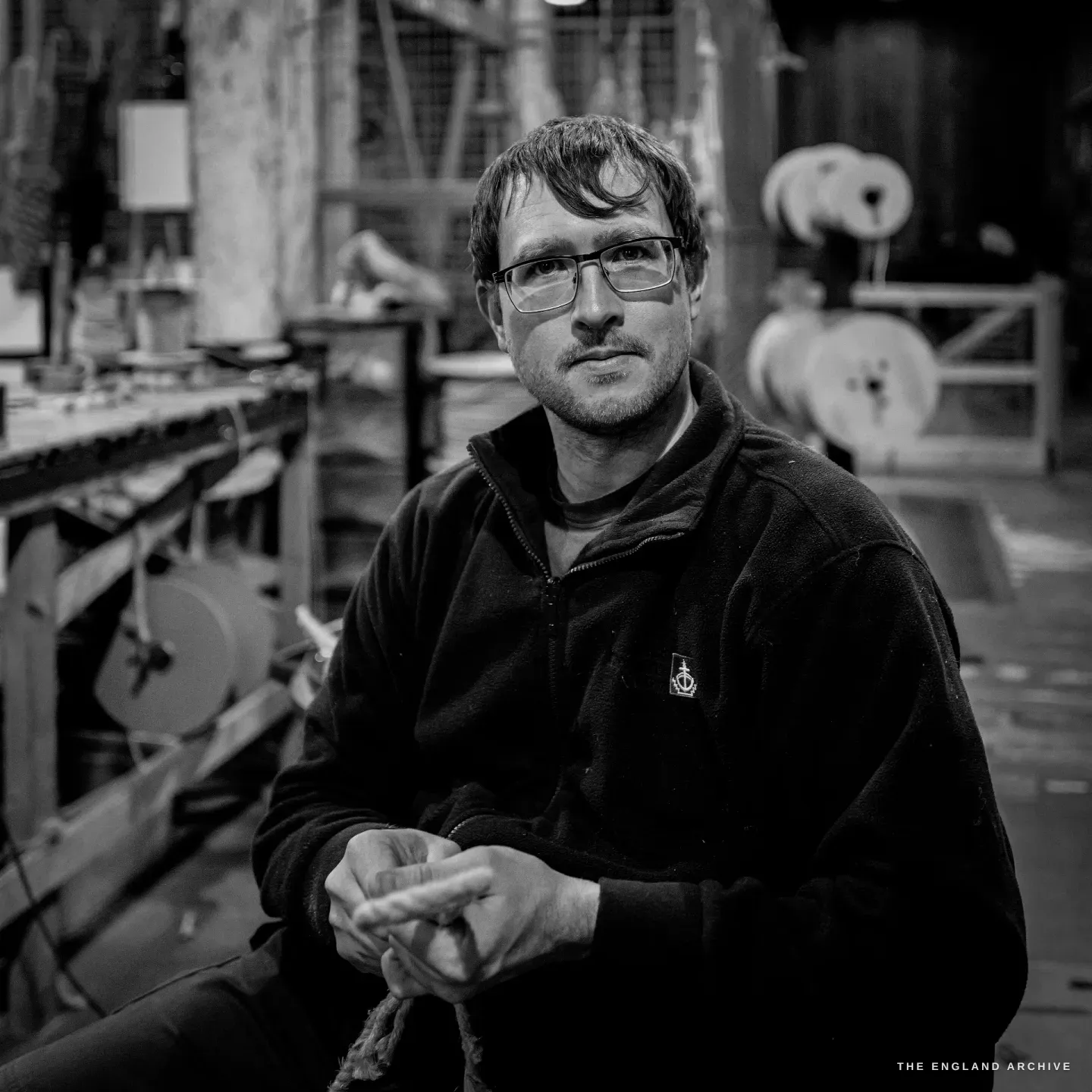
If David Cheer is the end of a long apprenticeship, Rob Lane-Shaw is the start of one. He has been at the Ropery about three years, learning the trade the only way it can be learned - at the bench, beside the master, with a rope in his hands. By the time I met him he was splicing and whipping and forming eyes without needing to look up, which three years will do if you spend them paying attention.
I photographed him at work: seated with a rope across his lap, threading a splice; studying a finished eye he had just worked, turning it in the light to check it. There is a particular quiet that comes over someone who is good at close hand-work and still young enough to find it absorbing, and Rob has it. He wears the Ropery's anchor crest on his fleece and looks entirely at home under it.
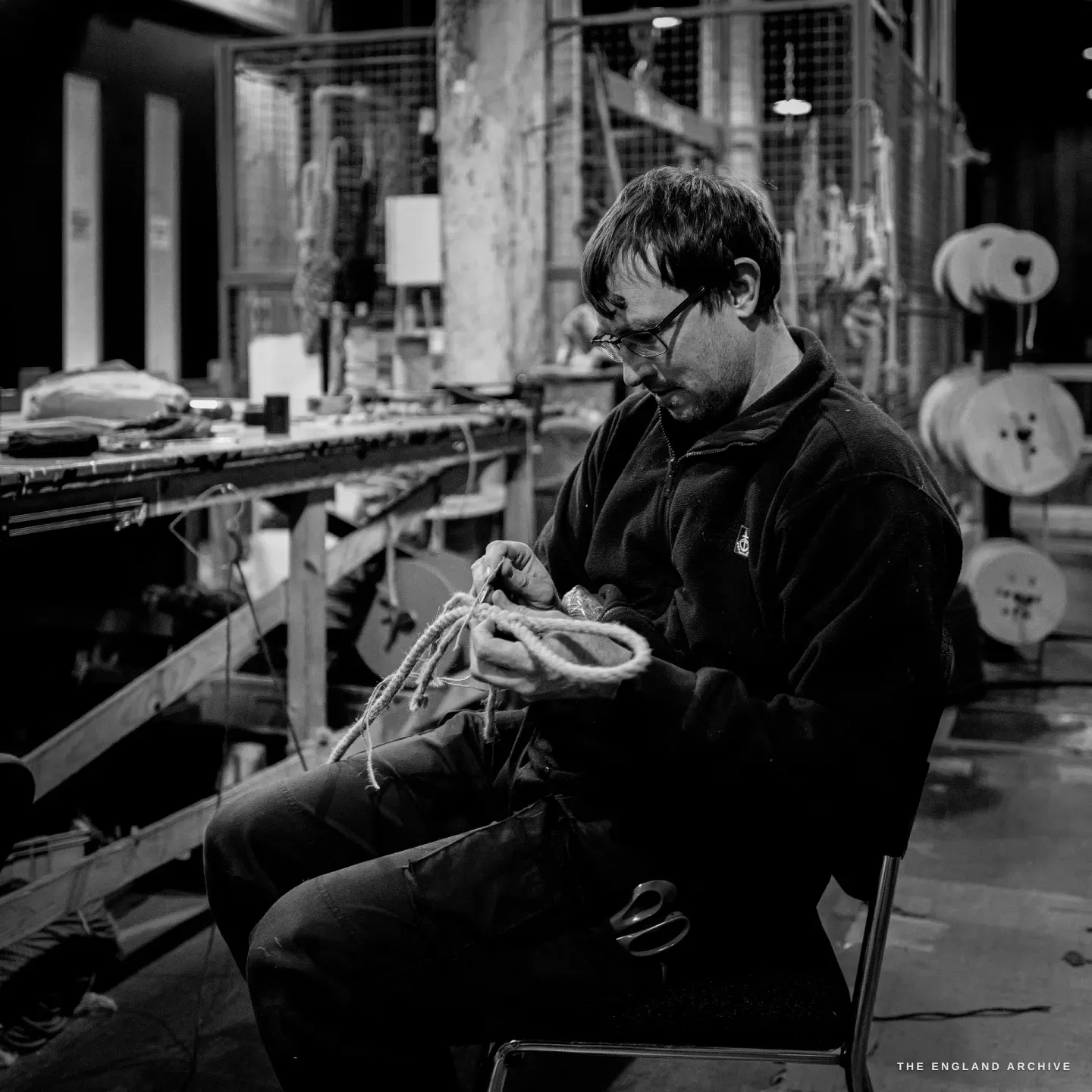
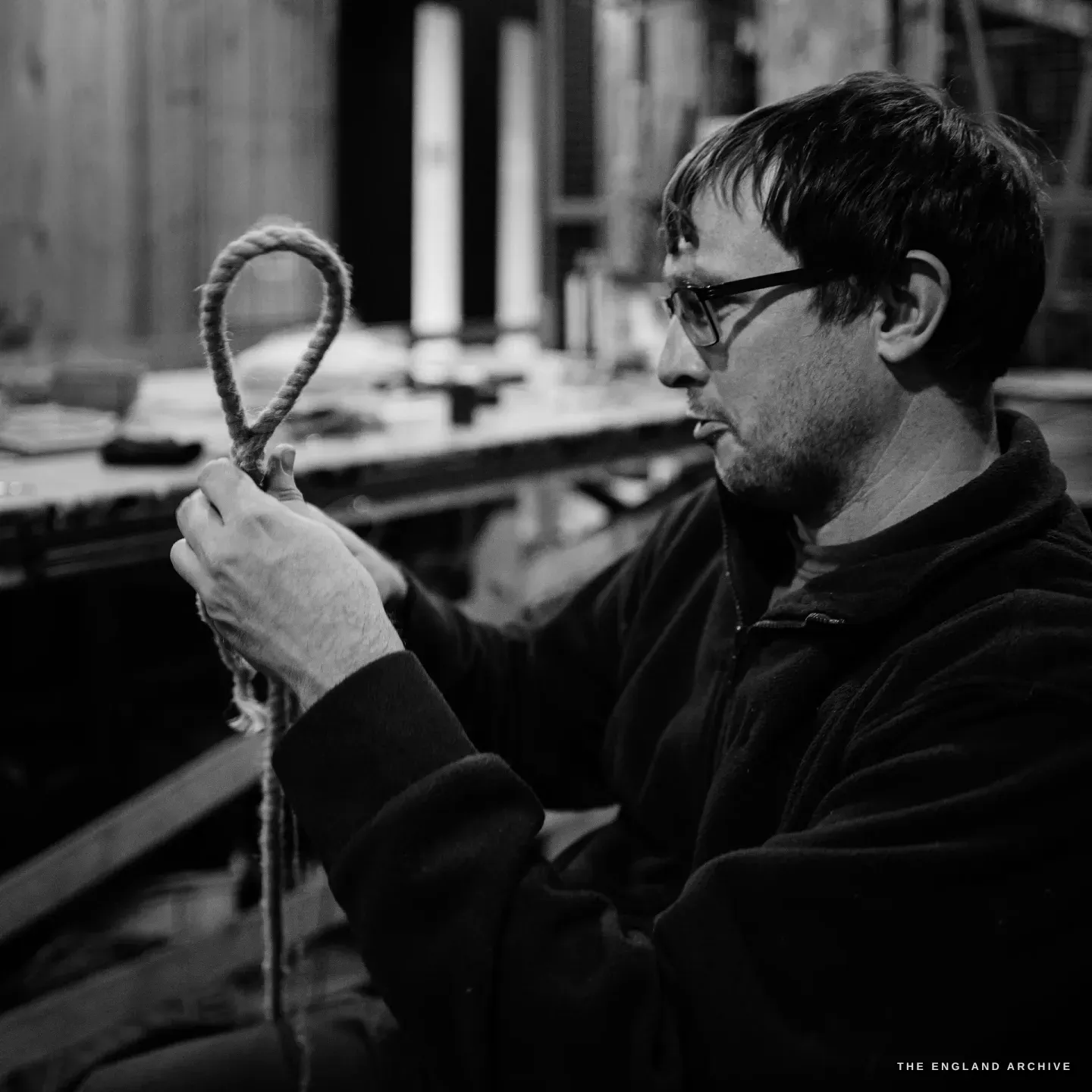
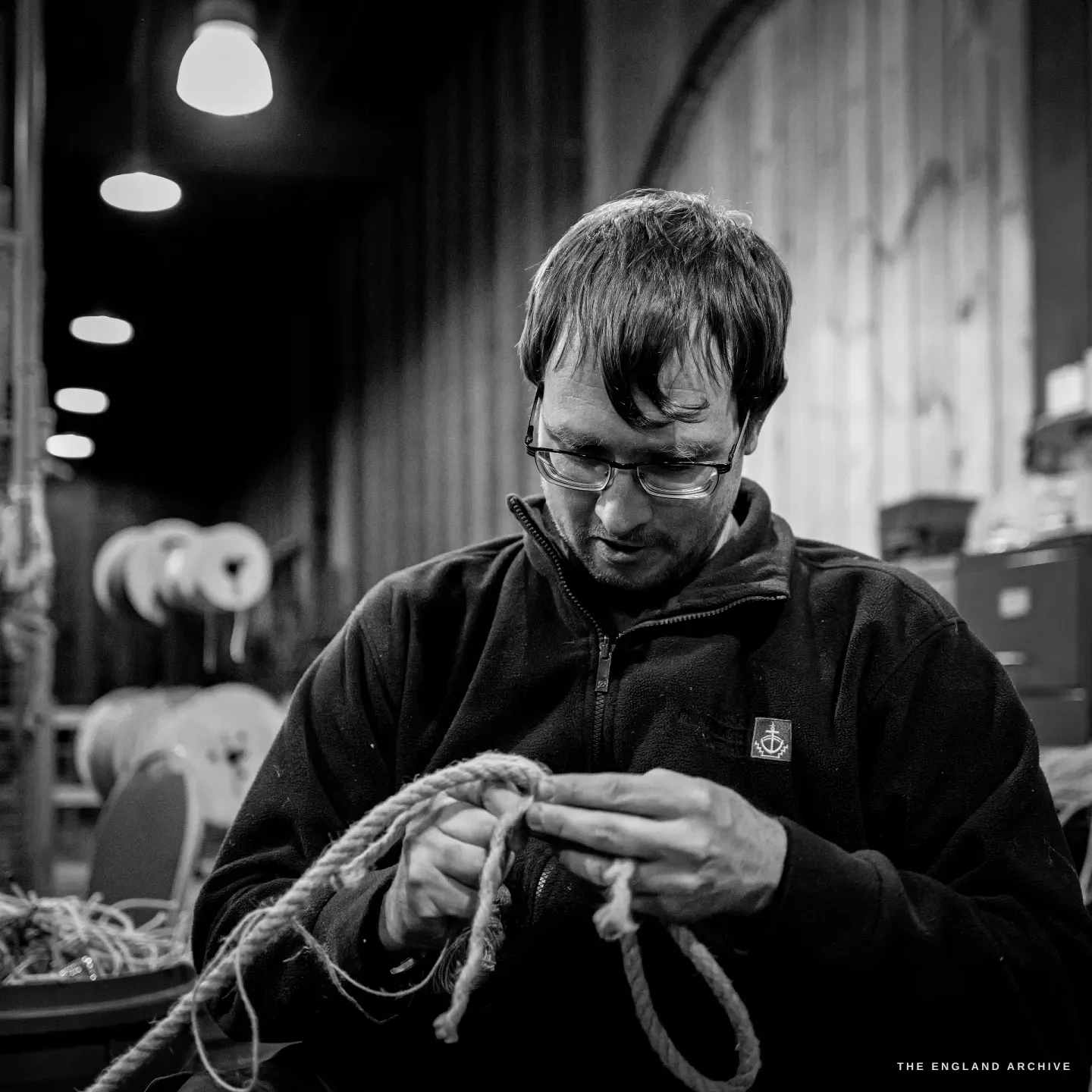
Rob has two jobs, and they are really one. He makes rope; and because the Ropery is a museum that funds itself - no grant, no outside money, just the shop and the sales and the visitors - he also takes the public round, shows them the quarter-mile walk, and explains how the rope is made. It is a rare and useful combination. A guide who has never made rope can only recite; Rob can make it and then tell you what you just watched, which is exactly the person you want standing at the end of a ropewalk. He enjoys both halves of it, and it shows.
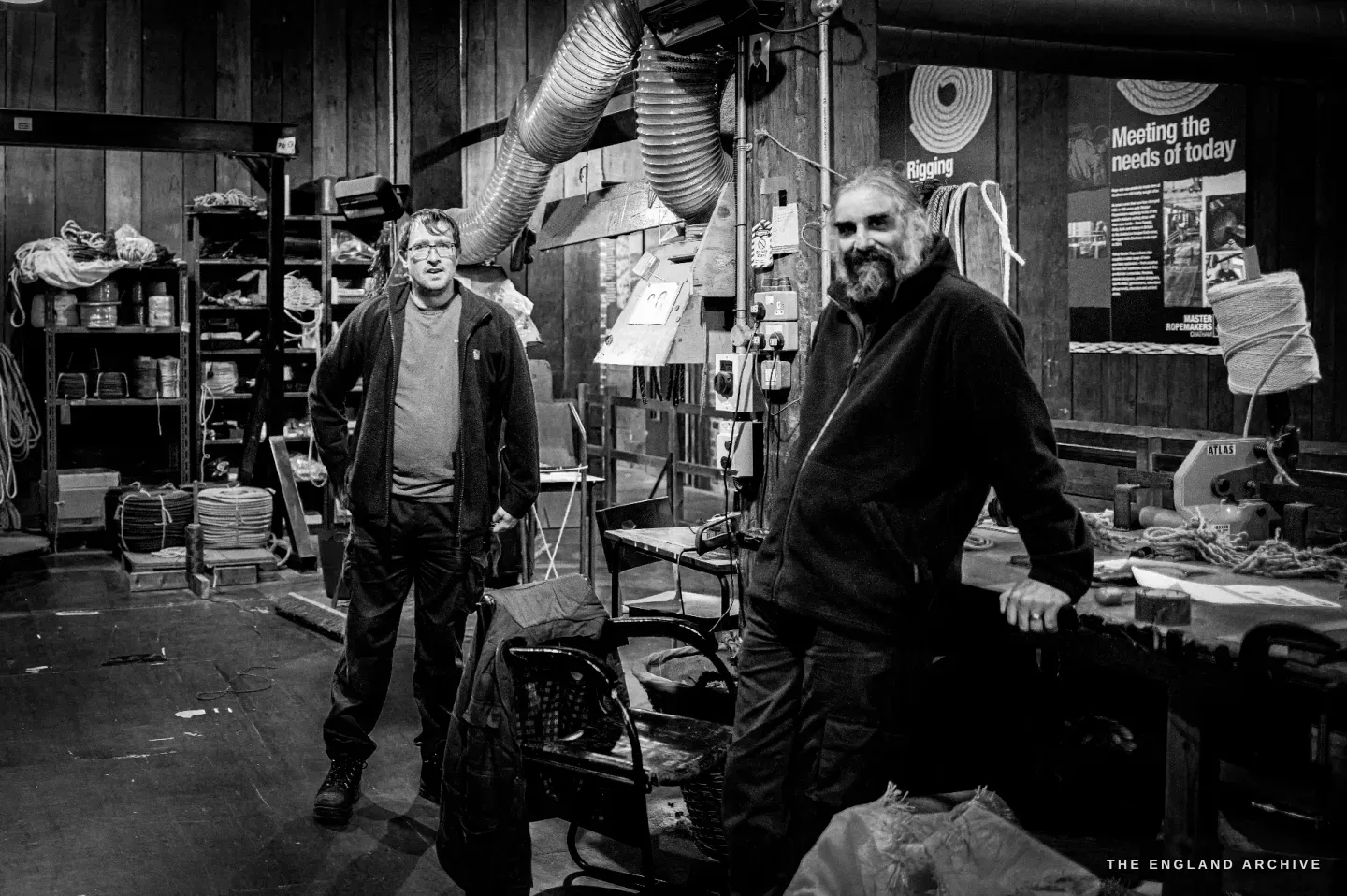
This is the archive's record of Rob Lane-Shaw, apprentice ropemaker, made at the Ropery in Chatham Historic Dockyard in autumn 2026. In a craft that now rests on very few hands, he is the hopeful end of the story: someone young enough, and keen enough, to carry it on. He learns from the master David Cheer, and the morning in full - the Ropery, its history and its machines - is in the journal entry A Morning at the Ropery.