Makers
Kylie Cocker
Pocket-Knife Maker · Joseph Rodgers
Kelham Island, Sheffield
Pocket-Knife Maker · Joseph Rodgers
Kelham Island, Sheffield
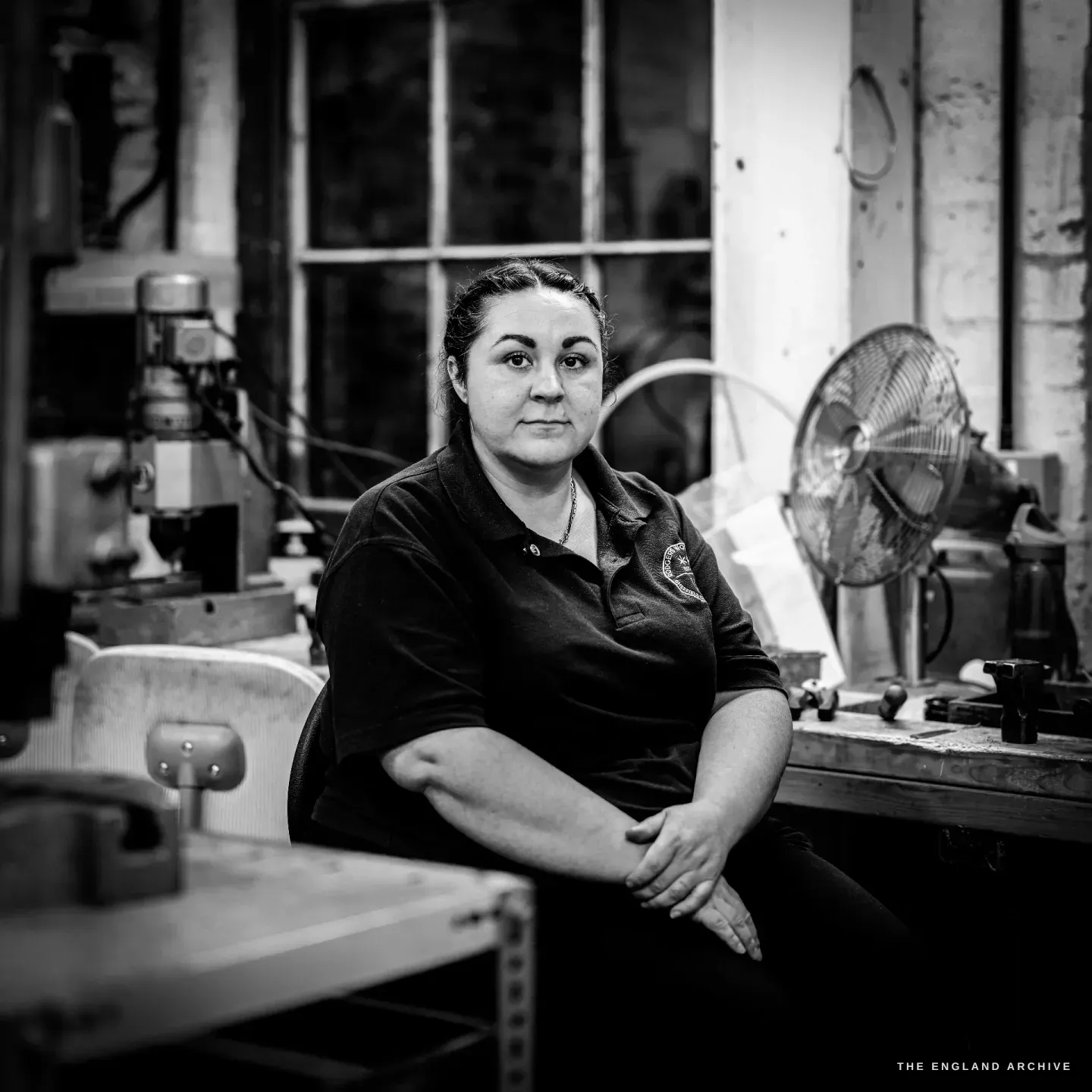
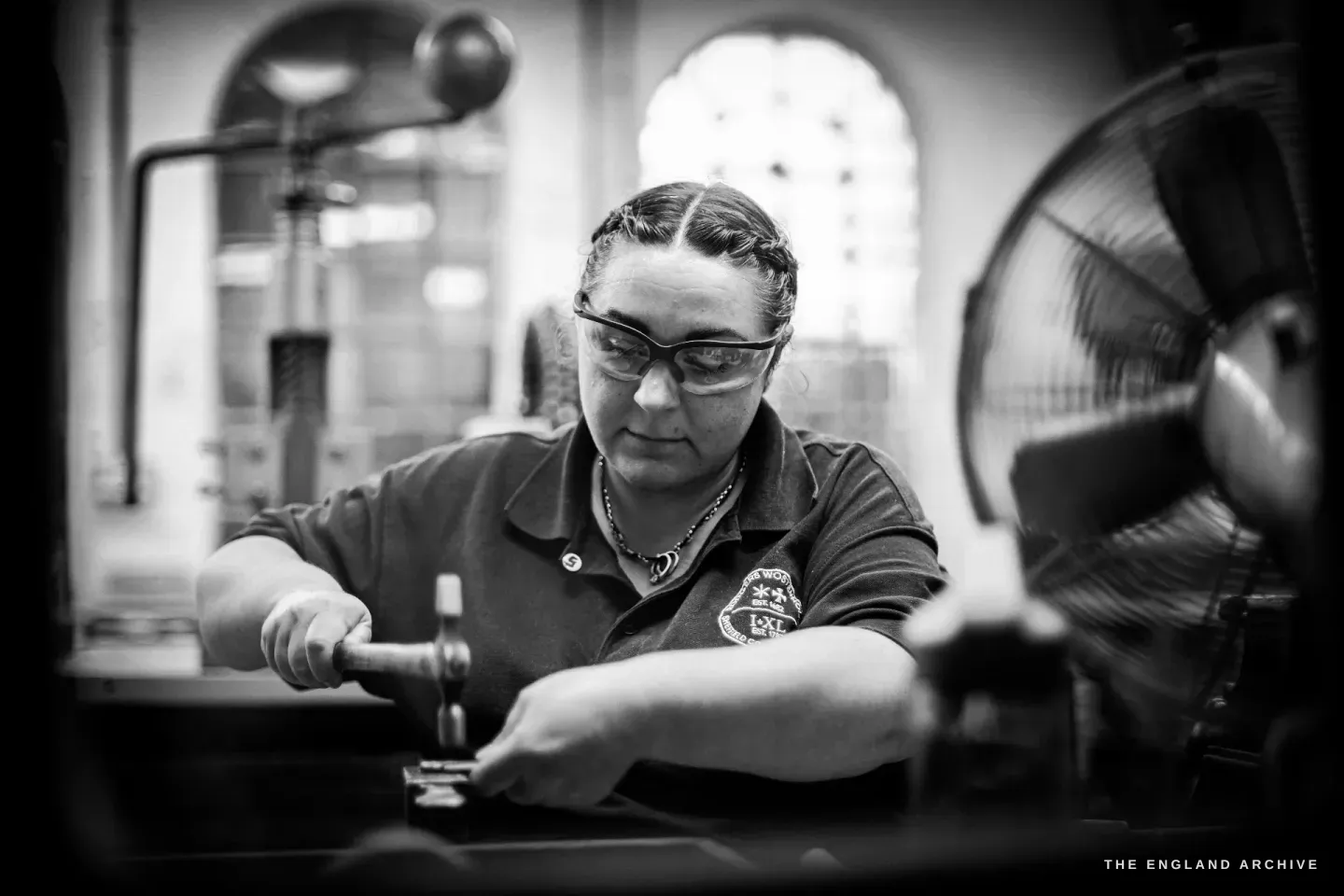
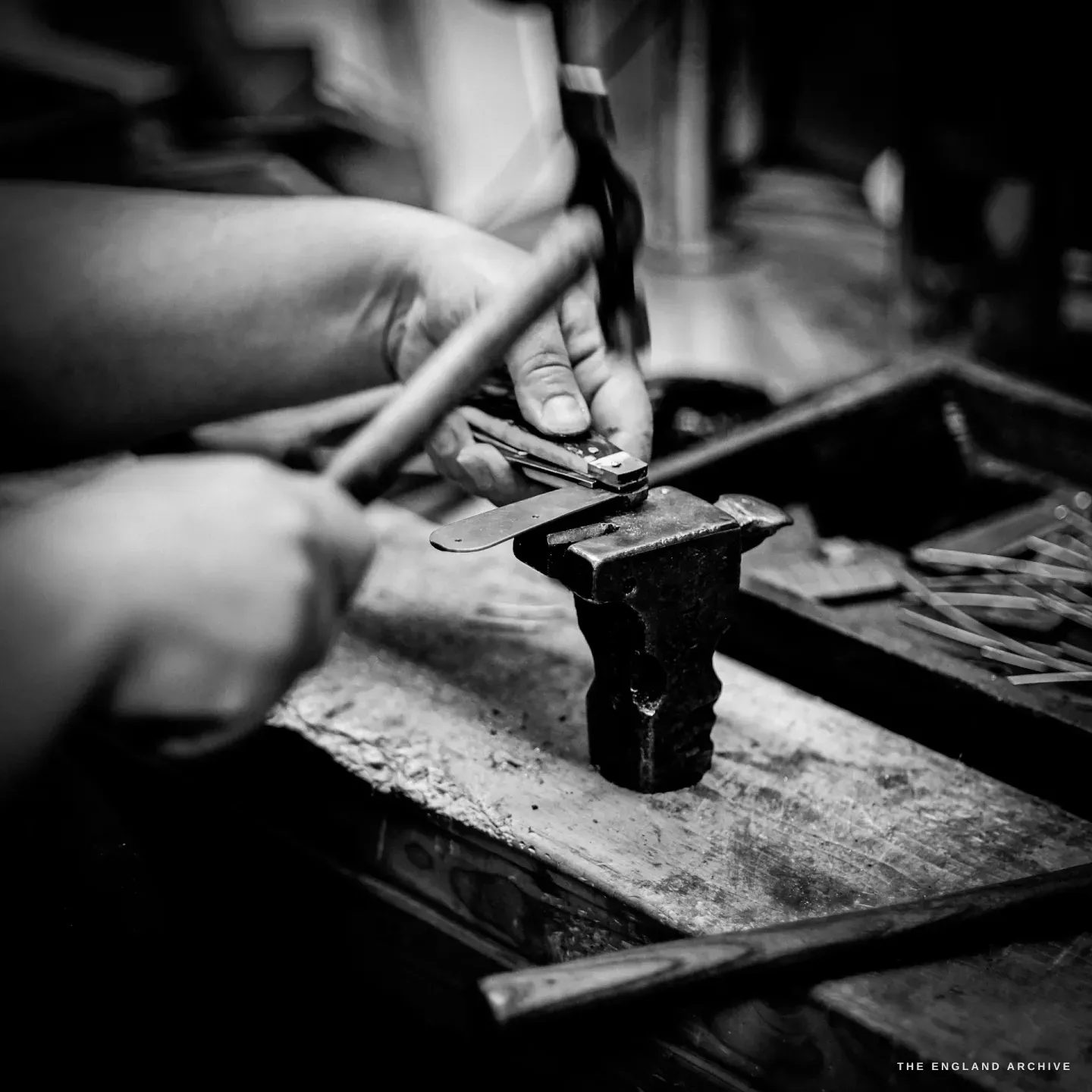
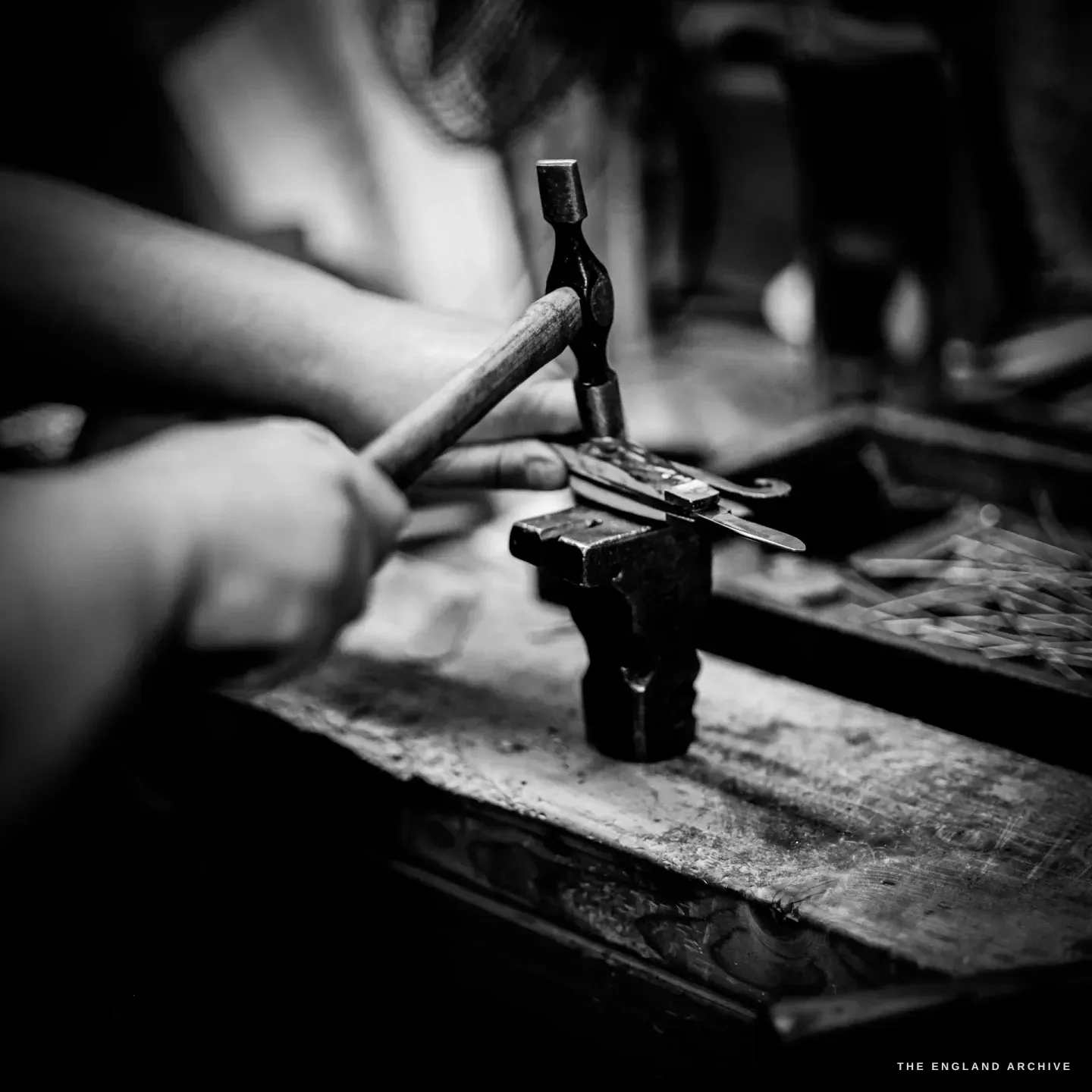
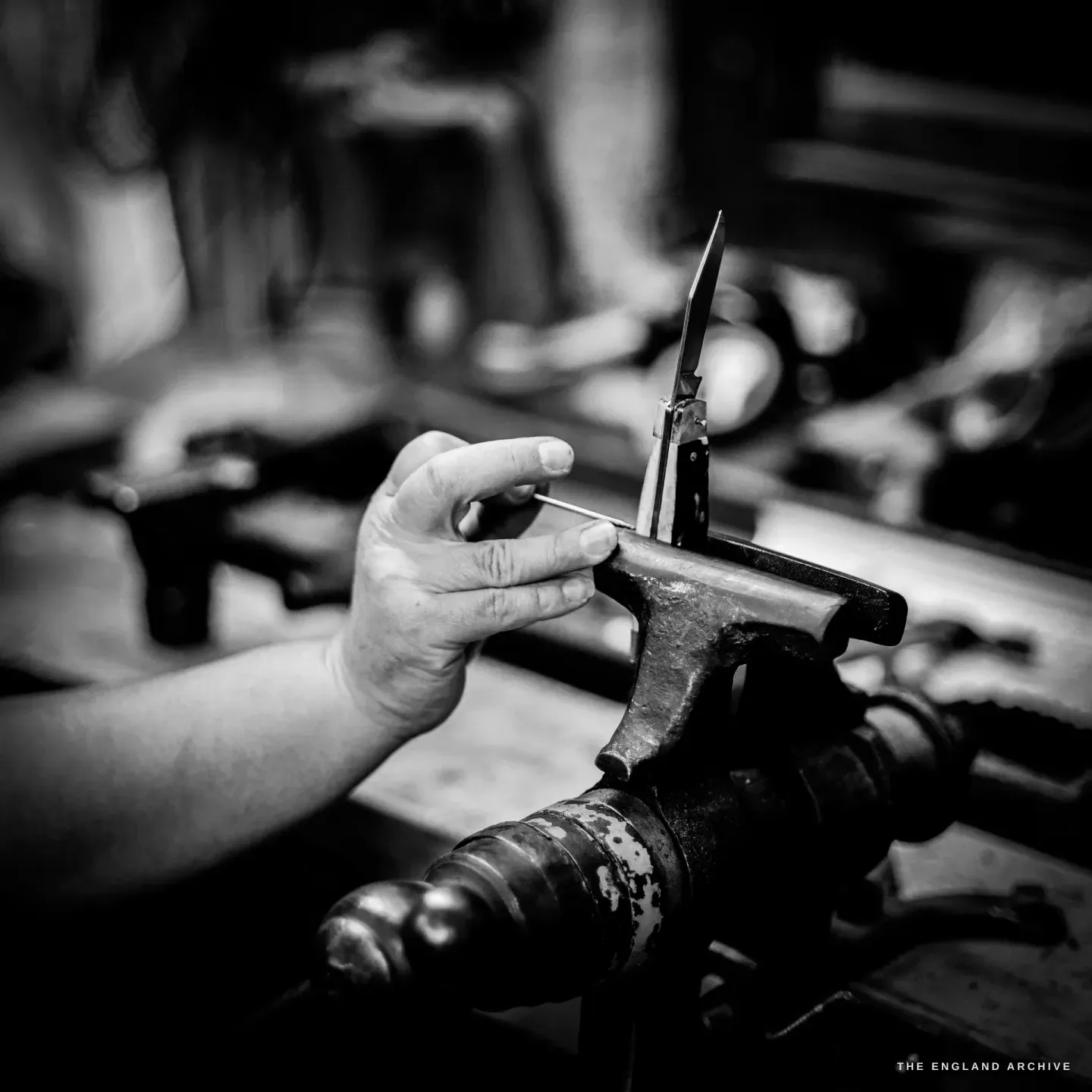
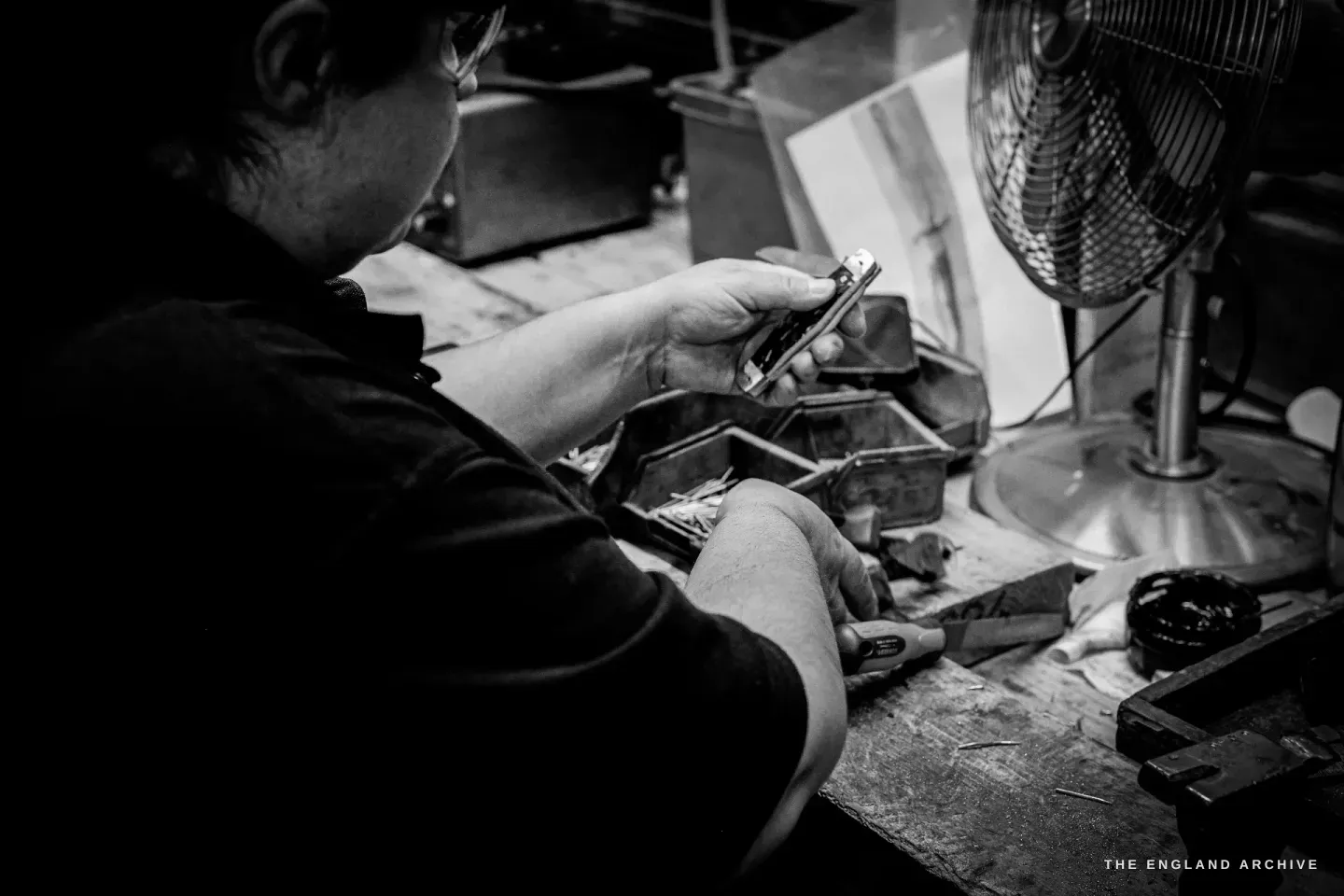
She taps the pins home with a little hammer - same wrist, same spot, every time. Close your eyes and you would swear it was a machine. It is fourteen years in one hand.
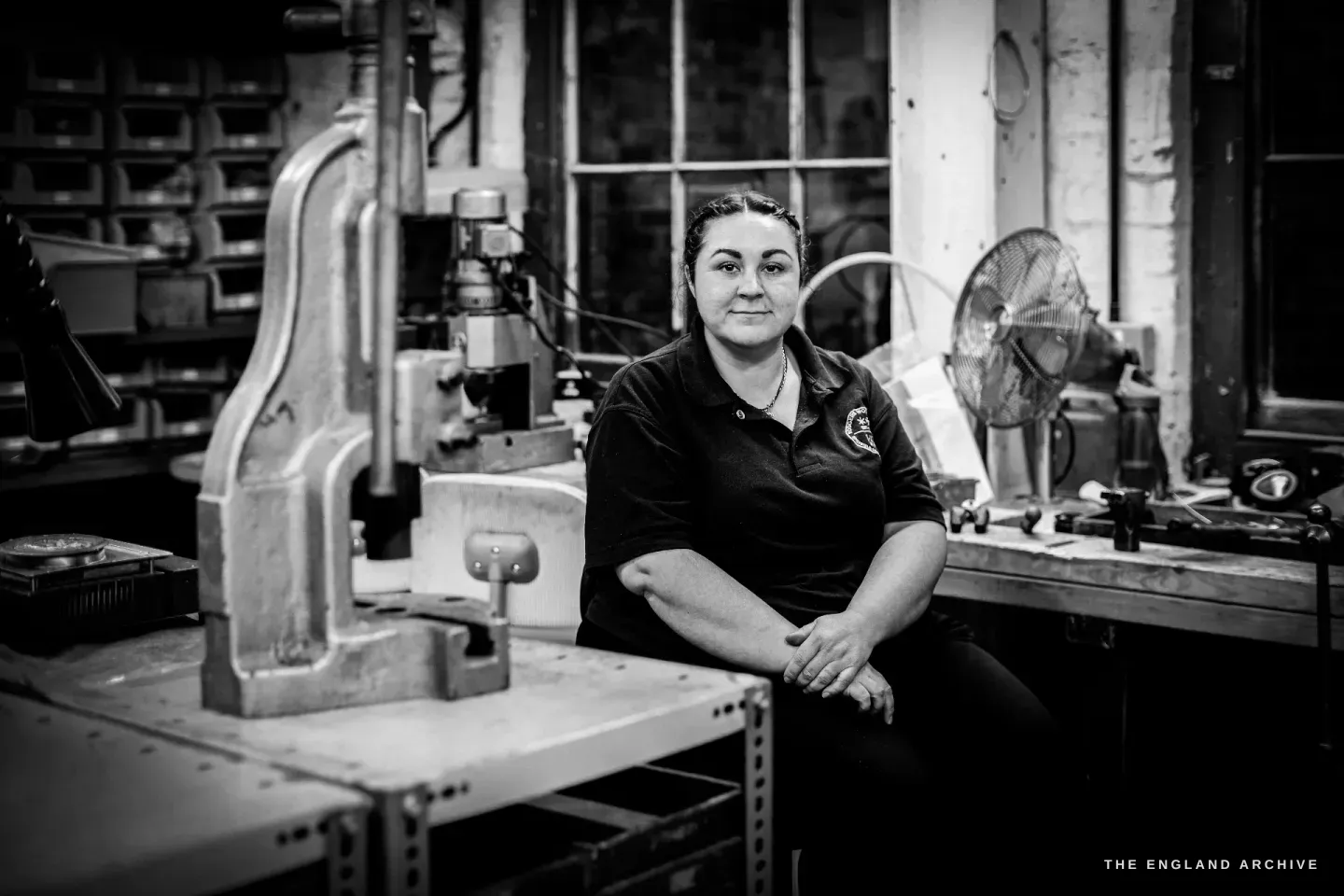
You reach this workshop by walking into a museum. Kelham Island sits on a bend of the River Don, keeping Sheffield’s industrial memory, and in one corner of it, behind a painted sign that reads JOSEPH RODGERS, ENGLAND with the old star and Maltese cross, there is a working knife shop. Not a reconstruction of one. A firm, making knives, today. Kylie Cocker met me there. Her husband Steve, who works the same bench, was three thousand miles away at a knife show in the States, so it was Kylie who walked me through the whole of it, and Kylie I watched.
The name over her bench is one of the heaviest in English cutlery. Joseph Rodgers has been a Sheffield word since 1724, when the Company of Cutlers granted the family the star and Maltese cross they would make famous across the world. By the nineteenth century the firm held a royal warrant and a works on Norfolk Street that employed hundreds, and it once made George IV a knife with fifty-seven blades that closed to the length of a thumb. A few yards from where Kylie works, in a case in the same museum, sits the Joseph Rodgers Year Knife - one blade added for every year since 1822, getting on for two thousand of them now. She makes the firm’s knives by hand within sight of its most famous object, and makes nothing of it. It is simply where the bench is.
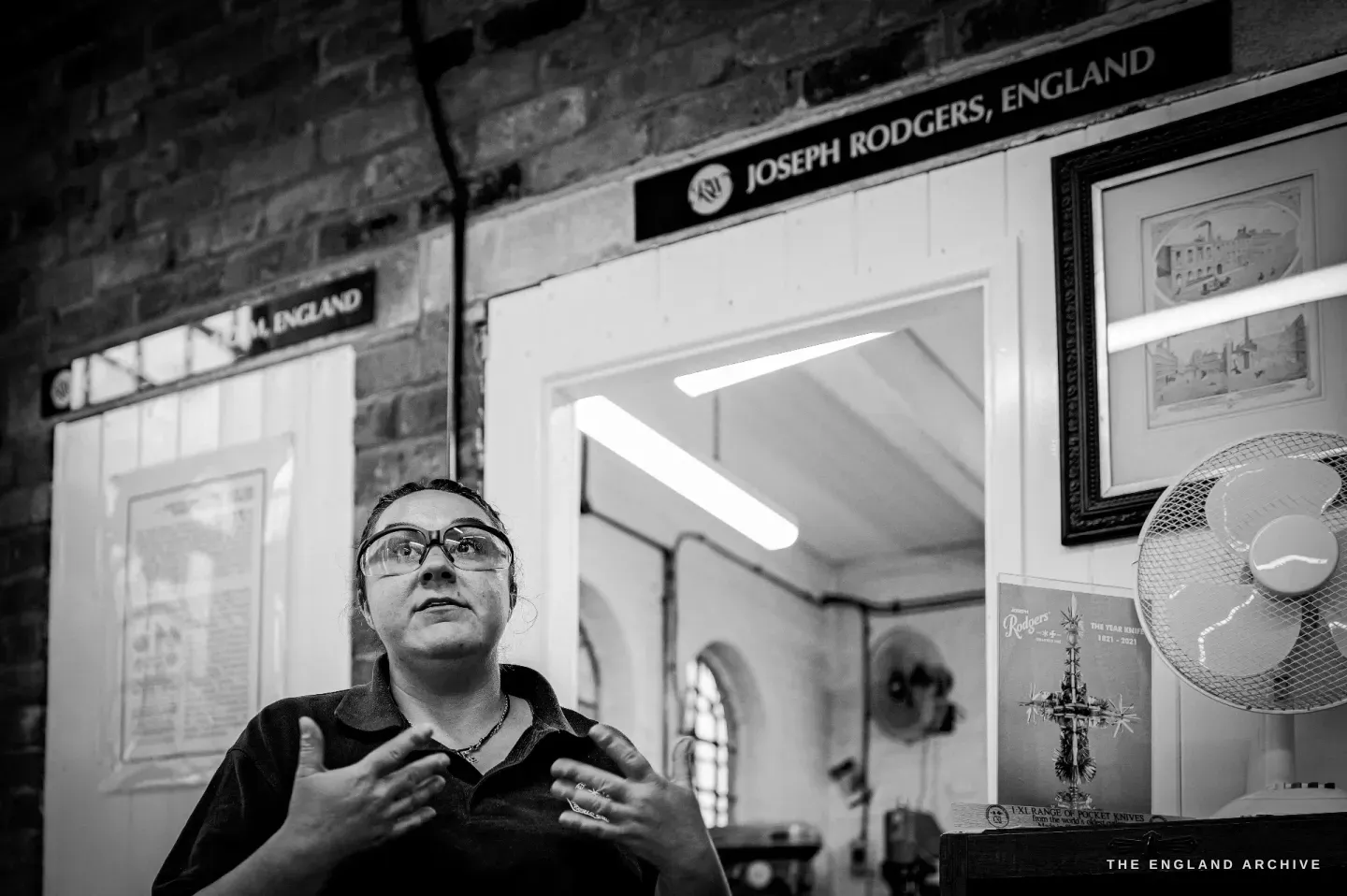
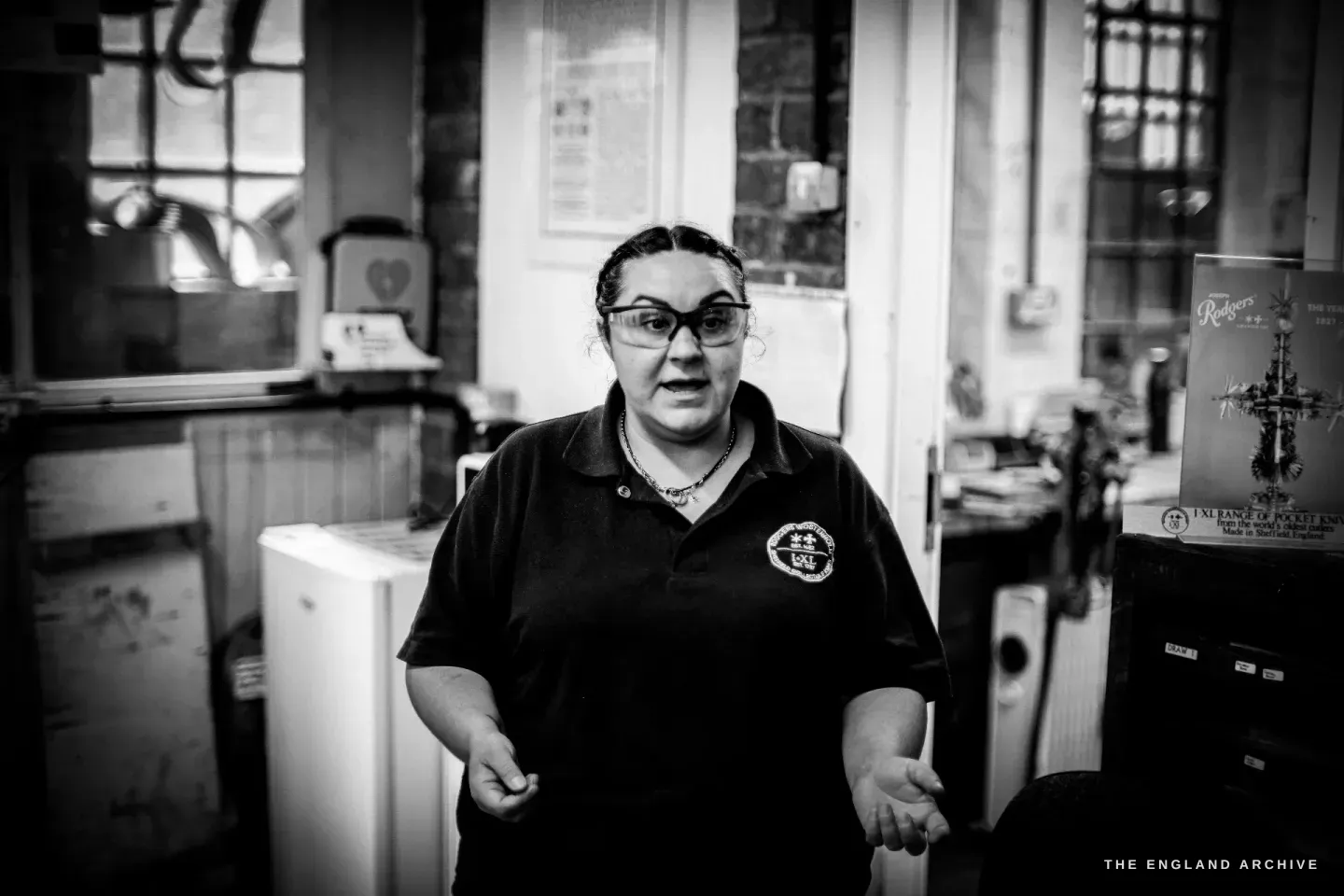
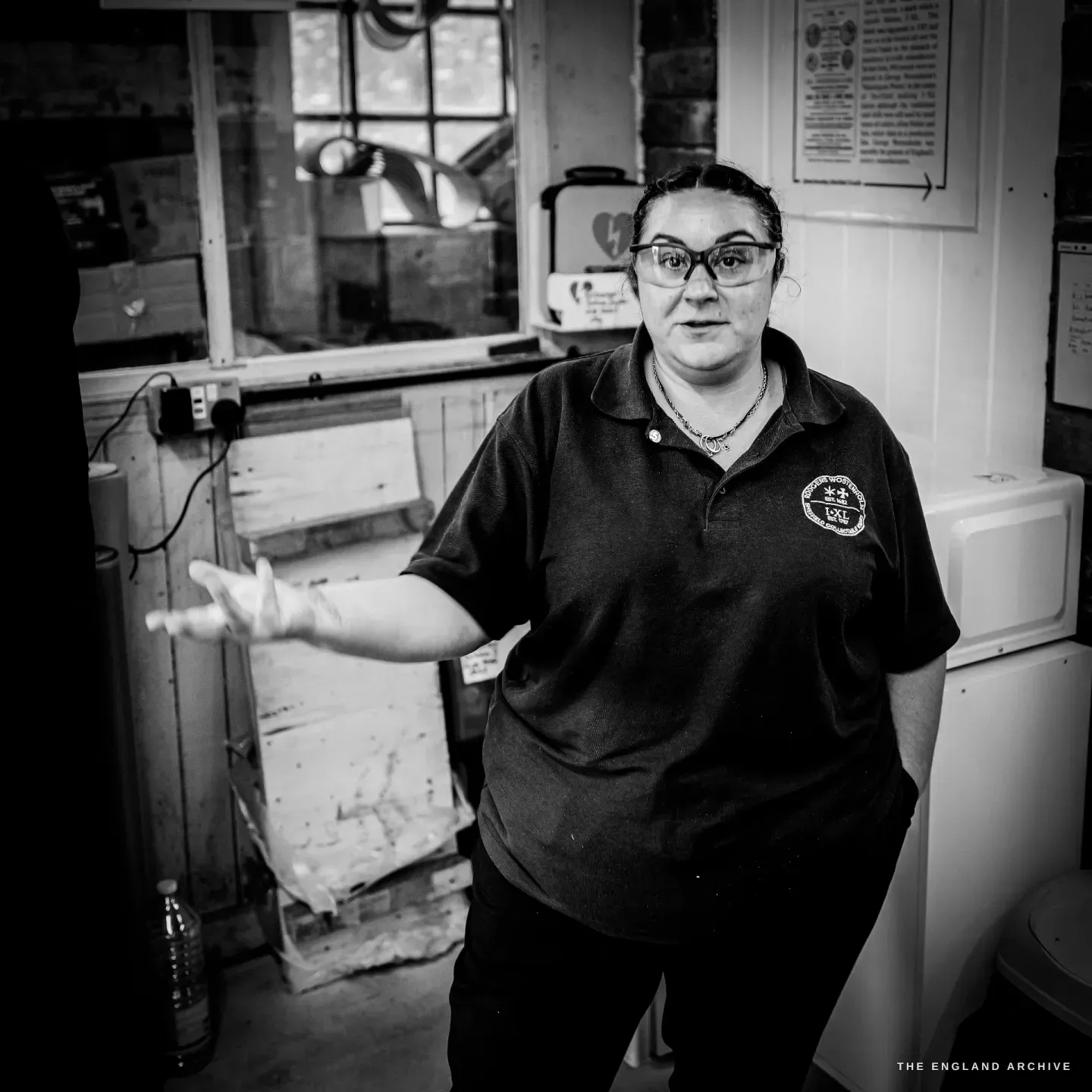
The thing I had come to see, though I did not know it until it happened, was the tapping. Kylie set out to show me how a double-bladed penknife is made, and somewhere in the middle of it she settled at the stiddy - the small steel anvil every Sheffield cutler works to - and began to close the pivots with a light hammer. Tap, tap, tap. The same wrist, the same height, the same spot on the pin, over and over, each blow the twin of the last. I have watched a fair number of skilled hands by now and I do not startle easily at them. This startled me. With your eyes shut you would have put money on a machine. It was not a machine. It was a person who has made one movement so many thousands of times that her arm has become the tool.
That is the whole secret of the trade, hiding in plain sight. The pin has to be set just so - too little and the blade is loose, too much and it will not open - and there is no gauge for it but the hand and the ear. Kylie sets it by feel, knife after knife, and barely seems to look.
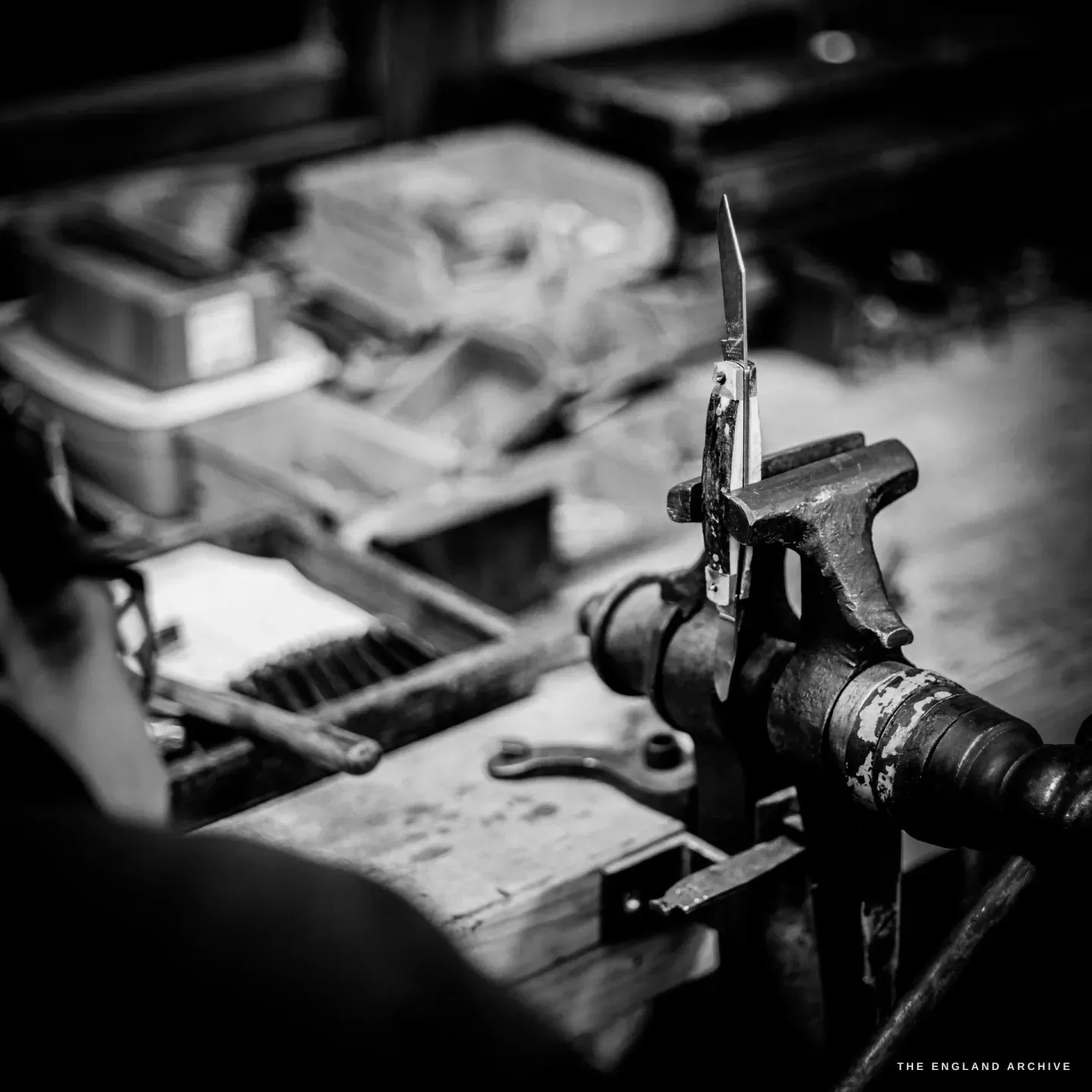
She built one in front of me from its parts. A pocket knife looks like a small thing in the hand, and is in fact a little machine of a dozen pieces - blades, springs, bolsters, the scales that make the handle, the pins that hold it on its pivots - each of which has to be cut, drilled, fitted and finished before any of it becomes a knife. Kylie keeps the makings in a tall bank of wooden drawers beside the bench, labelled and sorted, and goes to them the way a cook goes to a spice rack, without looking.
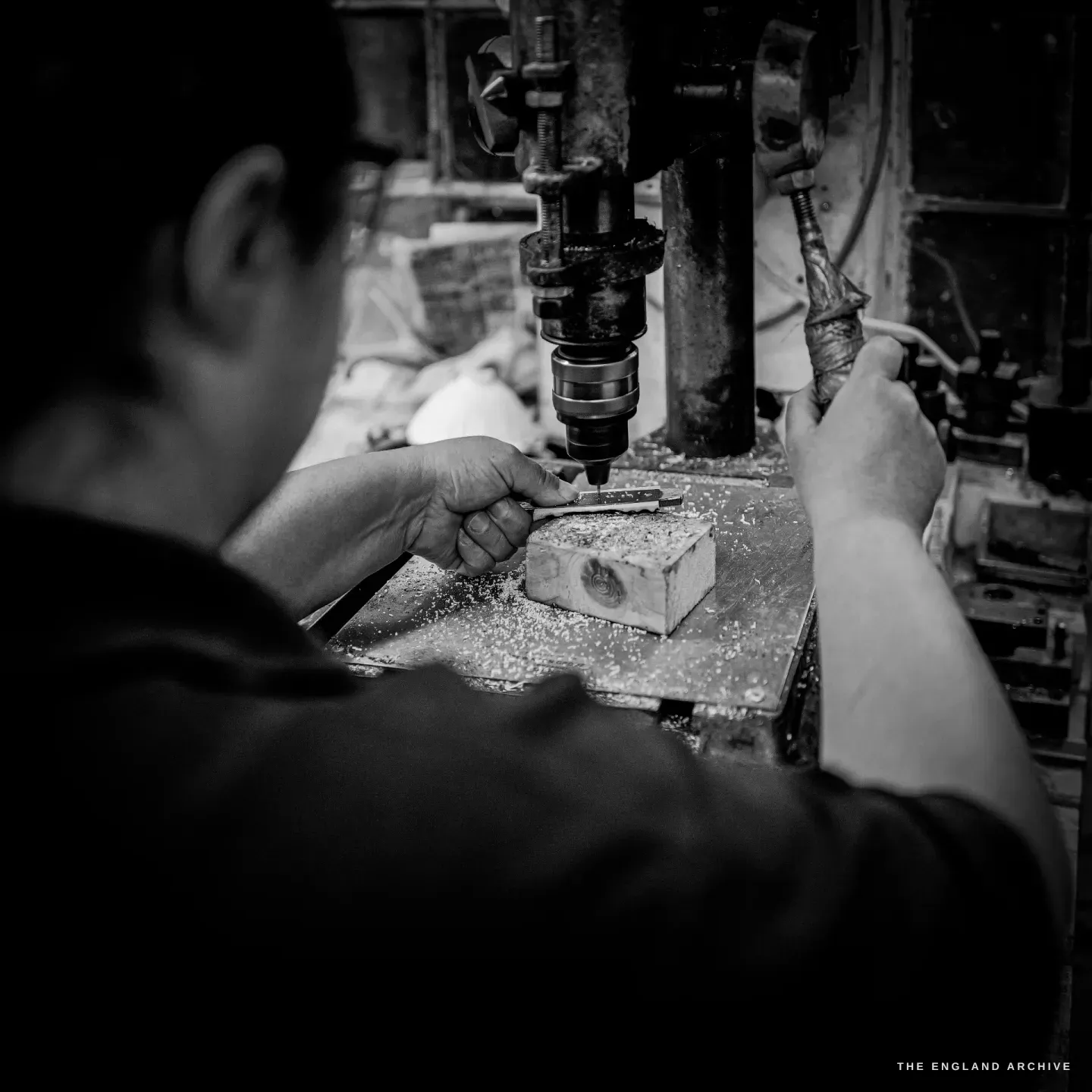
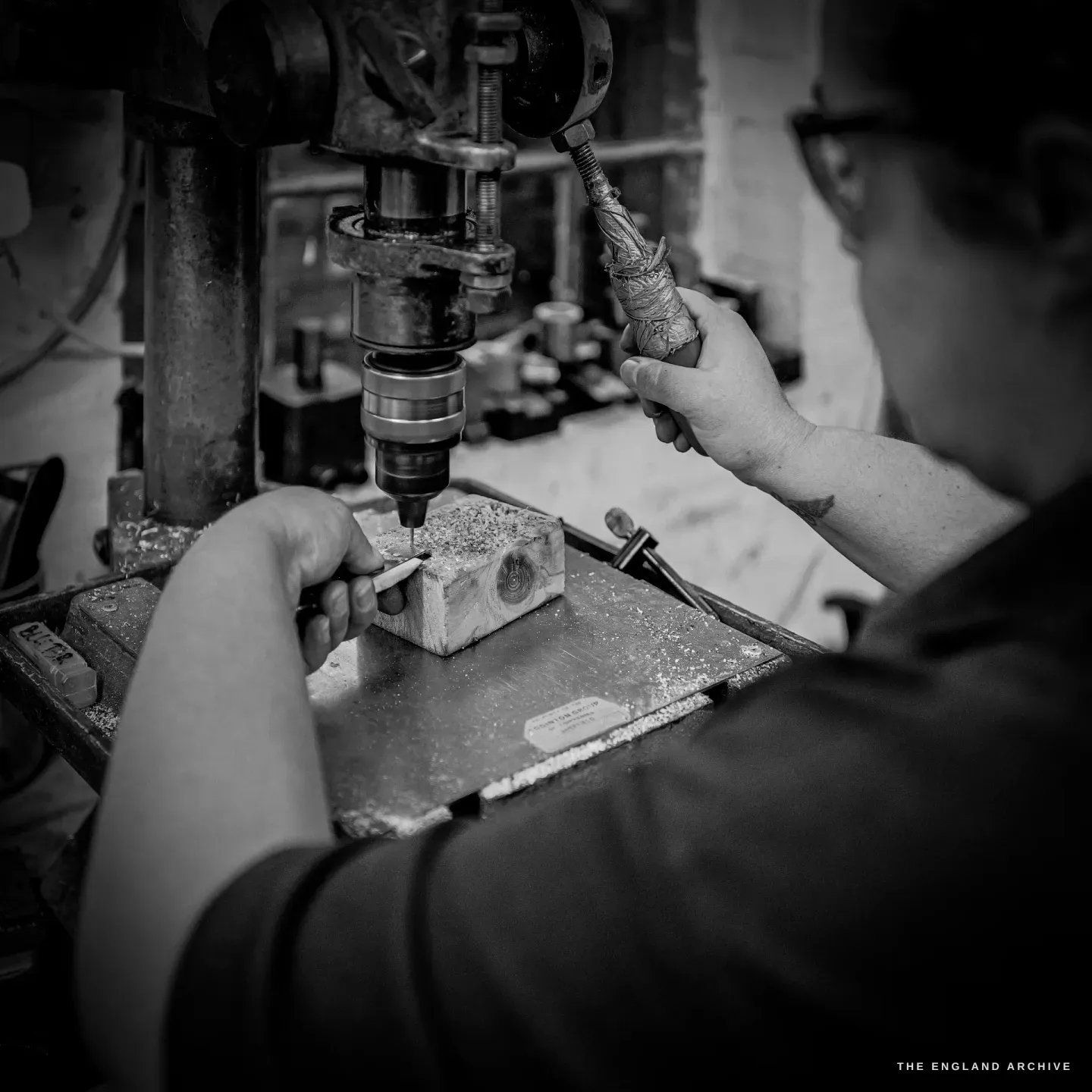
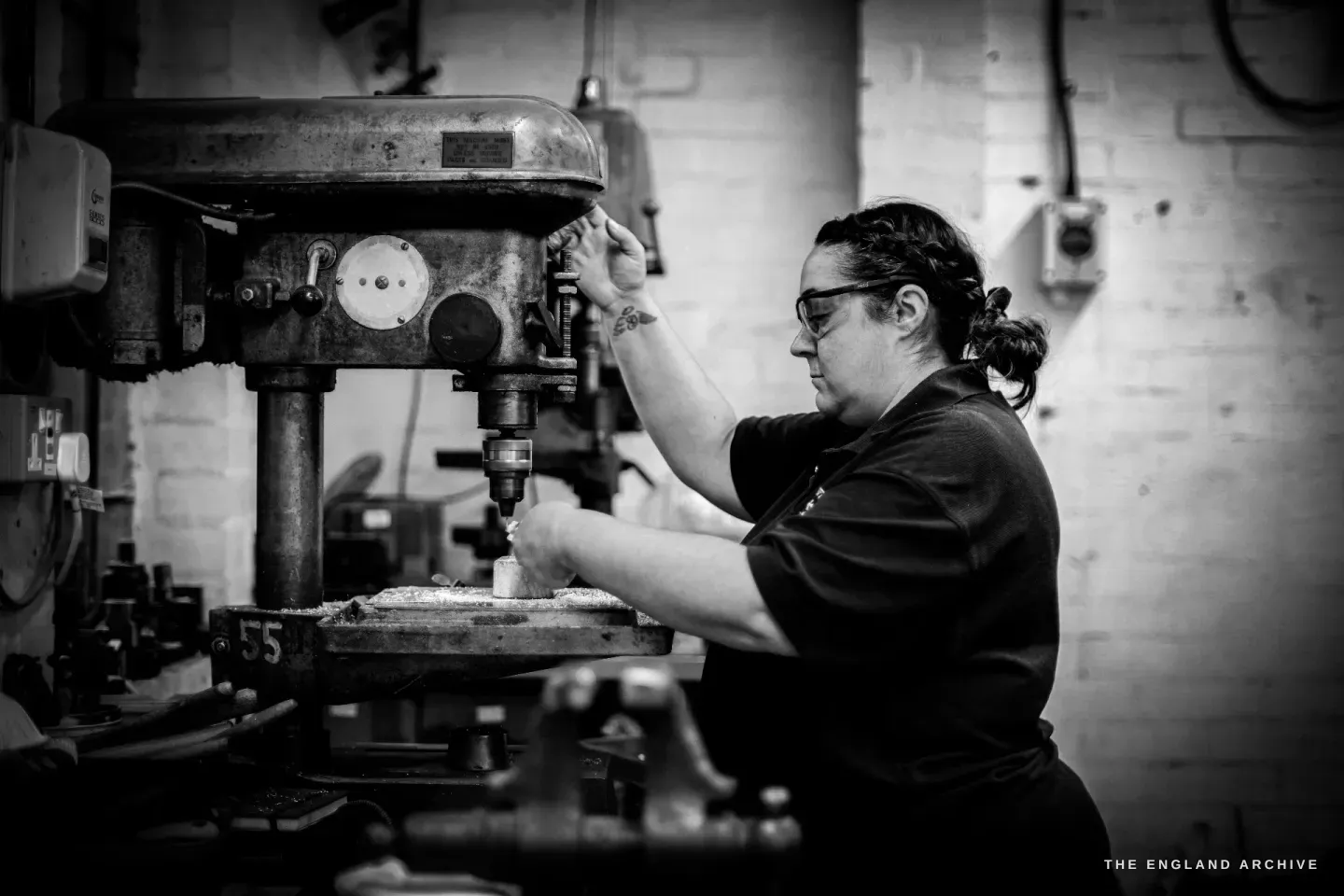
The pillar drill puts the holes through bolster and scale, one piece at a time, each held under the bit by hand. There is no batch to it, no tray of forty going through at once; it is one, then the next, then the next.
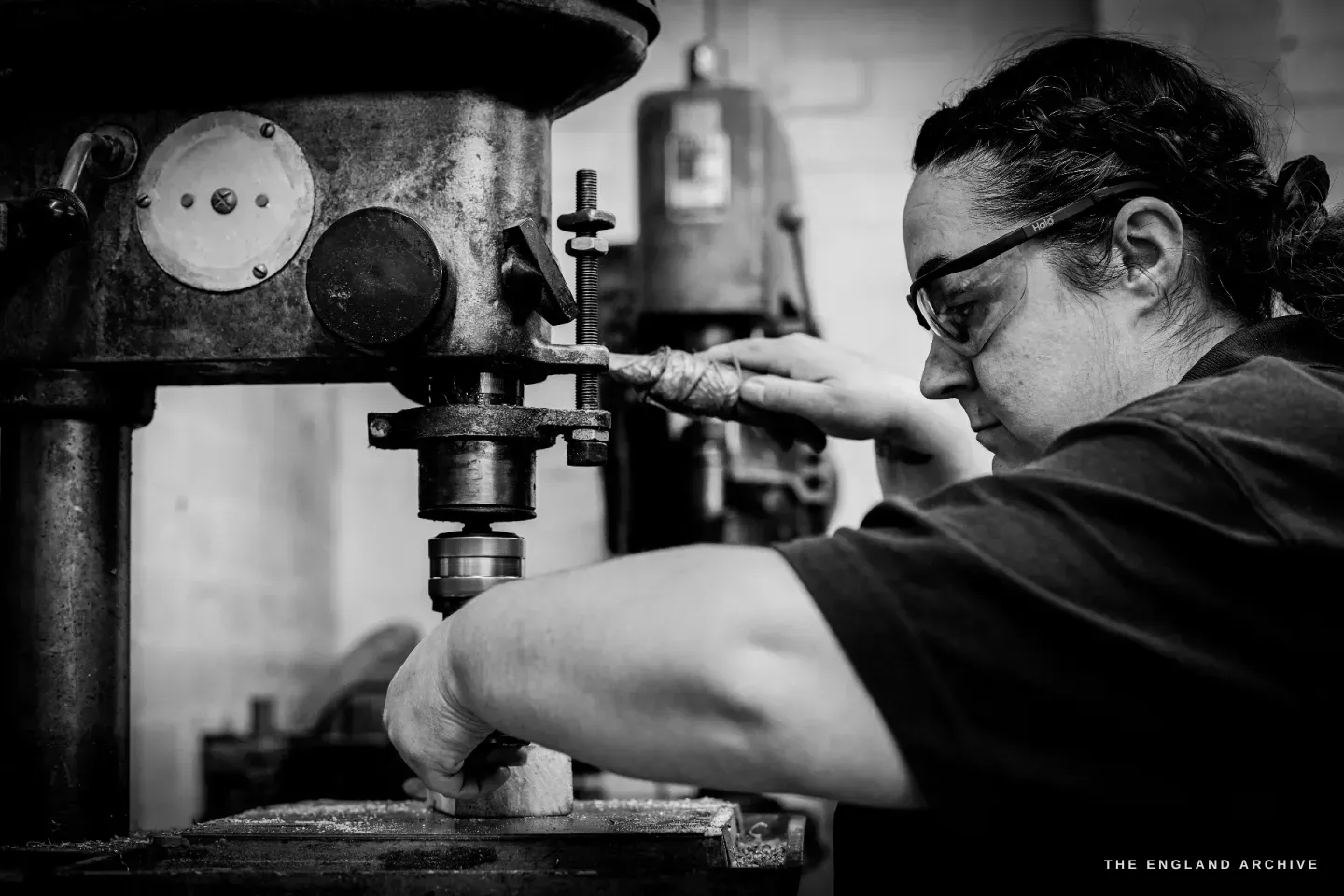
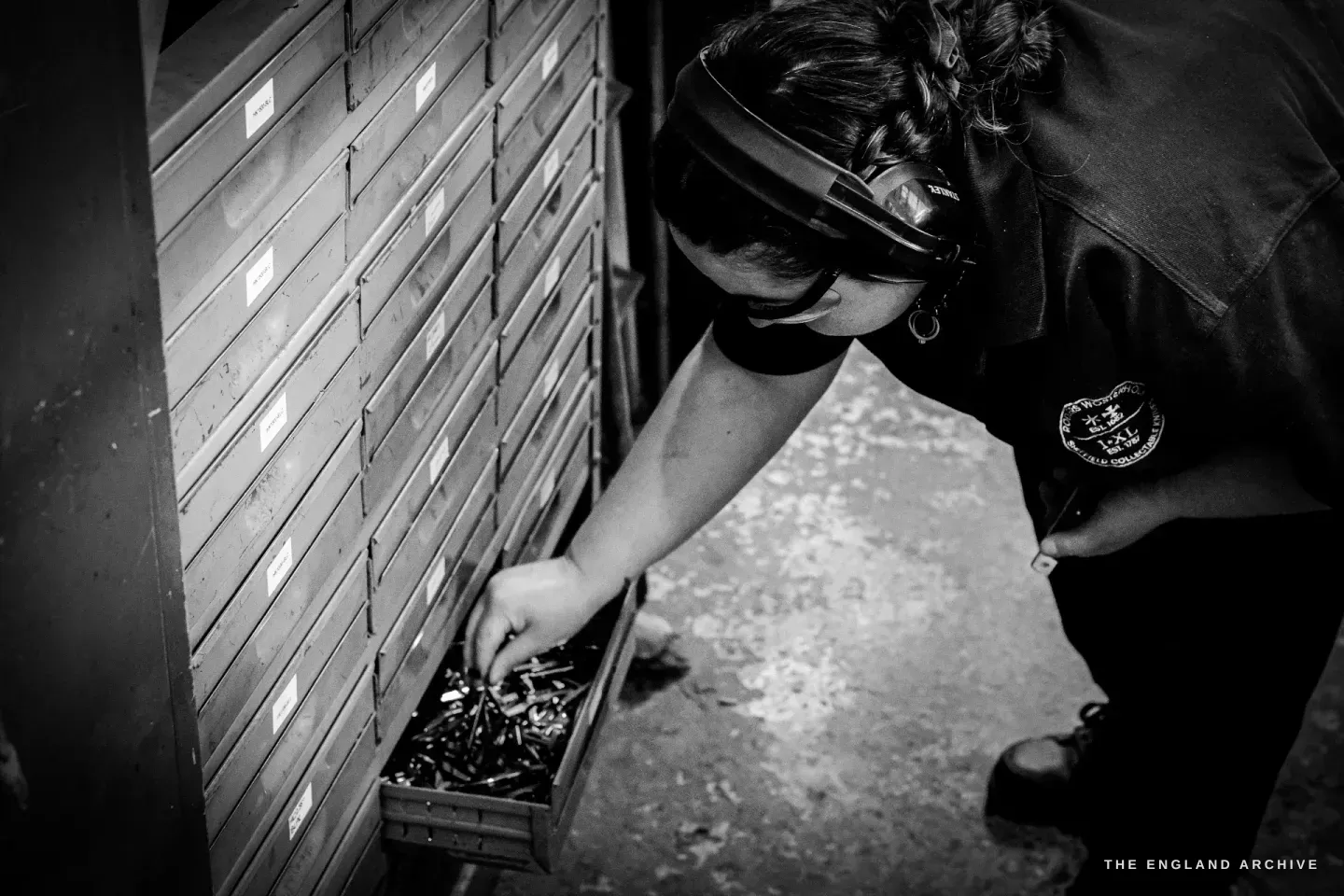
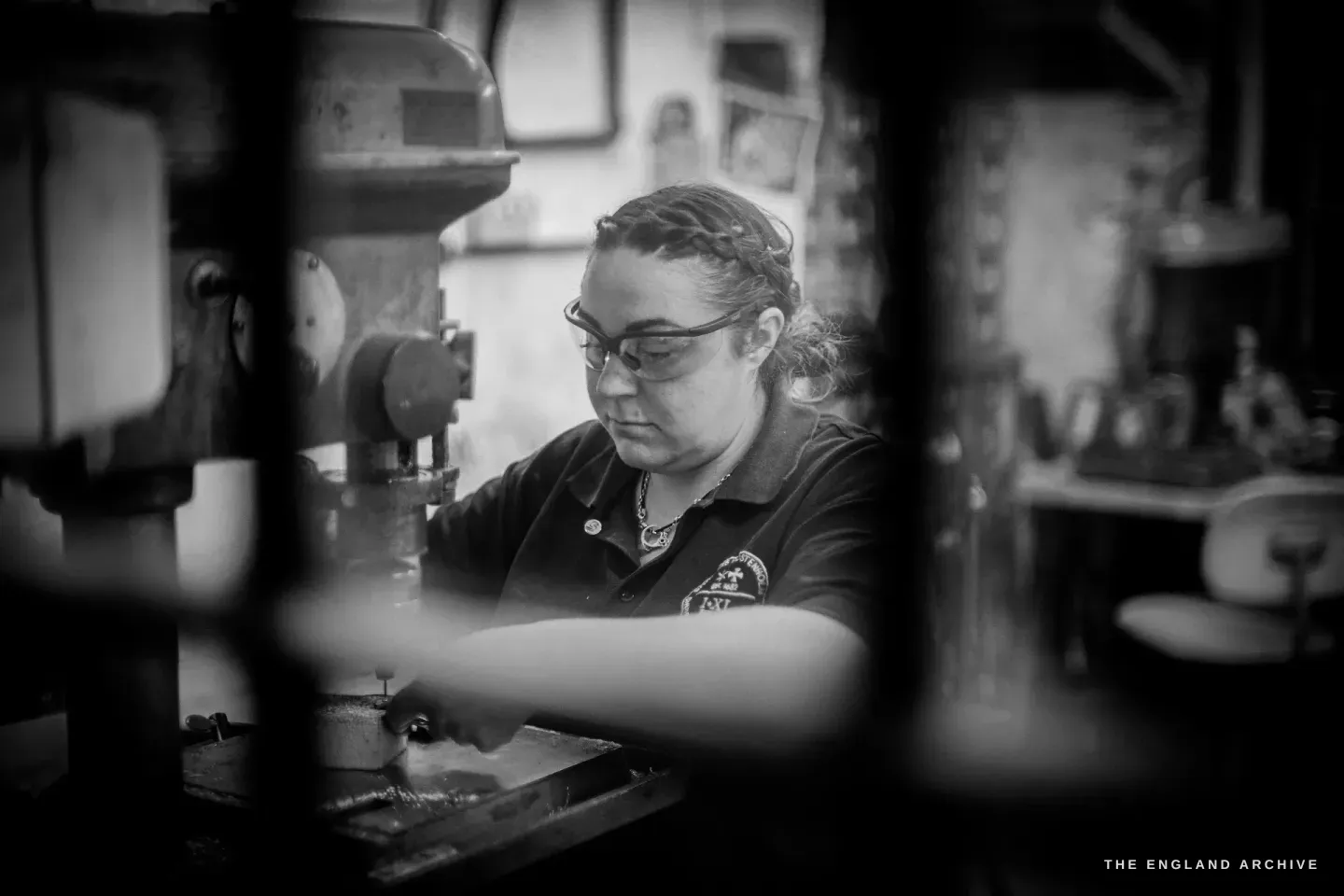
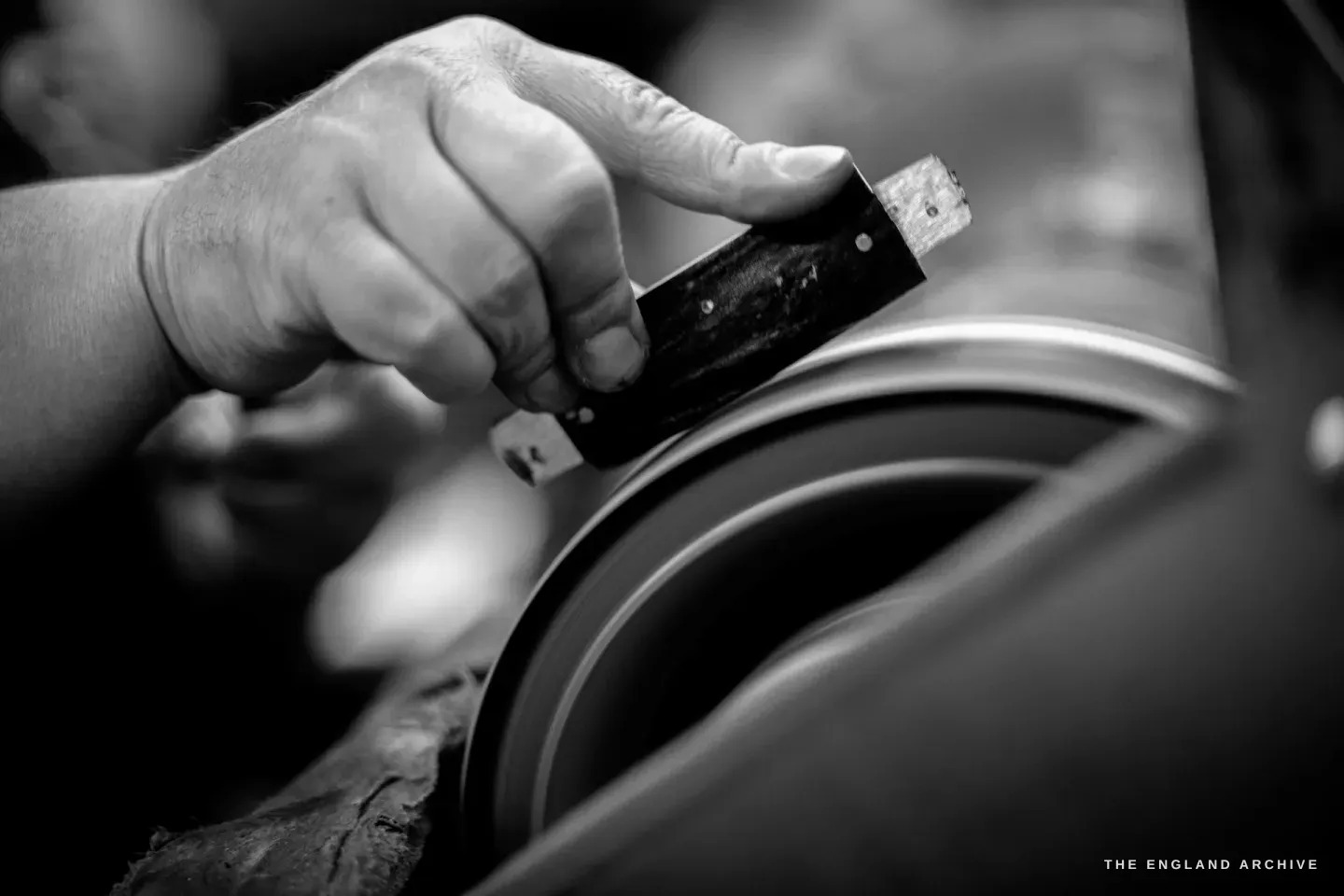
On the wheel and the linisher - the flat running belt that takes the marks out - she brings the steel and the scales down to a finish, reading the work by the sound and the feel of it as much as by the look. Then it all goes back to the stiddy to be put together: blade and spring and pin, tapped home and tried, opened and closed and opened again until the pull is right and the blade sits true against the spring. She checks each one in her fingers before it leaves her, the way you would try a key in a lock.
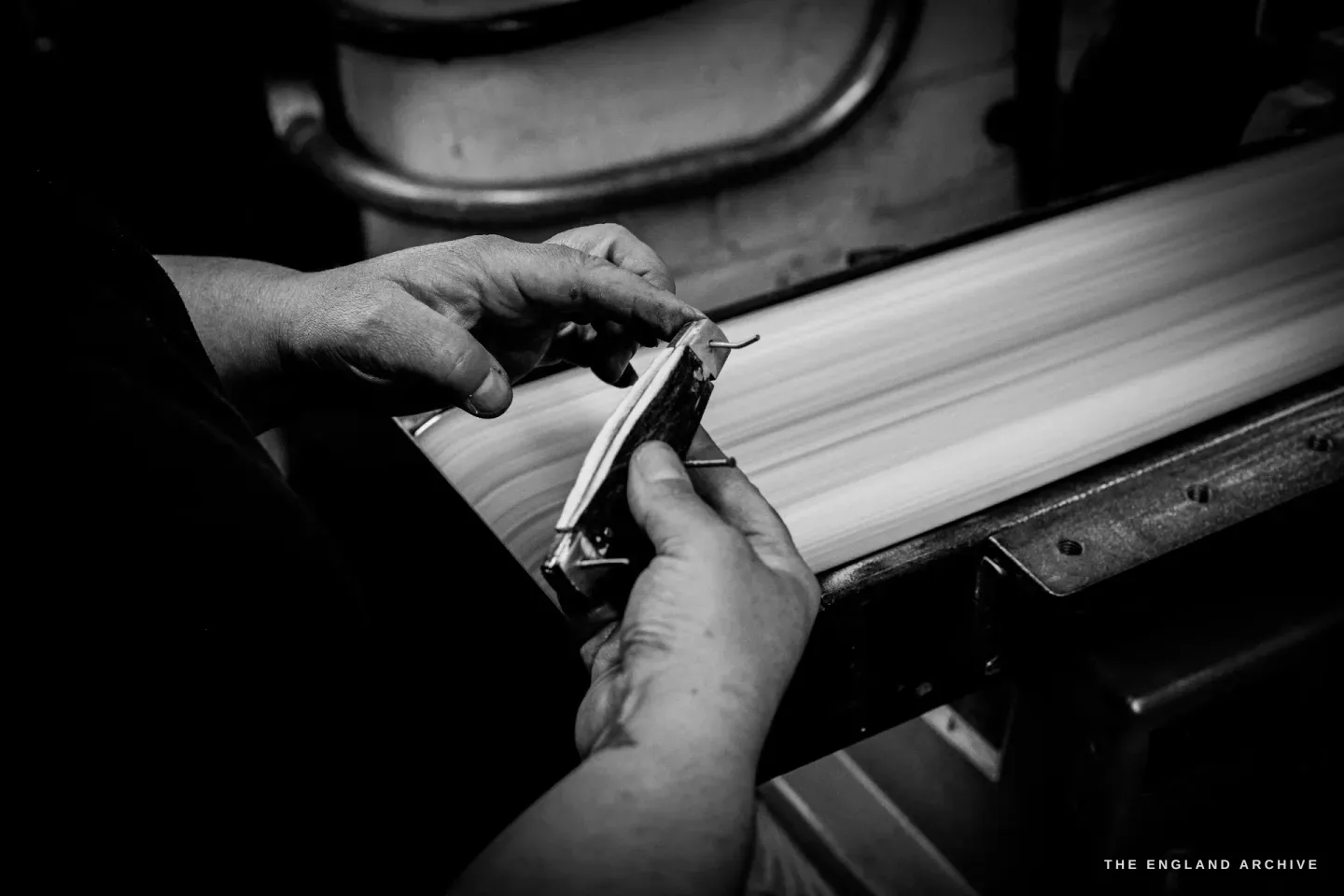
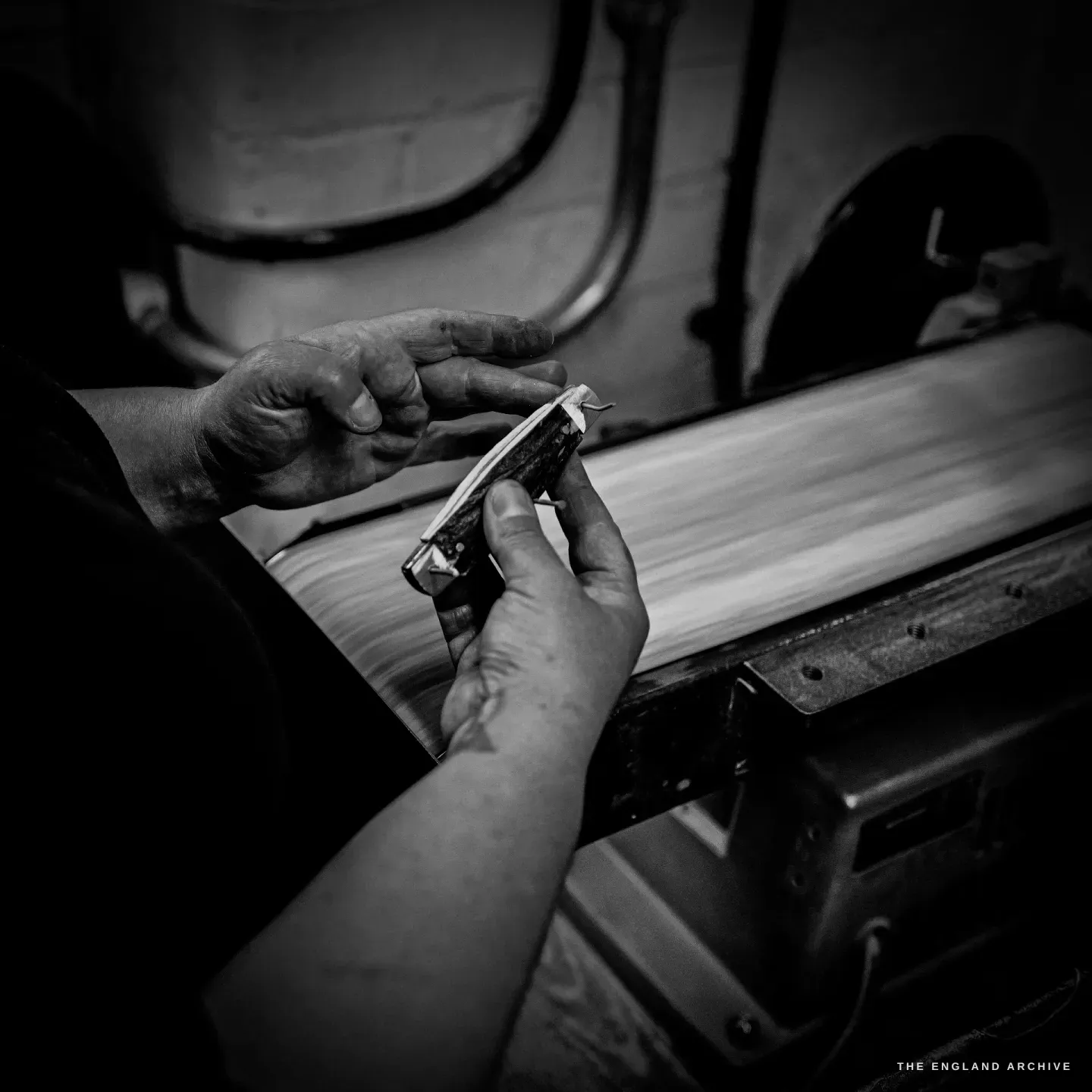
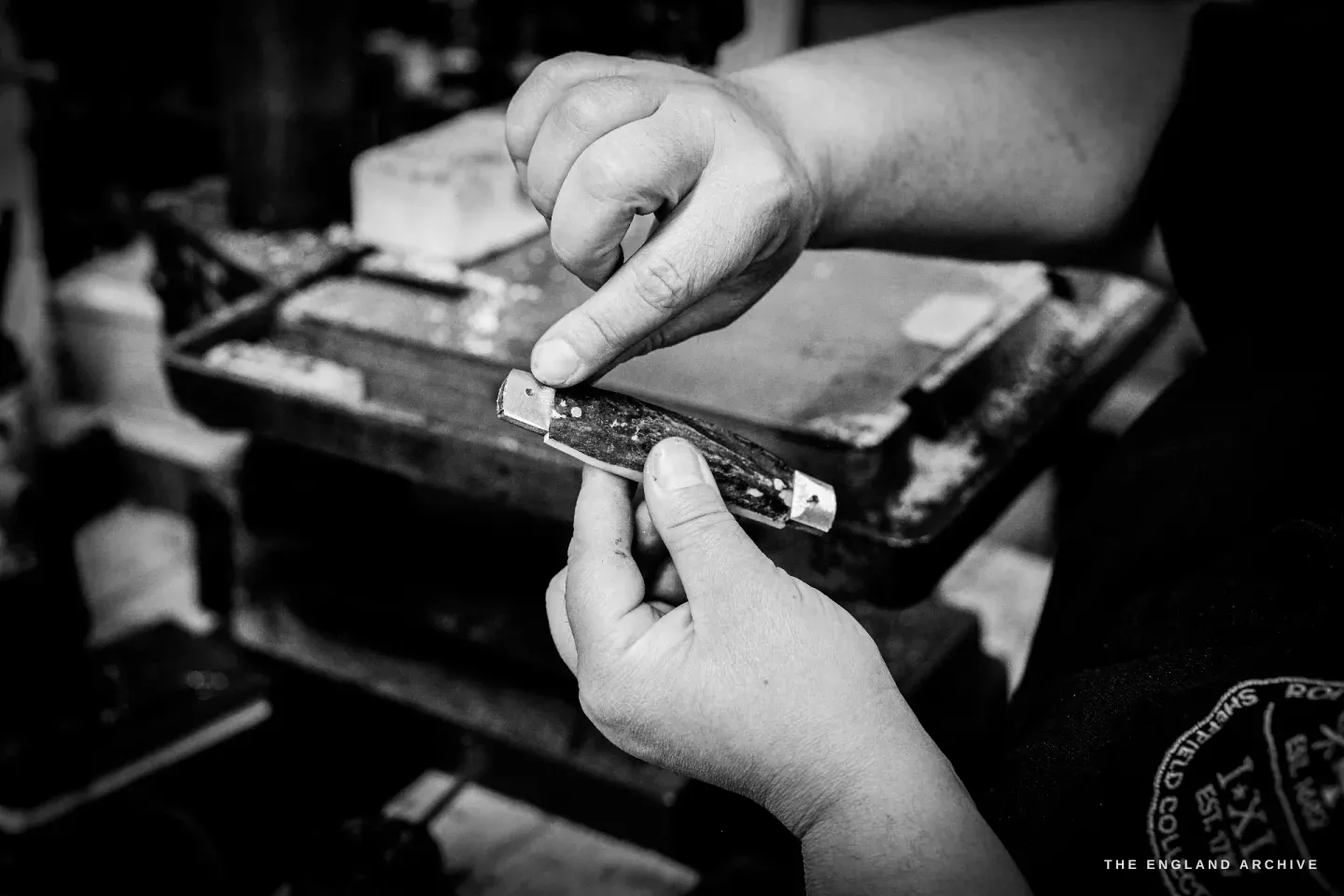
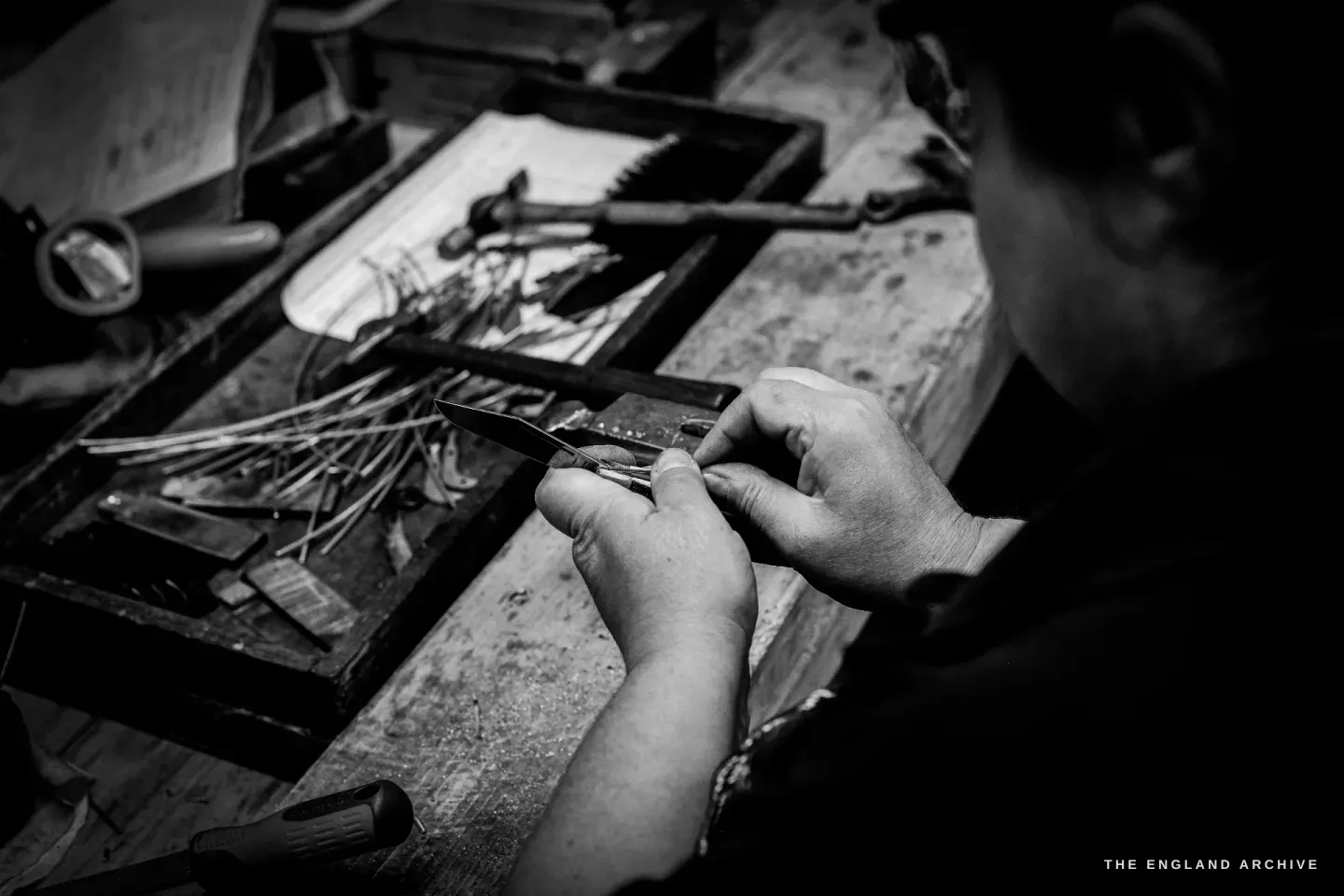
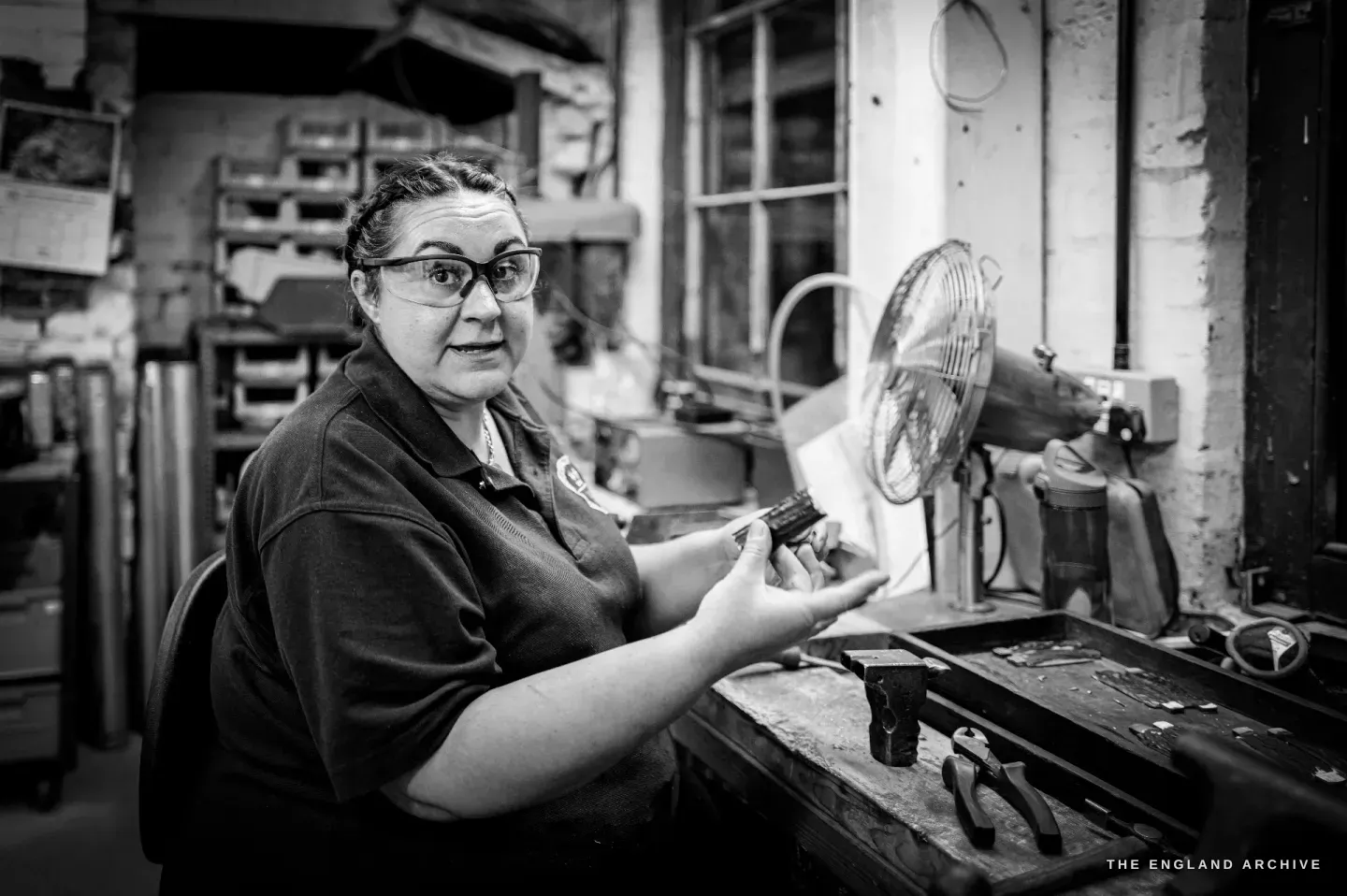
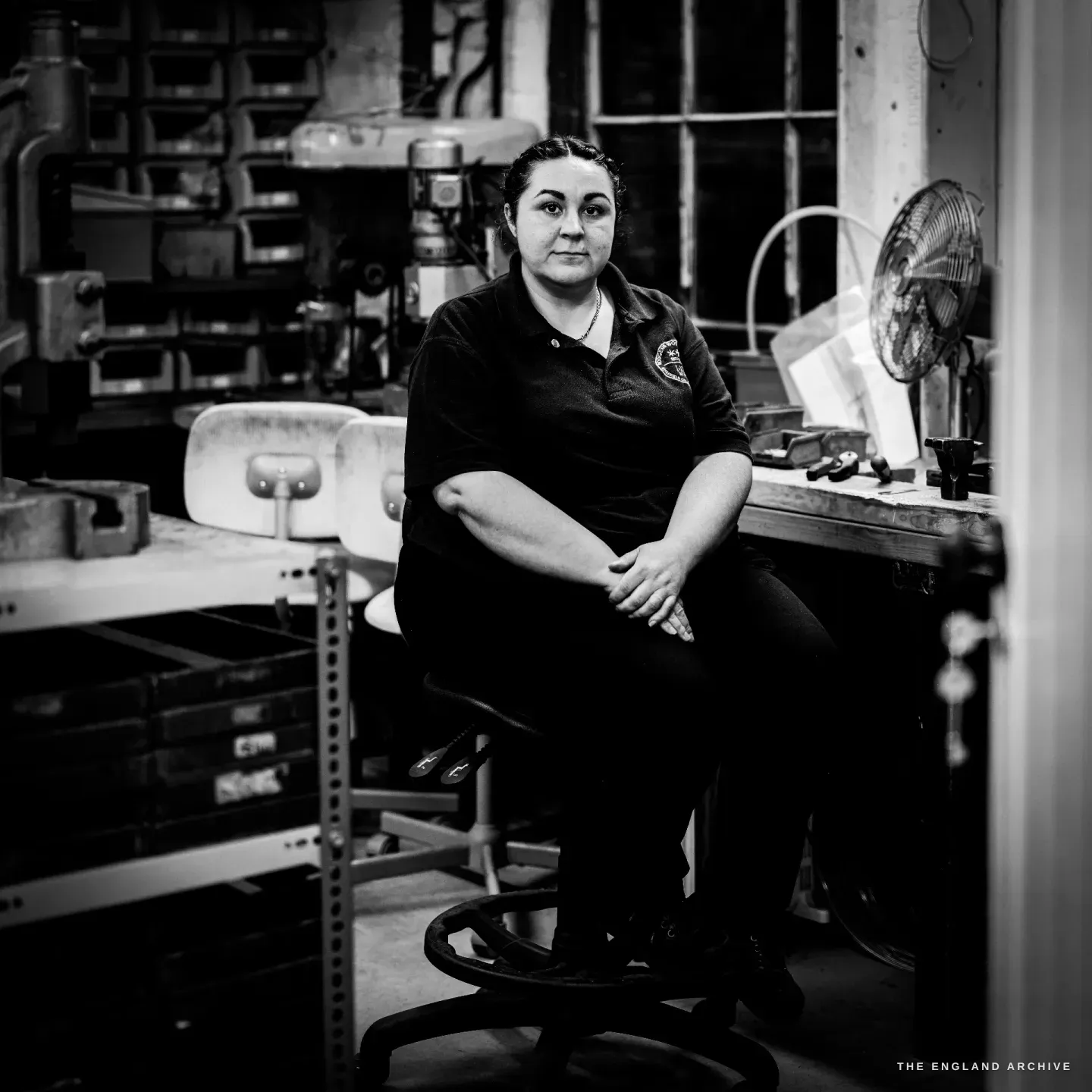
Kylie has been in the trade about fourteen years. She came in as an apprentice and learned it properly, at another Sheffield firm before this one, and she carries it lightly - friendly, quick to explain, without any of the guardedness you sometimes meet in people who hold a rare skill. She and Steve are both mesters, the old Sheffield word for a skilled master of the trade, and they are that uncommon thing: a married pair who make knives side by side. Before they came to Joseph Rodgers they made knives at home, in a shed in the garden, recreating old Sheffield patterns out of the firms’ own pattern books, and both of them believe their families reach back somewhere into the trade, the way so many Sheffield families do.
With Steve in America for the knife show, the bench was a person short and the workshop a little quieter, but the work did not change. She sat where she always sits, under the tall arched windows, the big fan turning beside her, and made knives. It is worth saying plainly what that means in 2026: a woman in her thirties, fully skilled, choosing to spend her working life closing pivots by hand on a small steel anvil, in a trade most people assume ended a century ago. It did not end. She is it.
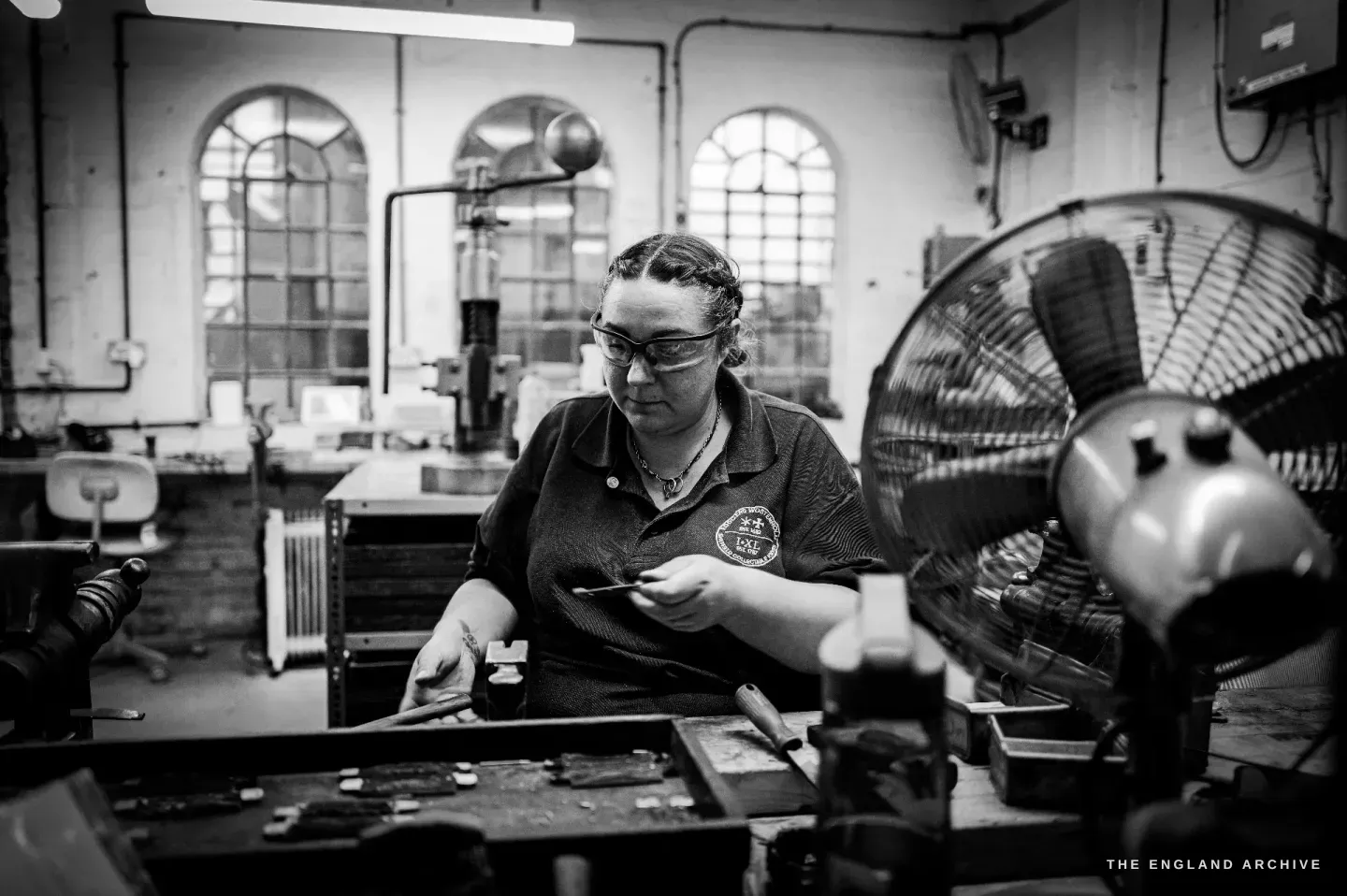
Kylie does not work the floor alone. Across from her, Emma Lawes was grinding and polishing - tattooed, head down at the wheel in ear defenders - and Spike Collins, another of the makers, had been at the bench earlier in the day. Watching the three of them in the same room is the whole argument of this archive in one frame: the skill is not in a glass case, it is in working hands, and it is being passed from one working pair to another while there is still someone to pass it from.
That handing-on is not guaranteed. Folding knife making - the Sheffield pocket-knife trade - is on the Heritage Crafts Red List, the register of crafts at risk of dying out in this country. The machines can stamp a blade out by the thousand; what they cannot do is set a pivot by ear, or know by feel when the pull is right. Kylie is one of the makers that list is kept for - and one of the few young enough, and skilled enough, to teach the next.
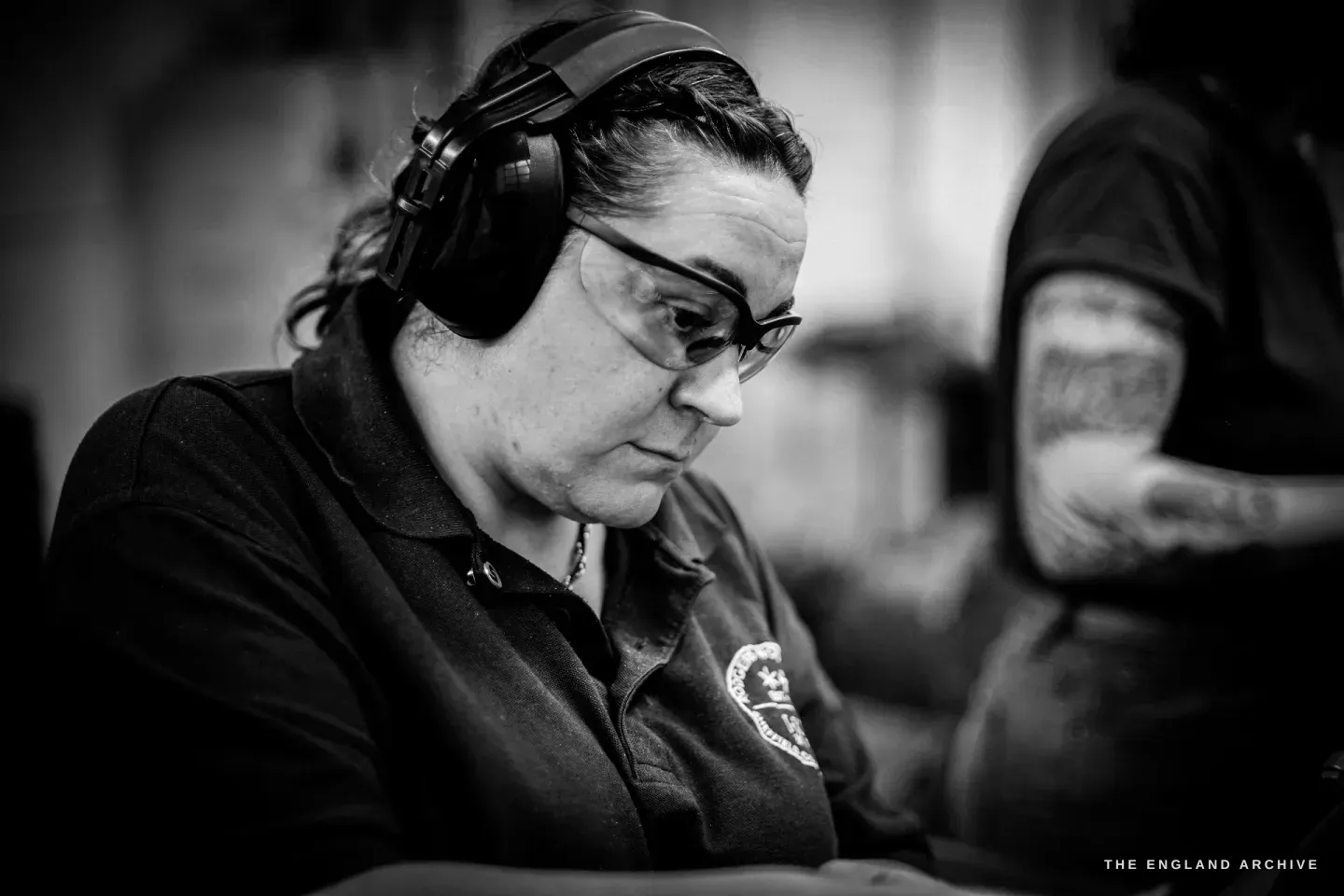
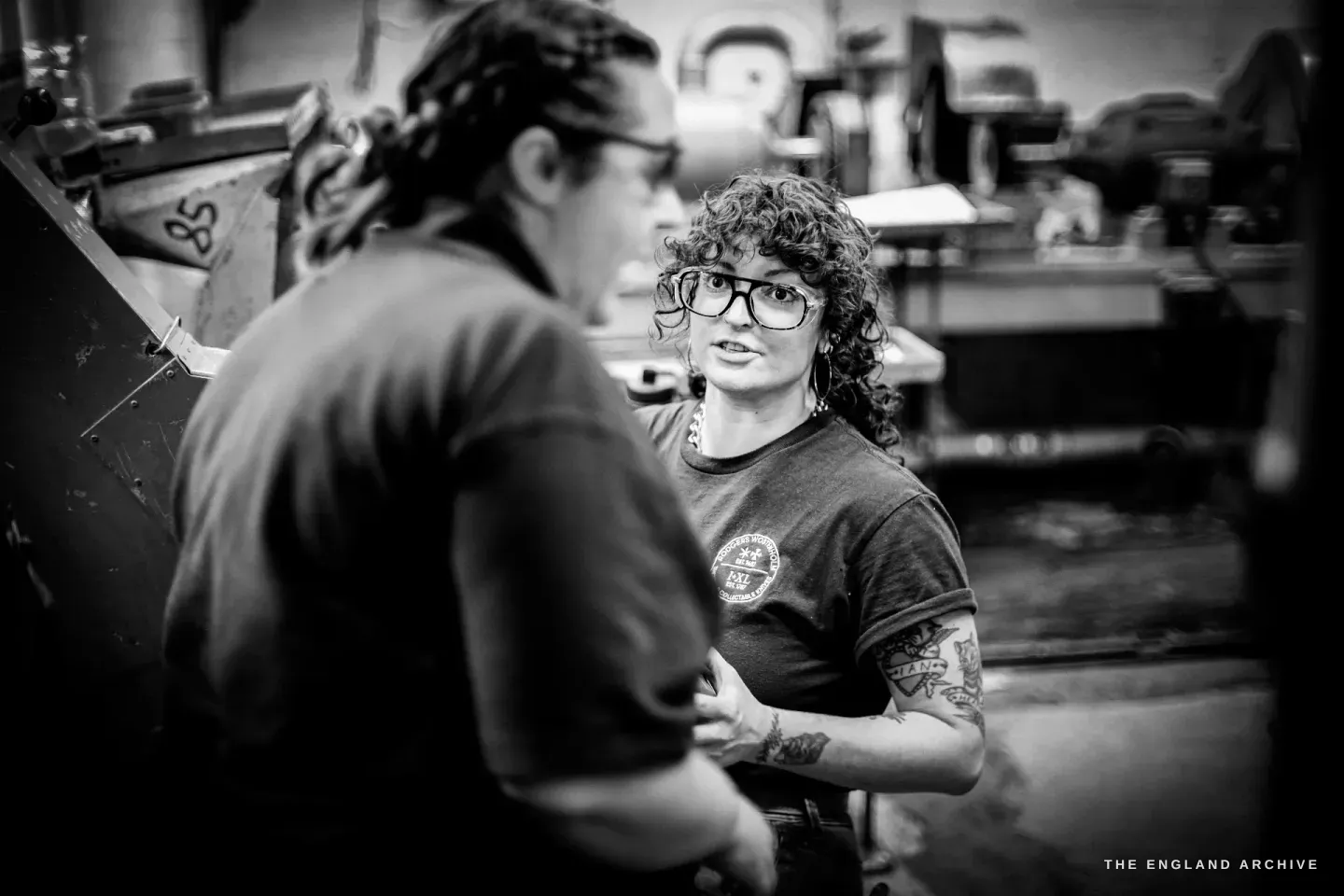
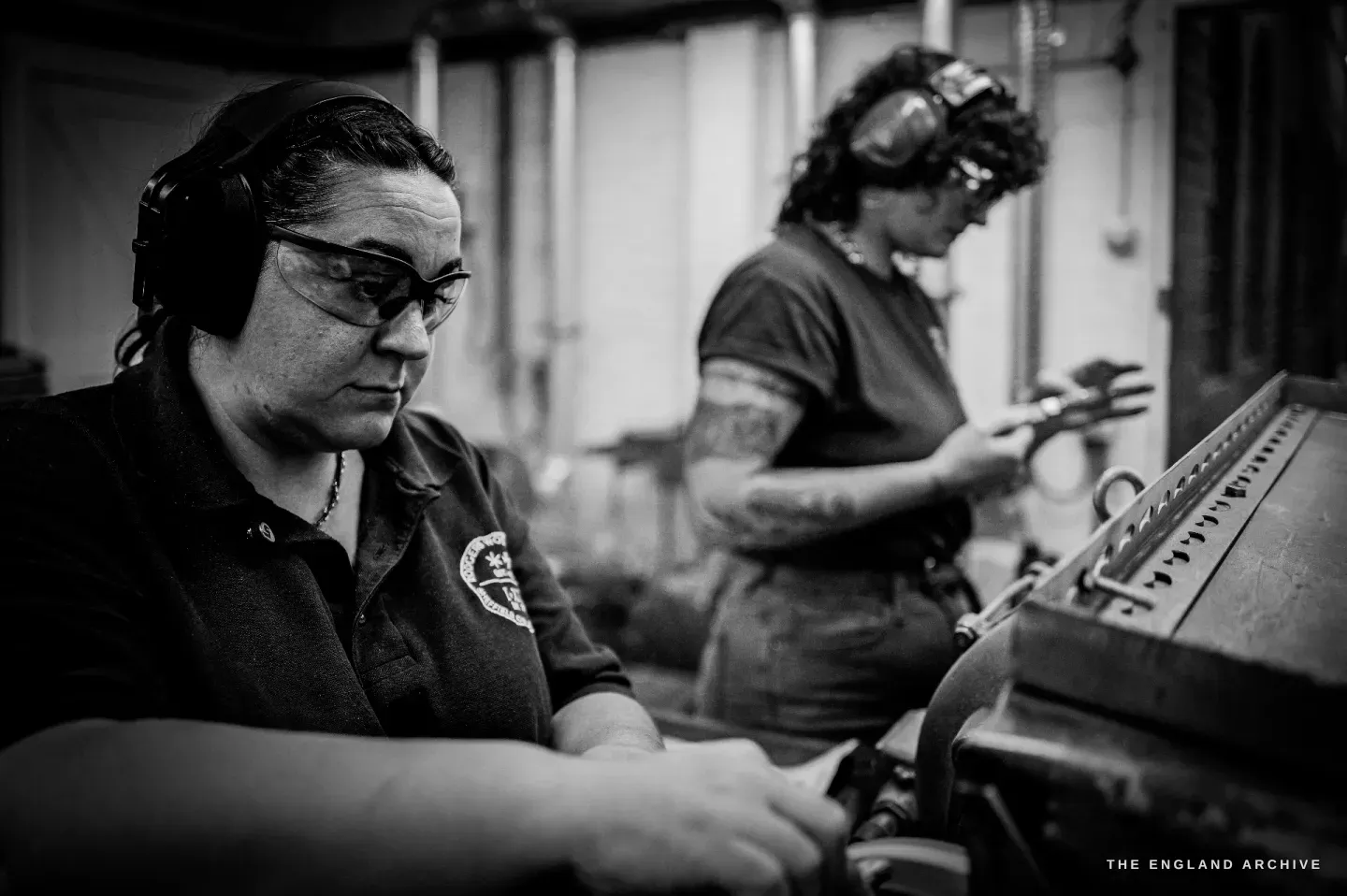
This is the archive’s record of Kylie Cocker, made in the Joseph Rodgers workshop inside Kelham Island Museum in June 2026: a mester of about fourteen years, apprentice-trained, who hand-makes pocket and pen knives under one of the oldest names in English cutlery; who closes a pivot with a light hammer so evenly you would swear it was a machine; who learned the trade in a garden shed beside her husband and now keeps it on a working floor with another pair of hands at work beside her. Folding knife making is on the Red List. On the evidence of a morning, the craft is in good hands here - and the only question the list really asks is whether there will be enough of them.