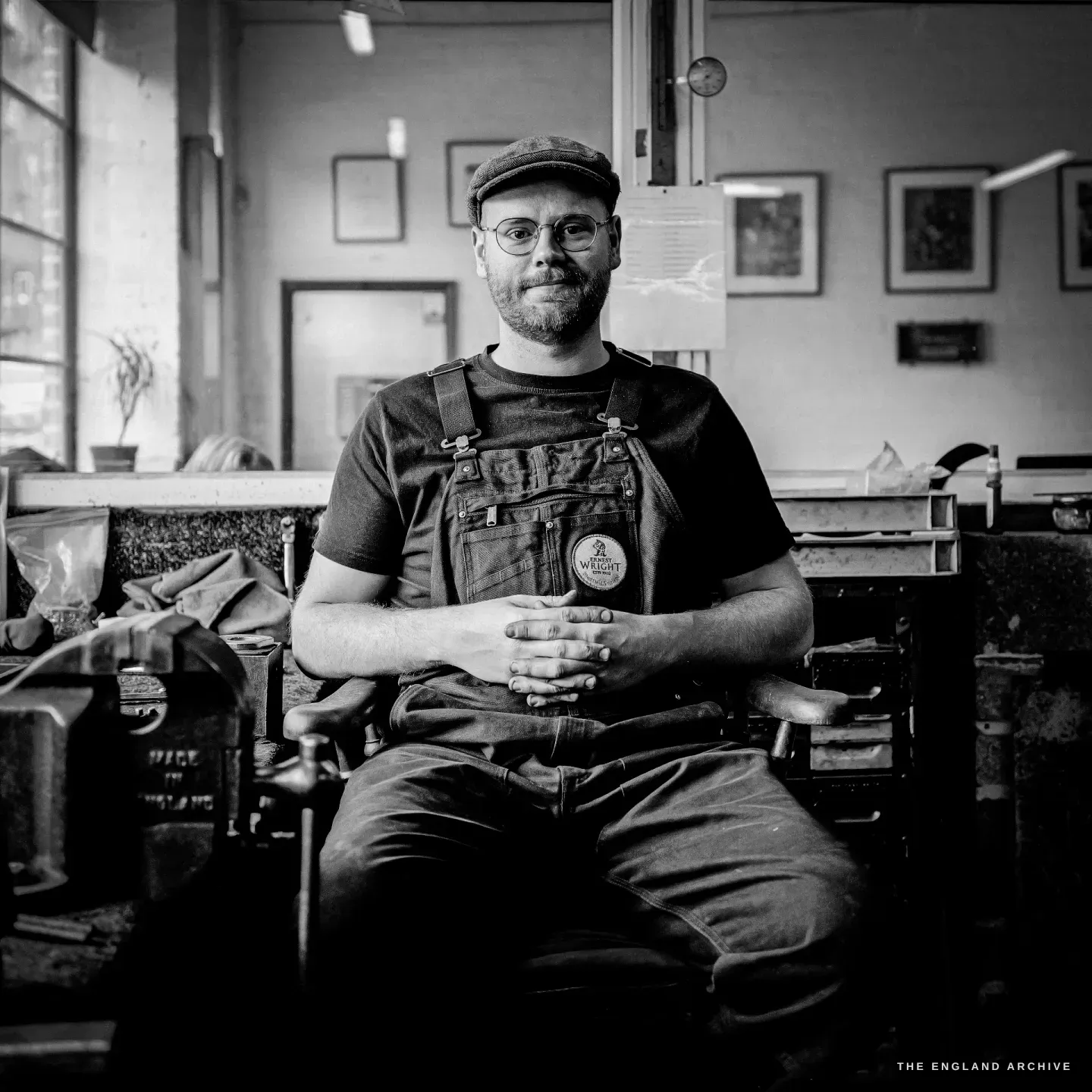
A formal seated portrait of Sam Aston-Clark facing the camera in his flat cap, glasses and leather apron, the Ernest Wright workshop windows behind him.
Makers

Sam Aston-Clark

Putter-Togetherer · Ernest Wright

Sheffield, South Yorkshire

Documentary Archive · June 2026 · The Sheffield Trade

The putter is the one who marries the two blades. It takes five years to earn the title - and Sam is the first of the new era to earn it.

Name Sam Aston-Clark
Trade Putter-togetherer (scissor maker)
Workshop Ernest Wright, scissor makers since 1902
Location Sheffield, South Yorkshire
Category Makers - people whose knowledge lives in their hands and cannot exist anywhere else
Session June 2026 · a full day at the Ernest Wright workshop
At Ernest Wright About ten years · the first of the firm’s current era to qualify fully as a putter
Craft status Scissor making on the Heritage Crafts Red List
Archive ID MK-0024

The Putter

In the scissor trade the most important person in the building is the one who puts the two halves together. The title is putter-togetherer - five years of apprenticeship to earn it - and Sam Aston-Clark holds it. He is, in fact, the first trainee of Ernest Wright’s present era to qualify fully as a putter, awarded the title in 2020, and he has been at the firm about ten years. Everything else in the workshop - the forging, the grinding, the hardening - leads to his bench, where a pile of parts becomes a pair of scissors that actually cuts.
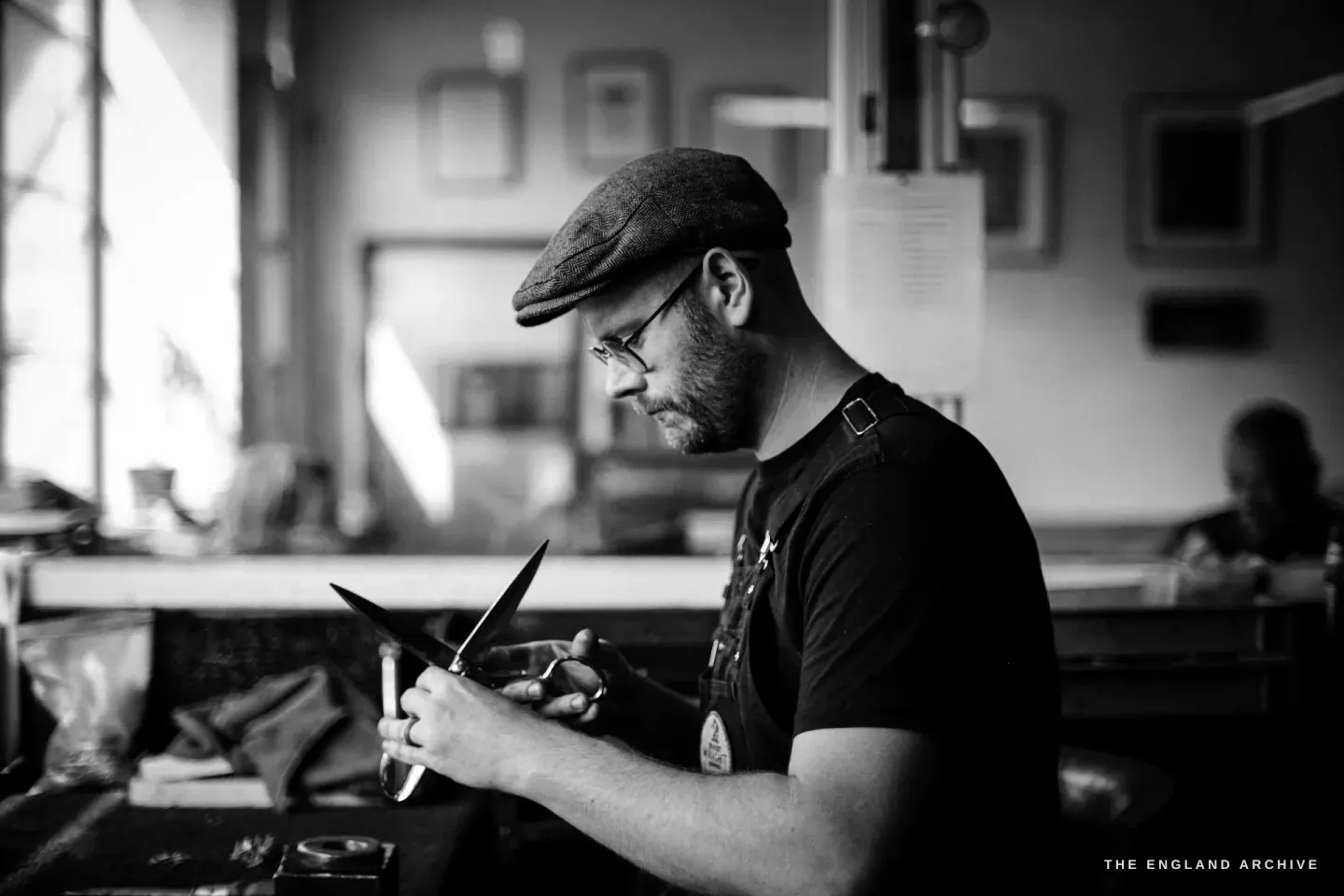
Sam Aston-Clark in a flat cap and leather apron at his bench, working a scissor blade in his hands, soft window light from the left.
Sam Aston-Clark at the bench, in the window light. IM-0745

At the Press

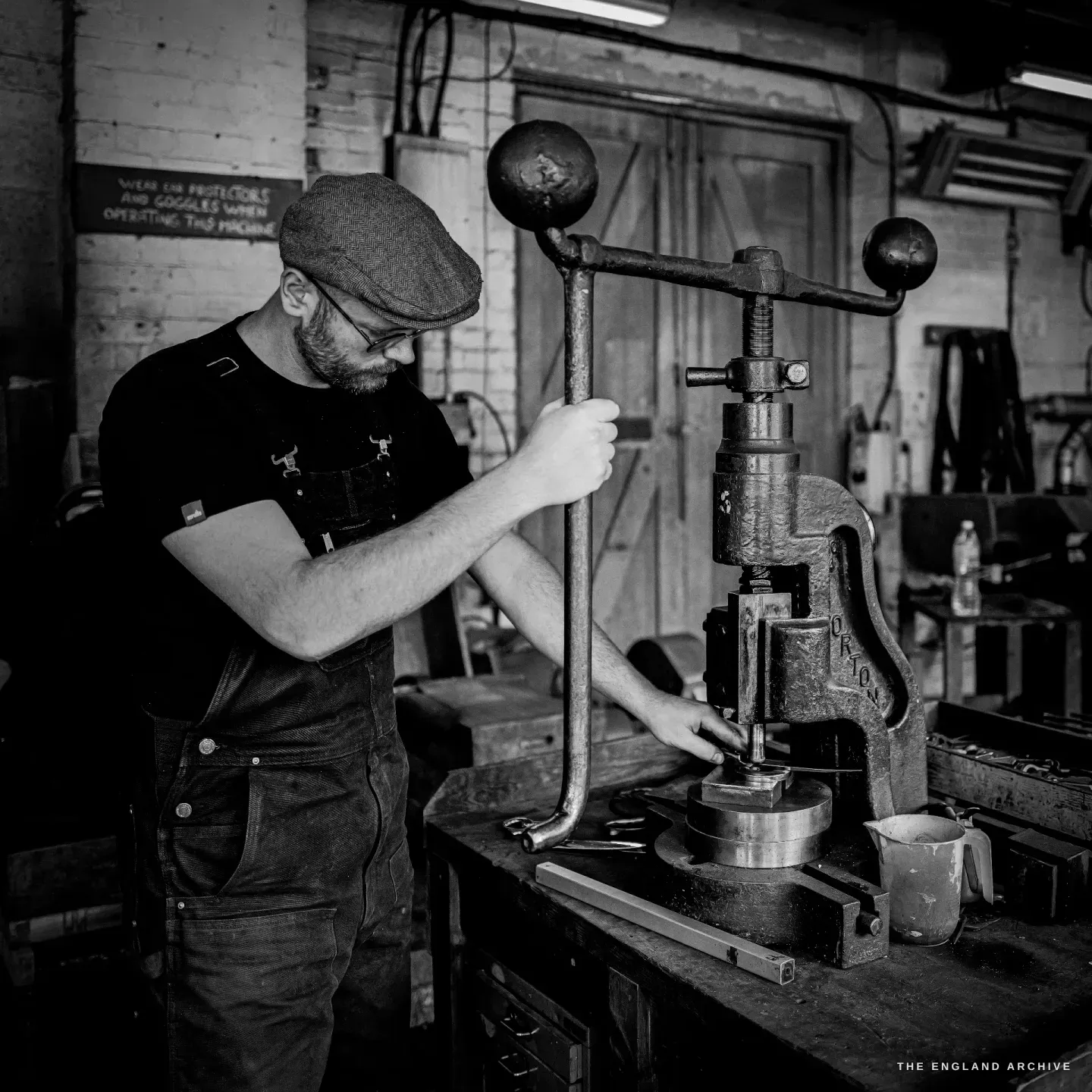
Before the marriage there is the forming. Sam works the hand fly-presses - heavy cast machines, some of them a century old and still stamped with the names of their makers, like the John Norton press at his station. The weighted arm comes round and the press shapes or pierces the cold steel in a single stroke; it is physical, exact work, the same motion thousands of times, and the press does nothing on its own - every stroke is set up and judged by the person pulling it.
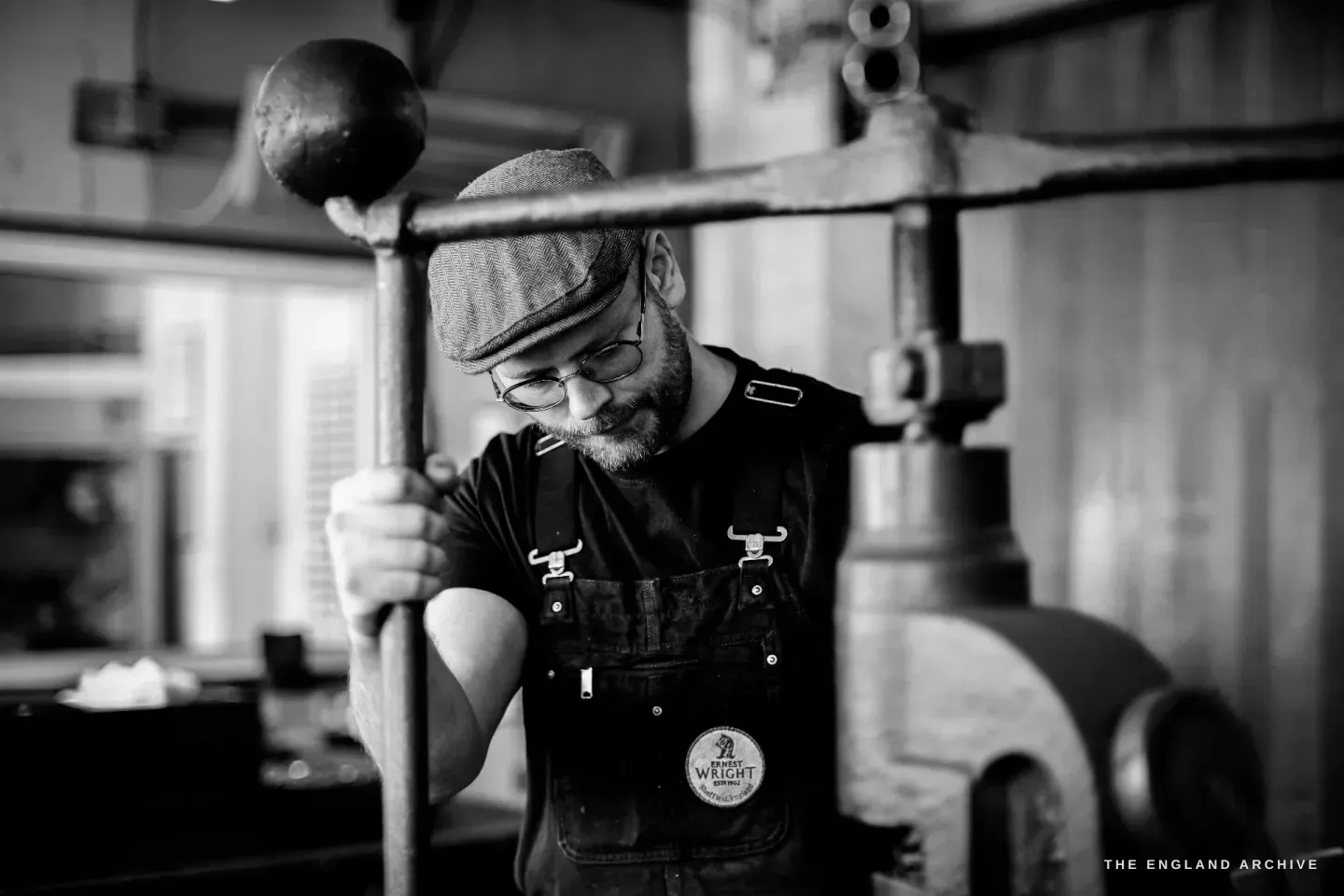
Sam pulling down the long weighted arm of a hand fly-press, head bowed in concentration, the cast frame of the press beside him.
On the fly-press - the weighted arm comes round to form the cold steel. IM-0747
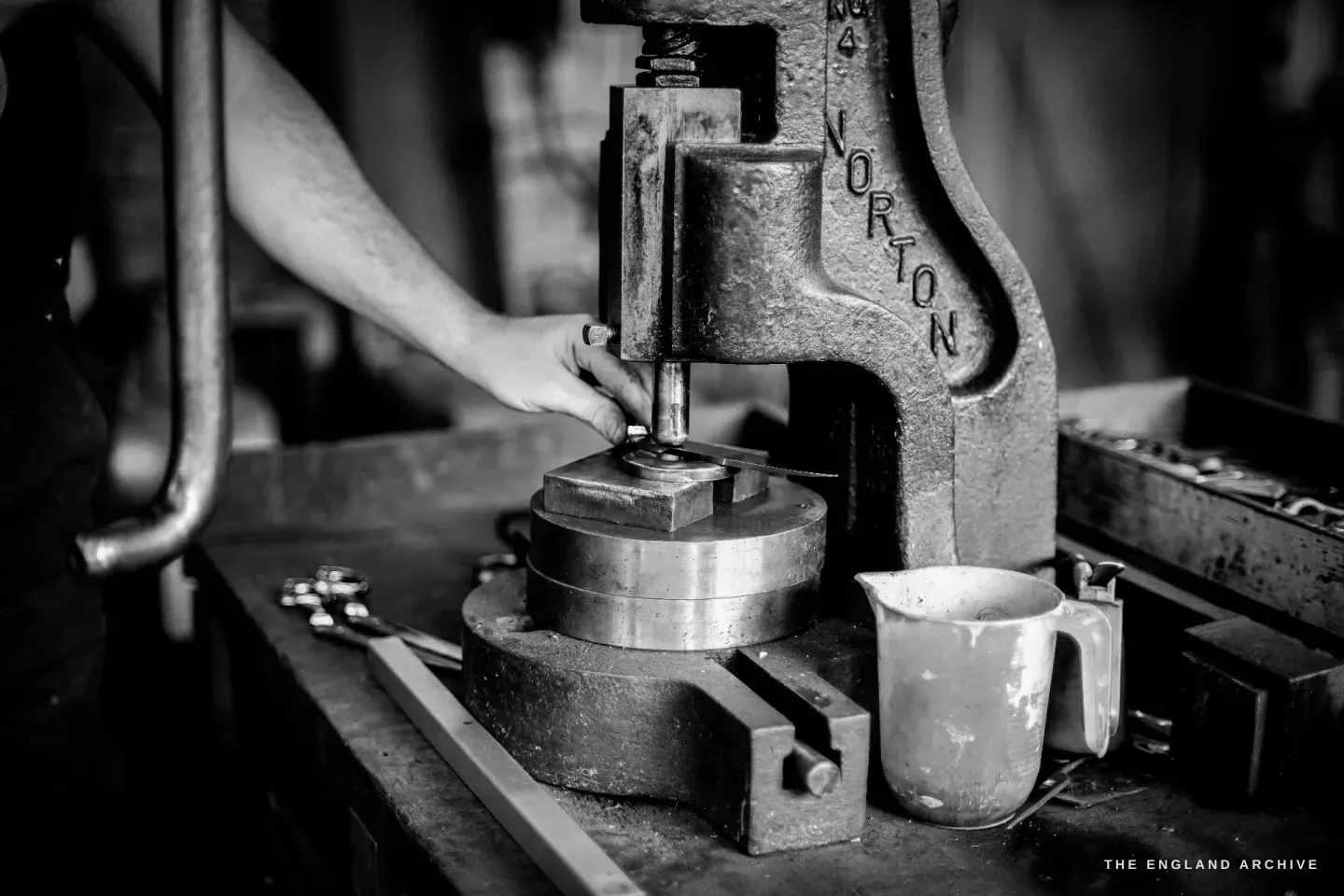
A close view of a cast hand-press marked JOHN NORTON, Sam’s arm guiding a die under the ram, a white jug on the bench.
A John Norton press - older than anyone in the building, still doing its one job. IM-0748
Sam at a large twin-armed fly-press, both hands at the work under the ram, the painted safety sign on the wall behind.
At the big press, under the twin weighted arms. IM-0752
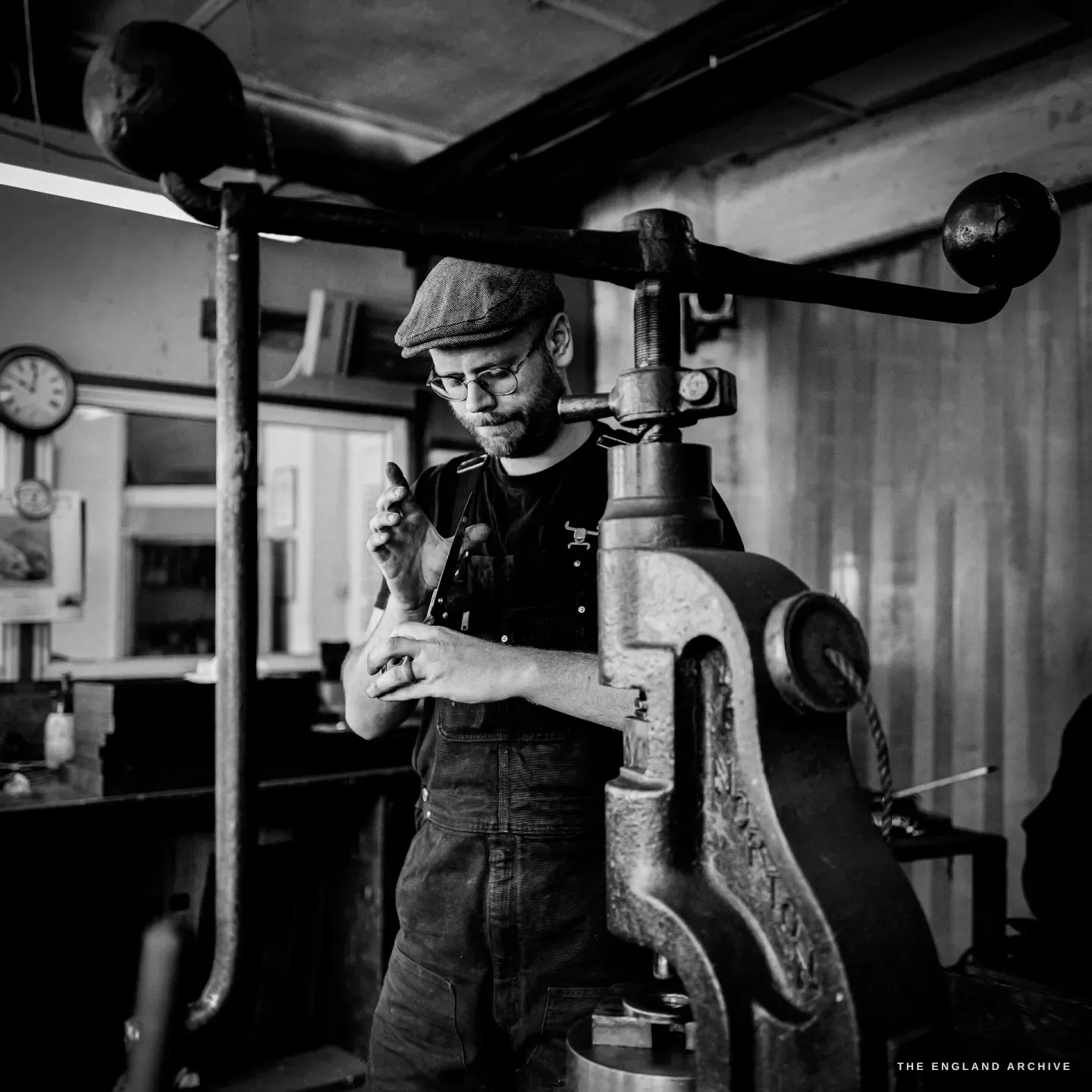
Sam standing at the twin-armed fly-press inspecting a small part in his fingers, a wall clock and framed prints behind.
Checking the work between strokes. IM-0753
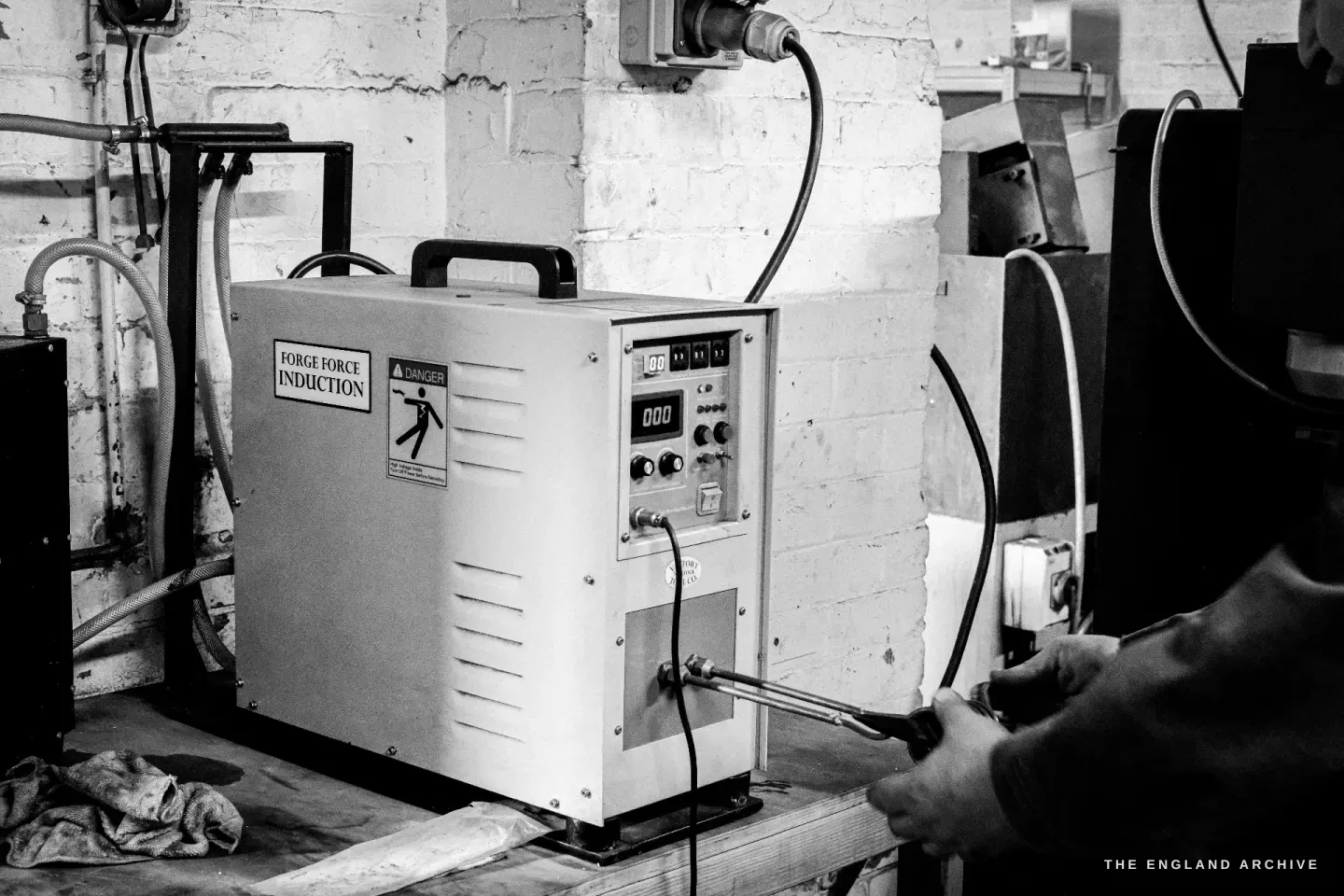
An induction annealing machine labelled FORGE FORCE INDUCTION against a whitewashed brick wall, a hand feeding a blade into the heating coil.
Induction annealing - the steel heated and cooled to soften it where it has to be worked. IM-0743

The Marriage

Then the part that is his alone, and the part I had come to see. A pair of scissors cuts not because the blades are sharp but because they are set against each other to meet at a single travelling point as they close. To get there, Sam hammers a precise curve onto each blade over a small stake, sets the two together, and works them - tightening, easing, testing the action - until the pair rides true. It is done by hand and by feel, with a hammer he reaches for a hundred times a day. Watching it, you understand why the title takes five years: nothing about it can be told to you quickly, and almost none of it is written down.
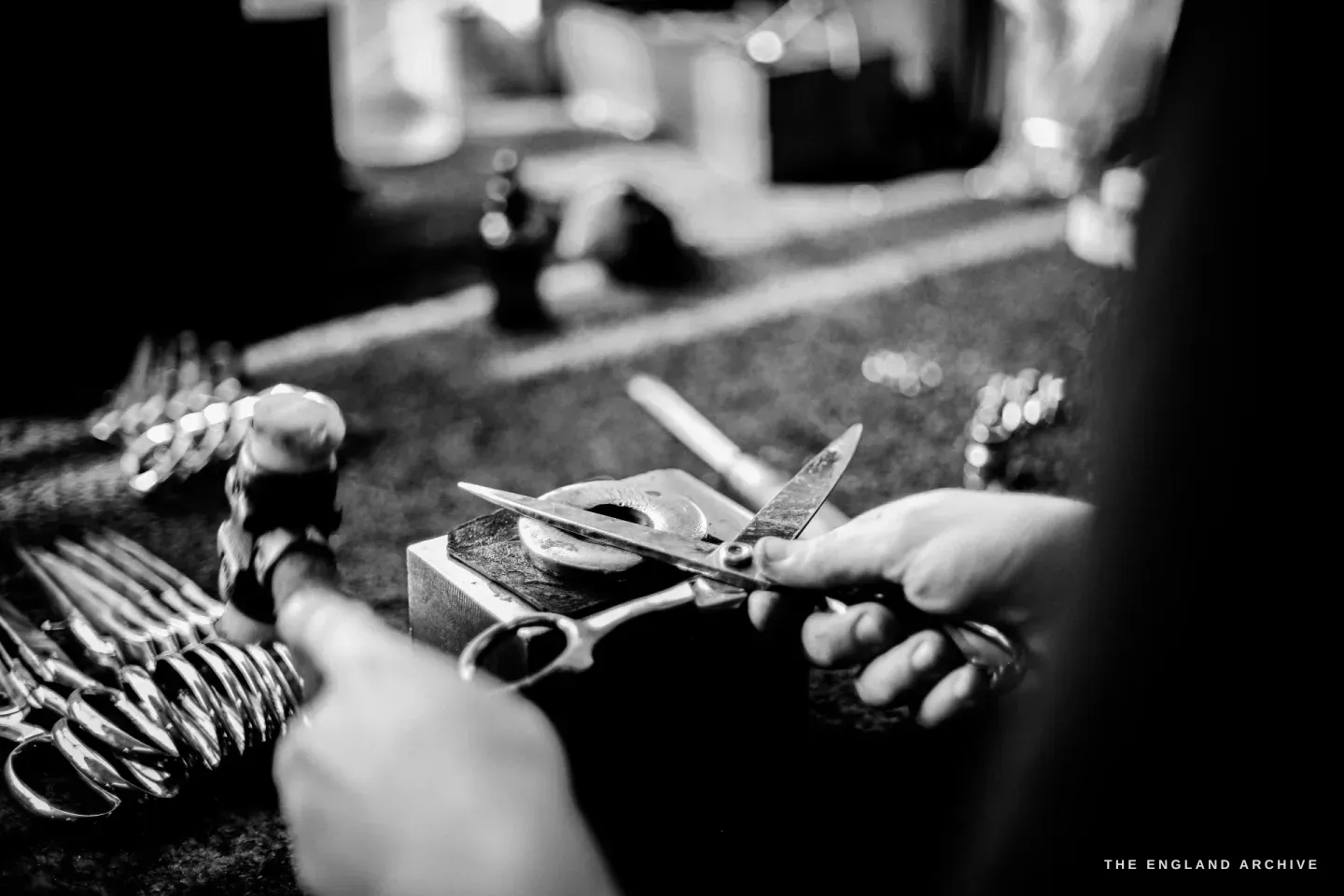
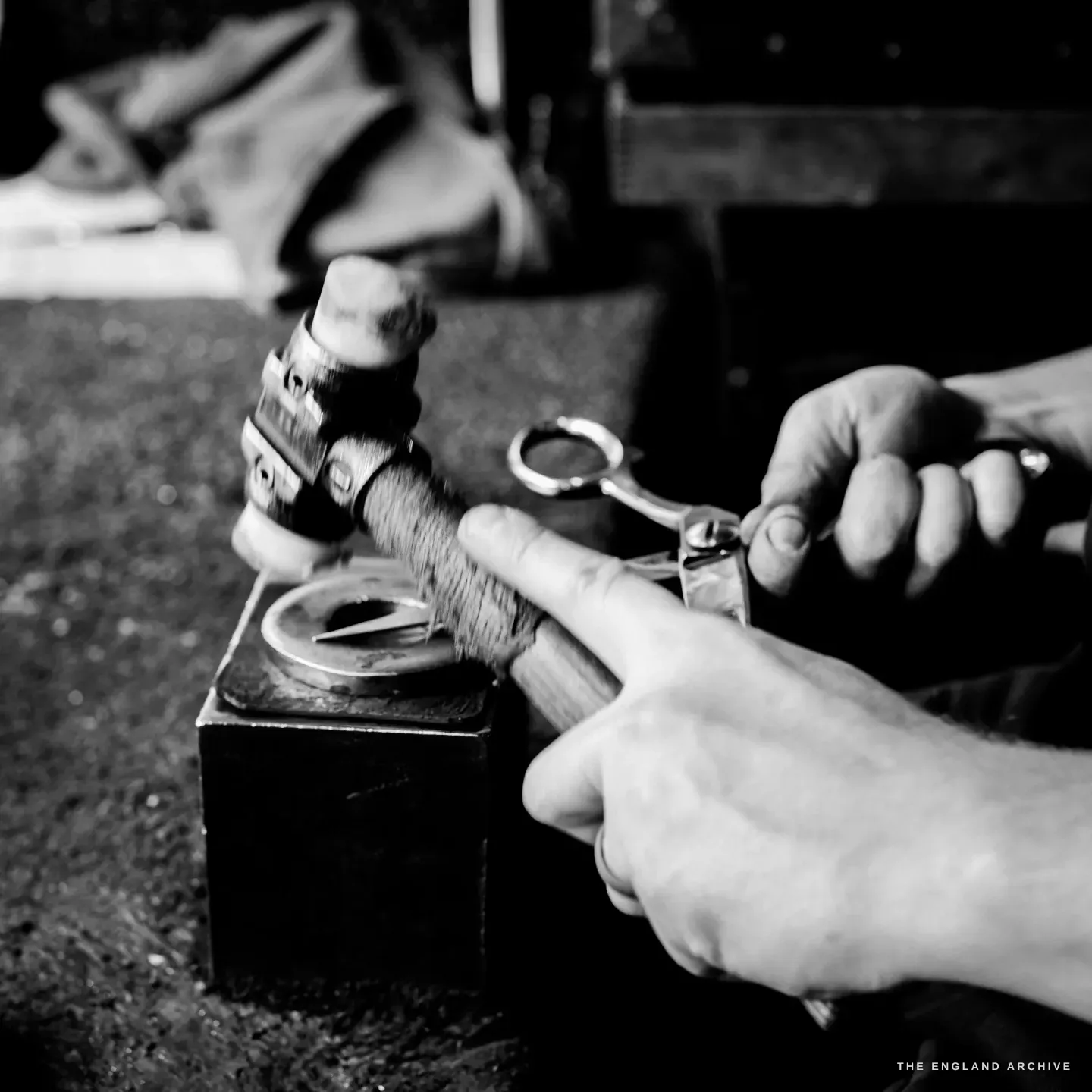
Sam’s hands at a small anvil-stake, a hammer in one hand and a part-made pair of scissors in the other, finished pairs laid out alongside.
The putter’s bench - a hammer, a stake, and a pair coming together. IM-0746
Sam hammering a part-made pair of scissors over a small bick, both hands at the work, the steel held against the curve of the stake.
Hammering the curve onto the blade - the move that makes the cut. IM-0749
Sam in profile working a blade against a small stake at the bench, finished pairs and a mug beside him.
Setting one blade against the other, by hand and by eye. IM-0750
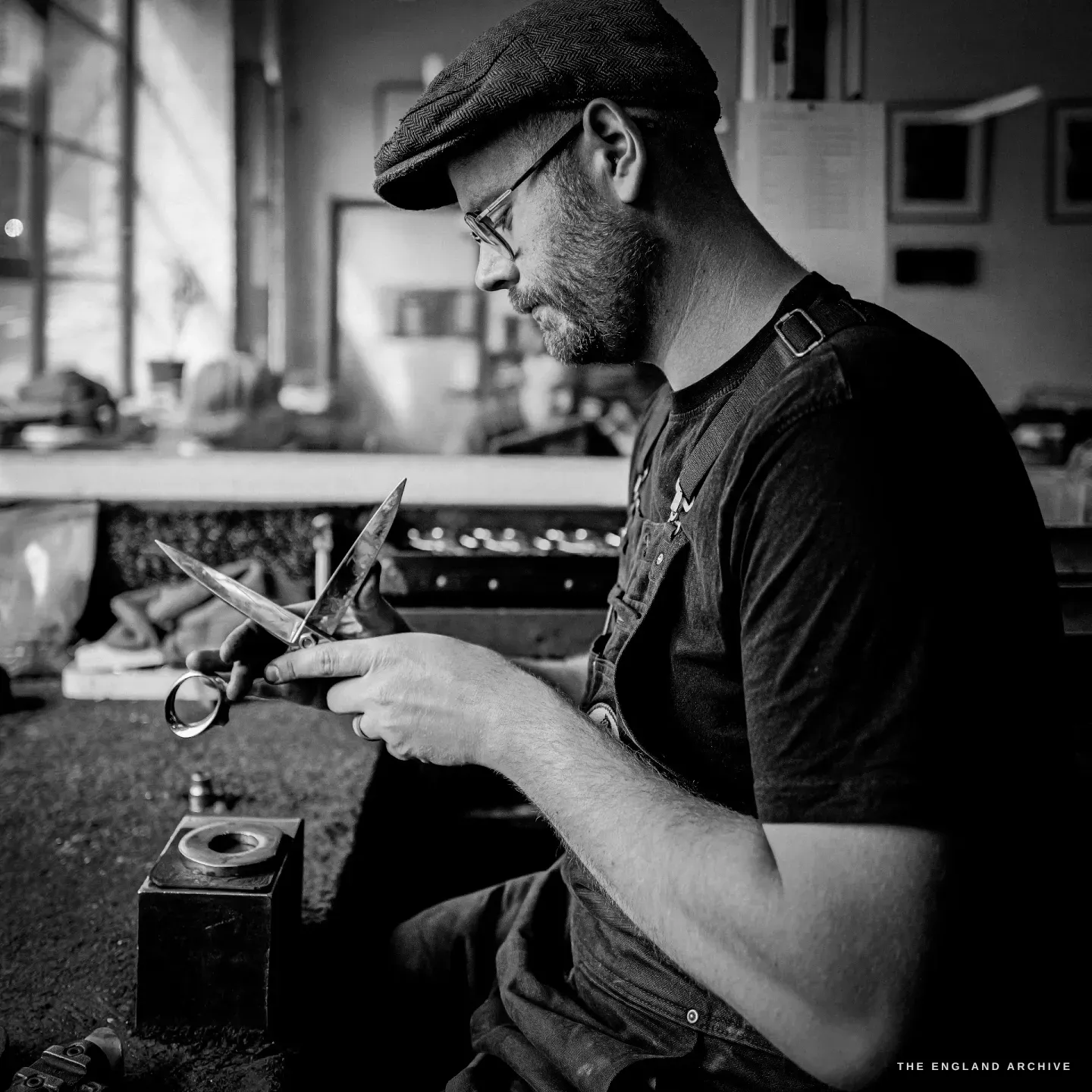
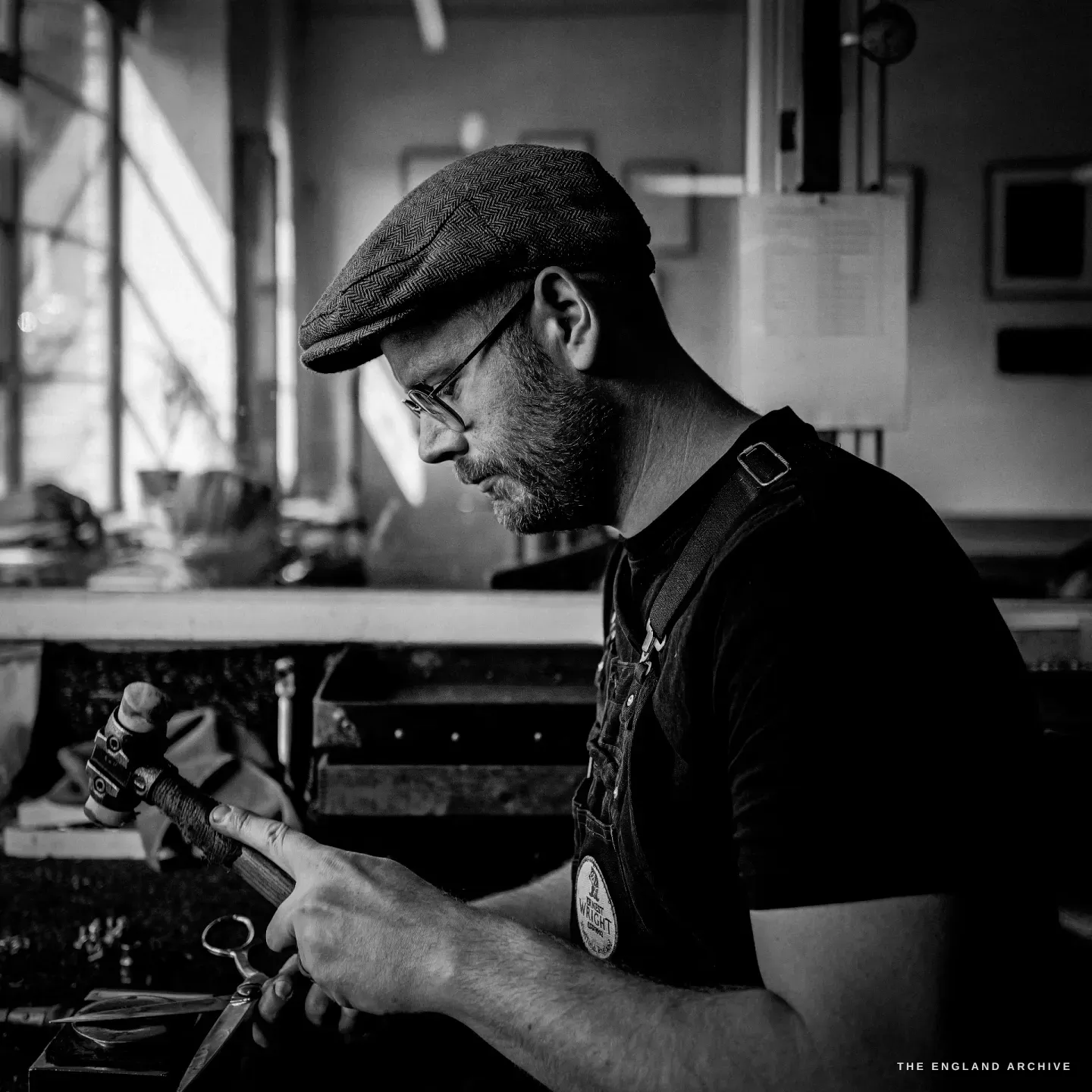
Sam in profile with a hammer in hand, looking down at a pair of scissors, strong side light from the window.
The hammer he reaches for a hundred times a day. IM-0755
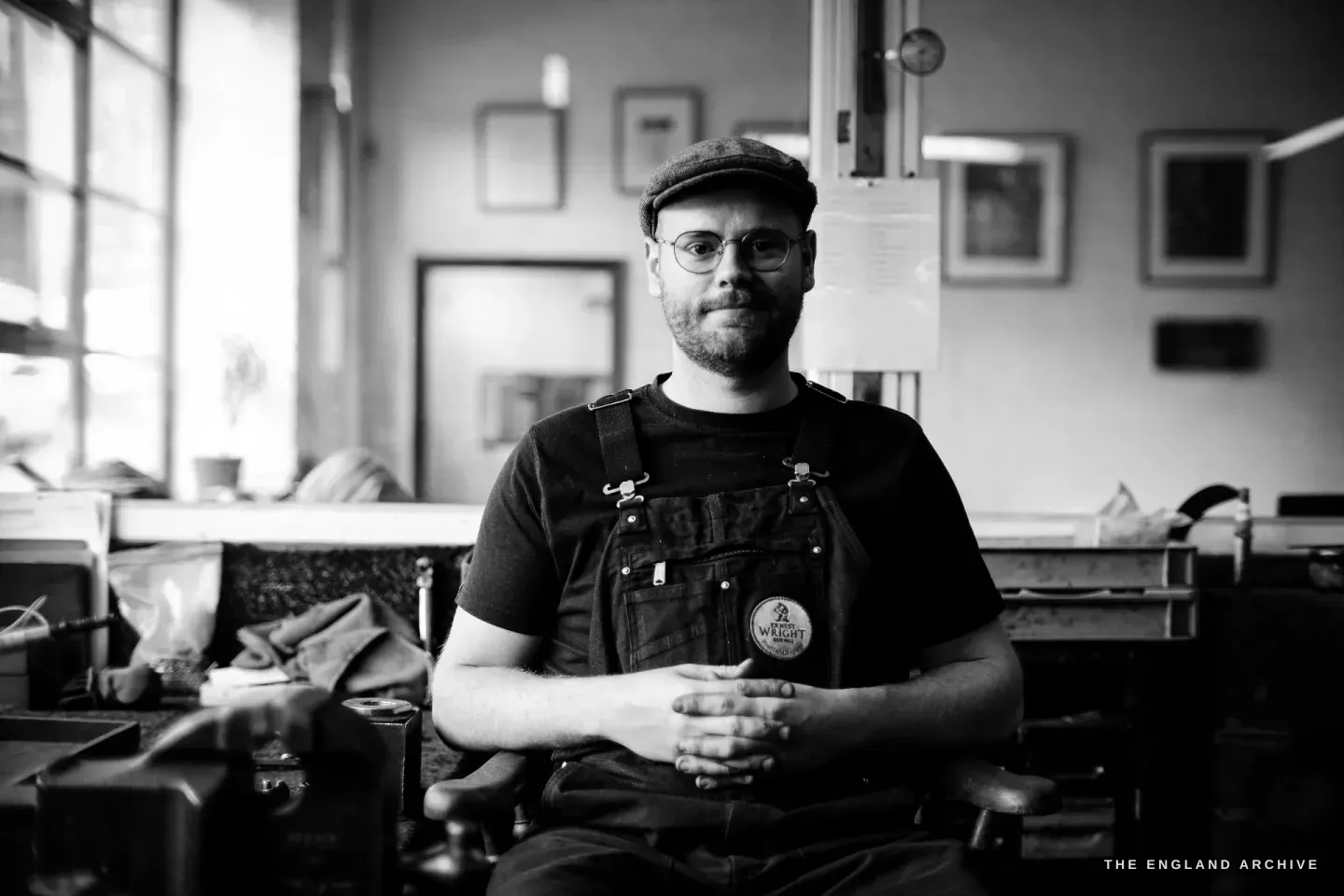
A seated portrait of Sam at the bench, hands clasped, flat cap and glasses, looking to camera, framed prints on the wall behind.
Sam, at the bench that made him a putter. IM-0756
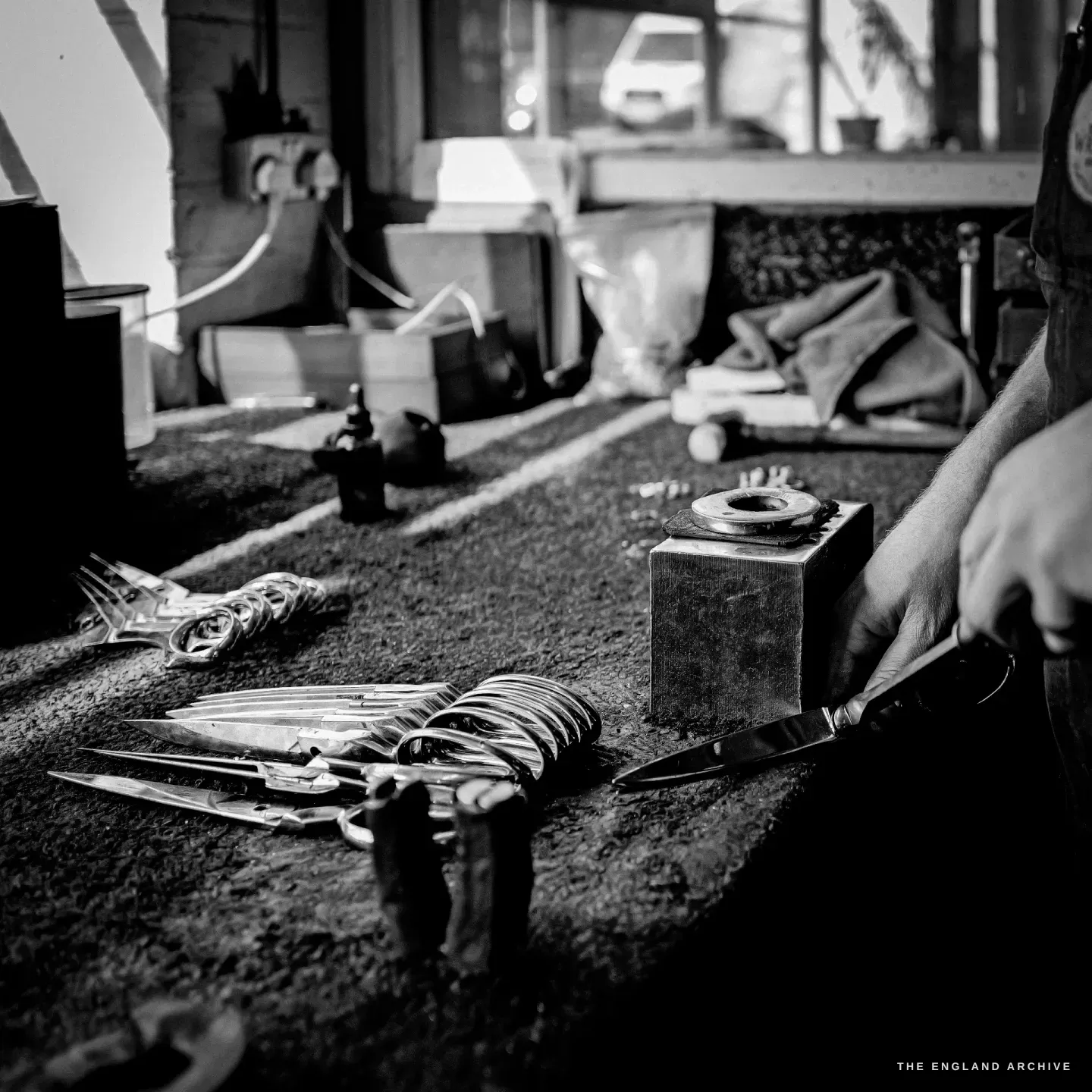
A low view across the bench: rows of part-made scissors laid out, Sam’s hand setting a blade against a small stake block.
The bench mid-flow - a row of pairs in the making. IM-0754

Reading the Gap

The test of the work is the light, and Sam showed me. He holds a finished pair up to the window and sights down through the closed blades, and if there is a thin sliver of daylight between them, curving away from the pivot, the set is right. Too much and the pair will not cut at the tip; too little and it binds. I have been shown a great many clever things in workshops, but there was something almost unreasonable about watching an entire craft - all the forging and grinding and hardening that comes before - reduce, in the end, to one man reading a thread of light by eye. It lives nowhere but in his hands.
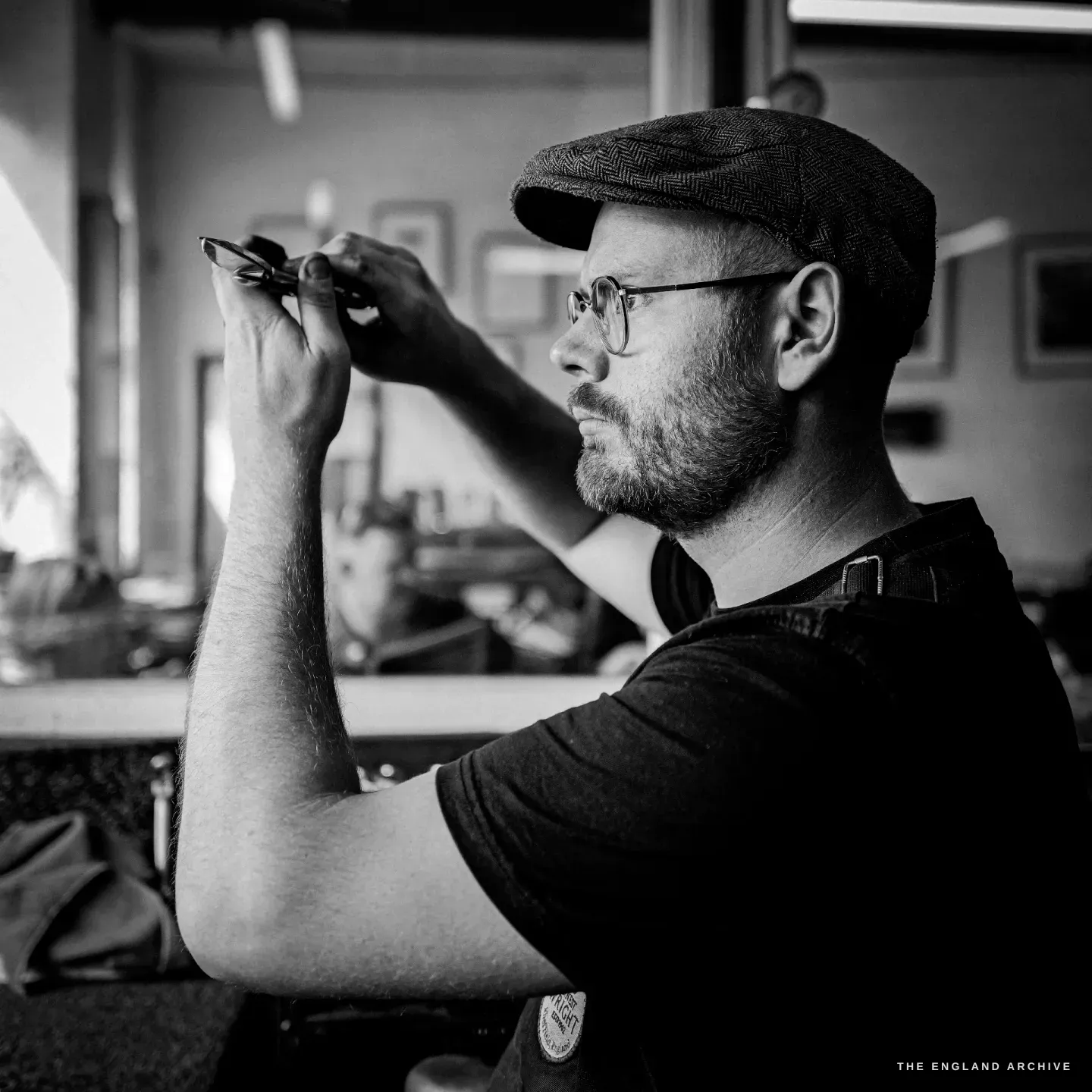
Sam holding a finished pair of scissors up to the window light, sighting through the blades to read the gap between them.
Reading the gap - holding a pair to the light to see daylight between the blades. IM-0751
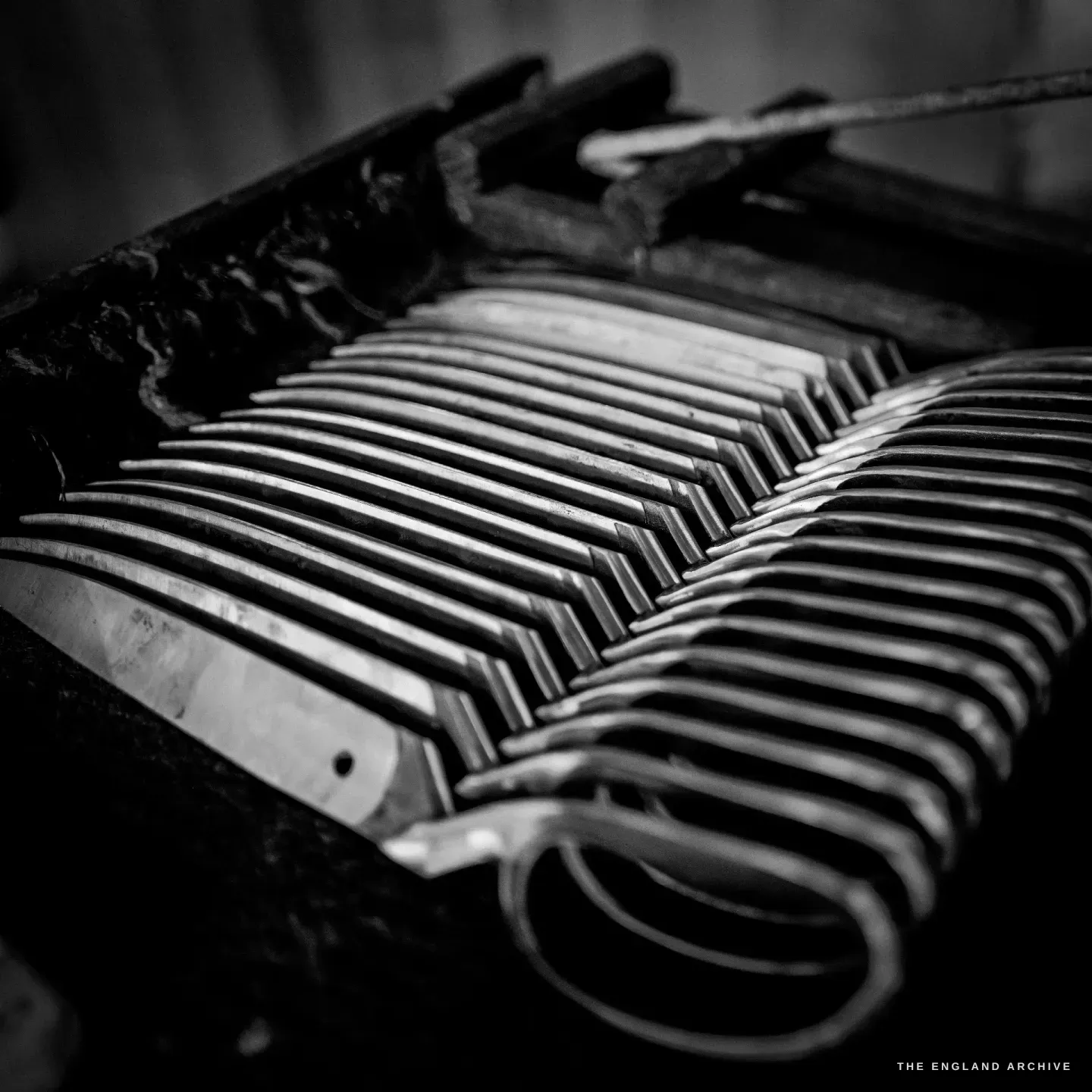
A close view of finished scissor blades fanned in ranks in a steel tray, their curves and edges catching the light.
Blades ranked in a tray, each curve ground by hand. IM-0744

The Finished Pair

What comes off Sam’s bench is the whole point of the building: a pair of scissors married by a person, stamped with the maker’s name, built to be used and sharpened for a lifetime rather than thrown away. And here is the thing I left Sheffield turning over. That a young man walked into this trade, served the five years, and earned the title of putter when nobody had in the firm’s modern history is, quietly, the most hopeful thing I saw all day. A craft on the Red List does not need monuments. It needs one more person who can do it. Sam is that person, arrived.
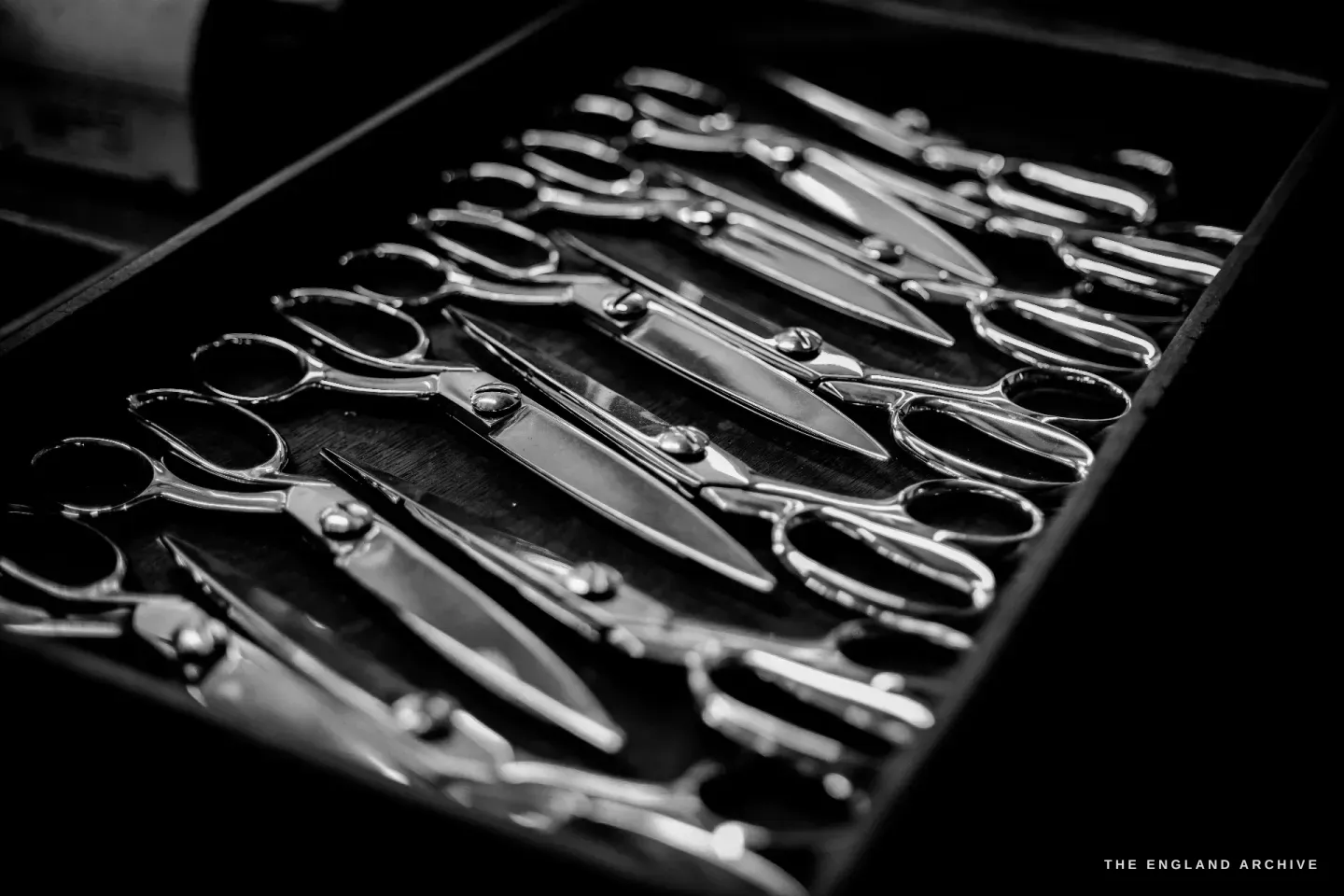
A black tray filled with rows of finished bright scissors, blades and bow handles catching the light.
A tray of finished pairs - every one married by hand. IM-0757

The Record the Archive Holds

This is the archive’s record of Sam Aston-Clark, putter-togetherer at Ernest Wright, made over a full day in the Sheffield workshop in June 2026: the presses, the hammer and the stake, and the marriage of the two blades where the gap is read by eye. Scissor making is on the Heritage Crafts Red List, and a fully-qualified putter in his prime is exactly the link the craft needs to reach the next generation. Sam learned it from the makers above him; in time, others will learn it from him.

A formal seated portrait of Sam Aston-Clark facing the camera, flat cap, glasses and leather apron, the workshop windows behind him.
Sam Aston-Clark - the first of the new era to earn the title of putter. IM-0758