Makers
Léo Lambert
Engraver
Westley Richards, Birmingham
Engraver
Westley Richards, Birmingham
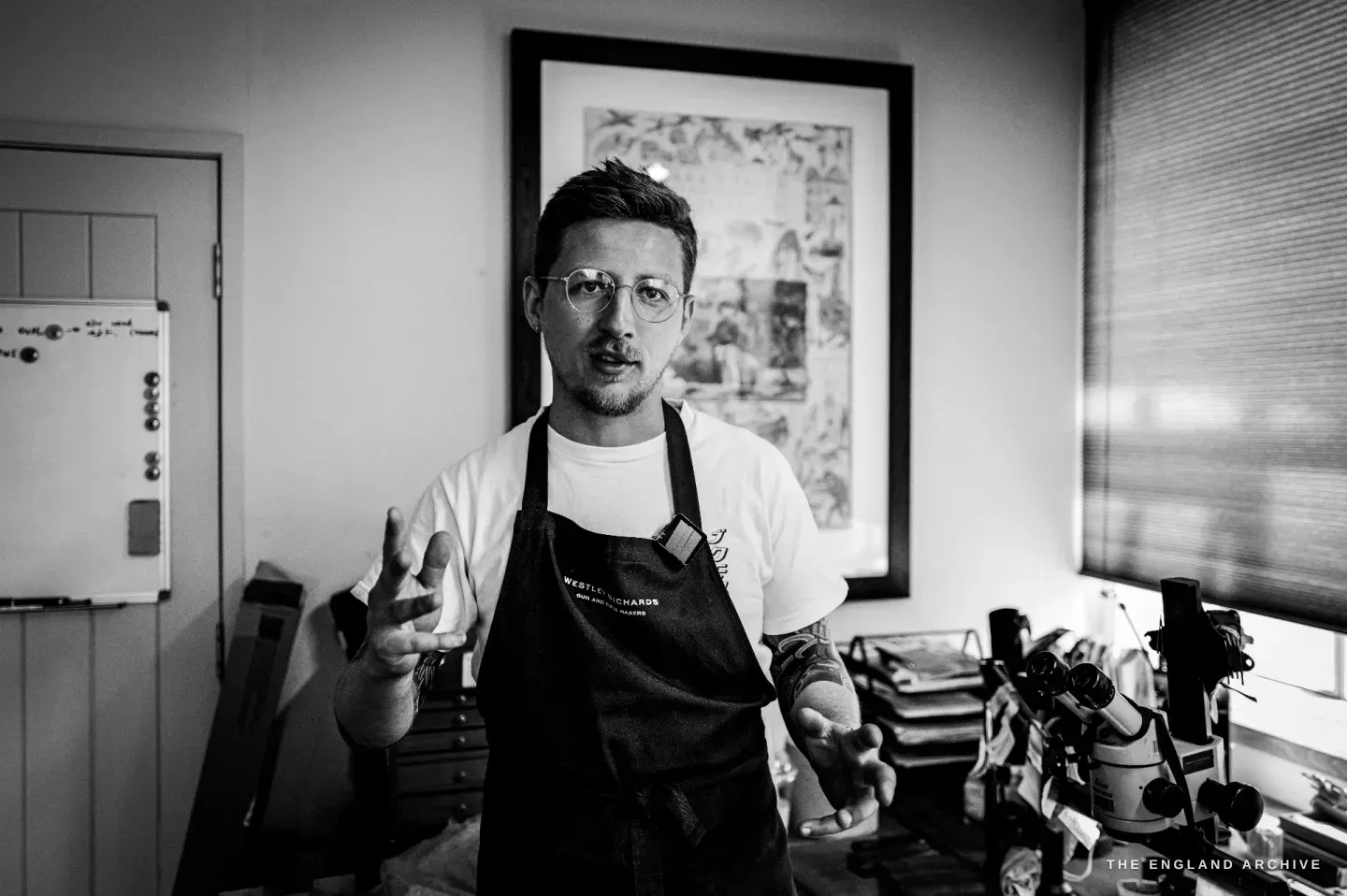
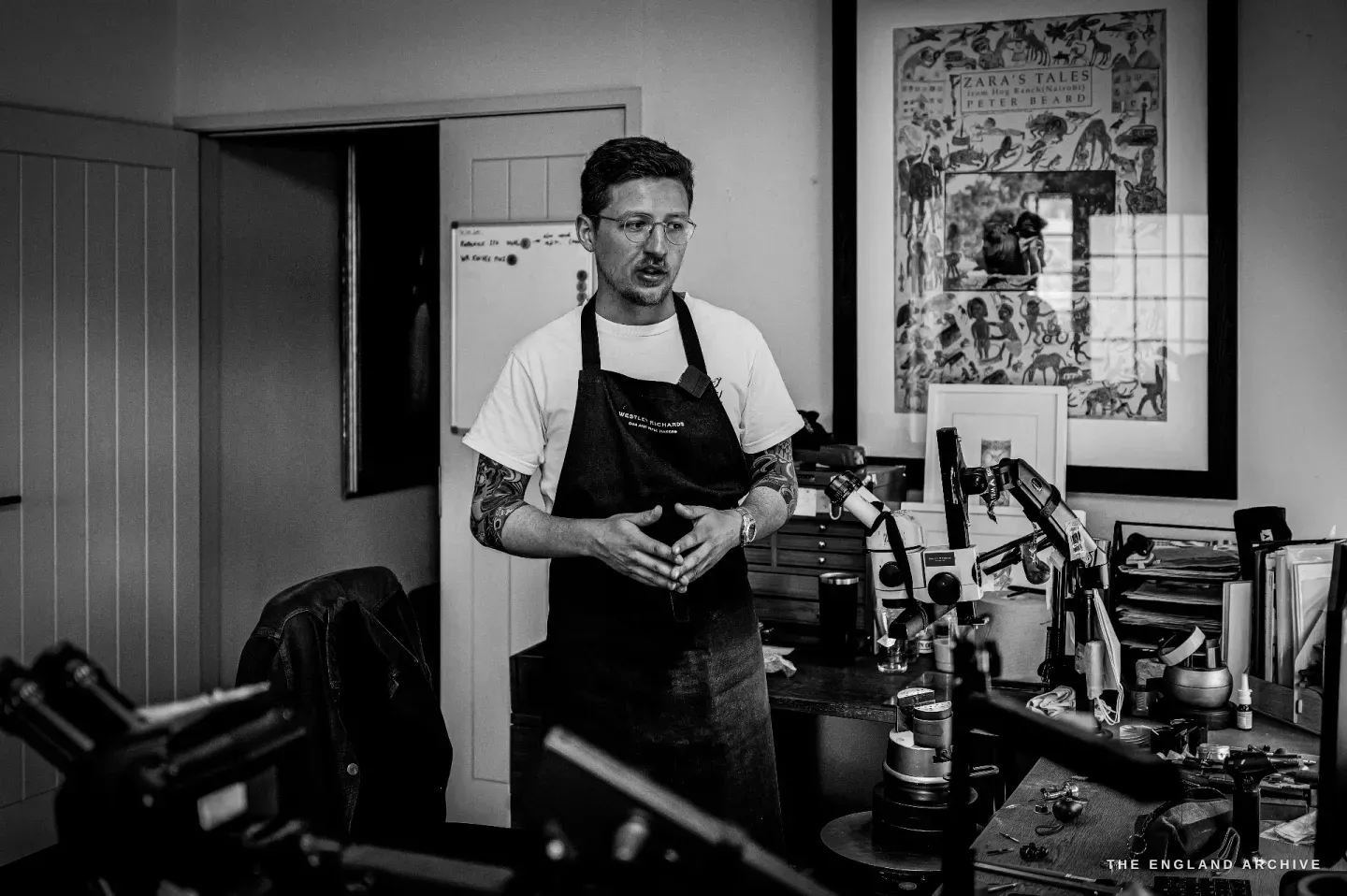
Stephen took me up the stairs to the one man I could document properly that morning. I had been told he was the firm's master engraver. I had not been told he was twenty-eight.
Léo Lambert is Belgian, from a village outside Liège, and he engraves the guns at Westley Richards. He learned the trade at the Léon Mignon school in Liège, and while he was still young he wrote a letter to Birmingham, to one of the great English gun firms, asking about an apprenticeship. They took him. He arrived expecting to serve years under a master engraver, and asked, reasonably enough, where the master was. They told him he was it - he would have to learn fast, and become one.
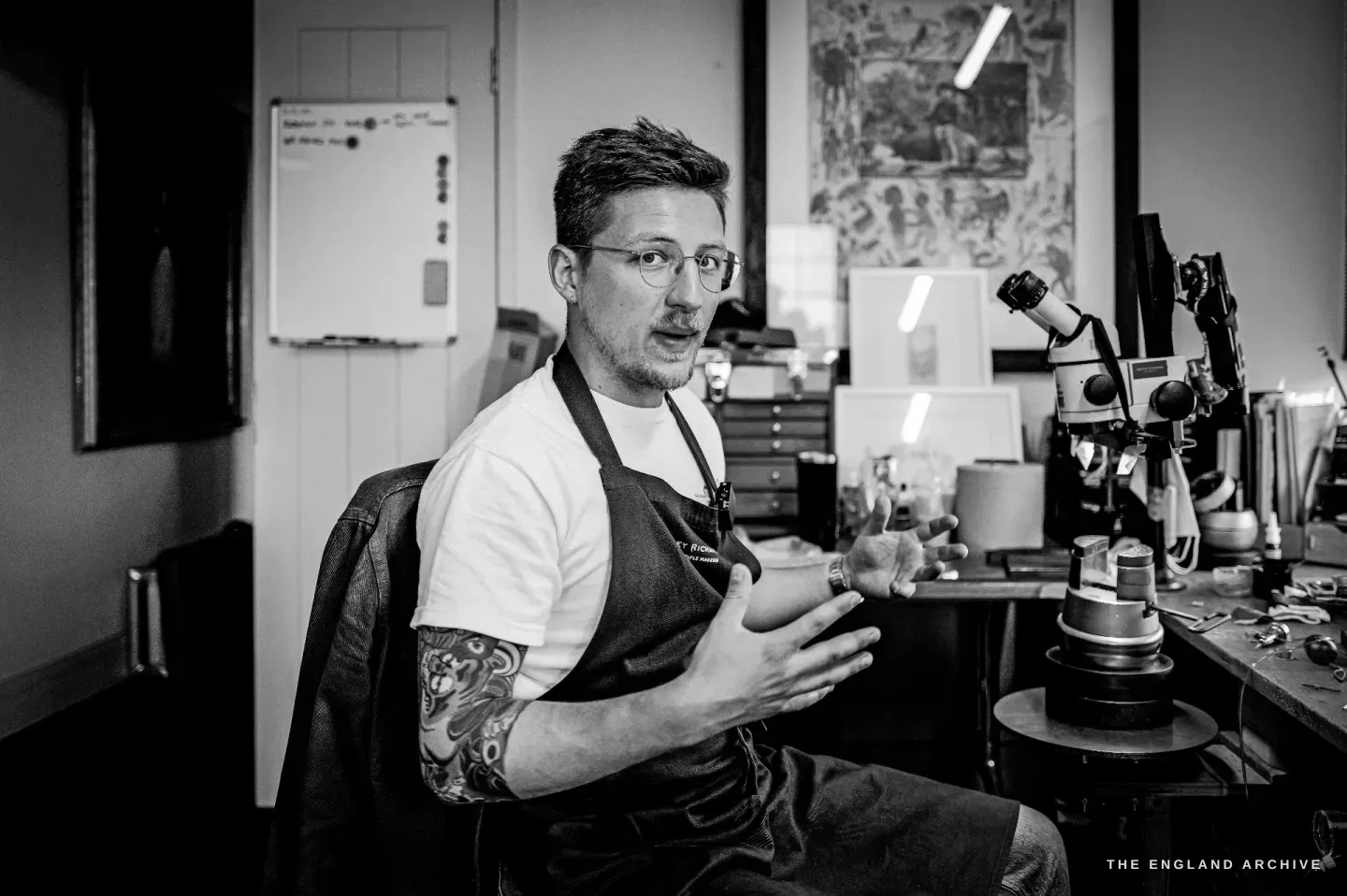
He told me this at the bench, without any drama, as just the thing that had happened to him. He was thrown straight into the deep end, doing the work while he was still learning it, on guns that cost more than a house. It is a hard way to come up. It is also, plainly, the making of him.
He sat down to show me how it is done. The engraving happens down a microscope, sitting still for hours at a time. The component - a lock plate, a trigger guard, the flat of an action - is clamped on a heavy round vice that turns under the hand, and Léo cuts into it with a graver, following a design he has already drawn. The cuts are finer than the eye alone can safely judge, which is why the microscope is always there.
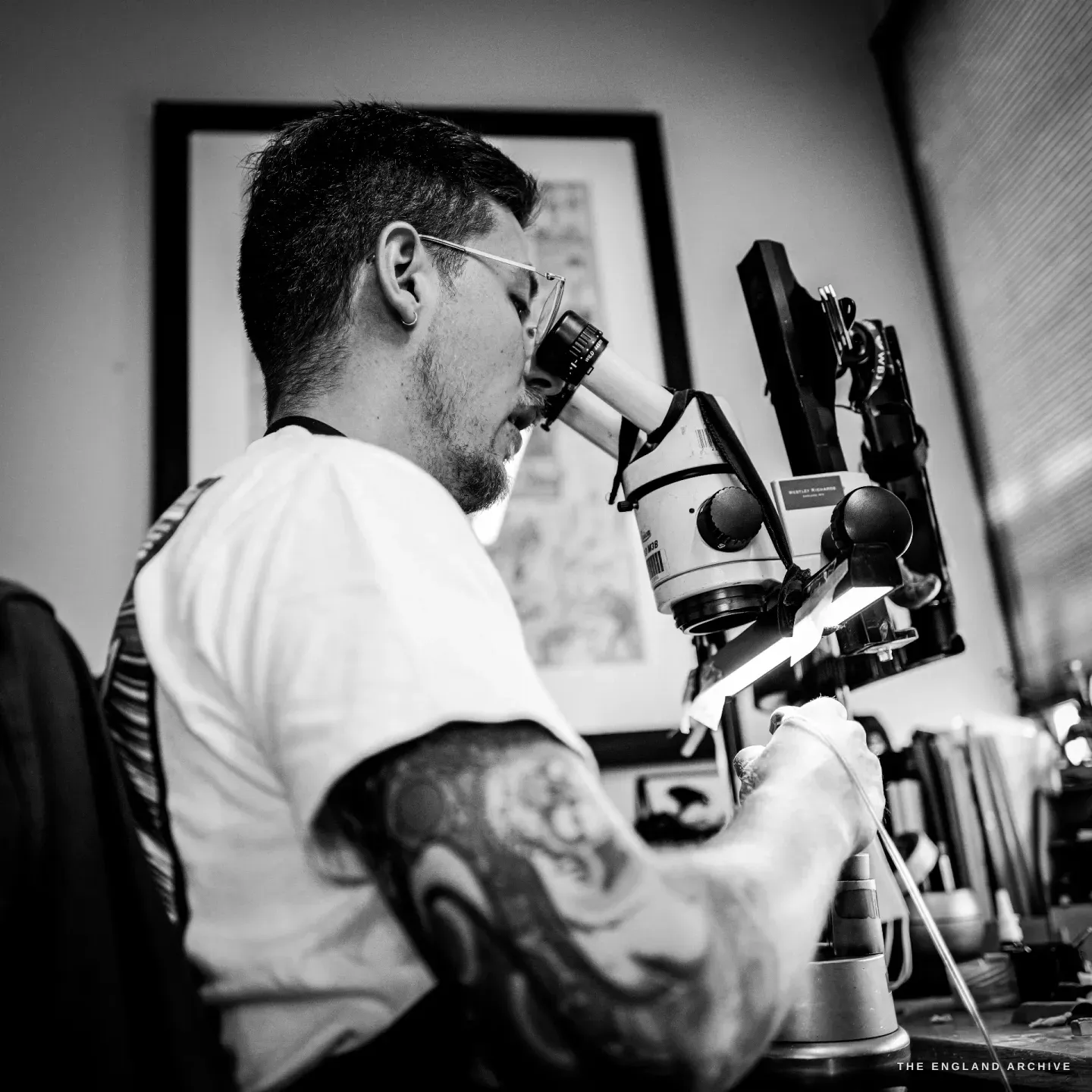
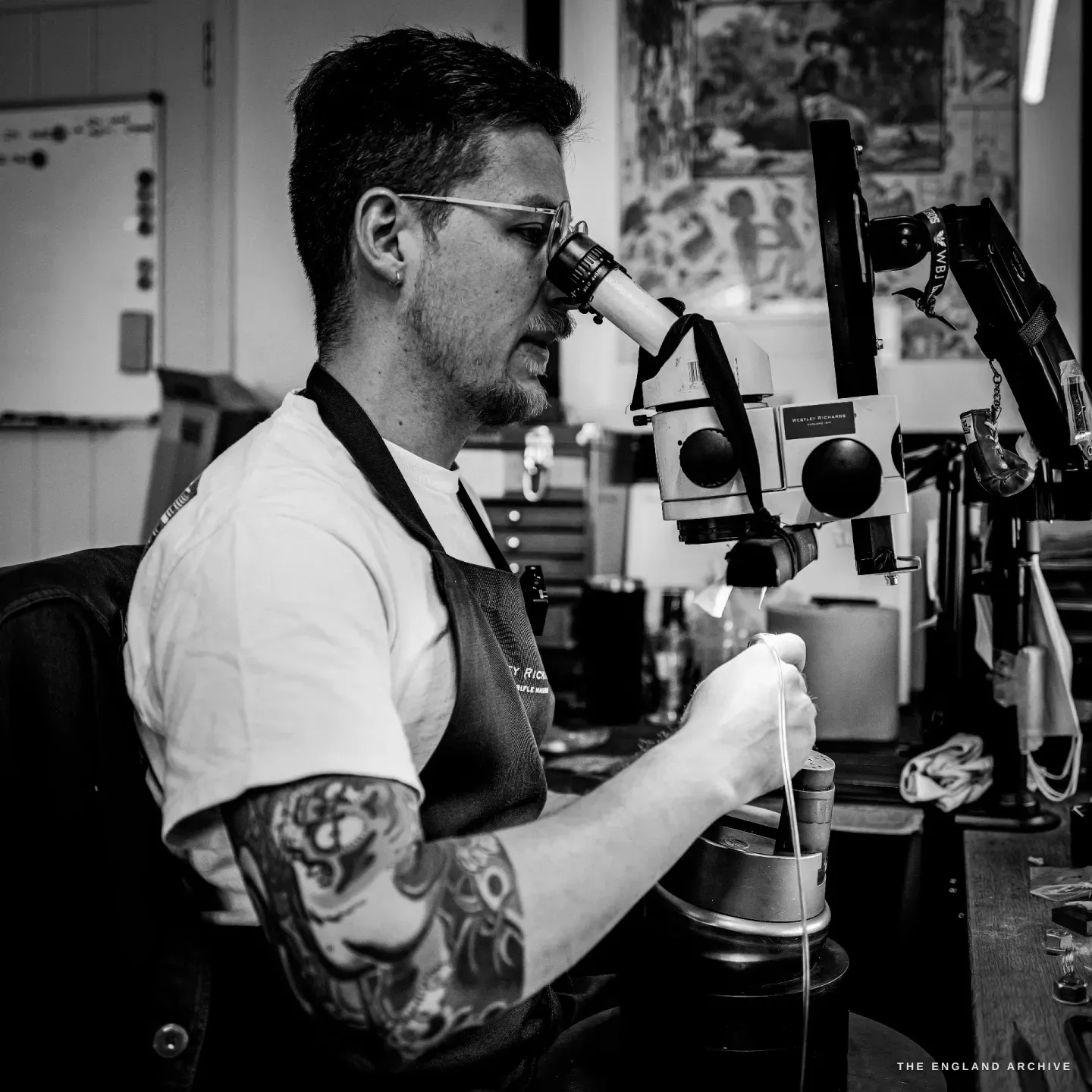
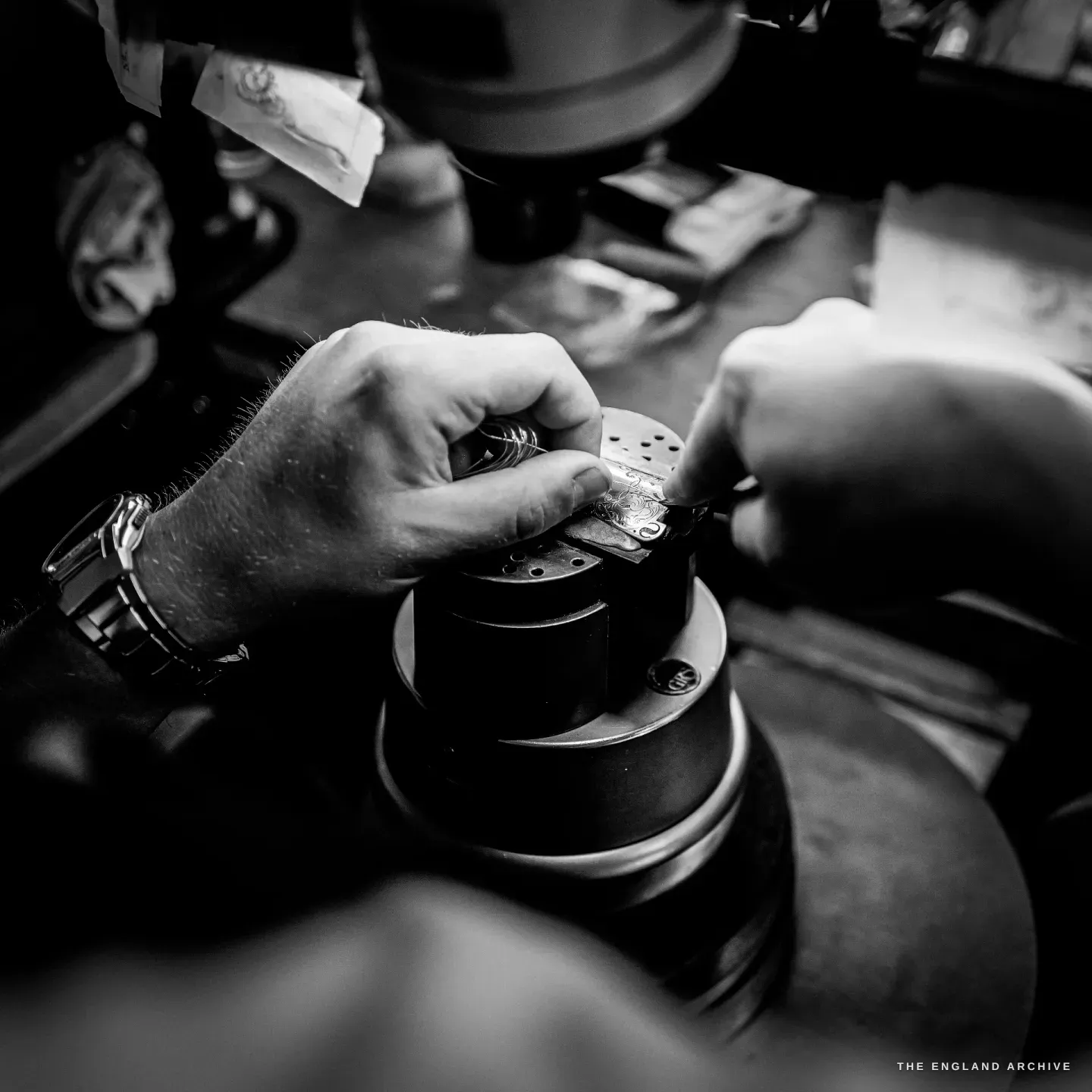
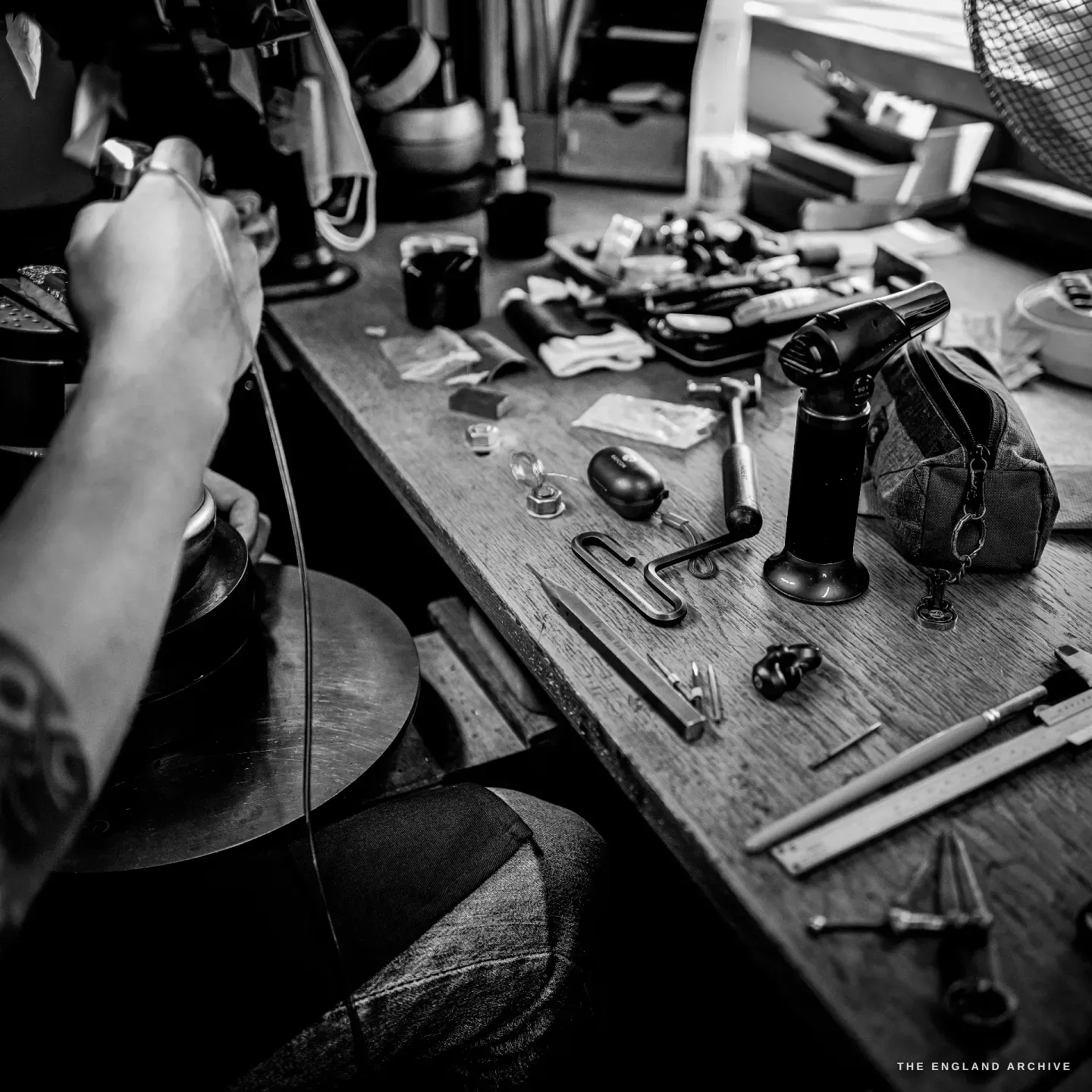
The tools have changed under him. His teachers in Liège, he told me, worked with a hammer and a chisel, tapping each cut home; Léo works mostly with pneumatic gravers, a fine chisel driven by little bursts of air, which lets him steer a line the way you steer a pen. The bench holds both kinds of tool, and a gas torch, and a steel rule, and not much else. Everything happens in a space the size of a dinner plate.
The thing that nearly caught him out was lettering. Back in Belgium, he told me, he had somehow got through his training without doing much of it - skipped it, more or less - and at Westley Richards lettering is everywhere: the maker's name, the model, the cartridge, all cut by hand into the metal. So he taught himself, and then kept going well past the point of merely coping. Lettering became the part he is known for. He has drawn lettering styles of his own for the firm, alphabets that did not exist until he made them.
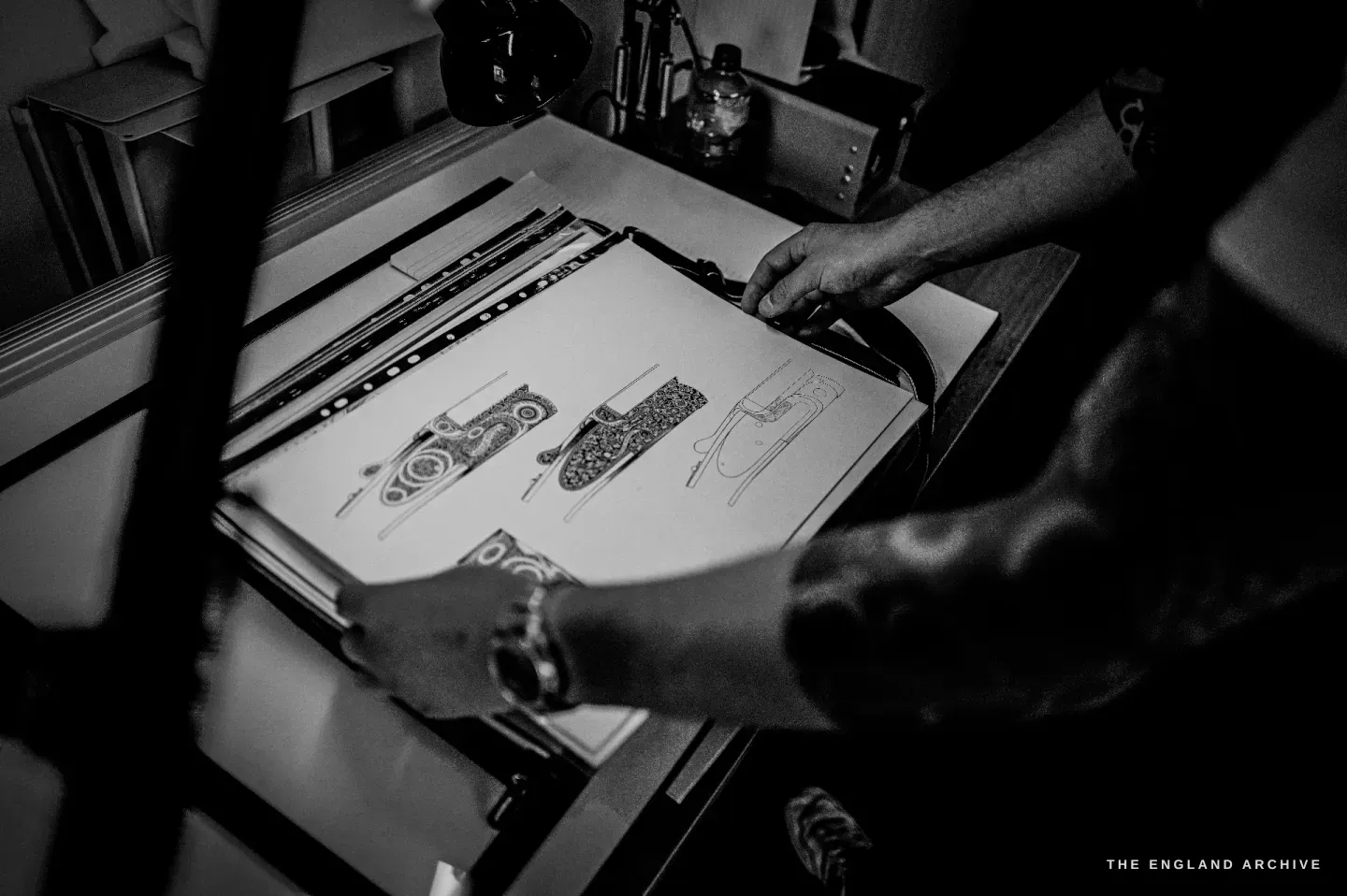
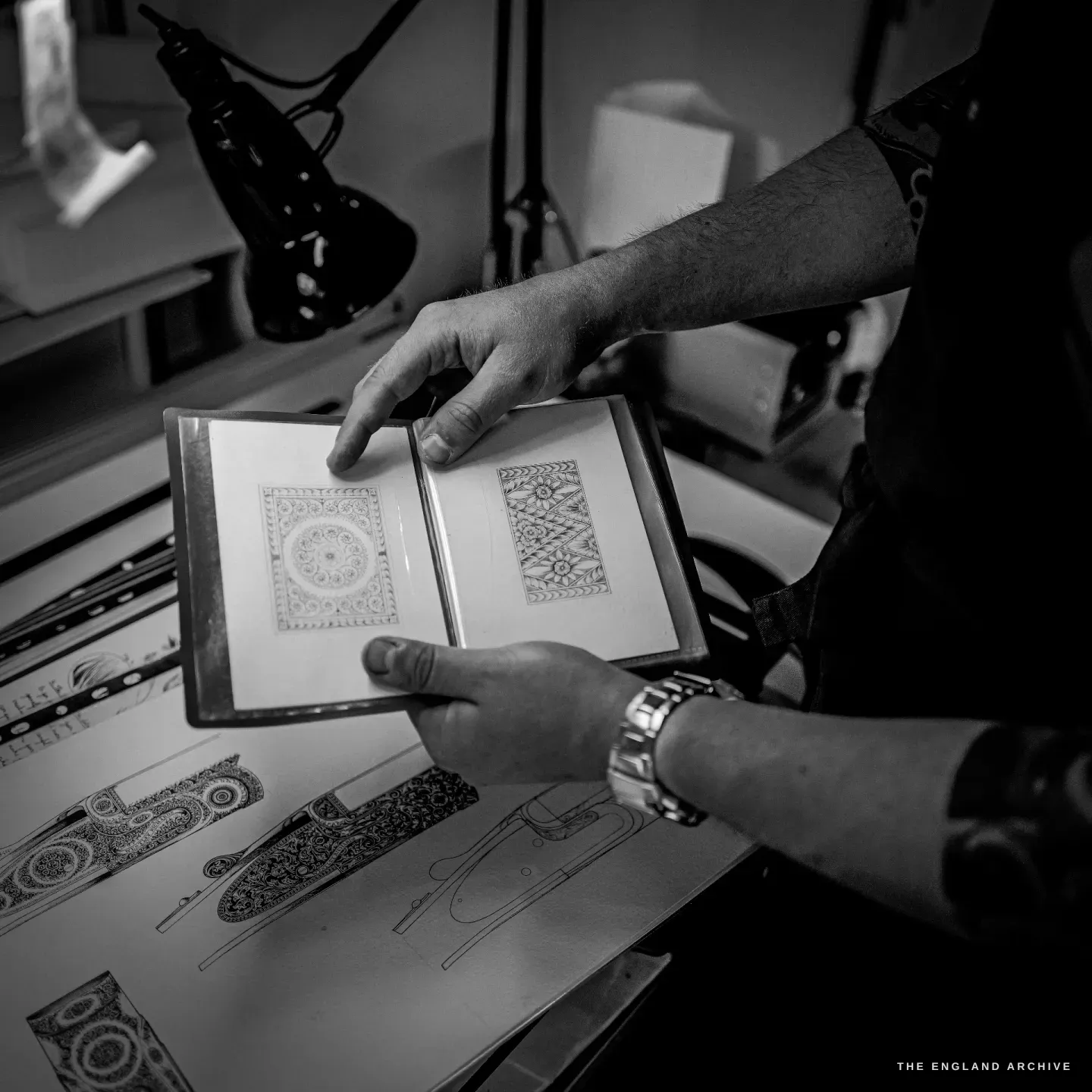
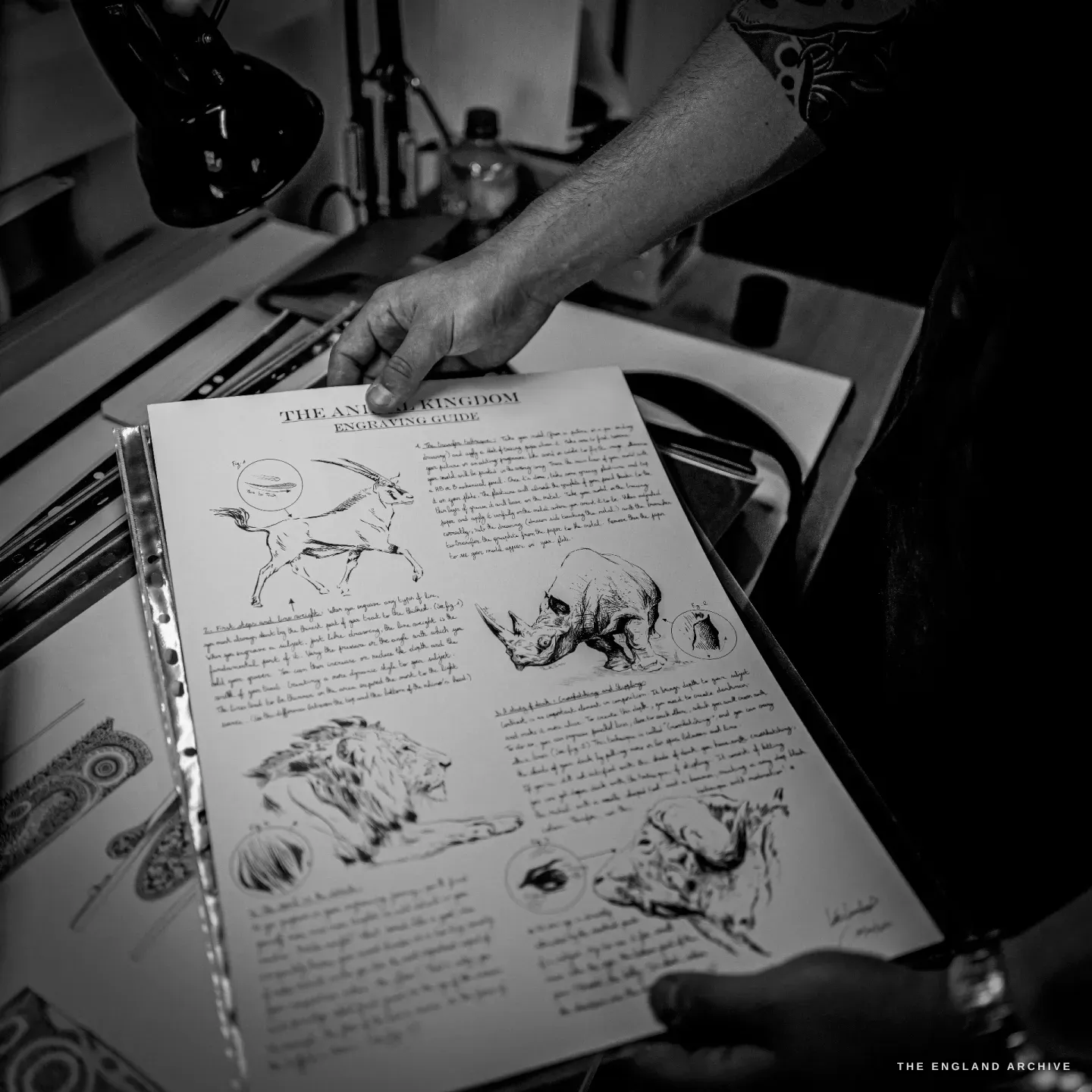
None of it starts on the gun. It starts on paper. Léo draws constantly - scrollwork, borders, and animals above all, because a Westley Richards is as likely to carry a buffalo or a lion as a run of pattern. He showed me his own reference books: sheet after sheet of pen studies, and one he had headed, only half joking, The Animal Kingdom Engraving Guide. By the time an animal reaches the steel he has drawn it many times over.
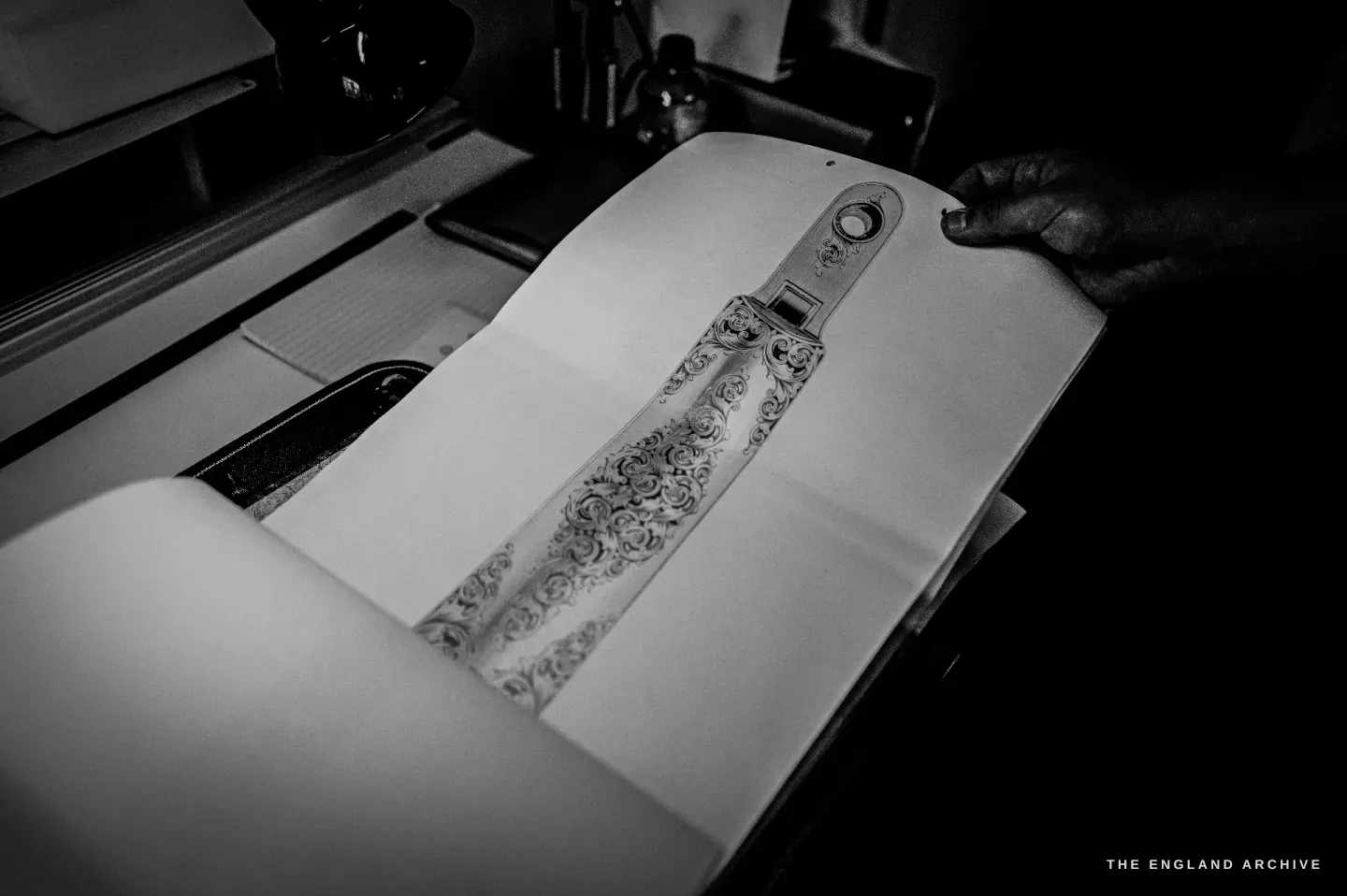
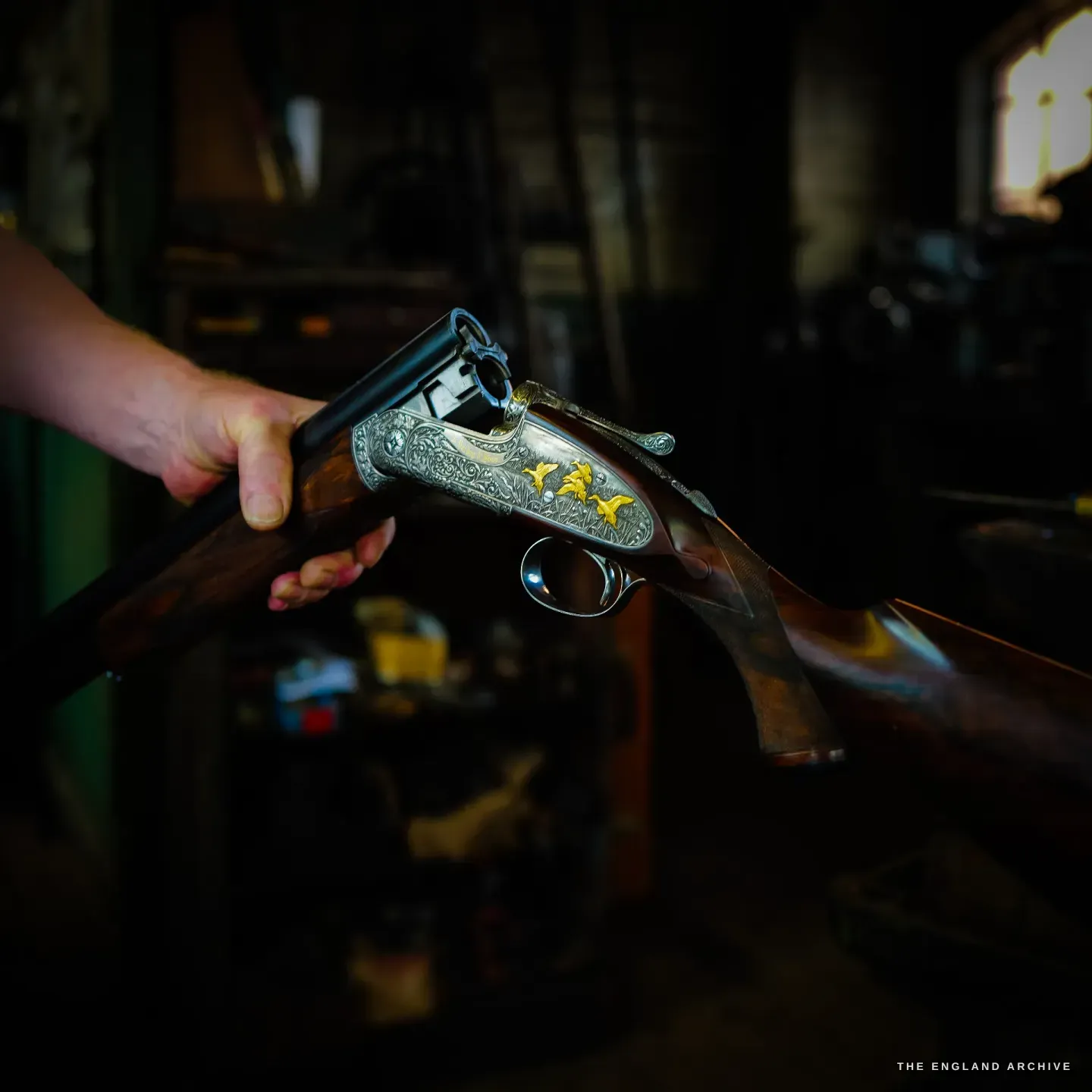
He walked me through the last thing that goes in, on the best work: gold. Léo cuts a recess into the steel and works soft gold down into it until it keys and holds, then takes the surface back flush and cuts the detail into the gold itself. It goes into the action, into the trigger plate, along the barrel - wherever the design calls for a line to catch the light. On a finished piece the gold looks inevitable. It is the slowest part of the whole job.
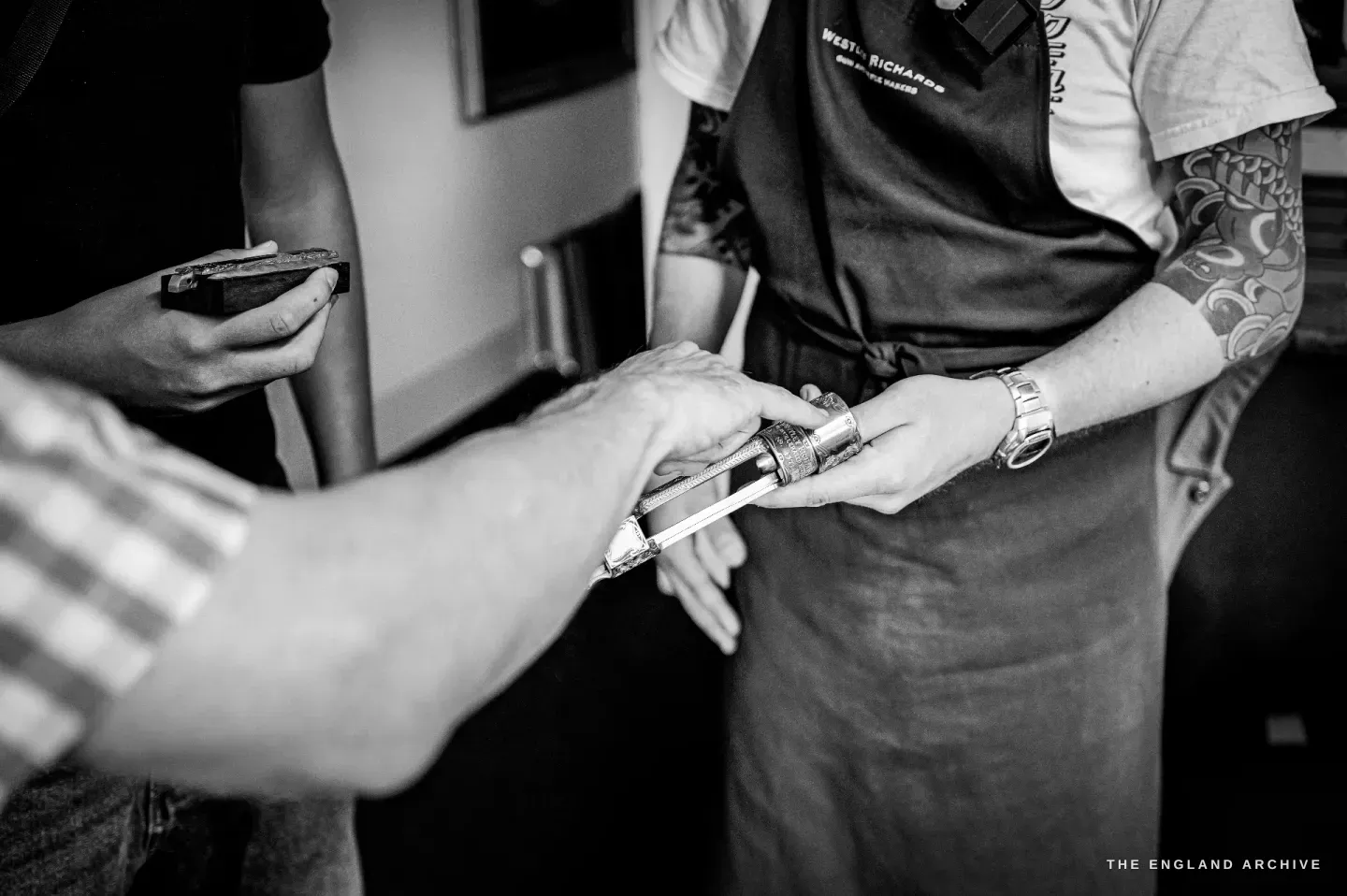
Léo is no longer only a learner - he teaches. He has an apprentice of his own, a young woman who was away the day I visited, in a few days a week around her time at university. And while I was there a manager brought a young man up to the studio, a possible future apprentice, to stand at the bench and see the work. Léo put a part-cut component into his hands and talked him through it, the way you do when you are trying to catch someone with something before they know they are caught.
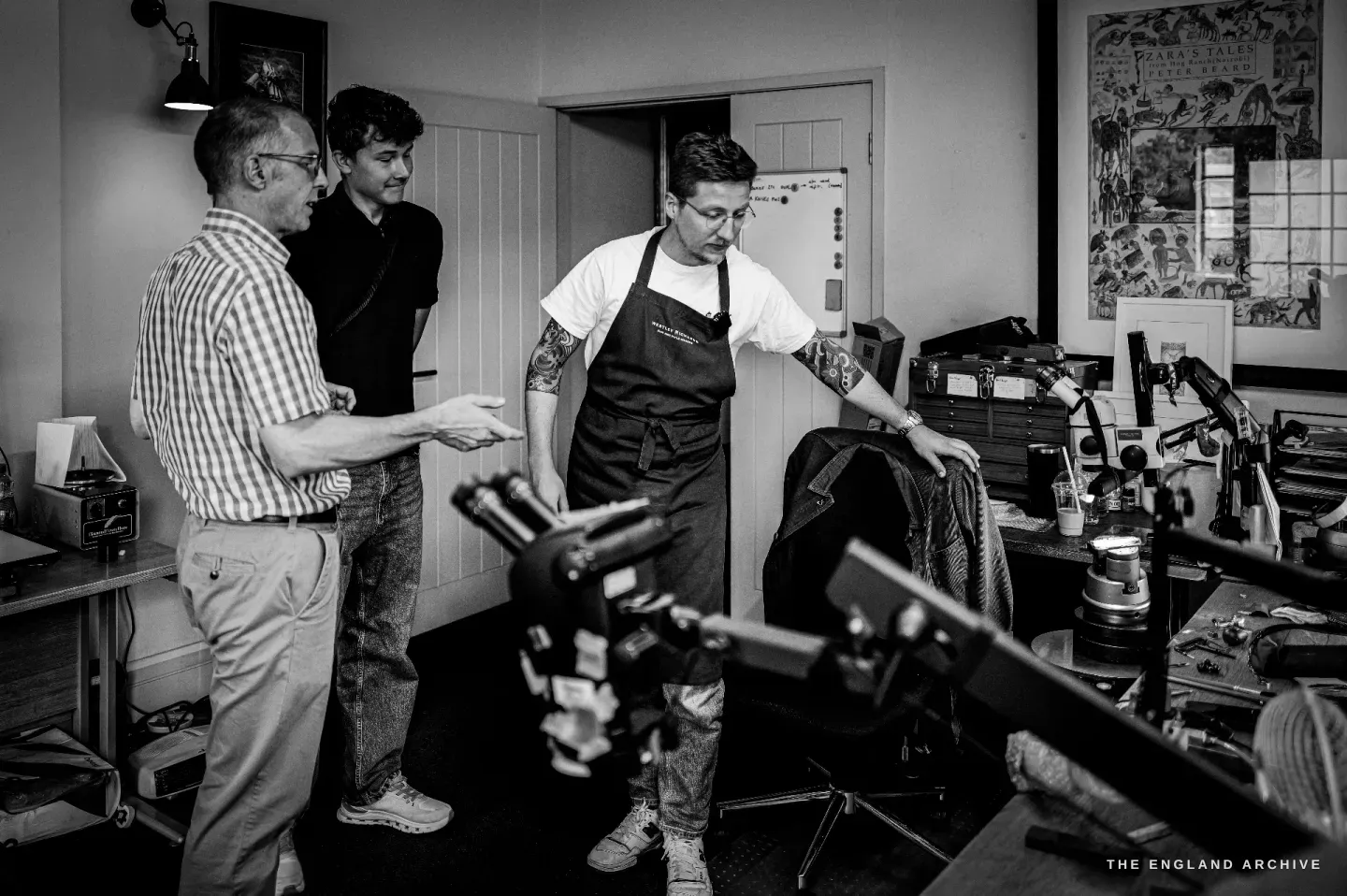
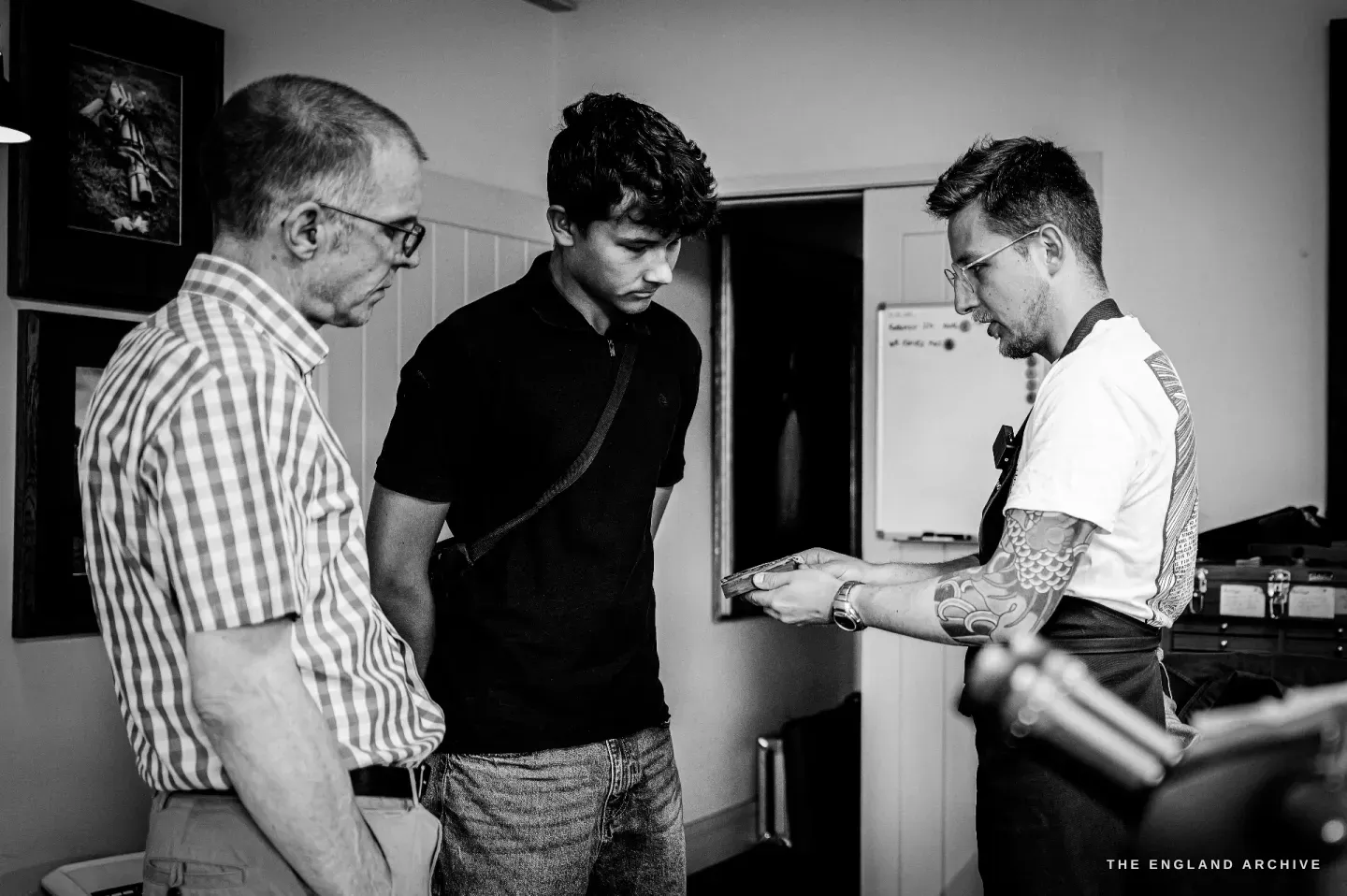
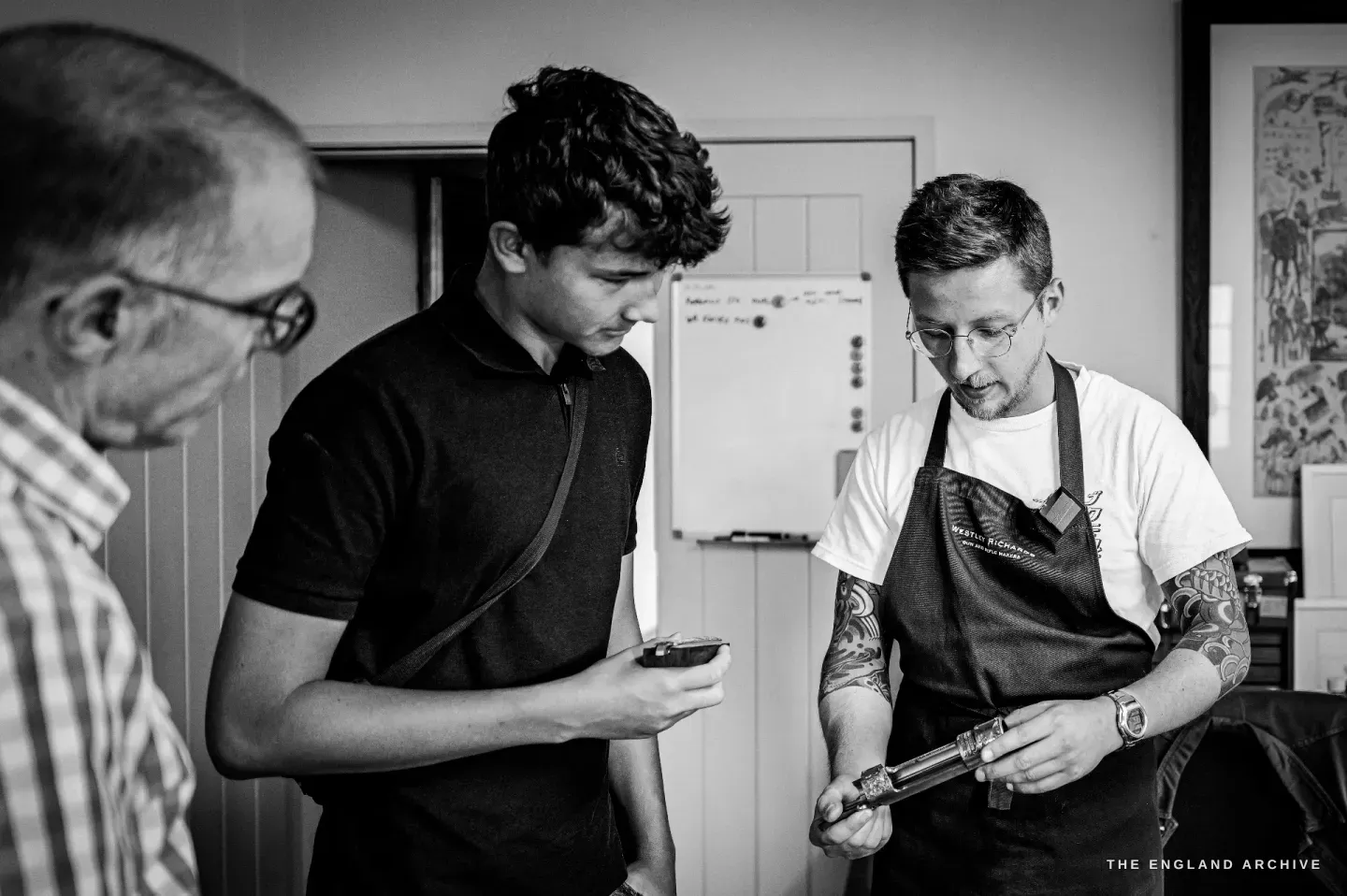
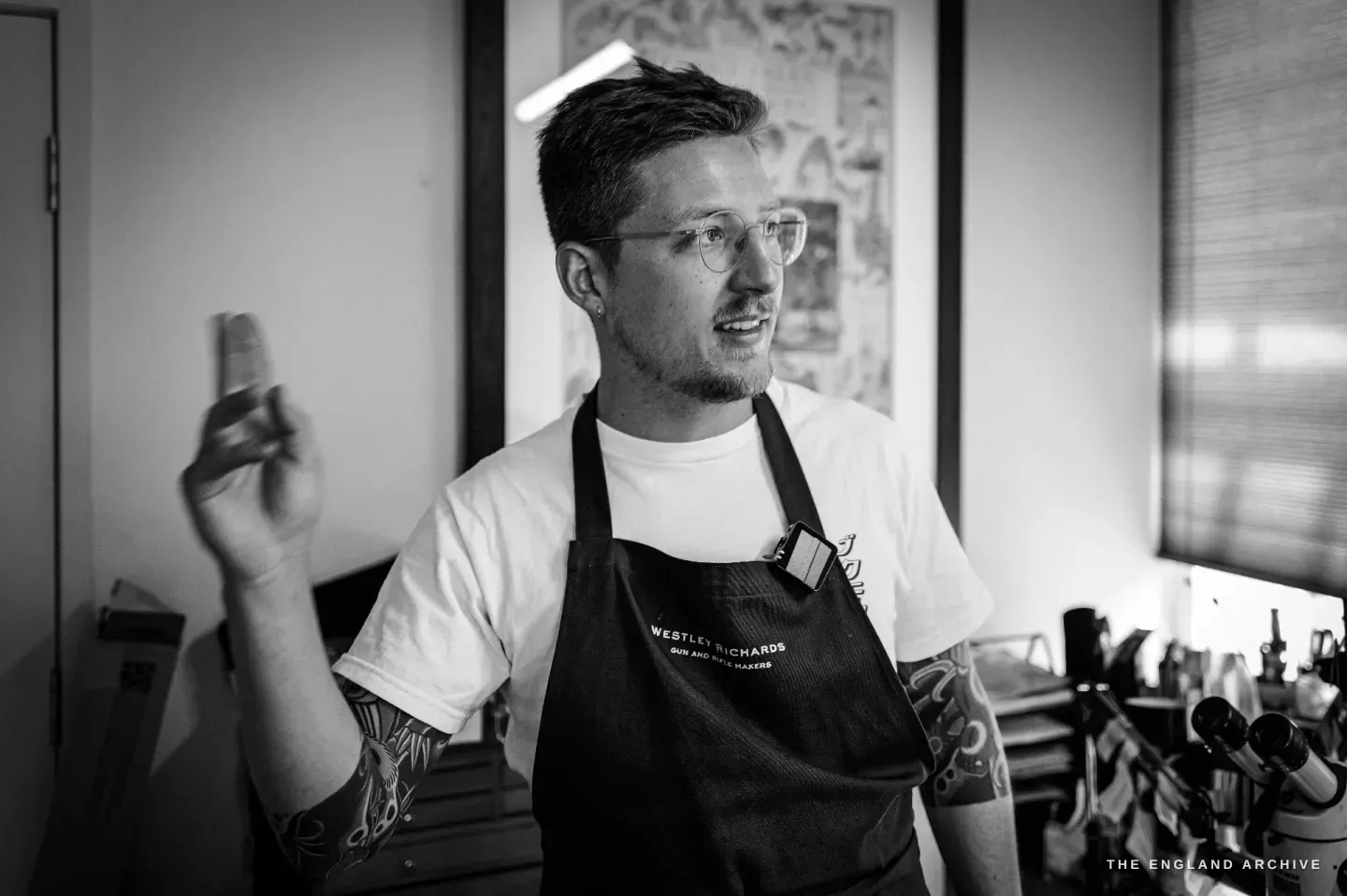
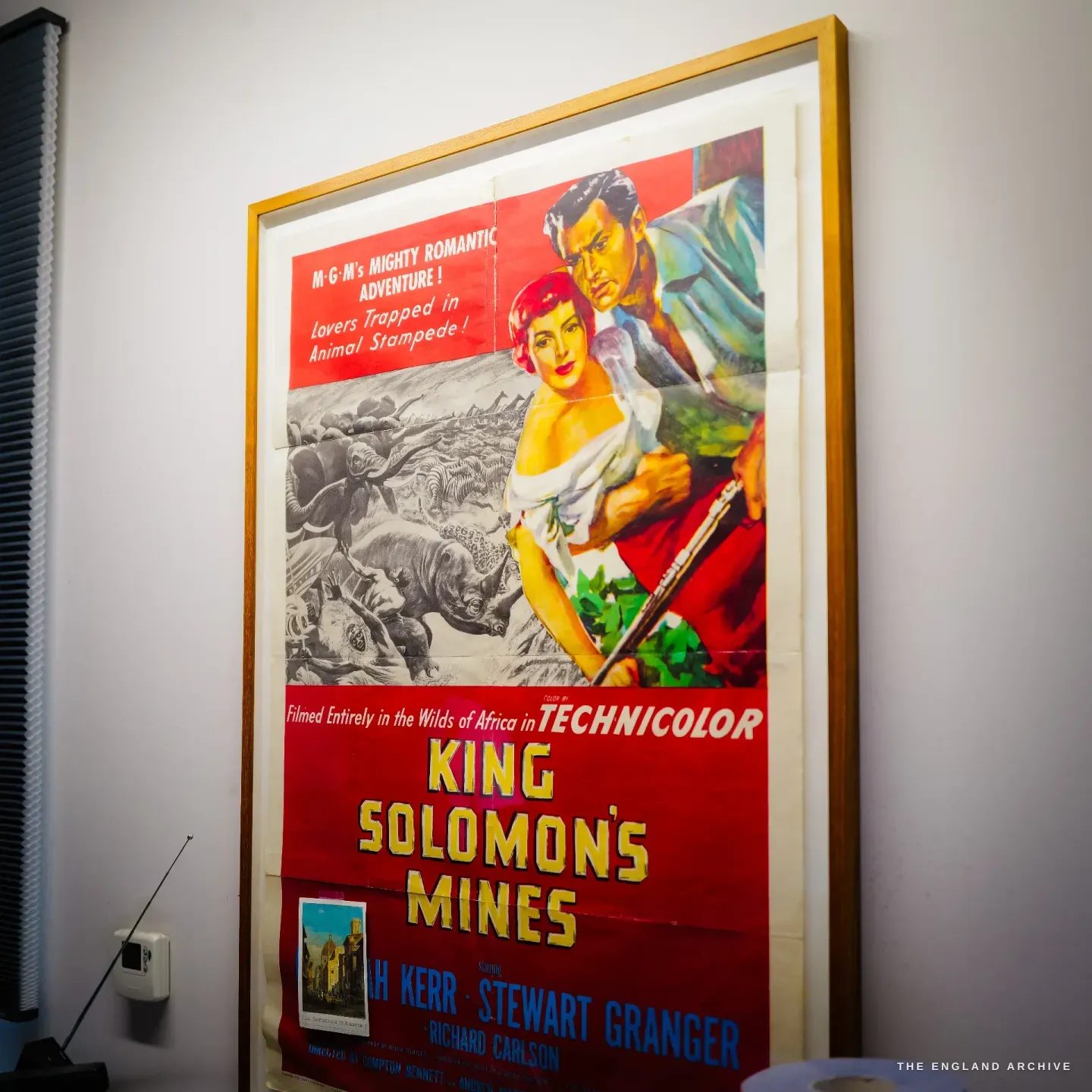
Léo is an artist who happens to work in steel and gold, and I saw it away from the bench as much as at it. His arms are covered in bright Japanese tattoo work, colour and line running from the wrist up; a Technicolor poster for King Solomon's Mines hangs on the studio wall; the shelves hold as many art books as gun books. The same eye that lays out an alphabet lays out the ink and picks the poster.
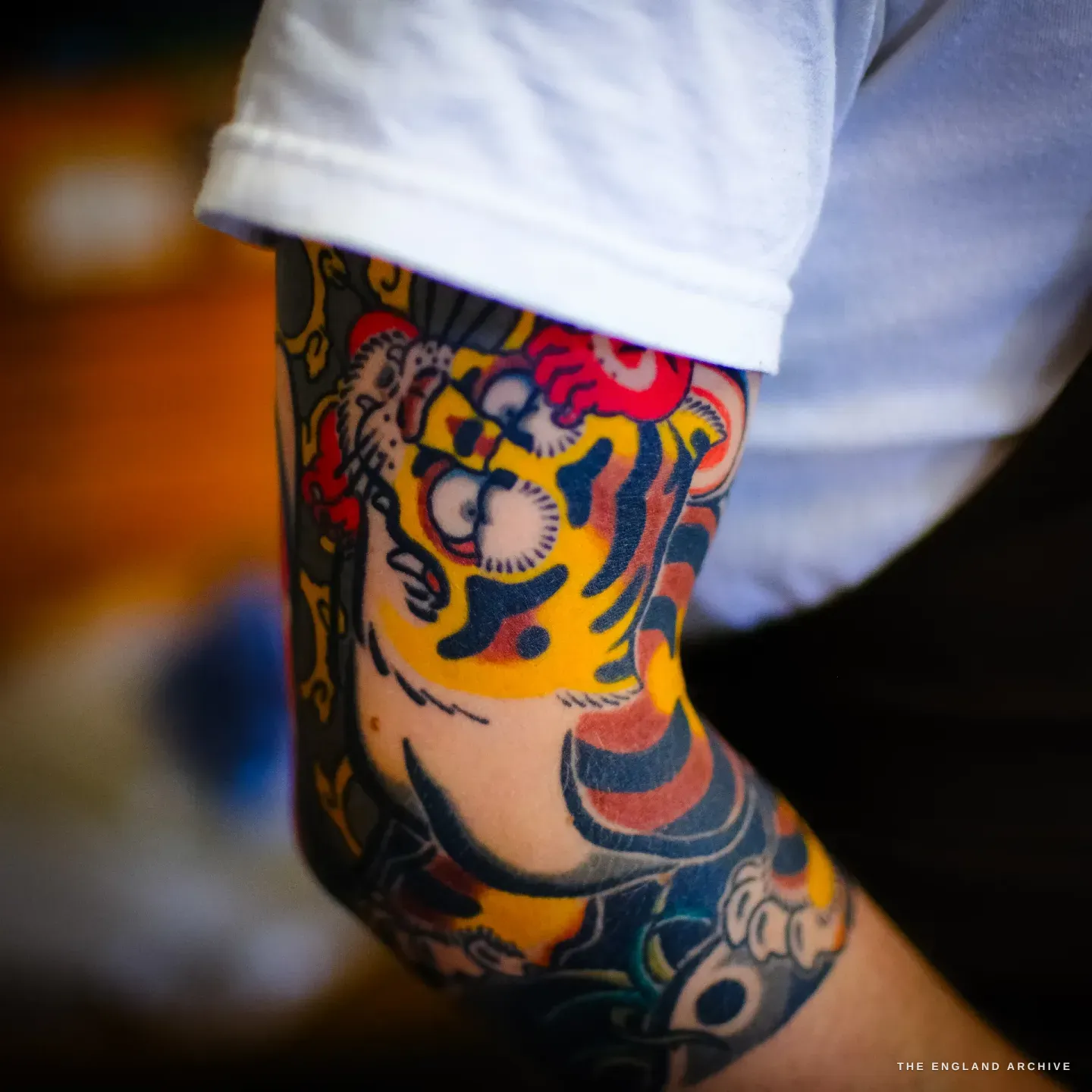
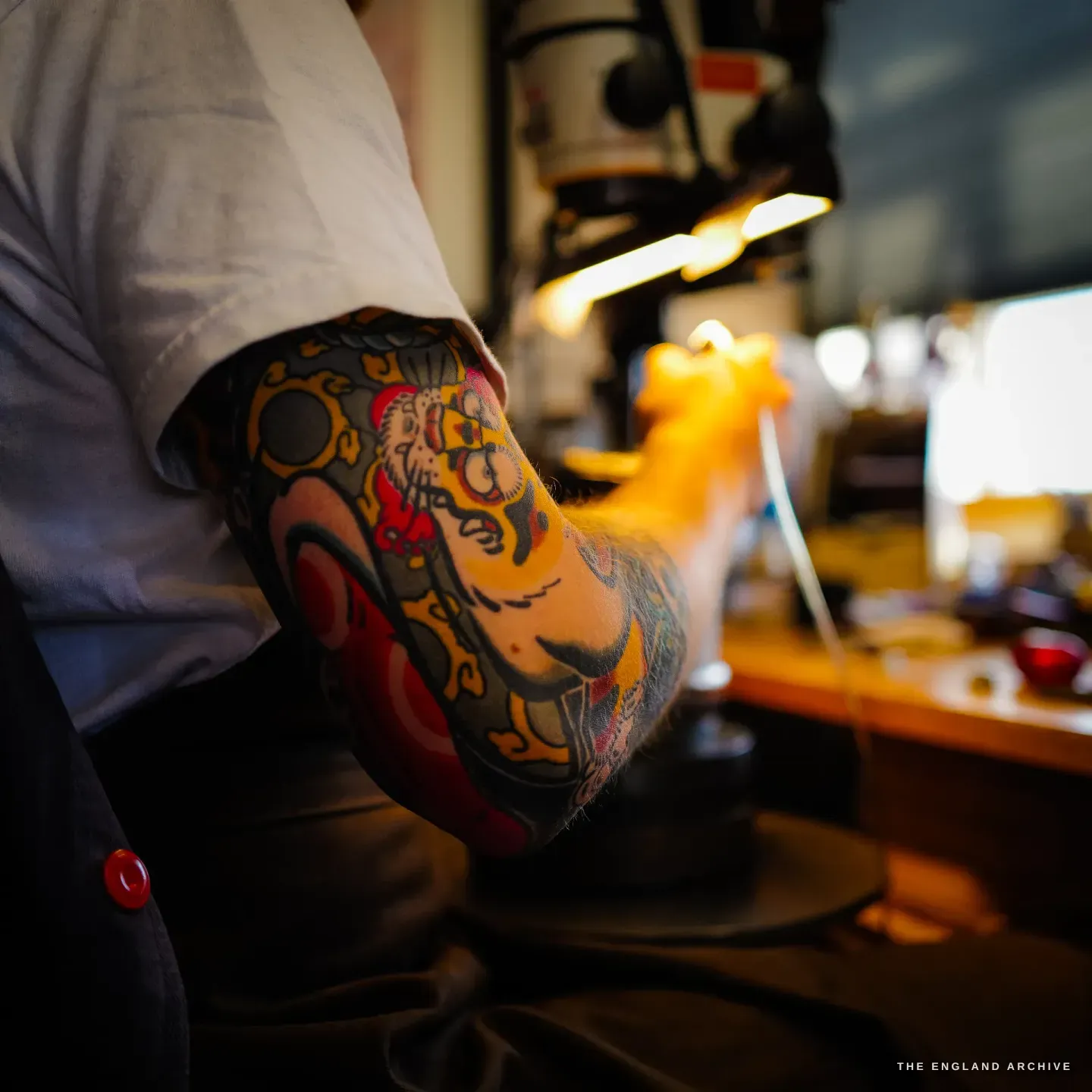
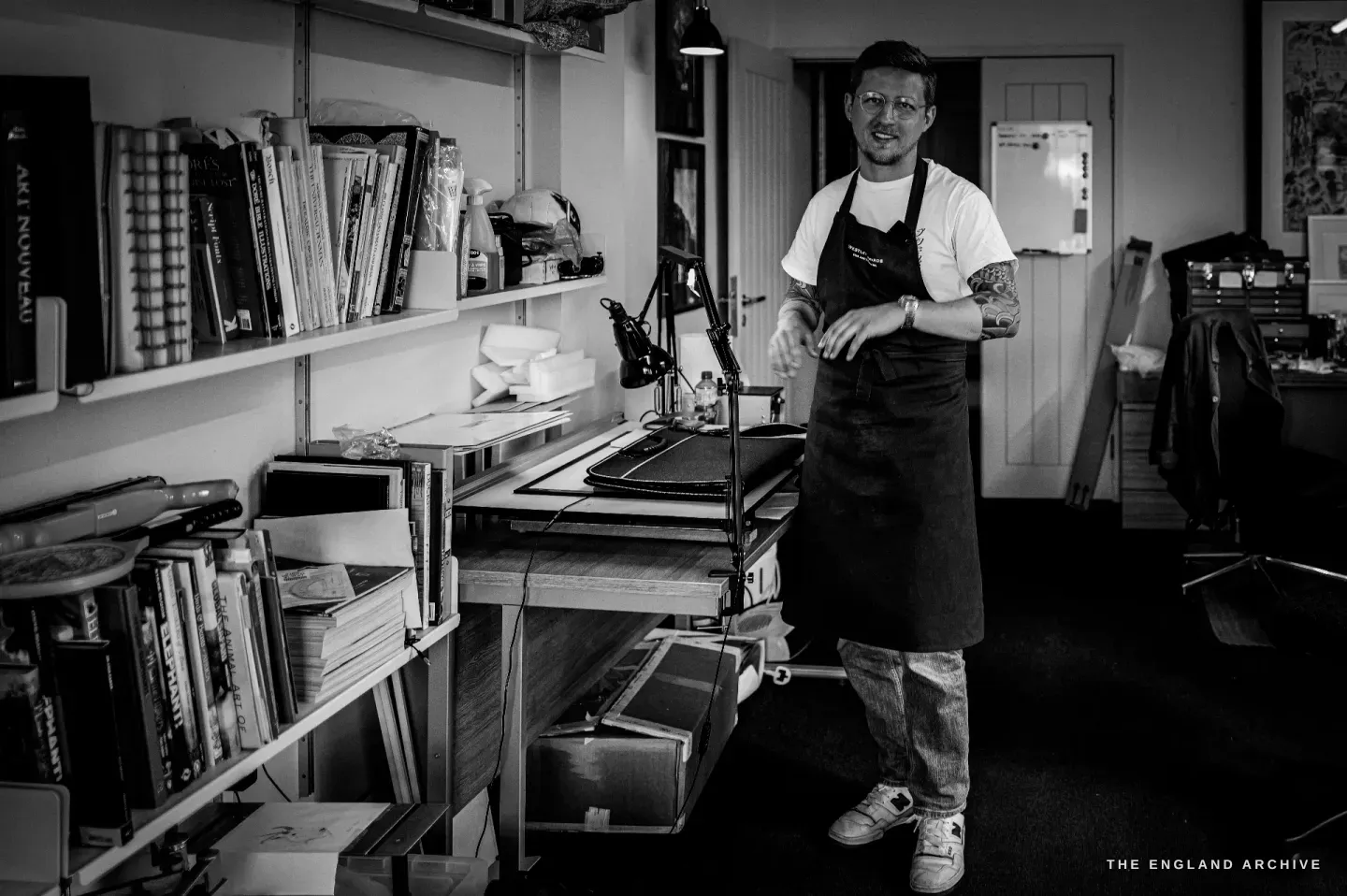
He is twenty-eight, which in his own trade is early - engravers are often said to reach their best work in their fifties. But he already runs the studio, he has already put his lettering onto guns that will outlast everyone who handled them, and he is already teaching the next person. I came to Westley Richards to photograph a firm and its building, and left most struck by a young Belgian at a microscope, cutting his name into an English gun trade that could badly use him.