A Morning at Westley Richards
Inside the Birmingham gun manufactory, founded 1812

Westley Richards is one of the great names in English gunmaking, and I had been trying to get inside for a while. What I was given was a morning. Stephen, the manager, met me at the door of the Pritchett Street works, told me I could bring the car in off the road and park inside, and welcomed me in as if I had been expected for years. Then he took me up the stairs to the one man I would be allowed to document properly that day: an engraver.
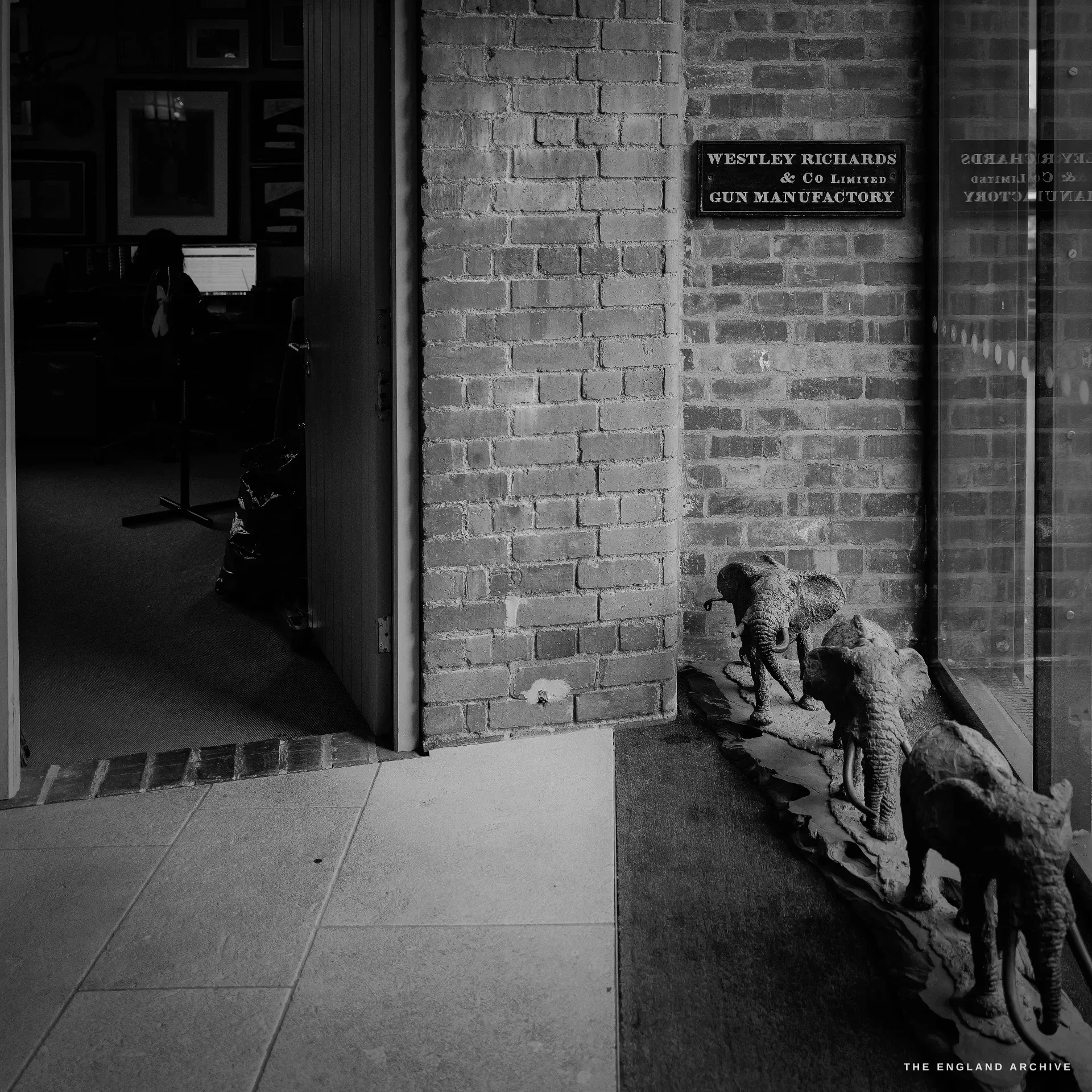
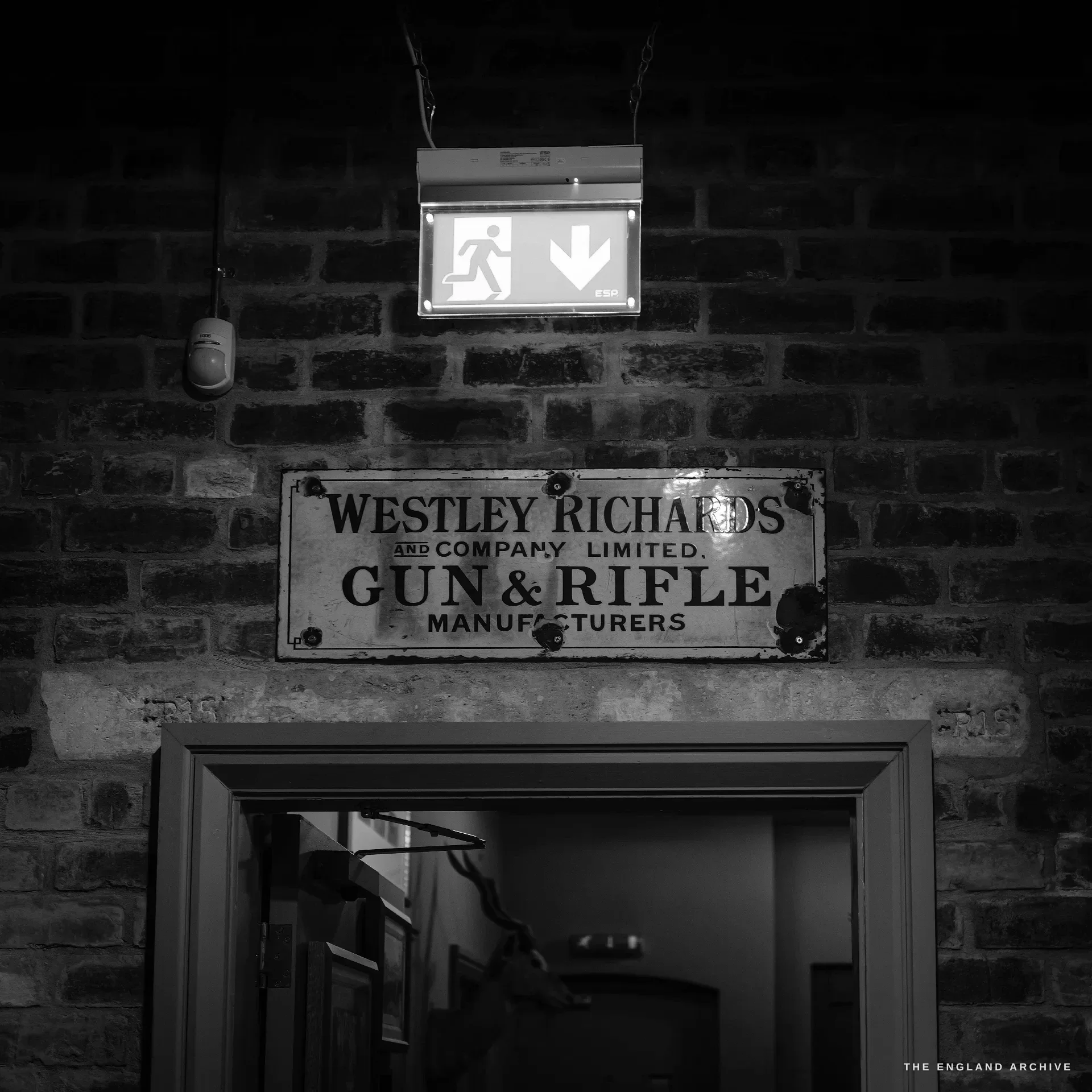
The plaque by the door tells you what the building is for. Westley Richards & Co Limited, Gun Manufactory. The firm was founded in Birmingham in 1812 by William Westley Richards, and it has been making best guns and rifles ever since - through the whole rise and near-disappearance of the English gun trade, and out the other side, still building complete guns by hand in the city. There are very few of these left anywhere in the world, and this is one of them.
The building itself is only the firm's latest. For well over a century, from 1894, the guns were made at a purpose-built factory in Bournbrook, a few miles south of here. Westley Richards came to Pritchett Street, into an older works dressed up by an architect and an interior designer, only in 2008. The address has changed more than once in two hundred years. The trade carried on inside it has not.
Since 1812
You feel the age of the place before anyone gives you a date. William Westley Richards founded the firm in 1812, at twenty-two, into a Birmingham family that had already worked in jewellery, cutlery and guns. He set down a motto the firm still repeats: to make as good a gun as can be made. It is the sort of line that is empty in most mouths. Here, once you have watched the work, it turns out to be a specification.
By 1815 he had a shop on Bond Street and a London agent, William Bishop, who ran it with enough style that London called him the Bishop of Bond Street. For the next hundred years, until 1917, that window was where the aristocracy came to be measured for their guns. The making stayed in Birmingham, where it has always been.
The firm made its name first on invention. In 1858 Westley Richards patented a capping breechloader with a long top lever the soldiers called the monkey tail; it grew out of rifling work done with Isambard Kingdom Brunel and Joseph Whitworth, and after four rejections the War Office took the fifth pattern, in 1866, for the British cavalry. A couple of thousand were built here and some nineteen thousand more under licence at Enfield. It was still being carried, in the Boer War and in southern Africa, decades later.
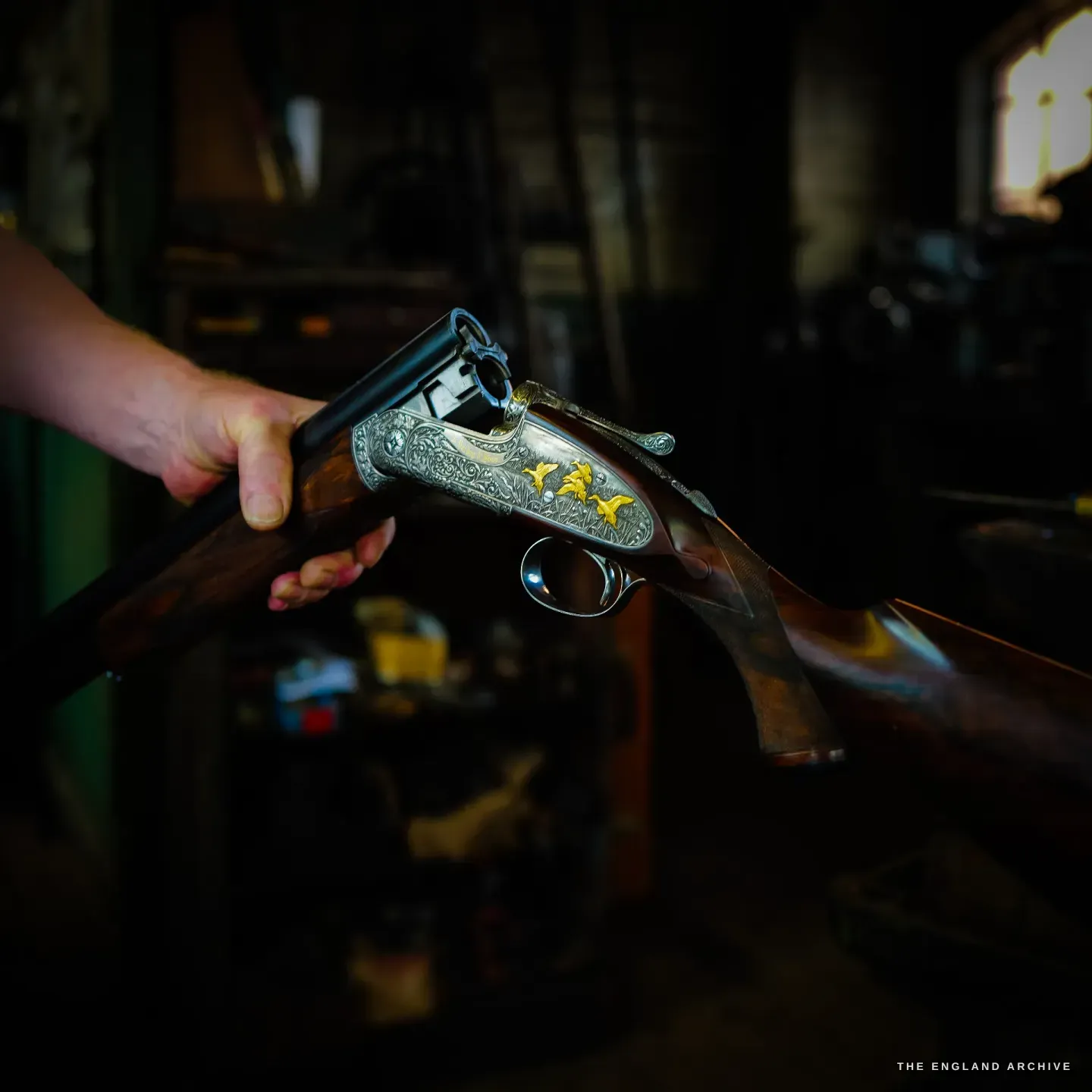
Then came the two ideas the firm is really remembered for, both worked out by its own men at these benches. In 1875 William Anson and John Deeley patented the boxlock: the first hammerless action that genuinely worked, stripped to a handful of parts, so sound that it became the standard boxlock of the whole world and remains it. In 1897 Leslie Taylor, the managing director, carried the same instinct to its limit with the hand-detachable lock, the droplock, whose lockwork sits on a little plate and lifts out of the gun on a hinged floor without a tool in your hand. The droplock is still the firm's signature, and it is still built here, upstairs from where I was standing.
So when I say you feel the age of the place, I mean this is a company whose past happens to be enormous, and which is still doing the thing the past was famous for. That is a rare position to be in, and the front of house is arranged to let you feel it the moment you are through the door.
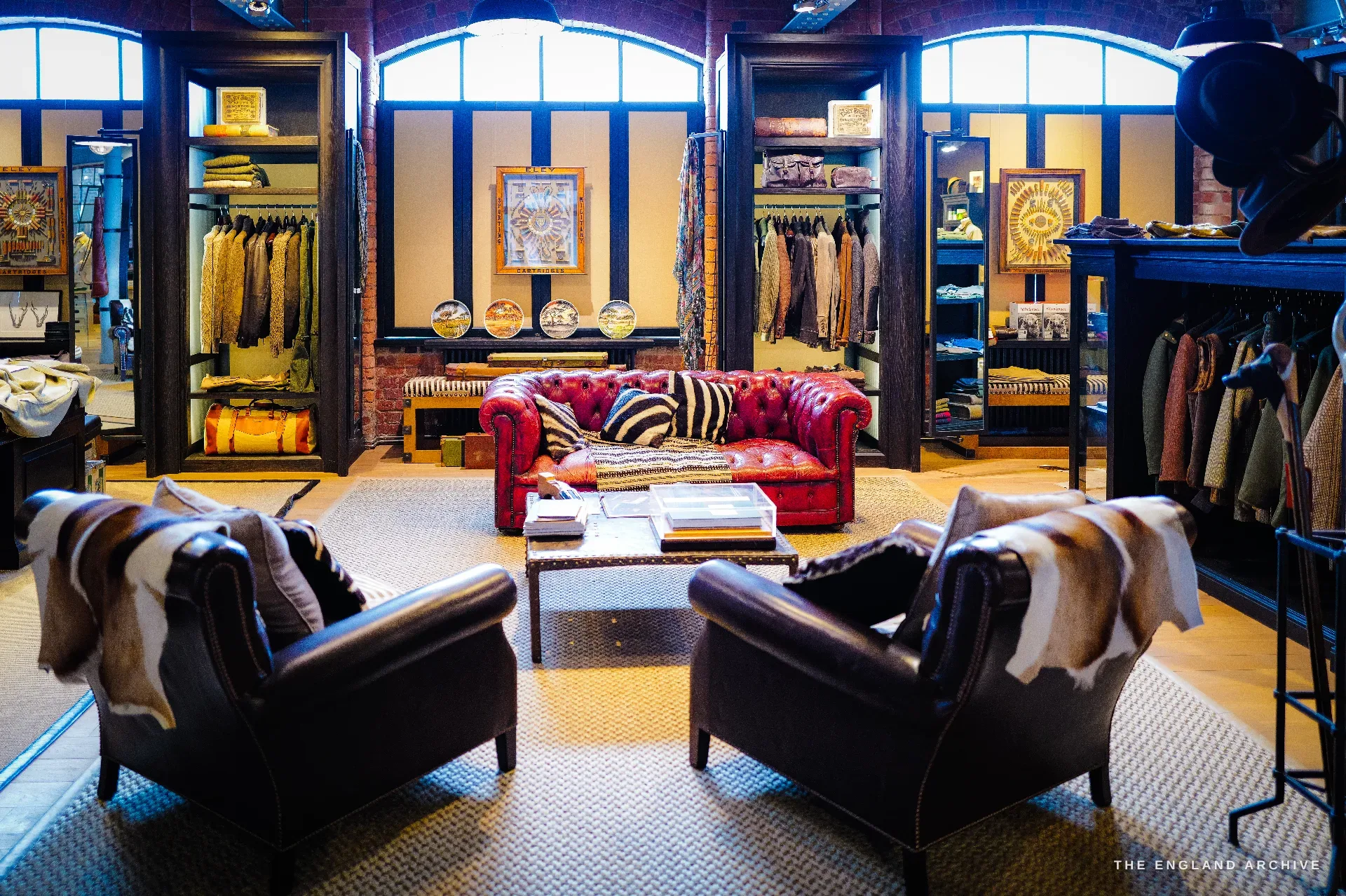
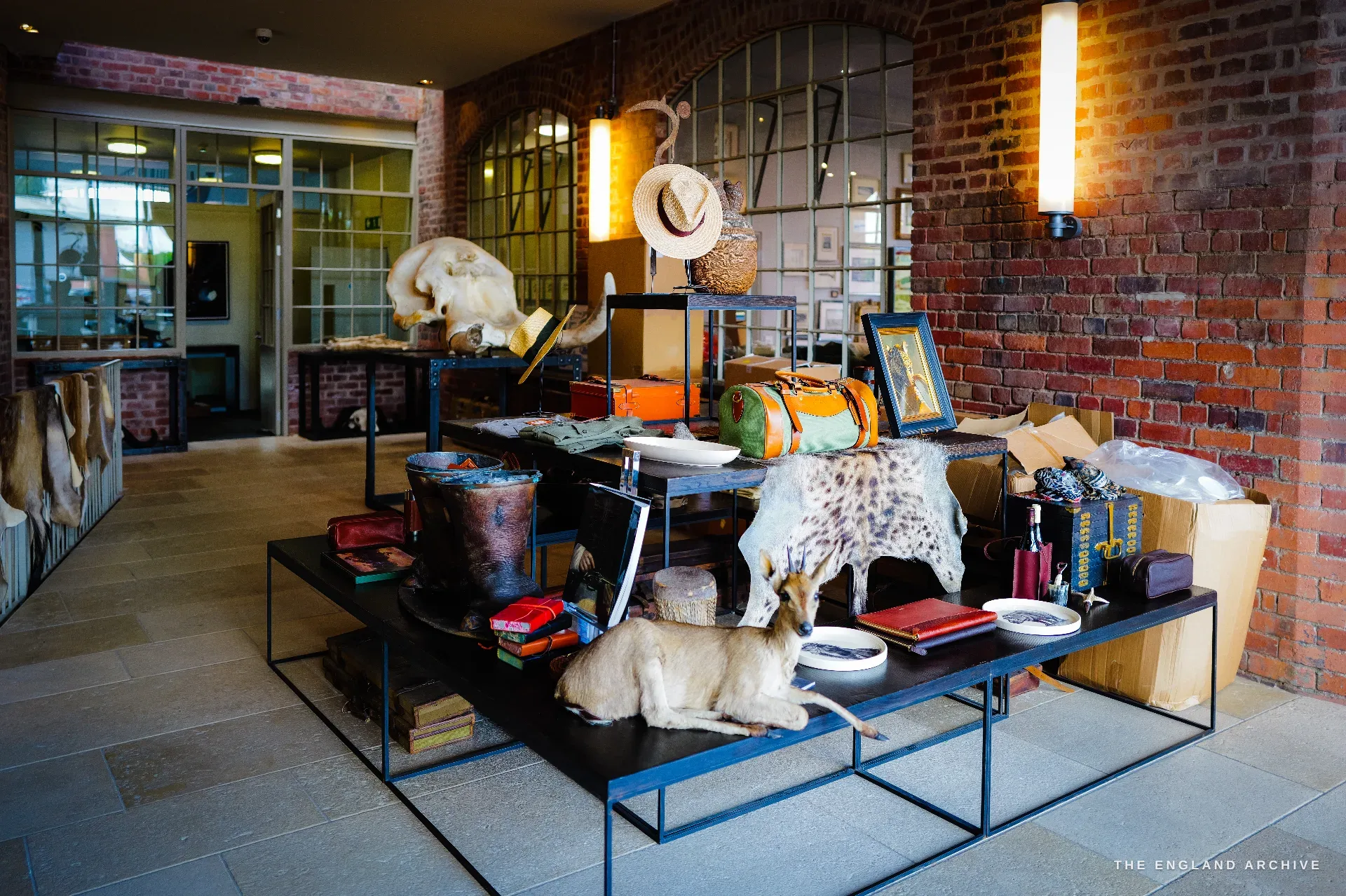
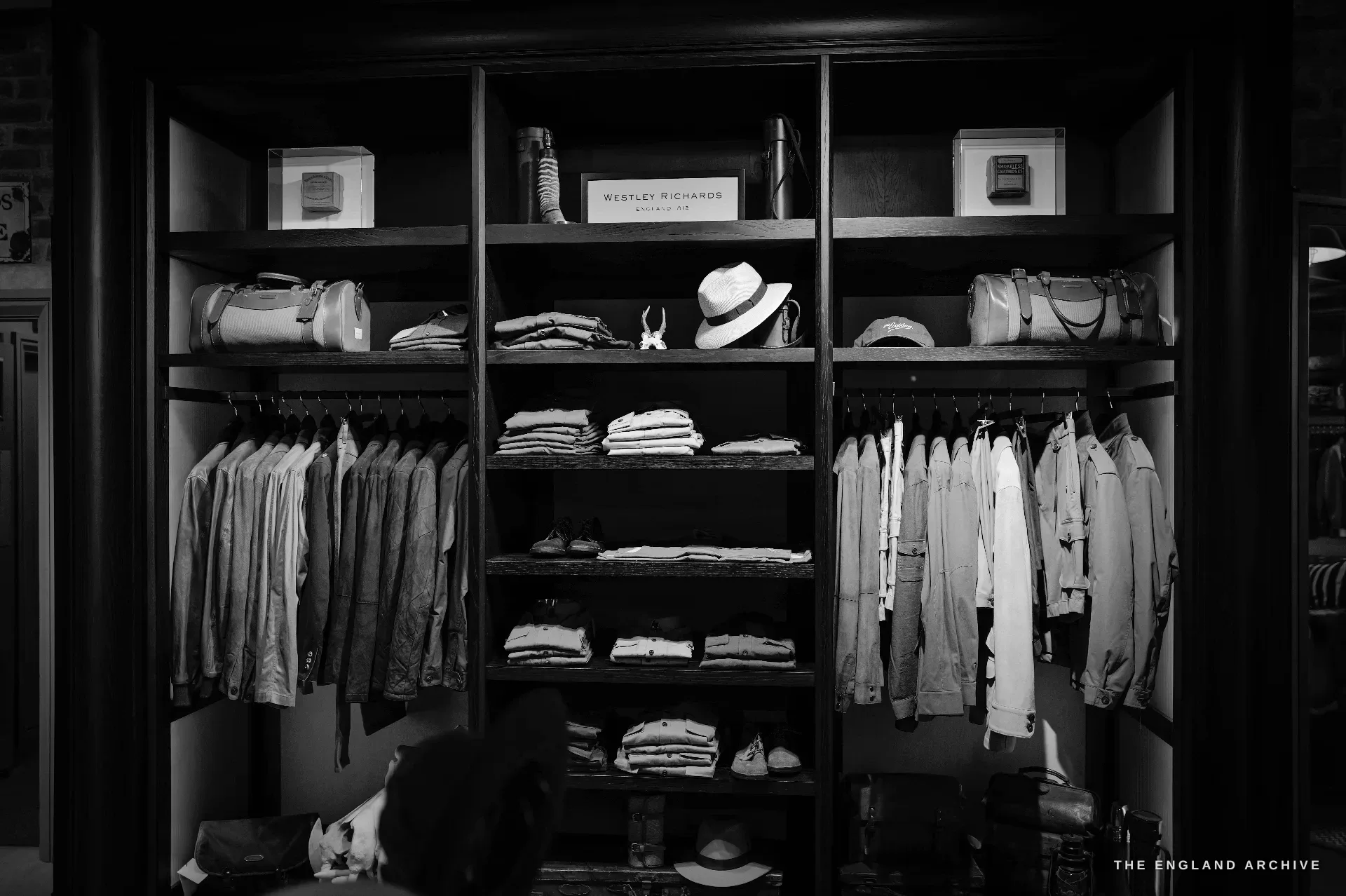
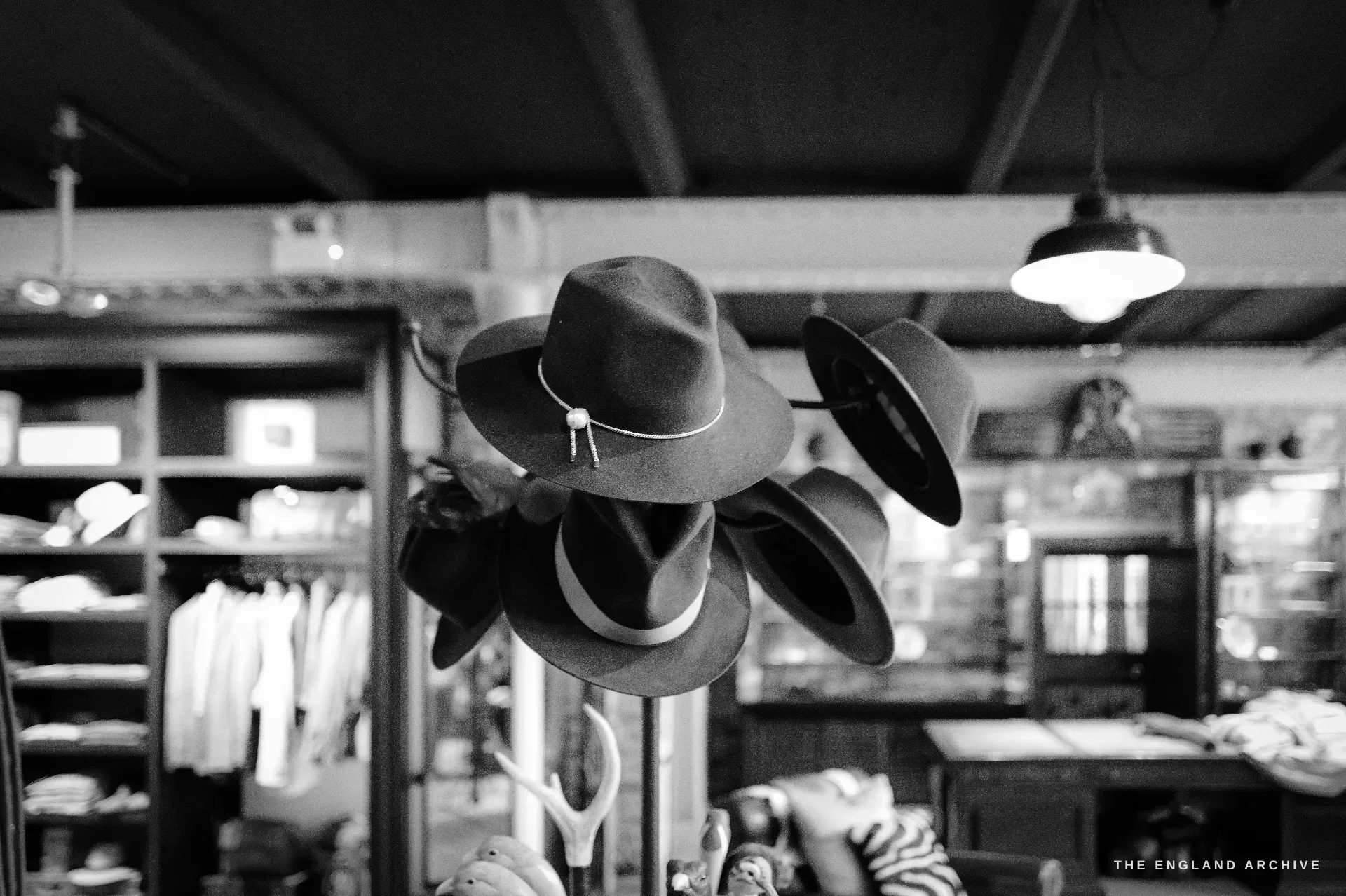
The front of house is a sporting world in miniature - red leather Chesterfields, hide-draped armchairs, glazed cabinets, racks of tweed and safari cloth, the smell of leather and gun oil. It is showroom and club and outfitter all at once, and it is doing a job: a firm that sells guns costing more than houses has to sell the life the guns belong to as well.
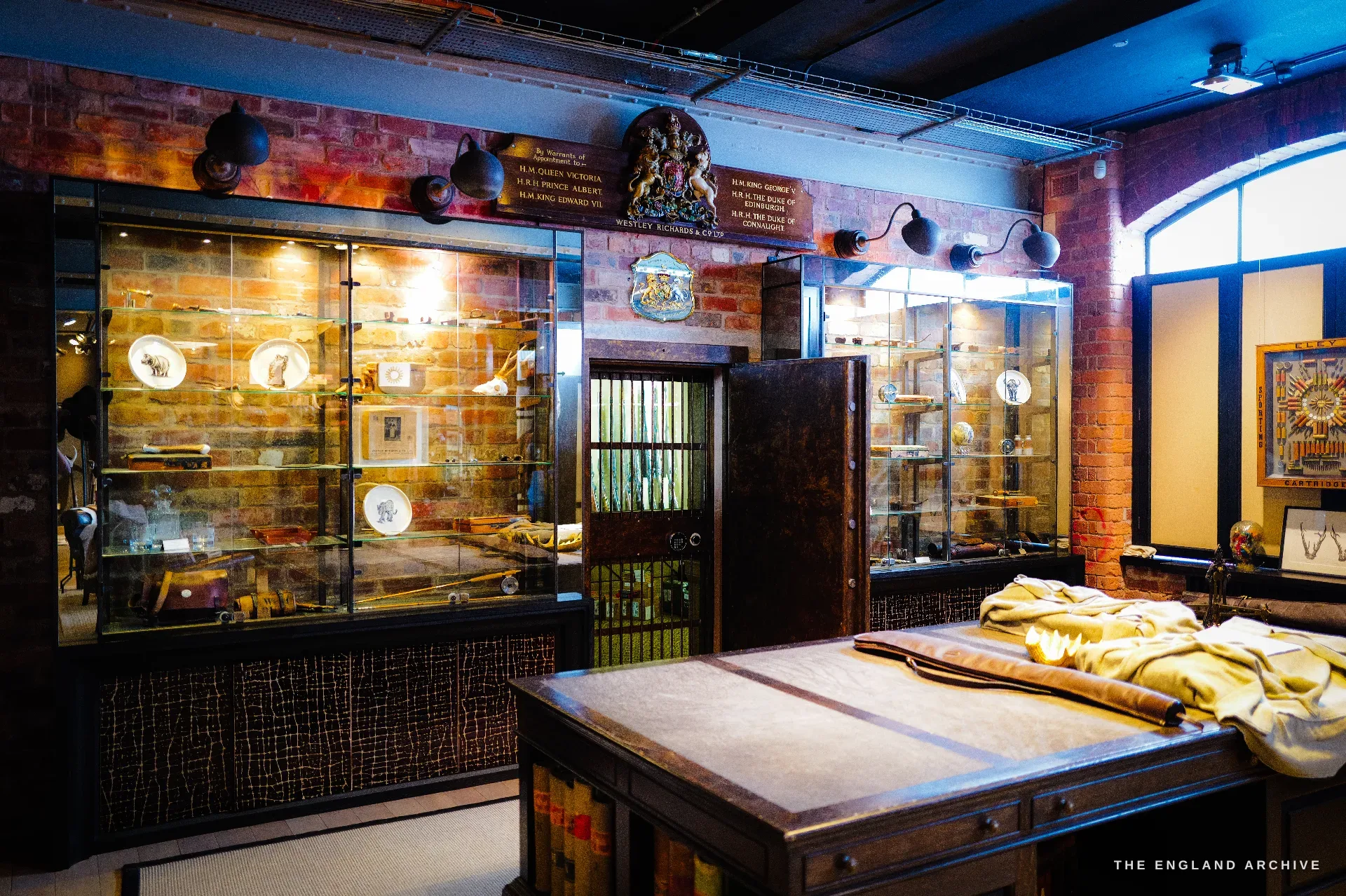
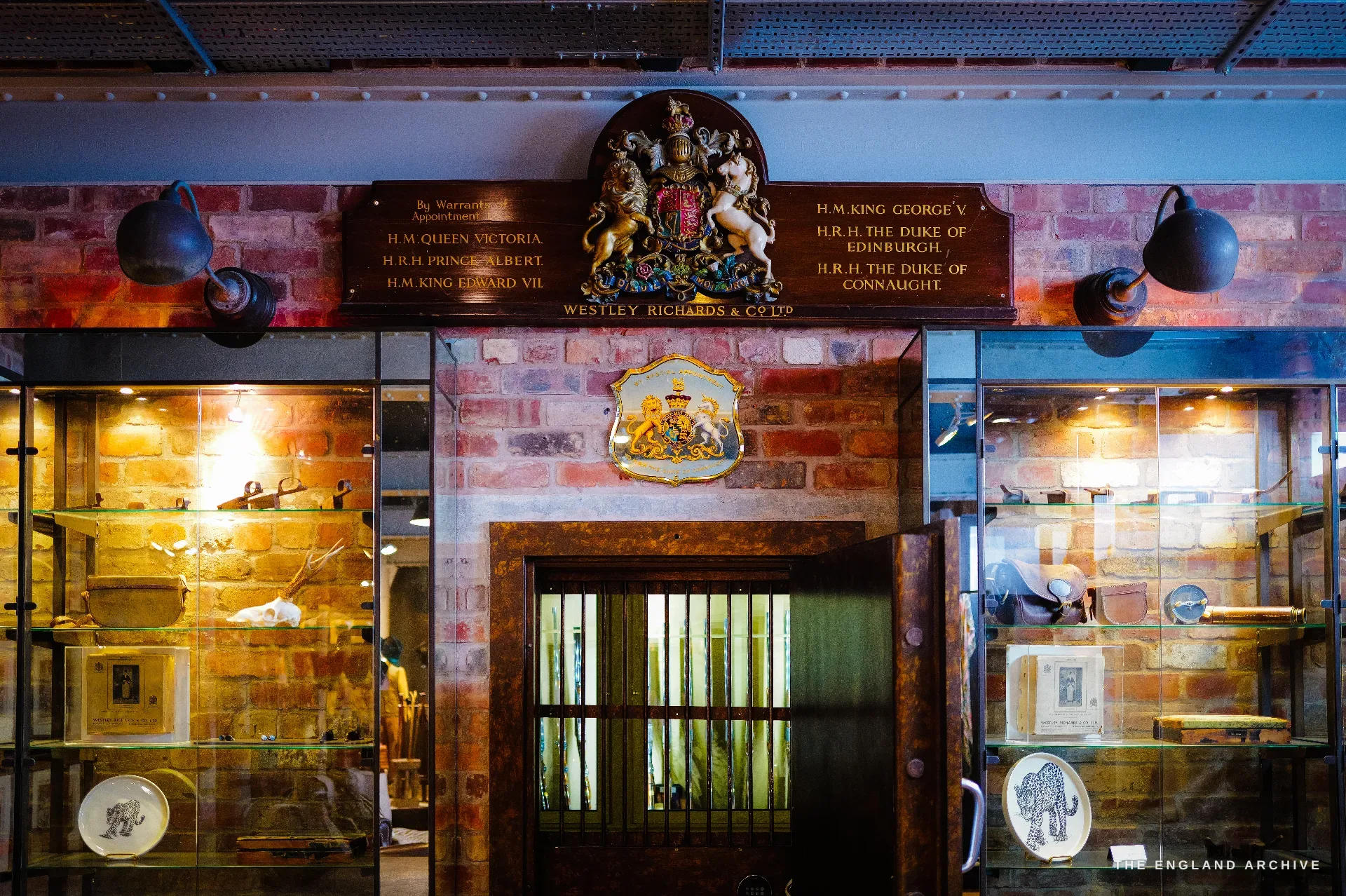
One wall settles any question of standing. Painted boards list the royal warrants of appointment - Queen Victoria, the Prince Consort, Edward VII, George V, the Dukes of Edinburgh and Connaught - under the gilt royal arms. Beside them a steel strongroom door stands open on a rack of finished guns. Kings and queens above the door; the guns themselves behind it. That is the whole firm in one view.
Africa and India, on the walls
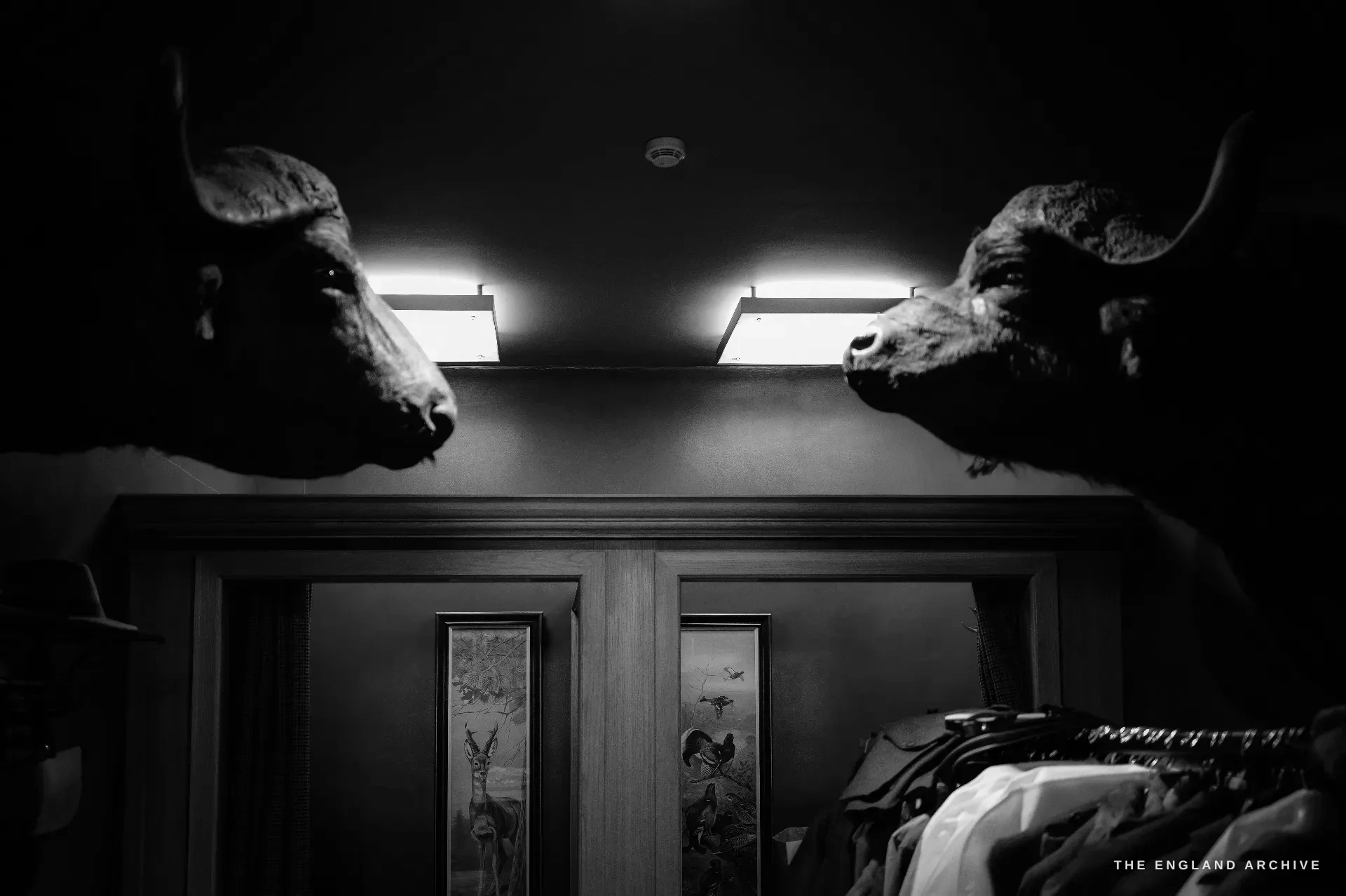
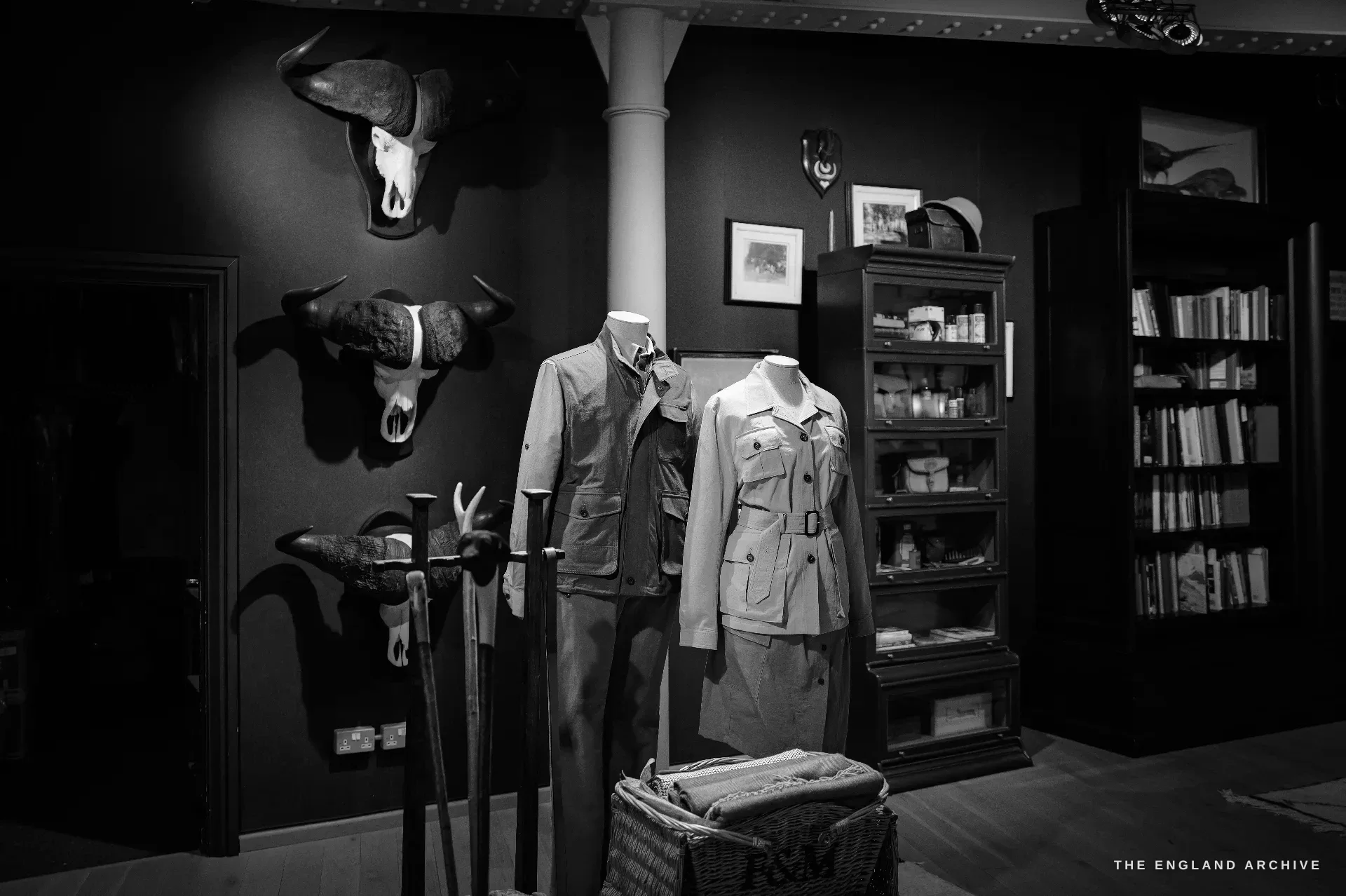
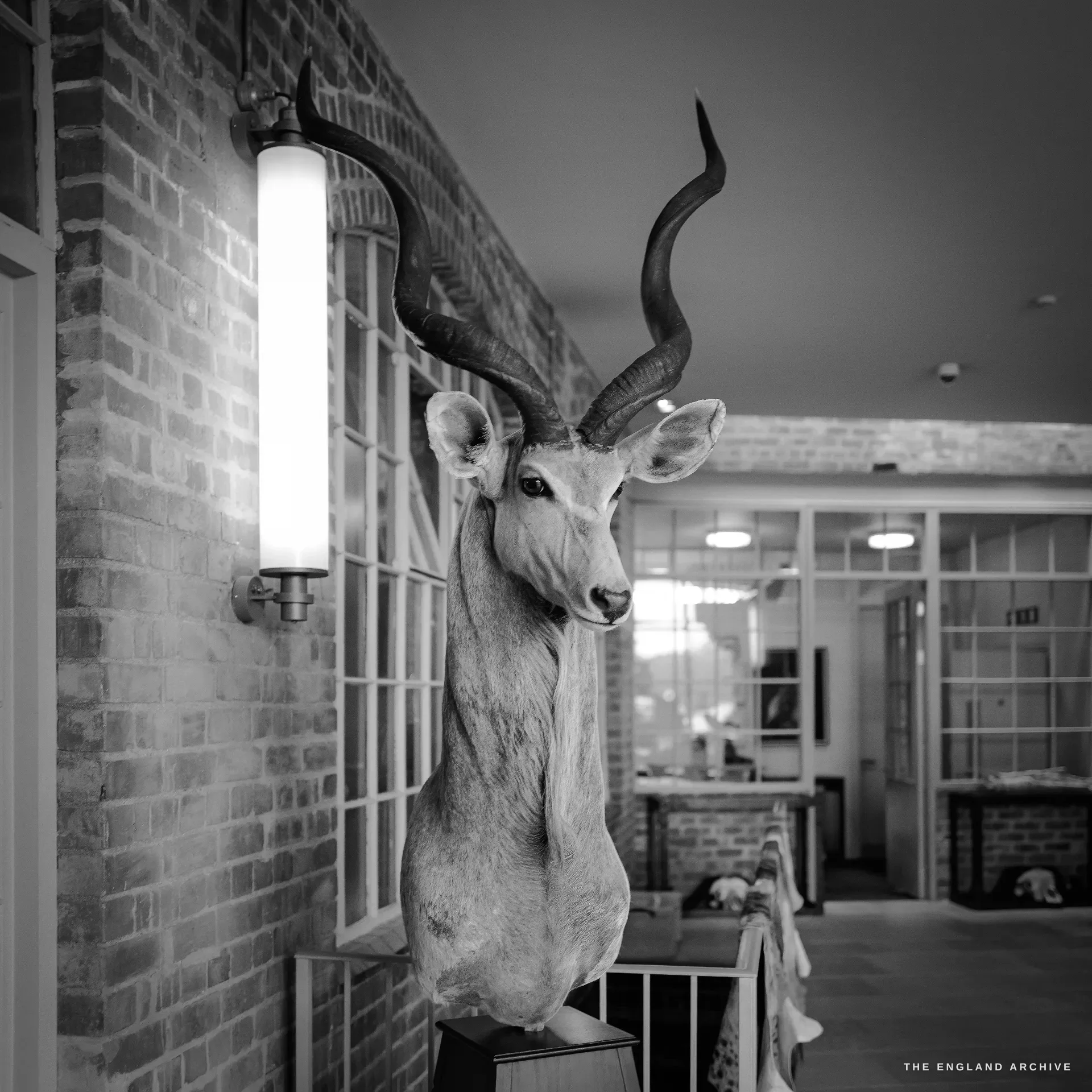
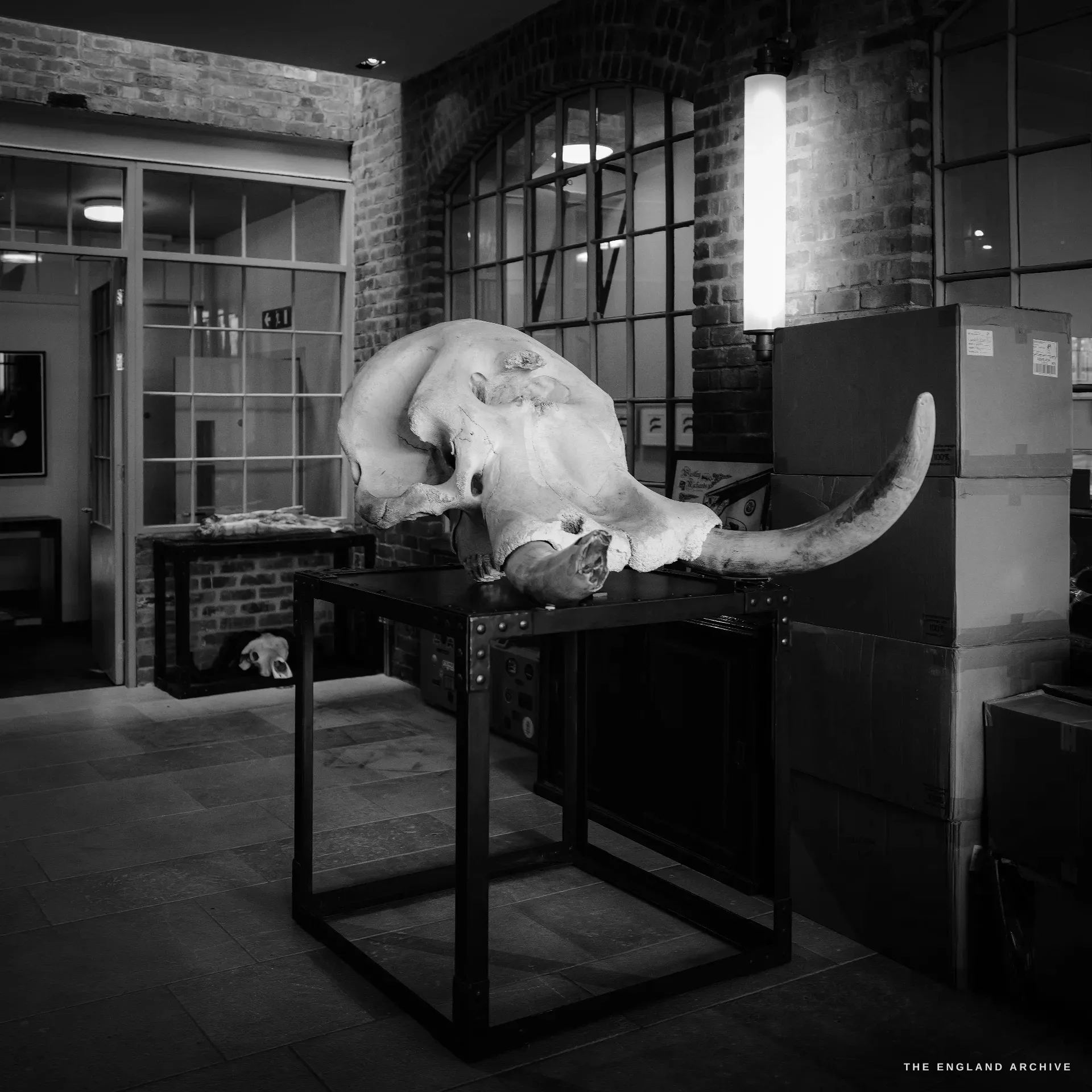
Westley Richards built its name partly on the great sporting rifles of empire - guns made for India and Africa, for buffalo and elephant and tiger, the ball-and-shot Explora among them - and the building still carries that history openly. Cape buffalo heads face each other across the rooms. An elephant skull sits on a plinth in the hall. It is not to everyone's taste now, and the firm knows it; I felt the weight of it walking between those heads, but it is the honest record of what these guns were made to do, and I would rather set down what is there than only what is comfortable.
The rifles came with cartridges of the firm's own design, and one of them became a legend. The .318 Accelerated Express, brought out in 1906, drove a 250-grain bullet hard enough that the 1912 catalogue gave two whole pages to photographs of it punching through steel plate, and claimed, only half in jest, that it would go the length of an elephant. For the better part of fifty years it was the round professional hunters reached for. Bror Blixen, Karamojo Bell and James Sutherland killed elephant after elephant with it, and Blixen said that if he were allowed to keep only one rifle it would be his Westley Richards .318. The heavier .425 Magnum followed, for the animals that would not stop for anything less. The heads on these walls belong to that history, and so does the gold-inlaid lettering I would find upstairs, cut into the metal of a .318.
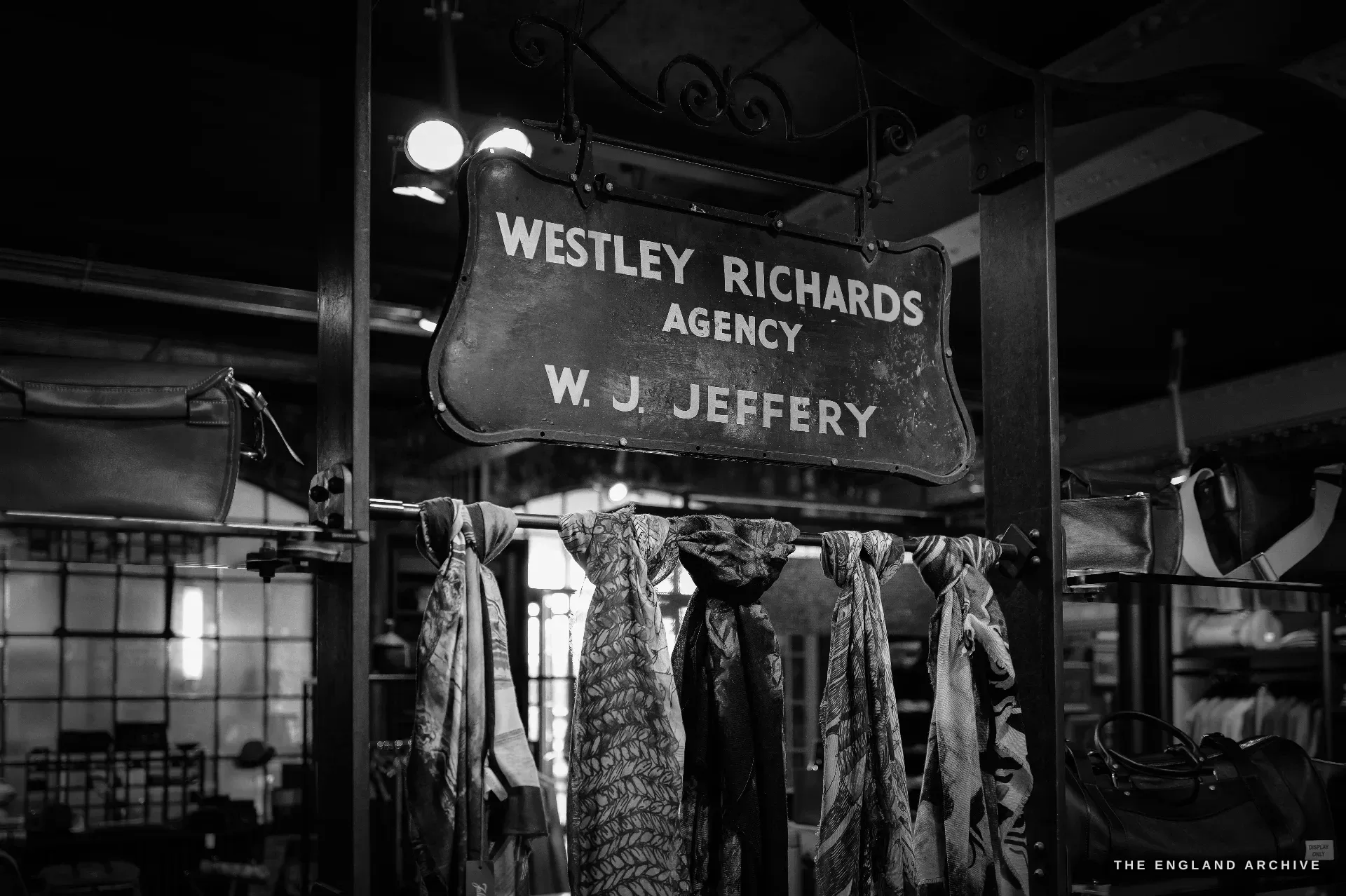
The signs are worth slowing down for. An old wrought-iron agency board, gilt on black, from the days of the trade's networks of agents. A weathered enamel plate: Westley Richards and Company Limited, Gun & Rifle Manufacturers. A printed card that just says England 1812. The firm keeps its own history around it the way it keeps its patents - not as decoration, but as proof.
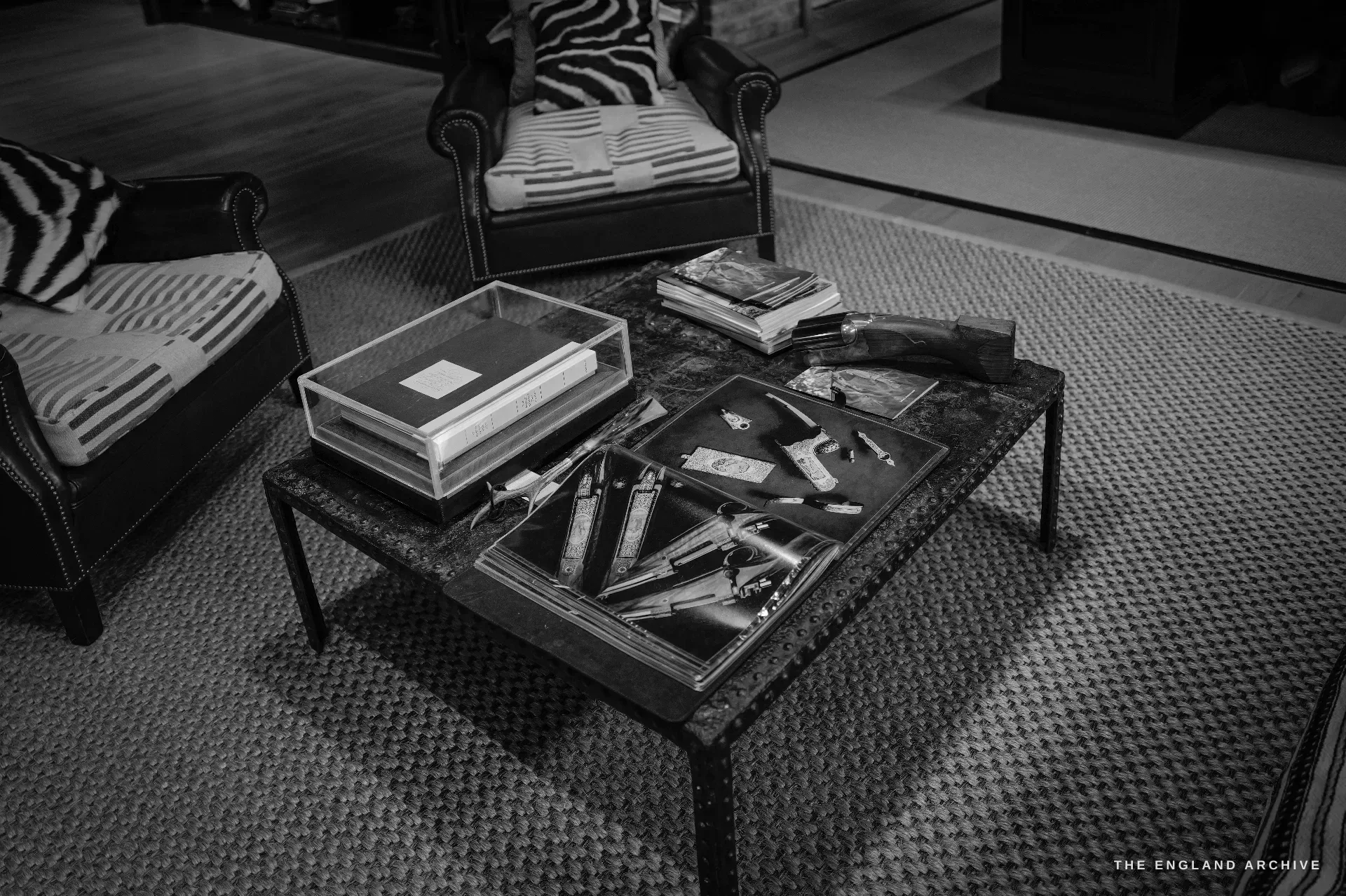
On a low table between the armchairs, the catalogues lie open at the pages that matter most: photograph after photograph of engraved gun actions, fine scroll and gold, the work that turns a mechanism into an object people wait years for. Which is where Stephen was taking me.
Upstairs, the engraver
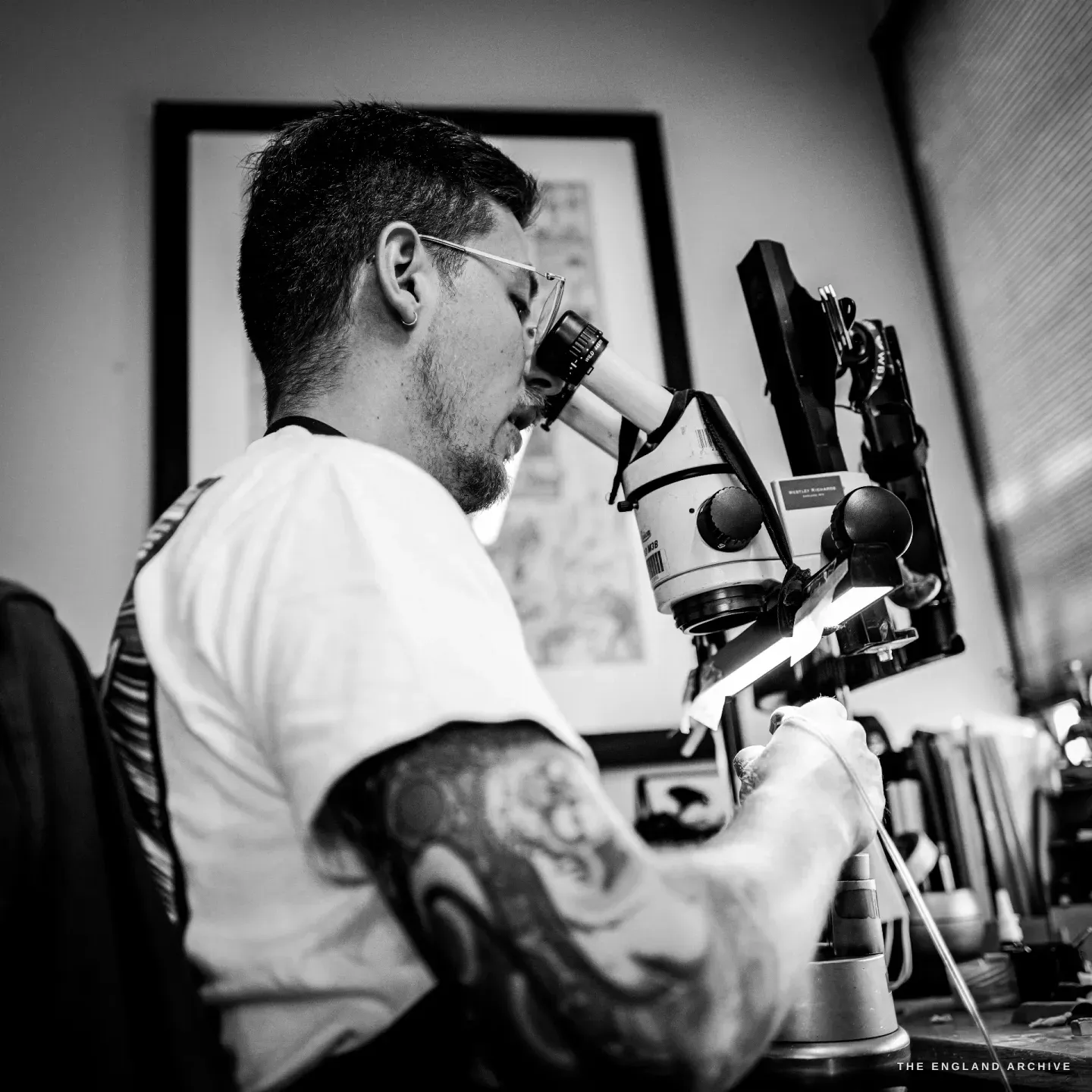
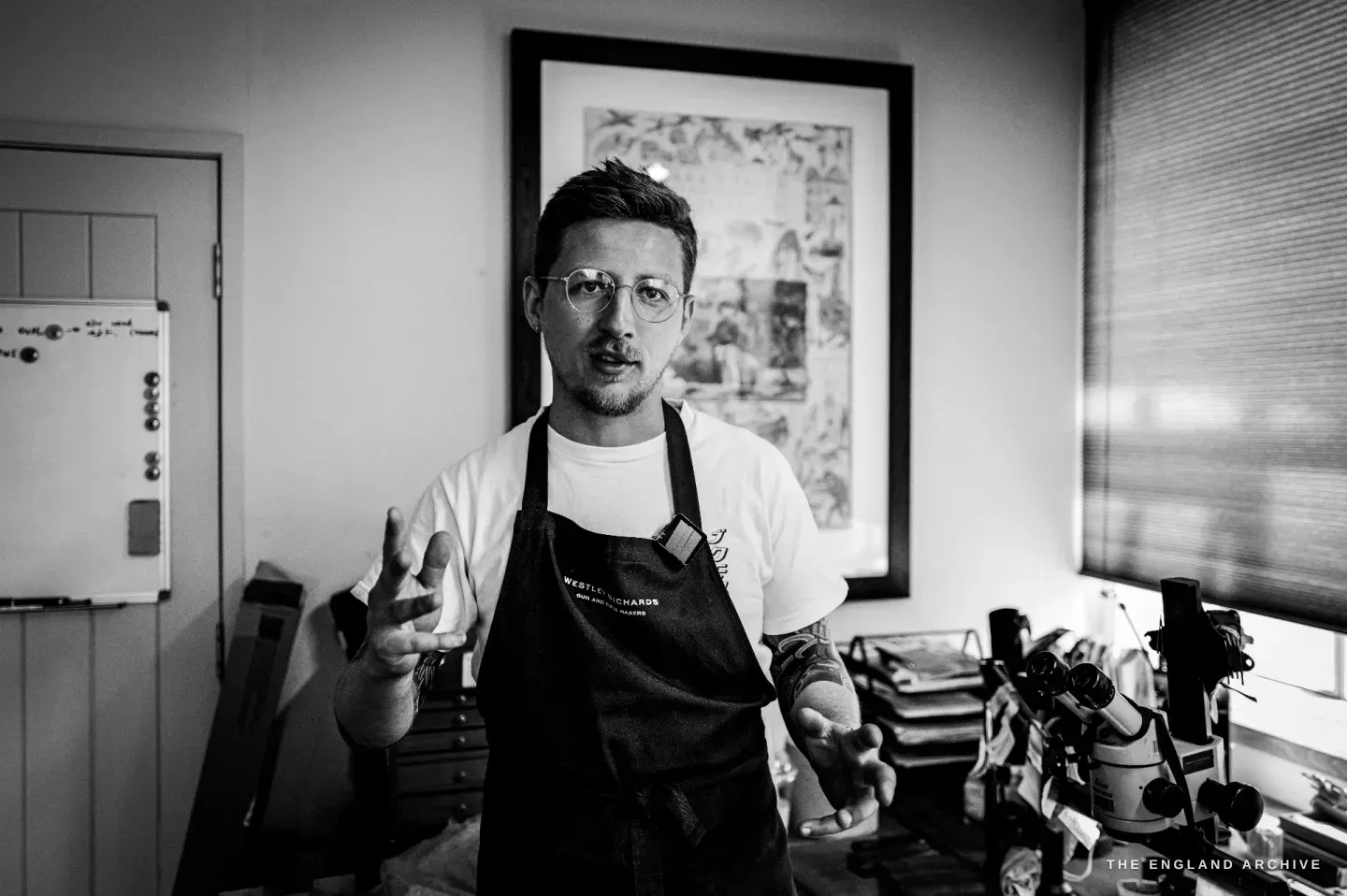
A firm like this is dozens of hands - barrel makers, actioners, stockers, finishers - and on one visit you cannot honestly document them all. So I did not try. Stephen took me up to the engraving bench, and there I stayed, with a young Belgian engraver named Leo Lambert, who does the cutting and the gold inlay that finishes these guns. He turned out to be one of the most interesting craftsmen I have met for this archive, and his story - how he came to Birmingham, and how he was made a master engraver almost before he was ready - is enough on its own. It belongs on his own page, which follows this one.
That any of this survived is not a given. The English gun trade nearly died in the last century, and Westley Richards came through the worst of it in the hands of the Clode family, who kept the doors open partly by buying back the great rifles the Indian princes had ordered a generation earlier and selling them on. Simon Clode ran the firm from 1994 until his death in 2016. The droplock went back into full production in the 1980s, and today most of what leaves the building is built around that idea of Leslie Taylor's from 1897 - something like six hundred hours of handwork to a gun, before an engraver like Leo has even picked up a graver.
I came away with the firm in my head as a single long argument for doing things properly: a Birmingham company that has been making the best guns in the world for more than two hundred years, keeping its own history on the walls as evidence, and still training the next person to cut the metal by hand. This is the record of one morning of it.
A note on the history above: the dates and the detail are drawn from Westley Richards' own archive and Explora journal, from Grace's Guide and the standard gun-trade references, and checked against the account the firm gives of itself. Where sources disagree on a date, I have followed the firm's own. Anything I saw with my own eyes that morning, I have told you as I saw it.