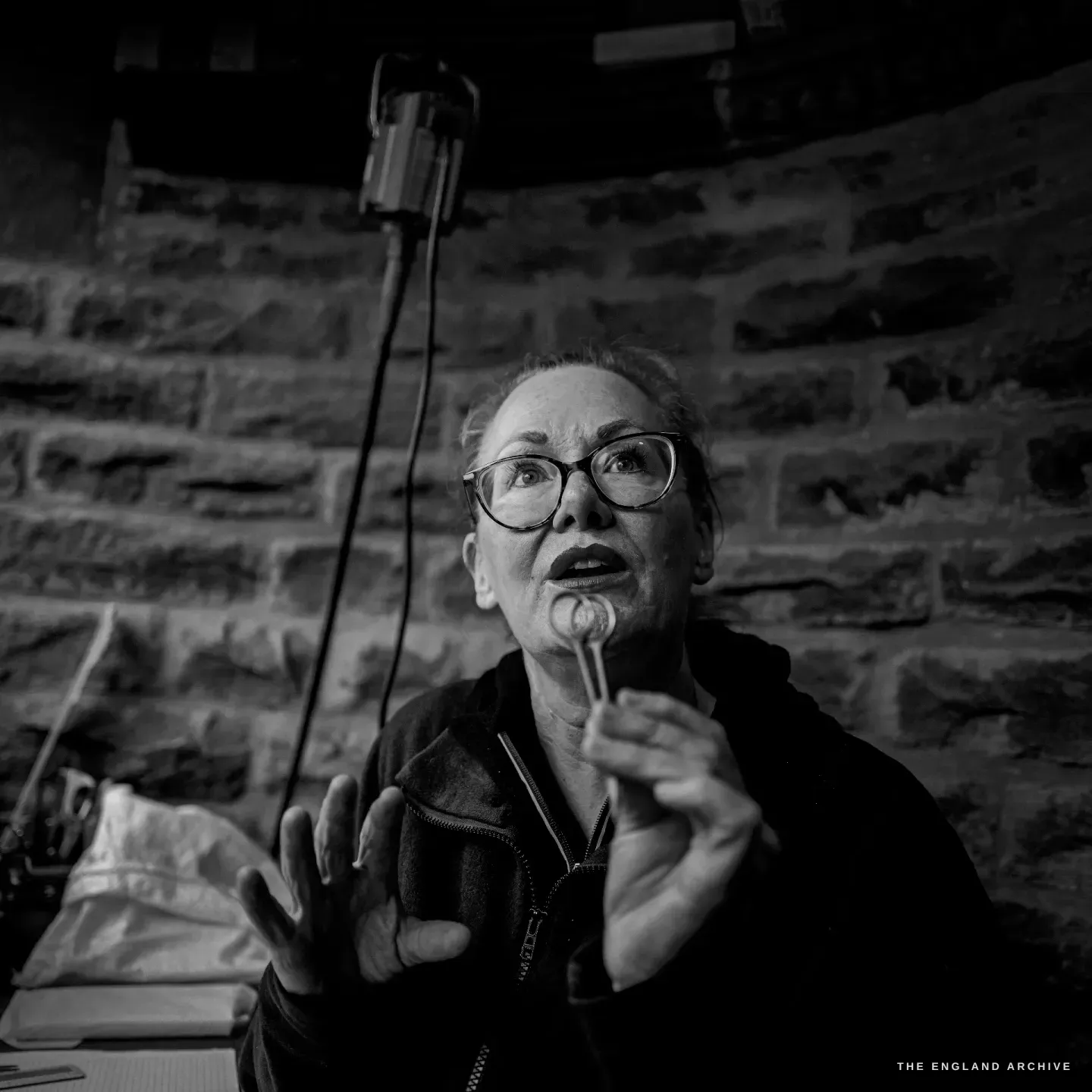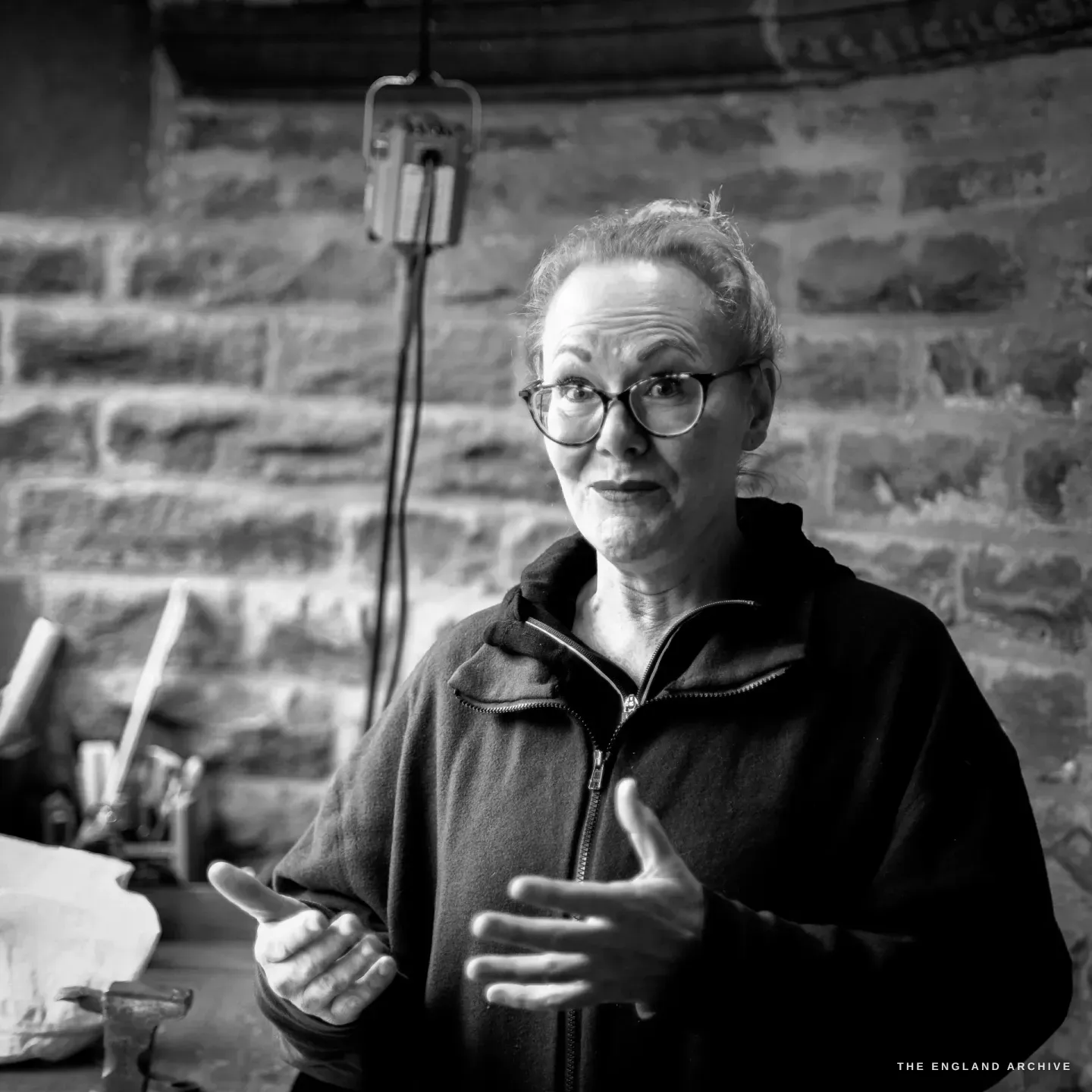
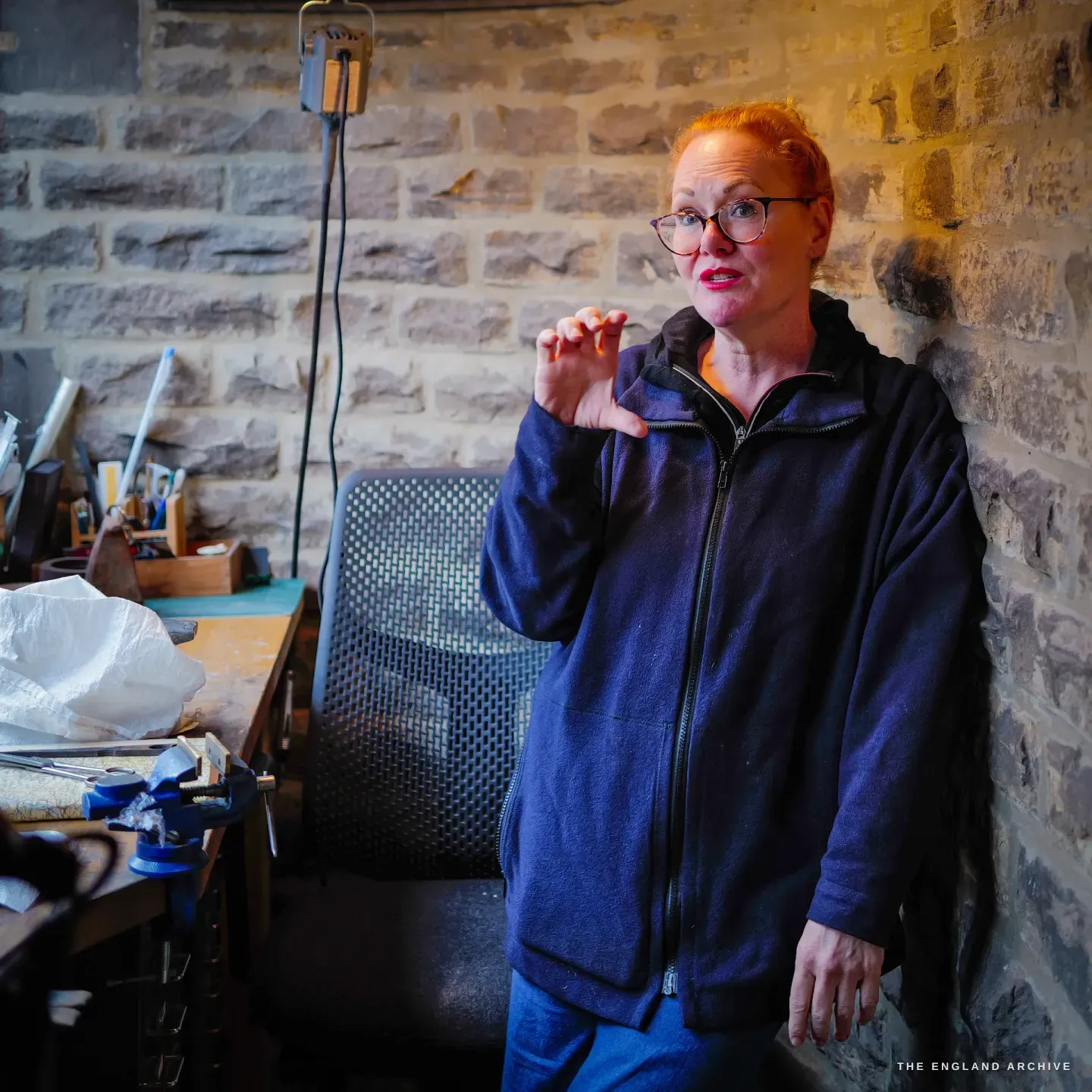
Grace Horne gestures with both hands as she explains something in her workshop, against the curved stone wall under an anglepoise lamp.
Makers

Grace Horne

Scissor Maker · Cutler & Corsetiere

Sheffield, South Yorkshire

Documentary Archive · June 2026 · The Sheffield Trade

Thirty years ago she turned up uninvited on a legendary cutler’s doorstep and asked to be his apprentice. He said no. She learned anyway - and then worked out how to make scissors without the machines no one can buy any more.

Name Grace Horne
Trade Scissor maker, cutler and corsetiere
Workshop A former Victorian public toilet, Sheffield
Location Sheffield, South Yorkshire
Category Makers - people whose knowledge lives in their hands and cannot exist anywhere else
Session June 2026 · coffee at home, then a morning in the workshop
Learned at Ernest Wright, Sheffield · and a doctorate in patterned steel
Craft status Scissor making on the Heritage Crafts Red List
Archive ID MK-0033

Coffee First

Grace Horne told me to come to her workshop, then suggested we go to her house first, a few doors away, for coffee. That is where the morning started - at her kitchen table, flowers everywhere, the kettle on, before a single scissor. I have photographed a fair number of makers now, and I will say it plainly: this was the best session I have had. Grace is not so much a maker as a force - of creativity, of curiosity, of ideas that arrive faster than you can write them down. By the time we walked round to the workshop I already knew this page would struggle to hold her.

So this is the one page in the archive that runs in two registers. The colour is Grace at home, among the peonies and the books; the black and white is Grace at the bench. She is the same person in both - but the warmth and the work are different rooms, and she lives in both of them at once.
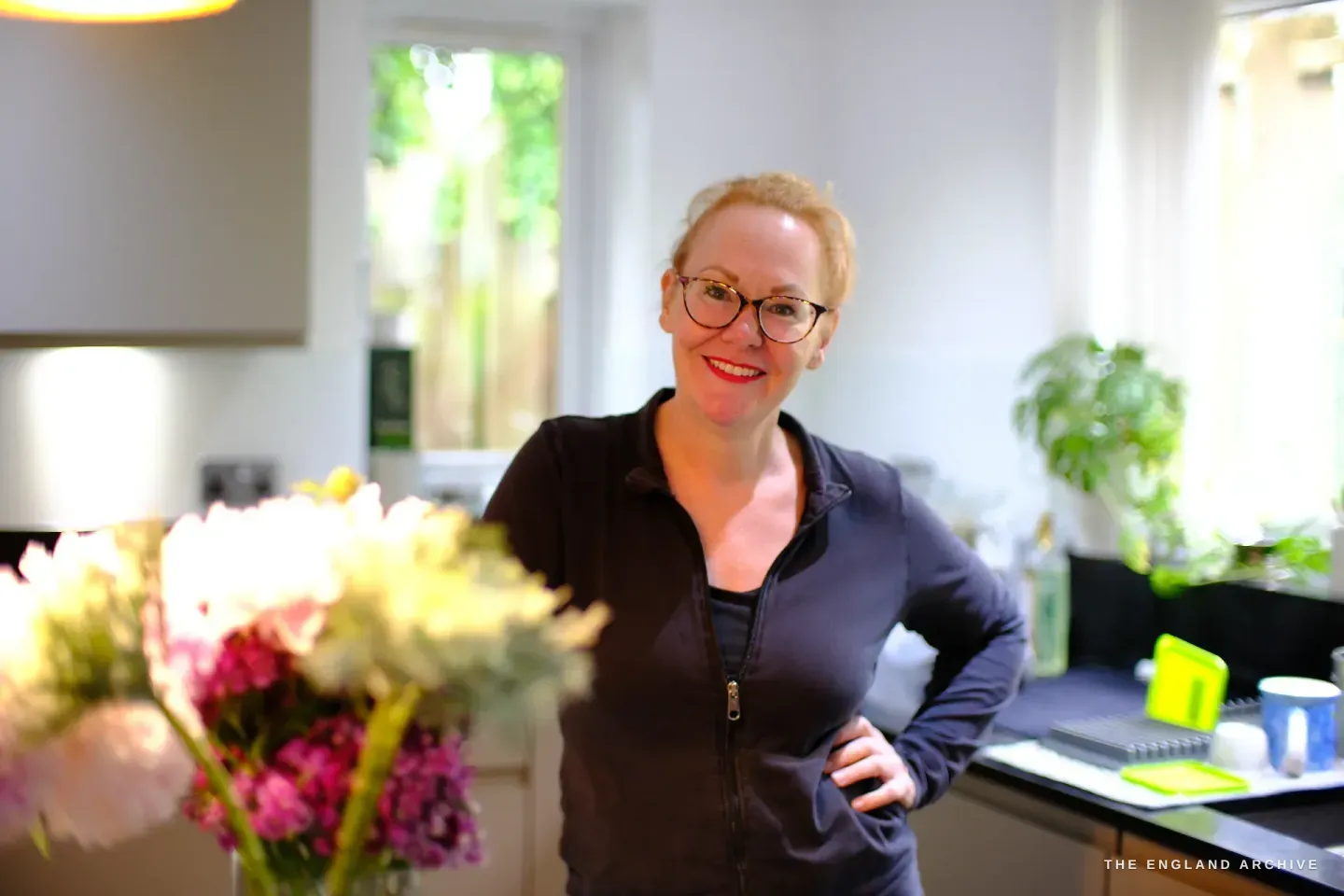
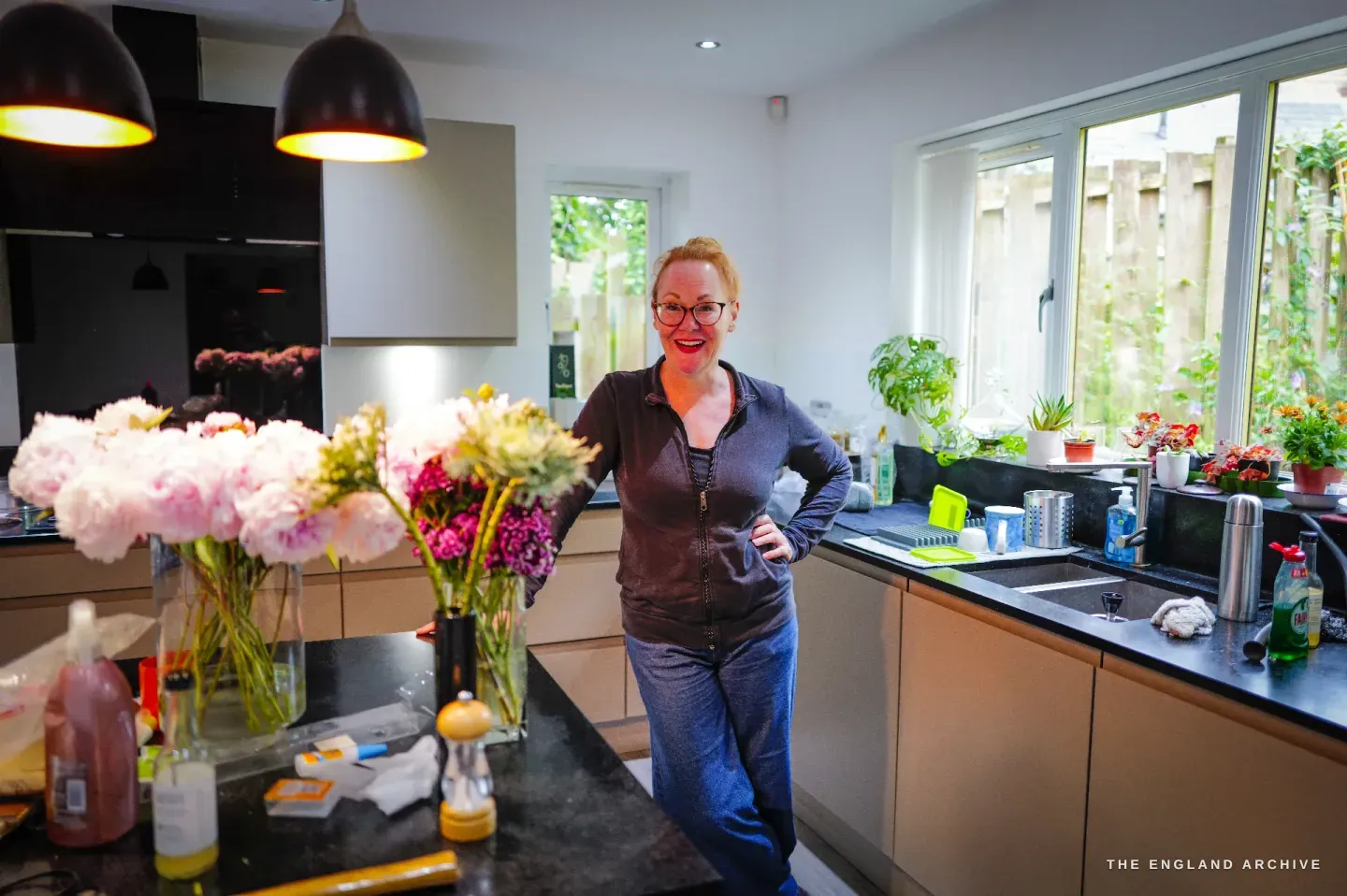
Grace Horne stands smiling in her bright kitchen, one hand on her hip, vases of pink peonies on the island in front of her and plants on the sunlit windowsill behind.
At home, where the visit began over coffee. IM-0968
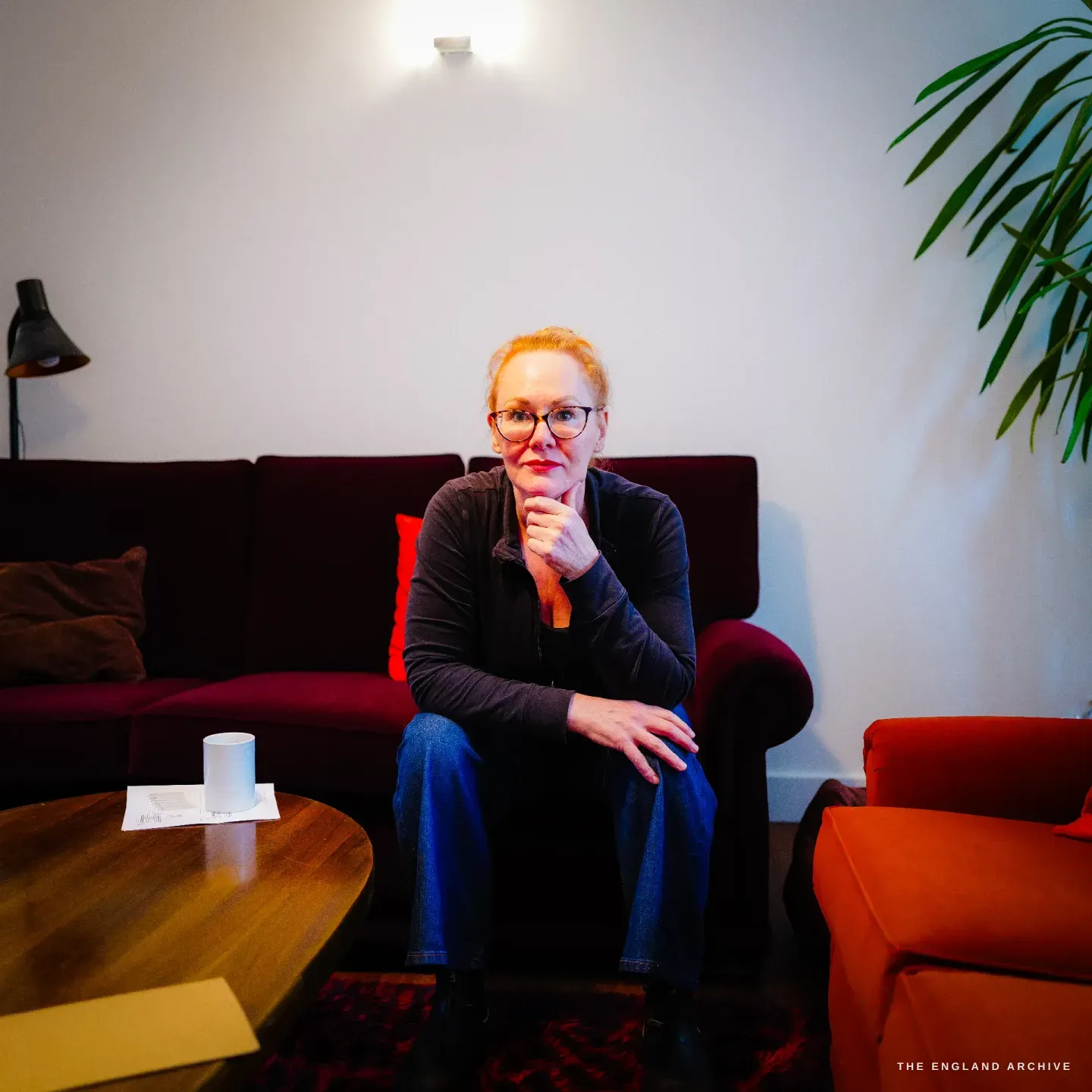
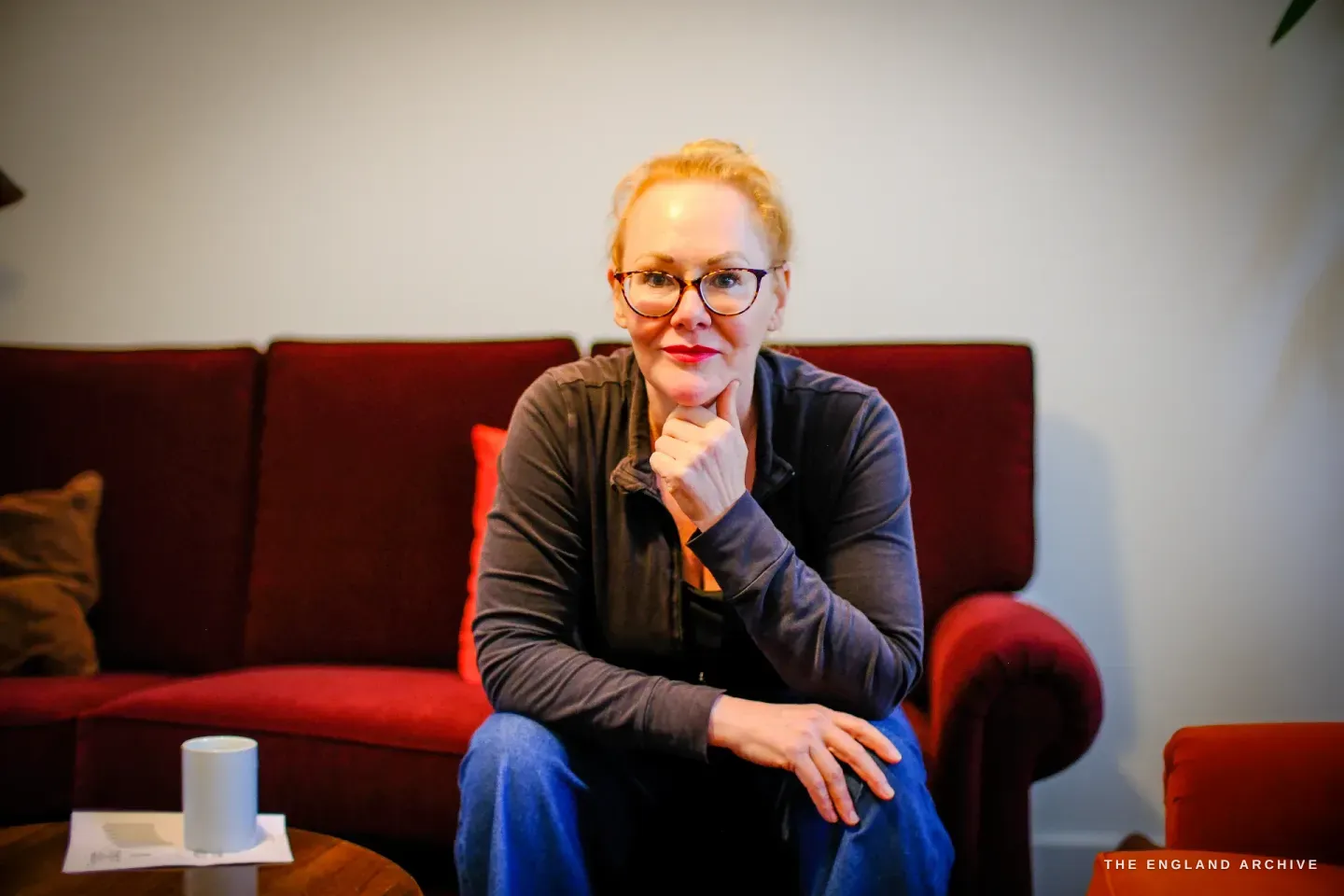
Grace Horne sits on a deep red sofa at home, hand to her chin, a mug and papers on the coffee table in front of her.
IM-0972
Grace Horne sits on a deep red sofa at home, hand to her chin, a potted palm beside her and a mug on the table.
IM-0993
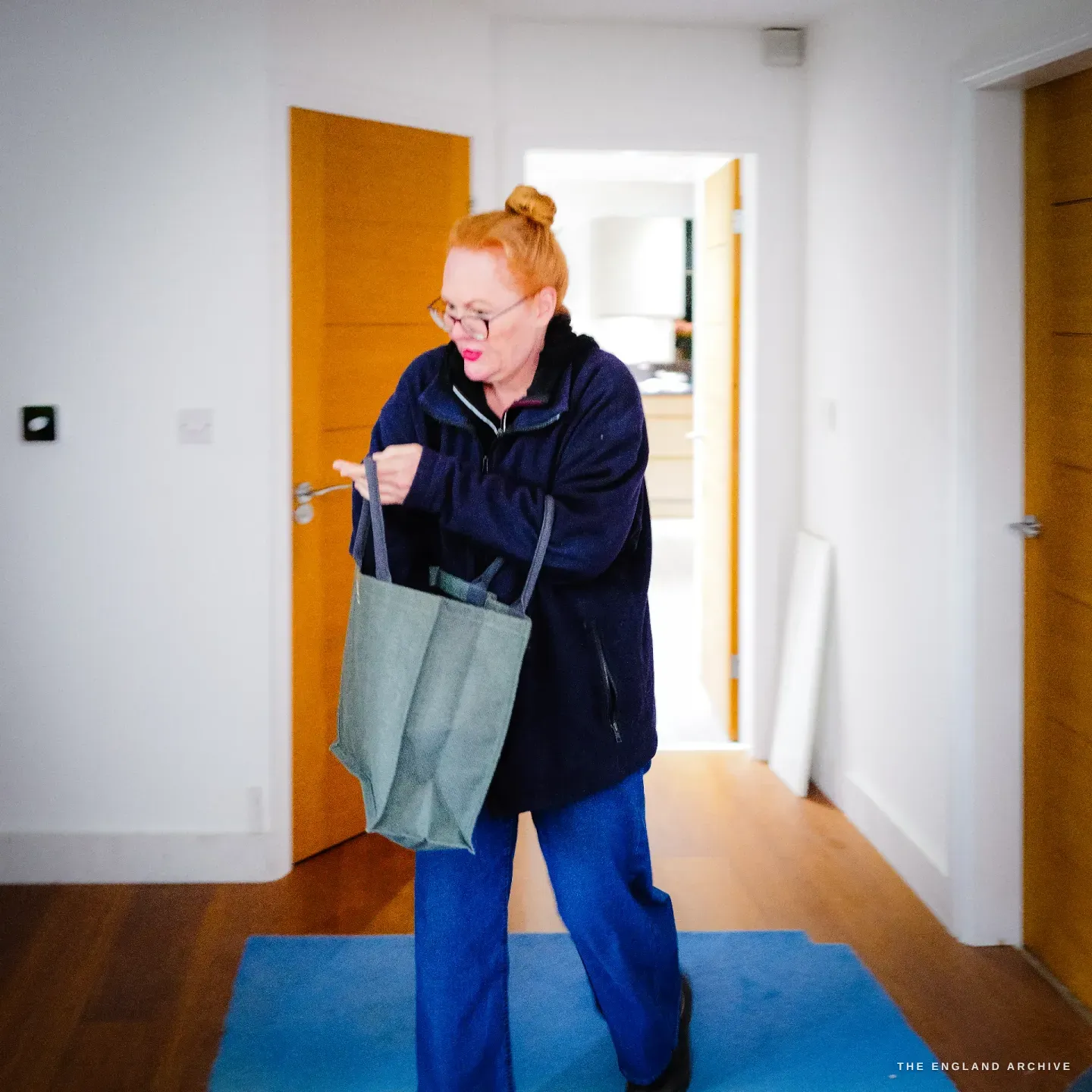
Grace Horne stands in a bright hallway at home, gathering up a grey tote bag, about to head out, orange doors to either side.
Bag in hand, off to the workshop. IM-0994
Grace Horne stands smiling in her bright kitchen, hand on hip, vases of pink peonies on the island and flowers and plants along the window.
IM-0991

A Former Public Toilet

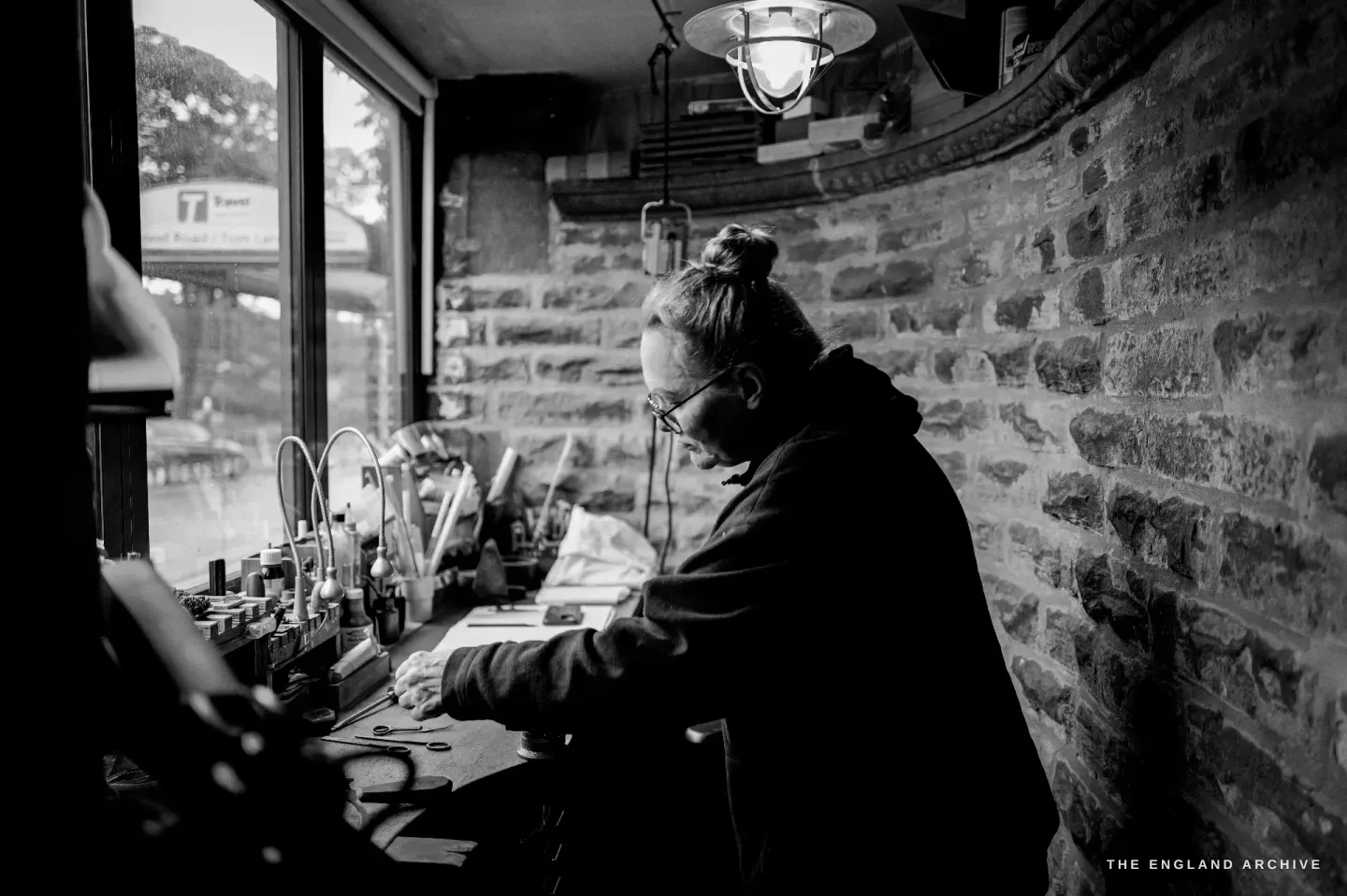
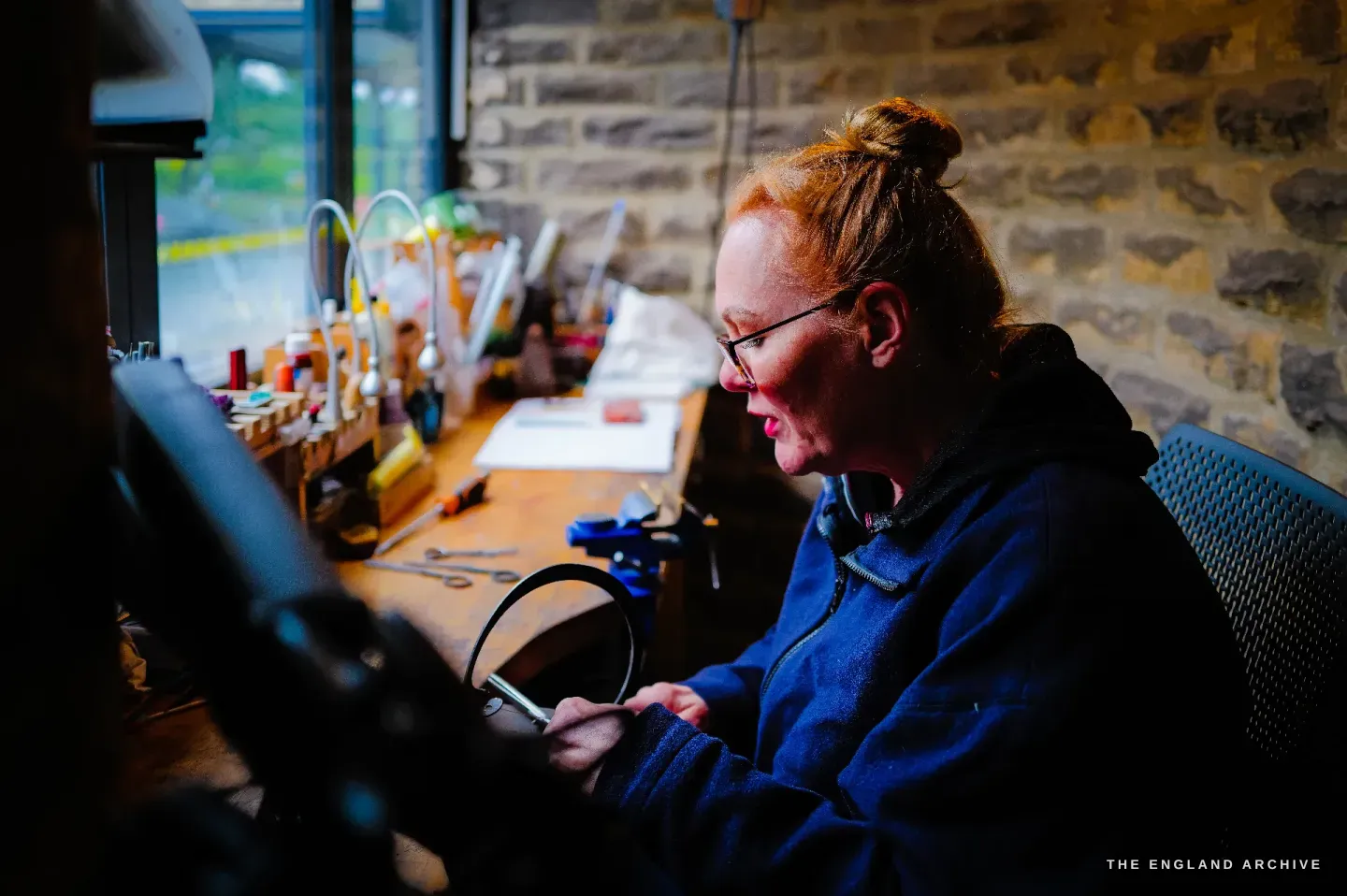
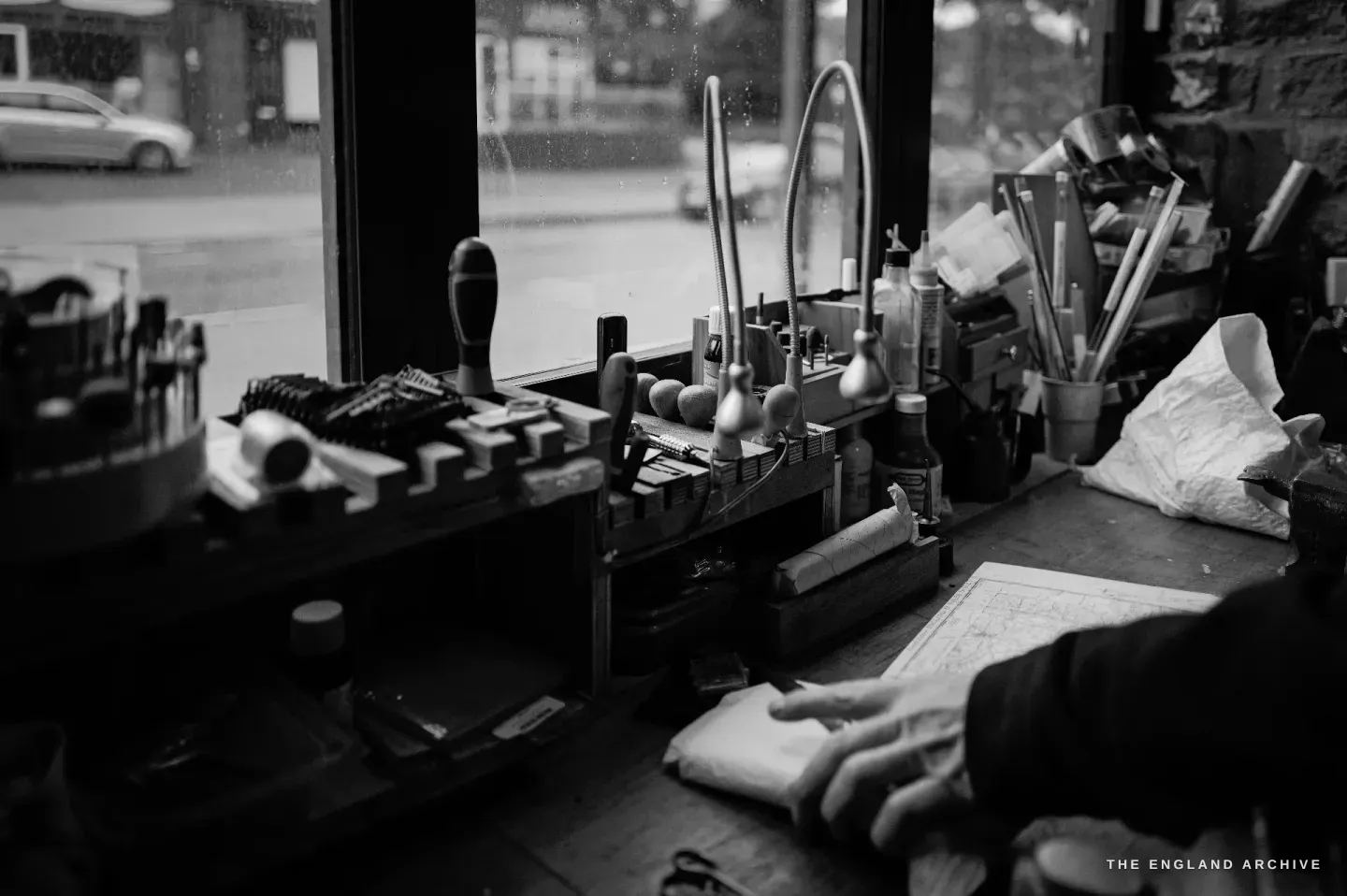
Her workshop is a Victorian public toilet. Not converted to look like one - an actual former gents’, small and round-walled, with a glazed roof and a window straight onto the street, so tight that everything is within arm’s reach and she can watch the road while she files a blade. It is, she would be the first to say, all she needs. Hand-forged scissors hang in rows along the brick; coils of steel and labelled notes are clipped to a board; the curved wall throws the light around.
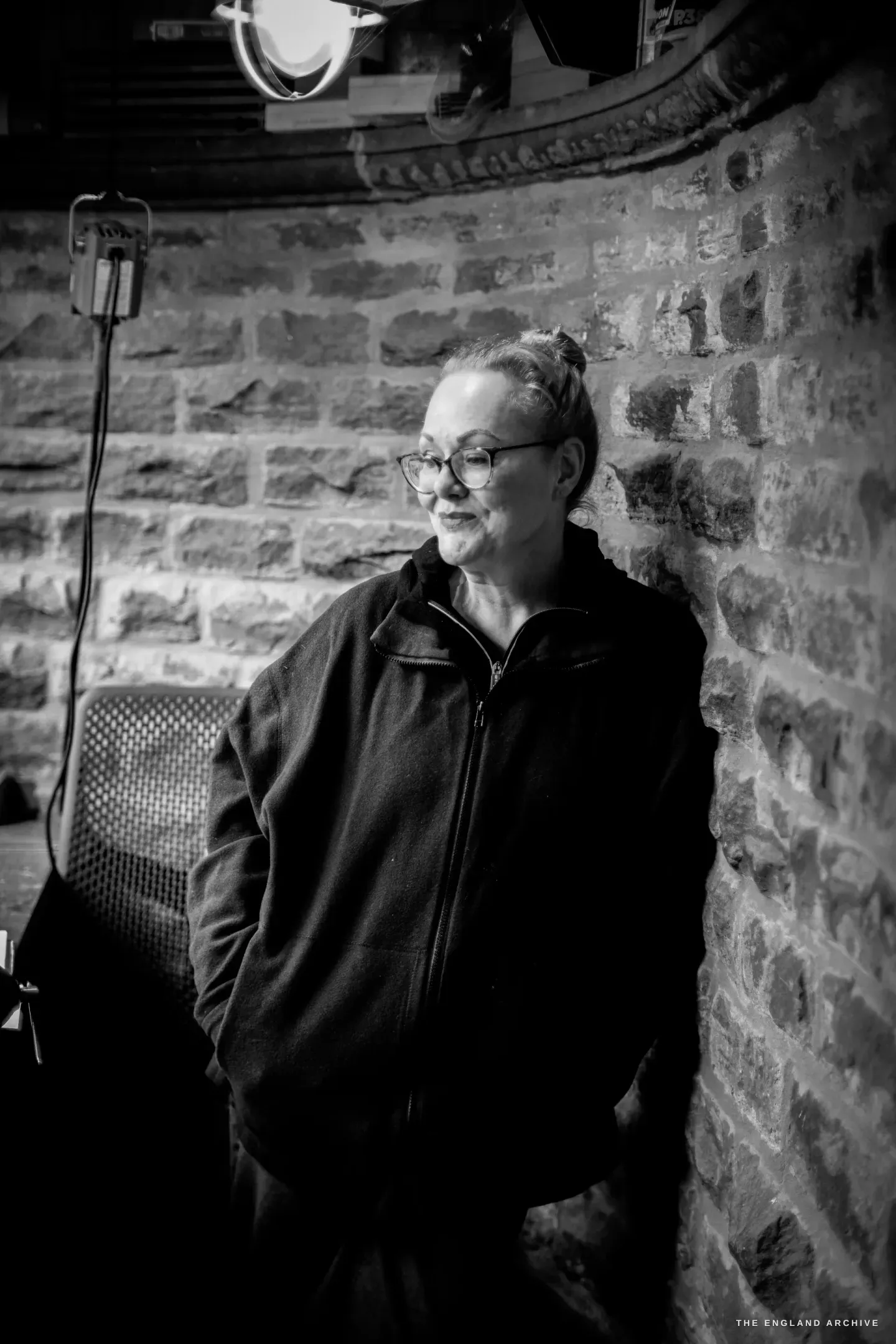
Grace Horne leans against the curved brick wall of her workshop, hands in her pockets, looking off to one side, an anglepoise lamp beside her.
In the workshop - a former Victorian public toilet, curved walls and all. IM-0978
The workshop window looks out onto the street - a parked car and terraced houses - with the sill lined with hand tools in racks.
The window on the street. The workshop is tiny, and she can see the road. IM-1000
Grace Horne sits working at the bench beneath the window and an industrial lamp, the curved stone wall of the converted toilet curving around her.
IM-1011
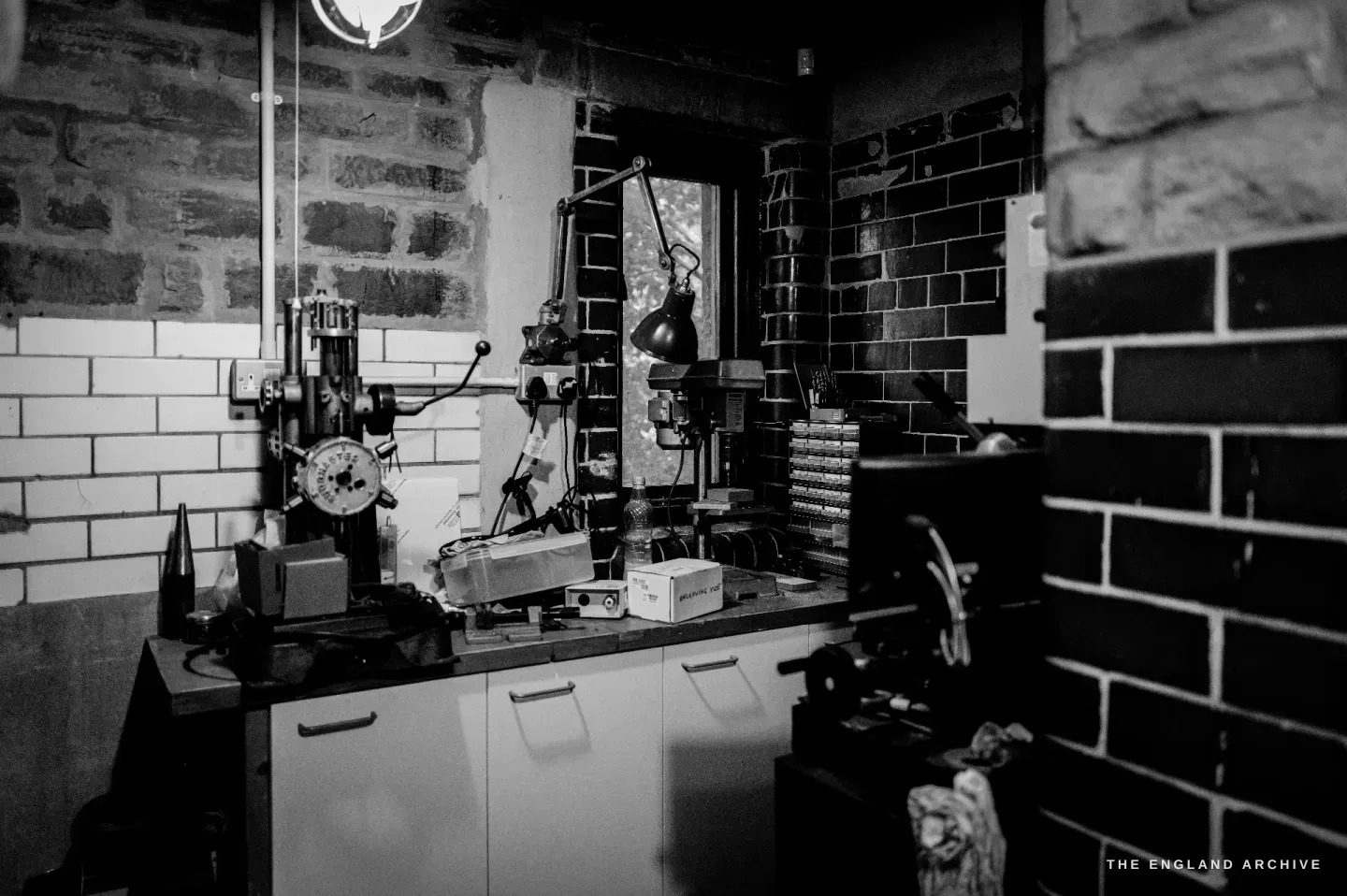
The workshop interior - a small drill press and machine on a bench beneath a window, the curved white-painted brick walls of the old building around it.
IM-1010
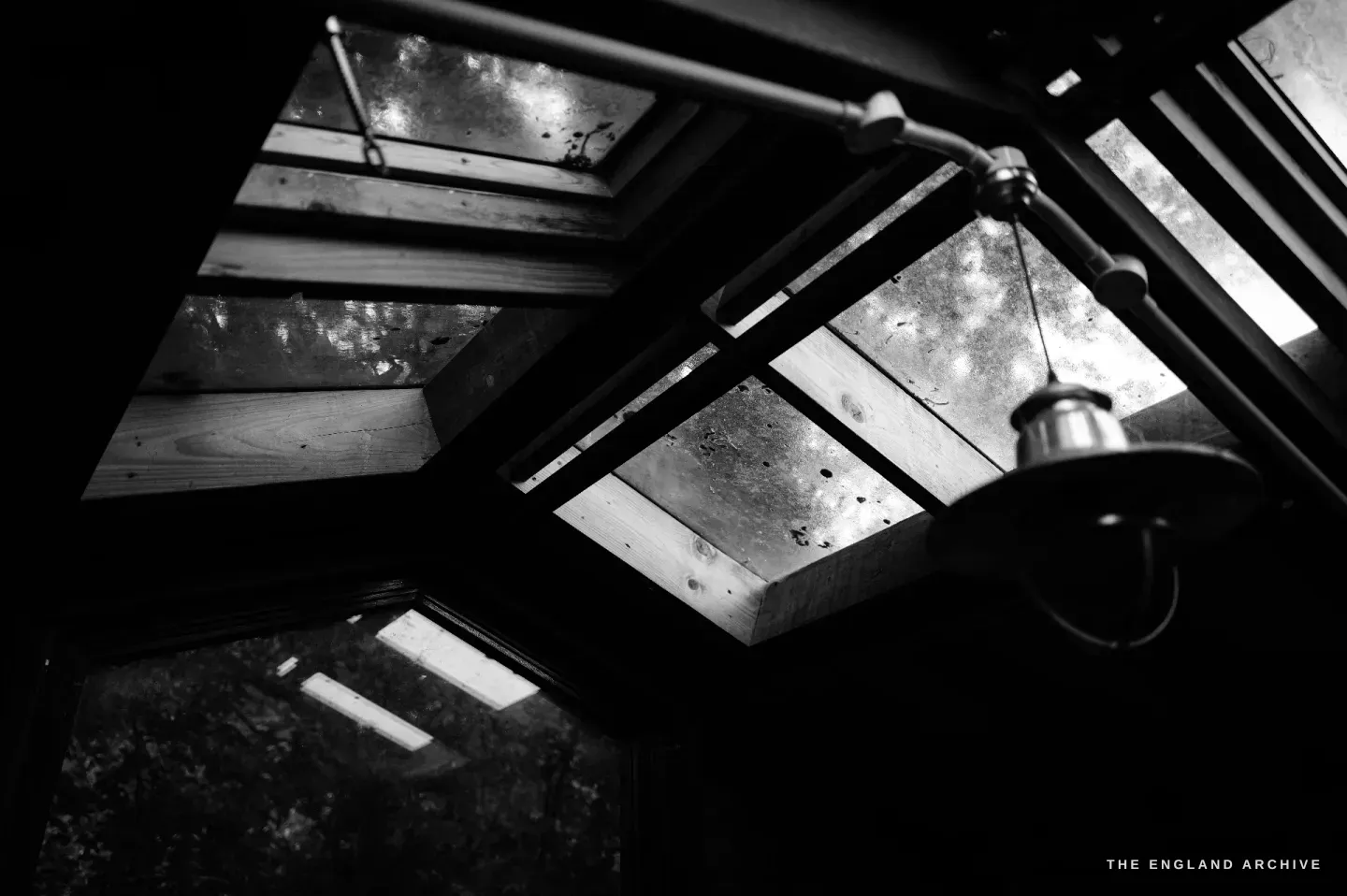
Looking up at the workshop’s glazed roof - panes of old glass in a timber frame, an industrial pendant lamp hanging beneath.
The glass roof of the old public toilet. IM-1013
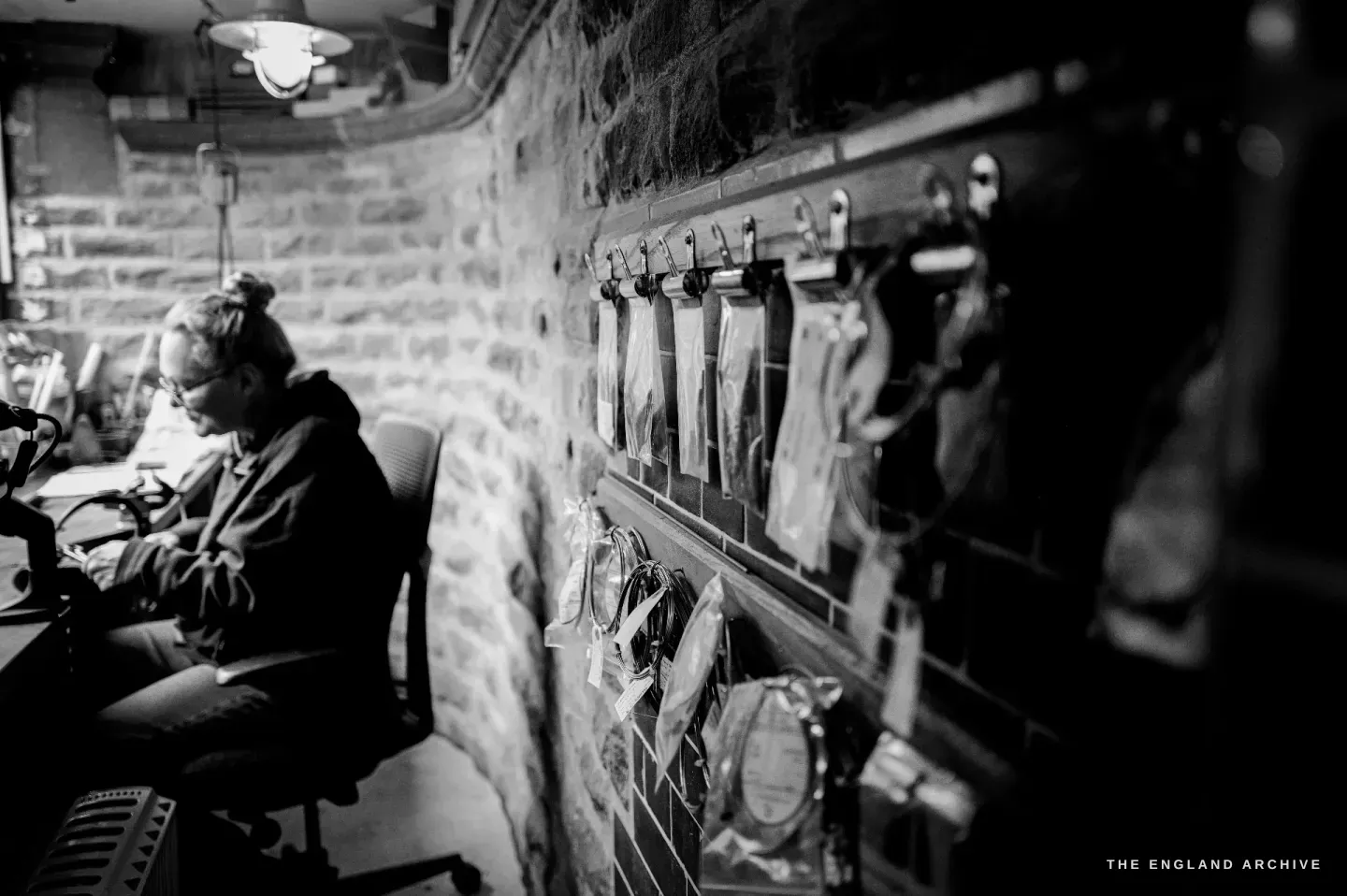
The workshop interior: Grace Horne works at the bench on the left while rows of scissors and tools hang from hooks along the brick wall on the right.
The wall of scissors. IM-1009
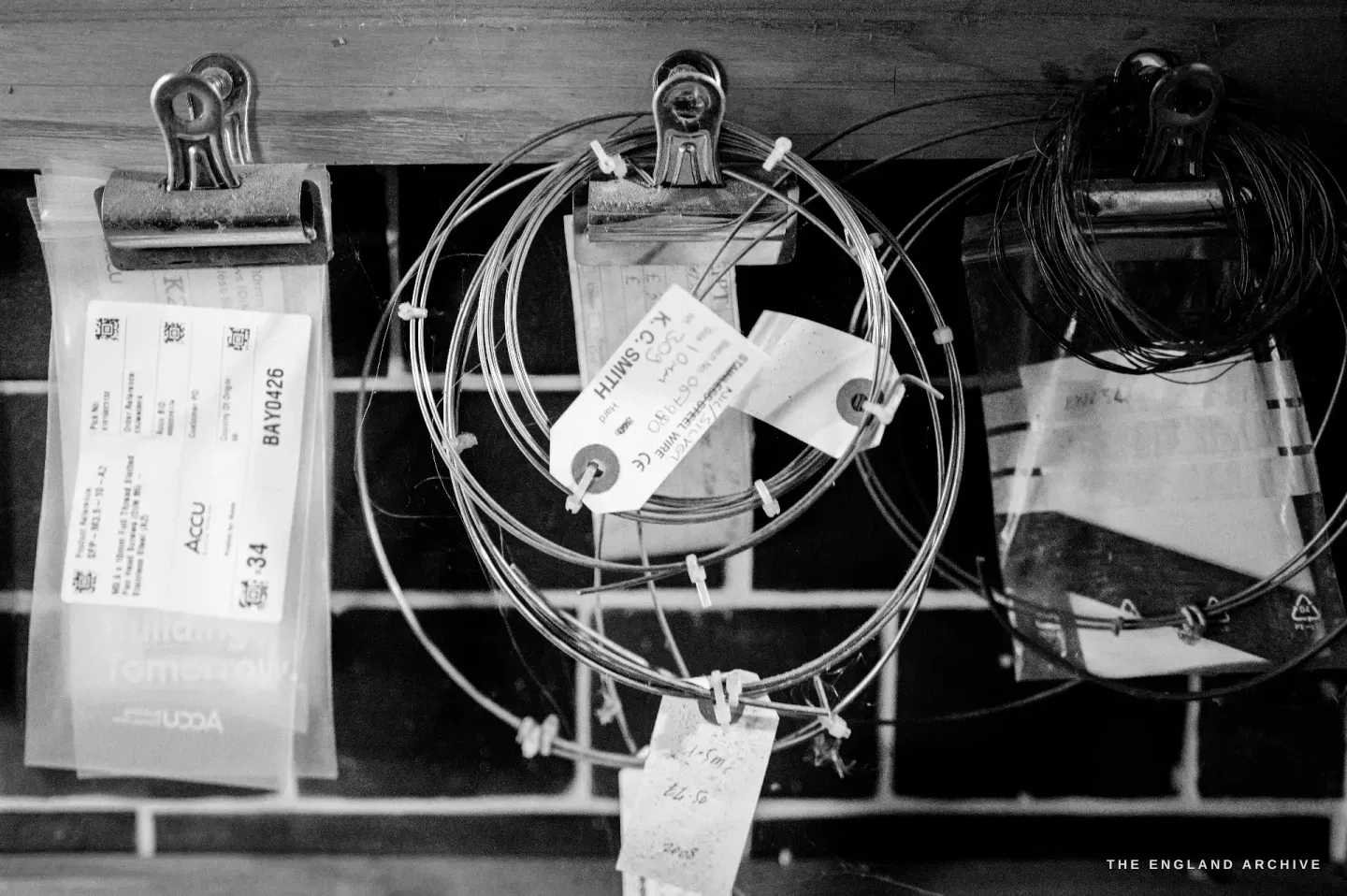
Coils of steel wire and paper tags clipped to a board with bulldog clips on the workshop wall - her stock and labelled notes.
Steel and notes, clipped to the wall. IM-1007
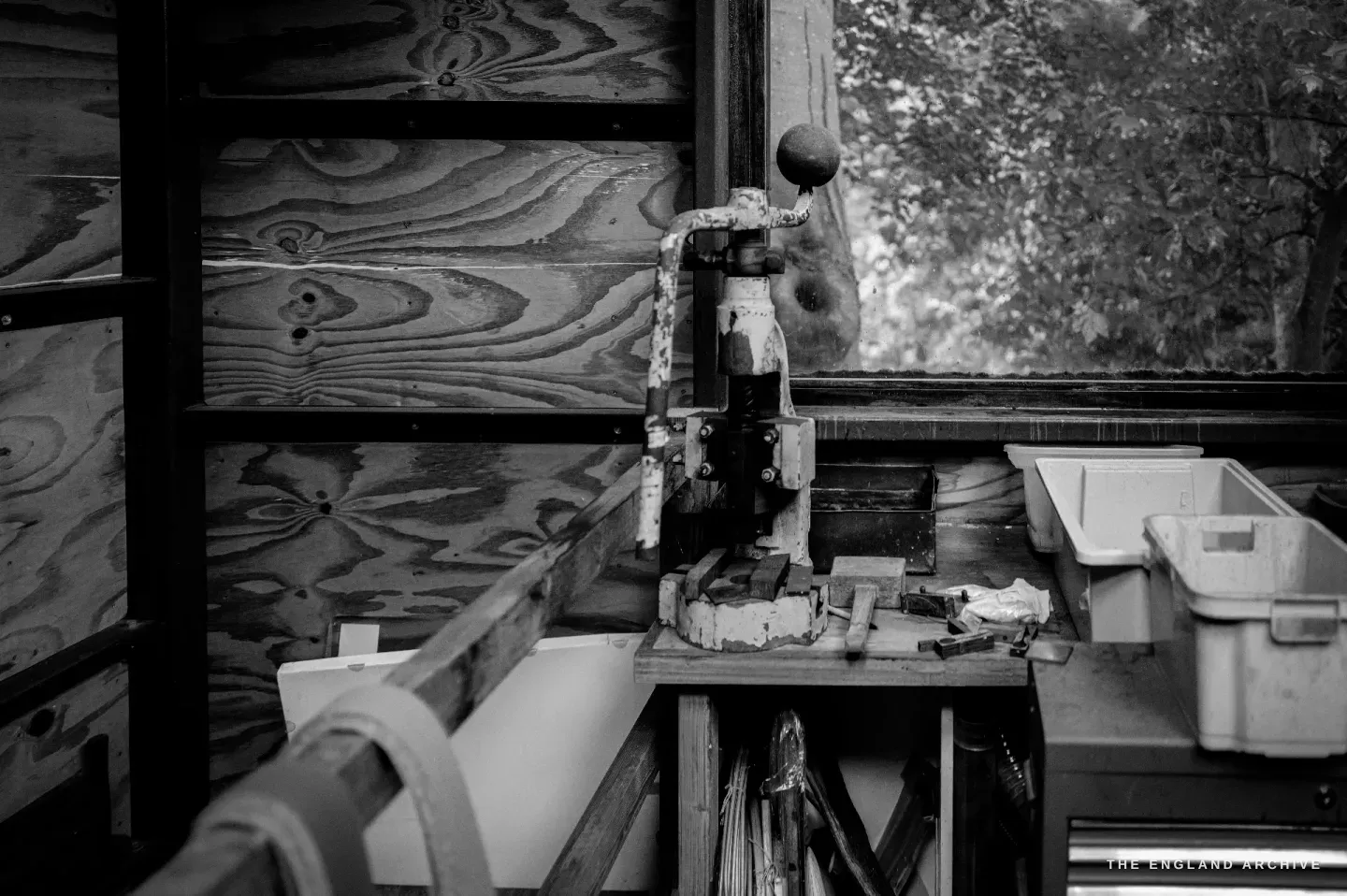
An old hand press mounted on a bench against a plywood wall in the workshop, trays beside it and greenery at the window.
IM-1012

The Doorstep

Grace came to scissors the long way round, and it started with knives. Thirty years ago she wanted to work with her hands - really work, a proper craft - and what she wanted was to make knives. She came to Sheffield to learn, and found that almost nobody was taking apprentices. One name kept coming up: Stan Shaw, the last of the great Little Mester pocket-knife makers, a man who built knives entirely by hand. She wrote to him. No reply. She telephoned. No answer. So she packed up her things, travelled up from London, and turned up on his doorstep to ask, in person, to be his apprentice.

Stan was past seventy by then, with someone already at his bench, and he said no. Grace started teaching herself instead. That refusal, on the doorstep, is where all of it begins - and you can hear, in the way she tells it, that she is fond of the man who turned her down.
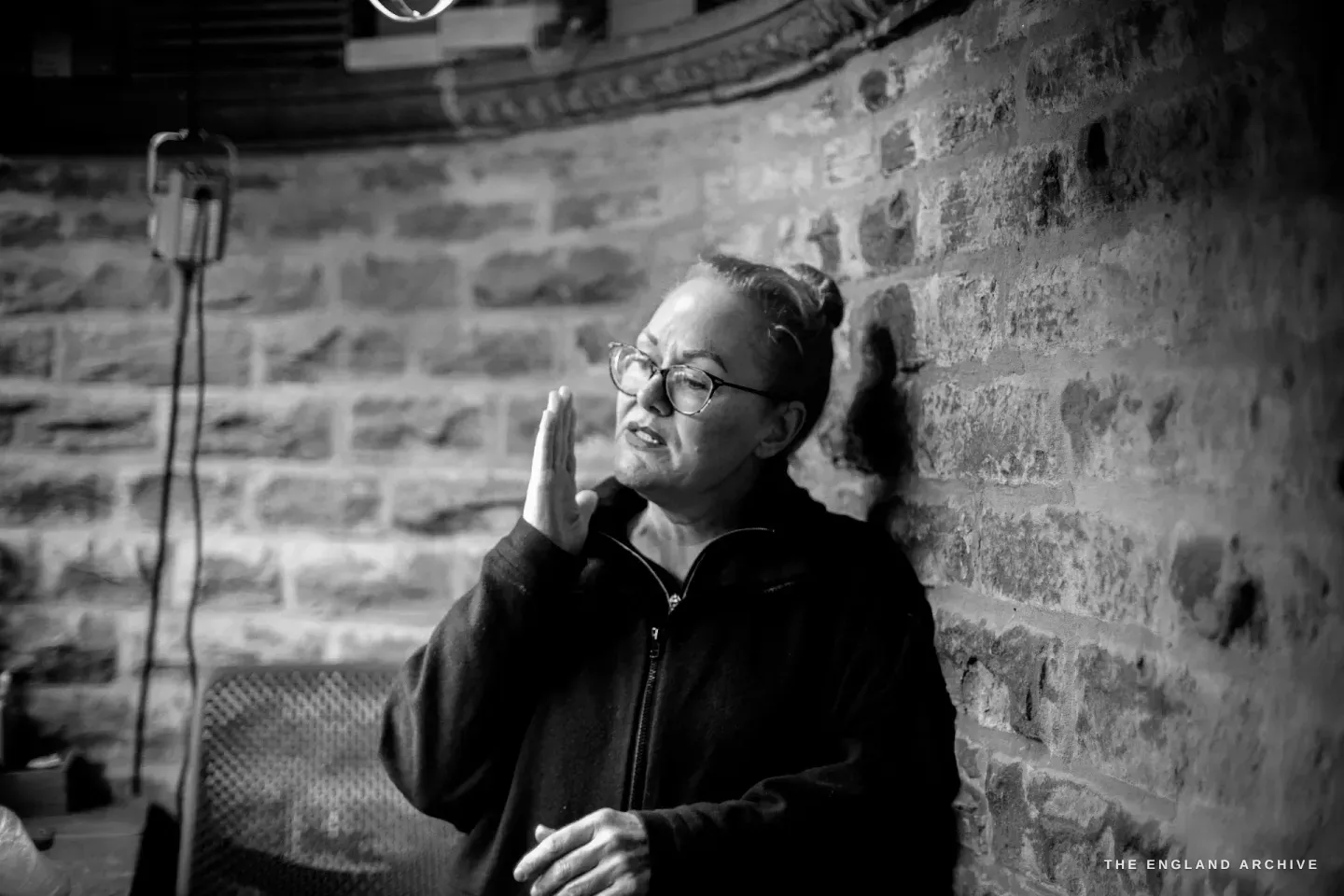
Grace Horne talks animatedly in her workshop, one hand raised mid-gesture, against the exposed stone-brick wall.
IM-0973
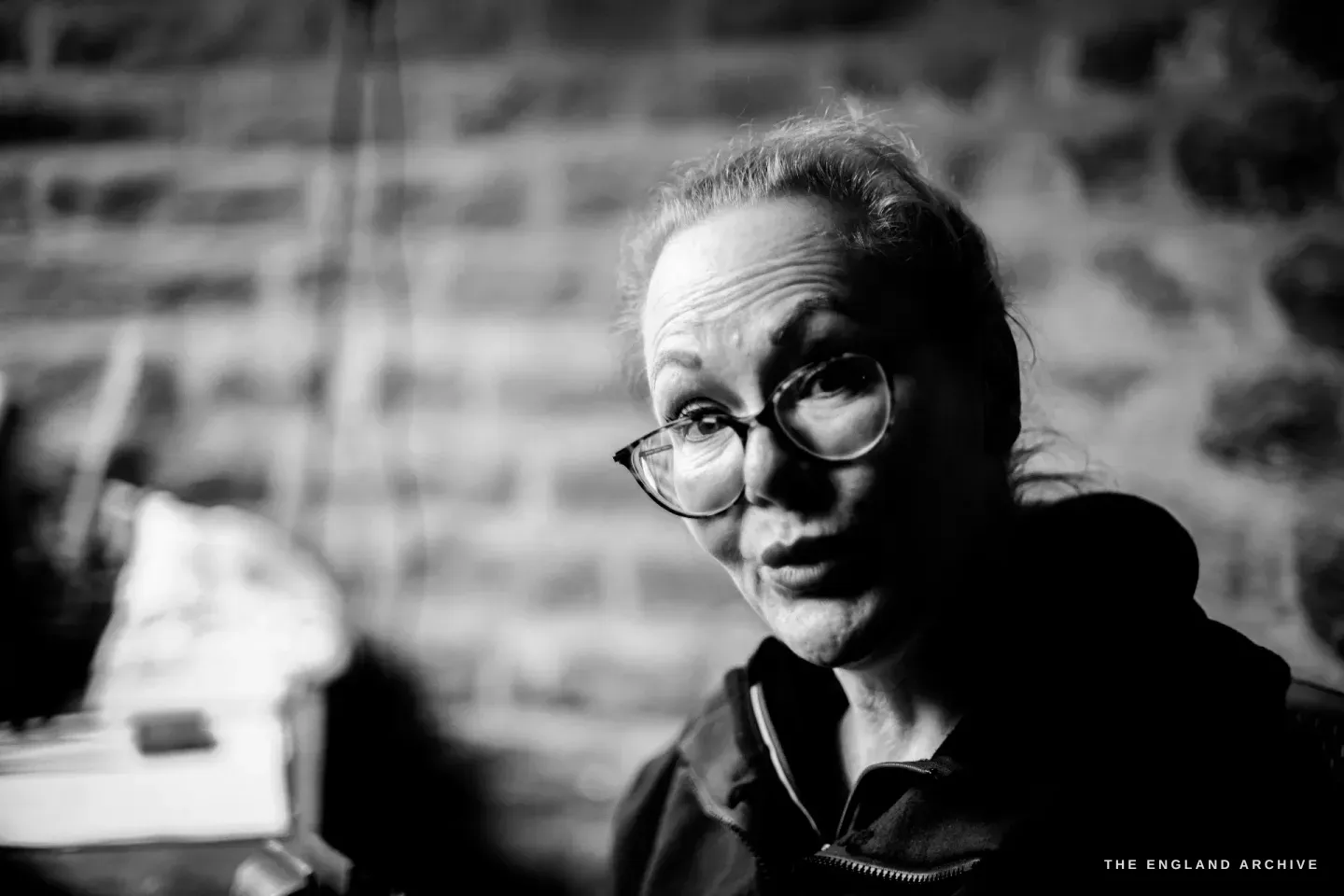
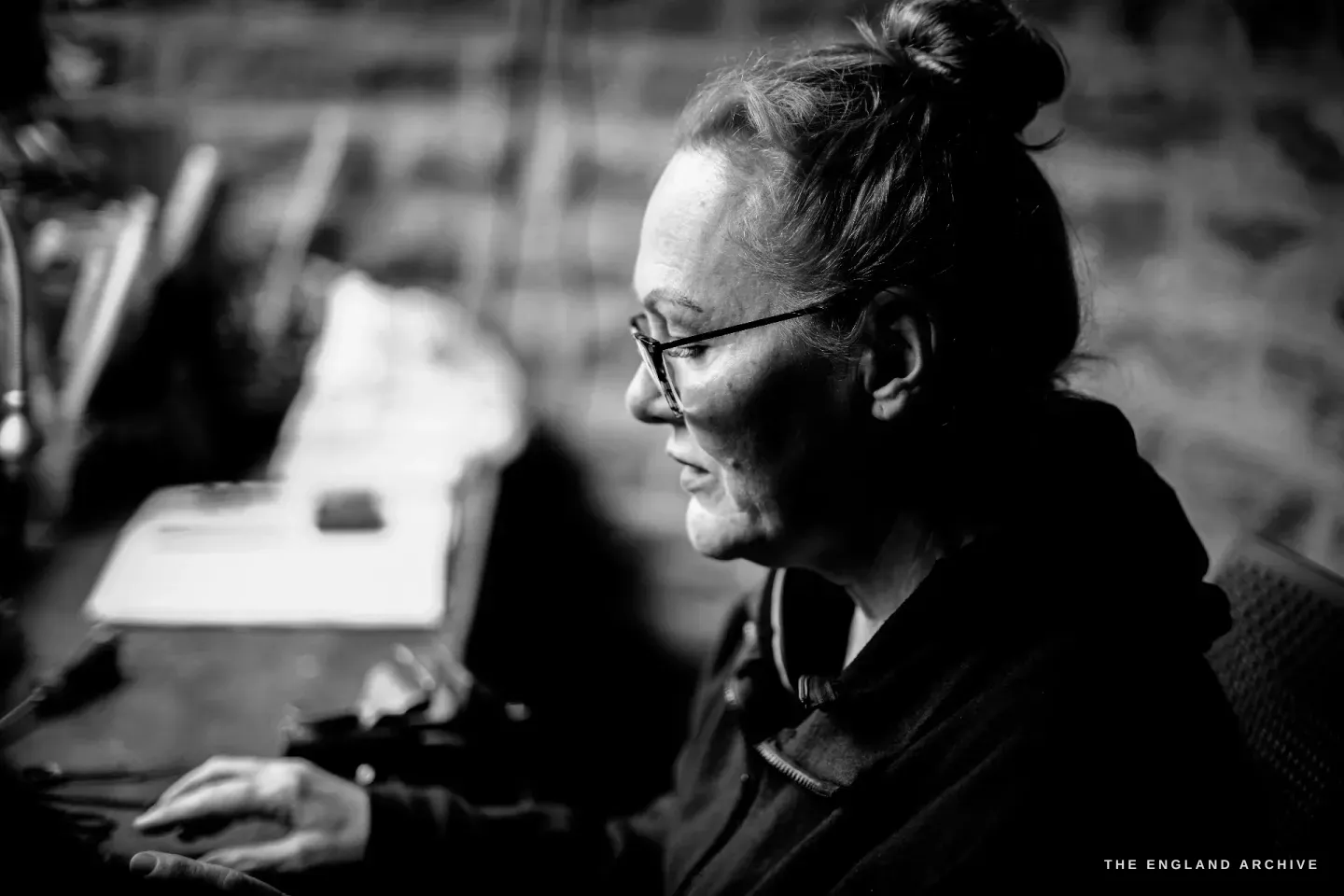
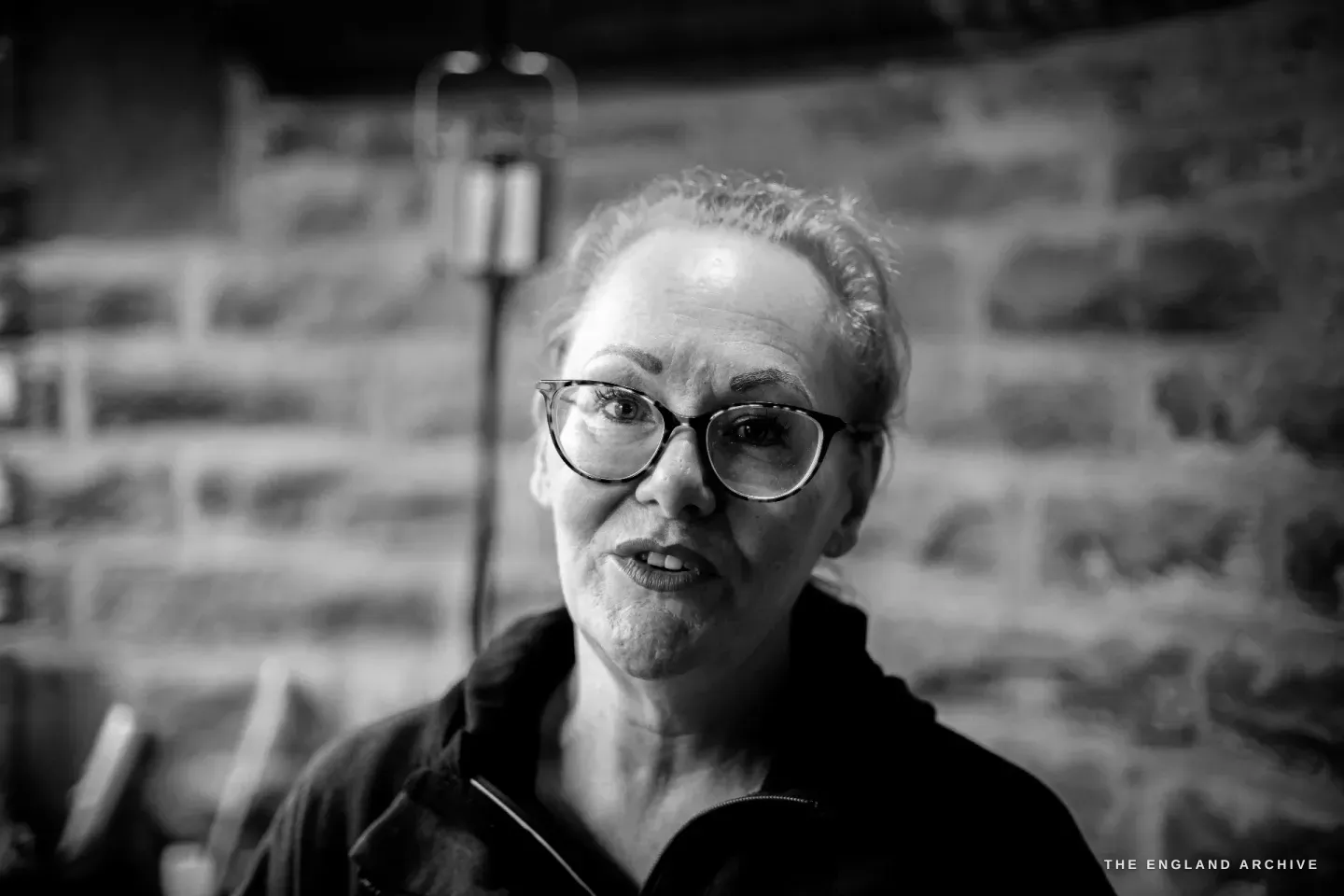
A close portrait of Grace Horne mid-speech in the workshop, glasses on, a hanging lamp and the stone wall behind.
IM-0981
A dramatic close portrait of Grace Horne in her workshop, side-lit against the stone wall, glasses on, an intent expression.
Grace Horne, scissor maker, Sheffield. IM-0988

The Scissors That Weren’t Good Enough

The turn from knives to scissors came out of a small failure. She wanted to build an all-purpose folding knife, a Swiss-army sort of thing, and one of the tools on it was to be a tiny pair of scissors. She made the scissors. They were not good. And instead of letting it go she did the thing that defines her: she stopped and asked why. What is a pair of scissors actually doing? Why is this one wrong? That question swallowed the next fifteen years.

She went looking for someone in Sheffield who could teach her, and around 2011 she found Ernest Wright, the hand-scissor makers on Broad Lane, then run by Nick Wright. Three older craftsmen there took her through the whole of it - not one stage, the whole thing, on the principle that you cannot make a pair of scissors until you understand every part of how it is made. Once she had it, there was no going back. Everything she had learned chasing knives had, it turned out, been walking her toward this.
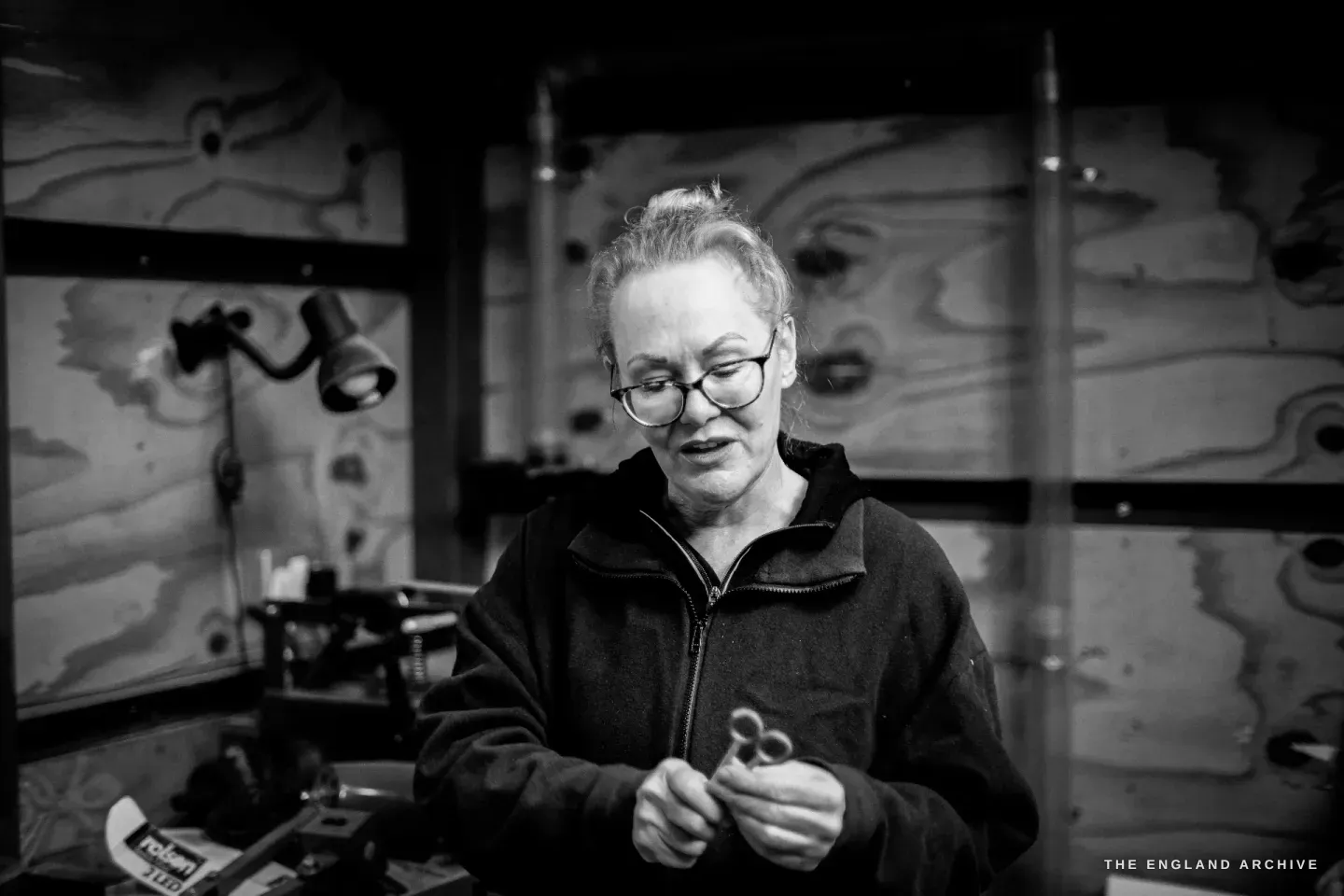
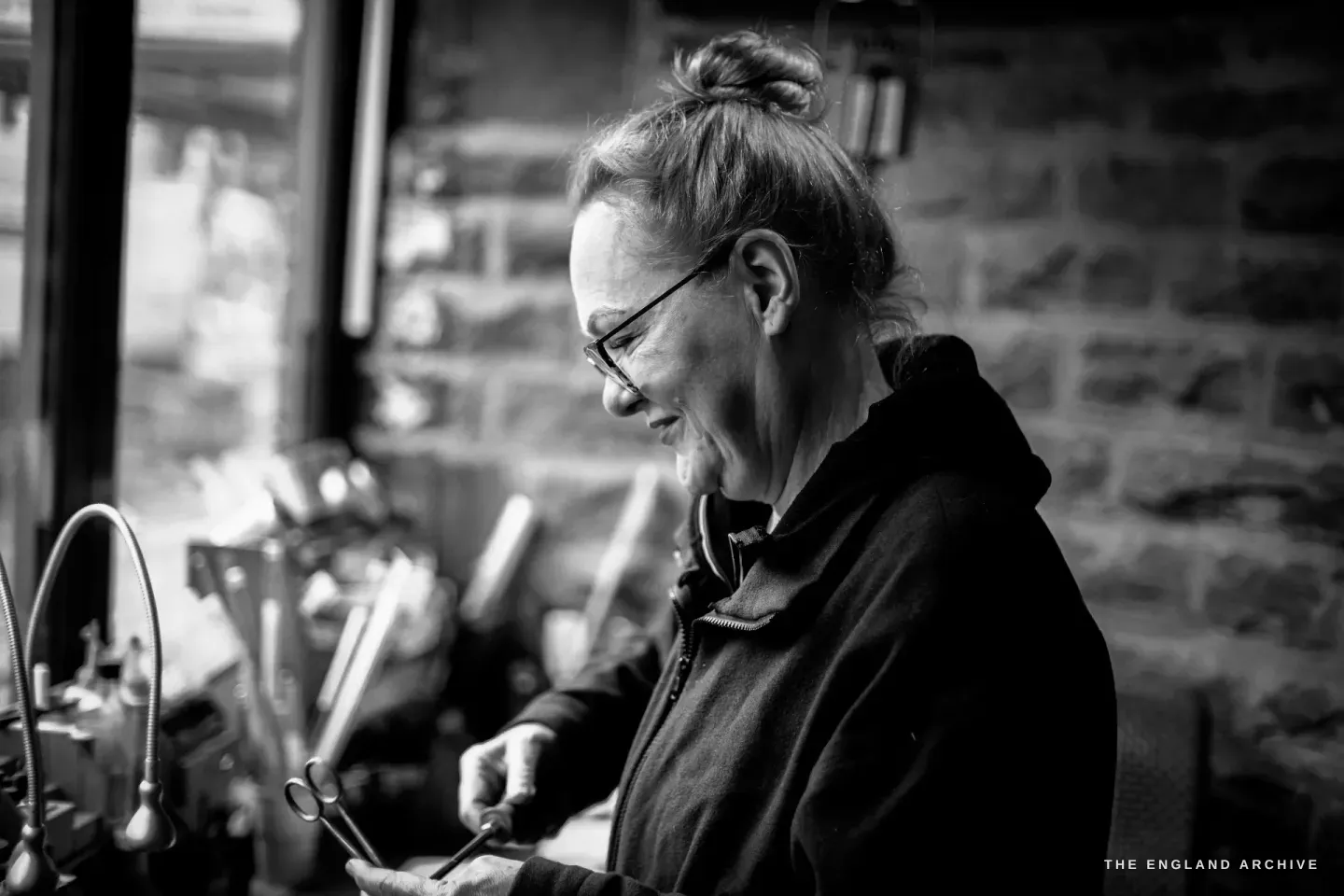
Grace Horne stands in the workshop holding a small pair of scissors, looking down at them, a plywood-lined wall behind.
IM-0990
Grace Horne stands at her bench by the window, smiling down at a small pair of scissors in her hands.
IM-0982
Grace Horne gestures with both hands as she explains something, a small pair of scissors held up, against the curved stone wall.
IM-1004
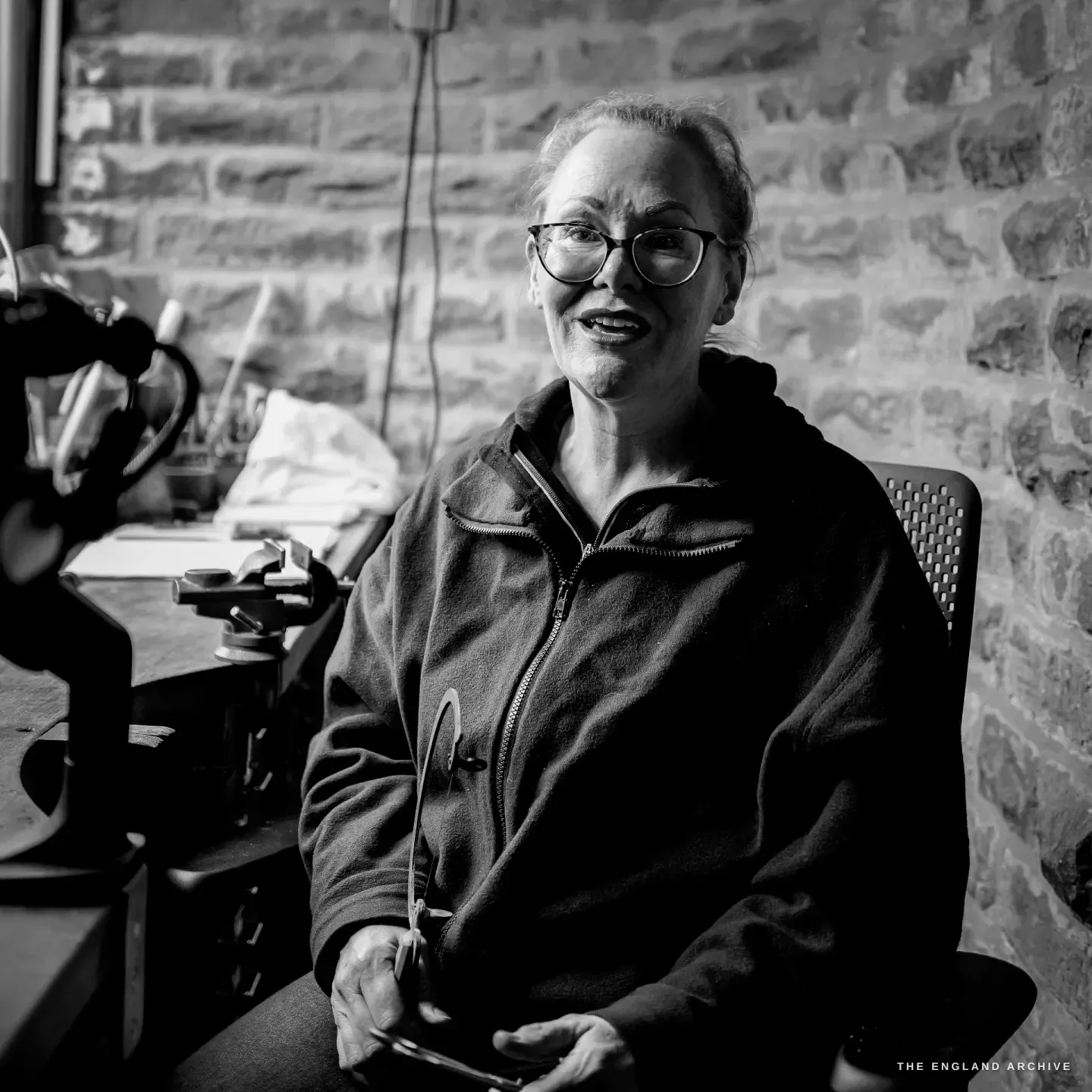
Grace Horne sits at her bench smiling warmly to the camera, a small pair of scissors in her hands, a microscope and vice beside her against the stone wall.
IM-1008
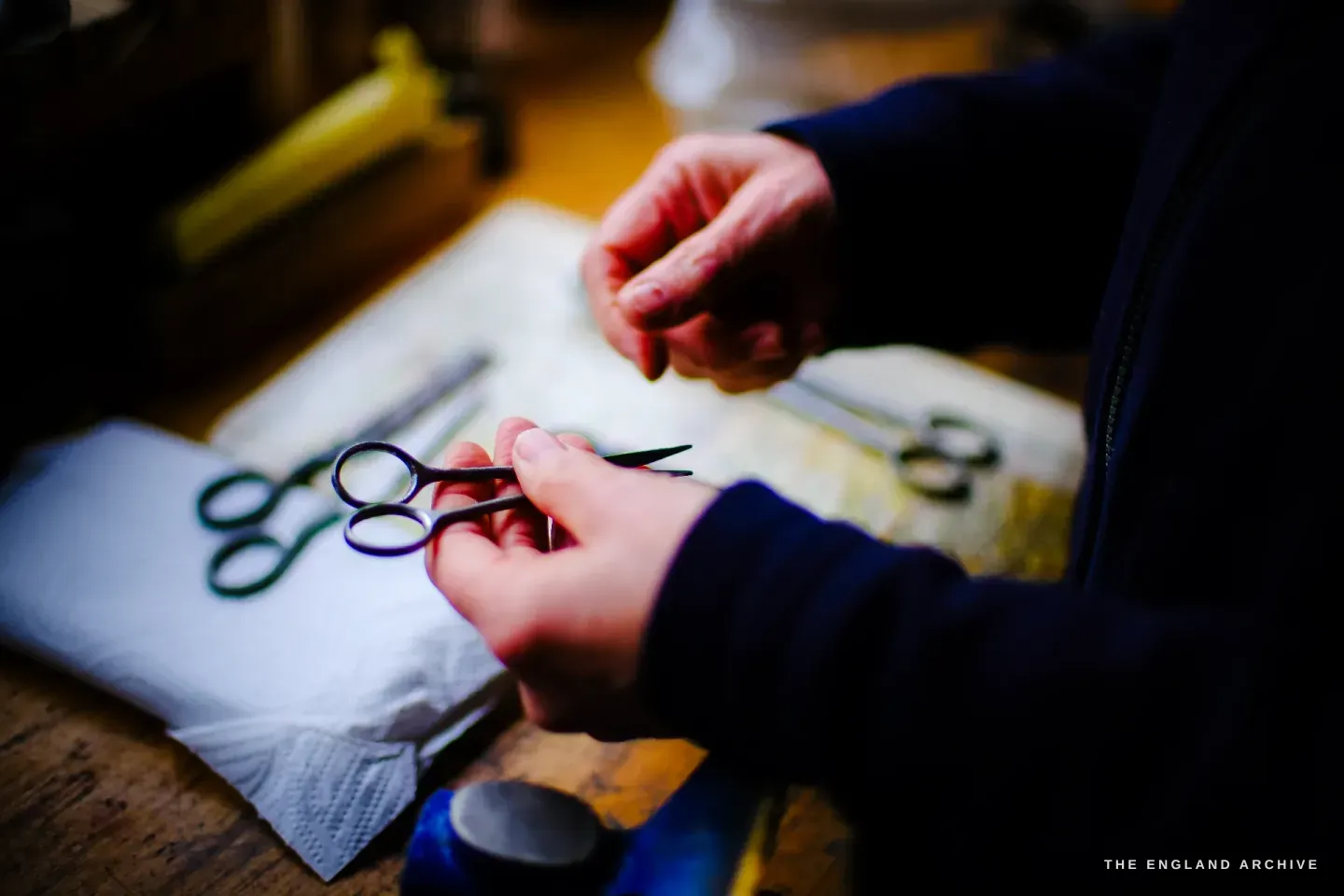
Grace Horne’s hands hold a small pair of scissors at the bench, another small pair resting on a white cloth, in warm workshop light.
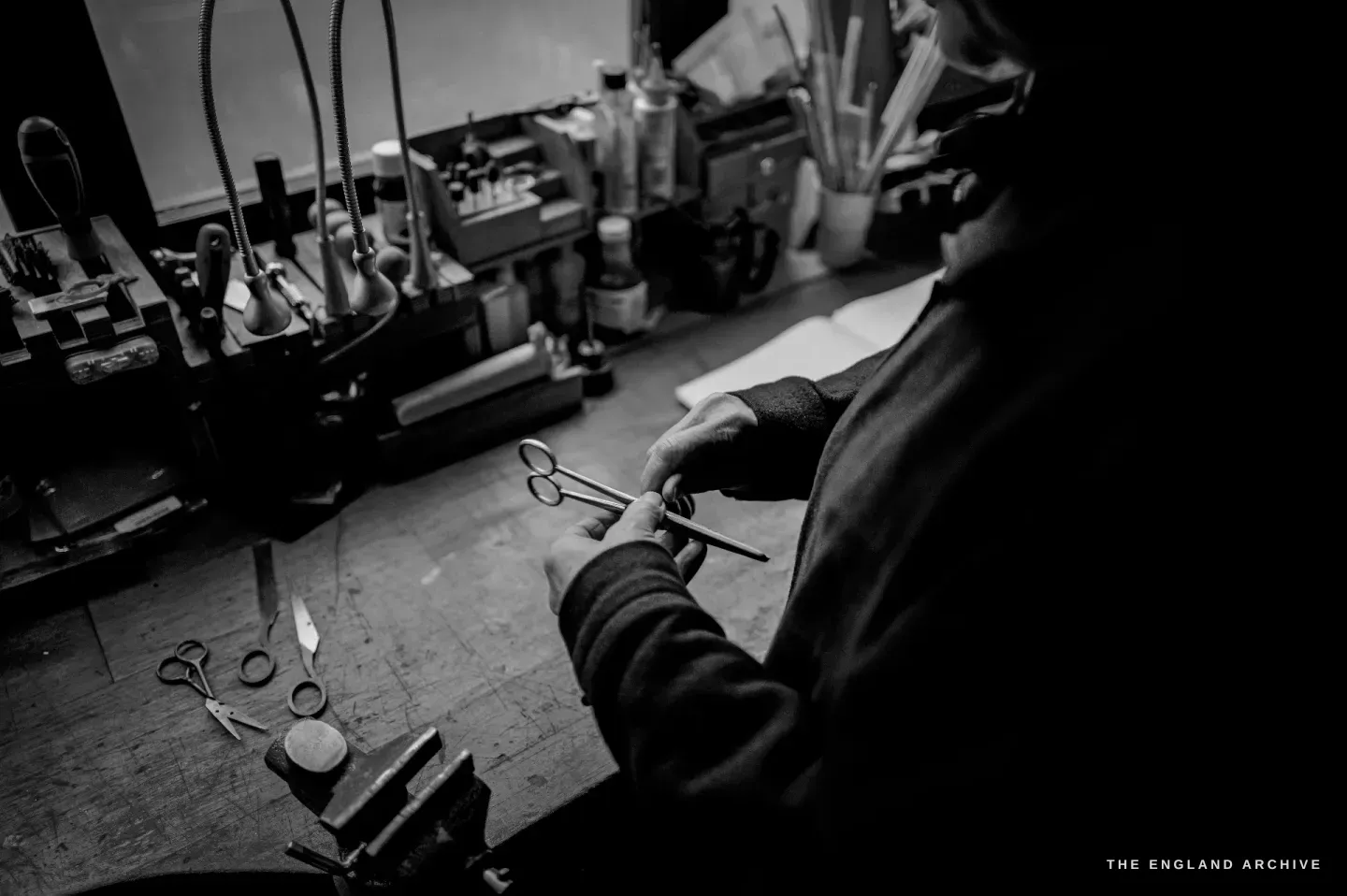
A finished small pair, checked in the hand. IM-0974

Doctor of Steel

Most makers stop at the bench. Grace kept going, into the library. She took a master’s in metalwork, and then - pushed by one of her tutors - a PhD, on patterned and decorative steels, and after that a post-doc. She is, with complete cheerfulness, a scissor geek: she owns more or less every book ever written on the subject, she is documenting the Sheffield Museums collection of scissors, and she has a research assistant who has worked alongside her for two years, helping pull it all together.

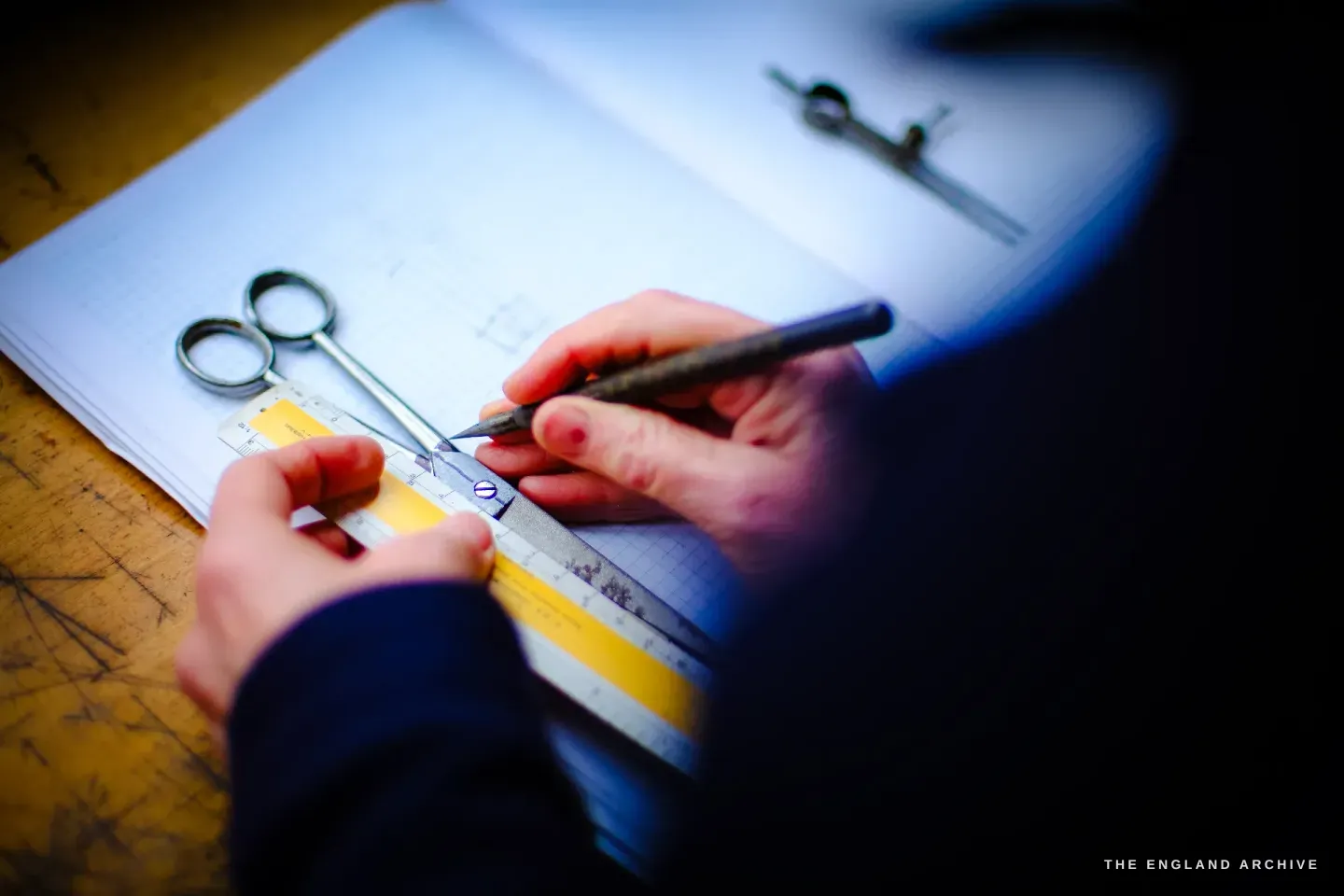
She has already published one book, Making Artisan Scissors. The second, on the anatomy and the exact dimensions of a pair of scissors, is being written now. Watching her measure a blade with calipers and then sketch its geometry on graph paper, you understand that for Grace the making and the research are not two activities. They are the same act, done with different tools.
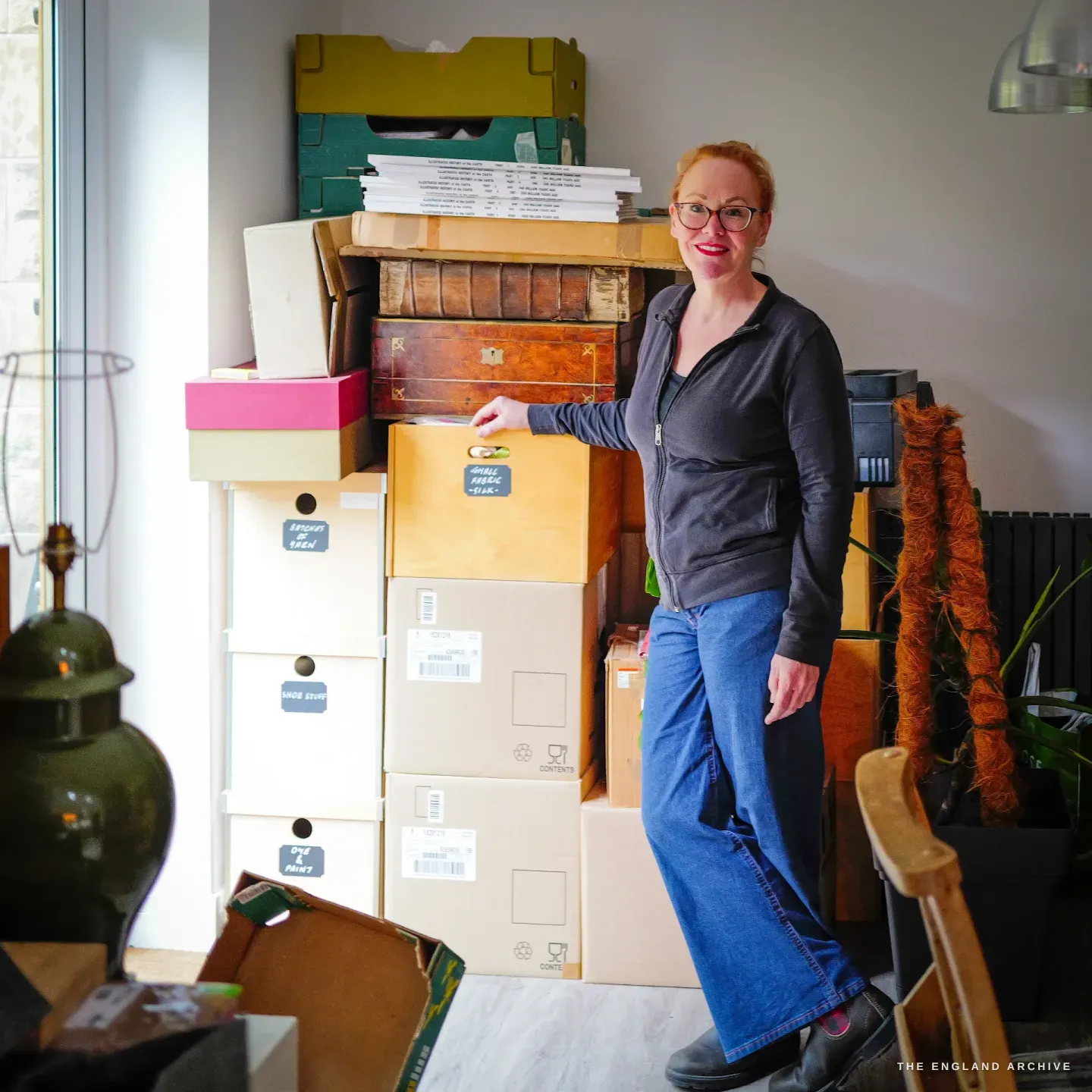
Grace Horne stands at home beside stacked, labelled archive boxes, old leather books and a wooden chest - her collection of scissor research.
The archive at home - labelled boxes of scissors and the literature on them. IM-0992
Grace Horne leans against the curved stone wall of the workshop, gesturing as she talks, the tool bench and vice to one side.
IM-0995
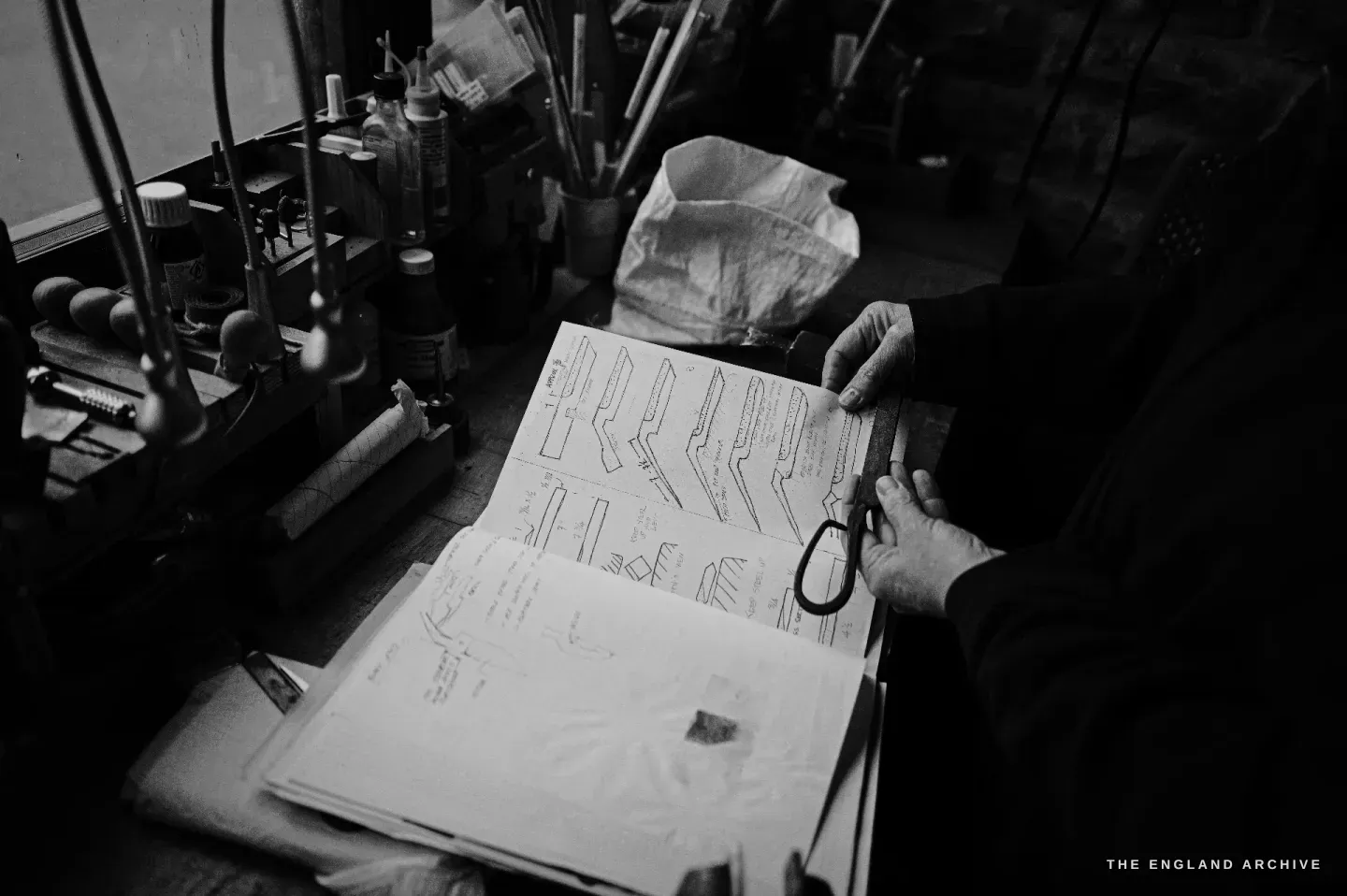
Grace Horne works at her bench over an open notebook filled with technical scissor drawings, a small pair of scissors in her hand.
Pages of her own scissor research, drawn out by hand. IM-0999
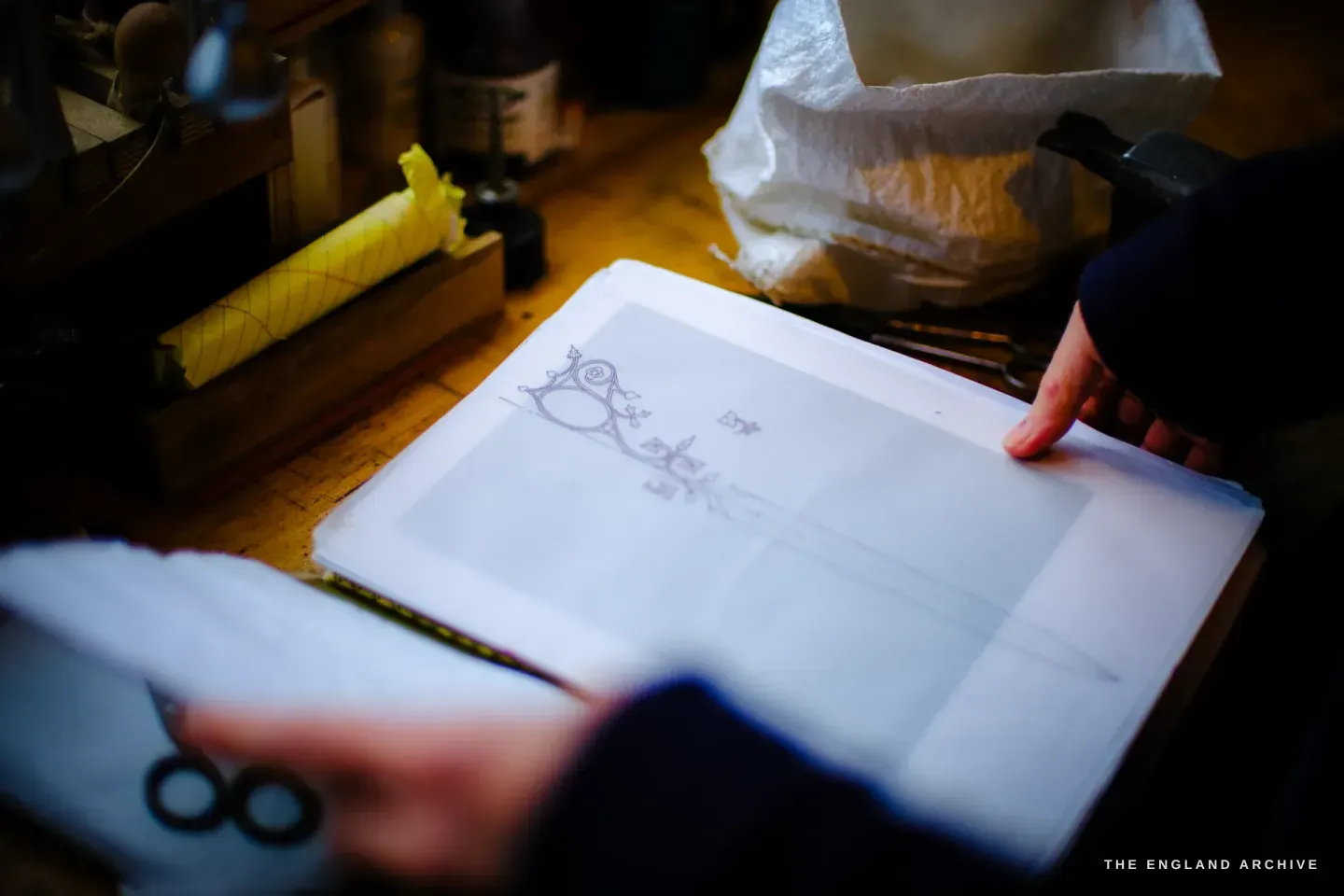
Grace Horne’s hands over a sheet of translucent paper carrying a fine, ornate scissor design of looping stems and flowers, tools and a taped roll behind.
A design drawn out - some of her scissors are nearly jewellery. IM-0975
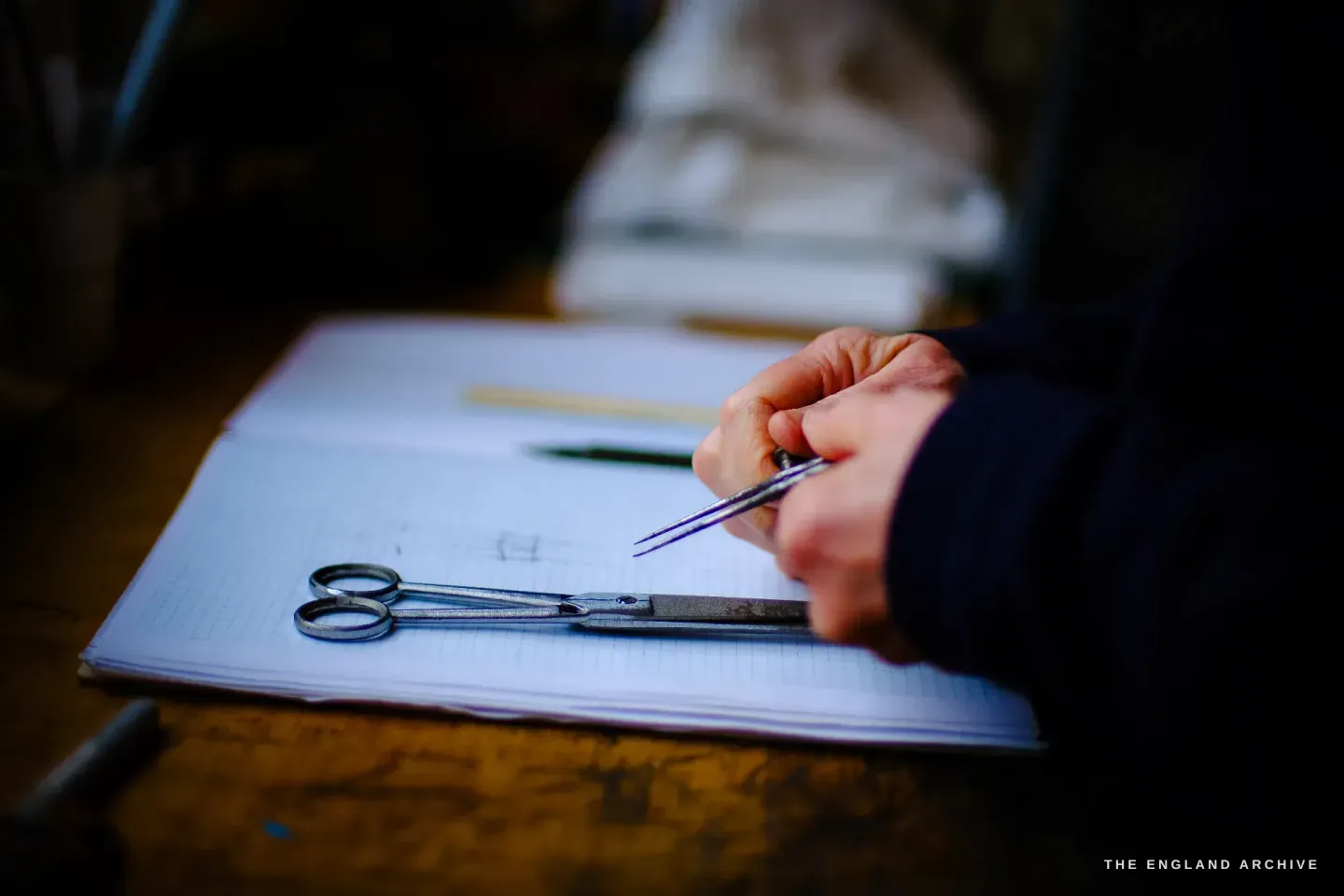
Grace Horne uses a pair of dividers to step out a measured scissor design on graph paper, a finished pair lying on the sheet for reference.
Stepping out the geometry - the other book is on the anatomy of scissors. IM-0984
Grace Horne marks a measured drawing on graph paper with a scriber against a steel rule, a small pair of scissors and dividers beside her hands.
IM-0985
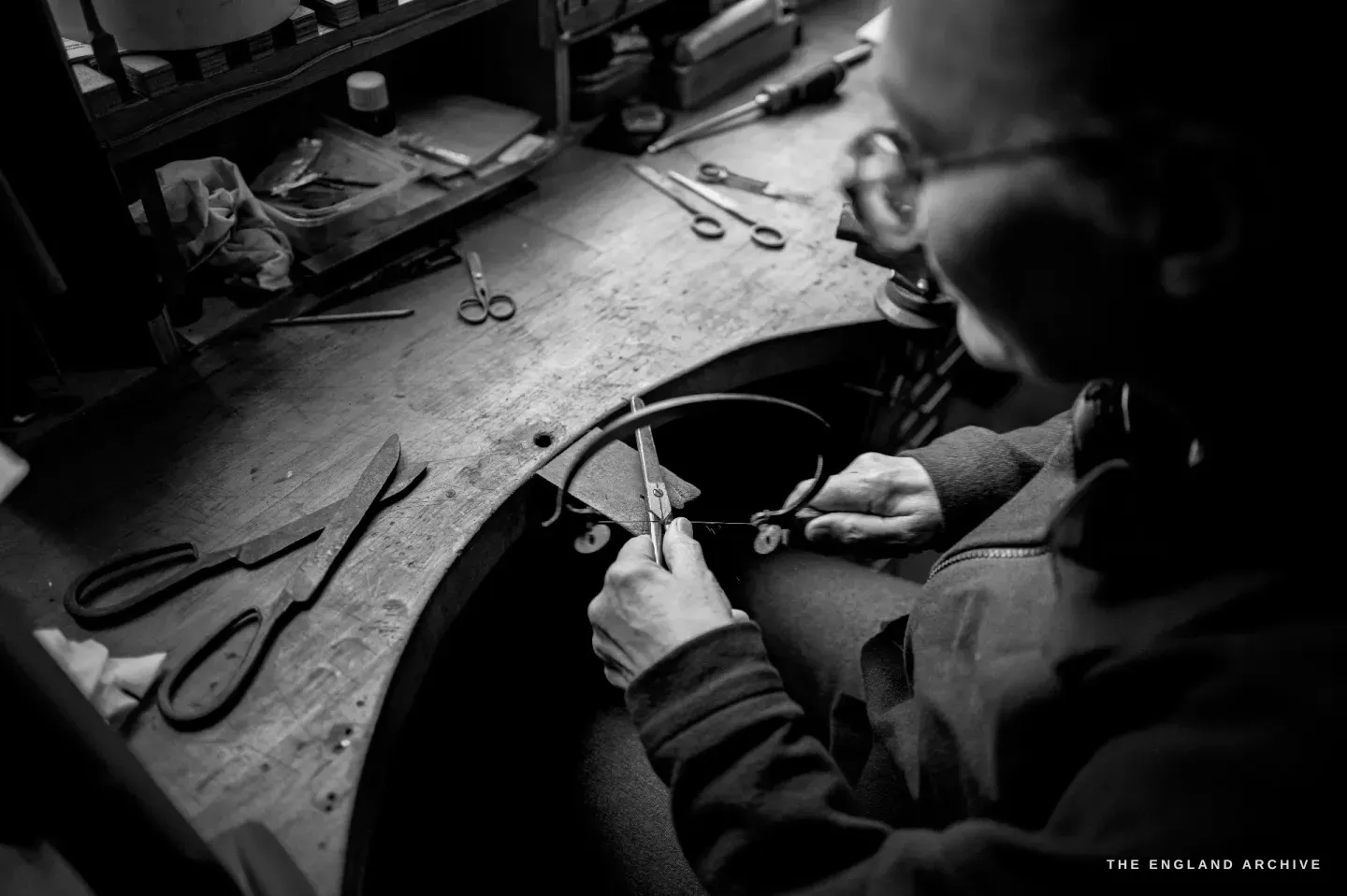
Over Grace Horne’s shoulder, her hands use large calipers to measure across a scissor component on the bench, finished scissors beside.
Measuring to the thousandth - the engineer’s habit. IM-0987

Making Without the Machines

Here is the part that may matter most. When Grace learned at Ernest Wright, she saw the machines that scissor factories once leaned on - the big grinders, the drop-stamps, and above all the grinding machines that put the subtle curve and twist on the inside of the blades that is fundamental to making scissors work. You cannot buy these machines now. They are not made any more, the surviving ones rarely come up, and when they do they are far beyond anyone starting out. For most people that is the end of the conversation: no specialist machine, no scissors.

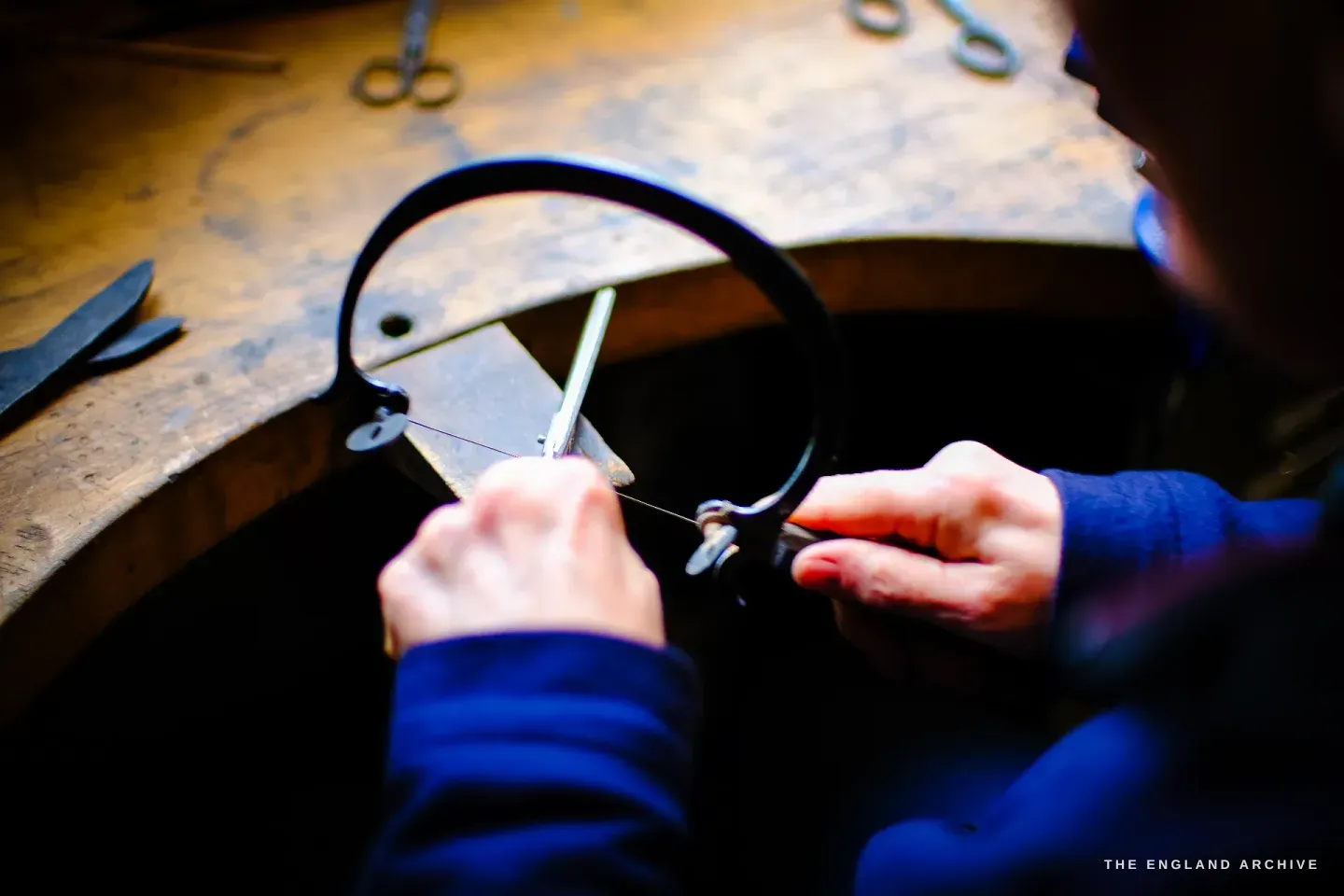
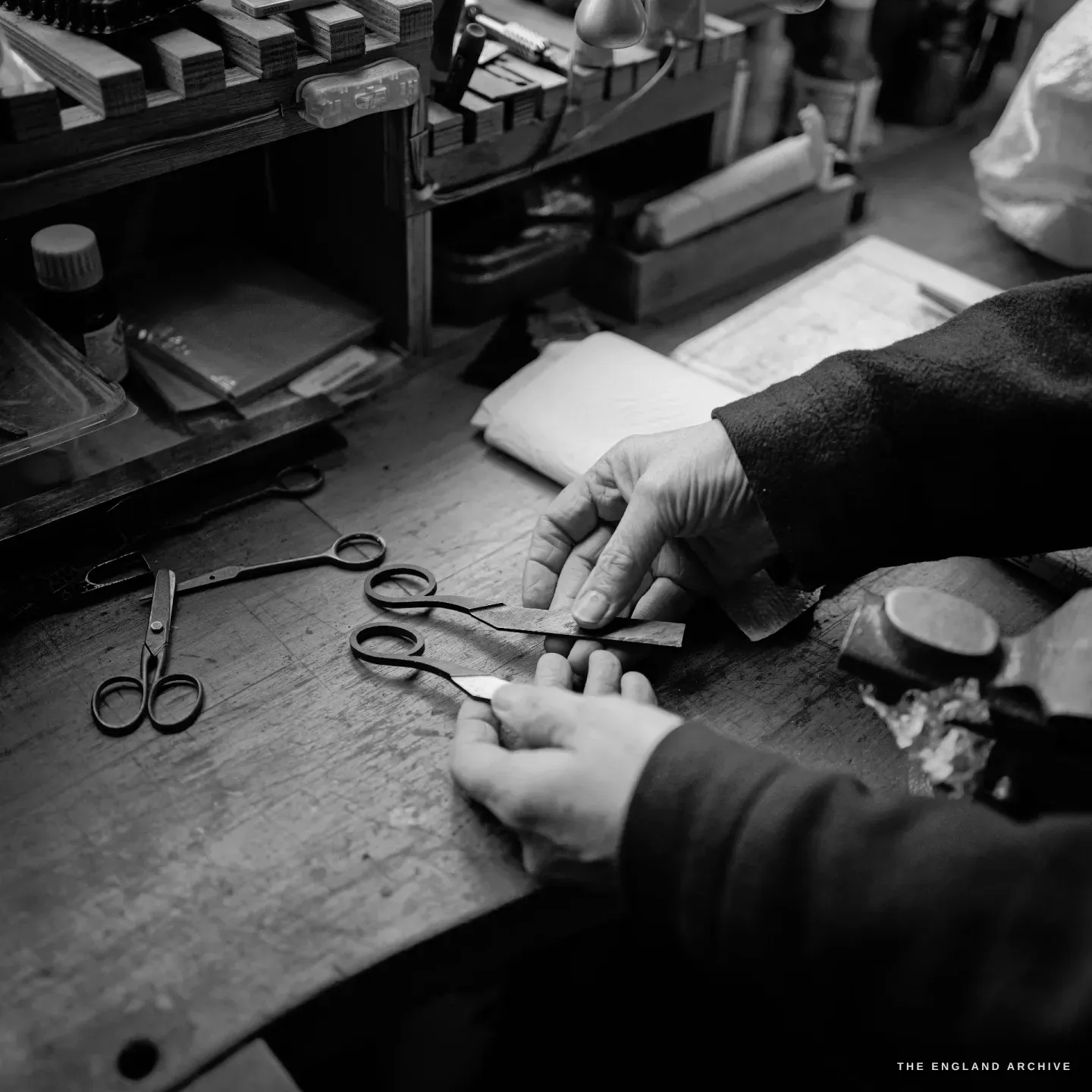
Grace refused that too. Over years she worked out how to make a pair of scissors entirely by hand - forged on a small anvil, filed, shaped and fitted with hand tools, no industrial kit at all. It is slow, and it is hard, and it is the whole subject of the book she is writing, because it removes the one barrier that has kept scissor making closed: the kit. If she is right, she has quietly reopened a craft everyone assumed was dying with its machines - and I think she will pull a new generation of scissor makers in behind her.
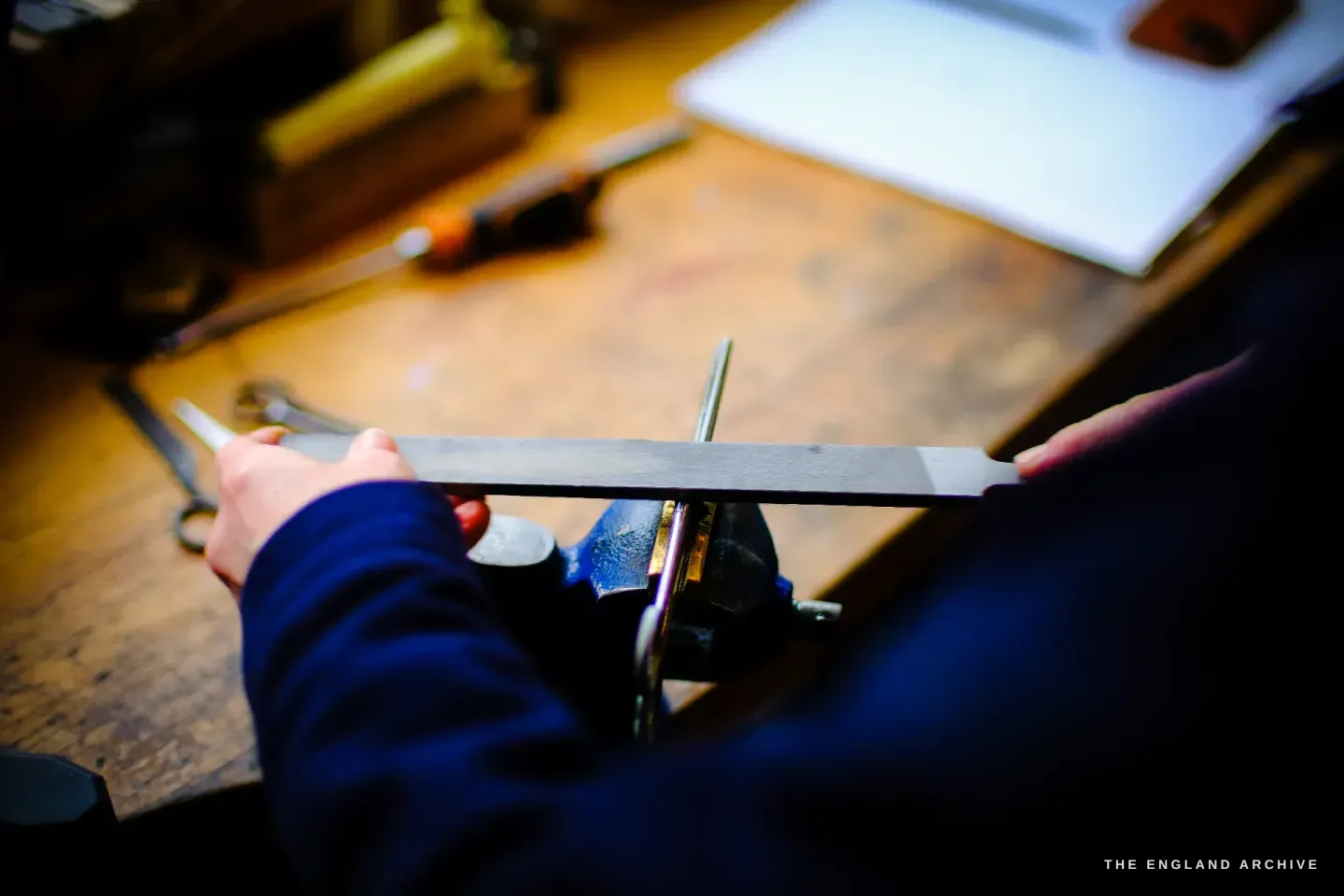
Grace Horne’s hands file the blade of a pair of scissors held in a bench vice, tools and scissors on the warm wooden bench around her.
Filing a blade by hand - the method she works without the old industrial machines. IM-0989
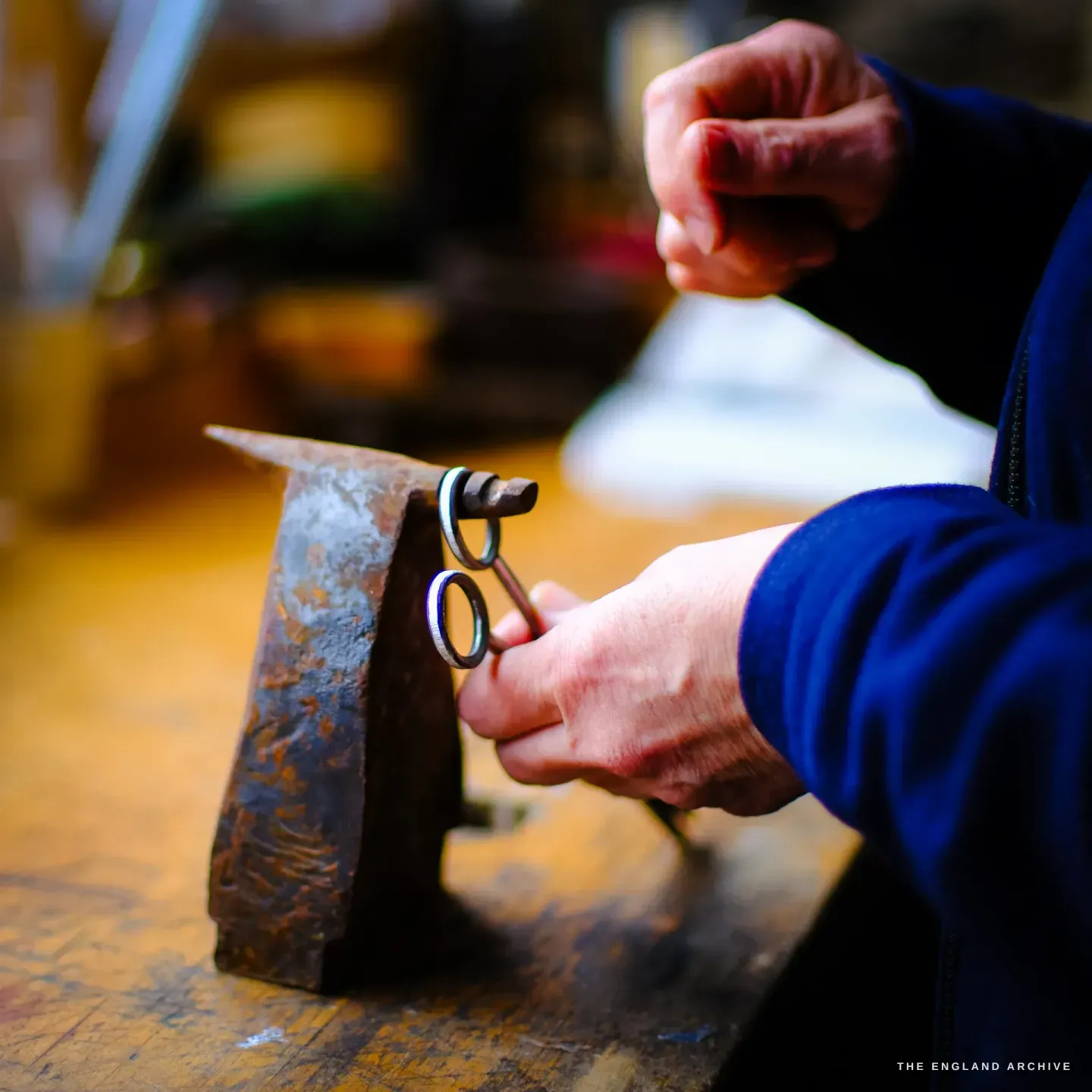
Grace Horne’s hands work a small pair of forged scissors against a rusted beak anvil at the bench, in warm light.
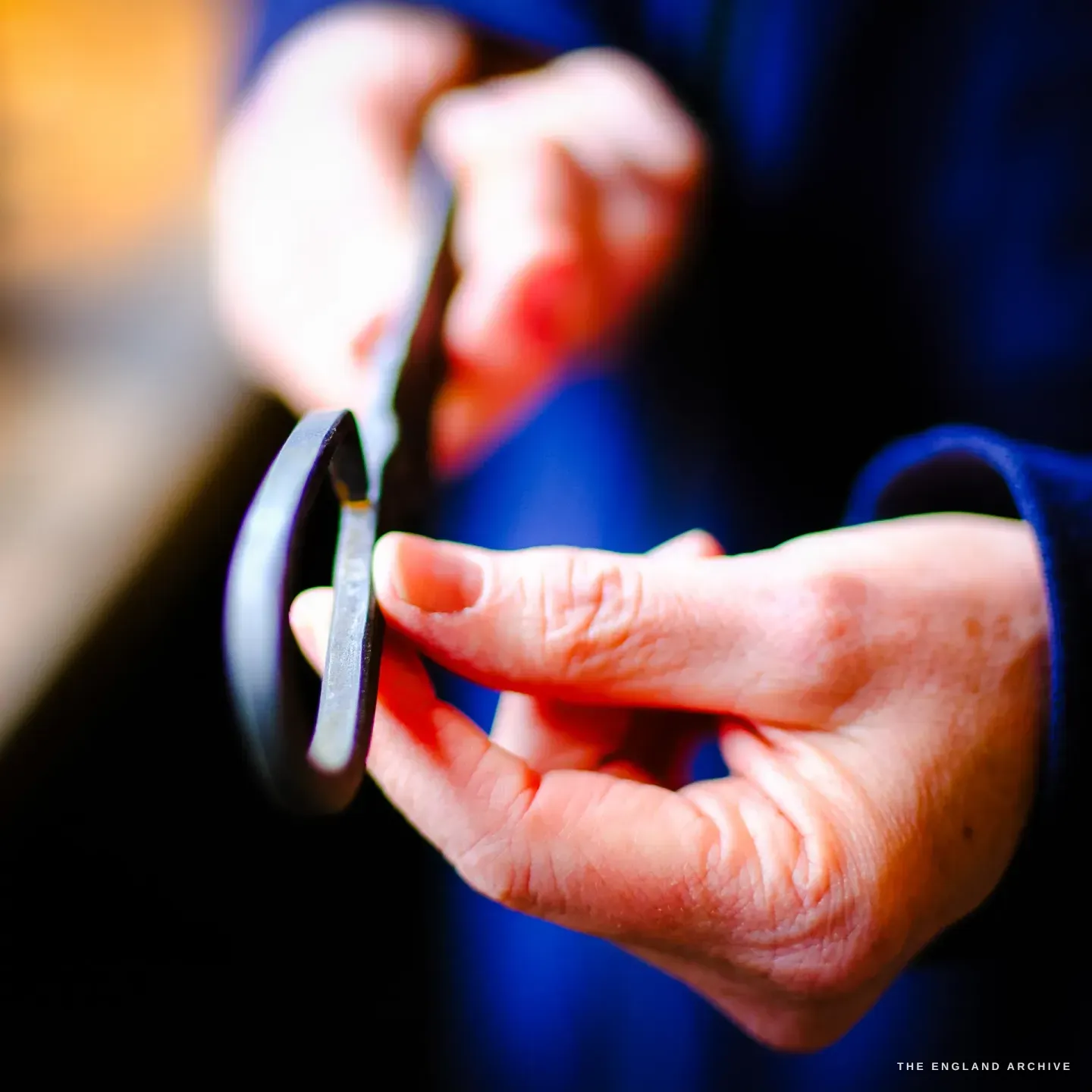
Working a bow over the bick. IM-0979
Close on Grace Horne’s hands turning and inspecting the forged bow of a pair of scissors, her blue sleeve and the warm bench beyond.
IM-0980
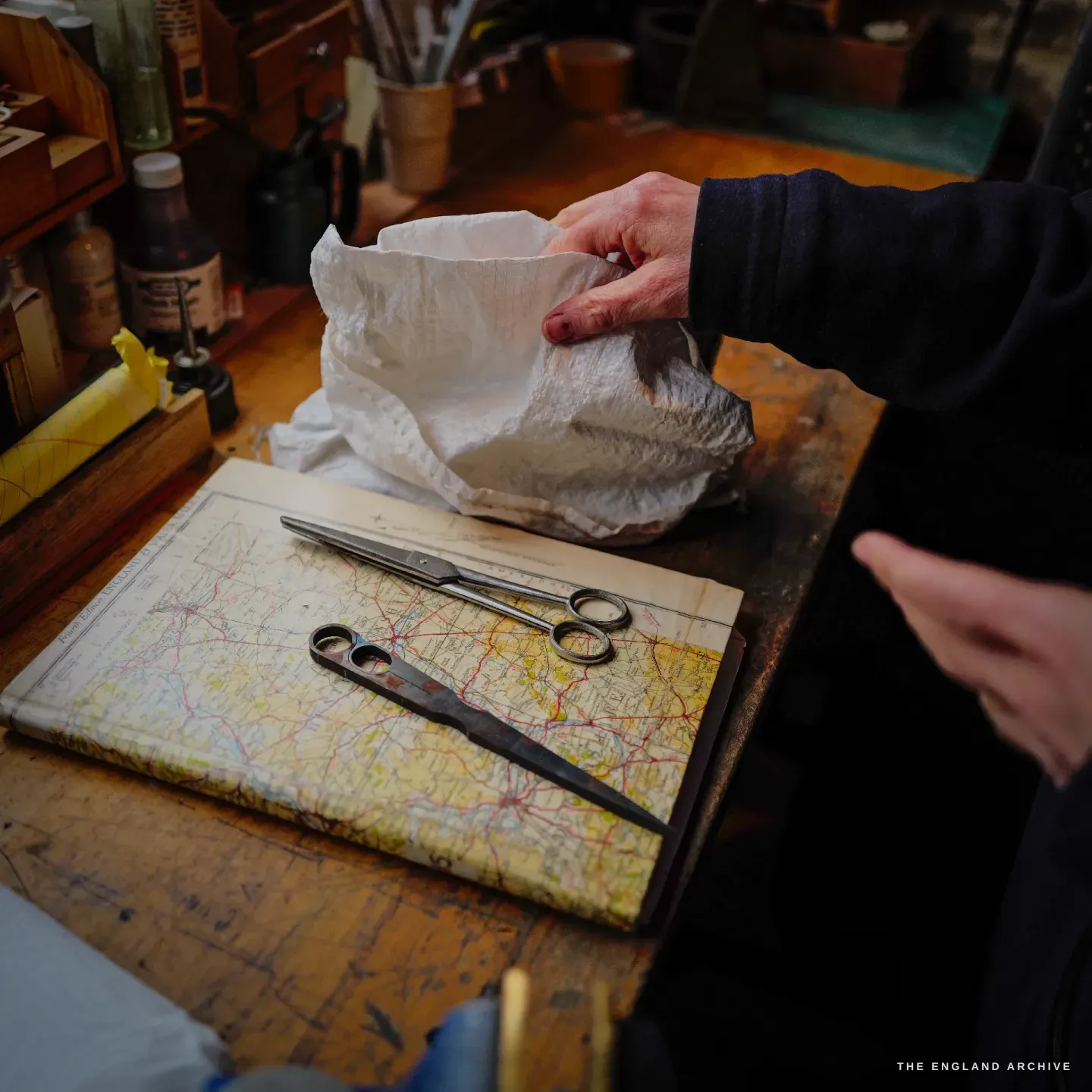
Two pairs of scissors rest on an old folded road map used as a bench cover, Grace Horne’s hand lifting a cloth-wrapped parcel beside them.
Scissors on the map that covers the bench. IM-0996
Grace Horne’s hands fit a small part to a pair of scissors at the bench, a finished pair and a forged blank resting on the wood.
IM-0997
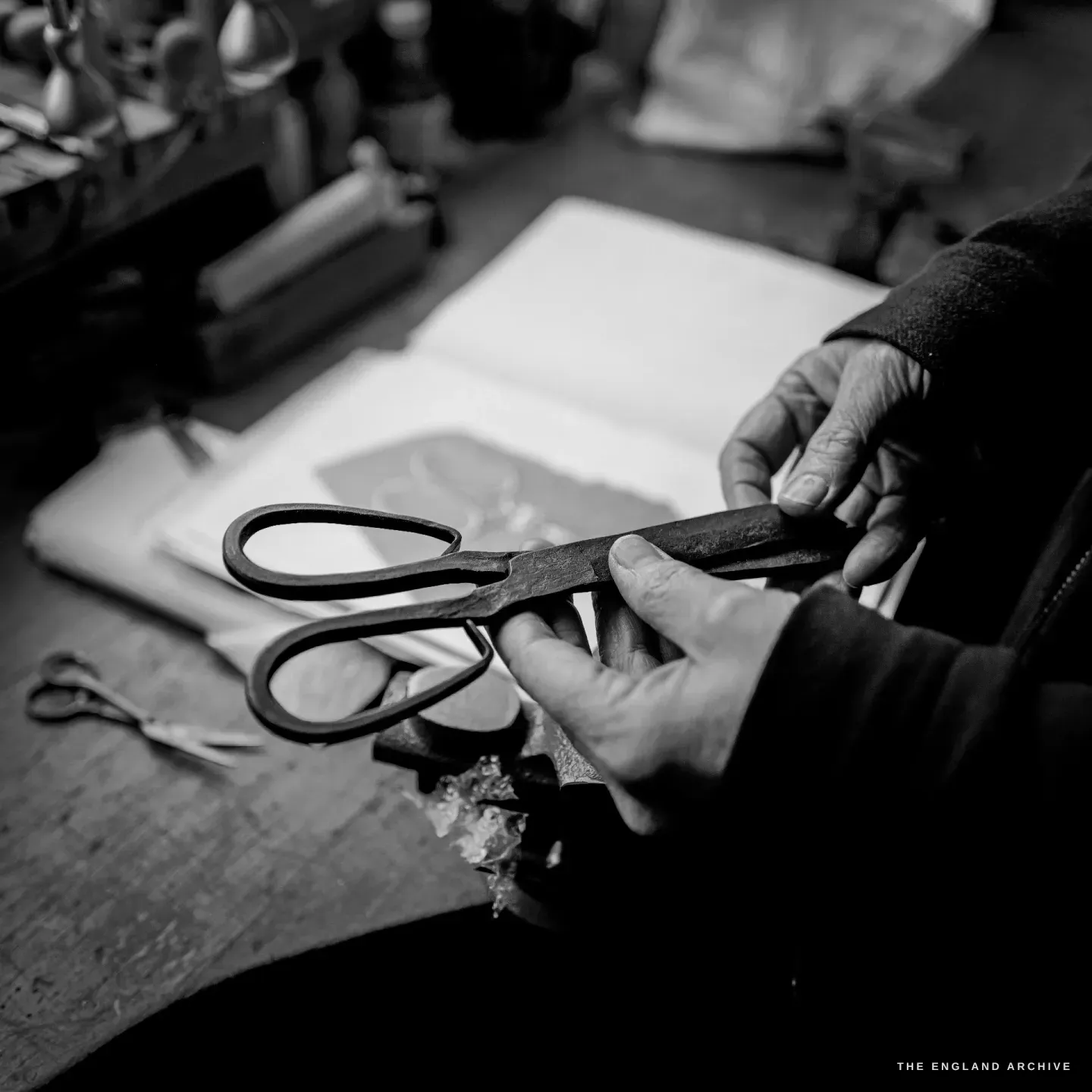
Grace Horne’s hands hold a pair of hand-forged scissors with looped bows over an open book of scissor drawings.
A forged pair, held against the page. IM-0998
Over Grace Horne’s shoulder, she works a small forged pair of scissors at the bench, more forged scissors and a vice in front of her.
IM-1003
Over Grace Horne’s shoulder she works the bow of a pair of scissors with a tool, several forged pairs laid out on the curved bench.
IM-1005
Grace Horne sits at the bench by the window examining a scissor bow in her hands under the bench light, the stone wall behind.
IM-1006
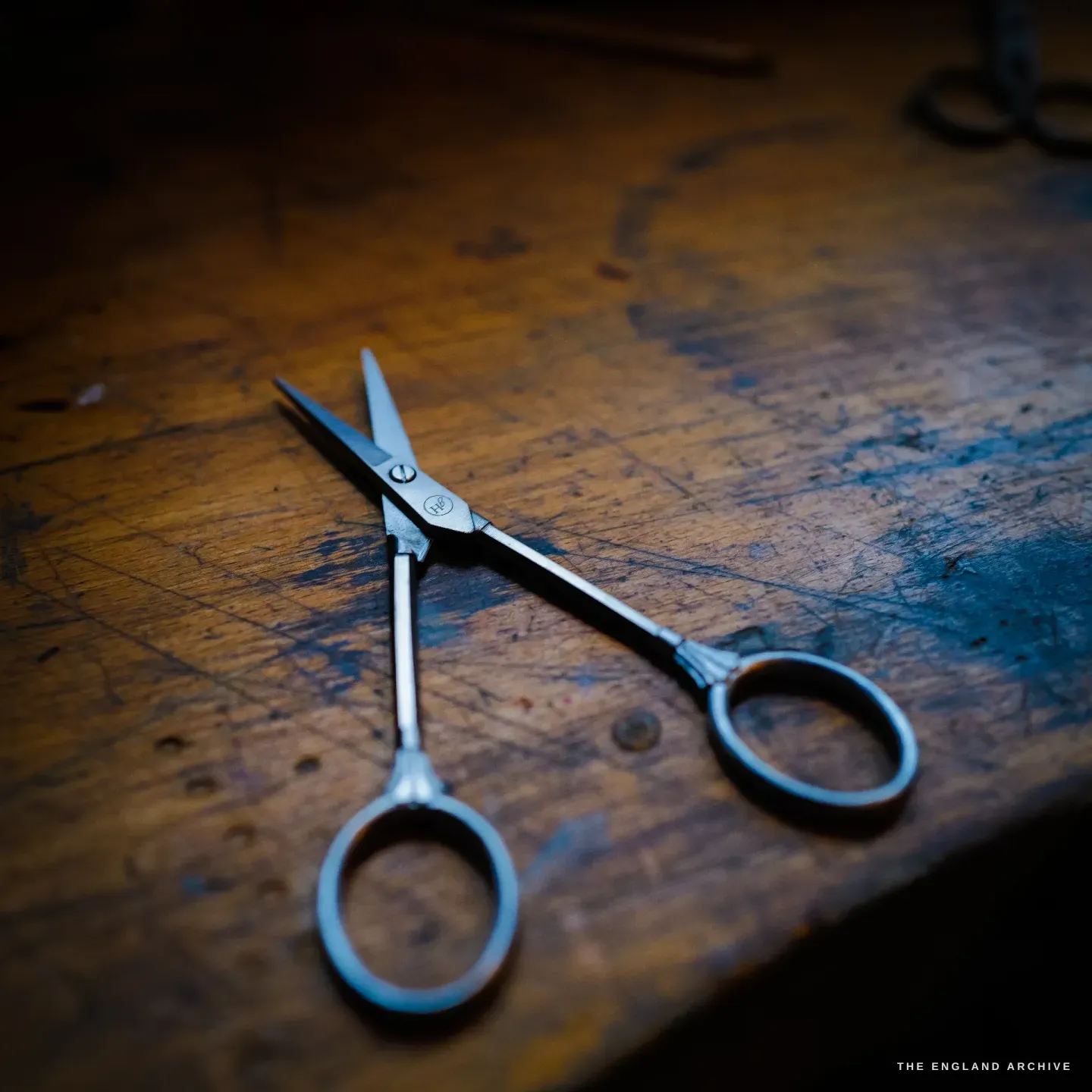
A finished pair of polished scissors with a maker’s stamp lies open on the worn wooden workbench in warm light, another forged pair behind.
IM-1001
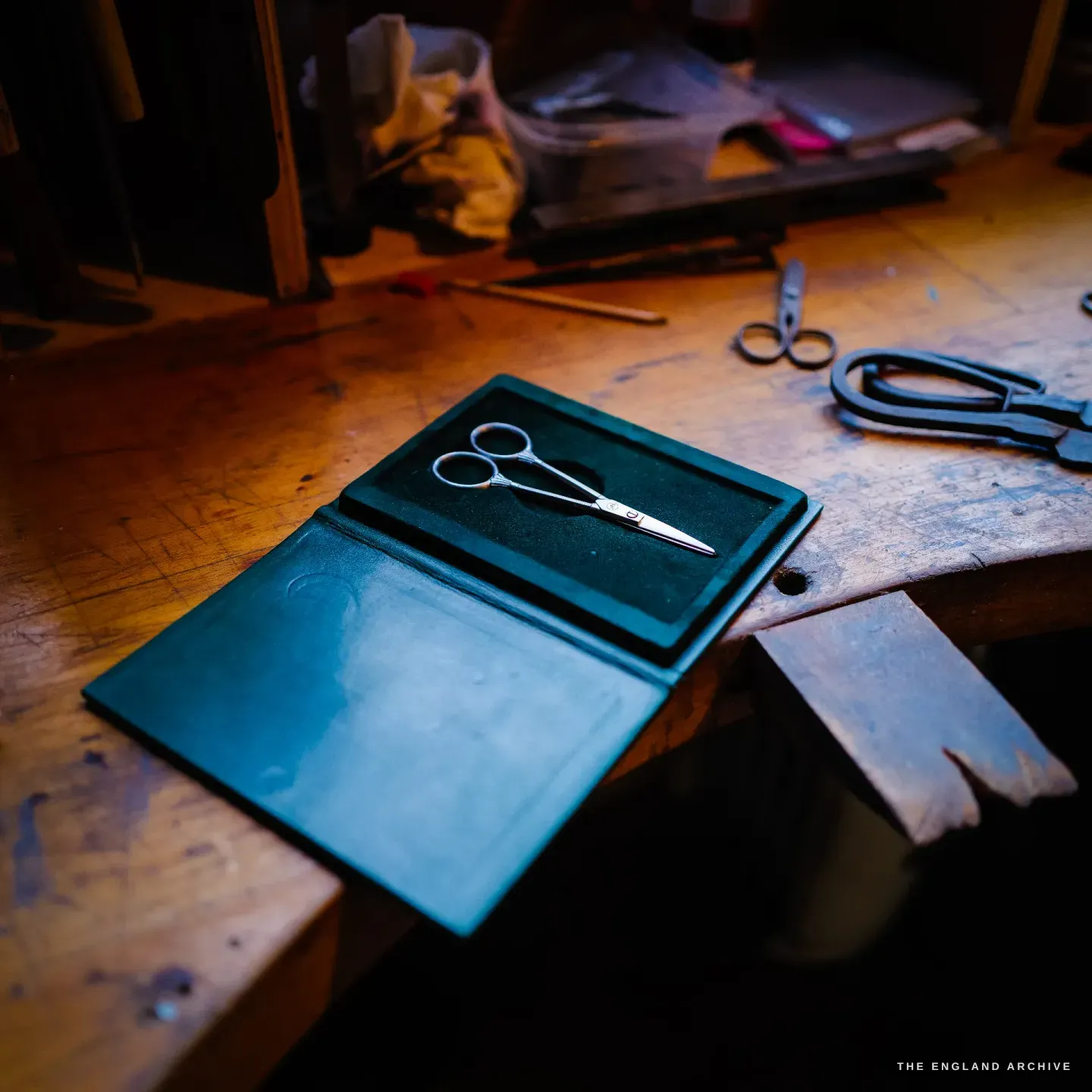
A finished pair of polished scissors displayed open on a dark green leather mat on the bench, other forged scissors beside it.
Finished, and laid out on the green. IM-1002

The Sword, and the Corsets

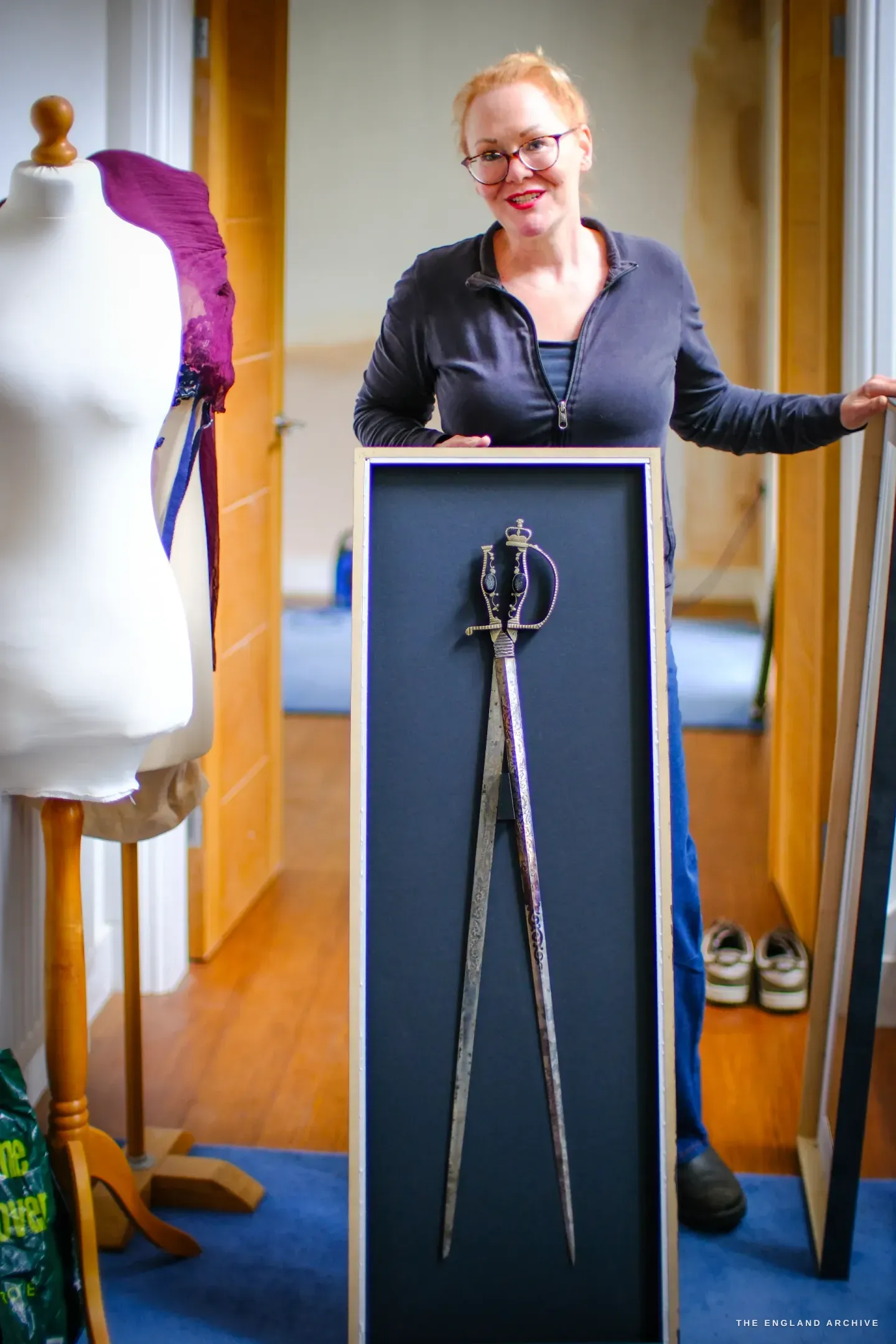
Two things, before the record. The first is the scissor sword - a real sword whose blade splits into a working pair of giant scissors, an object of pure cutler’s bravado. Grace saw one come up at auction, bid on it, and lost it when her computer crashed at the wrong second. She spent the following year tracking down the person who had bought it, and bought it from them - for roughly three times what it had gone for. It hangs framed in her house now, and she showed it to me the way you show someone a relic.

The second is that Grace also makes corsets. It sounds like a different life, but it is the same one: steel and engineering and exact, patient, measured construction, in another material. Cutler and corsetiere, both at once.
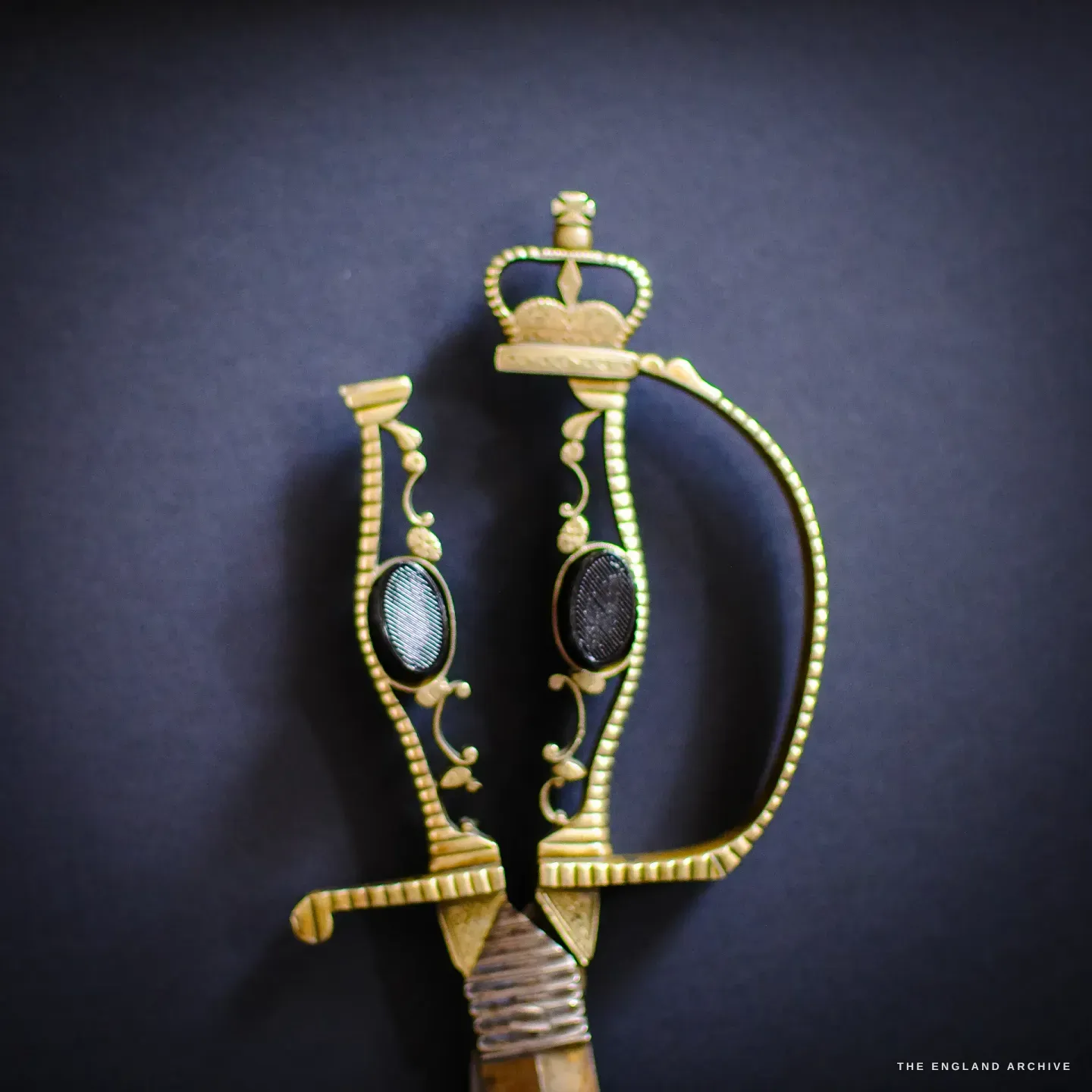
Close on the gilt basket hilt of the scissor sword - an ornate brass guard with a crown motif and oval medallions, against dark blue.
The hilt of the scissor sword. IM-0970
Grace Horne stands at home holding a tall framed case containing the scissor sword - a sword whose twin blades open like a pair of scissors - beside a dressmaker’s mannequin wearing a purple corset.
The scissor sword she spent a year tracking down - and, on the stand, her corsetry. IM-0971
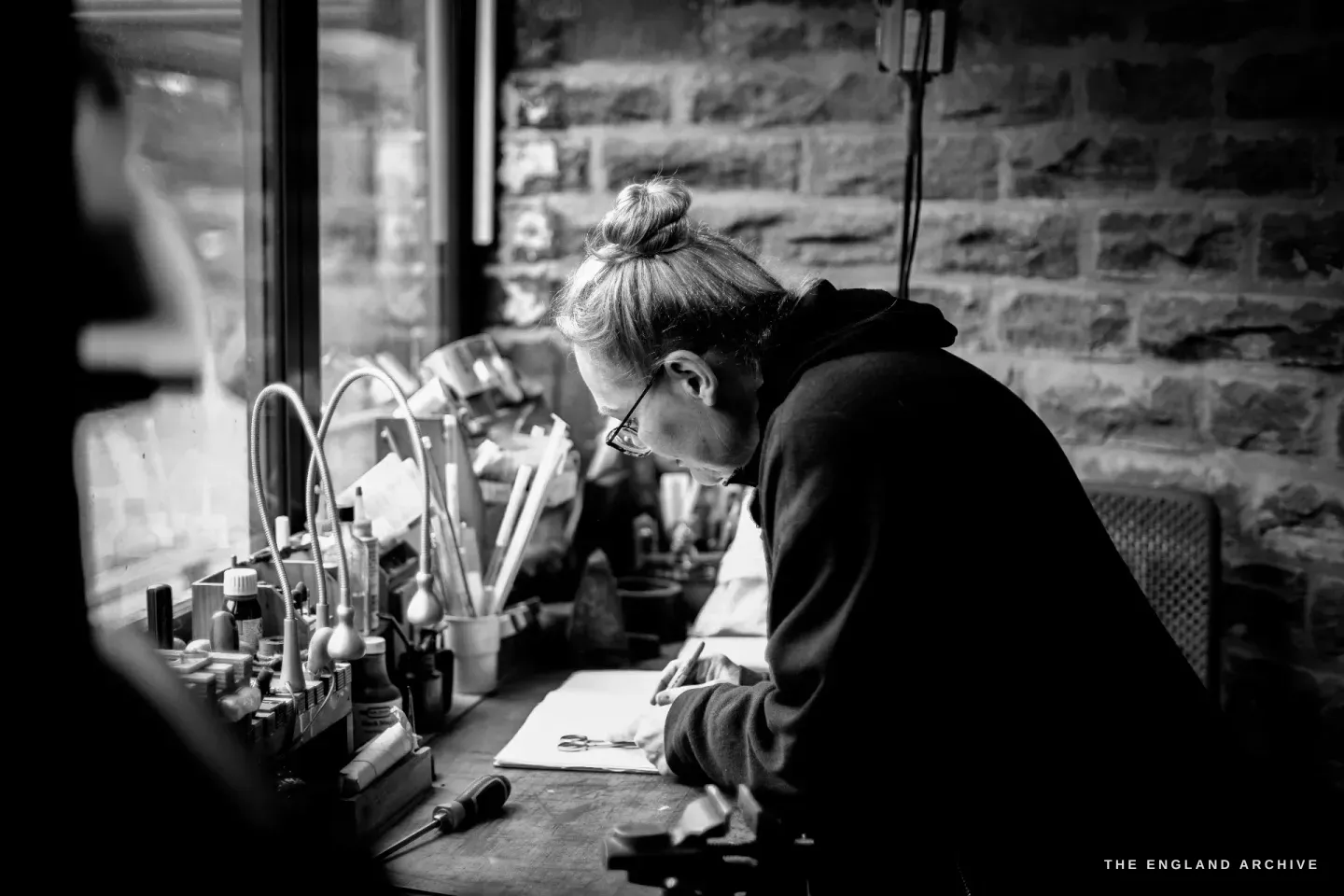
Grace Horne bends over her bench beneath the window, working, the bench lined with files and scribes in racks against the brick wall.
IM-0983
A side-lit profile of Grace Horne working intently at her bench, hand at the work on a white sheet, in deep shadow.
IM-0986
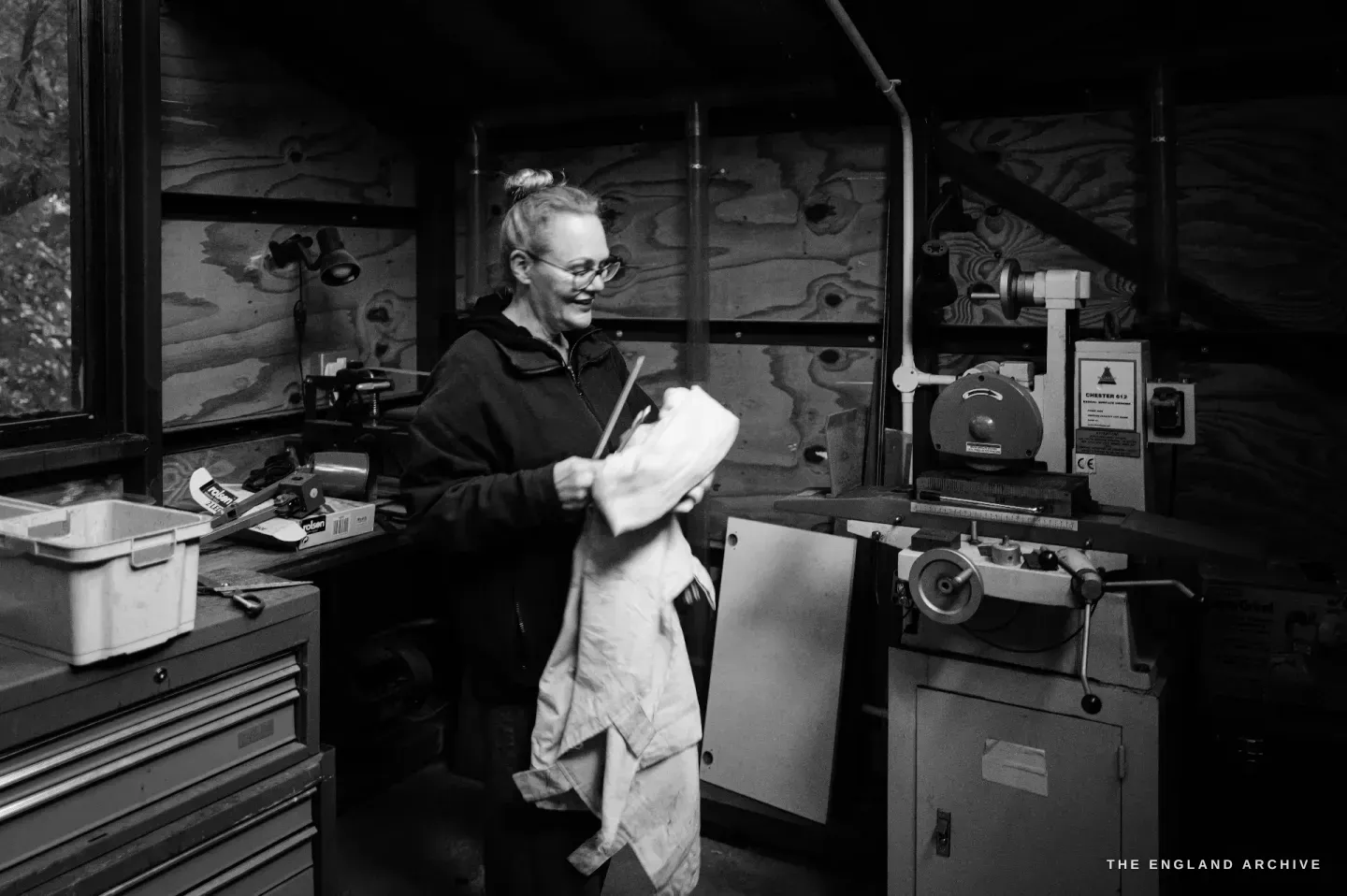
Grace Horne stands in a plywood-lined back room of the workshop holding a cloth, a bench grinder and tool chest beside her.
IM-1014
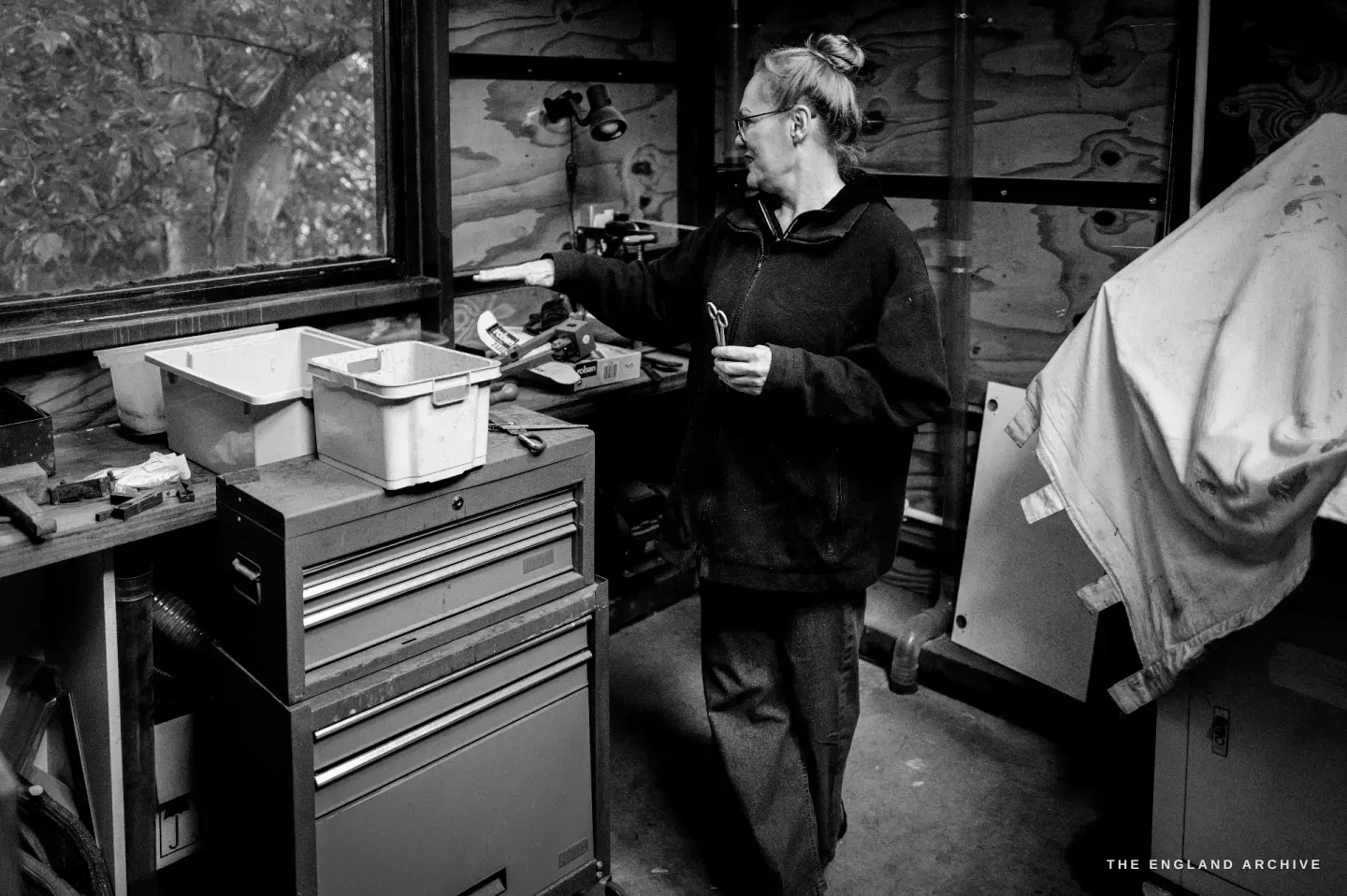
Grace Horne stands in the back machine room holding a scribe and small scissors, reaching toward a grey tool chest by the window.
IM-1015
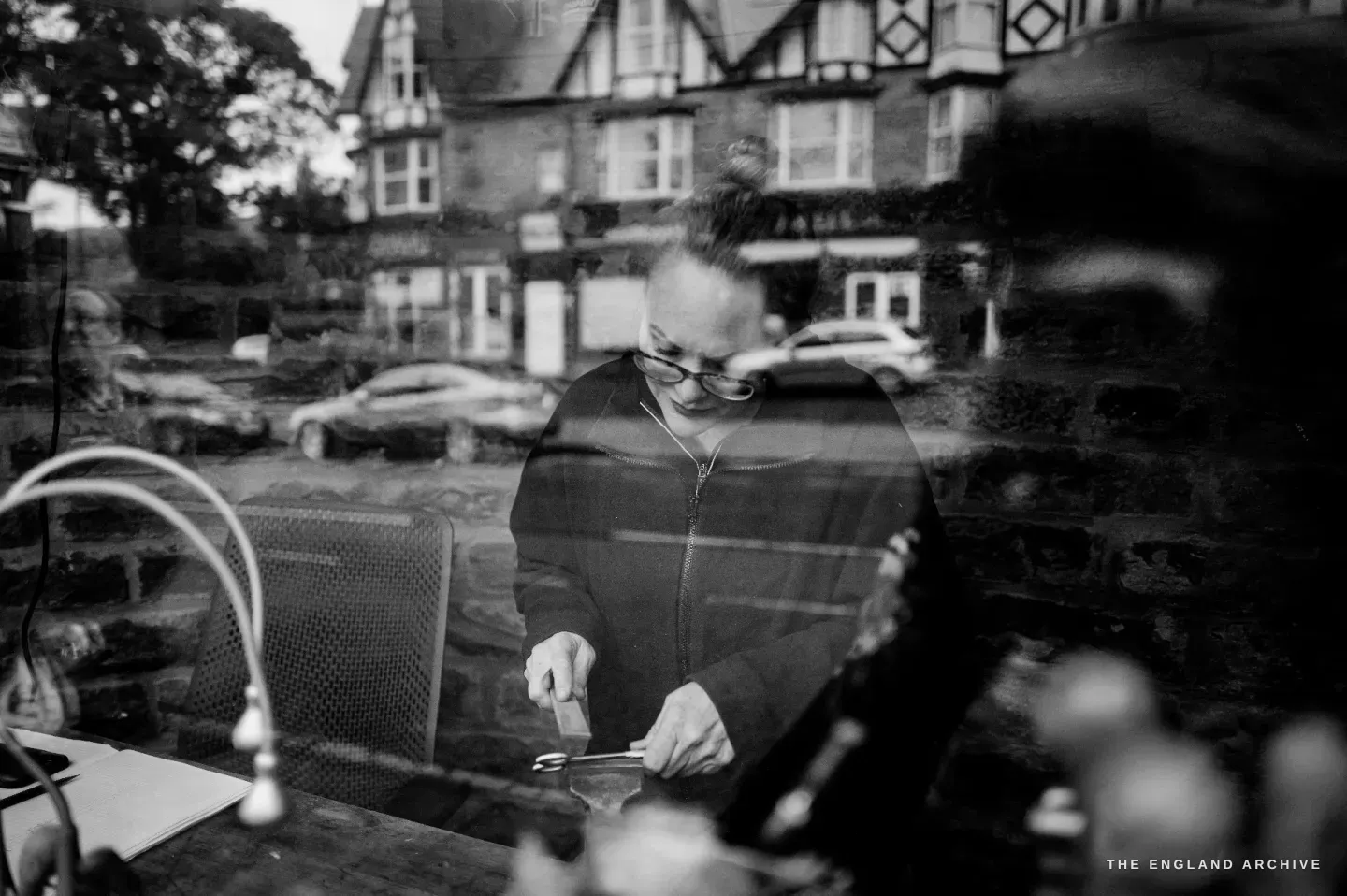
Grace Horne seen through the workshop window at her bench, the terraced street and parked cars reflected across the glass over her.
Through the glass: Grace at her bench, the street reflected over her. IM-1016

The Record the Archive Holds

This is the archive’s record of Grace Horne, made at her home and her workshop in Sheffield in June 2026: a maker who set out to forge knives and turned up uninvited on Stan Shaw’s doorstep; who learned scissor making at Ernest Wright - the firm the archive already holds, in the hands of Neil Wilson, Sam Aston-Clark and the rest of the Broad Lane bench - and then carried it into a doctorate; who works in a former public toilet with a view of the road; and who has worked out how to make scissors without the machines, and is writing it down so that other people can. Scissor making is on the Heritage Crafts Red List, and Grace may be the only woman making them in the country. On the strength of one morning, she is also the most likely person I have met to make sure the craft does not end.