Makers
Kevin Wilebore
Leatherworker · Wilebore Hand Made Leather Goods
Portland Works, Sheffield
Leatherworker · Wilebore Hand Made Leather Goods
Portland Works, Sheffield
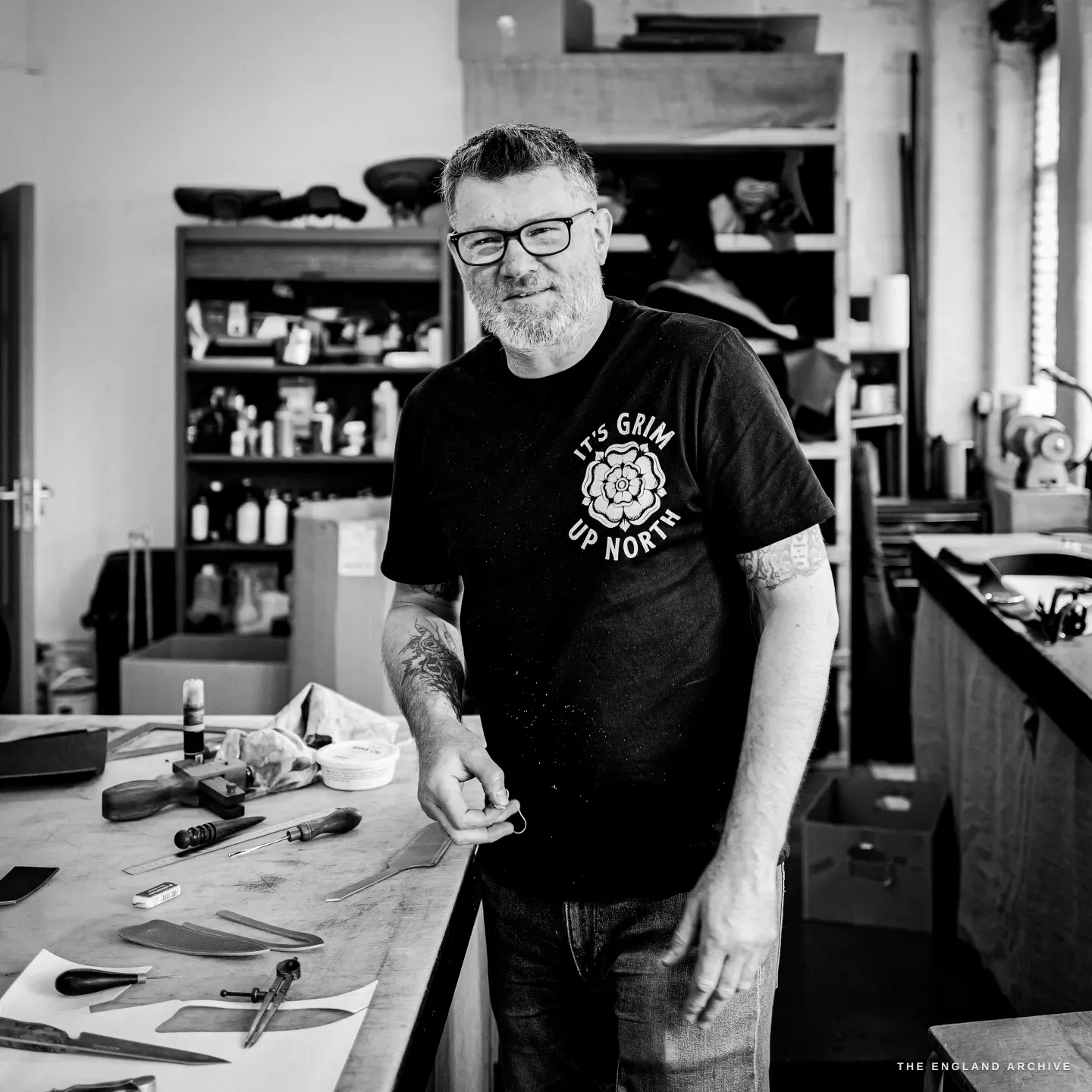
He half-expected me to take him for American. He is Teesside born, with a love of all things Sheffield - and he sheaths the city’s scissors in leather, in the building where stainless steel was born.
Portland Works is a metal building. Built in 1877 as one of the first integrated cutlery works, it is where, in 1913, Harry Brearley’s new rustless steel was first forged into knives and forks - the birthplace of stainless steel. When the building was threatened with conversion to flats in 2013, five hundred people of Sheffield bought it for the city, and it still does what it was built for: low-cost workshop space for the little mesters, the independent makers who are the oldest tradition the place has. Most of them work in metal. Kevin Wilebore works in leather.
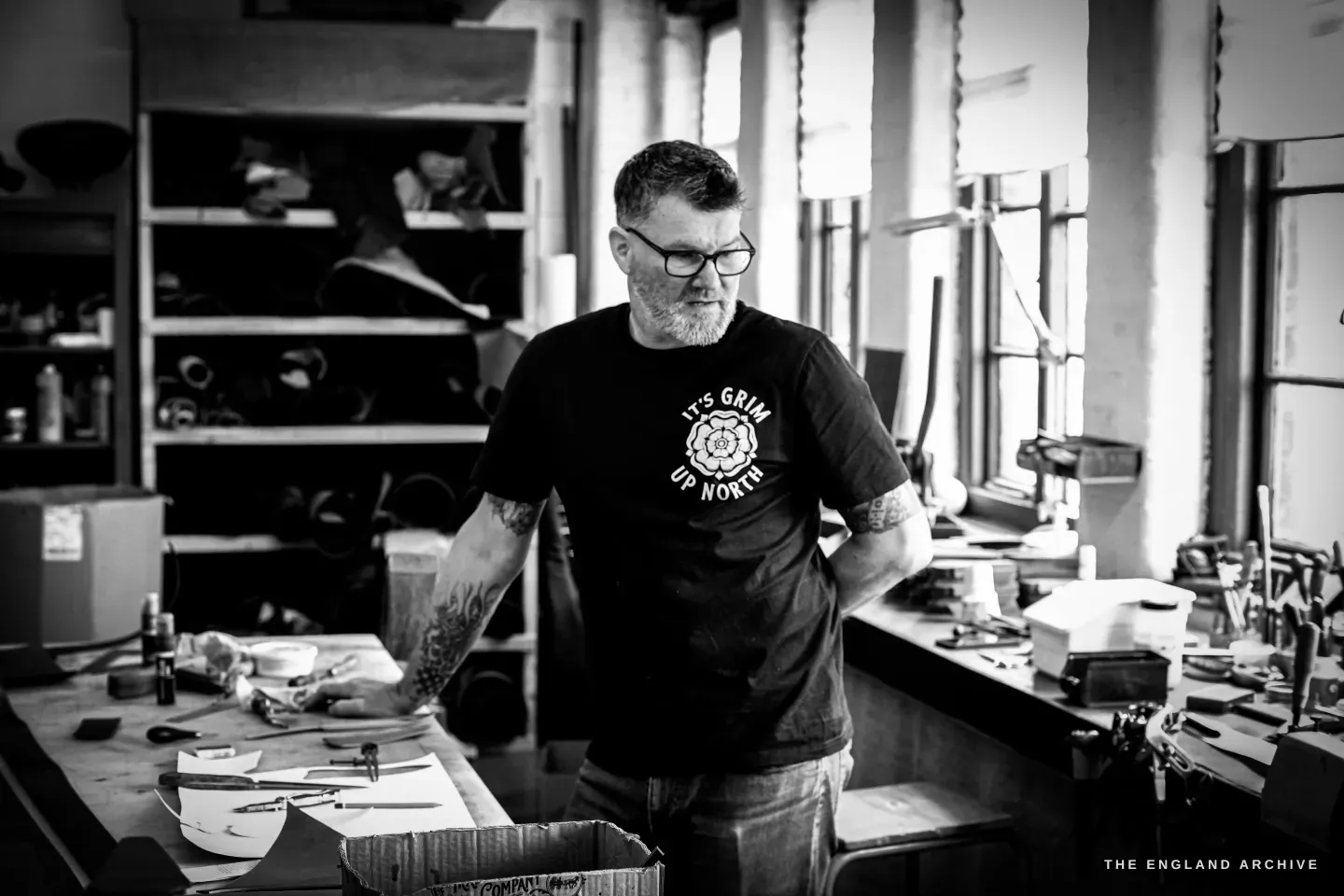
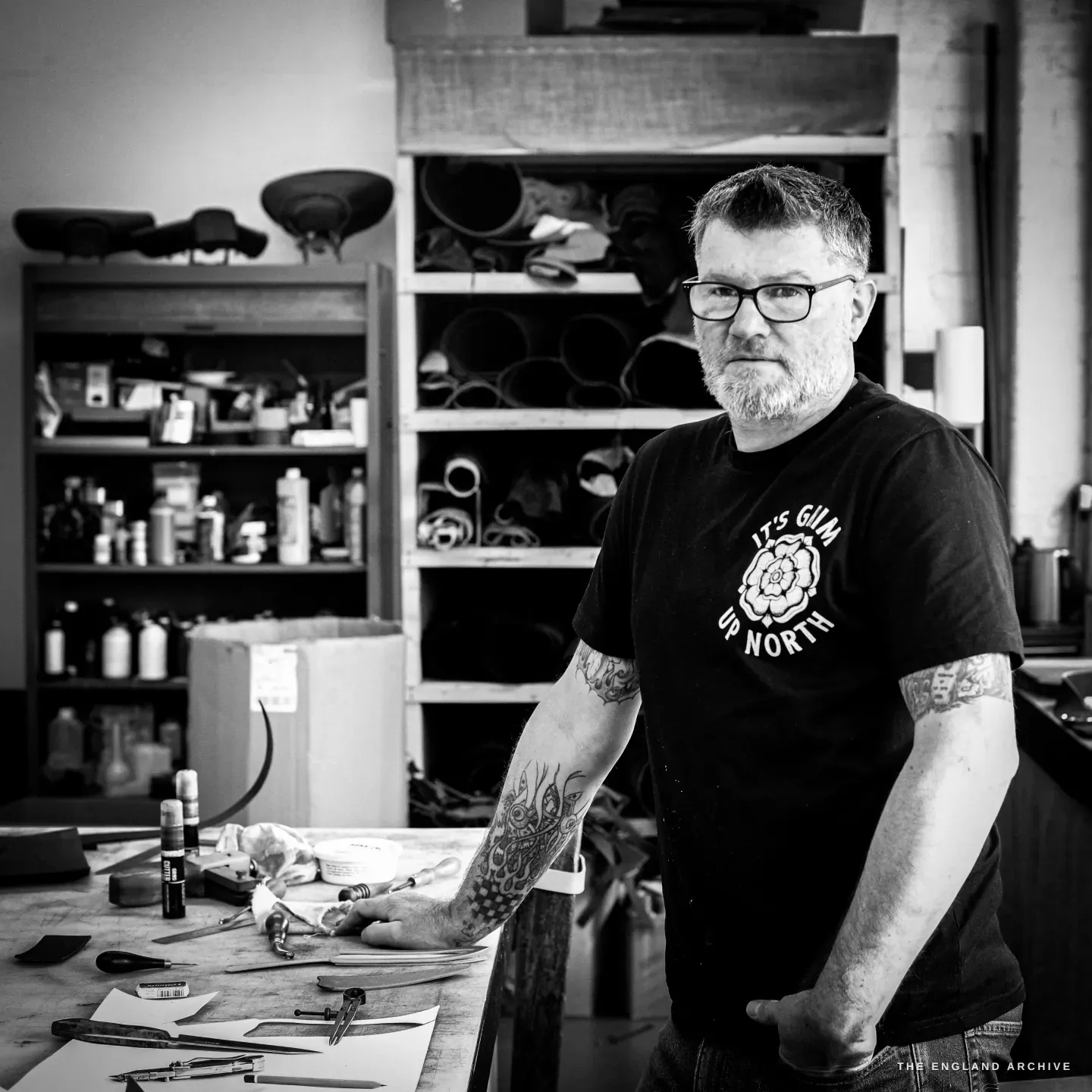
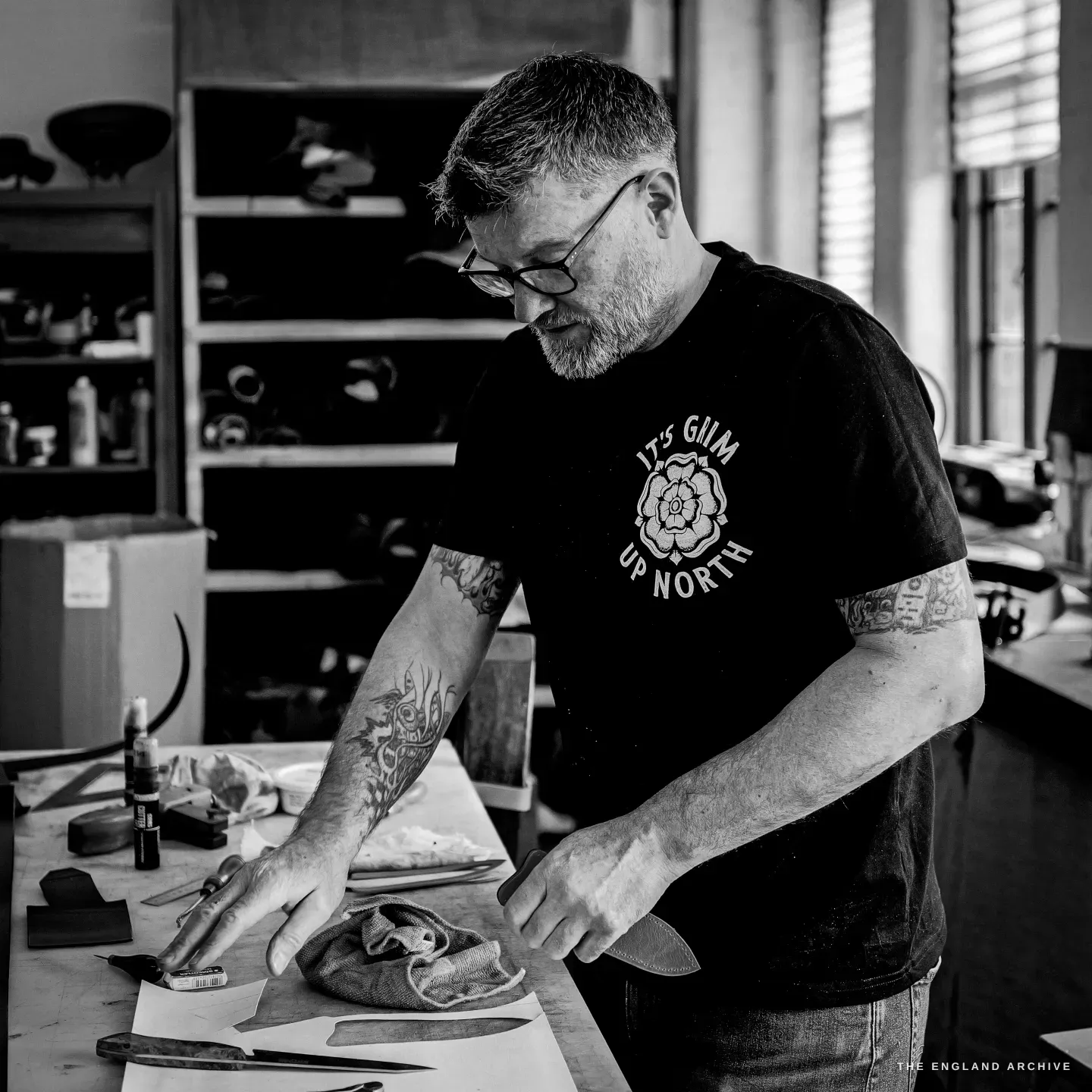
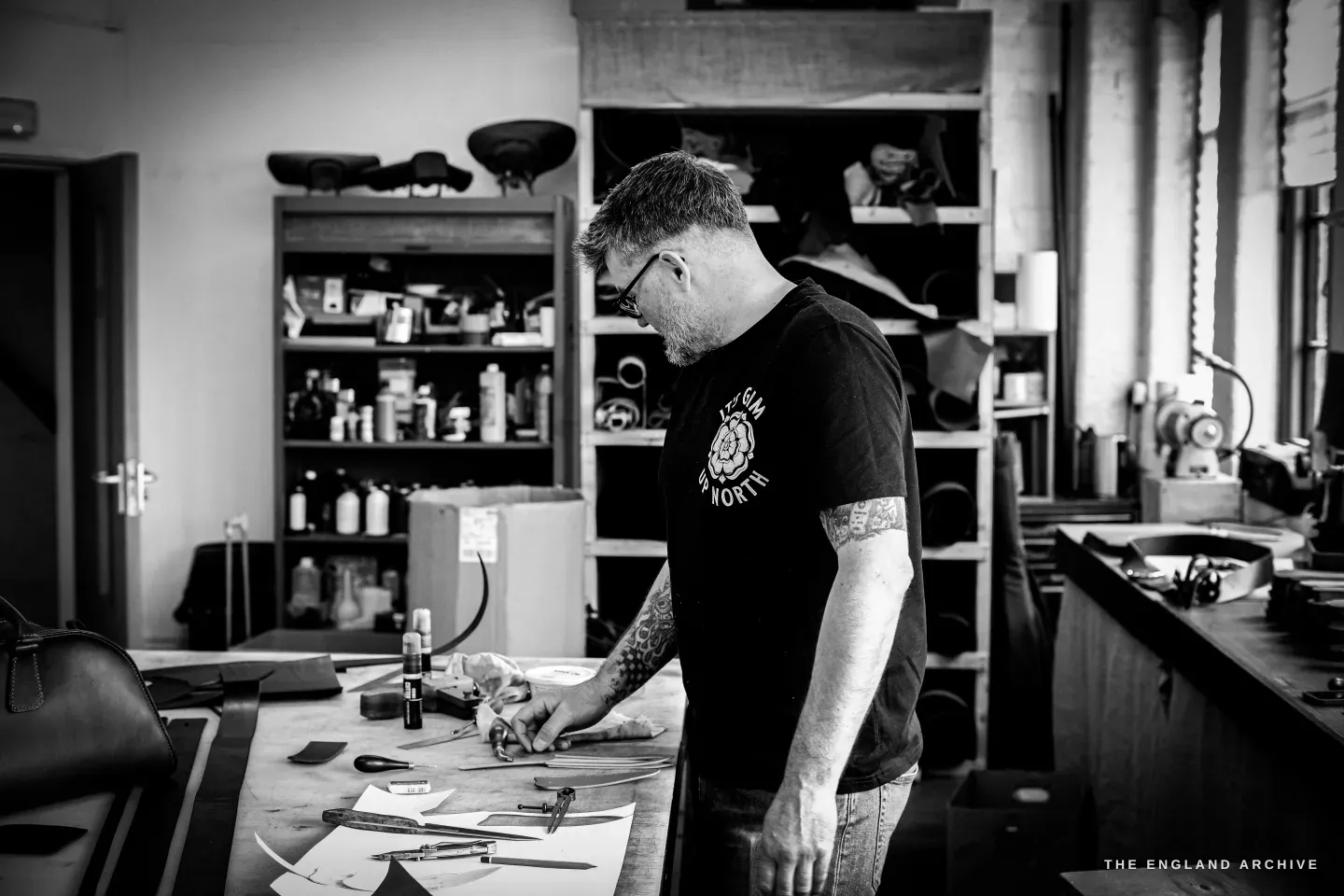
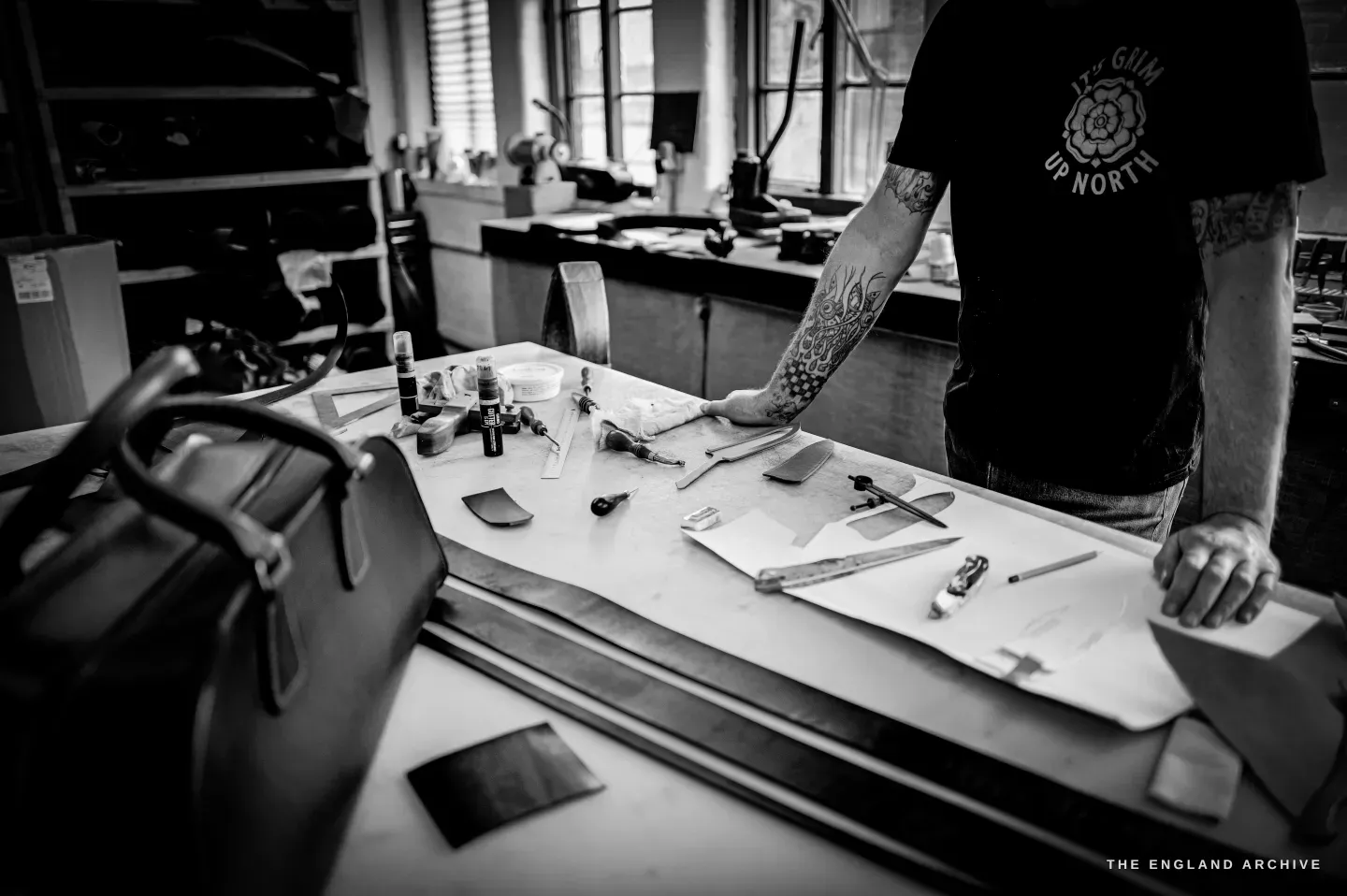
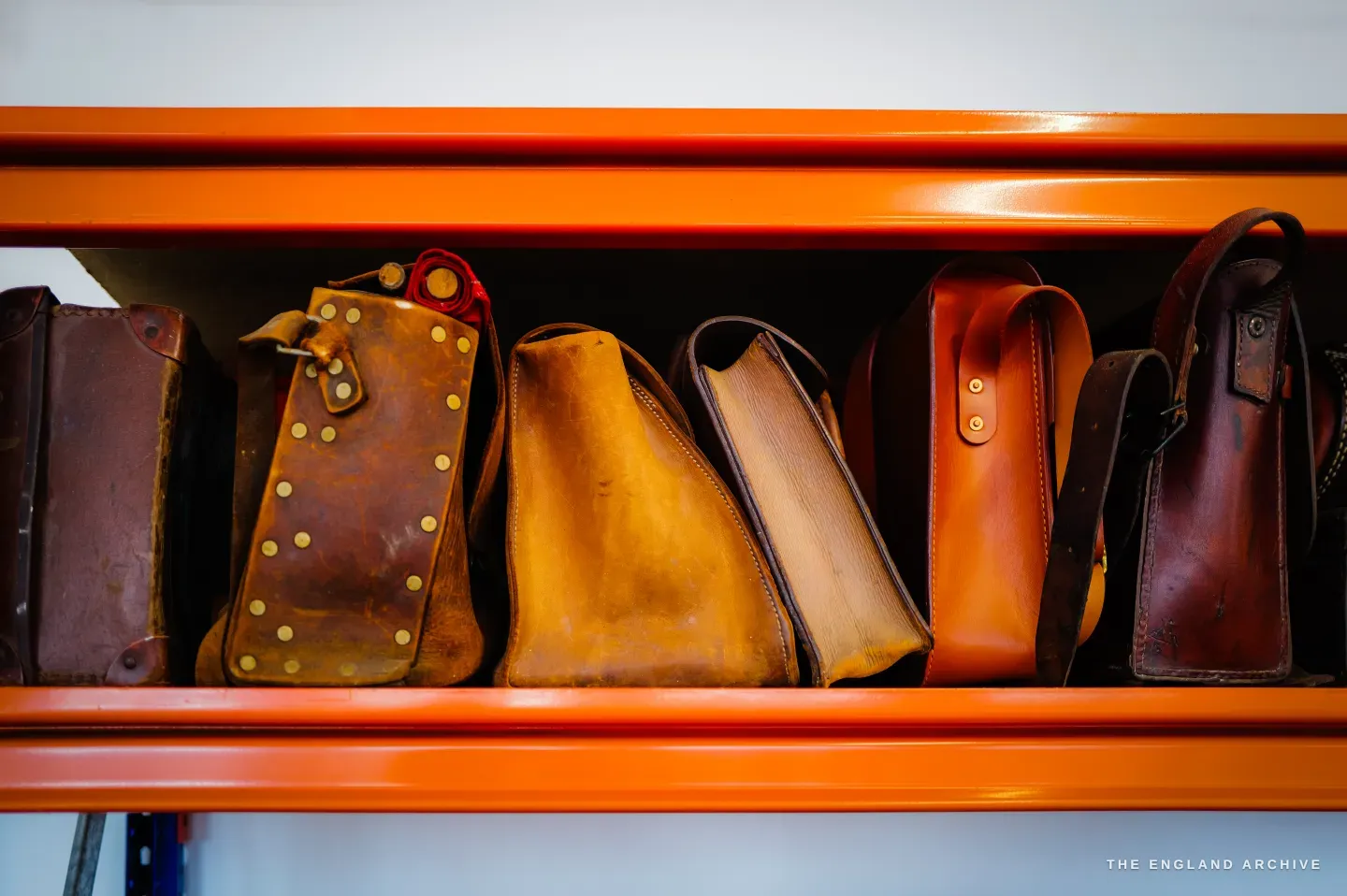
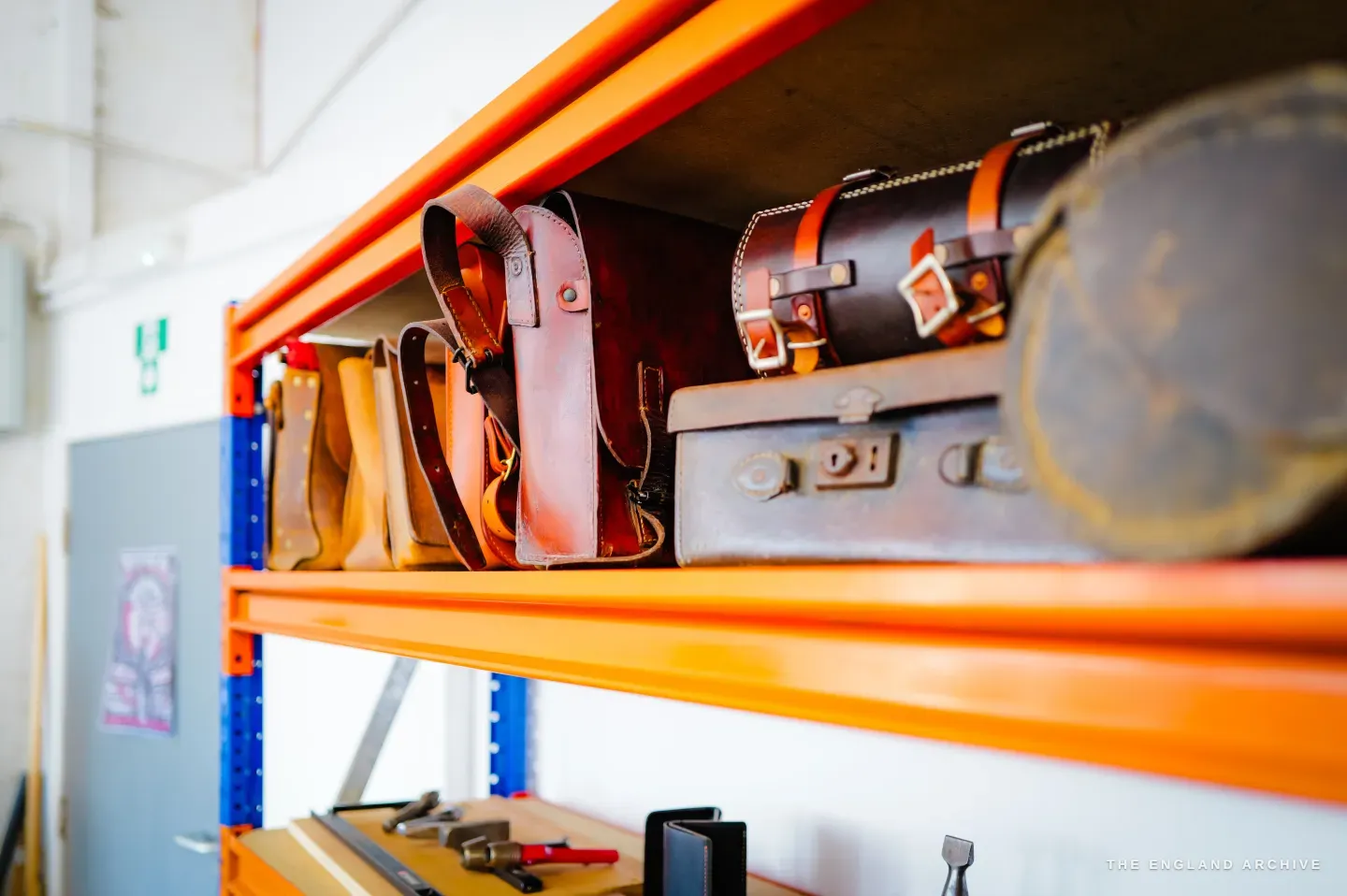
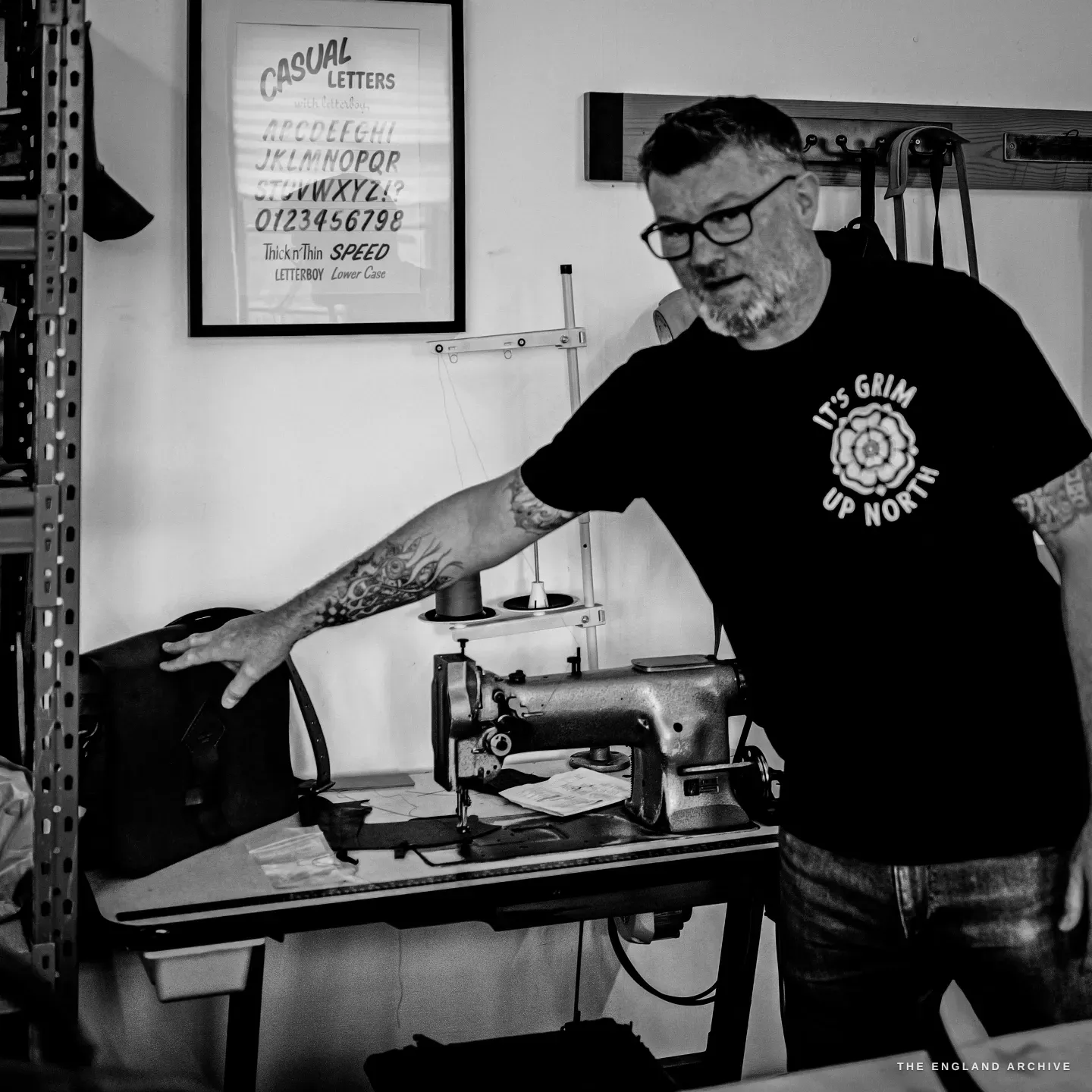
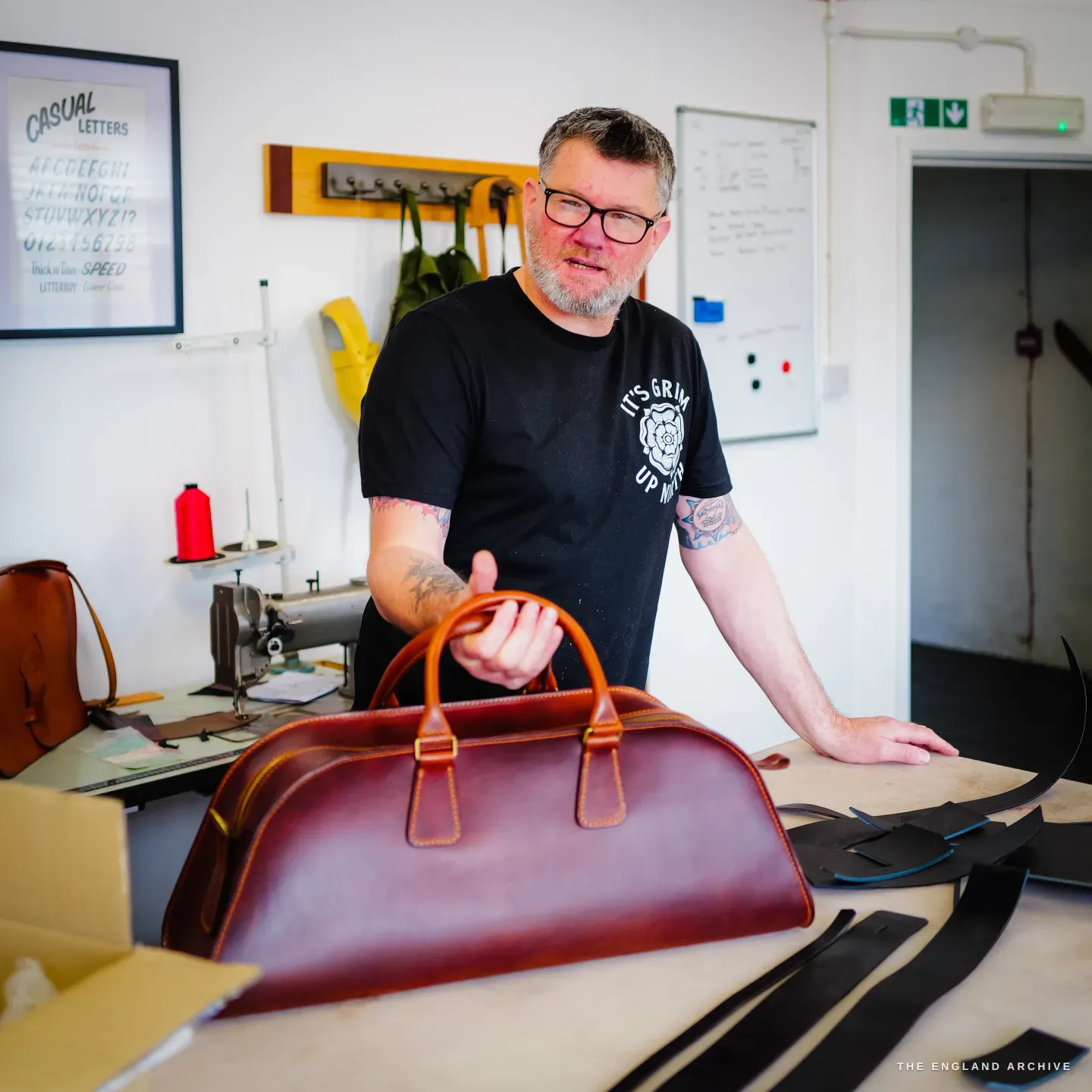
His workshop is bright and high and clean - a long bench down one side, an orange rack of finished bags down the other, tall windows throwing light across the lot. Kevin met me there, relaxed to the point of horizontal, with an easy, drawled friendliness that had me convinced for the first ten minutes he was American. He is not. He is Teesside born, with a love of all things Sheffield, in an “It’s Grim Up North” t-shirt and a white Yorkshire rose, and the American note is in the work rather than the man - the heavy tan hide, the mailbags and the weekender, an eye that looks west across the Atlantic while the hands stay firmly here.
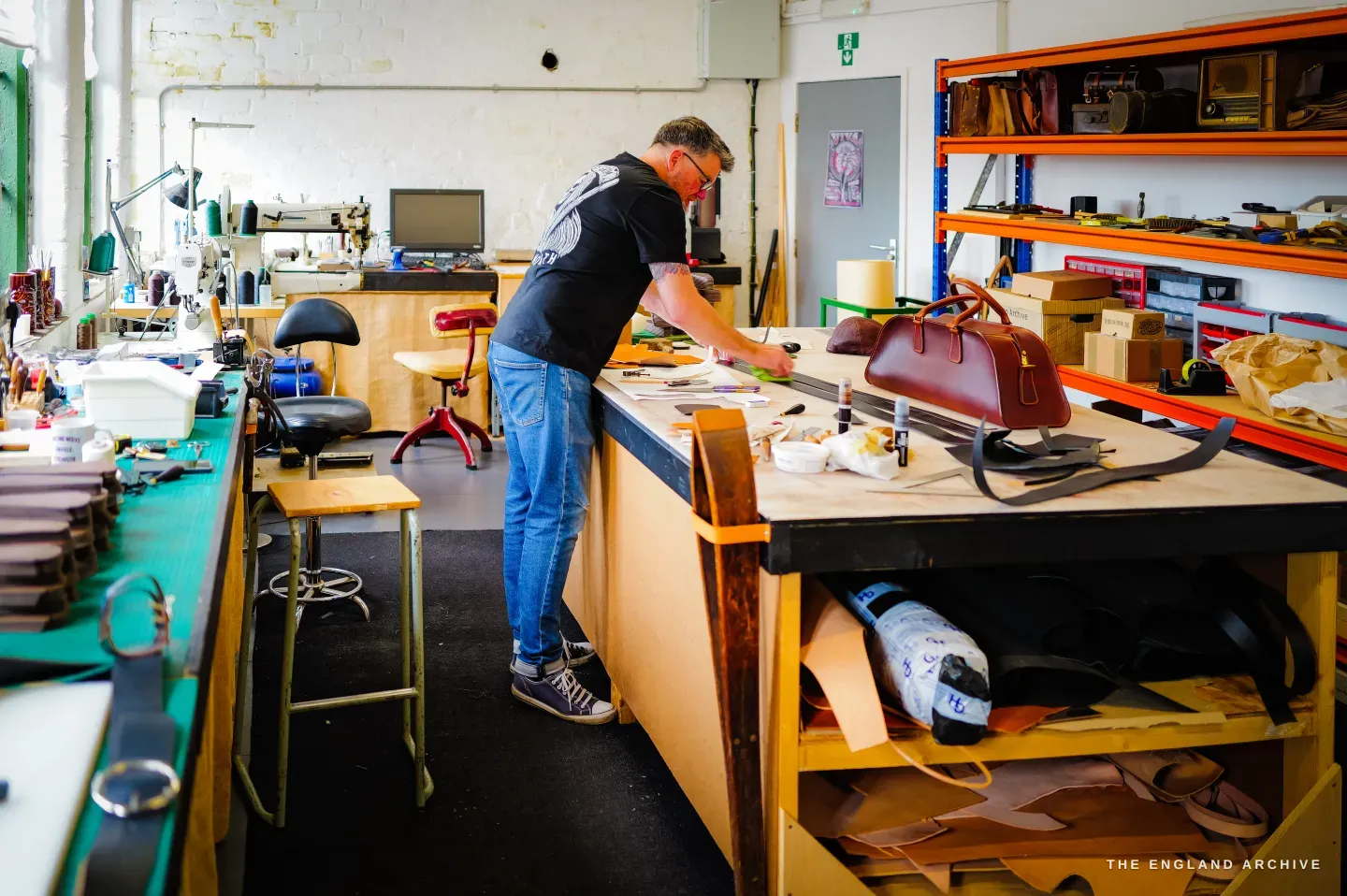
Kevin came to leather late and sideways. He was a car mechanic, and before that, by his own account, he ran a tattoo parlour with a mate. He stopped work to be a stay-at-home father, and it was in that gap that the craft found him: he was restoring a Lambretta, needed a seat for it, and instead of buying one he decided to make it. That was the hook. He found a tannery in Chesterfield, bought some hide, taught himself off YouTube and out of books, and worked on a cutting mat balanced on the ironing board in the dining room.
Within a few years the hobby had outgrown the house. He took a small unit at Portland Works in early 2019, then a bigger one - the airy room I met him in - and the dining-table sideline became Wilebore Hand Made Leather Goods. About nine years in, he has the ease of someone who chose this with both eyes open, and the quiet pride of a man who taught himself every bit of it.
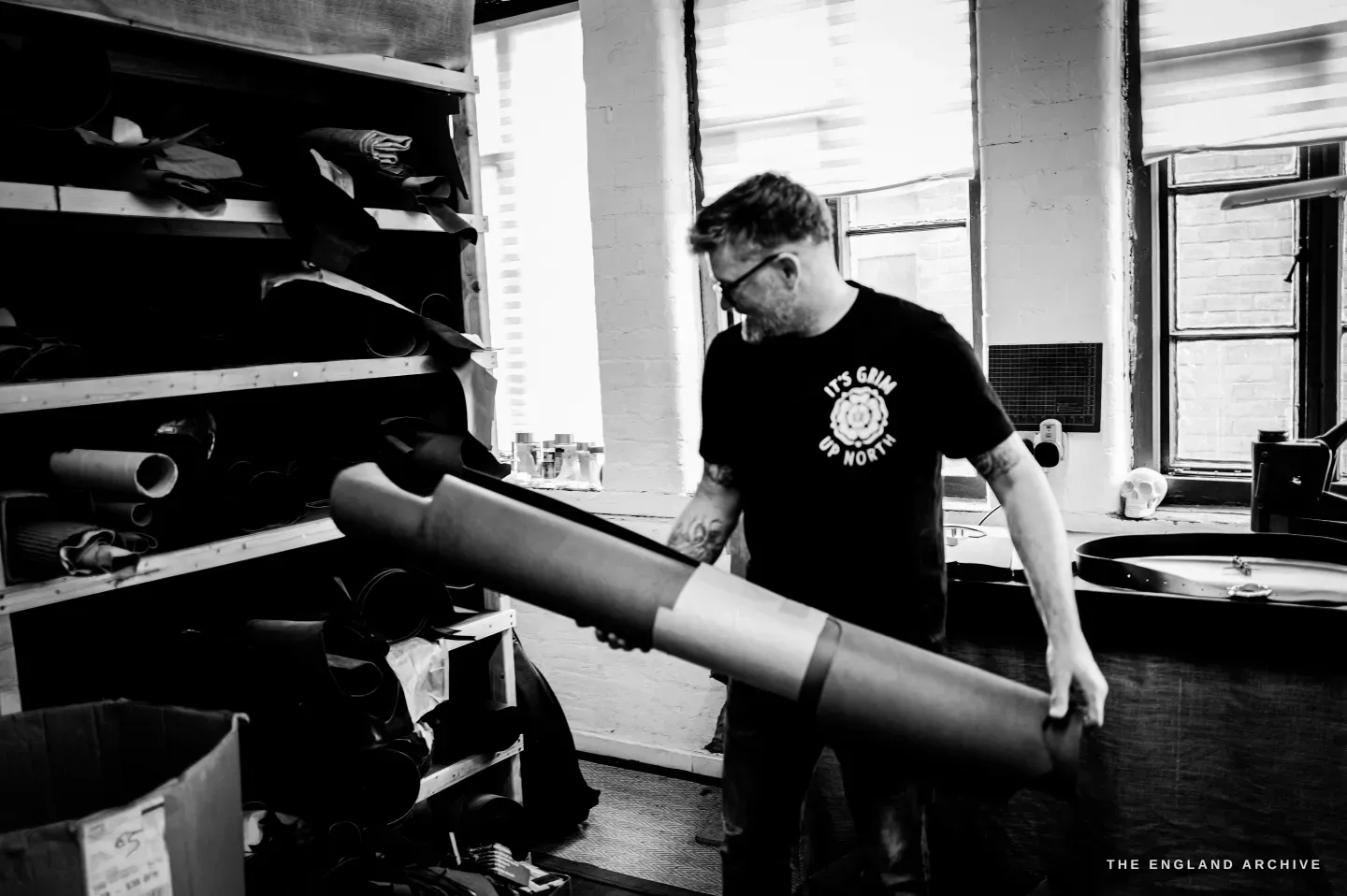
He works almost entirely in vegetable-tanned leather - hide tanned the slow, old way with tree bark instead of chemicals. Some of his is oak-bark tanned over fourteen months at the last tannery in the country still doing it. He chose veg-tan for its character, the way it darkens and burnishes with handling. His buckles are cast for him at a foundry in north Sheffield; he makes the centre pin and hand-finishes each one from the raw casting, because he could not find any he liked. And he guarantees a belt for life - his answer to anyone who says they can buy one for a tenner is that the cheap belt is landfill within the year, and his will outlast its owner.
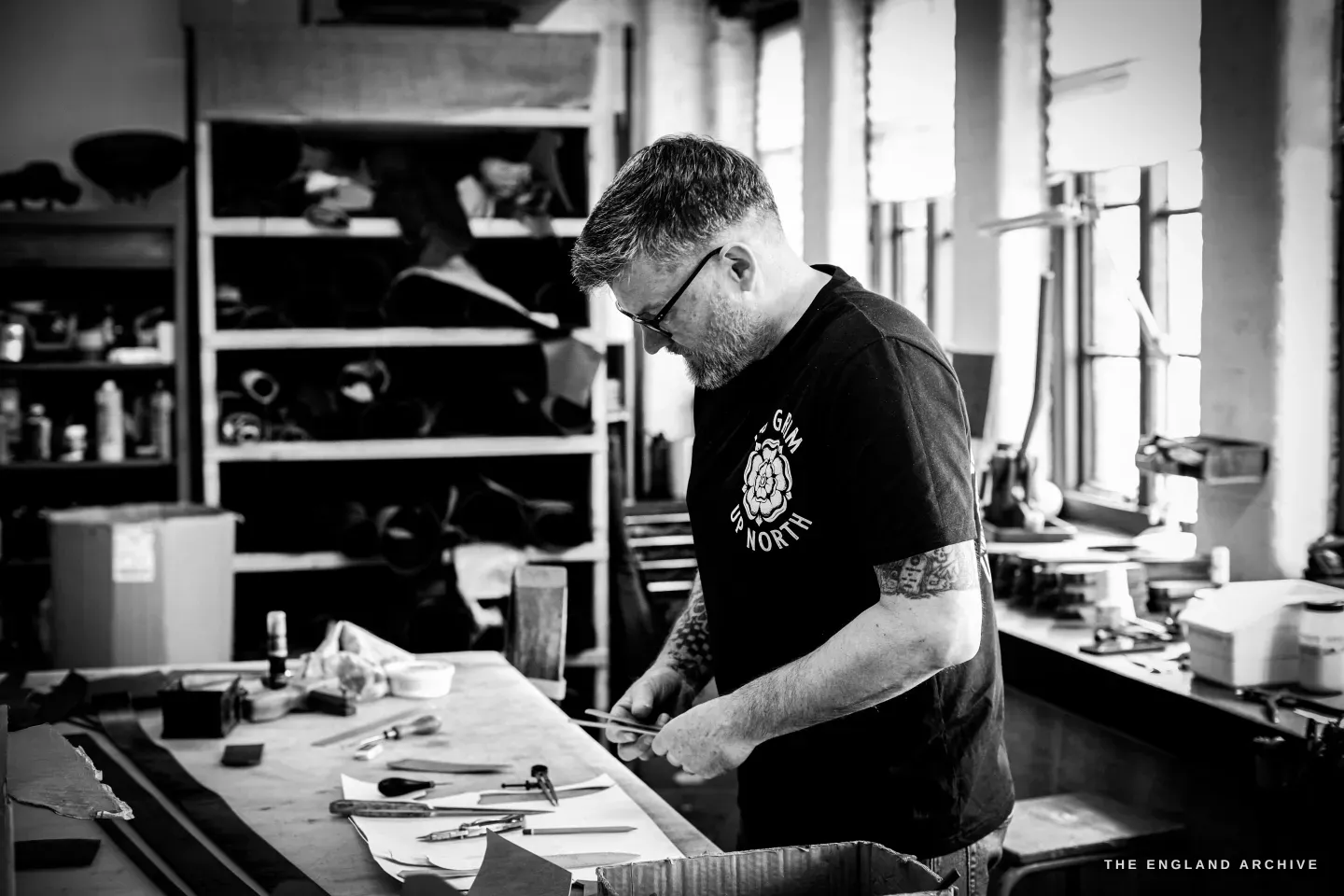
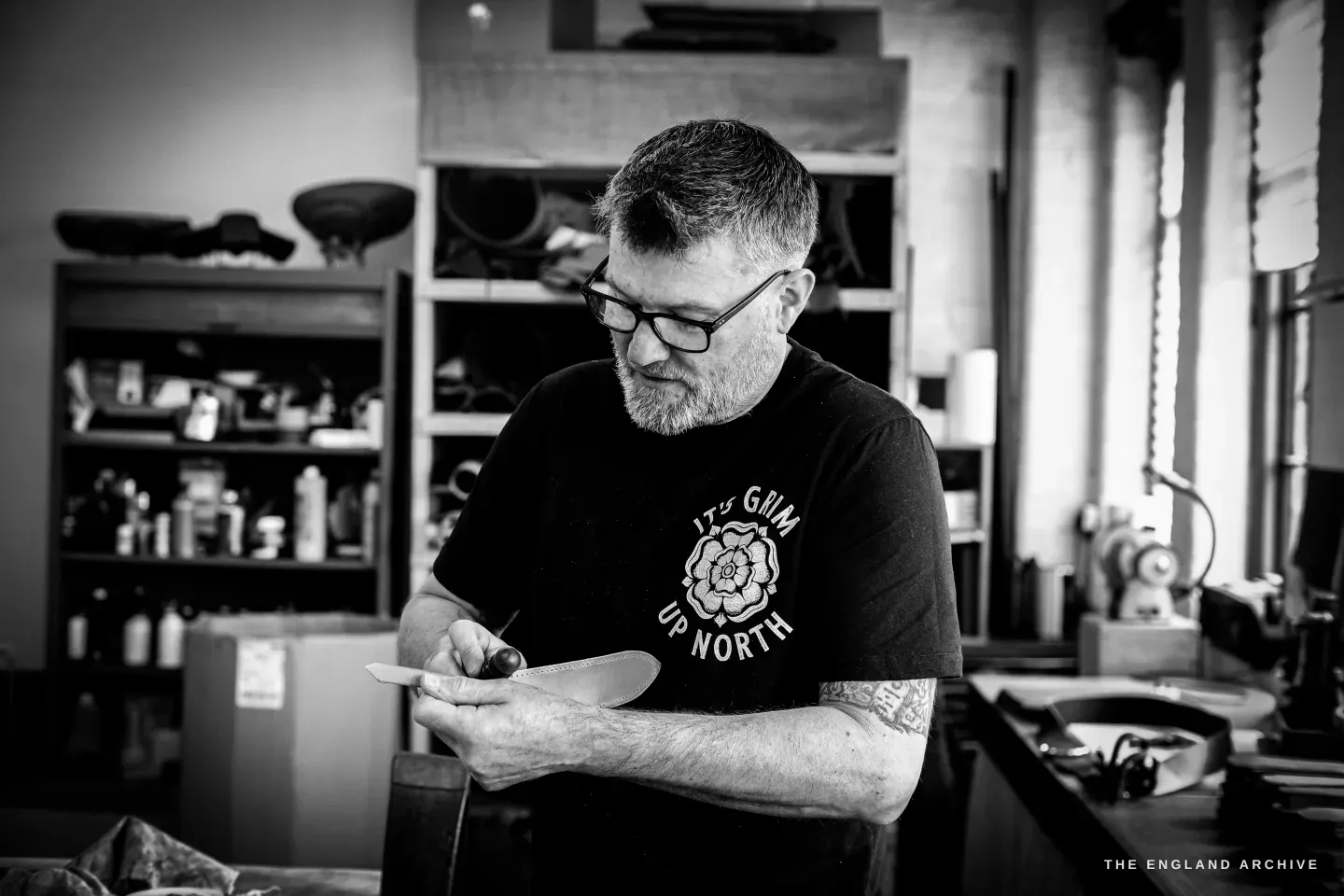
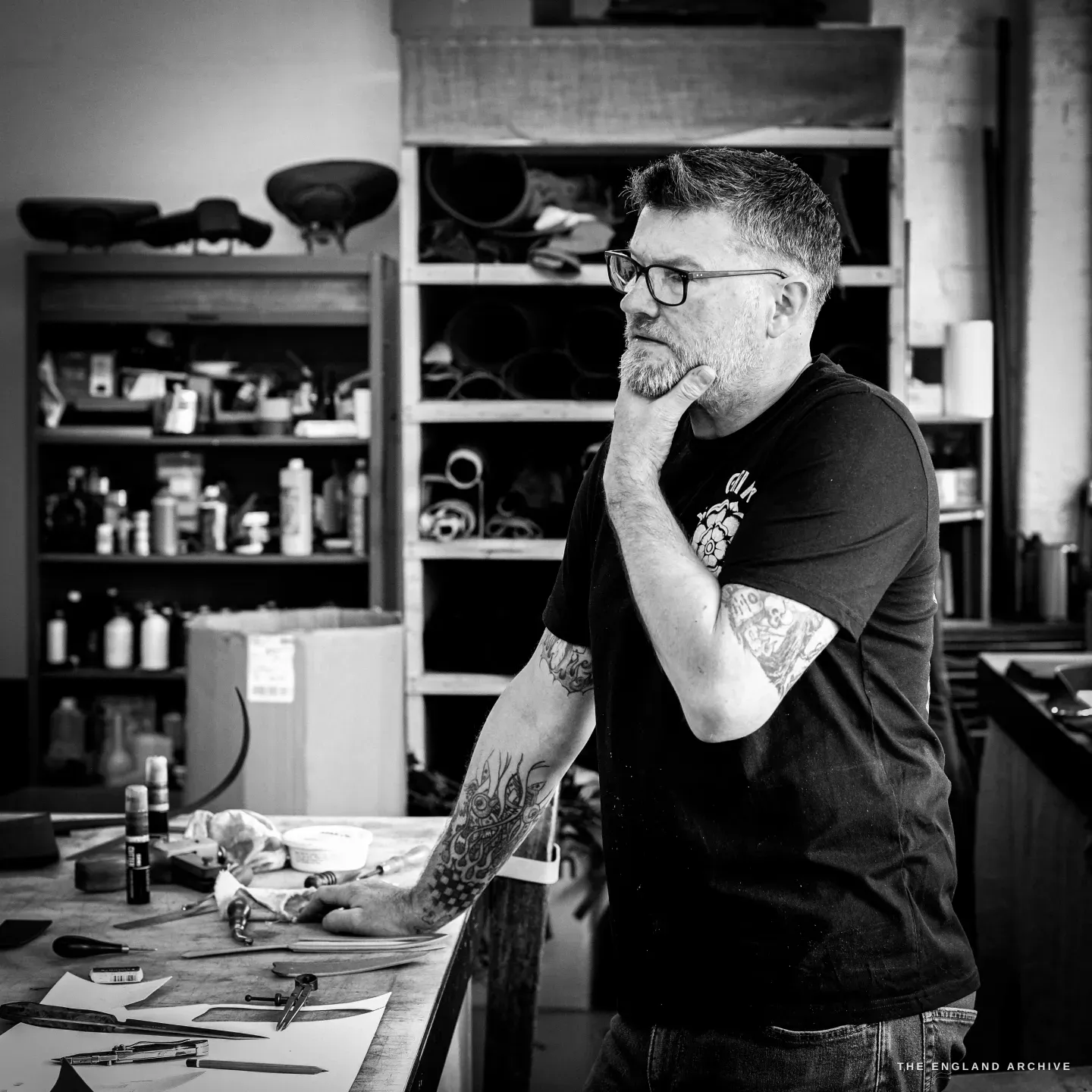
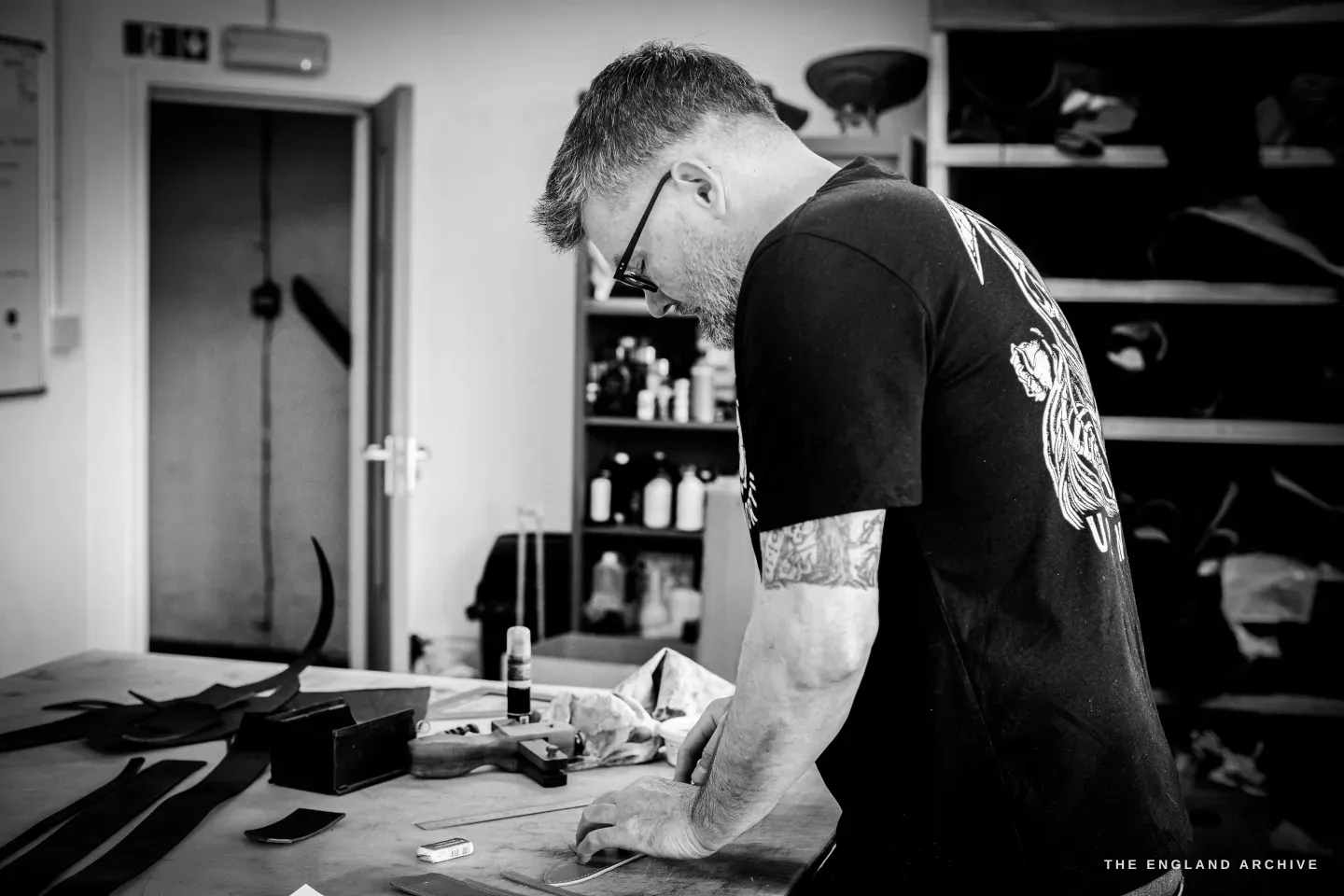
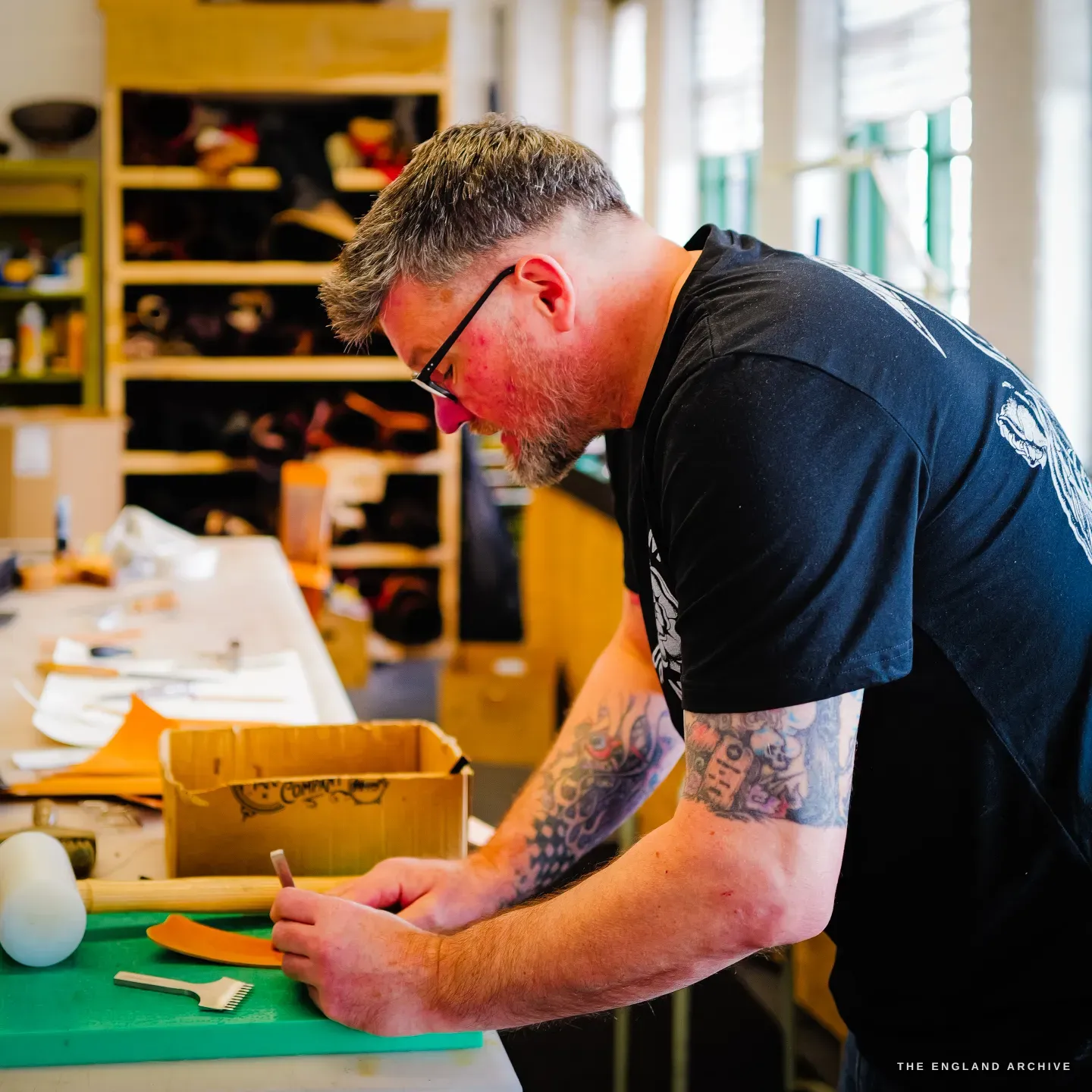
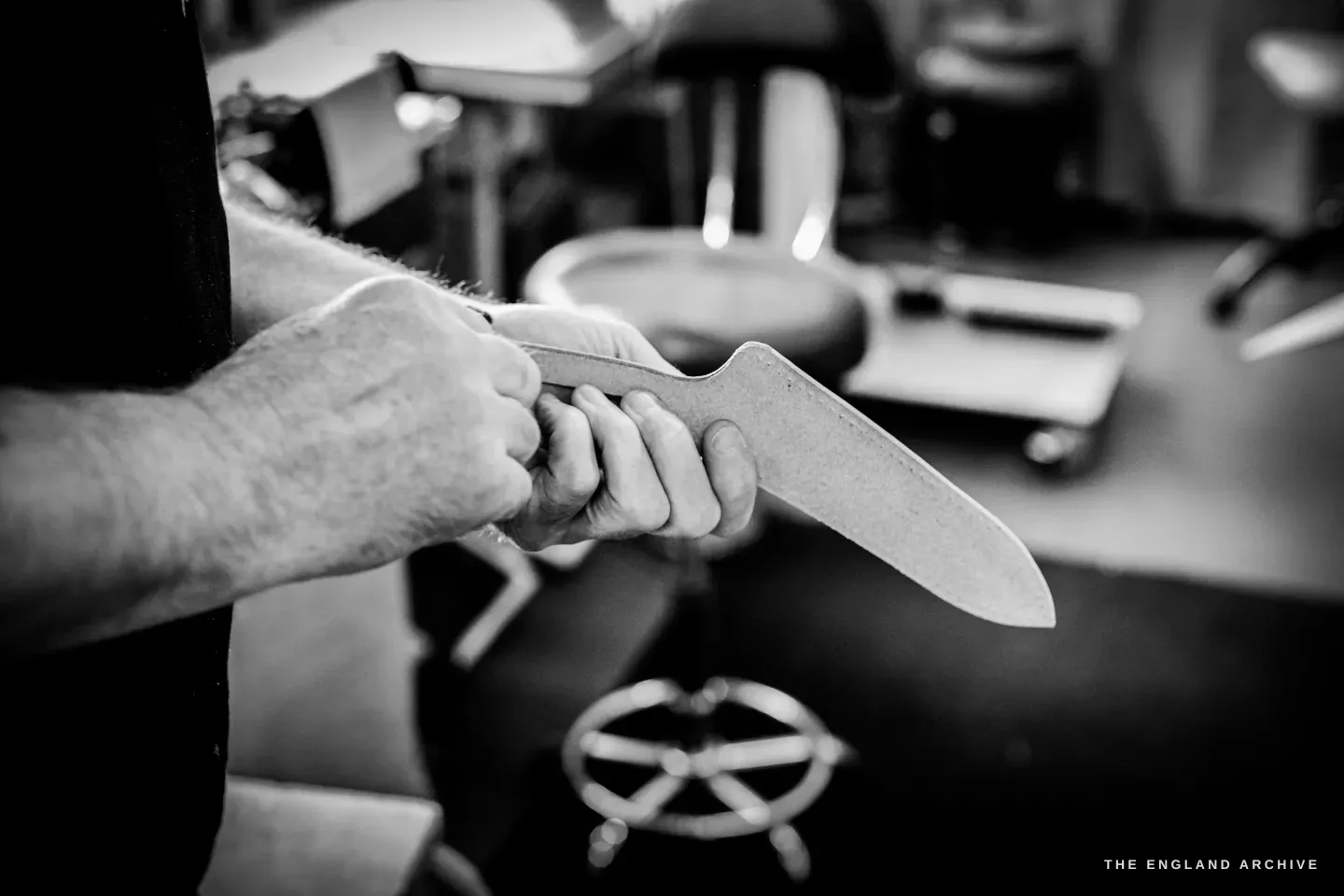
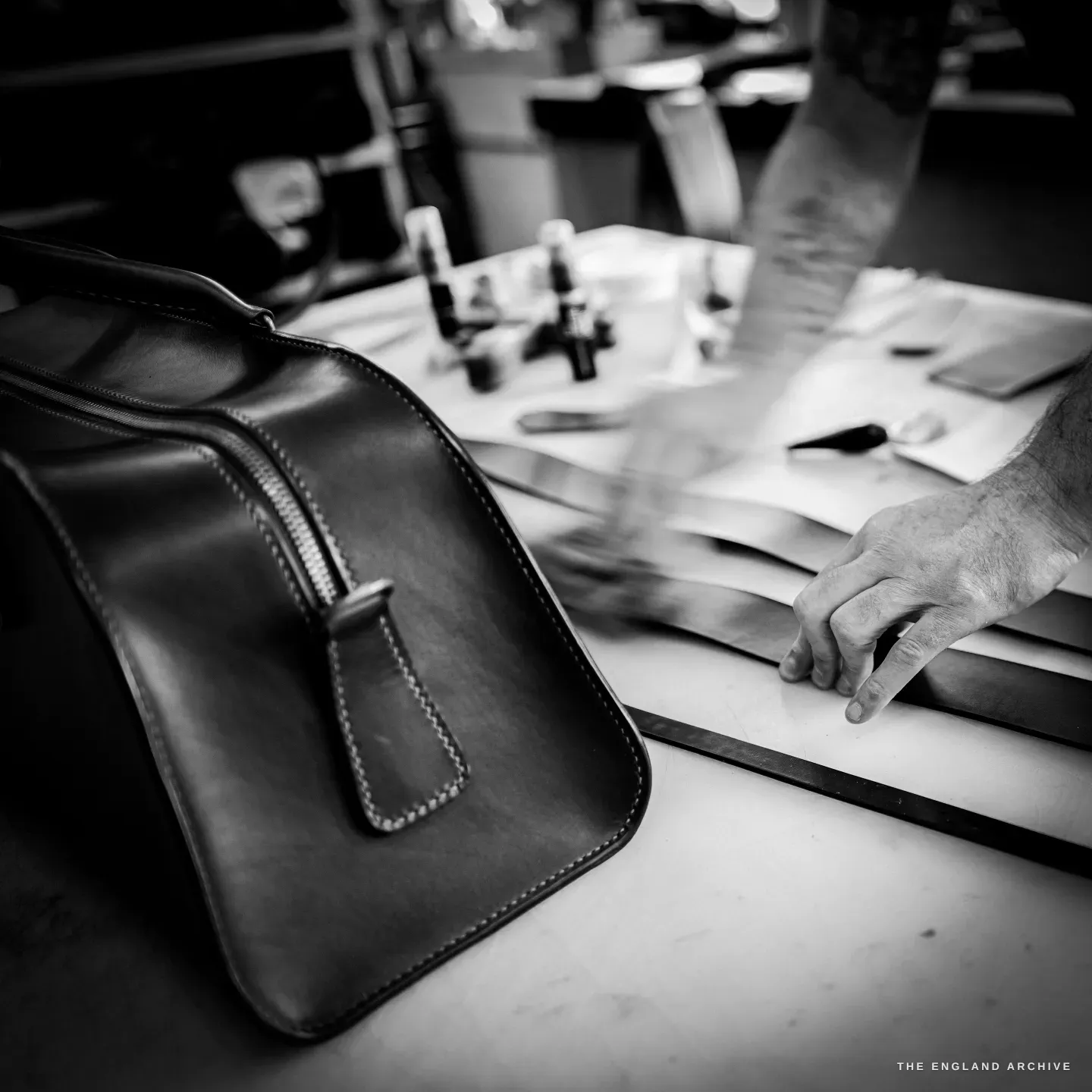
Everything is cut and worked by hand. He marks a piece, takes the round knife to it on the bench, then dresses and slicks the cut edge until it is smooth and sealed. None of it is quick, and none of it is hidden - the marks of the making are part of what you are buying.
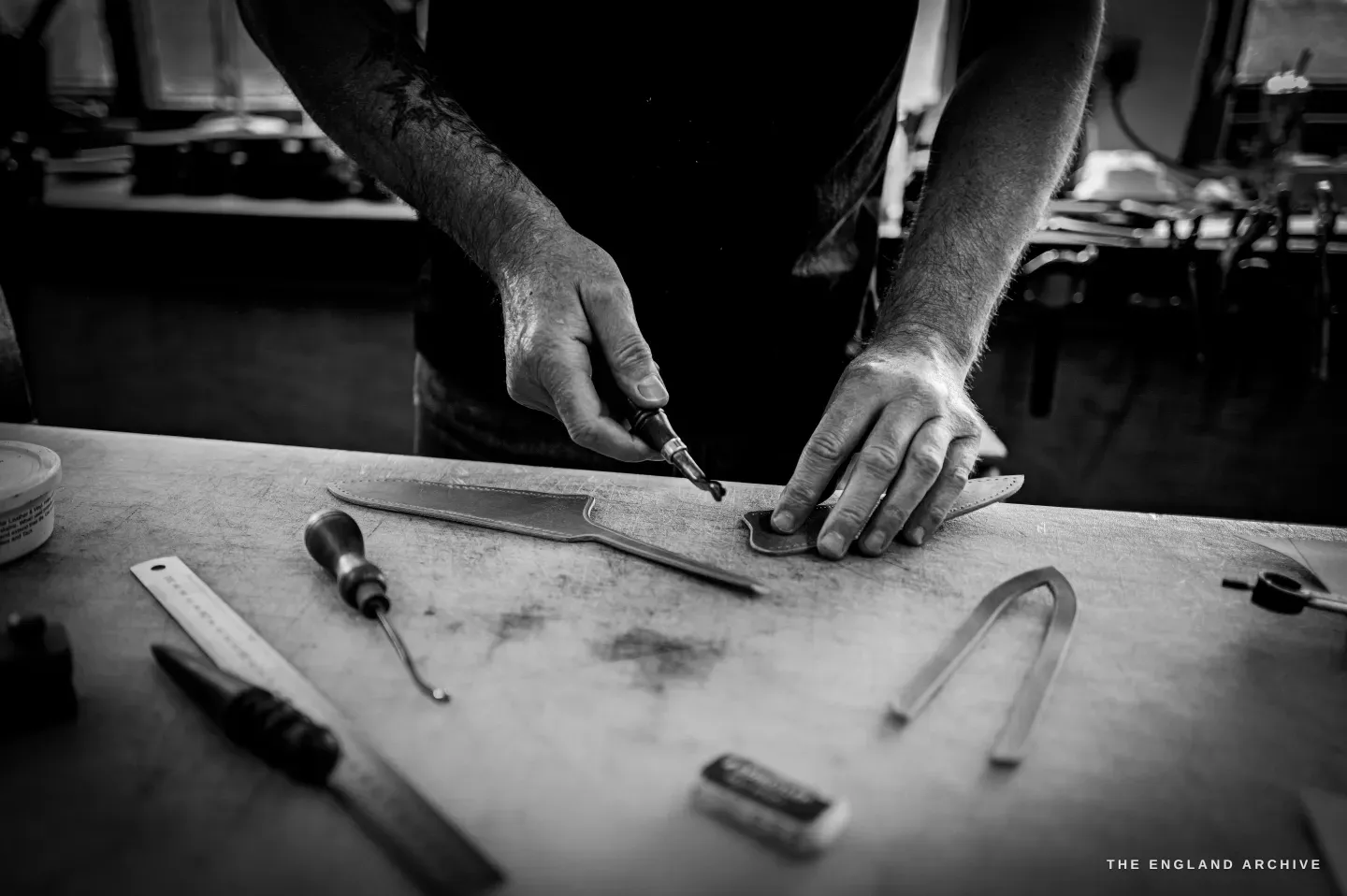
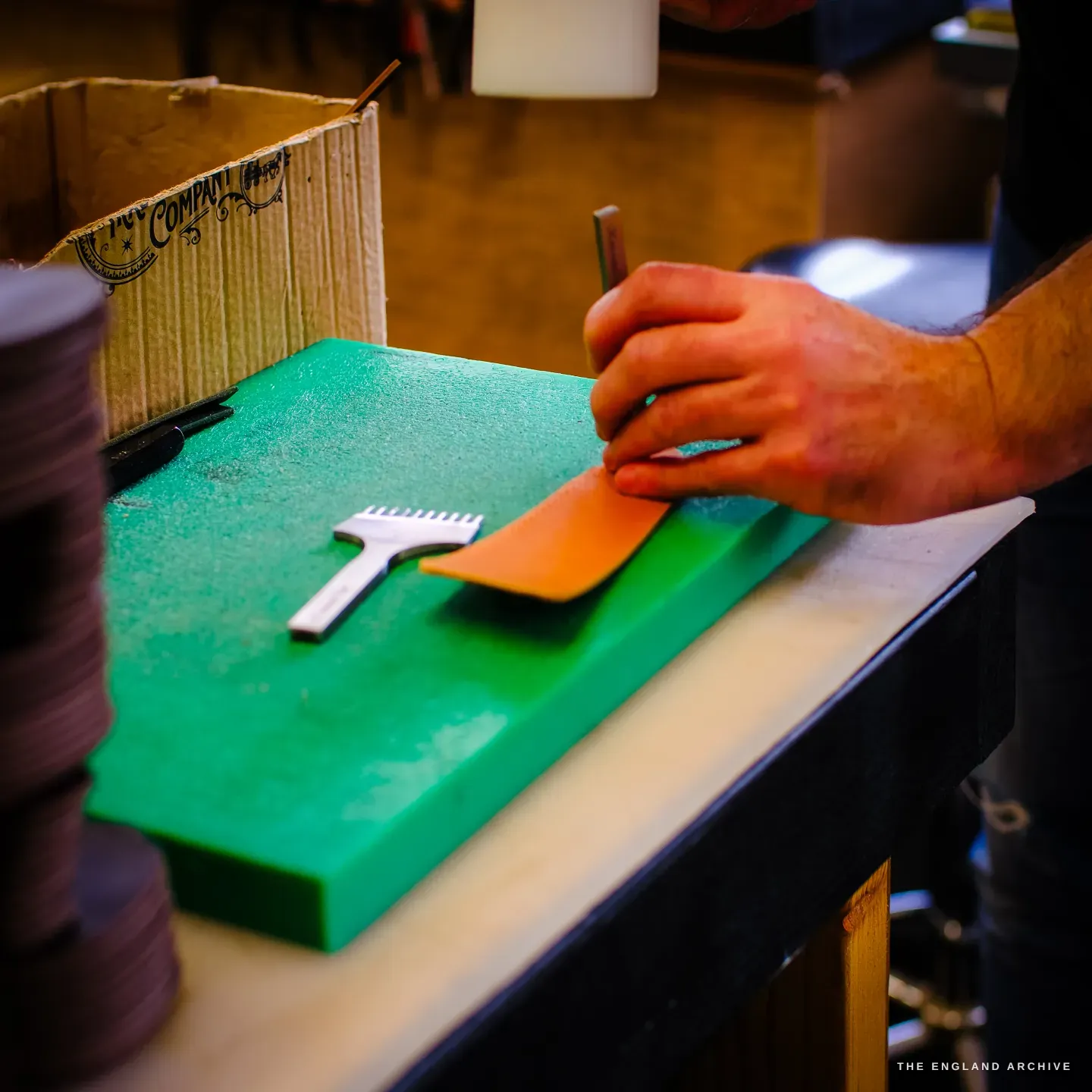
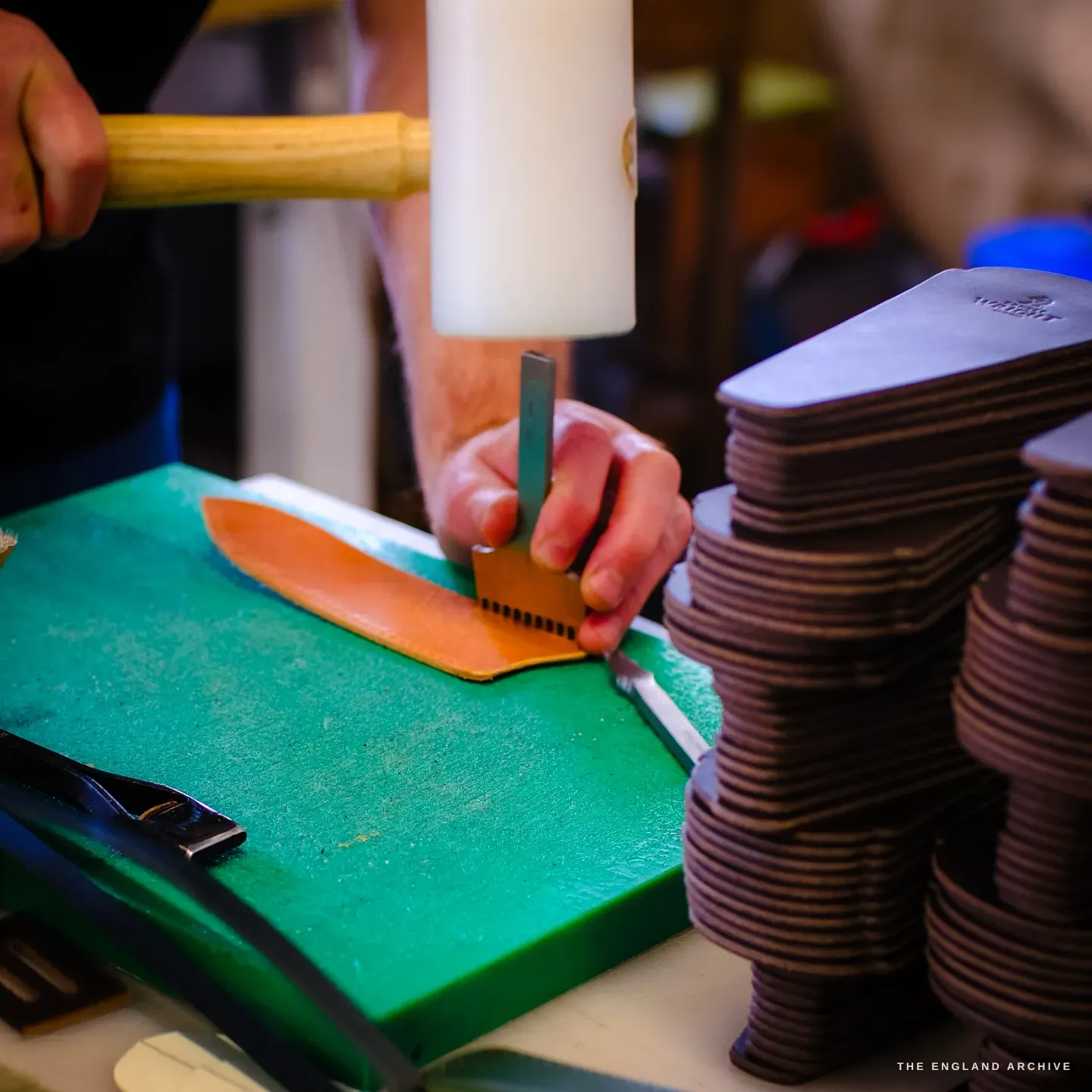
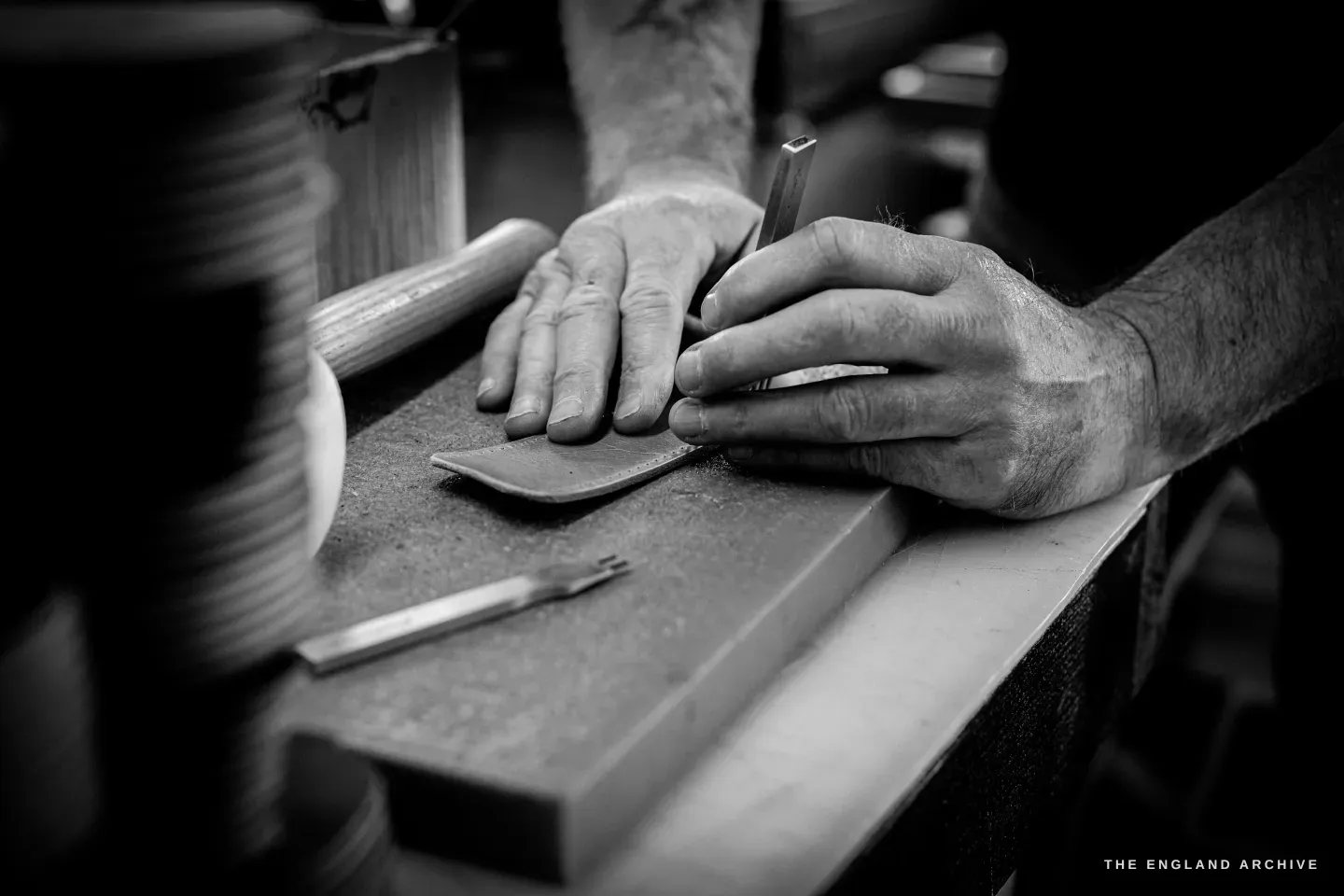
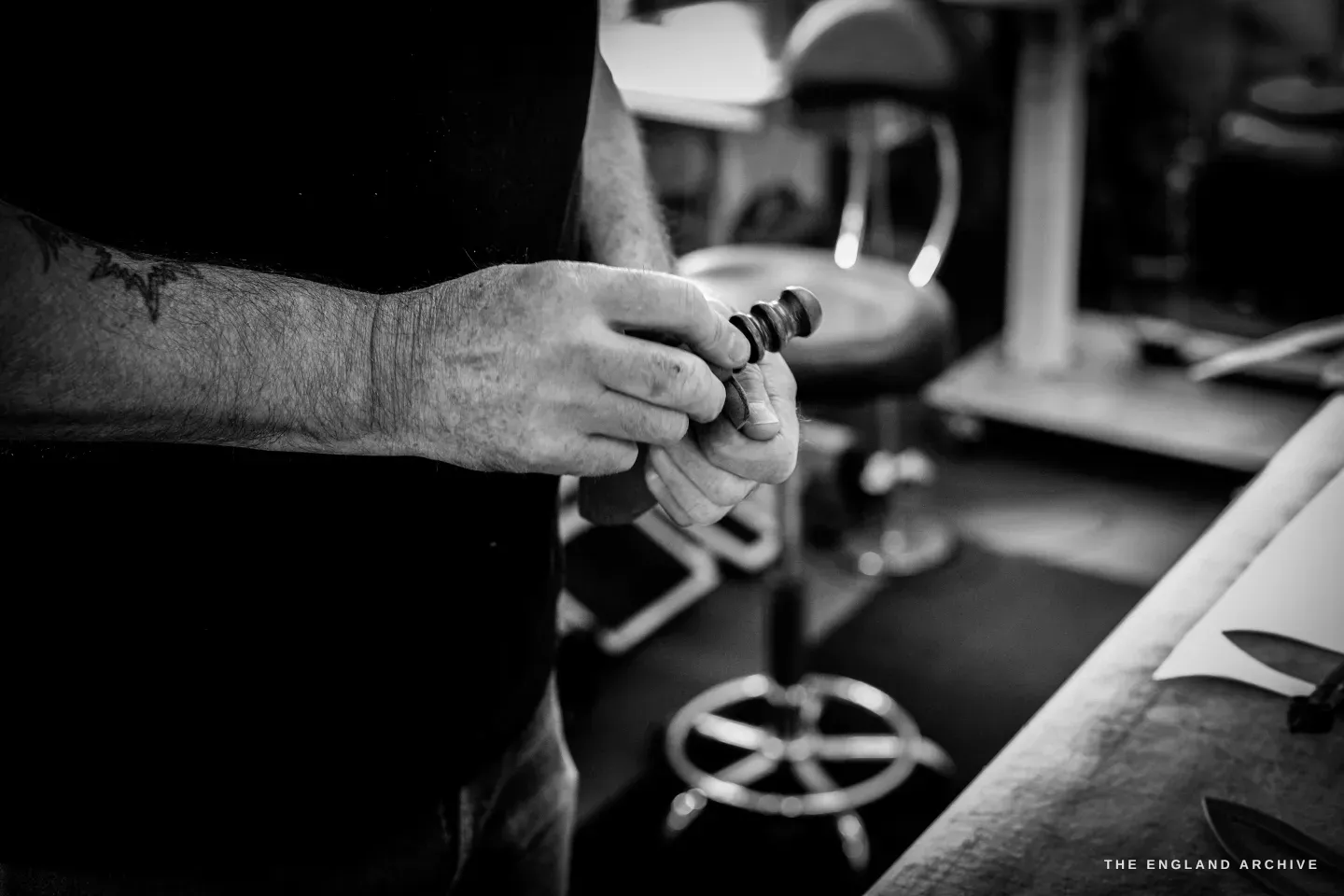
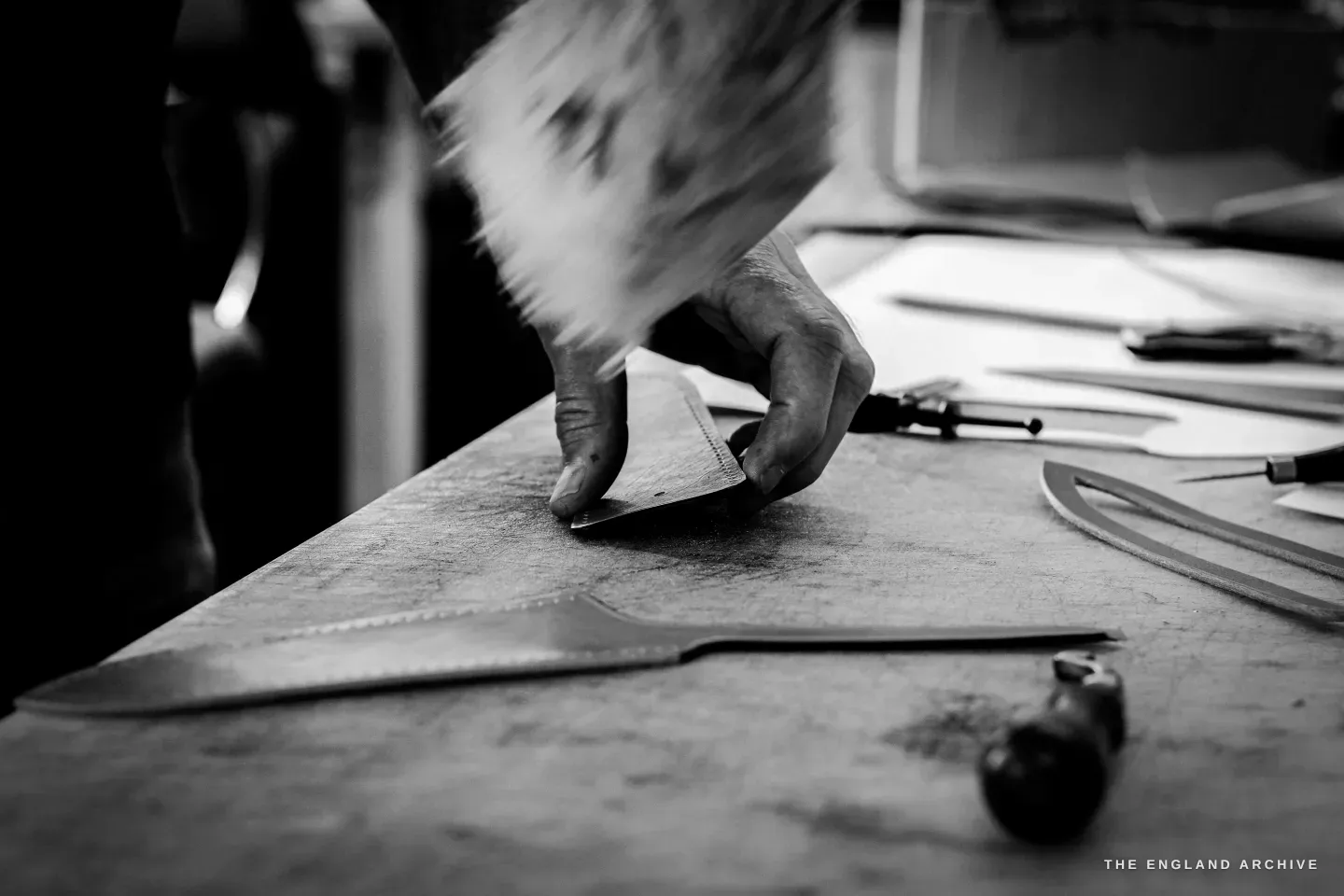
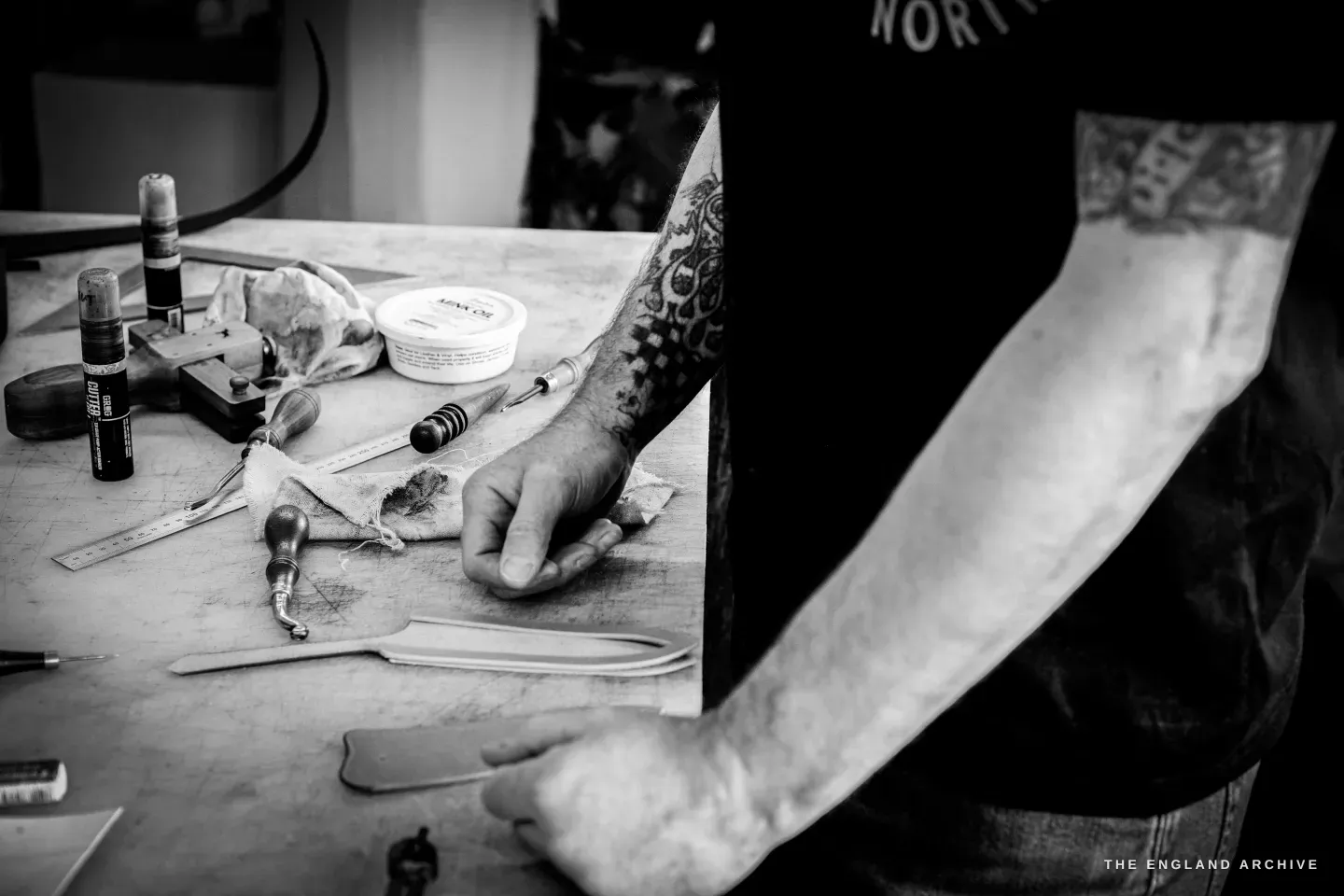
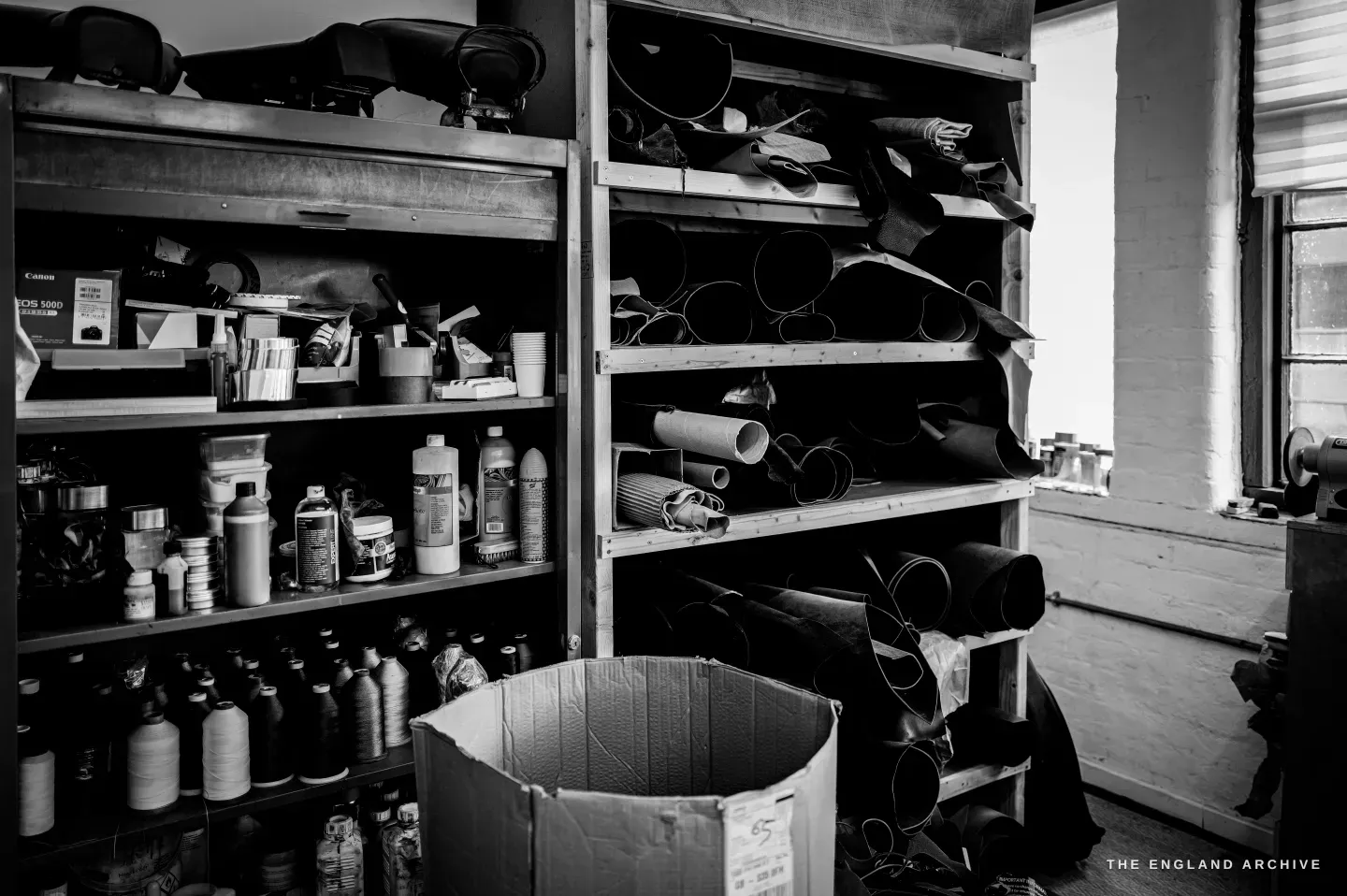
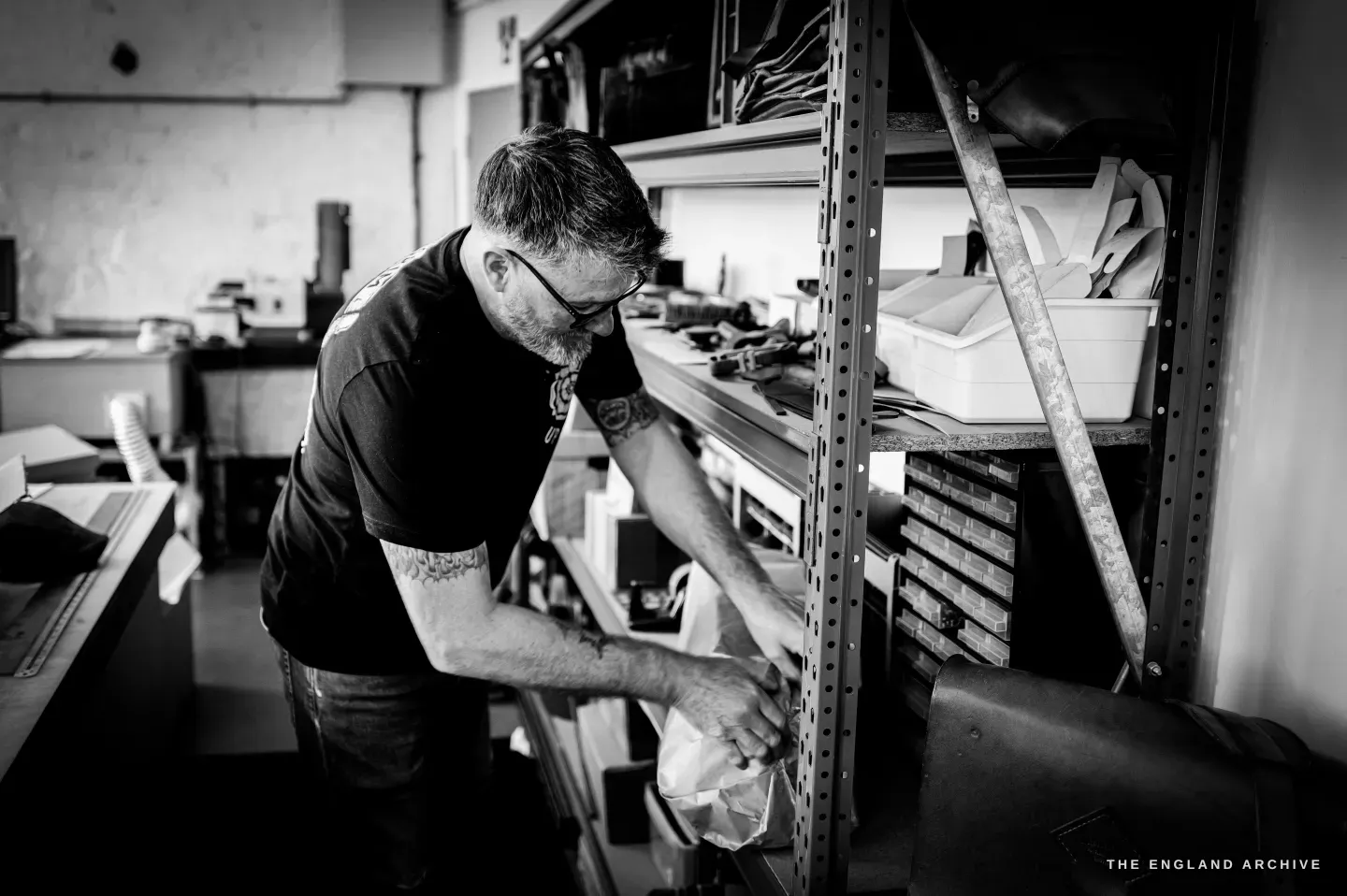
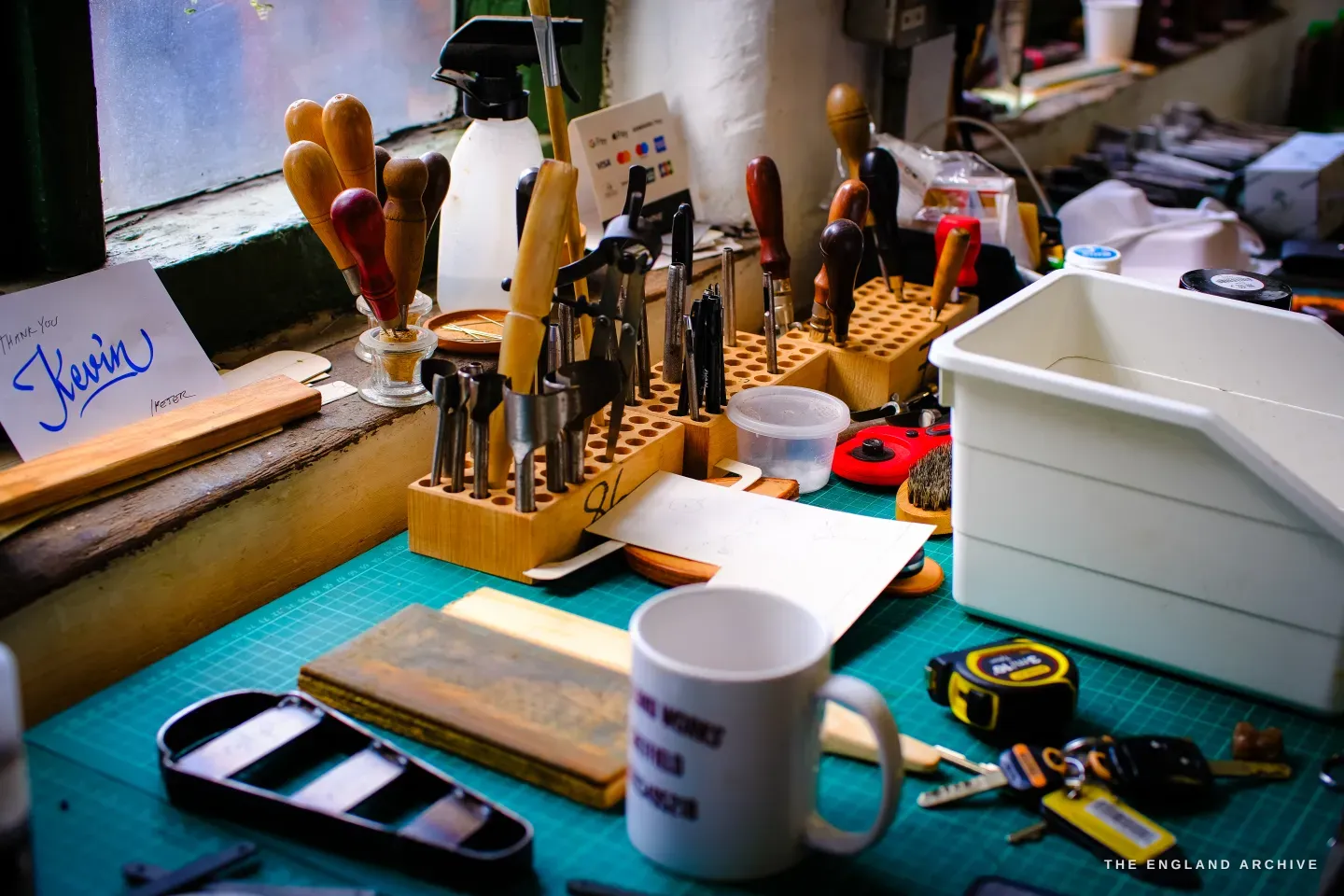
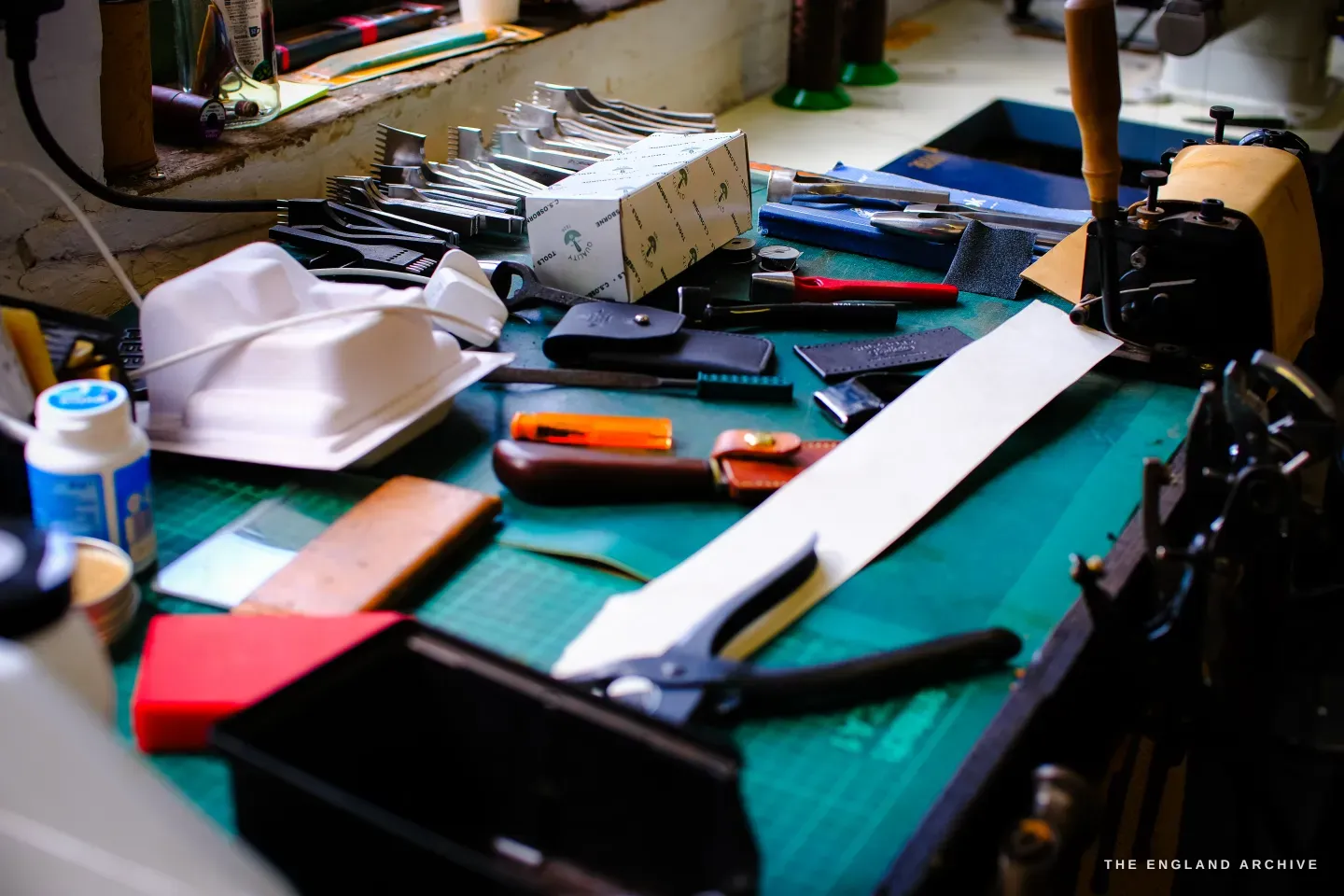
The bench runs the length of the room and carries the whole craft along it: mallets, pricking irons, edge tools, dyes, a green cutting mat worn pale where he works. Against the wall sits a flat-bed industrial sewing machine of a sort older than he is, the kind built to be repaired forever, and he stitches the heavy seams on that and the fine ones by hand. There is nothing precious about the room. It is a working shop, bright and busy, with a card on the bench that just says “Kevin.”
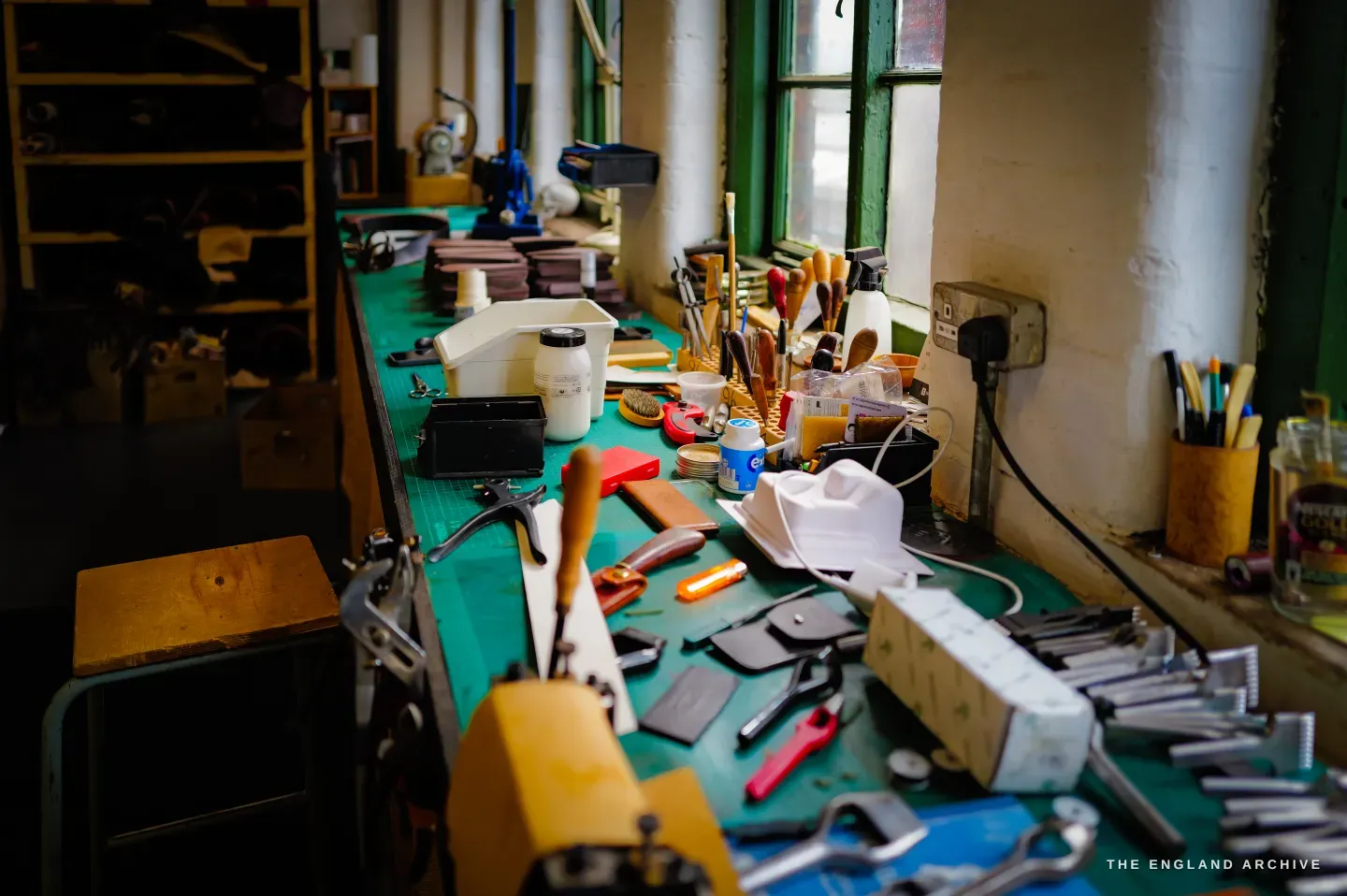
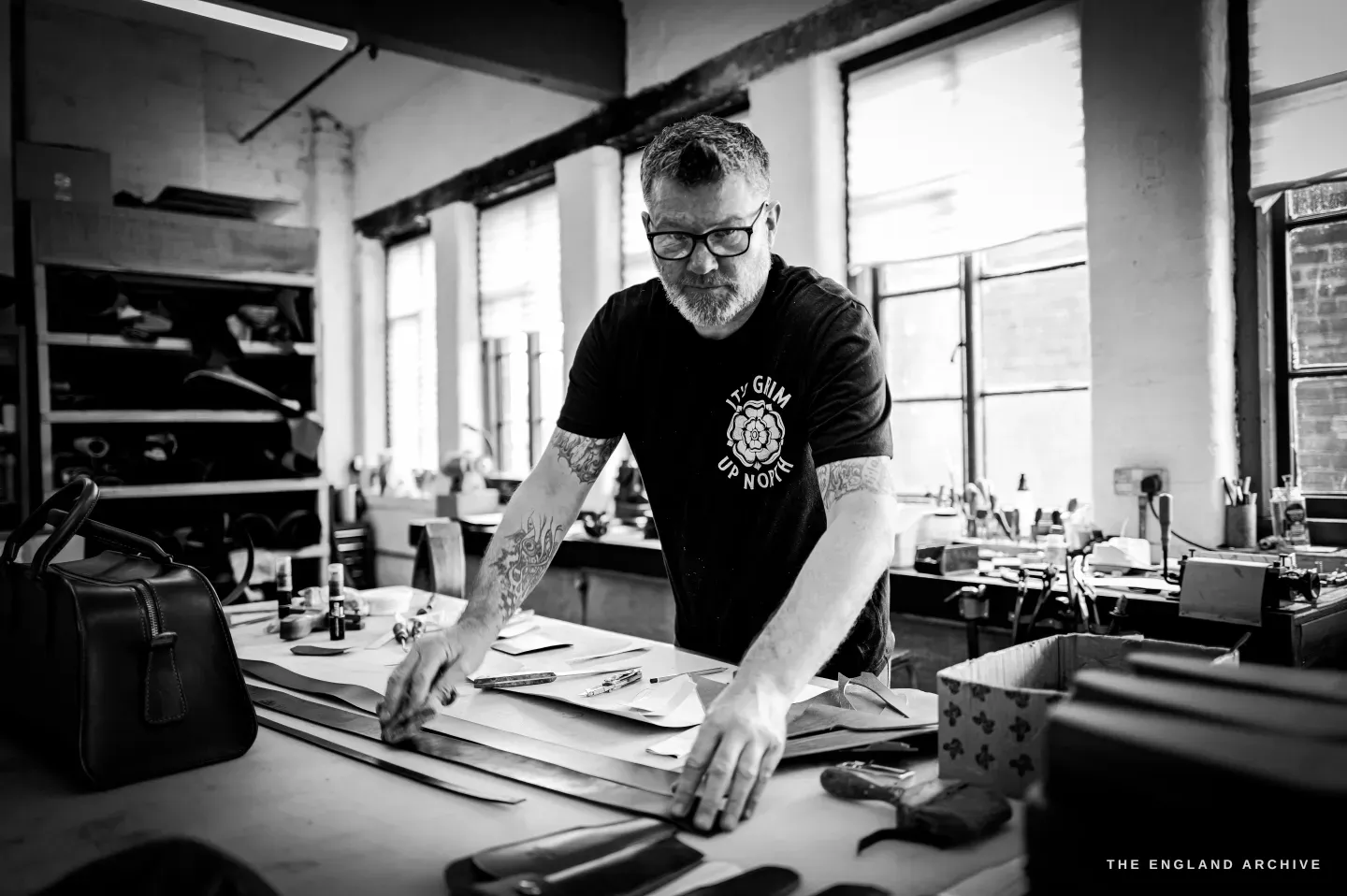
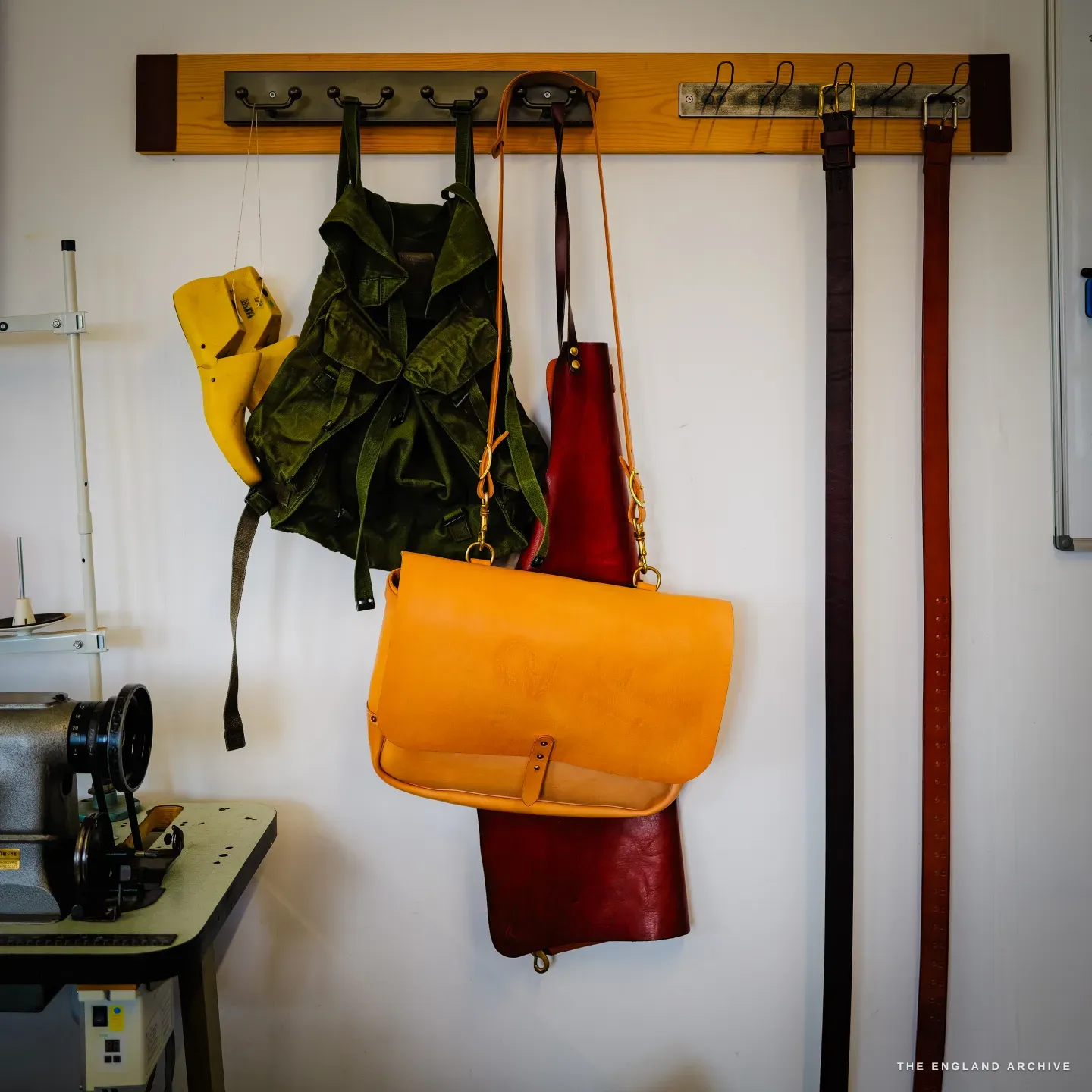
He makes belts, wallets, messenger bags, knife sheaths, shotgun slips - a lot of it bespoke, the phone forever going with someone who wants a piece made to their own brief. The wall by the sewing machine hangs the range like a sampler: an orange messenger bag, a holster, a leather apron, a row of belts. He sources his hide from some of the best tanneries in Britain and abroad, and he can tell you the story of each one.
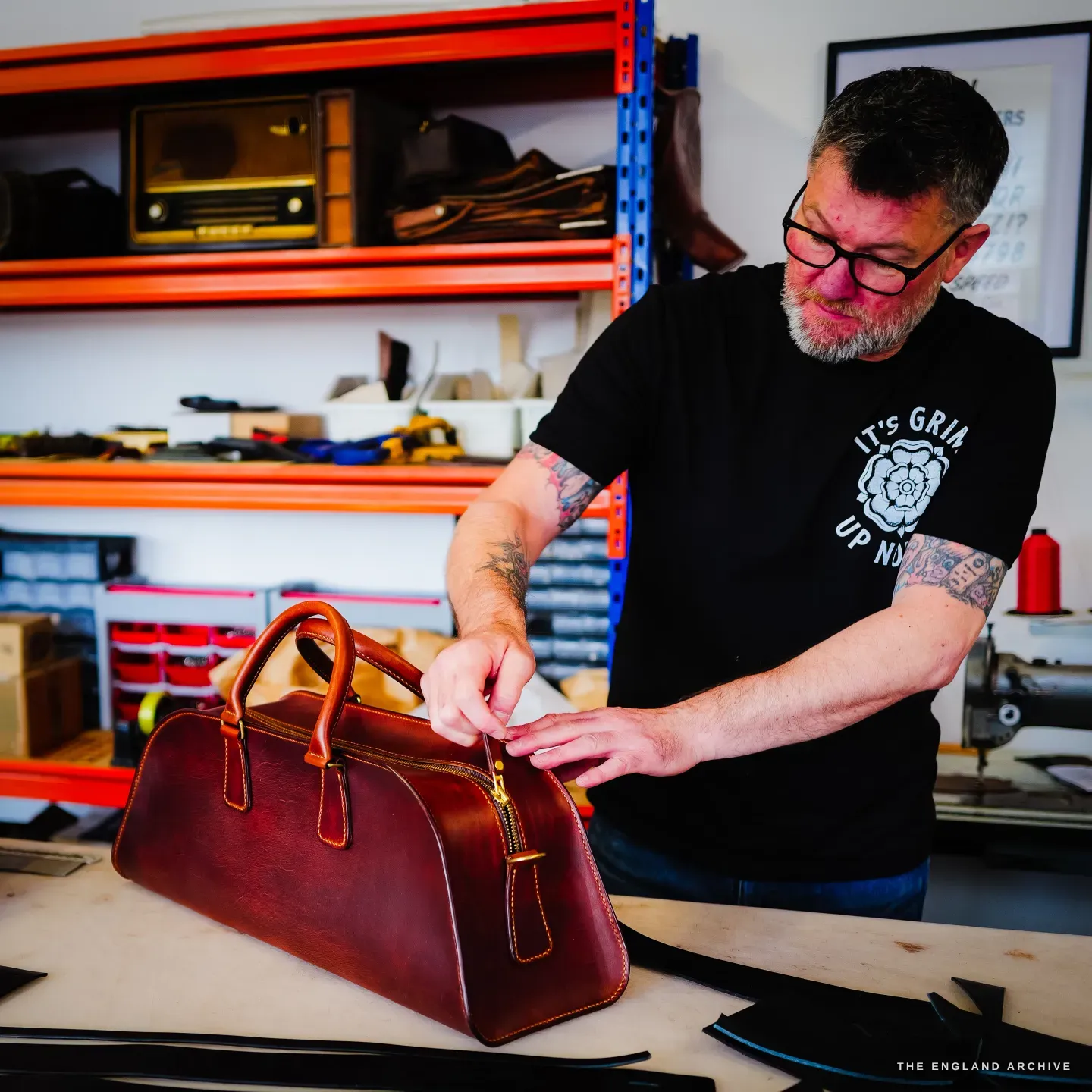
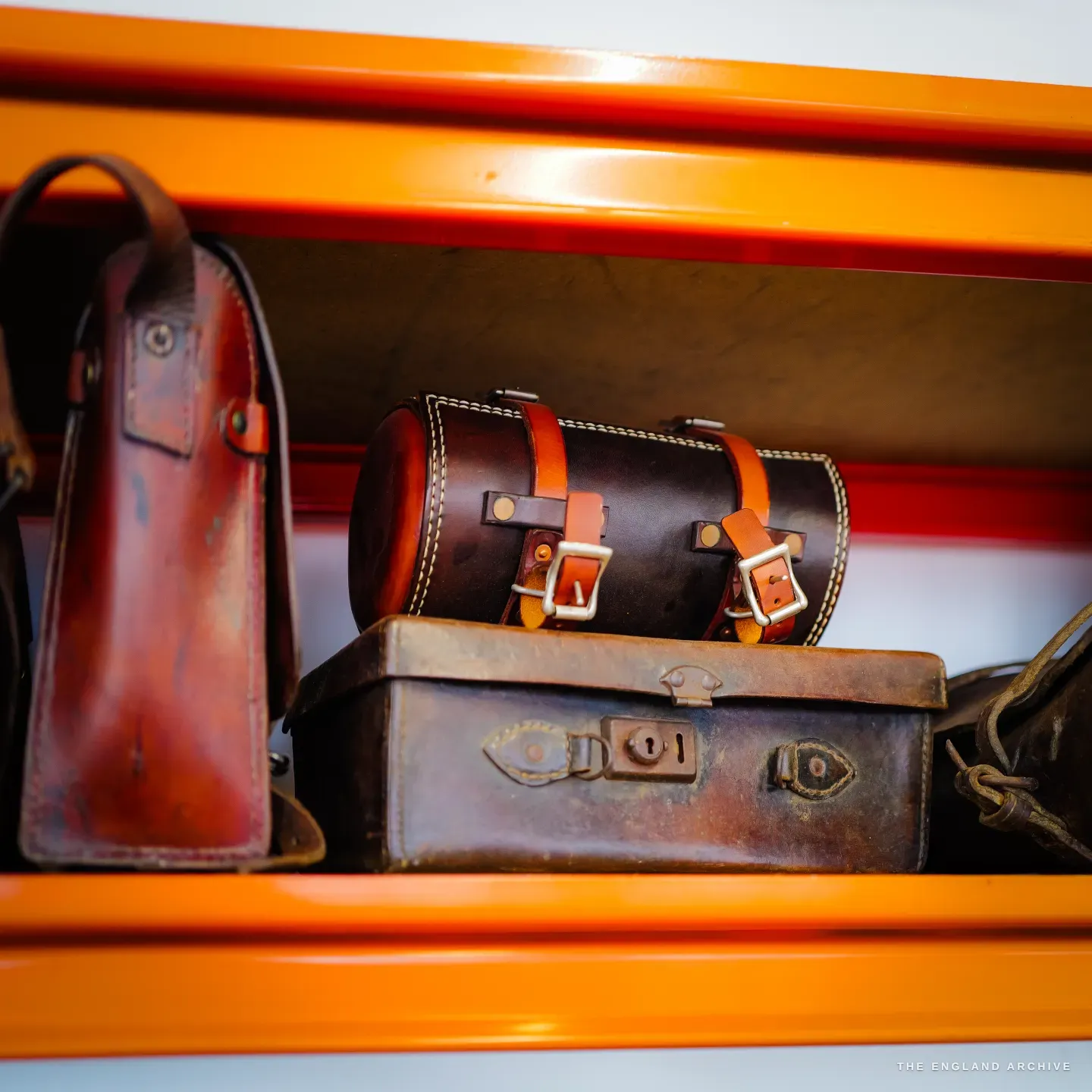
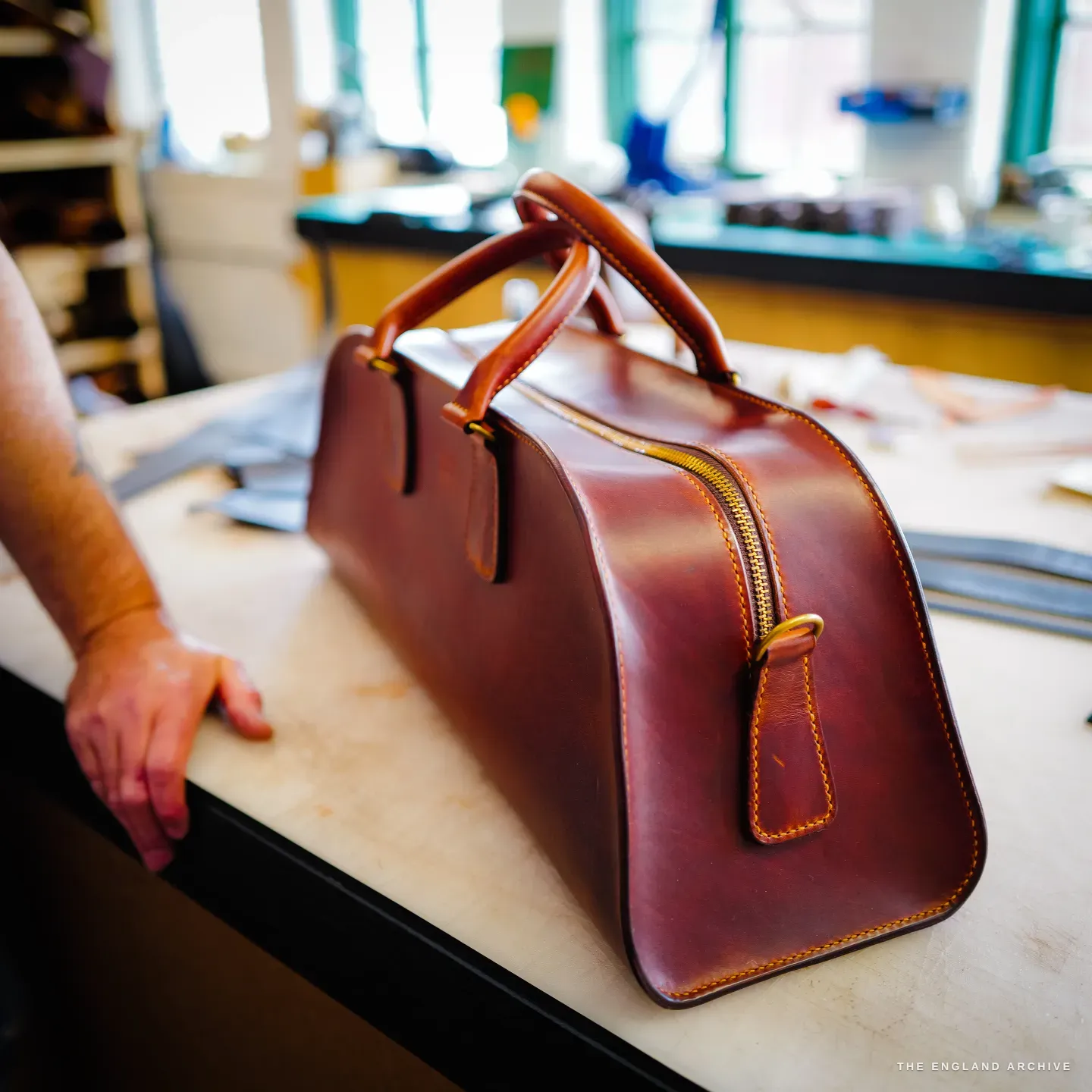
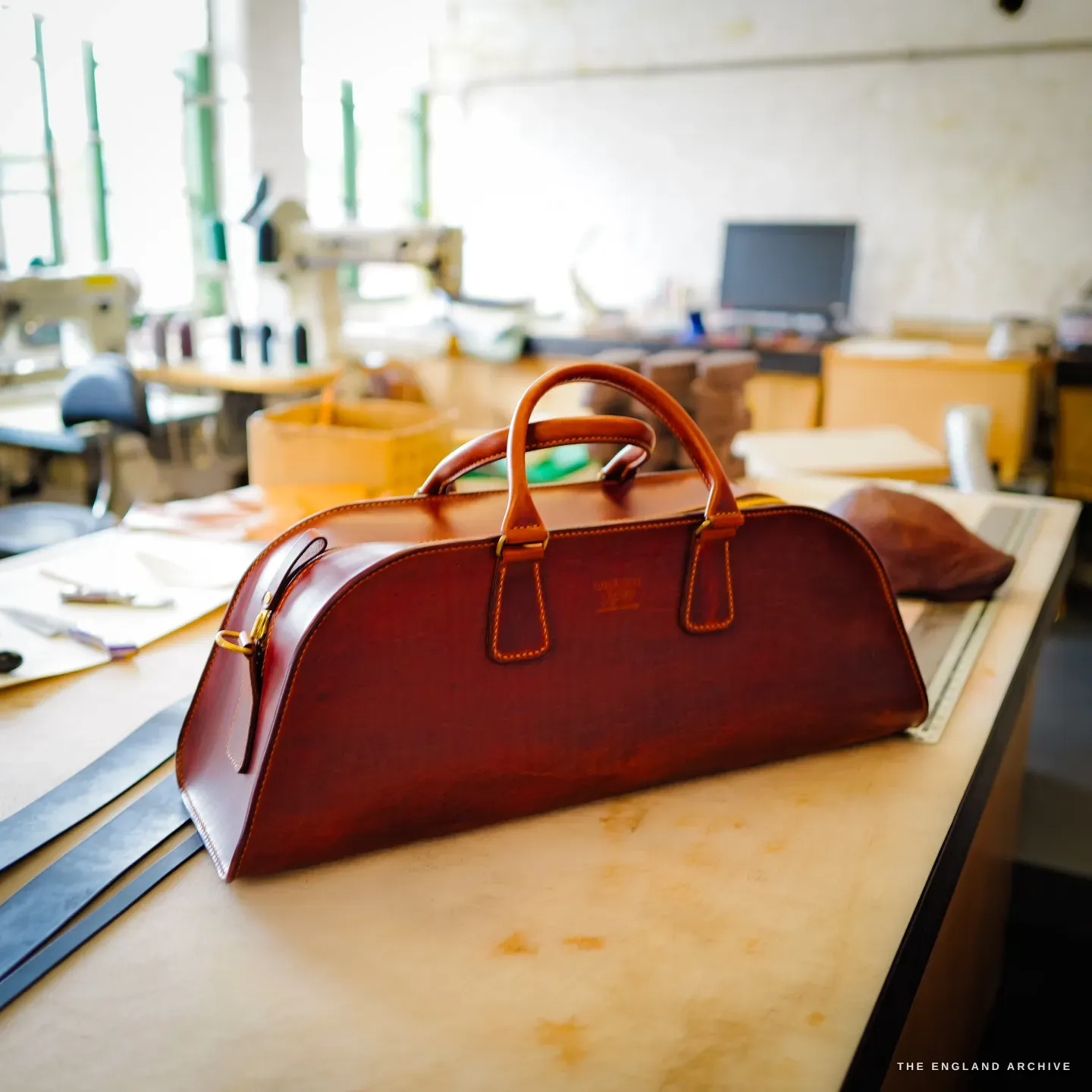
But the piece he wanted me to see was the weekender. He designed it himself - a low, wide overnight bag in deep cognac veg-tan, a brass zip running the length of the top between two rolled handles, the shape somewhere between a Gladstone and a doctor’s bag and entirely his own. It is a genuinely beautiful object, the kind of thing you would carry for thirty years and hand on. He turned it in the light and talked me through every decision in it, and then mentioned, almost in passing, that the next one on the drawing board is an American-style mailbag.
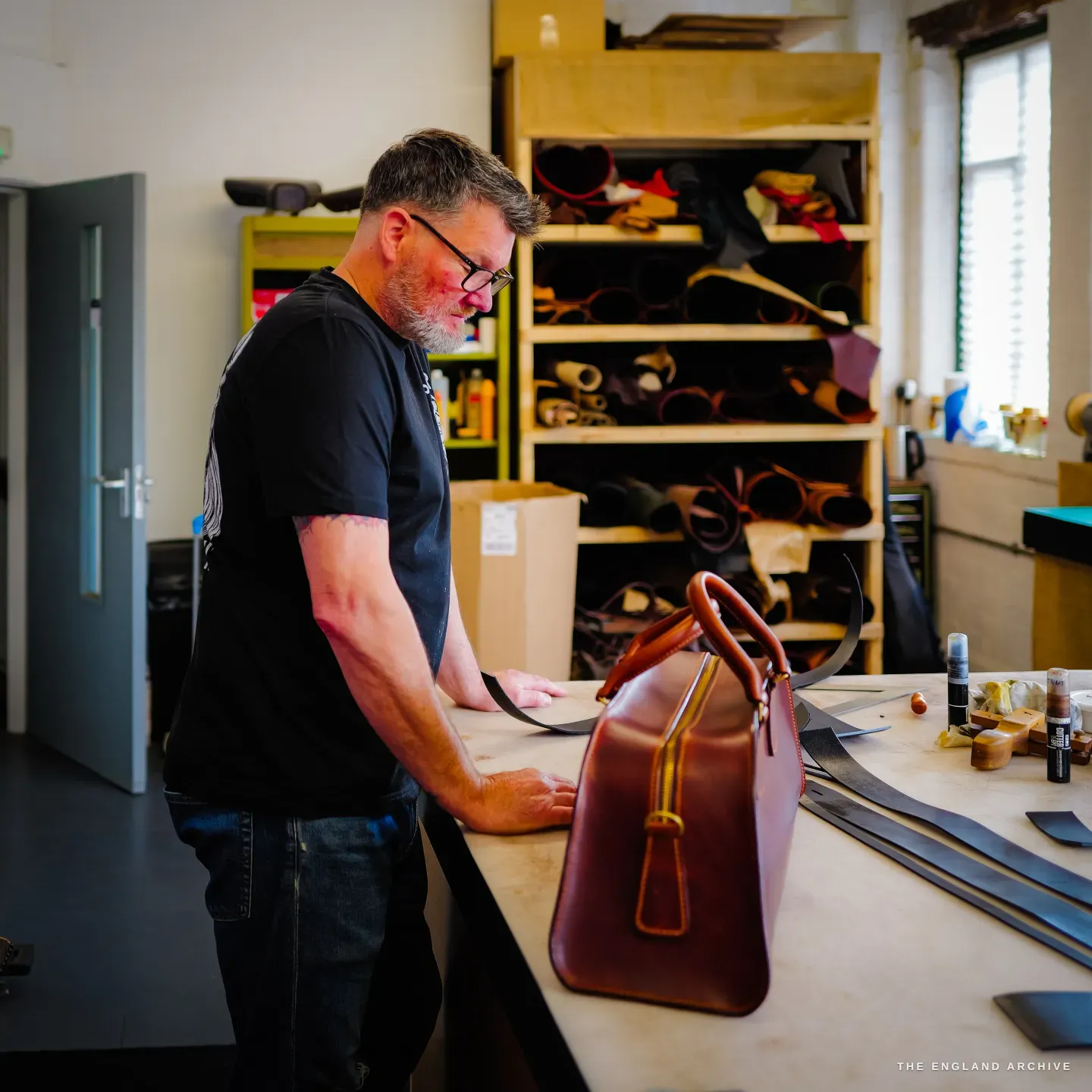
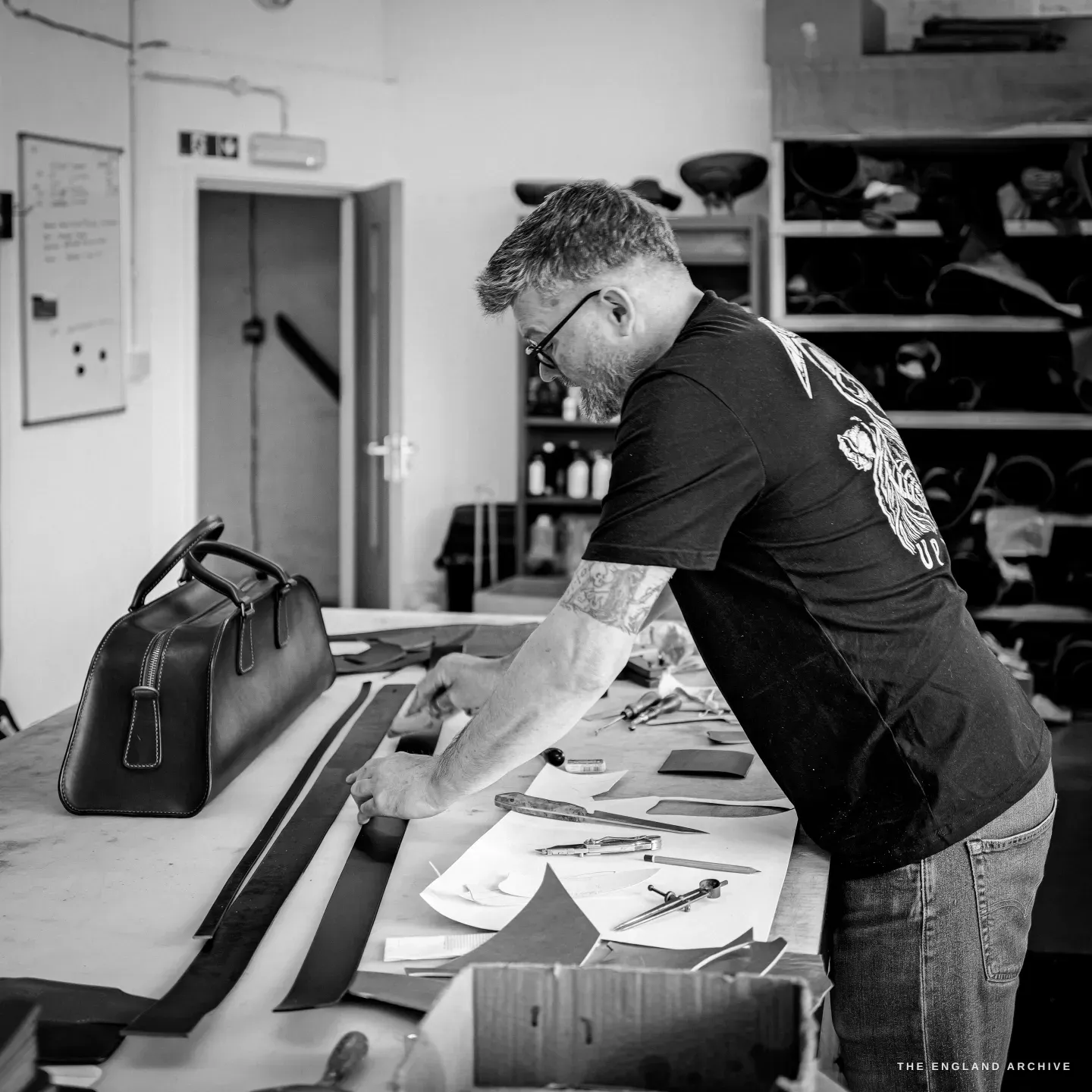
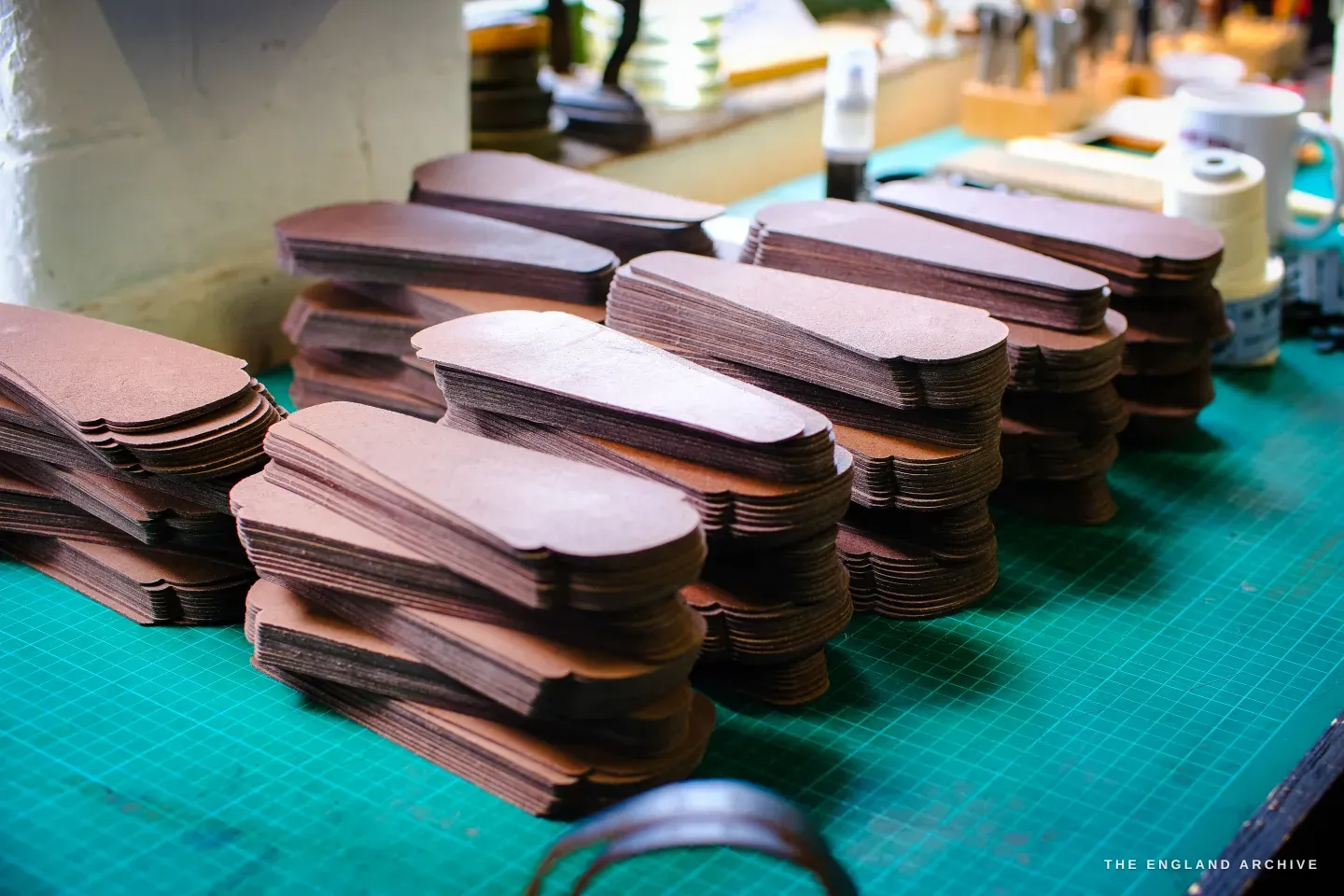
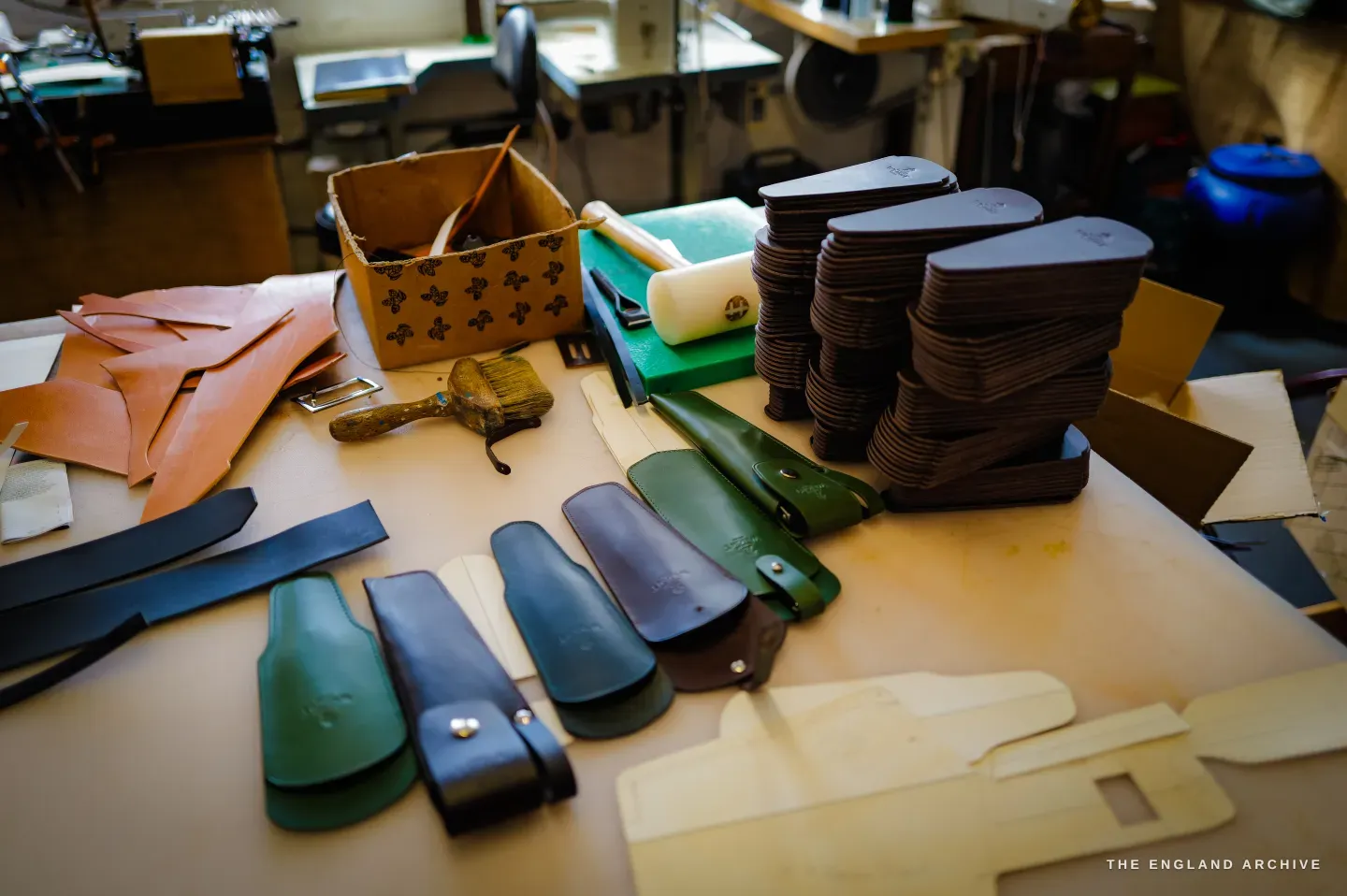
The work that keeps the lights on, though, comes from down the road. Kevin’s first big contract was Ernest Wright, the hand-scissor makers who have cut steel in Sheffield since 1902 - a firm the archive already holds, in the hands of Neil Wilson, Sam Aston-Clark and the rest of the Broad Lane bench. Ernest Wright came looking for him: they wanted a Sheffield leatherworker to make the pouches their scissors ship in, and they wanted them made in the city rather than bought in. So the stacks of cut tan blanks on his bench are scissor sheaths - punched and stitched by hand - the city’s scissors wrapped in the city’s own leather.
It is a small, perfect loop of the Sheffield trade. The city makes the scissors. The city makes the leather that carries them. And both are done a few streets apart, by hand, by people who could tell you the name of everyone else in the chain.
This is the archive’s record of Kevin Wilebore, made at Portland Works in Sheffield in June 2026: a former mechanic turned self-taught leatherworker, who came to the craft restoring a scooter and built it into a business; who works vegetable-tanned hide, hand-finishes his own foundry-cast buckles, and guarantees a belt for life; who designs his own weekender and is drawing up an American mailbag; and who, in the building where stainless steel was born, makes the leather that sheaths the city’s blades. The metal trades made Sheffield. Kevin is the soft, tanned edge of the same story - and on the evidence of a morning, a maker the city is lucky to have kept.