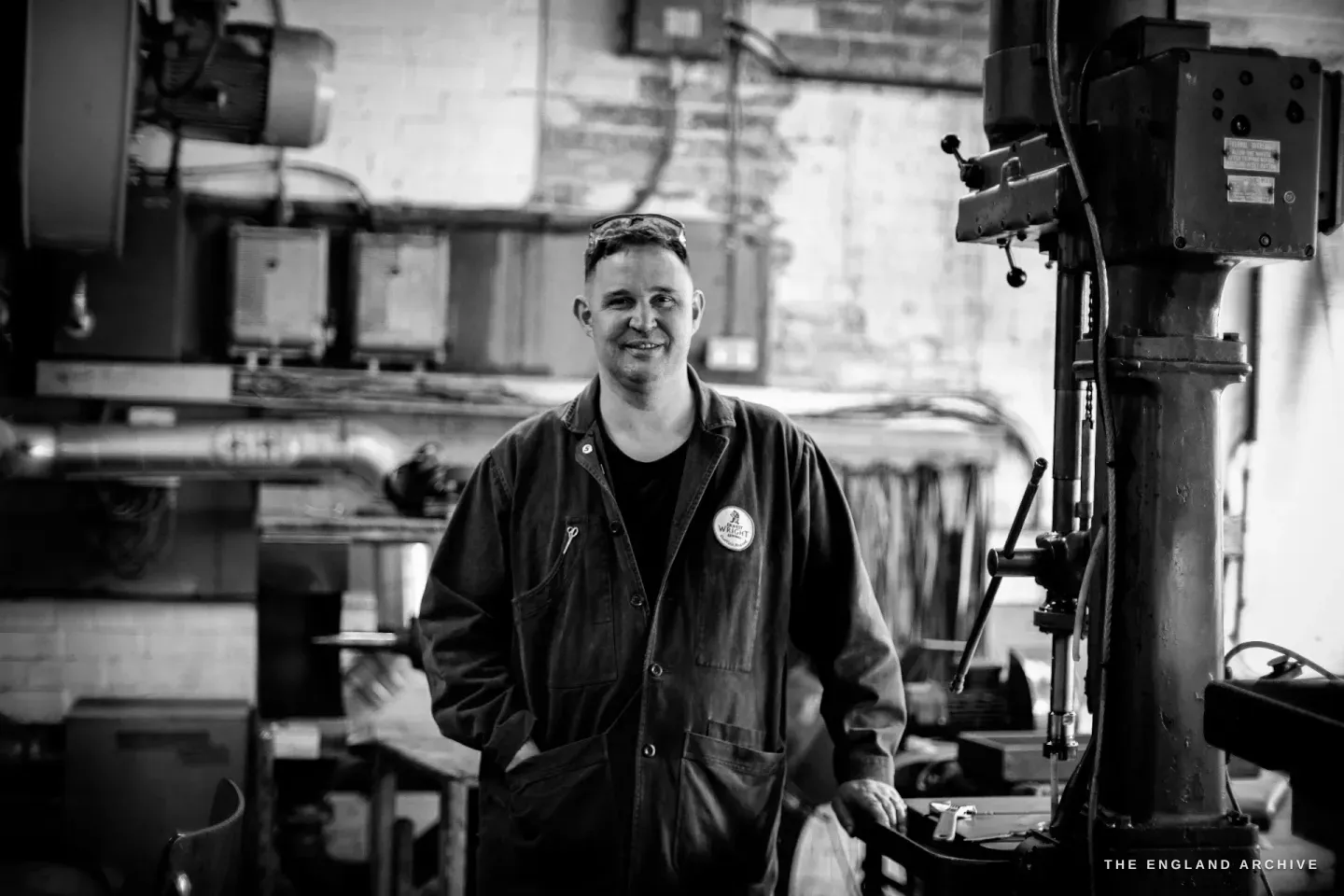
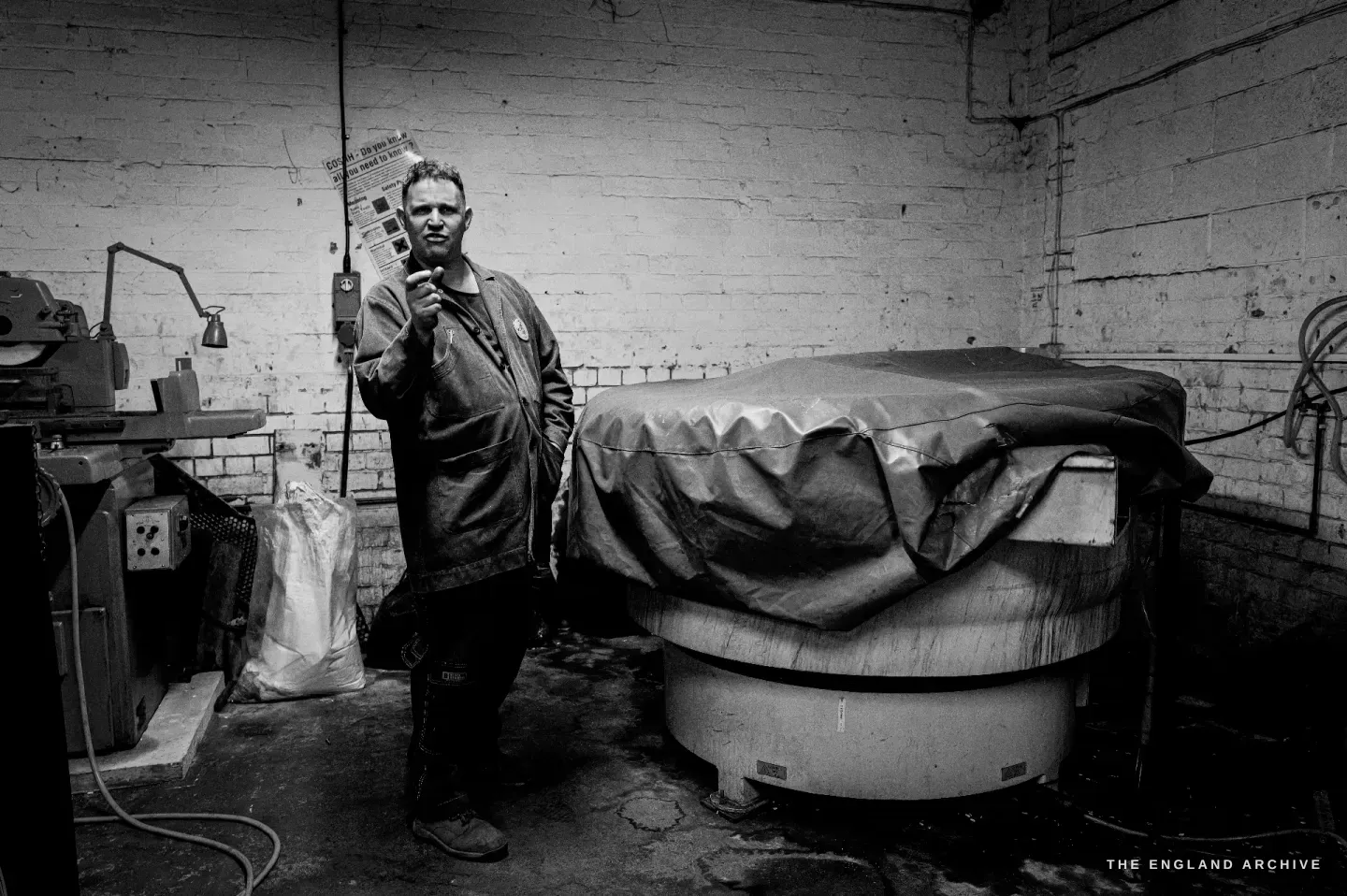
Neil Wilson standing in the Ernest Wright workshop, hands in the pockets of his work coat, a warm confident smile, machines and benches around him.
Makers

Neil Wilson

Scissor Maker · Ernest Wright

Sheffield, South Yorkshire

Documentary Archive · June 2026 · The Sheffield Trade

Two blades, made so they touch only at the cutting point. The gap between them is the whole secret - and putting it there is a five-year skill.

Name Neil Wilson
Trade Scissor maker and putter-togetherer
Workshop Ernest Wright, scissor makers since 1902
Location Sheffield, South Yorkshire
Category Makers - people whose knowledge lives in their hands and cannot exist anywhere else
Session June 2026 · a full day at the Ernest Wright workshop
Trained by Eric Stones and Cliff Denton · about seven years at Ernest Wright
Craft status Scissor making on the Heritage Crafts Red List
Archive ID MK-0023

The Maker at the Top of the Bench

Ernest Wright has made scissors in Sheffield since 1902, and of the makers working there today, Neil Wilson is the one the rest look to. He has been at the firm about seven years, but he came up the proper way - apprenticed under Eric Stones and Cliff Denton, two of the old hands - and he now runs the floor. The other makers in the workshop are, in effect, his apprentices. When you want the whole craft explained, you go to Neil, and he will give it to you in more detail than you can hold.
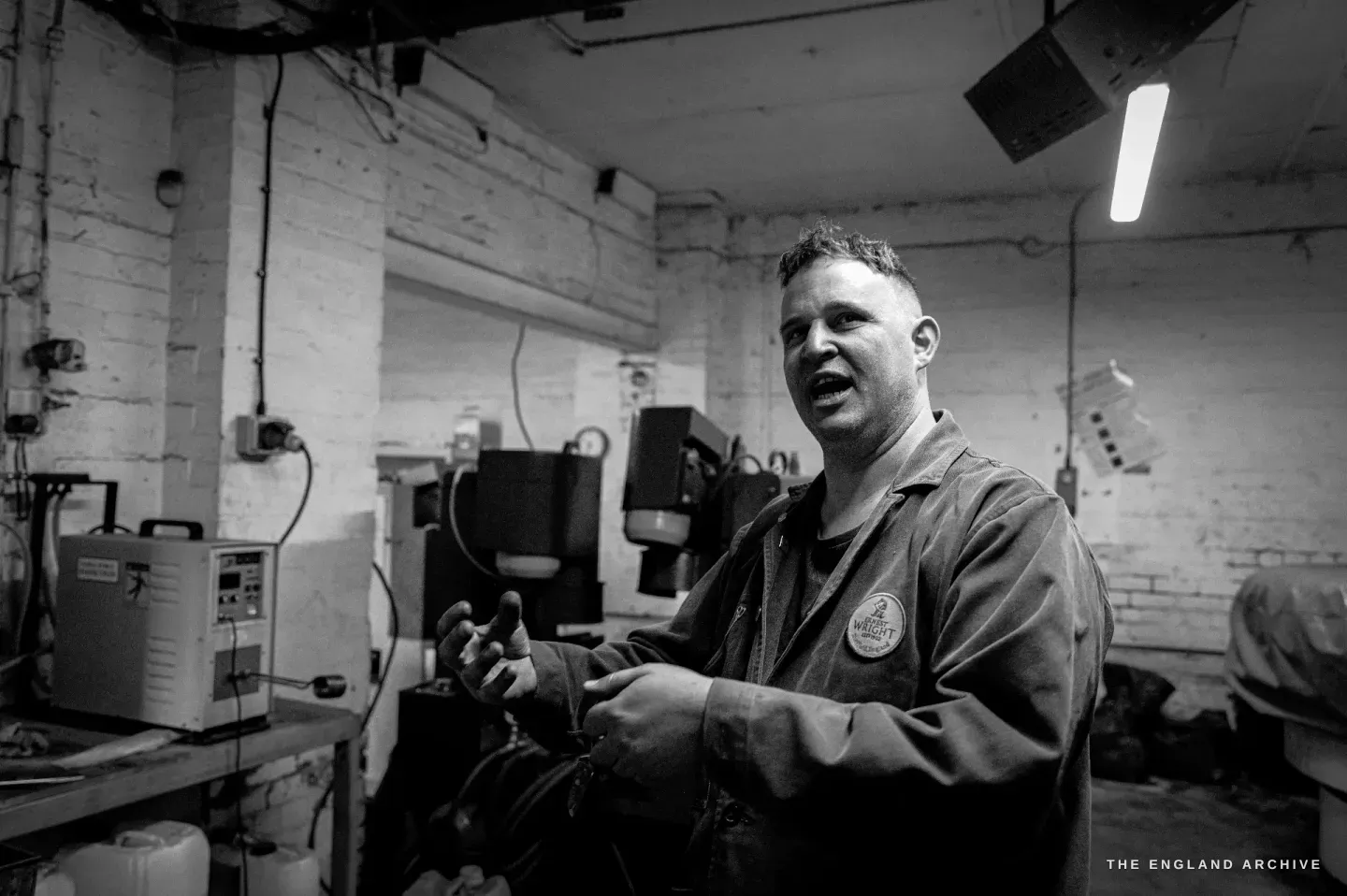
Neil mid-sentence on the workshop floor, hands raised in explanation, the brick room and machinery behind him.
Mid-explanation - he can take the whole process apart in front of you, stage by stage. IM-0729

What a Pair of Scissors Actually Is

A pair of scissors looks simple and is not. It begins as two halves, each drop-forged in one piece - blade and bow handle together - from a single billet of steel. But the cut does not come from sharpness alone. It comes from the way the two blades are made to meet: each blade is given a slight curve along its length, so that when the pair is closed the two edges touch at only one point, and that point travels from the pivot to the tip as the scissors close. Hold a finished pair to the light and you can see daylight through the middle, between the blades. That gap is deliberate, and getting it right is the whole craft.
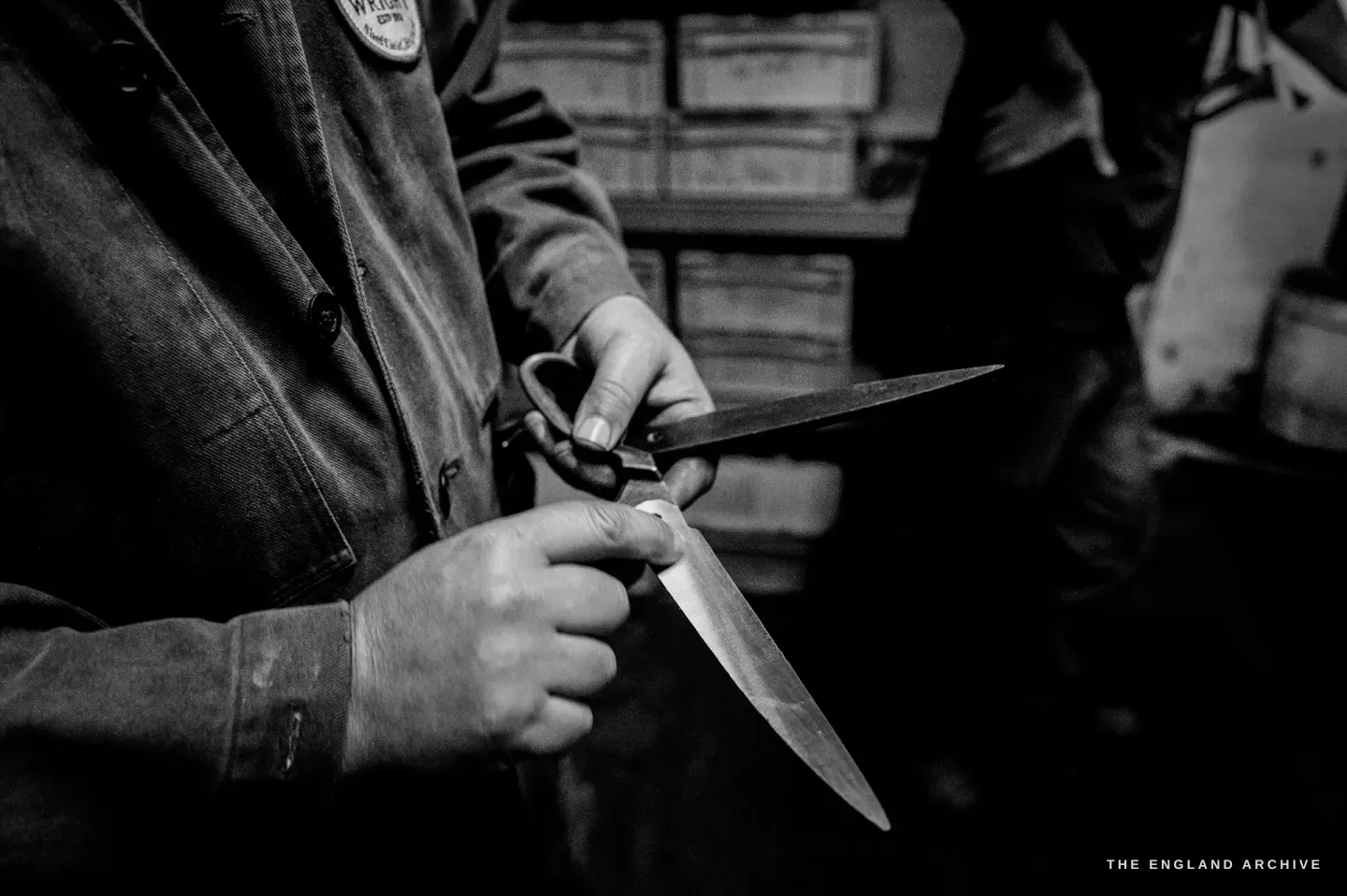
Neil holding a large open pair of scissors in both hands, sighting along the two blades to check how they meet.
Sighting down the blades - the join is the whole craft. IM-0730

Grinding the Blade

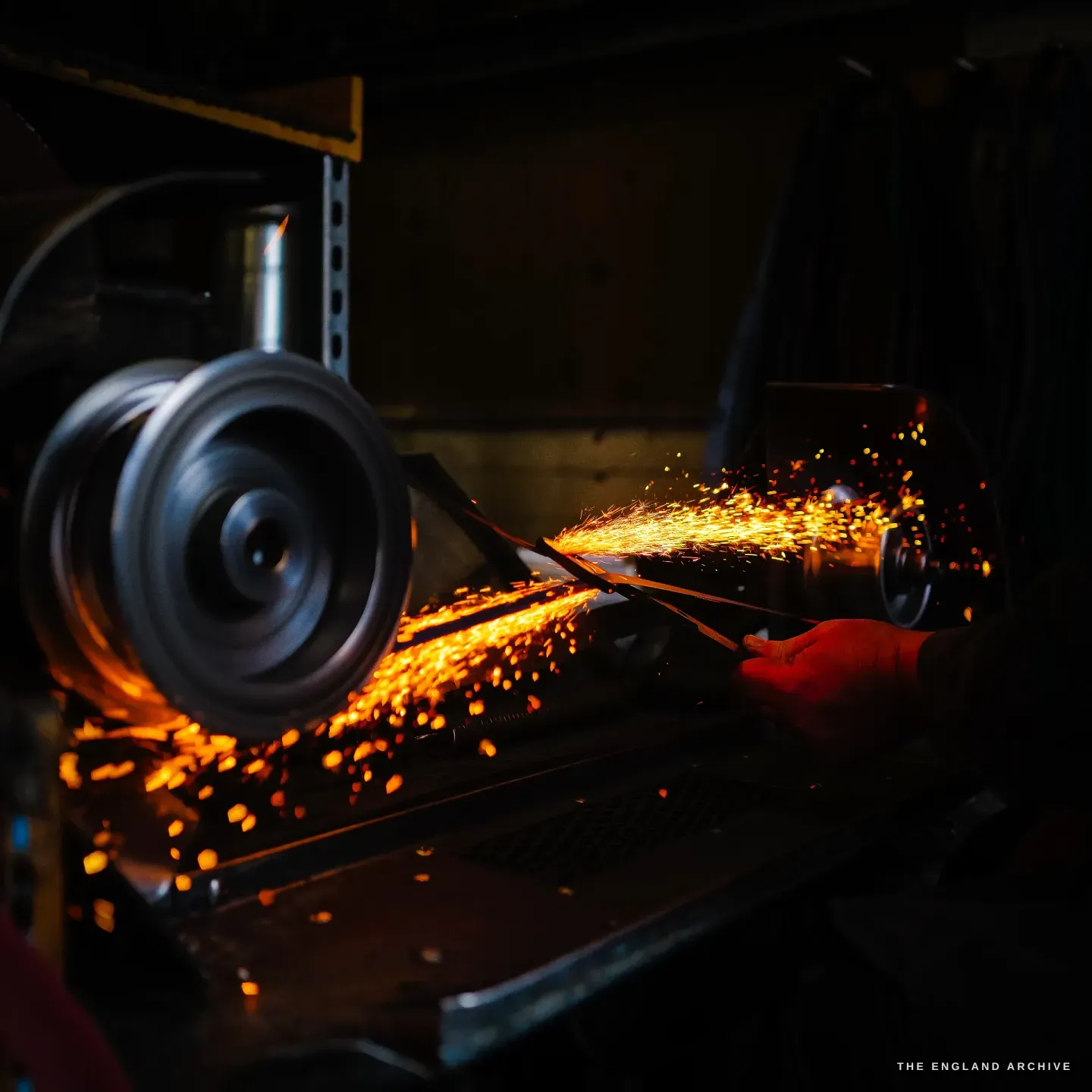
Three things are ground into each blade, Neil explained, and all three matter. There is the hollow - the inside face of the blade is ground slightly concave, so the two faces do not drag flat against each other. There is the curve along the length, which sets that travelling point of contact. And there is a slight twist, so the edges are sprung against one another. He does this on belt-driven grinding wheels, the same kind the trade has used for generations, reading the steel by eye and by the colour and shape of the sparks - because hold a blade to the stone a moment too long and the heat draws the temper straight out of it.
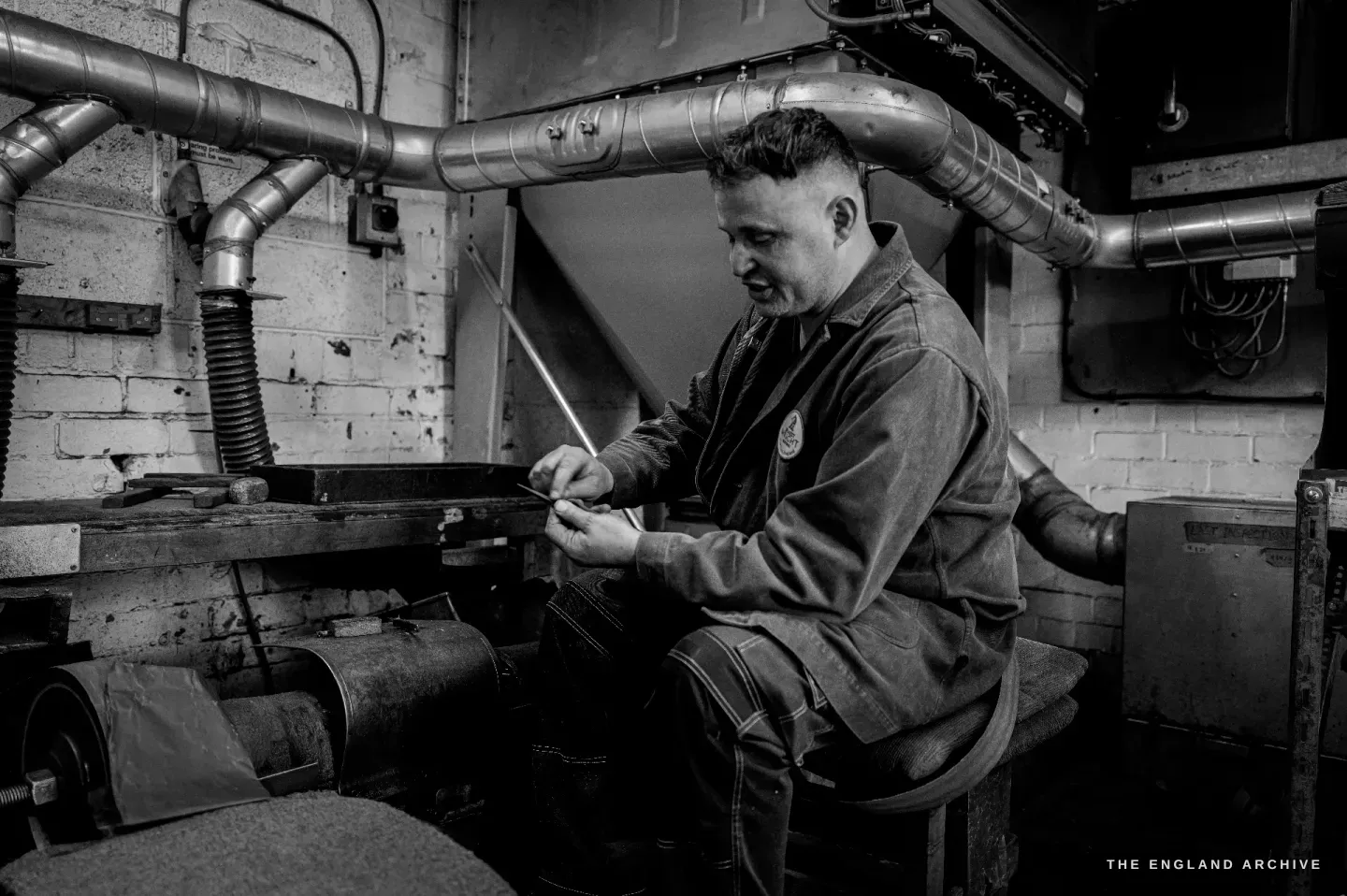
Neil seated at a bench beneath the extraction ducting, working a long blade in his hands, racks of grindstones beside him.
At the bench - the slow work of getting a blade exactly true. IM-0732
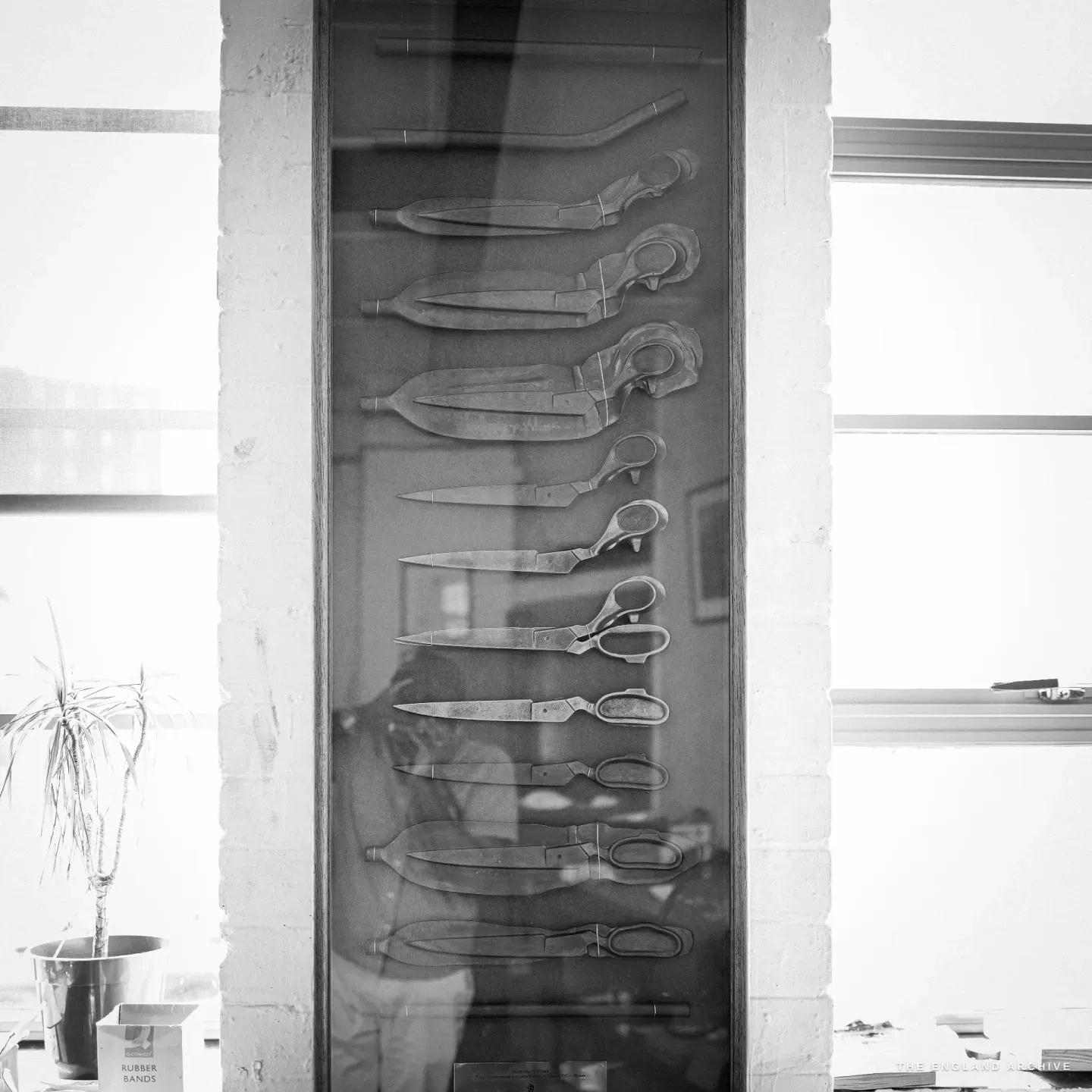
A tall glass display case on the workshop wall holding a column of scissor parts at successive stages of making, from rough blank through to finished blade and bow.
On the office wall, the forging stages - a blade shown step by step, from rough blank to finished bow. IM-0725
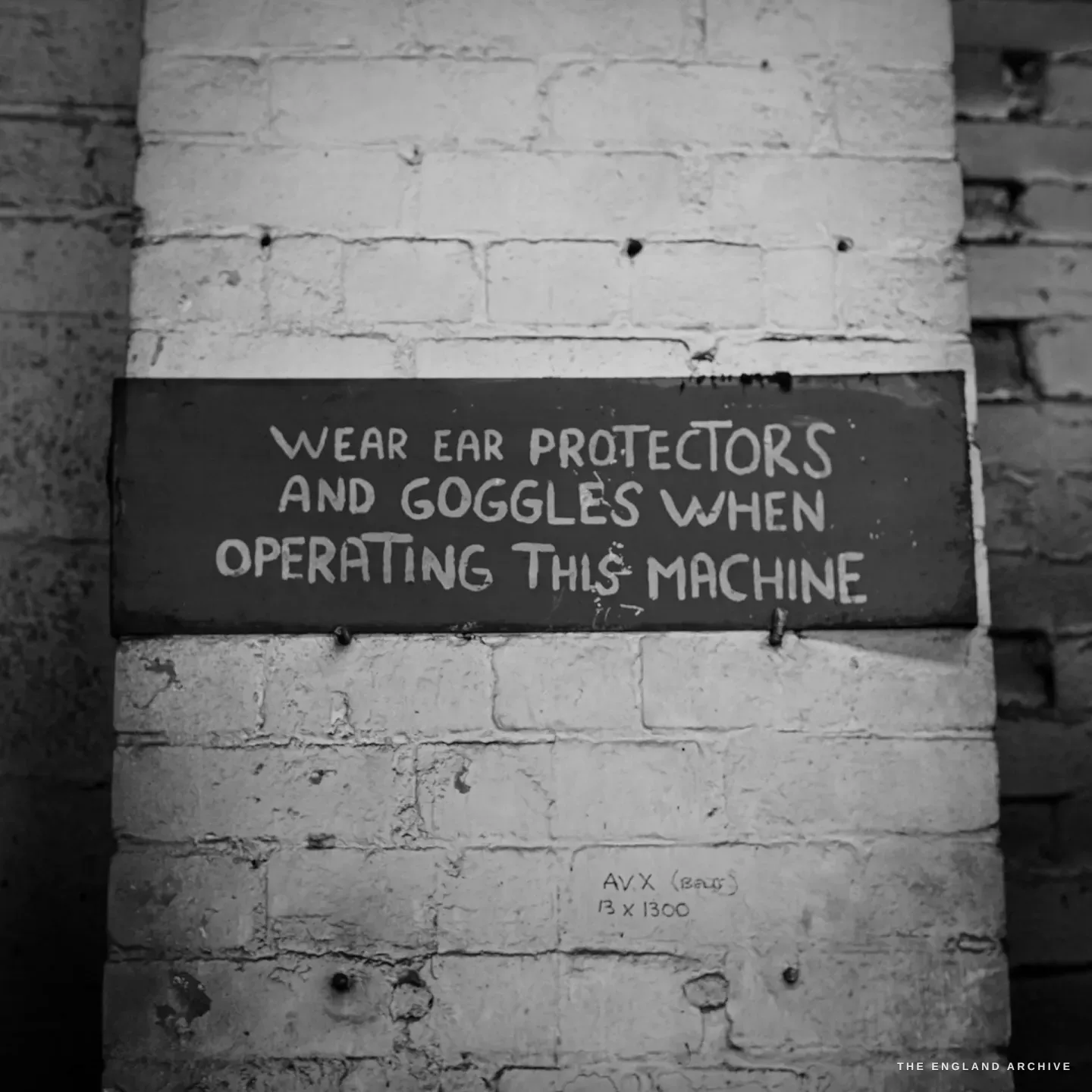
A hand-painted sign on a whitewashed brick pillar reading WEAR EAR PROTECTORS AND GOGGLES WHEN OPERATING THIS MACHINE.
“Wear ear protectors and goggles.” The hand-painted law of the shop floor. IM-0726
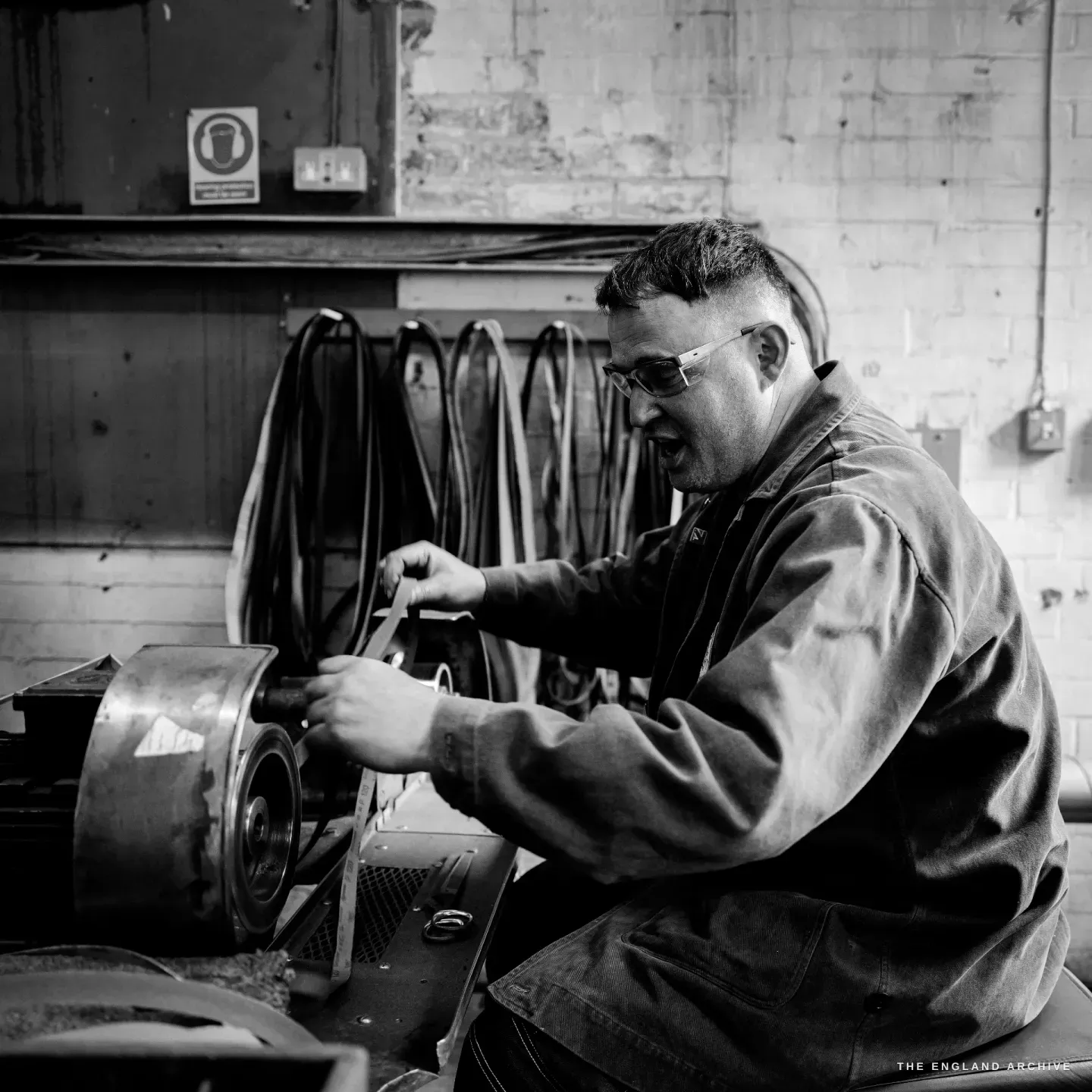
Neil leaning into a grinding wheel, glasses on, both hands guiding a blade, rows of leather drive belts on the wall behind.
On the wheel, the old drive belts behind. IM-0733
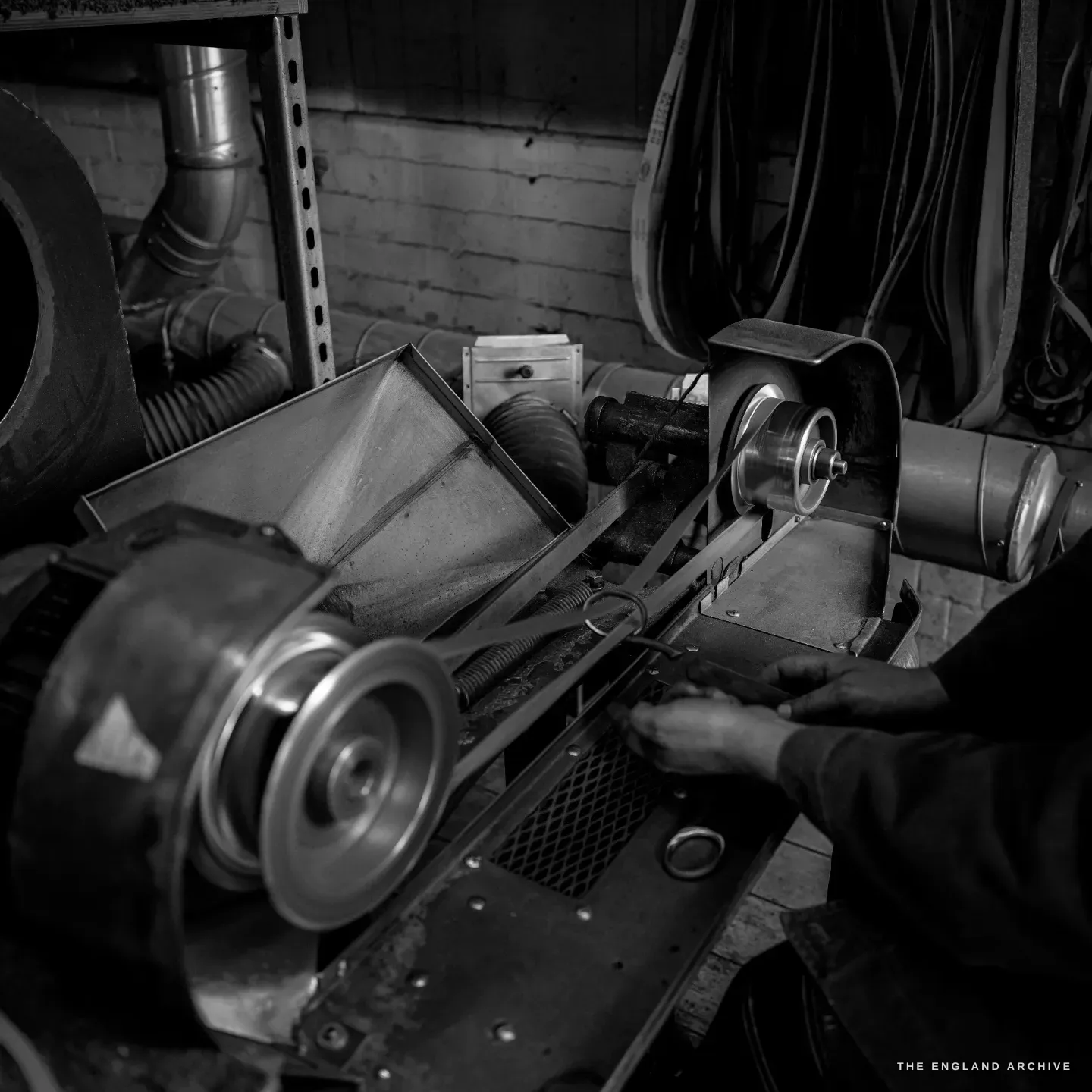
A close view of a grinding wheel on its mandrel as a blade is worked against it, the belt-driven machinery dark around it.
The grindstone that puts the hollow and the twist into the blade. IM-0734
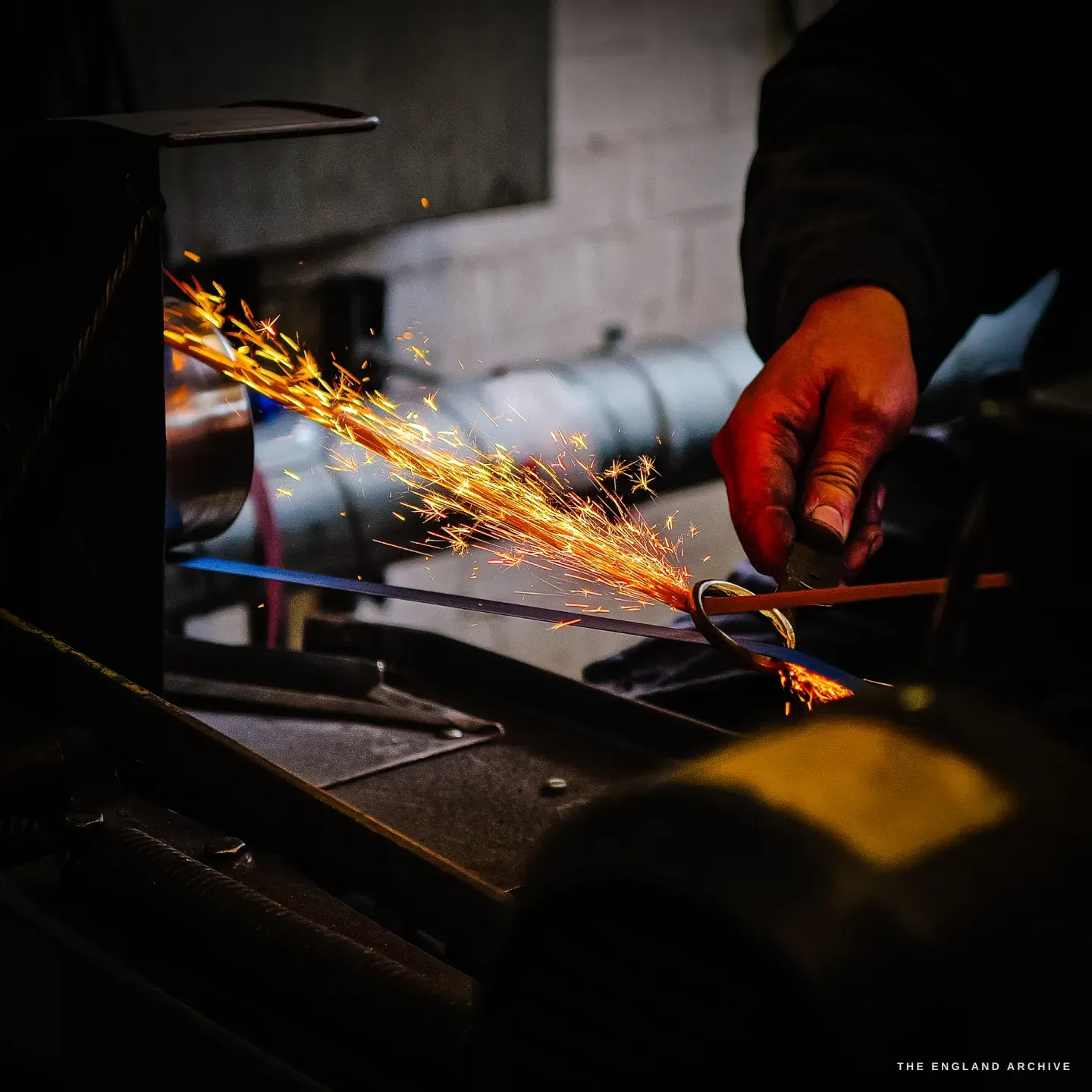
A close low-key frame of Neil’s hand holding a blade to a wheel, a bright fan of sparks streaming off into the dark.
Steel to stone. IM-0735
A blade held against a spinning wheel, sparks arcing across the frame, the leather belt and pulley lit behind.
The sparks read the steel - too long on the stone and the temper is gone. IM-0736
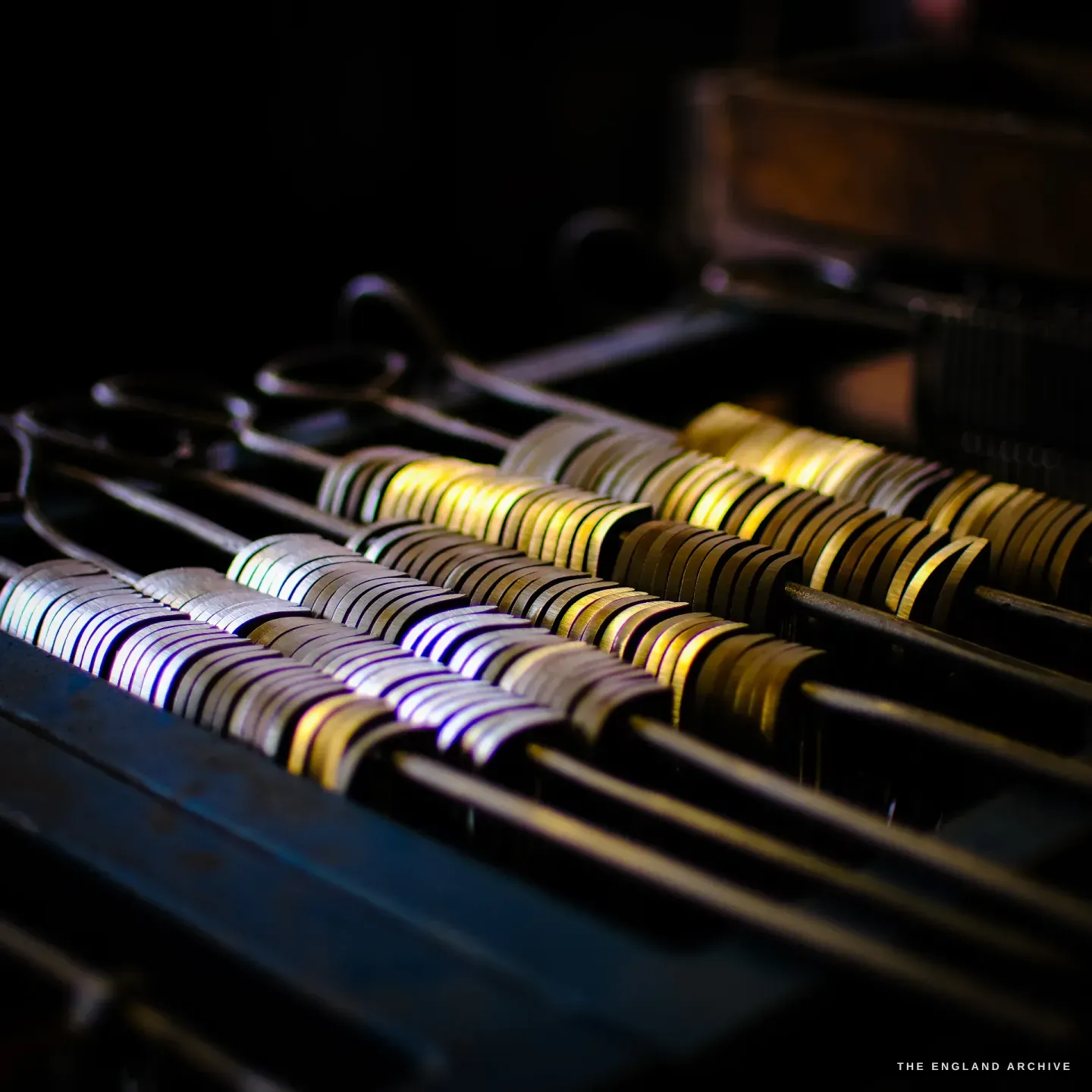
Rows of part-finished scissor blades racked on steel rods, their ground edges catching bands of light, in the dark of the workshop.
Part-finished blades, racked - each one ground, not stamped from a mould. IM-0721

Hardening and the Rumbler

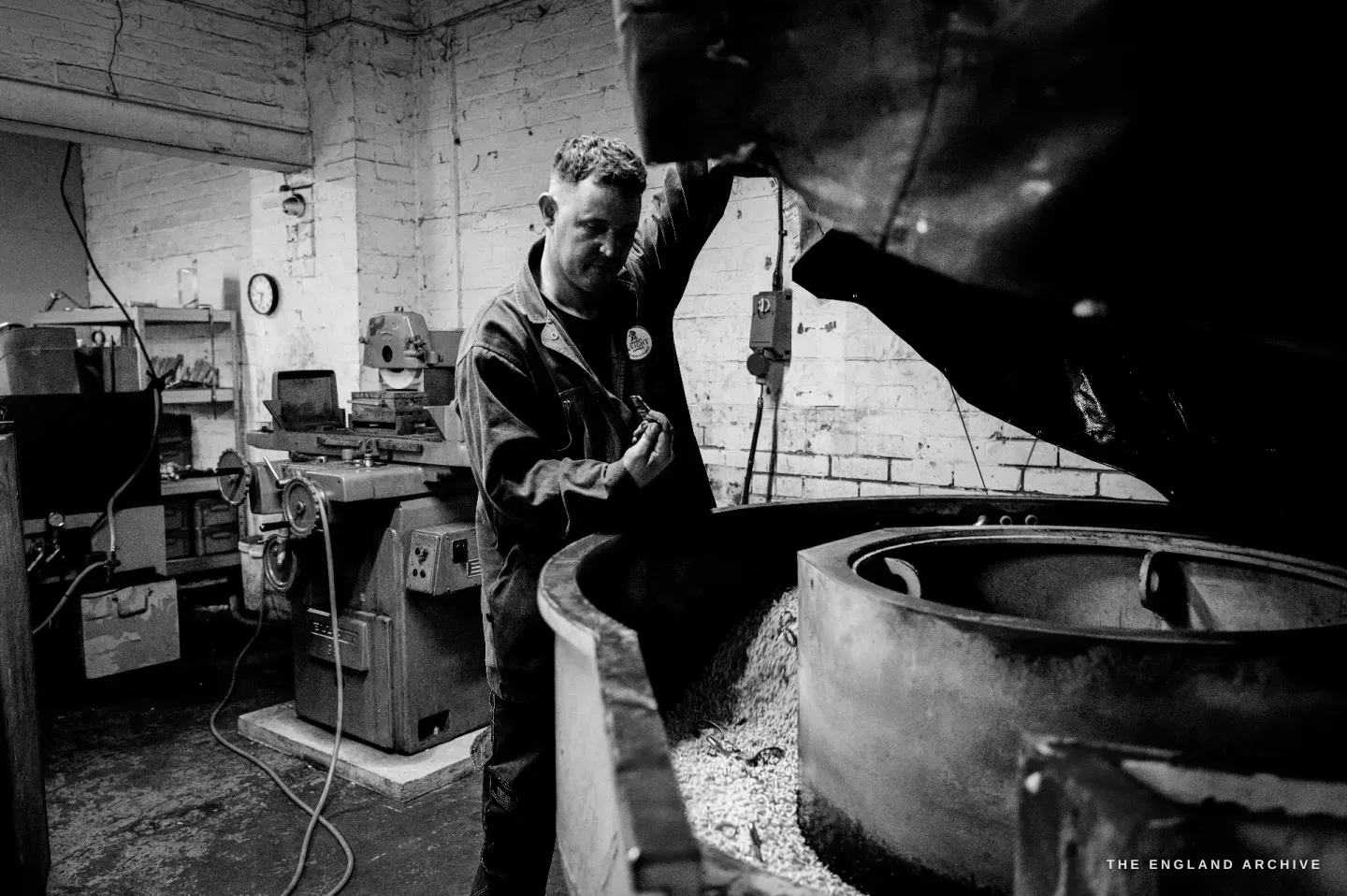
Between the rough work and the finish, the blades are hardened and tempered - heated and quenched so the steel will take and hold an edge and resist bending - and then they go to the rumbler. This is a big rotating drum, and Neil lifts its heavy lid to load it: the parts go in with ceramic media and a polishing paste, and the drum turns for hours, tumbling everything against everything until the burrs and the last grinding marks are worn away and the surfaces come out smooth. It is slow, unglamorous, and essential - the difference between a part that looks made and one that looks finished.
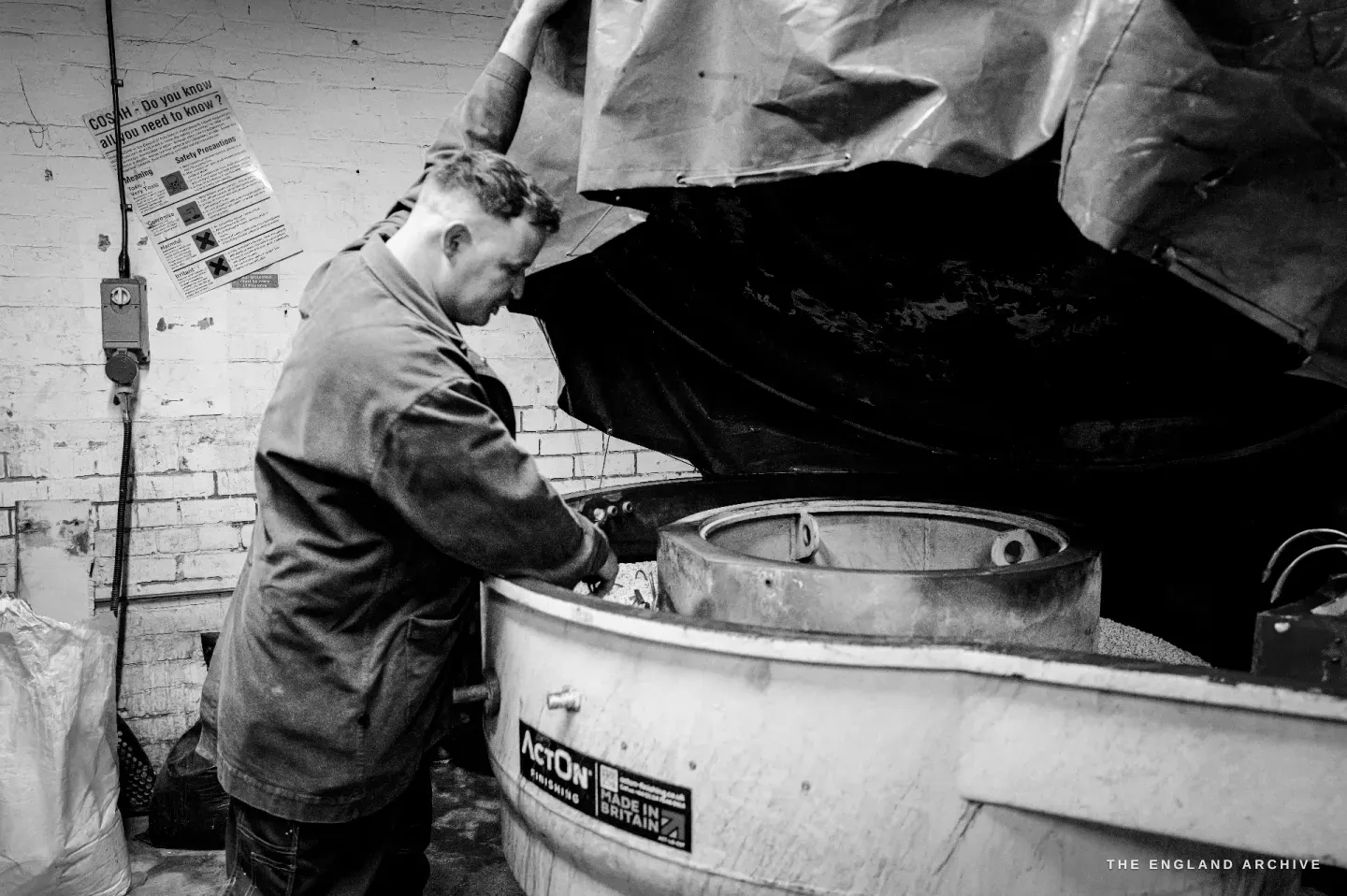
Neil leaning over a large round drum machine, the rumbler, lifting its heavy cover to check the scissors inside.
At the rumbler - the drum that tumbles the parts smooth. IM-0737
Neil working at the open rumbler, the ceramic media and parts visible in the drum, finishing machines along the wall behind.
Ceramic media and polishing paste turn for hours, taking off every burr and mark. IM-0738

Putting Together

Then comes the step the trade is named for. The person who assembles the two halves into a working pair is a putter-togetherer - a title that takes five years to earn and that Ernest Wright still uses in earnest. It is not a matter of dropping a screw through two blades. The putter hammers the precise curve onto each blade, sets the two together, and adjusts them by hand and eye until the pair rides correctly - tight enough that the edges shear cleanly the whole length of the cut, loose enough that they do not bind. Neil sat with a pair, opening and closing it, feeling for the action, tuning it the way you would tune an instrument. This is the moment a pair of Ernest Wright scissors becomes the thing it is, and it is done entirely by a person.
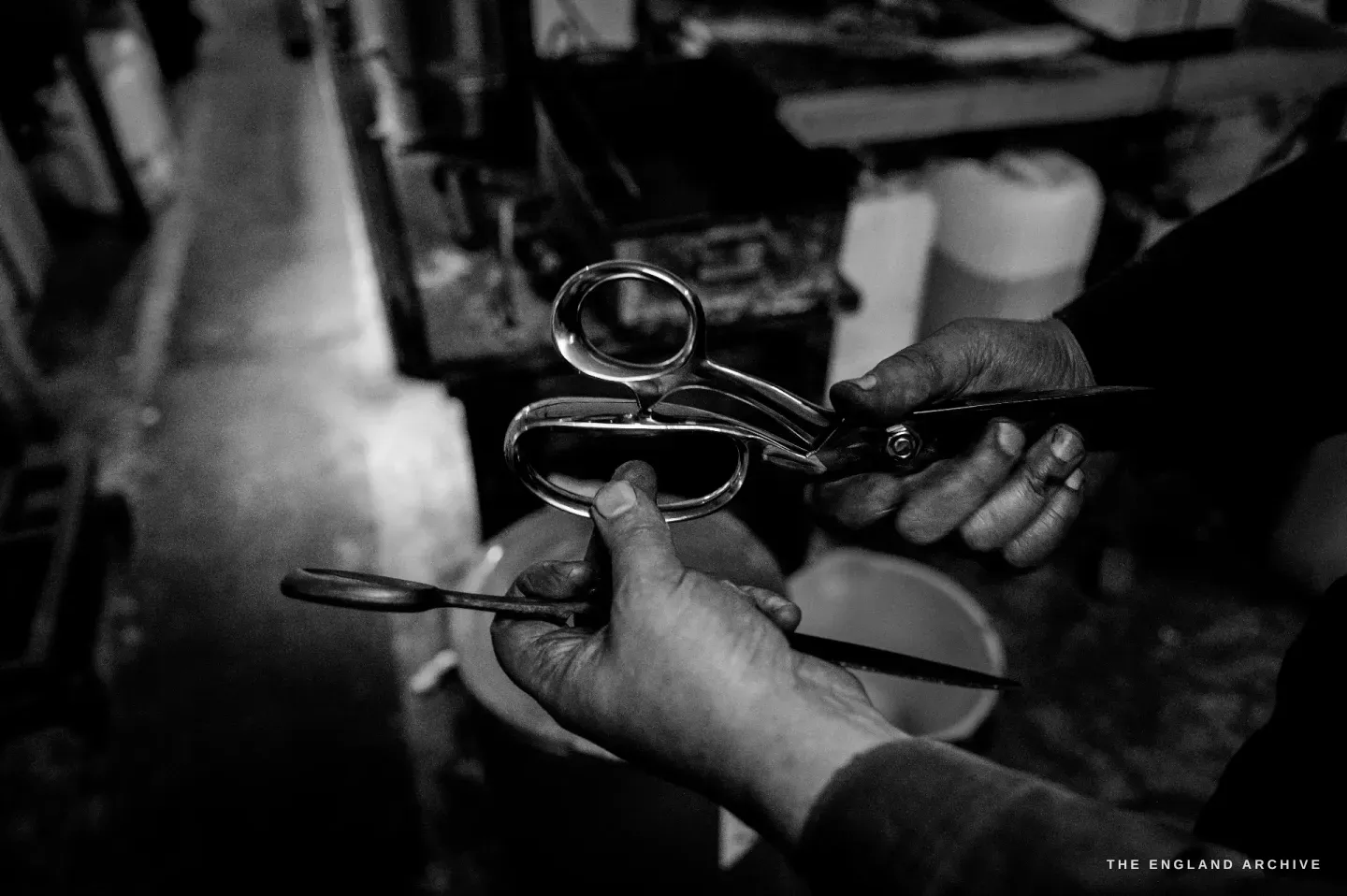
Neil’s hands holding a bright bow-handled pair of scissors and a separate loose blade, showing how the two halves come together.
The two halves before the marriage - each blade made to ride against the other. IM-0731
Neil at his bench turning a pair of scissors in his hands, checking the action, tools and parts spread in front of him.
Checking the action - opening and closing a pair until it runs clean. IM-0742
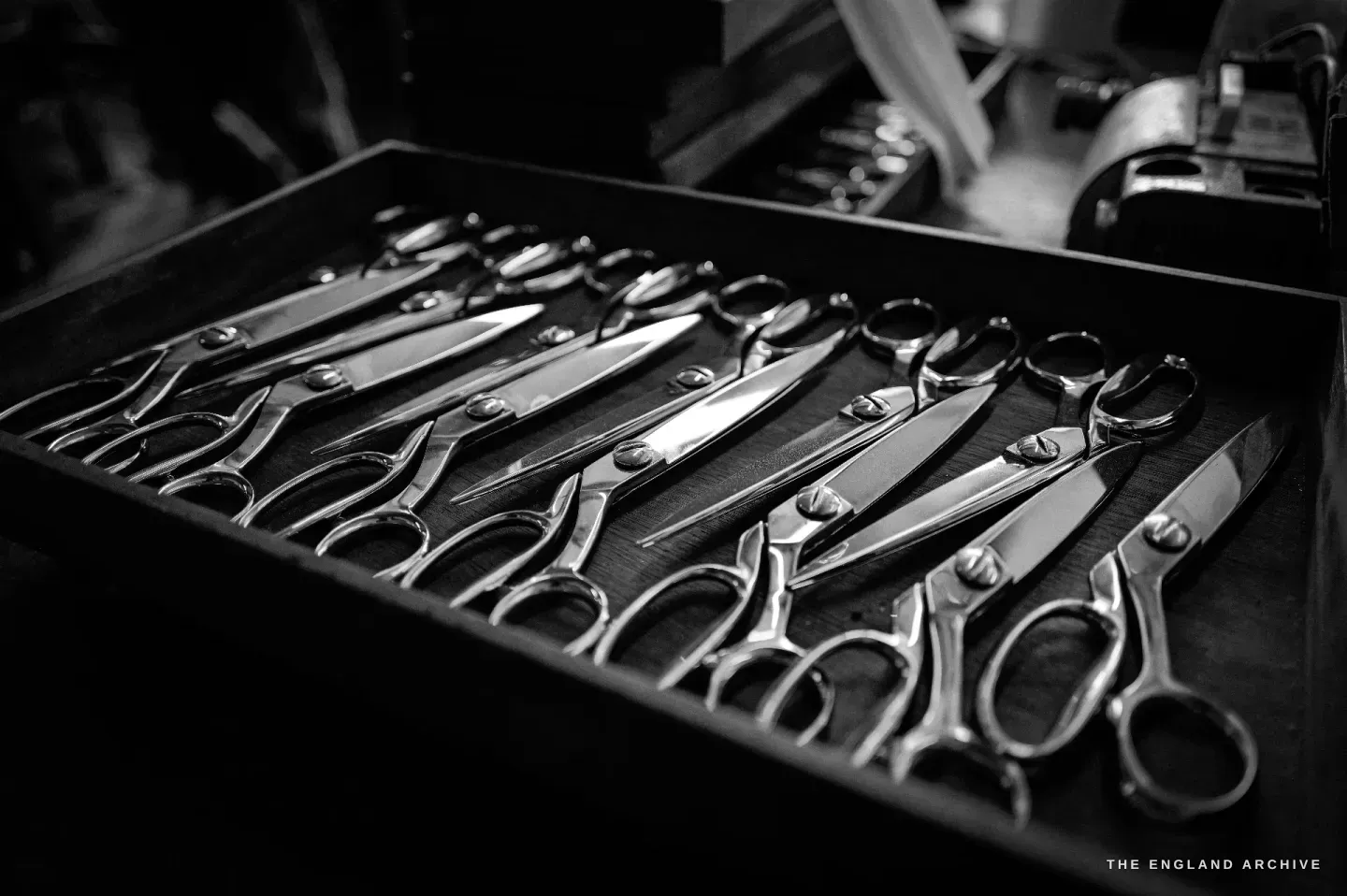
A tray of finished bright scissors and shears laid in rows, handles and blades polished to a shine.
A tray of finished pairs - tailor shears, dressmakers, household scissors. IM-0722

The Range

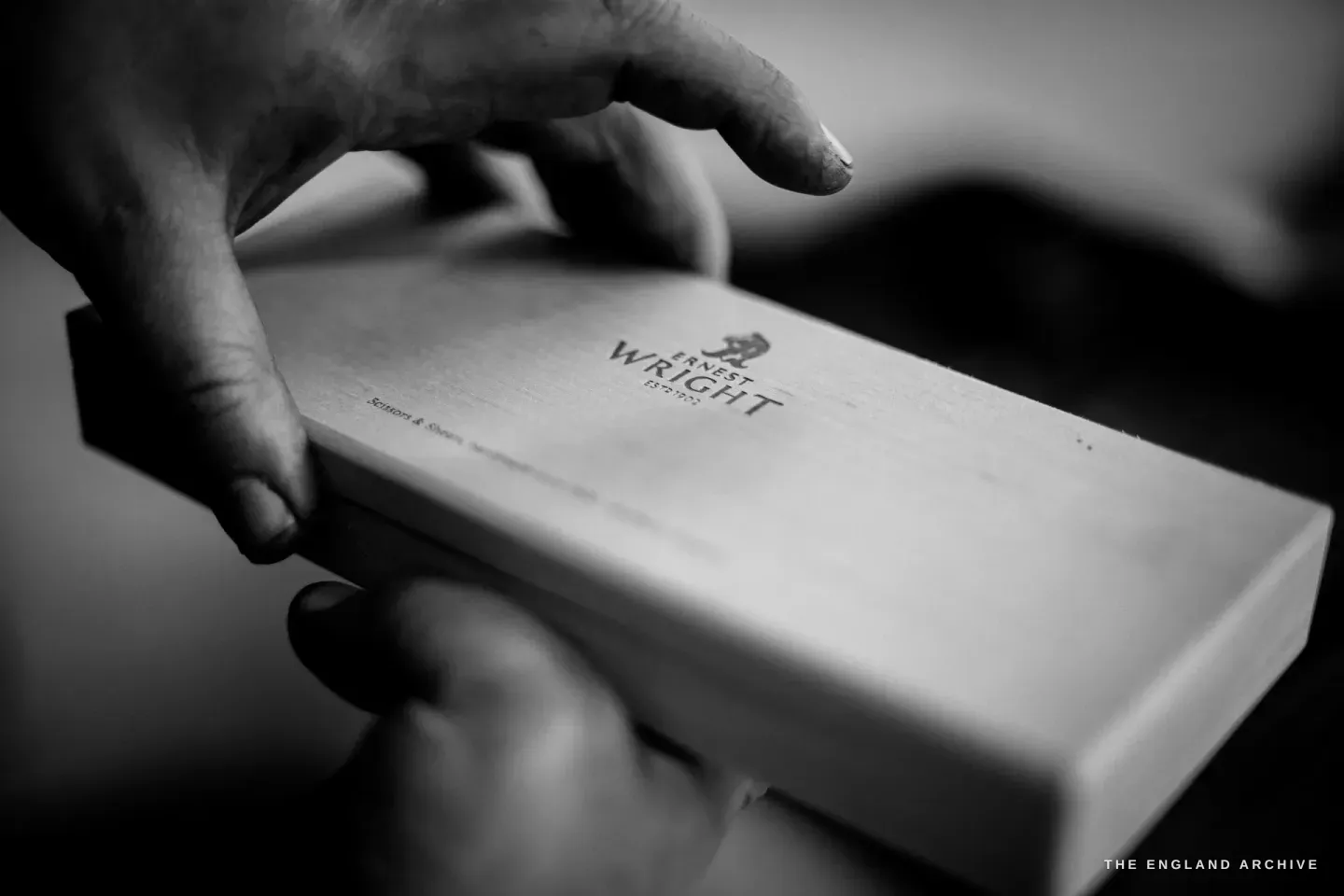
Neil walked me along the models, and there are many: tailor’s shears with their long blades and side-bent handles, dressmaking scissors, household scissors, fine embroidery and lace scissors, kitchen and trimming pairs - each a different length, balance and edge for a different job. They are stamped with the maker’s mark, ERNEST WRIGHT, SHEFFIELD, and they leave in a wooden box with the firm and its founding year burned into the lid. A pair, properly made, is meant to last a working lifetime and be sharpened, not thrown away.
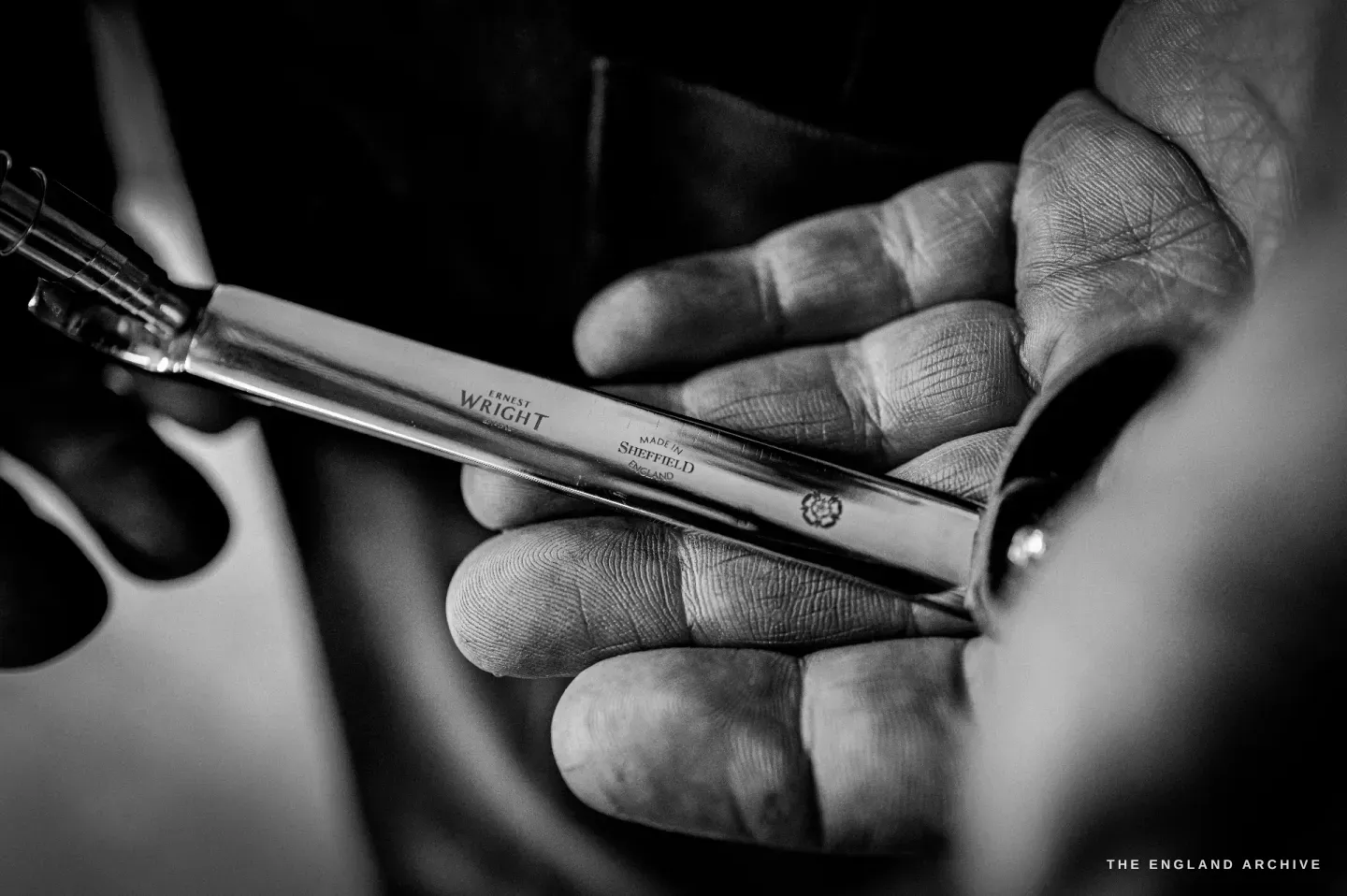
A finished scissor blade held across a hand, the ERNEST WRIGHT maker’s mark and SHEFFIELD etched along the steel.
The maker’s mark - ERNEST WRIGHT, SHEFFIELD, struck into the finished steel. IM-0724
A hand holding a wooden Ernest Wright presentation box, the maker’s mark and EST 1902 burned into the lid.
The box it leaves in - Ernest Wright, est. 1902. IM-0739
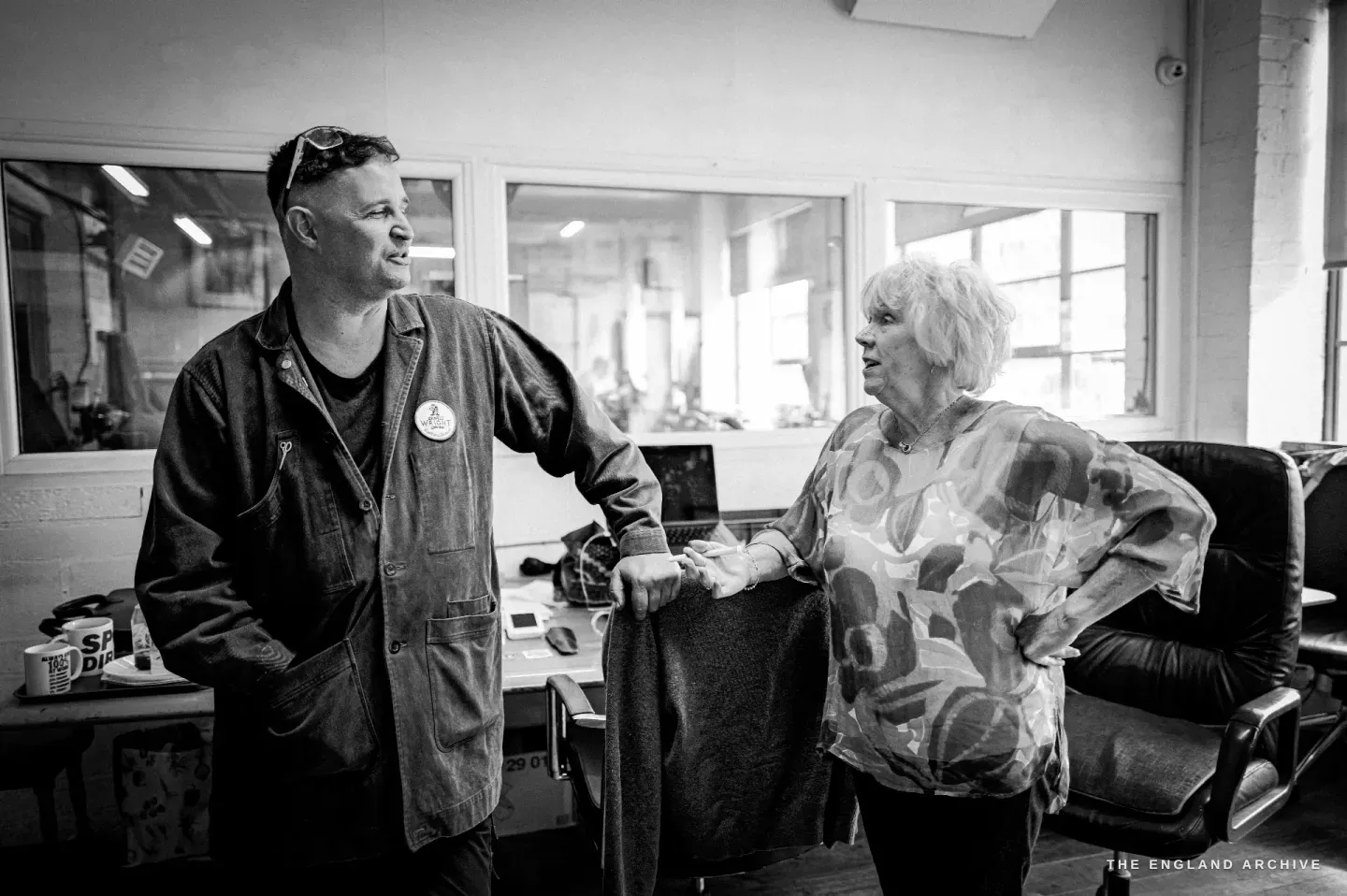
Neil in conversation with a colleague in the office area of the workshop, both smiling, windows and desks behind.
The workshop is a small world, and Neil is at the middle of it. IM-0741

The Record the Archive Holds

This is the archive’s record of Neil Wilson, the senior maker at Ernest Wright, made over a full day in the Sheffield workshop in June 2026: the grinding, the hardening, the rumbling, and the marriage of the two blades where the gap is the whole secret. Scissor making is on the Heritage Crafts Red List, and Neil is one of the small number who hold it - not only in his own hands, but in the makers he has trained, whose profiles follow this one. The wider record of the workshop itself will come in a separate entry; this page is Neil’s.
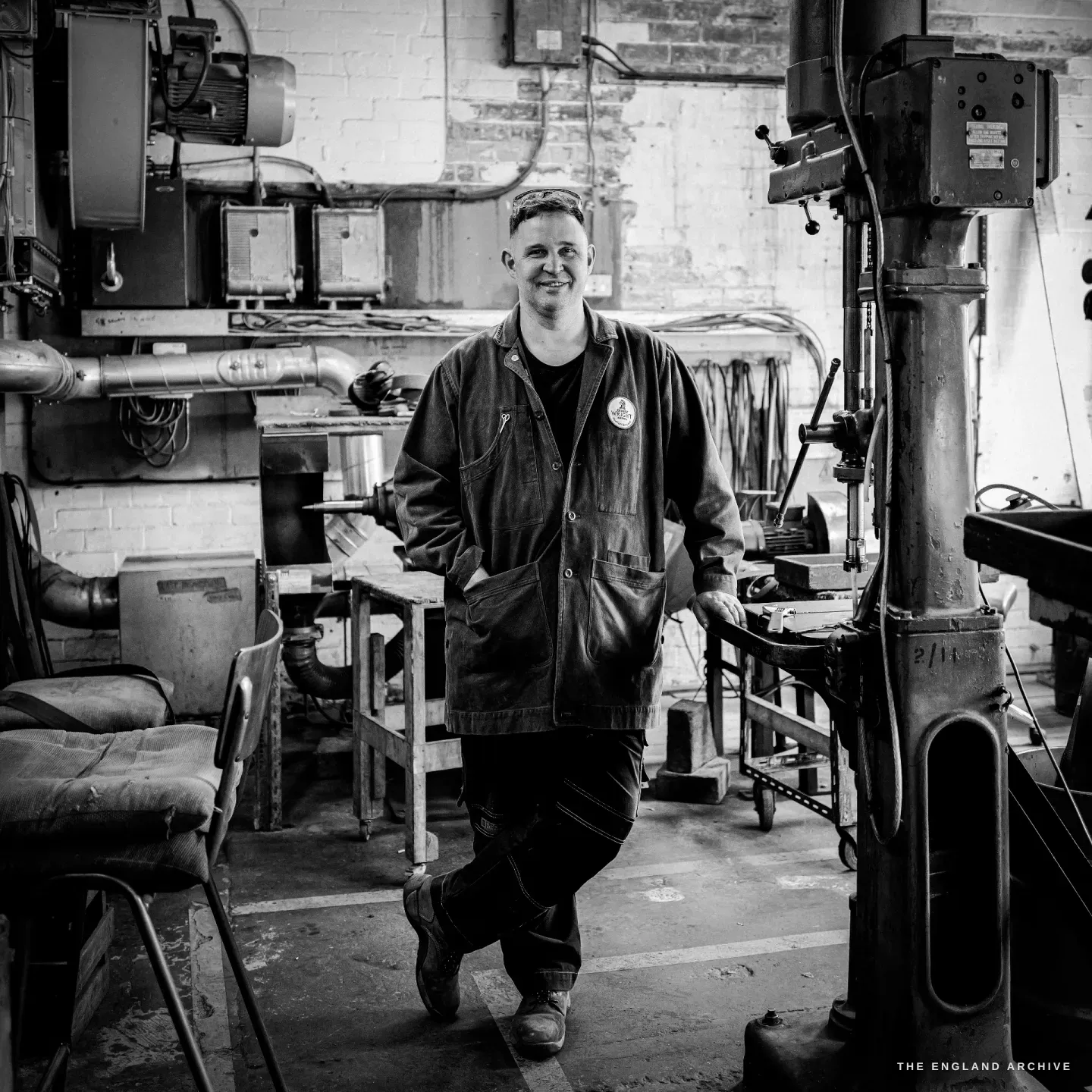
A full-length portrait of Neil leaning against a pillar drill in the workshop, relaxed and smiling, the long brick room stretching behind him.
In the room he runs - and the room that trained him. IM-0740