Makers
Chris Hudson MBE
Founder · Chimo Sheffield
Sheffield, South Yorkshire
Founder · Chimo Sheffield
Sheffield, South Yorkshire
He went to sea as a young man, came home to a family business in trouble, and turned it into the roof a whole quarter of the Sheffield trade still works under.
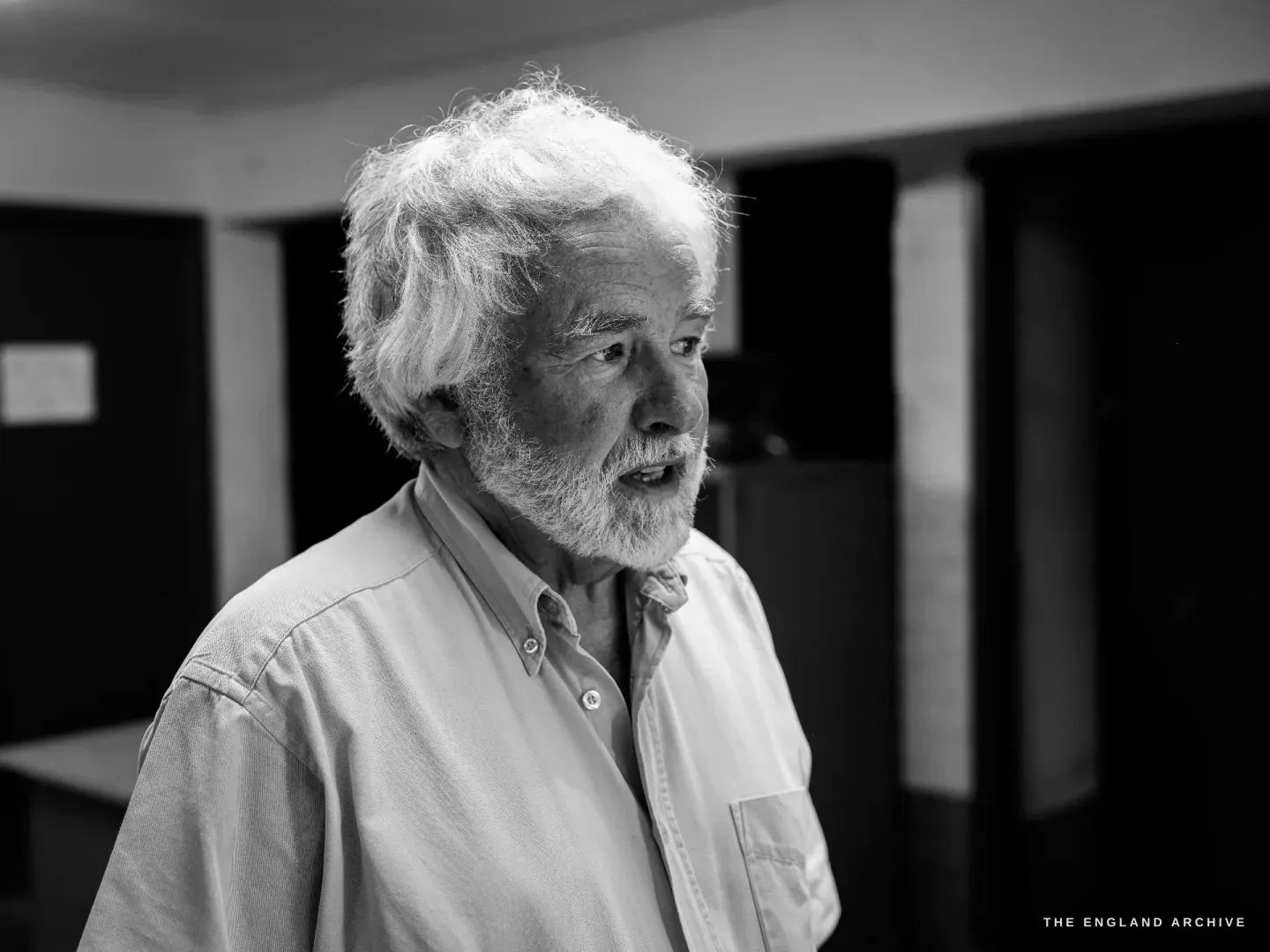
Phil makes the knives. Paul finishes them. Chris Shaw cuts the dies. And Chris Hudson is the reason there is a roof over any of them. He is the founder of Chimo - the man who, when a stretch of Sheffield’s independent trade was sliding toward closure, gathered it together, gave it one building and one name, and kept it working. He met me with snow-white hair, a quick handshake and the easy warmth of a man who has nothing left to prove. Sharp, funny, generous with his time, and unmistakably the figure the whole place turns around.

Chris did not begin in cutlery. Yorkshire-born, he went to sea straight from school and served as a deck officer in the Merchant Navy, travelling the world for years before he ever stood on a Sheffield factory floor. There is a model sailing ship on the shelf of his office, and it is not decoration - it is where he started. He came back to England when his father fell ill, to help his mother deal with the family’s two businesses. One was sold. The other was a Sheffield silverware firm, White Rose Silverware, and rather than let it go he took it on - and it has kept him busy ever since.

What he did with it is the thing he is known for. Through the 1980s the small independent makers of Sheffield - the firms that each did one thing, cutlery or holloware or pewter or plate - were closing one by one, squeezed by cheaper imports and the slow loss of their markets. Chris’s answer, in 1989, was to bring a number of them together under a single company, in a single building, so that the trades that had always depended on one another could carry on doing so instead of dying separately. He called it Chimo - a Canadian Inuit word of greeting and friendship - and put it into the old Gee & Holmes factory on Eyre Lane. In 2020 he moved the whole factory to new larger fully refurbished premises at 137 Carlisle Street, which he re-named White Rose Works.
The logic was simple and quietly radical: a cutler needs a die-sinker, a die-sinker needs a polisher, a holloware maker needs a buffer, and none of them can survive alone. Under one roof they could. The group he built reaches back through brands founded as far as 1750, and it still makes traditional handcrafted cutlery, holloware, pewter and silver giftware in hallmarked metal - the same trades, the same hands, kept alive by being kept together.
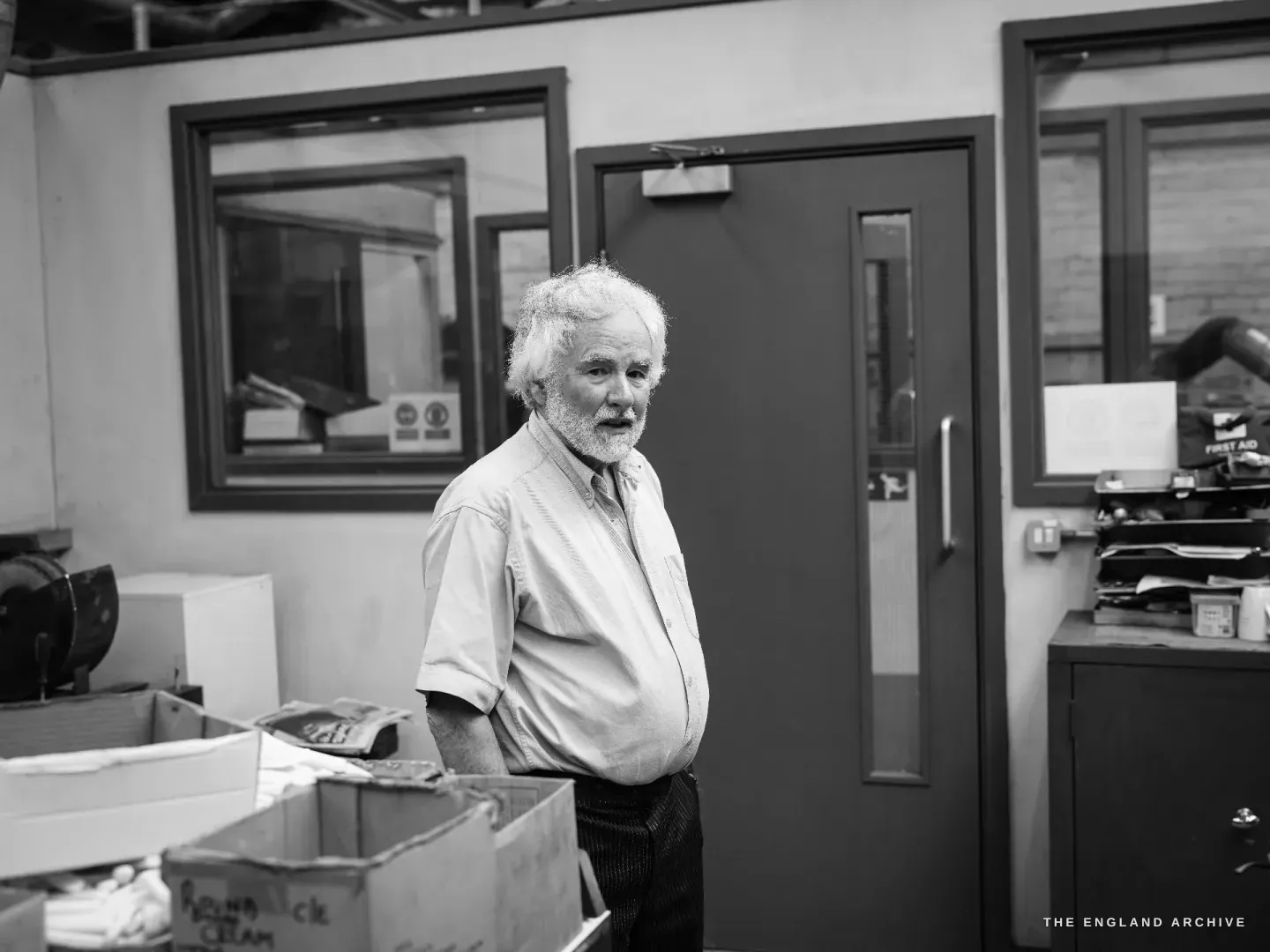
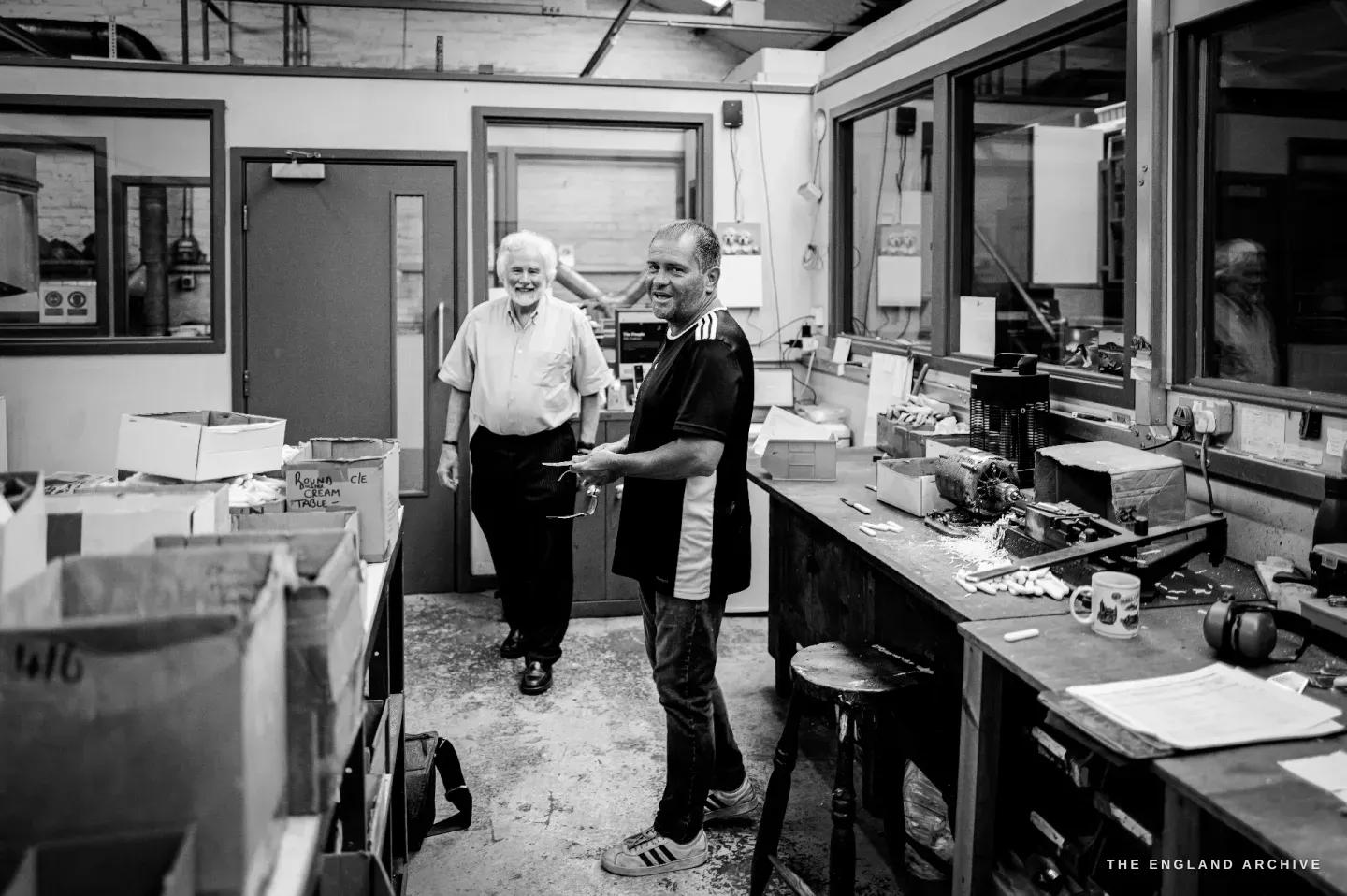
It has not gone unnoticed. Chris was appointed MBE in 2018 for services to exports and investment in Sheffield, and in 2020 he was crowned Master of the Worshipful Company of Pewterers - reportedly the first working Master Pewterer in more than a century actually to make part of his living from the metal. He also chairs the Work-wise Foundation, a charity that helps young people into practical skills and manufacturing careers across South Yorkshire. The honours matter less to him, you sense, than the building full of people still in work because of a decision he made nearly forty years ago.
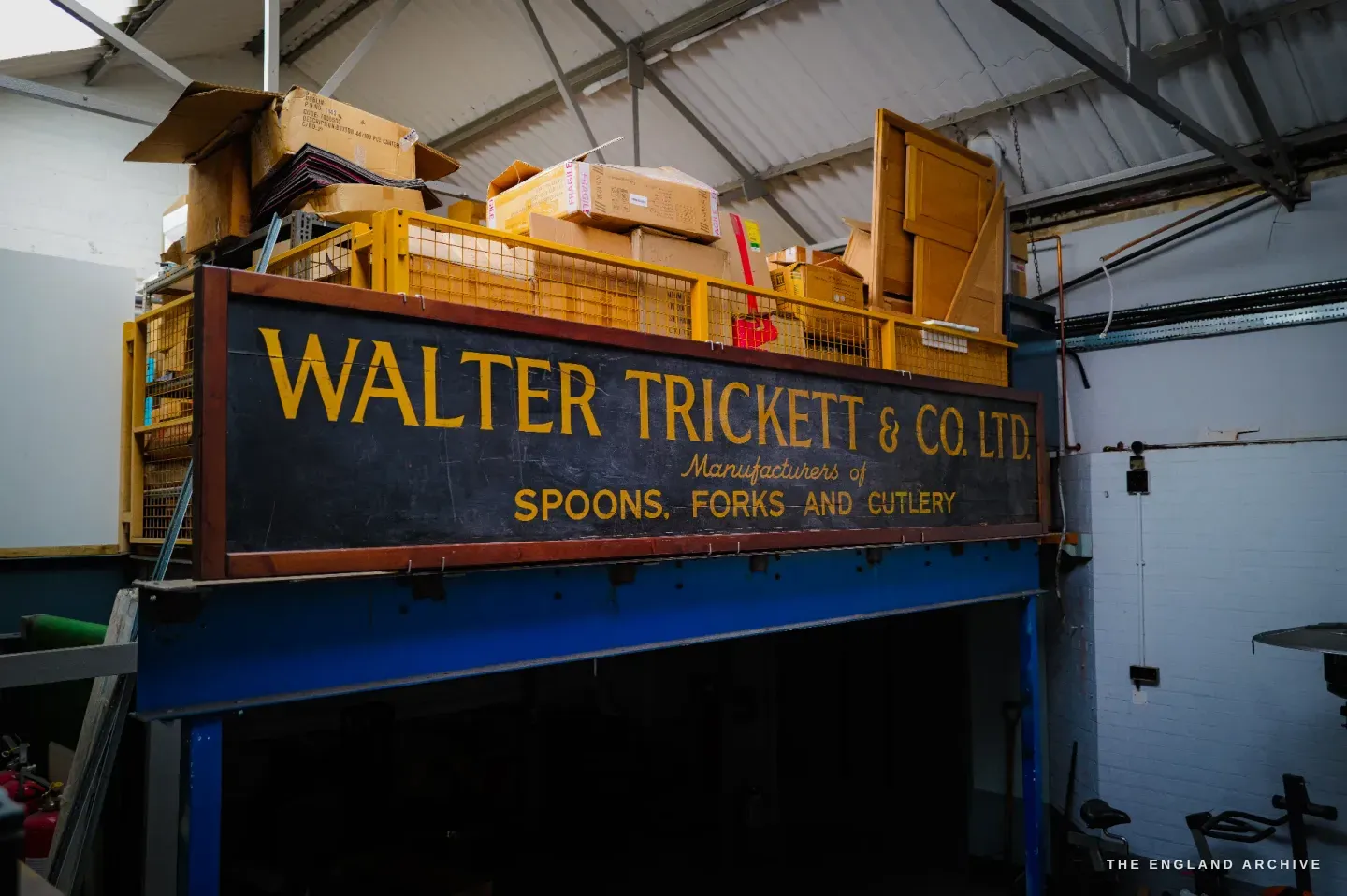
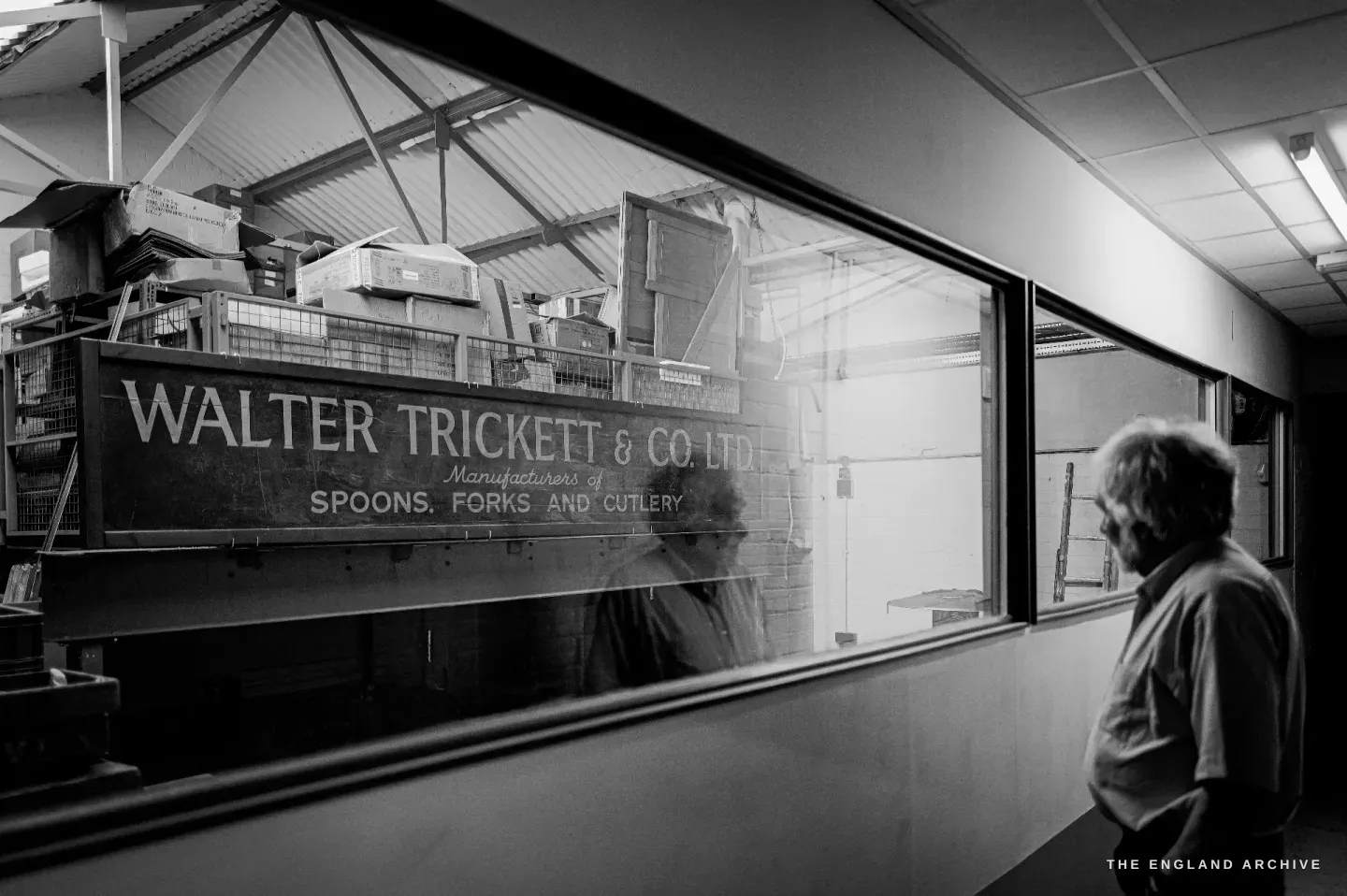
High on a wall above the working floor hangs a great painted sign: WALTER TRICKETT & CO LTD, Manufacturers of Spoons, Forks and Cutlery. It is one of the old Sheffield names that would otherwise have vanished, and Chris kept it - not in a museum but over the heads of the people still making spoons and forks beneath it. He stopped at a window and looked in at it while we walked, and it was one of the few moments he went quiet. A name like that is a whole firm, a whole line of families and skills, and he is one of the reasons it still means something in the present tense.
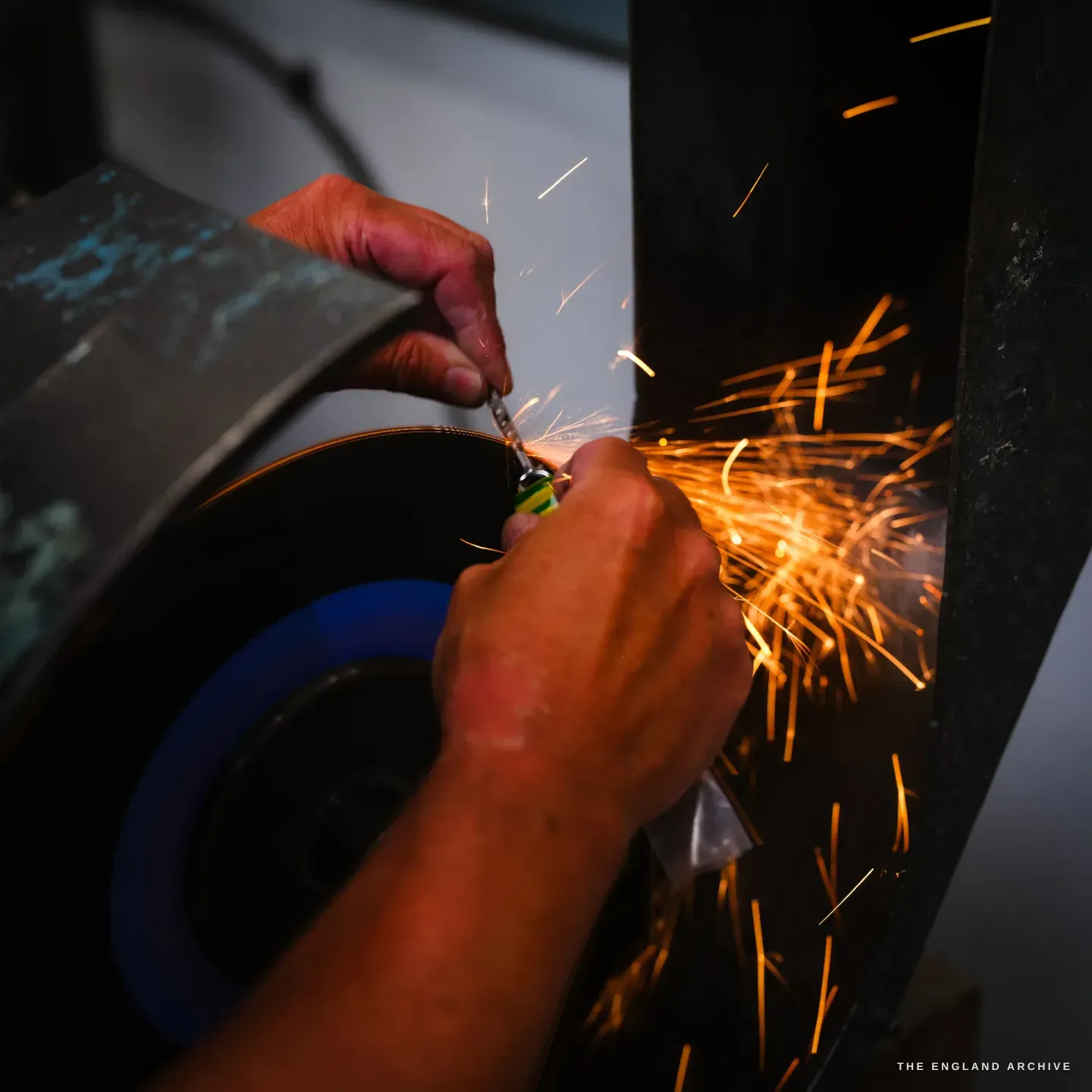
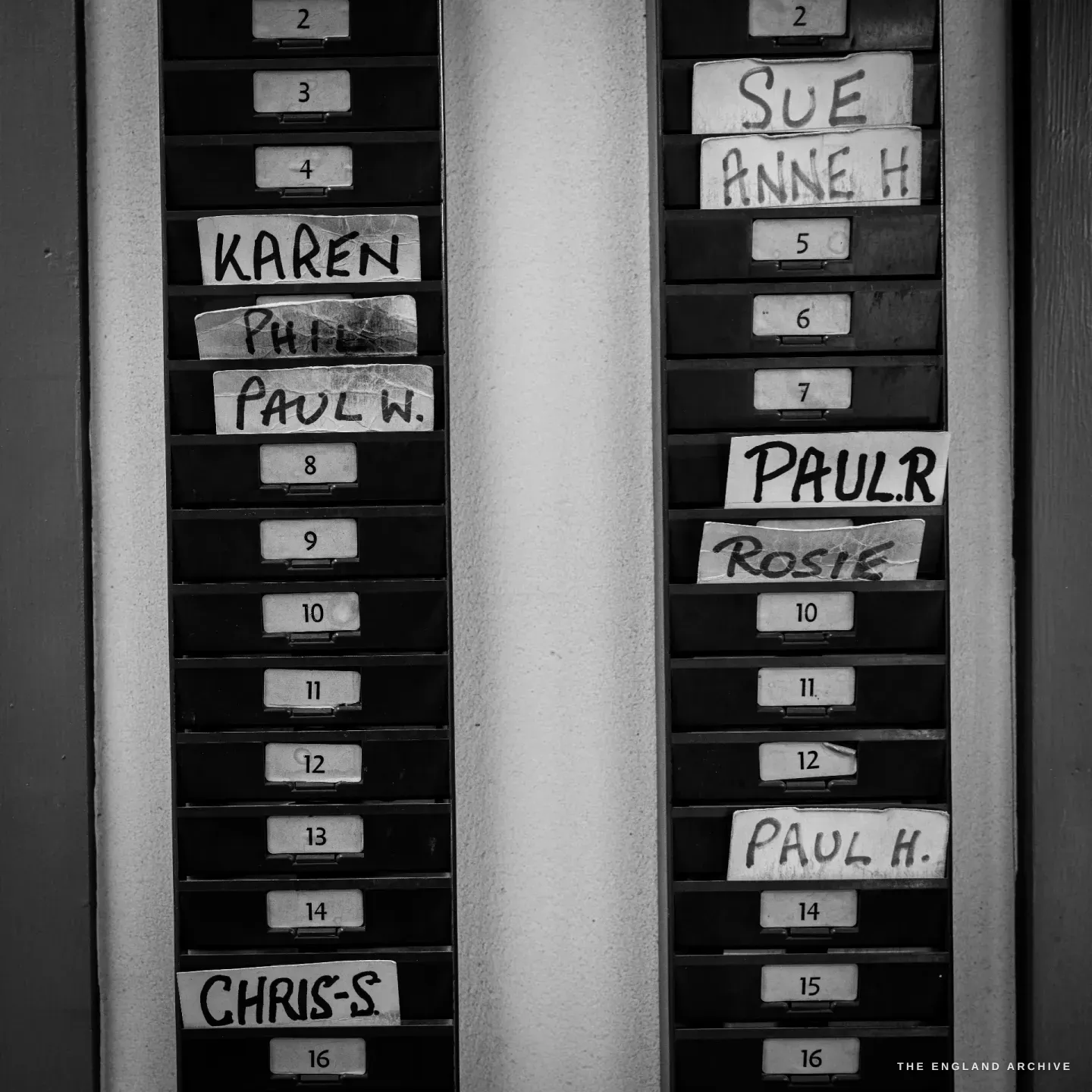
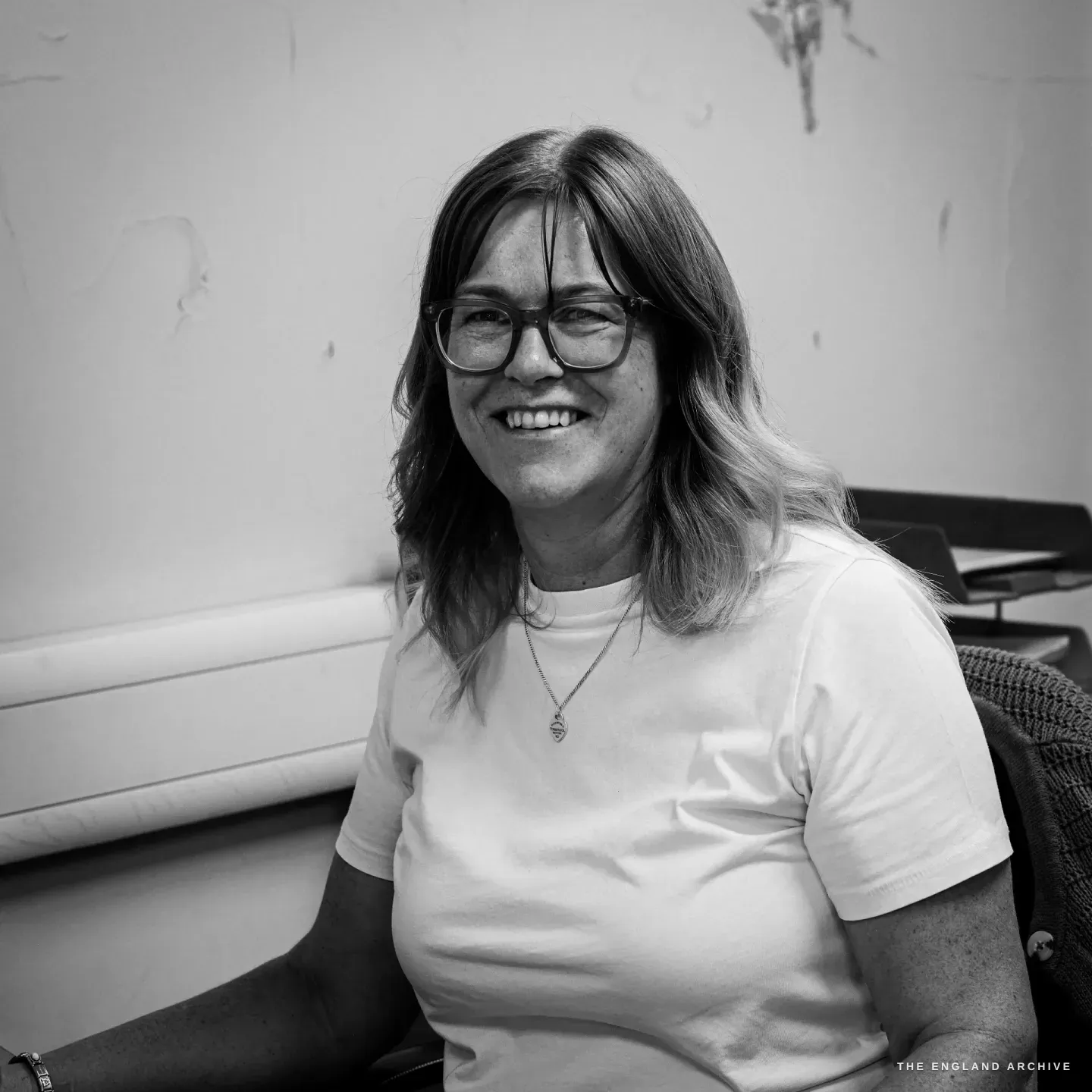
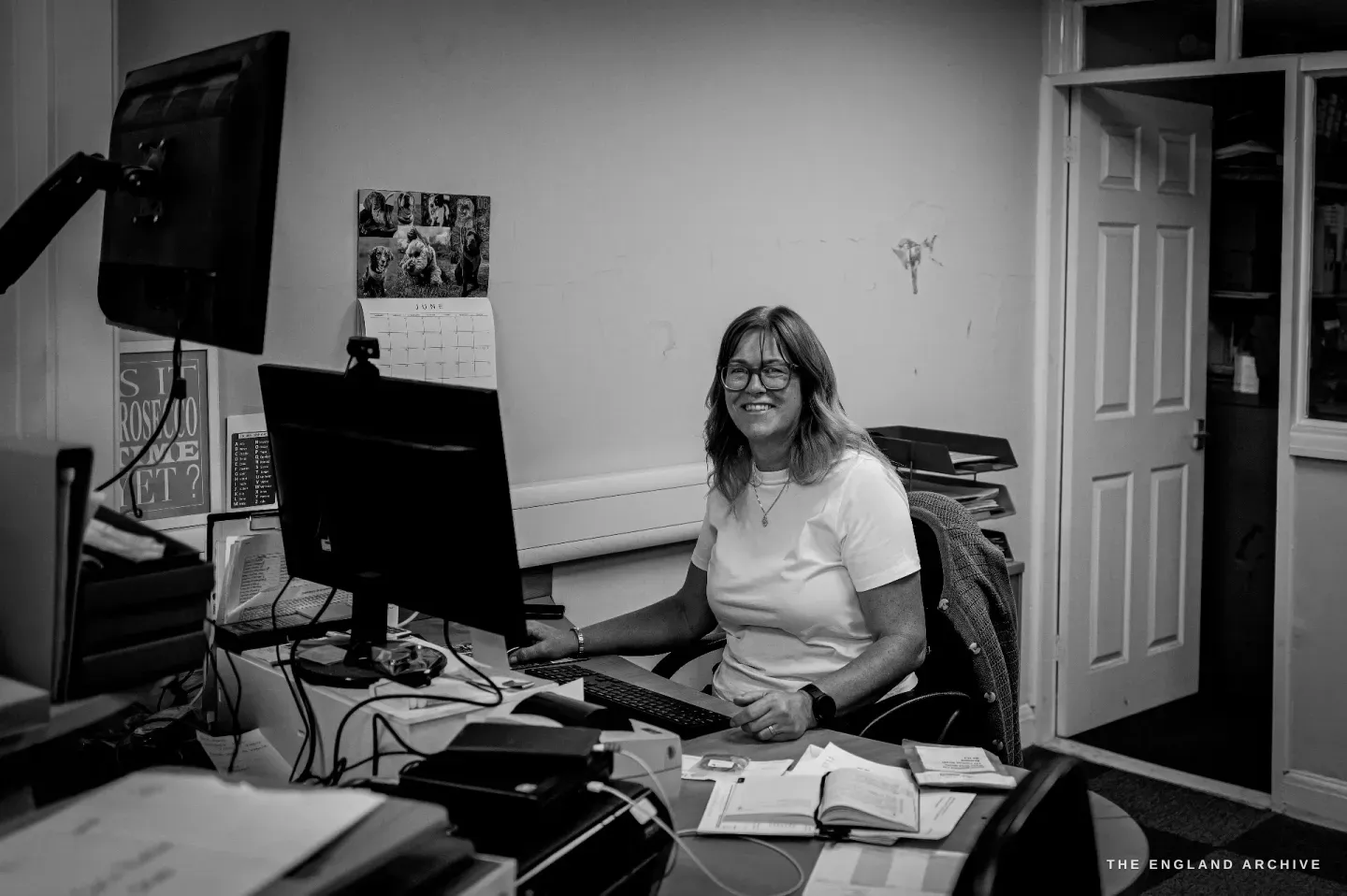
A works runs on more than its founder, and at Chimo a great deal of it runs through Karen. She holds the office - the orders, the wages, the paperwork, the hundred daily decisions that turn a group of craftspeople into a company that ships. When Chris walks the floor, Karen keeps the desk; the two of them across a single office table are, in a real sense, the management of the whole place. She met me with the same warmth Chris did, and it was clear within a minute that the building leans on her quite as much as on him.
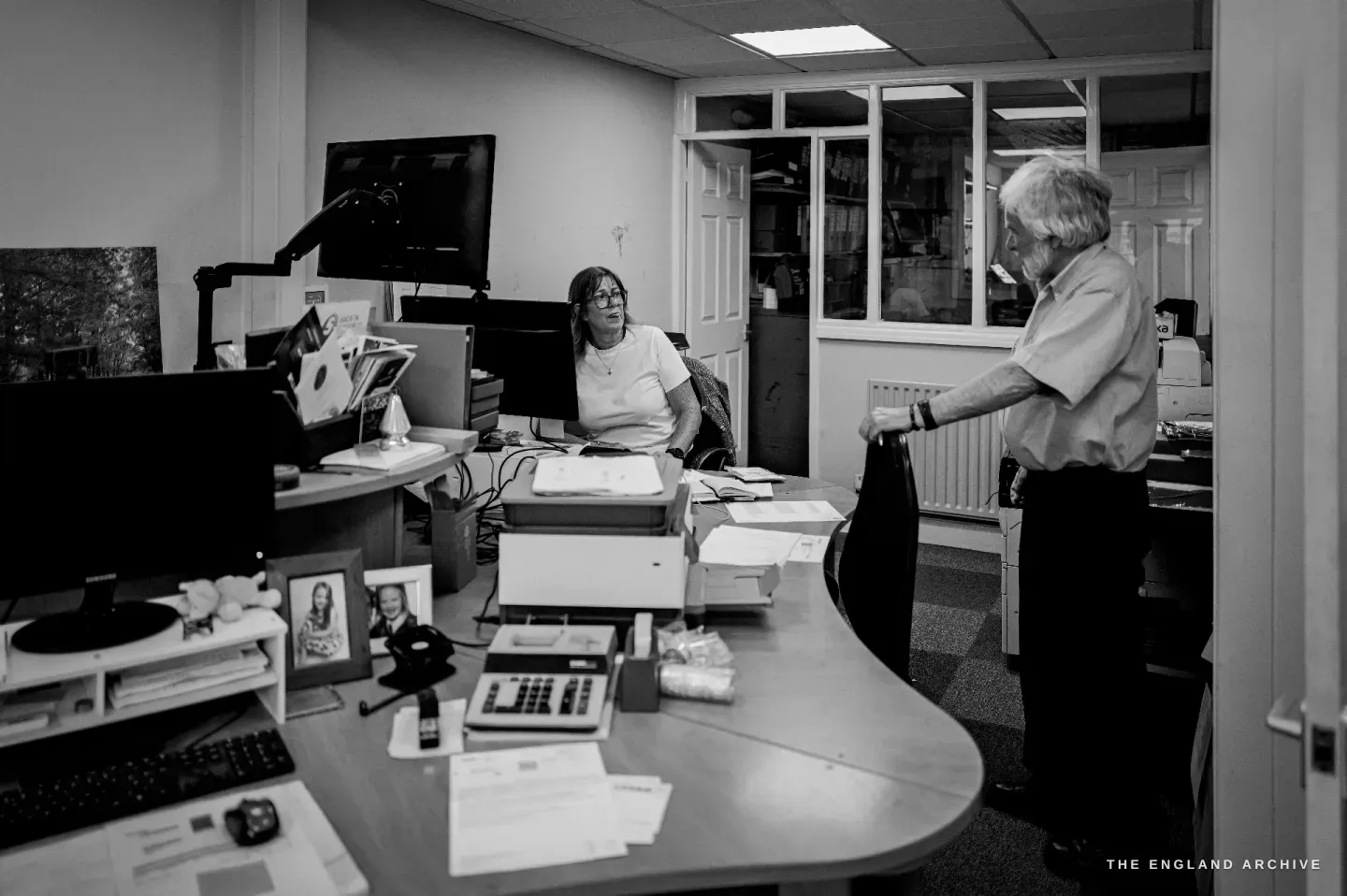
And then we talked about the thing that sits underneath all of it, and the conversation turned dark. Chris is clear-eyed about the state of the Sheffield trade, because he can see it from the top of it. The skills that the whole industry depends on now live, in many cases, in a handful of people - sometimes one person - and those people are near the end of their working lives. There is a man who can do a particular thing with a hammer; when he goes, the knowledge goes, because there is no apprentice behind him who has been trained to take it on. Multiply that across forging, grinding, hafting, engraving, hand-finishing, and you have a craft economy that is one generation - sometimes one retirement - from losing skills it cannot get back.
This is not abstraction to him. It is a register of named people and specific machines, and a timetable measured in a few short years. The apprenticeship chains that once carried these trades from one pair of hands to the next have largely broken; the surviving little mesters and allied trades are, in the Heritage Crafts sense, genuinely endangered. Chris has spent decades holding a piece of it together, and he is honest that holding is not the same as renewing. Without people coming up behind, even a roof as well-built as Chimo’s only buys time.
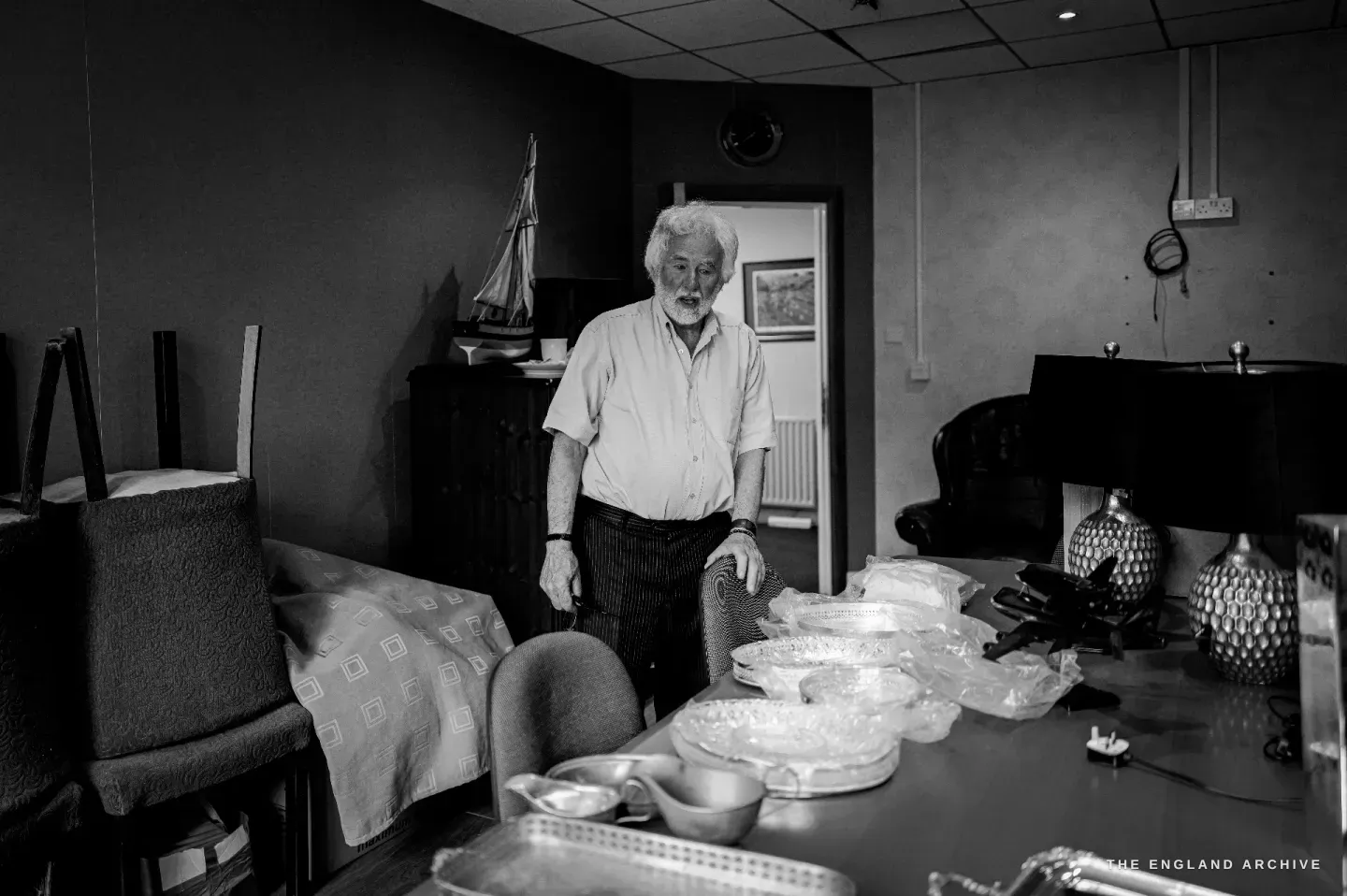
So we talked, at length, about what could be done - about apprenticeship paths built for these specific trades, about how you find young people and, harder, how you keep them. I told Chris how the archive thinks about places: that Chipping Campden is our beta site for documenting every craft in a single town and trying to bring some revenue back into it. Sheffield, I said, could be the beta site for the other half of the mission - for apprenticeships, and for the archive’s apprenticeship fund when it goes live. A place to prove that you can take a city’s endangered trades and deliberately, fundably, train the next generation into them before the current one retires.
It is early, and it is a serious undertaking, but the conversation was real. There is a genuine prospect that Chris and the archive work together on a programme to change the status quo in Sheffield - he with forty years of the trade and a building full of the actual skills, the archive with the documentation, the platform and the fund. If anyone in Sheffield is placed to make such a thing happen, it is the man who already proved, once, that the trade survives better together than apart.

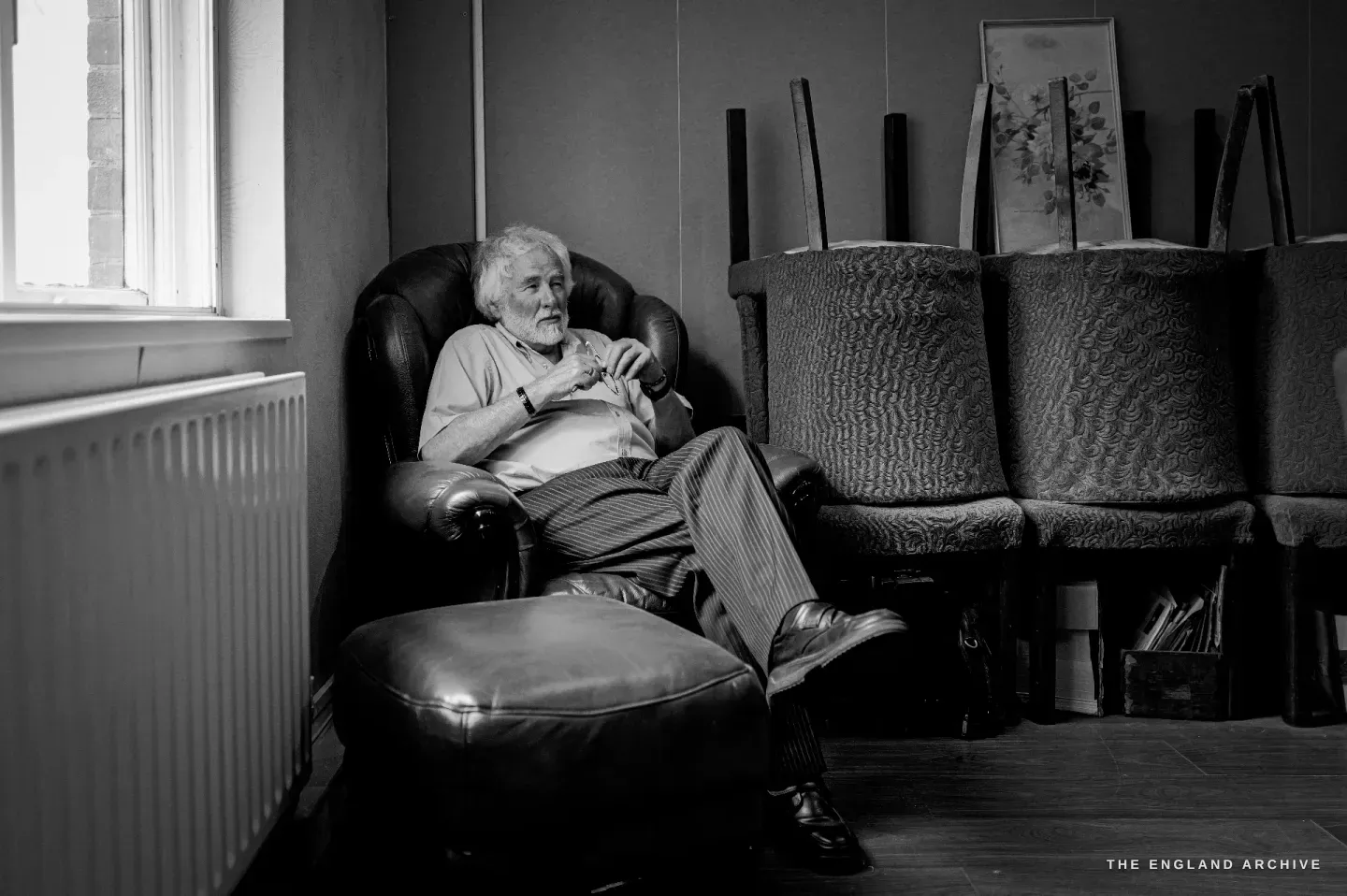
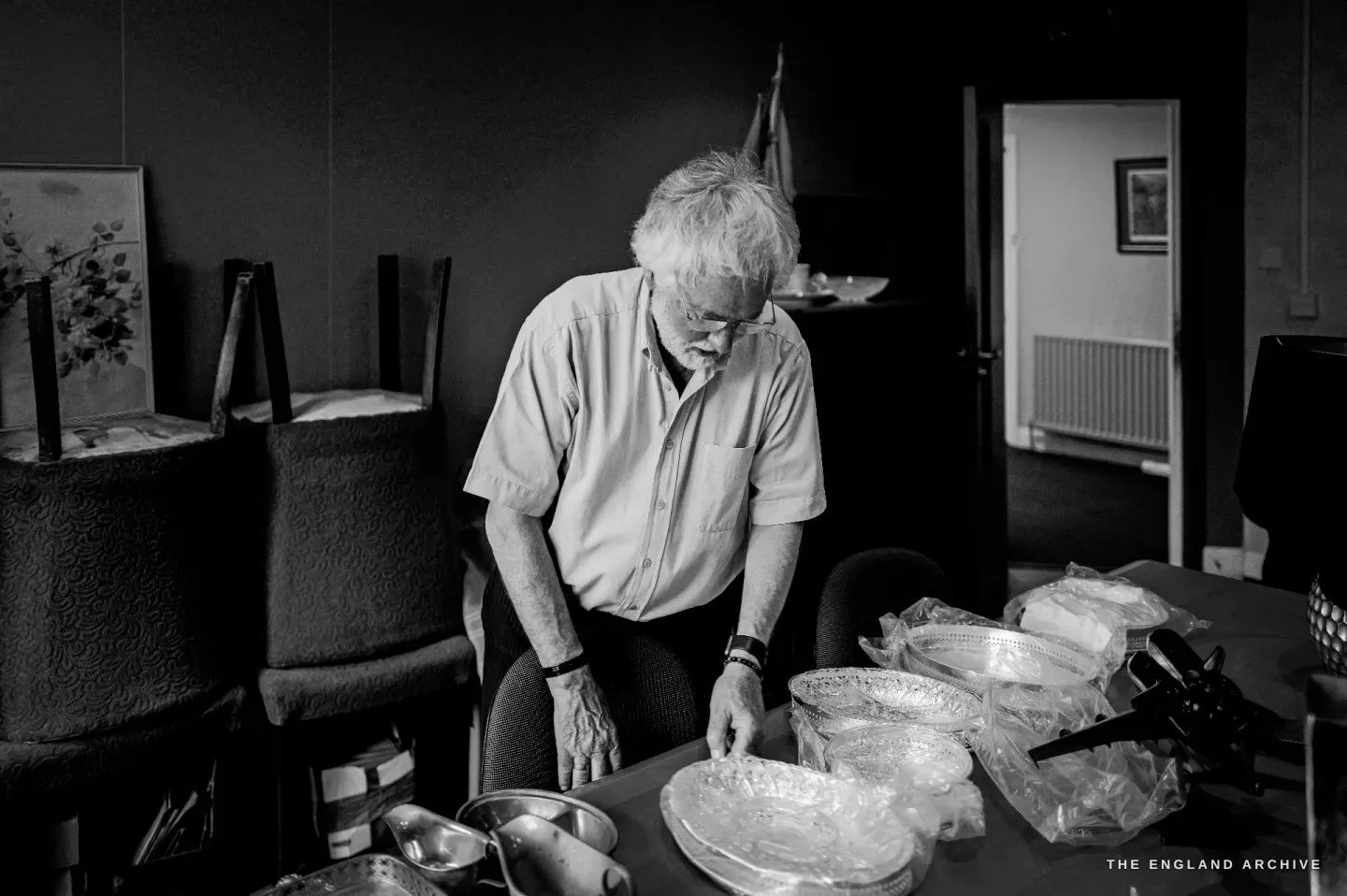
For all the weight of that conversation, Chris is wonderful company. He is sharp and widely knowledgeable, wears his honours lightly, and has the relaxed confidence of someone who went to sea young and has been steering things ever since. He showed me the works and the silver and the old signs with obvious affection, sat back in his armchair at the end as if he had all the time in the world, and made the whole visit a pleasure. He is, in the proper sense of an overused word, a legend of the Sheffield trade - and the kind you hope is right about the future, because he is doing more than most to earn it.
This is the archive’s record of Chris Hudson MBE, made at Chimo’s White Rose Works in June 2026: a Merchant Navy officer who came home, took on a failing family firm, and built from it the roof under which a piece of Sheffield’s cutlery, silver and pewter trade still works. He is the founder behind the three makers the archive documented the same day - Phil Benton, Paul Weatherstone and Chris Shaw - and one of the last custodians of a craft economy that needs, urgently, a next generation. The archive intends to come back, and to work with him on it.