Makers
Chris Shaw
Die Engraver · Chimo Sheffield
Sheffield, South Yorkshire
Die Engraver · Chimo Sheffield
Sheffield, South Yorkshire
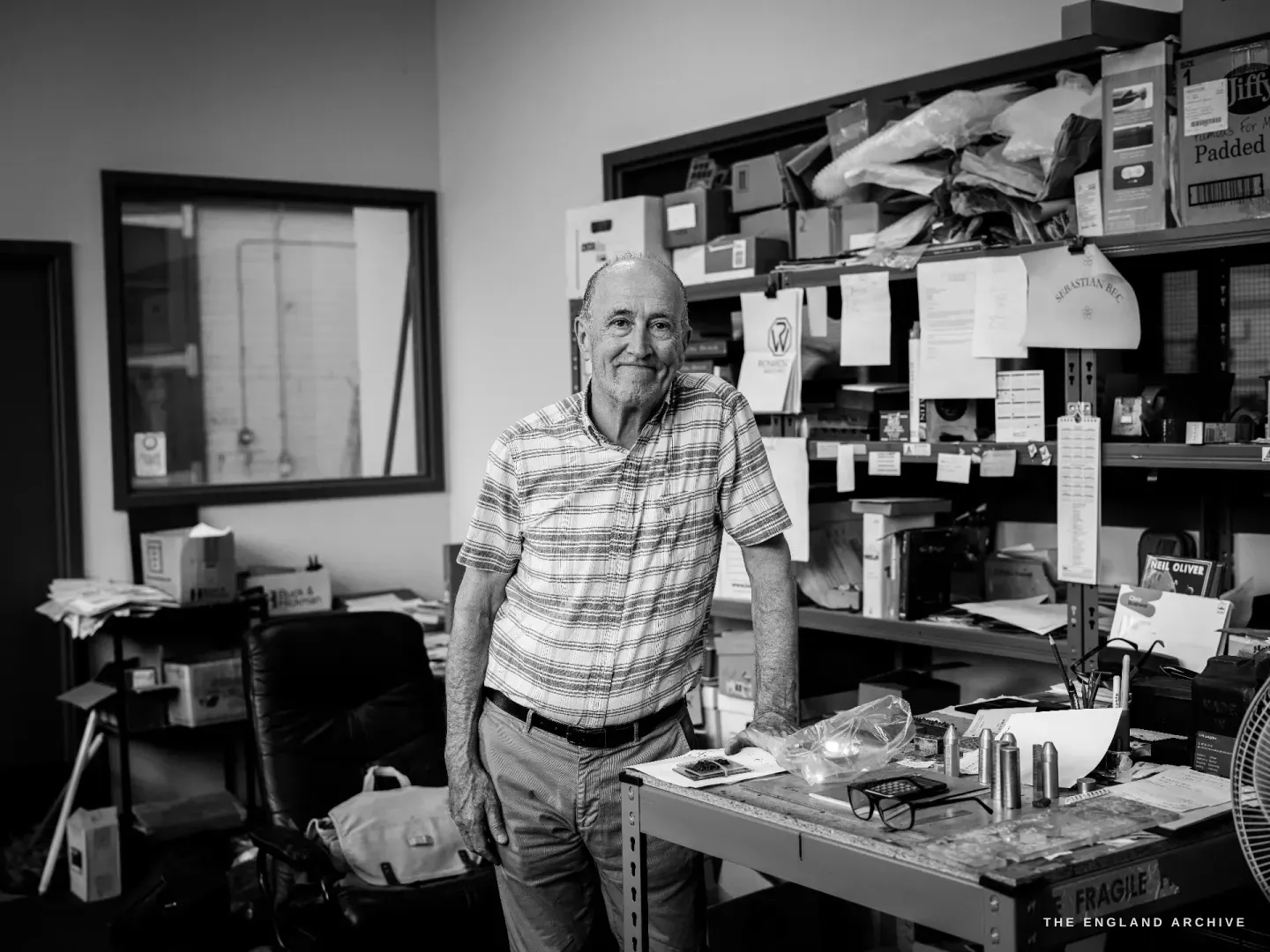
Every crest, every monogram, every maker’s mark on a piece of Sheffield silver began as a drawing and ended as a die. Chris is the man who cuts the die.
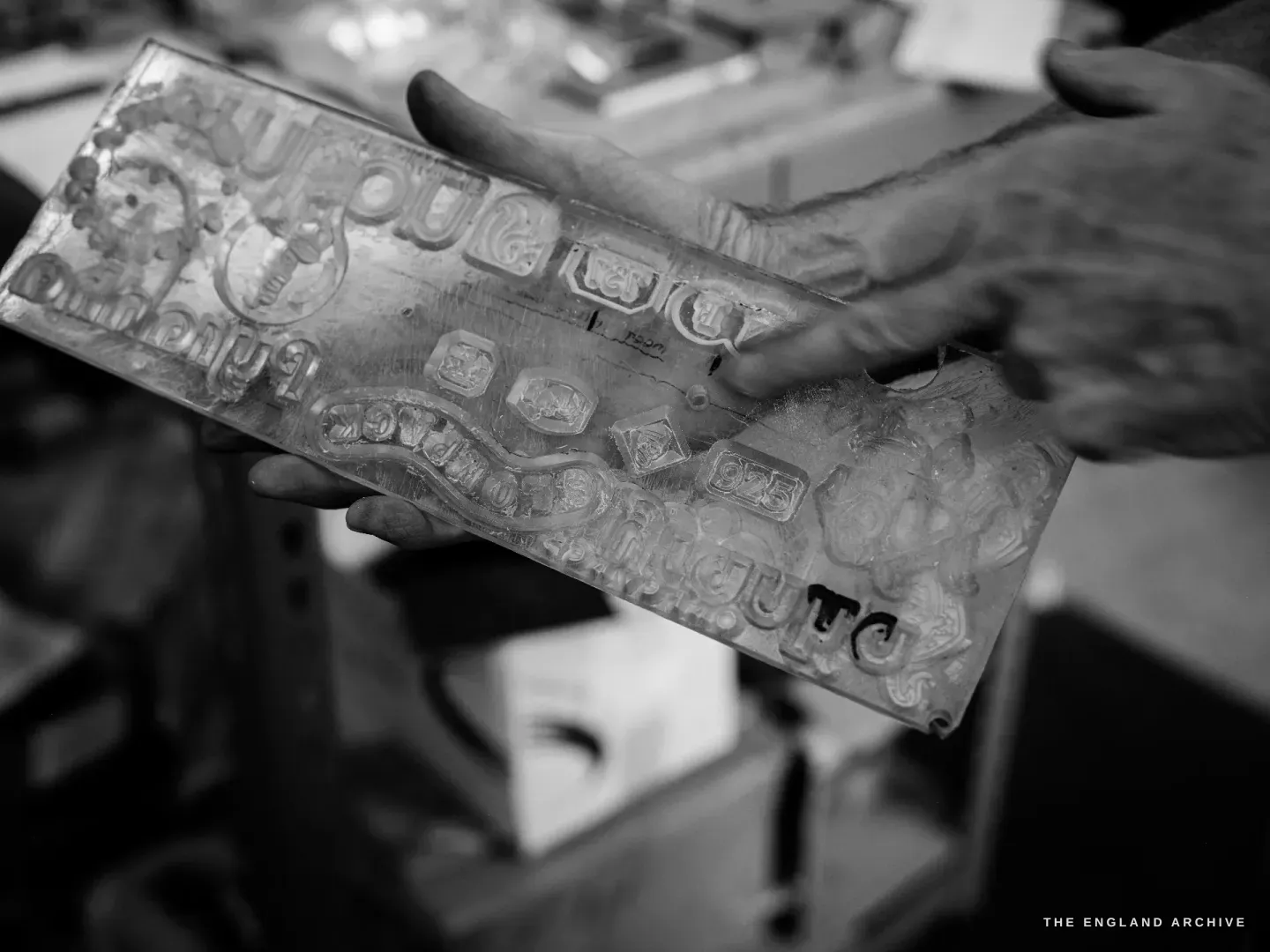
Everything stamped onto a piece of Sheffield cutlery or silver - a maker’s mark, a crest, a monogram, a coat of arms - comes from a die: a block of hard steel with the design cut into its face in reverse, struck into the soft metal so the pattern comes out raised and identical, piece after piece. Phil Benton and Paul Weatherstone work with those dies. Chris Shaw is the man who makes them.
He is a die engraver, or die sinker, and he has done it for forty-five years. It is, he told me, the only job he has ever done - he came to it as a young man and never did anything else, and four and a half decades later he is still at the same bench cutting steel. There are very few people left who can do this; hand engraving and the silver allied trades that depend on it are both on the Heritage Crafts Red List of endangered crafts, which is to say the chain that runs from Chris’s bench to the finished mark is a thin one.
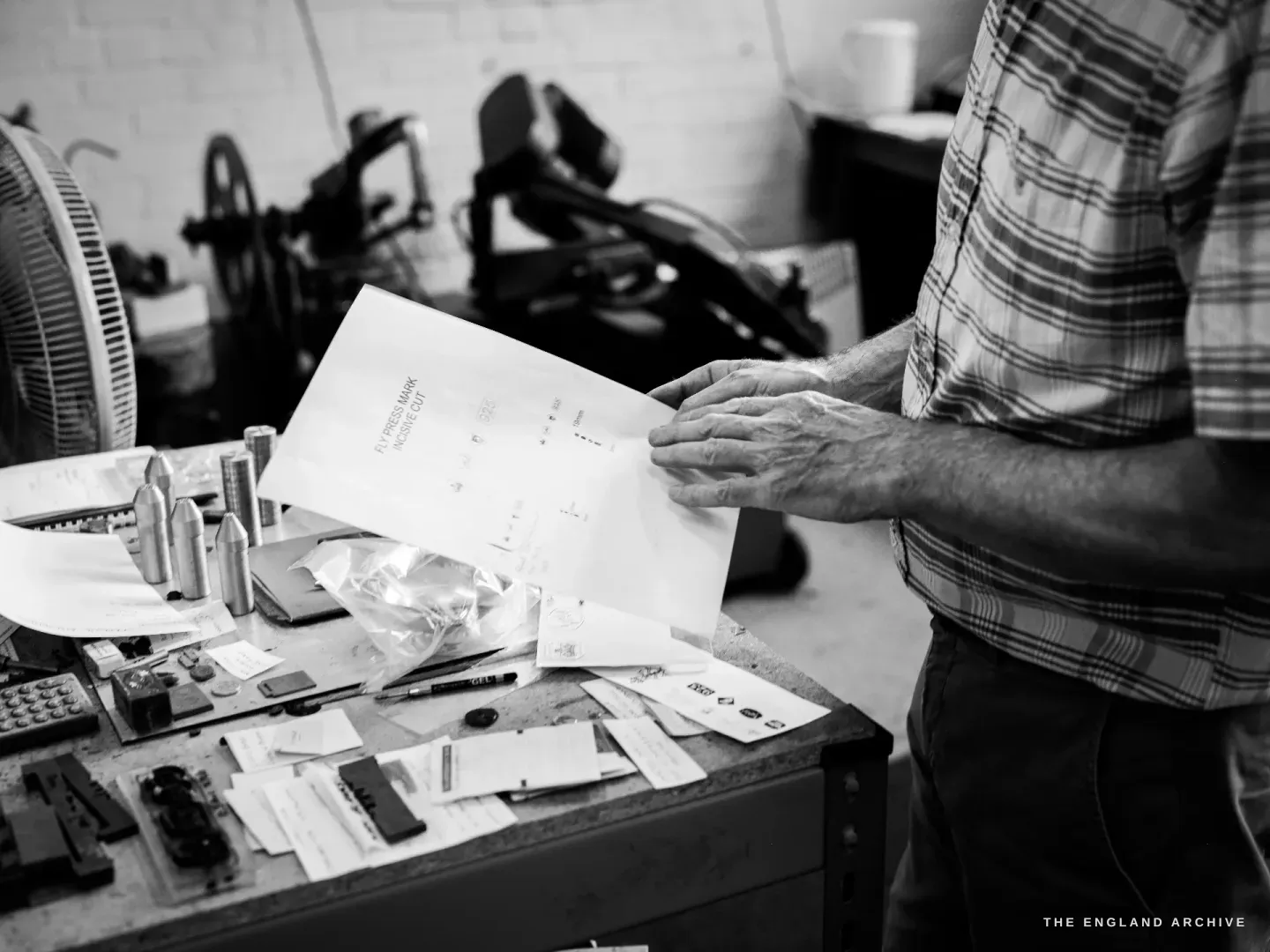
A job begins as a piece of artwork. A customer sends in a design - a family crest, a company logo, a set of initials - and Chris’s work is to turn that flat drawing into a thing that can be cut into steel. He reads it, works out how it has to sit, what scale it needs to be, how the lines will translate into cut metal, and works the job out on paper before any cutter touches a block. It is part draughtsmanship, part translation: a drawing made for the eye has to become a drawing made for a machine and a chisel.
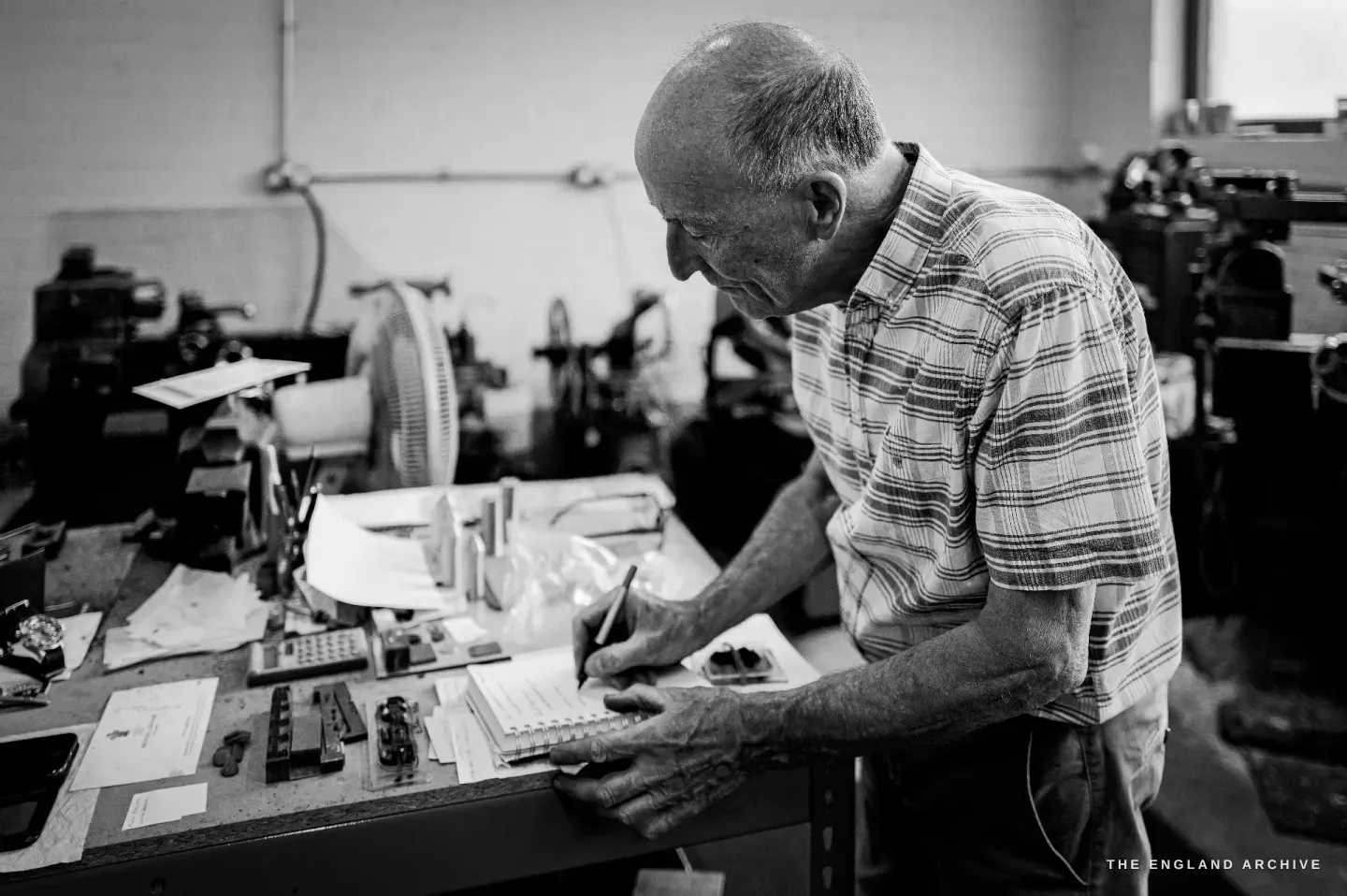
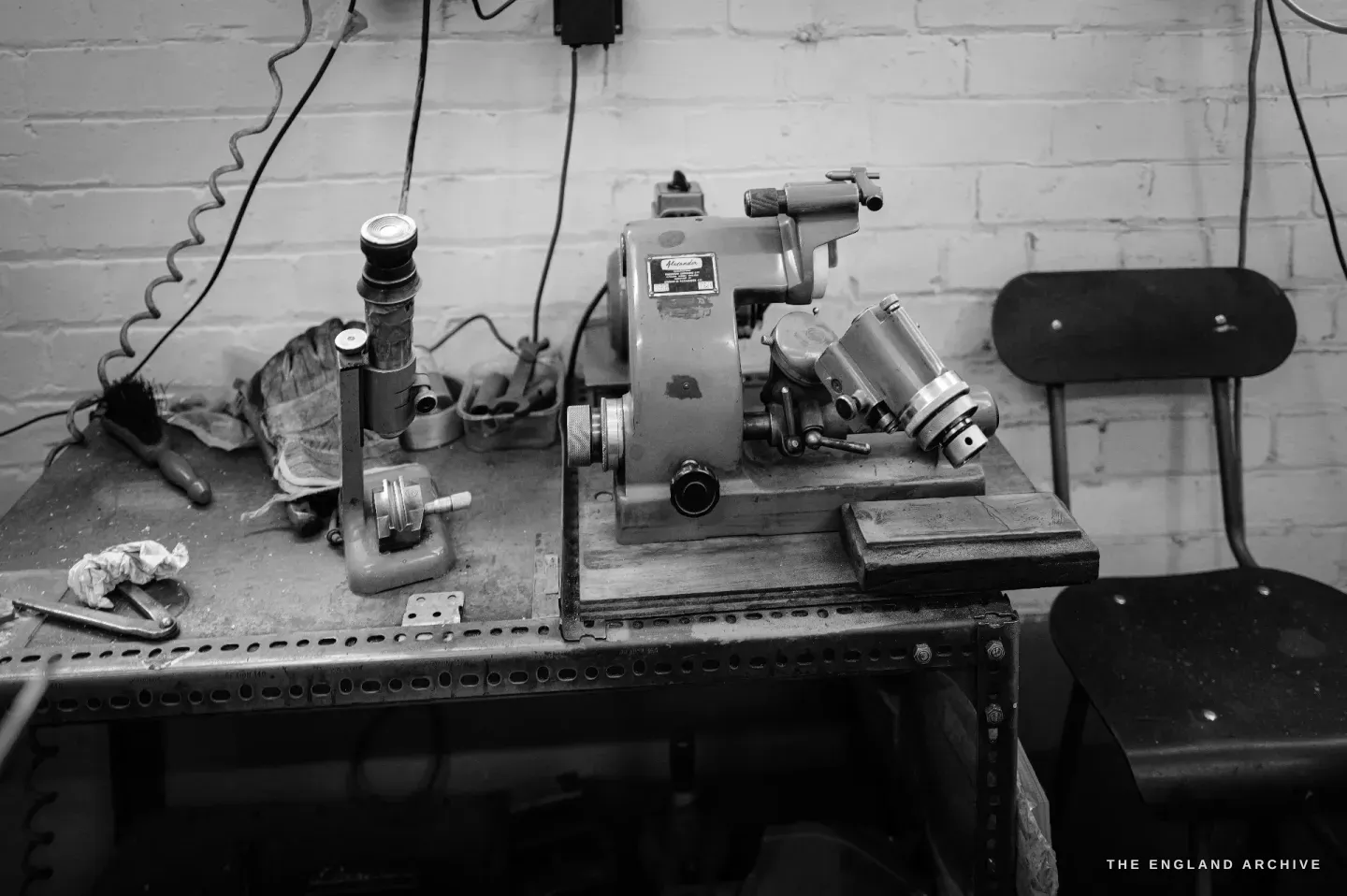
The cutting is done on a pantograph engraving machine - a die-sinking machine, in the trade. The design is built up as an oversized master pattern, and the machine traces that master with a stylus while a cutter, linked to the same arm through a system of gears, writes the design into a steel block at a fraction of the size. As the stylus travels across the big pattern, the cutter travels across the small block in exact proportion, sinking the design into the steel. It is the machine that let one carefully-made master produce die after die, at different sizes, without cutting each one by hand from scratch - and Chris has spent most of his working life at one.
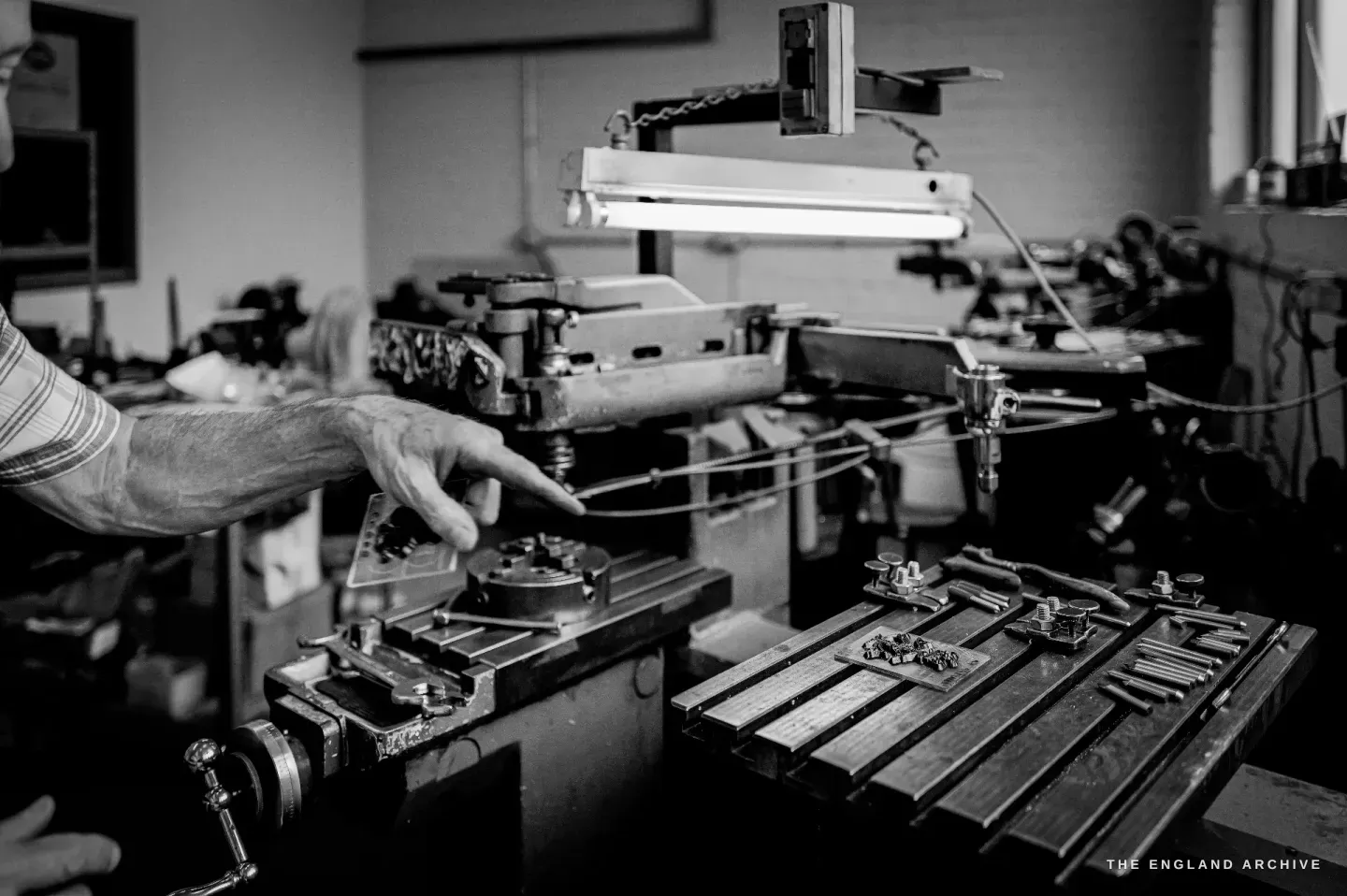
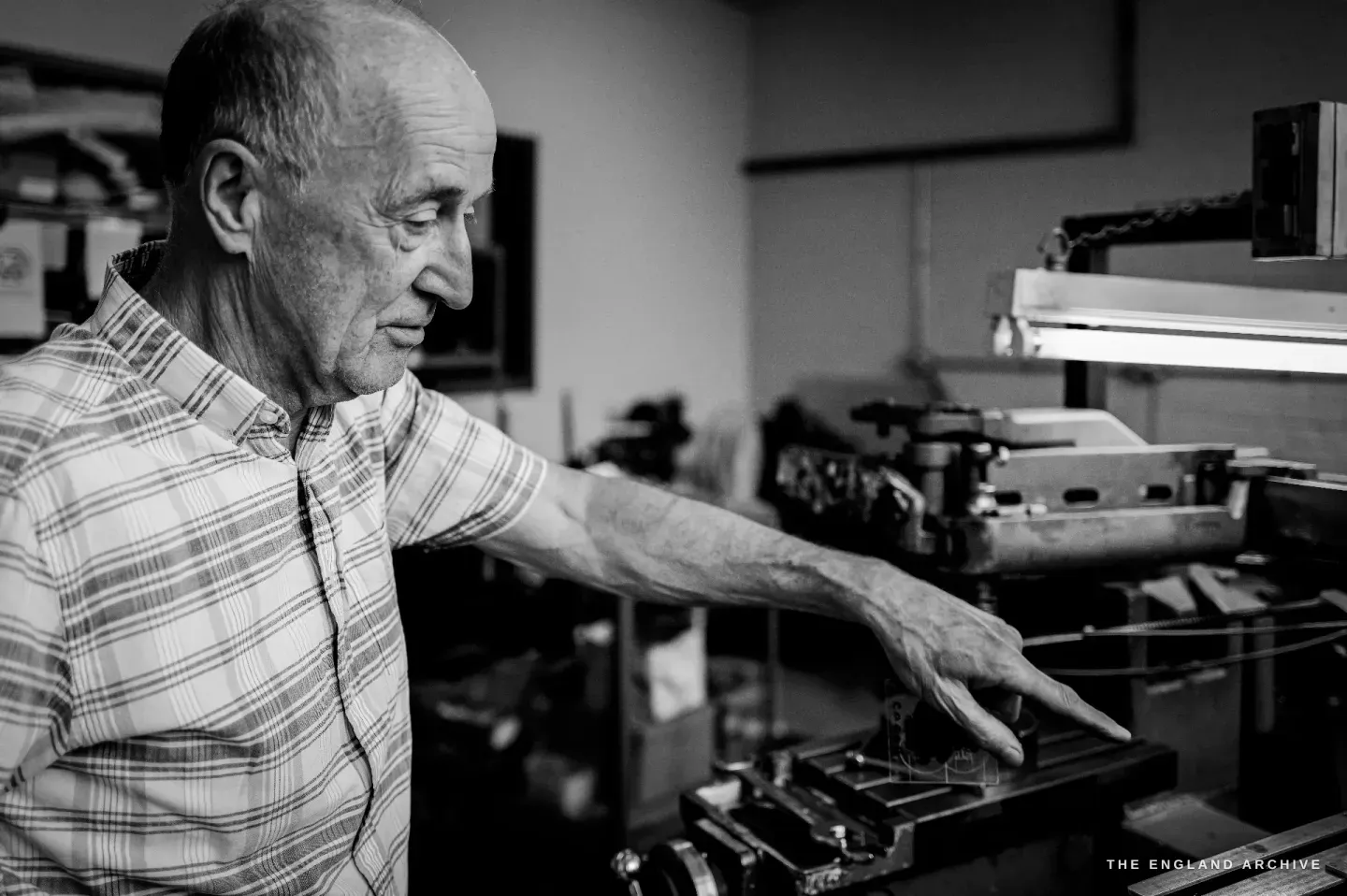
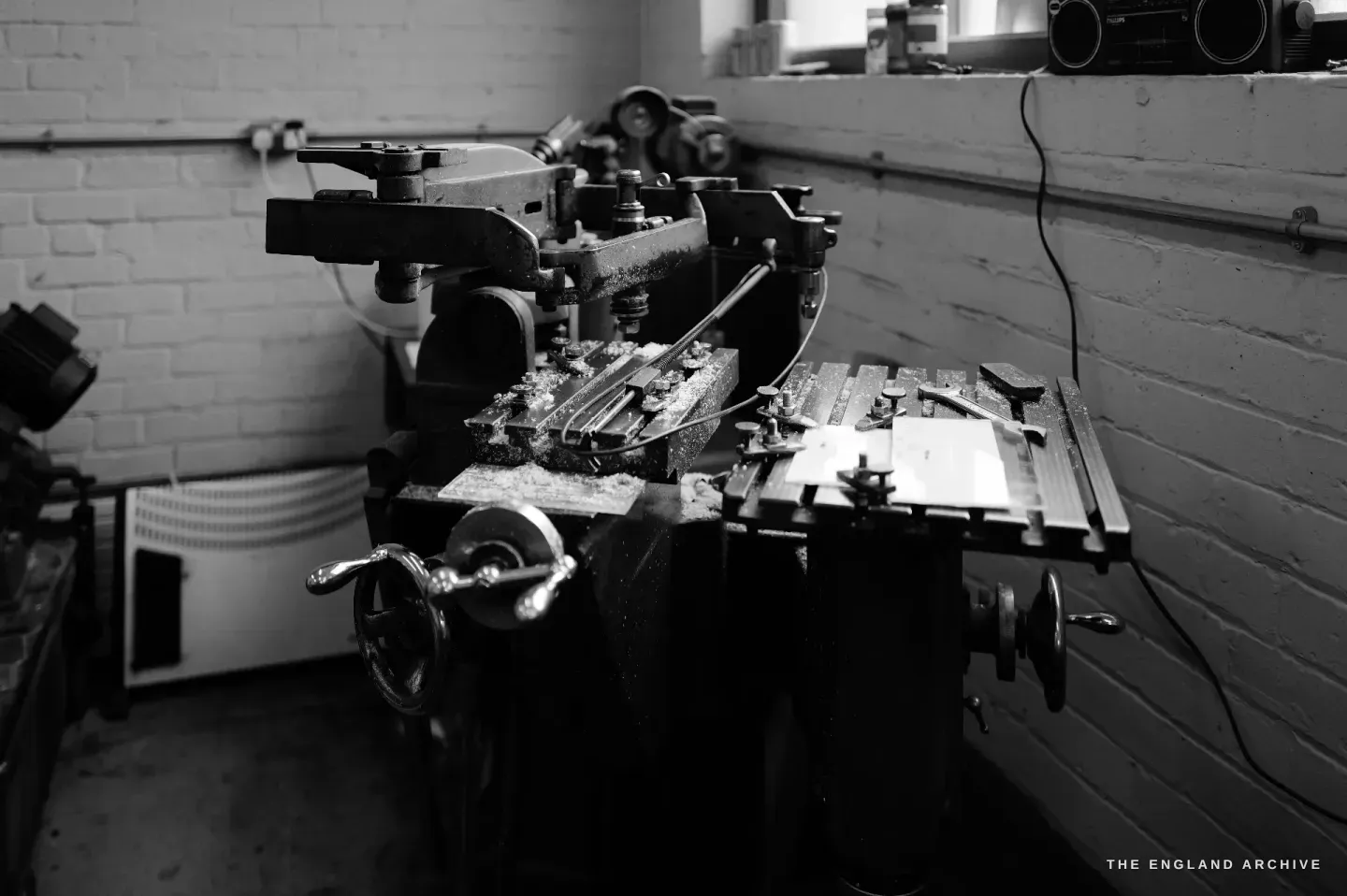
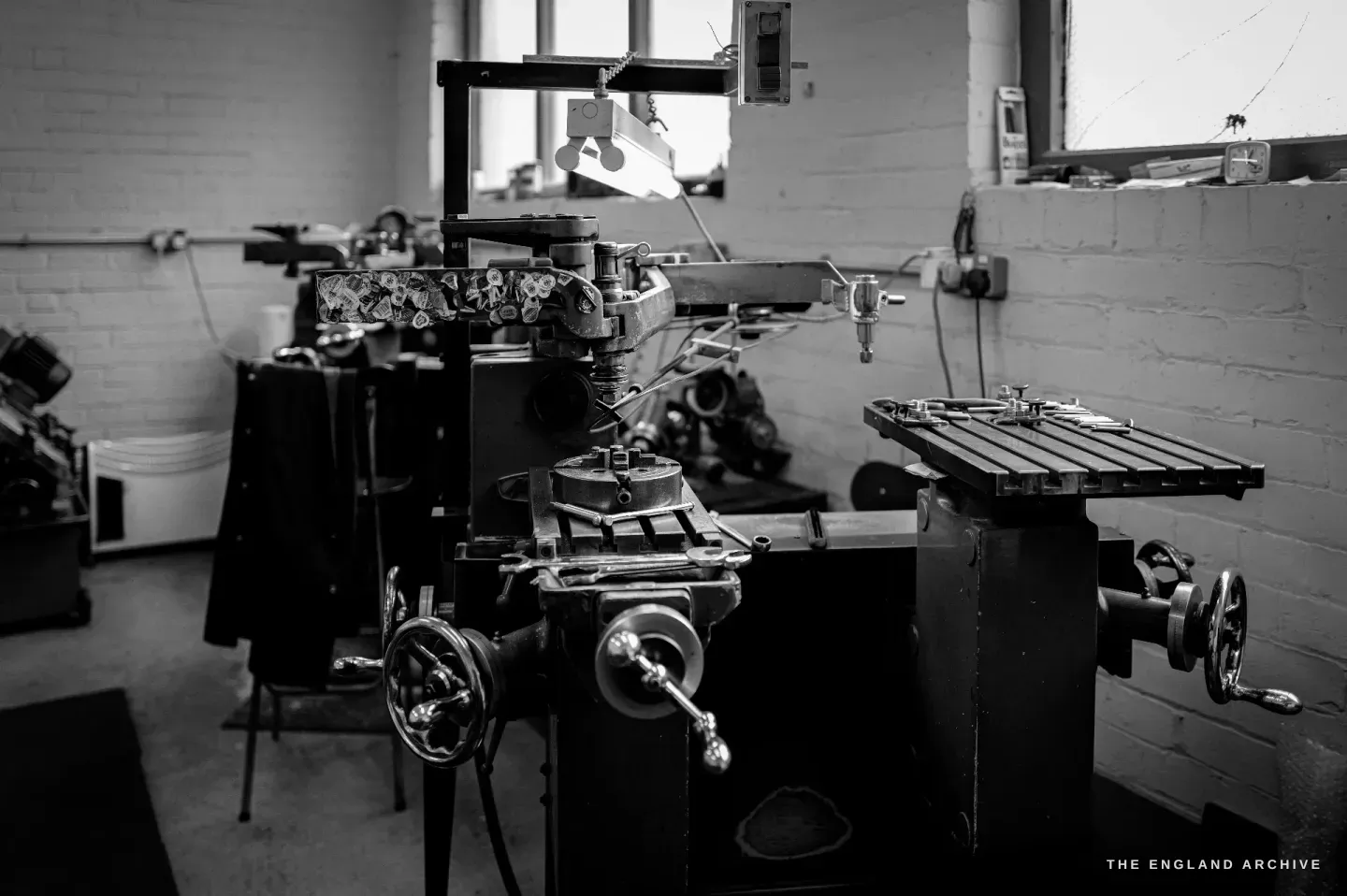
The machine does the reducing, but it does not do the judging. The depth of the cut, the crispness of a serif, the cleanup of the detail the cutter cannot reach - that is hand work, done by eye, and it is where forty-five years tells. He checks a die the way you would read a page, turning it to the light, finding the one line that is not yet right.
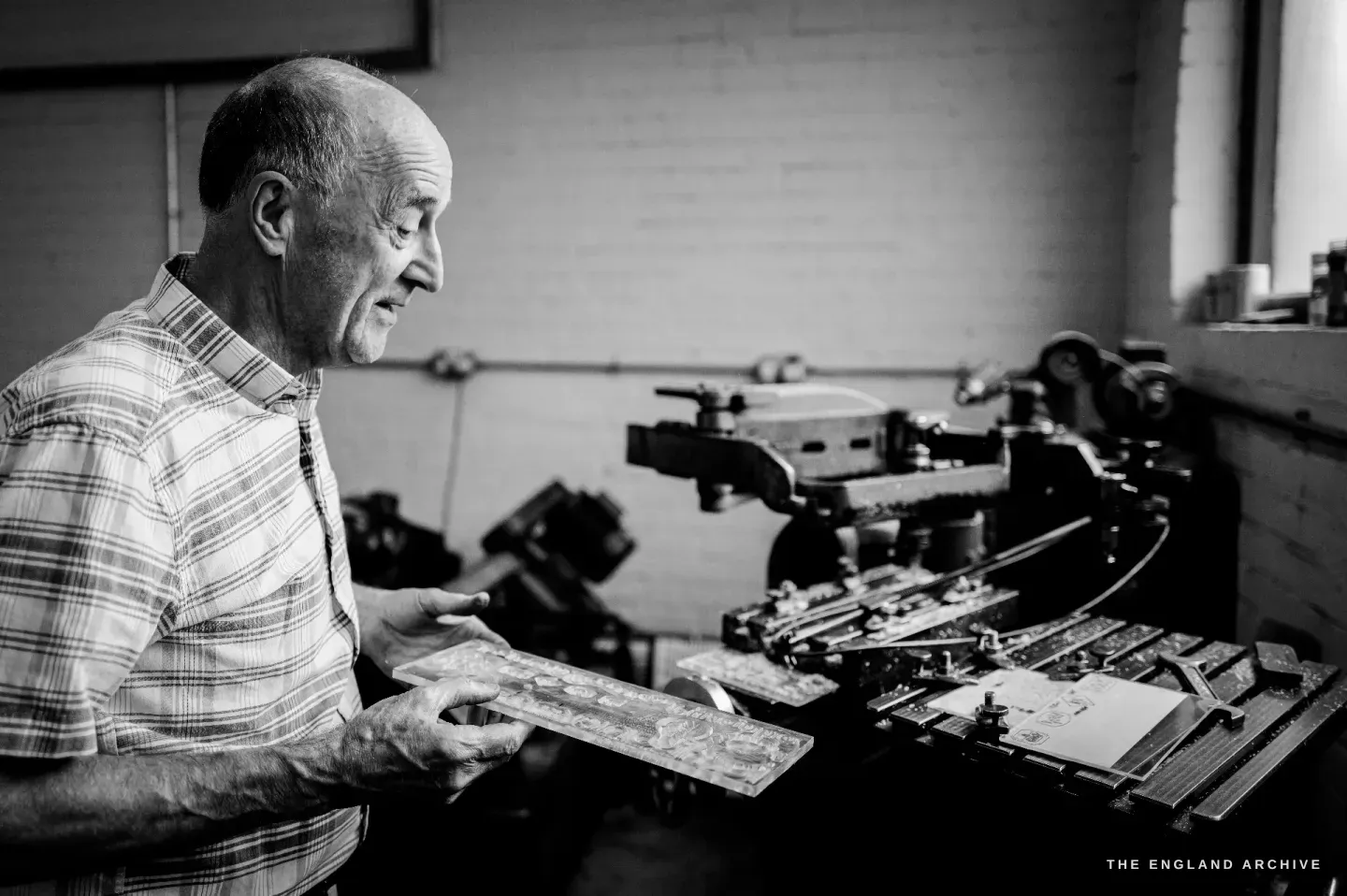
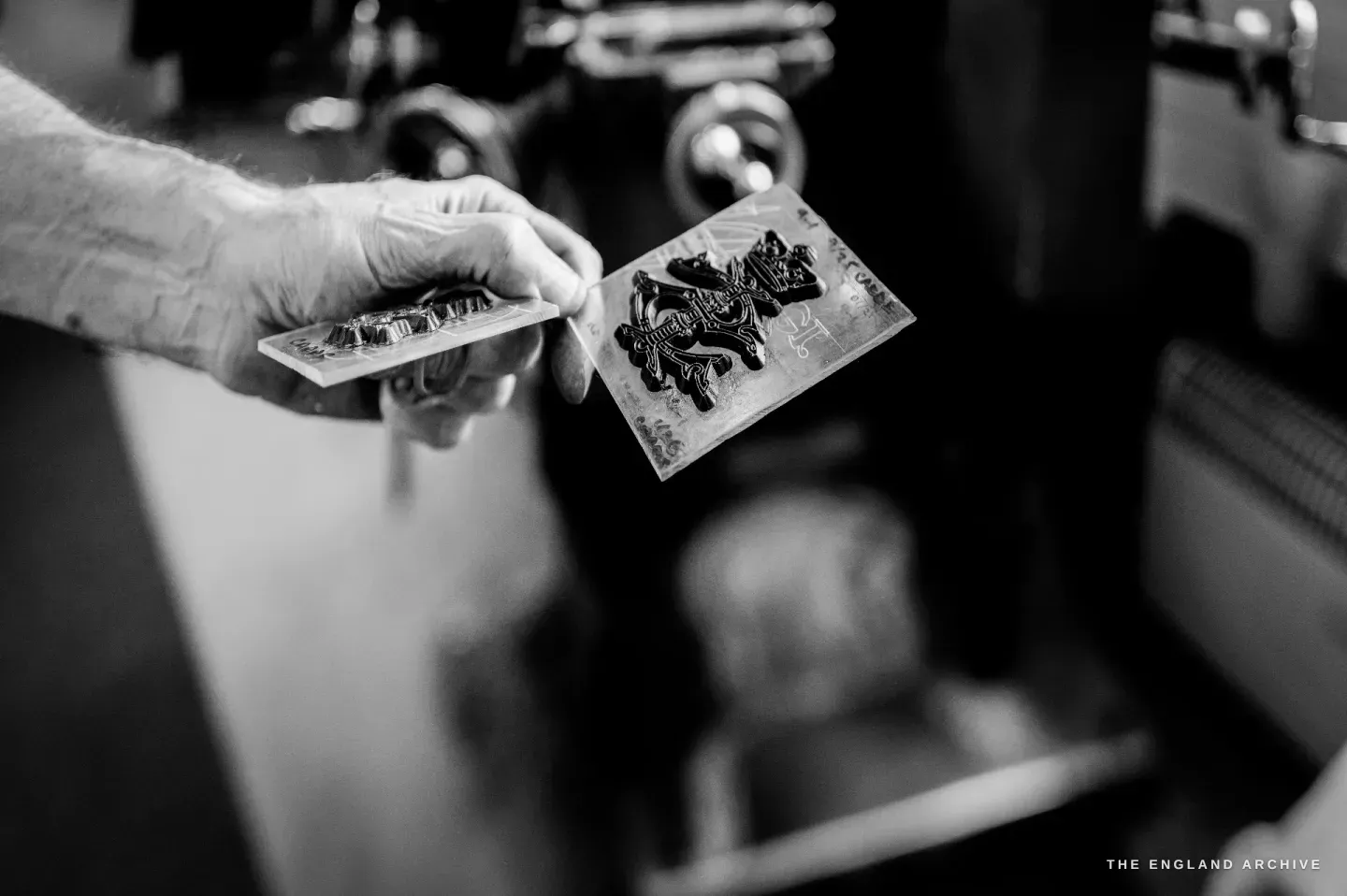
What comes off the bench is the master tool. The die holds the design cut into steel in reverse and in relief; struck into a spoon stem or a silver tray, it leaves the crest or the mark raised, sharp and repeatable. Chris showed me the finished plates - rows of letters and crests on one, a single heraldic beast cut deep on another - small objects that hold an enormous amount of skill, and that the rest of the works simply could not run without.
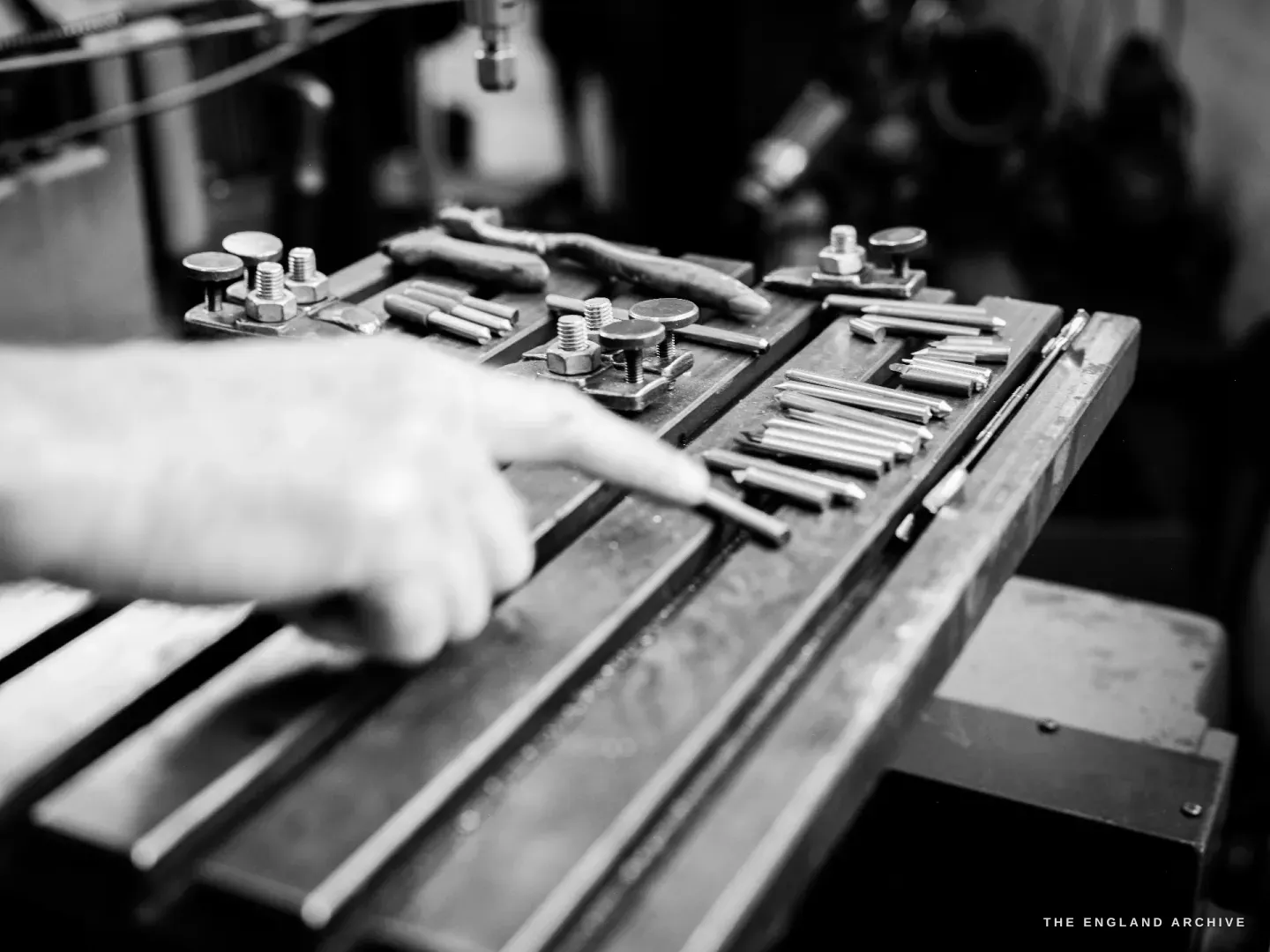
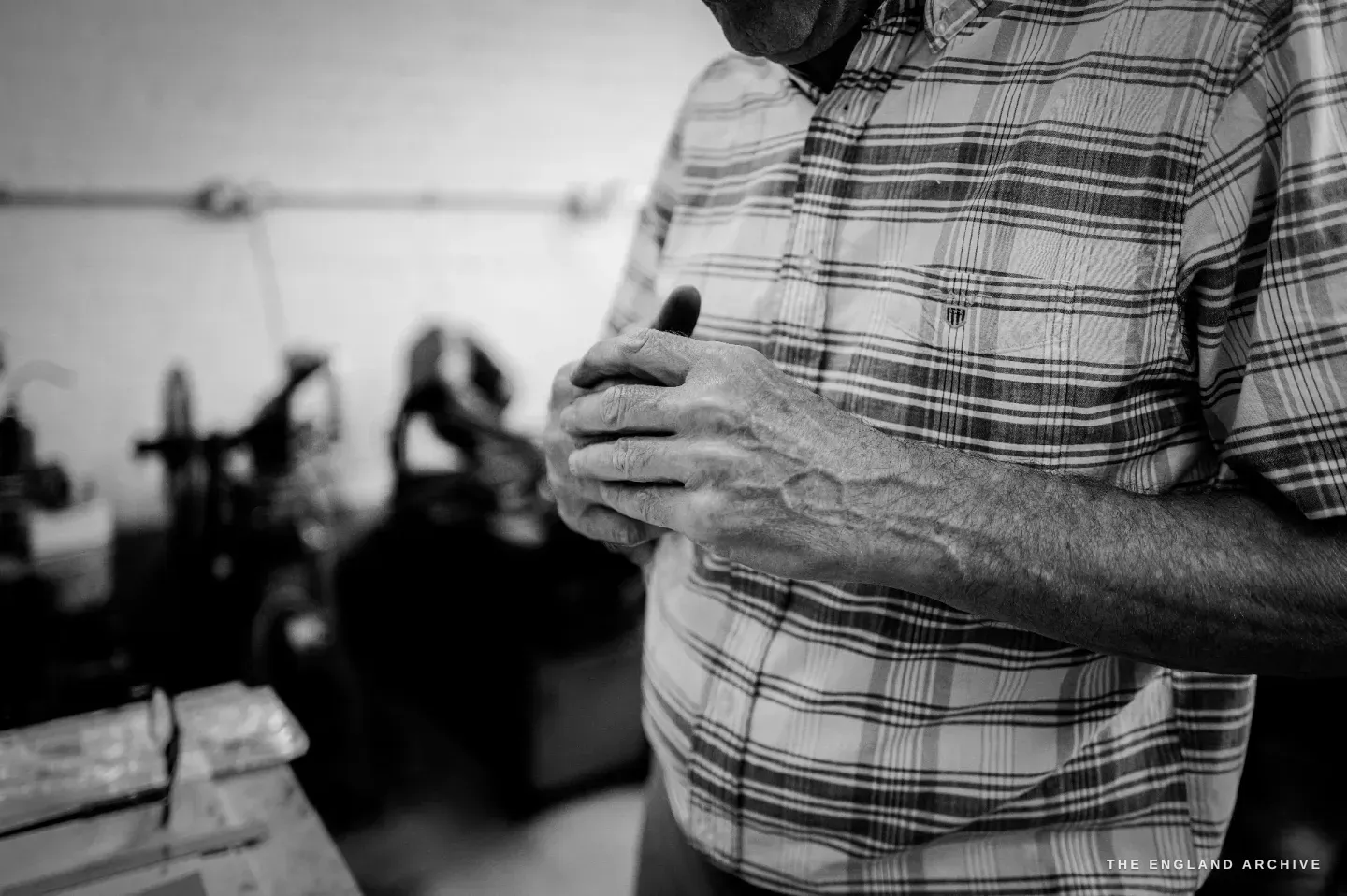
Chris did not say a great deal about himself - he is not a man who makes a story of his own life - but the one fact he did give says most of it: forty-five years, one craft, nothing else. That is not a complaint and it is not a boast; it is simply what a life in a Sheffield allied trade looks like. He answered every question plainly, showed me the machines and the dies without ceremony, and got on with the work. The skill is in his hands and his eye, and very little of it is written down anywhere.
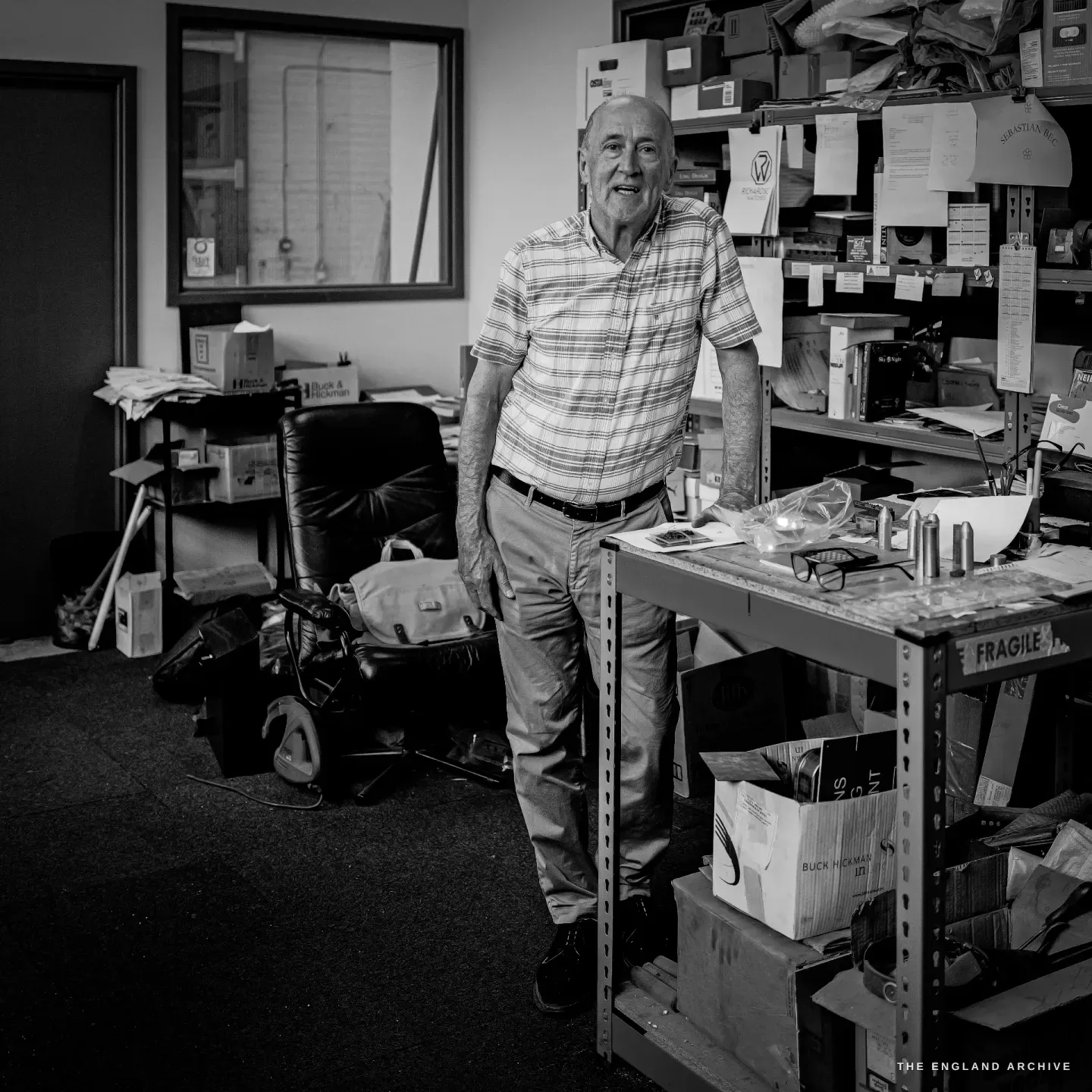
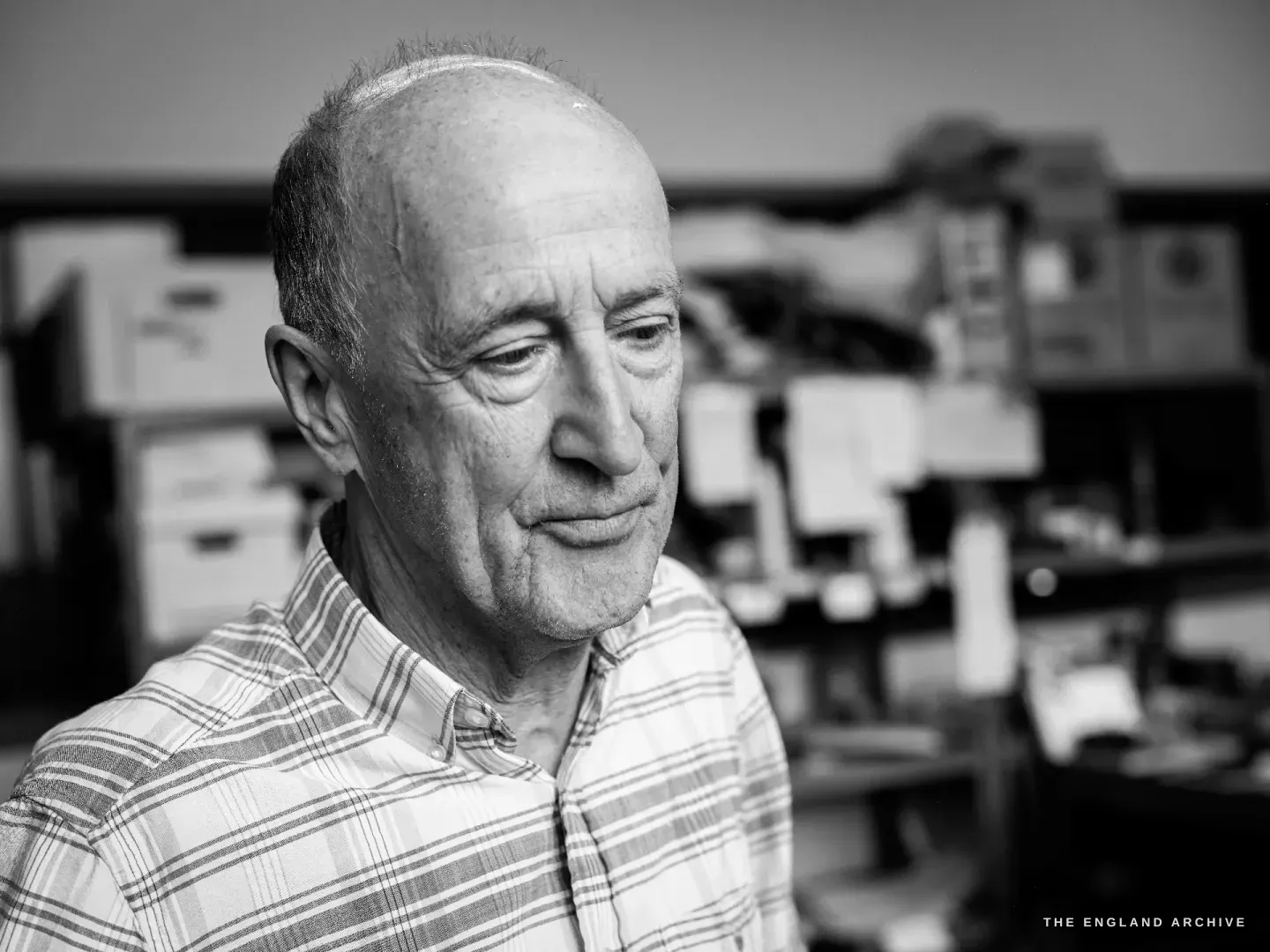
This is the archive’s record of Chris Shaw, made at Chimo Sheffield in June 2026: a die engraver of forty-five years, the man at the top of the chain who turns a drawing into the steel die that every stamped mark in the building depends on. Hand engraving and the silver allied trades are on the Heritage Crafts Red List; a craft like this lives in a very small number of pairs of hands, and Chris’s are among them. We will be back to Sheffield, and to Chris’s corner of it.