Makers
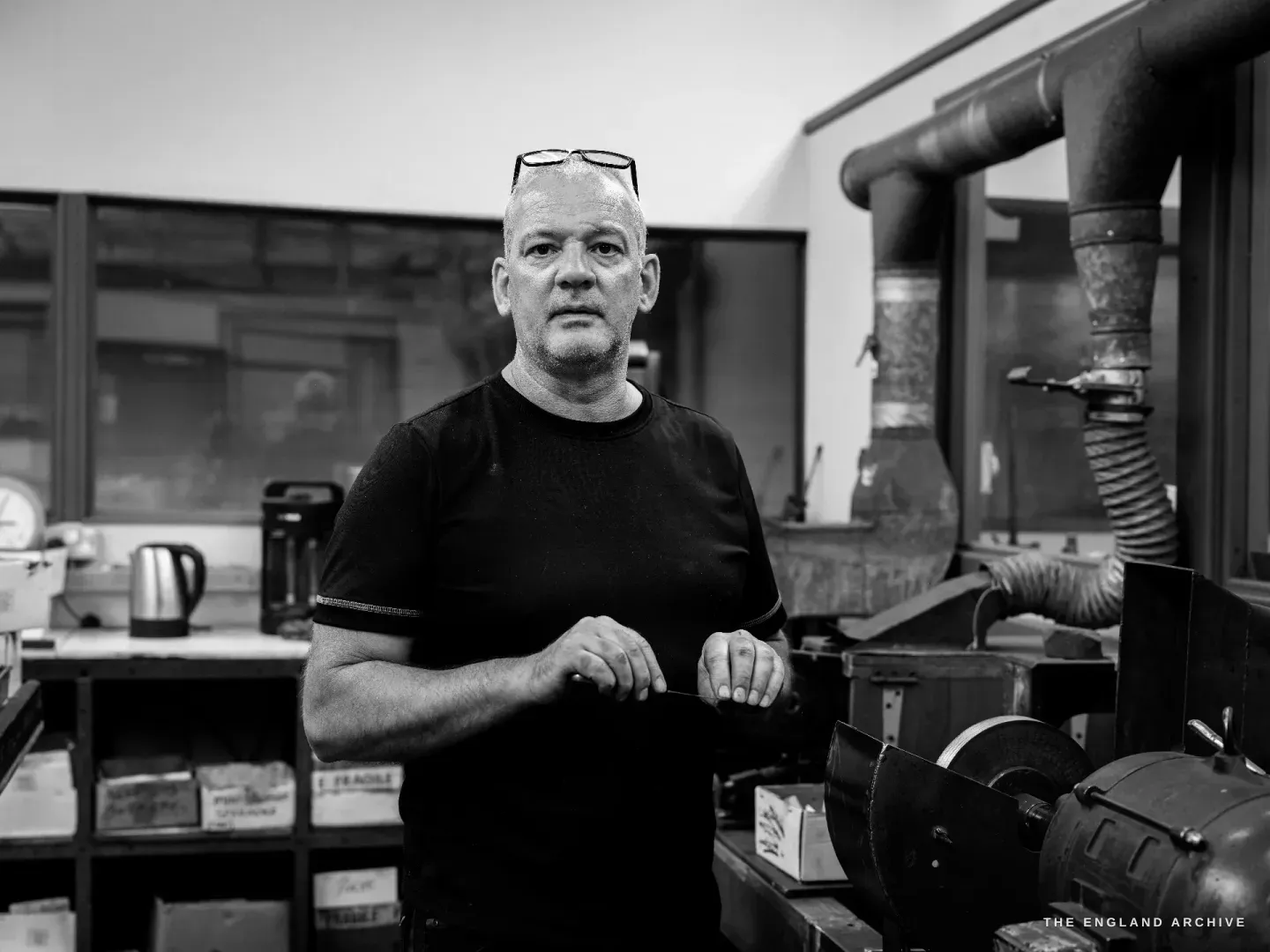
Phil Benton
Cutler · Chimo Sheffield
Sheffield, South Yorkshire
Cutler · Chimo Sheffield
Sheffield, South Yorkshire
I asked him what cutlery meant. Knife, fork and spoon, I said. Wrong, he said. Cutlery is cutting. It is only the knives.
I came to Sheffield to meet Chris Hudson, the man who put Chimo together - who gathered a roomful of cutlers and silversmiths and machines under one roof and backed them. Chris had a meeting. So I got Phil Benton instead, and within five minutes I knew I had got the better end of the deal.
He started by testing me. What does cutlery mean? Easy, I thought. Instruments to eat with. Knife, fork and spoon. Wrong, said Phil, with the satisfaction of a man who has watched a hundred visitors walk into the same trap. Cutlery is from the same root as cut. Cutlery is the cutting. It is only the knives. The forks and spoons are flatware; the jugs and trays and beakers are holloware. I had been in the building ninety seconds and already been corrected on the one word I thought I knew. That is roughly how the next few hours went, and I laughed most of the way through them.
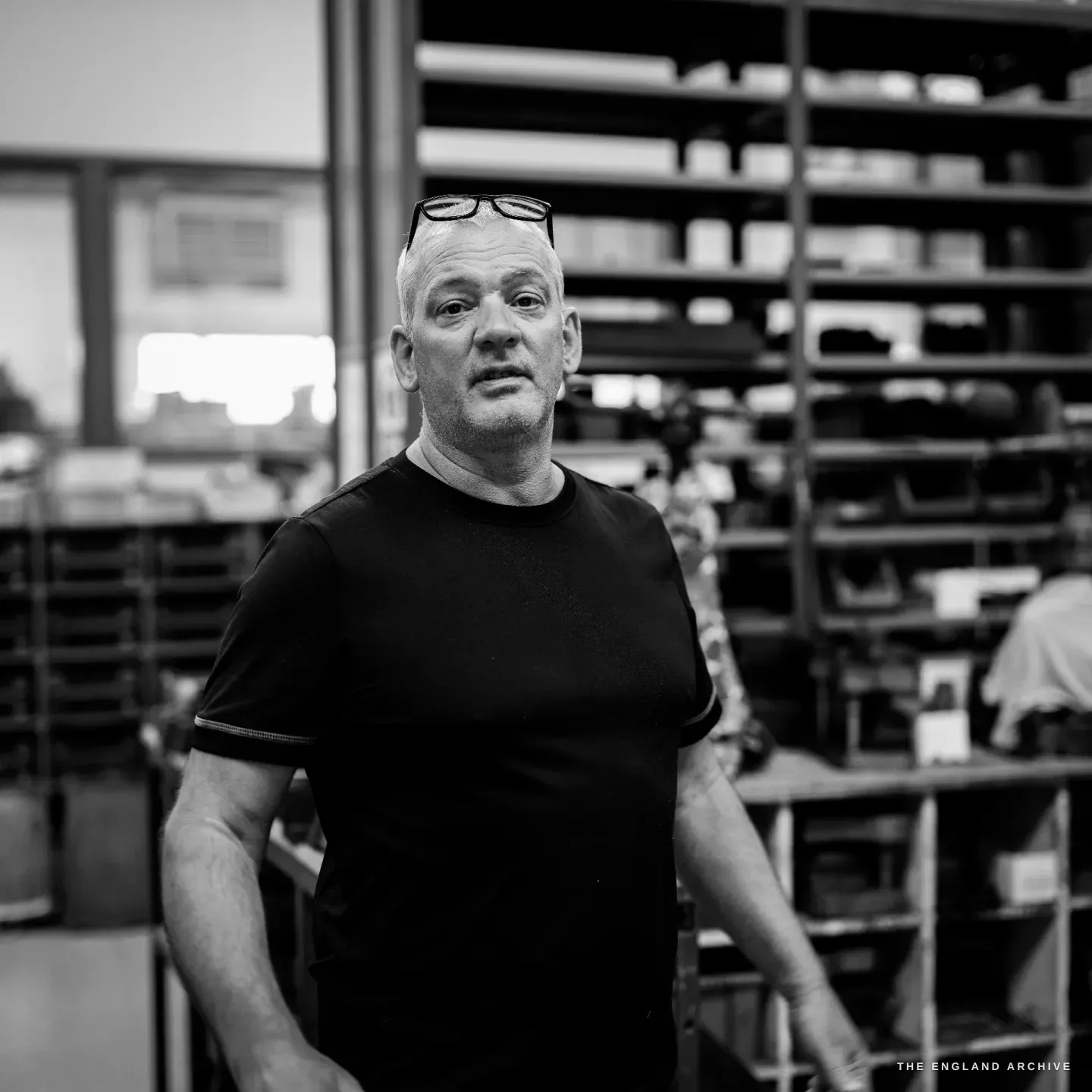
Phil did not arrive at cutlery by accident. His father was a Sheffield cutlery man, and the trade was simply the air the family breathed - the city ran on it, had for two hundred years, and a boy in Sheffield grew up around the smell of buffing compound and hot metal. And like a lot of boys handed their father’s trade, the young Phil wanted no part of it. He looked at the noise and the grease and the long days and decided this was not going to be his life.
It became his life. That is the oldest story in the cutlery quarter, and Phil tells it on himself with a grin. The thing you run from as a boy is the thing you give forty years to. Somewhere between the lad who did not want the factory and the man who now walks visitors through it, the trade got into his hands and stayed. He has been a cutler more than forty years, around twenty-five of them at Chimo, and he can take a piece from a flat blank to a finished, lustred object and name every machine, every motion and every shortcut along the way.
Before anything is made, there are the dies. Phil walked me down rows of steel shelving stacked with iron die-blocks, each one the negative of a pattern - a handle, a crest, a border - cut once into hard steel and then used again and again. The rails are chalked with numbers and codes that mean nothing to a visitor and everything to the few people who can read them: a working index to a library that goes back generations. Lose the person who knows where a pattern lives and you have not lost a number; you have lost the ability to make the thing.
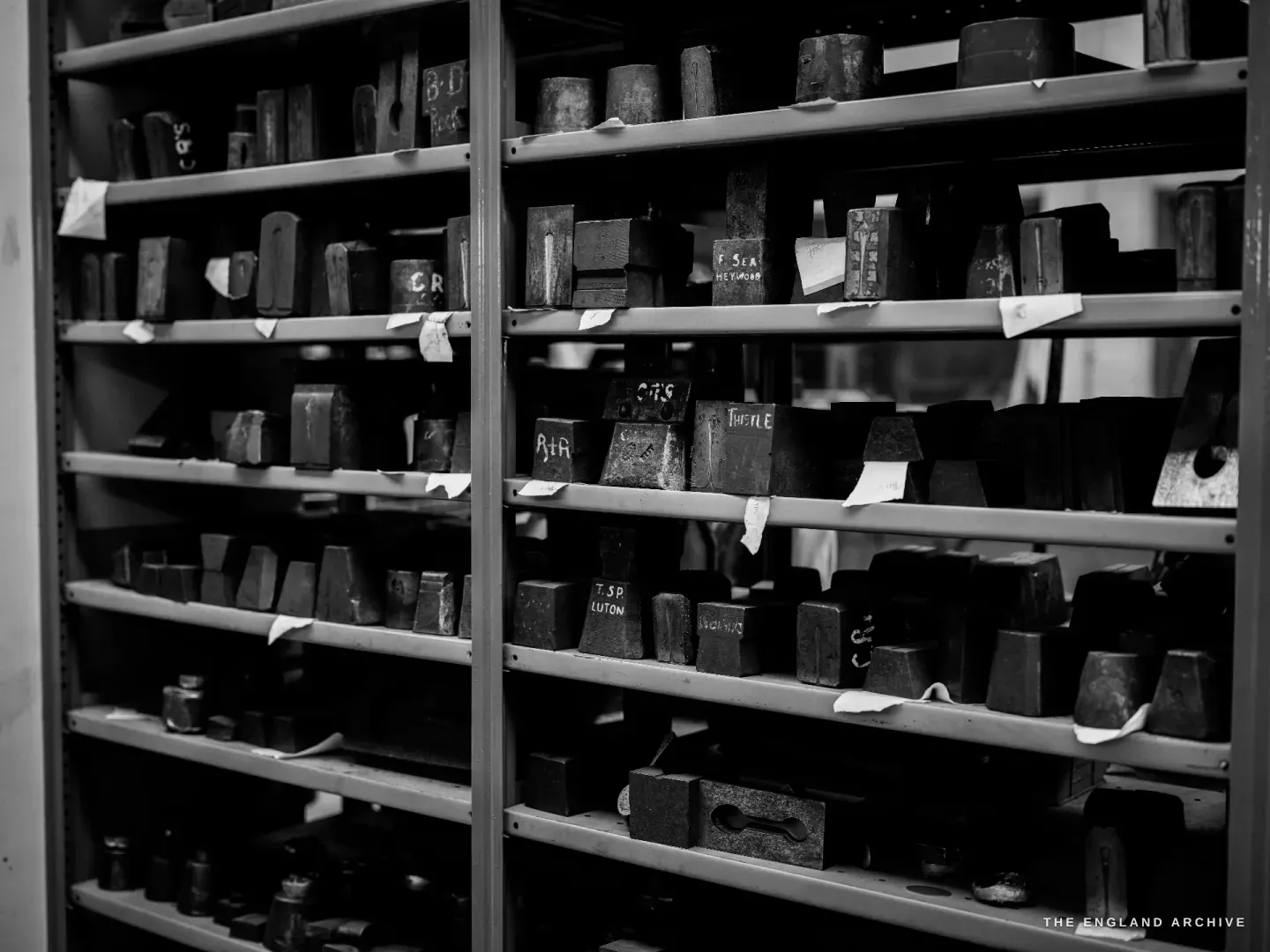
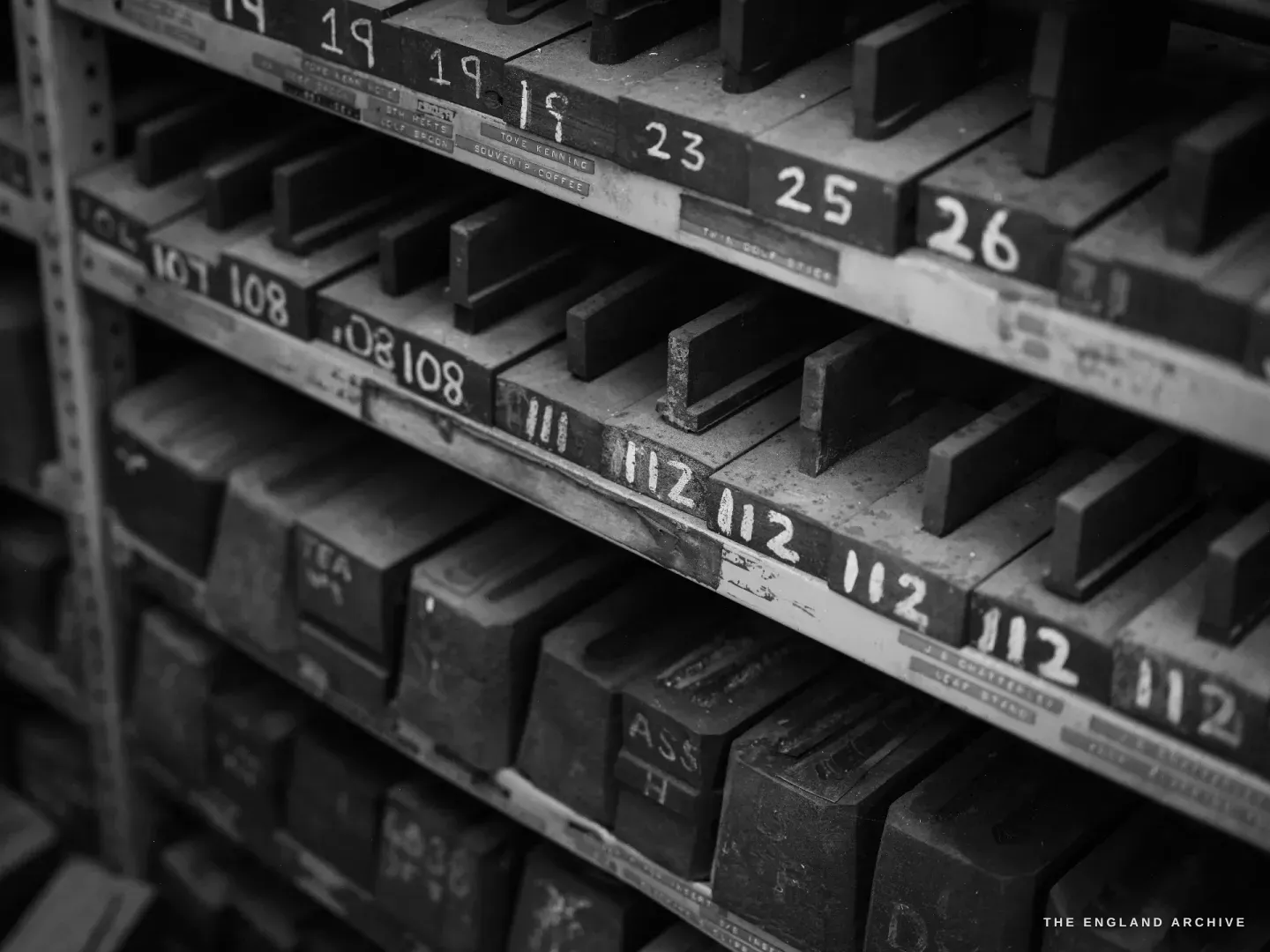
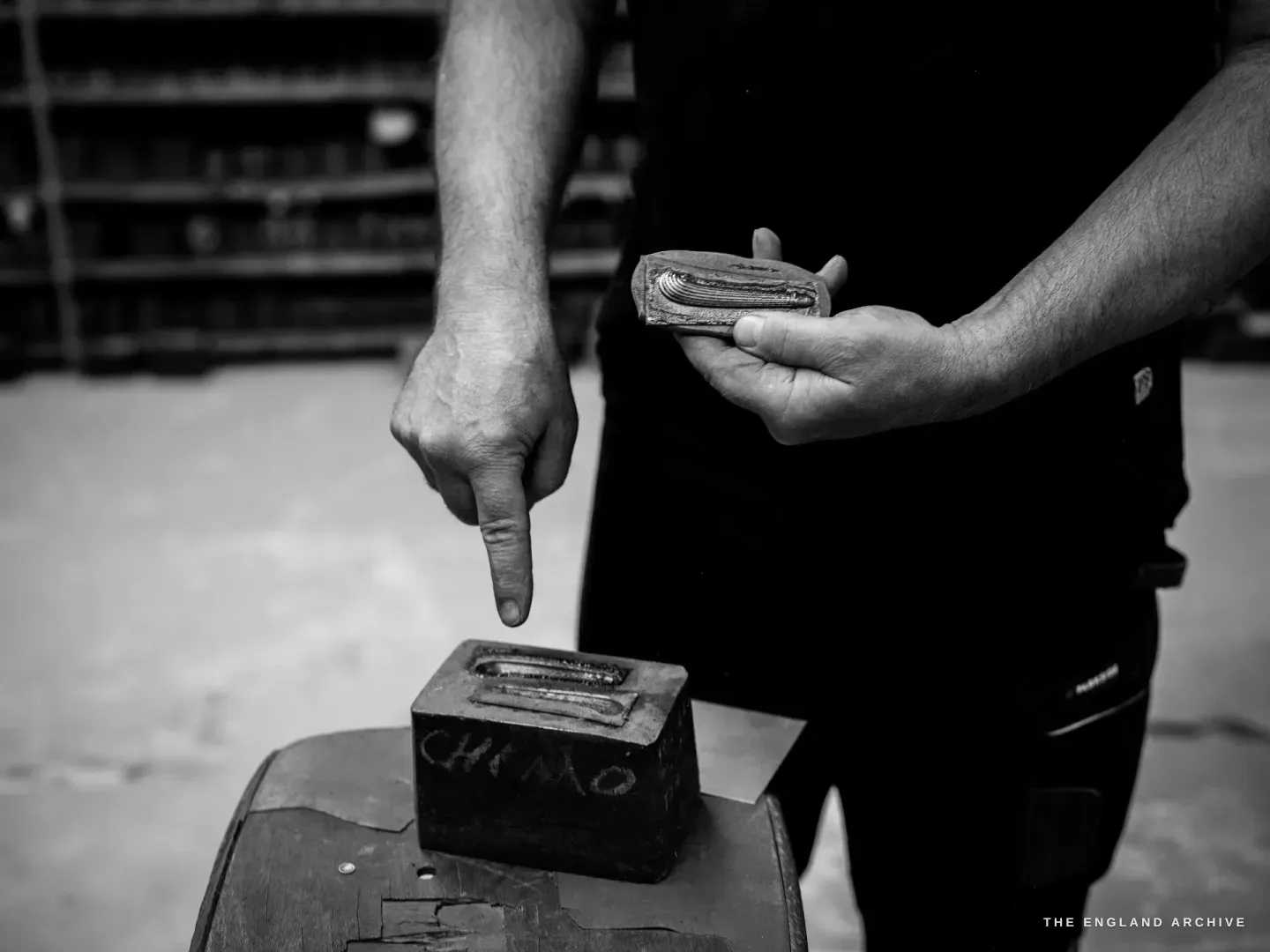
One handle mould Phil took down comes in two halves. He held one up and pointed at its mate on the stool: the cavity inside is the shape of the handle, and the shape, he said, is a pistol - the grip swells and tapers exactly like one, which is how the pattern got its name. The two halves close together and the handle prints between them. He turned it in his hands while he explained it, the way you do with a thing you have made a thousand times and still rather like.
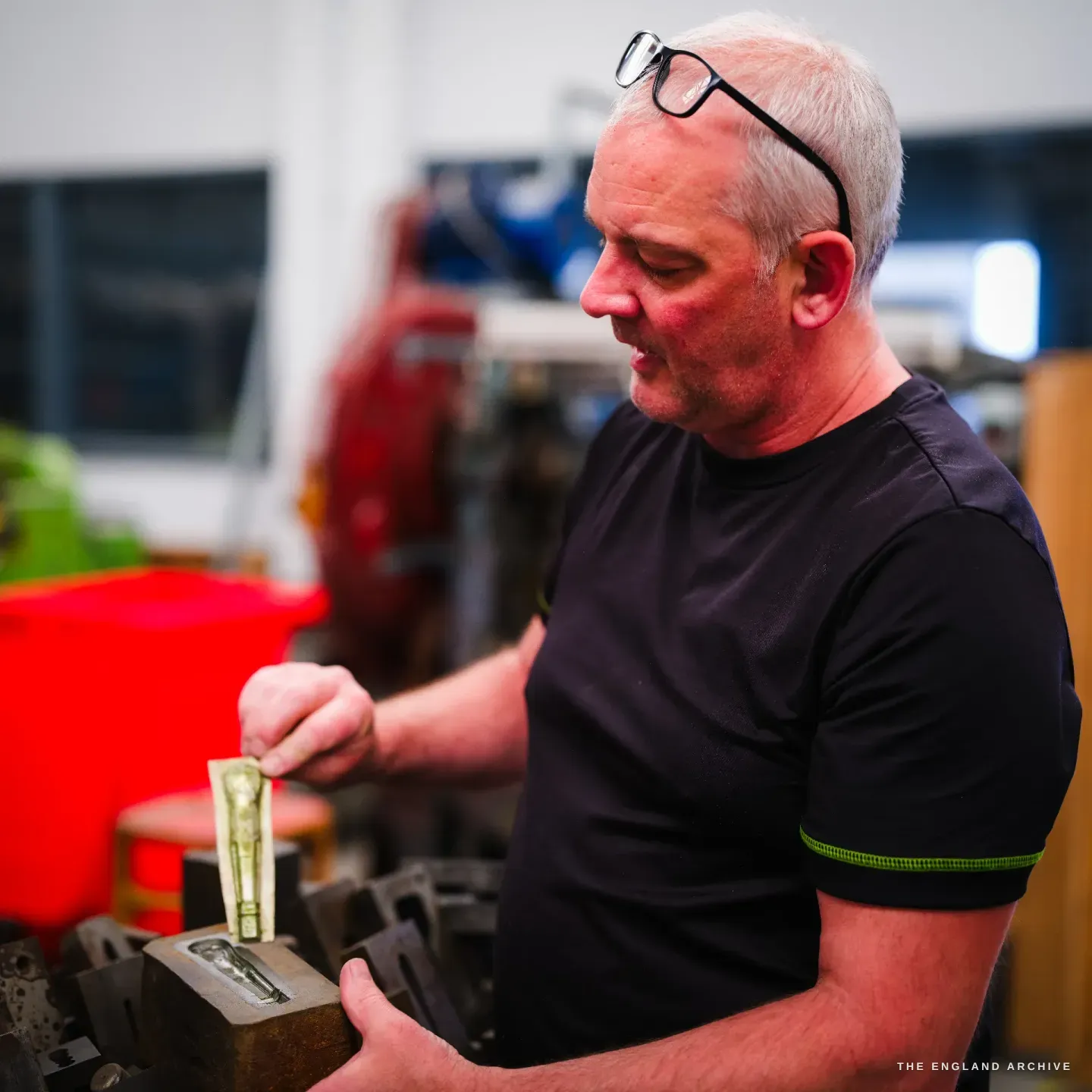
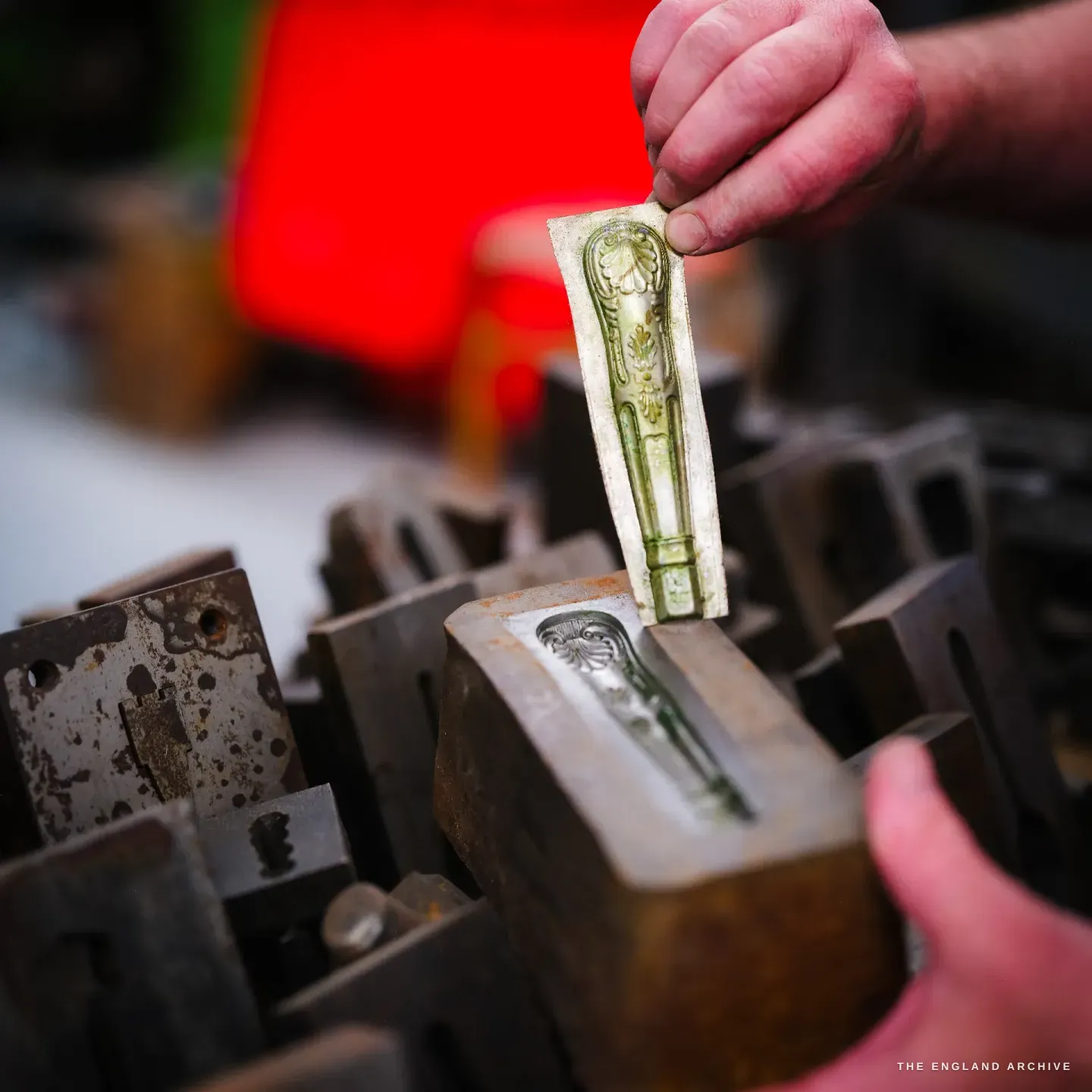
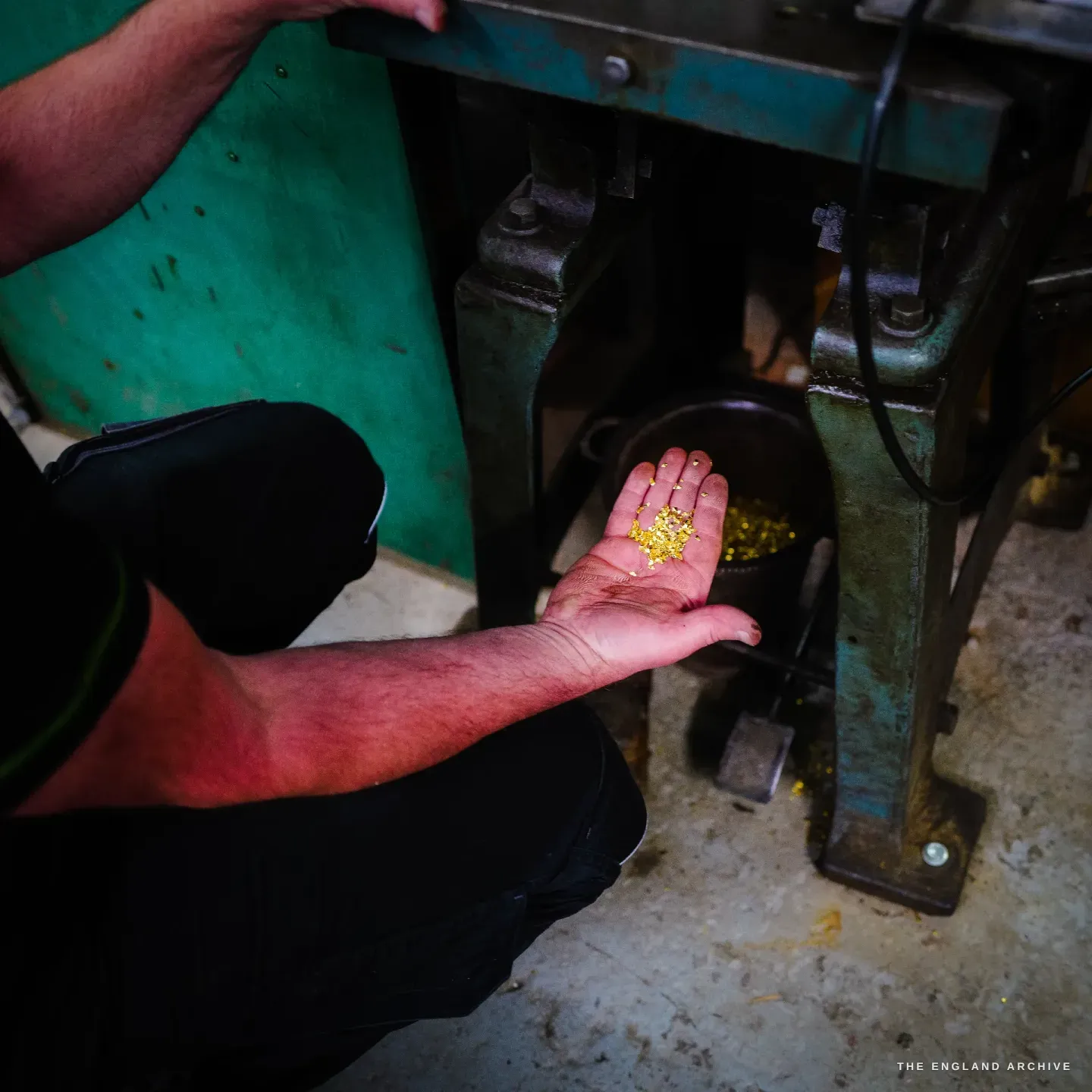
The knife begins at the fly-press - a heavy cast machine with a weighted arm that comes down with enough force to cut and form cold steel. Phil set a die under the head, fed in a blank, and brought the arm round, and the thing that had been a flat strip was suddenly a shape. The waste falls away as bright punched offcuts; he crouched and showed me a palm of it, the scrap that tells you, better than any clock, that the work is moving.
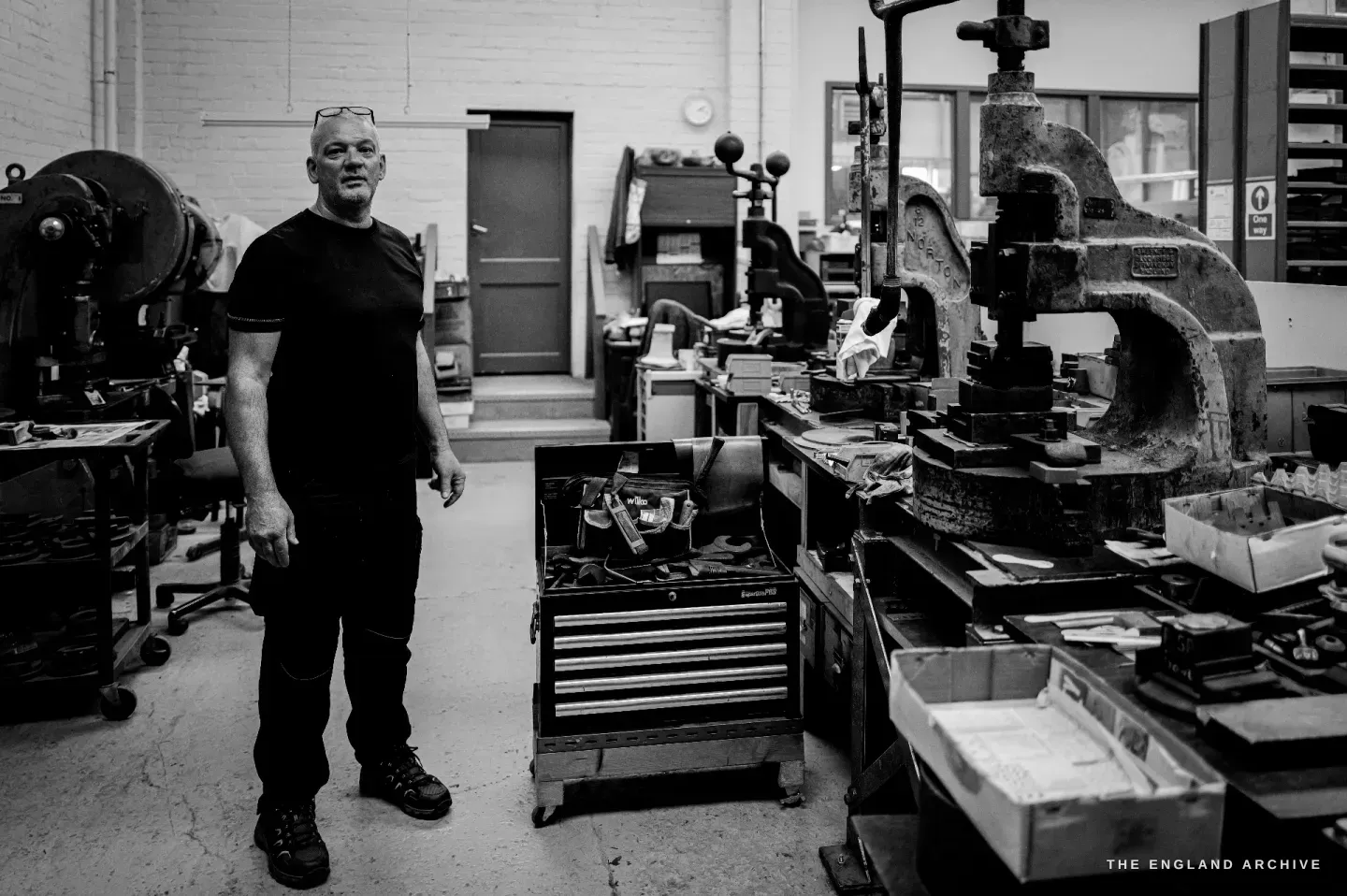
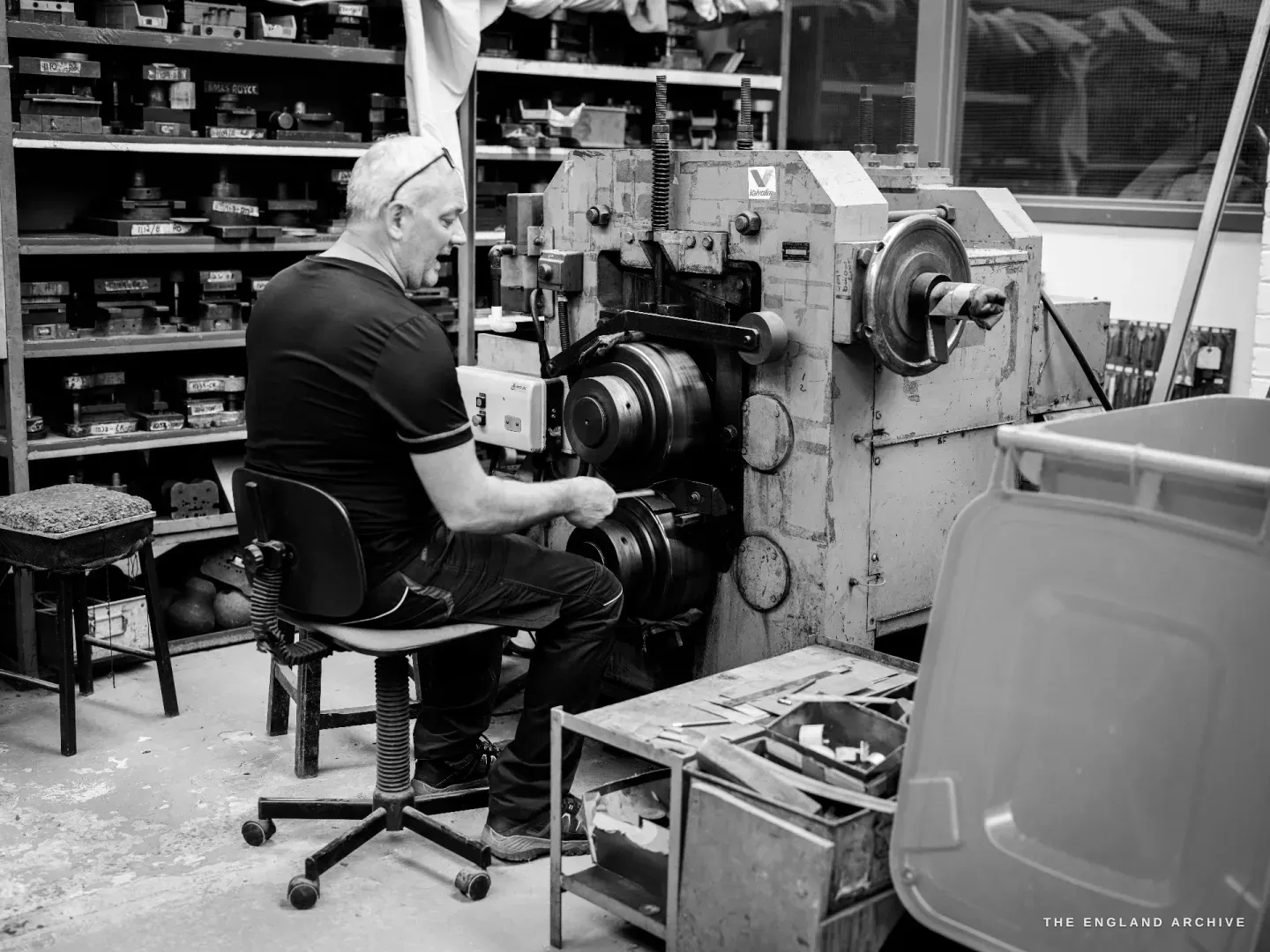
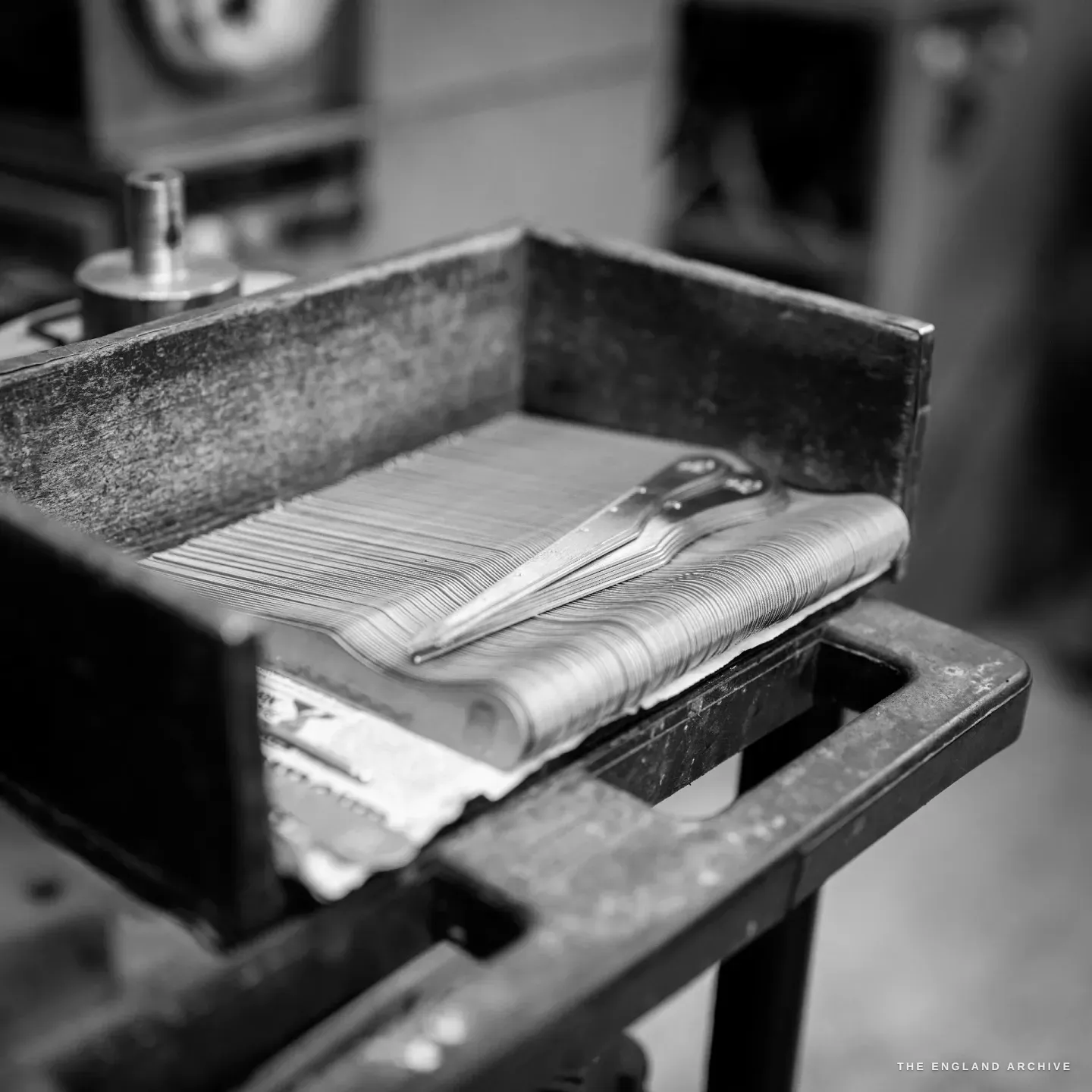
From the press the work moves through a row of machines - one to feed and square the stock, one with stacked rollers that eases a flat blank into its section. Phil moved between them at a pace I struggled to photograph, because to him there is no ceremony in any of it: this is simply the order things are done in, and have been done in, for longer than he has been alive.
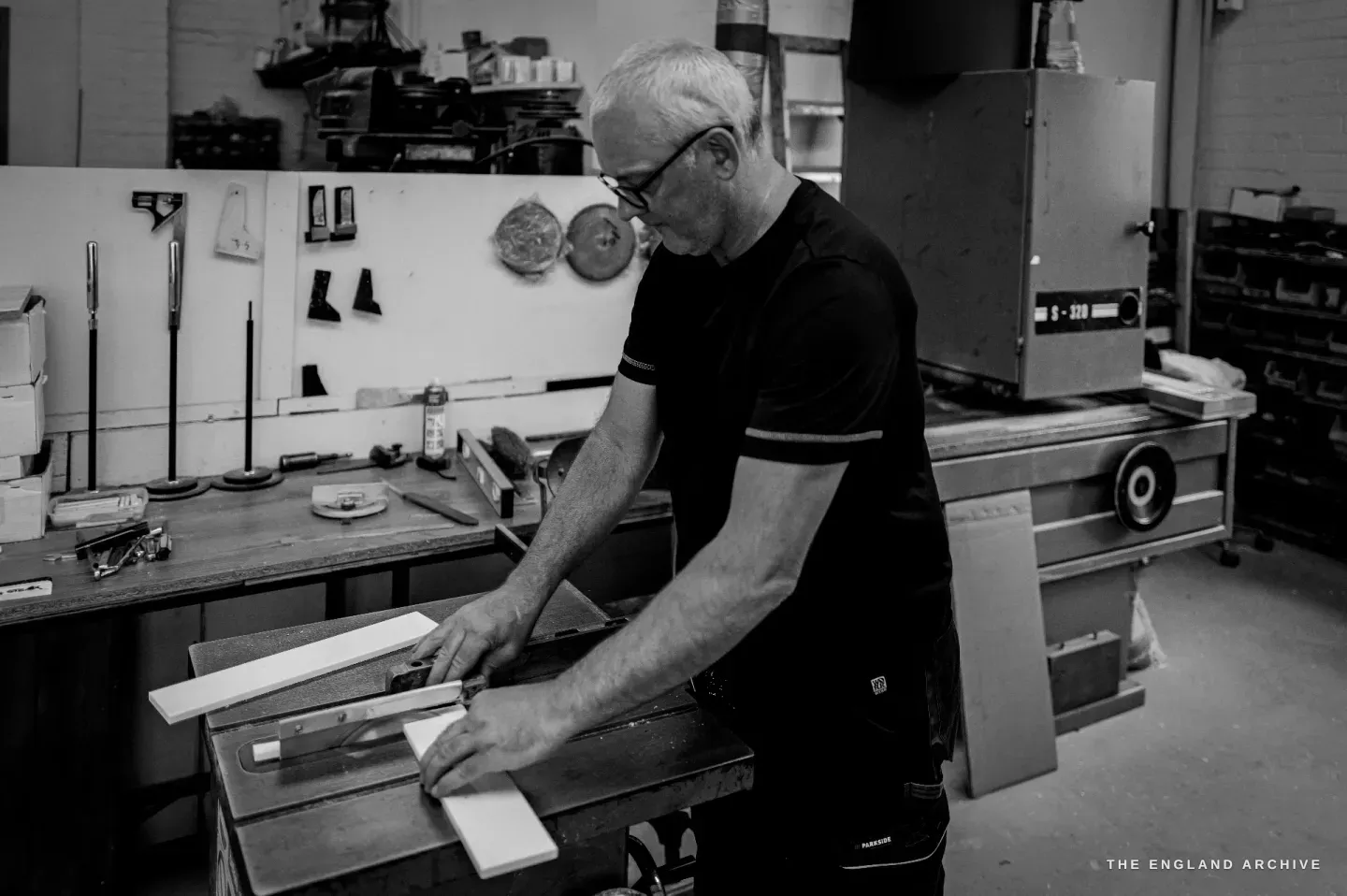
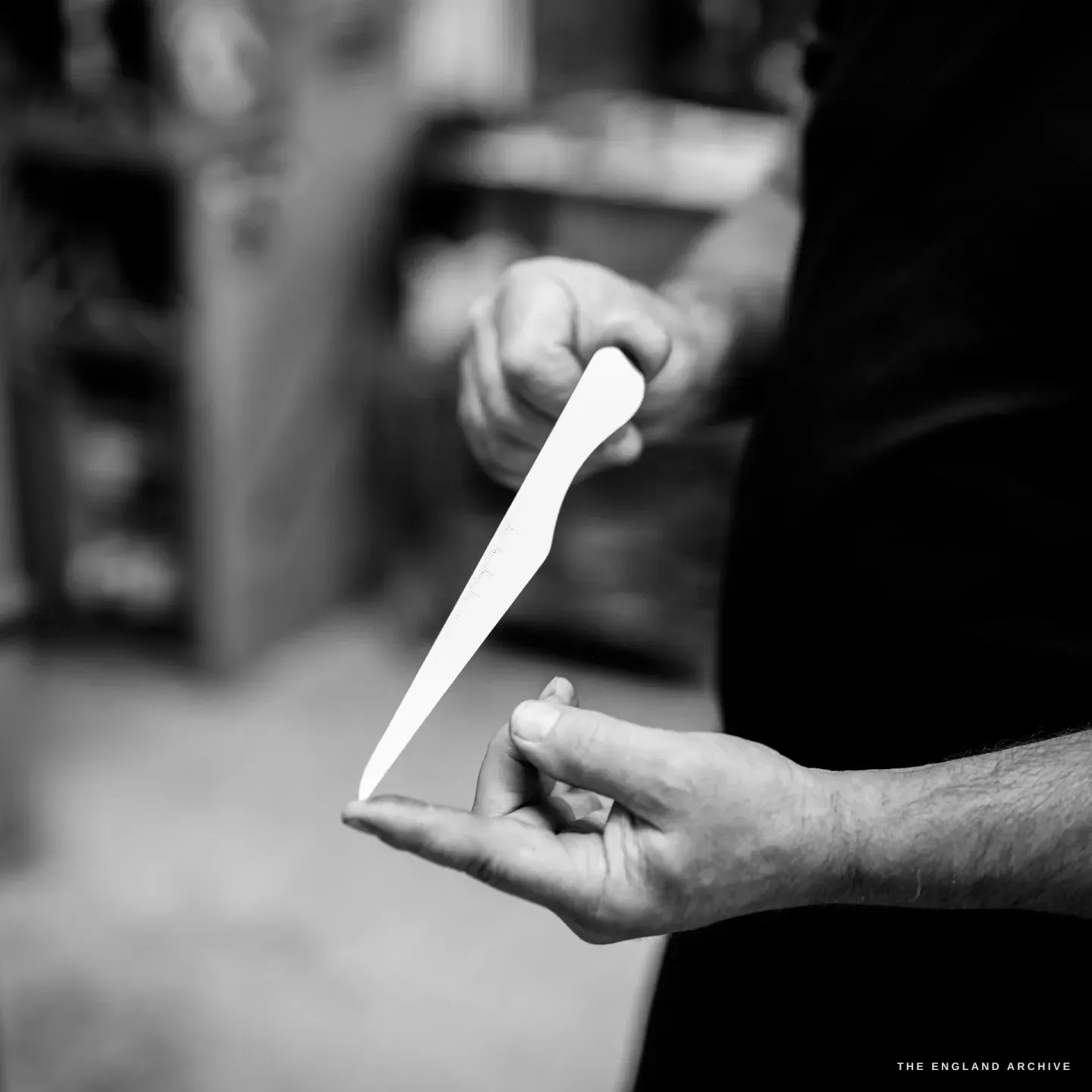
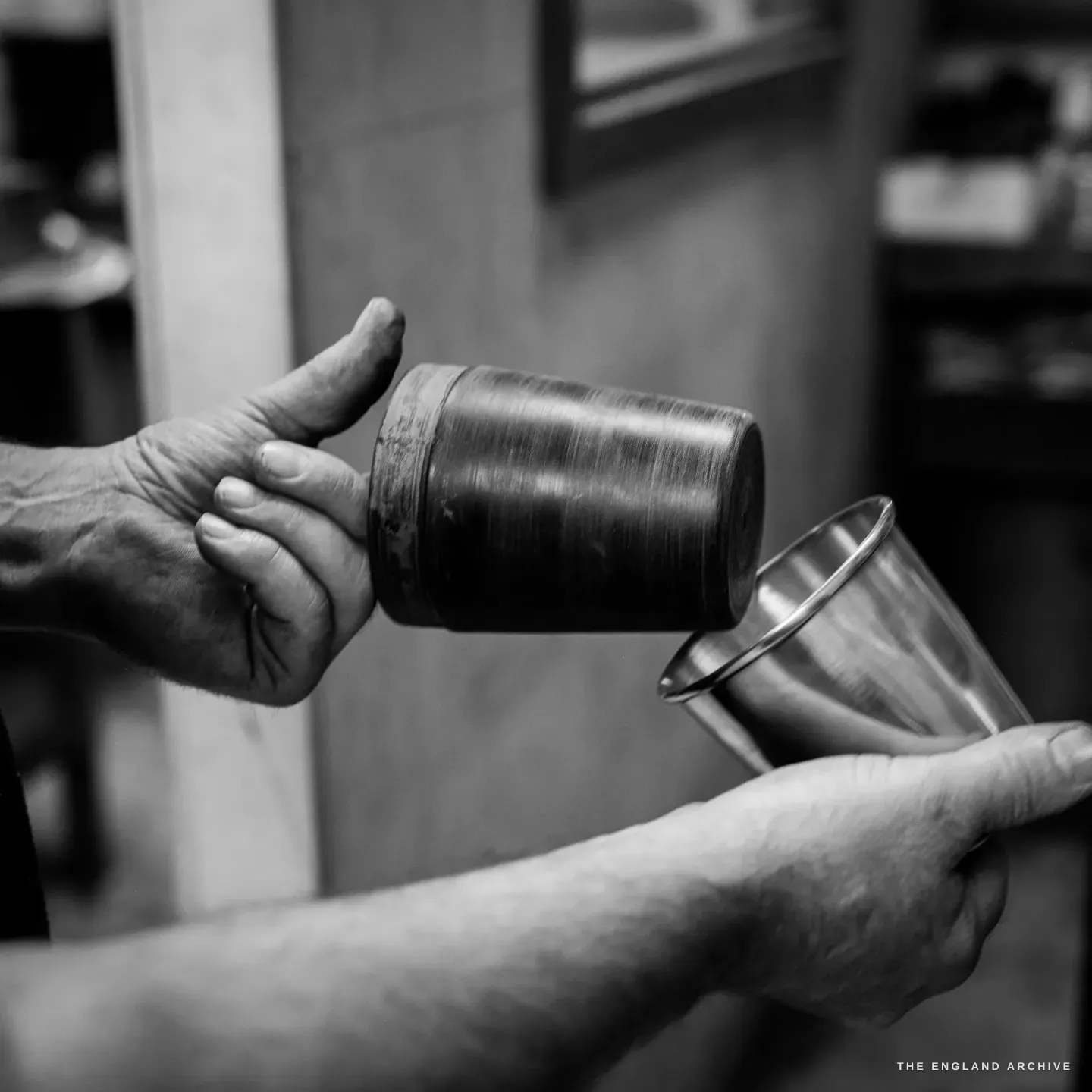
Then the holloware - the hollow things, the beakers and trays and lidded pieces that are not cutlery at all but share the same hands and the same machines. The beakers are made by spinning: a forming mould is mounted in a lathe, a flat disc of metal is pressed against it, and the two are spun together at speed while a tool eases the metal down over the mould until it takes the shape. Phil held up the pair that tells the whole story - the dark iron mould in one hand, the bright finished beaker that came off it in the other.
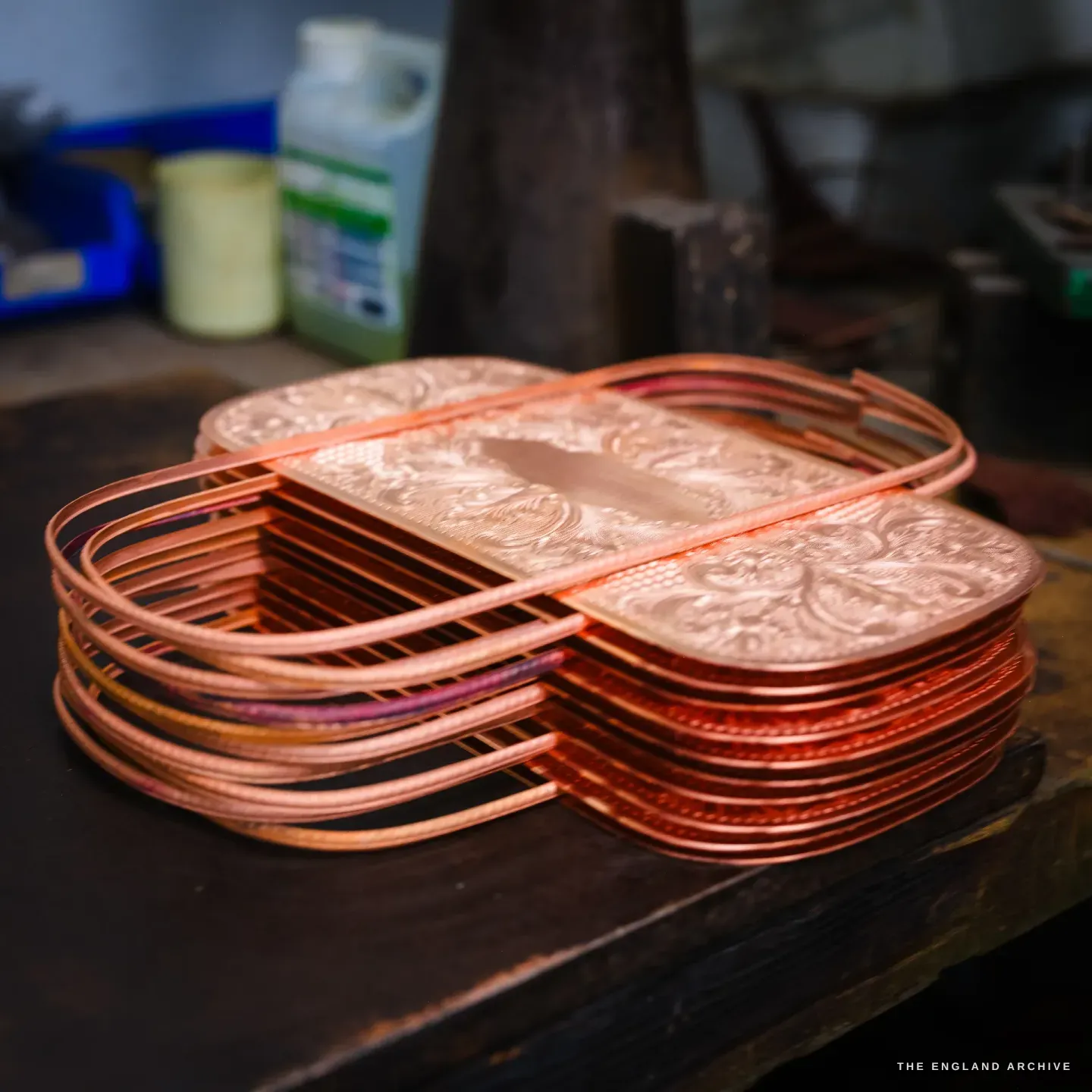
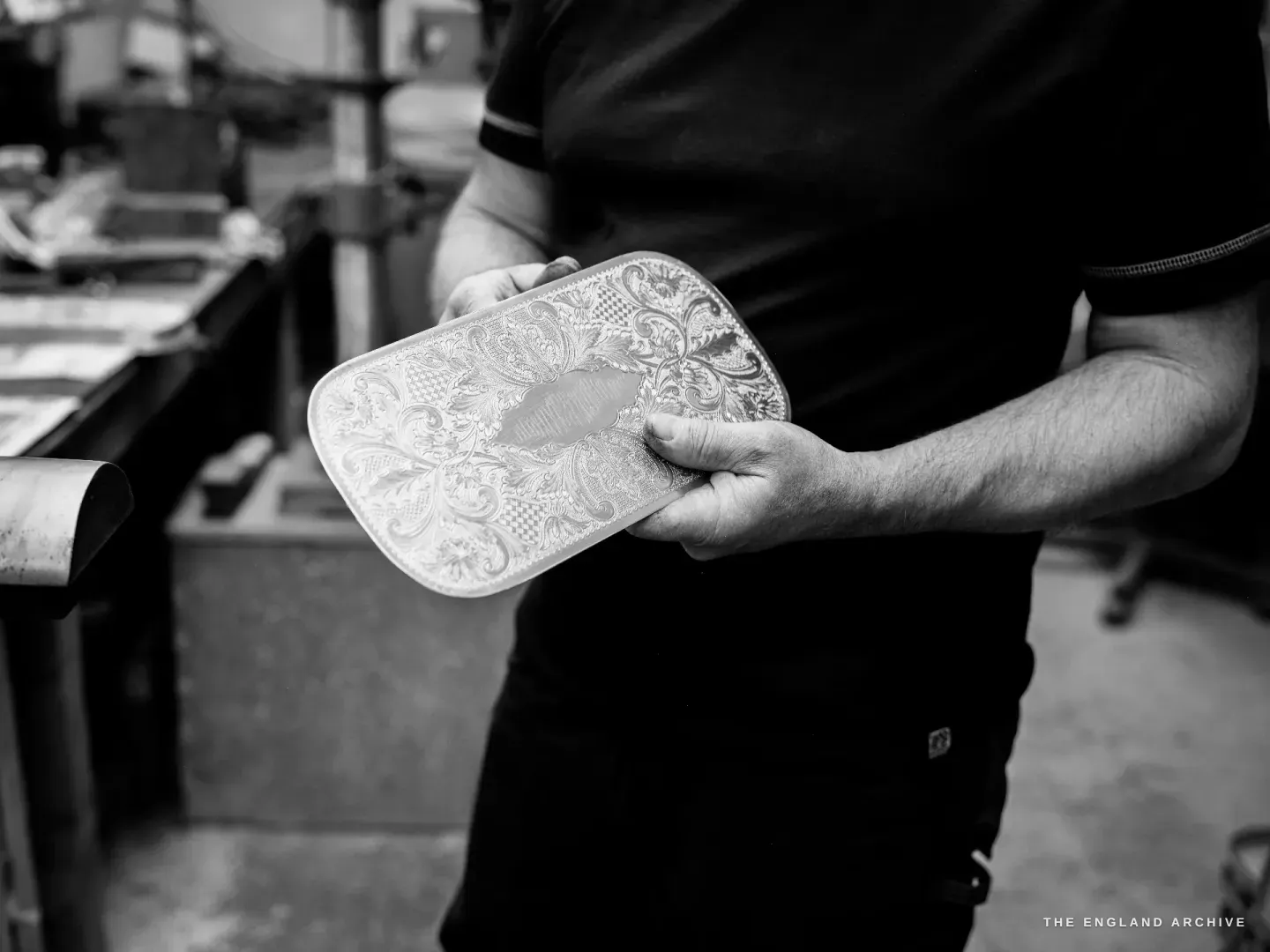
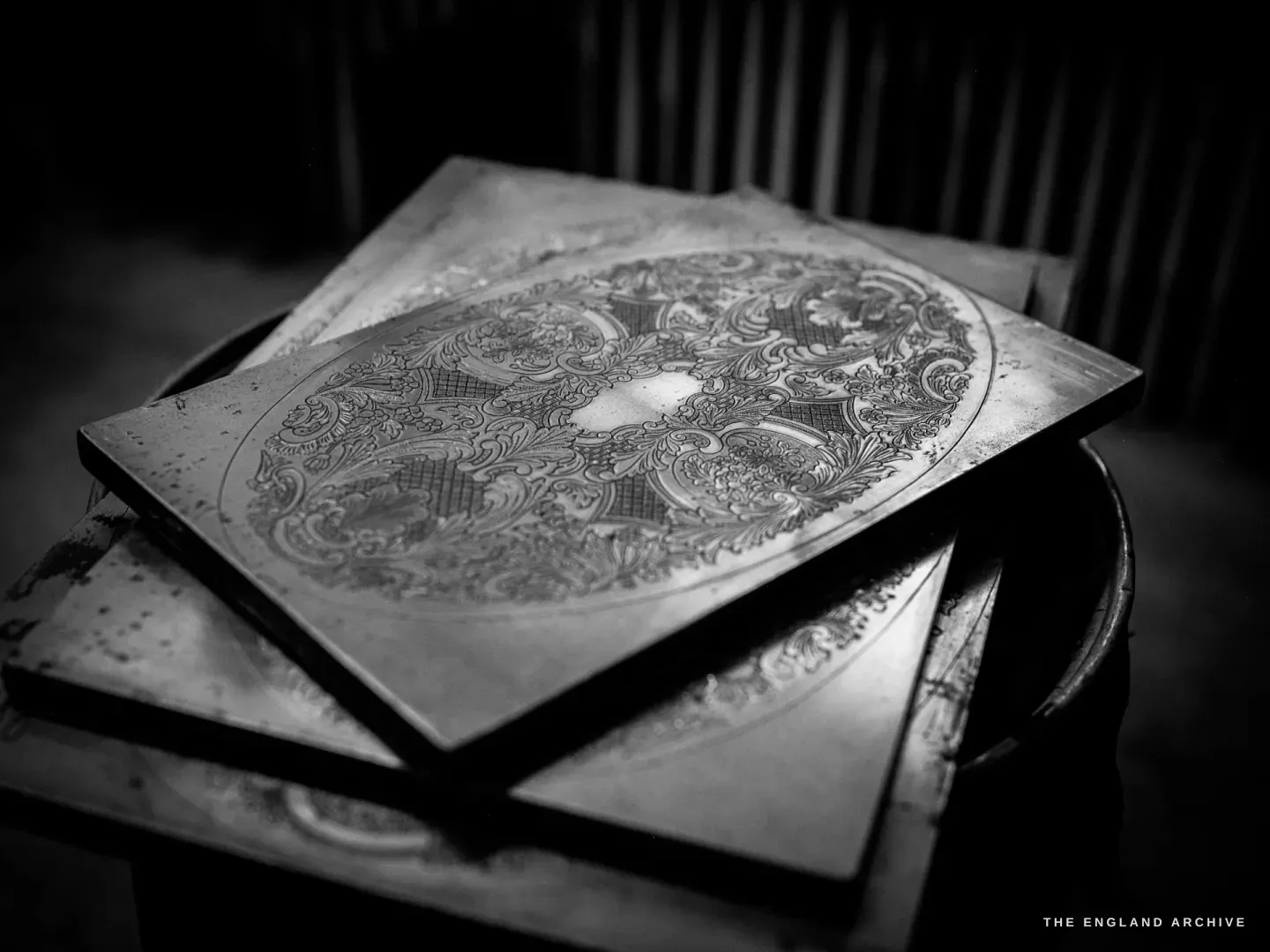
The trays carry their pattern rolled into the metal, dense floral scrollwork all the way to the edge with a smooth oval left blank at the centre - kept clear for an engraving, a crest, a name, whatever the piece is eventually for.
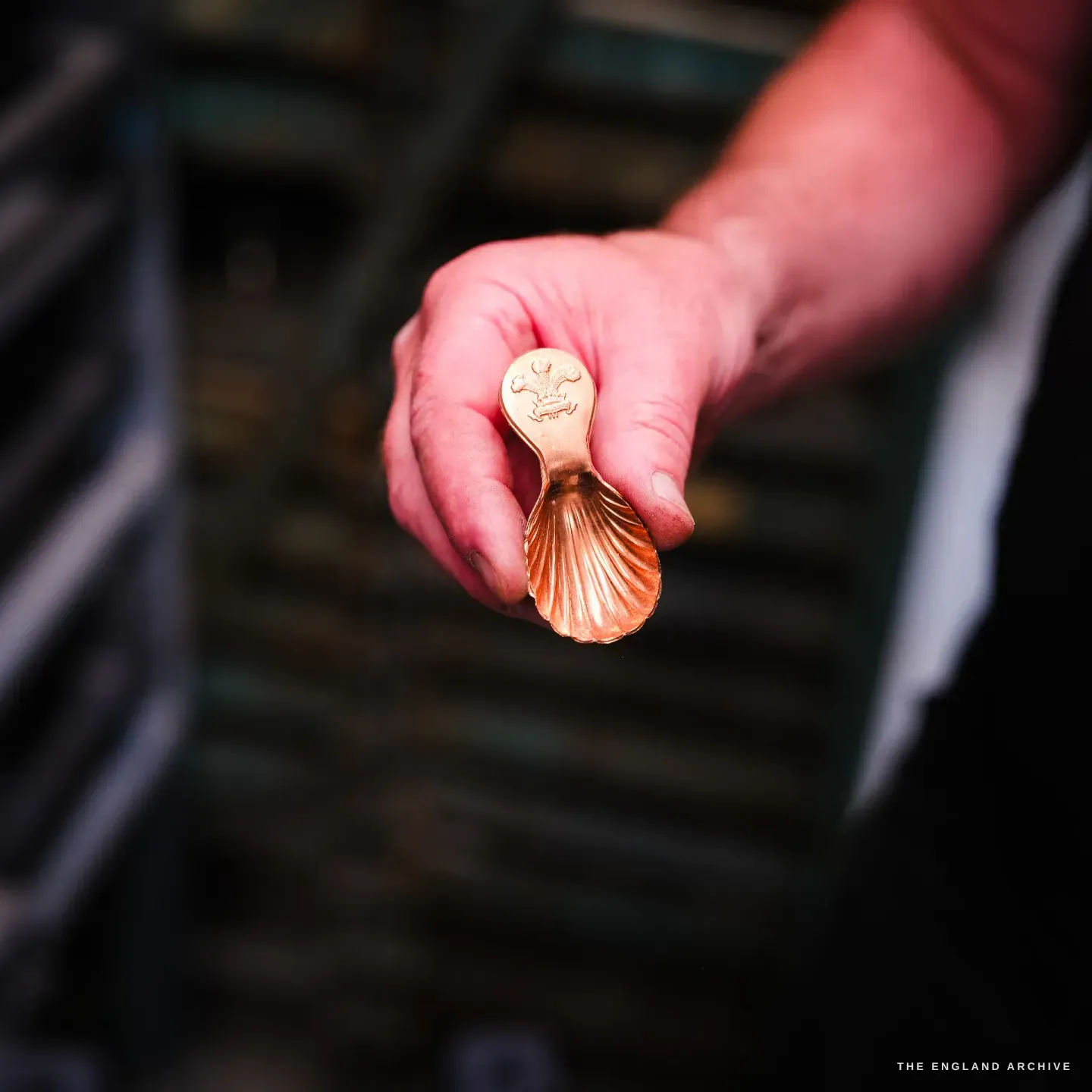
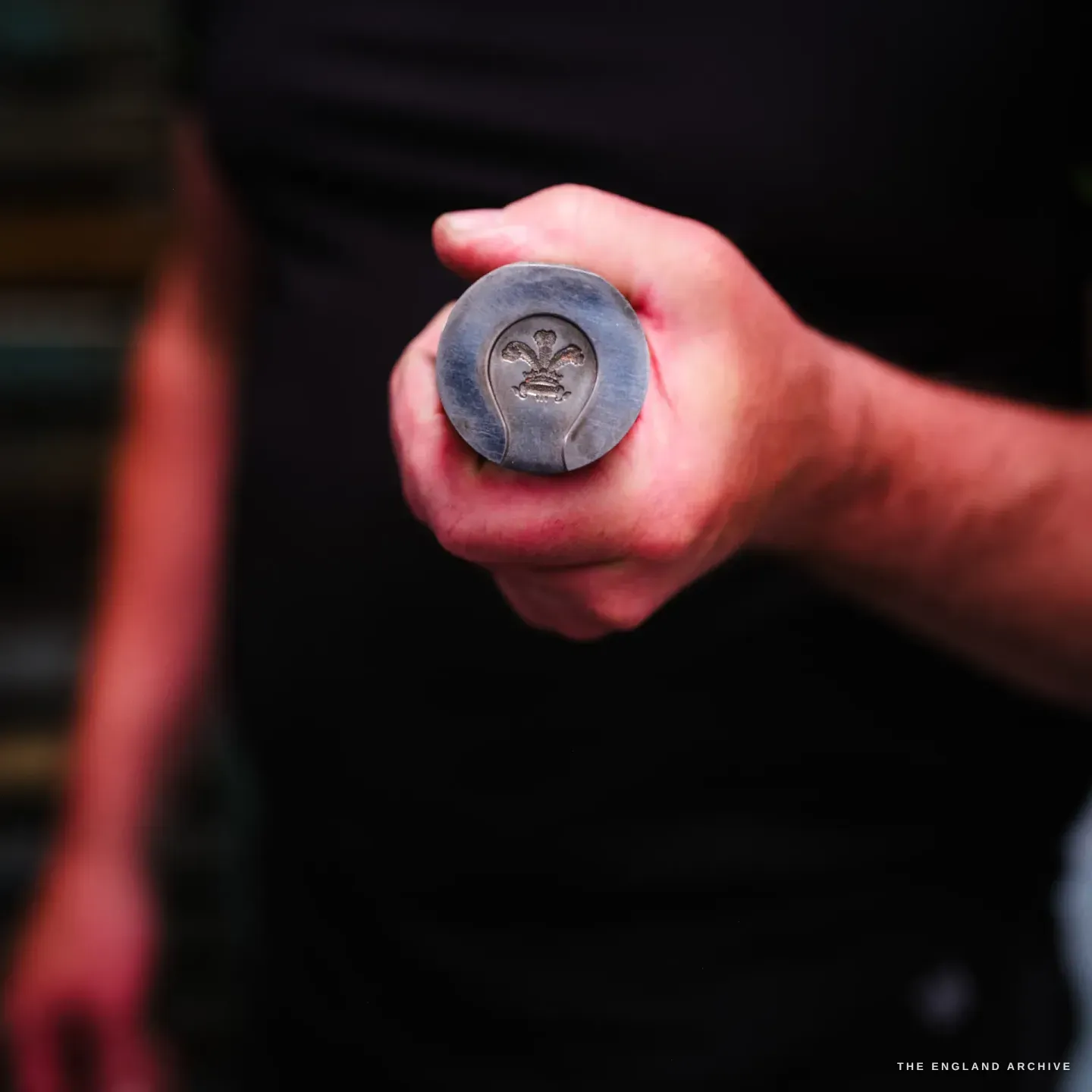
Chimo’s work carries some serious marks. Phil showed me a small copper spoon, its bowl fluted like a scallop shell, the stem struck with the three feathers - the Prince of Wales’s plumes. The point he wanted me to understand was not the spoon but how the mark gets there. The crest is engraved, once, in reverse, into the face of a hard steel die. The die is then struck into the soft metal of every spoon, and the same three feathers come out raised and identical, piece after piece, exactly as they were cut into the steel. Hold the spoon and its die together and you can see the whole logic of the trade in two objects.
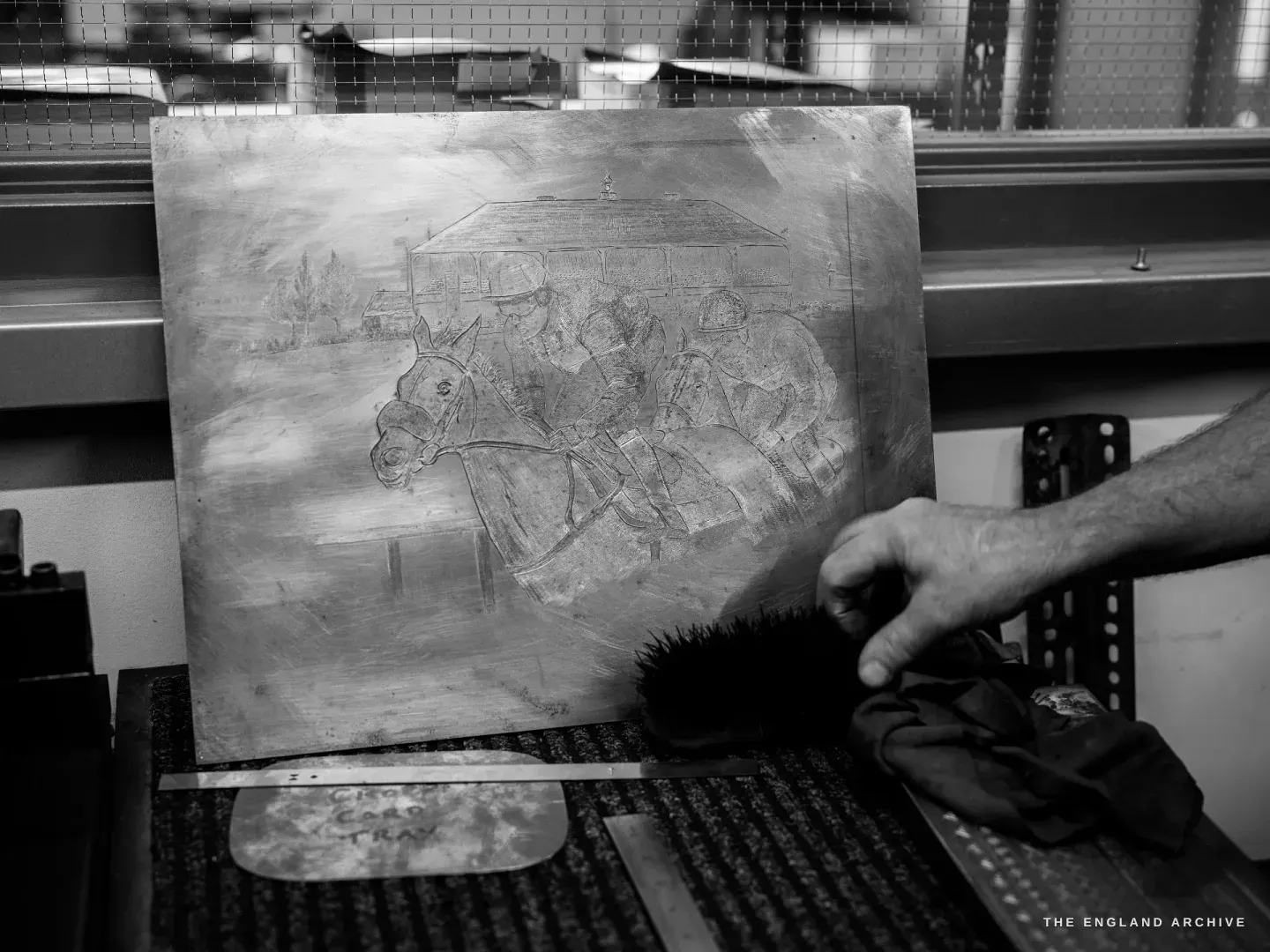
The big patterns work the same way at a larger scale. Phil brushed off a couple of the engraving dies - one a dense paisley wheel with a blank cartouche at its heart, one a whole horse-and-carriage coaching scene etched into a steel plate - the kind of cut work that takes an engraver a very long time and then prints, faithfully, for as long as the steel lasts.
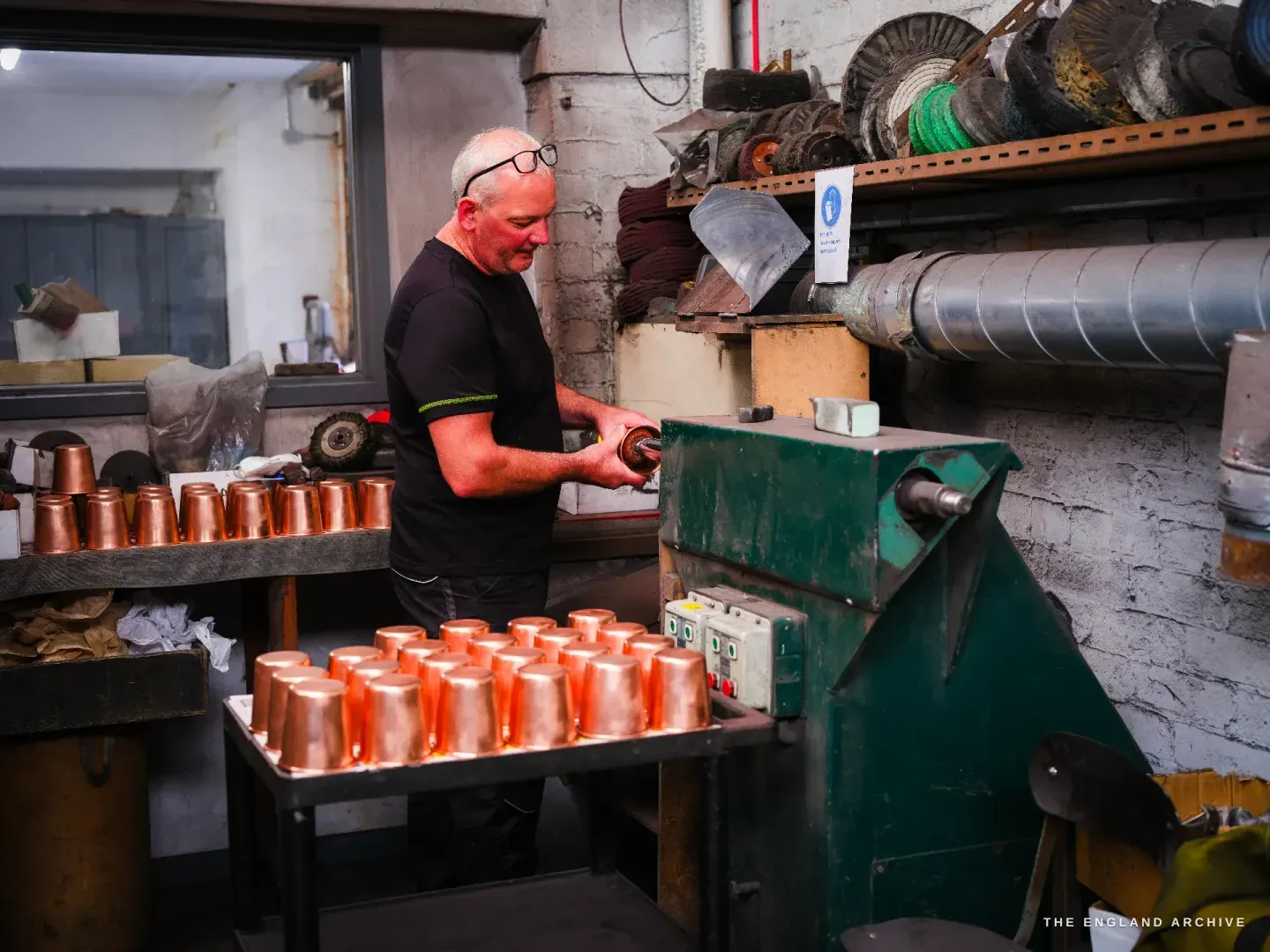
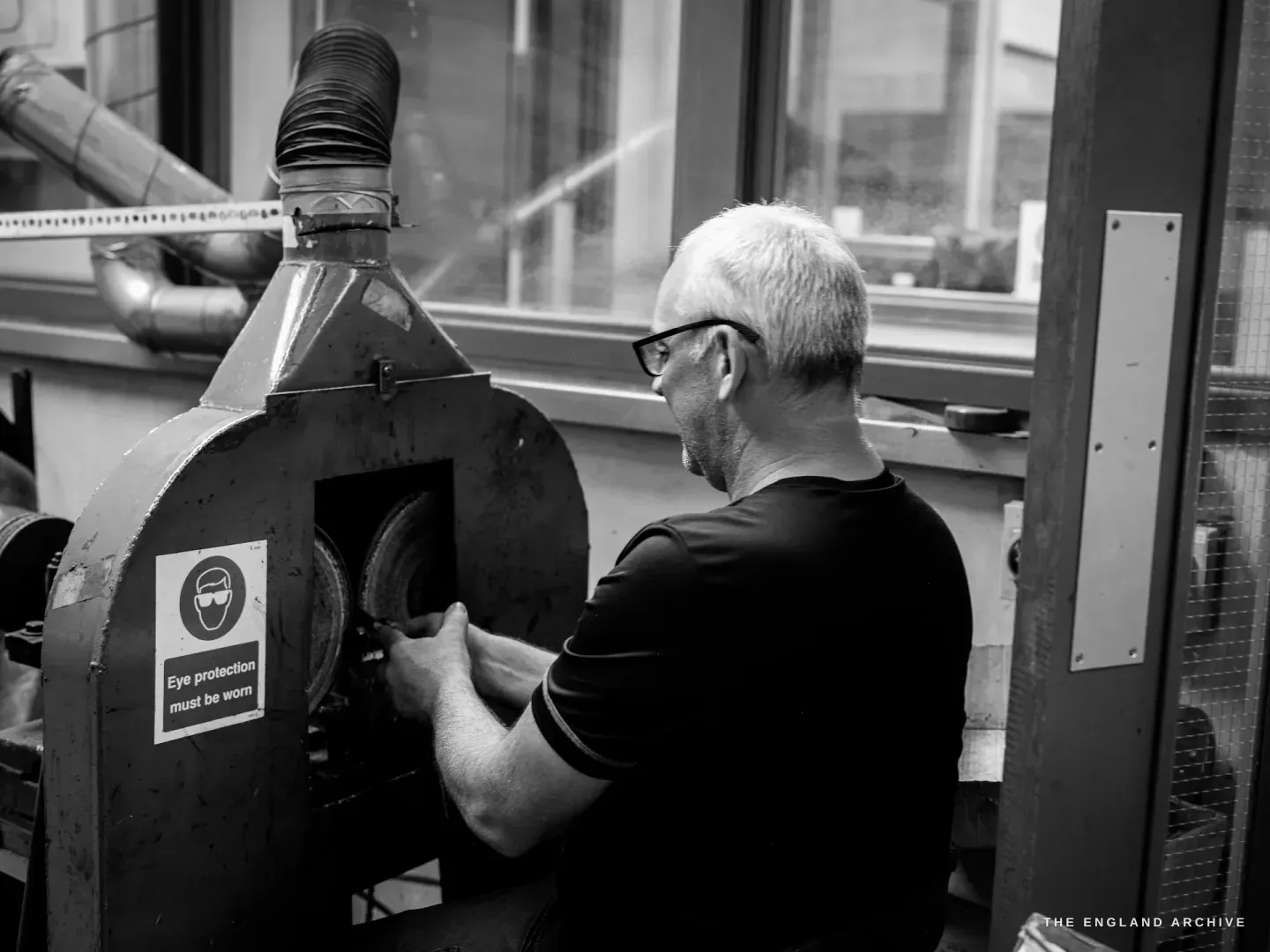
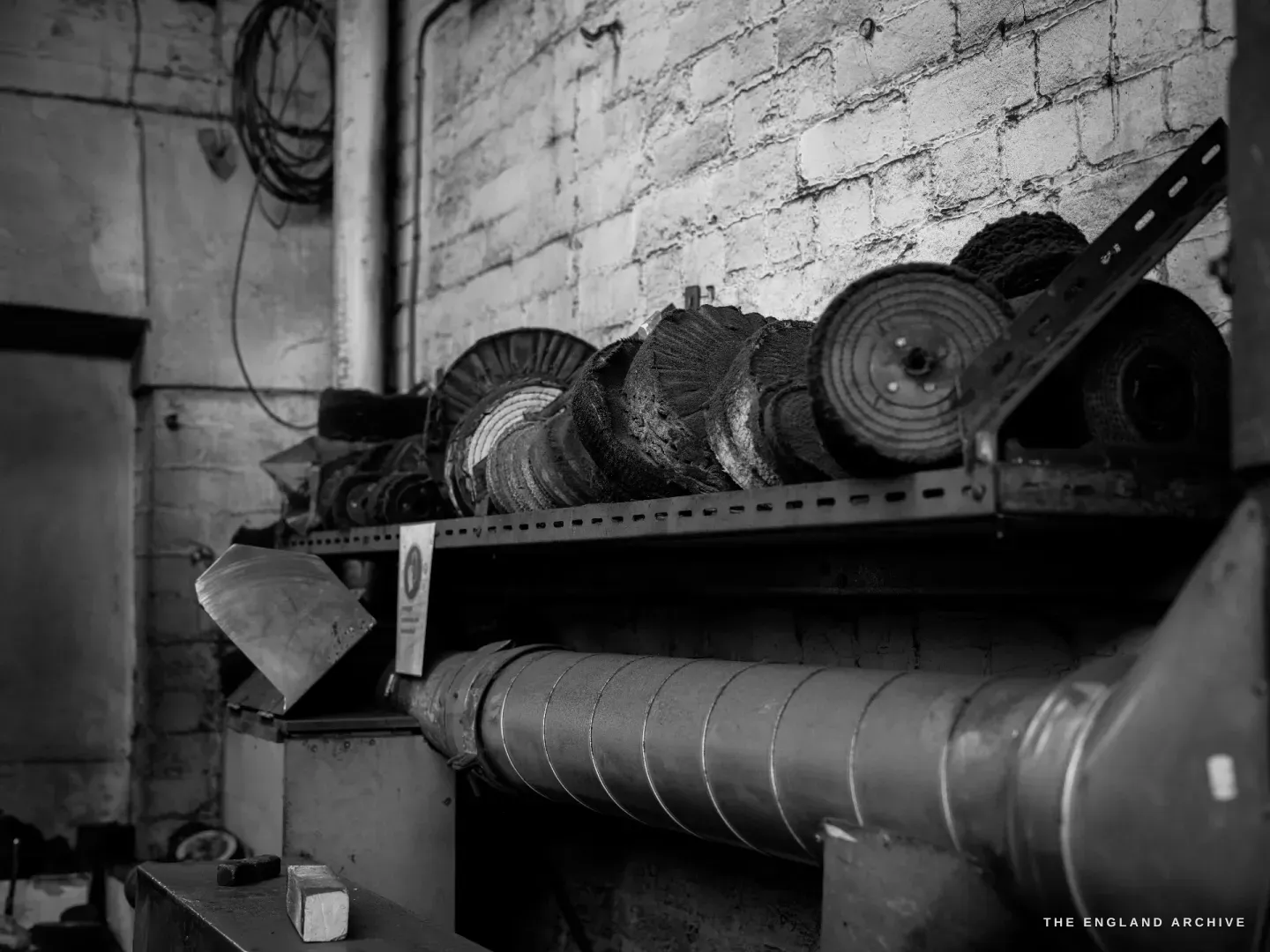
The edges and the surfaces are taken down on the grinding and barrelling machines - the part of the trade that gave Sheffield its reputation and its grinders’ lung in equal measure. The safety label on the housing - Eye protection must be worn - is about the only new thing in a corner of the works that is otherwise much as it was. The signs change. The machines do not.
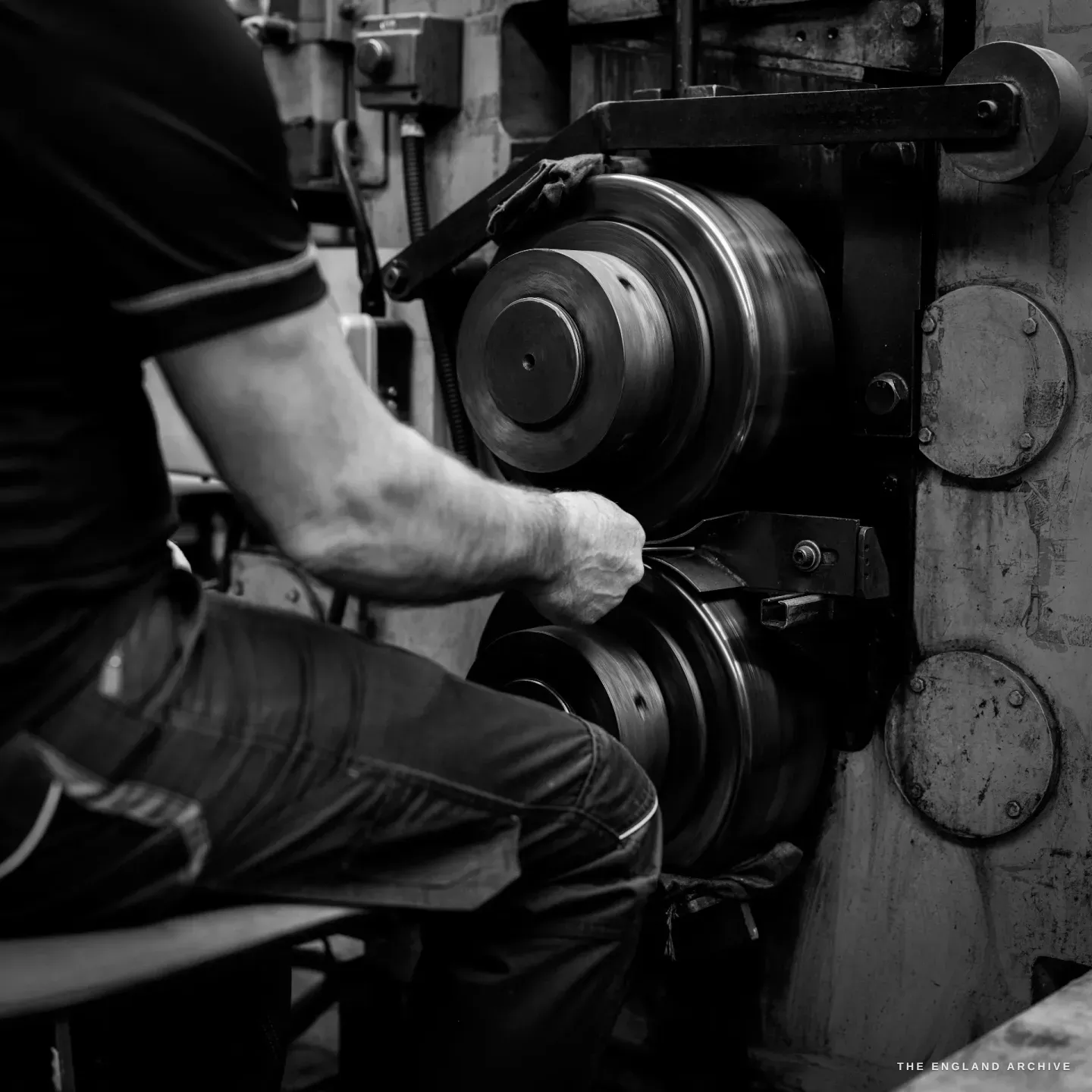
And then the buffing, which is where the whole thing comes alive. Phil leaned a blade into a fast-spinning wheel and the light came off it in a streaming arc, like water thrown into a beam. This is the step that turns grey steel into the thing you would set on a table, and it is done exactly the way it looks - a person, a wheel, and a feel for the precise pressure that polishes without burning. Watch his hands here and you stop thinking about the machine at all.
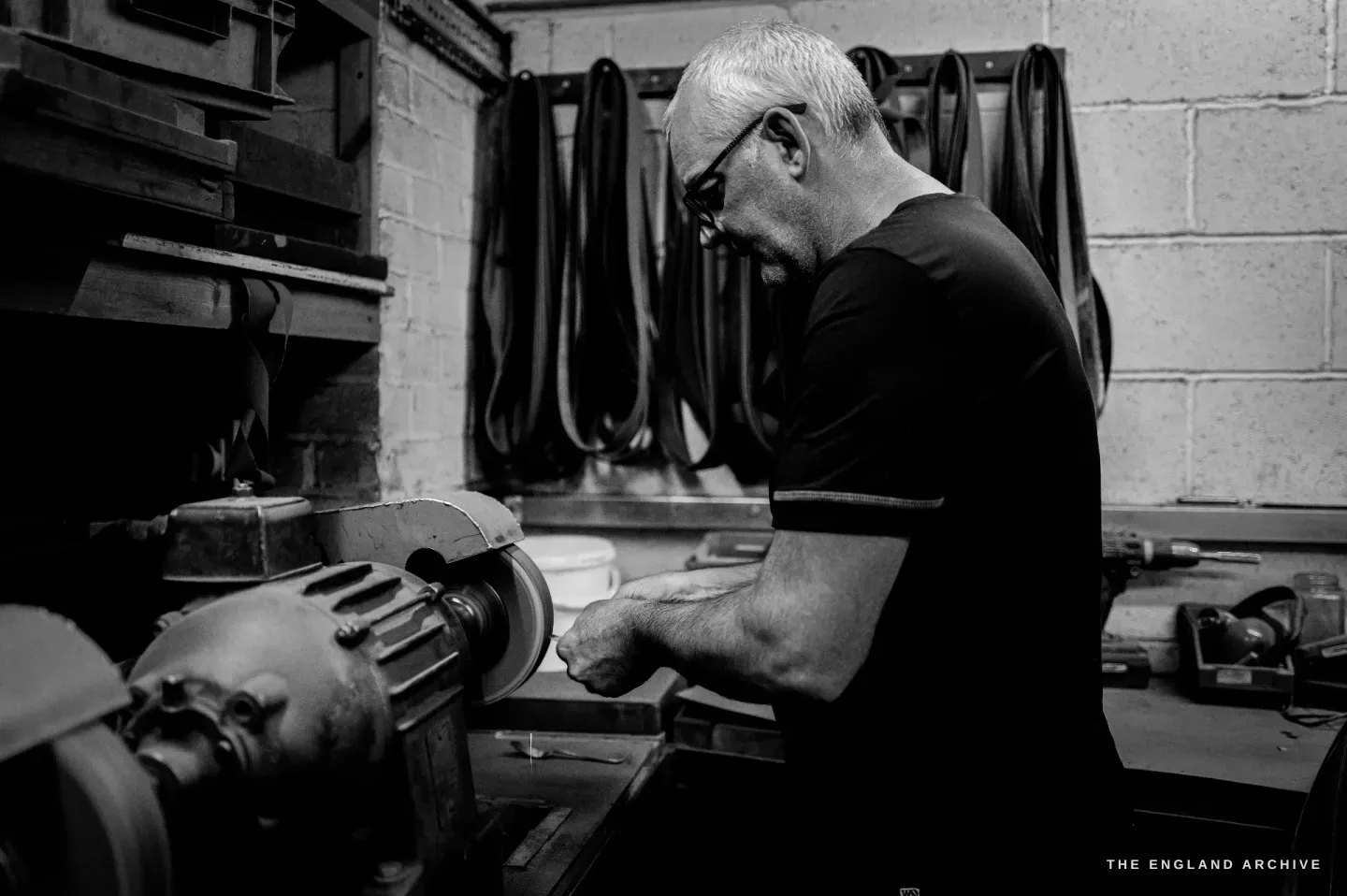
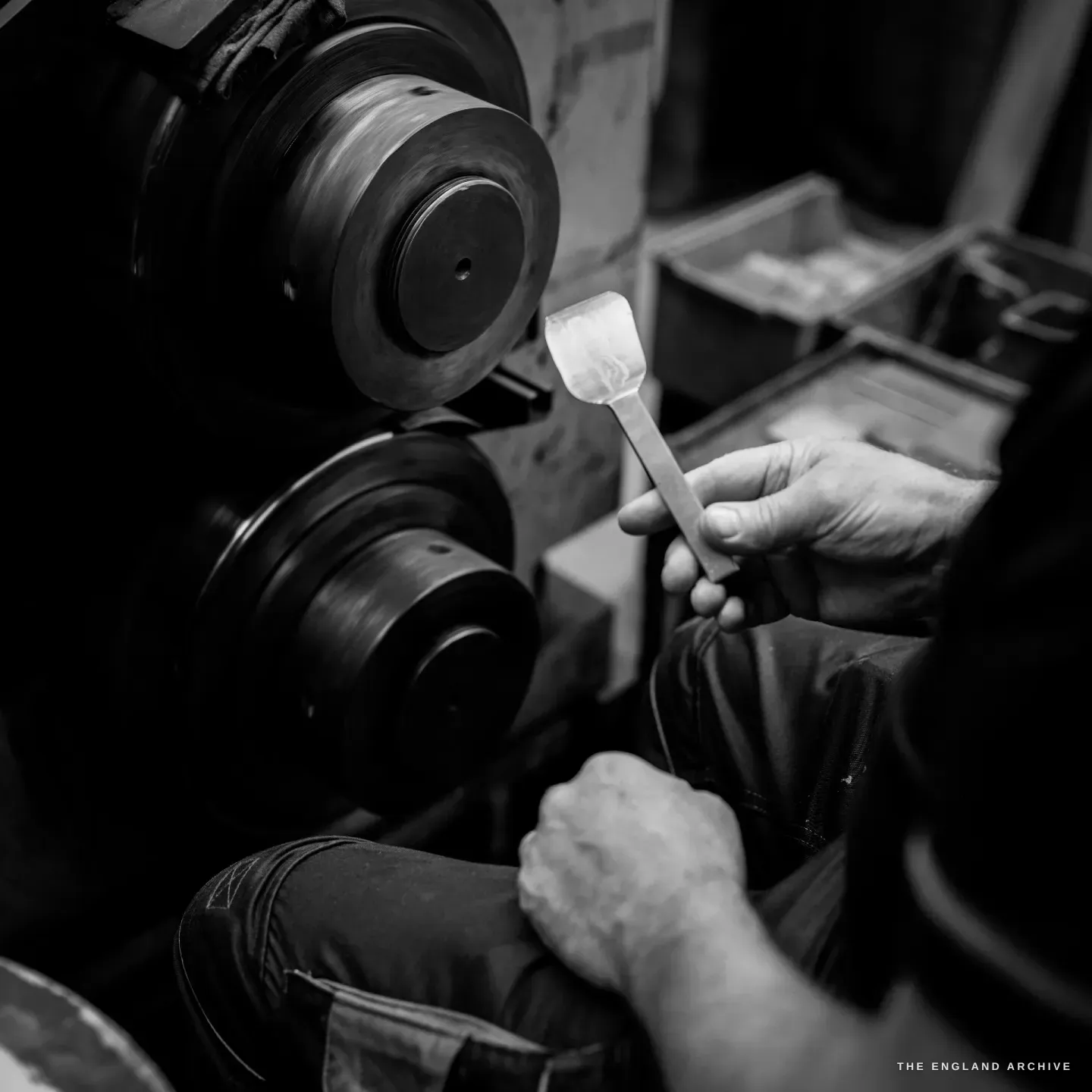
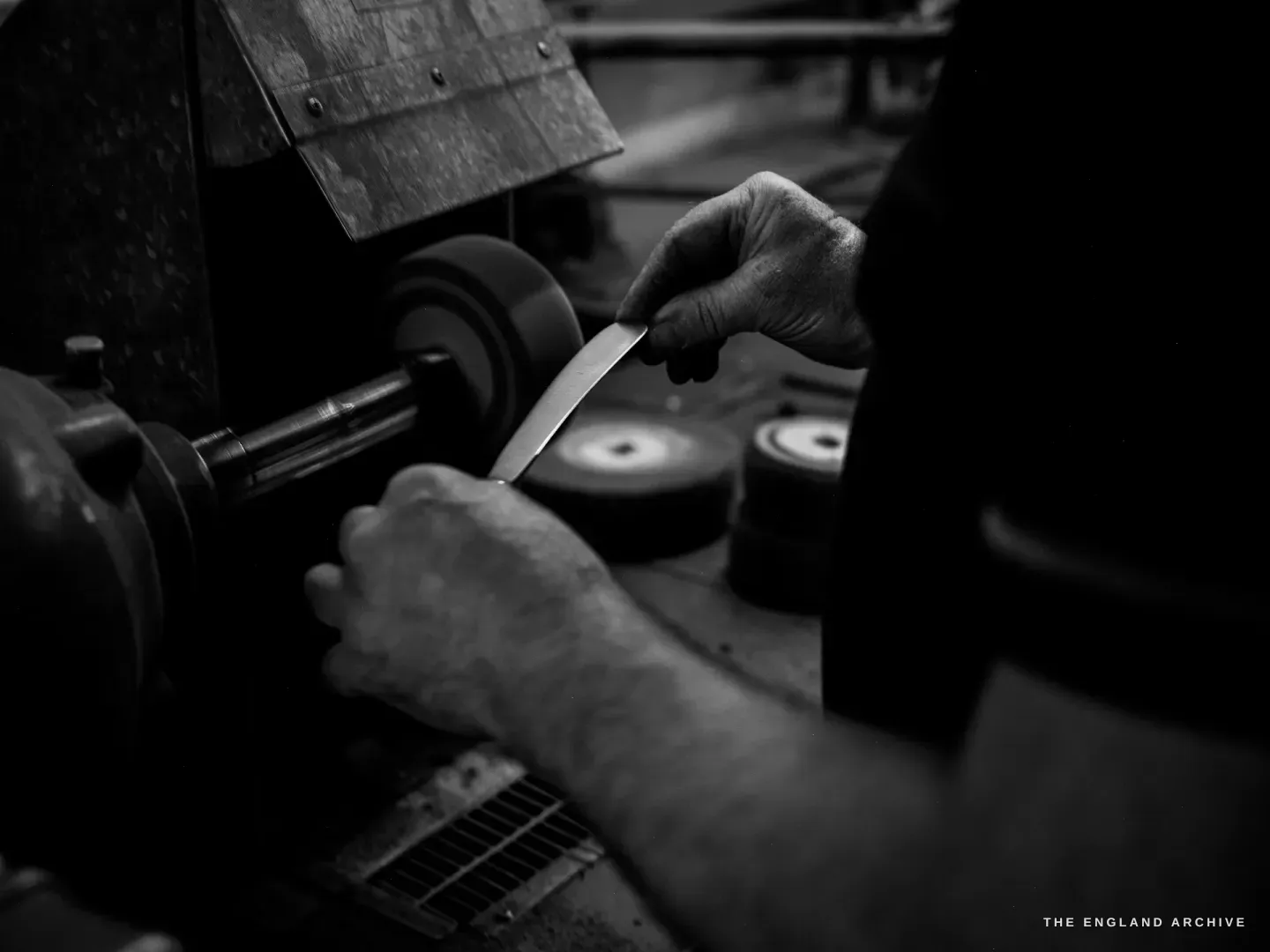
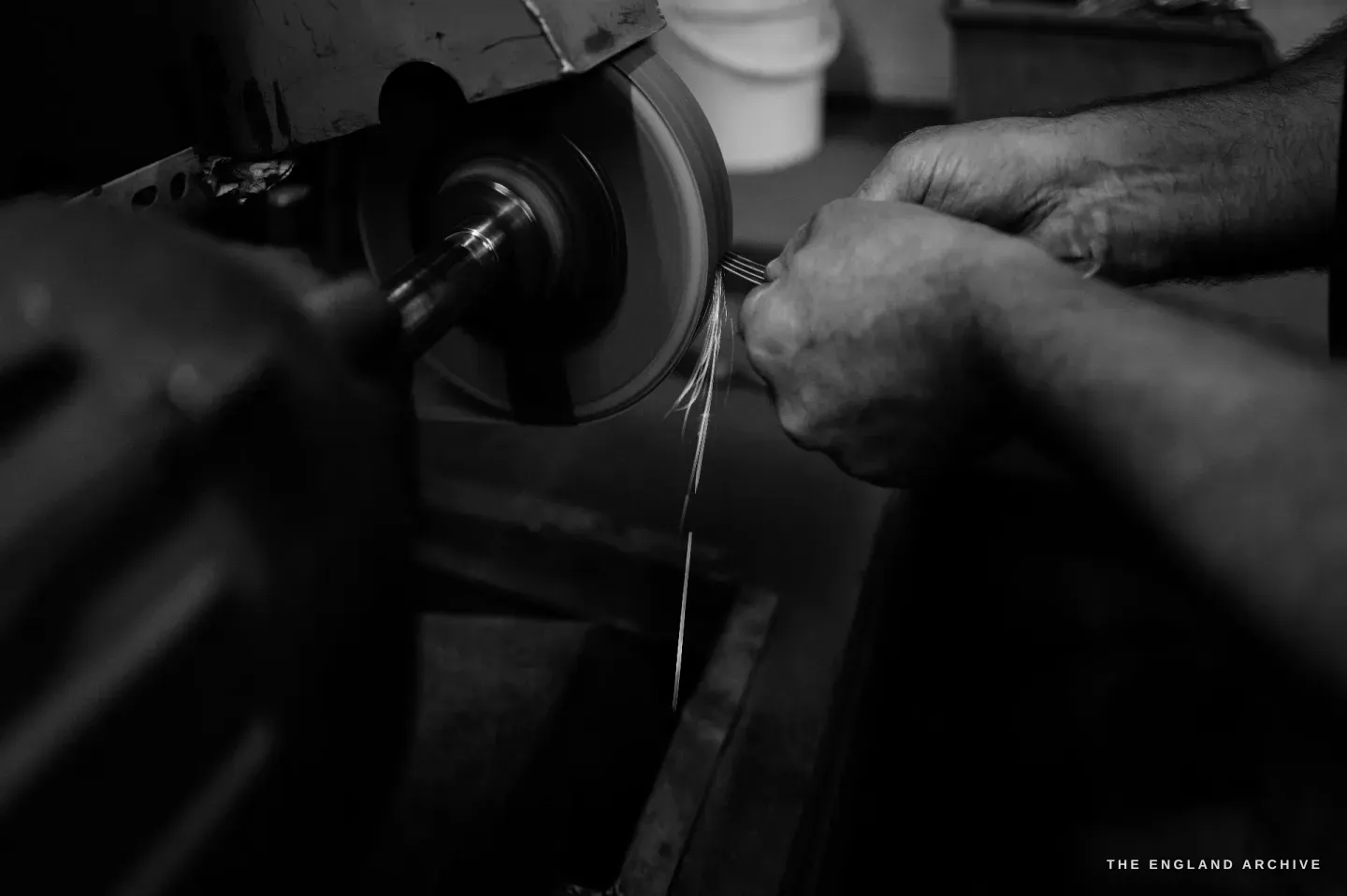
What stays with me is not a machine. It is Phil. He is funny in the dry, fast, deadpan way that the best workshop people are - the humour of someone who has stood at a bench long enough to have a remark ready for everything. He corrected me, teased me, told me stories, and walked me through forty years of a trade as if it were the most natural thing in the world to hand a stranger, which to him it was.
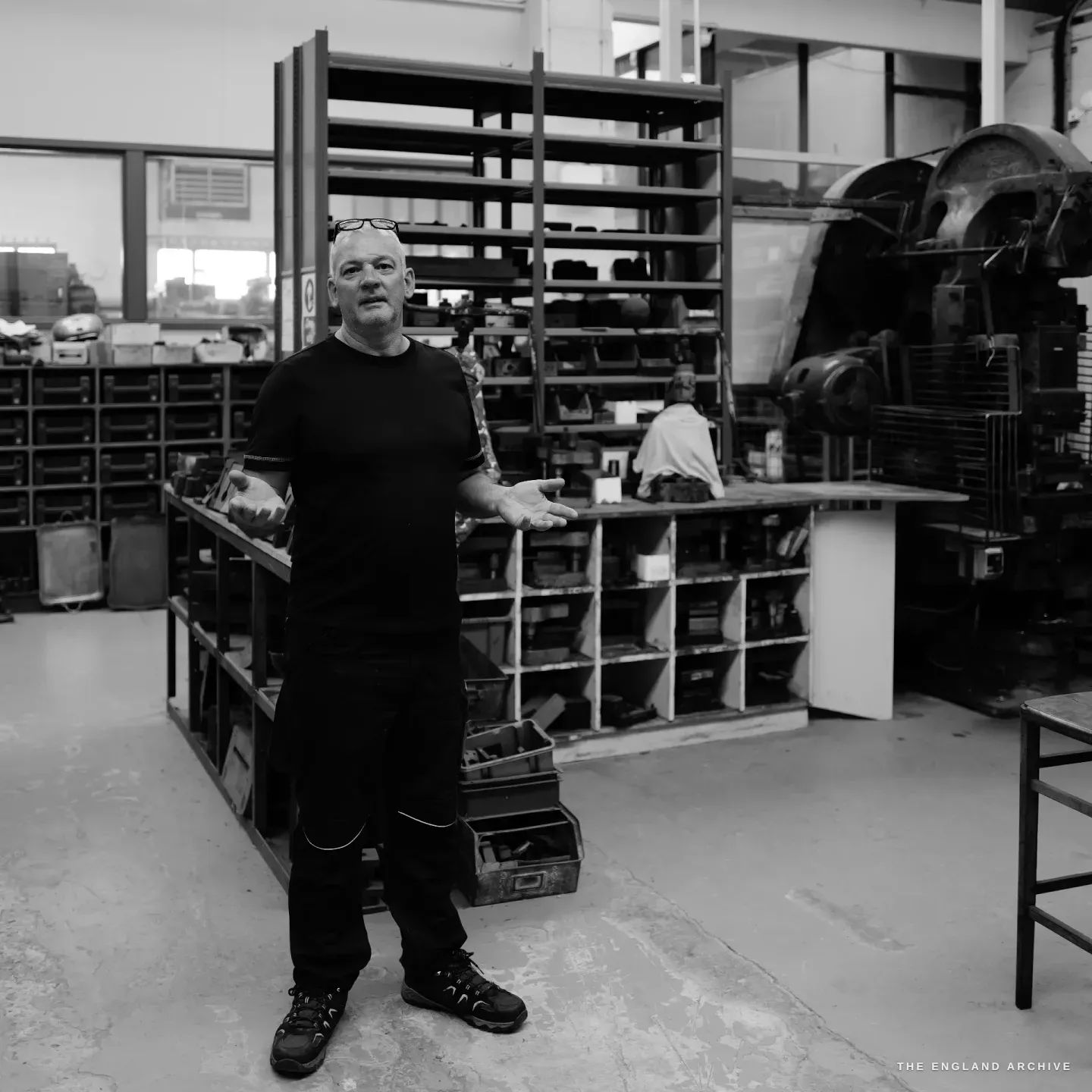
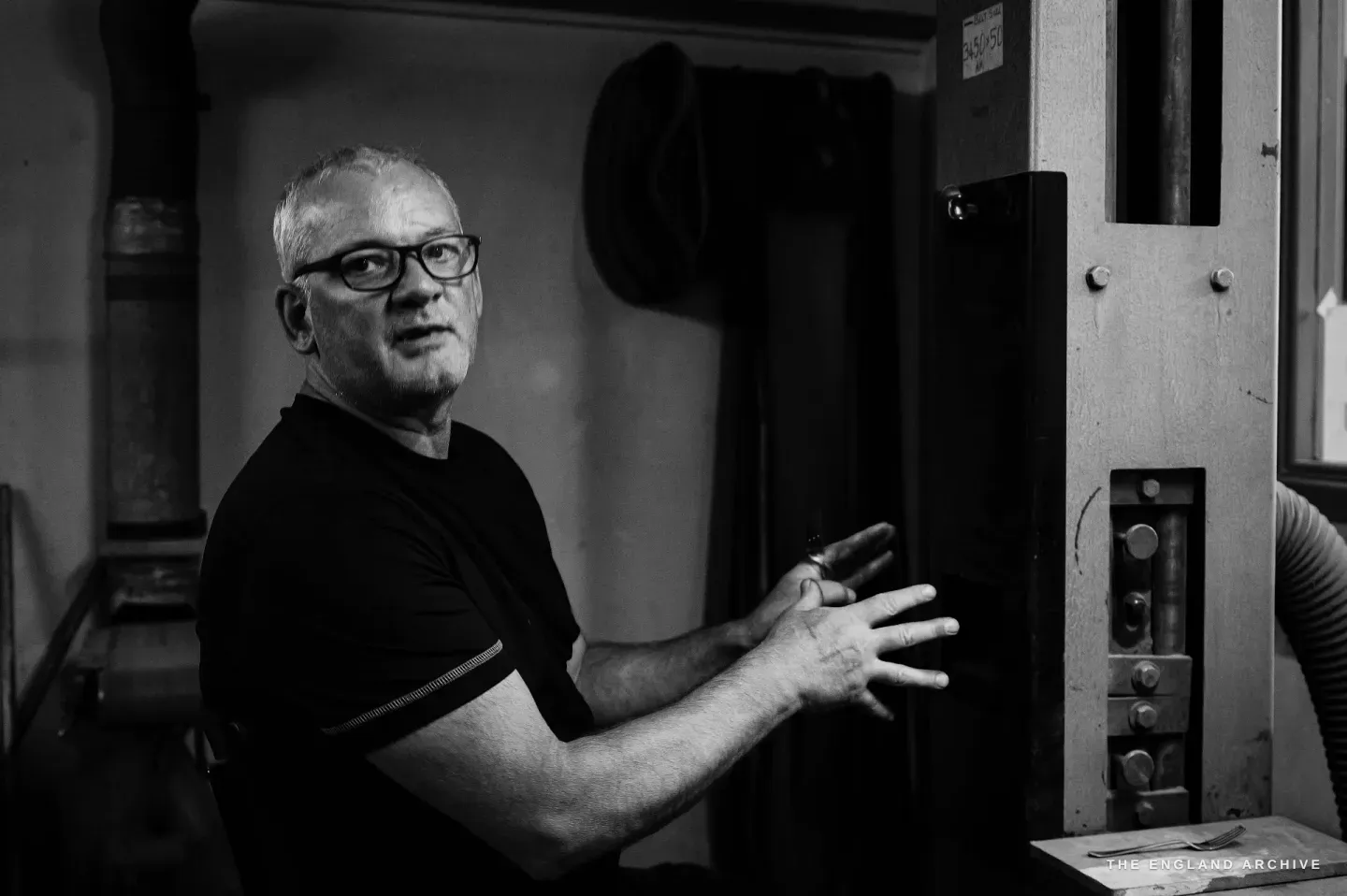
Near the end I asked him, only half joking, whether we had met before, because it genuinely felt like I had known him for years. We had not. That is its own kind of skill - rarer than the buffing, harder to teach - and it is the reason this profile is a warm one. The cutlery is extraordinary. The man is the reason the morning was the best the archive has had in a while.
This is the archive’s first record of the Sheffield trade, made at Chimo in June 2026: Phil Benton, a cutler who ran from his father’s craft and then gave it his life, taking a knife from a blank through the press, the rollers, the spinning lathe, the grinder, the wheel and the hand. Sheffield cutlery and silversmithing sit on the Heritage Crafts Red List - the skills are real, the practitioners are fewer every year, and most of what Phil knows lives in his hands and nowhere else. We will be back: for Chris Hudson, for Chimo’s own page, and for more time with Phil, who has a great deal more to teach and, I suspect, a great deal more to correct me on.