Makers
Evan James
Scissor Grinder · Ernest Wright
Sheffield, South Yorkshire
Scissor Grinder · Ernest Wright
Sheffield, South Yorkshire
Eighteen months ago he had never ground a blade. Now the sparks come off the wheel in a fan, and the edge comes up true.
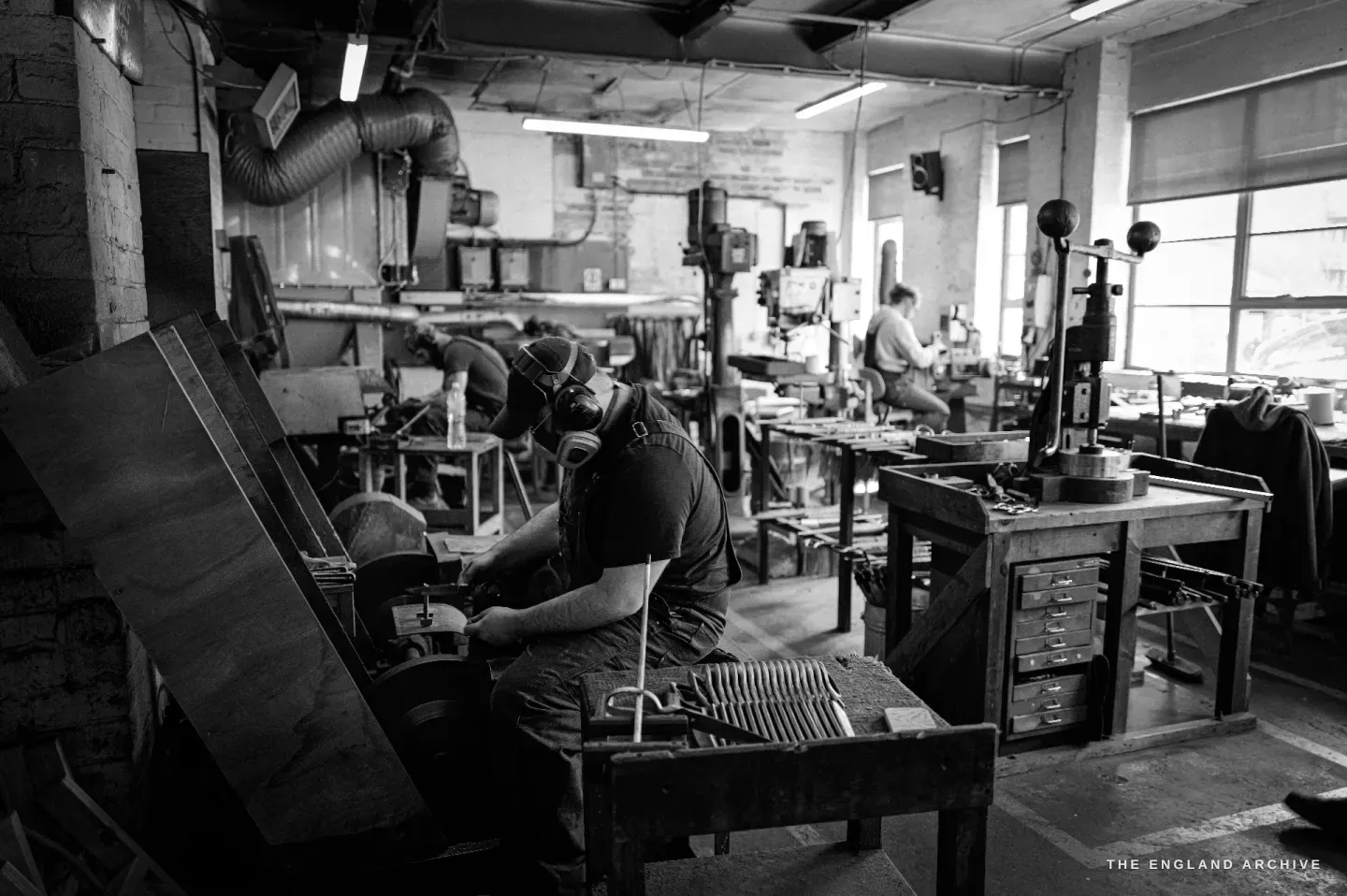
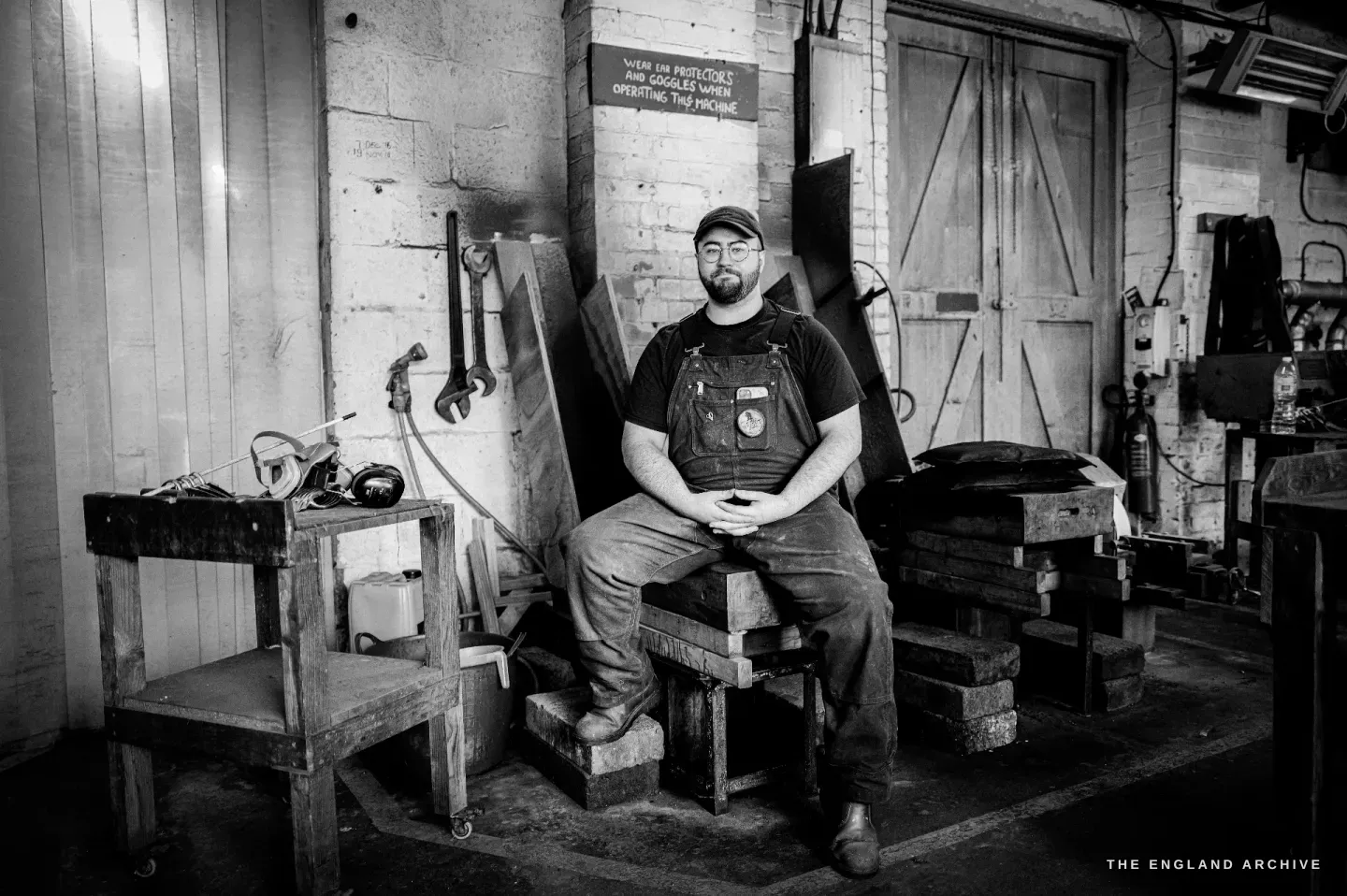
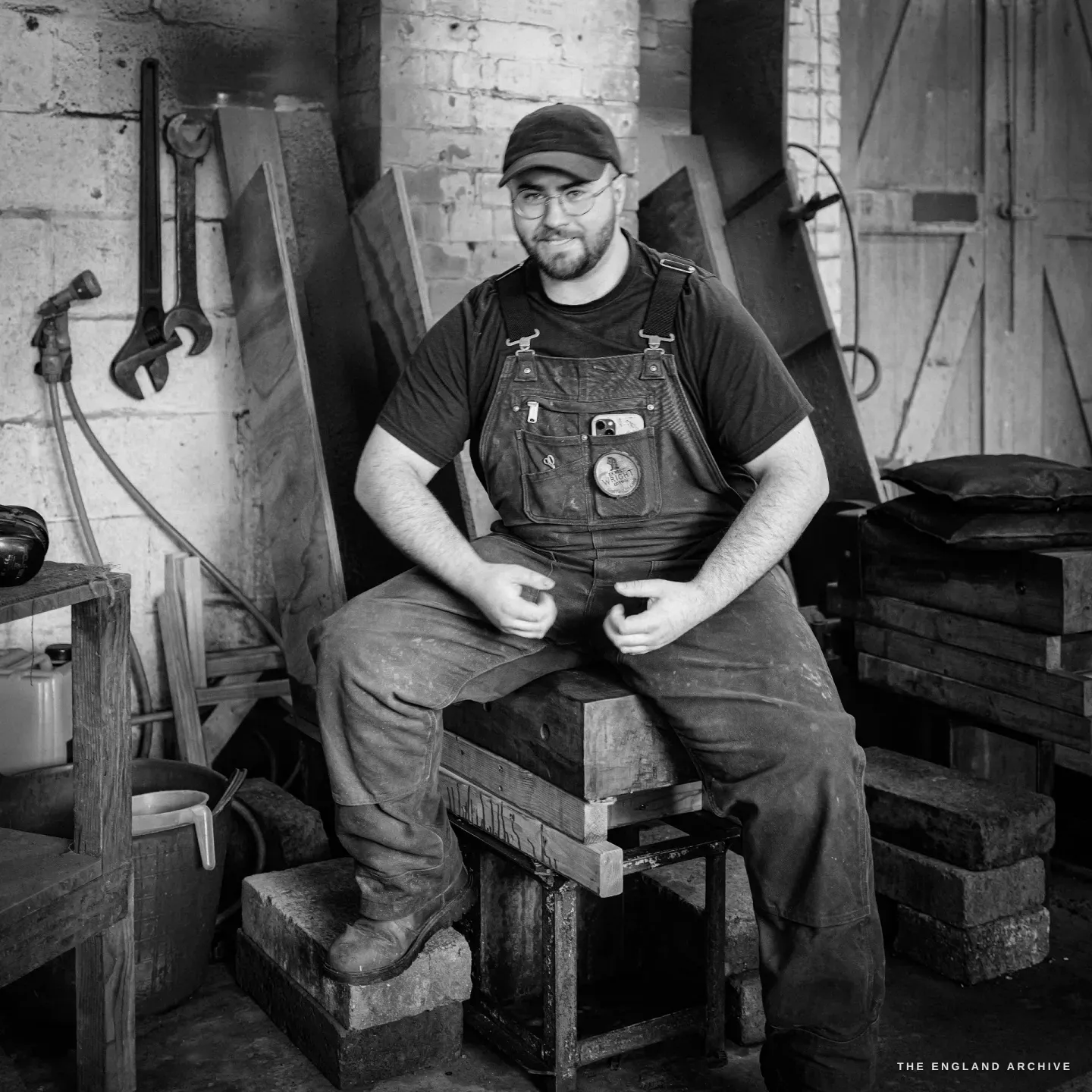
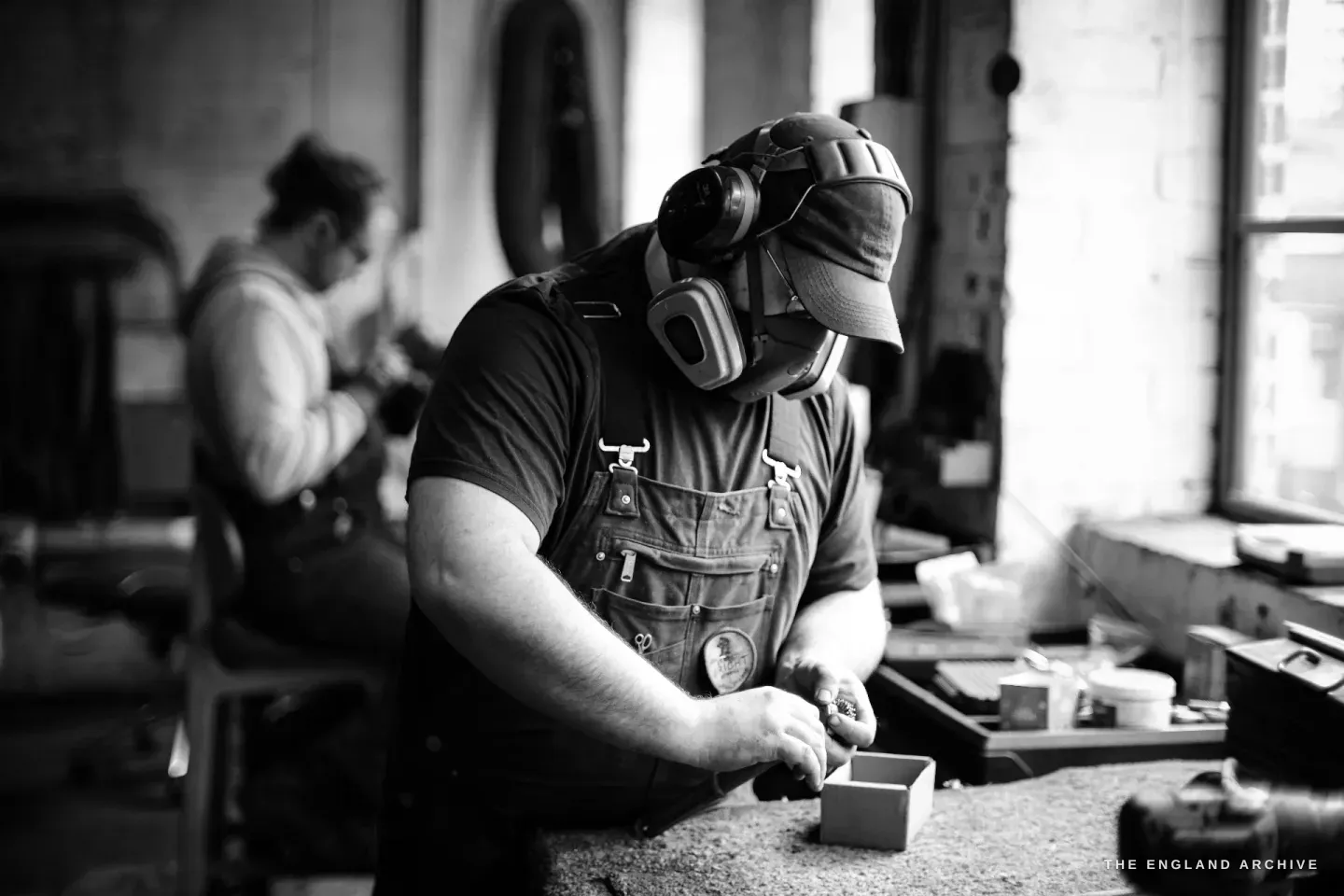
Evan James is one of the newer makers at Ernest Wright, about eighteen months into the trade, and his station is the grinding wheel. Grinding is the stage that turns a forging into a blade. A scissor blade leaves the forge as a rough shape; on the wheel the grinder takes it down - working the hollow into the inner face and the long bevel back from the cutting edge - so that, much later, the two halves of a pair will meet clean and shear rather than crush. It is hot, loud, spark-throwing work, done by eye and by feel against a wheel that does not forgive a slip.
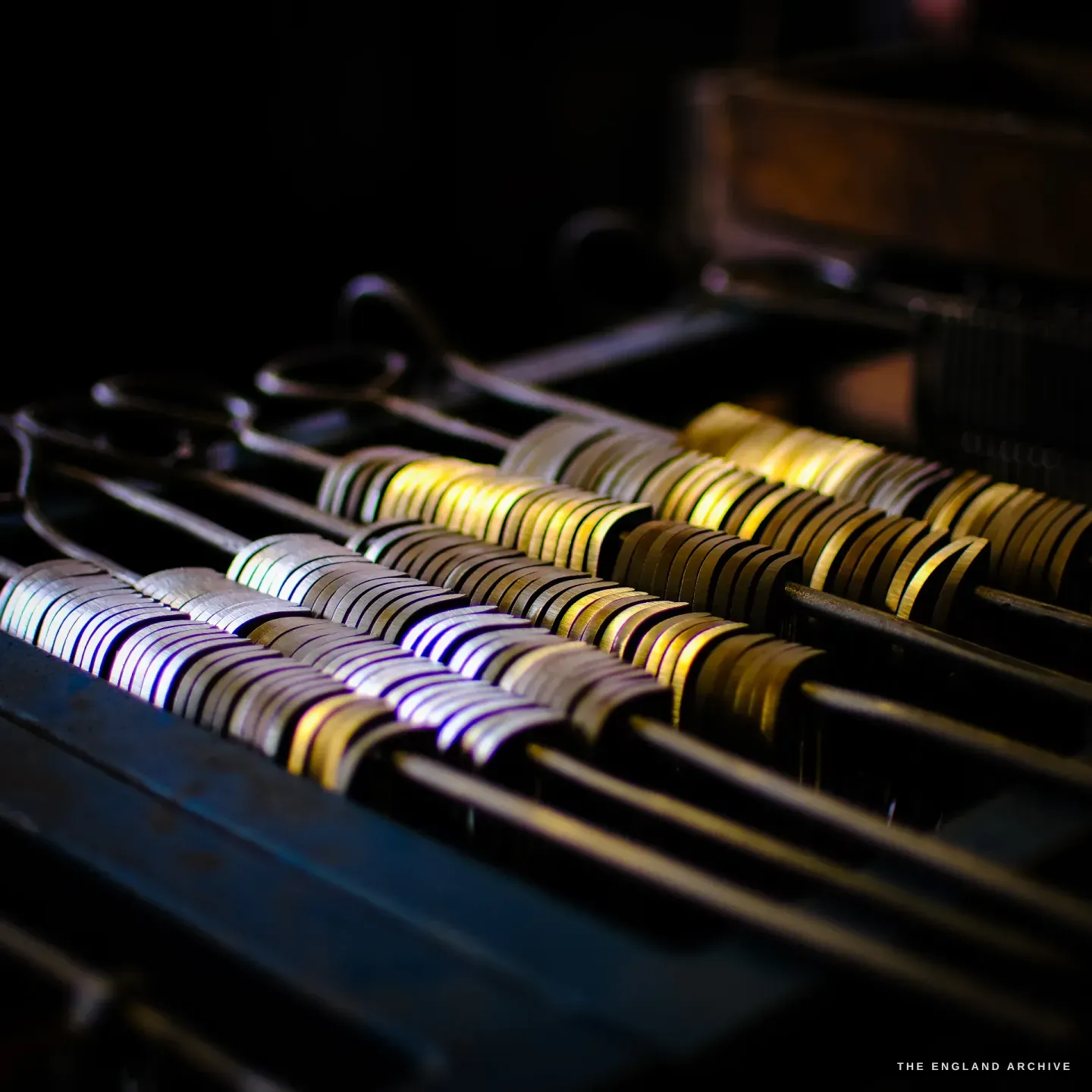
The blades arrive at his bench in racks - drop-forged in one piece, dull and square-edged, every one needing the same work before it is anything you would call a scissor. Evan sorts and squares them up, then takes them to the wheel a handful at a time. The craft is the same one Ernest Wright has practised since 1902, and the grinder’s part of it is the one that cannot be faked: a blade that is ground wrong is scrap, and a blade that is ground right is the foundation everything after it depends on.
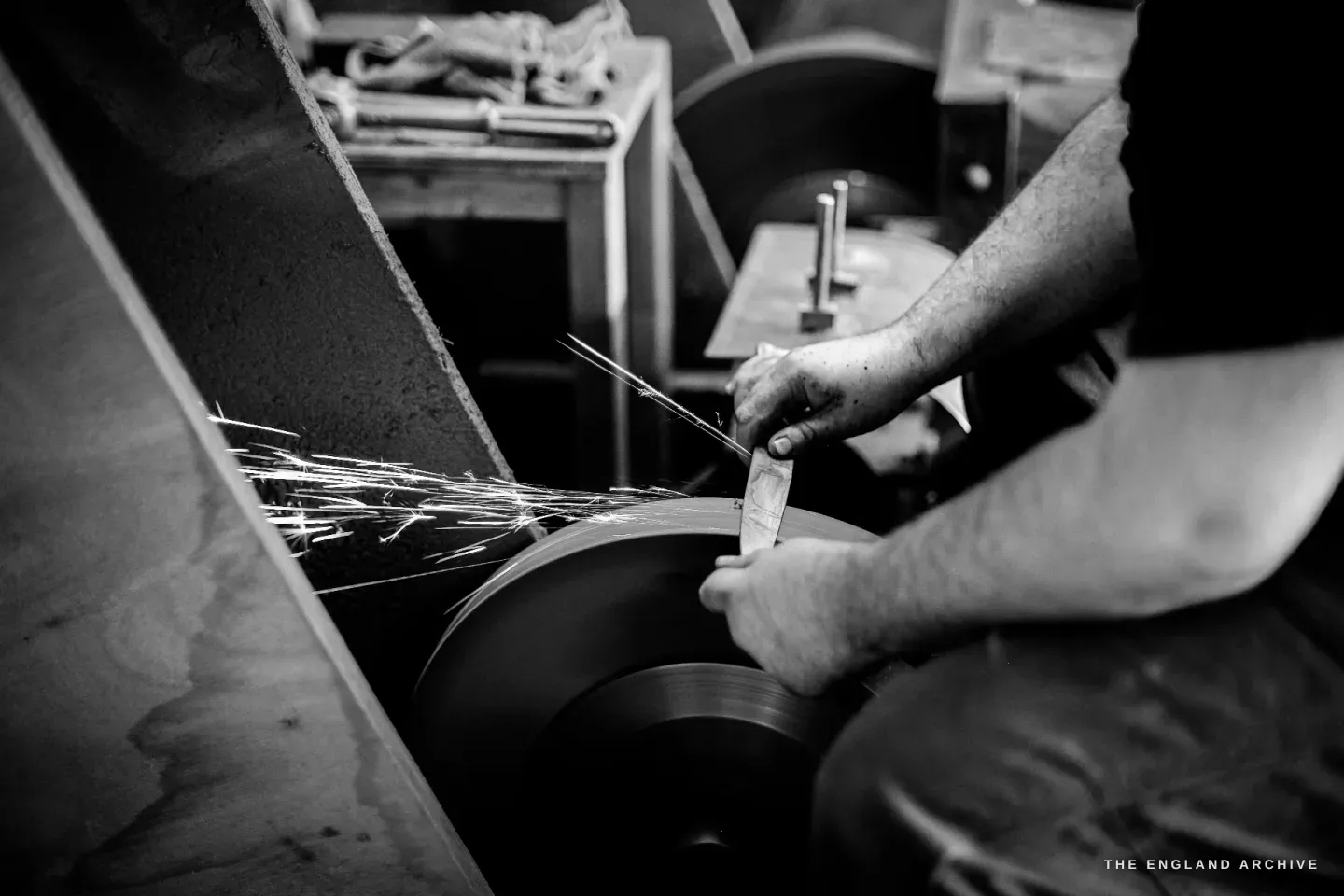
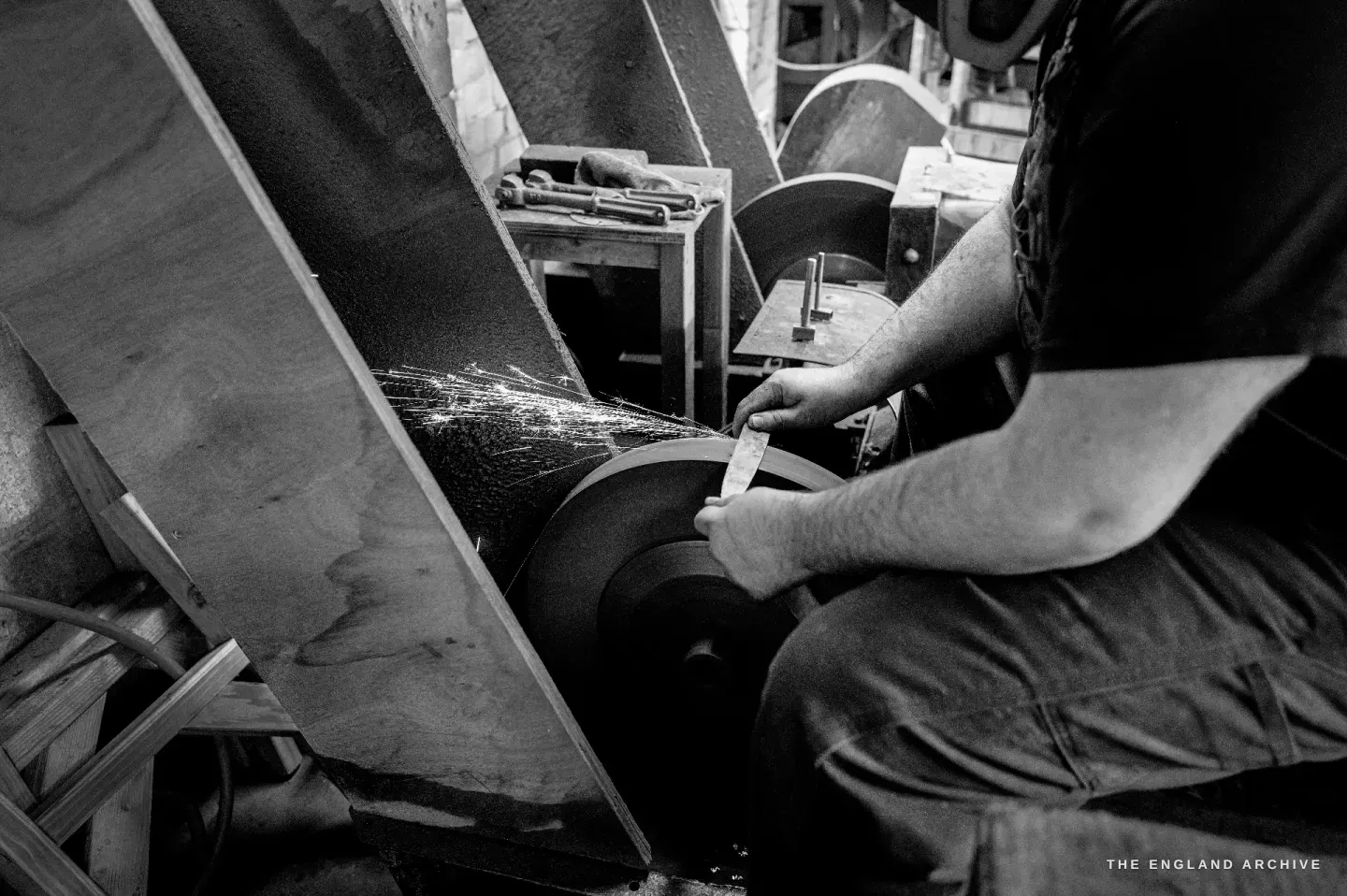
I could have watched this all day. At the wheel Evan sits astride the trough, the blade held flat to the stone, and the metal comes off in a bright fan of sparks that streams the length of the guard. There is no gauge for any of it. He reads the blade by the colour of those sparks, the note of the wheel and the heat coming up through the steel, easing off before the edge burns and the temper is lost. What struck me, standing behind him, is that the most dramatic-looking job in the building is in truth one of the most controlled - the same motion on blade after blade, each one a little different, each demanding the whole of his attention, and not one allowed to overheat by a second.
Evan’s wheel is one of a row. The grinding shop runs loud and close under its extraction ducting, the makers spaced down the line, and a man in his second year is learning as much from the hands either side of him as from his own. That is how this trade has always moved from one generation to the next: not through a course - there is no course - but at the bench, beside someone who has done it ten thousand times, until the reading of the blade goes from thought to reflex. It is worth saying plainly what I was actually looking at. Evan is eighteen months in; the skill in that room is critically endangered; and the only reason it will still exist in fifty years is that the men on either side of him are, right now, pouring it into someone this young.
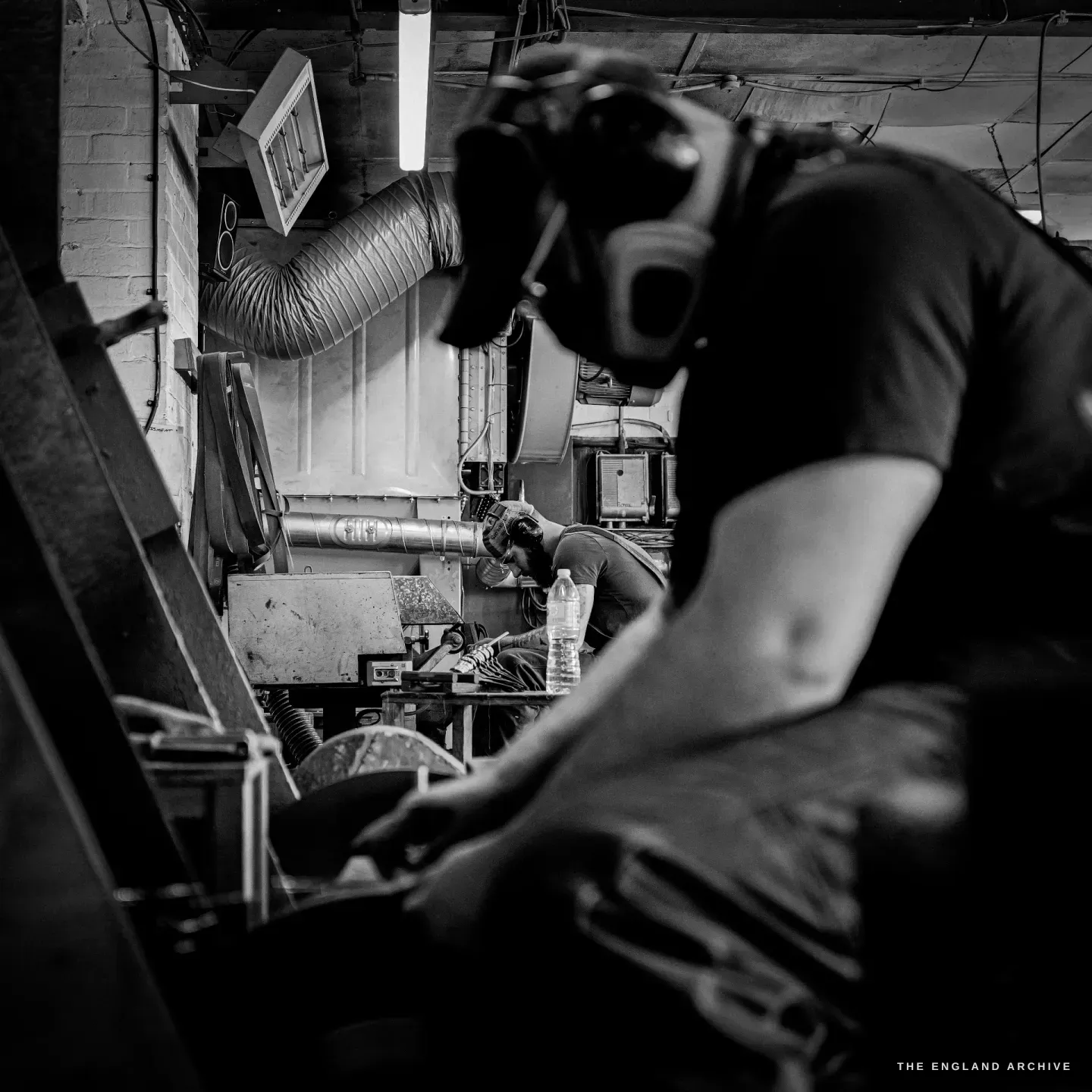
This is the archive’s record of Evan James, made at Ernest Wright in Sheffield in June 2026: a grinder about eighteen months into the trade, at the wheel where every blade in the building is brought to its edge. Scissor making is on the Heritage Crafts Red List, and a craft on that list survives one new pair of hands at a time. His are among the newest.