A Best Gun, By Hand
The trade of building a gun from fifty pairs of hands

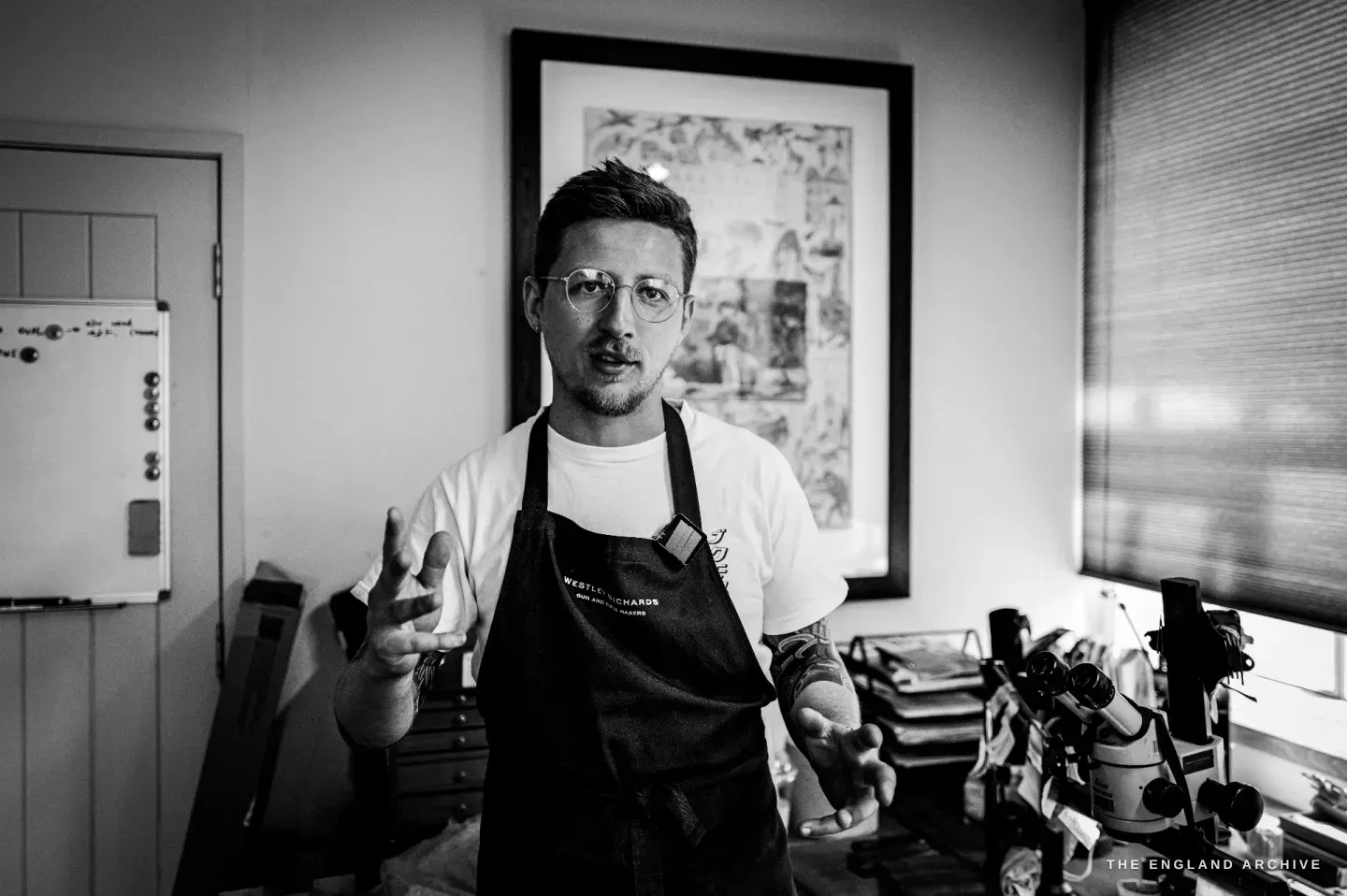
A best gun looks like one object, and it is not. It is the sum of many trades, each worked by a specialist, and brought together by one more craftsman until it opens and shuts as though it were a single piece of metal. That last job - the fitting - is the one that makes a good gun good, and it is the one the archive went to Birmingham to watch. This essay is the record of the craft, written around a July 2026 morning with the action filer Haydn Hill and a visit the same month to Westley Richards, one of the last firms still building complete best guns by hand.
The proposition of a best gun is simple and expensive: that a gun made entirely by hand, every part fitted individually to that one gun, will be better - shoot truer, last longer, feel more alive in the hands - than one built from interchangeable machine-made parts. Whether that is worth the price of a house is a question for the buyer. How it is done is a question for the archive, and the answer is a story about hands.
I. What a best gun is
A best gun is defined by how it is made, not by how much engraving it carries. Every part is worked and fitted individually, to that gun, by hand and eye. The barrels are made and regulated to shoot to one point; the action - the body where the barrels hinge and the gun locks shut - is filed until barrels, body and lockwork close with no play and no gap; the stock is shaped and chequered to the customer; the locks are built and fitted; and only then is the whole hardened, engraved and finished. A plain best gun with no decoration at all is still a best gun. A heavily engraved gun built from machined parts is not.
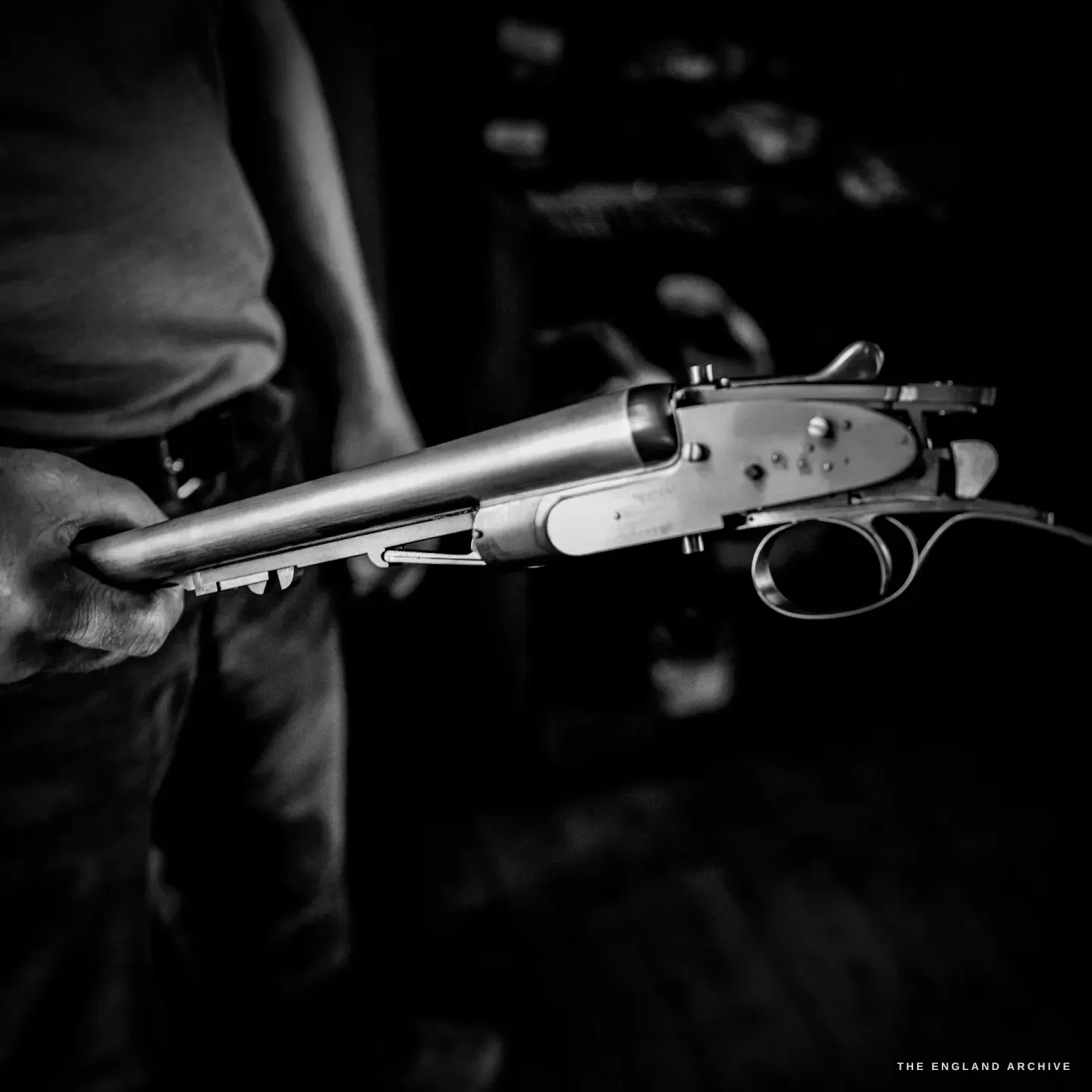
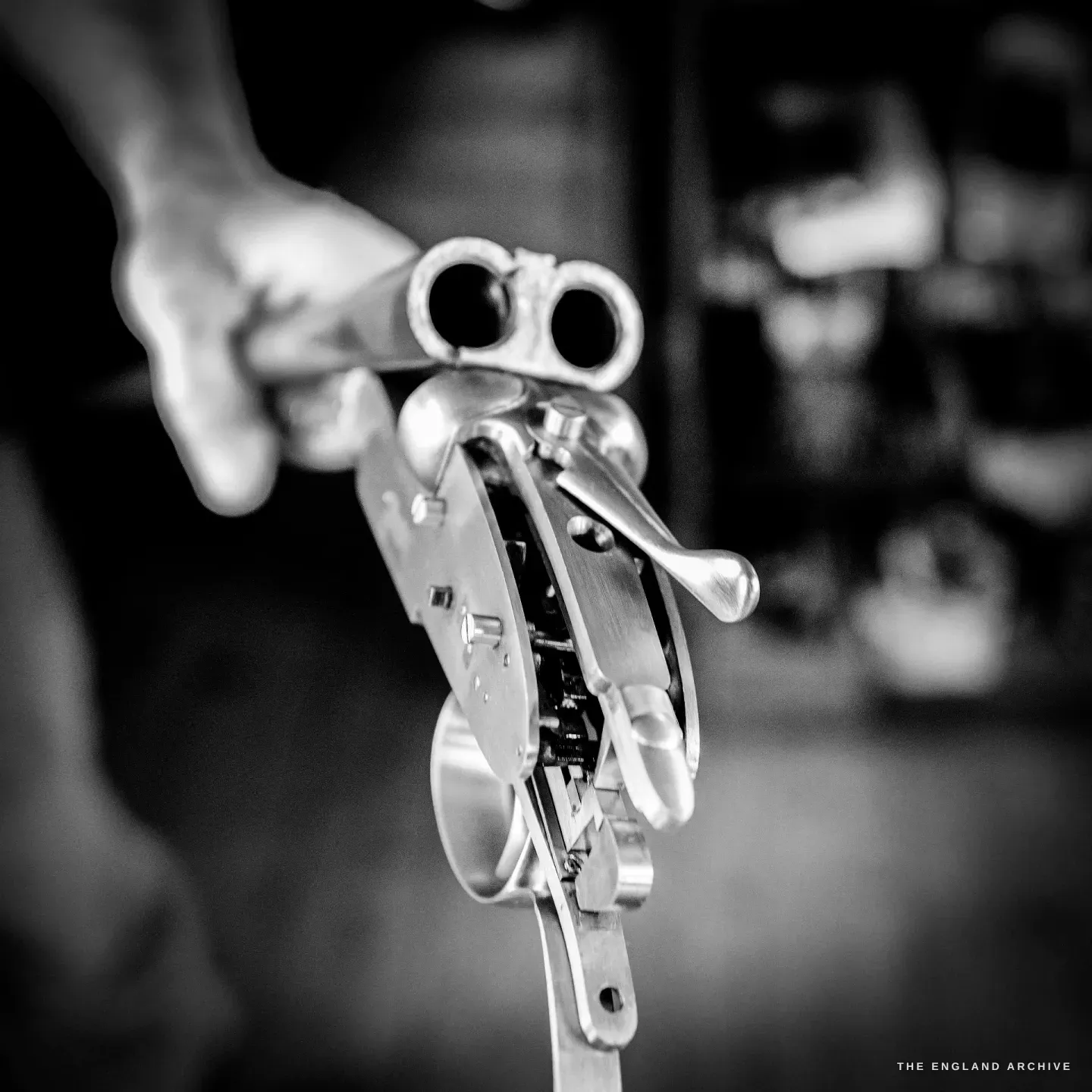
The heart of it is the fitting, done in the white - in bright, unhardened steel, before any hardening or engraving. When Haydn handed me an action in the white and pointed at the bright faces inside, every one of them had been filed to close on its neighbour with no daylight between. That standard is the whole game: it cannot be faked, it cannot be hurried, and it cannot be corrected once the metal is hardened.
II. The trade of a whole city
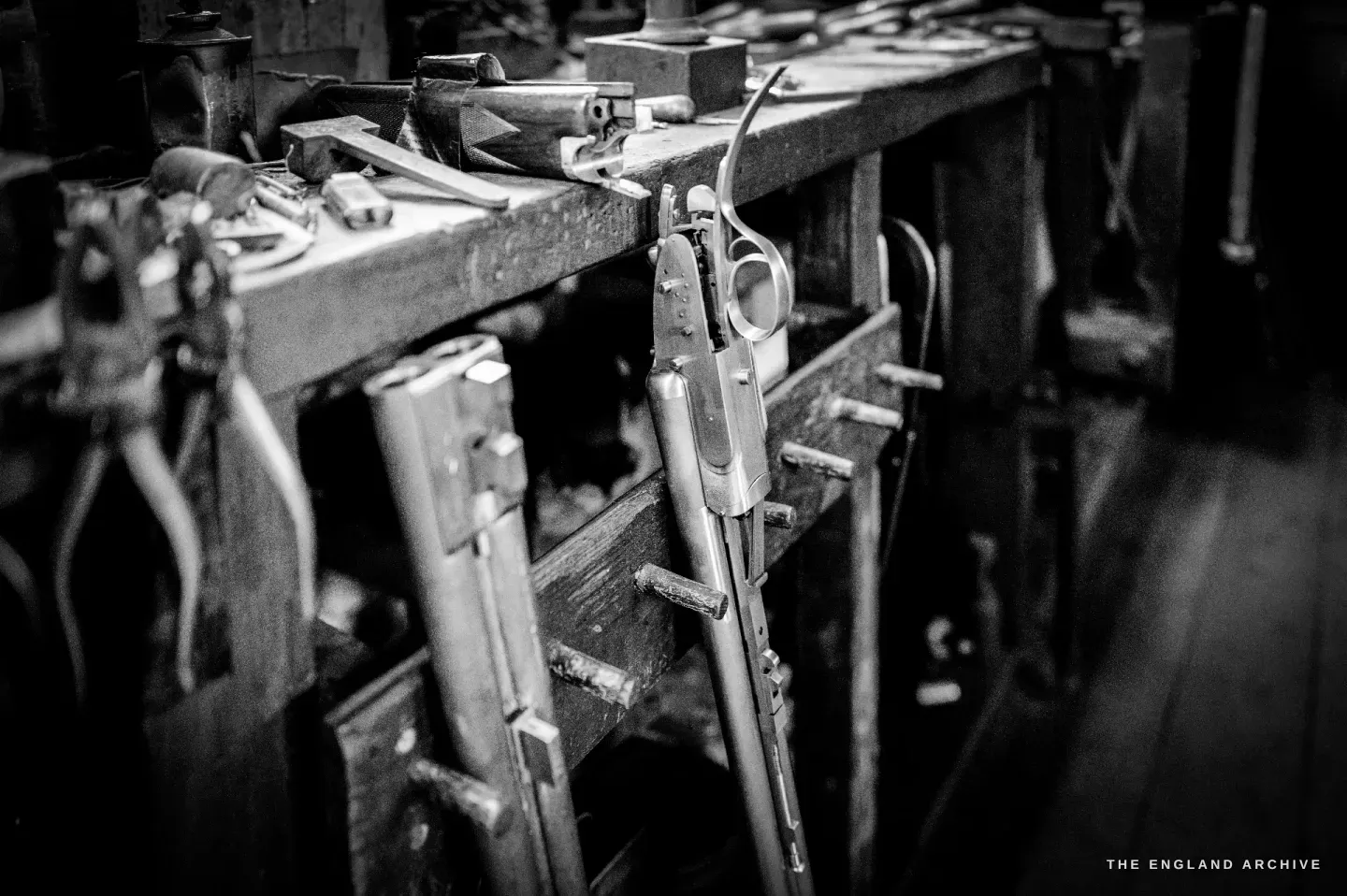
To understand a best gun you have to know how strangely the making of it was organised. Birmingham did not build guns in one factory. It built them across a whole quarter of the city, in small workshops and rented rooms, the trade broken into more than fifty separate crafts - barrel forgers and borers, filers, stockers, lock makers, engravers, hardeners, browners - each an independent hand selling its one operation to the next. A single gun could pass through fifty pairs of hands before it was finished, carried through the streets from shop to shop as a bag of parts slowly becoming a gun.
The man who gathered all those bought-in parts and made them into one working gun was the setter-up, and action filing is the heart of setting up. It is a system that sounds impossibly fragmented, and it produced some of the finest guns ever made, because every operation was done by someone who did nothing else. London had its version of the same trade, centred on the West End gun makers; Birmingham was the larger workshop, and made guns for the London names as well as its own.
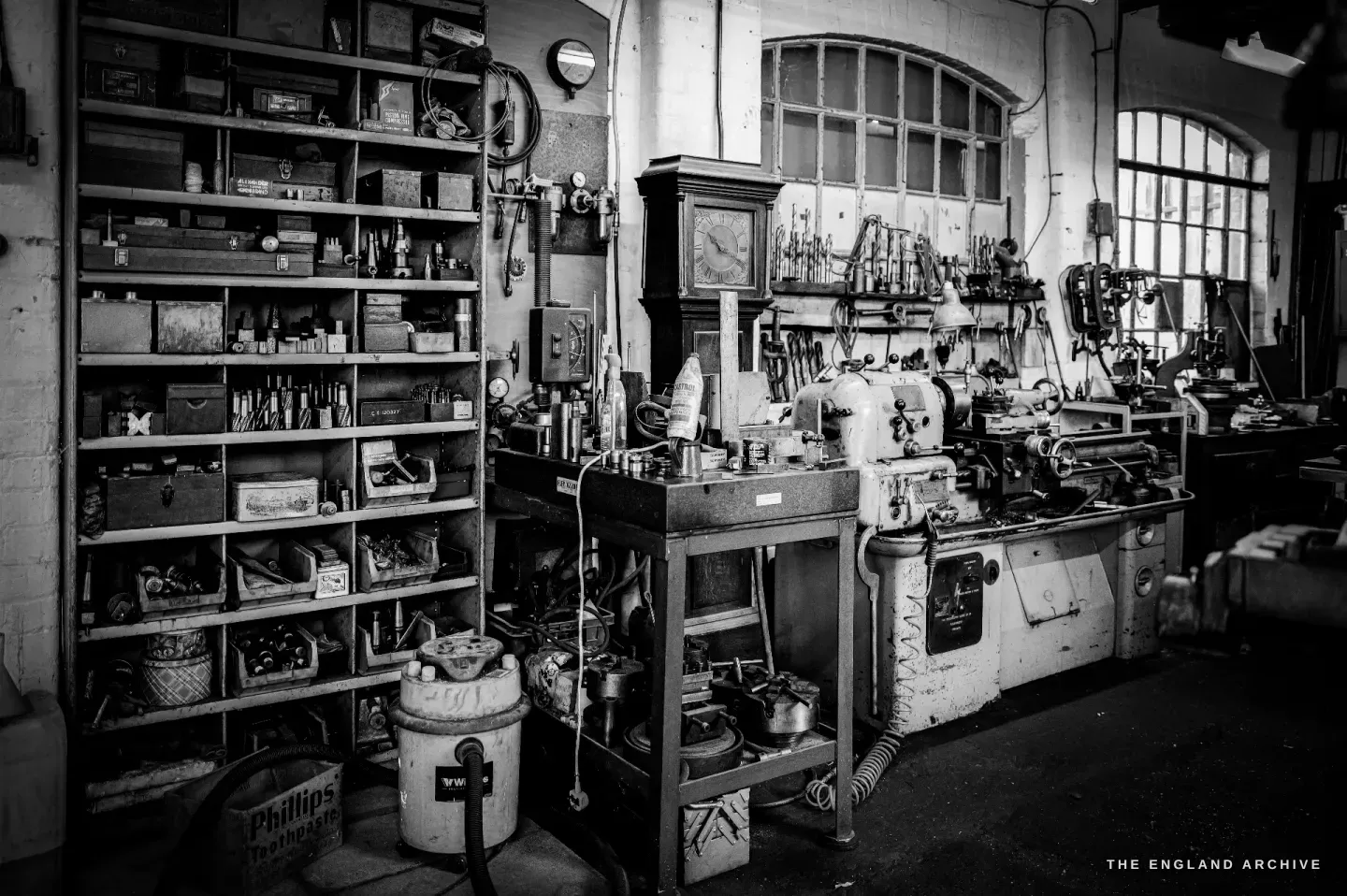
That world is mostly gone. The quarter has thinned to a handful of firms and a scattering of out-workers, and the specialist who does one operation for the whole trade is a rarer figure every year. Which is what makes a man like Haydn Hill, doing the setting-up trade by himself in one room, worth driving to Birmingham to find.
III. The living hand
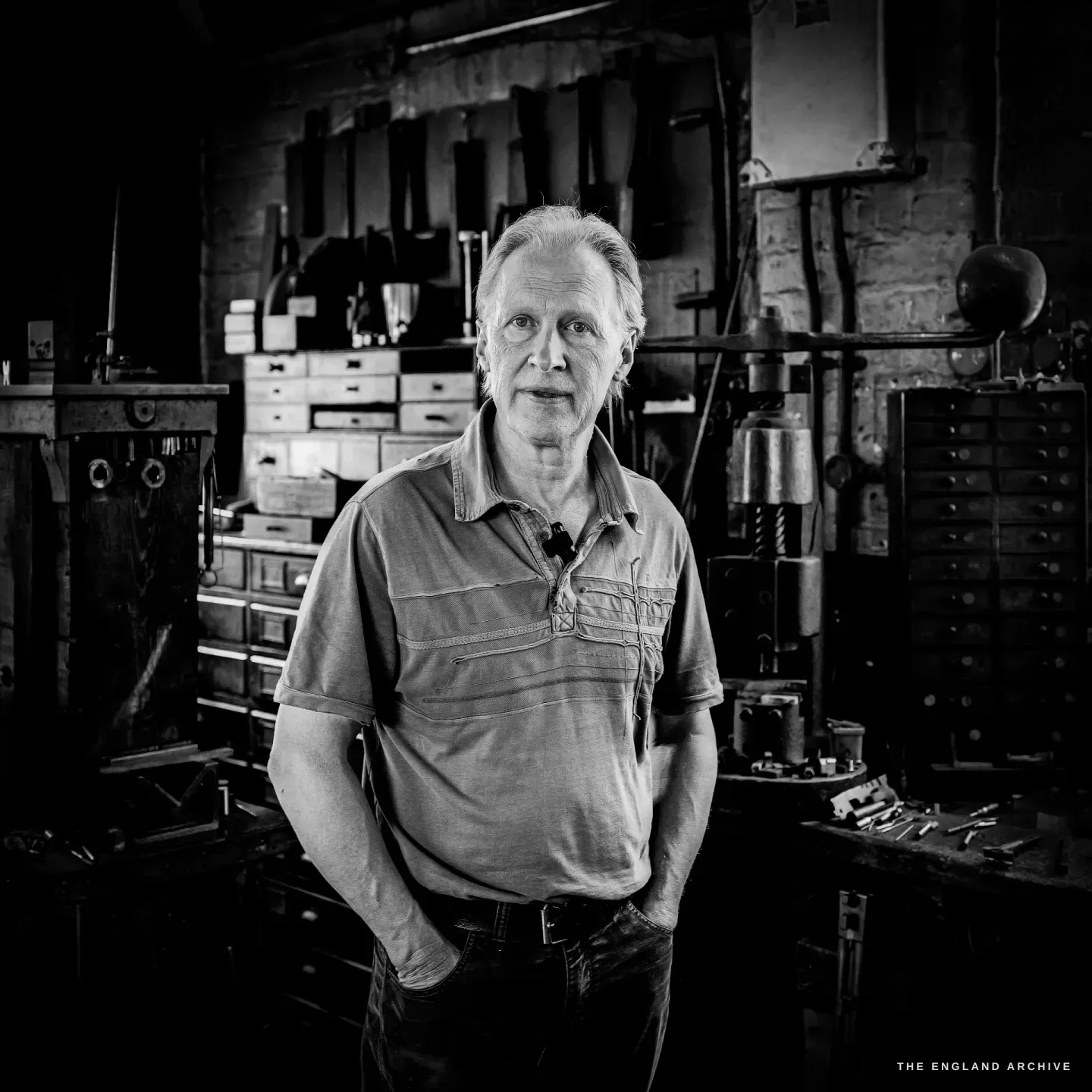
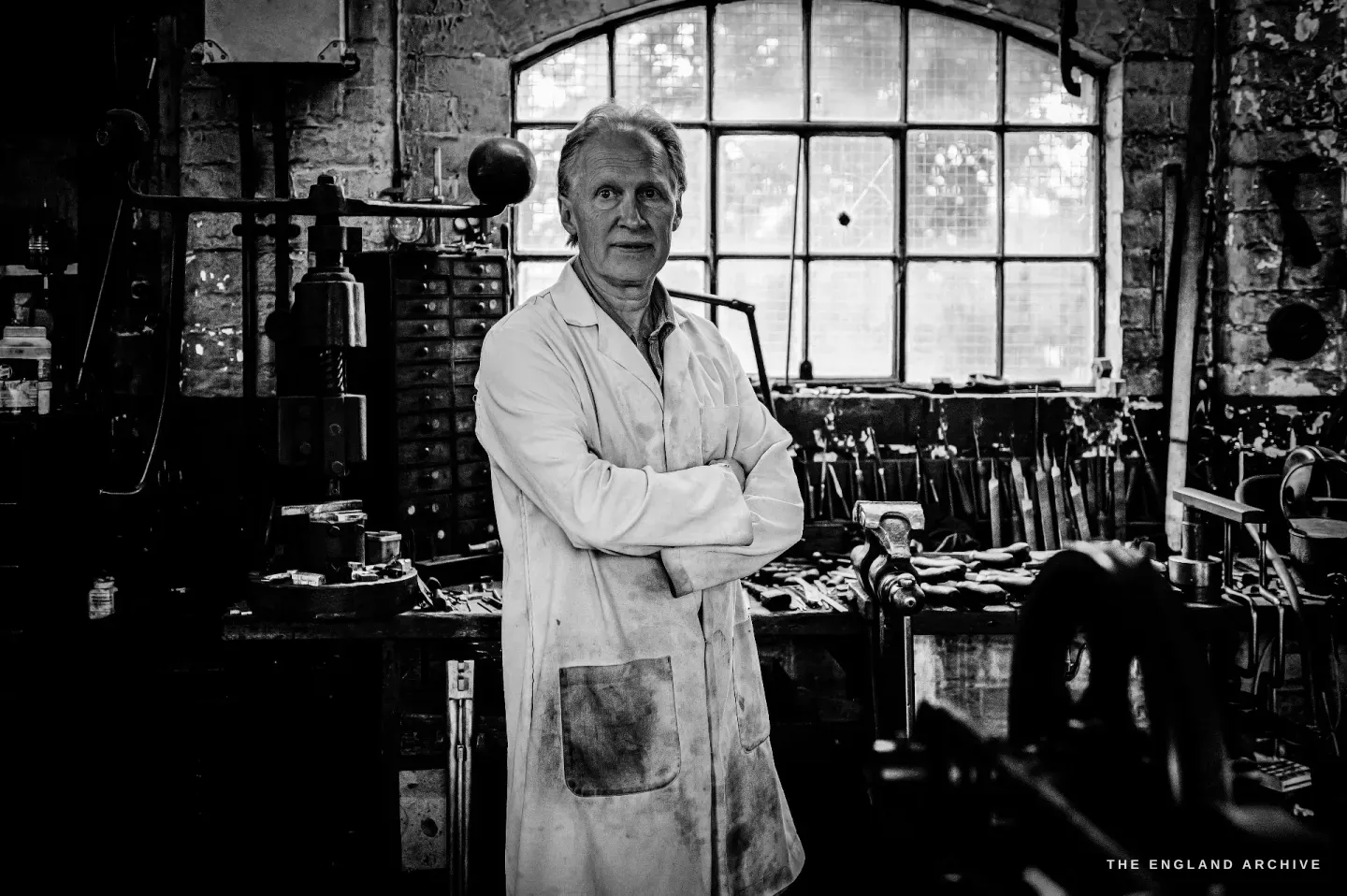
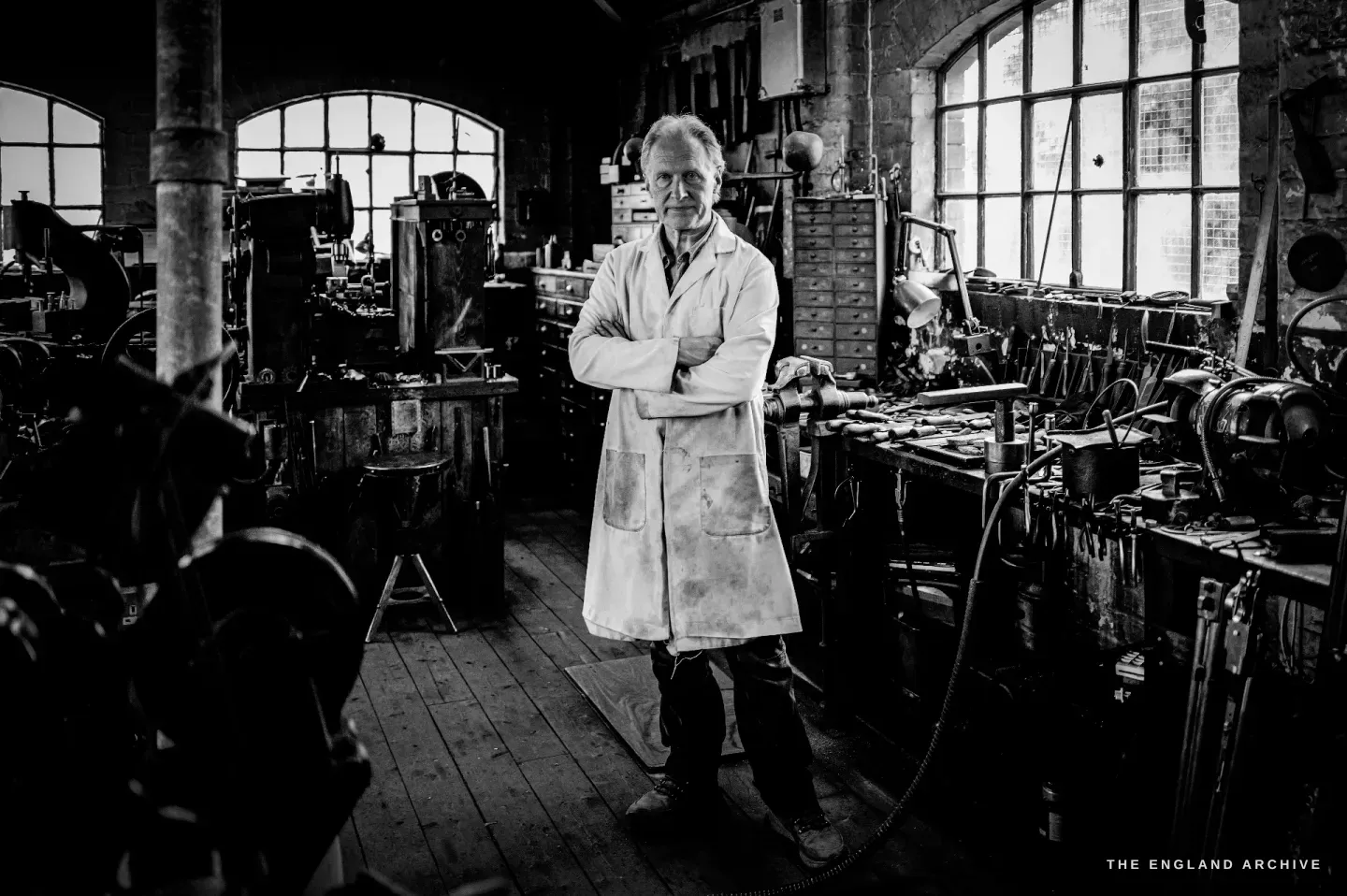
Haydn Hill files gun actions by hand in a red-brick workshop in Stirchley, south of the city centre, that still carries his family's name on the wall - the Hills have filed gun actions in Birmingham for generations, and Haydn is the latest of the line. His trade is action filing: taking the rough action body and the barrels and fitting them together, jointing the barrels to hinge true and filing the body until the whole thing locks shut as one.
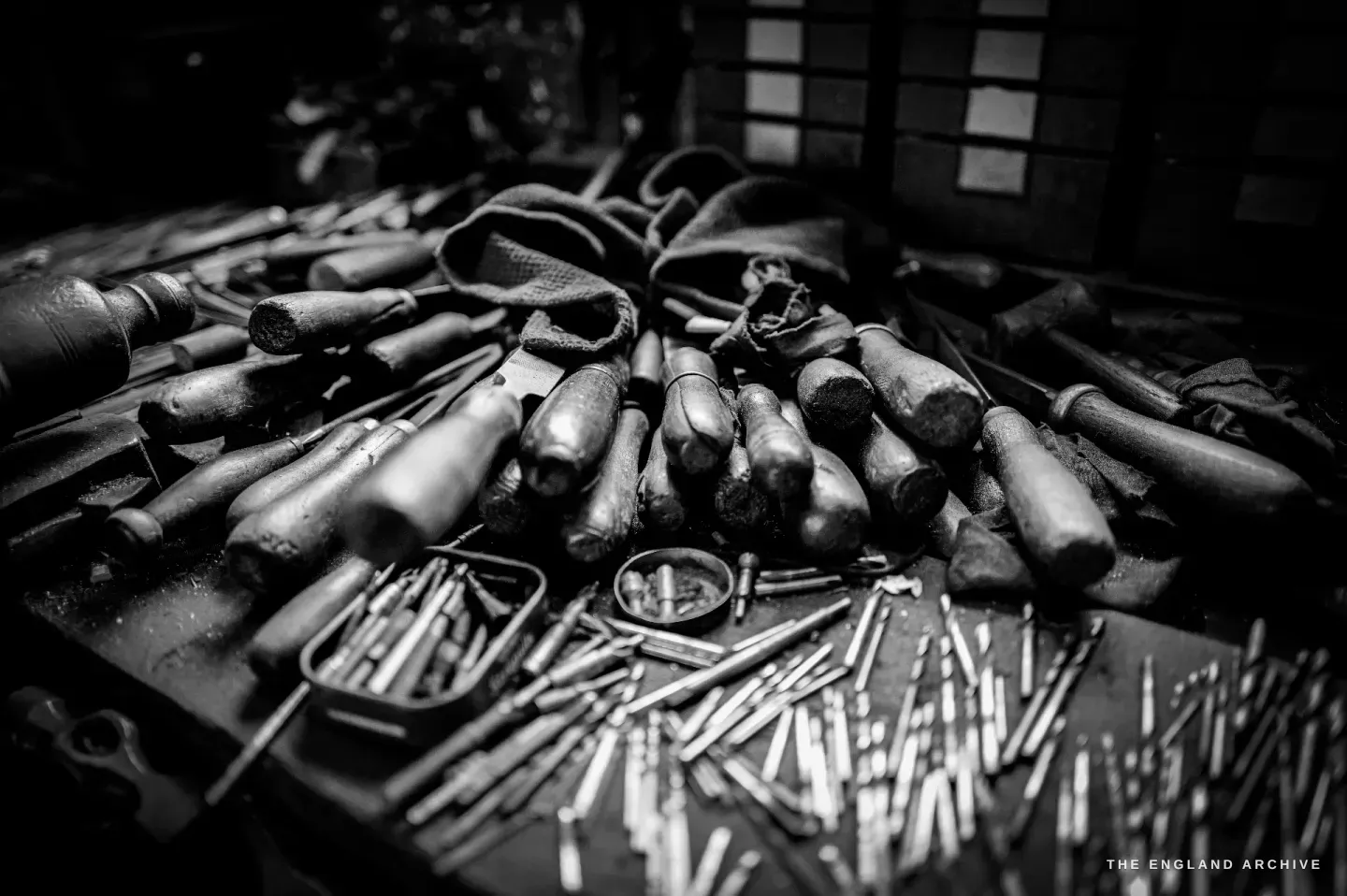
The machines do the heavy cutting; the judgement is all his. He turns a part on the lathe, a thread of smoke lifting off the tool, then takes it to the bench and works it with a file until it sits right, taking metal off a thousandth of an inch at a time, trying it, and taking a little more. Some of it needs heat, and he holds a small component in the flame of a spirit lamp, arm out, watching the colour of the steel come up. It is slow work, and there is no hurrying it.
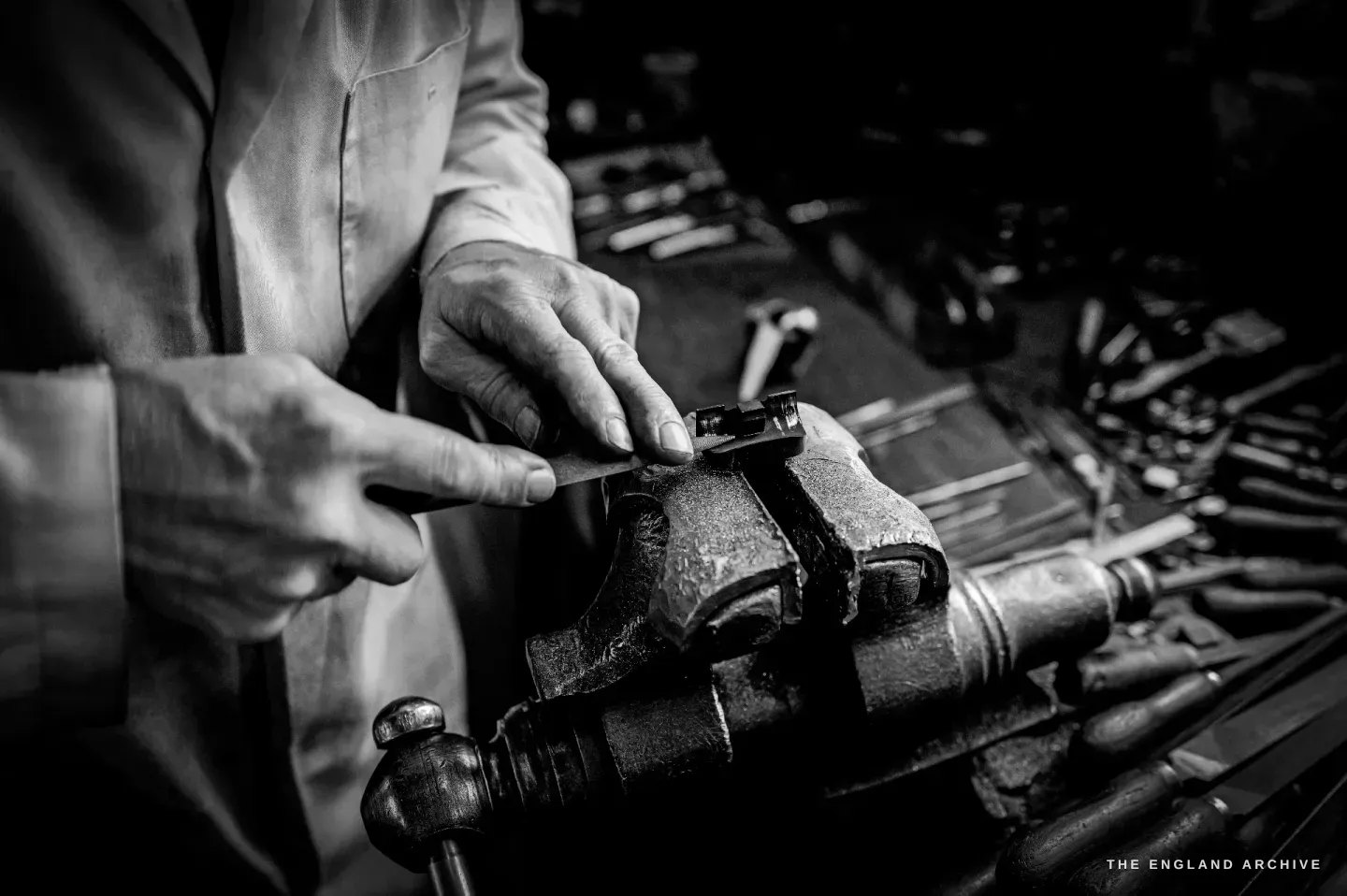
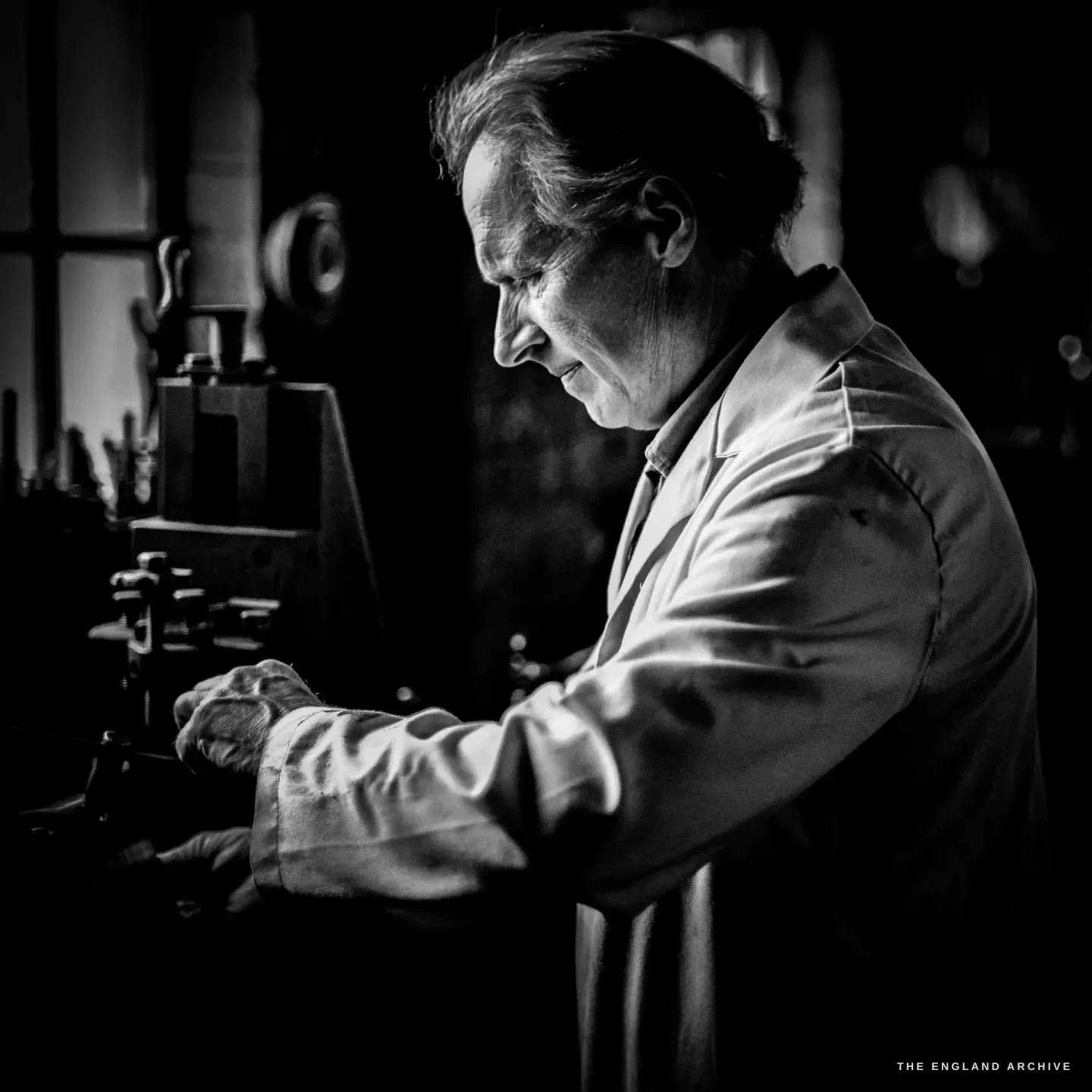
He handed me a double gun broken open and pointed at the bright fitted faces inside, filed to close on one another with no gap. That is what all the filing is for: a gun that opens and shuts like one piece of metal. His full story - the family, the workshop, the trade - is on his own page, Haydn Hill.
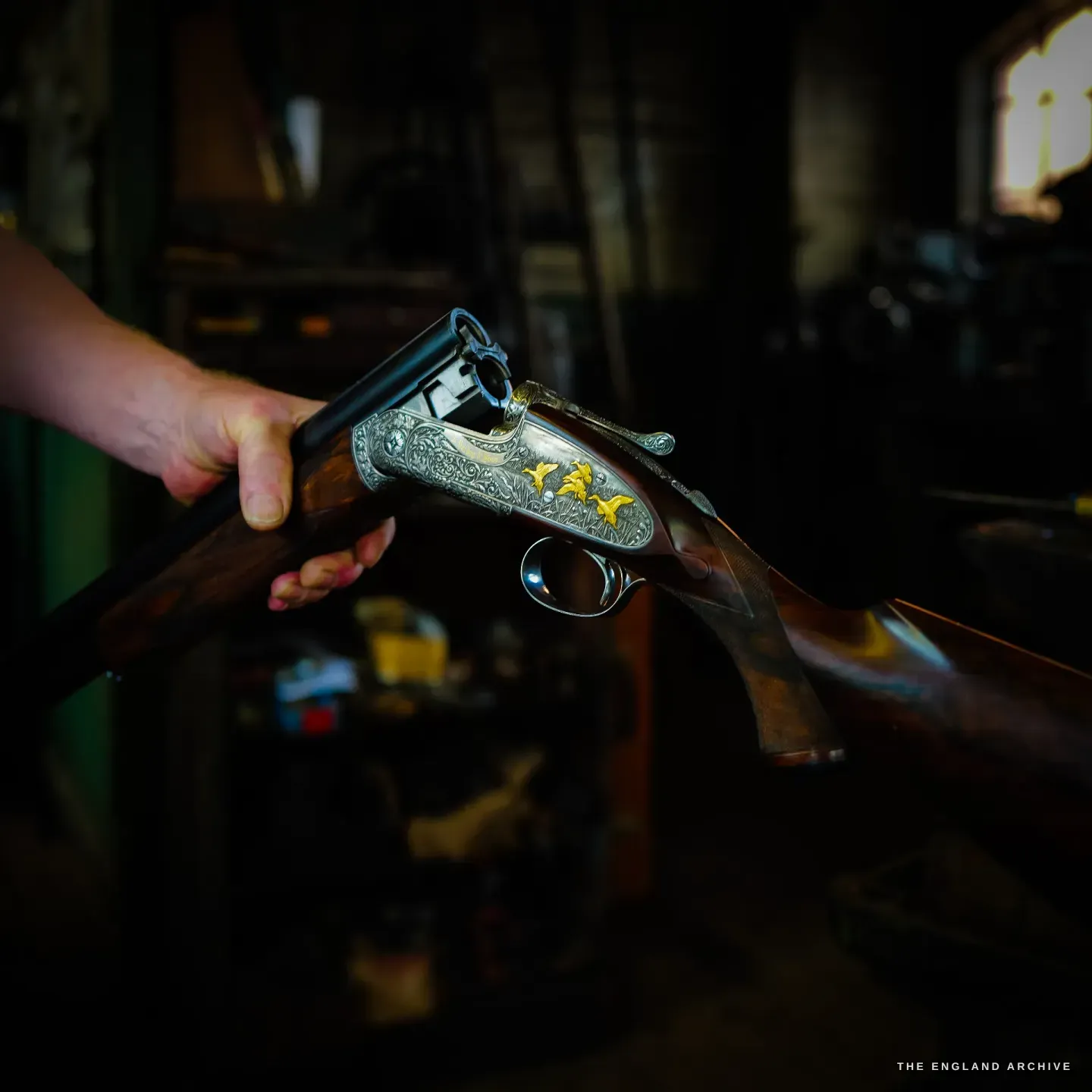
The other end of the same trade is the finished gun, engraved and gold-inlaid, that leaves a firm like Westley Richards. The beauty sits on top of the filing, and only means anything because the fit beneath it is true. The engraving is its own craft, documented separately in gun engraving and the essay Cut in Steel and Gold; the fitting underneath is the part the world does not see, and the part that makes the gun.
IV. The state of it in 2026
Hand gunmaking is a recognised endangered craft on the Heritage Crafts Red List. A trade that once employed a whole quarter of Birmingham is now carried by a small number of firms and a thinning population of out-workers, many of them ageing. The specialist trades within it - action filing above all - are the fragile part: a firm can survive the loss of its own filer only if there is another to buy the work from, and there are fewer of those every year.
It is learned by apprenticeship and years at the bench, because the fit that defines a best gun is judged by hand and eye and cannot be taught from a book. The most hopeful sign the archive found was at Westley Richards, where the firm keeps its own trades alive inside the building and trains the next hand within it. But a man like Haydn, alone in his room with his family's name over the door, is a reminder of how much of this trade now rests on single individuals. When one of them stops, a whole operation can go with him.
If you want to see the trade or to learn it, the archive's Learn a Craft directory points to where it is taught, and the glossary entry how is a best gun made is the short reference. This essay is the long one, and the record of a morning spent watching a gun made to close as one piece of metal.