Makers
Lewis Goldwater
Hazel Basket Maker
Turnham Green Wood, Herefordshire
Hazel Basket Maker
Turnham Green Wood, Herefordshire
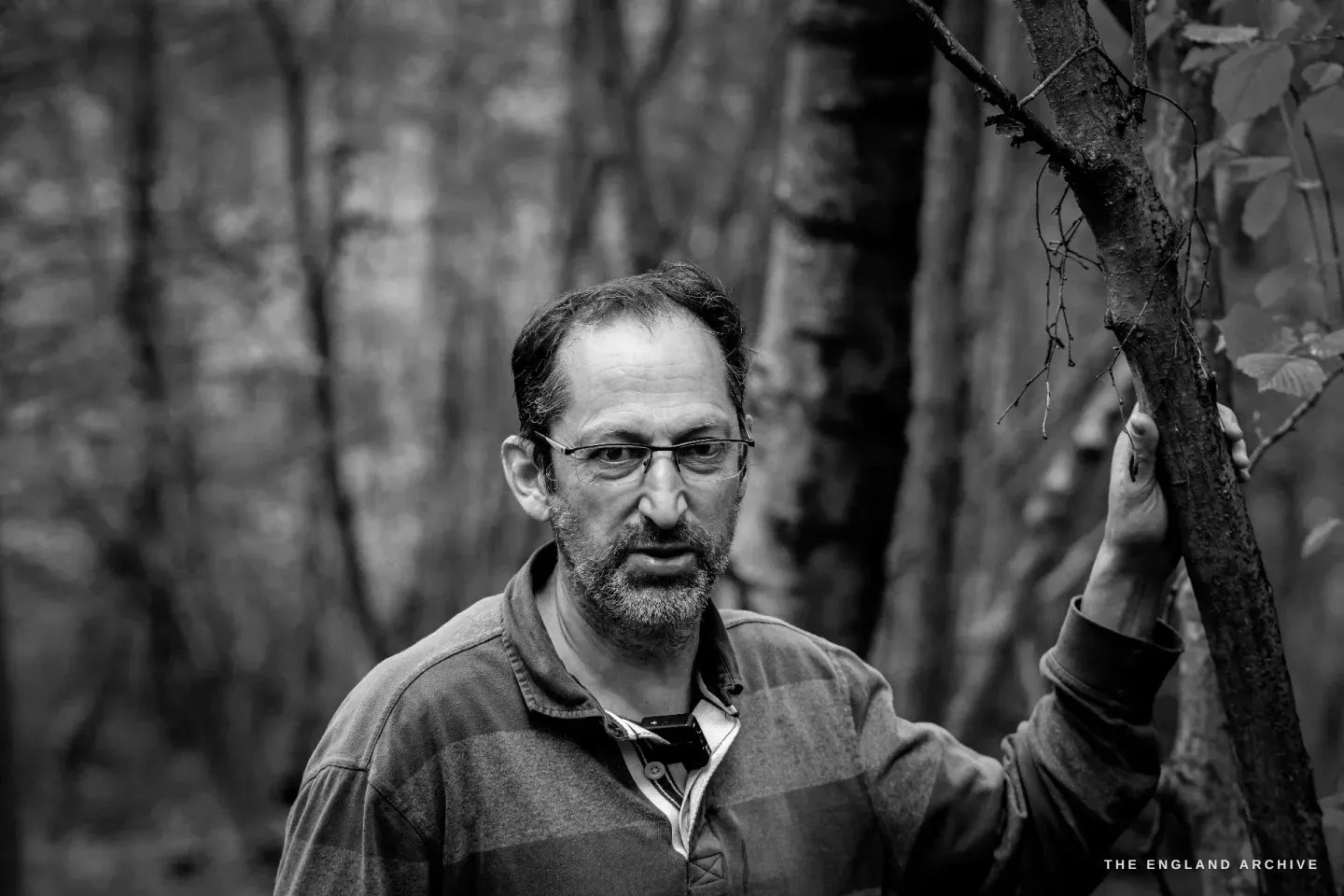
I can spend forty minutes on a single hazel and read the whole thing. The knobs, the marks, the way it leaves the stool. By the time I cut, I already know what the rod is going to become.
Three and a half hours from London by car, then a track turning off a Herefordshire lane, then a walk uphill through deer-grazed birch and hazel into a wood that closes behind you almost immediately. Lewis was waiting at the pinned spot. We had spoken by Zoom; the face came together with the voice. The rain that had started during the last hour of the drive eased to a steady damp.
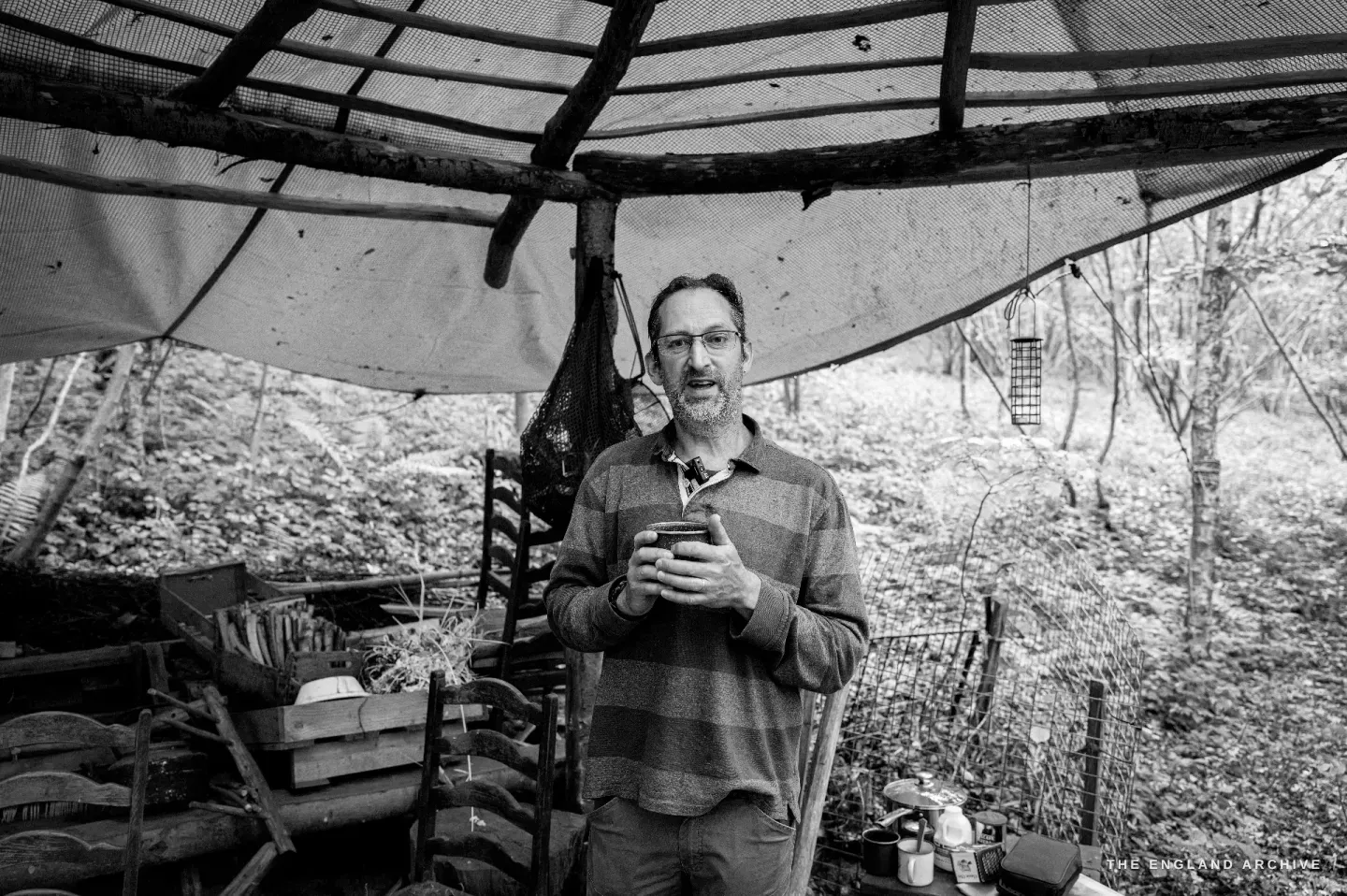
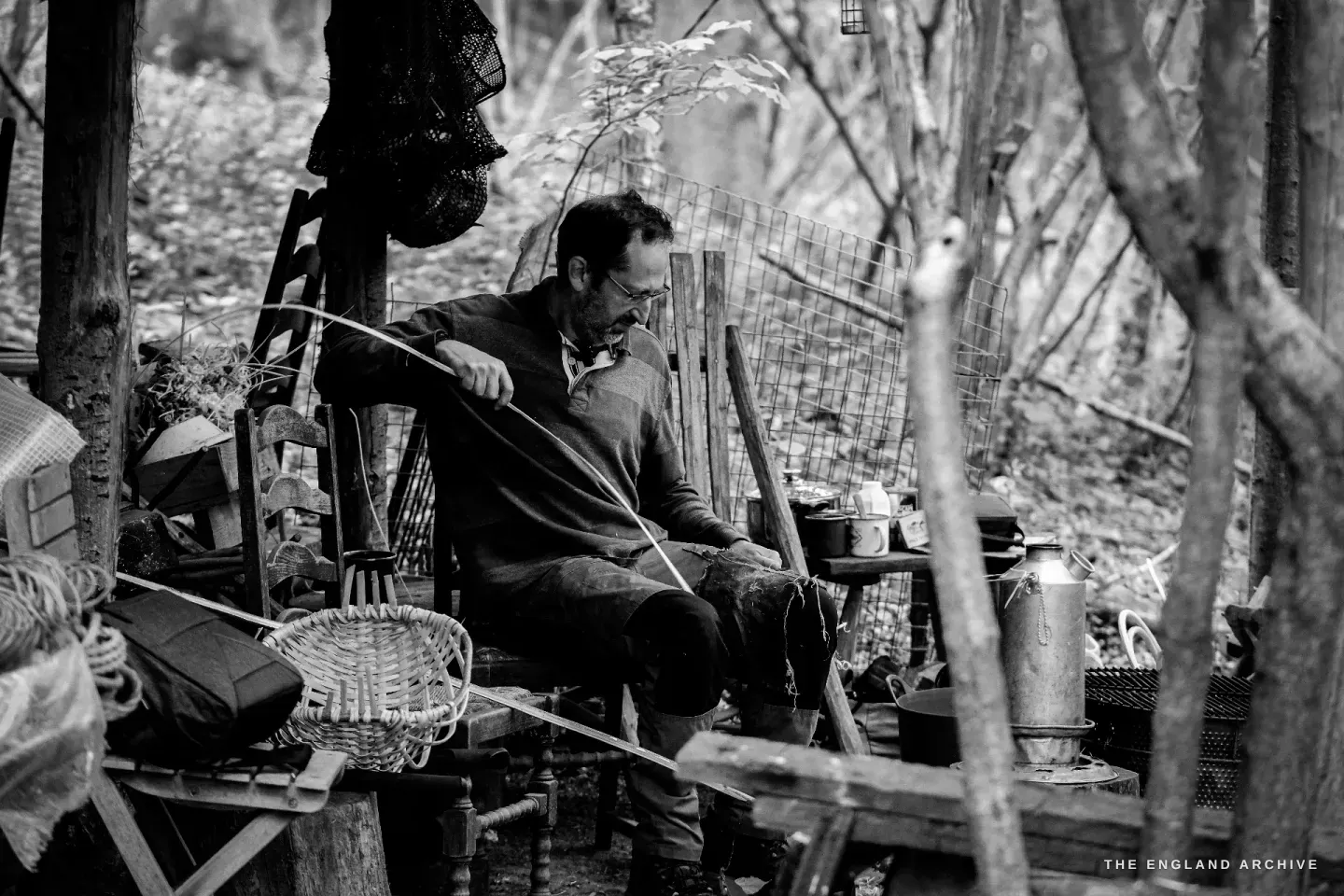
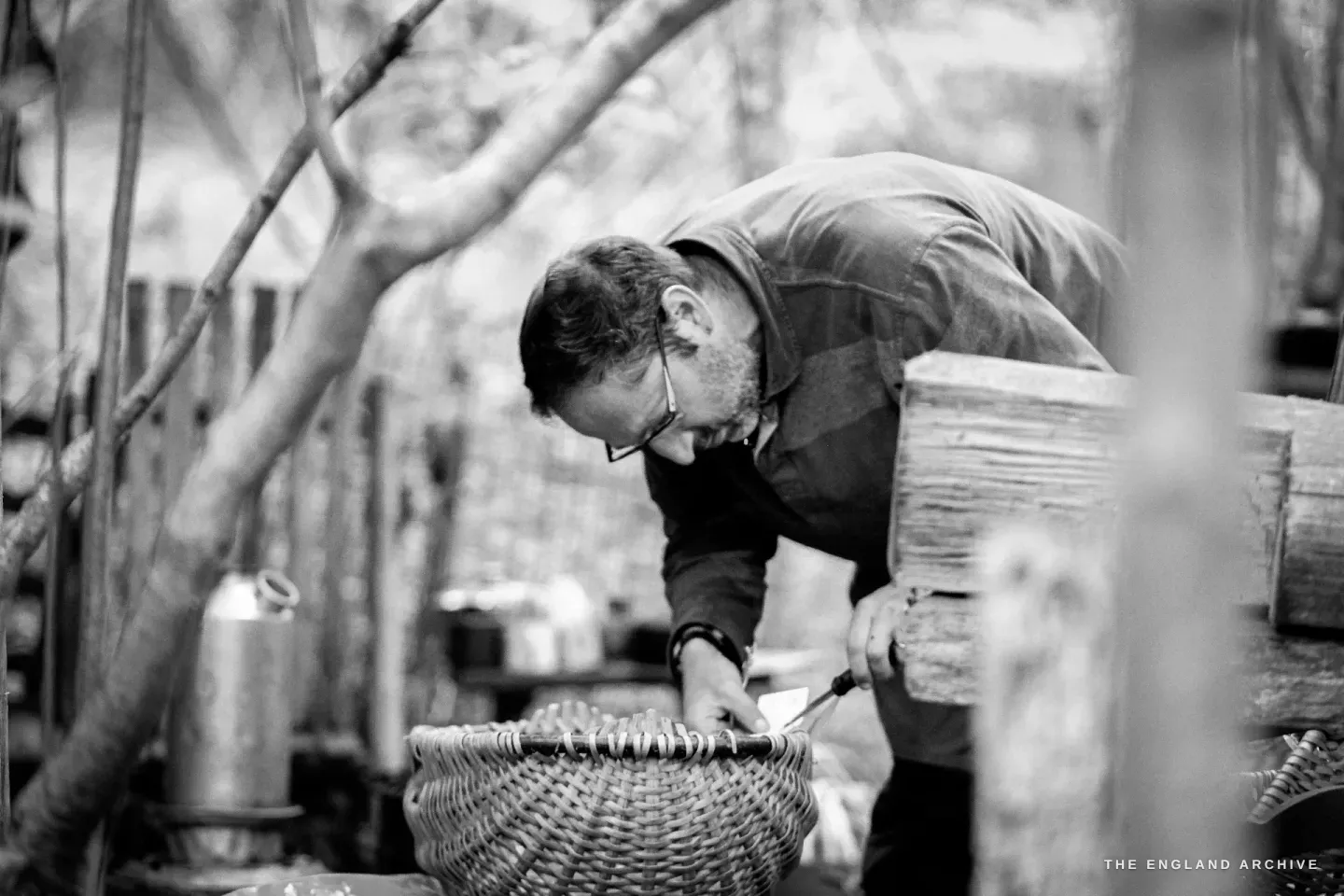
He led the way up to the clearing he works out of, and the first time I saw the workshop I stopped because it is not a workshop in any sense I had expected. It is a sheet of translucent plastic stretched across a hand-built timber frame, raised on rough posts, open on every side to the wood. Inside that canopy, everything one practitioner needs to make hazel baskets in the tradition of the Welsh Marches.
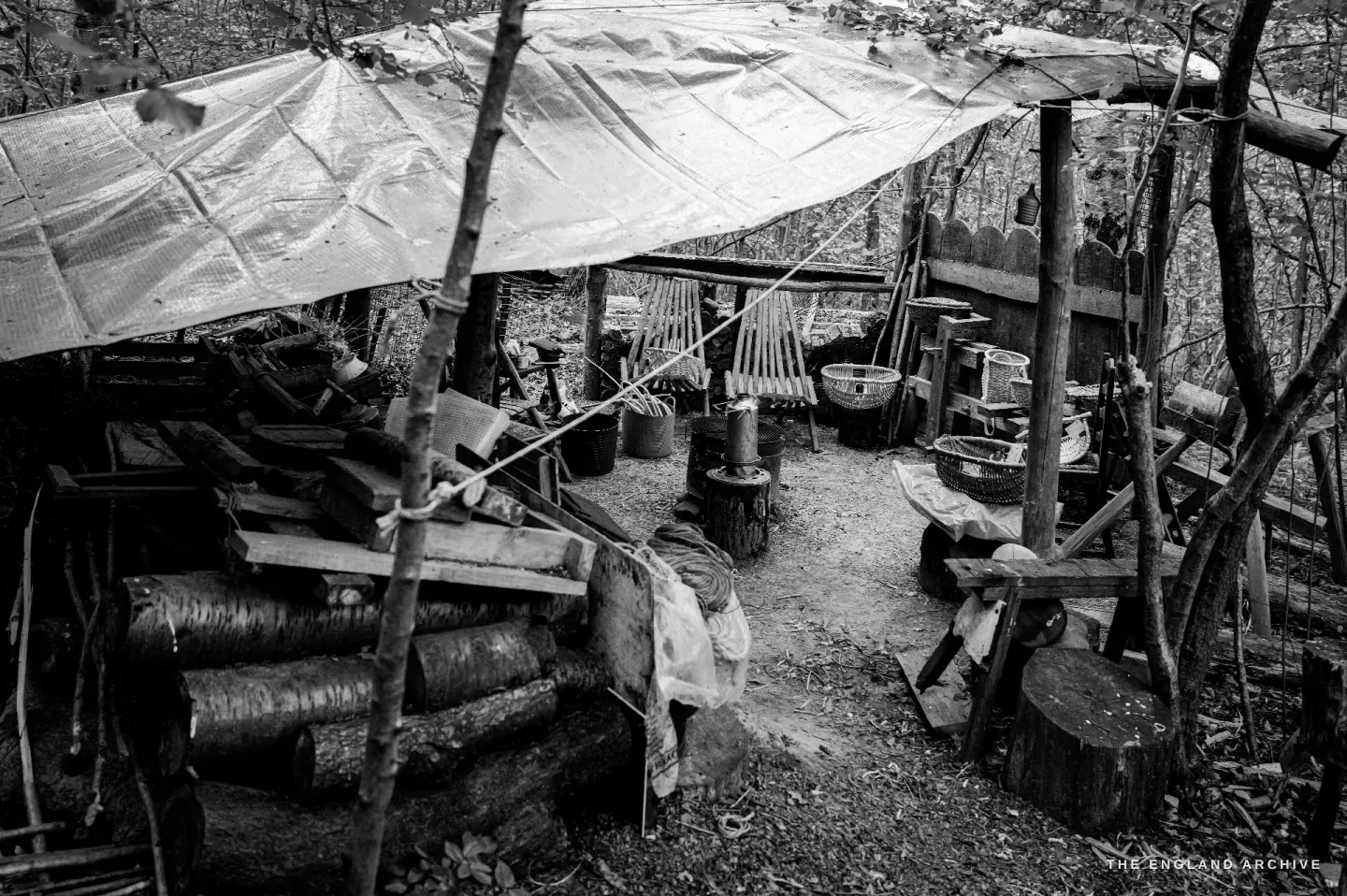
A central fire stand. A Kelly Kettle. Stacked rods drying along the back. Workbench, baskets in stages of completion, a chopping block on legs, a heavy froe at rest on the bench top. The day starts with tea boiling on a single charred log, and Lewis pointed at the kettle and said the first thing to do at the workshop on any morning is light the fire.
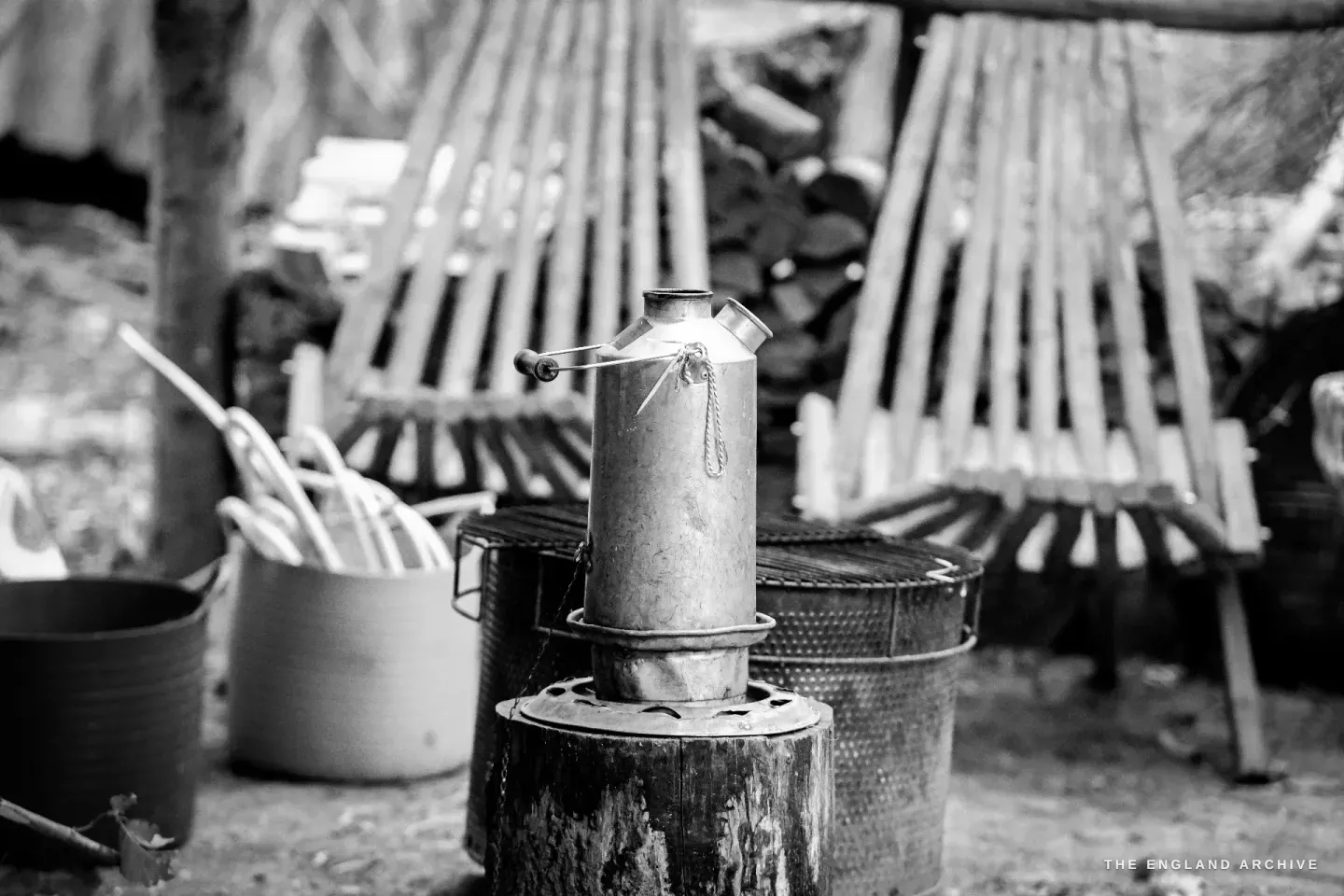
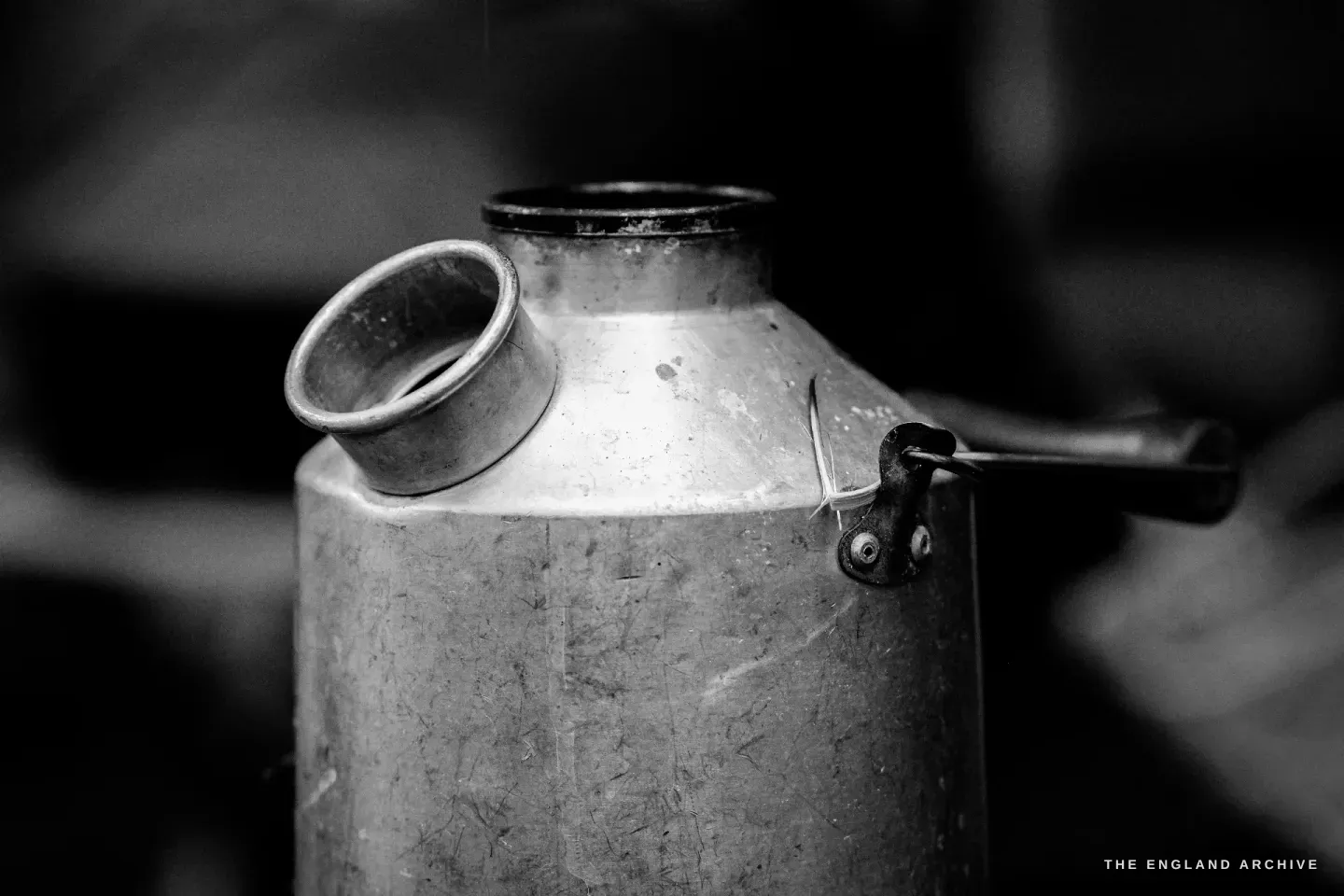
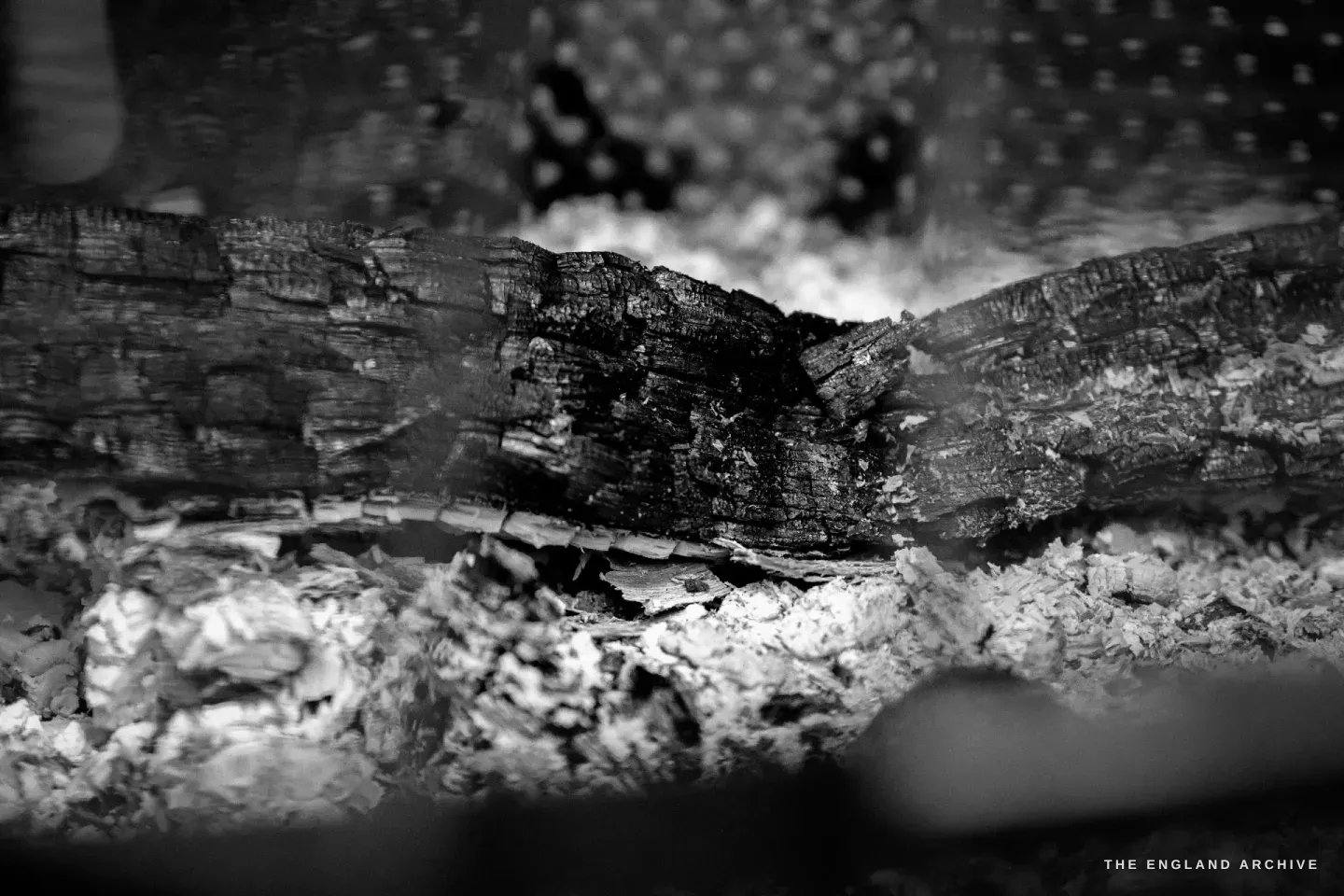
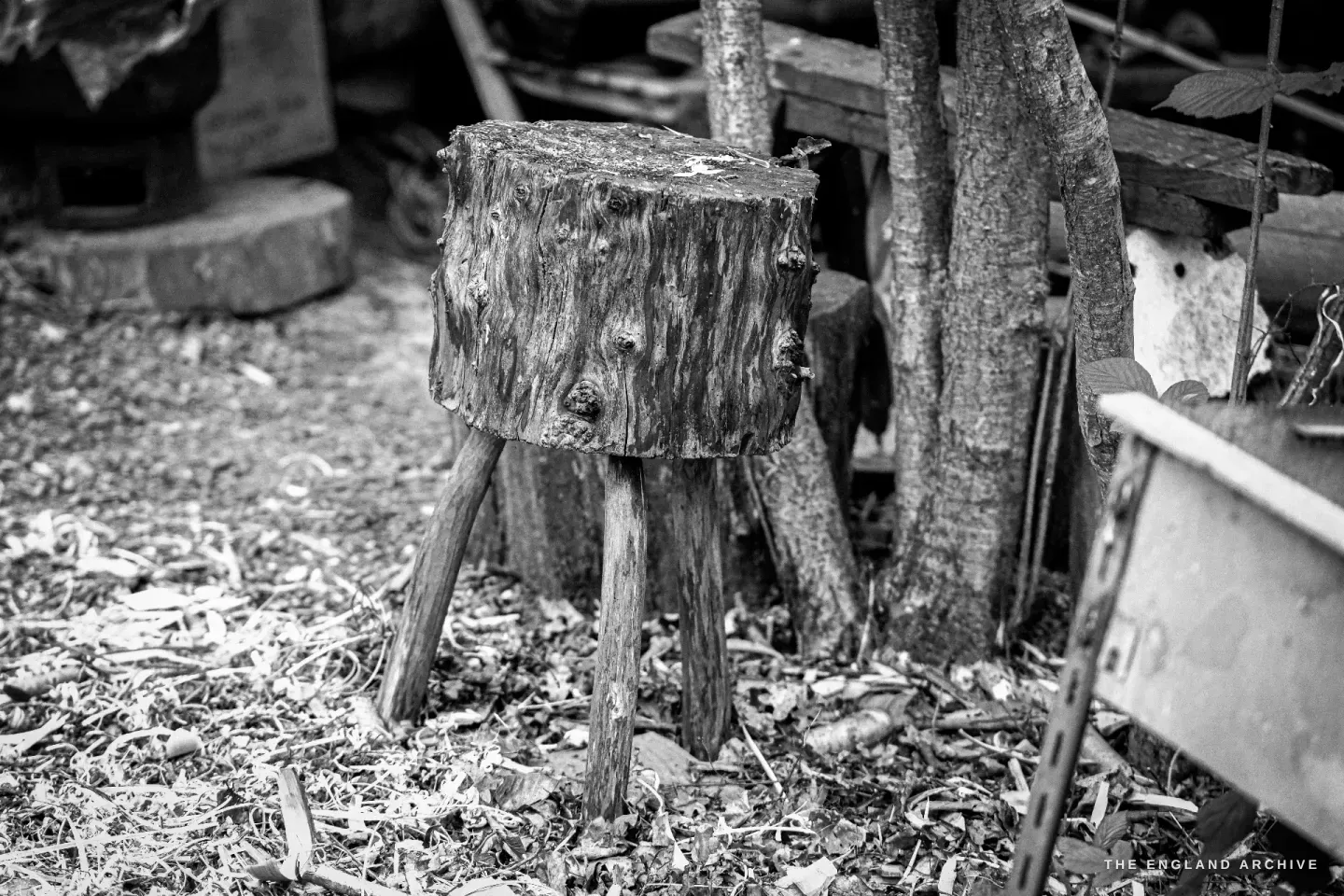
The workshop has the temporary look of a forest camp and the permanent feeling of a place that has held thirteen years of work. Lewis established Turnham Green Wood in 2011. The wood was younger then; he has been working it for almost a third of his life, and it has been growing back for longer than that.
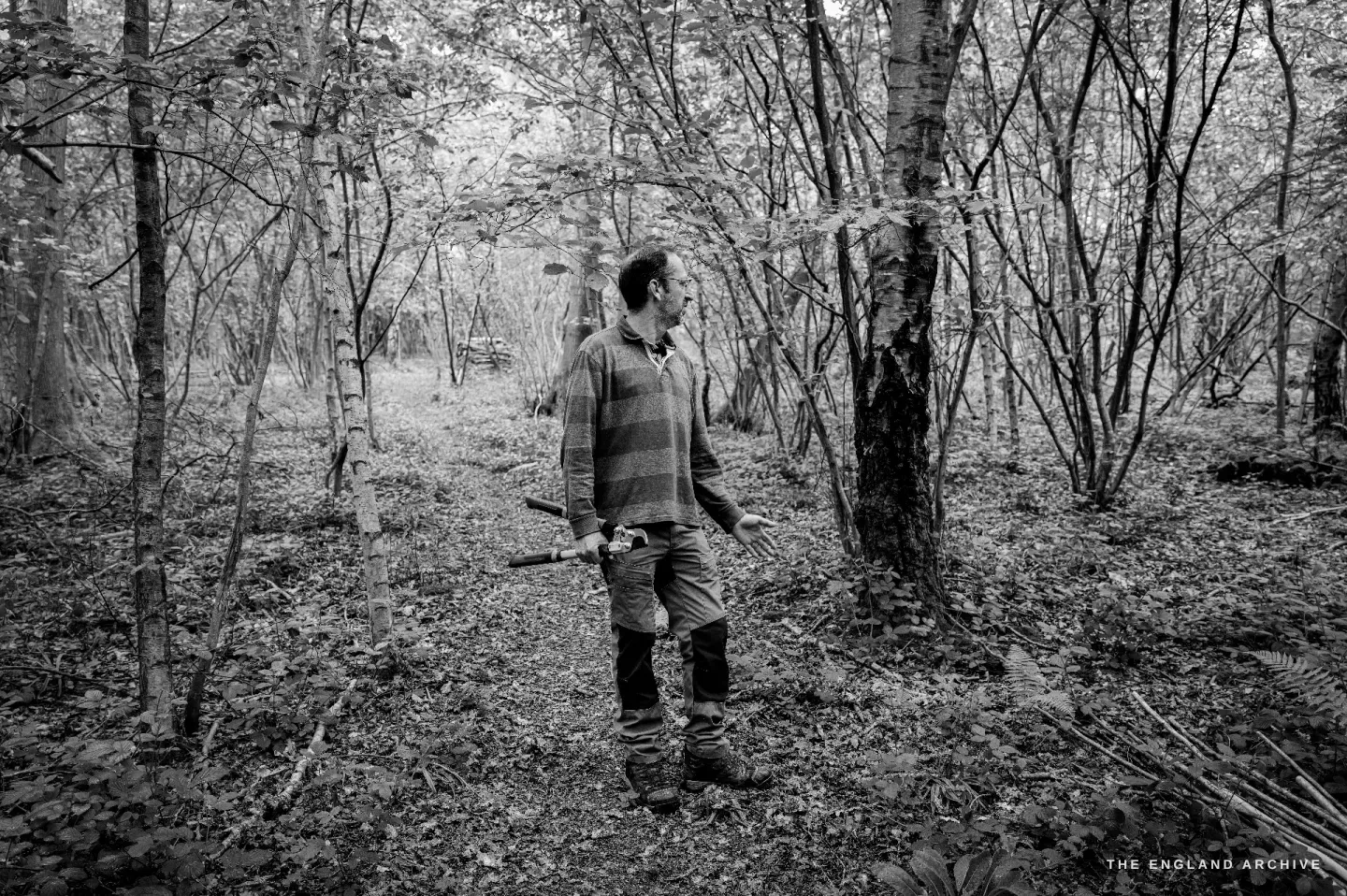
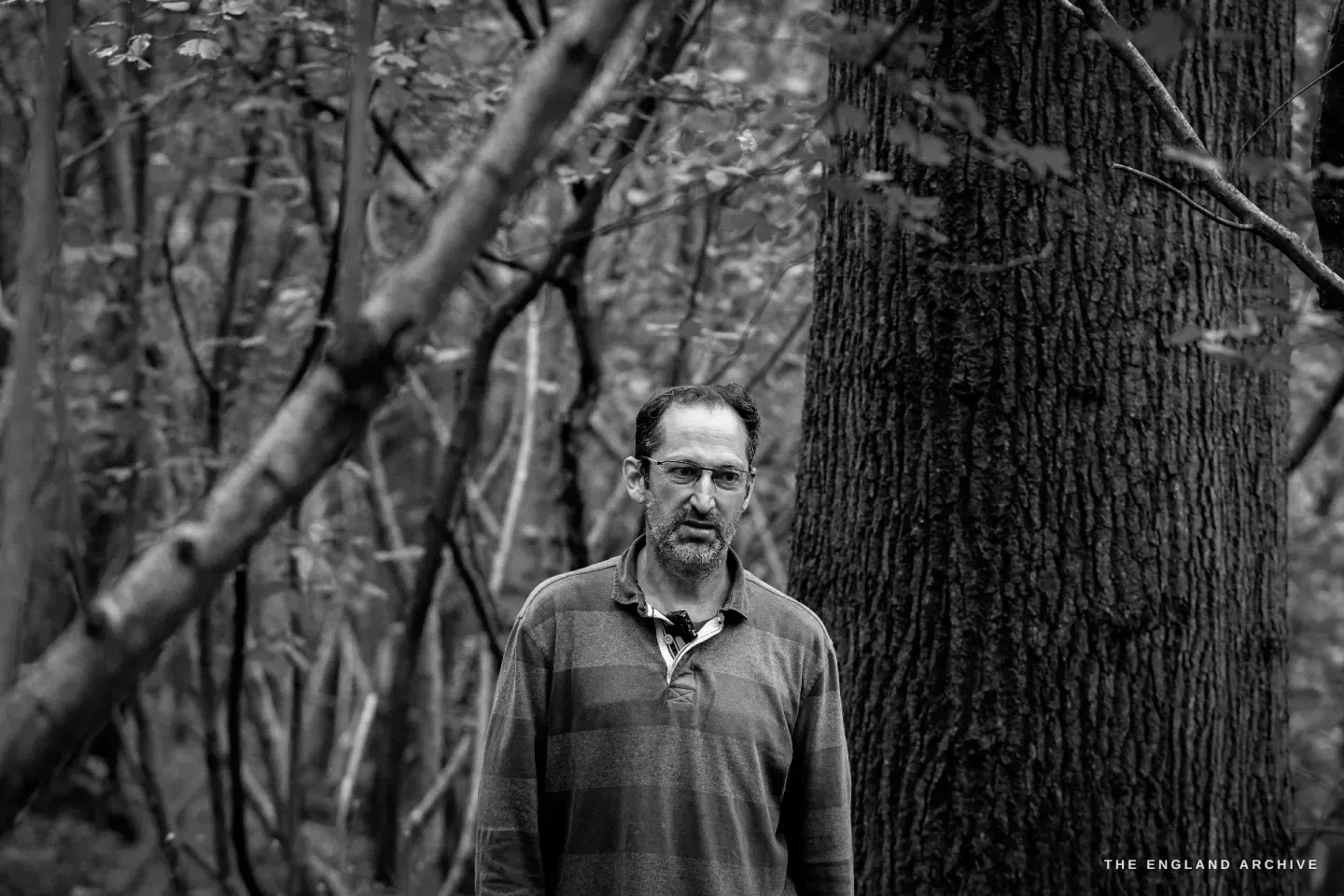
We left the canopy and walked across the clearing to a stand of hazel. The wood is coppiced - cut on a rotation, allowed to regrow from the stool, cut again every seven to twelve years - and the stand we stopped at was at a good age. Lewis stopped beside one stool and was silent for half a minute. Then he started reading it.
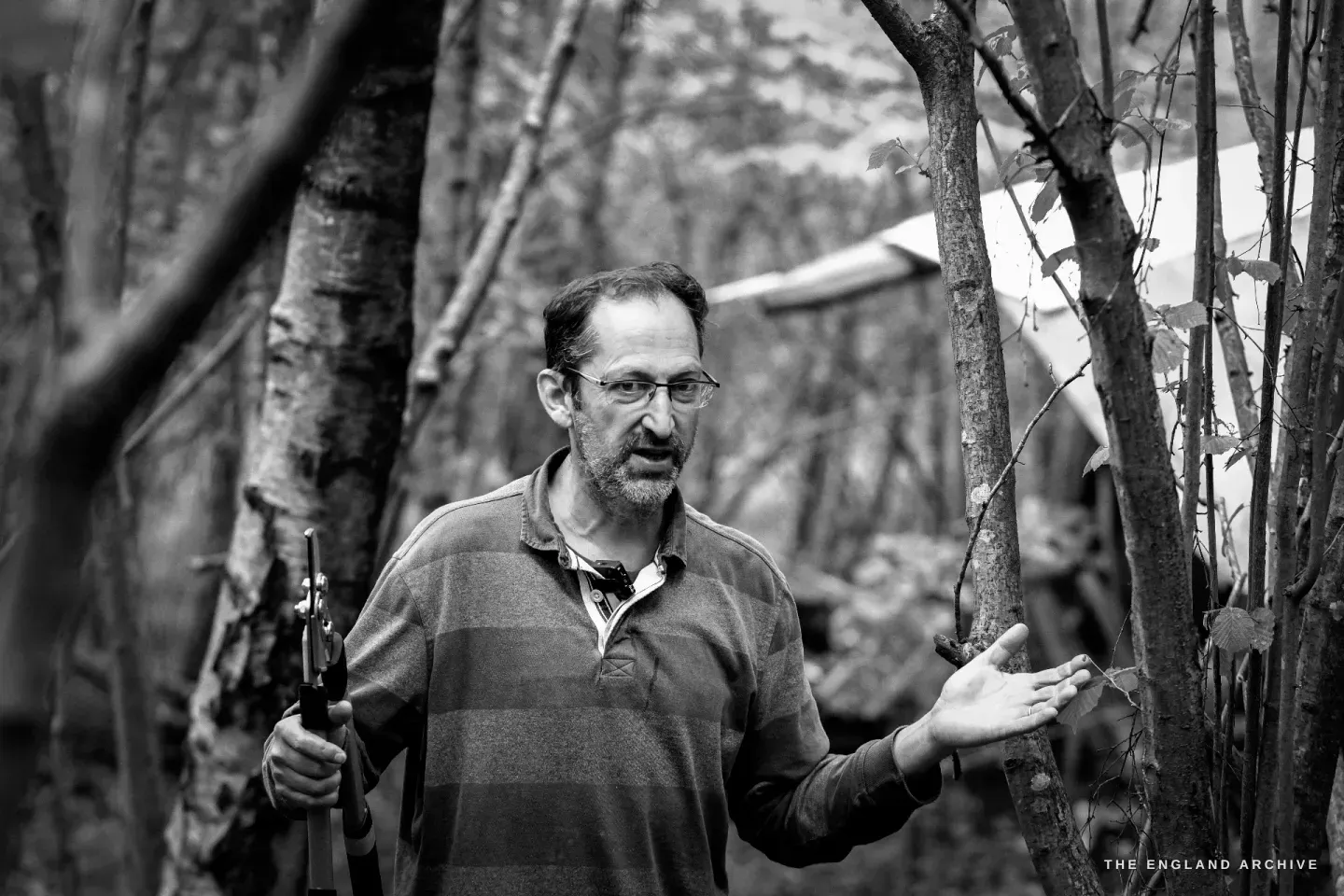
"I can spend forty minutes on a single hazel and read the whole thing." His finger traced the length of a rod from base to tip and stopped on a small swelling about a third of the way up. "That is a knob. Something hit the stem when it was three or four years old. Could have been a deer, could have been a snapped tip. The rod grew around it. You can feel a knob through the bark before you can see it." He moved his hand and pointed to a darker scar lower down. "And that is a tooth mark. Definitely a deer."
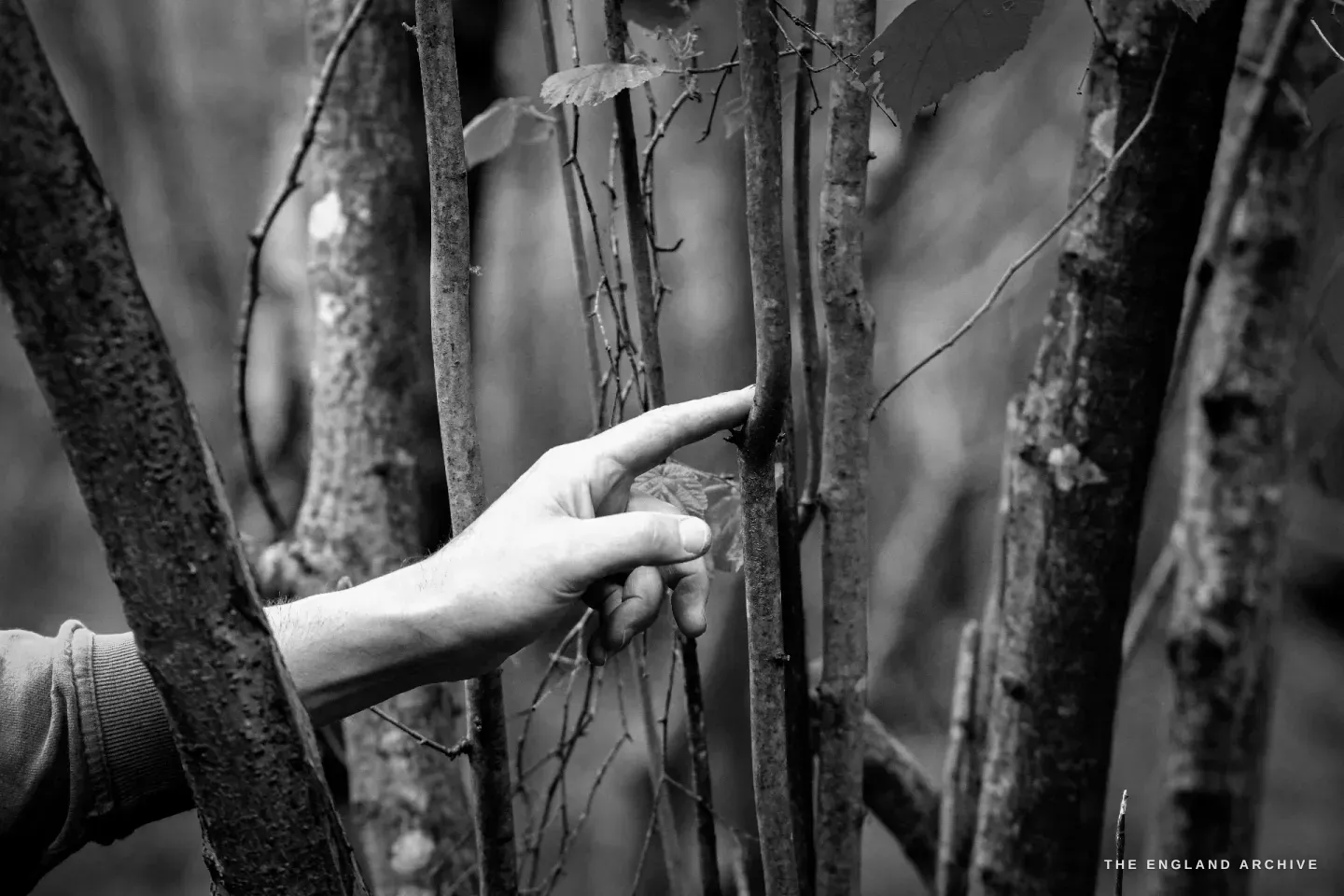
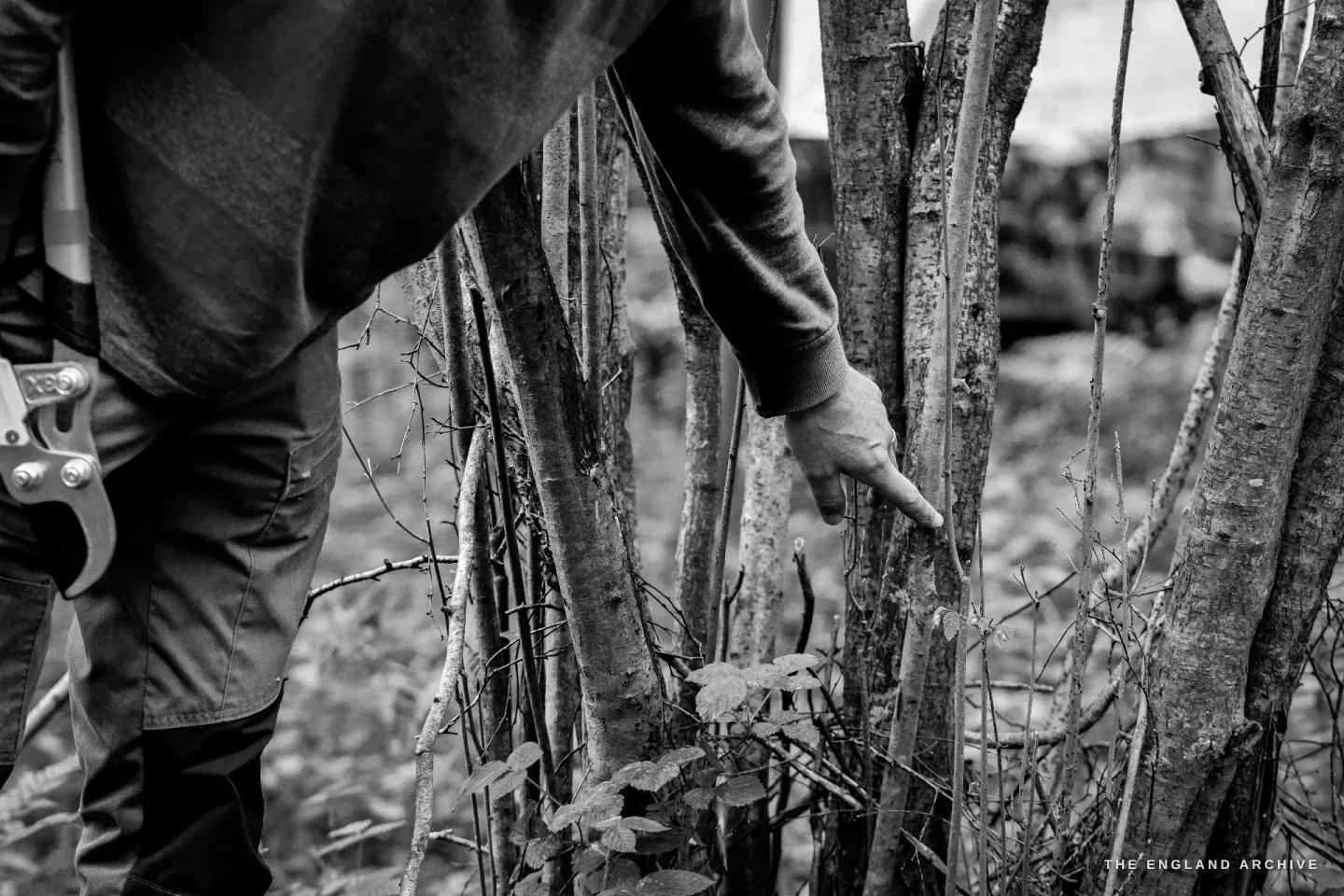
The reading is the most important part of the work. A rod with a knob in the wrong place will split badly. A rod that has been browsed too often grew slower than the year wants it to and the splints made from it will be brittle. The basket maker chooses the rod before the basket is begun, and the choice is made entirely by eye, and the eye comes only from years of looking.
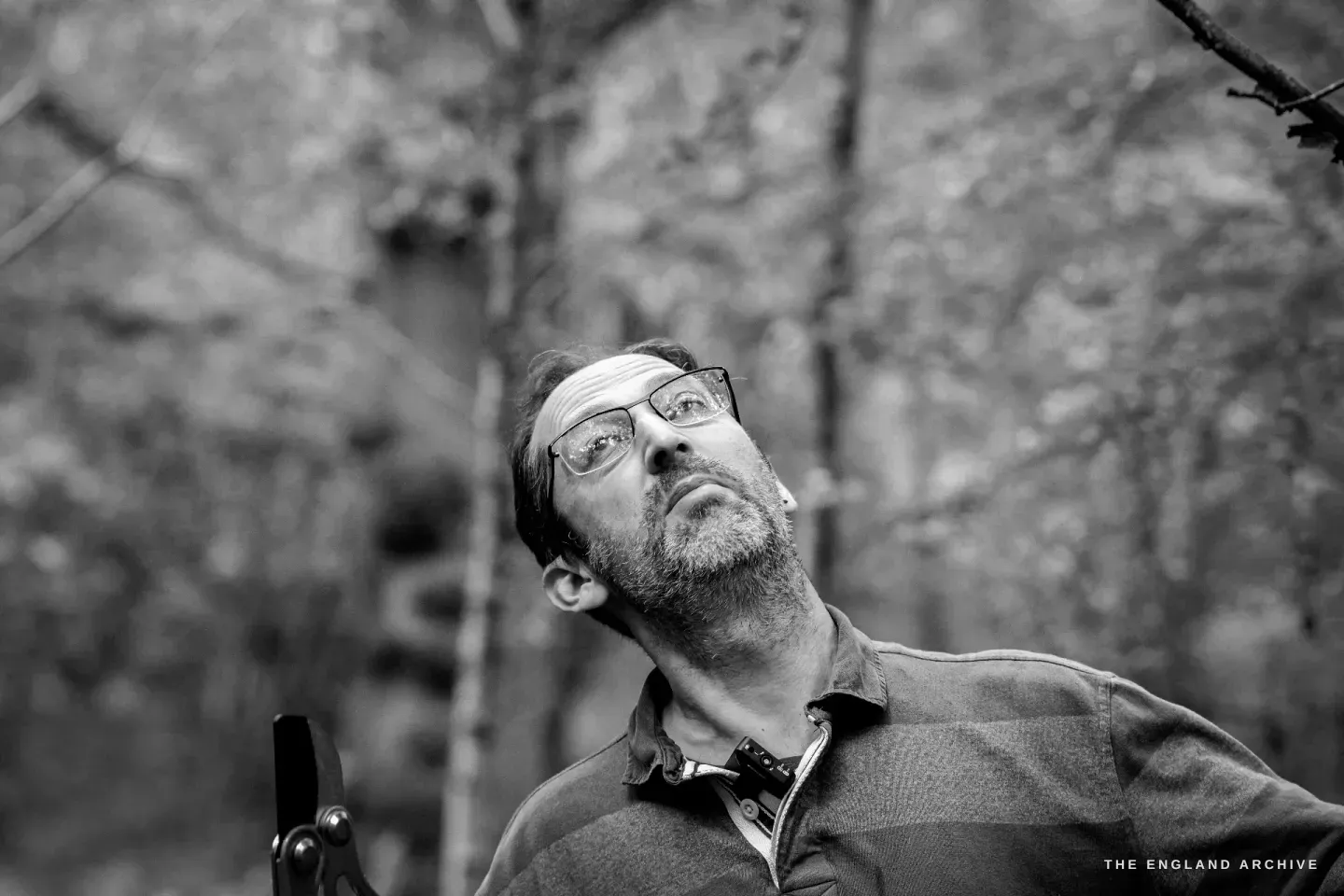
Lewis settled on a rod. He set the loppers to it, low to the stool, angled so the cut stub would not catch rain and rot, and took the rod off in a single clean motion. Then he held the cut end up and counted the rings in the pale wood at the base.
"Nine years."
I did the maths quickly. The rod was older than the boy I had spoken to in the village shop on the way up. It had been growing in this wood since the year before Lewis built the shelter.
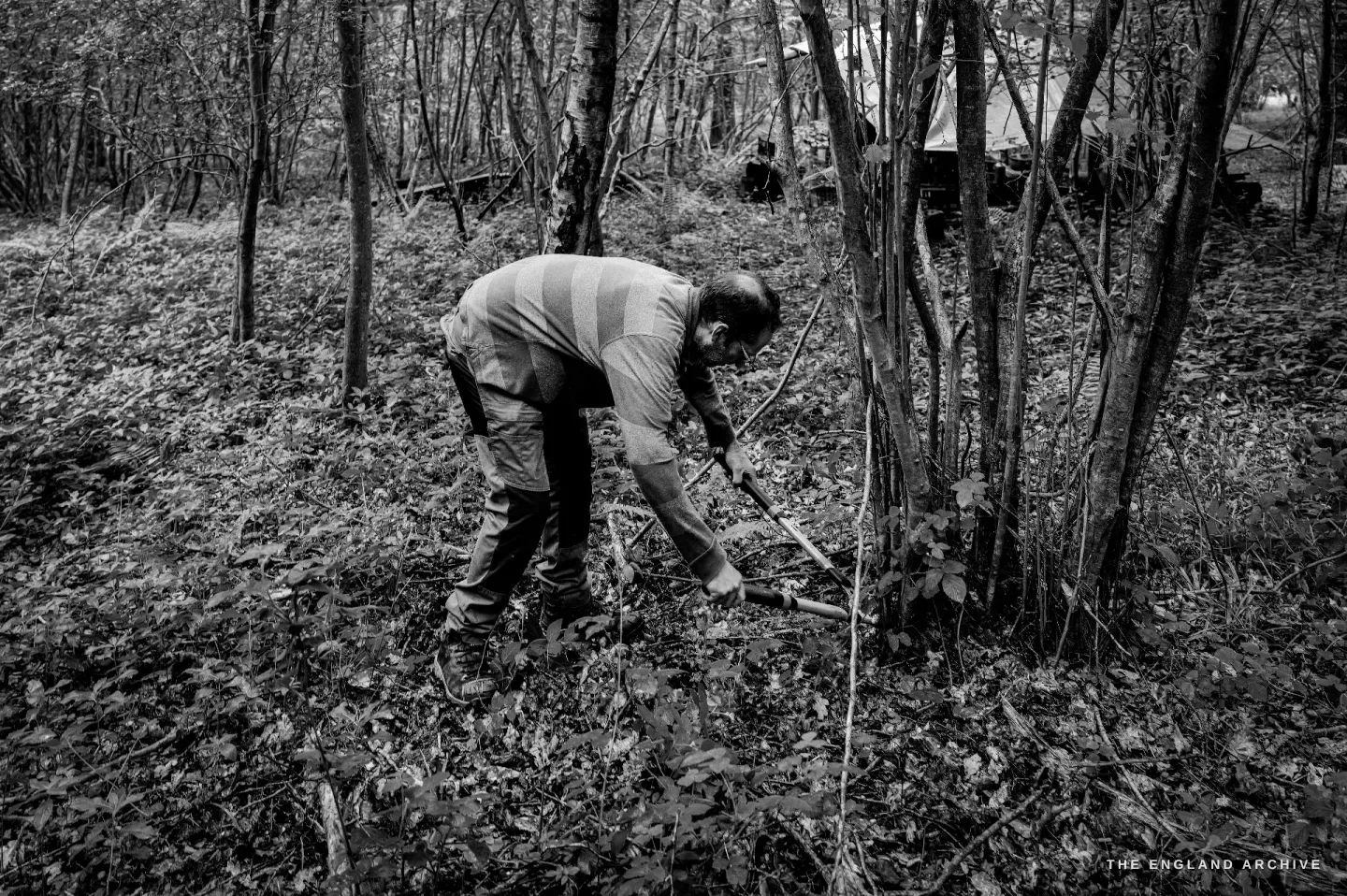
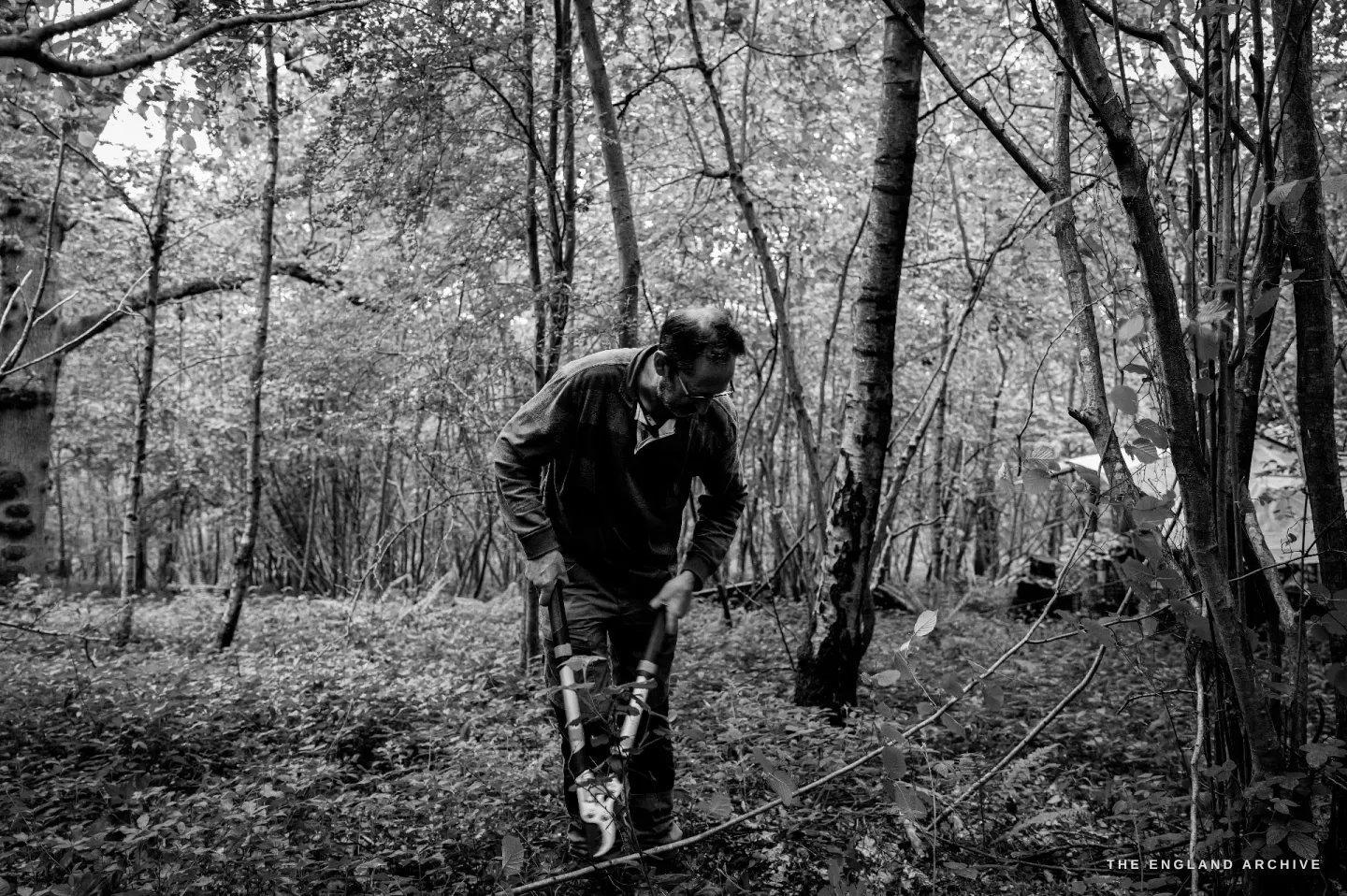
We walked back to the shelter with the rod, and a second one he took from a different stool because the basket would need two. The rain was steady now, and the canopy was loud with it, and we set the rods down at the bench and went over to the fire.
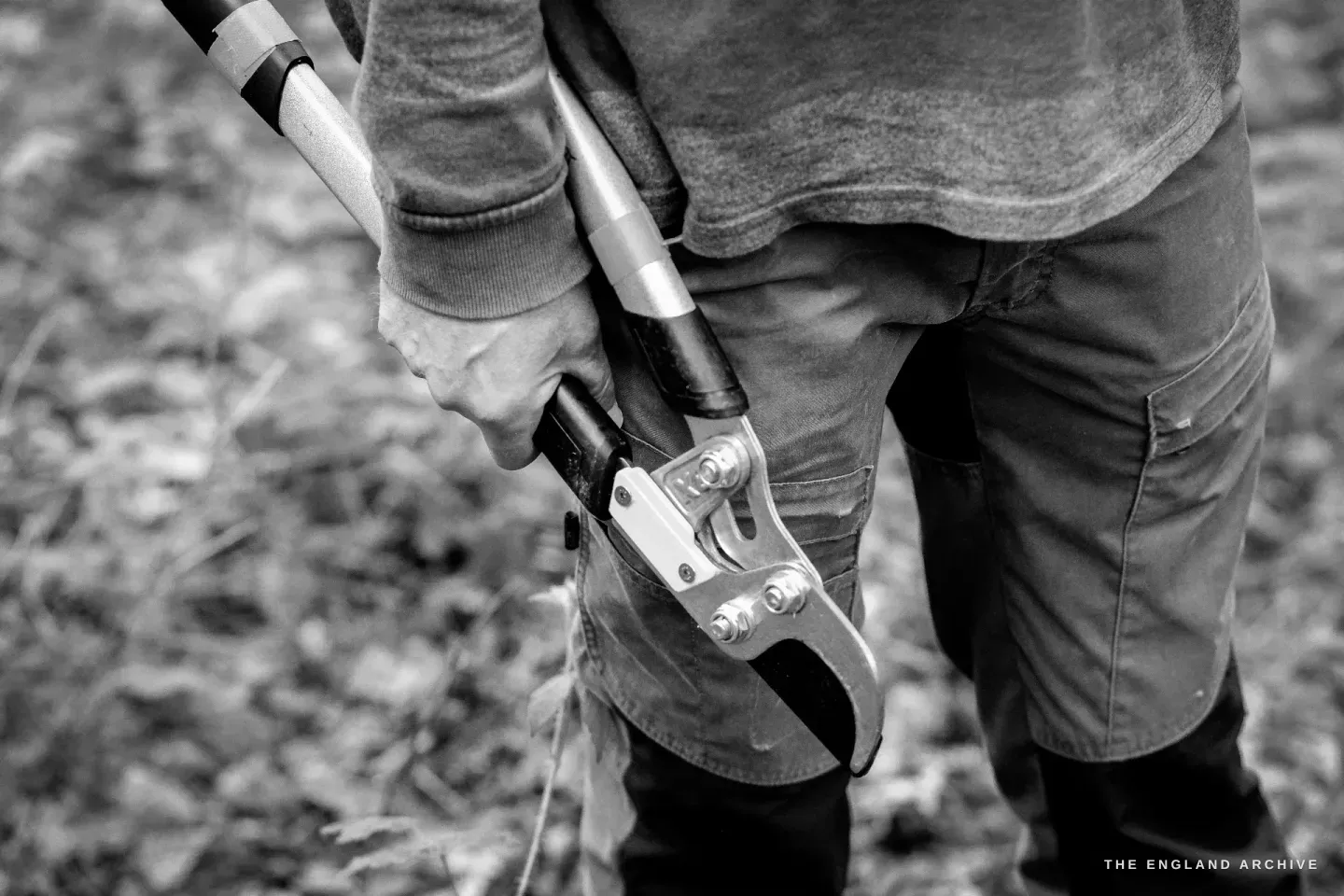
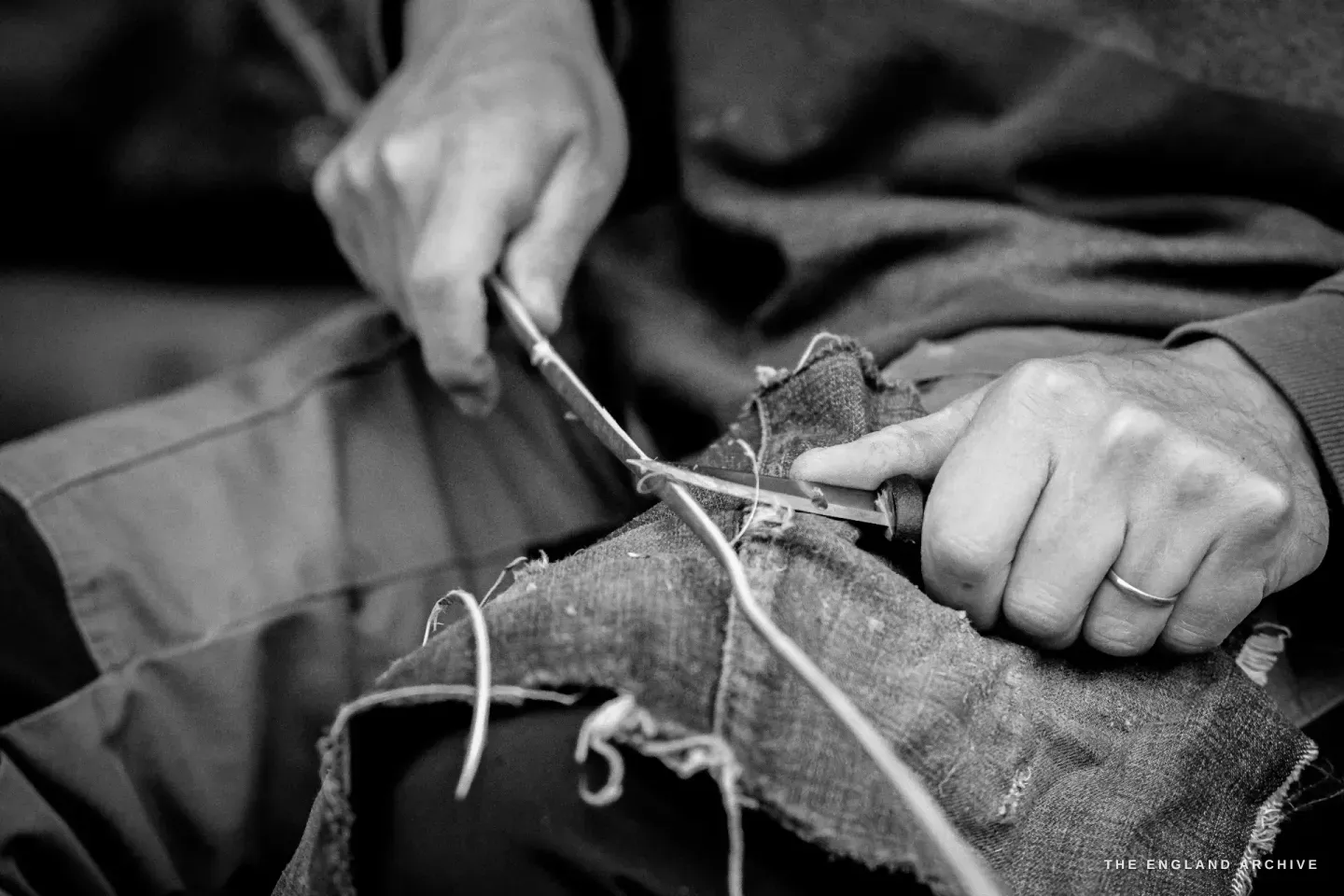
A round hazel rod cannot be woven. It has to be split into long flat strips - splints - and the splints have to be shaved to an even width and a steady thickness so they bend without breaking and lie flat against each other in the weave. The transformation happens at the bench, and the two tools that do it are a small straight-bladed knife and the maker’s knee, following the methods practised by generations of Welsh farmers before.
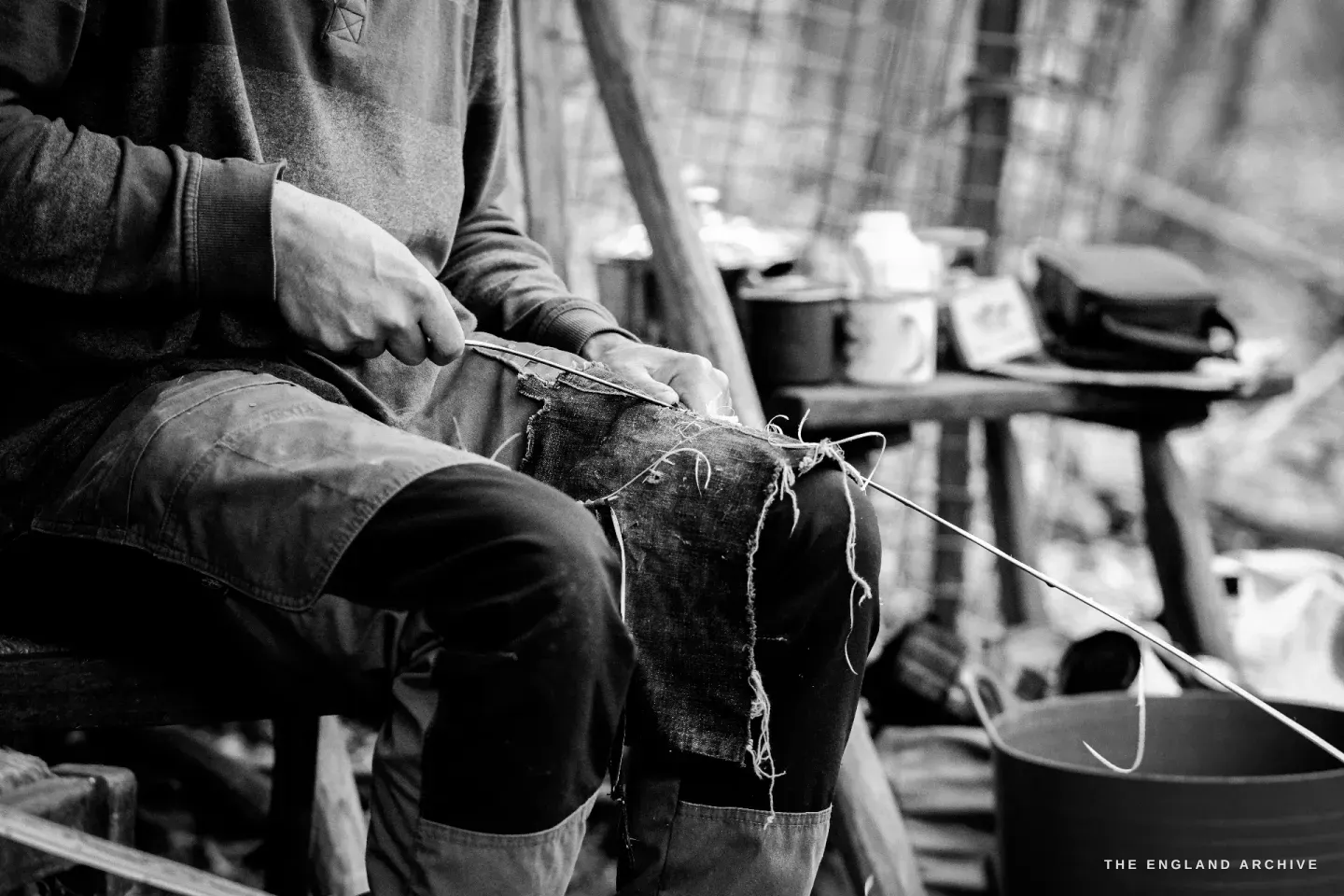
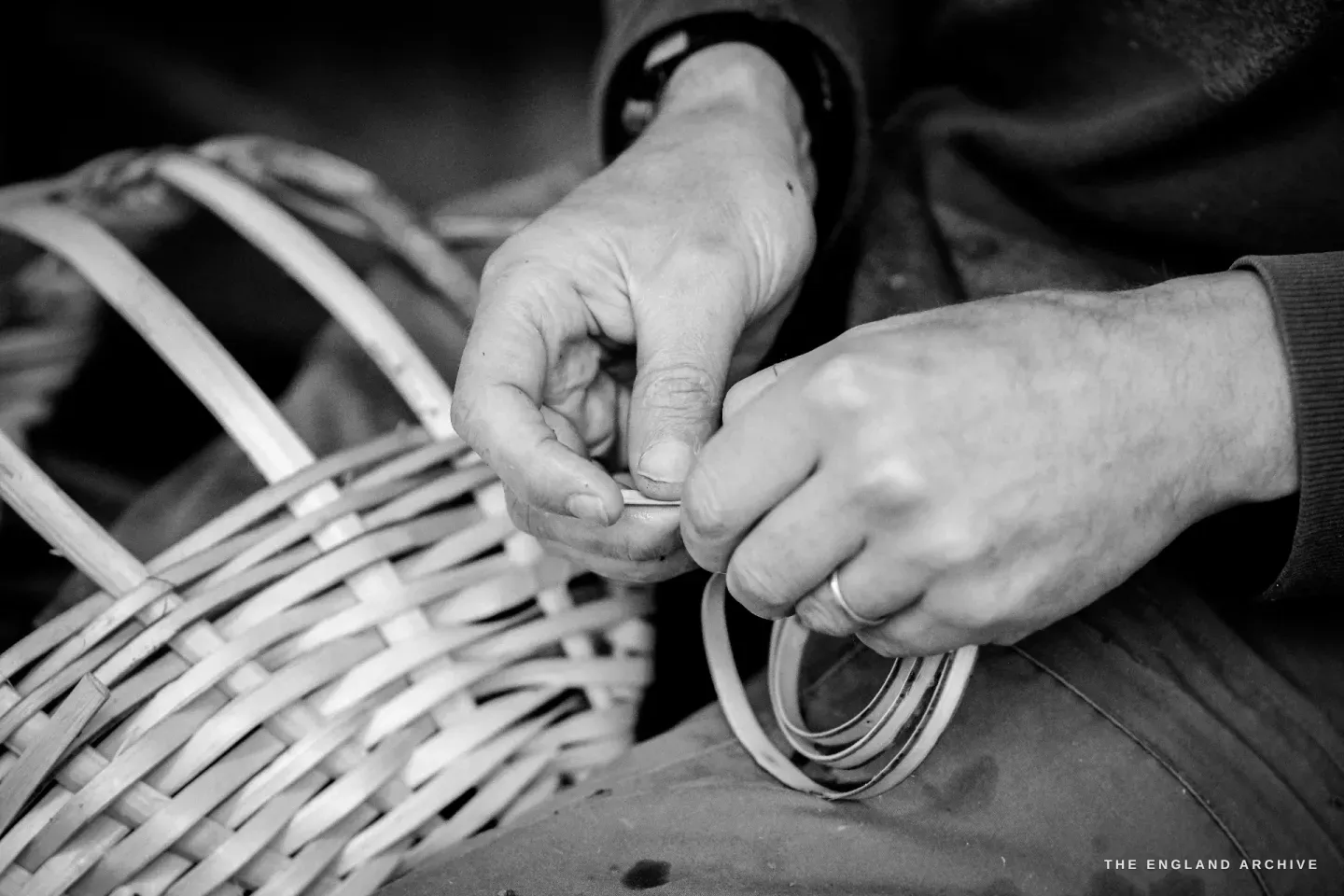
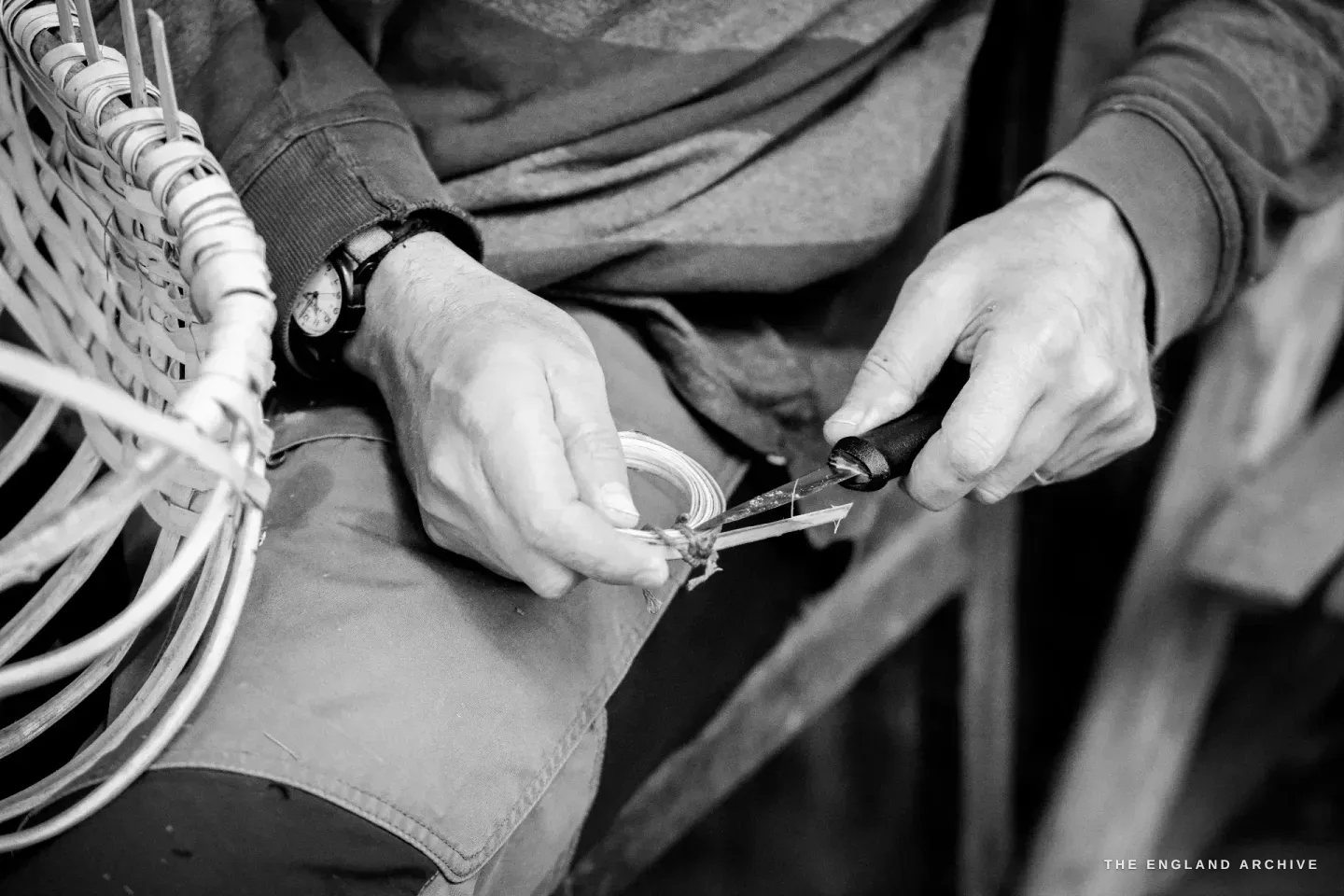
The knife is used to cut a small nick close to the cut end of the rod. By carefully positioning the rod so that the nick sits over one’s knee and bending the rod back, a thin splint of wood starts to lift that splits cleanly along the grain. The rod is slid along a few inches, bent again over the knee and the splint lifts a little more. This is repeated over and over, to produce a flexible but strong ribbon of wood, almost the length of the rod - almost the perfect material for weaving. A nine-year hazel will give six or eight usable splints from a single length of rod, sometimes more if the rod ran straight. The splits look easy when Lewis does them. They are not.
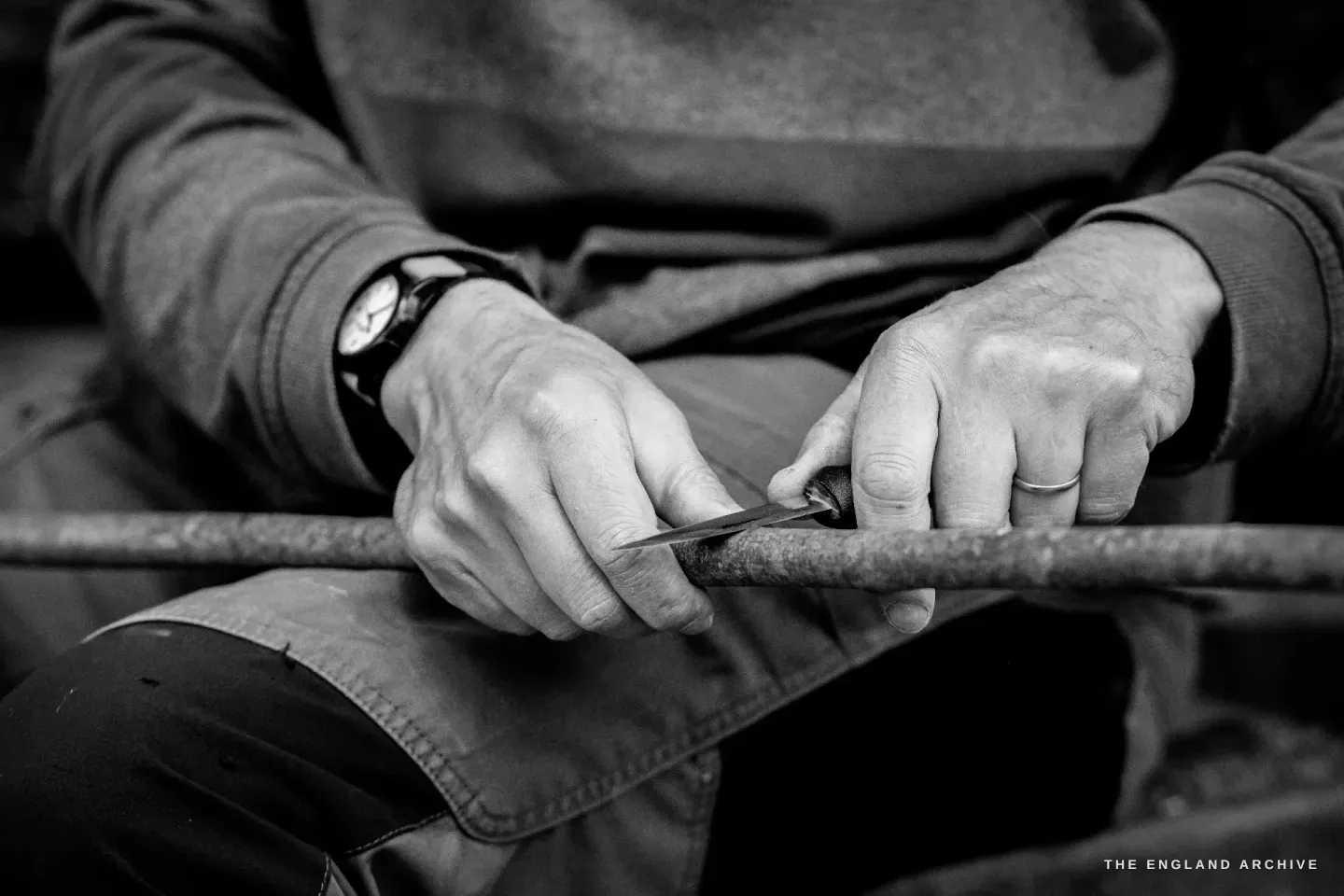
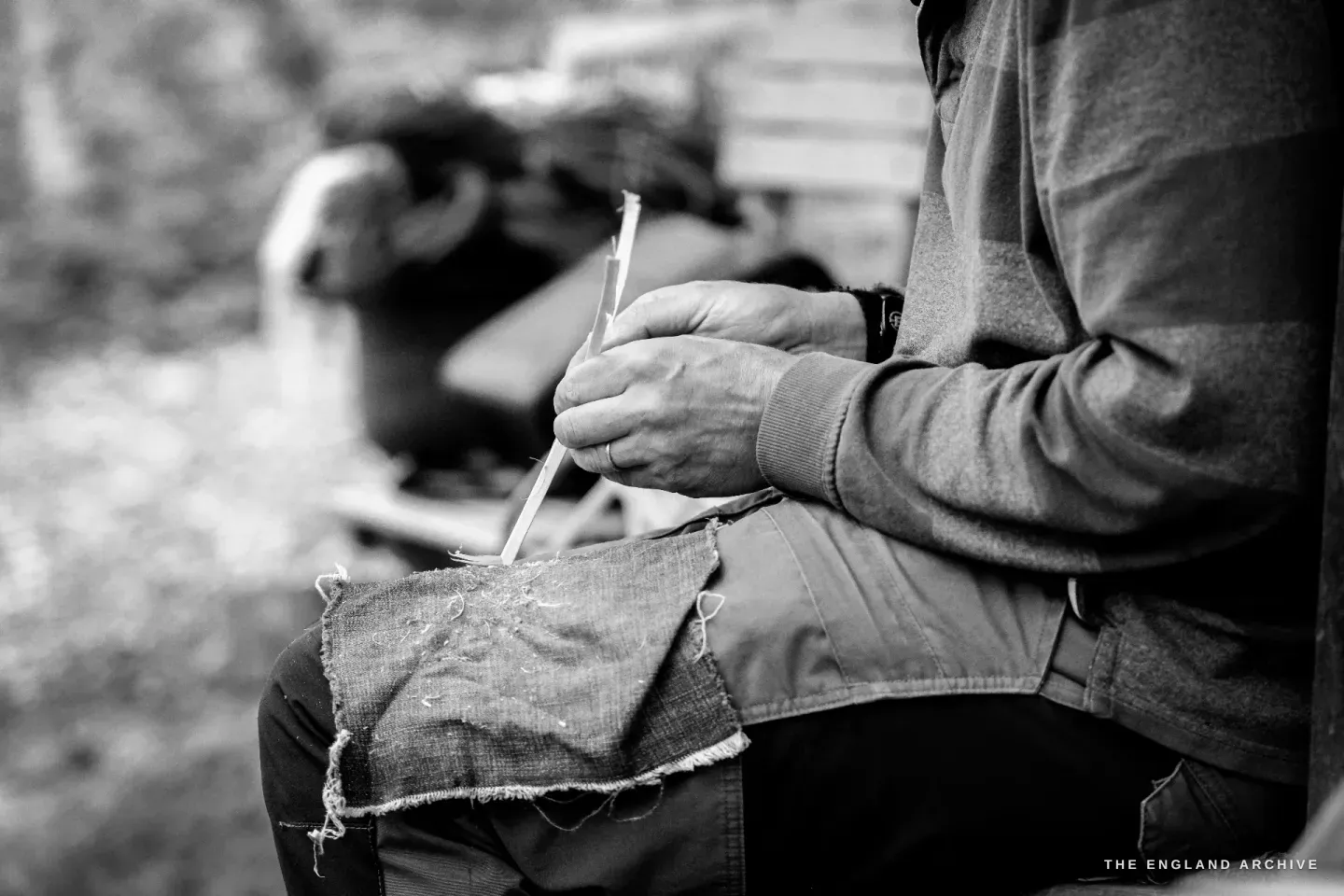
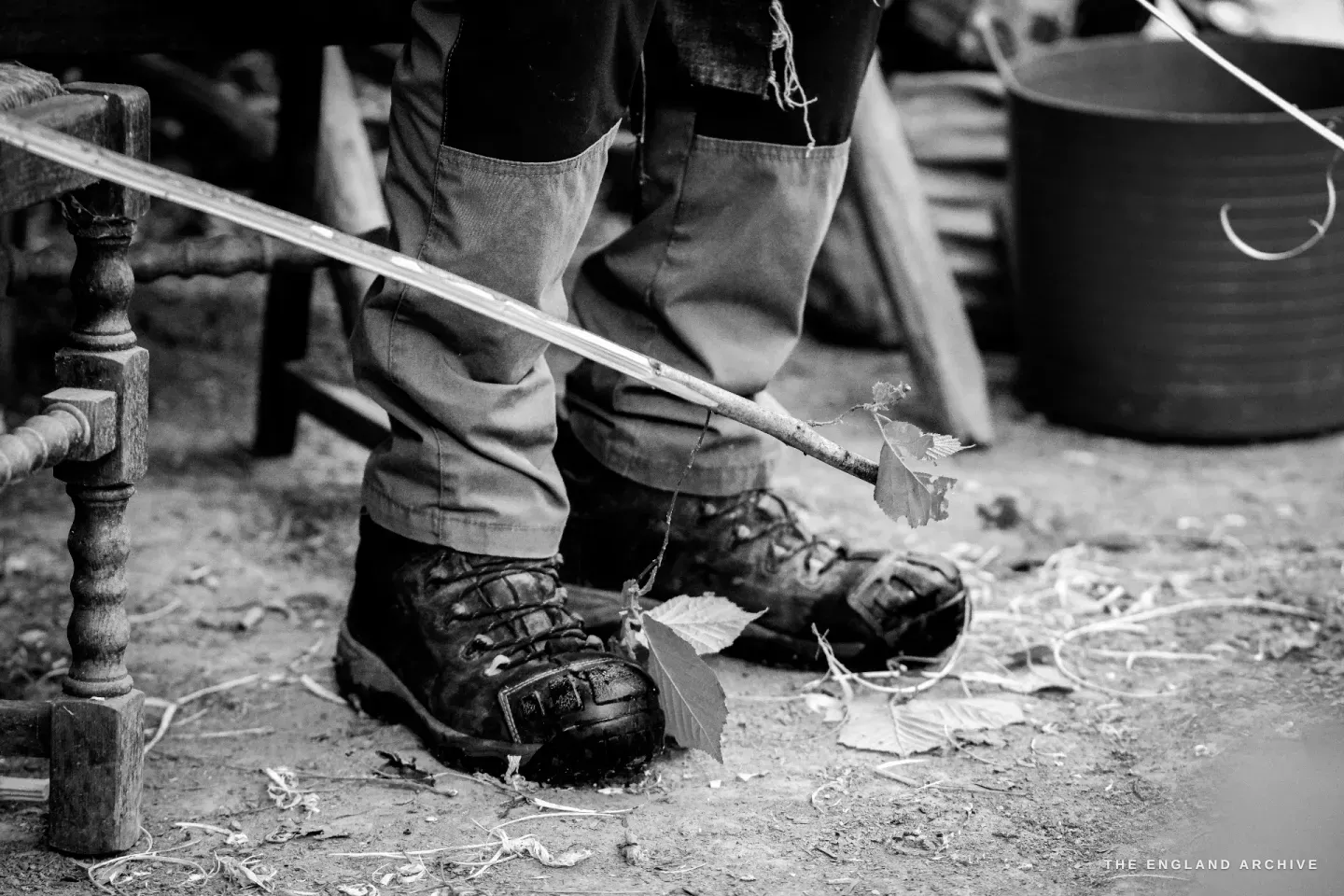
Then the knife. Each splint is held against the thigh, padded by a folded denim square that takes the cut so the leg does not, and the knife passes along the splint pulling thin shavings off it in long pale curls. The aim is even thickness end to end. A splint that thins at the tip will snap mid-weave. A splint that thickens unevenly will twist and refuse to lie flat. Lewis worked through the rods quickly. The shavings collected on the ground around his boots.
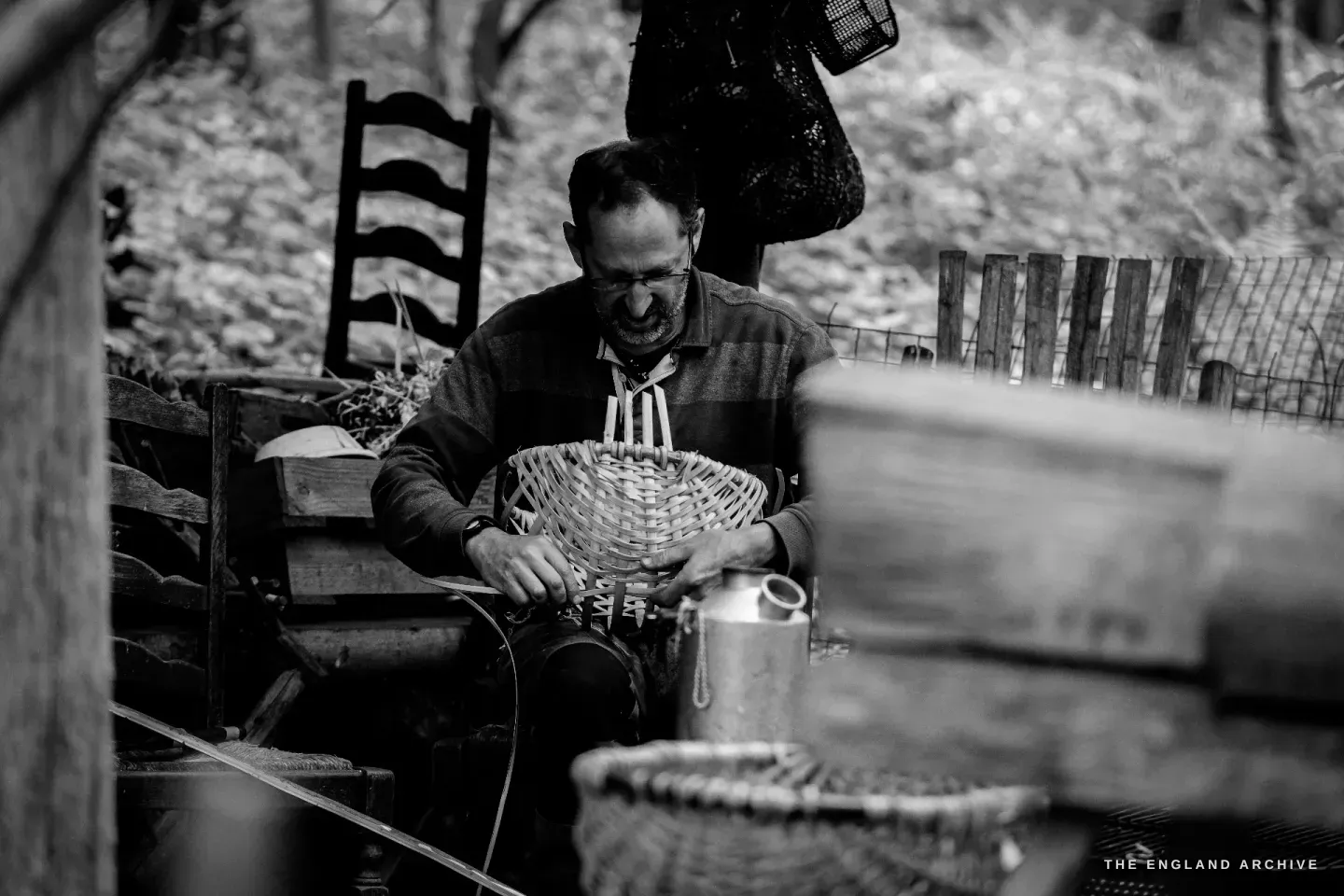
There is always a cup of tea before the basket starts. The Kelly Kettle had been boiling for some time. Lewis set the splints aside, poured two mugs from the kettle into chipped enamel cups, handed me one, and we drank them under the canopy with the rain coming down through the gaps. Then he sat down at the bench, settled the apron across his lap, and started.
The Whisket starts with the rim - a slim bowed hazel rod bent round and lashed into a circle - and the splints set into it like spokes radiating downward. The frame looks impossibly fragile at this stage. The basket is held together at the rim and nowhere else. The splints fan out and wait.
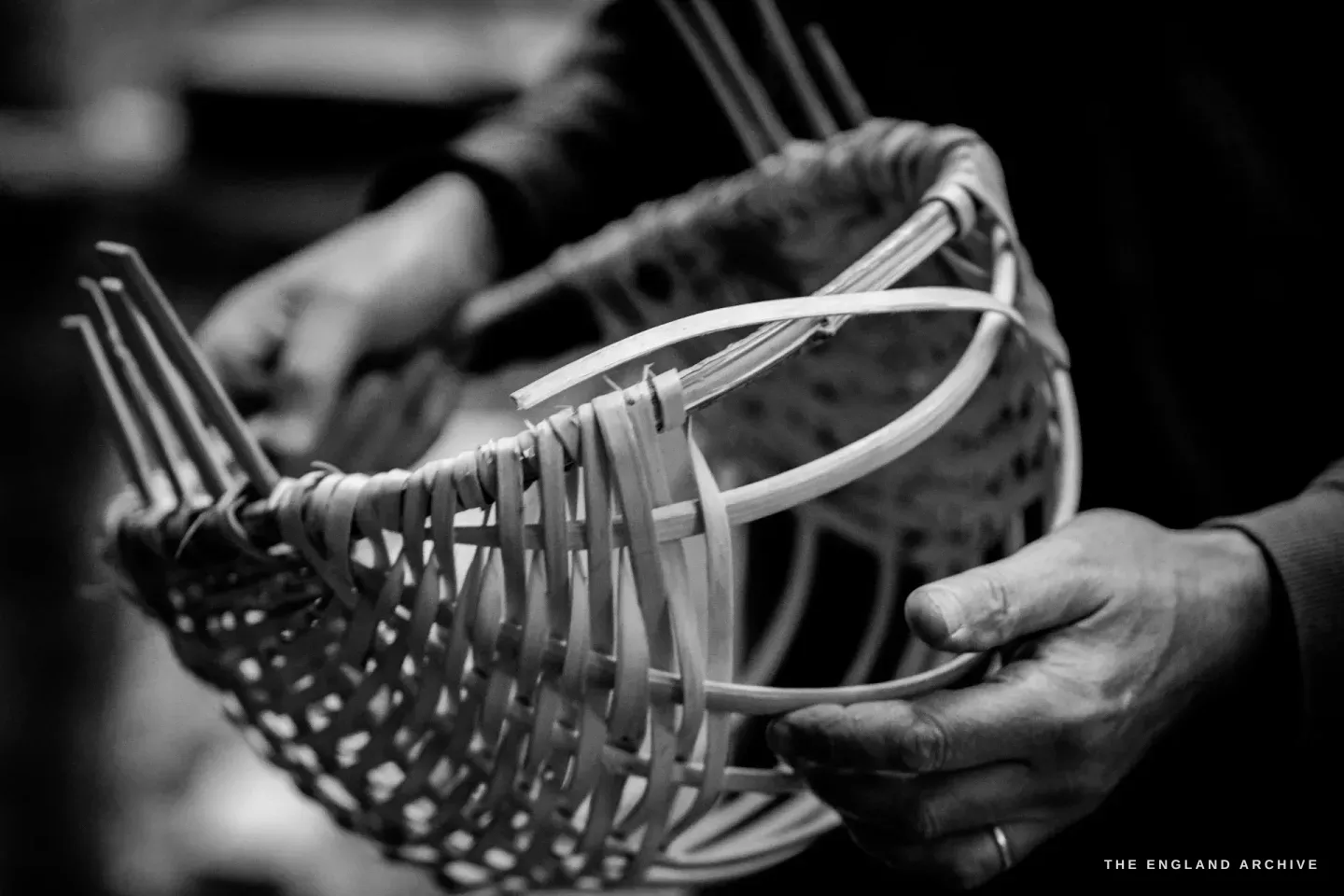
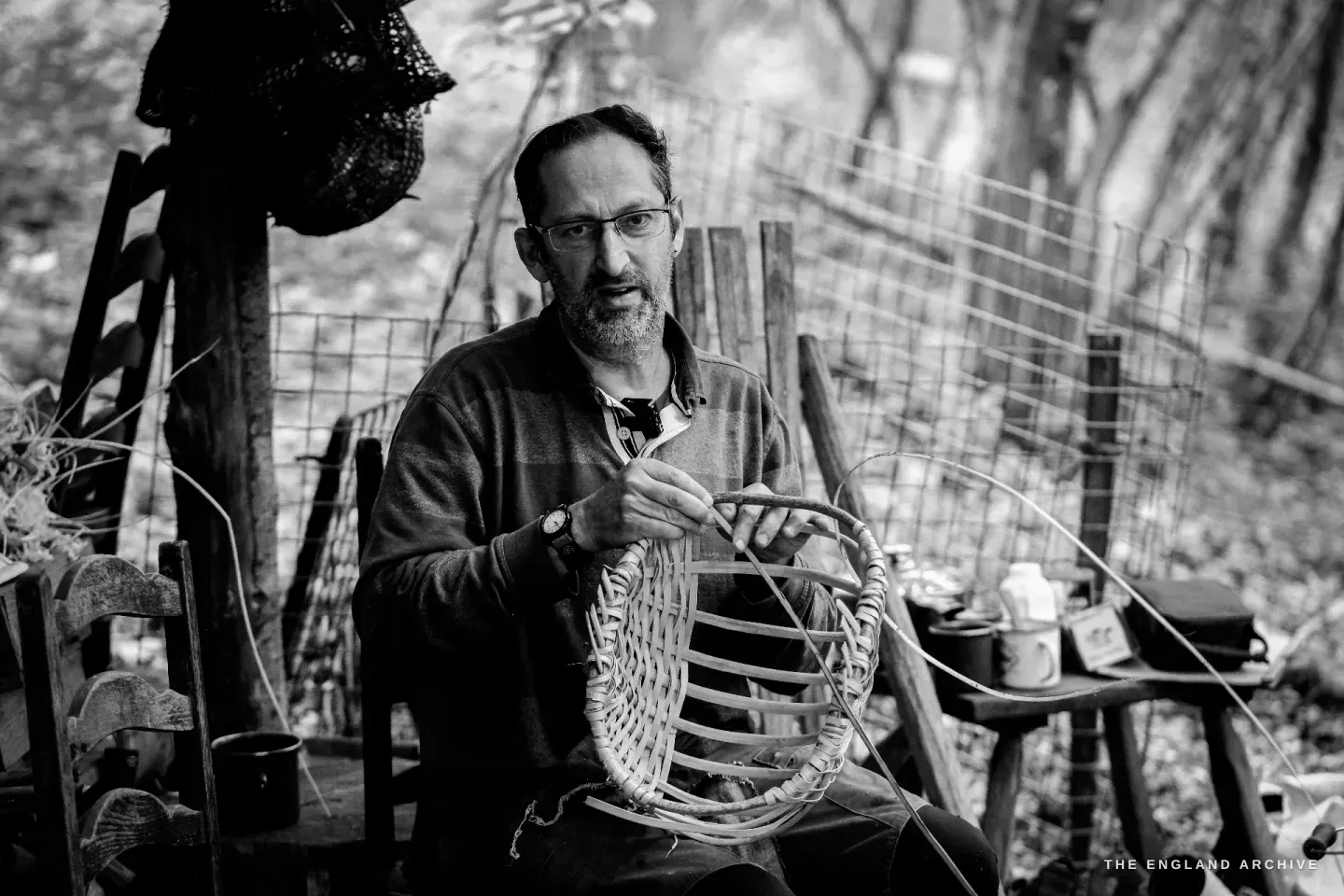
Then the weave begins. A fresh splint is drawn from the bundle, threaded under one rib and over the next, around the basket in a continuous spiral. Each pass pulls the spokes a little closer together. After half a dozen passes the basket starts to hold its own shape. After two dozen, it begins to look like a basket.
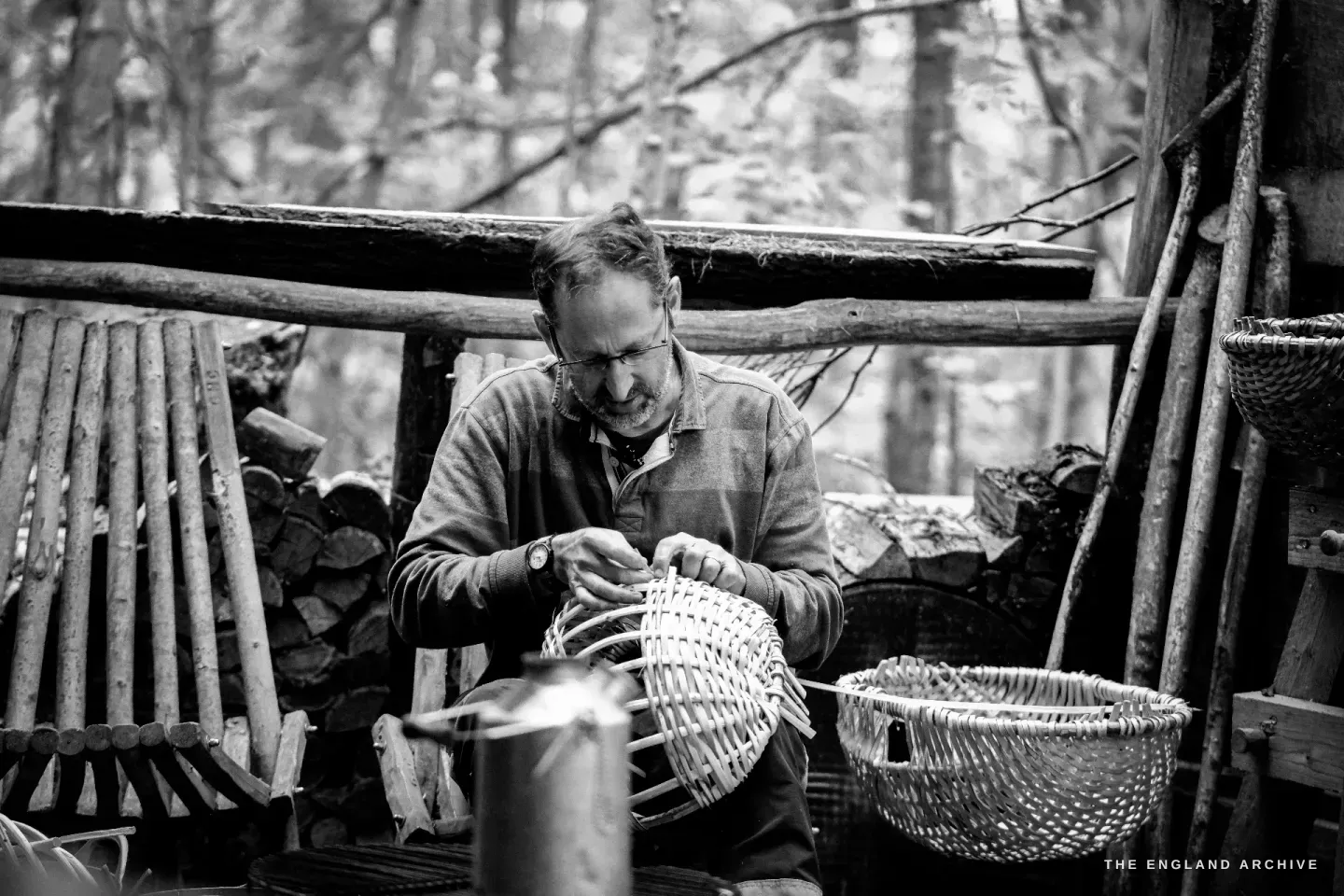
"I teach this around the country." He was working without looking up at me. "The hardest thing is the first hour. Reading the rod, choosing the splint, getting the rim set true. After that, the weaving is the easy part. People struggle in the first hour and they think they will never get it. But the hands learn. The hands learn faster than the head."
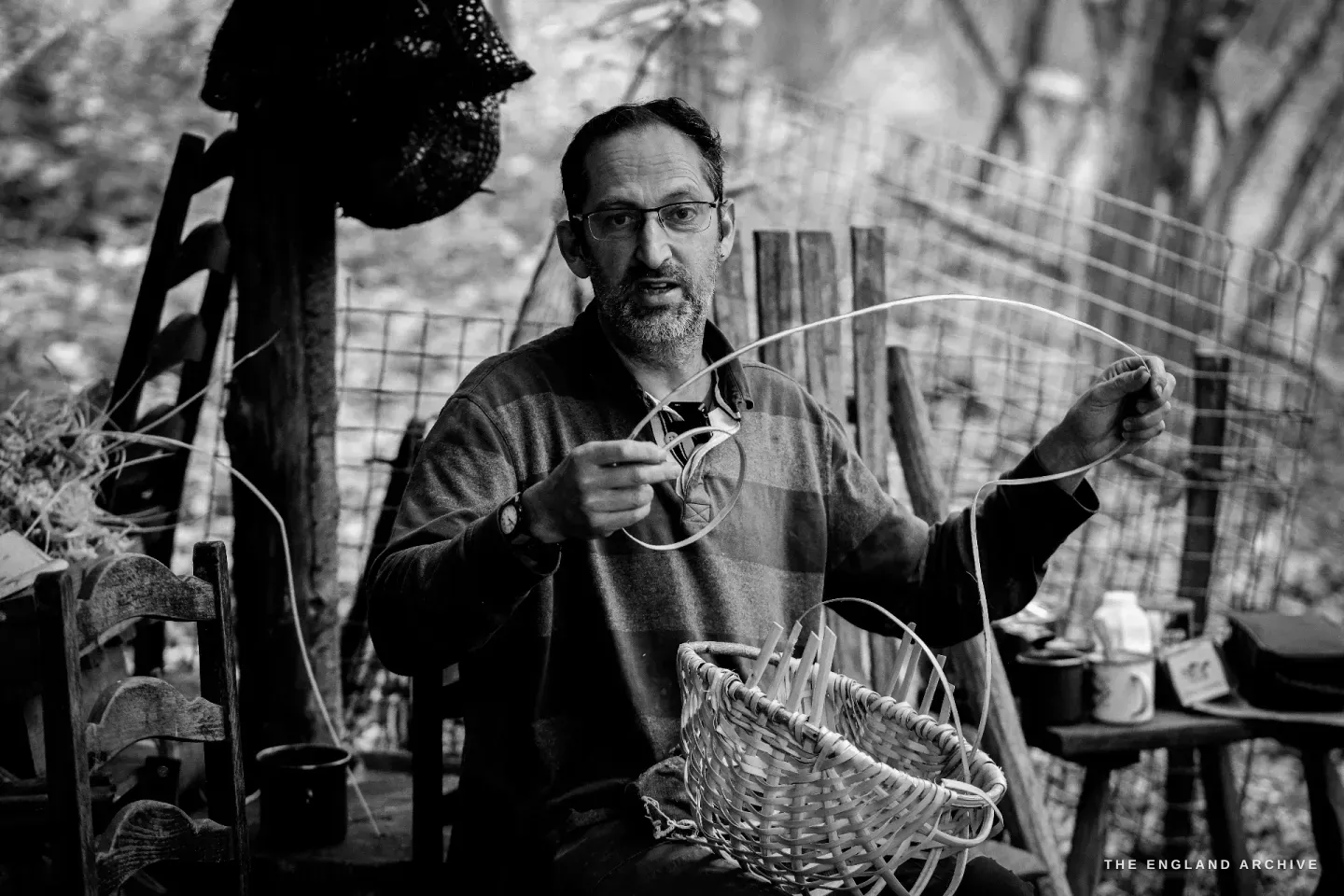
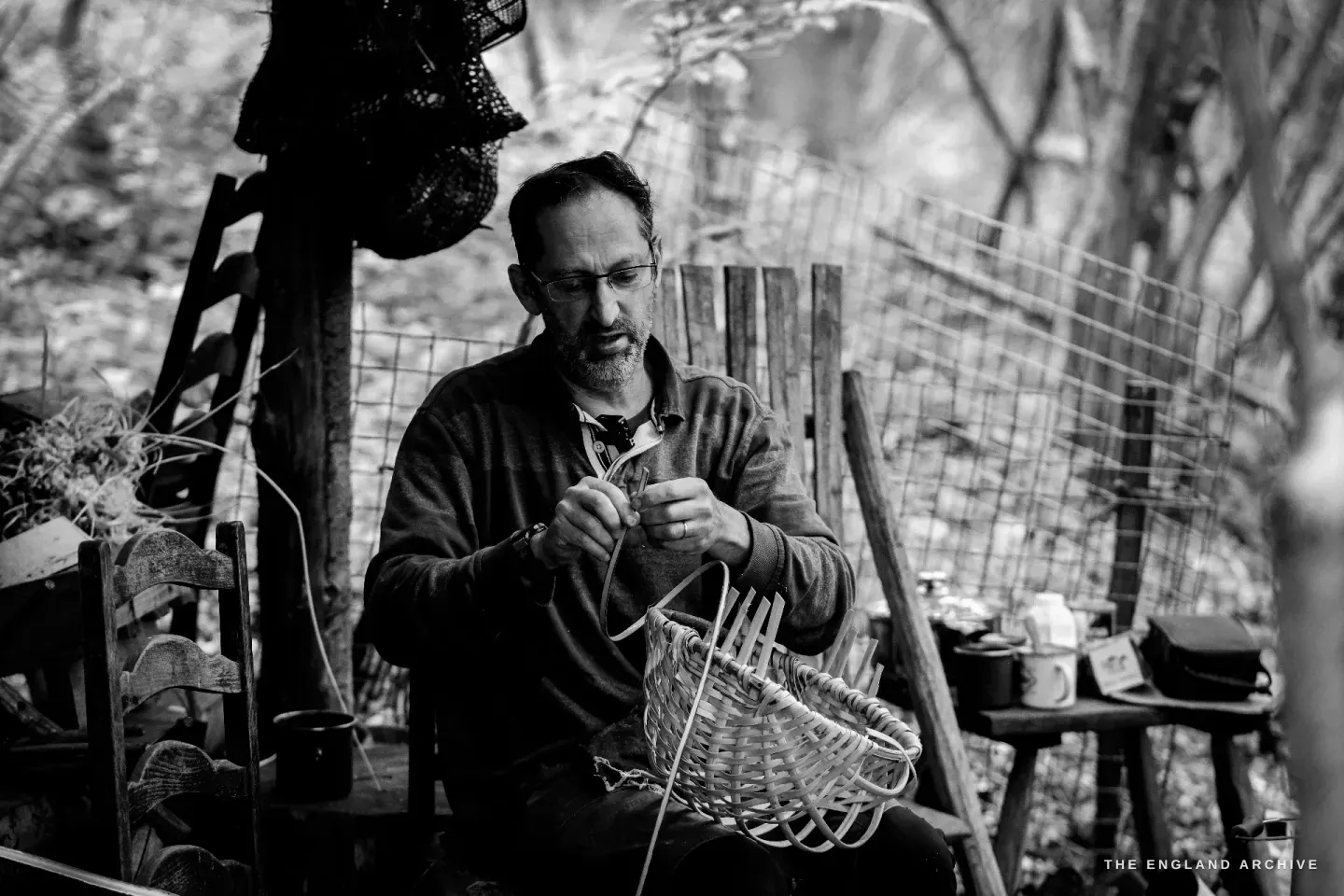
The teaching matters. He runs courses out of the wood and at venues across the country - the Basketmakers’ Association Spring School, Greenwood Days, smaller gatherings. The students leave with a Swallow basket of their own and the beginning of the hand-knowledge that took him years to acquire. He is also, he told me, going to be working as a Guardian of the Woodlands with the local Wildlife Trust, leading coppice volunteers across several reserves in the county.
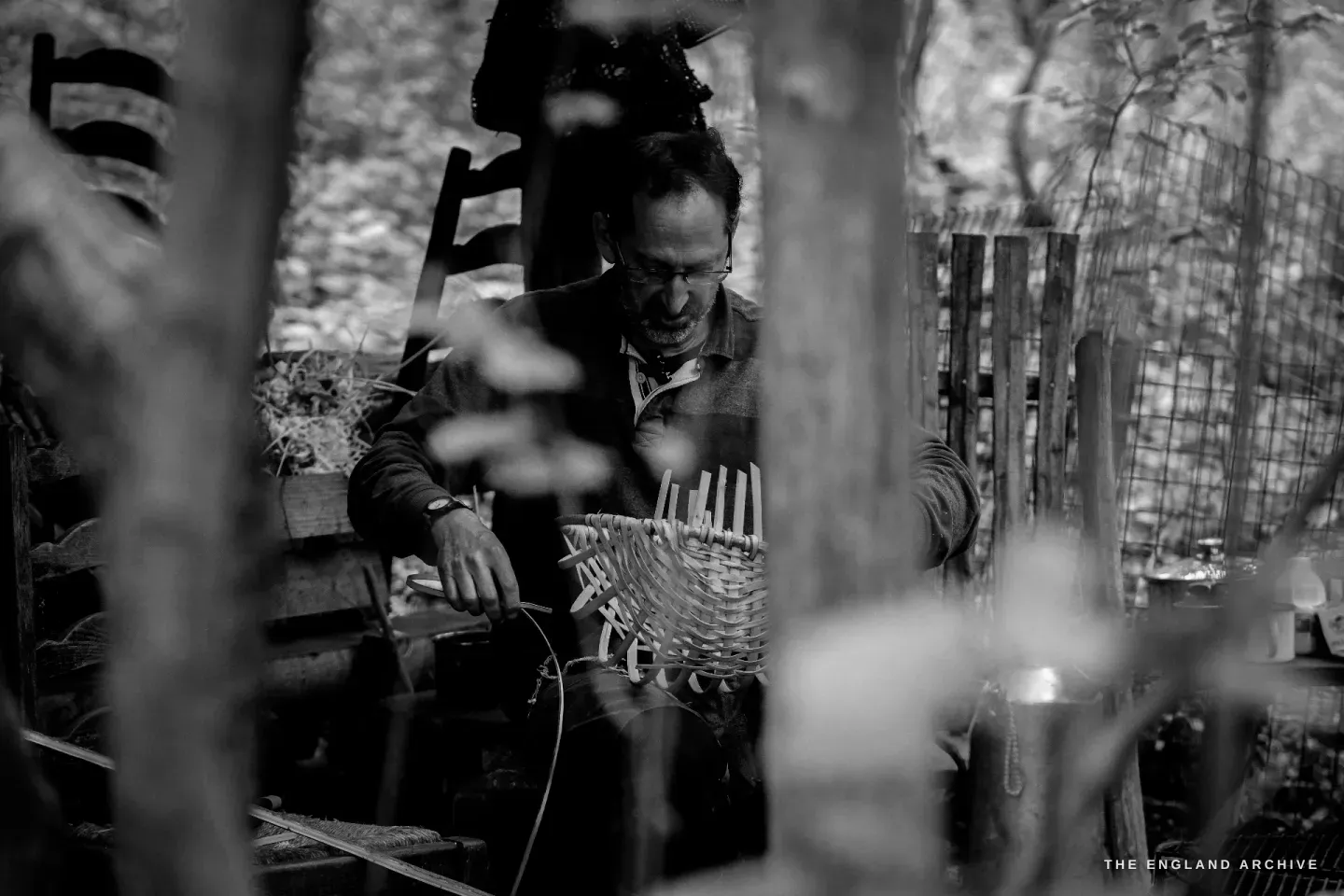
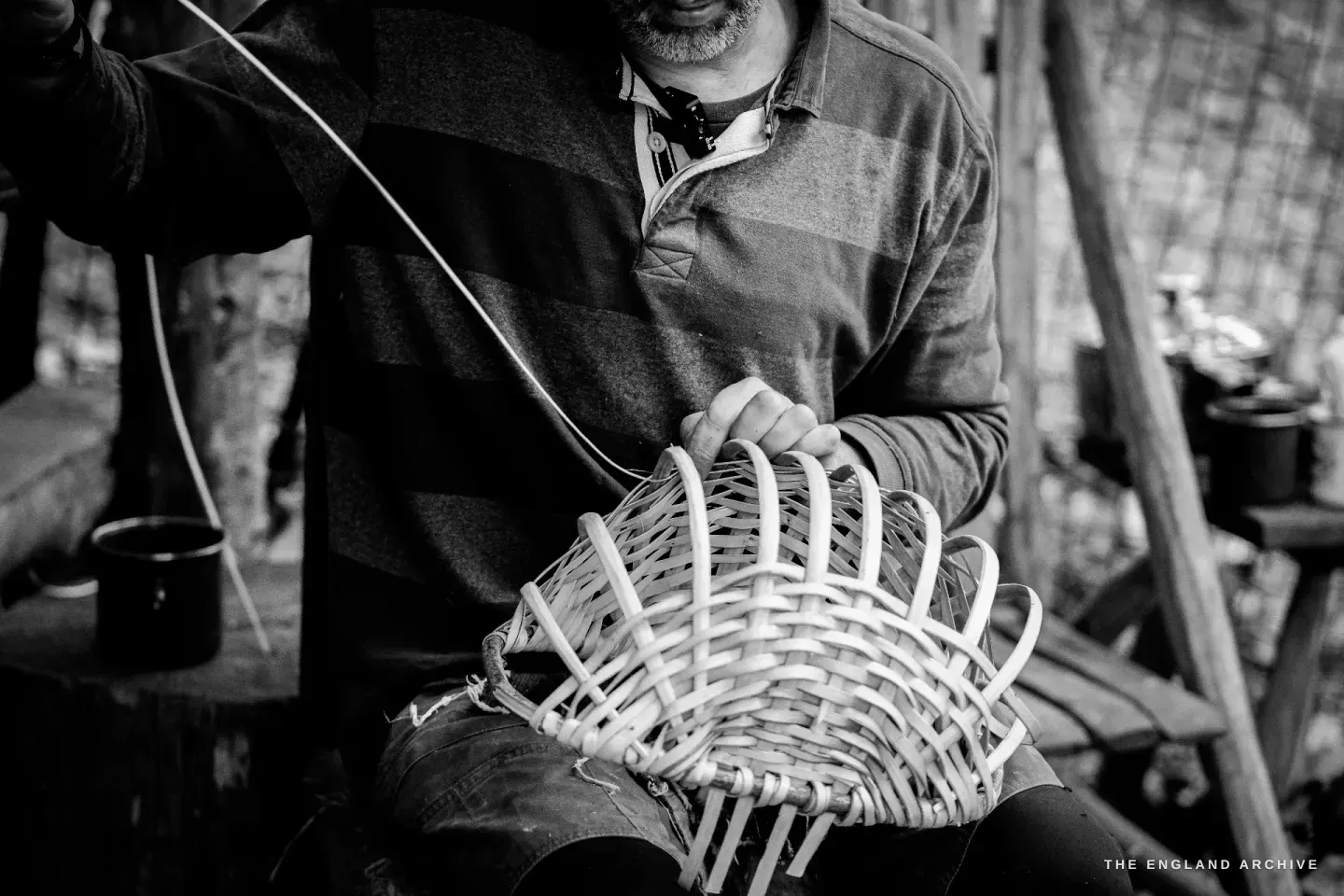
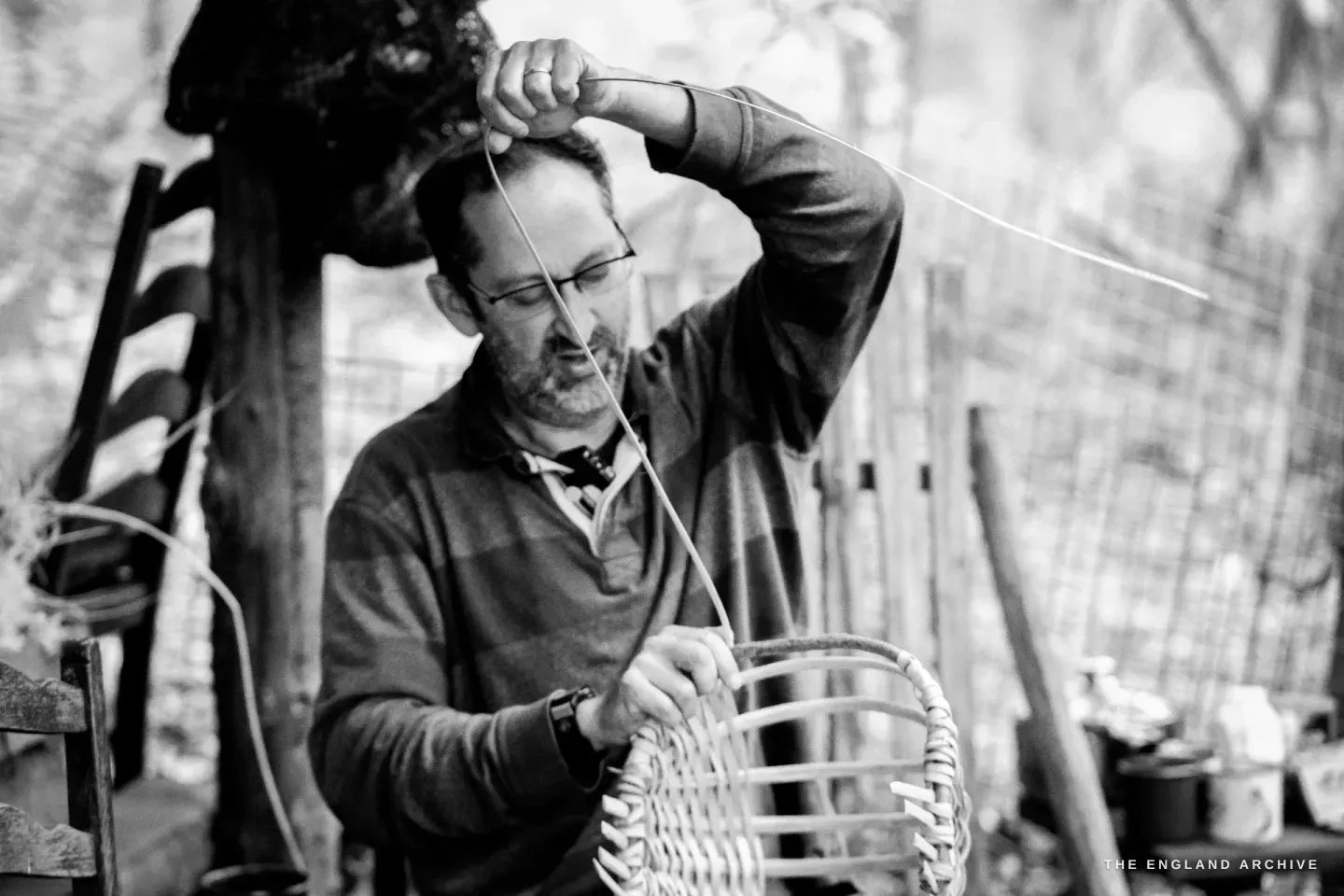
The work has a rhythm and the rhythm is unhurried. There were stretches of fifteen minutes during which neither of us spoke and the only sounds were the rain and the soft tick of splint against splint. Then he would say something and the conversation would resume mid-thought, as if no pause had happened at all. He laughed often. The work is serious. He is not.
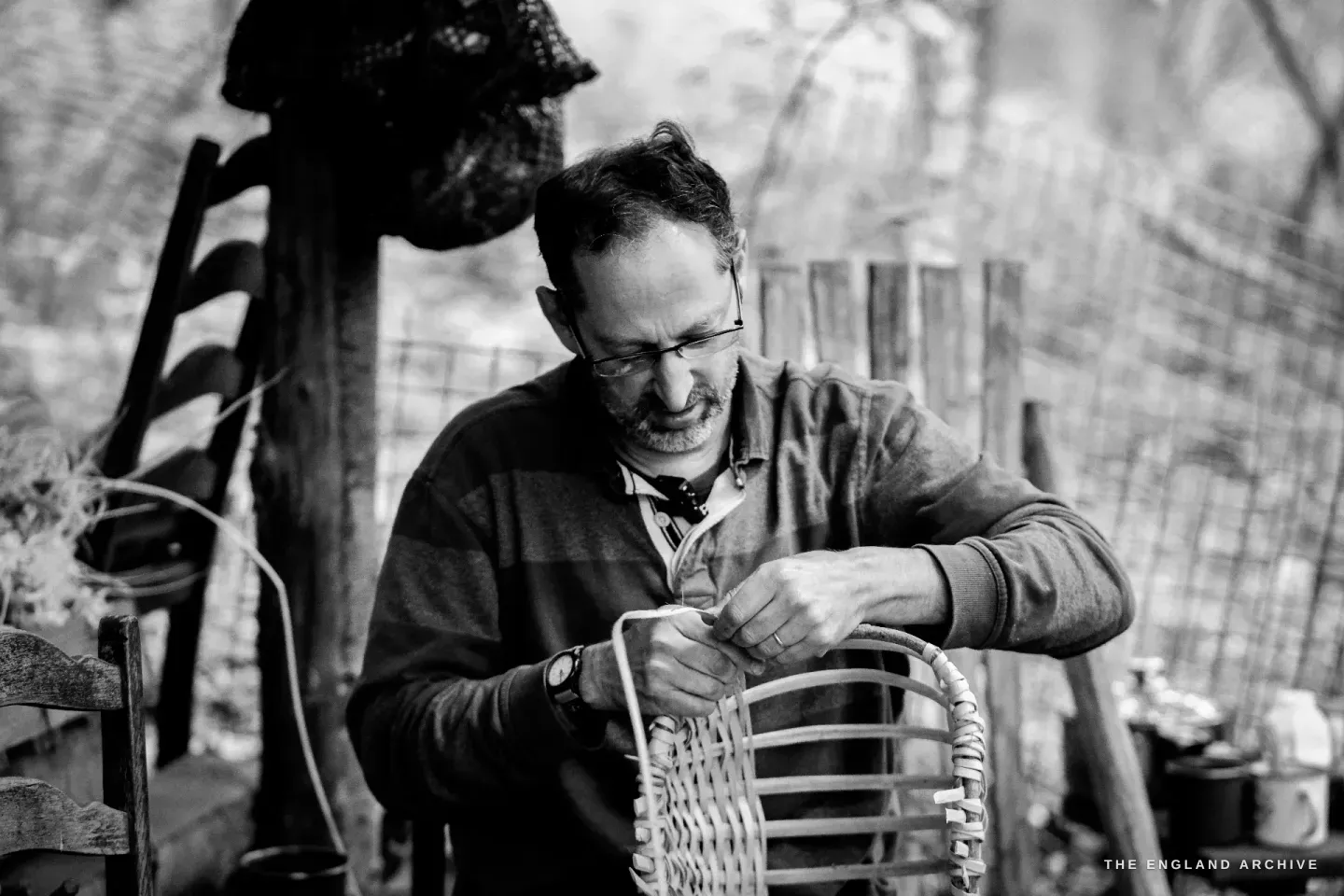
Closer, the work is a hundred small decisions. Which splint to pick up next. Whether to start a new round or finish the current one. When to tighten and when to leave the spokes a little loose so the weave does not lock up before the rim is reached. The hands do almost all of the deciding.
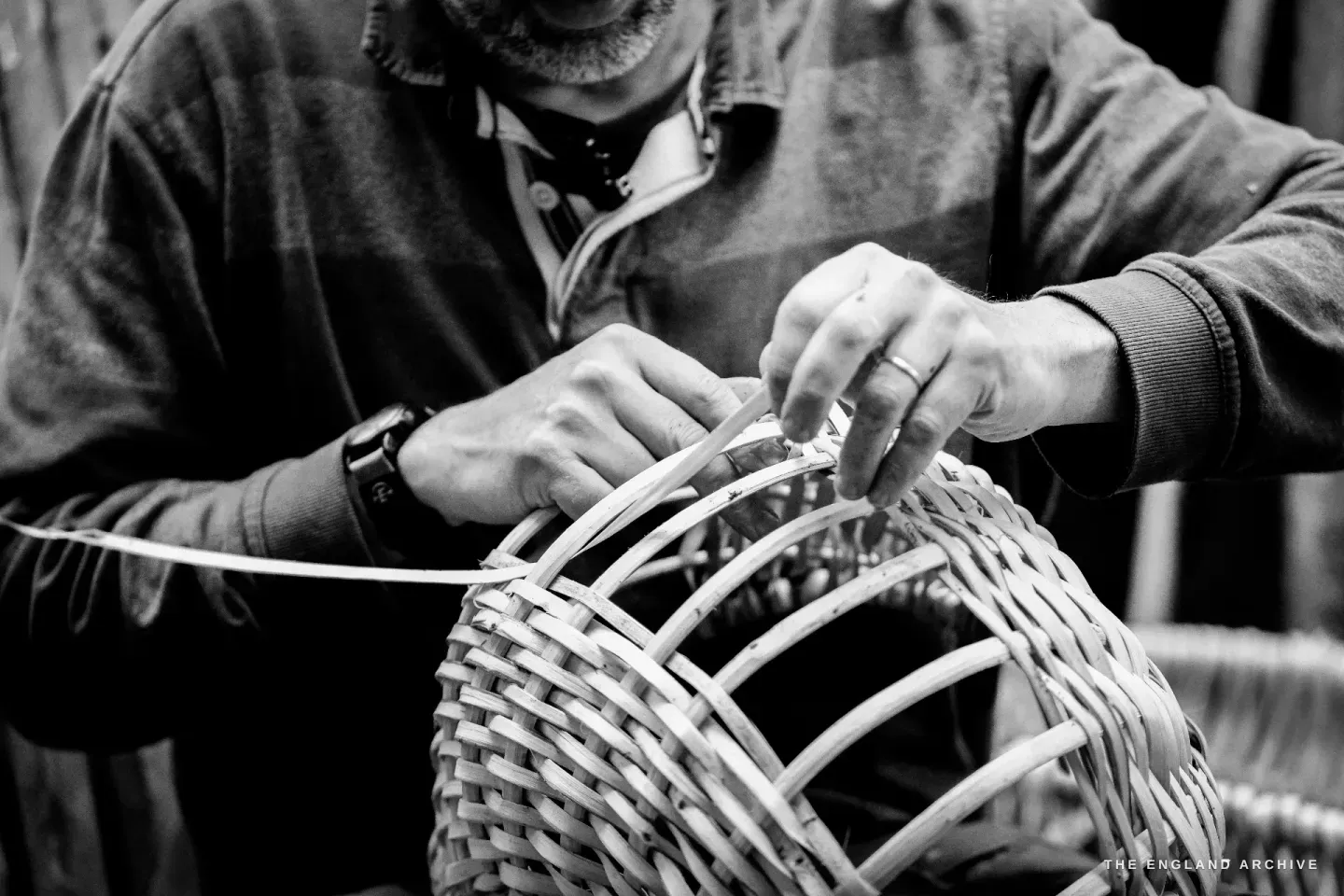
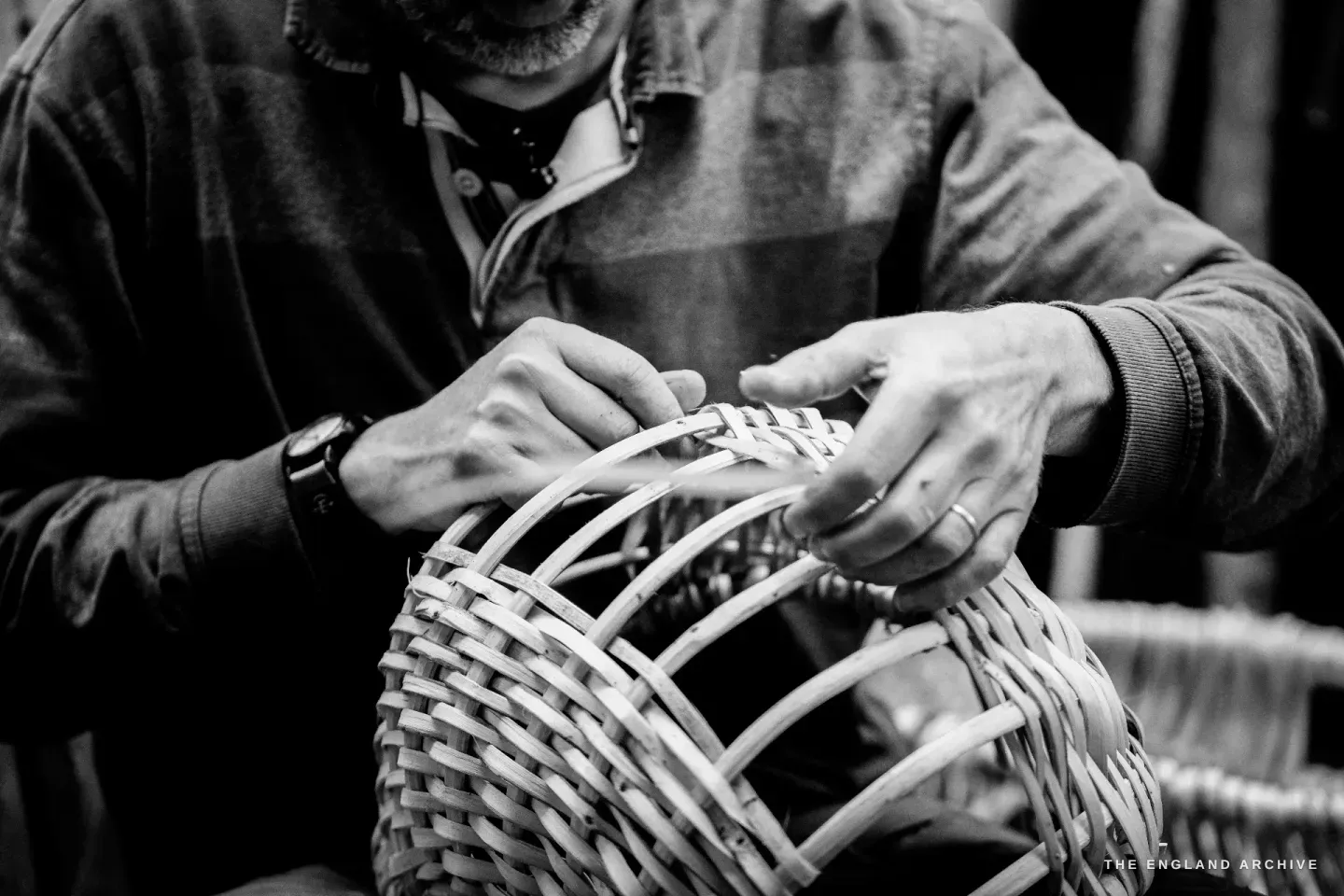
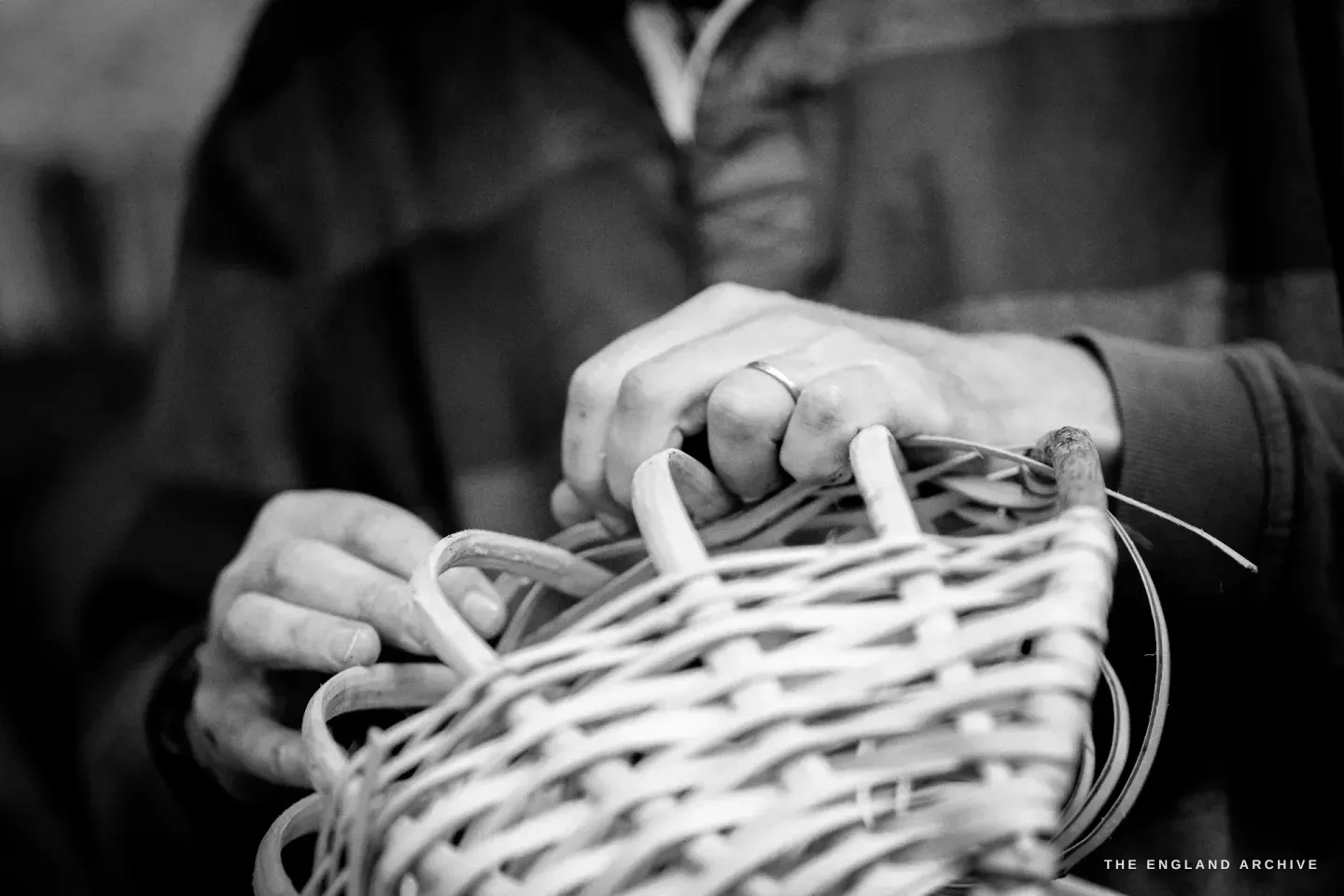
Towards the rim, the spaces between the standing rods narrow and the fingers alone can no longer push a splint through cleanly. He picked up a small pair of flat-nosed pliers and drew the last splints tight without looking at the tool. The pliers are not a concession to age or stiffness; they have always been part of the practice. A splint that should sit flat at the rim will sit flat only if it is drawn through with a firmer grip than the human hand can manage at that angle.
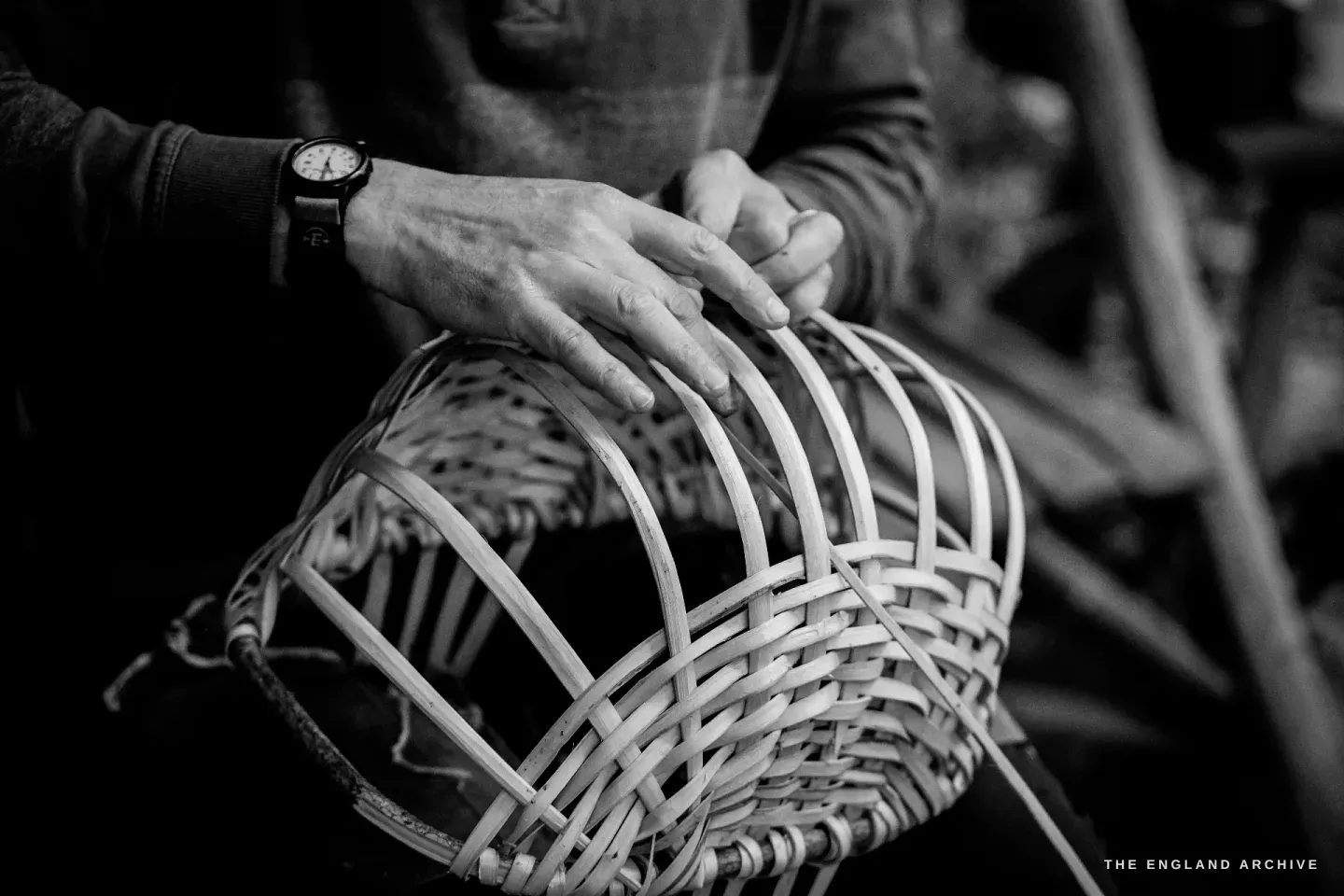
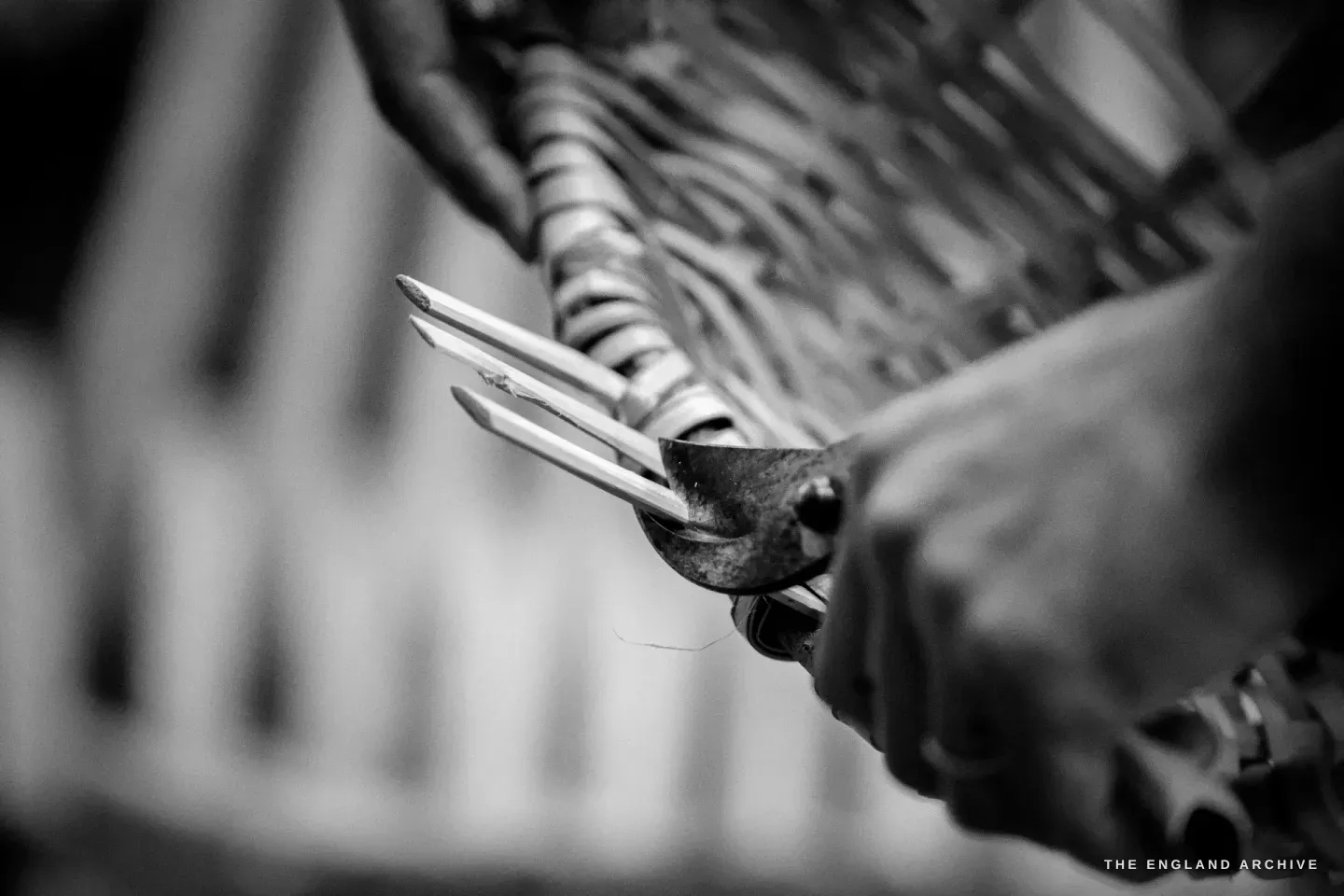

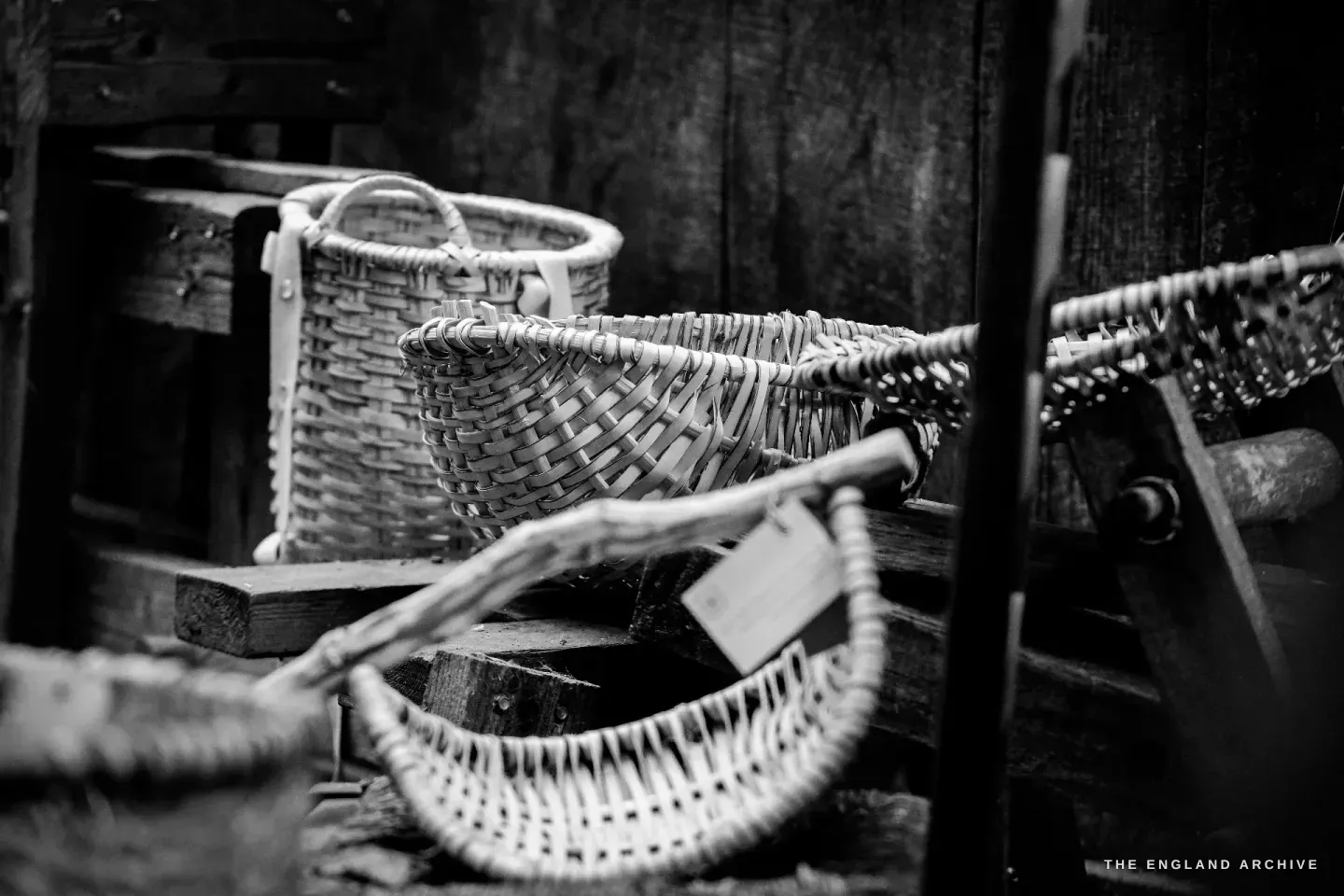
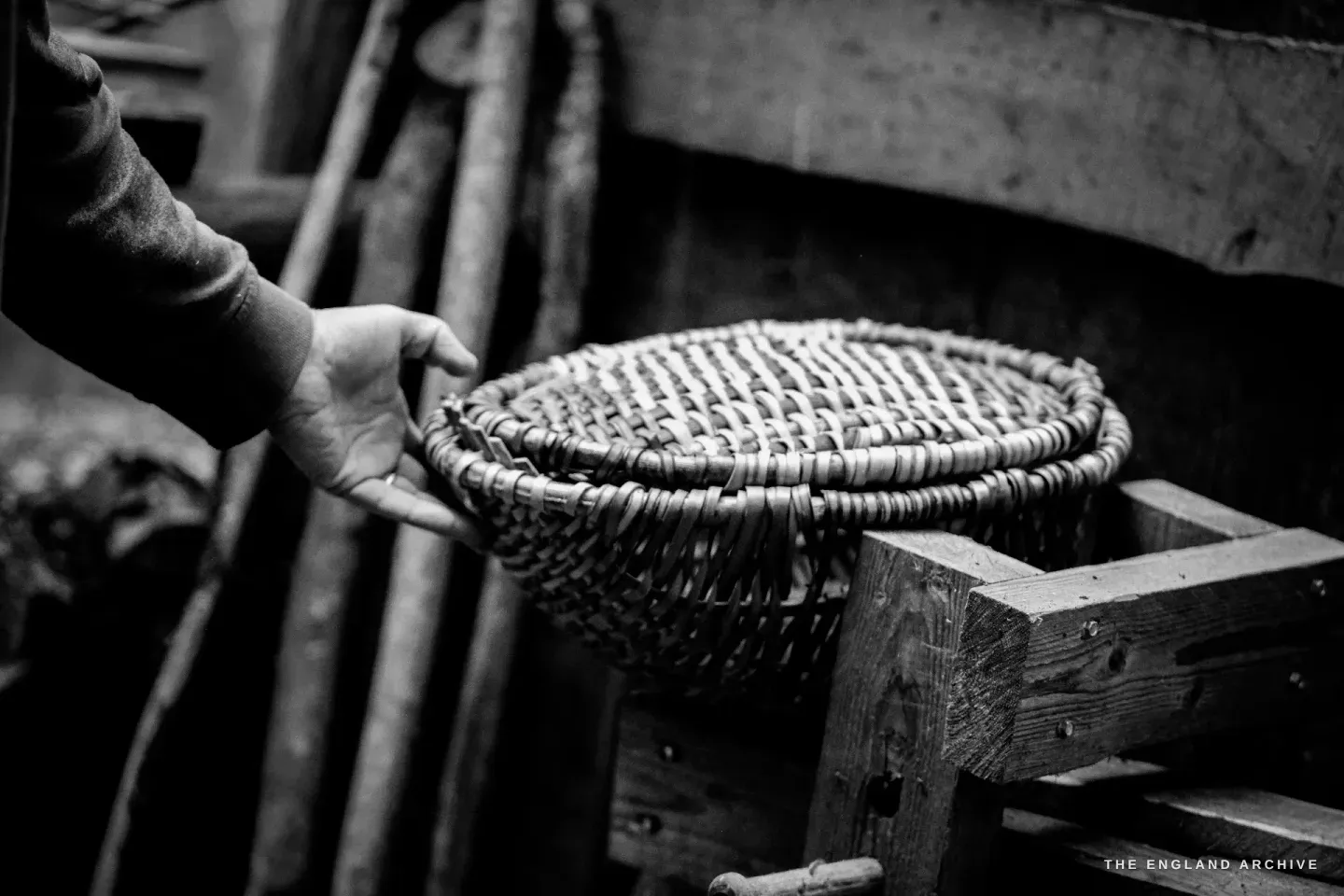
There is a basket at the back of the workshop with a hand-written tag tied to its handle. The tag reads Charlie Jones Whisket - NOT FOR SALE! I looked at it twice before I understood what I was looking at.
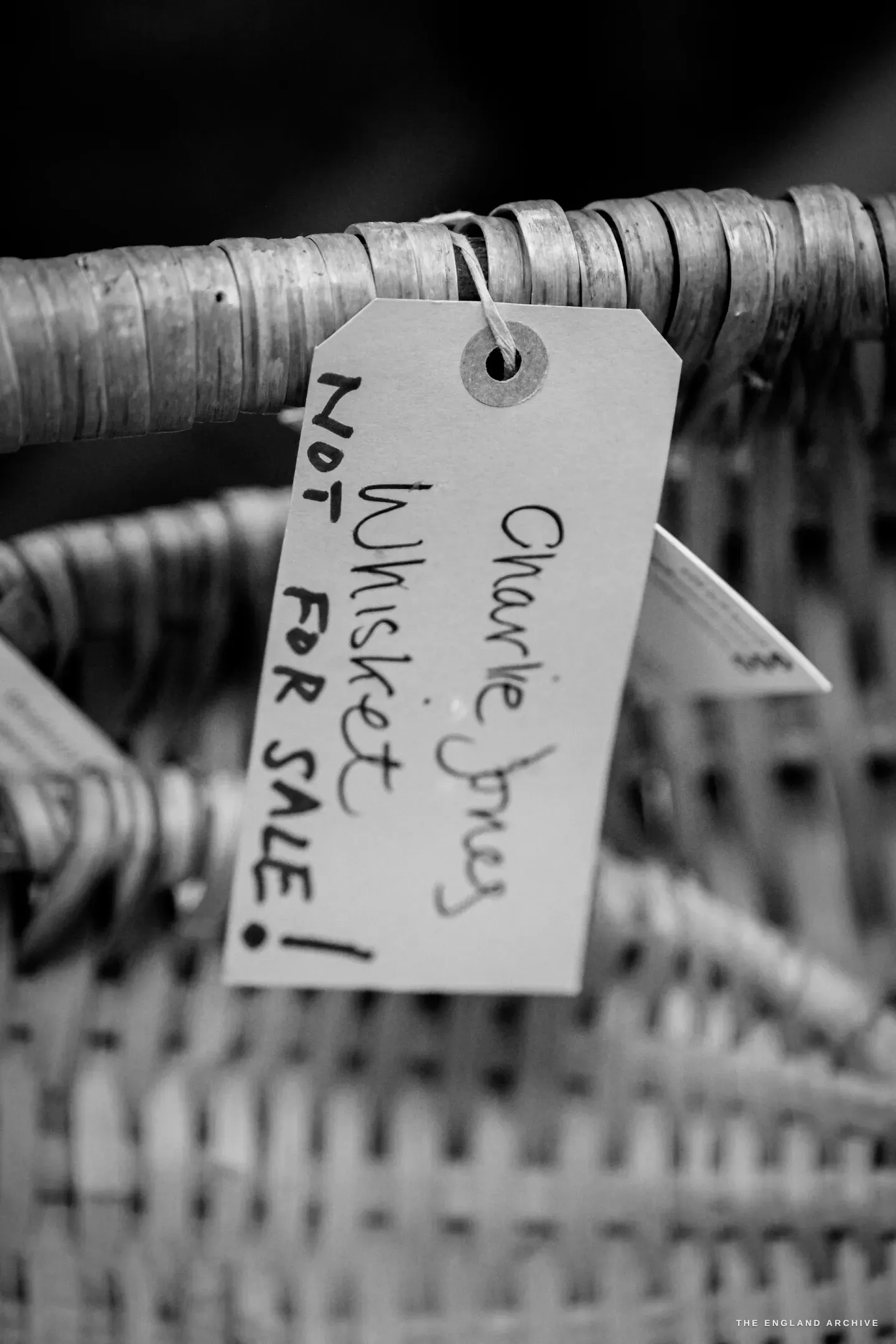
Charlie Jones was one of the last working split-hazel basket makers of the Welsh Marches. He worked in Radnorshire and the borderlands through the second half of the twentieth century, making Whiskets for farmers, smallholders, foragers, hop pickers, and anyone else who needed a round-bottomed hazel basket in the shape this country has used since the shape was first made. Lewis learned from him and from the small group of makers who learned from him. The basket on the bench is the one Charlie made; the form is the one Lewis carries forward. The tag is not theatrical. It is operational.

Inside the Charlie Jones Whisket, the day I visited, sat a copy of the Heritage Crafts Red List of Endangered Crafts 2025. Lewis had placed it there deliberately. Split-hazel basketry is on the List - one of a small number of working crafts the country has nearly lost. Lewis is one of a handful of working practitioners in the UK; he is one of the only ones still teaching, which is the way the craft gets carried forward, which is the only reason crafts on the List ever come back off it.
"It is not romance," he said. "It is a job that needs doing. Someone has to keep the form alive. Someone has to teach the next ones. Otherwise the rod grows and nobody knows what to do with it." He shrugged. "So I do it."
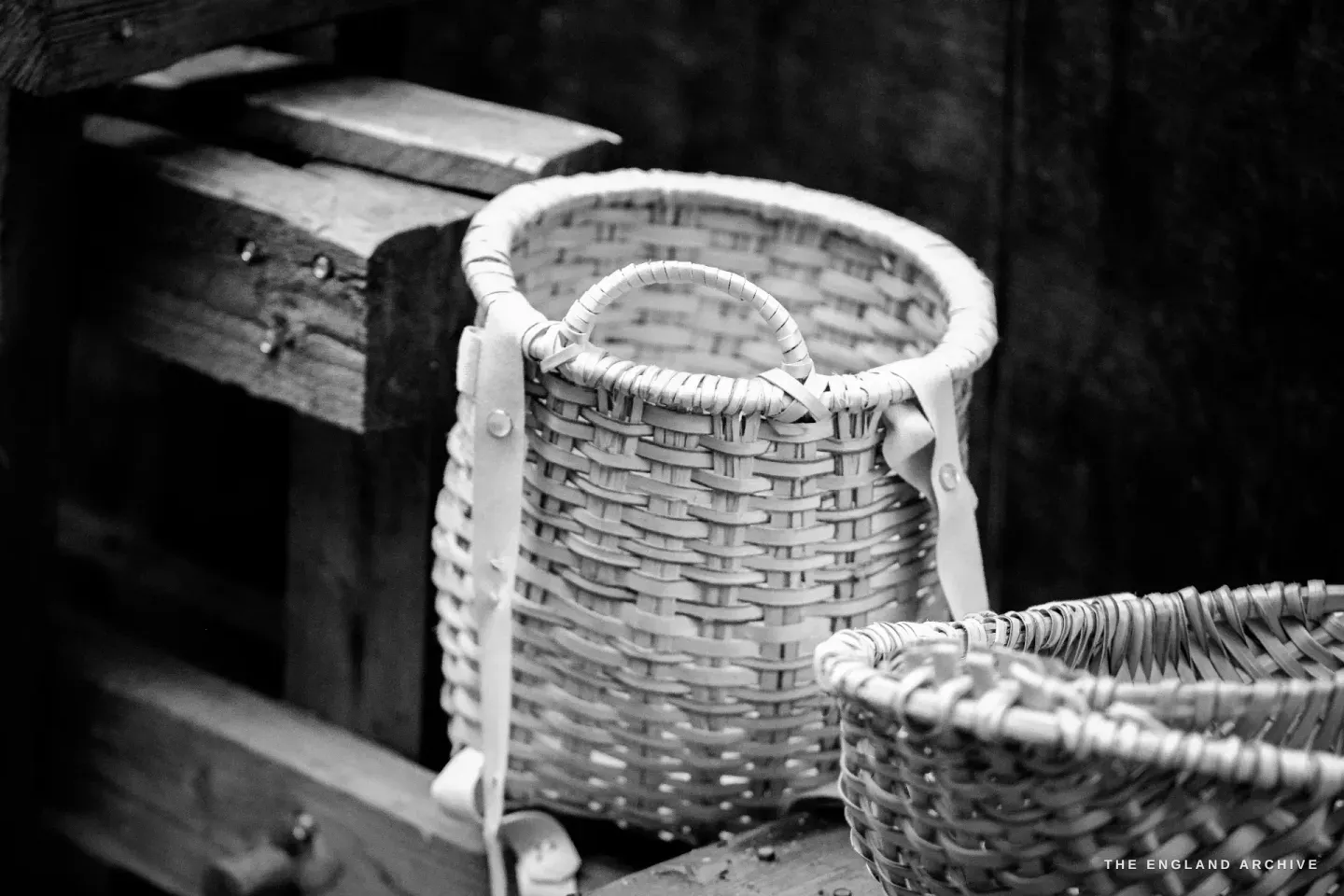
A Whisket has a round bottom and a bowed handle and a body woven of split-hazel splints around standing ribs. The round bottom is not decorative. It lets the basket sit stable on uneven ground, gathers what falls into it, and rolls slightly so the contents settle to the middle. Every part of the form serves a working purpose. Nothing about the basket is extra.
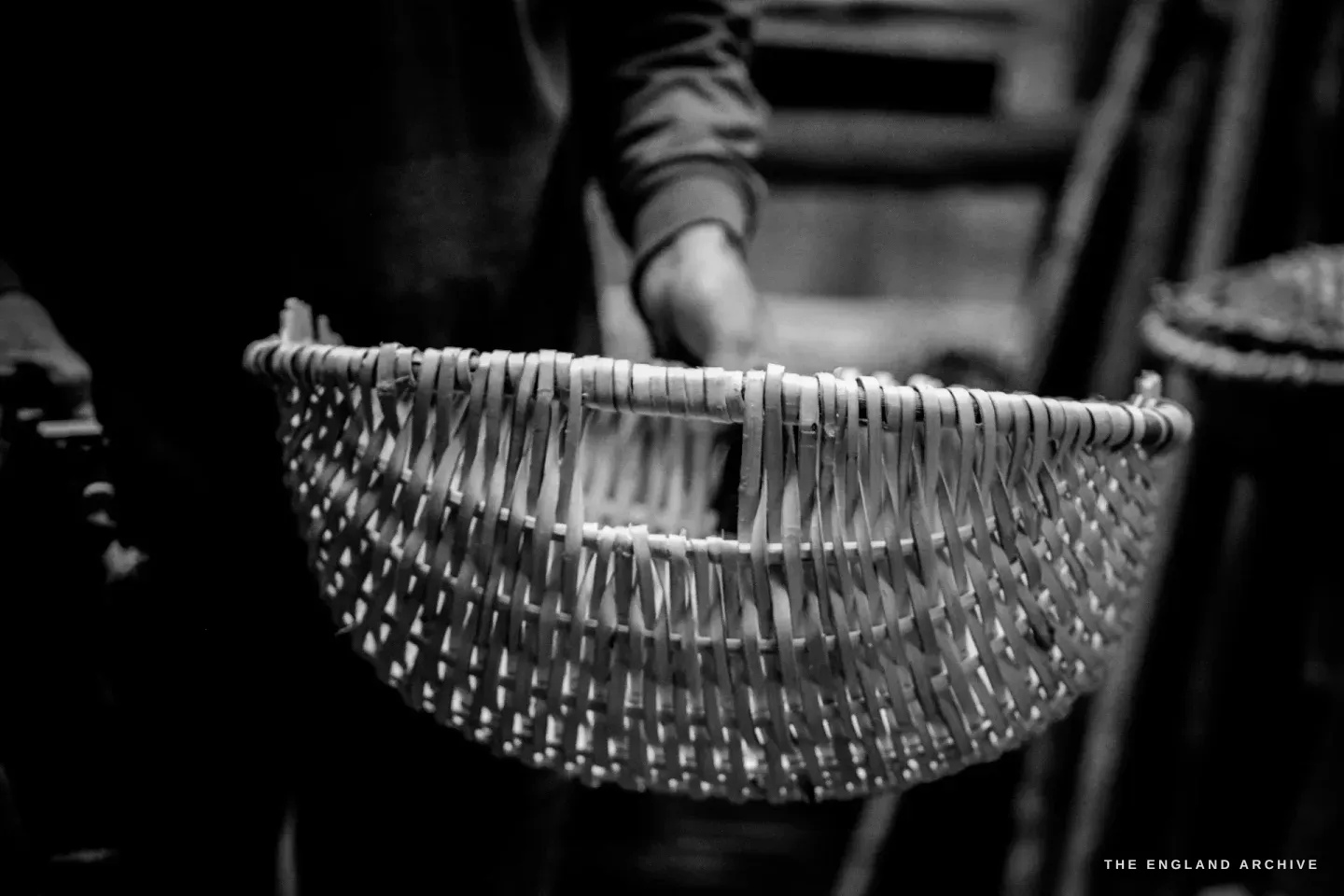
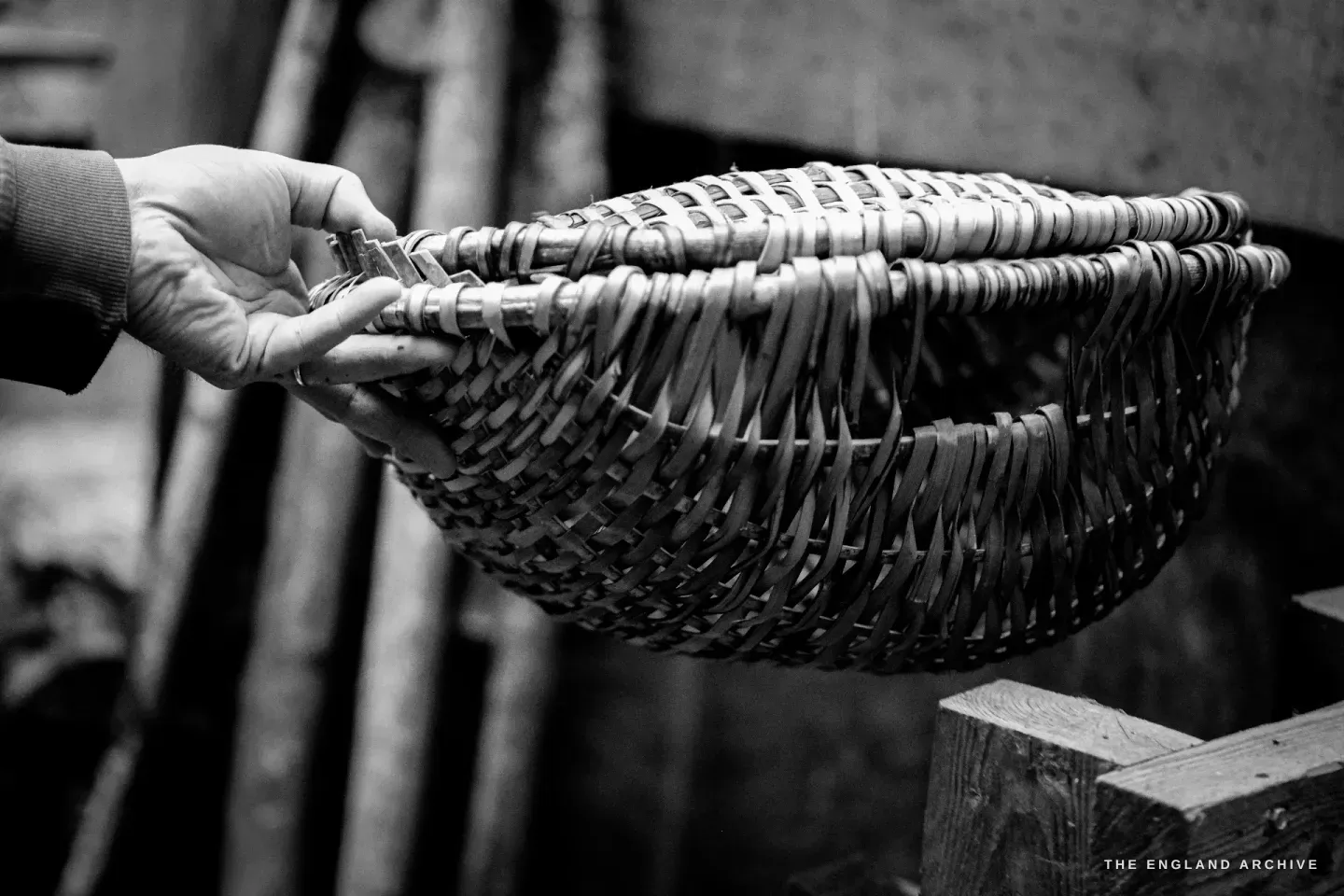
The handle is bound to the rim with a fine wrapped splint that holds the bow firm and lets the basket take real weight. The bark is left on the bow because the bark is the strength of the rod. The interior of the weave is paler than the exterior; the inside of the splint, freshly cleaved, has never seen the sun. As the basket dries and ages, the splints darken and the wood goes a deep honey colour. A new Whisket and a year-old Whisket sit beside each other and look like two different objects.
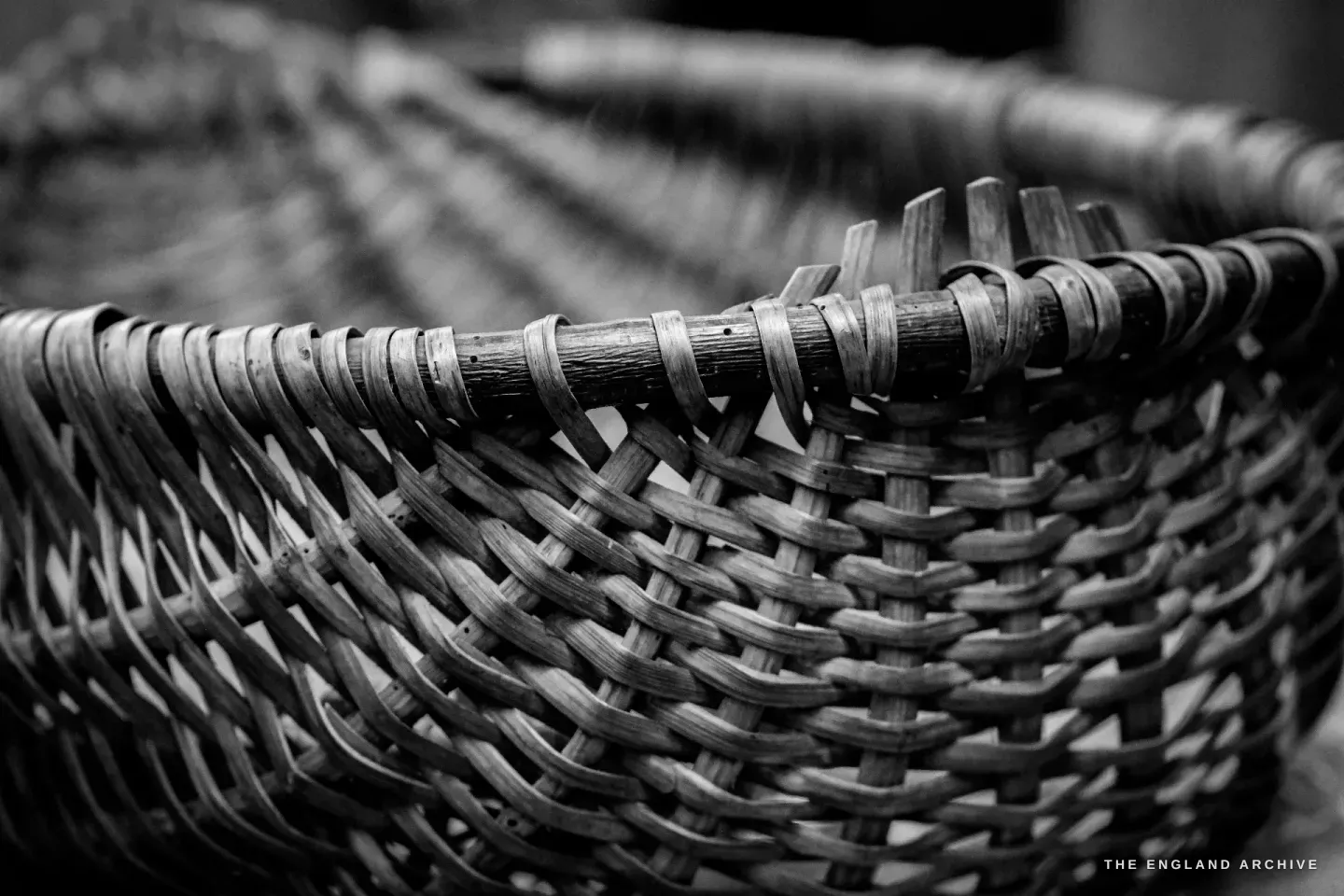
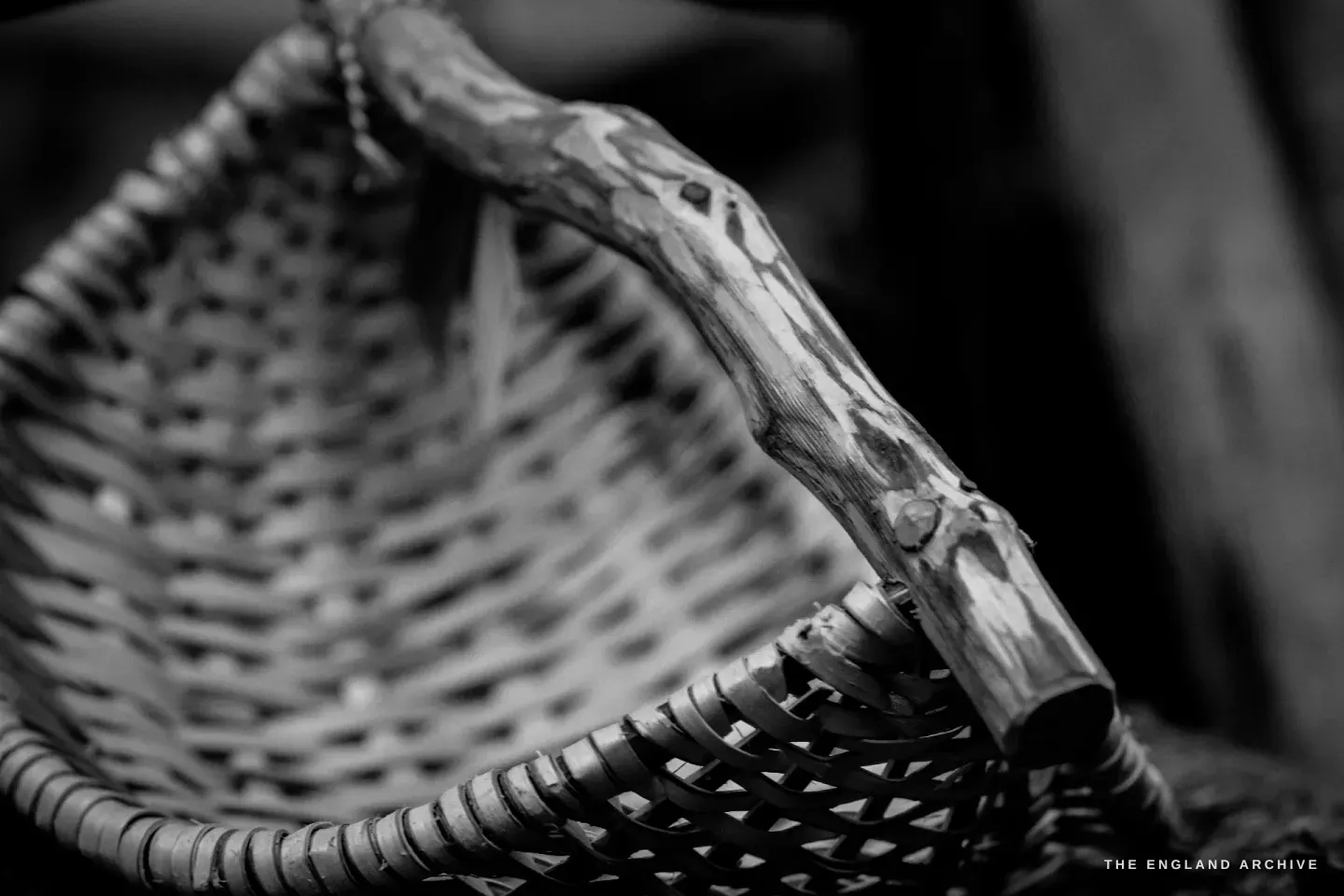
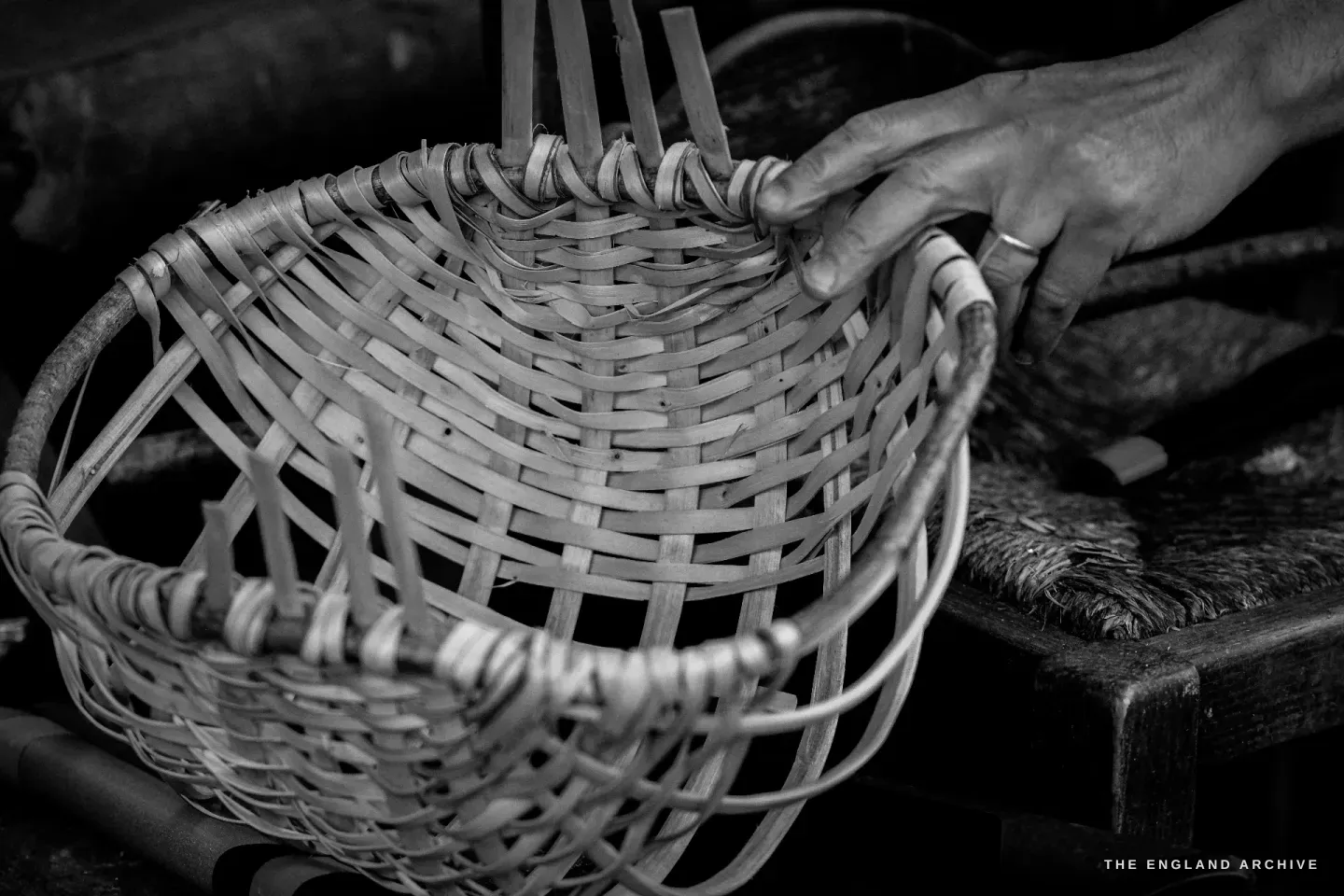
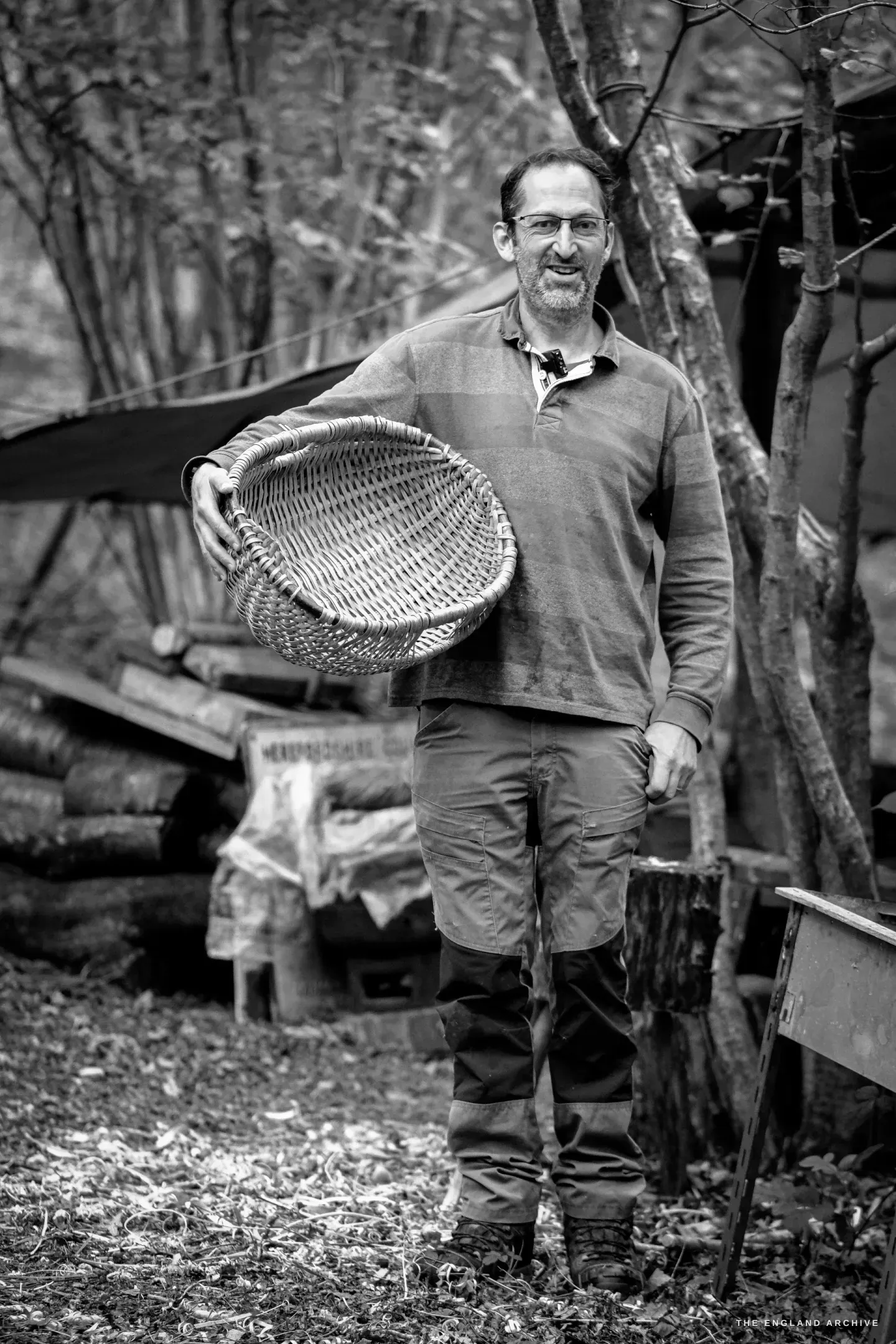
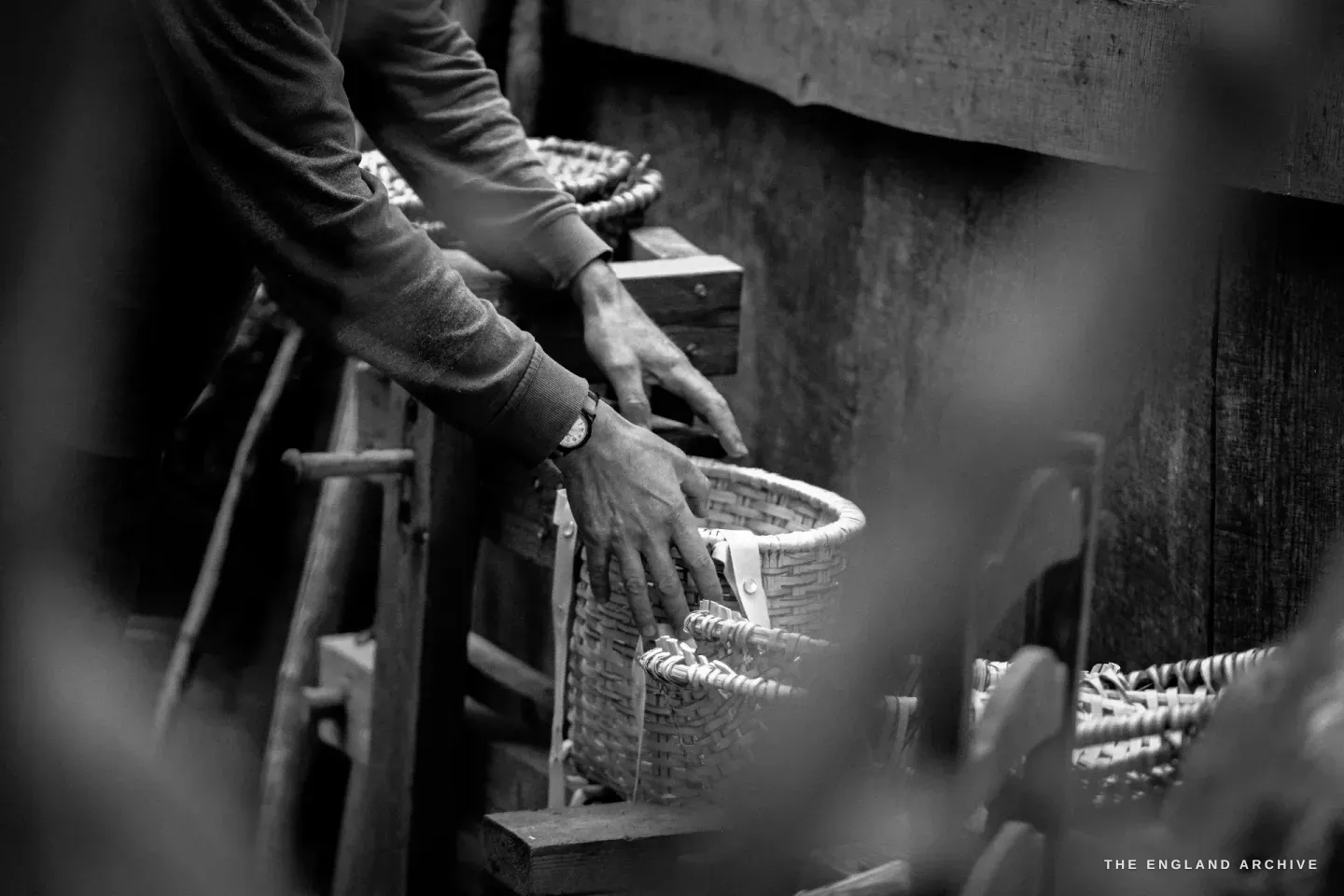
Different sizes for different uses. The full Whisket holds enough for a foraging walk or an orchard pick. The smaller Swallow basket - which Lewis introduced as a teaching form, scaled down so a student can complete one in a weekend - holds a small posy or a fistful of mushrooms or whatever else a person needs to carry that does not justify the larger basket. He showed me a hazel backpack basket at the end of the day that was inspired by a design from the Carpathian regions of Romania and Ukraine, held it up against his chest, said it was the form he keeps in his coat in autumn for the walk back from the wood when he passes through the field by the road.
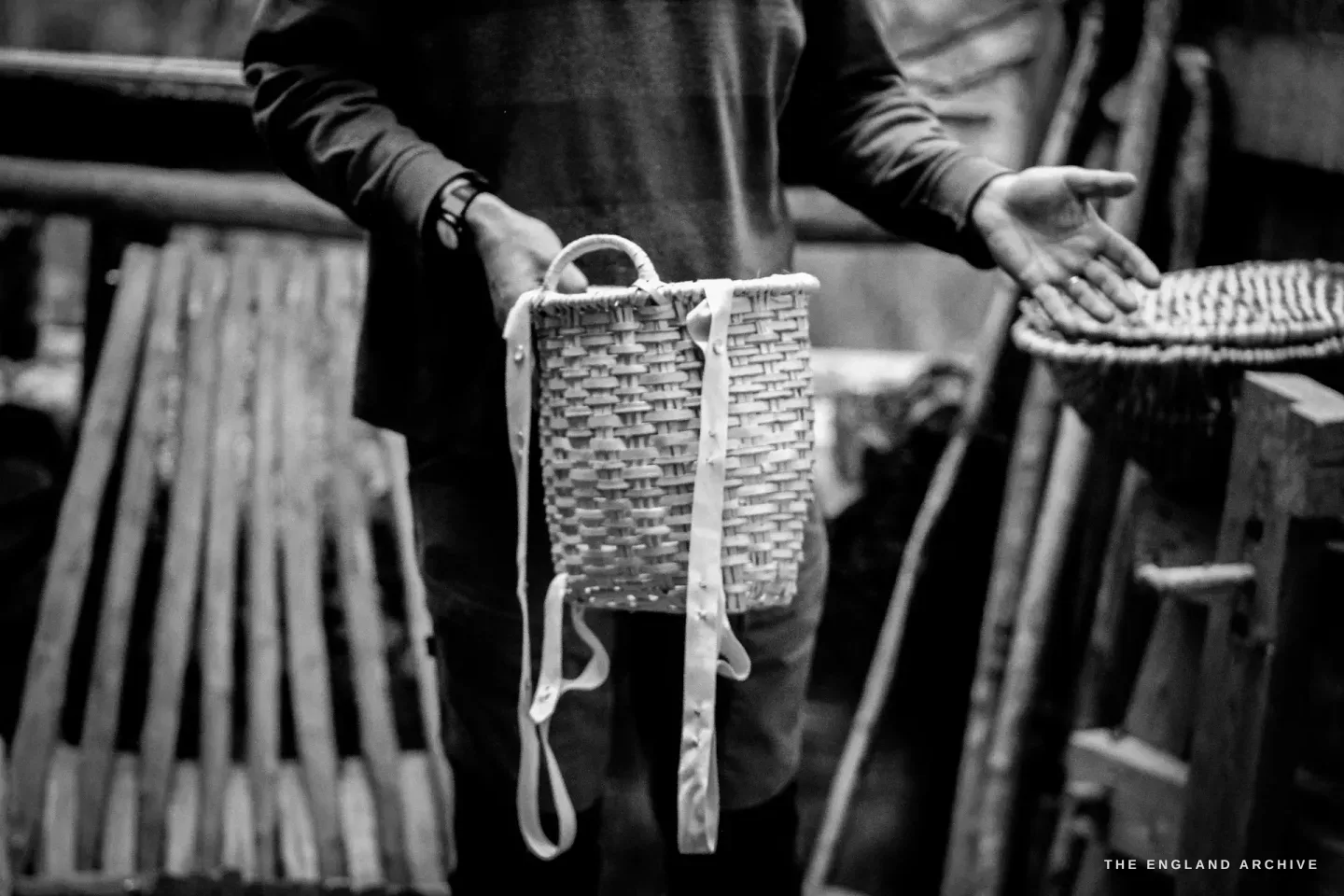
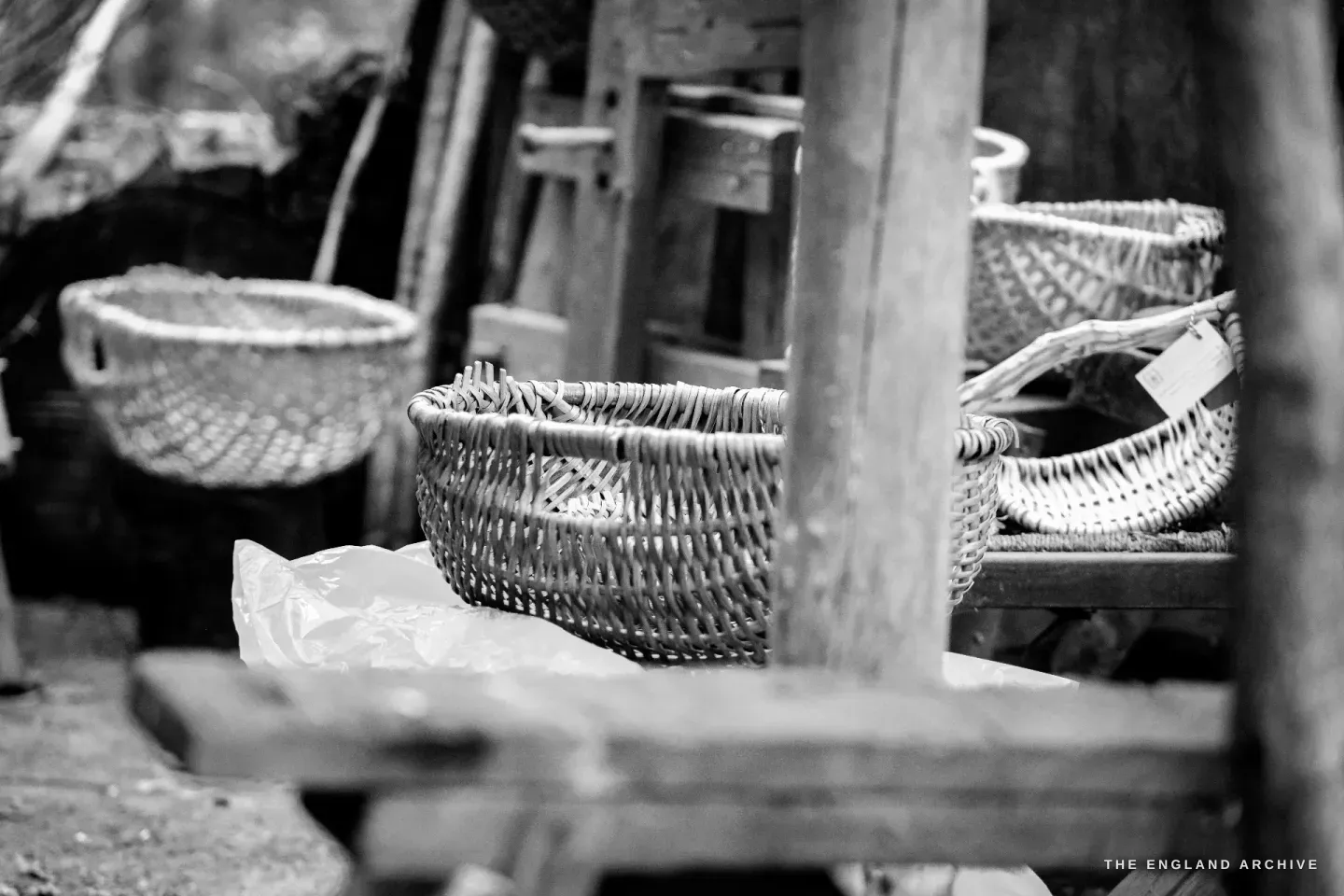
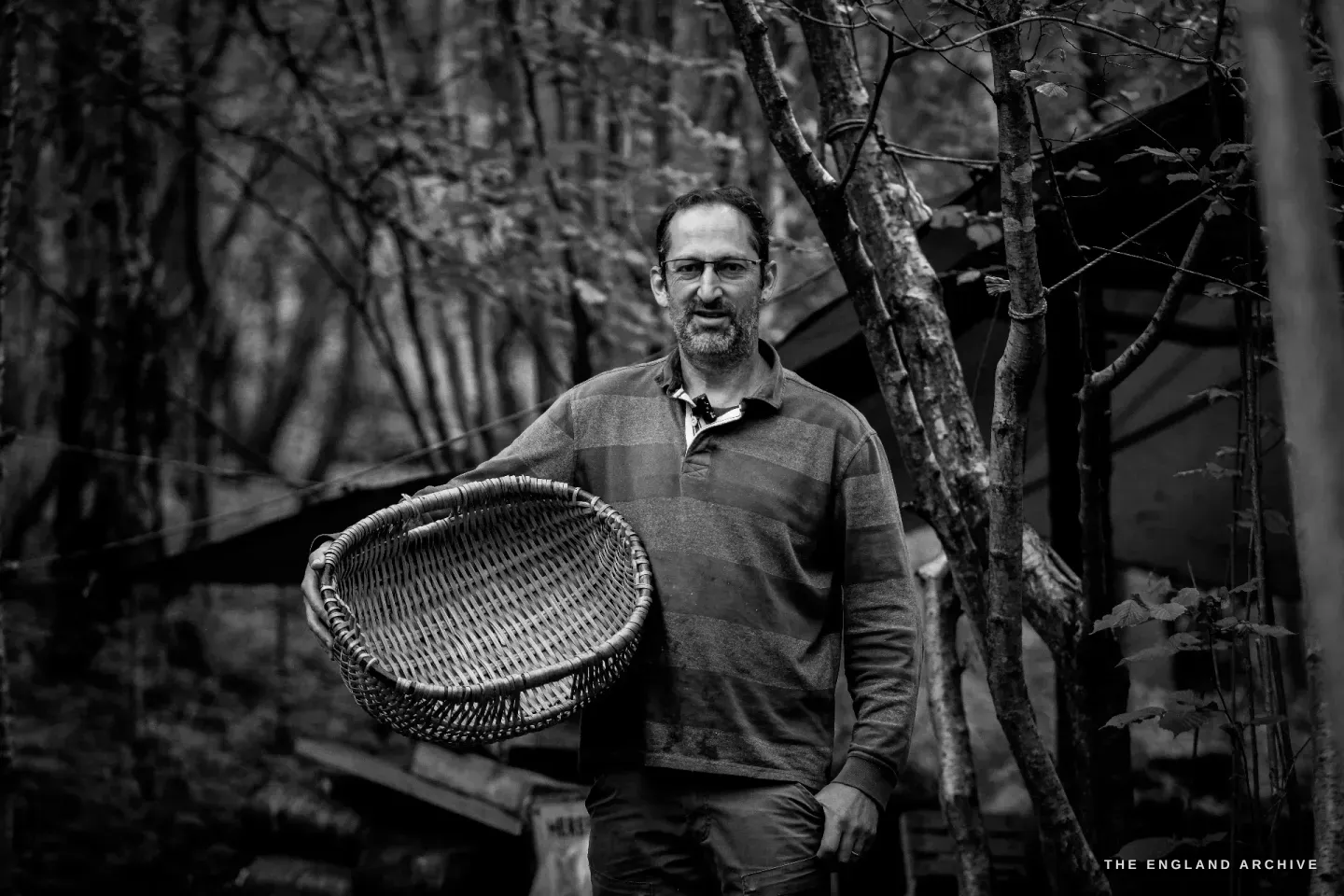
The day’s Whisket - the one that had taken shape in front of me through the afternoon - sat finished on the bench beside its older companions. Lewis ran a hand along its rim, checked the wrapping at the handle joint, set it down. Then he stood and stretched and said the work was finished.
The rain had stopped. We stepped out from under the canopy and stood at the edge of the clearing, the wet wood behind, the day’s basket in his left hand. I asked him to hold it the way he would hold it walking back to the house at the end of the working day. He did.
The walk back down to the road took less time than the walk up. We stopped at the bottom by my car and he handed me a Swallow basket he had finished earlier - a thank-you, he said, for coming. I took it and put it on the passenger seat and turned the car back towards the M50 and London, three and a half hours of motorway between this woodland and the desk where the photographs would land.
The form has been made in this country for longer than any of the families that still know how to make it. Lewis is one of a handful of working practitioners. The teaching, the wood, the workshop, the Charlie Jones Whisket at the back of the bench - all of it is the same thing. Keep the form alive. Keep the next ones learning. Otherwise the rod grows and nobody knows what to do with it.