Makers
Robert Fuller
Tinsmith & Coppersmith, J. Fuller & Sons
Rayleigh, Essex
Tinsmith & Coppersmith, J. Fuller & Sons
Rayleigh, Essex
The seventh generation of a family of metal workers that runs back to a Canterbury brazier in the 1700s. One of the warmest men I have met on this project - and, by his own account, the last of the line.
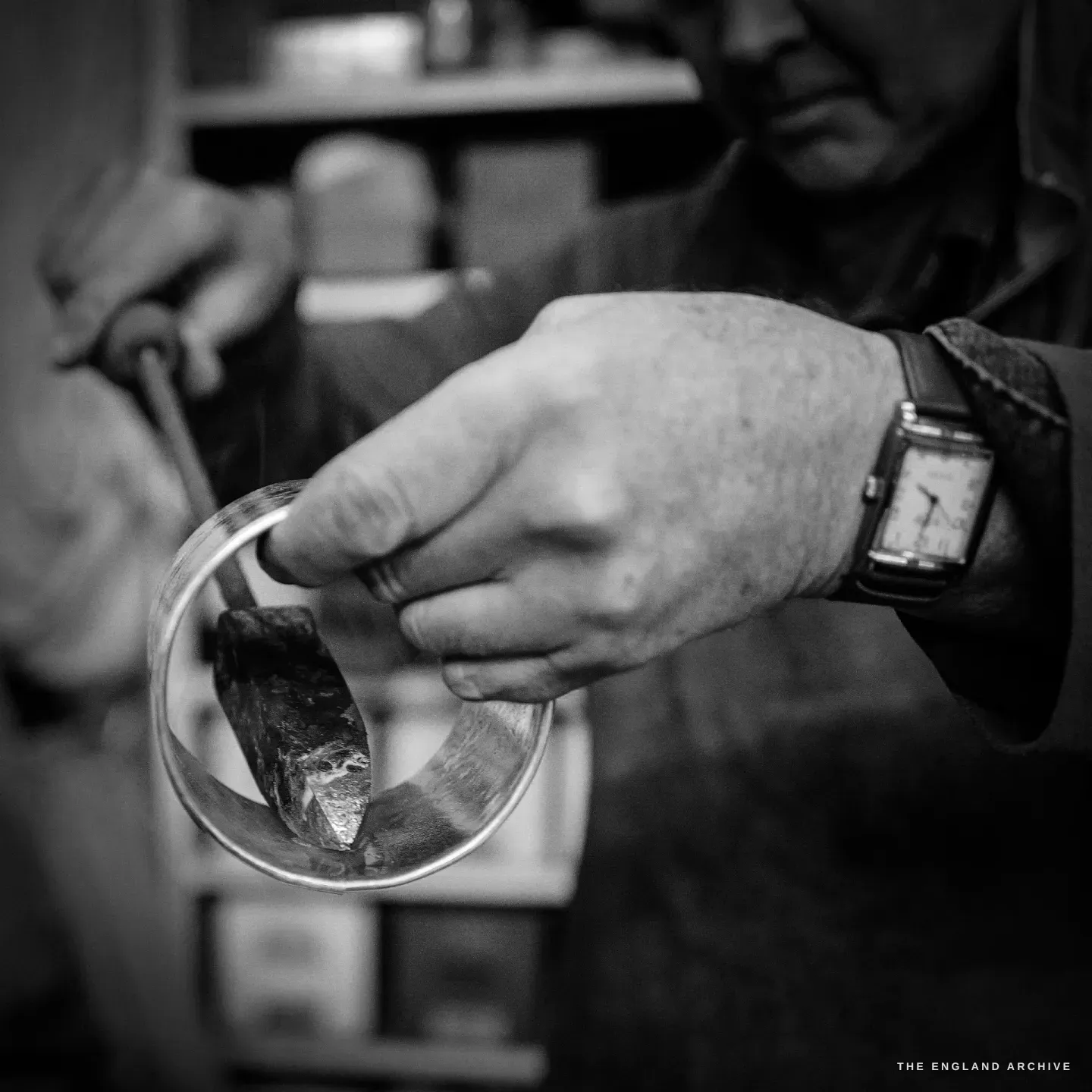
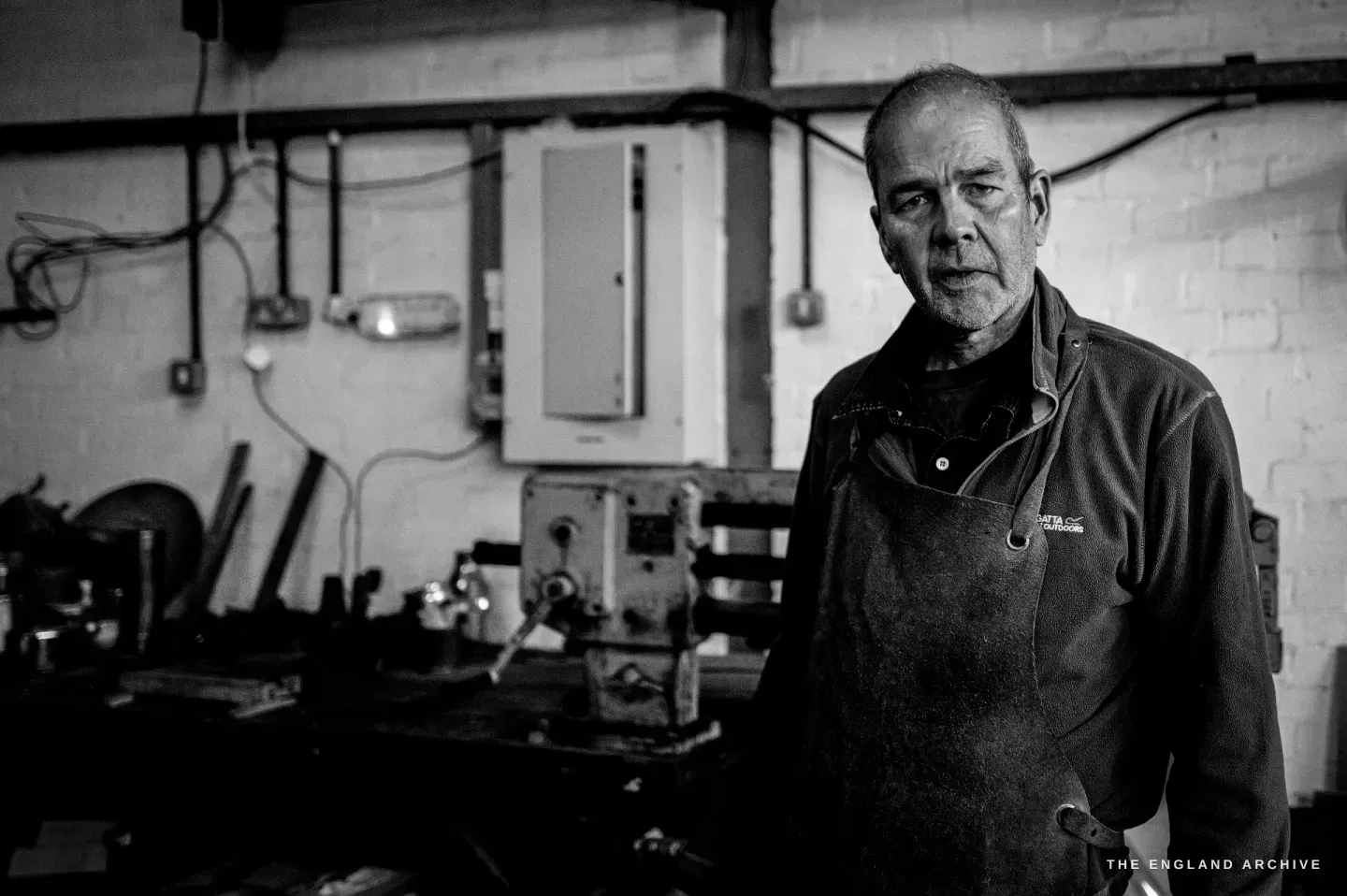
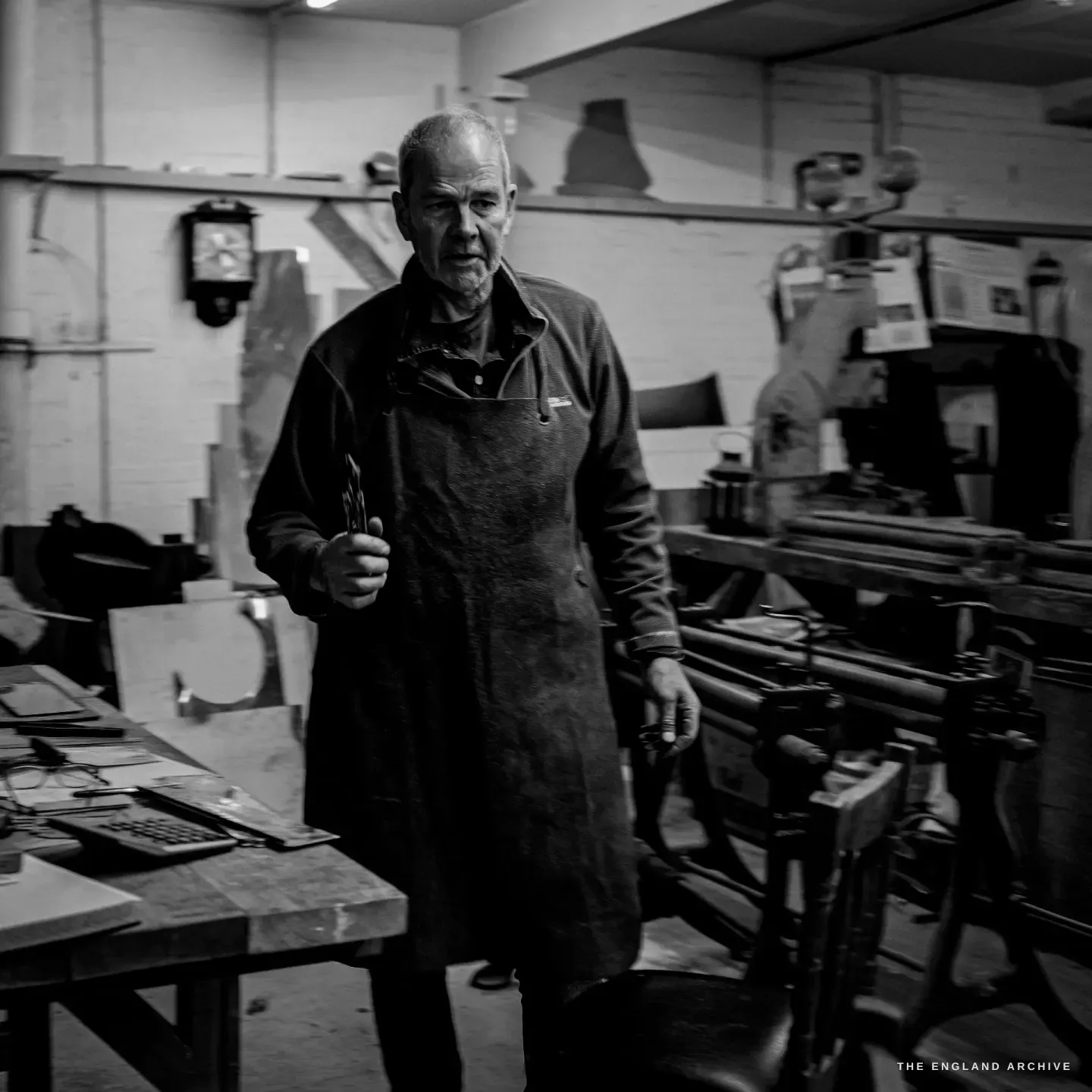
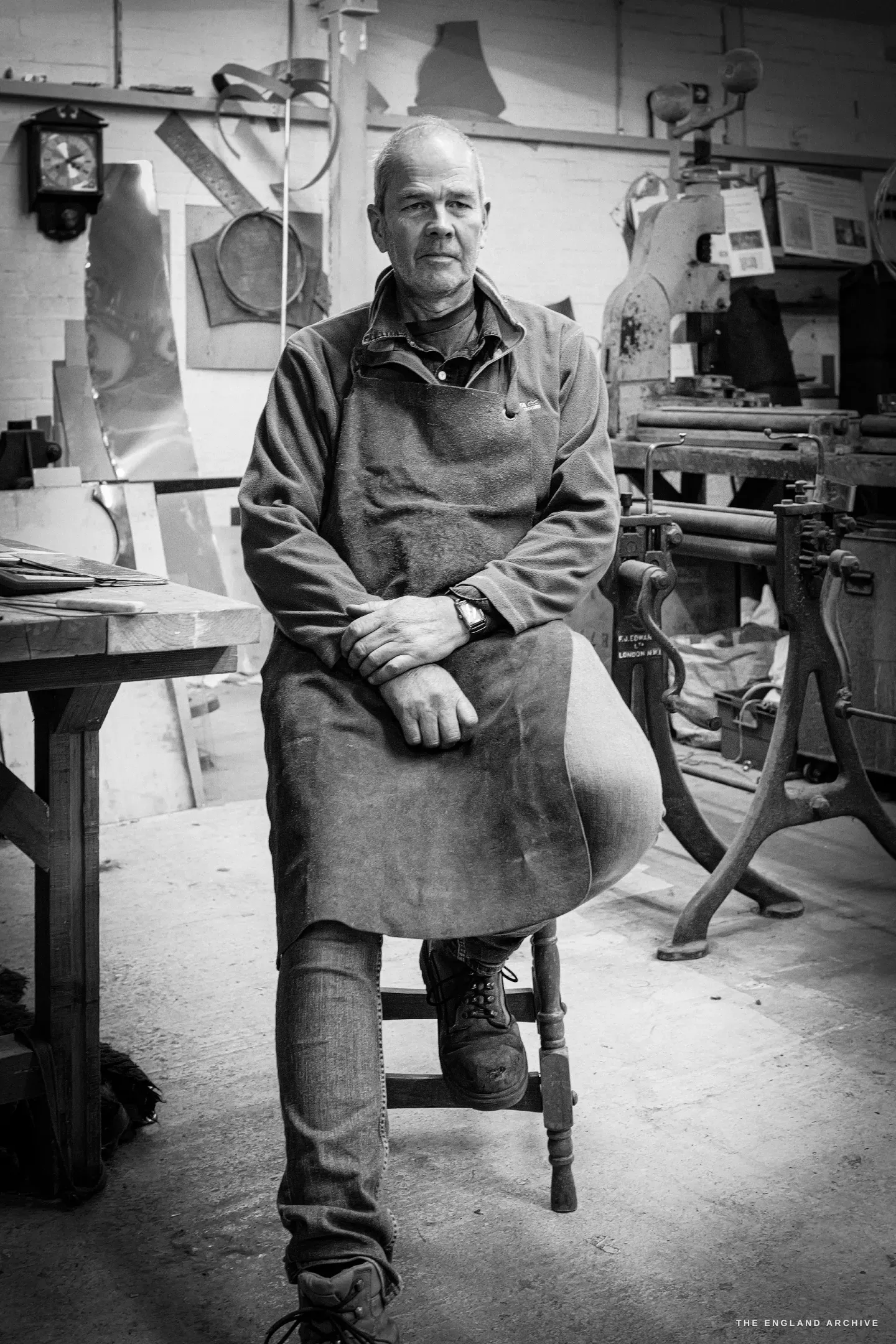
I went to Robert Fuller's workshop to photograph tinsmithing, and I came away having mostly photographed Robert. He is a master craftsman, no question - I will get to the hands and the metal - but the thing that caught me, and held me for the whole visit, was the man himself. Warm, funny, generous, entirely without side. Some people make you feel, within five minutes, that you have known them for years. Robert is one of them, and a good deal of this page is really just me trying to say so.
His workshop is a proper working one, in Rayleigh in Essex: benches and stakes and hand-cranked machines, a wall of hammers, finished tinware on every surface, daylight coming in through a door propped open. He has spent a lifetime in it. And over the bench hangs the thing that explains why it feels less like a workshop than a reliquary.
On the wall is a board that lays out the family: J. Fuller & Sons, seven generations of metal workers. It begins with William Fuller, born in 1776, a brazier and coppersmith, and it comes down through Edward, through John Bean Fuller, John Thomas, Arthur Henry, Arthur Norman, to Robert Arthur Fuller, born 1962 - tinplate worker and coppersmith, the man standing in front of it. Seven generations of one family working metal by hand, unbroken, from the eighteenth century to now.
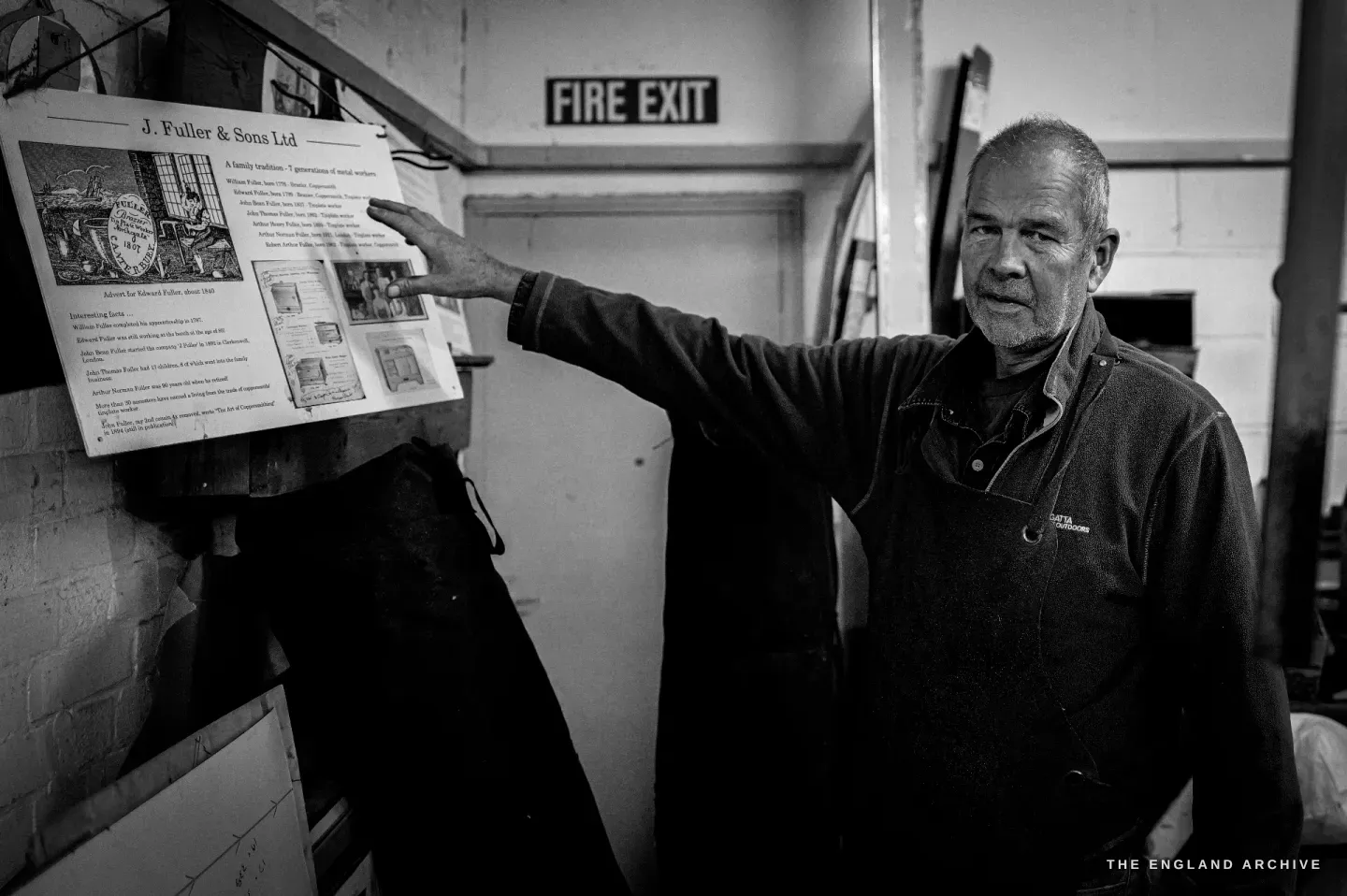
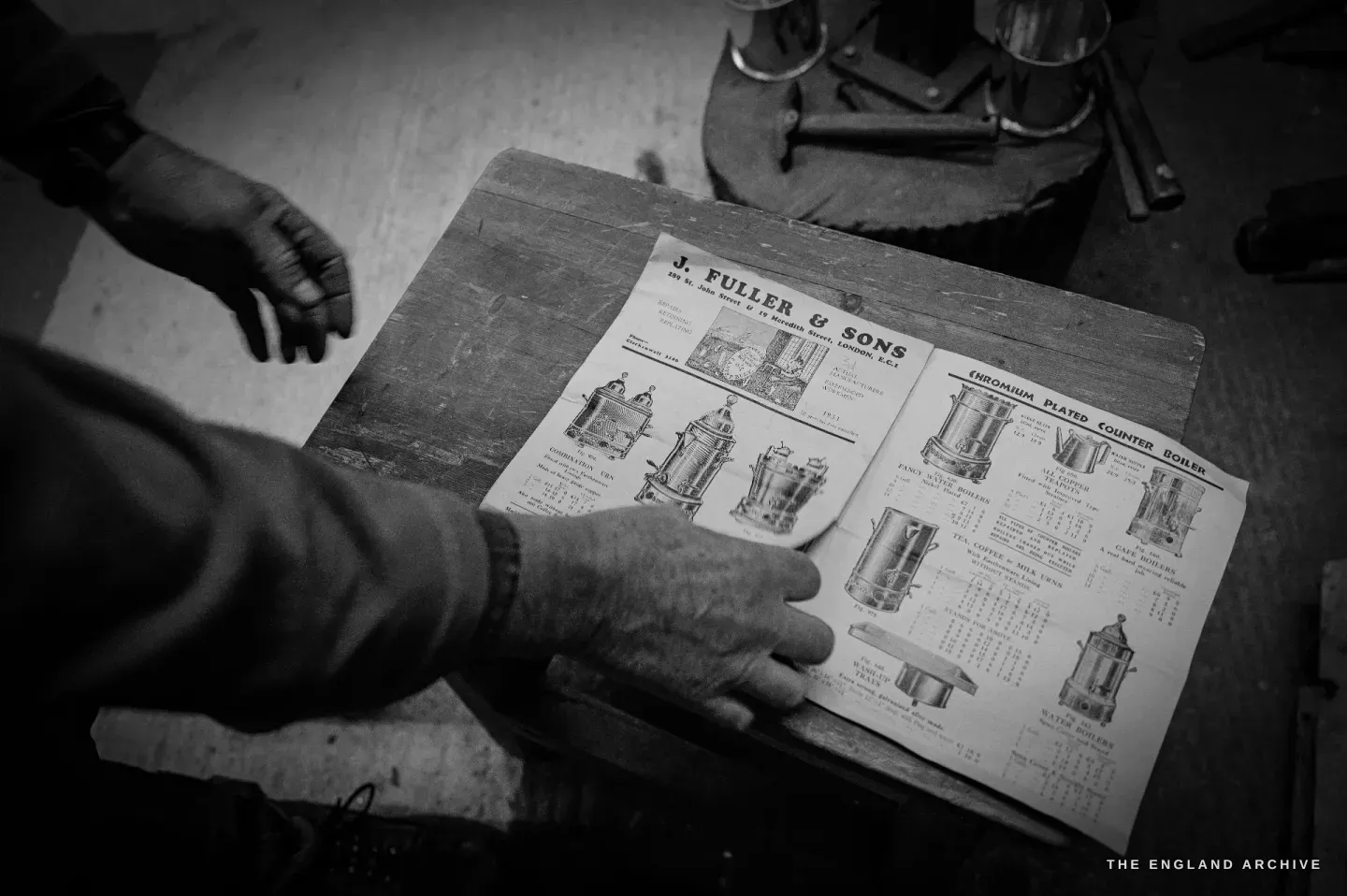
The paper trail backs the board up. There is an old trade engraving of a Fuller - brazier and tin-plate worker - at Northgate in Canterbury, which is where the line starts. It carries the date 1807. The engraving itself is later, probably the 1830s; 1807 is the year that Fuller first went to work, a boy of seven or eight at the bench. By the twentieth century the firm was in Clerkenwell, in London, and Robert keeps its 1933 trade catalogue: J. Fuller & Sons of St John Street, advertising copper teapots, combination urns, cafe boilers, water boilers, retinning and replating - the whole range of a London coppersmith between the wars. The family even lays claim to the 1894 manual The Art of Coppersmithing, a book still used by people learning the trade. Robert turned the catalogue's pages for me, naming the pieces, and the distance between that Clerkenwell shop and his bench in Essex simply collapsed. It is the same family, still at it.
Tinsmithing is the working of tinplate - thin steel sheet given a coat of tin so it will not rust - into useful hollow things: cups, cans, pails, funnels, lanterns, urns. It is on the Heritage Crafts Red List as critically endangered, with very few people left doing it in Britain, and watching Robert you understand why it is both precious and precarious: every bit of it is skill, and almost none of it is written down.
He walked me through making a tin cup - the kind of thing a working man once drank his water from. It starts flat. He marks and cuts the tinplate with shears, reads the sheet, then rolls it round into a cylinder on a hand-cranked machine. The seam where the two edges meet is folded together and soldered so it is watertight. The top edge is turned over a wire to stiffen it and take the sharpness off - a wired edge is stronger, and safe to drink from. A base is seamed on over a stake, a handle formed from strip and soldered, and a flat piece of metal has become a thing that holds water. Cut, roll, wire, seam, solder: the same order every time, the whole craft in a few square inches.
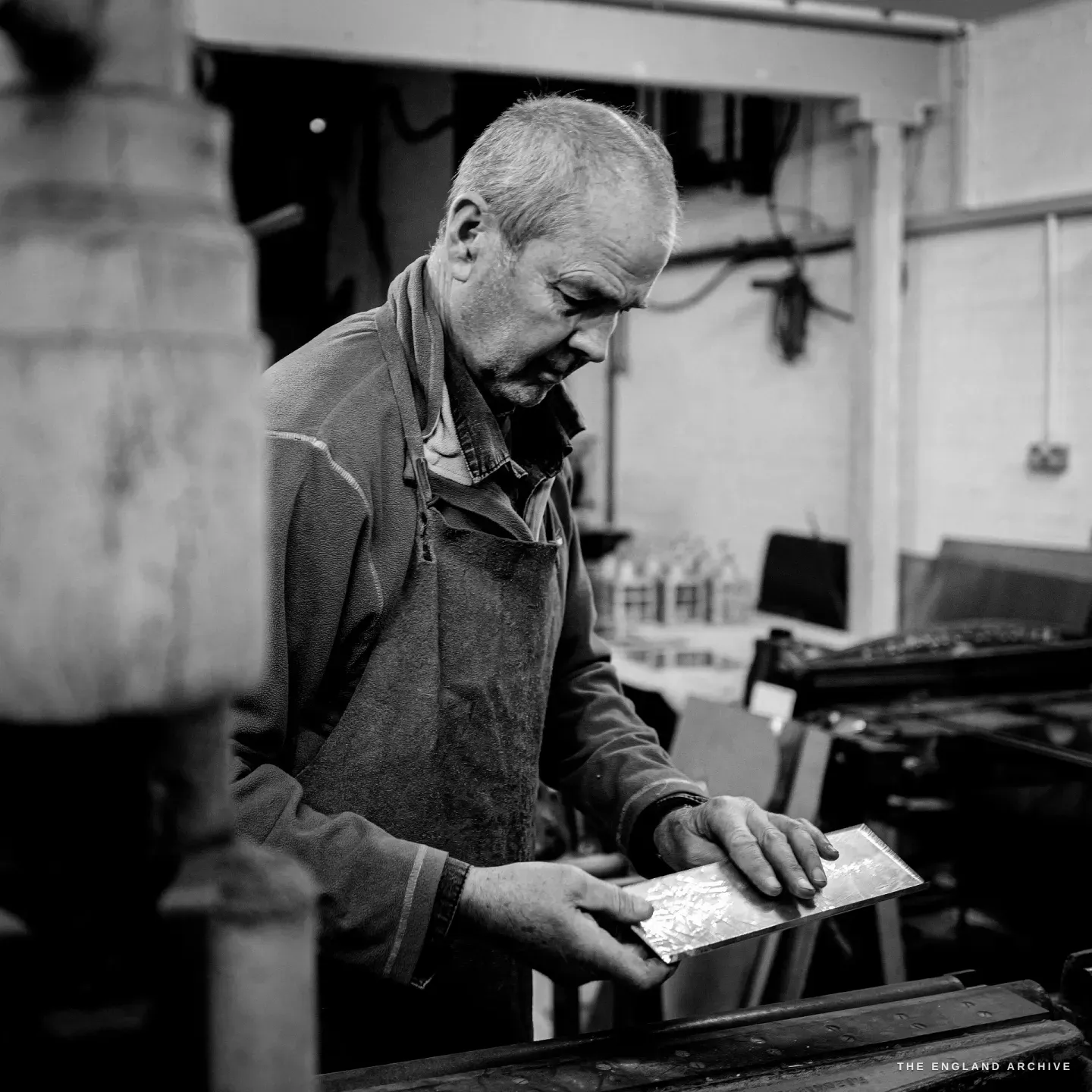
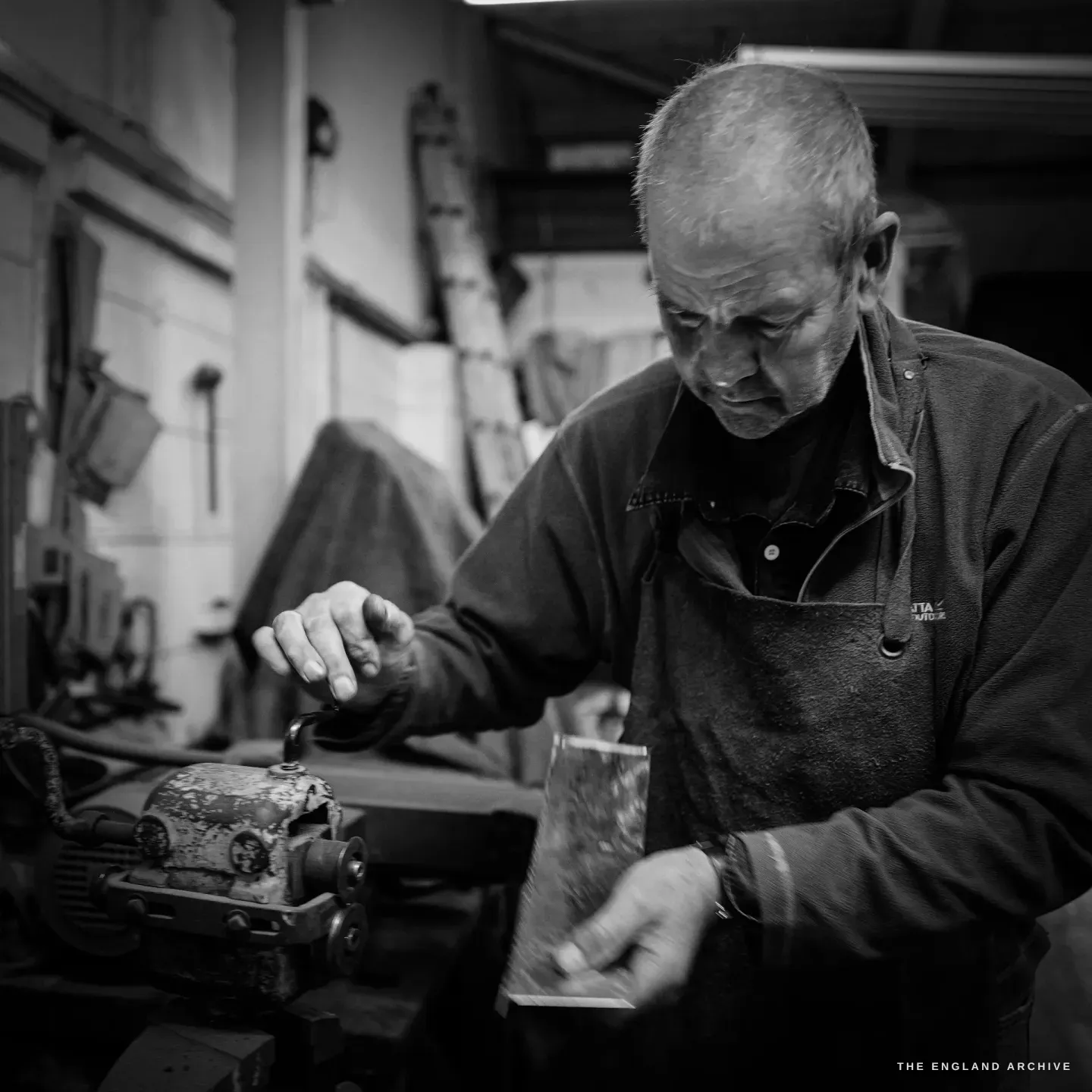
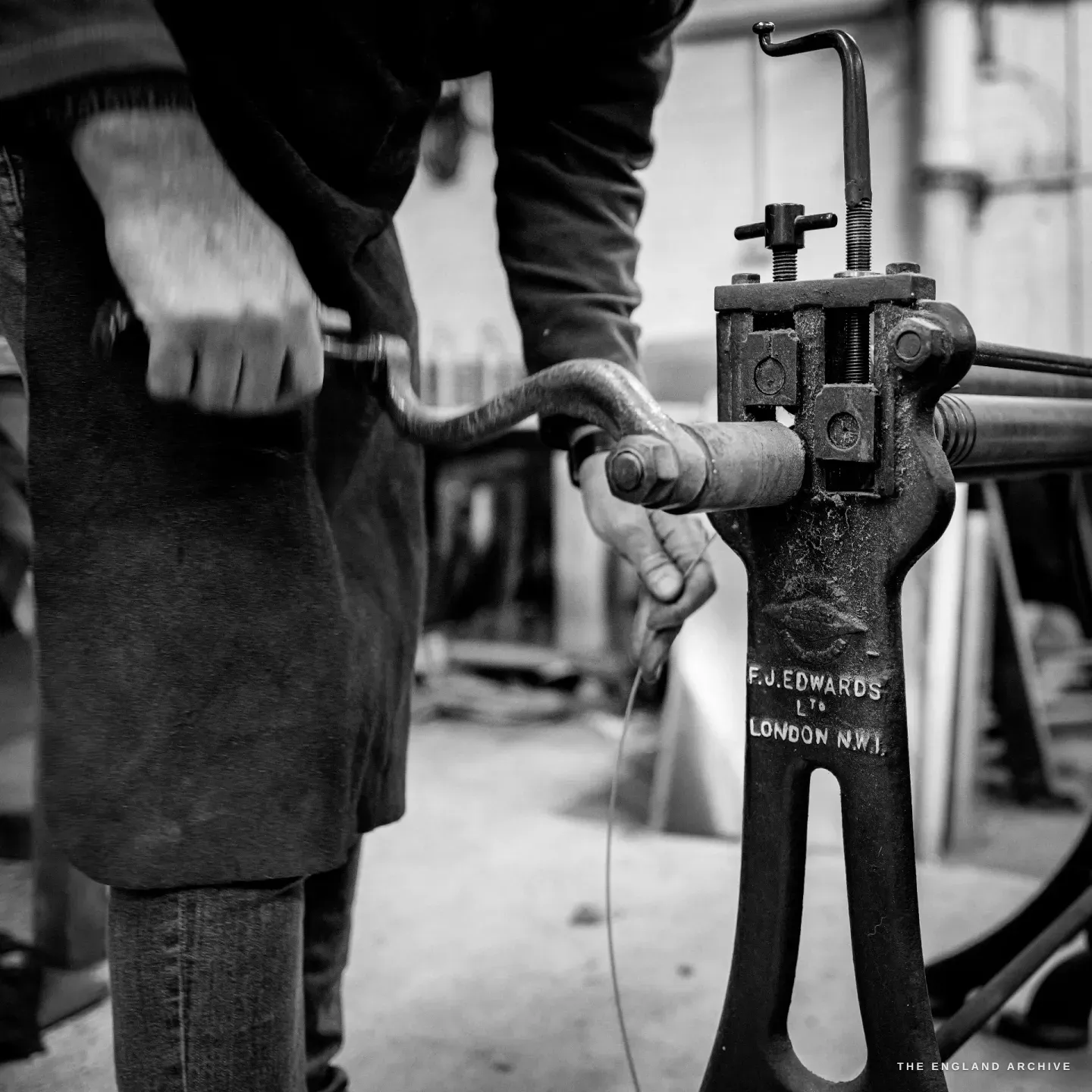
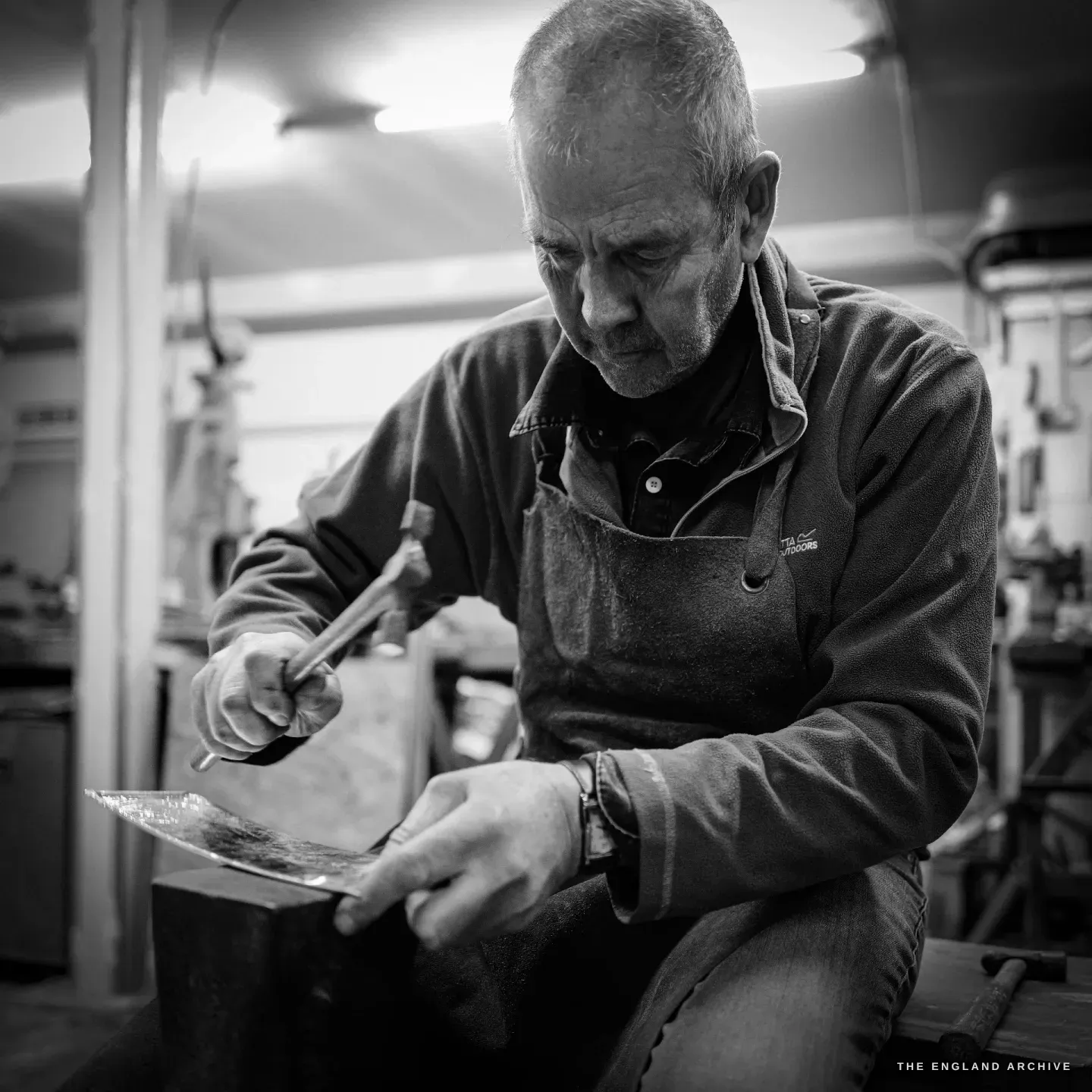
The tools are half the story. He works over stakes - small shaped anvils clamped in the bench, each a different curve for a different job - and the hand-cranked machines that wire and roll and seam. Several carry the maker's name cast into them: F. J. Edwards of London, a toolmaker who shod shops like this one for generations. A wall of hammers, each shaped and weighted for one task. It is a kit assembled over a working life and, in places, over several of them.
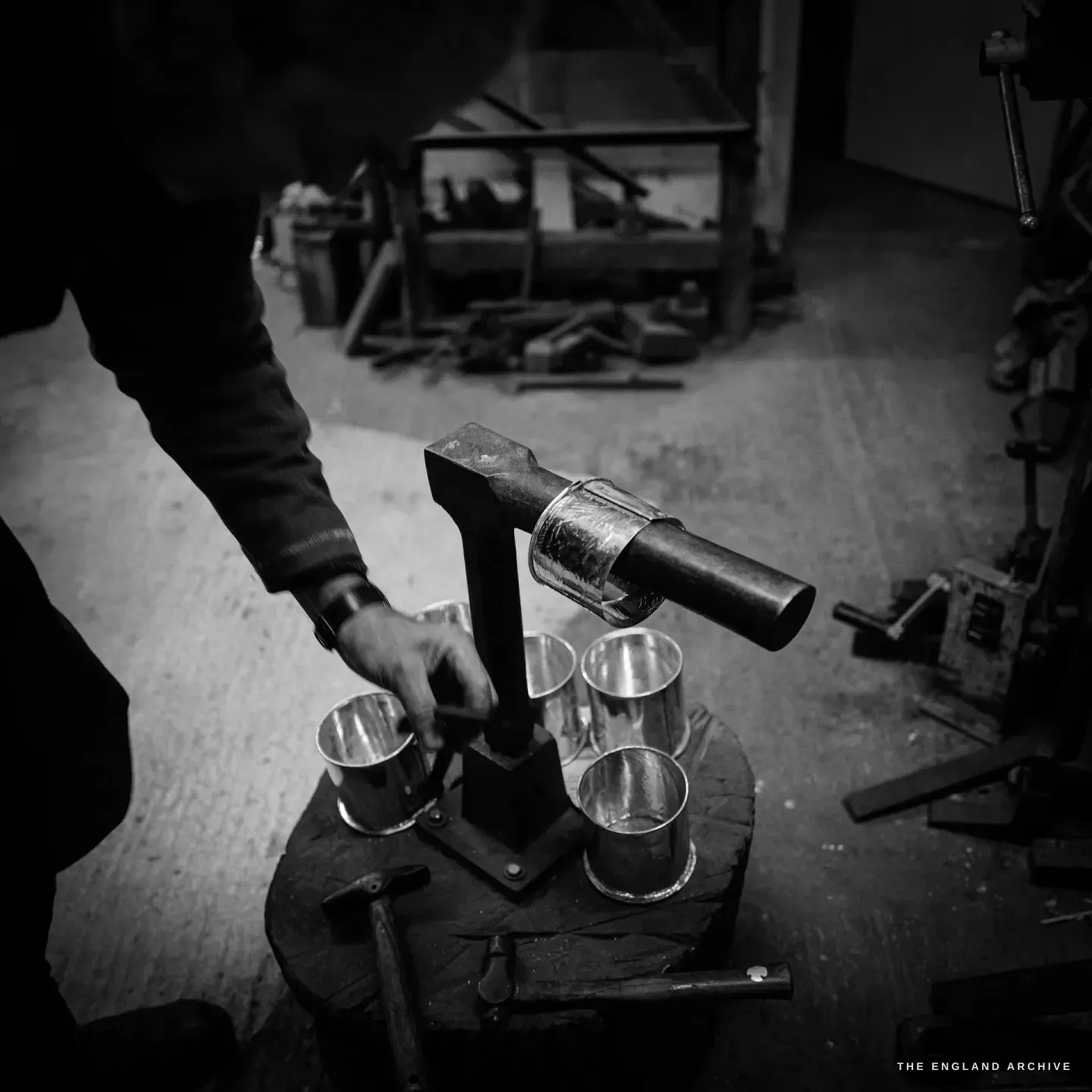
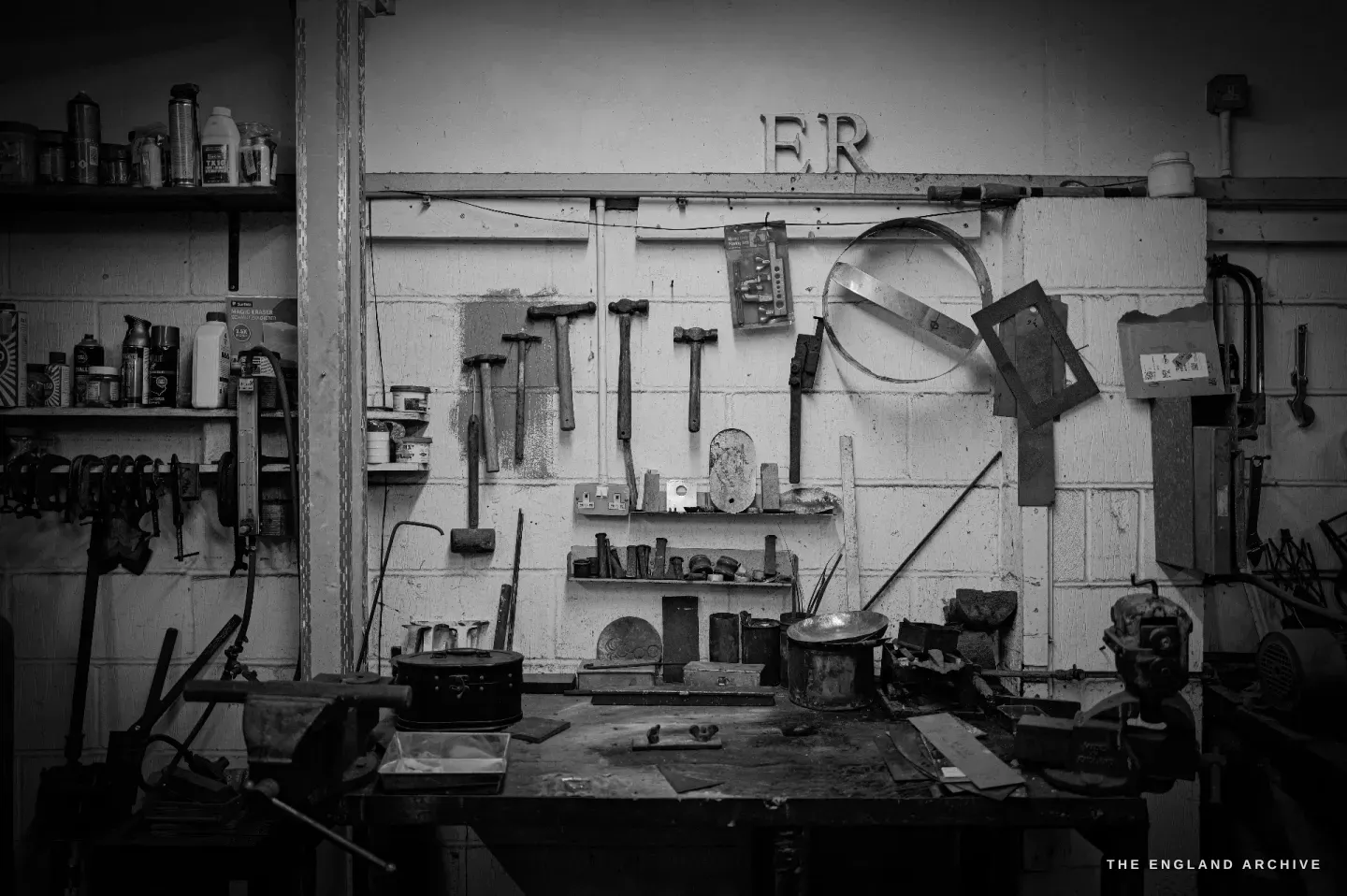
And the things that come off the bench are lovely: stacks of bright tin beakers, pails with wire bail handles, and his square glazed lanterns - a box of tin and glass with a pierced top and a carrying ring, a form he makes again and again. They are useful objects made beautifully, which is the whole tradition of the trade.
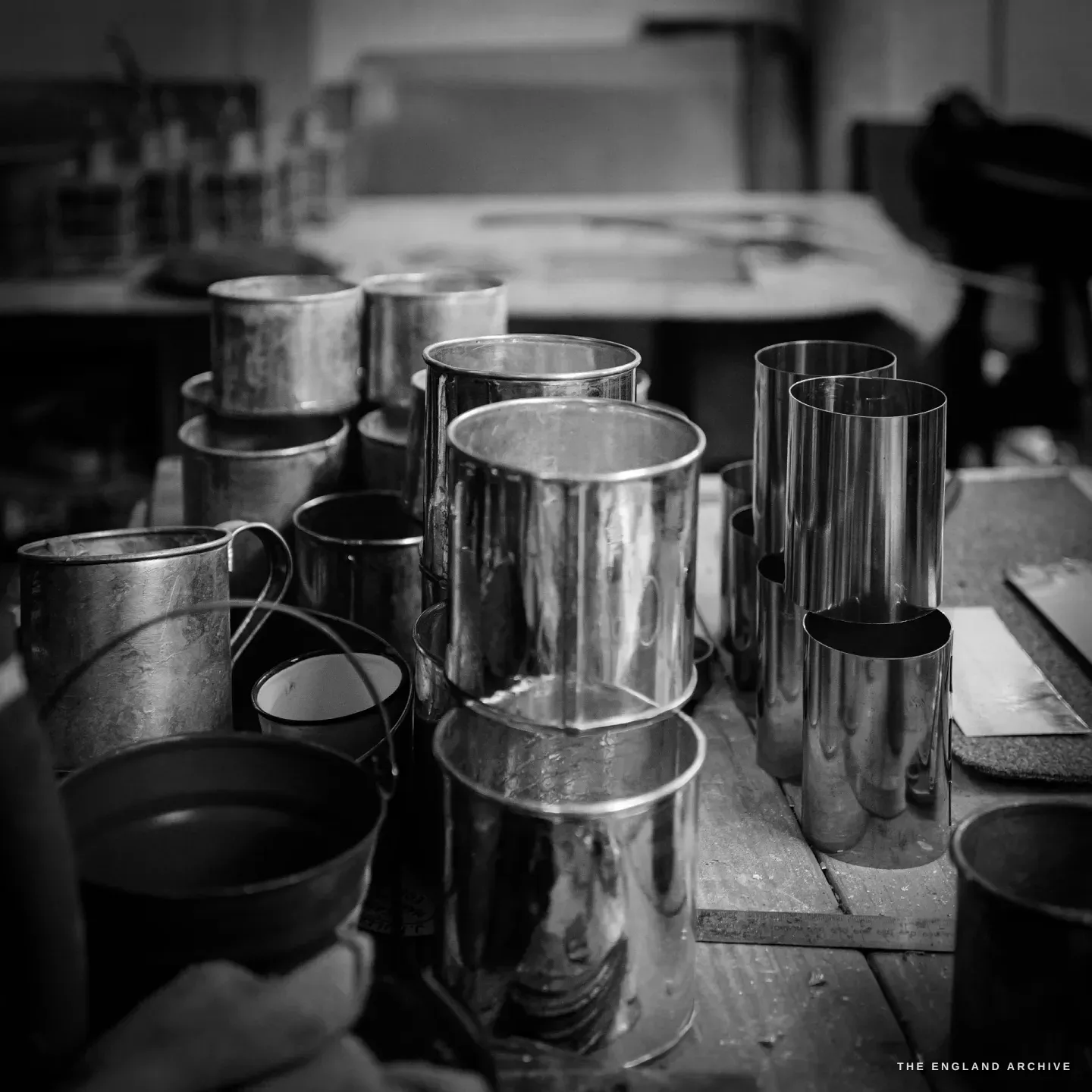
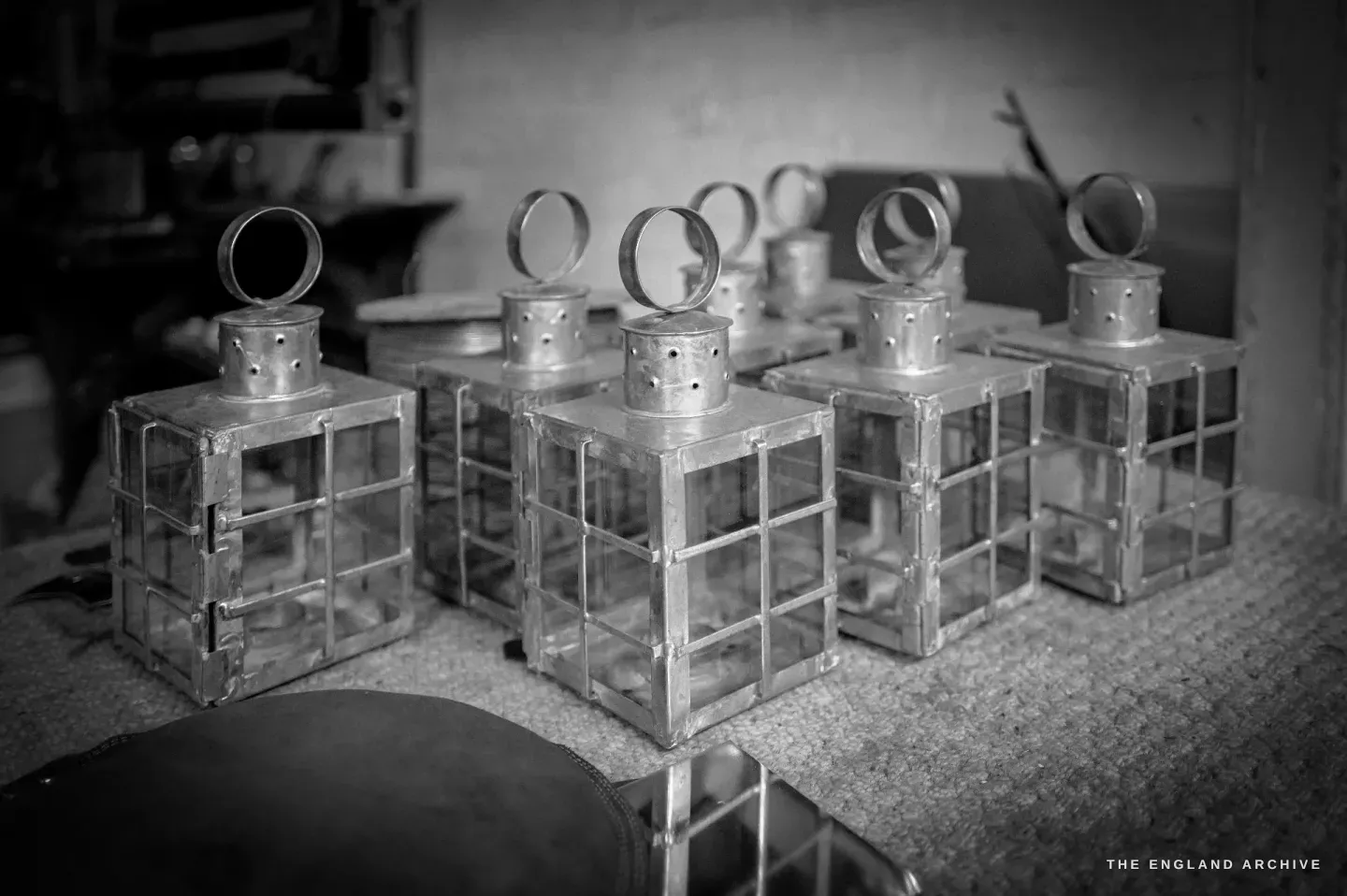
There is one more thing Robert does that most people in the trade no longer bother with, and he showed it to me with some pride. The tinplate you buy today is coated by machine, electrolytically - a thin, even, modern skin of tin. Robert takes that plate and tins it again his own way, the old way: he dips it in a bath of molten tin in a furnace he built himself. Hot-dip tinning lays down a far thicker coat, bonded into the steel, that will outlast the thin electrolytic one by years. It is the difference between a job done to a price and a job done to last, and he does it because the second is the only kind of job he is interested in.
It also means he can repair as well as make. Old tea urns and tinware come through the door needing mending and retinning, and he takes them in - the enamelled urn he showed me, battered and riveted, waiting to be made good again. In a throwaway age he is one of the few people who can still bring a worn piece of tinware back to life.
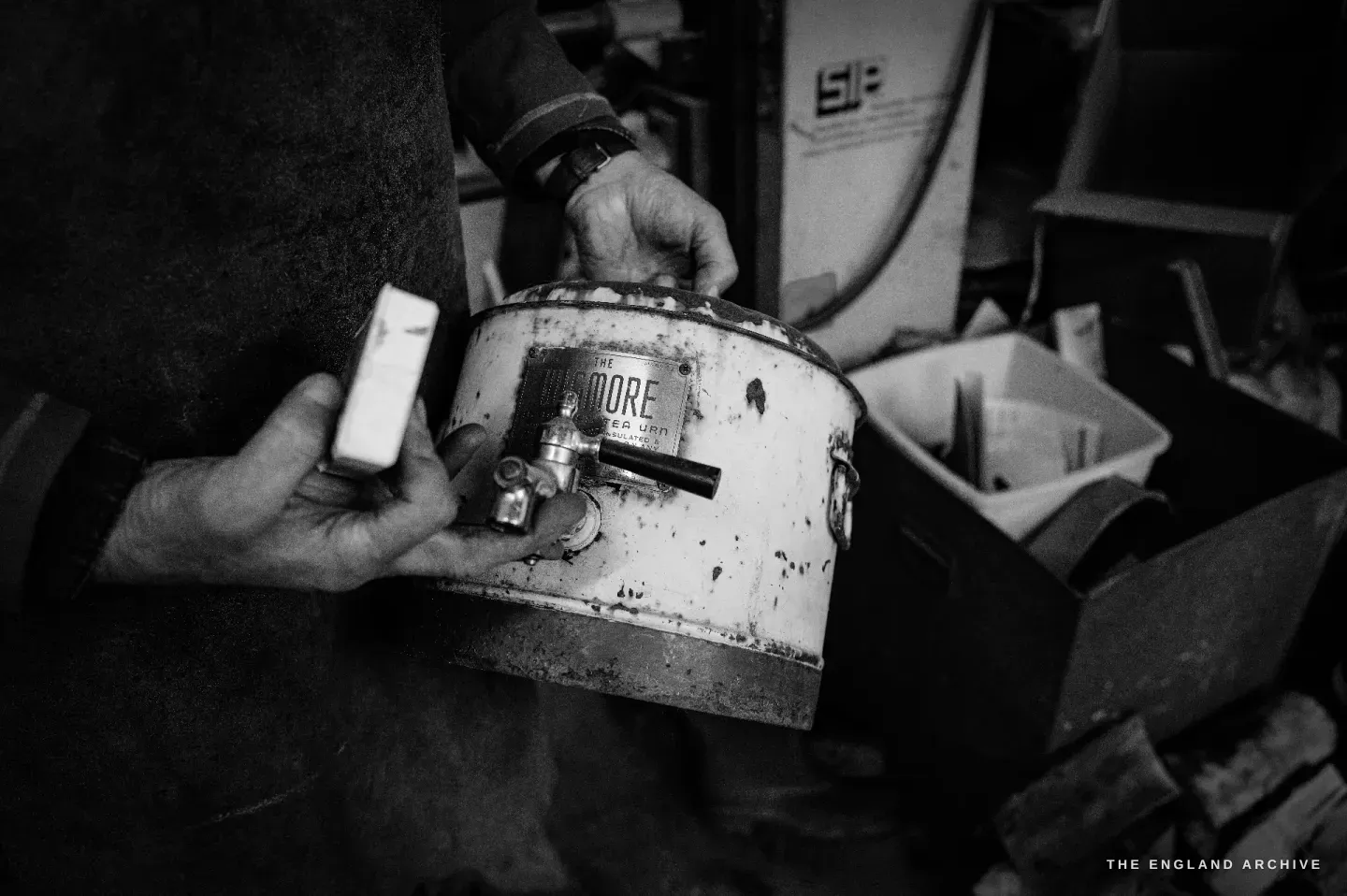
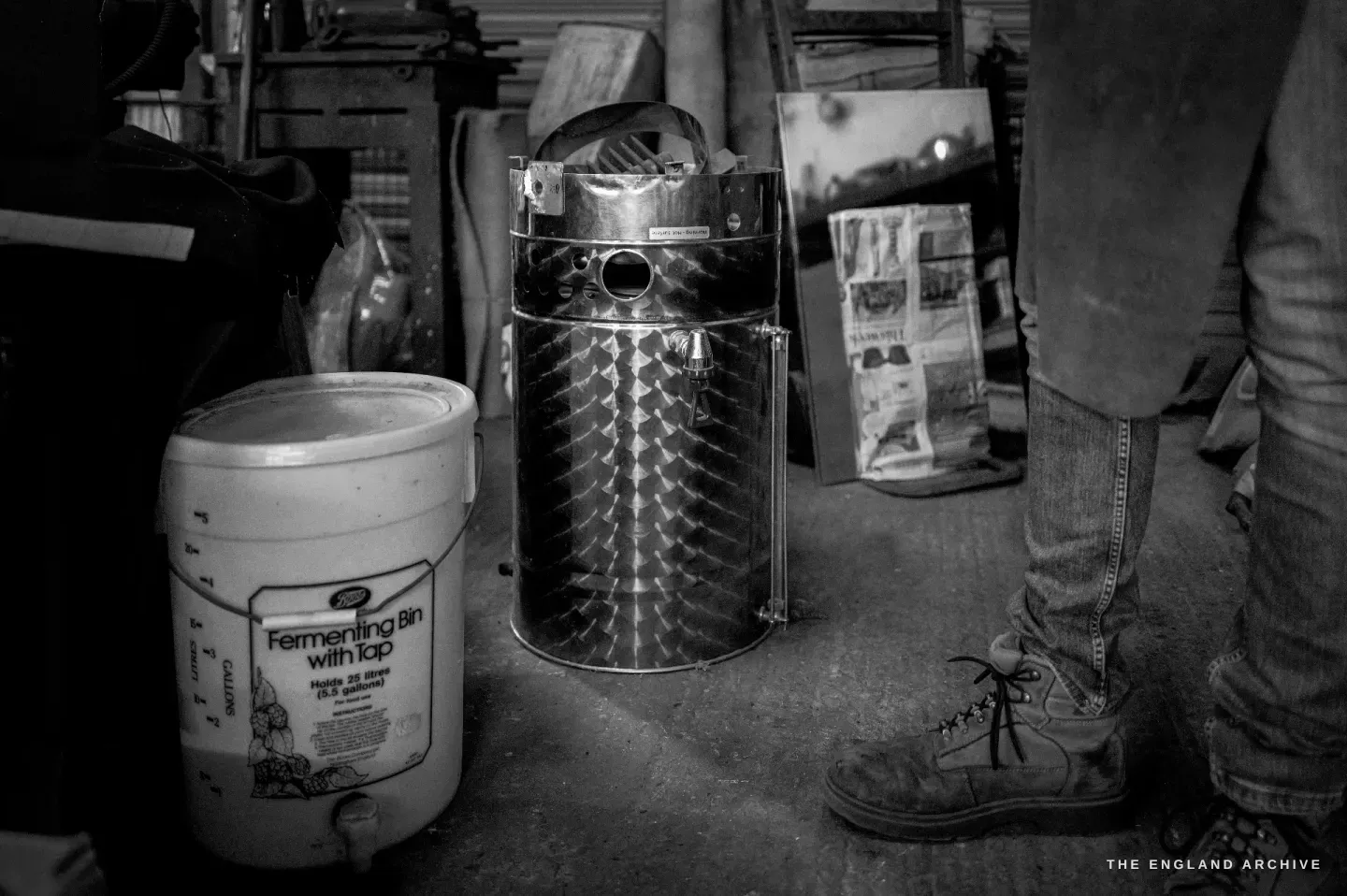
A few days after I left Rayleigh, Robert wrote to me about something he had not raised at the bench. He had been reading the archive's account of mouth-blown flat glass - the Birmingham workshop that closed in 2022 and pulled the repair of England's stained church windows toward the edge with it - and he recognised the shape of it. "I had no supply of tinplate for over a year," he wrote.
The firm that had kept him in sheet, William Corbett & Co, established 1863, was the last supplier of electrolytic tinplate in small sizes in the country. When it closed, the trade moved to minimum orders of five tons and up - a quantity no one-man tin shop could take in or store. For more than a year Robert worked without the raw material his craft is named for. He found a way through at last via a dealer called Roba, in Holland, who sourced small sheet from Croatia and then, on a trade visit to England, "took pity on my plight" and sold him a 177-kilogram overrun from somebody else's large order. "That will last me a while," he wrote, "but the same problem may exist next time I need to order."
It is the plainest account I have of how these trades die. The craftsman is still there, still able. What goes is the sheet, no longer rolled in any size a single tin shop can buy.
Here is the part I have been putting off, because Robert says it without self-pity and it deserves to be recorded the same way. He has no apprentice. He has no children. Seven generations of Fullers have worked metal by hand, and by his own reckoning the line ends with him. There is no eighth generation, and there is no one else in the shop learning what is in his hands. When he stops, this particular thread of it - this family, these tools, this way of working - stops too.
He is not bitter about it and not frightened by it. He has worked long and hard, he owns the building his workshop stands in, and he is comfortable. The tinsmithing does not make much money any more; he keeps it up because he loves it, and he intends to go on doing it as a thing he does for its own sake, for as long as he is able. That is a good and honest way to end a working life. It is also exactly the situation the Red List describes in a single dry phrase - a craft held by a handful of ageing hands with no one to pass it to - made human, and warm, and specific, in one man in one workshop in Essex.
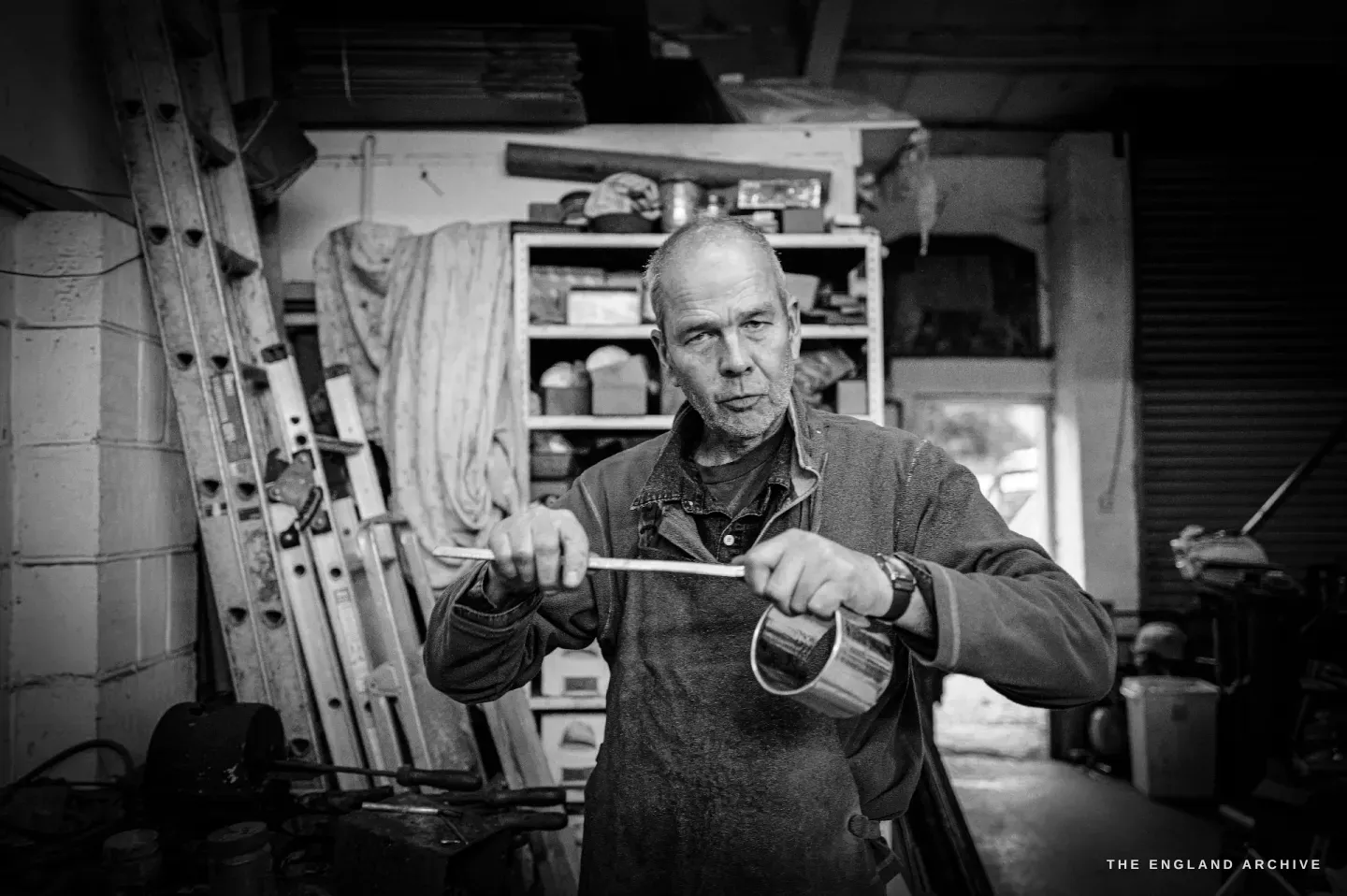
This is the archive's record of Robert Fuller, tinsmith and coppersmith, seventh and last generation of J. Fuller & Sons, made in his workshop at Rayleigh in autumn 2026: the family on the wall, the flat sheet becoming a cup, the furnace he built to tin his own plate, and a man of real warmth at the end of a very long line. If an archive of English craft is for anything, it is for exactly this - to hold the hands and the history steady on the page while they are both still here. The craft itself is on the Heritage Crafts Red List; the firm, and how to commission Robert while he is still working, is at J. Fuller & Sons.