How a Letter Is Cut in Stone
A V-cut inscription, from drafting board to finished face
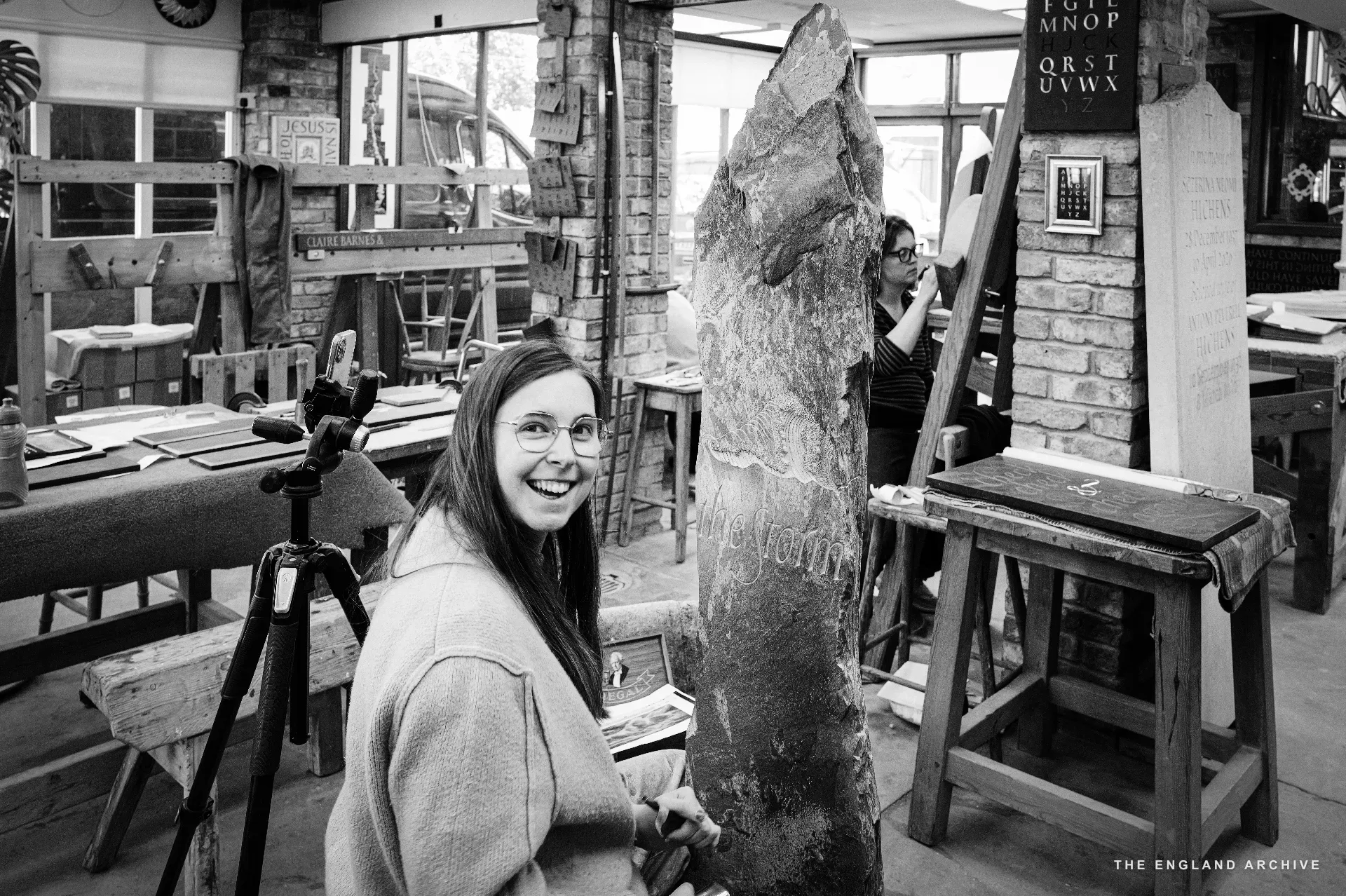
The inscription is the form English stone letter-cutting has held for two thousand years, from the Trajan Letter at the foot of Trajan’s Column to the chiselled lettering Eric Gill, David Kindersley, and (now) the Cardozo Kindersley Workshop have carried into the present. The technique sits inside that long line. The geometry has not changed.
This sequence documents the cutting of an inscription at the workshop in Cambridge on 22 April 2026. The maker is the workshop itself - the cut is hand work, but the workshop’s collective practice carries it. Lida Kindersley directs; Roxanne Kindersley, Vincent Kindersley, Hallam Kindersley and the letterer Emily share the bench. The pieces on the bench that day ranged from inscriptions to memorial commissions; the geometry of the cut is the same whatever the words.
The sequence shows the major stages. It does not show every chisel stroke (a single letter takes roughly an hour and several hundred small cuts), and it does not show the years of training that put the muscle memory into the cut. The companion essay Letter Cut in Stone (ES-0054) describes the tradition the process belongs to; the journal entry A Morning at Cardozo Kindersley (JN-0011) records the visit itself.
- 01 of 9
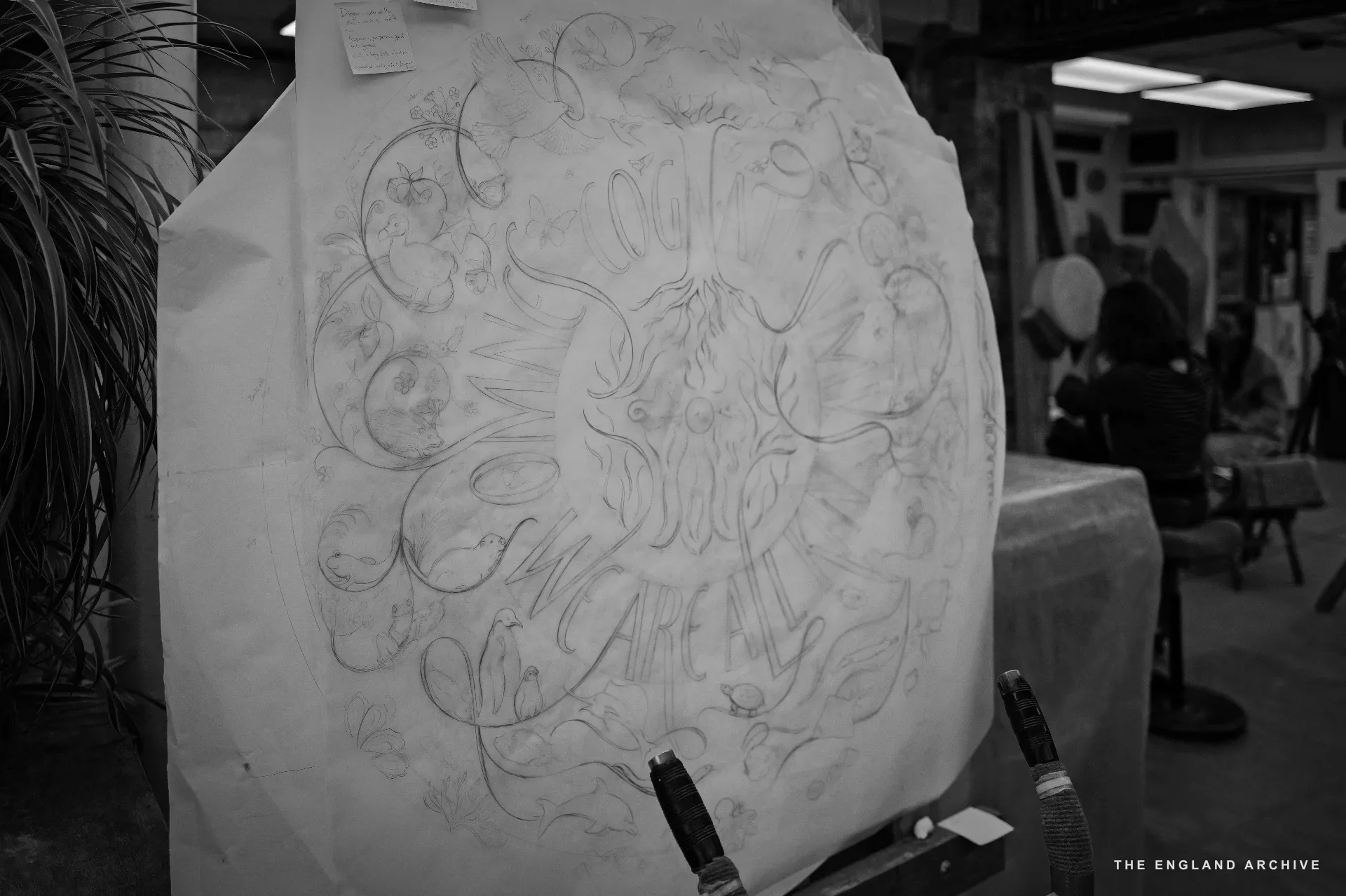
IM-0195 The drawing on paper
The setting-out drawing, worked up full-size on paper and pinned to the easel. The cut begins on paper, weeks before any chisel touches stone.
- 02 of 9
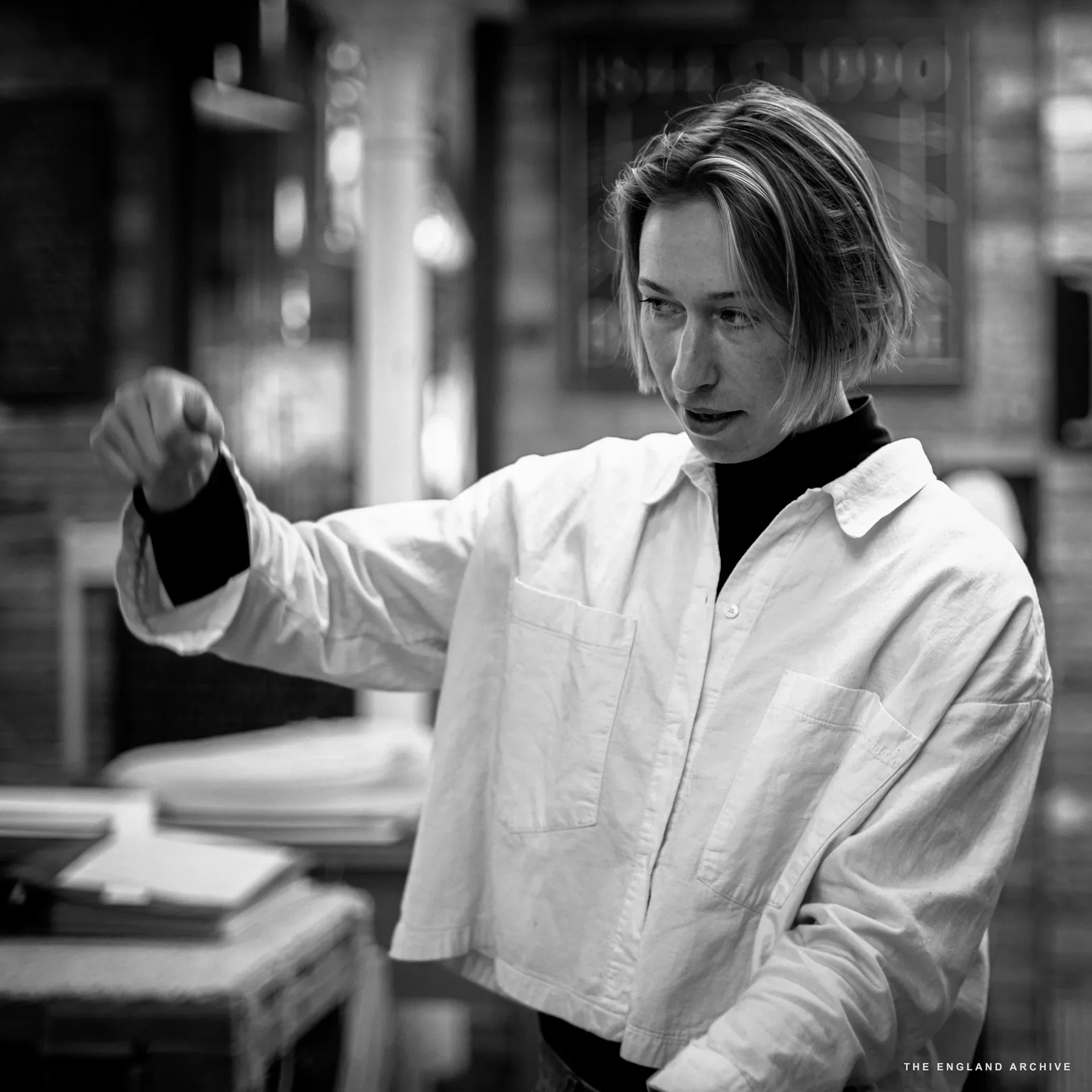
IM-0156 The drawing
Each letter drawn full-size on paper. The proportions, the spacing, the optical adjustments that make the line read as a line - all decided here, not on the stone.
- 03 of 9
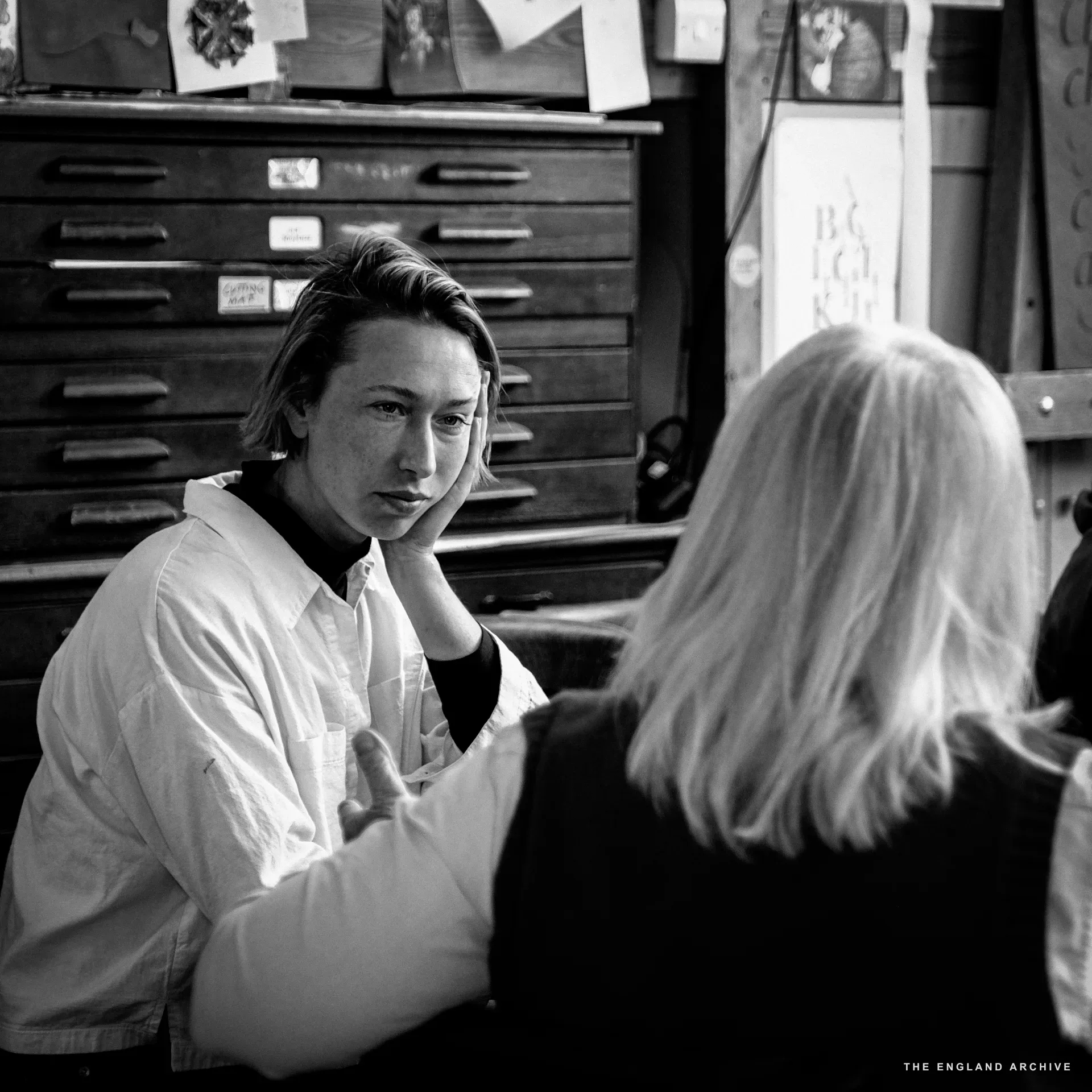
IM-0154 The transfer
The drawing transferred to the stone face by hand. Pencil on slate. The setting-out is the moment the design becomes specific to this stone.
- 04 of 9
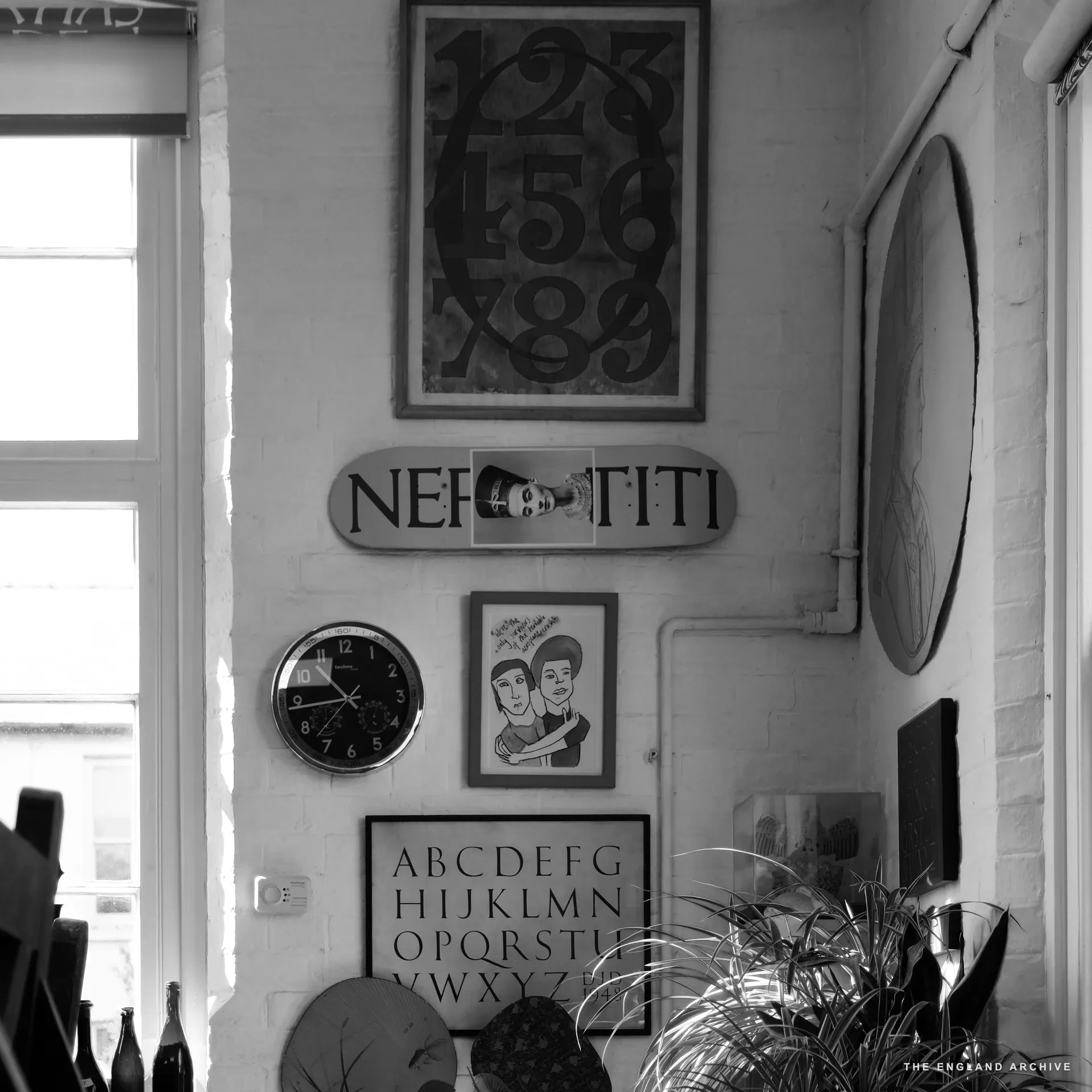
IM-0153 The bench
The stone steadied on its wooden support. The chisels laid out in their working order. The light from the workshop window falls along the cutting face.
- 05 of 9
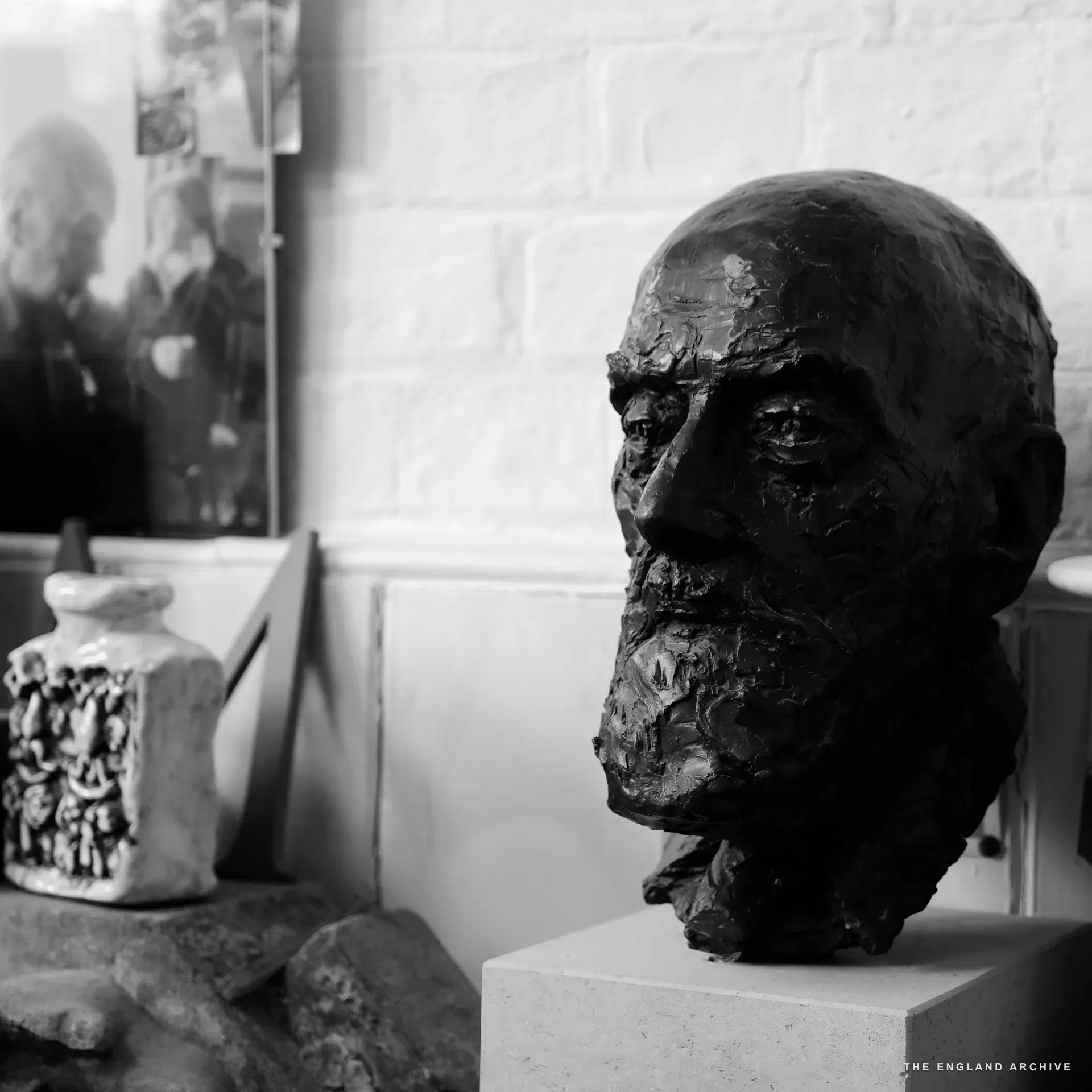
IM-0151 The first cut
Two angled chisel strokes meet at a central V below the stone surface - the V-cut, the geometry the whole tradition descends from.
- 06 of 9
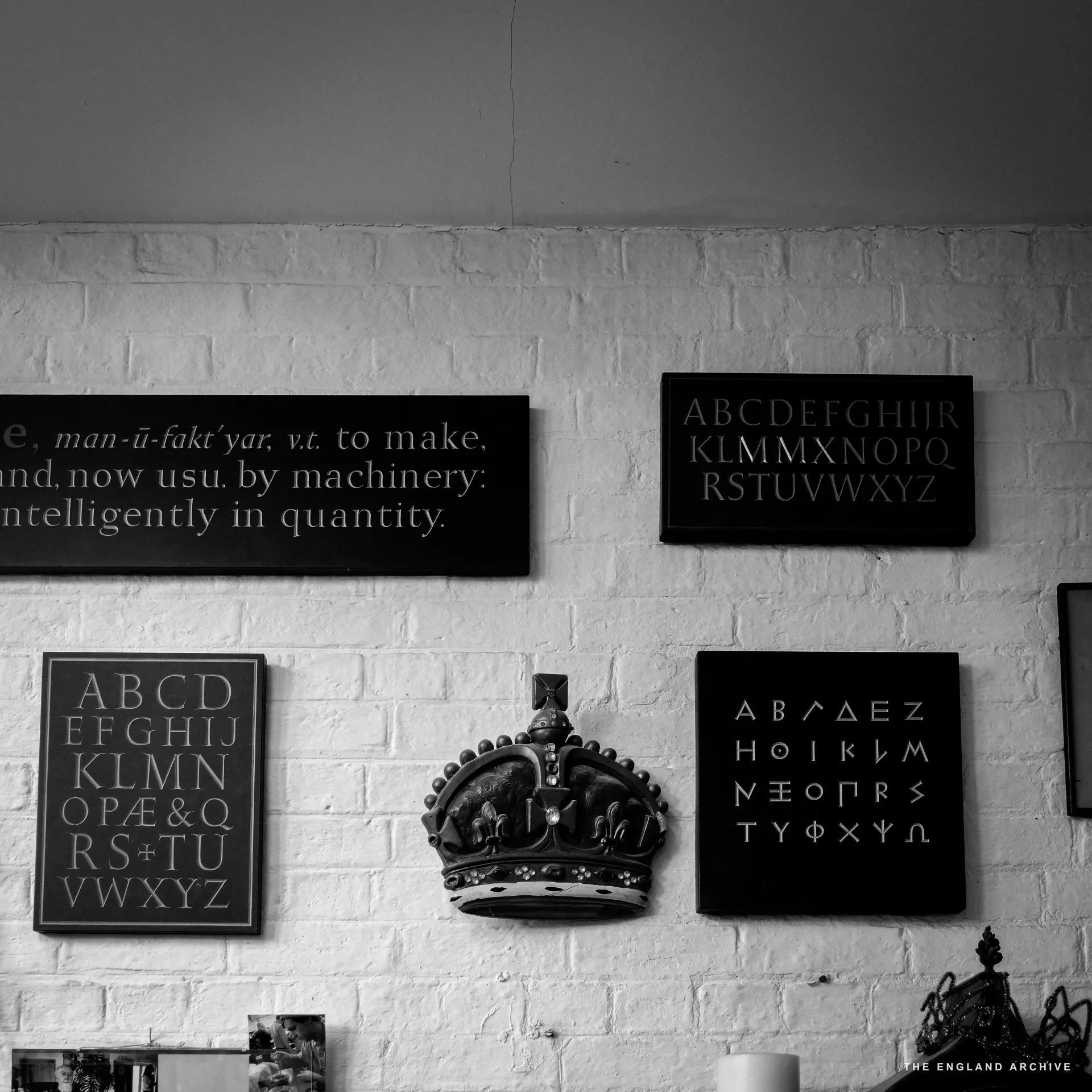
IM-0150 The cutting in progress
A letter takes roughly an hour and several hundred small cuts. The hammer and chisel set the rhythm; the cut deepens stroke by stroke.
- 07 of 9
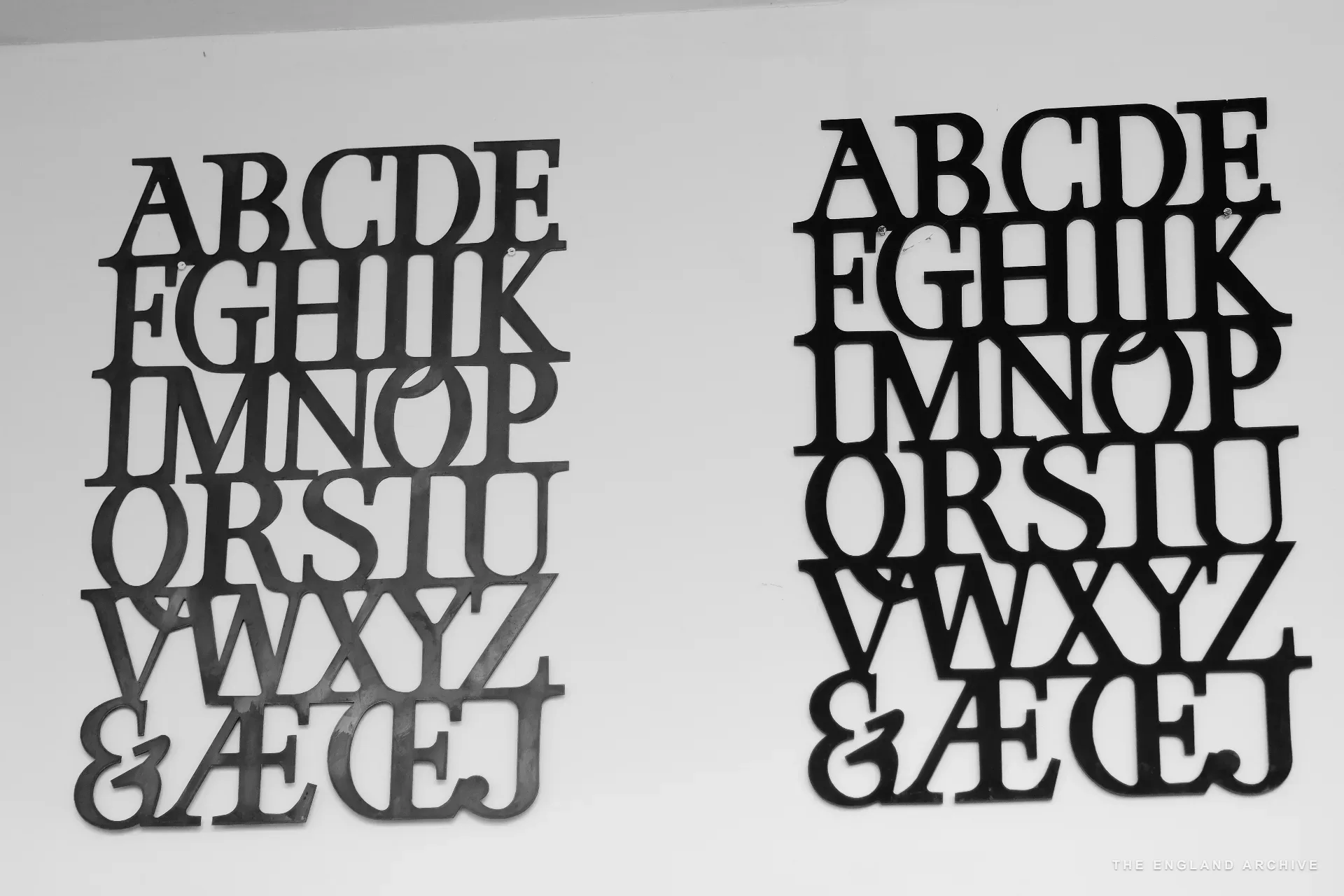
IM-0148 The refining
Finer chisels at the edges of the cut, cleaning the stroke. The line is sharpened, the corners squared, the stroke brought to its final crispness.
- 08 of 9
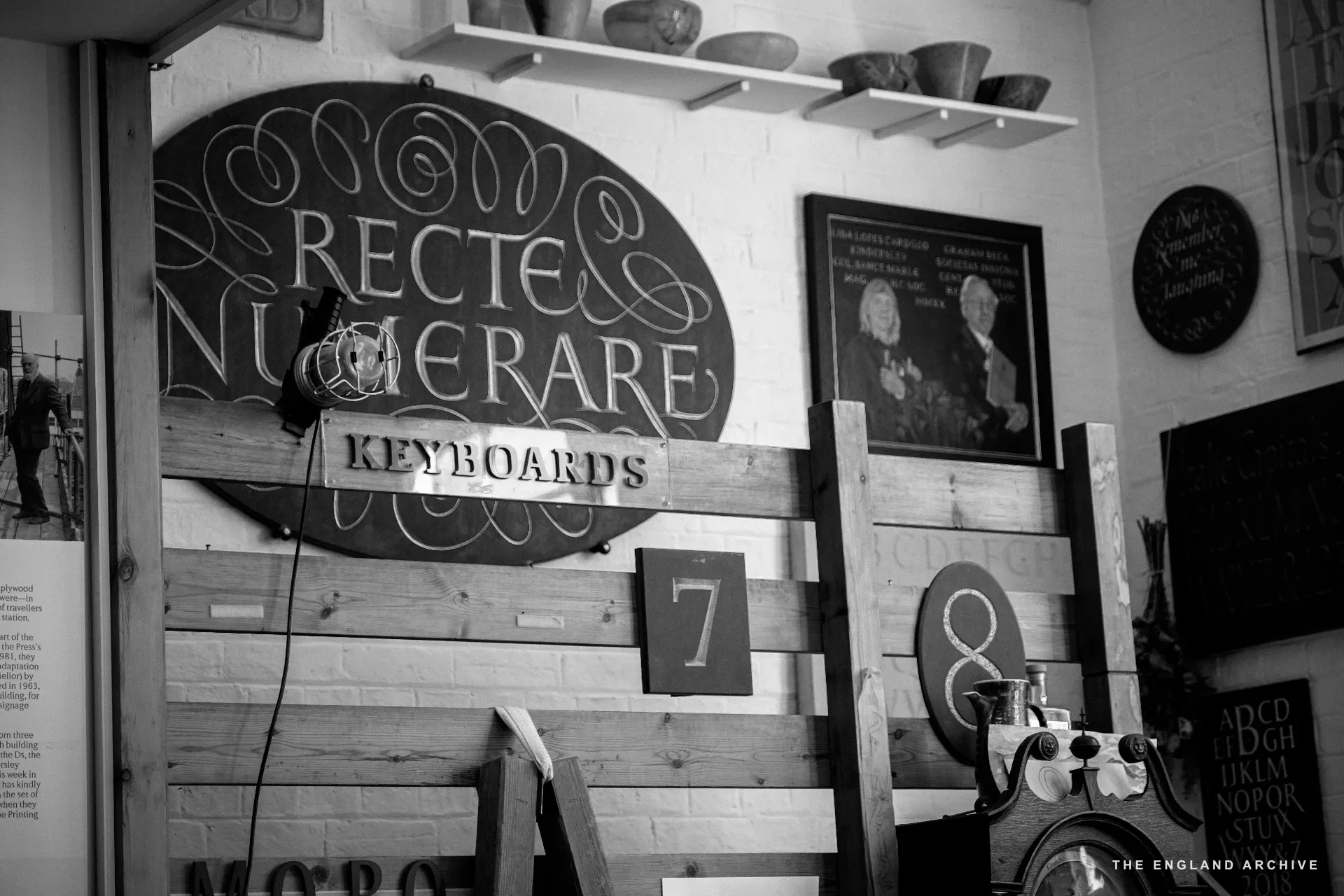
IM-0146 The finished letter
A single completed character, the V-cut clean and even along its length. The light catches the cut differently from any direction.
- 09 of 9
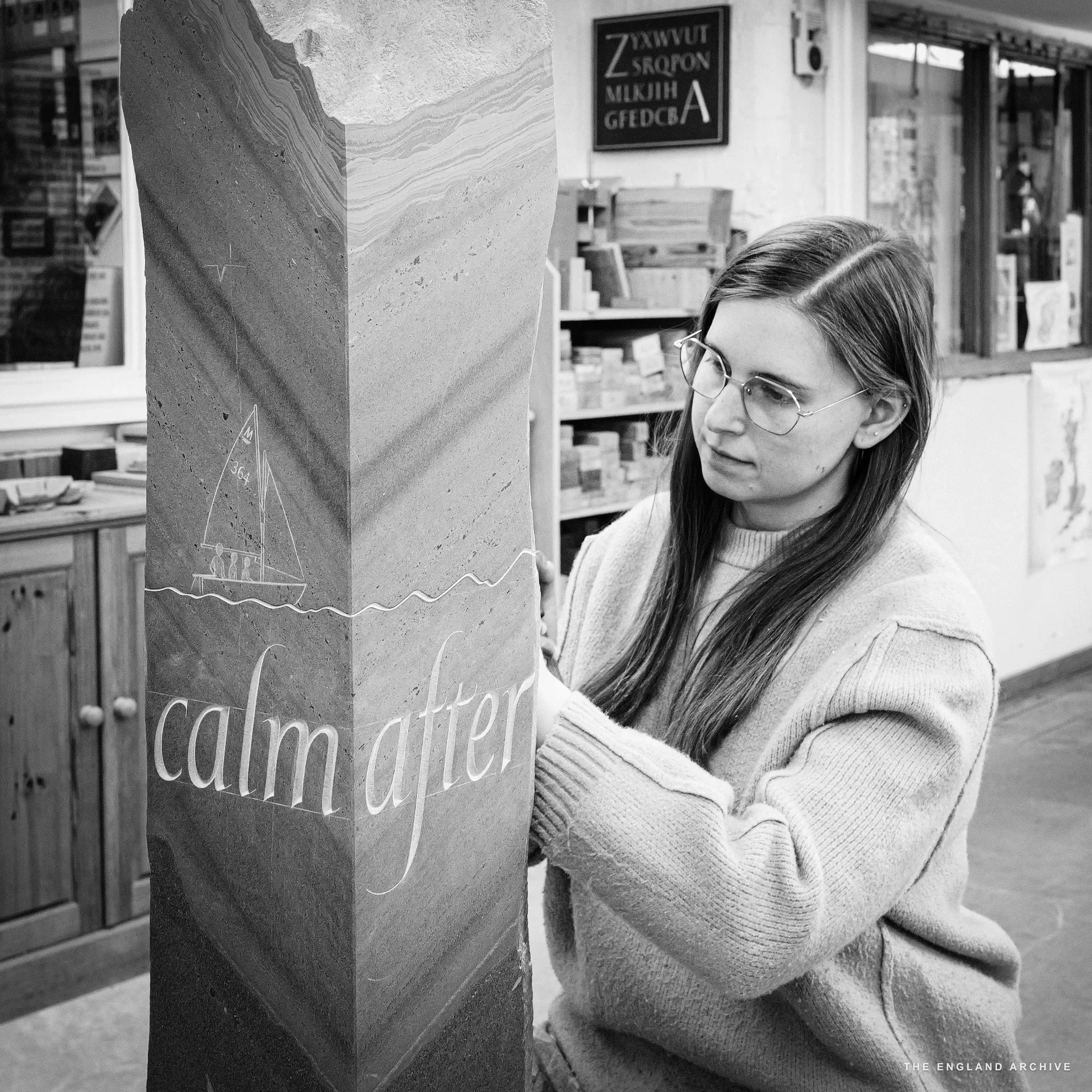
IM-0187 The completed inscription
All letters cut, the spacing held, the line reading as one - here the words ‘calm after’ flowing across a carved slate pillar.
What this sequence does not show: the years of muscle memory the cut depends on; the dialogue between Lida and Roxanne about a particular letter’s spacing; the apprentice (Emily, who walked in off the street and was given a pencil) doing the slow work of learning to sharpen; the small jokes; the radio in the corner. The technique can be photographed. The workshop cannot be photographed in nine frames.
Published with the consent of the workshop. The companion long-form record of the visit is A Morning at Cardozo Kindersley (JN-0011); the craft monograph is Letter Cut in Stone (ES-0054). The Cardozo Kindersley Workshop continues to take commissions; their working site is linked above.