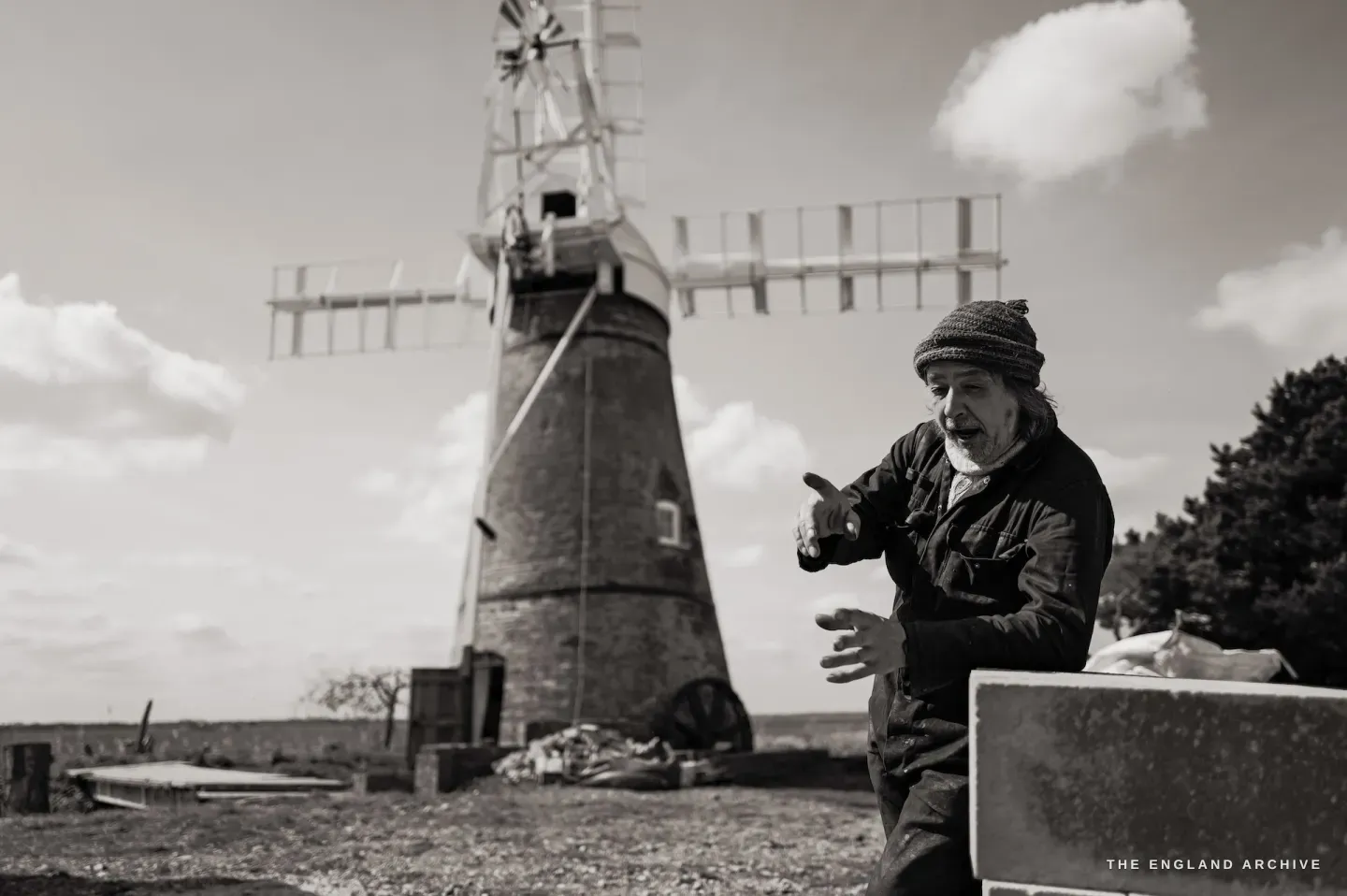
Makers
Paul Kemp
Millwright
A working millwright who has maintained and restored historic windmills across Norfolk and Suffolk for decades. The mill at Toft Monks works because Paul Kemp exists. That is not a small thing.
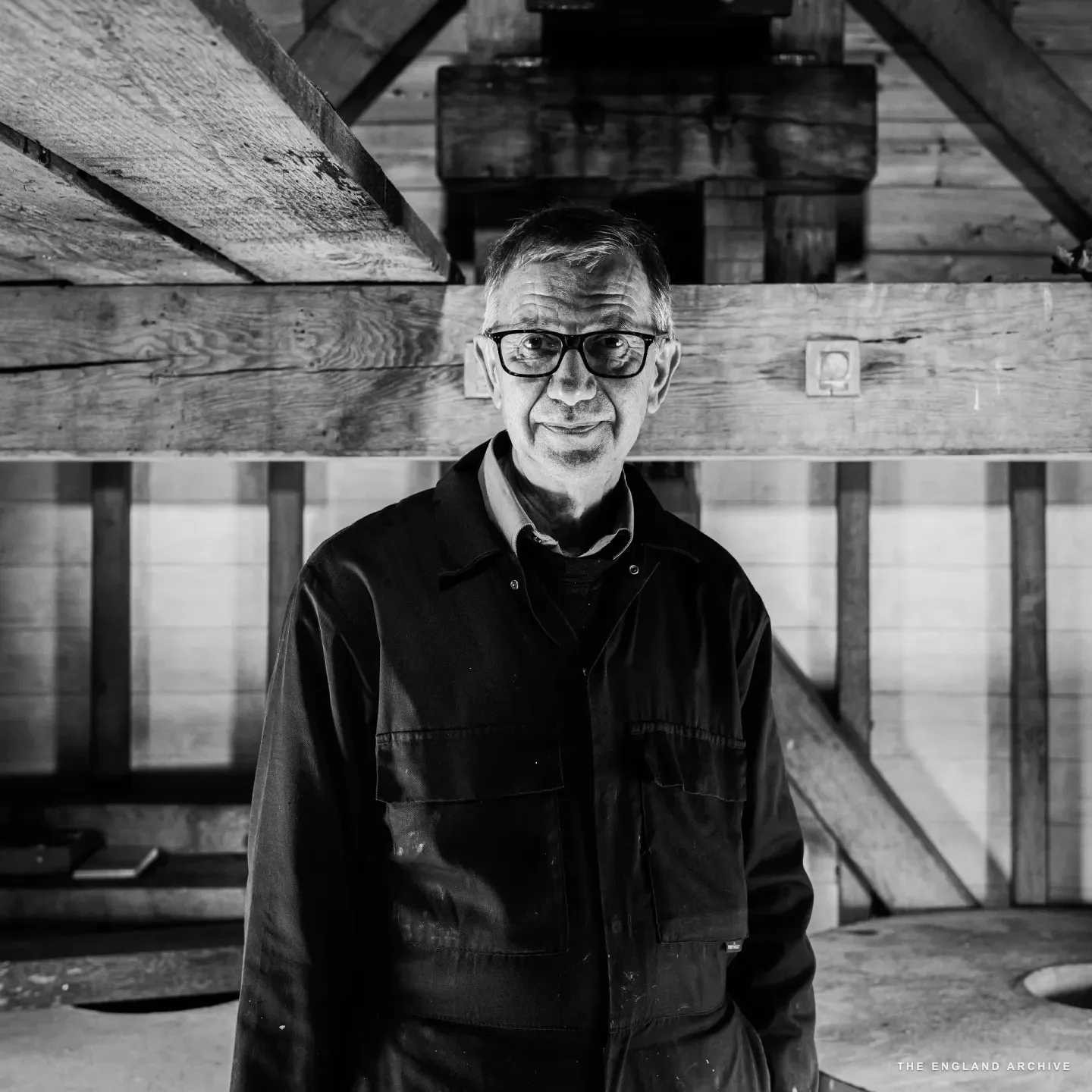
Retired Millwright, Private Preserver
South Walsham, Norfolk
We had some difficulty finding him.
We had some difficulty finding him. The address led us down increasingly narrow lanes until we turned through a gate onto a large plot of land, the scale of it only becoming apparent as we drove in. A farmstead, or something that had become one over the course of a life. A big house. Barns at the far end. Workshops closer to where we parked. And there, in the centre of the land, rising above everything else, a post mill.
I had never seen one outside of a photograph.
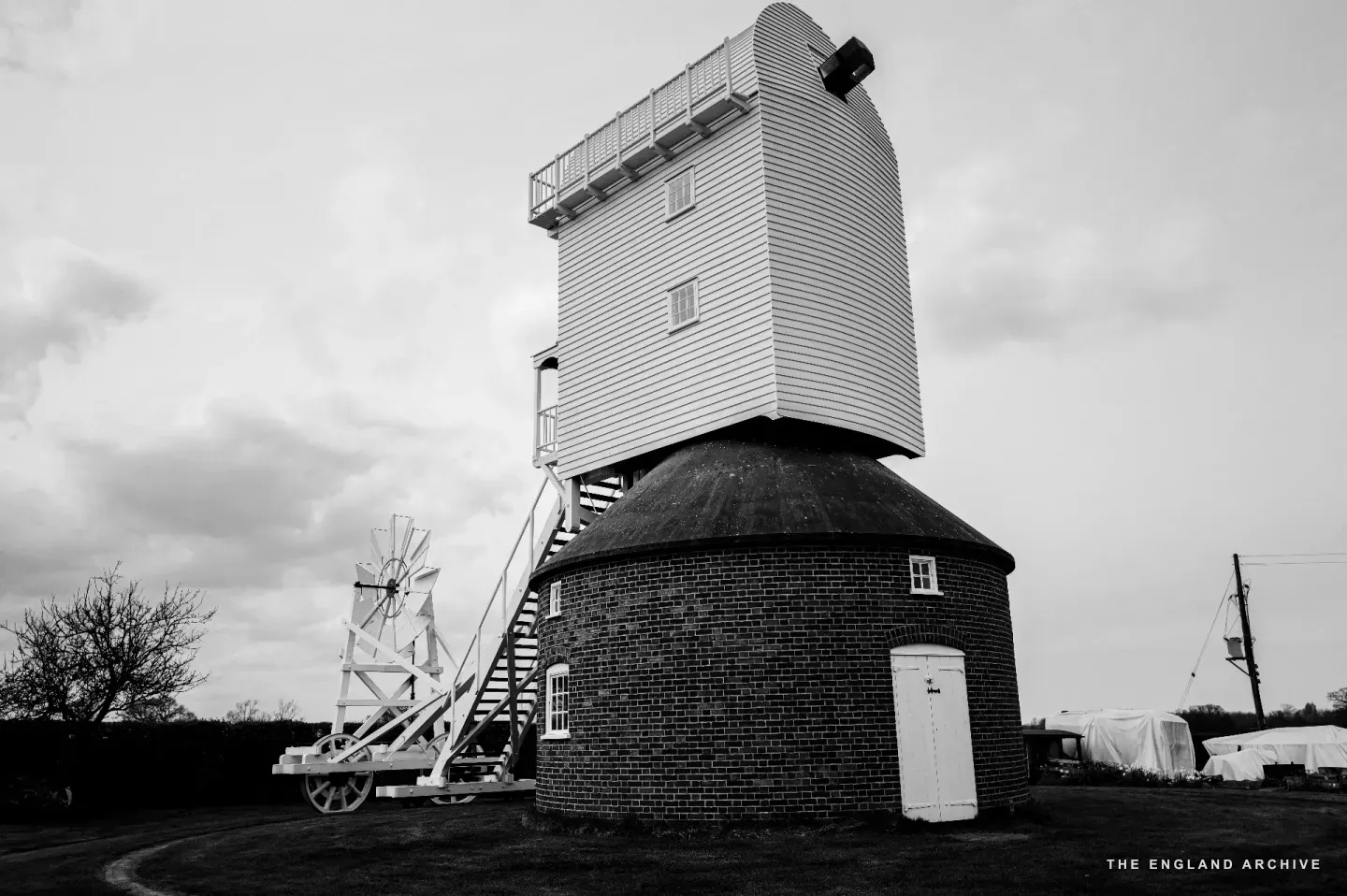
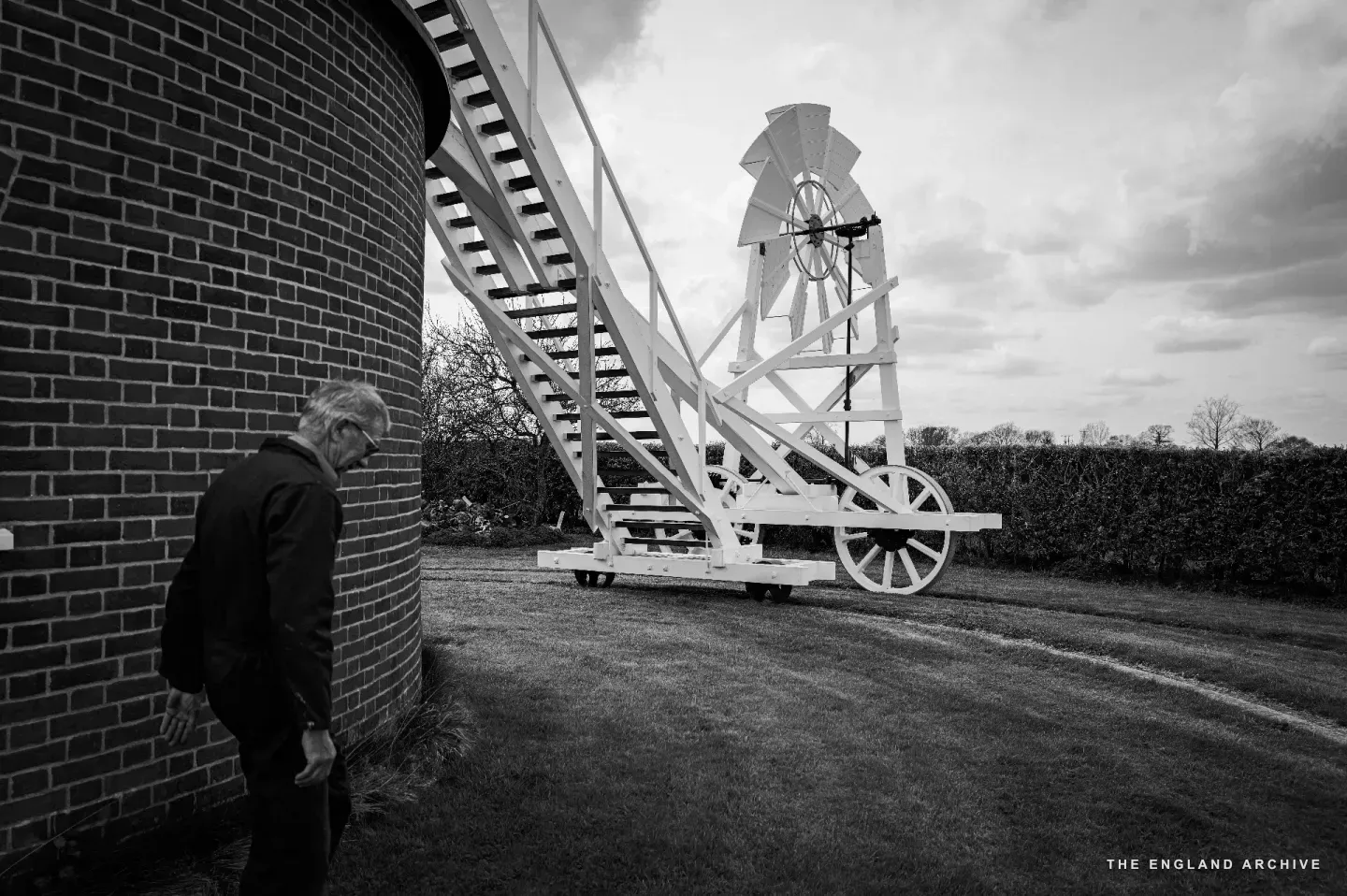
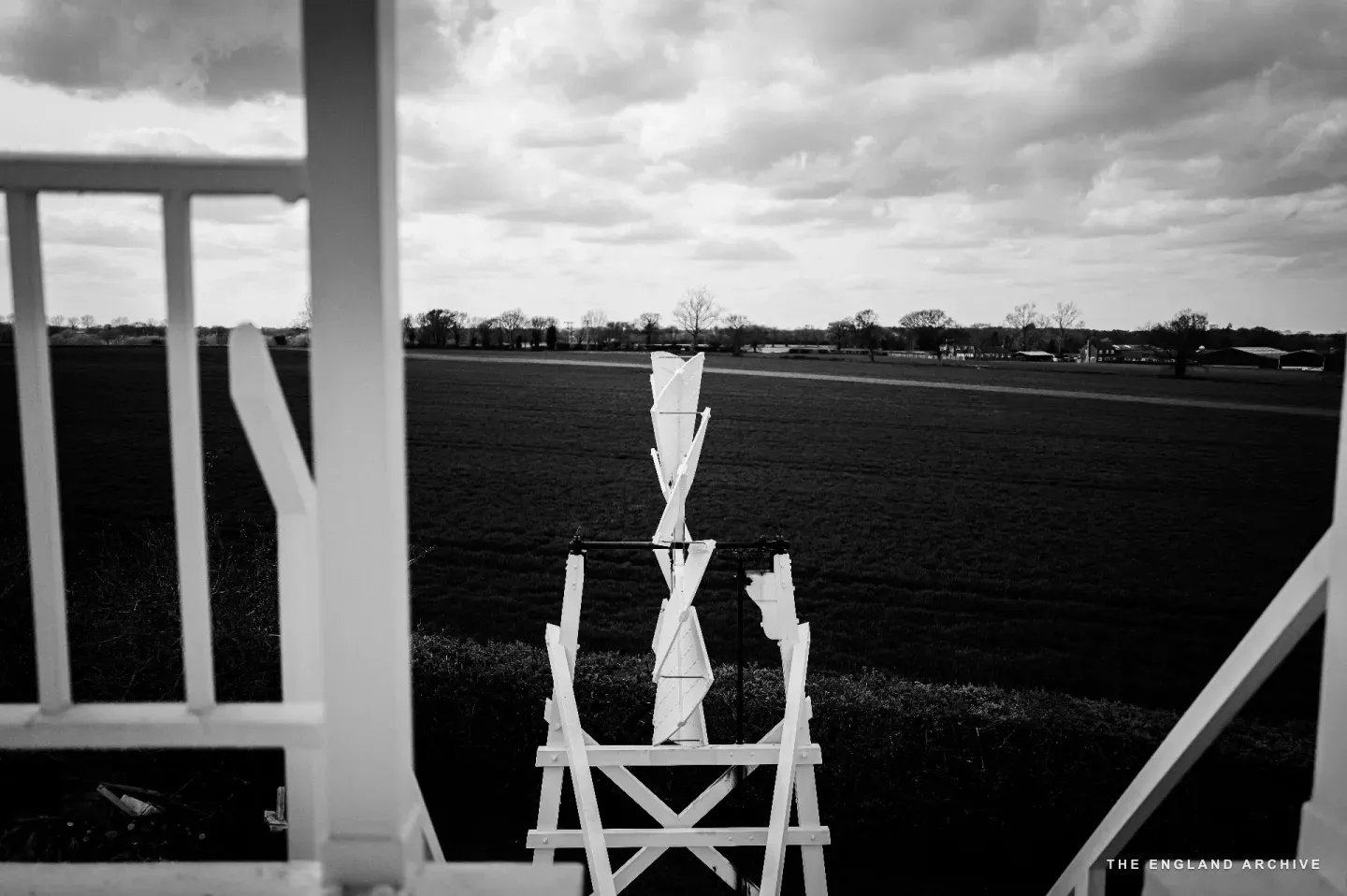
The construction was white, the upper body of it bright against the Norfolk sky. Below it, a circular brick base, low and solid, like a plinth built to receive something important. And alongside the mill, on its own wheeled trolley, a strange angled apparatus rising at the back: a long beam, a flight of steps, and a small bladed fantail at the far end. The fantail caught the wind and turned the trolley; the trolley pushed the cap of the mill round; the whole working body of the mill rotated to face the weather. I stood and looked at it for a long moment before Richard appeared.
He came out of one of the workshops in his overalls, walking with the ease of a man on his own land, and greeted us as though we had known each other for years. He asked about the journey, welcomed Bhavani warmly, and then, almost before the pleasantries were finished, he said: come, let me show you. And that was that. We were off.
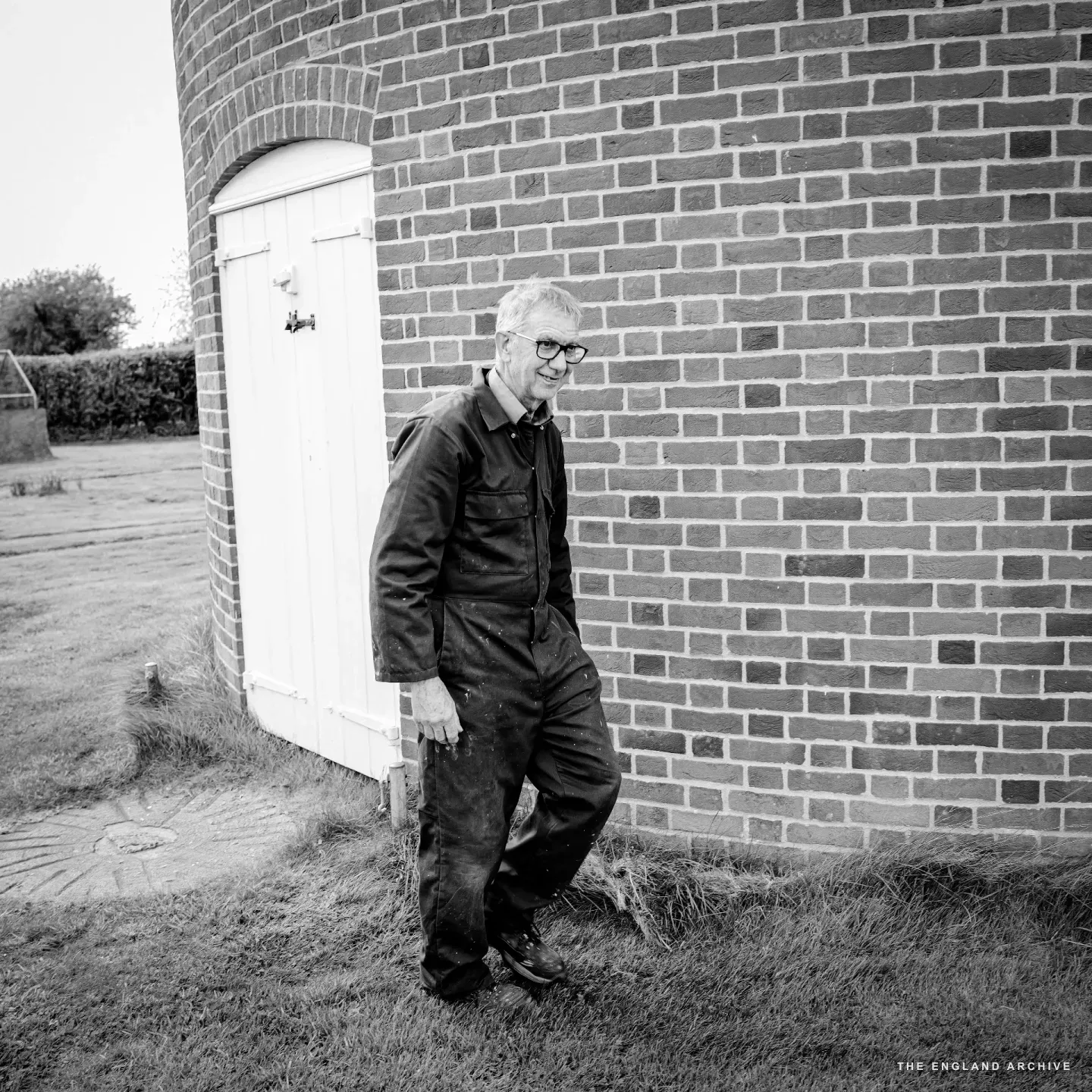
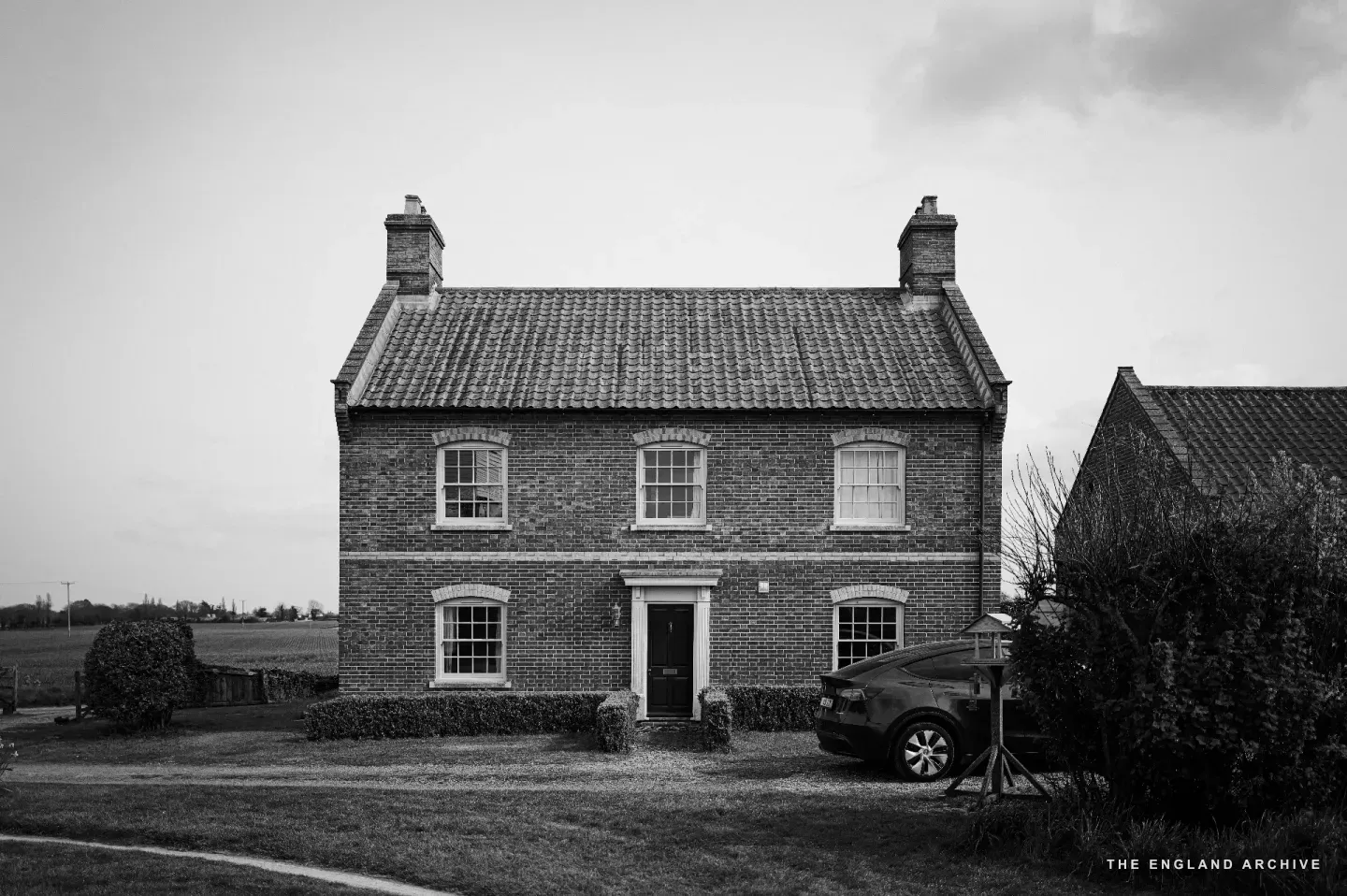
The woodworking shop first. Everything in it he had built himself, including the building. Richard did not mention this to impress us. He mentioned it the way you mention facts. He built the workshop. He built the house. He built the barns. He built the post mill. He bought the land and raised everything on it, doing the timber and the metalwork himself, calling on a friend only for the brickwork. Thirty years of a man’s hands, worked into a single piece of ground.
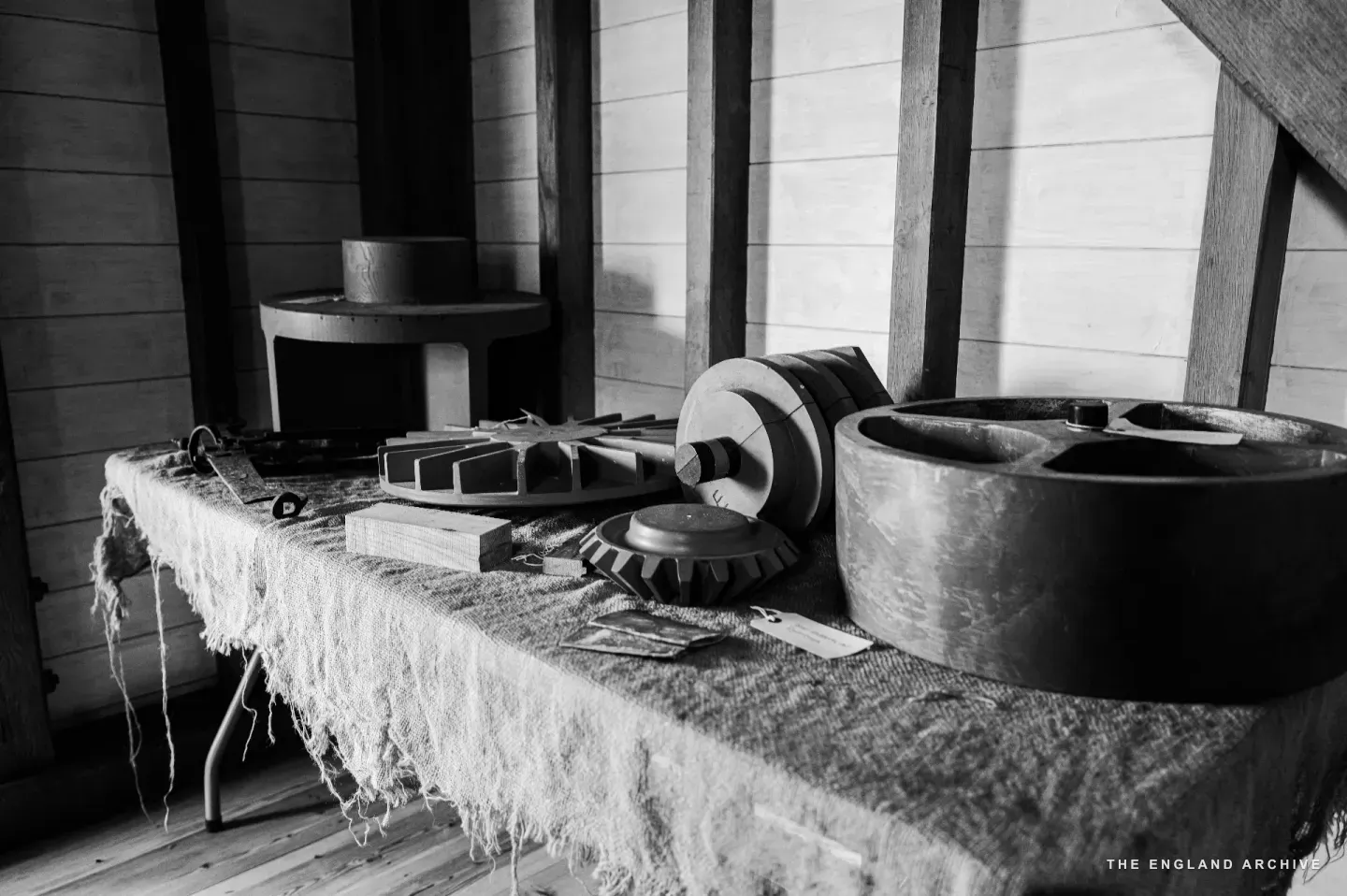
The bench where he cut his patterns sat against the far wall - a length of sacking spread across it, gear blanks and pulley moulds laid out like the drawings of a man who works with his hands and thinks with them too.
Then the mill.
He took us around the outside first. He explained the wheeled fantail and what it does: the small wind-bladed wheel at the far end catches the breeze, the trolley underneath rolls round on its track, and the whole cap of the mill is pushed into the wind. No motor, no electricity. Wind moving wood, wood moving wood, the mill always facing the weather it needs.
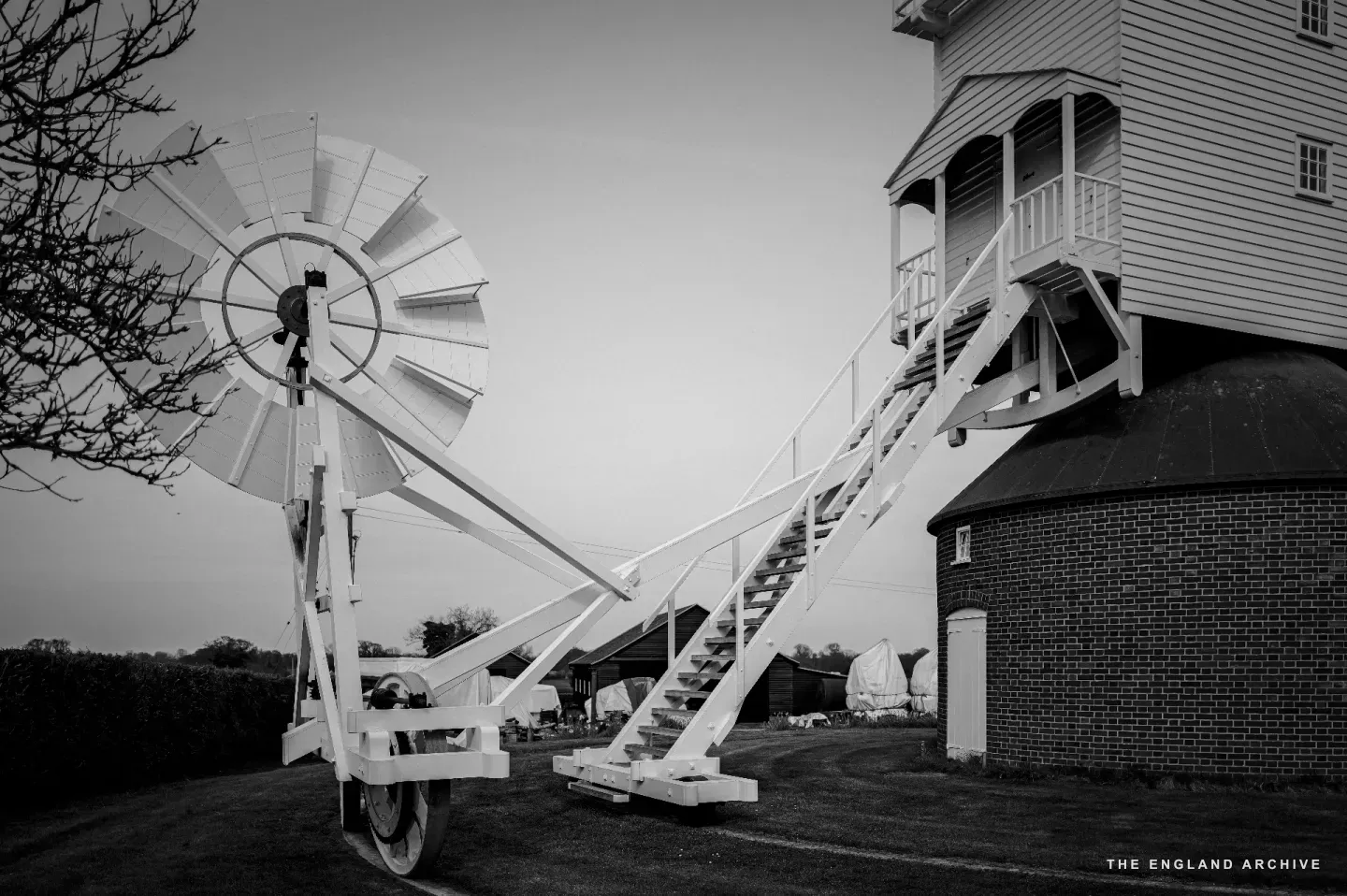
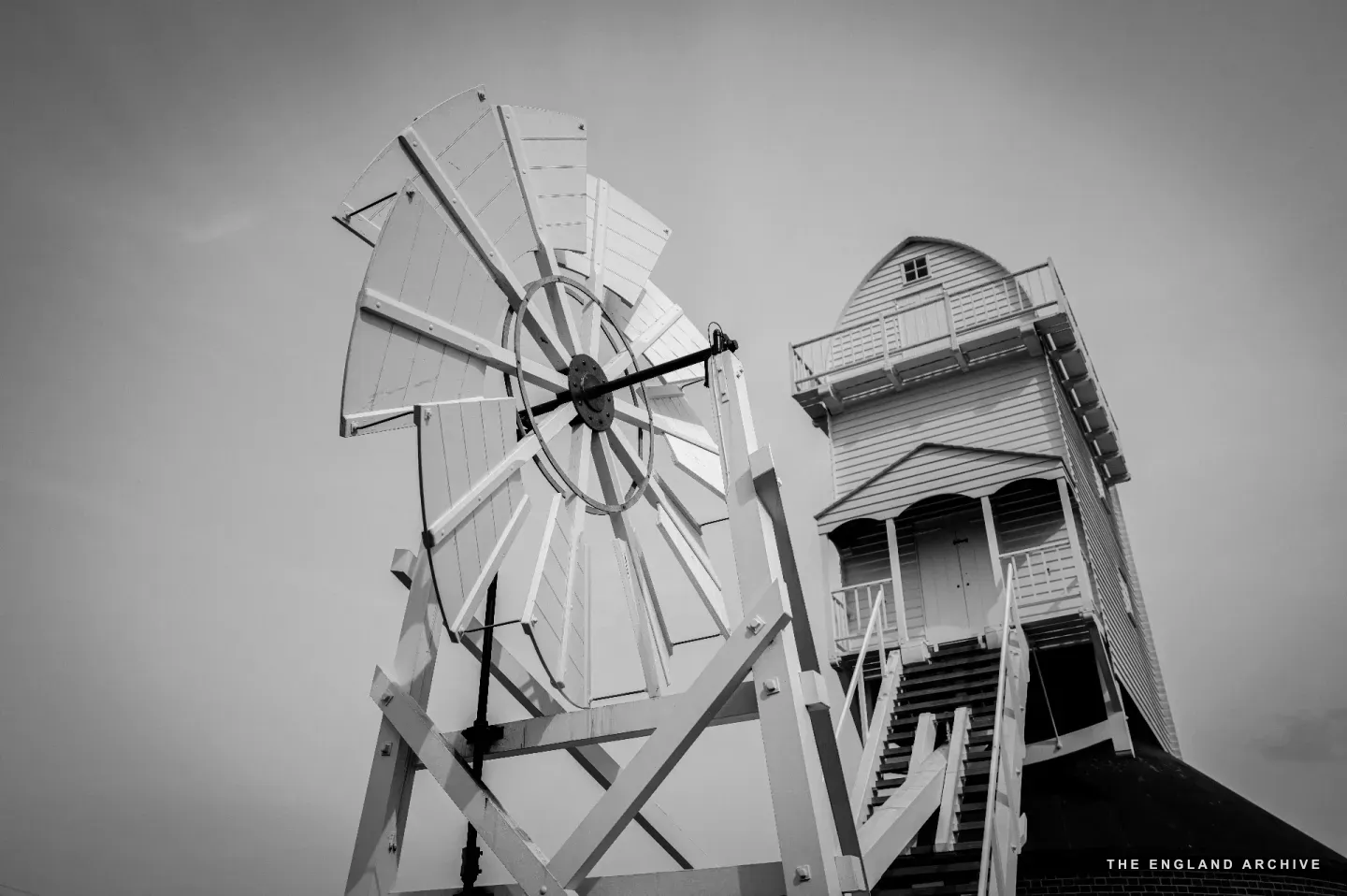
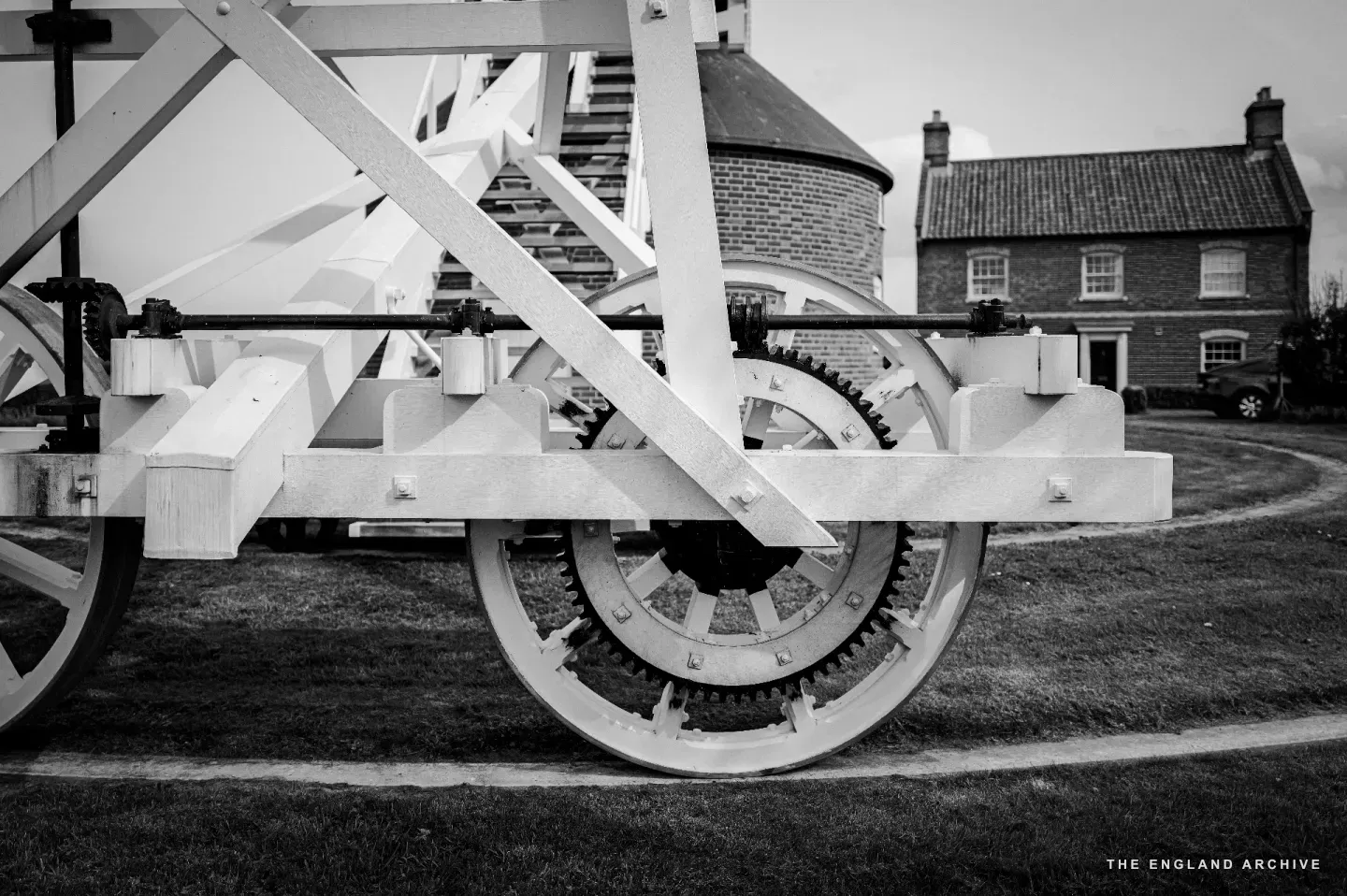
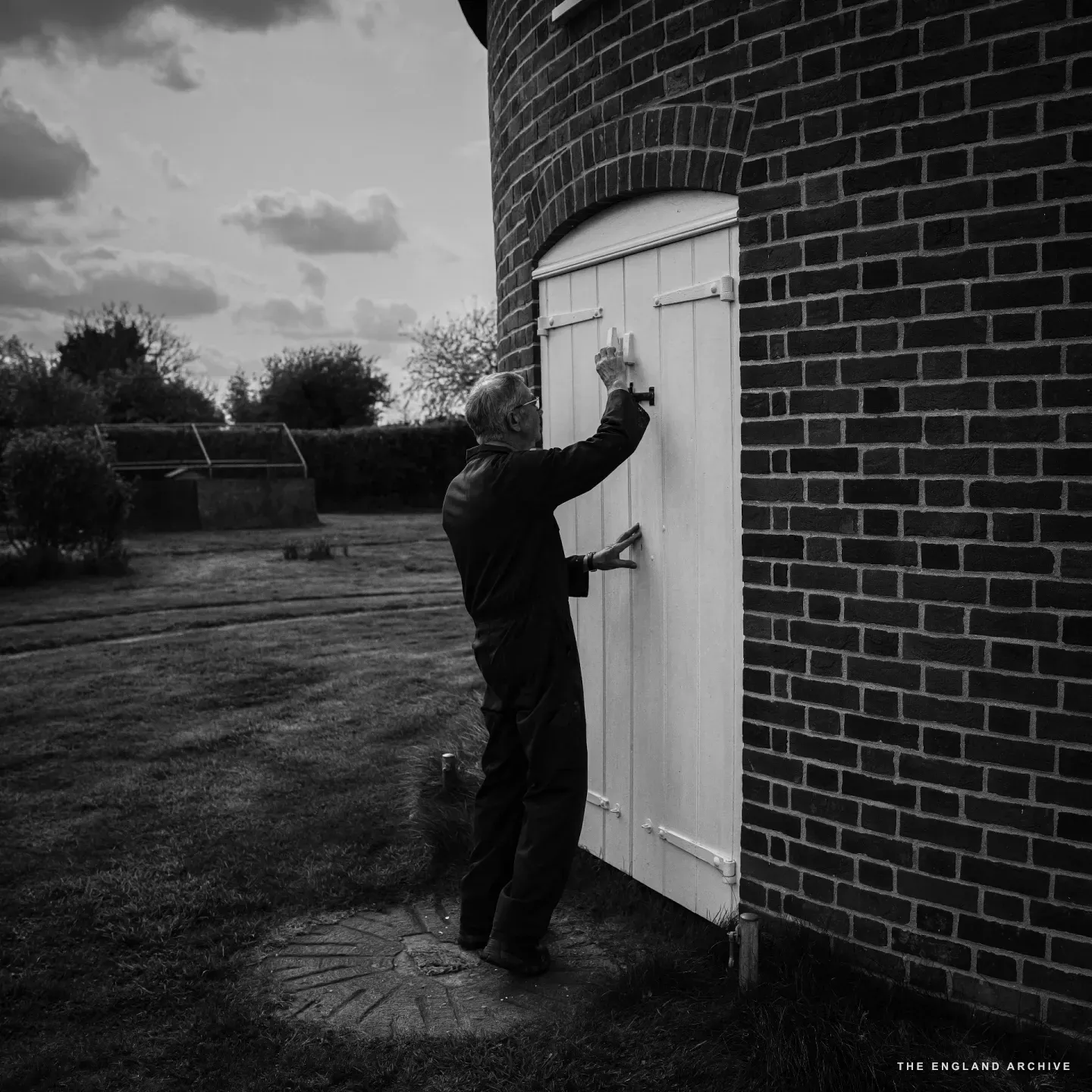
Then he opened the door at the base and we went in.
And the first thing I saw, fixed to the timber above the rim of the grindstone assembly, was a small black-and-white plate. R M Seago, Millwright, South Walsham, Norfolk. He had signed it. The way a craftsman signs his work. The way a man marks something he has made and is not ashamed to have made.
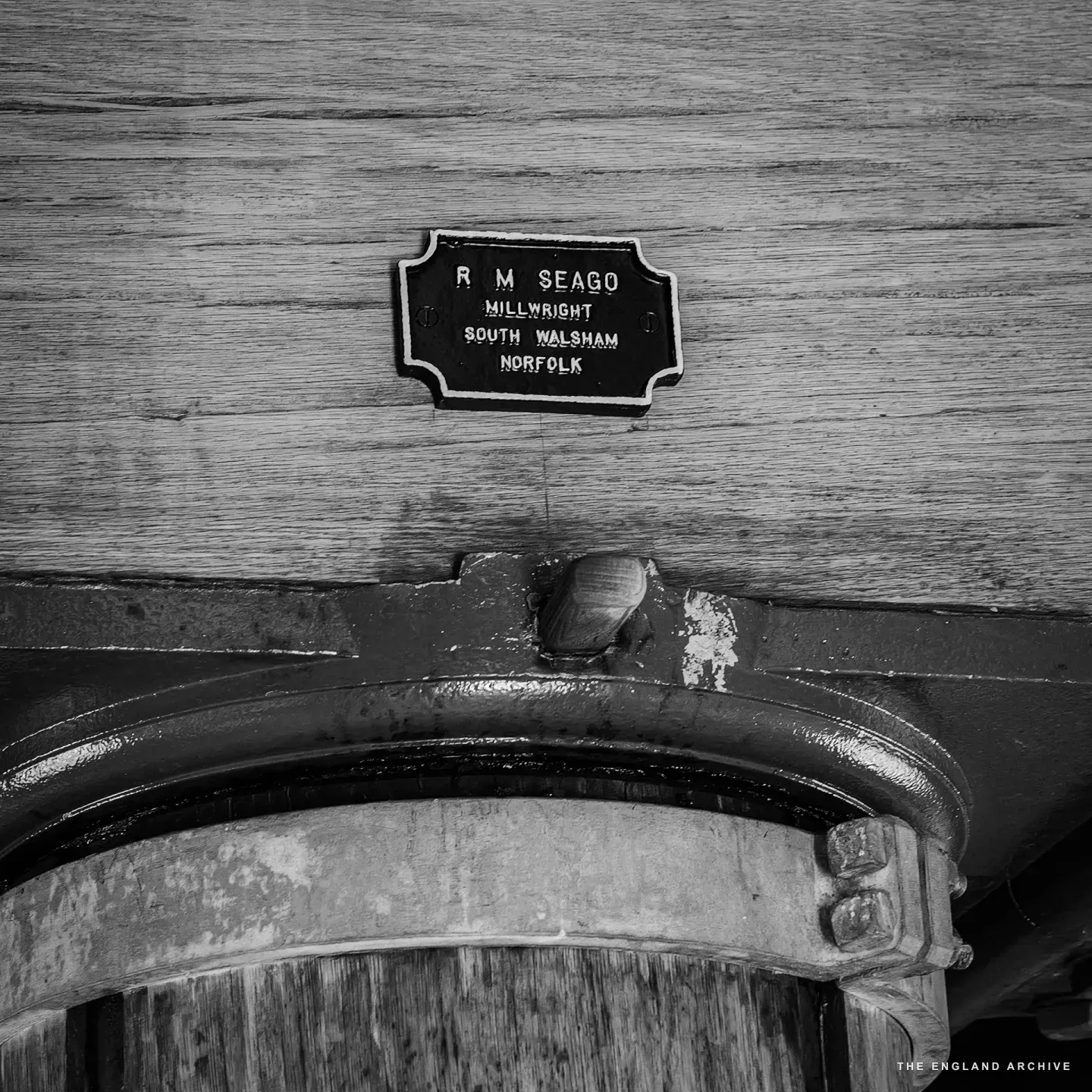
Richard explained each element as we moved through the roundhouse, unhurried and exact, the way someone speaks when they understand something completely and has no need to perform that understanding. Then we climbed.
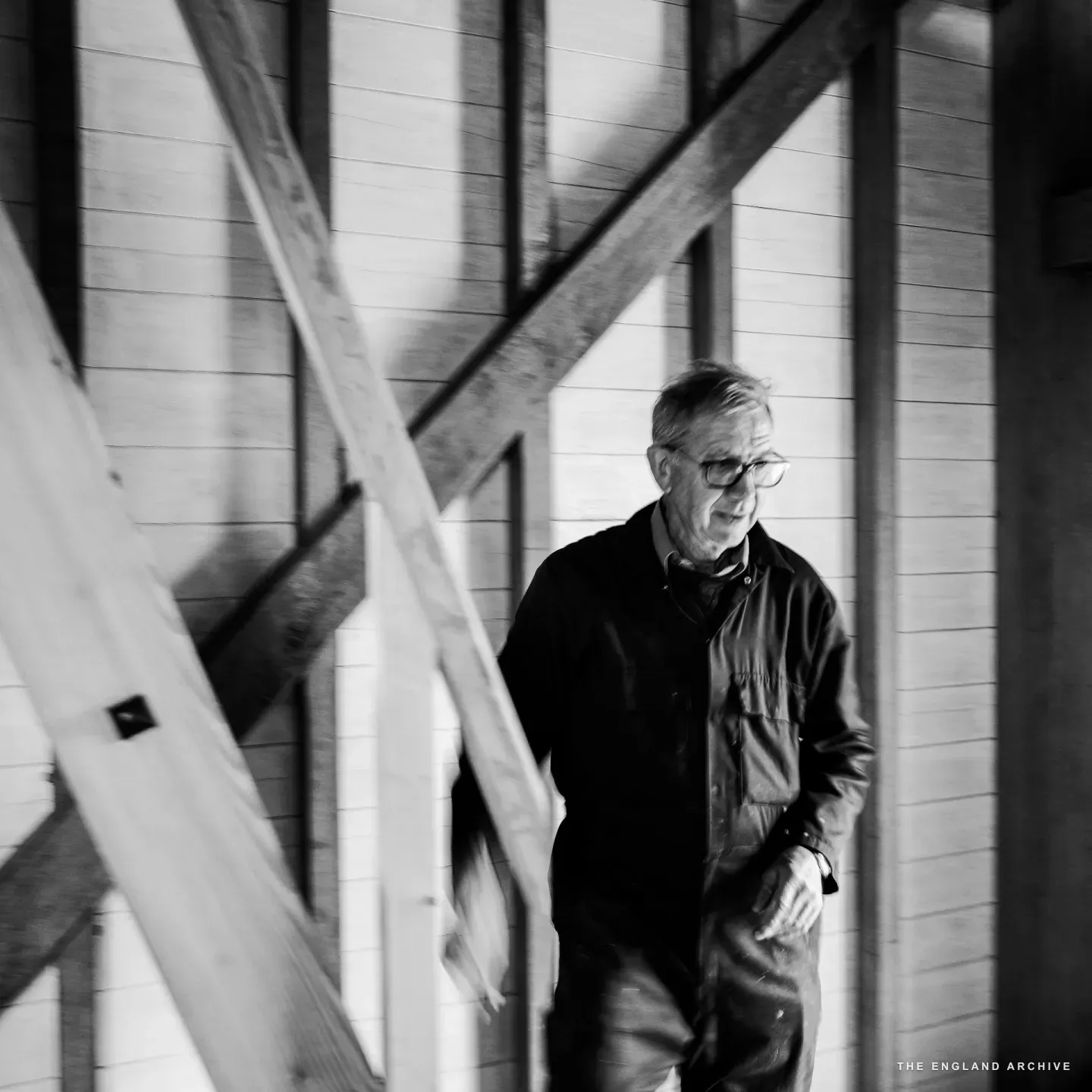
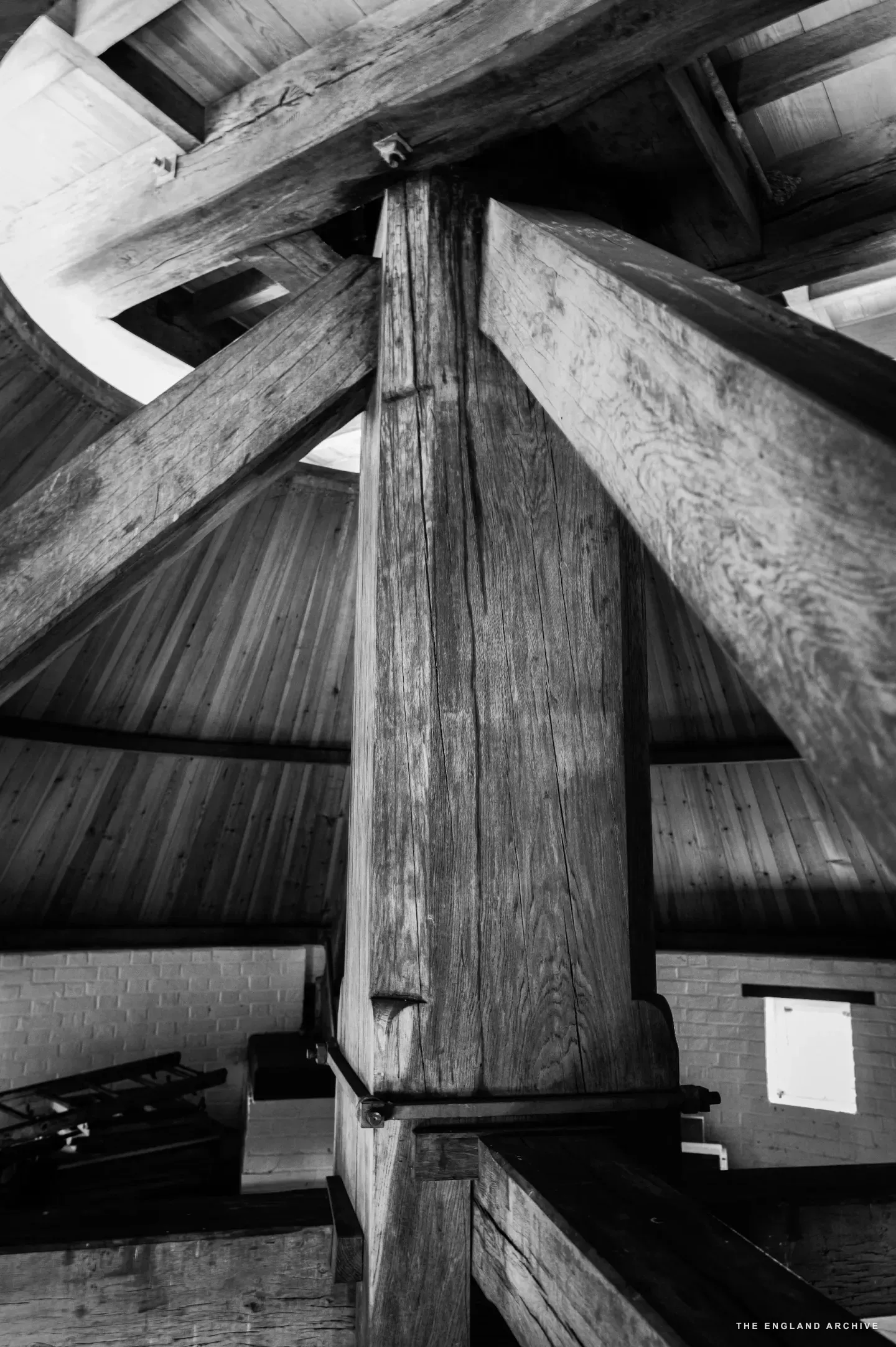
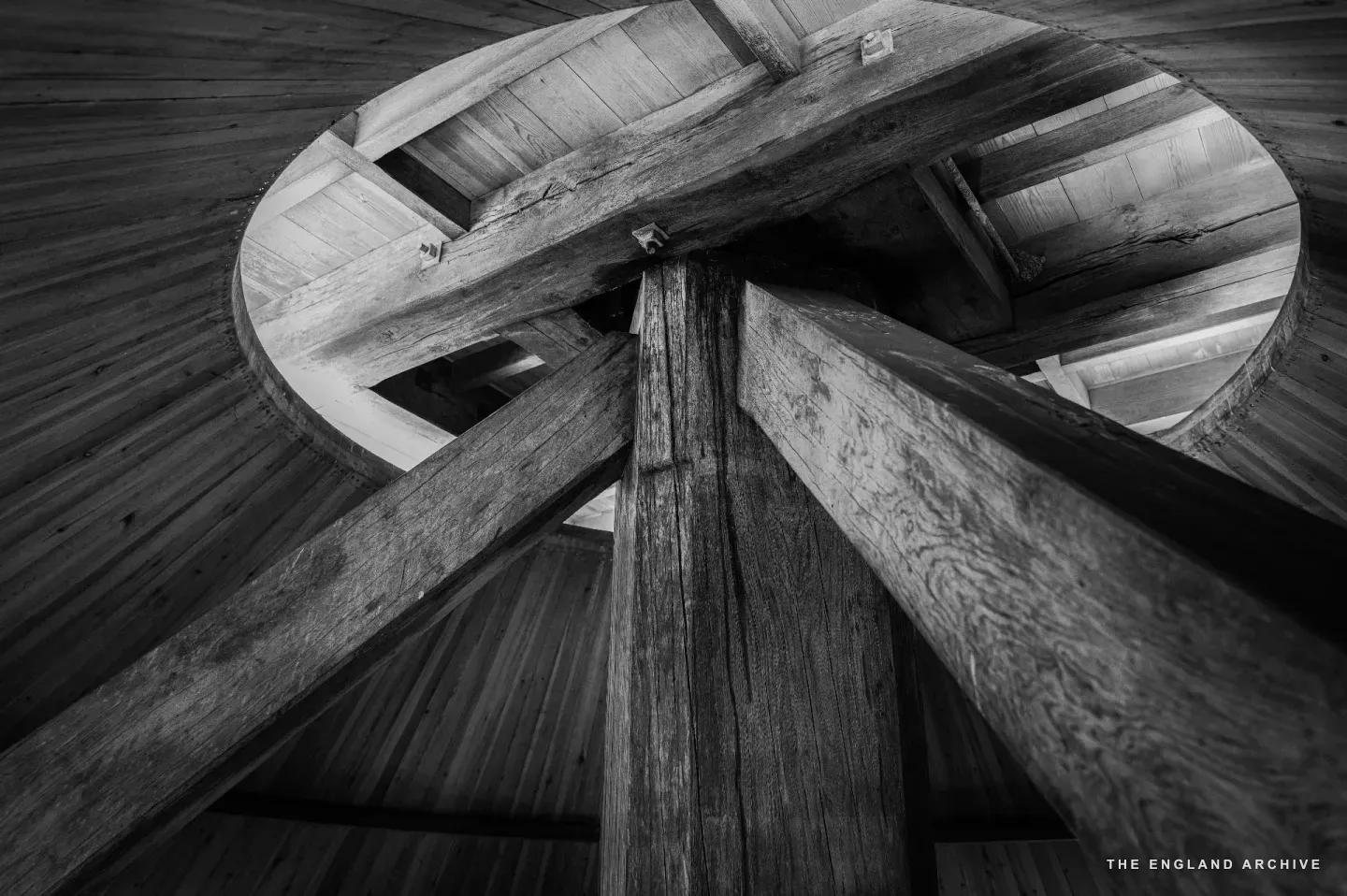
Upstairs was unlike anything I had seen. At the centre of the upper chamber stood a single column of wood, cut from one tree, a solid block of enormous scale with other structural members attached to it. The whole internal mechanism radiated from that column - the mast at its angle, the gearing, the connections between wind and stone. Richard had built all of it. Every joint, every fitting, every piece of timber. It was immaculate. Not the immaculate of a museum exhibit behind glass, but the immaculate of something still capable, still ready, maintained by someone who understood it from the inside out.
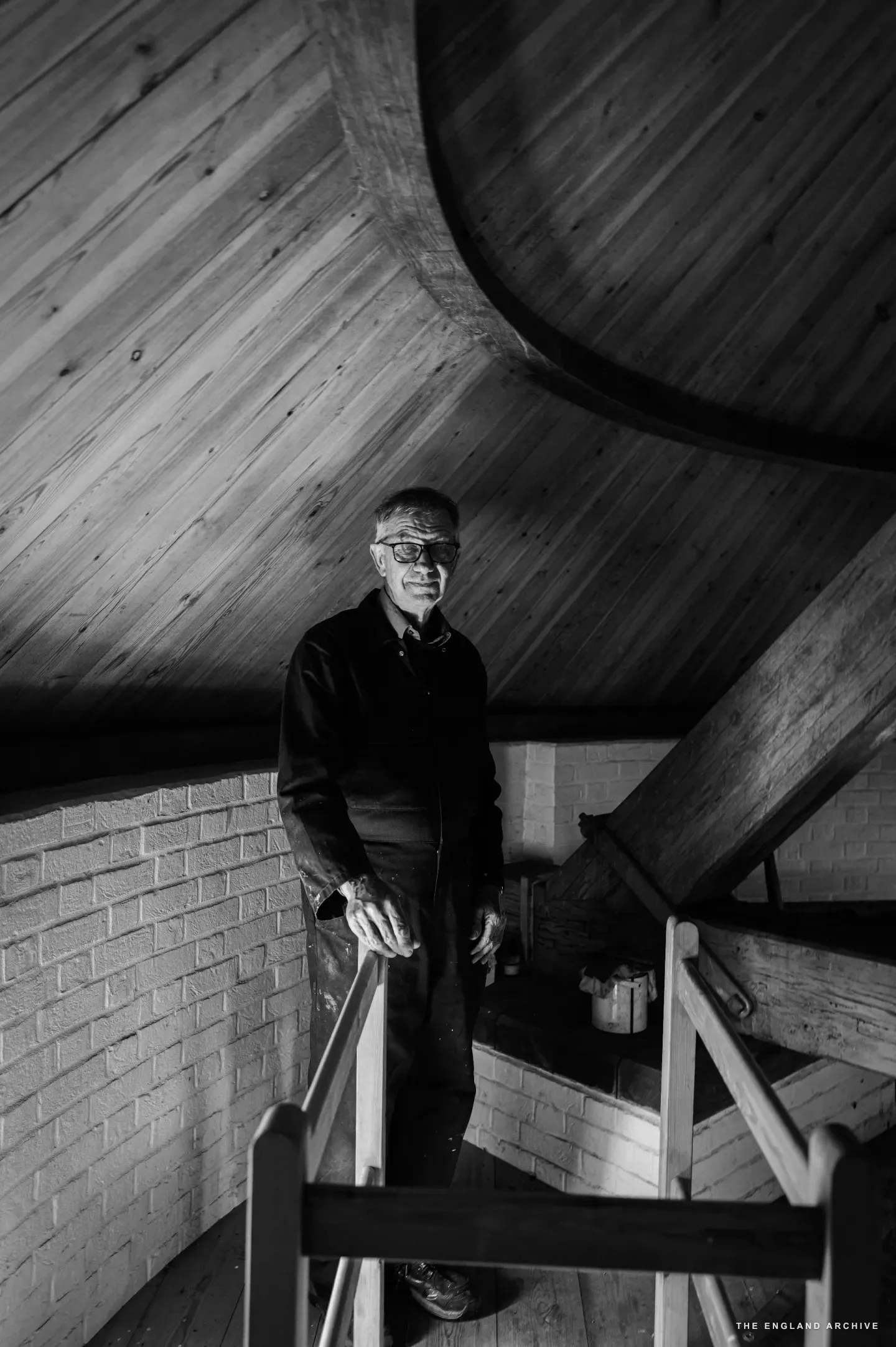
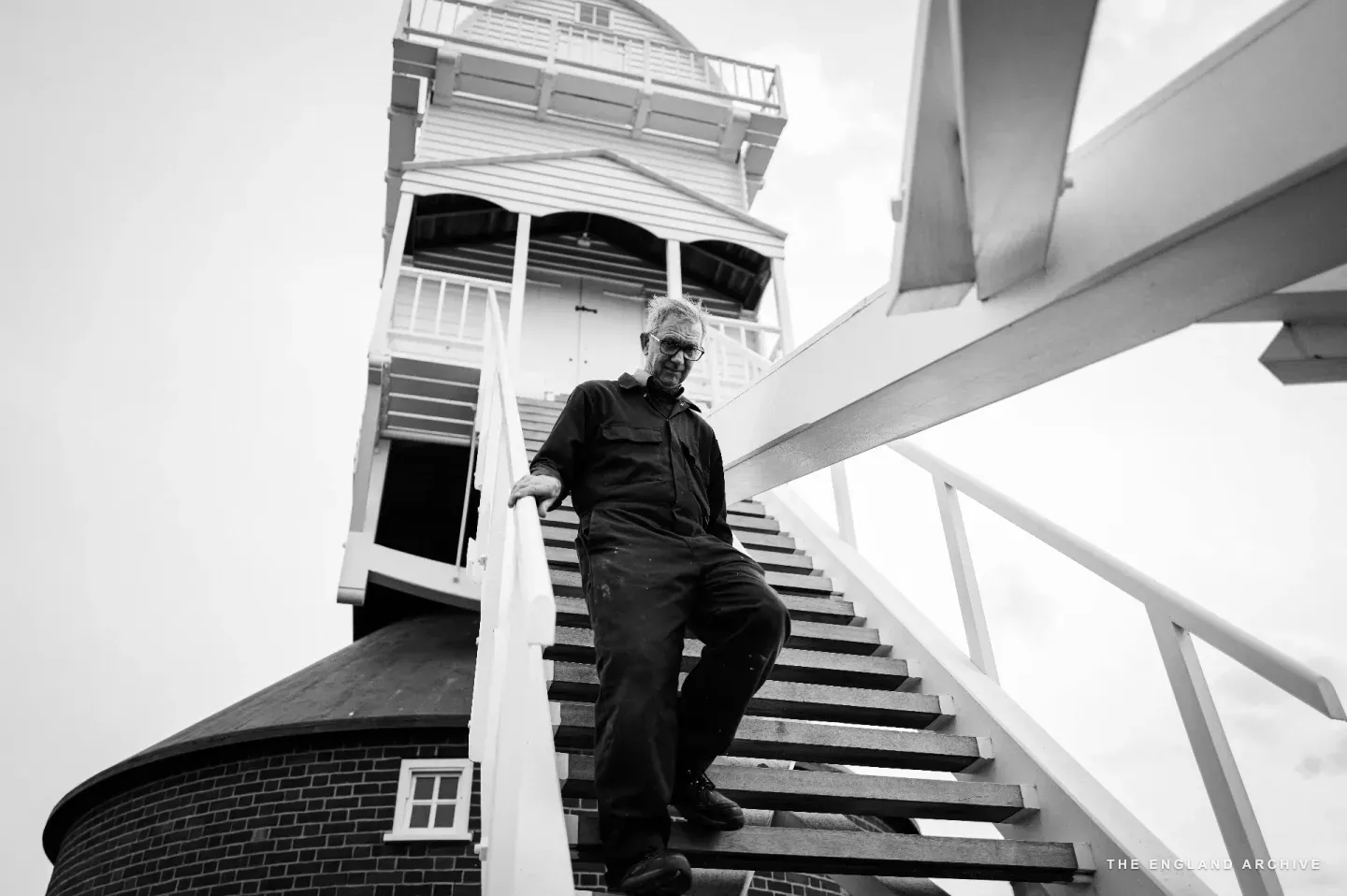
I took photographs but not enough. I was too absorbed in listening. The one frame I am glad I did make is this one: Richard standing in the upper chamber, the cross-frame of the mill above his head, looking at the camera the way a man looks at someone he has just decided to trust.
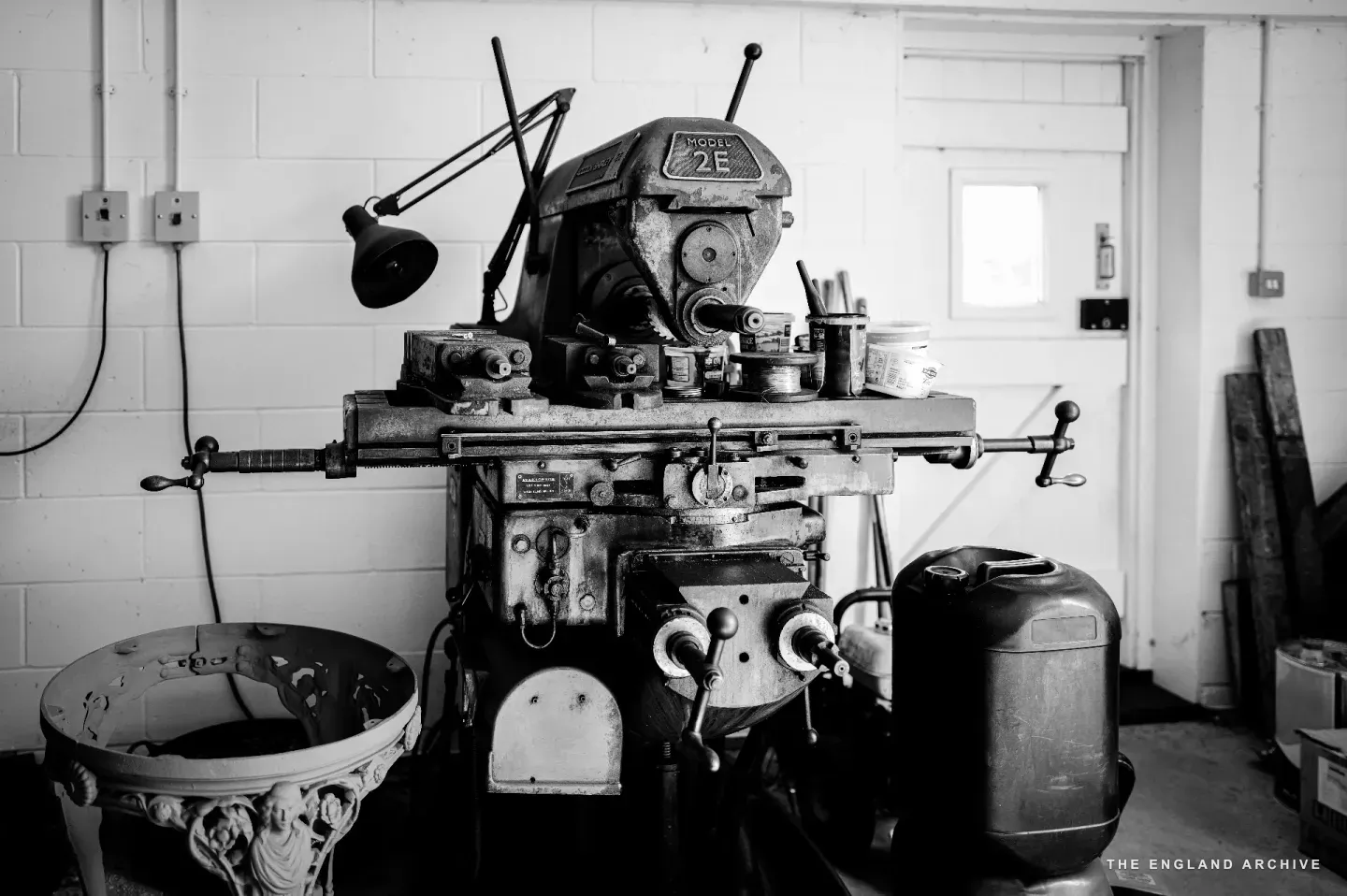
We came back down and he said: let me show you the metalwork shop. That was when the scale of what Richard had built with his life began to fully reveal itself. The metallurgical workshop held machine tools of extraordinary age and condition, lathes and drills and presses from another era, every one of them working, every one of them kept. He knew the provenance of each. He knew what it had done and who had used it and how it had come to be there. A bench lathe with a Biscuits-marked tin underneath it, catching the swarf - the kind of detail no museum would think to keep, but a working shop never throws away.
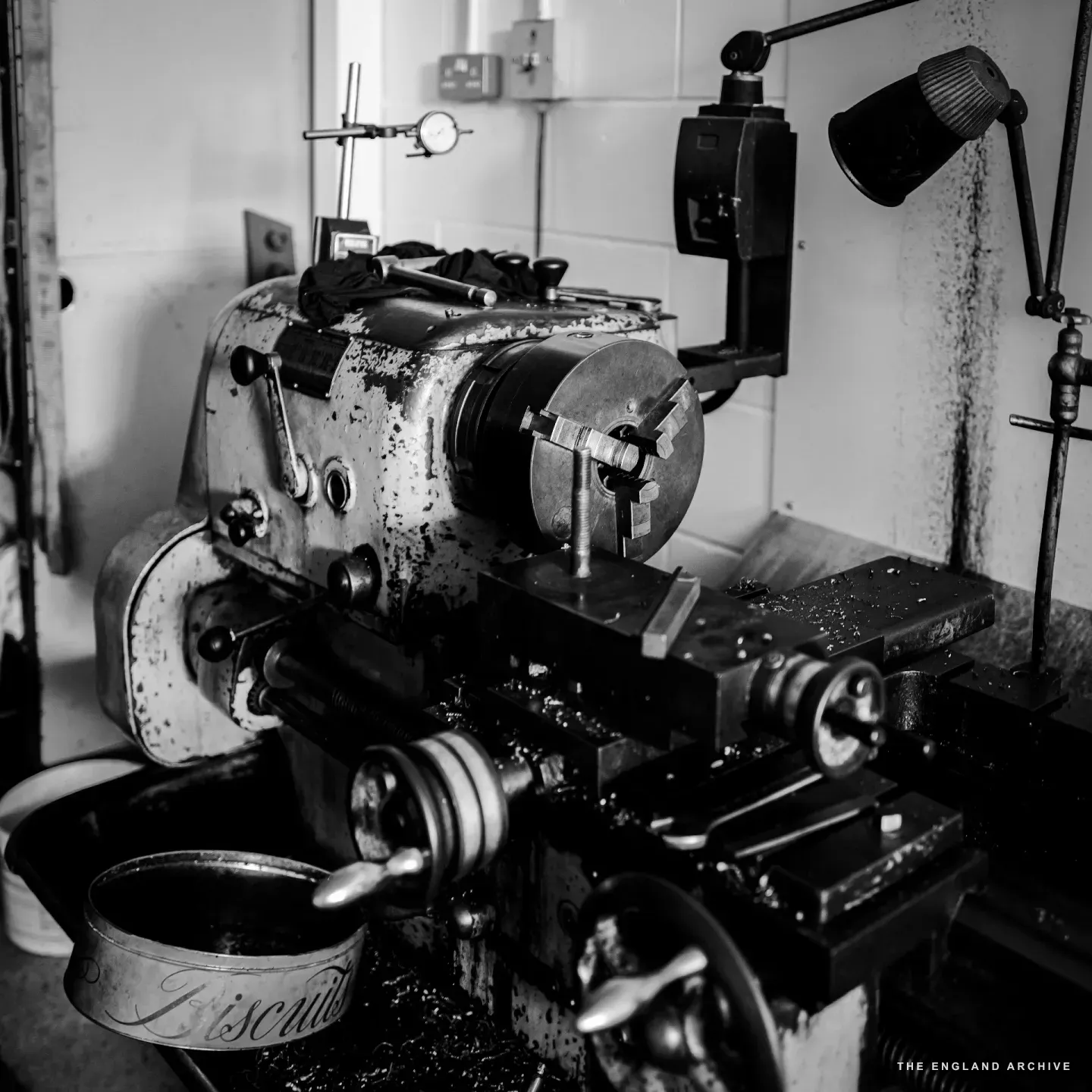
Then the barns.
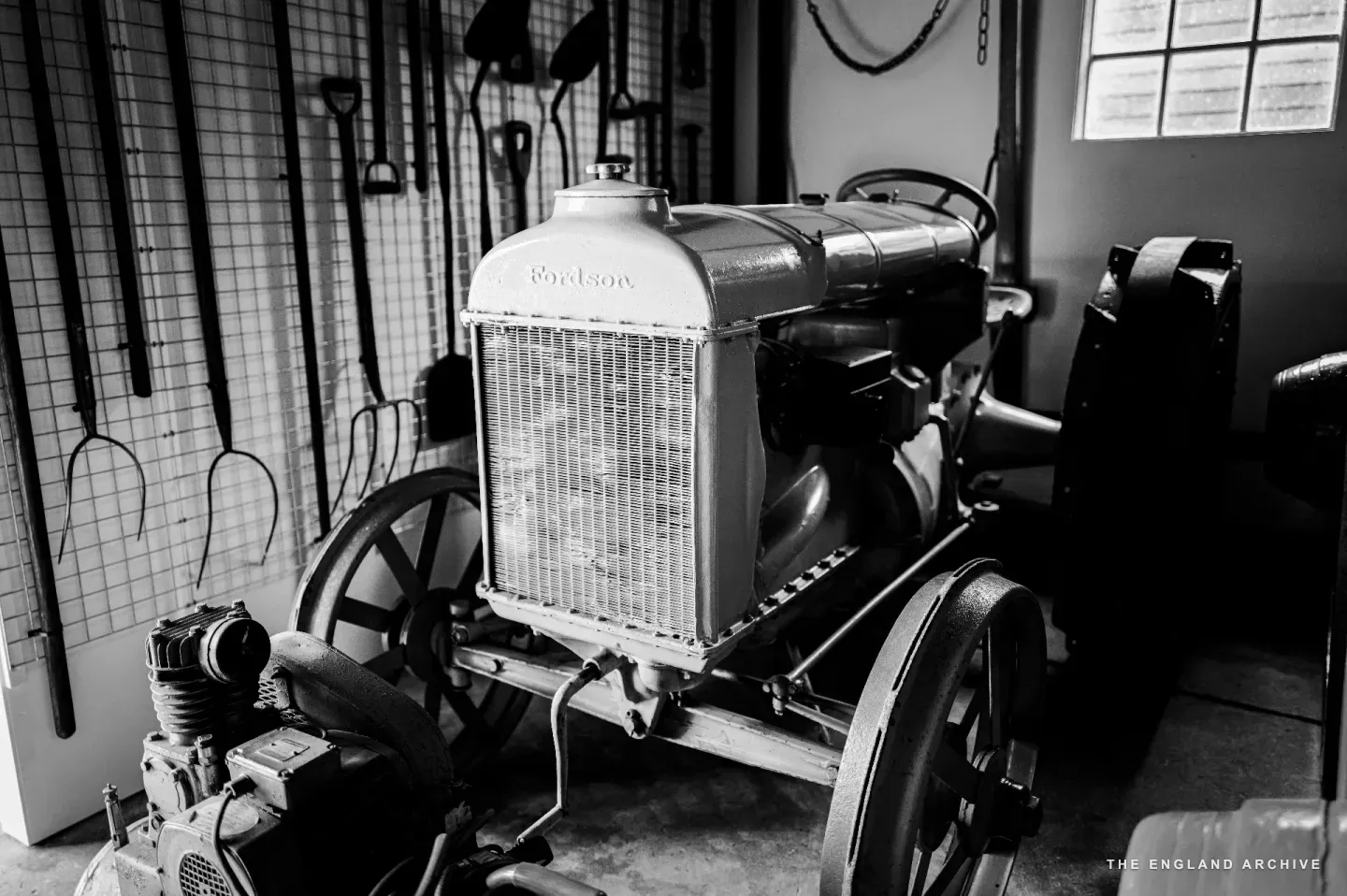
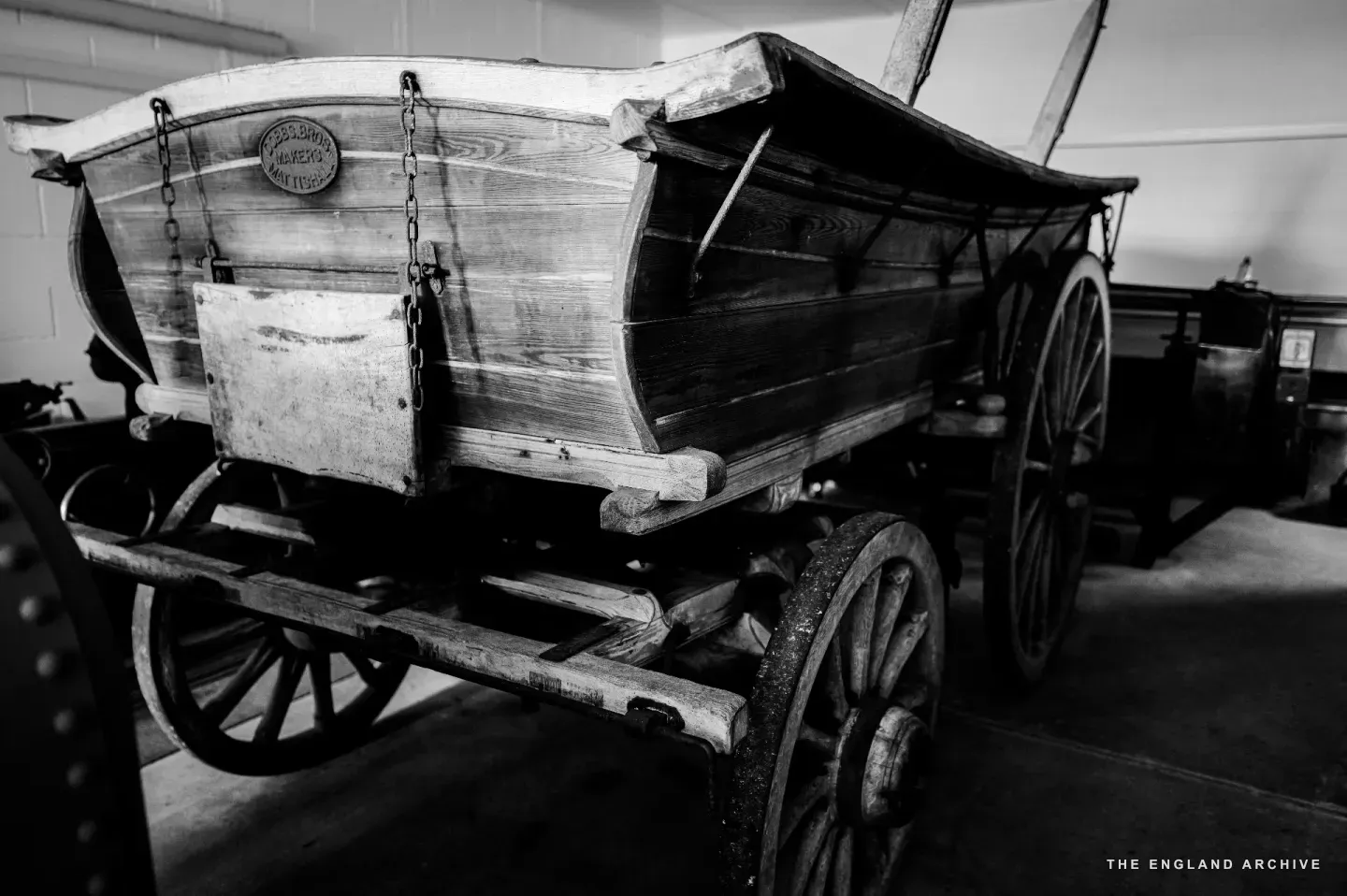
The floor went out from under me somewhere between the first tractor and the third wagon. There were Fordson tractors from the 1920s, their paint and metalwork restored to a condition that made them look newly delivered. Farm wagons from the 1800s and 1900s, hay carts and carry wagons, the timber on them tight and true.
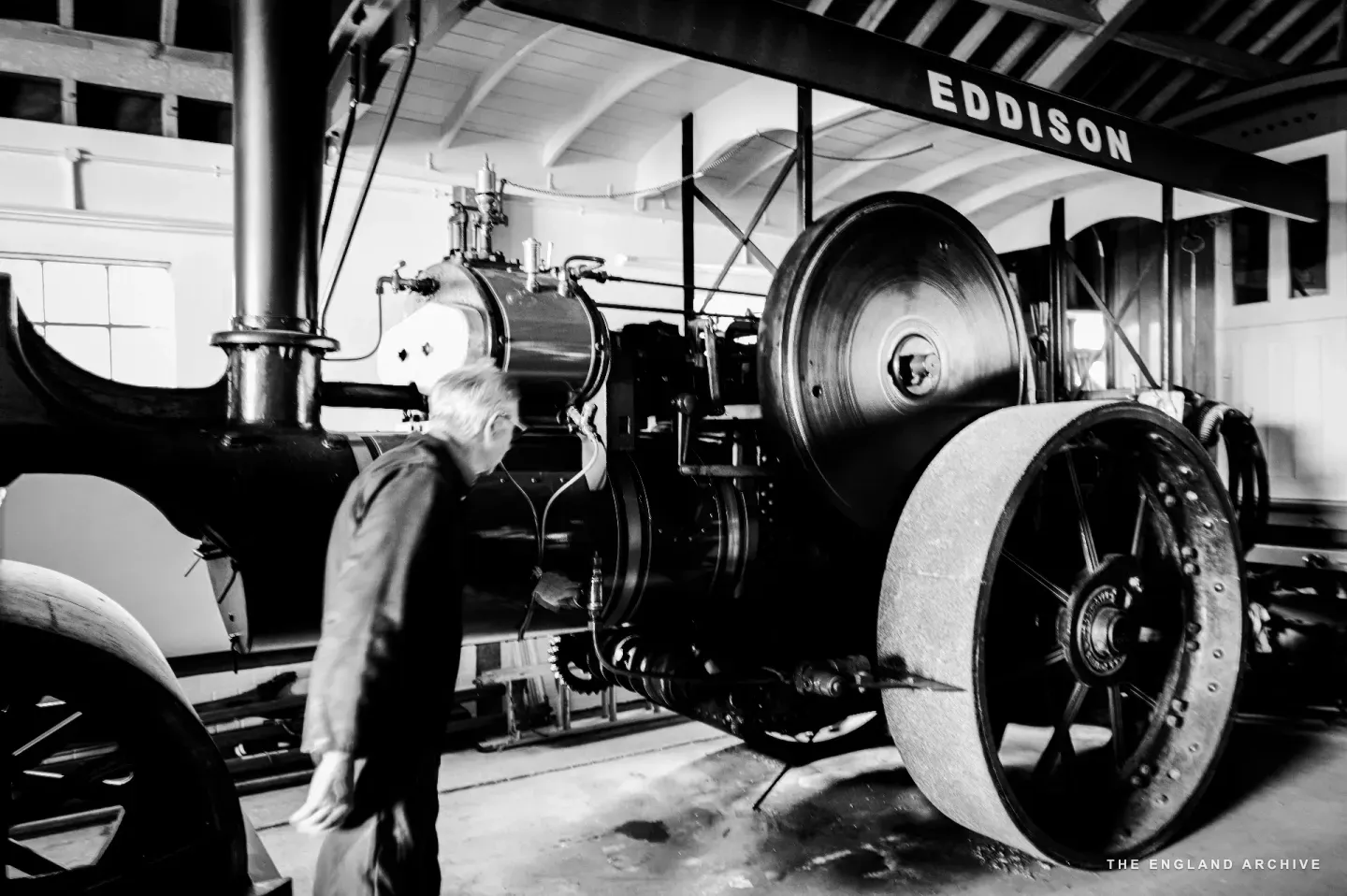
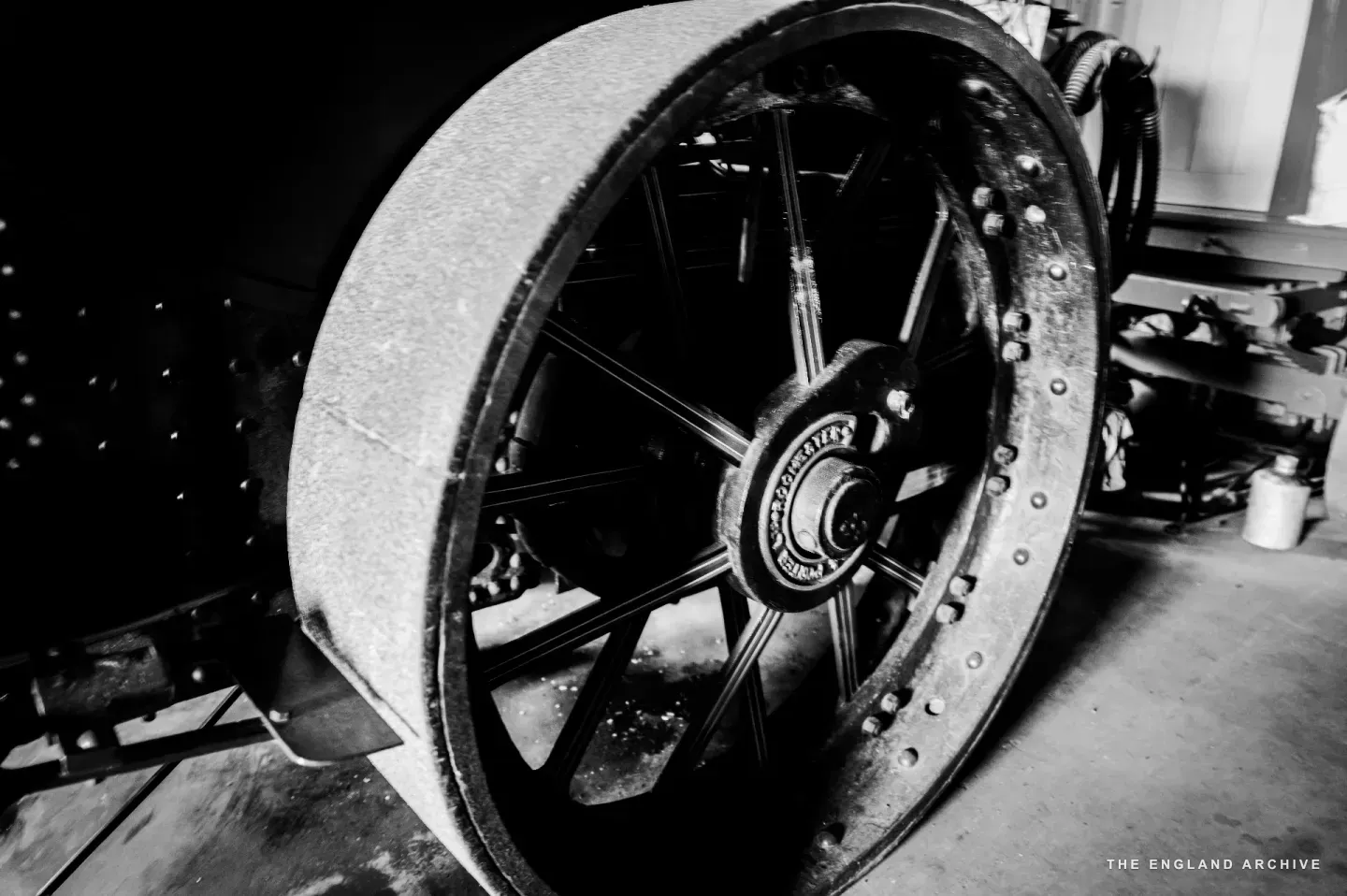
And then, in a long shed of its own, an Eddison steam roller. One of the earliest of its kind, painted name still bright on the wall above. Richard stood beside it the way a man stands beside something he respects. Boiler intact, chimney intact, the heavy spoked driving wheel running true to the millimetre.
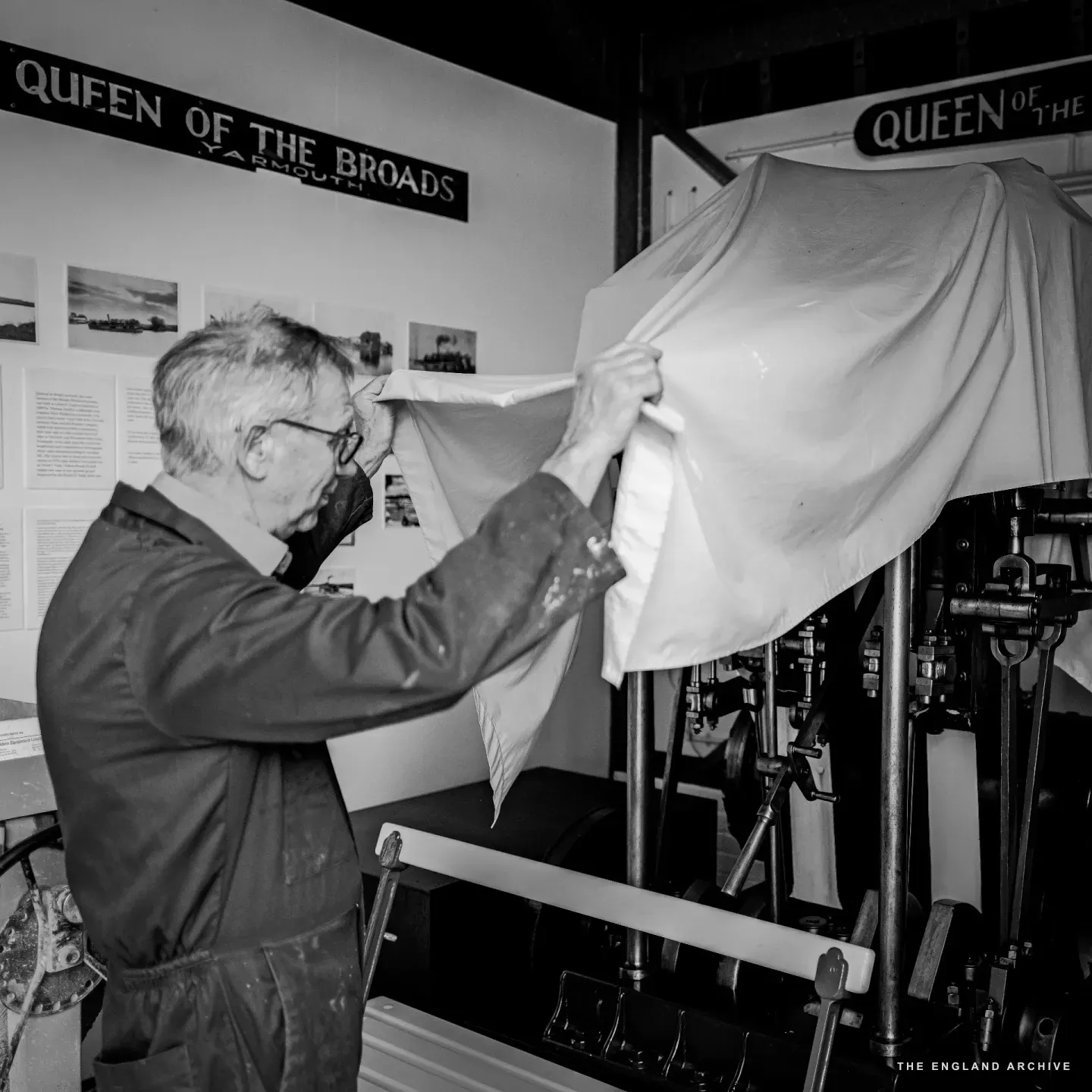
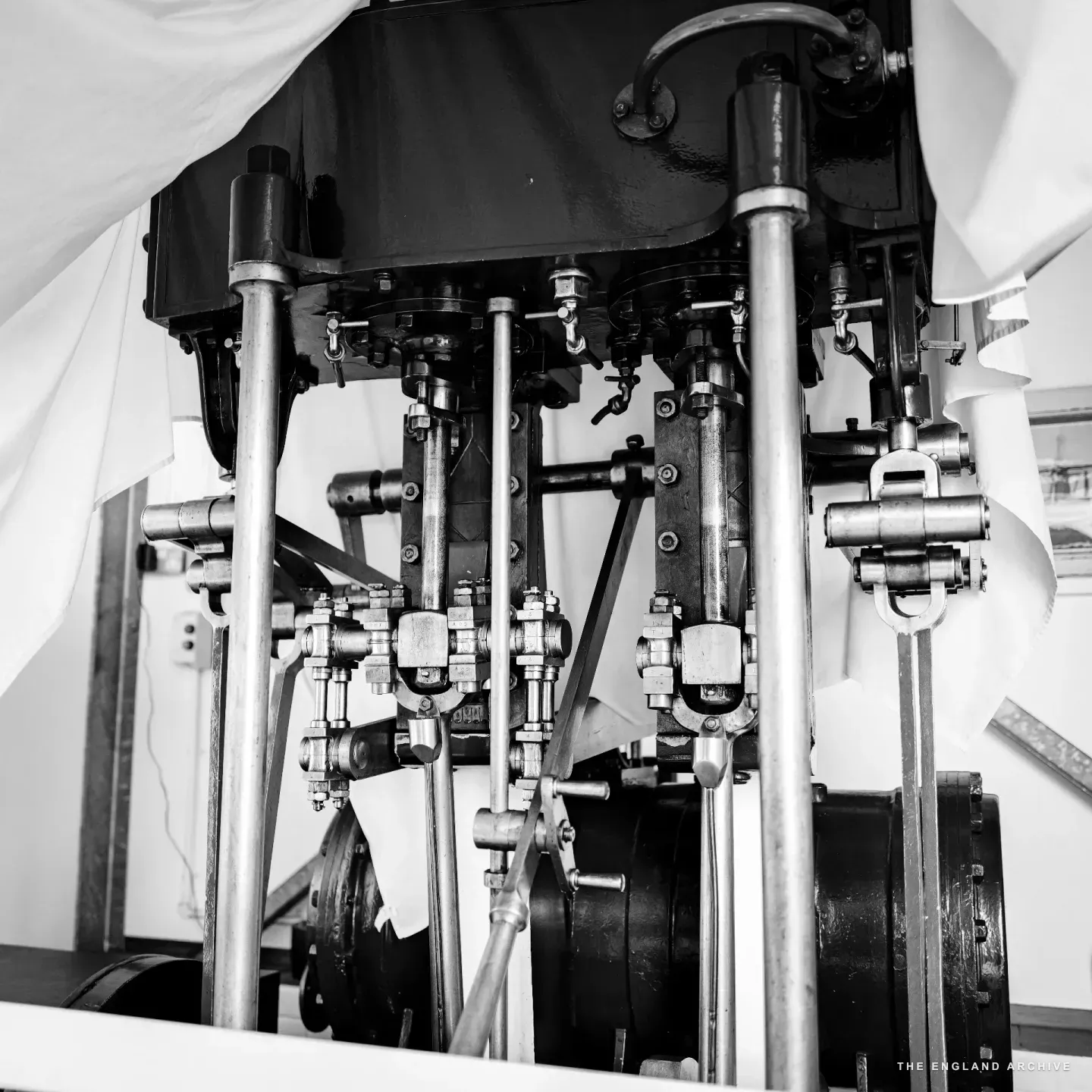
And then a smaller shed, with a sheet draped over something the shape of a small upright machine, and the painted boards above it reading Queen of the Broads, Yarmouth. He pulled the sheet off in a single movement: the original Victorian steam engine from the Queen of the Broads, the pleasure-steamer that ran the rivers from Yarmouth in the late nineteenth century. He had loved it as a boy. He had bought it at auction. He had brought it home and returned it to working life.
Pinned to the wall beside the engine, in a clip-frame, the proof: a Yarmouth Mercury clipping a few years old, the headline reading It’s Richard’s pride and joy: the Queen’s Victorian steam engine. A photograph of the original riverboat at the head of the article, smaller frames below. The engine in the shed and the engine in the photograph were the same engine. He had not just preserved a machine. He had reconnected a machine to its own past.
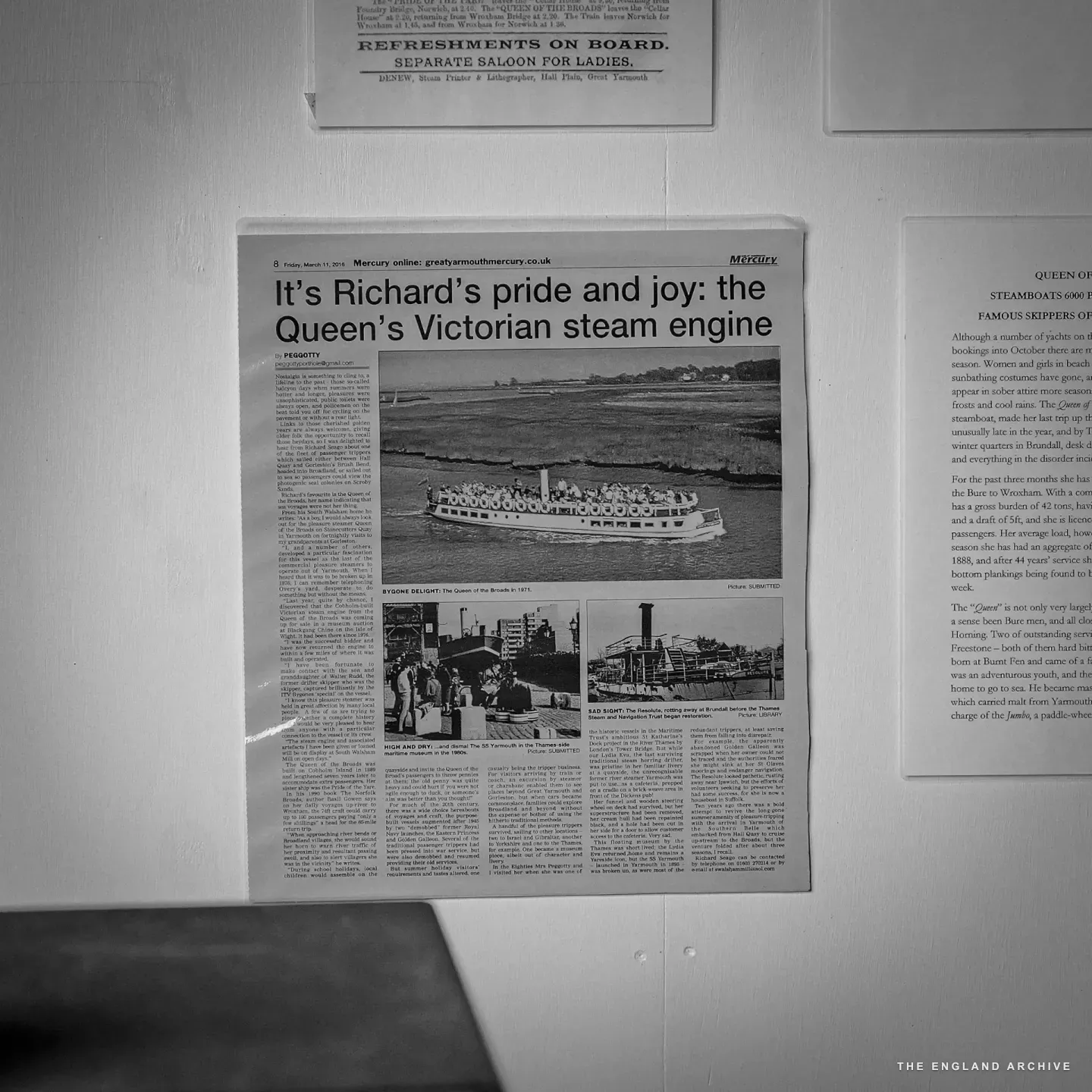
Boats outside. Things I did not have time to identify before we moved to the next thing.
From the upper platform of the mill, the land spread out in every direction. The flat Norfolk fields running to the wooded horizon. The farmhouse he had built sitting at the head of the land. Thirty years on one piece of ground.
I asked him at some point whether he worried that nobody would care. He asked, quietly, whether anyone would be interested. I told him what I believed: that men like him were exactly what this country needed to see. Not as curiosities. As proof.
The Sixth Category
On the drive home I thought about the five categories the archive had been built around. None of them described Richard.
The framework was wrong. Or, more precisely, the framework was incomplete in a way I had not seen until that afternoon at South Walsham.
The original five strands - Makers, Keepers, Carriers, Rememberers, Stewards - all described people whose preservation work has some public or professional dimension. The Maker has a trade and customers. The Keeper has a building and a public. The Carrier has a tradition and a community. The Rememberer has a story and an audience. The Steward has a landscape and a season. Each of them is held in place by a relationship to the world outside themselves.
Richard is not held in place by any of those things. He is not a Maker in the craft-for-customers sense; he built the post mill for himself. He is not a Keeper of a public place. He is not a Carrier of a shared tradition. He is something the framework had not accounted for: a private man who decided, alone and at his own expense and across three decades, that certain things must not disappear. Who acted on that conviction without recognition or mandate. Who built a post mill because the knowledge of how to do it existed in him and he could not let it lie unused. Who restored the tractors and the wagons and the steam engine because they were beautiful and because nobody else was going to.
He is preserving things, but for an audience of one. He is building knowledge into objects, but the objects are not for sale. He is doing the work of an archive, but he holds no archivist’s post. The institutional sector cannot explain him because the institutional sector is not what he is responding to.
What he is responding to is a feeling that some things are worth doing whether or not anyone is watching. That feeling does not have a name in the framework I started with.
The next day I added a sixth category to The England Archive. I am calling them Gatherers. Richard Seago is the reason that word exists.
It is not a coincidence, but it was not a plan either. The first Maker in The England Archive is a working millwright on the Norfolk Broads. The first Gatherer, by no design of mine, is a retired millwright on the same Broads. Paul Kemp at Toft Monks. Richard Seago at South Walsham. Twelve miles between them. Two ends of one trade, on the same flat landscape, doing different work for different reasons but bound by the same body of knowledge.
Paul keeps the working mills alive for their owners. He is paid for it, and the mills are not his, and his livelihood is the trade. Richard built his own mill from scratch, paid for it himself, and keeps it as proof that the knowledge still exists somewhere. Neither way of living is more legitimate than the other. They are different shapes the same skill can take when the world it was built for has moved on.
Mark this: the trade is the thread.
A Gatherer is a private person who, without mandate or salary or institutional backing, takes responsibility for keeping something that the heritage sector cannot or will not keep. They are not professionals at this work. They are not paid. They have no audience beyond their own conviction that some things are worth saving whether or not anyone is looking.
Gatherers are not the same as collectors. A collector accumulates objects for their own pleasure or value. A Gatherer accumulates them because they understand what would be lost if the objects were not kept - and they act on that understanding at their own expense, in their own time, on their own land. The difference is not in what is held but in why it is held and what happens around it.
Gatherers are not the same as museum curators or county archivists either. The institutional sector is staffed by professionals who do important work inside the constraints of their funding, their boards, their accession policies, and the limits of what an institution can accept into its collection. A Gatherer is not constrained by any of those things. A Gatherer can take in the broken, the unfashionable, the unprovenanced, the things no museum would accession because they are too specific or too personal or too inconvenient to store. They can keep what would otherwise be thrown away.
What unites every Gatherer is a small set of unusual qualities. They have technical knowledge of the things they preserve - not just love for them, but the working knowledge required to repair, maintain, and operate them. They have time, often because they are retired or because they have organised their life to free it for this work. They have land or workshop space, because much of what gets gathered is too large for a house. And they have a particular kind of stubbornness: a refusal to accept that something must disappear simply because no institution has volunteered to keep it.
Almost everything Gatherers preserve will eventually pass back into institutional hands or into private dispersal. The Gatherer is rarely the final destination. But the Gatherer is, for a critical window of time, the only thing standing between the object and the skip. The window is the reason the role exists. Without the Gatherers, much of what eventually reaches museums would never have survived long enough to be accessioned.
The Gatherers strand of The England Archive documents these private holders - not their collections in detail, but the people themselves, what they know, what they hold, and what will happen to it when they can no longer maintain it. Every Gatherer entry is, in a sense, a race against a single life.
Richard Seago is the first Gatherer in the archive not because he is the most important Gatherer, or the most representative, or the one whose collection will most obviously survive him. He is the first because the visit to South Walsham is what made the category necessary. Without the afternoon at his post mill, the framework of The England Archive would still have five strands. The sixth one exists because of him.
That is unusual ground for an archive entry to occupy. Most archive entries fit into a category that already exists. This one named the category. It is foundational in the literal sense: the definition of a Gatherer was built outward from the specific facts of Richard’s life. The other Gatherers the archive will document - the lantern slide rescuer, the trade preserver, the village archivist, the workshop in the garage - they all belong to a category whose shape Richard set.
That weight does not change what Richard himself is. He is, by every visible measure, an ordinary man who happens to have spent thirty years building the things he wanted to build, on his own land, with his own hands, without asking anyone for permission or recognition. The archive is the thing that has made him foundational. He did not seek that role. He did not need it. The mill was going to exist whether or not anyone wrote about it.
That, in the end, is the point. The Gatherers strand exists to document people who would still be doing the work even if no one was looking. Richard is the proof. He has been doing the work for three decades. The looking is new.
We documented Richard Seago because his life’s work would otherwise be invisible to the institutional heritage sector that exists to record exactly this kind of thing. The post mill, the workshops, the restored tractors and wagons and steam engines - all of it sits on private land, outside any registration scheme, outside any funded survey, outside the accession policies of every museum in the county. The archive exists to record what Richard has built and what he holds, while he holds it, and to mark the fact that it was built at all. When someone in the future asks what a Gatherer was, this page is part of the answer. It is also why the word exists.
Location: Private land in South Walsham, Norfolk, near the edge of the Norfolk Broads. Approximately twelve miles north of Toft Monks. Reached by a sequence of increasingly narrow lanes and a gate.
Access: By recommendation. The visit was a first encounter, not a scheduled documentary session. Richard welcomed us with the immediate warmth of someone for whom guests are a normal part of the day.
Equipment: Leica Q3 (digital, primary). Fujifilm X-S20 (backup). No film on this visit. The Bronica stayed in the bag.
Light: Mid-afternoon spring. Bright Norfolk overcast for the exterior of the post mill, falling to lower light inside the brick roundhouse and the upper chamber. Workshop interiors lit by their own lamps and what came through the doorways. Barn interiors deep and shadowed; the tractors and the steam engine rendered in available light only.
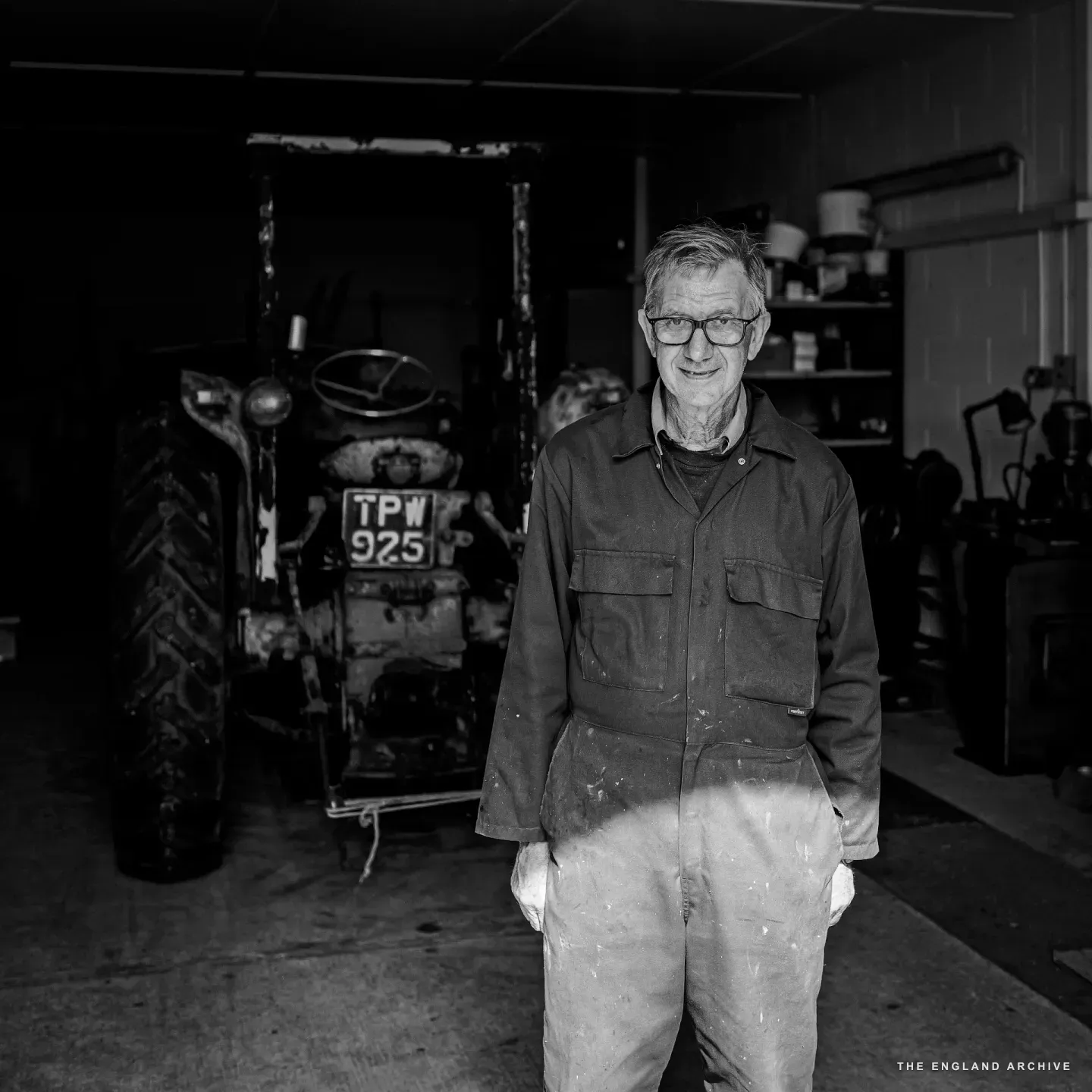
Frames: Deliberately few. Richard was reluctant to be photographed and the writer was reluctant to push him. Most of the visit was spent walking and listening. Approximately fifty digital frames in total. Five of those are of Richard himself; two are usable as portraits.
Key moments: The first sight of the post mill rising above the workshops. Richard appearing from the woodworking shop in his overalls. The climb into the upper chamber and the first sight of the central mast cut from a single tree. The walk from the metalwork shop into the first barn and the realisation that the visit was not going to fit inside an afternoon. The conversation about whether anyone would care. The drive home thinking about what the framework had not accounted for.
What is missing: A formal portrait. A longer recorded conversation about how Richard came to build the post mill, where the timber came from, how the steam engine was found and brought home. Photographs of the mill running. Time with the wagons and the steamroller in good light. A return visit on a working day rather than a first-meeting day.
Follow-up: A full-day return visit is scheduled. The page will be expanded with the formal portrait, the longer conversation, additional photography, and the chapters that the first visit did not have room for.
Millwright
A working millwright who has maintained and restored historic windmills across Norfolk and Suffolk for decades. The mill at Toft Monks works because Paul Kemp exists. That is not a small thing.
The England Archive is a three-year documentary photography project recording the people keeping England’s heritage alive. Richard Seago is the first Gatherer documented in Year One, and the visit that gave the Gatherers category its name.
Know a private preserver whose work should be in the archive? Tell us about them.