Being Part of The England Archive
What to expect when we visit. This page answers every question you might have before, during, and after our visit - so you can feel entirely at ease on the day, and understand exactly what the archive will give back to you in return for your time.
Seven short sections covering everything you might want to know before, during, and after the day. Anything that isn't in here is a question we want you to ask us - at any point, by phone or by email. There are no wrong questions about your own archive entry.
What the visit looks like
We arrive at the time we have agreed. There are two of us - Mash, who leads the photography and the conversation, and Bhavani, his wife, who handles logistics and films behind-the-scenes footage of the day. Neither of us will disrupt your work or ask you to stop what you are doing.
A typical visit lasts between two and four hours, though we follow the work rather than the clock. We spend time watching and understanding before we start photographing. We ask questions because we are genuinely curious - not to fill a form, but because the archive is built on understanding, not just images.
We are not here to produce a promotional shoot. We are here to document the reality of what you do, in the place where you do it.
There is no staging, no asking you to hold tools you would not normally hold, no artificial light unless the space genuinely needs it. The photographs show your hands, your workspace, your materials, and your process as they actually are on a working day.
At some point during the visit, if the moment feels right and you are comfortable, Mash will make a considered portrait. This is never forced and always unhurried. If it does not feel right on the day, it does not happen.
Before we leave, Mash writes in a notebook. These notes become part of the archive record alongside the photographs.
Your three photographs
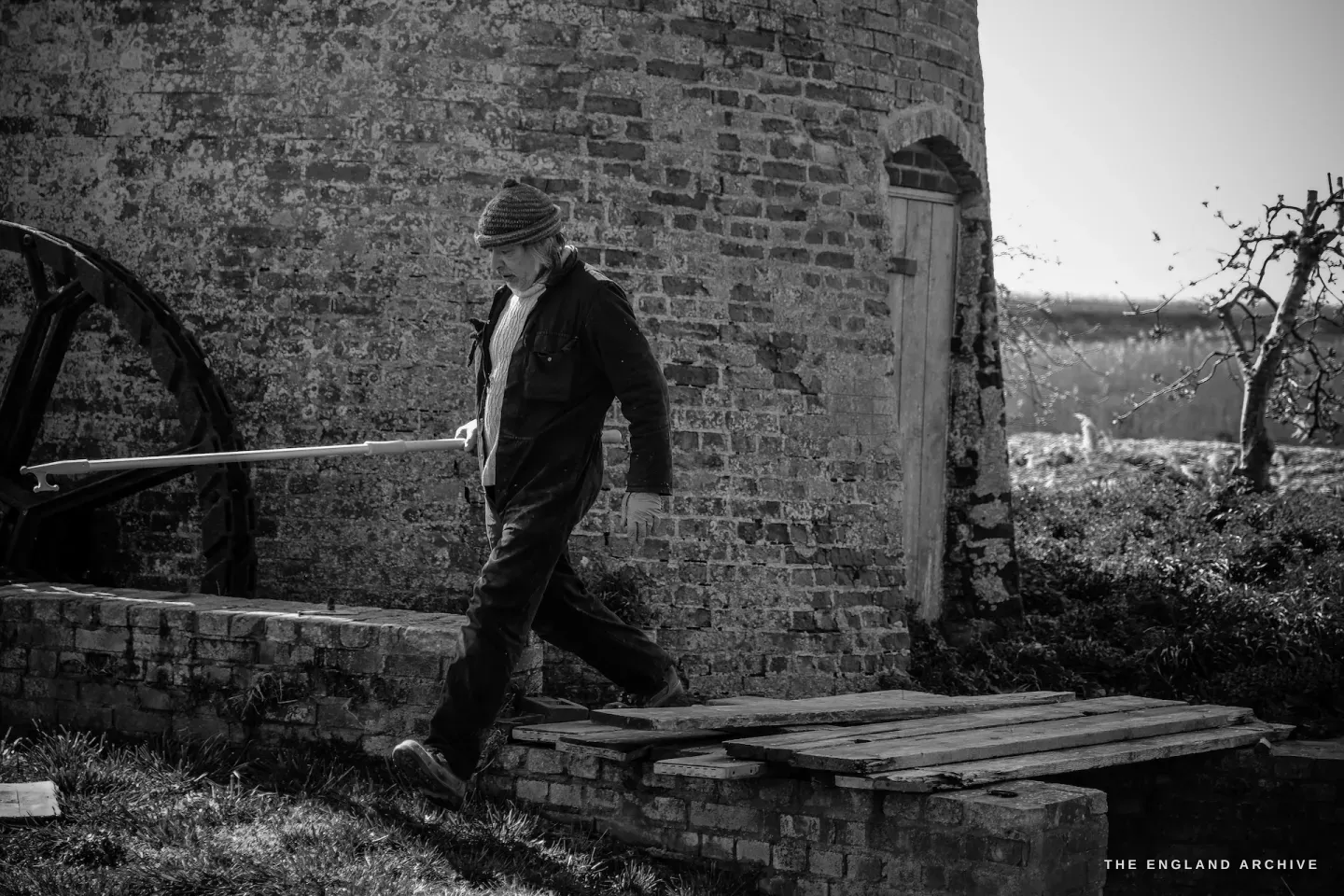
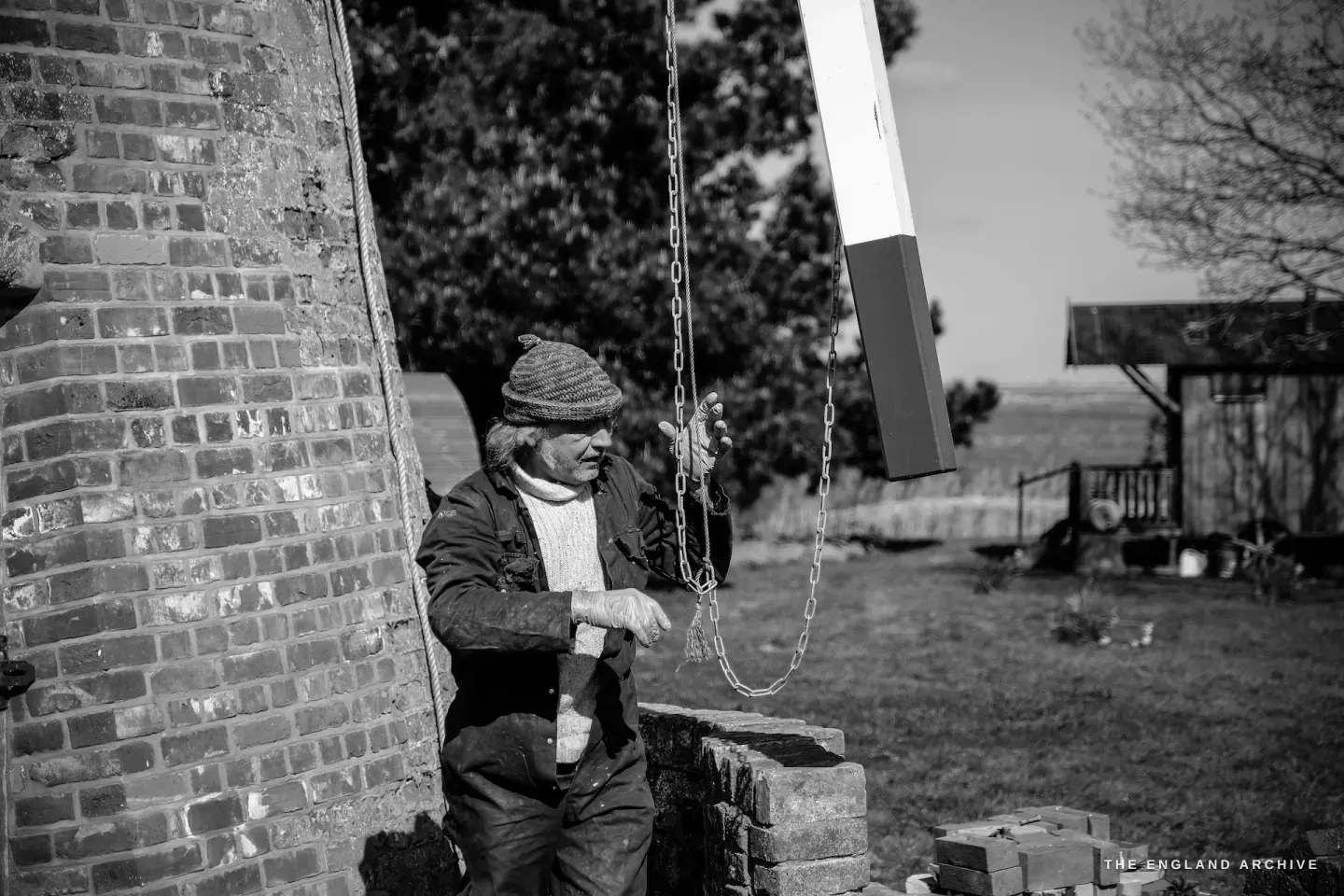
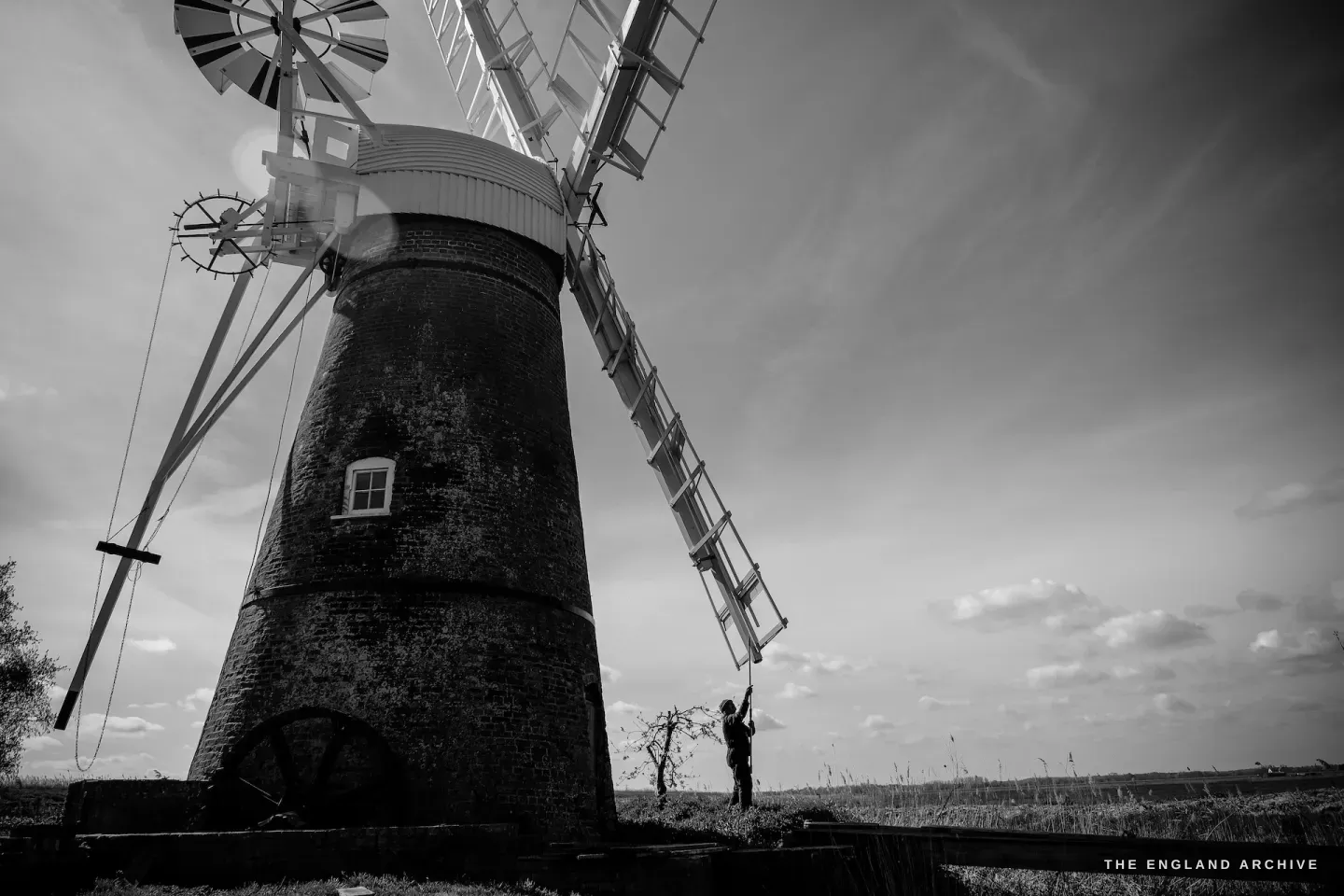
Within four weeks of the visit, you will receive a link to a private online gallery containing the best images from the day. From this gallery, you choose three photographs for your own use.
These three images are yours to keep and use as you see fit, subject to the following conditions.
- They may be used on your website, your social media, your printed materials, and anywhere else you communicate about your work.
- Each image must carry the credit line: Photograph by Mash Bonigala / The England Archive (englandarchive.org)
- They are licensed for non-commercial use. They may not be sold, sublicensed, or used in paid advertising campaigns without a separate agreement.
- They may not be cropped, filtered, or altered in ways that change the integrity of the image.
- The credit line may not be removed.
If you would like to use archive images beyond these three for any purpose, we are always open to a conversation. We will never treat you as a commercial stranger.
Alongside your three images, you will receive a link to your dedicated page on englandarchive.org, where the fuller body of work from the visit lives permanently. This page is yours to share. It tells the complete story of what we found when we came to you.
The signed print
A gift from the archive: one archival print, selected by Mash, delivered to your door.
Separate from your three chosen digital images, every person documented in the archive receives one fine art print, selected by Mash. This is the frame he believes best represents what he saw on the day. It is his gift, not your selection - and that distinction matters.
- Paper
- Hahnemühle Photo Rag 308gsm fine art
- Size
- 12 inches square - matching the archive's visual format
- Signed
- By Mash, in pencil
- Edition
- 1 of 1 - there is no other copy of this exact print in this exact size
- Includes
- Certificate of authenticity, and a short handwritten note about the day
- Cost to you
- None. No invoice. No request.
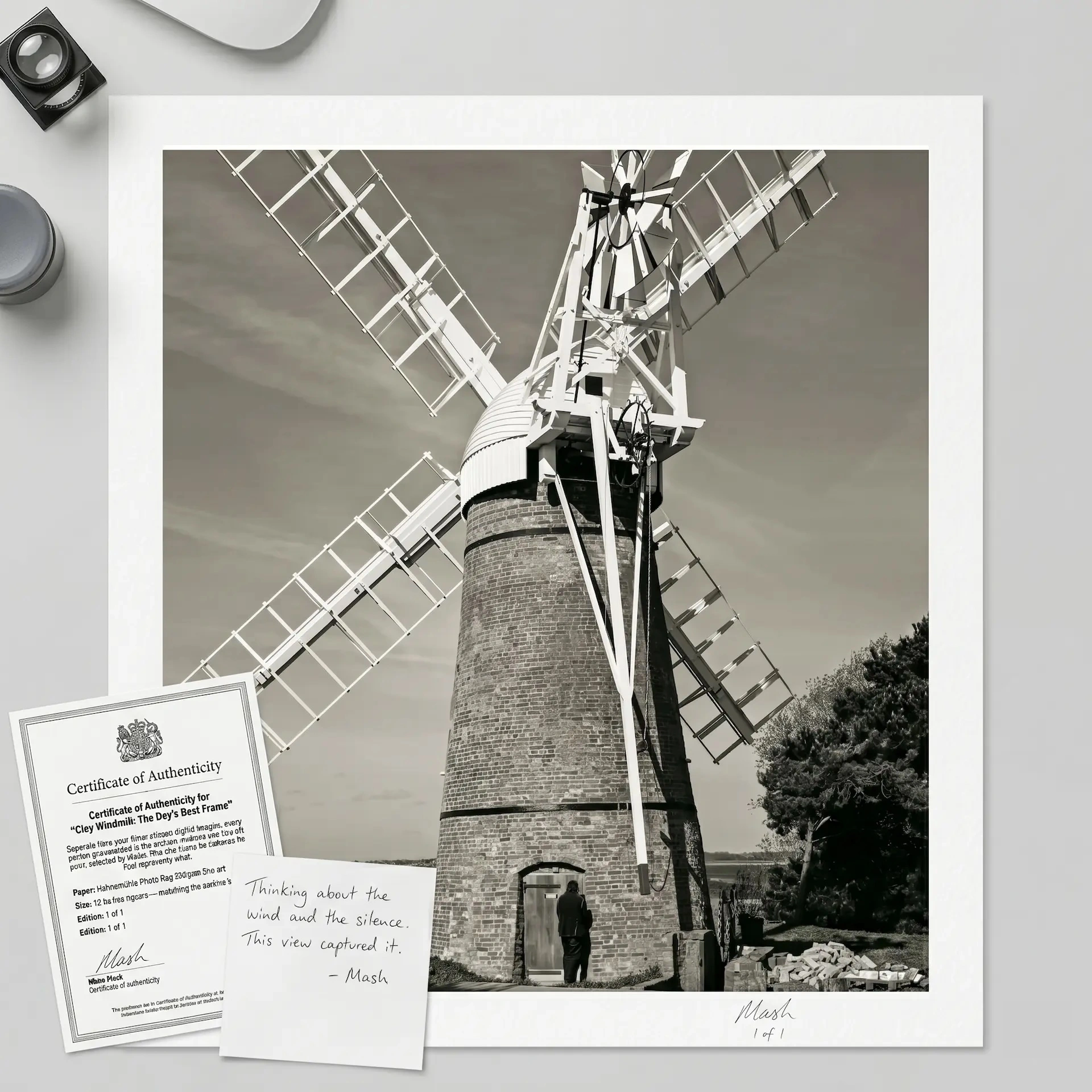
Most people frame it. We hope you will too.
Your archive page
Every person documented in the archive receives a permanent, dedicated page on englandarchive.org. This page is the full record of your visit - a curated selection of images, a written account of your work and its significance, and contextual information about the craft or tradition you carry forward.
We will show you a draft before it is published and invite you to correct any factual errors. The editorial voice and image selection are ours, but the facts are yours to verify.
This page will be there in fifty years. It will be cited by researchers, studied by historians, and encountered by anyone who wants to understand what this work looked like and who was doing it. When the archive makes permanent deposits with museums and public institutions, your page is part of what goes in.
On the day your page goes live, we will send you the link directly with a personal note. Most people share it. We hope you will.
If your image sells as a limited edition print
When your face is in the frame, you share in what it earns.
The archive will sell limited edition fine art prints through exhibitions and directly. These are not commercial reproductions - they are numbered, signed archival prints available in strictly limited quantities.
You do not need to do anything to qualify. If an image featuring you is selected for sale, we will contact you in advance, confirm your agreement, and ensure your payment details are on file before the first sale. You will receive a record of every sale.
The book
The England Archive ends with a book. It is planned for publication in 2028 and will be a single, definitive volume documenting the people keeping England's heritage alive across eight regions.
Every person featured in the archive will be acknowledged by name in the book, in a section that reads as a permanent record of who was here and what they made and kept alive. If you are among those whose work and story appear as a full feature, you will receive a complimentary copy of the published book.
We cannot guarantee at this stage which visits will become full book features and which will be archive records only. That editorial decision is made later, when the full body of work is assembled. But every person in the archive is in the acknowledgements, and that is a permanent thing.
Questions we are often asked
Do I need to prepare anything before the visit?
No. The visit is most valuable when it shows your work as it normally is. If you would ordinarily have a piece in progress on the day we come, leave it in progress. If the workshop is usually busy, let it be busy. We are documenting the reality, not a cleaned-up version of it.
Can I ask you not to photograph certain things?
Yes, always. If there are processes, areas, or aspects of your work that you would prefer to keep private, tell us at the start of the day and we will respect that without question or discussion.
Can I see all the photographs before the archive page goes live?
You will see a draft of your archive page before it is published, which includes the selected images. The full unedited body of work from the visit is not shared in its entirety, in the same way a documentary filmmaker would not share every frame of footage. The selection is ours to make, but the facts on the page are yours to verify.
What happens to the photographs in the long term?
The archive makes permanent deposits with museums and public institutions. The photographs become part of the public record, accessible to researchers, historians, and the public. This is the primary purpose of the project - not publication or commercial use, but a permanent record that outlasts all of us.
Will I be asked to do anything I am not comfortable with?
No. The visit is always led by what feels natural and right on the day. There is no script, no shot list you are required to fulfil, and no pressure to continue if at any point you would prefer to stop. The archive depends on the trust of the people in it, and we take that seriously.
Is there any cost to me?
None at all. The archive funds its own work. Your time and your openness to being documented is the only thing we ask for.
Can I share my archive page and the images I receive?
Please do. Sharing your archive page is one of the most valuable things you can do for the project. It brings more people to the archive, and the more people who find it, the more powerful the record becomes over time.
The England Archive is a three-year documentary photography project documenting the people keeping England's heritage crafts, traditions, landscapes and buildings alive.